

Easy Day Trip from Osaka: 9 Must-See Tourist Spots in Minoh
Minoh City (pronounced Minoh) is known for its beautiful seasonal scenery, with a Quasi-National Park stretching across its northern area.
It’s easy to reach from central Osaka, making it a popular destination for day trips.
Historic temples are also scattered throughout the area, so you can enjoy a taste of Japan’s history and culture as well.
This article introduces popular places to visit in Minoh, how to get there, and the best seasons for sightseeing.
Use it as a guide and make the most of everything Minoh has to offer.
What is Minoh Like?
Located in northern Osaka Prefecture, Minoh is Approx. 40 minutes from central Osaka by train.
Despite its convenient access from the city, you’ll find expansive forests, a beautiful waterfall, and historic temples scattered throughout the area, creating a quiet, relaxed atmosphere.
One of the most famous sights is Minoh Falls in Minoh Park.
Chosen as one of Japan’s Top 100 Waterfalls, it’s a popular destination where you can enjoy beautiful scenery year-round.
In particular, the vibrant fall foliage draws many visitors each autumn.
Local flavors are another highlight of a trip to Minoh.
One specialty is momiji tempura, a traditional snack made by crisply frying edible maple leaves.
Along the Minoh River, you can also enjoy kawadoko—Japanese cuisine served on platforms set up beside the water.

What’s the best season to visit Minoh?
Minoh is appealing in every season, but autumn is especially recommended.
With vivid fall colors throughout the area, it’s when Minoh’s nature shines the most.
The view of Minoh Falls framed by brilliant foliage is particularly stunning.
Don’t miss the atmospheric scenery where historic temples around the park blend beautifully with the autumn leaves.
Enjoy leaf-viewing and soak in the calm, distinctly autumn feel.
What to wear in Minoh by season
- Spring (March–May): A light jacket and a thin sweater
- Summer (June–August): Light clothing, short sleeves
- Fall (September–November): A light jacket, a coat
- Winter (December–February): A coat, a thick sweater or jacket
How do you get to Minoh?
The table below summarizes access from Osaka Station and Kansai International Airport—two major hubs for sightseeing in Osaka—so use it as a reference.
From Kansai International Airport, the route using the Nankai Limited Express Rapi:t β52 (instead of the Haruka Limited Express No. 12) is cheaper and faster, but it requires more transfers.
For that reason, we’re introducing a route with fewer transfers here.
| Departure Point | Route | Travel Time |
|---|---|---|
| Osaka Station |
1. Walk from Osaka Station to Osaka-Umeda Station 2. Take the Hankyu Takarazuka Line Express and transfer to the Hankyu Minoh Line at Ishibashi-Handai-mae Station, then arrive at Minoh Station |
Approx. 45 minutes |
| Kansai International Airport |
1. Take the JR Kansai Airport Line Haruka Limited Express No. 12 2. Get off at JR Osaka Station and walk to Hankyu 3. Osaka-Umeda Station 4. Take the Hankyu Takarazuka Line Express and transfer to the Hankyu Minoh Line at Ishibashi-Handai-mae Station, then arrive at Minoh Station |
Approx. 1 hour 50 minutes |
Main ways to get around while sightseeing in Minoh
The main ways to get around Minoh’s sightseeing spots are local buses and shuttle buses.
Renting an electric-assist bicycle and taking your time is also recommended.
However, Minoh Park—where the falls and temples are located—has areas where general vehicles (including motorcycles and bicycles) are not allowed, so please keep that in mind.
Enjoy Seasonal Scenery and History: 9 Popular Tourist Spots in Minoh
Here are some popular sightseeing spots you won’t want to miss in Minoh.
Visit scenic areas known for beautiful nature throughout the year and tour historic temples to fully enjoy what the city has to offer.
Fall foliage season is especially popular, but you’re sure to have a great time in other seasons too.
1. Minoh Falls
Minoh Falls gets its name because the shape of the cascading water resembles a mino, a traditional farming tool.
Selected as one of Japan’s Top 100 Waterfalls, it’s known for beautiful views year-round. Minoh Park, where the falls are located, was also chosen in 1986 as one of Japan’s 100 Best Forest Bathing Forests.
It’s also a popular place to enjoy fall foliage. Another highlight is how easy it is to reach—just Approx. 30 minutes by train from central Osaka.

2. Katsuoji Temple
Surrounded by a Quasi-National Park, Katsuoji Temple in Minoh is an ancient temple founded in the Nara period with a history of Approx. 1,300 years.
It was once called “the temple that defeated the king” after prayers for the emperor’s recovery from illness were answered, and it has been revered by generations of warlords.
Even today, visitors continue to come seeking blessings of good fortune in winning, offering prayers for success in exams, sports, business, and more with the temple’s “winning daruma” dolls.

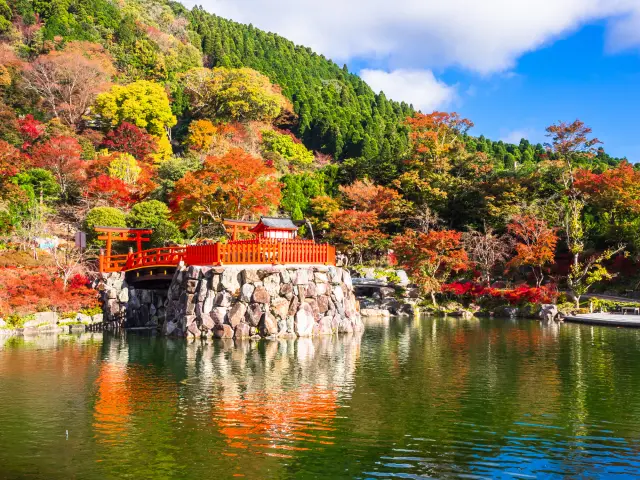
3. Minoosan Ryuanji Temple
Minoosan Ryuanji Temple, located in Minoh Quasi-National Park, is Japan’s first and oldest temple dedicated to Benzaiten as its principal deity.
The grounds are dotted with cultural properties, including a historic temple gate and Zuiun Bridge and the Hououkaku Hall, both registered as Tangible Cultural Properties.
The temple’s origins date back to 658, when En no Gyoja, the founder of Shugendo, trained at Minoh Falls and enshrined a statue of Benzaiten.
It’s also known as the birthplace of Japan’s oldest lottery, and for over 400 years it has held a lottery called Minoh Tomin.

4. Meiji no Mori Minoh Quasi-National Park
Meiji no Mori Minoh Quasi-National Park lies in northern Minoh City.
Spreading across mountains at elevations of Approx. 330–1,970 feet (Approx. 100–600 m), it’s a nature-rich park home to Approx. 1,100 plant species and over 3,000 insect species.
Along the waterfall trail leading to Minoh Falls, you can enjoy hiking and forest bathing while taking in seasonal scenery. The late-fall foliage is especially beautiful and draws many visitors.
The park area has long been considered a sacred site of mountain Buddhism, and sights include the “main training hall” of Shugendo and historic temples such as Ryuanji.

5. Minoh Park Insect Museum
This insect museum is located in Minoh Park, once known as one of Japan’s three greatest insect treasure troves.
With the concept “A world revealed by learning about insects,” it introduces the insect world through a wide range of specimens and live exhibits, from insects found in Japan to rare species from overseas.
One highlight is the Butterfly Garden, where colorful butterflies flutter year-round. At least 10 species are released at any time, and you can observe their graceful flight up close.
Another draw is the rearing room, where you can watch larvae being raised and see the moment of emergence through glass.
It’s a valuable experience that lets you appreciate the beauty of butterflies and the mystery of insect life while deepening your understanding of nature.

6. Shotenkyu Saikoji Temple
Built in 658 by En no Gyoja, the founder of Shugendo, this was Japan’s first main training hall (the center of ascetic practice) enshrining Daishokangiten.
The historic grounds are rich in nature, colored by a variety of maple trees from fresh spring greenery through autumn foliage.
Camellias in full bloom from December through May are another highlight.
It’s also known for its ofuda amulets called keshobumi, said to grant various wishes such as matchmaking and business prosperity.

7. Minoh Visitor Center
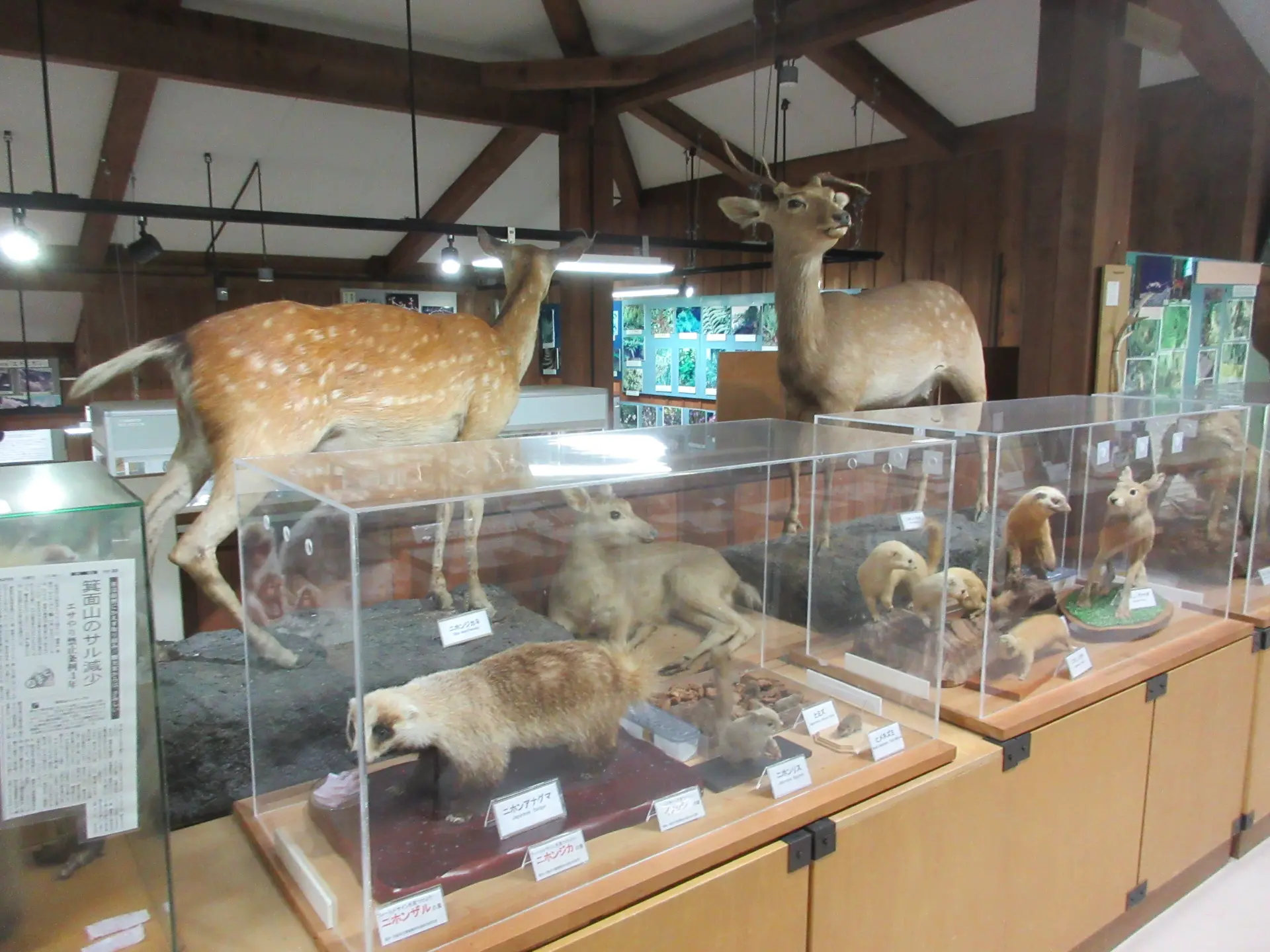
Minoh Visitor Center is located in Meiji no Mori Minoh Quasi-National Park and provides information on the park’s wildlife as well as hiking guidance.
In the exhibition room, you’ll find specimens and taxidermy displays of insects, birds, mammals, and more found in the park, along with introductions to the park’s cultural properties.
Nearby are Momiji Plaza, with a parking lot and restrooms, as well as walking trails.
It’s a great place to stop by before exploring Meiji no Mori Minoh Quasi-National Park.
8. Nakamasaen
Nakamasaen is a farm located in the satoyama landscape of Todoromi in northern Minoh City.
Surrounded by mountains, rich forests, and clear streams, it offers seasonal fruit and harvest picking as well as hands-on farming experiences throughout the year.
In winter, you can try log cutting; from spring through summer, shiitake inoculation and harvesting; and in fall, sweet potato digging and chestnut picking.
Another highlight is enjoying barbecue with shiitake mushrooms and chestnuts harvested on-site, as well as the local specialty Gohei Nabe (wild boar hot pot).

9. Taishakuji Temple
A Shingon Buddhist temple with a long history, said to have been founded by Prince Shotoku between 592 and 628.
The Fukugoma Festival, held every February, is a traditional event that draws many visitors each year.
Prayers are offered while a sacred fire is lit, with wishes for household safety, business prosperity, and good health.
At the “Shugyo Experience Cafe,” you can enjoy light practices such as meditation and sutra copying along with tea—an invaluable opportunity to connect with Buddhist teachings and calm your mind away from the noise of everyday life.

Savor Japanese Ingredients and Cuisine: 3 Popular Restaurants in Minoh
Here are three popular restaurants where you can enjoy Japanese ingredients and Japanese cuisine—perfect for a break between sightseeing stops.
Some even let you savor excellent food while taking in Minoh’s lush natural scenery.
Add these spots to your itinerary as well.
1. Otoya Sanso
Otoya Sanso has been serving Japanese cuisine and heartfelt hospitality in Meiji no Mori Minoh Quasi-National Park since 1926.
The residence, standing unchanged since the Taisho era (1912–1926), includes not only dining spaces but also an inn and wedding venue.
In a traditional setting featuring distinctive Taisho-era glasswork, you can enjoy artisan-made sushi and kaiseki cuisine. Seasonal flavors that highlight carefully crafted dashi and quality ingredients are the hallmark here.
From April to June, you can also enjoy kawadoko dining in riverside seating along the Minoh River.

2. Gyutoro Yakishabu Specialty Restaurant Junimatsu Rokusaemon
Japan’s first yakishabu specialty restaurant, known for creating its own unique style of vegetable-wrapped bites.
The refined, calm space offers 58 seats, including terrace seating.
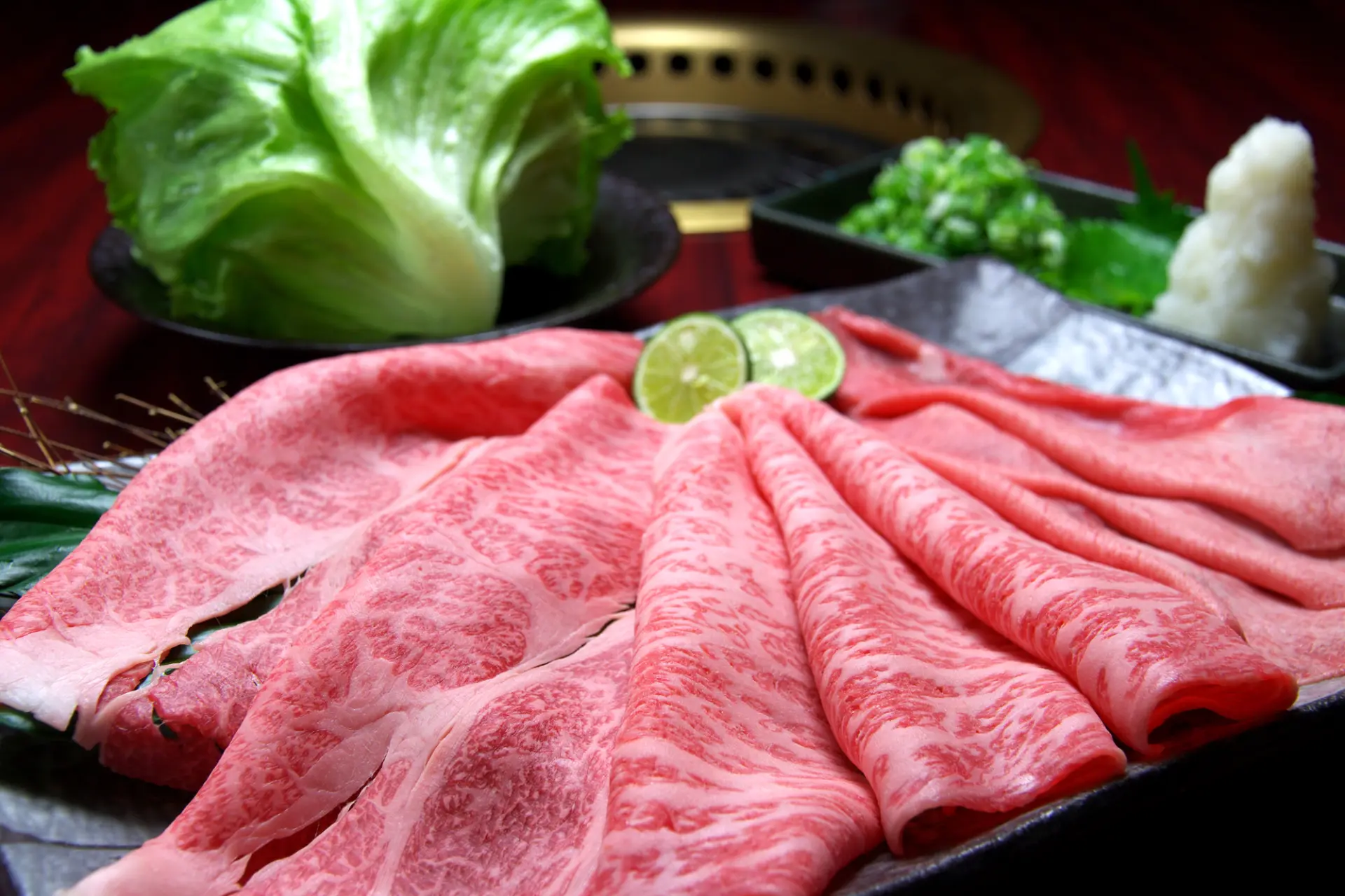
They carefully select Japanese Black (Kuroge Wagyu) with the ideal balance of fat and lean meat for yakishabu, then grill each slice one by one to bring out its flavor to the fullest. Another highlight is the carefully cooked rice prepared in a kamado-style pot.
The menu is extensive, and you won’t want to miss dishes like the “Premium Kuroge Wagyu Yukhoe-Style” or the “Enmatsu Pork Course” made with branded pork.
3. Ichiju Nisai Ueno Minoh Branch
A traditional Japanese restaurant surrounded by lush greenery, located Approx. an 8-minute walk from Minoh Station.
Enjoy Japanese cuisine made with seasonal ingredients and carefully prepared dashi in private rooms with views that change with the seasons.
Ingredients carefully selected from across Japan are prepared by skilled chefs without chemical seasonings, resulting in dishes that let the natural flavors shine. Seasonal flowers and leaves are also used as garnish, making each plate a feast for the eyes as well.
The ozashiki tempura, prepared by a chef right in front of you, is especially popular.
It’s also a great choice for families, with bento meals available for children.

FAQ about Sightseeing in Minoh
Q
Where should I go to enjoy Minoh in a short amount of time?
A
We recommend walking along the waterfall trail to Minoh Falls, then continuing on to explore Meiji no Mori Minoh Quasi-National Park.
Q
When is the best time to see fall foliage in Minoh?
A
The best time to see fall foliage in Minoh is typically from mid-November to early December.
Q
When is the best time to see cherry blossoms in Minoh?
A
The best time to see cherry blossoms in Minoh is typically from early April to late April.
Q
What souvenirs do you recommend from Minoh?
A
We recommend momiji tempura and MINOH BEER (Minoh Beer).
Summary
Minoh is an easy day-trip destination from central Osaka, yet it offers rich natural scenery to enjoy.
Use this article as a guide, and you’re sure to fully experience what makes Minoh special.
If you’re planning a trip to Osaka, be sure to check out this article as well, which introduces Osaka’s classic sightseeing spots and popular restaurants.