
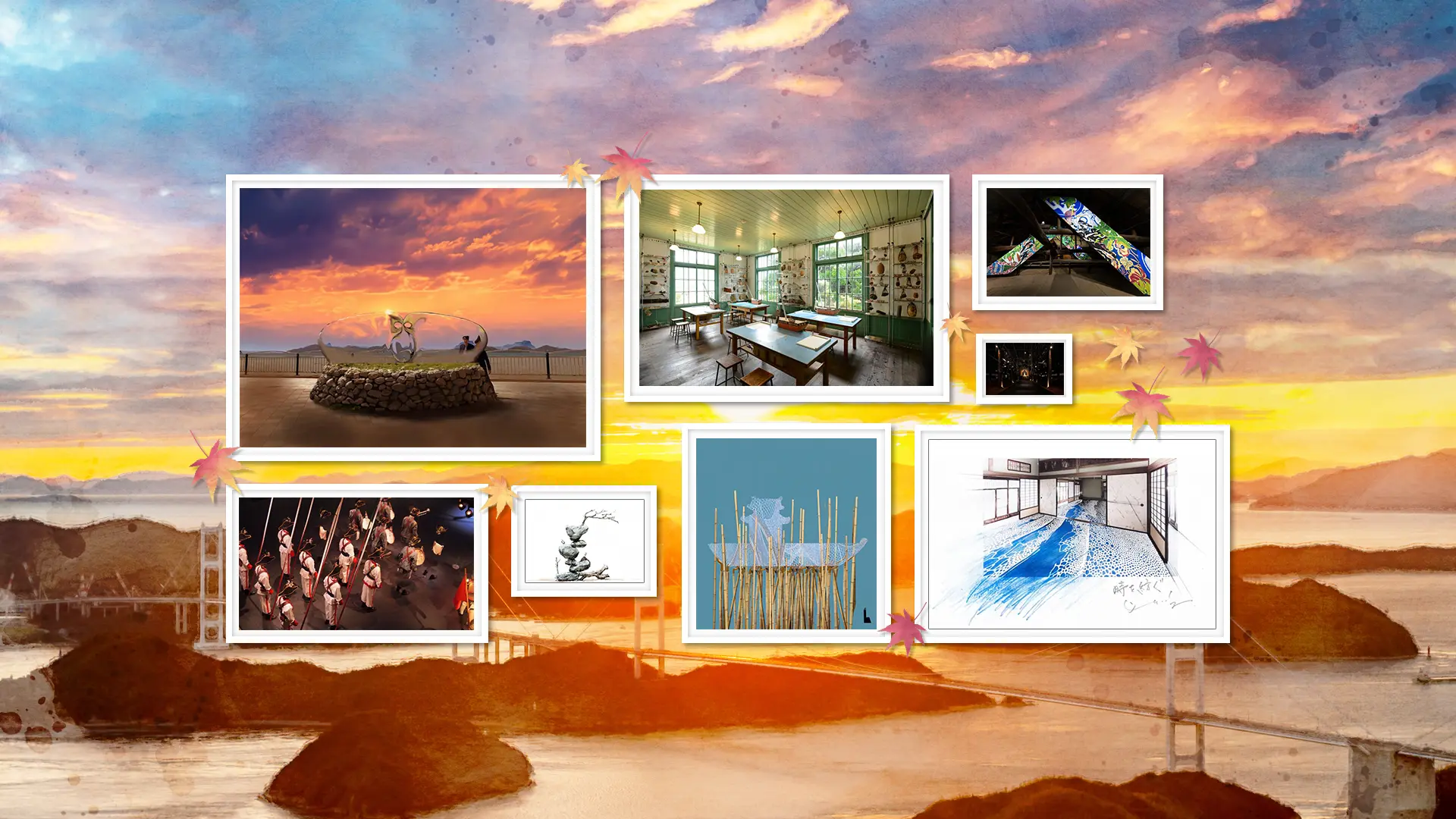
Photo: Mitsushige Kida/Kimito Takahashi/Jompet Kuswidananto
Setouchi Triennale 2025 Fall Season Guide: Complete Guide to Dates, Venues, Highlights & More!
The fall season of the contemporary art festival “Setouchi Triennale 2025” finally begins on October 3, 2025.
This time, Utazu Town joins as a new area, and a substantial collection of works that make use of local places such as traditional houses, ports, and shrines will be exhibited at each venue.
In this article, we’ll introduce key details for the fall season of the Setouchi Triennale, along with overviews of each venue and the works on view.
We’ve put together everything from must-know information to model itineraries, so be sure to read to the end.
Setouchi Triennale, One of Japan’s Largest Art Festivals
The “Setouchi Triennale” is a contemporary art festival held once every three years across the coastal areas and islands of the Seto Inland Sea, split into spring, summer, and fall seasons.
Each edition features many renowned artists from Japan and abroad, and the 6th edition in 2025 will present a total of Approx. 256 works across 17 areas.
Beyond viewing art, another defining feature is the chance to rediscover the region’s appeal through island life and food culture, offering visitors an extraordinary experience where art and scenery blend together.
For basic information on the Setouchi Triennale, tips for enjoying it, tickets, and more, please refer to the article below.
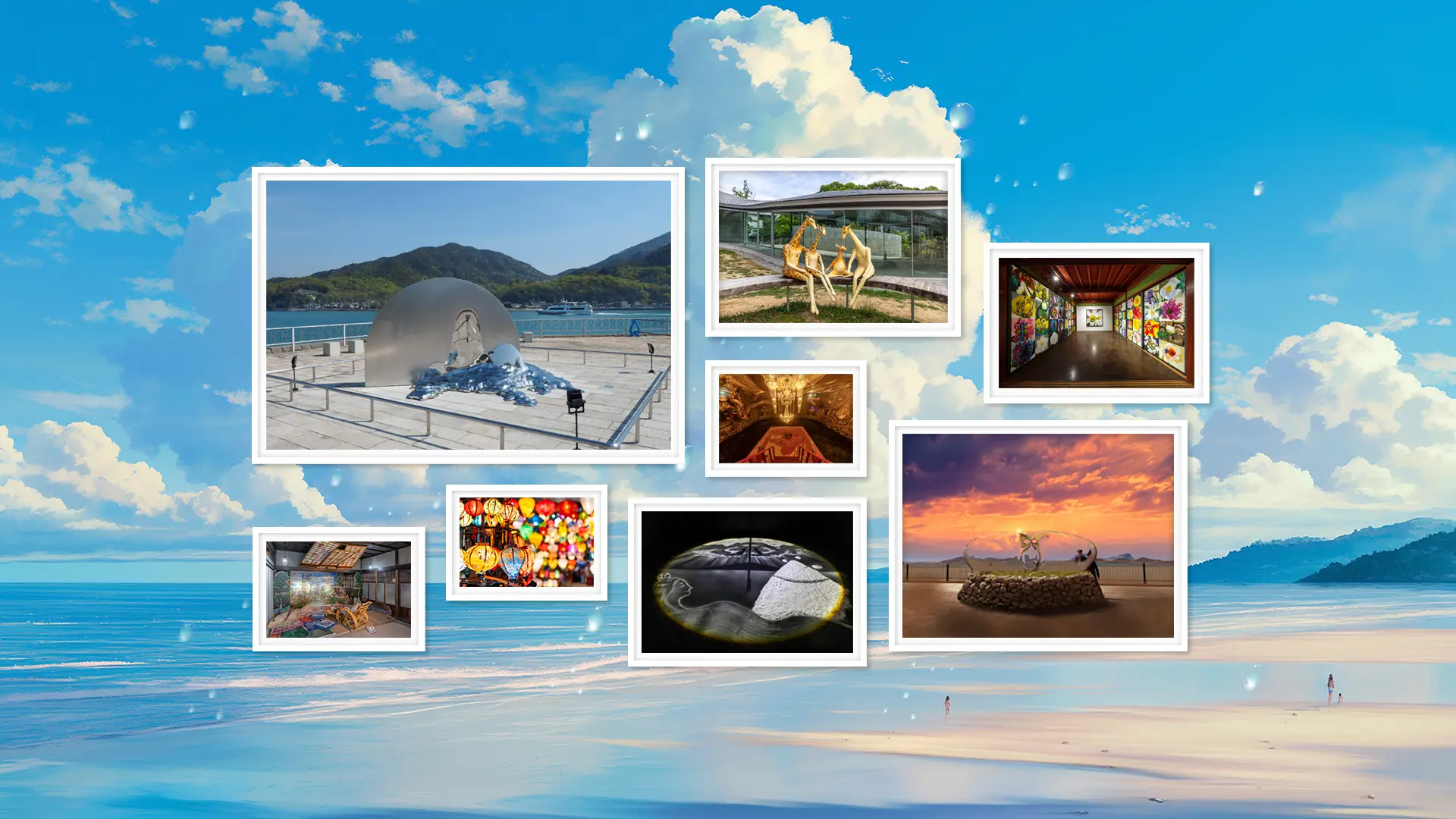
When Is the Setouchi Triennale Fall Season?
The Setouchi Triennale fall season runs for 38 days from October 3, 2025 (Fri) to November 9, 2025 (Sun), featuring a wide range of art events and exhibitions.
Even after the fall season ends (after the Setouchi Triennale ends), many works and facilities remain on display, so consider visiting the islands of the Seto Inland Sea even outside the official period.
Fall Season Venues for the Setouchi Triennale
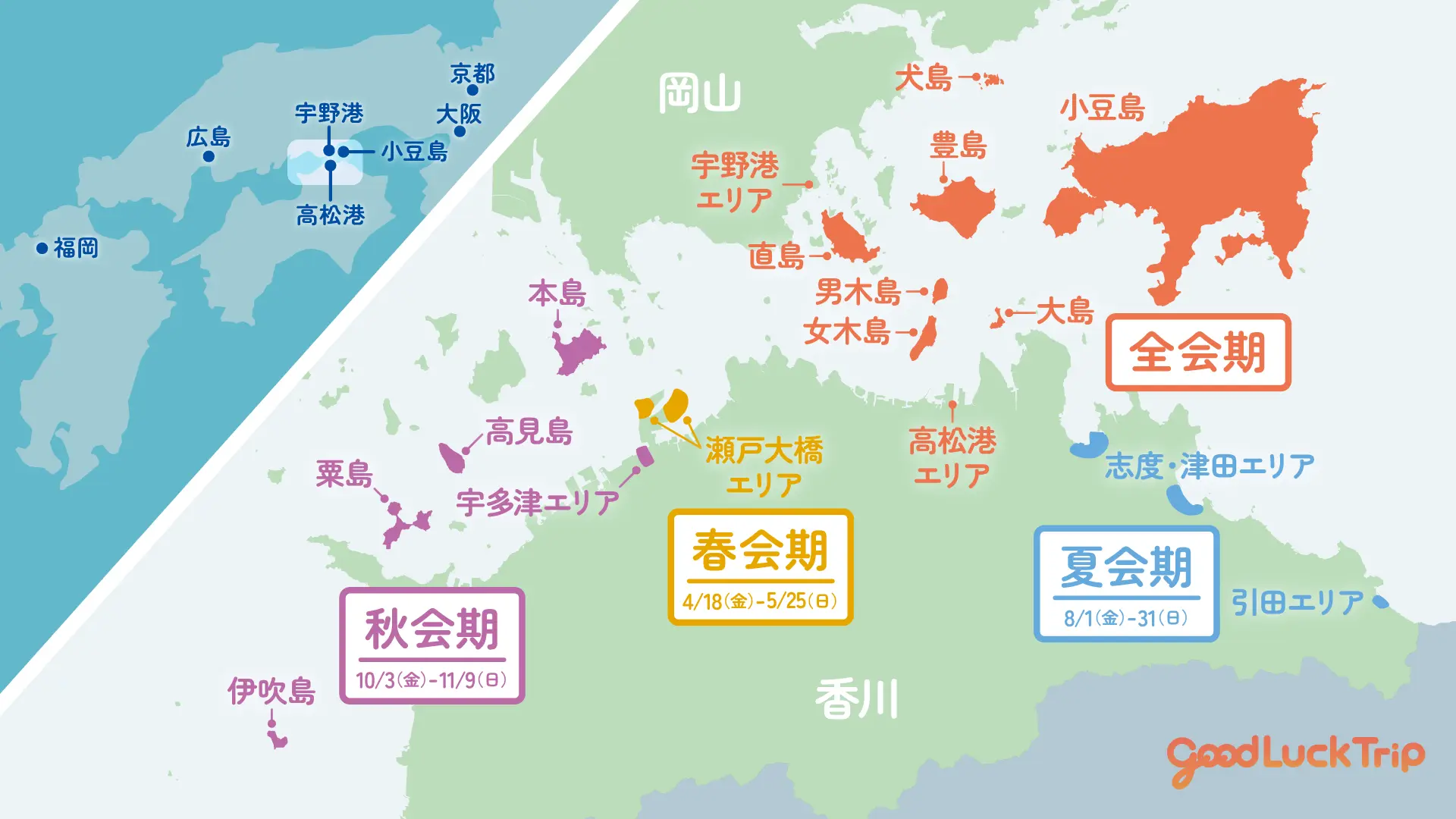
The venues for the Setouchi Triennale fall season are summarized in the table below.
The nine areas that serve as venues throughout all seasons can also be enjoyed during the fall season, so we recommend visiting them as well.
- All seasons
- Naoshima/Teshima/Megijima/Ogijima/Shodoshima/Oshima/Inujima/Takamatsu Port Area/Uno Port Area
- Fall season
- Honjima/Takashima/Awashima/Ibukijima/Utazu Area
Five Areas Used Only as Fall Season Venues
Here, we’ll introduce basic information for the five areas used only during the fall season, along with some of the art works on view.
While each area is in a different location, they’re relatively close, so it’s possible to visit all five over 2–3 days.
Use this as a reference and try to explore as many venues and works that catch your interest as possible.
The “Utazu Area,” Where Old and New Townscapes Coexist
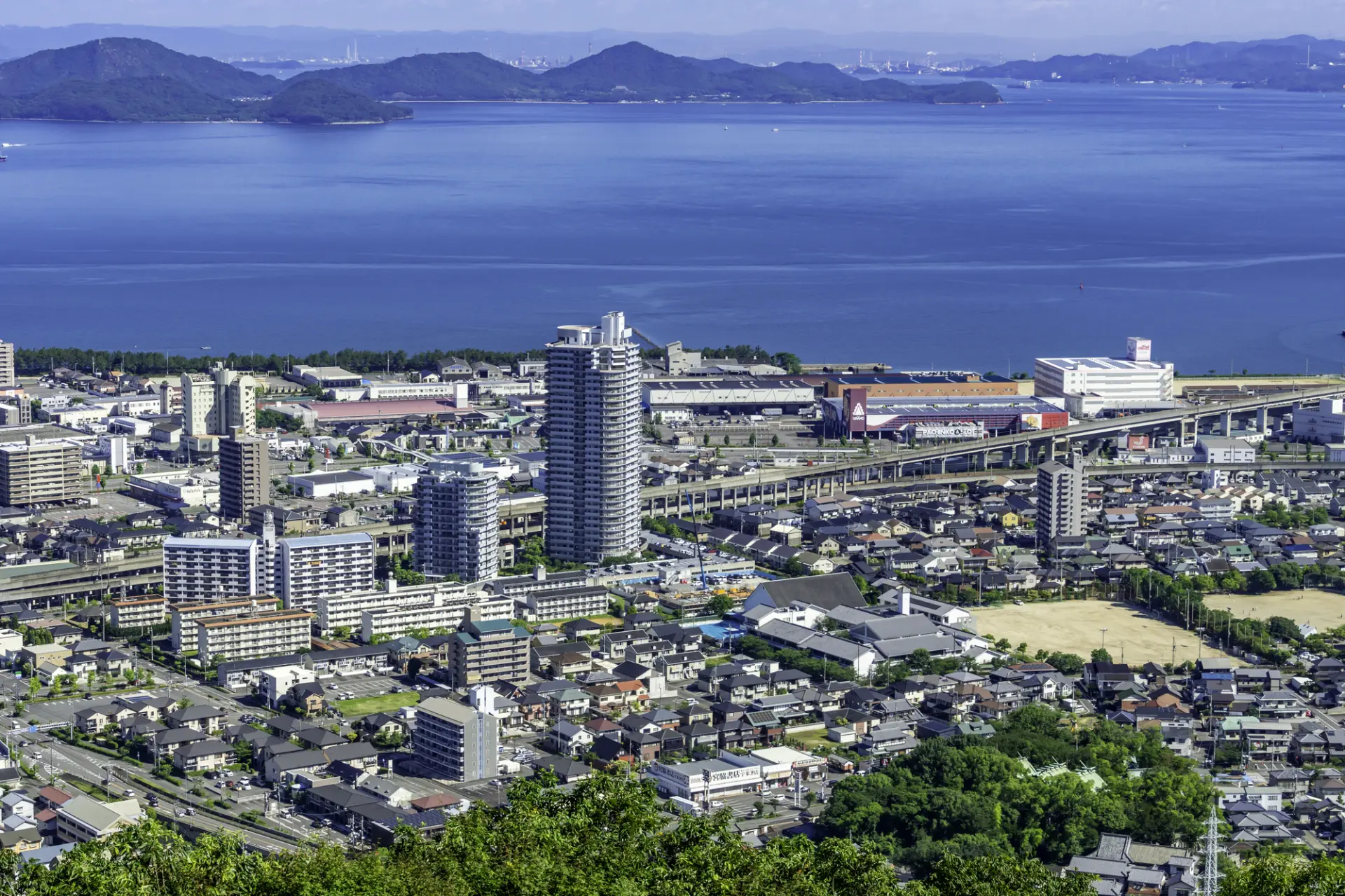
Utazu Town, located roughly in the center of Kagawa Prefecture and facing the Seto Inland Sea, is the smallest port town in the prefecture.
With origins in the ancient port of “Utari-no-tsu,” it has continued to develop as a key hub for maritime transport from the Heian period (794–1185) to the present day.
Its biggest feature is the coexistence of an “old townscape,” with shrines, temples, and traditional townhouses, and a “new townscape” that was redeveloped after the opening of the Seto Ohashi Bridge.
In this compact town, you can enjoy a harmonious blend of old and new scenery, along with many spots where you can experience its history and culture.
It’s also known nationwide as a “salt town,” and traditional salt-making has been passed down to this day.
From Takamatsu Station, you can reach Utazu Station in 20–40 minutes on the direct JR Yosan Line.
Within the area, getting around is convenient using the temporary free shuttle bus connecting three points—JR Utazu Station, Utazu Town Hall, and Utazu Rinkai Park (every 30 minutes on weekdays, every 15 minutes on weekends and holidays).
At Setouchi Triennale 2025, exhibitions will be held around Komachi and at various locations along the waterfront.
Let’s take a look at an overview of the works exhibited in the Utazu Area.
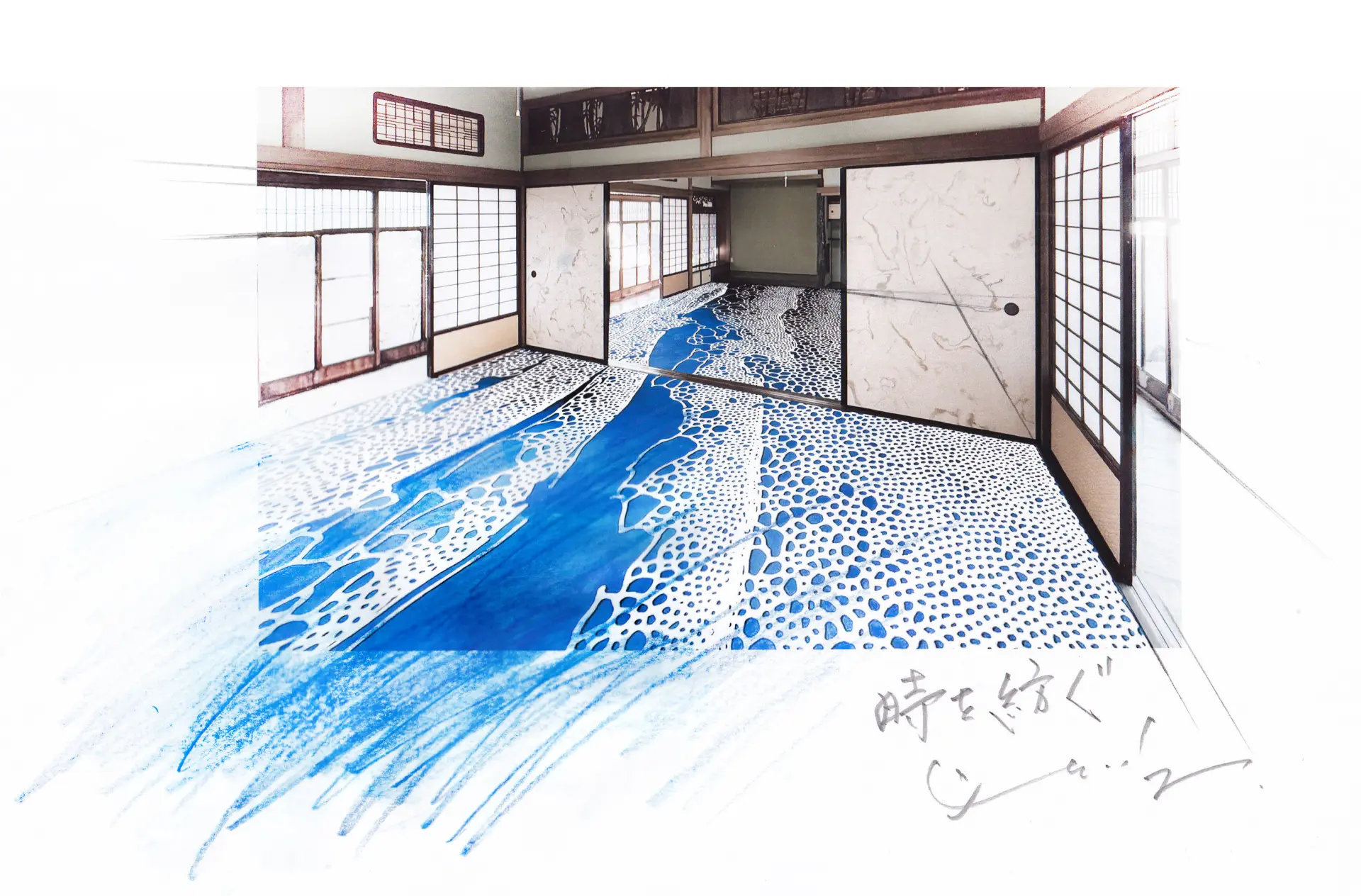
Motoi Yamamoto “Weaving Time”
An installation presented in a Japanese-style room inside the historic building “Kura no Yakata, Sankaku-tei (Former Sakai Residence),” located in the Komachi area, Approx. a 2-minute walk from Utazu Town Hall.
Using salt as a material, countless bubble-like cells are drawn across the entire floor.
With forms that evoke crashing waves and the flow of tides, it creates a landscape where fragments of everyday life are woven together.
Each individual cell holds time and memories with someone important, allowing viewers to experience the shifting nature of memory.
- Hours
-
10:00am – 8:00pm
Last admission at 7:45pm - Closed on
- Open daily during the festival
- Admission
- 500 yen
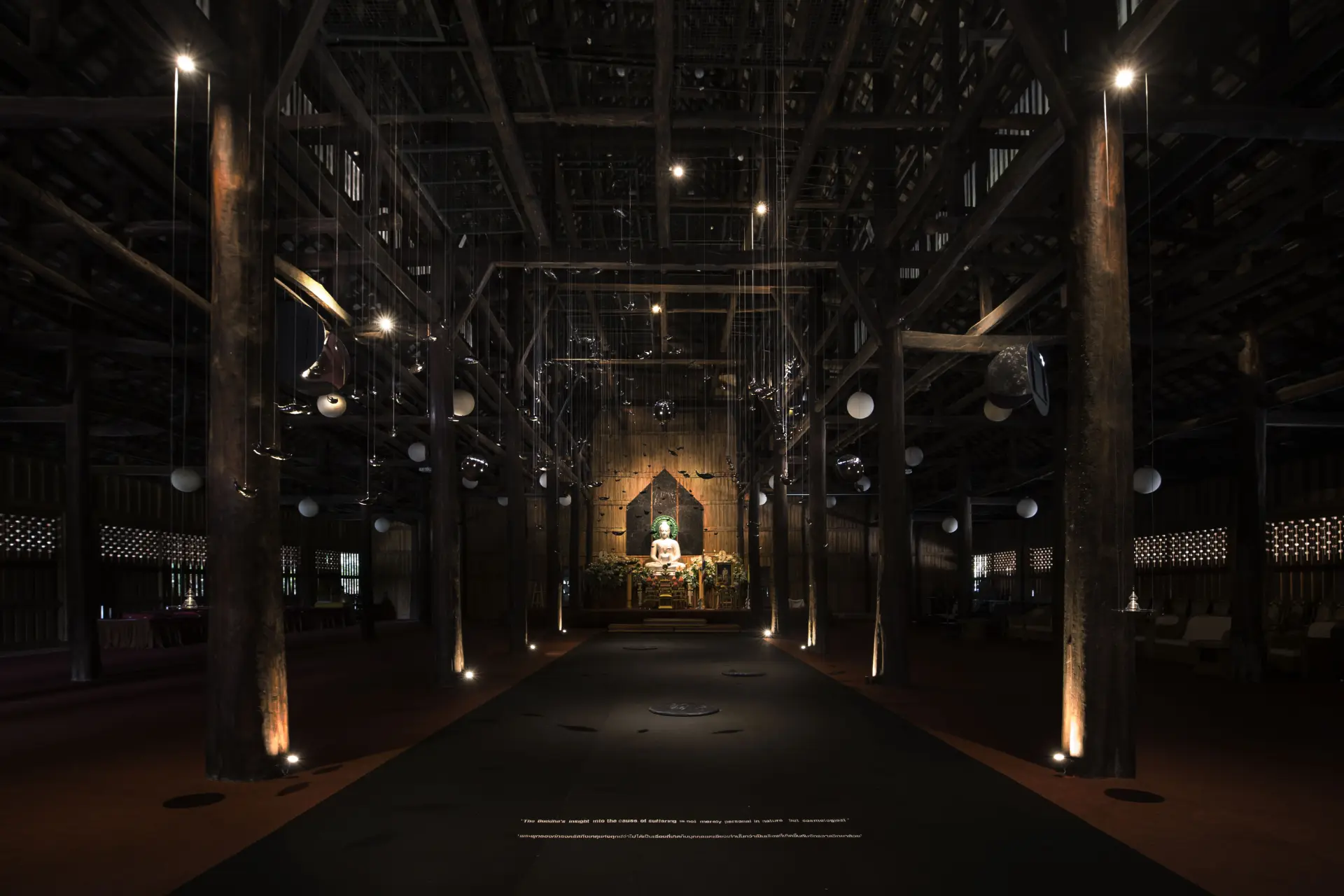
Zen Teh “The Imperative Landscape (2025)”
An installation presented across three locations in the Komachi area: “Isenomiya Shrine,” “Hachiman Shrine,” and the “Former Suzuki Barber Shop.”
Singapore-born Zen Teh created this work through careful, on-the-ground research, and its strong ties to local life and festivals are clearly reflected in the piece.
A key feature is the immersive, introspective space that skillfully makes use of traditional settings such as shrines and the old townscape.
Each venue offers a different story and scenery, allowing viewers to sense Utazu’s town and time, nature and culture, in layered ways.
- Hours
-
10:00am – 8:00pm
Last admission at 7:45pm - Closed on
- Open daily during the festival
- Admission
- 500 yen
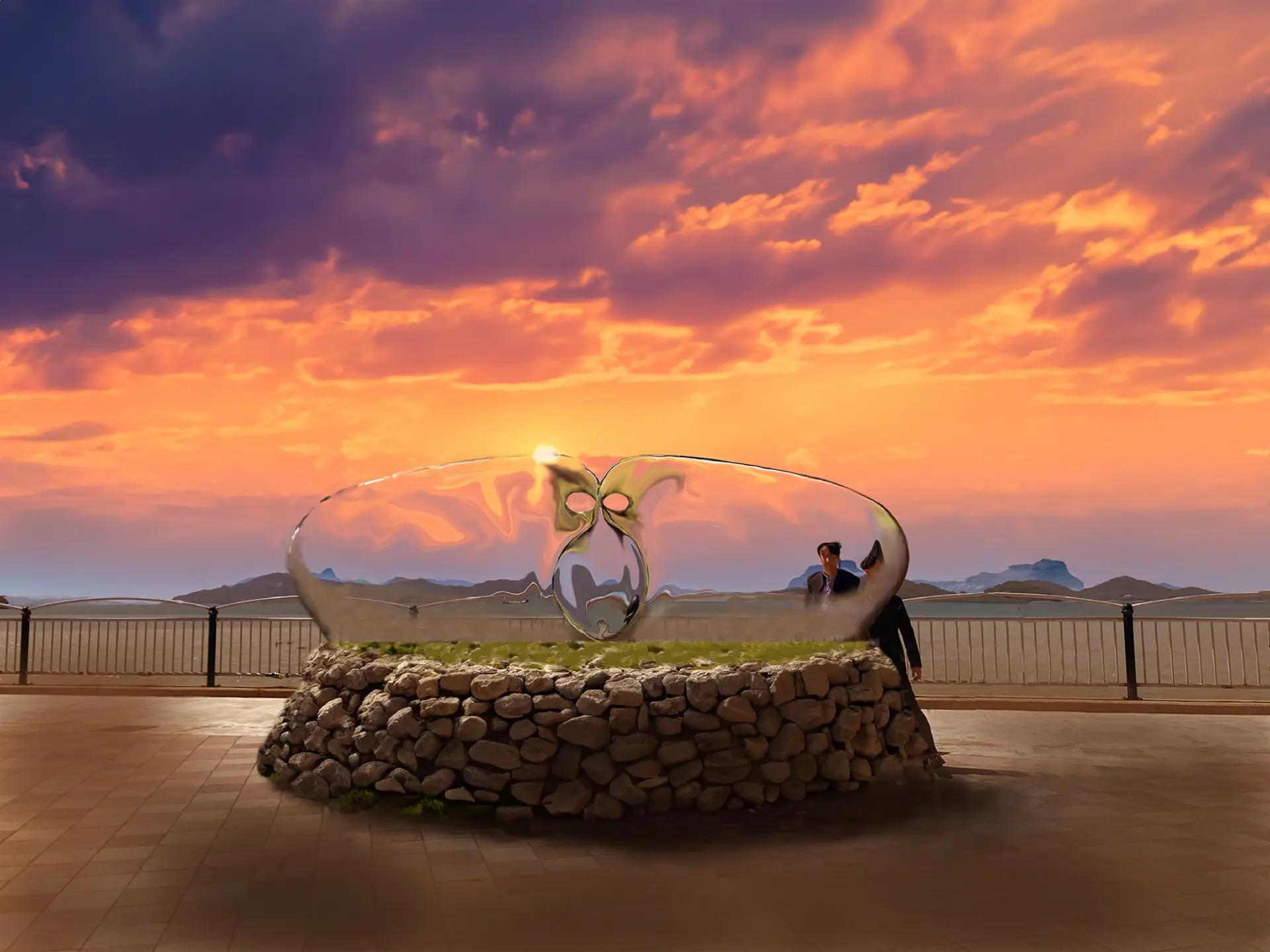
Toshitaka Nishizawa “Beyond Colorless Wings”
An outdoor work installed between “Umihotaru” and the “Restored Salt Field,” near Utazu Rinkai Park.
Nishizawa hand-carved and polished two acrylic panels (Approx. 210 cm wide × 130 cm high × 80 cm deep), giving them a sense of transparency and an organic form.
This expresses the work’s concept, “Memory and Distance to the Horizon,” aiming to unsettle the sense of distance between the Seto Inland Sea landscape and the viewer.
At the core is a poetic image: a messenger who seems far away is actually right beside you.
- Hours
- Outdoor artwork
- Closed on
- Open daily during the festival
- Admission
- Free
Honjima, Home to a Historic Townscape that Preserves Traditional Skills
Honjima, in Marugame City, Kagawa Prefecture, is a central island of the Shiwaku Islands floating west of the Seto Ohashi Bridge.
It flourished as the base of the Shiwaku Suigun (a group of sailors active in the 16th century), prospering through navigation skills and earning high praise from powerful figures of the time, including Oda Nobunaga.
Later, skilled sailors used their shipbuilding expertise to shift into temple and house carpentry in the late Edo period, producing many craftsmen known as Shiwaku carpenters.
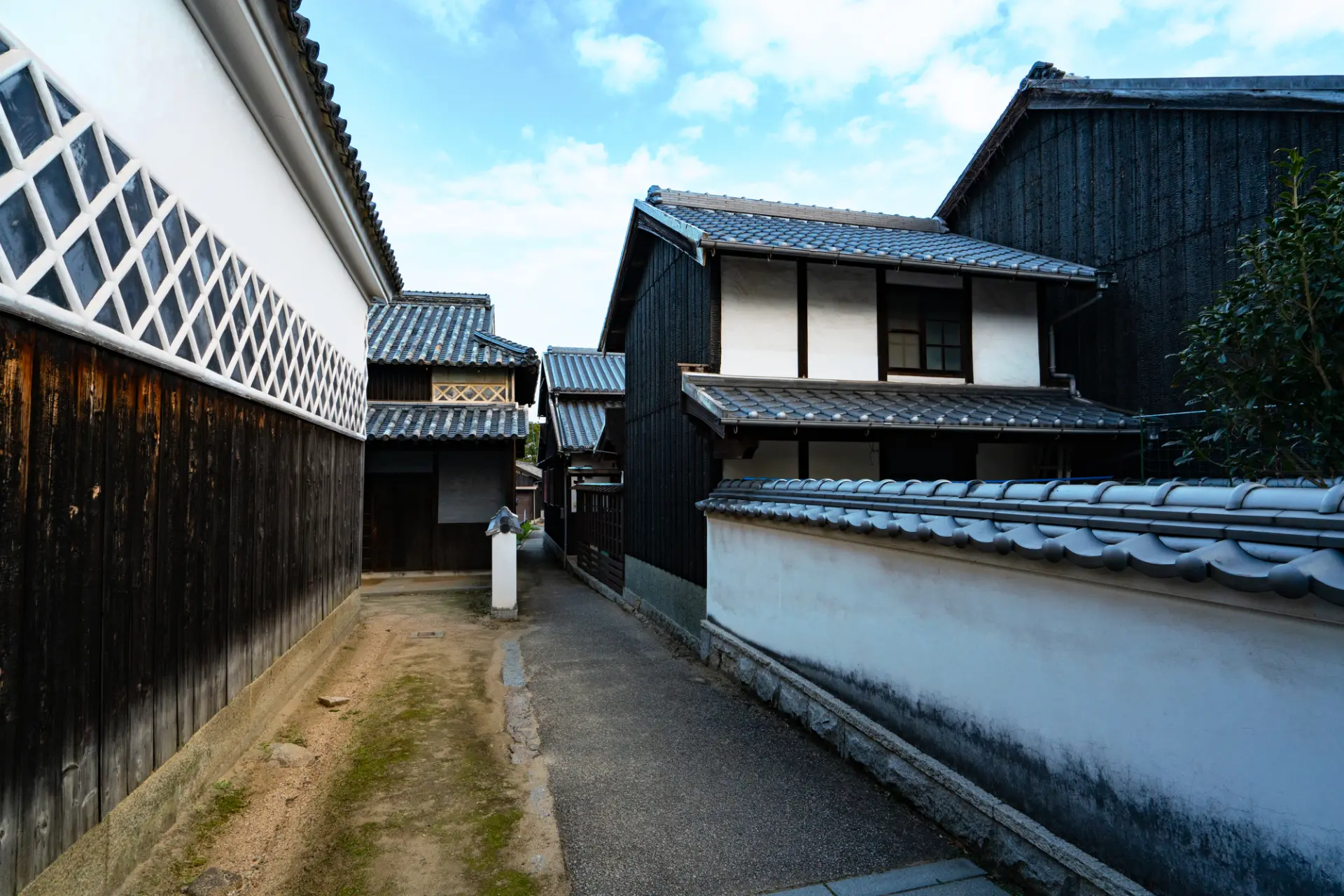
Even today, the traditional townscape that conveys these skills remains well preserved, and the Kasashima district is the only area in Kagawa Prefecture designated as an “Important Preservation District for Groups of Traditional Buildings.”
From Takamatsu Station, take the JR Yosan Line to Marugame Station, then board a ferry from Marugame Port (an 8-minute walk) to reach Honjima Port in around 1 hour and 30 minutes.
For getting around the island, we recommend walking or renting a bicycle to enjoy historic scenery such as white plaster walls, senbon lattice windows, and mushiko windows.
At Setouchi Triennale 2025, works are exhibited across the Tomari area and the Kasashima area. Here are some highlights.
Jakkai Siributr “Dispatch”
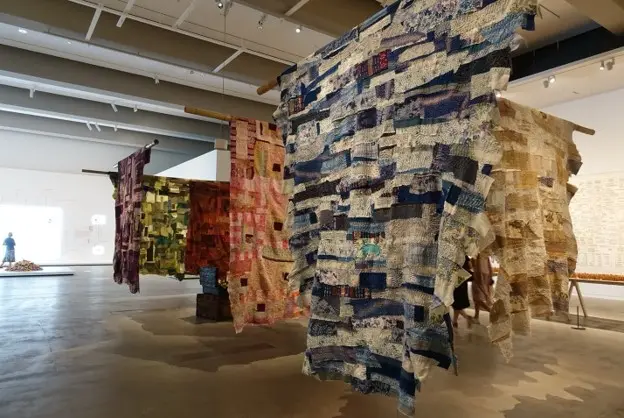
An installation in a traditional house in the Tomari area, featuring a large banner-like tapestry made from clothing and accessories collected from local residents, including those on Honjima.
On the materials, residents’ responses to Jakkai Siributr’s questions—“What do you want to leave for the future?” and “What is your most important memory?”—are carefully hand-embroidered.
Everyday traces of clothing express people’s memories, the changing seasons, and the fleeting nature of life’s cycle, weaving personal histories into the next generation.
- Hours
- 9:30am – 4:30pm
- Closed on
- October 23, October 30
- Admission
- 500 yen
Ekaterina Muromtseva “House of Shadows (Kage no Ie)”
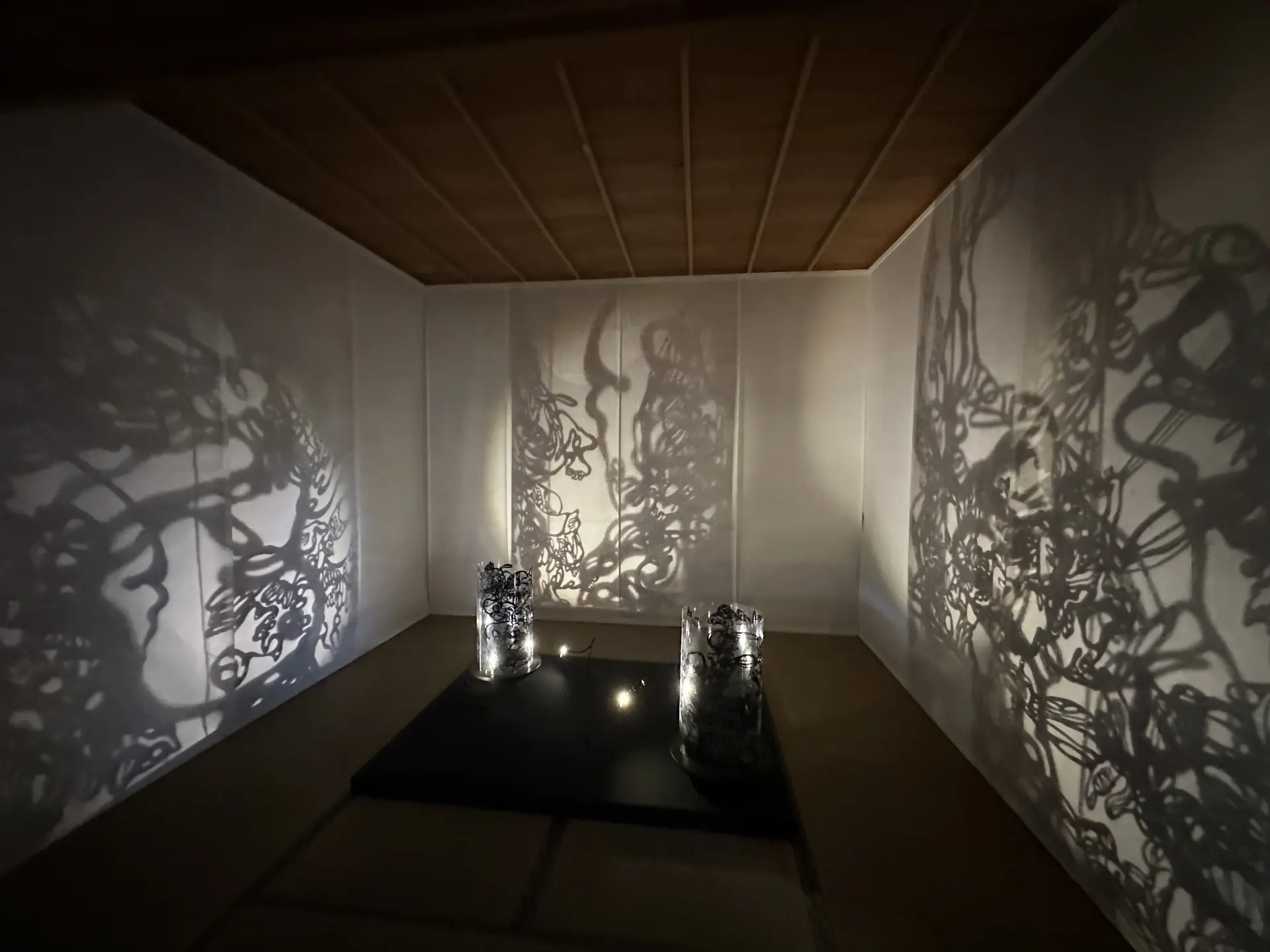
An installation that uses an entire vacant house in the Kasashima townscape area.
In each room, different motifs—such as carved wooden objects and dolls, and plastic sheets with drawings—slowly rotate, casting shadows onto cloth and paper in a striking visual mechanism.
In sync with the movement of the shadows, recorded sounds play, featuring islanders talking about childhood memories and recent dreams.
As shadow and sound overlap, the space becomes like “collective lucid dreaming,” stimulating the viewer’s senses.
- Hours
- 9:30am – 4:30pm
- Closed on
- October 23, October 30
- Admission
- 500 yen
Yasuaki Kakehi “Echoes as Air Flows”
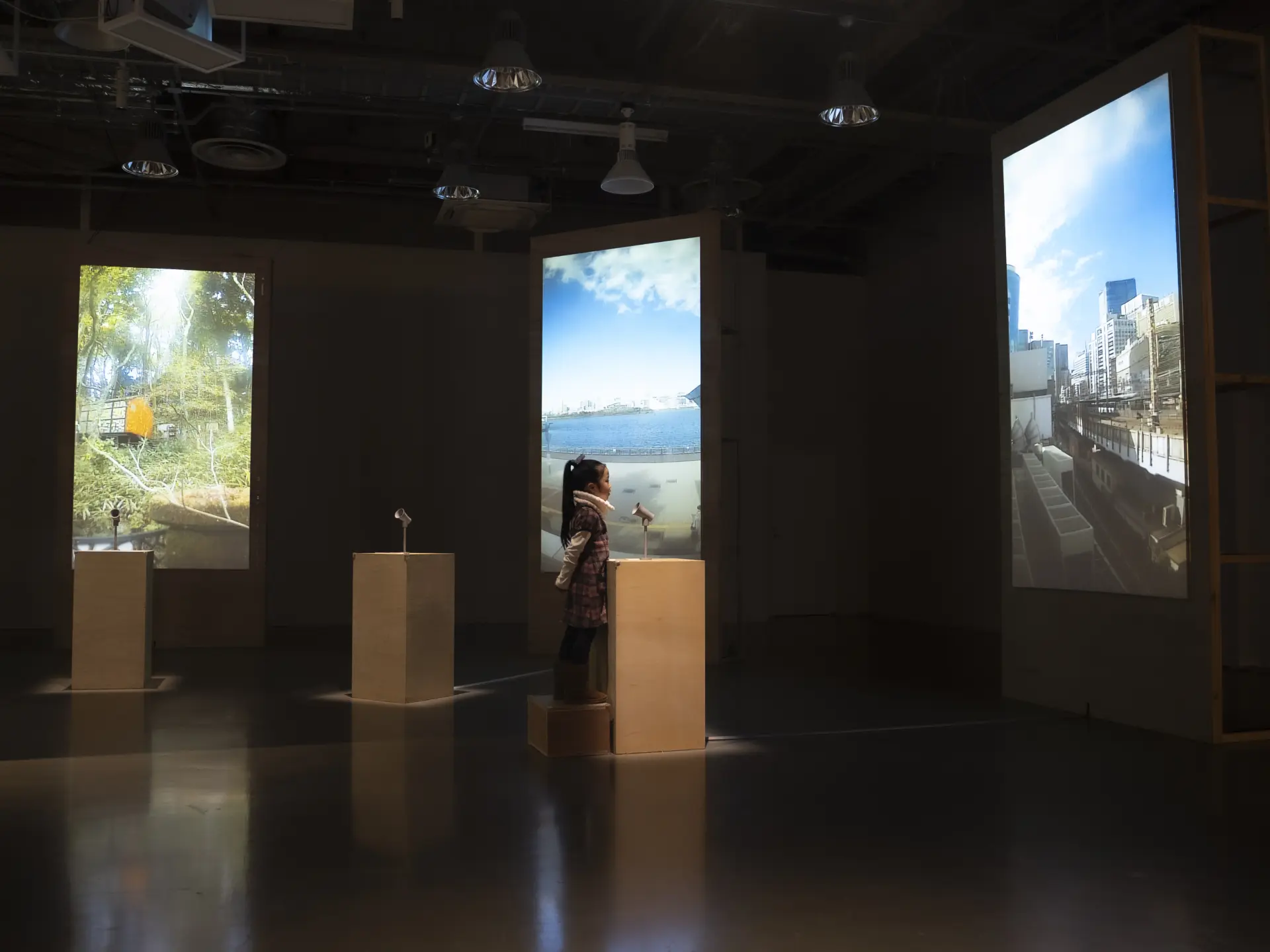
A network-based installation exhibited in the Tomari area.
When viewers blow air into the work, it changes in sync with a remote location.
An interactive setup that lets you feel a connection with another viewer in a distant place is a defining feature.
- Hours
- 9:30am – 4:30pm
- Closed on
- October 23, October 30
- Admission
- Free
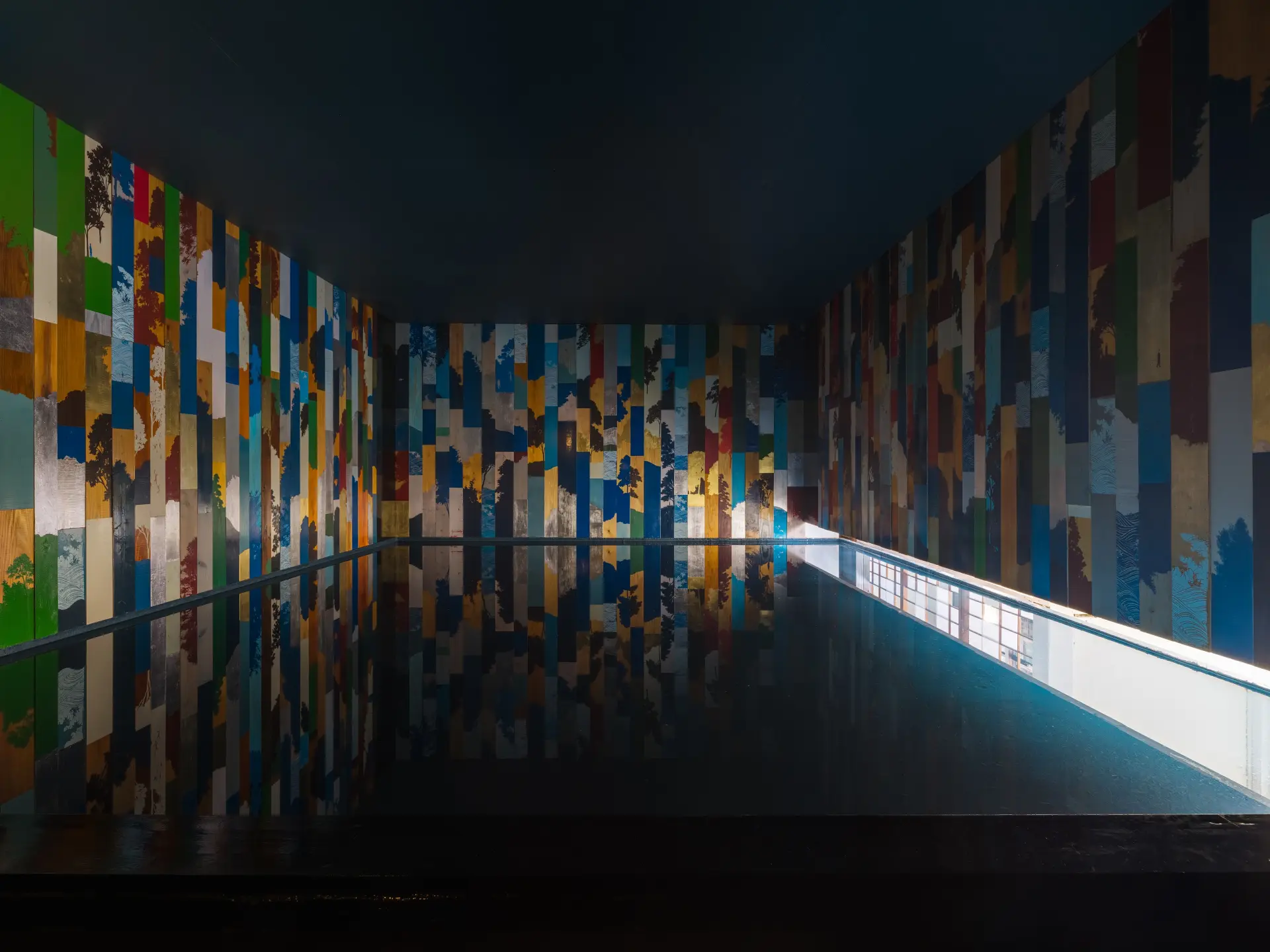
Rikuji Makabe “Kanrin no Ie”
An installation set in the former home of Matsutaro Yokoi, who served as a sailor (crew member) on the Kanrin Maru (Japan’s first steam warship), located in the Tomari area.
Inspired by Edo-period (1603–1868) cedar-door paintings, mosque tiles, and church mosaics, the work features a vivid space that transcends painting cultures.
- Hours
- 9:30am – 4:30pm
- Closed on
- October 23, October 30
- Admission
- 500 yen
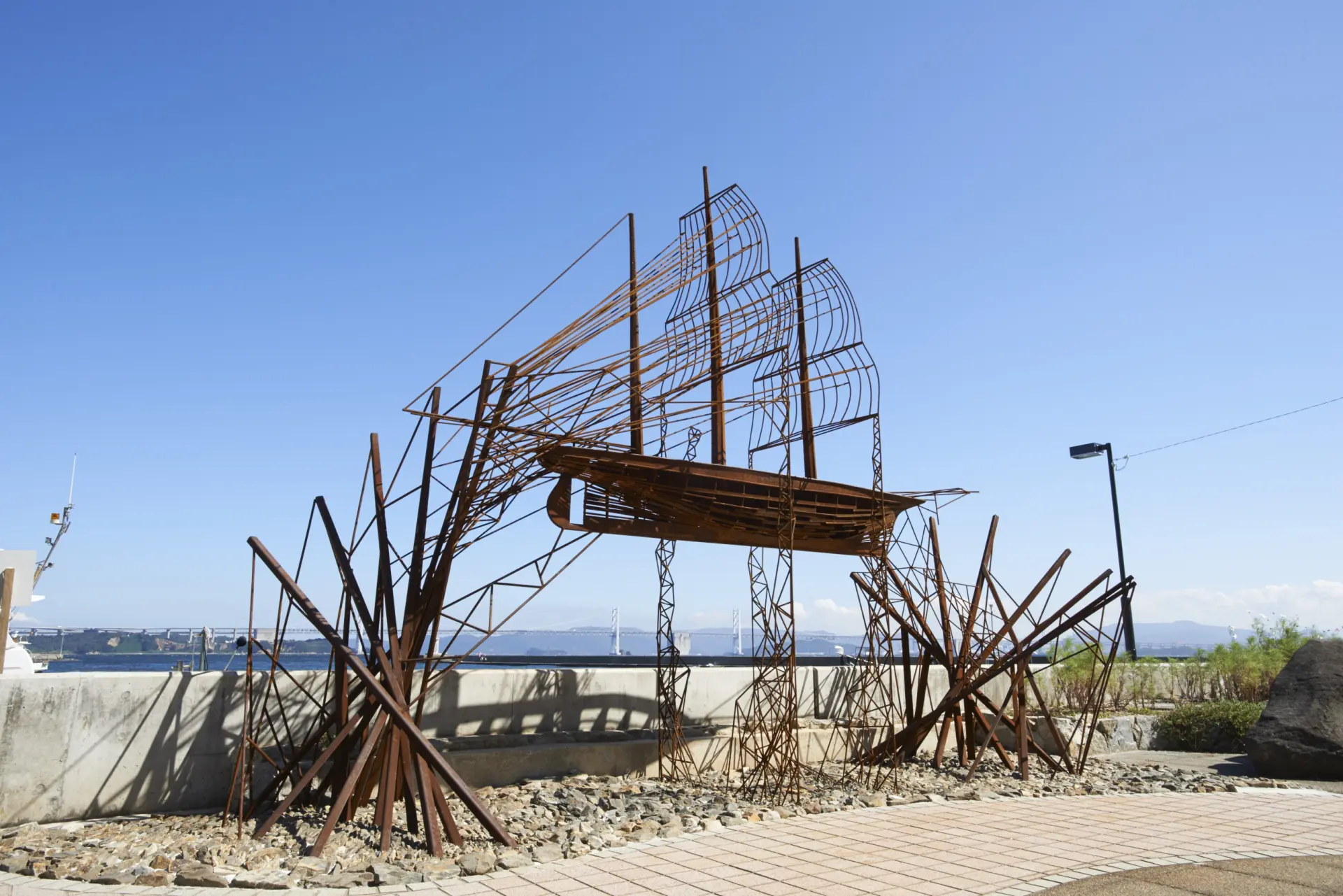
Vertrek “Shukkou”
A steel sculpture in the Tomari area at the entrance to Honjima Port, inspired by the Kanrin Maru, Japan’s first sailboat to cross the Pacific Ocean.
Its design, which looks as if it has raised sails and is floating in midair, is striking, and its silhouette against the sea and rusted texture evoke the historic voyages of sailors from the Shiwaku Islands.
Since it’s one of the first things you see after arriving on the island, it has also become a landmark icon of the area.
- Hours
- Outdoor artwork
- Closed on
- Open daily
- Admission
- Free
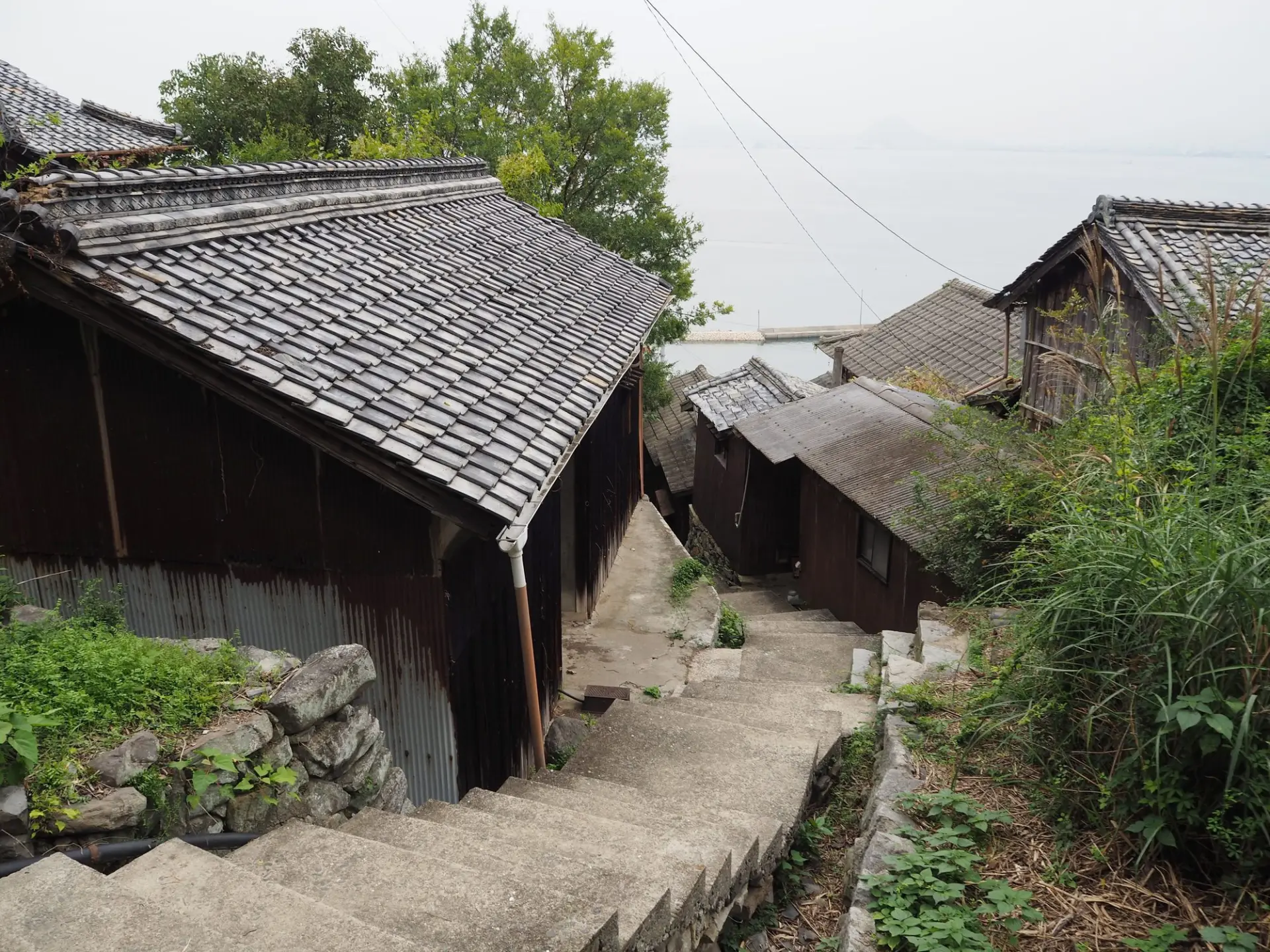
Takashima, Known for Its Unique Landscape of Old Houses Built Like Stair Steps
Takashima, in Tadotsu Town, Nakatado District, Kagawa Prefecture, is a cone-shaped island floating Approx. 7.5 km northwest offshore from Tadotsu Town.
It once prospered from pyrethrum production, but today it’s hardly produced at all.
With around 30 residents, the island has little flat land, and its houses are built in staircase-like rows along steep slopes, with unique scenery including irregular stone retaining walls made of natural stones.
Old townscapes and vacant houses remain, and their appearance carries traces of traditional life.
Many of these were built in the Edo period, reflecting the skills of islanders who worked as Shiwaku carpenters.
From Takamatsu Station, take the JR Yosan Line (and other lines) to Tadotsu Station, then board a ferry from Tadotsu Port (Approx. a 20-minute walk) to reach Takashima Port in around 2 hours.
Vehicles are not allowed on the island, and there is no public transportation, so the only way to get around is on foot.
Because the island’s lanes are narrow and there are many steep slopes, we recommend wearing comfortable walking shoes.
At Setouchi Triennale 2025, exhibitions are held in the Hama and Ura districts. Here are overviews of some of Takashima’s main works.
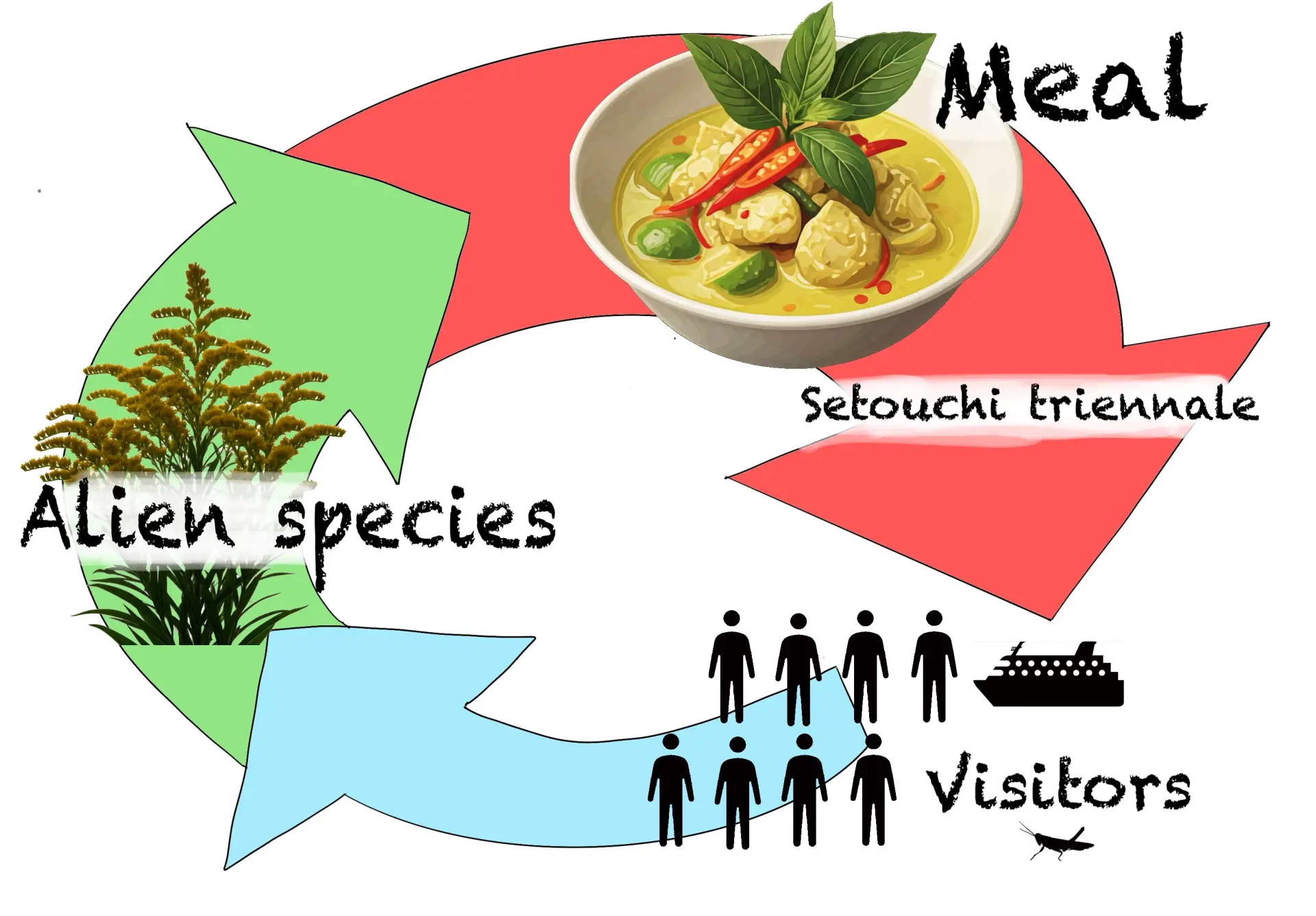
EAT&ART TARO “Alien Food: Invasive Species on the Island”
EAT&ART TARO, whose theme is food, has long felt uneasy about situations where many people gather and eat in depopulated areas at art festivals and similar events.
In this exhibition, a dining space is set up Approx. a 5-minute walk from Takashima Port, serving tea and curry made with invasive plants harvested on Takashima.
By having visitors taste them, the project creates an opportunity to experience the island’s realities and think about food balance.
Research results on plant distribution on the island, collection volumes, population, and meal situations are also displayed.
- Hours
- 10:10am – 4:30pm
- Closed on
- October 23, October 30
- Admission
- Shared ticket: 2,000 yen (combined price for works ta02, ta05, ta07, ta10, ta13, ta22, ta23)
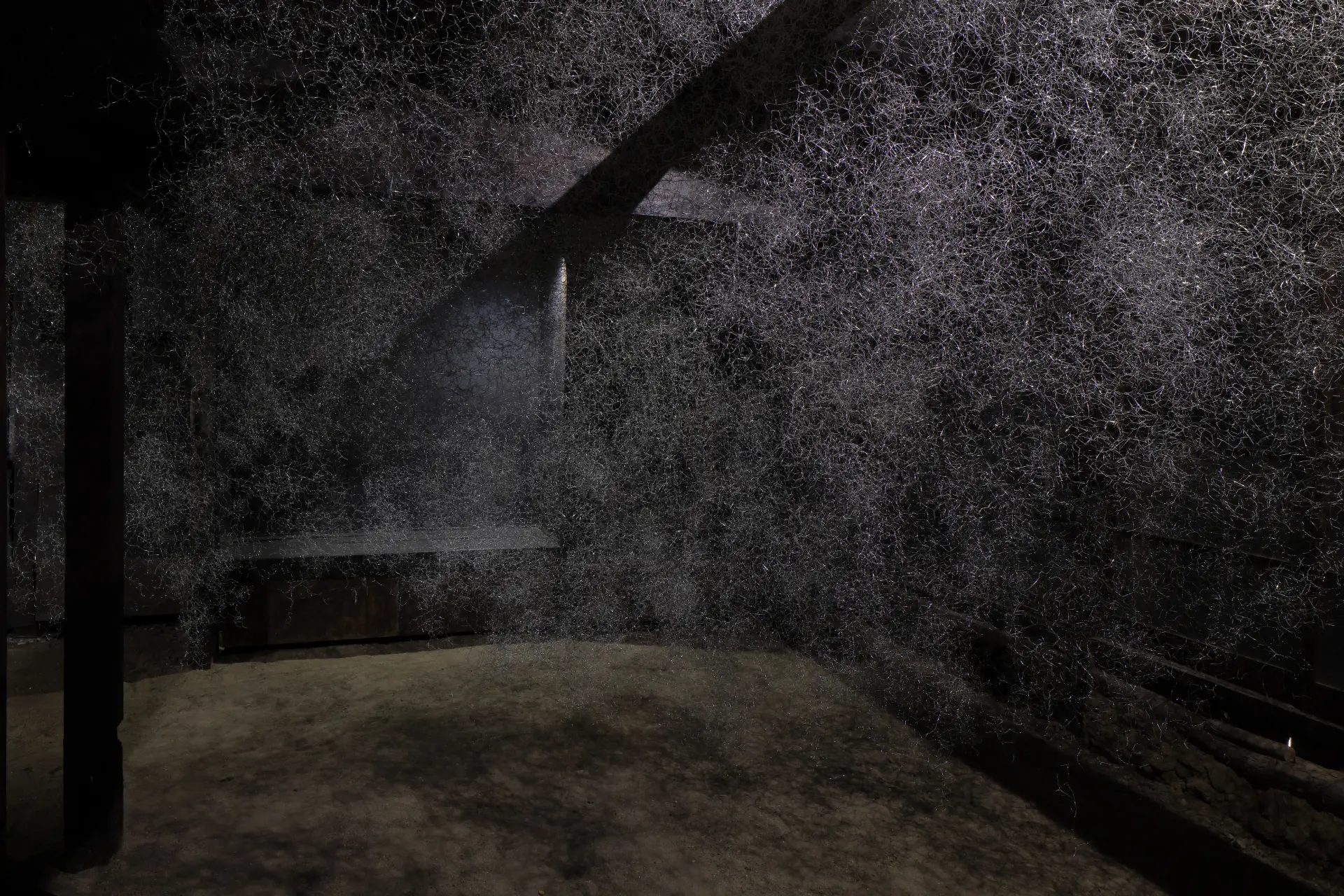
Nozomi Murata “Manoura Scenery 2022”
An installation in a seaside traditional house that expresses the contrast between a rough sea and a calm sea by connecting countless ultra-fine stainless-steel wires.
Delicate cloud-like linework spreading from ceiling to floor and three-dimensional shading shift moment by moment as they catch reflected light, enveloping the viewer.
“Manoura” means the underside of the eyelids (a scene deeply engraved in one’s mind), and the work carries Murata’s wish that the space becomes a place to imagine the past scenes this house has witnessed, as well as the future.
- Hours
- 10:10am – 4:30pm
- Closed on
- October 23, October 30
- Admission
- Shared ticket: 2,000 yen (combined price for works ta02, ta05, ta07, ta10, ta13, ta22, ta23)
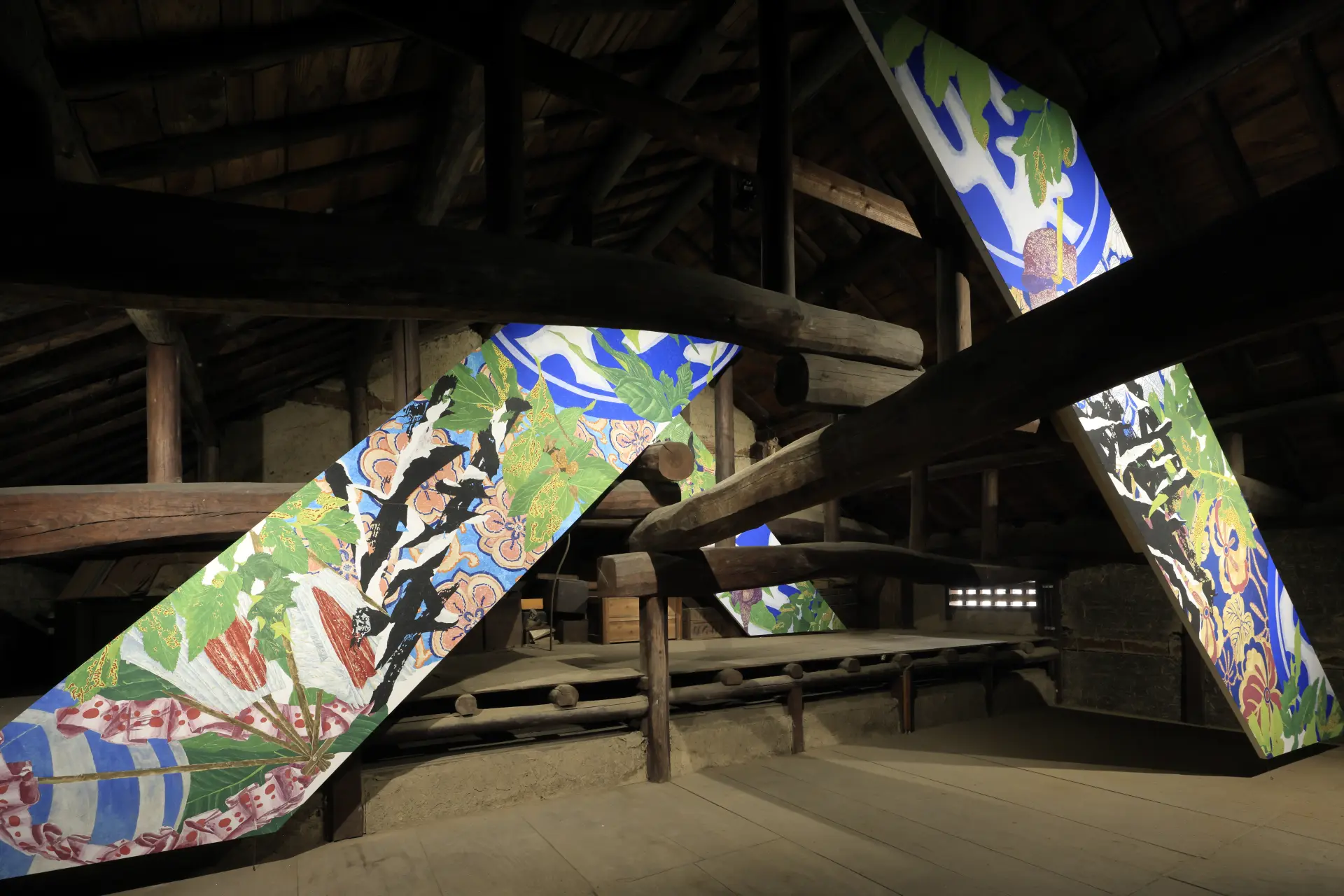
Yumiko Fujino “Living Together in Days Gone By”
A work that has been continuously produced through repeated research in the Itamochi district, an abandoned village on Takashima, since the 2019 exhibition.
It unfolds across the entire space of a single home located in an alley within the settlement.
Using Japanese painting materials such as mineral pigments and hemp paper, the work delicately depicts island scenes and fragments of life across different timelines through traditional techniques.
By interweaving past and present, it conveys the area’s story spatially.
- Hours
- 10:10am – 4:30pm
- Closed on
- October 23, October 30
- Admission
- Shared ticket: 2,000 yen (combined price for works ta02, ta05, ta07, ta10, ta13, ta22, ta23)
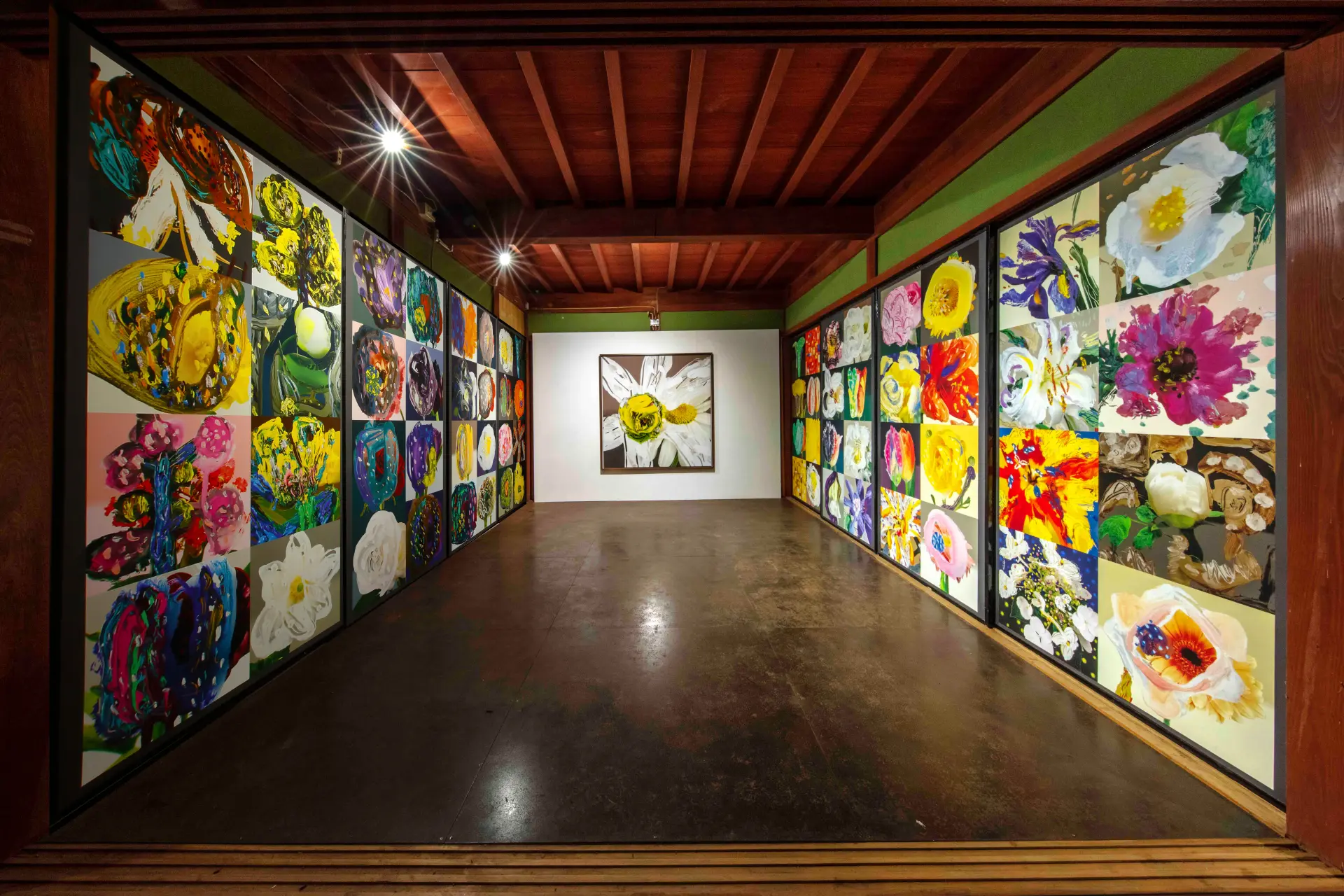
Shigeaki Koeda “Hana no Koe / Kokoro no Iro 2025 / House of Pyrethrum”
A multilayered, richly colored installation that expresses flowers encountered on Takashima through photography, fusuma paintings, and ceramic objects.
Through Koeda’s unique method of combining photography and painting, the work questions the viewer’s gaze in the moment of seeing flowers.
The 2025 exhibition is a new three-part development staged in a private home Approx. a 10-minute walk from Takashima Port, bringing Takashima’s abundant nature, island history, and everyday scenes into focus throughout the space.
- Hours
- 10:10am – 4:30pm
- Closed on
- October 23, October 30
- Admission
- Shared ticket: 2,000 yen (combined price for works ta02, ta05, ta07, ta10, ta13, ta22, ta23)
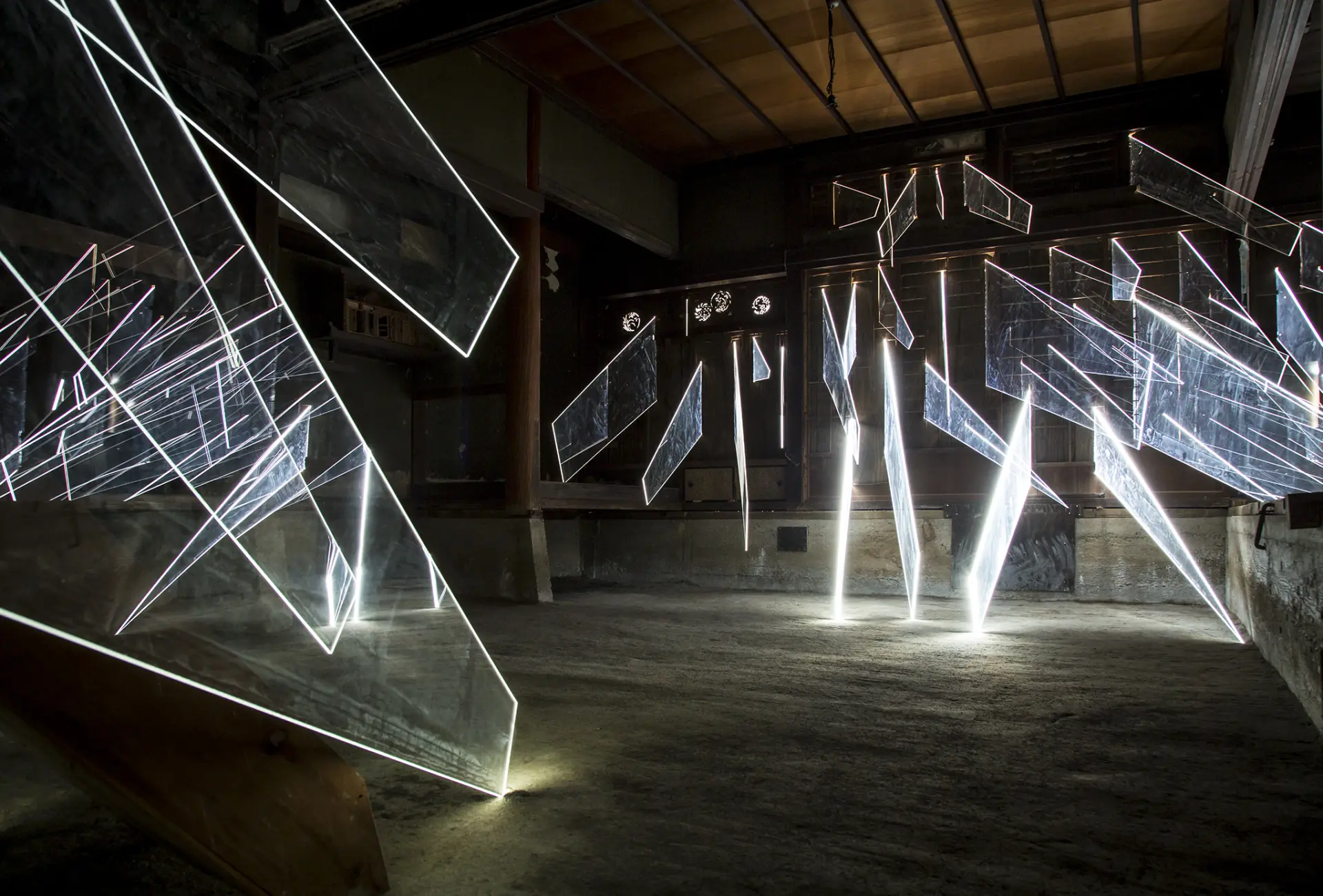
Kayako Nakashima “An Old House Where Time Falls”
A work set in a traditional house right by Takashima Port, expressing the island’s 모습 as it is tossed about by the flow of time.
Multiple acrylic panels piercing the walls guide natural light into the interior, creating a quiet space where lines of light emerge in darkness.
Without using electricity, this approach incorporates the contingencies of the sun’s movement and weather, and its expression changes as the light shifts and time passes.
The crossing of an old house and new light gives viewers a sense of the past, present, and future overlapping.
- Hours
- 10:10am – 4:30pm
- Closed on
- October 23, October 30
- Admission
- Shared ticket: 2,000 yen (combined price for works ta02, ta05, ta07, ta10, ta13, ta22, ta23)
Awashima, with Natural Scenery Unique to Remote Islands
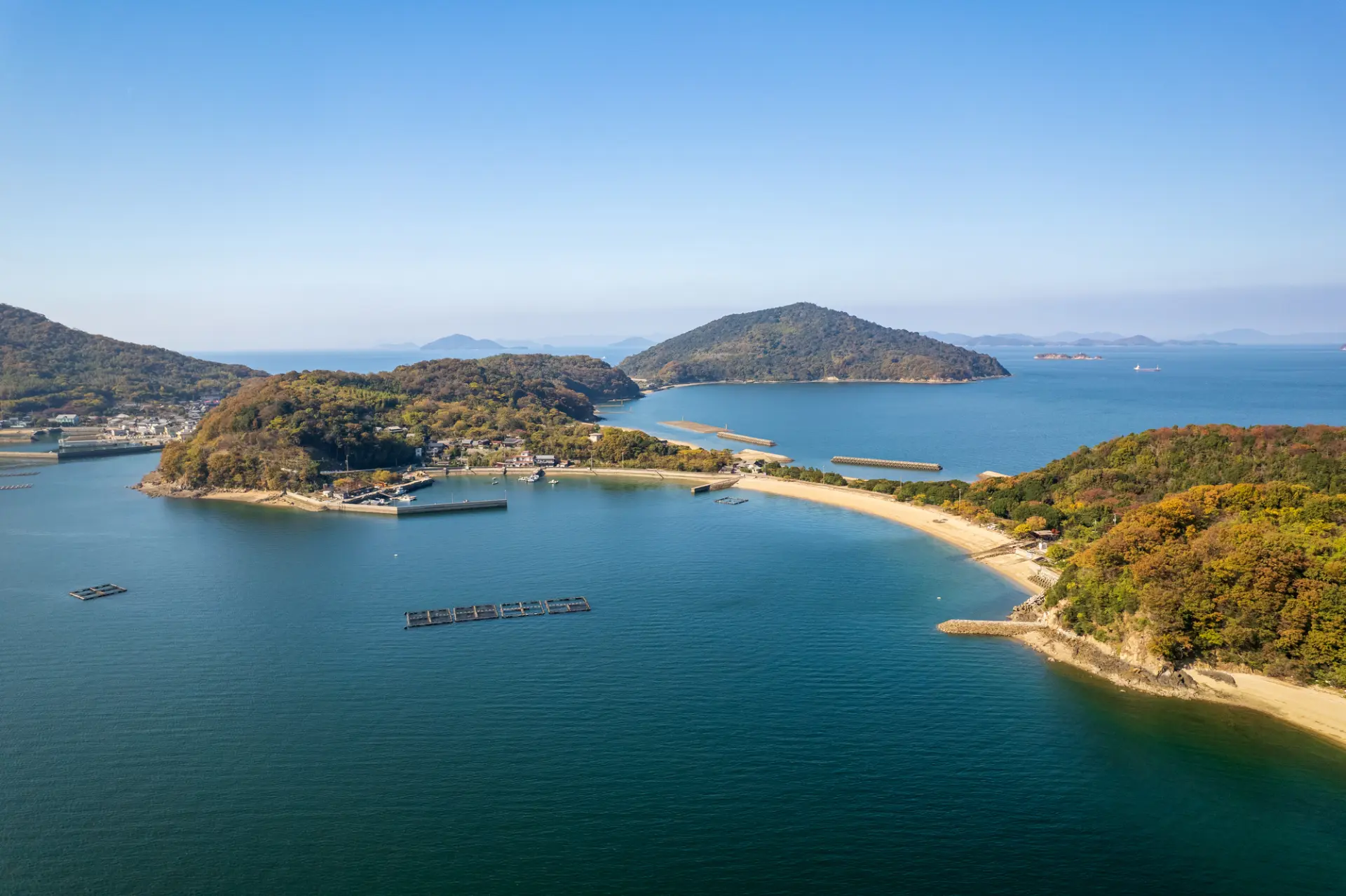
Awashima, in Mitoyo City, Kagawa Prefecture, is a small island floating off the Shonai Peninsula.
It has a unique landform where three islands are connected by sandbars in a screw-like shape, formed by ocean currents.
Its appeal lies in an extraordinary remote-island atmosphere where time flows gently, with beautiful starry skies and sunsets over white-sand beaches.
Another highlight is “umihotaru” (sea fireflies), in season from May to October.
It also prospered as a port of call for Kitamaebune trading ships in the Edo period, and has produced many sailors, including the establishment of Japan’s first local seafarer training school in 1897.
At Setouchi Triennale 2025, the entire island comes together to energize the festival.
During the festival, a map (Awappu) summarizing Awashima’s highlights and dining spots is distributed, making it easy to enjoy while experiencing the island’s scenery and daily life.
From Takamatsu Station, you can reach the island in around 2 hours via the route below.
- Take the Yosan Line to Takuma Station
- From Takuma Station, take a bus to Suda Port
- From Suda Port, take a passenger boat to Awashima Port
Since exhibitions are concentrated in the central area, you can explore the island on foot. Here are some of Awashima’s works.
Nguyen Trinh Thi “Awashima, Fall”
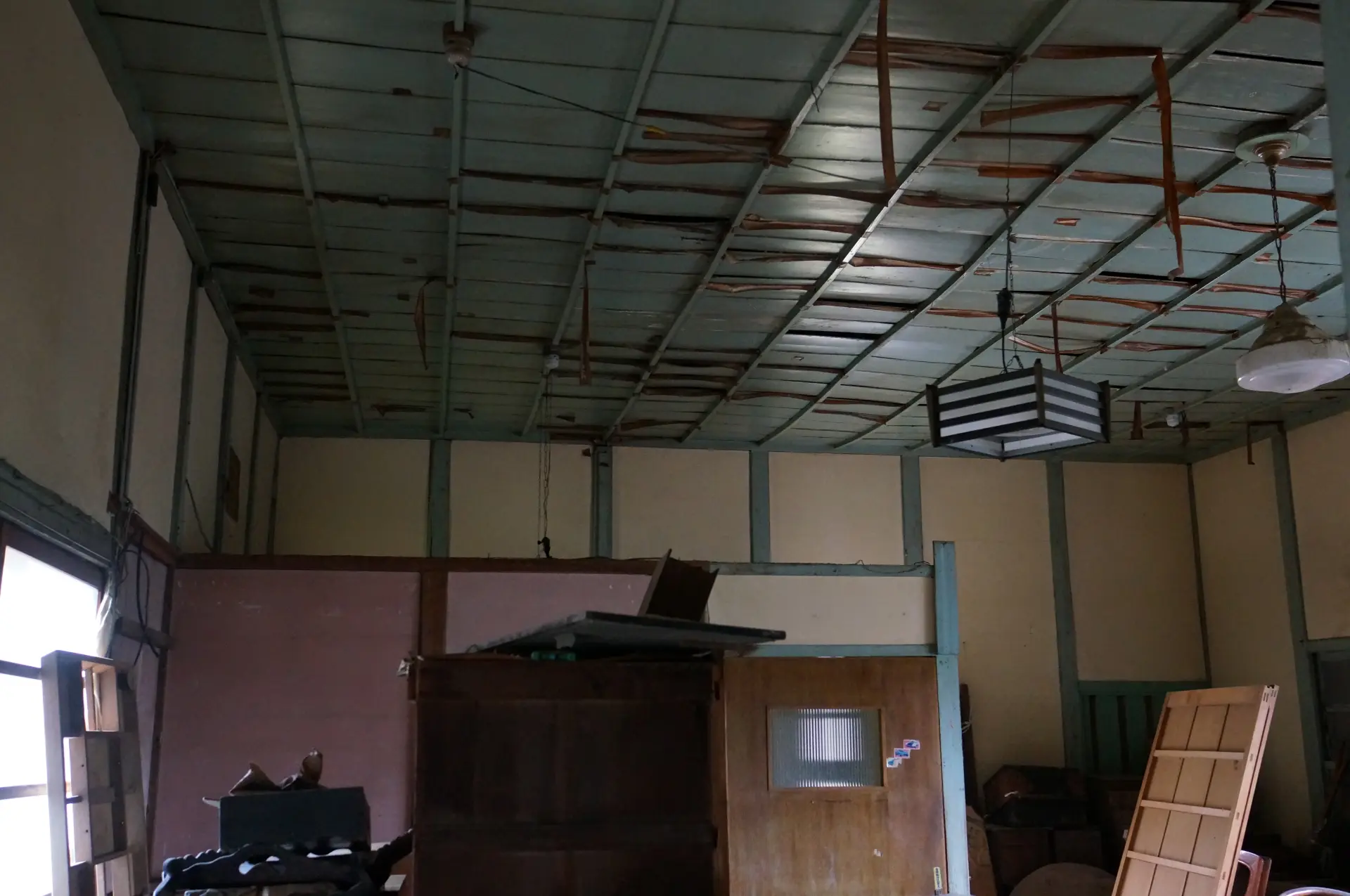
A work that revives a former post office—built over 100 years ago—as a small theater in Awashima’s central area.
Nguyen Trinh Thi drew inspiration from the communication methods and everyday sounds of former sailors who lived on the island, evoking past communication culture and island memories throughout the space.
Messages submitted by islanders and visitors are converted into Morse code and then automatically performed, with instruments taking on the role of postal workers to artistically express traces of communication.
Through sound, it builds connections between people across time.
- Hours
- 10:00am – 4:30pm
- Closed on
- October 23, October 30
- Admission
- 500 yen
Tuan Mami “Borderless: Vietnamese Immigrant Garden (No.11)”
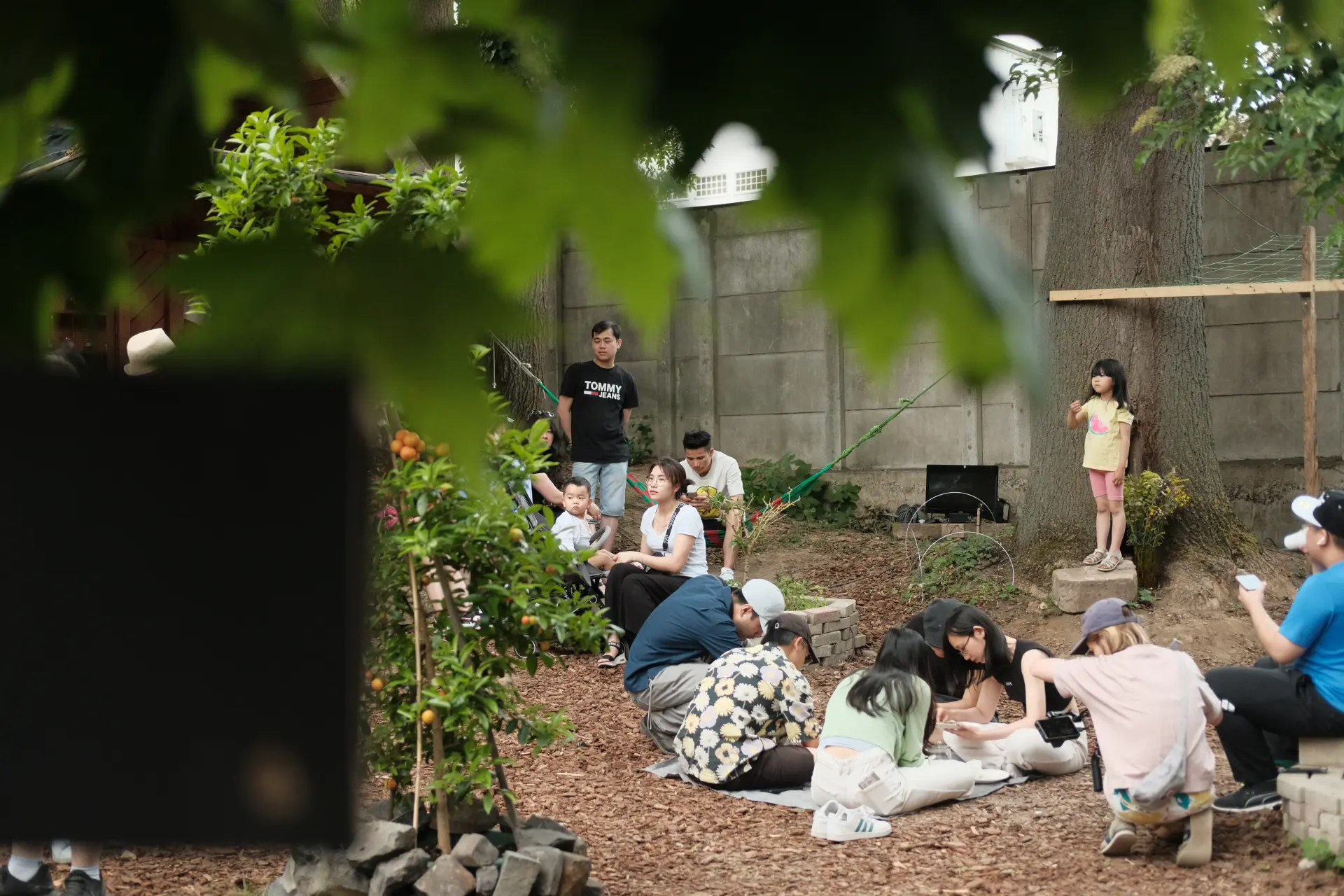
An installation presented at two sites: the “Lighthouse Garden” at the former Awashima Elementary School, and the “Temple of the Immigrant Garden” near Awashima Fishing Port.
Tuan Mami conducted fieldwork on the island’s history and residents’ stories, as well as Vietnamese immigrants living in Mitoyo City, and created the work based on their voices and daily lives.
While drawing on the region’s character, it encourages encounters and exchange among people with diverse backgrounds.
- Hours
- 10:00am – 4:30pm
- Closed on
- October 23, October 30
- Admission
- Free
Fumiaki Aono “A House to Return To: Setouchi Awashima Old House, Staying/Layering Brain Nautical Chart Image, 2025”
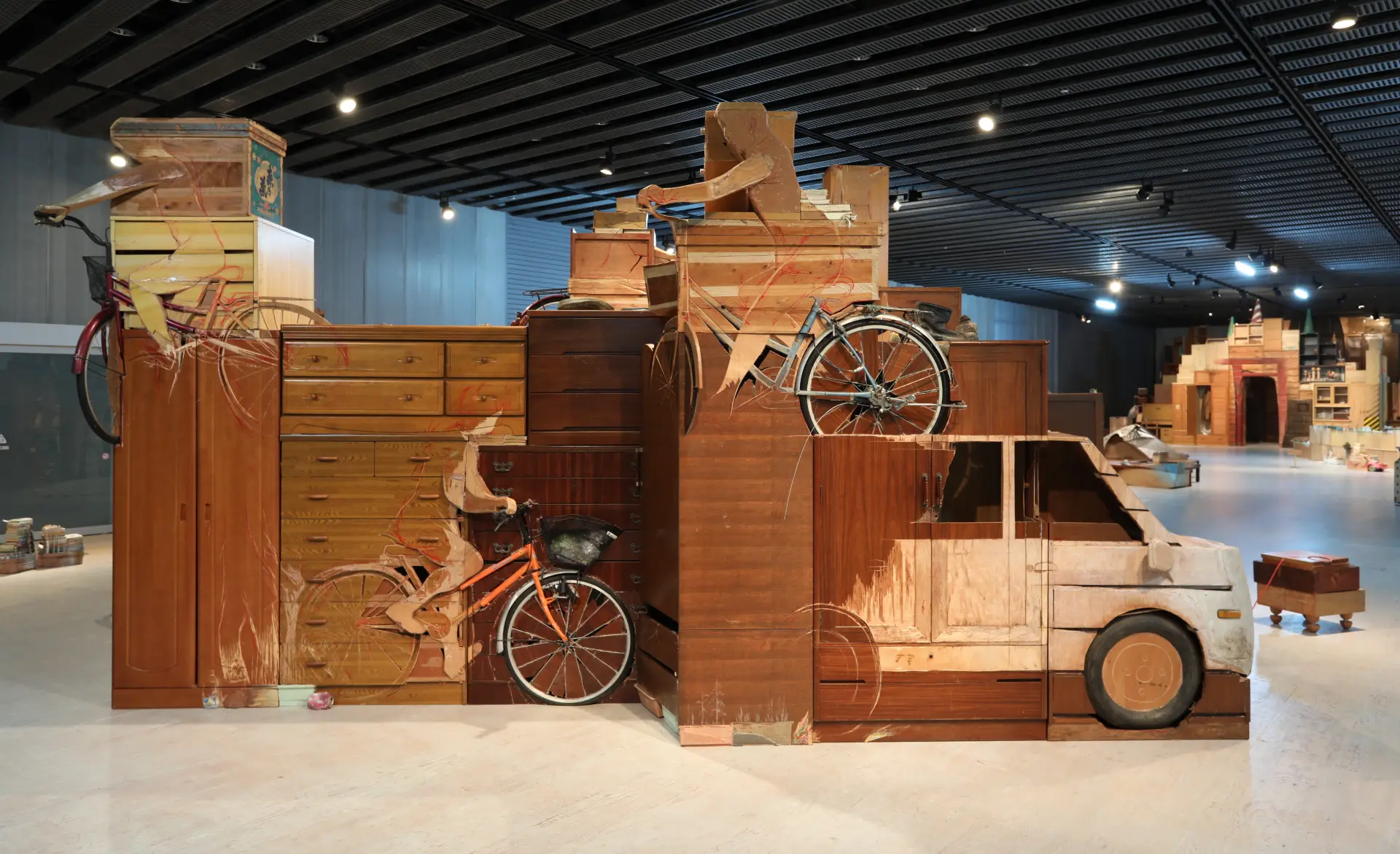
An indoor installation presented in a vacant house in Awashima’s central area.
Starting from an interest in the act of “fixing,” it traces island memories using broken and discarded items and everyday goods collected on the island.
This work quietly conveys the historical depth of Awashima by reflecting its landscape and culture in layers.
It also highlights Awashima’s relationship with the “ship” by using fragments of vessels that have remained especially important.
- Hours
- 10:00am – 4:30pm
- Closed on
- October 23, October 30
- Admission
- Free
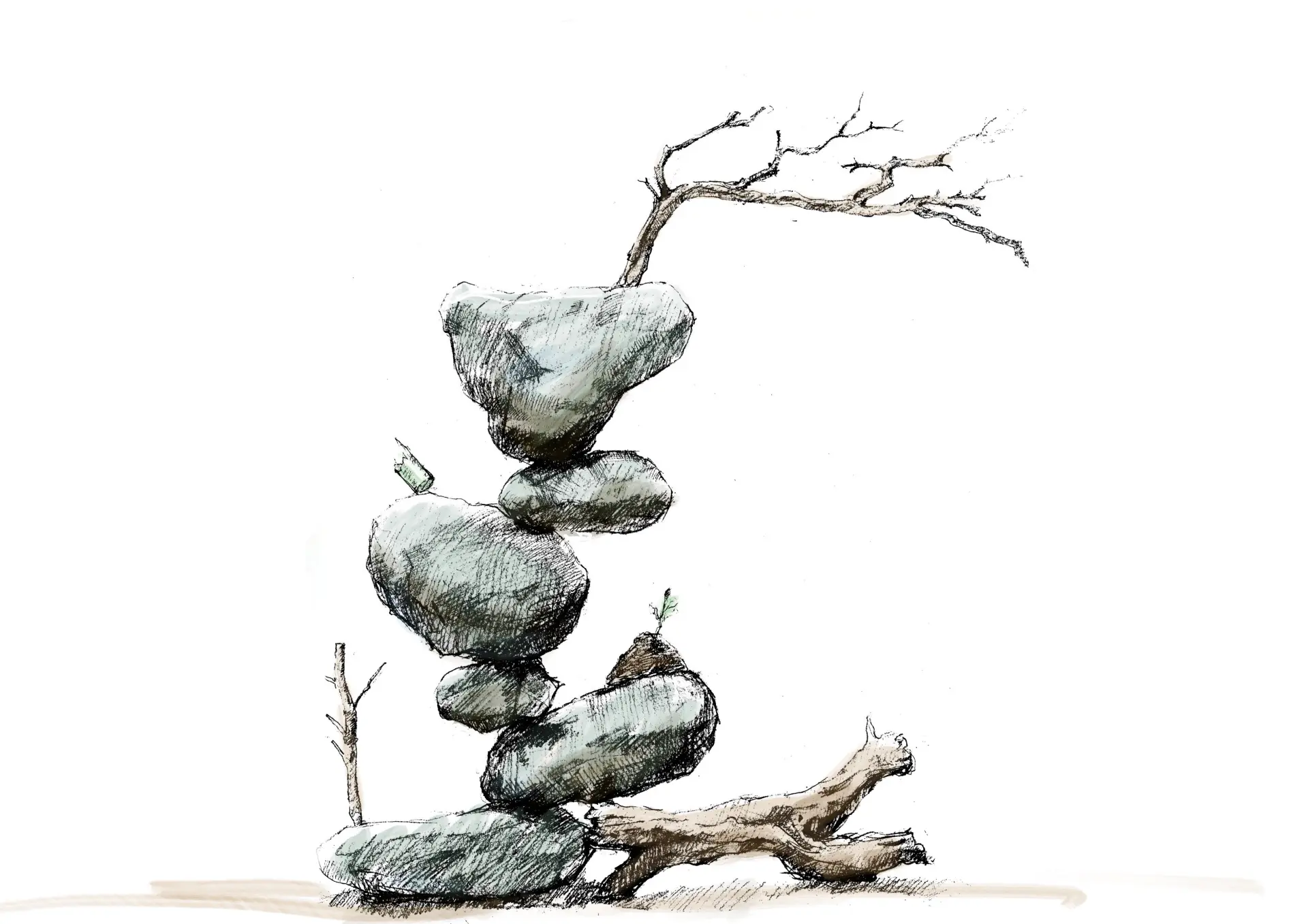
Shugo Kashiwagi “Dyeing Awashima’s Memories”
A work that rewove Awashima’s natural environment, drifted materials, and memories of history and daily life, reinterpreting the island as a “living canvas.”
Presented at a venue set up within the central village, it unfolds around three themes: materials as traces of Awashima, visualizing the flow of time, and retying the relationship between the island and its people.
Another key element is a participatory process in which Kashiwagi holds workshops and incorporates pieces created together with islanders and visitors into the work.
- Hours
- 10:00am – 4:30pm
- Closed on
- October 23, October 30
- Admission
- Shared ticket (aw01-1,14,15): 1,000 yen
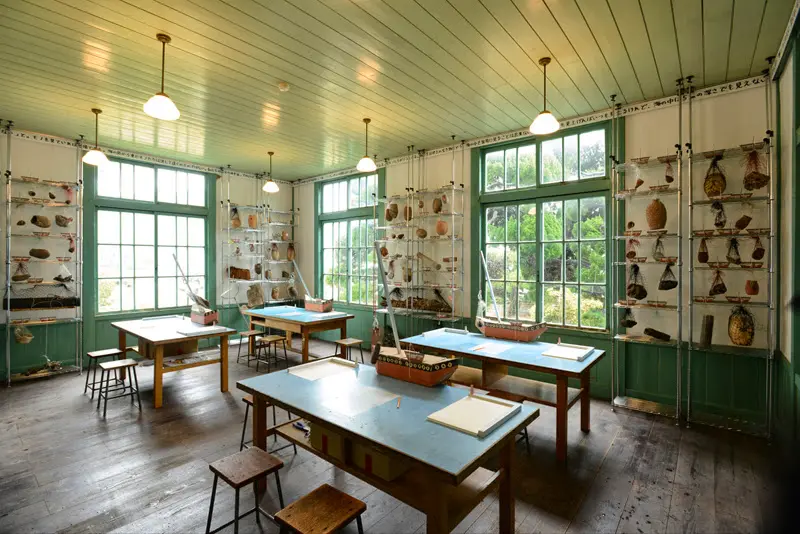
Katsuhiko Hibino “Setouchi Seabed Exploration Vessel Art Museum Project: Sokosoko Imagination Lab”
An art project based at the “Awashima Artist Village” in Awashima’s central area.
At Sokosoko Imagination Lab, artifacts lifted from the seabed, natural objects, and漂着物 are exhibited.
Through the stories they seem to tell, viewers can reflect on the world beneath the sea and the history of the Seto Inland Sea.
- Hours
- 10:00am – 4:30pm
- Closed on
- October 23, October 30
- Admission
- Shared ticket (aw01-1,14,15): 1,000 yen
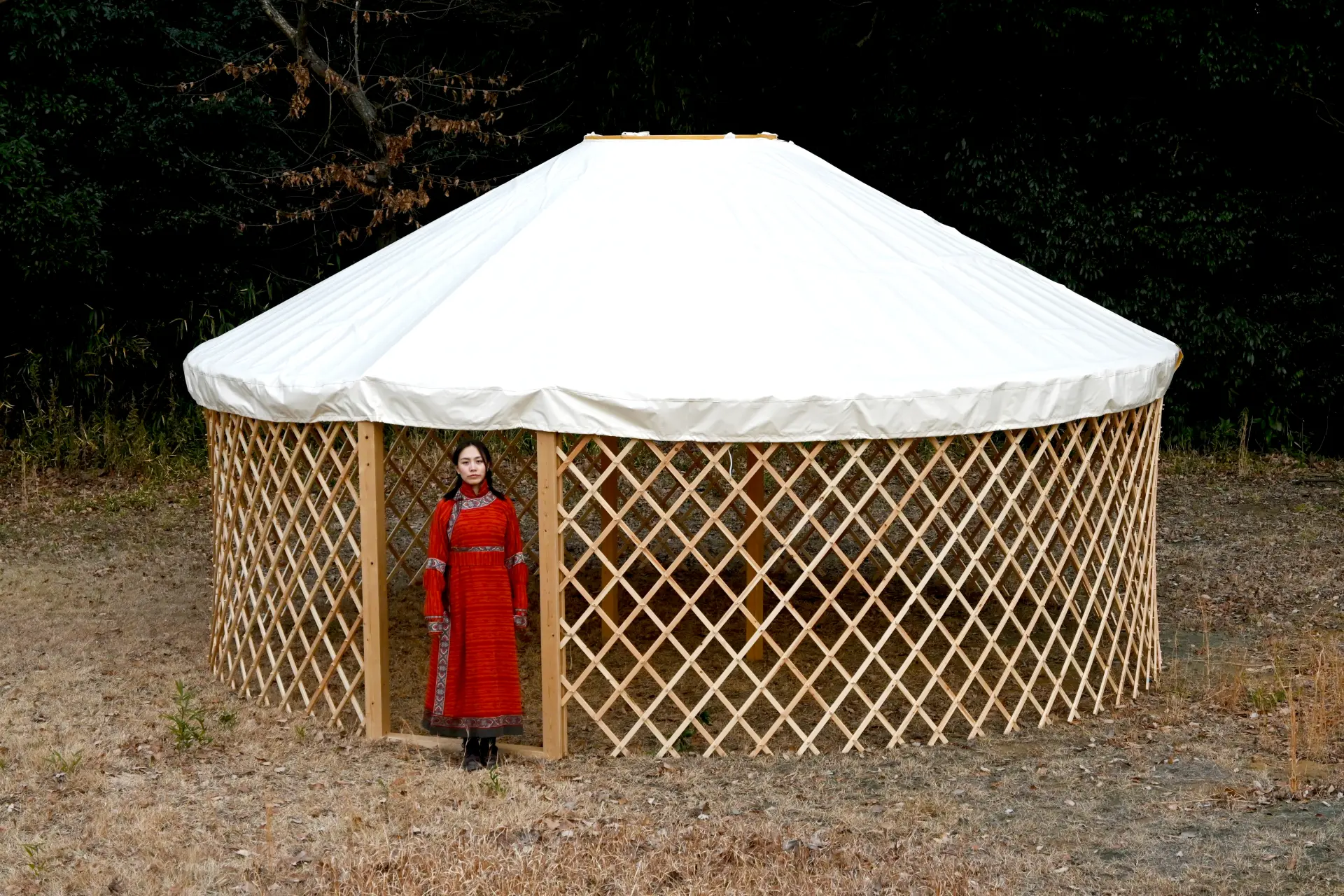
Taorig Sarina “A Ship of Sailing Memories: Nomad Gallery in Awashima”
An installation set up in Awashima’s central area that lets visitors relive the memories of former sailors from Awashima.
Taorig Sarina is an artist from Inner Mongolia Autonomous Region, China, who creates works that emphasize space and experience, with “emotional exchange” that transcends nations and ethnicities as a central theme.
The lives of sailors who traveled the open sea and nomads who live on vast grasslands overlap, creating a fantastical space.
- Hours
- 10:00am – 4:30pm
- Closed on
- October 23, October 30
- Admission
- Shared ticket (aw01-1,14,15): 1,000 yen
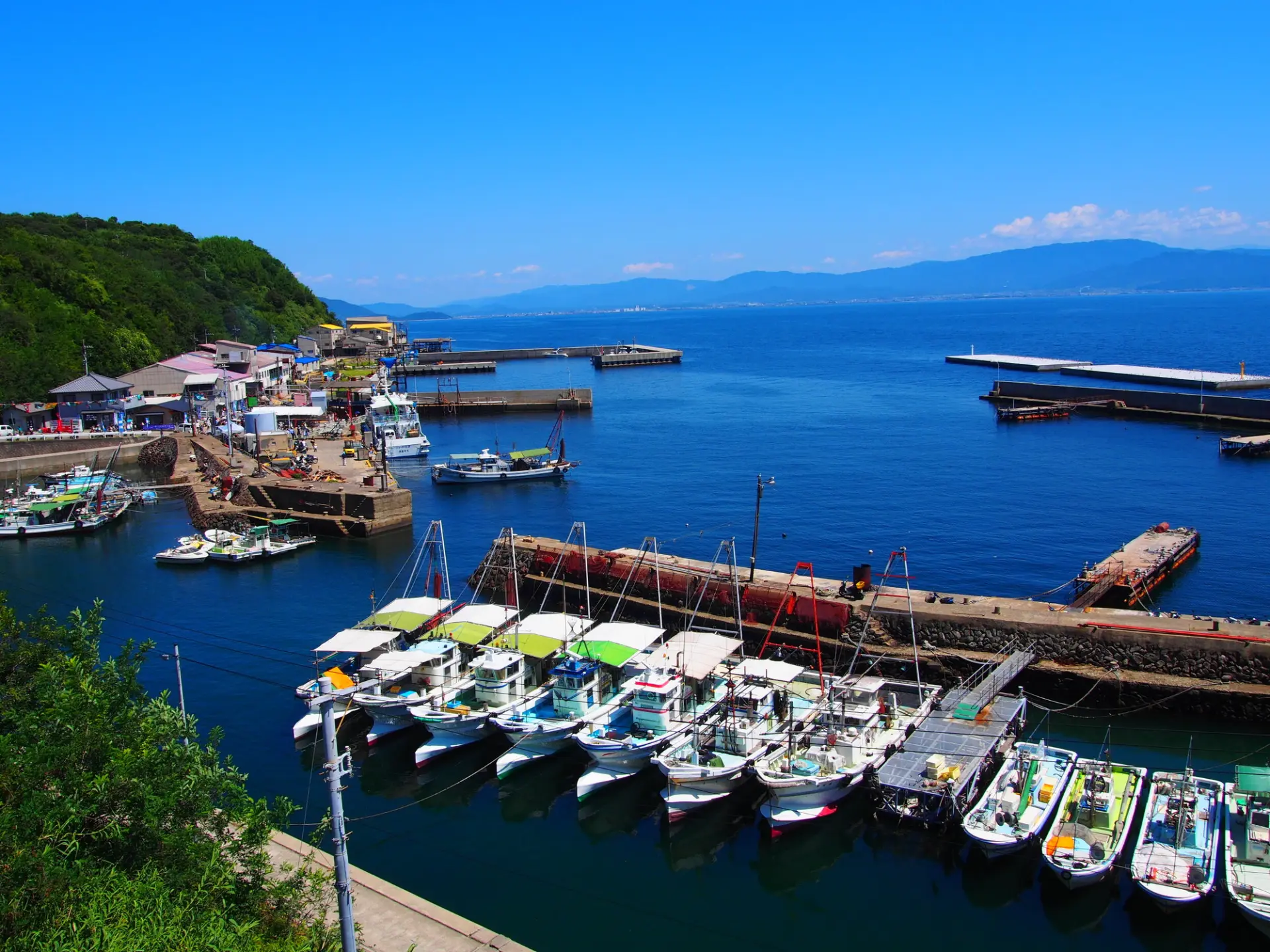
Ibukijima, Where Fishing Has Long Been a Way of Life
Ibukijima, in Kanonji City, Kagawa Prefecture, is a small island at the westernmost edge of the prefecture, floating Approx. 10 km west of Kanonji Port in the Hiuchinada Sea.
It has a plateau-like terrain made up of andesite and granite, with steep cliffs rising along the coastline and flat land spreading across the plateau.
Fishing and maritime transport culture have long been deeply rooted here, especially iriko (dried sardines) fishing using patch-net fishing.
The local specialty “Ibuki Iriko” is a well-known brand nationwide as a key ingredient for Sanuki udon broth.
Traditional customs have also been passed down, including the “88-temple pilgrimage” (Shima Shikoku pilgrimage) and the unique preservation of Heian-period Kyoto accent patterns, said to remain only here in Japan.
From Takamatsu Station, you can reach the island in 2–3 hours via the route below.
- Take a JR limited express to Kanonji Station
- From Kanonji Station, take a bus to Kanonji Port
- From Kanonji Port, take a high-speed boat to Ibukijima Maura Port
Getting around the area is mainly on foot, and there are many steep slopes, so we recommend wearing comfortable walking shoes.
At Setouchi Triennale 2025, seven works are exhibited in the island’s central area. Here are some of them.
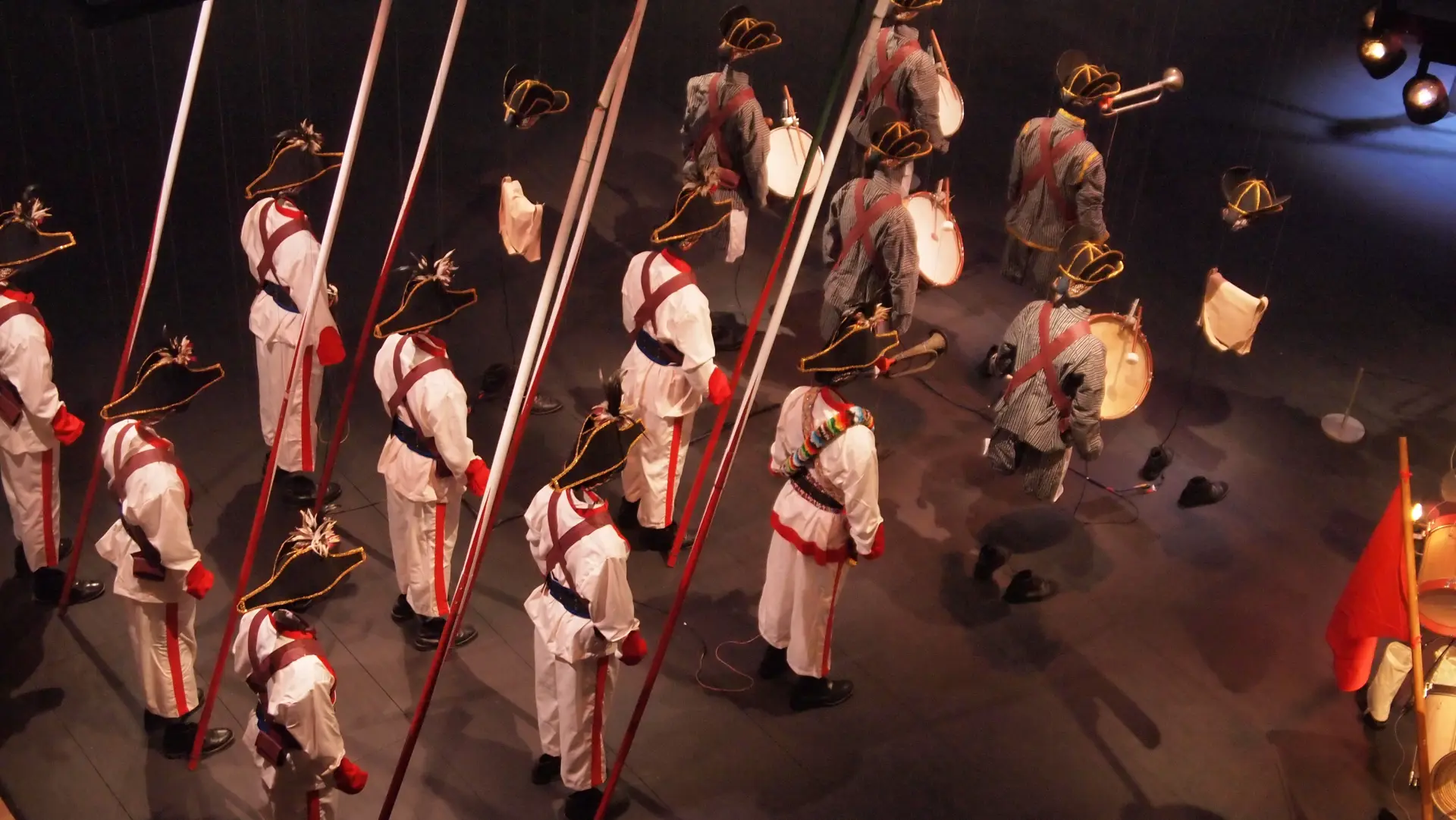
Jompet Kuswidananto “Echo”
An installation set in a closed school in Ibukijima’s central area.
Reusing children’s costumes that were actually worn, it recreates a marching band that evokes the energy of the time.
It creates a space as if a ghostly marching band is jamming in session.
Through the work, it aims to revive the bustle of the former school and connect the memories of elderly residents who remain on the island with the dwindling number of young people.
- Hours
- 9:00am – 4:30pm
- Closed on
- October 23, October 30
- Admission
- 500 yen
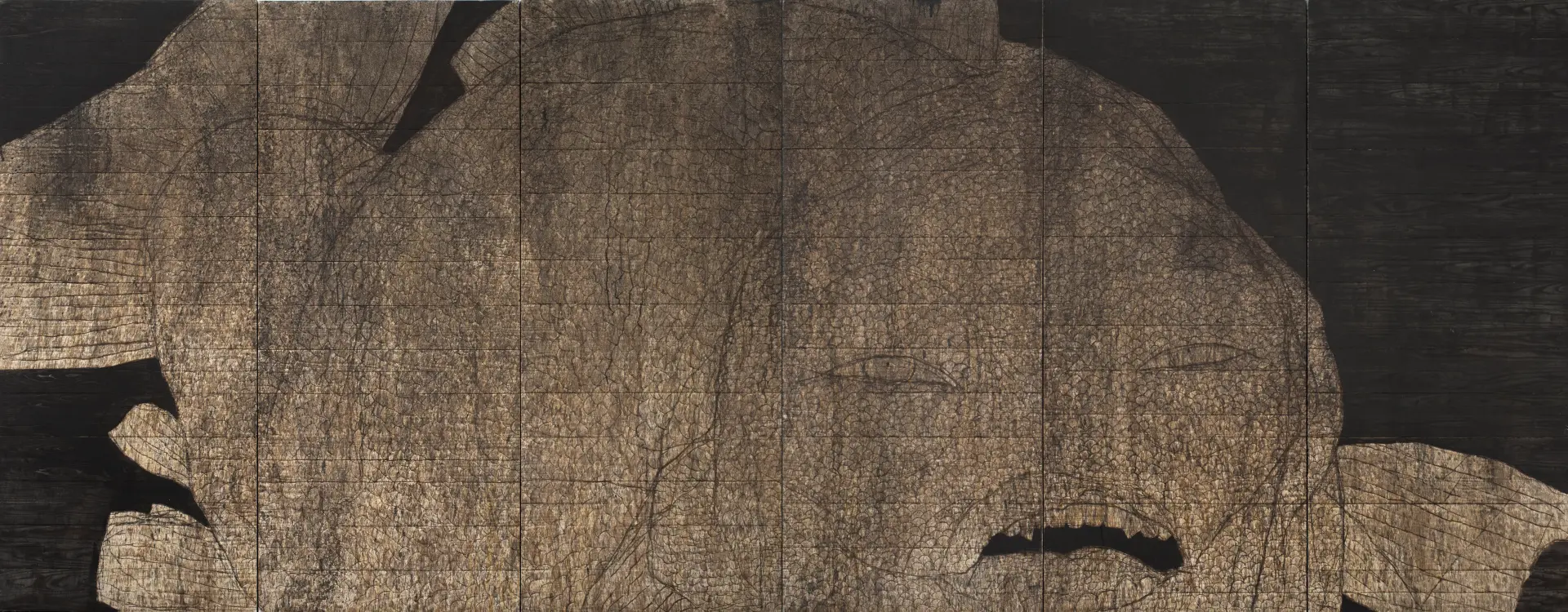
Keizaburo Okamura “Fish of the Western Underworld”
A painting installation inspired by research on Ibukijima.
Giant fish and countless schools of small fish are depicted on large folding-screen-style panels, writhing among the waves.
Another highlight is its vivid expression of vitality, using a distinctive technique: incising lines into a thickly painted base, while scattered粒 of mineral pigments create scale-like patterns.
Exhibited at three locations scattered around the central area: the “Former Ibuki Branch Station Barracks,” “Ibukijima Folk Museum,” and the “Former Ibuki Elementary School.”
- Hours
- 9:00am – 4:30pm
- Closed on
- October 23, October 30
- Admission
- 500 yen
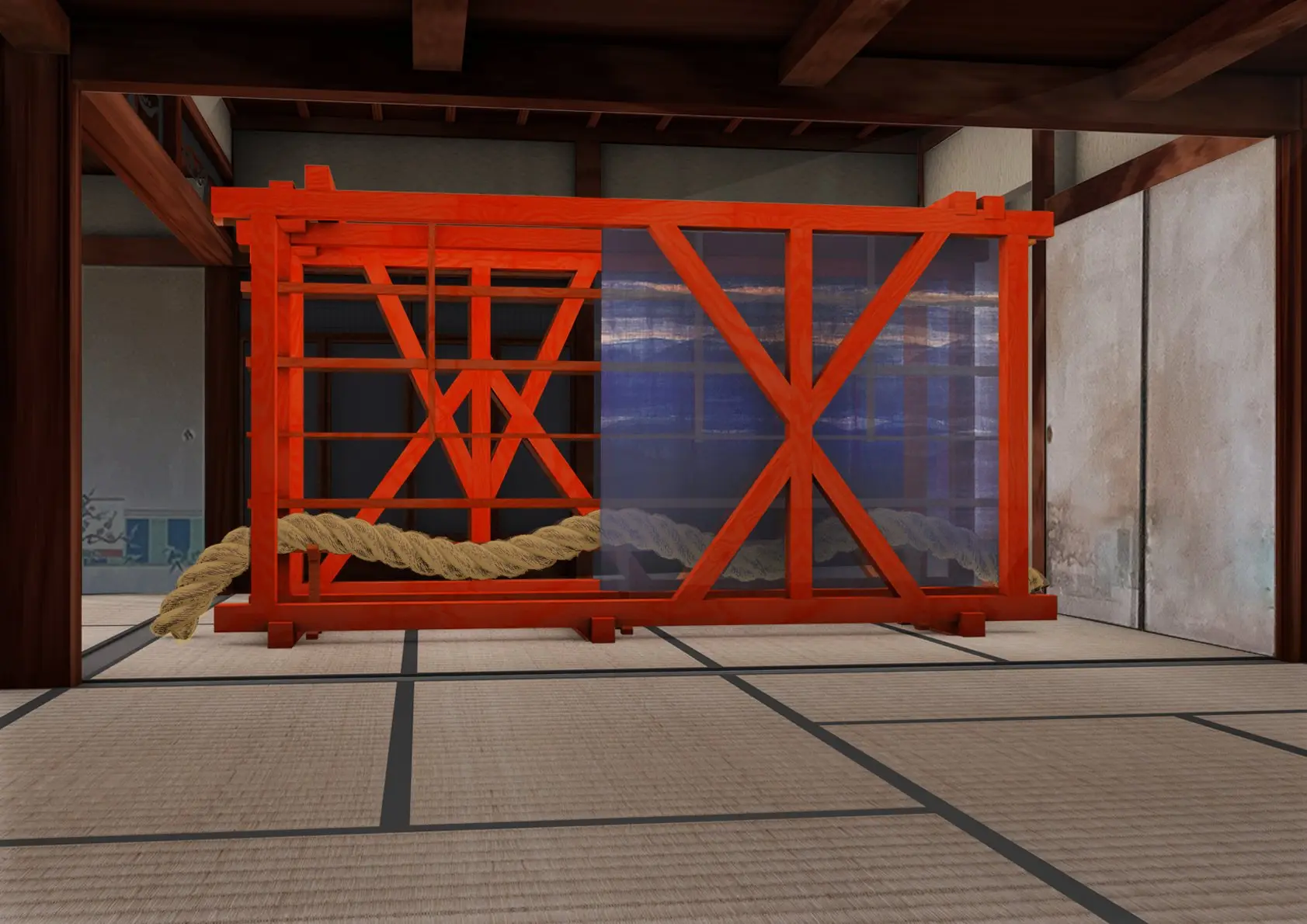
Olaf Holzapfel “Wild Game”
An installation presented in a traditional house in Ibukijima’s central area.
Based on the German fairy tale “The Fisherman and His Wife,” it features a stage-like composition incorporating craftsmanship from both Japan and Germany, such as dyeing, weaving, and carpentry.
By combining the island’s traditional textile and woodworking skills with Western techniques, it creates a vibrant space.
- Hours
- 9:00am – 4:30pm
- Closed on
- October 23, October 30
- Admission
- 500 yen
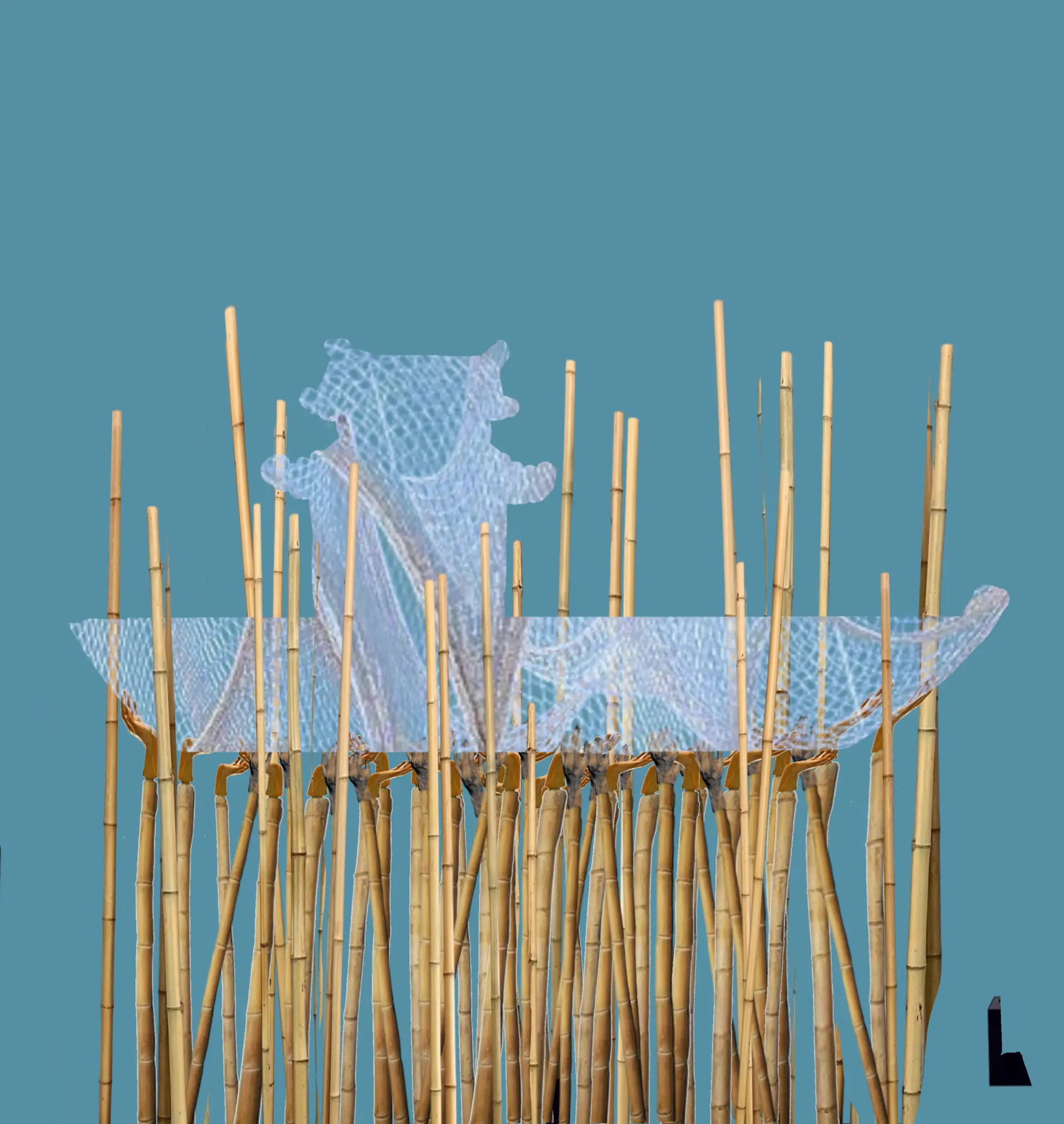
Bunpoad Pothisan “The Last Refuge”
An outdoor sculpture installed in Ibukijima’s central settlement.
Its shrine-like form, made by combining bamboo and metal, was inspired by Bunpoad Pothisan’s impressions of a new generation of island residents.
Bamboo symbolizes unity and cooperation, while metal symbolically represents the island’s daily life, such as “homes” and fishermen’s tools.
The metal mesh is sturdy yet see-through, suggesting the fragility and impermanence of a culture that still exists yet is being forgotten, and highlighting the importance of passing it on.
- Hours
- Outdoor artwork
- Closed on
- Open daily during the festival
- Admission
- Free
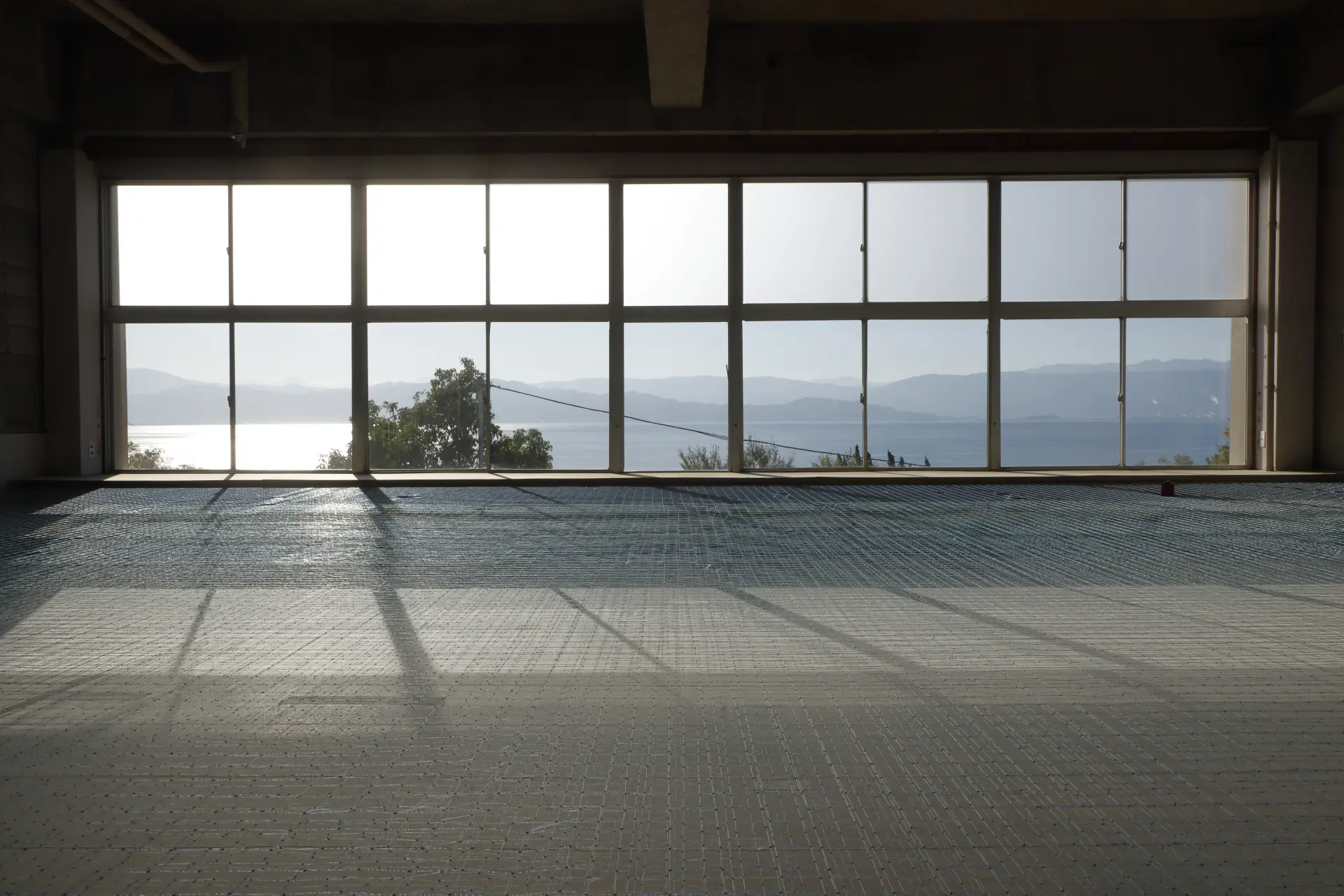
Alexandra Kovaleva & Takashi Sato / KASA “The Dream Objects See”
An indoor installation exhibited in the central area of Ibukijima.
It gathers everyday items and tools that have supported island life and uses them as materials to express the island landscape “Garden of the Sea.”
By layering Ibukijima’s fishing nets in multiple tiers to represent the “sea,” it visually connects with the Seto Inland Sea spreading beyond the windows.
Also a highlight is how frayed nets and stitching shimmer in the sunlight like waves.
- Hours
- 10:00am – 4:30pm
- Closed on
- October 23, October 30
- Admission
- 500 yen
A 2-Night, 3-Day Model Itinerary to Enjoy Fall-Only Experiences
With so many venues and exhibits, you may not be sure how to plan your Setouchi Triennale trip.
If so, we recommend using the model itinerary introduced below as a reference.
This is a 2-night, 3-day schedule focused on areas that are only part of the fall season, but even if you don’t have much flexibility, using it as a framework makes it easier to create a plan that fits you.
Night 1
On Day 1, depart Kojima Kanko Port in Okayama Prefecture for Honjima Port by high-speed boat.
After enjoying Honjima’s art works, head to Utazu Station and explore the Utazu Area.
Once you’ve seen as much as you like, choose a hotel in Utazu, Marugame, or around Takamatsu based on your preferences, and get ready for the next day.
- Depart from Kojima Kanko Port by high-speed boat (Departs 9:30am)
- View works on Honjima
- Take the ferry from Honjima Port to Marugame Port
- Walk Approx. 10 minutes from Marugame Port to Marugame Station
- Take the train to Utazu Station (Approx. 5 minutes from Marugame Station)
- View works in Utazu Area (Komachi / waterfront)
- Stay overnight in Utazu, Marugame, or around Takamatsu
Night 2
On Day 2, visit art works on Awashima and Takashima, then return to Utazu, Marugame, or around Takamatsu, as on the previous day.
Considering luggage, it’s convenient to stay at the same accommodation, but if you want a more active trip, choosing a different place is also recommended.
Also, be sure to allow extra time so you don’t miss the listed ferry and high-speed boat departures.
- Depart by train from Utazu Station, Marugame Station, or Takamatsu Station
- From Takuma Station, take a shuttle bus Approx. 15 minutes to Suda Port
- Depart from Suda Port by high-speed boat (Departs 9:10am)
- View works on Awashima, then depart by high-speed boat at 1:30pm
- View works on Takashima, then depart by ferry at 5:35pm
- From Tadotsu Port, take a shuttle bus Approx. 10 minutes to Tadotsu Station
- From Tadotsu Station, return to your accommodation in Utazu, Marugame, or around Takamatsu
Night 3
On the final day, view works on Ibukijima from late morning to just after 2:00pm, wrapping up your three-day trip through the five fall-season venues.
Reflecting on the exhibitions, local culture, and exchanges with various people, it’s a good idea to head back to Takamatsu Station or Takamatsu Airport for your return trip.
- Depart by train from Utazu Station, Marugame Station, or Takamatsu Station
- Walk Approx. 5 minutes from Kanonji Station to Kanonji Port
- Depart from Kanonji Port by high-speed boat (Departs 10:50am)
- View works on Ibukijima, then depart by high-speed boat at 3:00pm
- From Kanonji Port, reach Kanonji Station in Approx. 10 minutes by shuttle bus and on foot
- Head home from Takamatsu Station or Takamatsu Airport
FAQ about the Setouchi Triennale Fall Season
Q
When is the Setouchi Triennale fall season?
A
It will be held for 38 days from October 3, 2025 (Fri) to November 9, 2025 (Sun).
Q
Which areas serve as venues during the Setouchi Triennale fall season?
A
There are 14 areas in total: the nine venues for all seasons (including Naoshima and the Takamatsu Port Area) plus five fall-only venues—Honjima, Takashima, Awashima, Ibukijima, and the Utazu Area.
Summary
We’ve introduced useful information to know, focusing on key details for the Setouchi Triennale 2025 fall season, along with overviews of venues and exhibited works.
During the fall season, you can experience a wide range of offerings, from delicate indoor installations to outdoor sculptures and participatory projects using local ingredients, all rooted in island life and history.
While enjoying the beautiful scenery and nature of the Seto Inland Sea, traveling between islands and interacting with island residents are also part of what makes the Setouchi Triennale special.
Why not take this opportunity to visit one of Japan’s leading contemporary art festivals?
For the full picture of the Setouchi Triennale—including all-season areas, tickets, goods, and more—please read the article below.