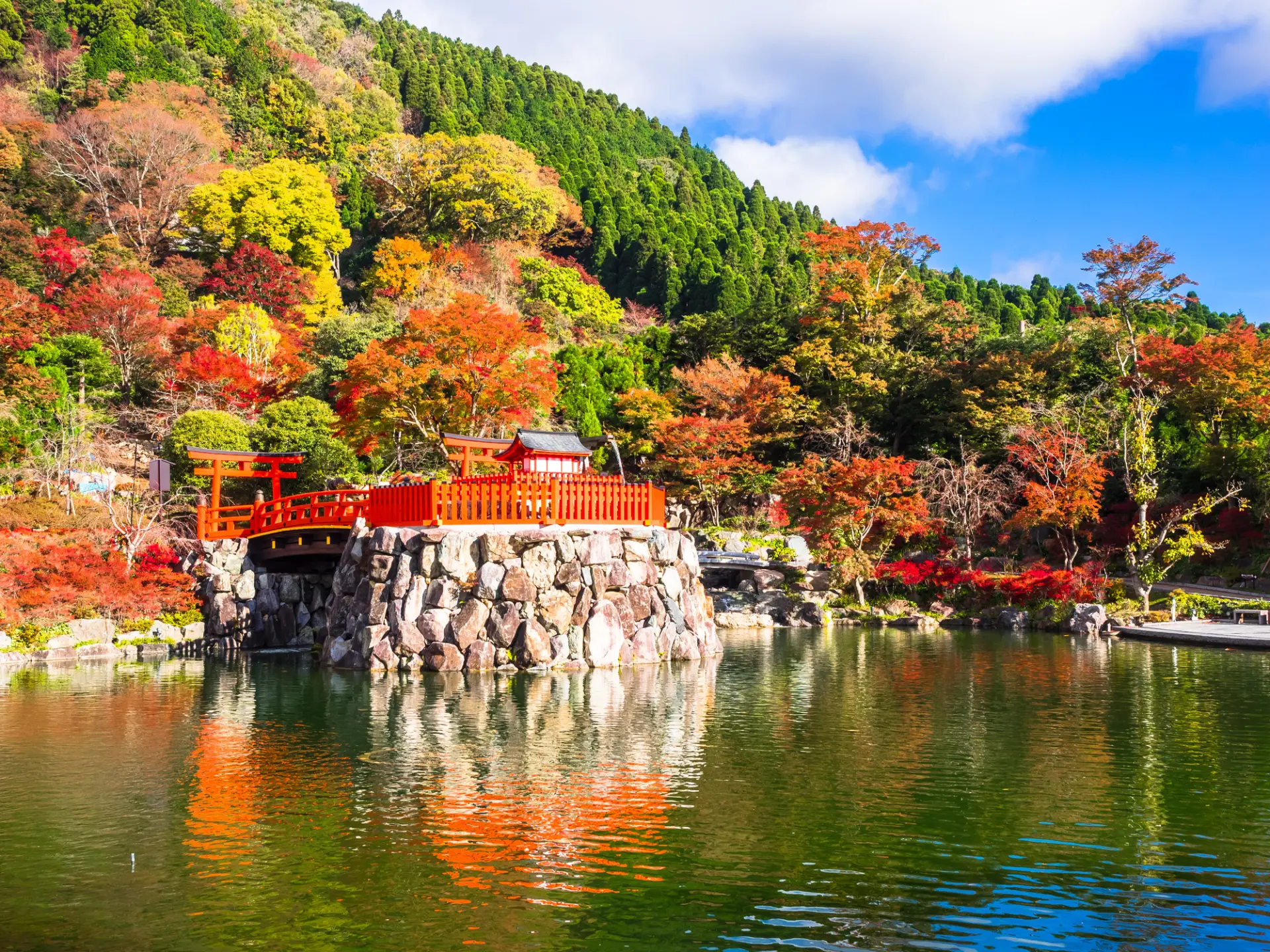
A Visitor’s Guide to Katsuo-ji: A Historic “Winning Daruma” Temple in the Mountains
Katsuo-ji is a Shingon Buddhist temple located in Meiji no Mori Minoh Quasi-National Park in Minoh City.
It’s popular for its seasonal flowers, fall foliage, and the daruma dolls you’ll spot all around the grounds.
With 1,300 years of history, it has long been known as a temple of “good fortune for victory,” and it still draws many worshippers today.
Here, we’ll introduce how to get to Katsuo-ji for an easy day trip from central Osaka, along with highlights and how to visit.
What is Katsuo-ji Like?
Katsuo-ji is the 23rd temple on the Saigoku 33 Kannon Pilgrimage, Japan’s oldest Kannon pilgrimage, and its principal image is the Eleven-Headed Thousand-Armed Kannon (Bodhisattva).
Because Honen, founder of Jodo-shu Buddhism, stayed at Katsuo-ji for Approx. four years during the Kamakura period (1185–1333), it is also the fifth sacred site of the 25 Honen Sacred Sites.
From central Osaka, you can get there in under an hour by combining train and bus, and the temple grounds spread across a mountainside with stunning scenery that changes with the seasons.
Since the Heian period (794–1185), it has been known as a temple of “good fortune for victory.” Powerful figures of their eras—including the Minamoto clan, the Ashikaga clan, and the Toyotomi clan—prayed here for victory in battle, and it was also worshipped by merchants and farmers.
Today, visitors come seeking good fortune for success in work and business, entrance exams, sports, performing arts, and elections, as well as wishes for recovery from illness and success in love.
It’s also famous as a “winning daruma” temple, known for its Katsuo Daruma with the character “勝” (victory) painted on its belly, and it draws many visitors from overseas.
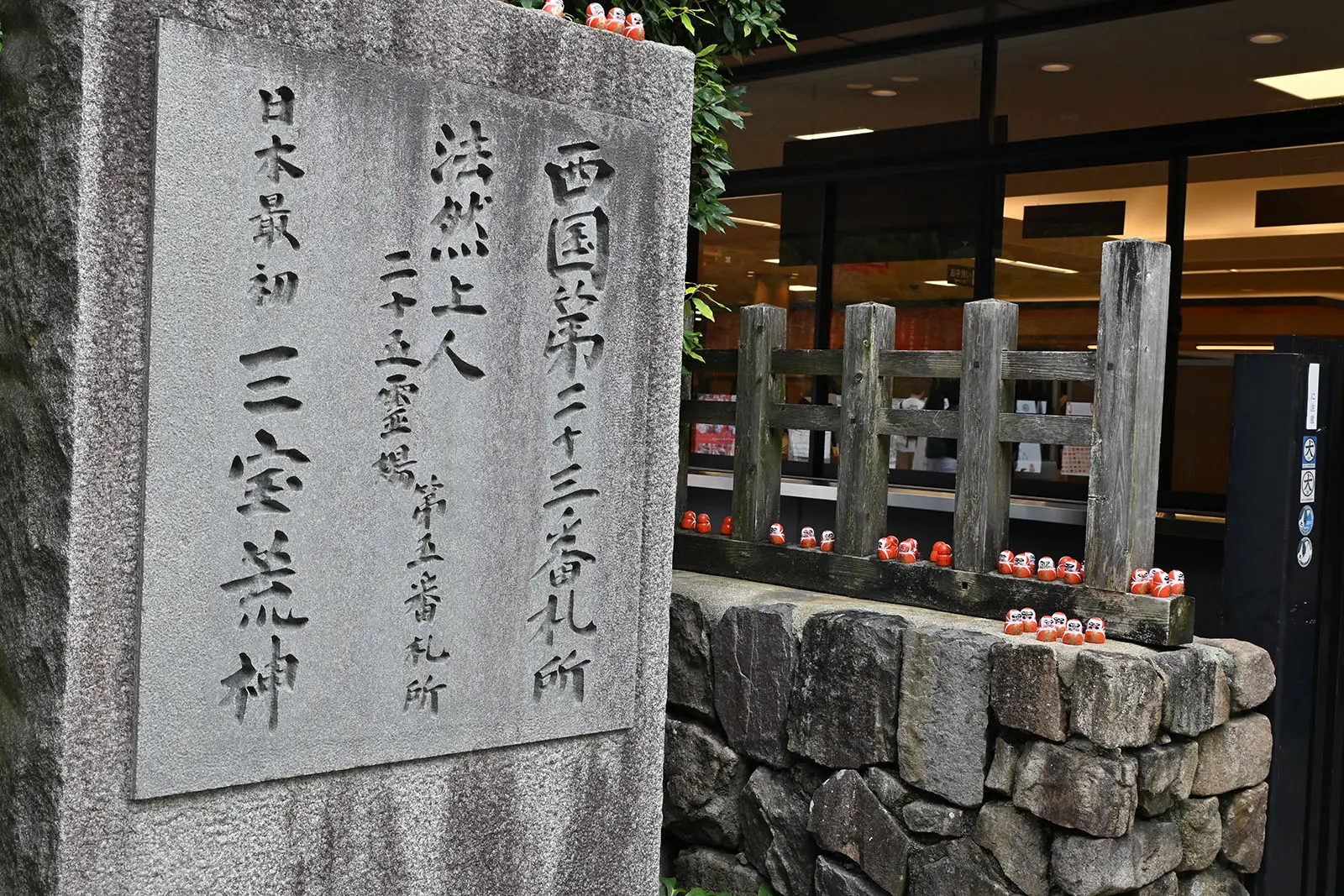
The History of Katsuo-ji
In 727 (Jinki 4), during the Nara period (710–794), twin brothers Zenchu and Zensan built a hermitage here and began training in order to complete the copying of the Daihannya-kyo sutra.
A prince of Emperor Konin took vows under the brothers and took the name Kaijo.
Carrying on their wish, Kaijo enshrined the 600 copied volumes of the Daihannya-kyo sutra in a new hall and named it Miroku-ji.
During the time of the sixth head priest, Priest Gyojun, Emperor Seiwa fell ill, but his sickness was healed through Gyojun’s prayers.
Delighted, the emperor granted the temple the name “Katsuo-ji,” saying it was “something that surpasses even the power of the king.”
However, feeling it was too presumptuous to “surpass the king,” Gyojun changed the character for “king” (王) to “tail” (尾). This is the origin of the name Katsuo-ji, which is still pronounced “Katsuo-ji” today.
How Do You Get to Katsuo-ji?
There are several ways to get to Katsuo-ji, but if you want to keep costs down, taking the train and a local bus is recommended.
You can also get there by private car or rental car.
Train + Local Bus (Transfer at Minoh-Kayano) Is Recommended
The top recommendation is to take a local bus or taxi from Minoh-Kayano Station, the northern terminus of the Kita-Osaka Kyuko Railway, which runs through service with the Osaka Metro Midosuji Line.
It takes 26 minutes from Umeda Station and 19 minutes from Shin-Osaka Station to reach Minoh-Kayano Station. From Minoh-Kayano Station, you can take the direct bus to Katsuo-ji—Hankyu Bus, Hokusetsu Reien Line 30 bound for Katsuo-ji—for Approx. 21 minutes.
On weekdays, buses run every 30 minutes between 9:00 am and 3:00 pm; on Saturdays, Sundays, and holidays, they run every 20 minutes.
When it’s crowded, extra buses may also run every 10 minutes.
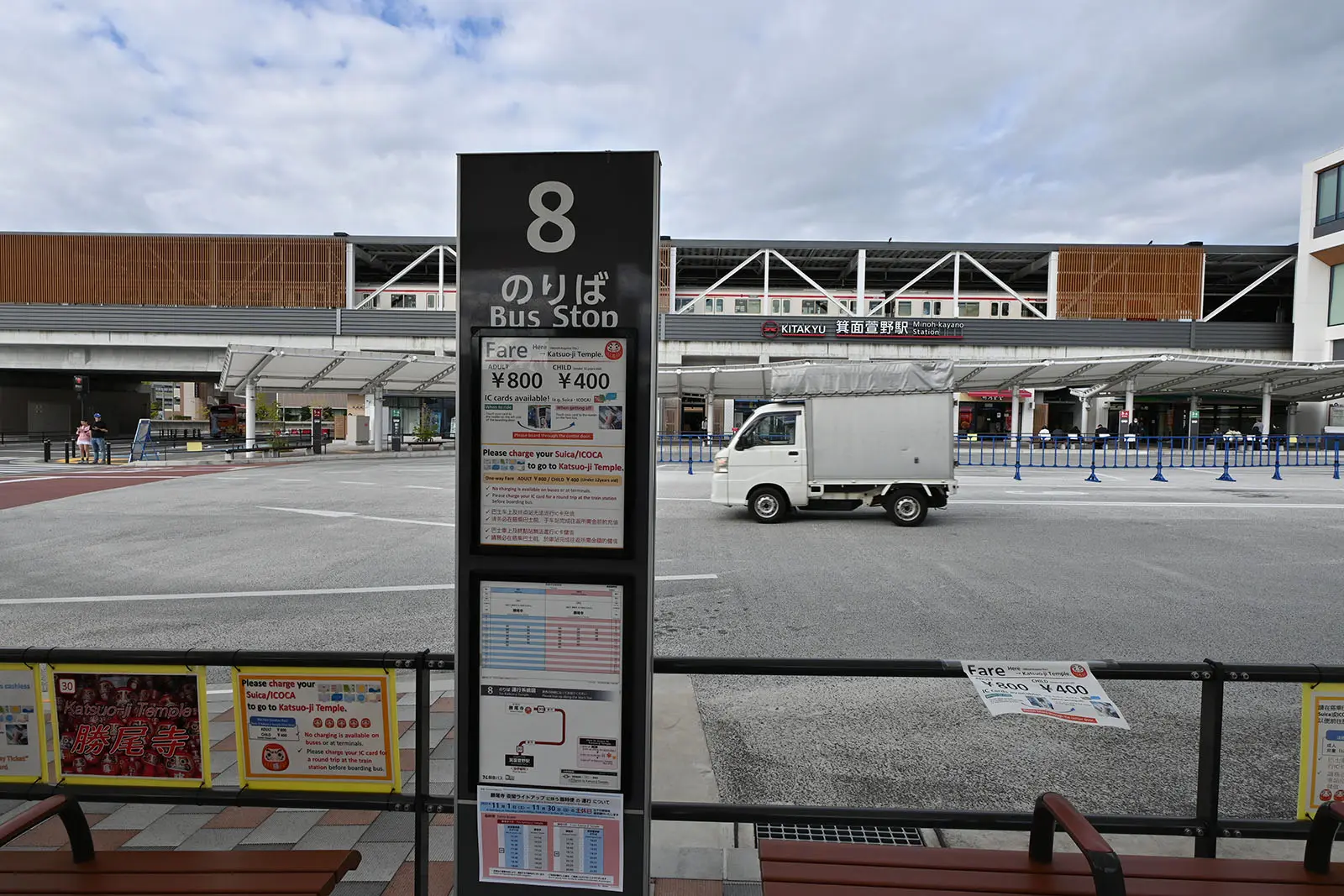
The bus stop at Minoh-Kayano Station for buses bound for Katsuo-ji is Stop 8, where staff who speak Japanese, English, and Chinese can assist you.
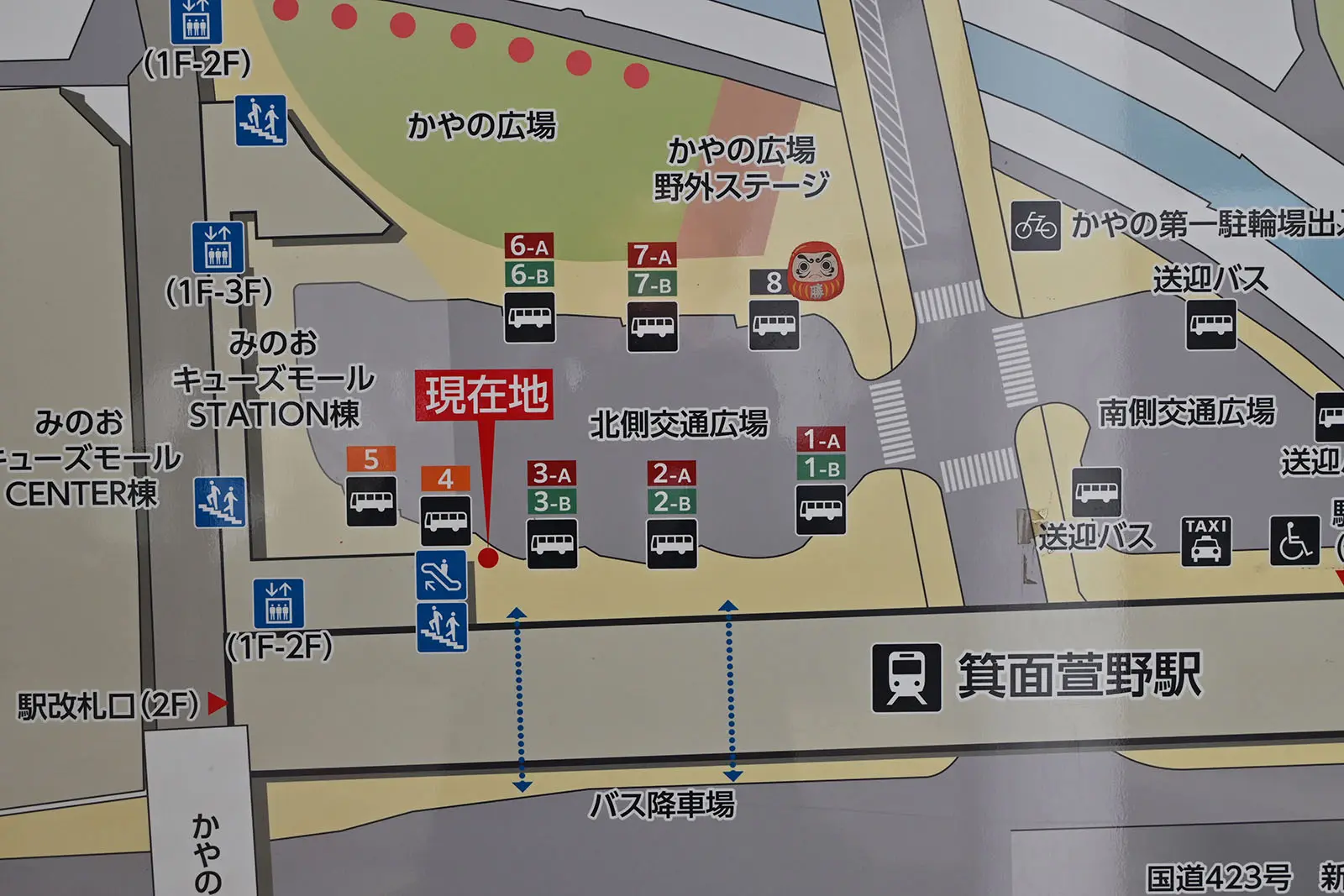
Cash is not accepted for fares, so you’ll want to have a transportation IC card such as ICOCA or SUICA ready in advance.
Train + Taxi (Transfer at Hankyu Minoh Station)
From Osaka-Umeda Station, take the Hankyu Takarazuka Main Line, transfer at Ishibashi Handai-mae to the Hankyu Minoh Line, and get off at Minoh (Approx. 26 minutes including transfer time).
From Minoh, take a taxi to Katsuo-ji (Approx. 20 minutes).
On special autumn illumination days (Saturdays, Sundays, and holidays in November), a direct Hankyu Bus runs from Minoh to Katsuo-ji in Approx. 35 minutes.
By Monorail
From the Umeda (JR Osaka Station) area, you can also transfer to the Osaka Monorail at Senri-Chuo and reach the terminus of the Osaka Monorail International Culture Park City Monorail Line, Saito-nishi, then take a taxi. However, it takes 50–54 minutes from Umeda to Saito-nishi. The taxi ride from Saito-nishi to Katsuo-ji takes Approx. 12 minutes.
By Car
If you’re driving a private car or rental car, there are periods when reservations are required to use the parking lot on Saturdays, Sundays, and holidays (such as during the fall foliage season).
Check parking reservation availability on the Katsuo-ji website.
Also, during the fall foliage season, one-way traffic regulations are enforced on the Minoh Driveway (Osaka Prefectural Route 43, Toyonaka–Kameoka Line).
If you’re also planning to visit Minoh Falls or the dam, be sure to confirm the latest information in advance.
Katsuo-ji Hours and Admission
Katsuo-ji’s visiting hours and admission fee (mountain entry fee) are as follows.
Web tickets are also available, and if you purchase one in advance, you can enter without waiting in the day-of-payment line.
Hours
- Weekdays, Sundays, and holidays
- 8:00 am–5:00 pm (Reception closes at 4:30 pm)
- Saturdays
- 8:00 am–6:00 pm (Reception closes at 5:30 pm)
*Special illumination is held on Saturdays, Sundays, and holidays in November.
On illumination days, visiting hours are 8:00 am–8:30 pm (Reception closes at 8:00 pm)
Admission
- Adults
- 500 yen
- Elementary and junior high school students
- 400 yen
- Preschool children
- 100 yen
- Age 2 and under
- Free
What’s the Best Season to Visit Katsuo-ji?
With mountains at its back, Katsuo-ji’s grounds spread across a site with noticeable elevation changes.
Cherry blossoms, peonies, hydrangeas, and more are planted here, so you can enjoy spring and summer flowers, then vibrant fall foliage in autumn—making it a great place to experience the changing seasons.
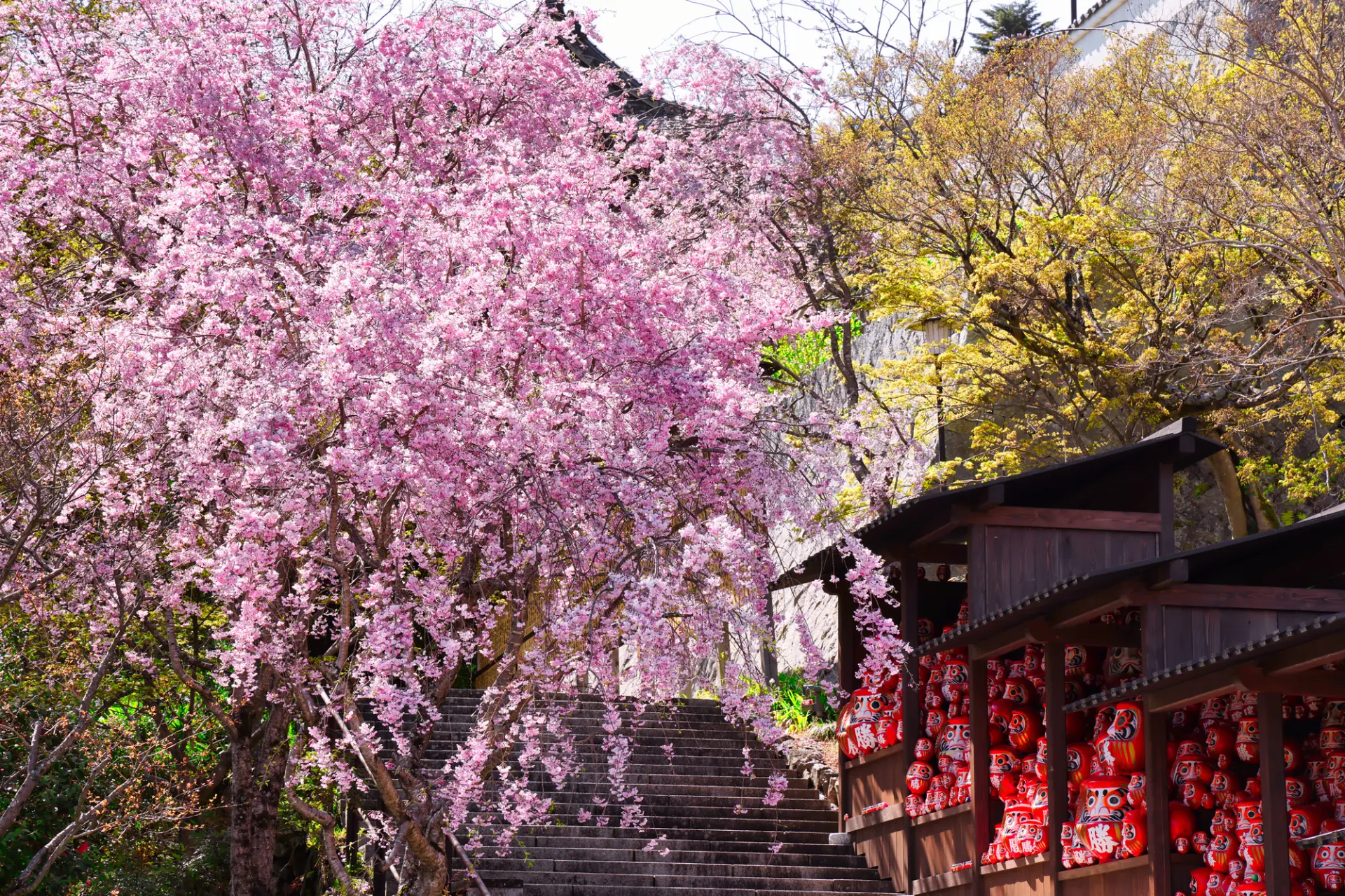
Spring, Surrounded by Late-Blooming Cherry Blossoms
The area where Katsuo-ji is located sees cherry blossoms bloom later than in the foothills.
They reach their peak around the time blossoms start to fall in central Osaka, so you can enjoy peak cherry blossom scenery more than once.
From late April, large peonies come into bloom, brightening the grounds once again.
In early May, fresh leaves sprout on trees that shed their leaves in winter, and the scenery turns a vivid green.
Hydrangeas Add Color in Early Summer
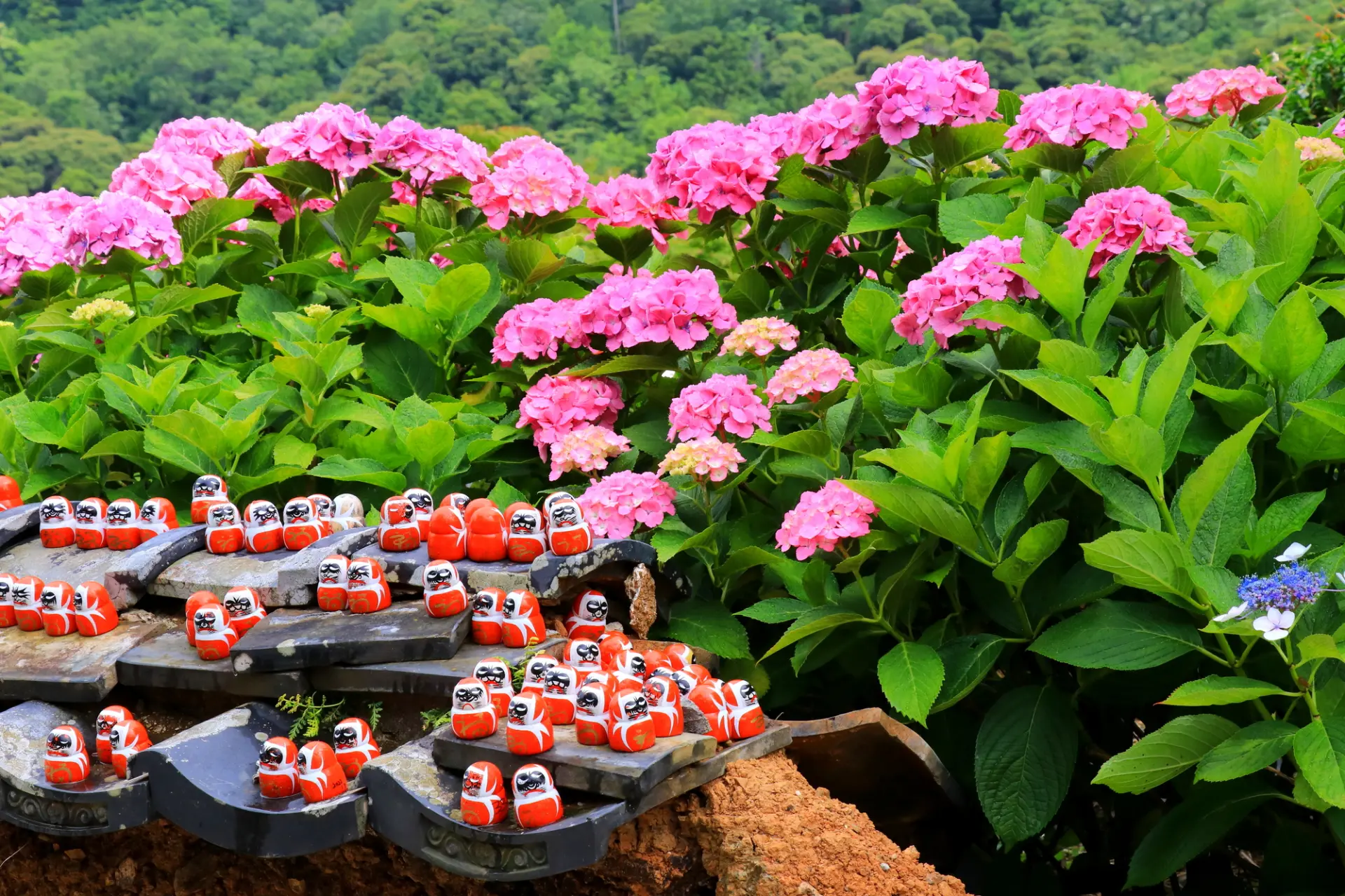
From early June through July, during the rainy season, hydrangeas bloom in red, purple, and blue.
Even on rainy days, you can enjoy a lush, beautiful atmosphere.
Autumn Foliage Season, Plus Evening Illuminations
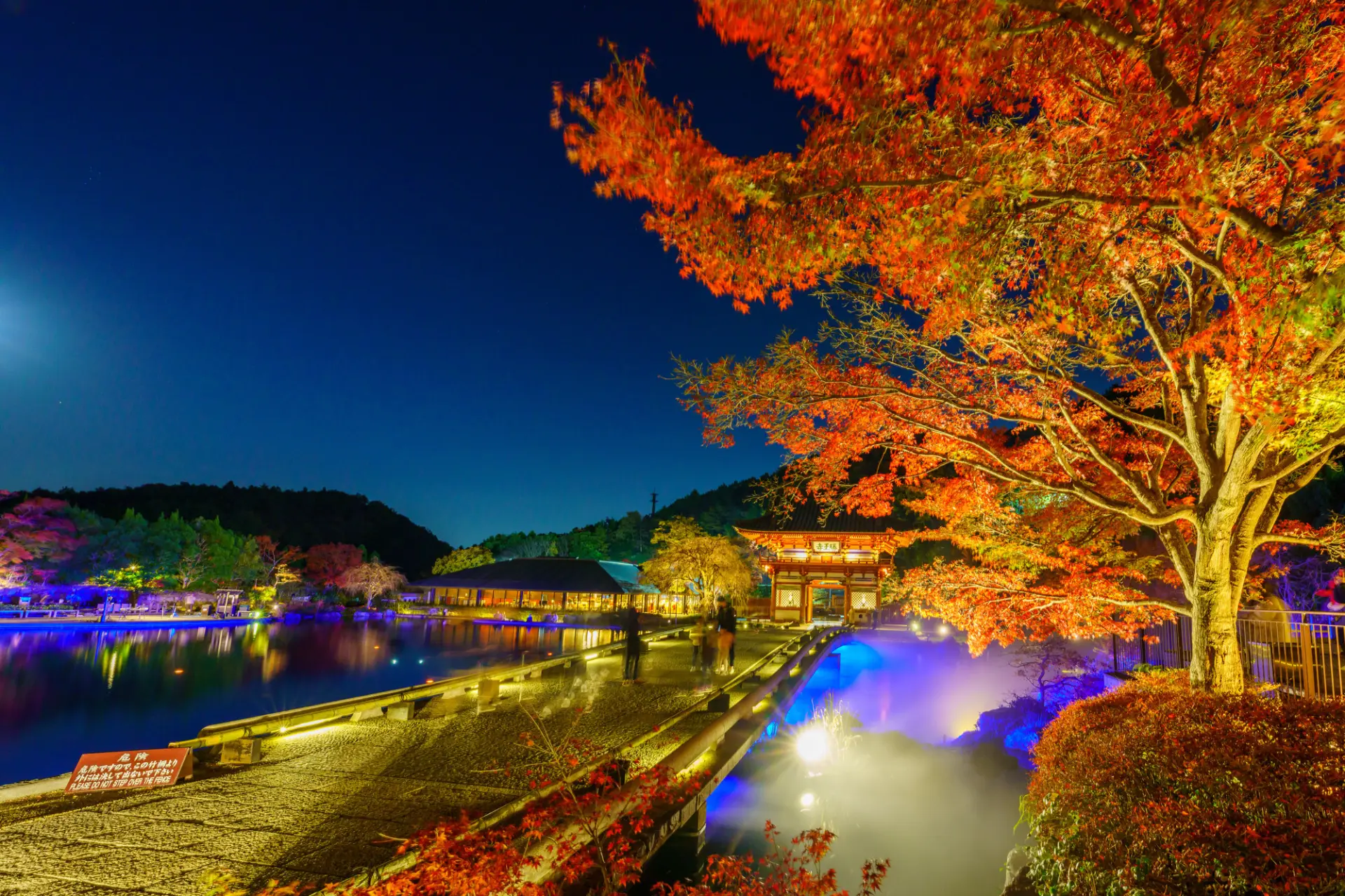
Fall foliage peaks from mid-November to early December, making it one of the most popular seasons alongside cherry blossom season.
As the mountains shift color and vivid reds appear across the landscape, you can enjoy truly spectacular scenery.
On Saturdays, Sundays, and holidays in November, the temple is illuminated at night, and visiting hours are extended until 8:30 pm.
How to Get Around Katsuo-ji and What to See
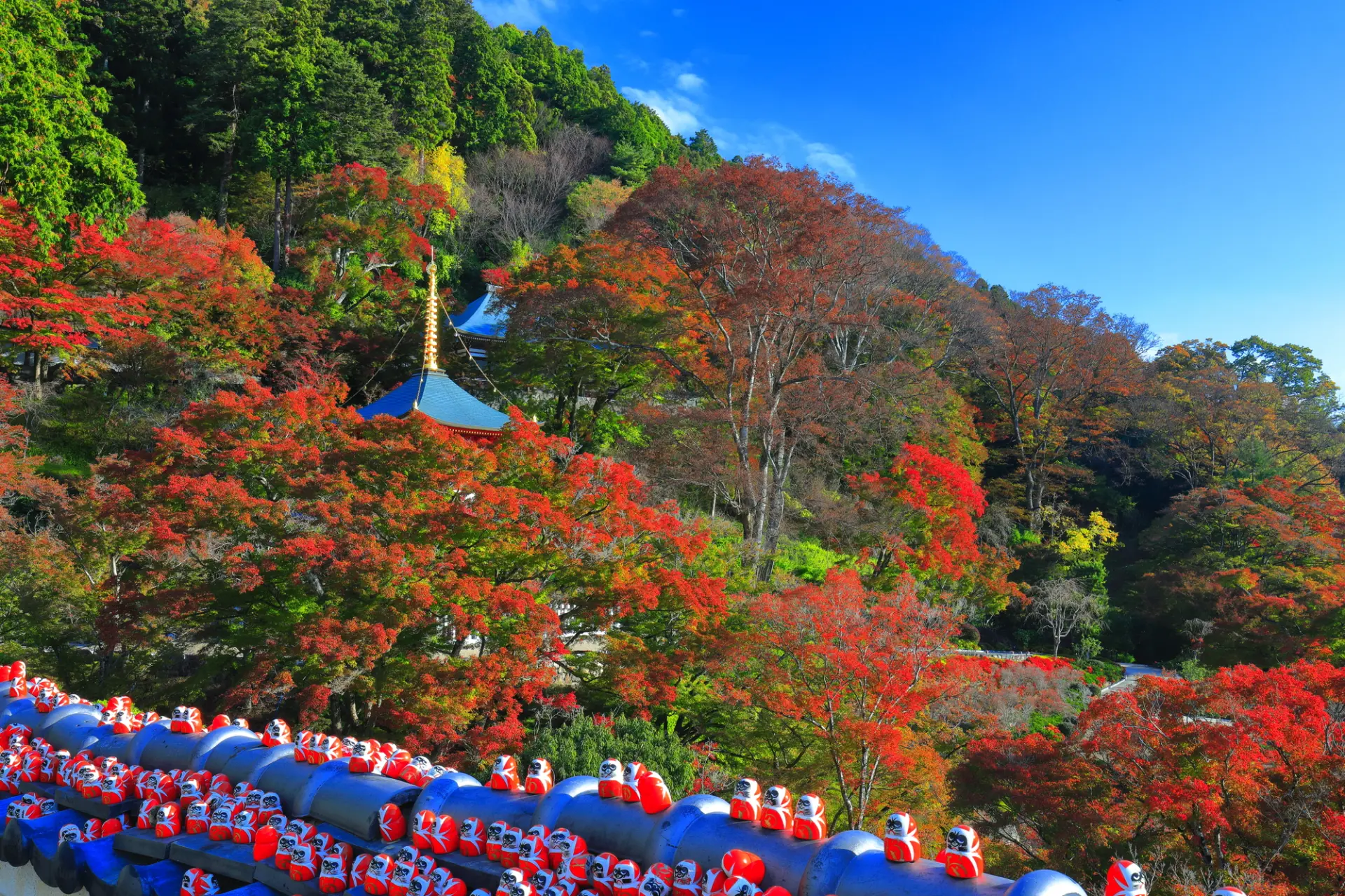
Katsuo-ji’s grounds spread across a mountainside, with a designated route that takes you around the temple clockwise.
The elevation difference is roughly equivalent to a 10-story building, but ramps are provided so wheelchair users can also follow the route.
There’s also a stamp rally, and if you follow the route while collecting stamps, you’ll be able to see most of the grounds.
Even at a relaxed pace with time to pray, you can complete the loop in Approx. 1 hour and 30 minutes.
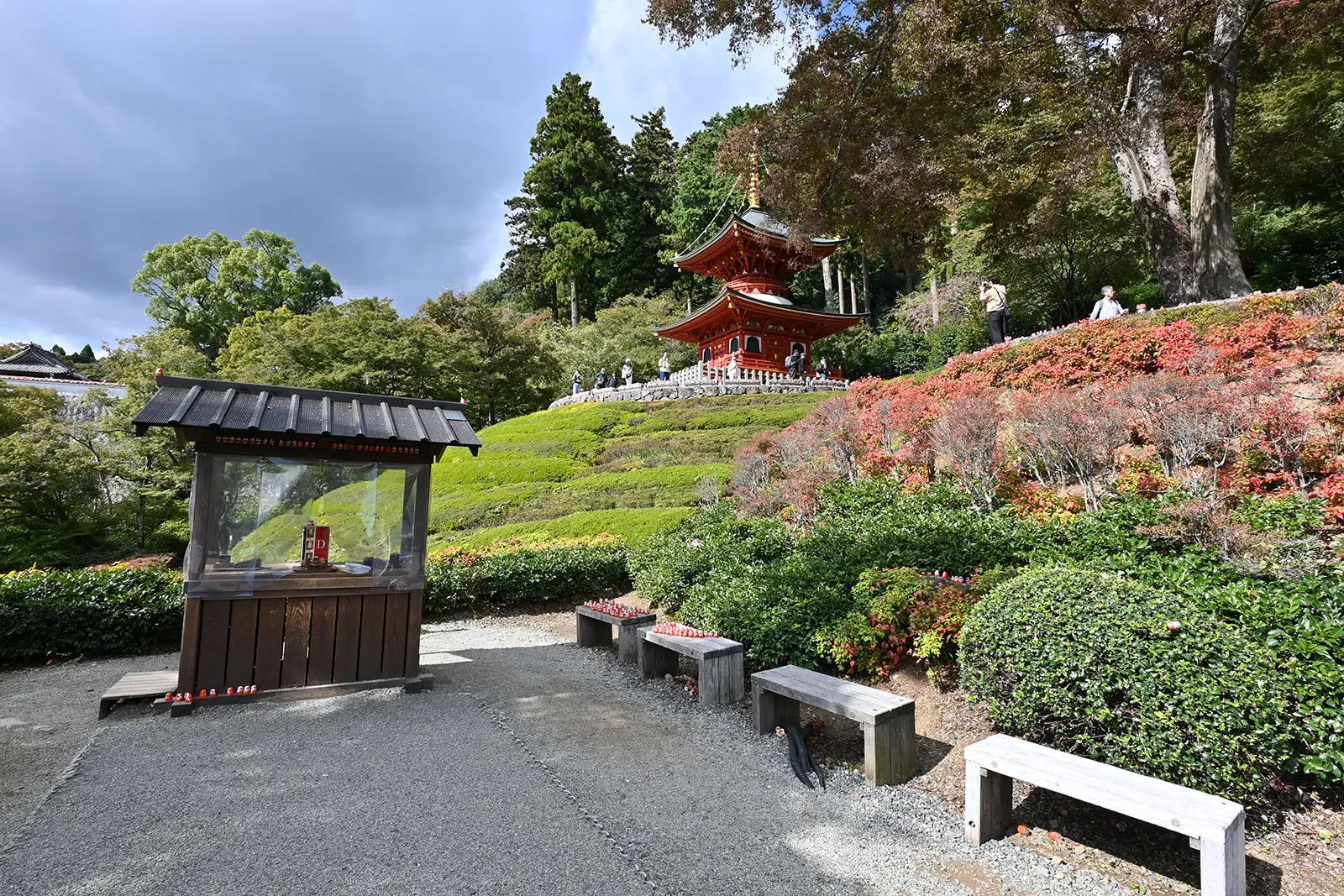
Below are key highlights and buildings along the route, introduced in order.
1. Sanmon Gate
This structure was rebuilt by Toyotomi Hideyori, the third son of Toyotomi Hideyoshi, in 1603—the year Tokugawa Ieyasu established the Edo shogunate.
During the autumn illumination season, the gate is also lit up.
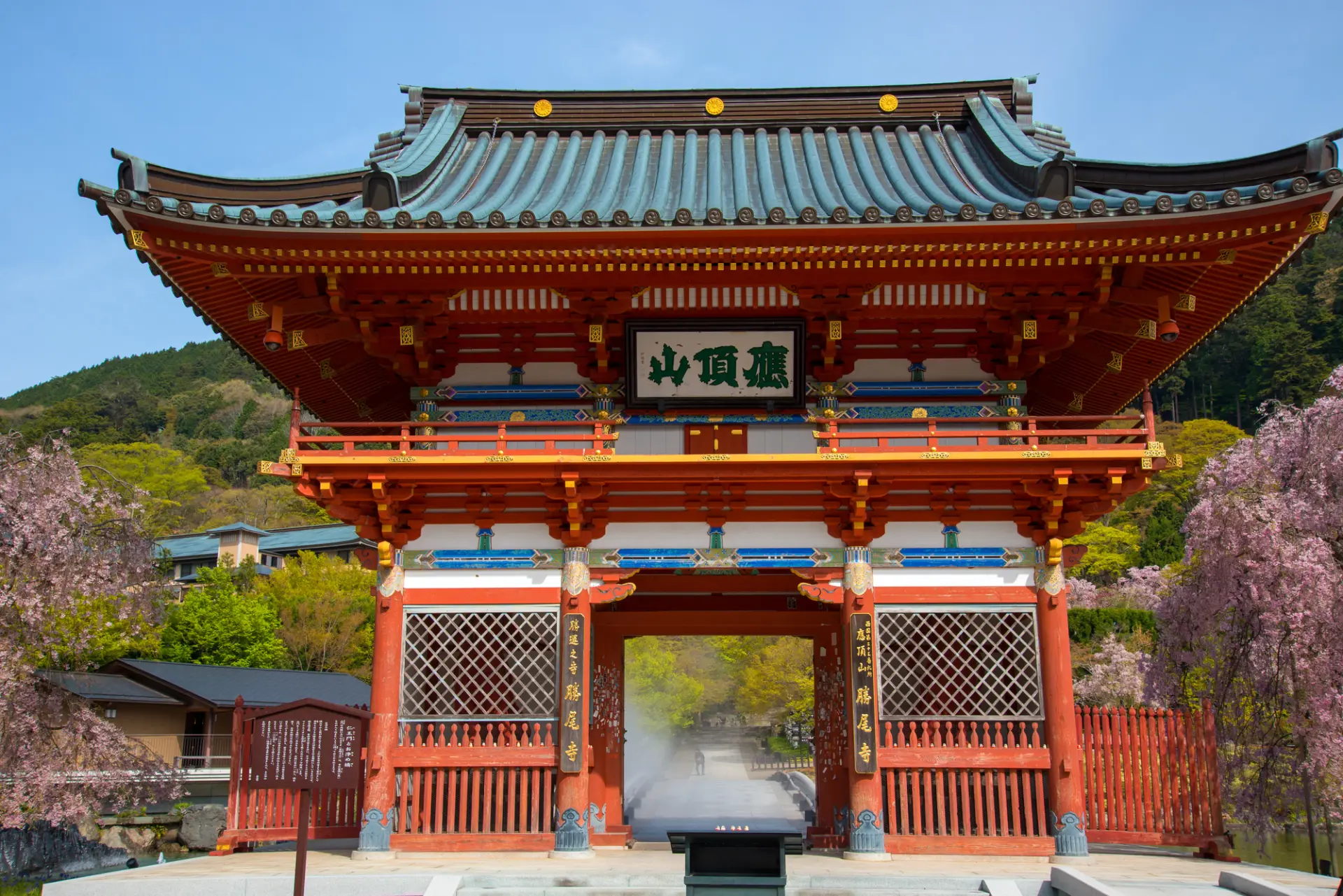
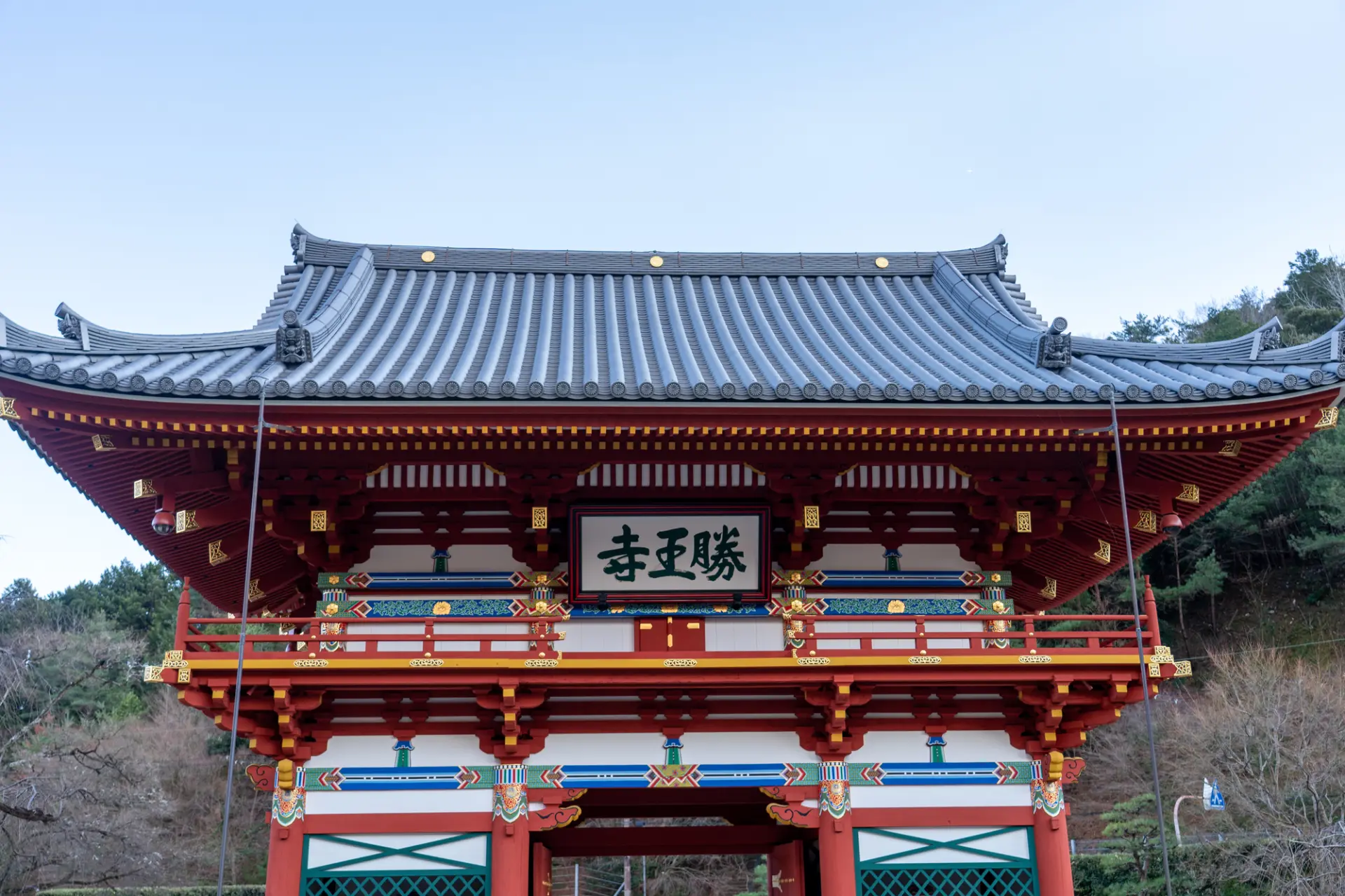
The plaque on the front reads “Ochozan,” while the plaque on the back reads “Katsuo-ji,” the original name that became the origin of the temple’s name.
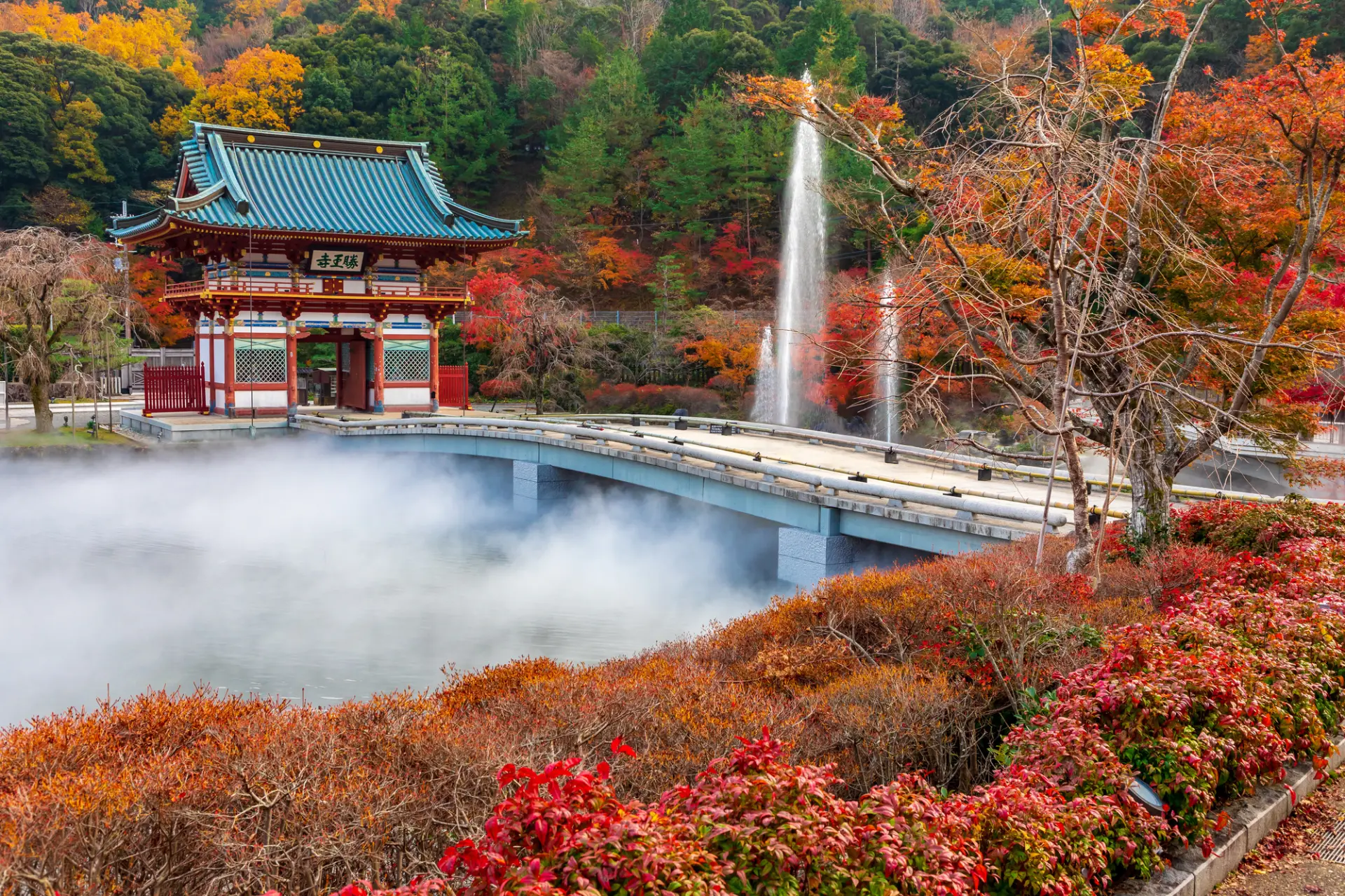
2. Okiyome Bridge
Beyond the bridge that continues from the Sanmon Gate lies the garden of the Buddha (=the temple grounds).
Walk through the cleansing mist over the bridge to ward off bad luck and purify yourself before entering.
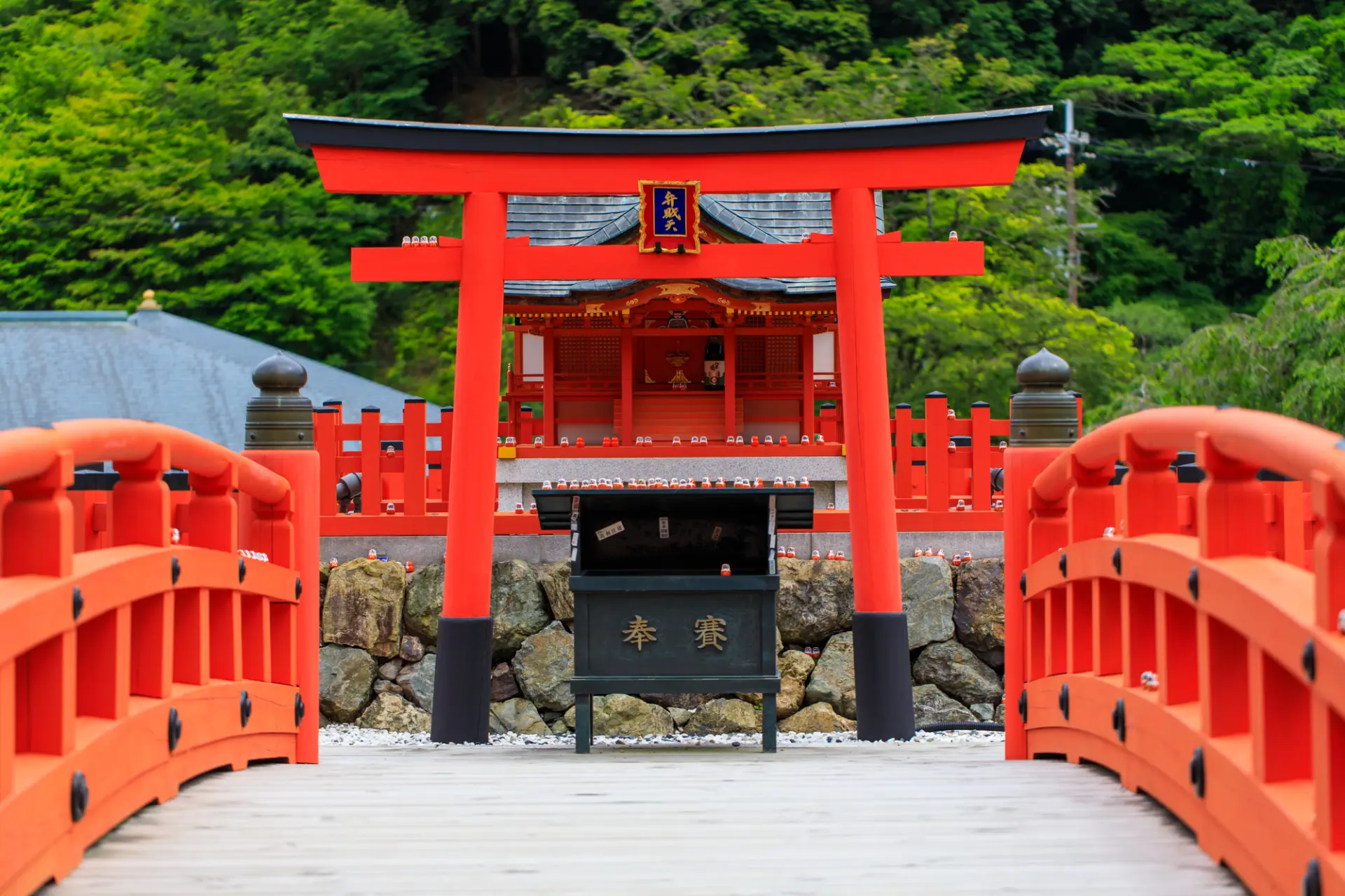
3. Benzaiten Shrine
Benzaiten originated as Sarasvati, an Indian goddess who protects water, and later came to be worshipped as a deity of the arts, music, learning, and wisdom.
She is also revered as a bringer of financial fortune and business success.
Here, try paying attention to the sound of flowing water as you pray.
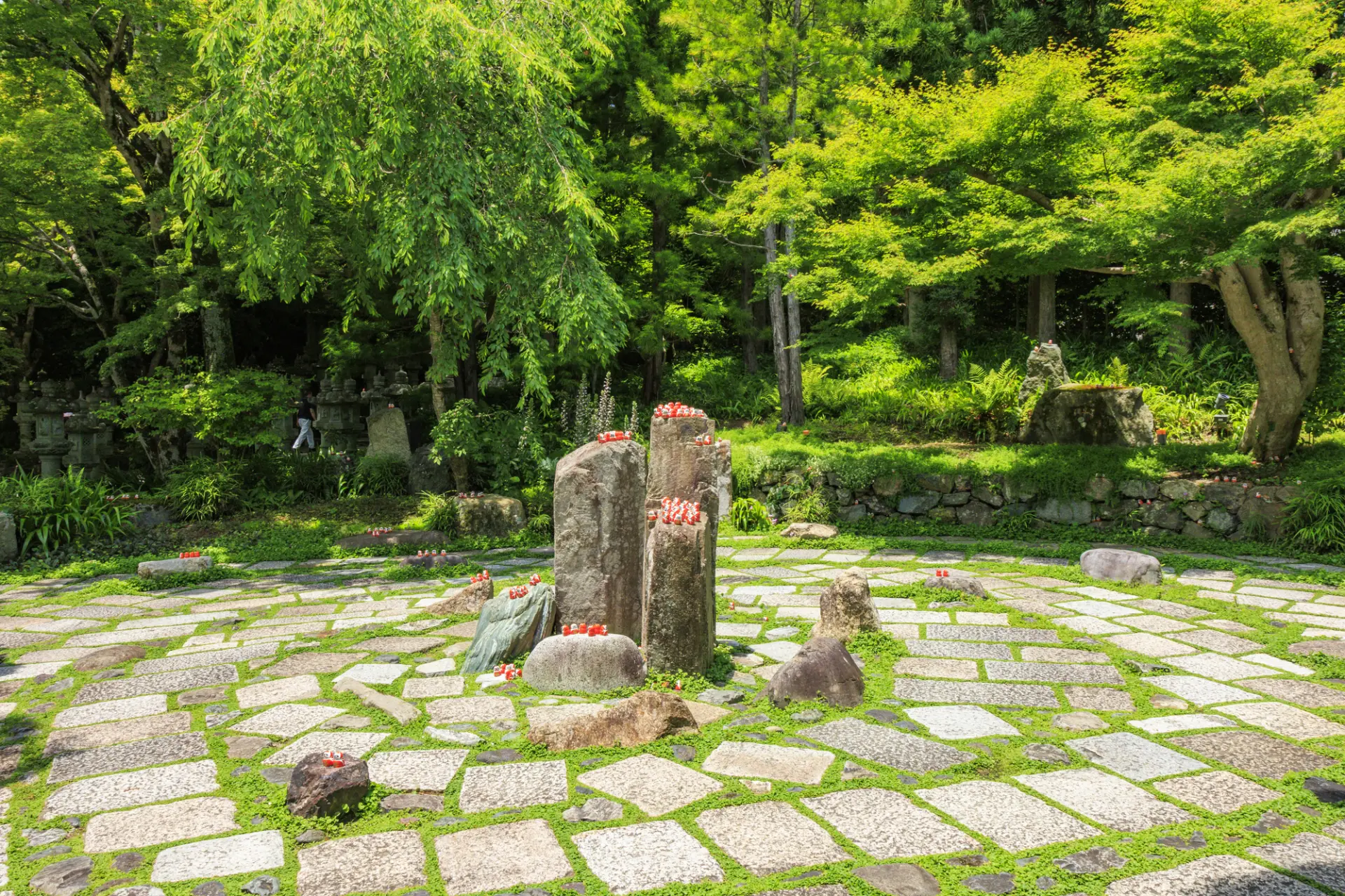
4. Chie no Wa (Ring of Wisdom)
Although it’s located in the first half of the route, visiting after praying at the Main Hall and other halls can help calm your mind even more and receive wisdom.
The proper way to pray is to walk around it seven times clockwise, and once you reach the center point, walk seven times counterclockwise. You can also sit on the surrounding stones and meditate.
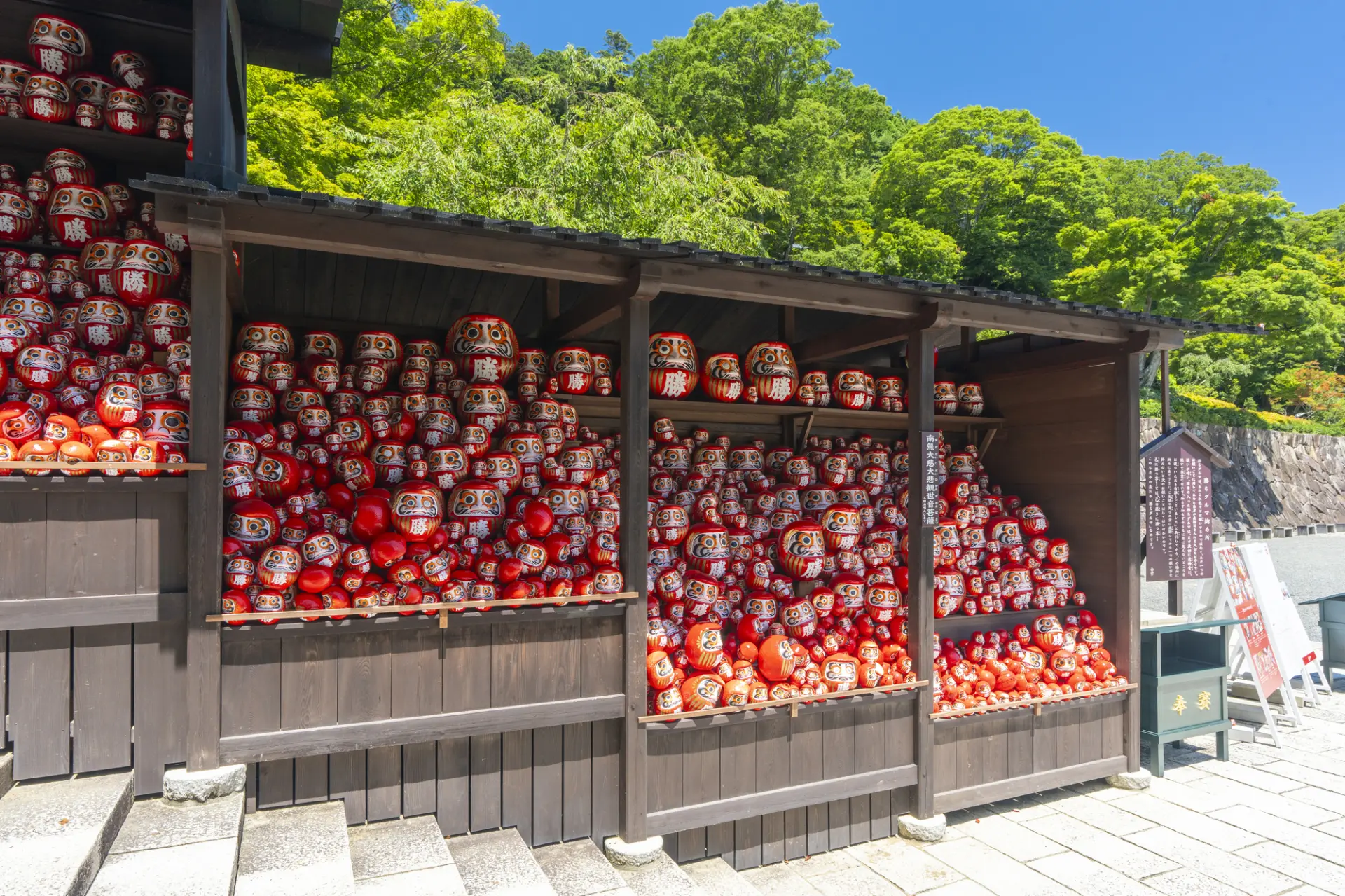
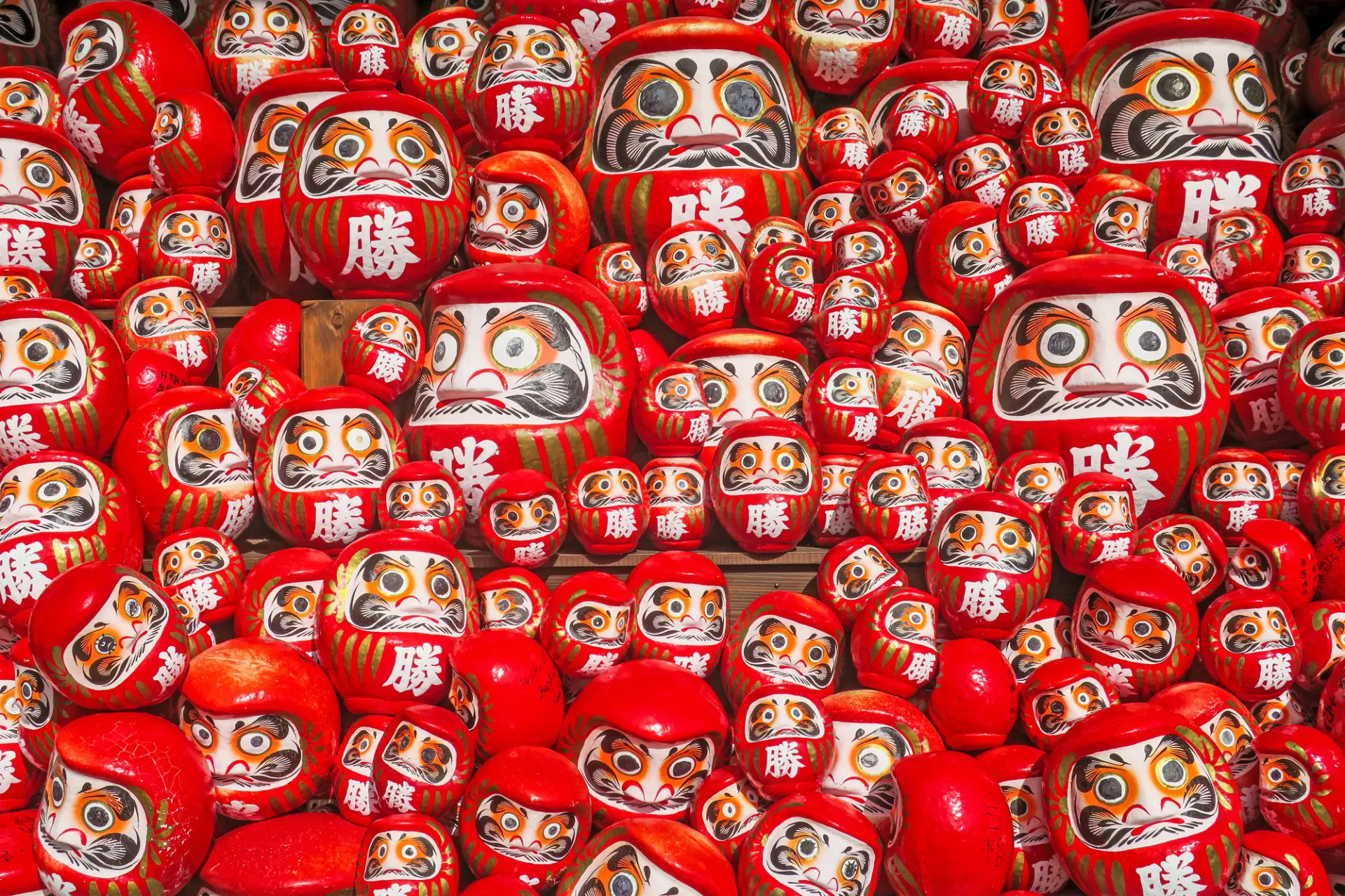
5. Kachi-Daruma Offering Shelves
Climb the stairs while facing the Tahoto Pagoda, and you’ll see the Kachi-Daruma offering shelves on your left.
They’re packed with daruma of all sizes, each filled with its donor’s wishes.
It’s a popular spot for photos, but be mindful of etiquette—don’t block the walkway or take an overly long time taking pictures.
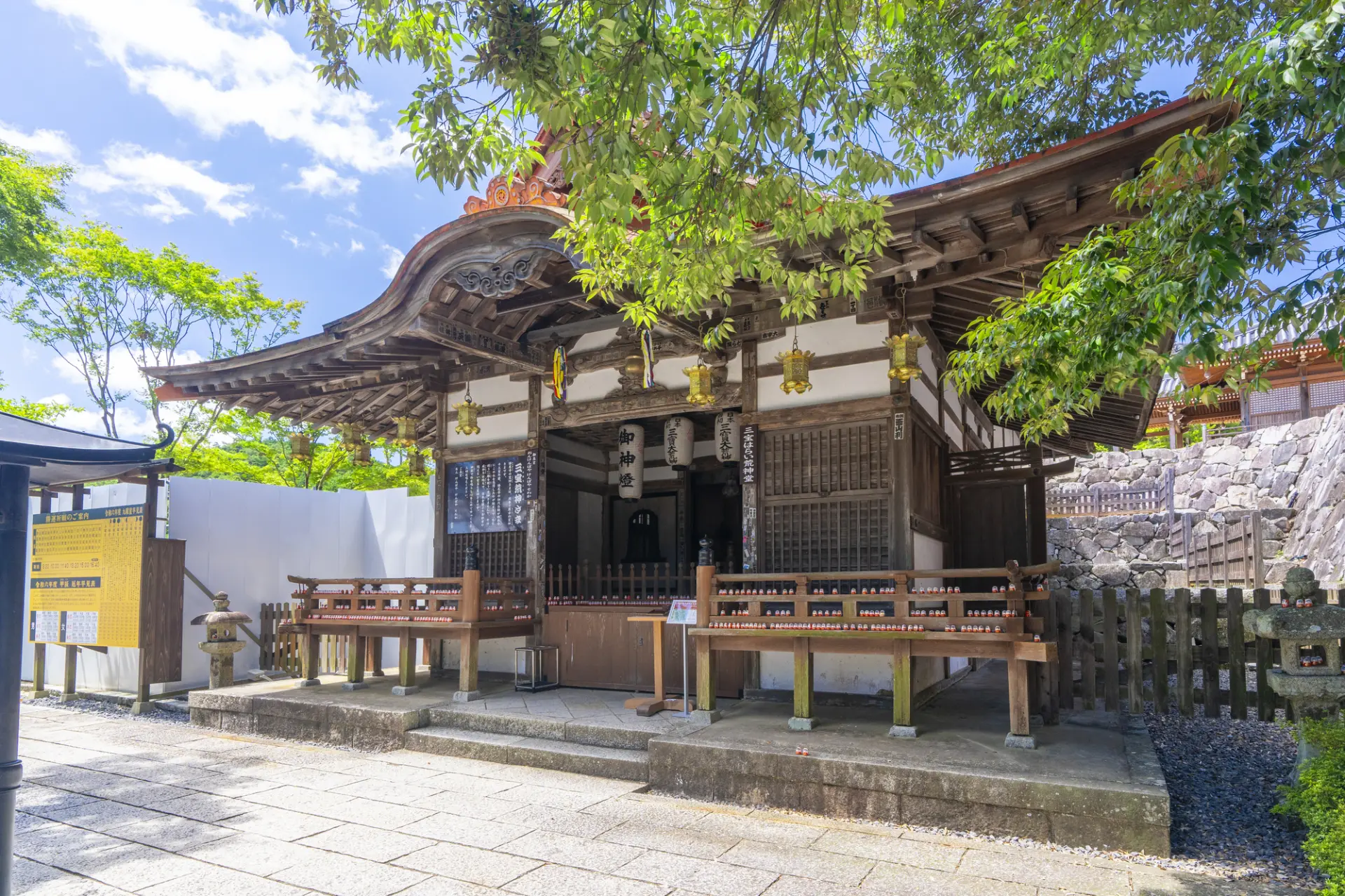
6. Sanbo Kojin-do Hall
This is Japan’s oldest hall dedicated to Kojin, revered as “Sanbo Kojin,” guardian of the Three Treasures: the Buddha, the Dharma, and the Sangha.
It is also worshipped as “Harae Kojin,” believed to cleanse people’s worries and illness.
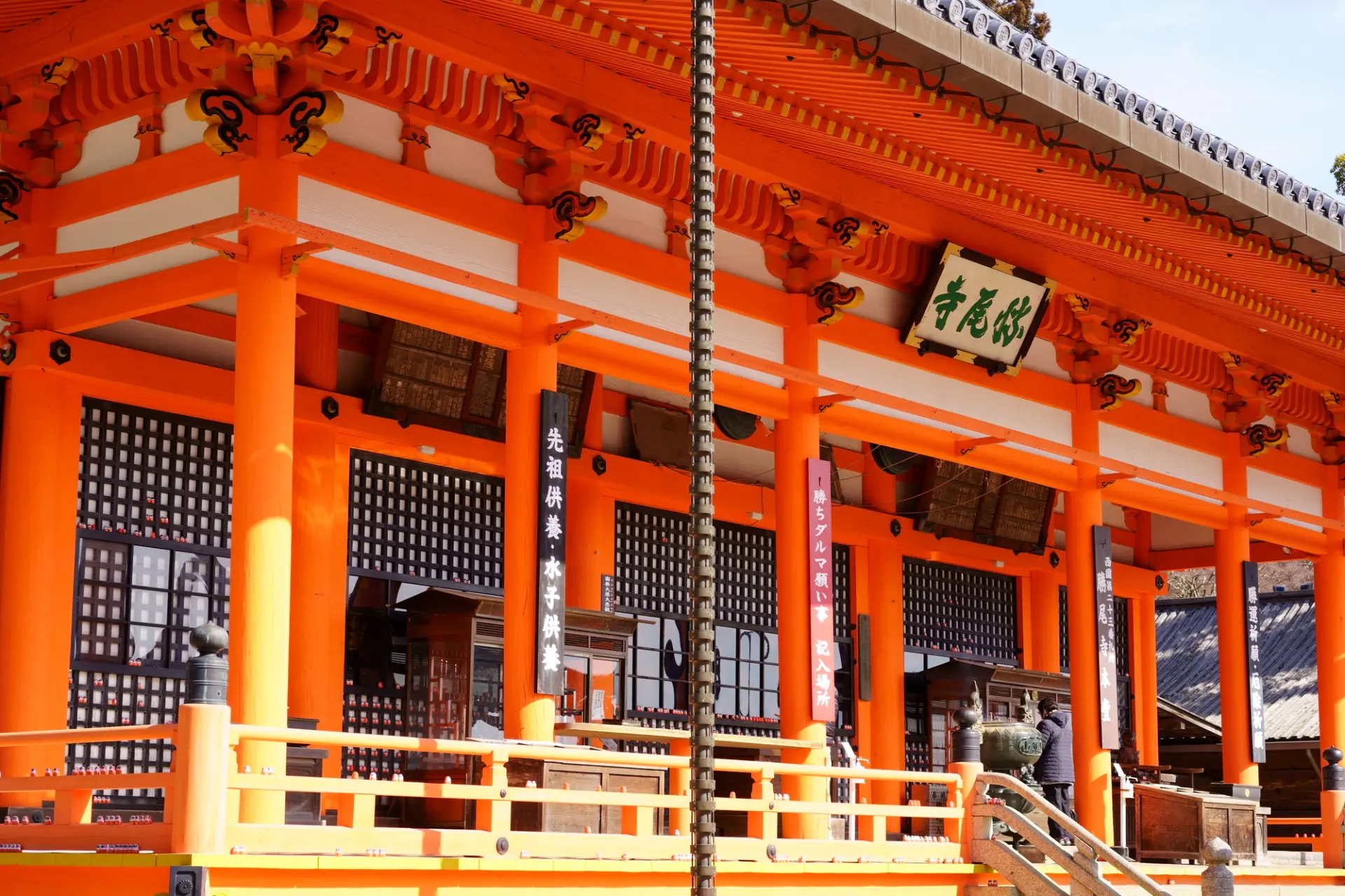
7. Main Hall
Rebuilt by Toyotomi Hideyori along with the Sanmon Gate, the Main Hall enshrines Katsuo-ji’s principal image, the Eleven-Headed Thousand-Armed Kannon (Bodhisattva).
Chanting never ceases throughout the year, and you can hear sutras echoing through the grounds even from a distance.
If you receive a daruma at the “O-sazuke Place in Front of the Main Hall,” be sure to pray here at the Main Hall.
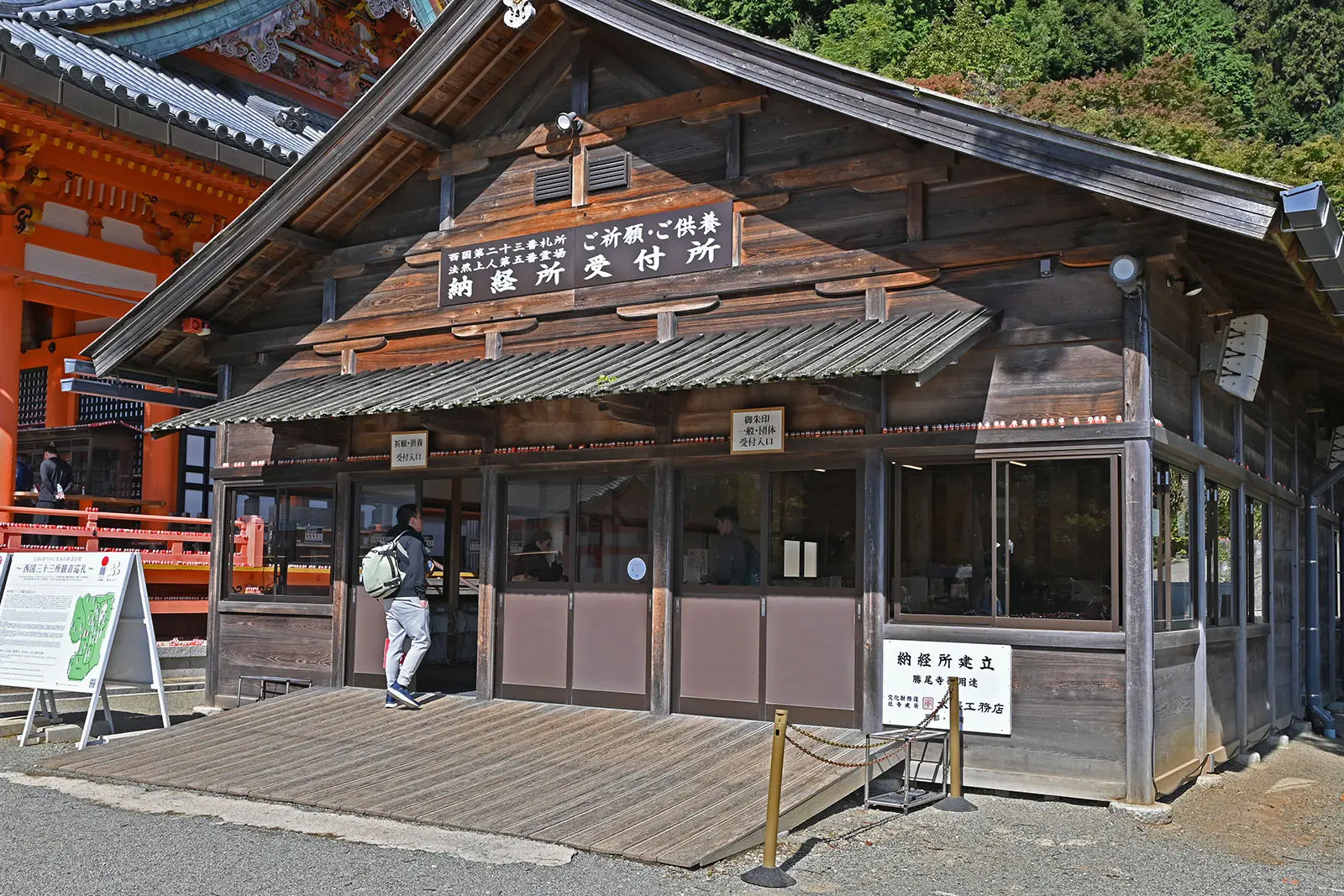
To the right of the Main Hall is the General Reception Office (Nokyo-sho), where you can pray for good fortune in victory and receive goshuin.
8. Nikaido Hall
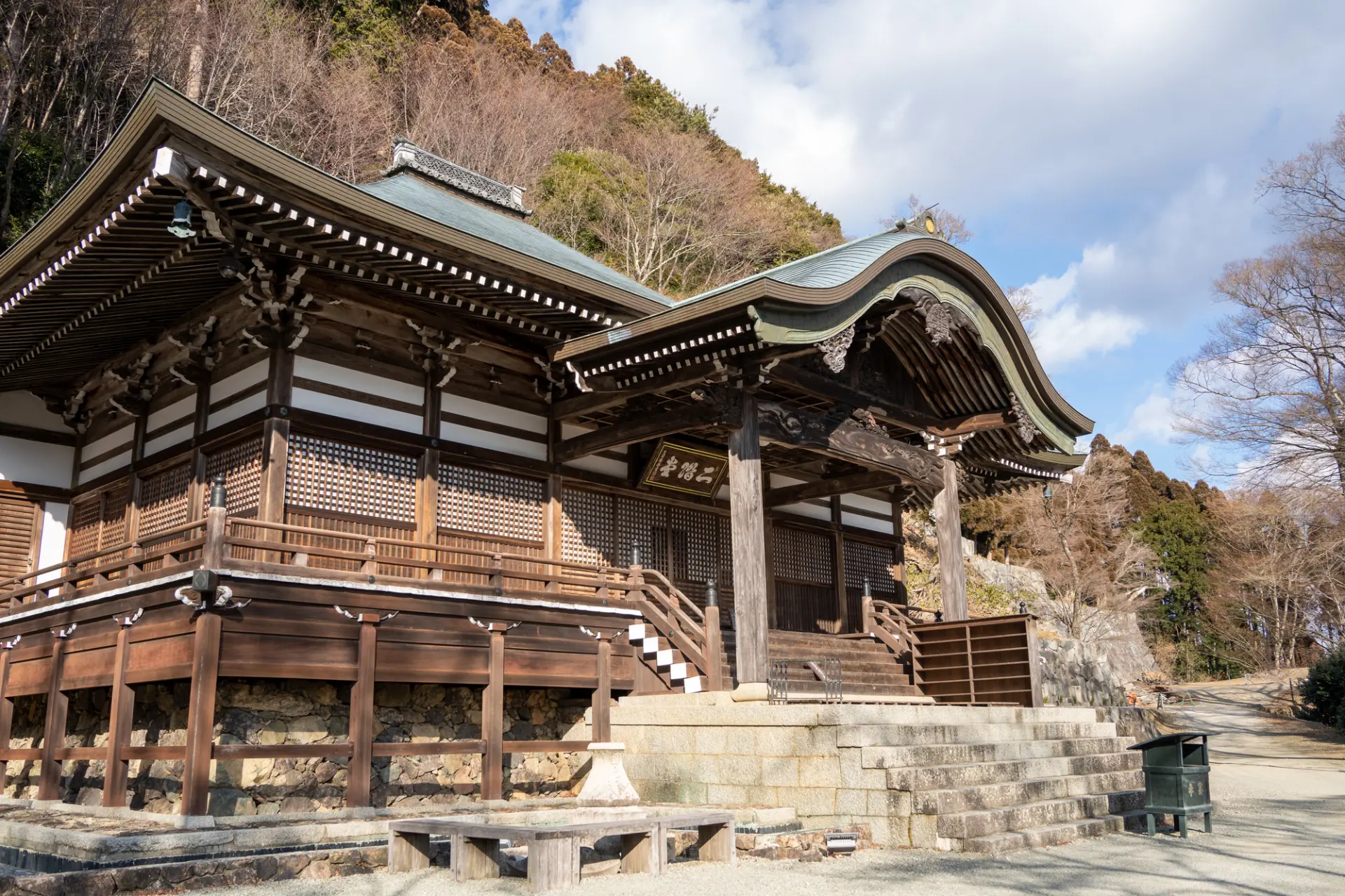
Because Honen stayed here for Approx. four years during the Kamakura period, this is the fifth sacred site among the 25 Honen Sacred Sites.
It sits at the highest point on the grounds, and benches in front of the hall offer a panoramic view.
You can also enjoy views from around the Tahoto Pagoda, but from up here the scenery feels even more open.
9. Join the Stamp Rally as You Explore
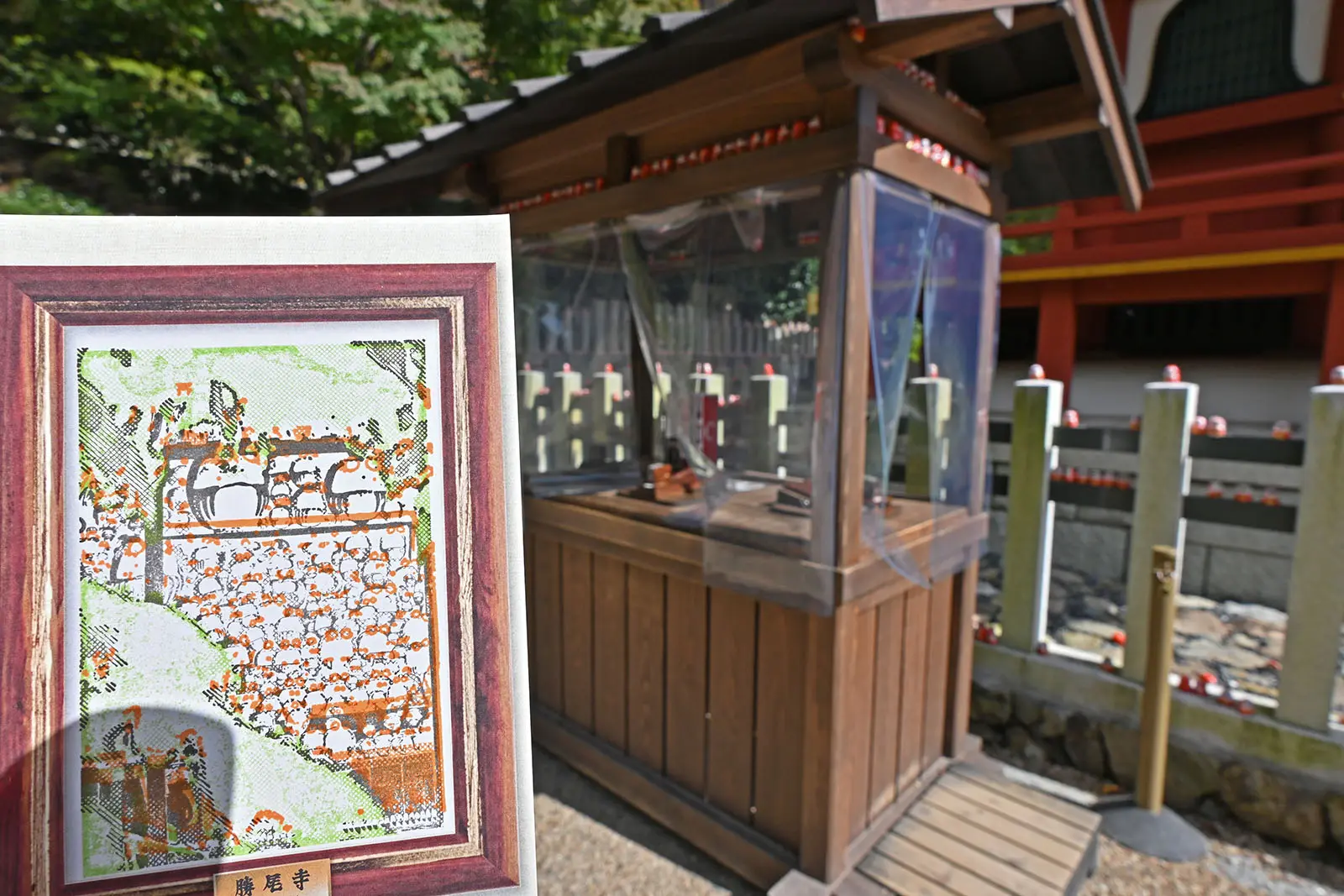
After paying the admission fee at the entrance, you’ll receive a postcard printed with a picture-frame border.
As you stamp at multiple stations around the grounds, a single multicolored image is completed, like a print.
Because you layer the stamps yourself, each finished card turns out a little differently from standard printing.
Following the stamp rally order also guides you along the visiting route, and it makes a great souvenir—so be sure to complete it.
10. Enjoy Daruma Art Around the Grounds
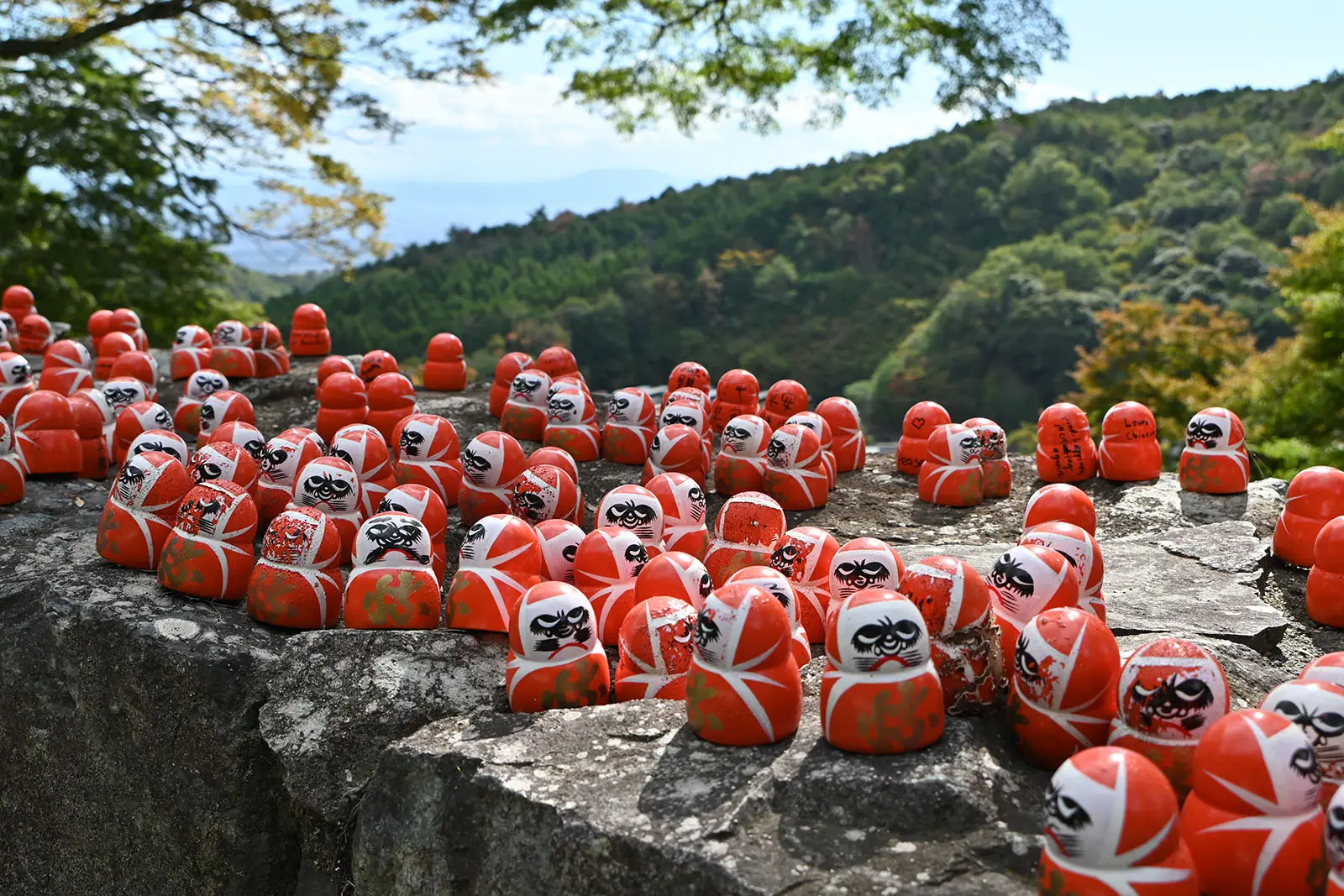
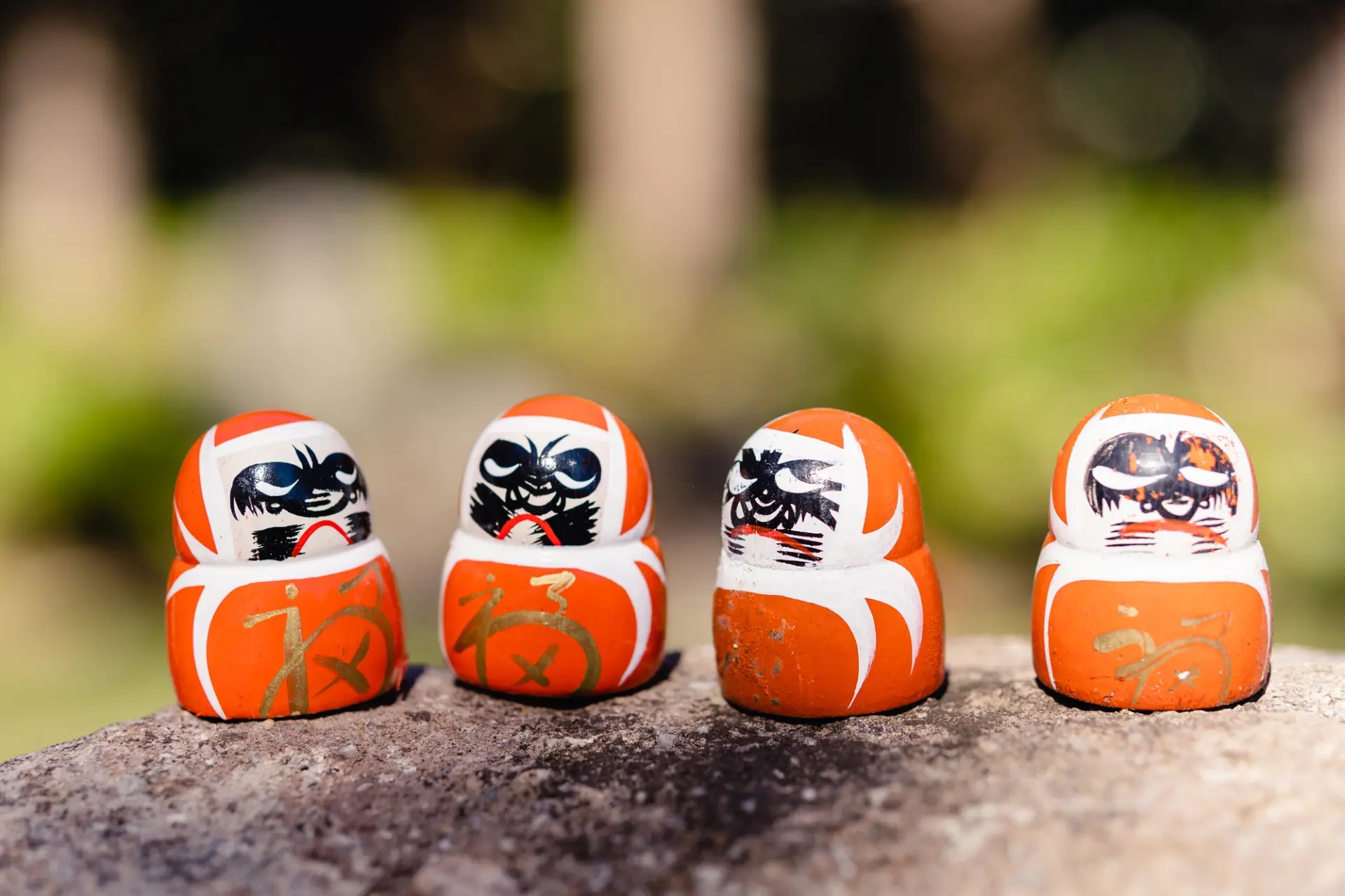
The small daruma placed all around the grounds were left behind by worshippers who drew a Daruma omikuji.
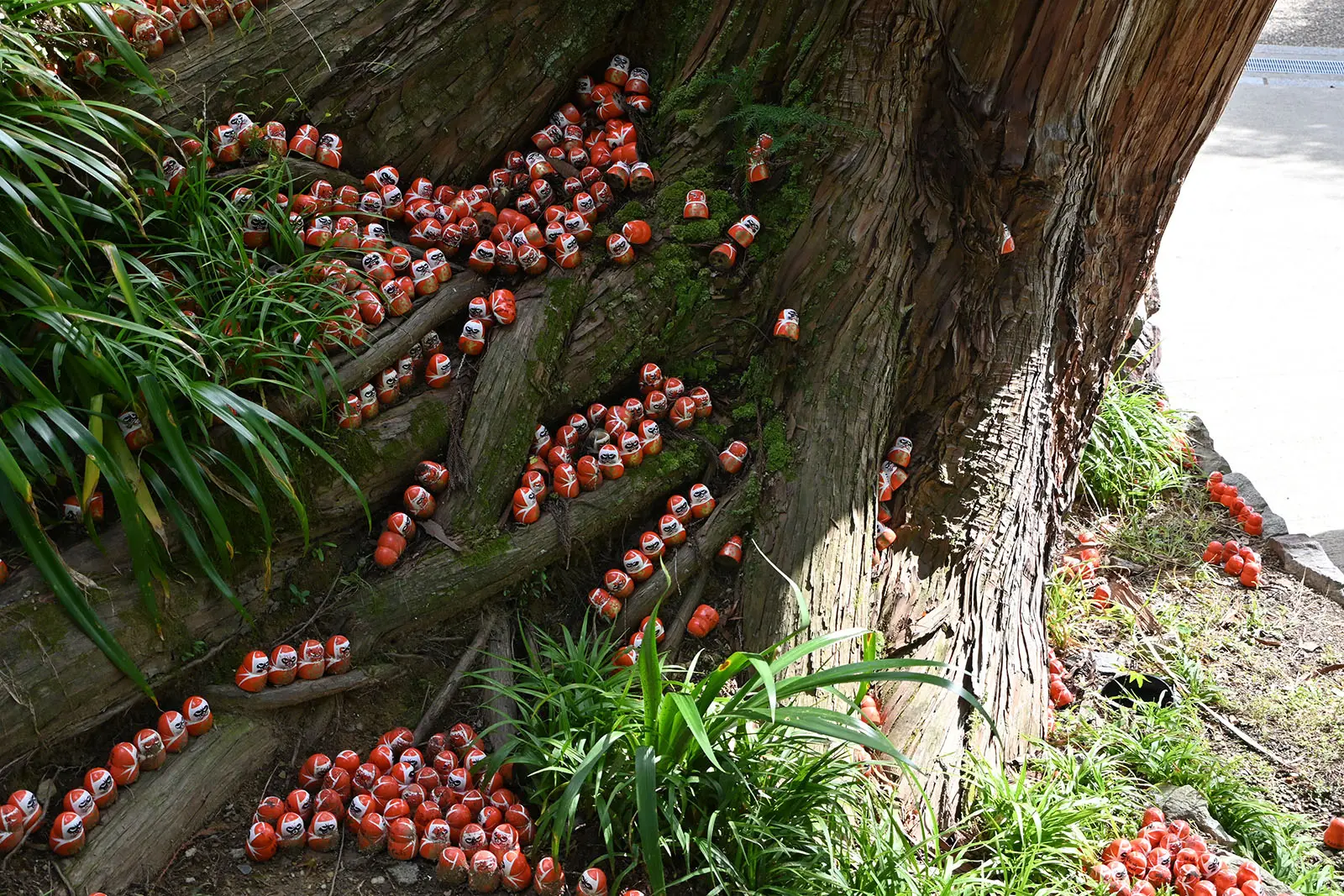
Placed wherever each visitor chooses, the daruma add color to the grounds like an ever-changing art installation.
Some are clustered tightly together, while others stand alone—almost as if they’re chatting with one another or training in solitude.
Katsuo-ji Amulets and Souvenirs
In addition to amulets and items like Katsuo-ji’s unique 64-hexagram Daruma omikuji, you can buy souvenirs such as sweets and daruma plushies at the shop in the rest area near the entrance.
Traditionally, amulets are meant to be returned after one year to be ritually burned, but it’s also fine to keep them as a memento.
Amulets and other items are available at the “O-sazuke Place in Front of the Main Hall,” while goshuin can be requested at the “General Reception Office” to the right of the Main Hall.
Amulets and Daruma Omikuji
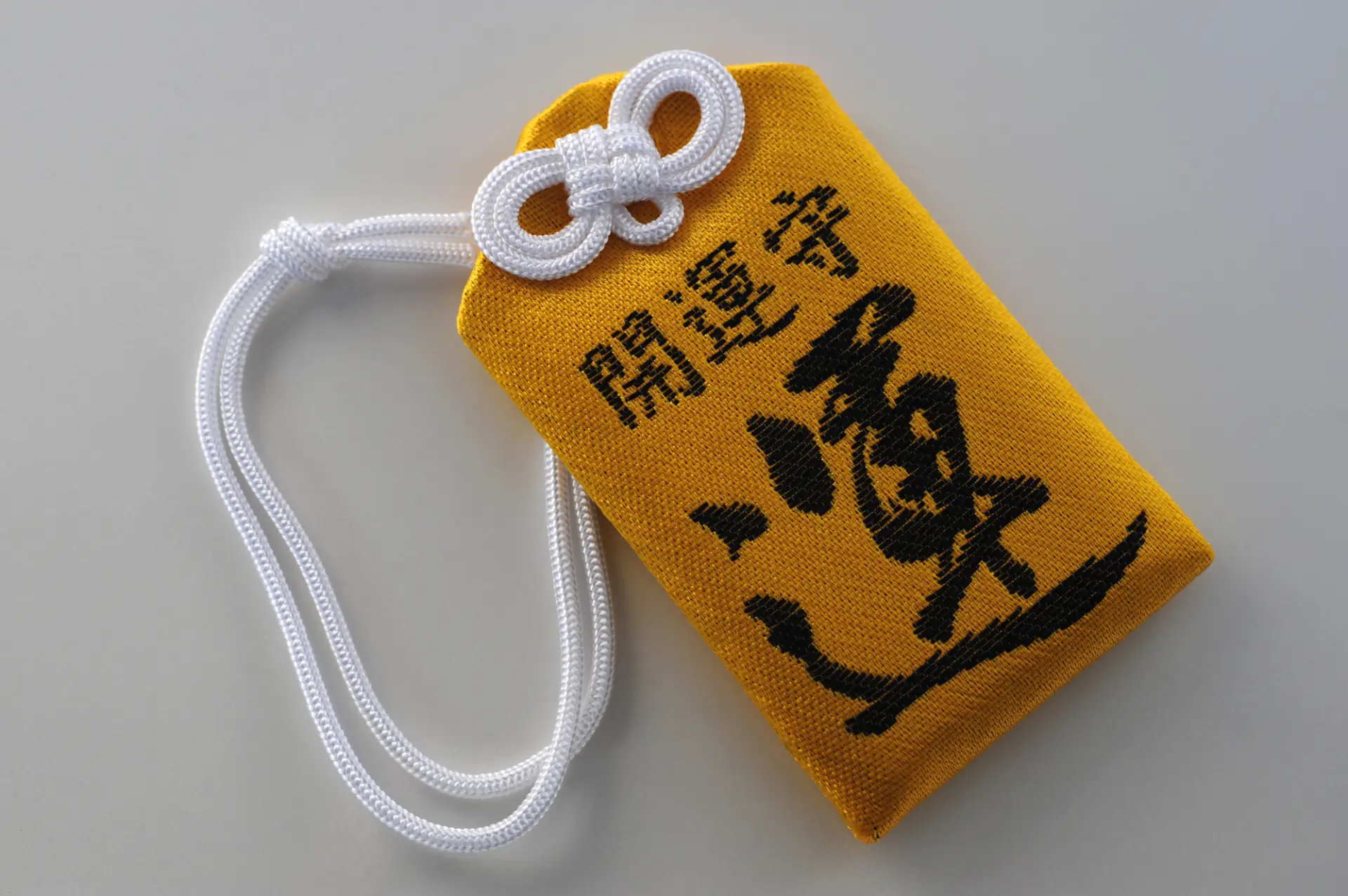
There are many types of amulets for different wishes, such as “good fortune,” “good fortune for victory,” “business success,” “family safety,” “warding off misfortune and bringing good fortune,” “recovery from illness,” “health,” “finding a good match,” “academics,” and “traffic safety.”
A catalog is introduced on the official website, so it’s a good idea to check in advance.
The “64-hexagram Daruma omikuji” can only be drawn at Katsuo-ji—the only place in Japan where this fortune is offered.
Instead of the usual “good luck” or “bad luck” results, it contains guiding words for the worshipper.
You can also “tie” the fortune at a designated spot on the grounds to “form a connection” with the Buddha.
Even if you do, a QR code is attached so you can scan it on your phone and read the guidance you received.
Goshuin
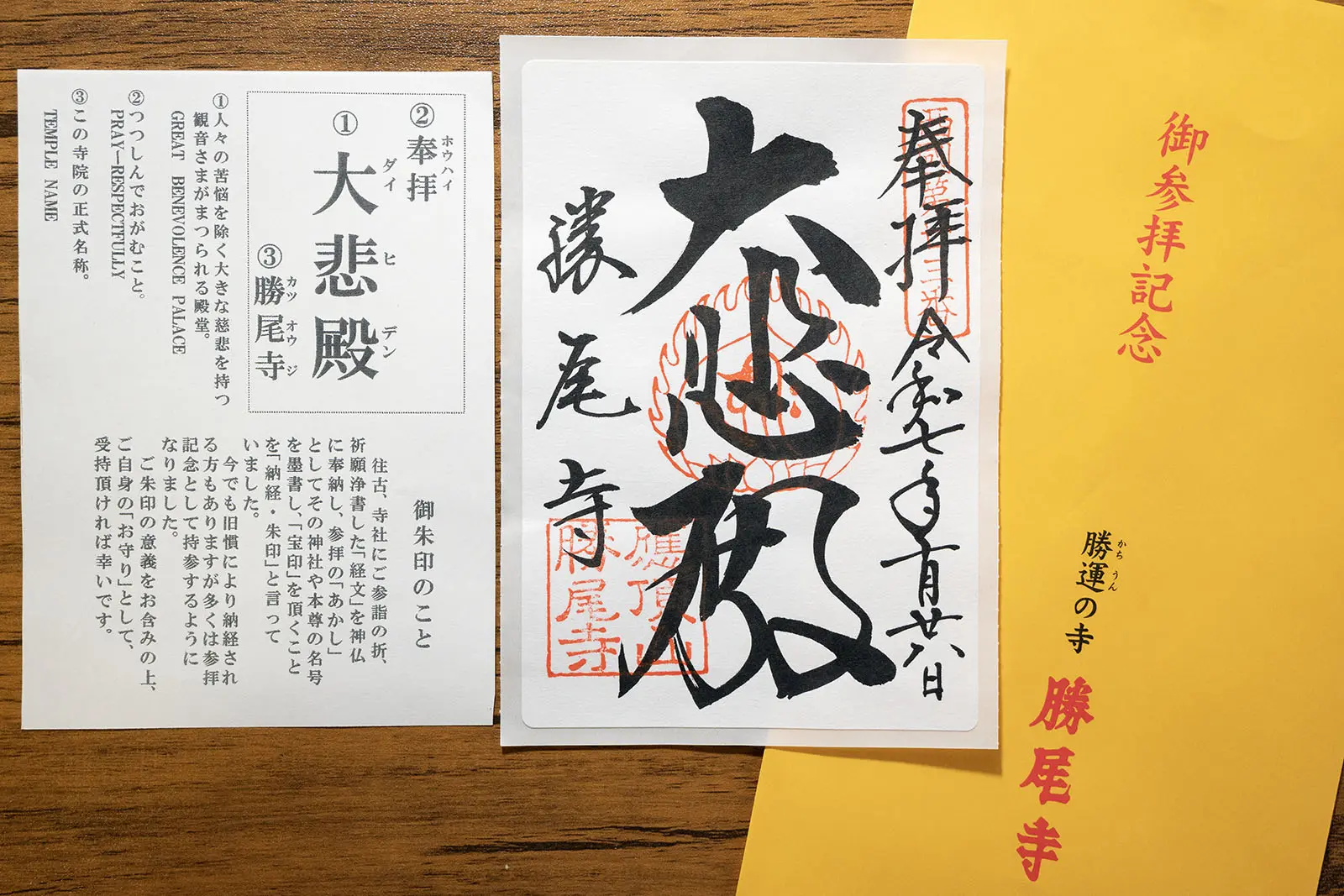
You can receive three types of goshuin: “Saigoku 33 Kannon Pilgrimage,” “Goeika,” and “Enko Daishi,” the goshuin for the 25 Honen Sacred Sites.
Even if you don’t have a goshuin-cho, sticker-style goshuin are available, so you can attach them later after purchasing one.

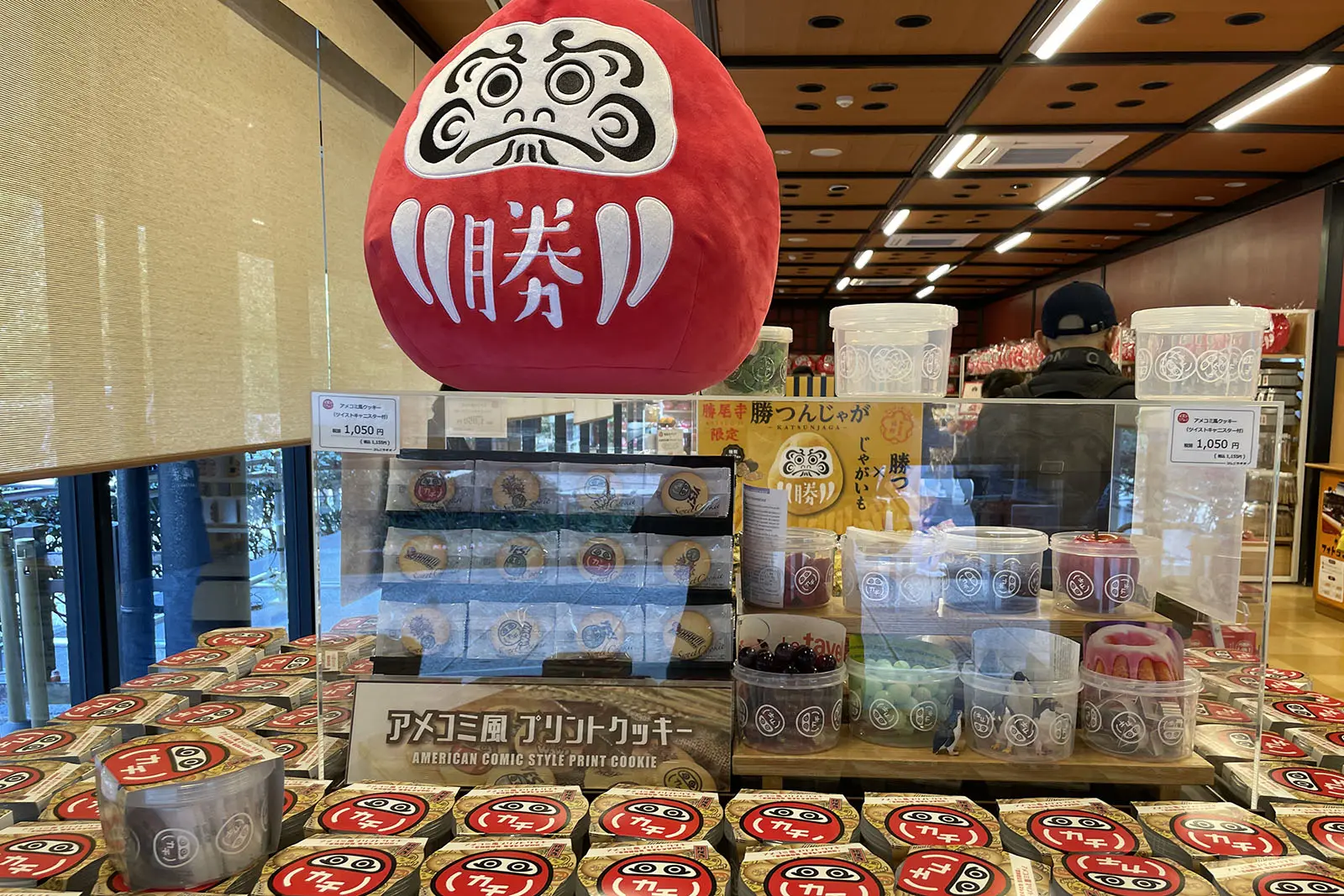
Plenty of Daruma-Themed Souvenirs to Choose From
Osaka souvenirs often feature punny product names, and Katsuo-ji’s daruma-themed souvenirs include some uniquely named items as well.
You’ll find products that may make you smile, such as “Katsunjaga,” a pun on “katsu” (win) and “jaga” (potato), and “Kachi Gummy,” made in collaboration with UHA Mikakuto (pronounced the same as “kachigumi,” meaning the winning side).
Many items also feature cute daruma designs on the packaging, making it fun to pick out a look you like.
How to Make a Wish with a Daruma
Katsuo-ji is worshipped as a temple for “winning in every part of life,” but here, the meaning of “winning” is understood as “facing yourself and overcoming your own weak heart.”
A daruma is not seen as something that grants wishes. Rather, by putting your wish into the daruma and filling in one eye, you make a vow to “overcome your own weak heart.”
It is believed that to make your written wish come true, it’s important to live each day to the fullest.
The daruma returned to Katsuo-ji are proof that there are many people who have been able to overcome themselves and seize good fortune in victory.
Below is the proper way to put your wish into a daruma and report back once you achieve your goal.
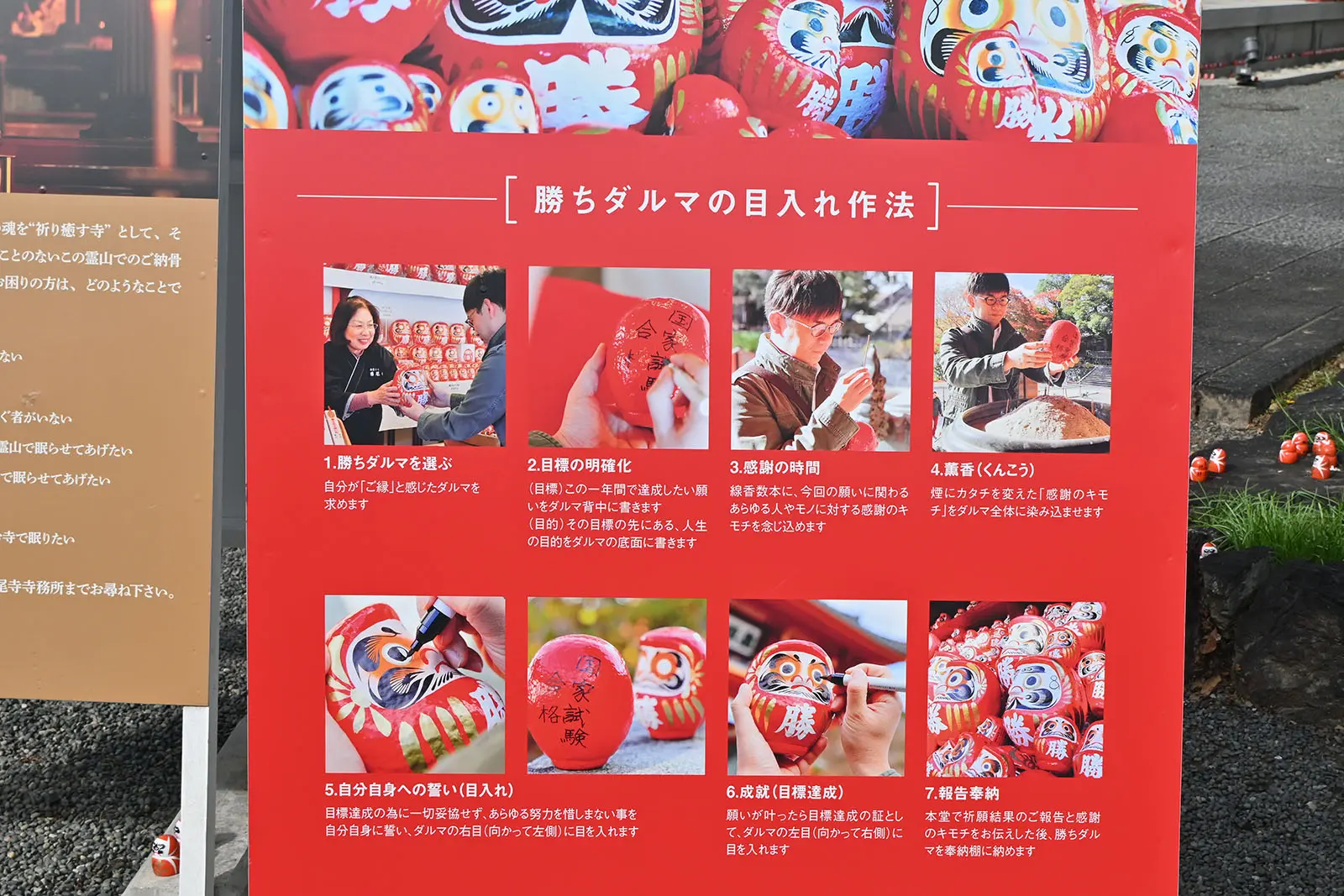
Customs at Katsuo-ji
- First, choose a Kachi-Daruma (the daruma you feel a connection with)
- On the bottom of the daruma, write your purpose in life
- On the back of the daruma, write the goal you want to achieve 365 days from now
- Light incense and put your gratitude into it
- Let the smoke from the incense, filled with gratitude, soak into the daruma
- As a vow to work toward your goal, sign the daruma’s right eye, then fill it in with black to “give it an eye”
Daily Check-In
Use the “Inochi no Sunadokei” calendar, which you can download from Katsuo-ji’s official website, to reflect on your daily actions.
Since circles are printed on the calendar, if you feel you “lived today to the fullest,” fill in the circle with black.
Reporting Fulfillment
Once your wish comes true, fill in the daruma’s left eye as proof that you achieved your goal.
Visit the Main Hall of Katsuo-ji to report your result and express your gratitude.
Finally, offer your Kachi-Daruma on the daruma shelves with a thankful heart.
Enjoy Local Specialties and Japanese Cuisine! 3 Popular Restaurants Near Katsuo-ji
The area is home to excellent restaurants worth visiting from central Osaka just for a meal, including spots that focus on locally sourced ingredients from nature-rich Minoh and places where you can dine in calm, historic buildings.
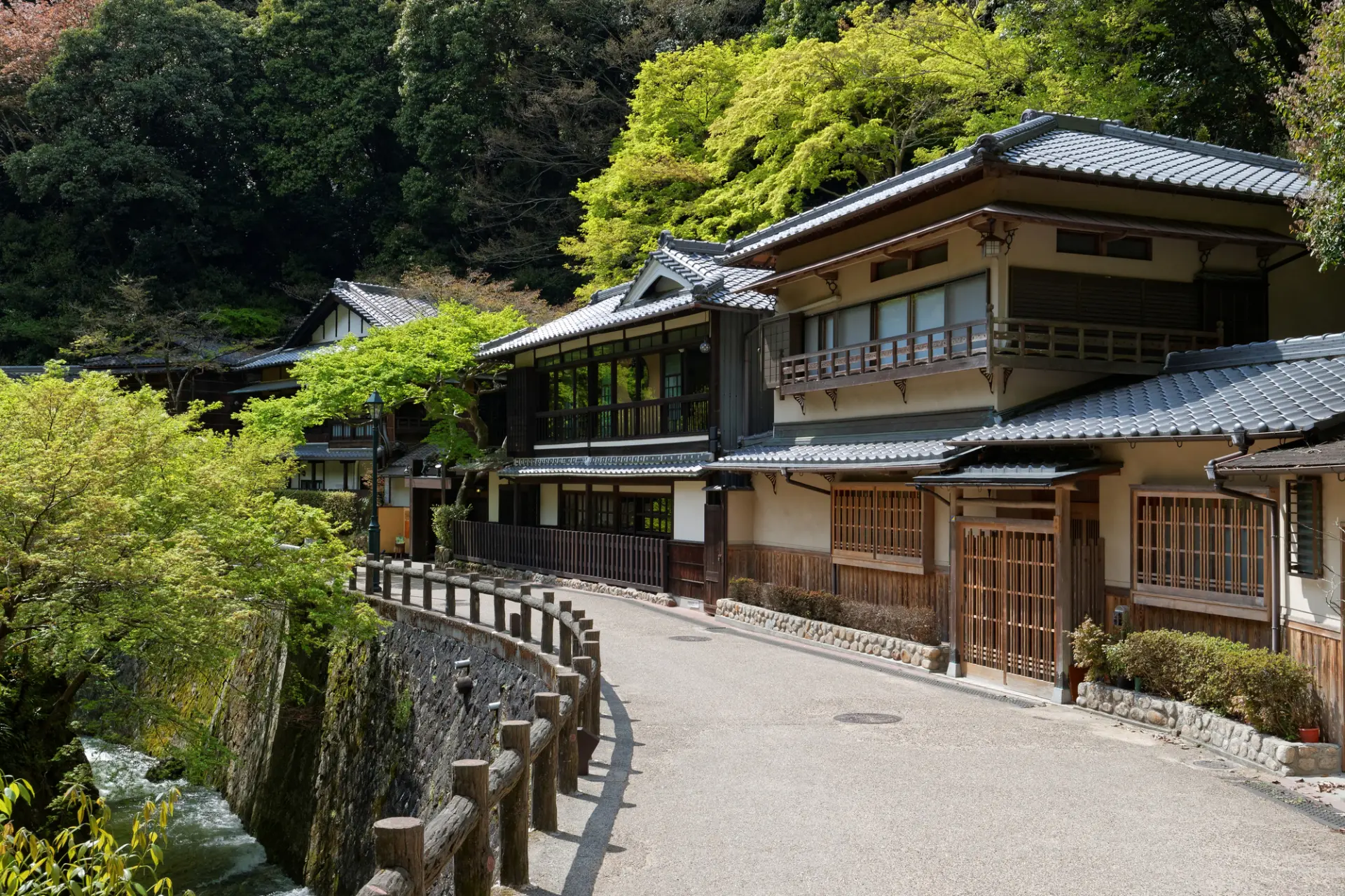
1. Otowasanso
A ryotei-style inn and restaurant located in the Meiji no Mori Minoh Quasi-National Park.
Housed in a Taisho-era residence, it lets you enjoy a meal while feeling the changing seasons.
A counter overlooking the courtyard from large windows is limited to eight guests per day, where you can savor sushi while watching a sushi chef’s refined technique.
2. Gyutoro Yakishabu Specialty Restaurant Junimatsu Rokusaemon
Conveniently located for sightseeing in Minoh, just a 4-minute walk from the north exit of Minoh-Kayano Station.
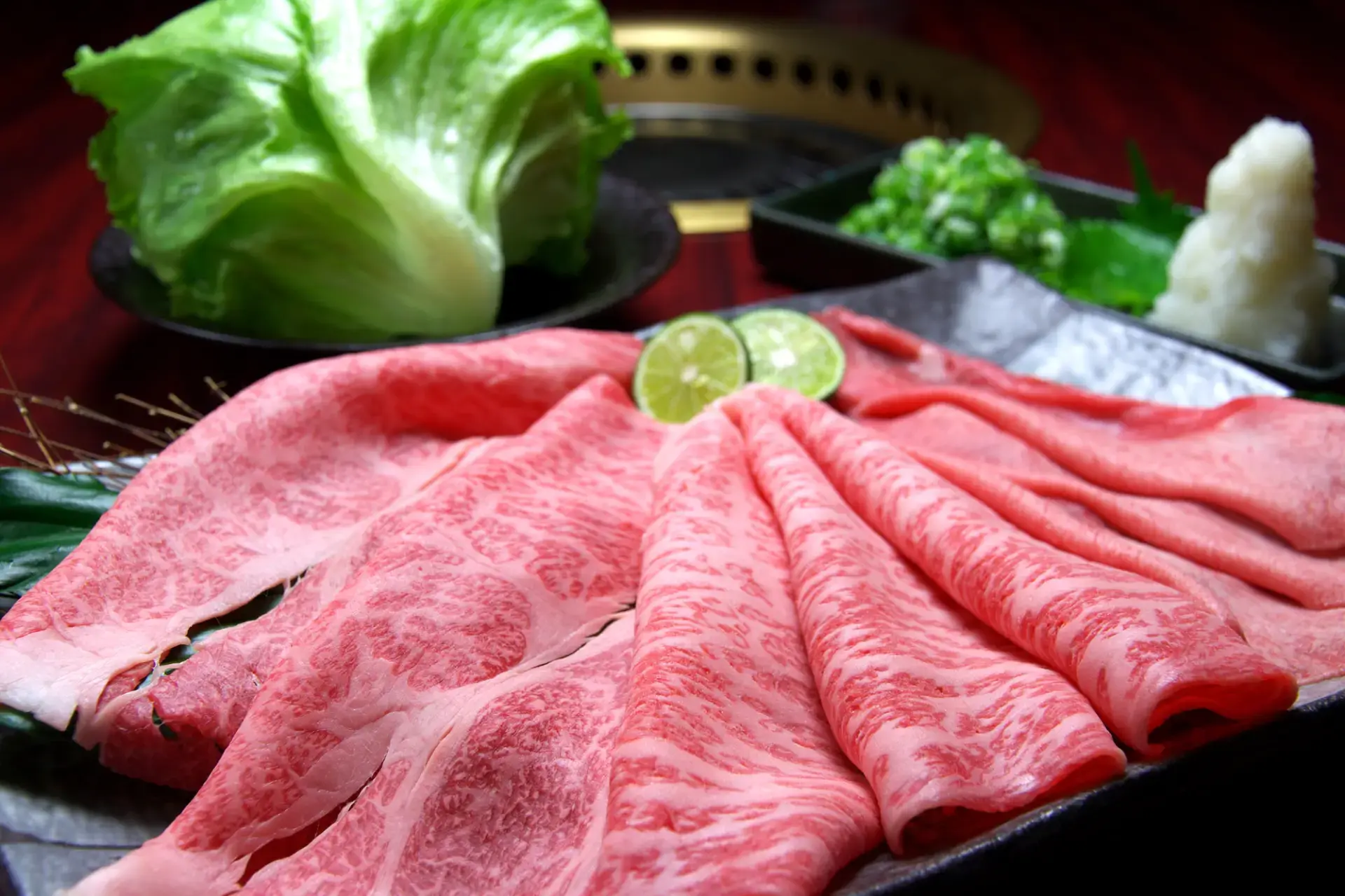
It’s Japan’s first specialty restaurant for gyutoro yakishabu, made with carefully selected Japanese Black Wagyu.
Its signature “vegetable roll” style brings out even more of the meat’s flavor.
The menu is extensive, and you can also enjoy rice cooked in a kamado stove.
3. Ichiju Nisai Ueno Minoh Branch
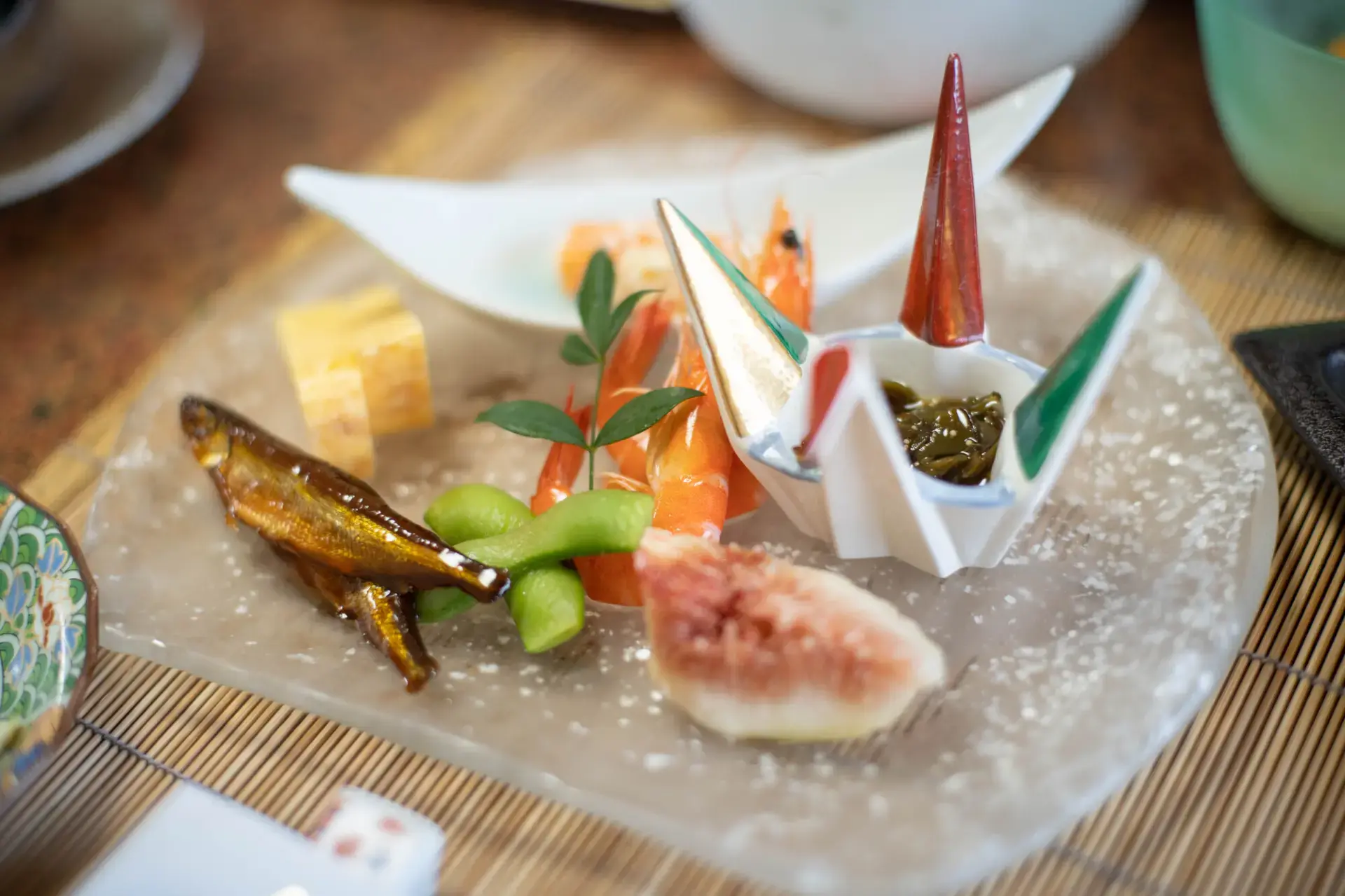
A Japanese restaurant where you can enjoy carefully prepared cuisine in private rooms, made with seasonal ingredients and a focus on dashi.
No processed foods are used, and ingredients are carefully selected by skilled chefs, so even people with allergies can feel comfortable enjoying a meal.
Kids’ bento are also available, which is another plus for families with children.
4 Sightseeing Spots Near Katsuo-ji
Many highlights are clustered within Meiji no Mori Minoh Quasi-National Park, just a few minutes on foot from Minoh Station, the terminus of the Hankyu Minoh Line.
A walking trail leads all the way to Minoh Falls at the far end, and there are places to eat along the way, so it’s best to visit with plenty of time.
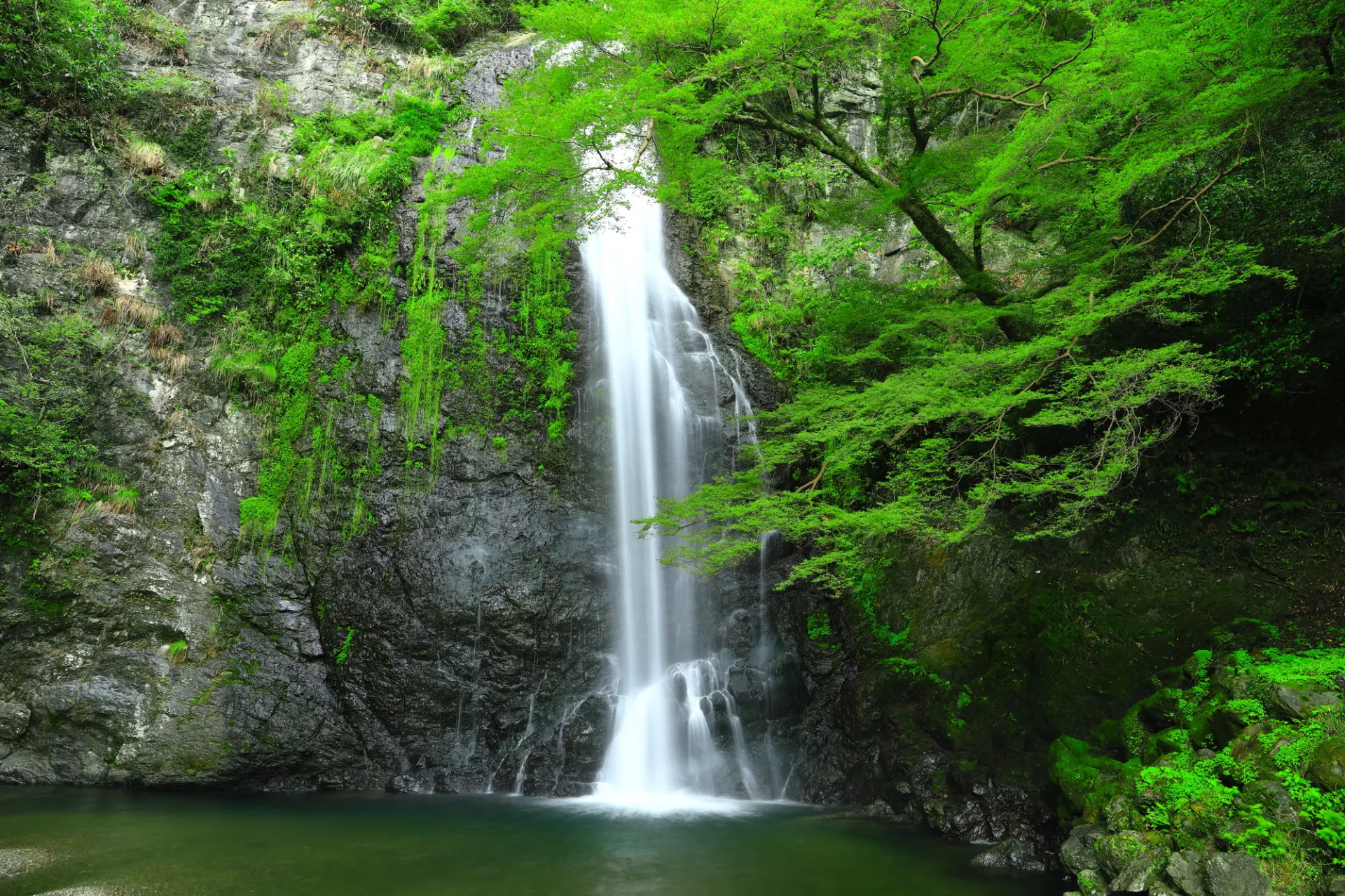
1. Minoh Falls
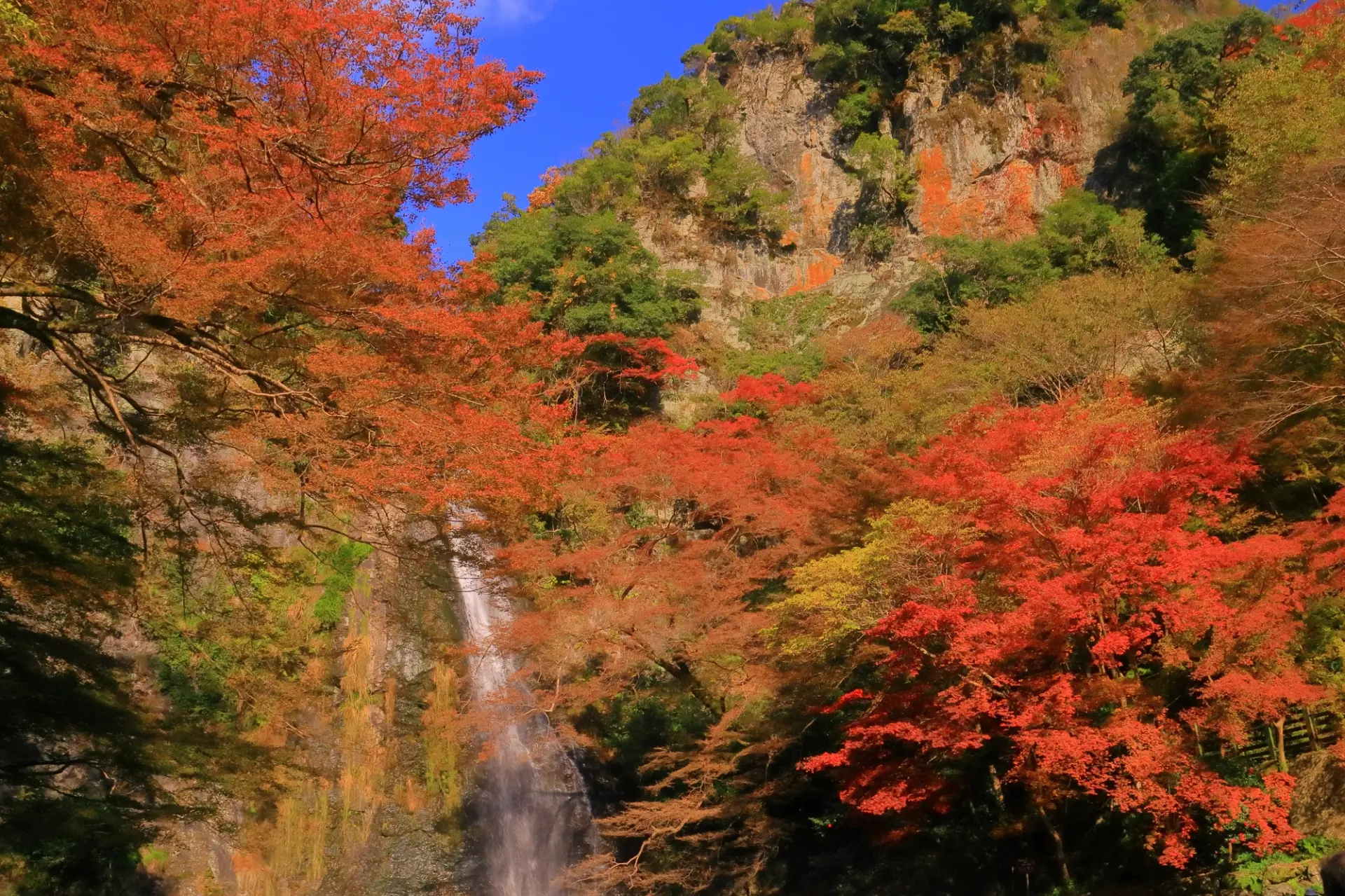
A major waterfall with a 33-meter drop, selected as one of Japan’s Top 100 Waterfalls.
It came to be called Minoh Otaki because its shape resembles a “mino,” a traditional farm tool.
Fall foliage season is the most popular time to visit, but it’s beautiful year-round.
It’s a spot where you can truly feel Minoh’s rich natural environment.
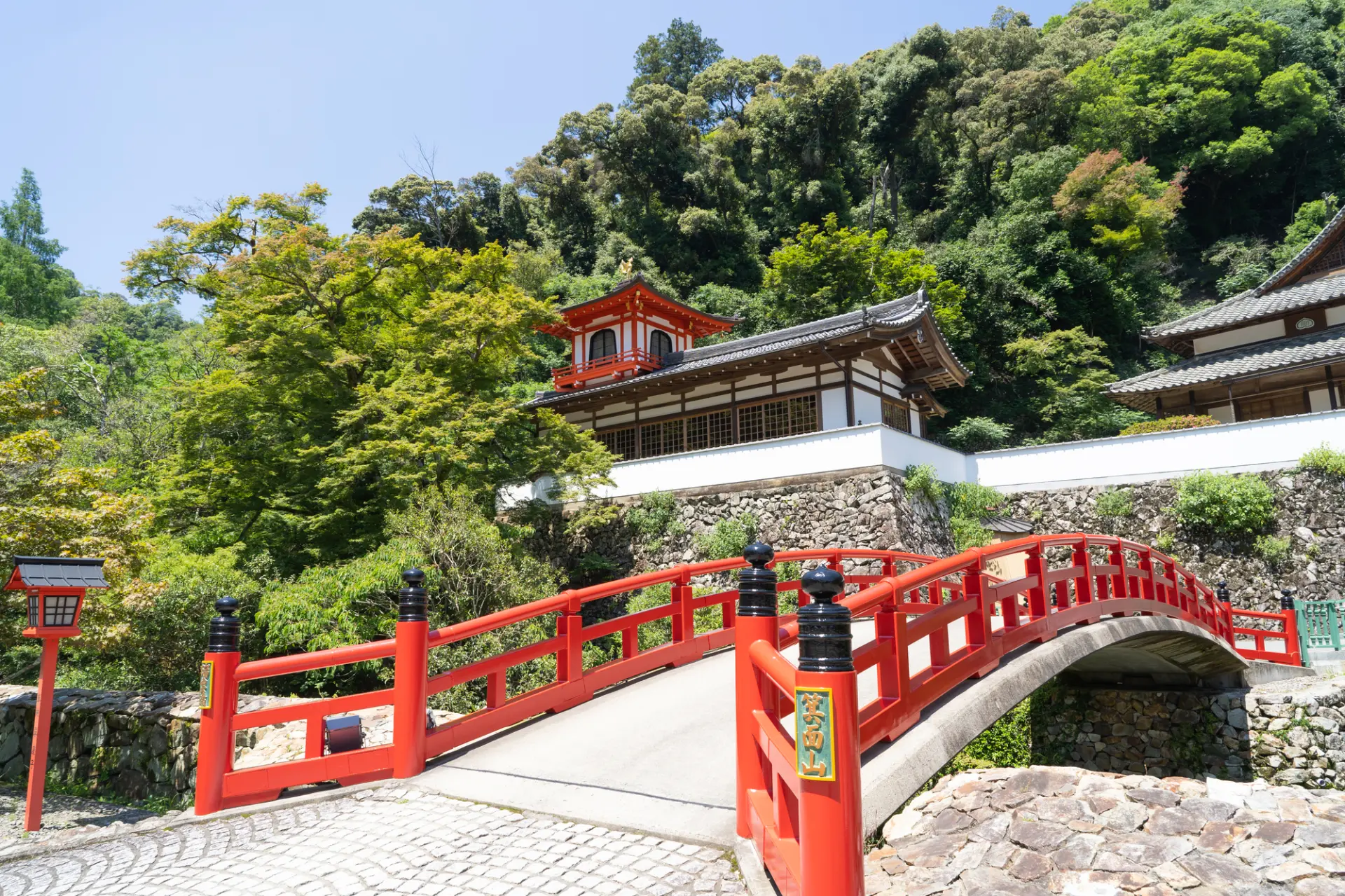
2. Minoh-san Ryuan-ji Temple
It developed as a training ground centered around Minoh Falls, and is said to have begun when En no Gyoja, who gained insight under Benzaiten’s guidance in 658, enshrined a statue of Benzaiten.
It enshrines Japan’s first and oldest Benzaiten as its principal image, and it is also known as the birthplace of the lottery, once called “Minoh Tomi.”
3. Meiji no Mori Minoh Quasi-National Park
Along with Mount Takao in Tokyo, it was designated a quasi-national park in 1967, the year marking 100 years since the Meiji era began.
Located in northern Osaka City, it remains a nature-rich forest despite its proximity to a major metropolitan area, with 1,100 plant species and 3,000 insect species.
It lies in the low mountain zone of northern Minoh City at elevations of 100–600 m, and with both Minoh Falls and Katsuo-ji within the park, there’s plenty to see.
4. Minoh Park Insect Museum
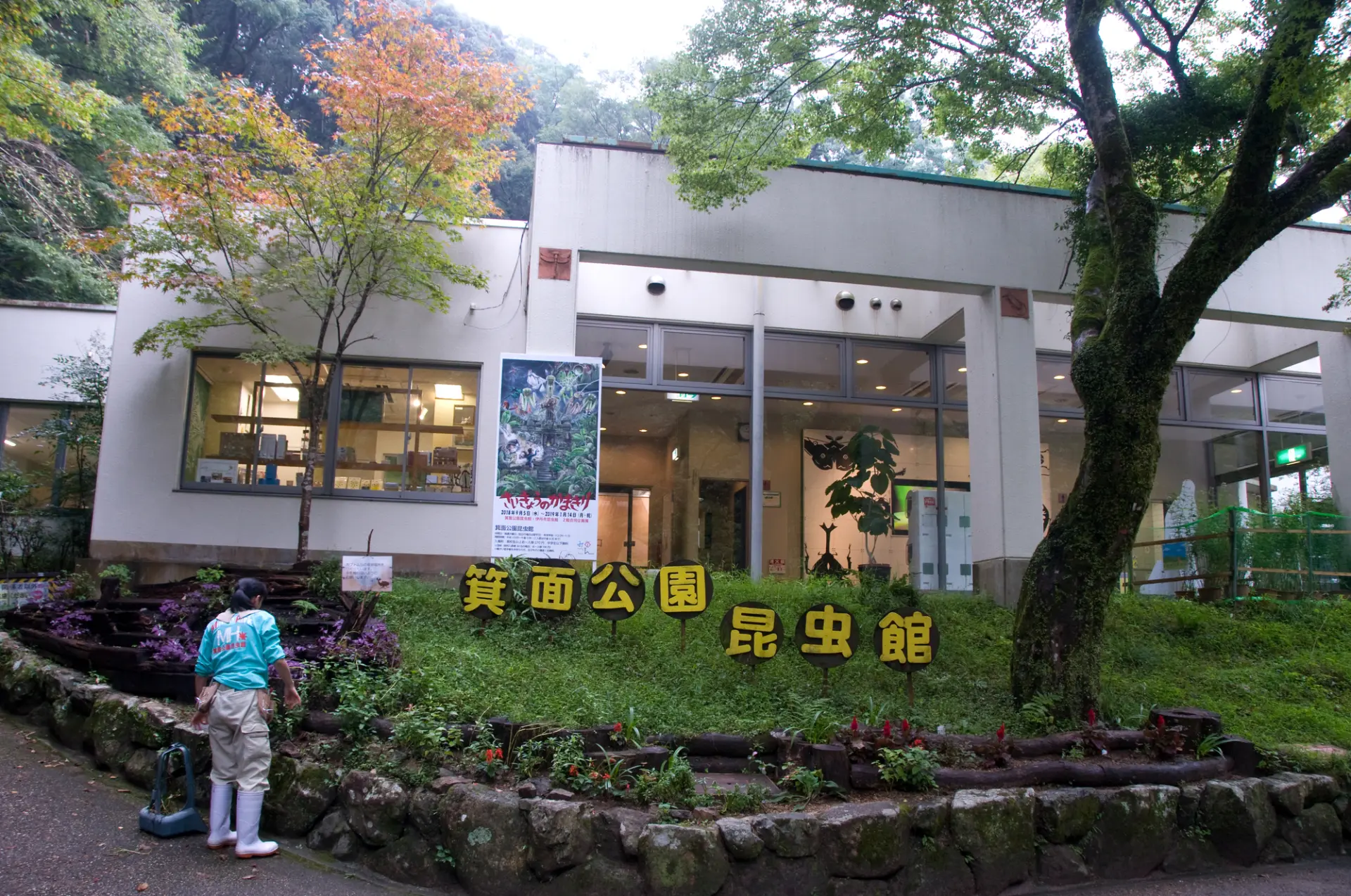
A facility built within Minoh Quasi-National Park, a treasure trove of insects—take a walk nearby and you’re likely to find many species.
Along with familiar insects, it also exhibits live specimens from overseas and the Nansei Islands, and in the butterfly garden you can observe many butterflies fluttering year-round.
Map of Tourist Attractions Near Katsuo-ji Temple
Reviews
4.17
Some reviews are AI-translated.
-
Can you place Daruma dolls anywhere inside the temple? I heard there's an area that's roped off now—can you put them there too? Hope someone can clear this up. Thanks!
-
Inside the temple, you'll find lots of small Daruma dolls on display. These Daruma symbolize people's wishes and prayers.
-
I always come here for the Daruma dolls to pray for good luck and victory. I also enjoy the cherry blossoms while I'm here. 🌸
FAQ about Katsuo-ji
Q
What are the transportation options to Katsuo-ji?
A
We recommend transferring to the direct bus at Minoh-Kayano Station, which offers through service from the Osaka Metro.
Travel time is 26 minutes by train and Approx. 20 minutes by bus.
Q
What kind of blessings can you receive at Katsuo-ji?
A
It’s worshipped as a temple of “good fortune for victory,” and many visitors come to pray for good fortune, business success, family safety, warding off misfortune, and more.
Q
How much time do you need to visit?
A
Even at a relaxed walking pace while praying, you can make the round in Approx. 1 hour and 30 minutes. If you move quickly, it can also be done in Approx. 40 minutes.
Q
What souvenirs are recommended from Katsuo-ji?
A
At the shop attached to the rest area, you can buy sweets, keychains, plushies, and other items with cute daruma-themed packaging.
There are also many amulets and other items, and taking home the popular daruma omikuji as a souvenir is also a great choice.
Summary
Katsuo-ji is a place where you can enjoy a sense of quiet and nature that hardly feels like it’s near a major city—even though it’s an easy half-day trip from central Osaka.
While it’s a historic temple, it also provides thorough information so international visitors can enjoy their visit, and it hosts a variety of events throughout the year.
Set a goal before you go, put your wish into a daruma, and then consider returning a year later to report that your wish has come true.