

A Travel Guide to Okayama Korakuen: Stunning Scenery in Every Season
Okayama Korakuen is one of Japan’s Three Great Gardens and still preserves the look of the Edo period.
The man-made natural beauty has something to offer in every season, and with many historic buildings and events, there’s plenty to see.
Many people may find themselves unsure about when to visit and what to go see.
For those wondering how to enjoy Okayama Korakuen, this article will comprehensively introduce its highlights, events, and more.
What is Okayama Korakuen Like?
Okayama Korakuen, located in Okayama City, Okayama Prefecture, is a Japanese garden designated as a “Special Place of Scenic Beauty” by the national government.
A Japanese garden is a garden that artificially recreates natural scenery by arranging stones, flowing water, plants, and more.
Alongside Kairakuen in Mito and Kenrokuen in Kanazawa, it is selected as one of the “Three Great Gardens of Japan,” and is one of Japan’s representative gardens with outstanding scenic beauty.
Across a vast 133,000 m² site, lawns, ponds, and teahouses are connected by paths, letting you enjoy seasonal scenery as you stroll.
This charming garden, which retains traces of the Edo period, welcomes many visitors every day.
Okayama Korakuen was built from 1687 to 1700 by Ikeda Tsunamasa, the second lord of the Okayama Domain (present-day Okayama Prefecture), as a place for relaxation.
Because it was created behind Okayama Castle, it was called “Gokoen,” meaning “the garden behind,” and successive lords used it when entertaining guests.
In 1871, it was renamed “Korakuen” and transferred to Okayama Prefecture to preserve the famed garden.
There is also the pedestrian Tsukimi Bridge connecting Okayama Korakuen and Okayama Castle, making it easy to visit both spots in a short time—one of its appeals.

Access to Okayama Korakuen
Since Okayama Korakuen is in the city center, you’ll find plenty of buses and streetcars.
It’s within walking distance from JR Okayama Station, but using a bus or streetcar makes getting around more comfortable.
By bus from JR Okayama Station, you’ll arrive at “Okayama Korakuen-guchi” in Approx. 10–15 minutes.
From “Okayama Korakuen-guchi,” cross Tsurumi Bridge and you’ll be at Okayama Korakuen right away.
By streetcar, it’s 5 minutes from JR Okayama Station to Shiroshita Station, then a 10-minute walk.
Okayama Korakuen Hours and Admission
Okayama Korakuen’s opening hours and admission fees are as follows.
There is also a combined ticket with Okayama Castle, which offers a better deal on admission.
It is open year-round, but opening and closing times may change due to events, so please be aware.
- Admission
-
・Adults (ages 15–64): 500 yen
・High school students and younger: Free - Combined ticket (Korakuen + Okayama Castle)
-
・Adults: 720 yen
・High school students and younger: Free - Hours
-
・March 20–September 30: 7:30am–6:00pm (Last admission at 5:45pm)
・October 1–March 19: 8:00am–5:00pm (Last admission at 4:45pm)
Okayama Korakuen: A Different Look in Every Season
Okayama Korakuen is known for its seasonal scenery and historic buildings.
It offers beautiful views no matter when you visit, so choose the season that suits your travel style.
From here, we’ll introduce what makes each season special.
Spring: A Season of Flowers in Full Bloom
In spring, a wide variety of flowers bloom across Okayama Korakuen as if competing with one another.
In the plum grove, around 100 red and white plum trees reach their peak from early February to early March.
Cherry blossoms are best from late March to early April, and around 280 trees—mainly Somei Yoshino—color the garden in an elegant display.
The “cherry blossom tunnel” that appears in the Sakura Grove and the Horse Track is especially recommended, as you can stroll through a beautifully atmospheric scene.
Azaleas, peonies, and Japanese peonies also bloom one after another through late May.
In March, “Spring Japanese Hospitality” is held, where you can experience Japanese culture through garden tea gatherings and kyogen performances.
If the timing works out, try joining along with cherry-blossom viewing.

Summer: Cool, Atmospheric Views
In summer, 3,000 Japanese irises reach their peak at Okayama Korakuen.
It’s the rainy season in June, but white and purple irises spread in vivid color across the flowerbeds.
At “Kayo-no-ike Pond,” the lotus “Itten Shikai,” with its large white blooms, floats across the water’s surface.
The cool scenery of water drawn from Sawa-no-ike Pond and flowing down as a waterfall is also beautiful.
Okayama Castle hosts “Summer Ujo Togenkyo,” while Okayama Korakuen hosts “Summer Genso Teien,” letting you enjoy a fantastically illuminated “famed garden” and “famed castle” across Tsukimi Bridge.

Fall: Scenic Autumn Leaves
Okayama Korakuen is also a famous spot for autumn foliage.
The fall colors of Approx. 250 maple trees, as well as cherry and ginkgo trees, are best from mid-November to early December.
“Sen’iri-no-mori,” a grove of 100 maples, is a popular foliage spot.
“Sen’iri” is a metaphor meaning to dye deeply, expressing the deepening fall colors.
Be sure to enjoy the autumn leaves of Okayama Korakuen as seen from the main keep of Okayama Castle as well.

Winter: Packed with Seasonal Highlights
At Okayama Korakuen, where various flowers bloom throughout the year, you can still see beautiful blooms in winter.
Approx. 300 winter camellias and 170 sasanqua camellias add special color to the winter garden.
“Tanchō Crane Garden Walk,” where the garden’s red-crowned cranes are released onto the lawn, is another winter highlight.
Seeing the graceful cranes strolling through a beautiful Japanese garden is a must.
In February, the annual “Shibayaki” grass-burning event is held to encourage healthy spring growth and help with pest control.
Watching the wide lawns burn in sequence and turn black with the flames has become a seasonal tradition of early spring.

Don’t Miss the Historic Buildings! 5 Top Highlights at Okayama Korakuen
Okayama Korakuen has many highlights, and even the natural scenery introduced so far is enough to leave you fully satisfied.
But that’s not all there is to see at Okayama Korakuen.
Its historic buildings are also appealing, including structures from the Edo period and buildings designed with clever touches that make the scenery feel even more beautiful.
Among the many highlights, here are some of the most popular must-sees.
1. “Enyo-tei”: A Panoramic View of the Garden’s Beauty
Enyo-tei, built first as the key building of Okayama Korakuen, served as the lord’s living quarters.
It is designed so that you can see all of the garden’s scenic views from Enyo-tei.
It was used for the lord’s rest and to entertain guests.
It is specially opened to the public only twice a year, allowing you to enjoy a picture-like view of the garden.

2. “Renchi-ken”: One of the Garden’s Finest Views
Renchi-ken is said to have been a favorite of the lords.
Built facing the pond, it offers one of the garden’s finest views, including the stone bridge over the water and a small island on the opposite shore.
It is one of the buildings that survived wartime damage, making it a rare and valuable structure that conveys what things were like at the time.

3. “Yuishinzan”: A Hill That Adds a 3D Way to Enjoy the Garden
Yuishinzan is an Approx. 6-meter man-made hill built by the third lord of the Okayama Domain.
From the top, it’s a scenic viewpoint overlooking the entire garden.
The originally flat garden became a more three-dimensional garden with the construction of Yuishinzan.
It is designed so that you can see Yuishinzan whether you’re viewing the garden from above or strolling anywhere within it.

4. “Ryuten”: A Rest Area with a Rare Design
Ryuten is an unusual building with a water channel running through the center, letting you enjoy the flow of water.
It has a simple design because it was built with a focus on enjoying the garden views.
It was used as a resting place for the lords, and becomes even more atmospheric during the Japanese iris season.
On the south side of Ryuten, you can also enjoy colorful Japanese irises; with a pleasant breeze, it’s a great spot to take a break.

5. “Kayo-no-ike Pond”: A Blend of Power and Elegance
Next to Enyo-tei is Kayo-no-ike Pond, also introduced as a summer highlight.
The “Odachi-ishi” standing at the edge is striking: a massive granite rock was split into more than 90 pieces, transported, and reassembled into its original form as a garden stone.
In summer, the lotus “Itten Shikai” floats across the surface, becoming a seasonal tradition.
There is also an annual event where the garden opens at 4:00am so visitors can enjoy the lotus blossoms.
Along with watching the lotus flowers slowly bloom at dawn, you can also enjoy Japanese atmosphere such as koto performances.

A Must in Spring, Summer, and Fall: The “Genso Teien” Illumination Event
At Okayama Korakuen, the limited-time nighttime opening “Genso Teien” is held every year.
In spring, summer, and fall, you can stroll through an illuminated Okayama Korakuen at night and take in the dreamlike scenery.
In addition, you can enjoy a variety of events such as projection mapping and Japanese culture experiences.
Genso Teien features different ideas so you can enjoy it in ways that match each season.
In spring, a highlight is “Spring Carp Streamers,” where three giant koi streamers (carp) lit with lights along the water are floated on rafts.
In summer, there are plenty of events, from the 120-wind-chime tunnel “Suzumi no Komichi” to hands-on traditional crafts and Japanese culture experiences.
In fall, it is held during the most beautiful season for autumn leaves.
The night garden, colored by fall foliage, is romantically staged with beautiful lighting and Japanese umbrellas.
On long autumn nights, we hope you enjoy strolling to your heart’s content.
During the Genso Teien period, Okayama Castle also hosts the illumination event “Ujo Togenkyo.”
The illuminated Okayama Castle, with its jet-black exterior standing out, together with Okayama Korakuen, is a must-see.
Please note that the event period varies by year.

3 Famous Castles in Okayama to Visit with Okayama Korakuen
After enjoying a stroll around Okayama Korakuen, why not visit some historic castles as well?
Here are three of Okayama Prefecture’s most notable castles.
1. Okayama Castle
Okayama Castle was built by the Sengoku-period warlord Ukita Hideie and completed in 1597. He built the main compound on a hill called Okayama and constructed the main keep with the Asahi River—whose course was altered—behind it.
At the same time, the castle town was developed by gathering merchants and artisans, and it became the center of today’s downtown; the construction of Okayama Castle laid the foundation for the place name and the city itself.
After the Battle of Sekigahara, Kobayakawa Hideaki, followed by the Ikeda clan, became the lords of the castle, continuing until the end of the Edo period.
The main keep has a rare shape, with the first floor forming an irregular pentagon, and it is known as “Ujo” (Crow Castle) because it is said that its walls were once covered with black lacquered boards.

2. Tsuyama Castle
Its predecessor was Tsuruyama Castle, built in 1441 by Yamana Tadamasa, but it was abandoned during the Onin and Bunmei wars.
Later, Mori Tadamasa—known as the younger brother of Mori Ranmaru, a close aide of Oda Nobunaga—renamed “Tsuruyama” to “Tsuyama” and began construction.
After 13 years of work starting in 1604, a grand castle was completed, becoming one of Japan’s Three Great Hirayama (hilltop) Castles.
Bicchu Yagura, said to have had a presence second only to the main keep and the largest turret of Tsuyama Castle, has been reconstructed as part of the 400th anniversary project.
Unusually for a turret, it has tatami-mat rooms, and because it was connected to the main hall by a corridor, it is also thought to have been used as part of the main hall.
From around the keep’s former site, you can overlook the city of Tsuyama.

3. Bitchu Matsuyama Castle
There are 12 castles nationwide that still have an original main keep, including Bitchu Matsuyama Castle, but among mountain castles, only Bitchu Matsuyama Castle retains one.
In addition to the two-story main keep, parts of double turrets and earthen walls remain, and you can tour rooms inside designed for enduring a siege, as well as a large hall with an irori hearth.
Gagyu-zan, at an altitude of Approx. 480 m in the northern part of the city, is a collective name for four peaks—“Omatsuyama,” “Tenjin-no-maru,” “Komatsuyama,” and “Maeyama”—and the castle was built centered on these four peaks.
What remains today is the early modern castle section on “Komatsuyama” at an altitude of 430 m, which is a remodeled version of a medieval castle.

3 Popular Places to Eat Near Okayama Korakuen
When you visit Okayama Korakuen, be sure to try the local flavors Okayama is proud of.
From sweets made with juicy muscat grapes to demi-katsu don beloved by locals, you’ll find delicious specialties unique to the area.
Stop by for a break during sightseeing, and you’re sure to enjoy flavors and moments you’ll remember from your trip.
1. Shokudo Yamato
Shokudo Yamato has been run in Okayama across three generations since it first opened.
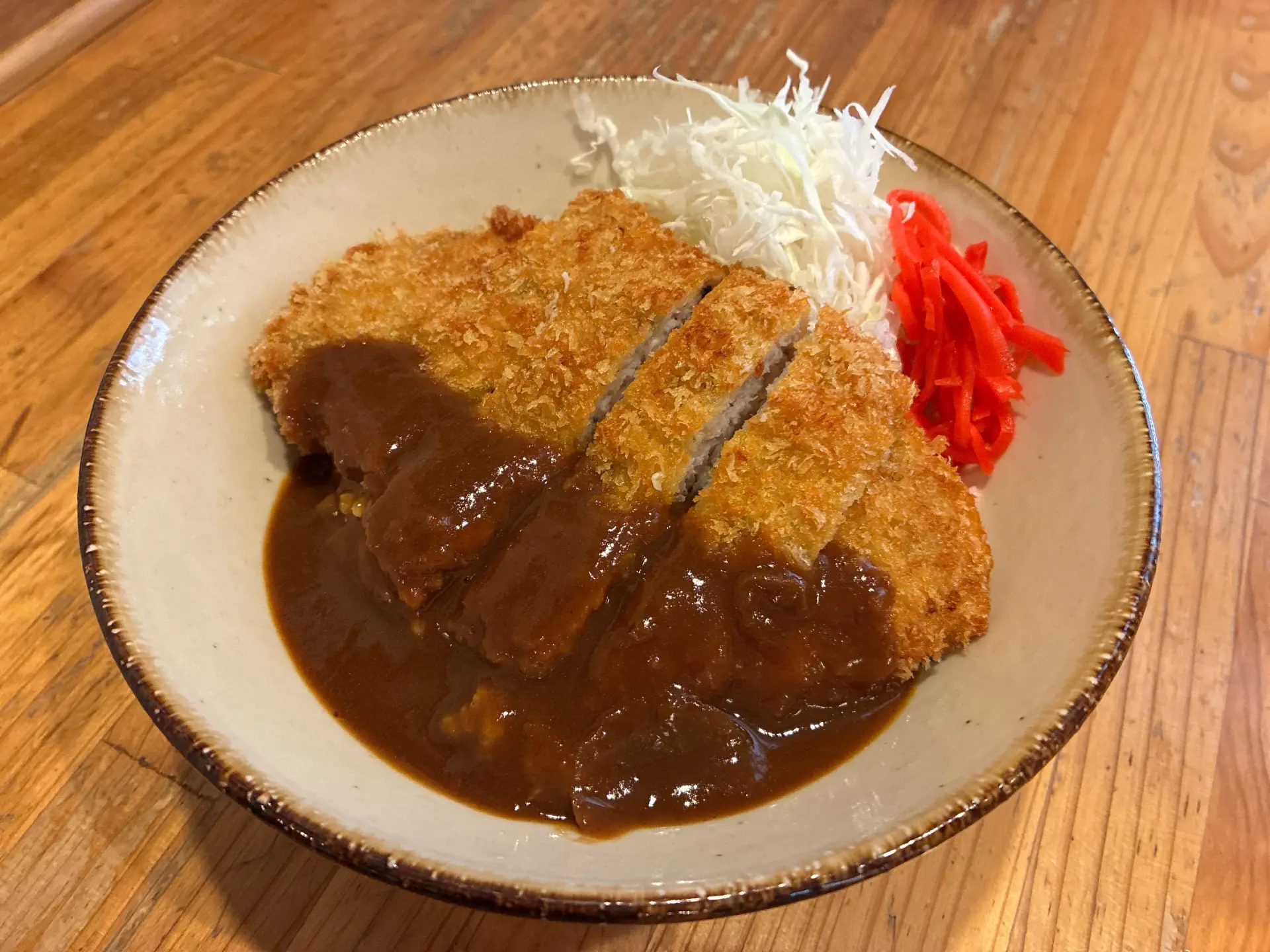
It’s a diner that serves Okayama’s local specialty, demi-katsu don.
The restaurant’s demi-katsu don won a Gold Award in the katsudon category at the 1st National Donburi Grand Prix, hosted by the National Donburi Federation.
It’s well known both within and beyond the region.

2. Karafuneya CAFE Sunste Okayama
Karafuneya CAFE Sunste Okayama is operated by the long-established coffee and café chain Karafuneya Coffee Shop.
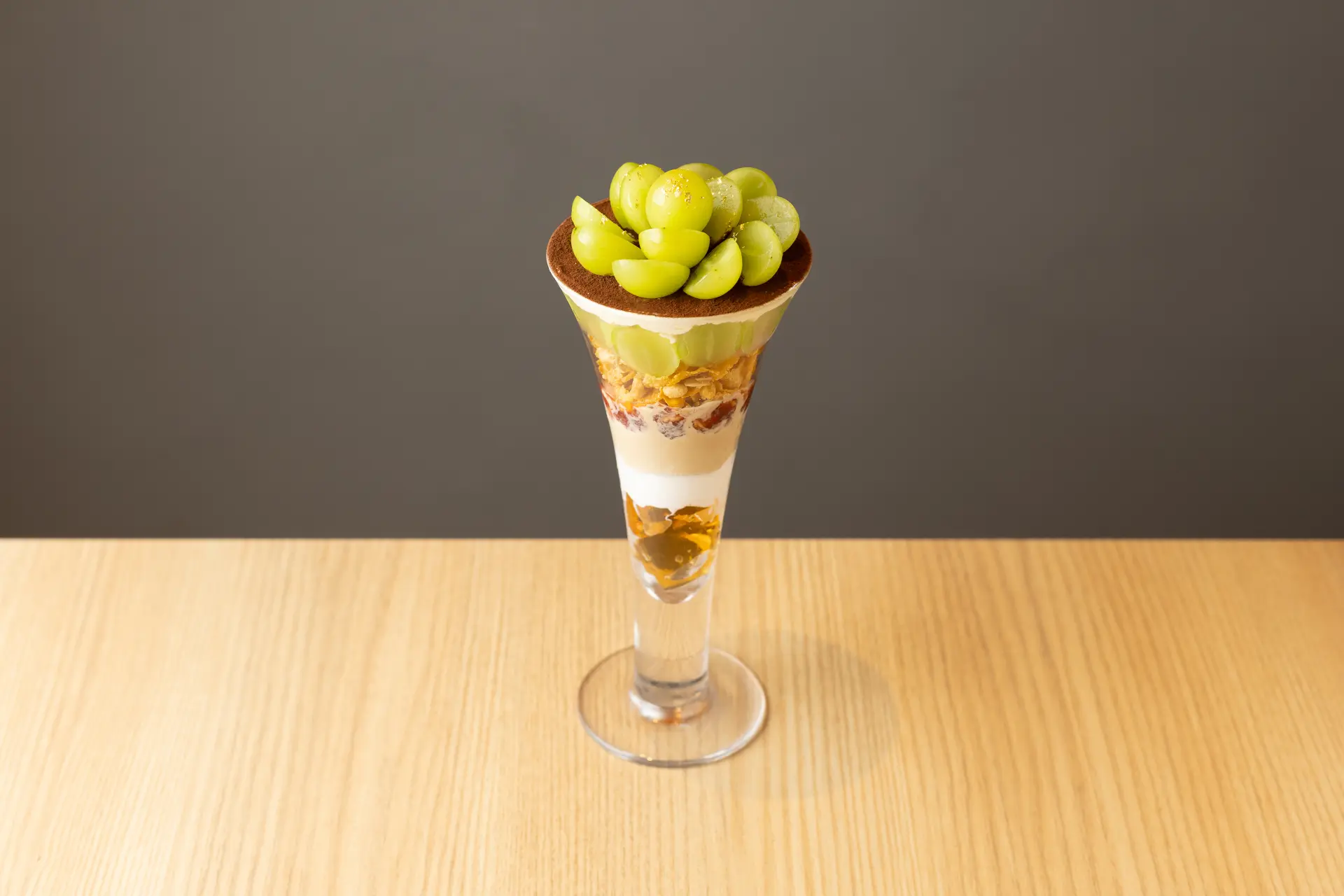
It’s known as a dessert café where you can enjoy a wide variety of parfaits, with 40+ types available at all times.
A signature item is the “Okayama-grown Muscat Milk Tea Tiramisu Parfait.”
3. Sanuki no Otoko Udon Nose Hokancho
Sanuki no Otoko Udon Nose Hokancho is a Sanuki udon specialty shop in Hokancho, Kita Ward, Okayama City.
It’s conveniently located a 5-minute walk from the west exit of JR Okayama Station, making it a good fit for everyday lunch or dining solo.
With a focus on chewy, smooth Sanuki udon, it’s popular with both locals and visitors.
Reviews of Okayama Korakuen
4.30
Some reviews are AI-translated.
-
The garden is huge, with lots of lawns and ponds. It's really comfortable to walk around, and the grass is well maintained. You can even sit down for a picnic—super relaxing.
-
One of Japan's top three gardens—it's a must-see for anyone who loves gardening or landscape design!
FAQ about Okayama Korakuen
Q
How long does it take to get around Okayama Korakuen?
A
If you want to take your time, plan for around 1 to 2 hours.
Q
When is the best time to see fall foliage at Okayama Korakuen?
A
Mid-November to early December is the best time.
Q
When does the Okayama Korakuen illumination start?
A
The dates vary each year, but it’s held three times: spring, summer, and fall.
Summary
We’ve introduced the seasonal highlights of Okayama Korakuen, along with its illumination events.
If you’re sightseeing in Okayama, Okayama Korakuen is a spot you should visit, offering beautiful scenery no matter when you go.
Since the neighboring Okayama Castle also has plenty to see, be sure to visit both together.
If you don’t know what kind of place Okayama Castle is, check out this article summarizing its highlights, too.