

More Than Hot Springs! 17 Must-Visit Attractions in Beppu City
Beppu City is famous for Beppu Onsen, one of Japan’s top hot spring destinations.
But Beppu’s appeal goes far beyond its hot springs. You can take in stunning natural scenery, enjoy night views from observation decks, try a wide range of local specialty foods, and join events that let you experience Beppu in many different ways.
In this article, we’ll introduce popular attractions in Beppu, local food, and accommodations where you can fully enjoy the hot springs.
Use this guide and you’ll be able to enjoy Beppu to the fullest.
What is Beppu City Like?
Beppu City, located in northeastern Oita Prefecture on Kyushu, is a hot spring town that boasts Japan’s largest number of hot spring sources and the highest volume of hot water output. It’s a popular destination with over 5 million visitors each year.
Despite being a relatively small city, it’s home to eight hot spring areas known as the “Beppu Hatto” (Beppu Eight Hot Springs), also called the Beppu Onsen area.
The cityscape filled with rising steam is a signature sight that perfectly symbolizes Beppu as a hot spring town.
For over 1,000 years, steam, hot mud, and boiling water have erupted from the ground here, and these dramatic scenes have long been described as “jigoku” (hells).
Beppu Jigoku Meguri, a tour that takes you around these “hells,” is especially popular.
Of course, Beppu’s appeal isn’t limited to hot springs.
The city’s distinctive fan-shaped terrain stretches from the foothills of Mt. Yufu and Mt. Tsurumi to Beppu Bay, and its natural scenery is another major draw—from plateaus and the bay to Shidaka Lake, located at an elevation of 600 meters (Approx. 1,969 ft).
Mt. Tsurumi is a popular viewpoint, with Approx. 5,000 Miyama Kirishima azaleas in early summer and stunning frost-covered “ice trees” in winter.
Enjoy beautiful landscapes that change with the seasons.
Be sure to make time for Beppu’s local specialties, too.
Try Kannawa’s famous jigoku-mushi (hot spring steaming), where ingredients are cooked in geothermal steam, and “toriten” (chicken tempura), which is said to have originated in Beppu—along with other regional dishes that highlight local ingredients.

What’s the best season to visit Beppu City?
If you’re planning a trip to Beppu, spring—when flowers begin to bloom—is especially recommended.
Enjoy Beppu Park, where colorful flowers are in full bloom, and Beppu Rakutenchi, a well-known cherry blossom spot.
Mt. Tsurumi, with Approx. 2,000 cherry trees, is a perfect place to ride the ropeway and enjoy cherry blossom viewing and a scenic ride through the air at the same time.
Take in Beppu’s natural beauty and explore comfortably in pleasant spring weather.
What to wear in Beppu City by season
- Spring (March–May): A light jacket and a thin sweater
- Summer (June–August): Lightweight clothing, short sleeves
- Fall (September–November): A light jacket or coat
- Winter (December–February): A coat, plus a thick sweater or jacket
How do you get to Beppu City?
Here’s how to get to JR Beppu Station starting from Oita Airport.
Take the Oita Airport Express Bus “Airliner,” which connects Oita Airport with Beppu and Oita City, and you’ll arrive in Beppu in 35 to 47 minutes.
Getting to Oita Airport takes Approx. 1 to 2 hours from Tokyo or Osaka.
Oita Airport also has international flights, so access from overseas is convenient as well.
Main ways to get around for sightseeing in Beppu City
Buses are the main way to get around Beppu.
There’s a strong network of local route buses that start from Beppu Station and stop at many attractions, and the all-you-can-ride 1-day pass “Route Bus Spotto” is also recommended.
There are also scheduled sightseeing buses focused on the Beppu Jigoku Meguri, as well as sightseeing buses that connect Beppu and Yufuin while stopping at attractions along the way.
For an easy way to get around, consider renting an electric-assist bicycle as well—it can make exploring even more comfortable.
17 Popular Attractions in Beppu City to Enjoy Along with Hot Springs
Beppu is well known for its hot springs, but it also offers plenty of other great places to visit, including nature spots where you can feel the outdoors, scenic viewpoints with incredible views, facilities where you can learn about traditional culture, and theme parks the whole family can enjoy.
In addition to soaking in hot springs, be sure to check out the popular attractions below.
1. Kijima Kogen Park
Kijima Kogen Park sits on the southern foothills of Mt. Tsurumi in Beppu.
This theme park is packed with attractions and events for kids and adults alike.
Highlights include Japan’s first wooden roller coaster and “Ice World,” where you can experience a world of -30°C (-22°F).
Family-friendly events are held regularly as well.
Visitors also love the shops offering Kijima Kogen original snacks and goods, along with restaurants where families can enjoy a meal together.
With nearby hotels that feature natural hot springs and a golf course, it’s a great spot to spend a full day.

2. Beppu Ropeway
This ropeway connects Beppu Kogen Station at the base of Mt. Tsurumi—one of Japan’s 300 Famous Mountains—to Tsurumi Sanjo Station at an elevation of 1,300 meters (Approx. 4,265 ft), covering a steep 1,816-meter (Approx. 5,958 ft) ascent in Approx. 10 minutes.
The gondolas are among the largest in Kyushu, with a spacious 12 m (Approx. 39 ft) by 8 m (Approx. 26 ft) design. Since opening in 1962, the ropeway has continued to operate with safety as the top priority.

3. Kannawa Jigoku Area Park
This park is surrounded by natural forest in northern Beppu, in an area dotted with hot springs and “hell” sights.
With lawns and playground areas, it’s a relaxing place to take a stroll and enjoy a refreshing walk among the trees.
Along the paths you’ll find cherry trees, and in late March to early April, the park becomes a popular spot for hanami (cherry blossom viewing) for locals and visitors alike.
It’s also a great idea to pick up Beppu specialties to-go and enjoy a picnic here.
In addition to two annex parks—Juman Park and Observatory Park—the glamping facility “Glansia Beppu Kannawa” offers a variety of experiences, including hot springs and jigoku-mushi cooking.

4. Jūmonjibaru Observatory
From this observatory on the Jūmonjibaru Plateau in northern Beppu, you’ll get sweeping views of Beppu City, Beppu Bay, the Kunisaki Peninsula, and even Shikoku on clear days.
The beautiful night view—recognized as a “Japan Night View Heritage” site and selected as one of the “100 Best Night Views in Japan”—is a must-see.
It’s also a popular driving route, so consider taking a scenic drive while enjoying the natural surroundings.

5. Shidaka Lake
A highland lake spread across an area 600 meters (Approx. 1,969 ft) above sea level on the southeastern slopes of Mt. Tsurumi in Beppu.
Part of Aso Kuju National Park, it’s surrounded by spectacular nature, including mountains such as the grandly shaped Mt. Yufu.
A walking route runs along the Approx. 2 km (Approx. 1.2 miles) lakeshore, making it perfect for enjoying activities while encountering wild birds and seasonal plants.

6. Oita Fragrance Museum
A museum themed around “fragrance,” located a 10-minute walk from Beppu Daigaku Station on the JR Nippo Main Line, one stop from Beppu Station.
It features an extensive perfume collection and historical items related to fragrance.
Take your time viewing rare pieces such as perfume oil bottles from before the Common Era, Rococo and Art Nouveau perfume bottles, incense burners, and distillers.
Visitors also enjoy making their own original perfume, the museum shop, and the Italian cafe.
In the attached herb garden, you can also enjoy a natural hot spring foot bath along with the scent of herbs.

7. Beppu City Bamboo Crafts Center
Beppu City Bamboo Crafts Center is Approx. 20 minutes from JR Beppu Station by bus and on foot.
This facility showcases the appeal of Beppu Takezaiku (Beppu bamboo crafts), a traditional Japanese craft. You’ll find works by renowned artists, exhibits on the relationship between people and bamboo, workshops in an on-site studio, and a museum shop where you can purchase bamboo craft items.
Beppu bamboo crafts are made mainly from madake bamboo around Beppu, and the weaving technique known as “henso” is done entirely by hand by skilled artisans.

8. Beppu Rakutenchi
Founded in 1929, this is the oldest amusement park in Kyushu and has been loved by generations as a nostalgic spot for Beppu locals.
Inside the park, you’ll find a wide range of attractions, from Japan’s only double Ferris wheel, the “Flower Ferris Wheel,” to a fairy-tale-style carousel, a roller coaster that races along a Approx. 470 m (Approx. 1,542 ft) course through the trees, and even go-karts that made a comeback after 20 years.

9. Yukemuri Observatory
An observatory located in eastern Kannawa, Beppu.
It offers panoramic views of Mt. Tsurumi and Mt. Ougiyama, along with the steam-filled cityscape selected as the “Important Cultural Landscape: Beppu’s Steam and Hot Spring Townscape.”
After sunset, you’ll see an atmospheric night view of the city—its beauty is easy to imagine given that it’s also recognized as a “Japan Night View Heritage” site.

10. Beppu Tower
Built in 1957, this was Japan’s third TV tower.
Designated a Registered Tangible Cultural Property of Japan, it’s loved as one of Beppu’s landmark towers.
Floors 1 through 5 house a variety of facilities, including restaurants, an art museum, a souvenir corner, and an intermediate observation deck.
From the observation deck 55 meters (Approx. 180 ft) above ground, you can look out over Beppu Bay and the city—and on clear days, even as far as Shikoku.

11. Global Tower
The landmark tower of Beacon Plaza, located Approx. 20 minutes on foot from Beppu Station.
Beacon Plaza is a convention center that hosts large-scale conferences, meetings, exhibitions, and expos.
Inside is the uniquely designed Global Tower, standing at Approx. 125 meters (Approx. 410 ft) tall.
The 360-degree open observation terrace 100 meters (Approx. 328 ft) above ground features a glass-box-like design.
From here, you can take in Beppu’s steam-filled cityscape, Mt. Tsurumi, and Beppu Bay at a glance.
Don’t miss the sparkling night view of Beppu, also recognized as a “Japan Night View Heritage” site.
There are also plans where professional staff will take photos and videos for weddings or special occasions.
Being able to capture your special moments in photos and videos is another part of the appeal.

12. Beppu Park
A lush park in the center of Beppu, with bamboo groves, plum orchards, ponds, lawns, and walking paths.
The red pines over 100 years old and Approx. 700 black pines are especially impressive.
Beppu Park is also known for cherry blossoms and plum blossoms. In spring, the plum orchard fills with Bungo ume as well as white and red plum blossoms, and Approx. 100 Somei Yoshino cherry trees bloom in full.
With seasonal events throughout the year, it’s a relaxing park enjoyed by both locals and visitors.

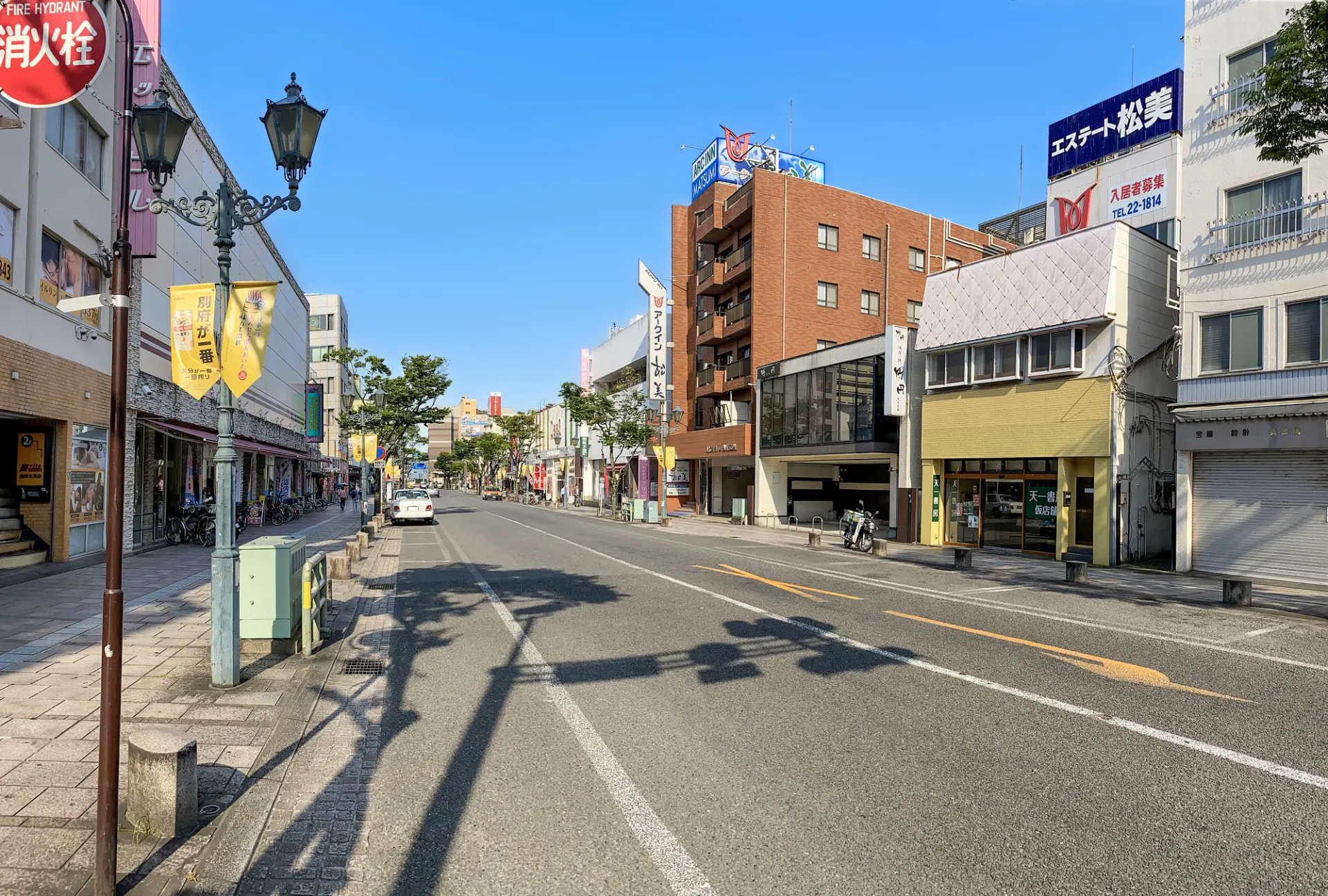
13. Beppu Ekimae-dori Street
Beppu Ekimae-dori Street runs from JR Beppu Station toward National Route 10.
It’s Beppu’s main street, lined with local restaurants, souvenir shops, and department stores.
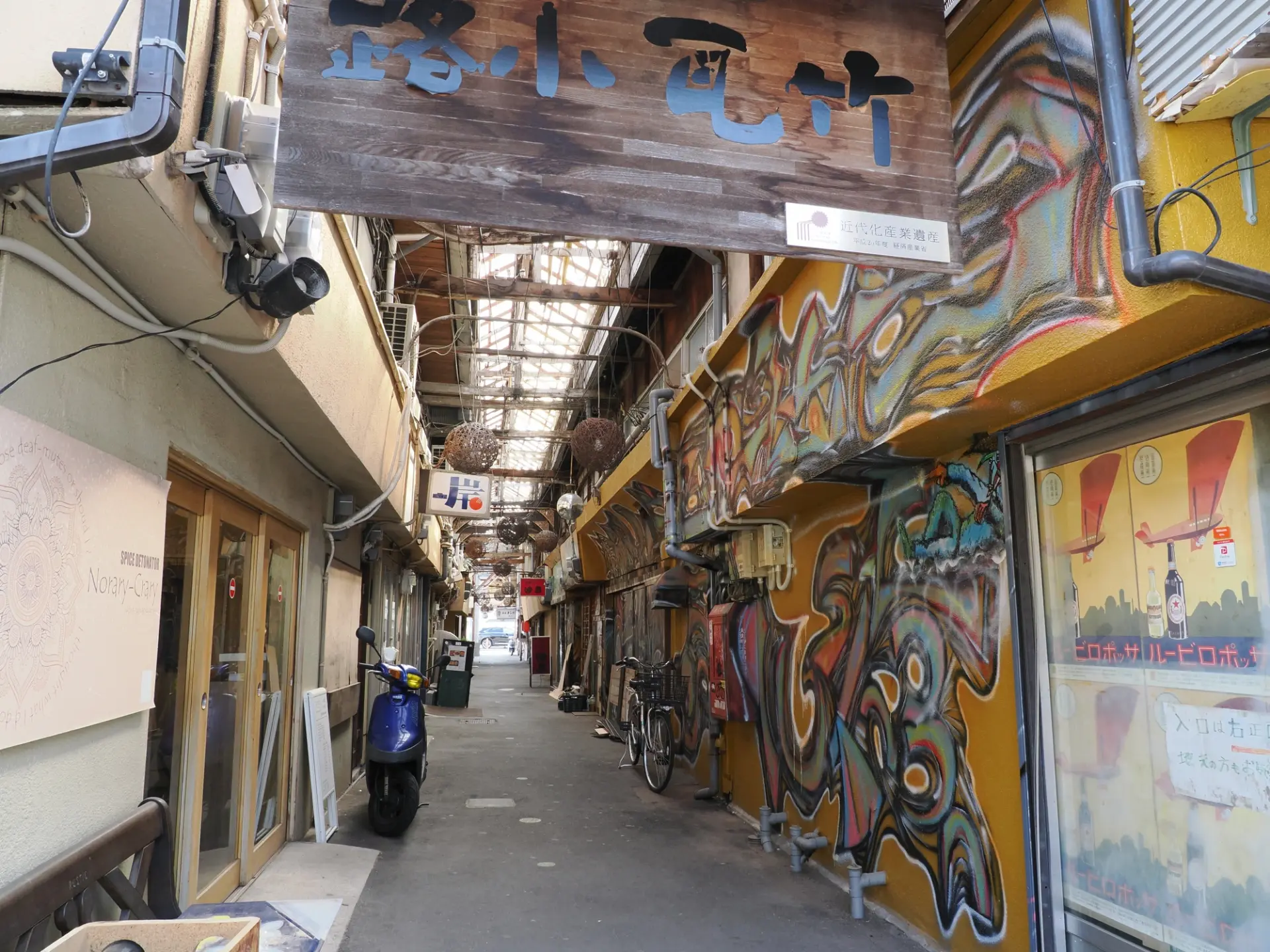
Nearby you’ll also find scattered accommodations and hot spring facilities, plus deeper, more nostalgic spots like the bamboo-lined alley of eateries known as “Takegawara Onsen Yokocho.”
Events such as the Beppu Hatto Onsen Festival and Beppu Hi no Umi Festival are also held on Beppu Ekimae-dori Street.
14. Beppu Station Market
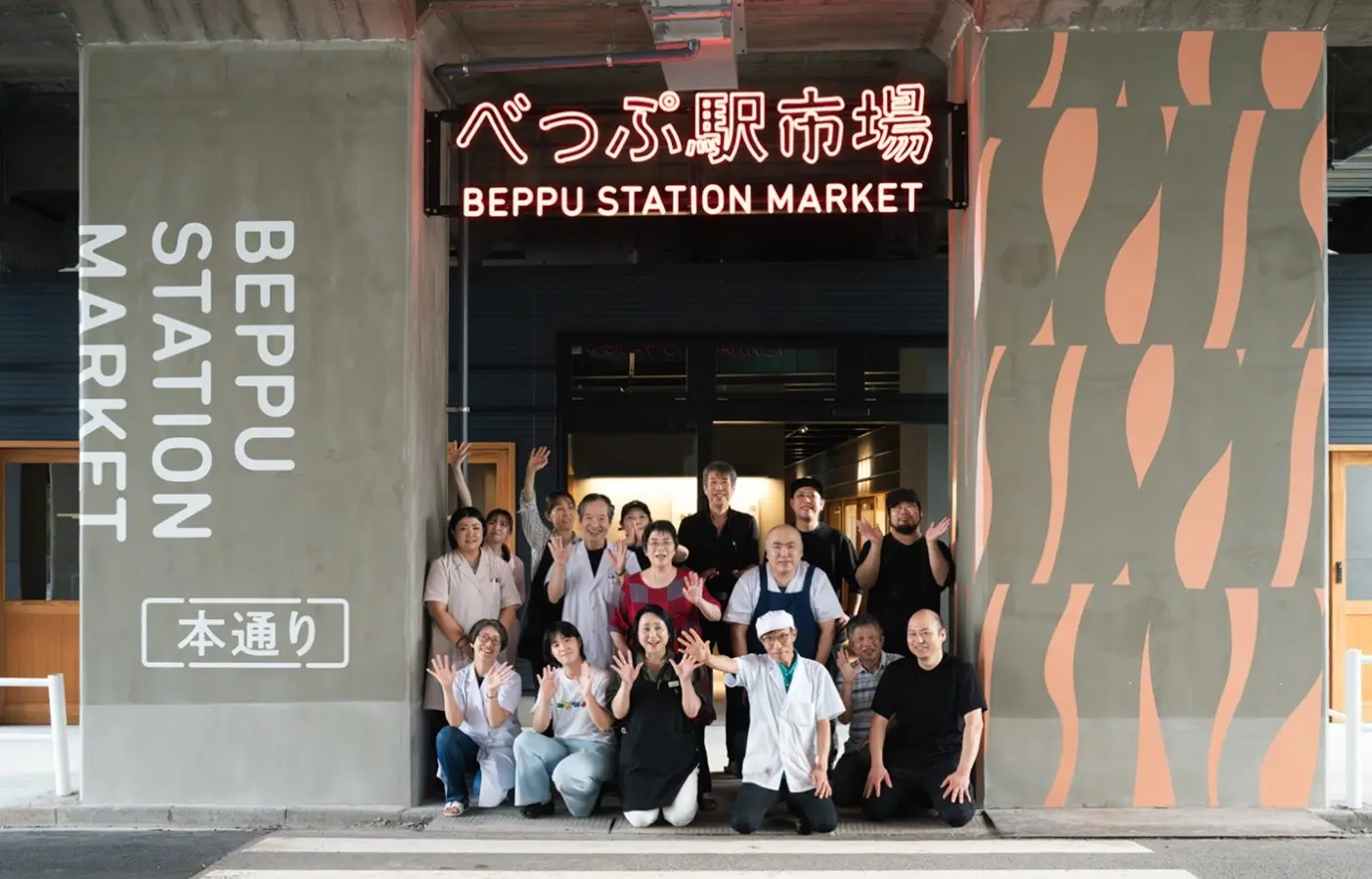
A shopping street stretching beneath the elevated tracks at JR Beppu Station. Developed in 1966 and reopened after renovation in October 2025.
It has been reborn as a space that blends a modern design with a retro atmosphere.
Alongside long-loved local shops like fishmongers and florists, new arrivals include “10 COFFEE BREWERS,” a cafe with an attached gallery and hotel.
There are also many appealing eateries, such as “Yukemuri Shokudo,” where you can enjoy Oita food and locally sourced dishes with drinks in a standing-bar style, and “Aji Isshō,” famous for freshly fried fish croquettes.
15. Kita Koka Shopping Street
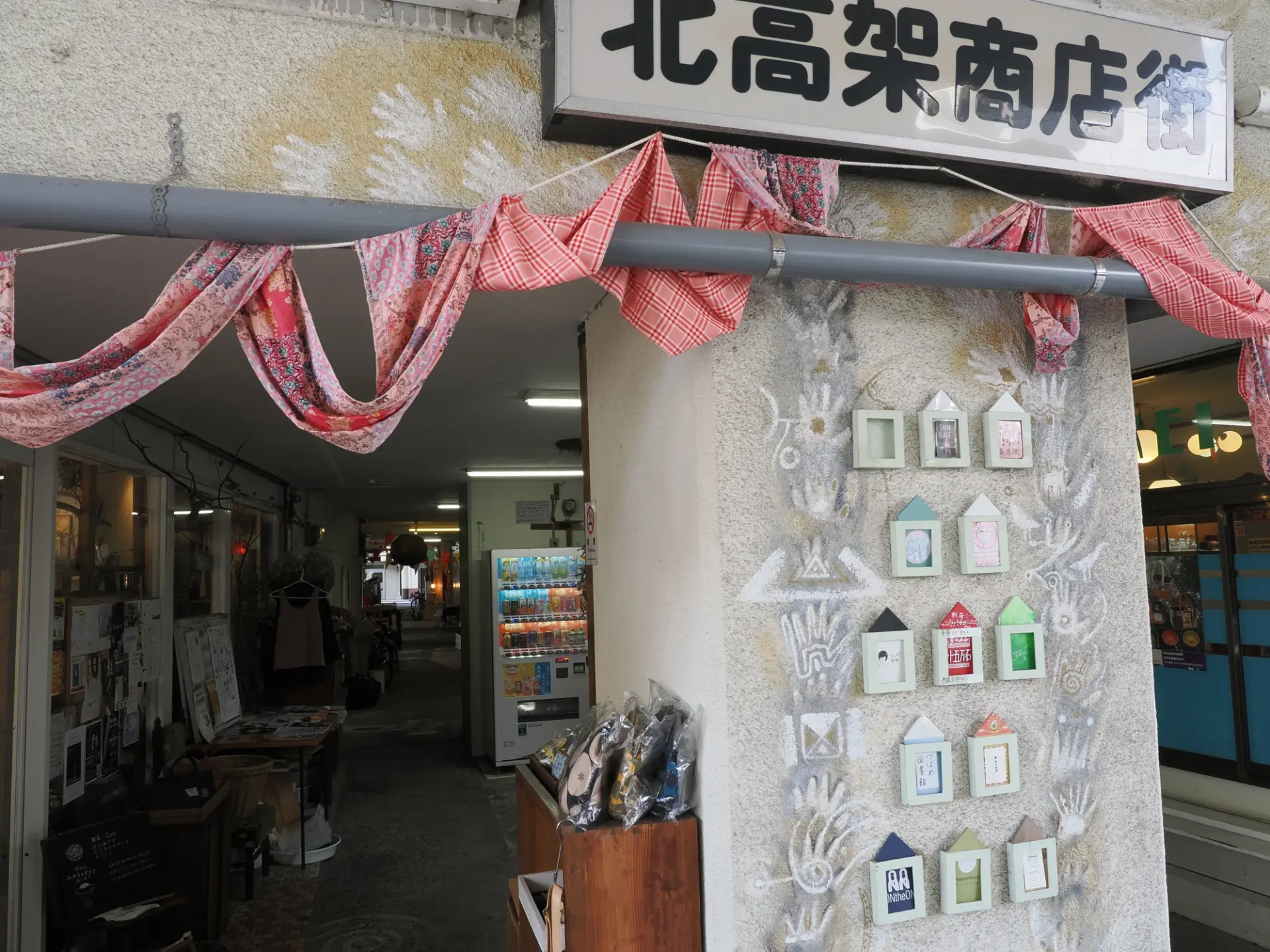
A shopping street beneath the elevated tracks, located Approx. 3 minutes on foot from JR Beppu Station.
Beyond the entrance marked by a large bird illustration, a street continues with a retro vibe and a playful feel.
Along the arcade are culture- and art-focused shops, including a record store with a wide selection, a bookstore selling picture books, manga, and photo collections, plus cafes and variety shops.
In fall, the area hosts Beppu Art Month, featuring programs such as exhibitions, film screenings, dance, and theater.
- Address
- 9-20 Ekimae Honmachi, Beppu, Oita 874-0935
- Hours
- Varies by store
16. Mt. Tsurumi
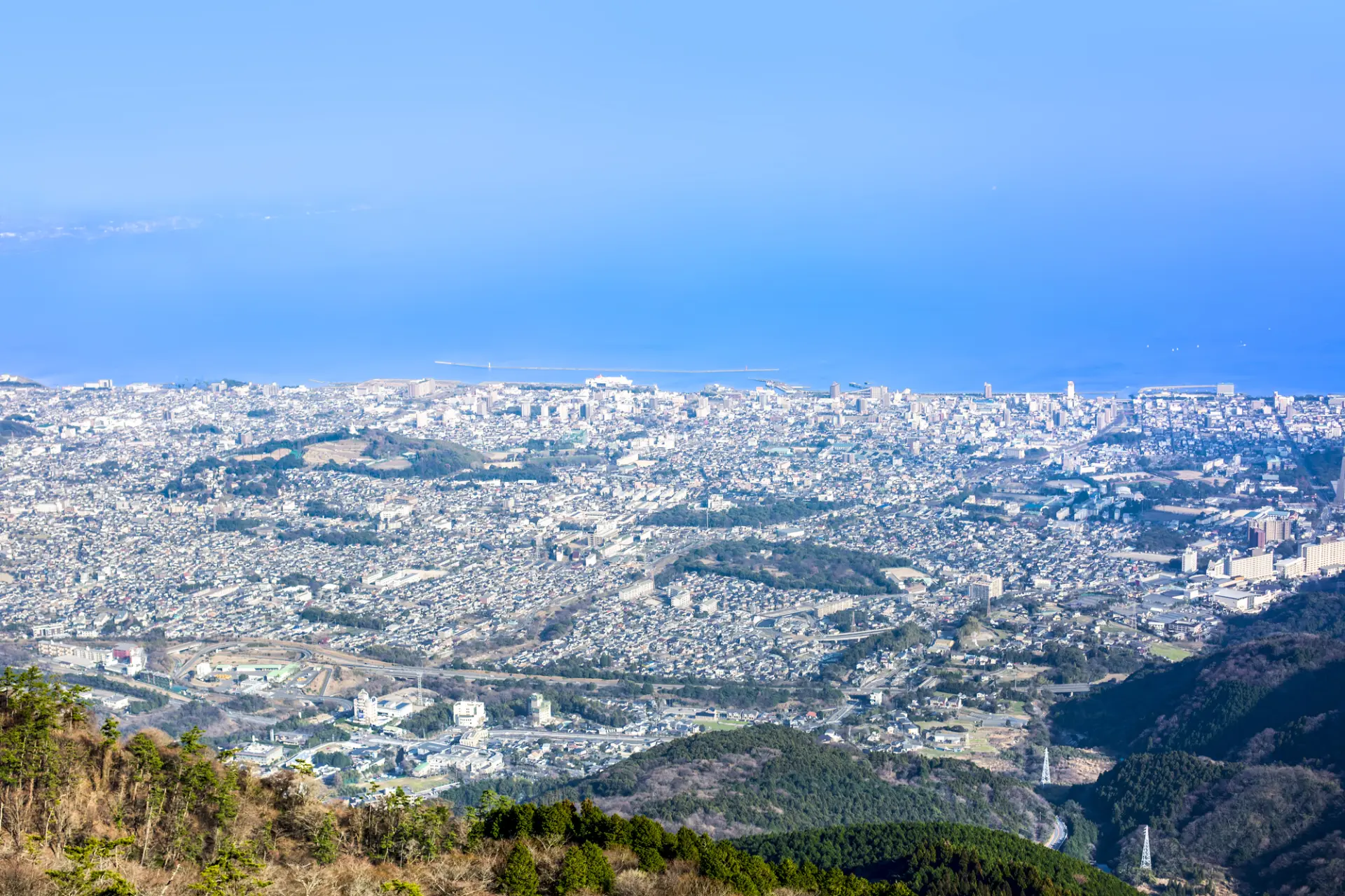
An active volcano with an elevation of 1,375 meters (Approx. 4,511 ft), located at the eastern edge of Aso Kuju National Park. It’s counted among Japan’s 100 Famous Mountains.
Its seasonal scenery is a major draw, with 2,000 cherry trees in spring, fresh greenery in summer, fall foliage in autumn, and frost-covered “ice trees” in winter.
It’s also easy to access: take the Beppu Ropeway from the mountainside and you’ll reach the summit in Approx. 10 minutes.
From the top, you can enjoy panoramic views of Beppu City, Beppu Bay, and Mt. Yufu. Don’t miss the glittering night view of Beppu after sunset.
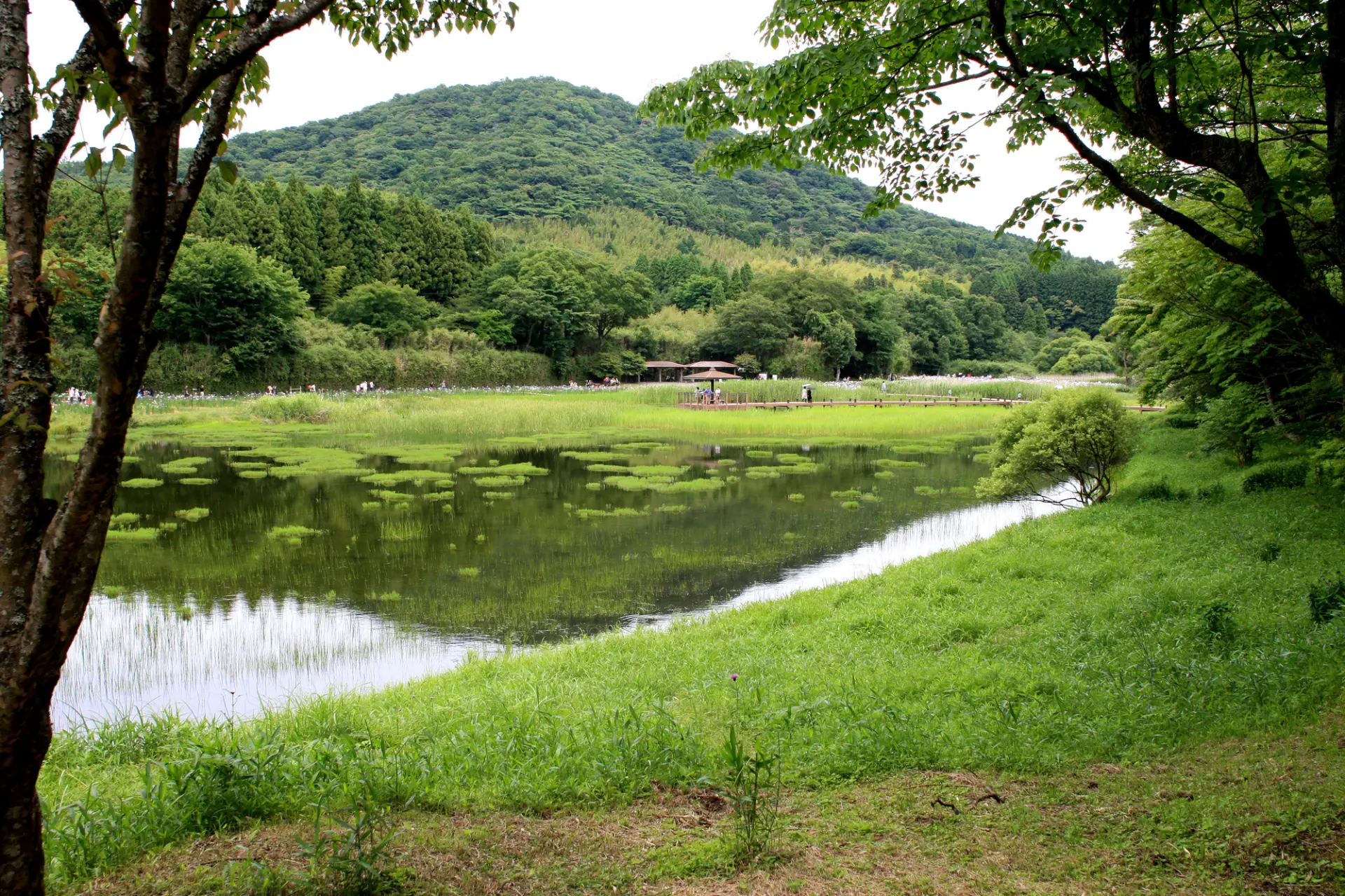
17. Kagurame Lake
A lake near Shidaka Lake, located at an elevation of Approx. 600 meters (Approx. 1,969 ft).
Part of Aso Kuju National Park, the lakeside is home to plants such as hitsujigusa (a water lily that only grows in older ponds) and yoshimakomo, known for being resilient to water-level changes.
Another highlight is birdwatching, with Approx. 30 species observed, including little grebes, kingfishers, and spot-billed ducks.
The scenery across the lake, with views of Mt. Yufu and Mt. Tsurumi, is also a key attraction.
Every year from early to late June, the nearby Kagurame Lake Iris Garden blooms with 300,000 Japanese irises across 80 varieties.
A One-of-a-Kind Beppu Experience: Beppu Jigoku Meguri (Hell Tour)
If you’re sightseeing in Beppu, Beppu Jigoku Meguri is a must.
In Beppu Onsen, steam, hot mud, and boiling water at around 100°C (Approx. 212°F) erupt from deep underground, and these spots are known as “jigoku” (hells).
This classic course lets you go around seven “hells” and enjoy a variety of experiences.
Around each “hell,” you’ll find not only shops and rest areas, but also places offering different hands-on activities.
Below, we’ll introduce the highlights and key sights of each “hell” in Beppu Jigoku Meguri.
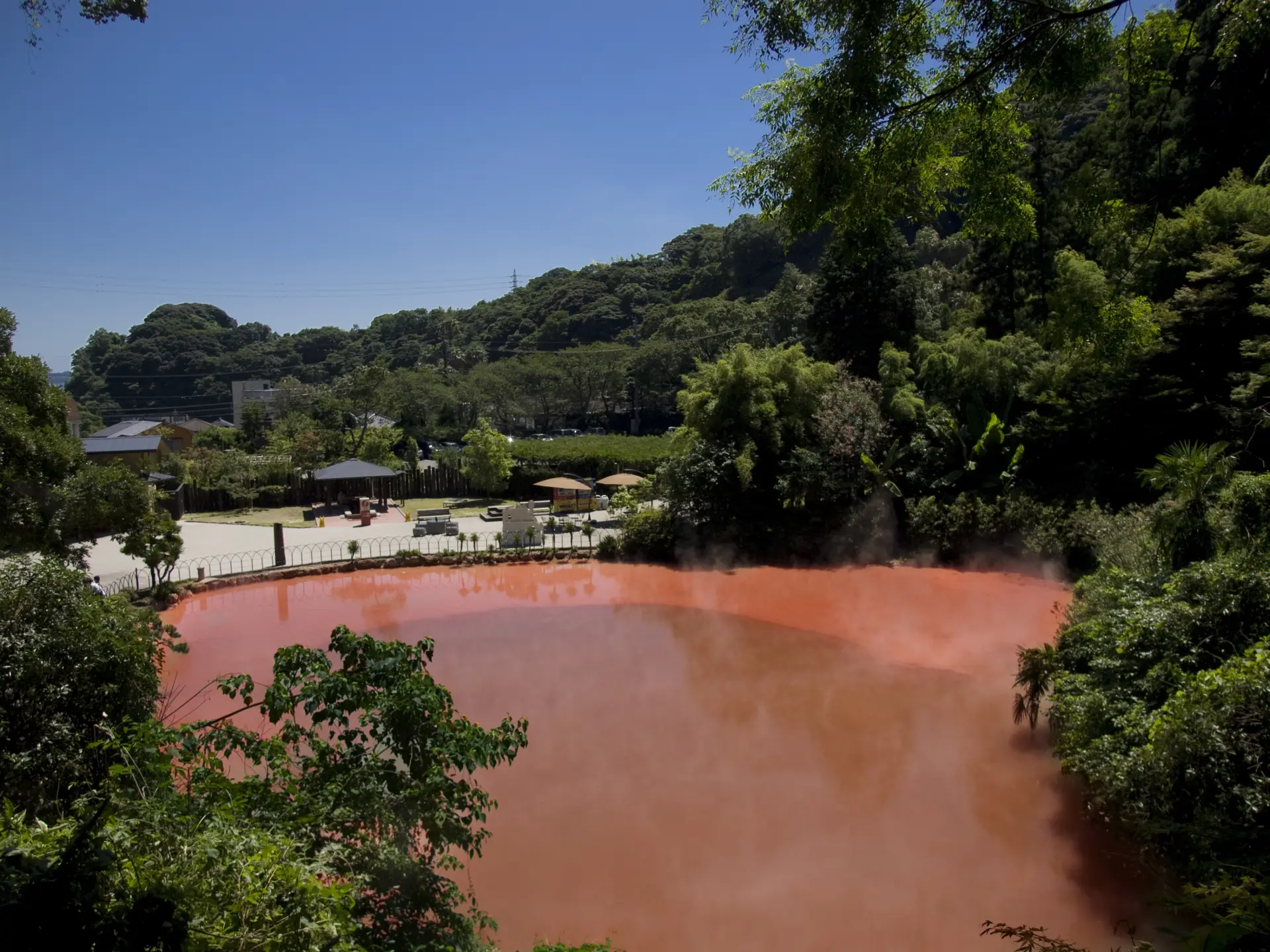
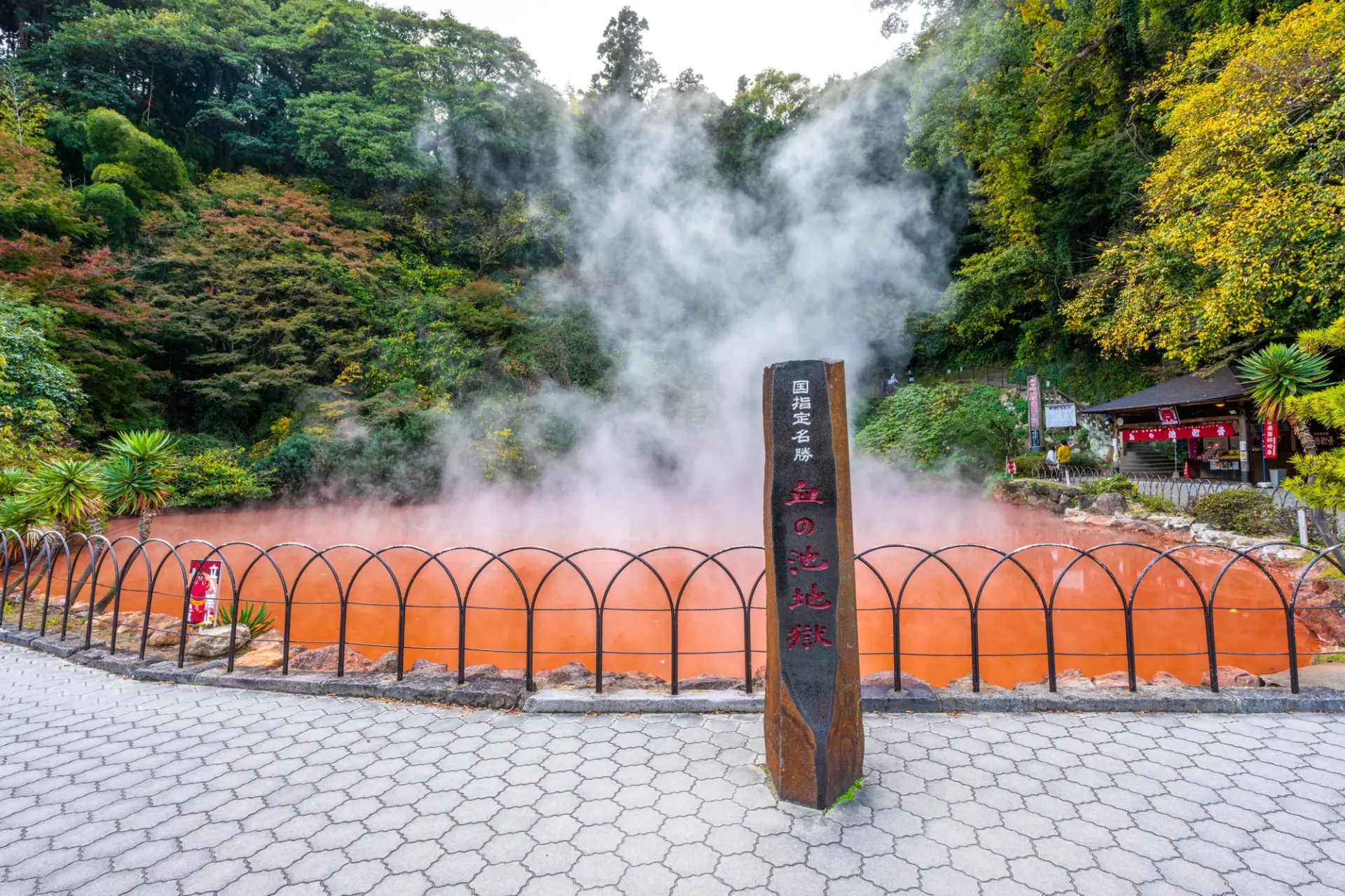
1. Chinoike Jigoku (Blood Pond Hell)
Chinoike Jigoku is where bright red hot mud erupts from the ground and settles into a pond.
Rich in iron oxide and magnesium oxide, the hot mud turns the pond a vivid red, just like a pool of blood.
As it boils and sends up steam, the scene looks like a depiction of hell itself—and seeing it up close, you’re sure to feel the incredible power of nature’s energy.
2. Umi Jigoku (Sea Hell)
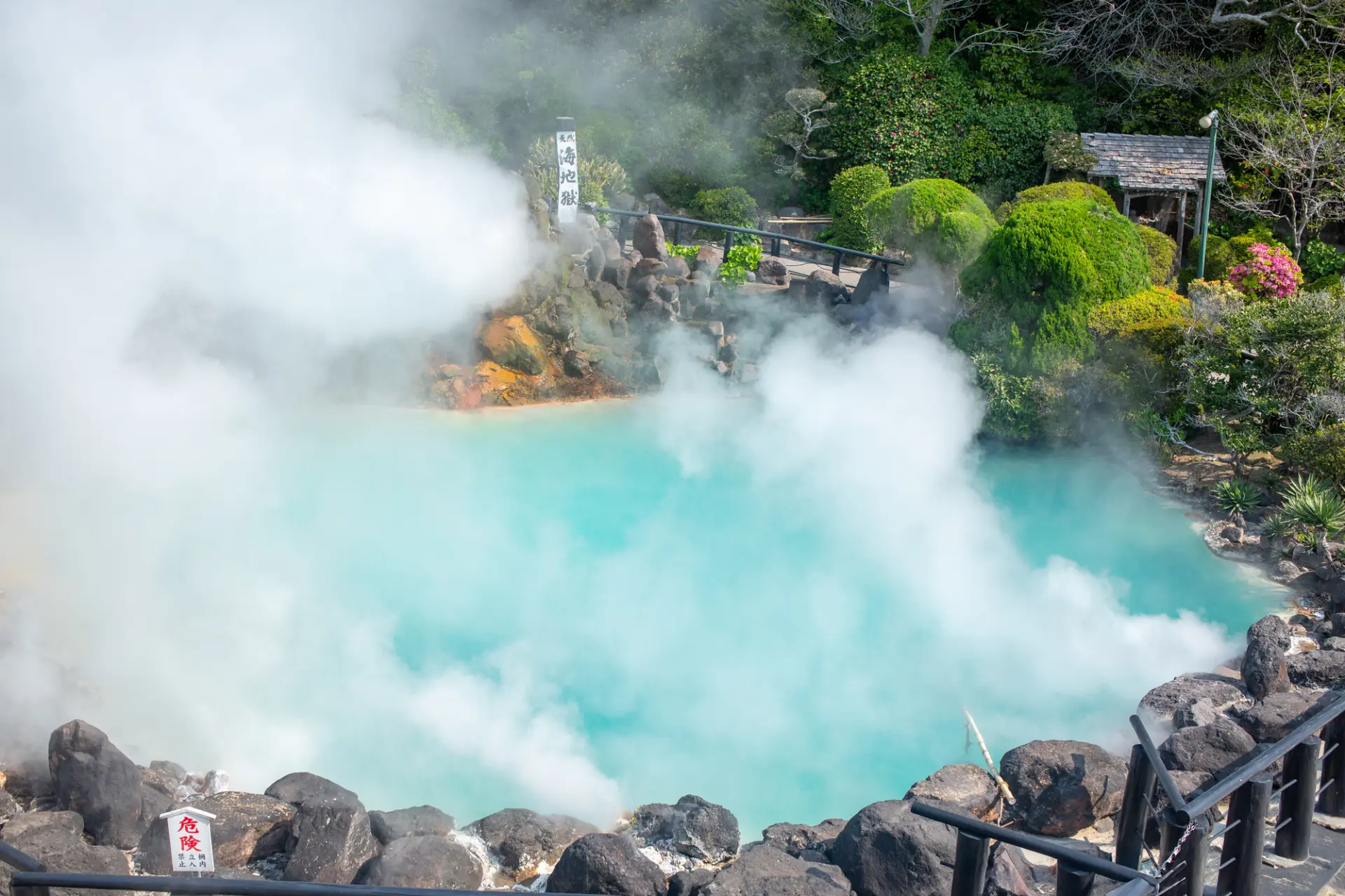
Umi Jigoku has the largest grounds among the seven “hells.”
Its cobalt-blue pond, colored by dissolved iron sulfate (a hot spring mineral), is so beautiful you might forget it’s a “hell.” Despite its cool-looking color, the water temperature is Approx. 98°C (Approx. 208°F).
On the grounds you’ll find various facilities, including a free foot bath, the souvenir shop “Shop Ren,” and a cafe where you can try the famous jigoku-mushi baked pudding.
3. Tatsumaki Jigoku (Tornado Hell)
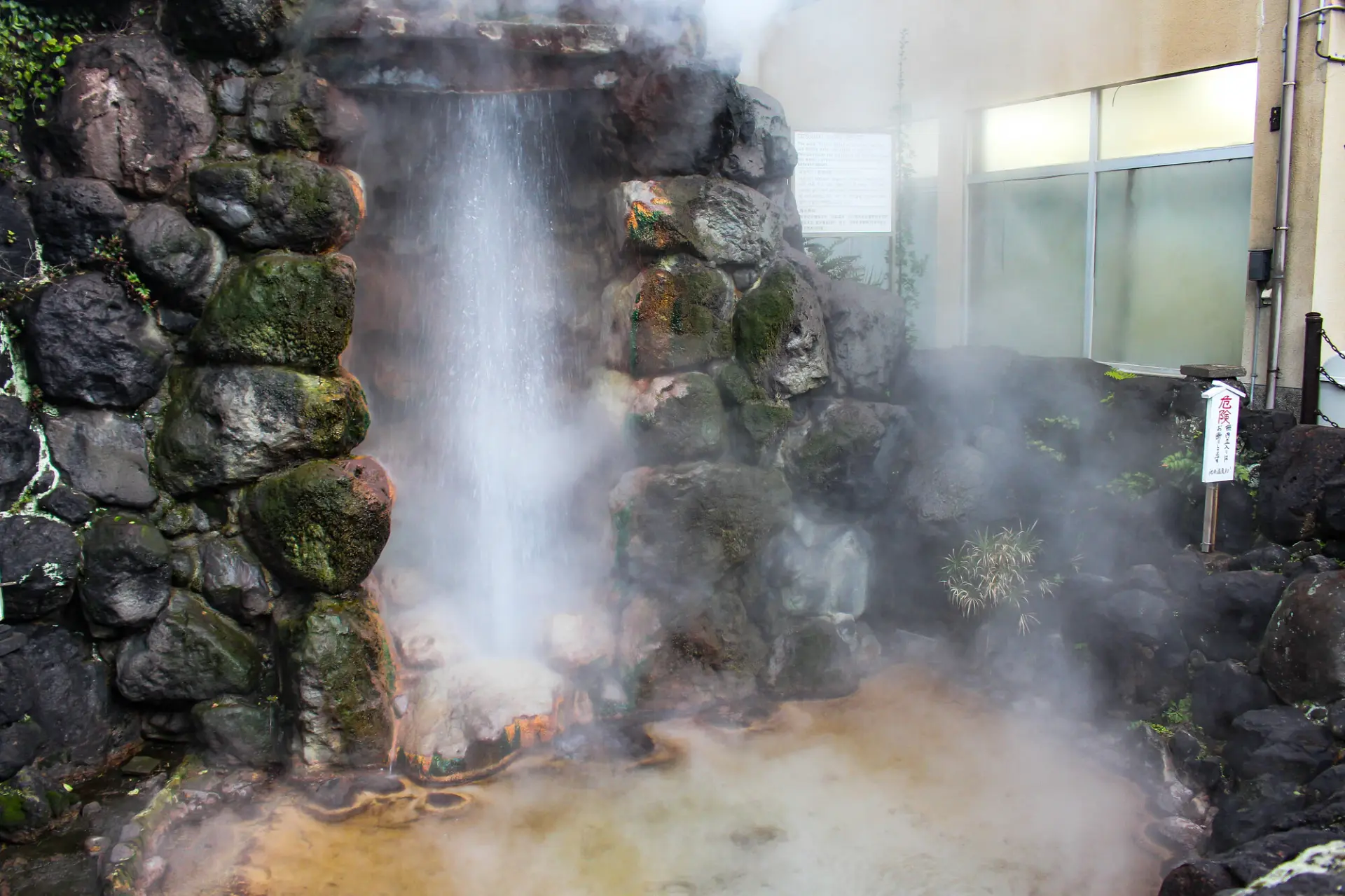
Tatsumaki Jigoku is a geyser designated as a Natural Monument of Beppu City.
Every 30 to 40 minutes, hot water erupts powerfully into the air—an impressive sight to see.
Along with Chinoike Jigoku, Umi Jigoku, and Shiraike Jigoku, it’s designated as a National Scenic Spot.
Another highlight is the azaleas that bloom across the grounds from mid-April to early May.
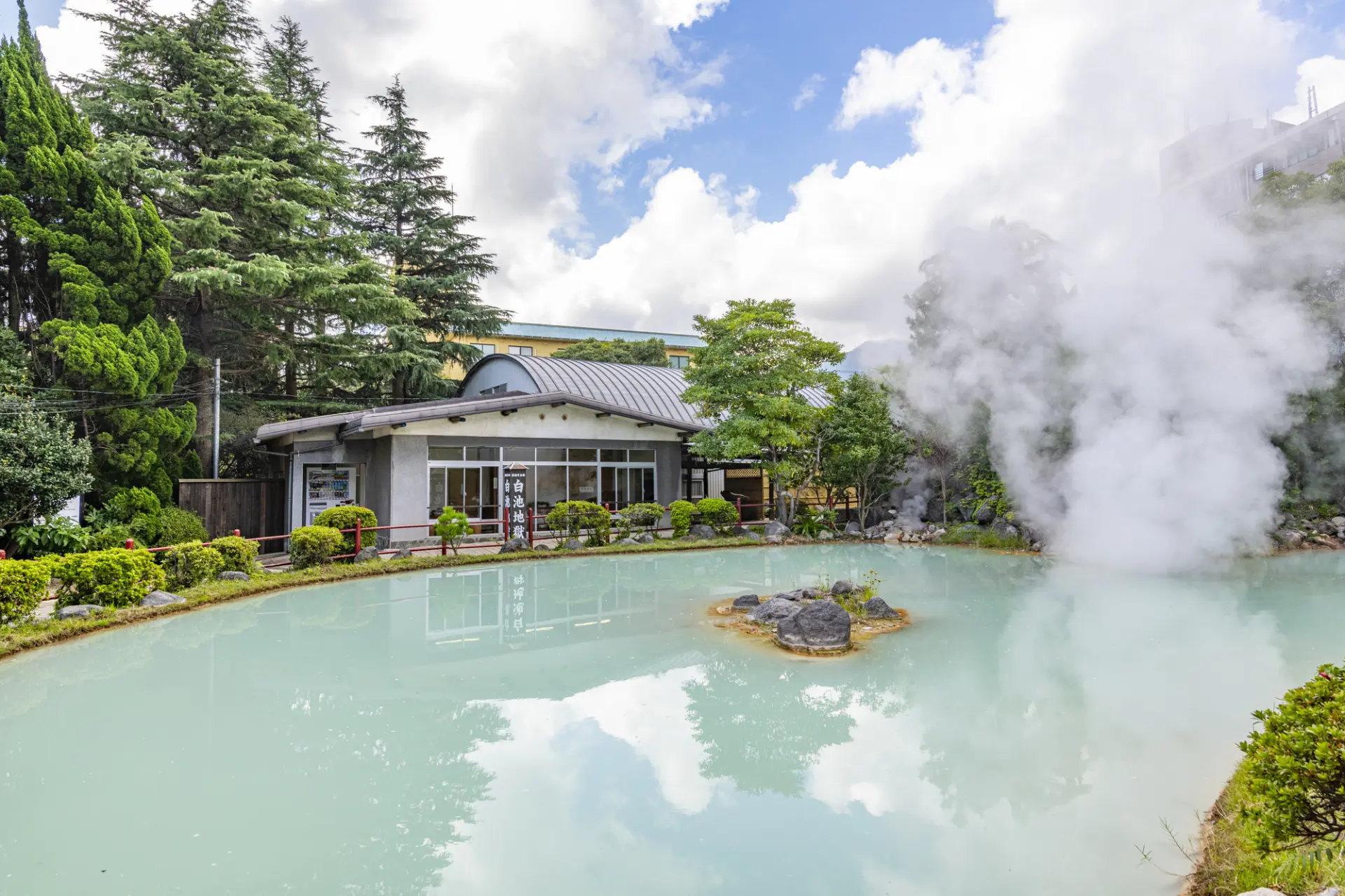
4. Shiraike Jigoku (White Pond Hell)
Shiraike Jigoku features a mysterious pale blue-white pond inside a Japanese-style garden.
The hot spring water is clear when it erupts, but as it sinks to the bottom of the pond and pressure and temperature drop, it changes to a bluish-white color.
Also worth seeing are the prefecture-designated Tangible Cultural Properties in the garden: the Kunisaki-to Pagoda and the Mukaihara Sekito (stone stupa).
Be sure to visit the Nihō Nangadō, which exhibits nanga paintings connected to Oita (an Edo-period painting style influenced by Chinese painting), and the Tropical Fish Aquarium, which uses hot spring heat.
5. Oniishi Bozu Jigoku (Monk’s Head Hell)
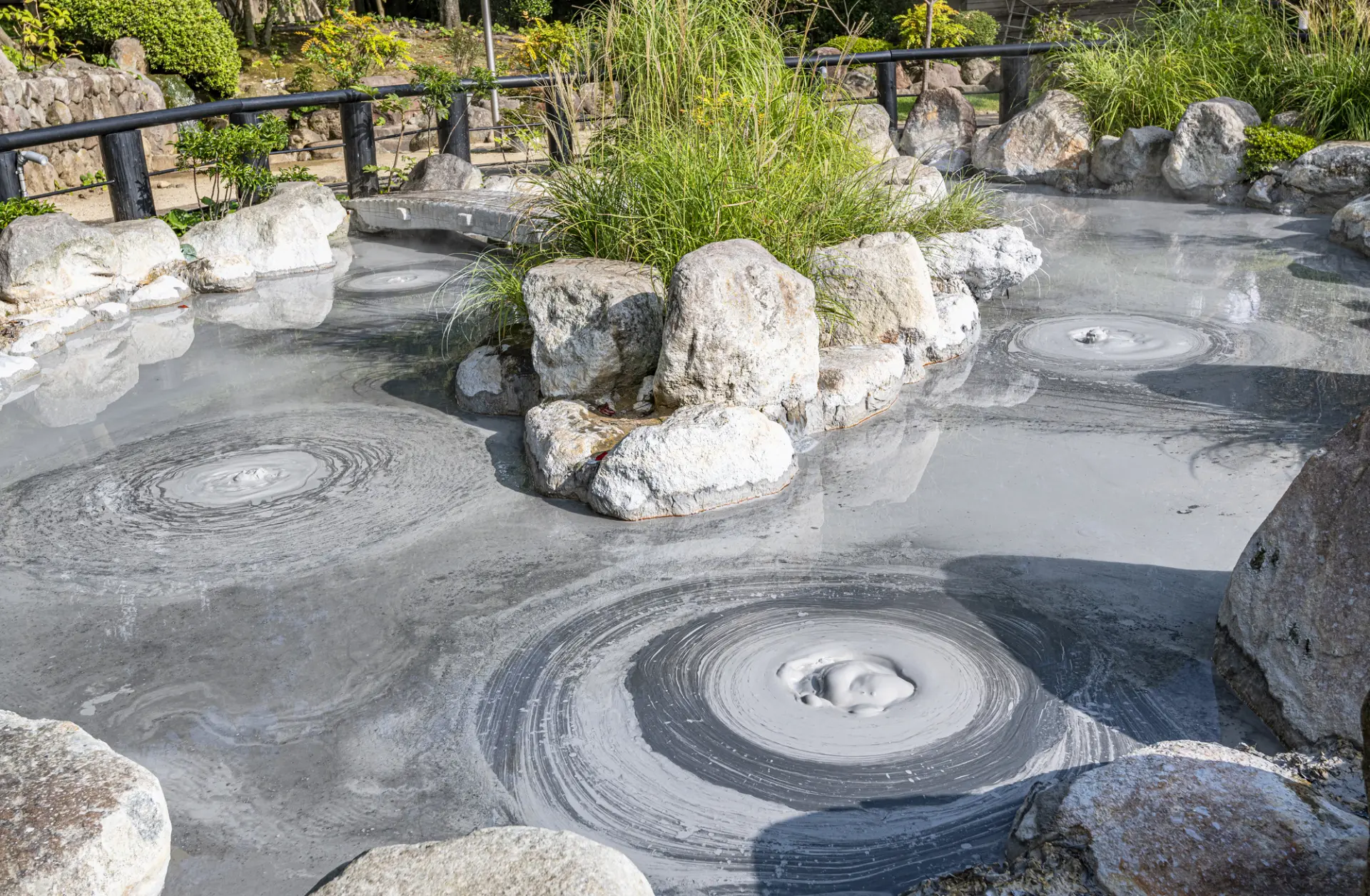
Oniishi Bozu Jigoku has a long history and even appears in the Bungo no Kuni Fudoki, an Oita regional chronicle compiled in 735.
Its name comes from the gray hot mud, boiling at Approx. 99°C (Approx. 210°F), which resembles a monk’s shaved head.
There’s plenty more to see on the grounds, too. Check out “Oni no Takai-biki,” where a shivering demon supposedly wrapped itself in a stone futon and dozed off, plus a hot spring foot bath and a rest area where you can enjoy Beppu’s famous jigoku-mushi baked pudding. You can also enjoy day-use bathing at the hot spring facility.
6. Oniyama Jigoku (Crocodile Hell)
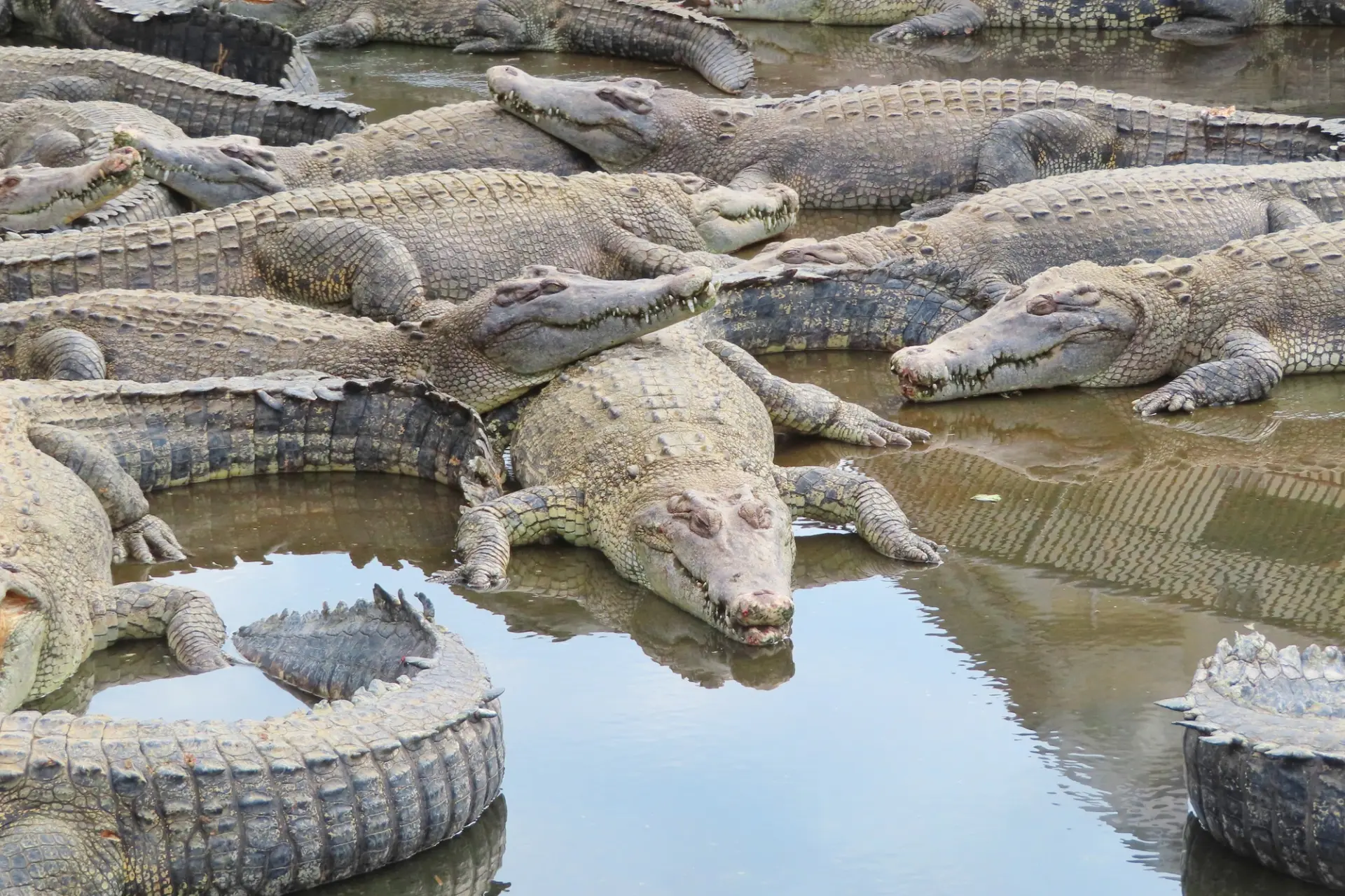
Oniyama Jigoku is also known as “Crocodile Hell” because it keeps Approx. 70 crocodiles of various species.
The main attraction is the massive 4-meter (Approx. 13 ft), 500-kilogram (Approx. 1,102 lb) crocodile, the third-generation “Ichiro.”
Don’t miss the taxidermy of the first “Ichiro” or the specimen of the endangered gharial.
On certain days, crocodile feeding events are held, letting you experience their power and appeal up close.
7. Kamado Jigoku (Cooking Pot Hell)
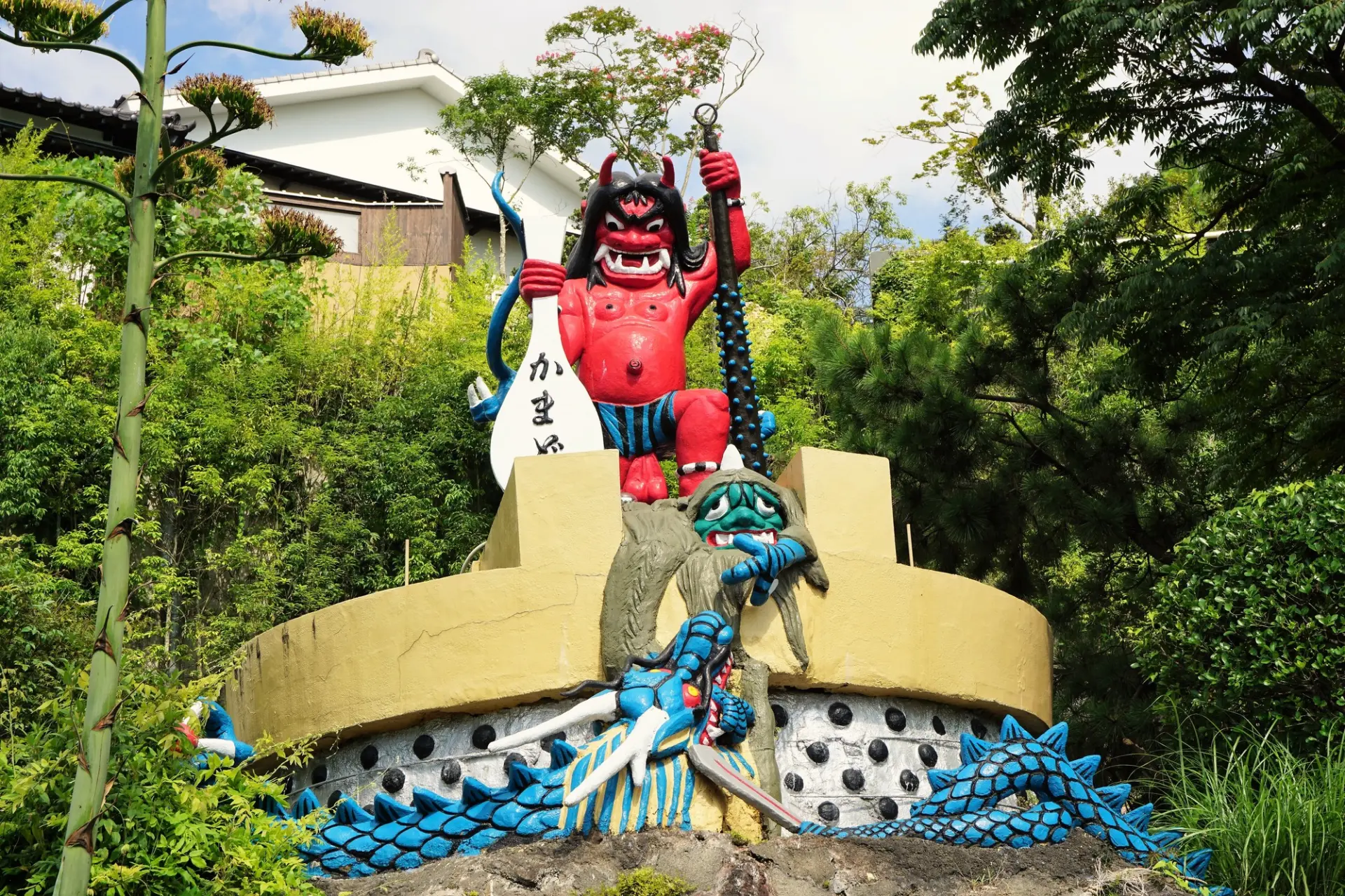
The name comes from the tradition of cooking rice with steam at Approx. 98°C (Approx. 208°F) during festivals at Hachiman Kamado Shrine.
The grounds are divided into six areas, from Kamado Jigoku 1-chome to 6-chome.
From trying hot spring drinking to color-changing ponds and three different foot baths, its appeal is that you can enjoy a wide variety of experiences and sights all in one place.
Don’t miss unique foods you can only try here, like “onsen pidan” and “matcha ishigaki manju.”
Not Sure Where to Go? 3 Highly Recommended Hot Spring Areas in Beppu Onsen
Beppu Onsen is the collective name for the hot springs found throughout Beppu City in Oita Prefecture.
With 2,847 sources and Approx. 130,000 kiloliters of output per day, it’s the largest hot spring area in Japan.
Beppu Onsen is divided into eight areas, also known as the Beppu Hatto or the Beppu Onsen area.
Each area has different spring qualities and even different water colors, so hot spring hopping is also recommended.
Here are three of the most popular areas among Beppu’s eight hot spring districts.

1. Takegawara Onsen
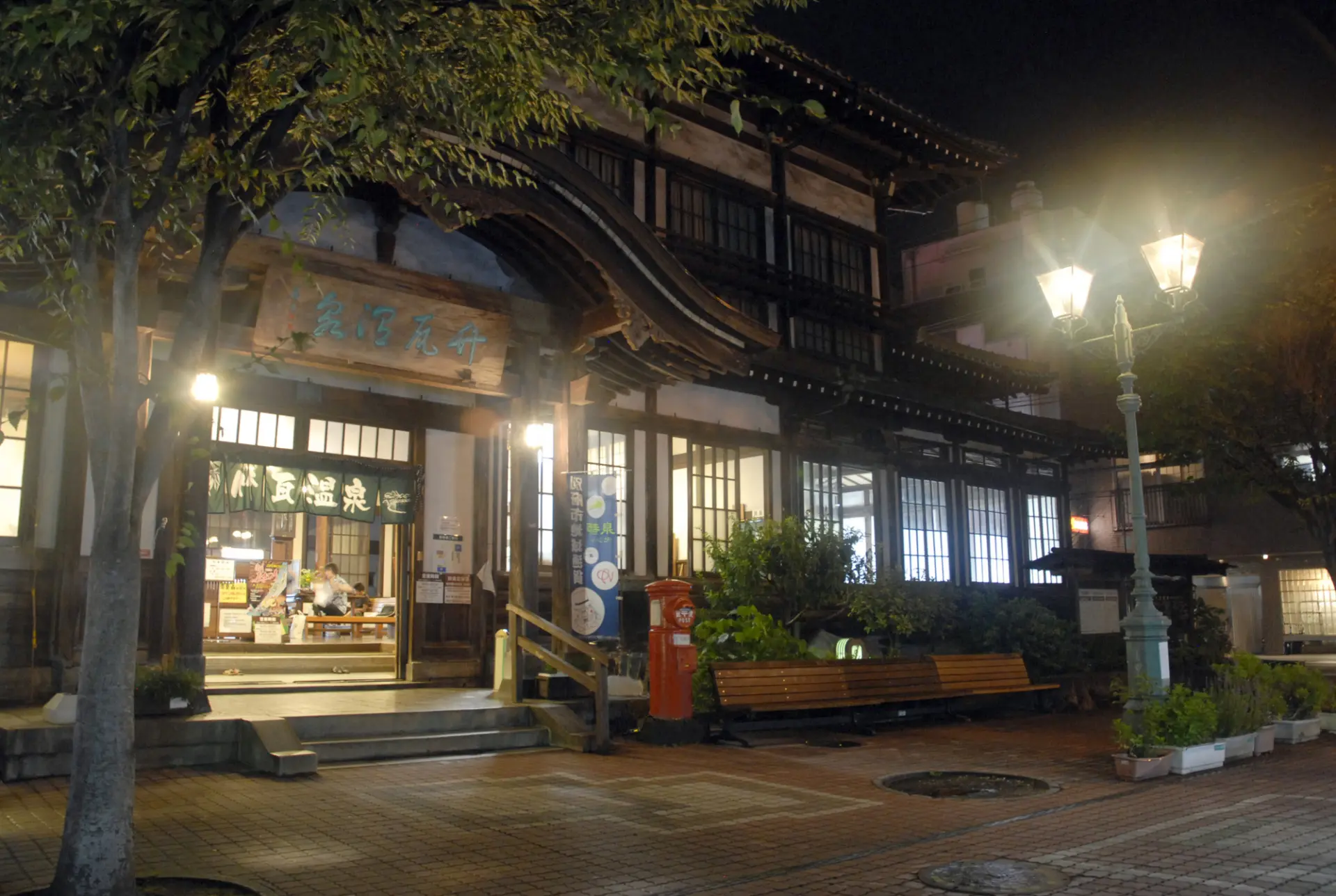
Among Beppu’s many hot spring facilities, the most famous—and a symbol of Beppu Onsen—is Takegawara Onsen, founded in 1879. Its dignified exterior features an impressive karahafu-style gabled roof, and the current building was rebuilt in 1938. The lobby retains the atmosphere of the early Showa era, with high ceilings and a spacious feel, and after bathing you can relax while watching TV or reading magazines.

2. Myoban Onsen
One of the Beppu Hatto, this hot spring town sits up in the mountains Approx. 10 minutes by bus from Kannawa Onsen.
It has a quiet, secluded atmosphere filled with the scent of sulfur. The milky-white sulfur spring is said to be effective for skin conditions and neuralgia.
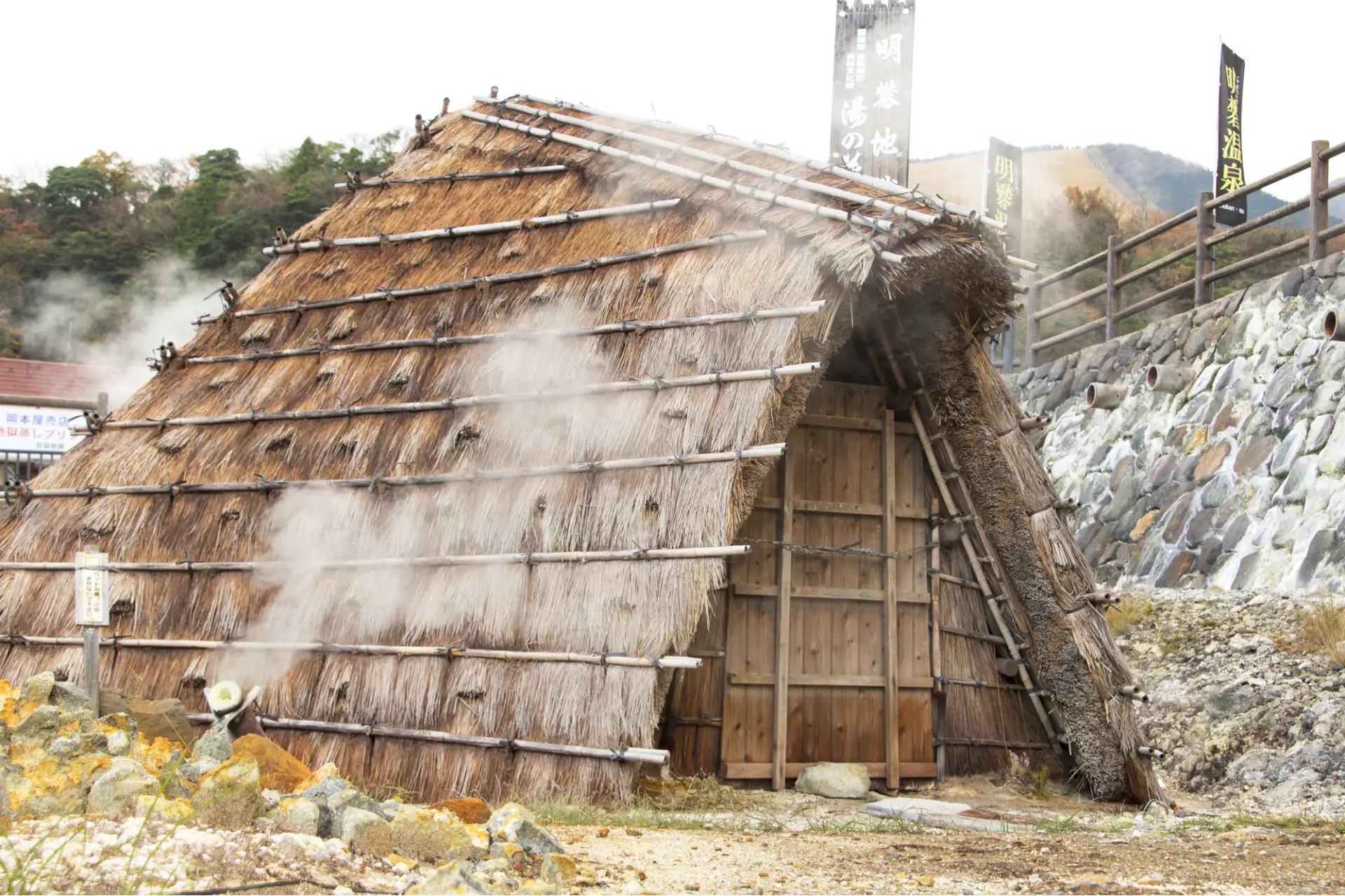
Since the Edo period, this area has produced myoban (alum) using hot spring gas, and the uniquely shaped yunohana huts used for that process create a distinctive landscape that’s characteristic of Myoban Onsen.

3. Kannawa Onsen
A 대표 hot spring area of the Beppu Hatto, located up in the mountains Approx. 30 minutes by bus from central Beppu.
Most of Beppu’s hot spring sources are concentrated in the Kannawa area, and the steam-filled hot spring townscape is recognized as a Cultural Landscape under “Beppu’s Steam and Hot Spring Townscape.”
It’s also the main base for the classic Beppu sightseeing route, the Jigoku Meguri.

The Best Way to Explore Beppu: Beppu Sightseeing Pass
This official Beppu City sightseeing passport lets you enter 17 famous attractions—such as the Jigoku Meguri and Beppu Tower—as well as amusement parks and hot spring facilities, all with a single QR code.
If you want to make the most of Beppu, it’s a ticket you’ll definitely want to check out.

- 1-day pass
- Adults (junior high school students and older): 3,800 yen / Children (elementary school and younger): 2,500 yen
- 2-day pass
- Adults (junior high school students and older): 6,000 yen /Children (elementary school and younger): 3,500 yen
- Notes
-
*Valid for 90 days from purchase
*E-ticket only
Eat Your Way Through Beppu! 5 Popular Restaurants You Should Visit in Beppu City
Beppu is known as a hot spring paradise—but it’s also a food paradise.
From jigoku-mushi made with hot spring steam to regional dishes featuring fresh seafood and local vegetables, there’s plenty to enjoy.
Another perk is that restaurants are scattered near major attractions, making them easy to drop by between sightseeing stops.
When you visit Beppu, be sure to add the restaurants below to your itinerary.
1. Jigoku Mushi Kobo Kannawa
A multi-purpose facility where you can experience Kannawa Onsen’s famous jigoku-mushi cuisine in one of Beppu’s leading hot spring towns, where steam rises from alleys throughout the area.
Jigoku-mushi is a cooking method that dates back to the Edo period, using 100% geothermal energy—hot spring steam at 98°C (Approx. 208°F). It’s a unique Beppu tradition, and on weekends there can even be lines.
There are also plenty of ingredient sets available, including the “Jigoku-mushi Tamatebako” with seasonal vegetables, chicken, and steamed buns, as well as meat sets.

2. Restaurant Toyoken
A Chinese restaurant with Approx. 100 years of history. It draws large crowds not only on weekends but also on weekdays, and it’s not uncommon for it to fill up right when it opens.
The first head chef, Shiro Miyamoto, was a highly skilled chef who once served as a cook for the Emperor. He’s also known as a legend for inventing toriten in the restaurant’s early days.

3. Robata Jin
Opened in 1975, Robata Jin is located a short walk from Beppu Station toward Beppu Bay.
It’s a popular spot where you can enjoy dishes made with local ingredients and local sake.
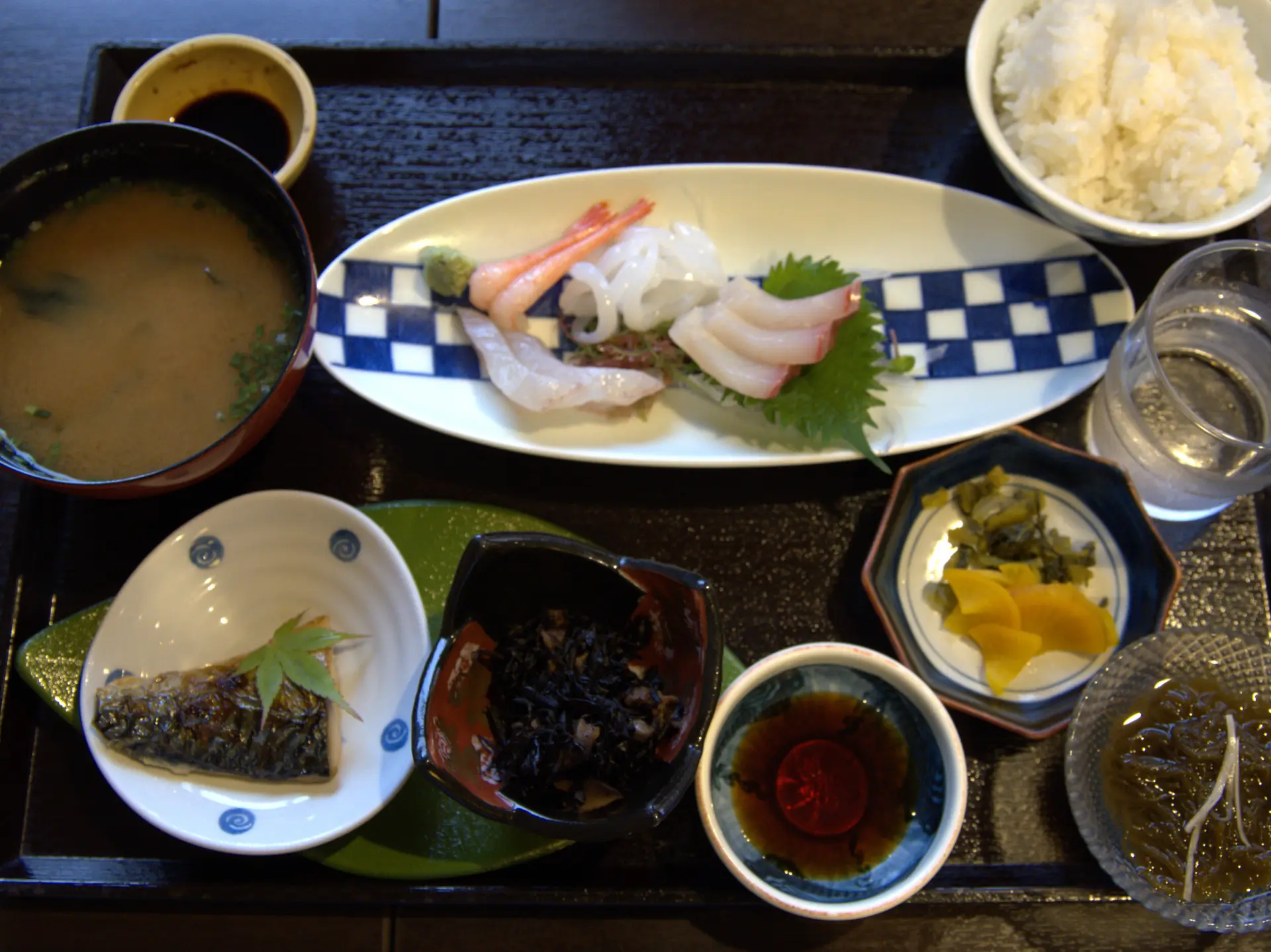
Try sashimi of Oita’s premium fish, Seki Saba (mackerel) and Seki Aji (horse mackerel), as well as the local specialty “ryukyu,” made by mixing fresh fish with a soy-sauce-based sauce.

4. Beppu Kanmi Chaya
A popular restaurant known for its traditional-style building surrounded by trees.
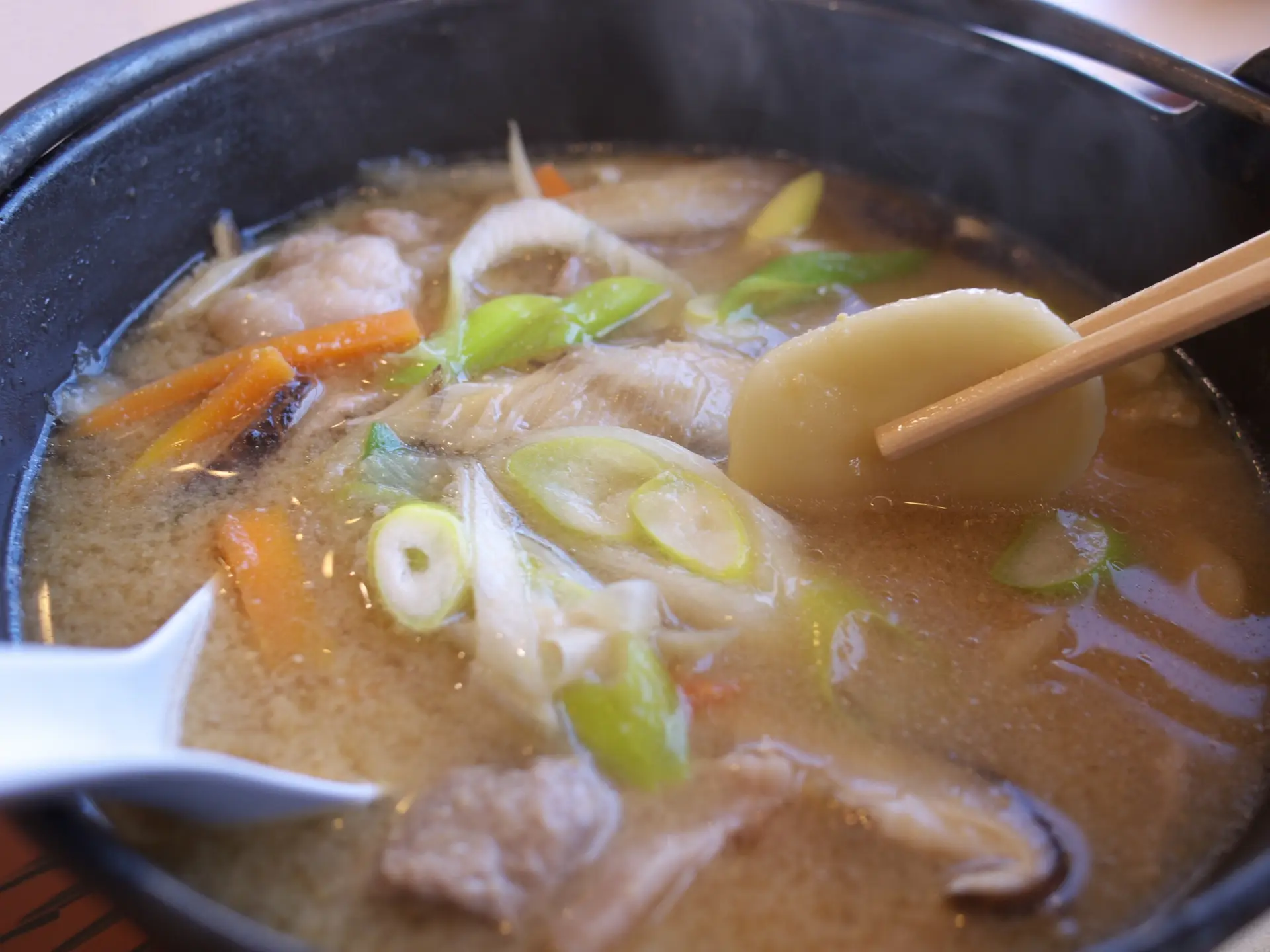
You can enjoy Oita specialties such as “dango-jiru” (dumpling soup) and Beppu’s famous toriten.
A hidden favorite is the spicy “tail curry,” made with simmered oxtail.
You can also enjoy Japanese sweets like “yaseuma” (handmade dumplings coated with kinako) and “inaka zenzai” made with homemade red bean paste.
5. Toyotsune Honten
A restaurant in Kitahama along Beppu Bay, drawing crowds daily for its signature “Tokujo Tendon” (premium tempura rice bowl).
The key features are two large shrimp tempura and four kinds of vegetable tempura served over rice, topped with a sweet-and-savory sauce that whets your appetite.
The anago tendon (conger eel tempura rice bowl) is also popular and rivals the tokujo tendon.
Other menu items include Oita’s “ryukyu don” (rice bowl with marinated sashimi) and a “sashimi set meal” with four kinds of sashimi plus grilled fish, among many other options.
Want to Shop Between Sightseeing Stops? 3 Shopping Spots in Beppu
If you’re looking for Beppu-specific items or a good place to shop for souvenirs, head to the shopping spots below.
All are easy to access from JR Beppu Station, so they should be simple to work into your sightseeing plan.
1. Ekimachi 1-Chome Beppu
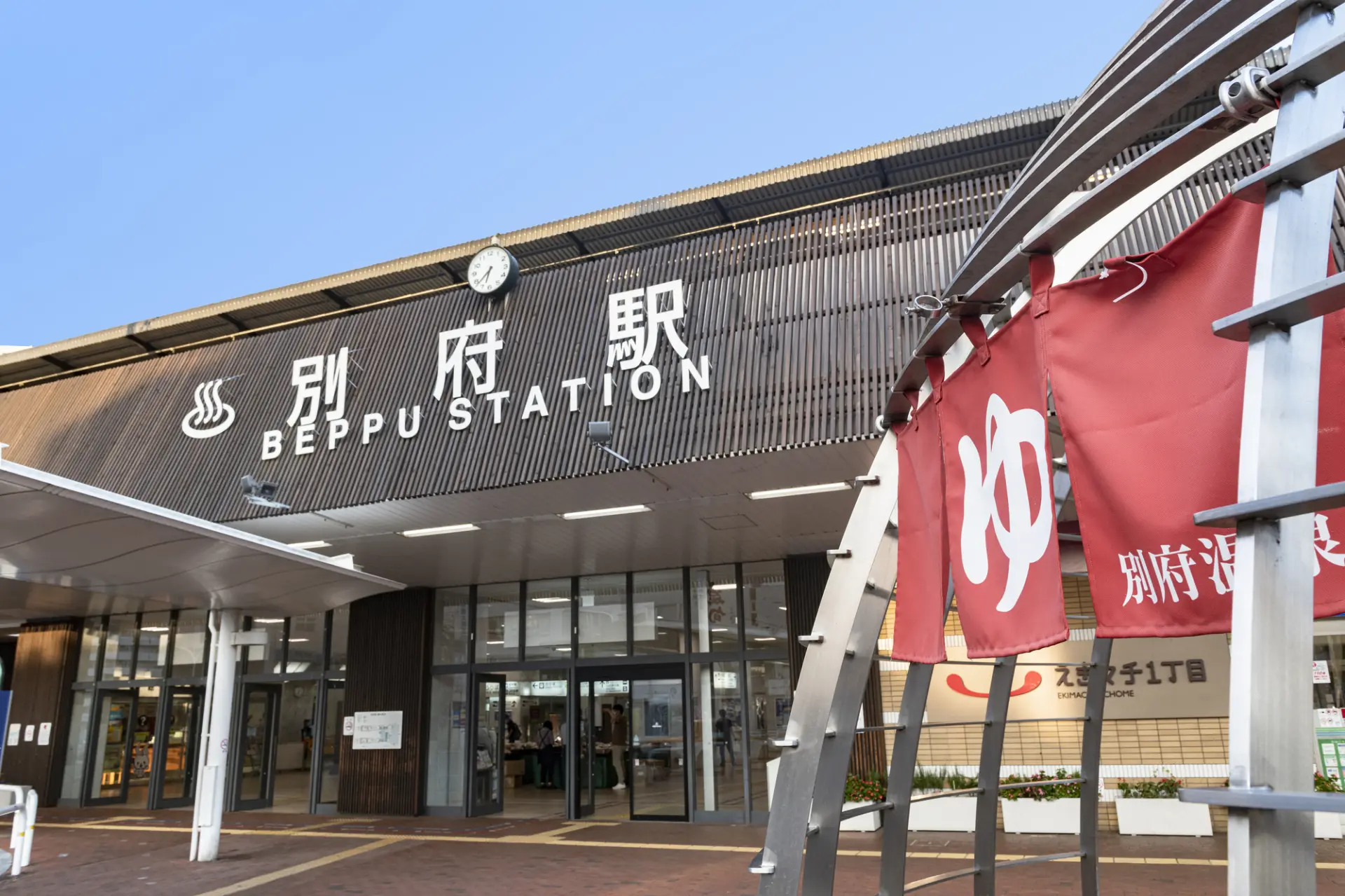
A commercial complex directly connected to JR Beppu Station. It’s made up of two areas—B-Passage and BIS South Building—separated by the station concourse.
Approx. 40 shops are gathered here, including souvenir stores and restaurants where you can enjoy Beppu specialties.
In particular, B-Passage has three shops selling Beppu and Oita souvenirs, making it a convenient place to shop after sightseeing.
2. Youme Town Beppu
A commercial facility located Approx. 10 minutes on foot from JR Beppu Station.
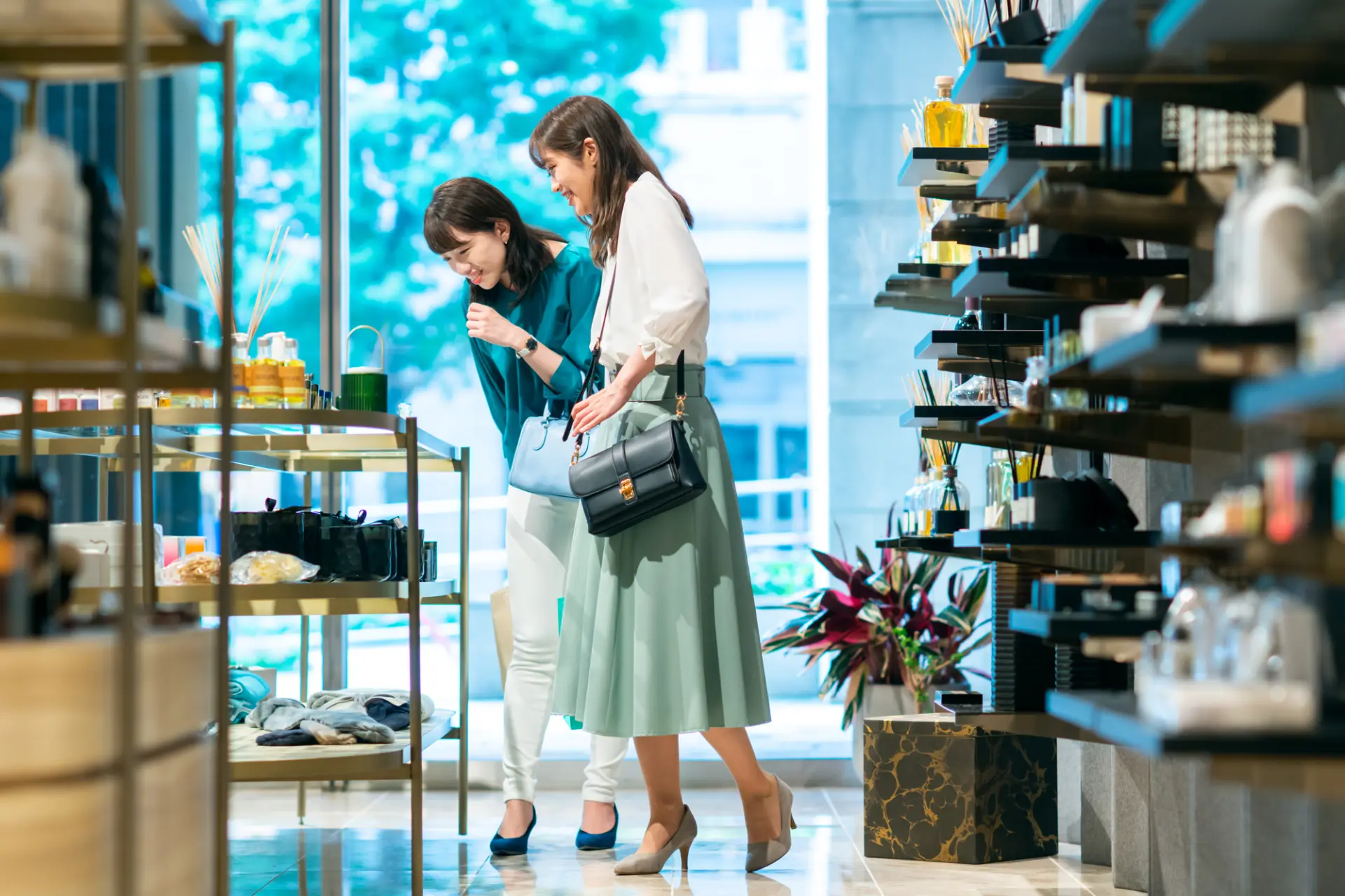
Across floors 1 to 3, it houses Approx. 82 shops, including apparel stores like UNIQLO and GU, variety shops, and a supermarket.
The restaurant area on the first floor and the food court on the third floor feature popular chain restaurants, making it convenient for meals and breaks.
Another highlight is the rooftop parking area, which offers a panoramic view of Beppu Bay.
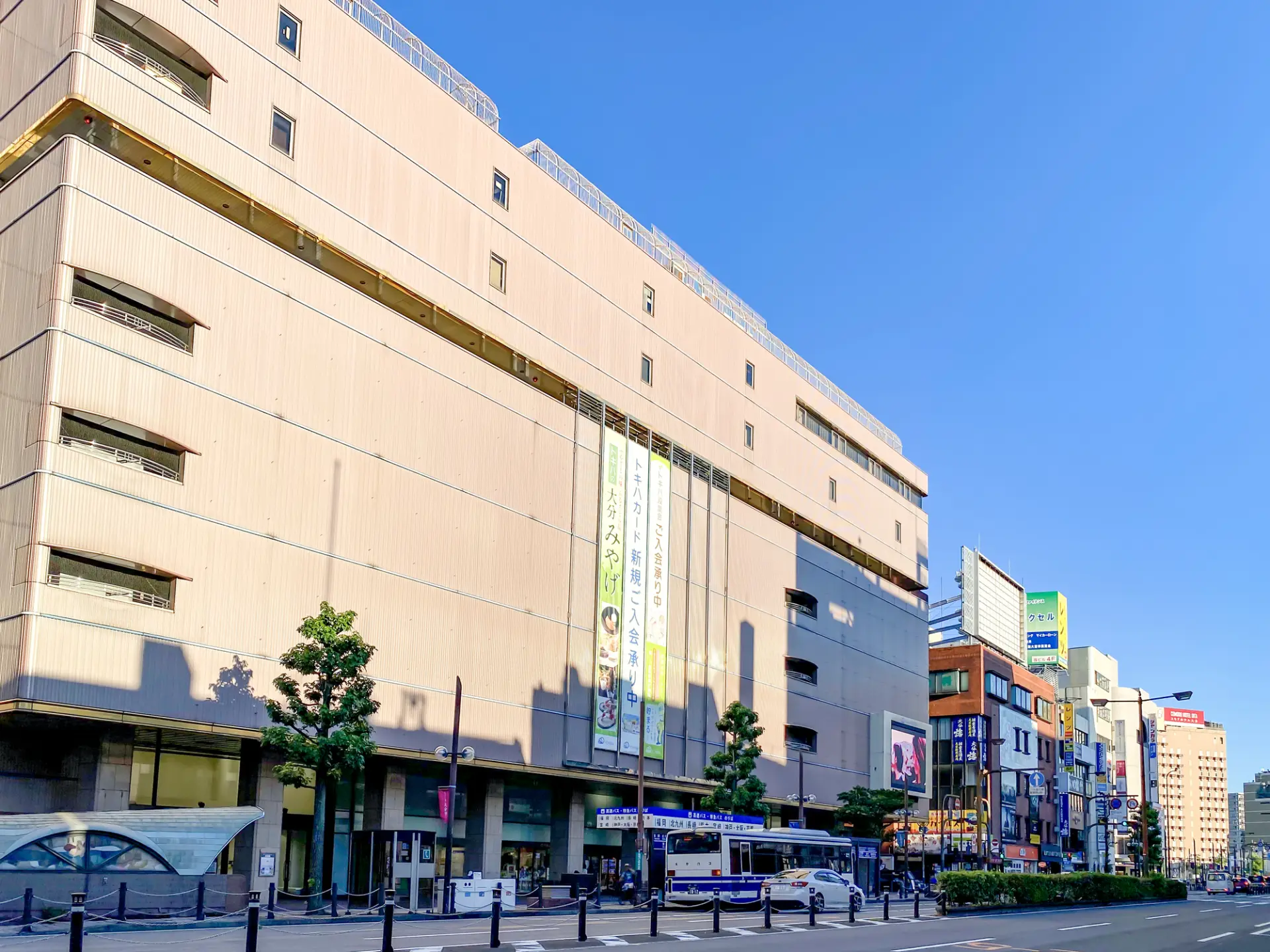
3. Tokiwa Beppu
A community-focused department store along Beppu’s main street, Beppu Ekimae-dori Street.
Spanning from basement level 1 to the 7th floor, it brings together a wide range of shops, including apparel, variety goods, daily necessities, and an electronics retailer.
Highlights include the “Onsen Market,” where you’ll find souvenirs like Oita specialties and crafts, and the food hall “Yukemuri Yokocho,” which gathers popular Beppu eateries—great places to enjoy shopping and dining that feel uniquely Beppu.
On the 4th floor there’s also an indoor play area for kids, “Indoor Playground Beppu Kodomo Asobi Meguri,” making it a comfortable option for families.
5 Popular Places to Stay in Beppu City for Ultimate Relaxation
Here are some especially recommended accommodations among the many options in Beppu City, one of Japan’s leading hot spring destinations.
Each one offers hot spring features unique to the area, such as free-flowing hot spring baths and open-air baths with stunning views.
In a luxurious, escape-from-the-everyday setting, take your time and enjoy a truly relaxing stay.
1. Beppu Onsen Suginoi Hotel
One of Beppu’s best-known large-scale hot spring resorts, it’s so popular that many travelers come from all over Japan specifically to stay here.
With 554 guest rooms and capacity for Approx. 2,000 guests, it’s a major property with three adjacent accommodation buildings: Sora-kan, Niji-kan, and Naka-kan.
Each building has its own appeal, and Sora-kan, opened in 2023, features a refined design and spacious rooms where you can relax.

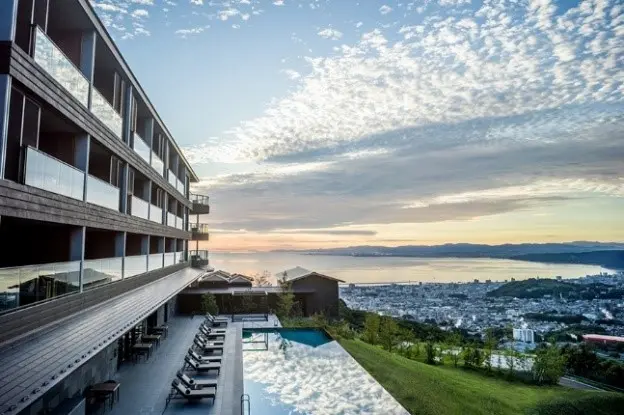
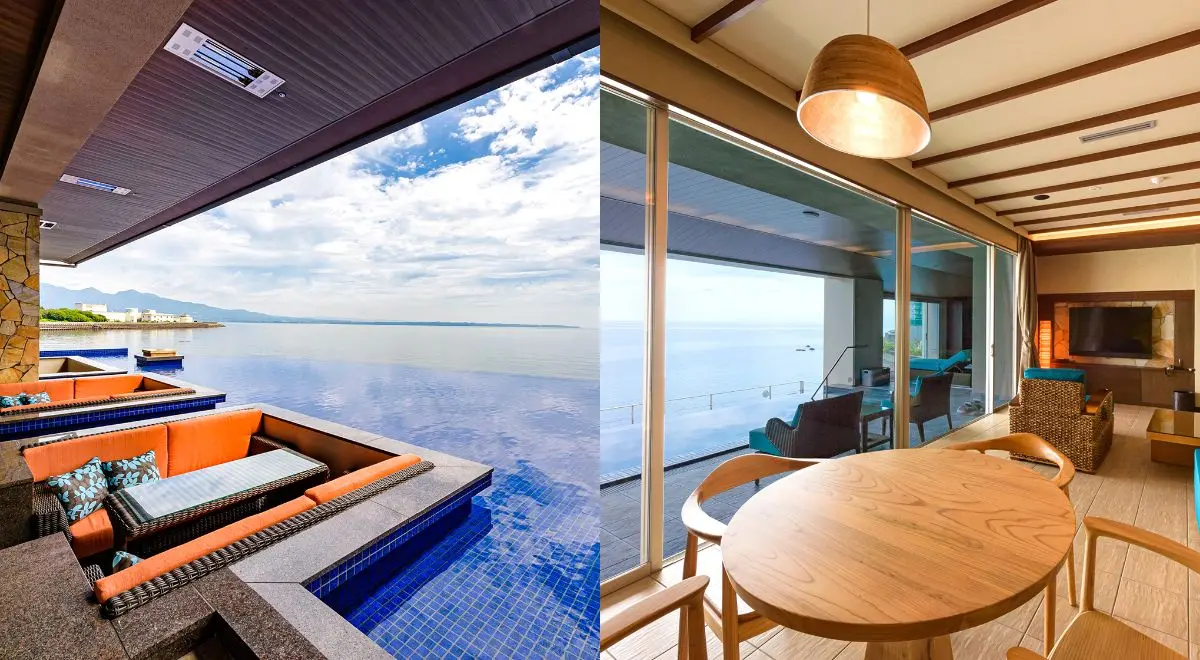
2. ANA InterContinental Beppu Resort & Spa by IHG
A luxury resort located on a hill in Beppu’s Kannawa area.
Its biggest draw is the location, with sweeping views of Beppu City, Beppu Bay, and the surrounding mountains.
From guest rooms to open-air baths, an infinity pool, restaurants, and a bar, you can enjoy Beppu’s scenery in a variety of settings.
Facilities are also extensive, including private family baths where you can enjoy hot springs in your own space, and poolside “cabana” private spaces where you can enjoy champagne and more.
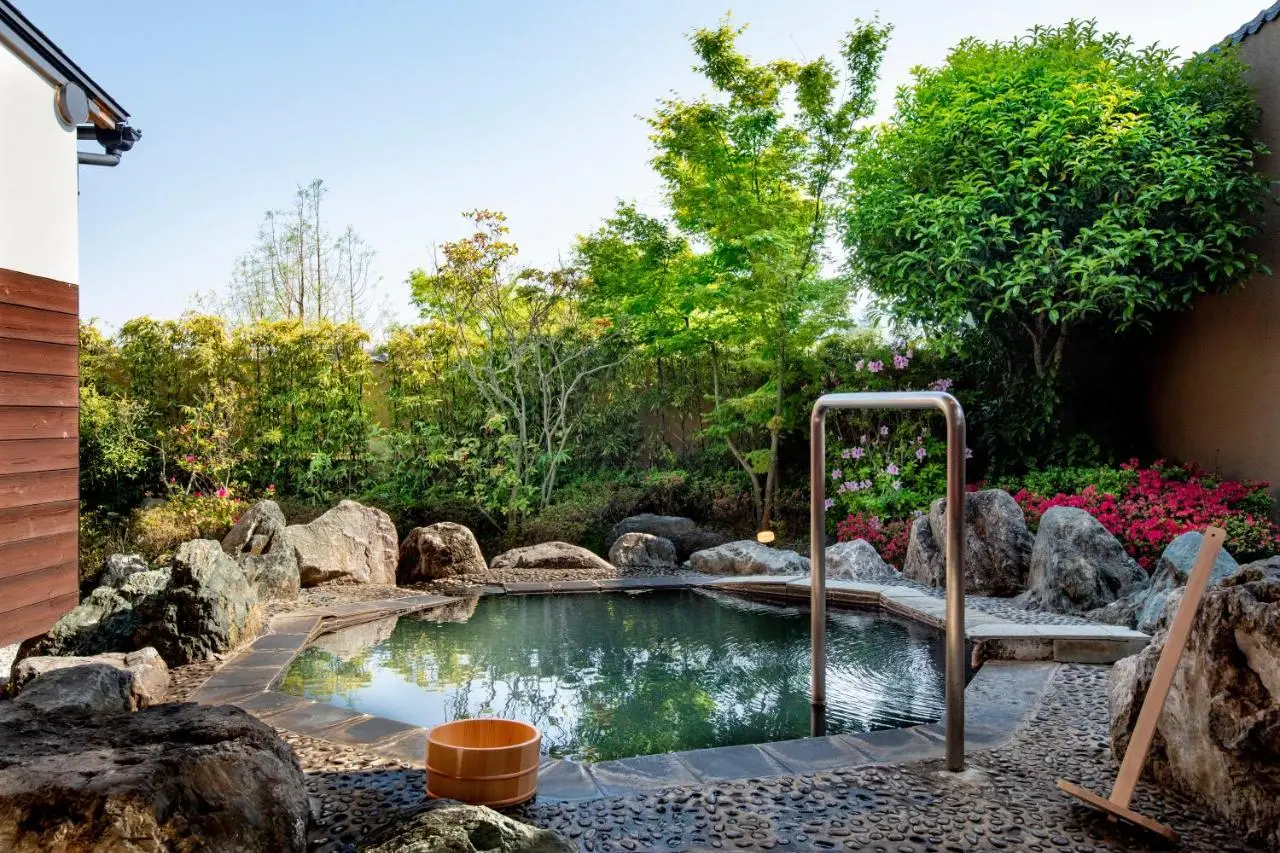
3. Sanso Kannawaen
A hot spring inn nestled in Kannawa, Beppu. The grounds blend nature with a traditional Japanese atmosphere, with features like a Noh theater stage, a thatched-roof tea house, and a pond waterfall creating a truly special setting.
With two private sources, another highlight is that every room offers free-flowing hot spring water.
At Hōno-yu, you can enjoy the beautiful pale blue-white hot spring as well as Kannawa’s famous “mushi-yu” (steam bath).
Room options include Japanese-style rooms, Western-style rooms, and detached villas, so you can choose based on your preferences.
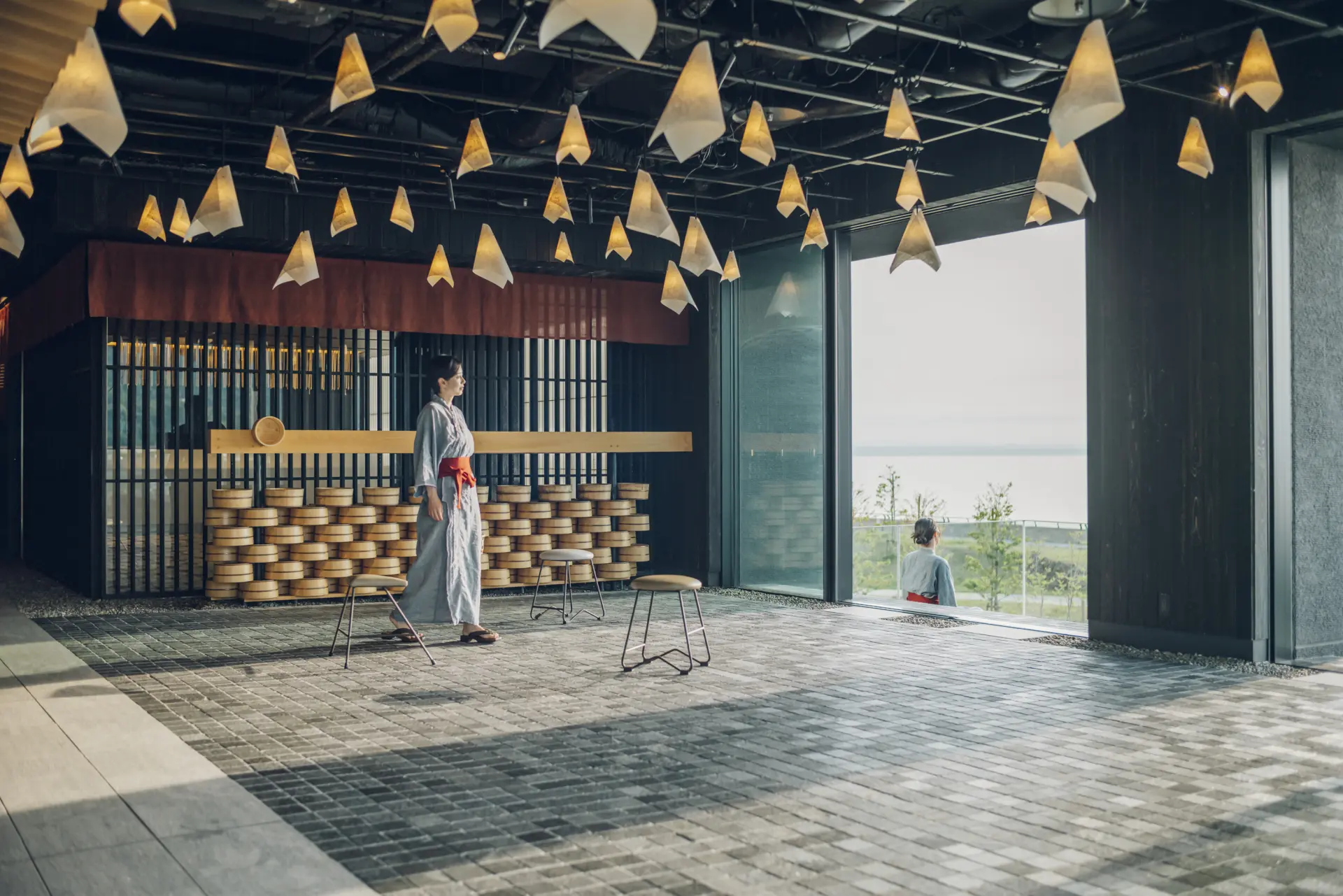
4. Kai Beppu
A hot spring ryokan located along Beppu Bay, Approx. 10 minutes on foot from JR Beppu Station.
The interior design evokes Beppu’s hot spring town, allowing you to experience Beppu’s unique charm throughout your stay.
All rooms feature ocean views, with “picture windows” that frame Beppu Bay and the sky like a work of art.
Some upper-floor rooms include open-air baths, and you can also enjoy views of Beppu Bay from the bath.
The large public bath also uses Beppu-inspired motifs and materials. Since it’s a salt spring, it warms you from the core.
5. AMANE RESORT SEIKAI (Shiosai no Yado Seikai)
A resort hotel along Beppu Bay, with ocean-view rooms and private open-air baths in every room.
In your in-room open-air bath, you can enjoy free-flowing hot spring water in a private setting while looking out over Beppu Bay.
The large public bath on the first floor is right by the sea, and soaking in the open-air bath may make you feel as if you’re floating on the ocean as you take in the view.
Another highlight is the three on-site dining venues serving Japanese cuisine and casual French made with ingredients from Oita and Beppu.
The bar, perfect for enjoying drinks at a relaxed pace, offers bay views through large windows—another great way to enjoy Beppu’s scenery for different occasions.
5 Classic Souvenirs That Capture Beppu’s Unique Charm
After enjoying Beppu sightseeing, take home souvenirs packed with the unique charm of a hot spring town.
If you don’t want to risk picking the wrong souvenir, choosing one of the classics below is recommended.
Many are sweets and foods that don’t keep long, so it’s best to buy them toward the end of your trip and make sure to enjoy them sooner rather than later.
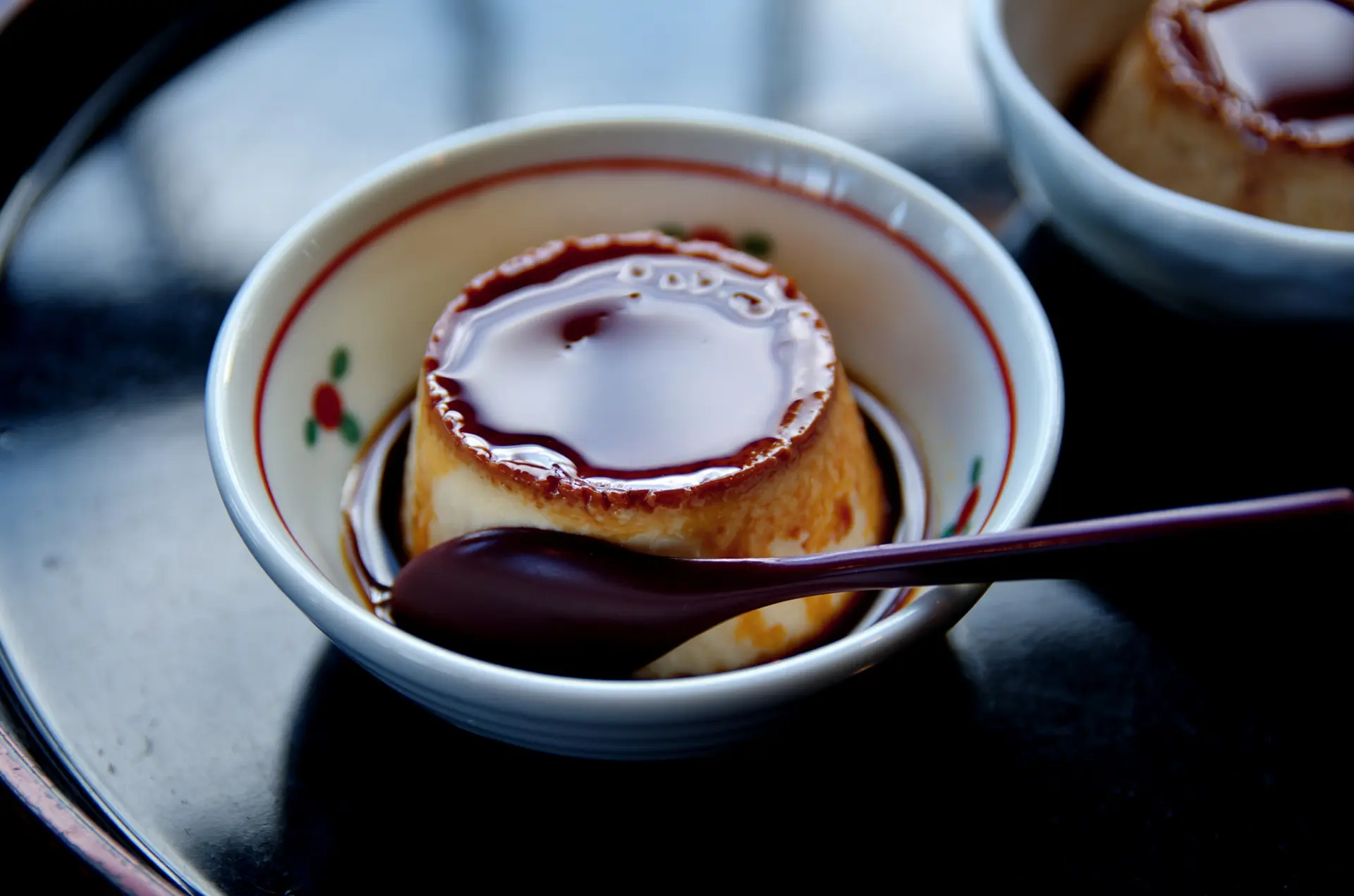
1. Okamotoya “Original Jigoku-Mushi Pudding”
Okamotoya’s “Original Jigoku-Mushi Pudding” comes from the shop known as the originator of Beppu’s famous jigoku-mushi pudding.
Steamed with hot spring steam, the jigoku-mushi method concentrates hot spring minerals and creates a rich flavor.
The caramel has a pleasantly bitter taste with restrained sweetness, giving it a well-balanced flavor that’s rich without feeling heavy.
Each pudding is handmade one by one by skilled artisans, and its smooth texture is another big draw.
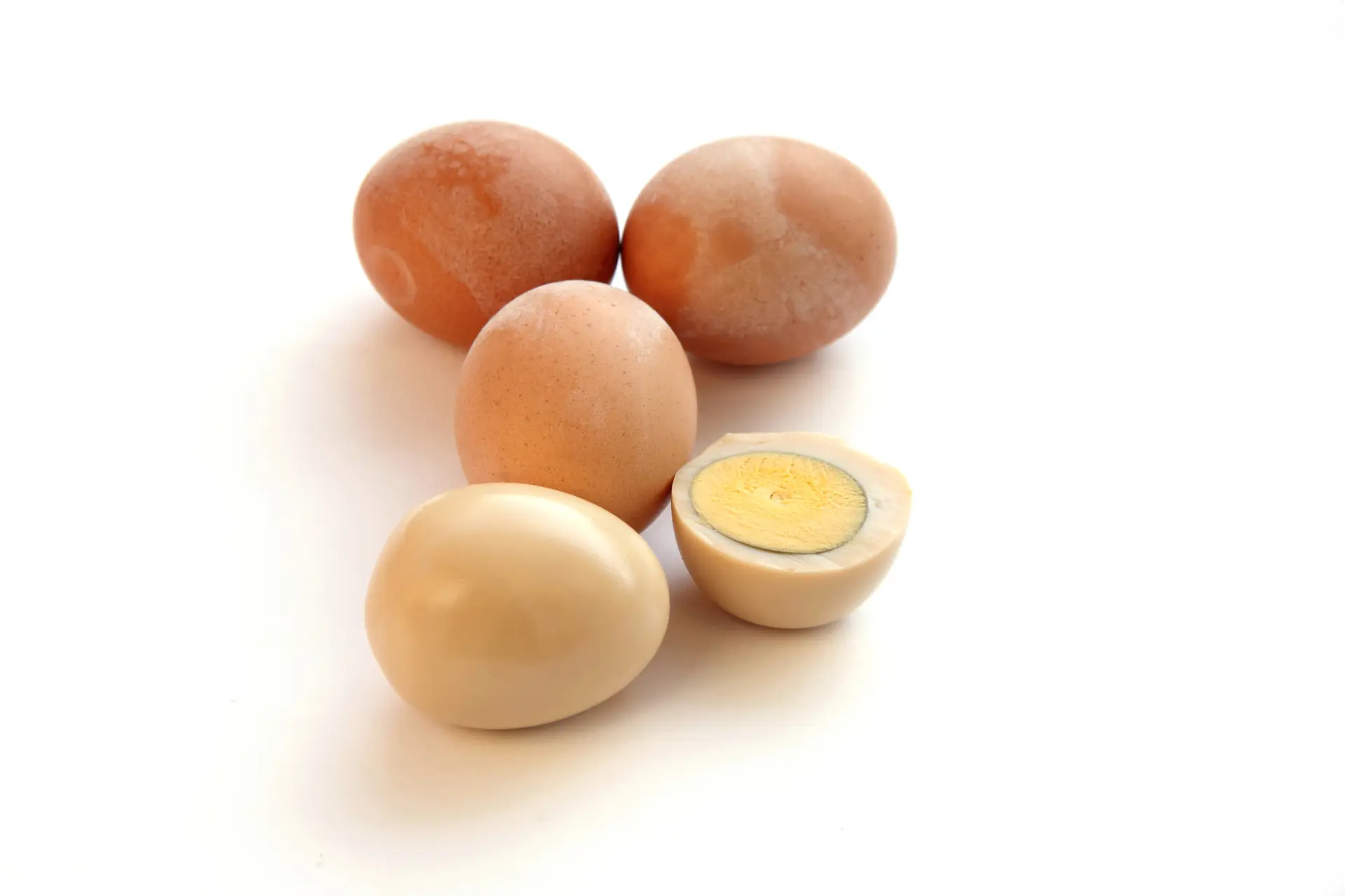
2. Okamotoya “Jigoku-Mushi Salt Eggs”
“Jigoku-Mushi Salt Eggs” are a lightly salted version of the classic jigoku-mushi steamed eggs.
Because they’re steamed in hot spring vapor, they have a faint sulfur aroma.
The saltiness soaks all the way into the yolk, and the flavor stays satisfying through the last bite.
You can take them to-go starting from a single egg, and there’s also a 6-egg souvenir set available.
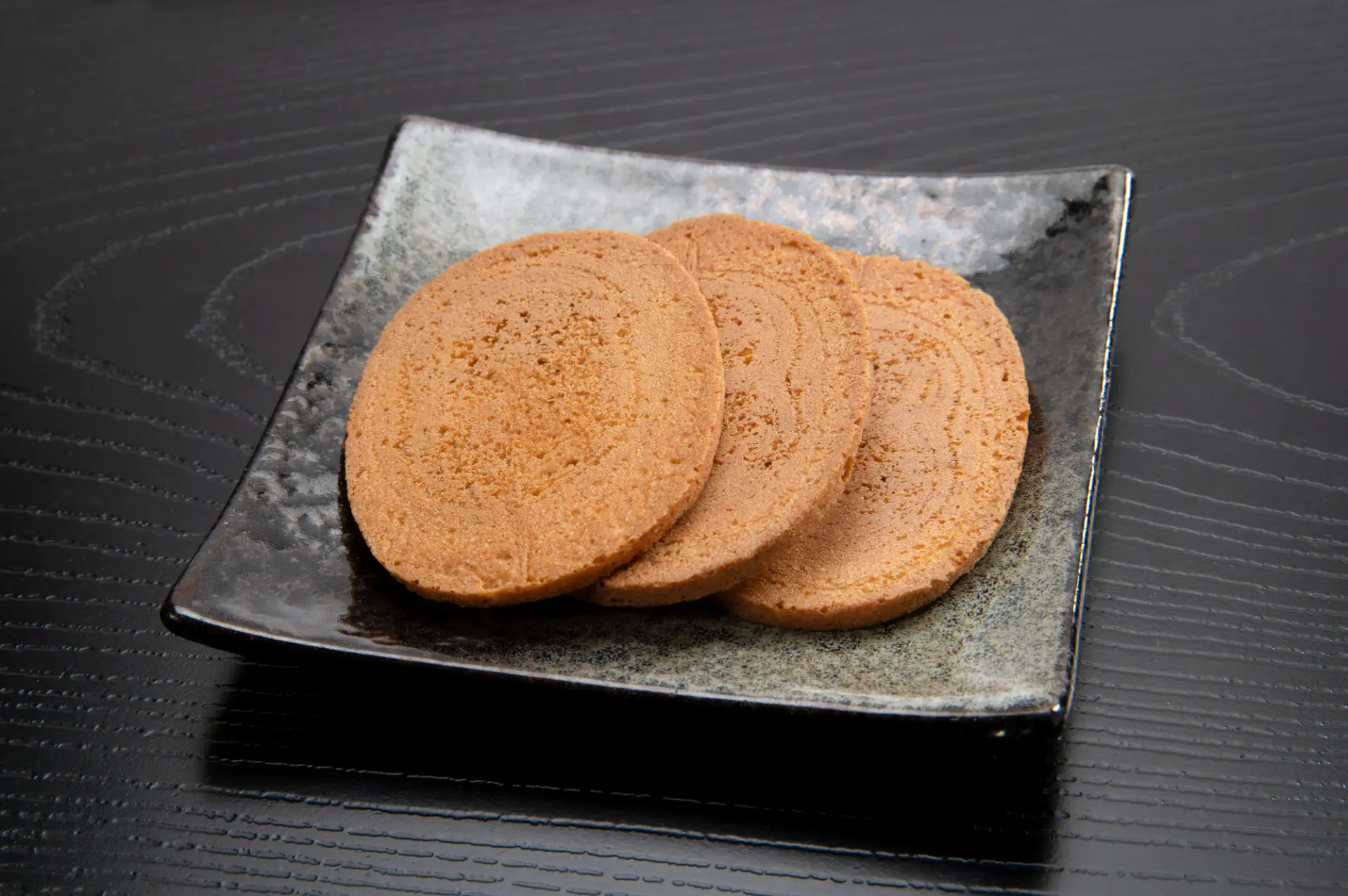
3. Takara Confect Co., Ltd. “Mysterious Toriten Senbei”
A snack that reimagines Oita’s soul food, toriten, as a rice cracker.
Toriten is made by seasoning skinless chicken thigh meat, coating it in an egg-and-flour batter, and frying it.
These crackers feature a savory flavor with soy sauce and garlic, toriten-like aroma, and a crispy texture.
They come in packs of 14, 30, or 45 pieces, and the individually wrapped packaging makes them easy to share.
4. Myoban Yunosato “Medicinal Yunohana”
A natural bath additive made in Beppu’s Myoban Onsen using a method dating back to the Edo period, known for its strong medicinal benefits.
The production technique is designated as an Important Intangible Folk Cultural Property of Japan.
The method used at the yunohana huts of Myoban Yunosato is the only one of its kind in the world.
Made from crystals collected from hot spring gas, its components are essentially the hot spring itself. It offers not only strong moisturizing effects, but also a cleansing effect that emulsifies oils and dirt on the skin.
Add just one pack and your bath at home will feel like Myoban Onsen.
5. Beniya Confectionery “Bungo no Yukemuri”
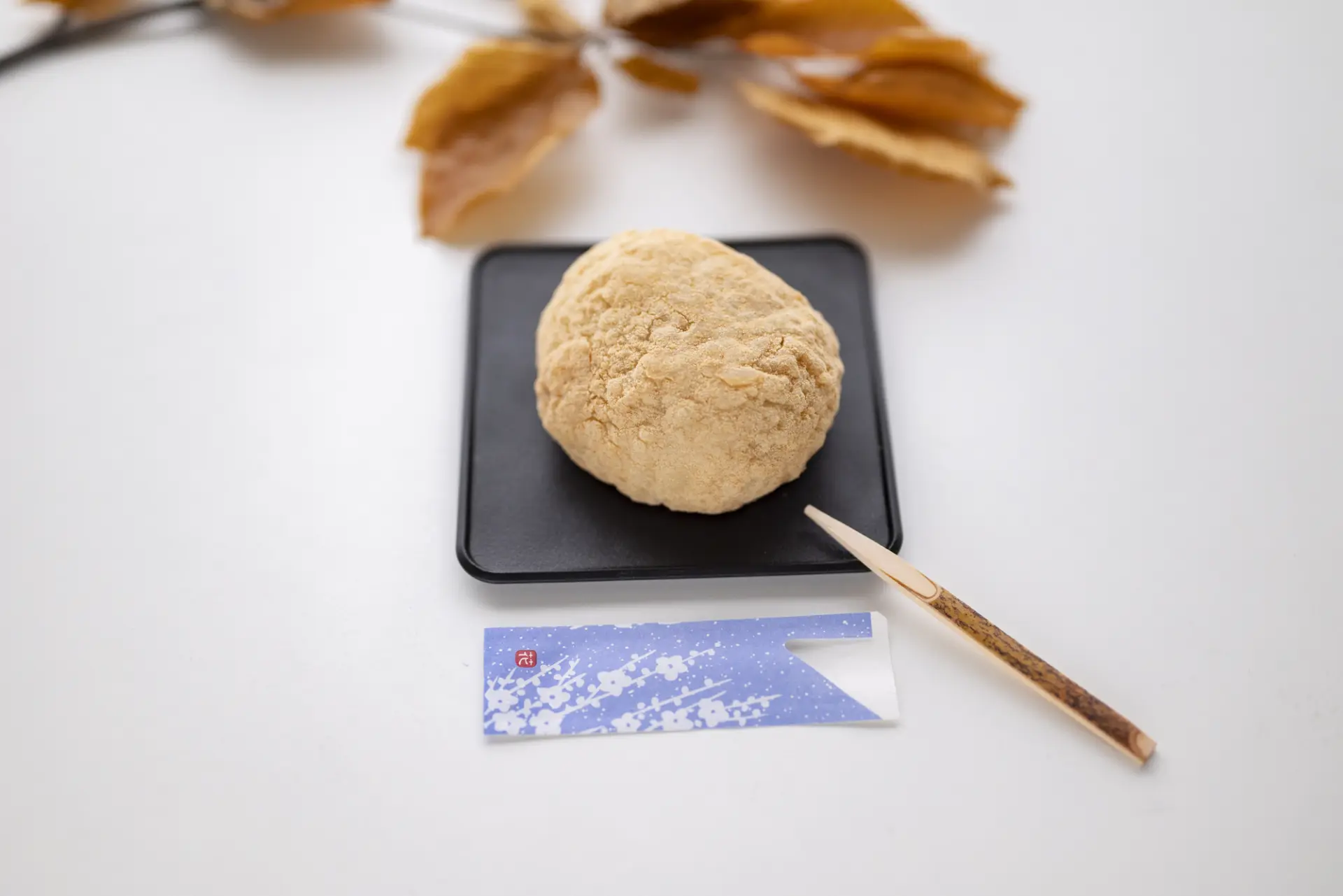
“Bungo no Yukemuri” is a well-known Beppu Onsen sweet.
This Japanese confection is made with dough using hattai-ko (toasted barley flour) wrapped around smooth sweet bean paste with chestnuts.
The sugar dusted on the outside is meant to evoke the steam rising over Beppu’s hot spring town.
It’s known for the aroma of the dough and the gently sweet flavor of the filling. It’s also sold in boxed sets, making it a great choice for souvenirs to share.
[By Season] Recommended Festivals and Events in Beppu
In Beppu, a well-known destination with a long history, major events are held in every season.
They’re large-scale festivals where not only visitors but also locals come together to celebrate.
If your travel dates line up with an event, your Beppu trip will be even more fun.
If your schedule allows, it’s worth planning your trip around these festivals.
[Spring] Beppu Hatto Onsen Festival
Beppu designates April 1 each year as “Onsen Appreciation Day” and holds the Beppu Hatto Onsen Festival to give thanks for the blessings of hot springs.
Centered around the downtown area near JR Beppu Station and Ekimae-dori Street, a wide range of events are held over Approx. one week.
There are many unique events that only a hot spring town could offer, including the spectacular Ougiyama Fire Festival, where Beppu’s symbolic Mt. Ougiyama is set ablaze in a dramatic fire show, as well as the “Yubukkake Festival” and the “Beppu Furo Marathon.”
At the “Yubukkake Festival,” portable shrines parade through the streets, and tens of tons of hot spring water are sprayed from hoses along Ekimae-dori Street, which becomes a pedestrian-only zone.
With everything drenched in hot spring water, it’s a chance to dance, sing, jump, and have fun without holding back.

[Summer] Beppu Hi no Umi Festival
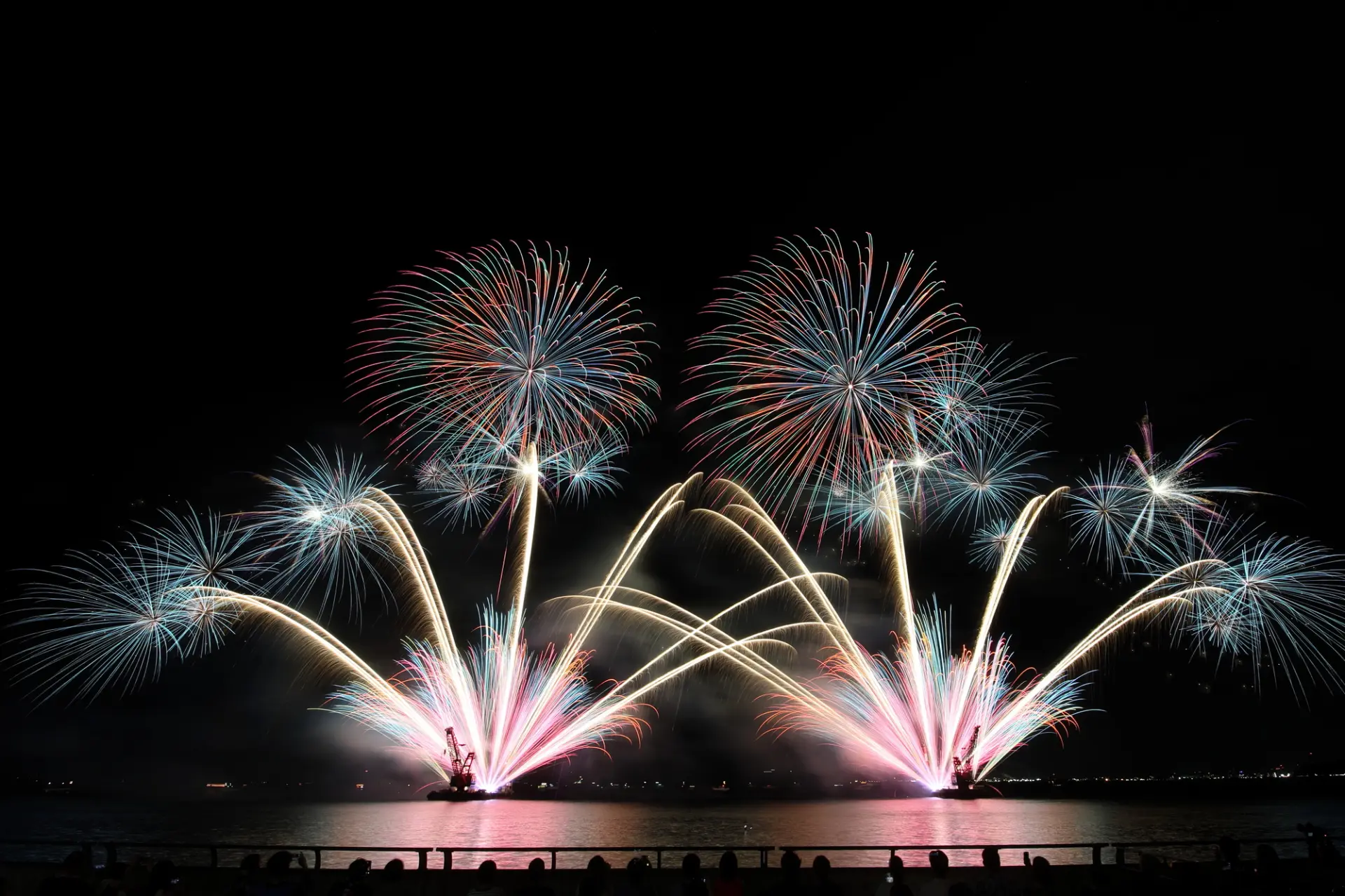
Beppu’s signature summer event is the Beppu Hi no Umi Festival.
Over three days in late July each year, food stalls line the area around JR Beppu Station, Ekimae-dori Street, Kitahama Park, and Beppu Spa Beach.
Ekimae-dori Street becomes pedestrian-only, and you can enjoy a wide variety of stall foods, from classic festival favorites to international dishes.
At Kaemonji Park on the north side of Ekimae-dori Street, “Beppu Yatai Village” is set up, where you can try local specialties like Beppu cold noodles, as well as enjoy events such as karaoke contests and dance competitions.
On the final day, a large fireworks festival is held at the beach.
[Fall] Beppu Art Month
A citizen cultural festival held from late September through November each year, bringing together a wide range of culture and arts events.
Programs created by Beppu residents—such as art exhibitions, dance performances, live music, and film screenings—take place across many venues.
With hands-on programs like workshops, there are many opportunities to connect and interact with locals.
It’s a festival that showcases a different side of Beppu beyond its identity as a hot spring town.
[Winter] Beppu Christmas Hanabi Fantasia
A romantic Christmas event that has been loved for over 30 years as a winter tradition in Beppu.
Held over two weekend days just before Christmas each year, the seaside Matogahama Park and Spa Beach host fireworks displays on both nights.
As children sing Christmas songs, colorful fireworks launched into the night sky in sync with the music create a different atmosphere than summer fireworks.
Visit with family or a loved one, and you’ll likely create unforgettable Christmas memories.

3 Things to Keep in Mind When Visiting Beppu
Here are three things you should know to make the most of Beppu.
Use these tips so you don’t end up regretting a lack of preparation during your trip.
1. If you want to enjoy Beppu Jigoku Meguri, start in the morning
Beppu Jigoku Meguri, which takes you around the seven “hells,” takes 2 hours 30 minutes to 3 hours even if you move efficiently. If you want to enjoy each “hell” more thoroughly, plan for roughly half a day.
Since all sites close at 5:00 pm, starting in the morning is recommended.
If you plan to visit all of the “hells,” it’s best to buy a common admission pass, which offers a better deal.
2. Carry a towel so you can use foot baths and public bathhouses
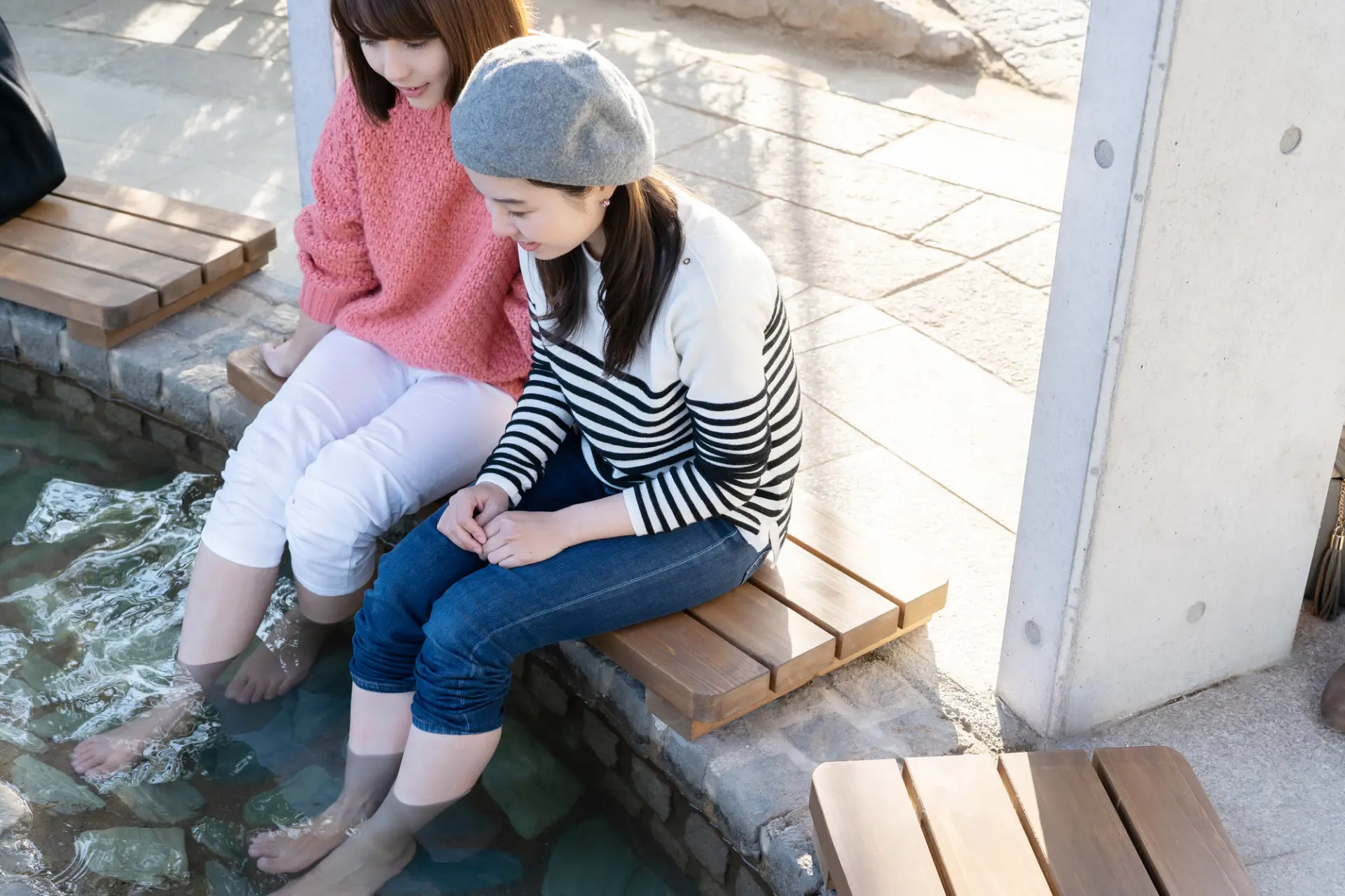
Since Beppu has many free foot baths and public bathhouses, it’s a good idea to bring a face towel and a bath towel when sightseeing.
Also, letting your hair touch the bathwater is against the rules, so if you have long hair, bring a hair tie as well.
This applies not only to foot baths—many public bathhouses also don’t offer towel rentals.
Prepare properly in advance and enjoy Beppu’s hot springs to the fullest.
3. Follow the rules at public bathhouses
Public bathhouses are hot spring facilities managed and operated by local communities and used as part of daily life.
Beppu’s public bathhouses also have their own rules, so it’s best to understand them in advance so you can use the baths comfortably without bothering locals.
None are difficult—anyone can follow them with a little awareness.
Common rules include the following.・Greet people you meet at the public bathhouse
- Rinse yourself with water before entering the bath
- Don’t add water without permission
- Don’t put your towel in the bathwater
- Don’t let your hair touch the bathwater
- Don’t sit on the edge of the bathtub
FAQ about Beppu City Sightseeing
Q
Are there places near Beppu Station where you can enjoy sightseeing, food, and shopping?
A
Yes. Around Beppu Station you’ll find deeper local spots like shopping streets and markets, where you can enjoy sightseeing, local food, and shopping.
Q
What is Beppu Jigoku Meguri?
A
It’s a popular sightseeing attraction where you visit seven naturally emerging hot spring areas in Beppu City.
Summary
We’ve introduced Beppu City’s many attractions that go beyond hot springs alone.
Use this guide to visit a variety of attractions and hot springs, enjoy delicious local specialties, and make the most of your time in Beppu.
Oita has plenty more to offer beyond Beppu, with many other attractions and hot springs as well.
If you’re planning to visit destinations in Oita beyond Beppu, be sure to check out the article below, too.