

A District Full of Tradition and Energy! 13 Popular Tourist Spots in Tennoji
Tennoji is one of Osaka City’s leading downtown districts.
With temples and shrines including “Washu Head Temple Shitennoji,” lush parks, cultural facilities, and modern commercial complexes, it is an appealing area where old and new blend together.
This article covers everything from how to get to Tennoji to the best season to visit, as well as popular sightseeing and shopping spots.
It’s a must-read for anyone who wants to explore Tennoji in their own way with limited time.
Head out on a trip to make the most of Tennoji efficiently.
What is Tennoji Like?
Located in central Osaka City, Tennoji is one of Osaka’s core areas alongside Umeda and Namba.
The area around Osaka-Abenobashi Station in Abeno Ward is also often referred to as Tennoji.
Many commercial facilities are concentrated around Tennoji Station, a major terminal station, making it a great area for shopping and dining.
At the same time, the relaxing green space of Tennoji Park is home to a zoo, an art museum, and the former Sumitomo family’s famous garden, while many historic temples and shrines and other spots where you can feel history and nature are scattered throughout the area. It is a highlight-filled area that can be enjoyed over several days.

What is the best season for sightseeing in Tennoji?
Spring is the best season for sightseeing.
In spring, cherry blossoms bloom beautifully at “Washu Head Temple Shitennoji” and “Tennoji Park,” and you can enjoy a leisurely stroll in the mild weather.
In autumn, the fall leaves reach their best, and from the observation deck of “Abeno Harukas,” you can take in a panoramic view of Osaka’s colorful cityscape.
What to wear in Tennoji by season
- Spring (March–May): Light jacket and thin sweater
- Summer (June–August): Light clothing, short sleeves
- Fall (September–January): Light jacket, coat
- Winter (December–February): Coat, thick sweater or jacket
How do you get to Tennoji?
From Osaka Station, it takes Approx. 20 minutes on the JR Osaka Loop Line (inner loop). Please note that some trains run the full loop while others do not.
From Kansai International Airport to Tennoji Station, you can get there in as little as Approx. 35 minutes by going to Kansai-Airport Station and taking a limited express train.
What are the main ways to get around when sightseeing in Tennoji?
Tennoji is easy to get around, with plenty of transportation options including trains, the subway, buses, walking, and bicycles.
Most major tourist spots are within walking distance of the nearest station, so you can enjoy them while strolling around.
Using rental bicycles or bike-sharing services is also a convenient way to get around efficiently.
It is recommended to mainly use trains and walking, combined with buses or bicycles as needed.
Enjoy History, Culture, Nature, and Art! 13 Popular Tourist Spots in Tennoji
Tennoji is home to many cultural attractions, from historic temples and shrines to art museums and a zoo.
Here, we introduce popular sightseeing spots recommended for visitors.
1. Tennoji Zoo
The zoo opened on January 1, 1915, and celebrated its 100th anniversary in 2015.
About 1,000 animals of around 180 species are kept in the Approx. 11 ha grounds. Areas such as the reptile ecology hall “IFAR” and the “African Savanna Zone,” home to hippos, giraffes, lions, and more, feature “ecological exhibits” that recreate the animals’ natural habitats as closely as possible.
Various events are also held in the zoo. Seasonal events such as feeding experiences at the petting area and the limited-time “Night ZOO” are available, so there are many ways to enjoy the zoo throughout the year.

2. Washu Head Temple Shitennoji
Built in 593 by Prince Shotoku, known as the founder of Japanese Buddhism.
In the Heian period, people’s respect turned into faith, and it still attracts many worshippers today as a sacred site of Prince Shotoku worship.
As a temple founded by Prince Shotoku, it established the Washu sect in 1949.
The symbolic five-story pagoda is also called the “Pagoda of Salvation for the Six Realms,” because when it was first built, Prince Shotoku placed six Buddha relics and six strands of his own hair into the foundation pillar, praying for the salvation of the six realms: hell, hungry ghosts, beasts, asura, humans, and heaven.

3. Abeno Harukas
A super high-rise complex building that opened in 2014 and stands 300 meters above ground.
Floors from B2 to the 14th floor house “Abeno Harukas Kintetsu Main Store (Kintetsu Department Store)” and “Abeno Harukas Dining.”
The “Harukas 300 (Observatory)” observation deck has a three-level structure spanning the 58th, 59th, and 60th floors.
The top 60th floor, reached by a dedicated elevator from the entrance gate on the 16th floor, is an amazing indoor corridor enclosed in glass from floor to ceiling, offering the sensation of walking in the sky.

4. Tennoji Park
A historic urban park that opened in 1909, conveniently located Approx. 5 minutes on foot from JR Tennoji Station.
Seasonal scenery is also a highlight, with cherry blossoms in spring, irises, satsuki azaleas, and hydrangeas in early summer, and autumn leaves in fall.
The spacious grounds, with their varied elevation, are dotted with several cultural facilities including Keitakuen Garden, the former Sumitomo family’s famous garden, and the Osaka City Museum of Fine Arts.
The entrance area features “Tenshiba,” a lawn plaza popular as a picnic spot.
It is a perfect place for a stroll, where you can relax in nature while experiencing Japanese history and culture.

5. Osaka City Museum of Fine Arts
An art museum in Tennoji Park that opened in 1936.
After completing a major renovation in March 2025, it reopened as an “open museum.”
Open for around 300 days a year, almost all areas other than the exhibition rooms are open as nearly free zones so that anyone can drop by casually.
The special exhibitions on the first floor feature valuable collections on a variety of themes depending on the period, including Chinese stone Buddhas and paintings, Japanese Buddhist art, paintings, and crafts.
Regularly held special exhibitions cover a wide range of genres from Eastern and Japanese art to Western art, and are highly regarded by many art fans.

6. Keitakuen Garden
A Japanese garden in “Tennoji Park” designated as a cultural property by Osaka City.
It was created by Jihei Ogawa VII, also known as Ueji, a leading modern Japanese garden designer who also worked on famous gardens such as the Heian Jingu Shrine Garden and Murin-an in Kyoto.
In the foreground is a white stone beach-like shore, and the expansive pond, central island planted with black pines, and scattered rock islands evoke the open sea.
As you walk around the pond, you can admire the artificial hill in the northeast, the large waterfall at its base, and the arbor, while enjoying the dynamic flow of water and the beauty of nature through the seasons.
The garden also has the tea room “Choseian,” which can be used for tea gatherings, haiku meetings, commemorative photos, and more (reservation required).

7. Ikukunitama Shrine
Osaka’s oldest shrine, with a history of Approx. 2,700 years.
Locals affectionately call it “Ikutama-san.”
It is said to have begun when Emperor Jimmu, the first emperor, enshrined Ikushima-no-Okami and Ashishima-no-Okami, the spirits of the Japanese land, near present-day Osaka Castle during the unification of Japan.
In 1583, when Toyotomi Hideyoshi built Osaka Castle, the shrine was moved to its current location.
The old shrine buildings were lost in a fire, but the current main hall preserves the Momoyama-period architectural style known as Ikukunitama-zukuri.

8. Horikoshi Shrine
A shrine founded by Prince Shotoku in memory of Emperor Sushun, as one of the Shitennoji Shichinomiya, the seven shrines that protect Shitennoji Temple.
It is said that from before the shrine was founded until the mid-Meiji period, there was a beautiful moat along the south side of the grounds, and because worshippers crossed that moat to visit, it came to be called “Horikoshi.”
In Osaka, there has long been a saying that “Horikoshi-san grants one wish once in a lifetime,” and in recent years many worshippers from overseas have also come to pray for family safety, health, and other wishes.
In addition to seasonal festivals, a Tsuitachi Festival is held on the 1st of every month and a monthly festival on the third Sunday. You can attend without a reservation (an offering fee is required).

9. Isshinji Temple
A Jodo sect temple founded in 1185 by Honen Shonin.
In 1600, when Senchiyo, the eighth son of Tokugawa Ieyasu, died young in Osaka, the funeral was held here at Isshinji Temple by Honyo Zonmu, a monk from Mikawa, the same home province as Ieyasu.
Since then, the temple has had strong ties to Ieyasu and is also famous as the site of Tokugawa Ieyasu’s main camp during the Winter Siege of Osaka.
Since 1887, when the custom of creating Buddhist statues from cremated remains began, it has become known as a “temple for interment,” where people can worship Buddha and memorialize their ancestors at the same time.
Because it accepts remains regardless of Buddhist sect, it is beloved as a temple for ordinary people.

10. Aizendo Shomanin Temple
Built in 593 by Prince Shotoku as Seyakuin, one of the four institutions of Shitennoji Temple.
Seyakuin was a place that cultivated medicinal herbs and provided them to people according to their illnesses, a role equivalent to social welfare today.
Because Prince Shotoku lectured people here on the “Shomangyo,” a Middle Mahayana Buddhist sutra, it came to be called Shomanin.
In addition, since the Heian period, Aizen Myoo has been widely worshipped as a deity of successful love and marital harmony, and the temple is also famous as a matchmaking temple.
Every year from June to July, the Aizen Festival, one of Osaka’s three major summer festivals, is held and draws many worshippers.

11. Yasui Shrine (Yasui Tenmangu Shrine)
An ancient shrine that enshrines Sukunahikona-no-Kami and Sugawara no Michizane.
It is said that in 901, when Sugawara no Michizane was exiled to Dazaifu, he stopped here to rest.
At the time, sympathetic villagers offered him “okoshi-gome,” dried steamed glutinous rice, and in return received the plum-blossom crest of the Sugawara family.
A tradition remains that this became the origin of “awa okoshi,” a famous confection of Osaka.
It is also said to be the place where the warrior Sanada Yukimura, active in the early Edo period (1603–1690), met his end during the Summer Siege of Osaka, and a memorial monument and statue of Yukimura stand here.

12. Sanko Shrine
A shrine long known for enshrining three deities believed to ward off stroke: Amaterasu Omikami, Tsukuyomi no Mikoto, and Susanoo no Mikoto.
Every year, a grand seven-day festival for prayers against stroke is held beginning on June 1.
Takenouchi no Sukune, enshrined in a subordinate shrine, is worshipped as a deity of wealth and longevity and as Jurojin, one of the Osaka Seven Lucky Gods, so there is a constant stream of visitors.
This site is also thought to have been part of Sanada-maru, the fortified outpost built by Sanada Yukimura on the south side of Osaka Castle, and traces remain today of an underground passage to Osaka Castle known as “Sanada’s Escape Tunnel.”

13. Tenshiba
A lawn plaza located in the entrance area of Tennoji Park.
Around the grassy area, you’ll find a variety of facilities including stylish cafes and restaurants, a flower shop, and a children’s play area (paid).
Various events such as workshops and gourmet events are held regularly, and on weekends it is bustling with families with children, couples, and tourists.
You can also enjoy seasonal scenery on the beautifully maintained lawn, with cherry blossoms in spring and autumn leaves in fall.
Although it is in the city, it is an open and refreshing spot that is perfect for walks and picnics.

Enjoy Great Food as Well as Sightseeing! 5 Recommended Restaurants in Tennoji
Tennoji has many restaurants where you can enjoy excellent food.
From here, we’ll introduce a carefully selected list of especially recommended places to eat.
1. Yakiniku Horumon Bungo Tennoji
A yakiniku restaurant where you can enjoy Oita-produced Bungo beef, conveniently located within a 3-minute walk of Tennoji Station, a major terminal where various Osaka transit lines intersect.
The Oita-produced Bungo beef is thoroughly managed by numerical standards for oleic acid, a key factor in its delicious flavor.
Its meat features beautiful marbling, and because the fat melts at a low temperature, it is less likely to solidify in the stomach, making it less heavy to eat.

2. Grill Maruyoshi
A Western-style restaurant in Via Abeno Walk, a dining street lined with eateries next to the Abeno Q’s Mall shopping complex in front of Tennoji Station.
Since opening more than 70 years ago, it has continued serving carefully prepared Western dishes under the motto “unchanging taste and heartfelt hospitality.”
Its signature dish, the “Special Rolled Cabbage,” is known for its big size, with a diameter of Approx. 10 cm.
The harmony of the tender, slow-cooked cabbage and juicy ground meat is outstanding, and you can enjoy it with two sauces served alongside: demi-glace and curry.

3. Live Kitchen “COOKA”
A buffet-style restaurant located on the 19th floor of Osaka Marriott Miyako Hotel, Approx. 100 meters above ground.
When you step inside, a sweeping panorama spreads out beyond the large floor-to-ceiling windows.
The view is spectacular, overlooking not only Osaka’s cityscape below but also as far as Osaka Bay and Awaji Island. Window seats are especially popular, so booking early is the best option.

4. SKY GARDEN 300
A cafe, dining, and bar venue located in the “Harukas 300” observation floors on the 58th to 60th floors of Abeno Harukas.
From the interior, 300 meters above ground, you can enjoy views as far as Kyoto, the Rokko mountain range, and even the Akashi Kaikyo Bridge on clear days.
You can take in different scenery depending on the time of day: bright daylight, twilight as the sky changes color with the setting sun, and breathtaking night views.

5. Senri Shabuchin
The second branch of a specialty restaurant for individual hot-pot shabu-shabu, originally founded in 1972 in Senri Chuo, located in Senri New Town in Toyonaka City.
When the main branch first opened, shabu-shabu was considered a luxurious dish shared by several people around one pot. The one-person hot-pot style, letting each person enjoy their own pot, was revolutionary and quickly became popular.
The casual counter-style setting also helped overturn the high-end image of shabu-shabu.

3 Classic Shopping Spots in Tennoji
Enjoy shopping along with visiting historic landmarks and sampling great food.
The shopping facilities introduced below are attractive for their high-quality and wide-ranging selections that follow the latest trends. Be sure to stop by.
1. Kintetsu Department Store Abeno Harukas Main Store
A department store located from B2 to the 14th floor of the skyscraper “Abeno Harukas.”
Boasting the largest sales floor area in Japan, it offers a wide range of products from fashion, gourmet food, and miscellaneous goods to luxury brands.
The restaurant floors on the 12th to 14th floors bring together an impressive 44 restaurants, where you can enjoy a wide variety of food including Osaka specialties such as okonomiyaki and kushikatsu.
The “Foreign Customers’ Salon” offers a range of services centered on tax-free procedures, including guest coupons, overseas shipping, and tourist information.

2. Abeno Hoop
A large fashion building located just south of Kintetsu Department Store Abeno Harukas Main Store.
As the name “Hoop” suggests, its upper floors extend outward in a circular shape, which gives the building its distinctive look.
About 40 stores are gathered across seven floors from the basement level to the 6th floor.
It features many trend-forward fashion brands for younger shoppers, along with a solid selection of lifestyle goods, interior items, casual cafes, and restaurants.
Shops sometimes hold special events, and there are also music performances and dance shows, so each visit can bring something new.
At night, the plaza in front of the building is beautifully illuminated, making it a popular date spot as well.

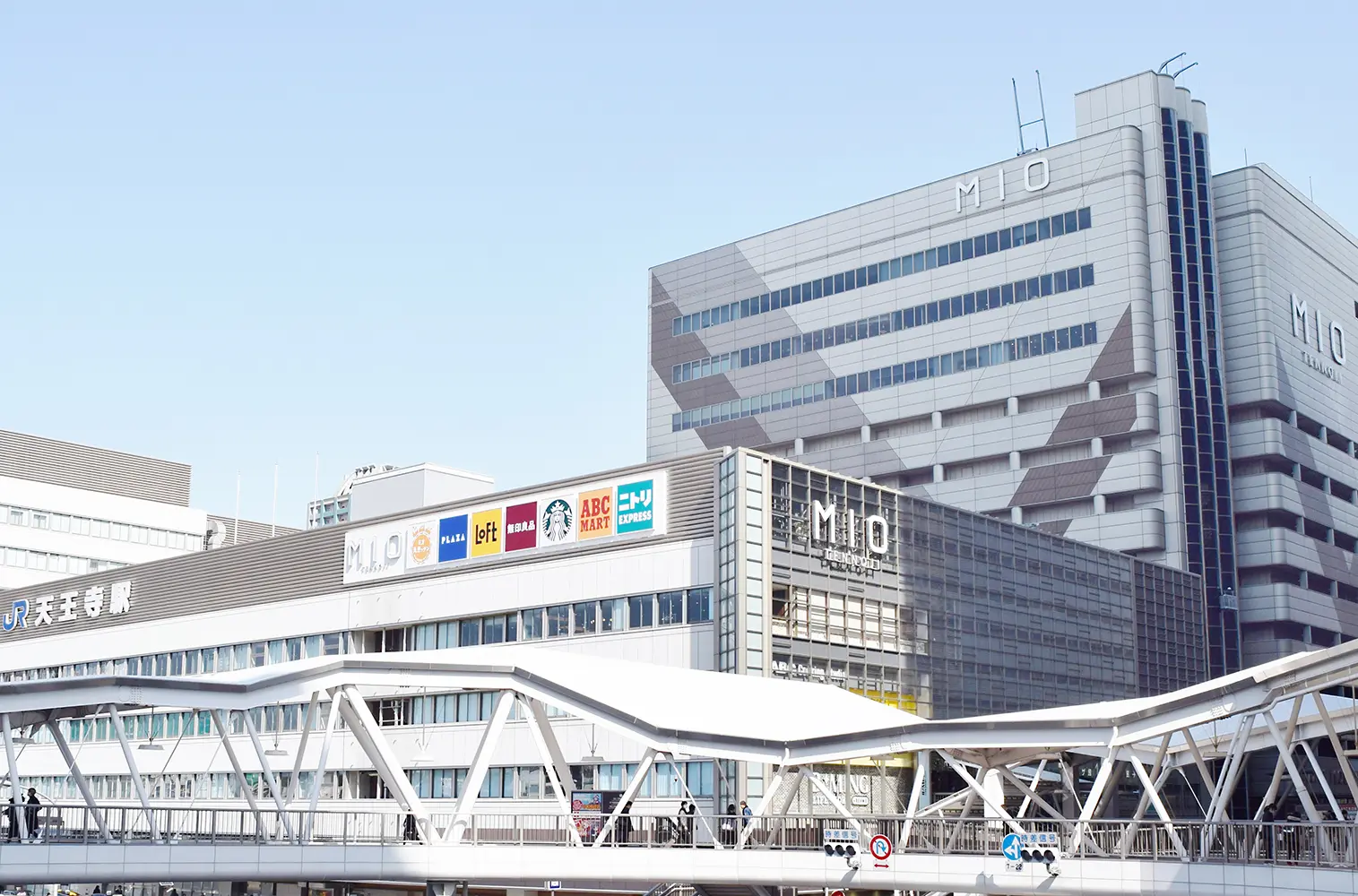
3. Tennoji Mio
A large shopping complex with excellent access, directly connected to JR Tennoji Station.
About 350 stores are gathered here, offering fashion, miscellaneous goods, cosmetics, interior items, and more, making it popular with a wide range of shoppers from young people to families.
It consists of two buildings, the “Main Building” and the “Plaza Building.” The Main Building is filled with the latest fashion trends and cosmetics, while the Plaza Building offers fashion accessories, miscellaneous goods, cafes, and restaurants.
Seasonal campaigns and limited-time shops also appear from time to time.
Because it is directly connected to the station, you can enjoy shopping and dining comfortably even on rainy days.
FAQ about Sightseeing in Tennoji
Q
Is Abeno close to Tennoji?
A
It is about a 5-minute walk away.
Q
Where should I go to make the most of Tennoji in a short time?
A
The observation deck at “Abeno Harukas,” which offers a panoramic view of Osaka’s cityscape, is recommended.
Summary
This article has introduced popular sightseeing spots and classic shopping facilities that should not be missed when visiting Tennoji.
Although it is a district where history and tradition are alive, it also offers plenty of shopping and dining facilities, making it an ideal area for sightseeing.
In addition, Osaka has many worthwhile spots to visit besides Tennoji.
Use the article below as a reference and head out on a trip to fully enjoy Osaka, including Tennoji.