
Complete Guide to the Echigo-Tsumari Art Triennale - From Must-See Works to Model Courses
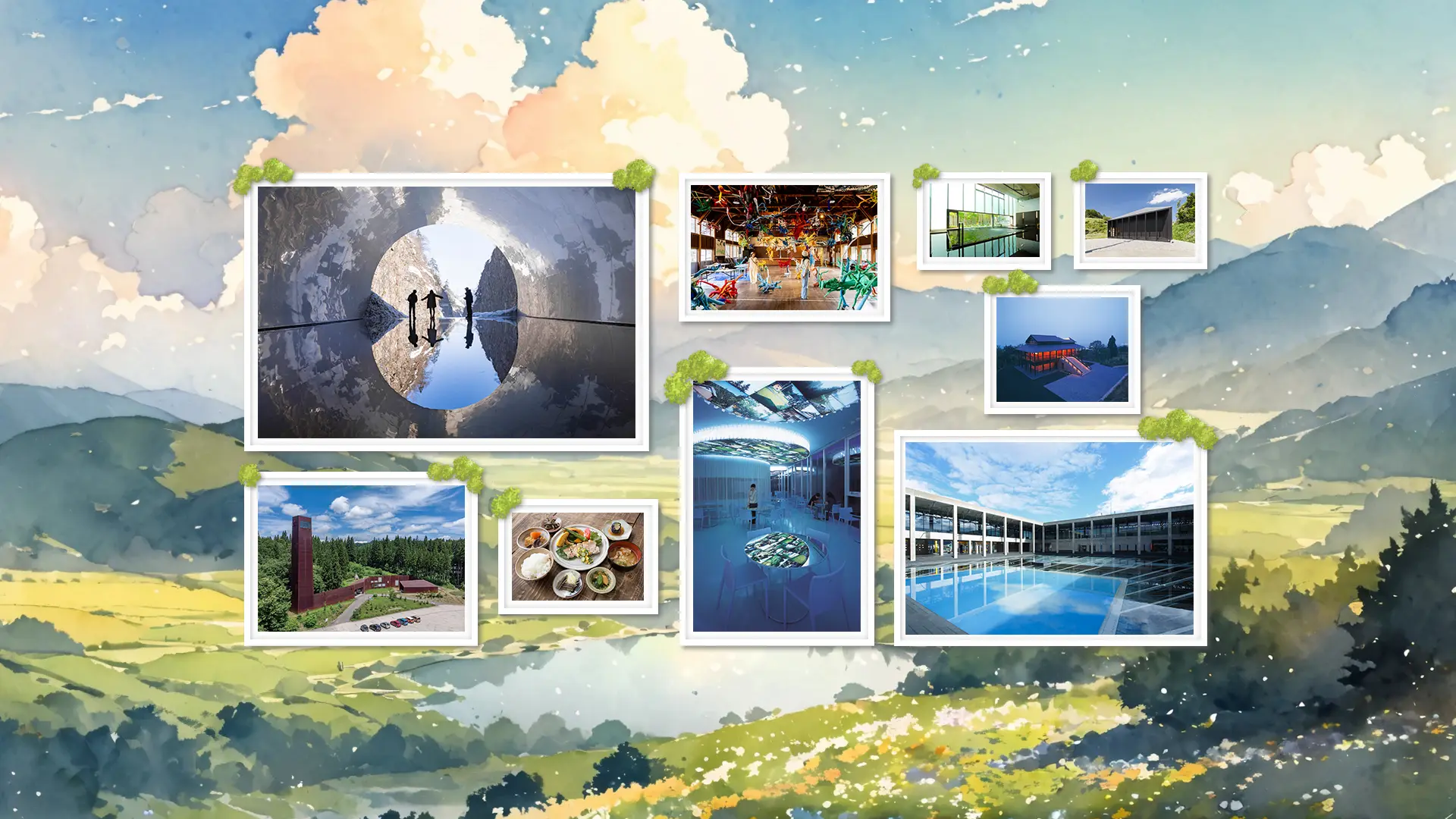
The Echigo-Tsumari Art Triennale is a contemporary art festival where you can experience satoyama life unique to Niigata’s countryside.
Beyond enjoying art, you can engage all five senses in landscapes that evoke Japan’s original scenery and in cultures passed down for generations.
This article provides comprehensive information to help you get the most out of the Triennale’s abundant highlights.
If words like contemporary art, satoyama culture and folklore, regional revitalization, and ever-changing seasonal scenery speak to you, read on.
One of the World’s Largest International Art Festivals
The Echigo-Tsumari Art Triennale is a regional art festival held in the Echigo-Tsumari region of Niigata Prefecture (Tokamachi-shi and Tsunan-machi).
A regional art festival fuses local culture and nature with contemporary art and communicates the area’s appeal through art, and the Echigo-Tsumari Art Triennale is a pioneer of this approach.
Since 2000, the festival has been held once every three years.
The next edition, the tenth, is planned for 2027.
Through artworks and long-term projects, the festival invites visitors to feel, study, and enjoy the nature and culture of a snow-heavy satoyama.
Works take shape in rich natural settings, in vacant houses and former schools, and even as public projects such as toilets, parks, and tunnels, created together with local residents.
Some artworks offer meals or accommodation, allowing you to experience the appeal of Echigo-Tsumari with all five senses.
Even outside the main festival period, more than 200 works can be viewed, and special exhibitions and events are held seasonally.
What Kind of Place Is Echigo-Tsumari?
Echigo-Tsumari spreads across the southern part of Niigata Prefecture on the Sea of Japan side.
It comprises six areas: the five areas of the former administrative divisions before present-day Tokamachi-shi-Tokamachi, Kawanishi, Nakasato, Matsudai, and Matsunoyama-plus Tsunan (Tsunan area).
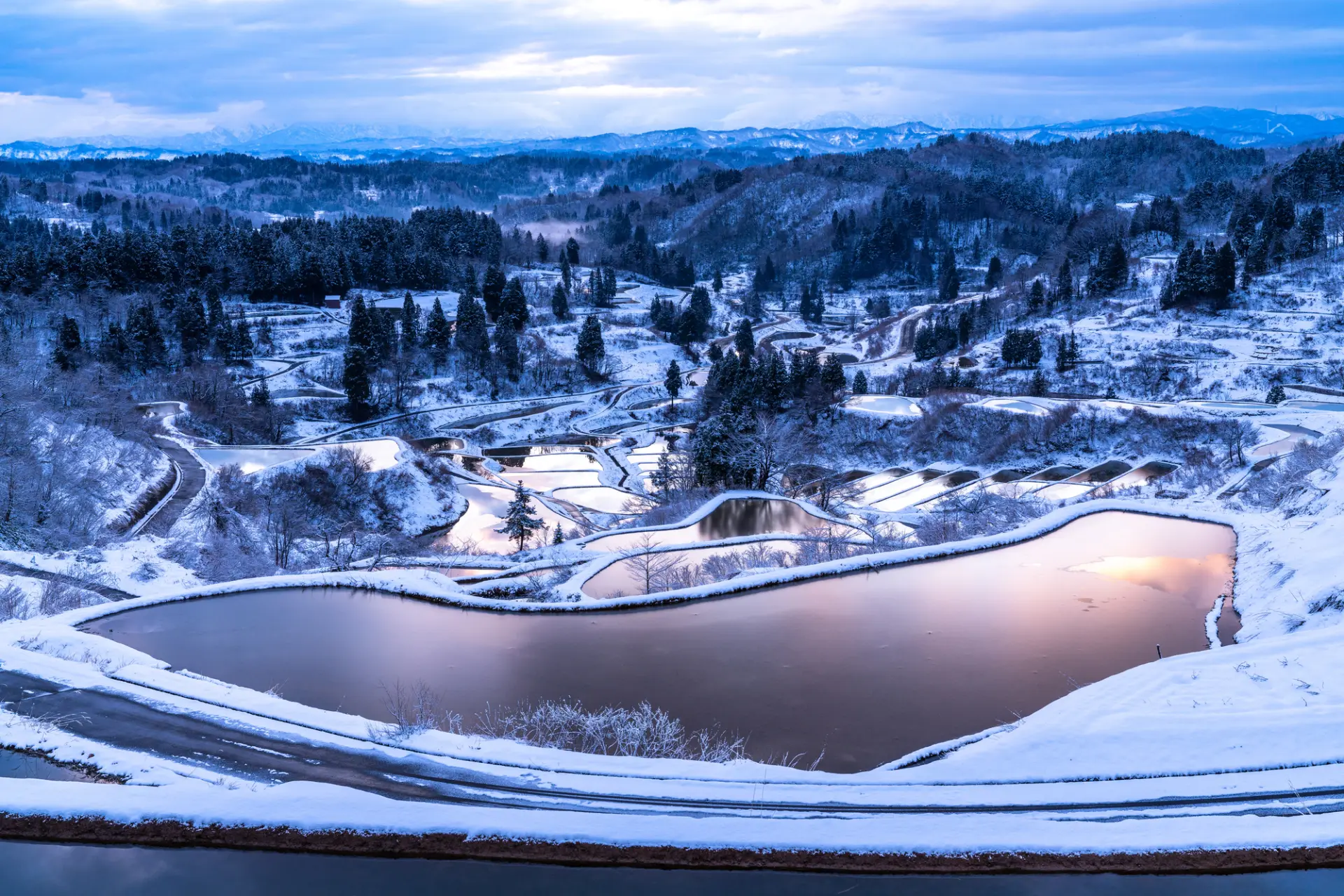
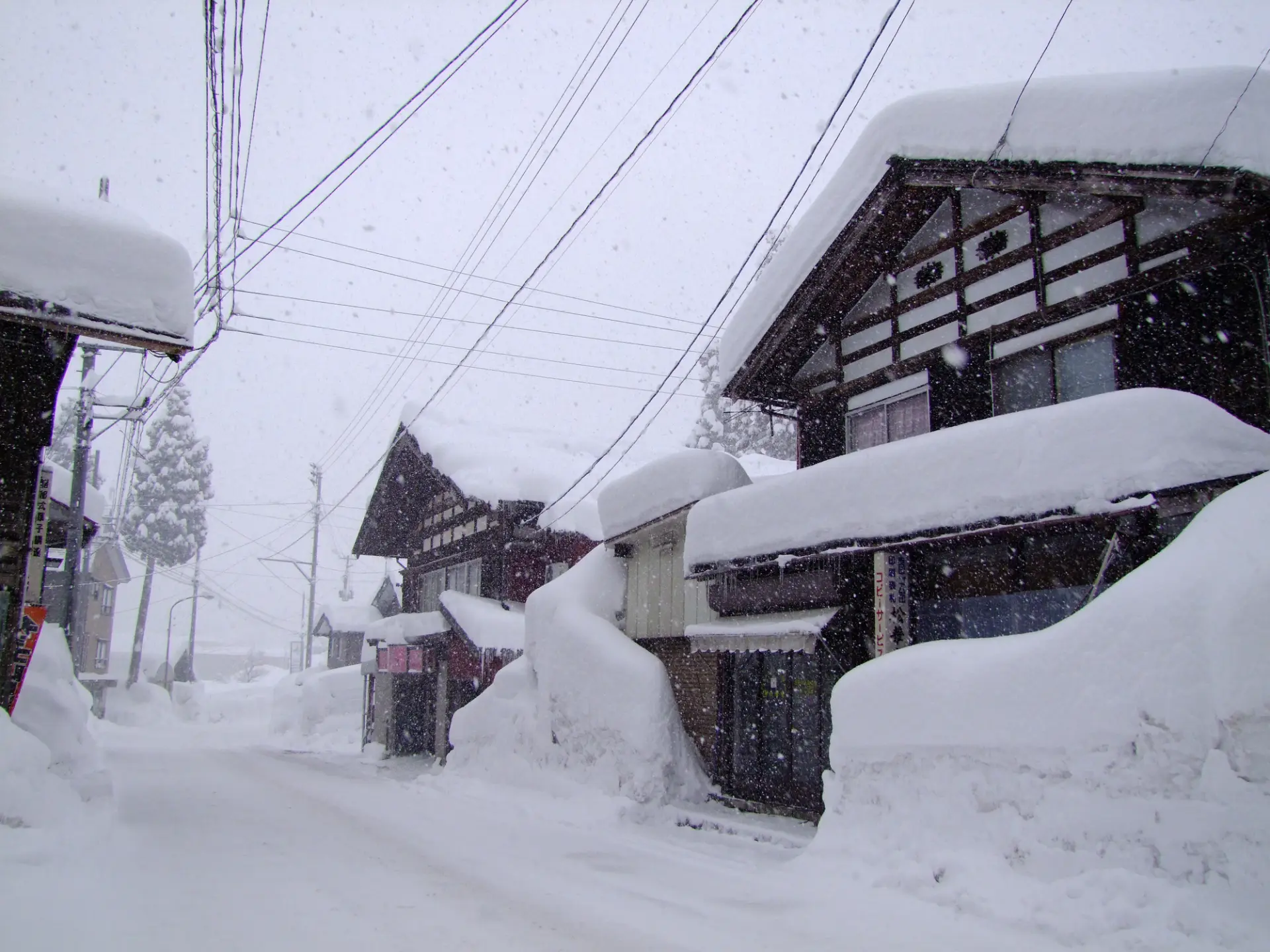
It is one of Japan’s heaviest snowfall regions, with 2-3 meters of snow in winter and more than 4 meters in mountain hamlets.
Terraces and rice terraces spread across the intermountain region carved by the Shinano River and the Nakatsu River, and paddy farming using snowmelt water is thriving.
The area is also known for producing high-quality rice, including the famed Uonuma Koshihikari.
In spring people gather mountain vegetables, and in autumn mushrooms and nuts, with satoyama blessings supporting daily life, while food cultures unique to snowy regions-such as yukishita vegetables, miso, and pickles-have been passed down.
During the winter off-season for farming, textiles and woodworking developed and nurtured local industries such as Tokamachi textiles.
Natural attractions like Kiyotsu Gorge and Bijinbayashi, and landscapes shaped by agricultural culture such as the rice terraces of Hoshitoge, are also highlights of Echigo-Tsumari.
While blessed with snow and nature, the region is surrounded by steep mountains, and in deep-snow areas it is hard to live alone, which brings a harshness to life.
For that reason, people in Echigo-Tsumari have long lived by helping one another and pooling wisdom.
When local residents greet visitors at artwork reception desks and chat warmly, you can still feel that spirit of mutual aid today.
Echigo-Tsumari remains a place where satoyama livelihoods rooted in the earth-through agriculture and more-and the spirit of helping one another are richly alive.
The Triennale’s Ten Concepts
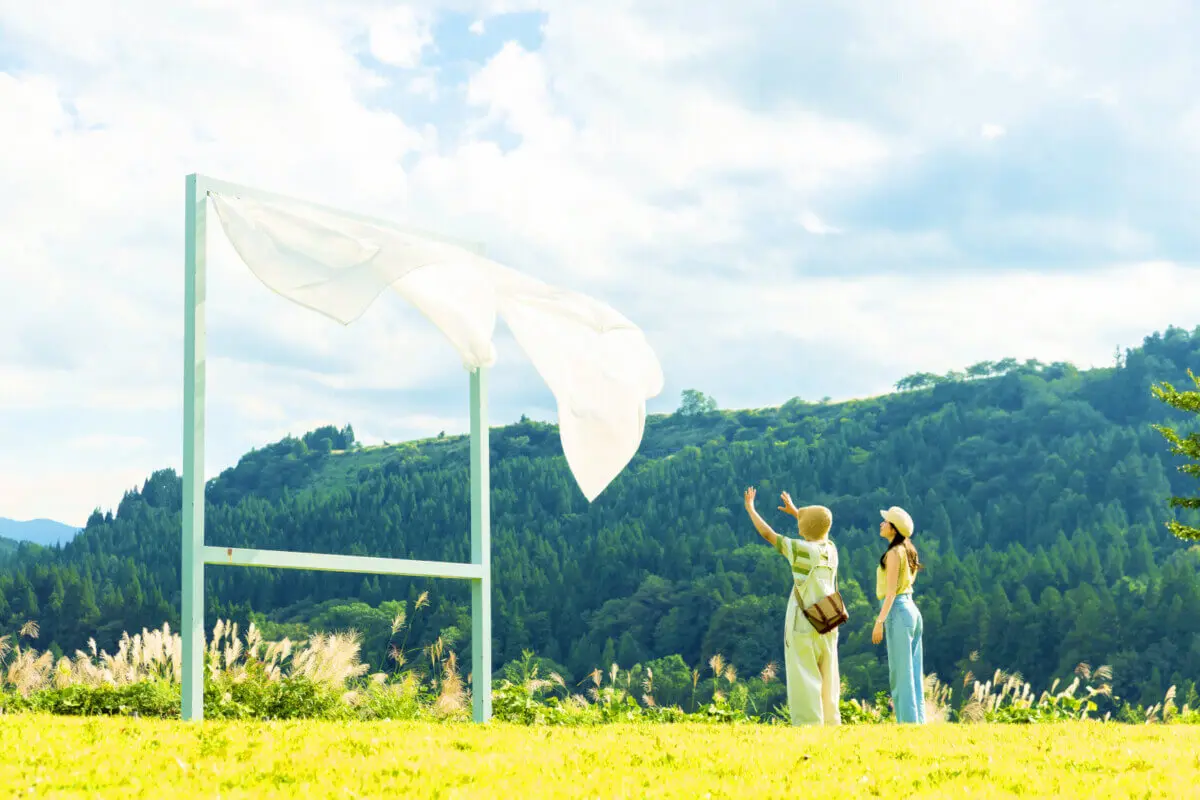
The Echigo-Tsumari Art Triennale hosts a variety of programs based on ten concepts.
1. A Journey Through Satoyama With Art as Your Guide
By embracing “inefficiency,” the opposite of rationality, artworks are dispersed so visitors open their five senses and revive a bodily memory of the wonder of life.
2. Making Something on Someone Else’s Land
Entering land inherited from ancestors requires the community’s consent.
Artists study the region, formulate plans, communicate earnestly, and build trust with locals, and by planting the seeds of different ideas on others’ land, collaboration emerges beyond positions and facades.
3. Human beings are part of nature
Grounded in relationships between people and nature forged by life in heavy-snow areas, all activities are guided by the principle that human beings are part of nature.
4. Art Discovers a Region
Familiar satoyama scenery is framed and made to stand out by art.
Landscapes, tools, and settlements, ordinary to locals, are discovered and expressed by outside artists, and art becomes a mechanism that amplifies the power of place and the vistas behind works.
5. Using What Exists to Create New Value
Works staged in vacant houses and closed schools pass on memories and wisdom embedded in place to the next generation, and these buildings continue to live as parts of the community.
6. Collaboration Across Generations, Regions, and Disciplines
Locals were at first perplexed and sometimes clashed with artists and urban youth who came as volunteers, but their passion gradually gave rise to collaborative action.
7. Turning Public Works into Art
Public works-parks, toilets, lodgings, tunnels-have been turned into art projects, generating many works.
8. Unique Hub Facilities
Facilities that condense Echigo-Tsumari’s culture and nature are designed by world-renowned architects and artists and now link settlements.
9. Everyday Life as Art
Everything humans create is “art,” and at its most basic it is “food,” so the festival focuses on food with locals in leading roles.
10. Global and Local
By involving international artists and cultural institutions, a depopulating satoyama evolves into a human-scale exchange hub linked to the world, opening possibilities for everything.
Concepts That Deepen Your Enjoyment
The Echigo-Tsumari Art Triennale can be described as a project that reorganizes life rooted in Echigo-Tsumari into a world-class artistic endeavor while presenting a new model for regional regeneration.
You can strongly feel these concepts in works like “Time of Farm Tools,” which elevates objects once stored in locals’ kura storehouses and sheds into art.
Joining the volunteer team “Kohebi-tai”-handling artwork reception, management, maintenance, and tour guiding while interacting with artists, residents, and visitors-lets you experience the concepts even more deeply.
-
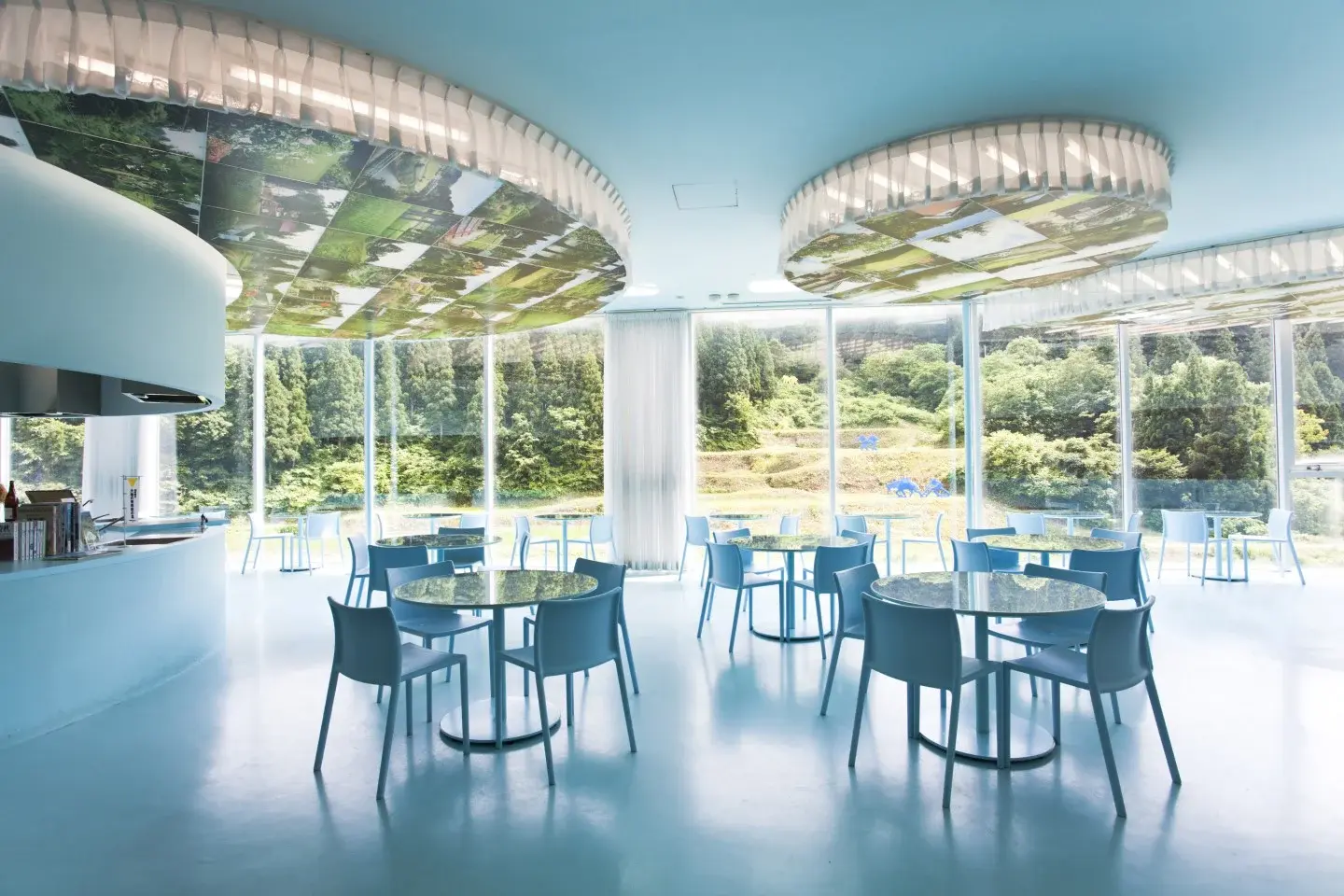
Terraced rice fields as seen from Echigo-Matsudai Satoyama Shokudo Photo by Yanagi Ayumi
-
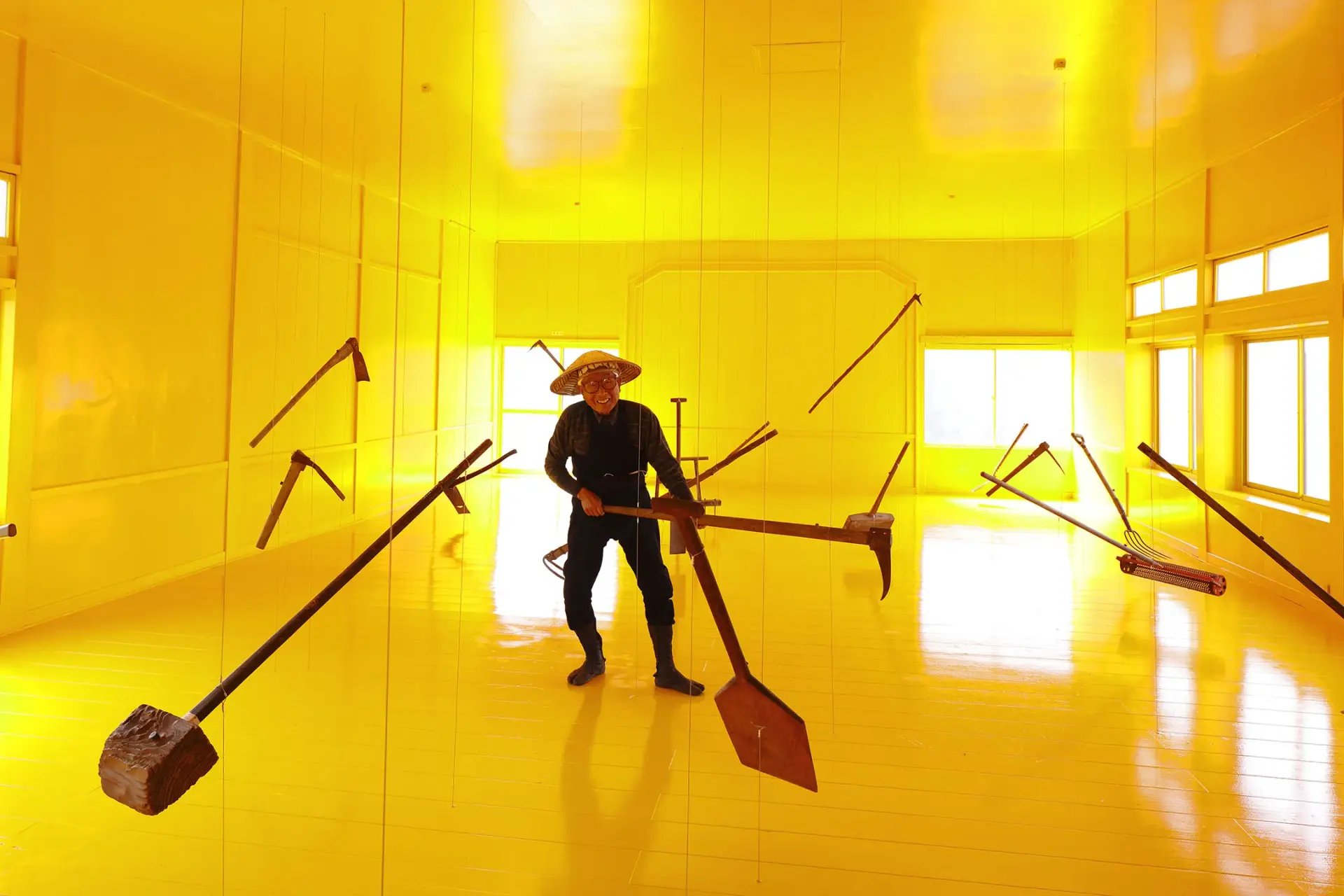
Kawaguchi Tatsuo "Time of Farm Tools" Photo by Kioku Keizo
-
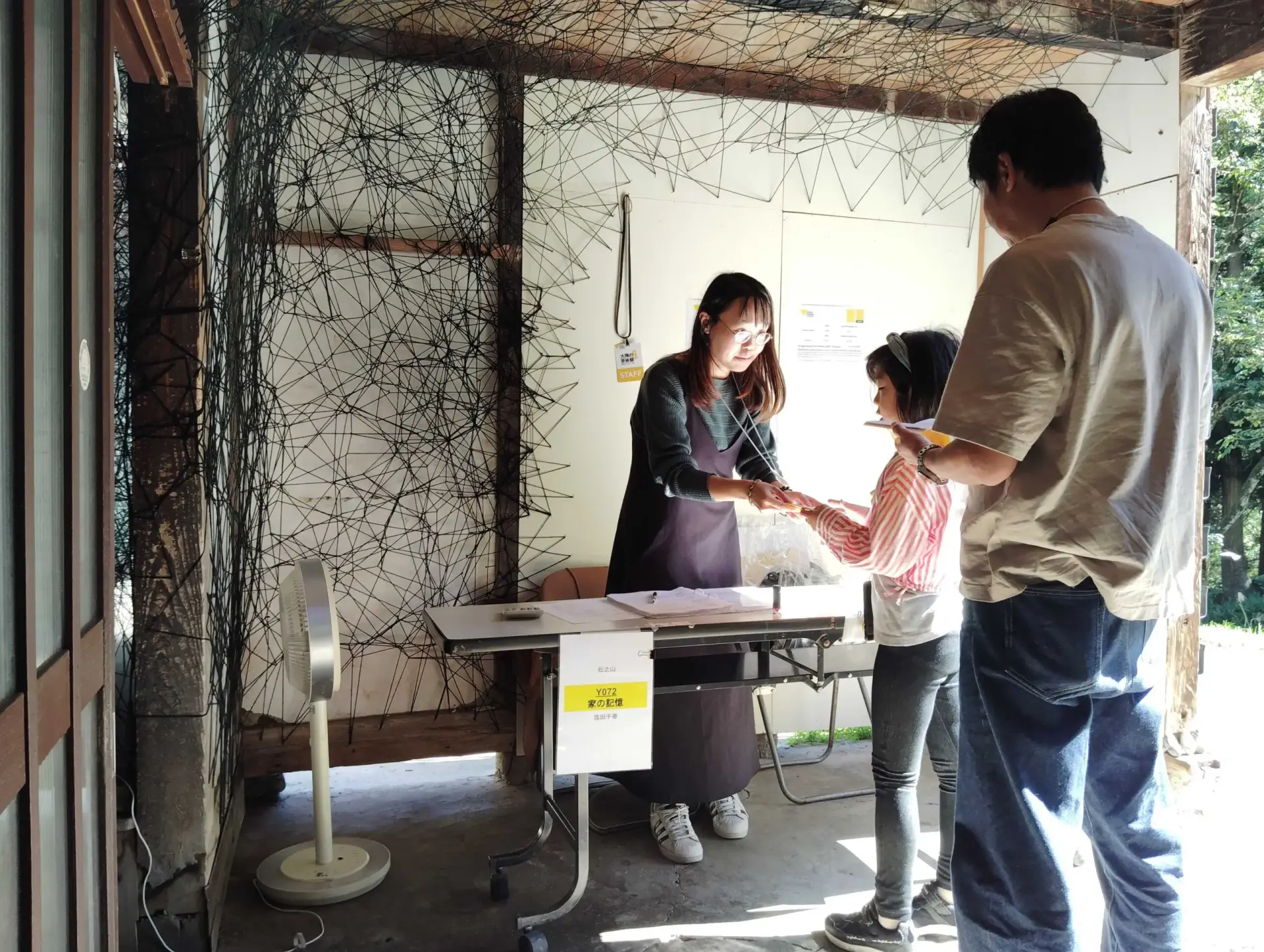
Join the volunteer team “Kohebi-tai” to experience the Echigo-Tsumari Art Triennale more deeply (at the reception of Shiota Chiharu, "House Memory").
Year-Round Programs That Let You Feel the Triennale Any Time
In Echigo-Tsumari, not only during the triennial festival period but all year round, locals, artists, the Kohebi-tai team, and many groups collaborate on diverse activities.
Annual “year-round programs” invite you to enjoy Echigo-Tsumari’s four seasons with art as your guide.
For elementary and junior-high students, “Echigo-Tsumari Forest School” offers hands-on learning through workshops in art and sports, farming experiences, and village festivals led by artists and experts.
Because permanent artworks are on view and these activities run throughout the year, you can fully experience the Triennale’s appeal even outside the main festival period.
The Festival’s Venues
The Echigo-Tsumari festival spans the six areas below.
- Tokamachi area
- Kawanishi area
- Nakasato area
- Matsudai area
- Matsunoyama area
- Tsunan area
Enjoy not only the works but also the distinct charms of each area.
From here, we introduce each area’s appeal, key facilities, and recommended works.

Tokamachi Area: The Gateway and Main Hub
Among the five areas within Tokamachi-shi, this central area is a transport nexus.
Tokamachi Station, served by the Hokuetsu Express Hokuhoku Line and JR Iiyama Line, welcomes many visitors as the gateway to the Triennale.
Facilities around the station are well developed as sightseeing bases, and both Museum on Echigo-Tsumari, MonET and Akashi no Yu are within walking distance.
The roadside station CrosTen, with a cafeteria and souvenir shops, adjoins both facilities.
The area thrives on mixed farming such as paddy rice on the terrace plains, cut flowers, and mushroom cultivation, and traces of textile culture remain throughout town.
It is also the discovery site of Niigata’s only National Treasure, a flame-style Jomon pottery, and valuable Jomon-period sites (circa 18,000 BCE to 300 BCE) remain.
At the Tokamachi City Museum, you can enjoy exhibitions on Jomon artifacts including flame-rimmed pottery and on life in a snowy region.
Below are the key facilities and recommended works in Tokamachi.
Museum on Echigo-Tsumari, MonET
This contemporary art museum was renovated in 2021 and has a dozen or so permanent works.
You can enjoy works that deeply engage with Echigo-Tsumari’s climate and culture and pieces that let you feel changes in the exhibiting space and time.
Architect Hara Hiroshi designed a semi-outdoor concrete corridor and glass architecture, and in the central pool Leandro Erlich created a work integrated with the building, making the structure itself a highlight.
Inside are the MonET Museum Shop, which sells Triennale logo goods, artist items, and local specialties, and Salon MonET, where you can enjoy drinks and sweets in an artful space.
-
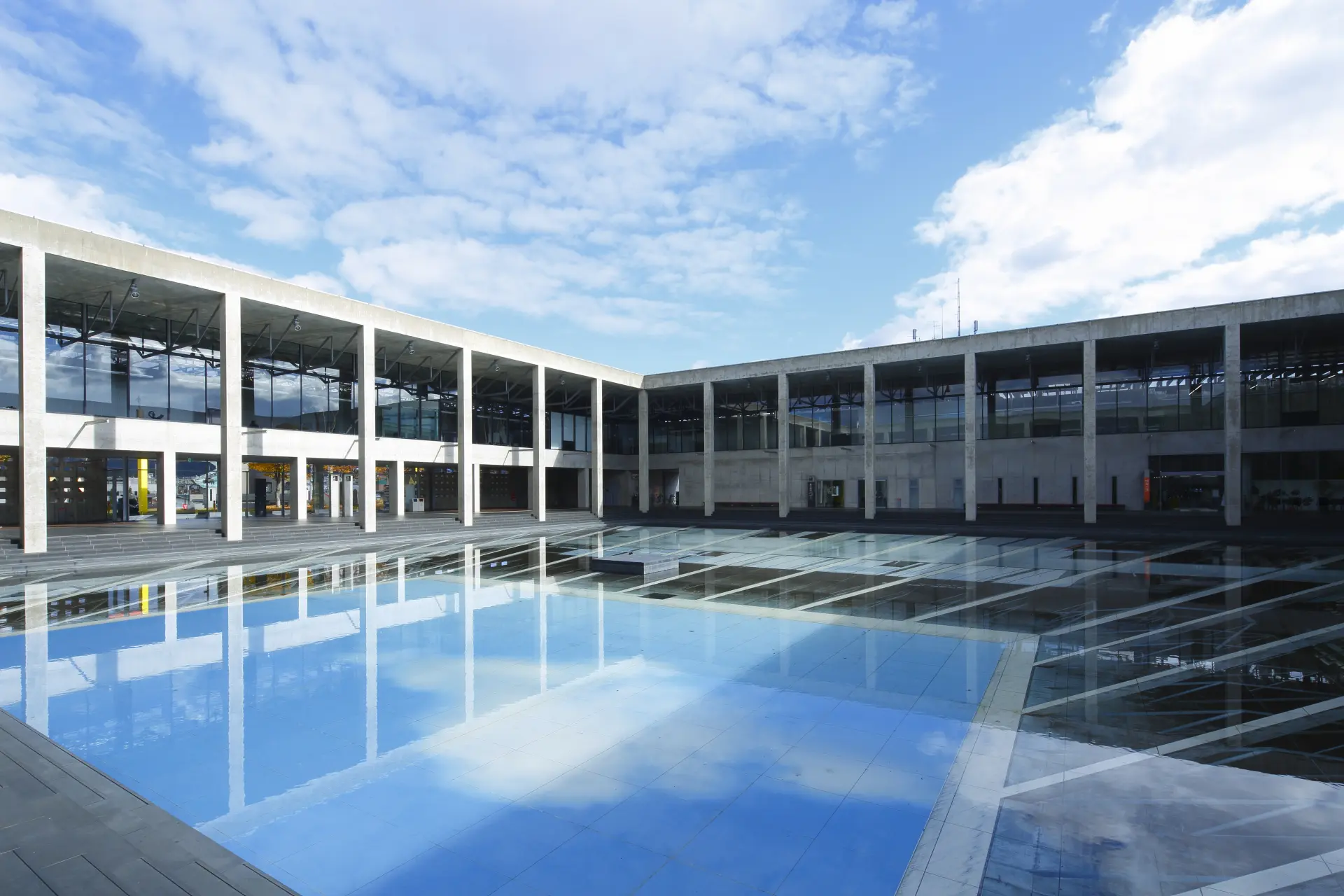
Architecture that is itself an artwork—and works integrated with the architecture have also been created (Architecture: Hara Hiroshi + ATELIER Φ / Pond work: Leandro Erlich, "Palimpsest: pond of sky"). Photo by Kioku Keizo
-
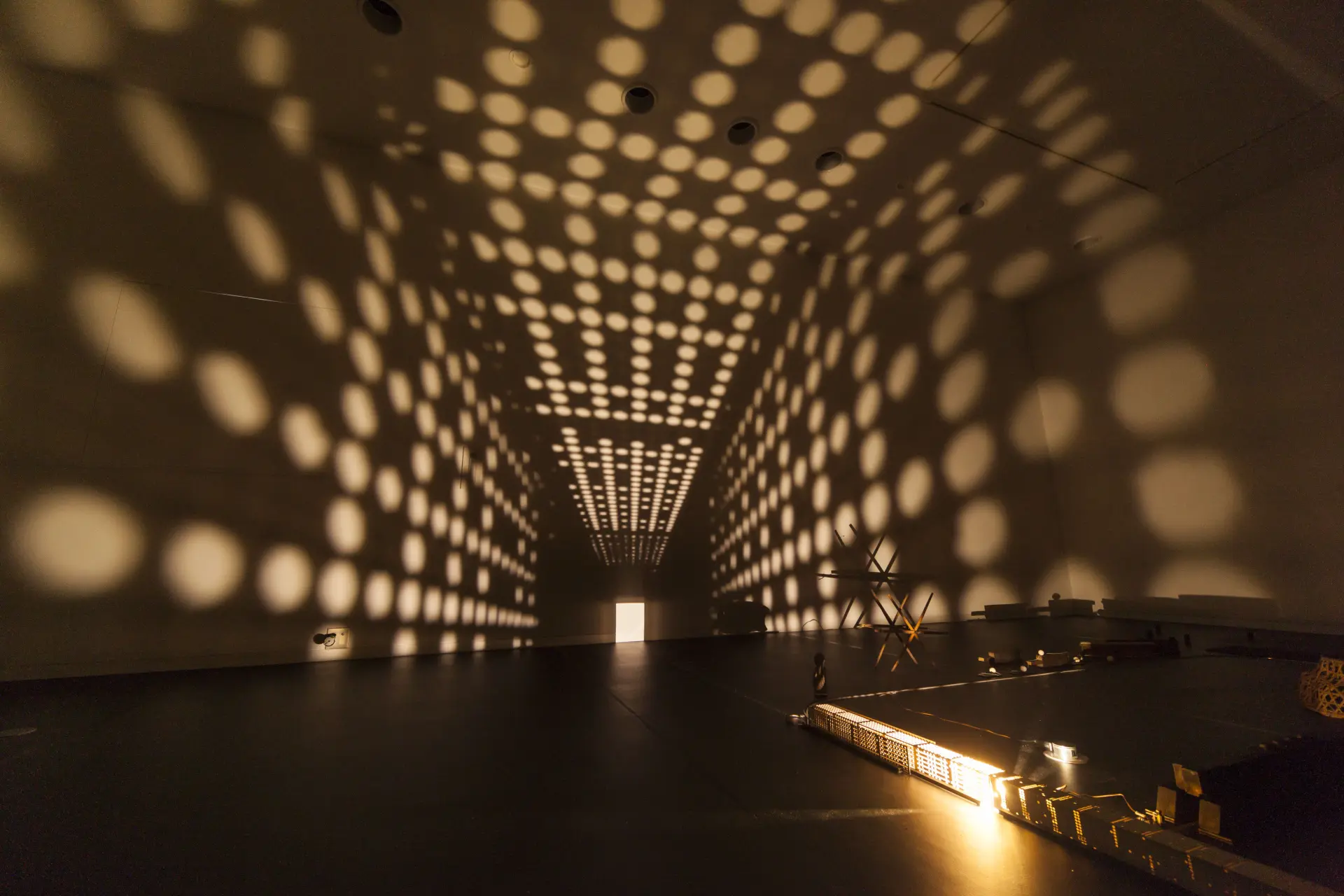
Kuwakubo Ryota "LOST #6" Photo by Nakamura Osamu
-
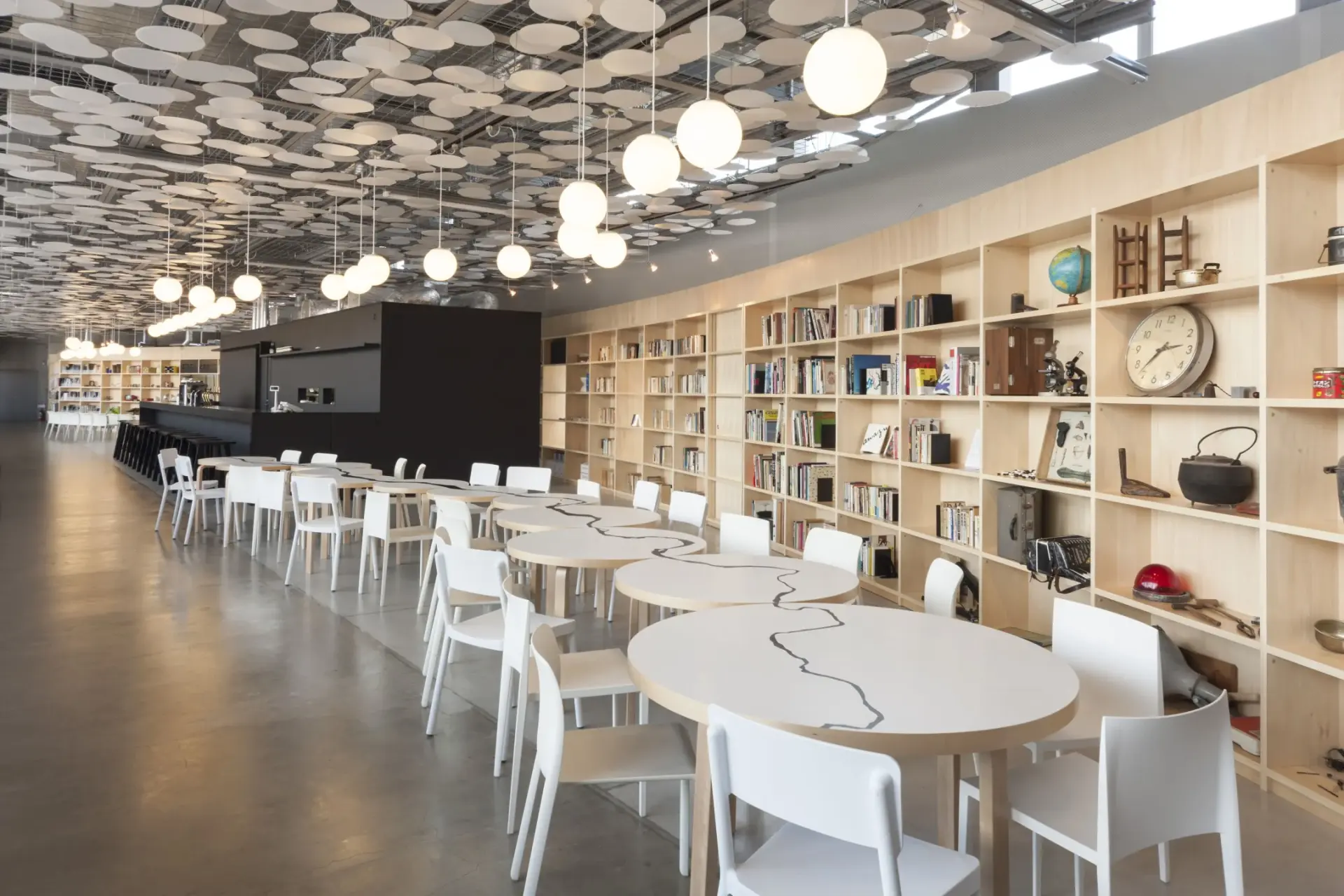
Salon MonET inside the museum Photo by Nakamura Osamu
Hachi & Seizo Tashima Museum of Picture Book Art
A closed elementary school was reborn by picture book artist Tashima Seizo as the “Hachi & Seizo Tashima Museum of Picture Book Art.”
The entire school becomes a single giant picture book, and as you move through the gym, school building, and grounds, the “spatial picture book” story unfolds.
On blackboards, corridors, and in classrooms, three-dimensional objects made from nuts, driftwood, and scrap materials line the spaces.
Characters like the last enrolled students and friendly “ghosts” bring the story to life, letting you experience a unique space where building and display are one.
The schoolyard extends the picture book world, a mother goat, Shizuka, and her kid live here, and a biotope made from fallow paddy fields lets you observe small creatures through the seasons.
The complex includes Hachi Café offering light meals and sweets using local ingredients and Bookshop Kusamura selling Tashima’s picture books and original goods.
A closed elementary school was reborn by picture book artist as the “Hachi & Seizo Tashima Museum of Picture Book Art.”
-
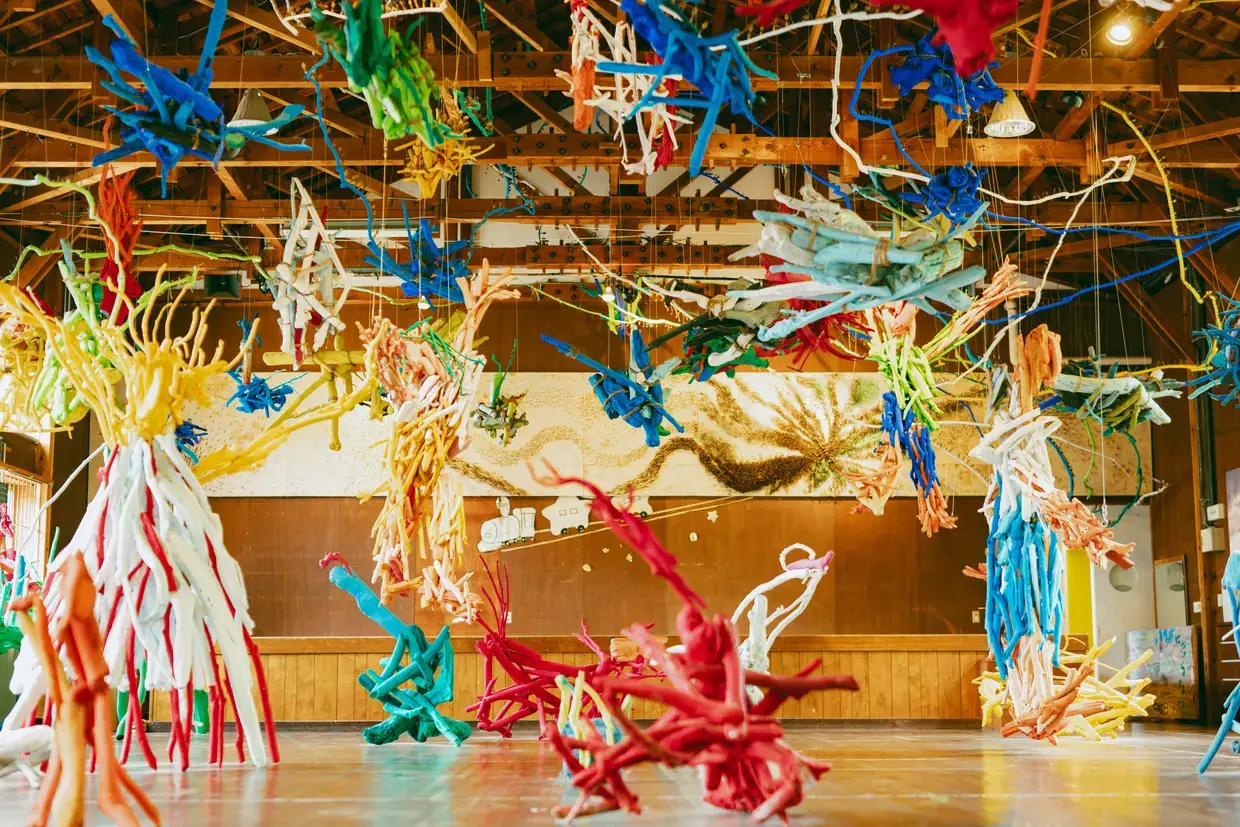
A former school reborn as the Hachi & Seizo Tashima Museum of Picture Book Art Photo by Kanemoto Rintaro
-
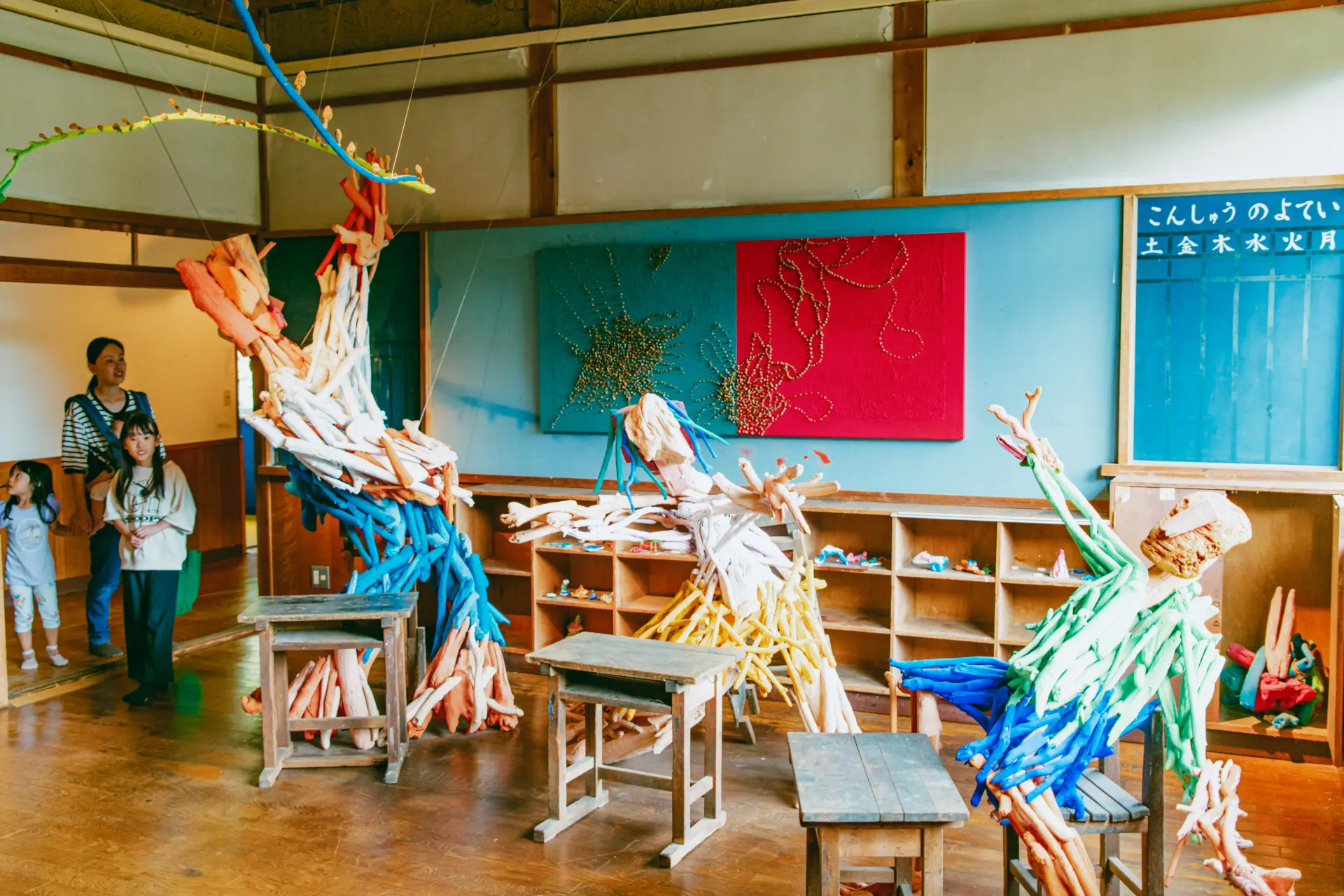
Follow the picture-book story as you wander through the school building. Photo by Kanemoto Rintaro
-
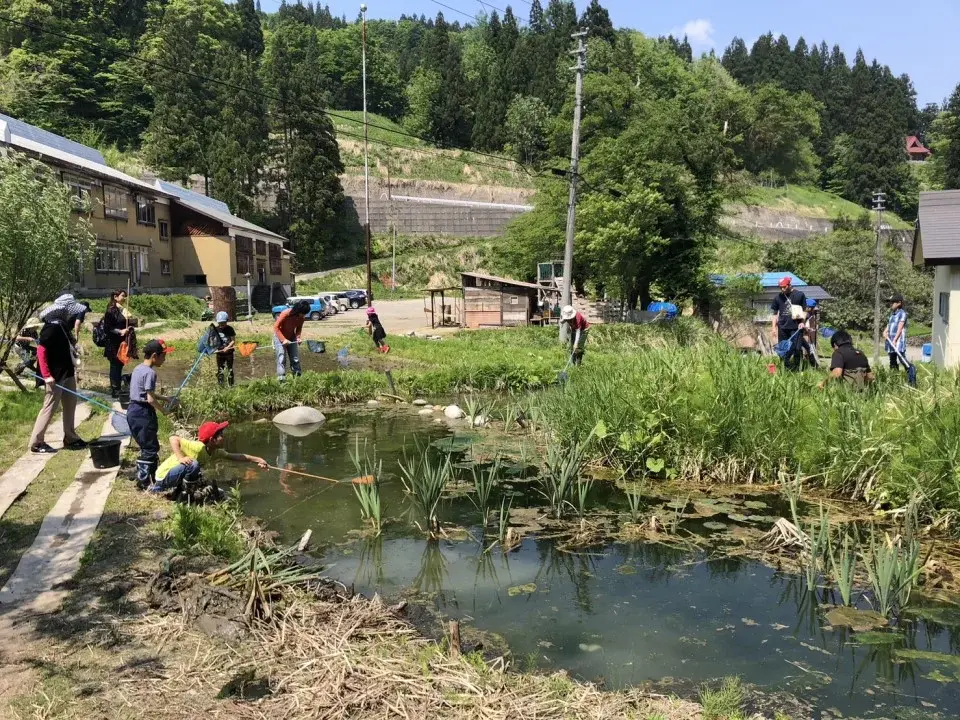
A biotope where many small creatures live
Ubusuna House
This roughly 100-year-old thatched farmhouse was renovated and embellished with ceramics by leading Japanese potters to animate a lived-in space.
Inside, even the kamado stove, irori hearth, washbasin, and bathtub are ceramic, and you can enjoy meals while viewing the works.
On the first floor, the eatery serves set meals made with local ingredients such as rice grown on rice terraces and seasonal mountain vegetables.
Dishes served in ceramic ware let you feel both the warmth of the community and the blessings of nature.
The second floor has three tea rooms where you can appreciate ceramic works in a calm setting.
The house also supports whole-building private stays, letting you linger through satoyama nights and mornings.
-
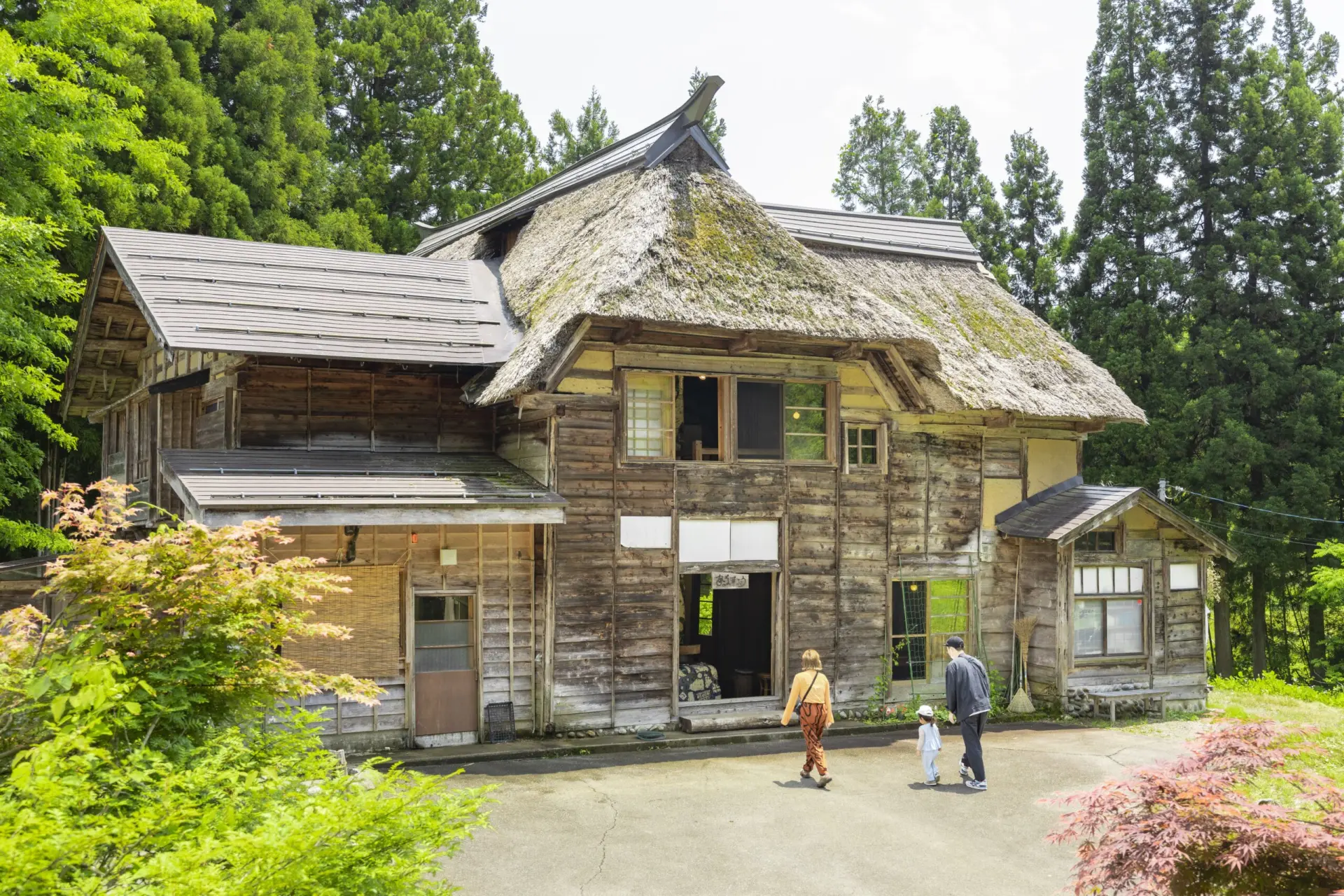
Enjoy artworks and meals inside a thatched minka about 100 years old. Photo by Nakamura Osamu
-
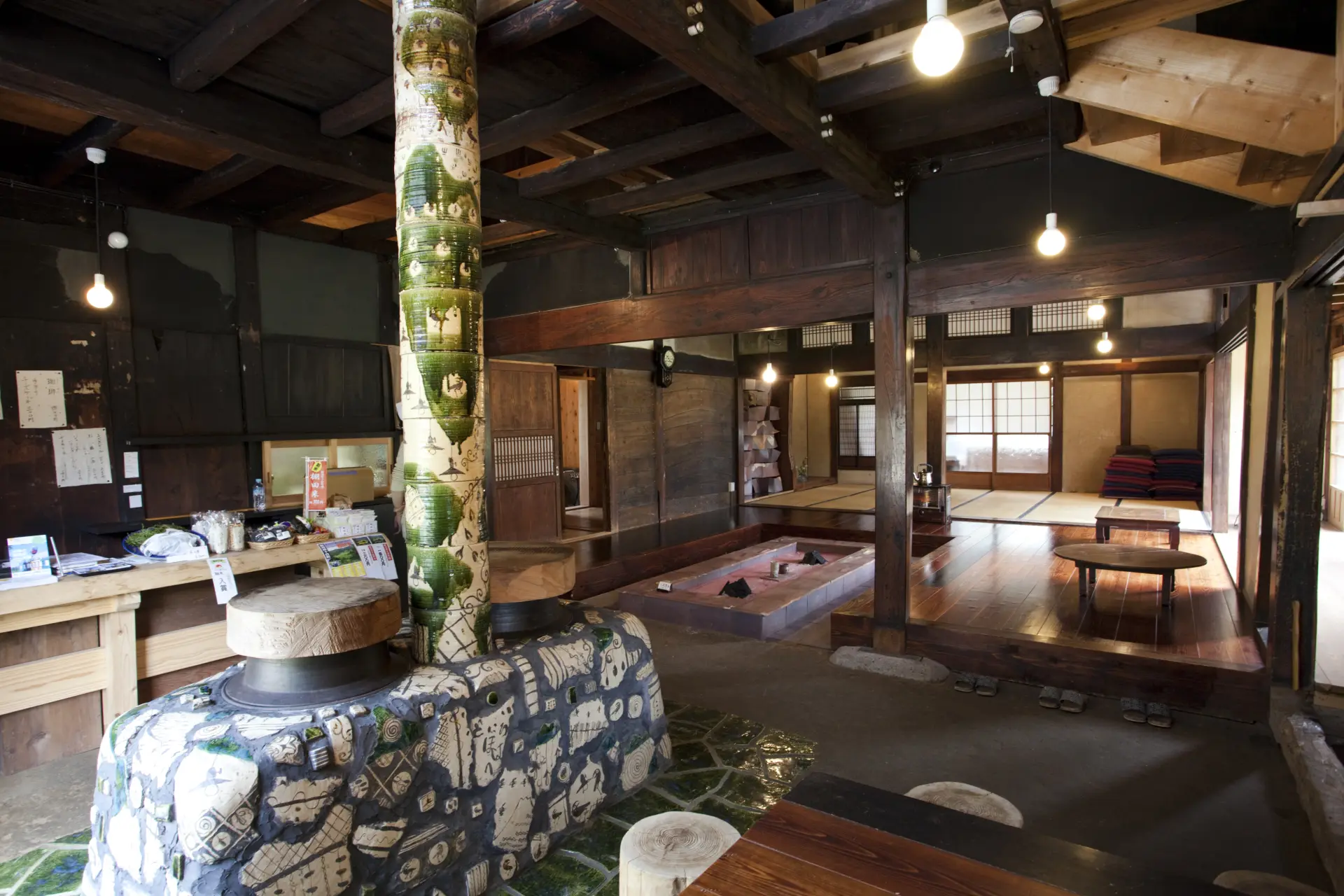
The facility’s kamado stove is itself a ceramic artwork (Work: Suzuki Goro, "Kamado"). Photo by Nakamura Osamu
-
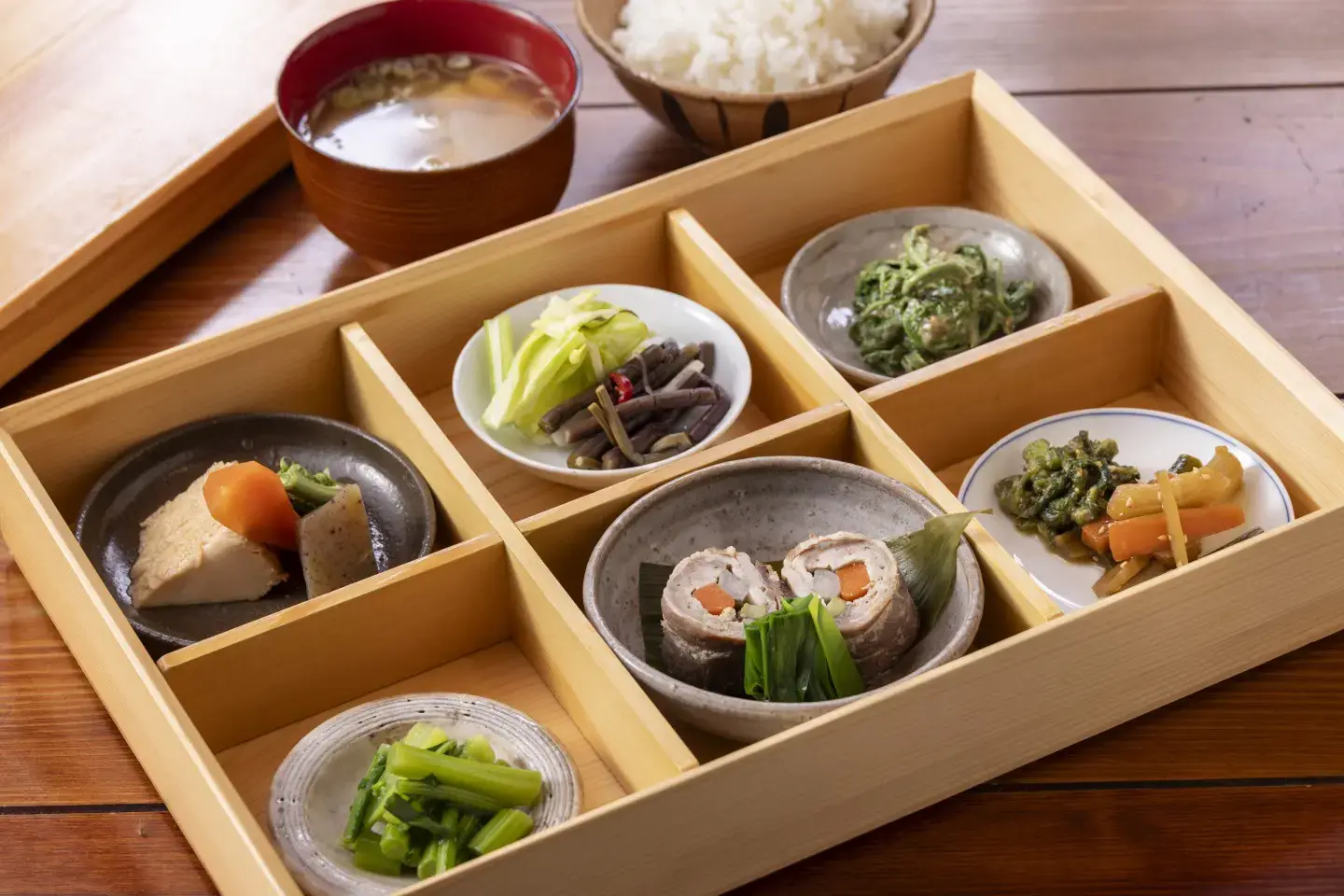
Set meals prepared by local people using local ingredients (sample image; menus vary by season).
Recommended Works in the Tokamachi Area
In addition to the facilities and works above, the Tokamachi area hosts many installations.
Here are two standouts.
| Work | Artist | Summary |
|---|---|---|
| Another Singularity | Antony Gormley | In a house stripped to its structure, 682 cords stretch from walls, floor, and ceiling, |
| Asphalt Spot | R&Sie sarl d’Architecture | A work that is a parking lot, part of terrain, and an extension of the road, scaled to connect Tokamachi with the Shinano River and correspond with the mountain range in back, reputedly “Japan’s hardest lot to park in.” |
-
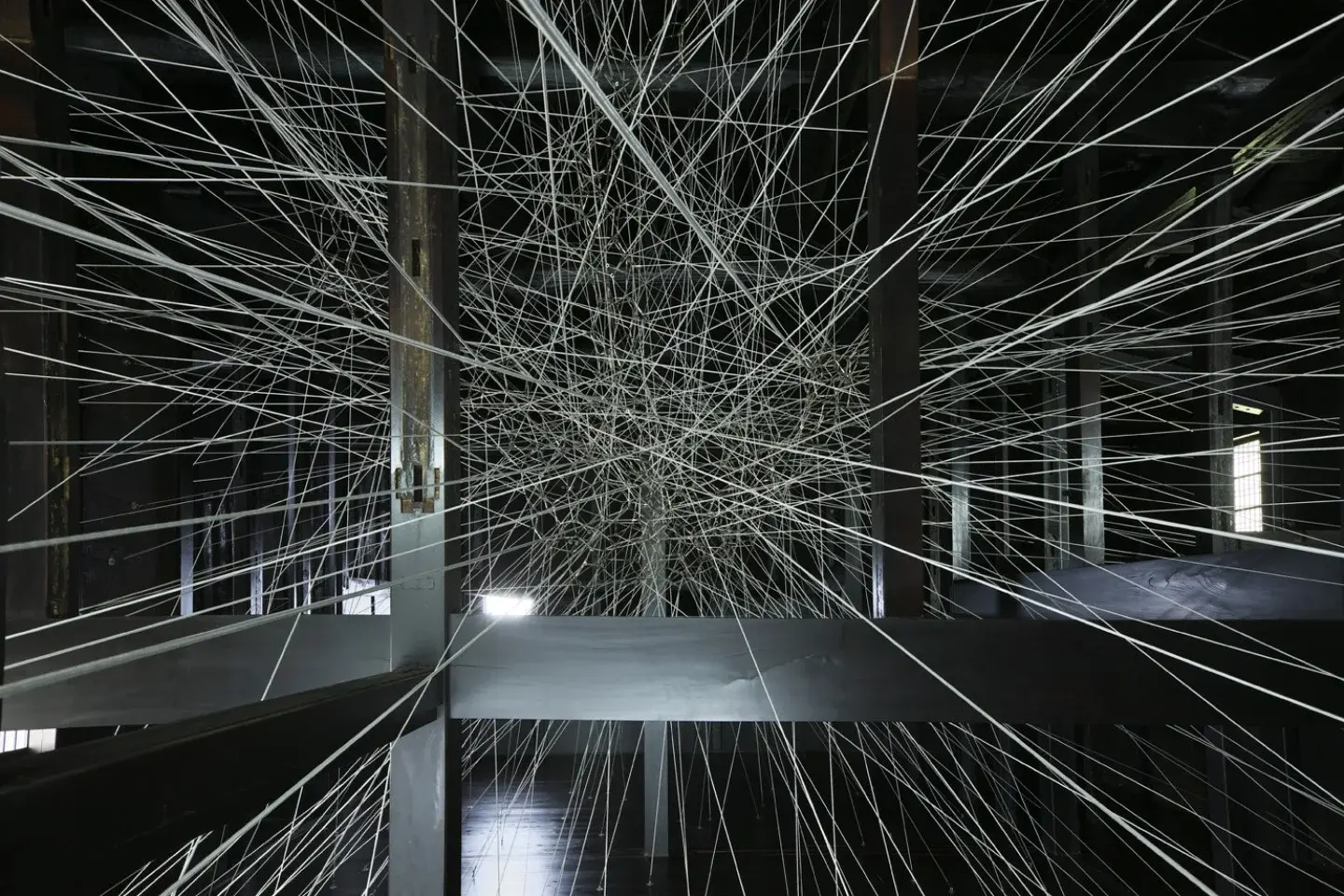
Antony Gormley "Another Singularity" Photo by Miyamoto Takenori + Seno Hiromi
-
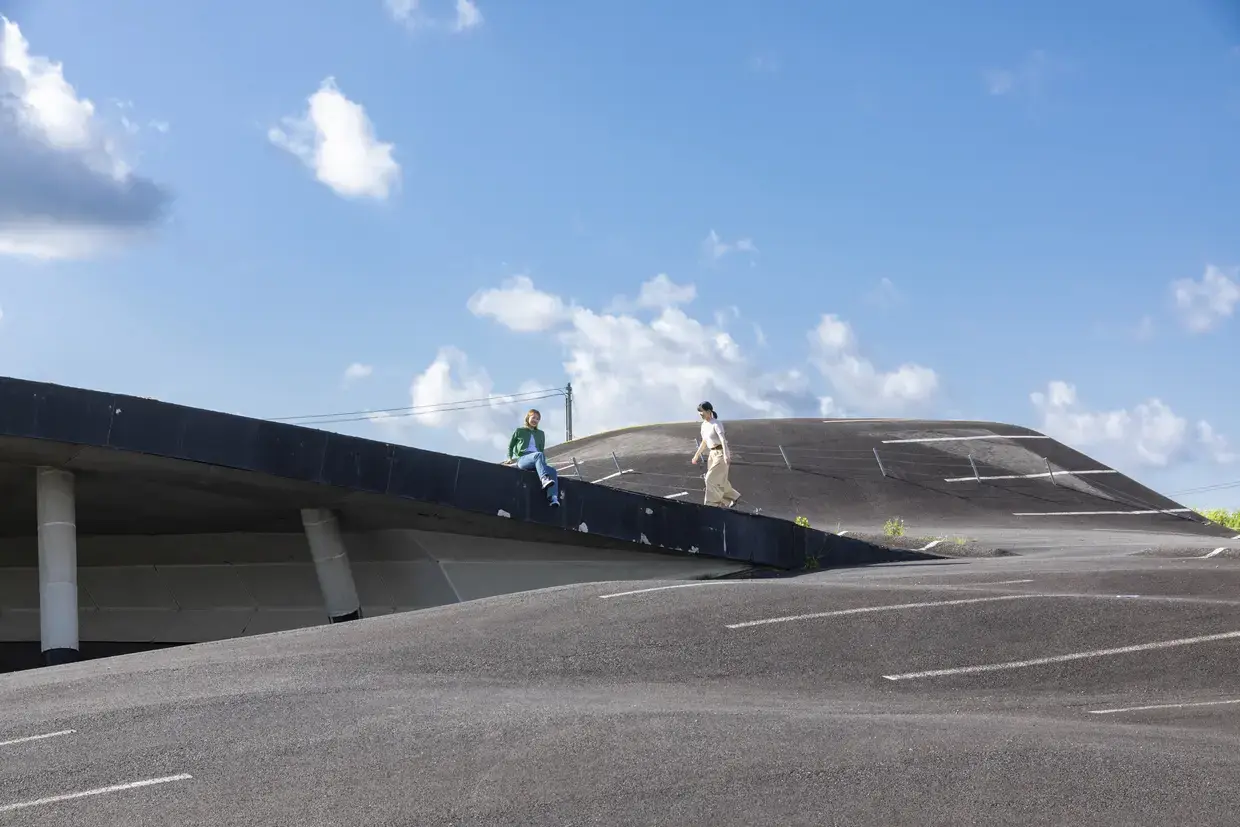
R&Sie sarl d’Architecture "Asphalt Spot" Photo by Nakamura Osamu
The Kawanishi area is a satoyama on river terraces along the west bank of the Shinano River.
Rice farming thrives on flat terrace surfaces, and paddy fields of Uonuma Koshihikari shape the landscape, while soba, sake, and mochi specialties also stem from this land.
Works dot settlements and farmlands, and you can enjoy scenery that changes with seasons and time of day.
Its quiet environment is ideal for viewing outdoor works and experiencing stay-type artworks.
Between viewings, drop by Senju Onsen Sennen no Yu, a natural hot spring with free-flowing source water in the center of the area, and the adjacent Jirobata farmers’ market for local tastes.
Art and agricultural vistas are continuous here, and savoring works alongside satoyama life is Kawanishi’s charm.
House of Light
Perched on a scenic site, House of Light is a stay-type art facility by James Turrell.
Designed so guests can inhabit Turrell’s world over time, it provides a tranquil space to focus on light.
In the second-floor Japanese-style room “Outside In” (12.5 tatami), opening the movable roof reveals a square of sky.
At sunset, a changing-intensity light program heightens the sky’s color shifts.
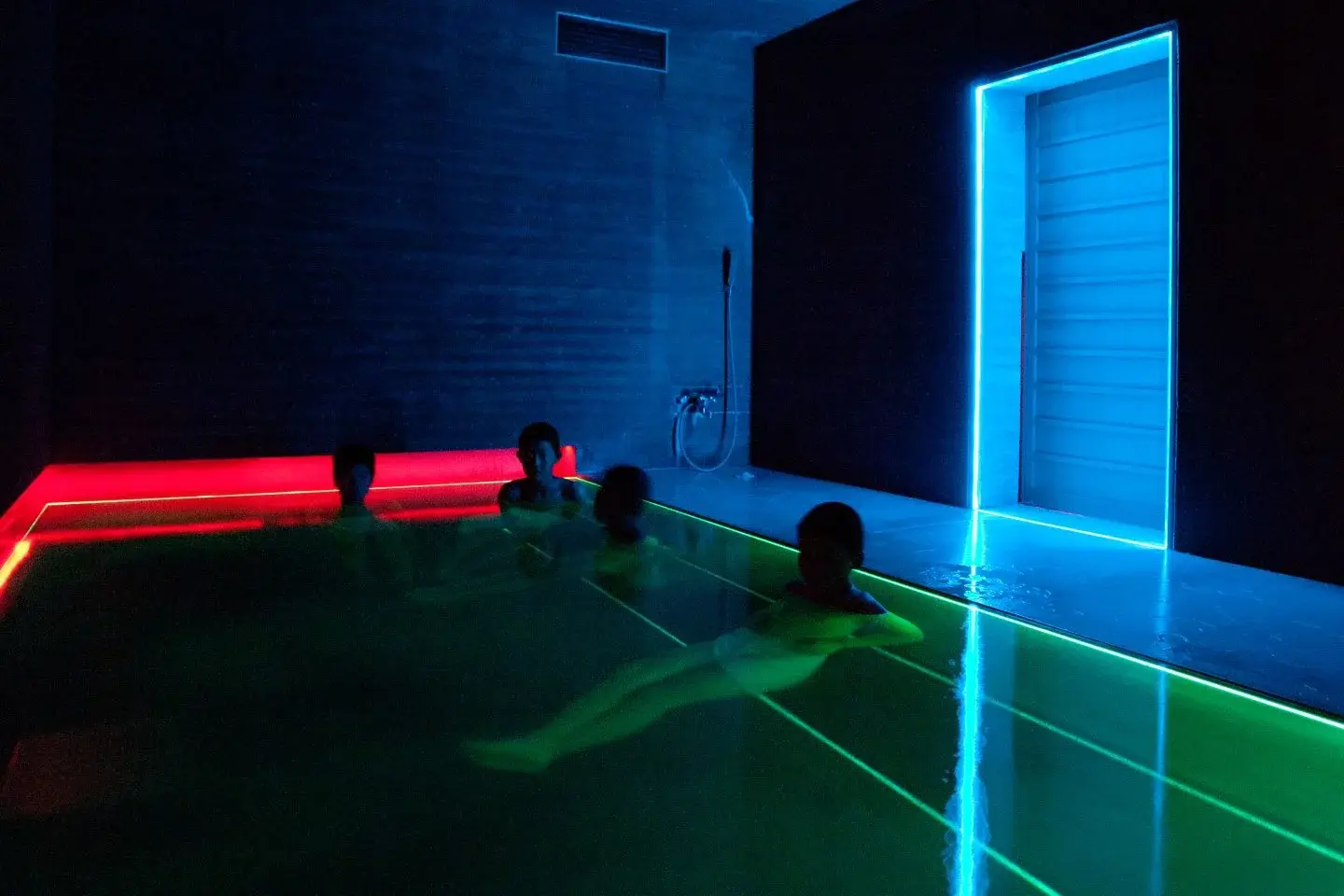
In the Light Bath, a bathroom with fiber-optic lighting, water’s surface shimmers and objects in the water appear to glow, creating a dreamlike experience.
You can tour the building without staying overnight, but the Light Bath is for staying guests only.
-
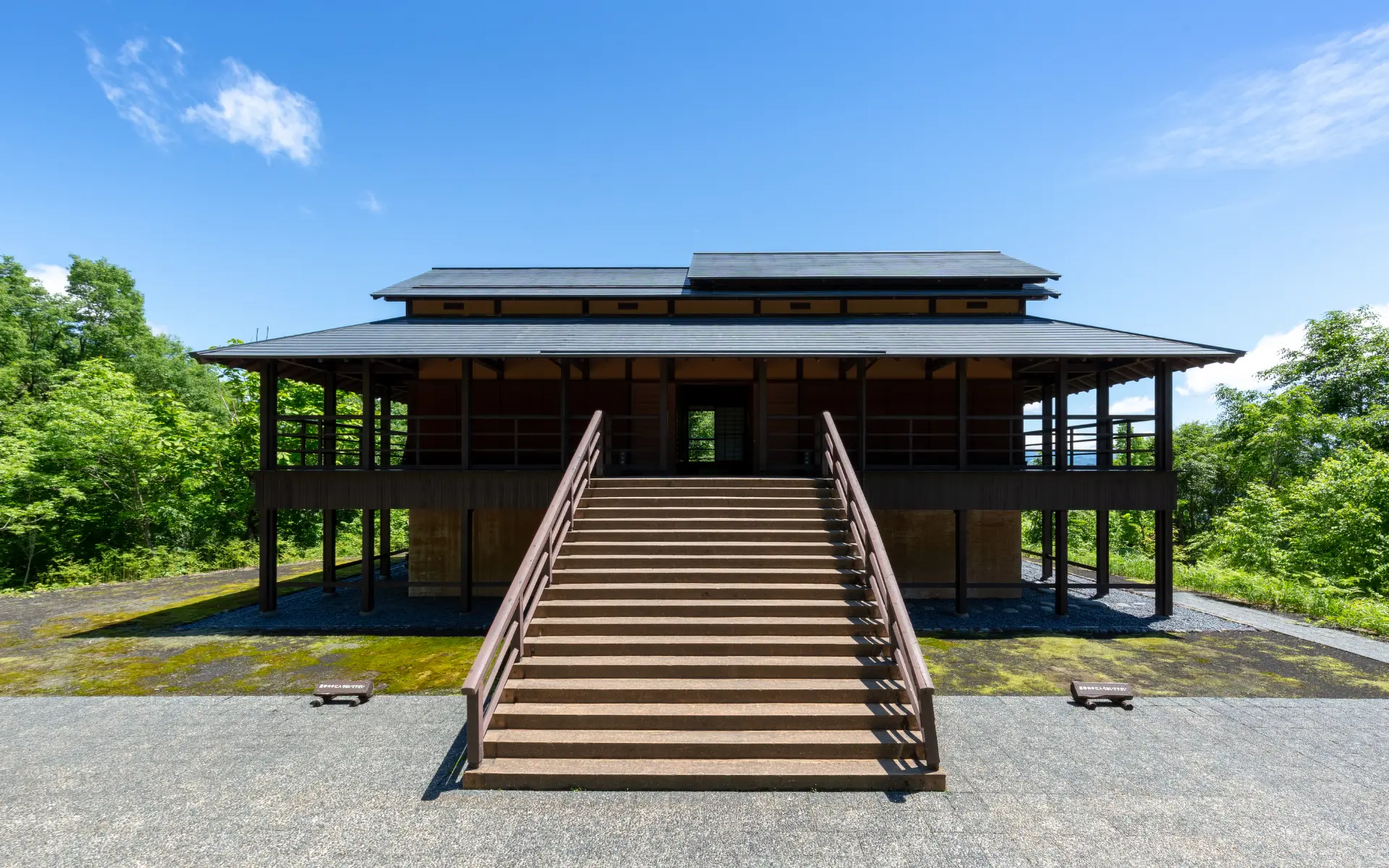
Exterior of House of Light Photo by Santa Create
-
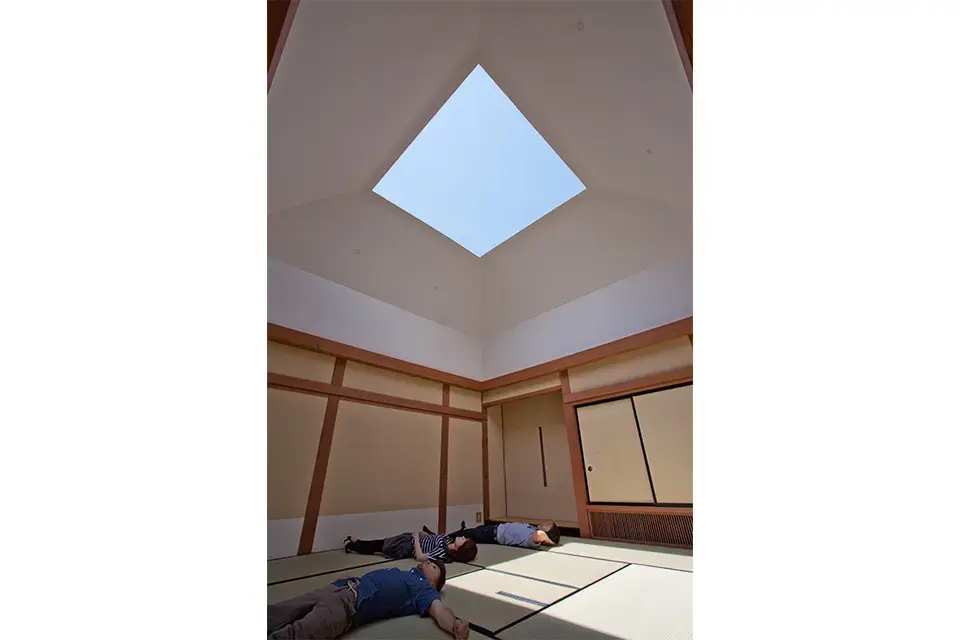
“Outside In”, where a movable roof frames the sky Photo by Yamada Tsutomu
-
“Light Bath”, available exclusively to overnight guests Photo by Yamada Tsutomu
Recommended Works in the Kawanishi Area
There’s more than just House of Light to enjoy here.
Many works evoke regional history or were co-created with local residents, and we recommend the two below in particular.
| Work | Artist | Summary |
|---|---|---|
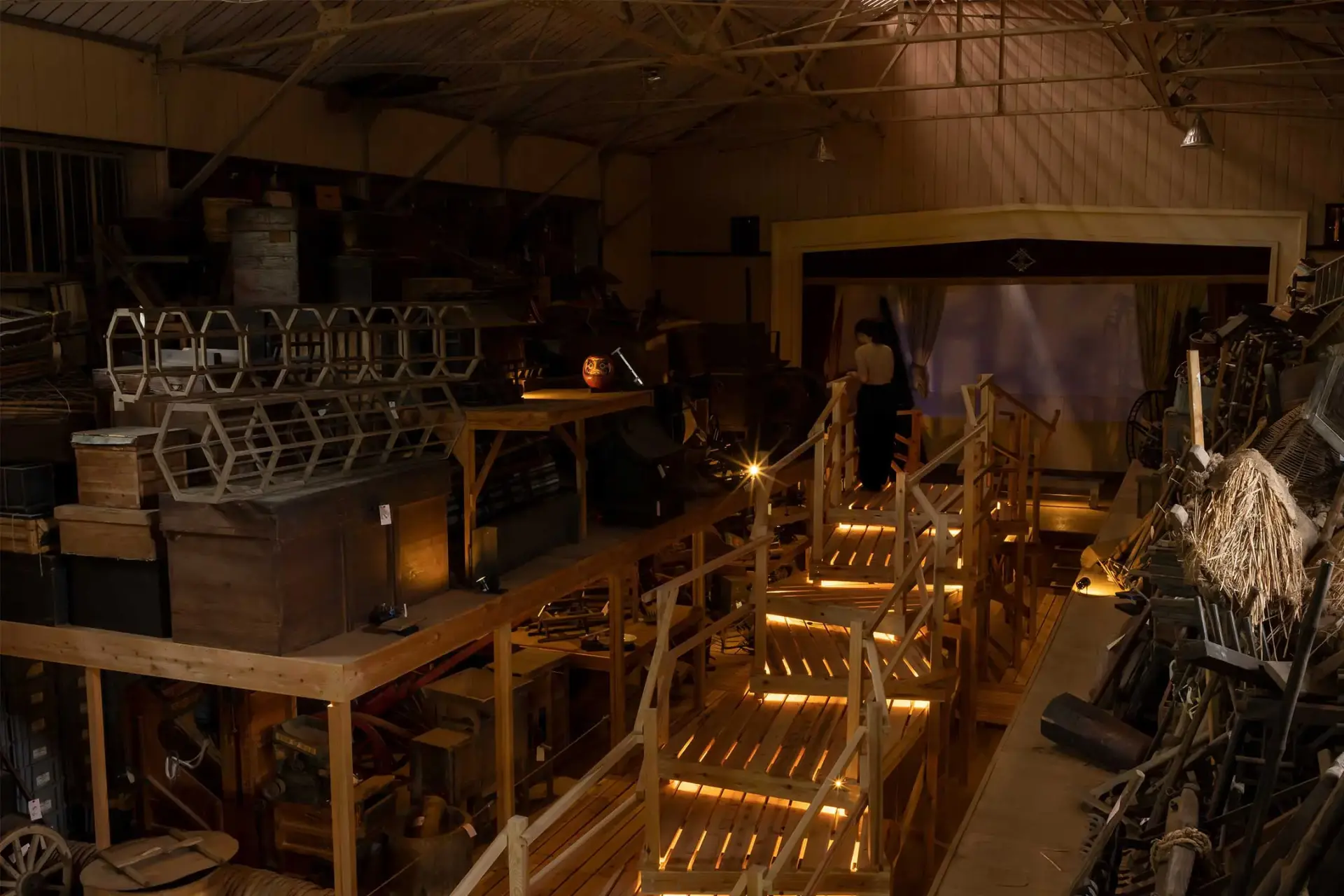
| Passages of Time Tokamachi Takakura Museum | Rikigosan - Kato Riki, Watanabe Godai, Yamazaki Shinichi - | A corridor-style installation that transforms the entire gymnasium where important folk tools and farm implements were stored, letting you see traces of time and life layered in the region and in this facility. |
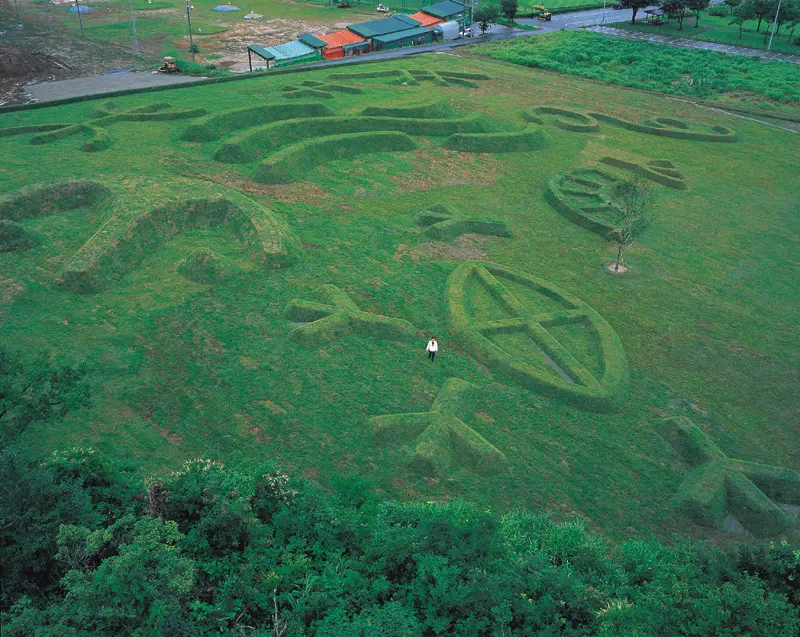
| Taho Ritsuko | Green Villa | Overlooking the Echigo Sanzan mountains, this land art inscribes five ideograms-fire, water, agriculture, arts, and the deity of heaven-onto newly revealed ground as a vast geoglyph. |
-
Rikigosan — Kato Riki, Watanabe Godai, Yamazaki Shinichi — "Passages of Time Tokamachi Takakura Museum" Photo by Kioku Keizo
-
Taho Ritsuko "Green Villa" Photo by ANZAÏ
Nakasato Area: Nature’s Spectacles and Art, Season by Season
The Nakasato area is blessed with the Shinano River and the Kiyotsu, Kama, and Nana rivers.
Its emblem is Kiyotsu Gorge, one of Japan’s three great gorges and designated a Place of Scenic Beauty and Natural Monument.
Tashiro no Nanatsugama along the Kama River is likewise a Place of Scenic Beauty and Natural Monument and a signature scenic spot of the region.
The scenery changes with the season, offering different experiences throughout the year.
In spring, pale yellow petals dance on the hills at Kizakura no Oka Park and bathe the satoyama in gentle hues.
Summer brings popular rafting on the Shinano River and outdoor experiences at campsites overlooking river terraces.
Autumn presents vivid gorge views as columnar joints and foliage interweave.
Winter offers fine-quality snow at local ski resorts for winter sports.
Hot springs with different water qualities dot the area, perfect for soothing yourself between viewings.
Touching both outstanding natural scenery and art side by side is the Nakasato way to enjoy the region.
Tunnel of Light (Kiyotsu Gorge Tunnel)
“Tunnel of Light” (Kiyotsu Gorge Tunnel) is a signature facility of the Nakasato area where the entire pedestrian tunnel of Kiyotsu Gorge becomes an artwork you can experience.
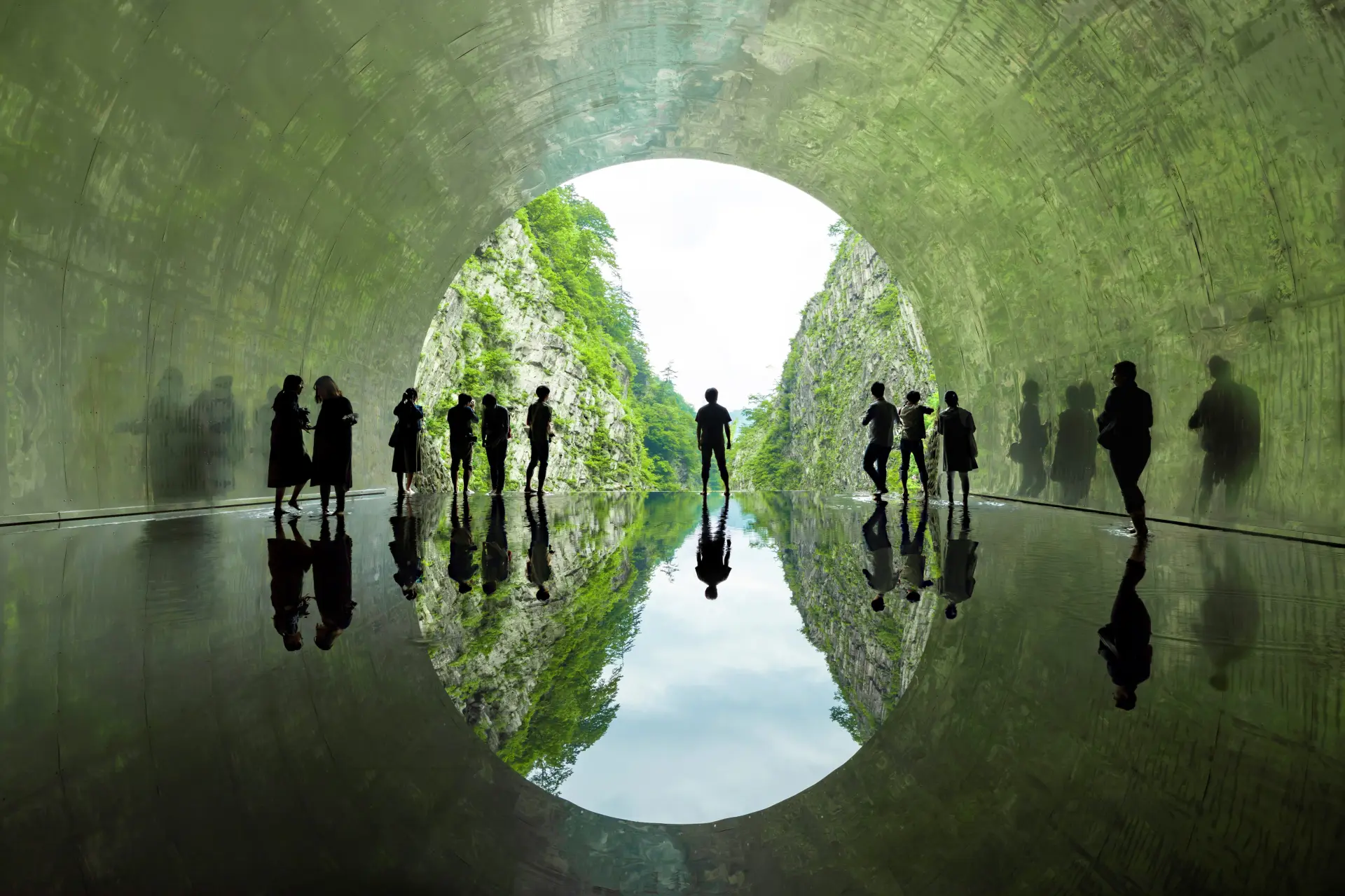
In a 2018 renovation, Ma Yansong / MAD Architects reimagined the tunnel as a submarine sealed off from the outside and turned each viewing aperture into a periscope to capture external scenery, while transforming the interior into spaces that suggest the five natural elements-wood, earth, metal, fire, and water.
From each viewing point, you can see gorge rock faces and flows up close.
At the panoramic station at the end, a dreamlike vista spreads where the valley and sky reflect on the water’s surface.
Around the entrance you will find a cafe, foot bath, shop, toilets, and parking, making it easy to rest, eat, and shop between viewings.
Advance reservations are required in some periods, so check the official page before visiting for peace of mind.
-
Panorama Station with a breathtaking view Photo by Nakamura Osamu
-
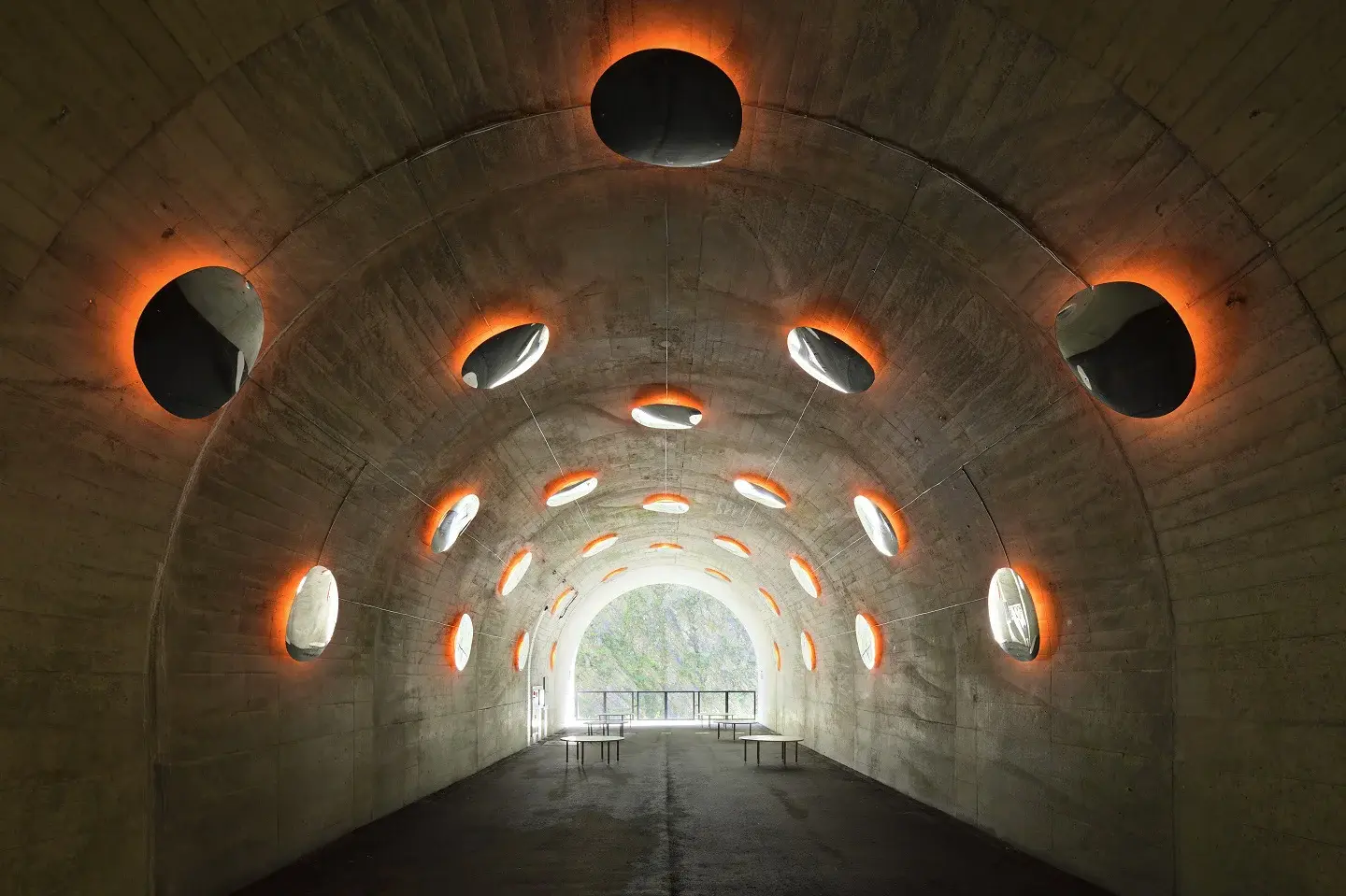
Third Viewing Point fitted with backlit mirrors Photo by Nacasa & Partners Inc.
-
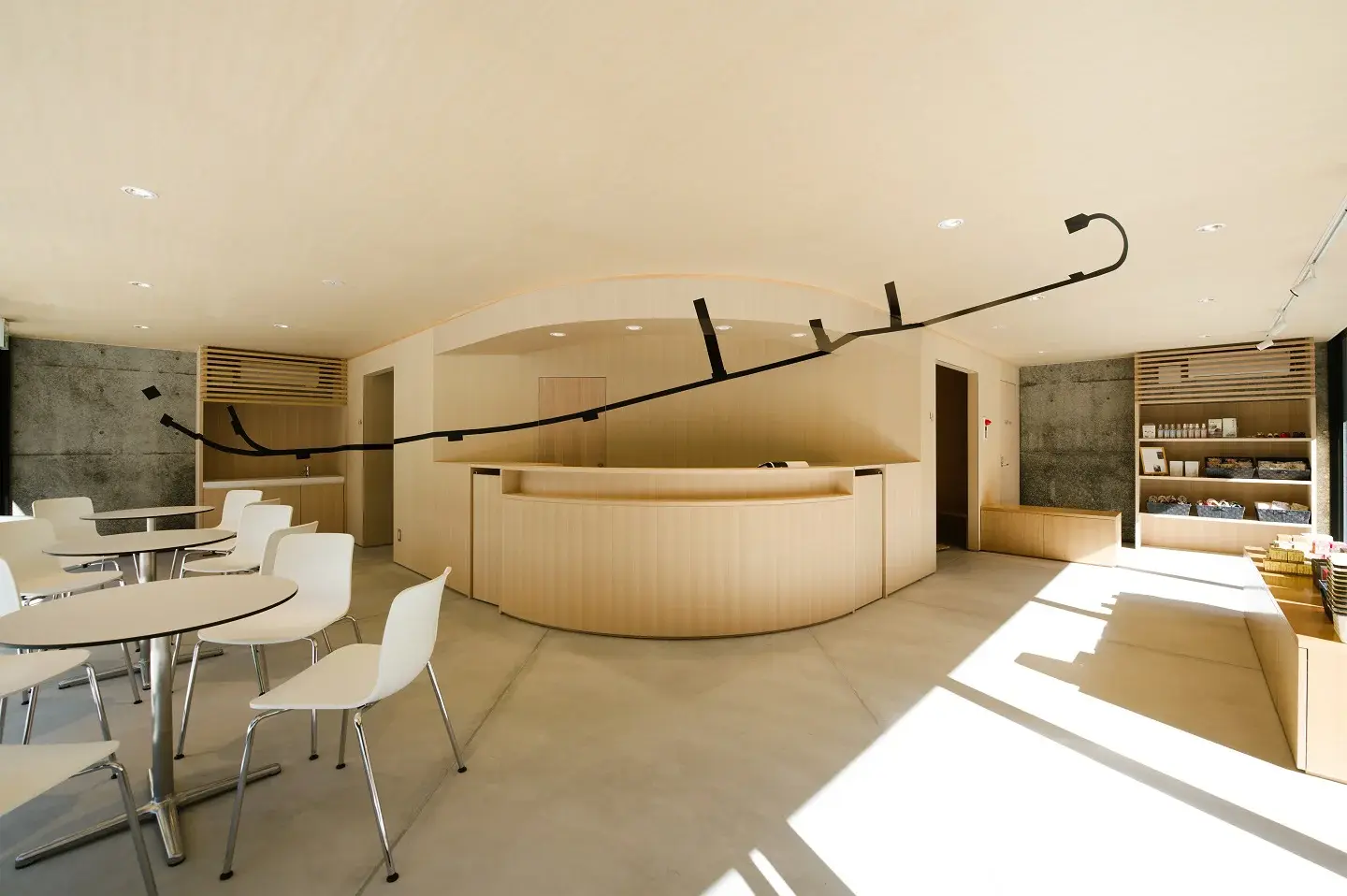
At the entrance there is a cafe and a footbath perfect for a break. Photo by Nacasa & Partners Inc.
Isobe Yukihisa Memorial Echigo-Tsumari Kiyotsu Soko Museum of Art [SoKo]
Housed in a renovated former Kiyotsukyo Elementary School, the Isobe Yukihisa Memorial Echigo-Tsumari Kiyotsu Soko Museum of Art [SoKo] exhibits contemporary art in both the gym and the classroom wing under the concept “exhibit while storing.”
The classroom wing centers on a permanent display of works by Isobe Yukihisa and interprets the region’s topography and life through art.
In the raw gym with floorboards removed to reveal the concrete foundation, you can view large sculptures and installation works.
The museum also hosts an array of special exhibitions, including projects realized in Echigo-Tsumari.
Because opening days align mainly with special program periods and weekends/holidays, check the official page before visiting.
-
![Exterior of Isobe Yukihisa Memorial Echigo-Tsumari Kiyotsu Soko Museum of Art [SoKo] Photo by Nakamura Osamu](https://static.gltjp.com/glt/data/article/22000/21196/20251107_123257_05e458eb_w1920.webp)
Exterior of Isobe Yukihisa Memorial Echigo-Tsumari Kiyotsu Soko Museum of Art [SoKo] Photo by Nakamura Osamu
-
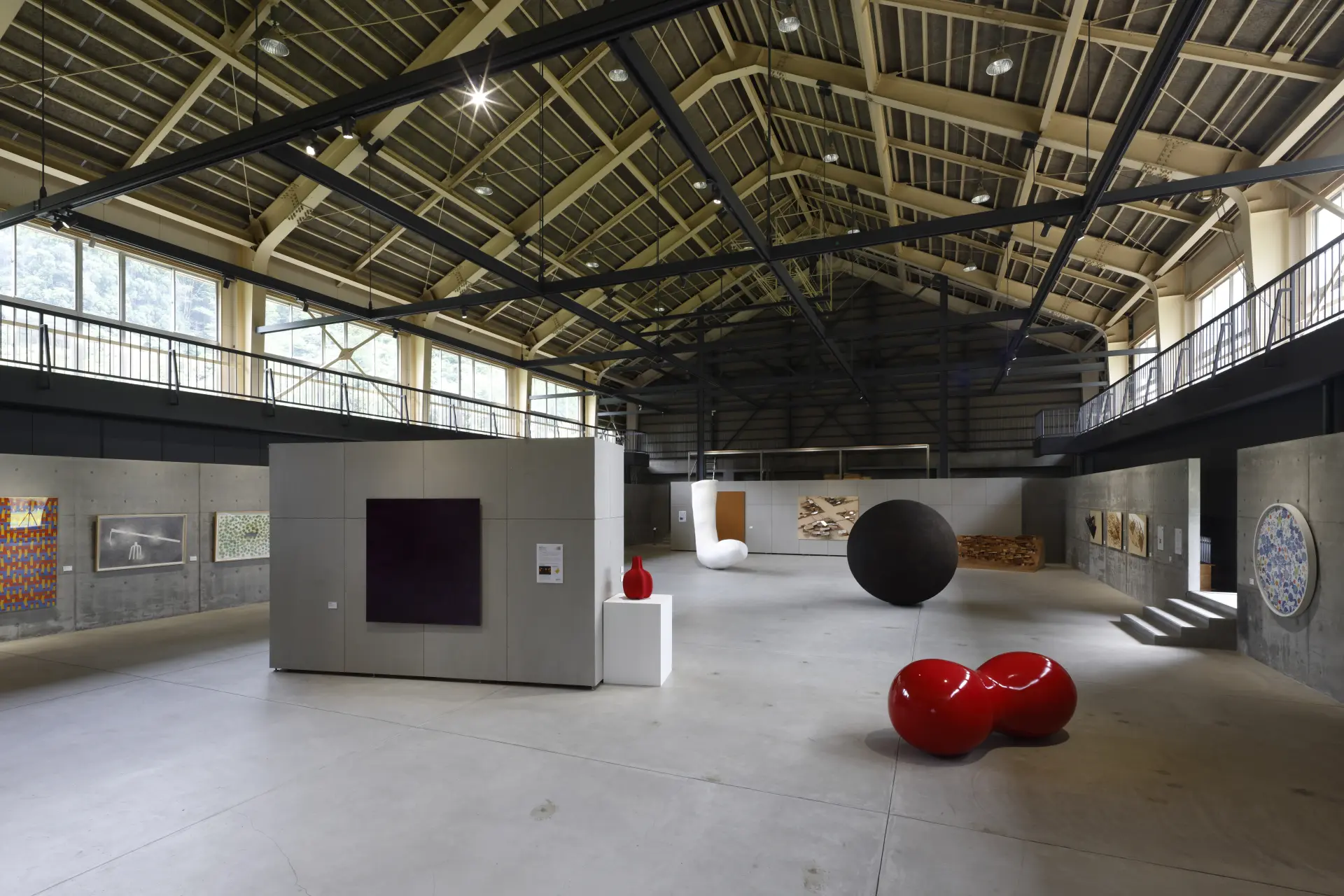
A past special exhibition held in the gymnasium (Collections of Echigo-Tsumari Art Triennale 2022) Photo by Kioku Keizo
-
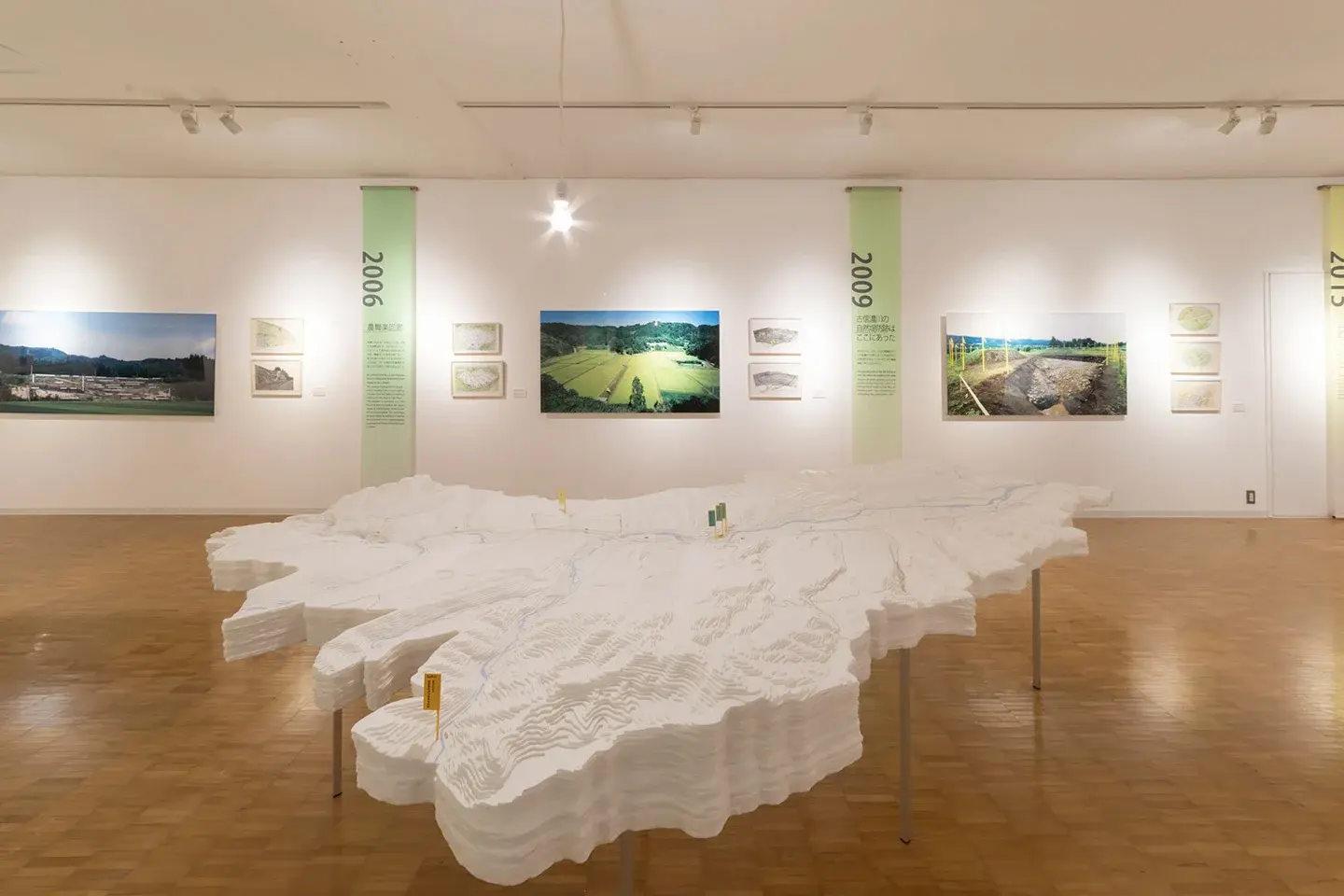
Isobe Yukihisa’s past works in the school building visualize the topography of Echigo-Tsumari and its changes. Photo by Nakamura Osamu
Recommended Works in the Nakasato Area
Alongside the facilities above, explore works dotted through Nakasato’s nature.
Among many, we particularly recommend the two below.
| Work | Artist | Summary |
|---|---|---|
| Cakra Kul-Kul at Tsumari | Dadang Christanto | Balinese folk windmills “Cakra Kul-Kul,” mainly made of bamboo, are installed in rice terraces, filling the air with the pleasant sound of bamboo and the scents of grasses and flowers, viewable only during the triennale year. |
| POTEMKIN | Architectural Office Casagrande & Rintala | A “temple of the late industrial society” standing between an old paddy field and a river that regenerates a place once marred by illegal dumping into a park, conceived as a site to reflect on relationships between contemporary humans and nature. |
-
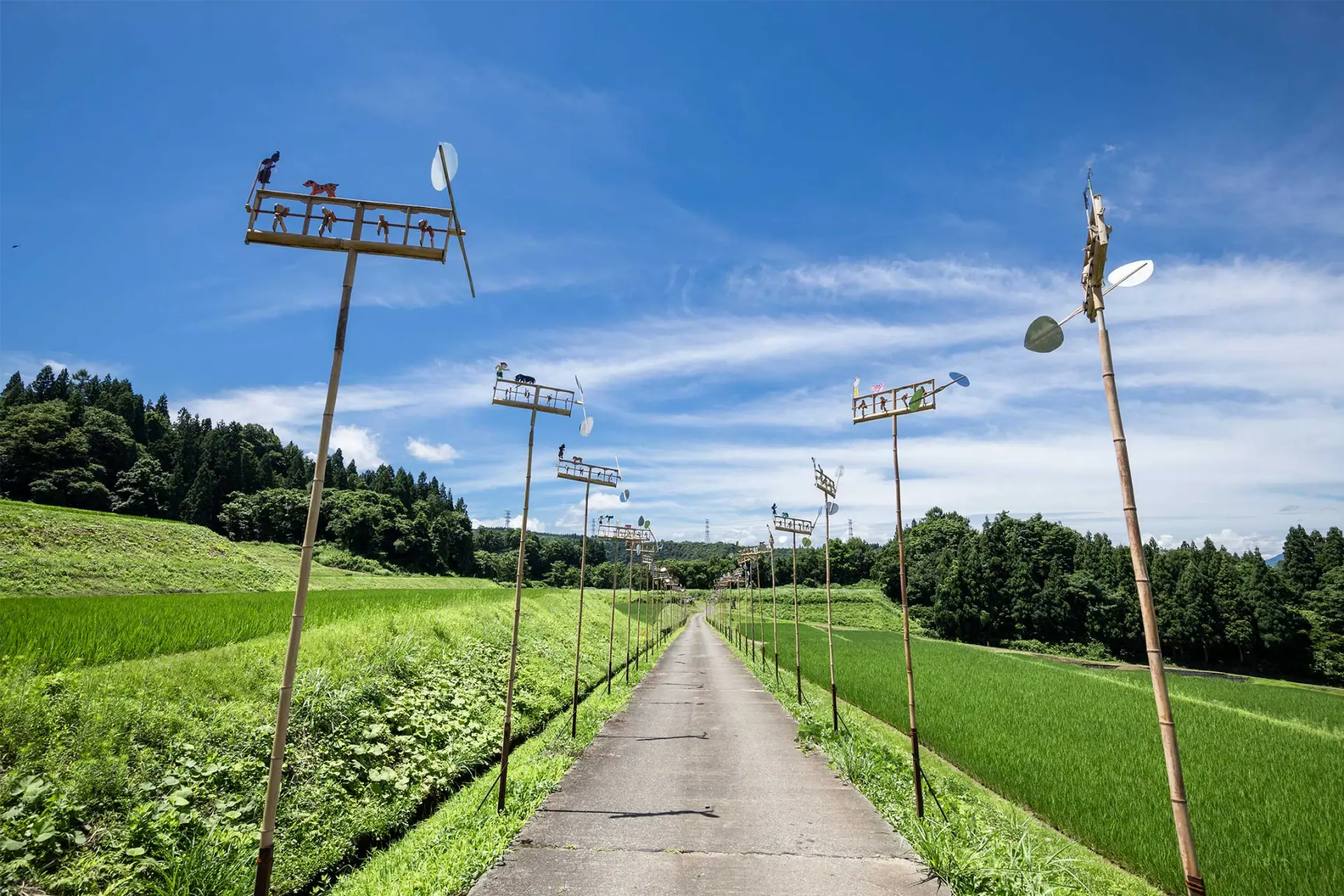
Dadang Christanto "Cakra Kul-Kul at Tsumari" photo by Nakamura Osamu
-
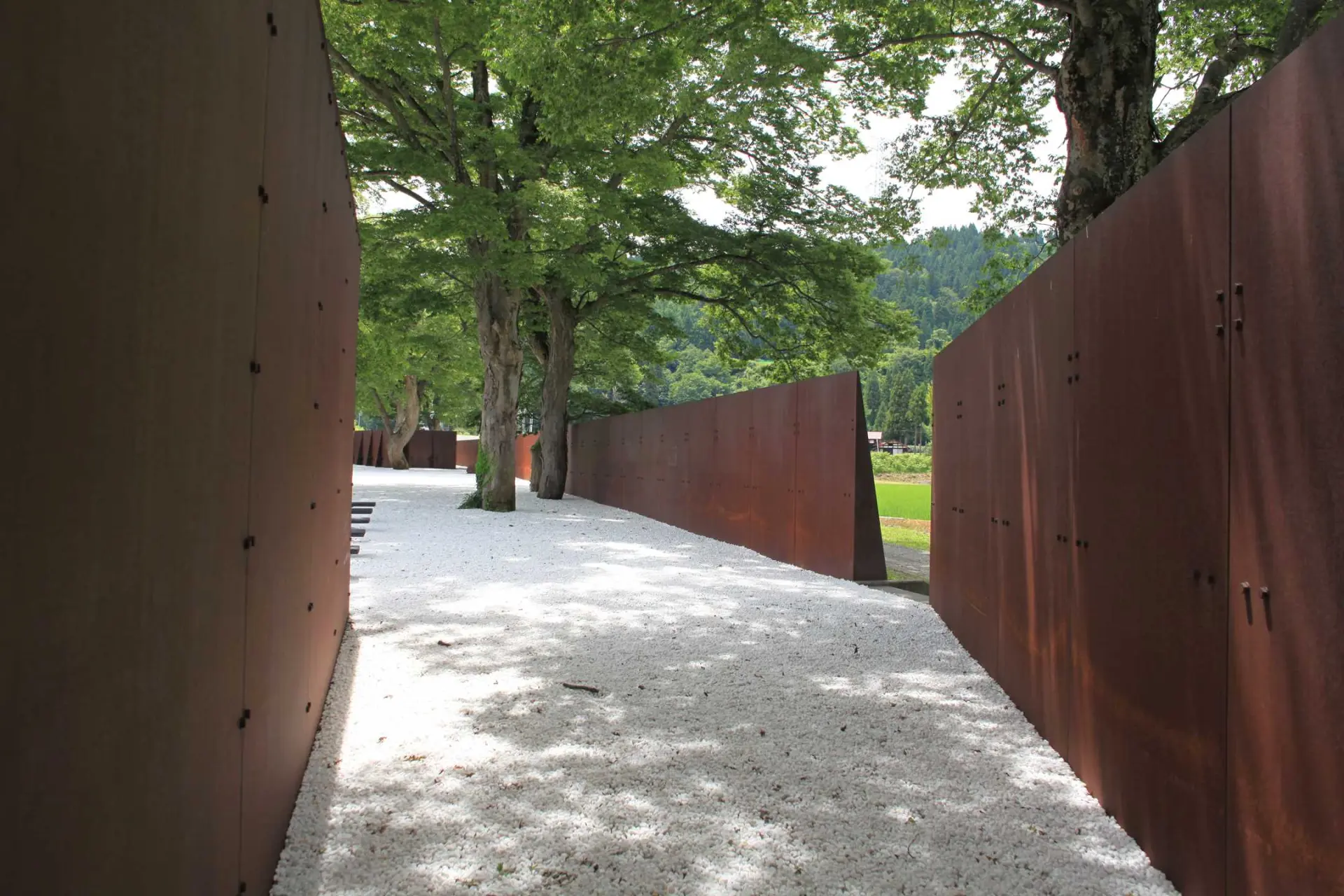
Architectural Office Casagrande & Rintala "POTEMKIN" Photo by Ishizuka Gentaro
Matsudai Area: Where Satoyama Life and Art Are Continuous
The Matsudai area spreads mainly along the Shibumi River, a tributary of the Shinano.
Ringed by mountains, elevations range roughly from 150 to 600 meters.
Rice farming is the main industry, and wisdom lives on in rice terraces carved into slopes and in “segai,” the rerouting of river flows to make fields.
Near Matsudai Station, the western gateway to Echigo-Tsumari, stands Matsudai “NOHBUTAI,” one of the Triennale’s hubs, where you can enjoy both indoor displays and outdoor works year round.
The seamless continuity of satoyama life and art is the essence of Matsudai’s appeal.
Matsudai “NOHBUTAI” Field Museum
The Matsudai “NOHBUTAI” Field Museum is an “open-air museum” in which about 40 works are dispersed across roughly 2 kilometers from the MVRDV-designed hub facility Matsudai “NOHBUTAI” up to the mountaintop Matsudai Castle.
By touring both the indoor displays and outdoor works, you can immerse yourself in agricultural culture and landscapes of the snowy region, such as rice terraces and segai.
Programs themed around “food” and “agriculture” are another draw.
The restaurant Echigo-Matsudai Satoyama Shokudo is itself an artwork space by Jean-Luc Vilmouth (“Café Reflet”), where you can savor dishes made with local ingredients inside an art space.
Paddy fields on the grounds offer glimpses into local life and rice cultivation.
Numerous experiential programs connect you with the culture of nature through the seasons-wild-vegetable foraging in spring, satoyama walks in summer, rice harvesting in autumn, and snow play in winter.
Because the grounds are broad and works are many, touring by car is recommended.
-
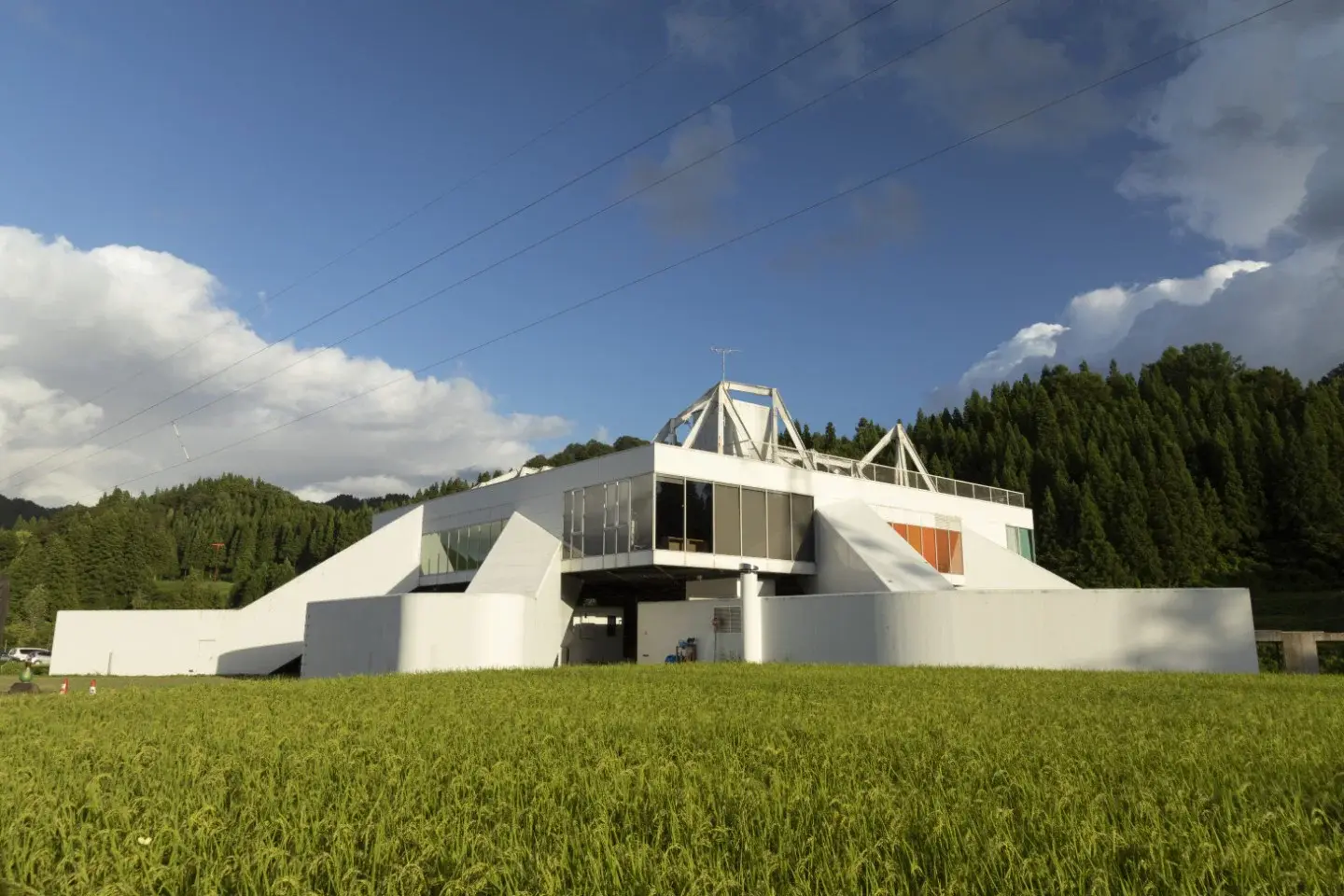
MVRDV, Matsudai "NOHBUTAI" Photo by Nakamura Osamu
-
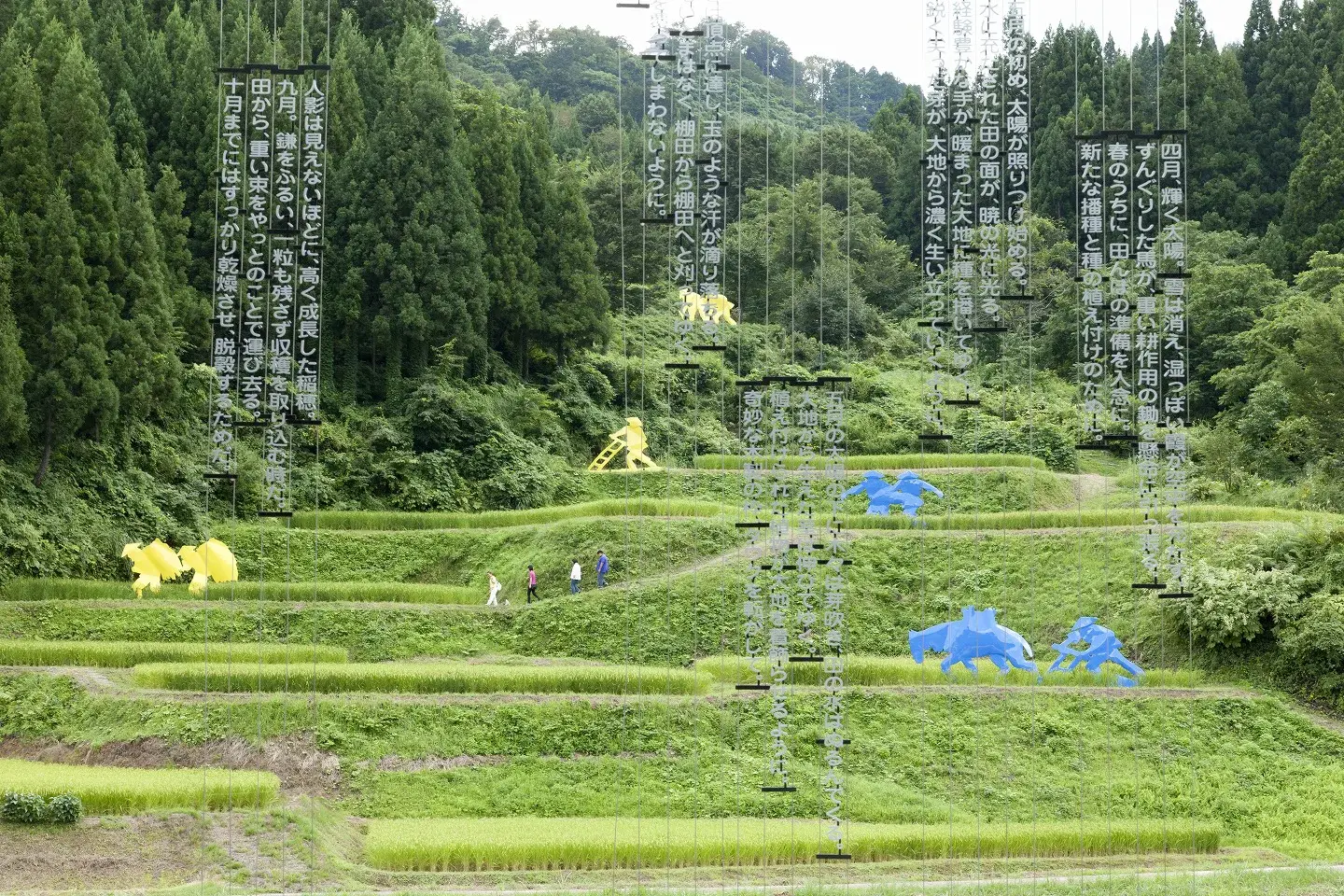
Ilya & Emilia Kabakov "The Rice Fields" Photo by Nakamura Osamu
-
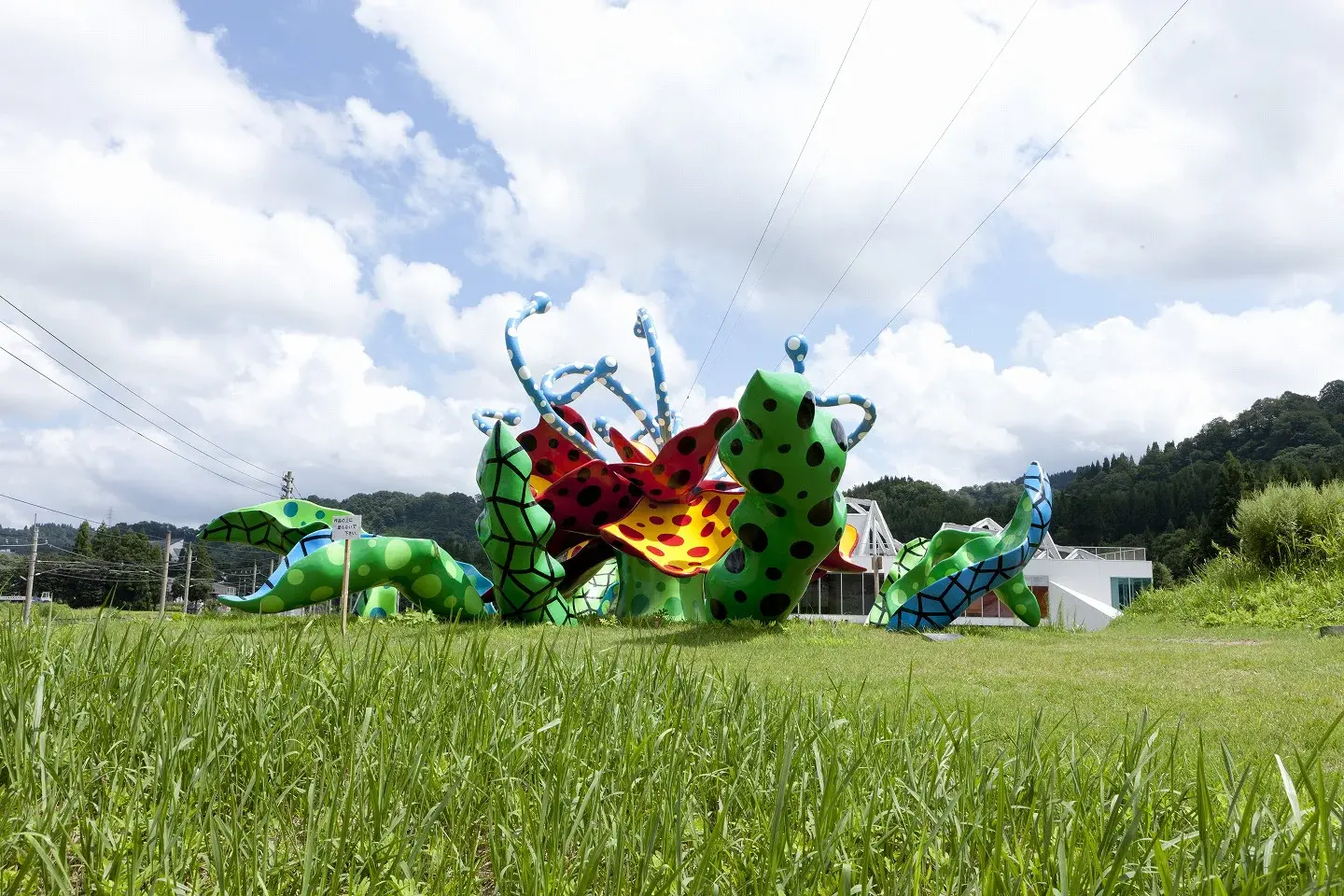
Kusama Yayoi "Tsumari in Bloom" Photo by Nakamura Osamu
-
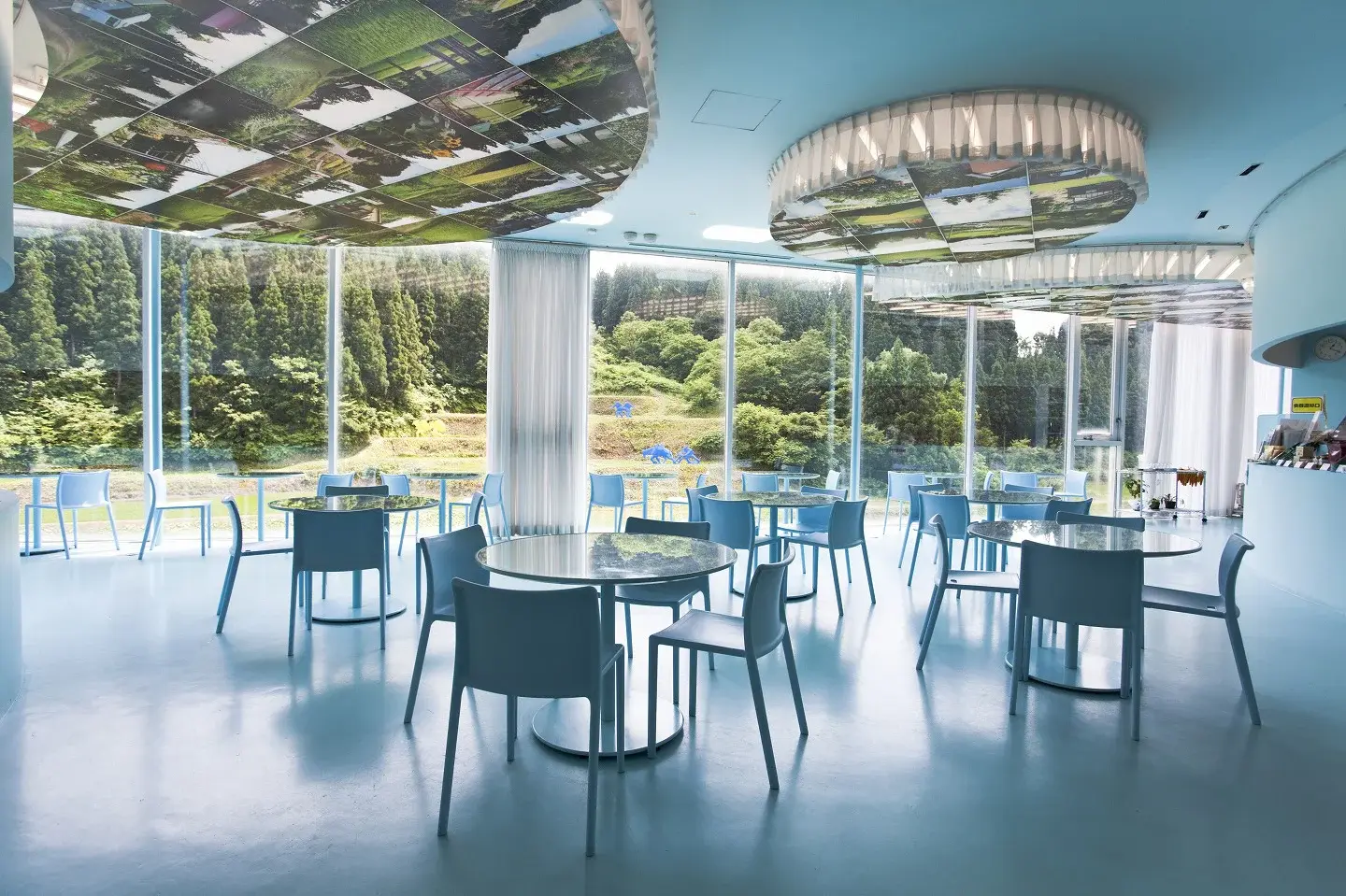
Jean-Luc Vilmouth "Café Reflet" Photo by Yanagi Ayumi
-

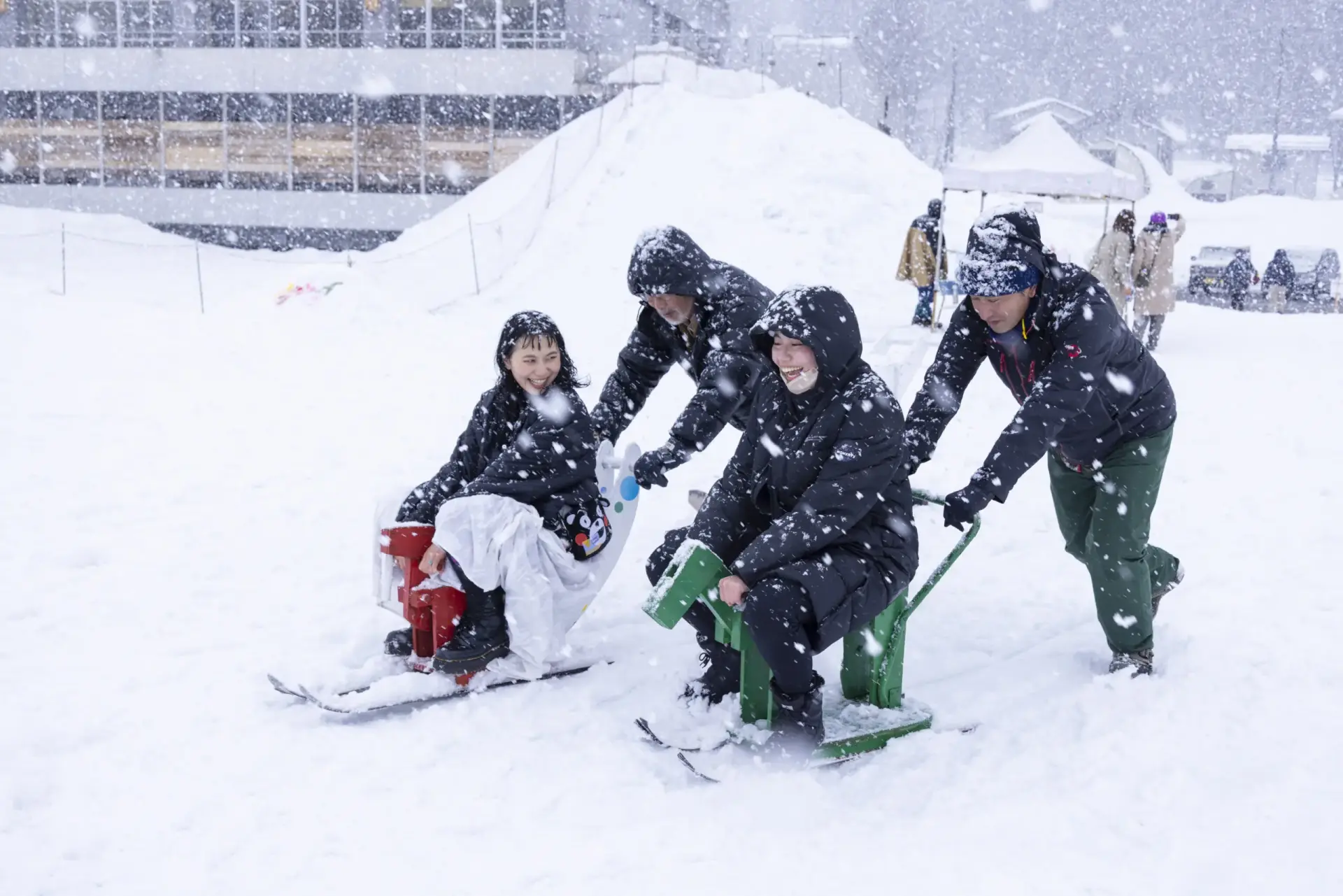
In winter, programs to experience snow play are also offered. Photo by Yanagi Ayumi
Matsudai History Museum
The Matsudai History Museum repurposes and exhibits a roughly 140-year-old zelkova-frame farmhouse relocated here.
Massive beams and a roughly 10-meter main pillar withstand heavy snow, while an Edo-period irori, tatami room, and living room remain as they were.
In 2024, the work “Matsudai History Museum” by Obana Kenichi was installed inside, giving new perspectives to local objects and the facility and bringing out the site’s intrinsic stories.
Materials of Matsuo Shrine, a nationally designated Important Cultural Property, and video of rice terraces selected as one of the “100 Best Satoyama Landscapes in Japan” are also on view.
In addition to single-admission tickets, entry is included with a Matsudai “NOHBUTAI” Field Museum ticket.
-
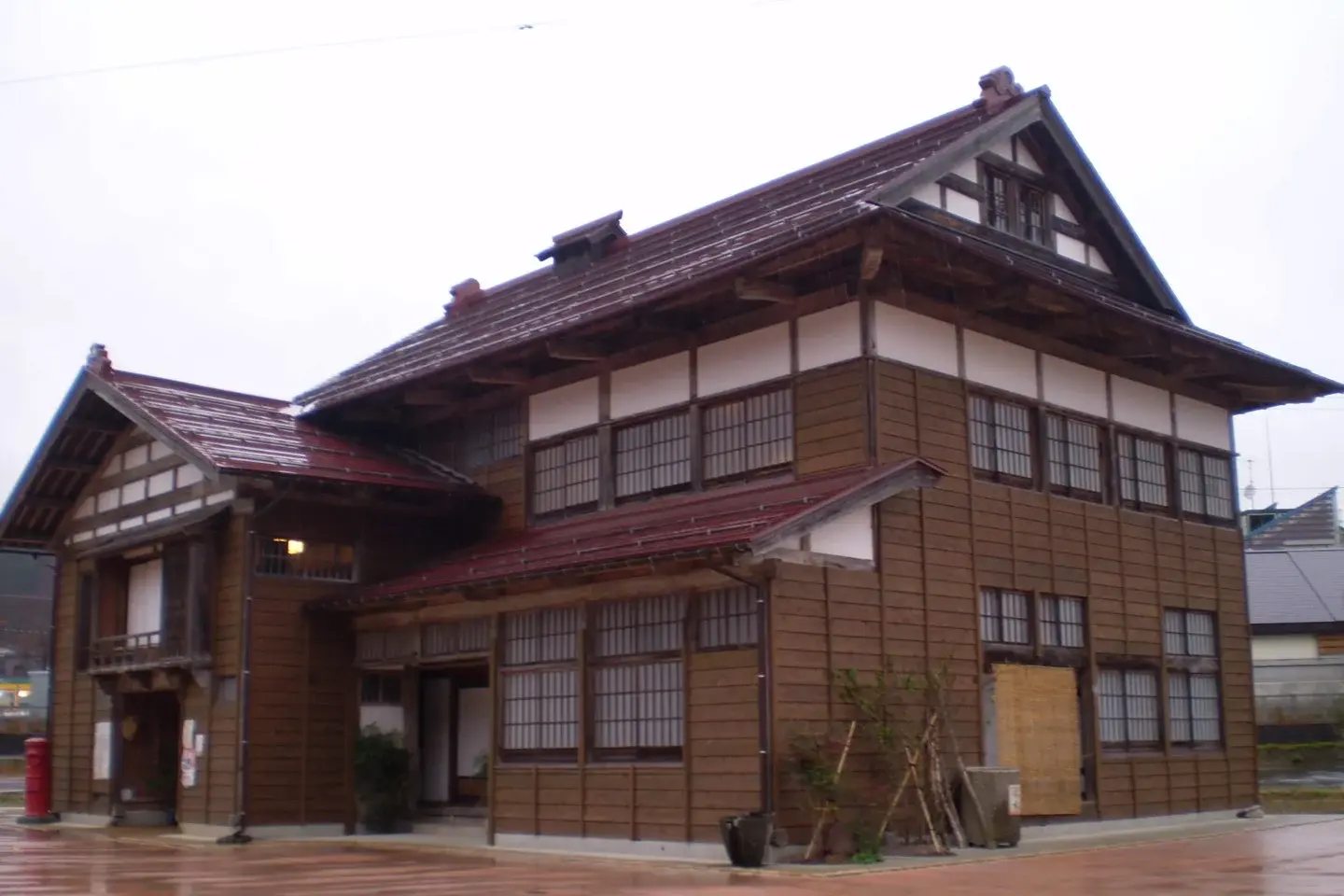
Exterior of Matsudai History Museum
-
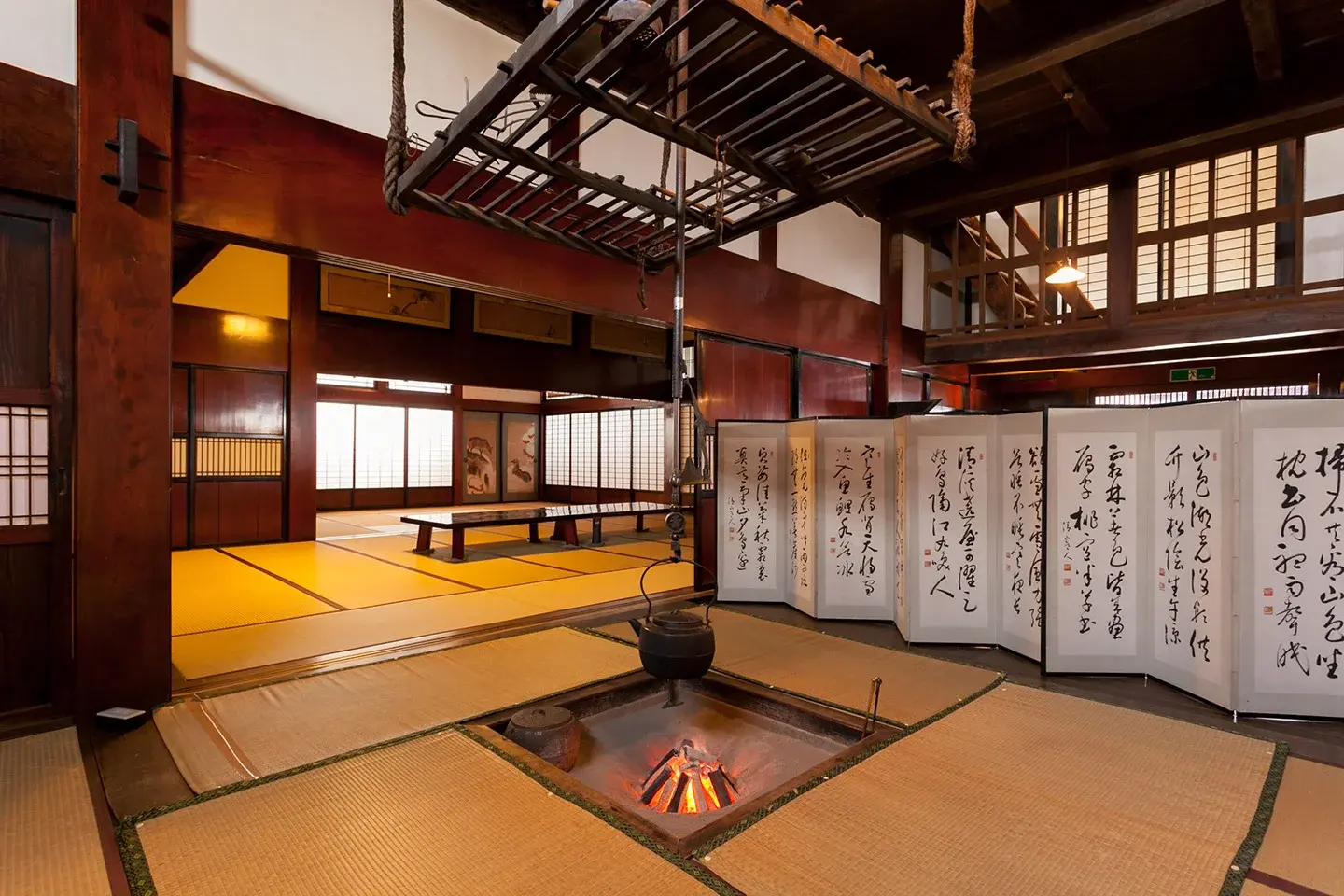
Spaces from the late Edo period remain intact.
-
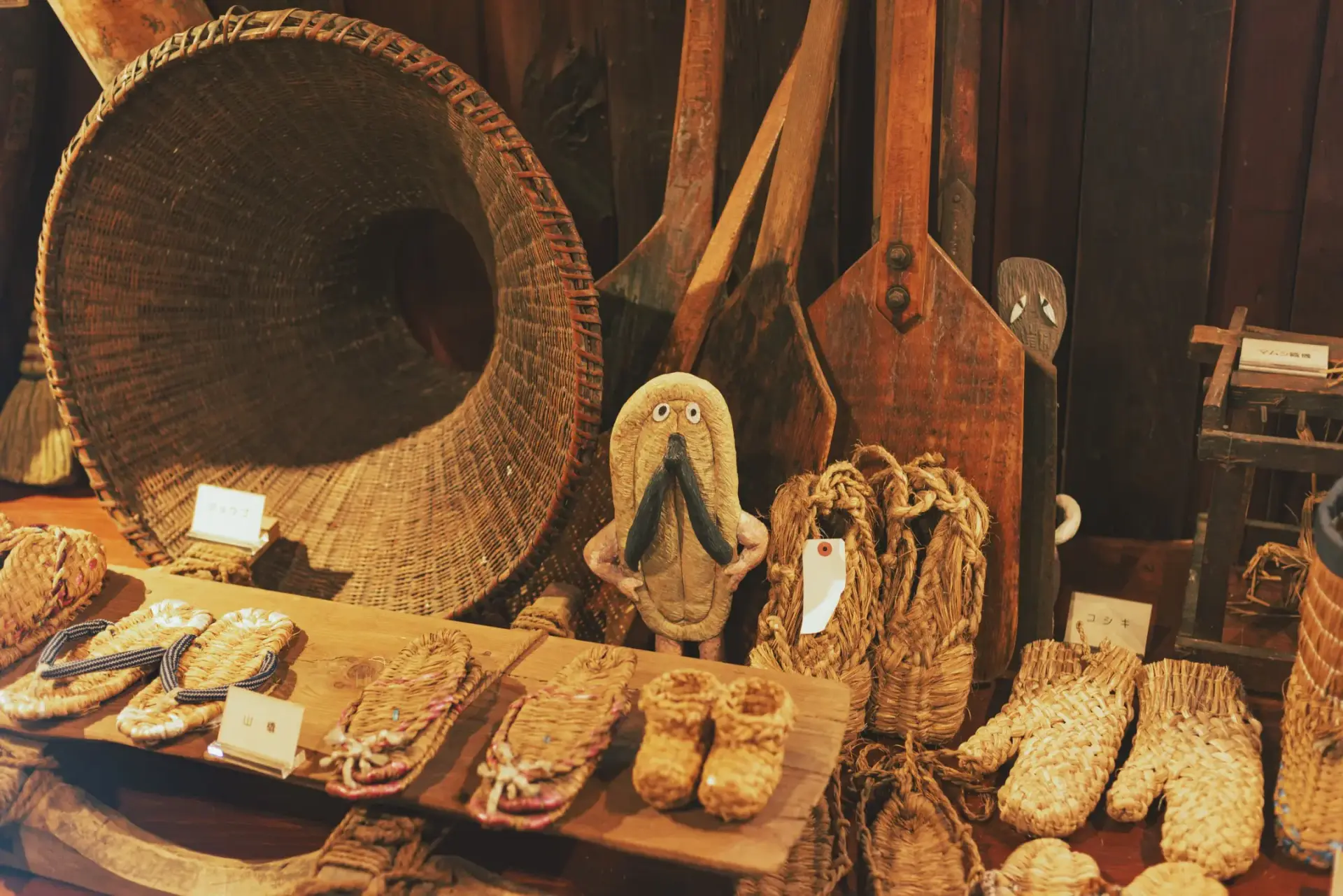
See if you can find about twenty yokai hiding inside (Obana Kenichi, "Matsudai History Museum - Shiryo-Kan"). Photo by Kanemoto Kenichiro
NUNAGAWA Campus
NUNAGAWA Campus fully utilizes a former Nunagawa Elementary School closed in 2014.
Rather than only seeing, you can touch, listen, and smell-art that engages all five senses.
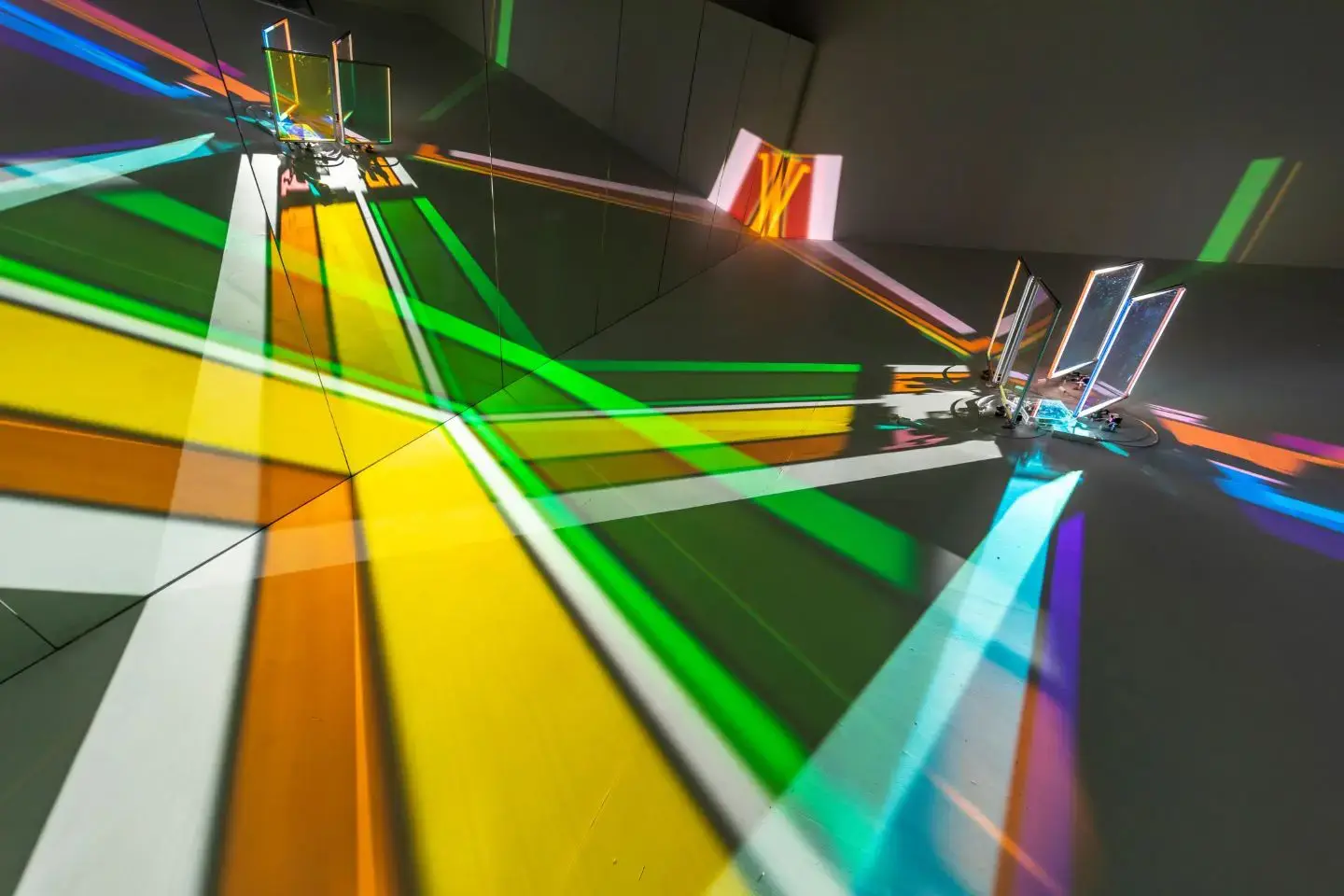
Works dot the grounds inside and out, including Mokuyu: Wood Bathing, a bath of wooden spheres, Passage of Flowers, a trolley ride around the ground, and Saiyah #2.10, where rotating glass lets you enjoy shifting colors.
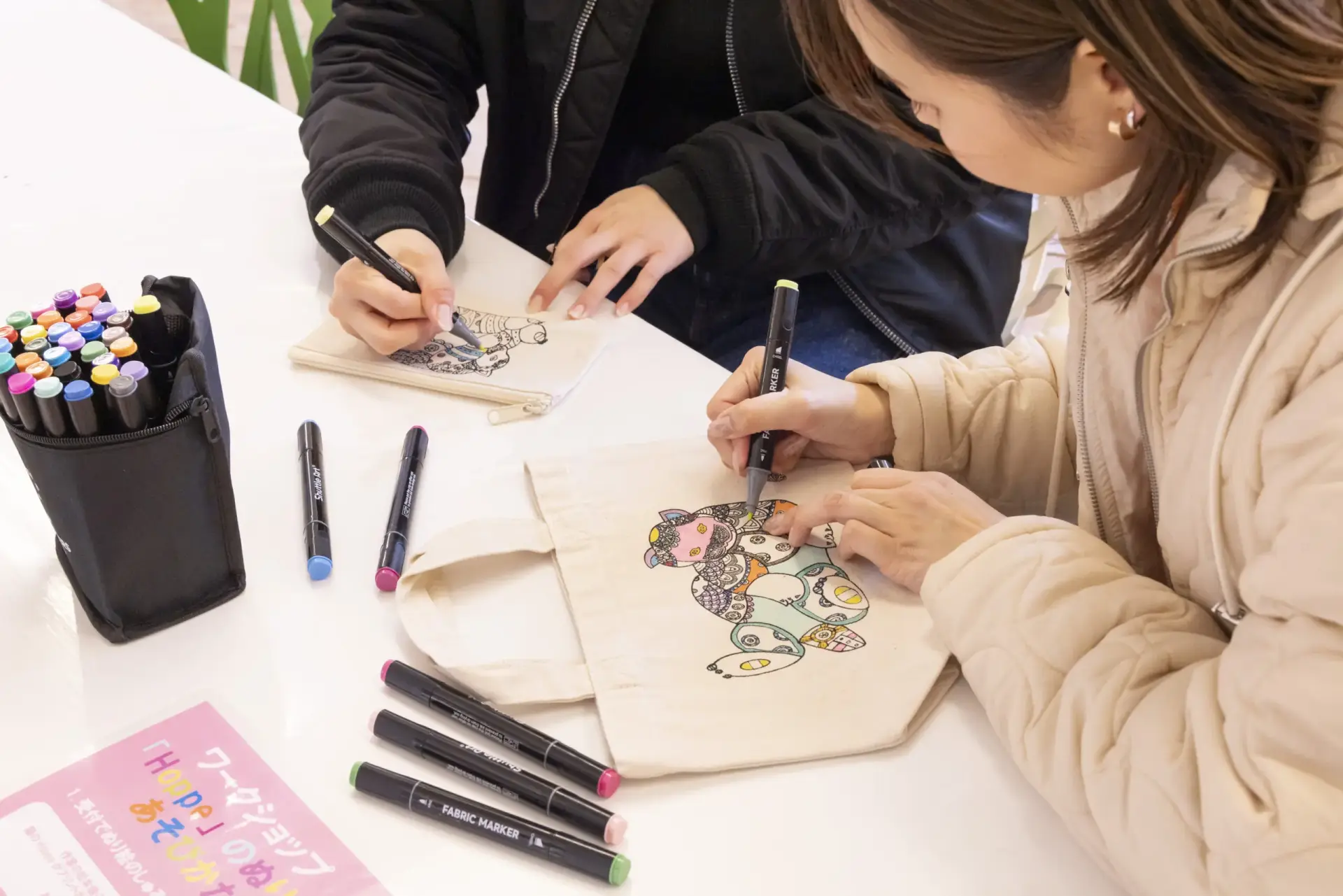
Workshops are held frequently, and coloring pages featuring Hoppe, a cat that appears in museum works, are also popular.
-
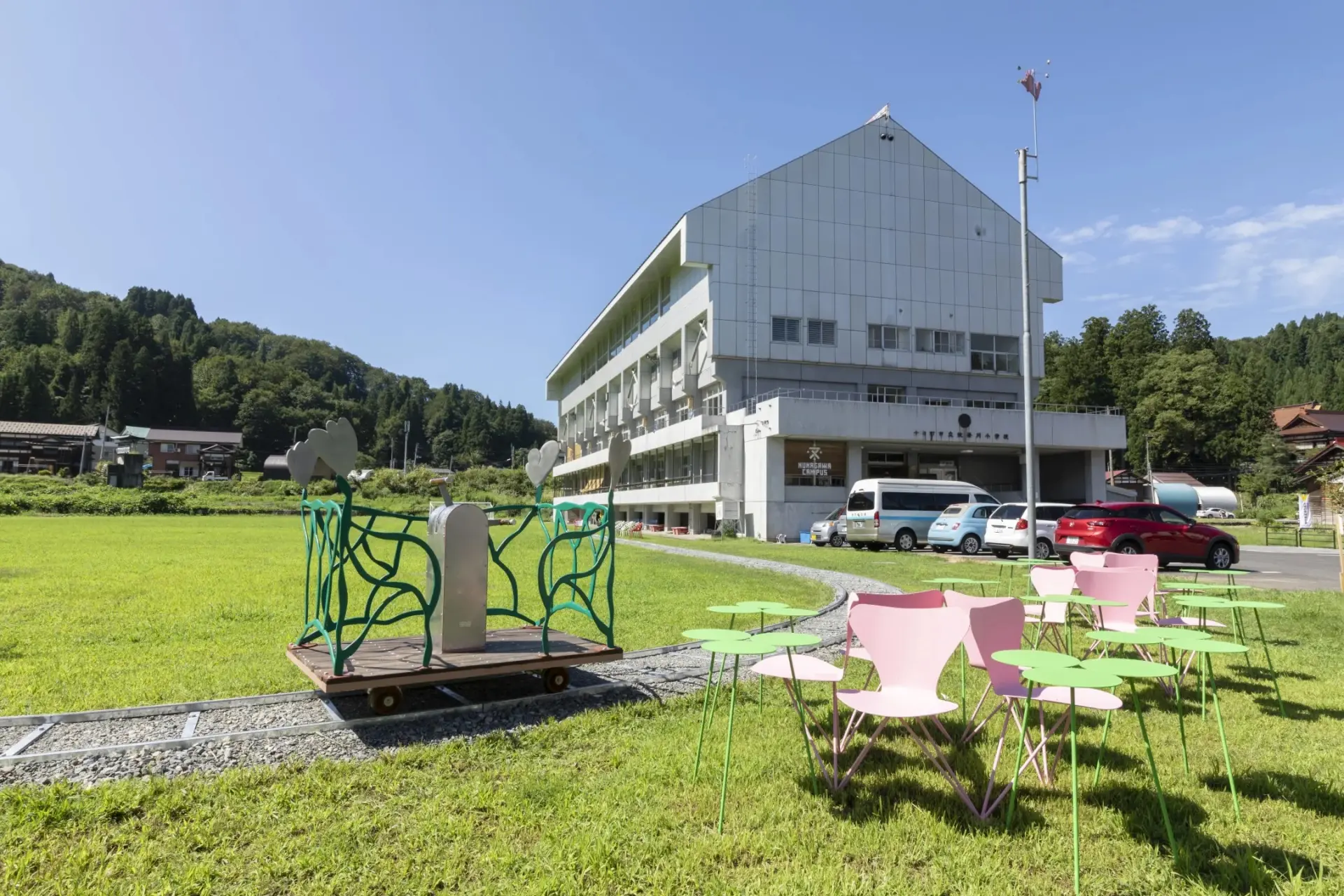
Artworks you can enjoy with all five senses are exhibited at NUNAGAWA Campus. Photo by Nakamura Osamu
-
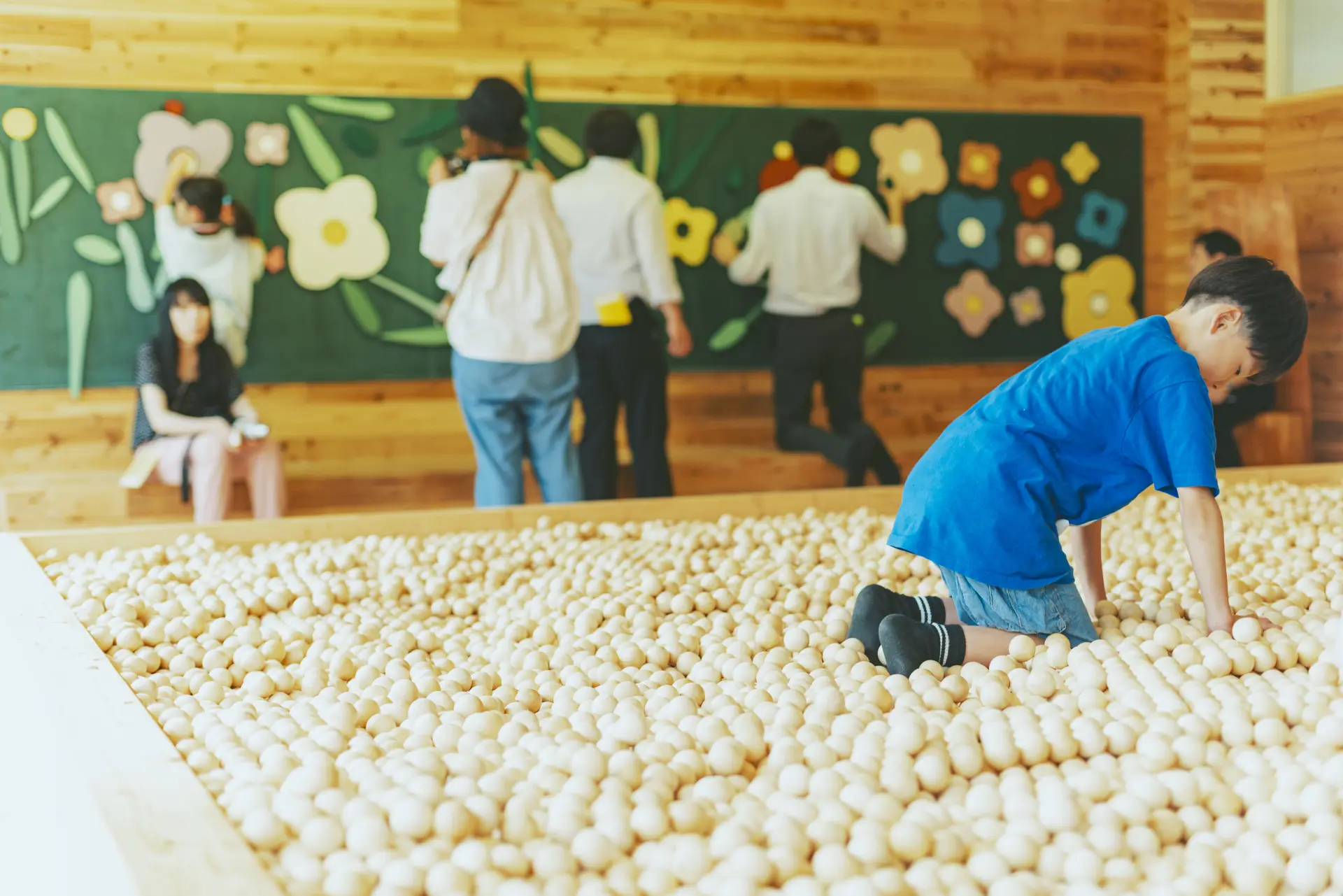
Kurakake Junichi + Nihon University College of Art Sculpture Course "Mokuyu: Wood Bathing" Photo by Kanemoto Kentaro
-
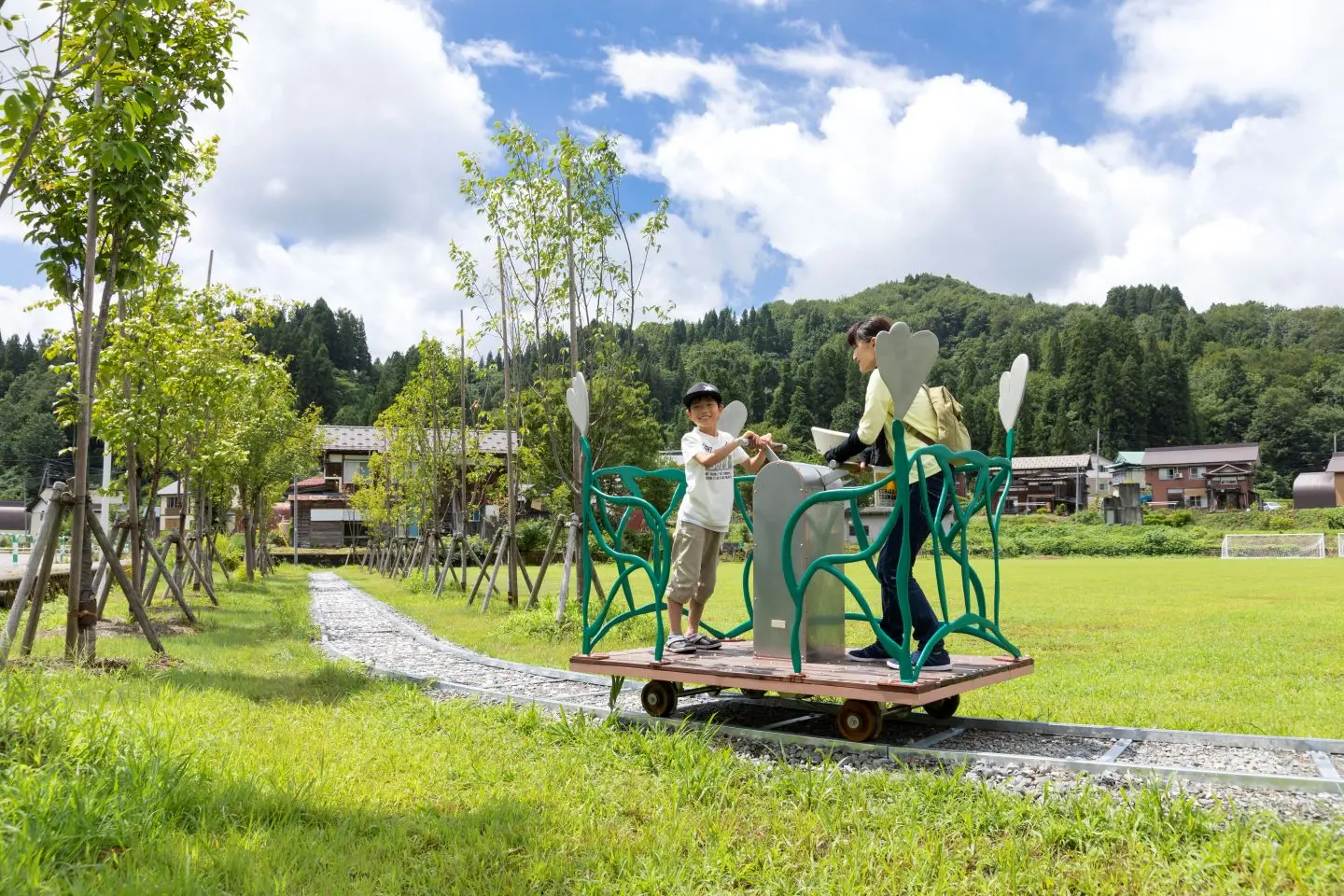
Kurakake Junichi "Passage of Flowers" Photo by Nakamura Osamu
-
Seyama Yoko "Saiyah #2.10" Photo by Nakamura Osamu
-
Workshop: Coloring sheets of "Hoppe" by Matsumoto Michiko
Recommended Works in the Matsudai Area
Here are works co-created with Matsudai residents.
Viewing them will let you feel the Matsudai area more viscerally.
| Work | Artist | Summary |
|---|---|---|
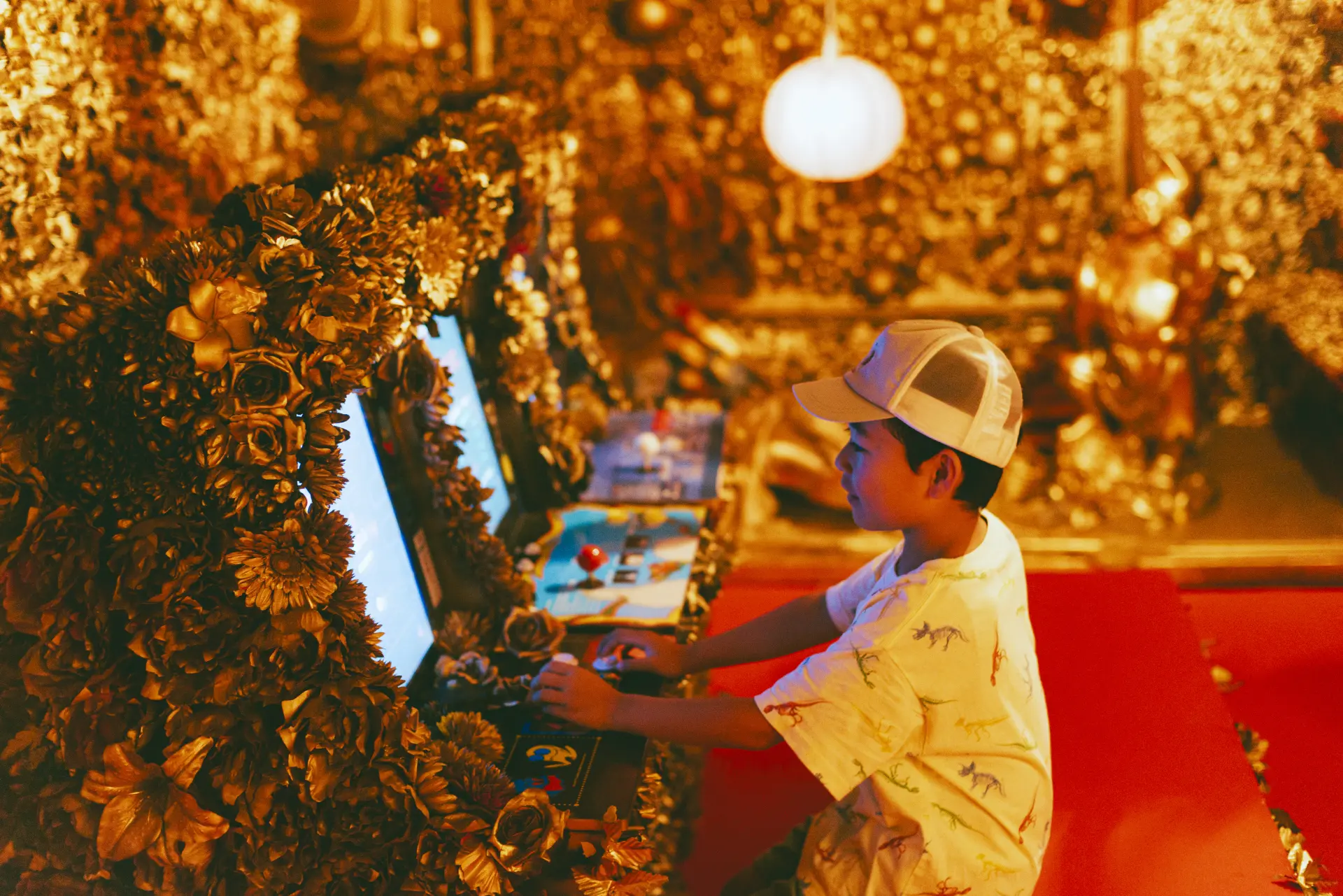
| Golden Playroom | Toyofuku Ryo | A “playground” where everyday items and industrial parts are covered in gold, an interactive installation that keeps adding elements with each iteration. |
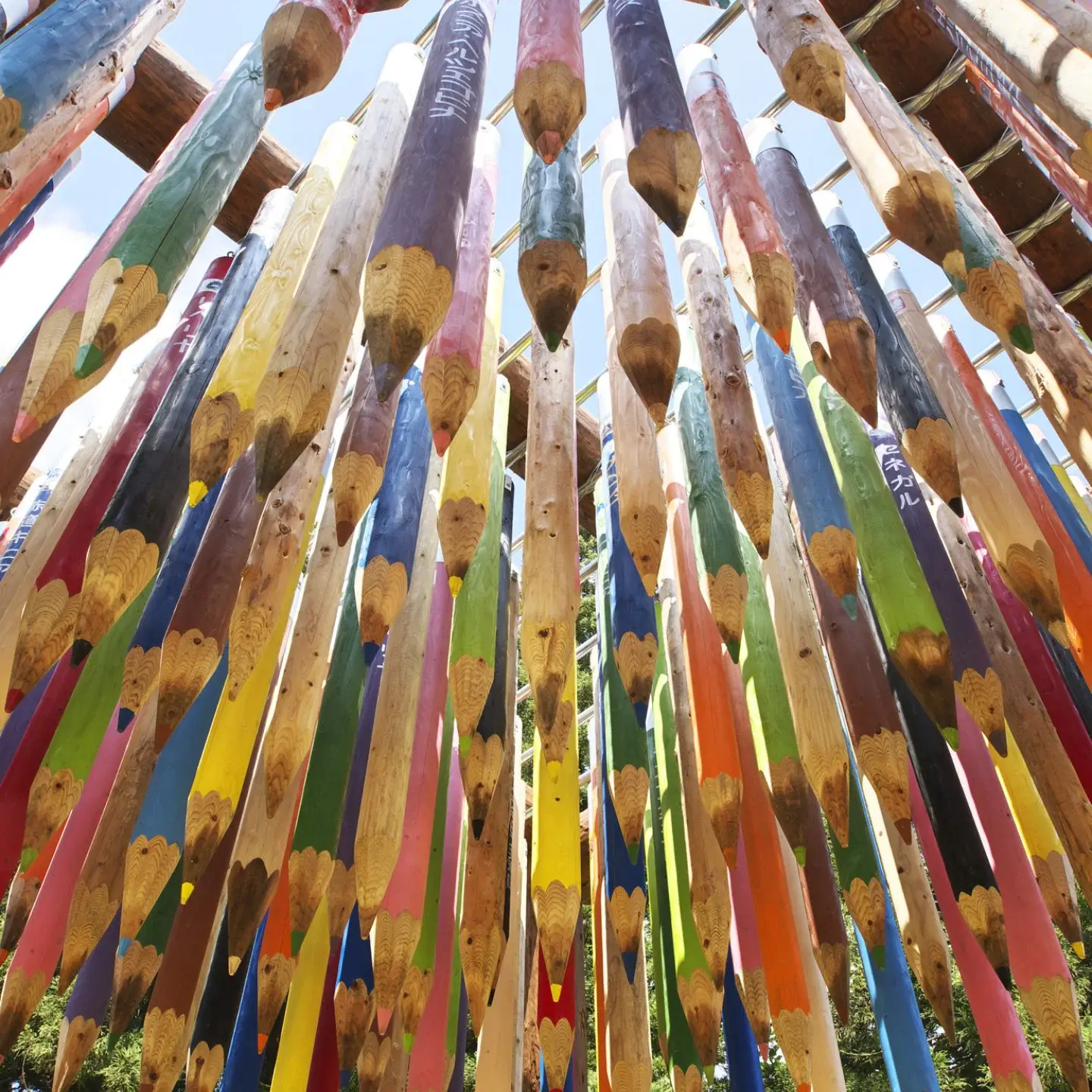
| Reverse City | Pascale Marthine Tayou | A group of large pencils hung from thick pillars, each pencil inscribed with a city name of the world; the inverted, colorful cities point their tips at viewers, inspiring awe tinged with menace. |
-
Toyofuku Ryo "Golden Playroom" Photo by Kanemoto Rintaro
-
Pascal Martin Tayou "Reverse City" Photo by Miyamoto Takenori + Seno Hiromi
Matsunoyama Area: Encounter the Deep-Snow Satoyama
The Matsunoyama area is a hilly zone at elevations of 200 to 600 meters, ringed by mountains along the Nagano border.
Average snowfall exceeds 3 meters, and in heavy years reaches 5 meters.
In spring, snowmelt waters rice terraces and shapes the landscape.
In addition to mountain vegetables and mushrooms, Matsunoyama Onsen is famed as one of Japan’s three great medicinal hot springs.
In winter the hot-spring town is wrapped in snow, and the rows of inns exude extra charm.
Bijinbayashi, a beech forest with beautiful expressions across the seasons, is also highly popular.
Centered on Echigo-Matsunoyama “Forest School” Kyororo, initiatives deepen understanding of satoyama ecosystems and provide places to learn in contact with nature.
Echigo-Matsunoyama “Forest School” Kyororo
This small hands-on natural science museum focuses on biodiversity in snowy satoyama.
Permanent and special exhibitions explain the biodiversity of snowy satoyama scientifically and offer programs to enjoy while learning through experience.
A standard program, “Satoyama Creature Exploration,” takes you out to the satoyama with curatorial staff to collect and observe organisms while feeling seasonal changes in nature.
In the adjacent Bijinbayashi, you can enjoy spectacular seasonal views and a variety of wild birds, so be sure to visit together.
-
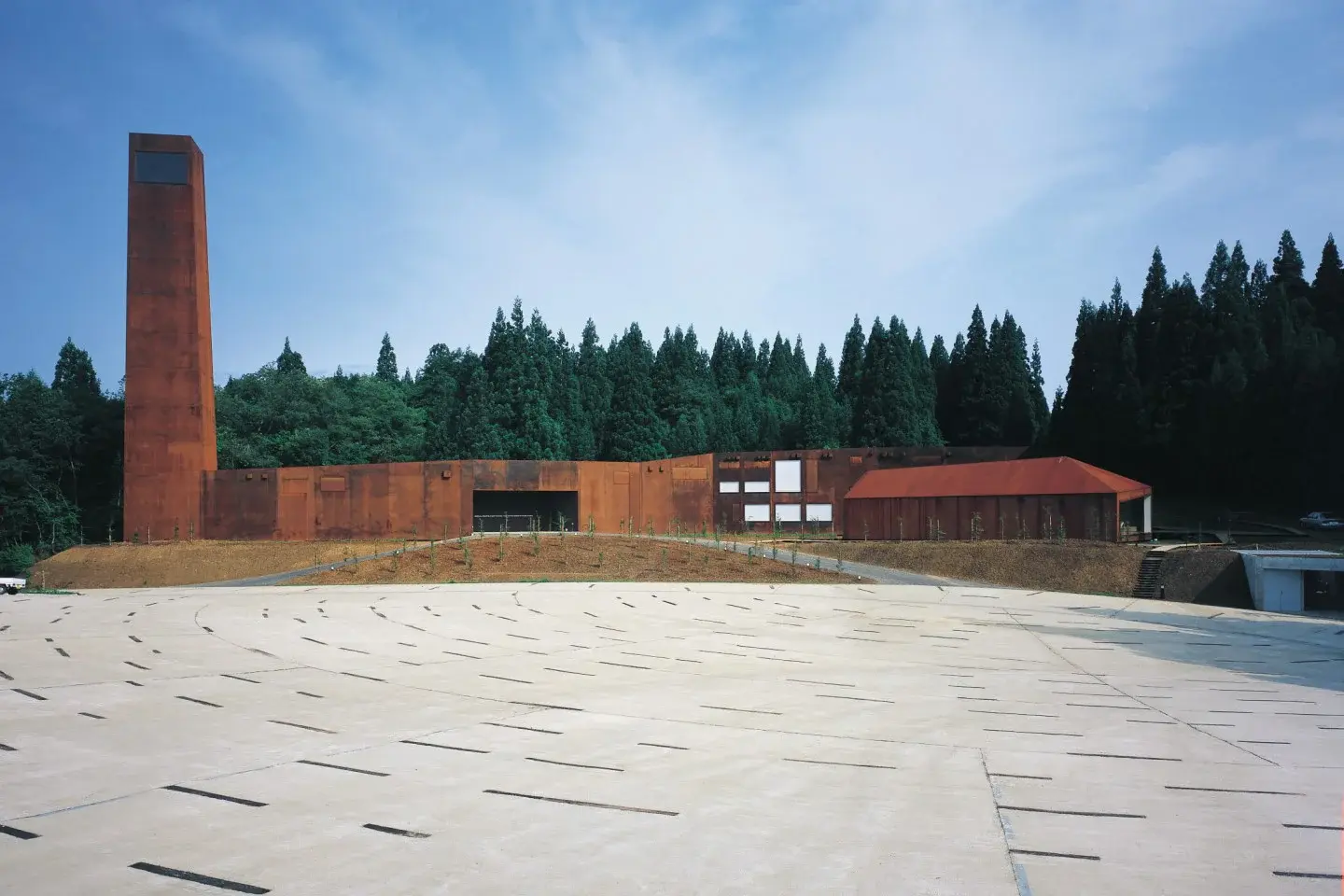
Exterior of Kyororo (Echigo-Matsunoyama "Forest School") Photo by ANZAÏ
-
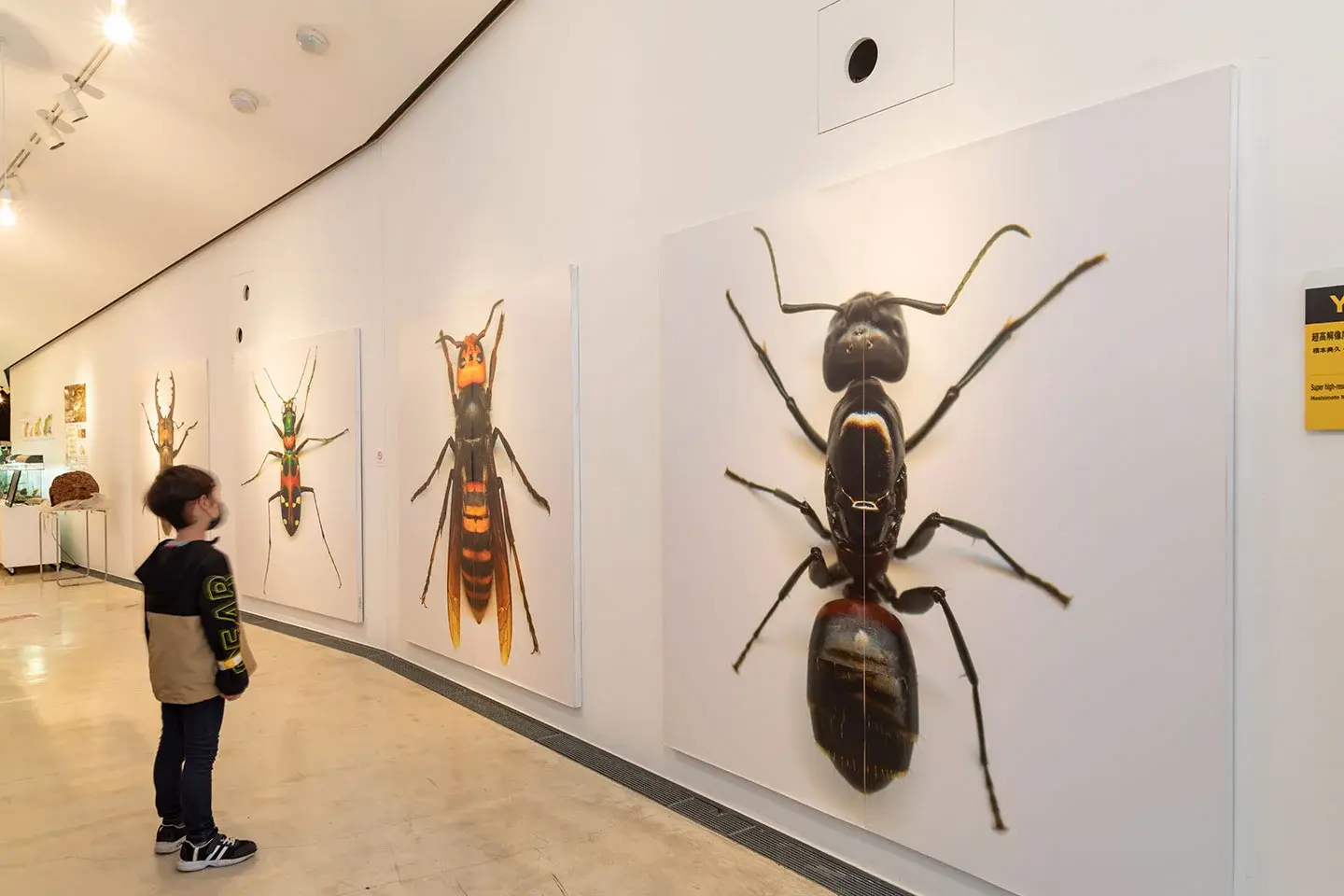
Hashimoto Norihisa + scope "Super high-resolution human-size photographs—life-size" Photo by Nakamura Osamu
-
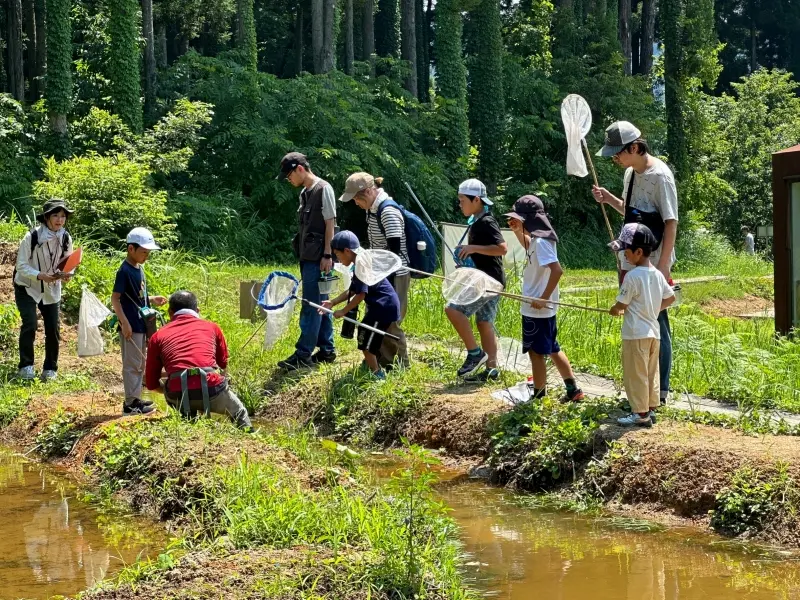
You can also step into the satoyama and experience it with all five senses.
-
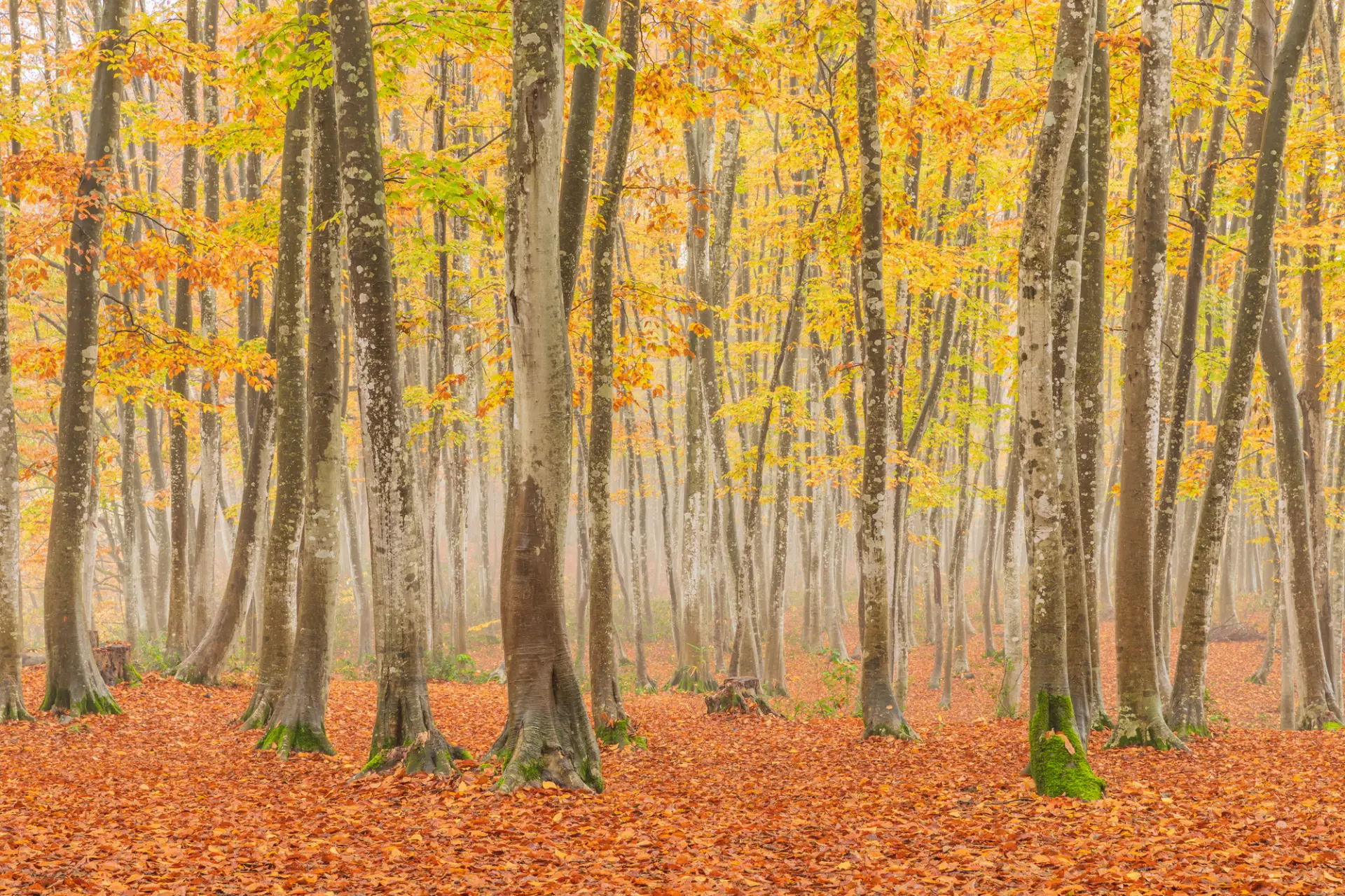
Bijinbayashi, where the scenery changes with the seasons
Dream House
This stay-type artwork transforms a satoyama kominka into “an inn for dreaming.”
Born from the desire to have visitors reflect on themselves amid busy daily life, the work invites you to change into pajamas designed by the artist, sleep in a special bed, and write down the dream you saw the next morning.
Recorded dreams accumulate into a “Dream Book,” making both the guests and the experience itself the artwork.
Beyond guests, the house is open for tours on public days, where you can engage with the work’s core through displays, archives, beds and pajamas, and selected Dream Books.
Check the official page for public days and reservation methods.
-
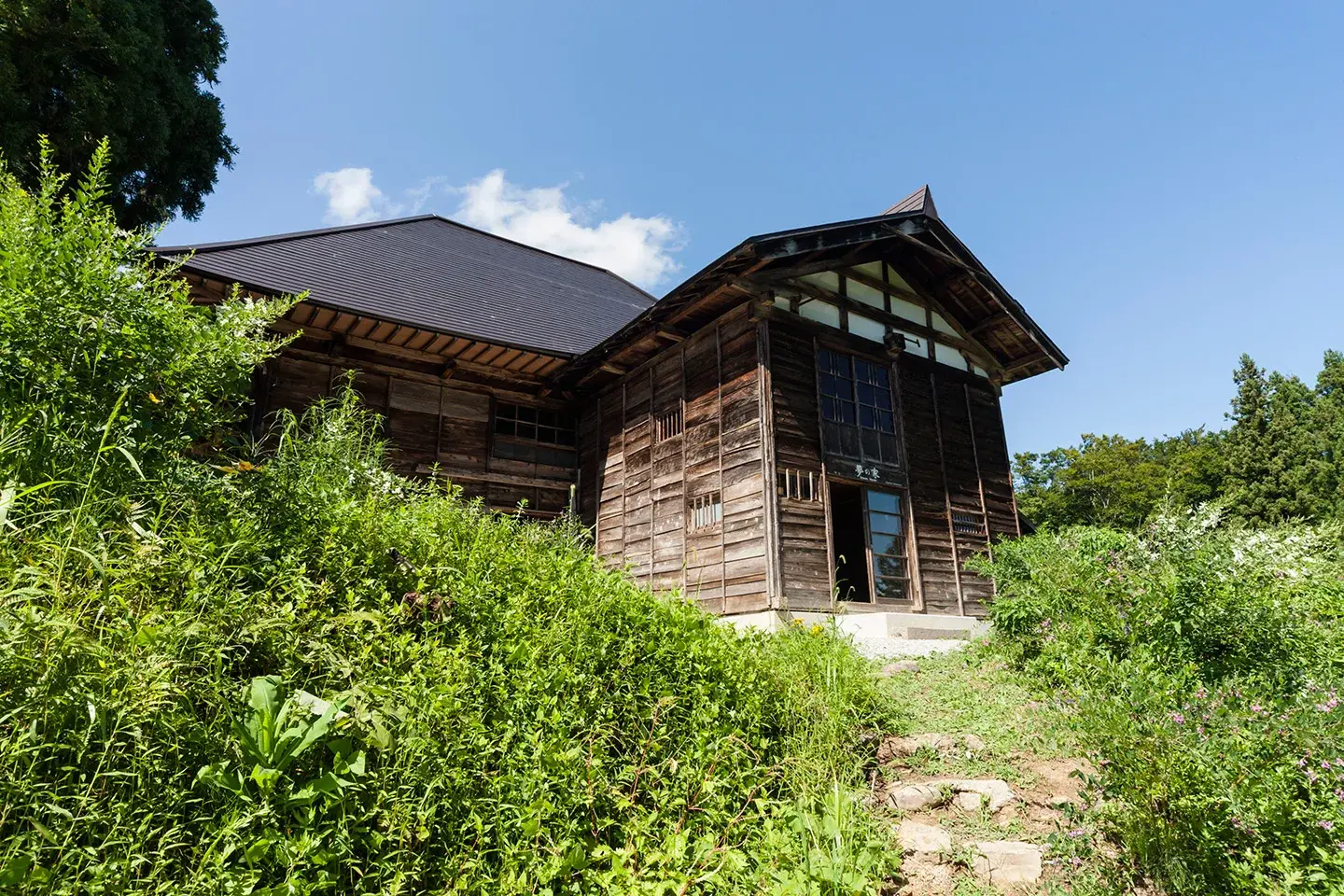
Exterior of Dream House Photo by Nakamura Osamu
-
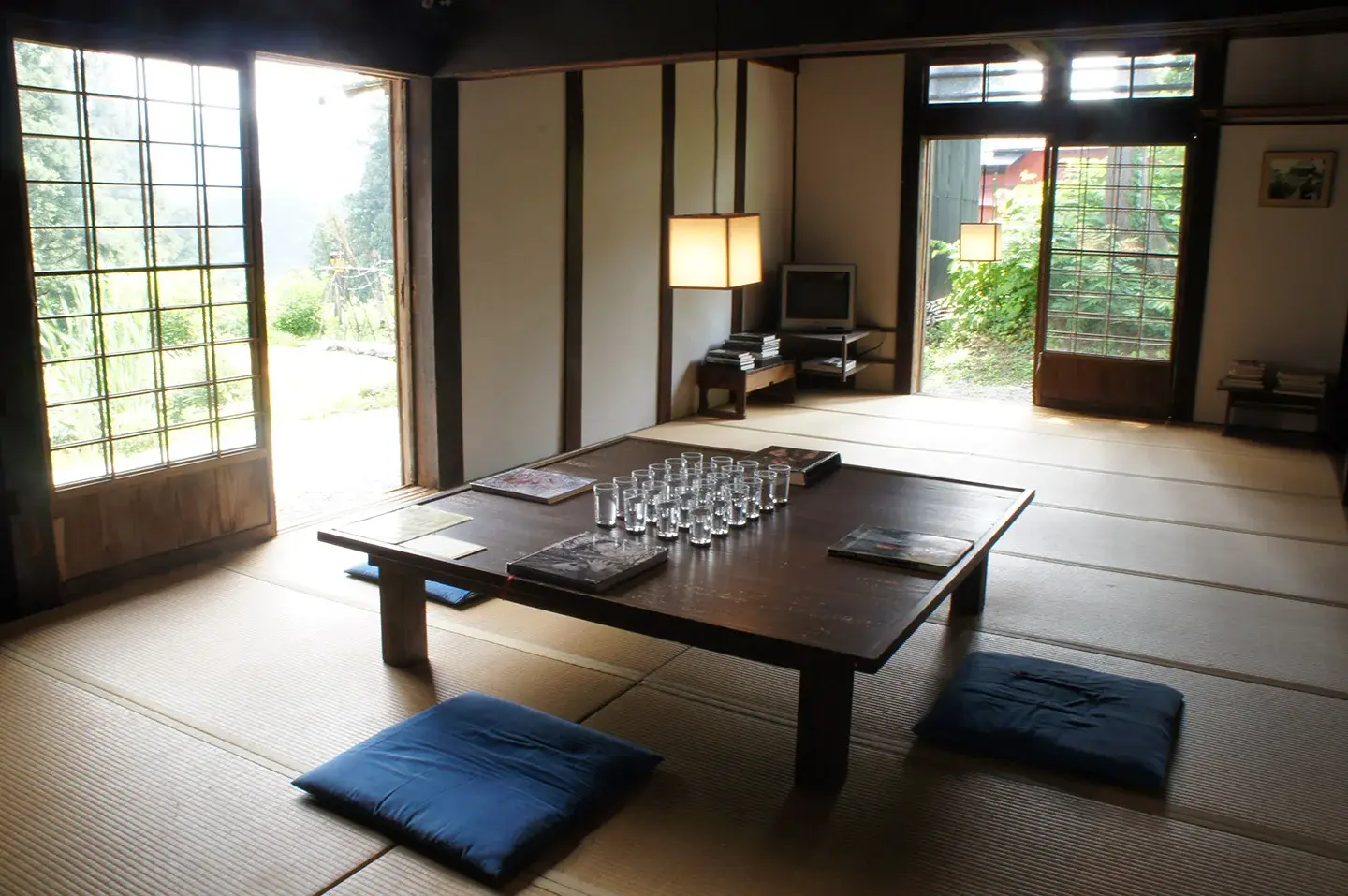
In the living room, you can relax with the artist’s books and videos from the time of production.
-
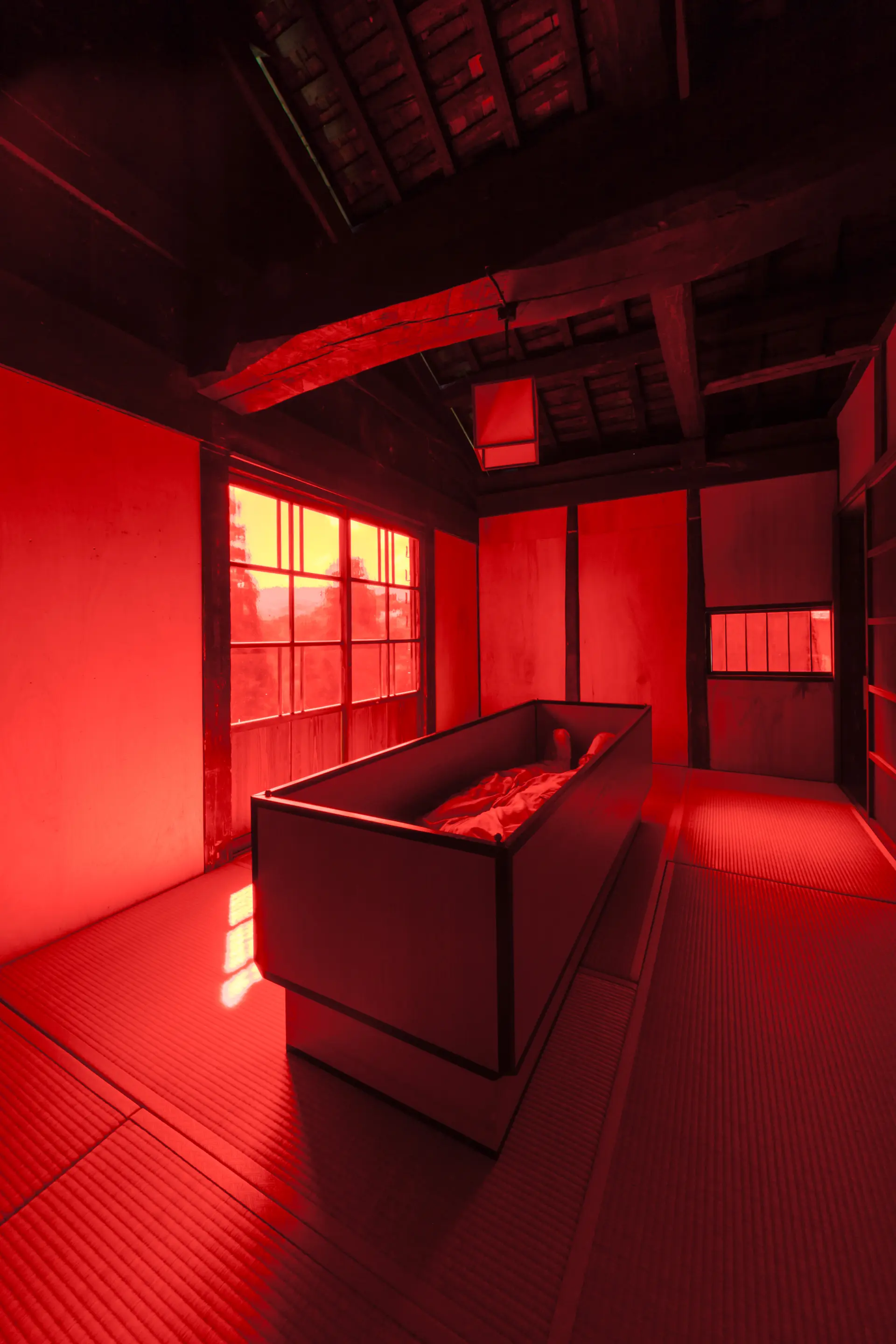
Dream House offers a one-of-a-kind overnight experience. Photo by Nakamura Osamu
Recommended Works in the Matsunoyama Area
Besides works that let you feel Matsunoyama’s nature, diverse pieces dot the area.
Among them, these are must-see.
| Work | Artist | Summary |
|---|---|---|
| The Last Class | Christian Boltanski + Jean Kalman | Artists known for themes of human absence transform the former Higashikawa Elementary School into a stage that evokes both the bustle of children and teachers who once were here and their present absence. |
| House Memory | Shiota Chiharu | Black yarn stretches from the first floor to the attic of a vacant house, and together with “things that cannot be discarded” gathered from residents, it makes visible the memories that sleep in the house. |
| Step in Plan | John Körmeling (Text Design by Asaba Katsumi) | A giant sign at the entrance to Matsunoyama that also functions as a map you can climb, with lettering by leading Japanese typographer Asaba Katsumi. |
-
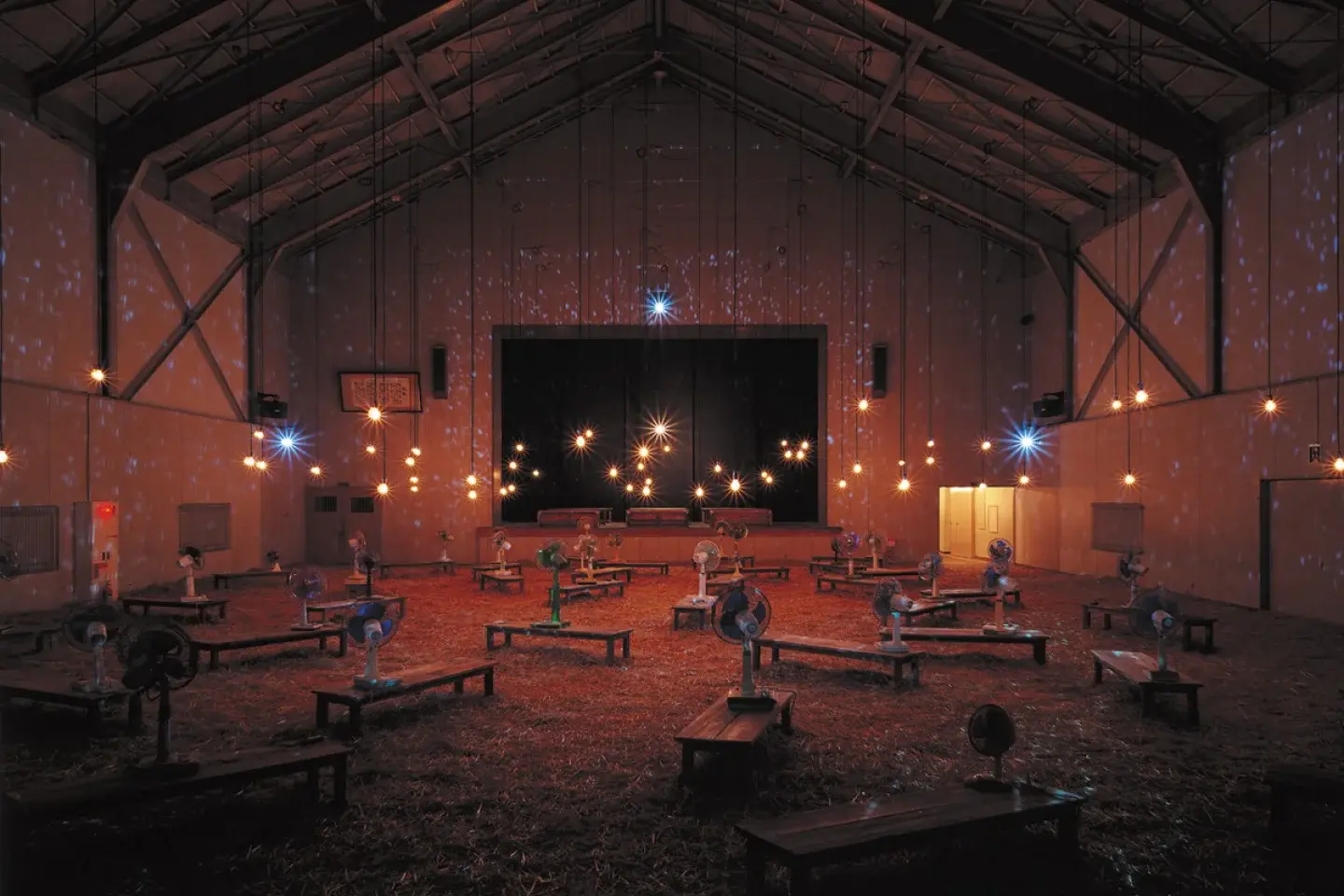
Christian Boltanski + Jean Kalman "The Last Class" Photo by T. Kuratani
-
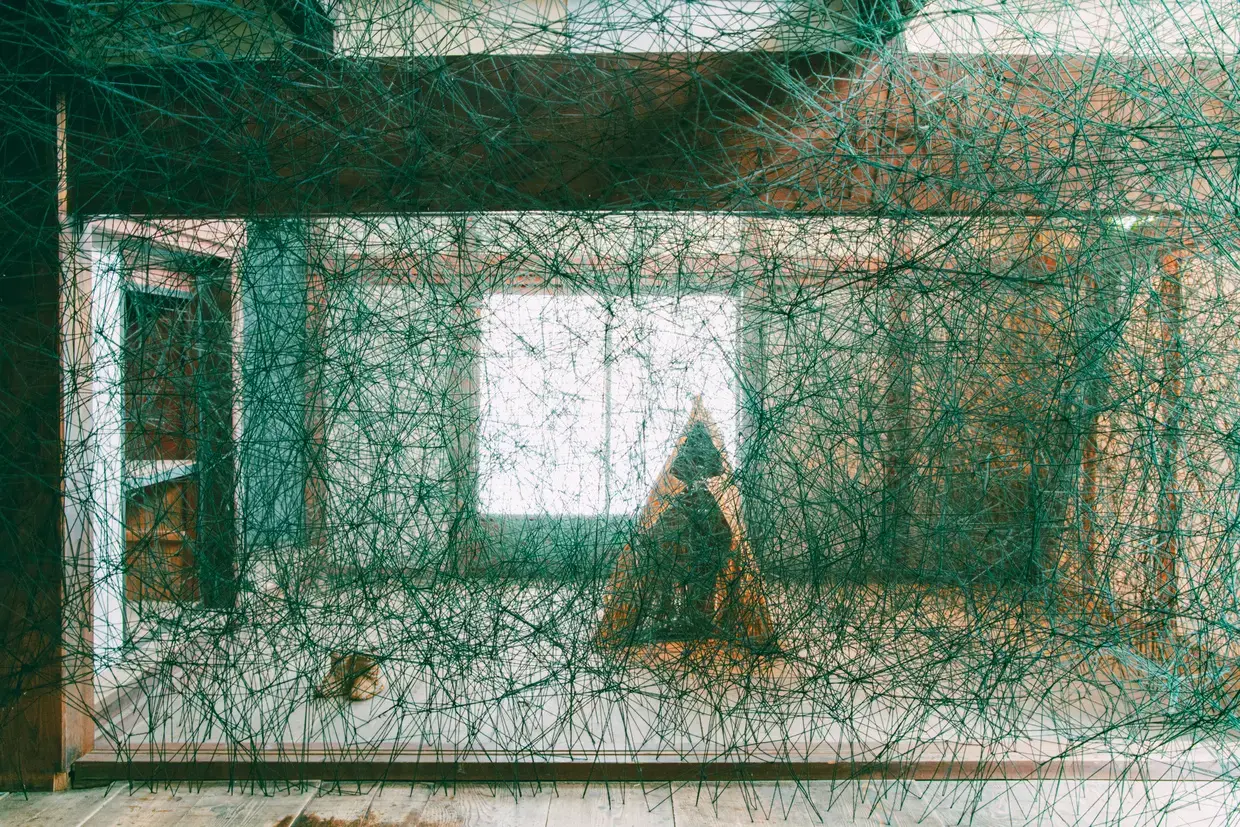
Shiota Chiharu "House Memory" Photo by Kanemoto Rintaro
-
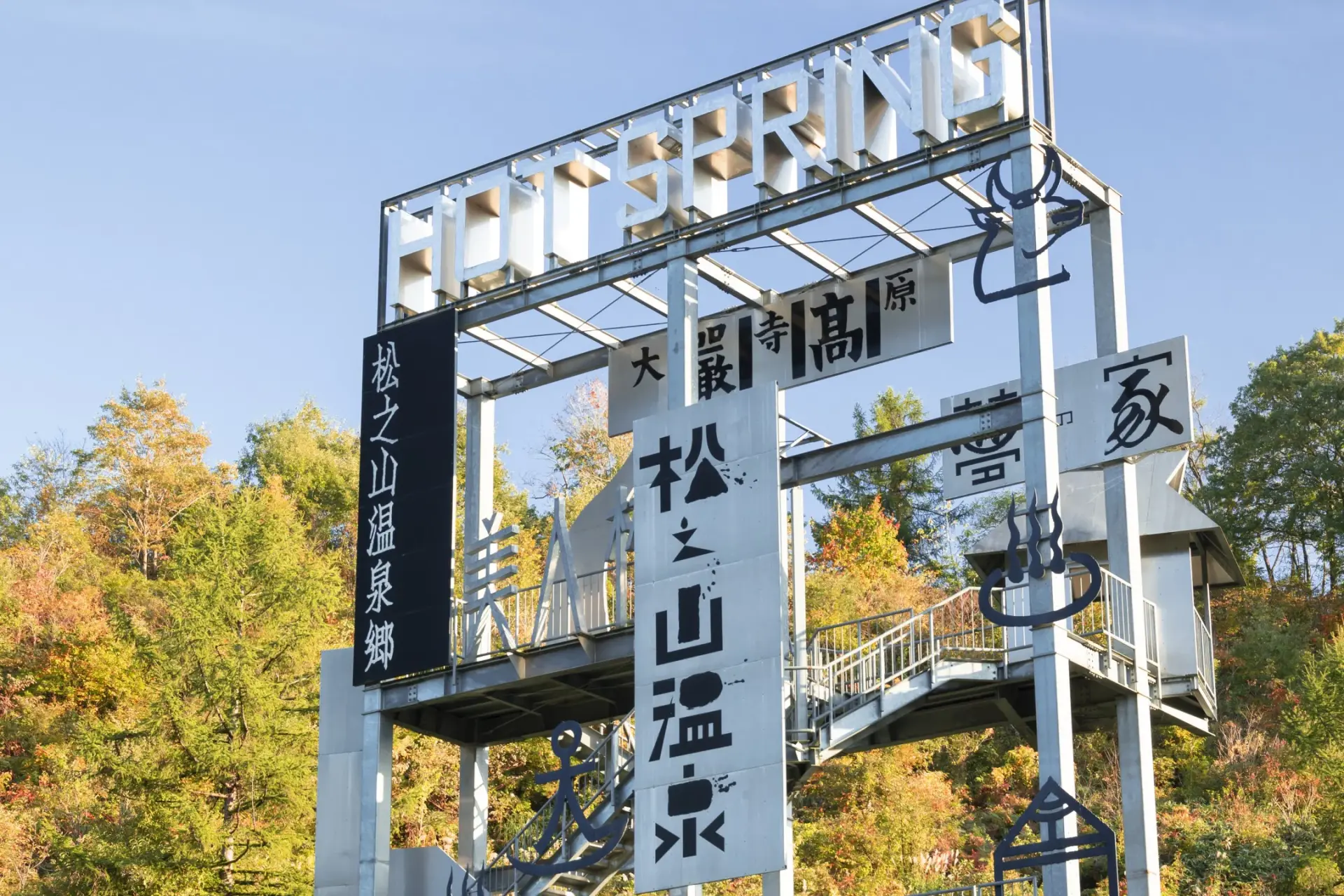
John Körmeling (Text design: Asaba Katsumi) "Step in Plan" Photo by Nakamura Osamu
Tsunan Area: Enjoy Art Amid Varied Landforms and Scenery
The Tsunan area is a satoyama at Niigata’s southern edge on the Nagano border.
Mount Naeba rises to the south, the Shigumi, Nakatsu, and Kiyotsu rivers join the Shinano, and multiple river terraces step up with fields and settlements on top.
In the secluded Akiyamago, unique customs, culture, and lifeways remain, including matagi hunter traditions.
Settlements thread deep valleys along the Nakatsu River, with distinct seasonal expressions-snowmelt and fresh green in spring, streams and shade in summer, whole-valley foliage in autumn, and tranquil snowscapes in winter.
Landmarks include Ryugakubo and the Tsunan Sunflower Field in summer, and views from the terrace edges are not to be missed.
Together with art, this area lets you feel landforms and the passage of seasons with your body.
Akeyama Arts Center
“Akeyama Arts Center” is a “mountain school” that reuses a closed elementary school.
Artists, residents, and researchers learn together the skills and knowledge for living in Akiyamago and develop them into artworks.
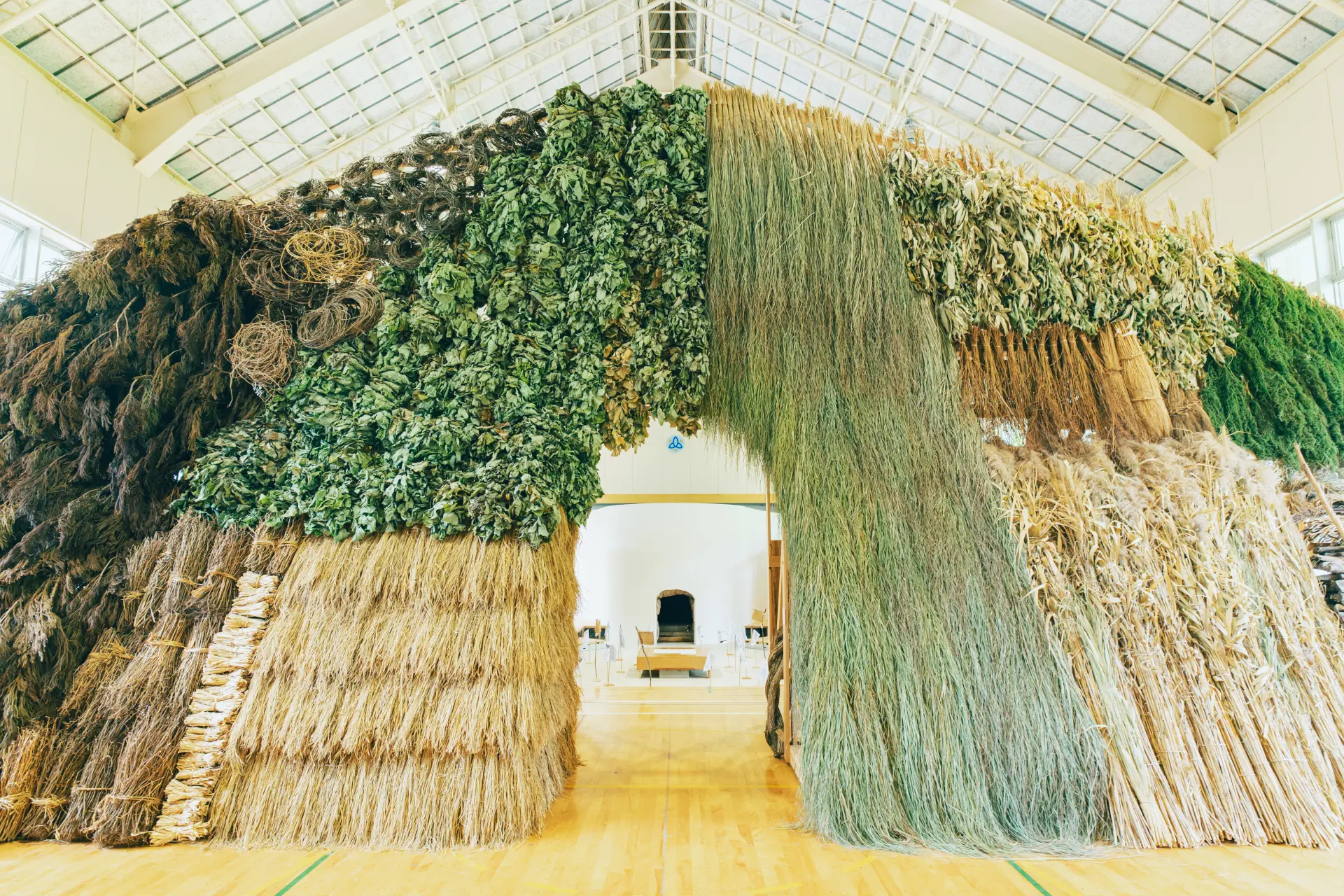
The former second-floor gym is designed by architect Sato Kengo, and the display booths are themselves enjoyable as works.
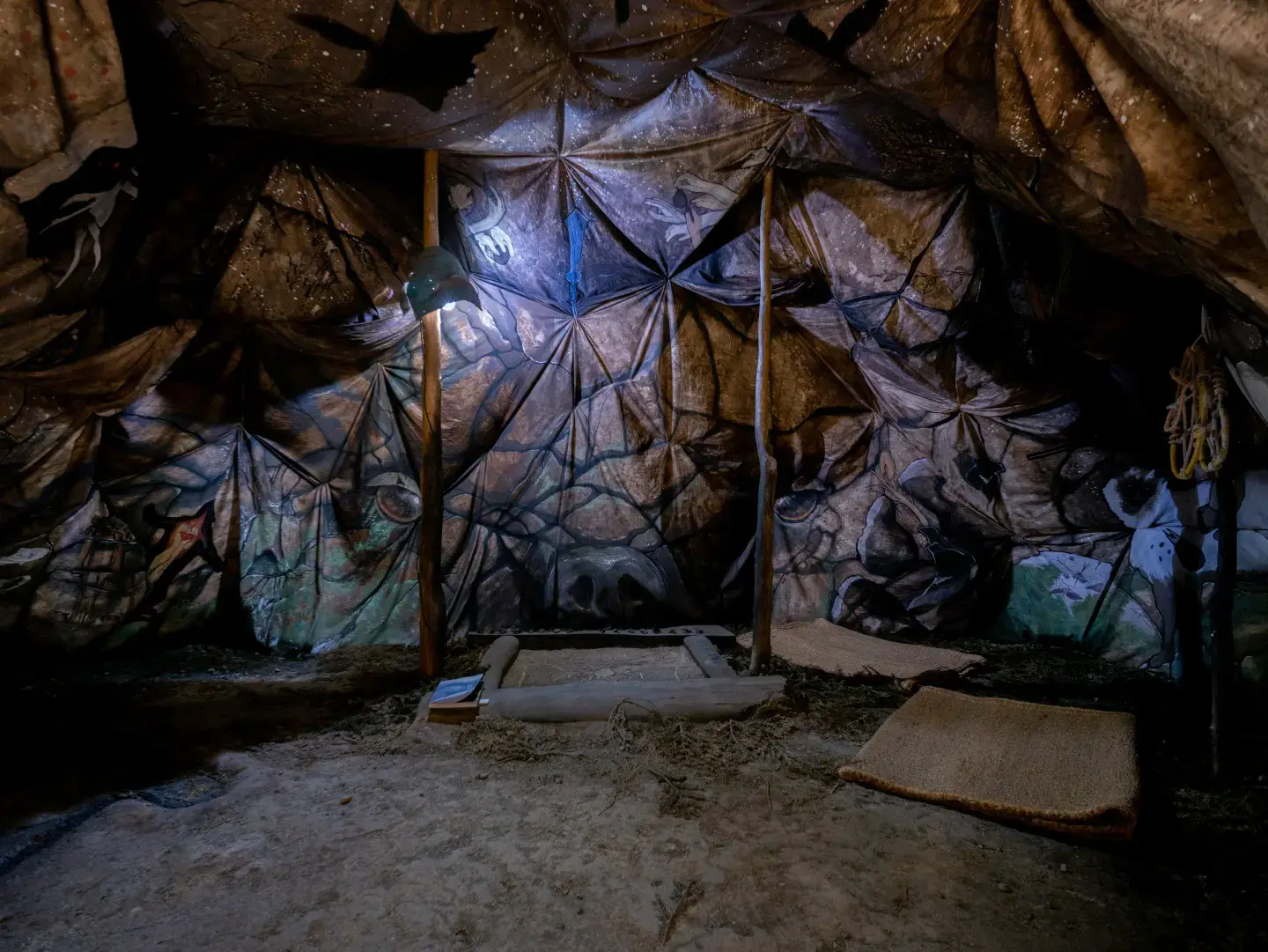
Inside, folk tools, records, and installations line the spaces, letting you sense the techniques and knowledge of mountain life with all five senses.
Workshops run continuously, offering hands-on experiences of mountain life with local masters.
-
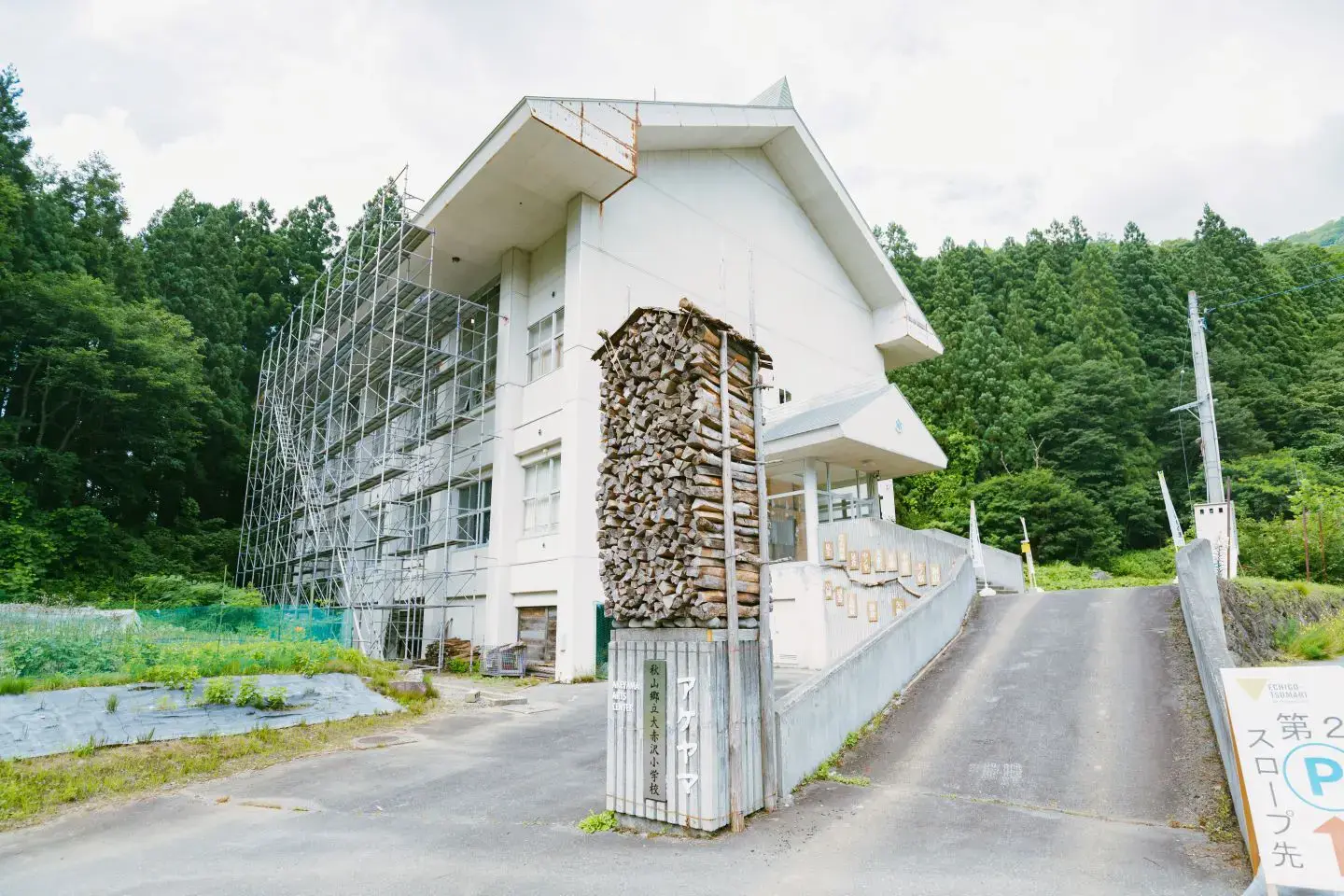
Exterior of Akeyama Arts Center Photo by Kanemoto Rintaro
-
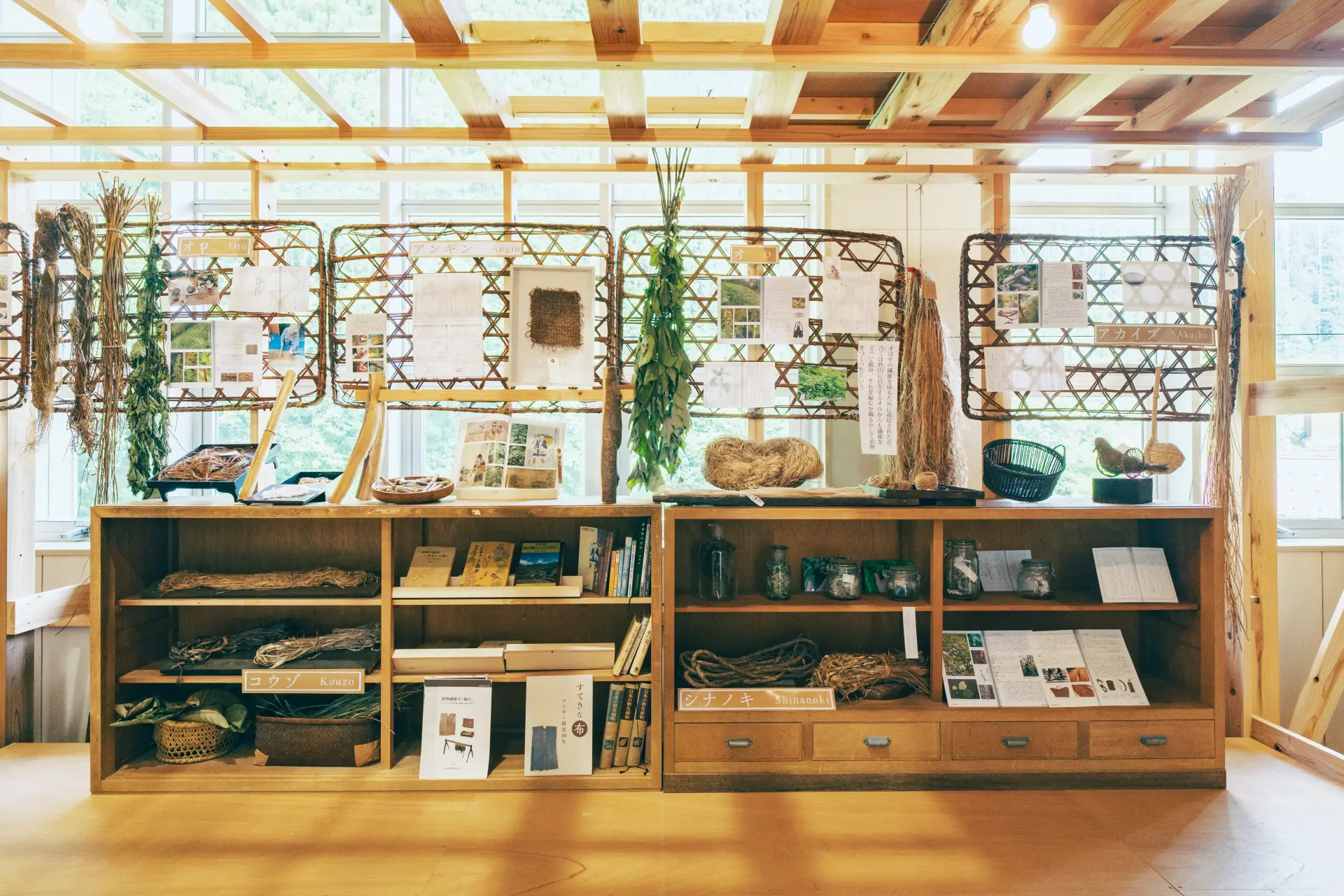
Fukasawa Takafumi "Zoku Akiyama Kikou Hensanshitsu" Photo by Kanemoto Rintaro
-
Inoue Yui "Yamanokuchi" Photo by Kanemoto Rintaro
-
Nagasawa Aoi "Yama no Tai"
Echigo-Tsumari “Kamigo Clove Theatre”
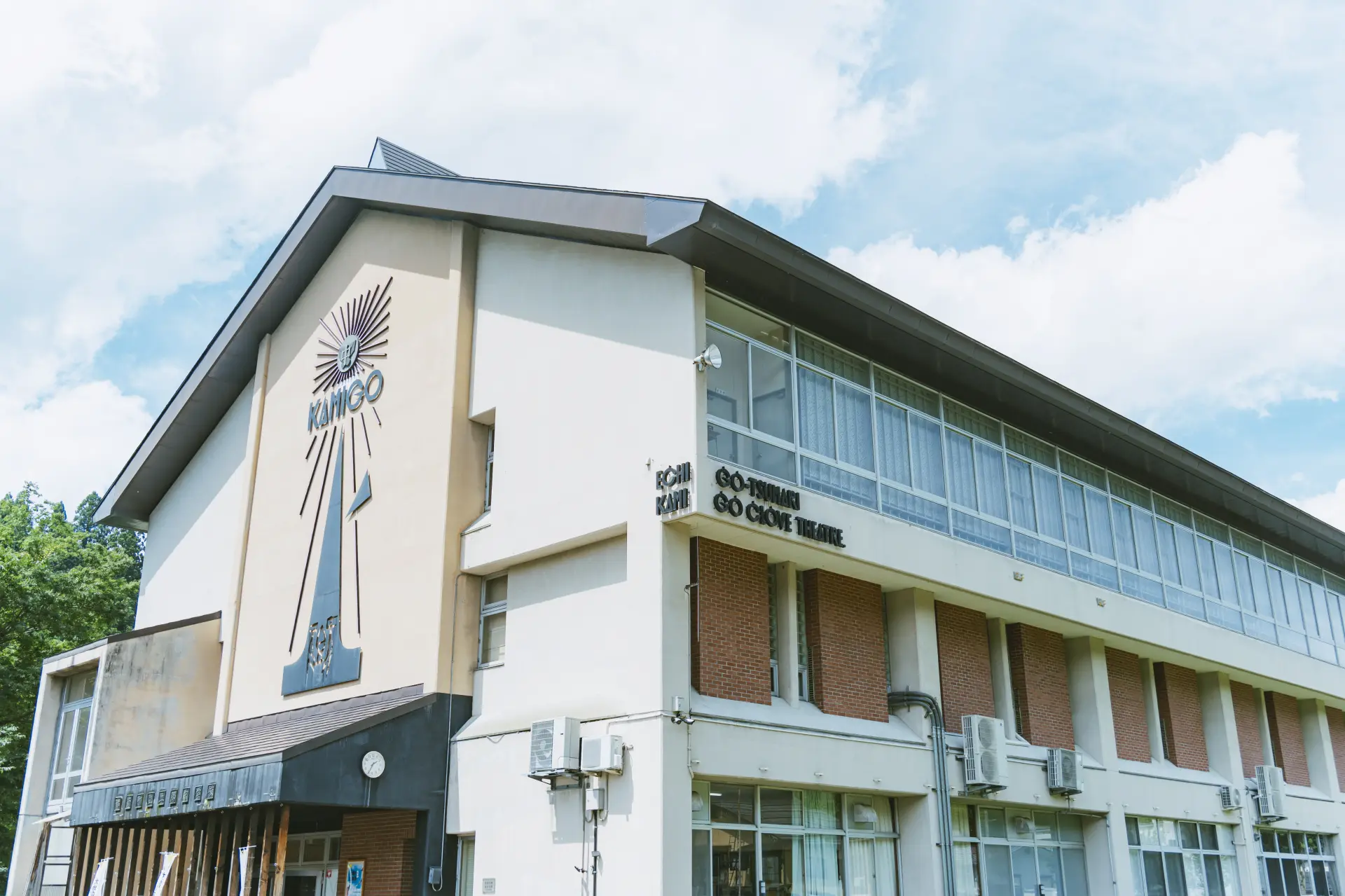
A closed junior high school from 2012 was reborn in 2015 as a performing-arts hub for theater, dance, music, and more.
It supports residency creation and training camps and functions as a theater for performances.
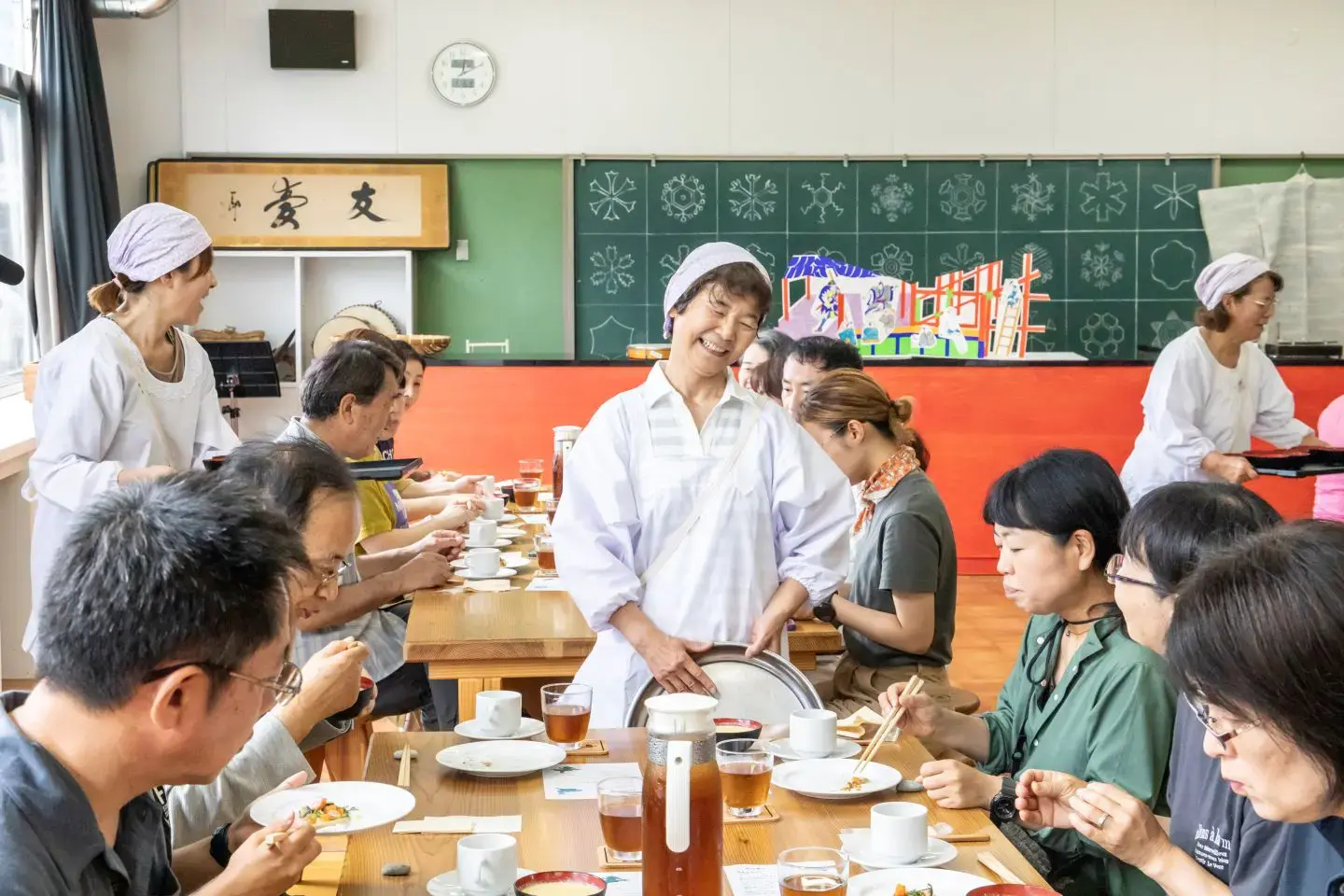
A variety of programs run throughout the year, including the limited-time Kamigo Clove Theatre Restaurant, in which local women perform while cooking, and schedules are listed on the official site.
While savoring Uonuma Koshihikari and Tsunan’s seasonal foods, you spend time immersed in story.
Inside the building are works such as Kamigo Bando Shiki no Uta, where automata sing, Passage of the Sun, where natural light and color weave spatial expression, and Farm Tools Are Musical Instruments, which resonates sound by treating farm implements as instruments.
-
Exterior of Echigo-Tsumari "Kamigo Clove Theatre" Photo by Kanemoto Rintaro
-
EAT&ART TARO "Restaurant Kamigo Clove Theatre" Photo by Nakamura Osamu
-
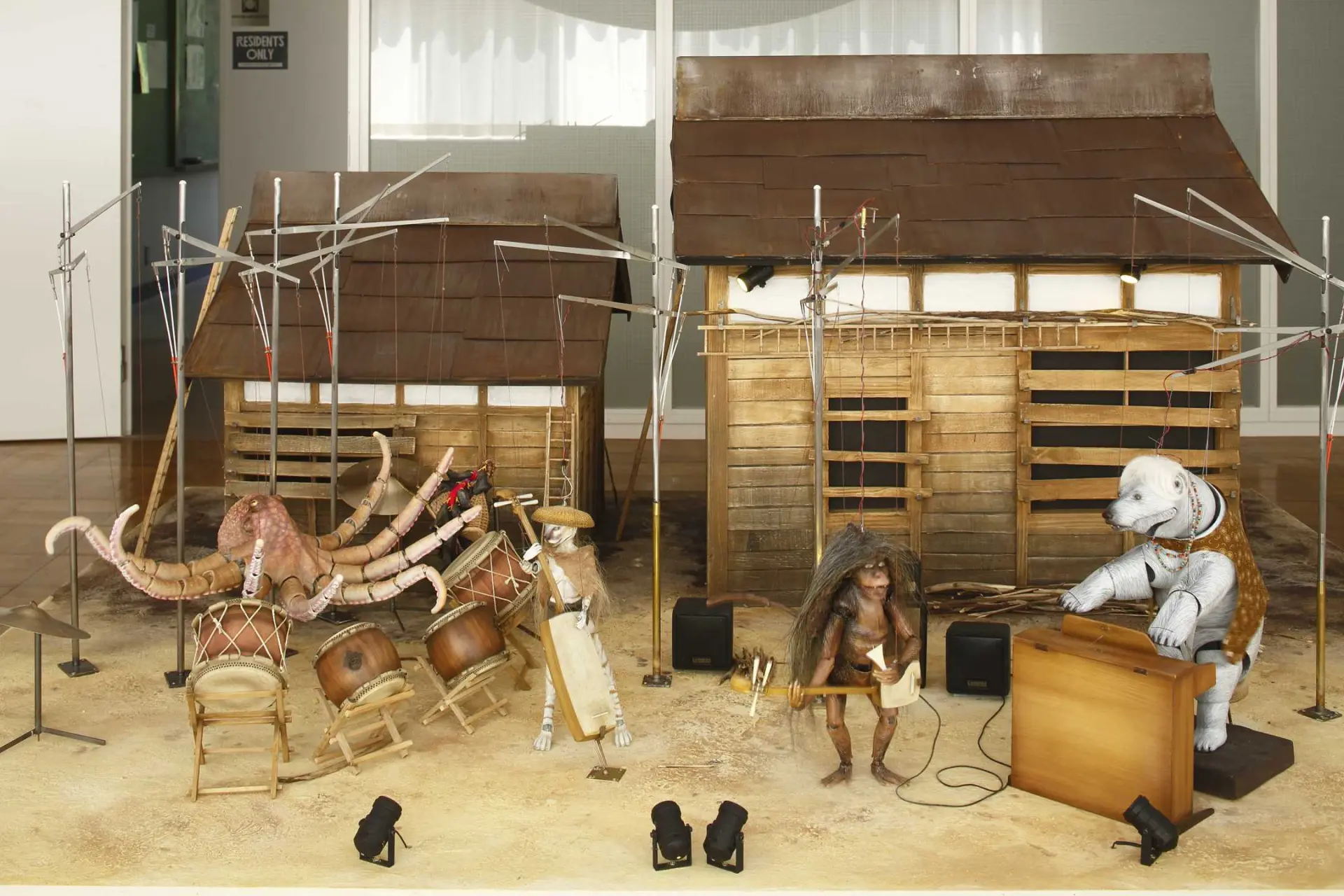
Nicolas Darrot "The Kamigo Band – Songs for the Seasons" Photo by Kioku Keizo
-
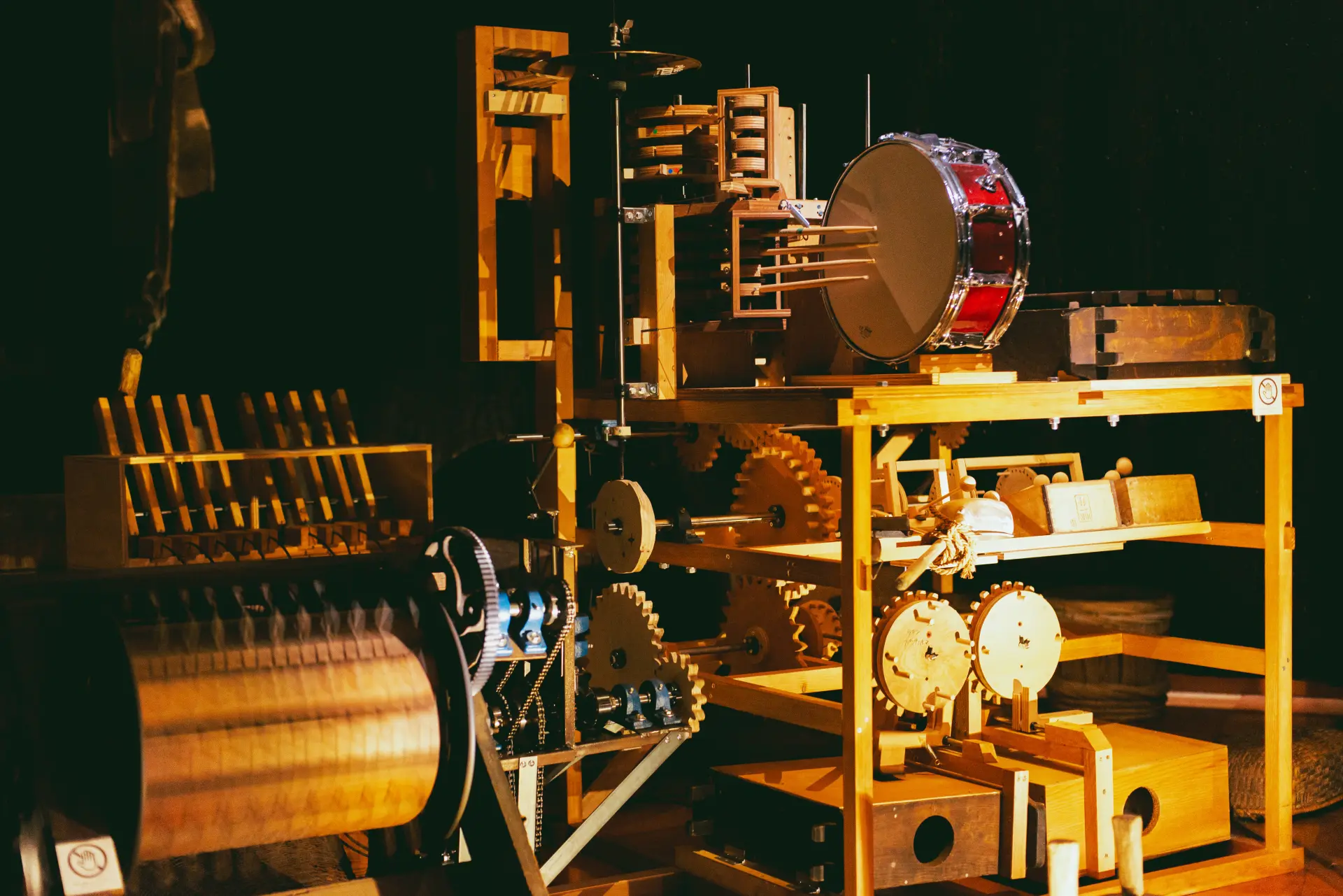
Oka Makoto+The Music Mill Project "Farm Tools Are Musical Instruments!" Photo by Kanemoto Rintaro
Recommended Works in the Tsunan Area
In Tsunan you will find hubs and works that connect satoyama with the wider world.
Visit places where the seemingly opposite-local and global-coexist.
| Work | Artist | Summary |
|---|---|---|
| Hong Kong House | Yip Chun Hang | A renovated vacant house that serves as an exchange hub where Hong Kong artists stay and open exhibitions, performances, and a cafe during the festival period. |
| Beyond the Borders | Lin Shuen Long | A large gate that appears in a village park where ceramic figurines of the Jiaozhi tradition dance, a bronze water buffalo peeks within, and an entryway to Taiwanese culture is suggested. |
| 0121-1110=109071 | Lee Jaehyo | The artist combines ordinary pieces of wood to create new wood with beautifully rich expression, forming three giant spheres that plants will eventually cover so they harmonize with their surroundings. |
-
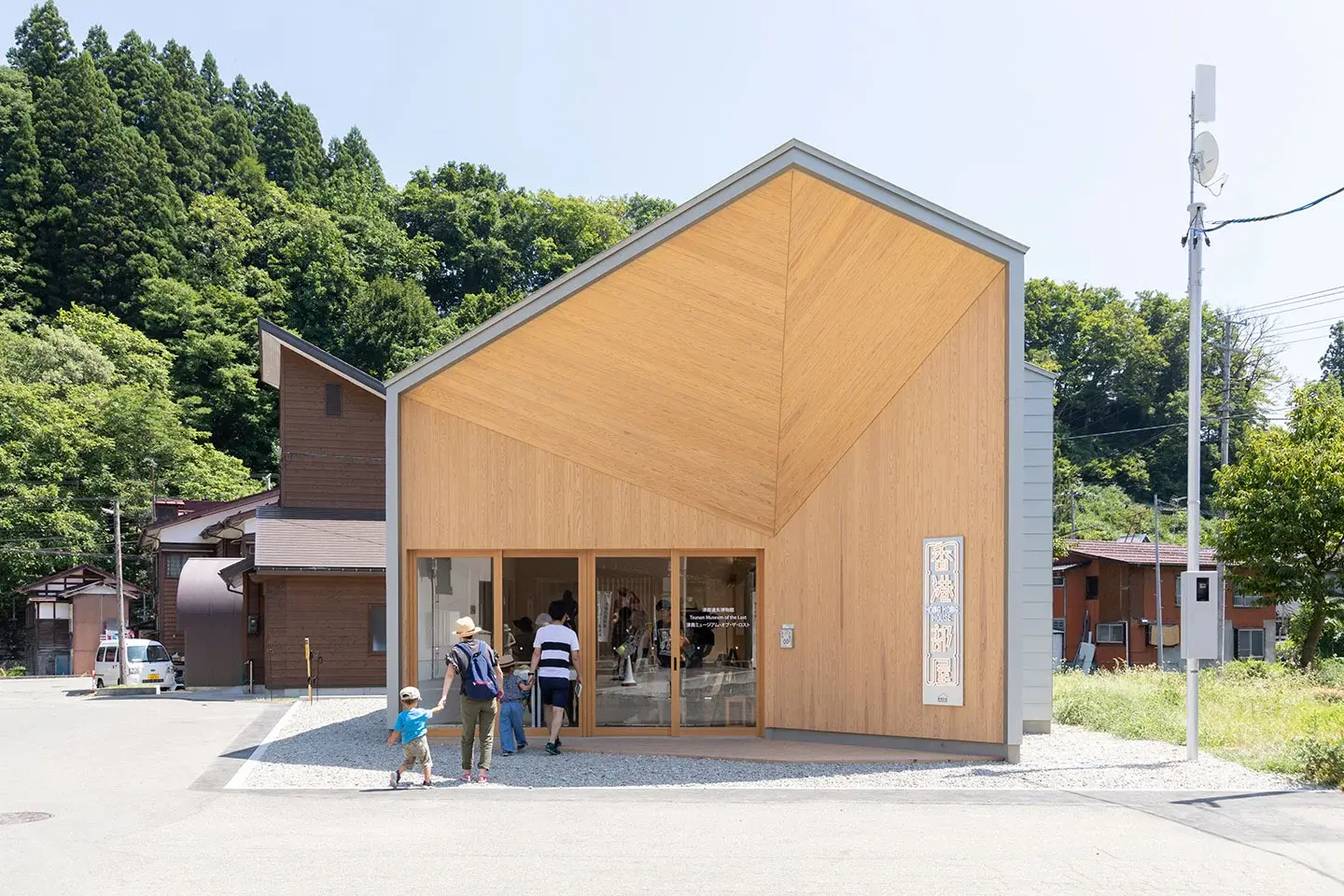
Yip Chun Hang "Hong Kong House" Photo by Nakamura Osamu
-
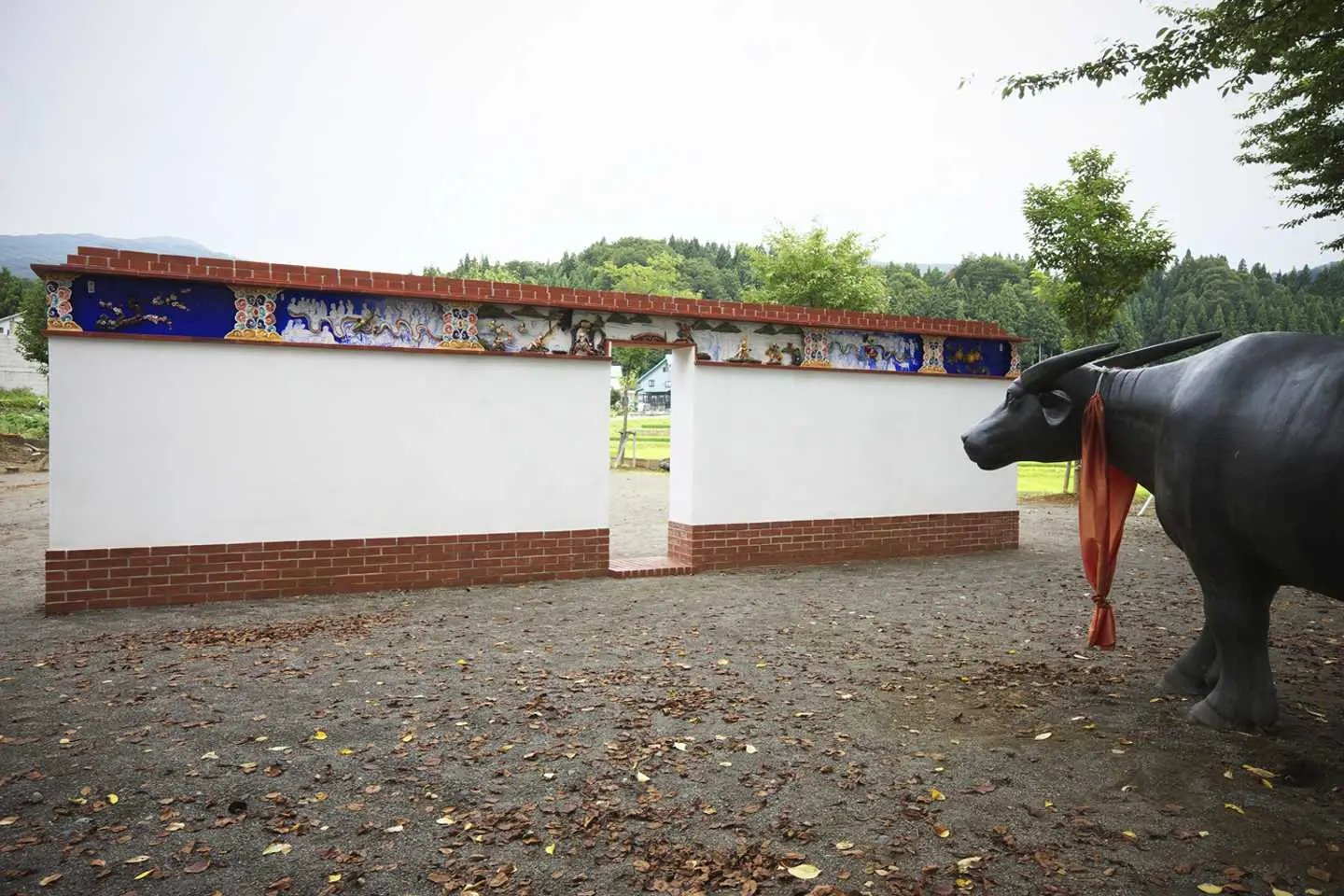
Lin Shuen Long "Beyond the Borders" Photo by Miyamoto Takenori + Seno Hiromi
-
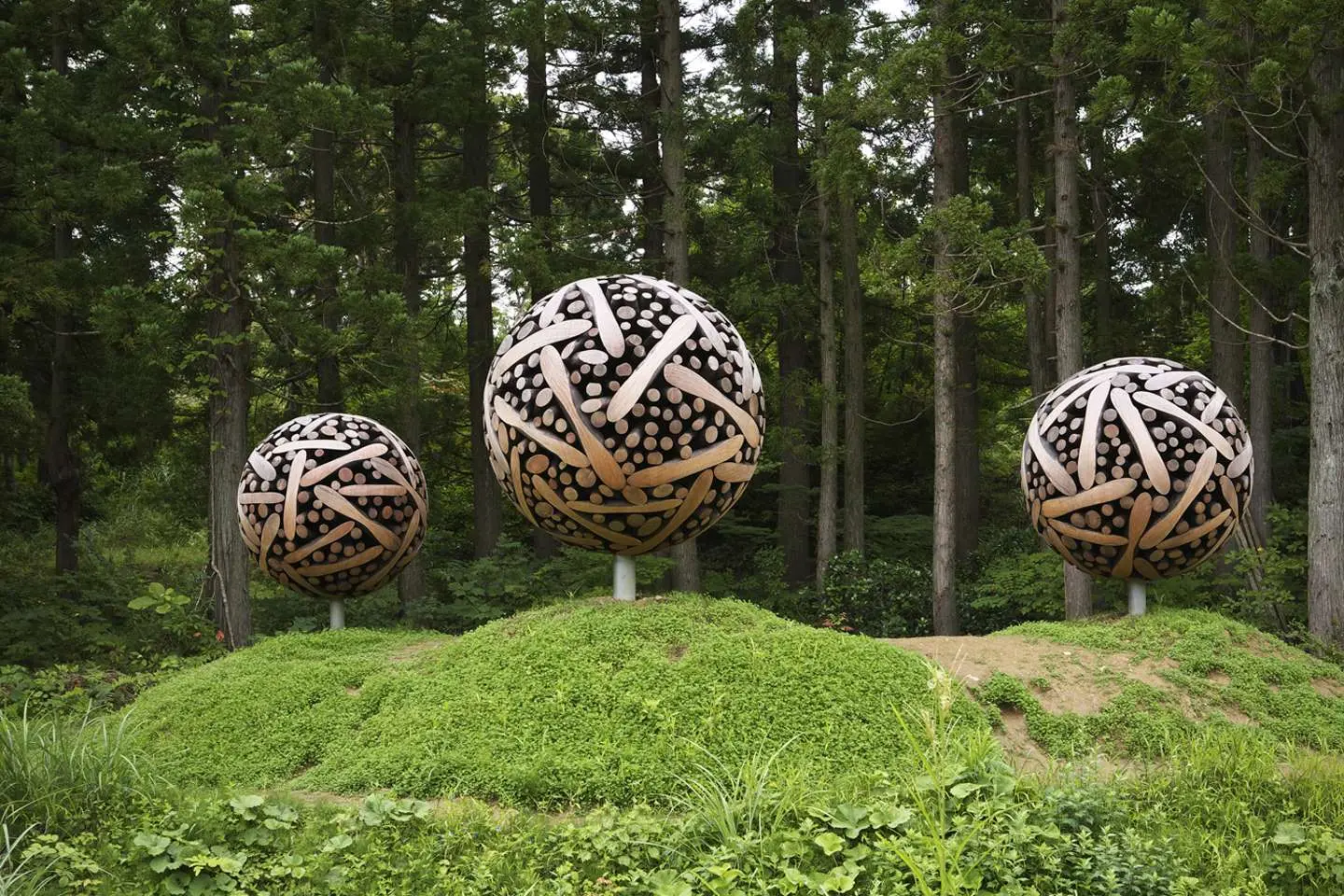
Lee Jaehyo "0121-1110=109071" Photo by Miyamoto Takenori + Seno Hiromi
A Two-Day Model Course to Enjoy the Triennale Efficiently
Works are dispersed across the vast lands of Echigo-Tsumari, and time is never enough if you try to pair them with each area’s attractions.
Here is a model course to savor the Triennale efficiently in one night and two days.
To maximize the number of facilities and works you can visit, this itinerary assumes a rental car, so prepare to drive in Japan beforehand.

Day 1
The starting point is Echigo-Yuzawa Station on the Joetsu Shinkansen.
Rent a car near the station, tour works in the Nakasato area and key facilities in Tokamachi, and stay at a ryokan in Matsunoyama Onsen, one of Japan’s three great medicinal hot springs.
- Rent a car at a rental office near Echigo-Yuzawa Station and depart.
- View the work “Nakasato Scarecrow Garden.”
- View the work “Set North for Japan (74°33’2”).”
- Have lunch around Tokamachi Station and gather information at the Tokamachi Station Tourist Information Center.
- View works at Museum on Echigo-Tsumari, MonET.
- View works at the Hachi & Seizo Tashima Museum of Picture Book Art.
- Stay overnight at a ryokan in Matsunoyama Onsen.
When eating lunch near Tokamachi Station, consult local recommendations for station-area lunches and cafes in Tokamachi.
Day 2
On the second day, travel widely through the Matsunoyama, Matsudai, and Nakasato areas and then head to the famed “Tunnel of Light” (Kiyotsu Gorge Tunnel).
Return the car near Echigo-Yuzawa Station and head home.
- Depart your ryokan in Matsunoyama Onsen.
- View the work “The Last Class.”
- View works scattered below Matsudai Castle as part of the Matsudai “NOHBUTAI” Field Museum.
- Have lunch at Echigo-Matsudai Satoyama Shokudo.
- View the work “For Lots of Lost Windows.”
- Explore “Tunnel of Light” (Kiyotsu Gorge Tunnel).
- Return your rental car near Echigo-Yuzawa Station and head home.
Official Goods for Perfect Souvenirs
Original goods of the Triennale are sold at the online shop and facilities on site.
The lineup includes the official guidebook, logo pin badges, T-shirts, tote bags, and more-ideal as travel mementos and gifts.
A large map showing artwork locations and photos gives you the big picture and is especially recommended.
Also look for goods by participating artists and items that let you feel Echigo-Tsumari’s culture.
On the second floor of Museum on Echigo-Tsumari, MonET, the MonET Museum Shop carries an especially wide range, so drop by during your trip.
-
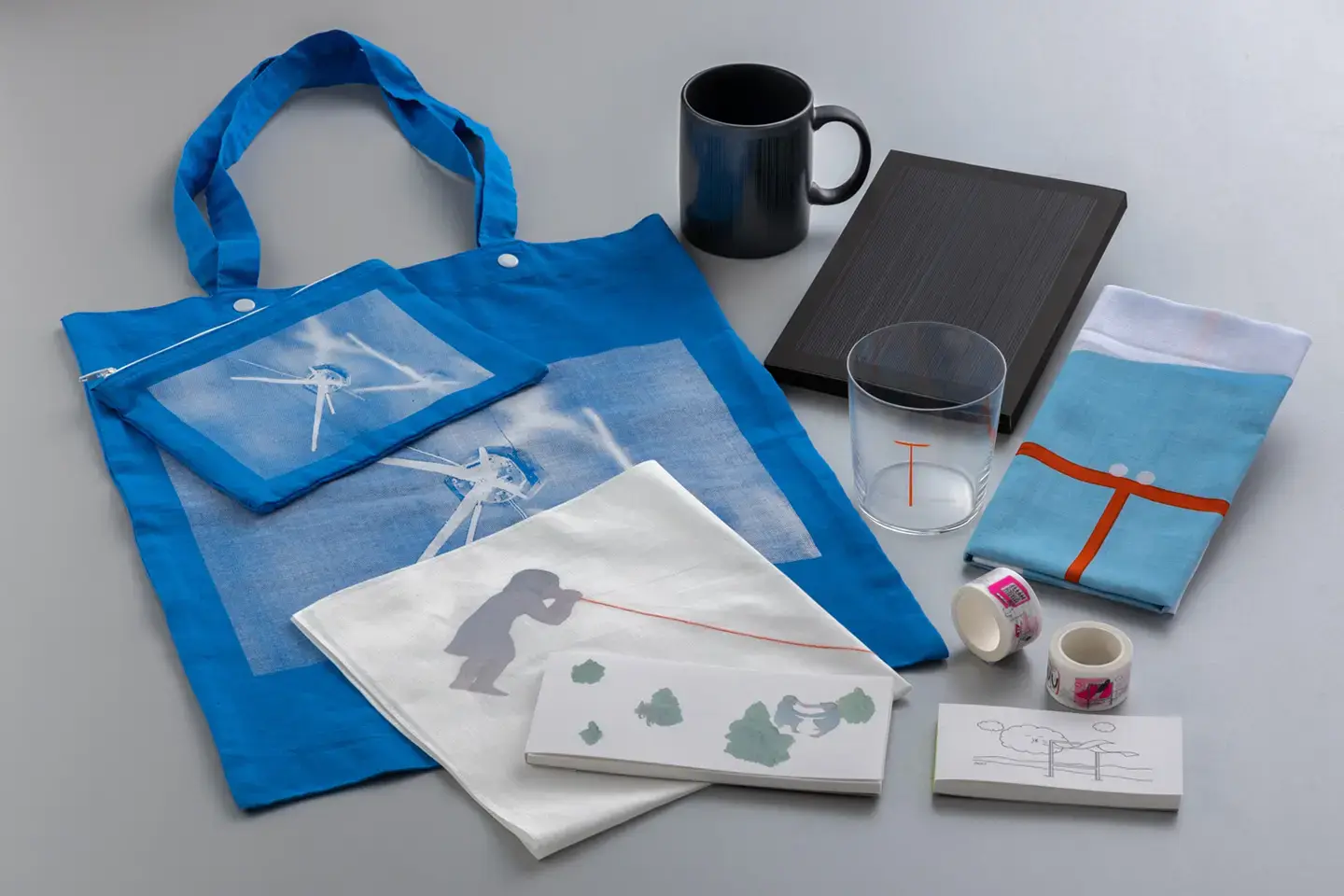
Artist merchandise
-

Locally made specialties, redesigned
-
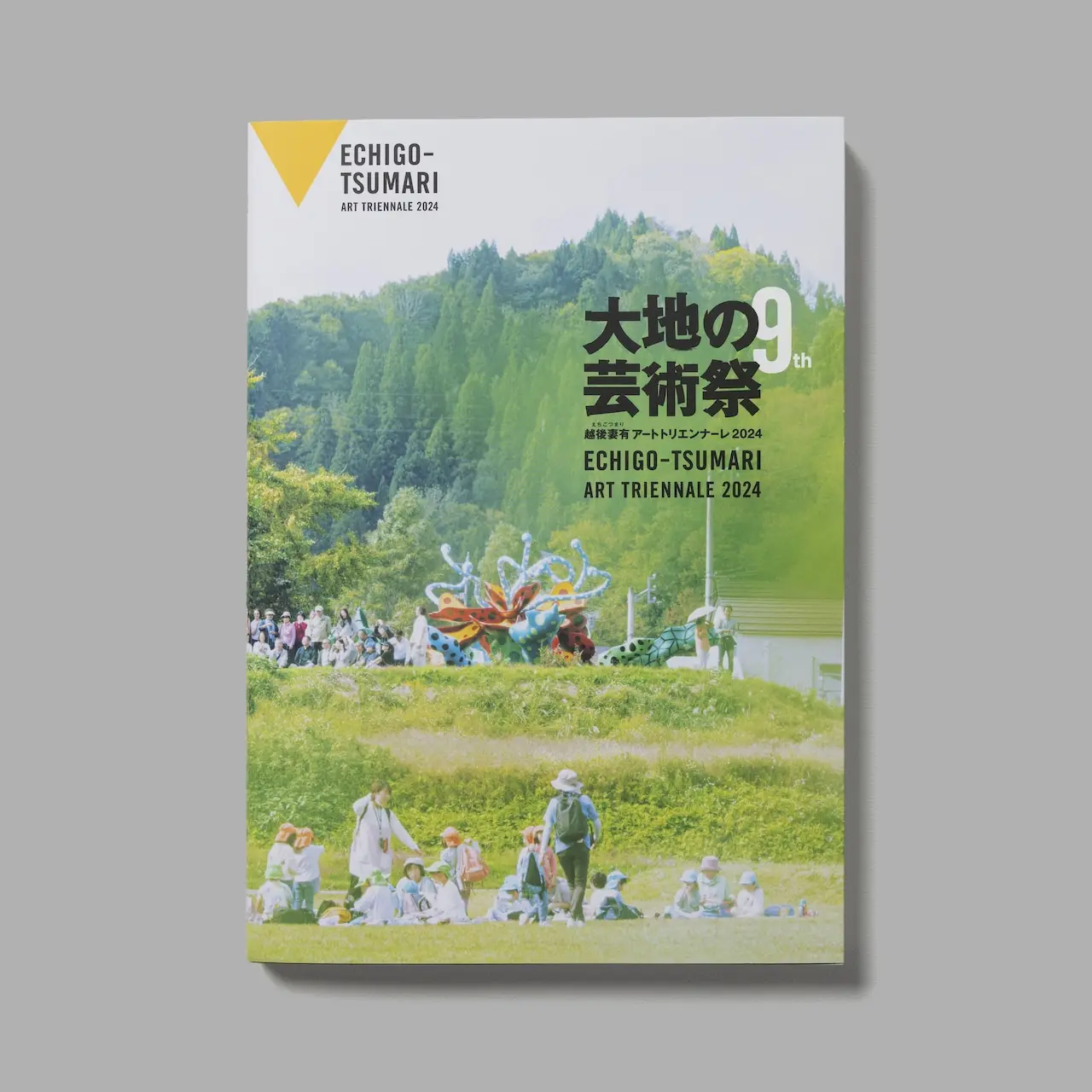
Echigo-Tsumari Art Triennale 2024 catalog Photo by Nakamura Osamu
Seasonal Ways to Enjoy the Triennale and Echigo-Tsumari
Because events are held across the region in step with the seasons, including outside the main festival period, what you can experience changes by when you visit.
Echigo-Tsumari’s landscapes transform with the seasons, and the appearance of outdoor artworks shifts accordingly.
Below we introduce seasonal charms and ways to enjoy them.
Choose the season that fits your tastes to savor the Triennale and Echigo-Tsumari more deeply.
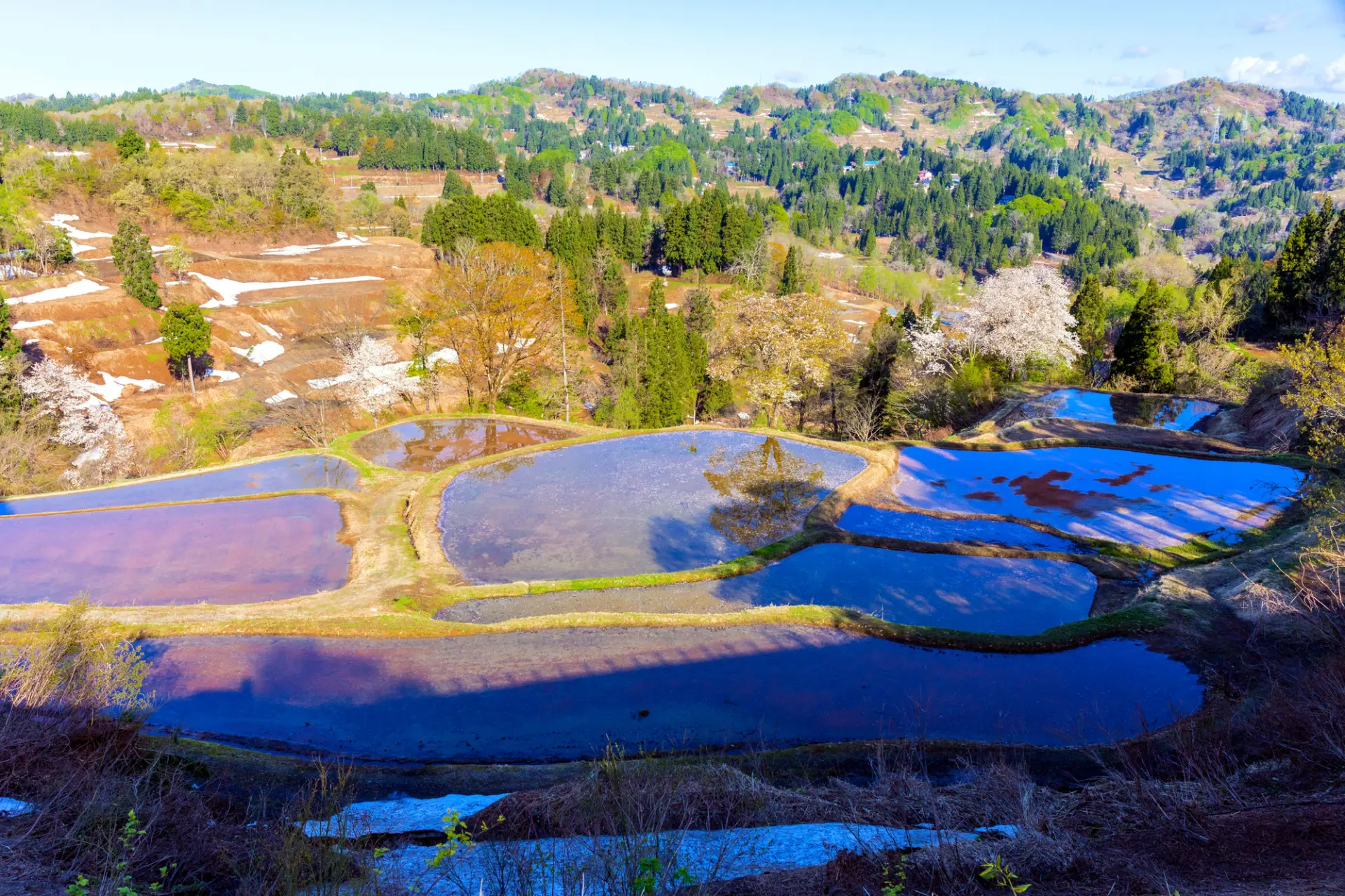
Spring: Residual Snow Colors the Satoyama
In spring, flowers bloom across satoyama where snow still lingers, spreading vistas that herald the season’s arrival.
When conditions align, you can find spots where remaining snow pairs with cherry blossoms.
Landscapes of rice terraces brimming with snowmelt are also beautiful.
Another spring delight is local cuisine featuring mountain vegetables.
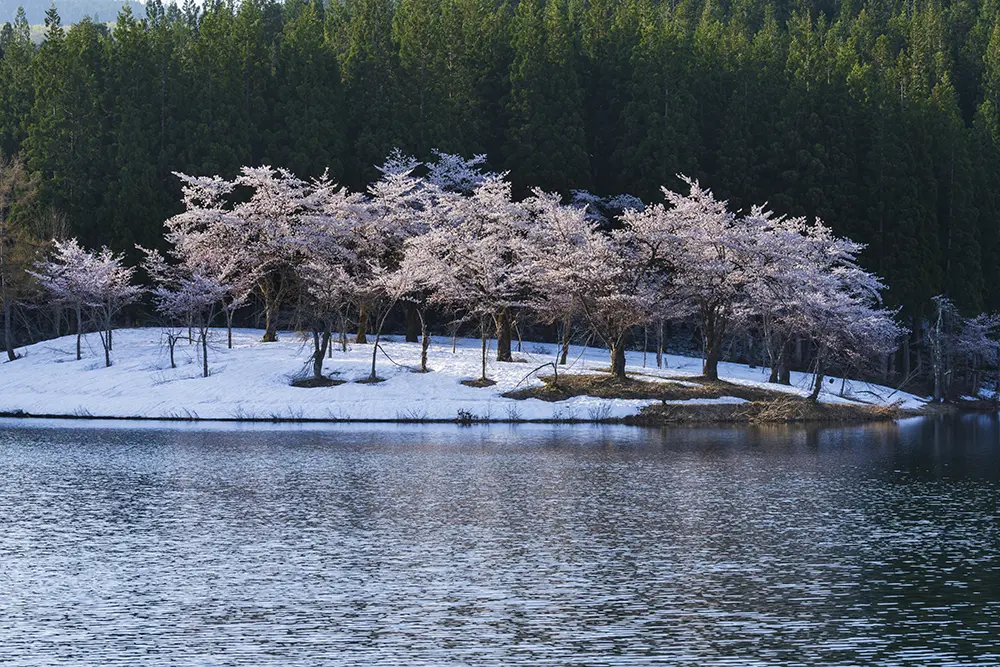
Summer: Enjoy the Outdoors to the Full
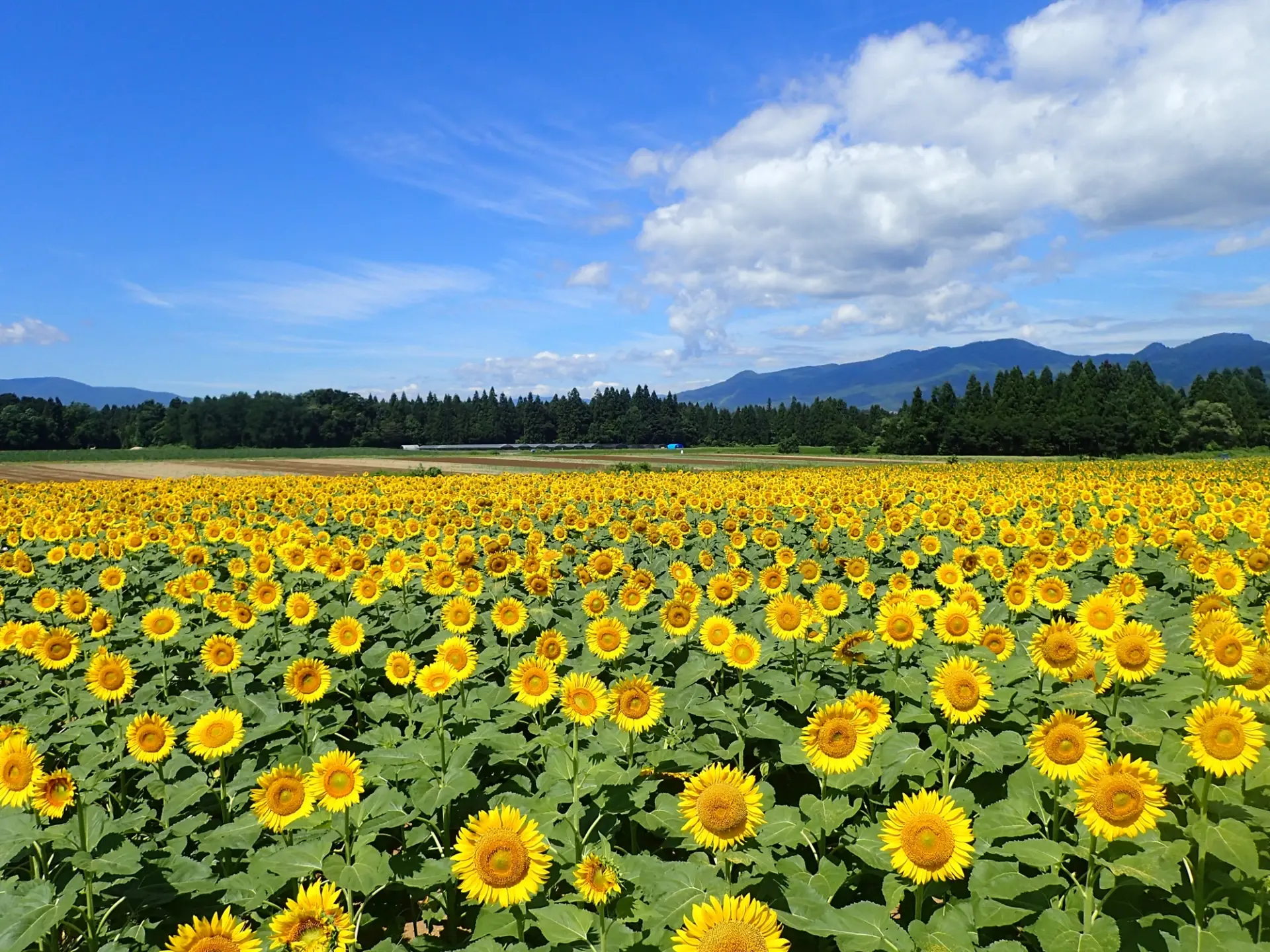
In summer, the sunflower fields in the Tsunan area are famous, with about half a million blossoms coloring the land in yellow.
Children can play in the pool at MonET’s central basin, and campsites along rivers offer full-on outdoor fun.
Autumn: A Wealth of Foliage Spots
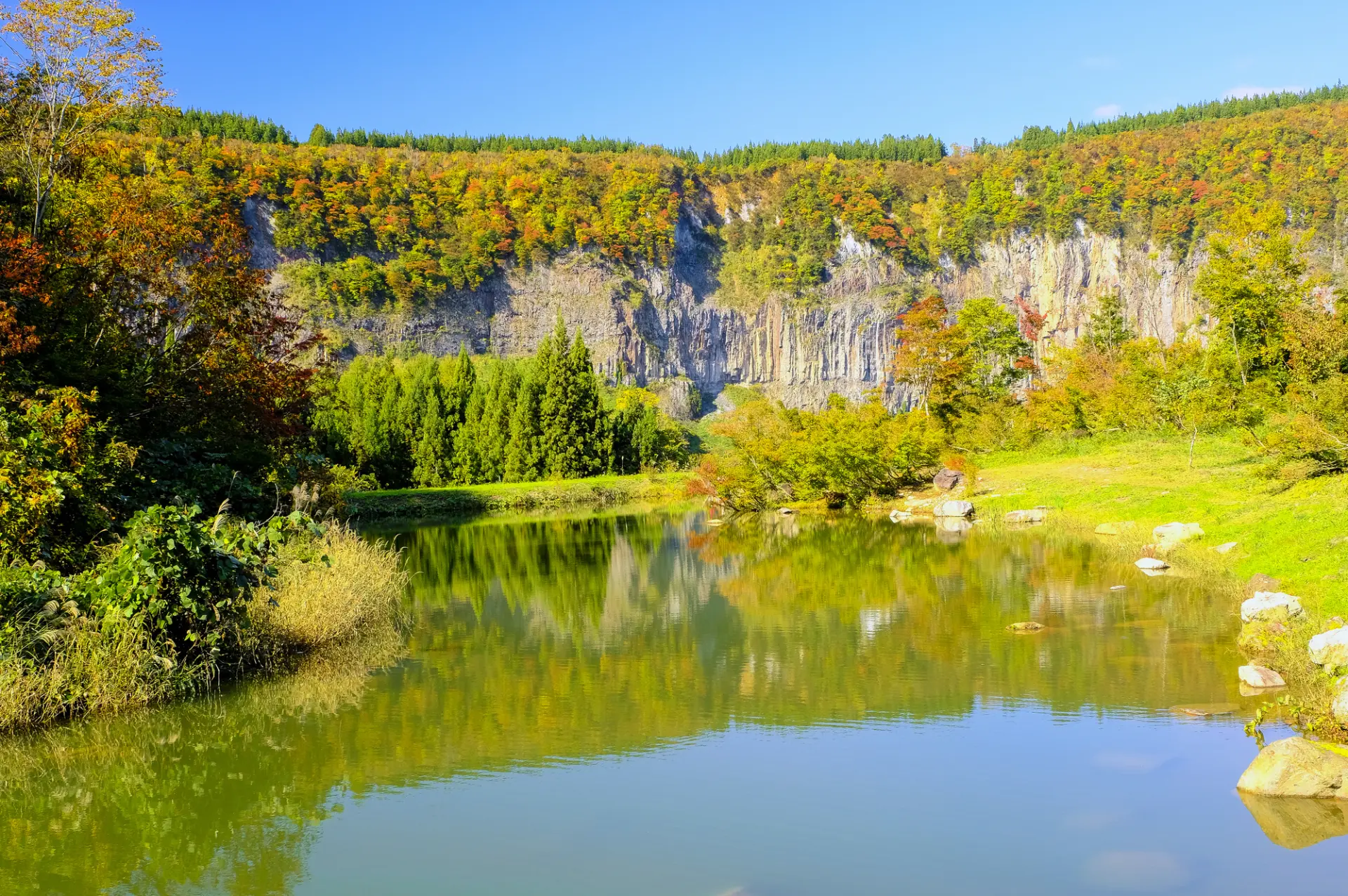
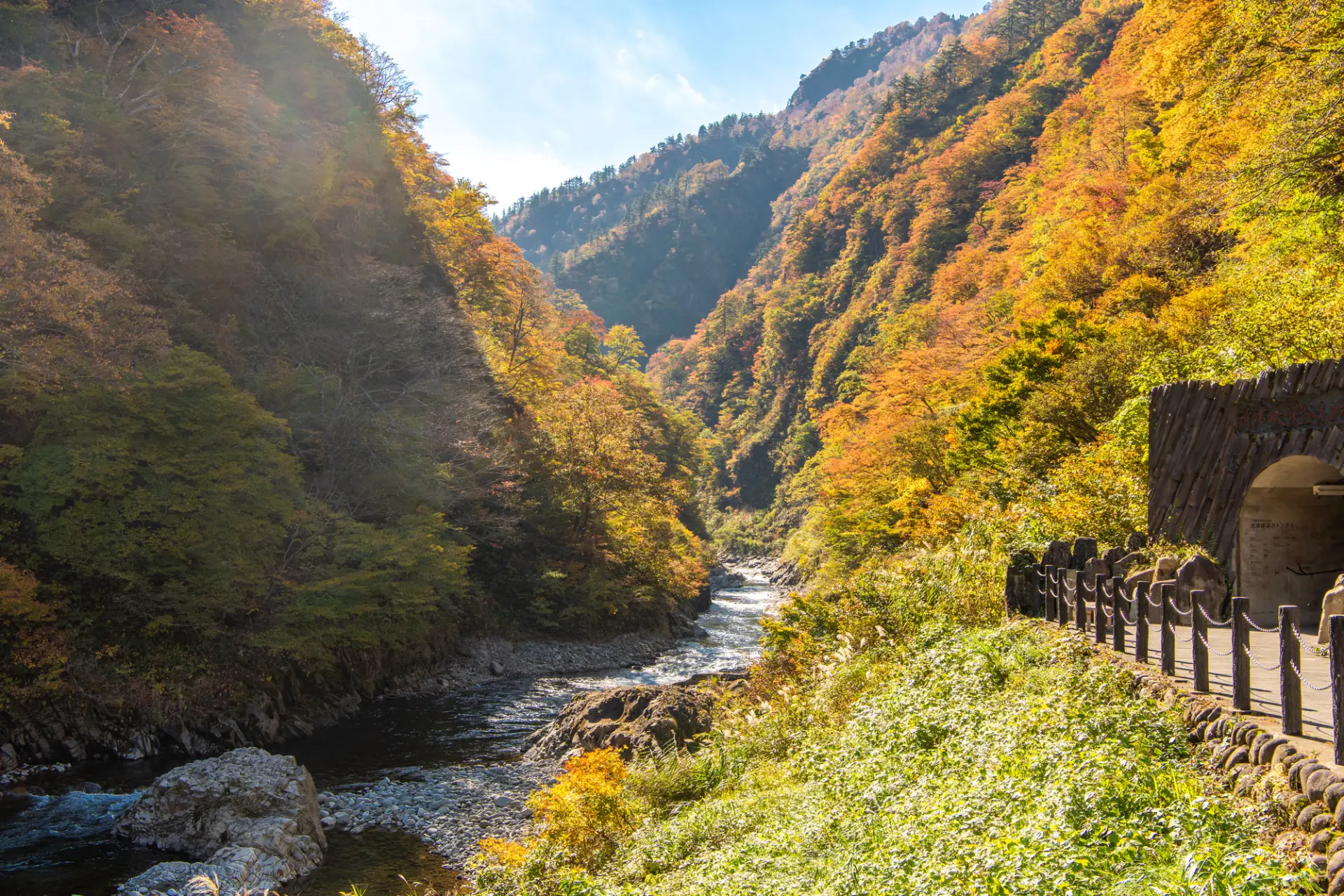
In autumn, mountains across Echigo-Tsumari glow with fall colors, with Akiyamago in the Tsunan area and Kiyotsu Gorge in the Nakasato area particularly beautiful.
Akiyamago has many foliage spots, each with its own distinct scenery.
At Kiyotsu Gorge, the interweaving of columnar joints and foliage is best enjoyed from “Tunnel of Light” (Kiyotsu Gorge Tunnel).
Autumn is also new-rice season, and at Echigo-Matsudai Satoyama Shokudo’s New Rice Fair you can sample freshly cooked rice and enjoy its aroma and texture.
Winter: Deep Snow Wraps the Land
Winter’s charm is satoyama landscapes wrapped in deep snow.
Facilities hold snow-country activities such as snowshoe outings, sledding, and snow tubing.
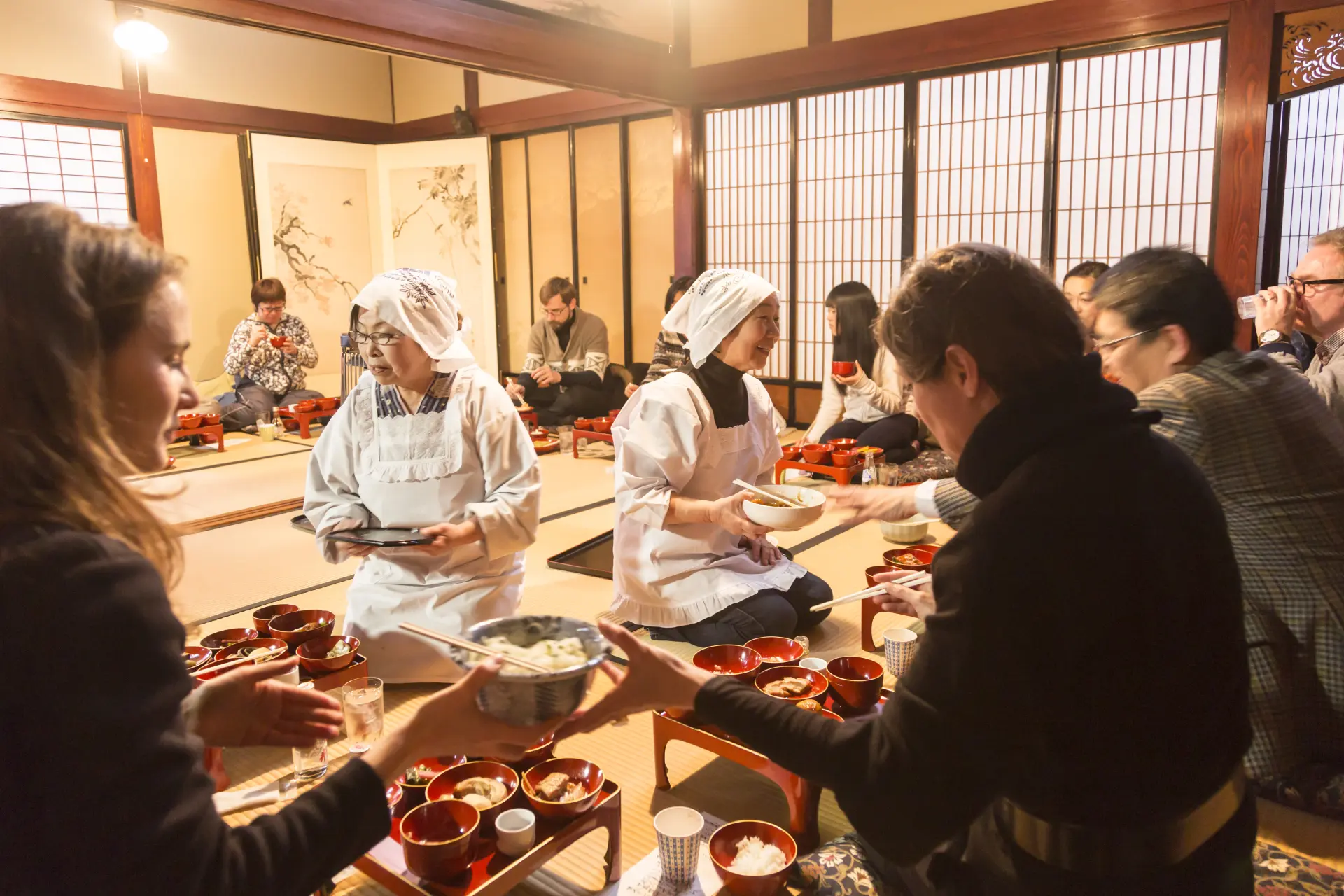
“Yukimi gozen,” a special Triennale program, lets you feel the festival’s concepts through nutrient-rich dishes served with ceremonial sets and tableware once used in households to withstand the harsh season.
To enjoy Yukimi gozen, participation in an official Triennale tour is required.
Tips to Know Before Touring the Triennale
Keep the tips below in mind to get the most out of your visit.
Bring a Paper Map Because Signals Are Weak in the Mountains
Mobile reception is often weak in the mountains, and map apps may fail to load.
Carry a paper map sold at tourist information centers and major hubs or save maps to your phone in advance.
Also bring a mobile battery.

Wear Comfortable Clothes and Shoes for Unpaved Paths
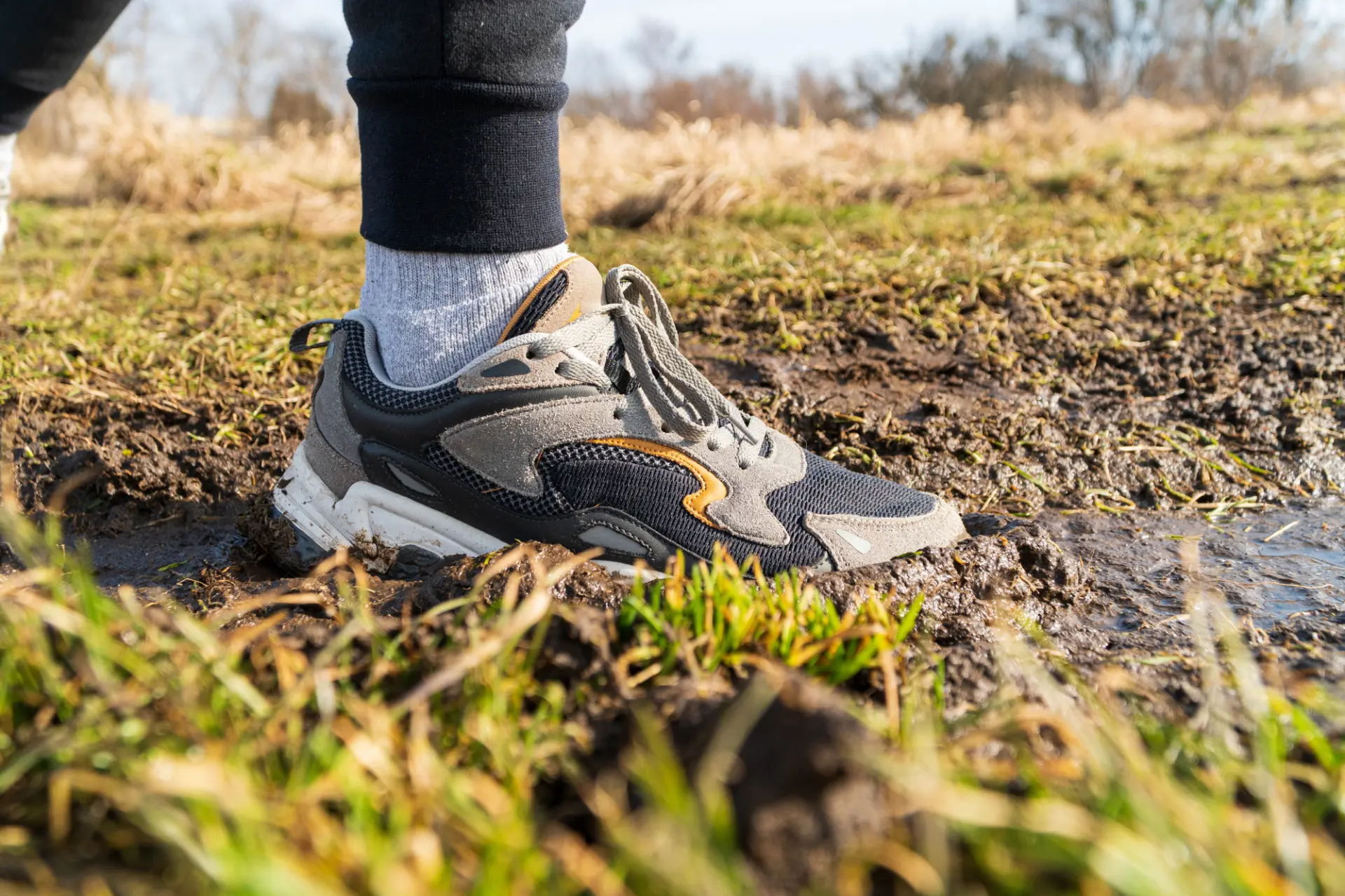
Because works dot paddy levees, mountain trails, and forested sites, you may walk on unpaved ground.
Wear slip-resistant sneakers or trekking shoes and carry a bag that leaves both hands free.
Add a hat, sunscreen, and a light rain jacket, and bring insect repellent for summer and a layer easy to adjust for spring and autumn.
Expect Traffic and Crowds in Foliage Season
Roads across Echigo-Tsumari get congested at foliage peak, and travel times can lengthen.
Plan with extra time.
“Tunnel of Light” (Kiyotsu Gorge Tunnel) may require advance reservations in some seasons, so complete procedures before departure.

Prepare for Winter Driving
As a heavy-snow region, winter driving on snowy roads is unavoidable in Echigo-Tsumari.
National routes and other busy roads are plowed, but mountain roads freeze easily and curves and bridges are especially slick, so drive more cautiously than usual with reduced speeds.
If renting a car, confirm that it has snow tires before departure.

Frequently Asked Questions about the Echigo-Tsumari Art Triennale
Q
Where is the Echigo-Tsumari Art Triennale held?
A
It takes place in Tokamachi-shi and Tsunan-machi in the southern part of Niigata Prefecture, collectively called Echigo-Tsumari, with access of about 2 hours by train or 3.5 hours by car from Tokyo.
Q
When is the next Echigo-Tsumari Art Triennale?
A
The triennale is planned for 2027, and in other years artworks are open and special exhibitions and events are held.
Q
Can I tour the Triennale only by train and bus?
A
You can tour works around stations in the Tokamachi and Matsudai areas, but if you want to see as many works as possible in other areas, renting a car or joining an official tour is recommended, and official tours conveniently start and end at Echigo-Yuzawa Station, a Shinkansen stop.
Wrap-up
We have introduced the Triennale’s appeal, the charm of its host region, key facilities, and recommended works in a comprehensive way so you can fully enjoy your visit.
Because artworks are on view outside the main festival period and seasonal events are also held, if you want to experience Japan’s original landscapes and cultures that have lived on for generations, travel to Echigo-Tsumari.