

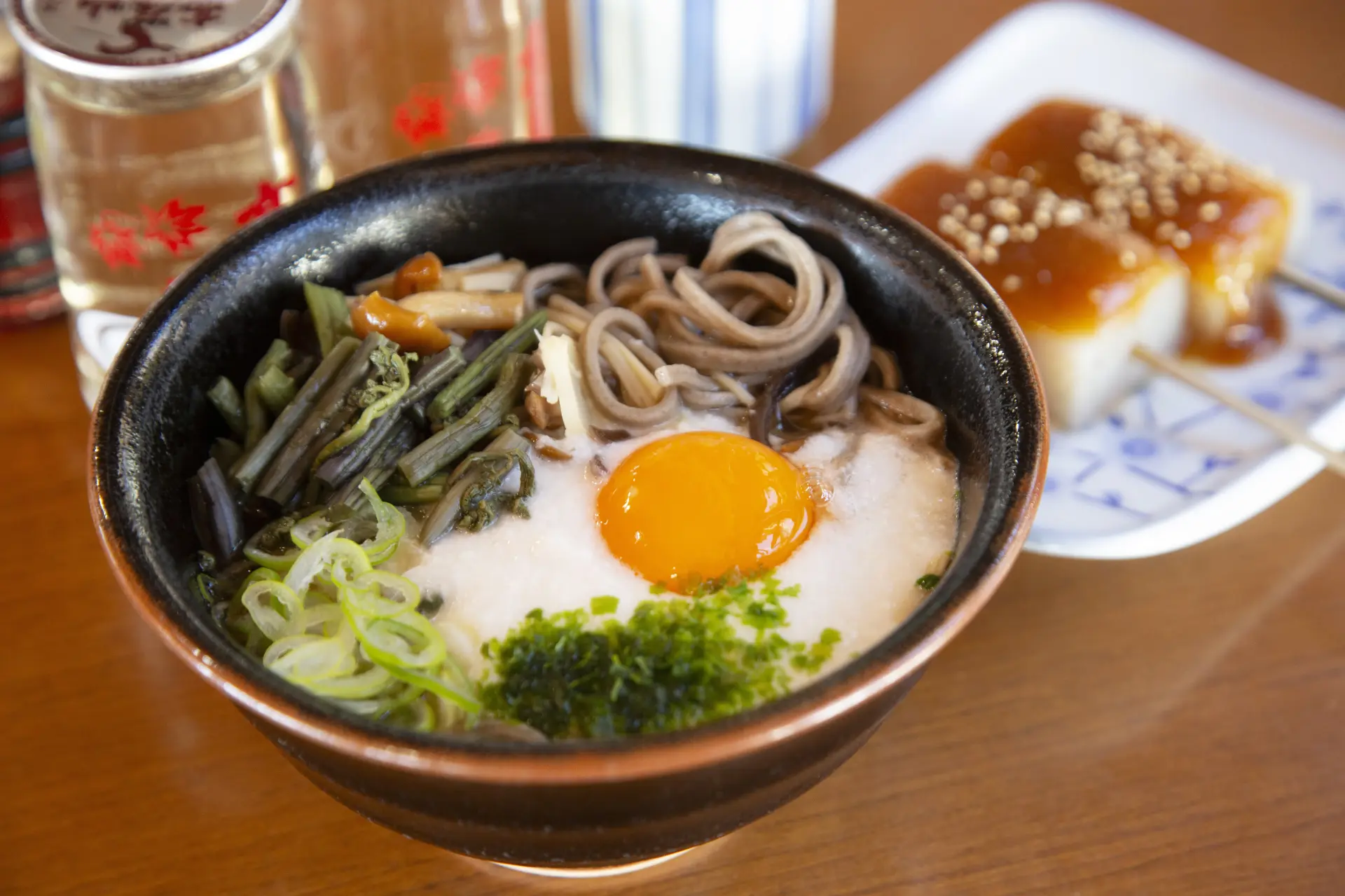
A Must-Try before or after Your Walk! 5 Popular Gourmet Spots for Mt. Takao’s Tororo Soba
With easy access from central Tokyo, Mt. Takao draws visitors in every season.
It is a popular sightseeing spot not only for those who want to enjoy hiking and mountain walks, but also for travelers who want to experience Japan’s nature and food culture.
If you visit Mt. Takao, one local specialty you should not miss is tororo soba.
This comforting bowl, passed down alongside the area’s long history of temple visits and hiking, is cherished for its deep, nourishing flavor that gently soothes your tired body after a walk.
In this article, we introduce five carefully selected popular spots on Mt. Takao that serve tororo soba.
If you are planning to visit Mt. Takao or wondering where to eat after your hike, use this guide as a starting point.
Take a moment to appreciate the food culture nurtured by Mt. Takao, and savor a one-of-a-kind bowl you can enjoy only here.
Why “Tororo Soba” Is Famous on Mt. Takao
Tororo soba became a Mt. Takao specialty sometime between the late Edo period (1853-1868) and the Meiji period (1868-1912).
It is said to have spread as a nourishing meal for visitors and hikers heading to Head Temple Takao-san Yakuo-in.
Tororo made with jinenjo (wild yam) or yamatoimo (Japanese yam) is easy to digest and was considered ideal for replenishing energy for a tired body, which is why it caught on.
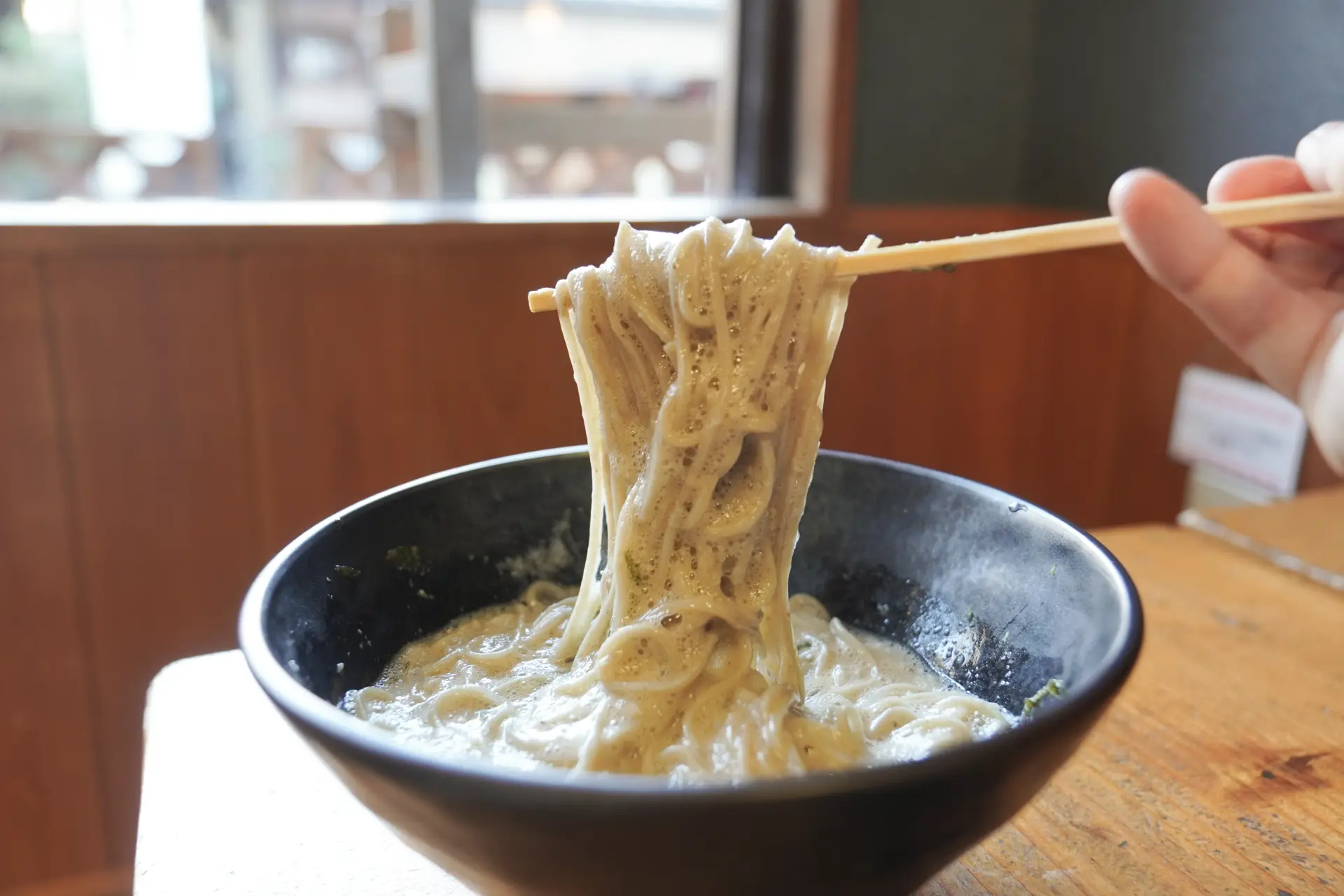
Tororo soba is known for its richly sticky tororo that clings well to soba noodles, creating a smooth, easy-to-slurp texture and a mellow flavor.
When mixed with dashi broth and dipping sauce, the umami becomes even more pronounced, making for a refreshing yet satisfying bowl.
As word of Mt. Takao’s tororo soba spread from visitor to visitor, it became a standard menu item that is now widely served.
Today, around 20 soba restaurants are scattered from the foothills through the mid-mountain area and up near the summit.
In addition to classic tororo, sansai tororo soba topped with mountain vegetables such as zenmai (a type of fern) and warabi (bracken) is also a popular choice.
Each shop offers its own ideas, from the character of the dashi and sauce to the thickness of the noodles.
Enjoying soba amid Mt. Takao’s lush nature is a special experience loved by locals and visitors alike.
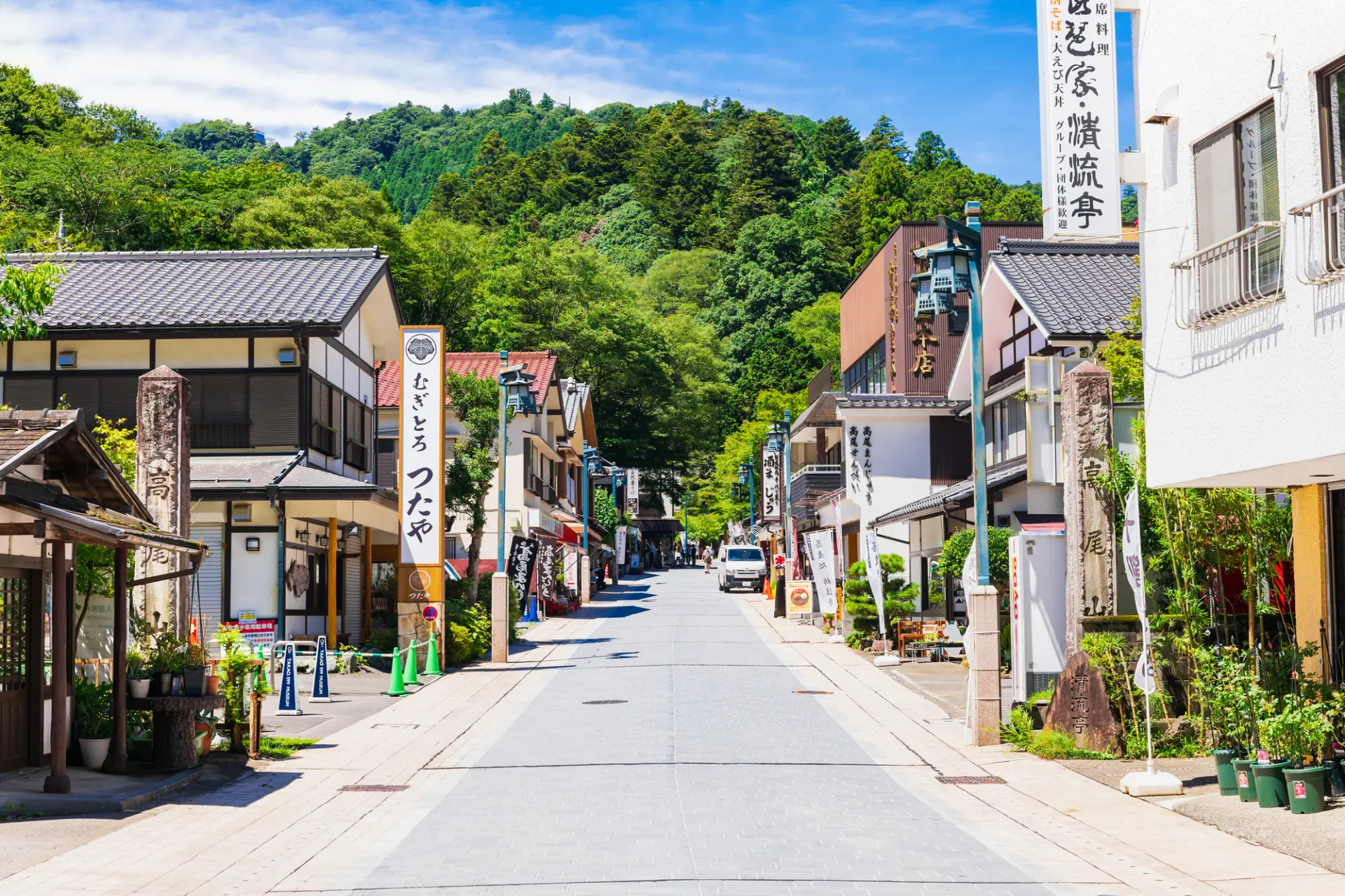
5 Popular Soba Shops on Mt. Takao
Mt. Takao is home to around 20 soba restaurants, from the foothills to near the summit.
Each one has its own character, from the noodles and dashi to how the tororo is prepared.
Another part of the appeal is enjoying different flavors from shop to shop, from tororo soba to mountain-vegetable soba that highlights the bounty of the hills.
Here, we introduce five carefully selected popular spots, grouped into the foothill, mid-mountain, and summit areas.
In addition to what makes each soba unique, look out for locations such as panoramic terraces and mountain-hut-style storefronts, plus side dishes worth ordering.
Match your choice to how you want to spend time before or after your hike, and find the one place that fits you best.
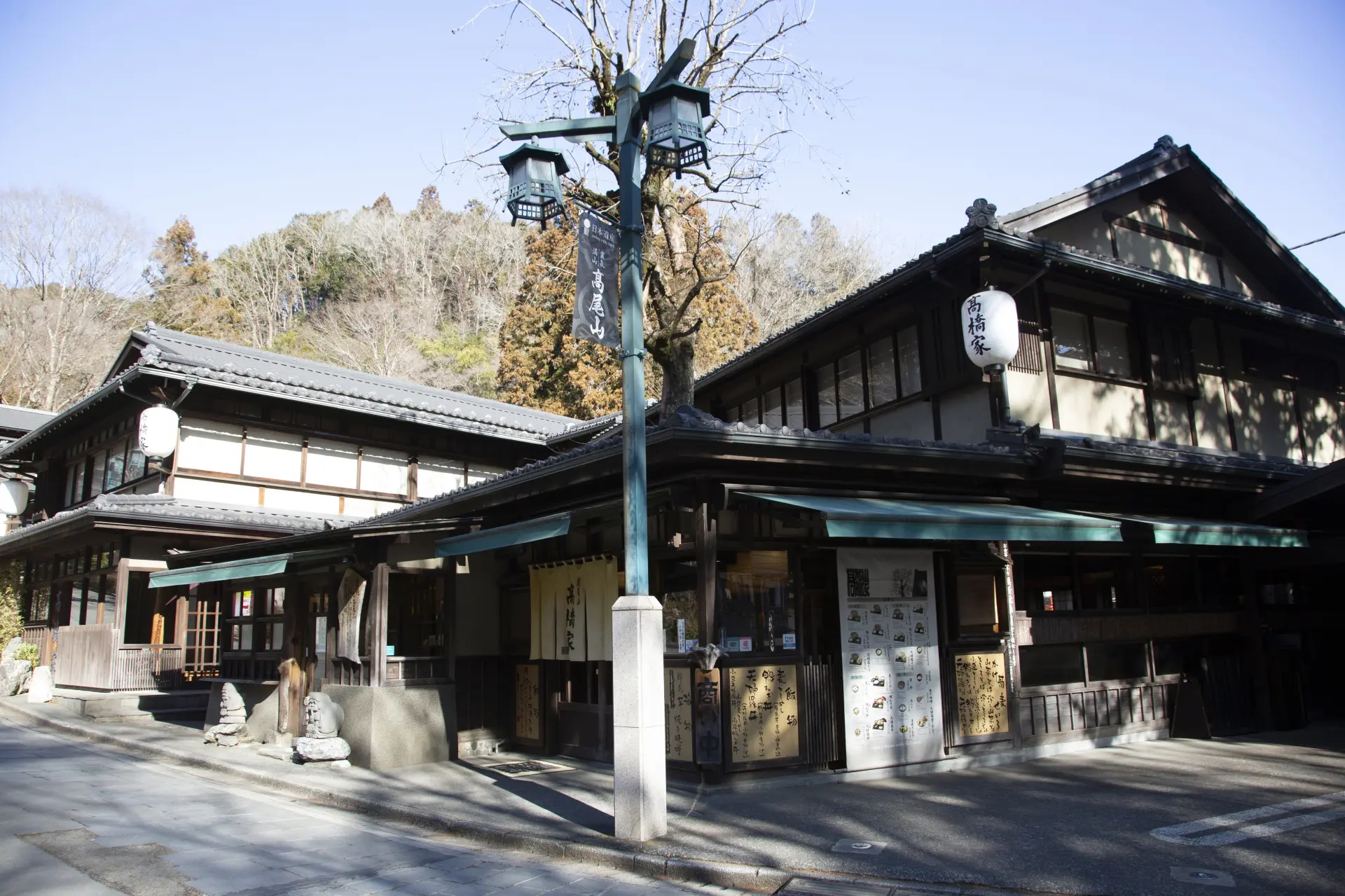
1. Foothill Area|Enjoy Traditional Tororo Soba Made with Two Types of Yam at Takaosan Takahashiya
Founded in 1836, in the late Edo period.
Among the long-established eateries around Mt. Takao, Takaosan Takahashiya stands out with a particularly strong presence.
It is located on the main approach to Head Temple Takao-san Yakuo-in, in an easy-to-find spot right in front of Kiyotaki Cable Car Station.
Traditional “Tororo Soba” Made with Two Types of Yam
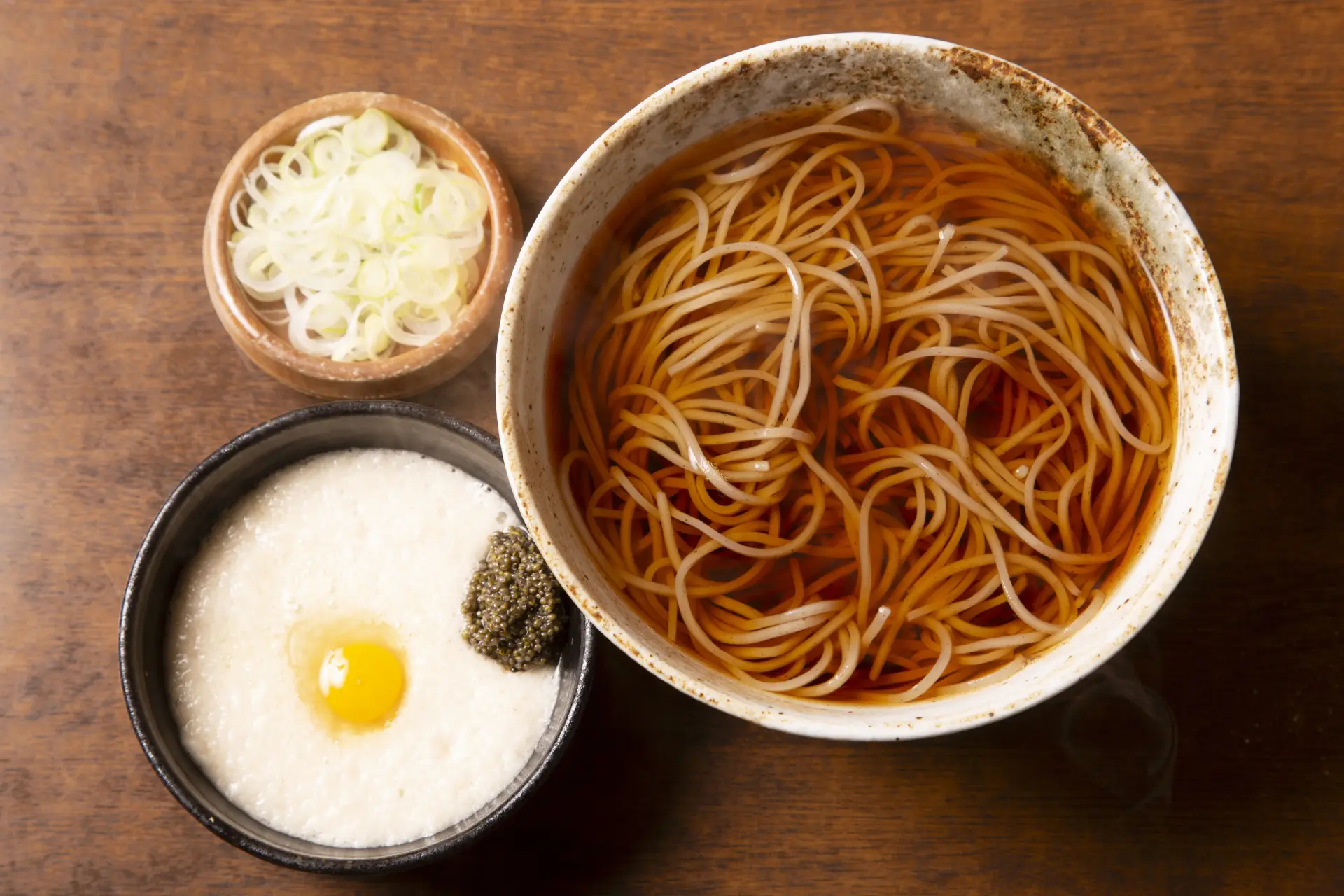
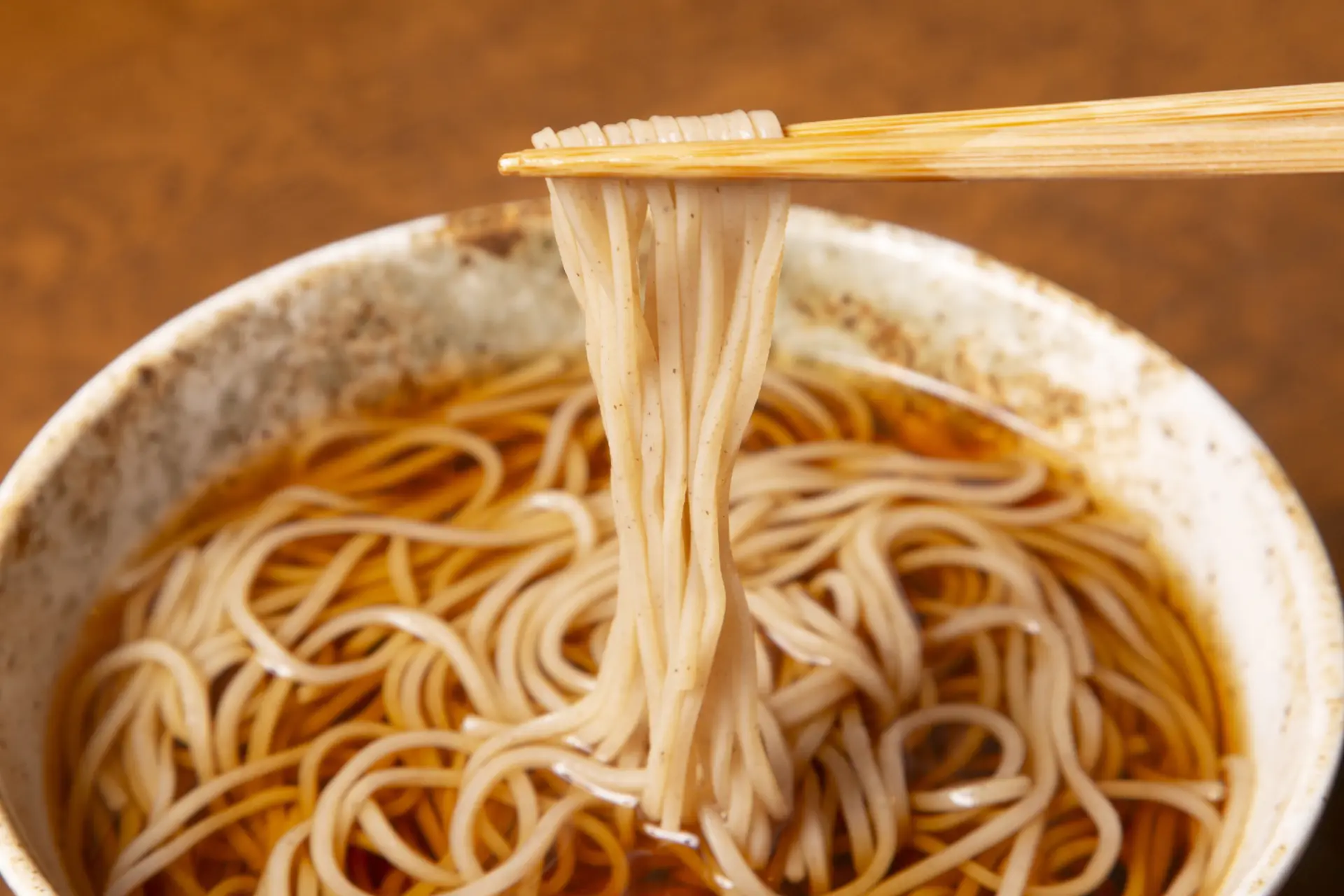
Takahashiya’s house-made soba is kneaded with buckwheat flour, grated yam, and joshinko (non-glutinous rice flour), then finished into thin noodles with a great bite and smooth slurp.
Its signature dish is “Tororo Soba,” made with two types of yam: nagaimo and yamatoimo.
The tororo is served in a separate bowl, mixed with a quail egg and tonburi (a tiny, bead-like garnish with a pleasant pop), then added to the soba as you eat.
The sauce is slightly sweet, made by adding soy sauce to carefully prepared dashi drawn from several kinds of fish, such as bonito and mackerel flakes.
It pairs perfectly with the thin noodles, delivering an irresistibly delicate flavor.
Add Condiments and Make It Your Own!
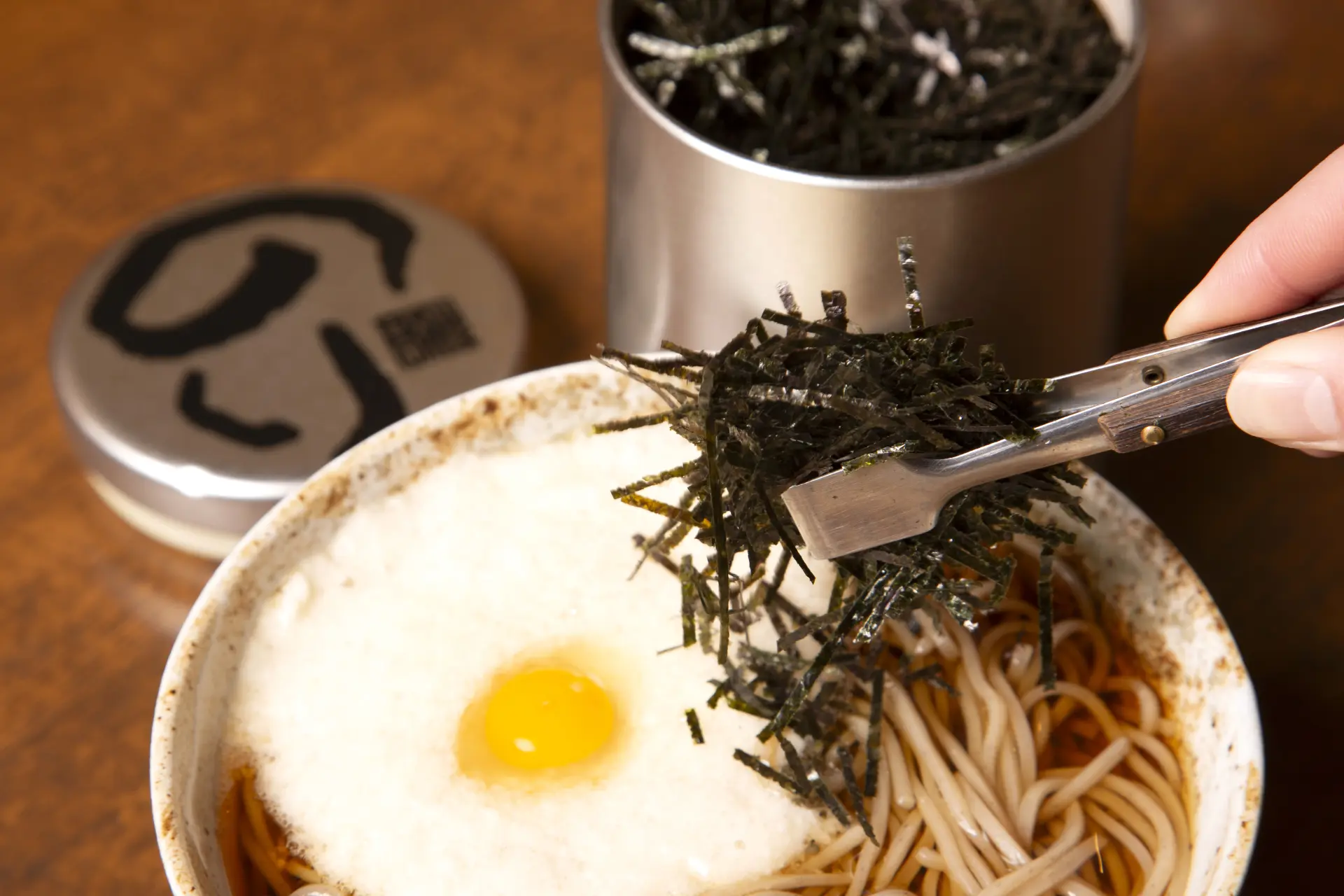
Each table comes with condiments to deepen the soba experience even further.
A canister holds nori, and you will also find wasabi and shichimi chili pepper.
Add what you like, change up the flavor as you go, and enjoy every last bite.
Plenty of Snacks, Too! Order Them with Your Soba
Another must-try here is tsumamimono, small bites meant to pair well with drinks.
You will find a full line-up of classics like thick omelette, smoked duck, and grilled miso.
For chilled sake, the menu includes local selections such as “Kuwano Miyako” from Hachioji and “Takaosan” from Akiruno City.
The Sacred Persimmon Tree Is Also a Highlight!
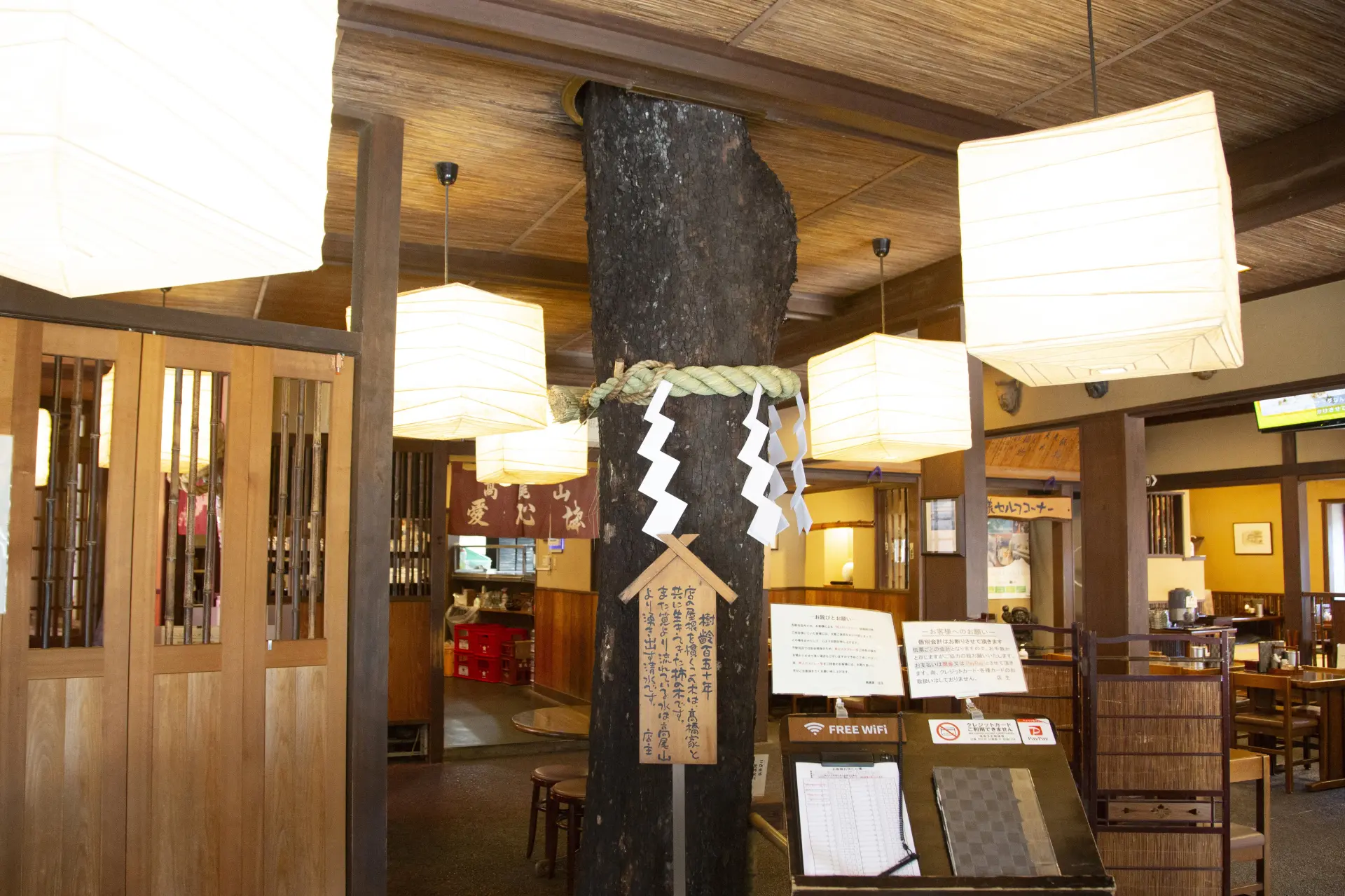
Takahashiya is famous as a tororo soba restaurant, but it also offers a one-of-a-kind sight you can see only here.
A 150-year-old persimmon tree passes through the ceiling and stretches upward toward the sky.
Shide (Shinto paper streamers) are wrapped around its trunk, and it is beloved by visitors as if it were the shop’s sacred tree.
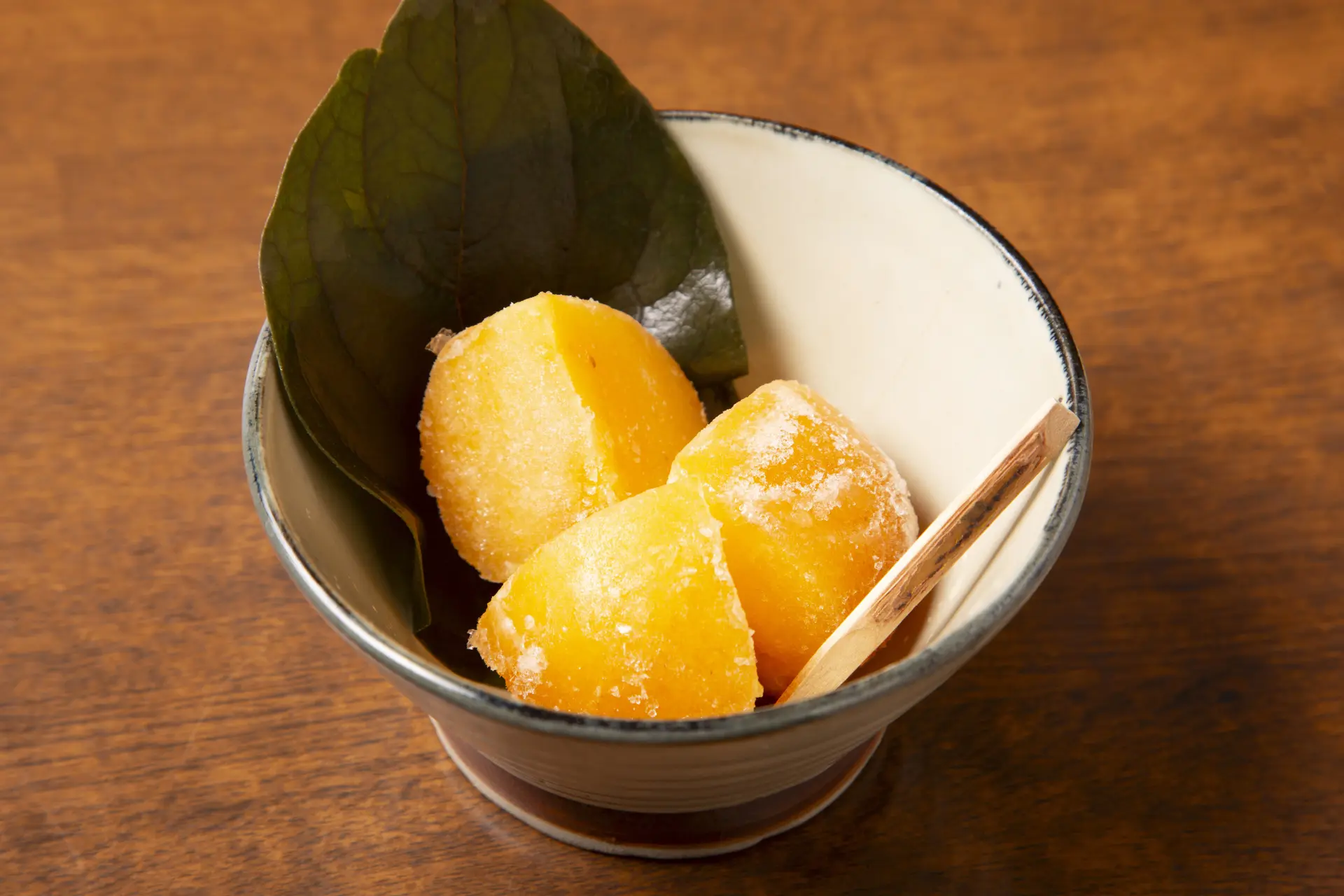
2. Foothill Area|Rich Tororo Soba at Sakaechaya, Made with Plenty of Domestic Jinenjo
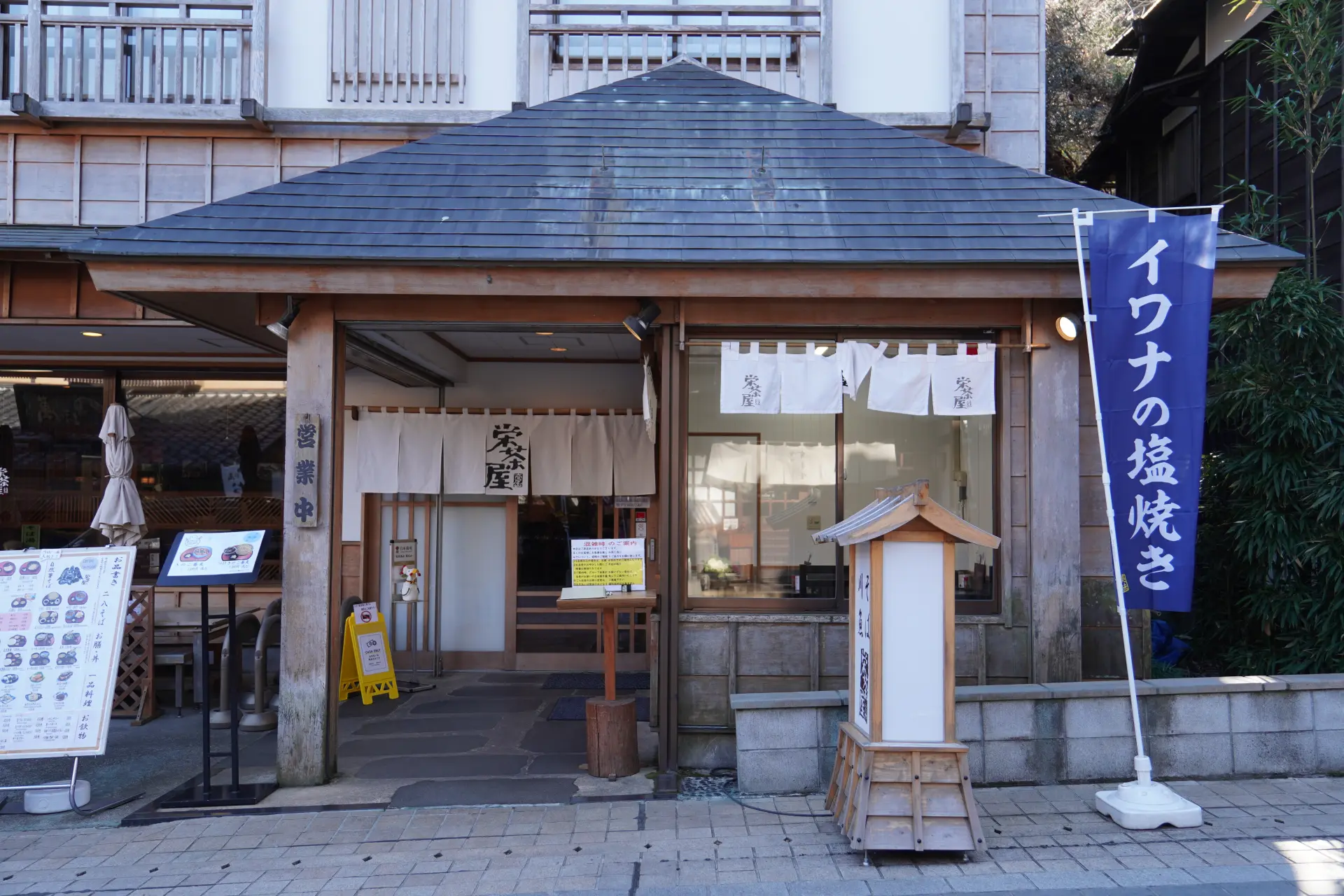
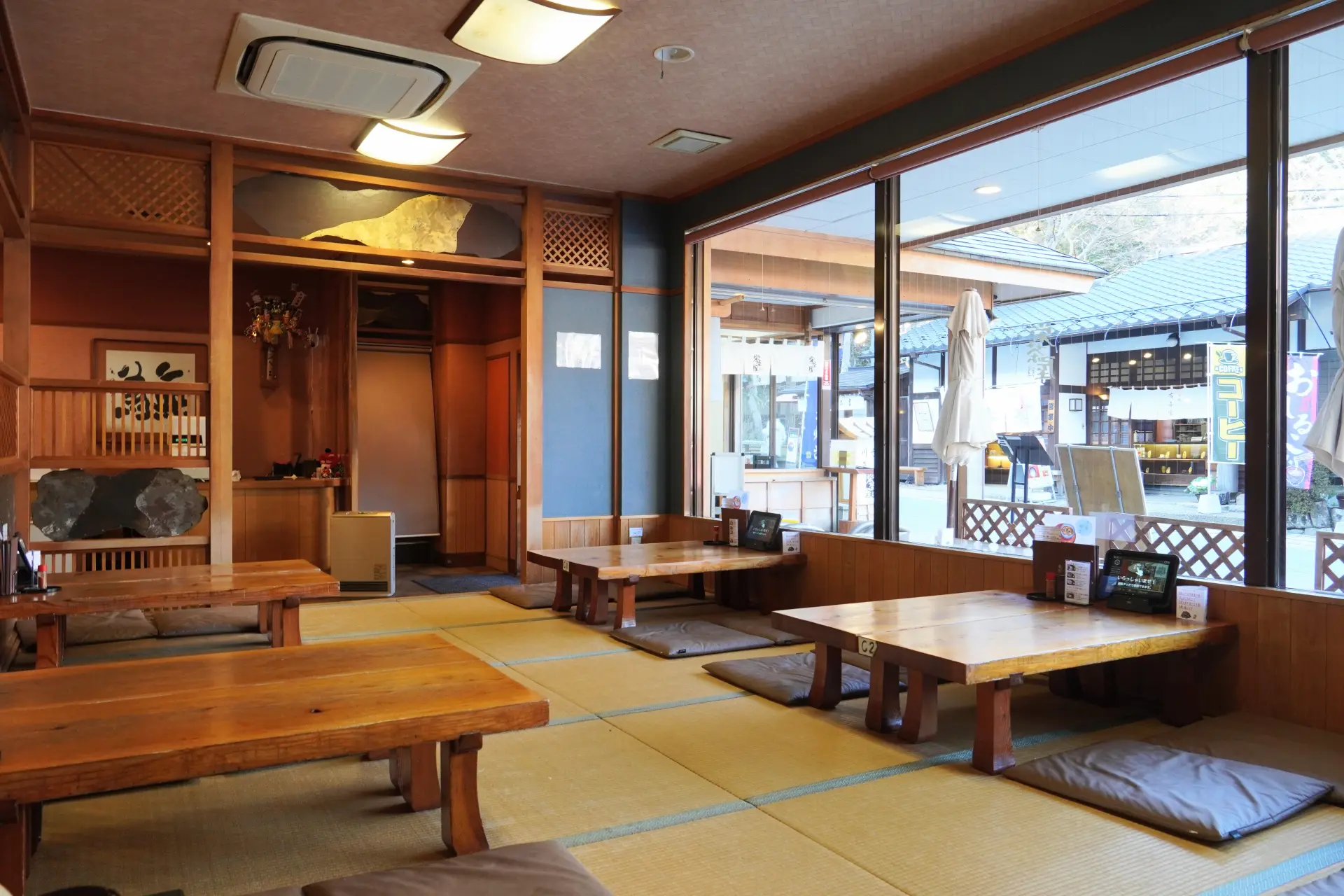
Sakaechaya has been serving guests at the foot of Mt. Takao since the early 1930s.
This soba shop sits along the main approach to Head Temple Takao-san Yakuo-in, which leads toward Kiyotaki Cable Car Station.
“Jinenjo Soba” Packed with Domestic Jinenjo
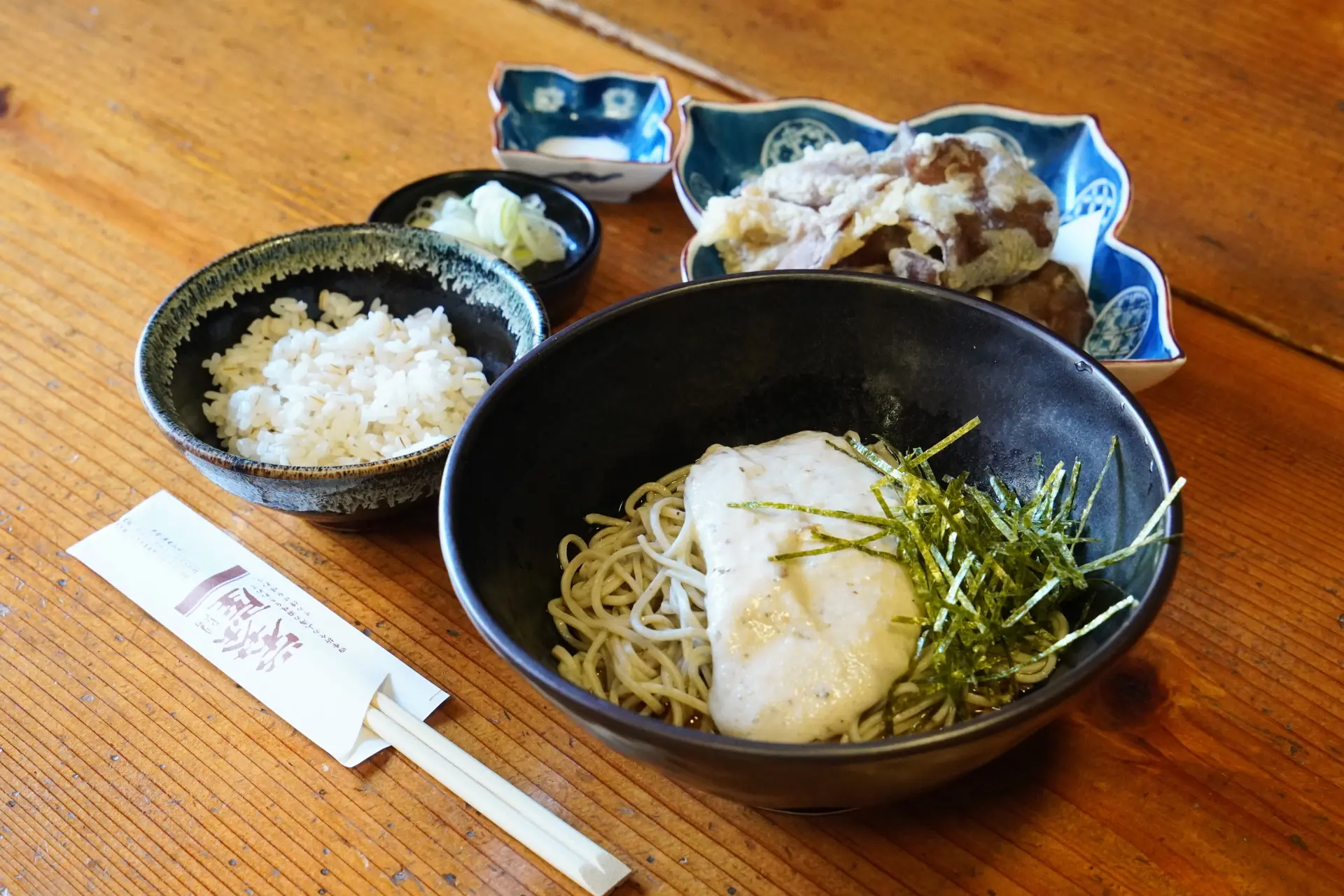
Its signature dish is “Jinenjo Soba,” made with plenty of domestically produced jinenjo (wild yam).
Jinenjo is one of the few vegetables native to Japan and stands out for its exceptional stickiness among all yams.
For generations, it has been prized as an energy-boosting food and long known as the king of mountain vegetables.
At Sakaechaya, the tororo is made by grating jinenjo with the skin on, allowing you to fully enjoy its earthy aroma.
To eat “Jinenjo Soba,” the key is to mix the tororo thoroughly with the shop’s special sweet sauce, coat the noodles well, and whisk it until it turns lightly frothy.
With the first slurp, a curious airy texture and the deep umami of jinenjo fill your mouth.
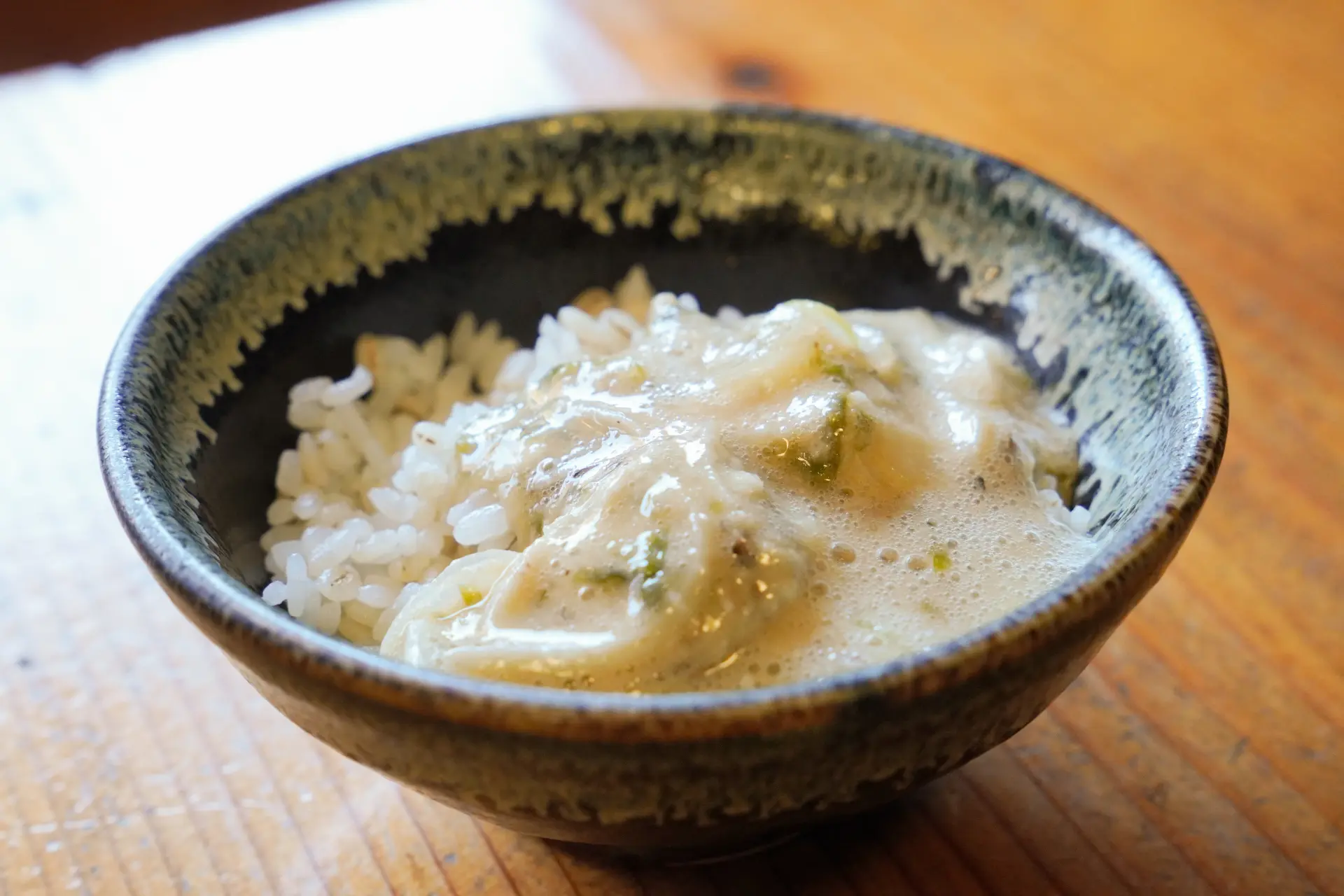
Enjoy Tororo Rice with the Remaining Sauce
After you finish the noodles, it is recommended to pour the remaining jinenjo sauce over barley rice and enjoy it as tororo rice.
The fluffy tororo blends with the umami of dashi, then turns richer and deeper as it coats the barley rice.
It is a delicious second finish that keeps the enjoyment going even after the soba.
Mt. Takao Specialties to Enjoy Together
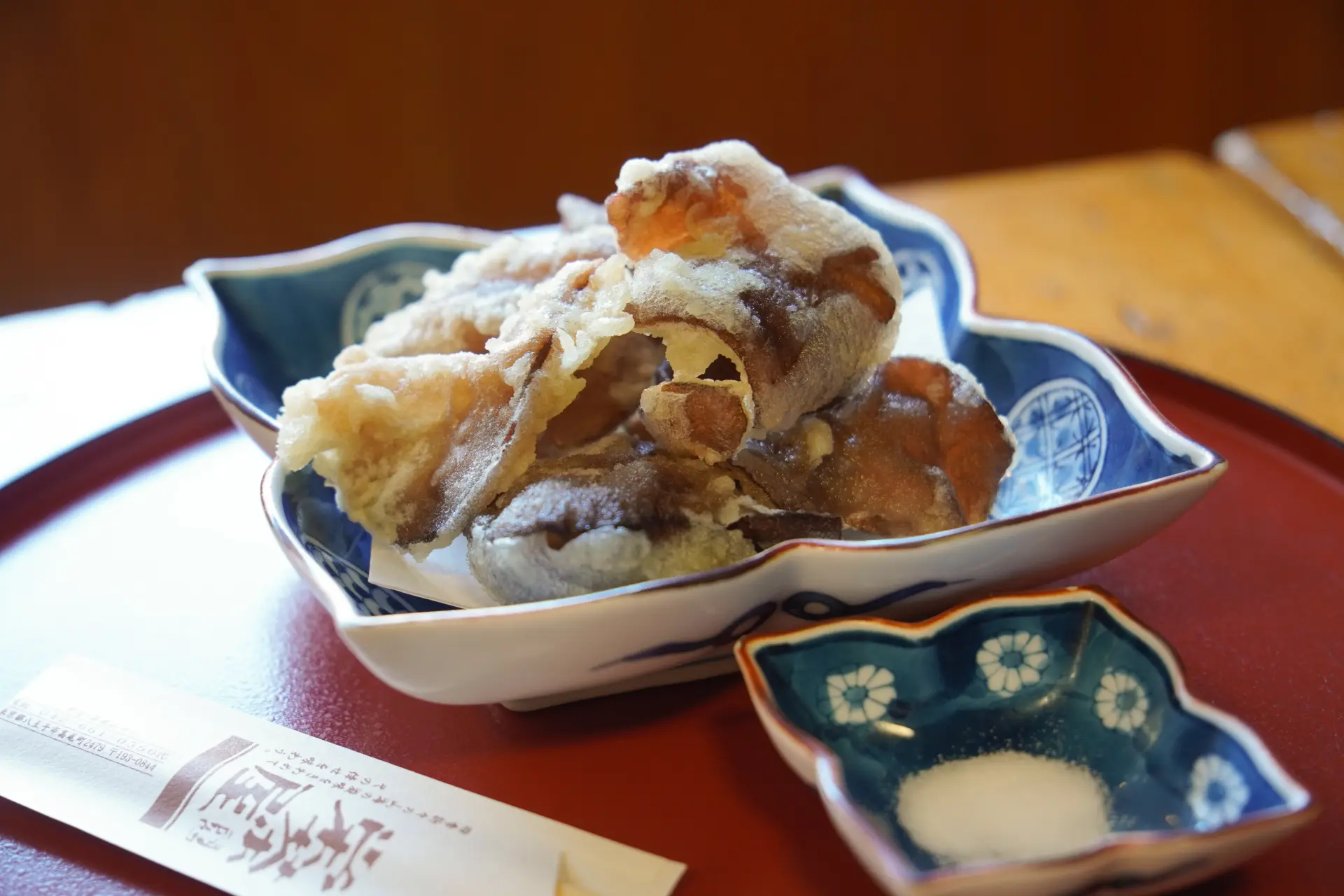
Here you can also try one of Mt. Takao’s specialties: “Tengu’s Earlobe,” meaning kikurage (wood ear mushroom).
Thick, springy domestic kikurage works beautifully in stir-fries, tempura, and even as a topping for soba.
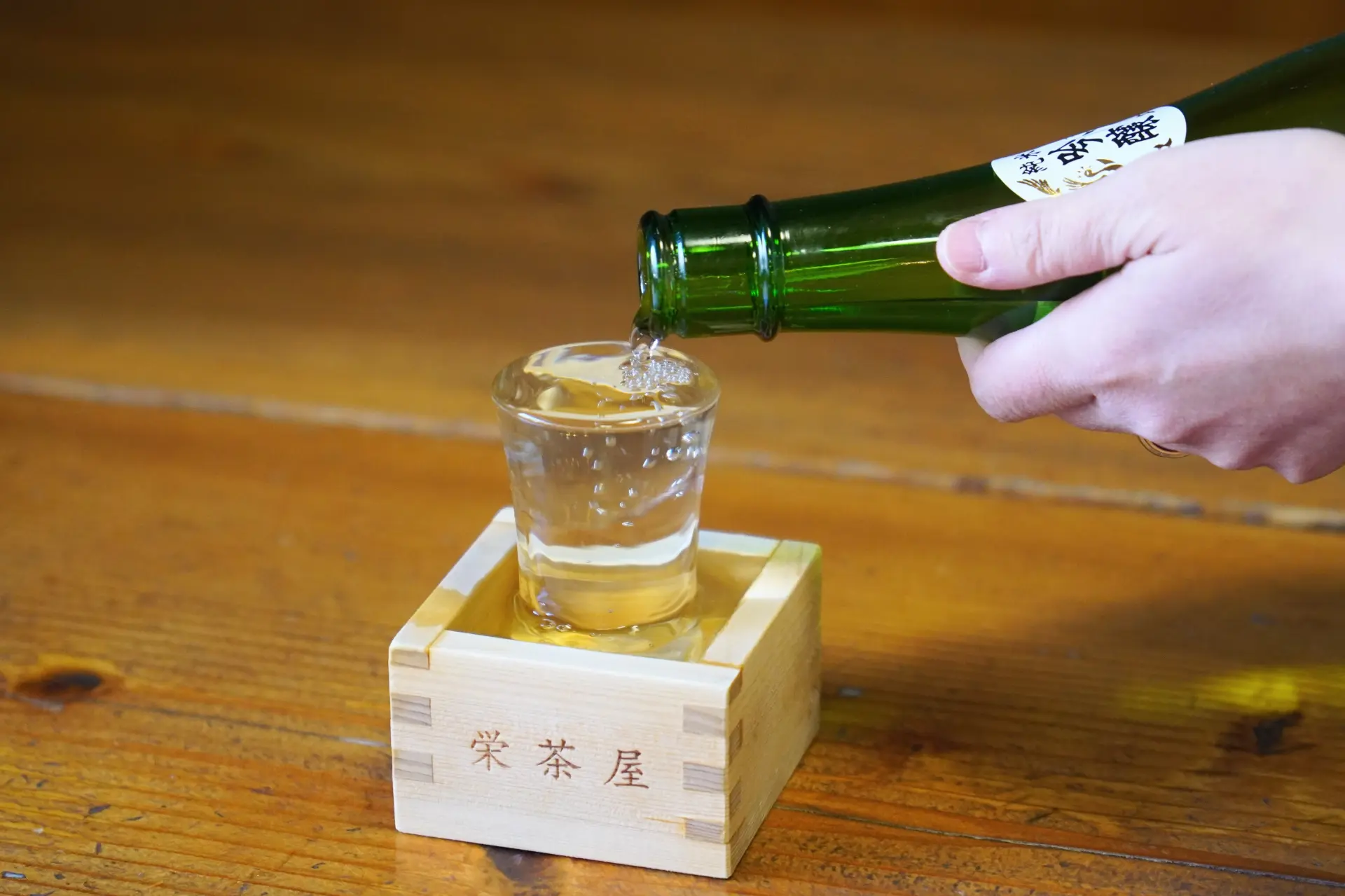
A recommended sake pairing with “Tengu’s Earlobe” is “Motomi.”
It is a proud local bottle from Ozawa Shuzo, a brewery located in Hachioji City, home to Mt. Takao.
Named after the previous president, this standout is neither too sweet nor too dry, and it brings out the flavors of soba and tempura even more.
3. Mid-Mountain Area|Tororo Soba and Panoramic Views at Mt. Takao Sumika
Mt. Takao Sumika is located just steps from Takaosan Cable Car “Takaosan” Station.
This facility sells Mt. Takao favorites like Tenguyaki as well as a range of souvenirs, and it also includes a soba shop where you can enjoy freshly made noodles at any time.
With its modern, natural feel, the interior is a soothing space that gently eases post-hike fatigue.
From the second-floor seating, you can take in sweeping views of Hachioji’s cityscape and the mountains of Okutama.
-
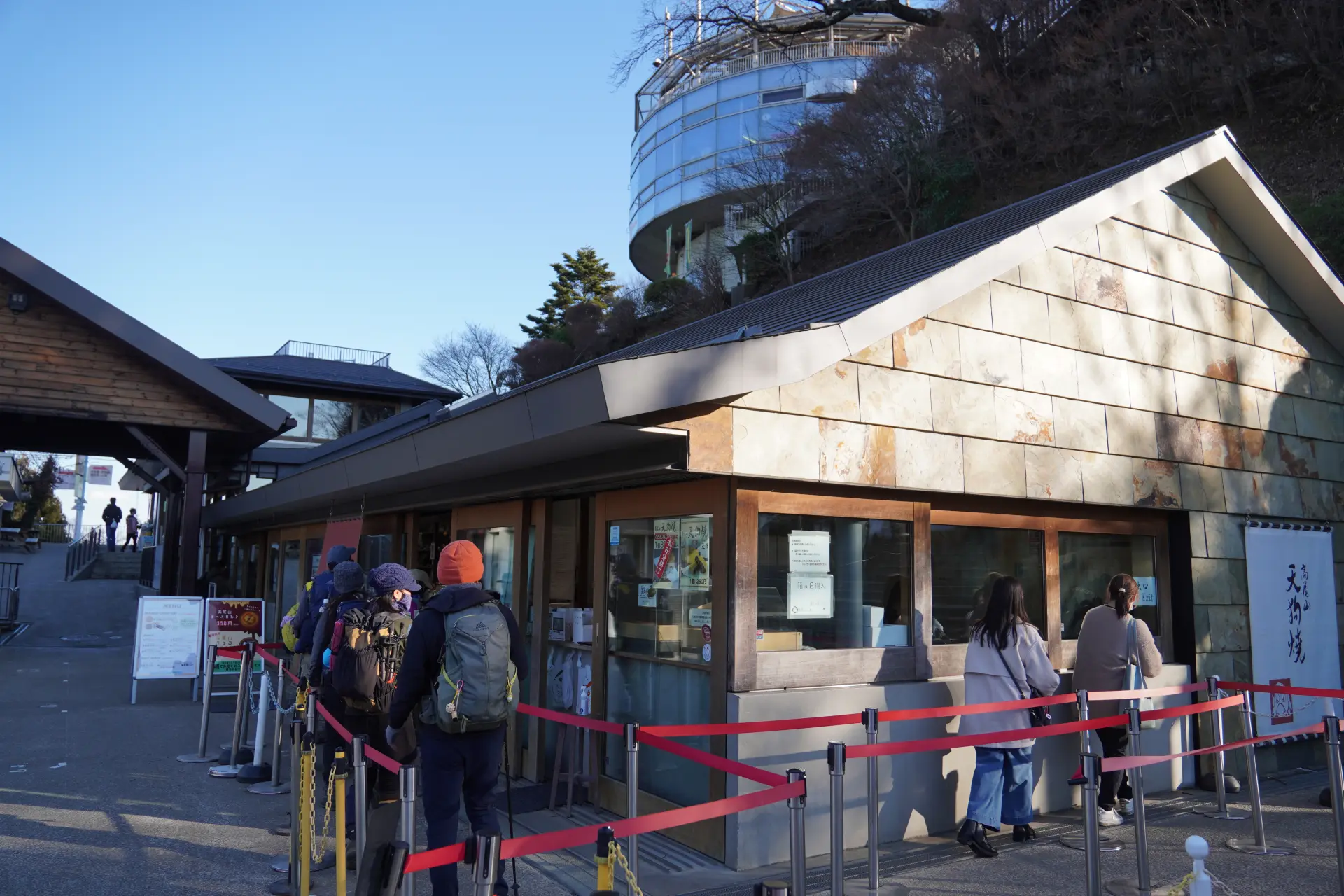
Exterior of Mt. Takao Sumika bustling with hikers
-
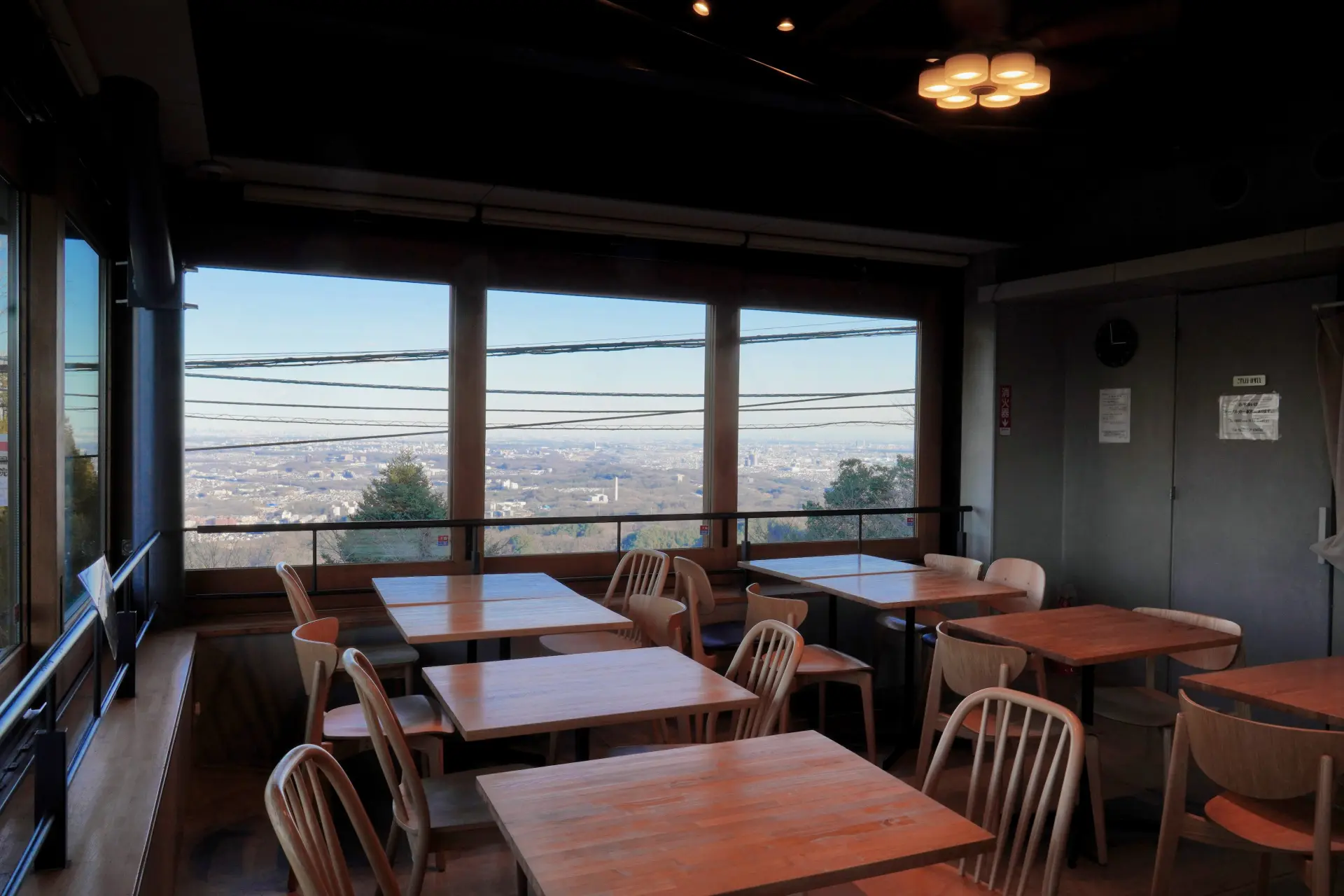
An airy second-floor seating area with large windows
-
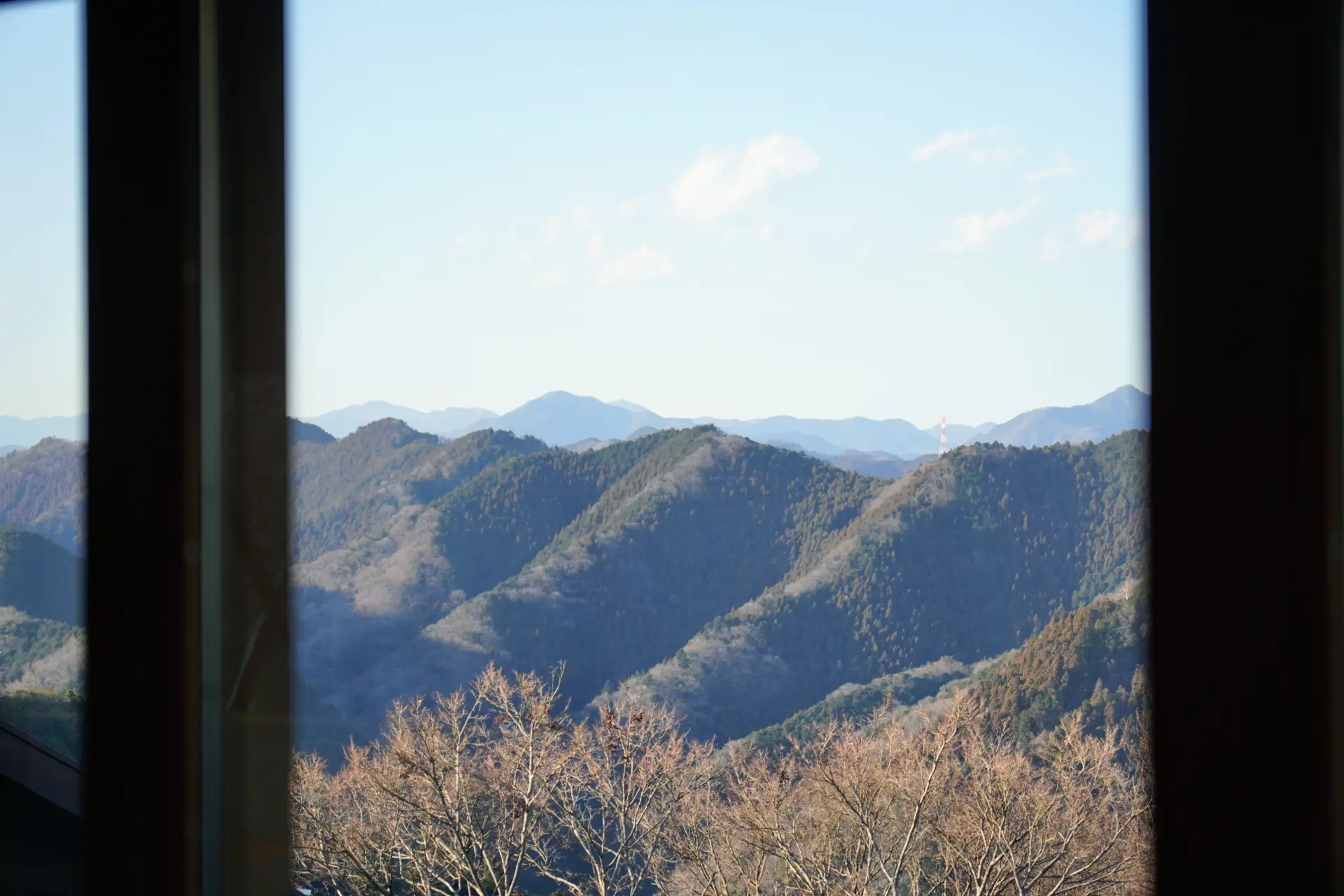
Panoramic views of Mt. Kumotori, Mt. Gozen, Mt. Takanosu, and Mt. Odake
Freshly Made House Noodles in “Tororo Soba”
At the soba shop in Mt. Takao Sumika, the standout feature is the carefully crafted house-made noodles.
Each morning, the soba dough is made from flour, and the noodles are finished after you order, which brings out their satisfying firmness and smooth slurp even more.
According to the manager, “If you want to really taste the soba’s aroma, cold soba is recommended.”
Another appeal is the seasonal variety, with options such as meat soba in summer and curry nanban soba in winter.
With freshly made soba and a space so calming that you will want to take a deep breath, unwind, and recover after your hike at your own pace.
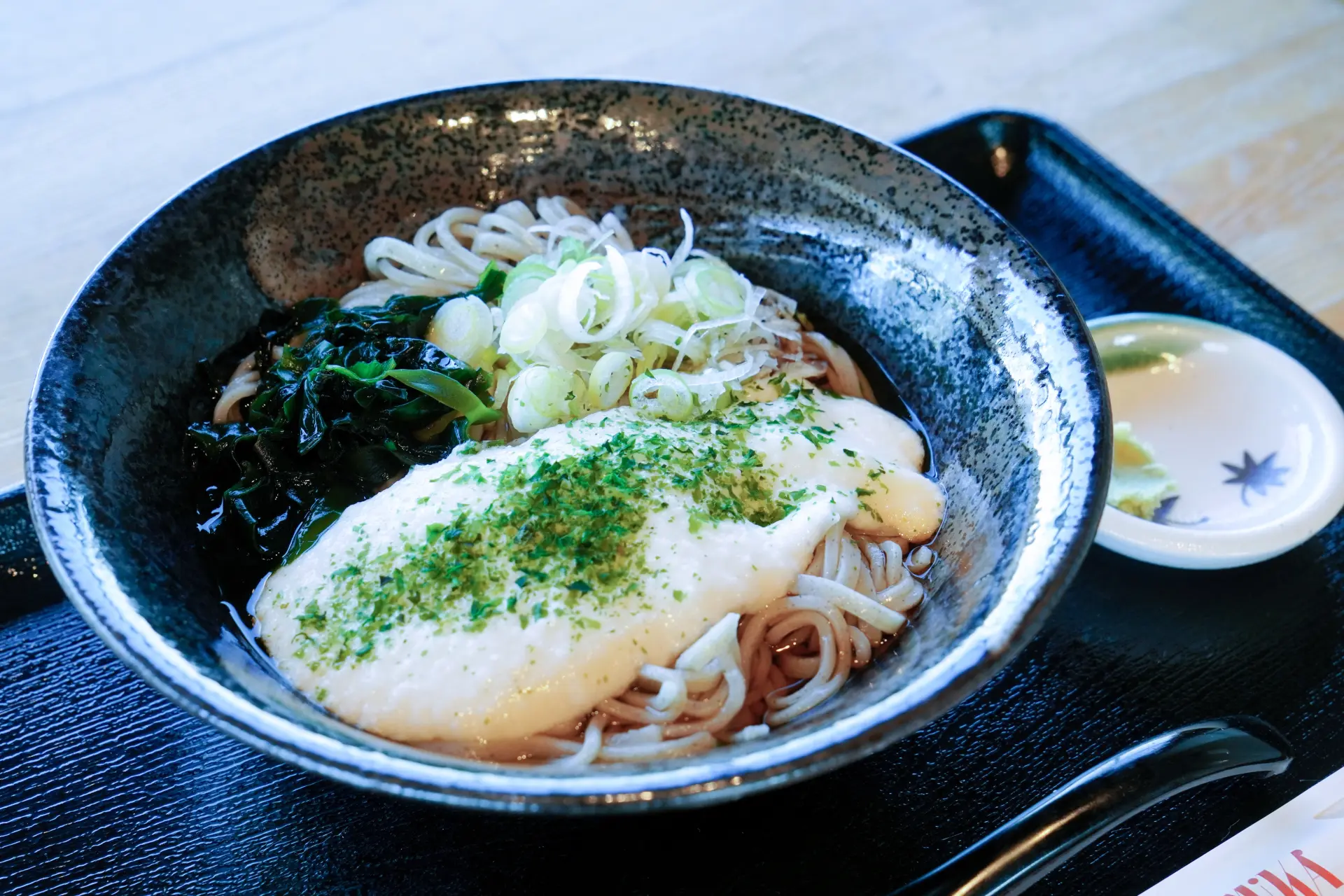
Savor Fresh-Fried Kakiage Together
One especially popular side item is the handmade kakiage.
Made with plenty of vegetables, shrimp, and scallops, the kakiage is fried after you order, so you can enjoy a crisp texture.
Having both fresh-fried kakiage and freshly made soba any time is a special kind of indulgence that only Mt. Takao Sumika can offer.
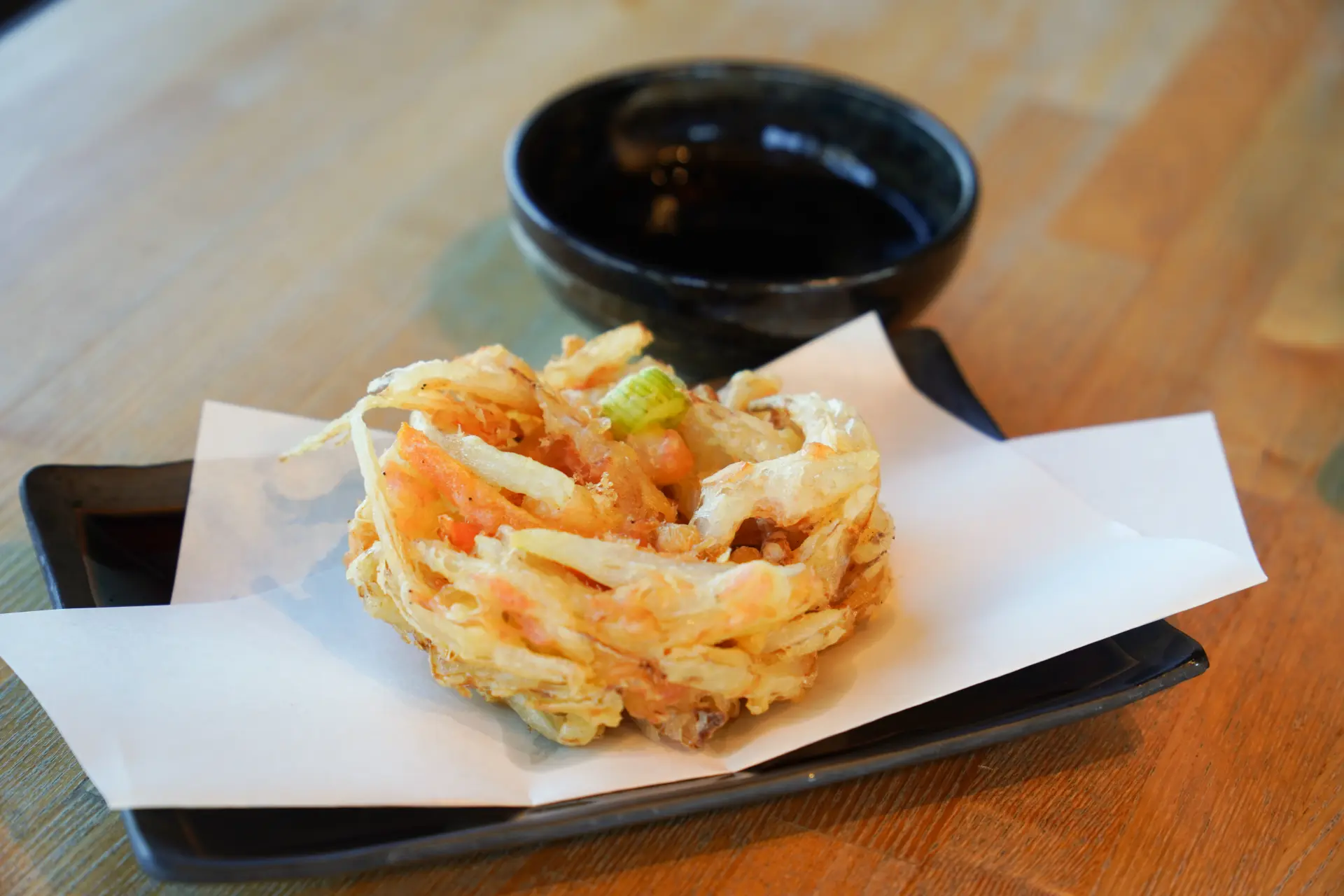
4. Mid-Mountain Area|Hand-Grated Tororo Sansai Soba on the Scenic Terrace at Juichichome Chaya
Juichichome Chaya is a mid-mountain teahouse founded in 1899.
It is located about a 1-minute walk from Takaosan Cable Car “Takaosan” Station, along the path that continues toward the summit.
The name Juichichome Chaya comes from the Edo-period unit cho (about 109 meters).
Because it sits at the 11th cho marker counted from Head Temple Takao-san Yakuo-in, hikers affectionately called it “Juichichome-san,” which became the shop name.
Out front, two types of dango-sweet dango and grilled dango-tempt you with their toasty aroma.
It is a popular spot that often has a line at lunchtime.
One reason is surely the spectacular view from the terrace seats.
With a terrace that looks out toward Yokohama, on clear days you can even spot Yokohama Landmark Tower.
Another appeal is the warm, family-run atmosphere and the friendly, smiling hospitality you will find here.
-
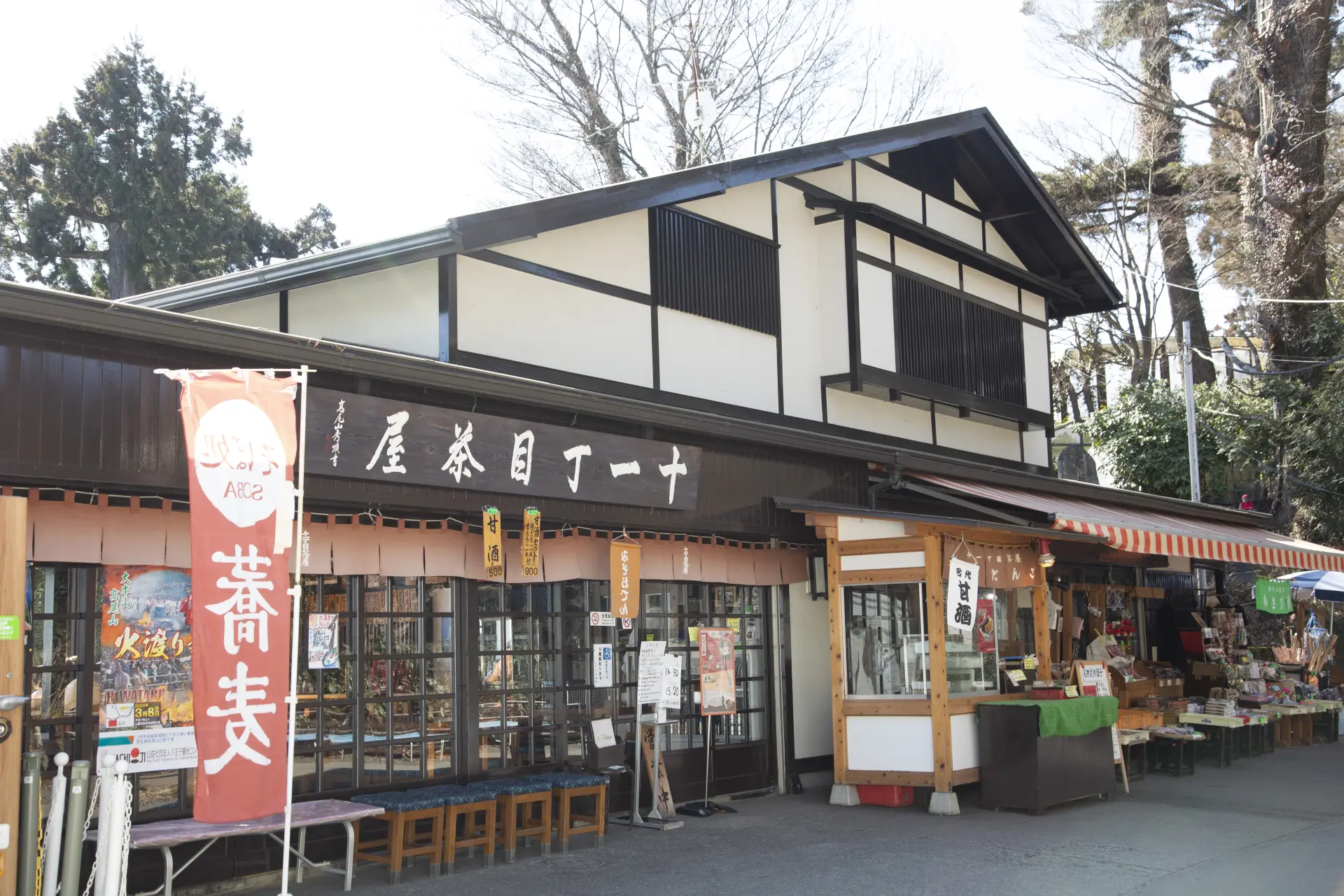
A shop split into two wings: the teahouse on one side and the souvenir shop on the other
-
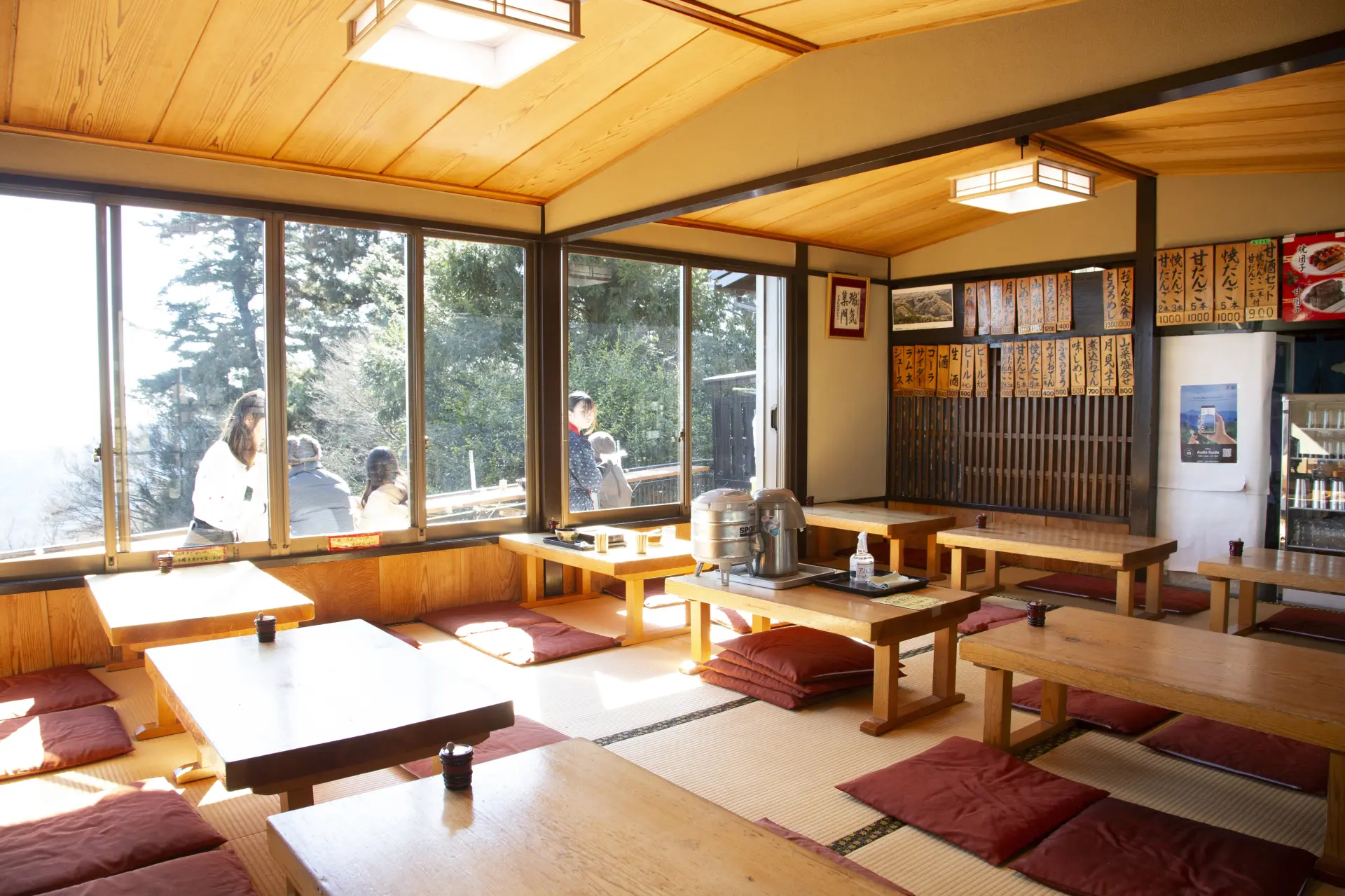
Inside seating with views through large windows
-
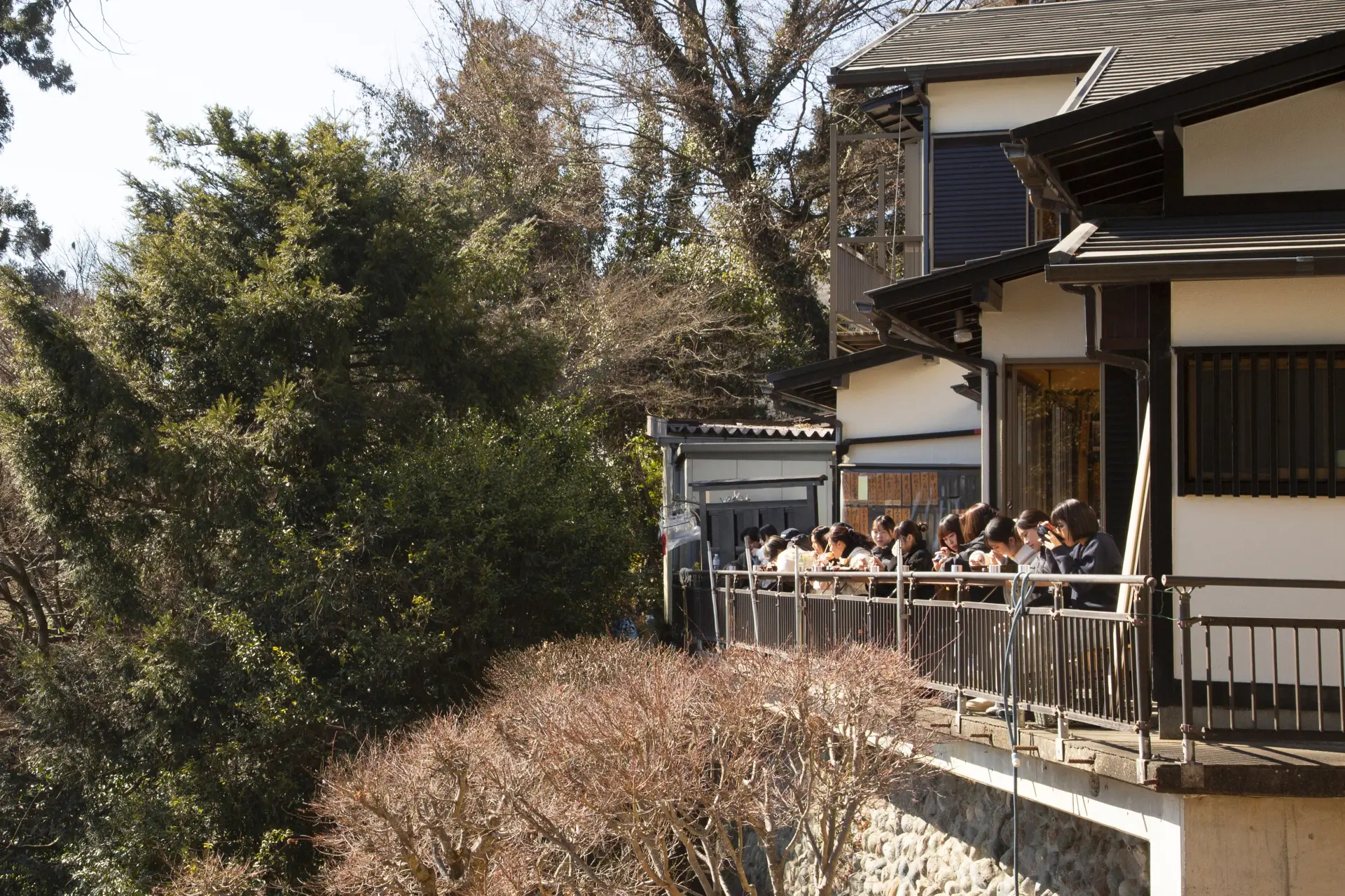
A popular terrace with sweeping views toward Yokohama
Hand-Grated Tororo Makes the Difference|“Tororo Sansai Soba”
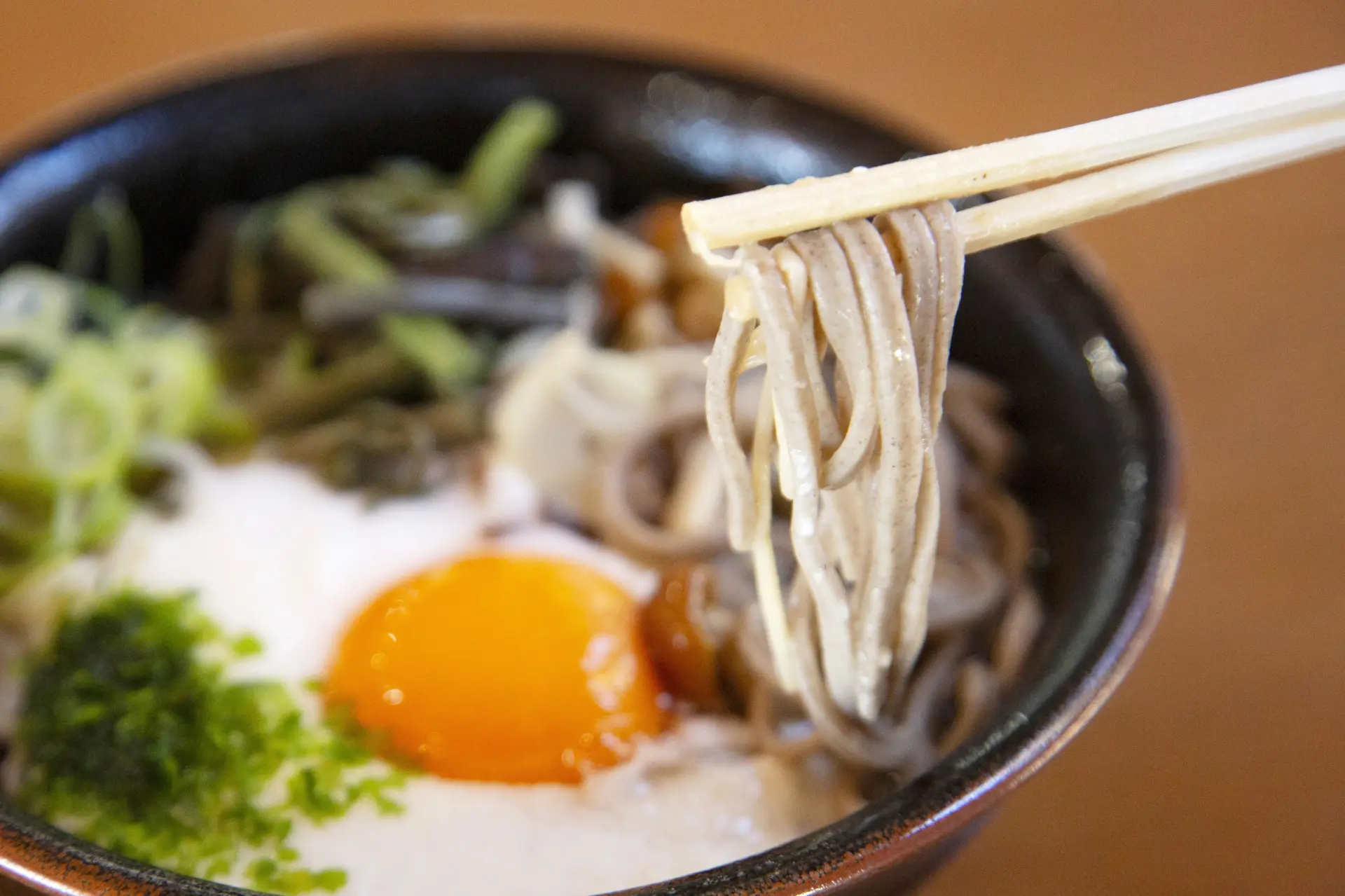
The signature soba here is “Tororo Sansai Soba,” Mt. Takao’s tororo soba topped with mountain vegetables.
It comes generously topped with ingredients like mushrooms and warabi (bracken), letting you enjoy them together with tororo and soba.
The tororo in particular is outstanding and remarkably smooth.
That silky texture comes from grating everything by hand rather than using machines.
They reportedly grate more than 40 yams a day, carefully working through them one by one.
The finely textured tororo helps highlight the soba’s deliciousness.
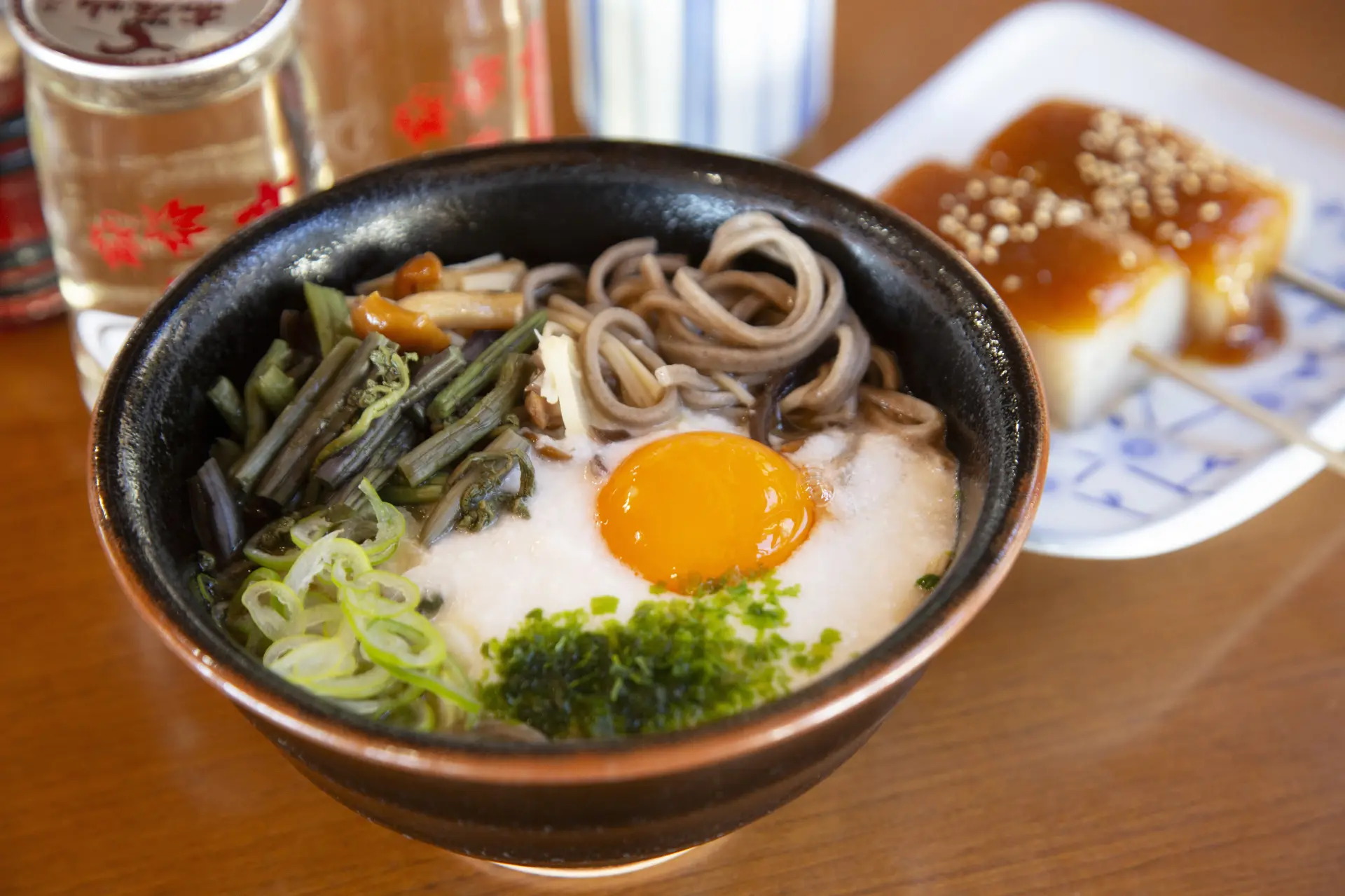
Side Dishes That Celebrate Mountain Bounty
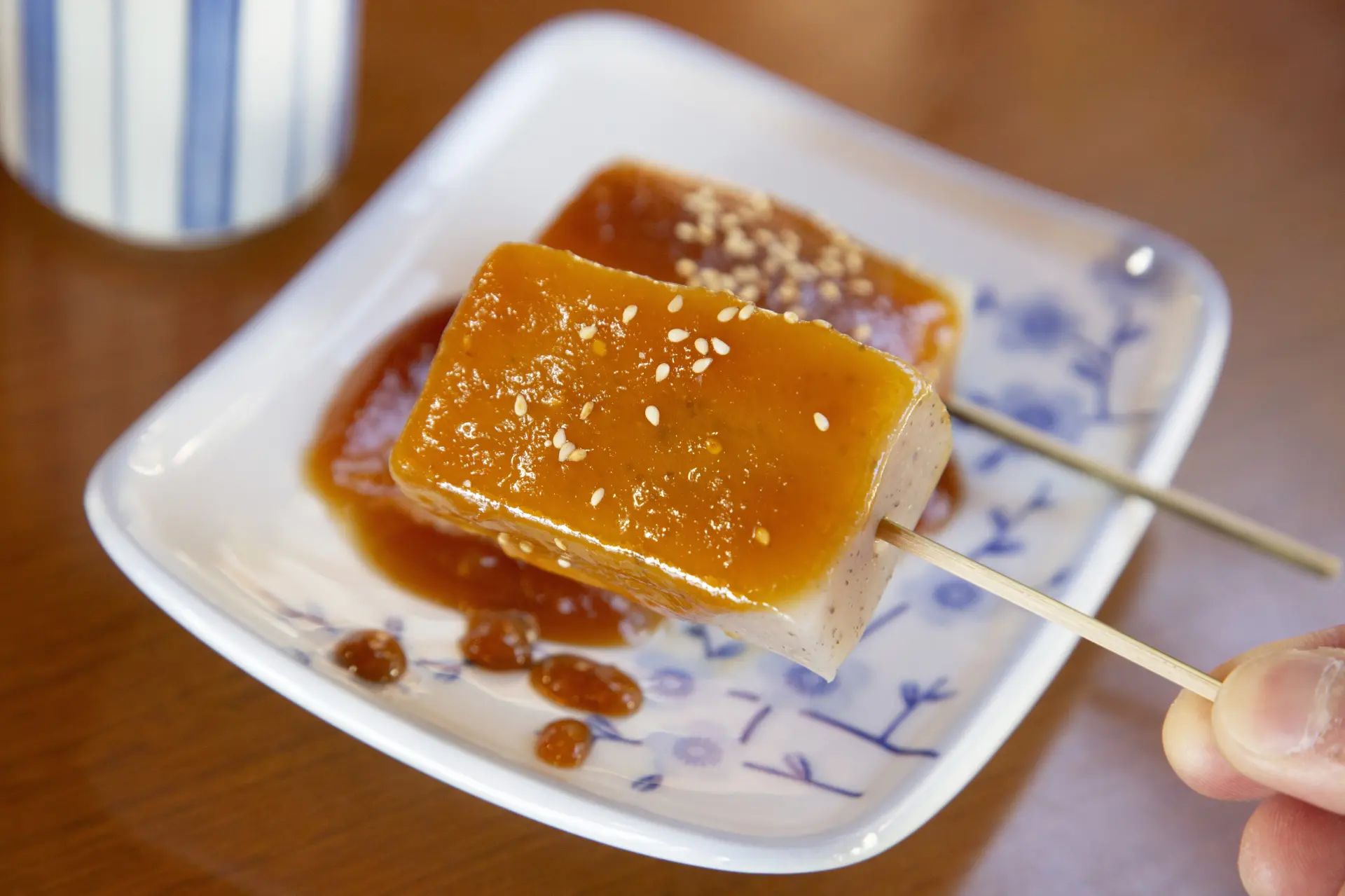
Side dishes include oden, assorted mountain vegetables, and fukinoto (butterbur sprouts).
The popular “miso oden” features an original miso sauce.
It is sweet yet refreshed by a hint of ginger, helping blow away mountain fatigue.
Recommended Mt. Takao Souvenirs Are Also Available
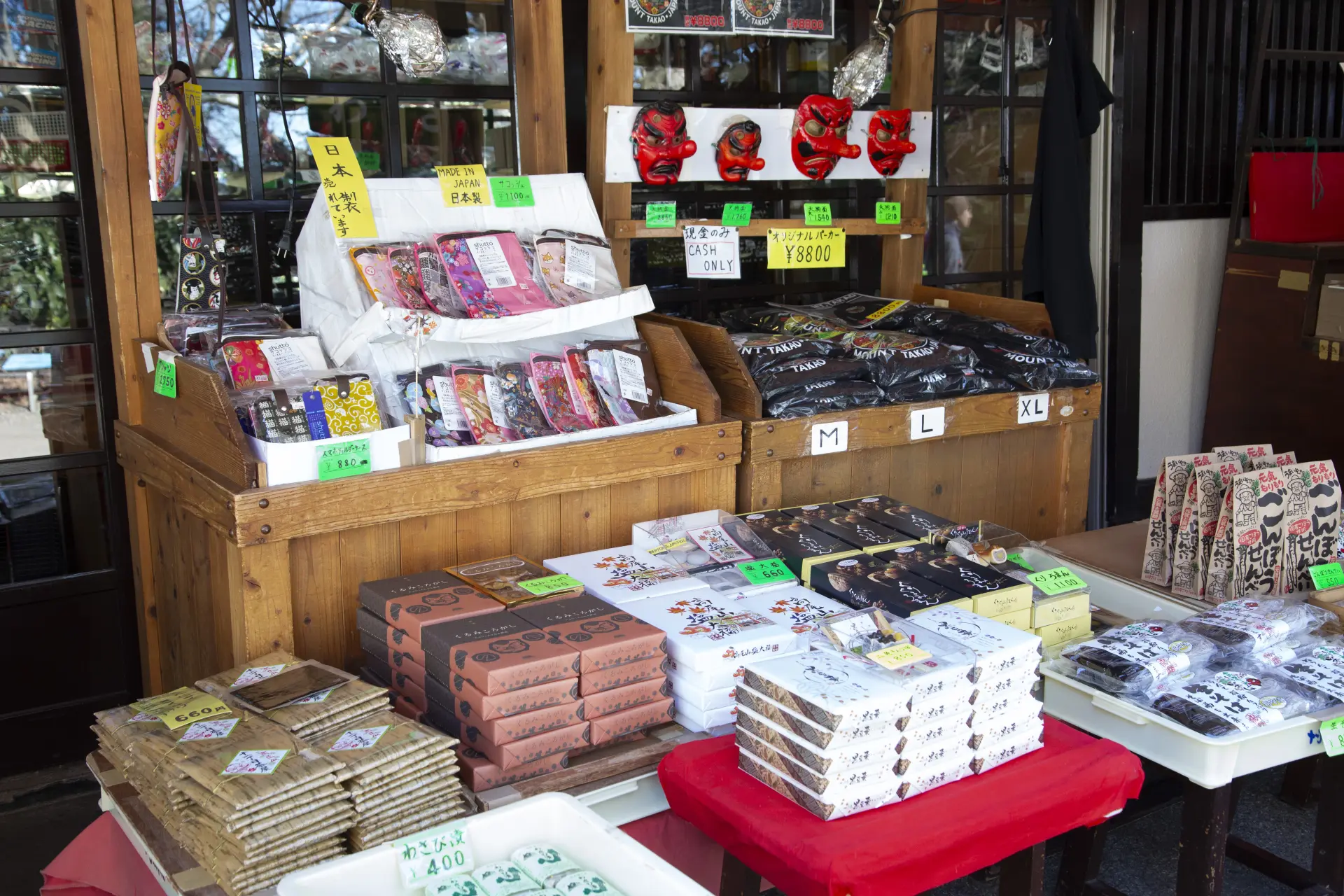
Next to the teahouse is a lively souvenir shop.
From Mt. Takao pickles and sake to crafts, you will find a wide selection.
You can also buy items like konnyaku kikurage (konnyaku with wood ear mushroom) and tengu-themed goods here.
It is worth checking before you head down the mountain.
5. Summit Area|Hearty Country-Style Sansai Soba at Akebonotei after Reaching the Top
From Takaosan Cable Car “Takaosan” Station, it is about a 50-minute walk at a relaxed pace.
After passing spots such as Head Temple Takao-san Yakuo-in along the way, you finally reach the summit.
After a satisfying climb, a meal at the top is the perfect reward.
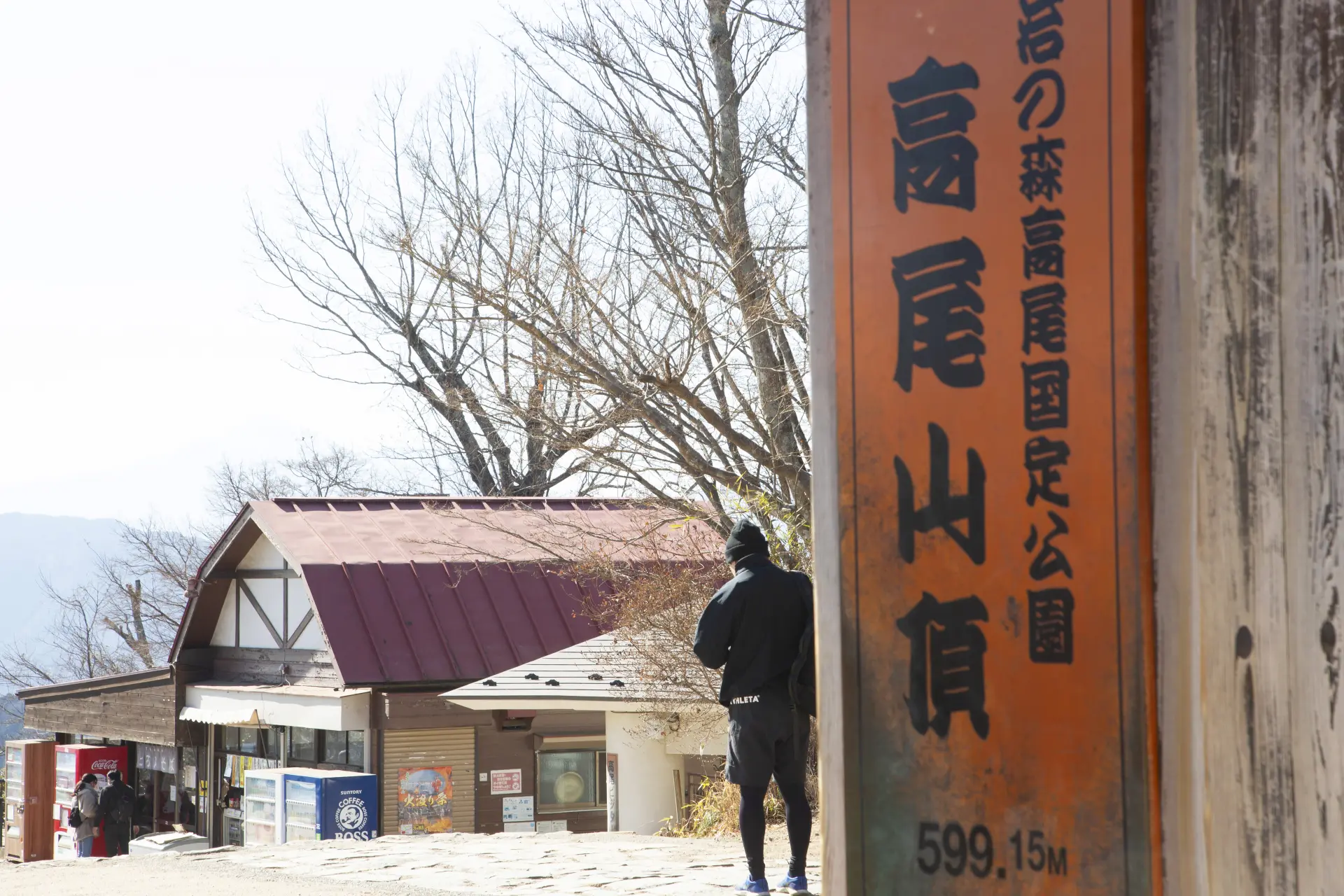
There are three eateries at the summit of Mt. Takao, and the one closest to the top is Akebonotei.
Located next to the Takao Visitor Center, it is a popular spot that often draws lines at lunchtime.
With 40 seats inside, it is divided into “indoor soba” for eating inside and “outdoor soba” for eating outside.
If you want to take your time, “indoor soba” is recommended, and if you want to feel the outdoors, “outdoor soba” is the better choice.
Service for “outdoor soba” is fast, and your noodles are served with little wait.
In addition, every menu item at Akebonotei can be eaten outside near the summit.
Being able to enjoy soba in your favorite spot is another great perk.
-
So close to the summit of Mt. Takao
-
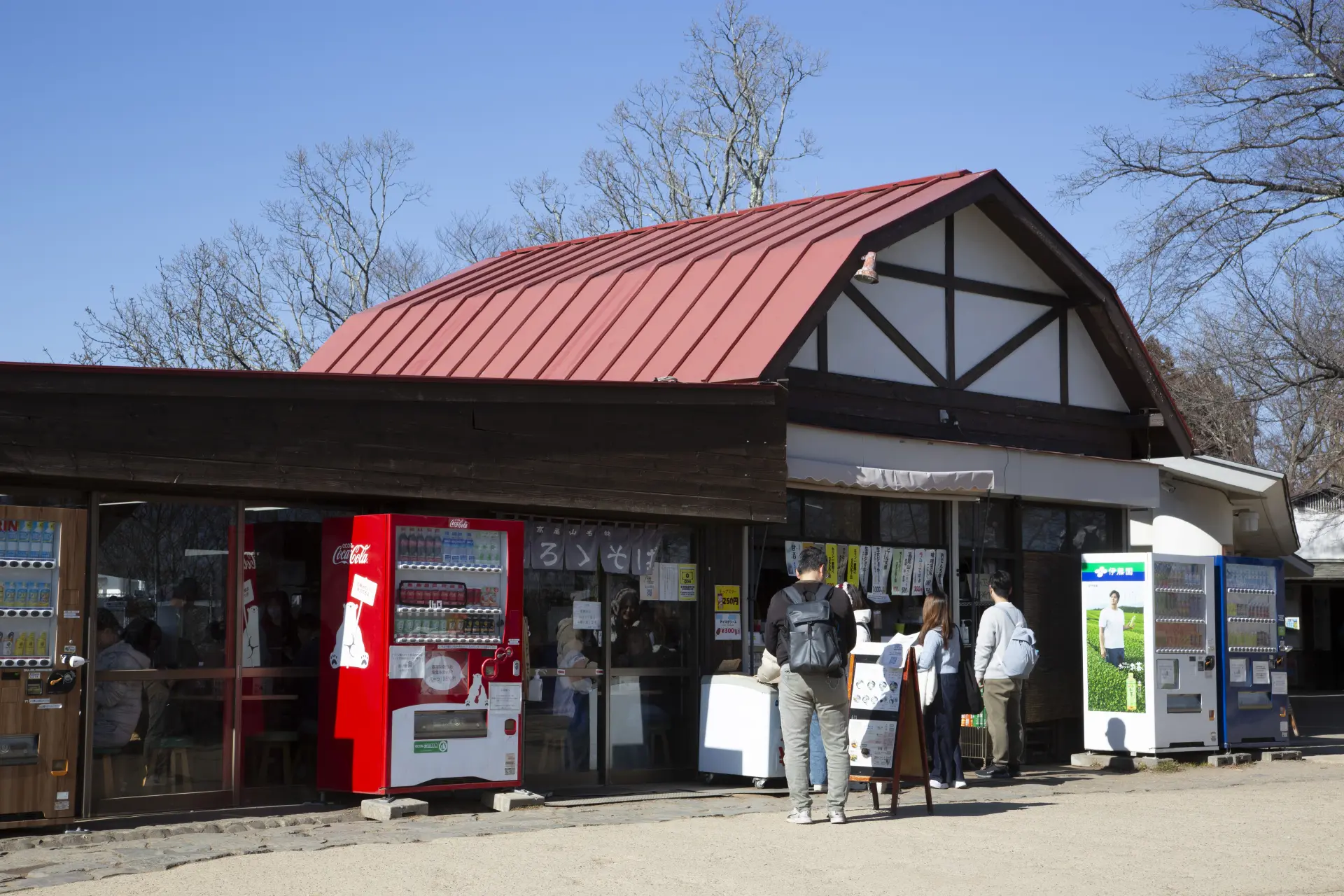
A mountain-hut-style red roof makes it easy to spot.
-
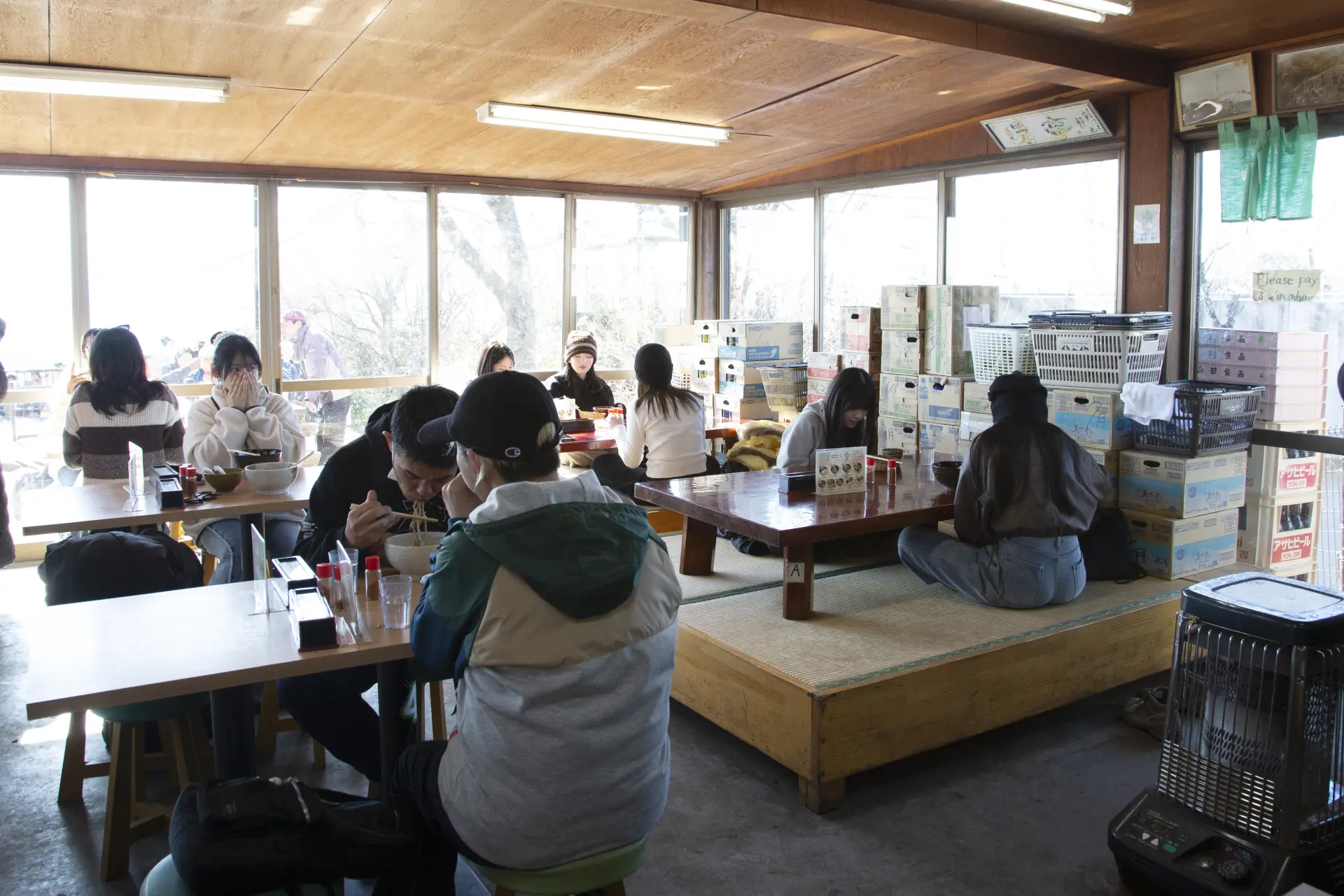
For a relaxed meal, dine indoors.
Extra-Thick Noodles Make “Sansai Soba” a Favorite
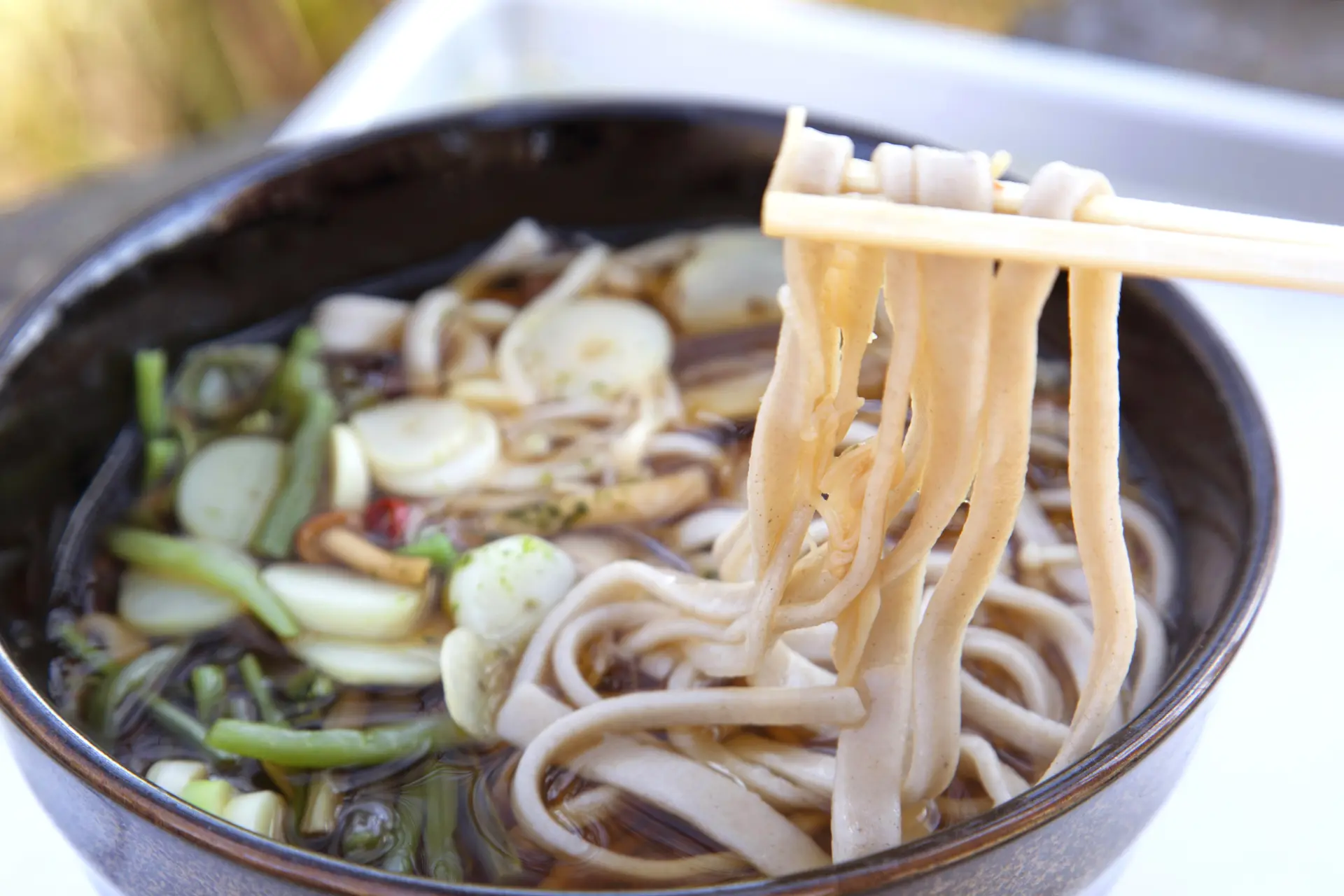
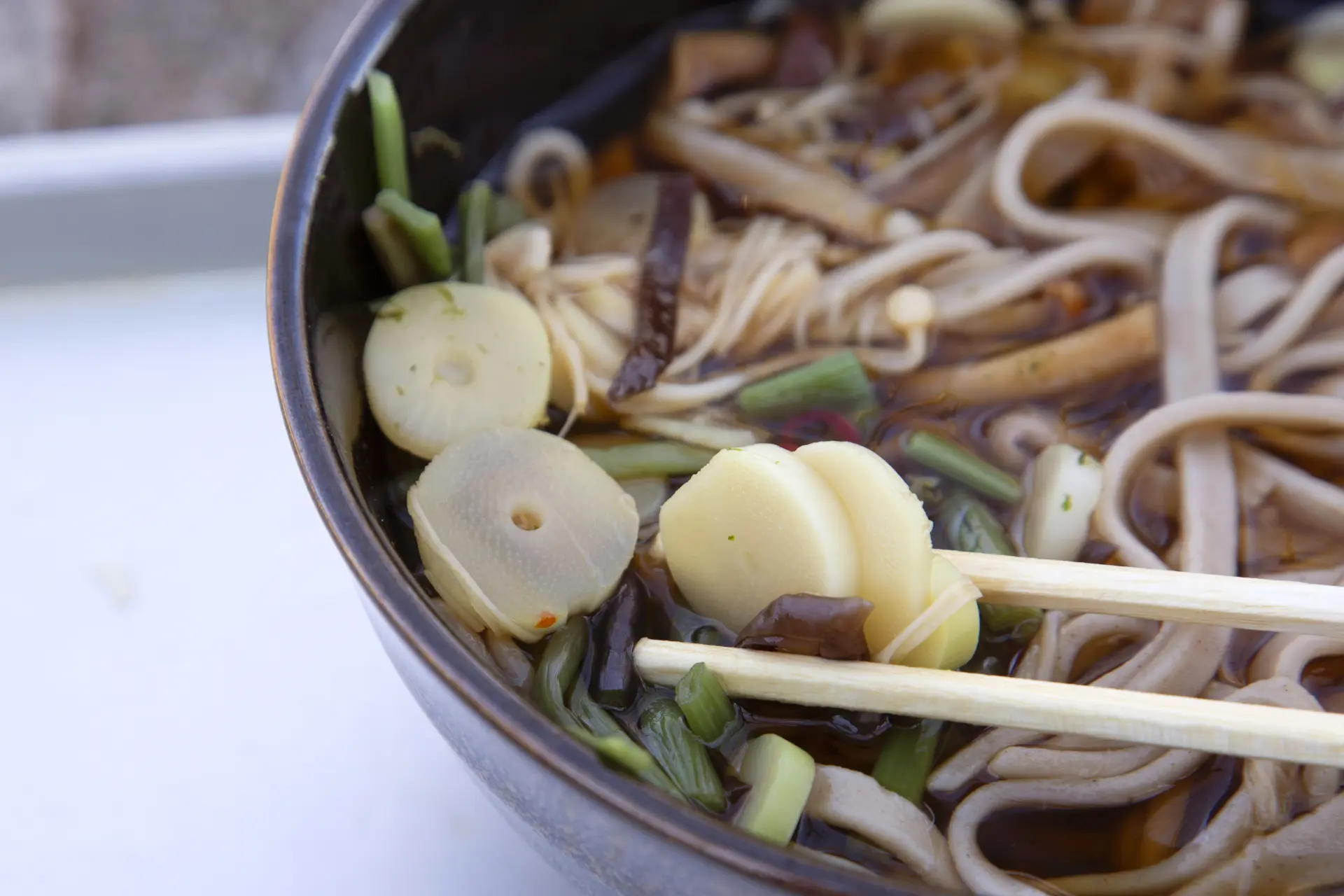
Popular choices include Mt. Takao specialties like “Sansai Soba” and “Tororo Soba.”
The soba is rustic and irregularly cut, with very thick noodles.
Every menu item is generously portioned, making for a hearty and filling meal.
“Sansai Soba” is especially known for its abundant toppings, including hime takenoko (small bamboo shoots), warabi (bracken), and mushrooms.
The excellent harmony of soba, dashi, and mountain vegetables creates a soothing flavor that comforts both body and mind after hiking.
You can also order extra noodles or an extra-large portion, so you are sure to leave satisfied.
Hearty Oden Is Also Recommended!
Side dishes include assorted mountain vegetables, miso dengaku, and oden.
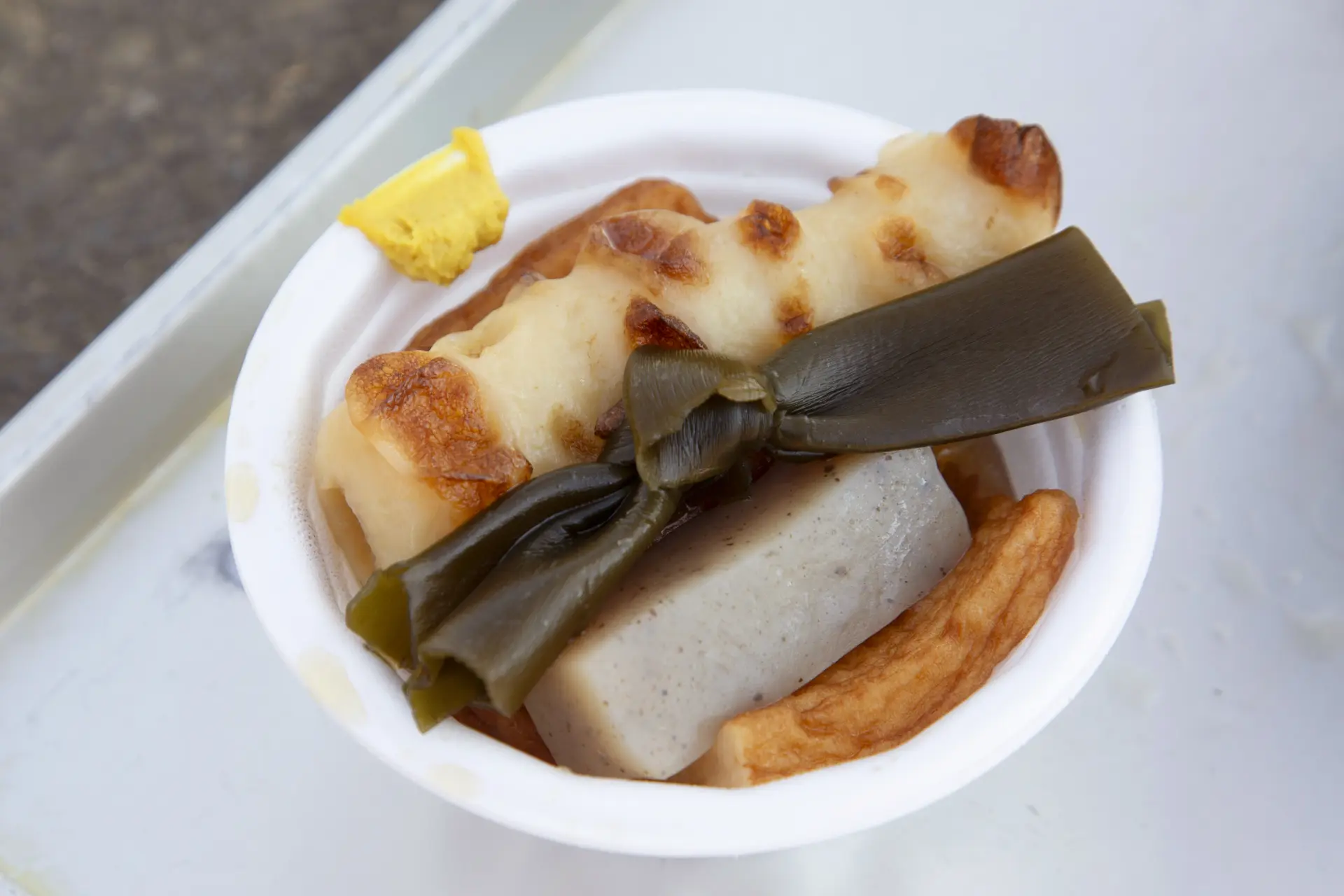
The most popular item is a hearty oden with five different ingredients, such as kelp, tube-shaped fish cake, and fried fish cake.
With a solid selection of alcoholic drinks as well, it is also recommended for a celebratory toast to reaching the summit.
FAQ About Soba on Mt. Takao
Q
When are soba restaurants on and around Mt. Takao less crowded?
A
Crowds are heaviest on spring and autumn weekends and public holidays. Weekday mornings and after 2:00 pm are generally quieter, and winter weekdays tend to be calmer overall.
Q
What are the business hours for soba restaurants on Mt. Takao?
A
Hours vary by shop, but many are open from around 10:00 am to around 4:00 pm. Depending on the weather and crowd conditions, they may close earlier, and some close when they sell out, so visiting early is recommended.
Q
How is it recommended to eat soba?
A
Let the noodles and sauce mingle well, then slurp them up in one go without worrying about the sound to fully enjoy the aroma and texture, and for tororo soba, consider ordering barley rice at the end to turn the remaining tororo sauce into tororo rice.
Q
Can I make reservations at soba restaurants around Mt. Takao?
A
Many places do not accept reservations and seat guests on a first-come, first-served basis, but some shops may take reservations for groups or set-course meals, so contact each shop for details.
Summary
In this article, we have introduced five distinctive spots where you can enjoy Mt. Takao’s famous tororo soba, from the foothills to the mid-mountain area and up to the summit.
From long-established shops that protect traditional flavors, to places focused on house-made noodles, to teahouses where you can eat with spectacular views, Mt. Takao’s food culture lives on through soba and side dishes like mountain vegetables and oden.
When you visit Mt. Takao, make choosing where to enjoy soba part of the trip, along with the scenery and temple visits.
You are sure to find a place that feels special to you.
If you want to learn more about other Mt. Takao gourmet options, check out the article below.