
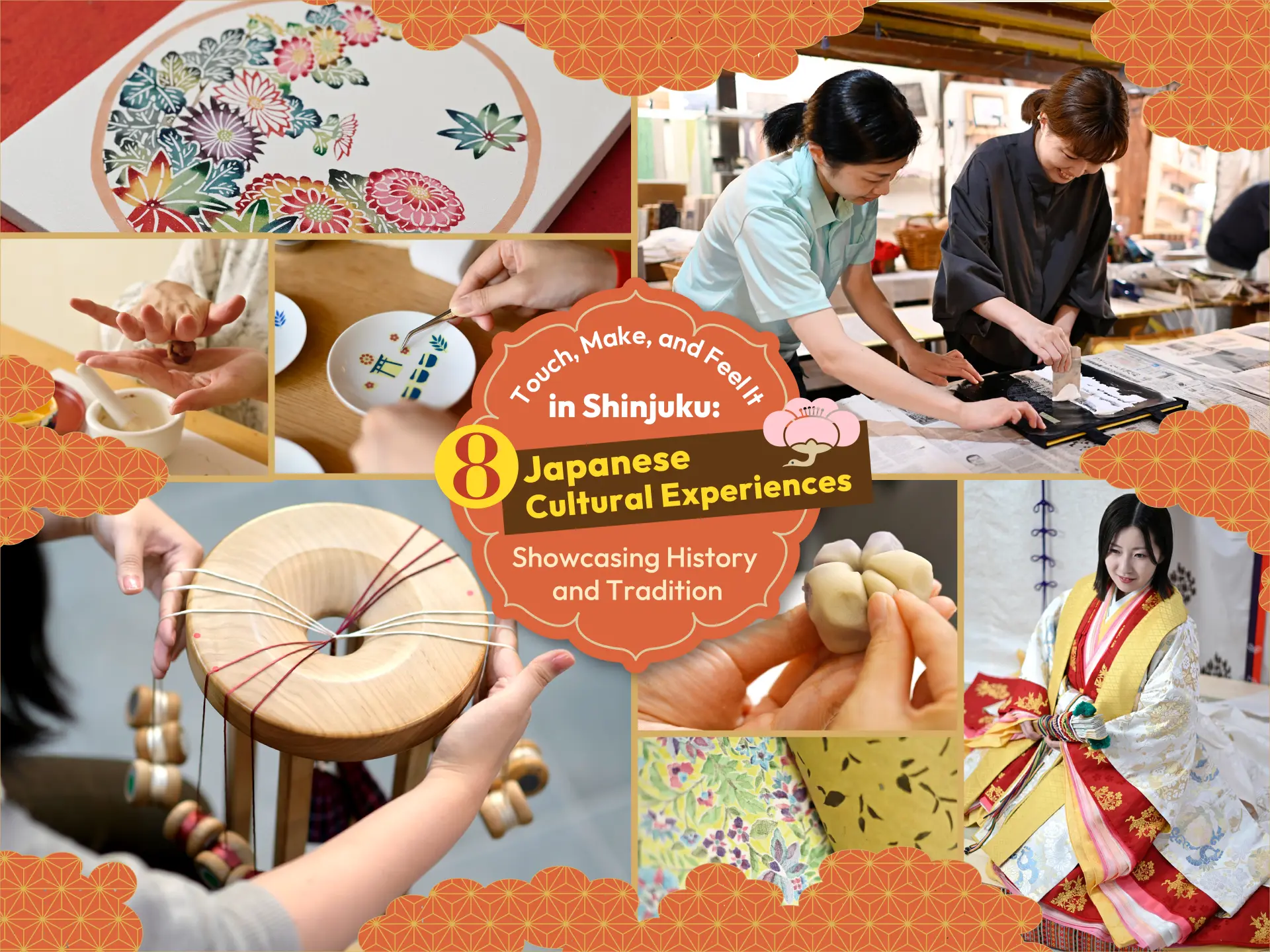
Touch, Make, and Feel It in Shinjuku: 8 Japanese Cultural Experiences Showcasing History and Tradition
Shinjuku is a place where skyscrapers rise and crowds stream through the city.
Yet in the middle of this urban landscape, there are experiences where you can savor Japan’s history and traditional culture with all five senses.
In this article, we introduce eight Japanese experiences that reveal how tradition still lives on in central Shinjuku, and how the charm of Japanese culture becomes deeper when you experience it for yourself.
If you are interested in Japanese culture, enjoy making things, or want to add a different kind of experience to your Tokyo trip, keep reading to the end.
8 Japanese Experiences in Shinjuku: Touch, Make, and Feel
Shinjuku is home to workshops tied to dyeing culture that continues from the Edo period (1603-1868), including Edo Komon (fine-pattern dyeing), Edo Sarasa (chintz-style dyeing), Edo embroidery, and senga (paste painting).
Artisans once gathered around the Myoshoji River and the upper reaches of the Kanda River in search of beautiful water, and even today the area’s traditions live on as a “dyeing town.”
With “touch, make, and feel” as our keywords, this article introduces eight experiences you can enjoy in Shinjuku, from dyeing and wagashi (traditional Japanese sweets) making to incense, kumihimo (traditional braided cord), tea ceremony, and classical performing arts.
1. Experience a Dyeing Artisan’s Craft: “Ise Katagami Table Runner Dyeing Experience”
Somenosato Ochiai, founded in 1920, stands quietly along the Myoshoji River.
It is a dyeing workshop that carries Japanese traditional dyeing techniques passed down since the Edo period (1603-1868) into the present day.
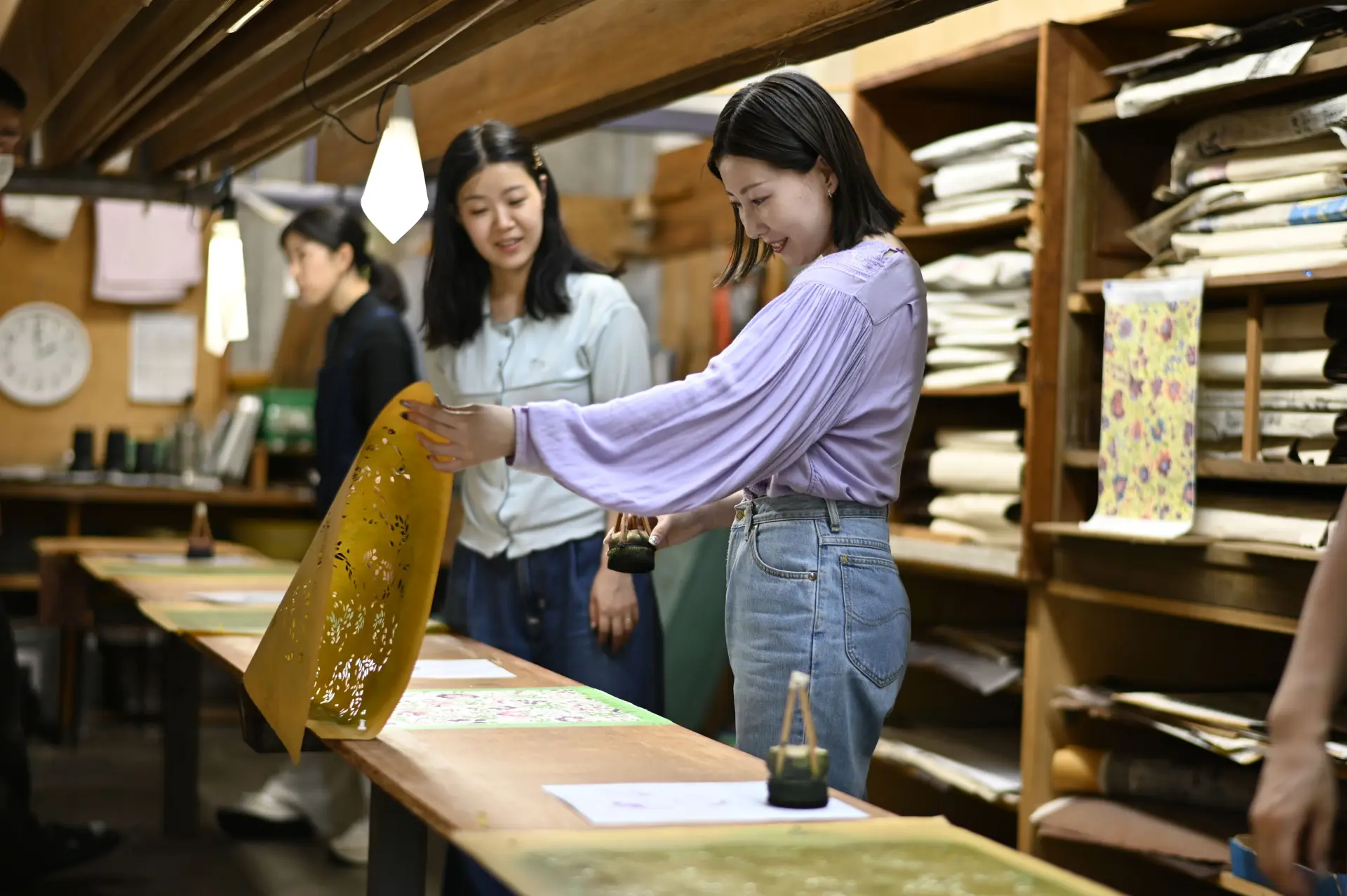
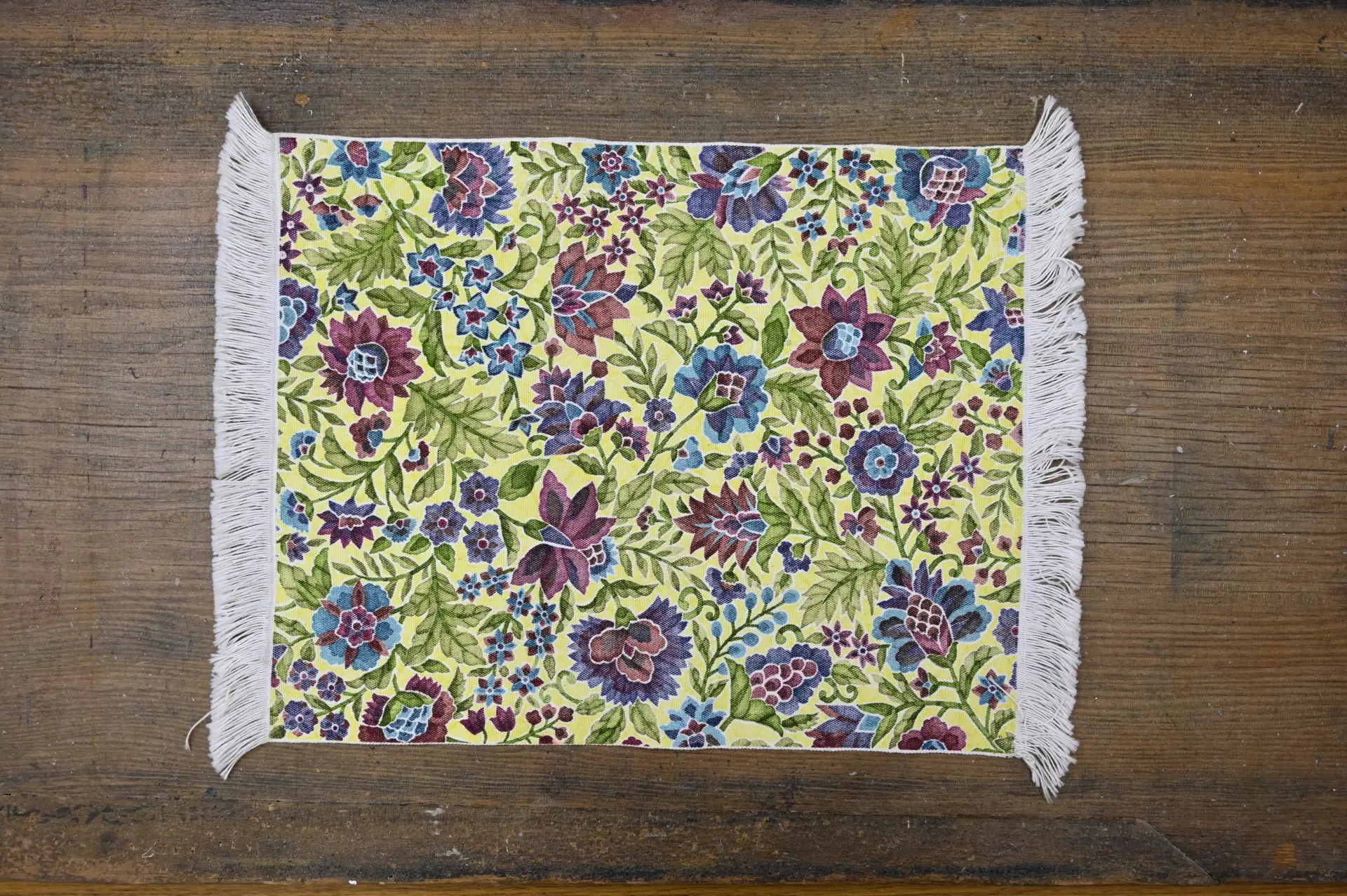
In this authentic Edo Sarasa stencil-dyeing experience held weekly, you use 14 Ise katagami (traditional stencil patterns), dye, and a deer-hair brush to dye a table runner.
As you layer colors, the patterns emerge so vividly that you cannot help but let out a cheer.
Once the dyeing is finished, the cloth is steamed to complete the piece.
The expression of the colors shifts with the pressure of your brush, turning it into a one-of-a-kind piece.
The workshop also has an on-site shop where you can buy small goods made with dyed textiles, so the fun continues after your experience.
- Japanese Name
- 染の里 おちあい
- Address
- 2-3-6 Kami-Ochiai, Shinjuku-ku, Tokyo Google Maps
- Hours
- 11:00 am-5:00 pm
- Closed
- Mondays
- Operation Days
- Wednesday (irregular) / Saturday from 1:00 pm / Sunday from 10:00 am
- Duration
- About 2-2.5 hours
- Fee
- Edo Sarasa table runner stencil-dyeing experience: 4,400 yen (materials included)
- Booking
- Reserve via the booking site by the day before your preferred date
- Languages
- Japanese, English
2. Discover a Long-Established Workshop’s Traditions: Tote Bag Dyeing with Colored Paste
Tomita Some-Kogei has operated a workshop along the Kanda River for more than 110 years.
This long-established dyeing studio specializes in Edo Komon and Edo Sarasa, preserving techniques that continue from the Edo period (1603-1868) to this day.
Inside the workshop, traditional tools still in active use include an itaba (worktable used to apply color to fabric) and steaming boxes, unchanged from the past.
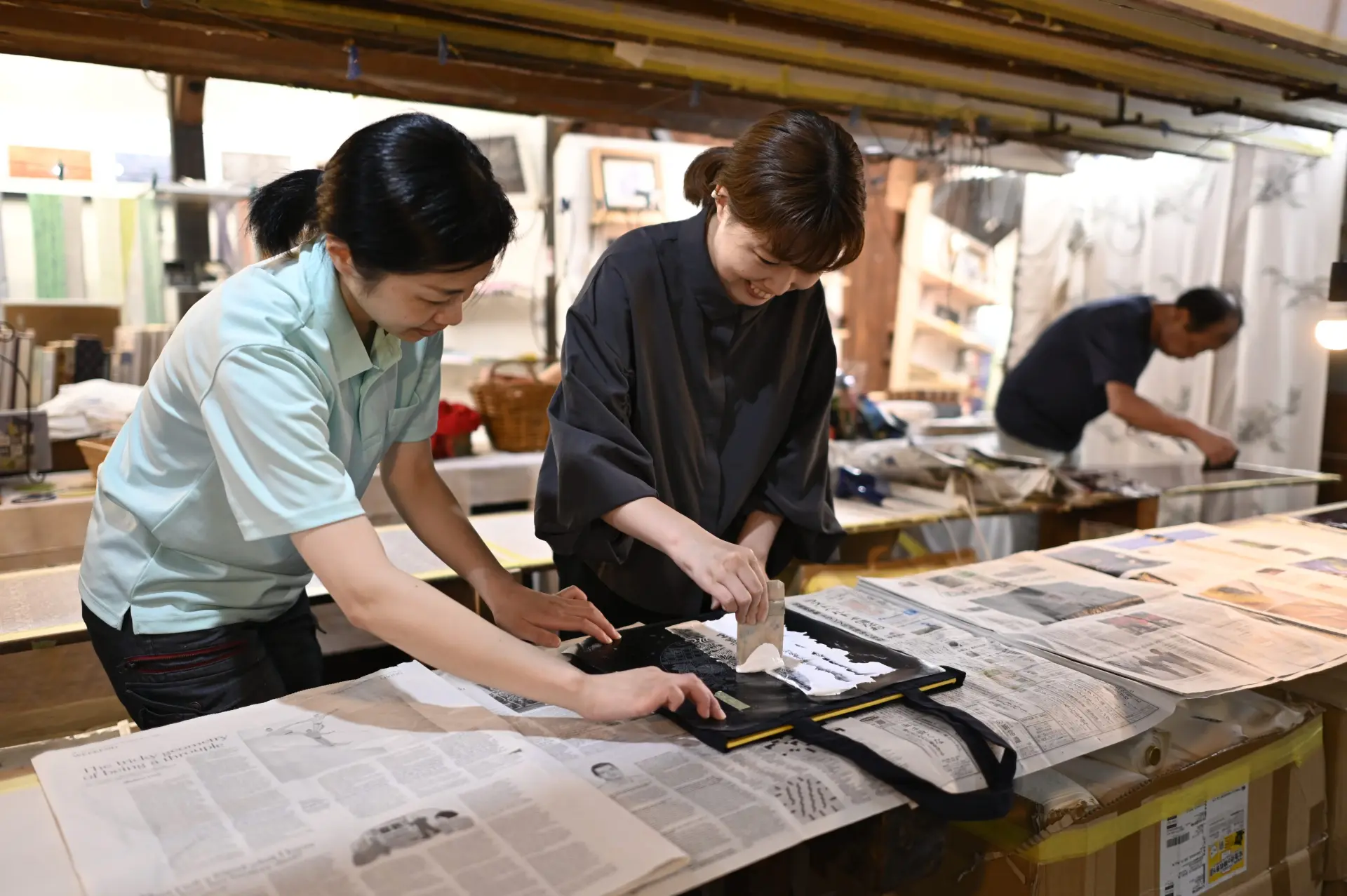
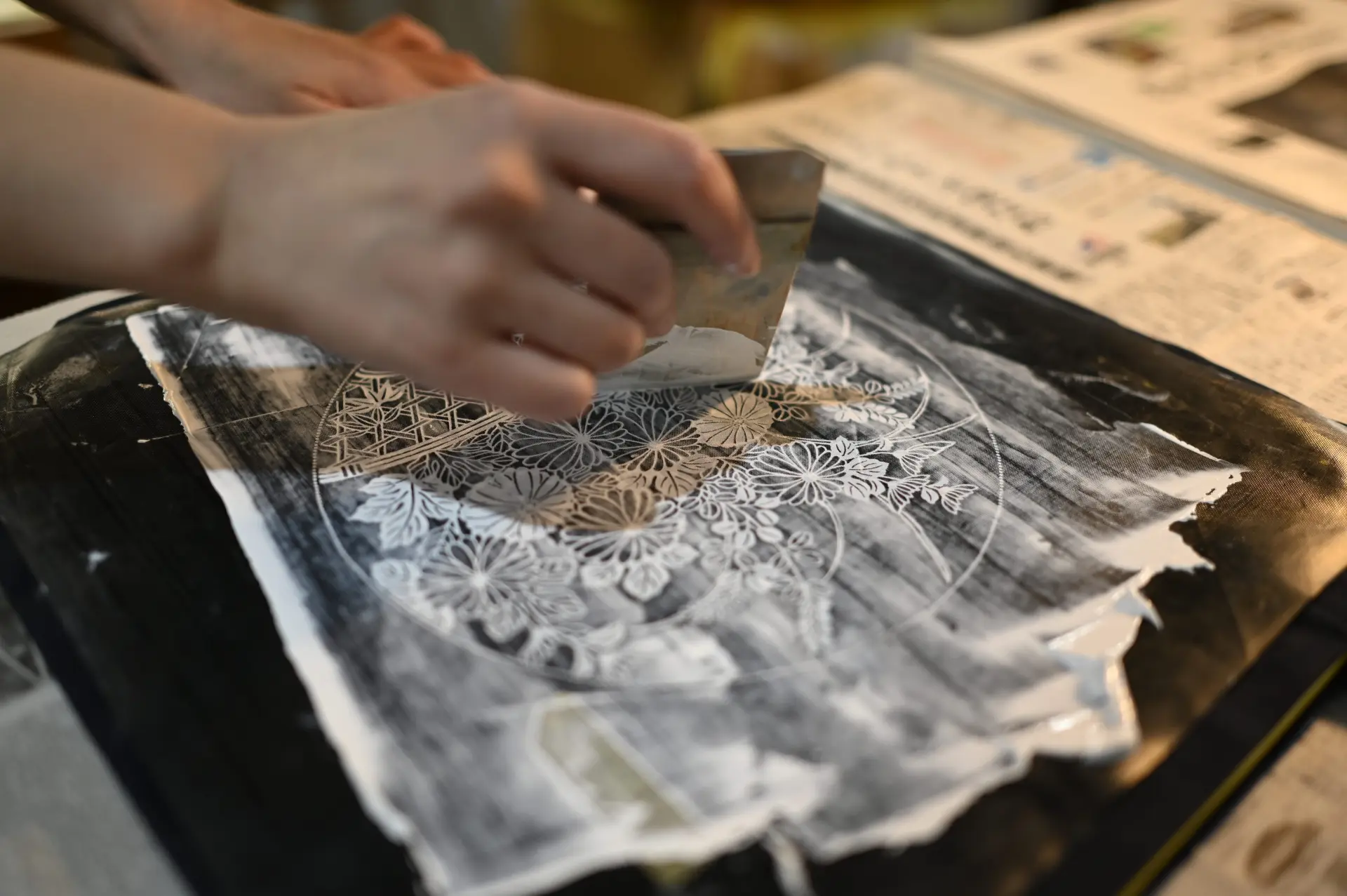
In the tote bag dyeing experience, you can choose from 23 designs such as seasonal flowers or an adorable raccoon-dog motif, and select one of three colored pastes: gold, silver, or white.
Placing the stencil and pressing in the colored paste with a spatula is a process that lets you feel the artisan’s skills up close.
While you wait for it to dry, you can tour the workshop, and you can take your finished piece home the same day.
- Japanese Name
- 富田染工芸
- Address
- 3-6-14 Nishi-Waseda, Shinjuku-ku, Tokyo Google Maps
- Hours
- 9:00 am-12:00 pm, 1:00 pm-4:00 pm
- Closed
- Saturdays, Sundays, and public holidays (temporary closures may occur)
- Operation Times
- Weekdays 9:00 am / 10:00 am / 1:30 pm / 2:00 pm / 2:30 pm
- Duration
- About 1.5-2 hours
- Fee
- Tote bag dyeing experience: 3,000 yen (materials included)
- Booking
- Reserve by the day before your preferred date via the official website or by fax (03-3980-2519)
- Languages
- Japanese, English, Chinese
3. Meet an Okinawan Dyeing Technique: “Silk Experience for an Art Panel”
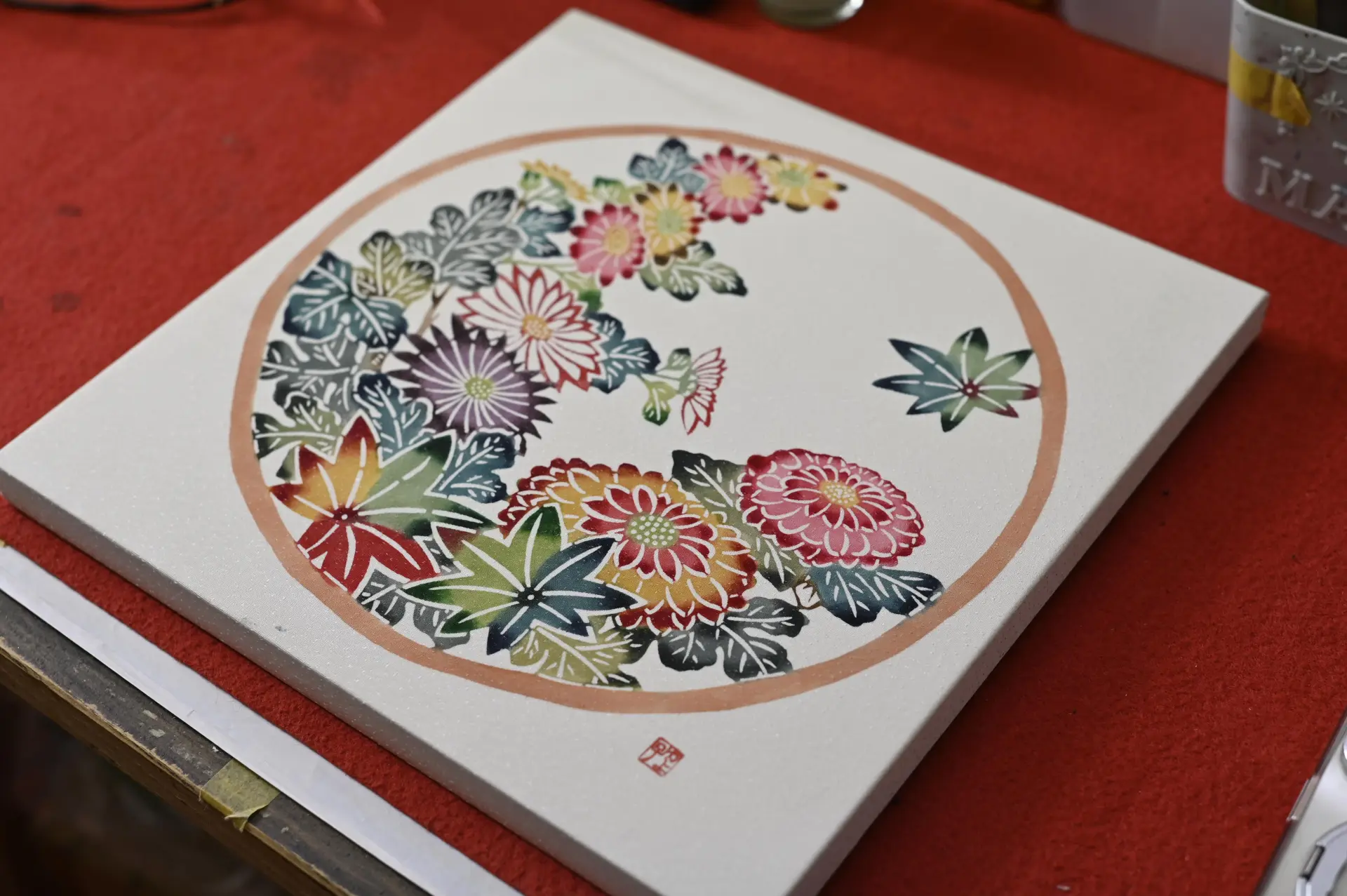
Bingata is a traditional Okinawan dyeing technique known for vivid colors created with natural materials.
Modern Bingata Okamekobo is a dyeing studio established in Ochiai in 2007 by an owner captivated by bingata dyeing.
Its appeal lies in modern designs that incorporate Edo-style chic into Ryukyu bingata techniques, along with a gentle, soft texture.
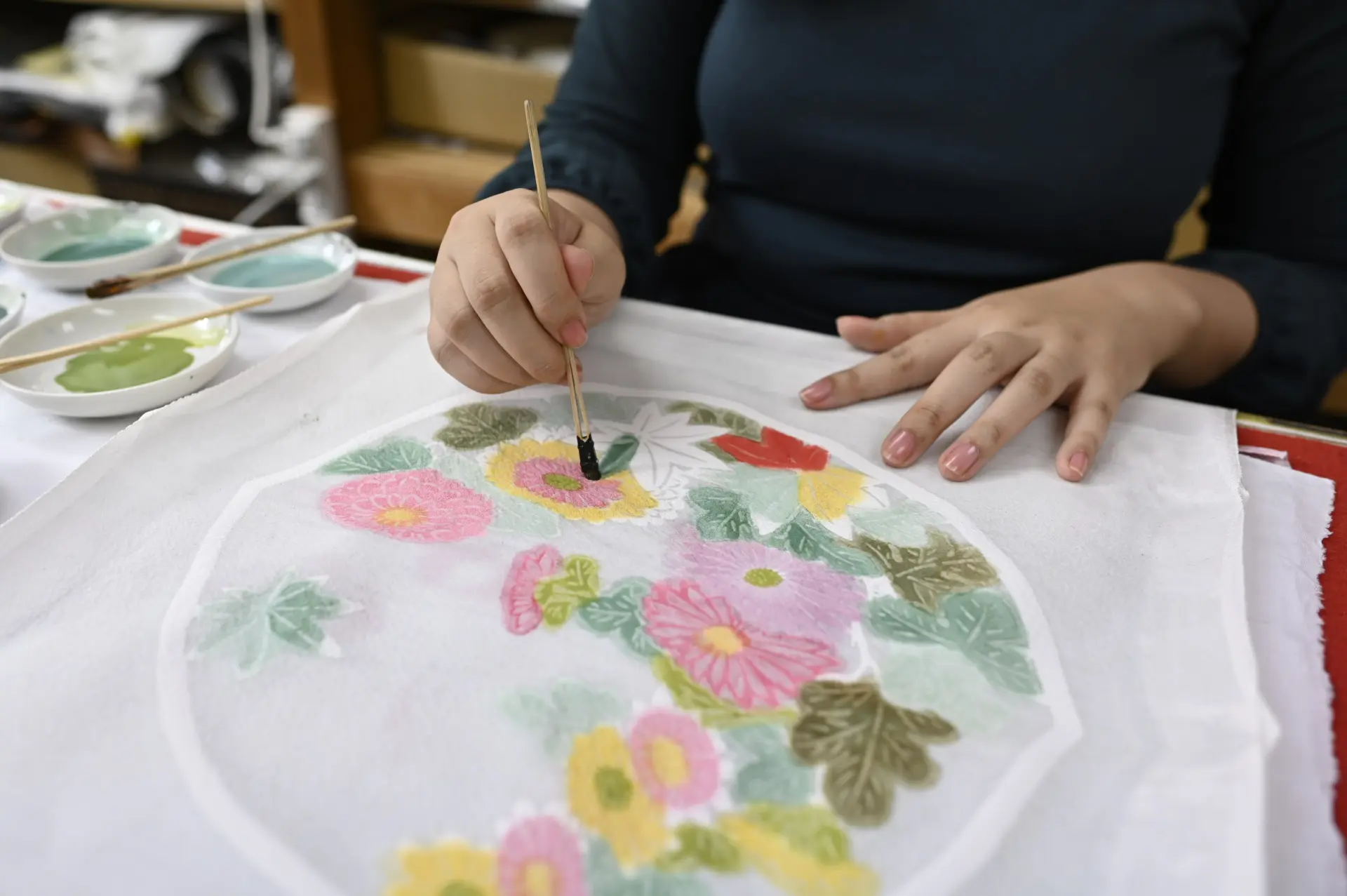
In the silk experience course for an art panel, you choose your favorite design from four patterns, then add color while exploring your own sense of color.
Using a surikomi brush, you lay in pale colors, then overlap deeper tones and blend them to express delicate patterns. The process of patiently building layers of color is profound, and before you know it, you are completely absorbed.
- Japanese Name
- モダン紅型 おかめ工房
- Address
- 1-17-12 Naka-Ochiai, Shinjuku-ku, Tokyo Google Maps
- Hours
- 11:00 am-6:00 pm
- Closed
- Sundays and public holidays
- Operation Times
- Tuesday, Wednesday, Friday, and Saturday 1:00 pm-5:00 pm
- Duration
- About 4 hours
- Fee
- Silk experience course for an art panel (half-day course): 28,000 yen (materials included)
- Booking
- Reserve by the day before your preferred date (or the day before that if the previous day is Sunday or a public holiday) by email: okamekobo@gmail.com
- Languages
- Japanese (English and Chinese supported via translation apps, etc.)
4. Celebrate the Seasons of Japan: A Colorful Nerikiri Making Class
Shinjuku Eikoudou is a wagashi shop long loved by locals.
Its specialty is high-quality fresh confections used in tea ceremony, crafted to express the feeling of the seasons.
Around 10 kinds are available at all times, and the shop may also create original designs upon request.
Inside the shop, a nerikiri-making class is held every month.
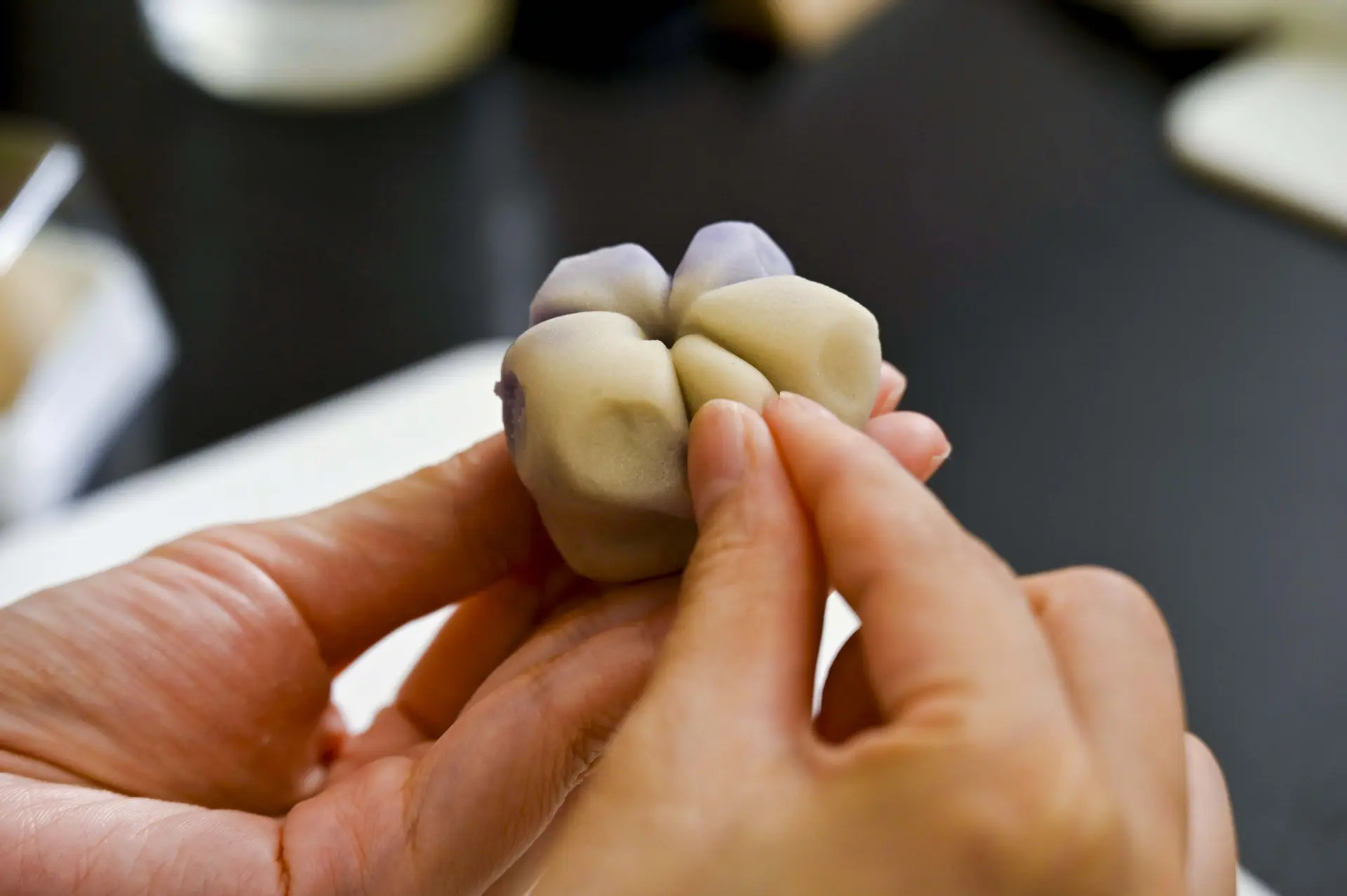
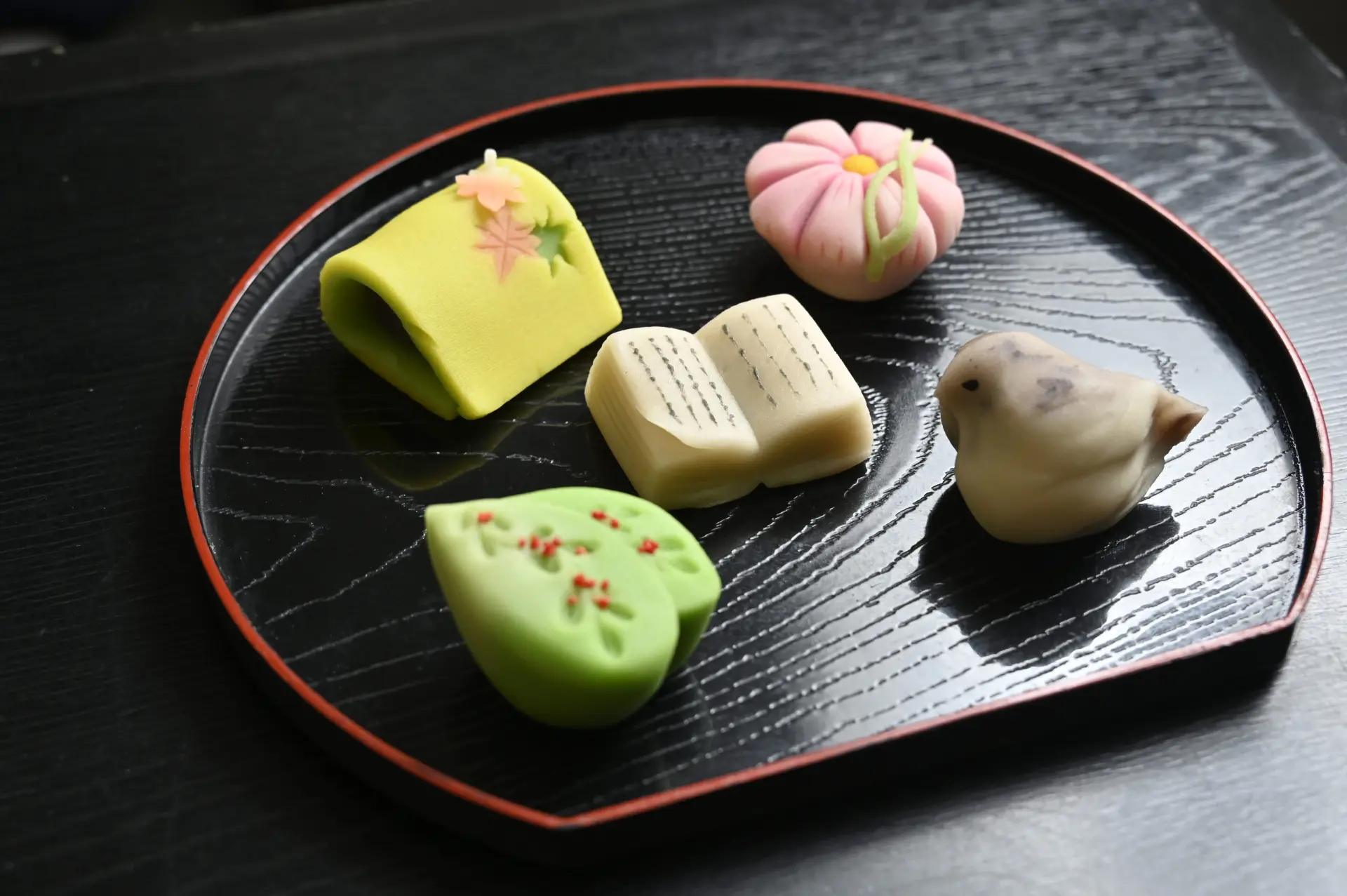
You can try making two types of nerikiri that change monthly, featuring motifs such as seasonal flowers and birds.
First, you begin by spreading colored dough made by mixing white bean paste with mochi-like dough in your palm, then wrapping sweet bean paste inside.
Next, you shape it with tools such as triangular sticks and bamboo spatulas, watching the pressure you apply, and finish by refining it with your fingertips.
Through the warmth of your palms, feel Japan’s beautiful four seasons.
- Japanese Name
- 新宿栄光堂
- Address
- 30-7 Wakamatsu-cho, Shinjuku-ku, Tokyo Google Maps
- Hours
- 10:00 am-7:00 pm, Saturday 10:00 am-6:30 pm
- Closed
- Sunday
- Operation Times
- From 2:00 pm (except Sunday)
- Duration
- About 1.5 hours
- Fee
- Nerikiri making class: 4,400 yen (materials included)
- Booking
- Reserve by the day before your preferred date by phone (03-3202-3799) or via the official website
- Languages
- Japanese, English
5. Make Molded Incense While “Listening” to Fragrance: An Inko Making Experience
Juttoku. is a shop where you can enjoy incense blended with natural aromatic ingredients.
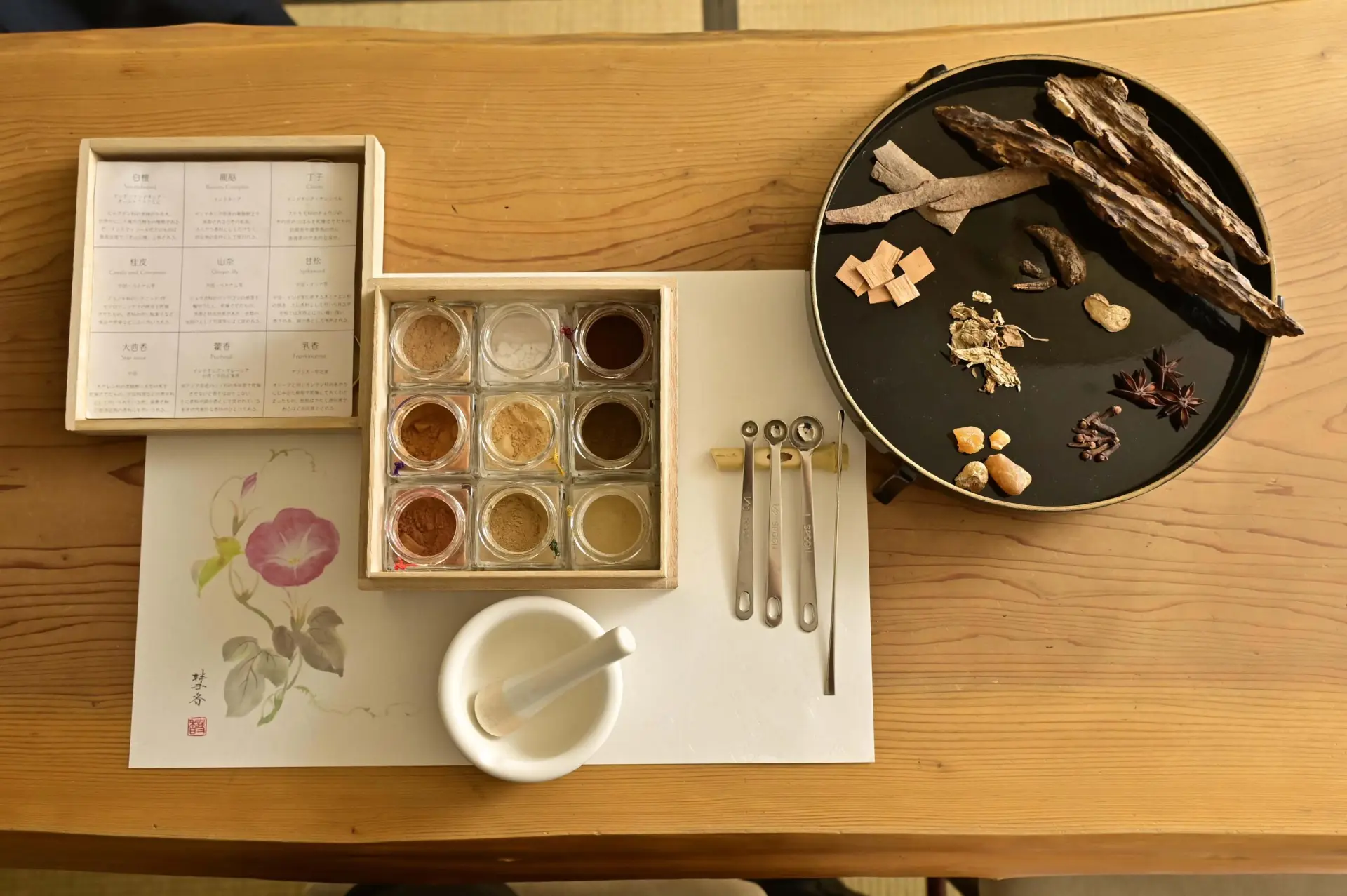
In the in-store incense-making experience, you can create items such as finely powdered incense or scented sachets by choosing your preferred combination from nine aromatic materials.
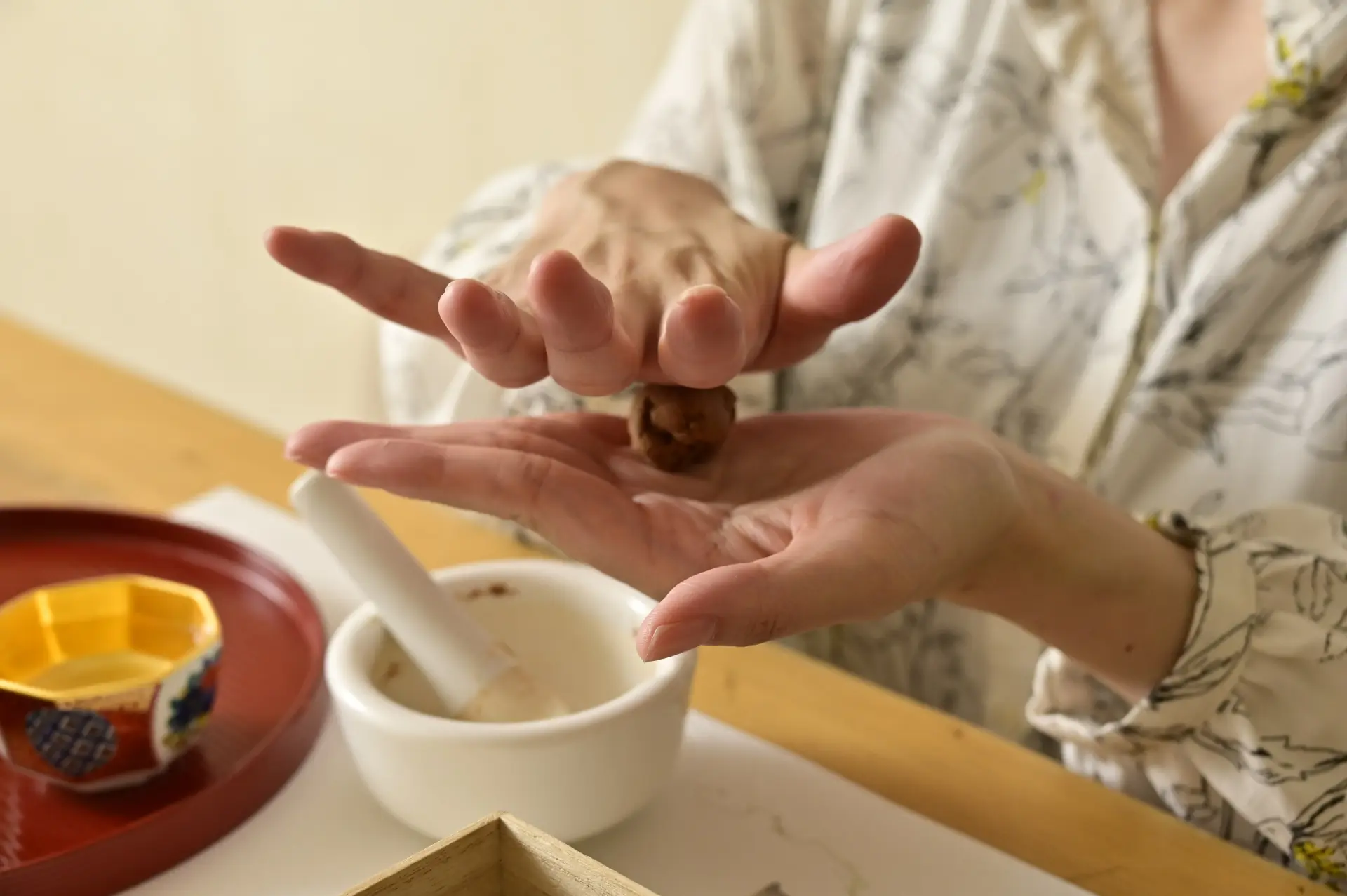
In the “Inko making experience,” you add a binding powder to your chosen ingredients, knead the mixture, then mold the clay-like incense into shapes such as birds or flowers and dry it to finish.
You can burn the finished incense at home and enjoy quiet moments of centering your mind as you are wrapped in its scent.
- Japanese Name
- Juttoku.
- Address
- 23 Benten-cho, Shinjuku-ku, Tokyo Google Maps
- Hours
- 12:00 pm-5:00 pm, Saturday, Sunday, and public holidays 11:00 am-6:00 pm
- Closed
- Wednesday and Thursday (temporary closures may occur)
- Operation Times
- 11:00 am / 1:00 pm / 3:00 pm / 5:00 pm (11:00 am and 5:00 pm are weekends and public holidays only)
- Duration
- About 1 hour
- Fee
- Inko making experience: 3,000 yen (materials included)
- Booking
- Reserve via the official website by the day before your preferred date
- Languages
- Japanese, English
6. Learn with Careful Guidance: Kumihimo “Nara-gumi” Making Experience
Today, kumihimo is often used for kimono accessories such as obijime (decorative kimono cords), and it is one of Japan’s traditional techniques.
DOMYO, a specialist in kumihimo, is a long-established shop founded in Ueno about 370 years ago.
At the Kagurazaka location, Kumihimo Experience by DOMYO, a wide variety of workshops are held so you can experience the appeal of kumihimo firsthand.
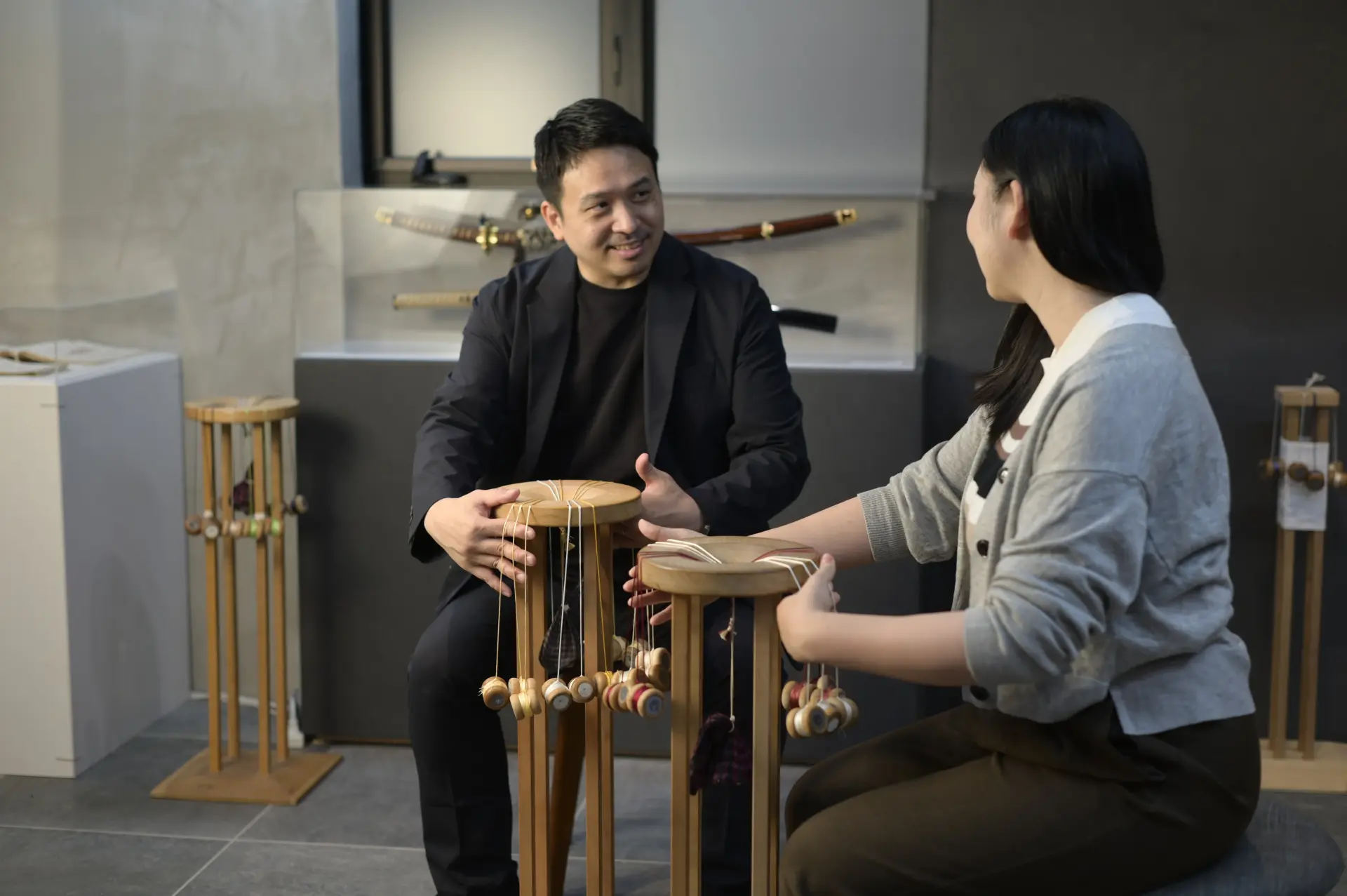
In the Nara-gumi making experience recommended for beginners, you first learn about the history and characteristics of kumihimo in the attached museum, then take on the making process yourself.
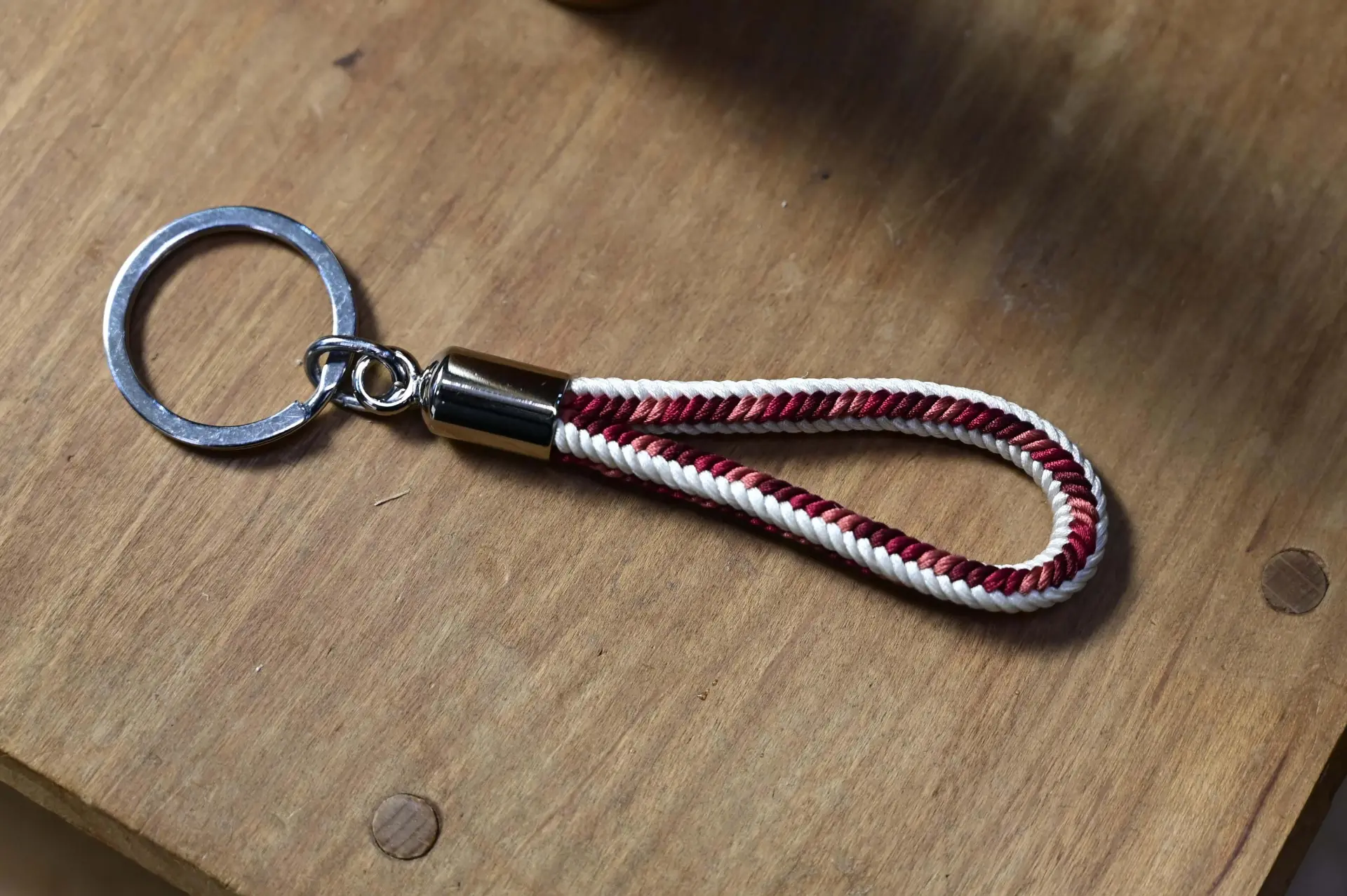
You begin by choosing your preferred color combination from a wooden braiding stand set with 12 bundles of hand-dyed silk threads.
With careful guidance from an artisan, you move the thread bundles in a fixed order, and a kumihimo cord with beautiful, dimensional braiding gradually takes shape.
The process of patiently braiding a single cord is a moment you can lose yourself in and forget time.
- Japanese Name
- Kumihimo Experience by DOMYO
- Address
- 6-75 Kagurazaka, Shinjuku-ku, Tokyo Google Maps
- Hours
- 10:30 am-6:30 pm
- Closed
- None
- Operation Times
- 11:00 am / 2:00 pm
- Duration
- About 2 hours
- Fee
- Kumihimo “Nara-gumi” making experience: 6,600 yen (materials included)
- Booking
- Reserve via the official website by the day before your preferred date
- Languages
- Japanese, English
7. Try Traditional Craft with Ease: Arita Ware Small Plate Making
Tenaraido offers classes and workshops where you can experience a Japanese culture of carefully using everyday tools for a long time, from kintsugi (traditional repair techniques) to clothing darning and other repairs.
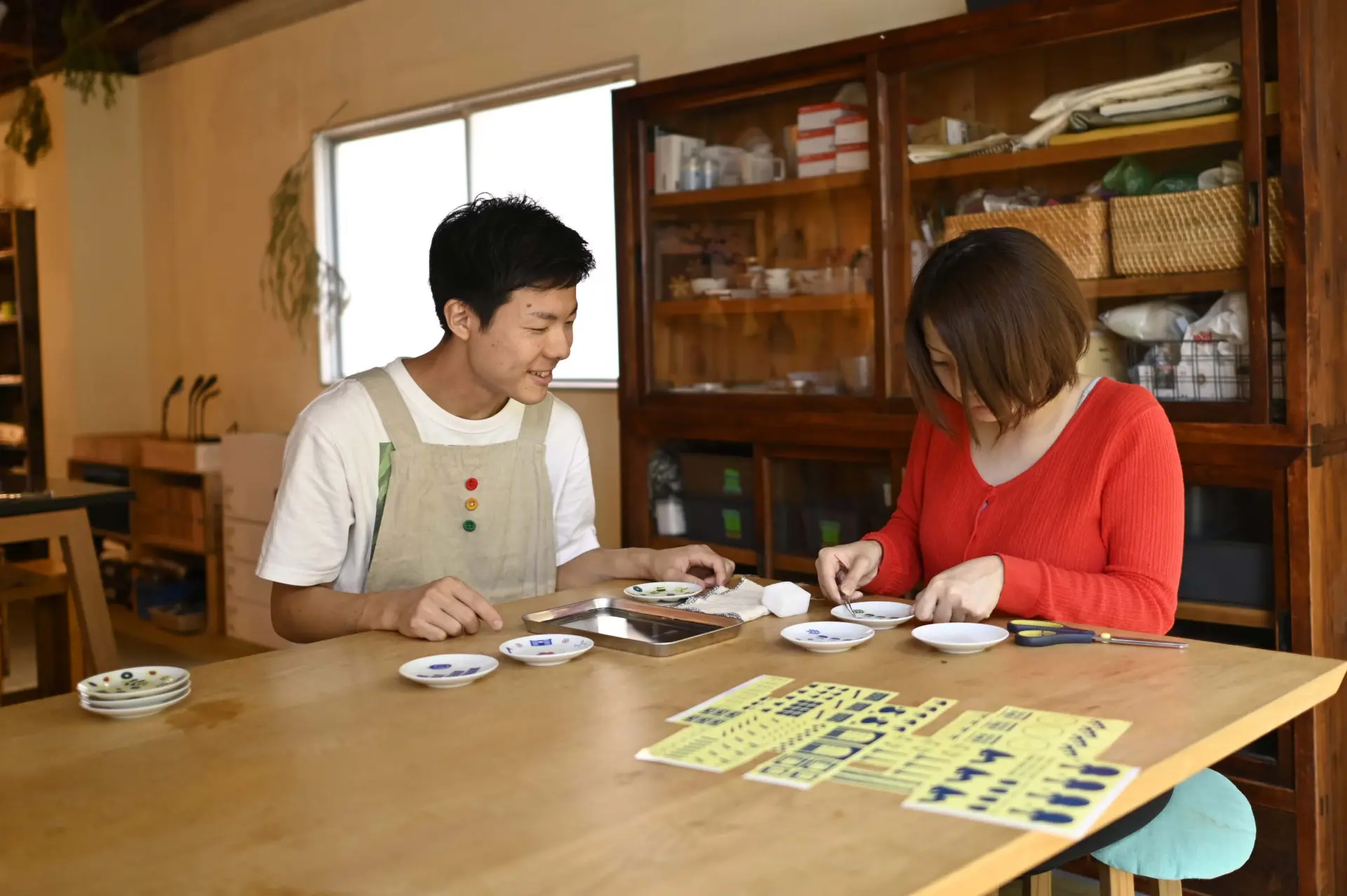
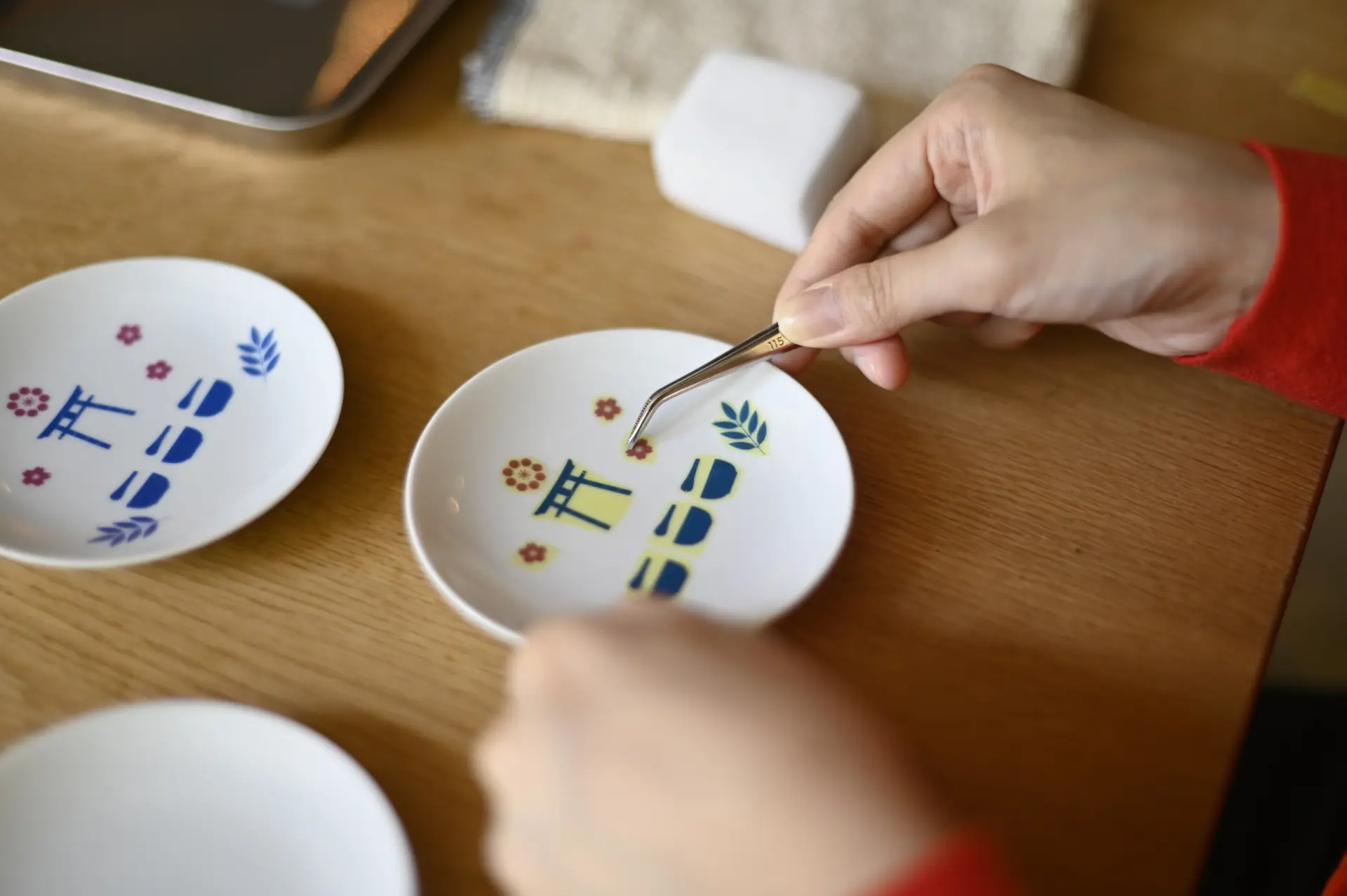
Here, you can join an Arita ware small plate making experience, featuring a decorating process using transfer paper.
You choose a favorite design from a range of patterns, moisten it with water, and place it freely on a pure white small plate.
After decorating, the plate is carefully fired at a kiln in Arita, and the finished piece is delivered to your home at a later date.
- Japanese Name
- てならい堂
- Address
- Chigusa Building 2F, 118 Yarai-cho, Shinjuku-ku, Tokyo Google Maps
- Hours
- 11:00 am-6:00 pm
- Closed
- Monday, Wednesday, Thursday
- Operation Times
- 11:00 am-6:00 pm (except Monday, Wednesday, Thursday)
- Duration
- About 1-1.5 hours
- Fee
- Arita ware small plate making: 4,950 yen (materials included)
- Booking
- Reserve by the day before your preferred date via the inquiry form
- Languages
- Japanese
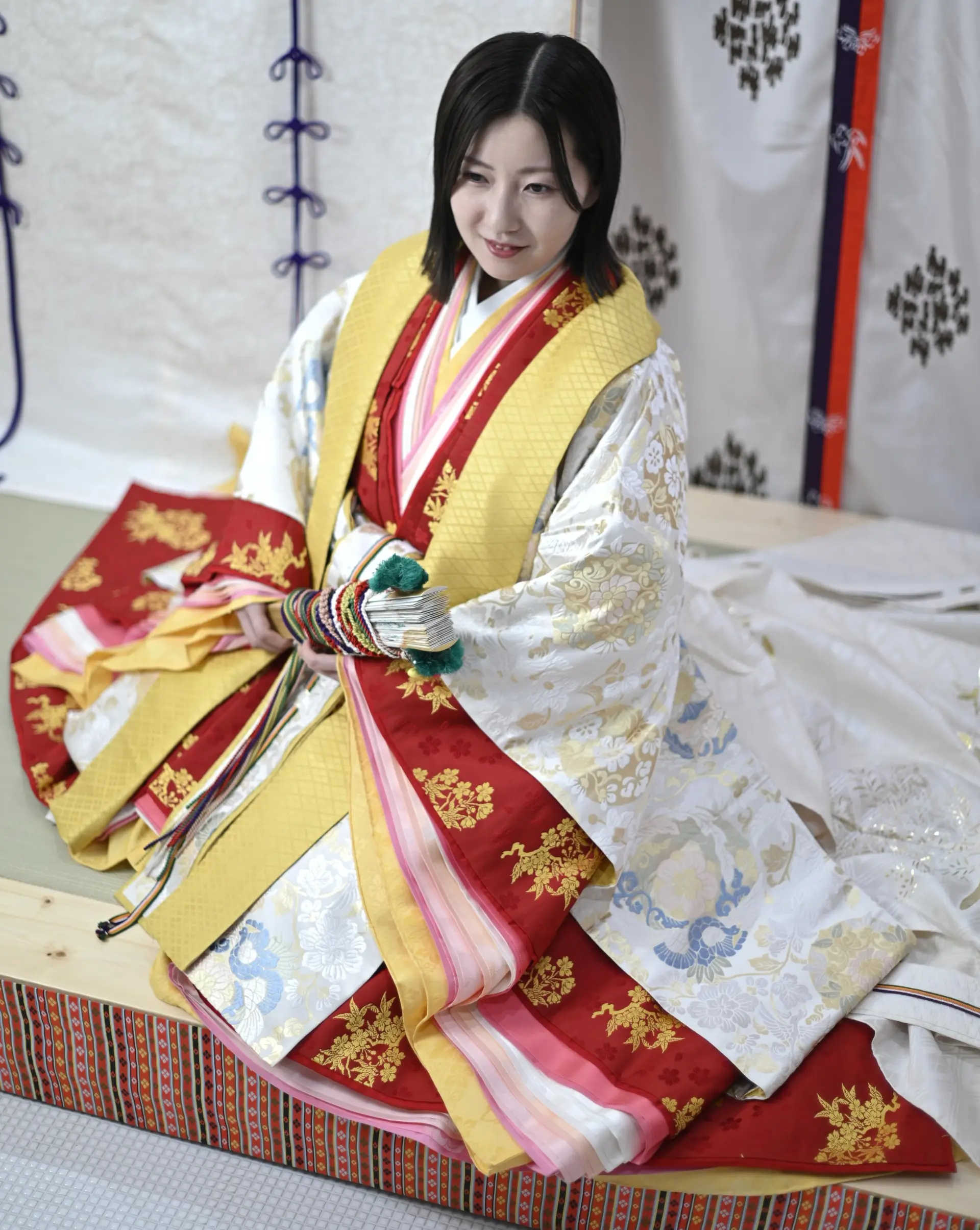
8. Time-Travel to the Heian Period with the “Salon Juunihitoe Experience Plan”
Juunihitoe Tokyo is a specialty shop that provides and dresses clients in Heian court attire, including Juni-hitoe.
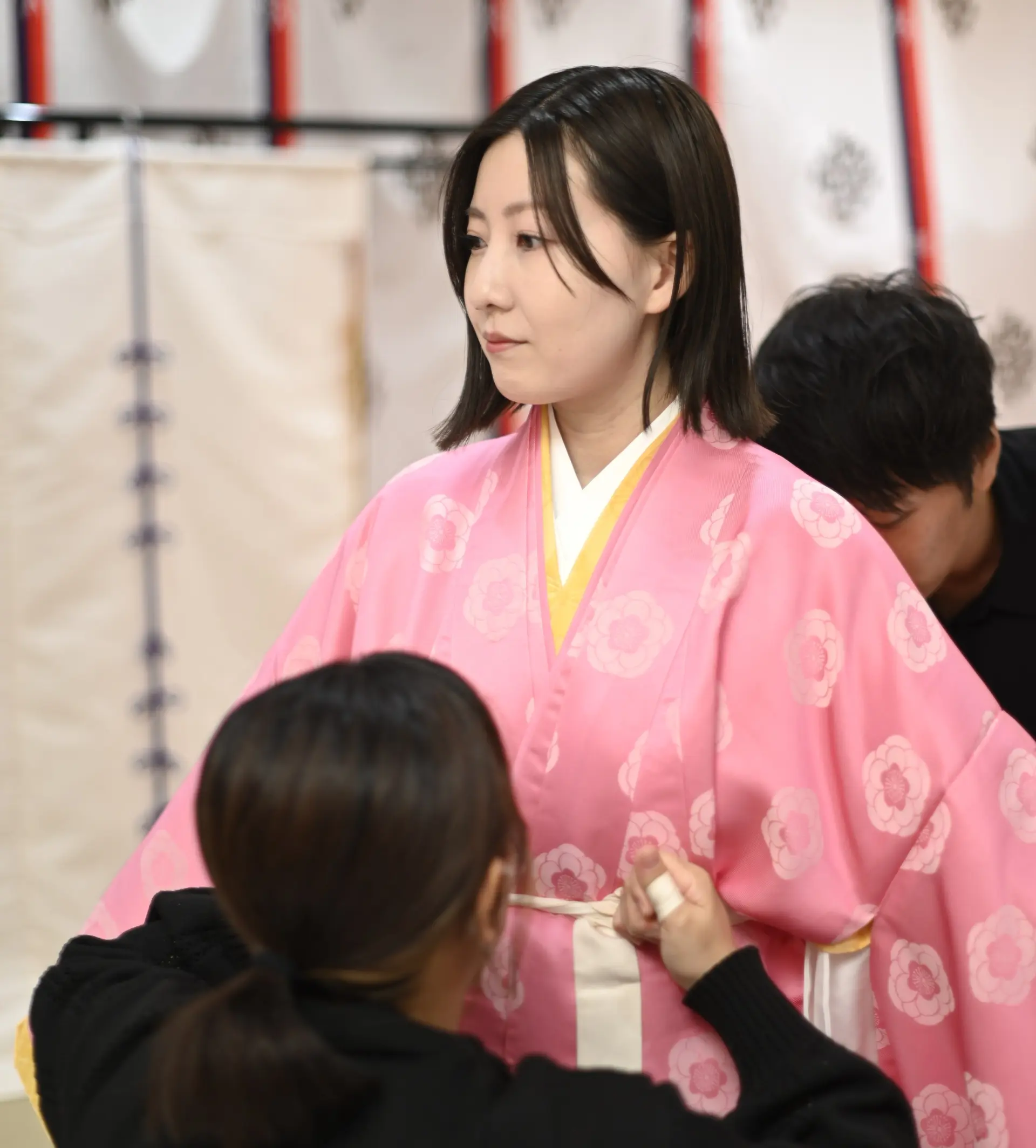
At the shop, you can be dressed in Juni-hitoe, which was considered formal court wear in the Heian period (794-1185), using methods based on tradition.
The experience begins by choosing from two patterns, including combinations of hakama trousers and kimono colors.
After putting on the hakama, you layer multiple kimono one by one in order.
It sounds heavy when you hear “layering,” but because it is dressed along the body, it can feel surprisingly light.
Finally, tightening the entire outfit with a single cord completes an elegant and beautiful Juni-hitoe look.
After dressing, you can freely take photos, making it popular for anniversaries and trips with friends.
- Japanese Name
- 十二単 東京
- Address
- 7 Tenjin-cho, Shinjuku-ku, Tokyo Google Maps
- Hours
- 11:00 am-5:00 pm
- Closed
- Tuesday (on closed days, sessions may be considered with advance reservation)
- Operation Days
- Check the official website
- Duration
- Around 1 hour
- Fee
- Salon Juunihitoe experience plan: 38,500 yen (dressing and photography fee included)
- Booking
- Reserve via the official website
- Languages
- Japanese (English and Chinese supported via translation apps, etc.)
Summary
Japanese experiences you can find in Shinjuku are not as intimidating or exclusive as they may sound.
By actually using your hands and feeling the process, history and tradition stay with you not as knowledge, but as “your own memories.”
Another Shinjuku-specific charm is that you can casually drop by between other parts of your trip.
Choose one experience that catches your interest, and spend a special time facing the depth of Japan in the heart of the city.
*All prices include tax, and details such as fees may change from the information provided at the time of coverage.
*Language support is not guaranteed, and depending on staff availability, communication may be handled via translation apps, etc.