

Hiroshima Castle Travel Guide: A Landmark That Brings Hiroshima’s History and Culture to Life
Hiroshima Castle is one of Japan’s Top 100 Castles, and it’s now a familiar feature in guidebooks, too.
In addition to its appeal as a historic structure, the five-story main keep hosts exhibits where you can learn about the history and culture of Hiroshima and Hiroshima Castle.
To enjoy Hiroshima Castle even more, be sure to use this article’s key details and highlights as a reference.
What is Hiroshima Castle Like?
Hiroshima Prefecture is one of the most popular destinations in Japan’s Chugoku and Shikoku regions, home to UNESCO World Heritage Sites such as Itsukushima Shrine and the Atomic Bomb Dome.
From the well-developed city environment of Hiroshima to nature-filled areas beyond, the prefecture is packed with buzzworthy spots.
Located in Hiroshima City, Hiroshima Castle is a famed castle built on the delta of the Ota River to the west. It’s also selected as one of Japan’s Top 100 Castles.
Construction began in the late 16th century.
Mori Terumoto, a Sengoku-period warlord who came under Toyotomi Hideyoshi, was impressed by Osaka Castle and decided to move from his mountain stronghold to a plain with better access by land and water in order to govern his vast territories across the Chugoku region.
Construction started in 1588 and was completed in 1599.
At the center, enclosed by three layers of moats (outer, middle, and inner), was the Honmaru (main bailey). The upper level was the lord’s residential area, while the lower level held a riding ground and earthen storehouses.
It was a large-scale castle with Japan’s highest number of turrets at 88, plus two three-story minor keeps.
In 1600, it was granted to Fukushima Masanori for his contributions to the Battle of Sekigahara, and in the Edo period the castle lord became Asano Naga-akira.
Later, it was caught up in the fires of World War II and collapsed and was destroyed.
The main keep, the Omote Gomon Gate, the Hira Yagura turret, the Tamon Yagura turret, and the Taiko Yagura turret have been reconstructed, and you can still feel the atmosphere of the castle’s early days.
Along with the charming main keep clad with wooden boards on its walls, be sure to also see sites such as the former Imperial General Headquarters site and the remains of the Naka Gomon Gate.

Access to Hiroshima Castle
Here’s how to get to Hiroshima Castle from JR Hiroshima Station, the main hub for getting around Hiroshima. You can get there by train or bus, and it’s also reachable on foot (though it takes longer).
- Train
-
From the streetcar, take the Hiroshima Electric Railway on lines 1, 2, or 6.
Get off at Kamiyacho-higashi Station or Kamiyacho-nishi Station, then walk 15 minutes via the underground passage. - Bus
-
From bus stops 7, 8, or 9 at the South Exit of Hiroshima Station, take a bus via Godochosha-mae.
Get off at Godochosha-mae and walk 8 minutes (buses via Hatchobori do not stop at Godochosha-mae). - On foot
- 25 minutes
Hiroshima Castle Admission and Hours
For Hiroshima Castle admission and hours, please refer to the information below.
During certain event periods, hours may be extended.
Main Keep Admission and Hours
Admission and hours for the main keep are as follows.
It is closed December 29–31, and there may be temporary closures, so check the Official website before your visit.
Please also note that hours may vary by season.
- Admission
-
Adults: 370 yen
Ages 65 and over: 180 yen
High school students: 180 yen
Middle school students and under: Free - Hours
-
March-November 9:00am-6:00pm (Last admission at 5:30pm)
December-February 9:00am-5:00pm (Last admission at 4:30pm)
Ninomaru Admission and Hours
Admission to Ninomaru is free.
Please note that its closed days differ from the main keep: December 29–January 2.
- Admission
- Free
- Hours
-
April-September 9:00am-5:30pm (Last admission at 5:00pm)
October-March 9:00am-4:30pm (Last admission at 4:00pm)
What’s the Best Season to Visit Hiroshima Castle?
If you’re planning to visit Hiroshima Castle, spring-from late March to early April-is the best time to go, when you can enjoy stunning cherry blossoms in full bloom.
Known as one of Hiroshima’s top hanami (cherry blossom viewing) spots, the castle offers breathtaking seasonal scenery.
During special events, the castle is beautifully illuminated at night, allowing you to enjoy a magical combination of nighttime cherry blossoms and Hiroshima Castle.
Each season brings its own charm-from fresh greenery in summer and vibrant autumn foliage to picturesque snowy landscapes in winter-making it a perfect destination for Instagram-worthy photos year-round.

Don’t Miss These! 5 Must-See Highlights at Hiroshima Castle
Hiroshima Castle has five key highlights you won’t want to miss.
They are the Main Keep, Omote Gomon Gate, Ninomaru, A-bombed Trees, and Stone Walls.
With so much to see, make sure you don’t overlook these five.
1. The Main Keep: Enjoy It From Outside and Inside
Today’s main keep has five stories and five levels.
The keep itself stands 26.6 m tall.
Including the stone base and the shachihoko roof ornaments, it reaches a height of Approx. 40 m.
Its exterior features shitami-itabari, with the lower part of the walls covered in black wooden boards.
The shachihoko tiles were modeled after the turret at the Sujigane Gomon Gate at Fukuyama Castle.
Until the Edo period, there were two three-story minor keeps, connected to the main keep by a watari-yagura corridor, forming a complex linked-style layout.
After it collapsed in wartime, a temporary keep was set up in 1951 for the Hiroshima National Sports Festival.
In 1953, it was designated a National Historic Site, and reconstruction was decided in time for the Hiroshima Reconstruction Exposition.
In 1958, it was rebuilt with only the top floor in wood, and the first through fourth floors in reinforced concrete.
Inside the main keep are exhibits on the castle’s structure and features, along with materials that share Hiroshima’s culture.
The fifth level is an observation room, offering panoramic views of Hiroshima City.
Main Keep Floor Guide
- First level
- Exhibits that explain the structure, hands-on area, shop
- Second level
- Exhibits on daily life and culture, restored painted folding screens
- Third level
- Armor and sword exhibits
- Fourth level
- Main keep, special exhibitions
- Fifth level
- Observation room with katomado windows

2. Omote Gomon Gate: Key to Defense and Offense
The Omote Gomon Gate, the entrance to Ninomaru, is a wooden yaguramon gate with a side door.
Its roof is an irimoya (hip-and-gable) style with traditional tiles, and it stands 10.61 m tall.
A Hira Yagura turret was also built on the right side, serving both to prevent entry into Hiroshima Castle and to allow for quick deployment in emergencies.
From outside, only the Hira Yagura is visible, but since troops were also stationed in the Tamon Yagura and Taiko Yagura, Omote Gomon can be considered one of the castle’s key defensive points.
If enemies advanced to the bridge over the inner moat, defenders could fire flanking shots from Hira Yagura and stop them at Omote Gomon.
The Hira Yagura recreates loopholes for firearms, and visitors can also tour the 68 m-long Tamon Yagura and the Taiko Yagura.
Inside are miniature models of the Taiko Yagura and Hira Yagura, along with information boards explaining each.
It was lost to war and reconstructed in 1991.

3. Ninomaru, Designated as an Important Cultural Property
Ninomaru, designated as an Important Cultural Property like the main keep, was built as a umadashi for Honmaru (the main bailey).
An umadashi is a place that protects an entrance and serves as a base for preparing to go into battle.
In other words, it guarded the Naka Gomon Gate, the entrance to Honmaru, and helped prevent enemy attacks.
In 1945, it was caught in the atomic bombing, and everything except the stone walls was lost.
Restoration work began in 1989 and was completed in 1994, including the western wall.
No palace (a residence for high-ranking figures) was built here.
The buildings include only facilities needed for battle, such as Omote Gomon, Hira Yagura, Tamon Yagura, and Taiko Yagura, as well as a guardhouse, stable, and well.
Half of the site is open space, said to have been used as a gathering area in preparation for deployment.

4. A-bombed Trees That Tell the Story of the Atomic Bombing
A-bombed trees are trees that were within a 2 km radius of the atomic bomb’s hypocenter in Hiroshima and did not burn down.
There are 160 in Hiroshima City, and four remain at Hiroshima Castle.
| Type | Location | Distance from the hypocenter |
|---|---|---|
| Salix chaenomeloides | Naka Gomon Gate ruins | 770 m |
| Eucalyptus tree | Ninomaru | 740 m |
| Ilex rotunda | Two trees in front of the Imperial General Headquarters | 910 m |

5. Stone Walls That Are Even More Interesting With Historical Context
The stone walls of the main keep’s base include stones from the time the castle was originally built.
The stone walls of Honmaru and Ninomaru together total 31,781 stones.
They use nozura-zumi, a method that stacks naturally shaped stones, and you can also see chisel-made groove-like marks.
Because stones from the coastline were used, clear traces of attached oyster shells remain.
In addition, the stone walls on the north side also have seal-like marks carved into them.
So far, 214 have been confirmed, but who carved them and why is unknown.
There are also partially collapsed stone walls that Fukushima Masanori attempted to repair.

3 Tourist Spots Near Hiroshima Castle
Around Hiroshima Castle, you’ll find plenty of places to learn about history and culture.
You can also look forward to unexpected discoveries that surprise and move you.
After touring Hiroshima Castle, be sure to stop by these three appealing spots.
1. Shukkeien Garden
Shukkeien Garden was created as a villa garden starting in 1620 by Asano Naga-akira, lord of the Hiroshima Domain. In 1945, it was devastated by the atomic bomb dropped on Hiroshima.
Restoration began in 1949 and took around 30 years to complete, leading to the garden you see today.
In the center of the garden is Sensui Pond, with islands called Tsuru-jima (Crane Island) and Kame-jima (Turtle Island), created with wishes for longevity. The pond’s water is brackish, a mix of fresh and seawater, and is home to fish such as mullet that live in seawater.
Wild birds also visit in search of prey.
Around the pond, teahouses, pavilions, mountains, rivers, and islands are skillfully arranged, and paths let you stroll through it as a kaiyu-style (strolling) garden.

2. Atomic Bomb Dome (Peace Memorial Park)
The Atomic Bomb Dome was originally completed on April 5, 1915, as the Hiroshima Prefectural Industrial Promotion Hall, designed by Czech architect Jan Letzel.
However, during the atomic bombing, it was damaged at a close distance of 160 m from the hypocenter.
Its exposed steel framework and crumbling outer walls remain as they were at the time, and it came to be called the “Atomic Bomb Dome.”
It is a valuable building that conveys this tragic history to the present day.

3. Orizuru Tower
A multi-purpose building next to the Atomic Bomb Dome, and a landmark tower in Hiroshima where you can enjoy views and experiences you can only find here. As a tourist area, it offers the product shop and cafe on the 1st floor, “Orizuru Square” and the “Orizuru Wall” on the 12th floor, and the rooftop observatory “Hiroshima Hill.”
The rooftop observatory is an airy, pleasant space with a wood deck where you can feel the warmth of the timber. In addition to Peace Memorial Park and the Atomic Bomb Dome, on clear days you can see as far as Mt. Misen in Miyajima.

3 Popular Places to Eat Near Hiroshima Castle
After enjoying the view from the main keep and the beautiful scenery of the moats, try some Hiroshima flavors nearby.
From the famous okonomiyaki to dishes made with fresh Setouchi seafood, you’ll find plenty of appealing spots around the area.
If you’re not sure where to go, try one of these popular places loved by locals.
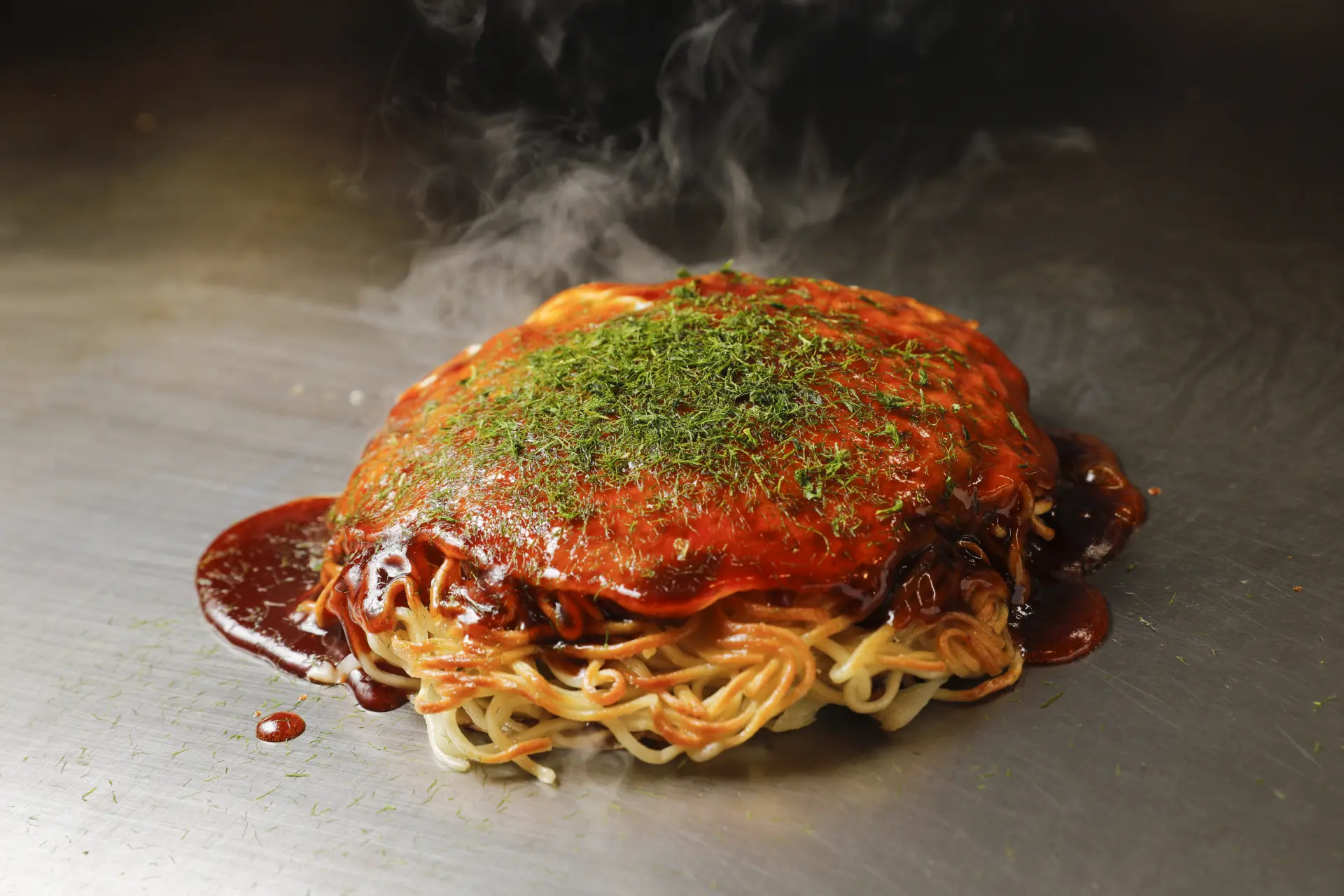
1. Okonomiyaki Micchan Sohonten Orizuru Tower Branch
Okonomiyaki Micchan Sohonten Orizuru Tower Branch is a location of the long-established Micchan Sohonten, where you can enjoy Hiroshima’s famous okonomiyaki, located on the first floor of Orizuru Tower.
Inside, there’s an 8 m-long teppan counter, and the lively feel of watching skilled chefs cook right in front of you has become a big draw.
2. Kakigoya Fukuro-machi Umihira Shoten
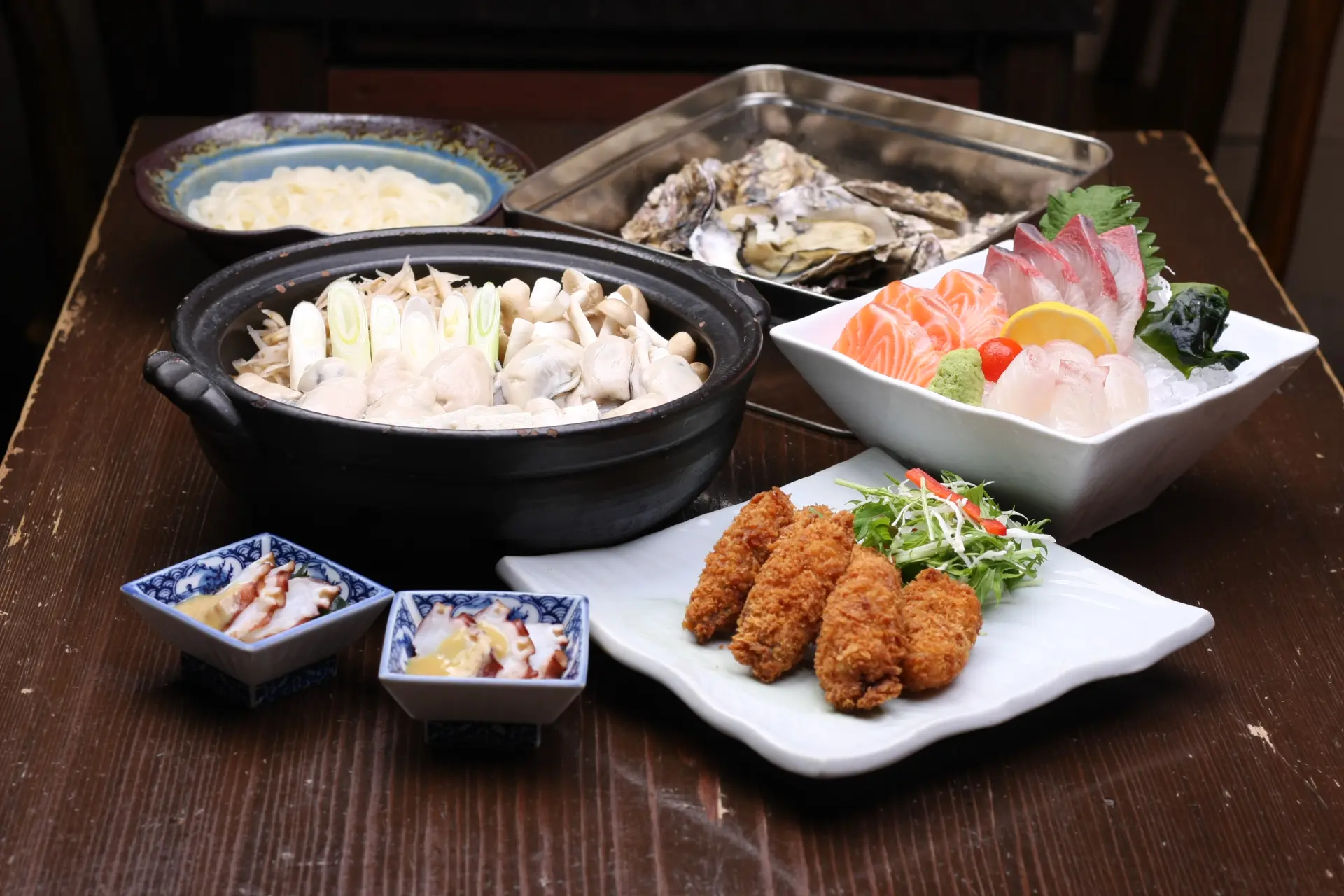
Opened in 2013, Kakigoya Fukuro-machi Umihira Shoten is a city location directly affiliated with “Milky Tetsuo’s Kakigoya Ujina,” known as the original kakigoya (oyster hut).
It carries on the oyster hut’s sourcing methods and freshness standards.
It’s also known as a place where you can enjoy Hiroshima oysters year-round.
3. Oyster & Smoked BAR SANGO
Oyster & Smoked BAR SANGO is located in the area near the West Exit of Hiroshima Station (commonly known as Ekinishi).
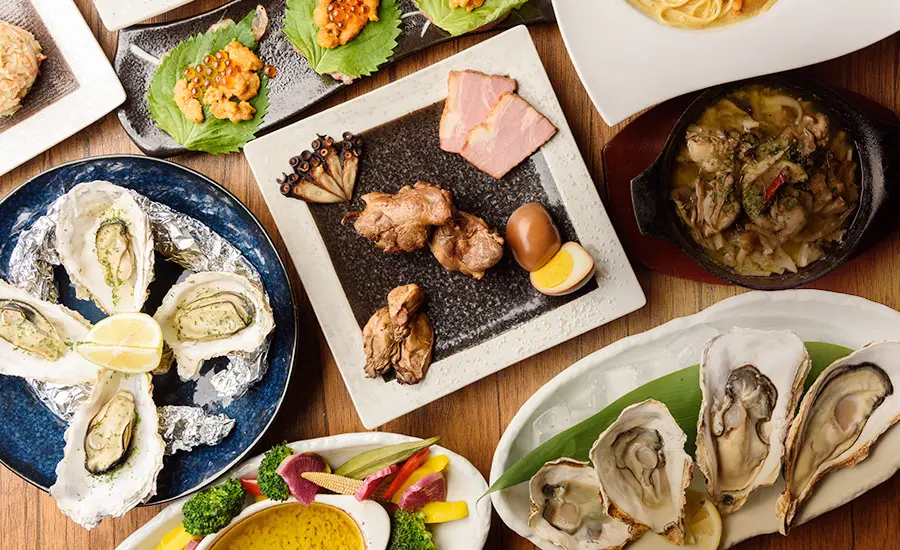
It’s an authentic oyster bar where you can enjoy seasonal brand oysters from across Japan, including Hiroshima oysters, prepared in many ways—raw, grilled, fried, steamed, and more.
A signature item is the “Raw Oyster Assortment (4 types).”
Served with Hiroshima lemon, it’s a dish that brings out the oysters’ natural creamy richness and briny flavor.
3 Recommended Places to Stay in Miyajima, Worth an Overnight Trip from Hiroshima Castle
After enjoying sightseeing at Hiroshima Castle, it’s also a popular plan to head a little farther and stay overnight in Miyajima, where Seto Inland Sea views spread out before you.
From the UNESCO World Heritage Site Itsukushima Shrine to the island’s nature and calm atmosphere, it adds a special touch to your Hiroshima trip.
Here are some recommended places to stay in Miyajima for travelers who want to dive deeper into Hiroshima sightseeing.
1. Miyajima no Yado Iwaso
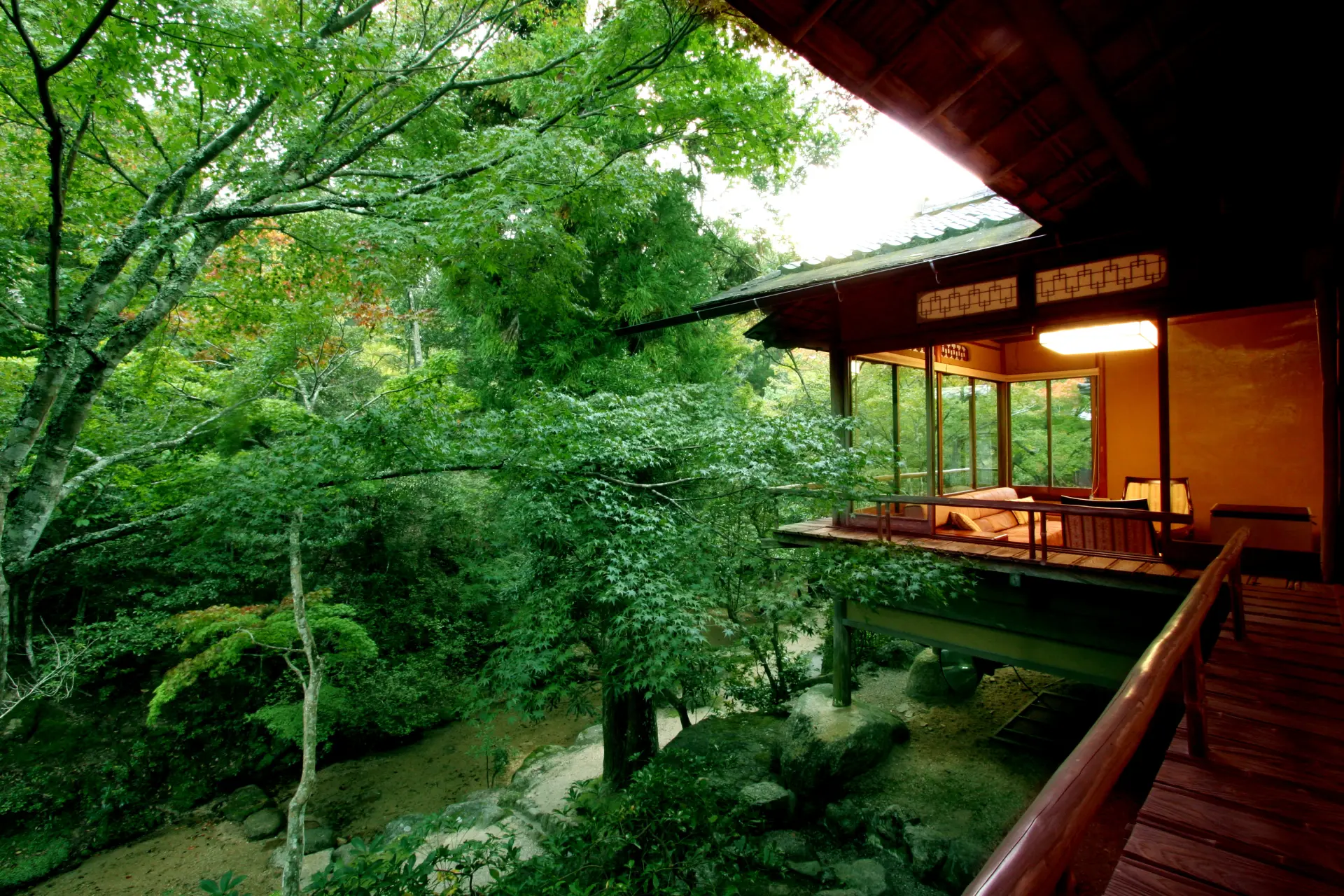
A historic inn located in Momijidani Park, surrounded by nature at the foot of Mt. Misen.
Along with single-story detached cottages (“hanare”) built as standalone units from the Taisho to Showa periods, it also offers a main building and a new building, so you can choose based on your preferences.
The detached hanare buildings have a special feel, having hosted members of the Imperial family as well as business and cultural figures.
The main building, built in the early Showa era, has unique room furnishings from room to room, and its location—where you can hear the sound of the Momiji River—is also part of its charm.
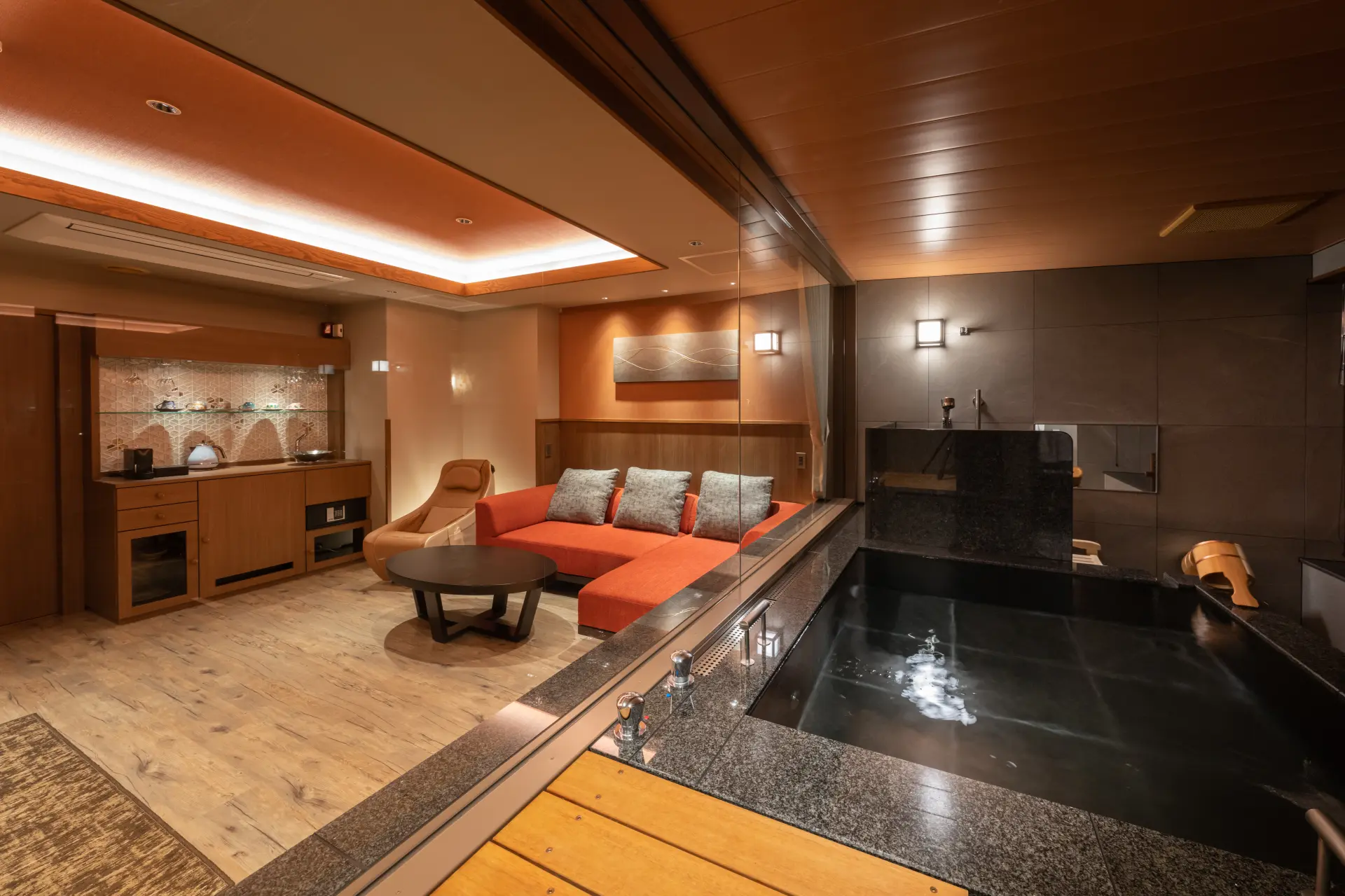
2. Miyajima Shioyu Onsen Kinsuikan
A long-established ryokan founded in 1902, in a great location about a 3-minute walk from Itsukushima Shrine.
A rare natural hot spring for Miyajima bubbles up on the property.
While valuing Miyajima’s traditions and history, it continues to evolve—adding, in February 2023, a semi-open-air hot spring guest room limited to one room per day, and Miyajima’s only rooftop lounge.
3. Itsukushima Iroha
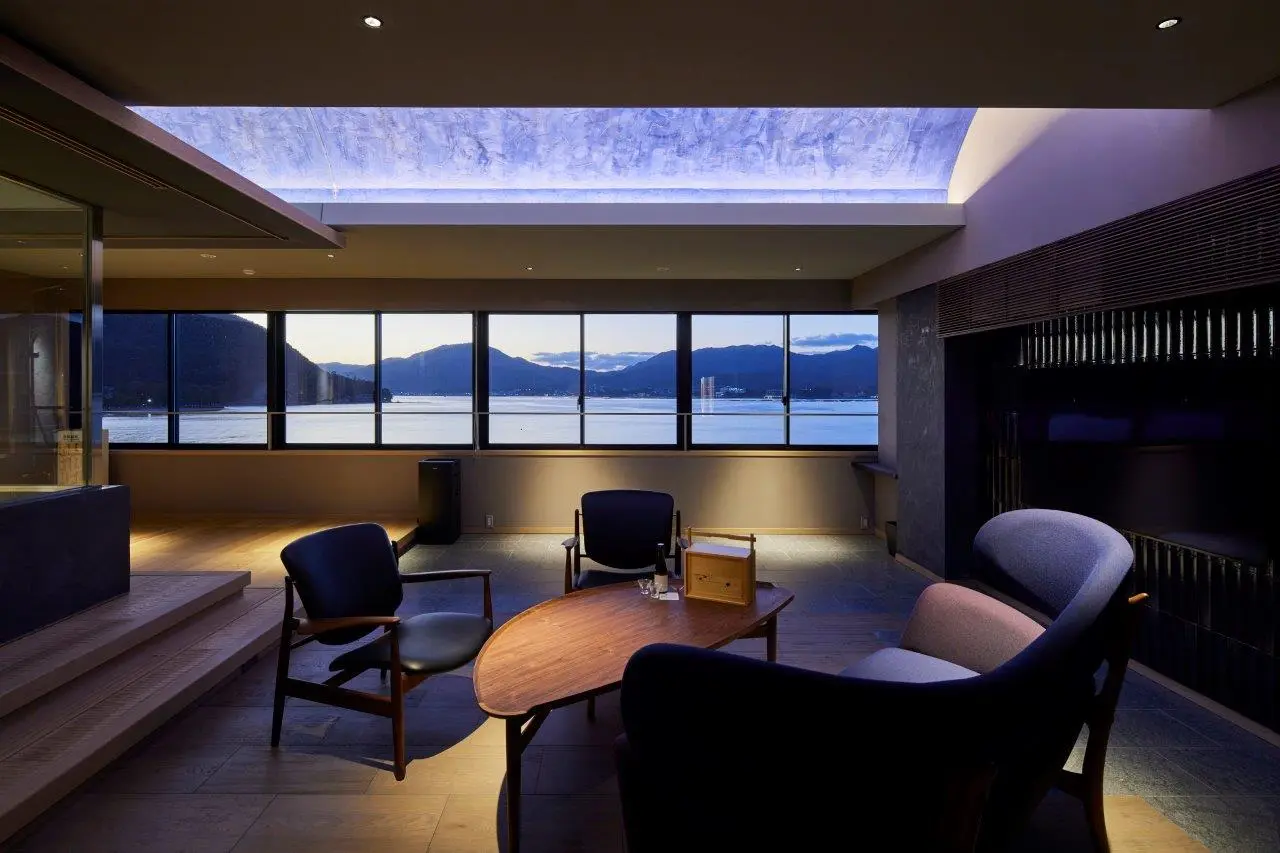
A 5-minute walk from Miyajima Pier and right in front of Omotesando Shopping Street, Itsukushima Iroha is a new kind of lodging that overturns the conventional image of ryokans and hotels.
Made with natural materials such as wood, stone, and washi paper, its refined interior features an upscale space lined with distinctive designer chairs.
A highlight is the two suites added during the 2022 renovation, each with a different atmosphere. The ocean-side “Suite Umi” boasts views from large windows that fill the room, overlooking the Otorii Gate of Itsukushima Shrine and the Seto Inland Sea.
Reviews
3.95
Some reviews are AI-translated.
-
The autumn leaves here are beautiful, and there’s something to enjoy in every season.
-
The castle was destroyed by the atomic bomb but was later rebuilt to look like the original. Inside the main keep, there's a museum focused on samurai culture. The view from the observation deck on the 5th floor is fantastic.
FAQ about Hiroshima Castle
Q
Who built Hiroshima Castle?
A
It was built by Mori Terumoto, the fourth head of the Mori clan, a Sengoku-period warlord who ruled Aki Province (the former province covering western Hiroshima Prefecture).
Q
What caused Hiroshima Castle to be destroyed?
A
In 1945, it collapsed due to the atomic bombing by the U.S. military.
Q
What was the purpose of building Hiroshima Castle?
A
It was built to develop the town by boosting commerce in a location with good water transportation access.
Summary
In this article, we’ve introduced the appeal of Hiroshima Castle, along with access, highlights, hours and admission, and nearby sightseeing spots.
Once you know the historical background, visiting Hiroshima Castle becomes even more enjoyable, so we hope you’ll take in this article and go see it for yourself.
Hiroshima Prefecture also has plenty of other can’t-miss places.
If you want to learn more about Hiroshima’s standout spots, please use this article as a reference as well.