
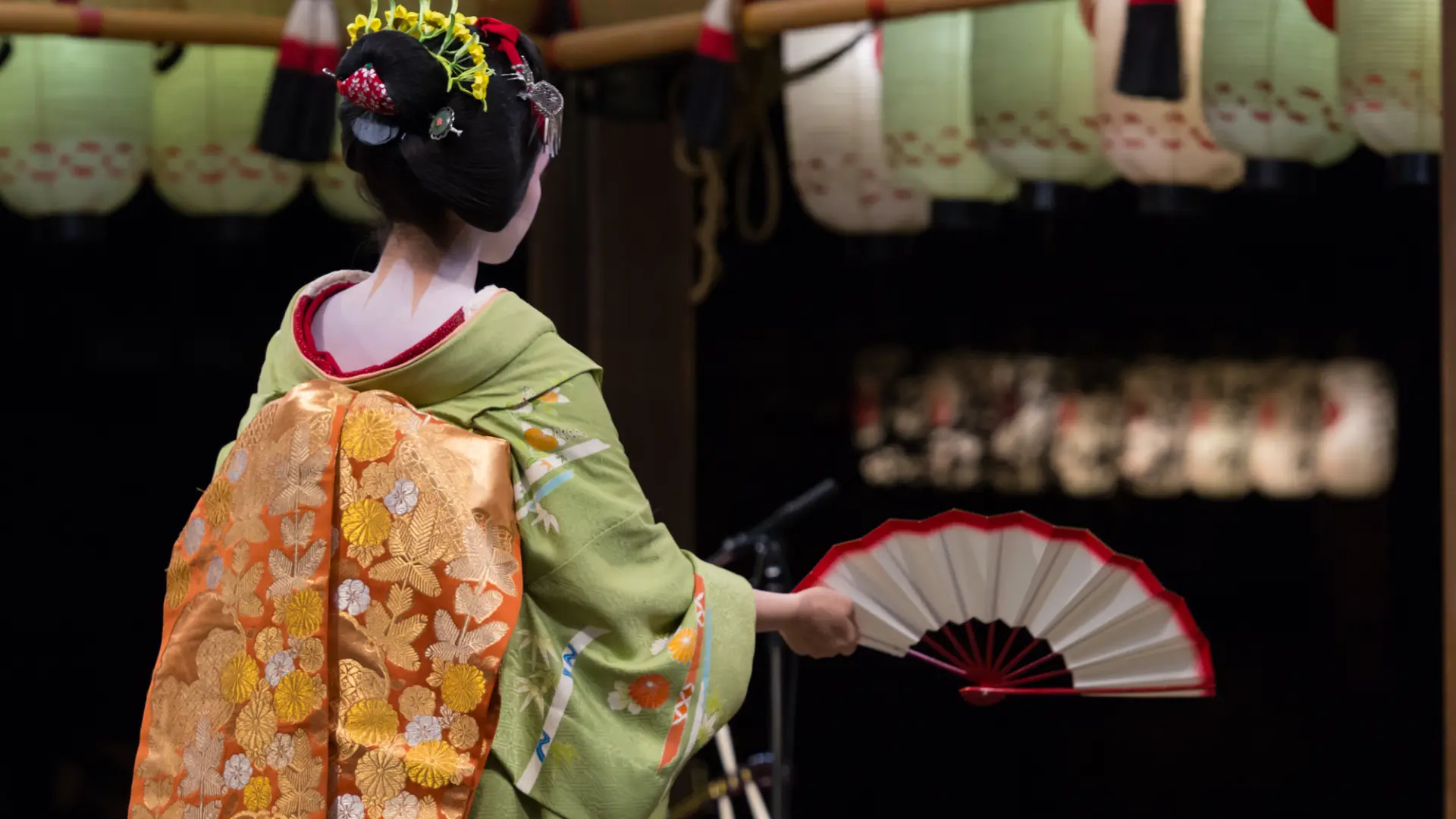
Kyoto’s Geisha District Complete Culture Guide: Elegance Caught in Time with Geiko and Maiko
Stroll the streets in Kyoto and you might just happen upon a lady dressed in kimono, noticeable by the white face paint and a hair style that beams with tradition. Known even in English as geiko and maiko, these are the purveyors of Kyoto’s most famed performing art and traditional culture that dates back to the Edo period. Below is a comprehensive look into exclusive world of geiko and maiko, complete with a guide on how to get a front seat to this coveted experience yourself.
The Backstory
Traced back as far as the Edo period, the geiko and maiko of today are artists who champion one of Kyoto’s most esteemed traditional forms of entertainment, bringing refined dance and song to the guests who visit ozashiki. Steeped in the sheer essence of Japanese beauty, ozashiki are exclusive spaces that offer a retreat of luxury and extraordinary moments far removed from daily life.
This old-world enchantment is kept alive by the geiko and maiko’s lifelong dedication to their craft, plus a system of honed etiquette that’s passed down over generations. Even for the locals of Japan, a chance to enter this world is considered rare.
What are the “Hanamachi” (Flower Districts)?
Hanamachi
Hanamachi are the dedicated geisha quarters lined with ochaya (teahouses) and okiya (residences) where the maiko live. Maiko live together with their fellow apprentices in these on-site training halls run by the meticulous but close “okami-san”, the head proprietress who is known to them as “mother”. When called to perform, a maiko moves from the okiya to the ochaya to perform with a senior geiko, accompanying guests with artful play and conversation.
Once a mainstay in cities like Tokyo, Osaka and Kyoto, these spaces have dwindled in number with most remaining in Kyoto, where geiko and maiko still uphold the old-world art to this day.
The 5 Hanamachi Districts of Kyoto
A look at modern Kyoto will reveal 5 geisha districts that still remain: Gion Kobu, Miyagawa-cho, Ponto-cho, Kamishichiken and Gion Higashi. World famous as the collective “Gokagai” (Five Flower Districts), you can find the sole Kamishichiken up north by Kitano Tenmangu Shrine, while the other four remain just steps from each other near Yasaka Shrine and Shijo Bridge.
Savvy travelers will notice that all five hanamachi are located near temples and shrines, a setting that reflects their origin story as teahouses developed for visitors who came to worship. As time moved the chatate-onna (tea serving ladies) developed a unique form of entertainment that slowly became the esteemed geiko and maiko that we know today.
Each hanamachi district has its own repertoire of geiko and maiko.
1. Gion Kobu (Hanamikoji Street)
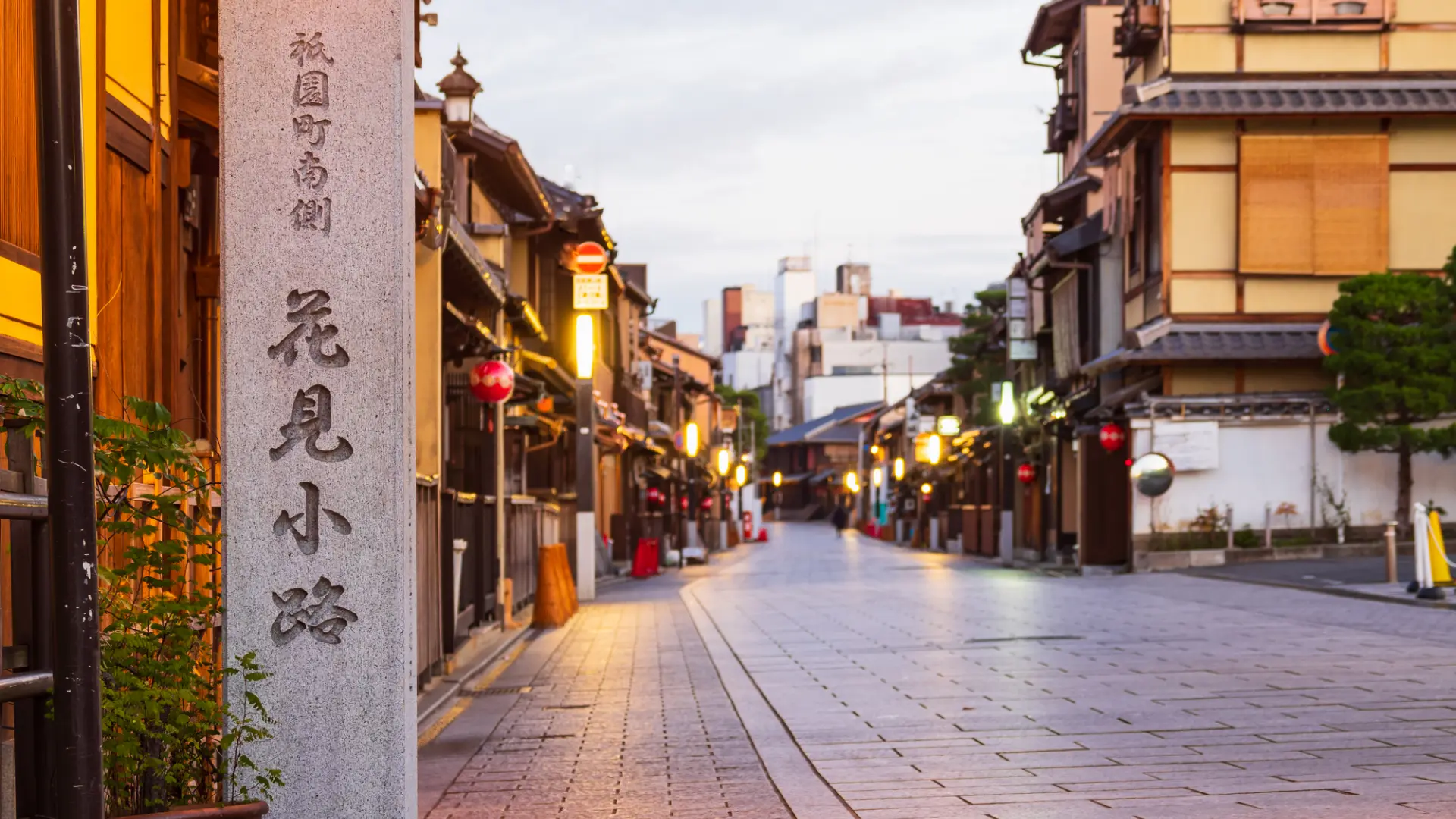
The largest of all five districts. Since the Edo period, the area around Yasaka Shrine flourished as a teahouse district. In 1881, the district was divided into two, forming what is now Gion Kobu. Its stately stone-paved streets are lined with ochaya and traditional eateries. Dances here follow the Inoue School of Kyomai style, with major shows like the Miyako Odori in spring and Onshukai in autumn.
2. Miyagawa-cho
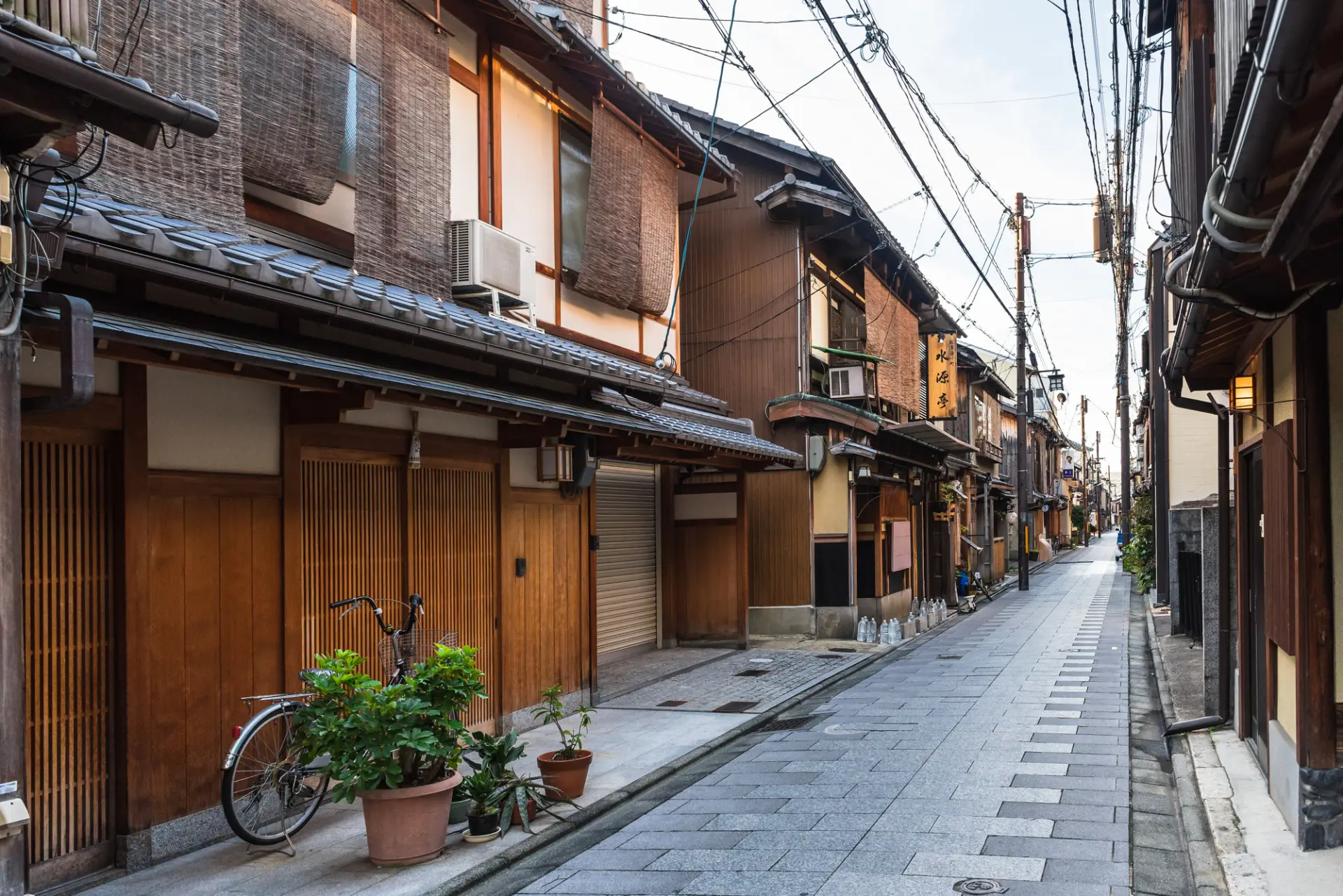
The look and feel of this streetscape beams with the rich refinement of an old-world hanamachi. The area developed in tandem with other performing arts like that at the Minami-za Kabuku Theatre nearby, a product of kabuki dance and its origins stemming from Izumo no Okuni here during the early Edo period.
Dances here outline the styles of Wakayanagi School, with major performances like Kyo Odori occurring and spring and Mizue Kai in autumn.

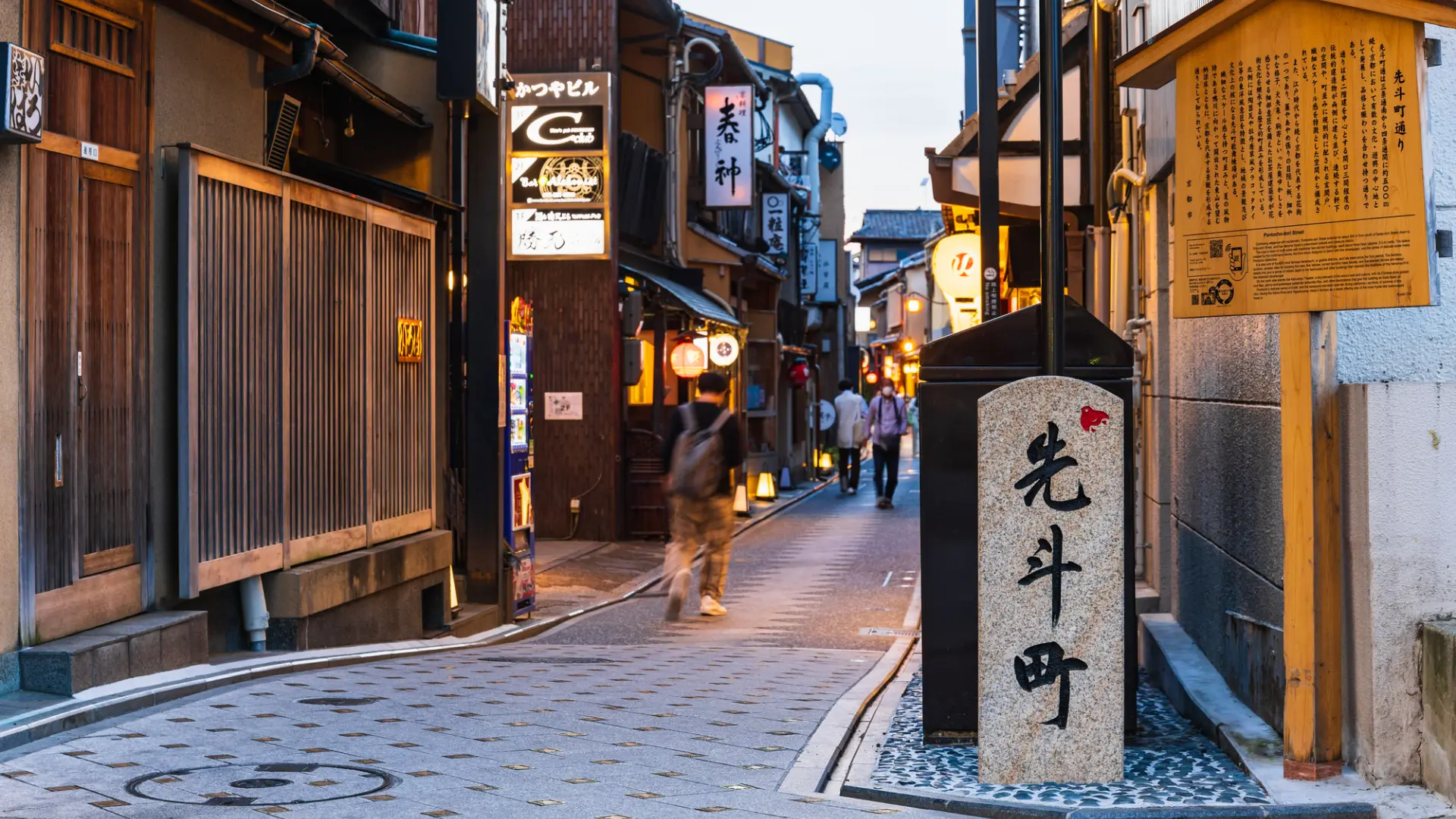
3. Pontocho
Pontocho is the 500-meter long narrow alley between Shijo and Sanjo found along the west banks of the Kamo River. Lined with ochaya, okiya and eateries brandished with red “bengara” latticework, Ponto-cho first prospered during the Edo period as a hub for river transport and traveler’s inns.
Dance styles here align with the Onoe School, with key shows including the Kamogawa Odori in spring and Suimei Kai in autumn.
4. Kamishichiken
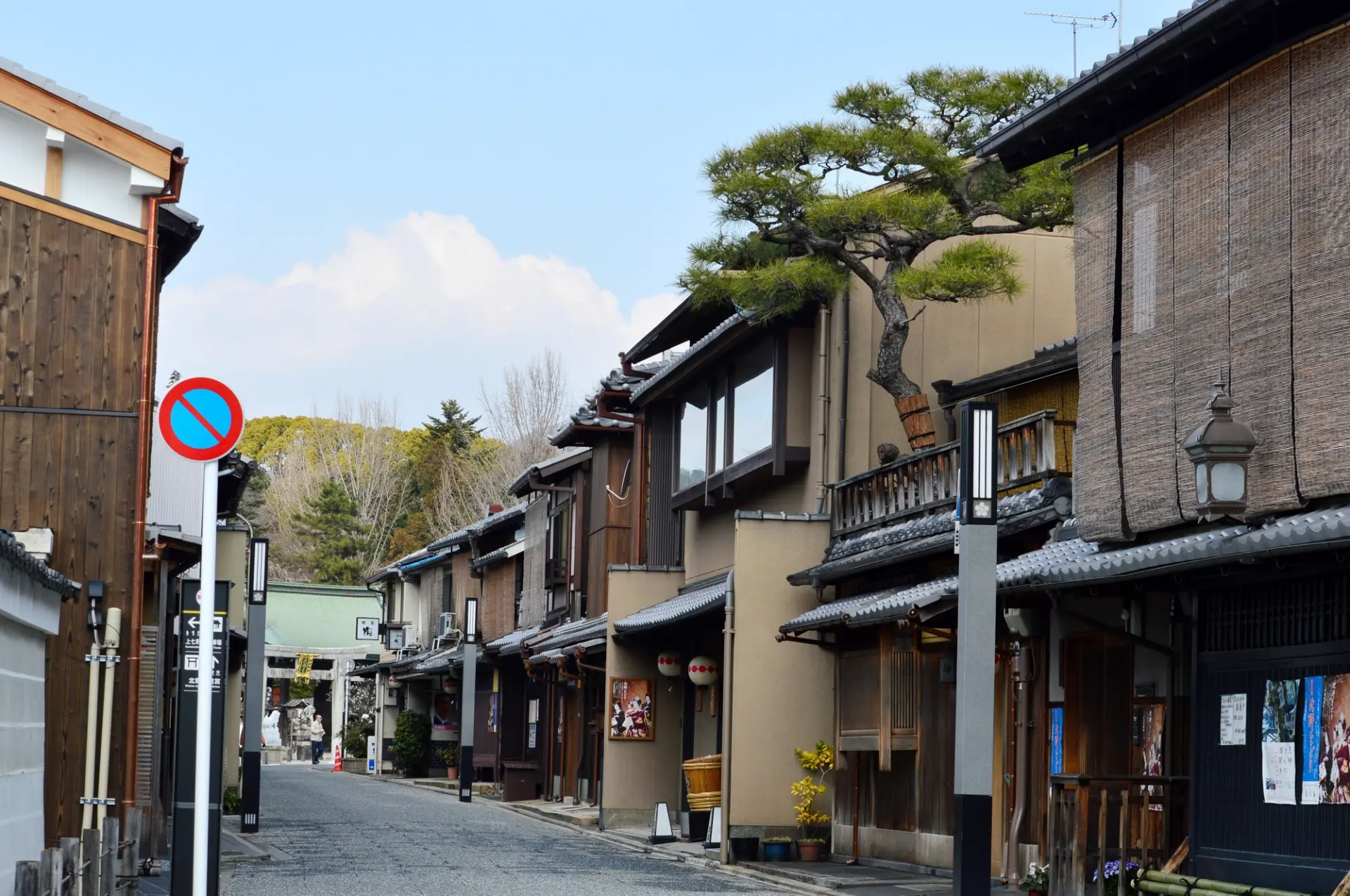
Kamishichiken is a traditional geisha district located near Kitano Tenmangu Shrine in Kamigyo Ward, Kyoto. The torii gate visible in the background marks the entrance to Kitano Tenmangu.
Unlike Kyoto’s other four hanamachi, which are closer to busy downtown areas, Kamishichiken sits slightly apart, giving it a calm and refined atmosphere. Its origins date back to the mid-Muromachi period, when seven teahouses were built using leftover timber from the reconstruction of Kitano Tenmangu Shrine. It is said that this is how the area came to be known as “Kami-shichi-ken” (literally, “Upper Seven Houses”).
The district’s dance tradition belongs to the Hanayagi school. Public performances include the Kitano Odori in spring and the Kotobuki-kai in autumn.
5. Gion Higashi
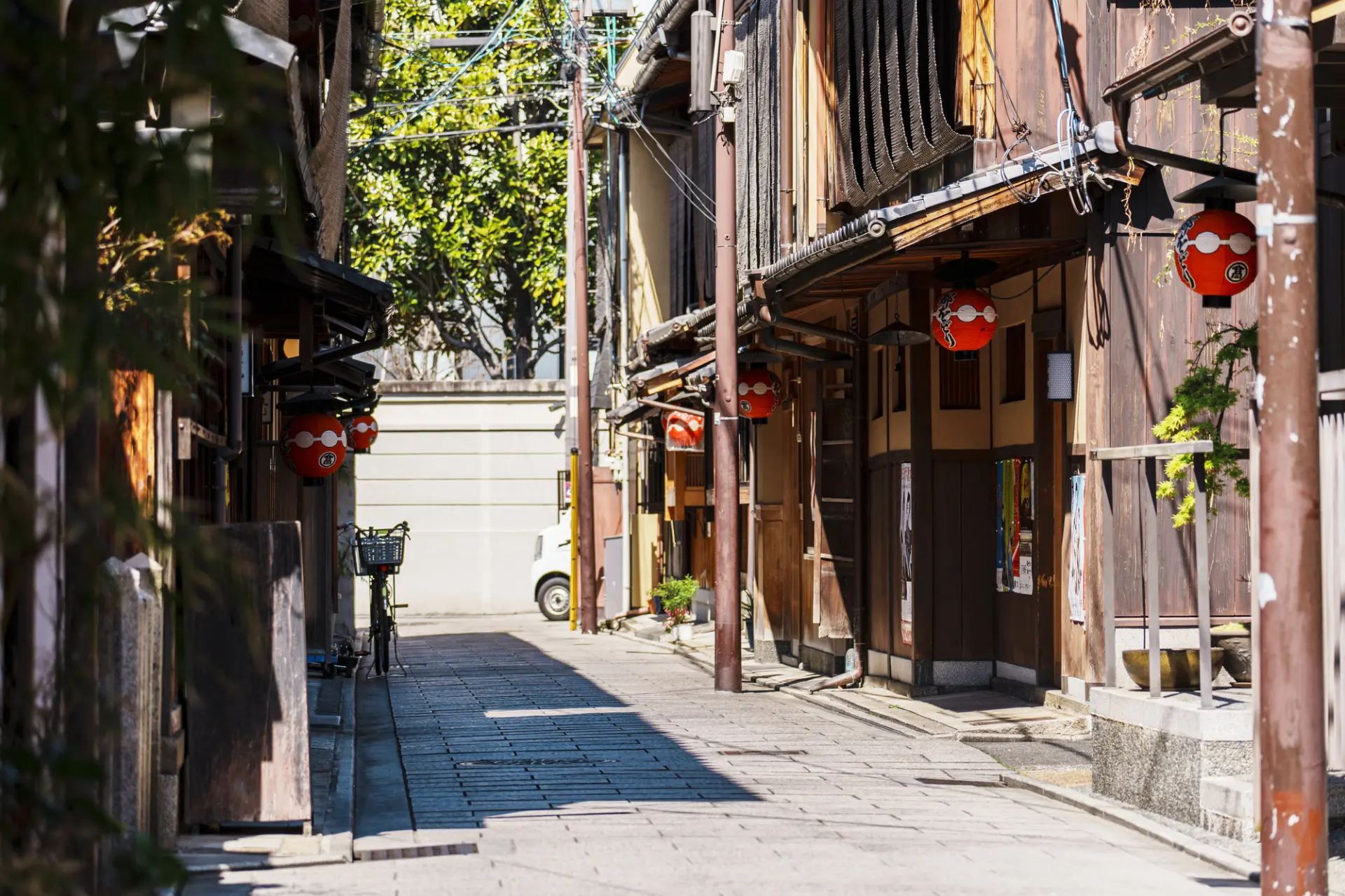
This district sits in the heart of Kyoto’s main entertainment district. Once a section of Gion Kobu, this area became its own district during the Meiji period.
Spot this area for its traditional ochaya buildings hugged by a unique and striking contrast of modern buildings.
Dance styles here follow the ways of the Fujima School, with key Gion Odori shows performned in autumn.
Invite-Only Exclusivity via the Ichigen-san Okotowari System
Visiting an ochaya requires an introduction from an existing regular.
Known as “ichigen-san okotowari” in Japanese, this exclusive system means no first-time visitors, and remains upheld for a number of reasons.
First and foremost is a system of saftery and trust. Many ochaya also function as okiya. In this case, a visit to ochaya is by extension an invitation to a private residence of young women. Ochaya hedge an potential issues are unpredictable behavior by only allowing trusted individuals or introductions from the members they know.
A second reasoning stems in the “tsuke-barai” tab payment system. In old world Japan, it was common to run a tab that was only settled twice a year, during Obon festival and at New Years. Currency in these days were heavy and cumbersome metal coins, so transactions were facilitated by a heavy reliance on mutual trust.
This sense of trust has remained to present day ochaya, informing the trust-based relationships you see today.
Maiko and Geiko
Maiko, a Geiko in Training
Maiko, simply put, are apprentices still in training to become geiko.
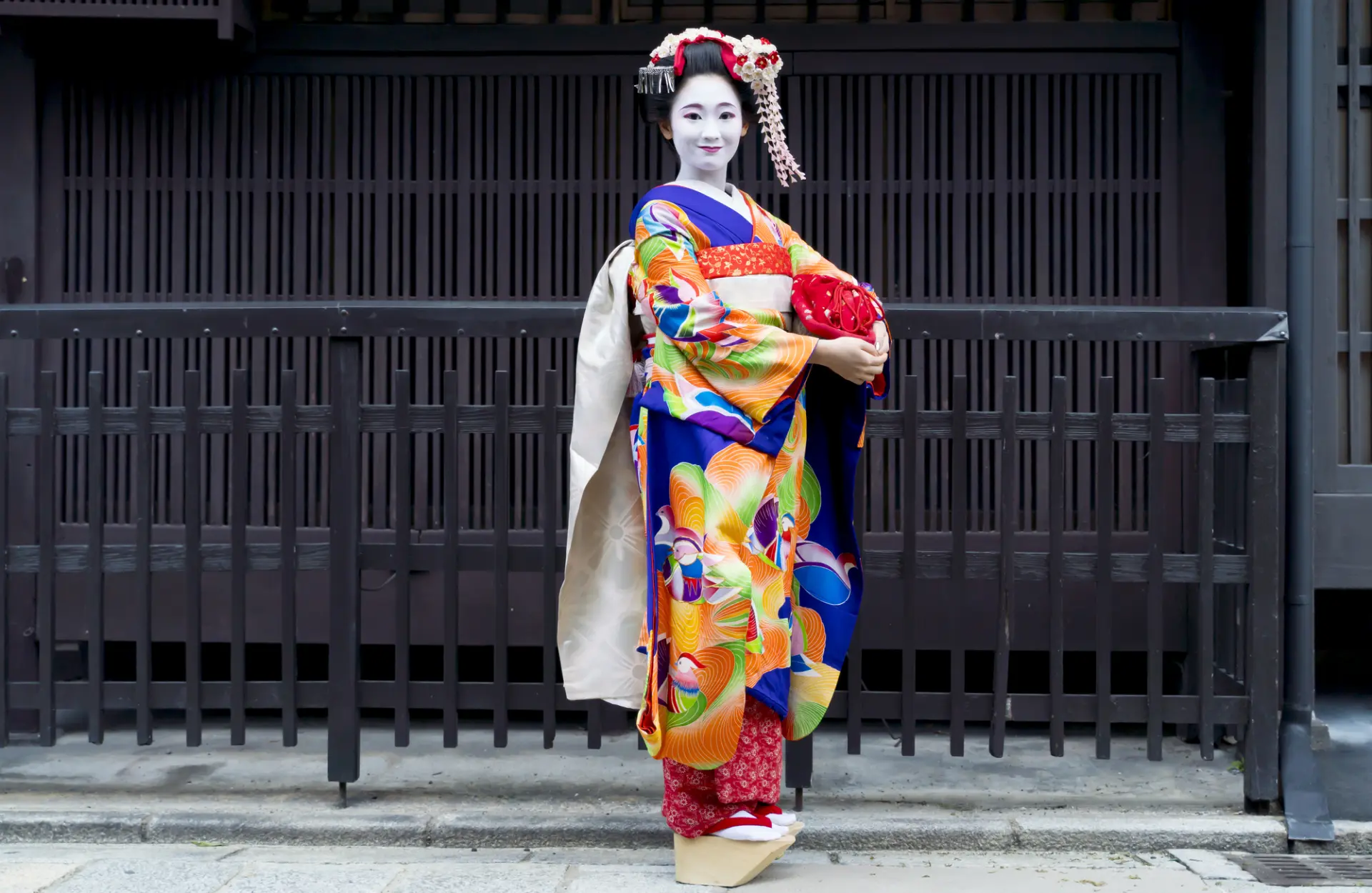
Before becoming a maiko, a young woman spends about a year as a shikomi-san, living in the okiya, helping with daily tasks, and learning etiquette, hanamachi terminology, and dance.
After completing the shikomi stage, she enters a one-month period known as minarai, during which she prepares for her debut, learns the atmosphere of the ozashiki, and becomes known to senior geiko and ochaya proprietresses.
Then comes her debut as a maiko.
Maiko train for five to six years in dance, shamisen, singing, tea ceremony, and ozashiki manners under the guidance of their teachers and senior geiko. When they are recognized for their skills, they may become geiko.
Most maiko are teenagers up to around age 20. Many leave home after finishing junior high or high school to move to Kyoto (very few modern geiko or maiko are originally from Kyoto). They live communally in the okiya while pursuing their dream of becoming geiko.
Once they become geiko, there is no retirement age, and geiko live independently rather than in the okiya.
Key Differences to Spot a Geiko vs. a Maiko
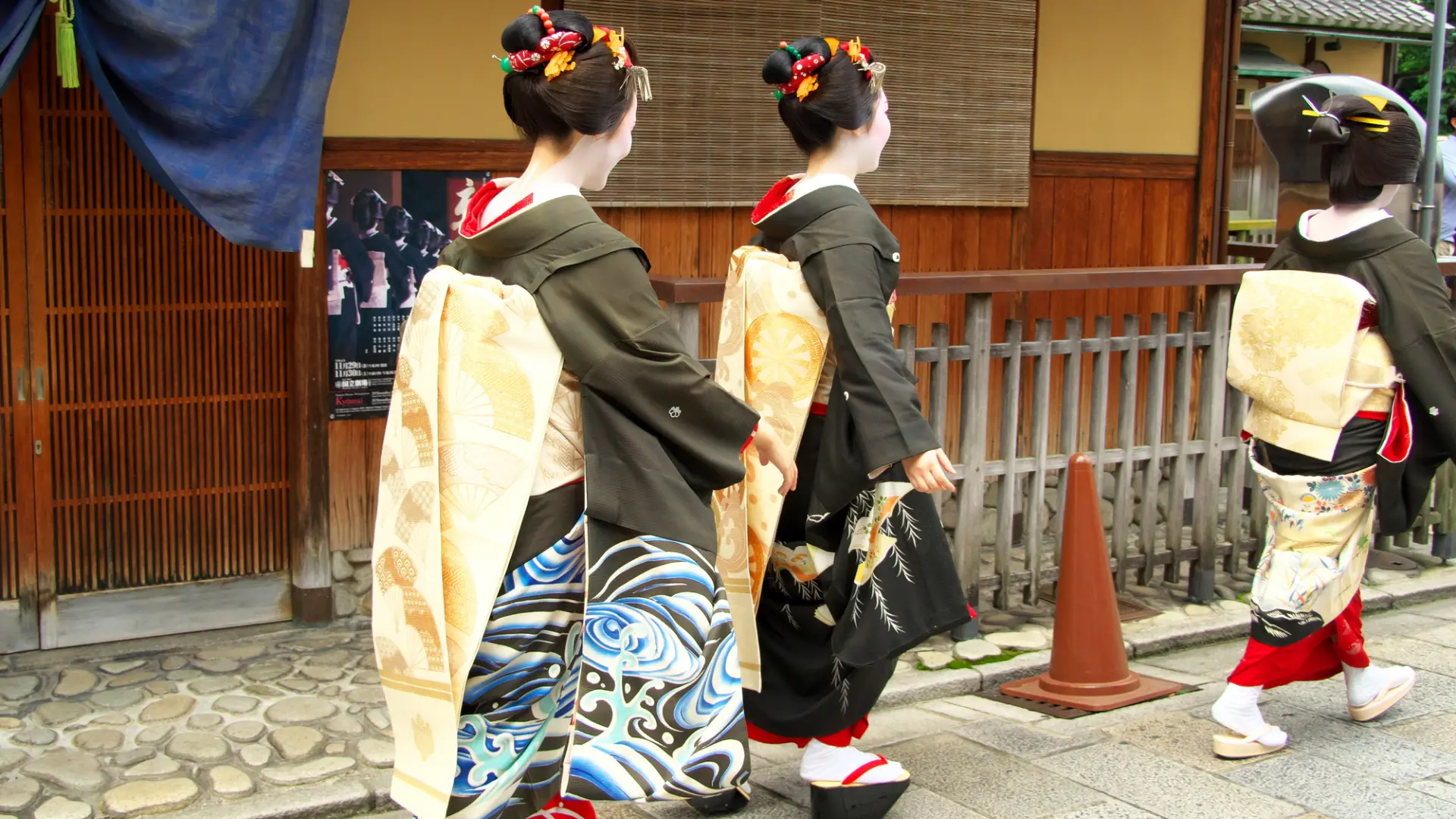
The biggest difference between geiko and maiko are in hair styles and wardrobe. Below is a general overview. In most cases, you can use the hints below to tell if you’ve spotted a geiko or maiko in the hanamachi districts.
| - | Maiko | Geiko |
|---|---|---|
| Hairstyle | one’s own hair | wig |
| Hair ornaments | ornate | Simple |
| Kimono | Colorful with floral designs | Cool colors, blacks, blues and simple designs |
| Kimono sleeves | Long | Short |
| Obi (kimono tie at back) | Draping “darari” | compact “otaiko” |
| Shoes | Tall “okobo” geta shoes | Standard slippers |
-
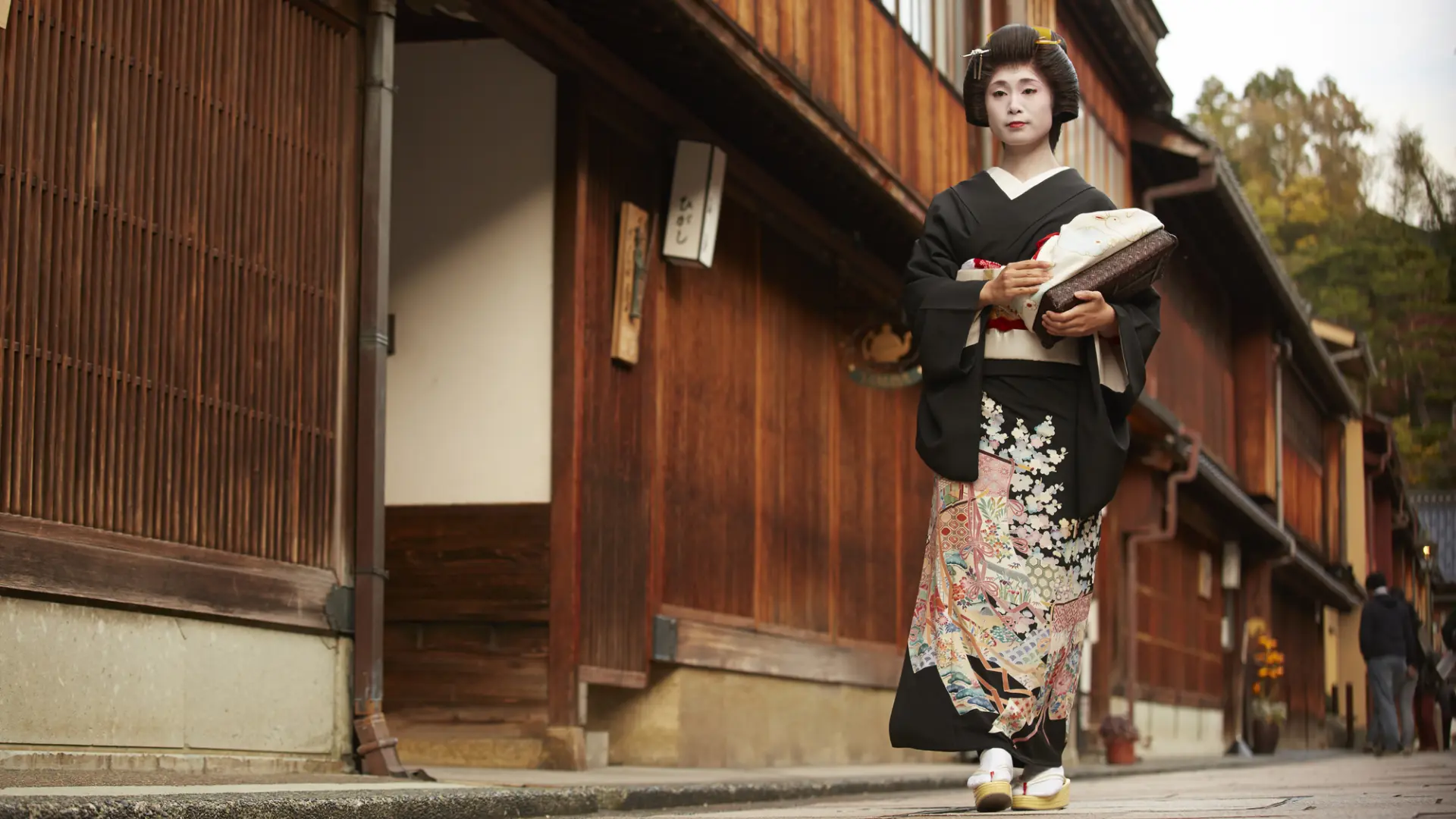
Geiko at a glance
-
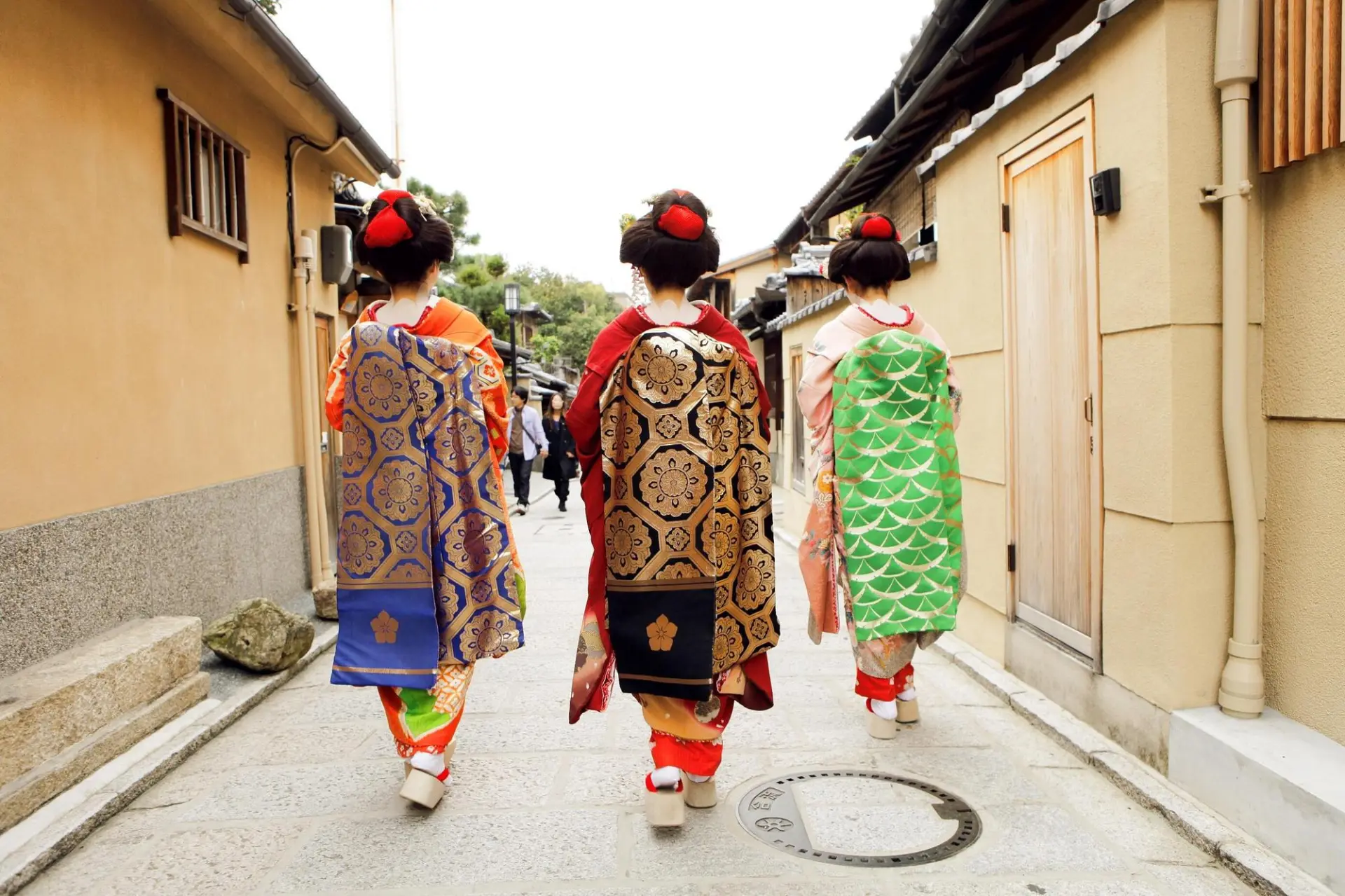
Maiko and draping “darari” obi
-

Geiko with compact “otaiko” style obi.
Daily Life of a Maiko
Daily life of a maiko is spent in training to become a geiko. Each day is filled with a regiment of training, practices in tatami rooms and more. Each maiko will see a more customized schedule that changes by the day, but a general idea may look like the below.
- Morning: 8am-10am
- Wake up, breakfast in the Okiya.
- 10am-4pm
- Dances in the practice rooms, shamisen, singing and arts training with the teacher.
- Afternoon (around 1pm)
- Return to the okiya for lunch. Going out for lunch with the older geiko and maiko may also occur.
- 4pm-6pm
- Make up and prep for evening shows, dinner before heading to the ozashiki.
- Evening 6pm onward
- Ozashiki meals and entertainment. Each sessions lasts 2-3 hours. There maybe as many as 2-3 on a busy day.
- Midnight
- Return to the okiya for bath and sleep.
Best Practices if you Spot a Geiko or Maiko Outside?
Recently, tourist misbehavior in Gion has become a serious issue. The geiko and maiko you see in the streets of Kyoto are not wearing costumes, they are dressed and on their way to work. In most cases, they are on their way to work or to their lessons. If you want to take a photo, be careful not to obstruct them. Chasing after them, following them around, or trying to touch their kimono or hair is absolutely unacceptable. Even when taking photos, be sure to respect their privacy. Taking photos without permission is not allowed. You must also respect the privacy of customers who may be accompanying them. In addition, the neighborhoods where geiko and maiko can be seen are among the most beautiful in Kyoto. Please avoid actions such as sitting on the street, drinking alcohol or smoking on the street, littering, or walking while eating fast food. Let’s remember that every visitor’s mindfulness helps protect the refined and historic atmosphere of Gion.
Using Tours to Meet a Geiko or Maiko Instead
Even if you see a geiko or maiko in town, you generally cannot walk up and take photos with them. Because of the “ichigen-san okotowari” (no first-time customers) system, it is often difficult for tourists to make a reservation at an ochaya to meet geiko or maiko directly. But if you’ve come all the way to Japan, you’d probably like a chance to meet them, right? Kyoto offers a few chance opportunities to meet geiko and maiko directly, watch their dance and tea ceremony, and even take photos with them. The following are some of the popular events held at KIMONO TEA CEREMONY MAIKOYA GION KIYOMIZU, located near Kennin-ji Temple. All of these events are extremely popular, so if you absolutely want to meet a geiko or maiko, we recommend booking early!
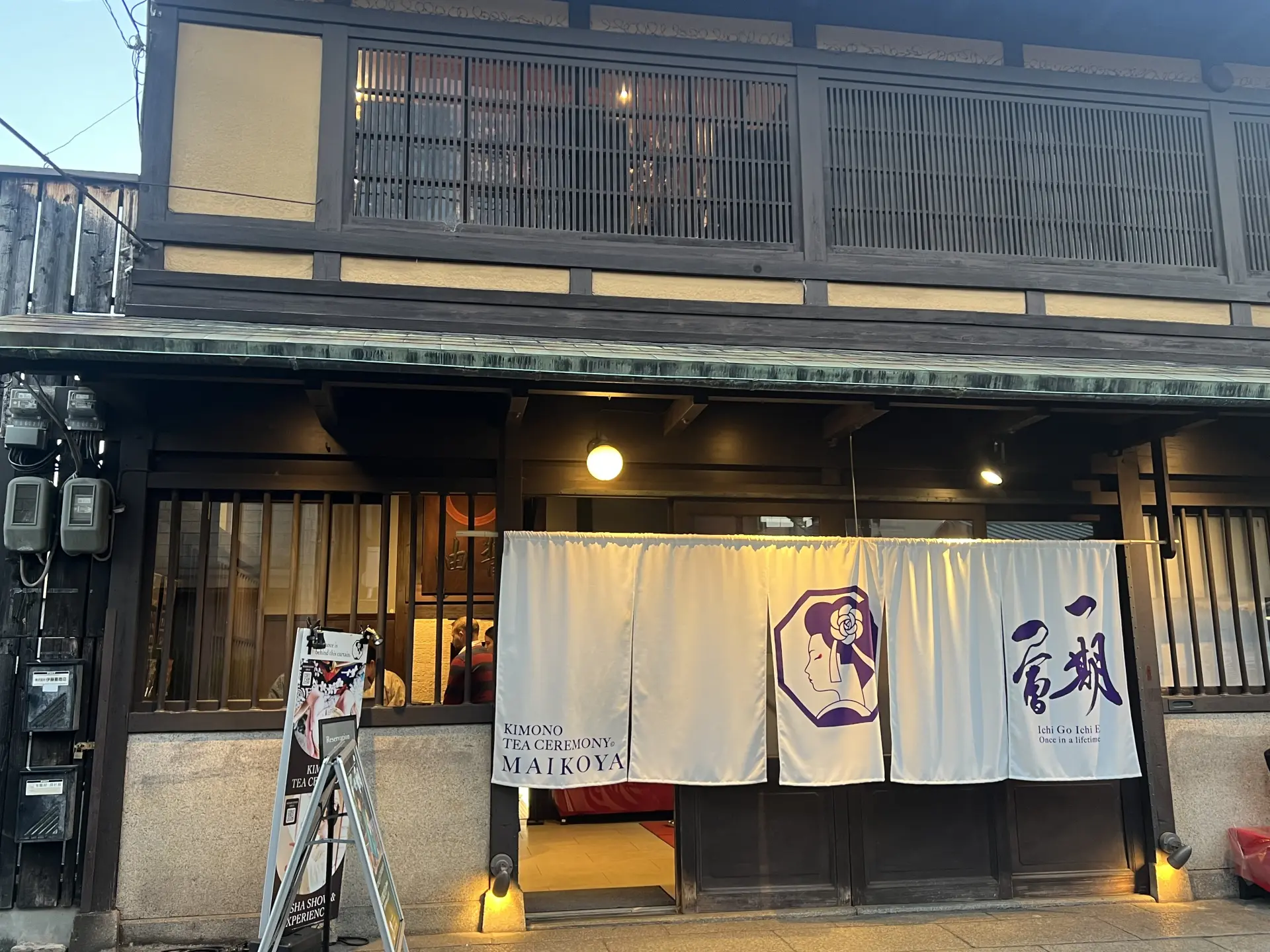
The Details
- Shop Name
- KIMONO TEA CEREMONY MAIKOYA GION KIYOMIZU
- Address
- 100-1 Higashi-Iru Rokurocho, Yamata-oji Street, Higashiyama-ku, Kyoto City, Kyoto Prefecture
- cs@maikoya.com
- Official Website
- (Official Website)
Tea Ceremony Led by a Geiko or Maiko
See an authentic geisha or maiko dance up close and view the highly sought after “Otemae” with your own eyes.
Bookings start at 13,000JPY and up (※price may vary by season.
Click to reserve: https://mai-ko.com/tour/tea-ceremony-led-by-a-geisha-2/
Please note only those aged 7 and up may join.
①Say your name at reception!Say your name at reception!
Upon entering the facility, first give your reservation number at the reception desk. You will be given a colored rubber bracelet. The colors vary by reservation time slot, so wear it until your session begins and be careful not to lose it.

②Snap the Special Moment to Remember at the Inner Garden.
Bask in the moments before your booking over at any of the 3 gardens on site. The property itself is logged in Japan as a Registered Tangible Cultural Property, formally the esteemed merchant shop and estate of the Itoki Shoten maker. Nearly a century old since its construction in 1926, this two-story machiya house beems with authentic Japanese flair and architecture. Inside you may find a number of guests wearing yukata or kimono while snapping a photo just in front of the nodate umbrellas. There are a number of props like umbrellas and masks you can use to snap a personal memento as you wait.
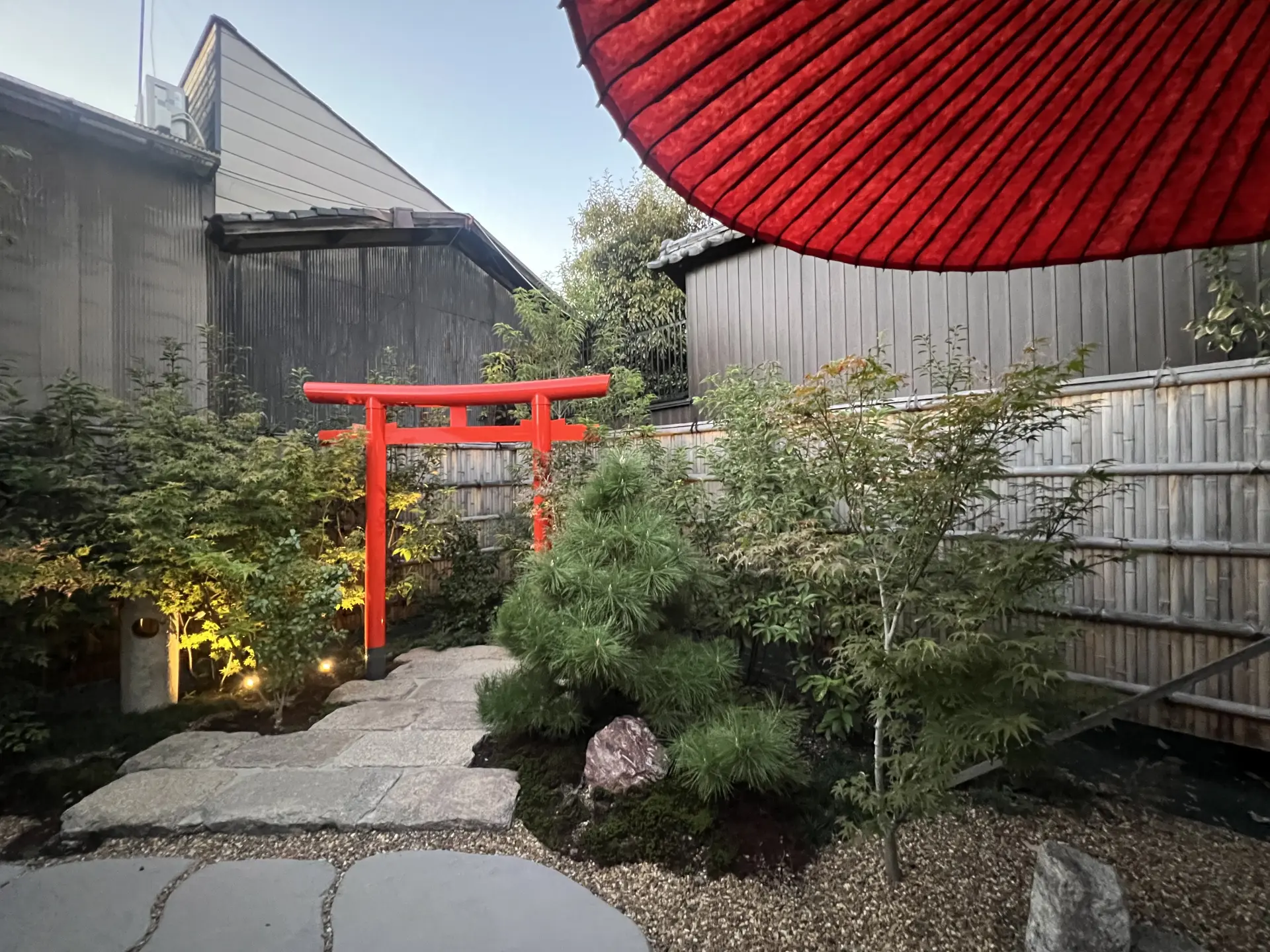
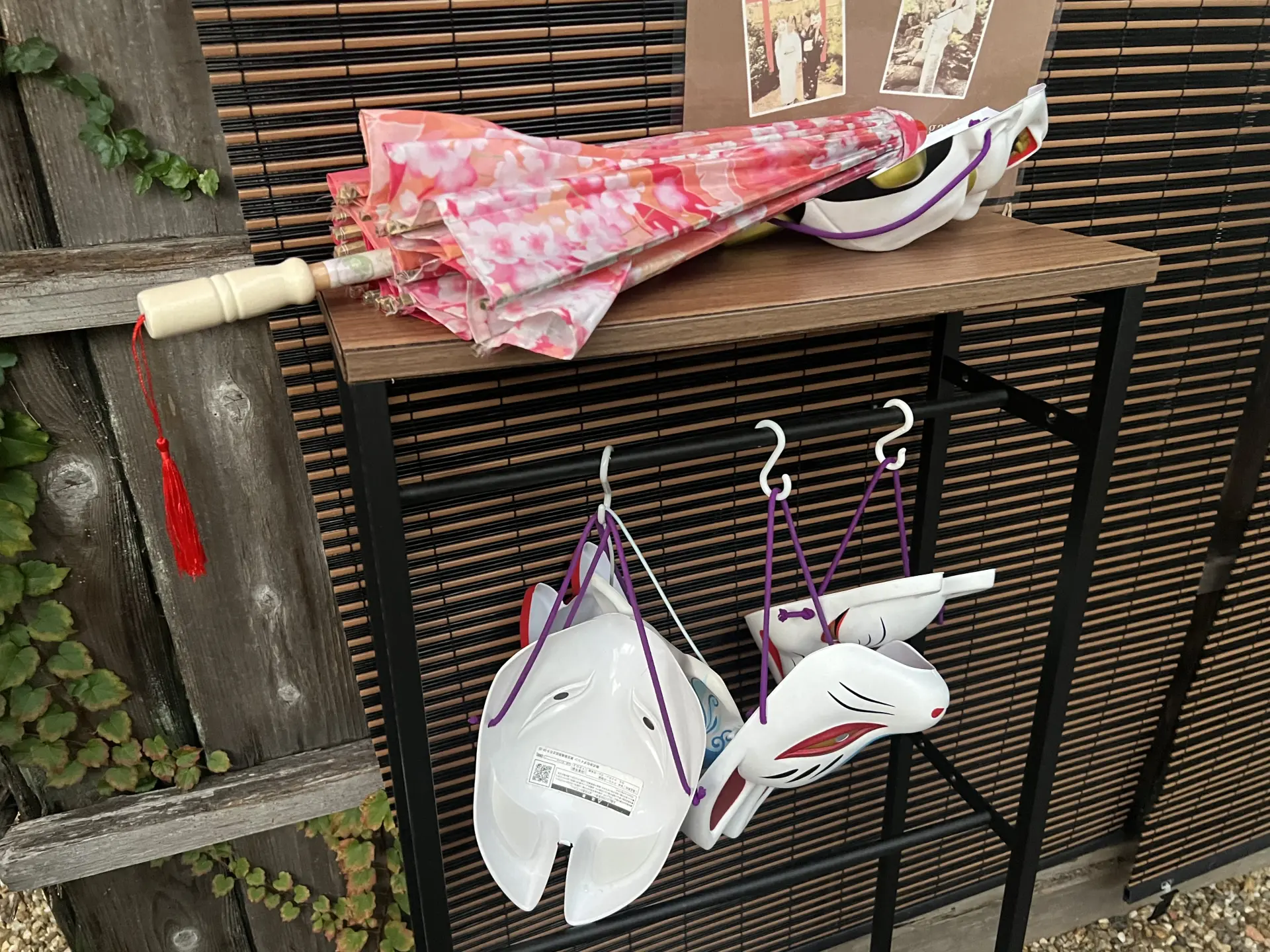
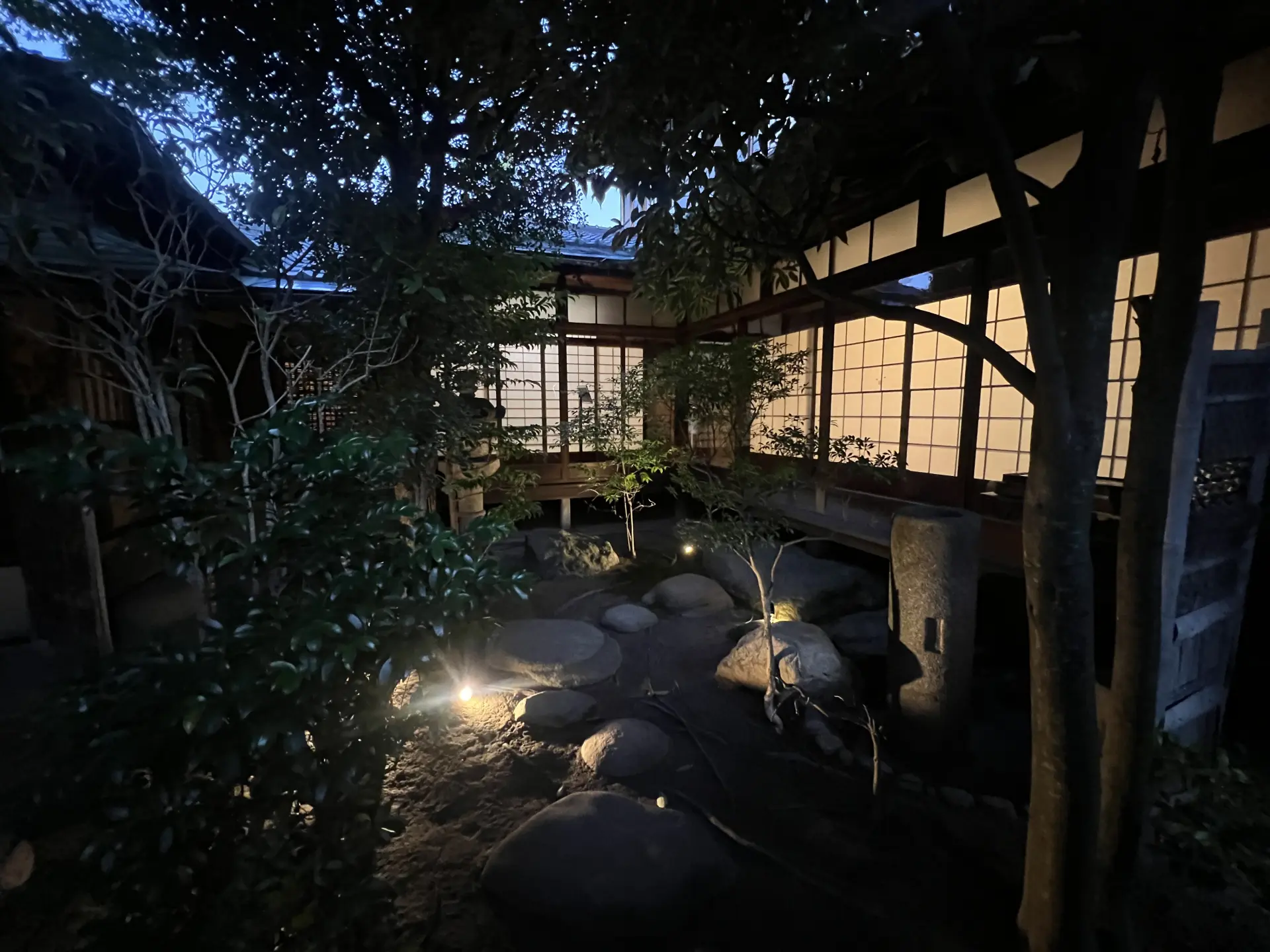
As you wait, keep in mind that you are still in a quiet residential neighborhood. Keep your voice low and take in all the serene, slow-paced atmosphere of this Kyoto garden.
③To the waiting room
Make your way inside at your scheduled time.
There won’t be a curtain call, so be sure not to forget your time while basking time away in the garden. Take your shoes off as you enter inside. Once there, you will be guided to a waiting room. The waiting room is another celebrated corner to the culture, complete with geiko and maiko mannequins, Kyomaru uchi (Kyoto-style rounded fans), Japanese umbrellas and books detailing the culture of what you see.
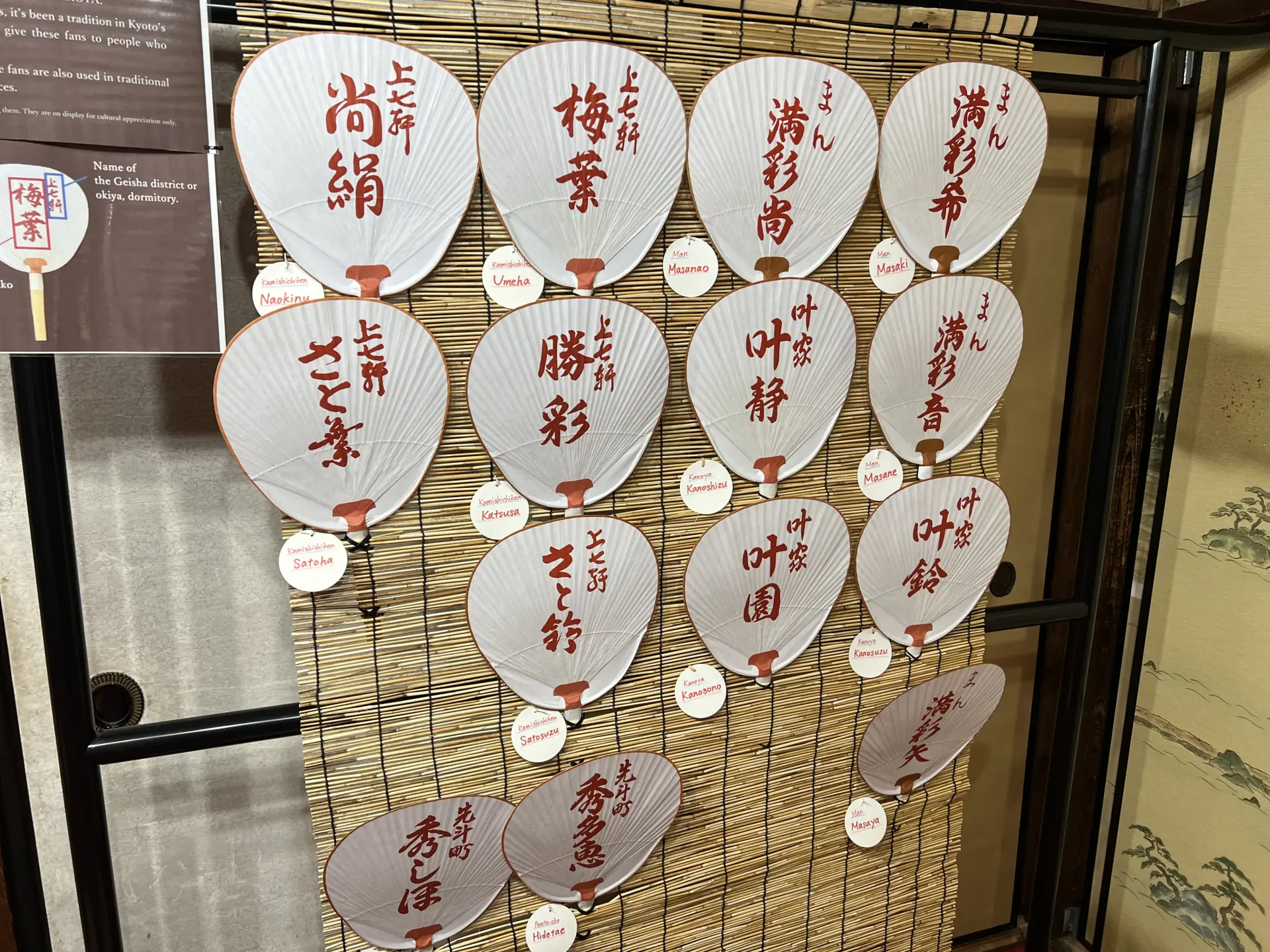
These red and white round fans bear the names of geiko and maiko. Since the Meiji era, it has been customary in Kyoto’s hanamachi to give these fans to ochaya, restaurants, and other establishments who have supported the artists. The front displays the crest of the ochaya or the geiko’s household; the back shows the hanamachi’s name and the artist’s stage name. Kyomaru uchiwa serve both as a means of promoting the geiko/maiko and as a symbol showing that they frequent the establishment. They are an iconic part of hanamachi culture. When visiting shops in Kyoto, keep an eye out for them.
④To the main hall.
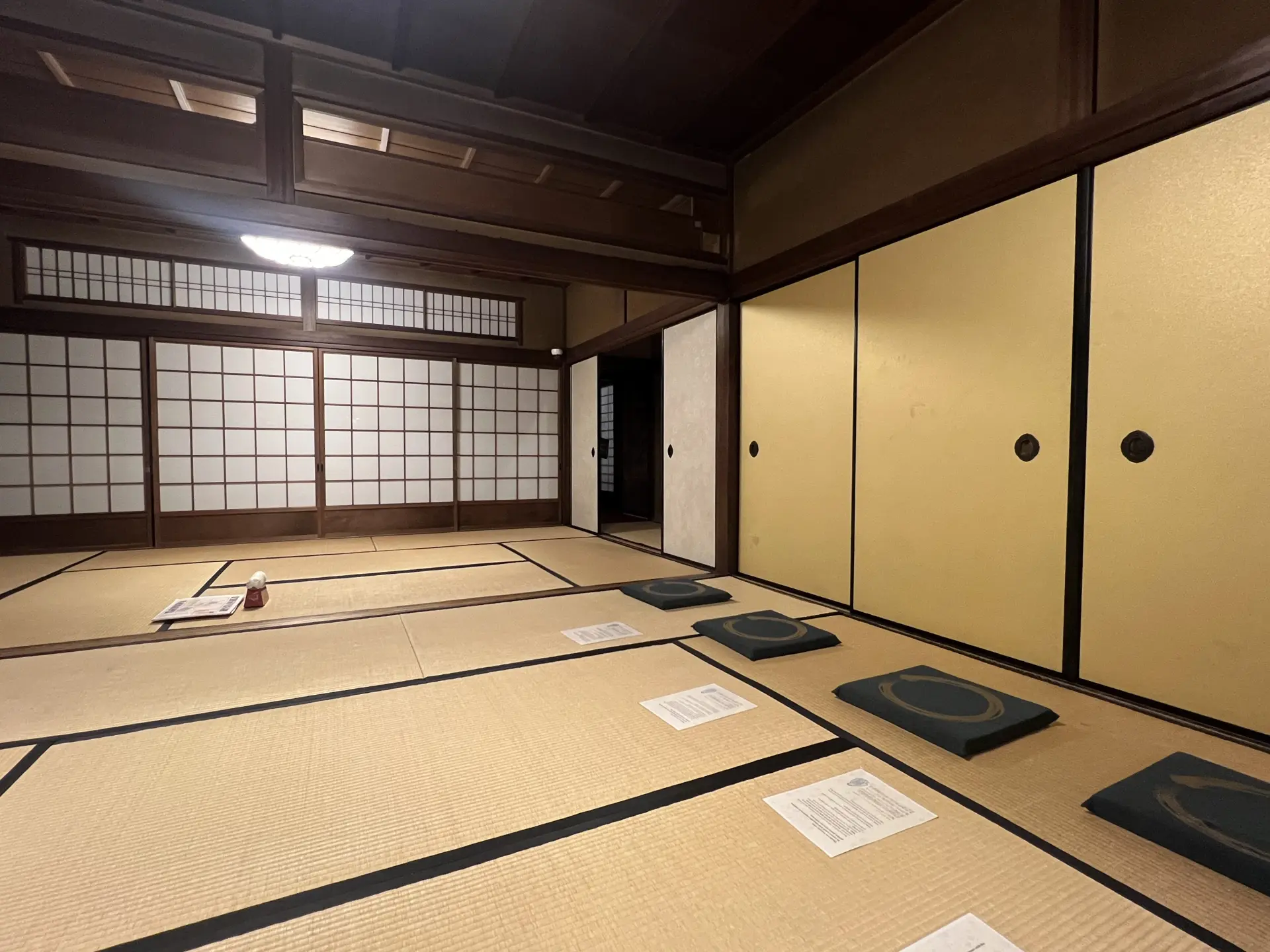
After leaving the waiting room its time to proceed to the main room and Japanese hall. Each session can hold up to around 10 guests. Once inside there are seating cushions arranged in a semi-circle. Please sit, without any stress to sit in formal seiza style. There are small chairs available if sitting cross-legged in uncomfortable.
⑤5- A Deep Dive Look into the World of Geisha and Maiko at a Glance
The sessions kicks off with an English explanation by a guide, who introduces the hanamachi, geiko and maiko culture, and the differences between them. You will learn about the five hanamachi of Kyoto, how to distinguish geiko and maiko by their hairstyles, kimono sleeves, and obi styles, cultural hints that will be useful later. The explanation lasts about five minutes. If photography or video recording is allowed at certain times, the guide will announce it clearly beforehand. Please follow instructions and avoid disrupting the event by photographing without permission.
⑥It's Time to Meet the Entertainment!
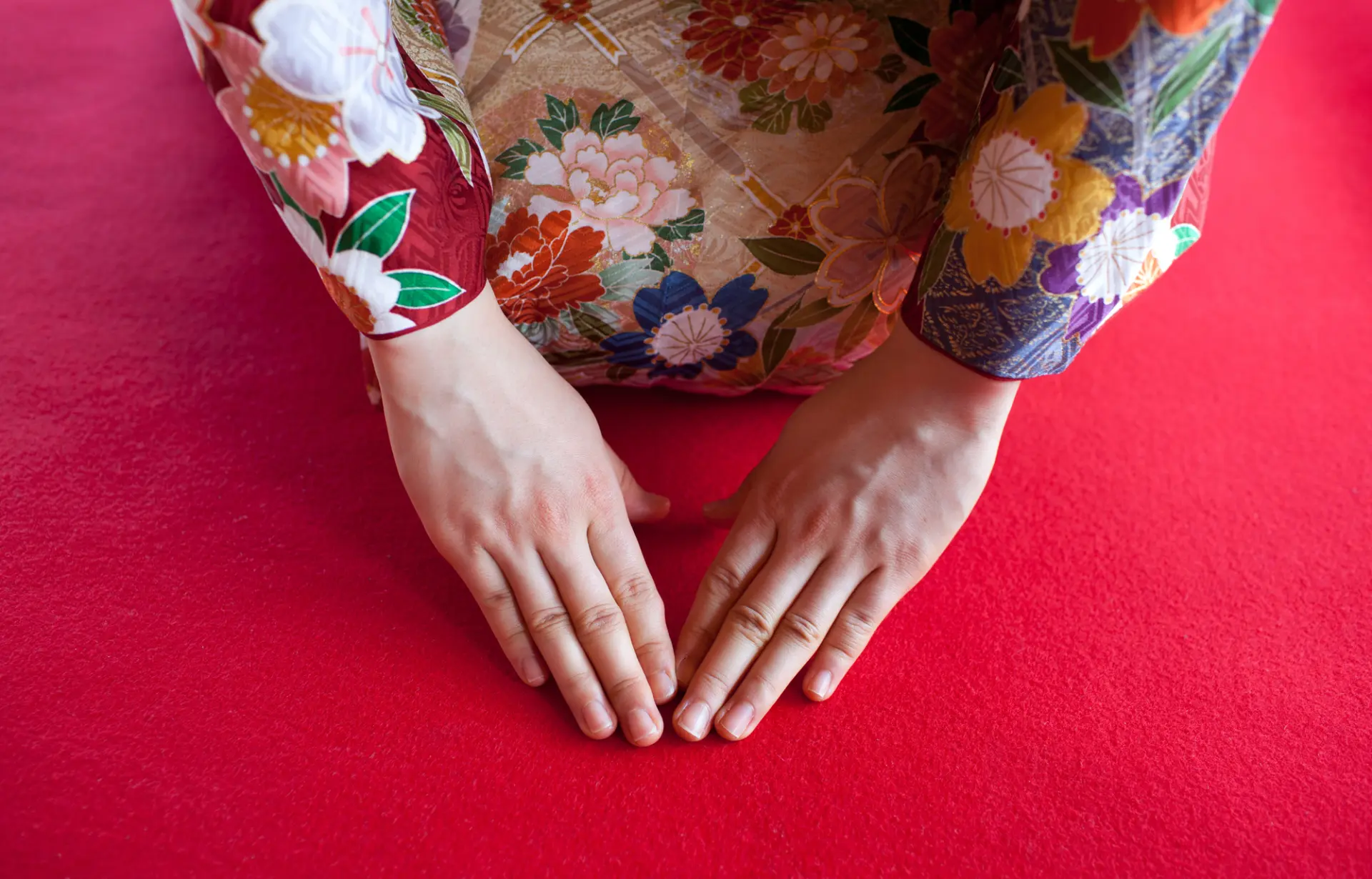
Once said and done its time for the arrival of the geiko or maiko. A performer from one of the five hanamachi will appear, and the guide will ask the group to guess whether she is a geiko or a maiko. If you listened carefully during the explanation, this will be an easy quiz. When I visited, a maiko appeared. From her ornate hair ornaments and long kimono sleeves, visitors were able to answer correctly. She introduced herself and greeted us with “Otanomōshimasu,” a Kyoto dialect phrase used by geiko and maiko meaning “I humbly ask for your kindness.” When she greets you this way, please respond by repeating her again with “Otanomōshimasu.” Notice her graceful posture, kneeling with her fingertips together on the tatami, spine straight, and bowing deeply.
Female voice
O-TANO-MOSHI-MASU
Male voice
O-TANO-MOSHI-MASU
This special greeting is a show of respect and gratitude for each guest that visits.
⑦Commemorative Photo Shoot with Geiko or Maiko
Groups such as families, couples, or friends may take photos with the geiko or maiko using their own smartphones. You will be quite close, but be careful not to touch them or step on the hem of their expensive kimono. About half the visitors were wearing rental kimono, which made their photos even more memorable. Wearing kimono for the photo is highly recommended if you want an extra special experience.
⑧Exclusive Q&A With the Geiko or Maiko
Each group has the chance to ask the geiko or maiko one question. Even Japanese people rarely have such an opportunity. I hadn’t prepared a question, so I struggled a bit and eventually asked, “What inspired you to become a maiko?” Other groups asked about the highlights of their work, how one comes to industry, or about the daily schedule. The maiko answered each question politely and thoughtfully.
⑨Rare Close Look as they Dance
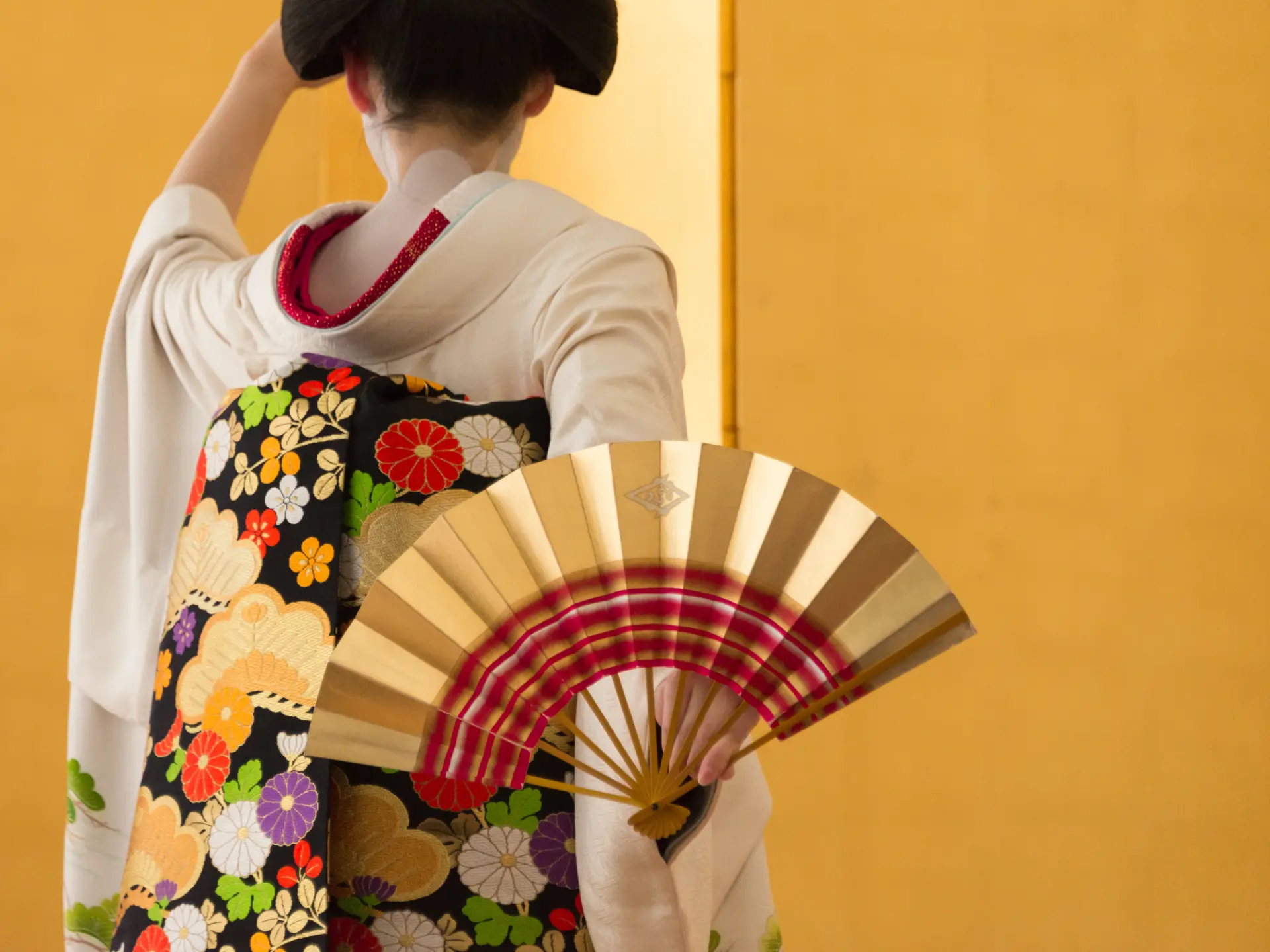
The timing of this article was autumn, meaning the seasonal dance of choice was “Momiji no Hashi”, a popular short dance that expresses the transition from autumn to winter. Using two fans decorated with autumn leaves, she danced gracefully. The performance lasted about three minutes, but the beautiful moments from posture to fingertips was timelessly mesmerizing. Dance performances are held during spring and autumn events in each hanamachi, they are usually within the “ichigen-san okotowari” world, so even Japanese people rarely get to see them from such a close distance.
⑩Tea Ceremony
The dance ends with the geiko or maiko moving to perform tea ceremony. Each person is given a tea bowl, a tea whisk, and a traditional sweet. Tea ceremony is an essential skill for geiko and maiko, as they serve tea during the spring and autumn odori dance events. Photos were allowed during this part.
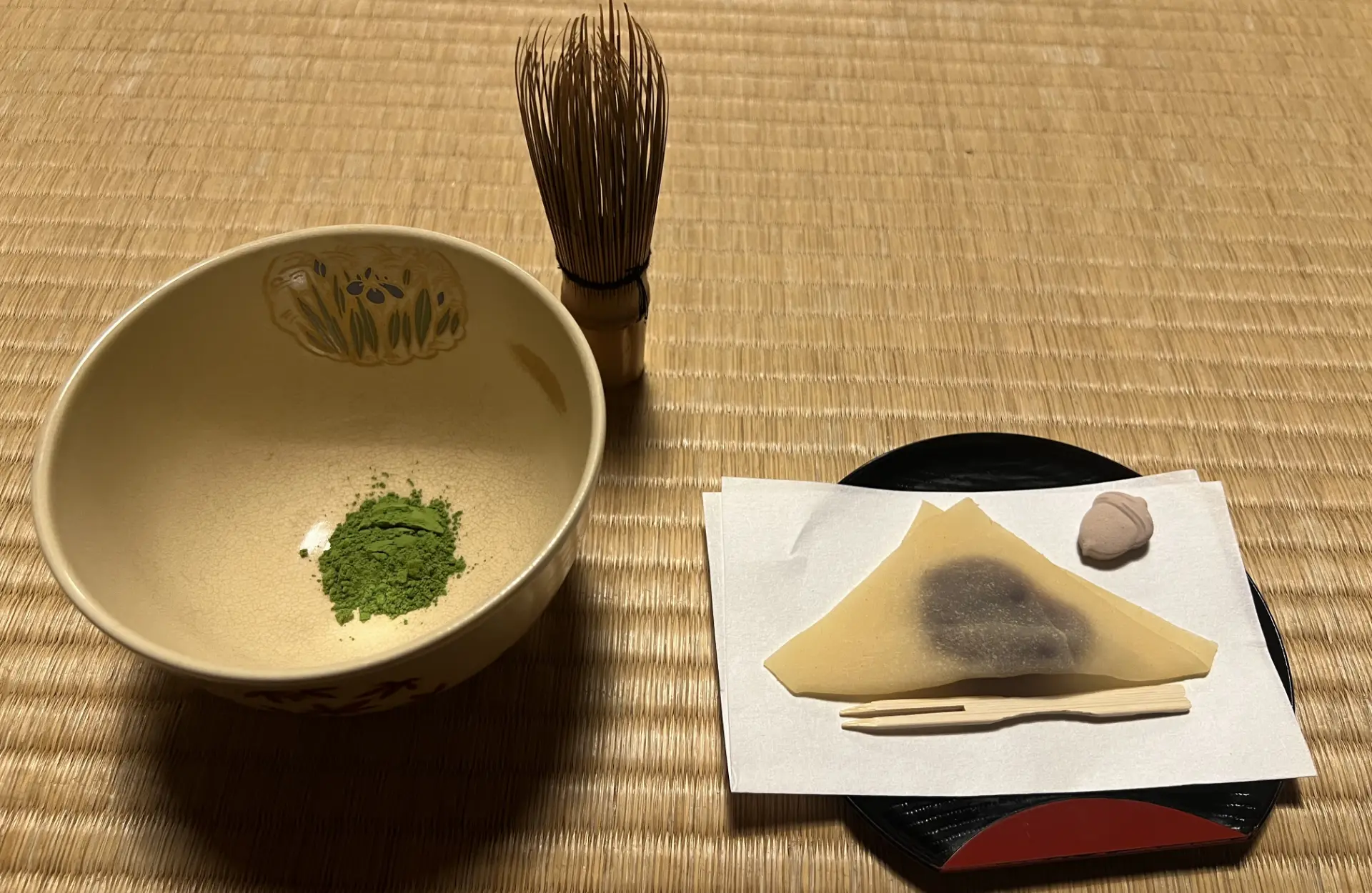
When she signals “Please enjoy your sweets,” you eat the sweets first. This day’s sweets were Kyoto’s famous yatsuhashi and a type of higashi (a dry sugar sweet used in tea ceremony).
Please be sure to inform your guide of any food allergies or restrictions so they can check. Once the tea preparation is complete, it is time to say farewell. She bows with her hands placed neatly in front of her (the mittsu-yubi gesture) and says “Ōkini,” meaning “Thank you very much.” Please return her gratitude likewise with mittsu-yubi and “Ōkini.”
Female voice
O-KI-NI
Male voice
O-KI-NI
⑪Make a cup of tea
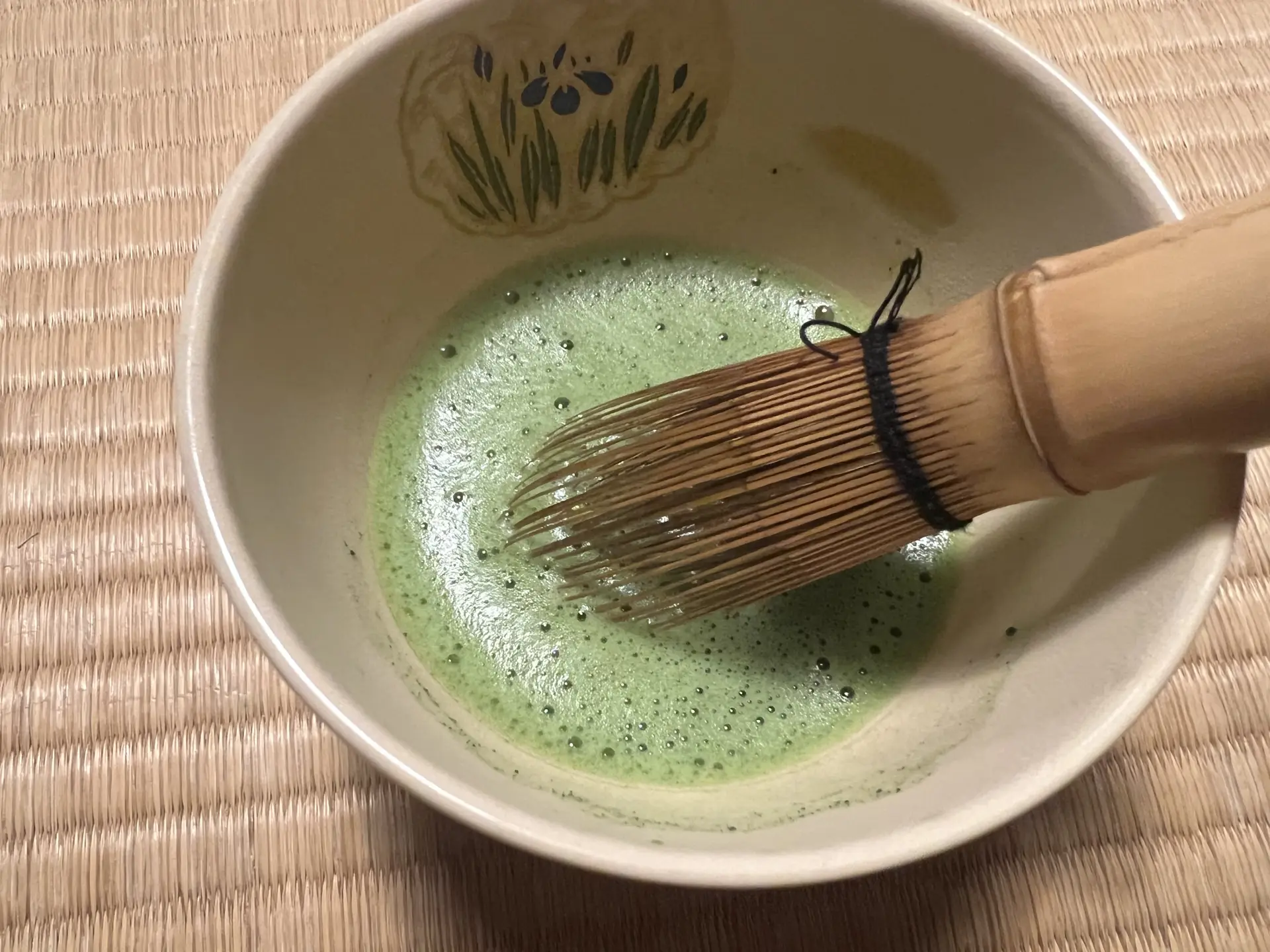
Finally, its time to whisk up your own bowl of matcha. The guide explains how to hold the tea whisk lightly with the thumb, index, and middle finger, and how to whisk vertically, then in a zig-zag motion. Be careful not to scrape the bottom of the bowl, as both the bowl and the whisk are delicate. When the bright green matcha turns a lighter shade and forms a creamy foam, draw one large circle with the whisk to finish. Even the most novice of tea-drinkers can do it, especially with the guide there to assist. Tea that you whisk yourself tastes especially delicious, and enjoying it in a traditional Kyoto townhouse is a wonderful experience you may not soon forget.
This brings the event to a close. Total time runs about 45 minutes, filled with luxe moments and unforgettable memories. Even the locals of Japan will confirm how rare it is to get to see a Geisha or maiko up close. Join and see something truly worthwhile.
Kimono Experience and Tea Ceremony with a Geiko/Maiko
Why not try the same fun with a kimono to try? There’s a special add-on set that allows you to chance into a kimono before joining the fun. The fitting is handled by kimono professionals and topped off with a bonus hair arrangement. It’s highly likely you’ll grab some photos with a geiko or maiko, so why not dive in head-to-toe with a look that’s truly authentic.
Authentic Geisha Ozashiki Shows
Ozashiki-Asobi are the authentic entertainment bookings you can enjoy mid-banquet at a geisha teahouse. The ozashiki shows include interactive, easy games you can join alongside a geisha or maiko. Some of the most popular are “Konpira Fune Fune”, or “Tora, Tora, Tora”, asking you to join with your hands and follow along in a chance game of rhythm. Simple but intriguingly harder as the game gets faster, the games never fail to rouse a crowd. There are even special events to experience the fun and games.
Gion Walking Tours
There are English-based guided tours around Hanamikoji, the coveted district where geisha and maiko actually live. The same tours also provide a look into the old-world architecture and temples nearby. While a meeting with a geisha or maiko is not guaranteed, you may just happen upon a real artist passing by on a lucky day.
This exclusive experience is completely private (your booking will not be shared with guests outside your party) for a rate of 20,000yen including up to 4 guests, plus an extra 5,000yen per heard for groups of 5 or more.
Wrap-up
This insider glimpse into the world of geisha and maiko covers a full rundown even locals from Japan may not know. Geisha and maiko are an esteemed “living heritage” of the Japanese aesthetic that goes beyond just dance, embodying the culture, sensibilities and human interplay of art that resonates in Kyoto’s entertainment districts. Sought after by many today and into tomorrow, their art will carry the Kyoto class and prestige into ages to come. If you’re eyeing a trip a Kyoto, book an experience at one of the local ateliers where geisha and maiko experiences await.

Author
Freelance Announcer
Sayaka Motomura
Focused on sharing insights related to traditional culture, performing arts, and history.