
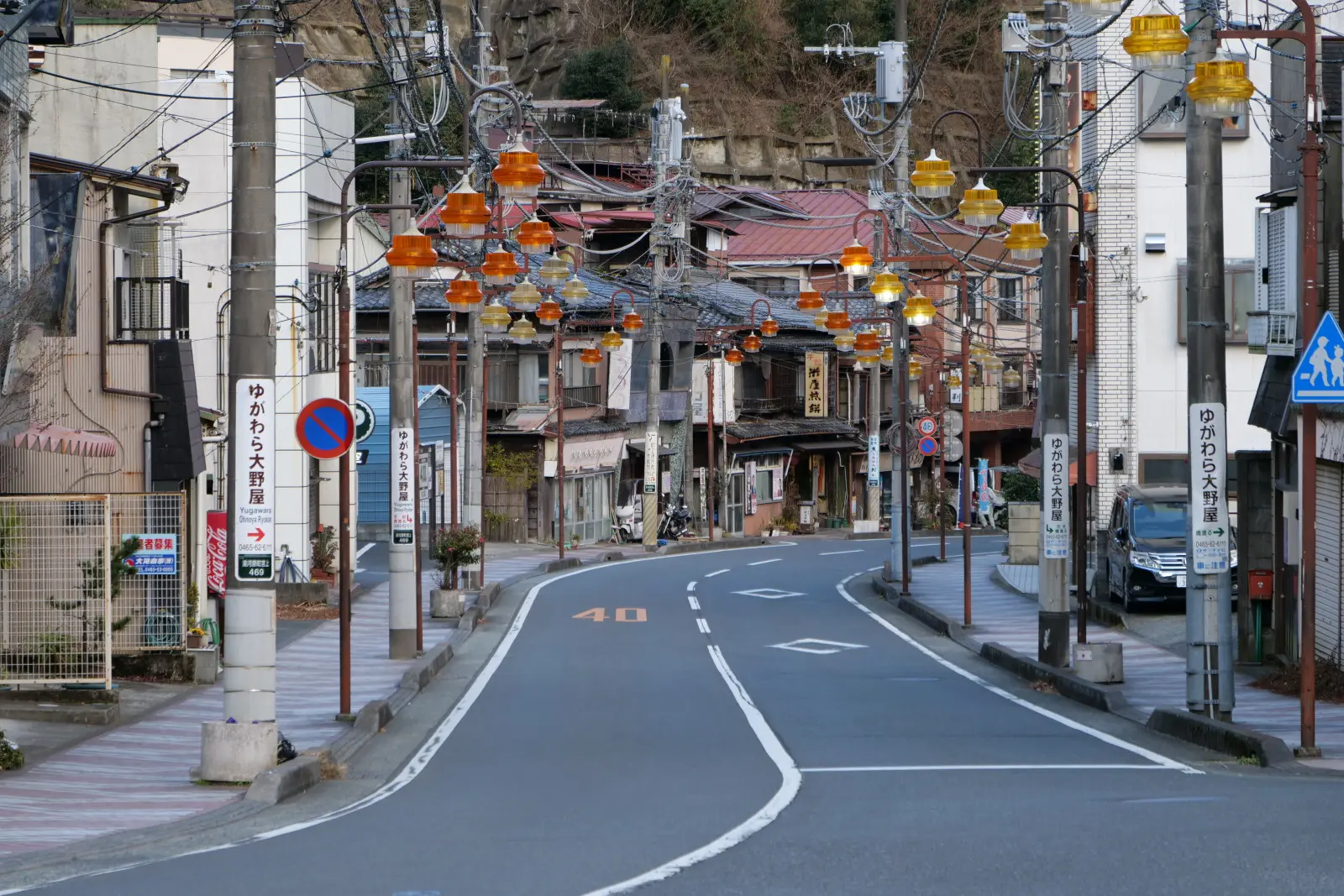
A Complete Guide to Yugawara Onsen, a Famous Hot Spring Retreat Loved by Novelists and Cultural Figures
The hot springs of Yugawara Town, located at the southernmost tip of Kanagawa Prefecture, have such a long history that they were mentioned in the Man’yoshu 1,300 years ago.
Since the Meiji era (1868–1912), the area has also been popular as a therapeutic retreat where politicians and literary figures stayed.
Its high-quality, skin-friendly hot springs are still going strong, and the town is home to many ryokan inns and acclaimed restaurants favored by food lovers.
Let’s explore the charms of Yugawara Onsen, a destination with many repeat visitors.
What Is Yugawara Onsen Like?
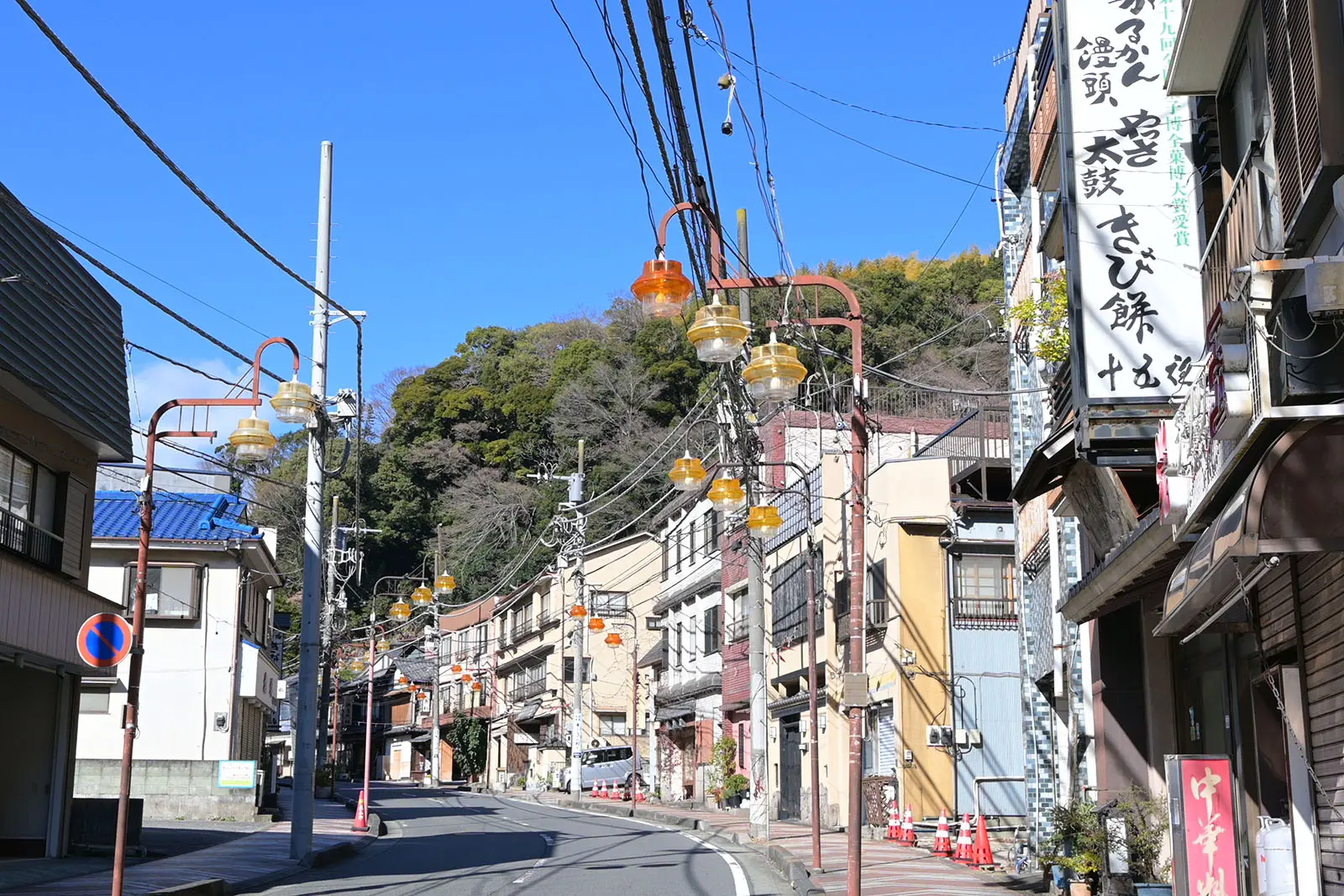
Yugawara Onsen is a hot spring town in Yugawara Town, located in the southernmost part of Kanagawa Prefecture.
It has such a long history that it appears in the Man’yoshu, the oldest existing anthology of Japanese poetry, and it has long been used as a therapeutic hot spring destination known for its gentle waters.
The hot spring town spreads along the Fujiki River and the Chitose River, which flow along the border between Yugawara Town and Shizuoka Prefecture, and there are many inns with free-flowing natural hot spring baths.
With nationally known restaurants as well, it is also a popular hot spring destination for travelers who want to enjoy great food.
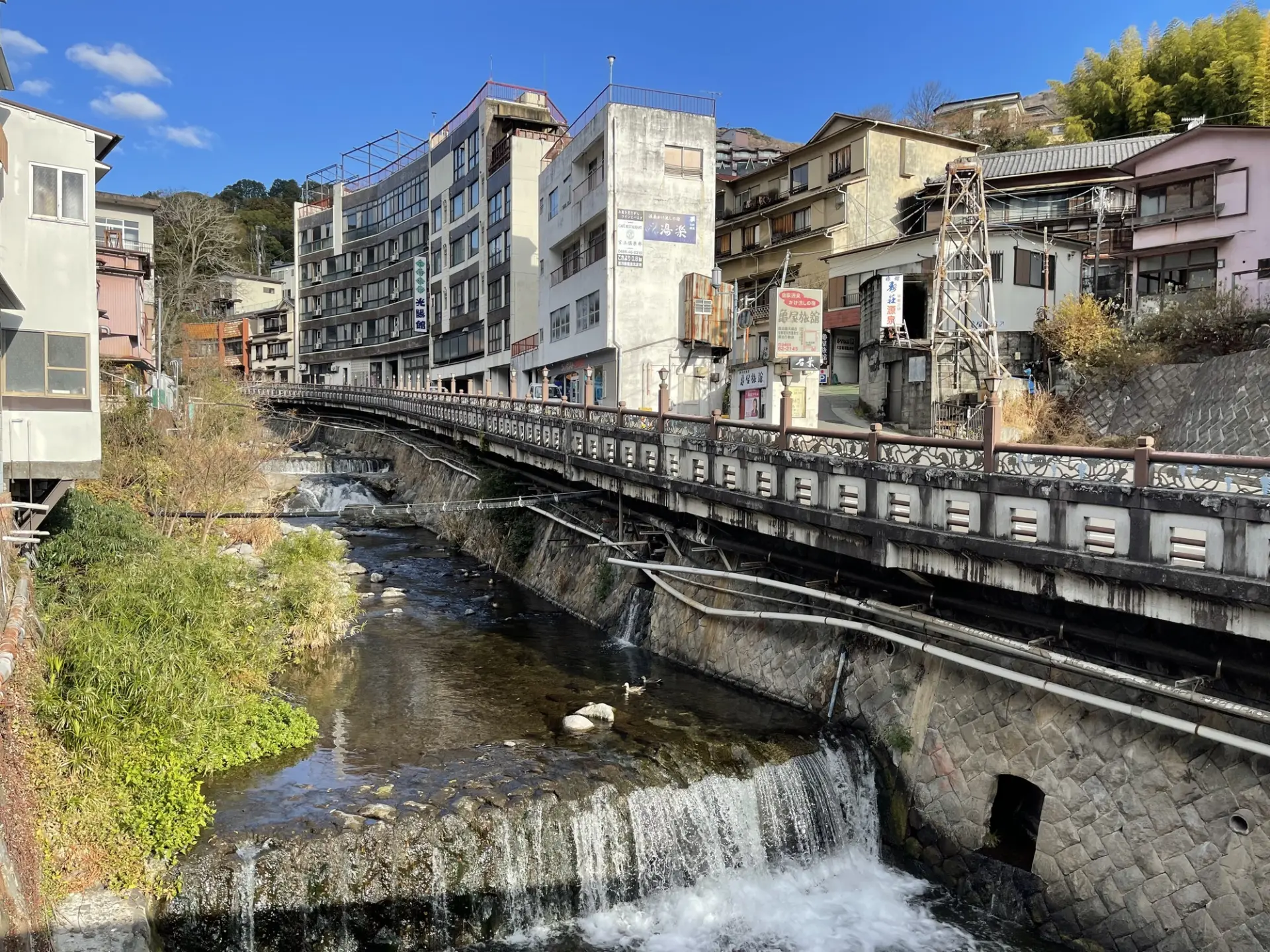
The History of Yugawara
The history of Yugawara Onsen goes back as far as 400,000 to 230,000 years ago, when the outer rim of Hakone was formed.
The Yugawara volcano formed at that time was gradually eroded, and hot springs were discovered in Yugawara.
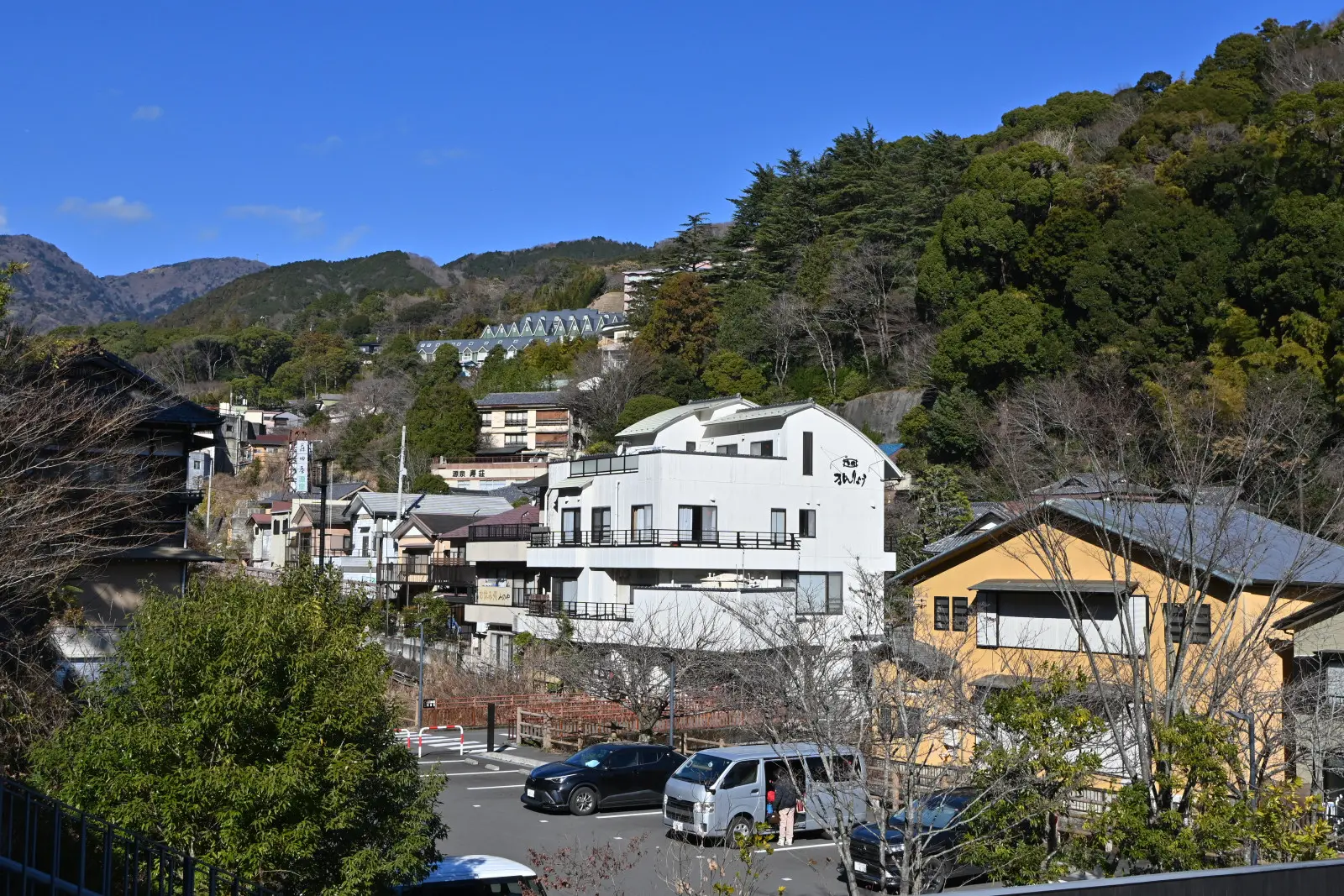
Yugawara made a major appearance in Japanese history during the time of Doi Sanehira, who ruled this area.
Minamoto no Yoritomo, who later founded the Kamakura shogunate, raised an army in 1180 to restore the Genji clan, but was defeated in the Battle of Ishibashiyama.
Yoritomo and his men were reduced to just eight people and were being pursued, but Sanehira and others sheltered them in Yugawara and helped them escape. As a result, the Genji later defeated the Heike and were able to establish the Kamakura shogunate.
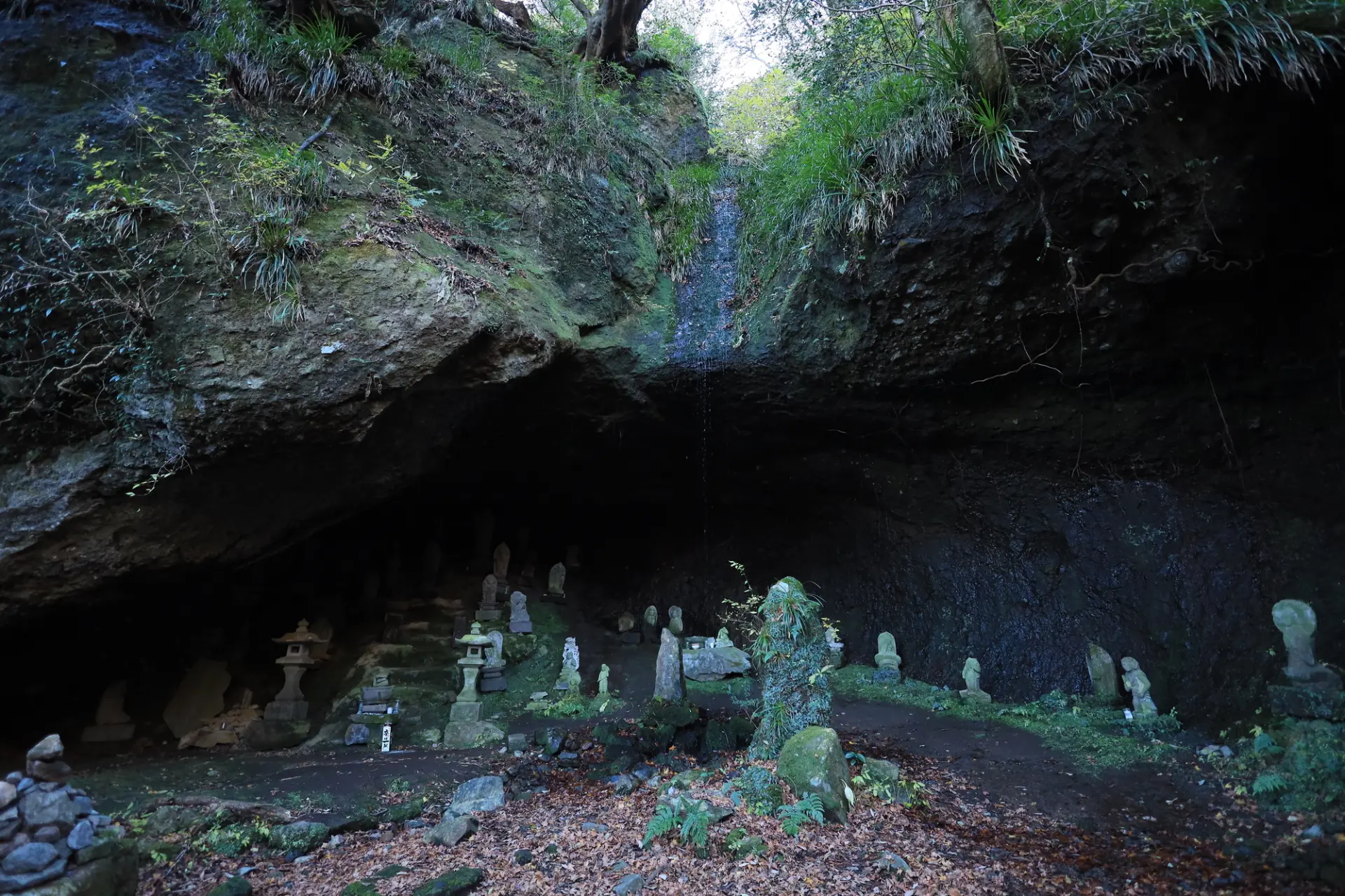
Yugawara Onsen was the only hot spring in eastern Japan mentioned in the Man’yoshu, compiled Approx. 1,300 years ago.
In Shokoku Onsen Kono Kagami, a late Edo period (1603–1868) ranking of hot spring destinations across Japan in the style of a sumo ranking chart, it was selected as one of the top three hot spring destinations in eastern Japan.
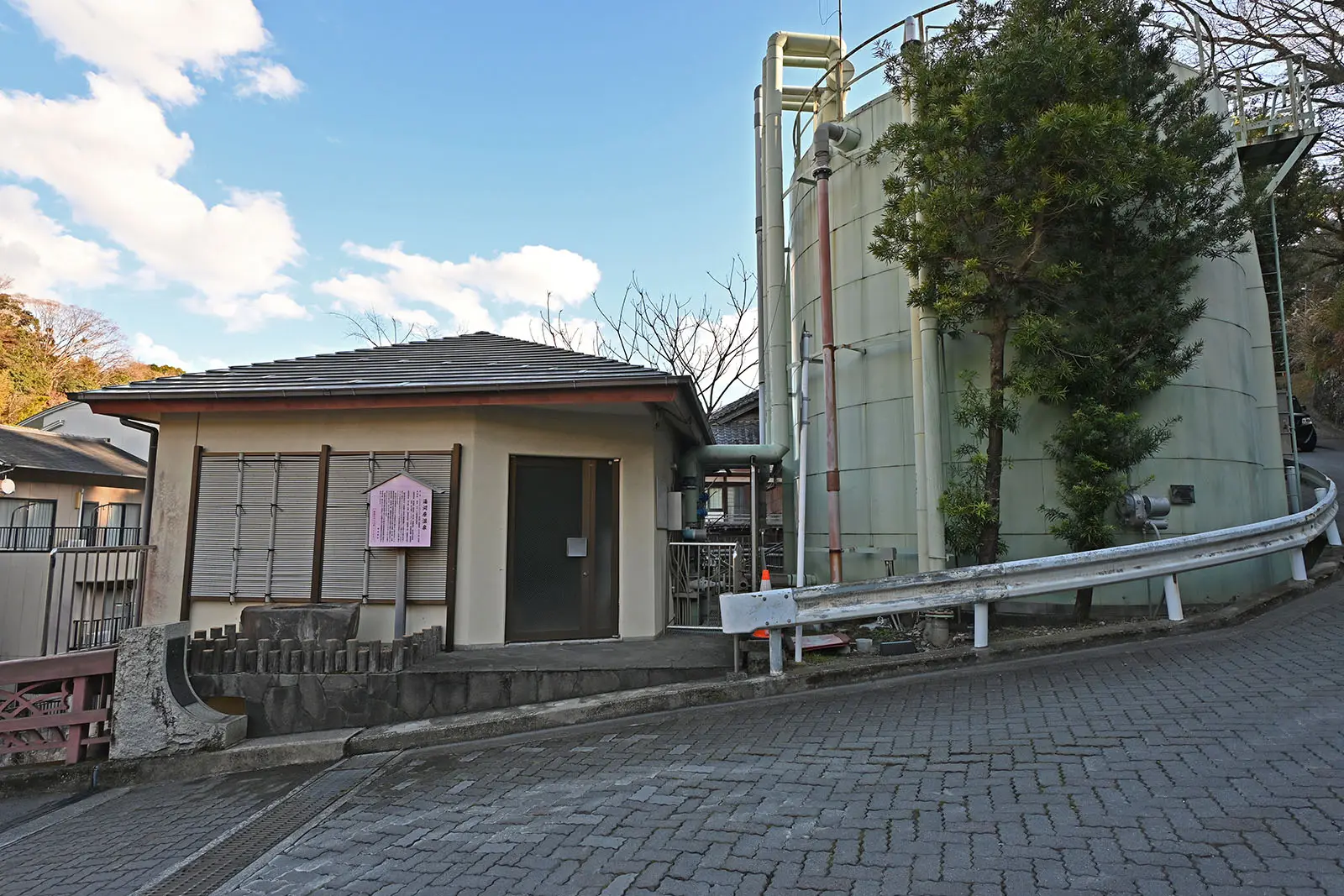
Yugawara’s hot springs were carefully protected as a shared and managed village-wide system called Soyu, and the town still manages the shared hot spring system today.
Writers Who Loved Yugawara
Because Yugawara Onsen was known for helping heal wounds, it was designated as a recuperation site for wounded soldiers during the First Sino-Japanese War (1894–1895) and the Russo-Japanese War (1904–1905) in the Meiji era, and literary figures also began to visit.
Kunikida Doppo, author of Yugawara Yori, and Natsume Soseki, author of Meian, stayed in Yugawara and wrote novels set here.
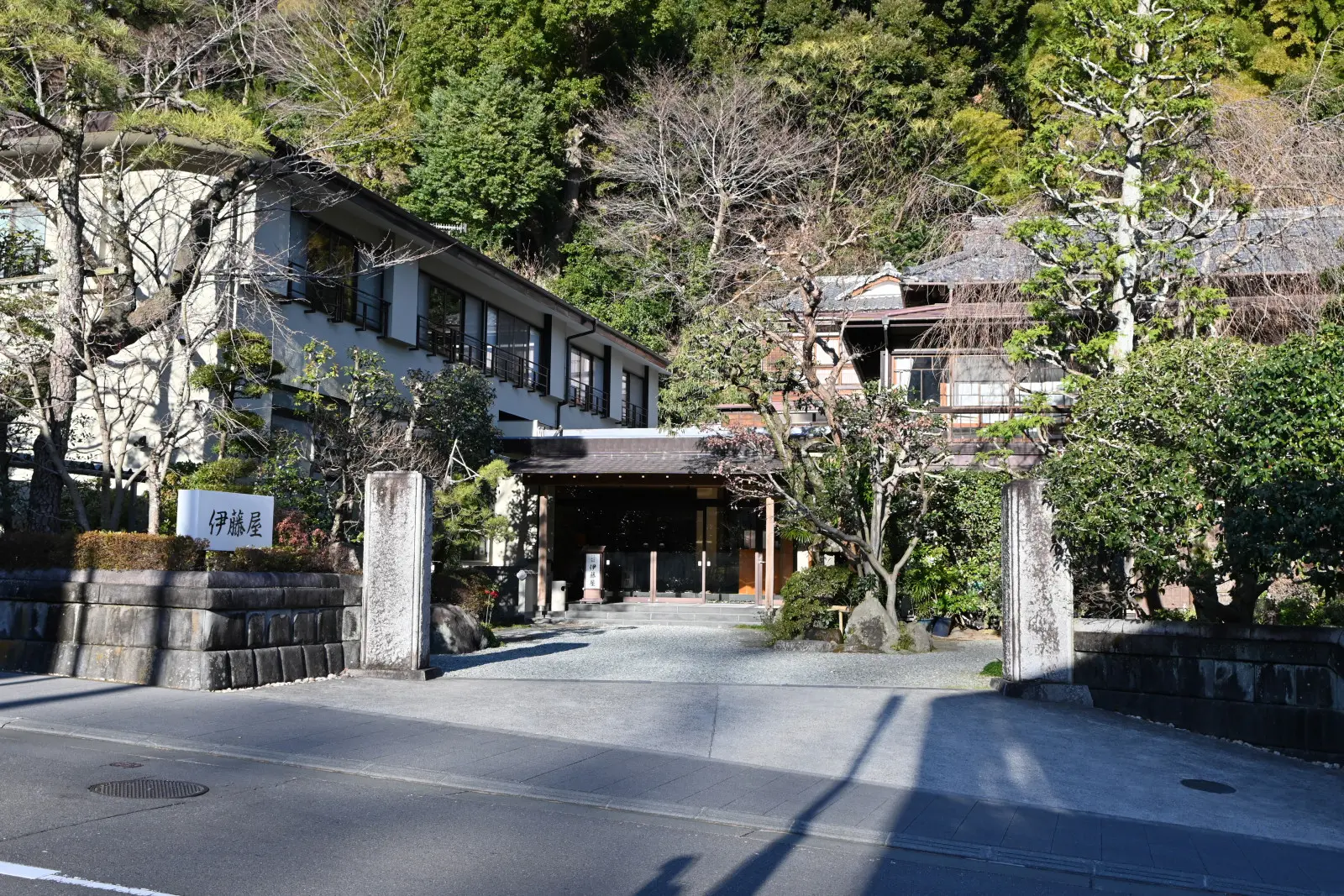
Shimazaki Toson also stayed at the ryokan Itoya, where he worked out the original concept for his novel Before the Dawn, each time he finished writing a novel.
Why We Recommend Yugawara Onsen
Yugawara is a rare hot spring destination untouched by overtourism, where you can spend time in peace.
Here’s why we recommend Yugawara Onsen.
Easy to reach from Tokyo Station in just over an hour
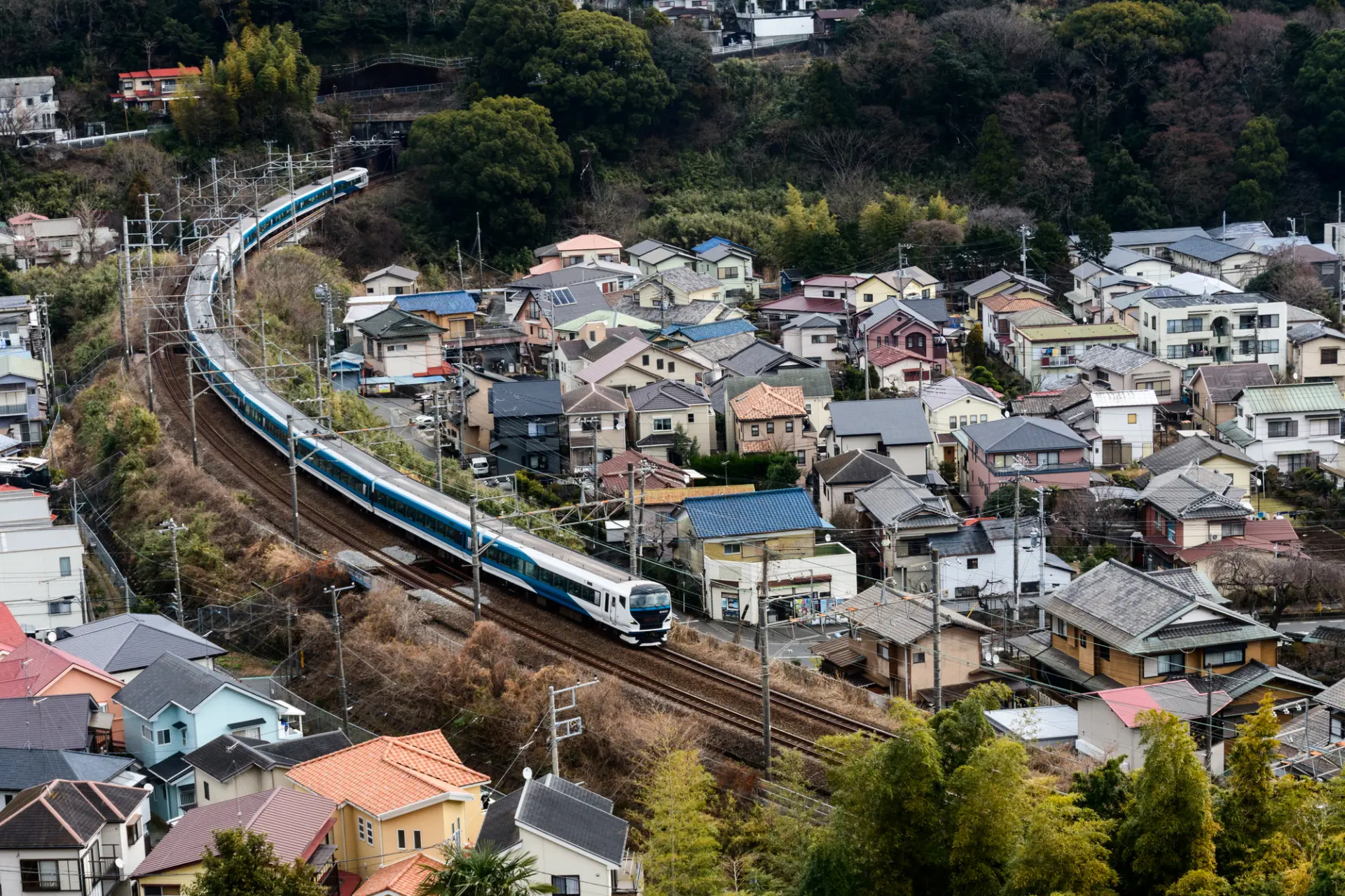
Hakone-Yumoto is famous as a hot spring destination near Tokyo, but Yugawara is also accessible in around an hour by shinkansen.
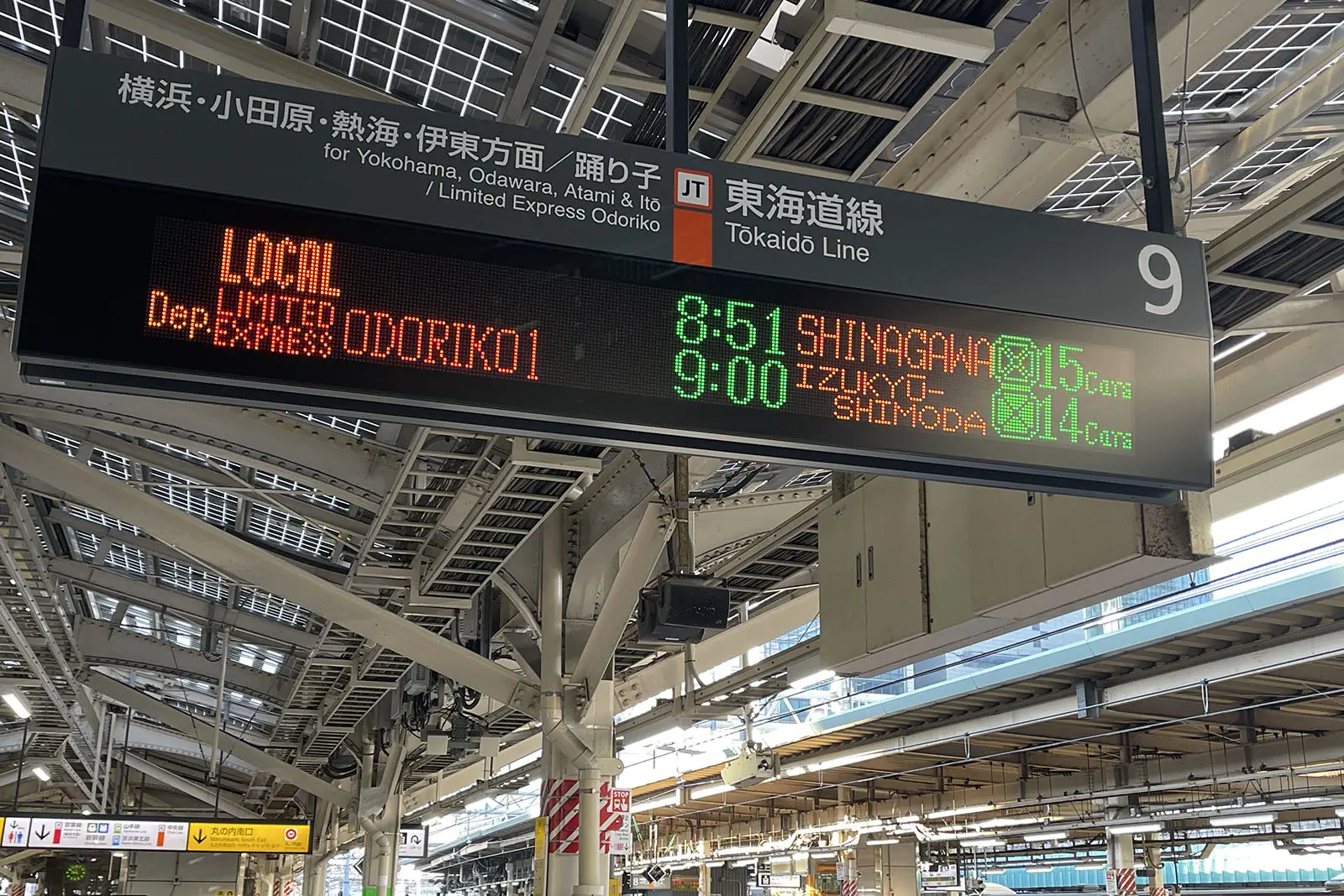
From Tokyo Station, you can take the direct JR Limited Express Odoriko, which takes Approx. 1 hour 13 minutes.
It is another 10 minutes by bus to the hot spring town, so you can arrive there in Approx. 1 hour 40 minutes.
A convenient base for sightseeing in the surrounding area
Because it is located between Odawara Station and Atami Station, where the shinkansen stops, it is convenient for accessing southern Kanagawa, Hakone, the Izu Peninsula, and other nearby areas.
A hot spring destination free from crowds
There are no areas where people gather in large numbers like an entertainment district, and the inns are spread out, so there are few crowded places.
Even Manyo Park, the area’s main sightseeing spot, has spacious grounds and places to sit and relax throughout, making it easy to spend time at a leisurely pace.
High-quality hot spring water that is gentle on the body
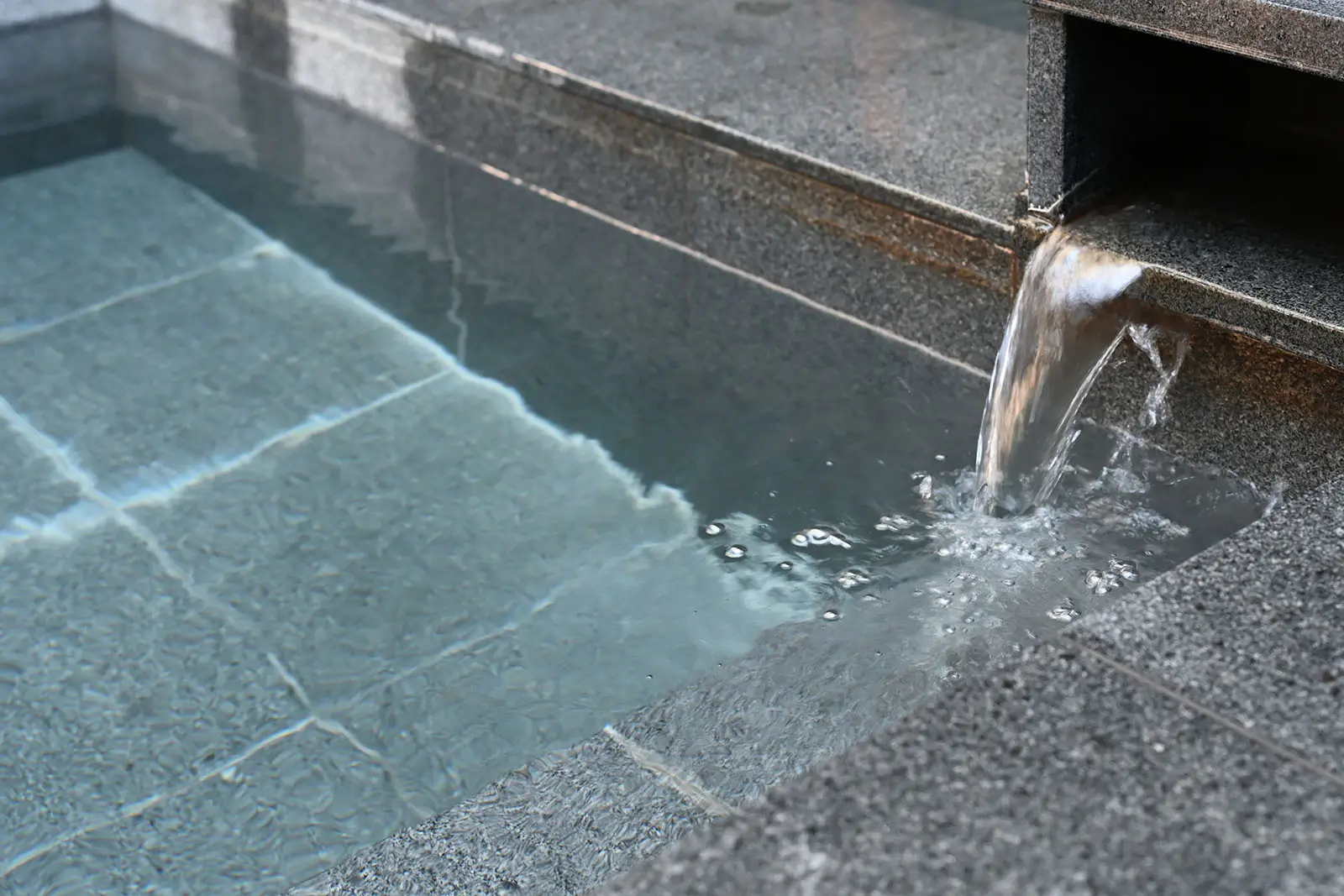
Some hot spring minerals can irritate the skin or leave you feeling exhausted after bathing, but the waters of Yugawara feel gentle on the skin.
Yugawara’s mildly saline and mildly alkaline hot spring water is also said to be effective for external injuries, and it is well known as a beauty bath that helps improve skin condition.
Enjoy nature throughout the four seasons
The Yugawara area is surrounded by nature, and you can enjoy the changing seasons as well.
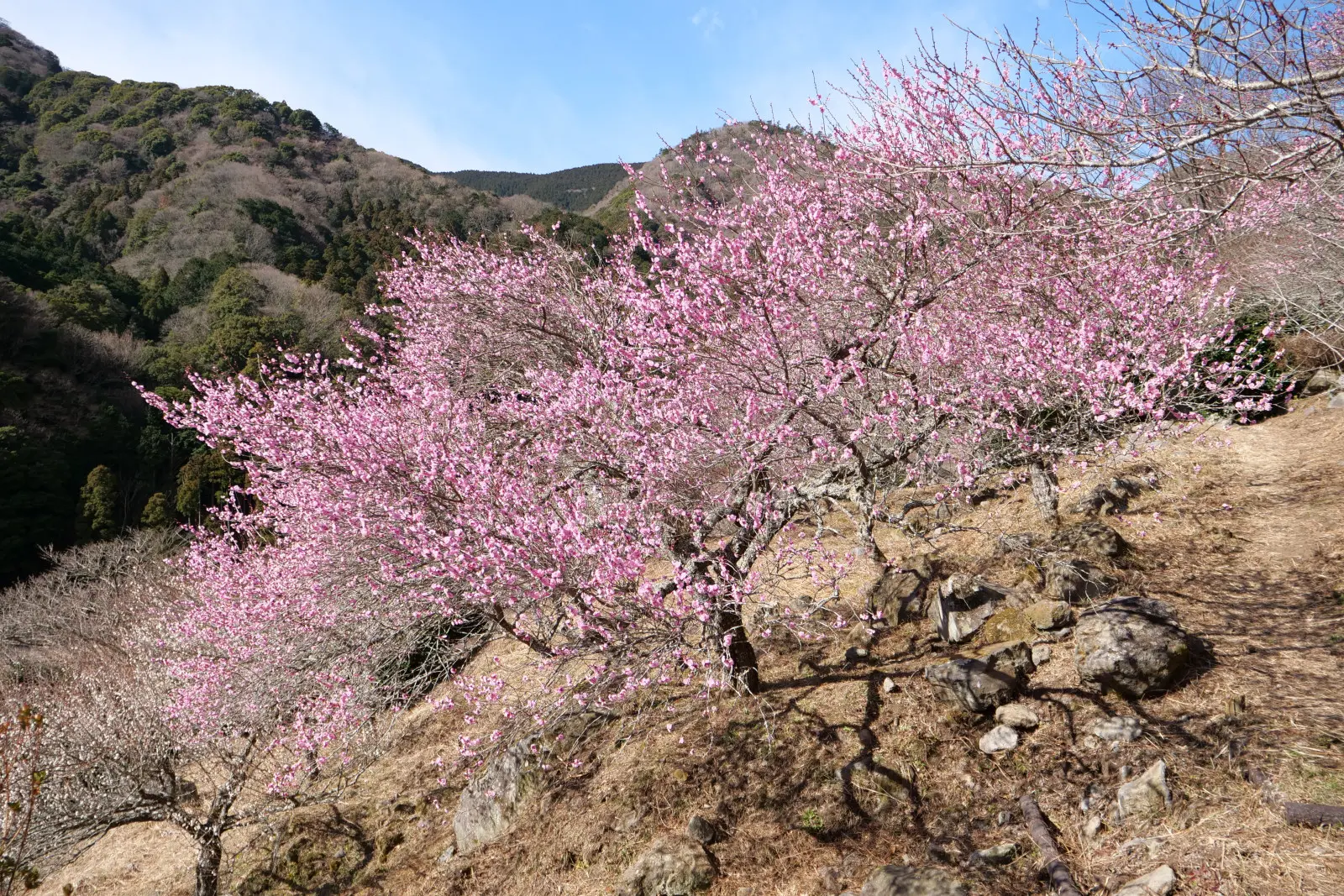
Plum blossoms bloom in early spring, and fireflies can be seen dancing in early summer.
In autumn, you can admire stunning fall foliage, and in winter, the mild climate makes outdoor baths enjoyable too.
Many seasonal events are also held throughout the year.
A wide range of accommodations and budgets
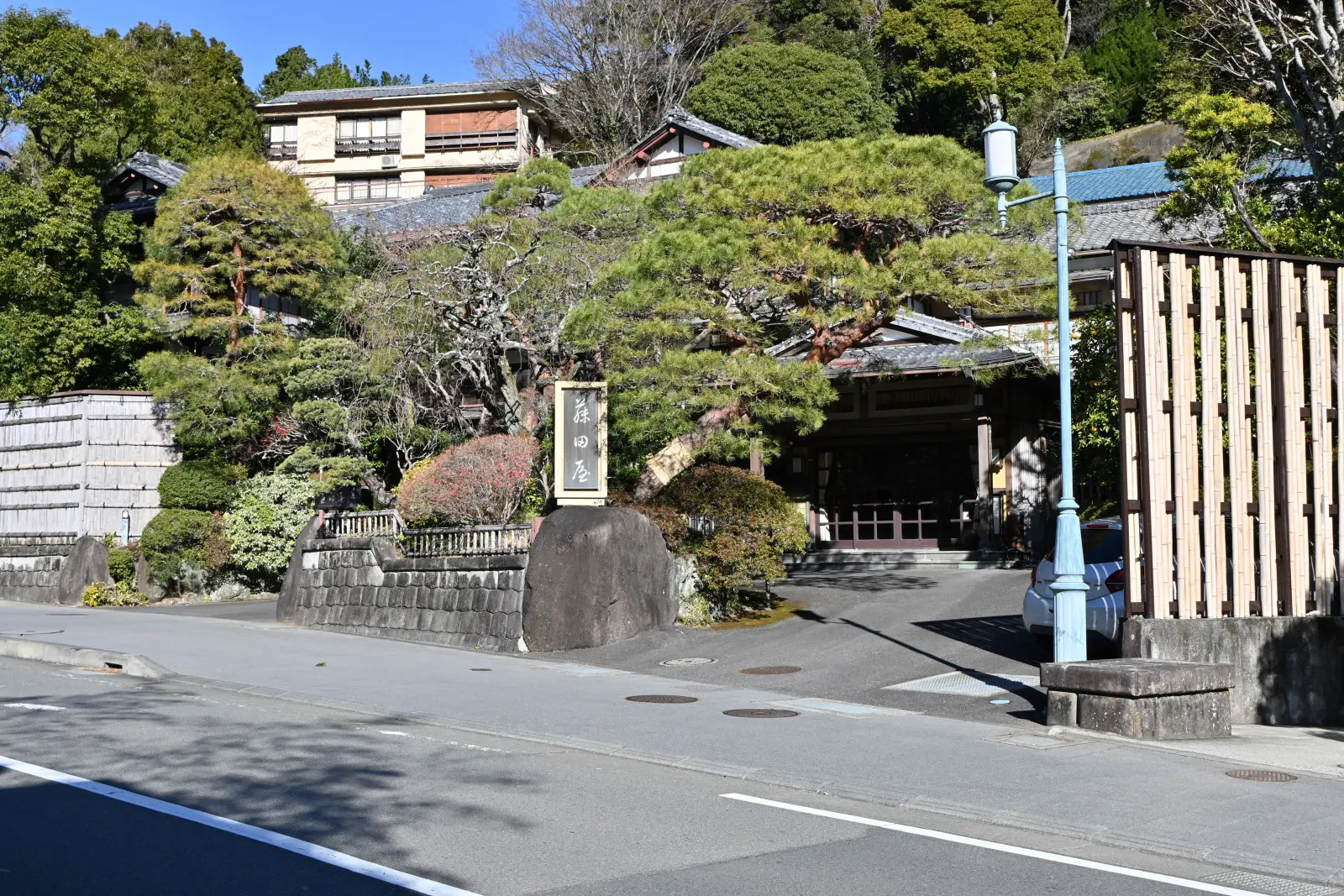
Yugawara Onsen is not a particularly large area, but it has many places to stay, ranging from luxury hideaway-style inns to therapeutic inns where you can stay for just a few thousand yen per night.
You can hole up in a luxury inn and enjoy the quiet, or keep lodging costs down and spend more on fine food instead.
Access to Yugawara Onsen
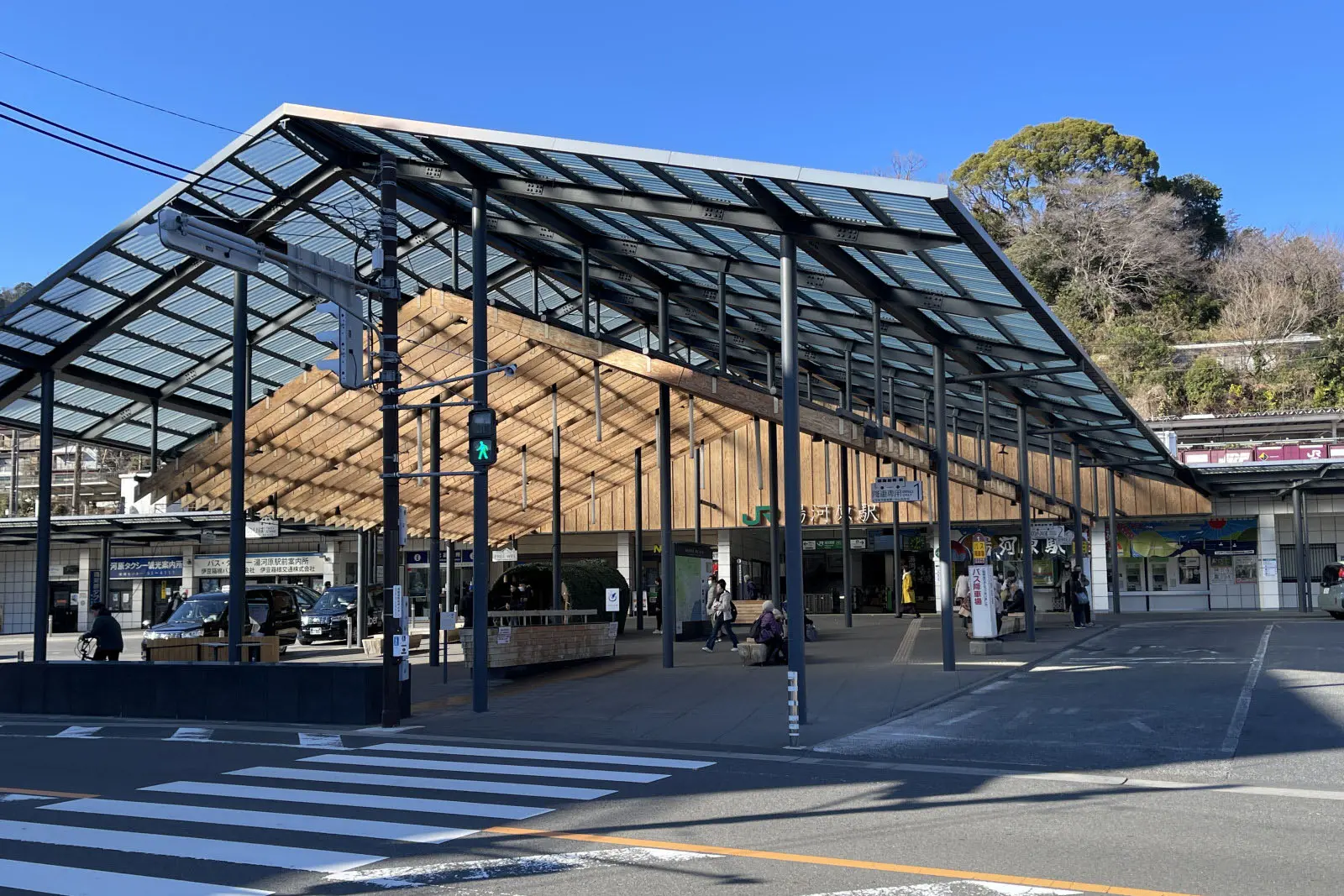
Yugawara, located at the southern end of Kanagawa Prefecture, is served by the Tokaido Line, with direct trains from Tokyo.
The best way to get there is by direct train to Yugawara, then take a bus from the station to the hot spring town.
Taking the train from Tokyo is the best way to reach Yugawara Station
To get directly to Yugawara, it is best to take the all-reserved-seat JR Limited Express Odoriko, which you can board in Tokyo without making any transfers.
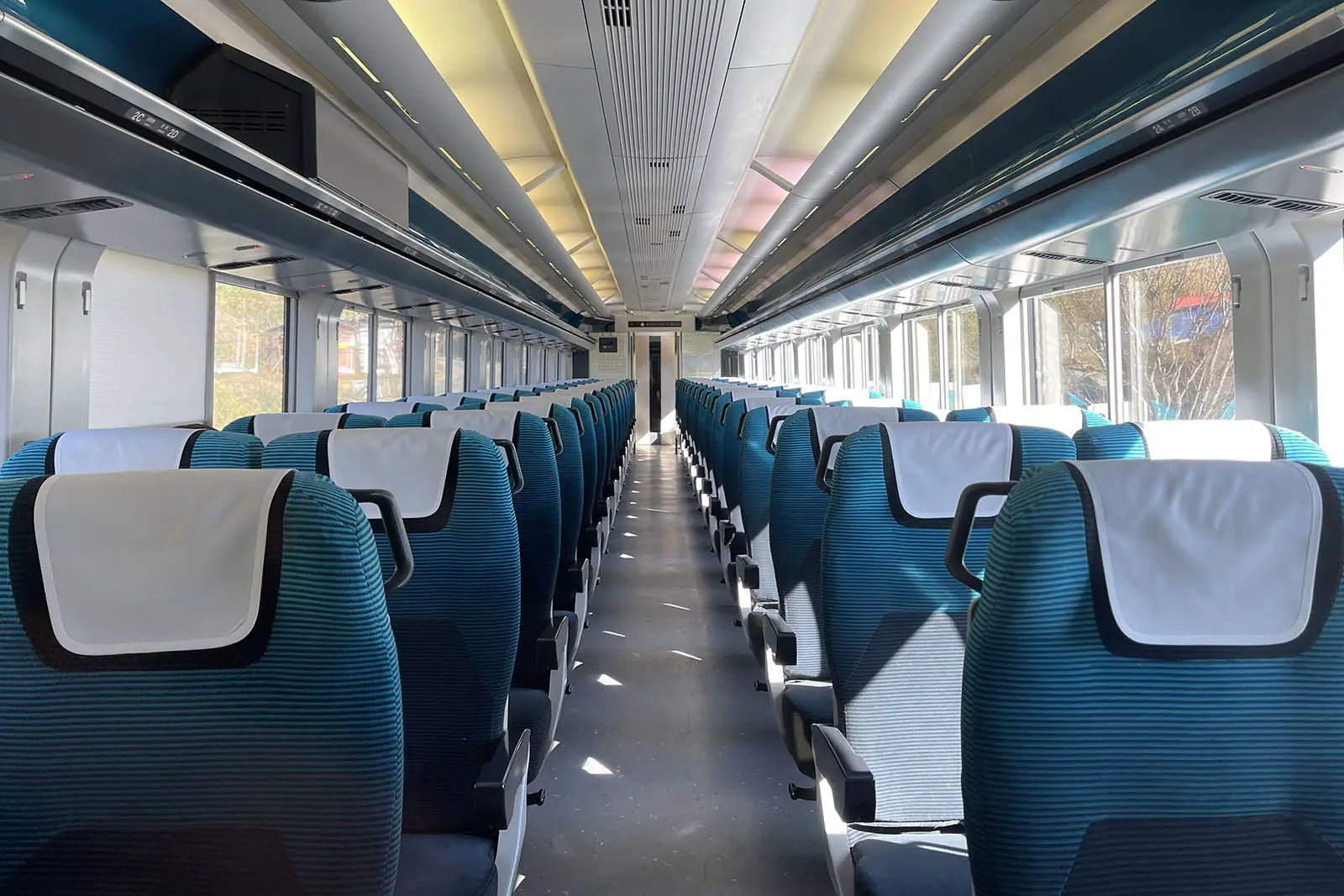
The trip from Tokyo takes 1 hour 13 minutes, and then it is another Approx. 10 minutes by bus to reach Yugawara Onsen.
You can also take the shinkansen to Atami and then go back one stop to Yugawara, but the total travel time is only about 10 to 15 minutes shorter than taking the Odoriko.
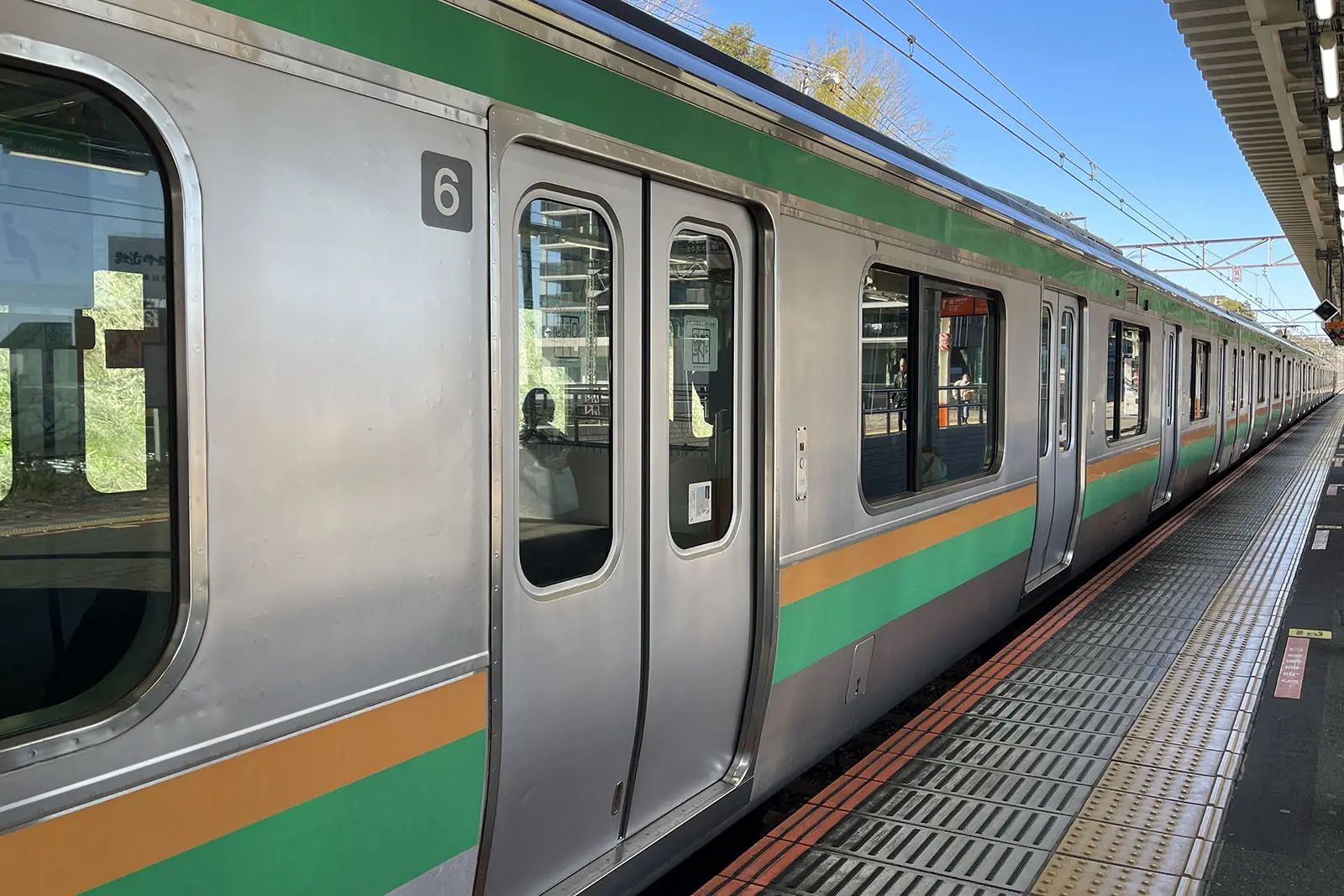
Travel Time from Tokyo to Yugawara
| Train | Travel Time | Transfer | Total Time |
|---|---|---|---|
| Odoriko | 1 hour 13 minutes | None | 1 hour 13 minutes |
| Kodama Shinkansen | 33 minutes to Atami | 8–23 minutes | 1 hour 2 minutes–1 hour 8 minutes |
| Local train | 1 hour 35 minutes–1 hour 46 minutes | None | 1 hour 35 minutes–1 hour 46 minutes |
*Information as of January 2026. The ride from Atami to Yugawara takes Approx. 6 minutes.
Use the bus to get around Yugawara
The hot spring town is more than 2 km from JR Yugawara Station, and walking takes nearly 30 minutes.
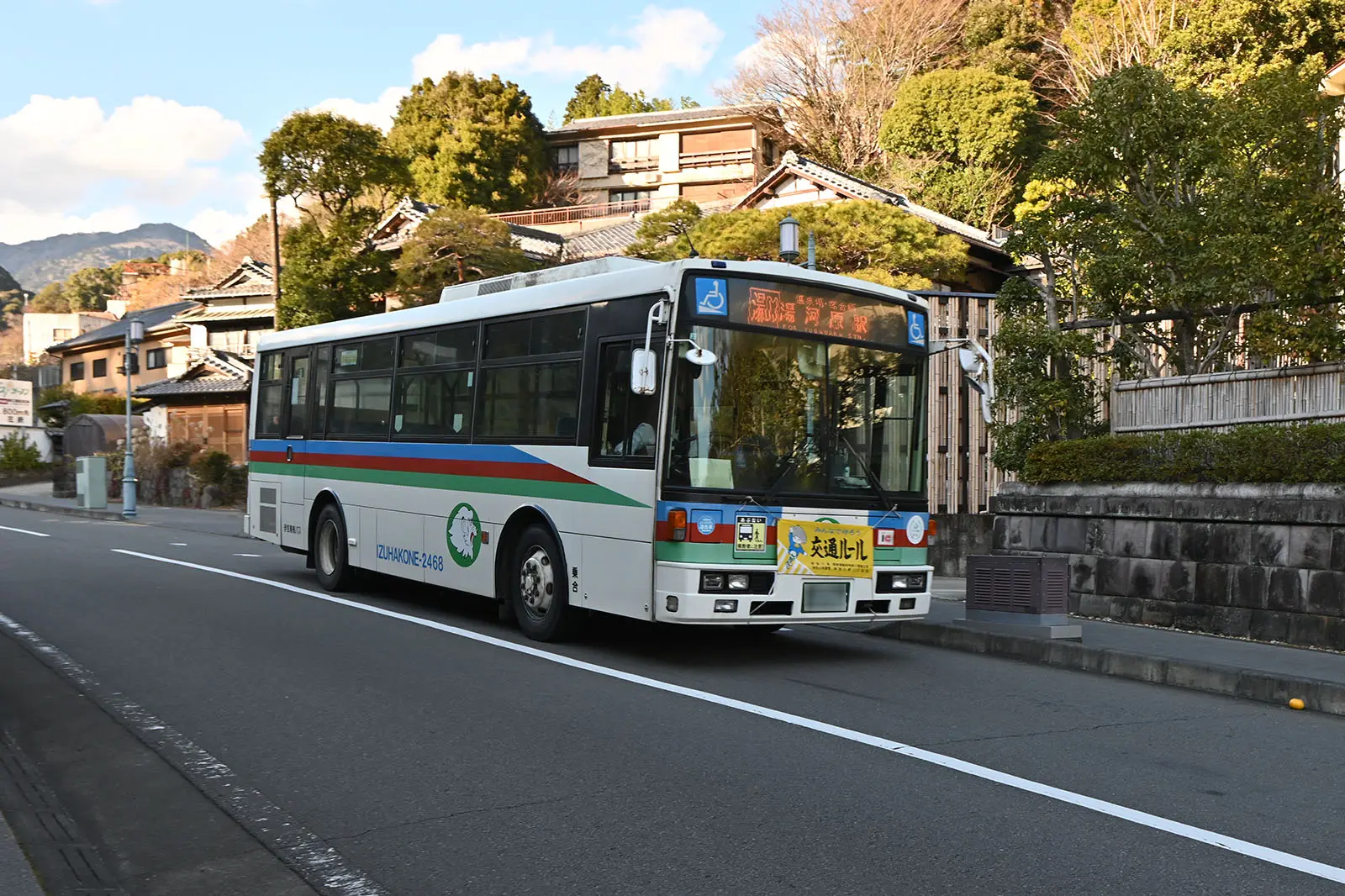
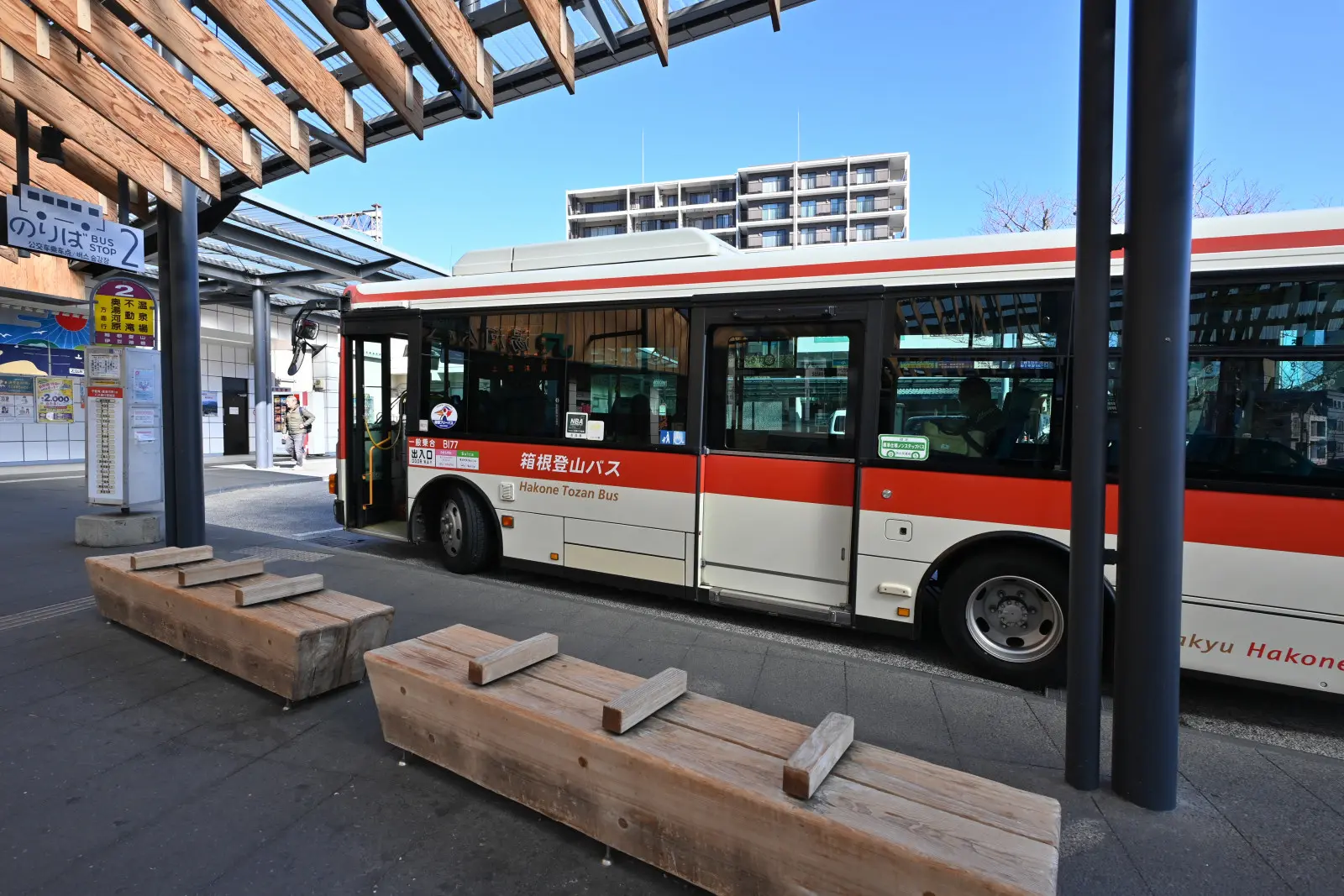
However, buses to Okuyugawara via the hot spring district depart frequently from in front of the station, so taking the bus is the easiest option.
They depart every 15 minutes from 10:00am to 1:00pm, and every 12 minutes during the 9:00am hour and from 2:00pm to 3:00pm, making them very convenient to use.
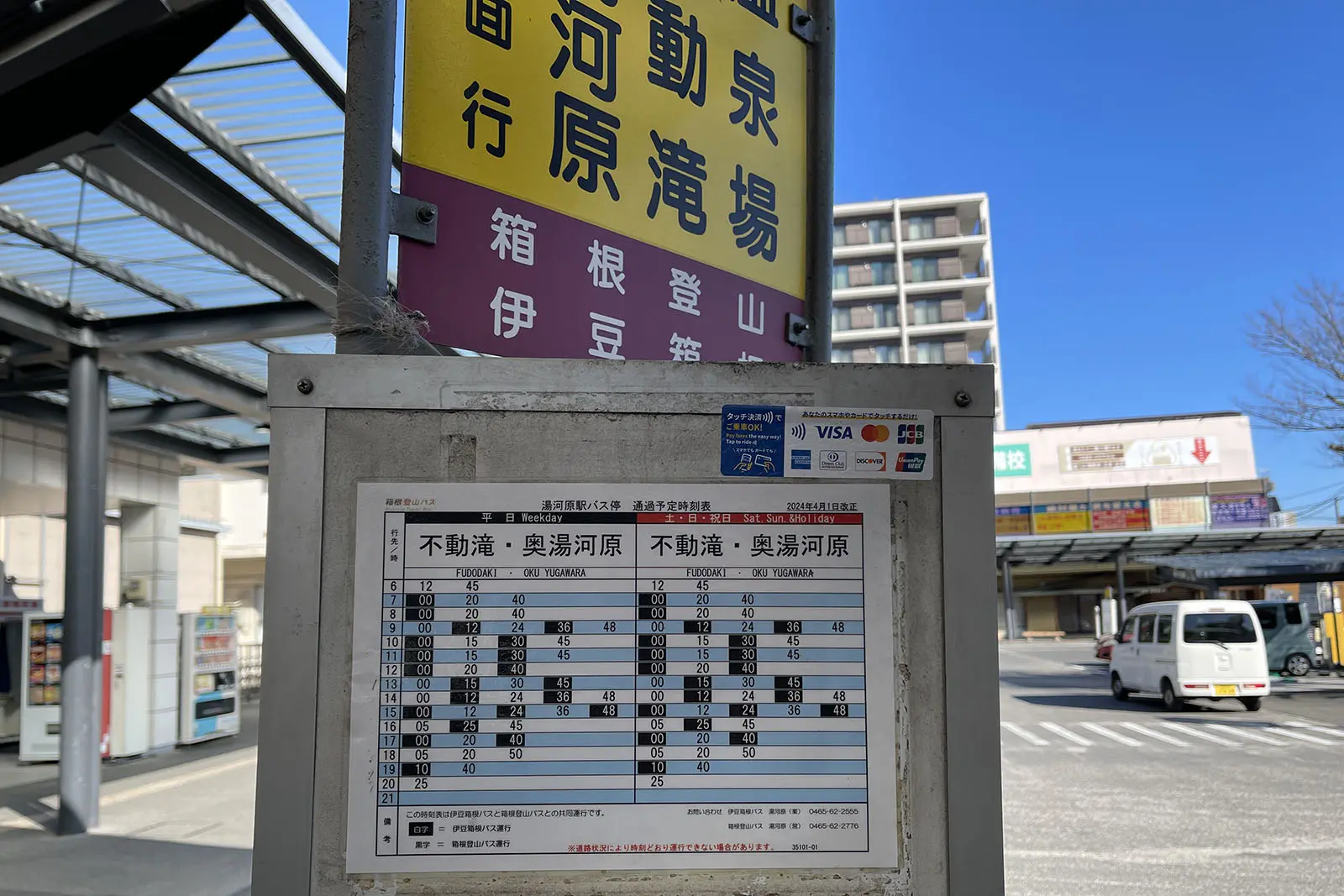
Bus stops are also close together, so you can get on and off near your destination, making the bus convenient for sightseeing as well.
Yugawara Can Be Enjoyed in Every Season
In nature-rich Yugawara, various events are held throughout the year, and you can enjoy seasonal flowers and changing foliage.
The official Yugawara Onsen tourism website updates information regularly, so if you are planning a visit, it is worth checking before you go.
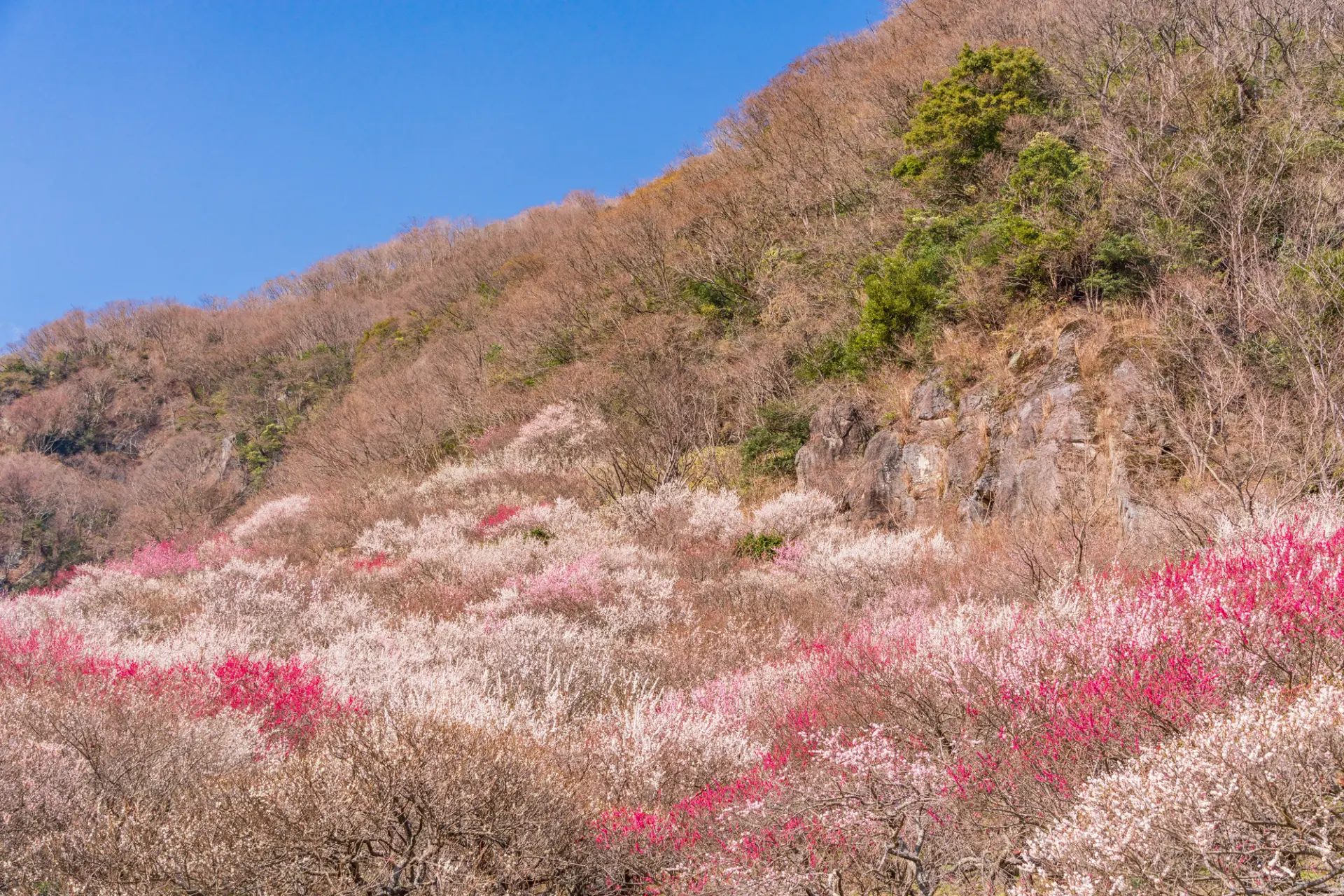
In early spring, enjoy the Plum Festival at Makuyama Park (Yugawara Plum Grove)
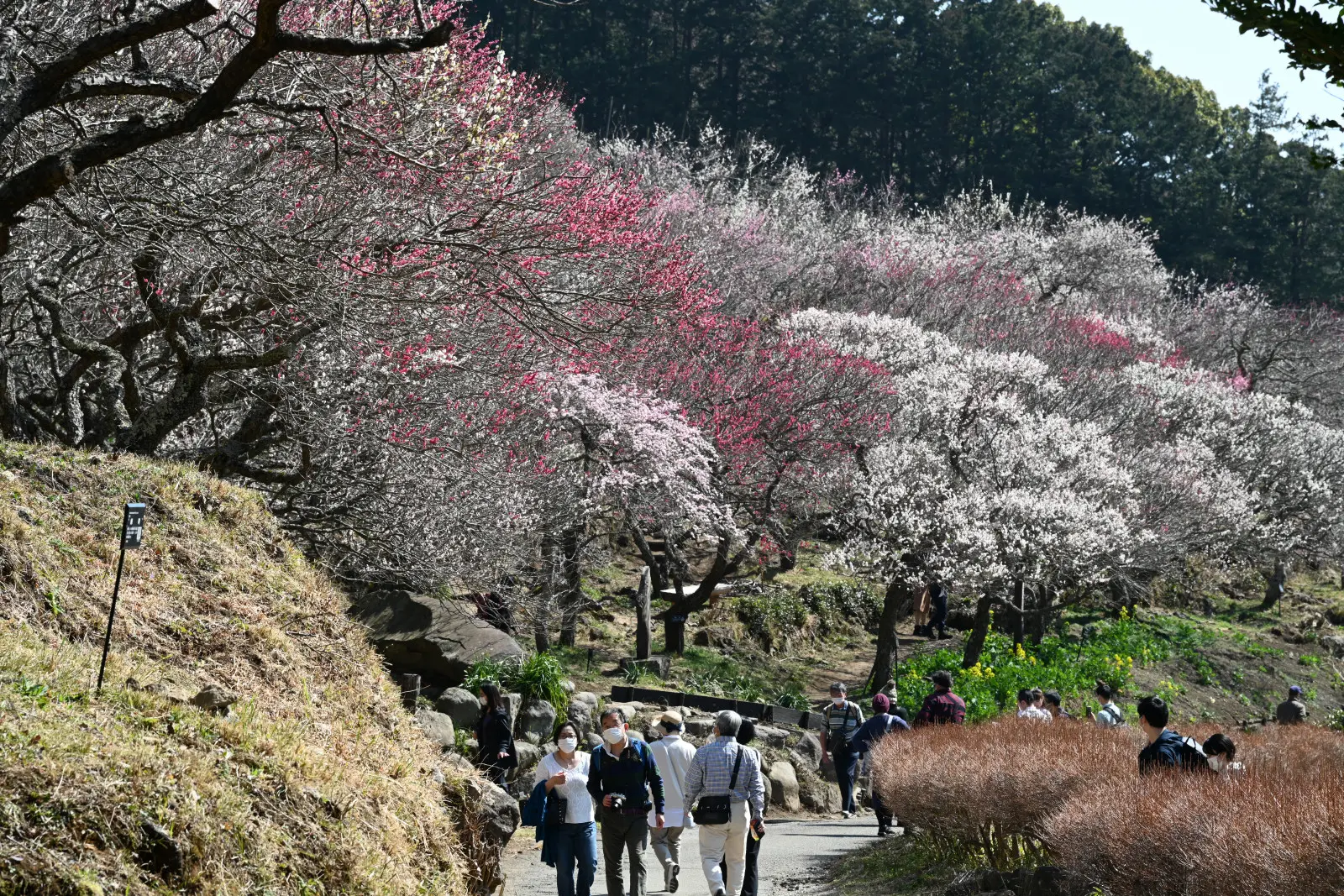
From February to early March, a plum blossom festival called Ume no Utage is held every year.
Approx. 4,000 red and white plum trees are planted in the Yugawara Plum Grove at Makuyama Park, reaching full bloom from late February to early March.
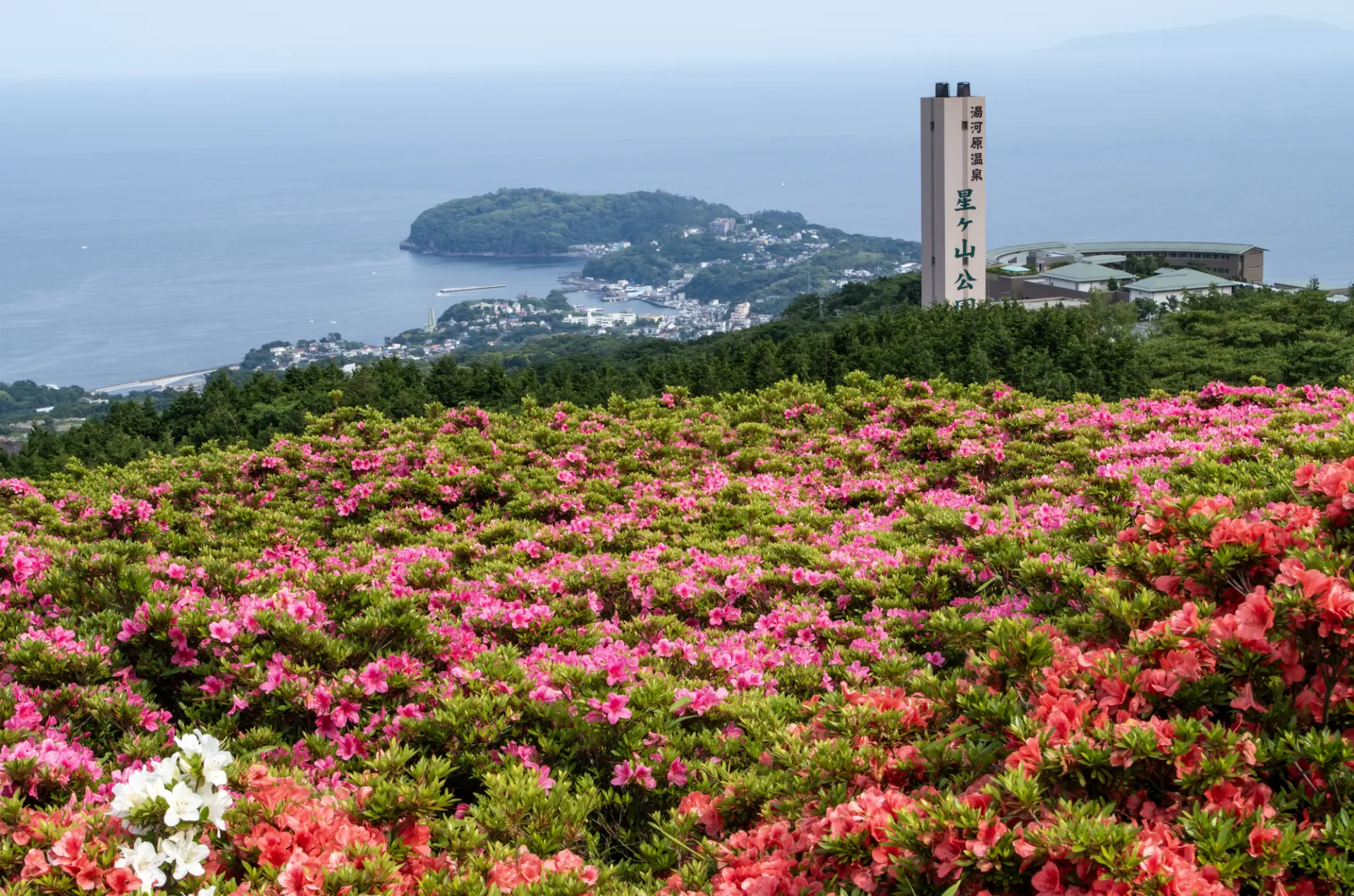
In late May, satsuki azaleas are at their best, and you can also enjoy fireflies
Satsuki no Sato in Hoshigayama Park, located in the northern part of Yugawara Town, is home to 50,000 satsuki azaleas, which reach their best from around early June.
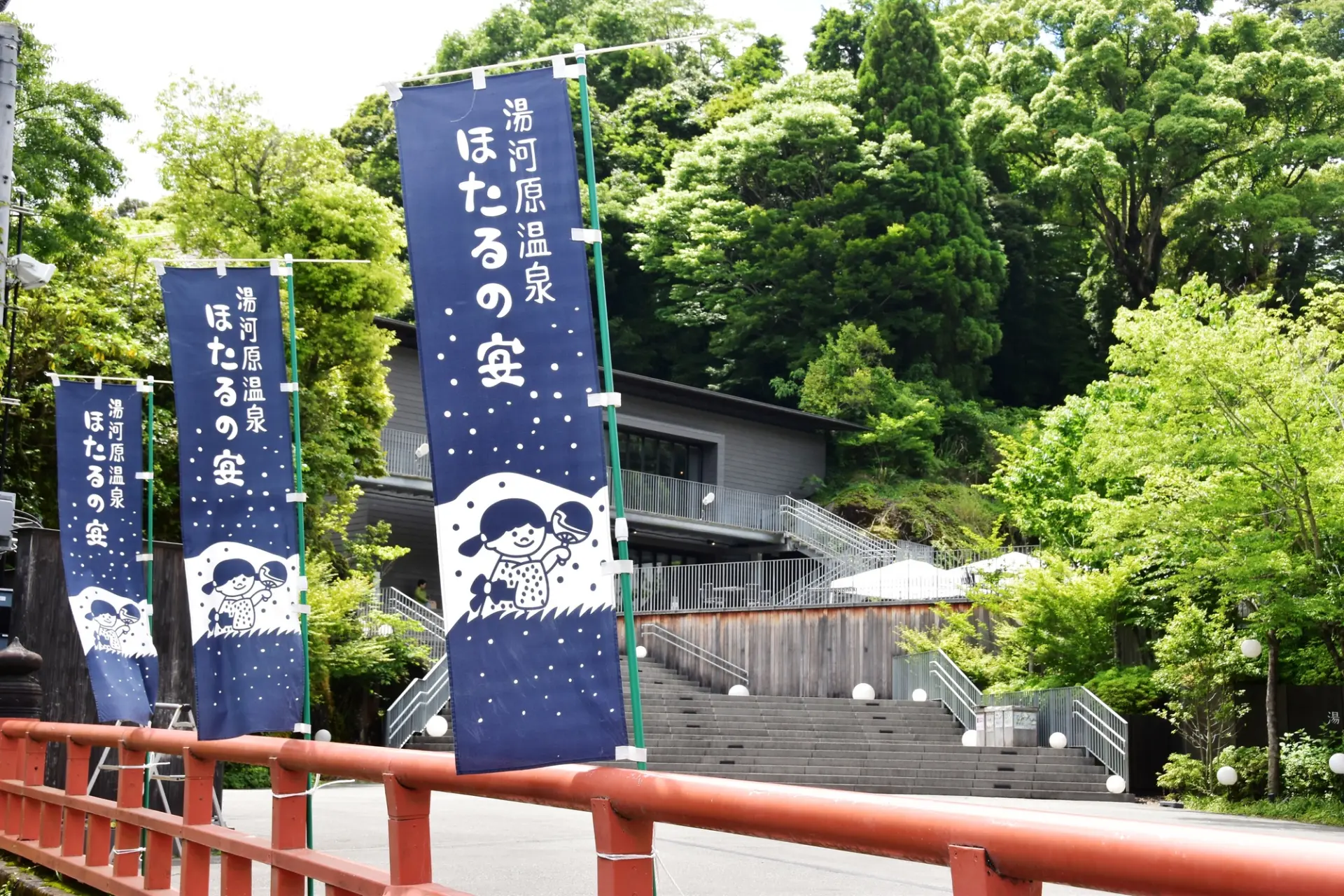
Also, for around one week in early June, an event called Hotaru no Utage is held in Manyo Park.
Yugawara still has an environment where fireflies can thrive, and they can be seen across a wide area, including along the Chitose River and the Fujiki River.
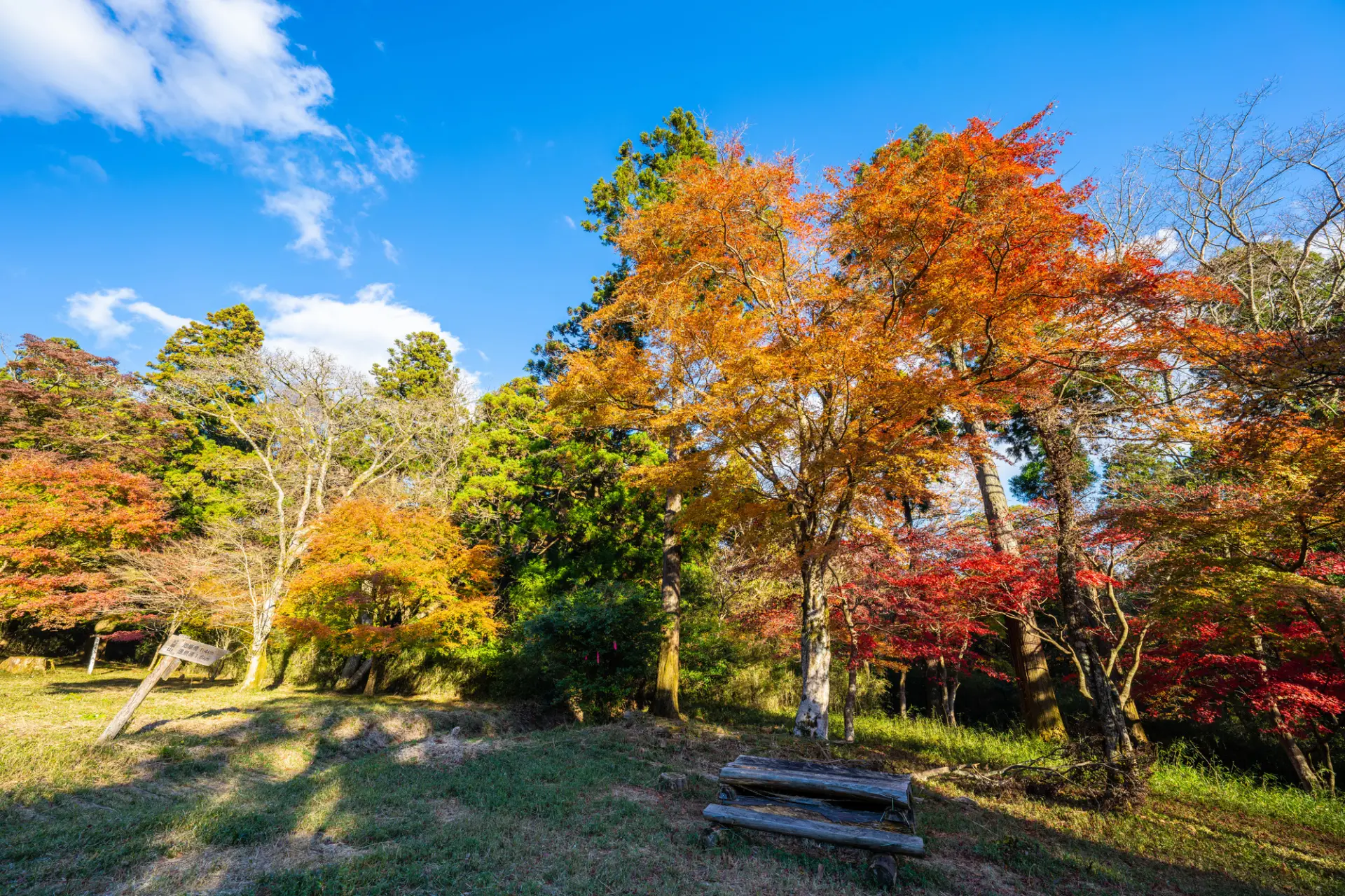
In autumn, go hiking to Ikemine Momiji no Sato
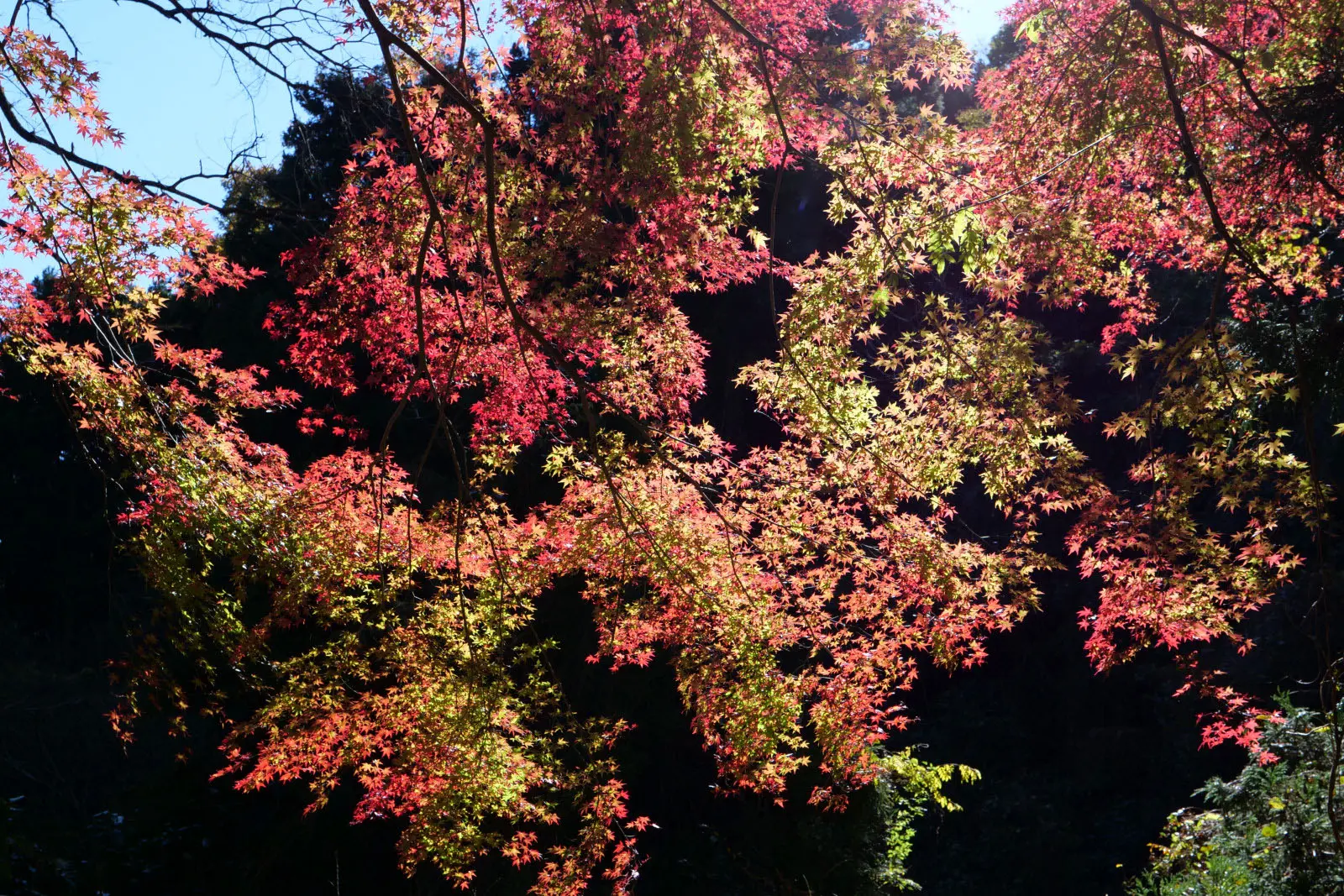
Autumn, along with spring, is one of the best seasons to visit for beautiful fall foliage.
Take a bus to Okuyugawara, walk down along the Fujiki River, then climb the mountain path a little past the hotel Seiranso and hike to Ikemine Momiji no Sato.
Even in midwinter, the cold is not too severe
Yugawara has a mild climate, and snow in winter is very rare.
If there is no wind and the sun is out, you can relax in the park, and even open-air baths are comfortable to enjoy.
5 Must-See Spots in Yugawara
In Yugawara, being active can be fun, but it is especially recommended to spend your time slowly in scenic spots.
1. Manyo Park, Yugawara Soyu Books & Retreat
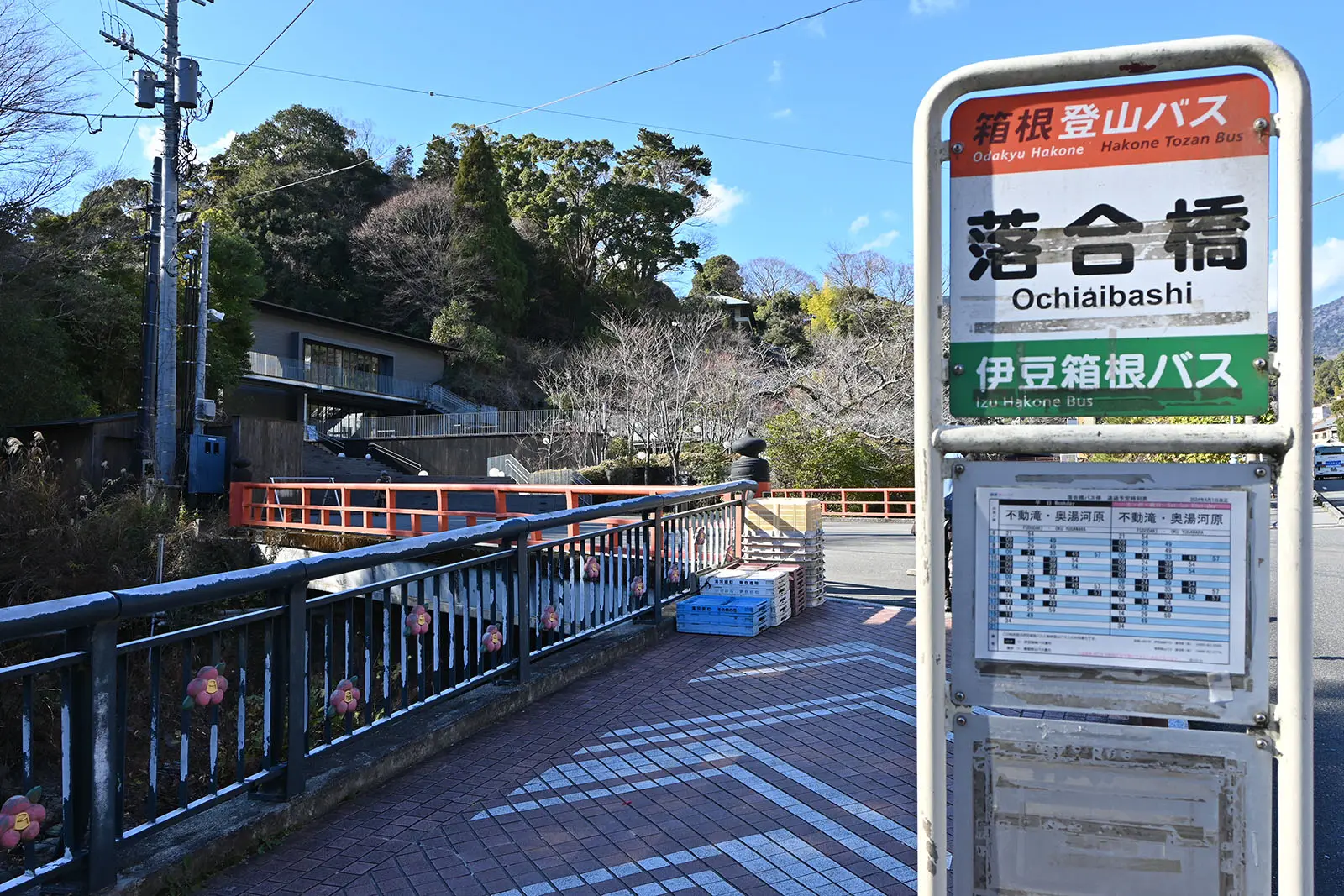
This historic park was selected as one of Japan’s 100 Historical Parks, and the nearest bus stop is Ochiaibashi.
It was fully renovated in 2021, and Yugawara Soyu Books & Retreat opened there.
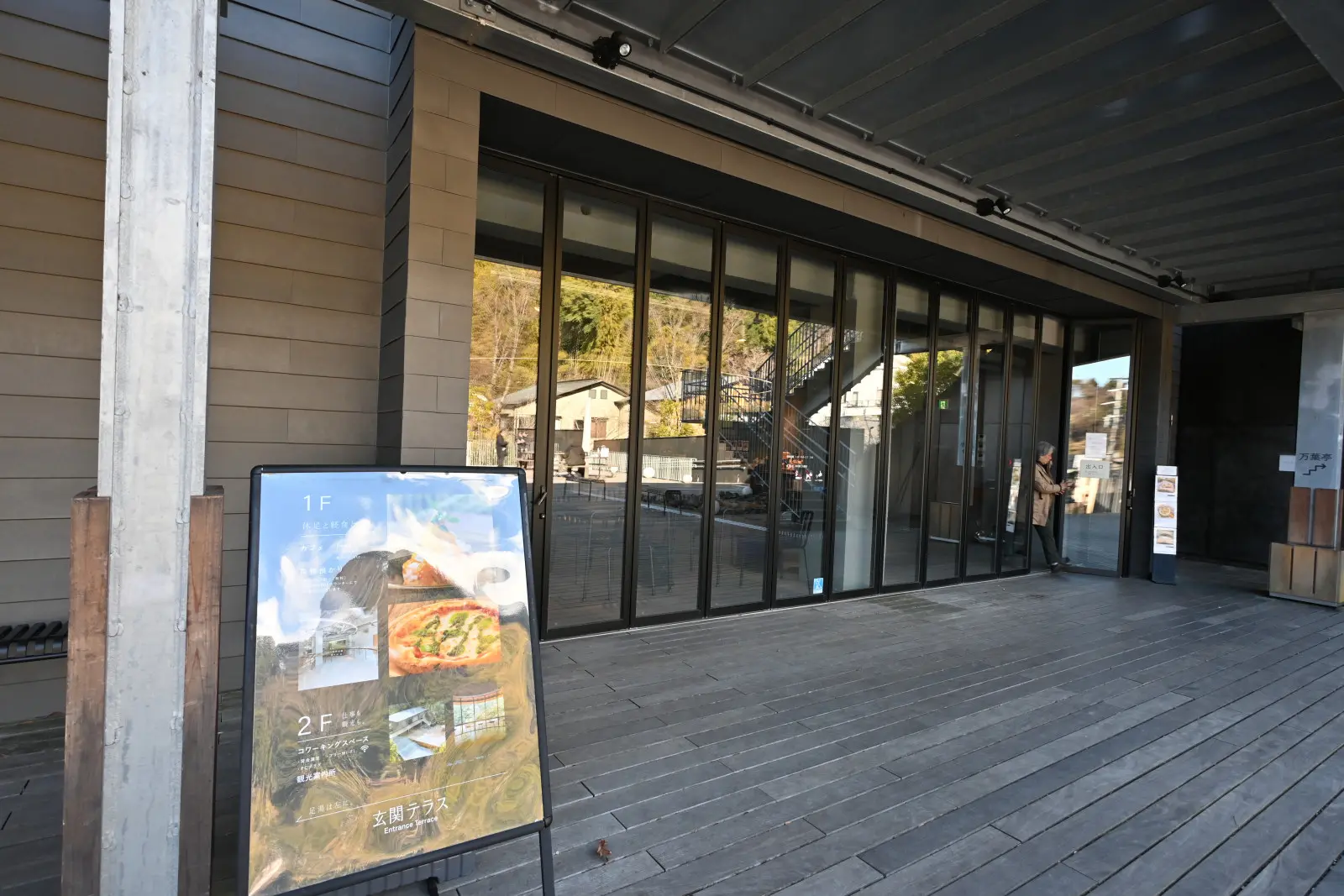
At the park entrance is Genkan Terrace, which has a tourist information center, cafe, and coworking space.
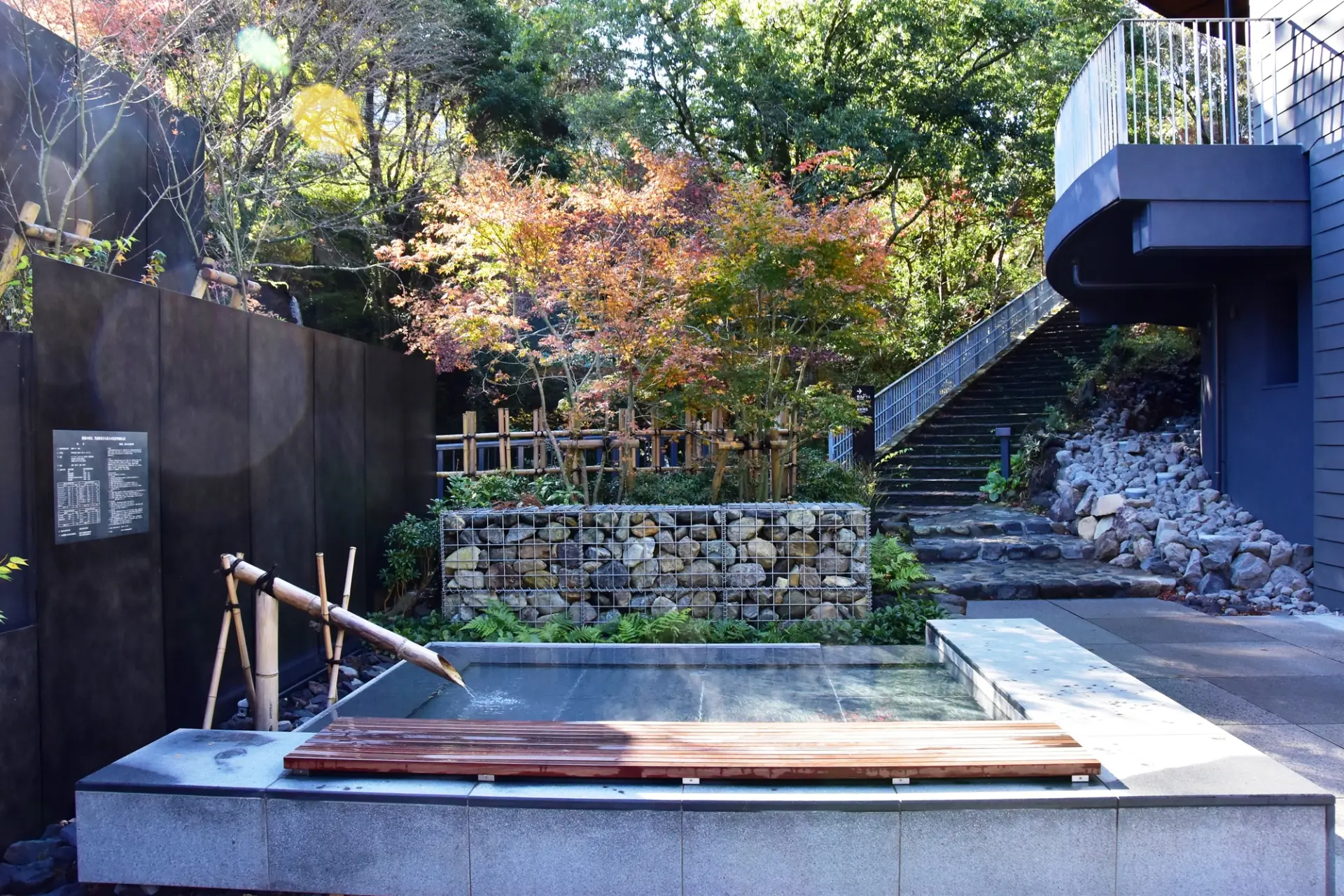
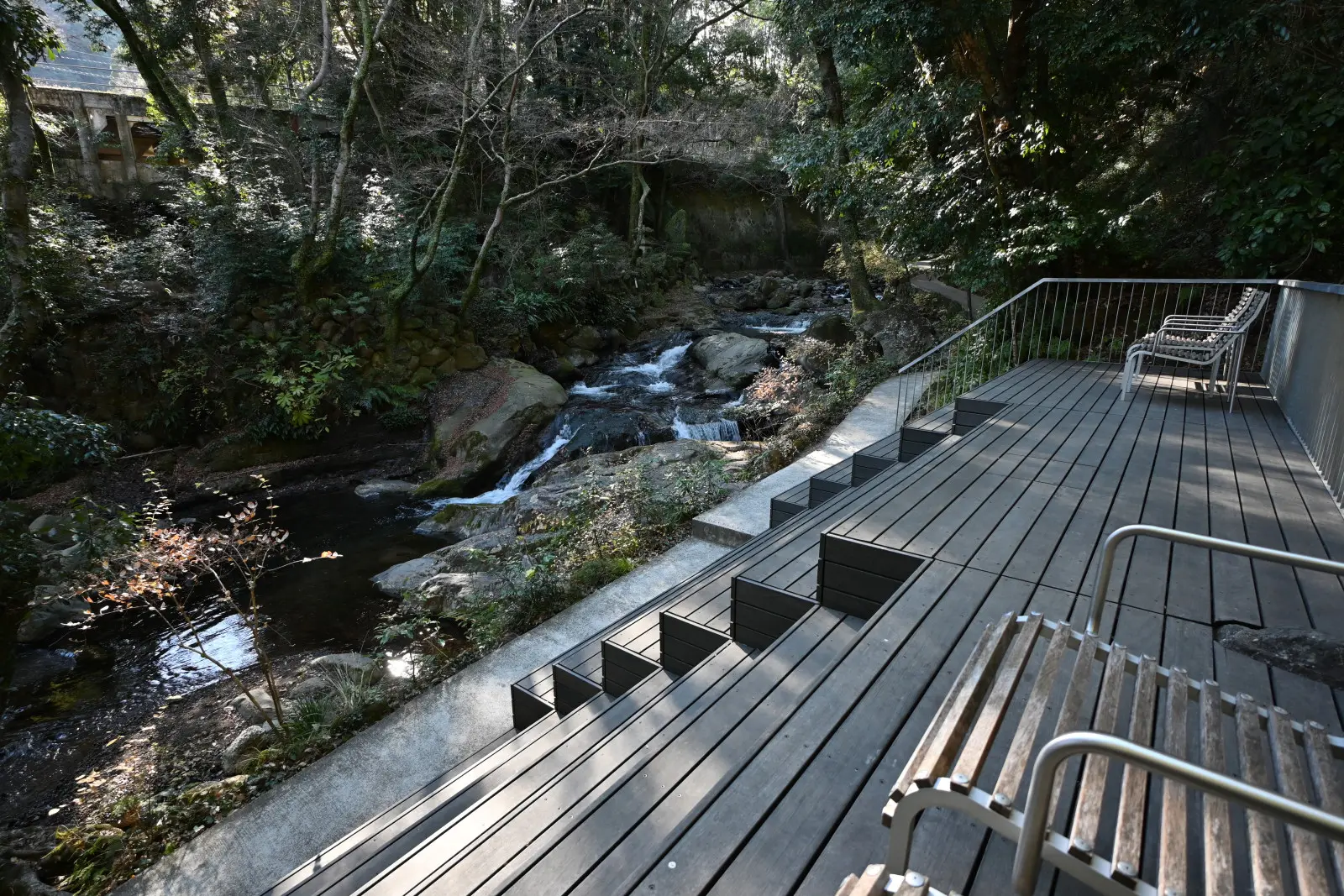
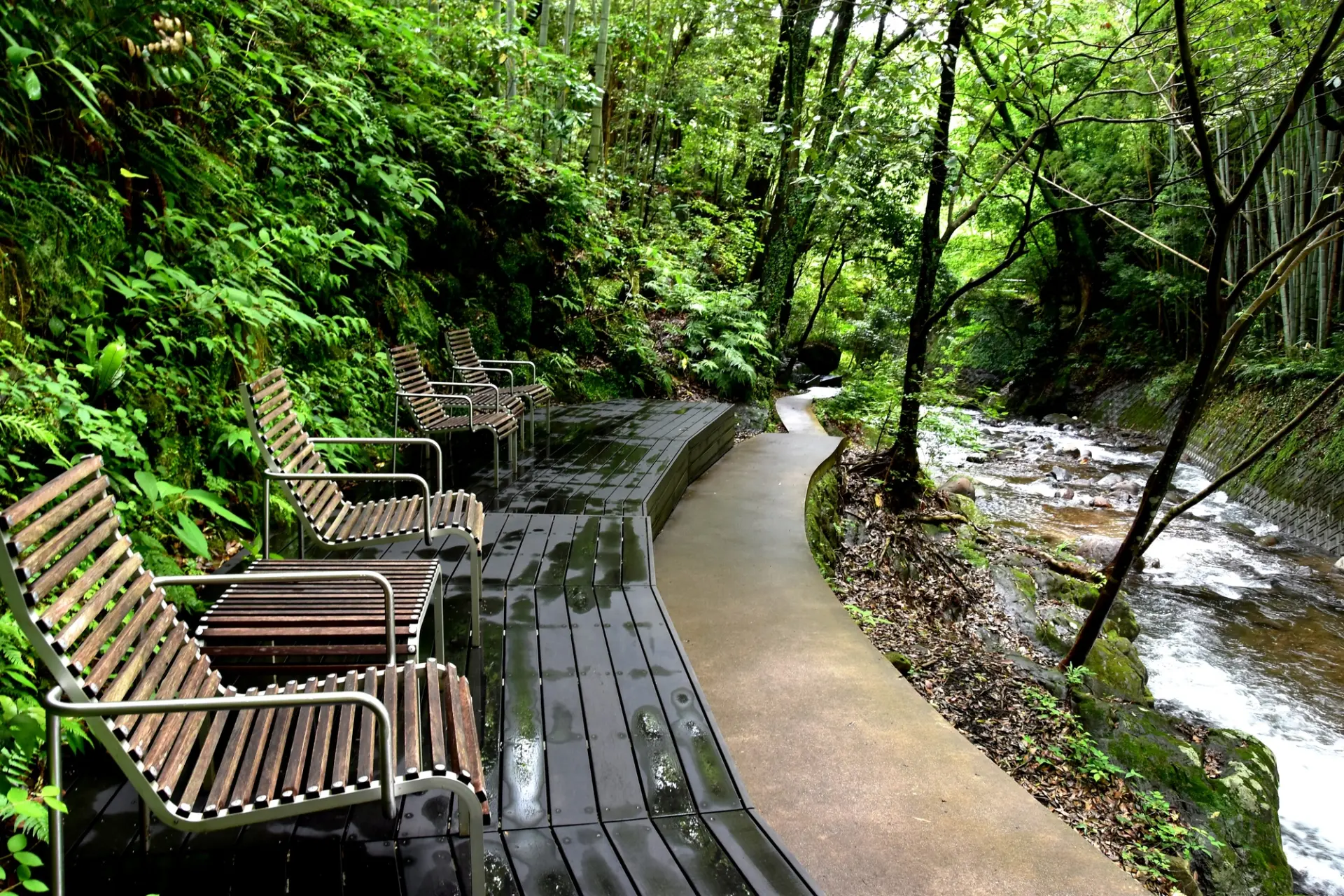
There are walking paths in the park, and the riverside path has wooden decks and benches.
At Manyo Park, it is nice to enjoy a walk together with some reading.
You can also bring in drinks and light meals from Genkan Terrace on the tray and relax while looking out at the river.
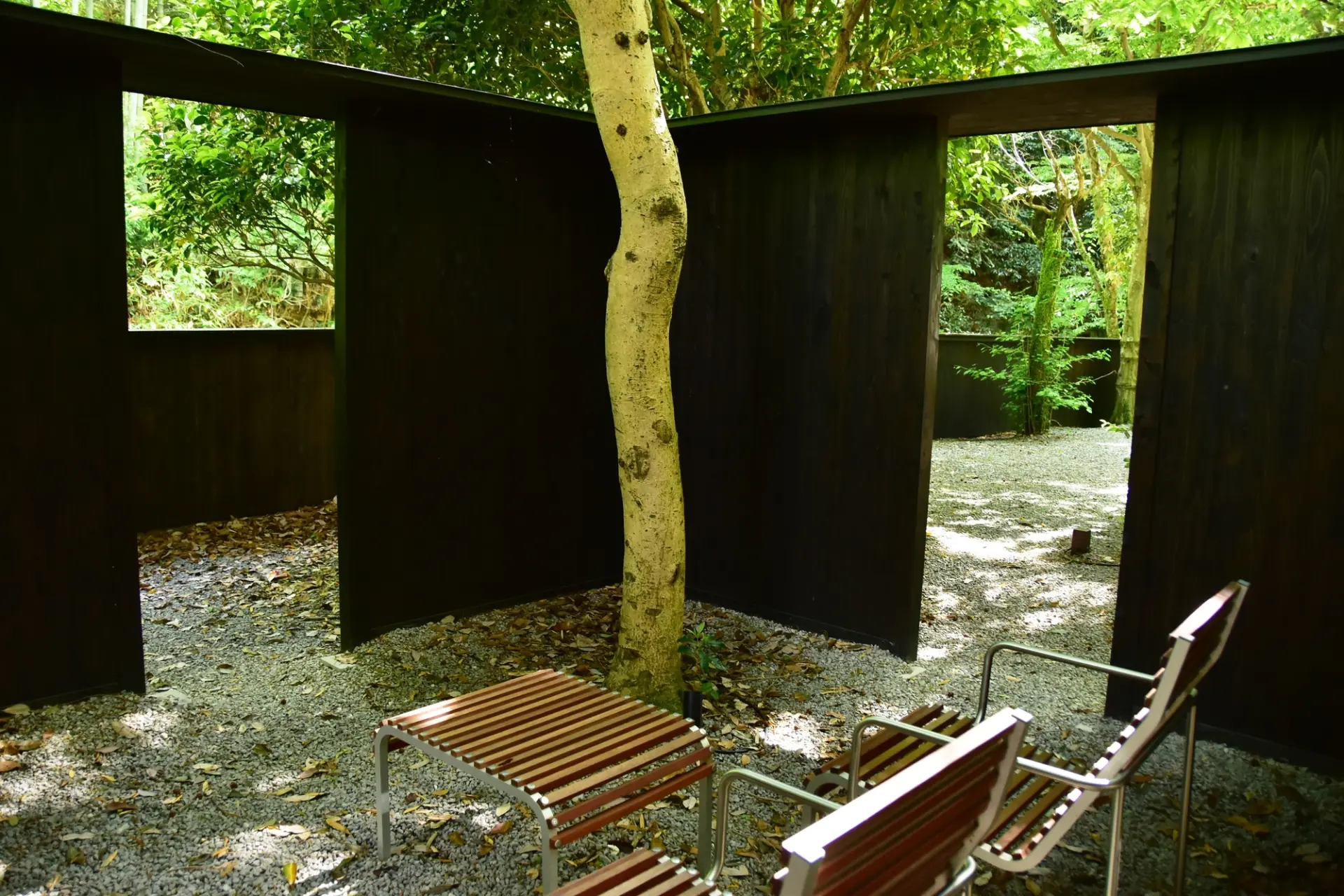
Deeper in the park, there are gazebos where you can stay almost like in a private room, as well as the fully reservation-only hot spring facility Soyu Terrace (scheduled to reopen in spring to summer 2026).
2. Makuyama Park (Yugawara Plum Grove)
This park spreads out at the foot of 626-meter Mount Makuyama, where as many as 4,000 plum trees bloom from February to early March.
During this season, the park becomes the venue for Ume no Utage, with stalls selling local Yugawara products and souvenirs.
Many events are held on Saturdays, Sundays, and holidays during the festival period, and direct buses run from Yugawara Station.
In 2026, it will be held from February 7 to March 8, with admission at 300 yen. Guests staying in Yugawara Town can enter free of charge.
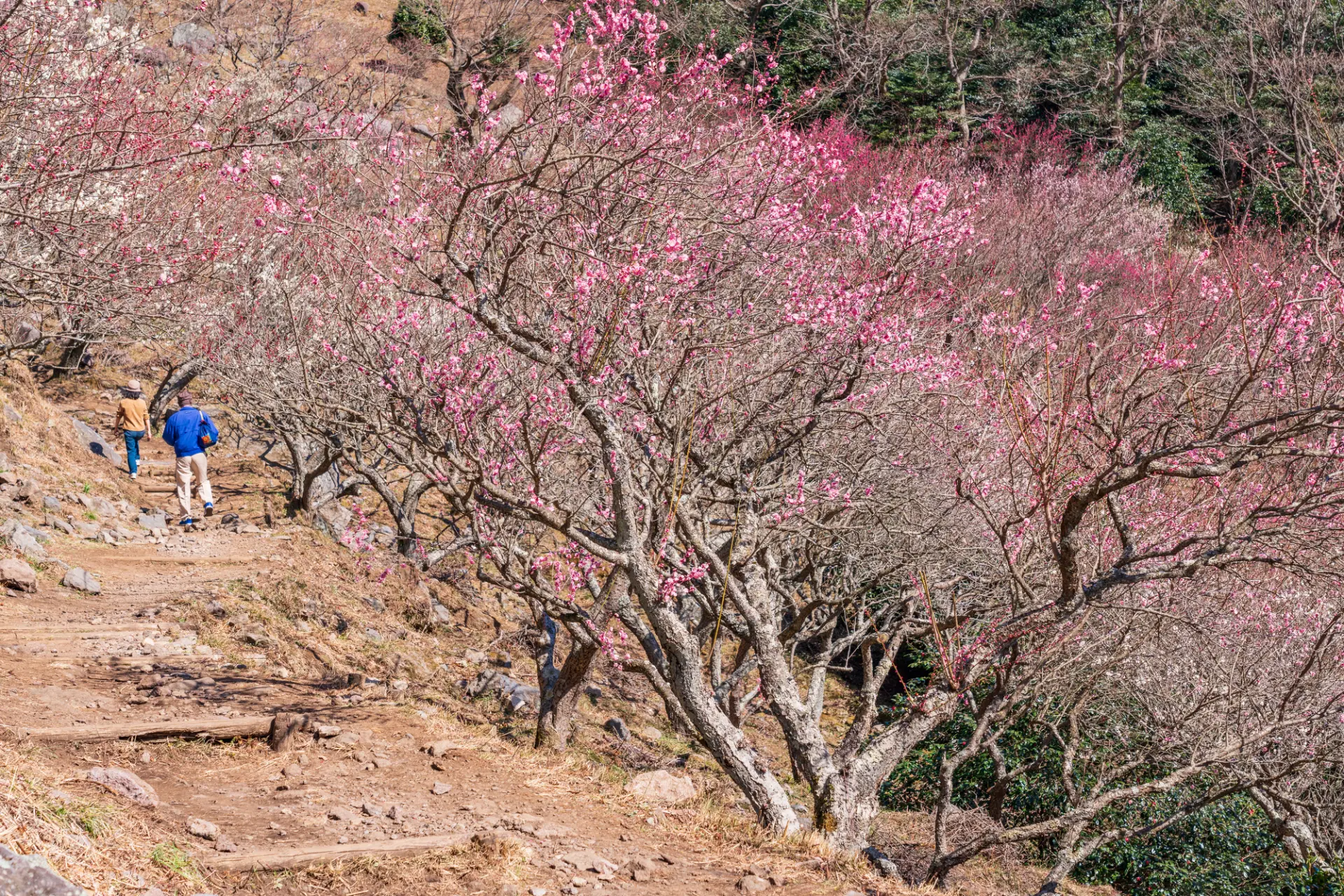
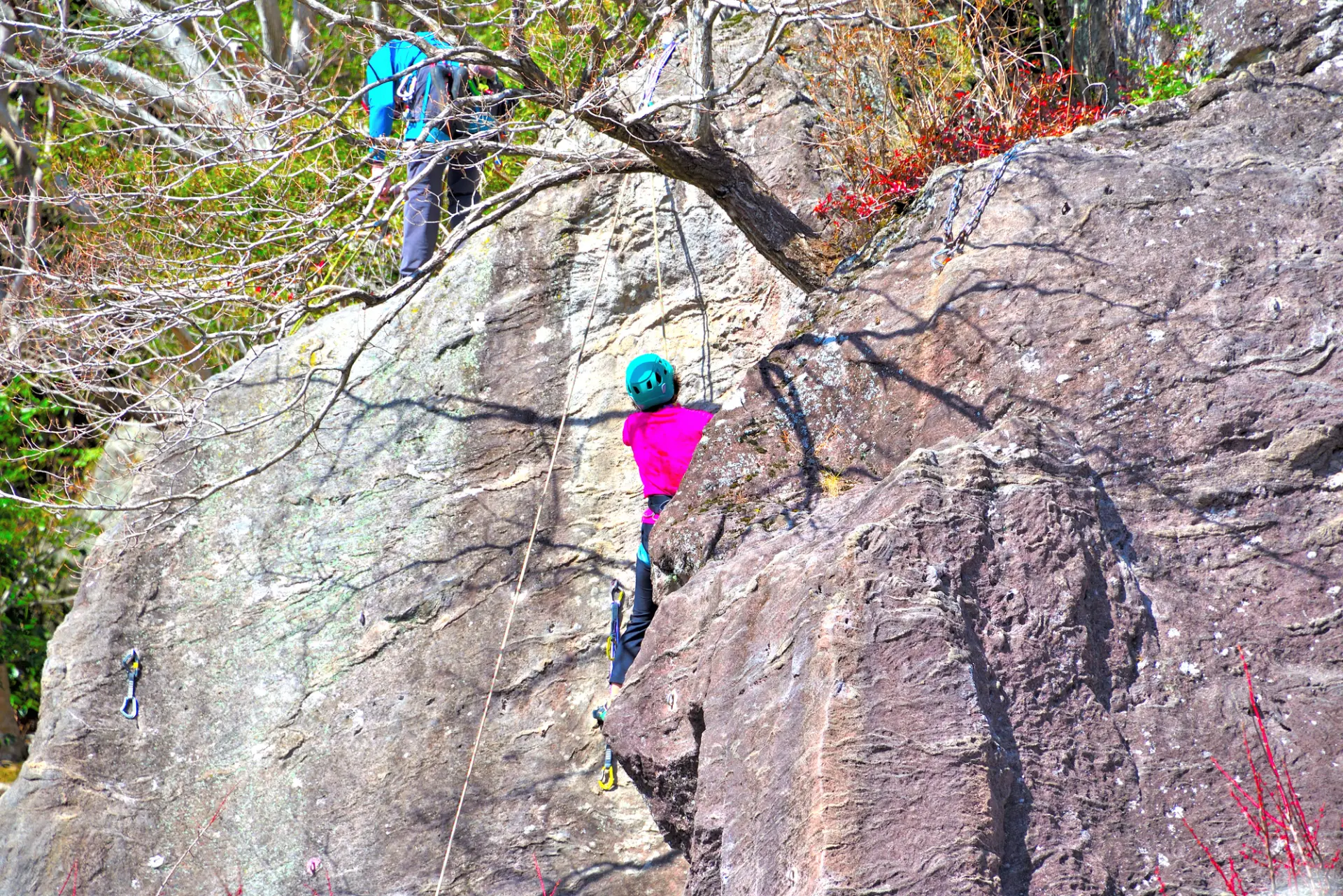
Mount Makuyama was formed by volcanic activity, and its rocky surface shows columnar joints created as magma cooled.
You can also see people enjoying rock climbing on the cliffs, making this a park that can be enjoyed actively throughout the year.
3. Fudo Falls
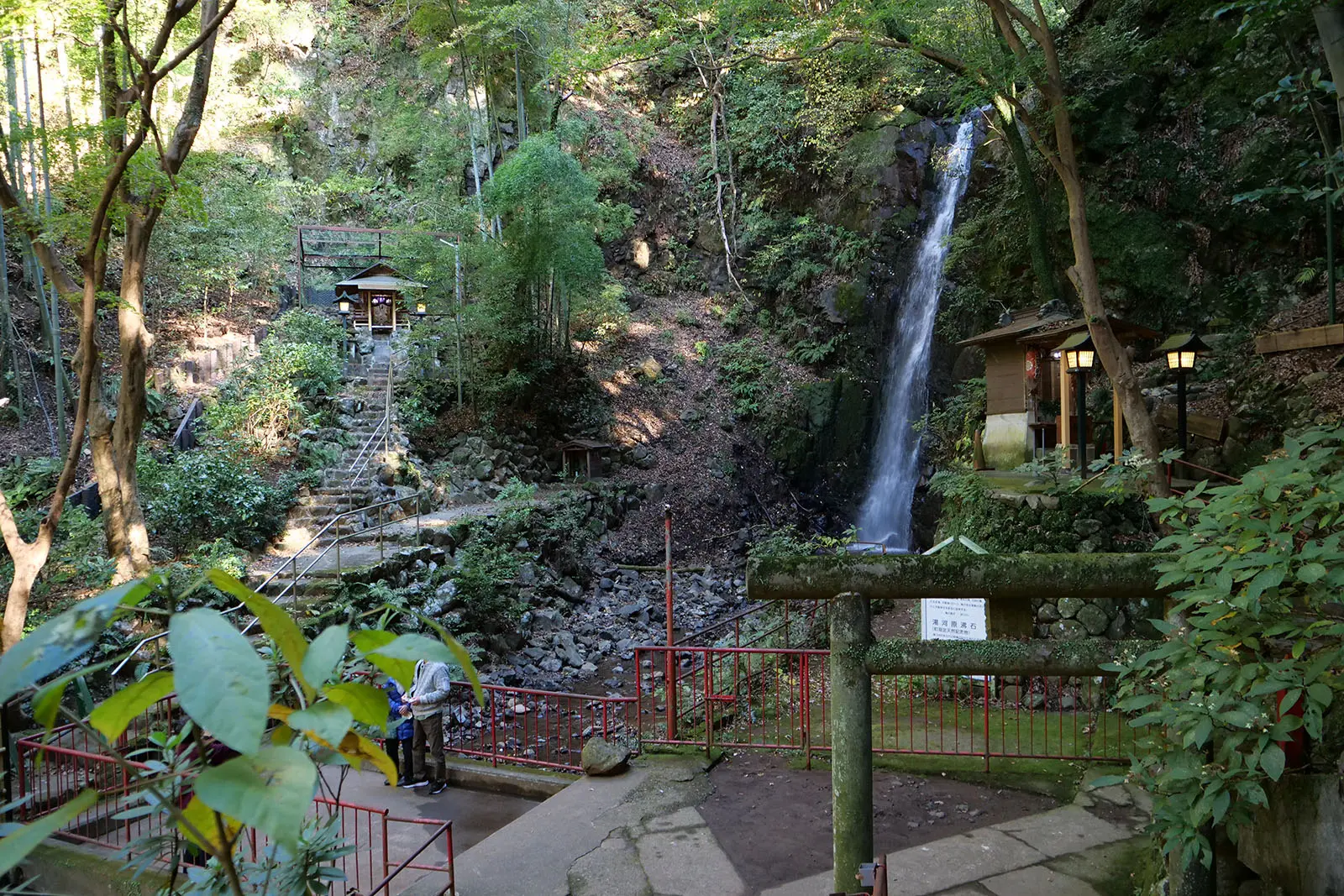
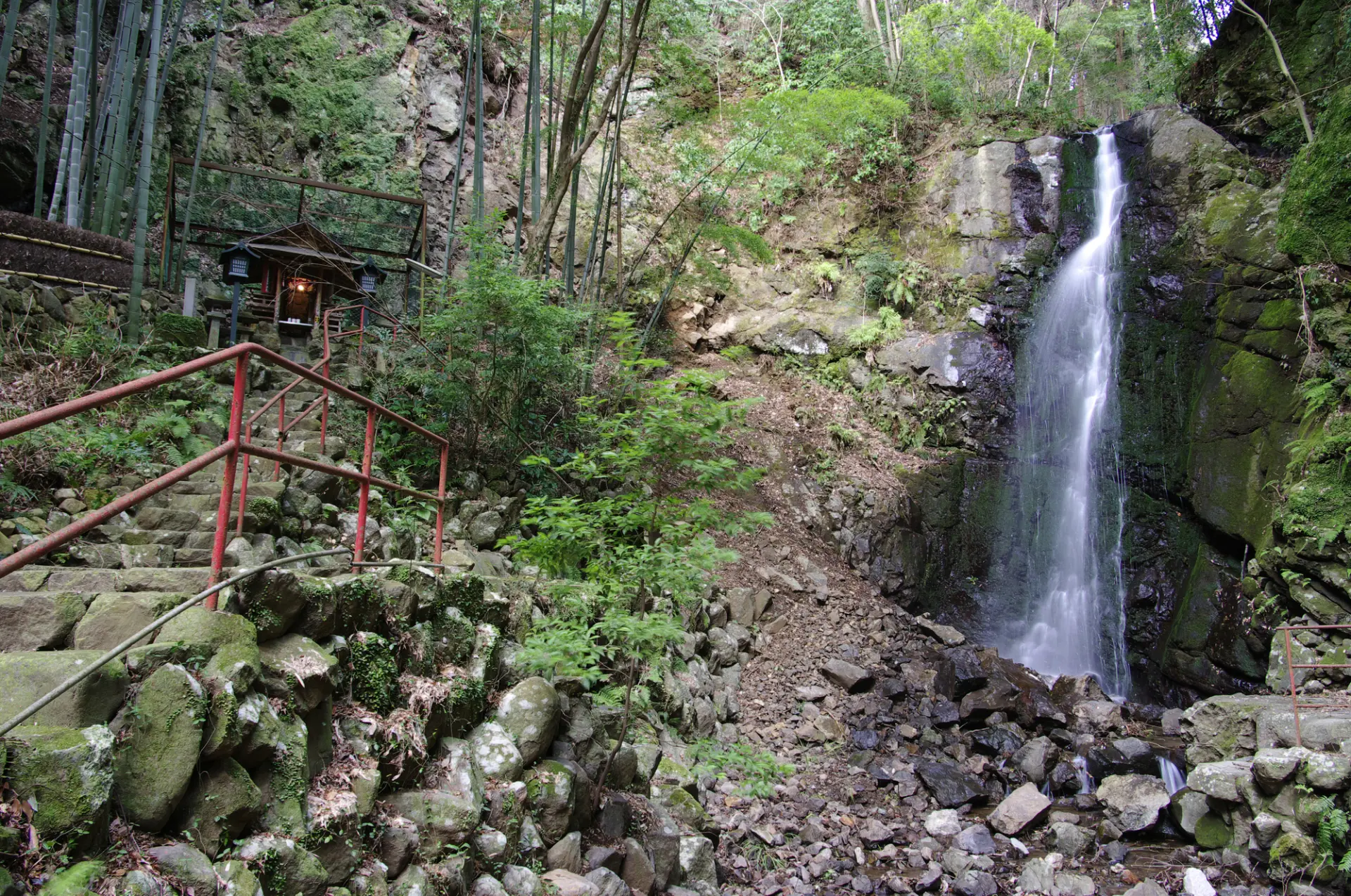
This 15-meter waterfall appears in Natsume Soseki’s unfinished novel Meian.
A mineral called Yugawara zeolite, designated as a natural monument of the town, was discovered around the waterfall basin.
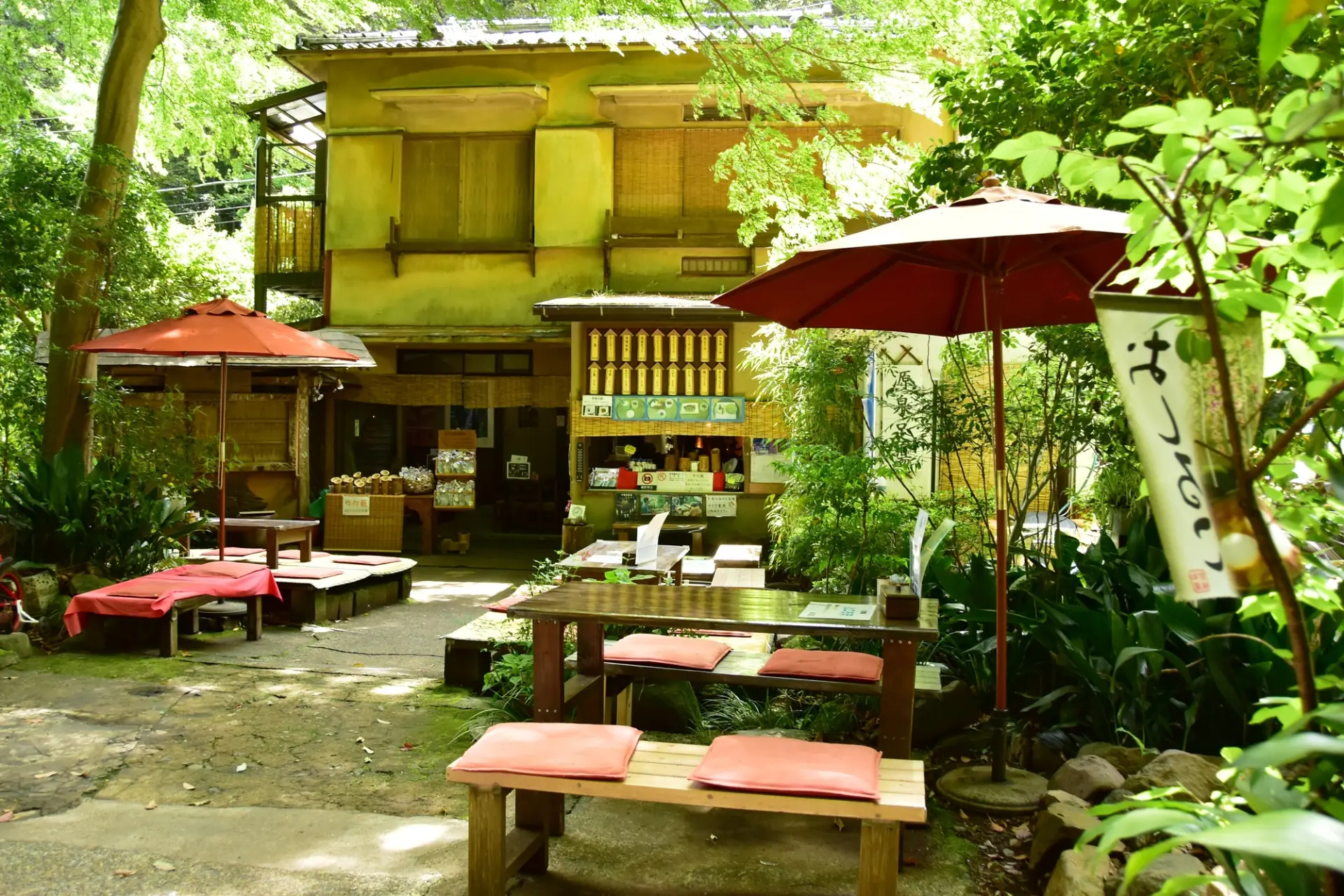
There is also a teahouse in front of the falls, where you can take a break with drinks and light snacks.
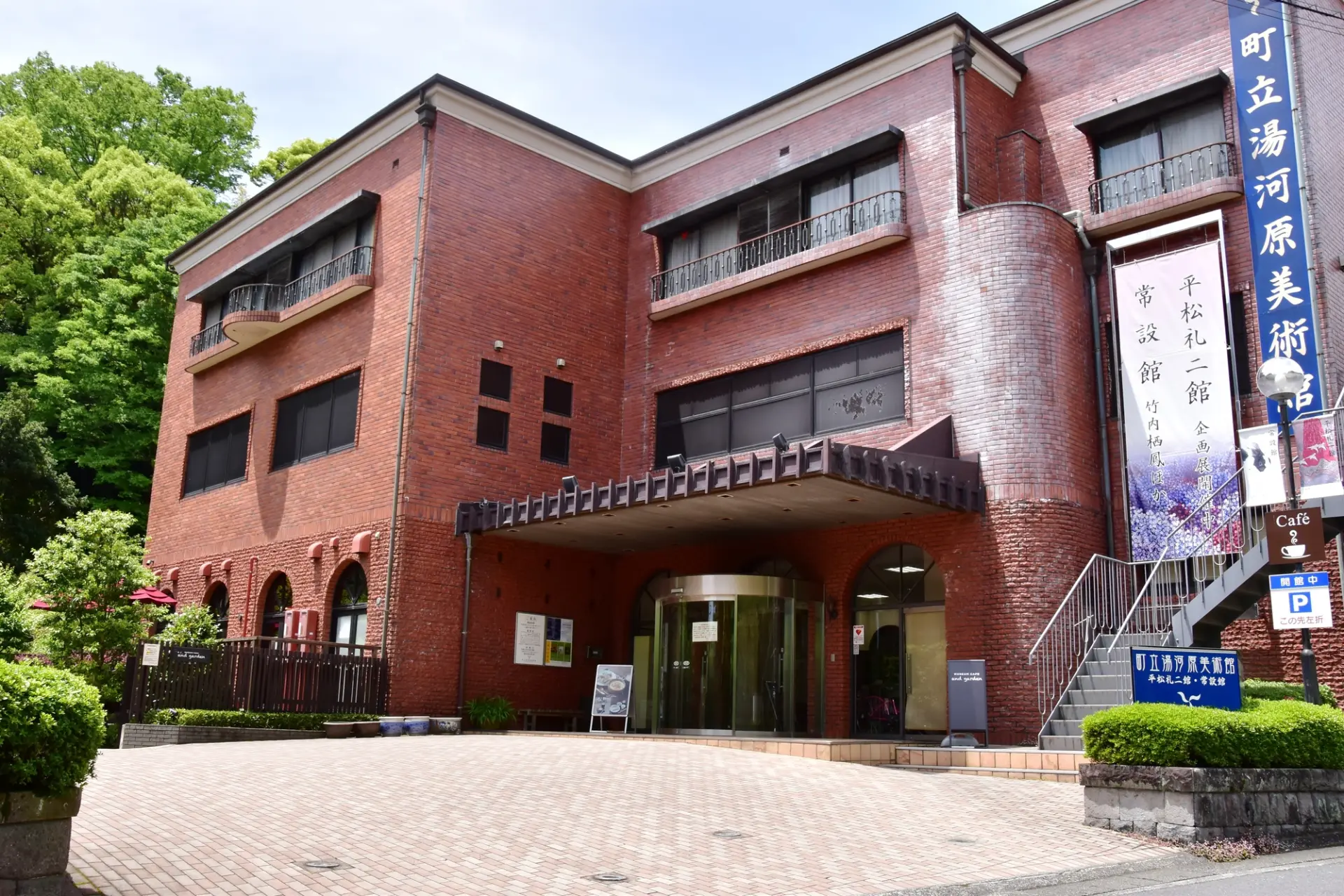
4. Yugawara Art Museum
This museum opened after renovating the building of the long-established ryokan Amanoya, where Natsume Soseki once stayed.
It exhibits works by artists connected to Yugawara, including Takeuchi Seiho, Yasui Sotaro, and Yabe Tomoe, as well as contemporary Japanese painter Hiramatsu Reiji, with exhibitions changing every three months.
5. Kogome no Yu
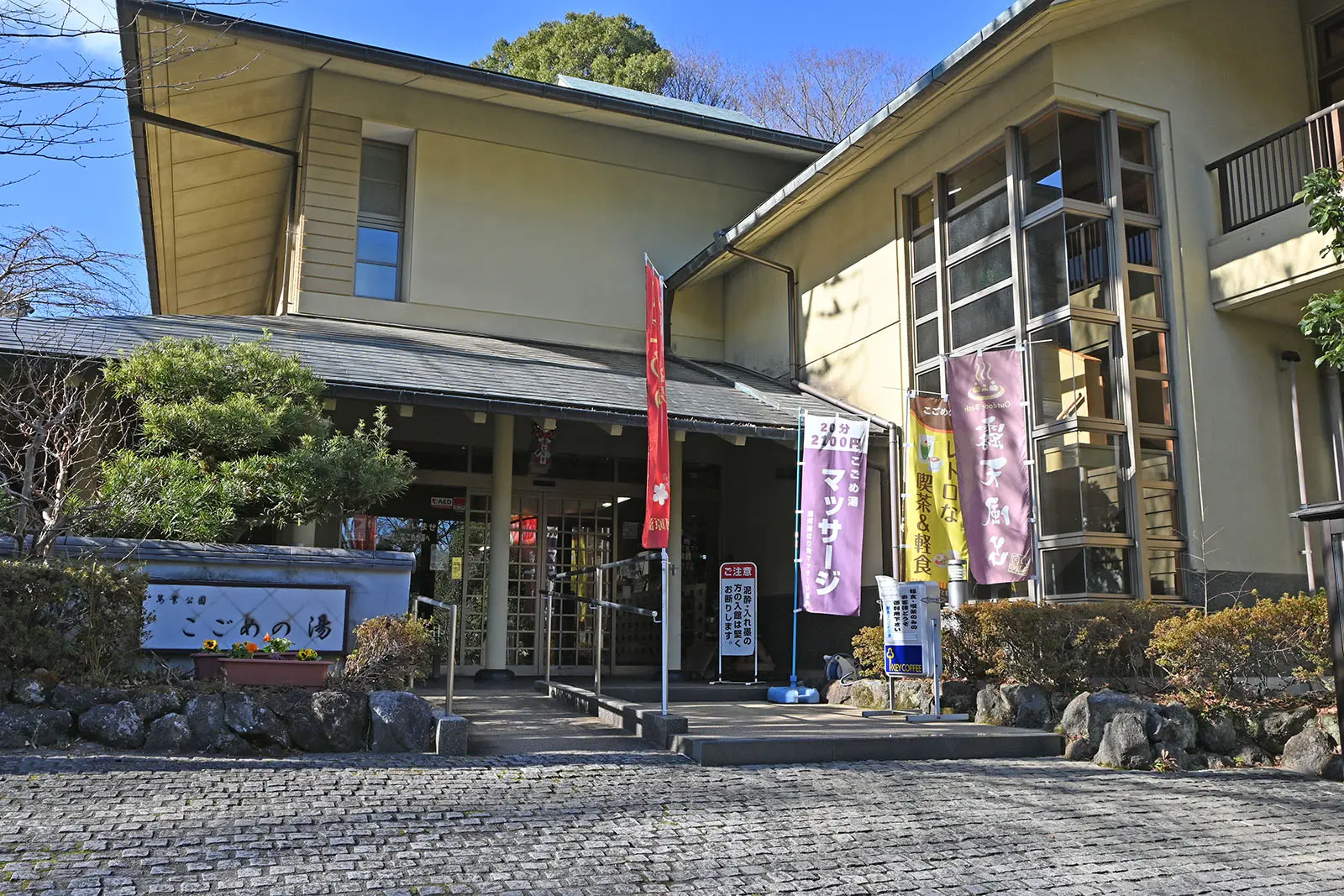
This town-run hot spring facility is located very close to Manyo Park, making it a perfect stop after a stroll through the park.
No reservation is required, and it has a tatami rest area and a cafe where you can also have a meal.
Worth Coming from Tokyo For! 5 Recommended Gourmet Spots in Yugawara
Yugawara is home to many excellent restaurants, making it a place worth visiting just for the food.
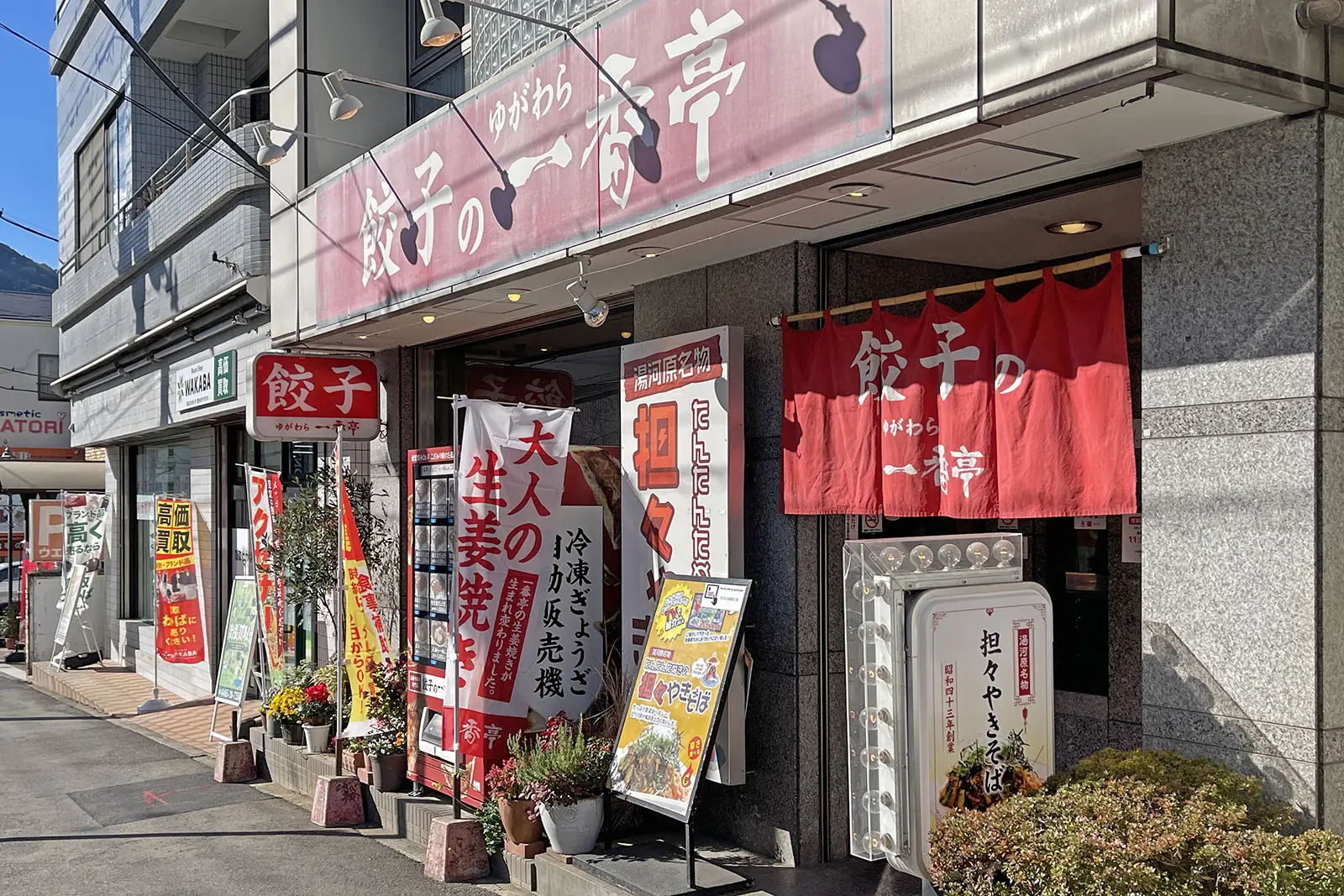
There are also recommended spots within a 10-minute walk of JR Yugawara Station, so you might want to have a light breakfast and enjoy an early lunch as soon as you arrive.
1. Gyoza no Ichibantei Yugawara Branch
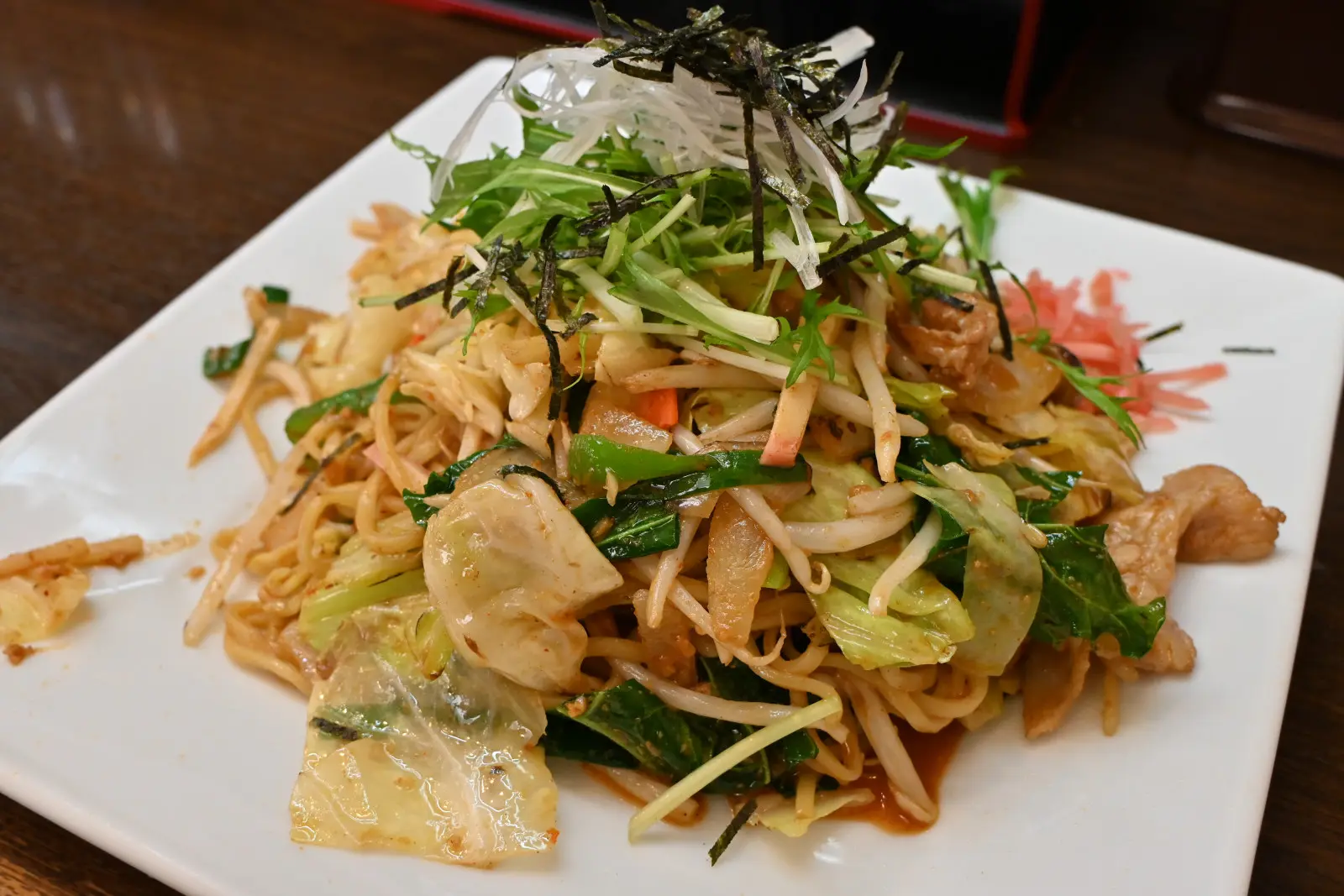
This Chinese restaurant near Yugawara Station is known for one of Yugawara’s soul foods, tantan yakisoba, which is one of its most popular dishes.
Tantan yakisoba is a spicy fried noodle dish made with ingredients such as sesame paste and doubanjiang, and each restaurant serves its own take on it.
At Gyoza no Ichibantei, you can choose the spice level, but even the standard version without extra heat has a distinctly spicy finish.
2. Shiawase Chuka Soba Shokudo Nikori
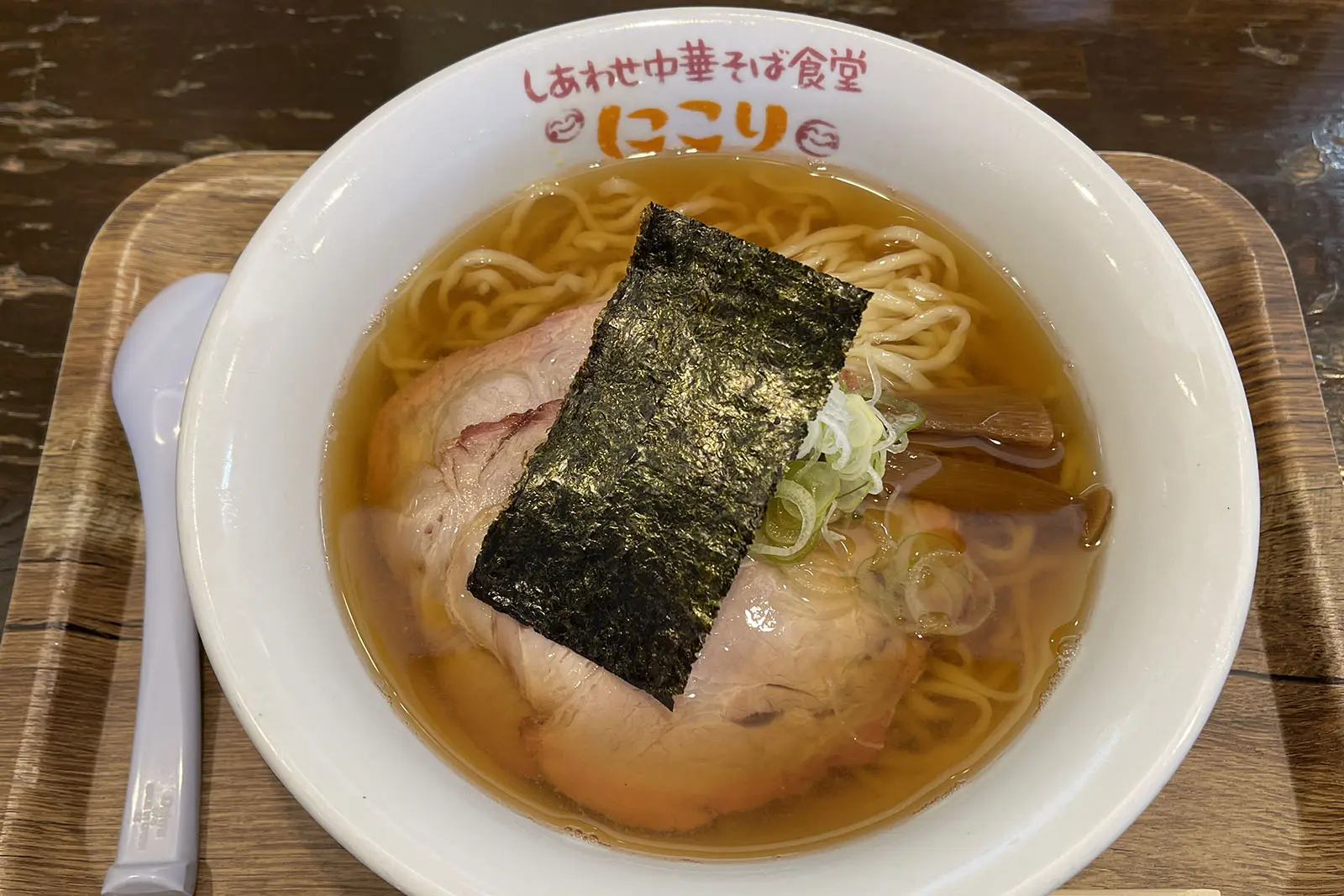
A sister restaurant of the famous ramen shop Iida Shoten, this spot serves ramen made only with carefully selected ingredients and no artificial seasonings at all.
The soup, stripped of excess fat, is beautifully clear. It may look light at first, but the rich broth delivers deep umami.
In addition to ramen made with back fat from the premium pork brand TOKYO X, as well as tantanmen and tsukesoba, Iida no Curry is also a popular menu item.
*Temporarily closed from January 25, 2026. Planned to reopen after renovation.
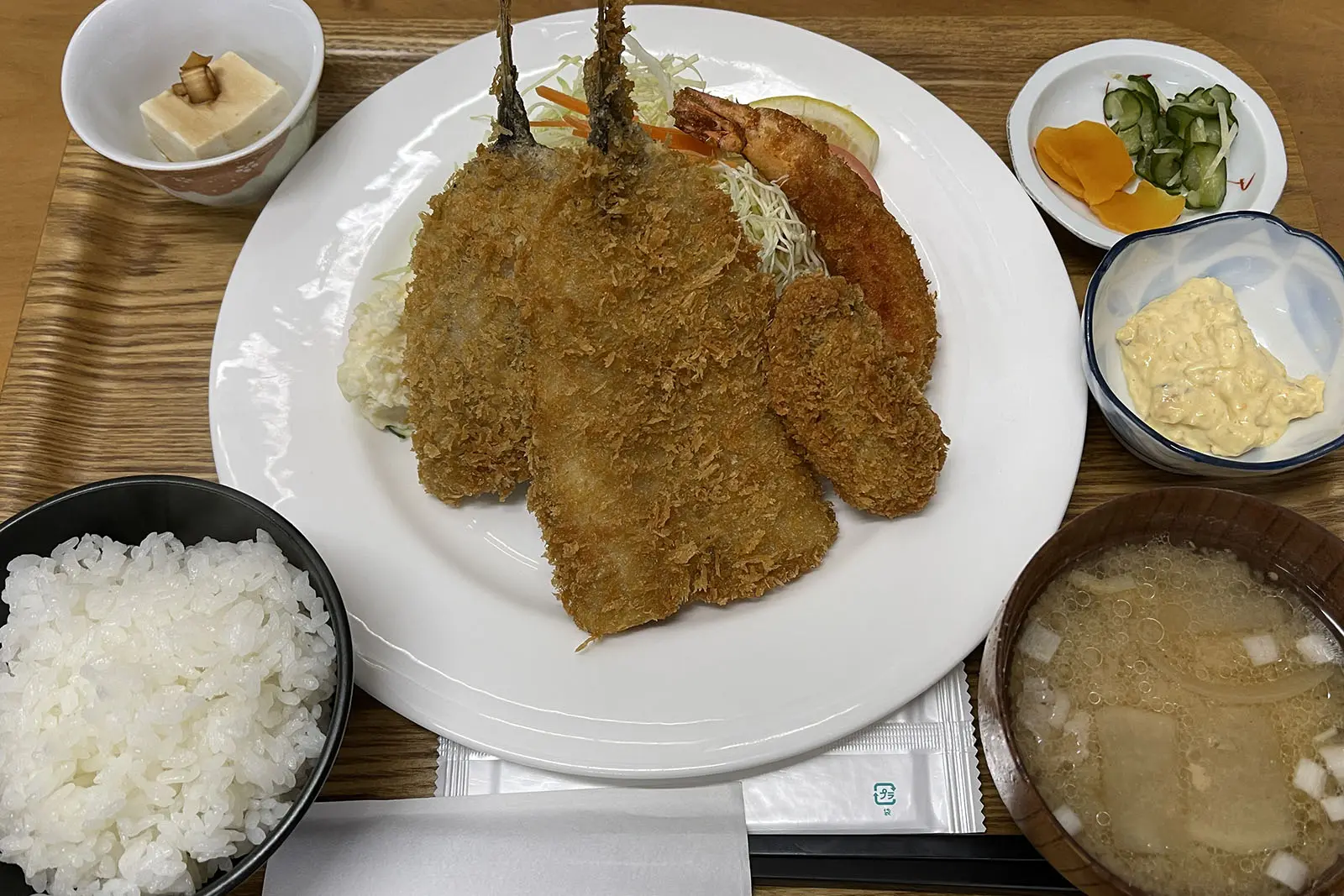
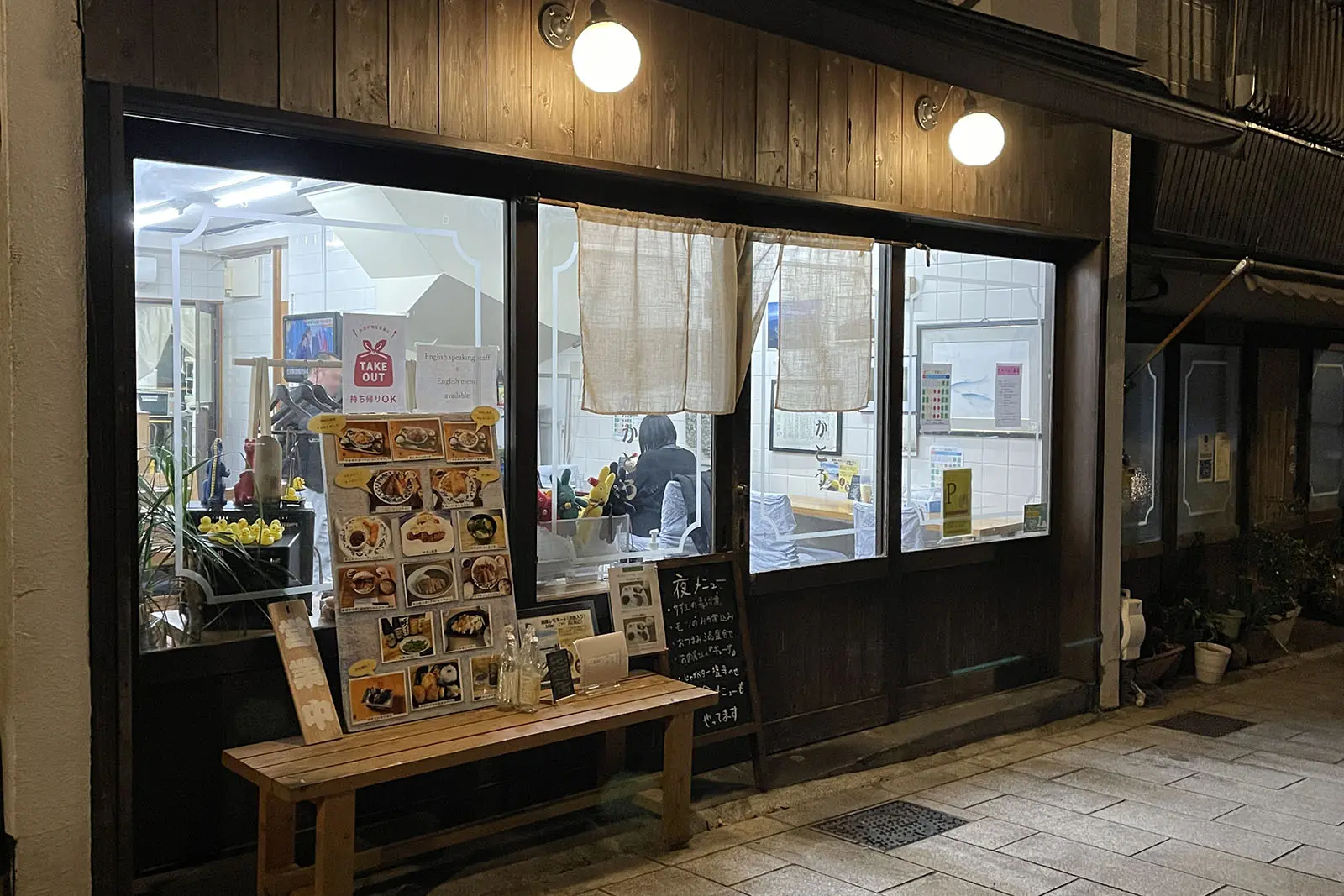
3. Shokujidokoro Kato
Located on Yumoto-dori in the center of the hot spring town, this restaurant is run by a butcher shop (closed Wednesdays and Thursdays).
Both the meat and fish dishes are well regarded, and you can also order a la carte items.
Dinner service is only available on weekends from Friday to Sunday, so check the opening days if you plan to visit in the evening.
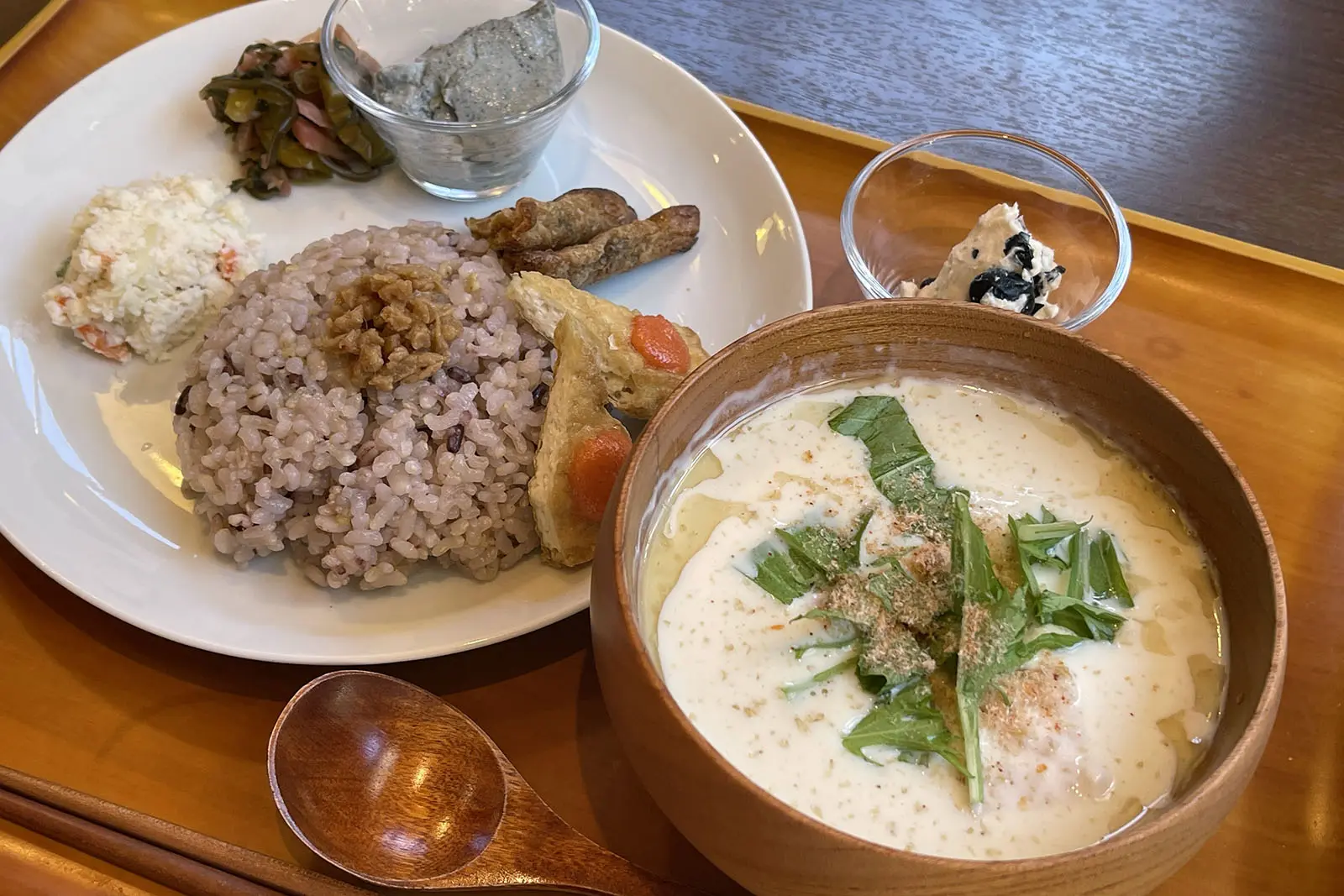
4. MUSEUM CAFE and garden
Located on the first floor of the Yugawara Art Museum, this cafe offers a menu produced by the well-known local tofu shop Junian.
The menu features dishes that let you fully appreciate the flavor of beans in ways you would not find at other cafes.
The cafe also regularly hosts events exhibiting and selling works by artists active in Yugawara and the Tokyo metropolitan area.
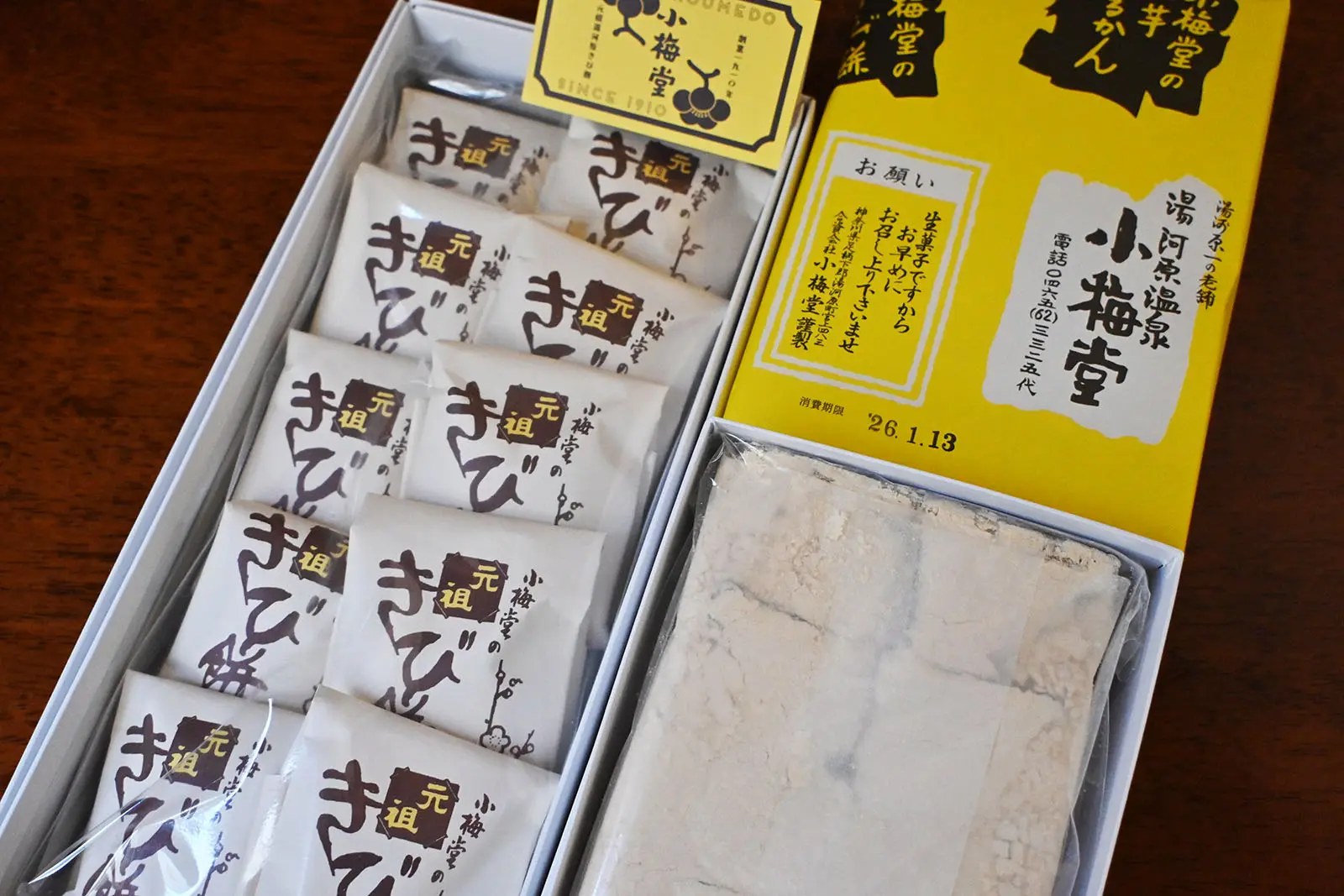
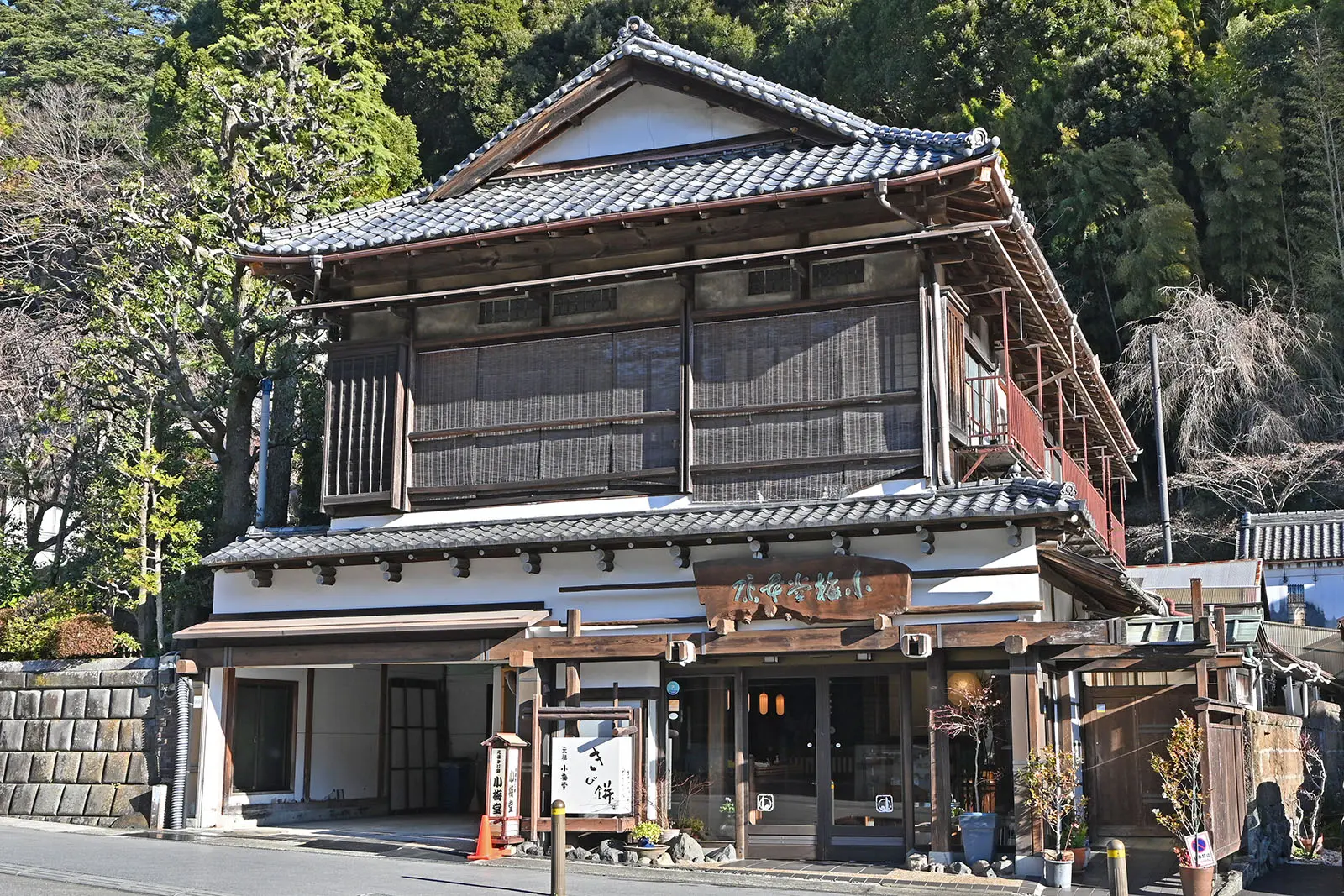
5. Komedo
This Japanese sweets shop, founded in 1910, stands right near the Park Entrance bus stop.
It is the original shop for Yugawara’s specialty kibimochi, and it still carefully follows the traditional recipe today.
Some items sell out by late afternoon, so it is best to visit earlier in the day.
Famous for Free-Flowing Spring Water and Open-Air Baths! 5 Recommended Places to Stay in Yugawara
Some inns even have their own private hot spring sources, and there are so many places to stay that it can be hard to choose.
As a convenient sightseeing base, inns located between the Mitsukecho and Bijutsukan-mae bus stops are recommended.
If you are interested in architecture, choose a long-established inn with Meiji- or Taisho-era buildings registered as Tangible Cultural Properties.
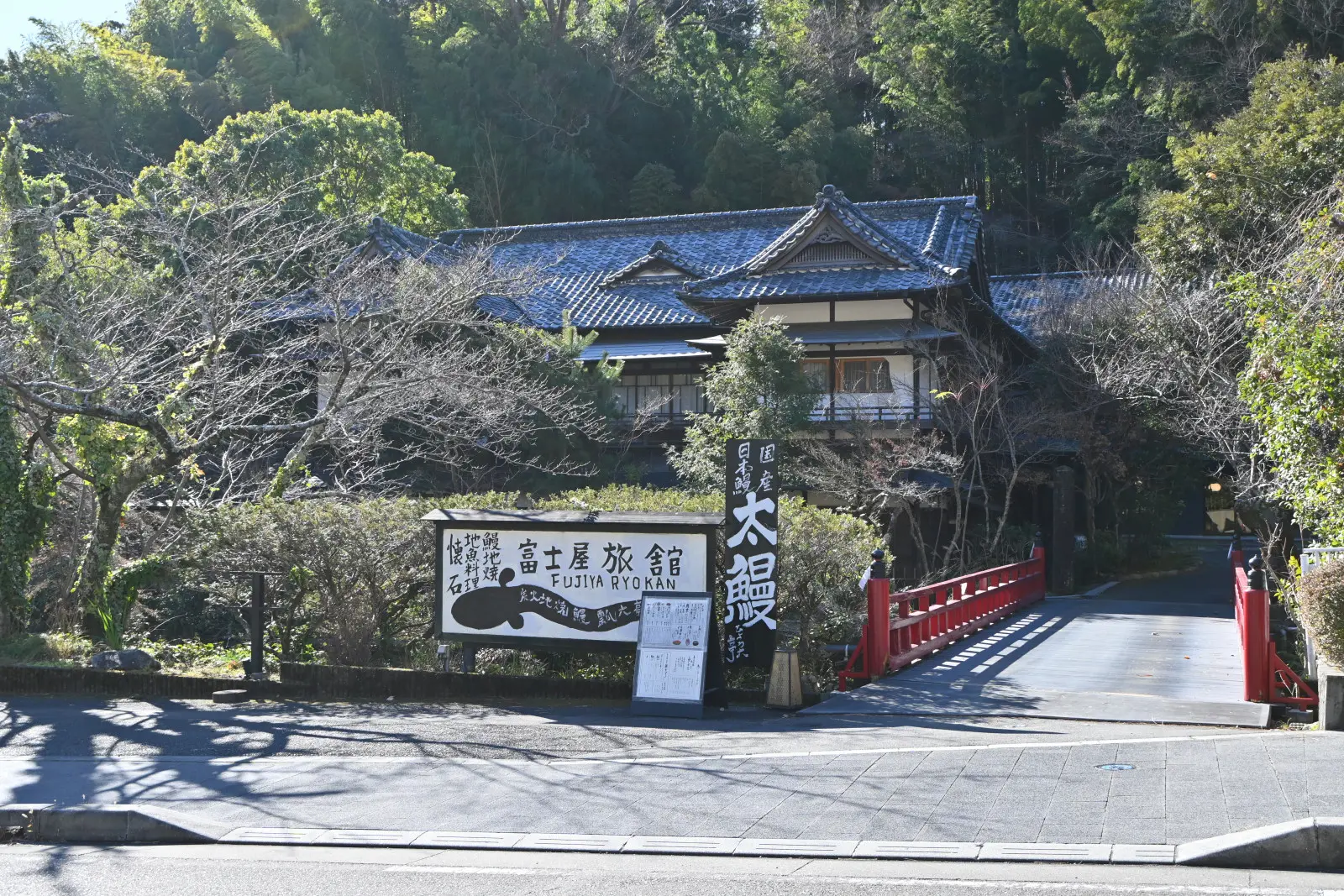
1. Fujiya Ryokan
This long-established ryokan, also famous for its eel dishes, has spacious grounds and reopened after a major renovation in 2019.
It has an old wing built in 1923, Rakumiso built from 1951 to 1954, and a fully rebuilt new wing, and guests can also enjoy views of the garden.
Even the smallest room is 34 square meters, and rooms in the old wing and Rakumiso come with cypress hot spring baths.
2. Itoya
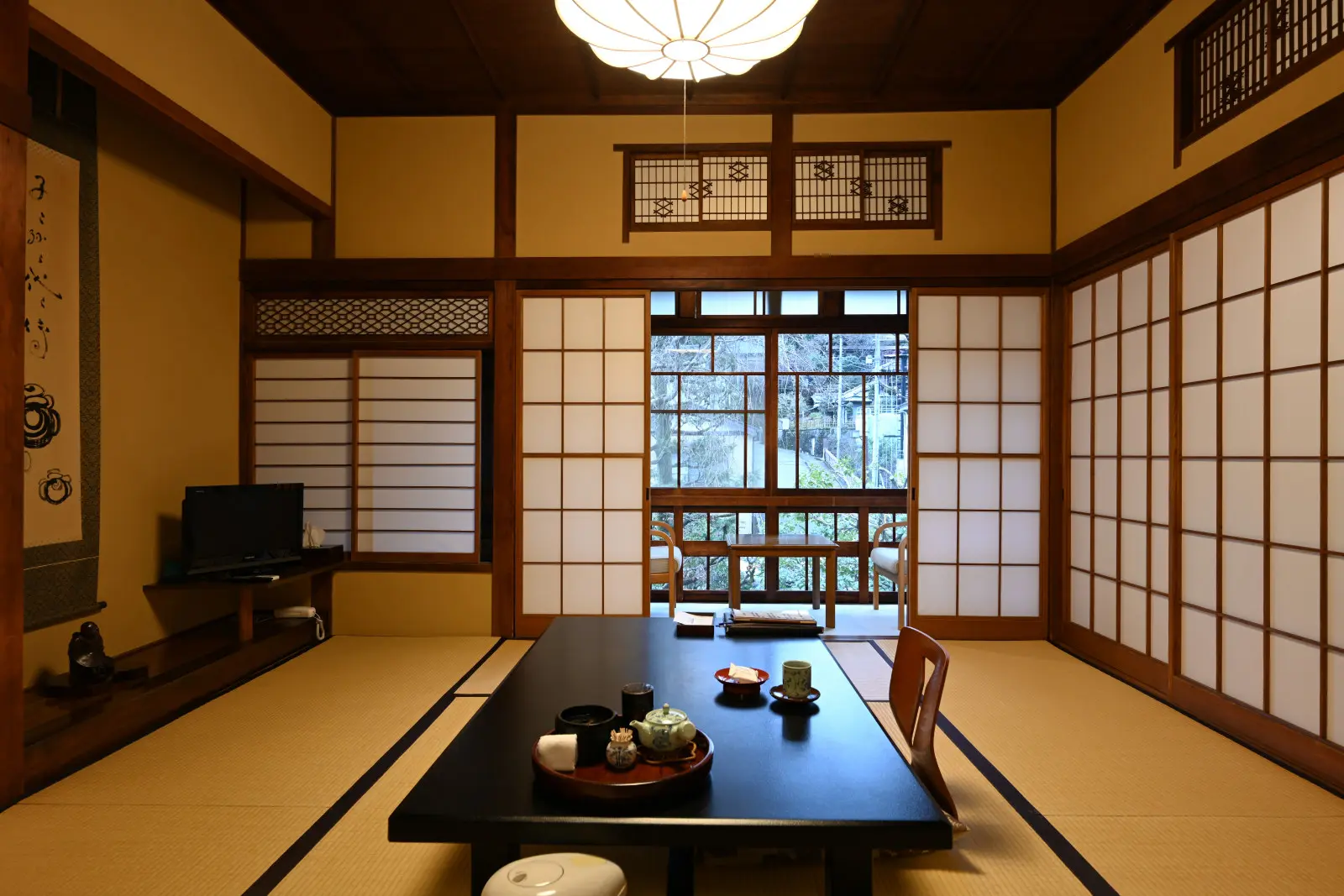
Founded in 1888, this inn has gateposts, stone walls, and two of the three main building wings registered as Tangible Cultural Properties of Japan.
It was a regular inn for Shimazaki Toson, who is said to have stayed at Itoya for around one week to relax after each of his four annual manuscript submissions.
There are two indoor baths, plus one open-air bath and one semi-open-air bath available for private use.
You can choose your room at the reservation stage, so if your budget allows, it is recommended to select a room in the registered main building.
You can immerse yourself in the carefully crafted architectural beauty of the Taisho era (1912–1926).
3. Gensen Uenoya
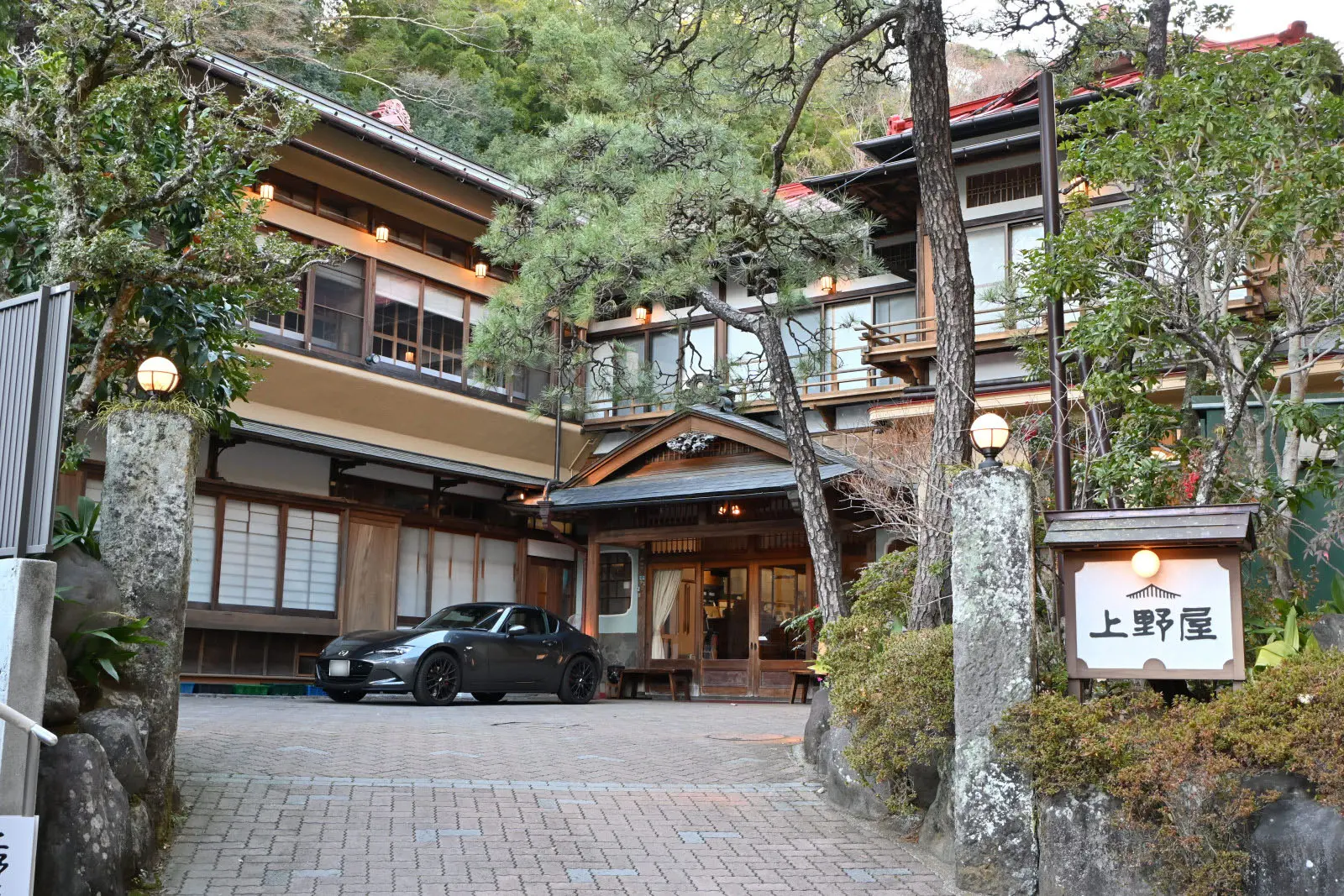
With a history of more than 300 years dating back to the Edo period, this is the oldest hot spring ryokan in Yugawara, and its building is registered as a Tangible Cultural Property.
It has its own private hot spring source, an indoor bath, an open-air bath available for private use, and a scenic all-cypress footbath on the top floor of the building, all featuring free-flowing natural hot spring water.
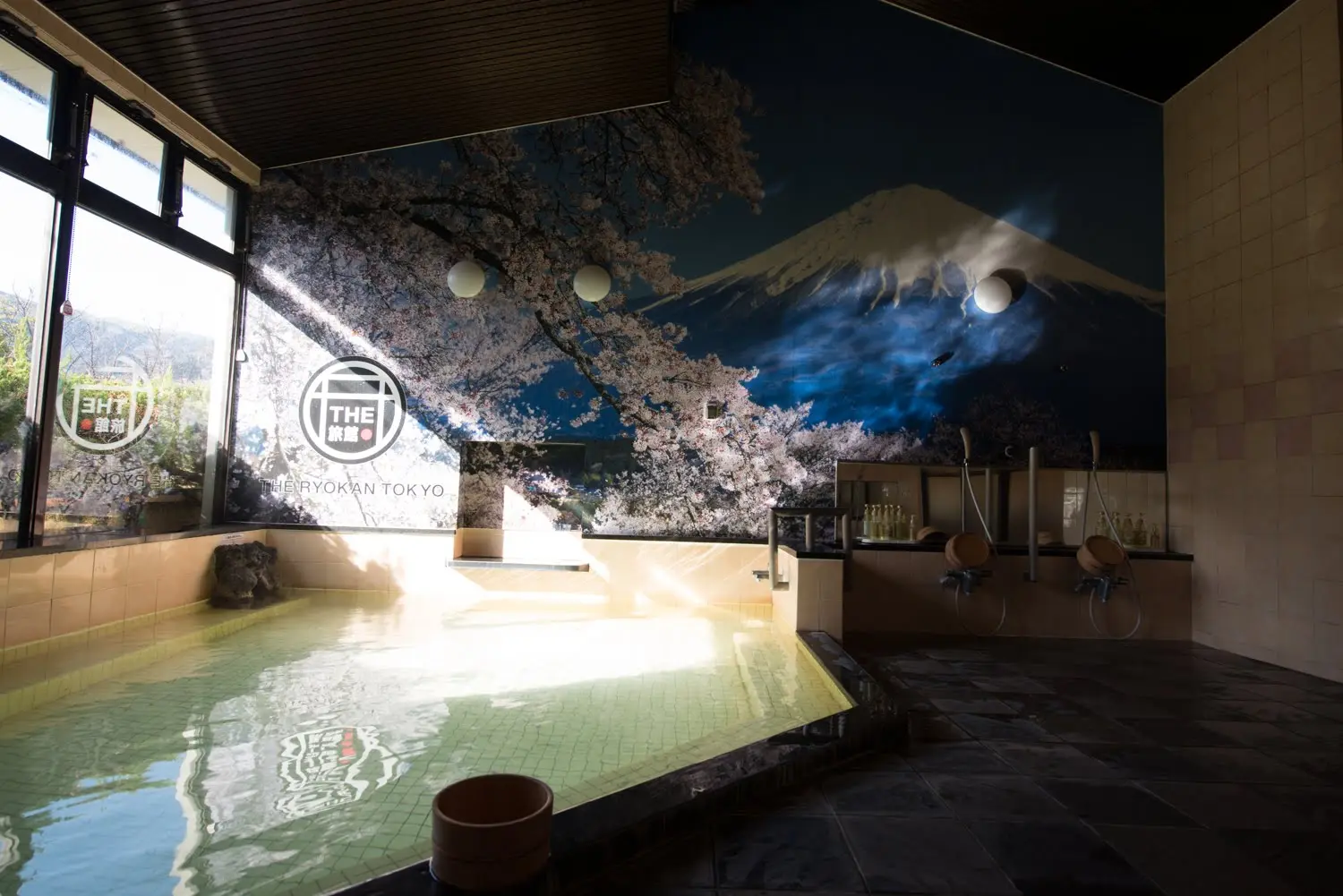
4. The Ryokan Tokyo YUGAWARA
This inn is ideal for solo travelers and creators looking for a quiet stay.
There are also accommodation plans that include meals and encourage writing or reading, and the lounge for working offers free drinks.
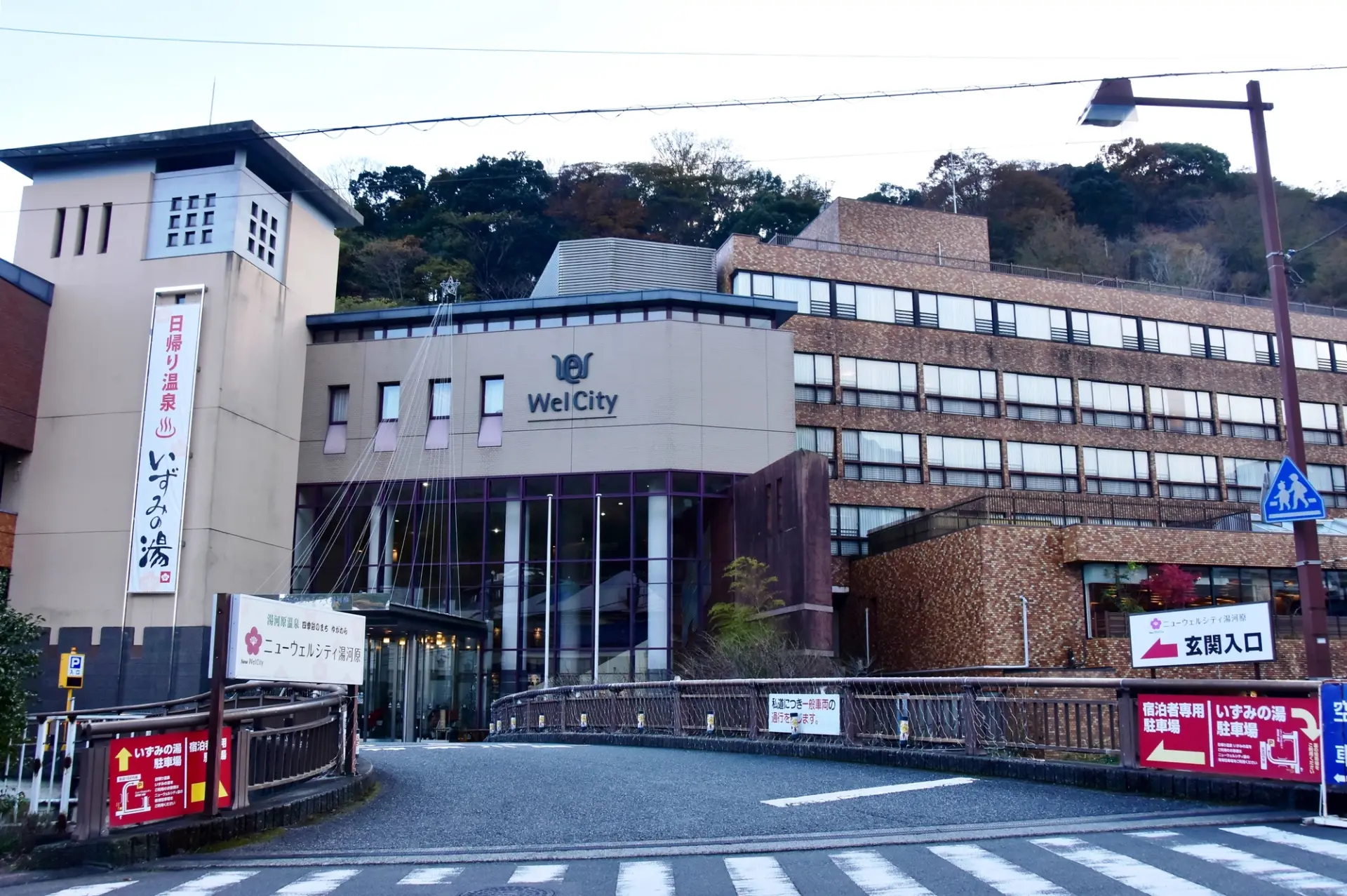
5. New Welcity Yugawara
This hot spring hotel has a large open-air bath called Izumi no Yu that is also available for day-use visitors.
It offers stays at reasonable prices and operates a shuttle bus to and from Yugawara Station.
A 2-Day, 1-Night Model Course to Fully Enjoy Yugawara Onsen
Yugawara is just over an hour from Tokyo, so a day trip is certainly possible, but to enjoy its wonderful hot springs and excellent food, staying for 2 days and 1 night is ideal.
Here is a model itinerary for 2 days and 1 night that also lets you enjoy seasonal highlights.
Day 1: Explore Yugawara Onsen
The first day is planned around visiting the highlights of Yugawara Onsen.
If you return to Yugawara Station after enjoying Kogome no Yu, this schedule can also work as a day-trip plan.
9:00am Depart Tokyo Station
Board Odoriko No. 1 departing Tokyo at 9:00am.
10:14am Arrive in Yugawara
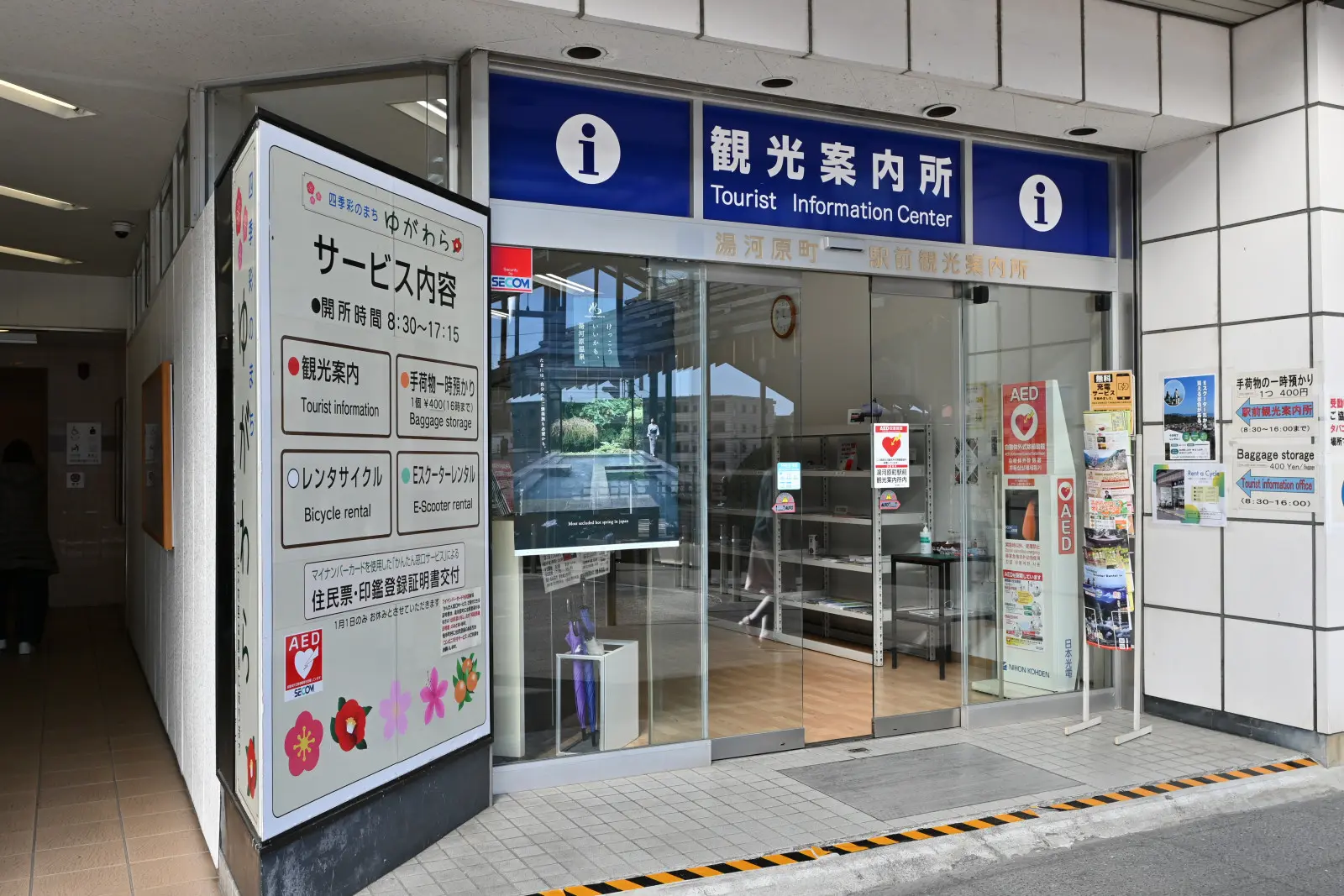
First, stop by the tourist information center to gather information.
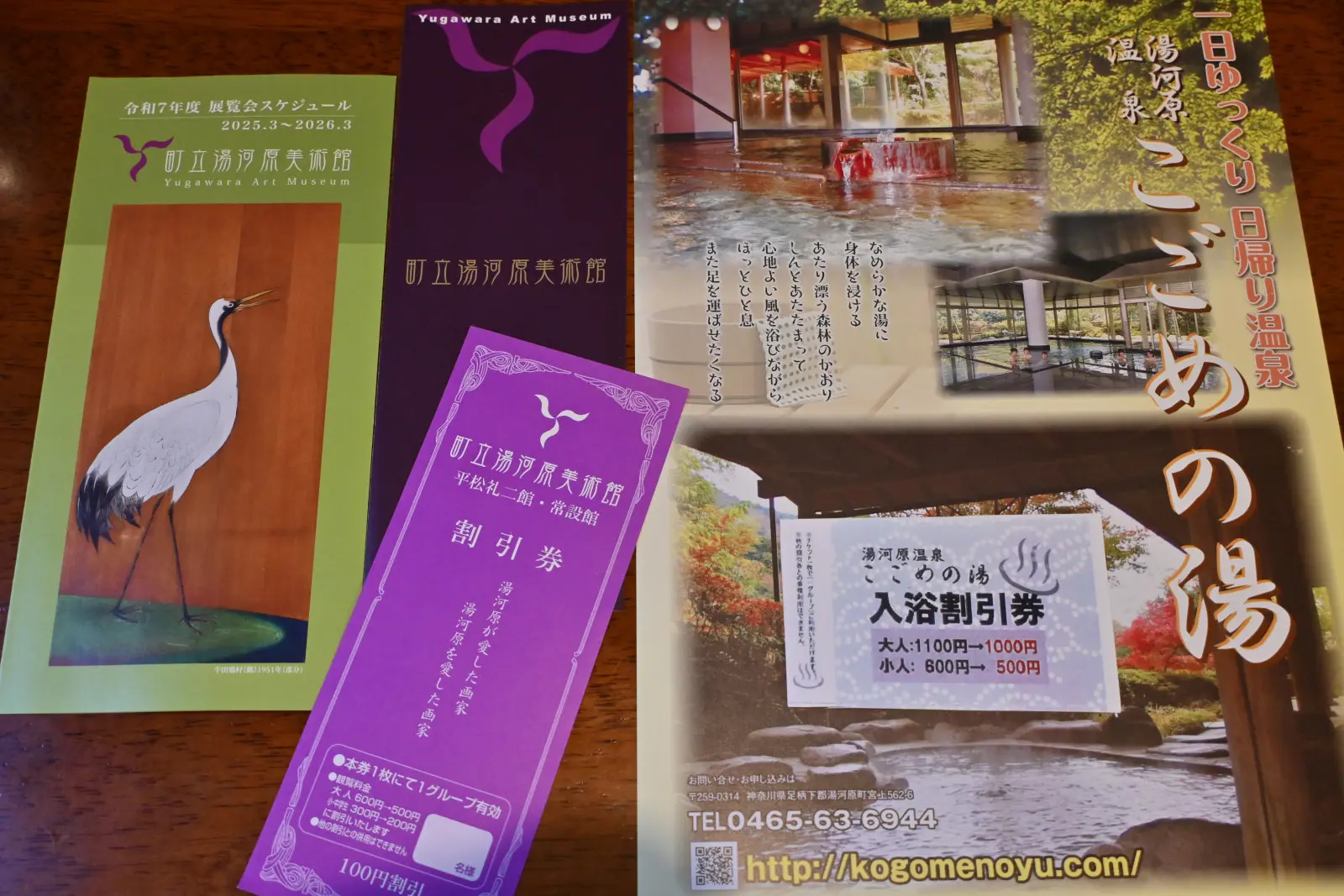
They also have maps, themed pamphlets, and discounted admission coupons.
10:45am Depart Yugawara Station
You board and get off the bus through the front door, and in addition to transit IC cards, contactless credit card payment is also accepted.
10:55am Get off the bus at Ochiaibashi and head to Genkan Terrace
If you want to leave your luggage and explore more easily, use the free coin lockers at Genkan Terrace or leave it at your accommodation.
If you do not need to leave any luggage, it is best to go straight to Fudo Falls, your first stop.
11:20am Walk to Fudo Falls
From the entrance to Manyo Park, it takes Approx. 20 minutes on foot.
Since it is uphill, you can also take the bus from Ochiaibashi to Fudo Falls (Approx. 4 minutes).
12:00pm Yugawara Art Museum
From Fudo Falls, it is Approx. 8 minutes on foot. You can also take the bus, but since it is downhill, walking is recommended.
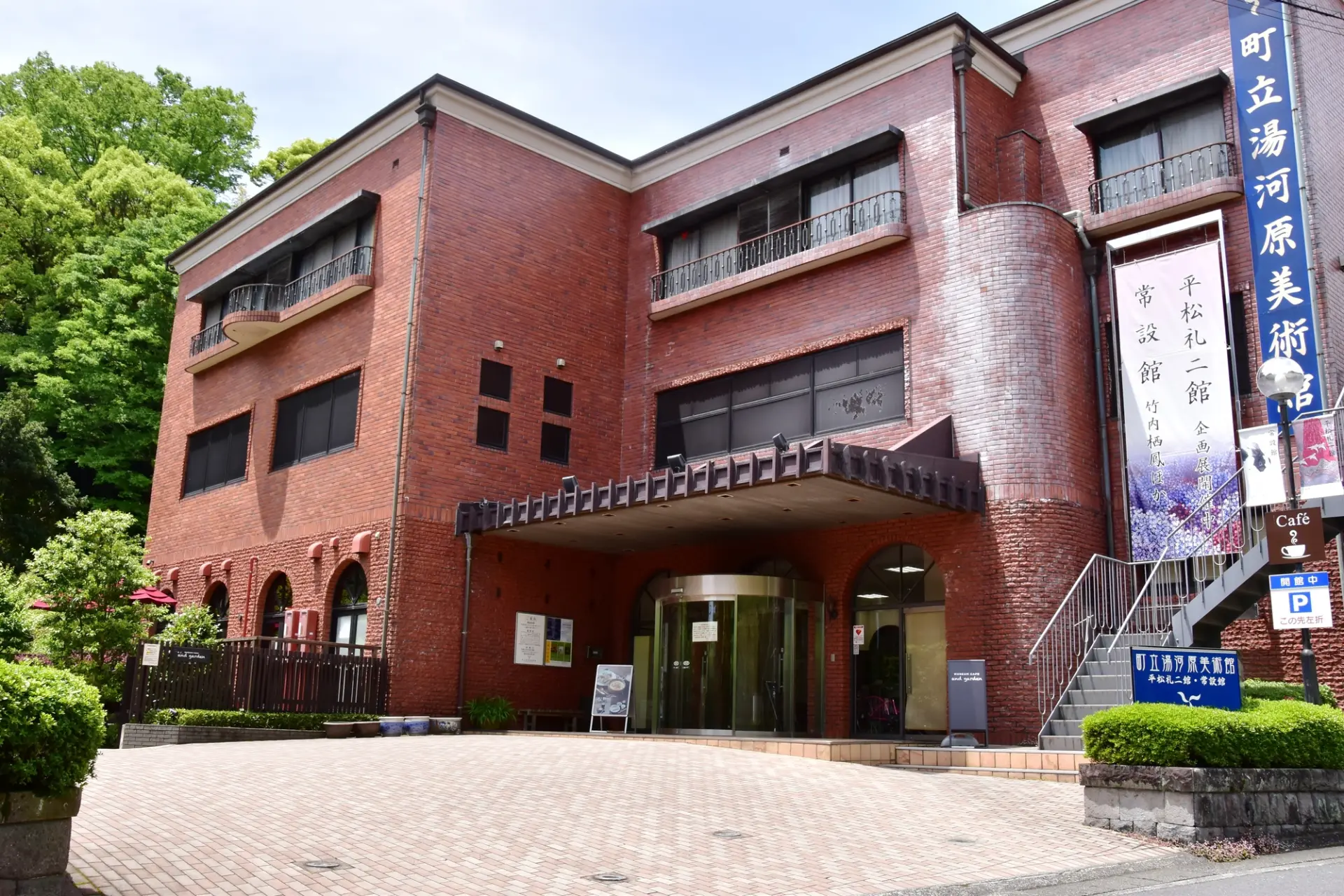
After visiting the museum, turn right at the hotel Yugawara Onsen Yugawara Mizunokaori and head toward Manyo Park while strolling along Motoyu-dori.
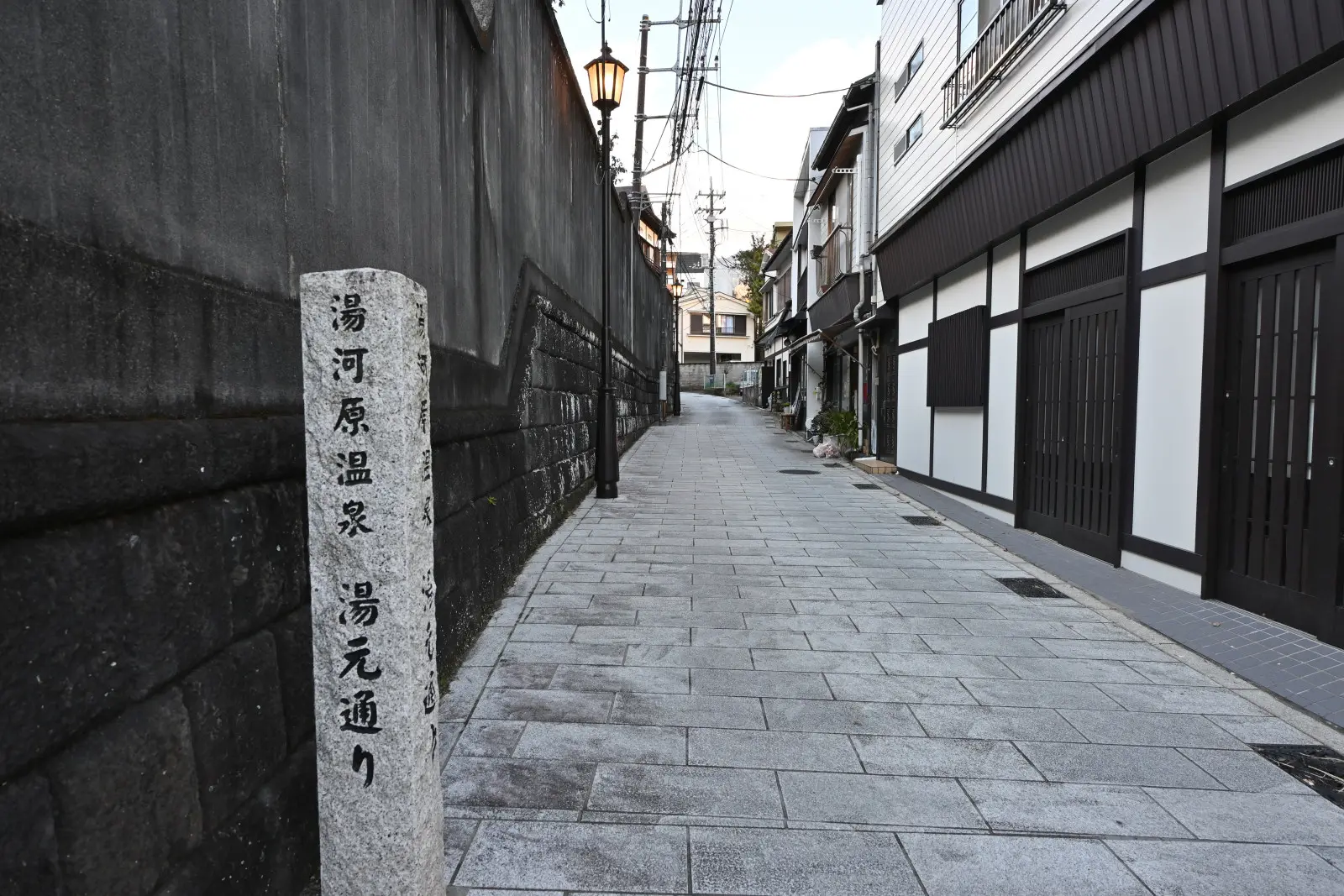
1:30pm Stroll through Manyo Park
If you would like a relaxing break after lunch, stop first at the tea room Manyotei for matcha and sweets.
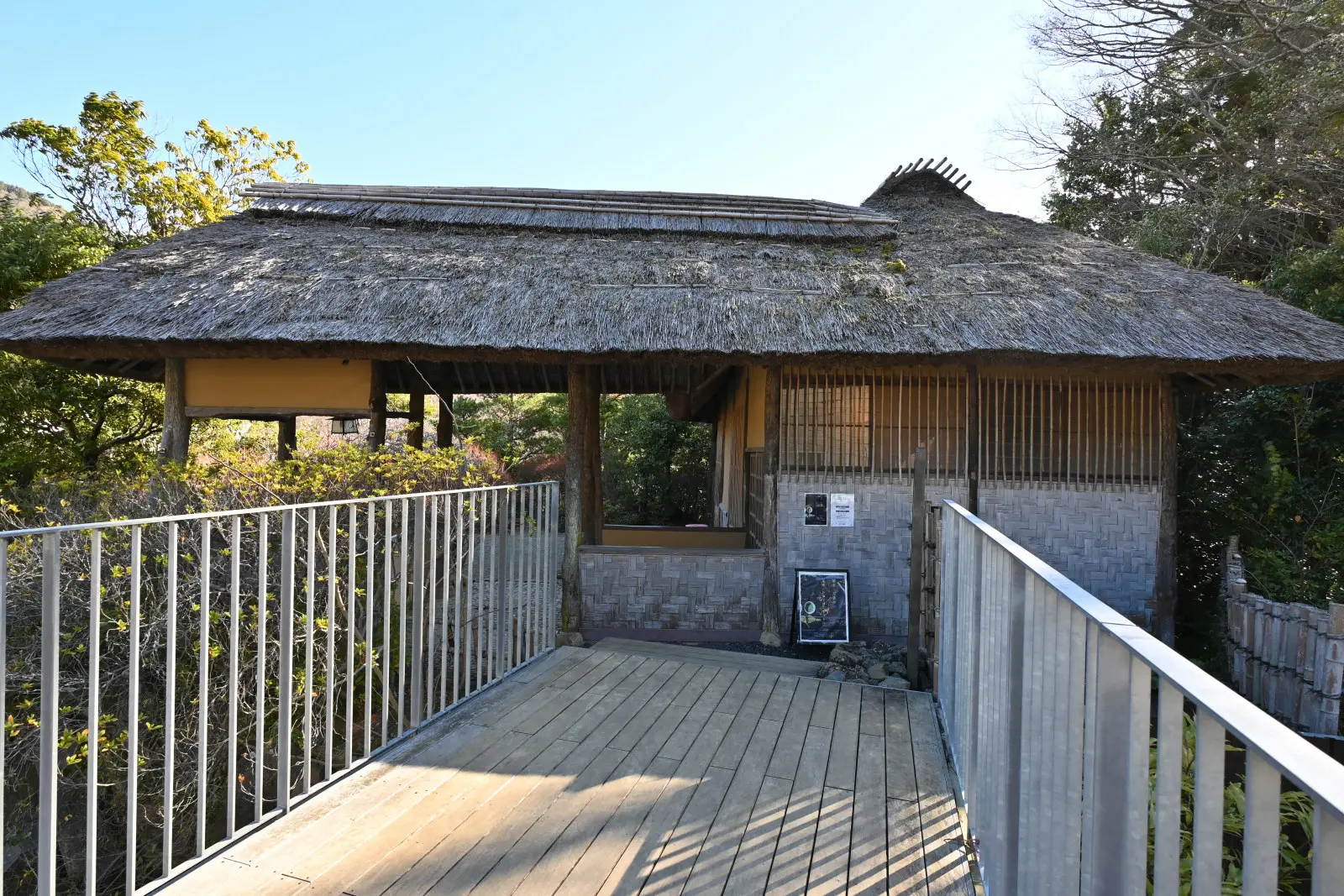
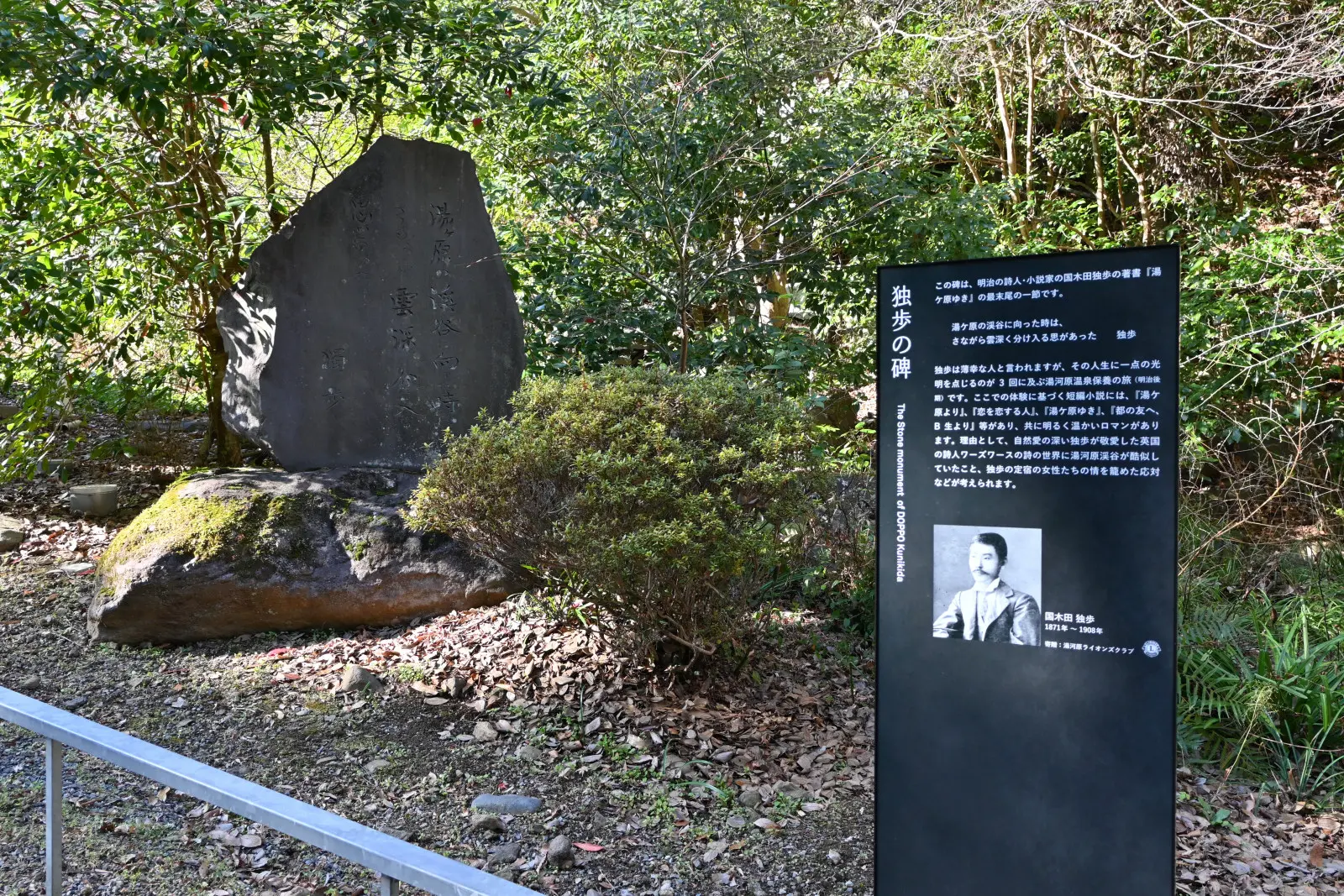
Start with the lower path along the river, then take the upper path on the way back from Soyu Terrace.
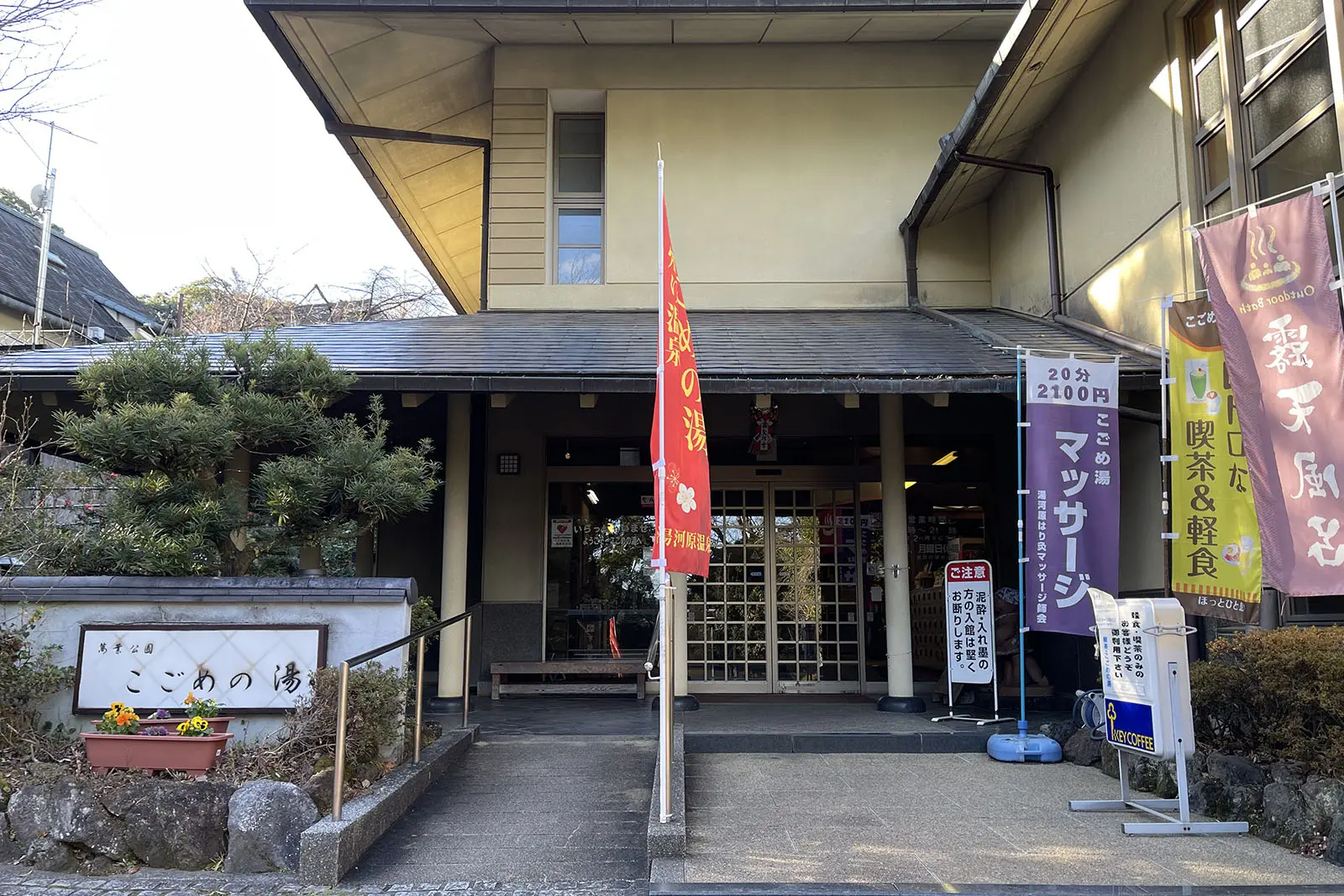
3:00pm Kogome no Yu
If you walk uphill from Manyo Park toward Kumano Shrine, you can take a shortcut to Kogome no Yu.
4:00pm Head to your accommodation for the night
If you left your luggage at Genkan Terrace, do not forget to pick it up before checking in at your accommodation.
If you are staying during firefly season in early June, it is best to visit Manyo Park around 8:00pm.
Day 2: Enjoy seasonal sights and Yugawara gourmet food
The second day is planned so you can take your time visiting seasonal highlights.
Even if no special events are taking place, we hope you will enjoy your stay in Yugawara by relaxing again in Manyo Park or taking a walk in your favorite spot.
9:30am Head to Komedo
Start by visiting Komedo and buying freshly made kibimochi.
10:00am Visit seasonal highlights
If you are visiting during Ume no Utage, head back to Yugawara Station and take the direct bus to Makuyama Park, the event venue.
If you are staying at an inn in Yugawara, admission is free, so it is a good idea to let them know at check-out that you are going to see Ume no Utage.
If you are staying during the autumn foliage season, head out to enjoy the fall colors.
A recommended route is to first go to Okuyugawara, visit Momiji no Sato, and then walk down to Manyo Park.
If you are visiting outside spring and autumn, we recommend taking another stroll through Manyo Park.
You visited in the afternoon the day before, but if you go in the morning, the angle of the light is different and the scenery feels different as well.
If you are visiting from late May to early June, head to Satsuki no Sato in Hoshigayama Park.
Free buses run from the station on Saturdays and Sundays.
12:30pm Visit popular restaurants around Yugawara Station
There are also highly regarded restaurants around Yugawara Station, so have lunch in this area.
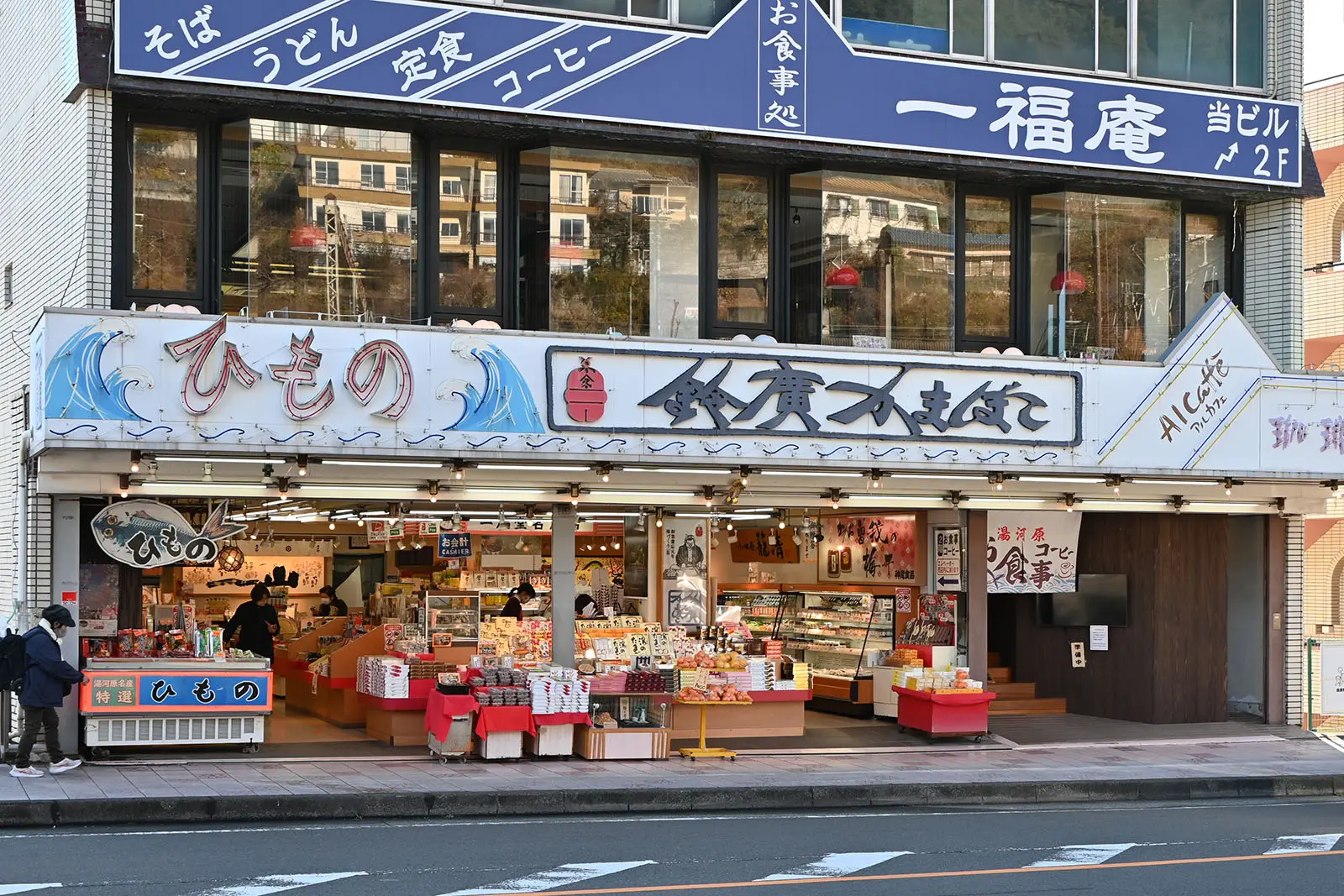
1:30pm Buy souvenirs
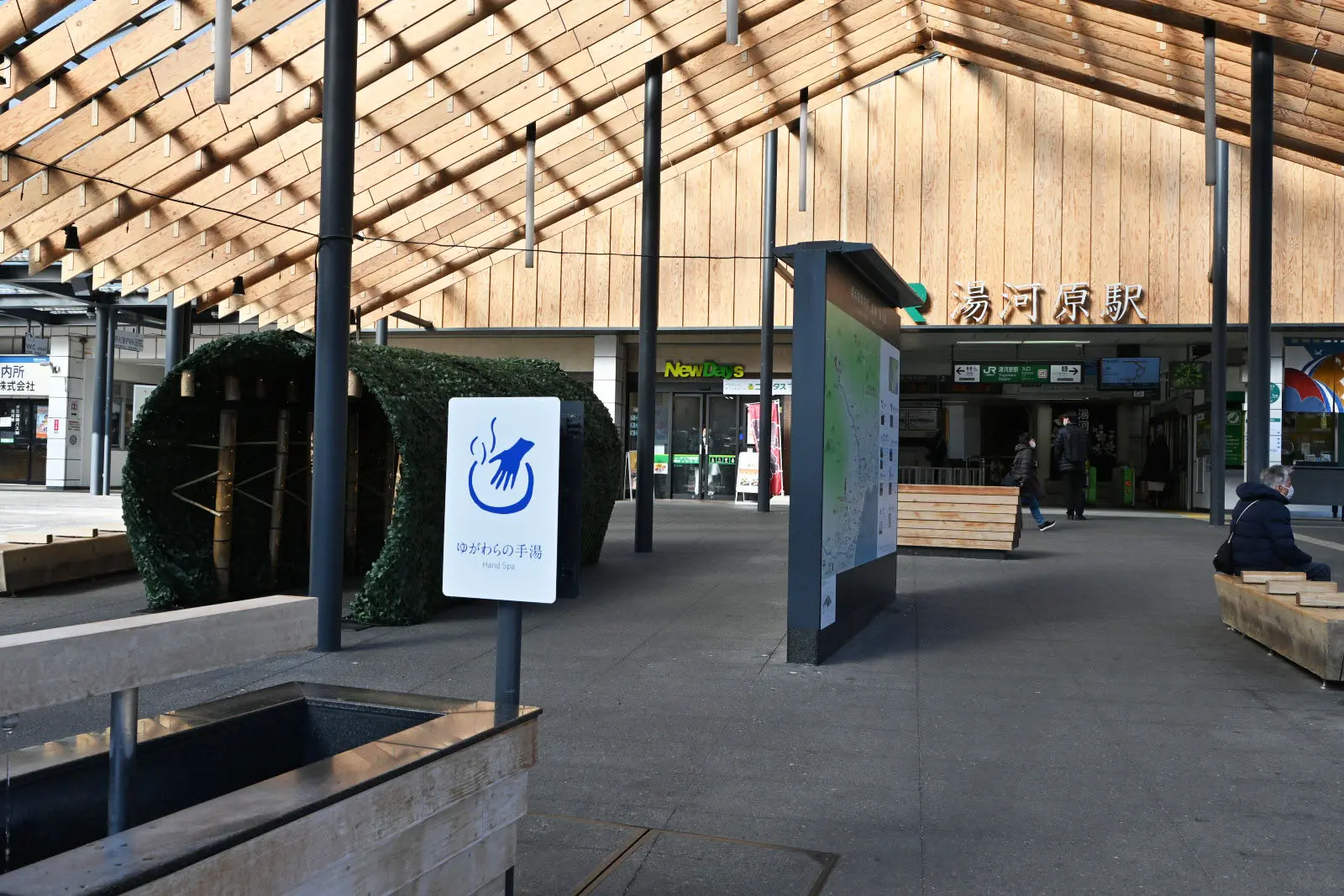
You can buy a variety of souvenirs in front of the station, and the NewDays convenience store inside the station also sells souvenirs and ekiben boxed meals.
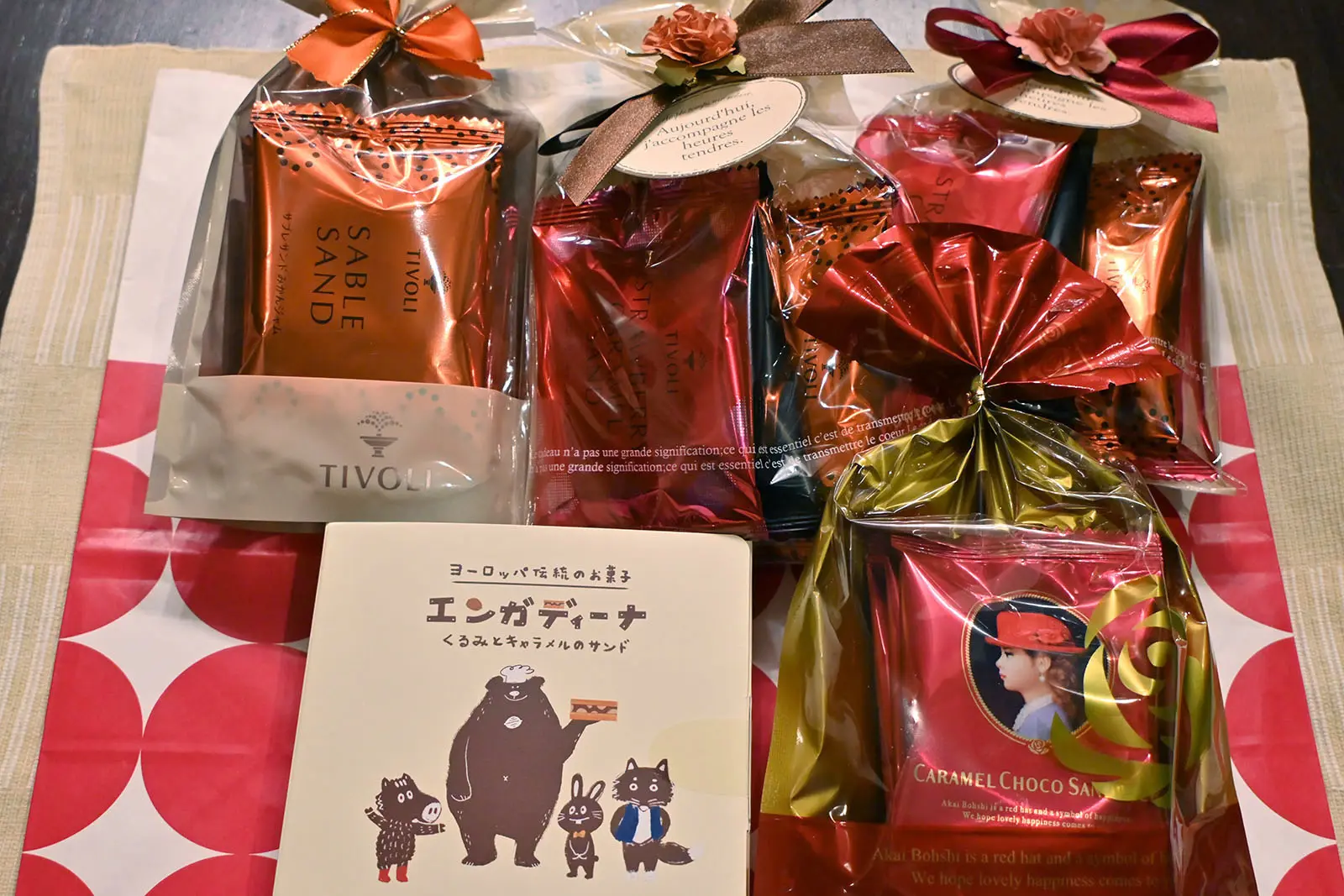
If time allows, you may also want to stop by Chibori Sweets Factory Yugawara Main Store, about a 3-minute walk from the station.
This sweets shop with a cafe also offers factory tours and hands-on confectionery experiences.
2:35pm Depart Yugawara
It may feel a little early, but the next Odoriko does not leave until 4:34pm, two hours later, so planning around this departure gives you peace of mind.
Odoriko No. 6 departs Yugawara at 2:35pm and arrives in Tokyo at 3:49pm, while Odoriko No. 10 departs at 4:34pm and arrives in Tokyo at 5:48pm.
FAQ about Yugawara Onsen
Q
I heard the hot spring town is far from the train station. What are the access options?
A
Hakone Tozan Bus and Izu Hakone Bus run on the same route, connecting Yugawara Station and the hot spring town in Approx. 10 minutes.
Q
Can Yugawara be enjoyed as a day trip?
A
Yes, there are day-use hot springs, so you can certainly enjoy it on a day trip.
Still, since there are many excellent dining spots and inns with free-flowing natural hot spring baths, staying overnight is the best way to enjoy Yugawara’s hot springs.
Q
There are so many inns that it is hard to choose. What should I look for?
A
If you have no particular preference, choose an inn within walking distance of Manyo Park, which is convenient for getting around.
If you do have preferences, you can choose based on things like historic buildings or whether the inn has free-flowing natural hot spring baths.
Q
How should I enjoy Yugawara in spring?
A
Visit Ume no Utage, held from February to March.
Events are also held on Saturdays, Sundays, and holidays, making it a lively time to visit.
Q
What kinds of summer events are there?
A
In early June, events such as Satsuki no Sato and Hotaru no Utage are held.
In August, the seaside fireworks festival is held after the Yassa Festival in early August.
Also in mid-August, Manyo Park hosts festival stalls and stage events for nearly two weeks.
Q
I heard the fall foliage is beautiful. Where should I go?
A
You can enjoy bright red maple leaves in Manyo Park, but the scenery of Okuyugawara and a hike to Momiji no Sato are also recommended.
Summary
Yugawara Onsen is an ideal destination for travelers who want to take their time enjoying high-quality hot springs that are gentle on the body.
There are also many dining spots, including restaurants so good that some fans come all the way from Tokyo just to eat there.
From Ume no Utage in February to mandarin orange picking in early December, a wide range of events are held throughout the year, which is another reason to visit Yugawara.
It may not be flashy, but Yugawara Onsen is the kind of hot spring town whose charm grows clearer each time you visit.

Author
Photographer & Writer
Hiroaki Oyamada
A photographer and writer who loves nature and is passionate about sharing the emotions and inspiration found through travel.