
![[Complete Guide to Kaleidoscopes] Step Into the Beautiful World Inside a Kaleidoscope](https://static.gltjp.com/glt/data/article/22000/21306/20260209_121106_2190fba3_w1920.webp)
[Complete Guide to Kaleidoscopes] Step Into the Beautiful World Inside a Kaleidoscope
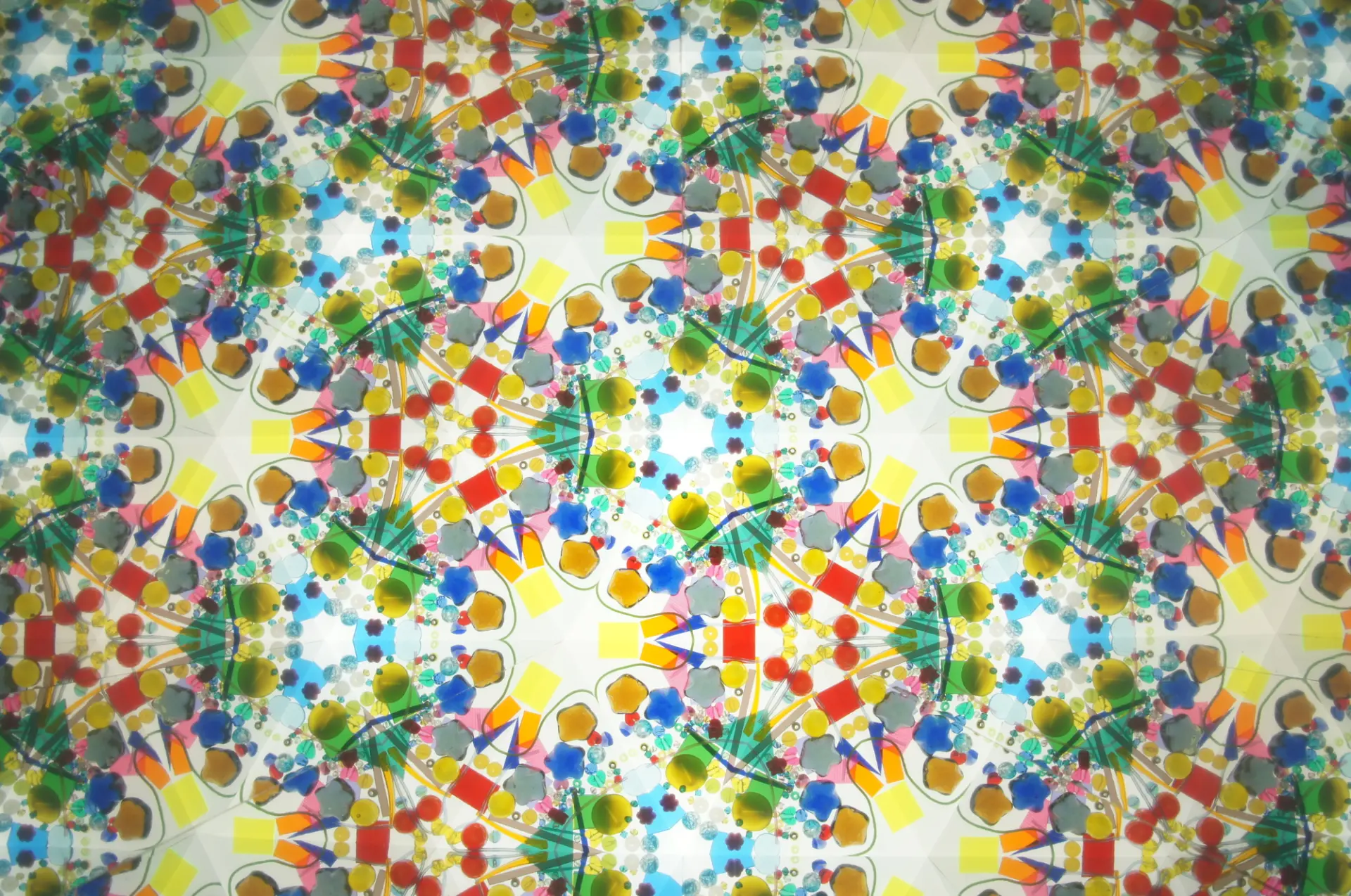
Beautiful repeating patterns. Once a pattern appears, you can never see the exact same one again. That fleeting, delicate beauty is the greatest charm of the kaleidoscope.
Many Japanese people remember being fascinated by kaleidoscopes as children, turning them over and over by hand and watching the expressions inside change. Even now as adults, many still fondly remember being captivated for no particular reason by those glittering moments when colors and shapes changed instantly and unexpected patterns appeared. Today, kaleidoscopes are no longer seen only as “toys” but also as “art.” There are not only tubular ones, but also pieces with unusual body designs and even kaleidoscopes that create patterns beyond imagination.
In this guide, we’ll explore not only the birth and history of the kaleidoscope, but also the Kyoto Kaleidoscope Museum, where you can experience the depth and charm of kaleidoscopes, as well as hands-on kaleidoscope-making workshops. Let us take you into the infinite world that opens up when you look inside.
What Is a Kaleidoscope?
The English word for 万華鏡 is “kaleidoscope.” It is a coined word derived from Greek meaning something like “to see beautiful patterns.” The mirror part of a kaleidoscope is a polygonal mirrored tube made by combining two or more mirrors. There are many types depending on how many mirrors are used and how they are arranged, and the images produced also differ. Because it is a multi-mirror structure, a single real object is reflected in multiple mirrors, and those reflections repeat to create beautiful images.
A typical kaleidoscope is made by combining rectangular mirrors inside a cylinder into one of three shapes: an equilateral triangle, an isosceles triangle, or a right triangle. It is said that one of these three is necessary to create regular, beautiful patterns. Kaleidoscopes are surprisingly deep and carefully designed.
The History of Kaleidoscopes
1. Born in Scotland!
The kaleidoscope was born in Scotland. It was invented in 1816 by physicist David Brewster, who discovered “Brewster’s law” related to polarization and refraction and the “three primary colors of light,” which states that light is made from red, blue, and yellow. The invention was actually accidental. While researching the reflection and refraction of light, including methods for making lighthouse beams travel farther, he was experimenting with combinations of mirrors to make light reach greater distances and happened to invent it by chance. Later, people were captivated by its beauty, and the kaleidoscope spread throughout Europe.
2. It Came to Japan in the Edo Period
Kaleidoscopes came to Japan during the Edo period. At the time, Japan was under national isolation, but Nagasaki’s Dejima was the one place where trade with the Netherlands was allowed. Since kaleidoscopes had spread throughout Europe, they were of course also circulating in the Netherlands. They are said to have been introduced to Japan through Dejima, and an Osaka merchant visiting Dejima took one back and helped spread it across the country. In Osaka, kaleidoscopes began to circulate only three years after Brewster invented them. That speed suggests just how beautiful and captivating people found them at the time. Kaleidoscopes are also mentioned in Edo-period documents. In “Setsuyo Kikan” by Hamamatsu Utakuni, there is a line that says, “These days, sarasa glasses imported from the Dutch are in fashion, and many imitations are being made in Osaka.” Because Indian chintz cloth was wrapped around the body of the kaleidoscope, it seems they were called “sarasa megane.” Even so, the fact that imitations were being made shows how popular kaleidoscopes were as toys.
3. Their Heyday Came in the Early Showa Period
Before they came to be called kaleidoscopes, they were known by various names. In the late Edo period, they were called “nishiki megane,” meaning glasses for seeing vivid colors like brocade, and also “hyakushiki megane,” meaning glasses for seeing many colors. In the early 20th century, large numbers of toys were imported from China, including kaleidoscopes called “wanhuatong” there. It is said that in Japan, the character for “mirror” in the existing name “hyakushiki megane” was replaced with the character for “tube” from “wanhuatong,” creating the name “bankakyo.” This later changed into the current reading, “mangekyo.” After that, kaleidoscopes were sold at festival stalls and candy shops. They became a standard penny-candy shop toy in the early Showa period. Children across Japan became fascinated with kaleidoscopes, and they reached the height of their popularity. After World War II, many kaleidoscopes were exported to the United States as part of Japan’s peaceful reconstruction industries.
4. Kaleidoscopes Evolved from Toys into Art
In the 1980s, kaleidoscopes were elevated into art in the United States, one of their export destinations. The person who sparked this was American kaleidoscope collector Cozy Baker. After losing her son in a traffic accident, she was overwhelmed with grief. During that time of despair, she encountered a kaleidoscope. Its beauty comforted and encouraged her. She then decided she wanted to spread fun and fascinating kaleidoscopes to the world, and she called on glass artists to create them. The kaleidoscopes made by those glass artists transformed into works of art clearly distinct from the toy kaleidoscopes of the past.
Today, the Brewster Kaleidoscope Society, an organization of kaleidoscope enthusiasts based in the United States, hosts a world kaleidoscope convention every year, and it has even been held in Japan in the past. Japanese kaleidoscope artists have also won the top prize at this event many times. That, too, shows how highly artistic Japanese kaleidoscopes have become, winning awards again and again on the world stage.
Let’s Visit the Kyoto Kaleidoscope Museum!
What Is the Kyoto Kaleidoscope Museum?
The Kyoto Kaleidoscope Museum is located in Nakagyo Ward, Kyoto City. It is about a 3-minute walk from Karasuma Oike Station on the Kyoto Municipal Subway.
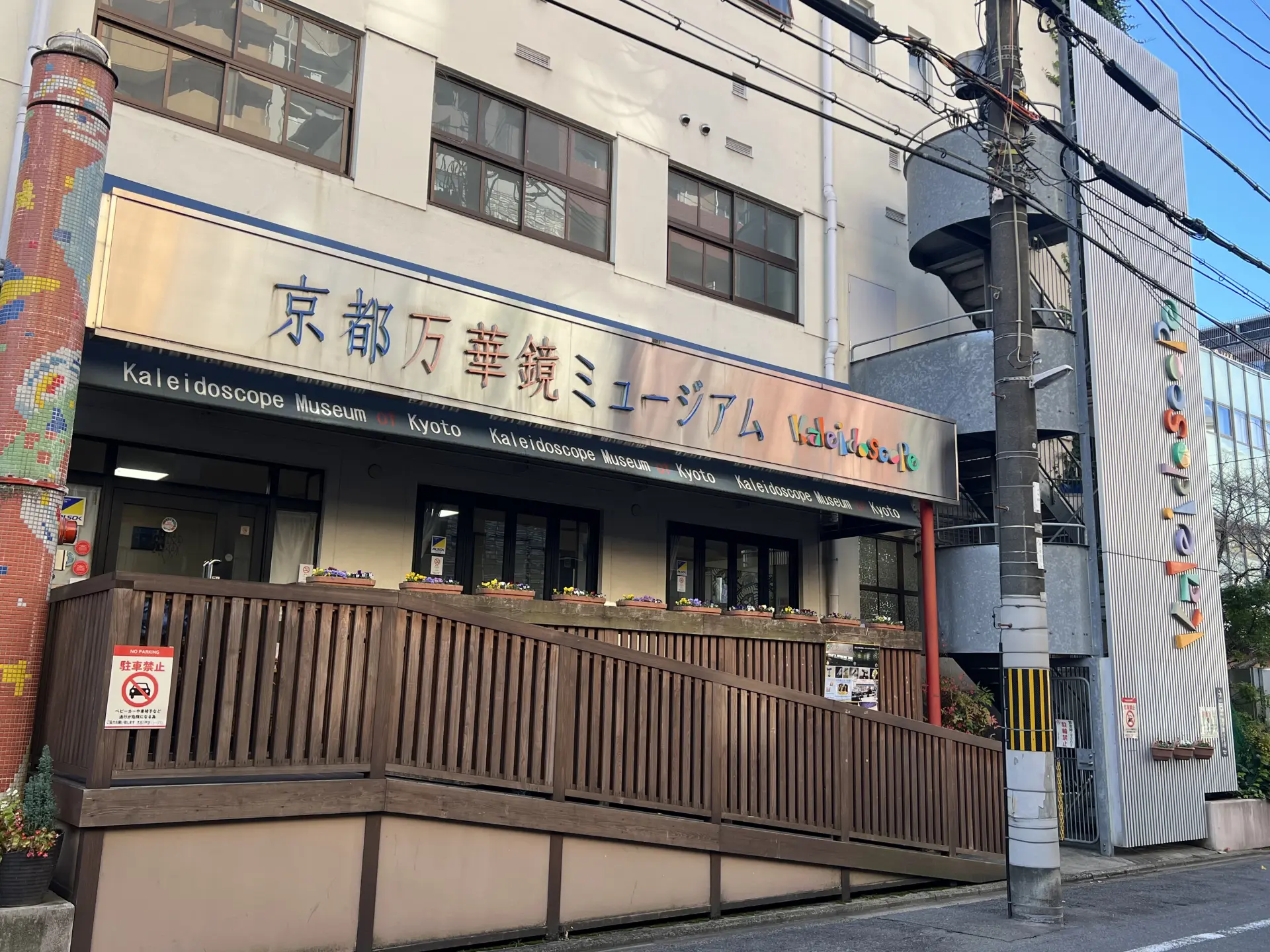
The Kyoto Kaleidoscope Museum is a museum specializing in collecting and exhibiting kaleidoscopes. It opened in June 2004. In addition to the exhibition space, the facility also has a museum shop and a café, making it a place where visitors can learn about kaleidoscopes in depth. It welcomes 30,000–40,000 visitors a year, including many international visitors, so English assistance is available.
There is even a kaleidoscope before you reach the entrance. I thought it was a doorbell, but when I pressed the button, the kaleidoscope attached to the pillar started spinning!
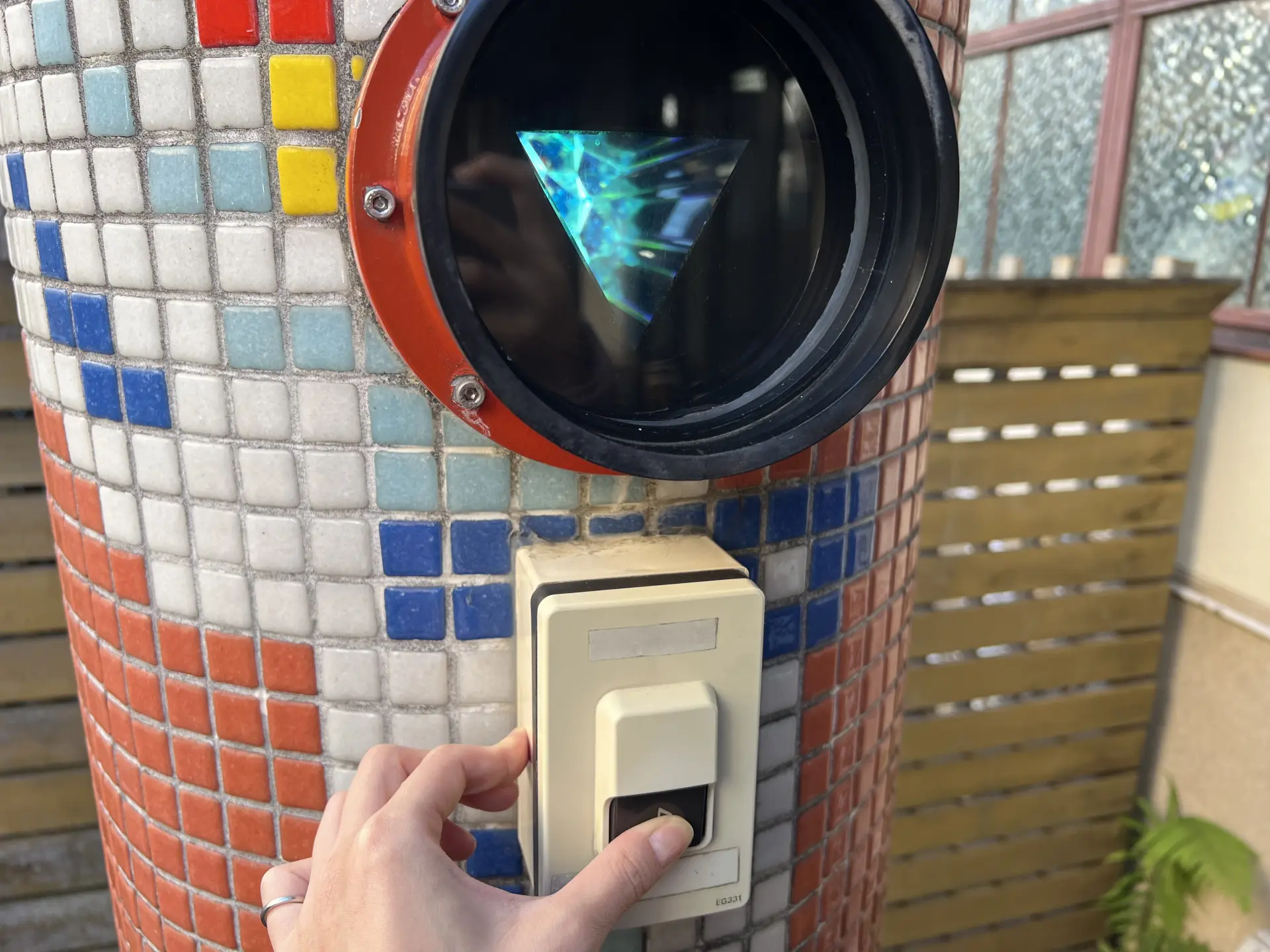
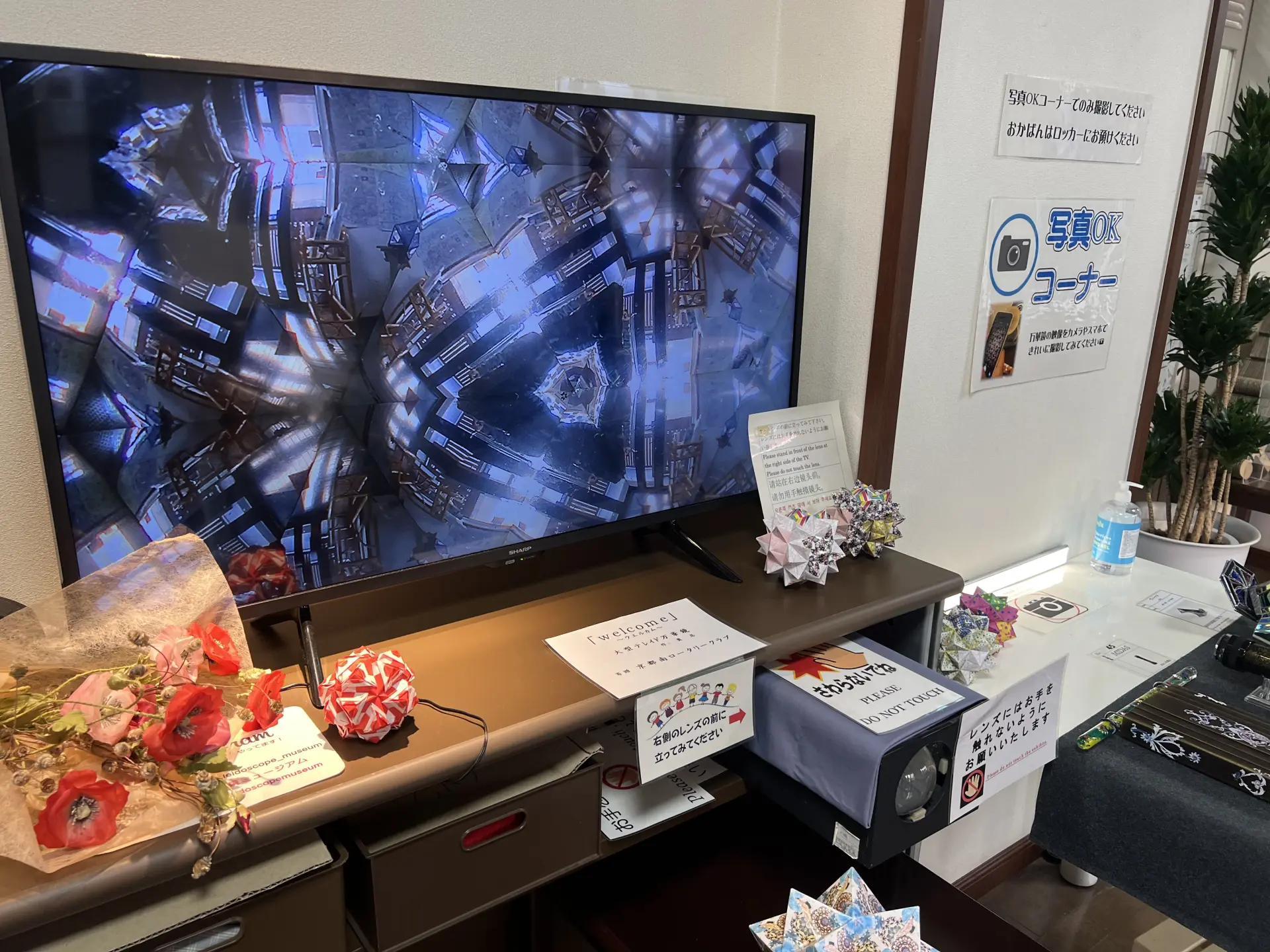
Even before entering, you already feel drawn into the world of kaleidoscopes, which is exciting. Once inside, there were many large kaleidoscopes lined up in the hallway as well.
This one turns your own image or the scenery reflected in the camera lens into a kaleidoscope image. It is displayed on a large monitor.
There was also a kaleidoscope where, if two people peeked in from opposite sides, each other’s faces became part of the image.
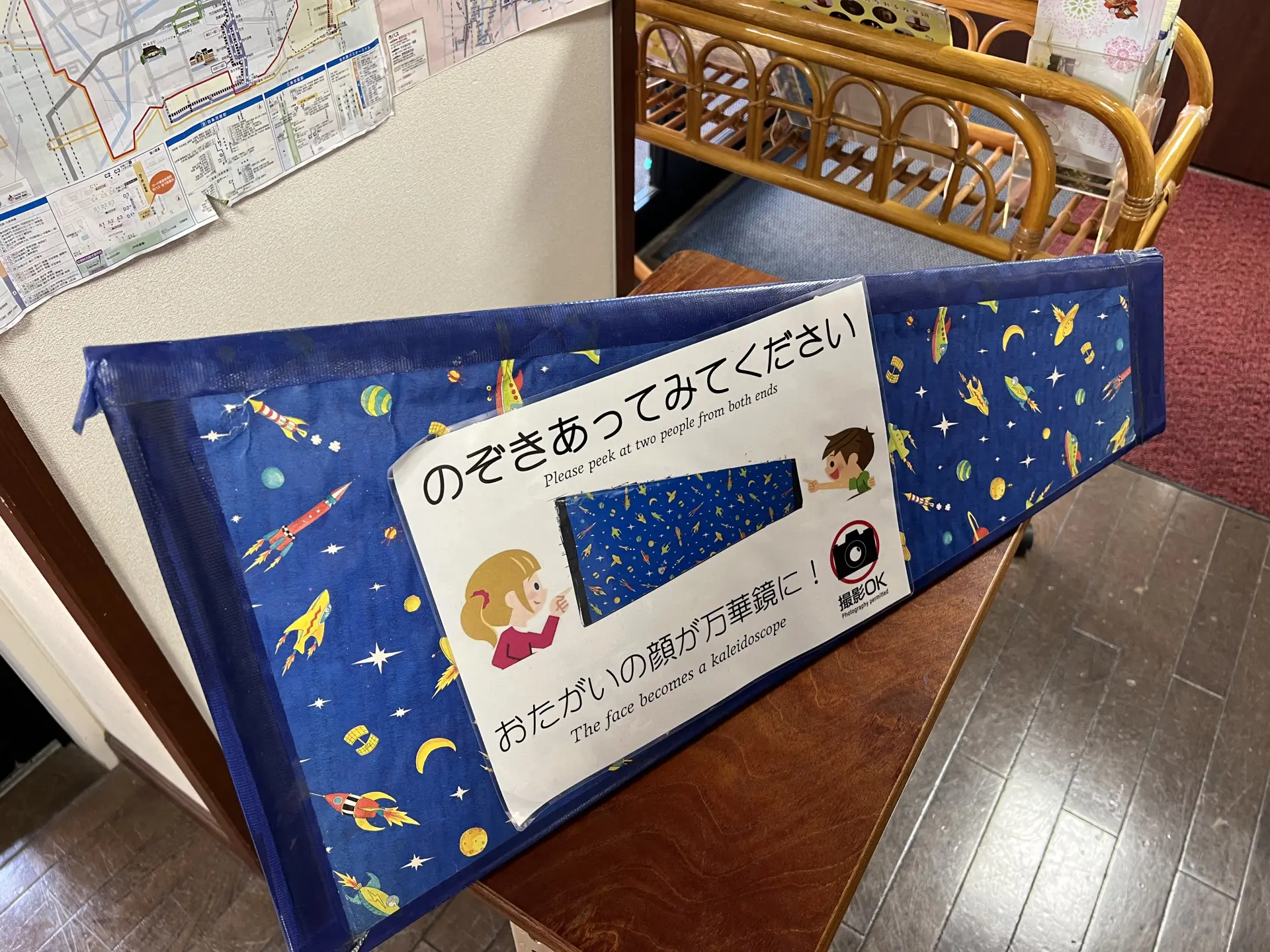
Because so many images of the other person’s face appear, it is funny and very popular with children. Before entering the exhibition room, place your belongings in the coin lockers (deposit returned). Many kaleidoscopes are made of glass or ceramics and are very delicate. Please store your belongings so they do not accidentally hit and damage them.
Facility Overview
- Name
- Kyoto Kaleidoscope Museum
- Address
- 706-3 Ungeinmaecho, Anekoji-dori Higashinotoin Higashi-iru, Nakagyo-ku, Kyoto 604-8184
- Phone
- 075-254-7902
- Open
- Tuesday–Sunday and holidays every week
- Hours
- 10:00am–6:00pm (Last admission at 5:30pm)
- Closed
- Mondays every week (open if Monday is a holiday, closed the following weekday), New Year holidays
- Admission (tax included)
- Adults 500 yen, seniors (65 and over) 300 yen, high school students 300 yen, elementary and junior high school students 200 yen, preschool children free, various discounts available
- Access
-
・Approx. 3 minutes on foot from Kyoto Municipal Subway Karasuma Oike Station (Exits 3-1, 3-2): head east on Oike-dori, south on Higashinotoin-dori, then east on Anekoji-dori
・Approx. 10 minutes on foot from Hankyu Karasuma Station: head north on Higashinotoin-dori, then east on Anekoji-dori
・Approx. 3 minutes on foot from the Karasuma Oike bus stop on Kyoto Bus or City Bus - Official website
- Official website (Japanese)
A Wide Variety of Kaleidoscopes on Display!
When I entered the exhibition room, around 50 kaleidoscopes were on display. The museum has a collection of Approx. 400 kaleidoscopes from Japan and around the world, and exhibits them according to different themes. Themes vary and include the seasons, overseas artists, and Kansai-based artists. The displays are changed 3–4 times a year. Sometimes the museum also borrows kaleidoscopes from private collectors for special exhibitions, making it a place you’ll want to visit again and again.
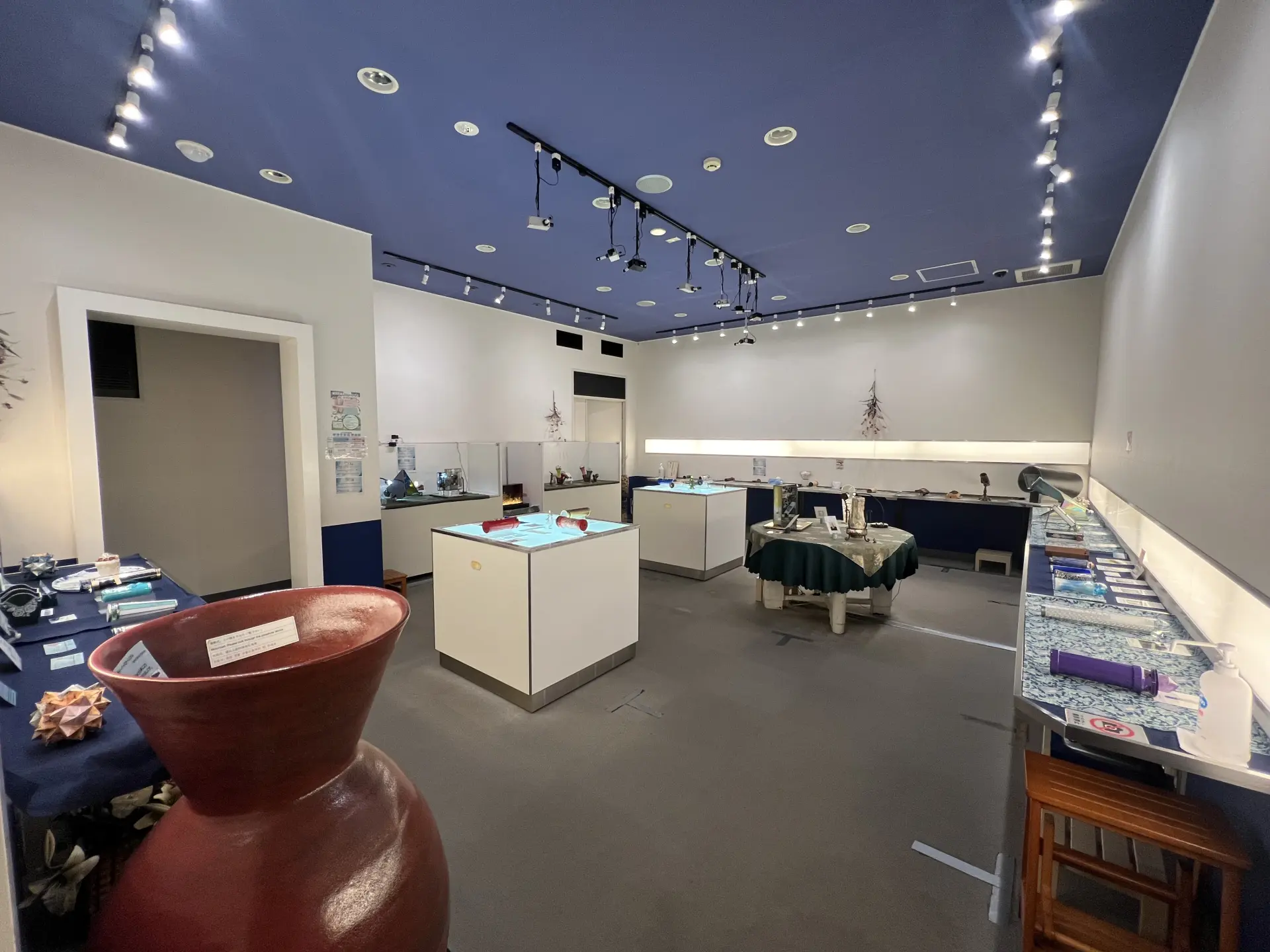
You can actually touch the kaleidoscopes on display and look inside them. There is an impressive lineup of unusual and interesting shapes that you do not often see.
Each one includes the title of the work, the artist’s name, and instructions on how to view the kaleidoscope. Some of the kaleidoscopes can also be purchased on the spot.
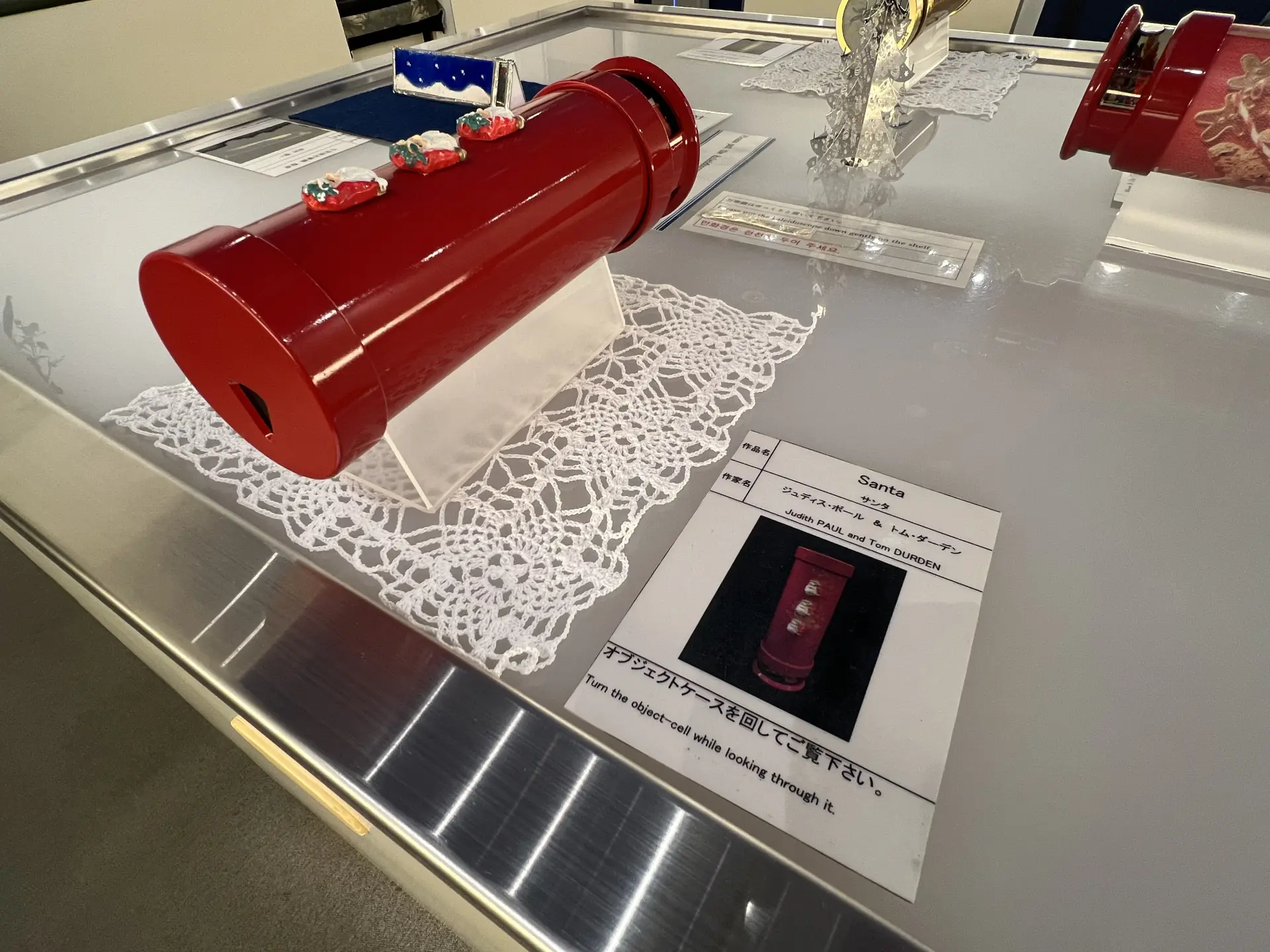
This visit took place in December 2025. The exhibition at that time was themed “Enjoy Fall and Winter Through Kaleidoscopes,” and visitors could feel autumn through mushroom-shaped kaleidoscopes and winter through pieces inspired by Santa Claus and snow.
Here is the mushroom-shaped kaleidoscope.
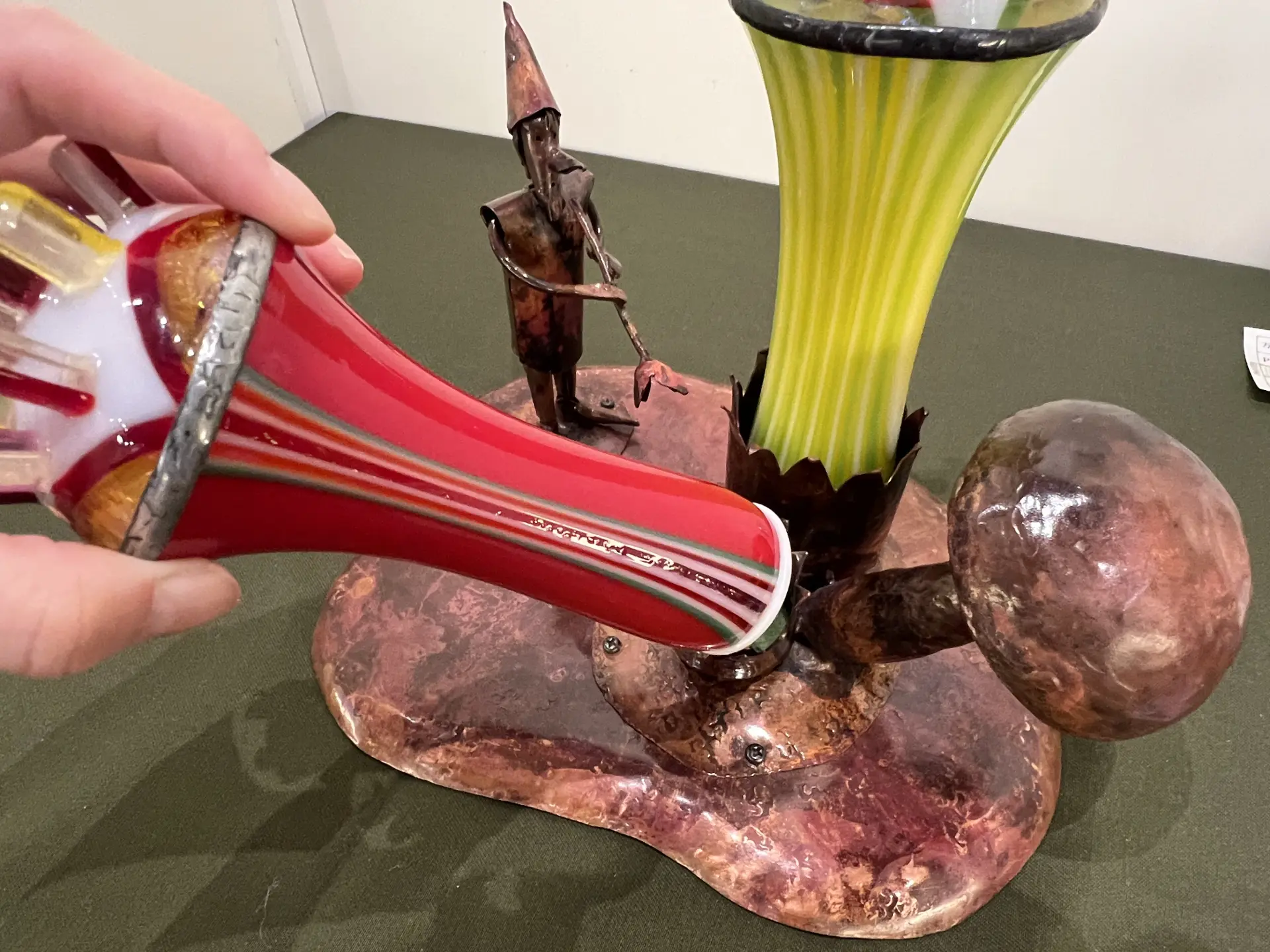
Several kaleidoscopes were set in a stand, and when you picked one up, looked inside, and turned the body, a beautiful image appeared. The body is made of glass.
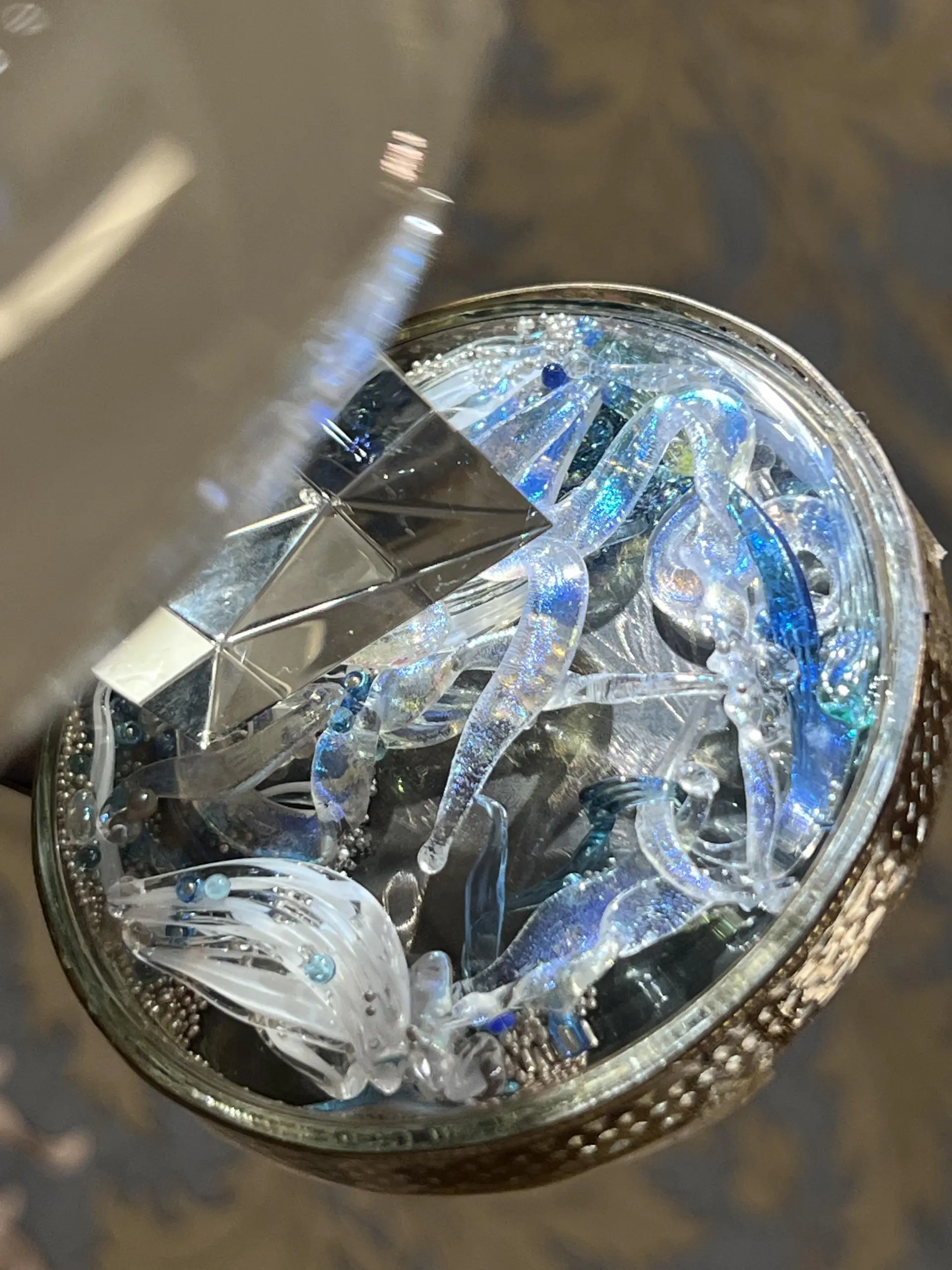
This kaleidoscope, inspired by rolled snow, also uses object glass in blue and white gradations.
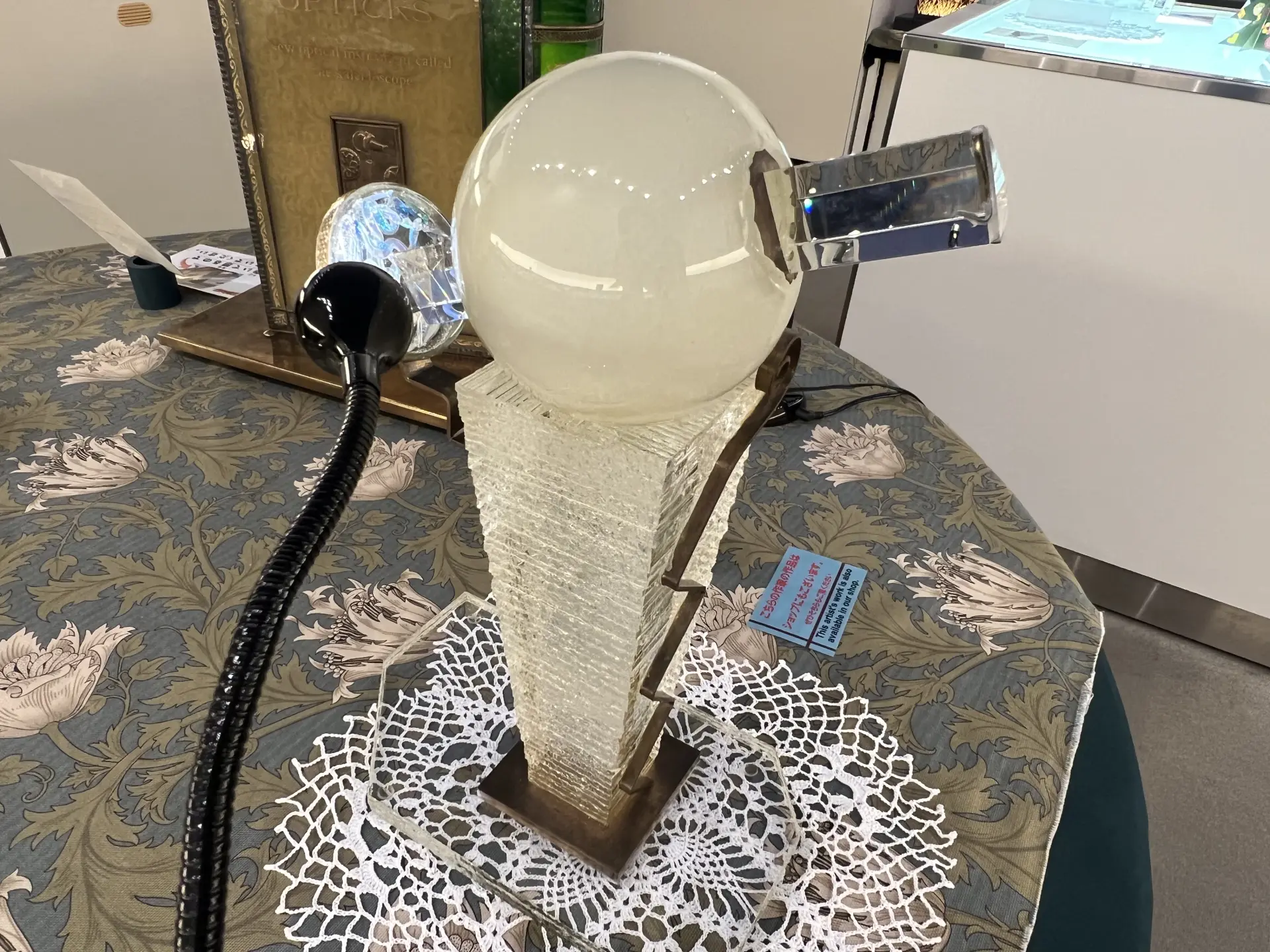
The image it produced was also mysterious and beautiful.
There were also kaleidoscopes with interesting bodies. At first I thought a book was on display... but this too was actually a kaleidoscope.
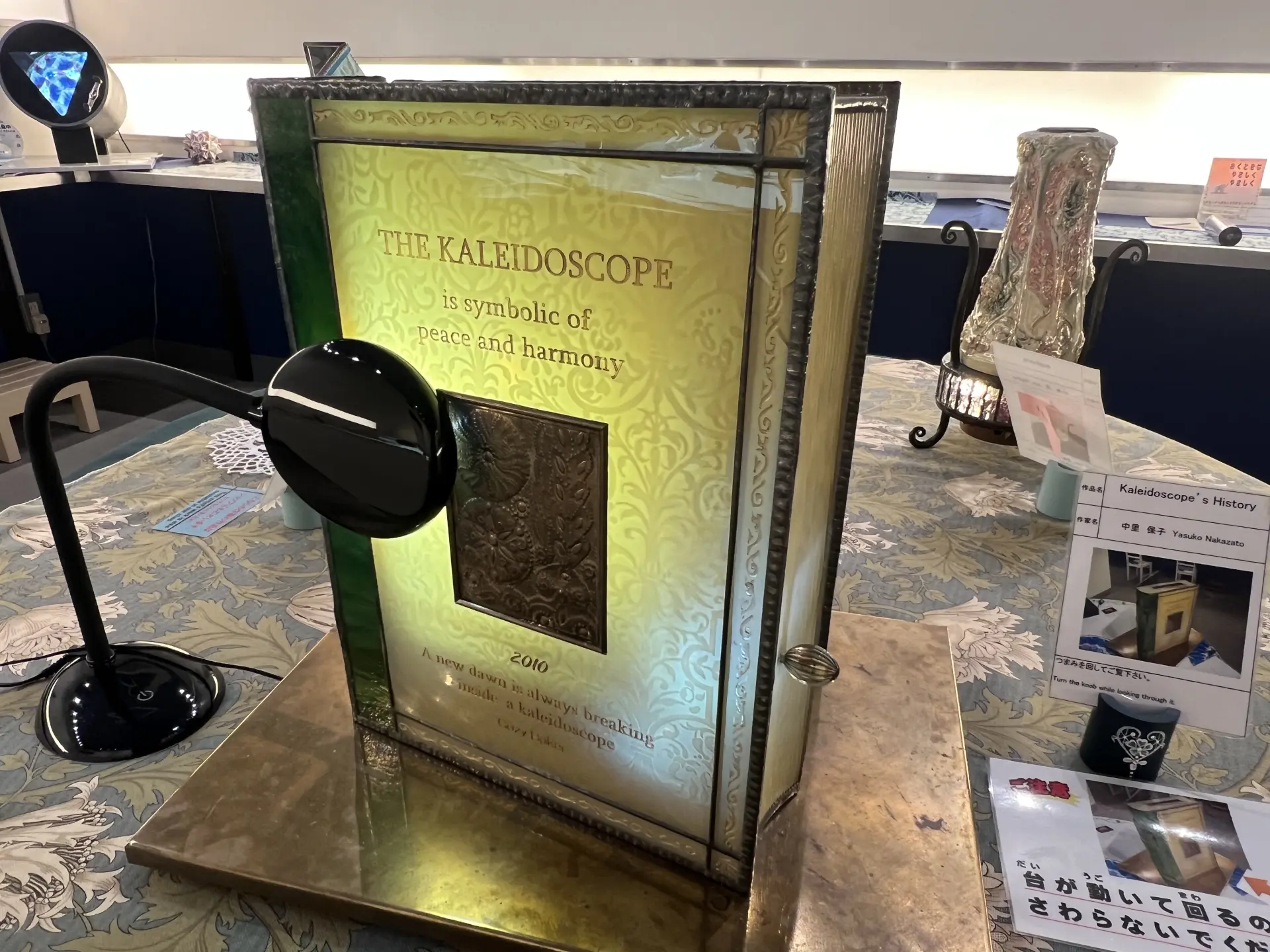
If you look at the top edge of the book, you can see the image through a gap. It has a handle, and when you turn it, the image changes.
Near the entrance to the exhibition room stood a large jar about the size of a child. It is a Kyo ware jar. And yes, this too is a kaleidoscope. A ceramic kaleidoscope of this size is said to be extremely rare even in the world.
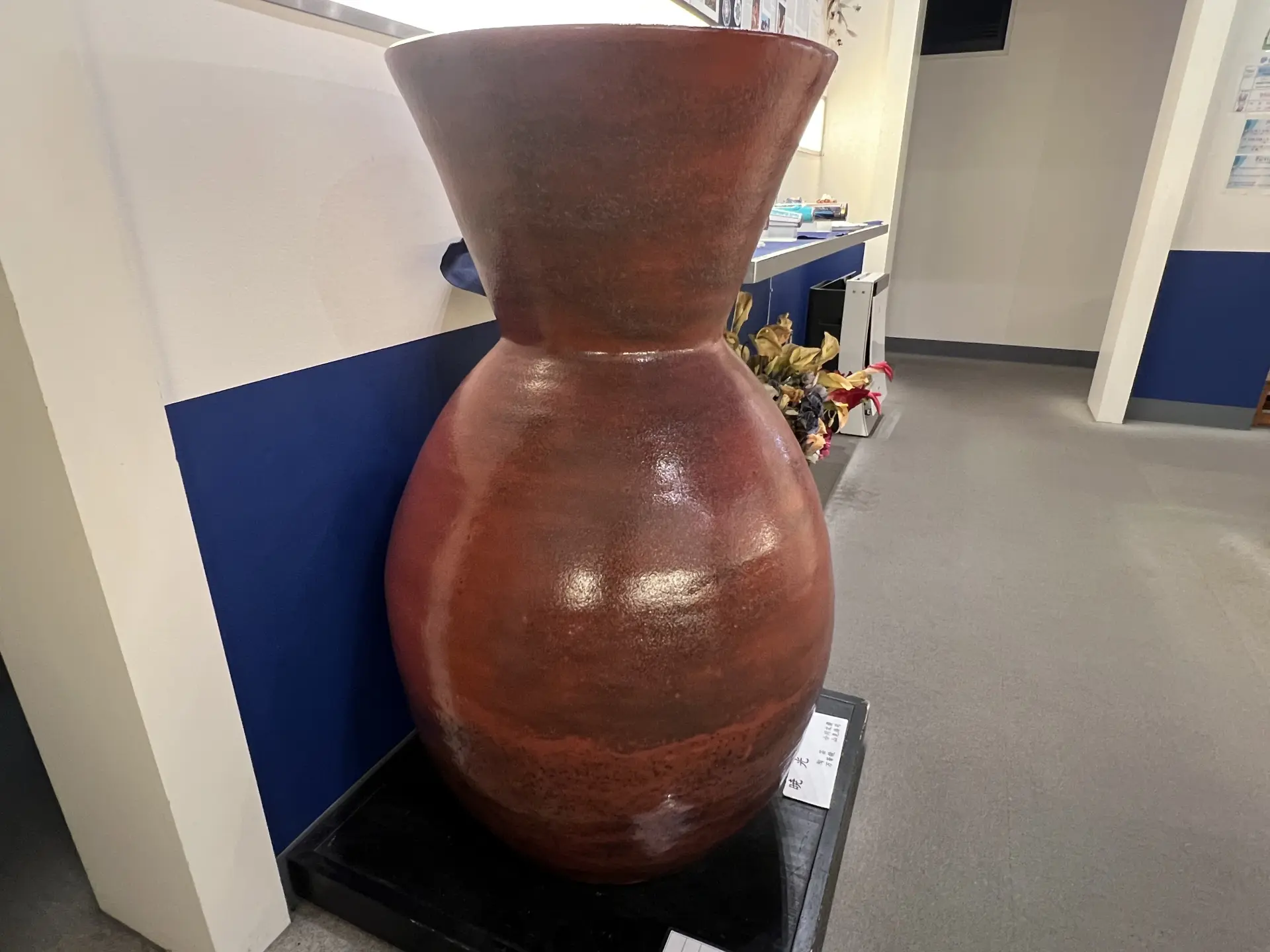
Looking inside the jar, you can see a hole through which the image is visible.
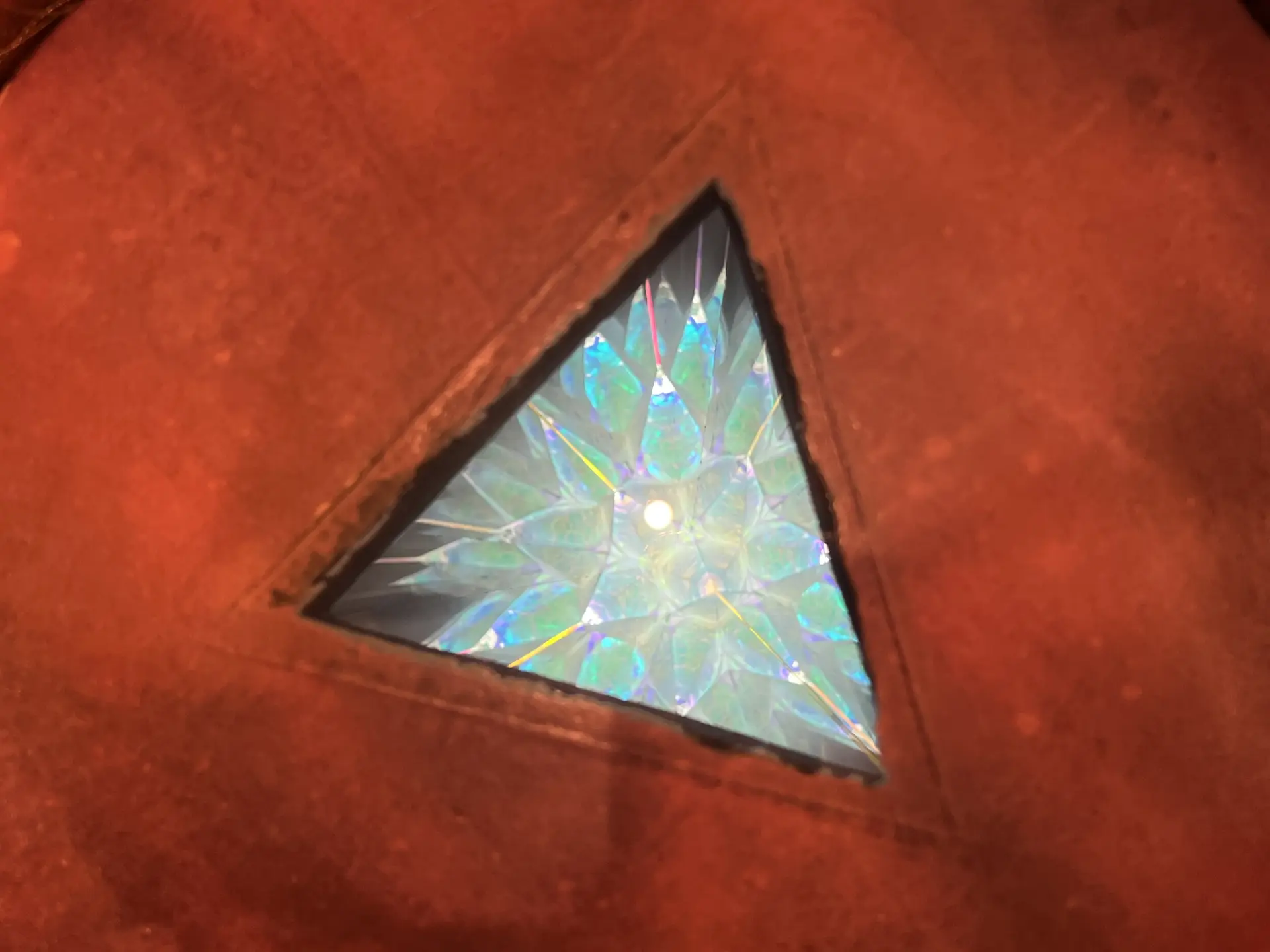
These works conveyed the artists’ desire to surprise and delight people not only through the image, but also through the body itself.
When people think of kaleidoscopes, they usually imagine tubular “toys” that you turn by hand while looking inside, but the delicate craftsmanship of Japanese kaleidoscopes, with such attention paid not only to the image but also to the body, makes them true works of art. Some even function as music boxes or have fascinating mechanisms, making these displays both moving and thought-provoking. I also learned from the curator that many kaleidoscope bodies are made of glass or ceramics, and many kaleidoscope artists are glass artists or ceramicists.
Photography is not allowed inside the exhibition room. Please follow the rules and enjoy the displays. There is also a photo-friendly area, so try taking pictures of the beautiful kaleidoscope images there.
Even if you take your time, it takes only about 30 minutes to see the exhibition. It is a great place to enjoy between sightseeing spots in Kyoto!
Kaleidoscope-Making Workshop
After seeing so many wonderful kaleidoscopes, why not try making one yourself? Here, you can make two types of kaleidoscopes: dry type and oil type. This time, I tried making a dry-type kaleidoscope. If you speak to a staff member, you can purchase a kaleidoscope kit sold at the museum. Staff will also teach you how to make it right there, and on the day of the visit I saw school trip students taking part. Of course, many international visitors join as well, so guidance in English is available. If you visit this museum, this is definitely something you should try.
(1) Dry-Type Kaleidoscope Kit
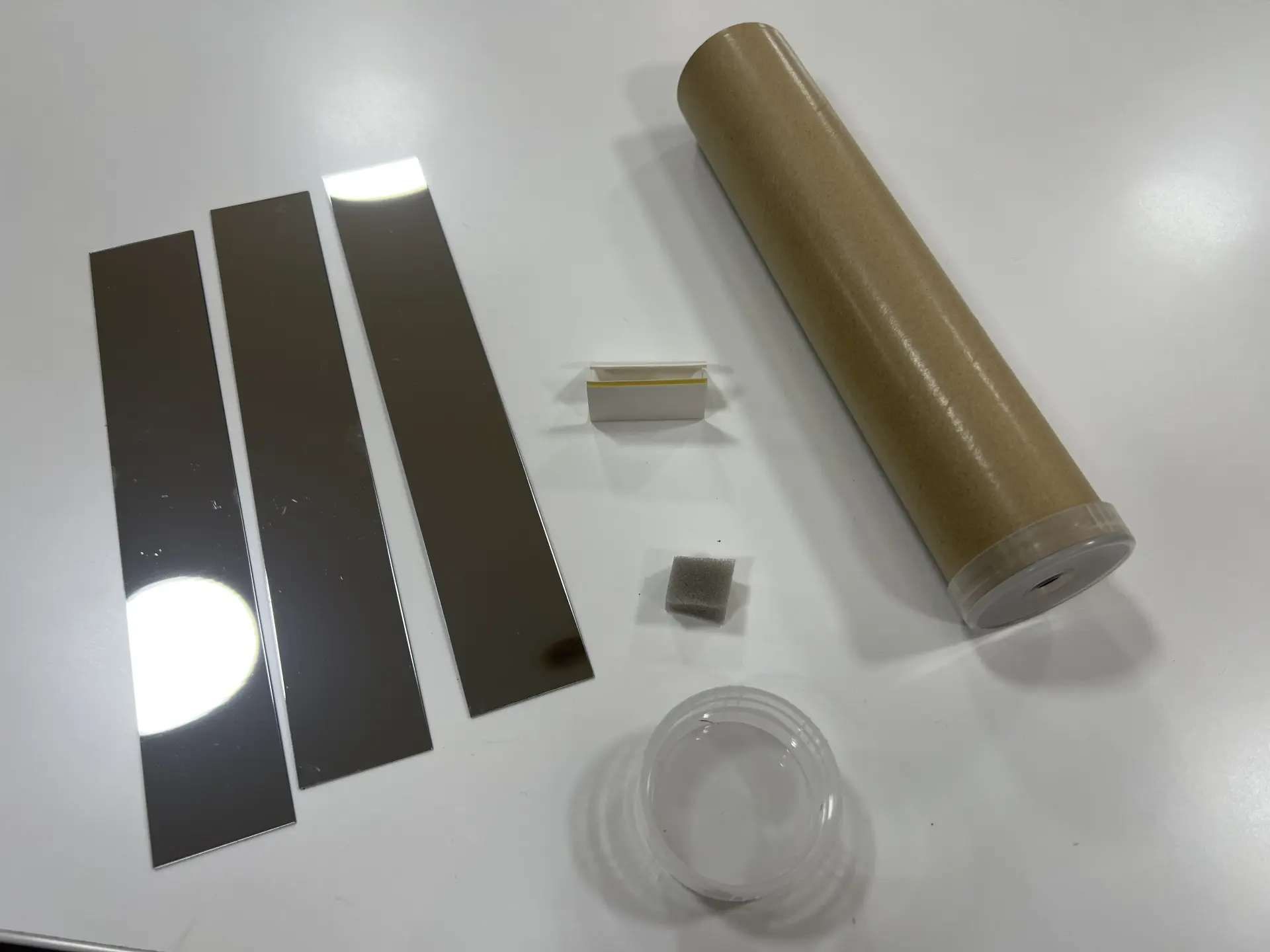
After purchasing it, I was given a dry-type kaleidoscope kit. It included the tube for the main body, three double-sided mirrors, a sponge, stickers, and an object case for beads and other items that create the kaleidoscope pattern.
(2) Cut the Stickers
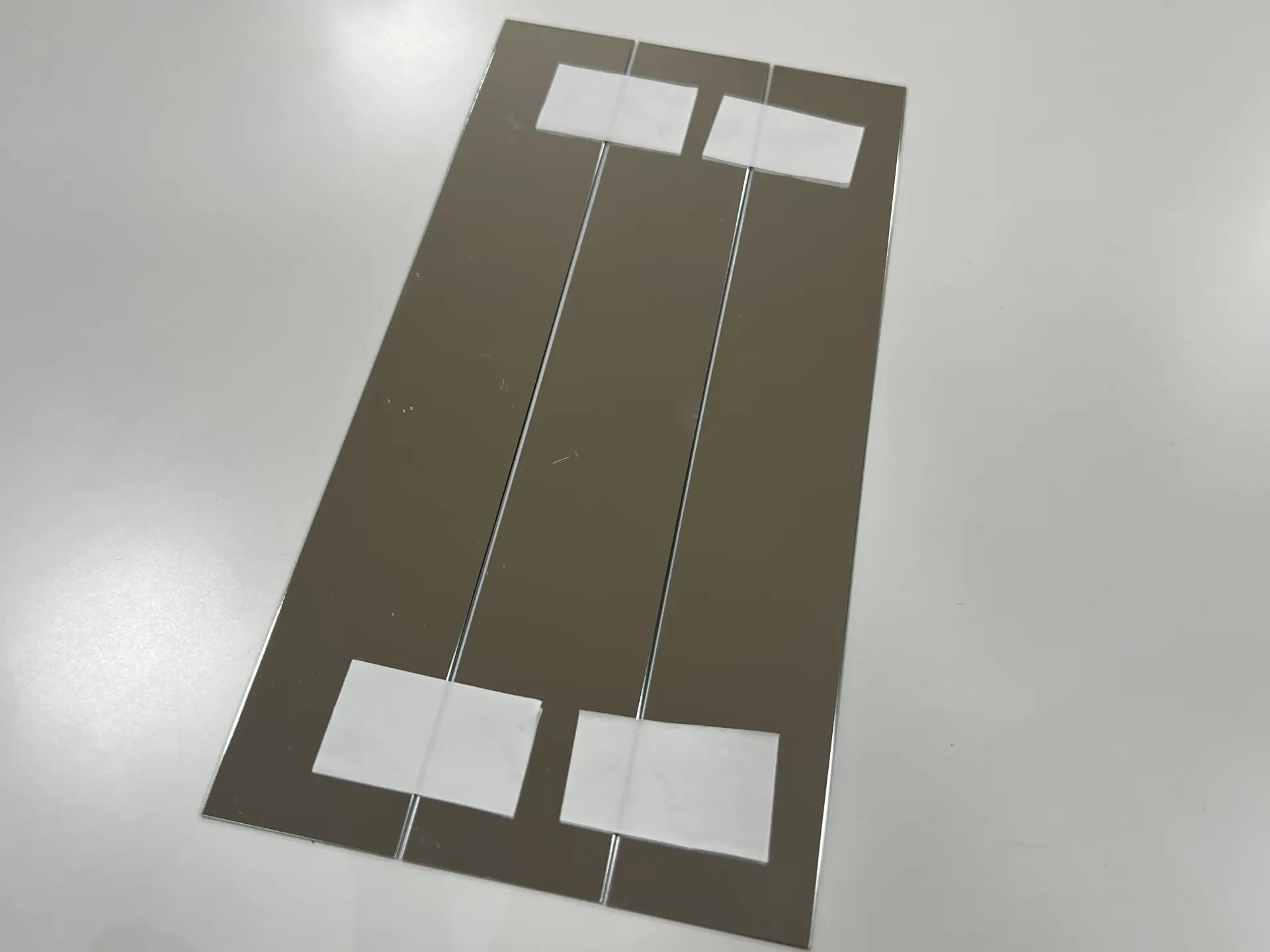
First, divide the folded sticker sheet into six equal parts along the fold lines. These will be used later in the step where the three mirrors are attached together.
(3) Attach the Mirrors Together
Next, attach the three mirrors together. Each mirror has a front and a back, and the front has a blue protective film on it. The back is the exposed mirror surface. Place the three mirrors in a row with the back sides facing upward. The key points are to align both the top and bottom evenly and to attach them with a gap of about 1 mm or slightly less between each mirror. The stickers should be placed about 2–3 mm away from the edge of the mirrors. With some help from the staff, I attached all three together.
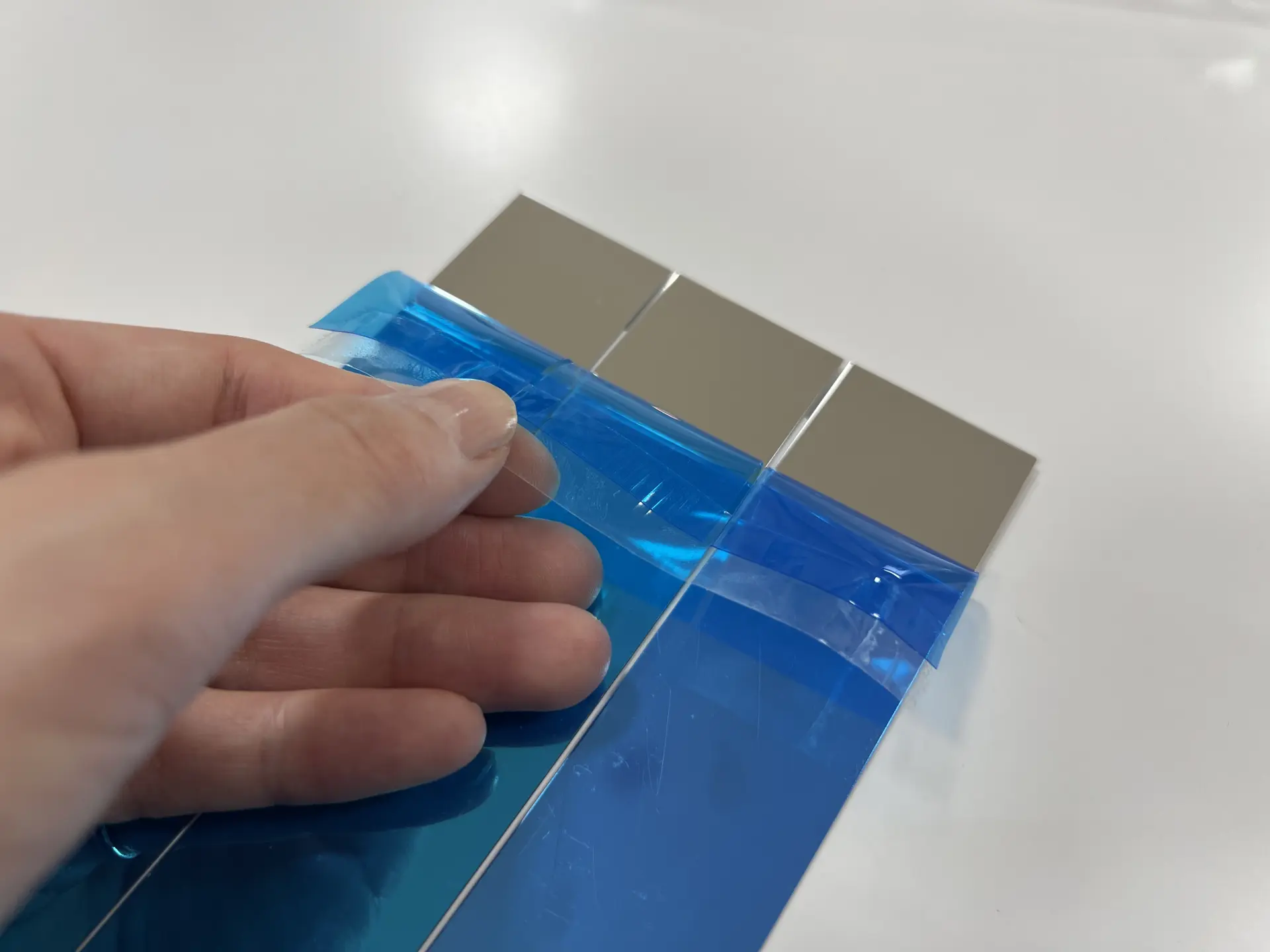
Next, turn the assembled piece over. This brings the side with the protective film to the front. Carefully peel off the protective film. The one thing you absolutely must not do here is leave fingerprints. The side that had the protective film will become the inside of the kaleidoscope, so if it gets dirty, the image will not come out beautifully. Be careful to avoid that.
(4) Make an Equilateral Triangle
Hold the back side of the mirrors so you do not leave fingerprints, fold the mirrors inward, and assemble them into an equilateral triangle. Then secure them with tape.
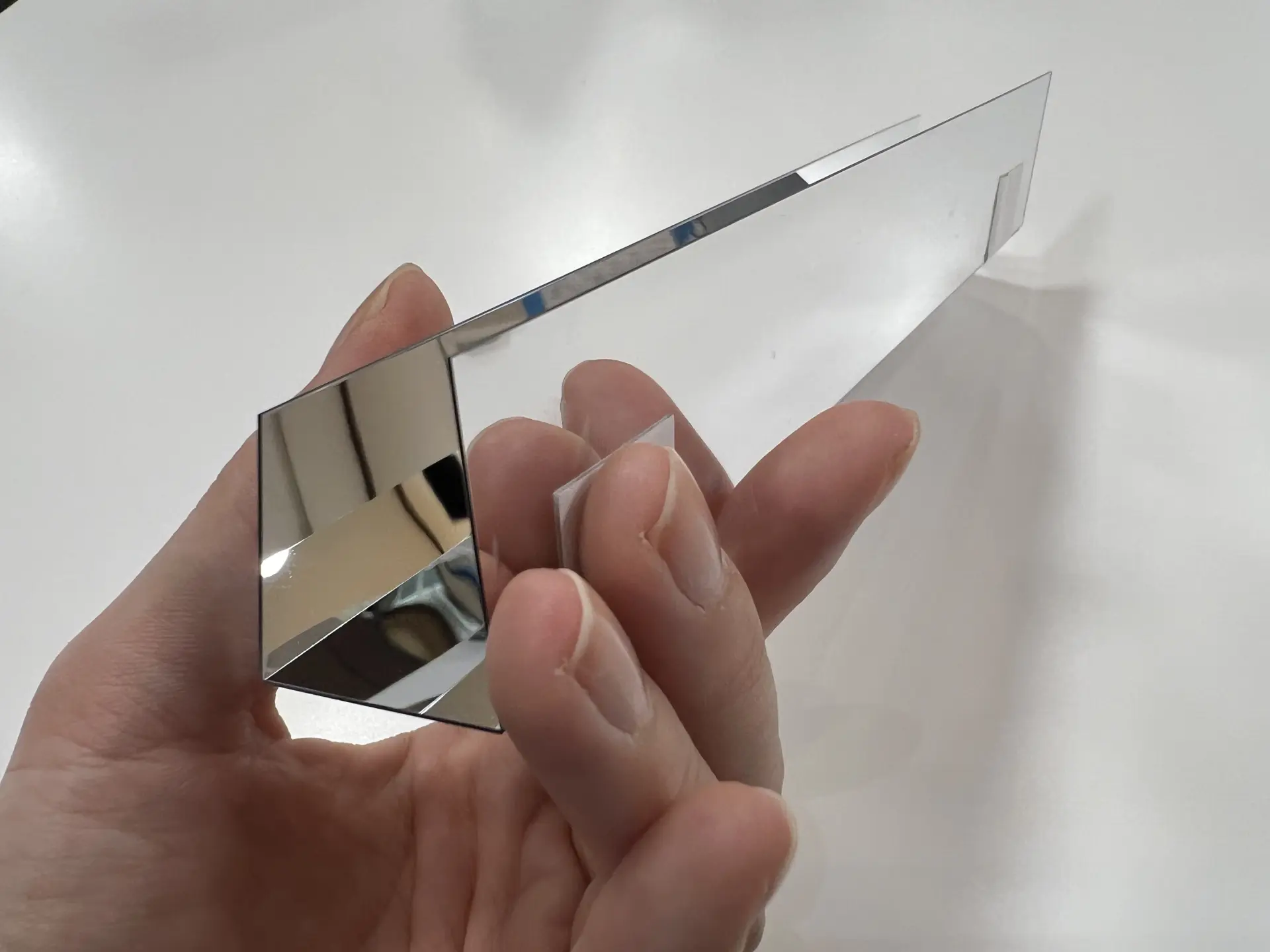
When you look inside, you will see a pattern of repeating equilateral triangles. The closer this triangle is to a true equilateral triangle, the more beautiful the resulting image will be, so when securing the mirrors with tape, try to make the triangle as precise as possible.
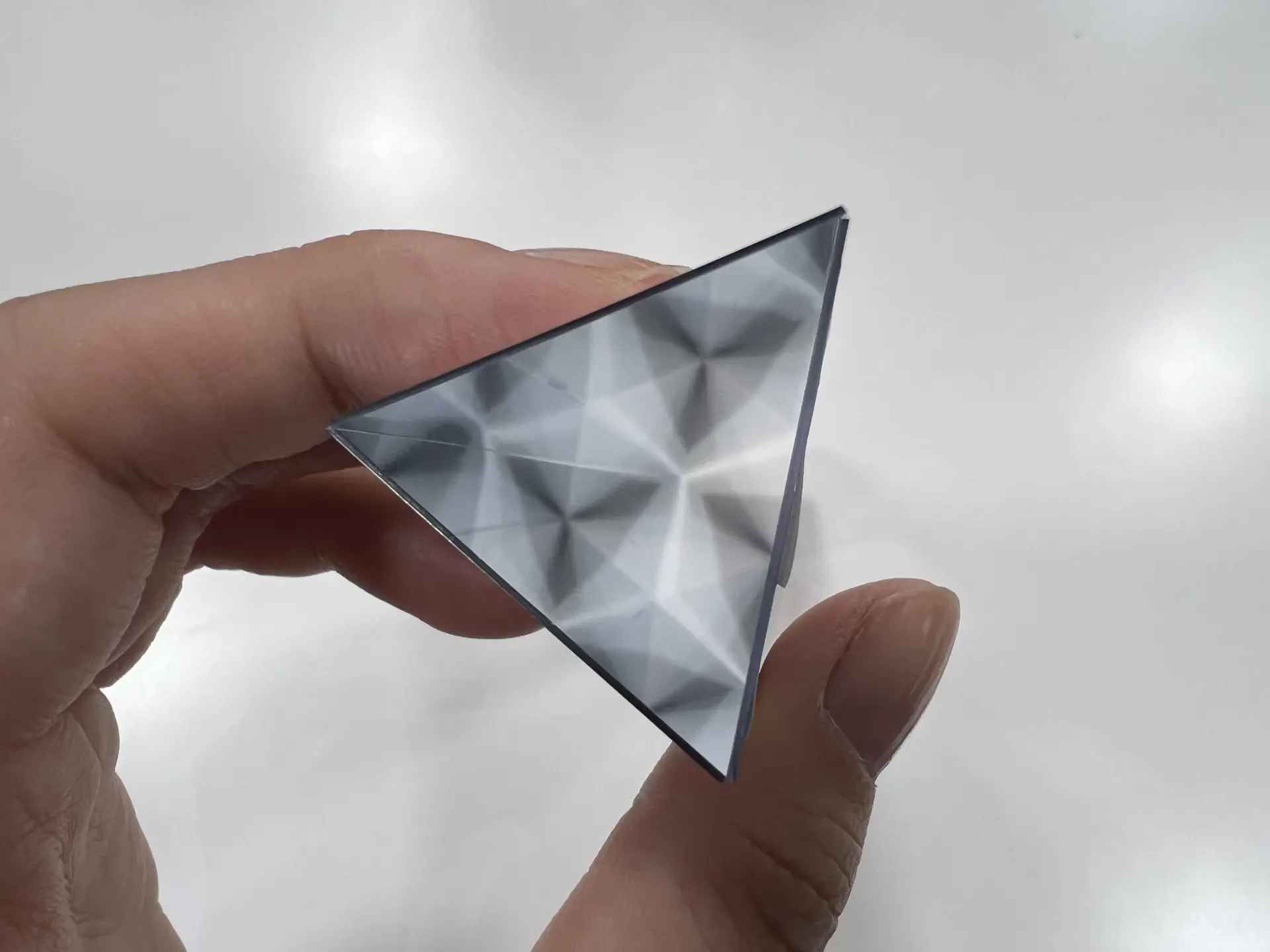
(5) Attach the Sponge
Next, attach the sponge to one spot on the mirror.
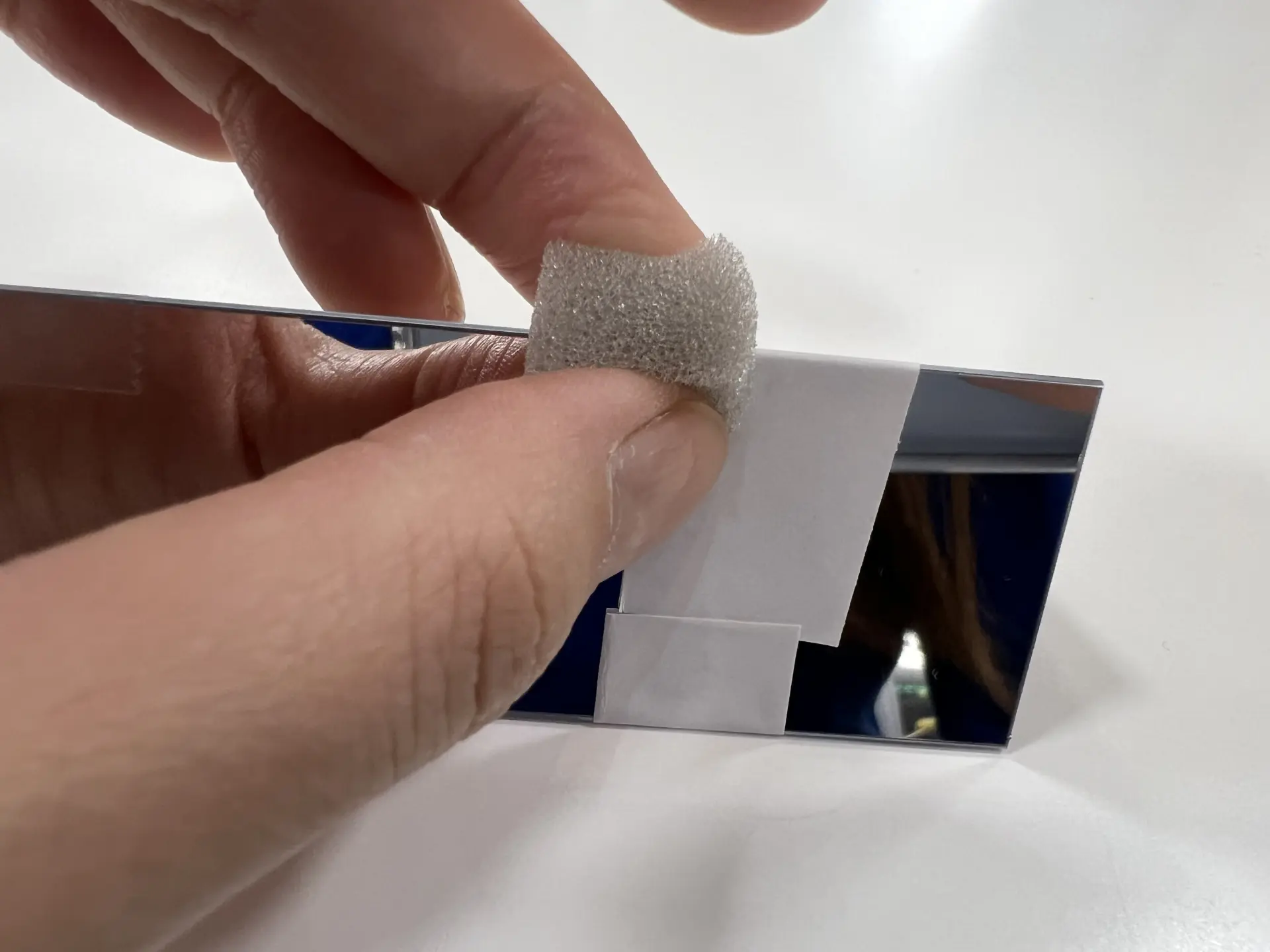
This helps keep the mirror fixed in place when inserted into the kaleidoscope tube. It acts as a stopper.
(6) Insert the Mirrors into the Main Tube
Next, place the mirrors inside the main tube of the kaleidoscope.
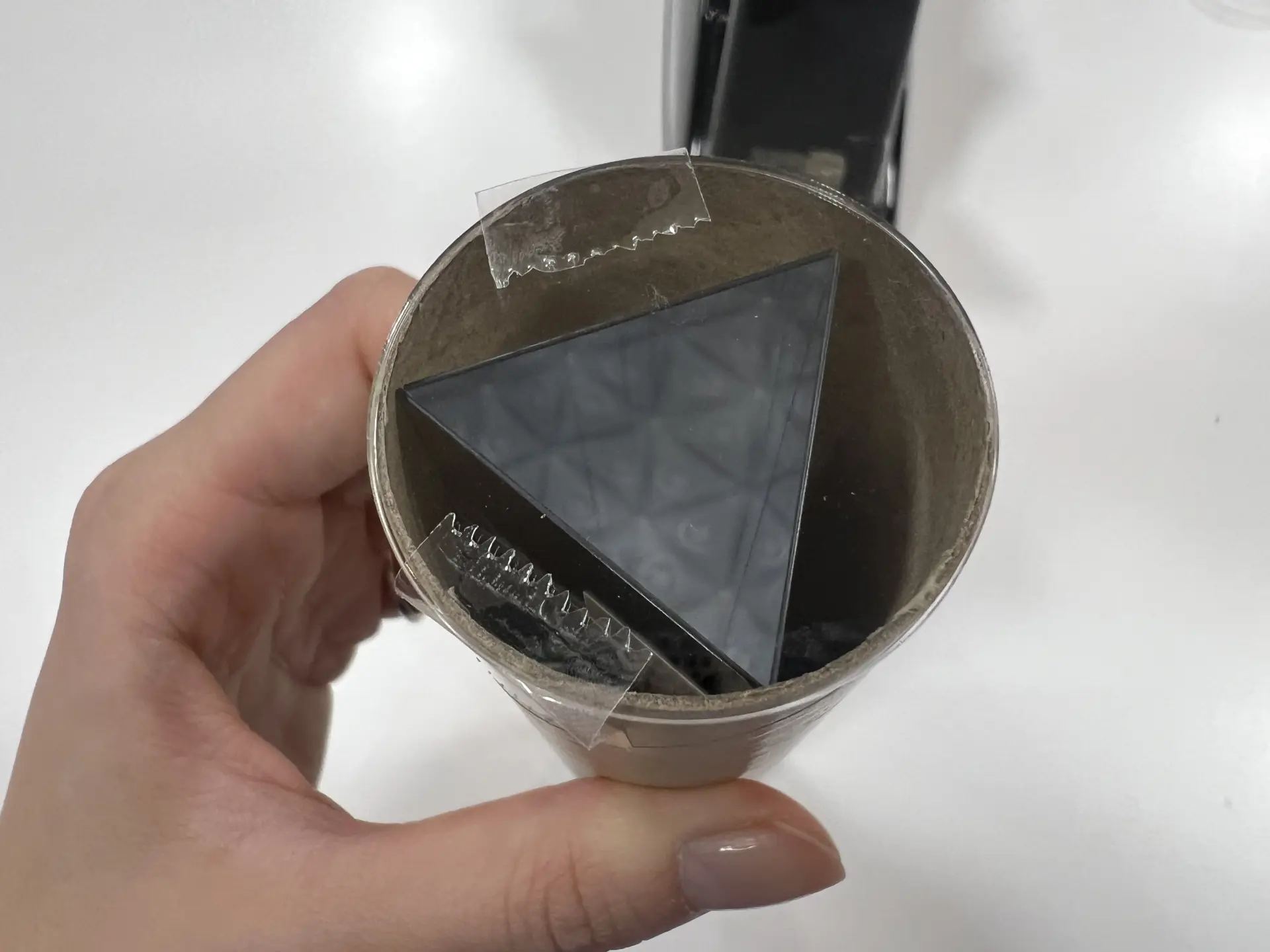
Again, be careful not to touch the inside surface of the mirrors.
(7) Choose the Objects
What kind of image your kaleidoscope creates depends on the objects inside. Next, choose things like beads and clips. You can pick your favorites from the small divided packets.
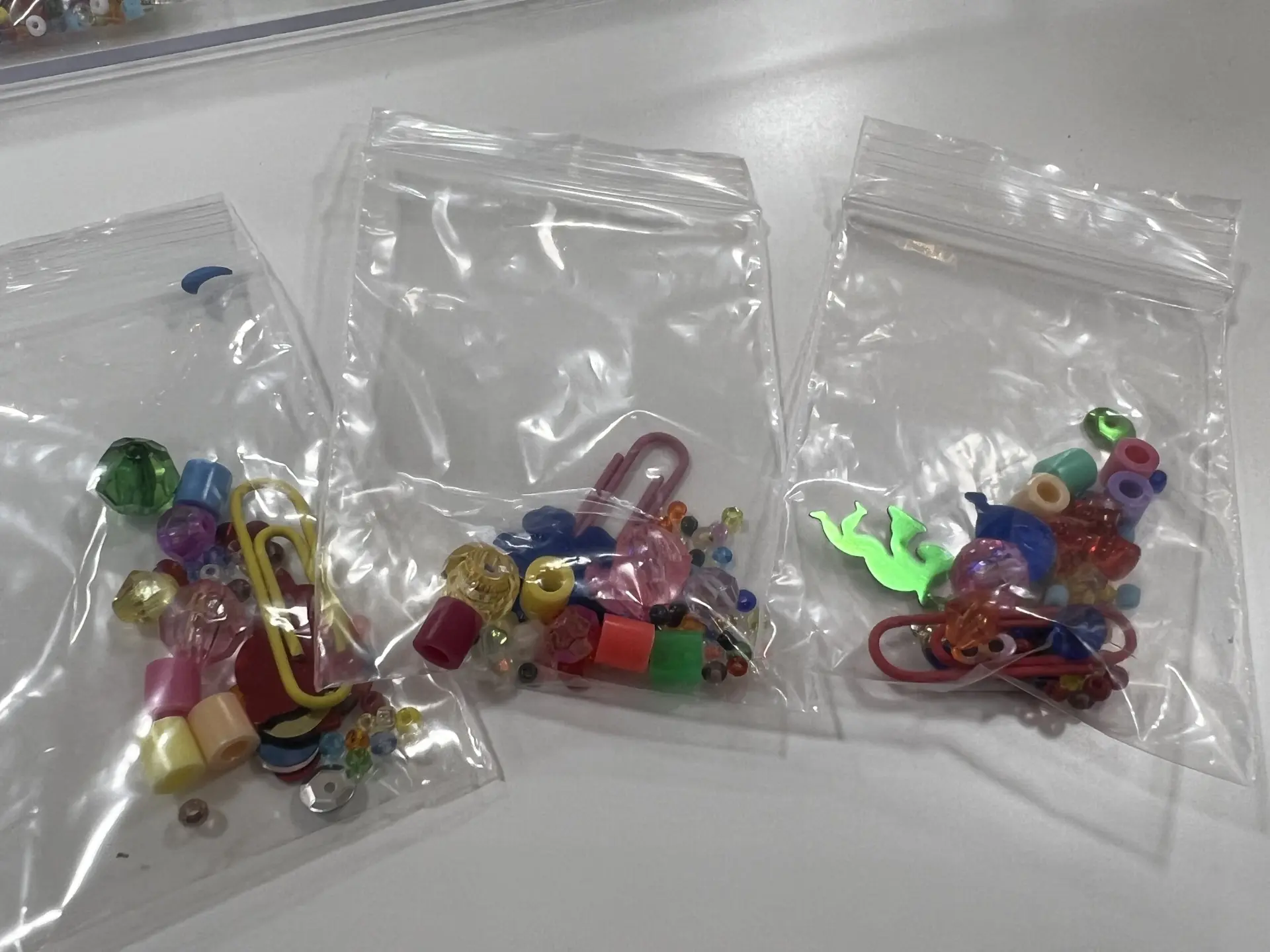
When I asked the staff, they told me that clips and large beads stand out more clearly in the image, and that using a variety of shapes and colors creates more variation. This time, I chose eye-catching clips and large beads in my favorite colors, red and pink. By the way, these objects can be replaced later, so once you get home, you can swap them out for ones you like better if you want. Recommended objects include cellophane, seashells, flowers such as dried flowers, leaves, pebbles, sea glass, flyers or advertising paper, and colored paper. Try adding different shapes and colors and have fun experimenting.
(8) Put the Objects into the Object Case
Open the small bag and put all of the objects into the object case.
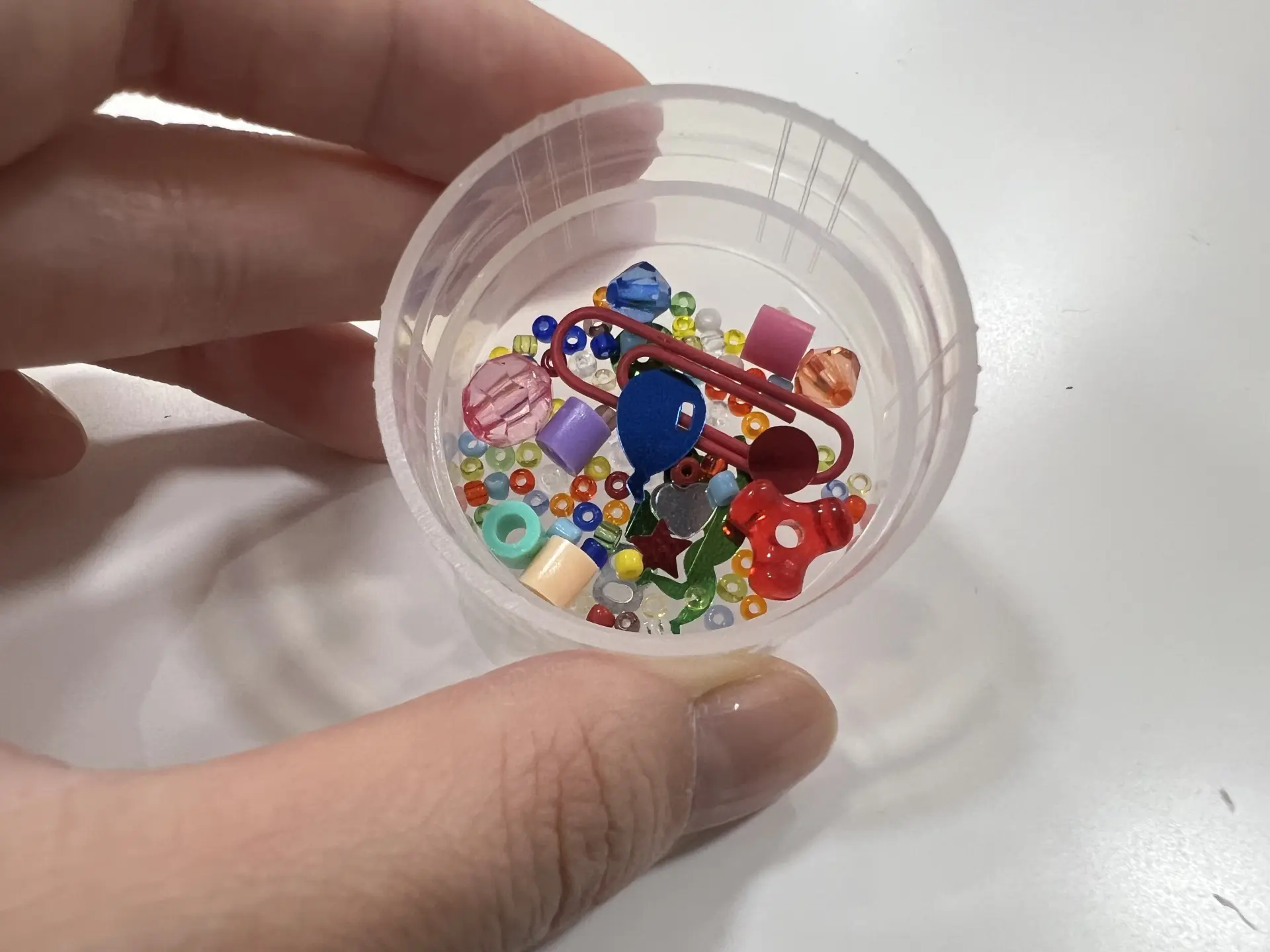
(9) Attach It
Attach the object case to the main body.
(10) Wrap Origami Paper Around the Main Body
Next, wrap origami paper around the tube. You can choose whichever design you like. Pick your favorite from about 20 types of origami paper.
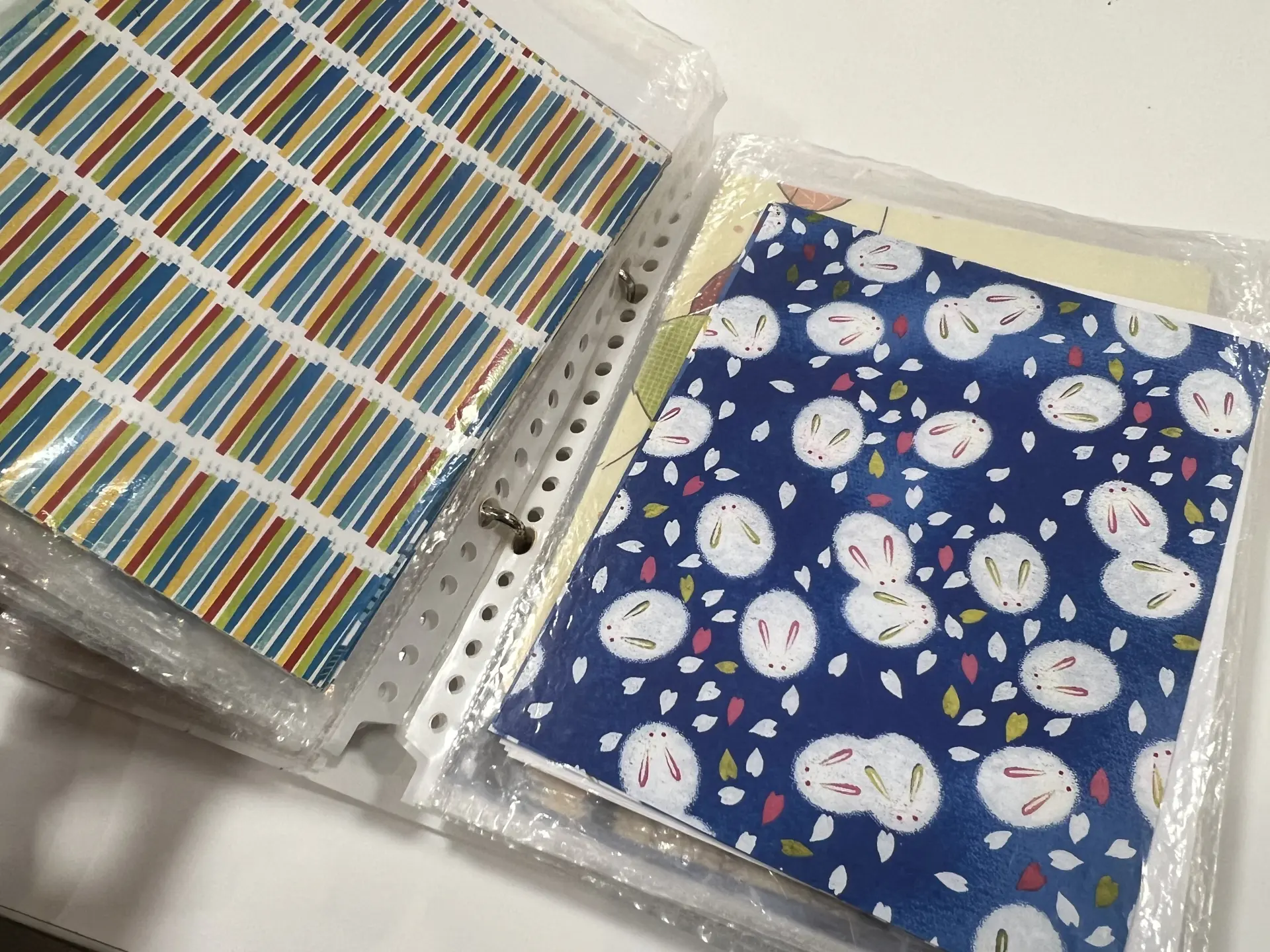
There was a wide variety, from Japanese-style patterns to designs printed with pop-style numbers. I was told that Japanese-style designs such as cherry blossoms and rabbits are especially popular, but after some hesitation, I chose an orange Japanese-style pattern with cherry blossoms and temari balls. Apply glue firmly to the back of the paper, wrap it around the main body, and it’s done!
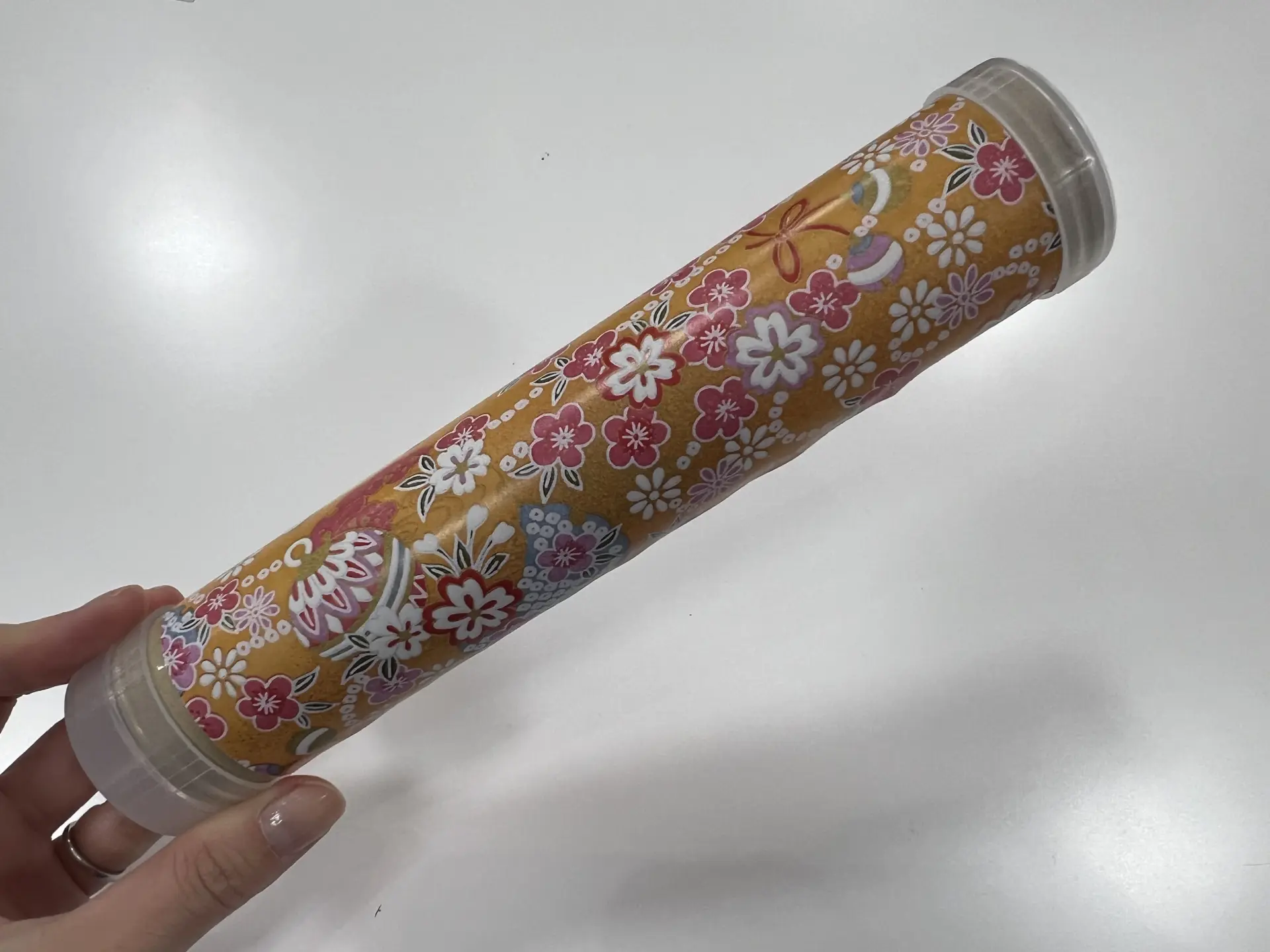
(11) Take a Look Inside!
When I looked inside... I had made a kaleidoscope with a lovely image! The red and pink stood out nicely, which made me happy.
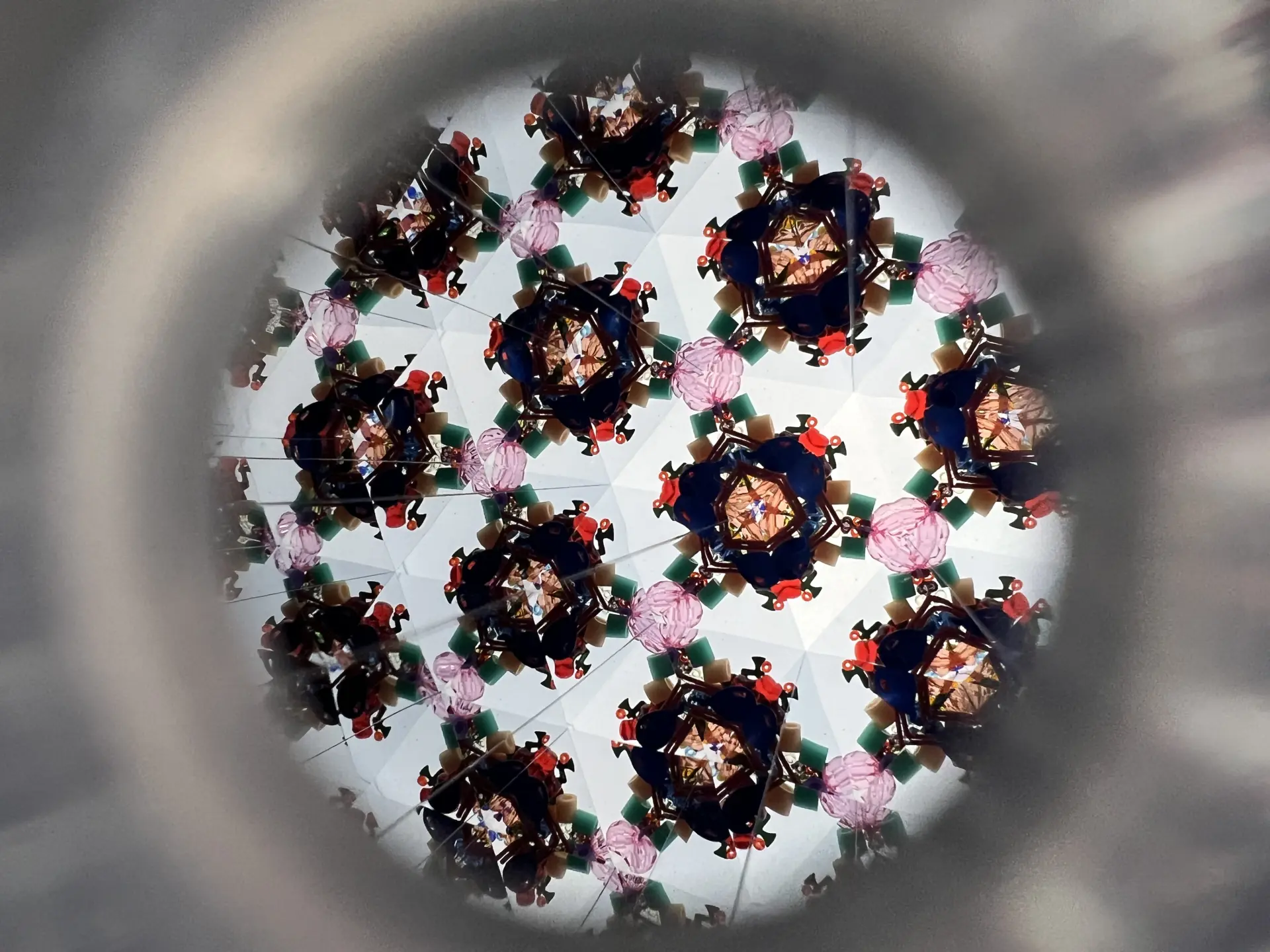
I used objects of different shapes too, so it showed different expressions every time I turned it by hand. You do not often get the chance to make a kaleidoscope yourself, so I was surprised by how easy it was. It takes about 30 minutes. Since the image changes completely depending on the objects, it also sounds fun to try this with friends or in a group and then exchange kaleidoscopes to compare the results.
This time, I made a dry-type kaleidoscope, but oil-type kits are also available, and if you purchase one, the staff will teach you how to make it as well. One thing to note is that with the dry type, you can still change the objects later by adding different beads and other items after taking it home, but with the oil type, the objects are placed in glycerin, so they cannot be changed afterward. As for the difference in the images, the dry type changes smoothly and quickly, while the oil type changes more slowly because the objects move through a viscous liquid.
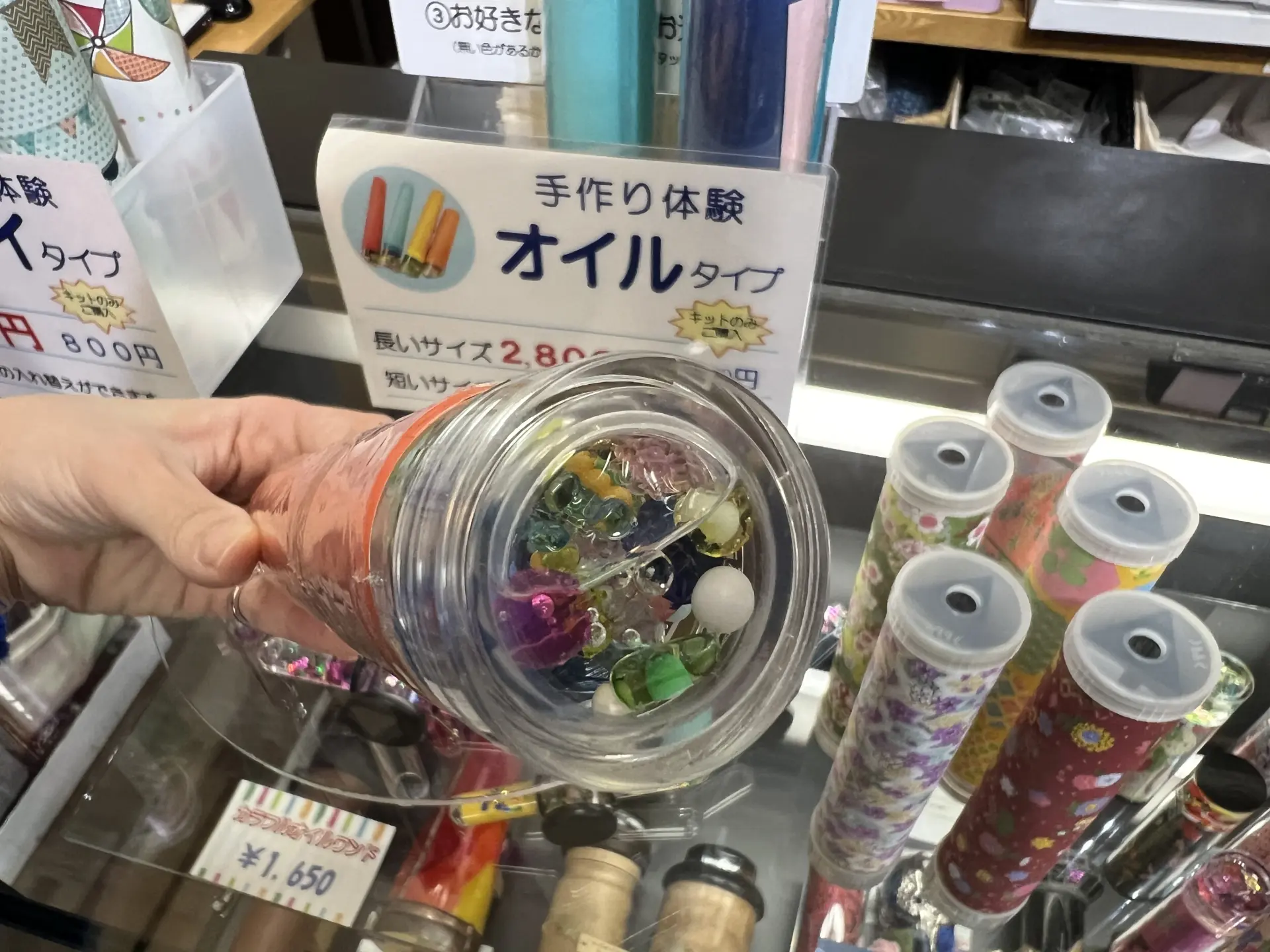
You can be shown samples when purchasing, so it may be a good idea to decide which one to make based on the kind of image each creates.
- Dry type: 950 yen (lecture fee included)
- Oil type: long kaleidoscope 2,800 yen, short kaleidoscope 2,900 yen
Buy Souvenirs at the Museum Shop!
You can also purchase a kaleidoscope you like. The shop sells kaleidoscopes made by kaleidoscope artists as well as original Kyoto Kaleidoscope Museum kaleidoscopes.
They also sell mini kaleidoscopes that double as keychains, and all of them are priced under 1,000 yen, making them easy souvenirs to pick up. (Prices are as of the December 2025 visit.)
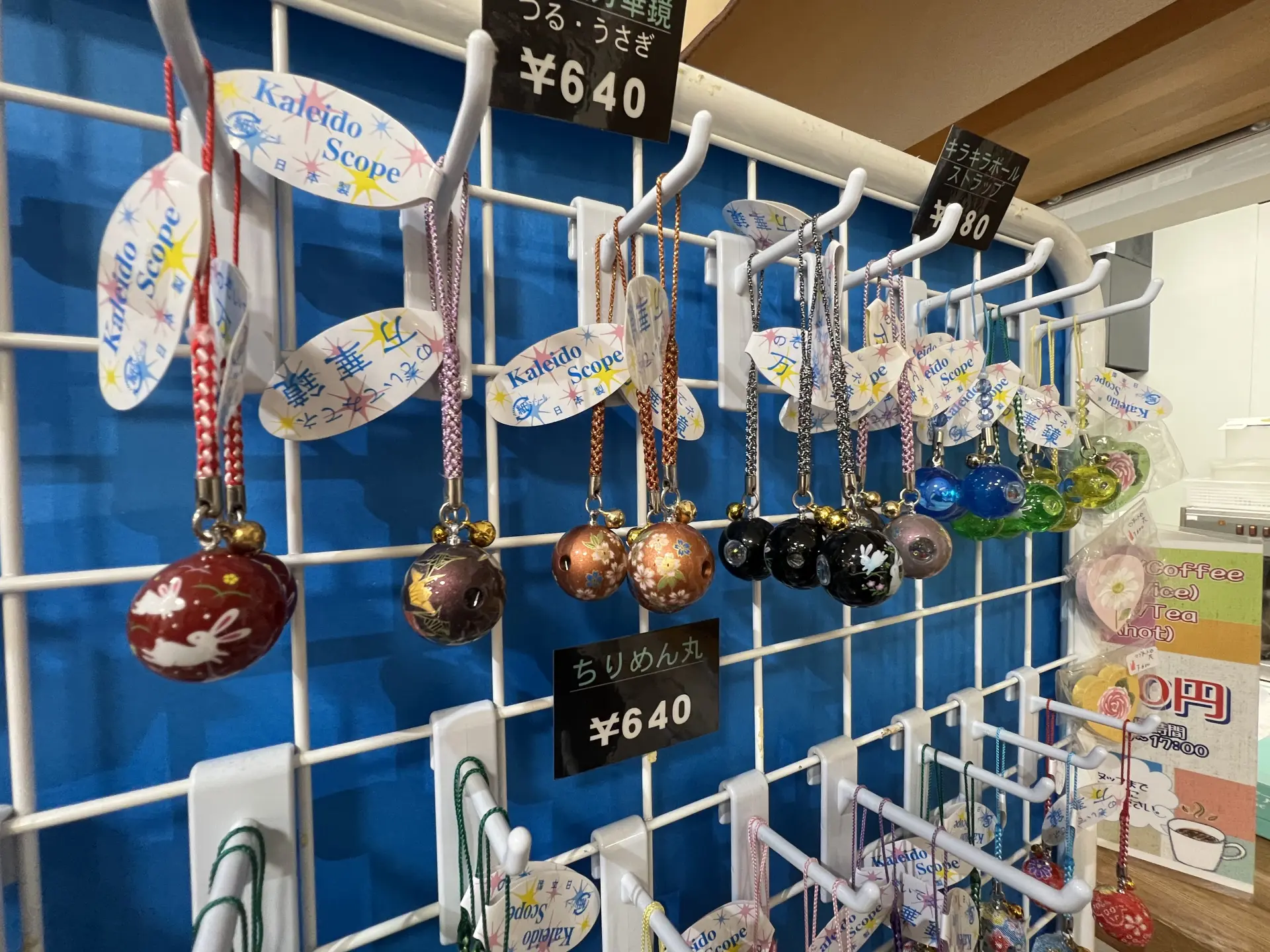
Most are made in Japan, and the most popular ones are said to be the vegetable-shaped kaleidoscopes.
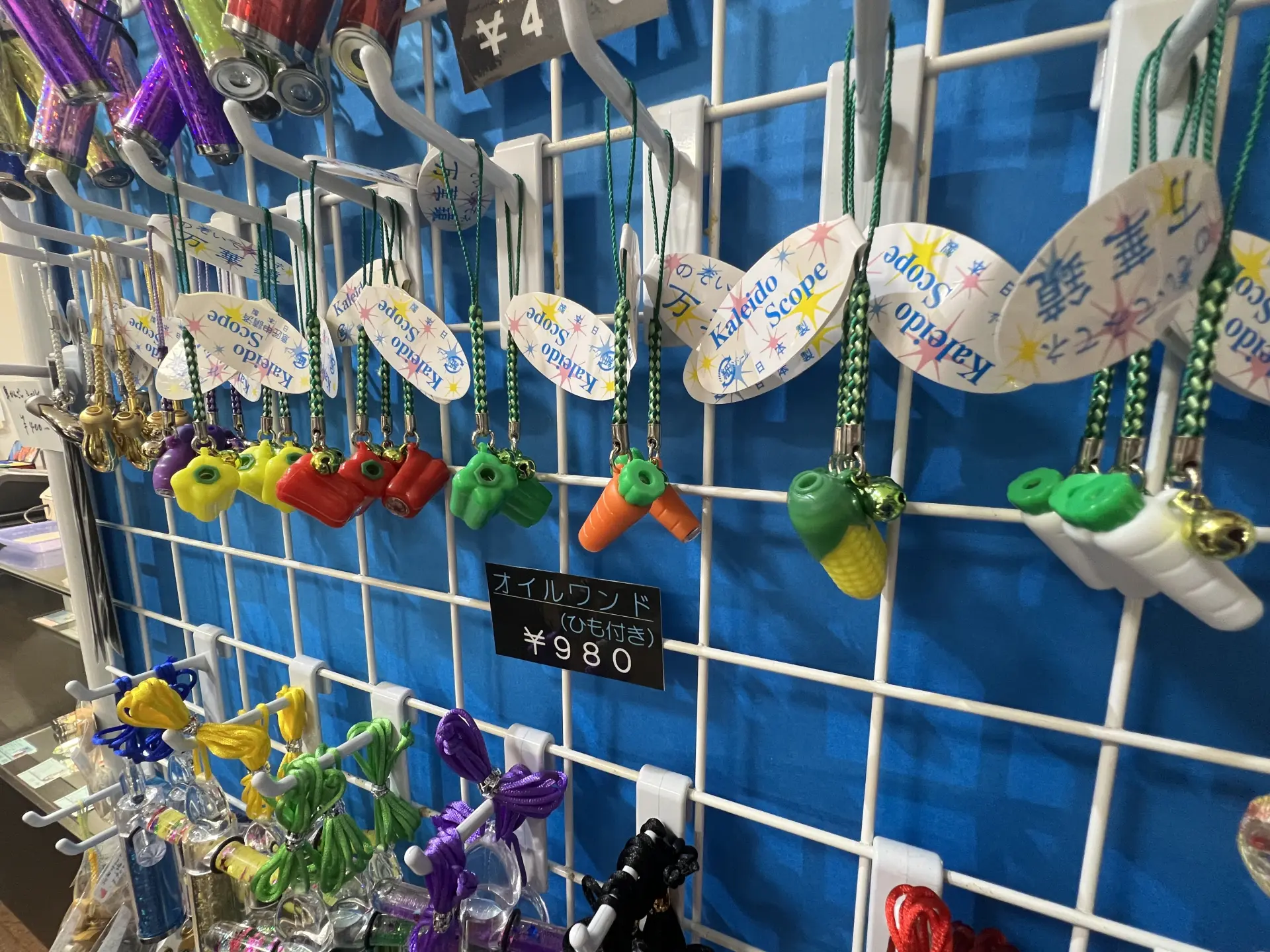
I tried looking inside one, and it was just as beautiful as a standard kaleidoscope. They would be great attached to a wallet or bag, and they also make perfect souvenirs for friends and family. Highly recommended!
Don’t Miss the Projection Kaleidoscope Shown Every Hour on the Hour!
If you visit this museum, one thing you should not miss is the projection kaleidoscope, which starts every hour on the hour from 11:00am to 5:00pm.
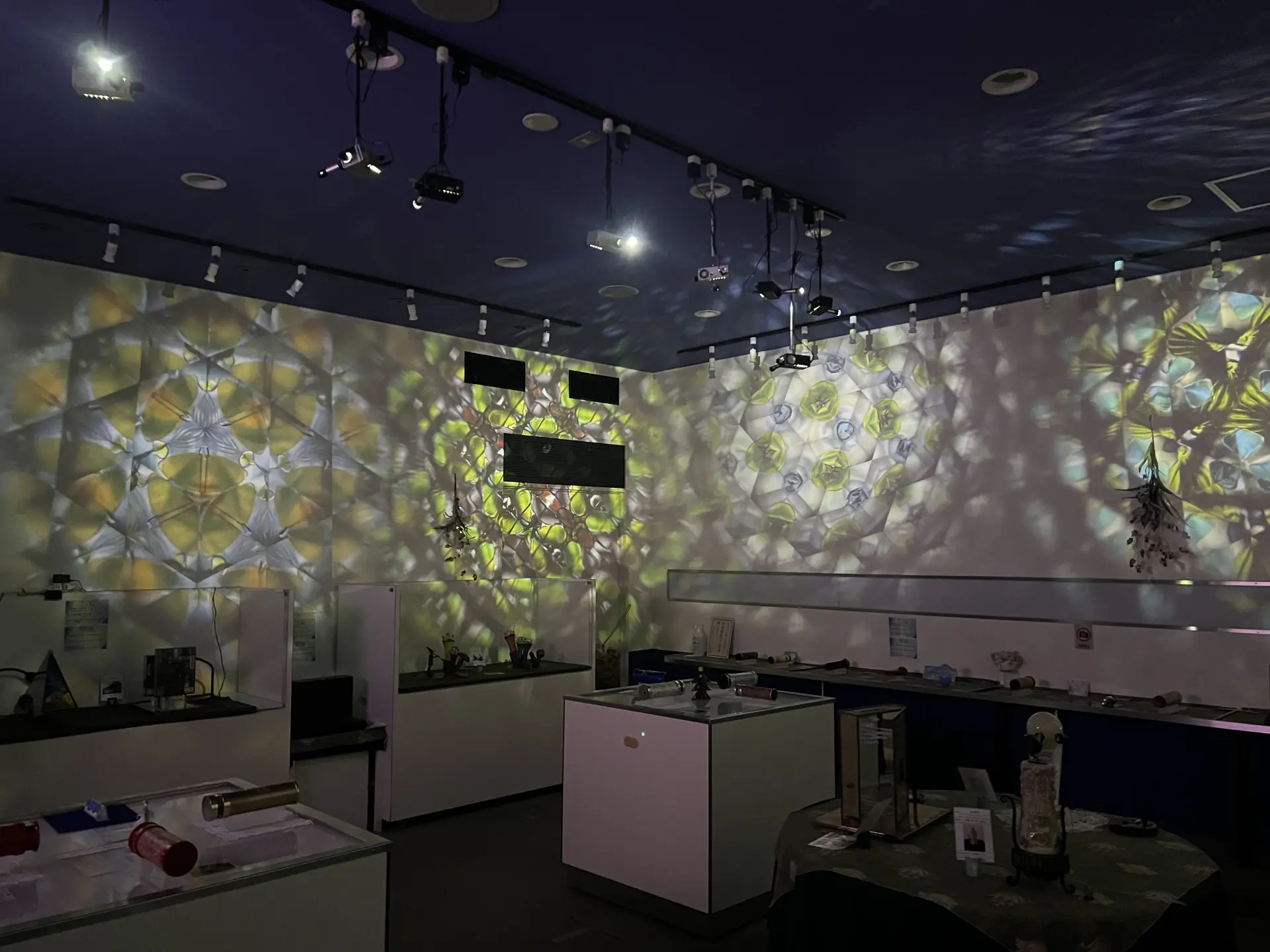
Inside the exhibition room, a projector displays kaleidoscope images across an entire wall. Even more impressively, each of the ceiling-mounted devices is itself a kaleidoscope, rotating by motor, and live images are projected onto the wall by shining light from behind.
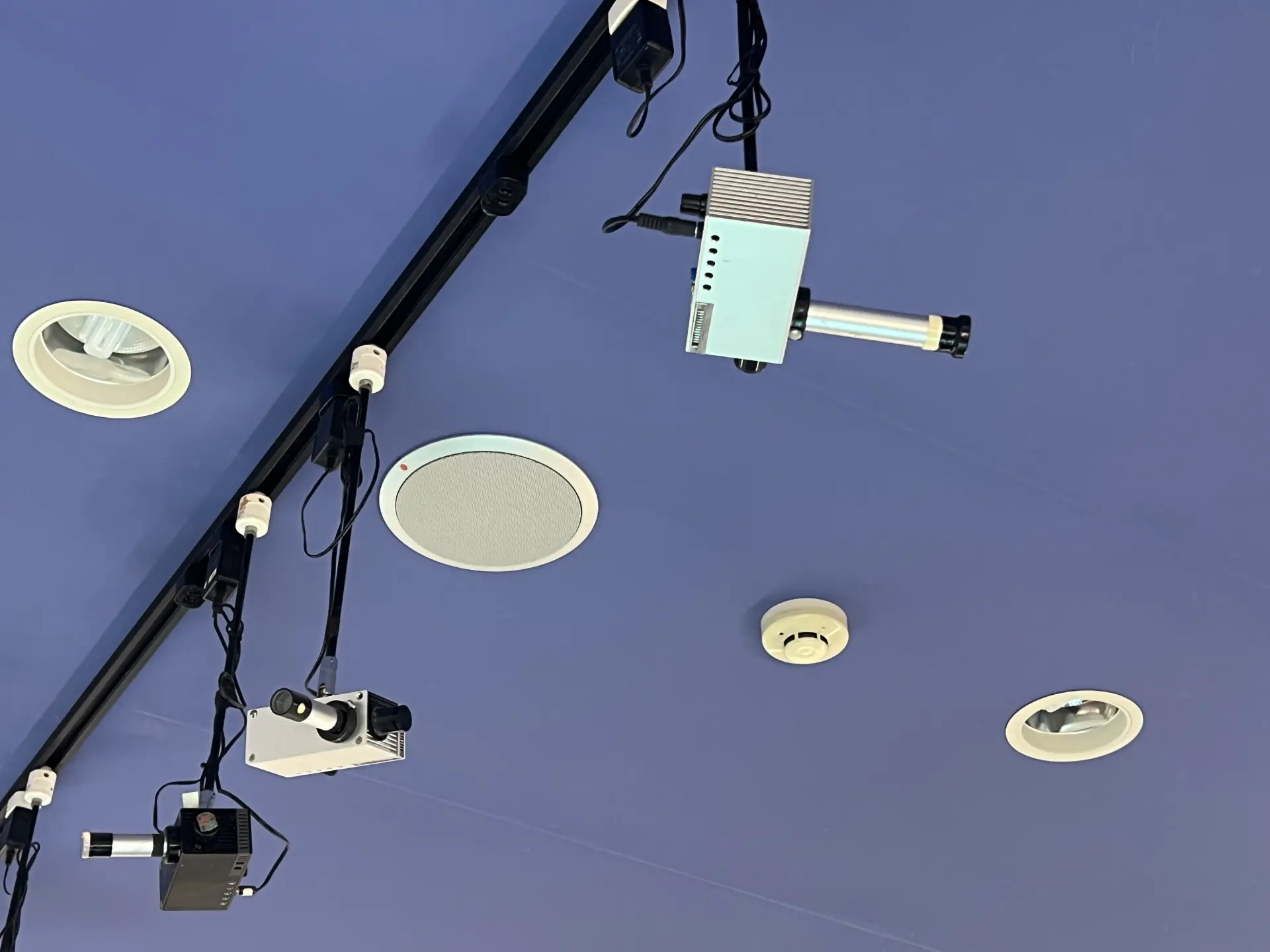
The projection lasts about 3 minutes. It offers an immersive experience, almost as if you have stepped inside a kaleidoscope, and I highly recommend it.
There’s Also a Cafeteria
After enjoying the world of kaleidoscopes, you can take a relaxing break at the on-site cafeteria. It currently serves coffee and tea. Be sure to stop by the café as well.
Summary
By learning the history, understanding the mechanism, and actually looking inside, perhaps the images created by kaleidoscopes now seem even more beautiful. The “beauty of a single moment” created by kaleidoscopes, which form a different world each time you turn them, sparks the imagination while also evoking a sense of infinity. Visiting the Kyoto Kaleidoscope Museum and actually handling kaleidoscopes made me realize once again that they are not just nostalgic toys, but richly expressive works of art. Another unique appeal of the museum is that through the hands-on workshop, you can truly feel the depth of the symmetry found in kaleidoscopes. If you visit Kyoto, be sure to pick up a kaleidoscope and immerse yourself in its beautiful world.

Author
Freelance Announcer
Sayaka Motomura
Focused on sharing insights related to traditional culture, performing arts, and history.