
So Real It Looks Edible! A Complete Guide to Japan’s Amazing Food Sample Craft
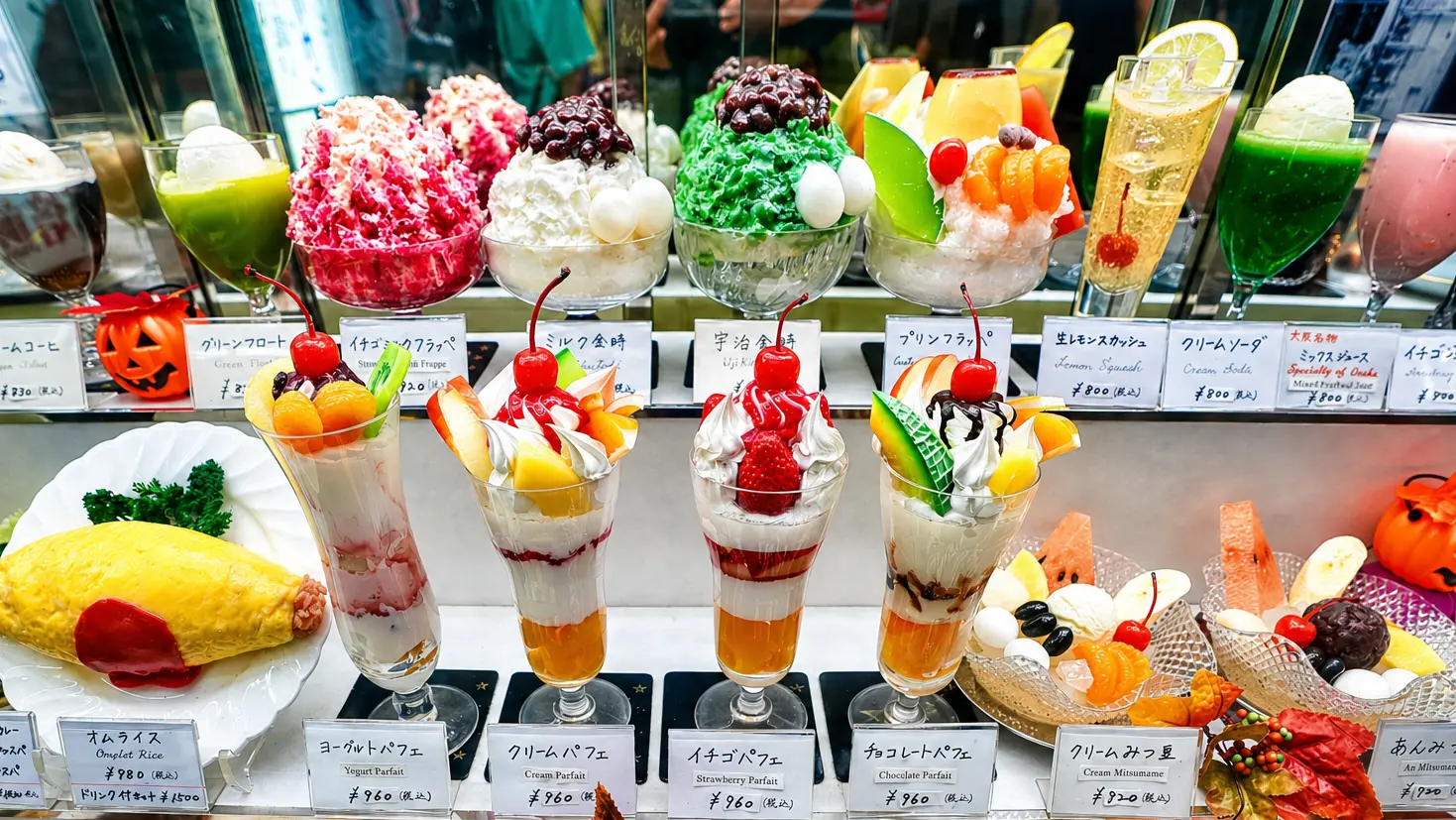
The menu models lined up in front of restaurants are called “food samples,” a culture that originated in Japan. They work like a visual menu, displayed outside restaurants so customers can tell at a glance what a dish is like and how large it is. With glossy textures and a three-dimensional look that almost seems to give off steam, they look incredibly real, but many are actually made from a synthetic resin called polyvinyl chloride. For more than 100 years, food samples have developed in Japan as a unique craft shaped by the delicate skills often associated with Japanese artisans. In recent years, however, there has been concern that these techniques could disappear as craftspeople grow older. In response, hands-on workshops have appeared to share the techniques and appeal of food samples, letting even beginners make their own. Today, food samples are no longer limited to restaurant displays.
What kinds of ideas and stories are hidden in the food samples we casually see every day? In this article, we explore the history and production process of food samples, and introduce facilities where you can experience their appeal for yourself. If you read this before coming to Japan and seeing food samples lined up in front of restaurants, you’ll likely appreciate just how impressive the craftsmanship is. Be sure to give it a read before sightseeing in Japan!
What Are Food Samples?
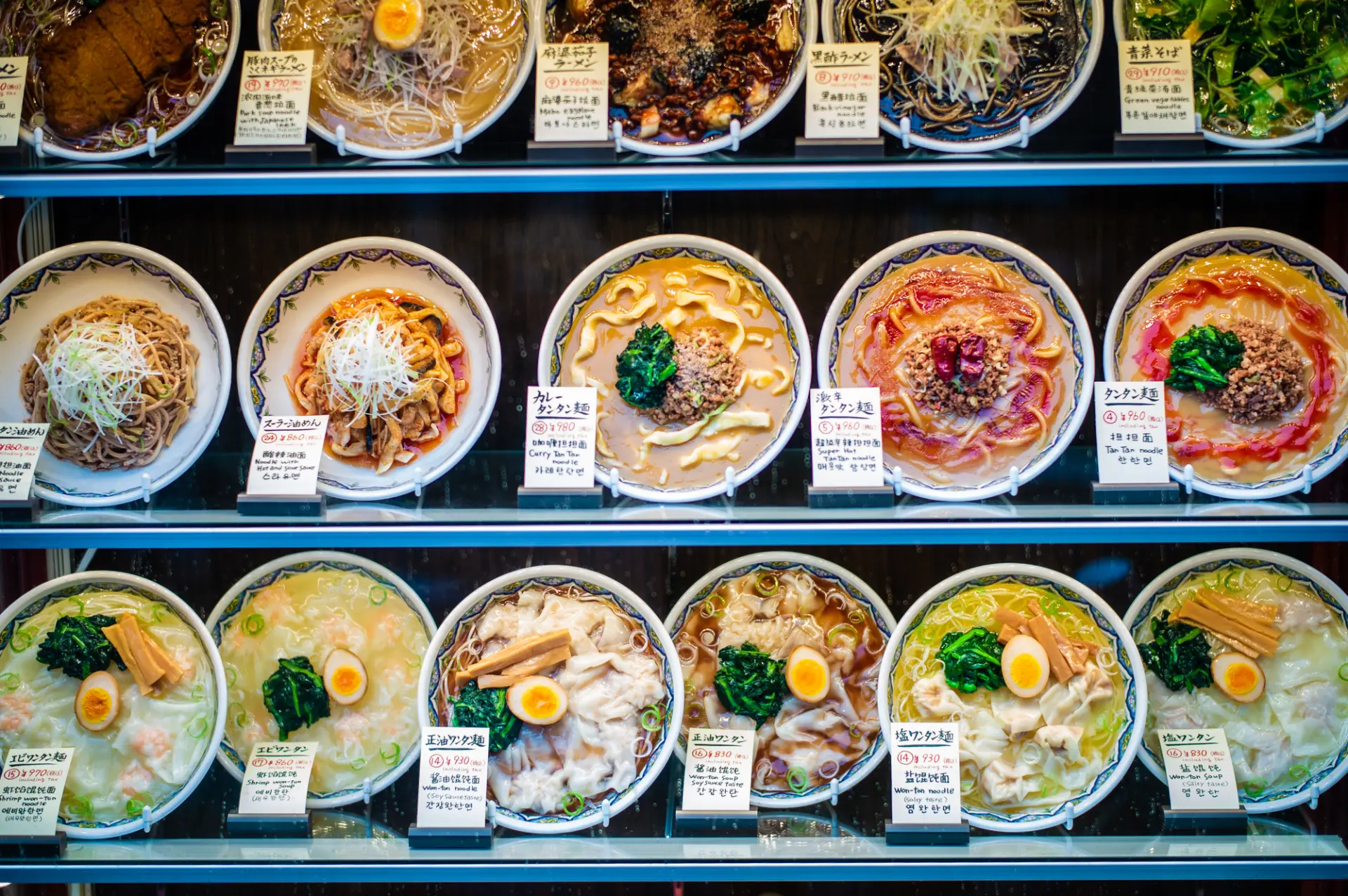
Food samples are a unique culture that originated in Japan. They are three-dimensional models of dishes made to look just like the real thing and displayed in front of restaurants in place of menus, with food waste and hygiene in mind. In the past, they were made from wax, but today many are made from a synthetic resin called polyvinyl chloride. To make customers think, “I want to eat that!” food samples must visually communicate how delicious a dish is. For that reason, craftspeople who make food samples have to make them look just like the real thing, and sometimes even more appetizing than the real thing. As a side note, it is said that food sample artisans cannot make foods they dislike very well. Apparently, people can better capture and express the shape and color of an object by looking at it repeatedly, but if they dislike an ingredient, they do not really want to look at it much in the first place, so they cannot express it well. This uniquely Japanese food sample craft is valued around the world, exported overseas, and used in many different ways.
The History of Food Samples
The history of food samples goes back Approx. more than 100 years. Records state that they were “made in various parts of Japan.” These food samples began to be developed as a full-fledged business in the field of “commercial art” from the Taisho period to the early Showa period.
In Japan’s cities at the time, such as Tokyo and Osaka, department stores were busy, and many people came from rural areas to work in the city. In Japan at that time, many people still helped at home from a young age and could not attend school, so being able to “read and write” was not as common as it is today. In cafeterias where many people gathered, including people who had come from rural areas to work, if customers could not read and the menu listed dishes with names they had never heard before, it took a long time to decide what to order, causing congestion. As a result, customers sometimes could not finish eating within their break time, and kitchen operations could not keep up. Food samples were introduced to improve this situation. Having models identical to the real dishes, showing their size and contents at a glance, helped cafeterias that had been jammed by menu decisions operate smoothly.
Food samples were considered innovative, but in 1939, when World War II began, the food sample industry also faced a crisis. At the time, food samples were made from wax. Wax, a petroleum product, became a controlled material for military use. Regulations were especially strict in urban areas such as Osaka, making it difficult to use wax as a material for making food samples. Naturally, craftspeople lost their work and evacuated to various parts of the country, scattering across Japan. Today, Gujo Hachiman in Gifu Prefecture has many food sample factories and has become a tourist destination, and this actually began with the wartime evacuation of these craftspeople. Because many craftspeople evacuated to Gujo Hachiman City in Gifu Prefecture, they continued making food samples using their skills even after World War II ended, and the area still accounts for half of Japan’s food sample production today.
From the 1950s, after the war ended, craftspeople who remained in Osaka and those who had evacuated to places across Japan such as Shizuoka and Nagoya began establishing food sample companies in different regions. Companies that made parts such as rice, meat, fish, and vegetables; companies specializing in sweets and fruit; and companies that applied the techniques to make medical organ models all refined their respective skills and continued to develop. Food samples were truly groundbreaking. As a kind of “3D sign” that had not existed before, food samples quickly spread throughout Japan and developed into an indispensable advertising tool for restaurants that remains important today.
Around this time, the name shokuhin mokei, or food models, is said to have changed to the current term shokuhin sample, meaning “food samples.”
In the 1970s and 1980s, electrical appliances became widespread, and display cases with built-in lighting became mainstream. At the time, food samples were made from wax. As a result, the heat from the lighting began to melt the samples. Food sample companies then researched new manufacturing methods, and the material gradually changed from wax to synthetic resin.
After Japan’s bubble economy collapsed, demand for food samples declined because high-quality printed materials became available at low prices. Most craftspeople who operated factories as sole proprietors did not pass down their techniques, and some began considering closing their factories with their own generation. Because the transmission of techniques had stopped during the decline after the bubble burst, many of today’s food sample craftspeople are in their 60s to 80s, and there were also no industry organizations or shared definitions.
Recently, food samples have been used not only in restaurants, but also as small goods such as keychains and as props for television, gradually regaining demand. Food samples still have plenty of room to develop further. In recent years, organizations promoting food samples and vocational schools for training food sample craftspeople have appeared, and some companies are working to spread this proud, uniquely Japanese culture around the world and make food samples a global standard.
What Is Sennichimae Doguyasuji, the Shopping Street Supporting Osaka’s Food Culture?
Osaka was called “the nation’s kitchen” during the Edo period because it was a center of logistics and commerce, and today it is known as a city where food culture thrives so much that it is called “the town of kuidaore.” The shopping street that supported Osaka’s food culture is Sennichimae Doguyasuji, located in Namba Sennichimae, Chuo-ku, Osaka City. At Sennichimae Doguyasuji, you can find just about everything needed to start a restaurant. The street sells every kind of tool and item imaginable, including signs, kitchen equipment, ceramics, lacquerware, noren curtains, zabuton cushions, uniforms, lanterns, kettles and pots, knives, noodle strainers, food samples, and even maneki-neko lucky cats. It provides tools that meet the needs of chefs and restaurant professionals from around the world.
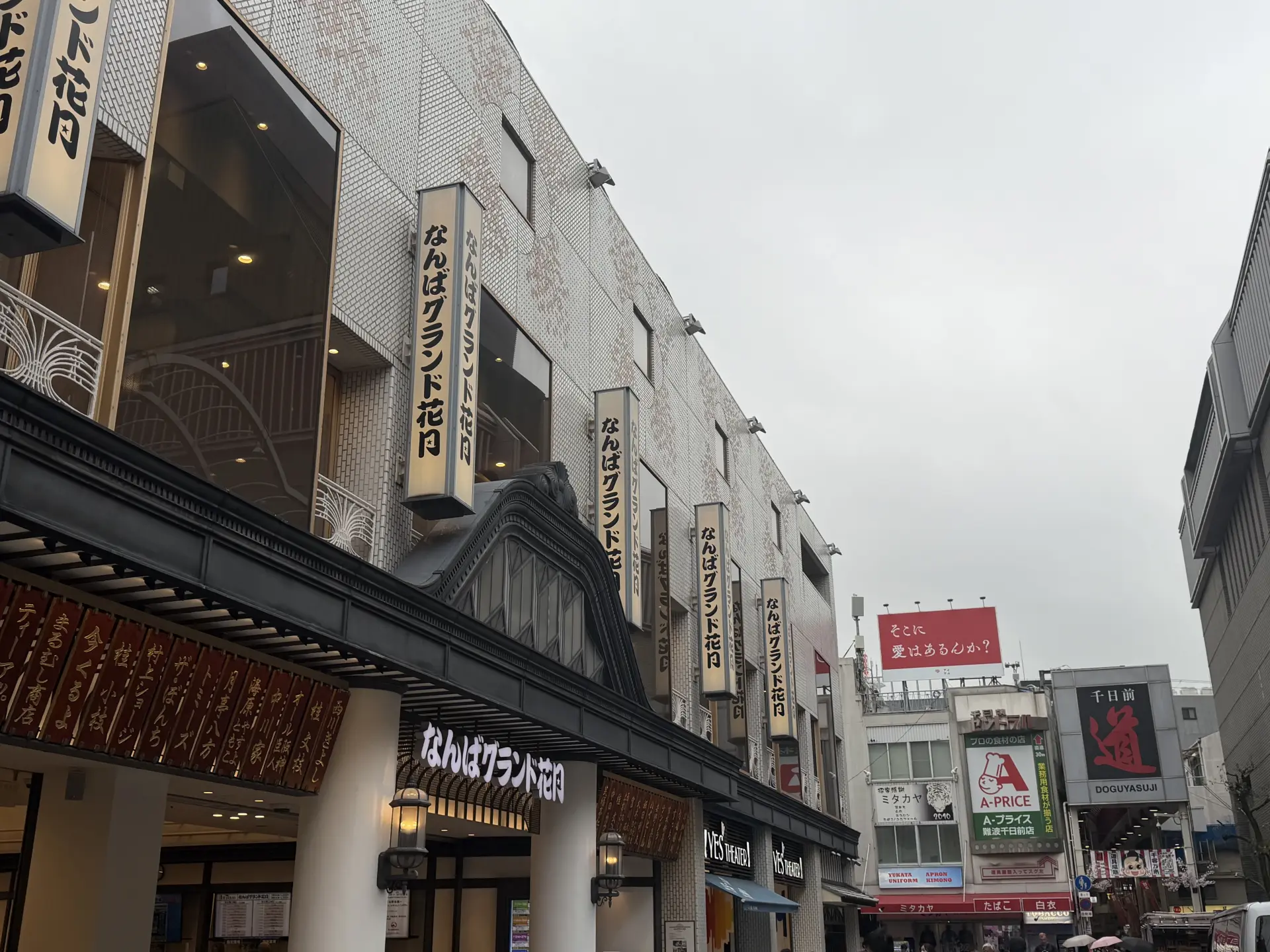
Sennichimae Doguyasuji is in a tourist area, a 10-minute walk from Dotonbori and a 5-minute walk from Namba Station. Near Namba Grand Kagetsu, where you can watch Yoshimoto Shinkigeki, there is a large sign with the character “道” (“road”) on it. That is the entrance to Sennichimae Doguyasuji.
Sennichimae Doguyasuji began in the early Meiji period. At that time, the route from Sennichimae at Hozenji Temple to Imamiya Ebisu Shrine flourished as an approach to the shrine. The origin of Doguyasuji was the small prop and general goods merchants who lined this approach. In 1885, Sennichimae became even more prosperous, but in 1912, the great fire of Namba Shinchi reduced Sennichimae to burned ruins. In 1925, the number of small prop shops, once only a few, grew to Approx. 20, and the area became lively with wholesalers, manufacturers, and specialty stores, gradually forming a shopping street. In 1935, it began changing into a street of specialty stores selling tools for Japanese, Western, and Chinese restaurants, and the tool shops grew rapidly along with the rapid growth of Minami, one of Osaka’s major downtown areas today.
However, the situation changed completely with the Pacific War, which began in 1941. People’s lives grew difficult, and like many other places, Doguyasuji became quiet and lonely. Then, in the 1945 Osaka air raids, Doguyasuji was also reduced to burned ruins, and people began living in barracks. After the war, customers gradually returned, trust was restored, and Doguyasuji made a major comeback. The barrack-style buildings were torn down, and proper stores began to appear. In 1970, the year of the previous Osaka Expo, the street was rebuilt with an arcade, becoming its current form, extending 150 meters in length. In 1993, the arcade was renewed, and the “道” sign, now the trademark of Sennichimae Doguyasuji Shopping Street, was installed.
Even today, it is a beloved local shopping street where you can find everything from tools used by food service professionals to items suitable for ordinary households.
How Food Samples Are Made
The food sample production process can be broadly divided into four steps.
(1) Mold Making
Liquid silicone is poured directly over the ingredients of the dish to be made, creating a mold. The main material used is polyvinyl chloride, which is resistant to heat from lighting and makes it easier to express the softness of food.
(2) Coloring the Resin
The colors of the ingredients are created from four colors: yellow, red, blue, and white, and then mixed into the liquid resin. At this stage, the liquid resin is white, but in the next step, when heat is applied, a chemical reaction makes it transparent. Craftspeople color the resin while calculating this transparency. This is where their skill really shines.
(3) Heating
The colored liquid resin is poured into the mold made first, placed in an oven, and heated at 356°F–464°F, depending on size, to harden.
(4) Spray Painting
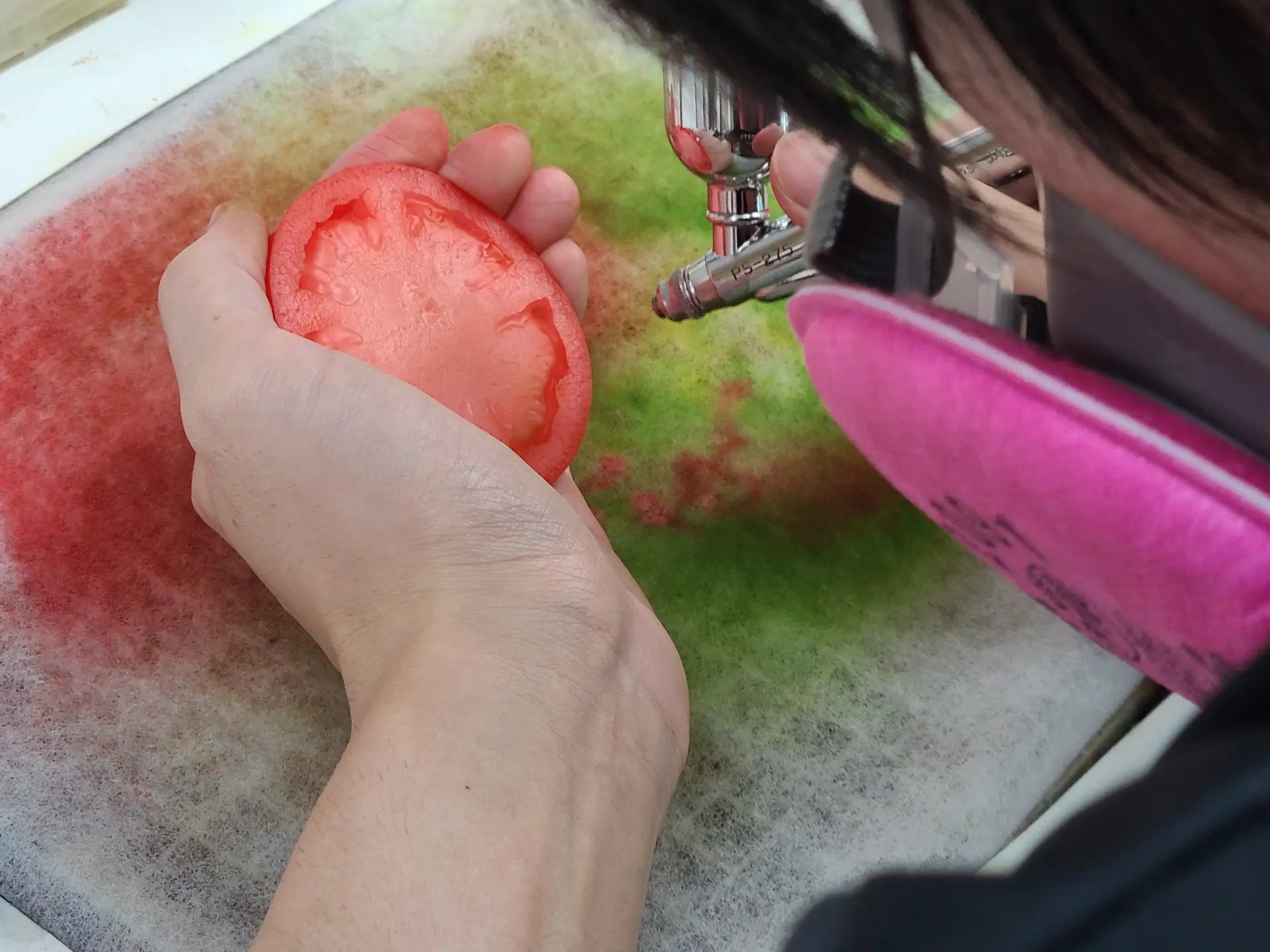
Color is applied with an airbrush or brush. Depending on the ingredient, craftspeople generally mix Approx. five to six colors from the four colors of yellow, red, blue, and white, then layer them in gradients and add shading to create a three-dimensional look. It is truly the work of bringing the item to life. This is an important step that determines whether the ingredient will look appetizing. Finally, a coating is applied to prevent color fading and add gloss, completing the sample.
Try Making Food Samples
Hands-on facilities have appeared to help people discover the depth of food samples and the advanced techniques behind them.
What Is Design Pocket Osaka Main Store, Where You Can Try the Experience?
As the number of food sample craftspeople declines, one company in Sennichimae Doguyasuji Shopping Street is working to preserve these techniques. That company is Design Pocket Co., Ltd. It manufactures food samples and sells everything from display food samples used in restaurants to food sample goods such as keychains and magnets.
The company is said to be especially good at making custom-made food samples. It also sells food samples from various companies, not just its own products, and this sales style is said to be rare.
Concerned about the aging of the industry, the company has also established a school to train food sample craftspeople and is committed to passing on and promoting the techniques. One of the company’s features is that students who graduate from the school go on to work there, giving it a strong group of young artisans. Also, out of a desire for people to experience these advanced techniques, the company began offering hands-on food sample making experiences Approx. 15 years ago.
This experience is extremely popular with both Japanese visitors and international tourists, so reservations are required!
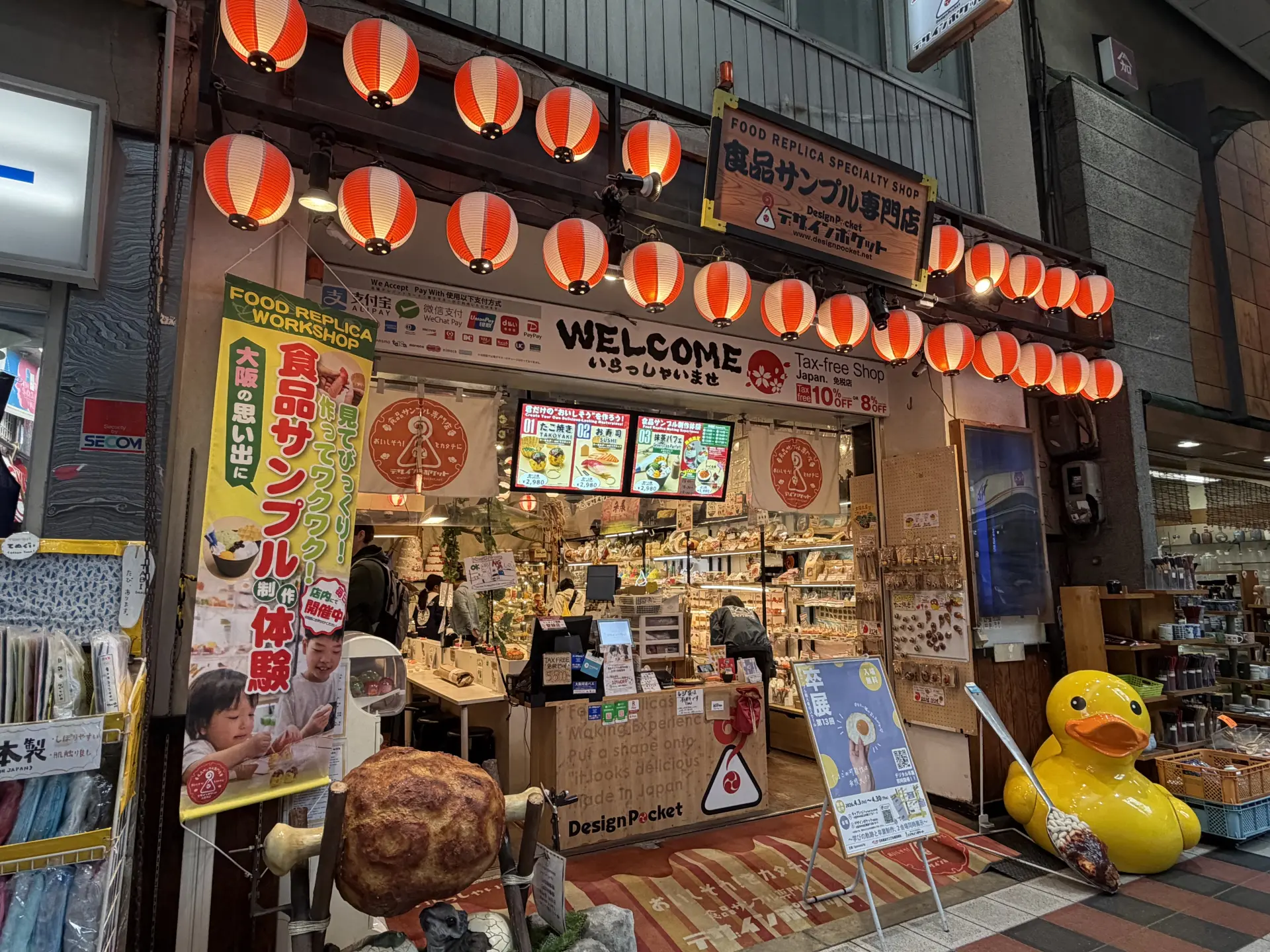
The Experience Begins!
Experience courses include making sushi, part of Japan’s unique food culture, Osaka’s famous takoyaki, and parfaits. This time, I tried making tuna and salmon in the sushi-making course!
(1) Make Tuna! Add Color
You receive a sushi topping made from polyvinyl chloride.
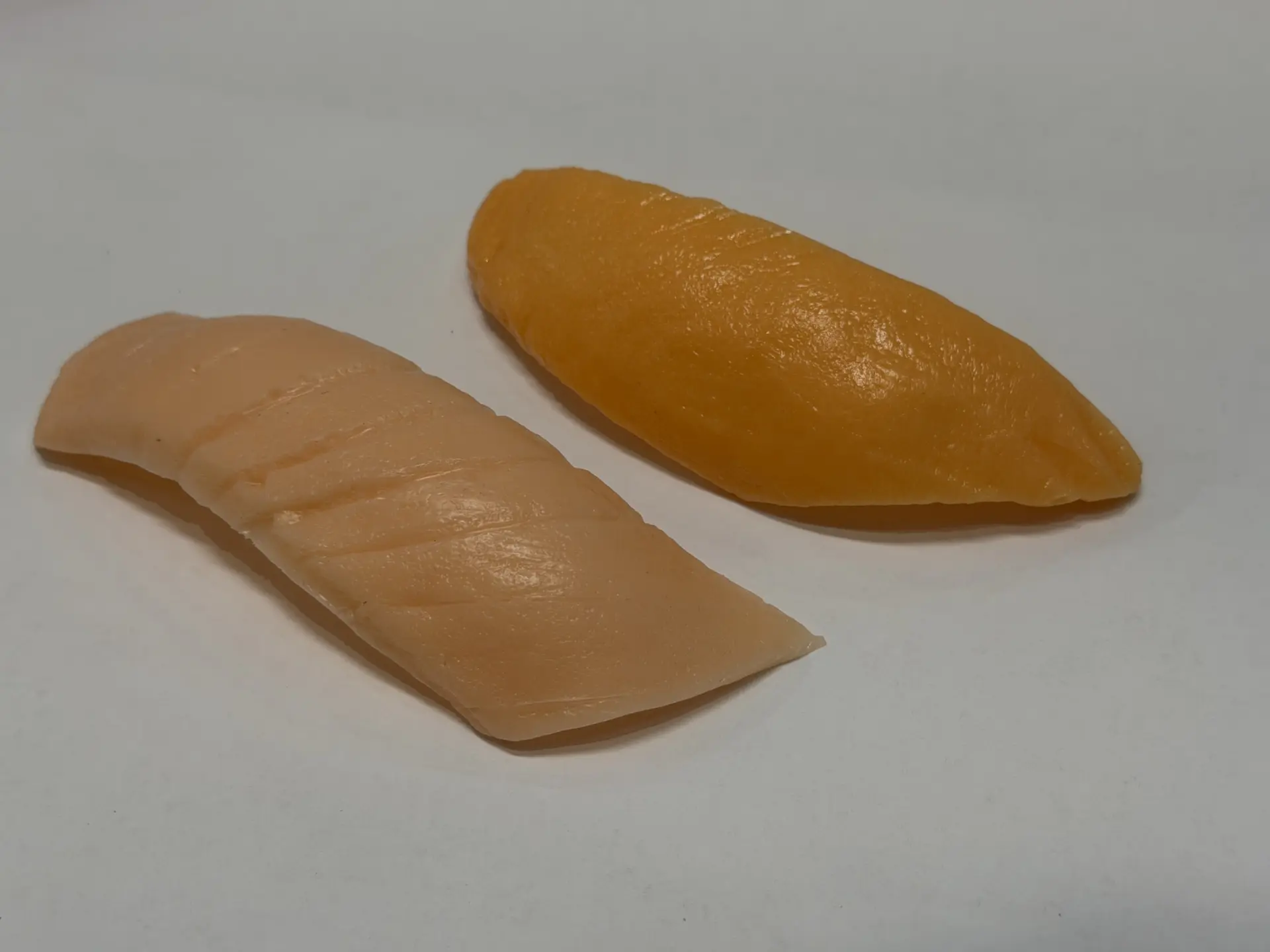
If you look closely, you can see “streaks,” and even at this stage, it already looks somewhat like tuna. The staff member teaching you will ask, “Would you like lean tuna or chutoro?” Choose whichever you prefer. This time, I chose chutoro, which seemed a little more difficult because it requires making a gradient.
Take just a small amount of red paint on a sponge.
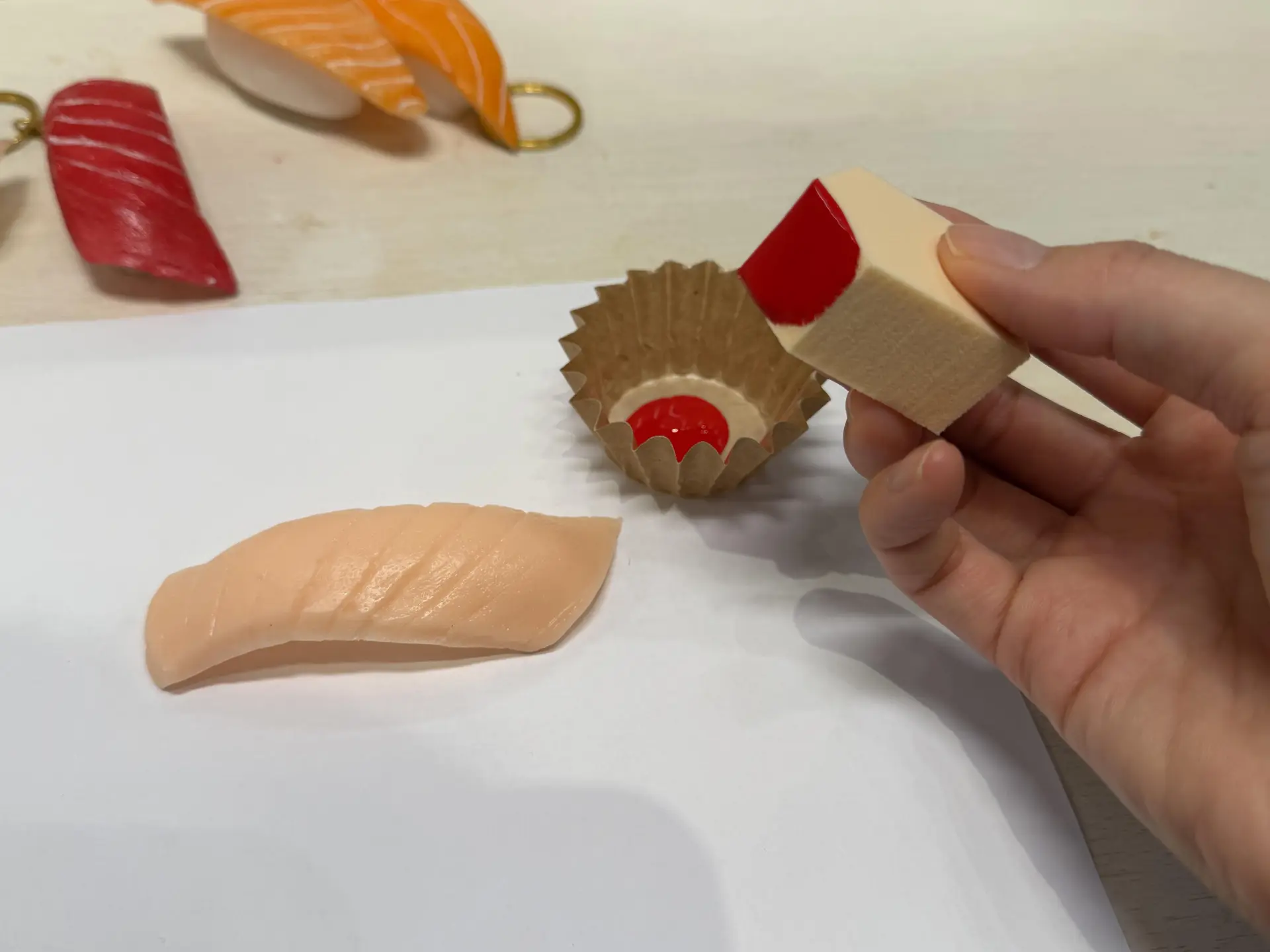
Rub off most of it on a paper towel.
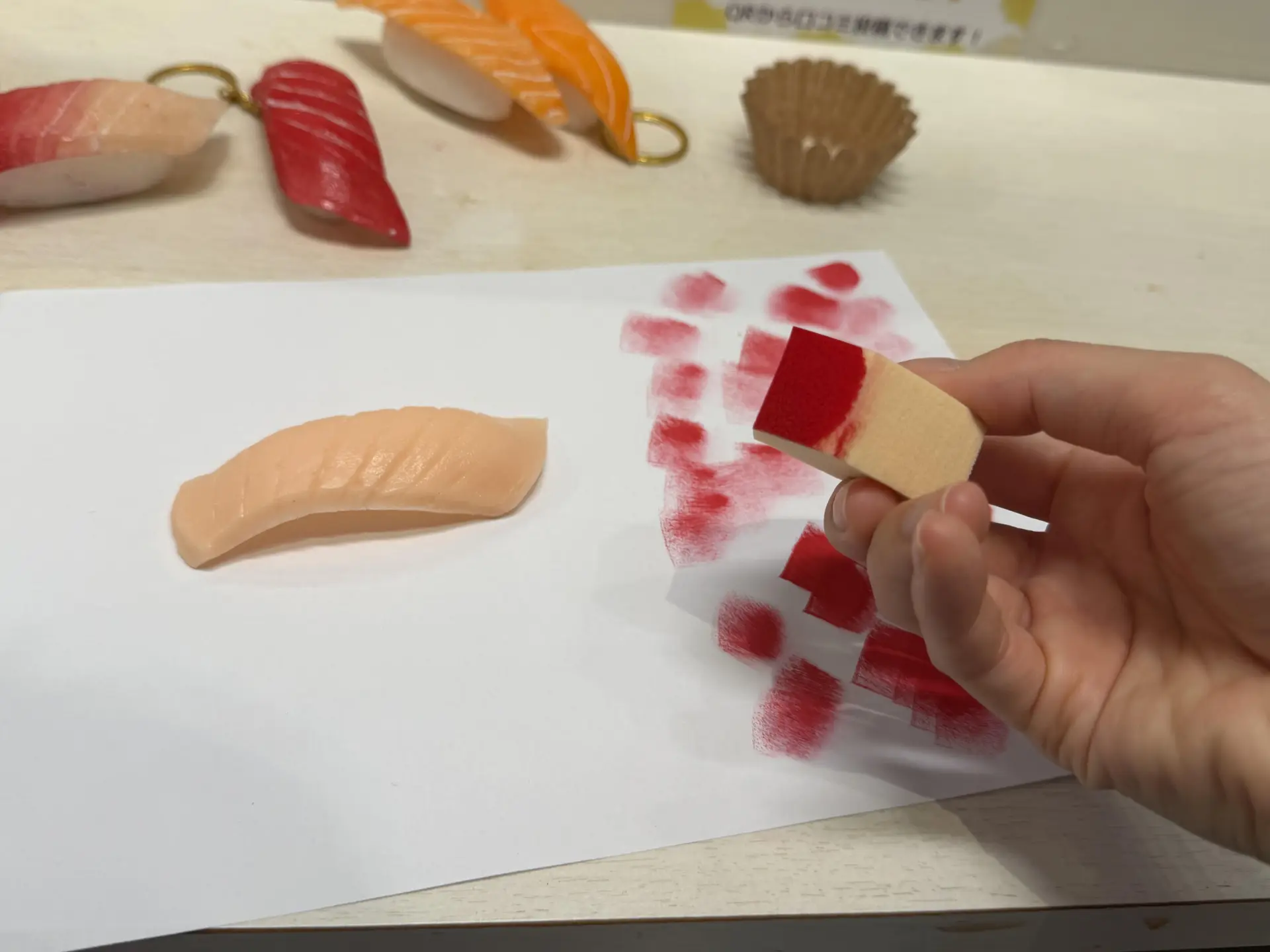
This is a very important point. If you do not rub off enough paint here, it will become lean tuna instead of chutoro. Since you will add the color little by little, be sure to remove enough paint.
Once you have removed enough, begin coloring. Tap the sponge onto the edge of the topping.
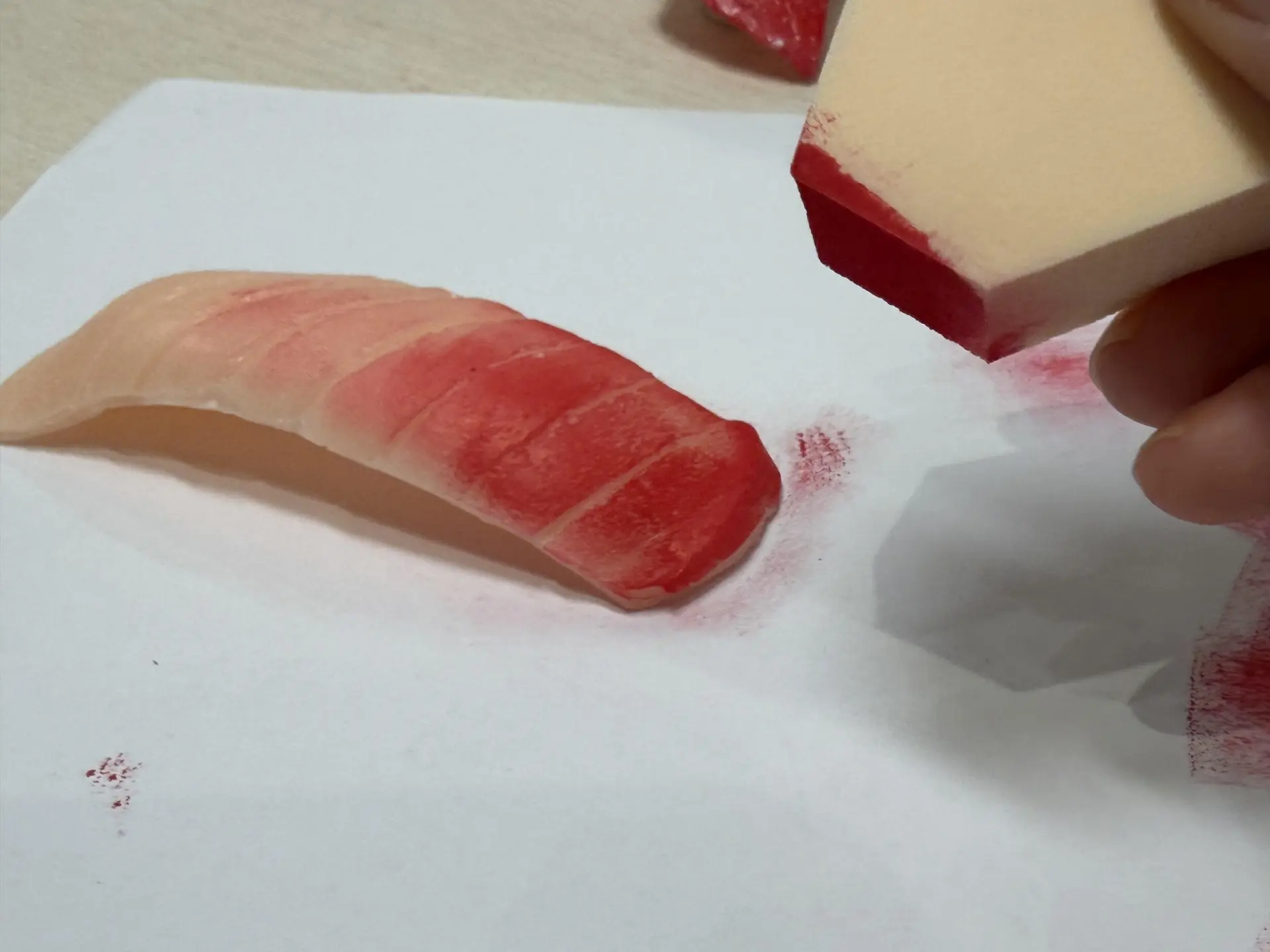
After tapping color up to the middle area, return to the edge of the topping and layer on the same red color. Chutoro is a cut with red to flesh-colored fat. The idea is to color it while creating a smooth gradient so that one edge is the darkest. Be sure to color the sides thoroughly as well, which makes it look closer to real tuna.
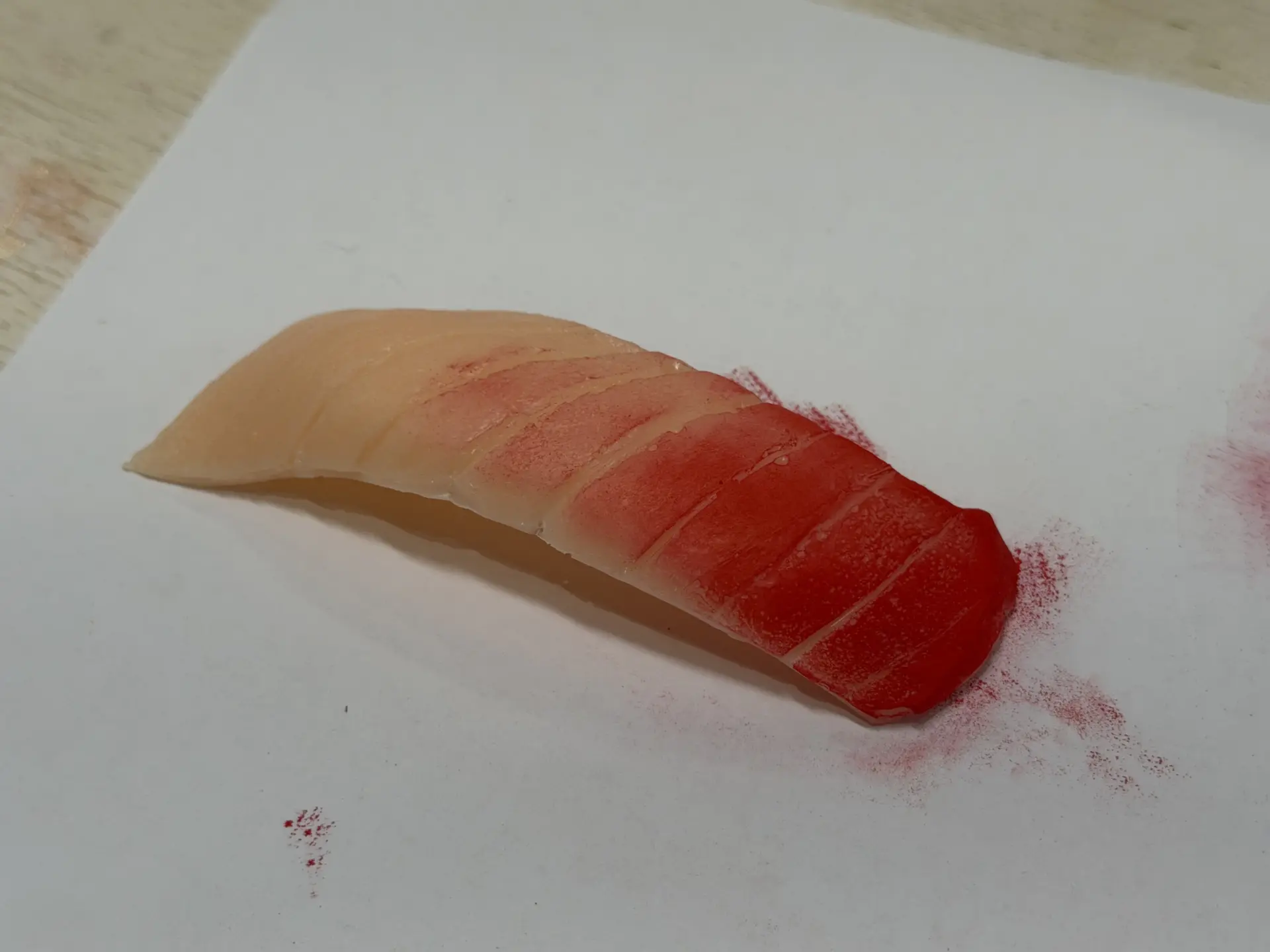
(2) Make Salmon! Draw the Lines
Next, make the salmon. You can see that the salmon also has slight grooves on the surface. This time, you will draw lines along these grooves.
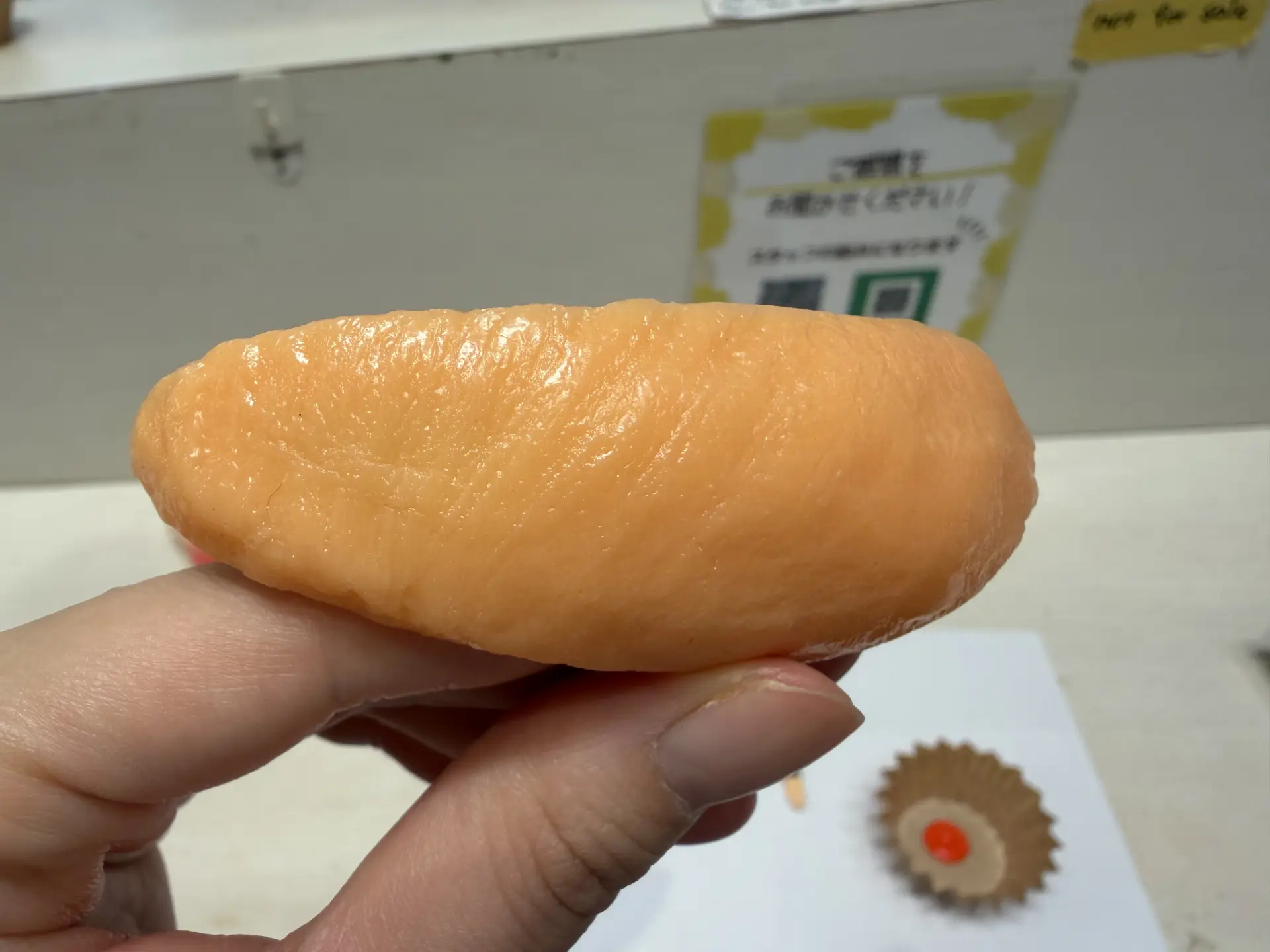
Take orange paint on a tip, and again, rub it off on a paper towel. The key to drawing the lines is to keep them parallel without crossing them.
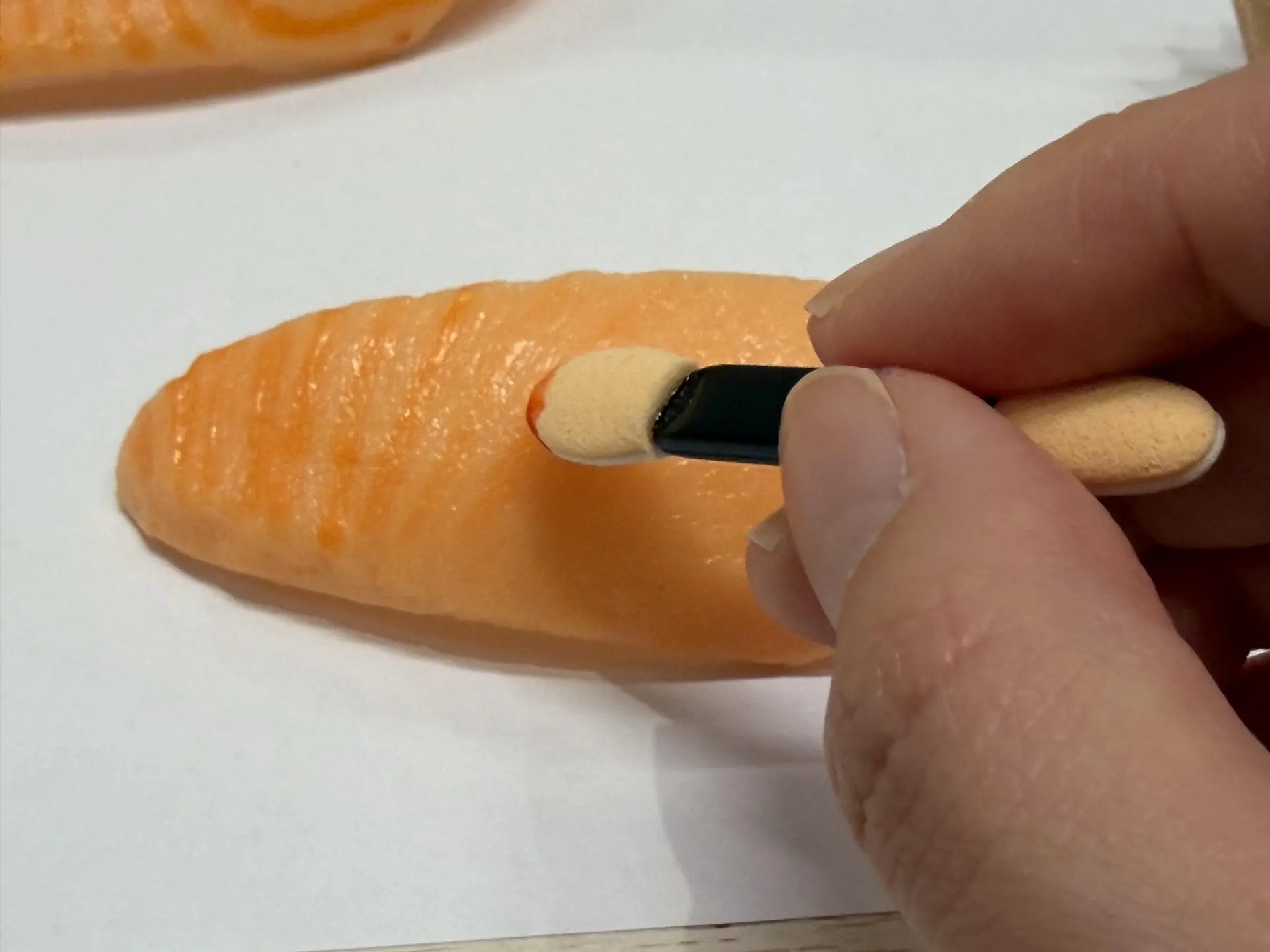
Doing so apparently makes it look more realistic. There is one more point: curve the last three lines or so. It really started to look like salmon.
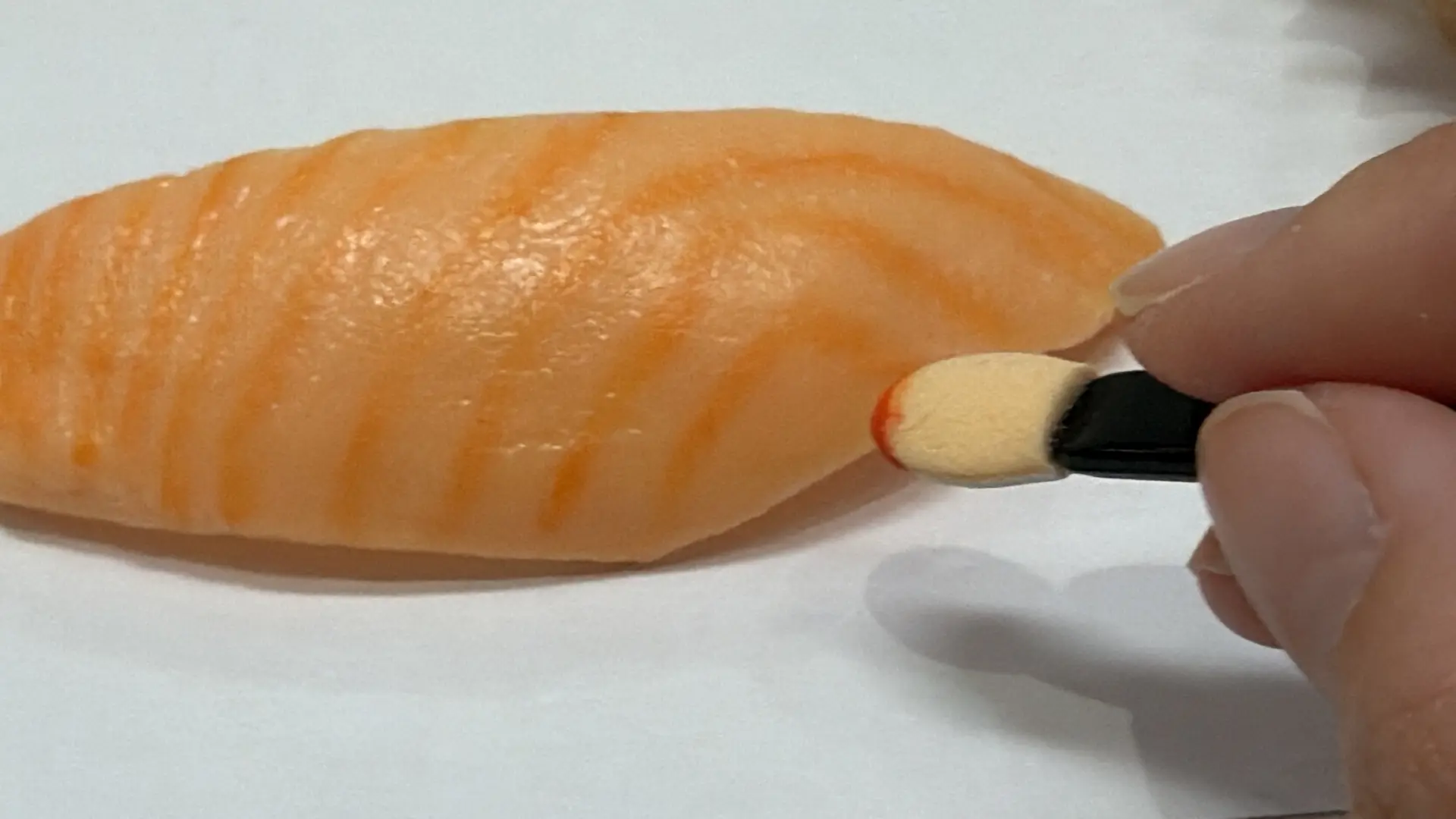
Then, using a fine brush, add white lines along the orange lines you drew.
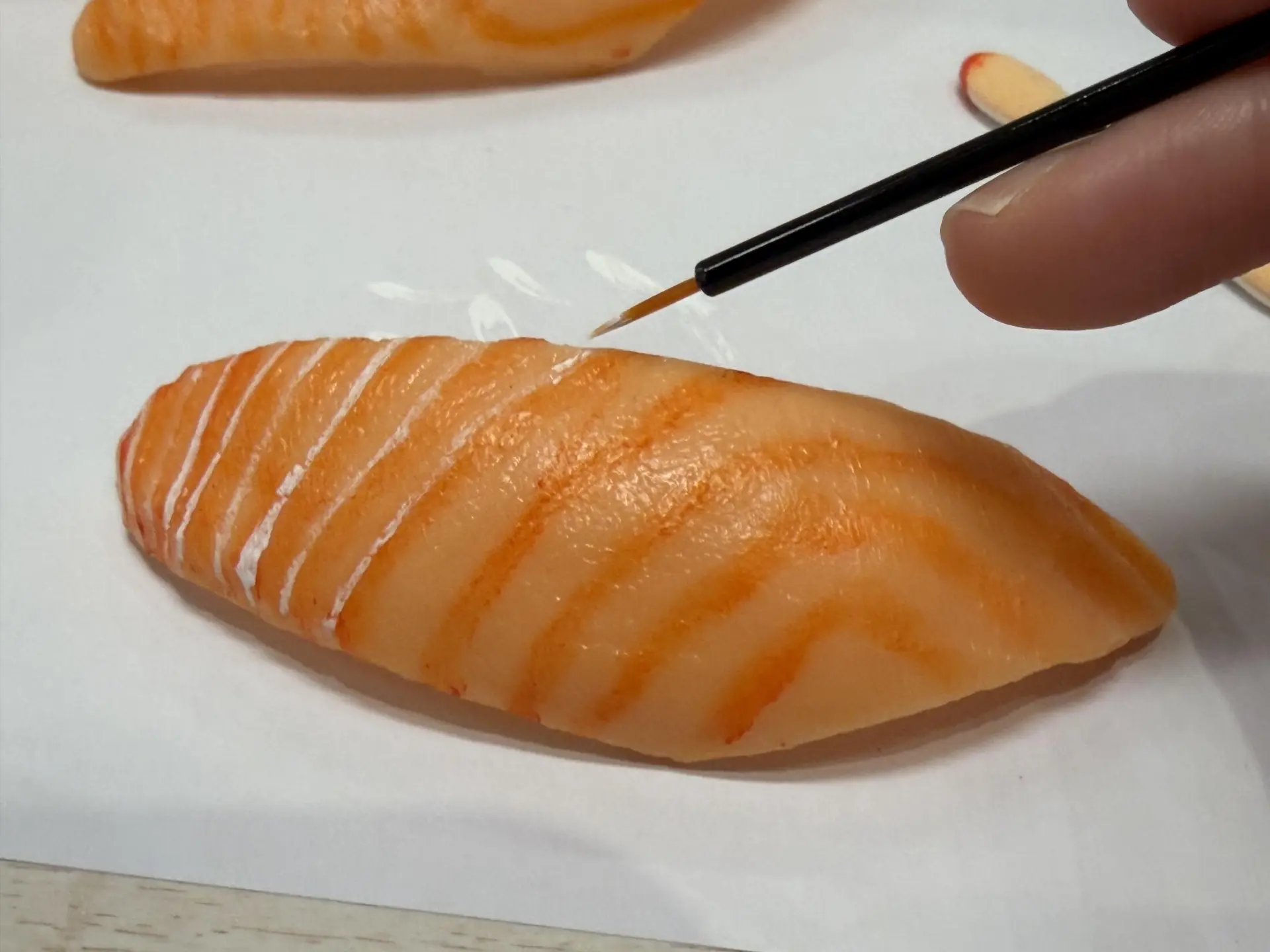
This also looks more realistic if the white is not too bold, so rub it off on a paper towel before adding the color. In the same way, draw white lines on the fatty parts of the chutoro as well.
(3) Attach the Shari Rice
Finally, attach the shari rice. Apply adhesive to the rice portion, place the colored topping on it, press lightly, and it’s done!
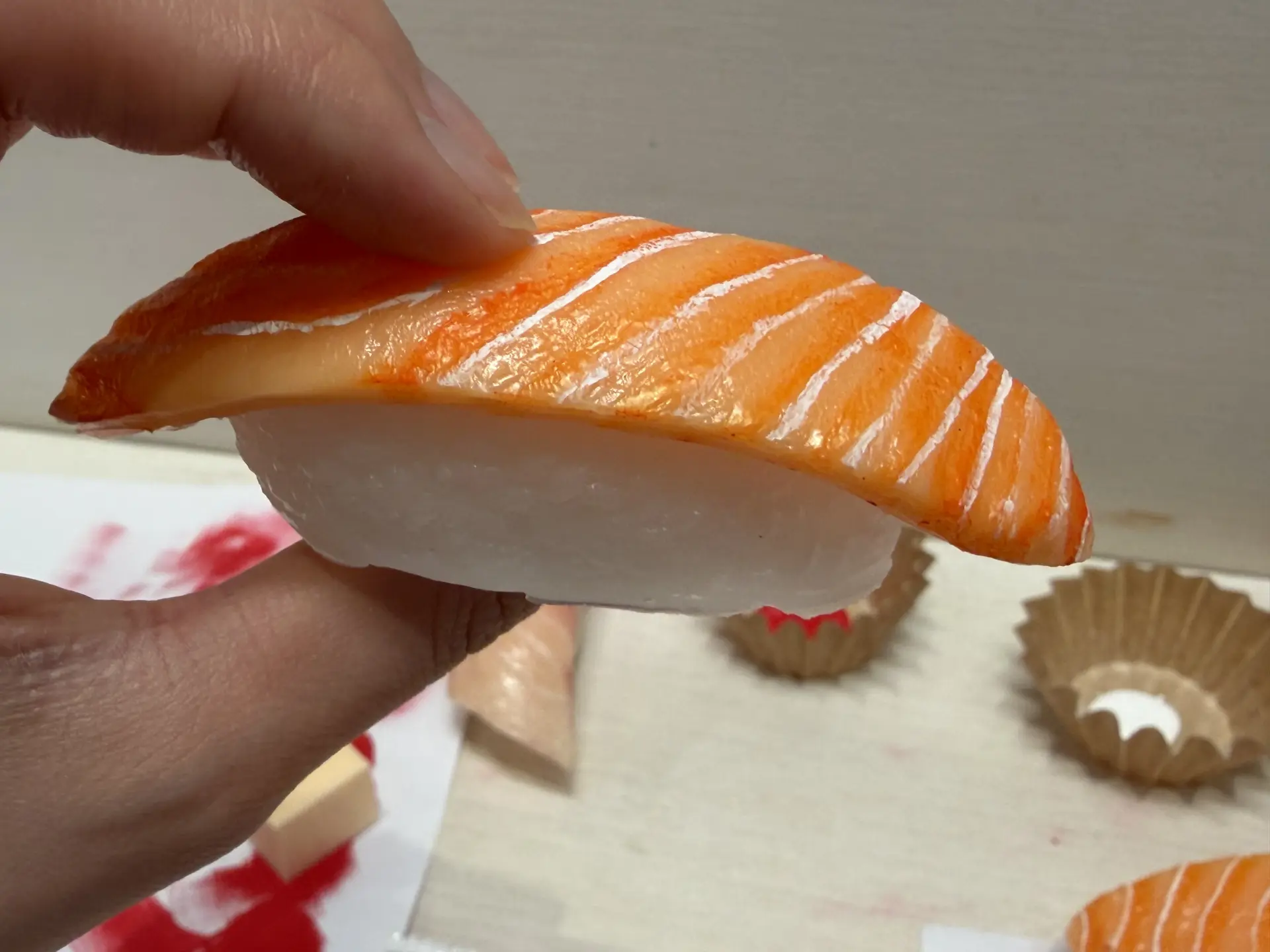
Finish by applying varnish for shine.
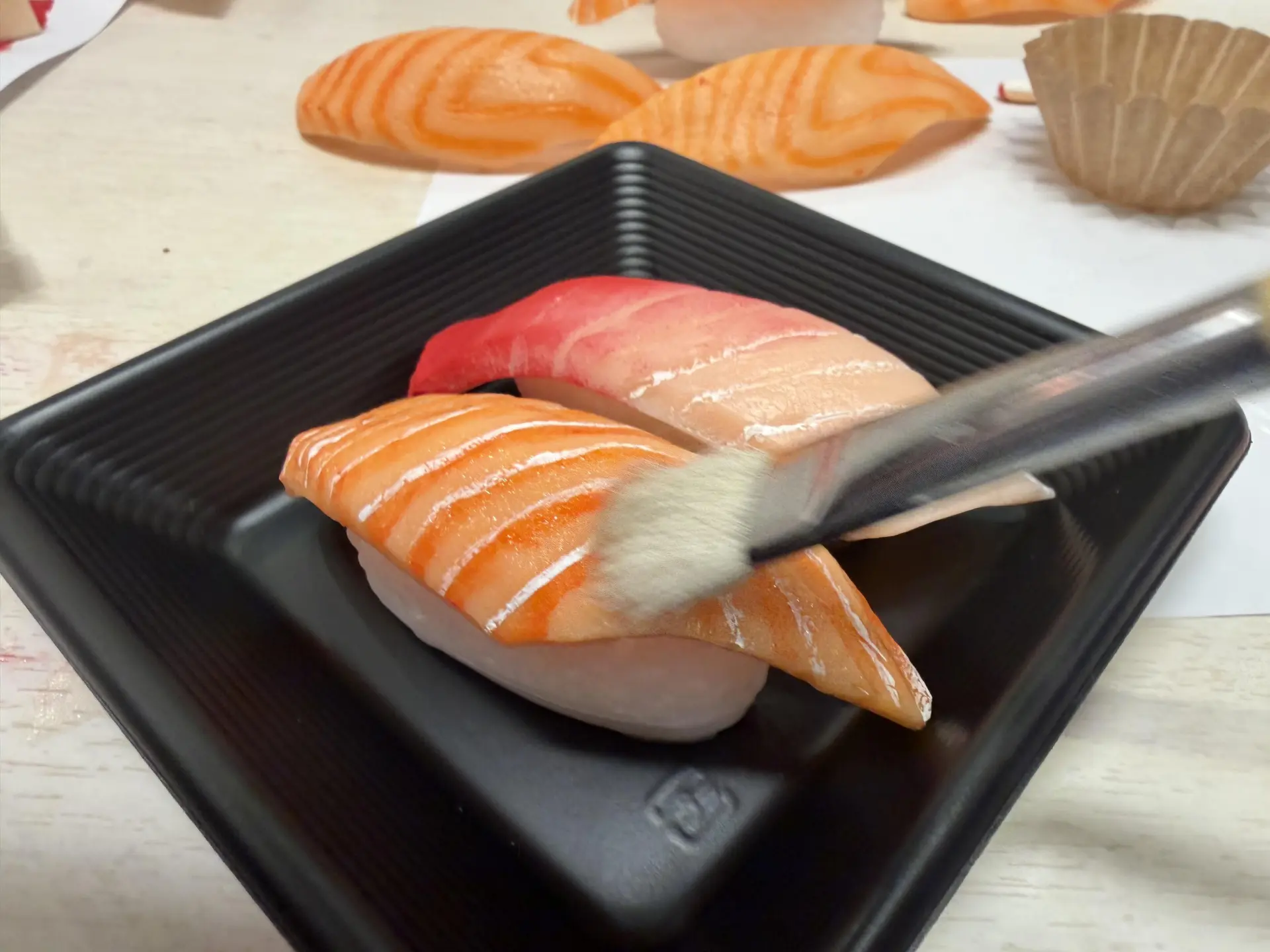
The finished food samples can be turned into a magnet and a keychain. I made the salmon into a magnet and the chutoro into a keychain.
While I was doing the experience, customers kept coming in one after another, each making the food sample they wanted. I felt that reservations are definitely necessary for the experience. The age range was wide, and it was especially memorable to see small children trying it with their parents. Visitors of all nationalities were taking part, including both Japanese people and international tourists! After trying it myself, I could really understand how remarkable the craftsmanship is behind the food samples lined up in restaurants. I realized they are not something that can be made skillfully overnight.

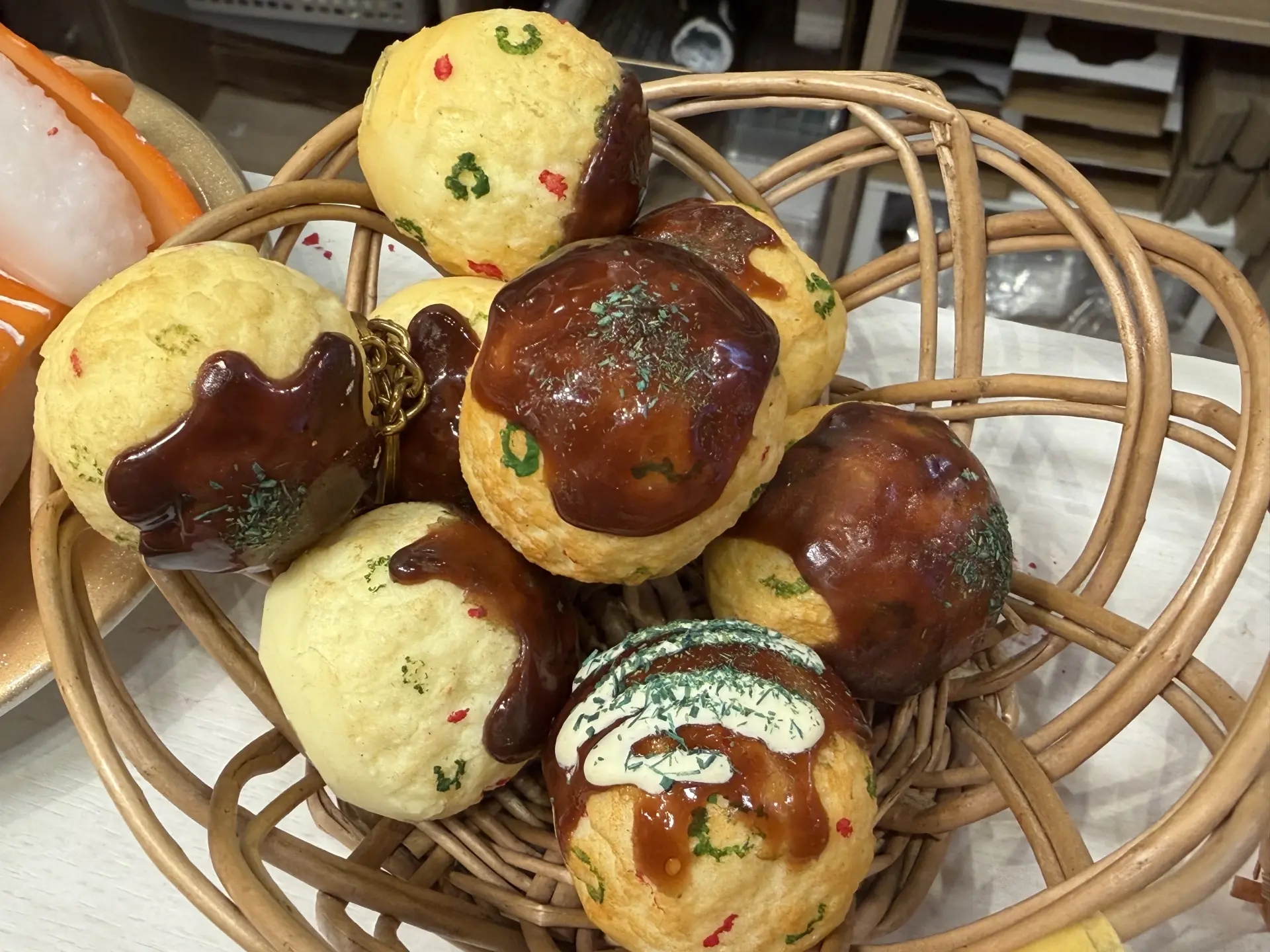
There are also other experience courses. In the takoyaki-making experience, you can make two takoyaki food samples. You add browned marks, paint green onion and red pickled ginger, pour on sauce, and top them with aonori. The finished takoyaki can be made into a magnet or keychain.
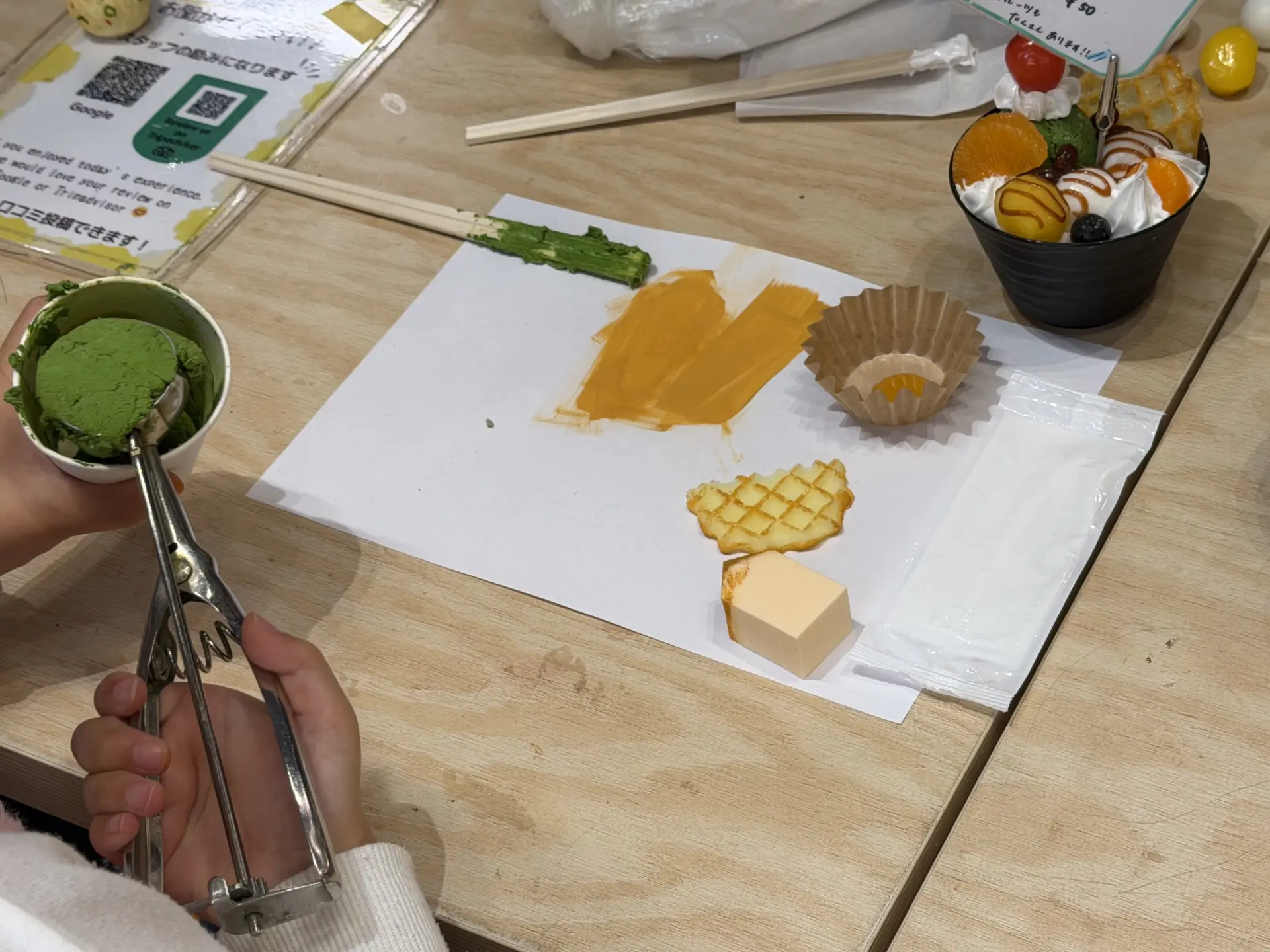
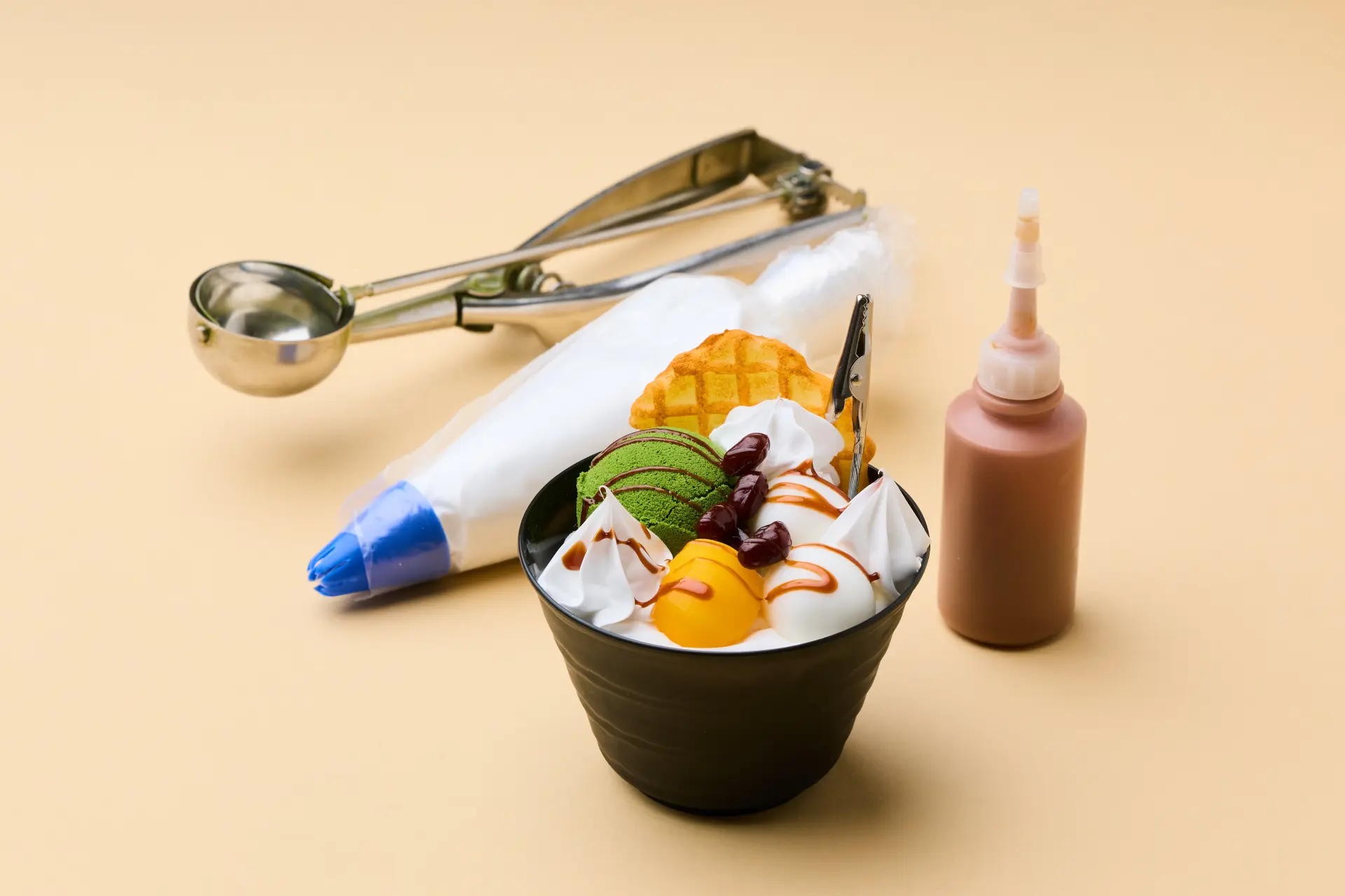
In the parfait-making experience, which is overwhelmingly popular with girls, you can pipe whipped cream, color the browned parts of the waffle, and arrange shiratama dumplings. There is also a step where you use an ice cream scoop to add ice cream, and I felt it was made almost the same way as a real parfait. The finished parfait becomes a memo clip. You can make many other food samples as well, so check the experience details on the website and try making your favorite food sample!
, Details for the food sample-making experience: Sushi (salmon and tuna)
- Reception Hours
- 10:00 am–5:00 pm
- Size
- Width 2.5 cm × Length 8 cm × Height 3 cm
- Duration
- Within 60 minutes
- Age Requirement
- Ages around 3 and up (children must be accompanied by a guardian)
, Details for the food sample-making experience: Takoyaki
- Reception Hours
- 10:00 am–5:00 pm
- Size
- Width 3 cm × Height 3 cm
- Duration
- 30–45 minutes
- Age Requirement
- Ages around 3 and up (children must be accompanied by a guardian)
, Details for the food sample-making experience: Matcha Parfait
- Reception Hours
- 10:00 am–5:00 pm
- Size
- Width 9 cm × Height 13 cm
- Duration
- Within 60 minutes
- Age Requirement
- Ages around 3 and up (children must be accompanied by a guardian)
A Wide Range of Souvenirs Are Also Available
After your in-store experience, be sure to buy some food sample goods as souvenirs for family and friends! They will likely be especially happy if you choose their favorite foods. Inside the store, you’ll find food sample goods of all kinds of ingredients, including Japanese-style items such as onigiri, sushi, and wagashi sweets like dango, as well as vegetables, bread, and more.
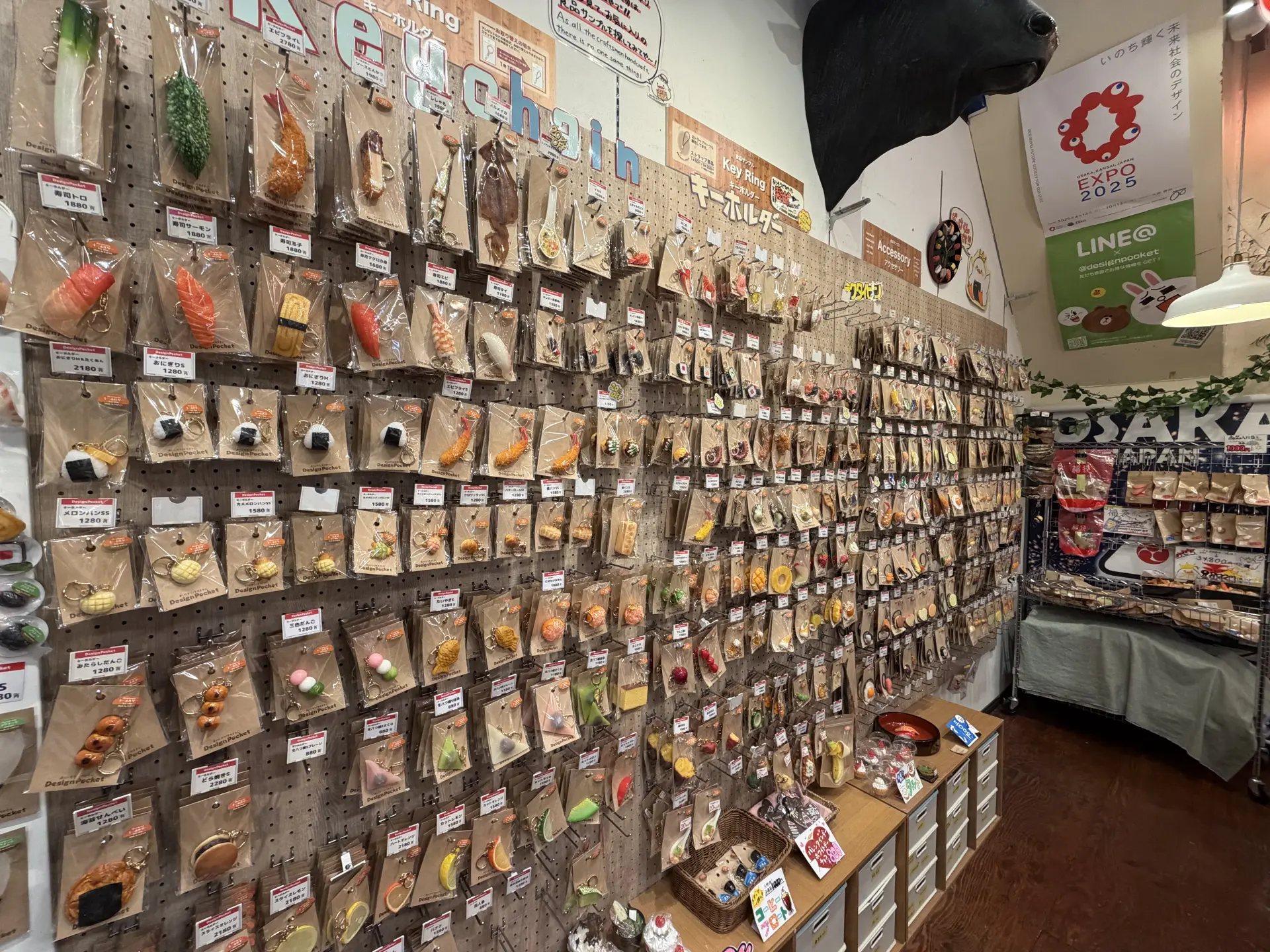
There are fried shrimp and shrimp tempura magnets, grilled fish keychains, and even dried sardine earrings! These goods are full of surprise and fun ideas. Each palm-sized food sample is packed with artisan skill!
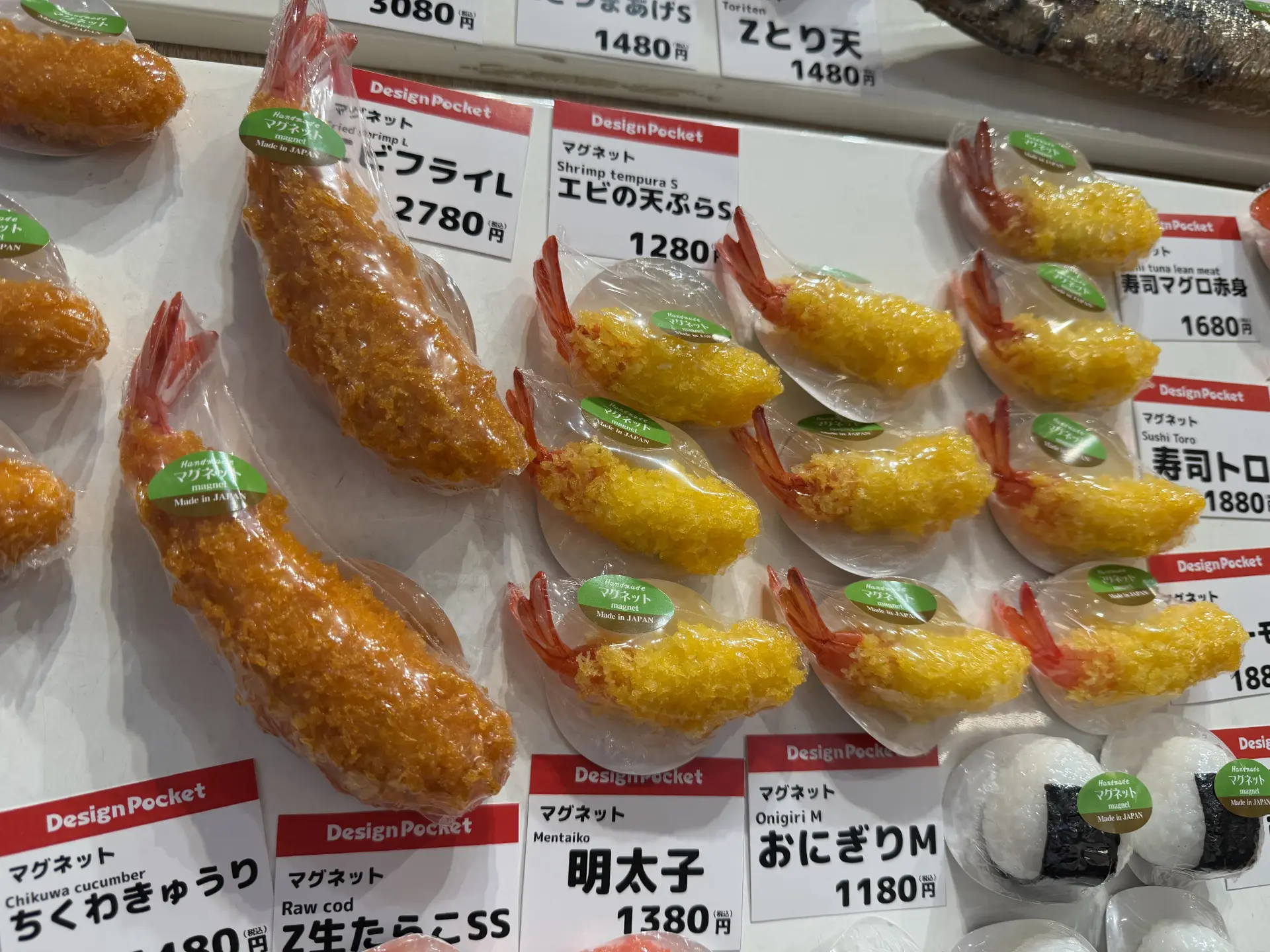
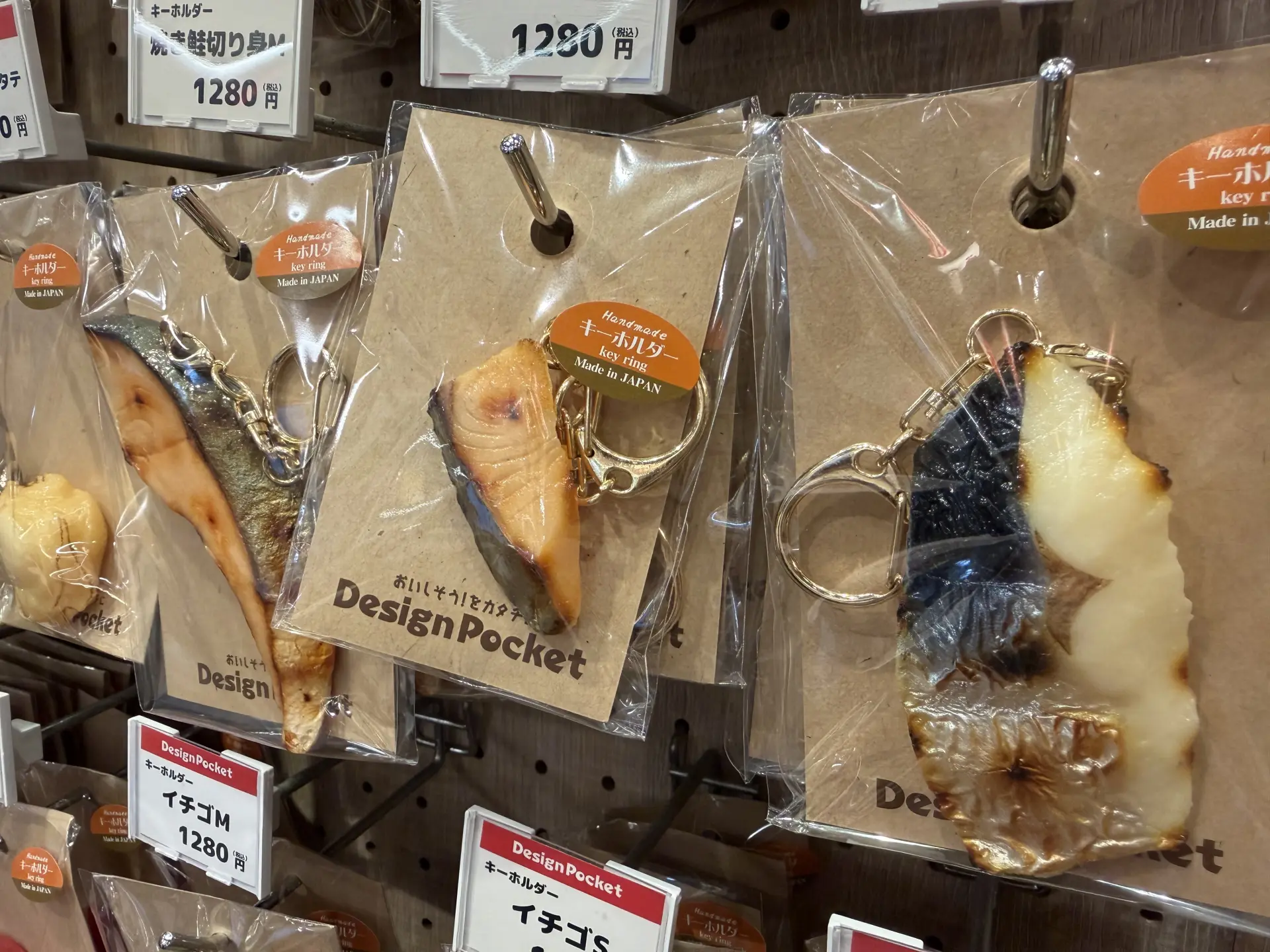
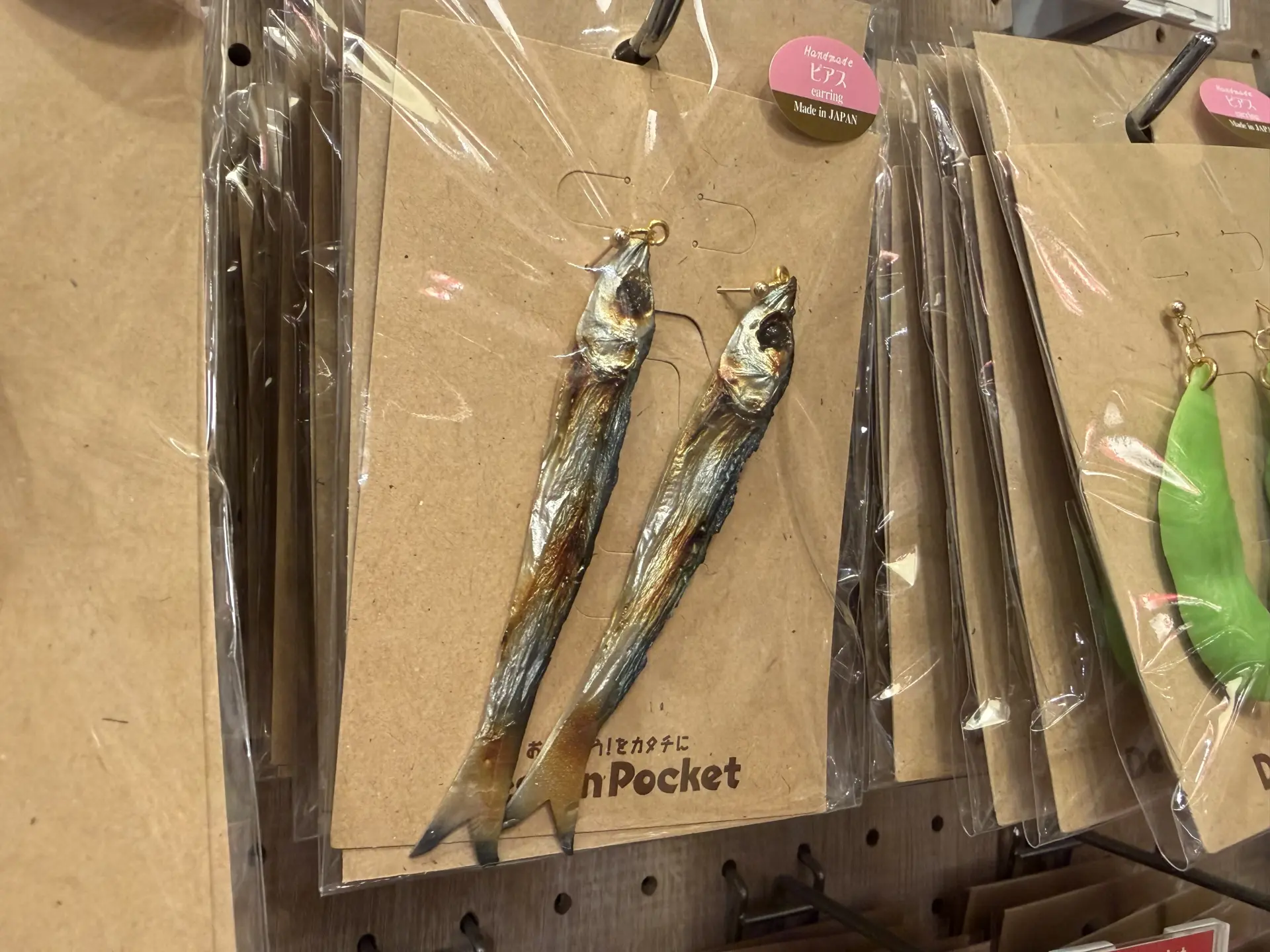
When you give them as souvenirs, they look so real that they are sure to get people excited! Be sure to also tell them how much difficult skill is required to make them look appetizing.
Summary
A dish in a display case that we once looked at casually is actually the result of years of inherited craftsmanship and creative ingenuity. The feeling of thinking something looks delicious is the same now as it was in the past. That is probably why food samples continue to capture people’s hearts across generations and remain indispensable in every era.
Born in the Taisho period, food samples have gone beyond being simple “dish models” and continue to evolve today as a uniquely Japanese culture. From the beginning to the present day, what craftspeople have valued most is “making it look even more delicious than the real thing.” Materials and manufacturing methods have evolved with the times, but this essence has been carefully preserved.
Food samples have overcome difficult times and are now applied to everyday goods such as keychains and accessories, becoming familiar items in our lives. Their precision and playfulness are highly valued not only in Japan but also overseas, and they likely appear especially appealing to tourists visiting Japan.
You can experience that appeal directly through the food sample-making experience at Design Pocket Osaka Main Store. Try working with your hands, facing the ingredients with care, and making a food sample that is uniquely yours. You will be able to feel the depth and delicacy of the techniques that craftspeople have built up over more than 100 years. At the same time, you will likely grow attached to the food sample you make yourself, and it will remain in your heart as one of your memories of traveling in Japan. By learning the history and touching the story behind them, even the display cases you once passed by casually will likely look more fascinating.

Author
Freelance Announcer
Sayaka Motomura
Focused on sharing insights related to traditional culture, performing arts, and history.