
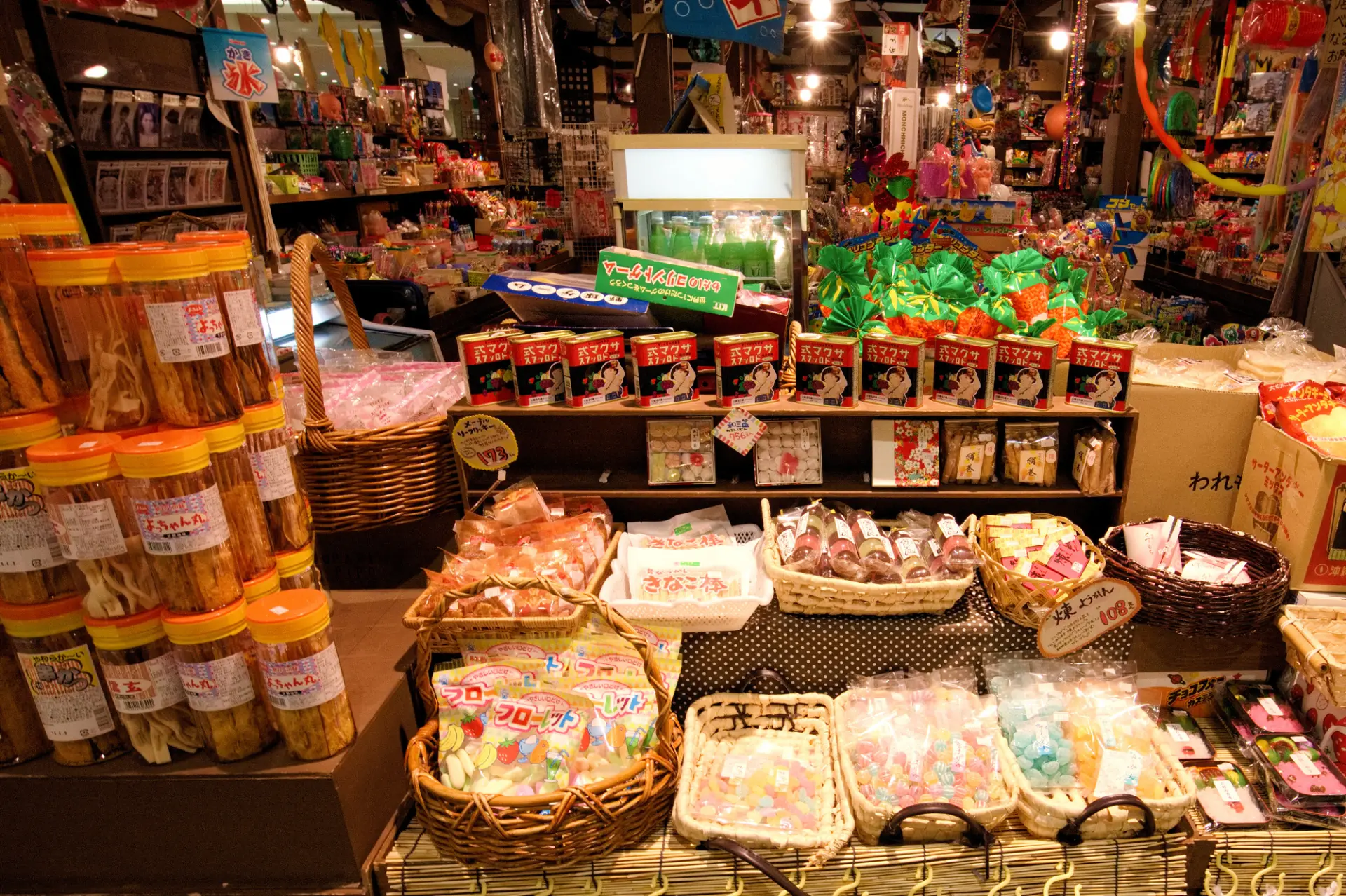
A Complete Guide to Okashi Museum Tempozan: Get Sweets and Dagashi from All Over Japan!
Okashi Museum Tempozan, newly opened in Tempozan, Osaka, is a hot new spot where you can fully experience the charm of sweets and dagashi from across Japan. In this article, we’ll take a detailed look at the must-sees in the exhibition area lined with Approx. 1,500 types of sweets, hands-on corners where you can enjoy classic dagashi-shop games, and photo spots you’ll want to snap right away.
A must for anyone who wants to relive childhood memories or dive deeper into Japan’s sweets culture. If you want to make your Tempozan sightseeing even better, be sure to check it out.
Sweets Loved by Kids and Adults Alike
Why are people of every age, gender, and nationality drawn to sweets?
Sweets have always been close to our daily lives, quietly staying with us through every stage.
Dagashi we picked out at the corner candy store after school, clutching a few coins. Snacks chosen under the school rule of “up to 300 yen” for field trips. Treats received as souvenirs or small gifts. Every one of them—along with its flavor, aroma, texture, and even packaging—stays in our hearts for a long time. Even as adults, we still stop in our tracks when we see a nostalgic sweet and end up buying it. Japan is full of sweets that are just that irresistible.
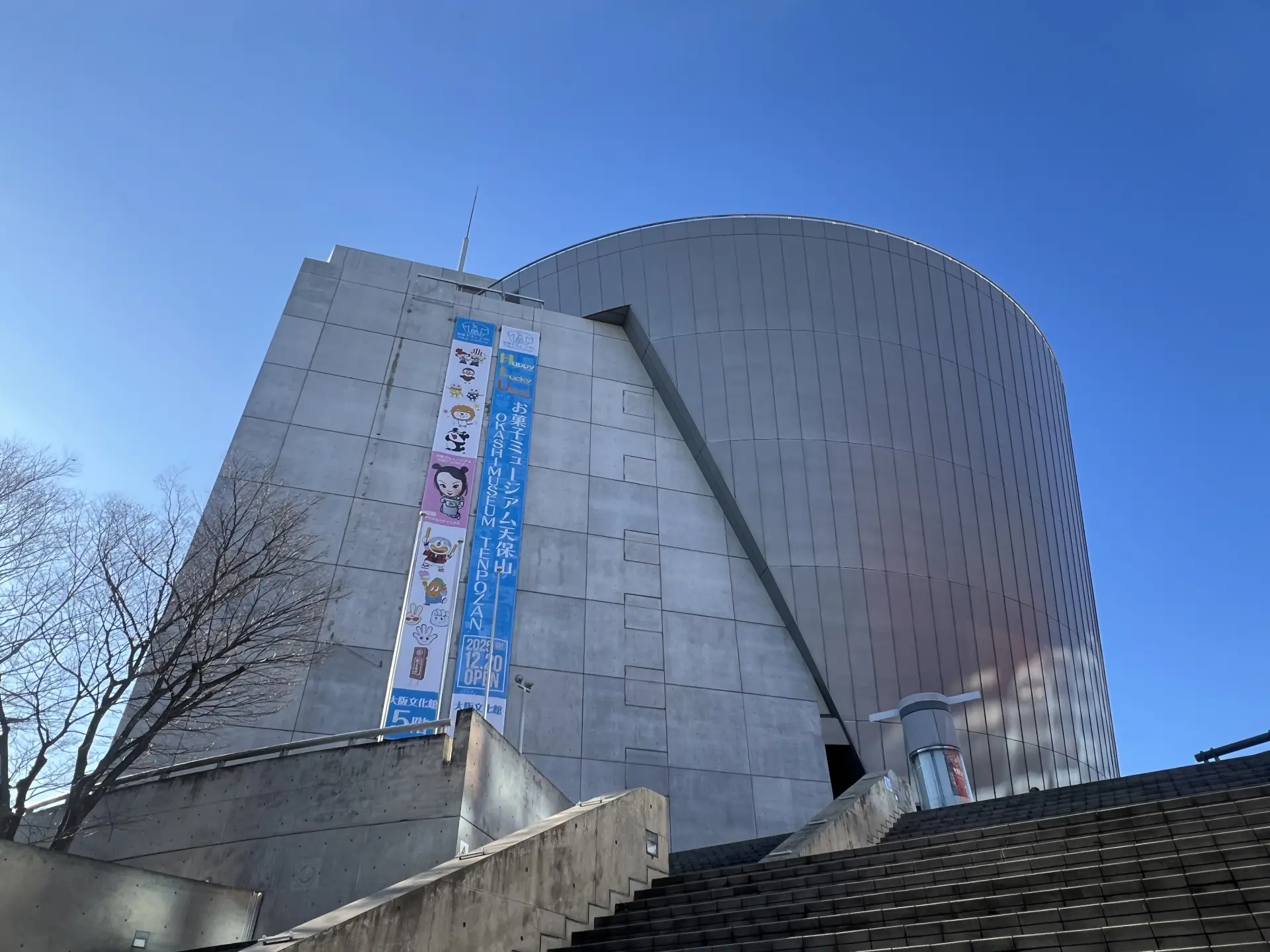
In December 2025, a new facility opened in Tempozan, Minato Ward, Osaka City, where you can rediscover the power of sweets by seeing, learning, and experiencing them. It’s called Okashi Museum Tempozan.
You can fully enjoy and experience Japan’s sweets culture, the history of dagashi, and the creativity of confectionery makers. And that’s not all: you can see art made from sweets—one of the popular exhibits from the Osaka-Kansai Expo event “Smile Project to the World with Sweets”—and take photos at character photo spots. You’ll also find Approx. 1,500 types of sweets that everyone has seen at least once, all lined up—and you can actually buy them.
Through these sweet-themed experiences, this museum elevates sweets from “things to be consumed” into “things that stay in your memory.” Created with the hope of bringing smiles to people around the world through sweets, it’s a place where visitors of all ages—from kids to adults—can connect through sweets. In this article, we’ll thoroughly guide you through the highlights and how to enjoy the exhibits, so first-time visitors, returning visitors looking for new discoveries, and international travelers can all enjoy Okashi Museum Tempozan to the fullest.
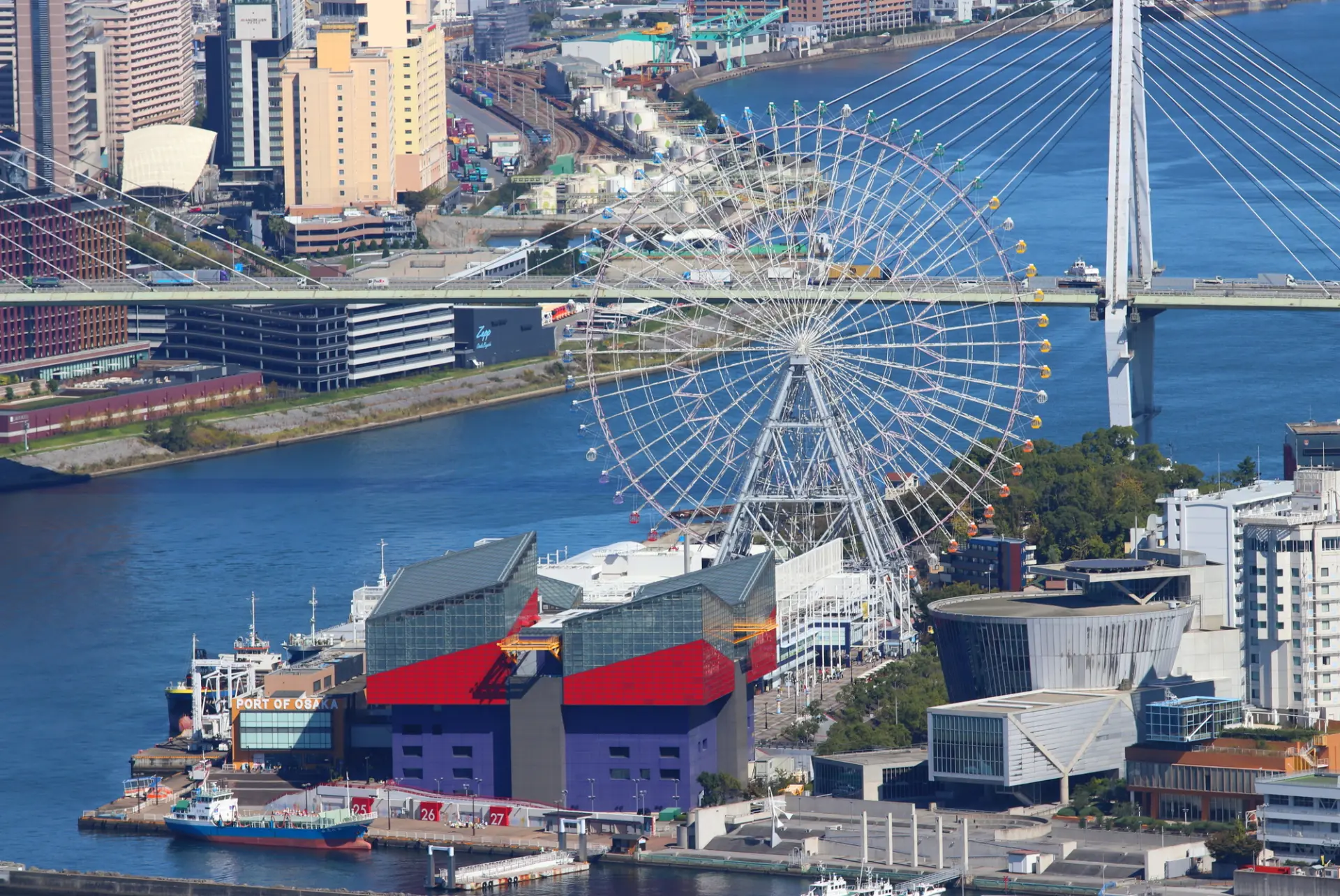
Nearby are Osaka favorites like the Tempozan Giant Ferris Wheel and Kaiyukan Aquarium, making Tempozan a sightseeing area you can enjoy all day.
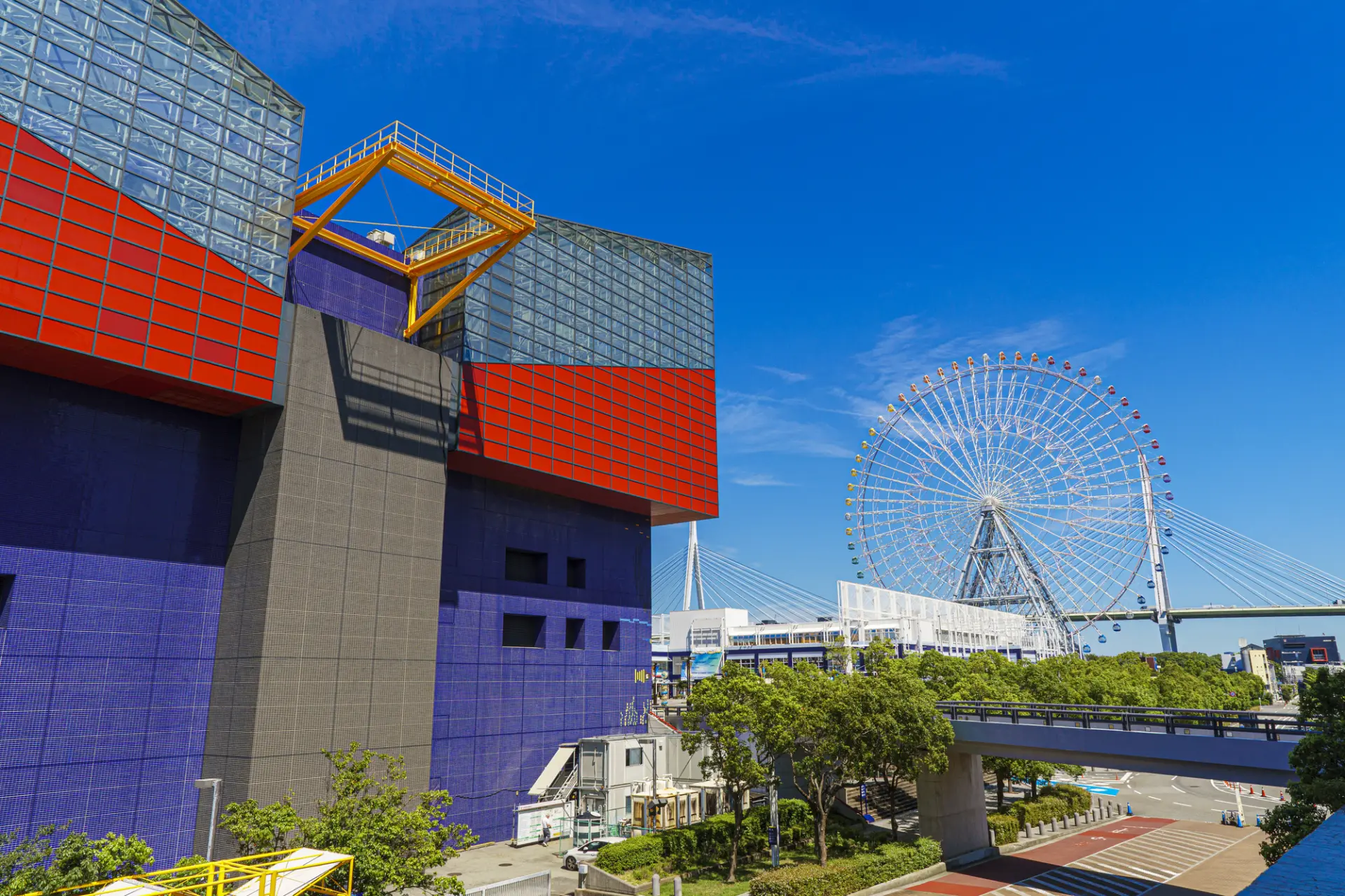
At Okashi Museum Tempozan, with its great views of Osaka Bay, enjoy tracing your own sweet memories—and savor every moment!
Now Open in Tempozan! Okashi Museum
What Is Okashi Museum Tempozan?
Okashi Museum Tempozan opened in Tempozan, Minato Ward, Osaka City, in December 2025. Located next to Kaiyukan Aquarium, it’s drawing attention as a new sightseeing hub in the Tempozan area and as a facility representing Japan’s sweets culture. Here, you can learn about the history and future of sweets, from traditional wagashi and dagashi to modern desserts. With exhibits and hands-on experiences at its core, it’s a place both adults and kids can enjoy. It’s also a facility that carries on the legacy of the Osaka-Kansai Expo. We’ll share plenty more right after this!
Why It Can Showcase Sweets from All Over Japan “All in One Place”: Because It’s Run by a Confectionery Trading Company
This facility opened with support from over 100 confectionery makers, and it’s operated by Kichijuya Co., Ltd. (Settsu City, Osaka Prefecture), a confectionery wholesaler and distribution company. What sets Okashi Museum Tempozan apart from other sweets museums is that it offers permanent displays where you can see characters and sweets from many different Japanese confectionery makers “all in one place.” Other sweets museums are often run by a single company, focused on specific products or manufacturers, or set up as factory tours. Those are great for learning deeply about one maker’s sweets, but it can be difficult to get to know a wide variety of Japanese sweets all at once. Okashi Museum Tempozan’s signature is that you can see them all together. It’s a museum made possible precisely because it’s run by a wholesaler and distributor that does business with confectionery makers across Japan. With the desire to “make people around the world smile through sweets,” they opened Okashi Museum Tempozan. The exhibits are rotated regularly, with new touches that make you want to come back again and again to connect with sweets.
Sharing the Appeal of Sweets Through “Exhibits,” “Play,” and “Experiences”!
Okashi Museum Tempozan is divided into several areas. At the museum entrance, a giant photo-spot object welcomes you.
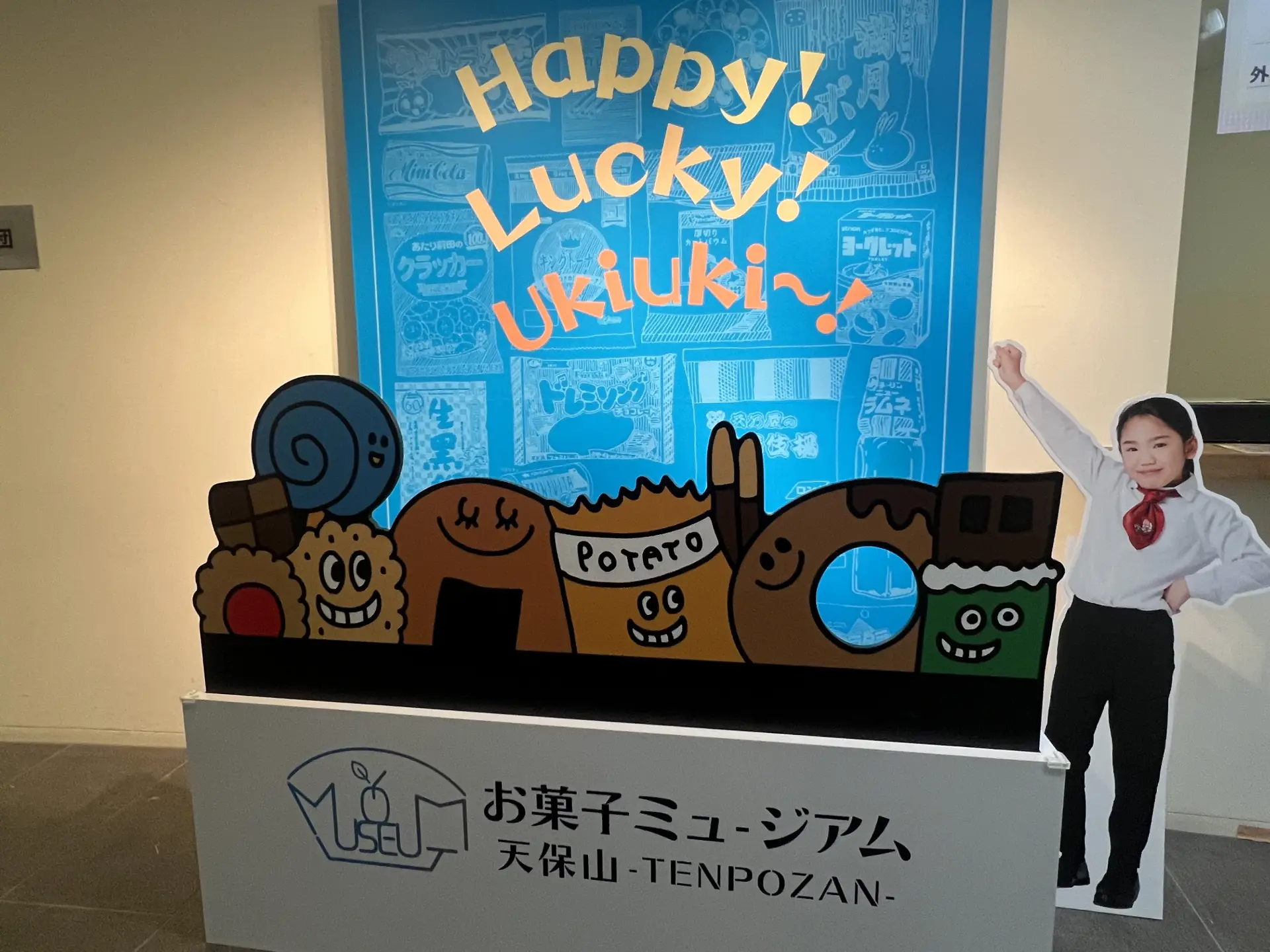
Take a photo and start your sweet, sweet adventure!
(1) HAPPY Zone (Exhibits)
After you pass through the entrance, the first area you’ll see is the exhibit zone called the HAPPY Zone. Here, you’ll find a lineup of amazing works that were also displayed at the Osaka-Kansai Expo.
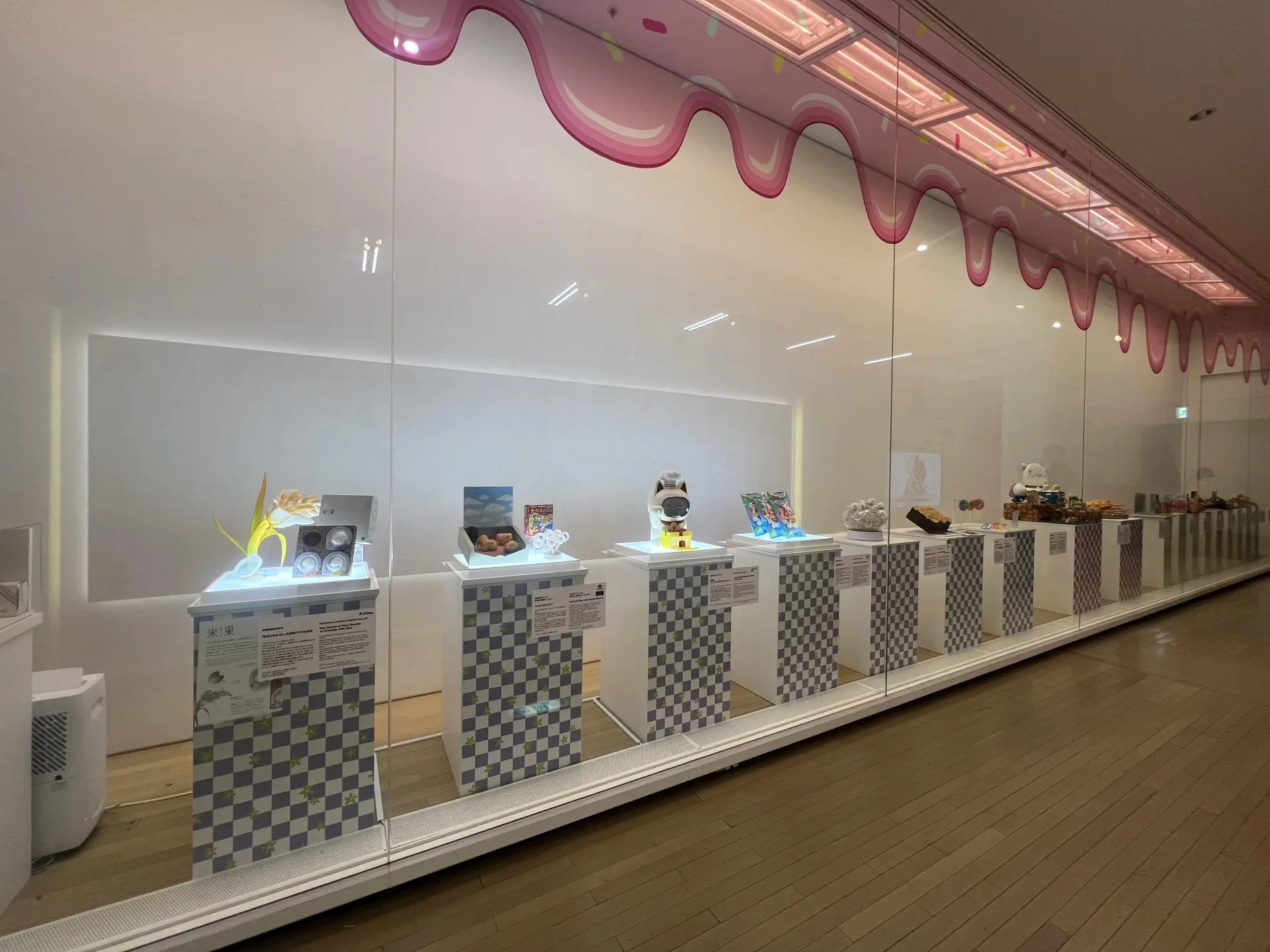
That’s because the works displayed here express the theme of “sweets” in many different forms. For example, this piece was created with an image of Japan’s nostalgic, original landscapes.
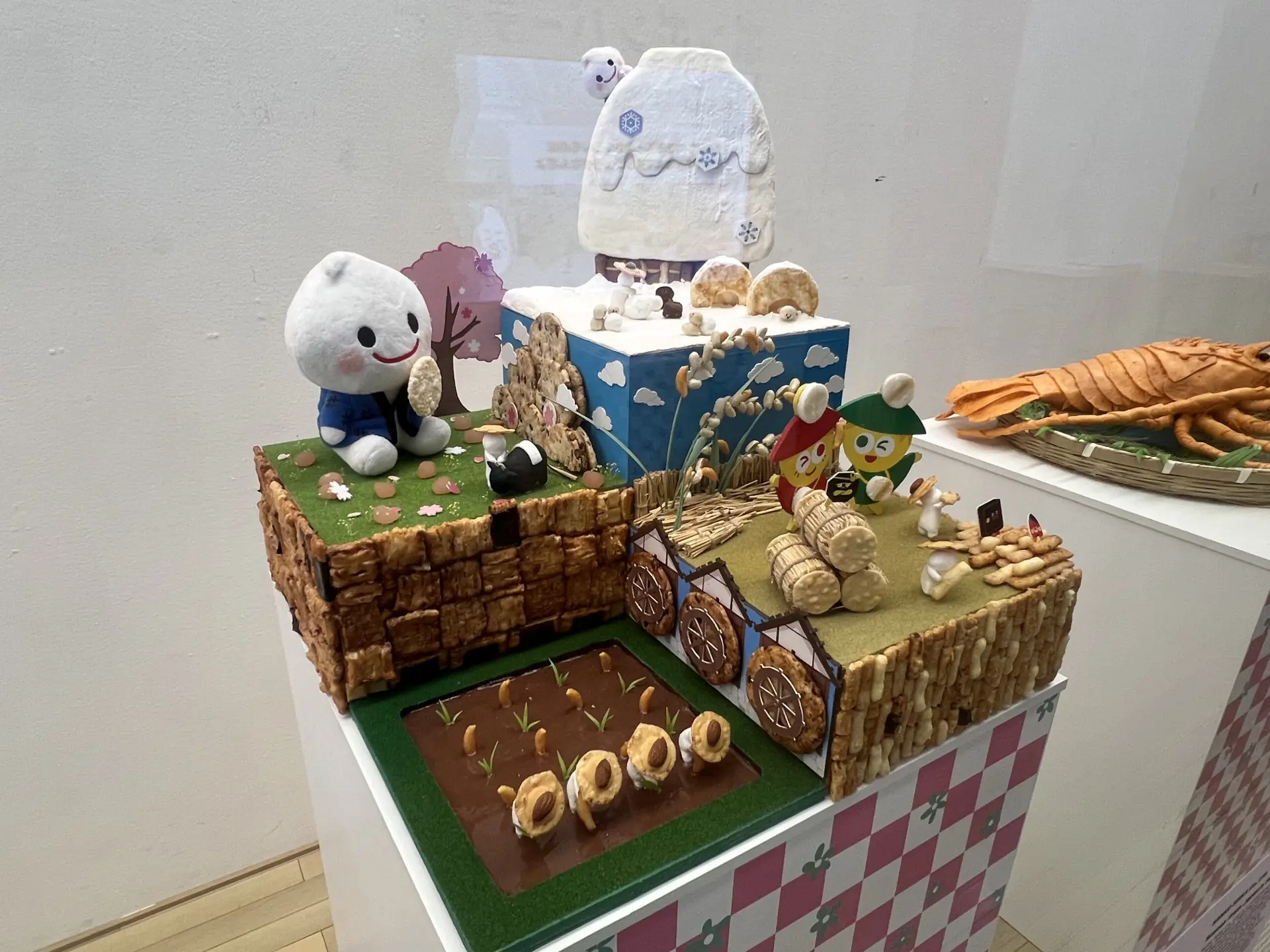
Look closely, and you’ll see it’s made of sweets. The creator is Sanko Seika Co., Ltd., founded in 1962, a confectionery manufacturer and seller whose main products are rice crackers. The piece expresses Japan’s original landscapes passed down through the four seasons and the work of rice cultivation. The back right depicts “winter,” beautifully showing a snow-covered scene using arare and senbei. The back left is “spring,” representing satoyama hills with fresh green leaves. The front left is “summer.” The rice ears made with chocolate and kaki no tane. The people drawing water and preparing the rice fields are made with the company’s signature snacks, “Cheese Okaki” and “Kaki no Tane.” The stone walls and windmills are also made of okaki and senbei. The front right is the bountiful “autumn,” expressing heavy, ripened stalks using rice crackers and kaki no tane. It was created from the desire of a rice-cracker company to express Japan’s original landscapes—nurtured alongside rice—through sweets.
Mikawaya Seika Co., Ltd., whose main product is shrimp senbei, made a “spiny lobster” out of “shrimp senbei.”
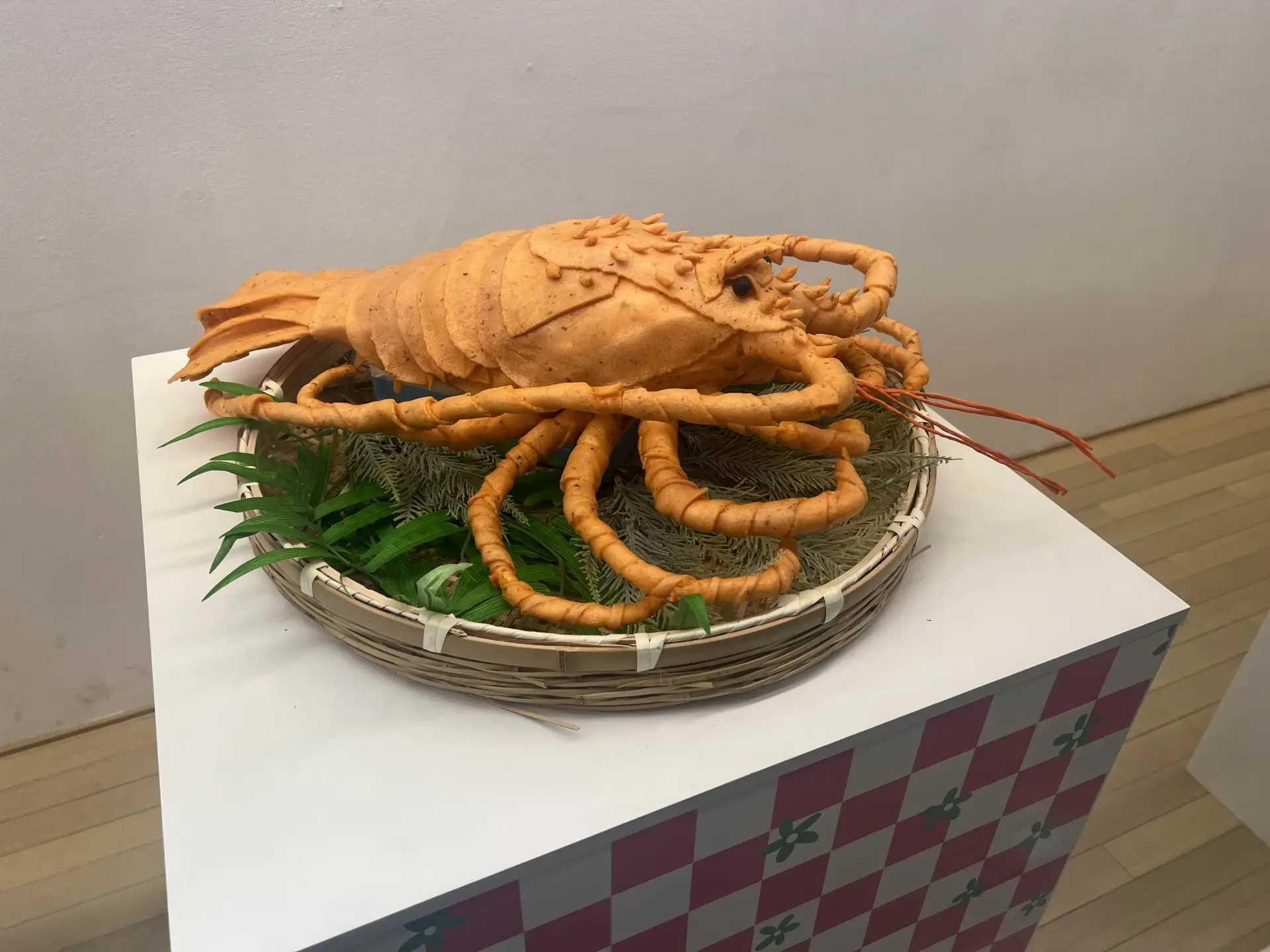
The title is “Longing for Ise Ebi.” The main ingredients of shrimp senbei are starch and small shrimp. These small shrimp live in sand and mud on the seafloor, are harvested stably year-round, and are widely used not only in sweets but also in everyday cooking. In contrast, Ise ebi (spiny lobster) looks luxurious and is often served at especially celebratory occasions and events, such as wedding dishes, as a good-luck ingredient. Using “shrimp senbei” to uniquely express a longing for “Ise ebi,” it’s a very Osaka-like work.
In addition to freely expressed works made with sweets, there are also displays of sweets works ideated by Osaka University of Arts students and produced by companies, as well as exhibits imagining sweets of the future. Nearly 20 pieces made from gummies, chocolate sweets, and more are on display, so take your time and enjoy the appeal of sweets with your eyes!
The HAPPY Zone also has a tasting corner where you can sample sweets—something you can only enjoy if you come to Okashi Museum Tempozan.
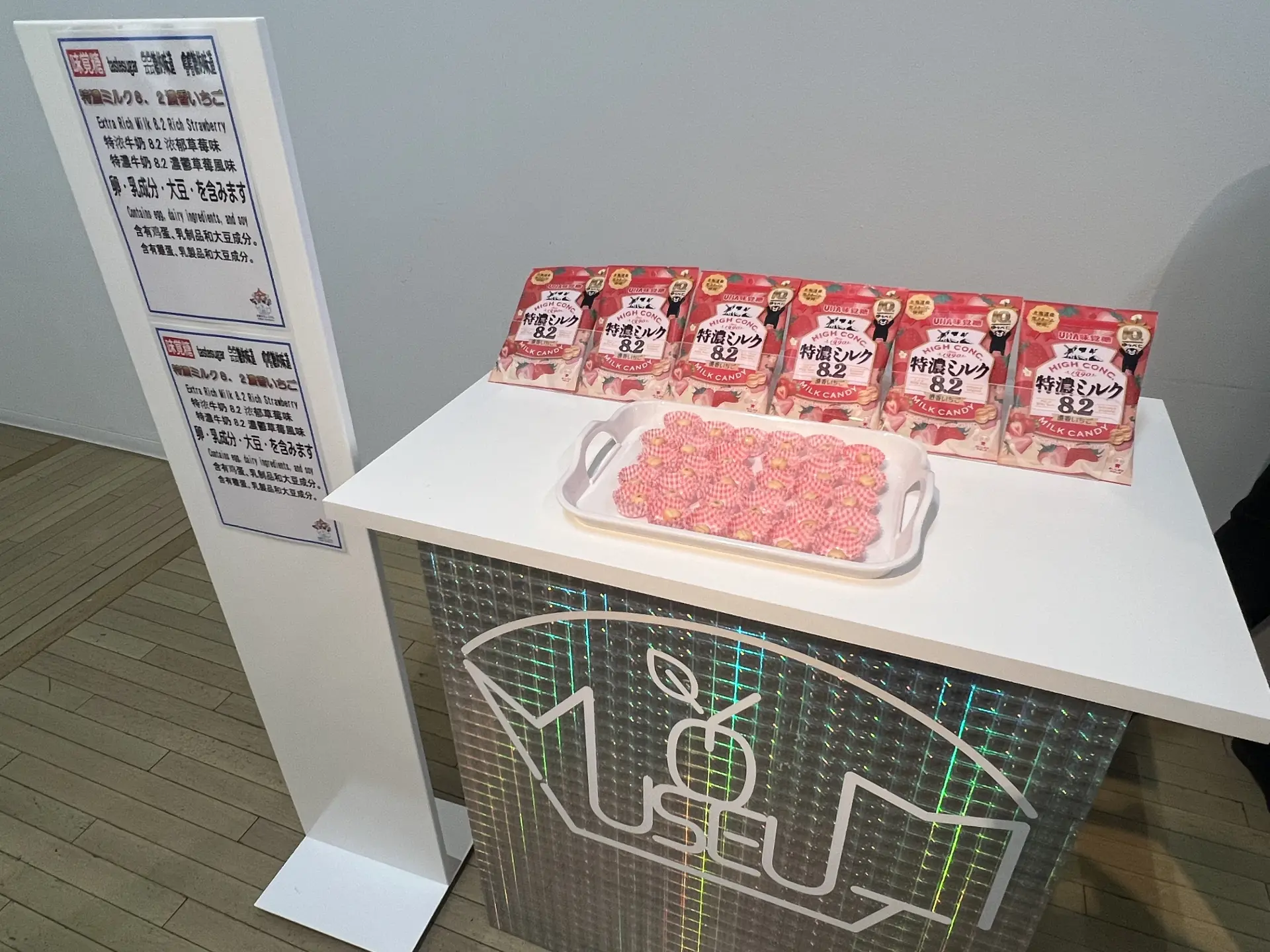
At this corner where you can normally sample sweets, sometimes you may get to taste new products before anyone else—an irresistible surprise for sweets lovers! The sweets are rotated at set intervals, so you can sample a variety of treats. Look forward to what you’ll discover♪
You can also experience making “pon-gashi,” a classic Japanese dagashi, through a game.
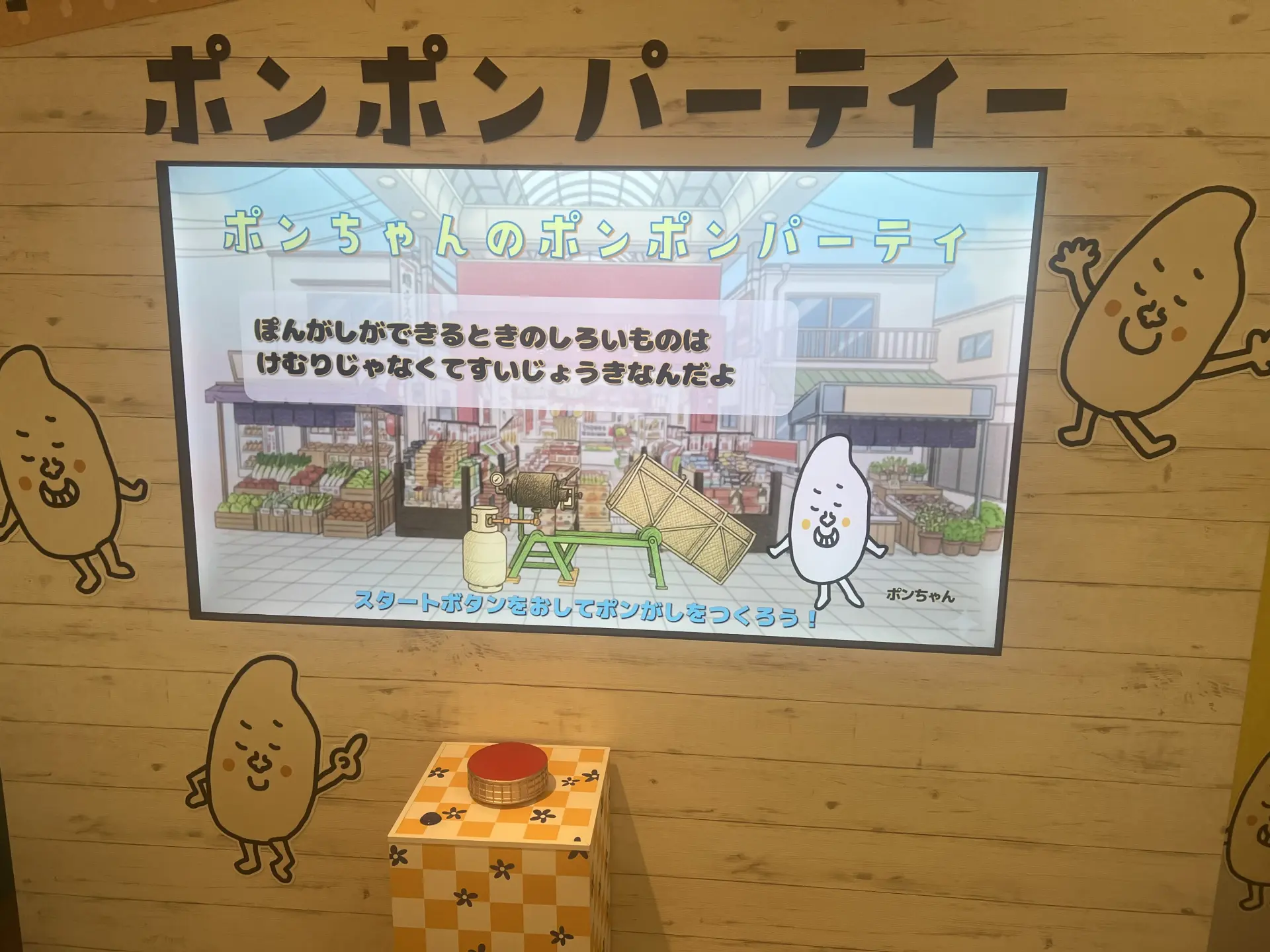
Pon-gashi is a snack made by pressurizing grains such as rice or wheat and then releasing the pressure all at once. In the past, Japanese children commonly bought pon-gashi from “pon-gashi vendors” who traveled with handcarts and made it on the spot, but today it’s not something you often see. This is why the “Pon-Pon Party” game was created—so kids today can enjoy what kids in the past did. Press start, and an animation of the pon-gashi-making process appears on the screen. Then, if you press the button again at just the right timing when it’s ready, your pon-gashi is complete! Another highlight of Okashi Museum Tempozan is that you can learn about Japan’s traditional sweets culture through games.
There’s also an area where 140 characters from various confectionery makers gather together, as well as character quizzes.
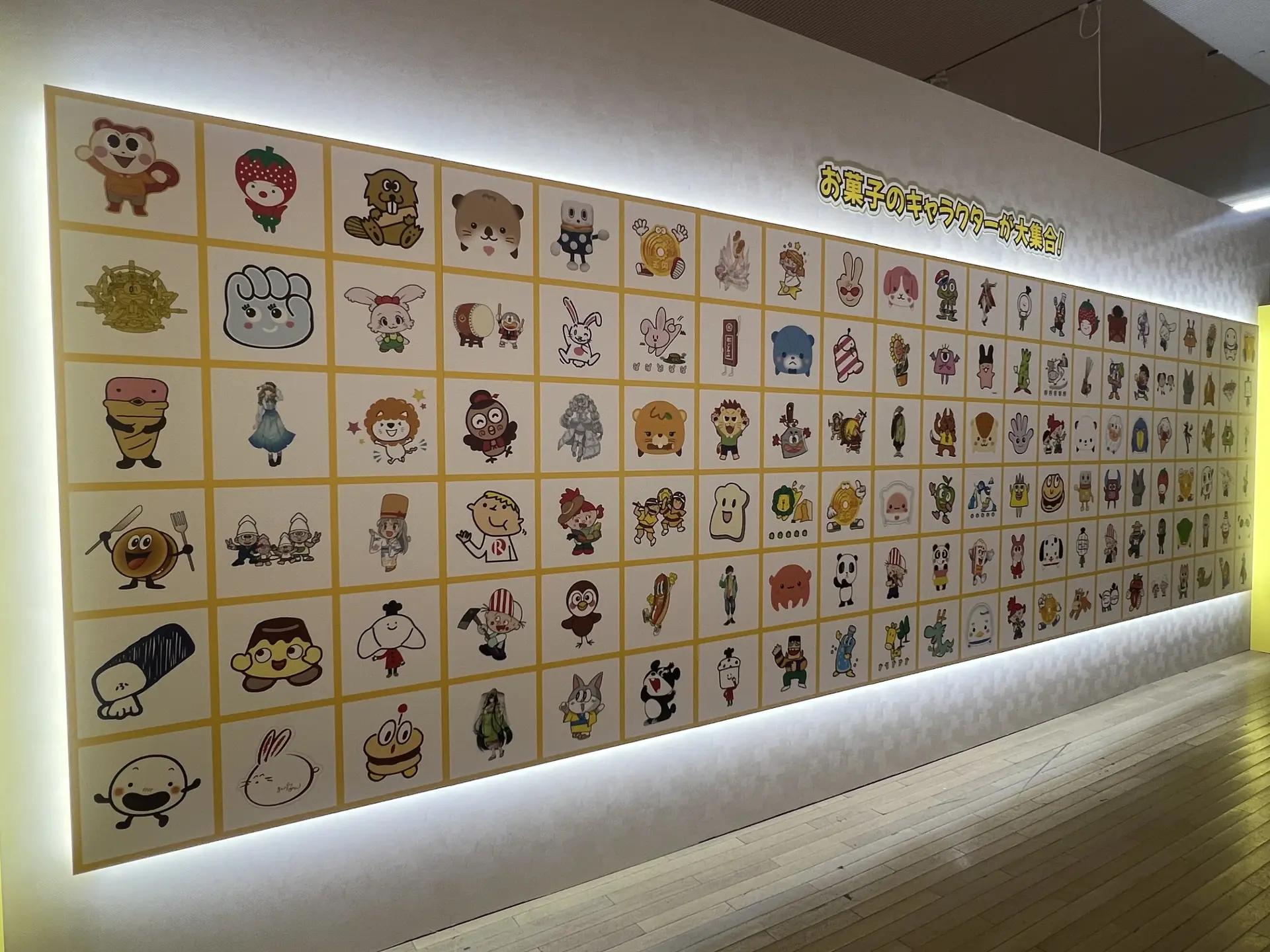
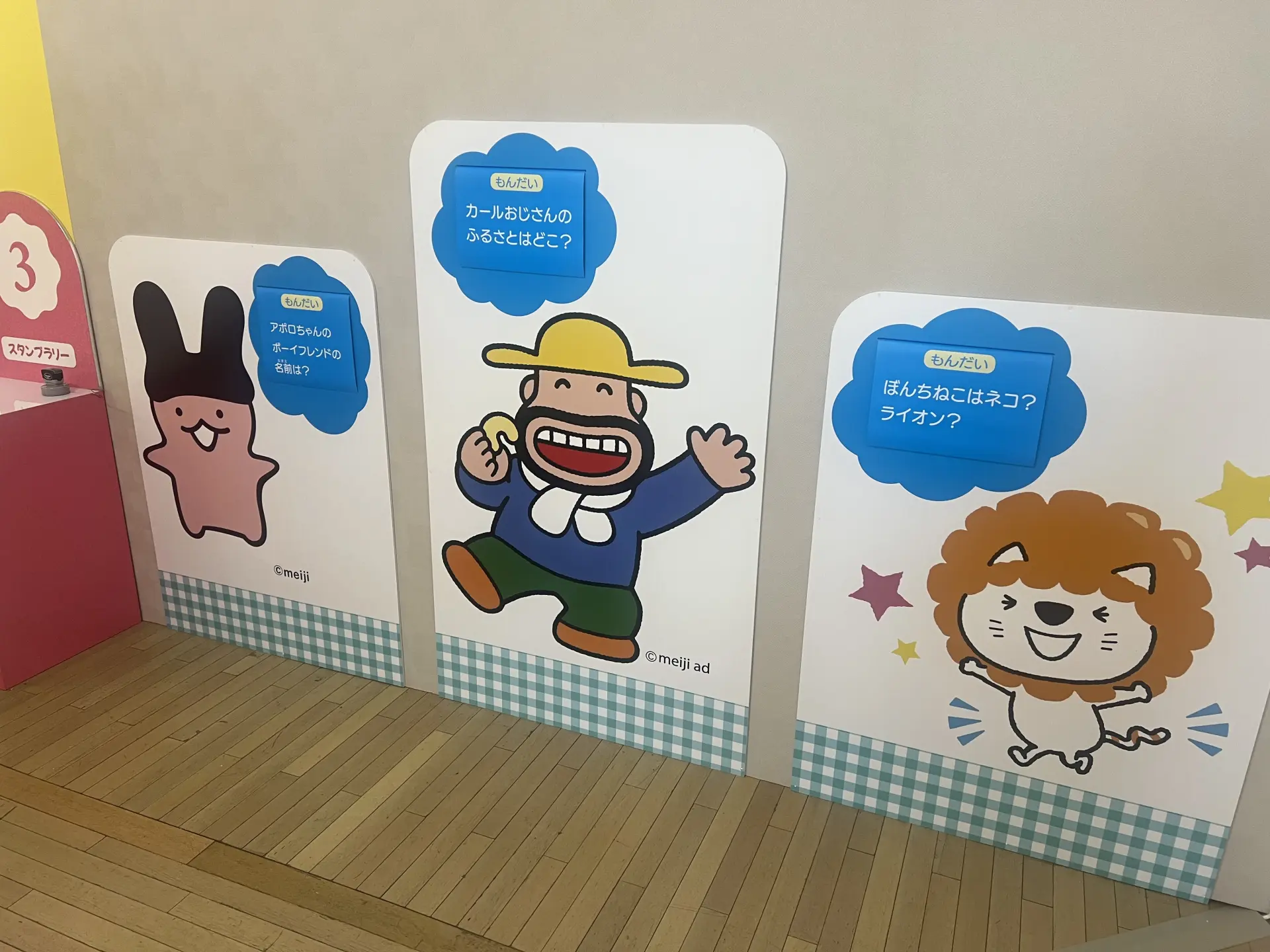
Being able to bring together characters from multiple confectionery makers in one place is possible because of the museum’s relationships with so many different makers. It’s a photo spot where you can take pictures in front of your favorite character♪ Character mascots also appear on a rotating basis, and you can take photos together! These mascot meet-and-greets are also one of the most popular contents for character fans. Be sure to capture your memories in photos and take them home♪
(2) LUCKY Zone (Play)
Next up is the LUCKY Zone. Here, you can experience traditional Japanese “play,” like at old-fashioned festival stalls. *Some content requires a fee.
At the shooting gallery corner, you can shoot three times for 200 yen per round.
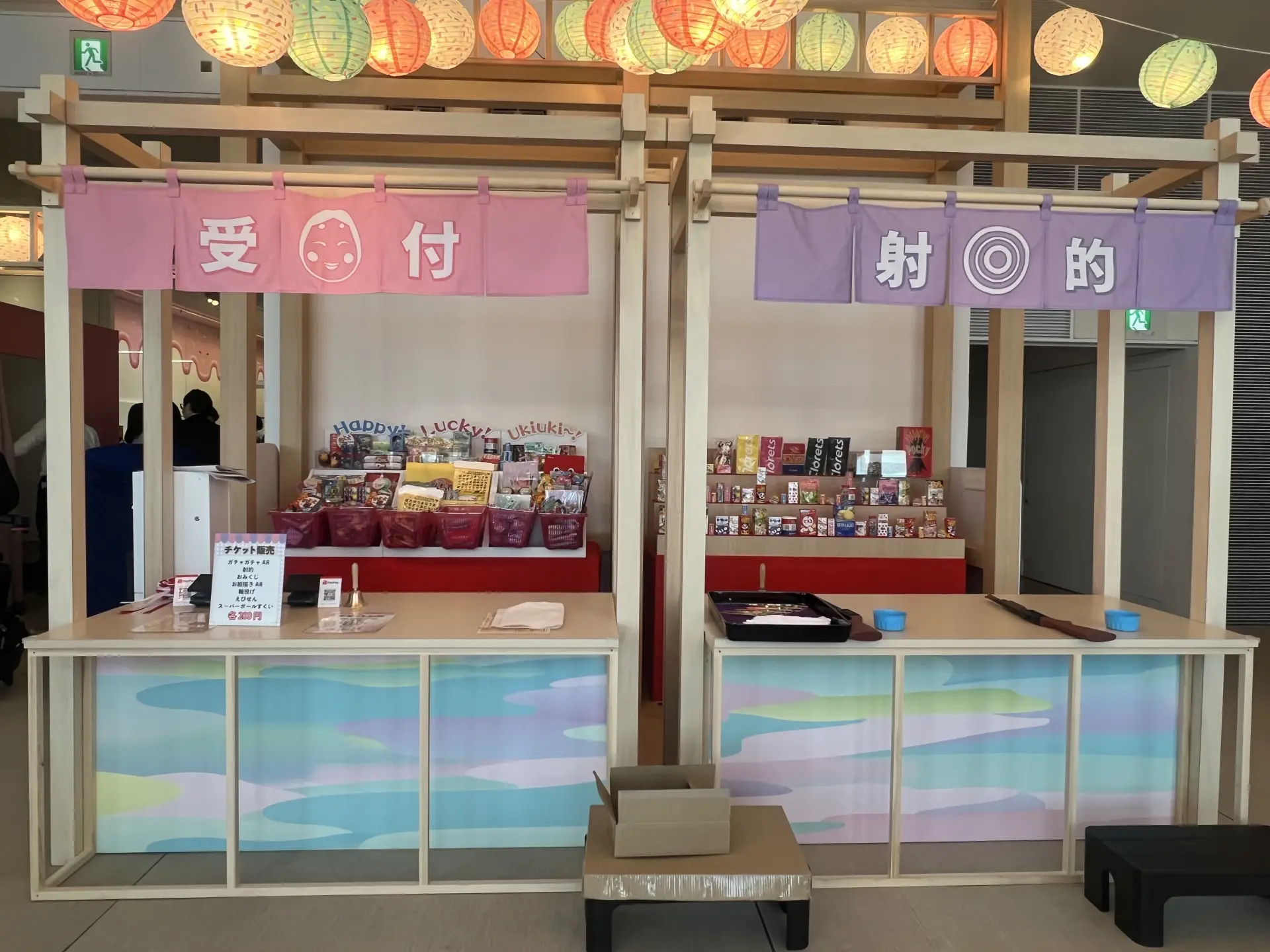
Your targets are all kinds of sweets. Some targets are items that cost over 200 yen each, so it’s a chance to play and maybe GET something great!
You can also try ring toss and super ball scooping.
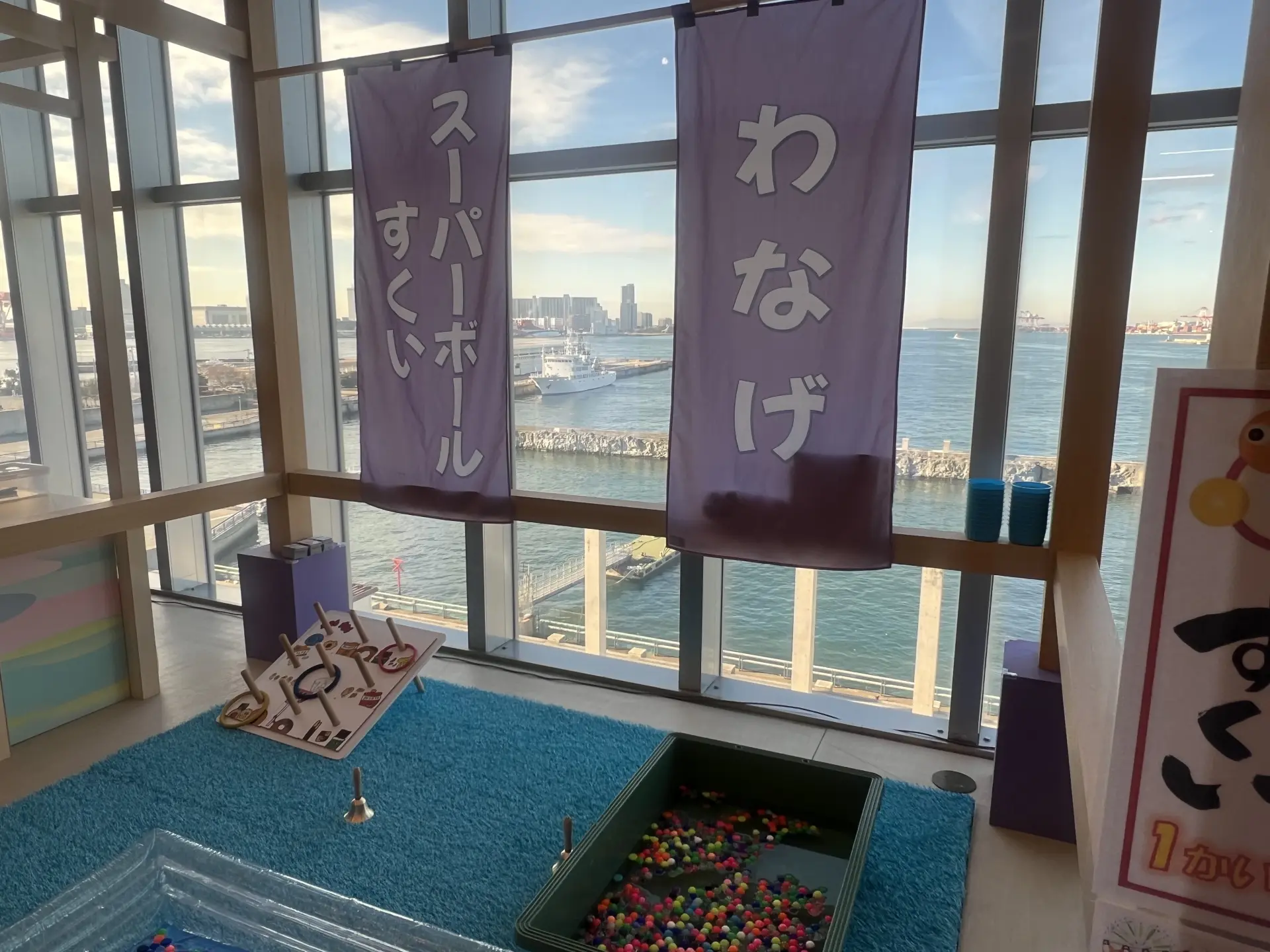
Hit your target, scoop up plenty, and GET your prizes!
You can also have nostalgic shrimp senbei made on the spot and eat it right then and there.
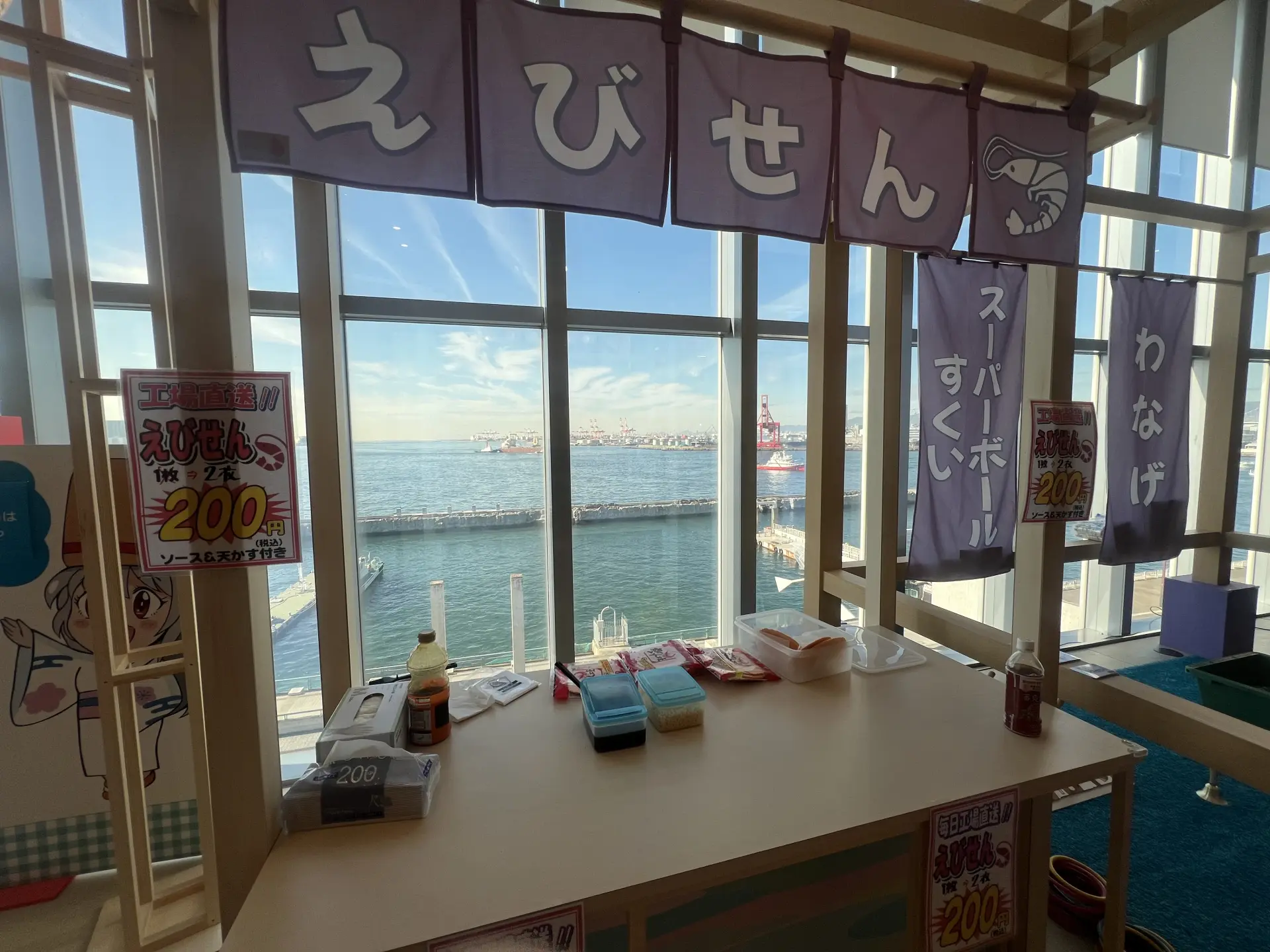
And it’s shrimp senbei delivered straight from the factory! Have them spread plenty of sauce on it and sprinkle on lots of tenkasu. The crisp shrimp senbei, the savory tenkasu, and that Osaka-style sauce are a perfect match! It’s the ultimate dagashi!
By the way, have you noticed the great view?
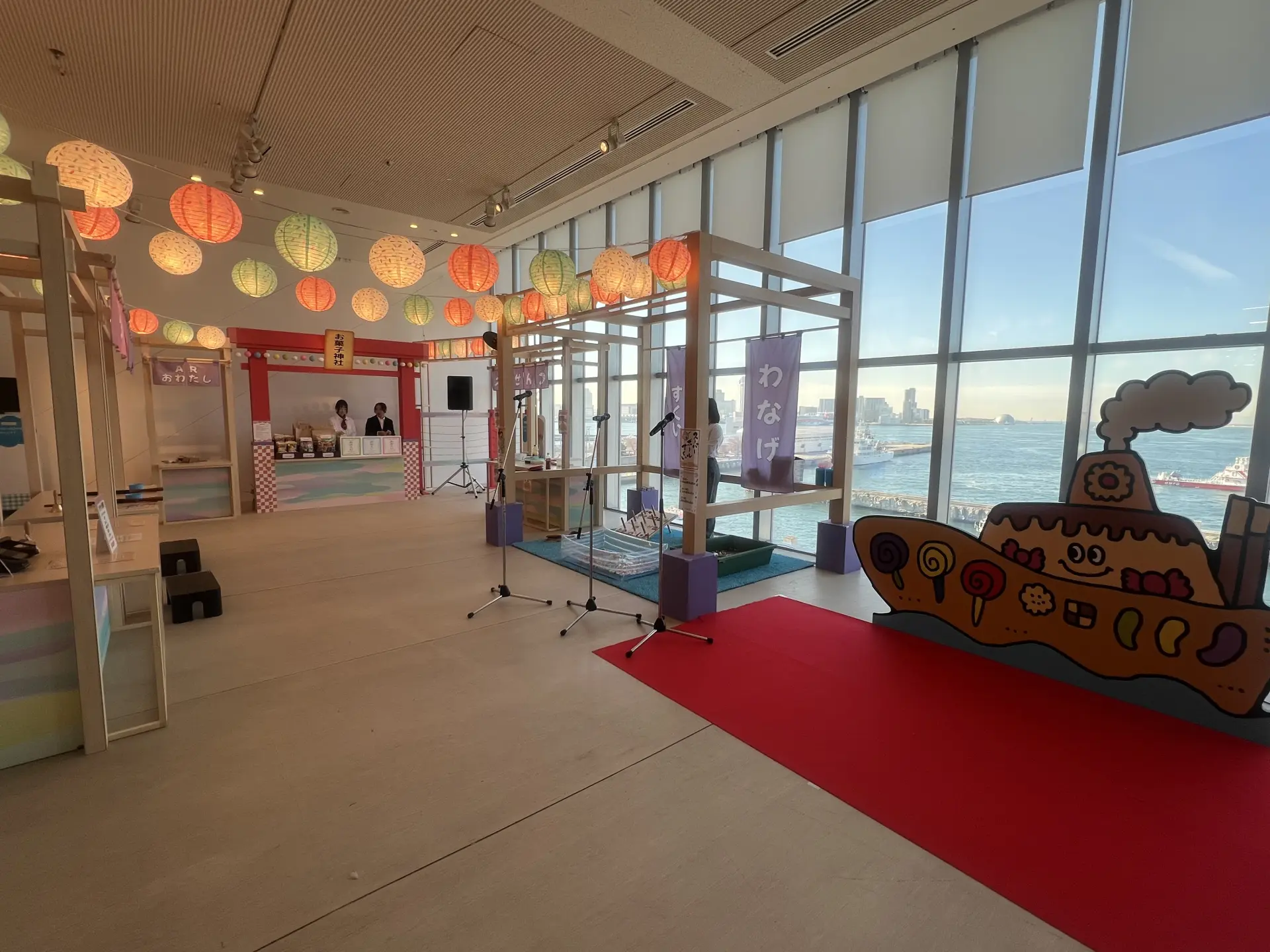
From the LUCKY Zone, where the festival stalls are, you can get a panoramic view of Osaka Bay. If you’re lucky, you might even see a boat passing nearby. Be sure to try taking photos with Osaka Bay in the background!
At the Sweets Shrine, try drawing an omikuji fortune!
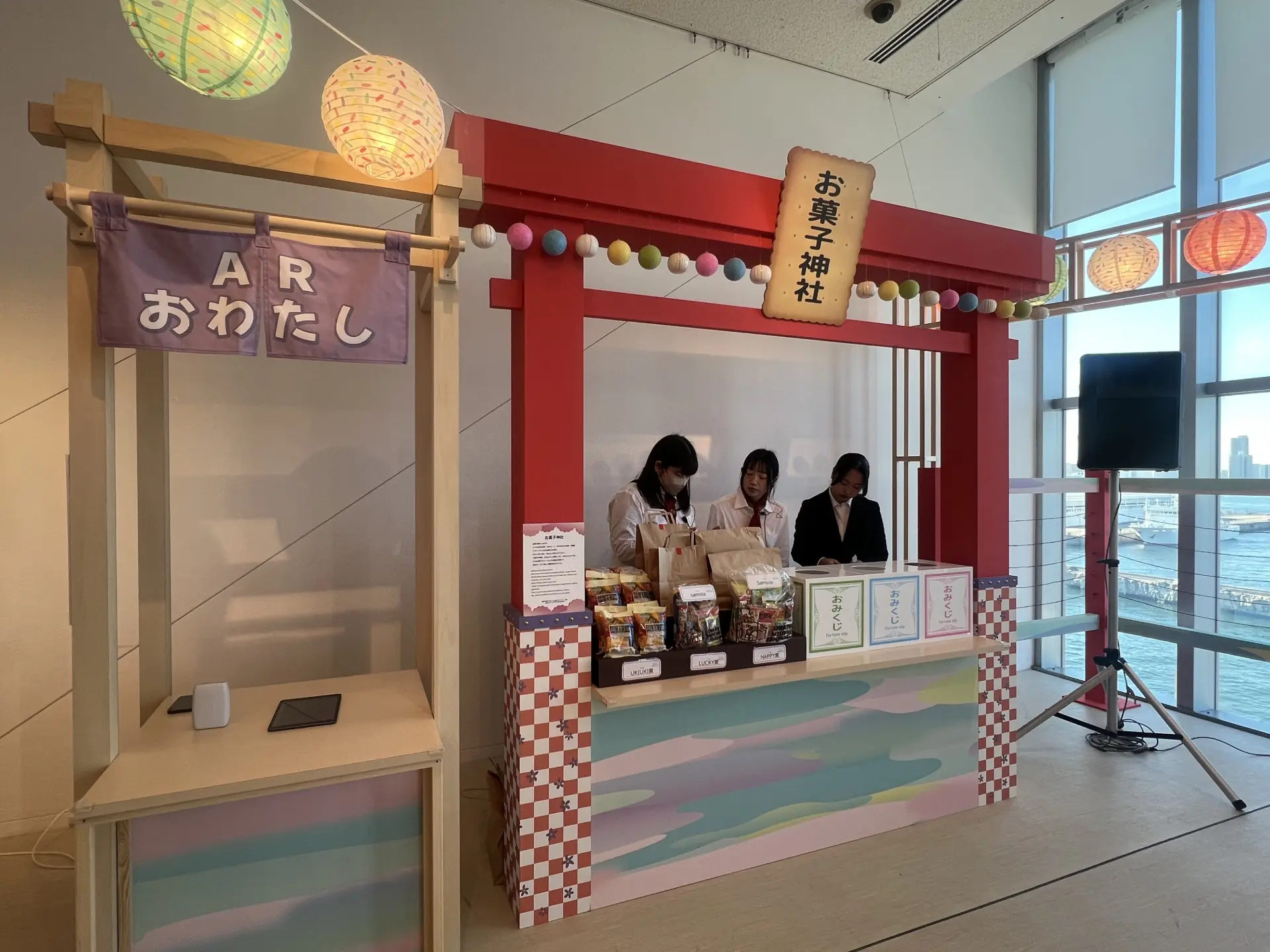
You can get fortunes for today’s money luck, love luck, and lucky item. When I tried it myself, my “work luck, study luck” was “very sweet”! Expressing it with “sweetness” is unique to the Sweets Shrine. While I was happy with the result, I noticed my omikuji had a “LUCKY winner” mark on it.
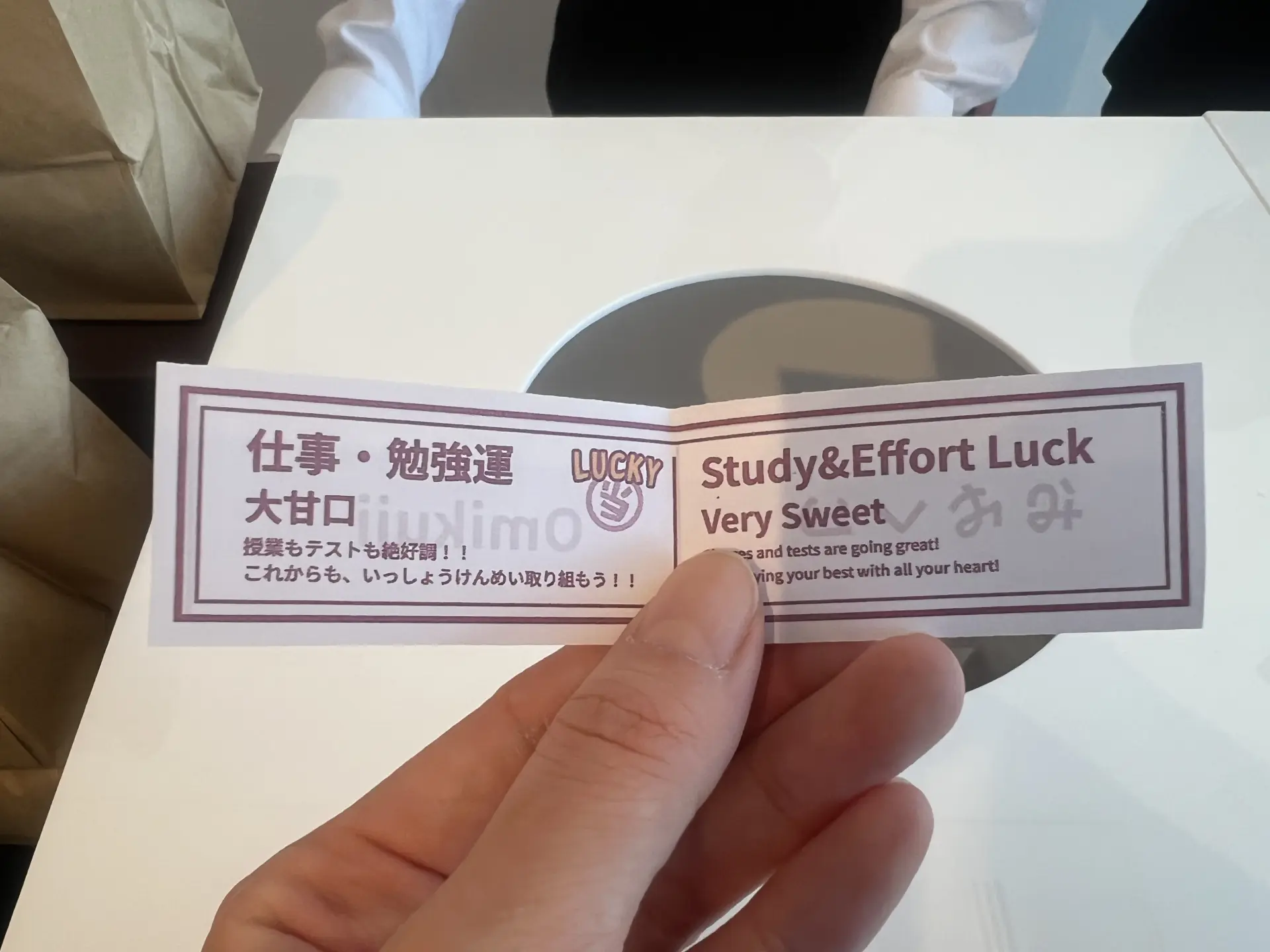
It turns out this is a jackpot omikuji. If you get this mark, you can receive an assorted set of sweets! How much is inside is a secret, but apparently it’s rare to have hardly anything in it. By the way, even if you don’t win, you still get dagashi. Be sure to test your luck at the Sweets Shrine. This Sweets Shrine was actually ideated and planned by students from Mukogawa Women’s University in Hyogo. Another feature of this museum is that it creates opportunities for local Kansai students to take on challenges.
One of the museum’s most popular contents is “Gacha Gacha AR.”
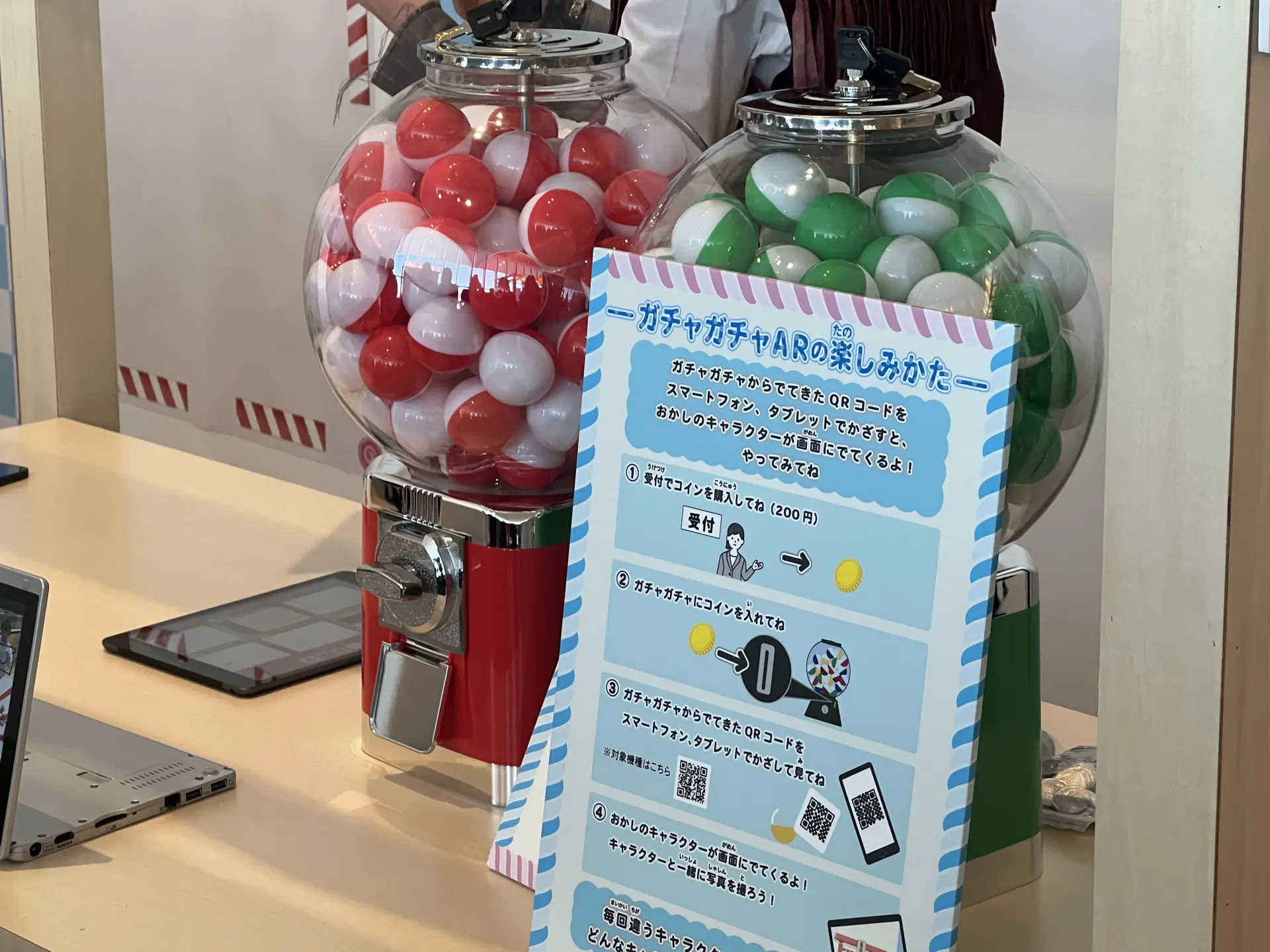
With this content, you can take photos with sweets characters. Insert the coin you buy at reception into the gacha machine. When you turn it, a paper with a QR code comes out—hold your smartphone or tablet over the QR code. Then a sweets character appears on your screen! Which character you get is a surprise! Since AR stands for augmented reality, you can take photos together with the character shown on your screen. Take a memorable photo and bring the memories home.
(3) UKI-UKI Zone (Hands-on)
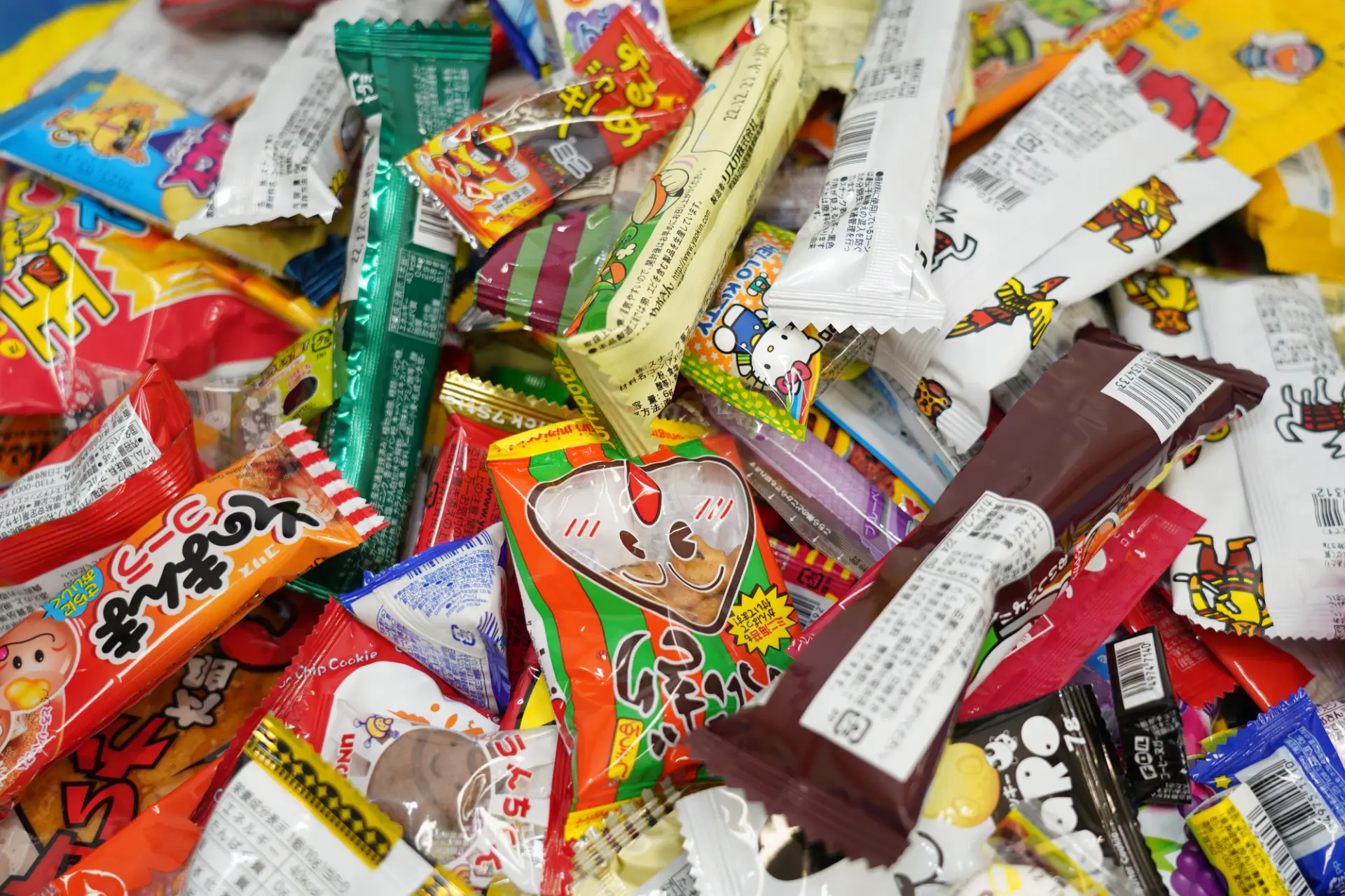
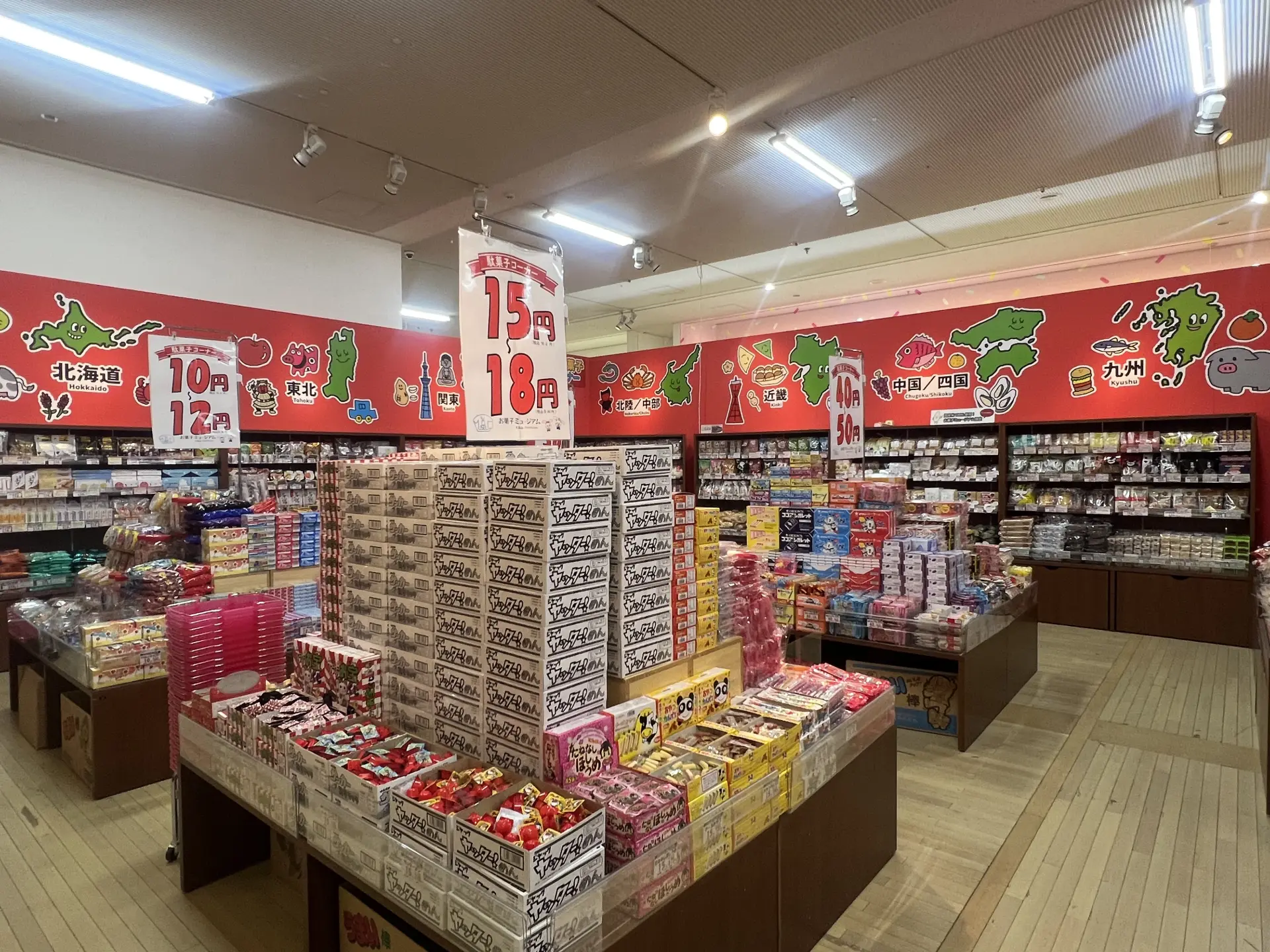
The UKI-UKI Zone is all about hands-on experiences. This happiness-packed zone lets you actually buy sweets: 600 types of dagashi from all over Japan, 400 types of regional sweets from Hokkaido to Okinawa, and when you add other sweets too, a total of Approx. 1,500 types.
Dagashi refers to inexpensive sweets that Japanese people have long been familiar with. Many can be bought for around 10 yen to a few dozen yen each and are mainly aimed at children. Its origins date back to the Edo period, derived from “zatsugashi,” sweets made with grains, brown sugar, mizuame syrup, and more that ordinary people could easily buy. In the Edo period, white sugar was a luxury item, and common people rarely had access to it. That’s where these zatsugashi came in, sold at low prices. It’s said the term dagashi came into use in the Meiji period, contrasted with premium “jogashi” made with white sugar. As Western culture entered Japan, gummies, chocolate, gum, and more also became part of dagashi. One representative dagashi, “caramel,” came with a toy bonus, captivating kids and becoming popular. Neighborhood dagashi shops that sold only these inexpensive sweets have become very rare today due to declining birthrates. When I was a kid, I’d come home from elementary school, drop my backpack, grab my 100-yen coin allowance, and head to the dagashi shop with friends. We were hungry after school. If we wanted to eat lots of different sweets, we’d buy ten 10-yen items. If we wanted a slightly pricier 50-yen sweet, we’d buy many 5-yen chocolates that were even cheaper than 10 yen to adjust the total. Kids learned practical money math at dagashi shops. Also, the elderly shop owners—grandmas and grandpas—played a role in watching over the neighborhood. For community building and children’s social life, dagashi shops were essential. As mentioned earlier, those dagashi shops have greatly decreased due to declining birthrates, and kids now have far fewer chances to learn money math in real life. In that context, Okashi Museum Tempozan, which brings together 600 types of dagashi, is a facility that could be called a lifesaver for children.
The tightly packed dagashi lineup can be enjoyed not only by kids, but also by adults who can buy them with a nostalgic feeling.
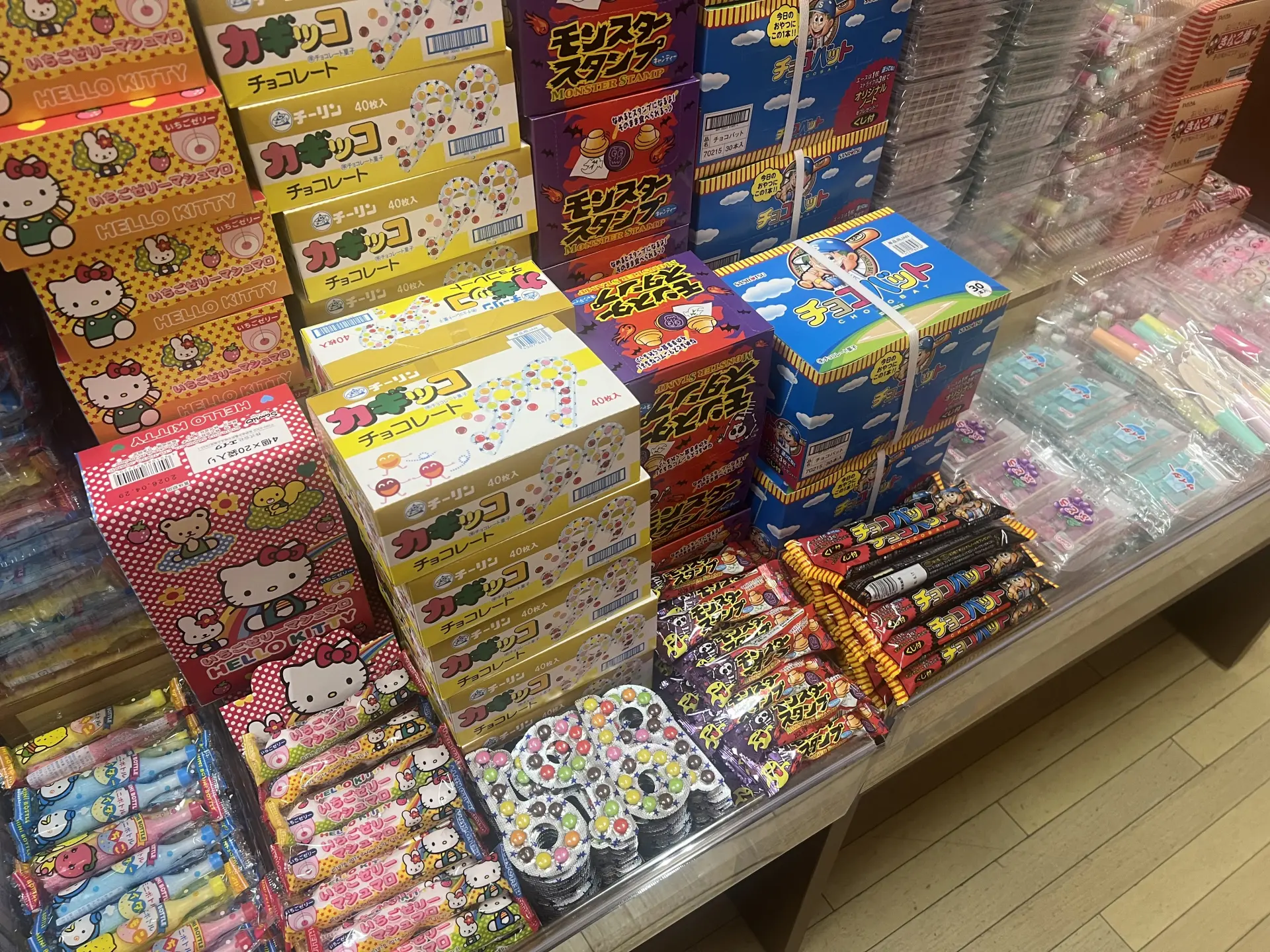
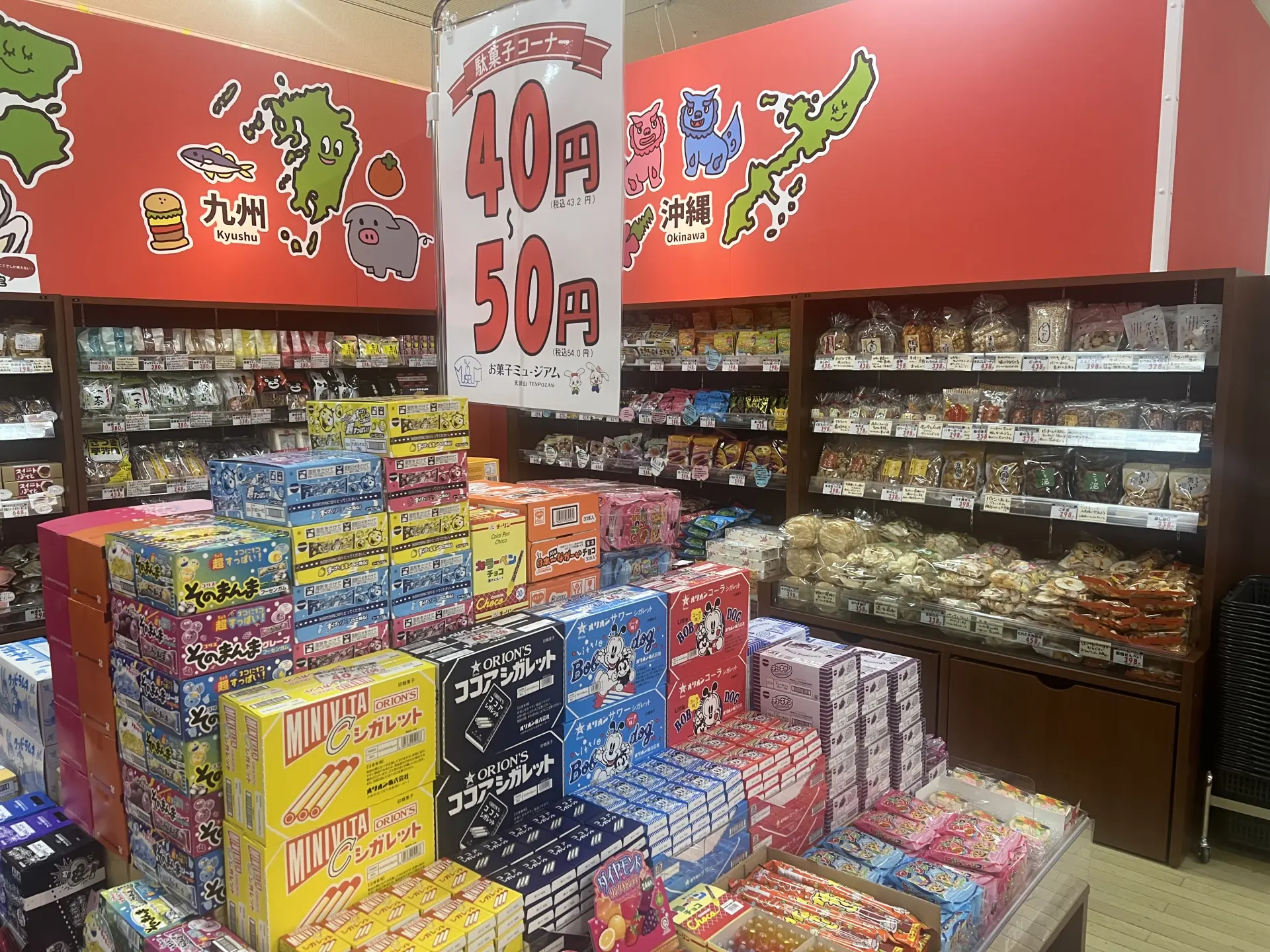
Unlike when they were kids, adults can afford to buy a lot, so they end up buying too much. With this many items, it seems hard to keep track of each price, but here the dagashi are roughly divided by price range, making it easier for kids to do the math.
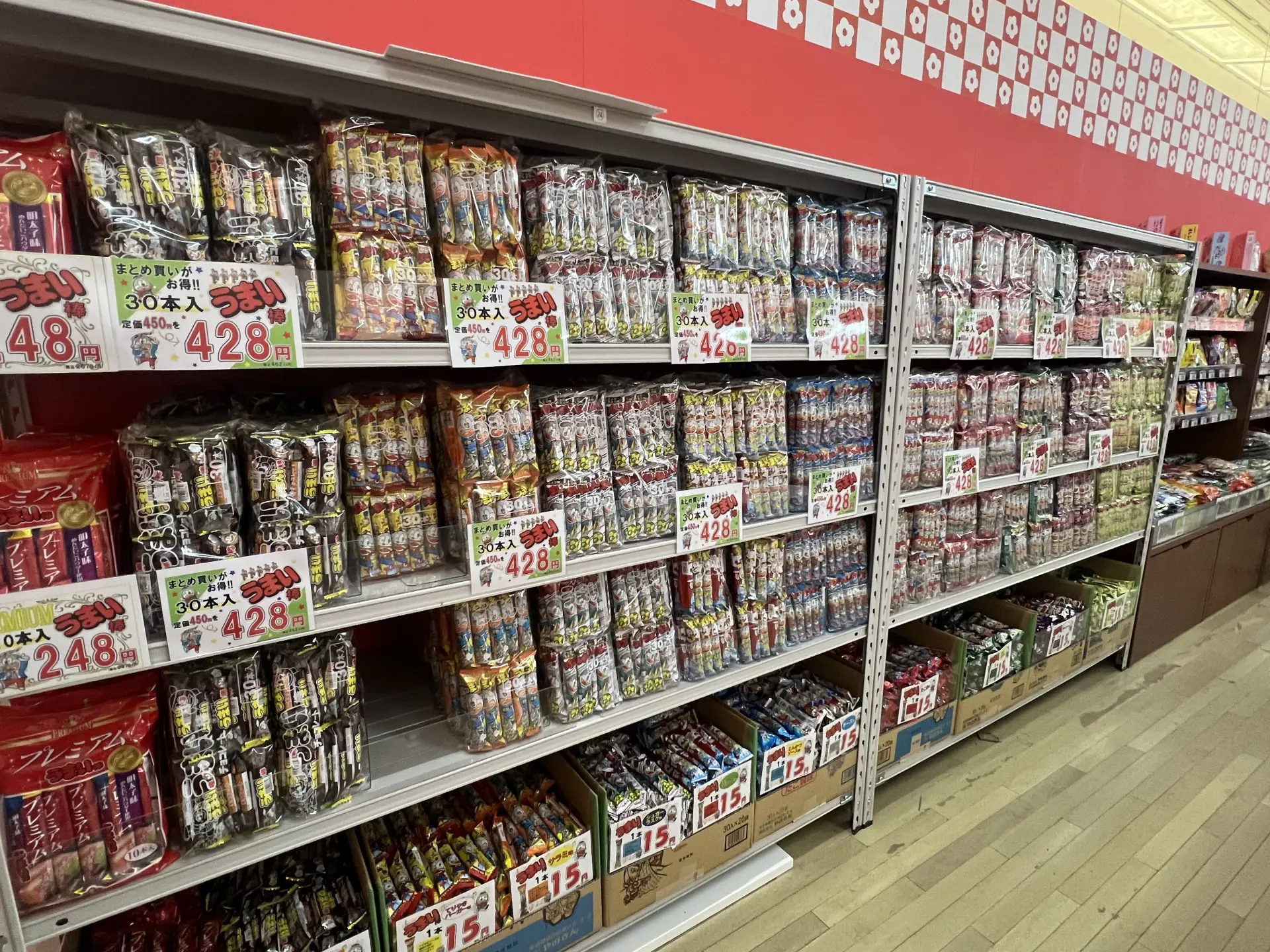
There are plenty of dagashi that bring back nostalgic memories, like packs of three sour gums where one is a winner (Japanese kids share them with friends and play a game to see who gets the sour one), and cigarette-shaped ramune (kids used to pretend to smoke with these ramune candies). I felt happy to see that the dagashi I bought as a child still exist today. Even as times change, these classic dagashi are still loved. There were also 30-stick packs of a national snack brand! You don’t often see that kind of bulk size! That’s something you can expect from a museum run by a sweets wholesaler.
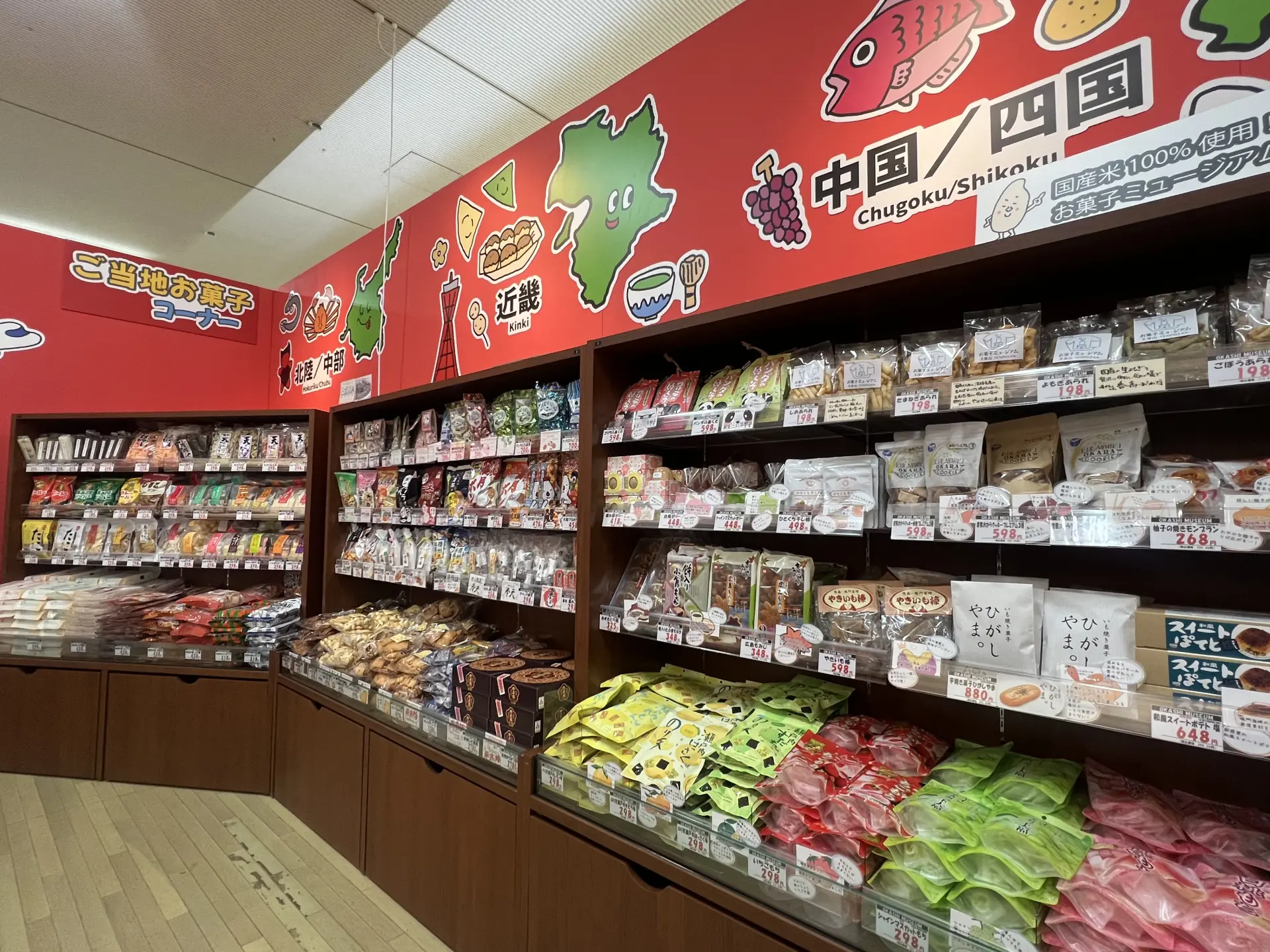
Along the walls, you’ll also find local sweets from Hokkaido all the way to Kyushu and Okinawa. Being able to buy them without traveling to each region is another highlight of this museum.
You can buy sweets in the UKI-UKI Zone and have them packed into an original museum bag (fee required) as a souvenir service. Also, starting in spring 2026 or later, they plan to offer experiences where you can actually make sweets. They said the museum itself will continue evolving, driven by the desire for people to visit again and again.
(4) Limited-time events, too!
They regularly hold events that introduce seasonal cultures and sweets, as well as cultures and sweets from different countries. The opening event featured a collaboration with Jordan. The Jordan Pavilion was among the most popular at the Osaka-Kansai Expo, and one thing that boosted its popularity was Jordan’s sand. Visitors could touch that sand again here, and there was also a cafe booth where you could enjoy Jordanian coffee and Arab sweets, plus activities like trying traditional clothing and experiencing Arabic.
As you can see from the exhibits of sweets art shown at the Osaka-Kansai Expo and collaborations with pavilions from various countries, this museum is also a facility that carries on the legacy of the Osaka-Kansai Expo.
More Popular Osaka Sightseeing Spots Nearby!
Kaiyukan Aquarium
Kaiyukan, one of the world’s largest urban aquariums. One highlight is its massive tank where giant whale sharks swim gracefully. It faithfully recreates the natural environments of the Pacific Ocean and surrounding regions. Set off on a journey around the dynamic Pacific!

Tempozan Giant Ferris Wheel
When you arrive in Tempozan, the first thing you may notice is the Tempozan Giant Ferris Wheel. At 112.5 m tall with a 15-minute ride per rotation, it’s one of the world’s largest Ferris wheels. On a clear day, you can take in sweeping Kansai views from USJ to the Akashi Kaikyo Bridge. There are 60 gondolas in total, including thrilling see-through types with transparent seats and floors for 360° views.
Summary
Okashi Museum Tempozan is a place anyone can enjoy, no matter your age or what brings you there. It’s not simply a facility that displays sweets. Each sweet on display is, in a sense, a fragment of culture that connects eras and generations.
I think many people feel “nostalgic” as they tour the museum because touching the exhibits themselves brings back the wider set of childhood memories tied to sweets. Even looking at the same exhibits, kids will find something new, while adults will revisit nostalgia and reflect on the time they’ve lived through. Even when visiting as a family, how you enjoy it changes by age and perspective—and you can share that experience together. When you’re in Osaka, be sure to visit Okashi Museum Tempozan and savor your own sweet memories.

Author
Freelance Announcer
Sayaka Motomura
Focused on sharing insights related to traditional culture, performing arts, and history.