
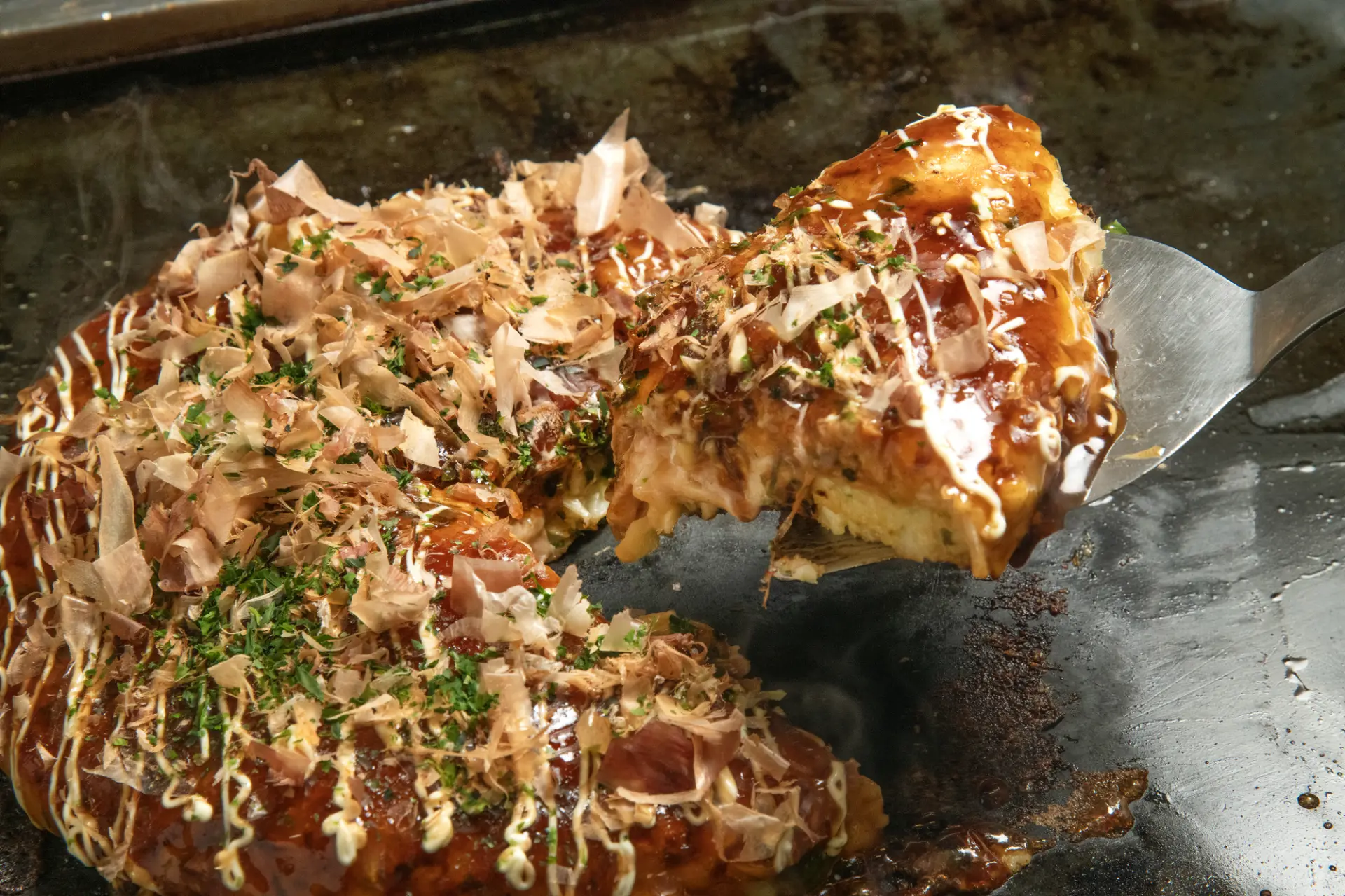
The Complete Guide to Okonomiyaki, Osaka’s Soul Food
Okonomiyaki is a traditional Osaka dish made by mixing cabbage with ingredients like squid and pork into a wheat flour batter, grilling it on a hot plate, and finishing it with sauce. Delicious and affordable, it has long been loved by locals in Osaka. In this article, we introduce the roots of okonomiyaki, how it differs from other flour-based dishes, and hands-on classes where you can learn how to make it. If you're planning a trip to Osaka or want to discover this beloved local comfort food, this is a must-read!
What Is Okonomiyaki Like?
Okonomiyaki is a type of so-called “konamon” dish, made by mixing cabbage, meat such as pork, seafood such as squid, tempura bits, pickled red ginger, and other ingredients into a batter based on wheat flour and eggs, then cooking it on a hot plate. Once it is cooked, it is topped generously with sauce and finished with toppings such as mayonnaise, aonori seaweed, and bonito flakes. Just as the name “okonomiyaki” suggests, one of its defining features is that you can make it with whatever ingredients you like. Its flexibility for customization and the lively feeling of eating it fresh off the hot plate have made it popular. It has long been loved as a home-cooked Osaka favorite and as a classic food at festivals and street stalls.
The Roots of Okonomiyaki
The roots of okonomiyaki are said to date back as far as the Muromachi to Azuchi-Momoyama periods. Surprisingly, it is connected to the tea ceremony culture that flourished during that time. A tea confection called “funoyaki,” made by dissolving wheat flour in water, spreading it thin, grilling it, then rolling it with miso or sugar, seems to have marked the beginning of the culture of “mixing wheat flour and grilling it.” It was also a sweet enjoyed at tea gatherings hosted by the tea master Sen no Rikyu. From this origin, a dish called “sukesoyaki,” made by grilling dissolved wheat flour on an iron plate, spread among common people in the Edo period. Later, in the Showa era, a dish in Osaka called “issen-yaki,” which was similar to present-day okonomiyaki, became popular. It is said to have gotten its name because it was sold for 1 sen per piece at the time. In the chaotic postwar years, meat was precious and expensive, so people began mixing in vegetables such as cabbage and seafood such as squid before grilling it. The name eventually became “okonomiyaki,” meaning something grilled with whatever ingredients you like. With each household having its own version, okonomiyaki came to be loved not only as everyday comfort food but also as a symbol of Osaka’s food culture, with one popular specialty restaurant after another drawing long lines.
The Essential Sauce for Okonomiyaki
Okonomiyaki cooked on a hot plate is finished by brushing on plenty of sauce. The sauce is so important that it’s no exaggeration to say it determines the dish’s flavor and deliciousness. At home, people often use store-bought sauce, and today there is a wide variety readily available at supermarkets. There are sweet versions, spicy versions, and blends of several sauces. Naturally, specialty okonomiyaki restaurants use their own original sauces. Packed with umami, the sauce brings out the deliciousness of okonomiyaki even more.
How It Differs from Hiroshima-yaki and Monjayaki
Two dishes often introduced as rivals to okonomiyaki are “monjayaki” and “Hiroshima-yaki.” All of them are dishes made with wheat flour and cooked on a hot plate, but there are clear differences.
“Hiroshima-yaki,” as the name suggests, is a flour-based dish loved in Hiroshima. One major feature is that, unlike okonomiyaki, the ingredients are not mixed together before cooking. First, the wheat flour batter is spread thinly on the hot plate like a crepe, and then the ingredients are layered on top. The batter itself is very thin, while a generous amount of ingredients such as cabbage is used. This style actually has a historical background. In Japan right after the end of the war, grains such as rice and wheat were in short supply. Hiroshima in particular was a place that suffered enormous damage from the atomic bombing. Hiroshima-yaki was made using iron plates left behind in the burned ruins and only a small amount of wheat flour. It seems that people added a lot of homegrown cabbage to make it more filling. During the postwar food shortage, Hiroshima-yaki helped fill the stomachs of people in Hiroshima.
“Monjayaki” is a flour-based dish loved in Tokyo. It is made by adding ingredients such as cabbage, tempura bits, squid, and dried shrimp to a loose wheat flour batter mixed with water, seasoning it with Worcestershire sauce and broth, and spreading it on a hot plate. Because it contains a lot of liquid, it does not solidify even after cooking. People eat it by scraping off small amounts from the hot plate with a small spatula. Tokyo’s Tsukishima Nishinaka-dori Shopping Street is nicknamed Monja Street, with over 80 monjayaki restaurants lined up there, making it one of the city’s popular sightseeing spots.
In any case, okonomiyaki, Hiroshima-yaki, and monjayaki all began as affordable, tasty, and filling foods, which is why they were loved as snacks for children in every era, including the Meiji, Taisho, and Showa periods, as well as during wartime. Another thing they share today is that they can all be enjoyed with a wide variety of ingredients.
Let’s Eat Okonomiyaki at “Okonomiyaki Yukari”!
Osaka is home to many popular okonomiyaki restaurants with lines out the door. One of them is “Okonomiyaki Yukari,” founded in 1950. It has more than 10 locations across Kansai and Kanto, with its main store in the Sonezaki Ohatsu Tenjin-dori Shopping Street in Osaka. In addition to classics like butatama and ikatama, creative okonomiyaki made with ingredients such as cheese and mochi are also popular.
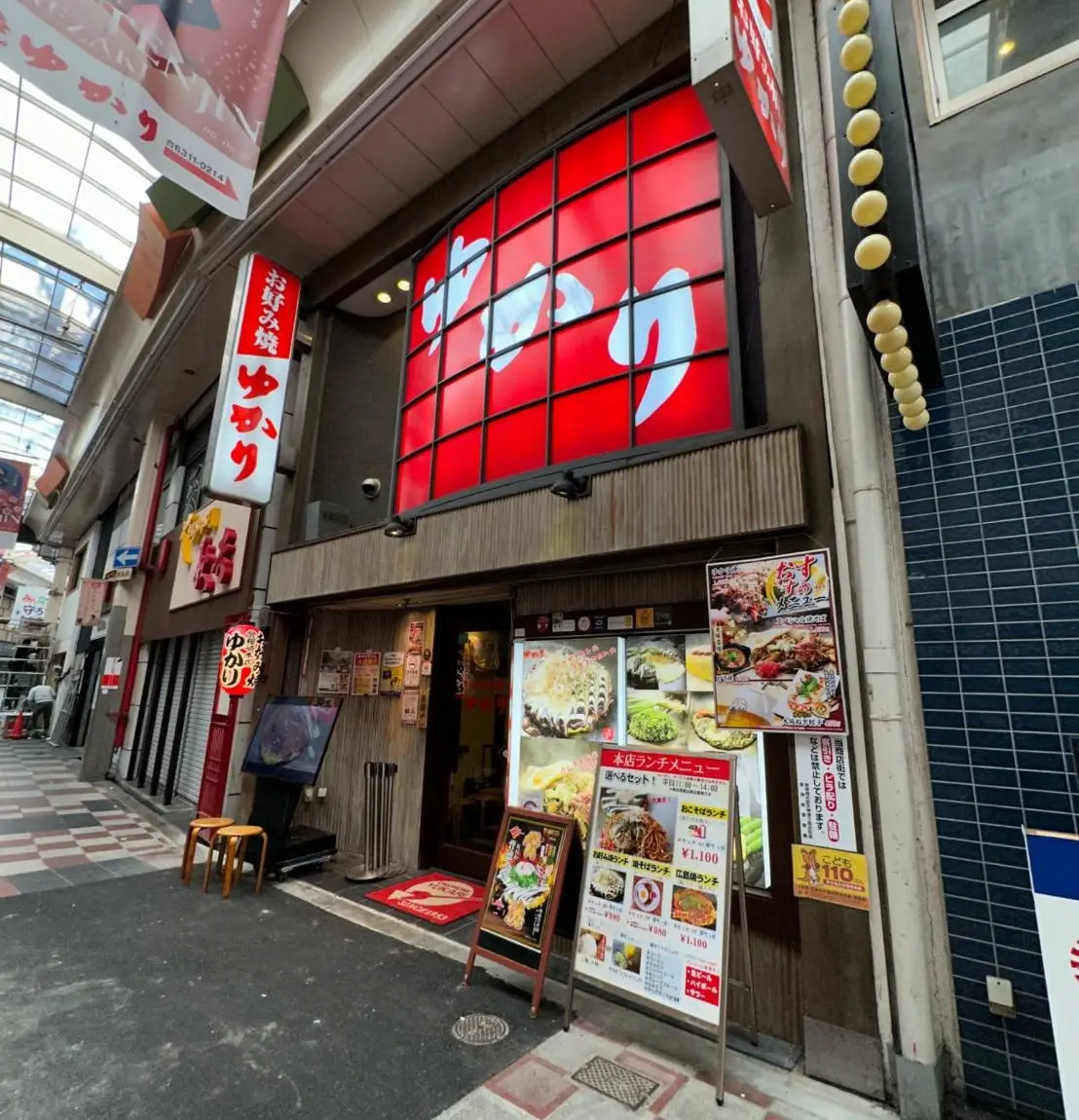
The True Spirit of “Okonomi”, Plenty of Ingredients
“Okonomiyaki Yukari” offers a wide variety of okonomiyaki. A classic choice is the “Butatama,” made with domestic pork belly.
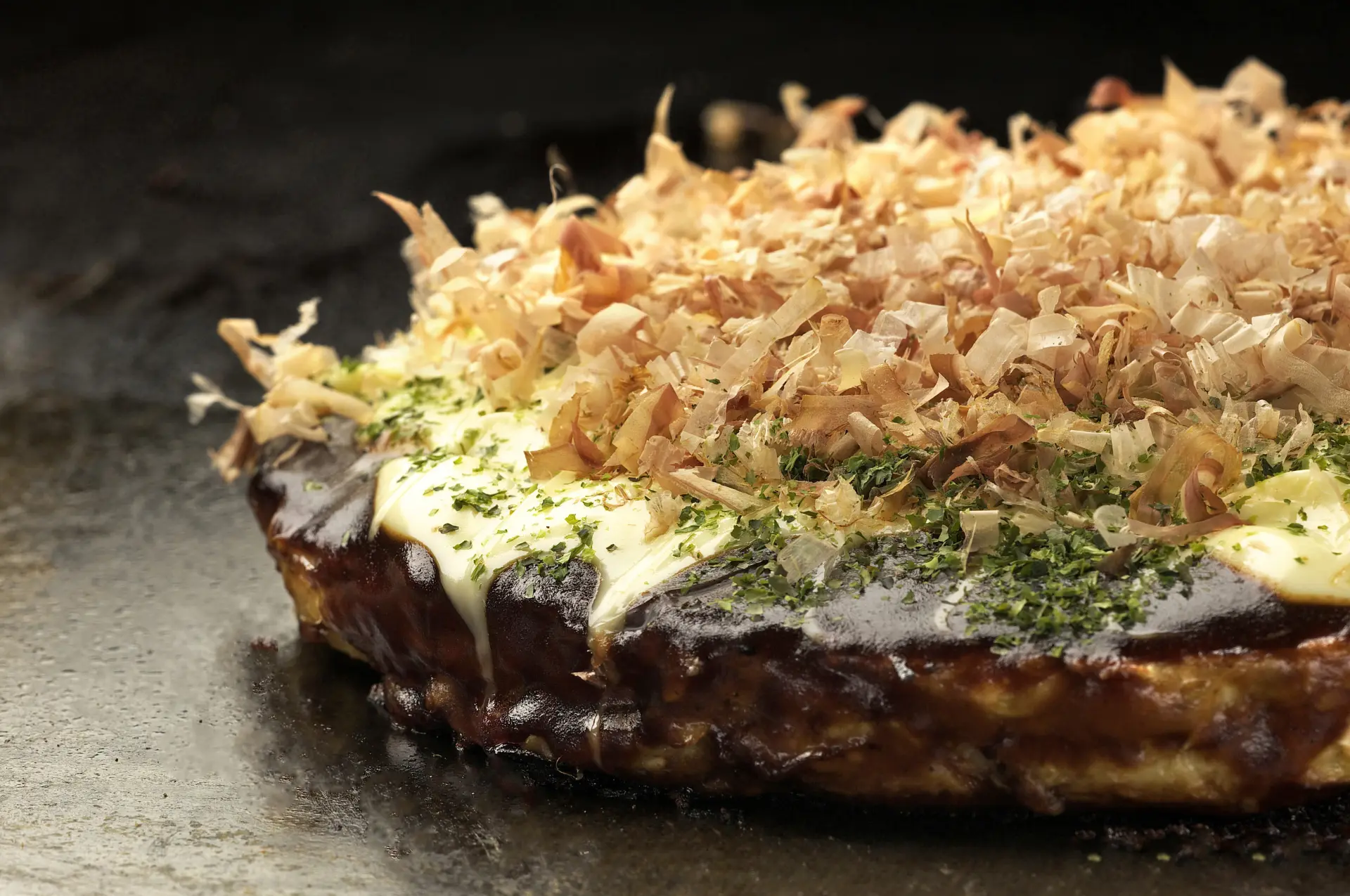
The number one most popular item is the “Special Mixed Yaki,” which contains pork belly, squid, and peeled shrimp.
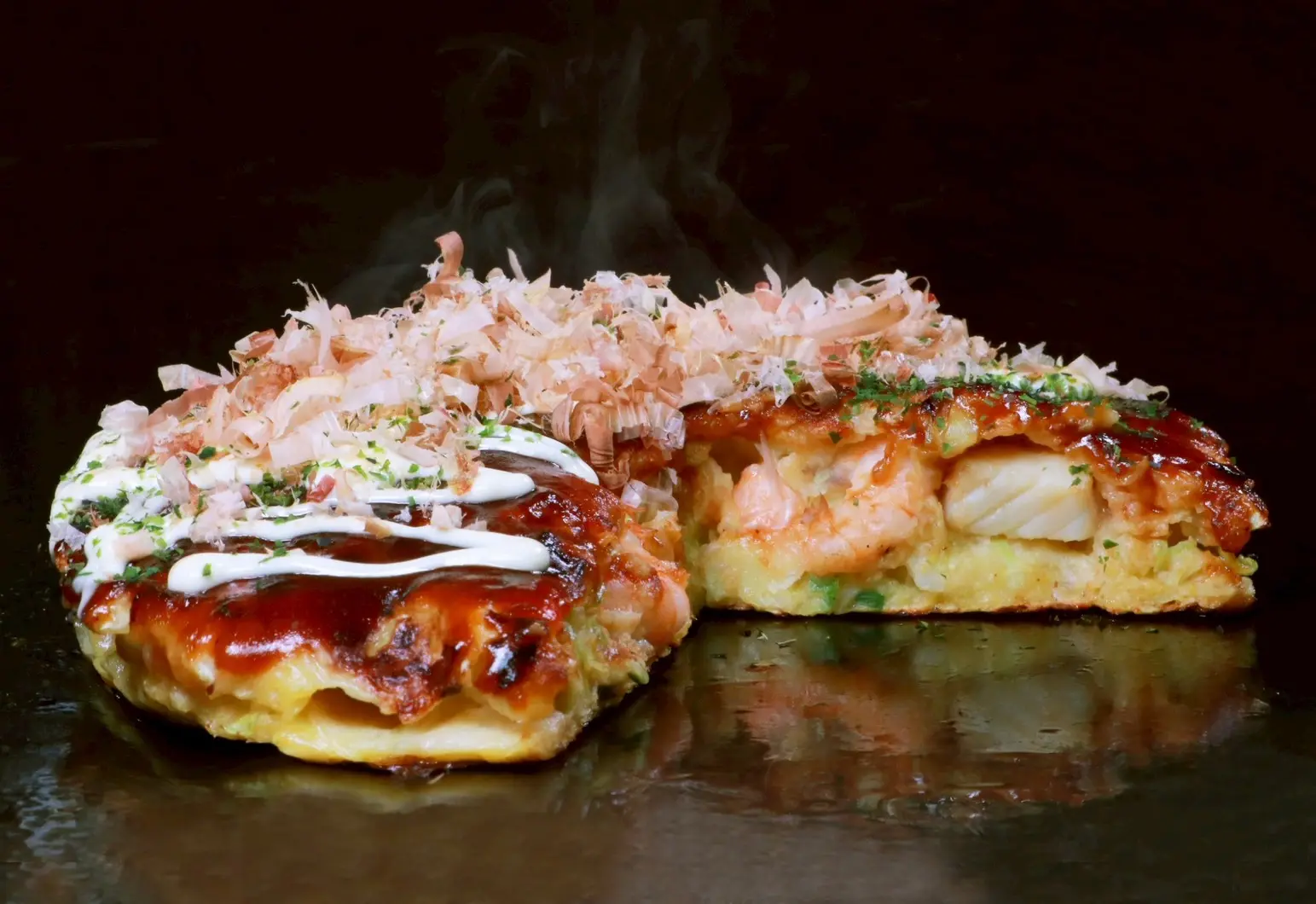
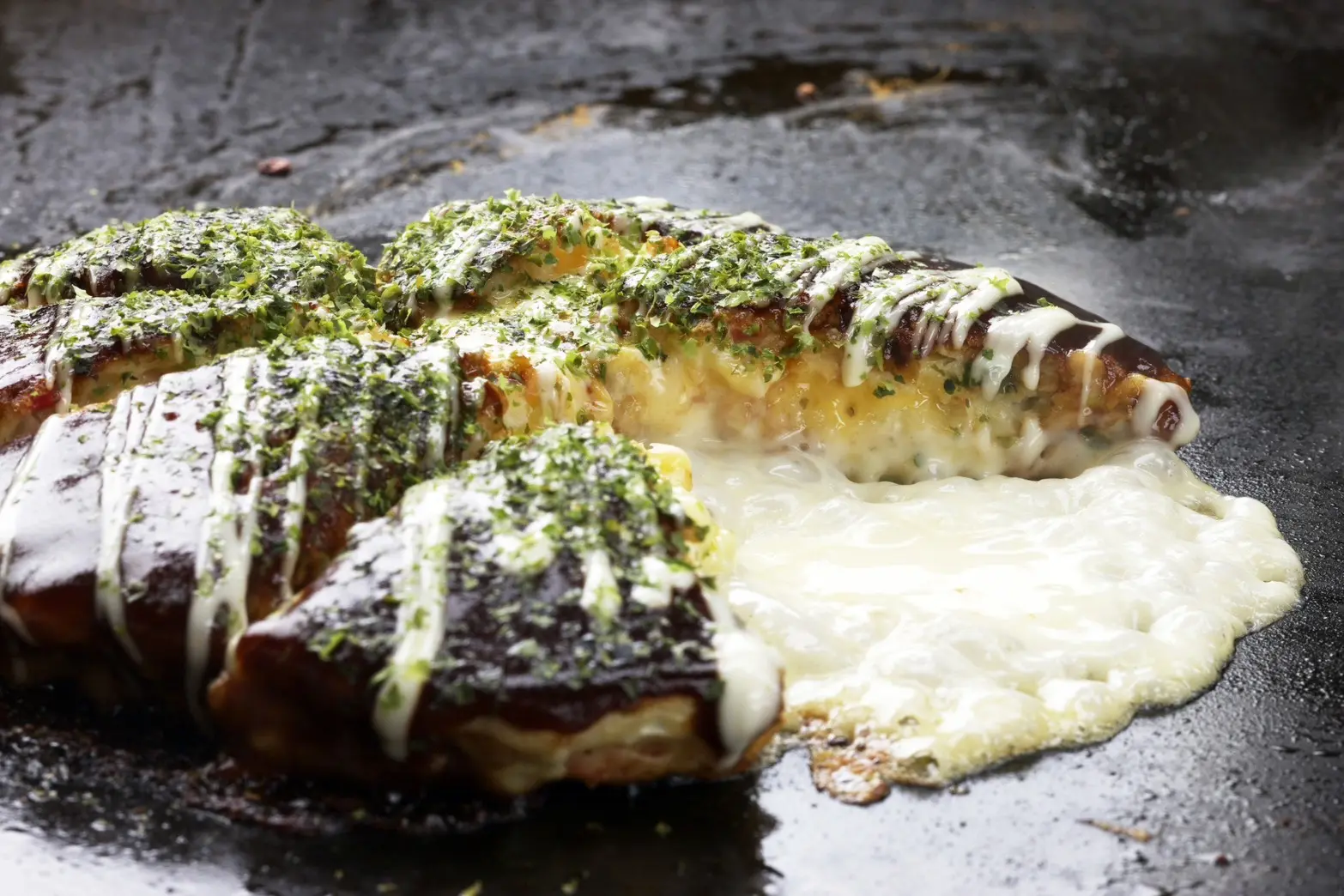
A recommended item is the “Fromage Yaki.” It contains plenty of five kinds of cheese, Gouda, mozzarella, cheddar, fondue cheese, and processed cheese, and the cheese is also kneaded into the batter. With its rich, melty finish, it is irresistible for cheese lovers.
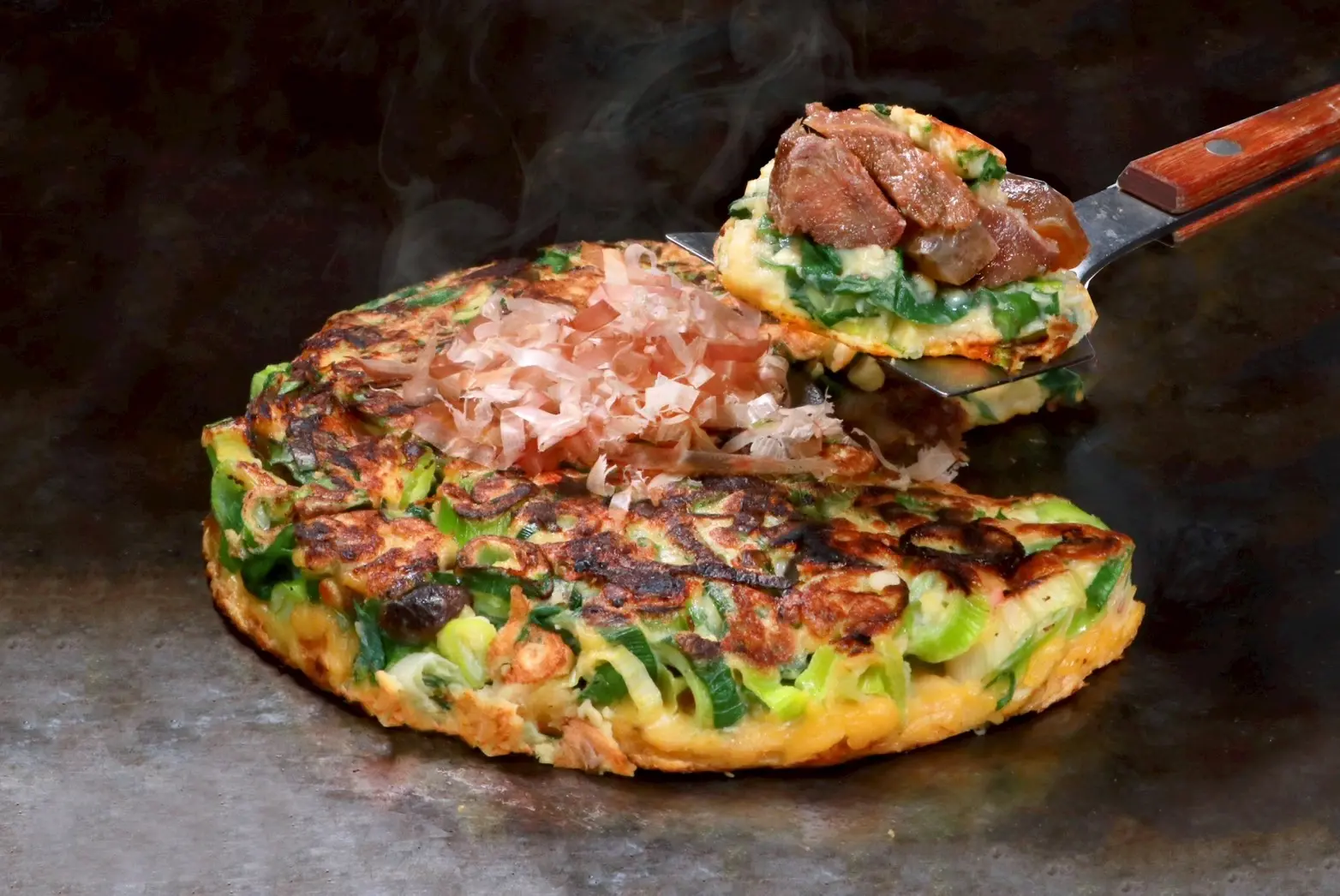
There are also menu items with a distinctly Osaka feel. One of them is the “Domestic Beef Tendon and Green Onion Yaki,” featuring sweet-savory simmered beef tendon and konnyaku, another Osaka favorite, along with green onions.
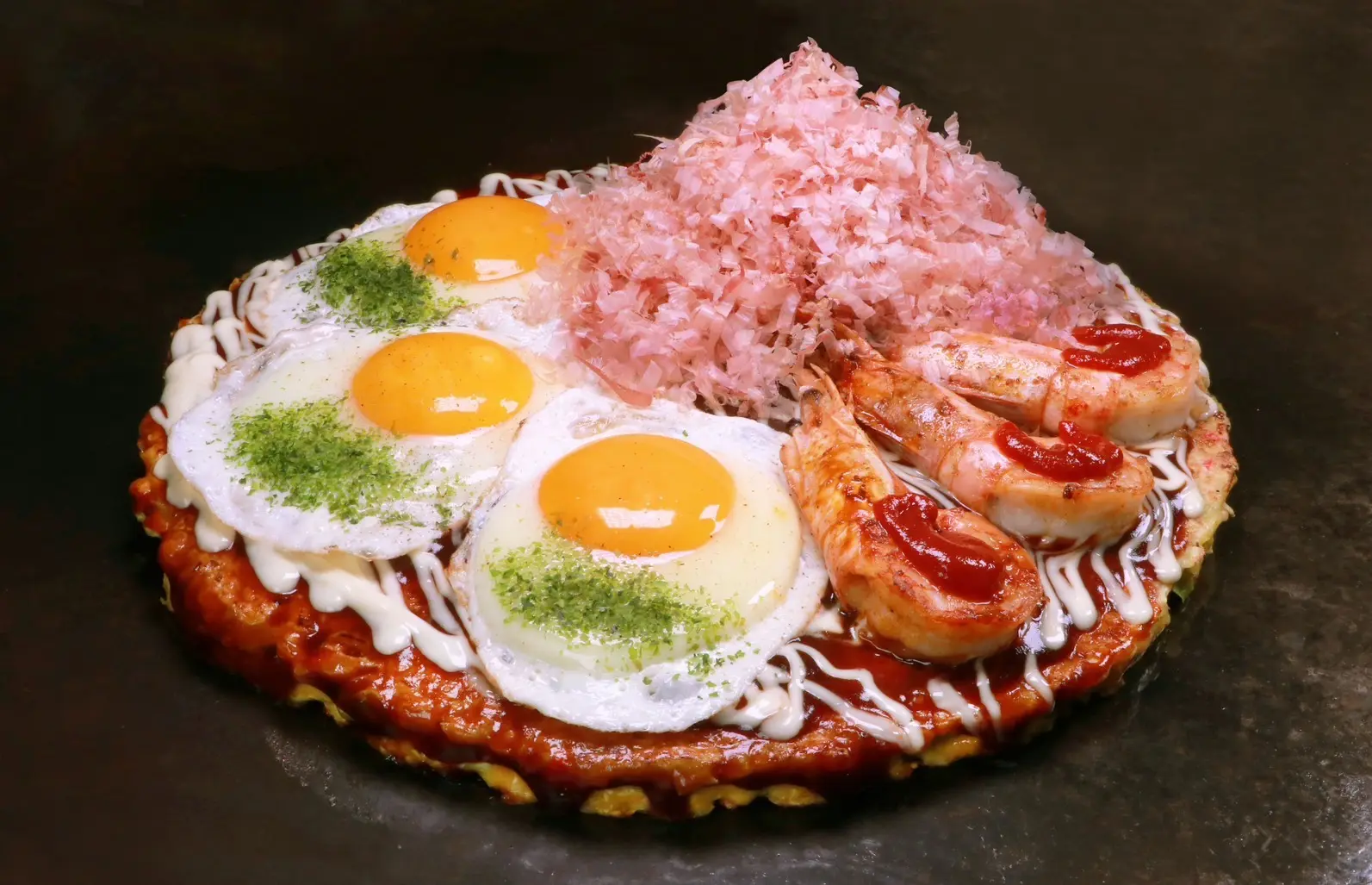
“Osaka Castle,” made with head-on shrimp, pork belly, squid, peeled shrimp, scallops, and a fried egg, is a bold menu item weighing an impressive 1 kg! This extra-large okonomiyaki serves 3 to 4 people and is sure to look great in photos.
The Secret Behind the Delicious Flavor of “Okonomiyaki Yukari”
With cabbage that stays crisp even after cooking and the sweetness of wheat flour and eggs spreading across your palate, Yukari’s okonomiyaki has seven secrets behind its delicious flavor.
- (1) Cabbage
- First, they use fresh, crisp domestic cabbage. They are so particular about texture that they even change the production area within Japan depending on the season to find cabbage with the right firmness.
- (2) Flour
- Using high-quality wheat flour with fine particles like the kind used for cakes as a base, they have developed their own Osaka-style okonomiyaki flour. This is the key to the batter’s fluffy texture!
- (3) Eggs
- They also use rich, highly nutritious iodine eggs in every dish. The reason the batter tastes mellow with a slight sweetness must surely be thanks to these rich eggs.
- (4) Mayonnaise
- The mayonnaise is also specially made, using iodine eggs to create a mayo with mellow umami. It is so popular that it was even commercialized in response to customer requests.
- (5) Broth
- The batter uses broth made by slowly simmering chicken bones and aromatic vegetables. It is apparently not made in a factory, each store simmers its own!
- (6) Sauce
- They developed a delicious low-additive sauce with a demi-glace-style flavor and a high tomato ratio.
- (7) Noodles
- Focusing on a chewy, smooth texture, they developed original noodles together with a noodle maker.
These seven points of dedication are why “Okonomiyaki Yukari” has been loved for many years by Osaka locals, who are known for being particular about taste, in a city full of specialty okonomiyaki restaurants.
In fact, “Okonomiyaki Yukari” was not originally an okonomiyaki specialty restaurant when it was founded. It started as a sweets shop called “Amato Yukari.” Later, it opened a Western-style restaurant called “Parlor Yukari,” and from around 1972, it gradually shifted into an okonomiyaki specialty restaurant. This carefully crafted recipe is said to have come from the chef from the “Parlor Yukari” days. Although the flavor of the sauce has changed with the times, they have continued to preserve their commitment to quality for more than half a century.
A Well-Stocked Online Shop
If you want to enjoy the taste of “Okonomiyaki Yukari” at home, the online shop is also recommended. There is a wide variety of sets that can be eaten just by defrosting them in the microwave. They also sell only their highly popular, carefully crafted okonomiyaki sauce and mayonnaise.
Try Making Okonomiyaki at “Okonomiyaki Yukari”!
“Okonomiyaki Yukari” offers okonomiyaki experience classes. You can have fun making authentic Osaka-style okonomiyaki and then enjoy eating it. Under professional guidance, you do everything yourself, from mixing the ingredients at the start to finishing with sauce and mayonnaise, while experiencing one of the dishes that best represents Osaka’s flour-based food culture. The class is also available in English, making it very popular with international visitors.
Okonomiyaki Experience Class Overview
Currently, the experience classes are held at two locations: the Sonezaki Main Store and the KITTE Osaka Store.
- Start Time
-
Sonezaki Main Store Weekdays from 11:00am to 3:00pm / Start time can be discussed
KITTE Osaka Store Weekdays from 11:00am to 9:00pm / Start time can be discussed - Duration
- Approx. 100 minutes (Approx. 50 minutes for the experience + Approx. 50 minutes for the meal)
- Number of Participants
- 4 to 48 people (1 group)
- Cost
-
・Simple Experience Plan
3,500 yen (tax included) / person
【Includes】Special Mixed Yaki (with pork, squid, and shrimp), oolong tea, experience
・Experience + Souvenir Plan
4,200 yen (tax included) / person
【Includes】Special Mixed Yaki (with pork, squid, and shrimp), one drink (alcohol available), experience, souvenir (an okonomiyaki set that makes Approx. 5 servings) - Food Allergy Support
- Can be discussed
- Inquiries
-
Sonezaki Main Store: yukaritaiken.honten@gmail.com
KITTE Osaka Store: yukaritaiken.kitteosakaten@gmail.com - Application
-
Applications accepted online only
Sonezaki Main Store Experience Class
KITTE Osaka Store Experience Class - Other
-
・Support is available in English only. For other languages, an interpreter guide is required.
・Prices and ingredients may unavoidably change due to various circumstances.
・Cancellation policy: 50% of the cost on the day before use, 100% of the cost on the day of use.
・This is a hands-on class where you cook it yourself, but if you prefer, staff can also finish cooking it for you. - Location
-
Sonezaki Main Store 2nd floor ※No elevator
KITTE Osaka Store 4th floor ※Elevator available
Let’s Actually Try the Okonomiyaki Experience at “Okonomiyaki Yukari”!
The okonomiyaki experience is popular for sightseeing trips, school trips, and company outings. This time, we tried it at the KITTE Osaka Store, a new location that opened in February 2026!
The class follows a schedule like this.
- Learn about the history of okonomiyaki
- Explanation of how to cook it
- Let’s try cooking
- Finish it with sauce and mayonnaise
- Let’s taste it
- Presentation of the master certificate
1. Learn about the history of okonomiyaki
First, you watch a video on the in-store monitor to learn about the history of “Okonomiyaki Yukari” and the history of okonomiyaki.
2. Explanation of how to cook it
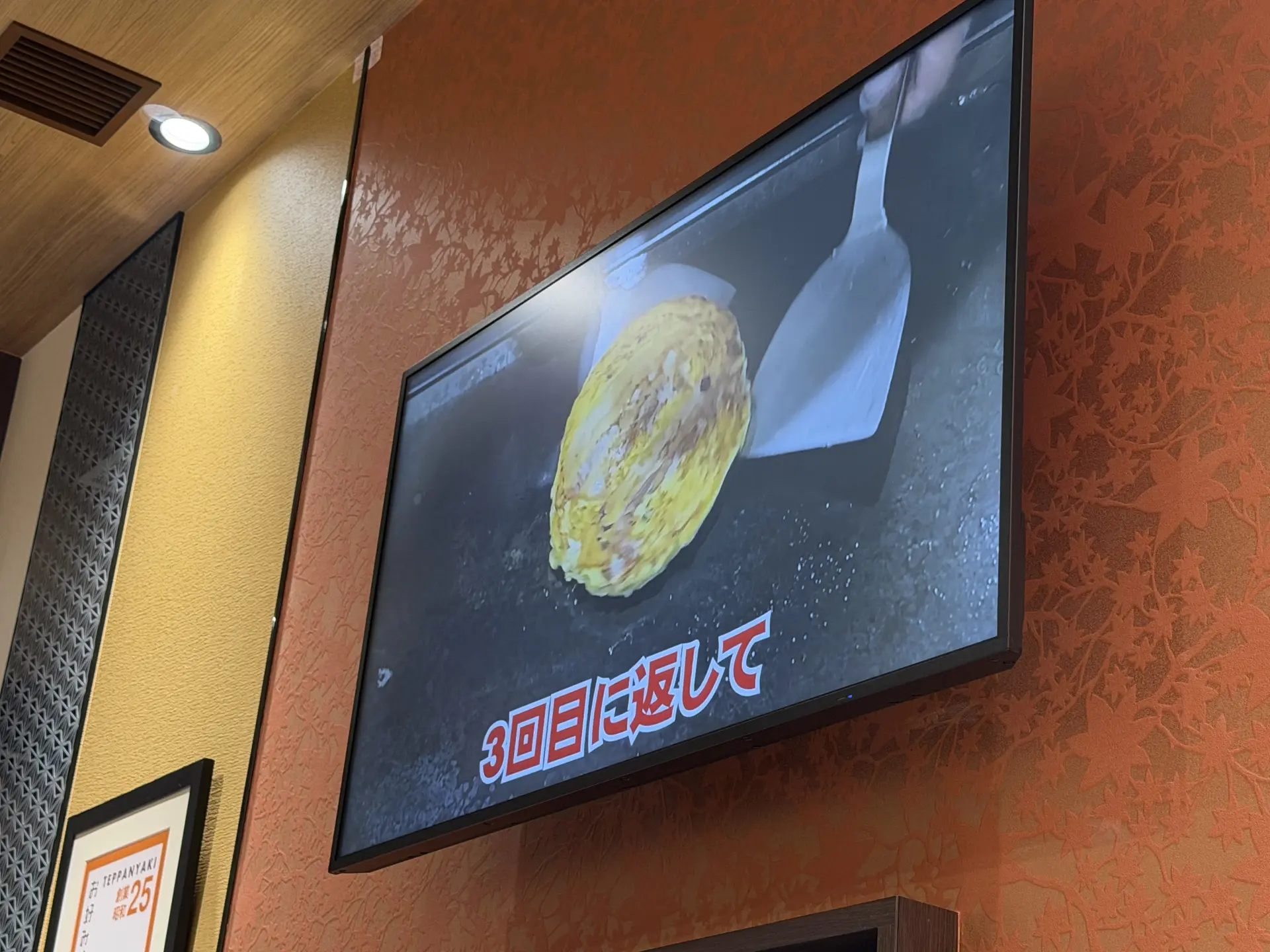
The cooking process is also explained in a video. With that, your image training for cooking okonomiyaki is complete.
3. Let’s try cooking
Next, it’s time to actually start cooking.
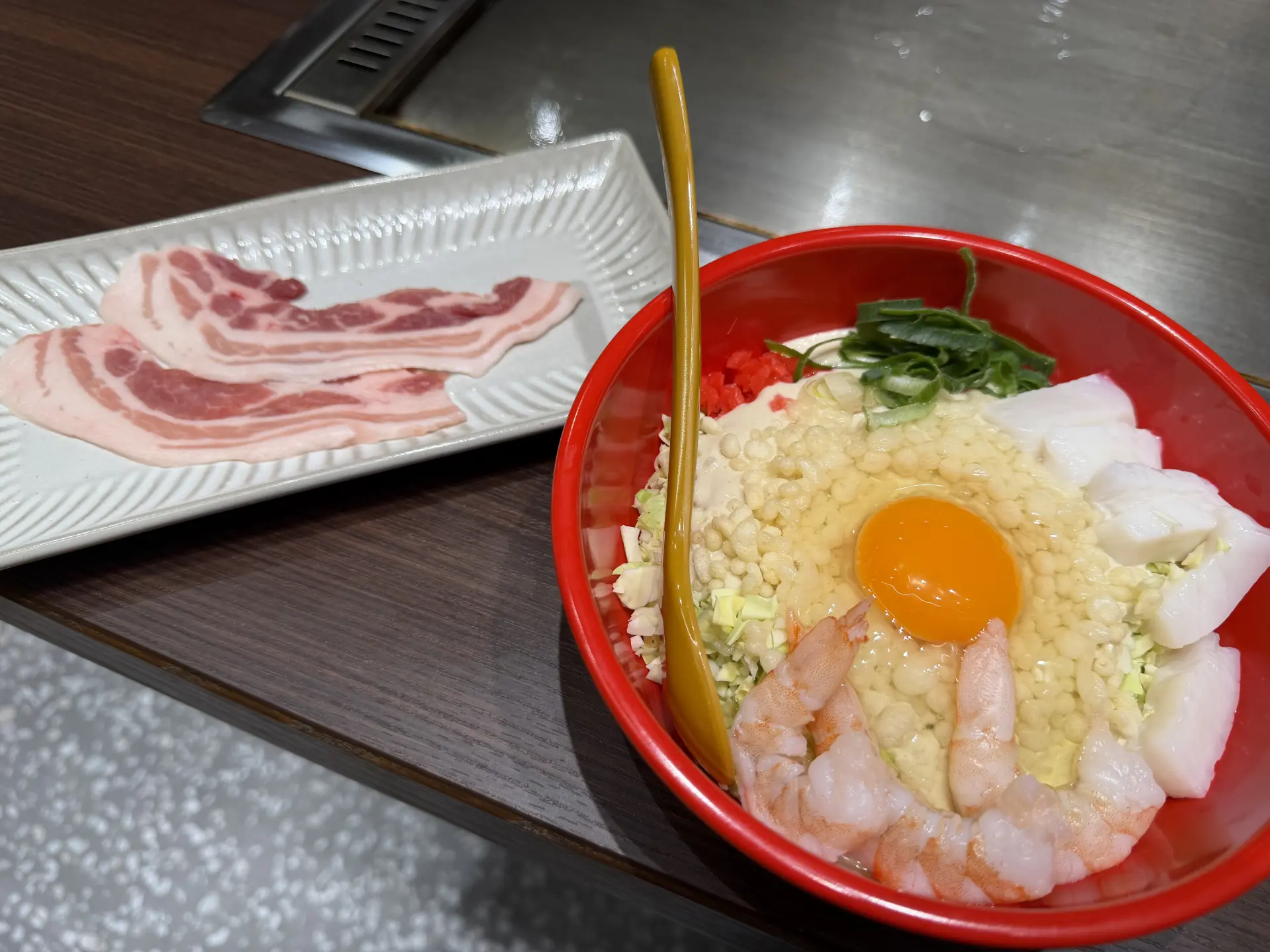
The ingredients arrive! There is a bowl containing wheat flour batter, tempura bits, squid, peeled shrimp, green onions, pickled red ginger, and egg, along with pork.
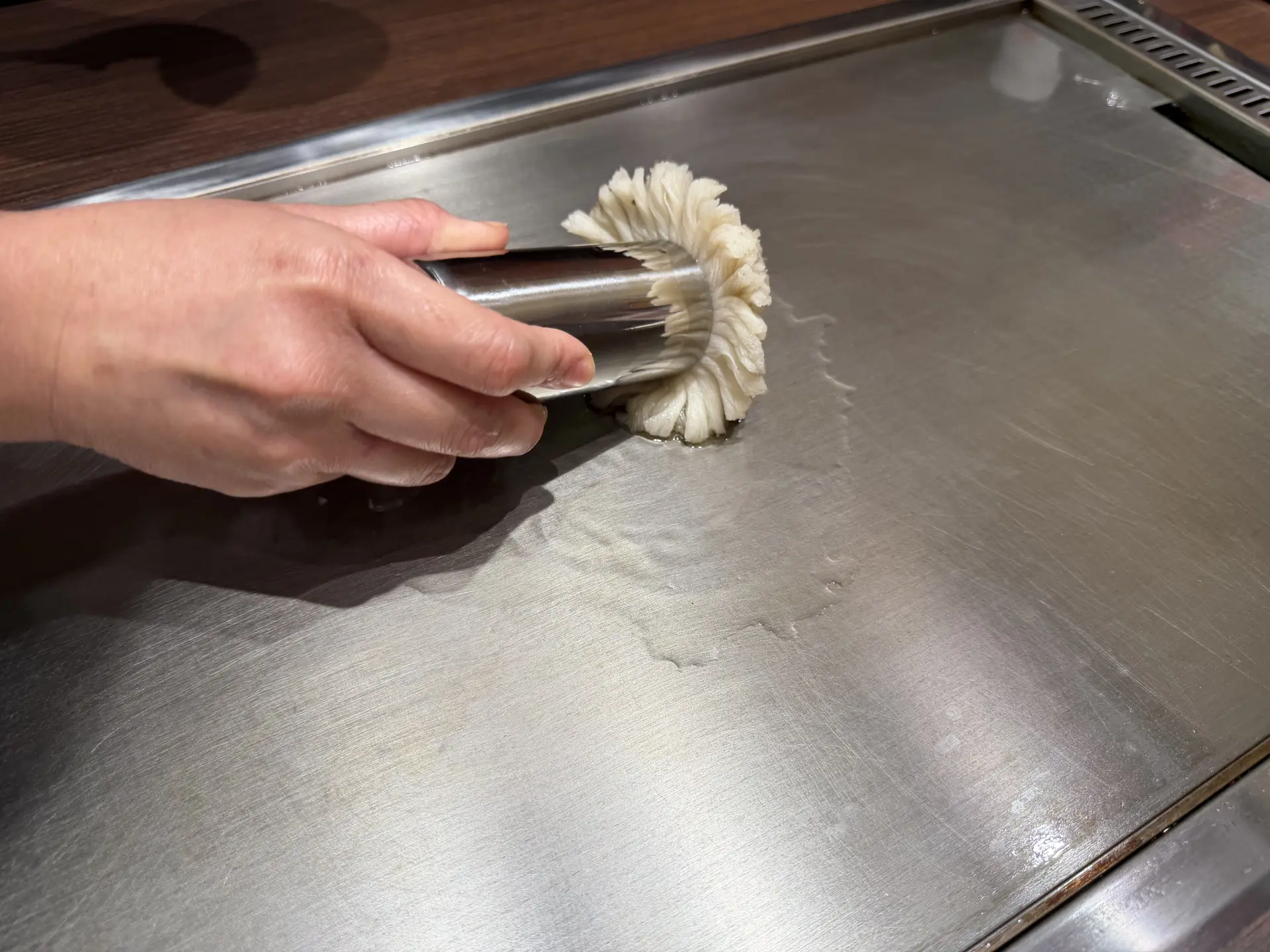
First, the staff spreads a thin layer of oil over the hot plate.
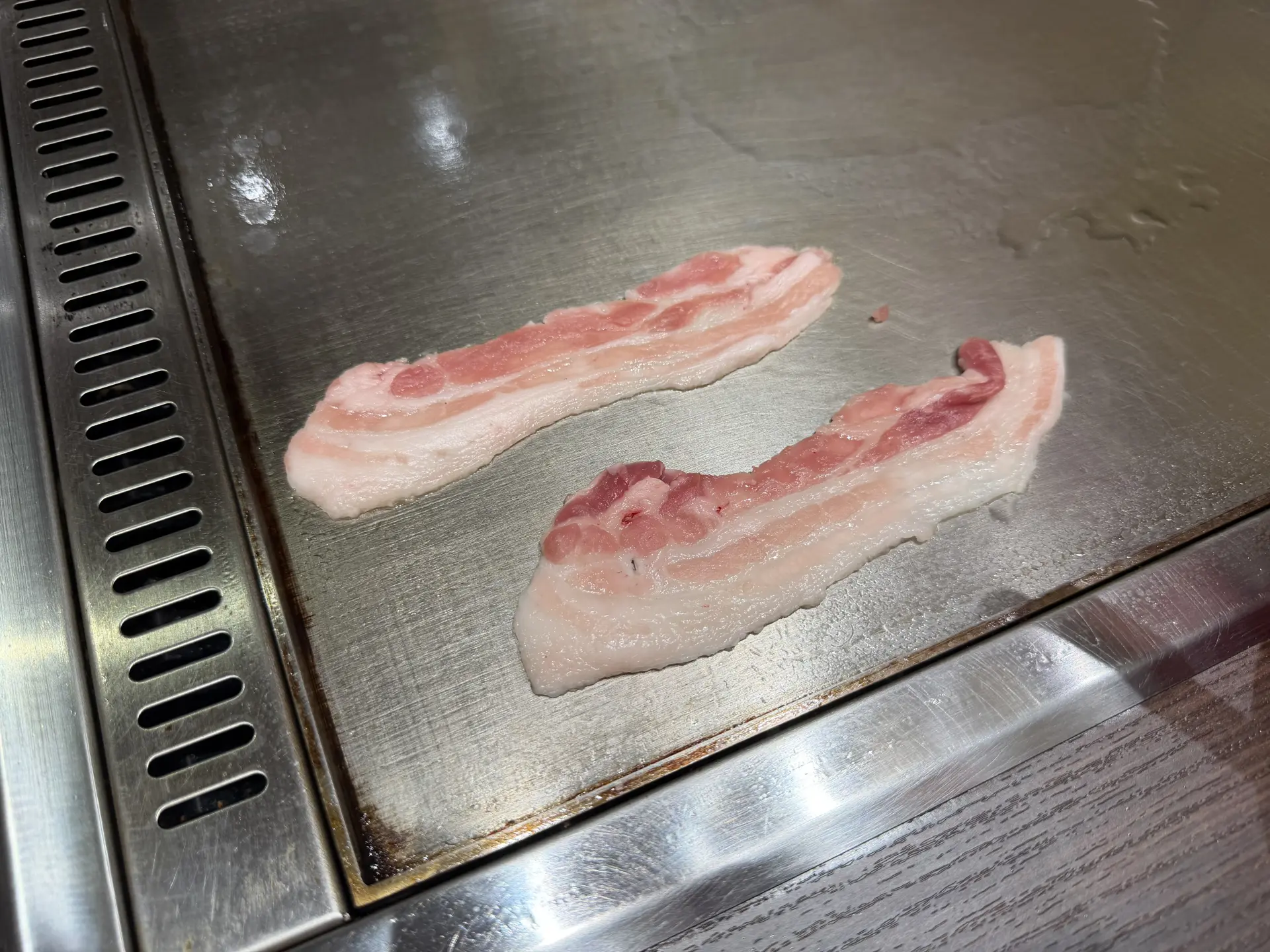
First, cook the pork belly on the edge of the hot plate, where the heat is lower. Be careful not to overcook it! (I overcooked mine.)
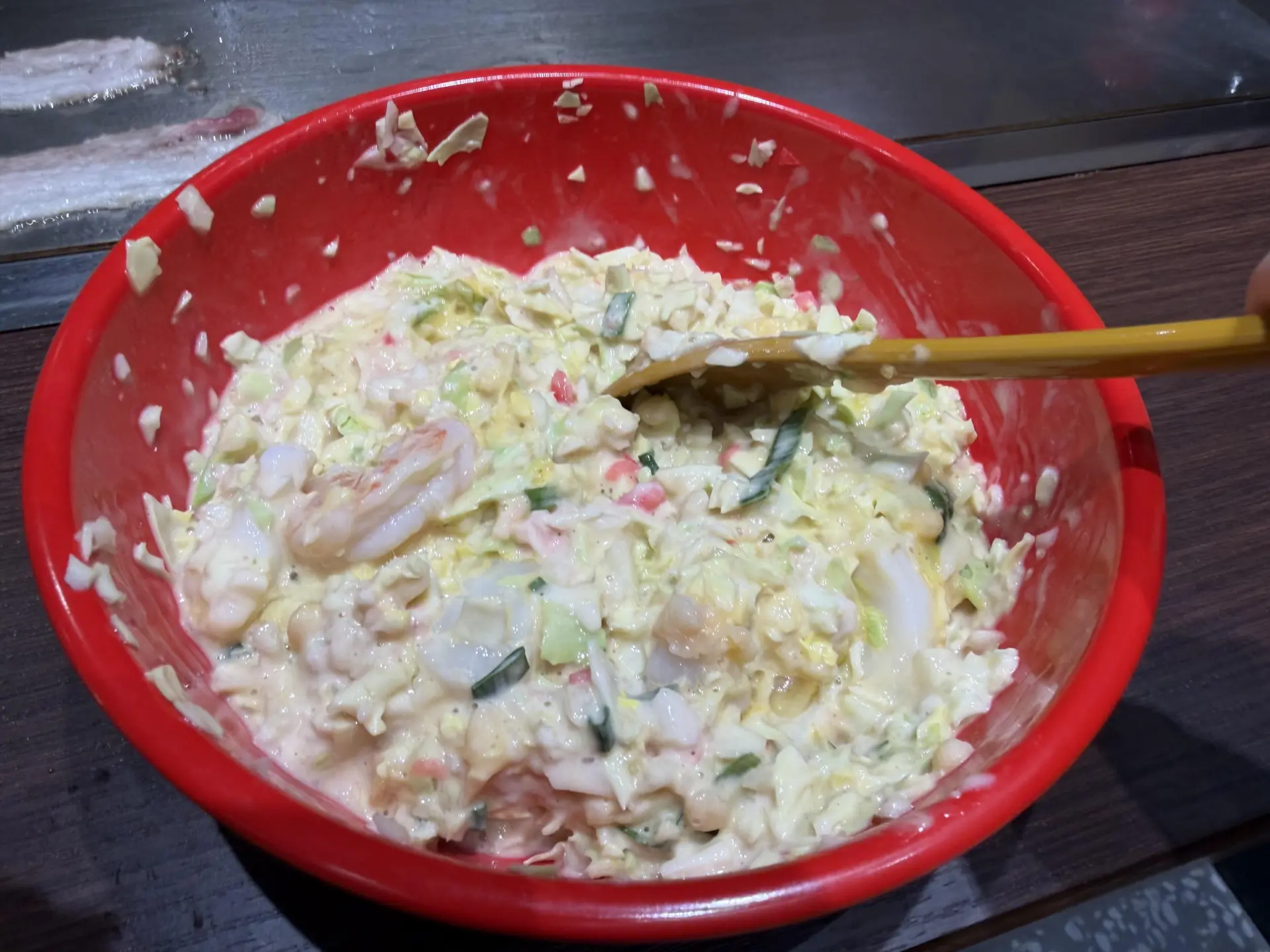
While the pork is cooking, mix the ingredients in the bowl well.
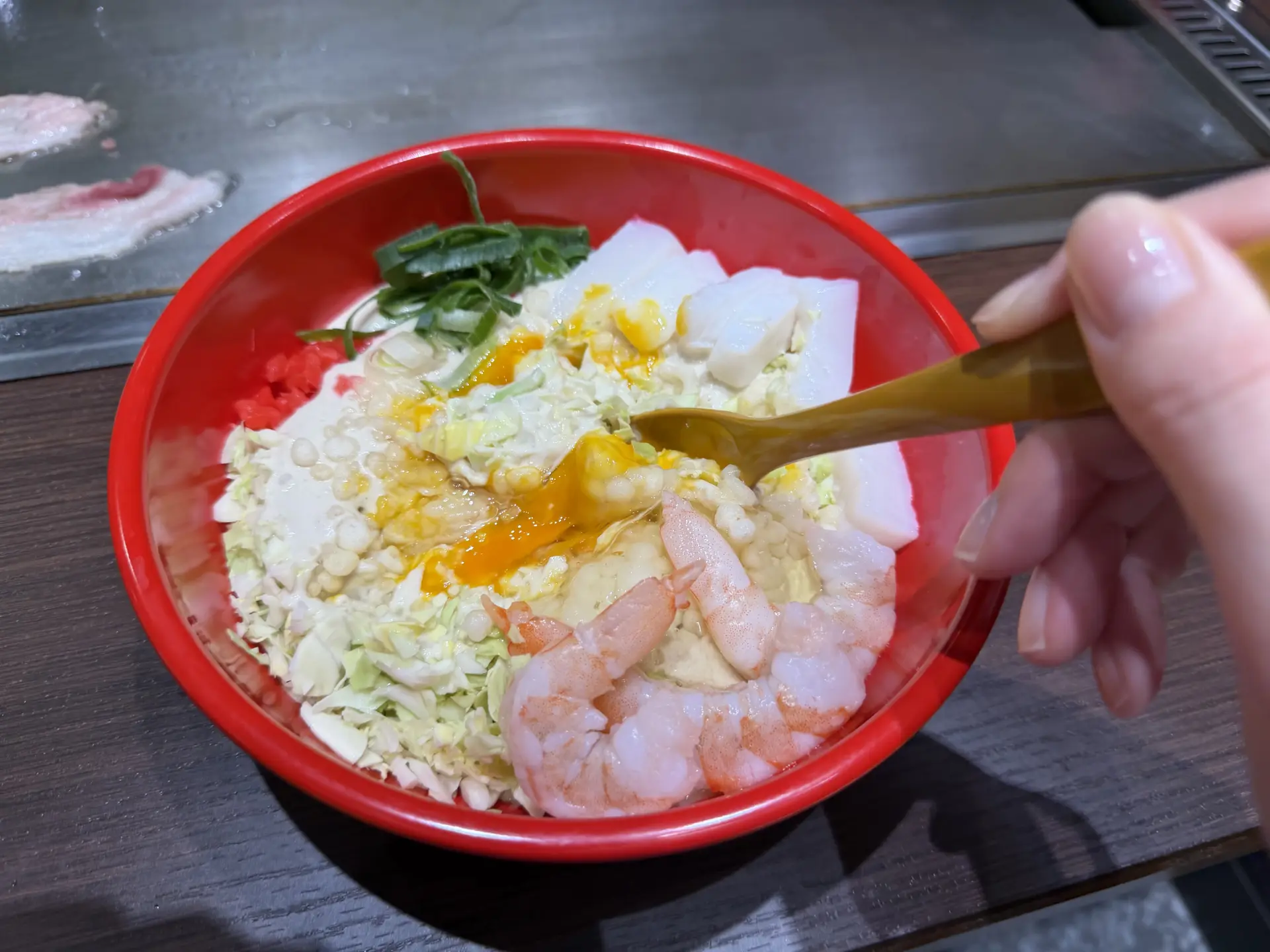
Mix until the ingredients and batter are evenly combined. It is not good if you mix too much and the batter becomes overly runny, or if you do not mix enough and the ingredients and batter separate.
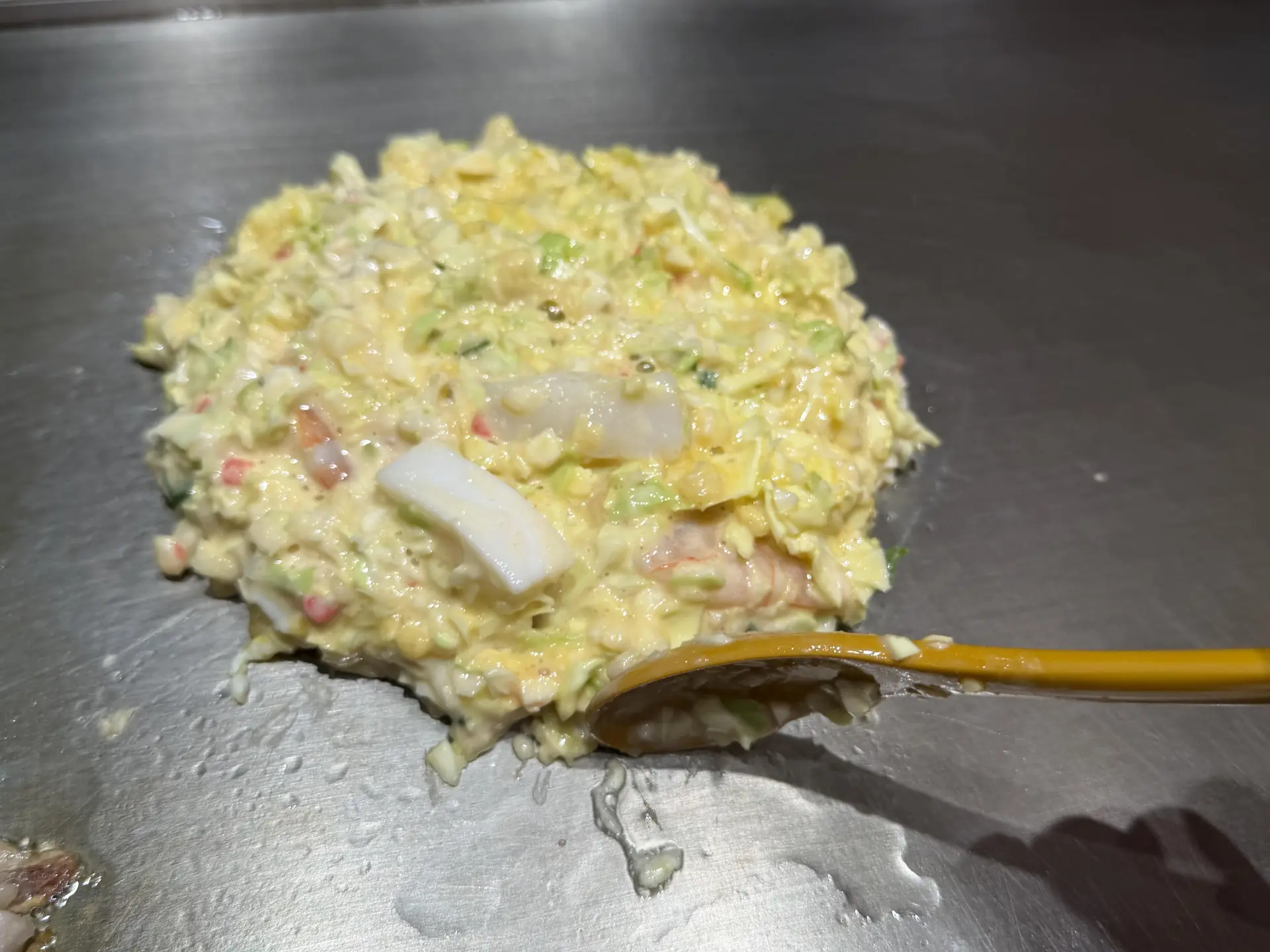
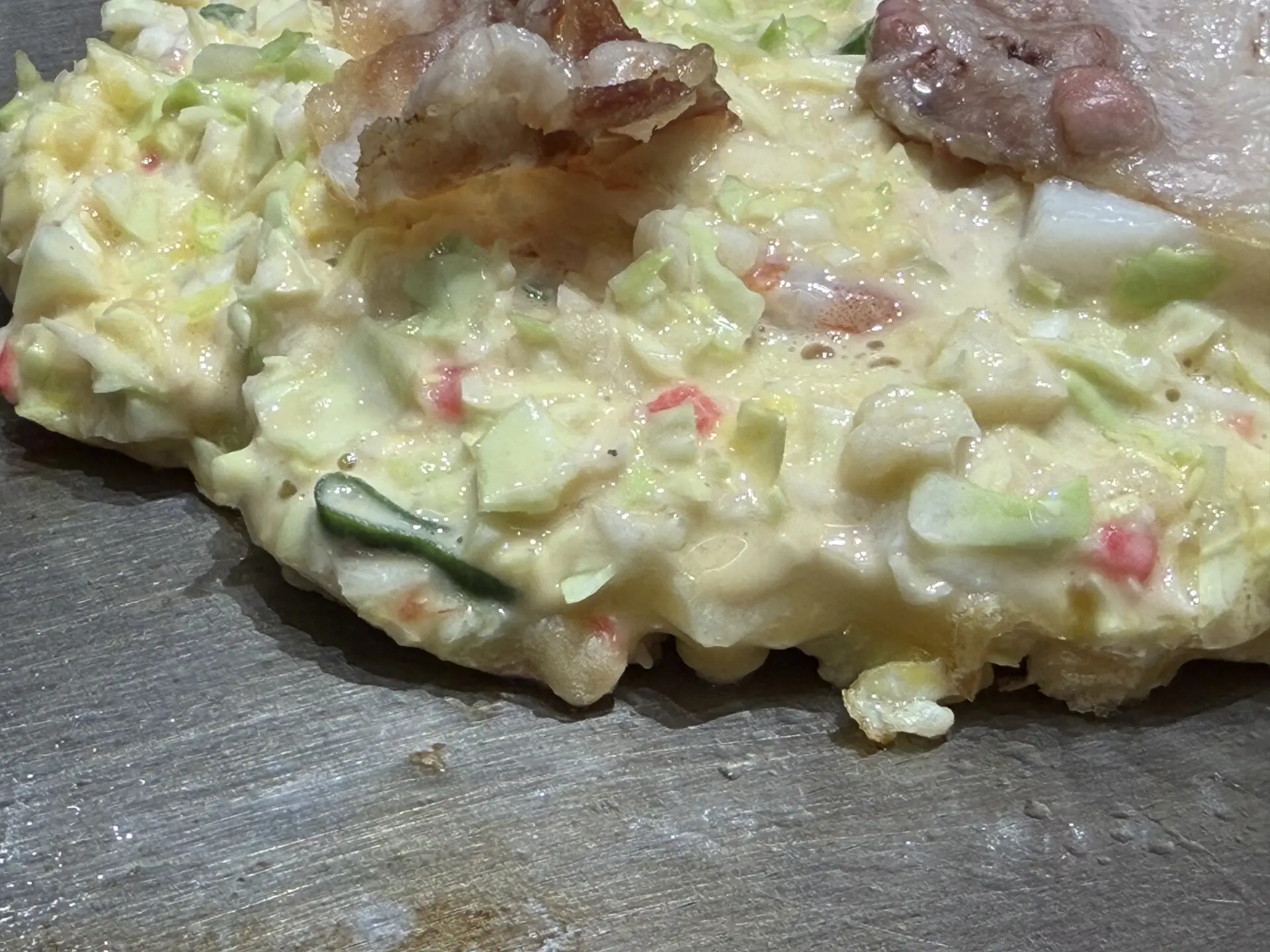
Once everything is well mixed and the hot plate is heated, place the batter on the hot plate. At this point, use a spoon to shape it into a round form.
At this point, place the pork belly that was cooking on the side on top of the batter. Make sure the cooked side of the pork belly is facing down.
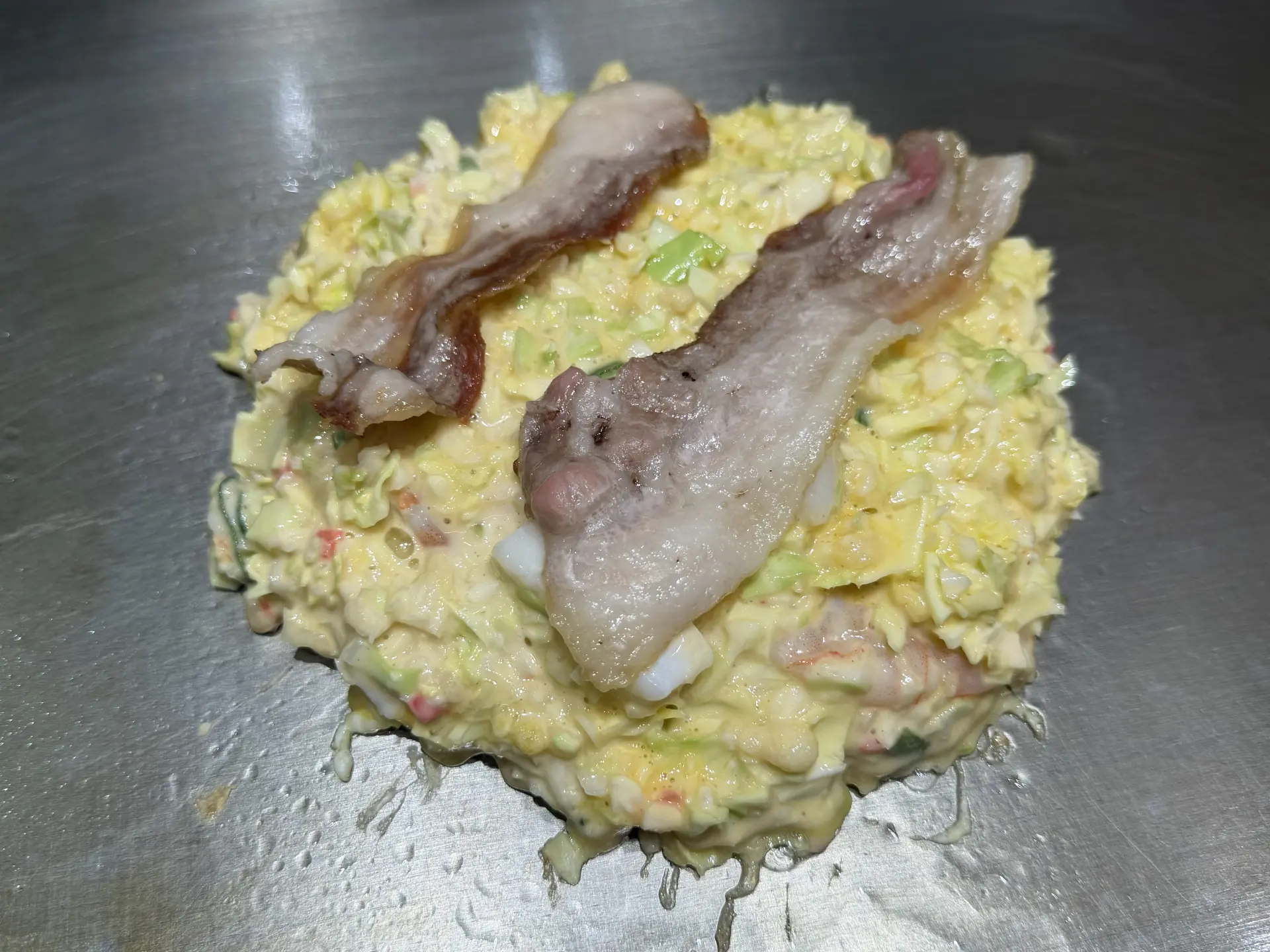
Wait for 2 minutes in that state. After that, you will flip it, but here is the key point. After around 2 minutes, the edges of the batter will start to dry. When the edges begin to dry, use two spatulas and flip it quickly. If the batter cracks or pieces of batter or ingredients stick out, use a spoon to reshape it.
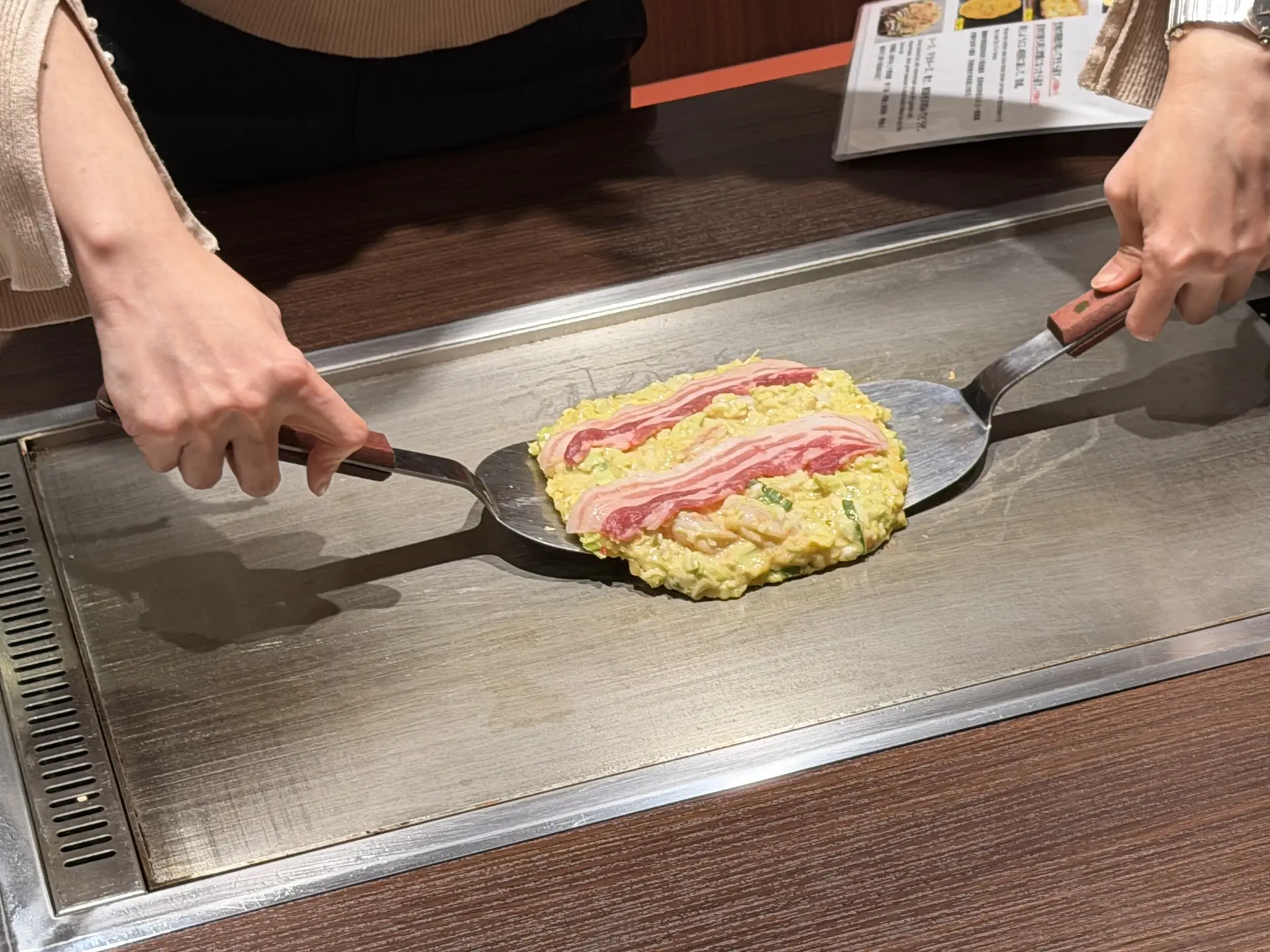
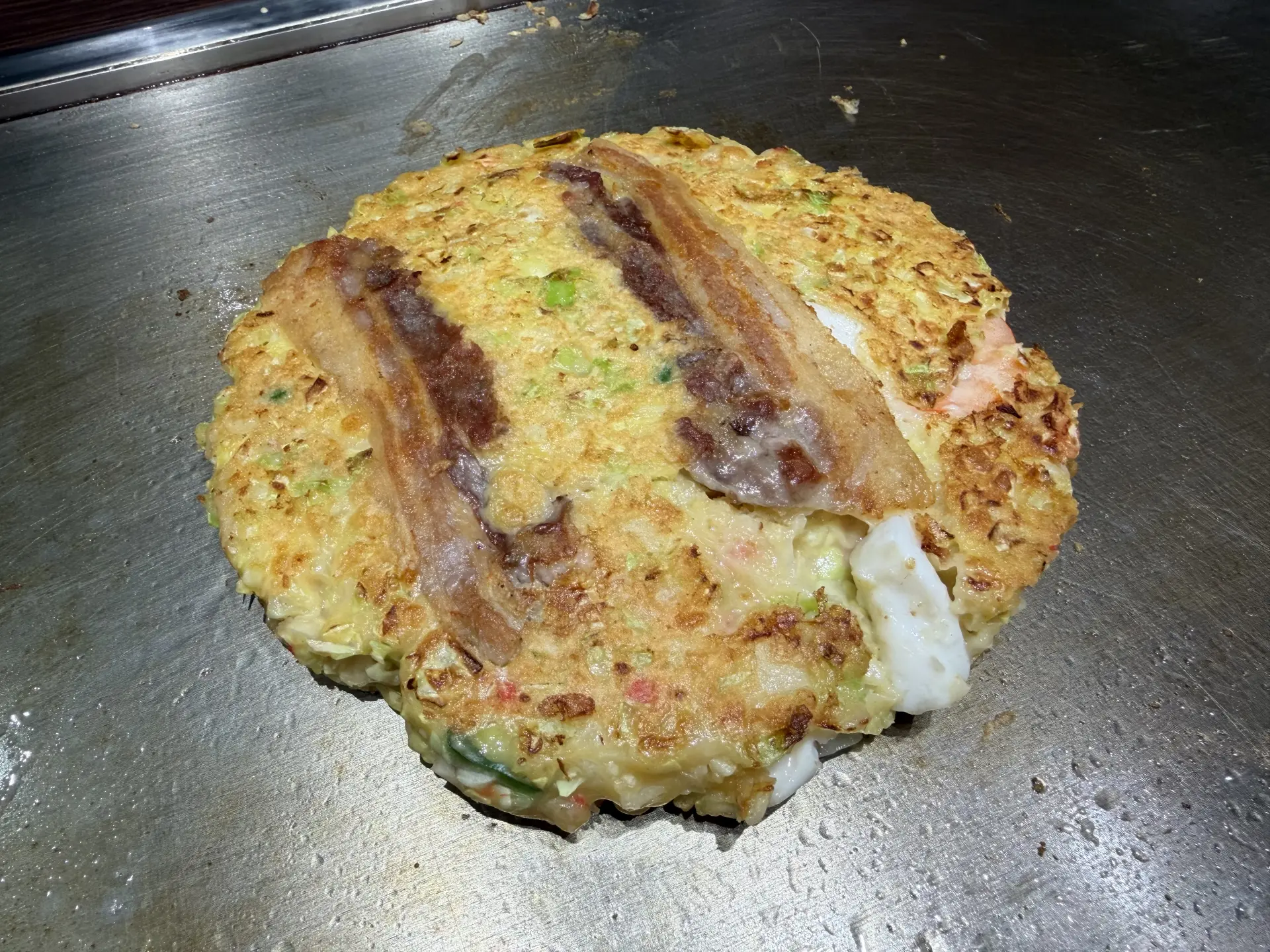
Then cook the other side. After around 3 minutes, the edges of the batter will start to dry. Then flip it again with the spatulas. Repeat this process for a total of 3 to 4 flips, and it will be done.
4. Finish it with sauce and mayonnaise
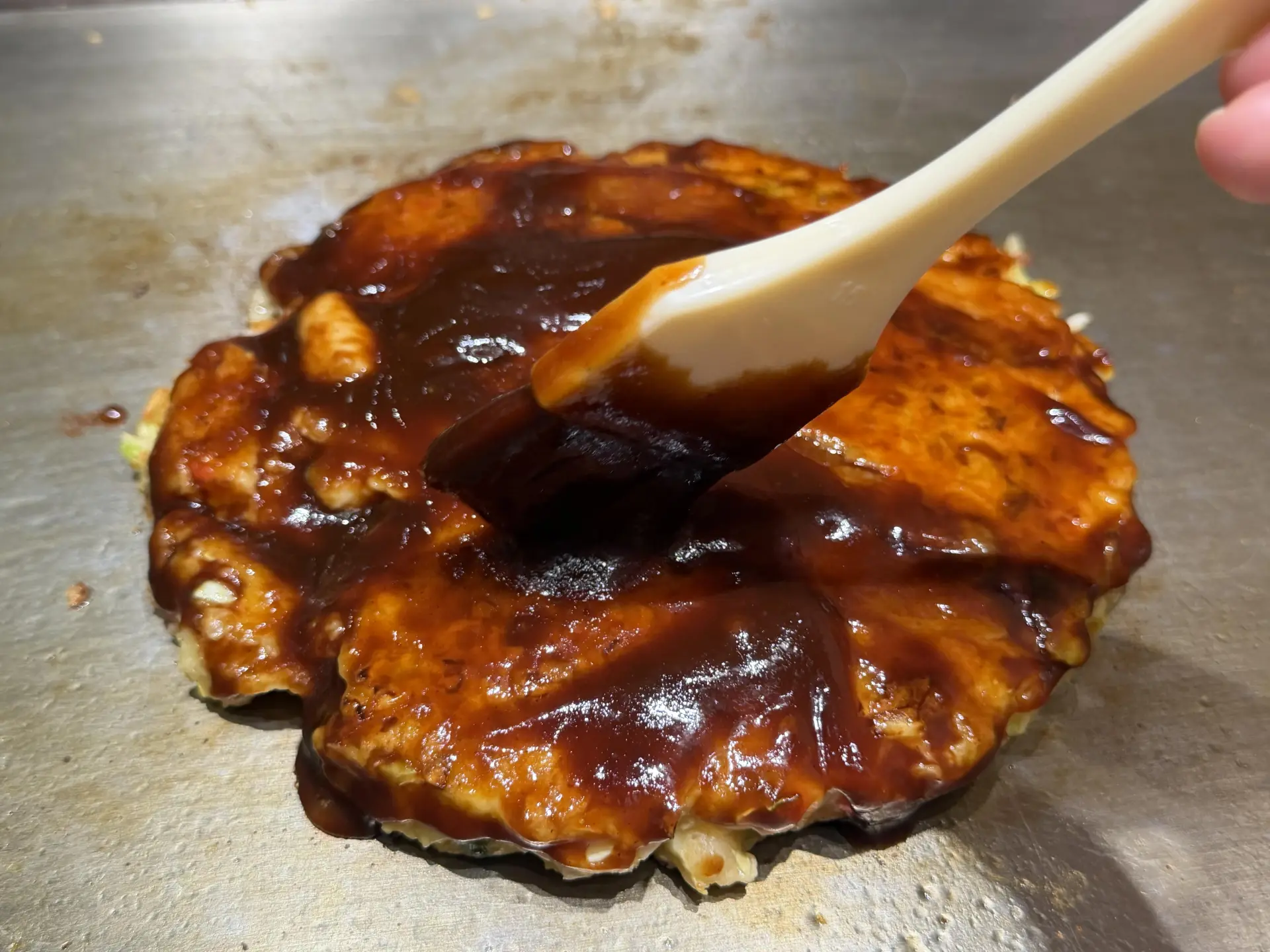
Use a brush to spread the special sauce over the finished okonomiyaki. The key is to apply plenty of it.
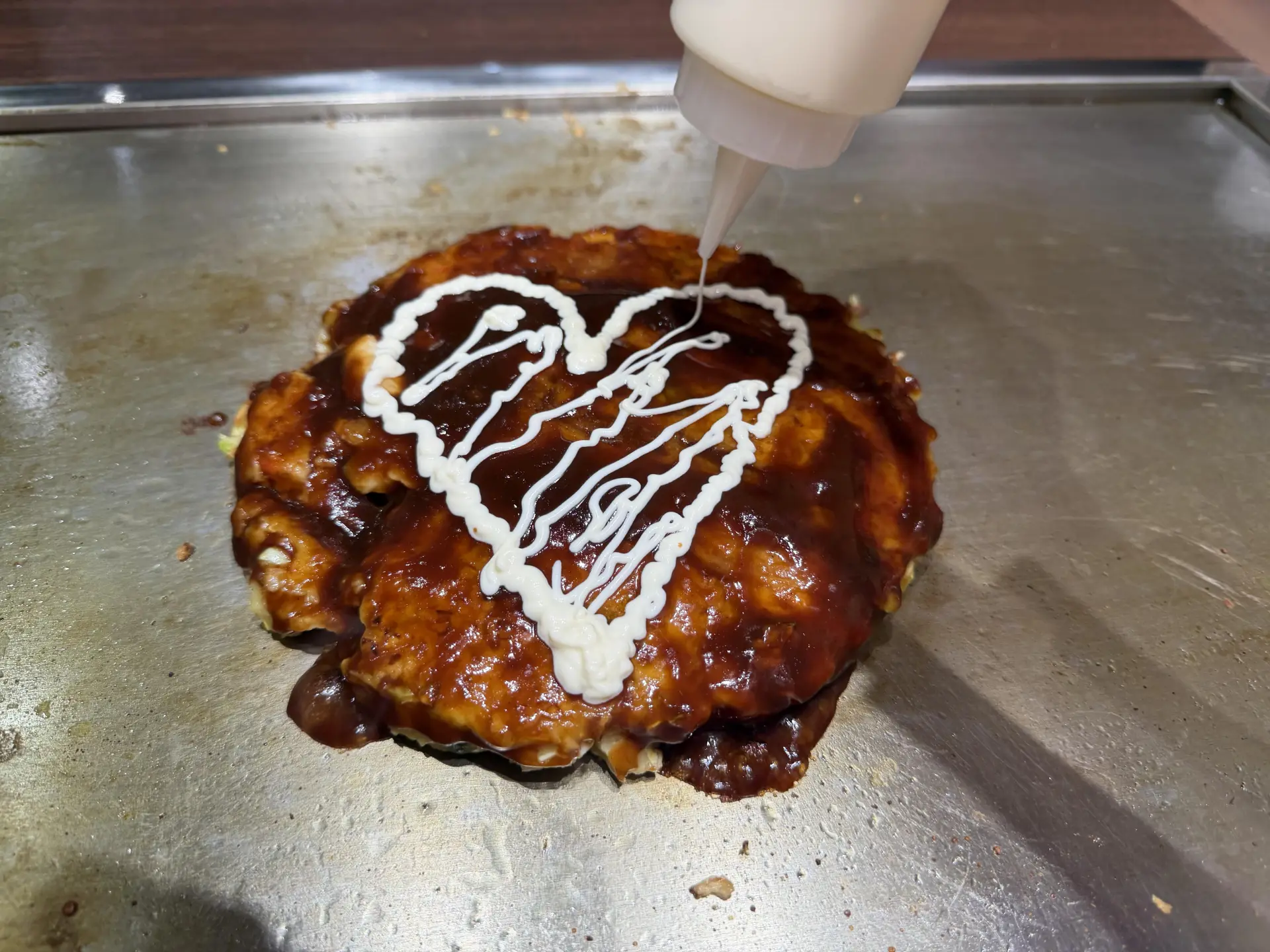
Next, finish it with mayonnaise. Draw hearts, write your name, or decorate it however you like with mayonnaise to create “okonomiyaki art.”
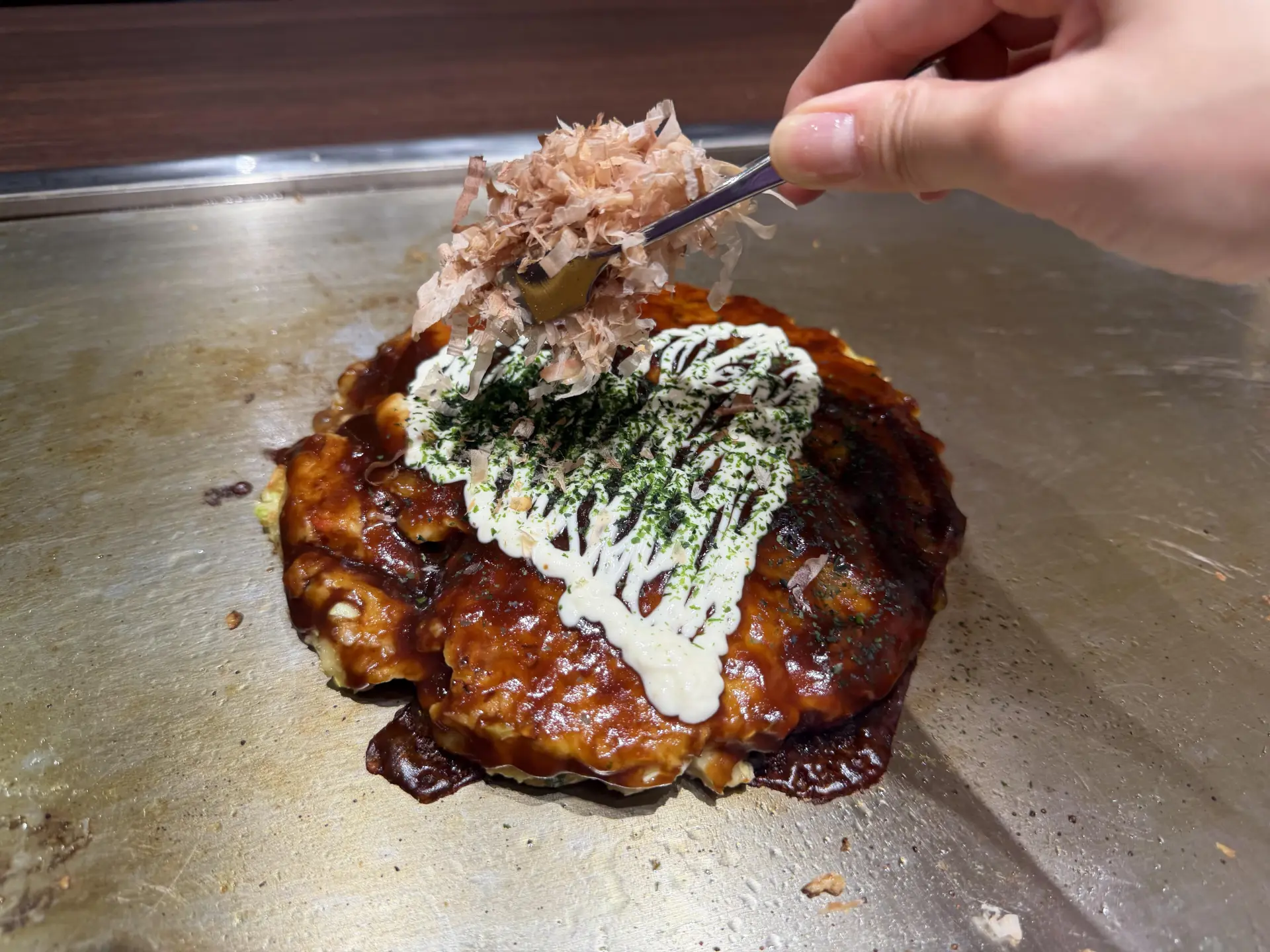
Then, if you like, sprinkle on aonori seaweed and bonito flakes, and it is complete.
Once you add the aonori seaweed and bonito flakes, your “okonomiyaki art” will be hidden, so we recommend taking a photo before adding them!
5. Let’s taste it
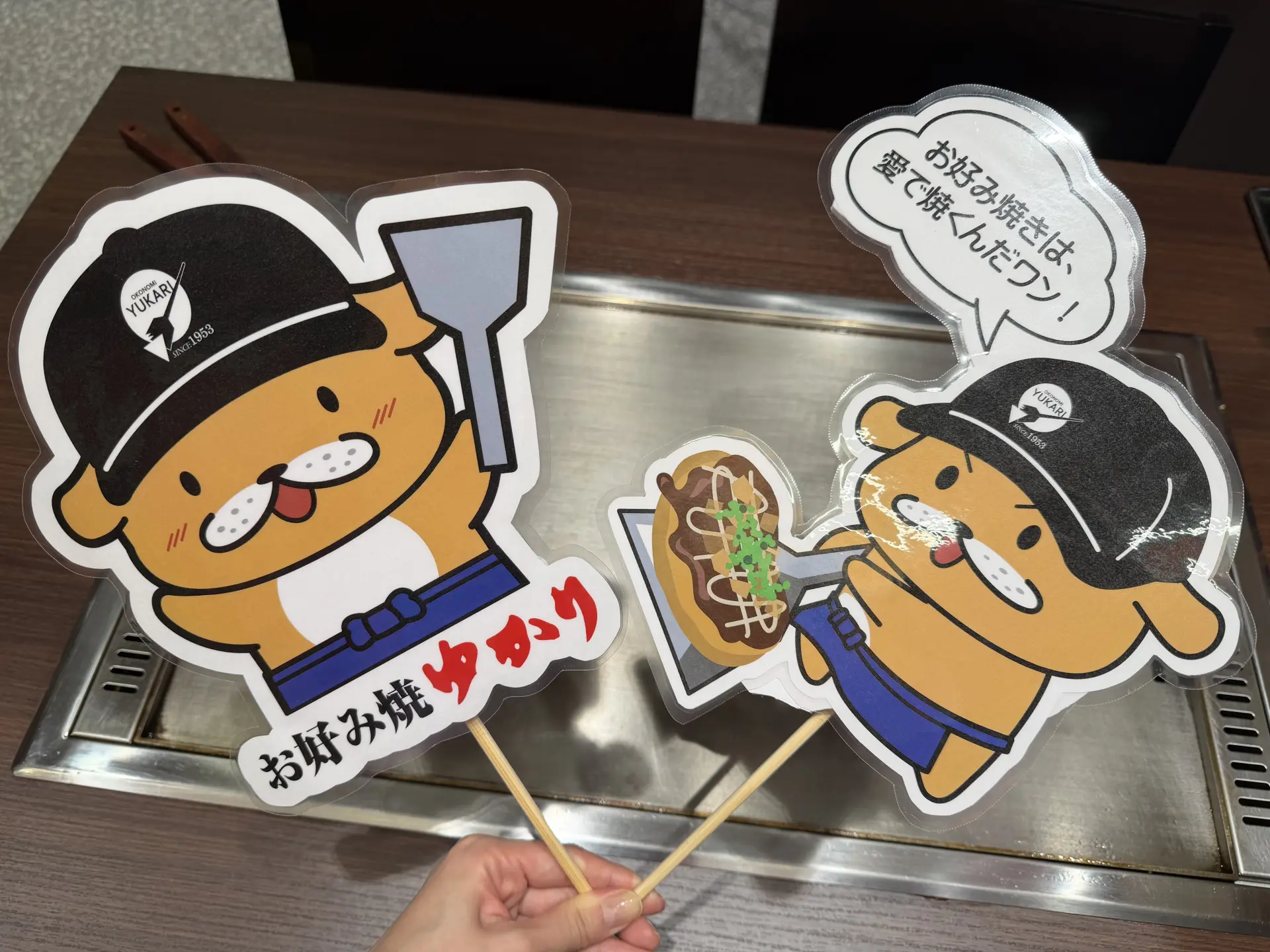
Now for the moment you’ve been waiting for, your handmade okonomiyaki is ready. Enjoy it while chatting with friends, saying things like “Maybe I cooked it a little too long?” or “It turned out delicious!” The okonomiyaki you make yourself will probably taste especially delicious. I became hooked on the sweetness of the cabbage and its crisp texture. By the way, seasoned okonomiyaki fans cut it into pieces on the hot plate and eat it with a small spatula. That said, it gets very hot, so I do not really recommend it. Spicy sauce, ichimi chili pepper, and other seasonings are also available at the table. Trying them for a different flavor makes it enjoyable in a whole new way. The restaurant also has photo-friendly props that you can borrow. Be sure to take pictures to remember the okonomiyaki you made.
6. Presentation of the master certificate
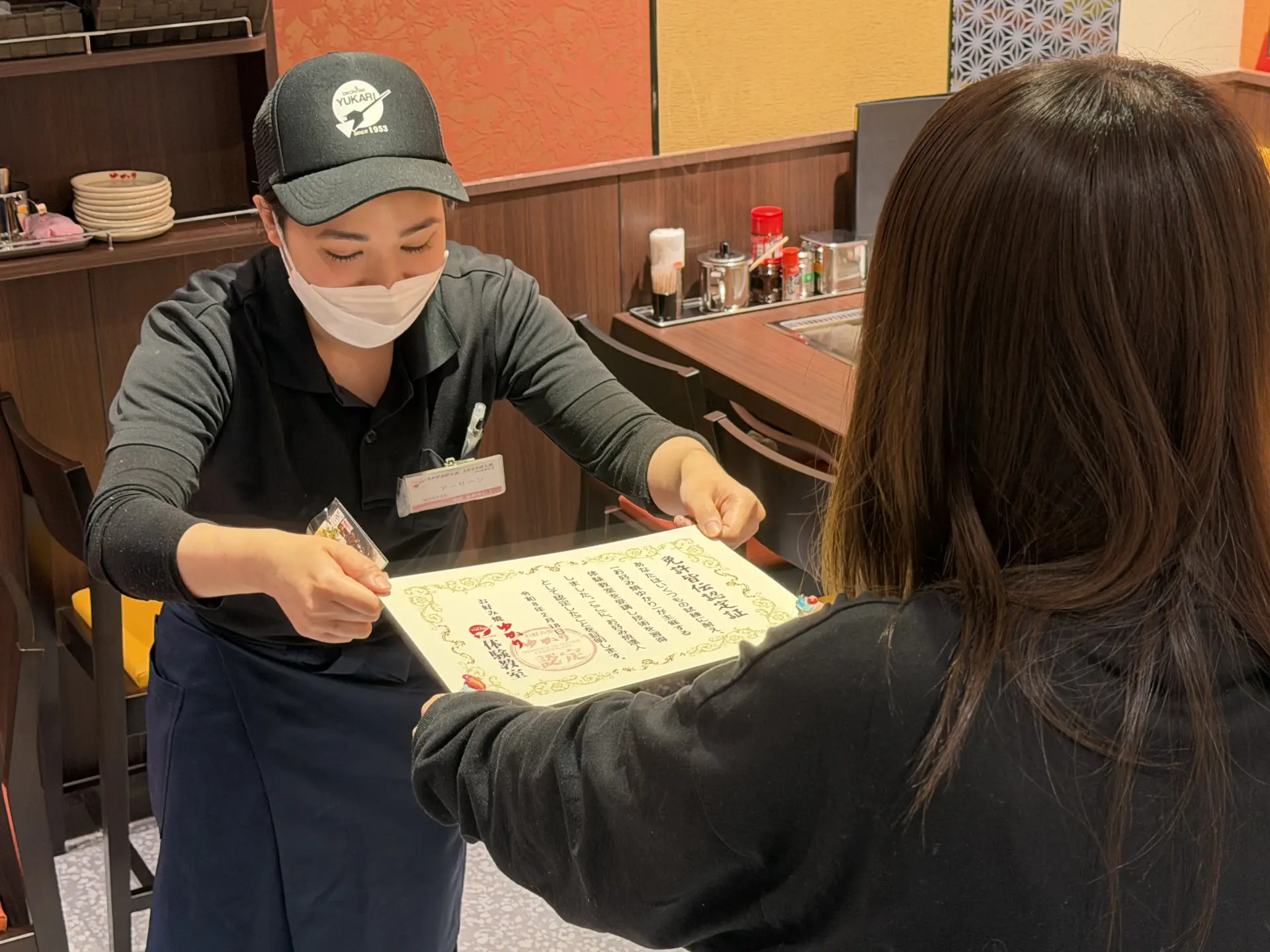
After the meal, you will be presented with a “Master Certificate” proving that you can now cook okonomiyaki on your own. It made me feel proud, like I had become an okonomiyaki expert. You also receive a mini spatula, so you can make okonomiyaki at home anytime from now on.
After Trying the Experience
The staff taught us very carefully, so I felt that even people who are not good at cooking or complete beginners could join with peace of mind. If there is anything you do not understand, such as how long to cook it or how to flip it, the professional okonomiyaki staff will teach you everything. Another great point is that you can join empty-handed. You are also given a guide explaining how to cook okonomiyaki, and it is written in Japanese, English, and Simplified Chinese, so even if you forget the steps, you can check the process by reading it. It is a very visitor-friendly experience for international tourists as well. Travel itineraries can easily get packed, but since you can eat the okonomiyaki right after making it on the spot, the activity and meal come together in Approx. 100 minutes, and it felt like a very efficient use of time.
By the way, in the experience class you can eat only one Special Mixed Yaki that you make yourself, but by placing an additional order, you can also try okonomiyaki, yakisoba, and other dishes cooked by the staff. It is fun to compare the one you made yourself with the one cooked by the staff. The okonomiyaki I made was delicious too, but the one cooked by the staff was incredibly fluffy, and I could really feel the skill of professionals who fully understand how to mix and cook it.
About the KITTE Osaka Store, This Time’s Experience Venue
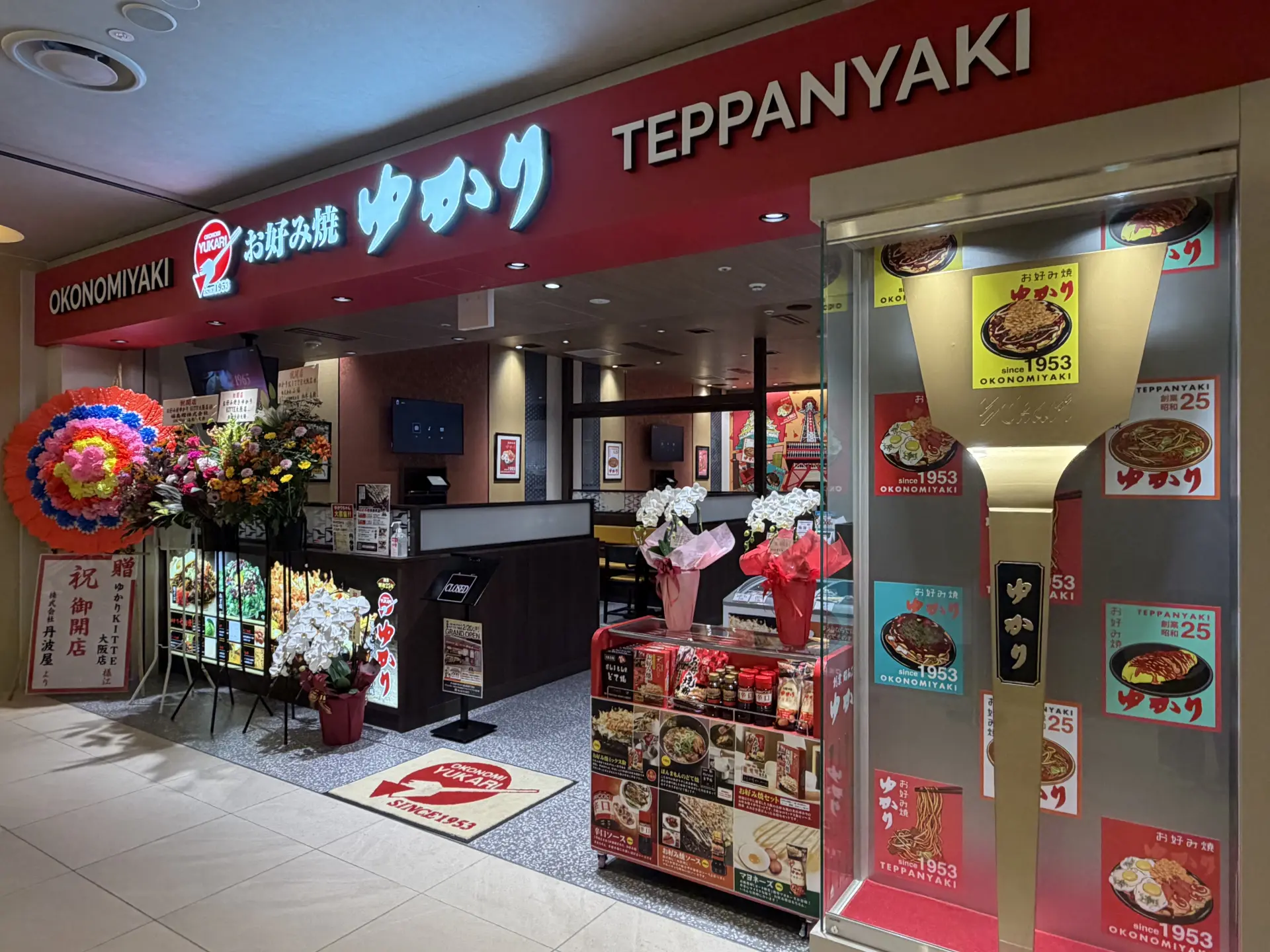
The KITTE Osaka Store, where we had this experience, is a new location that opened on February 20, 2026, inside KITTE Osaka, directly connected to JR Osaka Station.
True to the name “KITTE,” KITTE Osaka is a commercial complex located on the former site of the Osaka Central Post Office. While each “Okonomiyaki Yukari” location offers its own original creative okonomiyaki, the KITTE Osaka Store’s original dish is called “Nishi-Umeda Yaki.”
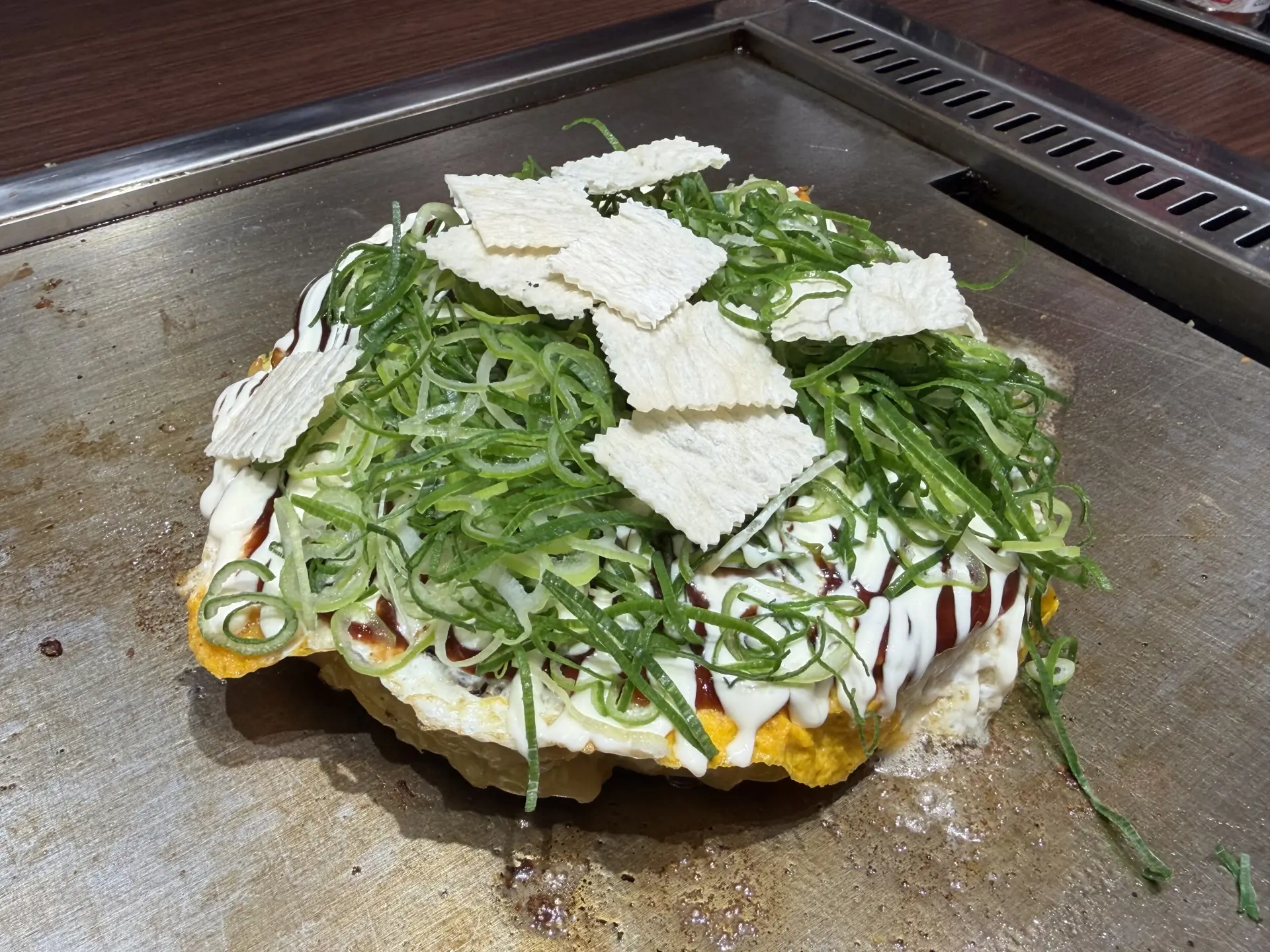
The ingredients are cut mochi, cod sheet, pork belly, squid, and shrimp. If you look closely at the cod sheet, you will notice that the edges are cut in a zigzag pattern. It has that familiar shape that feels perfect for an okonomiyaki served at KITTE Osaka! This is a dish unique to this location, enjoyable for both its appearance and its flavor.
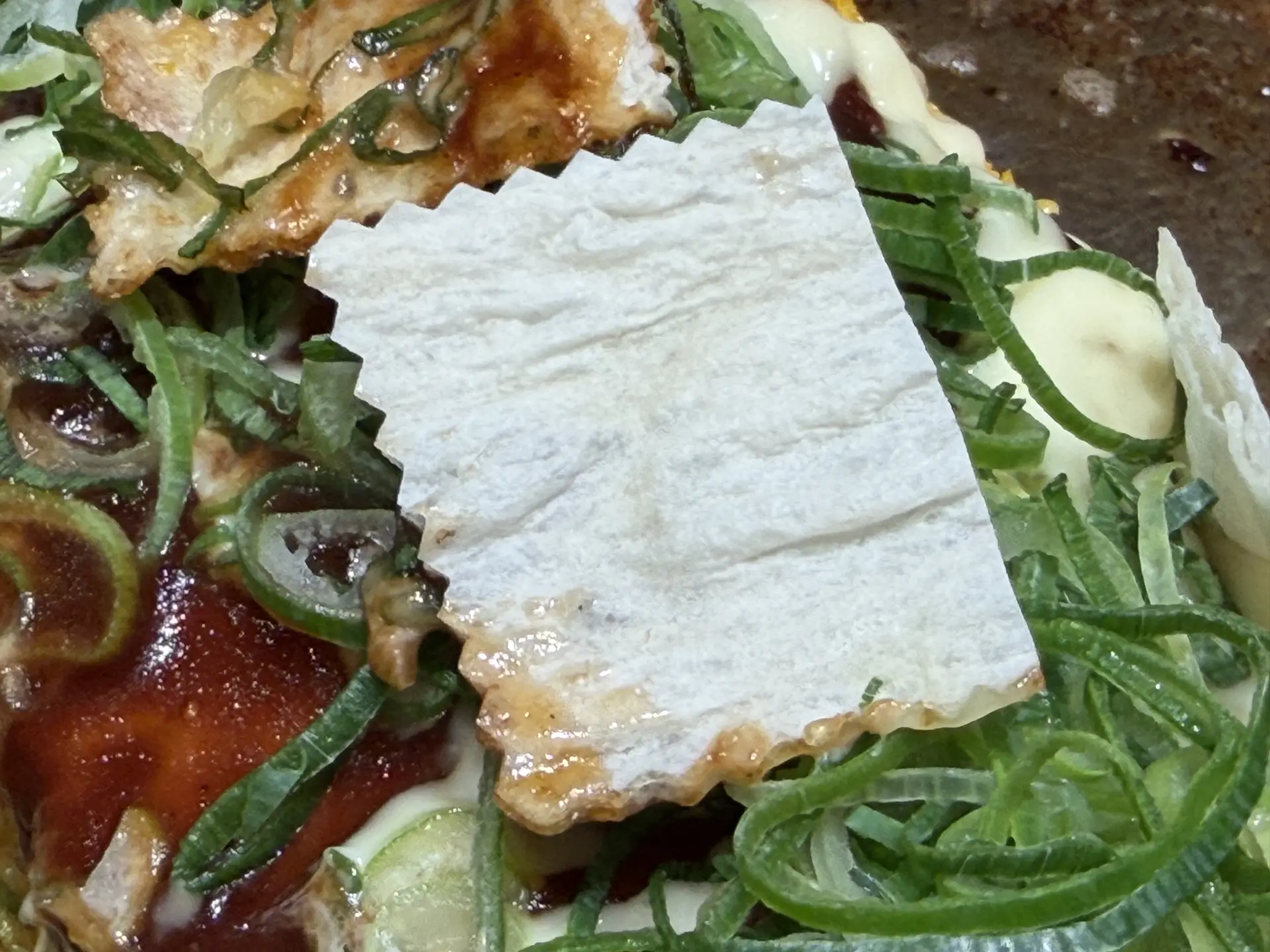
The okonomiyaki is finished right in front of you, so it comes with plenty of live cooking excitement. Personally, I thought the cut mochi added a great textural accent and tasted really delicious. I had both the okonomiyaki I made myself and the Nishi-Umeda Yaki, and I ended up very full. One alone might feel just a little unsatisfying, so I thought it would be nice to order several with friends and share.
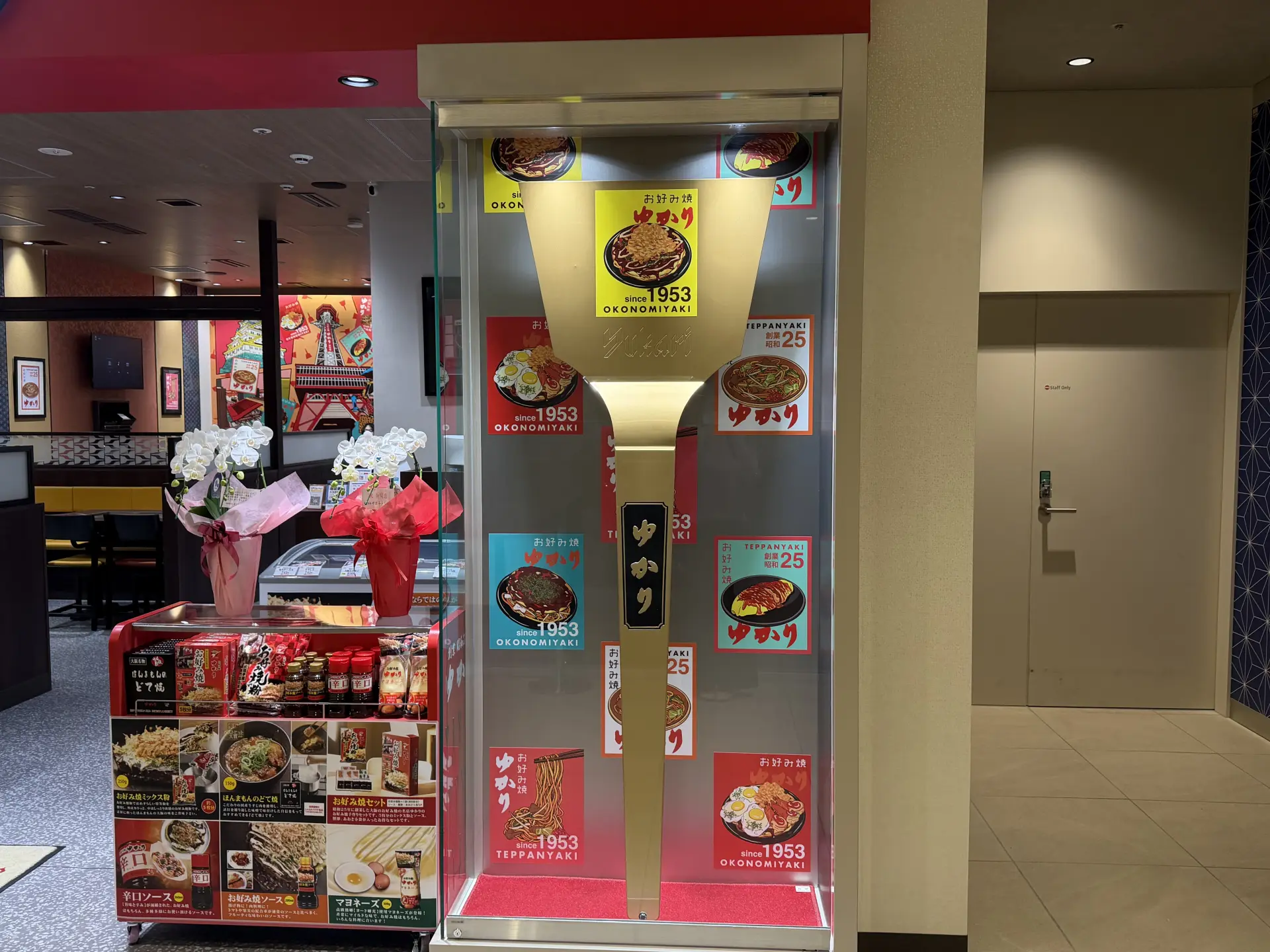
Also, the KITTE Osaka Store has a photo spot near the entrance. It is the “Golden Spatula.” Be sure to take a commemorative photo in Osaka in front of this giant golden spatula, which is even bigger than an adult.
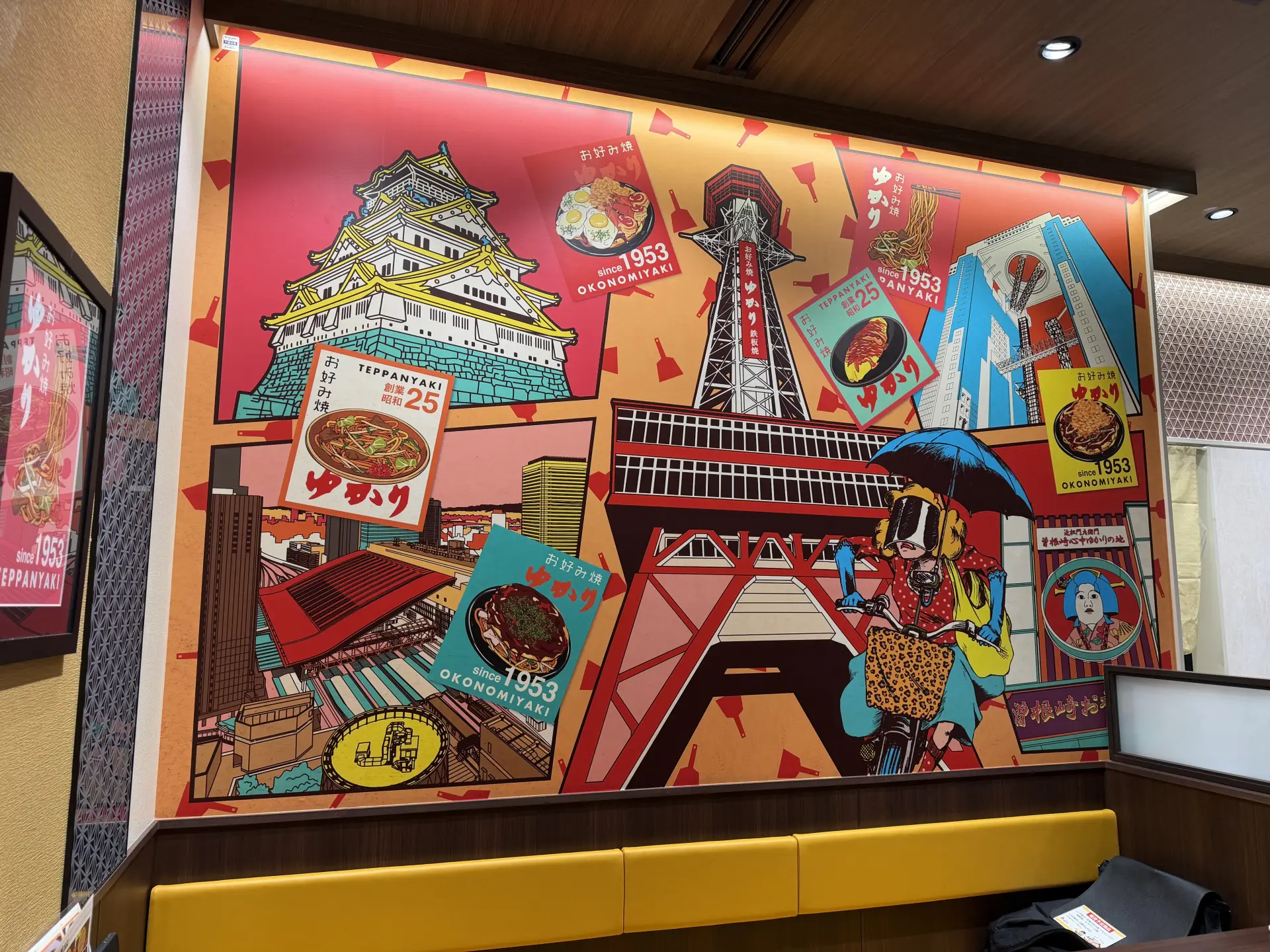
The interior walls are decorated with Osaka symbols such as Tsutenkaku, Osaka Castle, and Osaka aunties, so there are plenty of photo spots.
The KITTE Osaka Store also has many promotional items, and you can buy souvenirs here as well.
Summary
Okonomiyaki is one of the defining dishes of Osaka’s flour-based food culture and a food locals truly love.
It may look like a simple dish that just involves mixing ingredients and grilling them, but when I actually tried making it myself, I realized there is real depth to it, from the right way to mix the batter to the surprisingly tricky timing for cooking and flipping it. Okonomiyaki made by professionals is unquestionably delicious. But if you are visiting Osaka, be sure to try making it yourself and experience Osaka’s flour-based food culture firsthand!

Author
Freelance Announcer
Sayaka Motomura
Focused on sharing insights related to traditional culture, performing arts, and history.