
Complete Guide to Osaka's Soul Food: Okonomiyaki
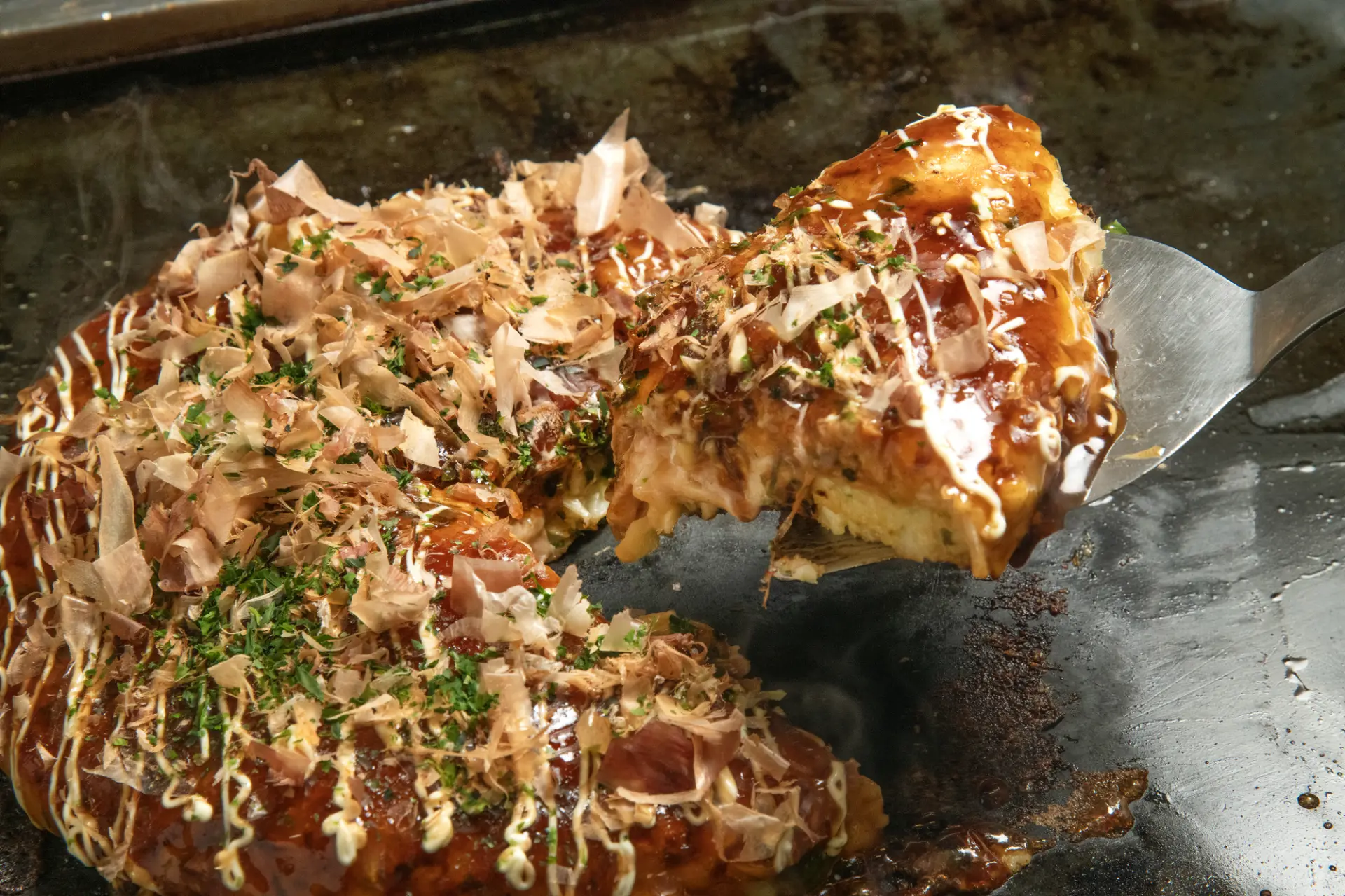
Okonomiyaki is a traditional Osaka dish made by mixing flour batter with cabbage and ingredients such as squid and pork, cooking it on a griddle, and topping it with sauce. Delicious yet inexpensive, it has long been a favorite among Osaka residents. This article explores the origins of okonomiyaki, how it differs from other flour-based dishes, and hands-on classes where you can learn to make it. Essential reading for anyone planning a trip to Osaka or interested in discovering this beloved local comfort food!
What Is Okonomiyaki?
Okonomiyaki is a type of konamon, or flour-based dish. It is made by mixing cabbage, meat such as pork, seafood such as squid, tempura bits, red pickled ginger, and other ingredients into a flour-and-egg batter, then cooking it on a griddle. Once cooked, it is generously coated with sauce and topped with mayonnaise, aonori seaweed, bonito flakes, and more. True to the name “okonomiyaki,” which refers to cooking whatever you like, one of its defining features is the freedom to use your preferred ingredients. Its flexibility and the excitement of eating it as it cooks on the griddle have made it popular as both a home-cooked Osaka favorite and a staple at festivals and food stalls.
The Origins of Okonomiyaki
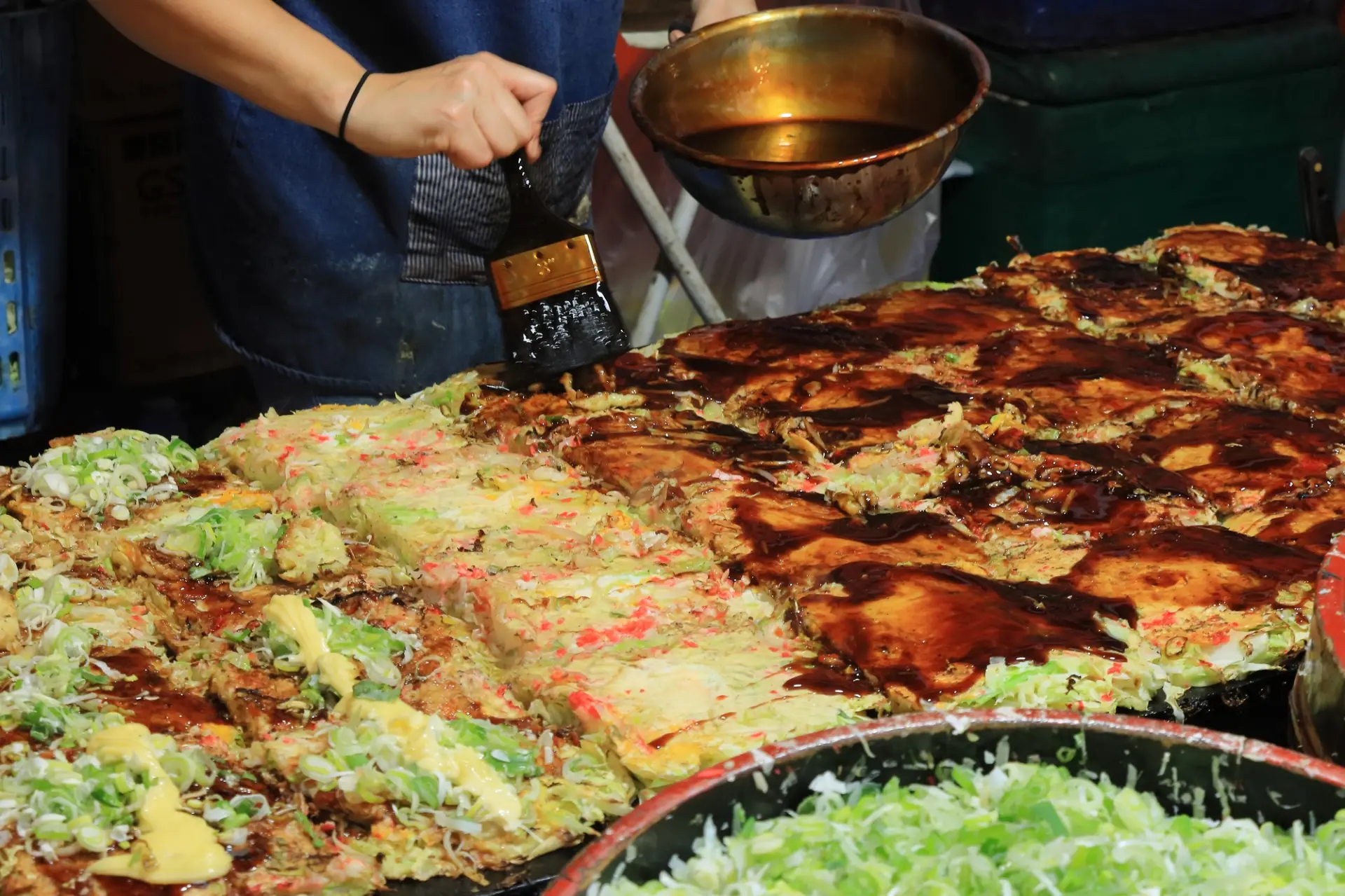
The origins of okonomiyaki are said to date back as far as the Muromachi through Azuchi-Momoyama periods. Surprisingly, its history is connected to chanoyu, or the Japanese tea ceremony, which flourished at the time. A tea confection called funoyaki was made by mixing flour with water, spreading it thinly and cooking it, then coating it with miso or sugar and rolling it up. This appears to have marked the beginning of the custom of cooking flour batter. The confection was even served at tea gatherings hosted by tea master Sen no Rikyu. This eventually led to a dish called sukesoyaki, made by cooking flour batter on a griddle, which became popular among ordinary people during the Edo period. Later, during the Showa era, issen-yaki—a dish similar to modern okonomiyaki—became popular in Osaka. Its name reportedly came from its price of 1 sen per piece. In the turmoil following World War II, meat was scarce and expensive, so people began mixing in vegetables such as cabbage and seafood such as squid. The dish then became known as okonomiyaki, meaning a dish made with whatever ingredients you like. With variations unique to each household, okonomiyaki became a familiar comfort food. At the same time, popular specialty restaurants began appearing one after another, often drawing long lines, and the dish grew into a symbol of Osaka's food culture.
Sauce: An Essential Part of Okonomiyaki
After okonomiyaki is cooked on the griddle, it is finished with a generous coating of sauce. The sauce is so essential that its flavor can determine how the entire dish tastes. At home, people often use commercially available sauces, and supermarkets now carry a wide variety. Options include sweet and spicy varieties as well as blends of several sauces. Okonomiyaki specialty restaurants, of course, use their own original sauces. Packed with umami, the sauce brings out even more of the okonomiyaki's flavor.
Differences from Hiroshima-style Okonomiyaki and Monjayaki
Monjayaki and Hiroshima-style okonomiyaki are often described as rivals to Osaka-style okonomiyaki. All three are flour-based dishes cooked on a griddle, but they differ in several ways.
Hiroshima-style okonomiyaki is a flour-based dish popular in Hiroshima. Its main distinction is that the ingredients are not mixed together as they are in Osaka-style okonomiyaki. First, flour batter is spread thinly on the griddle like a crepe, and the ingredients are then layered on top. Although the batter is very thin, generous amounts of cabbage and other ingredients are used. This style has a historical background. Immediately after World War II, Japan faced shortages of grains such as rice and wheat. Hiroshima in particular had suffered immense wartime devastation from the atomic bombing. Hiroshima-style okonomiyaki was made using griddles left among the ruins and only a small amount of flour. Large quantities of homegrown cabbage were reportedly added to make the dish more filling. During the postwar food shortages, it helped satisfy the hunger of Hiroshima's residents.
Monjayaki is a flour-based dish popular in Tokyo. Cabbage, tempura bits, squid, dried shrimp, and other ingredients are added to a thin flour-and-water batter, which is seasoned with Worcestershire sauce, dashi, and other flavorings before being spread over a griddle. Because it contains a large amount of water, it does not fully solidify when cooked. Diners use a small spatula to scrape up and eat a little at a time directly from the griddle. Tsukishima Nishinaka-dori Shopping Street in Tokyo is commonly known as Monja Street. With more than 80 monjayaki restaurants, it is a popular sightseeing destination.
In any case, okonomiyaki, Hiroshima-style okonomiyaki, and monjayaki all began as inexpensive, tasty, and filling snacks enjoyed by children through many eras, including the Meiji, Taisho, and Showa periods and wartime. Another thing they share today is the freedom to use a wide range of ingredients.
Try Okonomiyaki at Okonomiyaki Yukari!
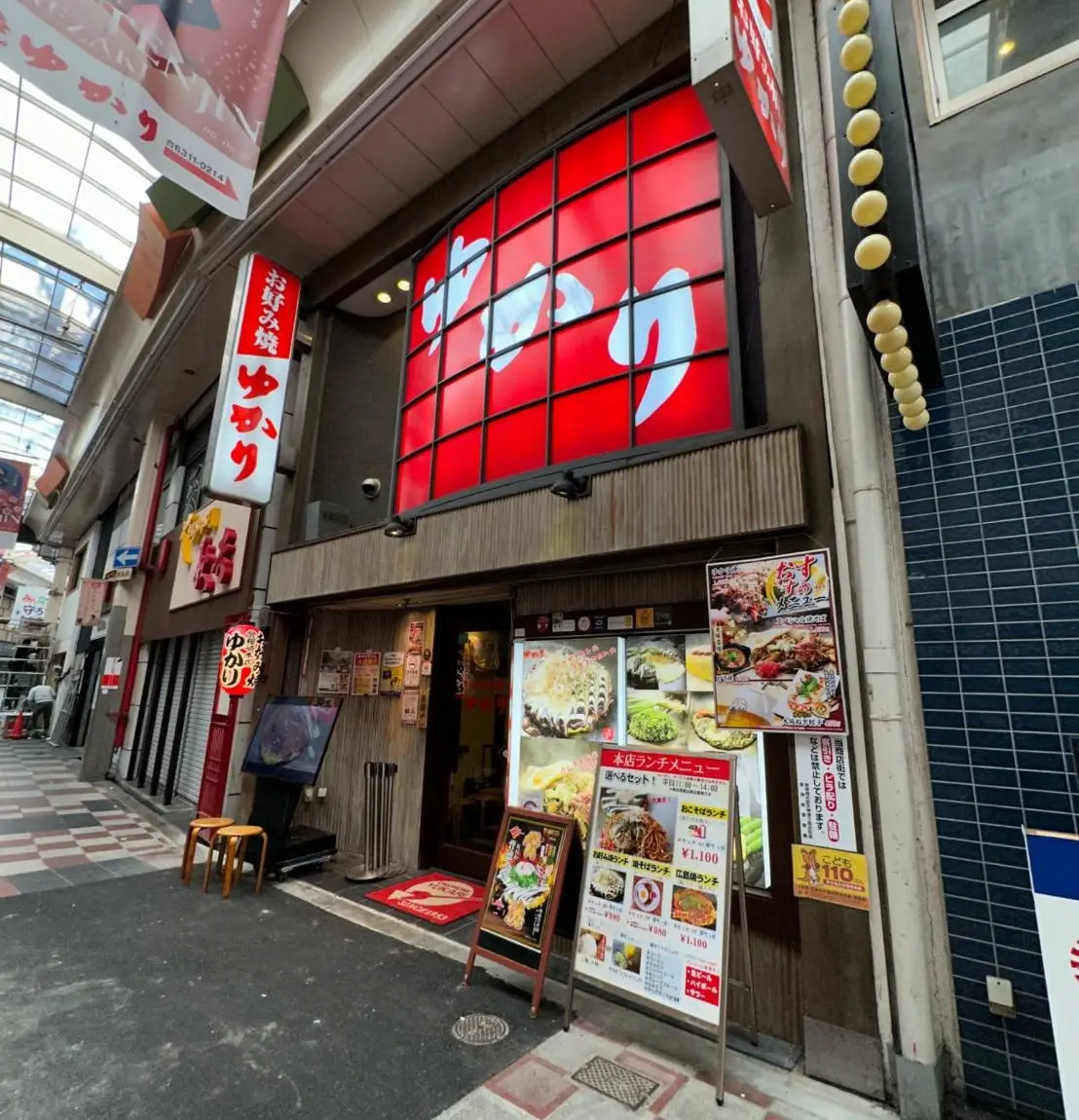
Osaka has many popular okonomiyaki restaurants that draw long lines. One of them is Okonomiyaki Yukari, founded in 1950. It operates more than 10 locations across the Kansai and Kanto regions, with its flagship restaurant on Sonezaki Ohatsutenjin-dori Shopping Street in Osaka. Along with classics such as butatama with pork and ikatama with squid, creative okonomiyaki featuring cheese, mochi, and other ingredients are also popular.
A True Reflection of “Okonomi”: A Wide Variety of Ingredients
Okonomiyaki Yukari offers many varieties of okonomiyaki. Its classic is the Butatama, made with domestically produced pork belly.
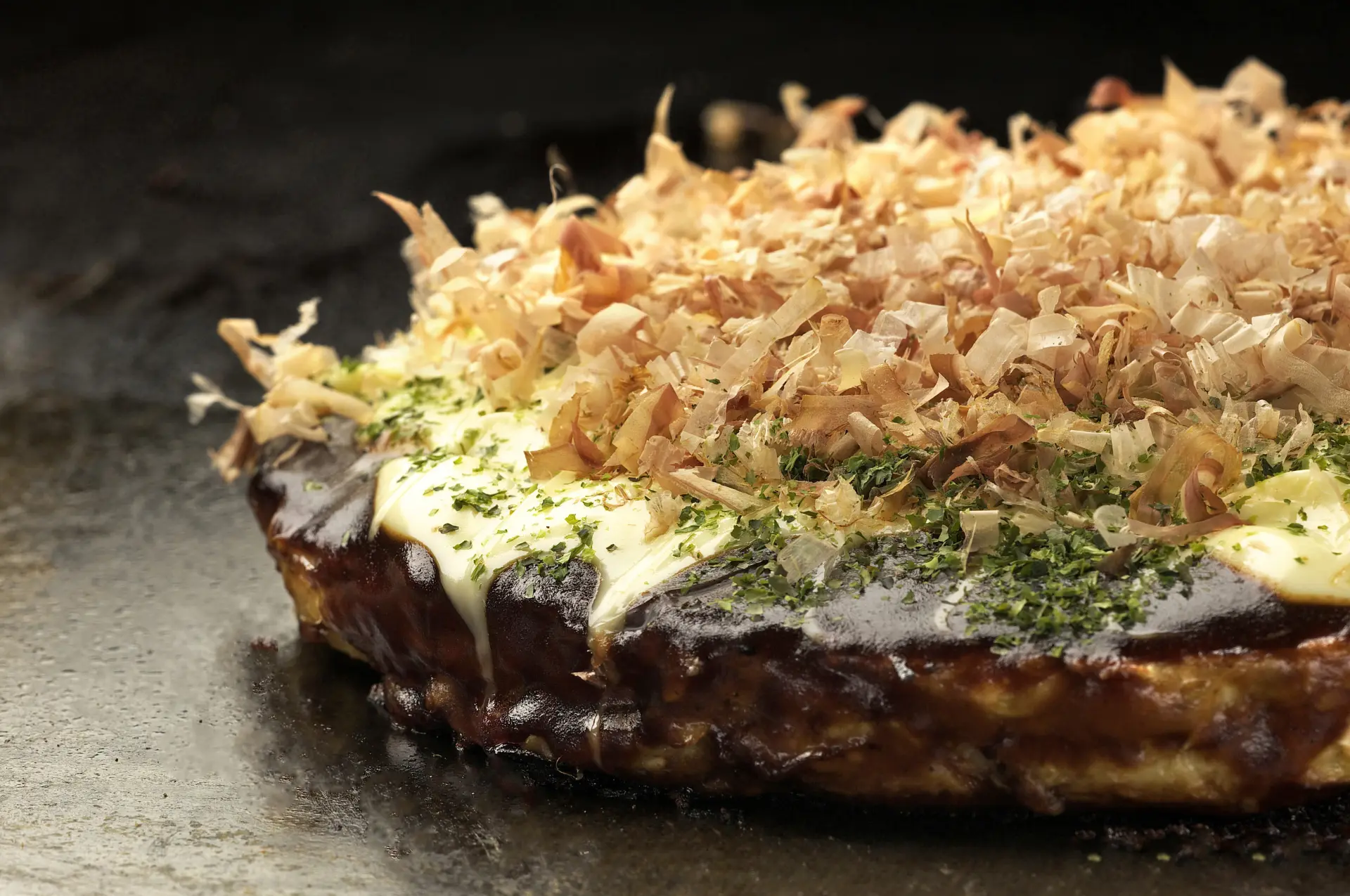
The most popular item is the Special Mixed Okonomiyaki, made with pork belly, squid, and peeled shrimp.
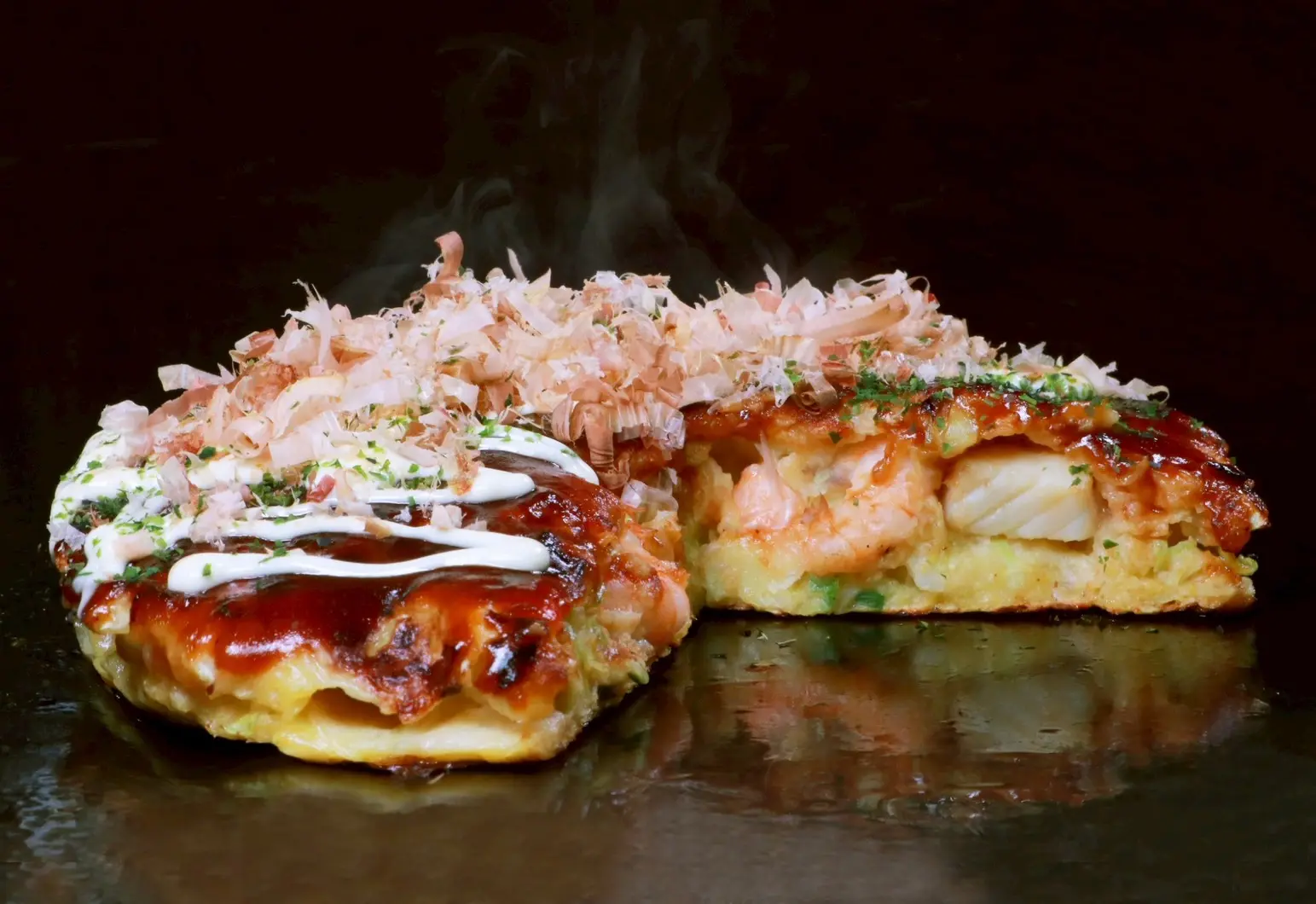
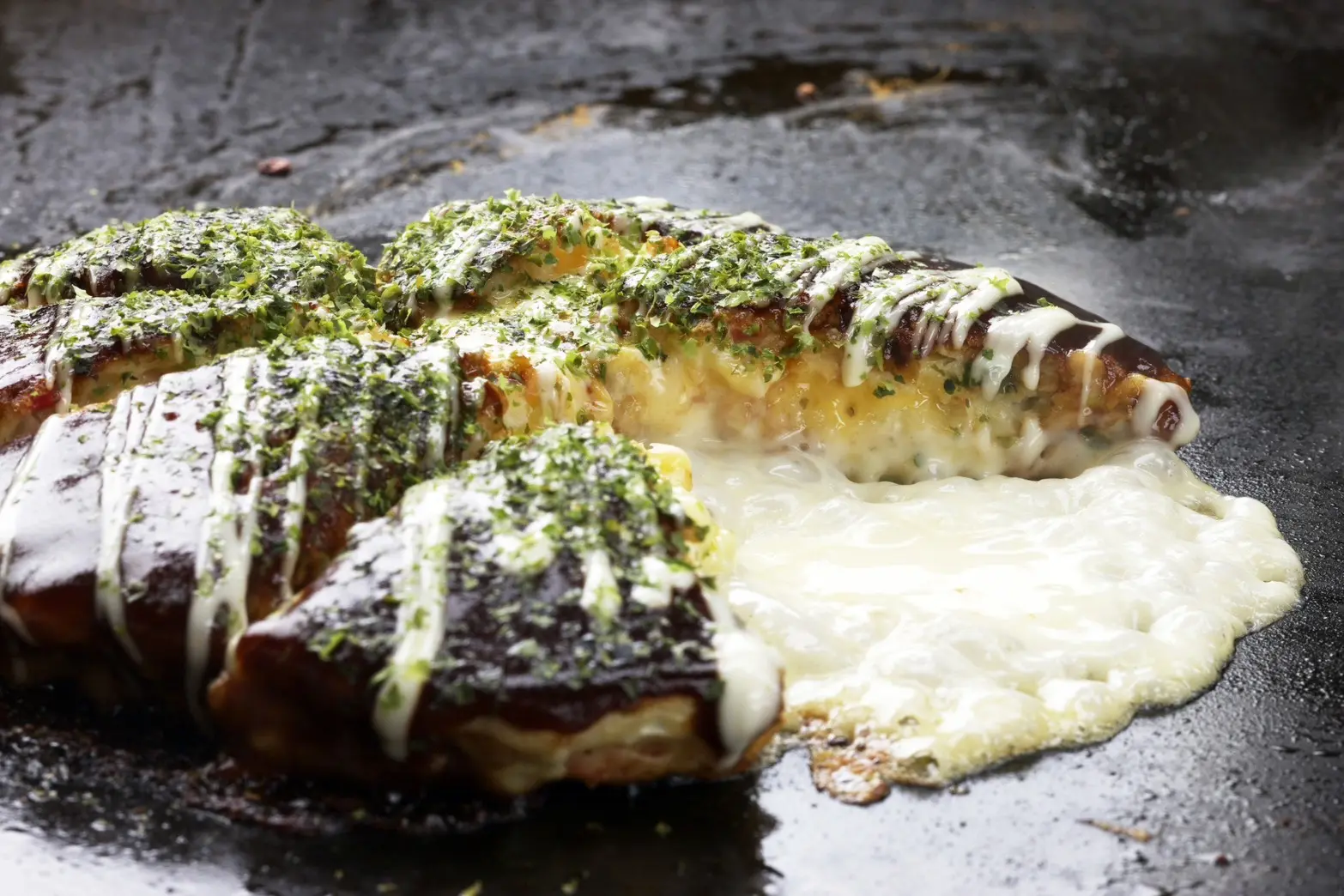
Another recommended choice is the Fromage-yaki. It is packed with five types of cheese—Gouda, mozzarella, cheddar, fondue cheese, and processed cheese—which are also blended into the batter. Its wonderfully gooey texture makes it irresistible for cheese lovers.
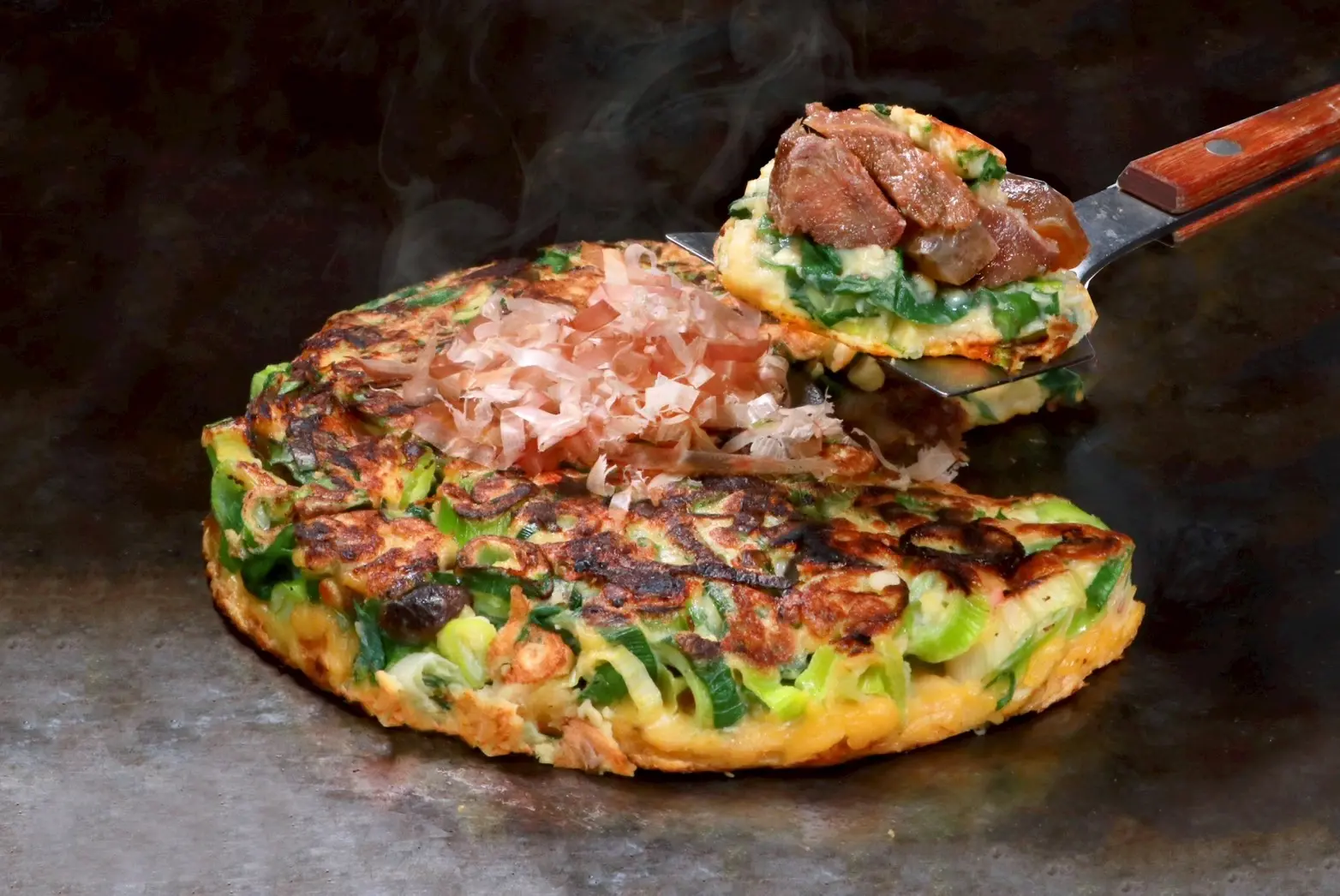
There are distinctly Osaka-style options as well. The Domestic Beef Suji Negiyaki centers on green onions, beef tendon, and konjac simmered in a sweet and savory sauce—another classic Osaka flavor.
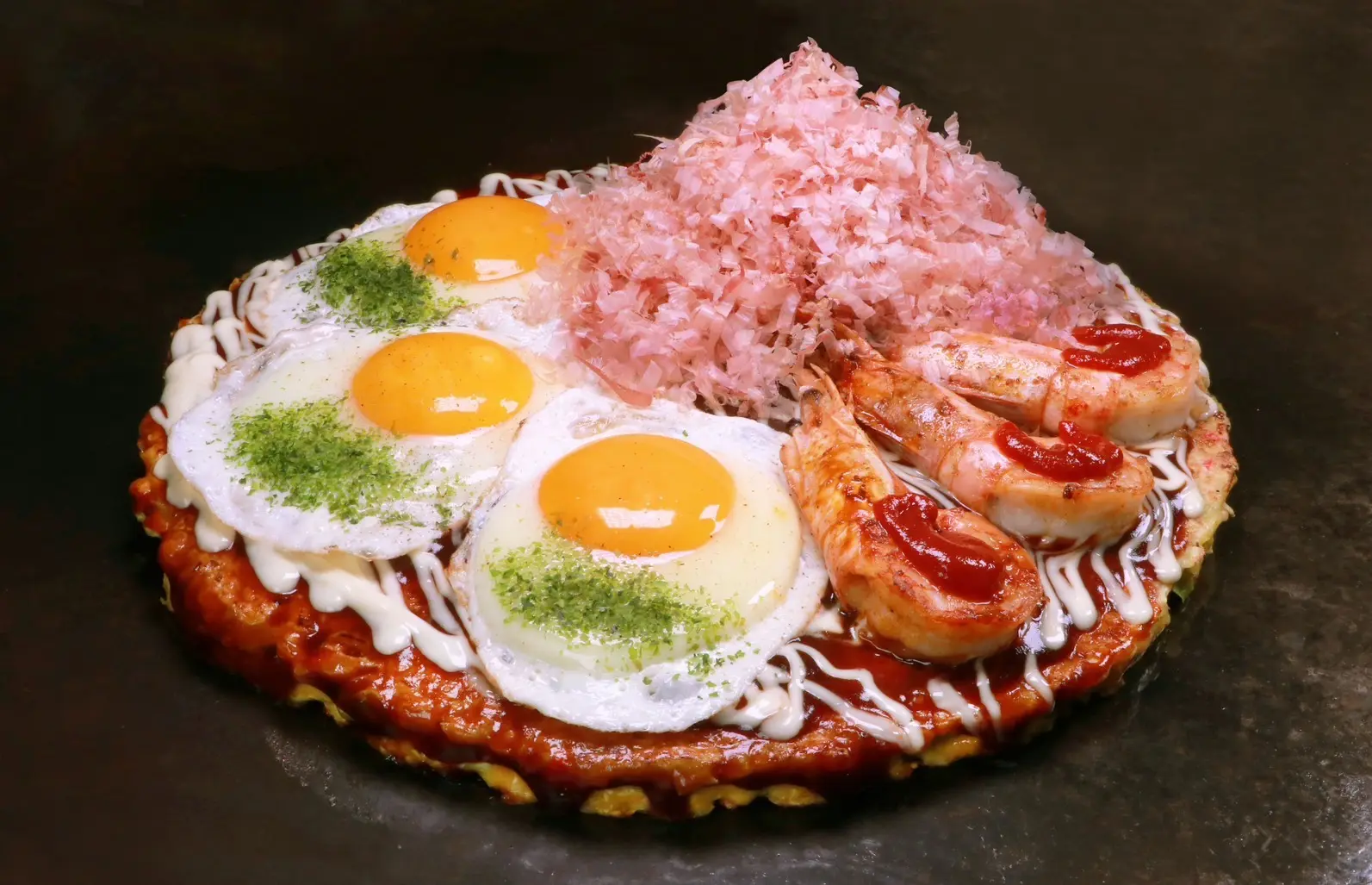
Osaka Castle, made with head-on shrimp, pork belly, squid, peeled shrimp, scallops, and a fried egg, is a challenge weighing an impressive 1 kg! This enormous okonomiyaki serves 3 to 4 people and is sure to stand out in photos.
The Secrets Behind Okonomiyaki Yukari's Flavor
Yukari's okonomiyaki combines cabbage that remains crisp even after cooking with the gentle sweetness of flour and eggs. There are 7 secrets behind its flavor.
- (1) Cabbage
- First, the restaurant uses fresh, crisp cabbage grown in Japan. To ensure a firm texture and satisfying crunch, it carefully switches between domestic growing regions depending on the season.
- (2) Flour
- Yukari has developed its own Osaka-style okonomiyaki flour blend using fine, high-quality flour like that used in cakes. This is the key to the batter's light, fluffy texture!
- (3) Eggs
- Every dish also uses rich, nutritious iodine-enriched eggs. These flavorful eggs must be what give the batter its mellow taste and subtle sweetness.
- (4) Mayonnaise
- The mayonnaise is specially made with iodine-enriched eggs, giving it a mellow, savory flavor. It is so popular that customer requests led to it being sold as a retail product.
- (5) Dashi
- The batter uses a broth made by slowly simmering chicken bones and aromatic vegetables. It is reportedly prepared at each restaurant rather than in a factory!
- (6) Sauce
- Yukari developed a delicious, low-additive sauce with a high proportion of tomatoes and a demi-glace-like flavor.
- (7) Noodles
- Working with a noodle manufacturer, Yukari developed original noodles with a pleasantly chewy, smooth texture.
These 7 carefully considered elements explain why Okonomiyaki Yukari has remained a longtime favorite among Osaka's discerning diners in a city filled with okonomiyaki specialty restaurants.
In fact, when Okonomiyaki Yukari was founded, it was not an okonomiyaki specialty restaurant but a sweets shop called Amato Yukari. It later opened the Western-style restaurant Parlor Yukari and gradually shifted to an okonomiyaki-focused business around 1972. This carefully developed recipe is said to have been created by a chef from the Parlor Yukari era. Although the flavor of the sauce has changed with the times, the restaurant has maintained its commitment to the recipe for more than half a century.
A Well-Stocked Online Store
The online store is also a good option for anyone who wants to enjoy Okonomiyaki Yukari at home. It offers a wide selection of sets that are ready to eat after simply thawing them in the microwave. Its popular, carefully crafted okonomiyaki sauce and mayonnaise are also sold separately.
Make Your Own Okonomiyaki at Okonomiyaki Yukari!
Okonomiyaki Yukari offers hands-on okonomiyaki classes. Participants can have fun cooking authentic Osaka-style okonomiyaki and then enjoy eating what they make. With guidance from a professional, you complete every step yourself, from mixing the initial ingredients to finishing the dish with sauce and mayonnaise. English support is available, making the class very popular with international visitors as well.
Okonomiyaki Class Overview
The class is currently offered at 2 locations: the Sonezaki Flagship Restaurant and KITTE Osaka.
- Start Time
-
Sonezaki Flagship Restaurant: Weekdays between 11:00 a.m. and 3:00 p.m.; start time arranged upon consultation
KITTE Osaka: Weekdays between 11:00 a.m. and 9:00 p.m.; start time arranged upon consultation - Duration
- Approximately 100 minutes (about 50 minutes for the class plus about 50 minutes for the meal)
- Group Size
- 4 to 48 people per group
- Price
-
・Simple Experience Plan
¥3,500 per person, tax included
【Includes】Special Mixed Okonomiyaki (with pork, squid, and shrimp), oolong tea, and the experience
・Experience + Souvenir Plan
¥4,200 per person, tax included
【Includes】Special Mixed Okonomiyaki (with pork, squid, and shrimp), one drink (alcohol available), the experience, and a souvenir (an okonomiyaki set for approximately 5 servings) - Food Allergies
- Accommodations may be available upon consultation
- Inquiries
-
Sonezaki Flagship Restaurant: yukaritaiken.honten@gmail.com
KITTE Osaka: yukaritaiken.kitteosakaten@gmail.com - Reservations
-
Accepted online only
Sonezaki Flagship Restaurant Experience Class
KITTE Osaka Experience Class - Other Information
-
・English support is available. An interpreter guide is required for all other languages.
・Prices and ingredients may be changed due to unavoidable circumstances.
・Cancellation policy: 50% of the fee for cancellations the day before and 100% on the day of the reservation.
・Although this is a hands-on class where participants cook for themselves, staff can cook the okonomiyaki upon request. - Location
-
Sonezaki Flagship Restaurant: 2nd floor; no elevator
KITTE Osaka: 4th floor; elevator available
Try the Okonomiyaki Experience at Okonomiyaki Yukari!
This okonomiyaki experience is popular with tourists, school trips, and company outings. This time, we tried it at the KITTE Osaka location, newly opened in February 2026!
The class follows the schedule below.
- Learn about the history of okonomiyaki
- Learn how to cook it
- Start cooking
- Finish with sauce and mayonnaise
- Taste your creation
- Receive a certificate of mastery
1. Learn About the History of Okonomiyaki
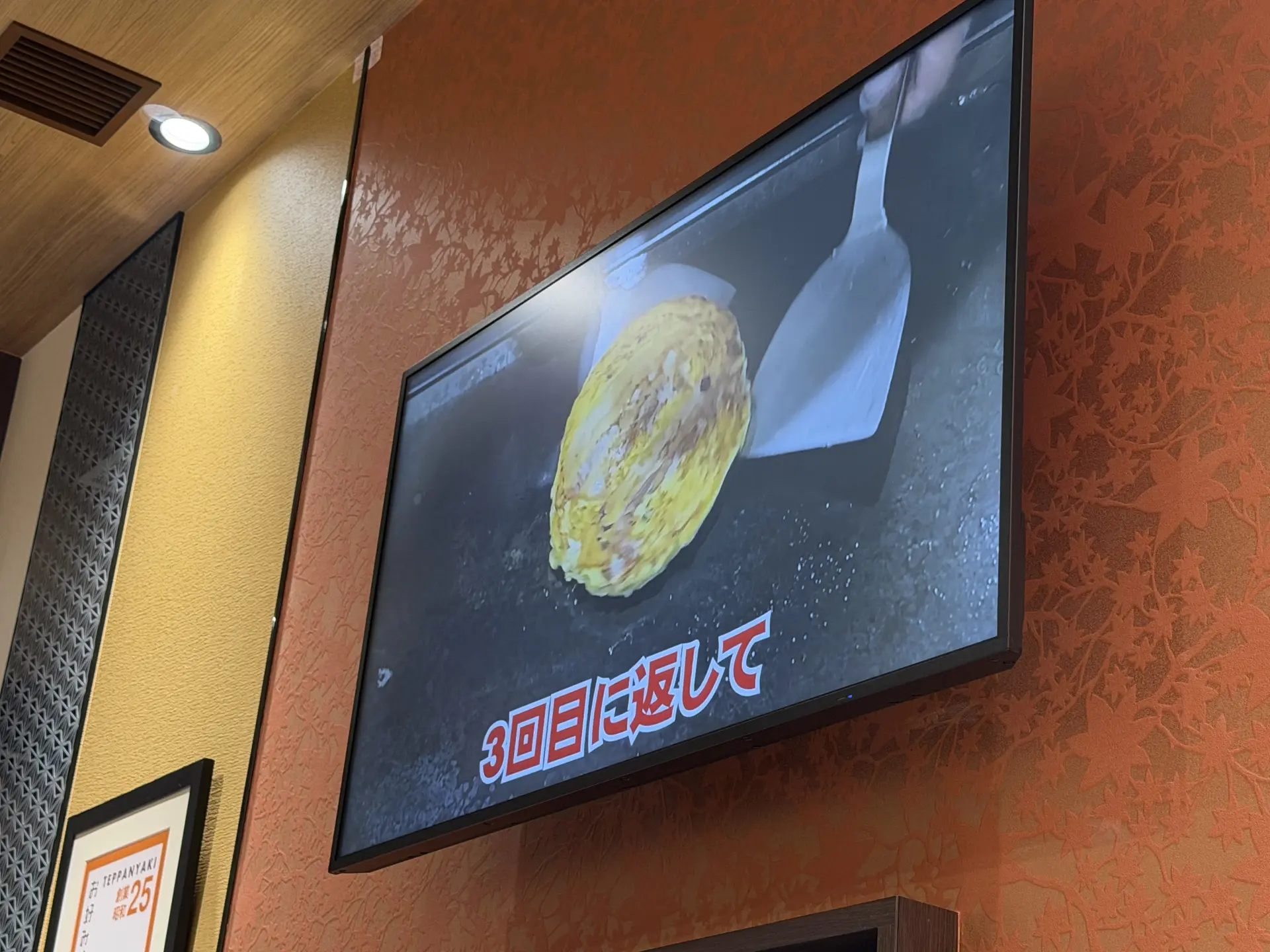
First, a video shown on a monitor inside the restaurant introduces the history of Okonomiyaki Yukari and okonomiyaki itself.
2. Learn How to Cook It
The video also explains each step of the cooking process. By the end, you will be fully prepared to picture yourself making okonomiyaki.
3. Start Cooking
Next, it is time to start cooking.
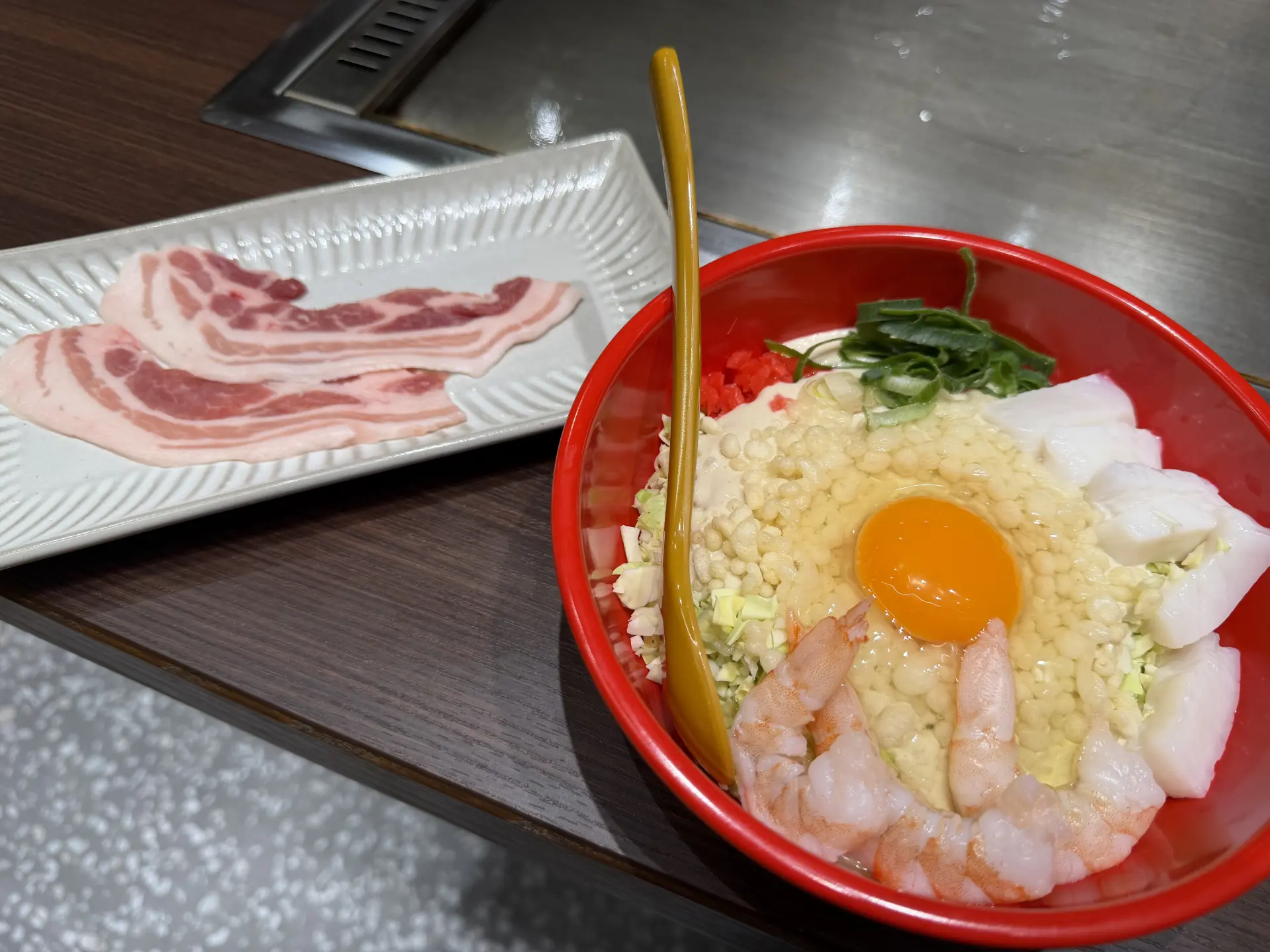
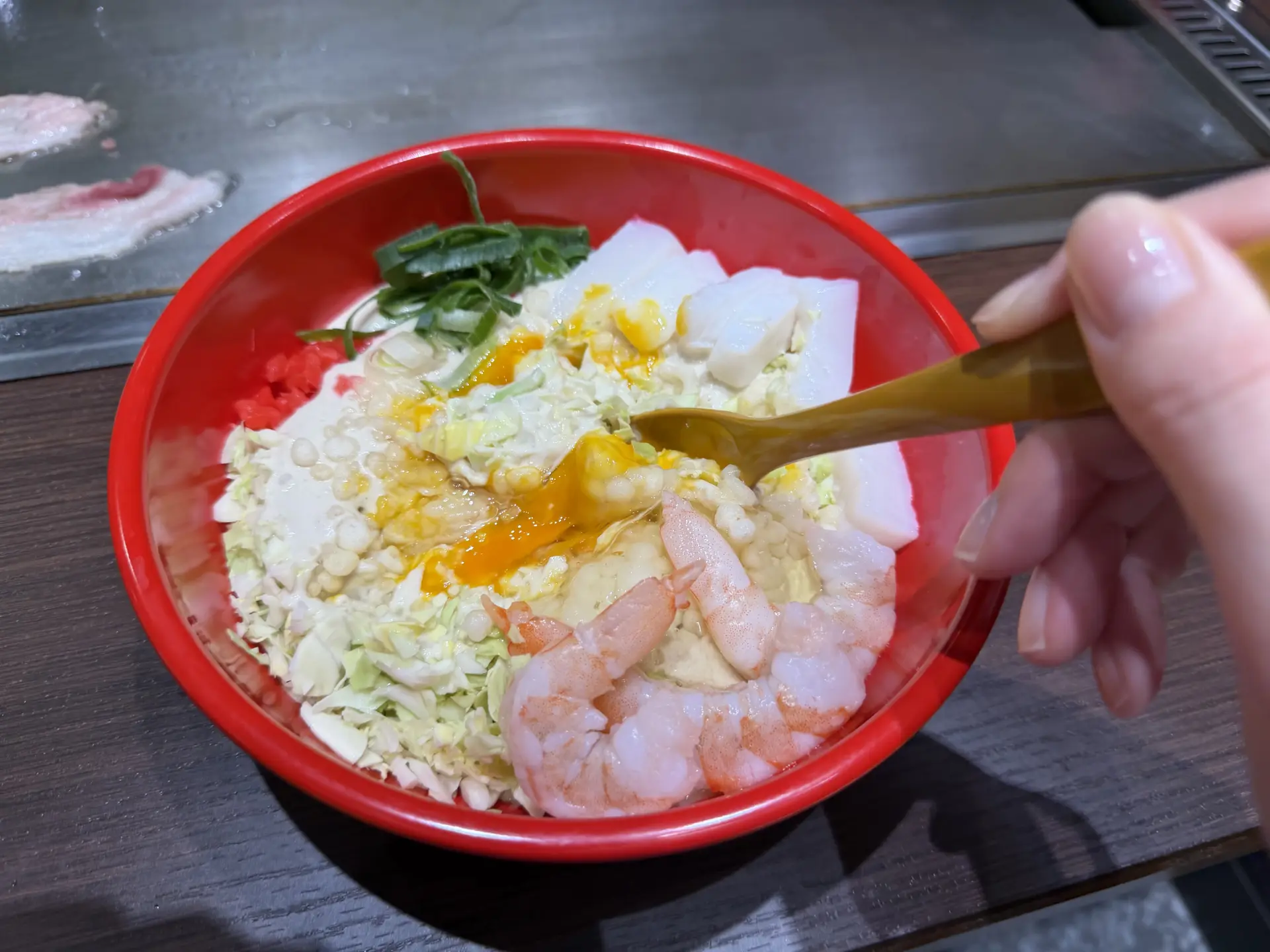
The ingredients arrive! You receive pork and a bowl containing flour batter, tempura bits, squid, peeled shrimp, green onions, red pickled ginger, and an egg.
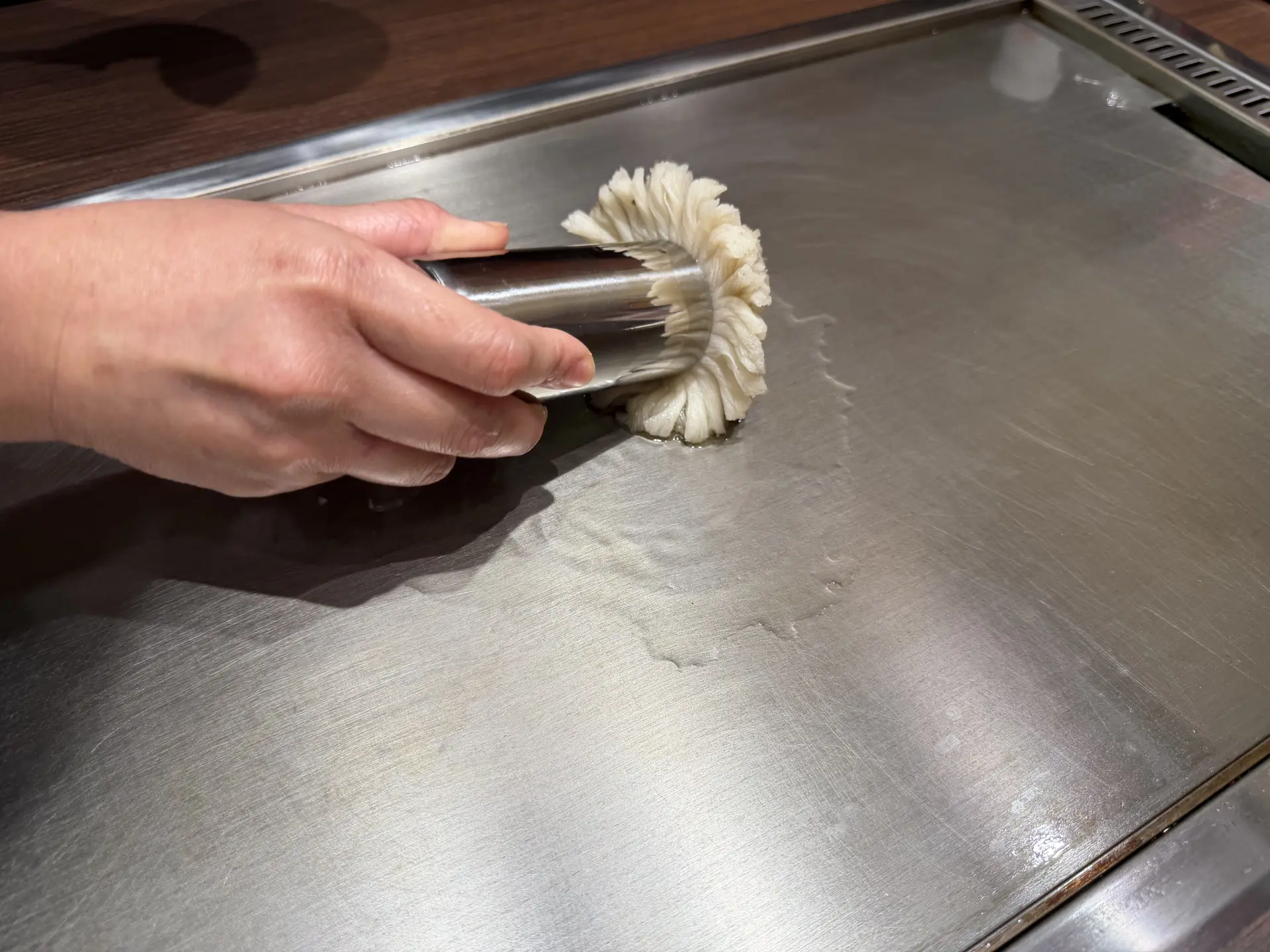
First, a staff member spreads a thin layer of oil over the griddle.
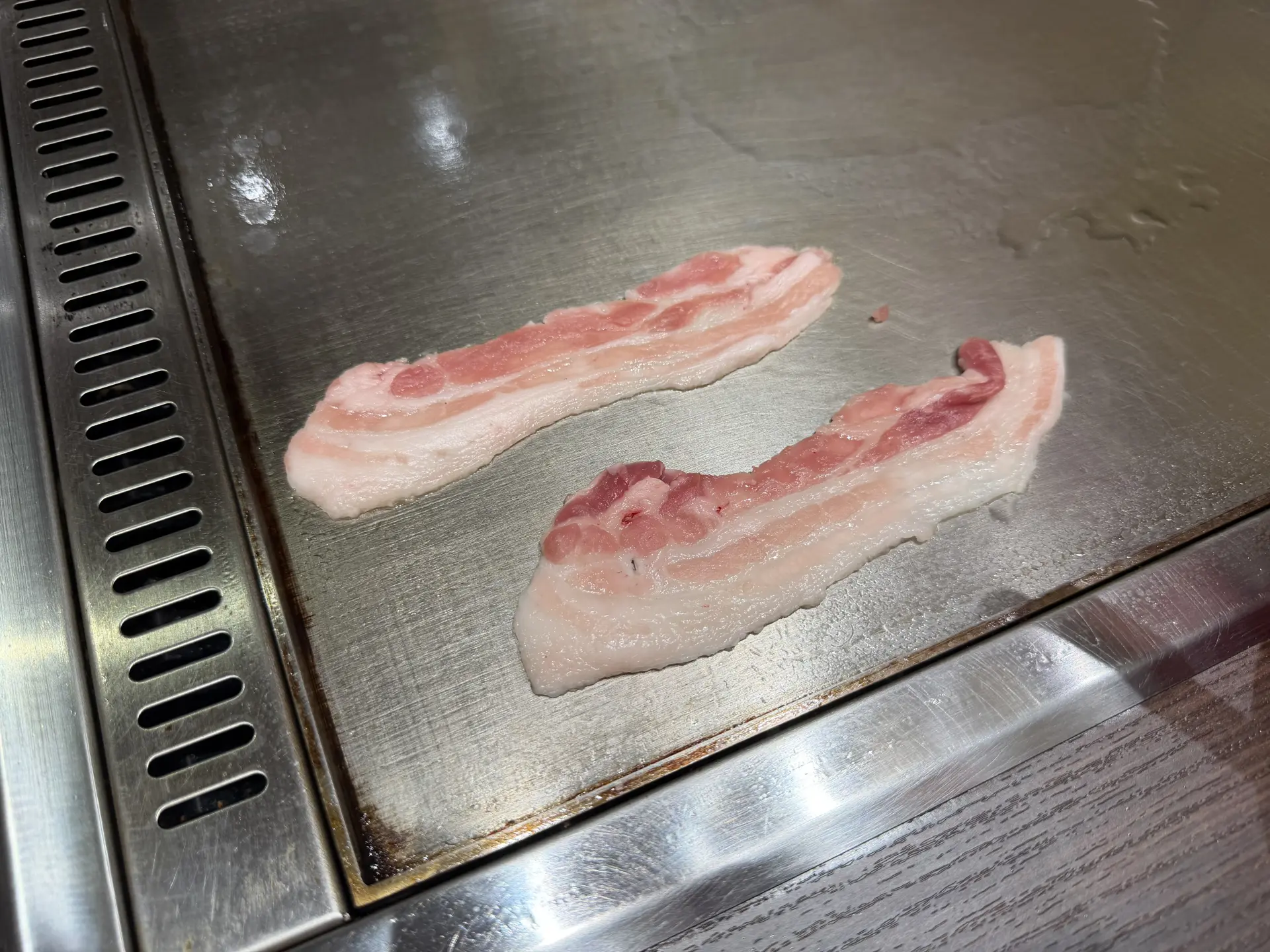
Start by cooking the pork belly in a corner of the griddle, where the heat is lower. Be careful not to overcook it! (I did.)
While the pork is cooking, thoroughly mix the ingredients in the bowl.
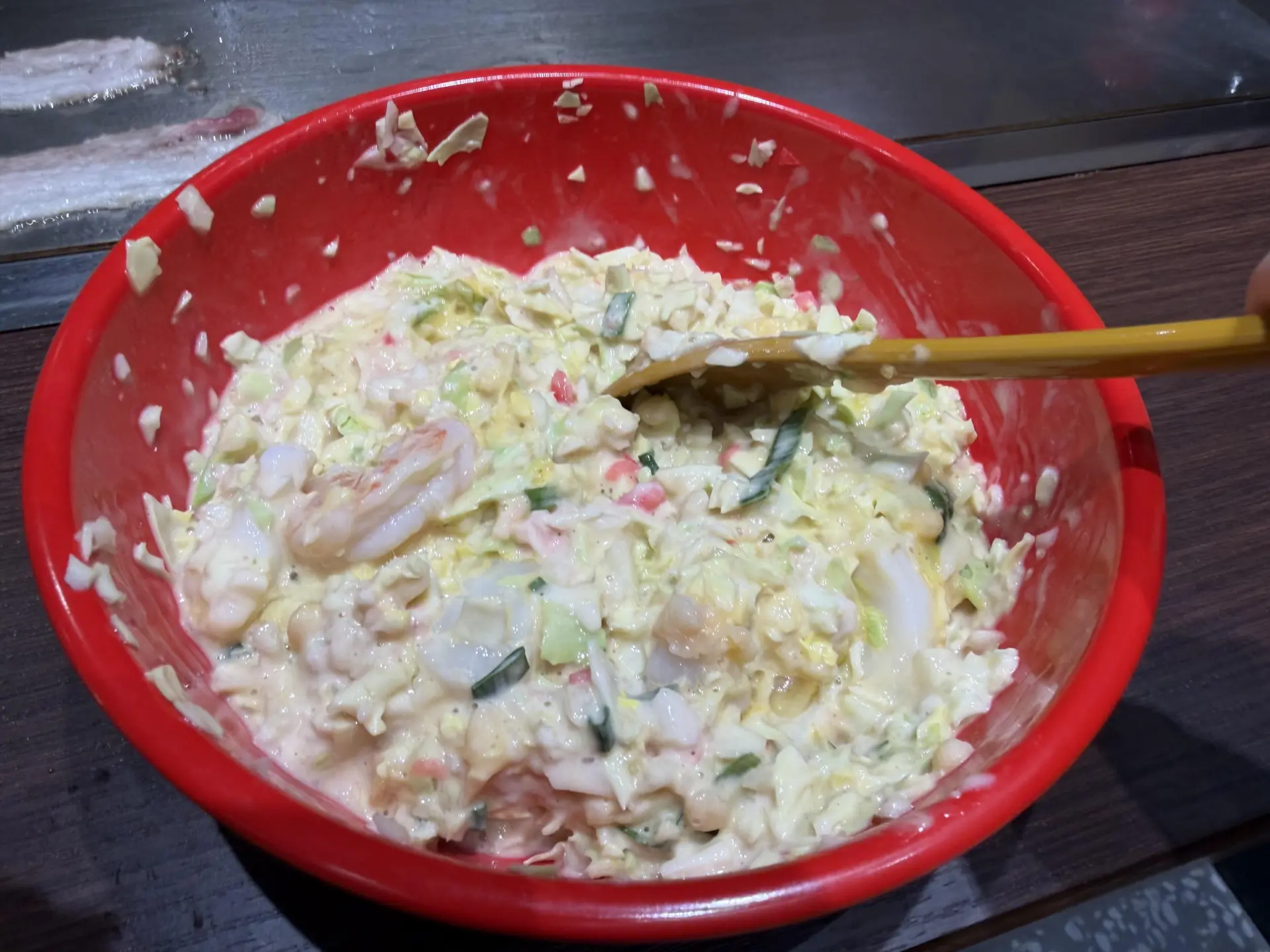
Mix until the ingredients and batter are evenly combined. Do not overmix until the batter becomes runny, or undermix so that the ingredients and batter remain separated.
Once everything is well mixed and the griddle is hot, place the batter on the griddle. Use a spoon to shape it into a circle.
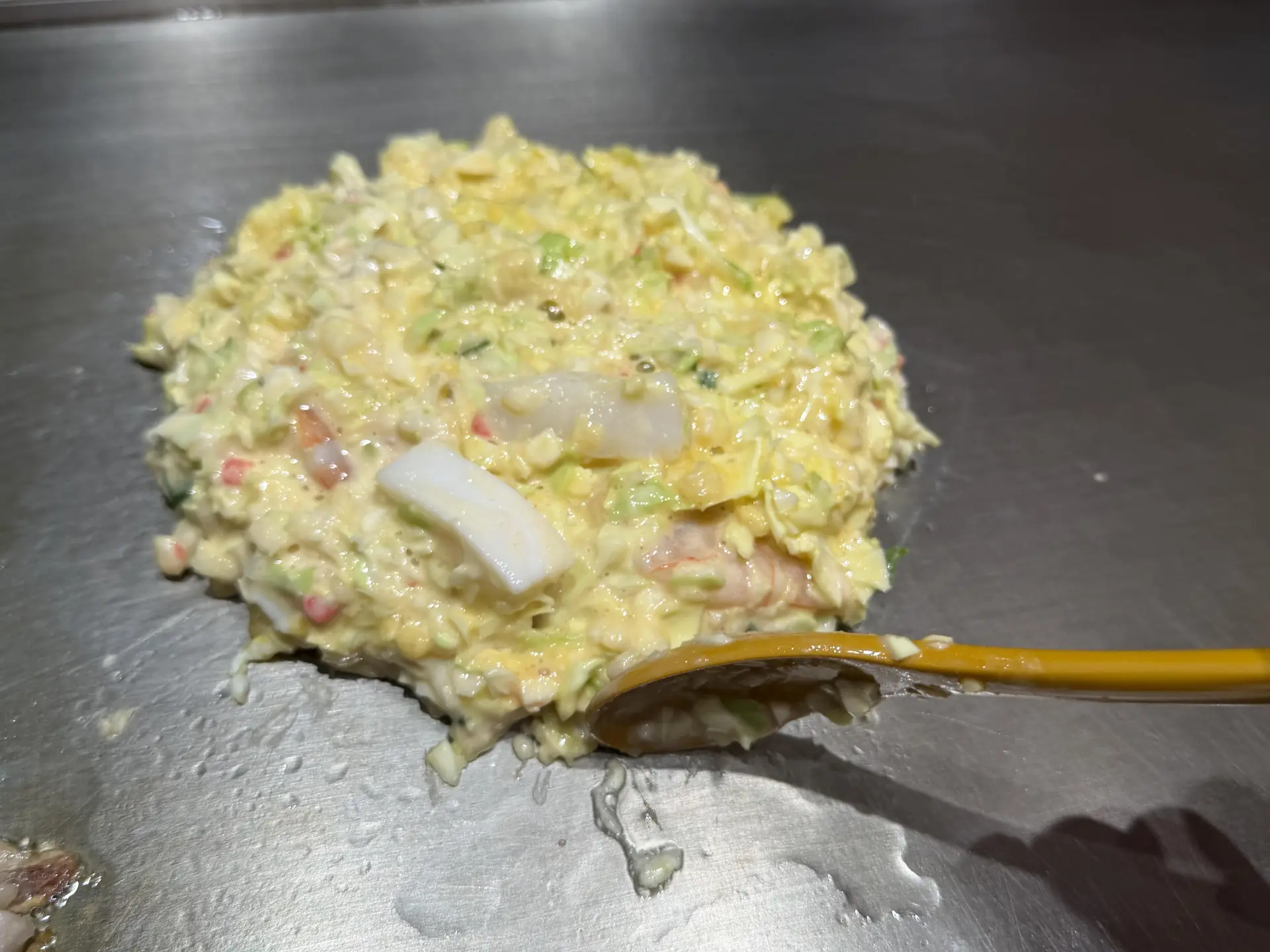
At this point, place the pork belly that was cooking in the corner on top of the batter, with the cooked side facing down.
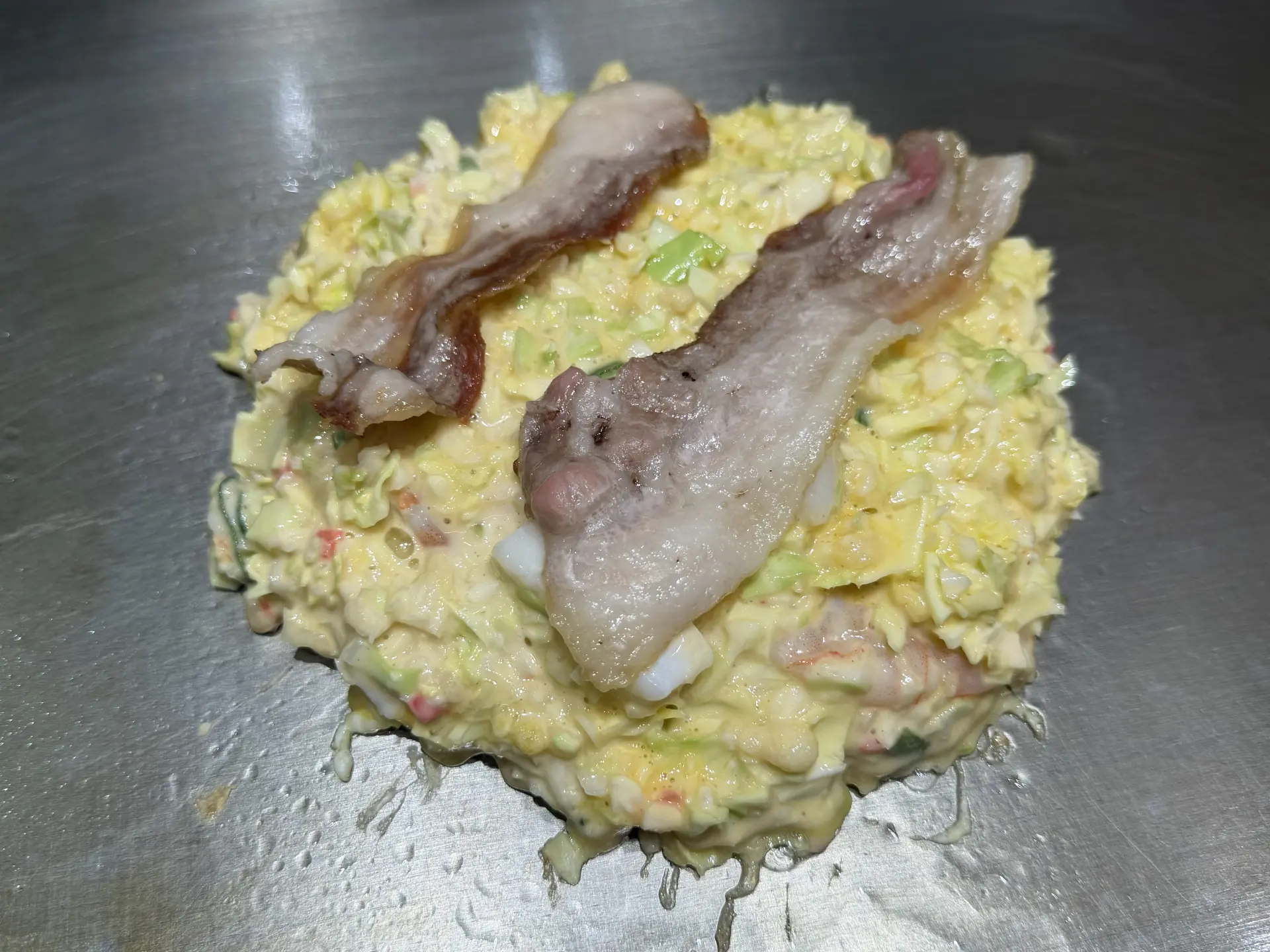
Leave it for 2 minutes before flipping it. Here is the key: after about 2 minutes, the edges of the batter will begin to dry. When they do, use 2 spatulas to flip the okonomiyaki in one swift motion. If the batter breaks or pieces of batter or ingredients spill out, use a spoon to reshape it.
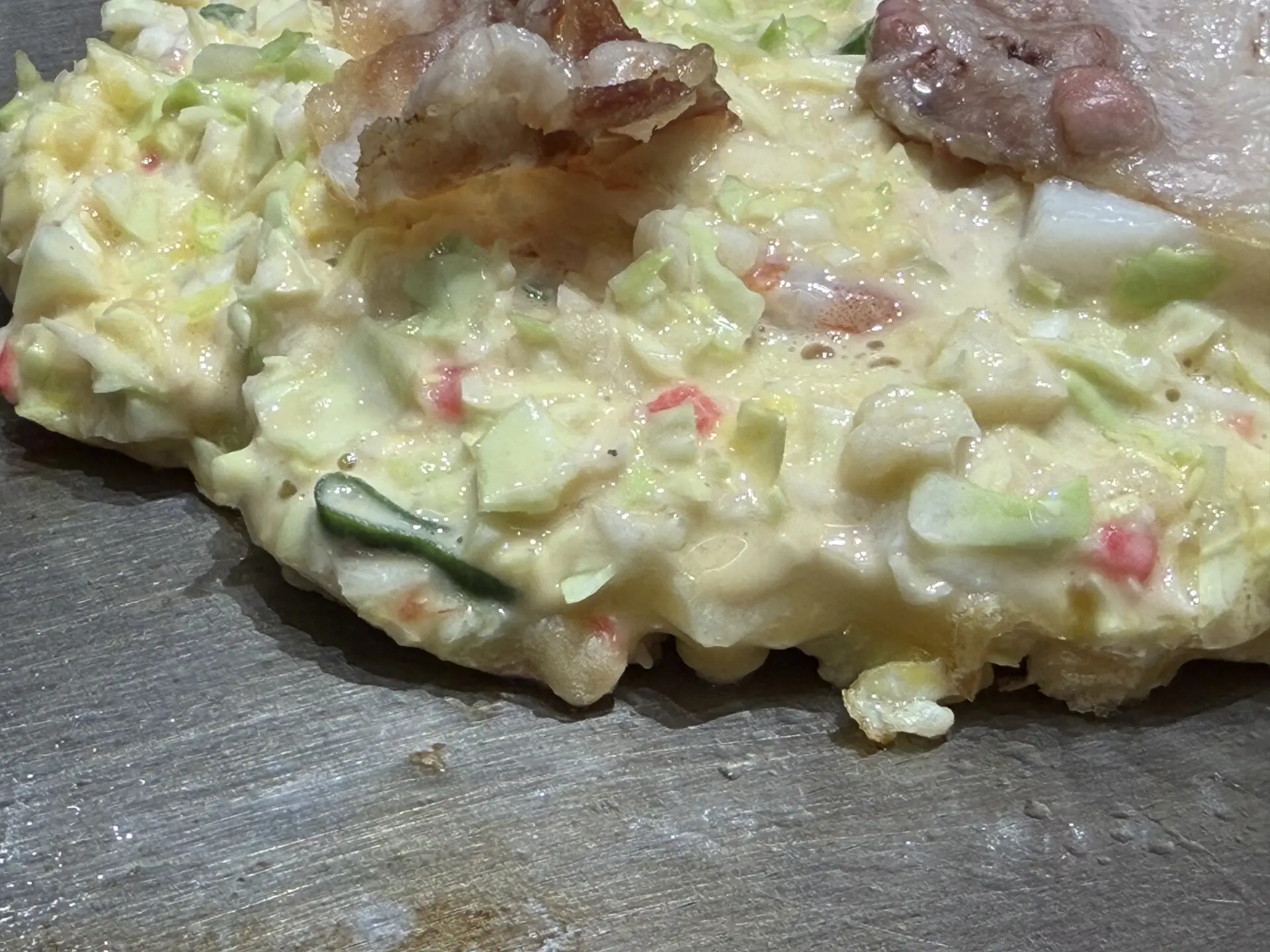
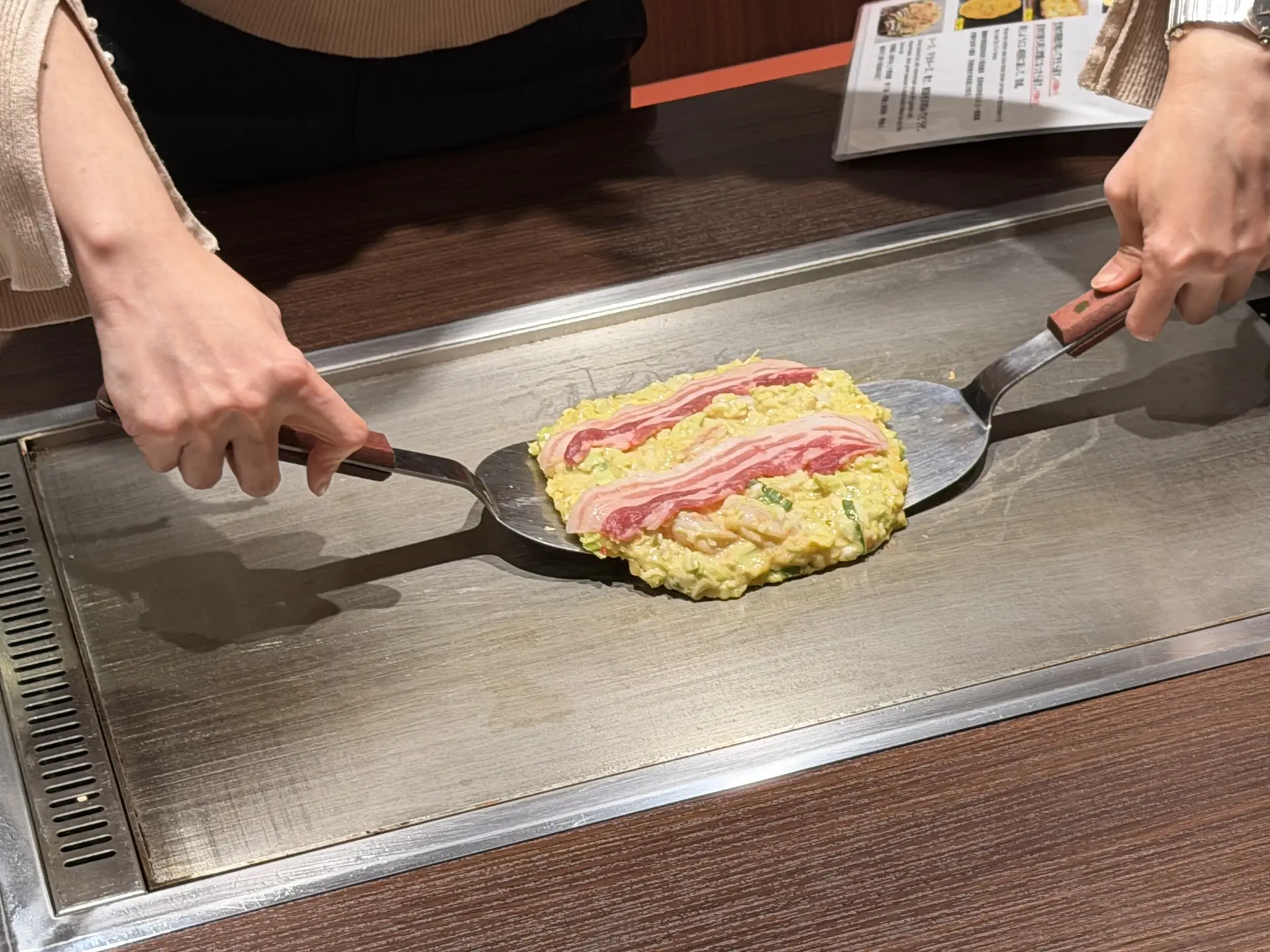
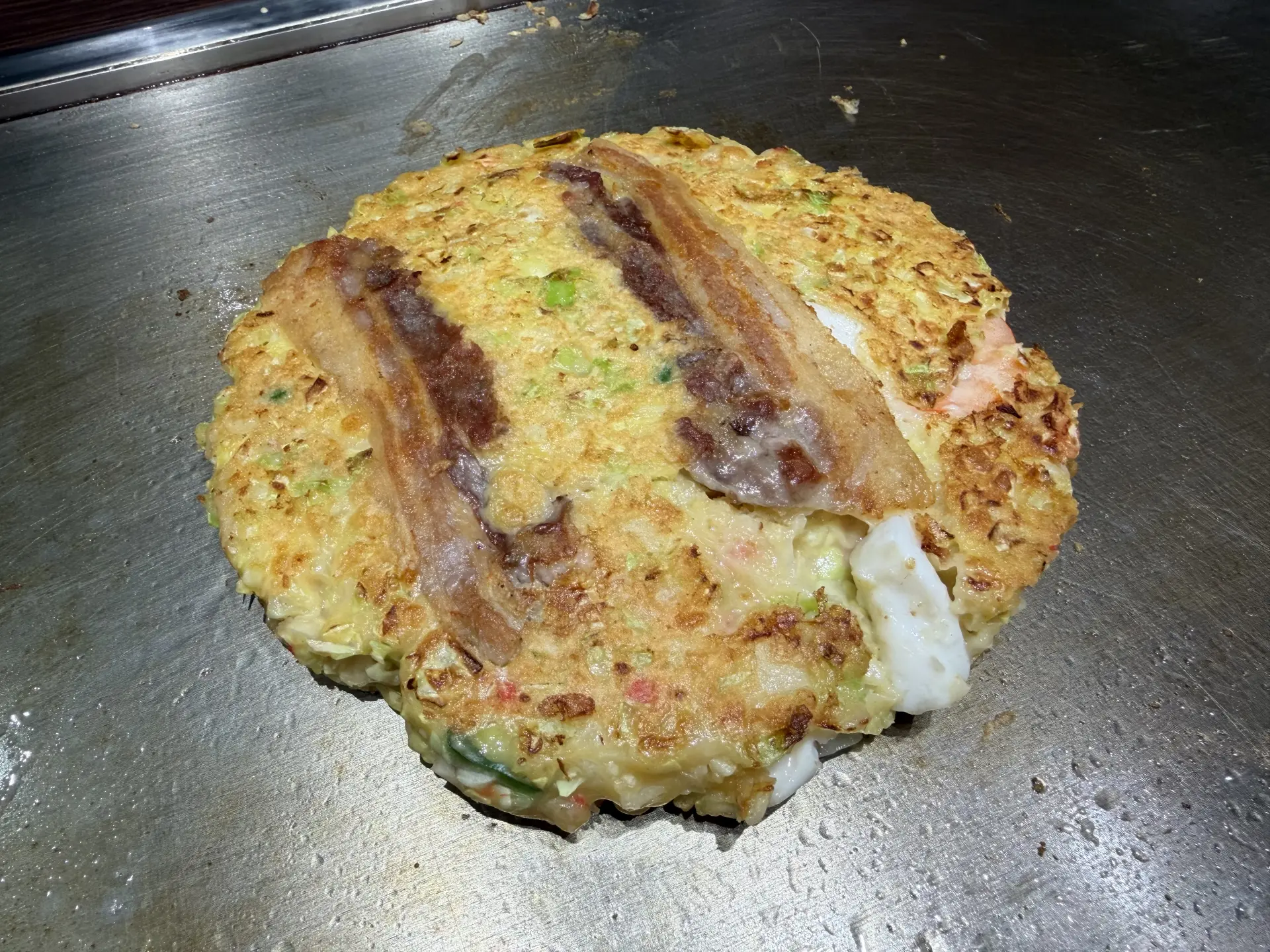
Cook the other side as well. After about 3 minutes, the edges of the batter will begin to dry. Flip it again with the spatulas. Repeat the same process until you have flipped it a total of 3 to 4 times, and it will be ready.
4. Finish with Sauce and Mayonnaise
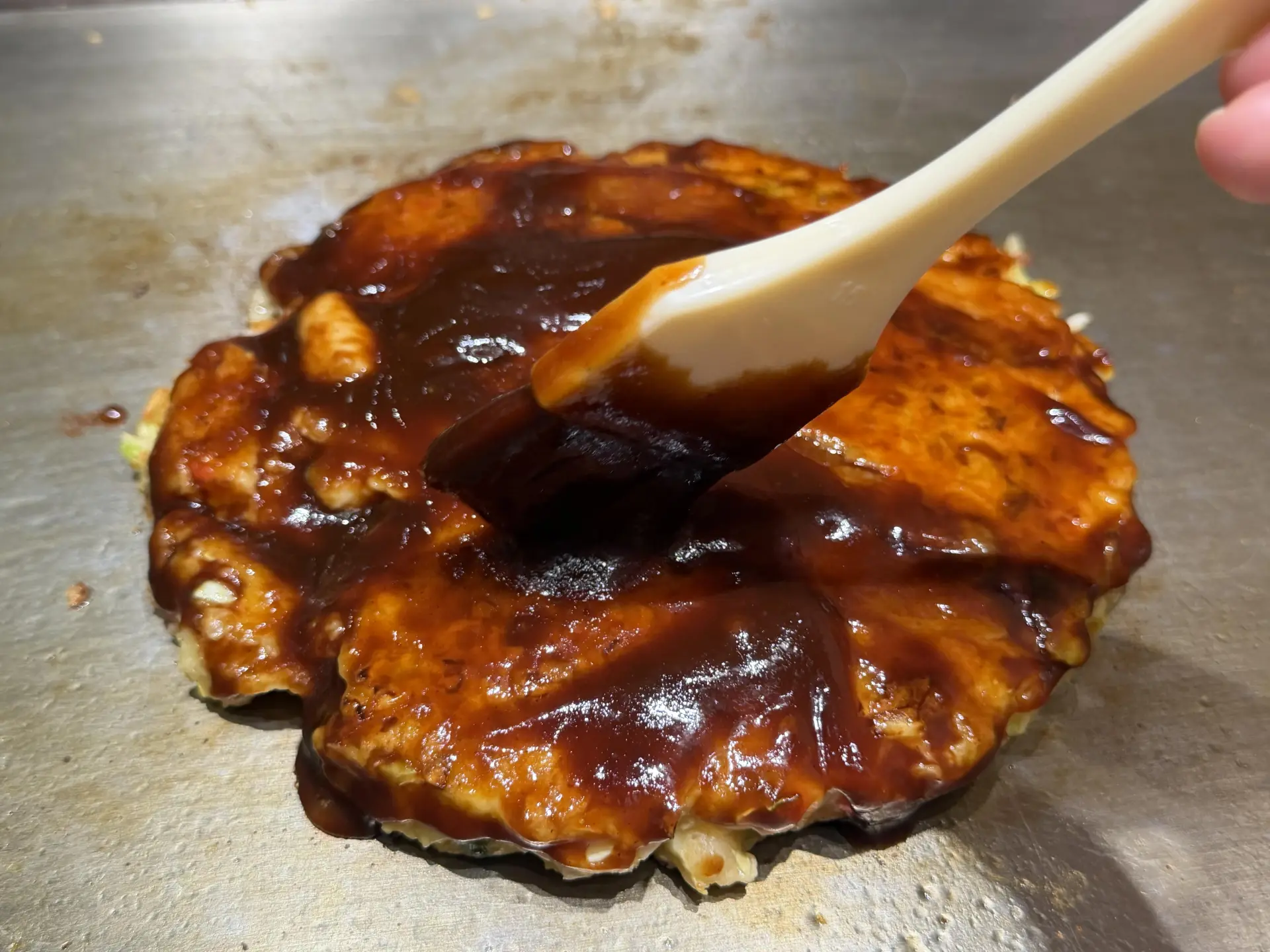
Use a brush to spread the special sauce over the cooked okonomiyaki. The key is to apply it generously.
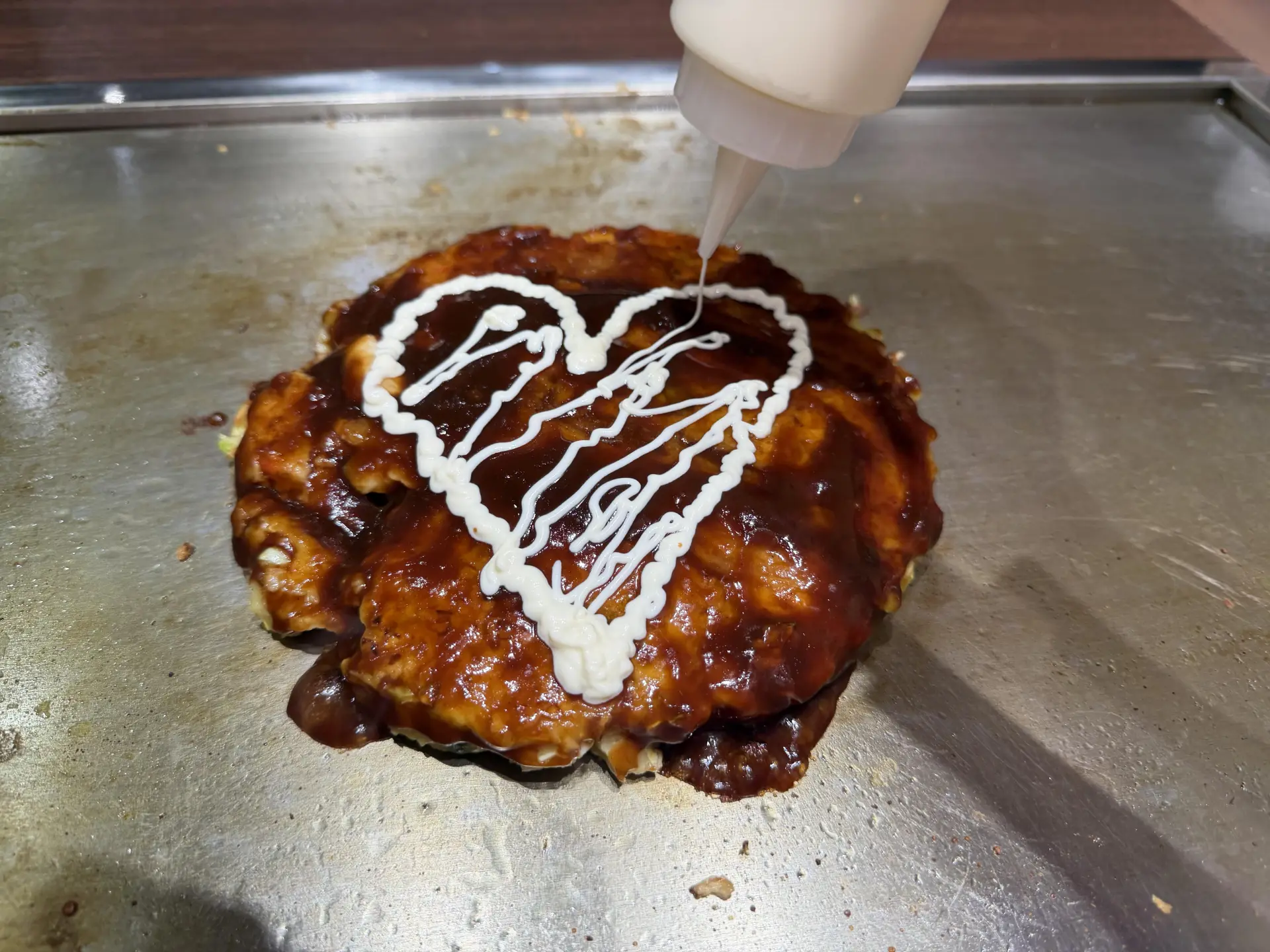
Next, finish it with mayonnaise. Draw a heart, write your name, or use the mayonnaise however you like to create your own “okonomiyaki art.”
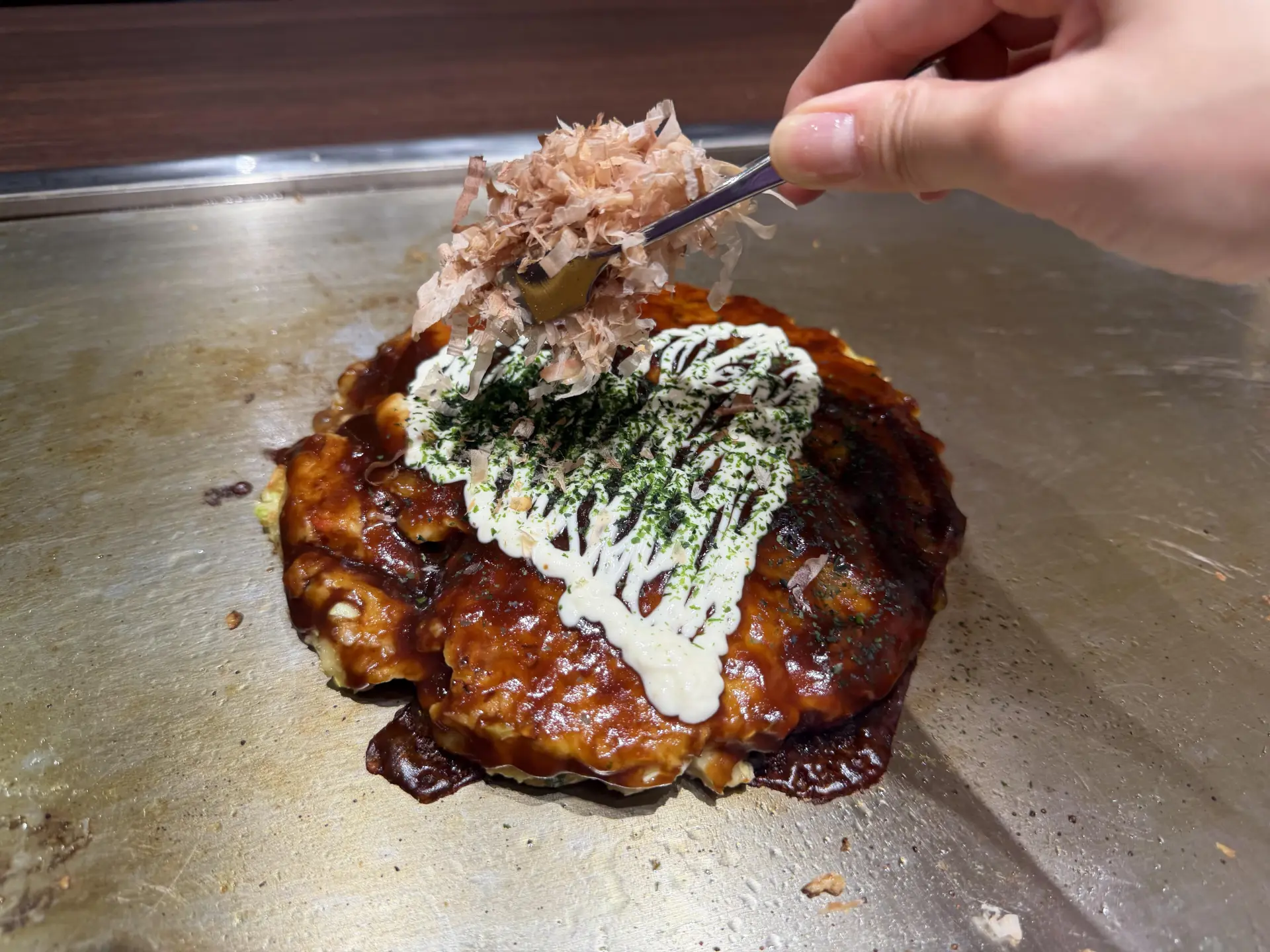
Add aonori seaweed and bonito flakes to taste, and it is complete.
Because the seaweed and bonito flakes will cover your “okonomiyaki art,” take a photo before adding them!
5. Taste Your Creation
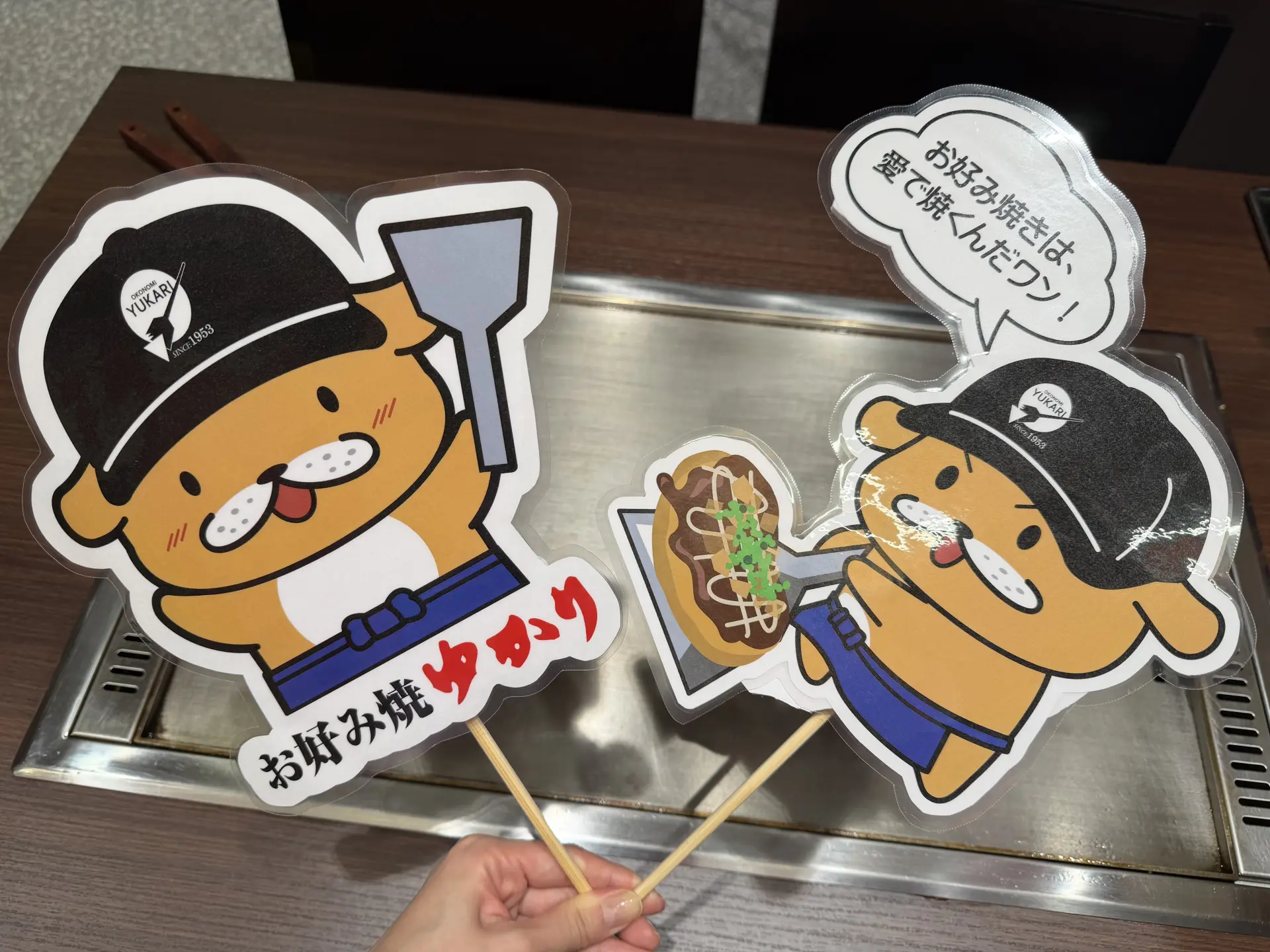
At last, the moment you have been waiting for! Your homemade okonomiyaki is ready. Enjoy it while chatting with friends about whether you may have cooked it a little too long or how well it turned out. Okonomiyaki you make yourself is sure to taste especially satisfying. I found the cabbage's sweetness and crisp texture irresistible. Incidentally, experienced diners cut the okonomiyaki on the griddle and eat it with a small spatula. However, it is extremely hot, so this is not particularly recommended. Spicy sauce, ichimi chili pepper, and other seasonings are available at the table. Try them to change the flavor and enjoy the dish in a new way. The restaurant also has photogenic props available to borrow. Be sure to take photos to preserve the memory of making your own okonomiyaki.
6. Receive a Certificate of Mastery
After the meal, you receive a Certificate of Mastery showing that you can now cook okonomiyaki on your own. It made me feel proud, as though I had become an okonomiyaki expert. You also receive a miniature spatula, so you can make okonomiyaki whenever you like after returning home.
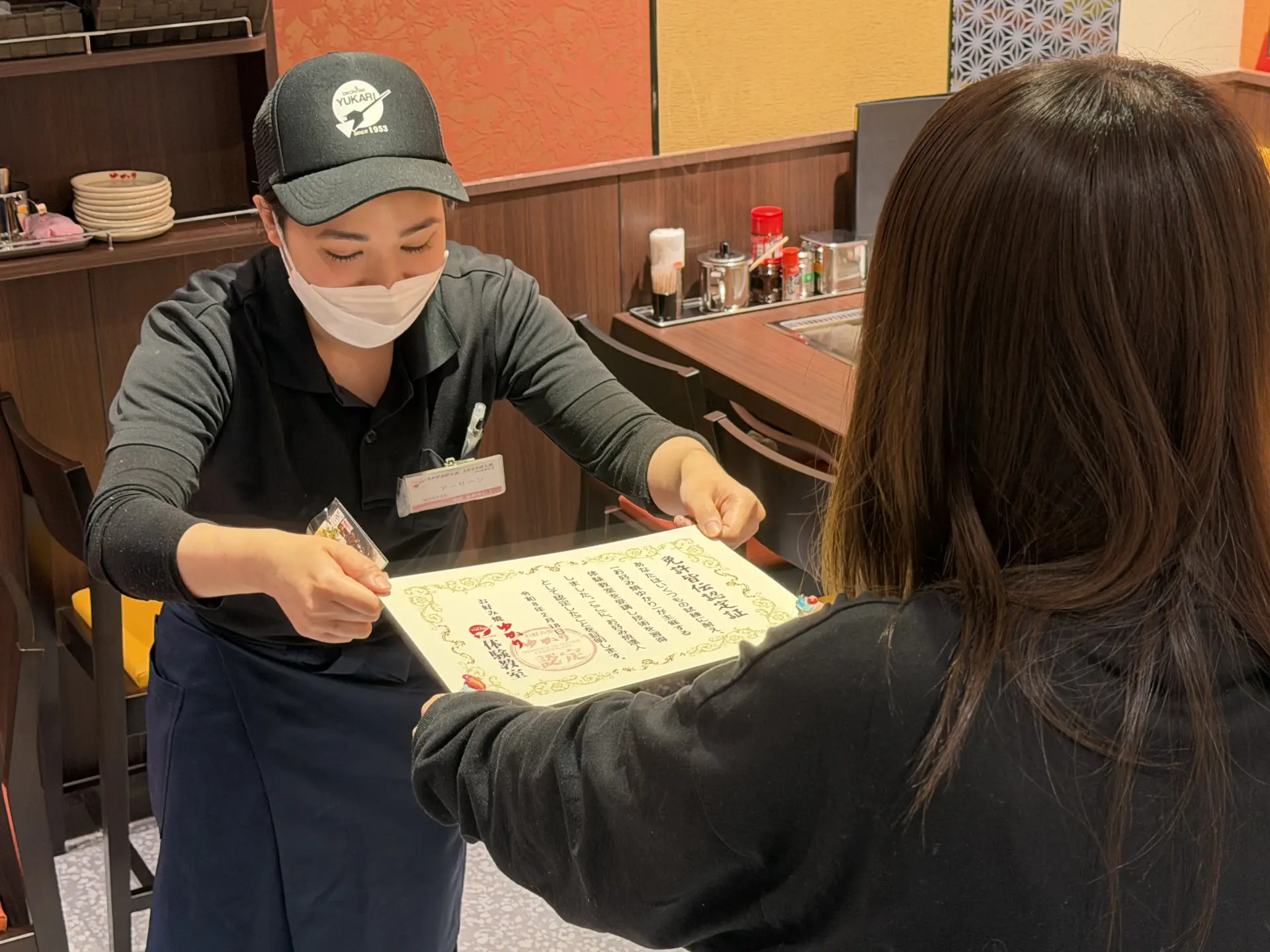
Thoughts on the Experience
The staff provided such careful instruction that even beginners and people who are not confident cooks can take part with peace of mind. If you have questions about doneness, flipping, or anything else, the professional okonomiyaki staff will help! Another convenient point is that you can participate without bringing anything. You also receive a cooking guide written in Japanese, English, and Simplified Chinese, so if you forget what to do, you can review the steps. This makes the class very welcoming for international visitors. Travel itineraries often become packed, but because you eat the finished okonomiyaki on the spot, the activity and meal are combined into approximately 100 minutes. It felt like an efficient use of time.
The class itself includes only the 1 Special Mixed Okonomiyaki you make, but you can place additional orders for staff-cooked okonomiyaki, yakisoba, and other dishes. It is interesting to compare your own okonomiyaki with one cooked by the staff. Mine was delicious, but the staff-made version was exceptionally fluffy and clearly reflected the skill of professionals who know exactly how to mix and cook it!
About the KITTE Osaka Location
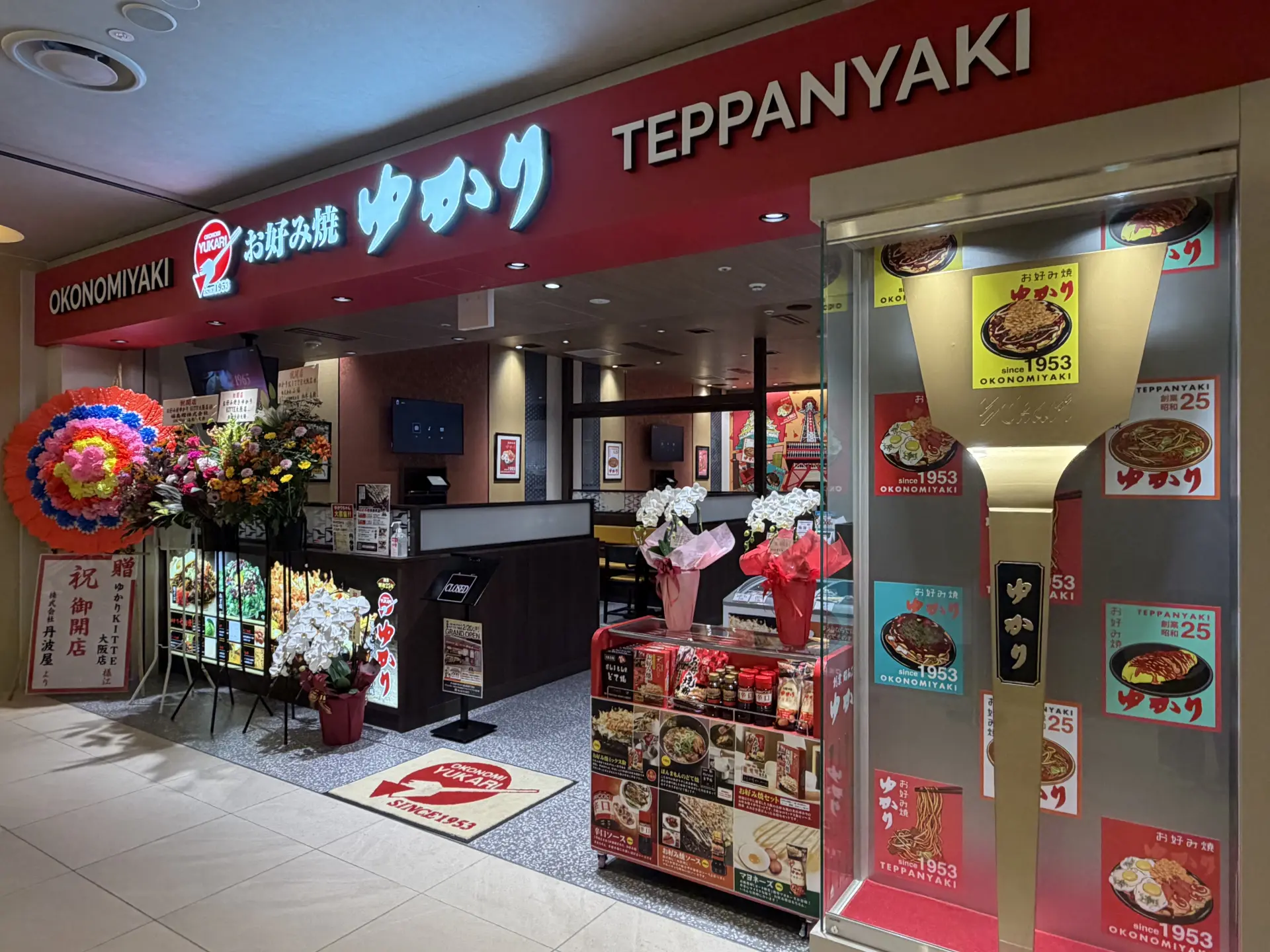
The KITTE Osaka location, where this experience took place, is a new restaurant that opened on February 20, 2026, inside KITTE Osaka, directly connected to JR Osaka Station.
As its name suggests, KITTE Osaka is a commercial complex located on the former site of the Osaka Central Post Office; “kitte” means postage stamp in Japanese. Each Okonomiyaki Yukari location offers its own original creative okonomiyaki, and the KITTE Osaka exclusive is the Nishi-Umeda-yaki.
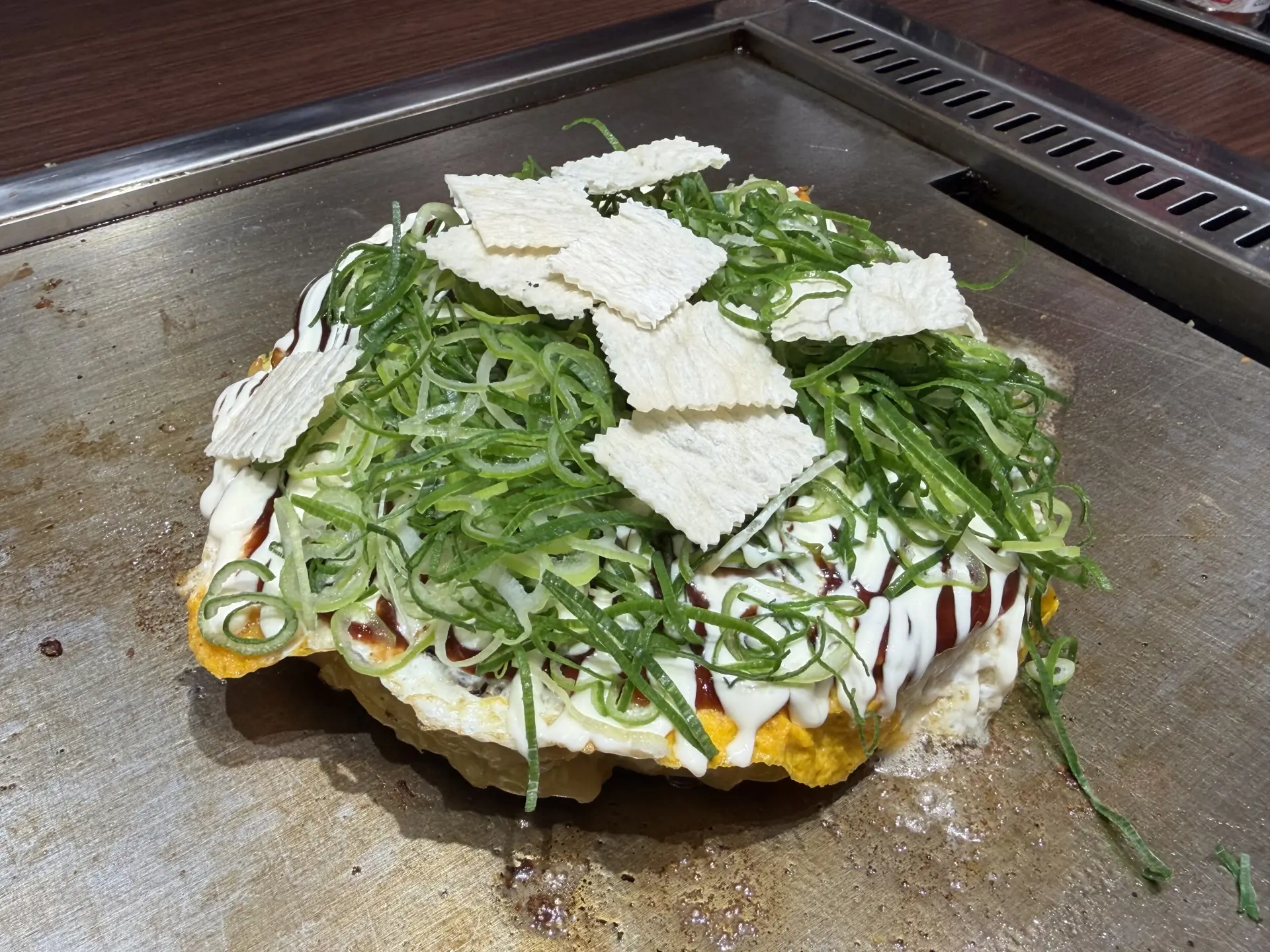
Its ingredients include sliced mochi, cod sheets, pork belly, squid, and shrimp. Look closely at the cod sheet and you will see that its edges are cut into serrations. It has a familiar shape fitting for okonomiyaki served at KITTE Osaka! Exclusive to this location, it is a dish that appeals in both appearance and flavor.
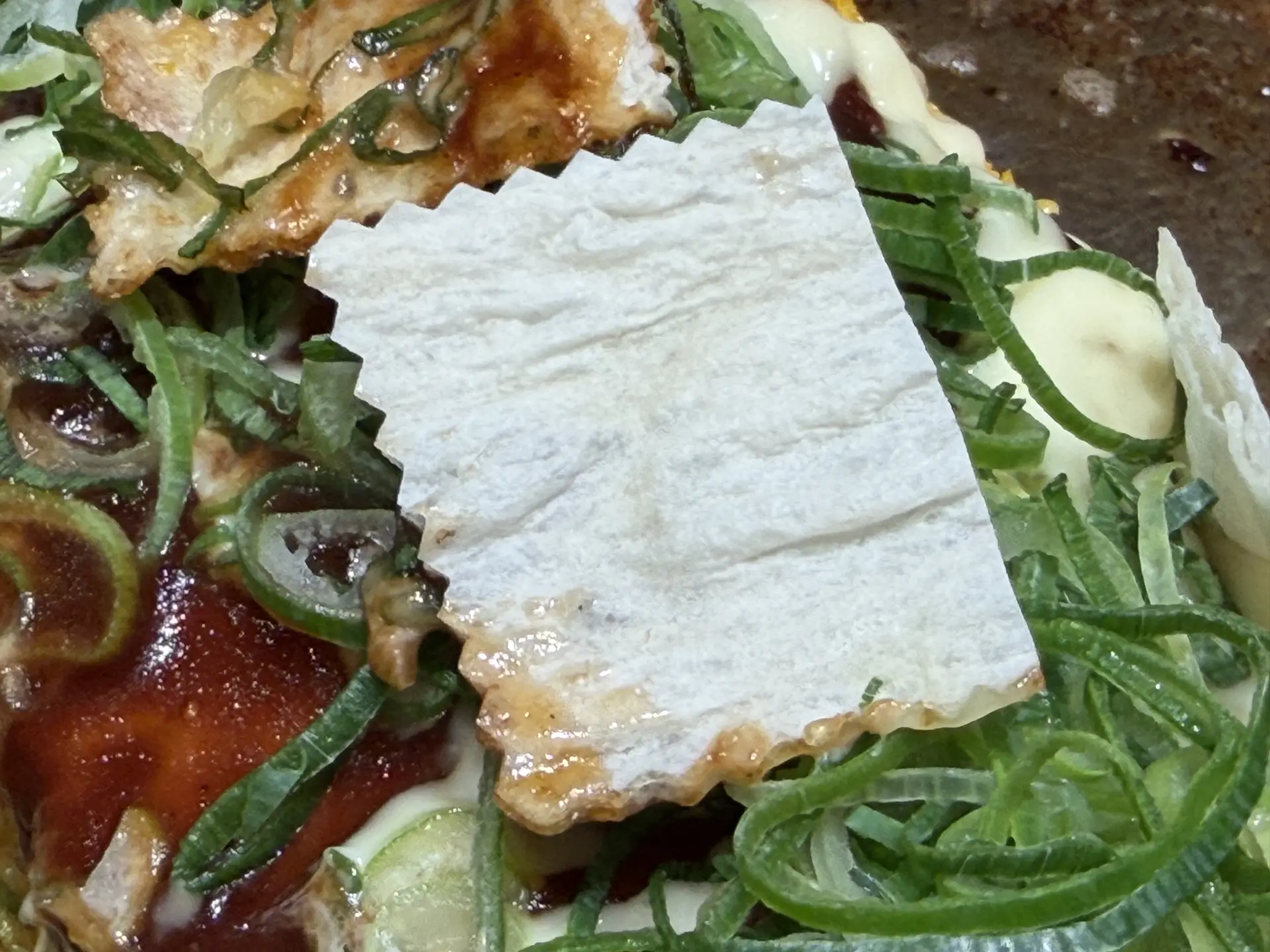
The okonomiyaki is finished right before your eyes, adding a lively sense of excitement. Personally, I found that the sliced mochi added a pleasant contrast in texture and made it especially delicious! I ate both the okonomiyaki I made and a Nishi-Umeda-yaki, and I was completely full. One may feel slightly insufficient on its own, so ordering several to share with friends seems like a good idea.
The KITTE Osaka location also has a photogenic spot near the entrance: the Golden Spatula. Take a commemorative Osaka photo in front of this enormous golden spatula, which is taller than an adult!
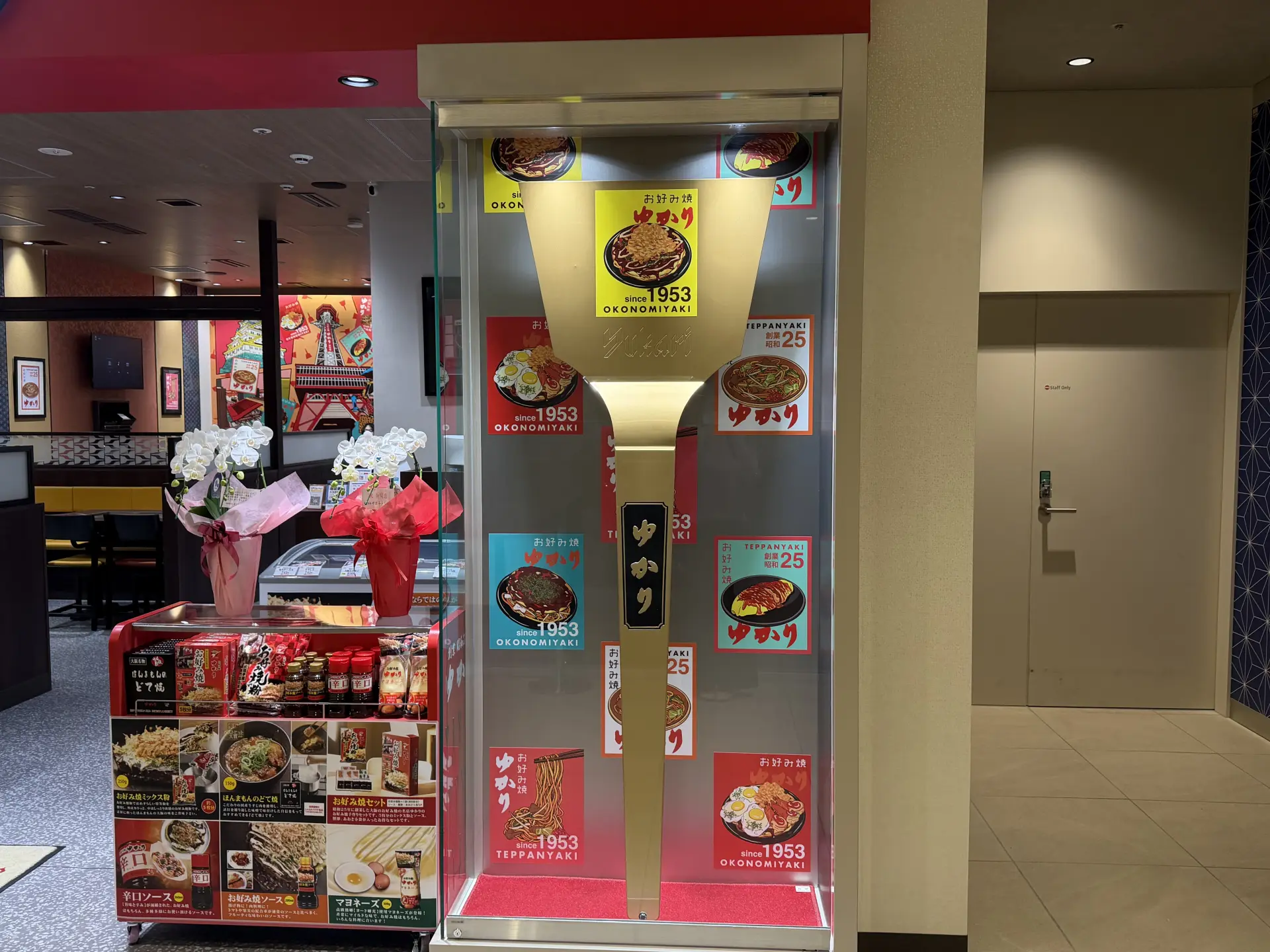
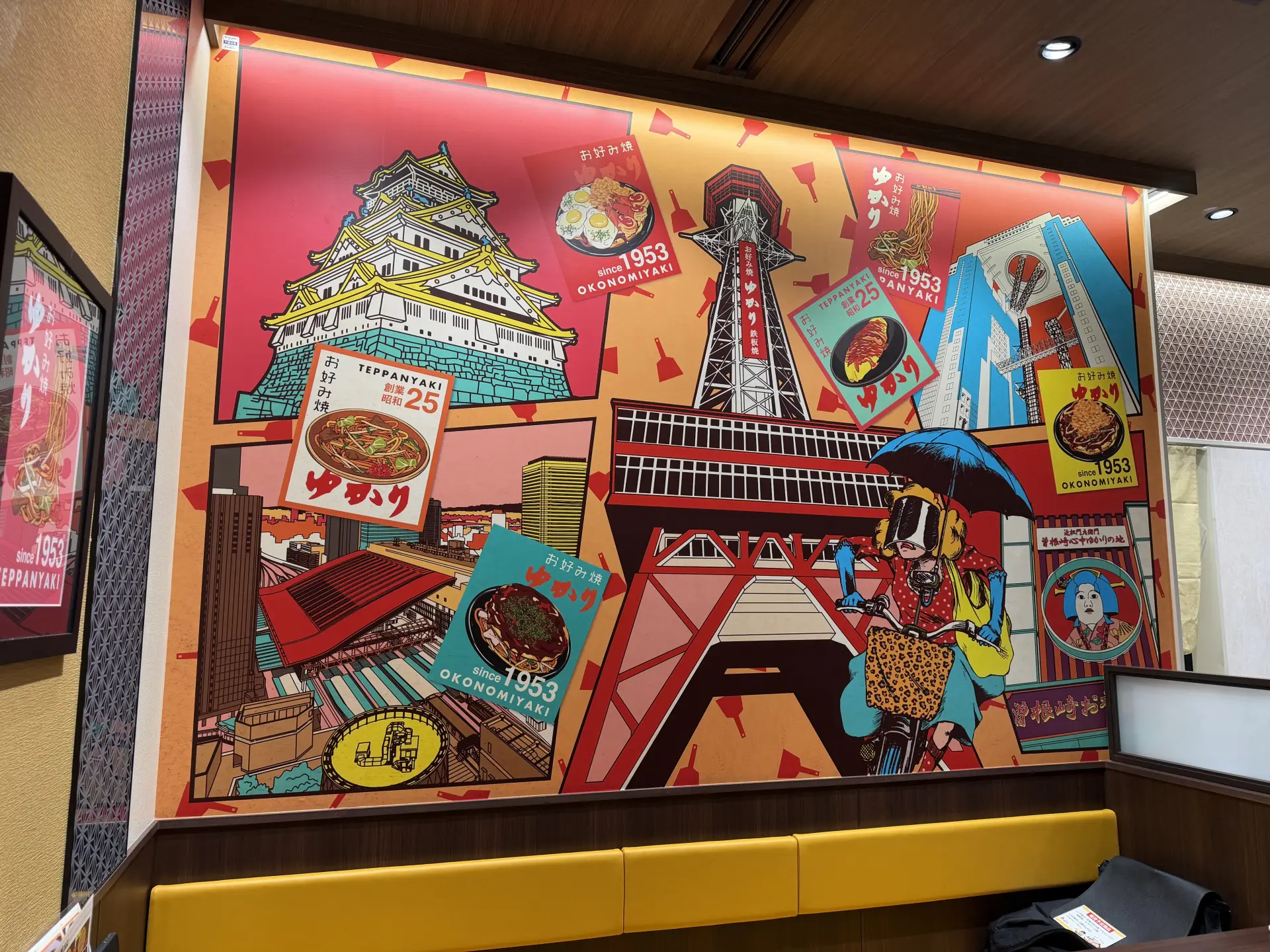
The interior walls feature Osaka icons such as Tsutenkaku Tower, Osaka Castle, and Osaka aunties, providing plenty of photo opportunities.
The KITTE Osaka location has many promotional products, and souvenirs can also be purchased here.
Summary
Okonomiyaki is a defining part of Osaka's flour-based food culture and a dish dearly loved by the city's residents.
It may look like a simple dish made by mixing ingredients and cooking them, but making it myself revealed its surprising depth. There are important techniques for mixing, and judging the doneness and timing each flip was more difficult than expected. Okonomiyaki made by a professional is unquestionably delicious. But if you are visiting Osaka, try making it yourself and experience the city's flour-based food culture firsthand!

Author
Freelance Announcer
Sayaka Motomura
Focused on sharing insights related to traditional culture, performing arts, and history.