

Kinosaki Onsen Travel Guide: Walk to All 7 Public Bathhouses and Enjoy the Charming Streets
With a 1,300-year history, Kinosaki Onsen is a beautiful, atmospheric hot spring town—and its biggest draw is hopping between seven public bathhouses.
The town was designed around the idea that “the station is your entrance,” “the streets are the hallways,” “the inns are your guest rooms,” and “the public baths are the grand baths.” Walk around in a yukata, and you’ll feel as if the entire town is welcoming you as one big ryokan.
You’ll also find plenty of great food, including Matsuba crab and Tajima beef.
Let’s take a look at Kinosaki Onsen’s seven public bathhouses, plus top sights, food, and places to stay for a relaxed, luxurious getaway.
The Hot Spring Town of Kinosaki Onsen, Full of Charm and History
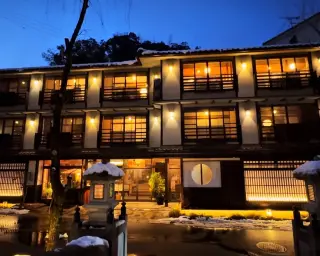
Kinosaki Onsen is a hot spring town where historic buildings—registered as Tangible Cultural Properties of Japan—are scattered throughout, creating a nostalgic atmosphere.
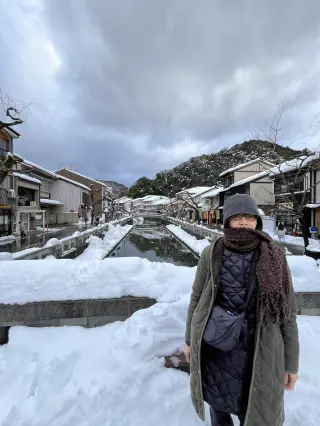
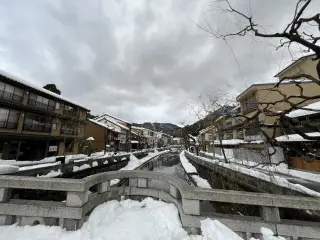
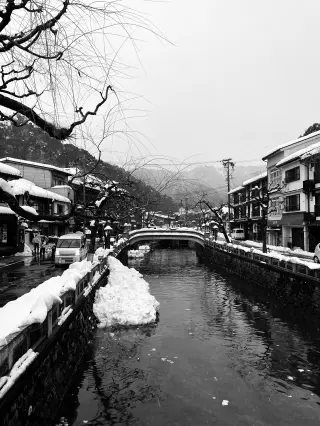
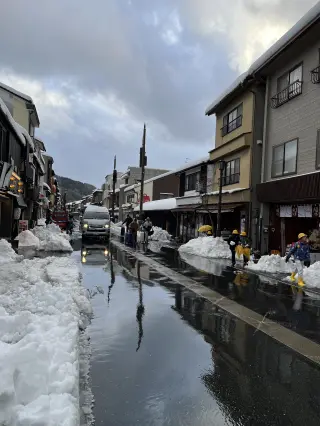
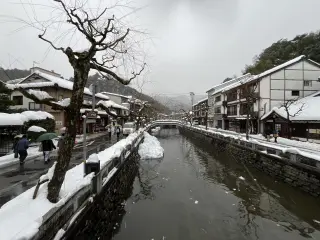
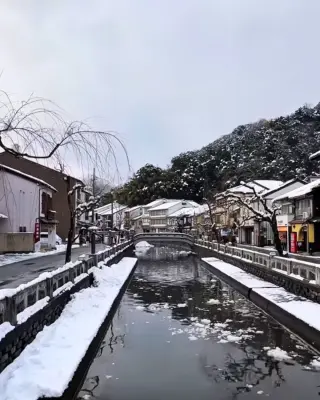
Another draw is the picturesque streets: in winter, snow piles up on the historic buildings, and in spring, countless cherry blossoms bloom in full glory.
Known for its “sotoyu hopping” (visiting seven public bathhouses), Kinosaki Onsen is said to have a proper look: a yukata robe and wooden geta sandals—and yukata are also provided for walking around the town.
Stroll in a yukata along the willow-lined streets and the scenic Otani River, and you can fully soak in classic Japanese charm.
Kinosaki Onsen’s spring quality is a sodium-calcium chloride spring, said to help with neuralgia and fatigue recovery.
It’s also known for its moisturizing properties and is expected to have skin-beautifying benefits.
Of course, Kinosaki Onsen’s appeal isn’t just its charming streets and hot springs.
Any time of year, you can enjoy delicious local food, including sweet, rich-tasting Matsuba crab and Tajima beef (a Japanese Black wagyu from Hyogo Prefecture).
It has also earned two stars in the Michelin Green Guide Japan, ranked No. 1 in the “Onsen General Election 2016 (Inbound Category),” and placed 8th in “Japan’s Top 100 Hot Springs (34th edition),” highlighting its popularity and abundant appeal.

Access to Kinosaki Onsen
The nearest station to Kinosaki Onsen is JR Kinosaki Onsen Station, and the hot spring town is Approx. a 4-minute walk away.
Buses to each ryokan also run from the station.
Here’s how to get there from major transport hubs—Tokyo, Nagoya, and Osaka—so please use this as a reference.
Access from Tokyo
From Tokyo to Kinosaki Onsen: 4 hours 40 minutes.
From Tokyo Station, take the JR Shinkansen Nozomi to Kyoto Station.
Transfer to the Limited Express Kinosaki, and you’ll arrive at Kinosaki Onsen Station in Approx. 2 hours 20 minutes.
Access from Osaka
From Osaka to Kinosaki Onsen: 2 hours 40 minutes.
From Osaka Station, you can reach Kinosaki Onsen Station directly on the Limited Express Kounotori, with no transfers.
Access from Nagoya
From Nagoya Station to Kinosaki Onsen Station: 3 hours.
From Nagoya Station, take the Tokaido Shinkansen to Kyoto Station.
Transfer to the Limited Express Kinosaki, and you’ll arrive at Kinosaki Onsen Station in Approx. 2 hours 20 minutes.
Receive Blessings from the Gods! Kinosaki Onsen’s 7 Public Bathhouses You Can Enjoy on a Day Trip
Kinosaki Onsen has seven public bathhouses.
“Sotoyu” refers to public bathhouses outside (day-use bathing facilities), while “uchiyu” refers to the baths inside ryokan.
Each sotoyu in Kinosaki Onsen is said to offer different blessings.
Visiting them while enjoying each bath’s unique appeal—and receiving blessings from the gods—is one of Kinosaki Onsen’s signature experiences.
Public bathhouses do not provide free towels, and you’ll need to rent or purchase them.
If you stay at a ryokan in Kinosaki Onsen, towels are provided by the ryokan, but if you want to enjoy Kinosaki Onsen as a day trip, bring a face towel and bath towel.
For day-trip sotoyu hopping, it’s recommended to buy the “Yumepa” pass, which lets you enter all seven public bathhouses for 1,200 yen.
Here are the features and blessings of Kinosaki Onsen’s “seven public bathhouses” to help you fully enjoy sotoyu hopping, whether you’re staying overnight or visiting for the day.
1. Ichino-yu: Open Your Luck and Invite Good Fortune
Located near the center of the hot spring town, Ichino-yu is a symbolic presence in Kinosaki.
Its highlight is the cave bath, where soaking surrounded by natural rock surfaces feels truly blissful.
In the mid-Edo period, Ichino-yu was called Arayu (“New Bath”), but in Ippondo Yakusen, written by the renowned doctor Kagawa Shūtoku, it was described as “Kinosaki’s New Bath is the best in the land.”
Praised as the best hot spring, Arayu was later renamed Ichino-yu.
Known as a bath for good luck and fortune, it’s said to bring blessings such as traffic safety and success in exams.

- Hours
- 7:00am–11:00pm
- Closed on
- Wednesday
- Admission
-
, Adults: 800 yen
, Children: 400 yen
2. Goshono-yu: Beauty Bath? A Bath with Imperial Connections
Goshono-yu stands out for its beautiful building.
It was named after its connection to Emperor Go-Horikawa, who appears in the historical tale Masukagami from the Nanboku-cho period.
Soaking in the open-air bath while looking at the powerful waterfall flowing through the outdoor area is truly soothing.
Also known as a “bath for good relationships and beauty,” it’s especially popular with women.

- Hours
- 7:00am–11:00pm
- Closed on
- Thursday
- Admission
-
, Adults: 800 yen
, Children: 400 yen
3. Mandara-yu: Blessings for Better Fortune with Money
There’s a legend that the monk Dochi Shonin chanted sutras for 1,000 days, and when his wish was fulfilled, a sacred hot spring welled up—marking the beginning of Kinosaki Onsen. Because of that Buddhist connection, it was named Mandara-yu.
Also called the “one wish in a lifetime” bath, it’s said to bring blessings for prosperous business and a bountiful harvest.

- Hours
- 3:00pm–11:00pm
- Closed on
- Wednesday
- Admission
-
, Adults: 800 yen
, Children: 400 yen
4. Jizo-yu: Blessings for Family Safety
Jizo-yu features a simple, modern exterior.
It’s said to have gotten its name because a Jizo statue emerged from the spring source here.
The Jizo that gave the bath its name is enshrined in the courtyard.
In addition to a large bath, the second floor also has family baths and a spacious lounge, making it ideal for families to relax.
As a bath said to bring salvation to all living beings, it offers blessings for family safety.

- Hours
- 7:00am–11:00pm
- Closed on
- Friday
- Admission
-
, Adults: 800 yen
, Children: 400 yen
5. Kouno-yu: For a Happy Marriage
Loved by many, Kouno-yu is especially popular for its garden open-air bath.
There’s a legend that a stork with an injured leg was healing there—and when people looked closely, they found hot spring water bubbling up.
Another story says a pair of storks healed their injured legs here, and Kouno-yu is said to bring blessings for a happy marriage.

- Hours
- 7:00am–11:00pm
- Closed on
- Tuesday
- Admission
-
, Adults: 800 yen
, Children: 400 yen
6. Yanagi-yu: Blessings for Safe Childbirth and Fertility
Though it’s the smallest of the public bathhouses, it has a charming atmosphere.
The deep bath with hotter water and the warmth of the wooden bathhouse make it deeply relaxing.
It was named Yanagi-yu because a willow tree was transplanted from West Lake, a famous scenic spot in China, and hot spring water began to well up beneath it—bringing blessings for safe childbirth and fertility.

- Hours
- 3:00pm–11:00pm
- Closed on
- Thursday
- Admission
-
, Adults: 800 yen
, Children: 400 yen
7. Satono-yu: Enjoy Natural Scenery
Satono-yu is the newest public bathhouse in Kinosaki Onsen.
It features both an exotic Western-style bath and a Japanese-style bath, plus a dry sauna, mist sauna, and a warmly heated room with an aromatic scent—well-equipped all around.
From the open-air bath overlooking the Maruyama River, you may even spot the Oriental stork, a Special Natural Monument of Japan.

- Hours
- 1:00pm–11:00pm
- Closed on
- Monday
- Admission
-
, Adults: 900 yen
, Children: 450 yen
A Town Rich in Tradition and Literature! 3 Top Things to See in Kinosaki Onsen
There’s more to Kinosaki Onsen than hopping between seven public bathhouses.
You’ll also find places to experience traditional culture and breathtaking scenic spots shaped by nature—plenty to see and do.
Here are three must-see highlights to help you fully enjoy Kinosaki Onsen.
1. Kinosaki Ropeway
At the Kinosaki Ropeway, you can enjoy an Approx. 7-minute ride up to the summit of Mt. Daishiyama (231 m above sea level).
From the mountaintop observation deck, you’ll get sweeping views of Kinosaki’s townscape and the Sea of Japan.
At the cafe terrace, sip delicious coffee and take in the area’s lush natural scenery—quite a different charm from the hot spring town.
You can also try “kawara nage,” a ritual where you toss and break unglazed pottery plates to ward off bad luck.


2. Kinosaki Straw Craft Museum
At the Straw Craft Museum, more than 200 works are on display, including pieces by modern artisans and works from the Edo period through the Showa era.
Straw craft is a traditional art made using barley straw to create intricate designs on paulownia boxes and shikishi boards, and it has been designated an Intangible Cultural Property—making it a rare and valuable art form.
The beautiful building itself—featuring a white-walled earthen storehouse preserved as-is—is also one of the highlights.

3. Kinosaki Literary Museum
The Kinosaki Literary Museum features exhibits on writers connected to Kinosaki Onsen.
It includes permanent exhibitions introducing the relationship between Kinosaki Onsen and the writers who shaped modern literature alongside novelist Naoya Shiga, as well as exhibit corners that explain the history of Kinosaki Onsen.
There’s also a footbath beside the entrance, making it a very Kinosaki-style spot where you can enjoy literature while having fun.
Because so many writers have visited, Kinosaki Onsen is also known as a “town of literature.”

Enjoy Great Food, Too! 3 Recommended Ryokan in Kinosaki Onsen
Popular as a travel destination, Kinosaki Onsen has many accommodation options, from reasonably priced hotels to historic luxury hotels.
Among them, here are three places to stay where you can fully enjoy Kinosaki Onsen’s food scene.
1. Kawaguchiya Kinosaki Riverside Hotel
A riverside hotel nestled along the Otani River that runs through Kinosaki Onsen.
Fill up on seasonal Tajima specialties, then unwind in the scenic open-air bath with a view.
Another nice perk: the yukata rental corner lets you choose your favorite yukata and accessories from a wide range of designs.
Head out in your chosen look to enjoy sotoyu hopping and a stroll through the hot spring town.

2. Kinosaki Onsen Shinonome-so
A ryokan in Kinosaki Onsen, one of Japan’s leading hot spring destinations, said to have Approx. 1,400 years of history and tradition.
Its Japanese-style, three-story wooden design matches the charming townscape, and it consists of two buildings: the main building and an annex.
The star of its cuisine is, of course, crab. From spring to fall it serves Kasumi crab, and in winter it serves Matsuba crab, so you can enjoy exquisite locally landed flavors throughout the year.

3. Kinosaki Onsen Tokiwa Bekkan
Kinosaki Onsen is a charming hot spring town with over 1,300 years of history.
Kinosaki Onsen Tokiwa Bekkan sits quietly a short distance from the bustle of the onsen town. A ryokan that originally stood in the town was moved to its current location and renewed into a relaxing space surrounded by gardens.
With only 23 rooms on a 1,200-tsubo property, you can enjoy Kinosaki’s waters at an unhurried pace in a spacious setting.

Must-Try Eats! 3 Kinosaki Onsen Food Picks
When it comes to Kinosaki Onsen food, you can’t miss the brand wagyu Tajima beef and Matsuba crab.
Beyond that, the area is packed with local specialties—like famous soba and dishes made with generous amounts of fresh seafood—too many to count.
Here are must-try foods in Kinosaki Onsen, along with restaurants where you can enjoy them.
1. Tsuiyama Crab
Matsuba crab is the brand name for snow crab (male) caught in the San’in region, and it’s considered the gold standard of premium snow crab.
Among them, Tsuiyama crab is an even rarer, more luxurious brand, landed at Kinosaki Tsuiyama Fishing Port.
Crab season runs from early November through the end of March each year, and you should try it in different preparations—sashimi, boiled, grilled, and more.
Enjoy Tsuiyama crab—packed with sweet, rich meat—to your heart’s content in Kinosaki Onsen.

Daikokuya
Daikokuya, near Kinosaki Onsen Station, has been around since the Taisho era.
The “kani-don” (crab rice bowl), topped with fresh crab and finished with egg over Japanese-style broth with crab miso, is a popular menu item.
A hugely popular spot where you can enjoy hearty dishes made with fresh crab caught that day at reasonable prices.

2. Tajima Beef
Tajima beef is often considered the original brand wagyu.
This Hyogo Prefecture Japanese Black beef is known for its vivid pinkish-red color and fine, white marbling.
Its natural umami, distinctive aroma, and smooth texture make it an ultimate indulgence.
If you visit Kinosaki, it’s one gourmet experience you’ll want to try—even if it means splurging a bit.

Tajima Beef Irori Dining Mikuni
A dining spot where you can savor premium Tajima beef, Tajimaguro.
It’s popular for its wide menu, from casual lunch to luxurious dinner.
Because they buy an entire Tajimaguro, you can enjoy A5-grade beef at reasonable prices.
Take your time with delicious Tajima beef in the calm atmosphere of the restaurant.

3. Izushi Sara Soba
Izushi sara soba is a traditional soba style that focuses on freshly milled, freshly made, and freshly boiled noodles, served as five small plates per person.
Its signature is soba served on small white plates.
It’s also a nice touch that a variety of toppings are served, such as egg, grated yam, green onion, grated daikon, and wasabi.
It’s also recommended to dissolve egg into the rich bonito-and-kelp broth and dip your soba into it.
Each restaurant decorates the small plates with its own original designs, and seeing what picture appears after you finish eating is part of the fun.
It’s a local specialty of Izushi, located near Kinosaki Onsen—so try it while exploring the area and enjoy its fragrant soba.

Sarasoba Jinbee
At Sarasoba Jinbee, a popular soba restaurant in Izushi, you can enjoy Izushi sara soba made with freshly milled, freshly made, and freshly boiled noodles.
With delicious dashi that pairs perfectly and your choice of toppings, the soba is truly outstanding.
Designed so you can view a beautiful inner garden from every room, it’s a charming setting to enjoy Izushi sara soba.

Don’t Stop at the Onsen Town! 3 Sightseeing Spots Around Kinosaki Onsen
Kinosaki Onsen is a popular hot spring town, known for its historic temples, willow-lined streets, and charming townscape.
After refreshing your body in the hot springs, explore nearby sightseeing spots, too.
Here are a few highlights, including Genbudo Cave, where you can see dramatic natural scenery, and a park where you can spot the Oriental stork, a Special Natural Monument of Japan.
1. Kinosaki Marine World
A spacious-feeling aquarium facing the Sea of Japan, offering a variety of sea-themed experiences.
With daily performance shows and an area where you can catch horse mackerel and eat it on the spot, it’s packed with unique attractions you won’t find elsewhere.

2. Genbudo Park
Genbudo Park is a sightseeing spot known for its impressive caves with “columnar joints.”
“Columnar joints” are hexagonal pillars formed when magma that flowed down from the mountaintop during volcanic activity 1.6 million years ago cooled and solidified.
The five caves and sheer cliffs—Genbudo, Seiryudo, Byakkodo, Minami-Suzakudo, and Kita-Suzakudo—are designated as a National Natural Monument.
The museum at Genbudo Park displays over Approx. 2,500 minerals, fossils, and unusual stones, making it a fun way to learn about rocks. Enjoy powerful nature and art.

3. Hyogo Prefectural Homeland for the Oriental White Stork
Established in 1999, the Hyogo Prefectural Homeland for the Oriental White Stork is a comprehensive facility dedicated to protecting, breeding, and rewilding the Oriental stork, designated as a Special Natural Monument of Japan.
Visitors can observe the captive storks in the public area, and you can see them up close while walking along the paths.

Kinosaki Onsen Reviews
4.17
Some reviews are AI-translated.
-
Kinosaki Onsen in northern Hyogo is a famous, historic hot spring town with about 1,300 years of history. It’s known for doing the “seven public bath” tour and for strolling along the willow-lined Otani River.
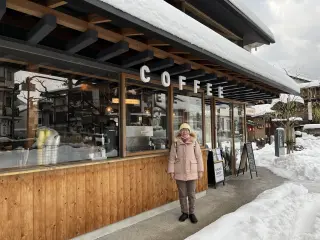
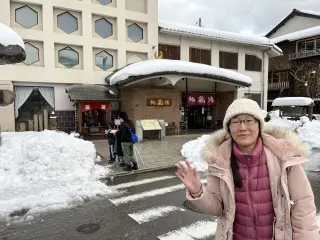
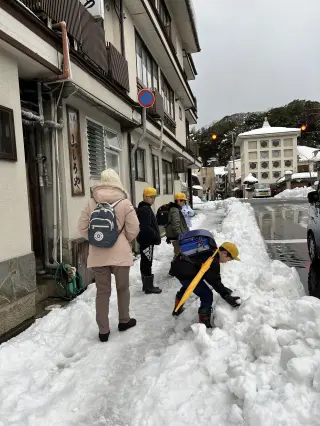
In winter, walking down the old-school onsen streets feels so charming. There are little cafés everywhere, so it’s easy to grab a coffee and a dessert, take a break, and just chat.
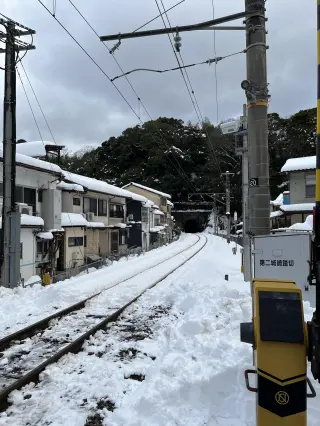
The town has kept its traditional Japanese vibe, and the snowy winter scenery is especially beautiful. It’s such a lovely, polished little place. I can’t wait to come back when the willows are lush again—soaking in the baths and wandering around in a yukata has to be super chill. -
Coming here in winter is a big plus.
Soaking in the hot spring when it’s cold feels really nice. -
The atmosphere of the whole town is fantastic.
Just walking around really feels like being on vacation.
Strolling down the streets in a yukata feels so special.
FAQ about Kinosaki Onsen
Q
How many nights do you recommend staying in Kinosaki Onsen?
A
To visit Kinosaki Onsen’s seven public bathhouses and enjoy its luxurious food, you’ll need at least 1 night with 2 meals.
Q
Where is Kinosaki Onsen located?
A
Kinosaki Onsen is located in Kinosaki-cho, Toyooka City, Hyogo Prefecture.
Q
Is Kinosaki Onsen fun for couples?
A
The charming streets and ryokan are perfect for a couples’ trip. Change into yukata and take a stroll around the hot spring town together.
Summary
Kinosaki Onsen is one of Hyogo Prefecture’s signature hot spring towns in the Kansai region.
When you visit Kinosaki Onsen, don’t just go sotoyu hopping—change into a yukata and take your time strolling through the beautiful, atmospheric streets, and treat yourself to local food you can only enjoy there.