

Be Amazed by a Collection of Lavish, Ornate Architecture! A Travel Guide to Yutoku Inari Shrine
Yutoku Inari Shrine is counted among Japan’s three major Inari shrines.
It is also one of Saga’s leading power spots and draws 3 million worshippers each year.
Its beautiful historic buildings and scenic surroundings are also among its highlights.
This article introduces the highlights of Yutoku Inari Shrine, access information, and other things to know before your visit.
With a bit of knowledge in advance, you’ll be able to enjoy sightseeing in Saga, including Yutoku Inari Shrine, even more.
What is Yutoku Inari Shrine Like?
Yutoku Inari Shrine in Kashima City, Saga Prefecture, is well known as one of Japan’s three major Inari shrines, alongside Fushimi Inari Taisha in Kyoto and Kasama Inari Shrine in Ibaraki.
It is a highly popular shrine that welcomes 3 million worshippers a year.
The main deities enshrined at Yutoku Inari Shrine are Ukanomitama no Okami, Omiyanome no Okami, and Sarutahiko no Okami.
In addition to prosperity in business, the shrine is also said to bring blessings for matchmaking.
One of Yutoku Inari Shrine’s greatest charms is its many lavish, ornate buildings, earning it the nickname “Nikko of Chinzei.”
Chinzei is another name for Kyushu.
The view from the mountaintop is also one of its highlights, with rich nature spreading out below.
There is also a Japanese garden within the grounds, making the scenery beyond the buildings equally appealing.
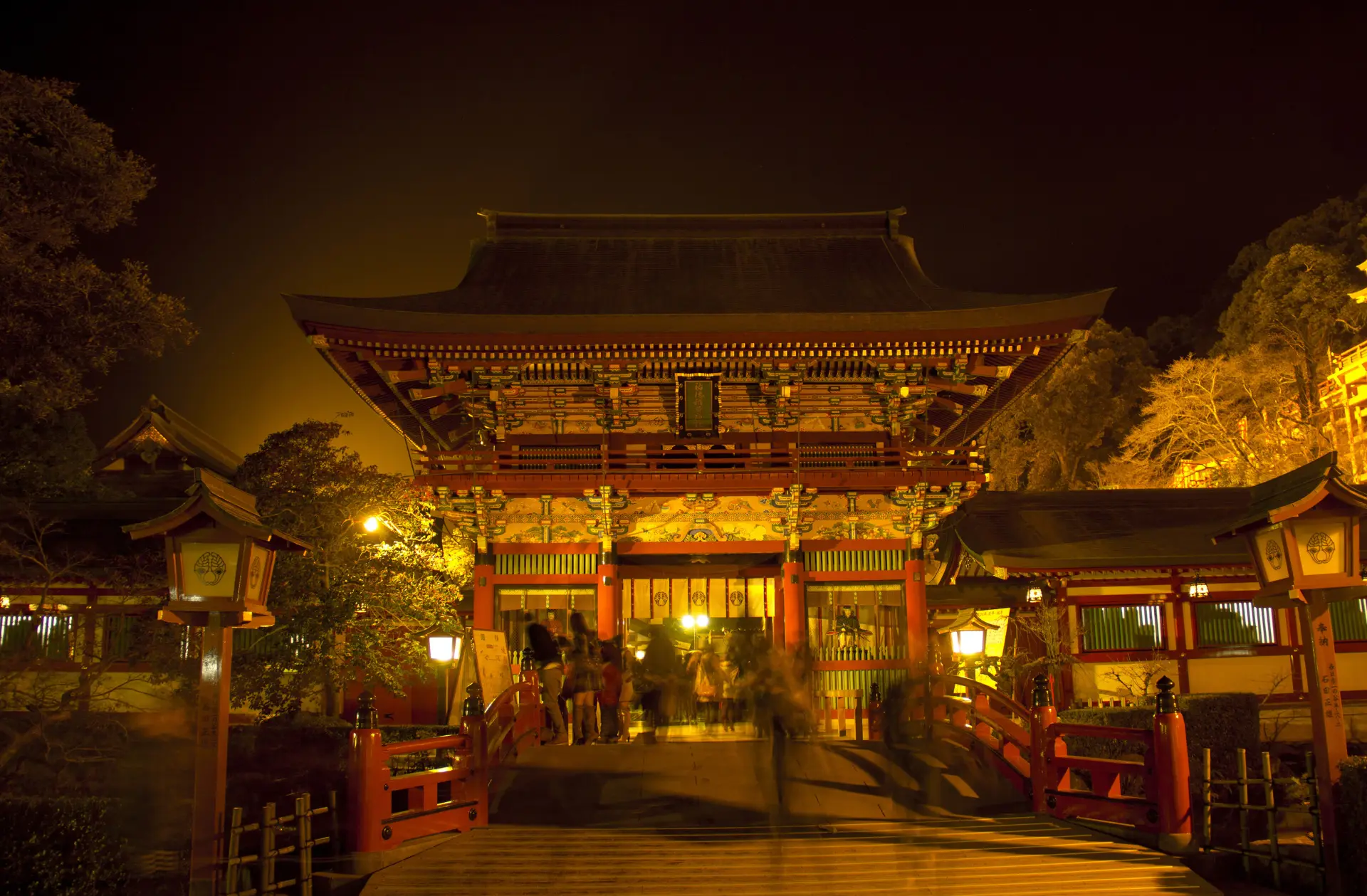
The illuminated shrine grounds are also striking and draw visitors into a dreamlike world.
Another major feature of Yutoku Inari Shrine is that it has an elevator.
Because the main hall is built on the mountainside, visitors normally need to climb stairs.
The elevator was installed for people with mobility issues, seniors, and others.
For 300 yen, you can use it as many times as you like in one day, and you also receive an omikuji fortune slip with a power stone.
The Origins of Yutoku Inari Shrine
The shrine’s origins are said to date back to Mankohime Kazan’in, the wife of Nabeshima Naotomo, the first lord of the Kashima Domain, which ruled the area around present-day Kashima City.
She invited a divided spirit of Inari Okami from Fushimi Inari Taisha, and the shrine building was constructed in 1687.
The current main hall was rebuilt in 1957, making it the third generation after the previous rebuilt structures were lost to fire.


Access to Yutoku Inari Shrine
Here is how to get to Yutoku Inari Shrine starting from Saga Station.
Saga Station serves as a transportation hub for visiting Yutoku Inari Shrine and sightseeing around Saga.
- Route
-
1. Take the limited express on the JR Nagasaki Main Line and get off at Hizen-Kashima Station
2. Take a bus from Hizen-Kashima Station and get off at Yutoku Jinja-mae
3. Walk for under 10 minutes - Travel time
- Approx. 40 minutes
Admission and Visiting Hours at Yutoku Inari Shrine
Yutoku Inari Shrine is open 24 hours a day, and there is no admission fee for worship.
For the hours and admission fees of the Yutoku Museum within the grounds, please refer to the table below.
Hours and Admission at the Yutoku Museum
- Hours
- 9:00am–4:30pm
- Admission
-
・Adults: 300 yen
・High school to university students: 200 yen
・Elementary to junior high school students: 100 yen
What Is the Best Season to Visit Yutoku Inari Shrine?
Yutoku Inari Shrine is a sightseeing spot where you can enjoy beautiful scenery in any season, but spring and autumn are especially recommended.
If you can plan your trip timing, be sure to visit Yutoku Inari Shrine in either spring or autumn.
Yutoku Inari Shrine in Spring, When Cherry Blossoms Color the Grounds
Yutoku Inari Shrine is also famous as a cherry blossom spot.
When more than 300 cherry trees reach their peak bloom, they add brilliant color to the shrine grounds.
The sight is exceptionally beautiful and charming. After sunset, the grounds, including the cherry blossoms, are lit up.
The cherry blossoms in full bloom within this magical setting are a must-see.
The best time to see the cherry blossoms is from late March to early April.
If possible, plan your visit so you can see Yutoku Inari Shrine during peak cherry blossom season.

Yutoku Inari Shrine in Autumn, with Beautiful Vermilion Buildings and Deep Red Fall Leaves
Another charm of Yutoku Inari Shrine is its beautiful fall foliage, making autumn visits highly recommended as well.
The blazing colors of the leaves are breathtaking, and the vivid scenery is sure to captivate you.
The best time to see the autumn leaves is from mid-November to late November. If you prefer landscapes filled with fall foliage over cherry blossoms, be sure to visit in autumn.

Enjoy It Even Without Prior Knowledge! 5 Highlights of Yutoku Inari Shrine
One of the biggest attractions of Yutoku Inari Shrine is its many lavish, majestic buildings. Even without any knowledge of shrines, you’re sure to enjoy your visit.
Here are some of the must-see highlights among the many attractions at Yutoku Inari Shrine.
1. The Main Hall, with Overwhelming Scale and Lavish Splendor
The main hall is the building where the shrine’s main deities are enshrined. At Yutoku Inari Shrine, the main hall enshrines Ukanomitama no Okami, Omiyanome no Okami, and Sarutahiko no Okami.
These three deities are also collectively called Inari Okami and are believed to bring blessings such as business prosperity and family fortune.
The greatest highlight of the main hall is its lavish, powerful architecture.
You will likely be overwhelmed by the dramatic stage-style construction that projects out over the cliff.
The vermilion pillars and richly colored decorations, including gold accents, are simply stunning.
The ceiling paintings in the main hall depict two phoenixes, so be sure not to miss them.


2. The Romon Gate, Known for Its Vivid Decoration and Surrounding Scenery
The romon gate, which often serves as the face of a shrine, is no exception at Yutoku Inari Shrine.
Like a torii gate, it also marks the boundary to a sacred area and serves as a spiritual barrier.
Its dazzlingly vivid decoration and dignified appearance are what make the romon gate so appealing and worth seeing.
In front of the romon gate is the Shinike Pond, where you can watch carp and even feed them.
The taikobashi arched bridge over the pond, a style distinctive to Japan and China, is another highlight.

3. The Inner Shrine, Where You Can Also Enjoy Beautiful Views from the Mountaintop
The inner shrine, located at the top of the mountain, can be reached by climbing the stairs next to the main hall.
Its deity is a white fox, considered a messenger of Inari Okami, worshipped here as Myobu Okami, and it is said that wishes offered there are conveyed to Inari Okami.
The inner shrine was built to enshrine Myobu Okami and provide a place for worship.
The view of nature and the townscape from the summit is grand and can truly be called spectacular.

4. The Red Torii Gates, a Photogenic Spot with a Mysterious Appeal
Along the approach from the main hall to the inner shrine, rows of vermilion red torii gates stand side by side.
The sight of so many torii lined up feels somewhat otherworldly, almost like the entrance to another world. It is a place with a uniquely mysterious charm.
It is also a perfect photo spot, so be sure to capture the memory in pictures.

5. Iwasaki Shrine, Popular for Matchmaking Blessings and Heart-Shaped Ema
This is the place where Iwasaki Okami, the enshrined deity, is worshipped, and it sits directly beneath the stage of the main hall.
Iwasaki Okami is known as a god of matchmaking, and Iwasaki Shrine is said to offer those blessings.
One of its highlights is the heart-shaped ema plaques, of which many have been dedicated here.
In recent years, it has become especially popular with female worshippers.

Try Local Specialties as You Walk! The Yutoku Inari Shrine Monzen Shopping Street
There is a shopping street along the approach leading to the grounds of Yutoku Inari Shrine.
Many restaurants and souvenir shops line the Approx. 400 m approach, making it a fun place to enjoy street food as you walk.
The best-known specialty is inari yokan, which is pushed out from a paper tube and cut with a string to your preferred size before eating, making it perfect for snacking on the go. In addition, you can try unusual local specialties such as carp dishes, making for a memorable experience.
There are also many other foods that are perfect for eating as you walk.
In spring, the cherry trees along the street come into full bloom, so you can enjoy beautiful scenery at the same time.
Perfect for Snacking or Souvenirs! Yutoku Senbei-ya Ide Shoten
Ide Shoten is a long-established Japanese sweets shop that opened as a senbei cracker store in 1912.
Known for its simple, comforting flavors, it is especially loved for its ginger senbei, miso senbei, and Yutoku senbei.
Made using traditional methods and high-quality ingredients, Ide Shoten’s senbei offer a gentle flavor that brings a sense of comfort with every bite.
The ginger senbei has a light ginger aroma and mild sweetness.
The miso senbei has a rich miso flavor, while the Yutoku senbei is popular for its crisp texture and toasty taste.
If you visit the Yutoku Inari Shrine Monzen Shopping Street, this is one famous shop you should definitely stop by.

3 Shrines in Saga to Visit Along with Yutoku Inari Shrine
Saga is home to many appealing shrines besides Yutoku Inari Shrine.
After fully enjoying your visit to Yutoku Inari Shrine, try exploring the following shrines in Saga as well.
1. Ouo Shrine’s Underwater Torii Gates
Tara Town faces the Ariake Sea, known for its especially large tidal range.
Ouo Shrine’s underwater torii gates, where three torii stand in the sea at high tide, have recently gained attention on social media for their magical atmosphere.
You can walk along a submerged road that stretches out toward the offshore area of the Ariake Sea.
This road is essential to Tara Town’s fishing industry, and since nori seaweed cultivation work takes place especially in winter, visitors should observe proper manners and avoid getting in the way during worship.

2. Hoto Shrine
This shrine is located on Takashima, a remote island floating in Karatsu Bay.
It was built to enshrine Tsunayoshi Nozaki Oki no Kami, who drove away pirates that had ravaged Takashima and protected the island around 450 years ago.
In the Heisei era, more and more people began visiting to pray for good fortune because of the shrine’s auspicious name, and after some worshippers won large lottery prizes, it became known nationwide as a shrine where lottery luck may strike.
Even today, this small island receives as many as 200,000 worshippers from across Japan each year.

3. Takeo Shrine
A historic shrine with 1,200 years of history, located at the eastern foot of Mt. Mifune.
The main deity, Takeuchi no Sukune, is known as Japan’s longest-living god and is said to grant blessings for success in battle, good fortune, and protection from evil.
You should also take note of the Meoto Hinoki, a pair of cypress trees joined at the base, said to embody the divine power of the enshrined Emperor Chuai and Empress Jingu.
Many people come to pray there, believing it can tie many kinds of bonds, not only romantic ones between men and women, but also connections with people, work, and money.

3 Recommended Places to Stay Near Yutoku Inari Shrine
With its vermilion shrine buildings standing out against the mountainside, Yutoku Inari Shrine leaves a lasting impression after your visit.
If you’d like to extend that feeling a little longer, head to the Takeo or Ureshino area nearby.
Here are carefully selected accommodations that combine the relaxing appeal of hot spring destinations with convenient access for sightseeing.
1. Central Hotel Takeo Onsen Ekimae
This hotel is located a 1-minute walk from JR Takeo-Onsen Station, making it a convenient base for sightseeing.
Takeo Onsen’s Romon Gate is about a 15-minute walk away, and there are many restaurants around the hotel, so finding a meal is easy.
Another welcome feature is the hotel’s large natural hot spring bath, where you can enjoy an onsen without leaving the property.
The bath area for both men and women includes an indoor bath and an open-air bath, and the water is natural hot spring water drawn from a blend of two Takeo Onsen sources.
The temperature is adjusted to around 104°F, making it ideal for a relaxing soak and sure to gently ease the fatigue of travel.

2. Urari Takeo Garden Terrace Spa Resort
A hot spring ryokan with all-suite rooms where you can fully enjoy Takeo Onsen without leaving your room.
Located in Hoyomura, a retreat area blessed with natural surroundings just outside central Takeo City, Saga Prefecture, it is a modern spa resort themed around recovery and relaxation.
As the name suggests, the resort also features indoor and outdoor spa areas and two types of saunas in addition to the hot spring baths in the guest rooms.
The spring quality is a mildly alkaline simple hot spring with a well-balanced mineral content. It retains heat well and leaves the skin feeling smooth and moisturized, making it especially gentle for women’s skin.

3. Fairfield by Marriott Saga Ureshino Onsen
The Fairfield by Marriott Michi-no-Eki Project proposes a new style of travel that lets guests enjoy the charms of each region more deeply.
It operates hotels next to roadside stations in 14 prefectures across Japan, and Fairfield by Marriott Saga Ureshino Onsen, adjacent to Michi-no-Eki Ureshinomaruku, is one of them.
In addition to a lobby lounge open 24 hours a day, the hotel has shared spaces with a free café offering complimentary coffee and tea, a microwave, and a toaster oven, as well as a marketplace where you can buy light meals, alcohol, and other items made with local ingredients, allowing you to relax while planning your trip.

Reviews
3.63
Some reviews are AI-translated.
-
If you have time and enough energy, you can hike the mountain trail behind the main shrine. It takes about 2–3 hours round trip to reach the top.
-
When I visited, I just thought the shrine's architecture was unique. Since there weren't many people, it felt pretty average. Later, I found out it's as famous as the Fushimi Inari Shrine in Kyoto...
FAQ about Yutoku Inari Shrine
Q
When is the best time to see the cherry blossoms at Yutoku Inari Shrine?
A
From late March to early April.
Q
When is the best time to see the autumn leaves at Yutoku Inari Shrine?
A
From mid-November to late November.
Summary
This guide has introduced the highlights of Yutoku Inari Shrine, which receives the second-highest number of worshippers in Kyushu after Dazaifu Tenmangu, as well as the best seasons to visit.
It is a shrine that is visually impressive and also offers more than enough spiritual blessings.
If you are visiting Saga, Yutoku Inari Shrine is highly recommended as a place where you can worship while taking in its many lavish, ornate buildings.
If you want to learn about other sightseeing spots in Saga worth visiting besides Yutoku Inari Shrine, please also check the article below.