
![[Kifune Shrine Travel Guide] Pray for Love and Good Matches in a Scenic Setting](https://static.gltjp.com/glt/data/article/21000/20459/20231003_103638_6560d426_w1920.webp)
[Kifune Shrine Travel Guide] Pray for Love and Good Matches in a Scenic Setting
Kifune Shrine in Kyoto is counted among Japan’s leading ancient shrines.
It is known as one of Kyoto’s top spiritual spots for blessings related to love and relationships.
It is also loved for its rich natural setting and scenery filled with traditional Japanese charm, created by the changing seasons and the shrine’s architecture.
This article introduces access to Kifune Shrine, its highlights, and how to worship there in detail.
It also covers nearby sightseeing spots worth visiting, so you can get a full overview of what to know before visiting Kifune Shrine and Kyoto.
What is Kifune Shrine Like?
Located along the Kifune River in Sakyo Ward, Kyoto, Kifune Shrine is known as the head shrine of approximately 2,000 shrines across Japan dedicated to the deity of water.
Although its exact origins remain unknown, records from more than 1,300 years ago mention the shrine, making it one of Japan’s oldest and most historic shrines.
The shrine enshrines Takaokami-no-Kami, the deity believed to govern the supply of water, at the Hongu (Main Shrine) and Okunomiya (Inner Shrine). At Yui no Yashiro, it enshrines Iwanagahime-no-Mikoto, a deity associated with matchmaking and relationships.
Because Takaokami-no-Kami is a water deity, while the place name Kibune is written and commonly pronounced with a voiced sound, the shrine itself is pronounced “Kifune” so that the sound remains clear-symbolizing pure water that never becomes clouded.
Kifune Shrine is said to bring various blessings, but it is especially famous for blessings related to love and matchmaking, and is regarded as one of Kyoto’s most celebrated spiritual spots for romance.
Beneath the main hall lies a sacred dragon hole, counted among Japan’s three great dragon holes (dragon spiritual spots), which has made the shrine widely known as a place where the spiritual energy of water and earth converge.
Surrounded by abundant nature, the shrine offers beautiful seasonal scenery throughout the year. Another highlight is that special nighttime visits are held during select seasons, allowing visitors to enjoy a magical atmosphere after dark.
Kifune Shrine is also believed to be the birthplace of ema, the wooden prayer plaques commonly found at shrines throughout Japan-something worth knowing before visiting.
The surrounding area is also famous for Kifune kawadoko, traditional riverside dining platforms set right above the Kifune River, where visitors can enjoy a meal while staying cool beside the flowing water.

The Origins of Kifune Shrine
No document clearly stating the founding of Kifune Shrine remains, so the time of its establishment is considered unknown.
That said, records indicate that shrine buildings were reconstructed 1,300 years ago, showing that it has a very long history.
It is said that the origin began when Tamayorihime no Mikoto, who is believed to be enshrined at the Okunomiya, traveled upstream along the Yodogawa River and Kifune River in a yellow boat and built a shrine building where she arrived.
There is also a theory that the name Kifune Shrine comes from the yellow boat Tamayorihime no Mikoto rode.

Access to Kifune Shrine
Here is how to get to Kifune Shrine starting from JR Kyoto Station, a key transportation hub for sightseeing in Kyoto.
- Route
-
1. Take the Karasuma Subway Line and get off at Kokusaikaikan Station
2. Board a Kyoto Bus at Kokusaikaikan Ekimae, just a short walk from Kokusaikaikan Station, and get off at Kibuneguchi
3. Board a Kyoto Bus at Kibuneguchi Ekimae, just a short walk from Kibuneguchi, and get off at Kifune
4. Approx. 5 minutes on foot - Travel Time
- Approx. 50 minutes
Kifune Shrine Hours and Admission
The worship hours and admission for Kifune Shrine are summarized in the table below.
Hours vary depending on the season, and they are extended during the illumination period.
If you want to check the latest hours, visit the official website.
- Hours
-
・December 1-April 30: 6:00am-6:00pm
・May 1-November 30: 6:00am-8:00pm
(Amulet office: 9:00am-5:00pm) - Admission
- Free
The Seasonal Charms of Kifune Shrine
Kifune Shrine has its own appeal in every season, but summer is especially recommended.
Surrounded by abundant nature, Kifune Shrine is famous for being cooler than central Kyoto.
It is said to feel as much as 5 degrees cooler, and it is also the best season to enjoy the famous Kifune no Kawadoko.
That said, each season has its own attractions, so here is what makes each one special.
Fresh and Refreshing Spring at Kifune Shrine
In spring, Kifune Shrine offers beautiful scenery filled with fresh green leaves.
Feel the energy of nature all around you in this place overflowing with greenery.
The sunlight filtering through the trees and the breeze passing through are wonderfully pleasant, so be sure to experience them for yourself.

Summer at Kifune Shrine: Tanabata and Cooling Traditions
Summer at Kifune Shrine is pleasantly cool, making it comfortable even in Kyoto, which is known for intense heat.
Its biggest highlight is likely the Tanabata bamboo decoration illumination, which transforms the whole area into a dreamlike space.
In ancient China, Tanabata included customs of praying for a rich autumn harvest, and it was essentially a water deity festival for rainmaking.
That makes it deeply connected to Kifune Shrine, which enshrines Takaokami no Kami, the deity who governs the water supply.
Near Kifune Shrine, along the Kifune River, you can also enjoy Kifune no Kawadoko, where you can dine while cooling off beside the river. It is a perfect summer experience.

Autumn at Kifune Shrine, Colored by Fall Leaves
Kifune Shrine is also famous as a fall foliage spot.
When the leaves are at their peak, you can see a great number of brilliant autumn colors across the grounds, and the sight is simply breathtaking.
The contrast of orange, red, and other colors keeps the view from ever feeling monotonous.
At night, the autumn leaves are illuminated, creating an immersive, magical atmosphere.
The best time to see the fall colors at Kifune Shrine is said to be from early November to late November.

Winter at Kifune Shrine: Magical and Majestic Scenery
In winter, Kifune Shrine is surrounded by a world of pure white snow.
The buildings standing in the silver landscape look both magical and majestic.
You can feel the grandeur of nature, and the sight of snow crystals reflecting the light is truly worth seeing.
During the nighttime illumination, the snow-covered world becomes even more beautiful.
The area quickly transforms into a space more atmospheric than in the daytime, creating scenery you are sure to remember.
It is one of those views you should see at least once in person.
-

Kifune Shrine wrapped in a world of pure white snow
-

Take your time strolling through the quiet, snow-covered surroundings
The Worship Custom You Should Know: Sansha Mairi
Within the grounds of Kifune Shrine are three shrine buildings: the Hongu, Okunomiya, and Yui-no-yashiro.
The formal route is to worship in the order of Hongu, Okunomiya, and then Yui-no-yashiro.
Visiting these three shrines is called Sansha Mairi, and it is said that if you worship at all three in the proper order, your wish will come true.
When you visit, be sure to follow this method.

5 Must-See Highlights of Kifune Shrine
Kifune Shrine, one of Kyoto’s notable spiritual spots, offers not only sacred places with a spiritual atmosphere but also many appealing photo spots.
Among its many attractions, here are the ones you especially should not miss.
Knowing about them before your visit will make your worship and sightseeing even more meaningful.
1. Don’t Miss the Dreamlike Japanese Scenery of the Kasuga Lanterns
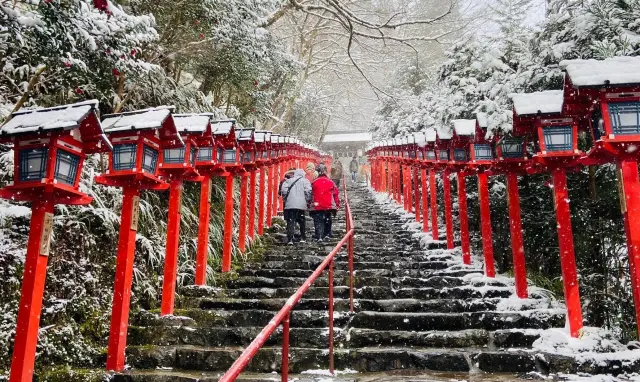
The stone steps leading to the Hongu are lined on both sides with Kasuga lanterns.
These stone steps and lanterns are among the most popular photo spots at Kifune Shrine. If you visit Kifune Shrine, this is one place you will definitely want to see.
With its mystical atmosphere, it feels like a path leading to another world, so be sure to take a photo.
It is beautiful not only during the day but also after sunset, when the lanterns are lit. A magical scene unique to Japan unfolds before your eyes.

2. Hongu, a Must-Visit for Those in Business
The deity enshrined at the Hongu is also Takaokami no Kami, and it is believed to grant blessings for unki ryusho, or rising fortune and prosperity.
Unki ryusho refers to the growing momentum of a company’s good fortune.
Because Takaokami no Kami governs the supply of water, many people involved in water-related businesses and trade come here to pray.
The Hongu was moved to its current location in 1055 after the Okunomiya, the original founding site, was damaged by flooding.
After several reconstructions, the current Hongu was completely rebuilt from the foundation in 2007.
Its majestic appearance, full of historical atmosphere, has a powerful presence that naturally makes you stand a little straighter.

3. Mizu-ura Mikuji, Fortune-Telling with Sacred Water
At the Hongu, you can draw a mizu-ura mikuji fortune slip, a sheet of paper that appears completely blank at first glance.
When you float it on the sacred spring called Mizu-ura Yunoiwa, characters appear on the paper to reveal your fortune.
Water is an especially important and highly blessed element at Kifune Shrine, and these water fortunes are also popular for their reputation of being highly accurate.
Omikuji fortunes are a classic part of shrine visits, but the ones at Kifune Shrine are especially distinctive.

4. The Mysterious Atmosphere of Okunomiya
Deep in the mountains, Okunomiya has an even more mysterious atmosphere.
The sound of the river murmuring and the trees swaying in the wind is soothing, and simply visiting feels cleansing for the soul.
The deity enshrined at Okunomiya is Takaokami no Kami, and it is believed to grant blessings for the fulfillment of many wishes.
It is especially famous for prayers to cut ties.
Okunomiya is considered the founding place of Kifune Shrine and the spot where Tamayorihime no Mikoto is said to have arrived after traveling upstream along the Yodogawa River and Kifune River.
The yellow boat Tamayorihime no Mikoto rode is still enshrined beside the main hall today.
Beneath the main hall lies a dragon hole counted among Japan’s three great dragon holes.

5. Yui-no-yashiro, a Quiet Place to Pray for Love Fulfillment
The deity enshrined at Yui-no-yashiro is Iwanagahime no Mikoto, and it is popular for blessings related to love and relationships.
It is also called Koi no Miya, the Shrine of Love, because the Heian-period poet Izumi Shikibu, known as a mid-Heian poet from 794 to 1185, is said to have come here troubled by her husband’s change of heart and offered a poem, after which her wish was granted.
Set among the trees, Yui-no-yashiro is charming for its lined lanterns and simple appearance.
Its quiet space, where only the sounds of nature can be heard, is part of its appeal as well.

Customs and Rituals Said to Have Originated at Kifune Shrine
Kifune Shrine is home to many stories and legends.
It is also said to be the birthplace of customs that spread across Japan and rituals that became widely known, showing the depth of its history.
The traditions introduced below will make your visit to Kifune Shrine even more interesting.
Ema, a Custom Seen at Shrines Across Japan
The ema seen today at most shrines are said to have originated at Kifune Shrine.
Ema are wooden plaques with pictures on them, offered to shrines and temples when making a prayer or giving thanks after a wish has been granted.
In the past, gods were believed to appear riding horses, and horses were considered essential for moving the divine seat.
For that reason, a custom spread of offering horses for rituals as sacred mounts for the gods, in other words, shinme.
However, many people could not afford to offer a real horse.
They began using horse figures made of wood or paper instead, and by the Nara period, from 710 to 794, images of horses drawn on boards had begun to appear.
This is said to be how the custom of ema was born.

Ushi no Koku Mairi: From a Ritual for Wishes to a Ritual of Curses
Kifune Shrine is known as the birthplace of ushi no koku mairi.
Ushi no koku refers to what is now 1:00am to 3:00am, and originally meant visiting a shrine during that time to pray for one’s wish to be fulfilled.
However, ushi no koku mairi gradually changed from a ritual for wish fulfillment into a ritual for cursing someone.
Today, the term is generally understood to mean a ritual for placing a curse on another person.
The prototype of ushi no koku mairi as a cursing ritual comes from the legend of Hashihime of Uji.
According to the story, a noblewoman driven mad with jealousy visited Kifune Shrine and, after receiving a divine message, underwent harsh ascetic practices that turned her into a demonic deity, after which she killed the woman she targeted and many others.
A Noh play based on this legend is Kanawa, and it was through this play that ushi no koku mairi spread among the public as a cursing ritual.

3 Popular Restaurants Near Kifune Shrine
If you are going to eat near Kifune Shrine, Kifune no Kawadoko is the classic choice.
Raised tatami seating is set up just above the surface of the Kifune River flowing right beside the shrine, and enjoying Japanese food there while listening to the river and feeling the cool air is an experience unique to Kifune.
There are also many other restaurants lined along the Kifune River, enough to make it hard to choose where to eat.
Here are some carefully selected favorites among the many dining options around Kifune Shrine.
1. Kibune Ugenta
Ugenta served as a hereditary shrine family of Kifune Shrine for many years and opened as a traditional inn with cuisine in 1962.
It is one of the representative dining spots where you can enjoy kawadoko dining set over the Kifune River, one of the headwaters of the Kamo River.
For both lunch and dinner, it serves kaiseki cuisine featuring plenty of Kyoto ingredients such as pike conger and yuba.

2. Torii Chaya
A Kyoto kaiseki restaurant located in front of the torii gate of Kifune Shrine.
Here you can enjoy seasonal kaiseki cuisine from Kyoto and Kifune, as well as casual ochazuke.
Menu options range from individual dishes to hot pots, including the signature ayu ochazuke, made with sweetfish first grilled without sauce and then simmered for a full day with sansho pepper berries, the Chadokoro Bento with nine items including sashimi and yuba in thick sauce, and the botan nabe made with premium wild boar loin simmered in homemade broth and koji miso, served with homemade ponzu sauce, available in winter only and requiring a reservation for at least two people.

3. Kibune Hiroya
A traditional inn with cuisine founded in 1932, standing along the Kifune River, the source of the Kamo River.
It is also known as a famous spot for kawadoko, one of Kyoto’s signature summer traditions, and draws many visitors during the season.
The kawadoko platforms set above the crystal-clear Kifune River are full of charm, with cool breezes flowing through and the sound of the stream gentle on the ears.
In this superb setting, you can enjoy seasonal kaiseki cuisine, with each dish carefully prepared and beautifully presented.
The experience satisfies all five senses, not only through taste but also through sight, sound, and aroma, making it a wonderful travel memory.

3 Sightseeing Spots Near Kifune Shrine
There are many distinctive shrines and temples around Kifune Shrine.
After fully exploring Kifune Shrine, be sure to visit the sightseeing spots introduced below as well.
1. Sanzen-in Temple
One of the three monzeki temples of the Tendai sect, said to have begun when Dengyo Daishi established a hermitage in Minamidani of the Eastern Pagoda area while founding Enryaku-ji on Mount Hiei.
A monzeki temple is a highly prestigious temple where imperial princes and members of the imperial family traditionally served as head priests.
Afterward, it moved many times, including to Sakamoto in Omi and central Kyoto, before relocating to its current site in the Meiji period.
Its name also changed over time, and it became Sanzen-in in Ohara.
The principal image is Yakushi Rurikoinyorai, said to have been made by Saicho, and it is a hidden Buddha enshrined in the Shinden.

2. Kurama-dera Temple
The head temple of the Kurama-Kokyo sect.
Its origins are said to date to 770, when Gantei Shonin, a disciple of the monk Ganjin of Toshodai-ji in Nara, enshrined Bishamonten.
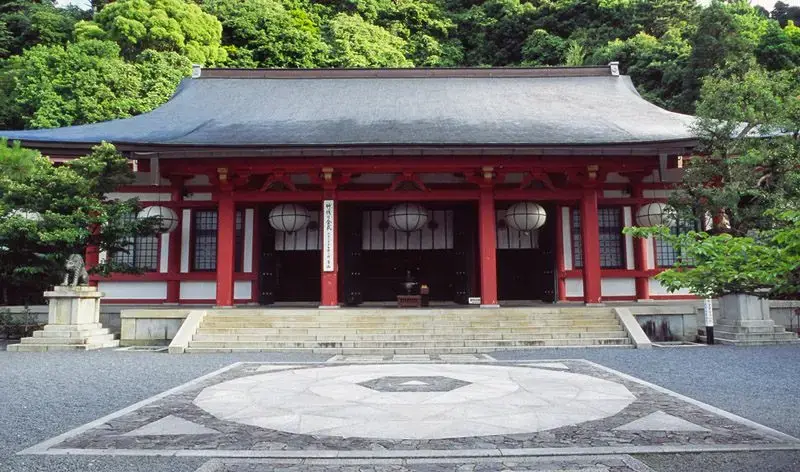
In the Main Hall, called Kondo, Bishamonten-o, Senju Kannon Bosatsu, and Gohomaoson are enshrined, and instead of guardian dogs, a pair of tigers protects the principal image.
The principal image is a hidden Buddha displayed only once every 60 years in the year of hinoe-tora, with the next viewing in 2046.
The stone pavement in front of the Kondo, called Kongosho, is patterned after a star mandala representing waves of cosmic energy and is popular as a spiritual spot.
There is also a legend that Minamoto no Yoshitsune, as a child known as Ushiwakamaru, was placed at Kurama-dera and trained with tengu. Along the steep mountain path from the main hall to Okunoin, there are many spots associated with Ushiwakamaru, including a tree-root path where he is said to have trained, a spring where he rested, and a stone where he measured his height.
3. Yuki Shrine
An ancient shrine founded in 940 by imperial order of Emperor Suzaku to protect the northern direction of Heian-kyo.
It is the only shrine located on sacred Mount Kurama, which is known for tengu legends, and stands along the approach to Kurama-dera Temple.
It is also well known for the Kurama Fire Festival, counted among Japan’s three great fire festivals and Kyoto’s three most unusual festivals.

Kifune Shrine Area Sightseeing Map
Reviews
Some reviews are AI-translated.
-
Located in Kyoto’s northern Kibune area, Kifune Shrine is an ancient shrine with over 1,000 years of history. It enshrines Taka-okami-no-kami, the deity of water, and is believed to bring good fortune in love, relationships, and granting wishes. The rows of vermilion lanterns lining the stone steps to the main shrine are beautiful. Its most distinctive feature is the water fortune slip: place the paper in the sacred water, and your fortune appears. Many visitors come to experience it.
-
-
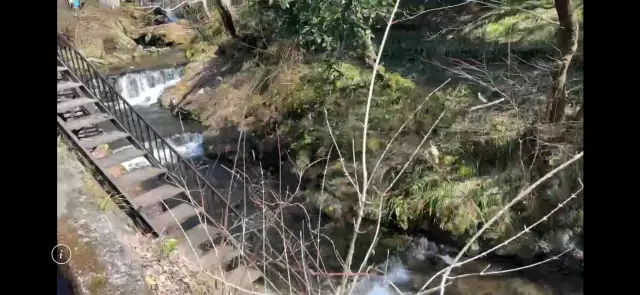
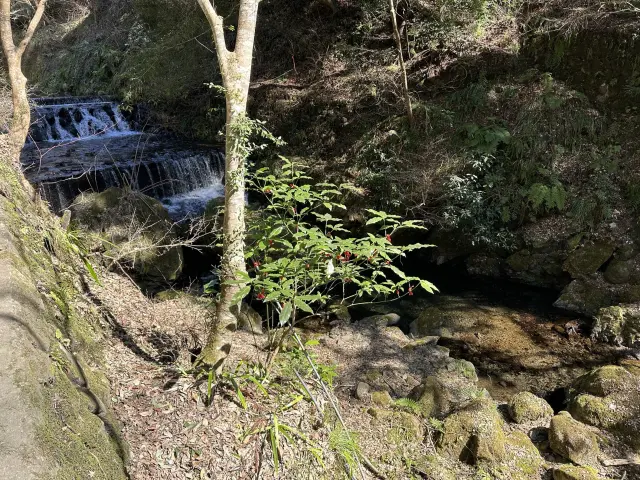
Crystal-clear water flows down in gentle layers.
Kifune Shrine is truly refreshing and soothing. -
-
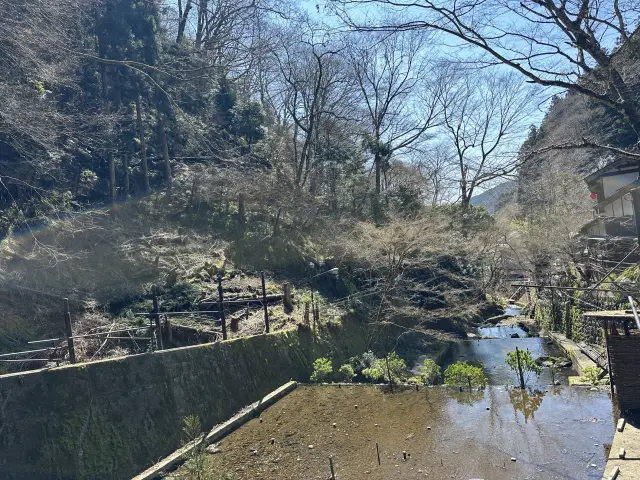
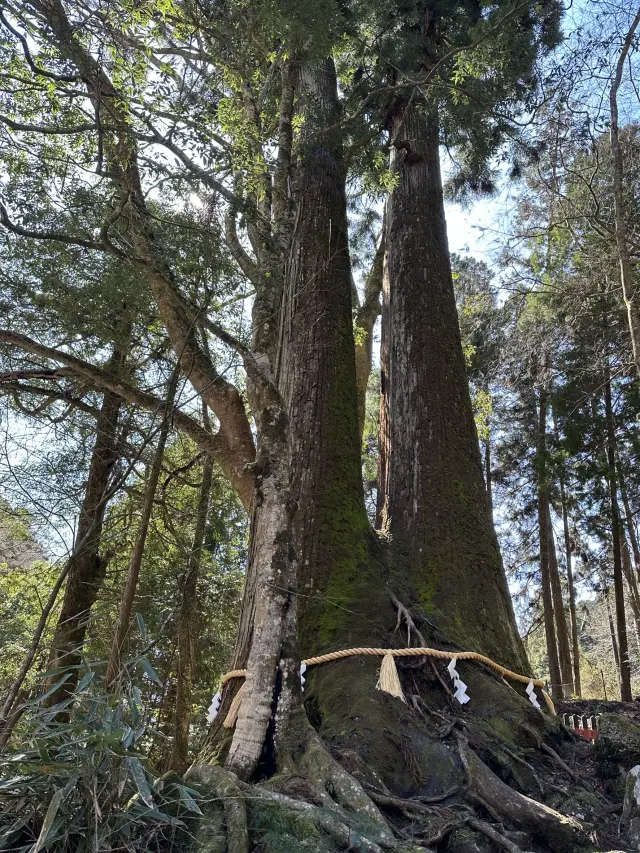
This is a really special place. Walking inside, I felt so refreshed in both body and mind. It's an amazing spot with great energy.
-




FAQ about Kifune Shrine
Q
Which deities are enshrined at Kifune Shrine?
Takaokami no Kami is the main deity, and Iwanagahime no Mikoto and others are also enshrined there.
Q
What blessings is Kifune Shrine known for?
It is known for blessings related to rising fortune and prosperity, the fulfillment of wishes, and love and relationships. Among these, its blessings for love and relationships are especially famous.
Summary
This article has introduced the seasonal charms, highlights, and access information for Kifune Shrine.
You can enjoy beautiful scenery throughout the year, and another major appeal is how deeply you can feel its long history.
If you are visiting shrines and temples in Kyoto, it would not be an exaggeration to say that Kifune Shrine is an absolute must-see.
If you are not sure which sightseeing spots to visit in Kyoto, check out the article below as well.