

Beautiful Cityscapes and Natural Views! 19 Must-Visit Attractions in Kitakyushu
In Japan, “North Kyushu” can also refer to the five northern Kyushu prefectures—Fukuoka, Saga, Nagasaki, Kumamoto, and Oita—but in most cases, “North Kyushu” means Kitakyushu City, located at the northernmost tip of Fukuoka Prefecture.
With a history of thriving as Kyushu’s gateway and a major transportation hub—and as a city with the second-largest population in Kyushu—Kitakyushu is known for its retro architecture that reflects its past and its impressive urban scenery.
It also has many scenic natural spots, making Kitakyushu a destination packed with things to see and do.
To help you make the most of your trip in Kitakyushu, we’ll introduce popular must-visit attractions, shopping spots, local food, and more.
What is Kitakyushu Like?
Kitakyushu City, Fukuoka Prefecture, is the northernmost major city in Kyushu and has a long history of prospering as Kyushu’s gateway and a key transportation hub.
It was once the starting point for Kyushu’s highways and railways, and traces of that role as a transportation center are still strongly felt today.
It’s also a major industrial area—so much so that it has been designated as one of Japan’s four major industrial zones.
As Kyushu’s second-largest city after Fukuoka City, Kitakyushu’s night views—created by its industrial areas and city lights—have been selected as one of Japan’s “New Three Great Night Views.”
At the same time, the city is rich in nature, offering beautiful landscapes as well.
Being able to enjoy both urban and natural scenery is Kitakyushu’s biggest appeal.

When is the best season to visit Kitakyushu?
Approx. late April through late May is the best time to sightsee in Kitakyushu.
That’s because Kawachi Wisteria Garden, a famous wisteria spot, is at its peak.
Its beauty is so well known that CNN in the U.S. selected it as one of the “31 most beautiful places in Japan.”
If you can, plan your visit when the scenery is at its most spectacular.
What to wear in Kitakyushu by season
- Spring (March–May): A light jacket or cardigan
- Summer (June–August): Light clothing, short sleeves
- Fall (September–November): A light jacket, a coat
- Winter (December–February): A coat, a thick sweater or jacket
How do you get to Kitakyushu?
Because it once served as Kyushu’s gateway, Kitakyushu is still exceptionally easy to reach.
With Kitakyushu Airport, flights from Tokyo and Osaka take Approx. 1 hour 30 minutes. There are also international routes, including direct flights from Taiwan and South Korea.
Because the Shinkansen stops at Kokura Station, access is convenient not only from outside Kyushu but within Kyushu as well.
From Fukuoka City, the busiest city in Fukuoka Prefecture, you can arrive in under 20 minutes by Shinkansen—so consider pairing Kitakyushu with a trip to Fukuoka.
Main ways to get around while sightseeing in Kitakyushu
As a former transportation hub, Kitakyushu has a well-developed transit network.
In addition to JR trains, the monorail and Nishitetsu buses also operate, and by combining these three options you can get just about anywhere in the city.
So Much to See! 19 Popular Tourist Spots in Kitakyushu
With its history as Kyushu’s gateway and a key transportation hub, Kitakyushu is home to many historic buildings that reflect its past.
One of the highlights is the many spots where you can enjoy a retro atmosphere, with numerous buildings still standing from the Meiji and Taisho eras.
Beyond that, Kitakyushu offers plenty more—urban scenery selected as one of Japan’s “New Three Great Night Views,” natural landscapes including a karst plateau, and much more.
Here are some of the city’s most popular attractions, carefully selected from its many standout spots.
1. Sarakurayama Observatory
A panoramic lookout with sweeping views of the Kitakyushu cityscape.
To reach the observatory at the 622-meter summit, you’ll take a cable car and then transfer to a slope car.
The cable car runs 1,100 meters from the base station to the upper station with a 440-meter elevation gain—one of the longest in western Japan.
From the glass-walled cars, you can enjoy spectacular scenery that shifts dramatically with the time of day.

2. Kyushu Railway History Museum
Located in the Mojiko Retro area, this railway museum makes use of a Meiji-era red-brick building that once served as the former headquarters of the Kyushu Railway Company.
Exhibits include historic train cars, station staff uniforms from different eras, and railway equipment—fun not only for rail fans, but for the whole family.
Inside the main building, you can explore the history of railways in Kyushu. A Meiji-era passenger car has been recreated, with mannequins of passengers and conductors plus sound effects that bring the atmosphere of the time to life.

3. Kokura Castle
Built by Hosokawa Tadaoki over seven years starting in 1602 after being rewarded for his service in the Battle of Sekigahara. It later became the residence of the Ogasawara clan, but in 1866 it burned down, leaving only the stone walls. After the war, the keep was reconstructed at the strong request of local residents.
Inside the keep, the first floor features an impressive theater where you can learn about roughly 400 years of history, when the area prospered as a gateway connecting Honshu and Kyushu.


4. Mojiko Retro
Mojiko, which opened as a port in the early Meiji period and prospered as an international trading port, still preserves charming buildings built from the Meiji era through the early Showa era—making it a pleasure to explore on foot.
Start at the gateway, JR Mojiko Station. In 2019, after 105 years in service, it completed preservation and restoration work and was returned to its Taisho-era appearance as a two-story wooden building.
Other highlights include the Former Moji Mitsui Club, Former Osaka Shosen, Former Moji Customs, the Shin Kaiun Building, and the Kyushu Railway History Museum, among many others. With restaurants and cafes along the way, it’s a great place to take your time—try the local specialty yaki curry and enjoy a leisurely stroll.

5. Mojiko Station
JR Mojiko Station in Moji, a town facing the Kanmon Straits, is the starting station of the JR Kagoshima Main Line. The Neo-Renaissance, two-story wooden station building is known for its symmetrical façade—said to evoke the image of a “gate”—and has long been loved as a landmark of Mojiko.
In 1988, it became the first railway station building designated as an Important Cultural Property of Japan. After six years of restoration and seismic reinforcement work, it regained its former appearance and brilliance in 2019.

6. Hiraodai Quasi-National Park
A natural park counted among Japan’s three major karst landscapes. The karst plateau stretches 6 km north to south and 2 km east to west at an elevation of 350 to 600 meters, where limestone formations—resembling a flock of sheep—create a striking, otherworldly scene.
Underground are Approx. 200 limestone caves. Among them, the Senbutsu Limestone Cave, a nationally designated Natural Monument, is said to be over 1,000 meters long. A mysterious world awaits below as well. “Caving experiences” to explore various caves are also popular.

7. Senbutsu Limestone Cave
Located on Hiraodai, Senbutsu Limestone Cave (Senbutsu Shonyudo) is named after Senbutsuin, a temple said to be founded by Gyoki, and a branch temple of Gankoji in Yukuhashi City, Fukuoka Prefecture.
In 1935, it was designated a Natural Monument of Japan.
With a total length of 1,200 meters, it is one of the largest caves on Hiraodai.
Formed over many years by the dissolving action of groundwater typical of limestone regions, the cave can be explored up to 900 meters from the entrance.

8. Solaland Hiraodai (Hiraodai Nature Village)
A nature experience facility that makes the most of the sweeping scenery of Hiraodai, one of Japan’s three major karst landscapes.
It features facilities for nature observation such as an observation deck and doline deck, as well as “Yu-Yu Plaza,” a play area with equipment like slides and tunnels, and “Nobinobi Plaza,” a lawn area about the size of a baseball field—plus other spaces where you can relax in the great outdoors.

9. Kawachi Wisteria Garden
Kawachi Wisteria Garden is a famous wisteria spot that draws visitors from across Japan and around the world.
From late April to early May, its peak season, 22 varieties of wisteria create stunning scenery throughout the garden.
Along with wisteria in shades of purple, white, and pink, one of the biggest highlights is the beautiful wisteria tunnels.
Its beauty is so renowned that CNN in the U.S. selected it as one of the “31 most beautiful places in Japan.”
You can also enjoy fall foliage from mid-November to early December, making autumn another great time to visit.

10. Itozu no Mori Zoological Park
Itozu no Mori Zoological Park was created by developing the former site of Itozu Amusement Park, long loved by local residents, after it closed.
Trees and flowers add color throughout the park, from spring mimosa to autumn foliage, offering seasonal scenery that delights visitors year-round.
Surrounded by Itozu’s rich natural setting, the spacious Approx. 10-hectare grounds are divided into eight zones.
The main attraction is the animal exhibits, featuring Approx. 80 species and 470 animals and birds.

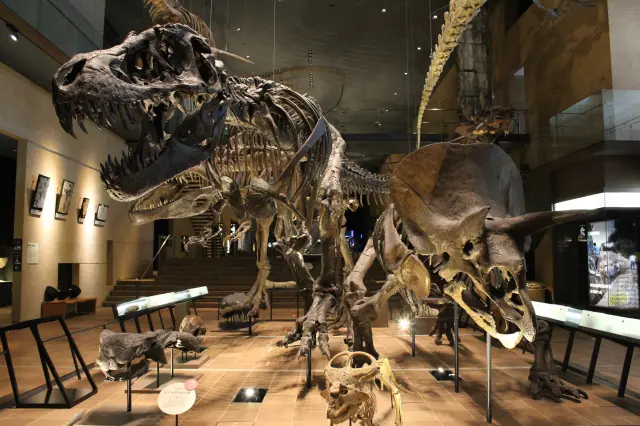
11. Kitakyushu Museum of Natural History & Human History
Created around the concept of “a journey of life,” this museum was designed to share the process of life’s evolution and human history, encouraging visitors to think about how people live and what the future holds.
Centered around a main street named the Earth Mall and Culture Mall, a series of exhibition rooms continues on, letting you enjoy large-scale displays with the feel of strolling through a massive shopping mall.

12. Kanmon Straits (Kanmon Bridge)
The strait separating Shimonoseki City in Yamaguchi Prefecture—the westernmost point of Honshu—and Kitakyushu City in Fukuoka Prefecture, and said to have formed Approx. 6,000 years ago.
The name “Kanmon Straits” is believed to come from combining the first characters of Bakan (Shimonoseki) and Moji (Moji Ward, Kitakyushu).
There are three ways to cross the strait by land: via the Kanmon Bridge, the Kanmon Tunnel, or by taking the JR line that runs through an undersea tunnel.
Opened in 1973, the Kanmon Bridge is a suspension bridge connecting Moji in Kitakyushu City, Fukuoka Prefecture, and Shimonoseki City, Yamaguchi Prefecture.
This 1,068-meter bridge spanning the Kanmon Straits was the longest in the East at the time it opened.

13. Mekari Park
A park of Approx. 37 hectares located on the Kyushu side of the Kanmon Straits, at the northern tip of Kyushu within Setonaikai National Park, offering views across to Honshu.
The area around Kojoyama, which includes the ruins of Moji Castle, has been developed as a park that extends all the way to the waterfront.
Highlights include observation points where you can see the fast currents and swirling waters of the Kanmon Straits, the majestic Kanmon Bridge, and ships passing close by; a rare saltwater pool that opens only in summer; a 3-meter-high, 44-meter-long Arita-yaki ceramic mural themed on the Genpei War; “Norfolk Square,” named after a sister city; Mekari Shrine; and more.

14. TOTO Museum
A museum opened in 2015 by TOTO, Japan’s leading manufacturer of everyday fixtures like flush toilets and sinks, in commemoration of the company’s 100th anniversary in 2017.
The museum is divided into four galleries, where you can learn about the culture and history of water-related living from TOTO’s founding to today, the company’s passion for manufacturing, and the evolution of familiar items such as the Washlet (※1), baths, and kitchens.

15. Wakato Bridge
A long suspension bridge spanning Dokai Bay, forming a general roadway with a total length of Approx. 2 kilometers, including a 627-meter suspension bridge section.
Built as Japan’s first full-scale long suspension bridge, it opened to traffic in 1962.
The red structure connecting Wakamatsu Ward and Tobata Ward has become a symbol of the area.

16. Blue Wing Moji
A pedestrian-only drawbridge, with a total length of Approx. 108 meters—one of the largest in Japan.
Spanning Mojiko’s First Boat Basin, the bridge opens and closes six times a day to allow ships to pass. Watching it lift to a 60-degree angle above the water is a must-see.

17. Kitakyushu Hibikinada Ryokuchi / Green Park
Kitakyushu’s largest park, Hibikinada Ryokuchi / Green Park, marked its 30th anniversary in 2022.
This beautiful park spreads out around Kitakyushu’s Tonda Reservoir and has been selected as one of the “100 Best Urban Parks in Japan.”
One standout attraction is the “world’s longest swing,” completed in 2019, with a length of 163.35 meters and space for 100 people.

18. Kitakyushu Shiranoe Botanical Garden
A relaxing spot for locals spread across a gentle hill, this botanical garden has a history of nearly 80 years and offers natural scenery shaped by plants throughout the year.
From spring cherry blossoms to peonies, hydrangeas, lotus flowers, autumn wild plants, and fall foliage, you can enjoy seasonal views year-round, with a distinctly Japanese atmosphere throughout the grounds.

19. Kitakyushu Manga Museum
Opened in 2012 in Kitakyushu—a city that has produced many renowned manga artists such as Leiji Matsumoto, Seizo Watase, and Tsukasa Hojo—the Kitakyushu Manga Museum is dedicated to sharing the appeal of manga.
With exhibits themed around “see, read, and draw,” it’s a facility where you can experience manga in different ways.
Among its many areas, the most popular is the “Reading Zone,” which houses Approx. 70,000 manga volumes. You can freely read them inside the museum, and there’s also a manga sommelier who can answer questions about manga.

Enjoy the Local Specialties! 3 Popular Places to Eat in Kitakyushu
Kitakyushu is famous for seafood thanks to its coastal location, but it also has plenty of other local specialties—one of the city’s big draws is that you can enjoy great food as much as sightseeing.
Here are some popular places where you can try signature Kitakyushu dishes, including yaki curry, which originated here.
1. Ice Cream Shop KOMARU
An ice cream specialty shop produced by Chef Teruzo Matsuyama of the Michelin one-star Japanese restaurant Oryori Matsuyama.
Made with carefully selected ingredients and no additives, the ice cream is churned with plenty of air, giving it a rich flavor that still feels light, with a clean finish.

2. Milk Hall Mojiko
A “milk hall” was a popular type of eatery during the Meiji and Taisho periods—something like an early version of a cafe—serving milk and light meals.
This spot, set in the Mojiko area with its retro streets and views of the Kanmon Straits, is loved for its Taisho-era-inspired menu.

3. Curry Honpo Mojiko Retro
A specialty yaki curry restaurant located in Mojiko, a popular tourist spot at the northernmost tip of Kyushu.
The menu at the Mojiko Retro location features only yaki curry. It’s known for its deep flavor, made by combining a carefully sautéed brown roux with house-made bouillon. The signature dish is “Old-Style Yaki Curry,” created in the 1950s. Made with Kyushu-raised Japanese Black beef, it’s finished with cubed processed cheese for a flavorful accent.

Shop in a Retro Atmosphere! 3 Shopping Spots in Kitakyushu
Here are popular shopping spots where you can enjoy a retro vibe, as well as places that feel like strolling past street-front stores.
You’re sure to find local specialties from Kitakyushu and souvenirs that make great gifts for someone special.
1. Tanga Market
Approx. a 10-minute walk from JR Kokura Station, Tanga Market is known as Kitakyushu residents’ kitchen. It has a nostalgic atmosphere that feels like stepping back into the Showa era.
Along its 180-meter main street, Approx. 120 shops line the way, selling everything from fresh fish and vegetables to prepared foods and processed products. You’ll also find shops selling nukadaki, a Kokura specialty.
Inside the market, a rare cafe and bar—complete with an on-site beer brewing facility—has become popular, offering carefully selected brewed drinks from around Japan, including beer, wine, and sake.

2. Omiyage Kaido Kaikyo Plaza Store
A souvenir specialty shop located inside Kaikyo Plaza, a multi-use commercial facility in the nostalgic Mojiko Retro area. You’ll find shelves lined with Mojiko-area souvenirs, including banana sweets unique to Mojiko—said to be the birthplace of banana auction-style street selling—and products related to Mojiko’s signature specialty, yaki curry.

3. Cha Cha Town Kokura
A large shopping mall packed with a wide range of attractions, including a major movie theater with 10 screens, an arcade, well-known shops from across Japan, and brands that started in Kyushu.
With stores scattered across its spacious grounds, it feels like walking around town and popping into street-front shops.
The lineup is diverse, with fashion, home goods, 100-yen shops, mobile-related stores, and more. There’s also a food court and restaurants.

2 Historic Events in Kitakyushu
Here are two traditional Kitakyushu events with histories spanning well over 100 years.
Both are held in July, so if the timing works out, try to join in.
You’ll be able to fully enjoy the atmosphere, charm, and traditional culture that make Japanese festivals so special.
1. Tobata Gion Oyamagasa
A traditional event with over 220 years of history, known as one of Fukuoka Prefecture’s three major summer festivals and affectionately nicknamed “Lantern Mountain.”
In 2016, it was inscribed on UNESCO’s Intangible Cultural Heritage list as one of the “Yama, Hoko, Yatai” float festivals.
The most breathtaking moment is the joint performance event, when all eight Nobori Yamakasa floats appear together.

2. Kokura Gion Daiko
Kokura Gion Daiko is a drum performance tradition with a 400-year history, performed in procession alongside the grand festival of Yasaka Shrine, which was founded to protect Kokura Castle.
It is said to have begun in 1617, when Hosokawa Tadaoki, who built Kokura Castle, started it in imitation of Kyoto’s Gion Festival, praying for good health and prosperity in the castle town.
Dressed in happi coats and yukata, participants beat drums as they parade through the streets, praying for abundant harvests and good health. It’s nationally rare for its distinctive combination of “double-sided drumming,” “side drumming,” and “walking drumming.” In 2019, it was designated an Important Intangible Folk Cultural Property of Japan.

FAQ about Kitakyushu City
Q
Do “North Kyushu” and “Kitakyushu City” mean the same area?
A
In general, “North Kyushu” is used to mean “Kitakyushu City.” While “North Kyushu” can also refer to the five northern Kyushu prefectures—Fukuoka, Saga, Nagasaki, Kumamoto, and Oita—this usage is not common.
Q
Which area in Kitakyushu has the highest concentration of tourist spots?
A
Many attractions—including Kokura Castle and Tanga Market—are concentrated in the area known as “Kokura,” which refers to Kokurakita Ward and Kokuraminami Ward.
Q
What local specialty foods do you recommend in Kitakyushu?
A
Kitakyushu has many local specialties, but yaki curry is especially recommended. Yaki curry is a signature dish that originated in Mojiko: rice topped with curry, finished with toppings like cheese and egg, then baked in an oven.
Summary
We’ve introduced popular attractions, shopping areas, local food, and more in Kitakyushu, a destination full of highlights.
If you’re visiting Kitakyushu, use this article as a guide and enjoy both its impressive cityscapes and beautiful scenic spots.
Fukuoka Prefecture also has many other great places to explore, so consider sightseeing in other areas as well.
For more ideas on popular attractions and recommended food in Fukuoka, check out the article below.