
![[Complete Miyama Kayabuki no Sato Travel Guide] Experience Japan’s Timeless Rural Scenery and Traditional Culture](https://static.gltjp.com/glt/data/article/21000/20938/20250225_152151_7e392240_w1920.webp)
[Complete Miyama Kayabuki no Sato Travel Guide] Experience Japan’s Timeless Rural Scenery and Traditional Culture
Located Approx. 2 hours from central Kyoto by public transportation, Miyama Kayabuki no Sato is a rare sightseeing destination where Japan’s nostalgic old-world scenery still lives on.
In the village’s northern district, surrounded almost entirely by beautiful forested mountains, rows of rare thatched-roof houses create a nostalgic landscape.
Visit in person, and you’ll be able to enjoy experiences unique to Miyama through the culture and scenery that local residents have carefully preserved over the years.
This article introduces how to enjoy Miyama Kayabuki no Sato, its seasonal charm, and the village’s main spots.
We’ve also put together a comprehensive guide to recommended events and highlights, so be sure to read to the end.
What is Miyama Kayabuki no Sato Like?
Miyama-cho in Nantan City, Kyoto Prefecture, is a popular scenic destination where history and nature exist in harmony.
Among the area’s highlights, Miyama Kayabuki no Sato is especially popular with visitors from Japan and abroad, with 39 traditional thatched-roof houses lined up in one village.
With mountain scenery colored by the beauty of each season and a nostalgic traditional Japanese landscape preserved throughout the village, it was designated an Important Preservation District for Groups of Traditional Buildings by the Japanese government in 1993.
Many of the thatched-roof houses were built in the late Edo period (1603–1868), making this a great place to experience Japanese culture that has continued from the past into the present.
At the Miyama Folk Museum in the village, you can also see the attic space beneath a thatched roof, the barn, and more, offering a glimpse into daily life in those days and making you feel as if you’ve traveled back in time.

Access to Miyama Kayabuki no Sato
The table below shows how to get to Miyama Kayabuki no Sato starting from JR Kyoto Station.
The basic route is to first head to the nearest station, JR Hiyoshi Station, and then take a city bus from there.
However, trains run only 1 to 2 times per hour, and buses only around once per hour, so service is very limited.
In particular, the last bus from Miyama Kayabuki no Sato leaves around 6pm on weekdays, around 5pm on Saturdays, and around 4pm on Sundays and holidays.
Because of this, it’s best to check the timetable in advance and plan both your outbound and return trips.
- Route
-
1. From JR Kyoto Station, take the JR Sagano Line Rapid bound for Sonobe and get off at JR Sonobe Station
2. From JR Sonobe Station, take the JR Sanin Main Line and get off at JR Hiyoshi Station, then walk to the bus terminal
3. From the Hiyoshi Station bus stop, take the Nantan City Bus bound for Chiken-guchi or a similar route, get off at Kita (Miyama Kayabuki no Sato), and arrive - Travel time
- Approx. 1 hour 50 minutes
[By Season] The Charm of Miyama Kayabuki no Sato
Miyama Kayabuki no Sato beautifully reflects the distinct beauty of all four seasons, making it a delightful place to visit any time of year.
The village feels like a scene from an old Japanese folktale, with landscapes that change beautifully from season to season.
Highlights include spring cherry blossoms and Chinese milk vetch, early summer hydrangeas and crape myrtles in vivid bloom, and autumn leaves.
We’ll introduce the highlights of each season, so find the scenery that speaks to you most.
Spring in Miyama Kayabuki no Sato, Where Fresh Greenery and Cherry Blossoms Create Beautiful Harmony
Spring in Miyama Kayabuki no Sato is a charming season when fresh greenery and Japan’s nostalgic rural scenery come together beautifully.
In a complete change from the snowy winter landscape, the surrounding mountains fill with young leaves while cherry blossoms and rapeseed flowers bloom, making it a lovely time for walks and flower viewing.
The sight of thatched-roof houses paired with soft pink cherry blossoms creates a peaceful atmosphere with a touch of nostalgia.

Summer in Miyama Kayabuki no Sato, Where Rural Mountain Landscapes Are Colored by Seasonal Flowers
In summer, you can enjoy strolling through satoyama landscapes colored by hydrangeas, crape myrtles, morning glories, sunflowers, and more.
The brilliant night sky filled with stars, far brighter than what you can see in the city, is another highlight.
Miyama Kayabuki no Sato is also 2 to 3 degrees cooler than urban areas, which makes it a comfortable place to spend time even in summer.

Autumn in Miyama Kayabuki no Sato, When Japanese Atmosphere Grows Even Deeper
In autumn, Miyama Kayabuki no Sato is colored by fall leaves across the mountains and along the riverside, painting the whole village in vibrant tones.
The best time to visit is usually from mid to late November, when maples and other trees turn red, yellow, and orange, transforming the area into a photogenic satoyama landscape filled with nostalgia.
The combination of traditional thatched roofs and autumn leaves creates a picture-perfect scene unique to Miyama.
Along the roads, silver grass glows golden, while the sweet fragrance of fragrant olive drifting through the air adds to the atmosphere.
Another seasonal attraction is soba flowers, often compared to snowflakes.
Around mid-September, delicate white blossoms spread across the fields, and the sight of them swaying in the breeze has a soothing effect on visitors.
-

In the autumn satoyama colored by fall leaves, you can feel an even deeper sense of Japanese atmosphere
-

A sea of soba flowers in full bloom at Miyama Kayabuki no Sato
Winter in Miyama Kayabuki no Sato, Wrapped in a Quiet Silver-White World
In winter, Miyama Kayabuki no Sato is blanketed in a silver-white world.
The snow-covered thatched-roof houses create a dreamlike landscape, as if you’ve wandered into the pages of a picture book.
The soft glow of lights shining here and there in the snowy scenery evokes a heartwarming vision of winter in Japan, making for a deeply moving sight.
One event you shouldn’t miss is the annual Miyama’s Thatched Village Winter Lantern Festival.
With rows of traditional lanterns and LED lanterns lining the lanes, the entire village is beautifully illuminated.
Food stalls featuring local ingredients are also available, adding to the festive atmosphere.
The cold can be severe, so watch your step and dress more warmly than usual.

3 Ways to Fully Enjoy Miyama Kayabuki no Sato
Miyama Kayabuki no Sato is filled with charm you won’t find in cities or other areas, and visitors of all ages and nationalities can enjoy it.
Beautiful scenery you may never have seen before brings new discoveries, and the kindness of the local residents is sure to leave you feeling warm and welcomed. Here are three of the main ways to enjoy it.
Use these ideas as inspiration and enjoy a special experience unique to Miyama.
1. Stroll Through Japan’s Nostalgic Rural Satoyama Scenery
Satoyama refers to a region where people’s daily lives coexist with nature such as mountains, forests, and rice fields, supporting a sustainable way of life.
While sustaining agriculture and forestry, these areas continue to preserve rich natural environments and also play an important role in protecting ecosystems and passing on culture.
Miyama Kayabuki no Sato strongly retains the charm of satoyama, with rows of thatched-roof houses creating a nostalgic traditional Japanese landscape.
A walk through the village, wrapped in clean air, offers a refreshing experience through peaceful countryside scenery, beautiful seasonal views, and encounters with local residents.

2. Try Local Food Made with Regional Ingredients
Miyama Kayabuki no Sato has a total of six places to eat: two restaurants, three cafes, and one takeout-only hot sandwich shop.
All of them make the most of local ingredients and the area’s rich natural environment, and are known for simple, comforting dishes.
Popular local treats include pudding made with Miyama milk and eggs, soft serve ice cream, and hot sandwiches with Japanese rolled omelet.
For lunch, we especially recommend soba noodles handmade by skilled artisans using buckwheat flour produced in Miyama.
Another nice touch is that you can dine inside charming thatched-roof buildings, allowing you to relax while enjoying the atmosphere of old Japan.

3. Stay Overnight in a Thatched-Roof House
There are two accommodations in Miyama Kayabuki no Sato where you can stay in a traditional thatched-roof house.
The real appeal of staying overnight is being able to fully enjoy the beautiful scenery as it changes with the seasons and experience life in the area in a way that isn’t possible on a short visit.
Traditional country-style dishes made with fresh local ingredients are also excellent, and gathering around an irori hearth with others is sure to become a lasting memory.
However, the village can accommodate only a small number of overnight guests. During busy seasons, rooms can be fully booked months in advance, so early reservations are recommended.

Main Spots in Miyama Kayabuki no Sato for a Variety of Experiences
Here, we’ll introduce all the highlights of the village’s nine main spots and two accommodations. If you have a few hours, you can visit them all on foot.
Each place has its own appeal and offers a chance to experience the culture, history, and nostalgic Japanese scenery that live on in Miyama, so be sure to stop by any spot that catches your interest.
1. Miyama Folk Museum
Located in an area designated as an Important Preservation District for Groups of Traditional Buildings, this museum displays a wide range of materials that convey the area’s former way of life.
The facility consists of three buildings: a main house with a thatched roof, a barn, and a storehouse.
Although it is a restored building, it is the only place in Miyama Kayabuki no Sato, where nearly 40 thatched-roof houses remain, where visitors can go inside. You can closely view distinctive architectural features such as the attic space.

2. Chiisana Ai Museum
This private museum was opened in 2005 by indigo dyeing artist Hiroyuki Shindo.
The museum is housed in a traditional thatched-roof home dating back to the Edo period (1603–1868).
Its large thatched roof, topped with seven chigi roof elements, and the building as a whole give it a deeply atmospheric feel.
On the first floor, you can observe the traditional indigo dyeing process in the workshop, while on the second floor, you can enjoy Shindo’s valuable collection of indigo-dyed items gathered over many years.
One of the museum’s main attractions is the chance to explore diverse and rare indigo dyeing cultures from around the world, including tie-dye pieces from Indonesia and Nigeria, work clothes from the Edo period, and clothing from the Miao people of China.

3. Chii Hachiman Shrine
This historic shrine stands on elevated ground to the east of Kayabuki no Sato.
It has a history of nearly 1,000 years and is deeply revered by local residents.
The shrine buildings are beautiful wooden structures, and the main sanctuary features delicate carvings of chrysanthemums, doves, tigers, elephants, phoenixes, and carp, earning it designation as a cultural property of Kyoto Prefecture.
It is also located within a designated Kyoto Prefecture Cultural Property Environmental Preservation Area, and its peaceful setting in quiet nature offers a soothing sense of calm.
Seasonal scenes such as the brilliant autumn leaves that color the shrine grounds are especially stunning.

4. Oshokujidokoro Kitamura
Surrounded by Kyoto’s beautiful natural scenery, Oshokujidokoro Kitamura is a restaurant located right in front of Kayabuki no Sato, where old Japan’s charm still remains.
The house specialty is exceptional soba made from Miyama-grown buckwheat flour ground with a stone mill and hand-cut by skilled artisans.
Made fresh each day with care by a craftsperson with over 30 years of experience, the soba is known for its smooth texture and rich aroma and sweetness.

5. Cafe Gallery Saika
Cafe Gallery Saika is a hidden-gem cafe quietly tucked away in the thatched-roof village.
Inside the renovated traditional house, tatami rooms and warm wood accents create a calm Japanese atmosphere throughout.
Showa-retro details such as a round low dining table, lattice glass windows, and an engawa veranda make the space especially cozy, and you can relax while looking out over the beautiful garden.
It also functions as a gallery, with pottery and crafts by local artists on display and for sale, offering another way to experience Miyama’s traditional culture.
The menu features handmade sweets and drinks made with local ingredients, and the recommended choice is the luxurious Kibi Kobo Dango Set.
It comes with three kinds of dango, soft serve made with Miyama milk, rice crackers, and black soybean tea, letting you enjoy the flavors of Miyama.

6. Cafe Miran
Cafe Miran is a small cafe run by the direct egg sales shop of Nakano Poultry Farm.
It’s easy to stop by during your visit and makes a perfect place to take a break while exploring.
True to its name, the cafe is known for a variety of menu items made generously with fresh free-range eggs.
Its most popular item is the homemade pudding, made with rich eggs and fresh milk from a local farm.
You can really taste the richness of the eggs, and when mixed with the caramel, the added sweetness and bitterness create another delicious layer of flavor.
This pudding is not available for takeout and is not sold online, which is another reason it feels special, since you can only enjoy it at Miyama Kayabuki no Sato.
There’s also a souvenir corner inside, so it’s a nice place to pick up something to remember your visit.

7. Kamitsure
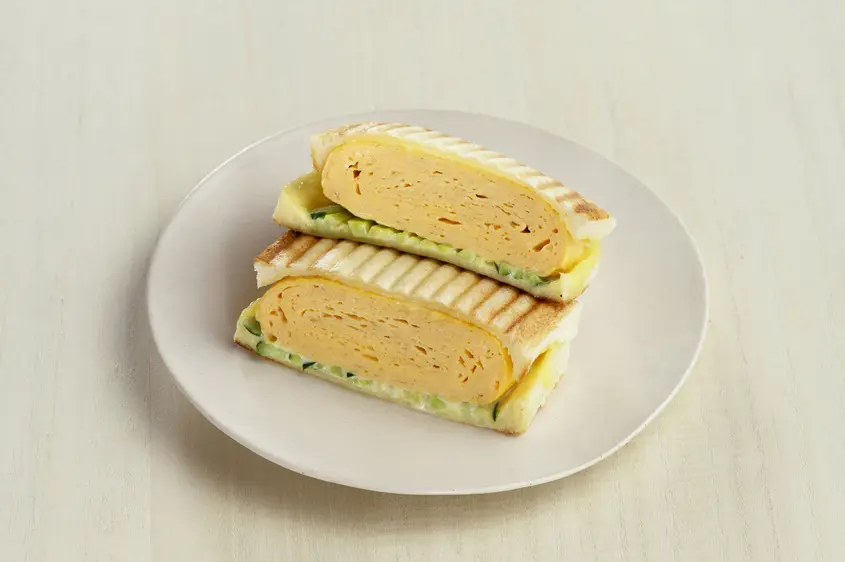
Located in the thatched-roof village, Kamitsure is a takeout-only hot sandwich shop that just opened in July 2024 (you can eat on the benches on the premises).
You can enjoy soft and delicate dashimaki tamago sandwiches made with Miyama’s free-range eggs.
The standard menu includes two items: the Kyoto-style dashimaki hot sandwich and the dashimaki and chicken hot sandwich.
The cross-sections look beautiful and photo-worthy, and the portions are generous enough that two people can share one.
Of course, the flavor is excellent too, with a perfect balance between the juicy egg and the homemade mayonnaise inside.
The shop also shows care in using bread made with rice flour instead of wheat flour, creating a unique texture and original taste.
The deep-roasted coffee pairs perfectly with the hot sandwiches, making this a truly outstanding stop.
8. Omiyagedokoro Kayano Sato
Omiyagedokoro Kayano Sato is a lovely place to add a special touch to your travel memories.
Inside the shop, you’ll find simple yet deeply flavorful items nurtured by Miyama’s rich natural environment.
From rice cakes and dumplings made with glutinous rice and millet to handmade cookies, everything offers a gentle flavor that makes the most of quality ingredients.
At Kitamura Kibi Kobo, open only on weekends and holidays, you can also enjoy freshly made rice cakes and dumplings while taking a relaxing break.

9. Kayabuki no Sato Noda Shoten
Kayabuki no Sato Noda Shoten is a long-established local shop that has supported daily life in the community.
After being closed for a long time, it reopened in 2024 as a place connecting the local area with visitors.
Today, in addition to daily goods and snacks, it also serves as a souvenir shop offering attractive items unique to Miyama.
Among the most popular are Kayabuki no Sato support goods such as tenugui hand towels, ballpoint pens, and pin badges printed with scenes of the thatched-roof village.
Part of the sales from these items is used to support preservation activities that protect the landscape and daily life of Kayabuki no Sato, so we encourage you to pick up at least one item.
Noda Shoten also distributes sightseeing pamphlets and provides information about the village, making it a good first stop when you arrive.

10. Kayabuki no Yado Matabe
Kayabuki no Yado Matabe is a minshuku inn housed in a traditional thatched-roof home.
Behind its charming exterior, the interior is filled with the warmth of wood, and guests can spend relaxing time gathered around an irori hearth.
For dinner, sukiyaki made with locally raised chicken and vegetables is served, and together with the beautiful seasonal satoyama scenery, it offers a hometown-like experience similar to the life of people in Miyama.
The stay is filled with the richness of nature and the unique appeal of the countryside, allowing you to feel the happiness of a bygone era that you might not discover through sightseeing alone.
The owner and staff, who value heartfelt hospitality, are also kind and welcoming, and the quiet time away from the noise of the city is sure to leave you feeling refreshed in both body and mind.

11. Minshuku Hisaya
Minshuku Hisaya is well known as a place in Miyama Kayabuki no Sato where you can enjoy the feeling of returning to a countryside hometown.
This more than 150-year-old thatched-roof inn welcomes only one group per day and offers a luxurious private stay in the entire house.
Set on slightly elevated ground in the village, it looks out over a simple, nostalgic traditional Japanese landscape.
One of its charms is not only viewing the beautiful scenery, but also experiencing it firsthand, and staff can guide you around if requested.
Of course, the rooms, complete with features such as an irori hearth, are also exceptionally comfortable.
The hospitality is further enhanced by traditional and creative dishes made with carefully grown homegrown vegetables and fresh local ingredients.

Events at Miyama Kayabuki no Sato You Should Join If the Timing Works Out
Many events are held at Miyama Kayabuki no Sato throughout the year.
From hands-on events making use of the rich natural environment to festivals filled with historic atmosphere, there is a wide variety, giving you something new to enjoy whenever you visit.
Here, we’ll introduce three representative events where you can experience scenery and traditions unique to Miyama.
They’re sure to make you love the village even more, so if your schedule allows, be sure to join in.
1. Miyama’s Thatched Village Winter Lantern Festival
The weeks from late January to early February each year bring an event of sheer magic to Kayabuki no Sato, a nestled Miyama village in the mountains of northern Kyoto. Coined the Miyama’s Thatched Village Winter Lantern Festival, expect a special time first started by the locals in celebration of the onset of deep snow season.
Festival time brings a glitter of lights to the entire village, complete with, street lanterns, and LED lanterns. The famed thatched-roof houses are also threaded with lights for a dreamy scene of snow-capped village life that glows like a Japanese folktale.

2. Miyama Kayabuki no Sato Simultaneous Water Discharge Inspection
The Miyama Kayabuki no Sato Simultaneous Water Discharge Inspection is part of a fire prevention drill held twice a year, in spring and autumn (usually in May and December).
Because thatched roofs are highly vulnerable to fire, this is an important effort to protect a valuable cultural heritage site from disaster.
Local residents gather to inspect the water cannons installed at each house and take part in fire prevention training.
The main highlight is the dramatic moment when water bursts out from all the water cannons at once.
For Approx. 5 minutes, columns of water rise into the air all at once, creating a spectacular scene as if the whole village were wrapped in mist.
On clear days, rainbows sometimes appear, making it a popular photogenic event as well.
The autumn discharge is especially beautiful when paired with colorful fall foliage.
This major event is also enjoyable for tourists and draws many visitors.
If you visit by car, parking must be reserved through Kyoto Miyama Navi Tourist Information.

3. Kayabuki no Sato Otaue Festival
This annual Shinto ritual is held during rice-planting season to pray for an abundant harvest.
After a harvest prayer ritual is performed at Chii Hachiman Shrine, women wearing hats woven from sedge leaves, kasuri kimono, and red sashes line up side by side to plant rice seedlings by hand.
Set against the backdrop of the village’s fresh greenery, the rice-planting scene is the very image of Japan’s nostalgic rural landscape.

FAQ about Miyama Kayabuki no Sato
Q
What are the hours and admission fee for Miyama Kayabuki no Sato?
Hours vary by season and facility, but many shops are open from 10am to 5pm. There is no admission fee (excluding admission fees for individual facilities), but if you visit by car, you are asked to pay a parking cooperation fee. (500 yen for passenger cars)
Q
How much time do I need to explore Miyama Kayabuki no Sato?
It depends on how you want to explore, but Approx. 1 to 2 hours is generally enough to enjoy the area fully.
Q
Are there sightseeing spots around Miyama Kayabuki no Sato as well?
Yes. There are also attractive spots near the village, such as the Ishida Family Residence, said to be Japan’s oldest farmhouse-style house, and Roadside Station Miyama Fureai Hiroba, where you can find delicious local ingredients from Miyama.
Summary
We’ve introduced the highlights of Miyama Kayabuki no Sato, ways to enjoy it, and the charm of each season.
Miyama Kayabuki no Sato, where a rare number of thatched-roof houses still survive today, is a popular sightseeing destination that draws many visitors.
Its rich natural surroundings and beautiful scenery, which deserve to be preserved for future generations, represent one of Japan’s iconic nostalgic landscapes and offer an experience like returning to a hometown.
If you experience the kindness of the residents who continue to protect traditions and daily life passed down over generations, you’re sure to come away with a warm feeling.
To make the most of your trip to Kyoto, be sure to also read this article introducing popular sightseeing spots and recommended places to eat around Miyama Kayabuki no Sato and throughout Miyama.