

7 Popular Tourist Spots in Tsu City, a Nature-Rich Area Filled with History and Tradition
Tsu City, the capital of Mie Prefecture, is a vast and charming destination where history, culture, and nature come together beautifully.
The city still preserves old streetscapes dating back to the Edo period (1603–1868), with historic shrines, temples, and castle ruins scattered throughout.
From cherry blossoms to autumn leaves, the scenery changes beautifully with the seasons, making even a simple stroll a pleasant part of your stay.
This article introduces the highlights of Tsu City, focusing on its popular sightseeing spots and restaurants.
It is organized to help even first-time visitors make the most of their trip, so use it as a guide when exploring the city.
What is Tsu City Like?
Located in Mie Prefecture, Tsu City is a nature-rich city filled with history and tradition.
It once flourished as a port town, castle town, and post town, and today the city, which has the largest area in the prefecture, is home to many attractions such as old streetscapes, historic sites, shrines, and temples.
Especially noteworthy are places where history, culture, and nature come together, such as Tsu Kannon, one of Japan’s three great Kannon temples, and Sakakibara Onsen, which has deep ties to Ise Jingu Shrine.
The city also has a coastline stretching 12 km from north to south, where visitors can enjoy outdoor activities surrounded by nature.
Another major part of Tsu City’s appeal is its famous local food.
Be sure to try specialties such as Tsu gyoza, deep-fried dumplings that are crispy on the outside and juicy inside, and eel dishes topped with deliciously fragrant kabayaki-style grilled eel.

What is the best season to visit Tsu City?
Spring and fall are the best times to visit Tsu City.
In spring, the city is dotted with famous cherry blossom spots led by Tsu Kairaku Park, where you can enjoy rows of cherry trees in full pink bloom.
Tea stalls and food stands brighten the whole area, and the evening illuminations after sunset are beautiful as well.
In fall, the autumn leaves coloring the street trees, shrines, and temples are stunning, and the mild weather makes it perfect for walking around.
The mountain areas in particular have many spots where you can feel the changing of the seasons, and the colorful scenery is truly photogenic.
You can also enjoy traditional events and seasonal flavors, making for a rich and memorable experience filled with local charm.
What to wear in Tsu City by season
- Spring (March - May): Light jacket and thin sweater
- Summer (June - August): Light clothing, short sleeves
- Fall (September - November): Light jacket, coat
- Winter (December - February): Coat, thick sweater or jacket
How do you get to Tsu City?
Mie Prefecture does not have an airport, so if you are flying to Tsu City, you will need to travel via Chubu Centrair International Airport in Aichi Prefecture.
Here is a summary of how to get to Tsu Station, the city’s main terminal station located in the center of the city, and the travel time required.
- Route
-
1. Walk from Chubu Centrair International Airport to Central Japan International Airport Station
2. From Central Japan International Airport Station, take the Meitetsu Airport Line Limited Express bound for Meitetsu Gifu, get off at Meitetsu Nagoya Station, and walk to Kintetsu Nagoya Station
3. From Kintetsu Nagoya Station, take the Kintetsu Nagoya Line Limited Express, get off at Tsu Station, and arrive
*If your destination is Tsu Nagisamachi, you can also take the direct Tsu Airport Line high-speed ferry from Chubu Centrair International Airport Port and arrive in Approx. 1 hour - Travel time
- Approx. 1 hour 50 minutes
Another one of Tsu City’s attractions is its convenient access from major cities such as Tokyo Station, Osaka Station, and Nagoya Station.
With few transfers and short travel times, plus international airports in all three areas, it is also a great option for a wider sightseeing plan if your budget and schedule allow.
Access to Tsu City from Tokyo Station
- Route
-
1. From JR Tokyo Station, take the JR Nozomi Shinkansen, get off at Nagoya Station, and walk to Kintetsu Nagoya Station
2. From Kintetsu Nagoya Station, take the Kintetsu Nagoya Line Limited Express, get off at Tsu Station, and arrive - Travel time
- Approx. 2 hours 45 minutes
Access to Tsu City from Osaka Station
- Route
-
1. From JR Osaka Station, take the JR Kansai Airport Rapid Service, get off at Tsuruhashi Station, and walk to the Kintetsu Osaka Line *The train changes to the JR Osaka Loop Line outer loop at Kyobashi Station, but no transfer is required
2. From Tsuruhashi Station on the Kintetsu Osaka Line, take the limited express train, get off at Tsu Station, and arrive - Travel time
- Approx. 1 hour 45 minutes
Access to Tsu City from Nagoya Station
- Route
-
From Kintetsu Nagoya Station, take the Kintetsu Nagoya Line Limited Express bound for Isuzugawa, get off at Tsu Station, and arrive
*You can also access Tsu City from JR Nagoya Station via the JR Rapid Mie train - Travel time
- Approx. 50 minutes
Main ways to get around for sightseeing in Tsu City
The three main public transportation options for sightseeing in Tsu City are trains, local buses, and rental cars.
In most cases, Tsu Station, located in the center of the city, serves as the main starting point for getting to famous spots.
Three lines serve the station: the Kintetsu Nagoya Line, the JR Kisei Main Line, and the Ise Railway, making it convenient for access to Nagoya and the Ise area as well.
Local buses also provide access to sightseeing areas and hot spring destinations within the city, and service is relatively frequent.
If you want to get around efficiently without being tied to schedules, renting a car is recommended.
It is especially convenient for visiting attractions in the suburbs or along the coast, and may make your trip more comfortable.
Perfect for First-Time Visitors! 7 Popular Tourist Spots in Tsu City
Here are some of the most popular spots in Tsu City, with a focus on places where you can experience its history and nature.
If you add these to your itinerary, you’re sure to enjoy sightseeing in Tsu City.
1. Tsu Castle Ruins
Located in central Tsu City, Mie Prefecture, the Tsu Castle Ruins mark an area that once thrived as a castle town. Today, it is a beautiful park loved by locals as a place to relax.
Inside the park, a peaceful Japanese garden and a vibrant Western-style garden coexist, creating lovely scenery in every season.
Spring is especially beautiful, with the contrast between the moss-covered stone walls and cherry blossoms, and the site is also known as one of Tsu City’s famous cherry blossom spots.

2. Louvre Sculpture Museum
The Louvre Sculpture Museum in Tsu City, Mie Prefecture, is the only museum in Japan that is an official sister museum of the world-famous Louvre Museum in Paris.
It displays nearly 1,300 sculptures created using molds taken directly from the originals by the Louvre Museum’s technical team.
The works faithfully reproduce even the texture and fine marks of the originals, allowing visitors to admire historic masterpieces such as the Winged Victory of Samothrace and the Venus de Milo up close.

3. Tsu Kannon (Enichizan Kannonji Daihoin)
This historic temple is said to have been founded in 709, and its formal name is Enichizan Kannonji Daihoin.
Locals have long affectionately called it “Kannon-san.”
Its principal image, Sho-Kannon Bosatsu, is known as Tsu Kannon, and it is counted as one of Japan’s three famous Kannon temples alongside Asakusa Kannon in Tokyo and Osu Kannon in Aichi.

4. Senjuji Temple, Head Temple of the Takada School of Shinshu
Senjuji Temple, the head temple of the Takada School of Shinshu, is a historic temple founded by Shinran Shonin, the founder of Jodo Shinshu Buddhism. It is affectionately known as Takadahonzan.
Located in Tsu City, Mie Prefecture, its vast grounds contain many National Treasures and Important Cultural Properties.
Among them, the most impressive are the Miedo Hall and Nyorai-do Hall, both designated National Treasures. Rebuilt in 1666, the Miedo Hall is a massive wooden structure ranked among the five largest National Treasure wooden buildings in Japan.

5. Tsu Kairaku Park
Tsu Kairaku Park in Tsu City, Mie Prefecture, is a beautiful park where abundant nature and history come together.
It was once the site of a villa belonging to the 11th lord of the Tsu Domain. The garden makes use of the natural terrain, offering beautiful scenery in every season.
In spring, around 1,000 Somei Yoshino cherry trees and about 800 purple azaleas burst into bloom, covering the entire park in pink and purple flowers.

6. Kazahaya no Sato: Kappa no Furusato
Located in Tsu City, Mie Prefecture, this beautiful garden blends social welfare and the environment, with flowers lovingly grown by people with disabilities.
It is located inside Ise Onsen Golf Club near Kazahaya Pond, where the kappa, a mythical creature from Japanese folklore, is said to have lived.
Some 77,700 hydrangea plants across 45 varieties, including rare types such as Selma and Sharona that are not often seen elsewhere, bloom in abundance here, creating breathtaking scenery that feels like another world.
7. Yuki Shrine
This shrine is dedicated to Lord Yuki Munehiro, a military commander from the Nanboku-cho period who supported Emperor Go-Daigo and helped establish the Kenmu Restoration.
Also known as Yuki-zuka and Yuki Myojin, it has long been deeply revered, and a magnificent gravestone engraved with “Grave of Lord Yuki Shin-kun” stands on the grounds.
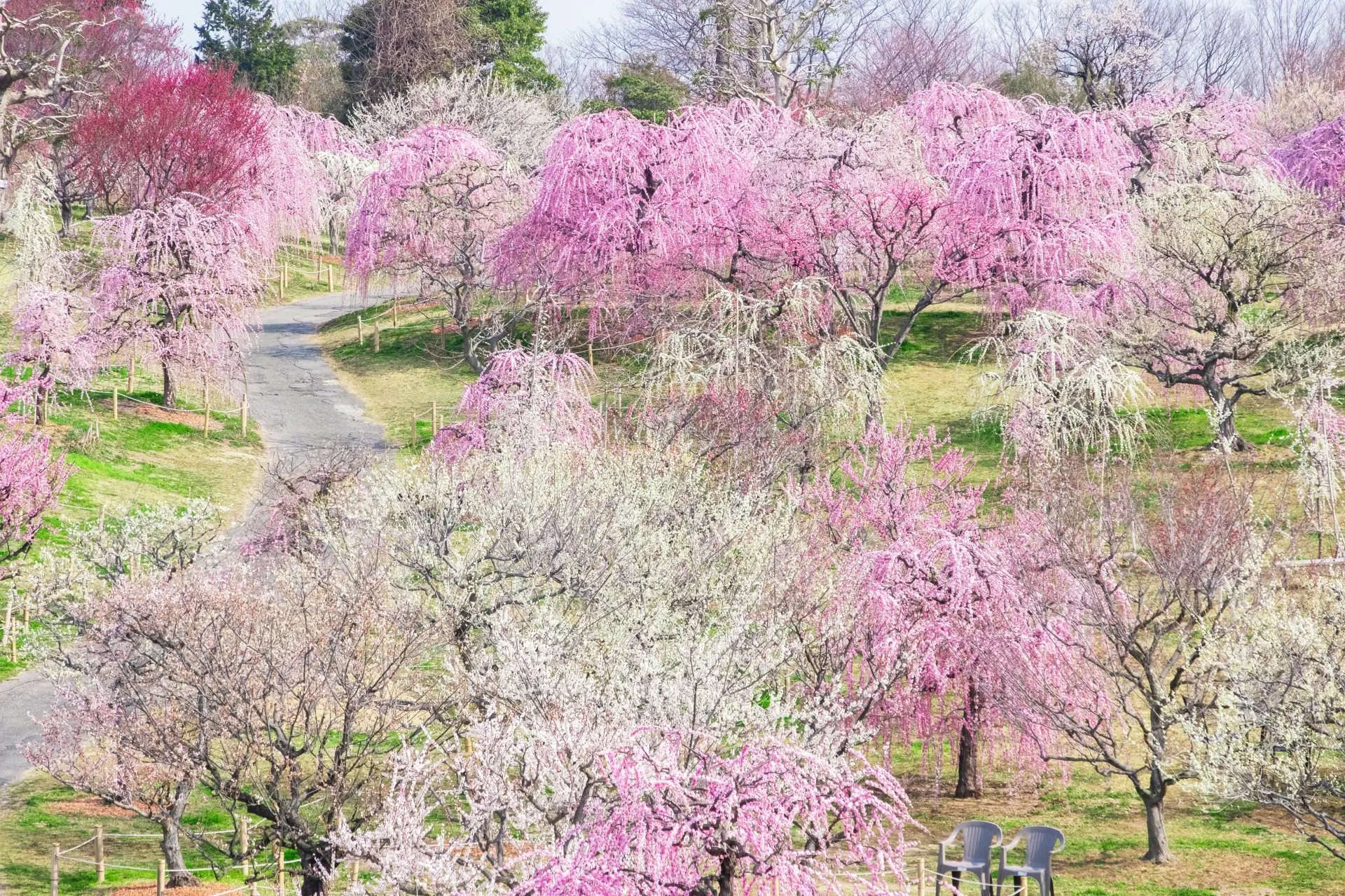
In addition to around 300 weeping plum trees, many other varieties of plum trees are planted within the shrine grounds, and the Plum Festival is held every year from around mid-February to mid-March, when the blossoms are at their best.

Enjoy Local Cuisine! 3 Popular Restaurants in Tsu City
Here are three carefully selected popular restaurants in Tsu City. All are long-established favorites loved by locals for many years, where you can enjoy outstanding dishes rooted in the region.
The calm atmosphere inside each restaurant is another part of the appeal, making for a special dining experience that suits your trip.
You really can’t go wrong with any of them, so use this guide to find a place that catches your eye.
1. Toyoken Main Branch
Located around 15 minutes by bus from the front of Tsu Station, Toyoken Main Branch is a long-established Western-style restaurant founded in 1928.
The interior, renovated from a Taisho-era (1912–1926) building, has a classic atmosphere where nostalgic warmth and elegance come together.
It originally opened as a branch of Toyoken, a supplier to the Imperial Household Agency, and today continues to serve authentic Western-style dishes backed by a long history and refined technique.
Its most popular menu item is the traditional Black Curry, which has been served since the restaurant first opened.
Made by simmering Matsusaka beef with a secret sauce for around three weeks and taking Approx. one month to complete, it is a striking dish with a jet-black appearance.

2. Daikantei Shiten Sakaemachi Main Branch
Located about a 5-minute walk from Tsu Station, Daikantei Shiten Sakaemachi Main Branch is a long-established eel restaurant loved by locals for many years.
The cozy interior has a comfortable atmosphere, with table seating on the first floor and tatami seating on the second floor.
Popular dishes include the reasonably priced unadon (regular), topped with two pieces of eel, and the more luxurious unaju (premium), which comes with four pieces.
The restaurant is known for its Kansai-style eel grilled over charcoal, with fluffy, tender meat and crisp, lightly charred skin.
As it is an extremely famous restaurant, it often sells out during lunchtime service from 11:00 am to 2:00 pm almost every day, so arriving early is recommended.

3. Meifutsu Tenmusu no Senju
Located 5 minutes by taxi from Tsu Station, Meifutsu Tenmusu no Senju is a famous restaurant known as the birthplace of tenmusu, rice balls filled with small shrimp tempura.
Tenmusu was originally created as a staff meal by the owner’s wife for her husband. When it was served to regular customers, it proved so popular that it eventually became the restaurant’s signature item.
The restaurant’s tenmusu is an exceptional specialty made by wrapping fluffy hand-shaped rice around plump shrimp tempura and then wrapping it again in nori from Ise Bay.
Its well-balanced flavor and clear attention to ingredients make it a memorable taste you will not easily forget once you have tried it.
For an even better experience, try ordering it with freshly made miso soup with mitsuba or aonori.

If You’re Not Sure, Start Here! 3 Recommended Places to Stay in Tsu City
Here are some recommended hotels for travelers who want to make the most of sightseeing in Tsu City.
To suit different preferences, purposes, and travel companions, three distinct types of accommodations have been carefully selected.
All are popular properties with high ratings from guests, offering a comfortable stay through attentive service, large public baths for relaxing after a day out, and other well-rounded amenities.
If you have not decided where to stay yet, any of these hotels would be a great choice.
1. Hotel Green Park Tsu
Hotel Green Park Tsu is an upscale community hotel located inside the Ast Tsu building, a landmark rising 88 m above ground, just a 2-minute walk from JR and Kintetsu Tsu Station.
Directly connected to Tsu Station, it offers excellent convenience even on rainy days, with plenty of nearby spots as well, making it an ideal base for business or sightseeing.
One of its biggest attractions is that all guest rooms are located on the 13th floor or above (54 m above ground), offering spectacular views of Ise Bay to the east and the Nunobiki Mountains to the west.
The hotel offers a wide variety of room types, all equipped with amenities such as Wi-Fi, humidifiers, and air purifiers.
The buffet-style breakfast featuring local specialties is also well reviewed by guests.
It is also recommended for longer stays thanks to its coin laundry facilities and free stays for children sharing a bed (no additional charge for children up to sixth grade in elementary school).

2. Hotel Tsu Center Palace
Reopened after renovation in 2022, Hotel Tsu Center Palace is a designer hotel located Approx. 10 minutes by bus from JR and Kintetsu Tsu Station.
Built around the concept of being a “connection point between locals and guests,” it offers a space that blends the liveliness and warmth of Tsu with modern comfort.
The lobby is filled with thoughtful touches expressing Mie and the character of a post town, from houseplants and acoustic building materials to art pieces from Tsu City, making it enjoyable from the moment you walk in.
The guest rooms feature wood-toned Japanese-style interiors, and amenities such as custom-made pillows by Nihon Bed and TVs compatible with video streaming services promise a comfortable stay.
The hotel restaurant, where you can enjoy Mie’s food culture including Matsusaka beef and Ise lobster, is also popular.
After a day of travel, relax in the large public bath with an open-air bath overlooking Ise Bay.

3. Mado Onsen Ryofuso
Mado Onsen Ryofuso is a welcoming inn for travelers that was founded in 1962.
Surrounded by countryside and satoyama landscapes that feel like returning to your hometown, it offers a one-of-a-kind setting for a warm and relaxing stay.
Step into the building and guest rooms, which retain the charm of the Showa era, and the nostalgic atmosphere makes the fatigue of the day melt away.
Another attraction is the chance to connect with nature, including firefly viewing in the surrounding area from June to July.
There is plenty to see here, but one of the most popular highlights is the unique cave experience.
Meals feature grilled surf-and-turf dishes made with fresh seafood and Matsusaka beef, served in an extraordinary cave tatami dining space.
There is also a private cave-style bath with rock surfaces reminiscent of a limestone cave, and its mystical lighting creates an atmosphere almost like a theme park.

FAQ about Tsu City Sightseeing
Q
Where should I go if I want to enjoy Tsu City in a short amount of time?
We recommend visiting Tsu Castle Ruins, a relaxing place for locals, or Tsu Kannon Temple, one of Japan’s three great Kannon temples, as both let you experience the charm of Tsu City even in a short time.
Q
When is the best time to see autumn leaves in Tsu City?
It varies slightly depending on the location, but the best viewing season is usually from mid-November to early December.
Q
When is the best time to see cherry blossoms in Tsu City?
The best viewing season is usually from late March to early April.
Summary
This article has introduced the charms of the area, focusing on Tsu City’s popular tourist spots and restaurants.
Tsu City is packed with a wide variety of attractions where deep history and rich nature come together.
Whether you are looking for amazing local food, hot springs, hands-on activities, or sightseeing, there is plenty to enjoy, no matter who you travel with.
Be sure to check out this article as well, which clearly introduces must-visit attractions and resort hotels to help you plan your trip, including Mie’s famous spiritual spots, Ise Jingu Shrine and the Kumano Kodo.