
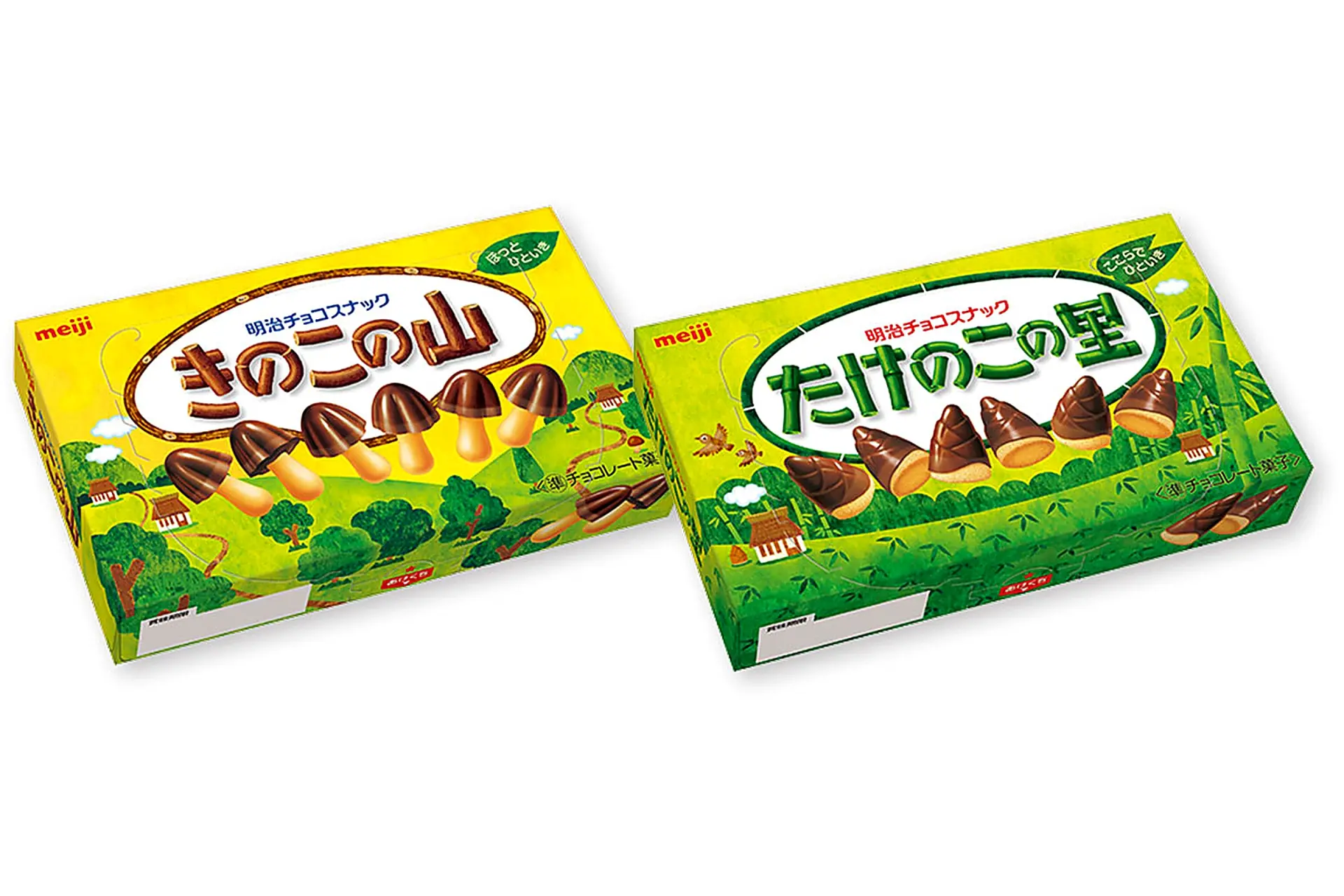
Kinoko no Yama or Takenoko no Sato? Comparing Meiji’s Iconic Chocolate Snacks
Kinoko no Yama and Takenoko no Sato are two of Japan’s most iconic chocolate snacks.
Both are long-selling products from Meiji Co., Ltd., but their flavors, textures, and structures are surprisingly different.
They have been loved in Japan for so long that they even inspired the familiar “Team Kinoko or Team Takenoko?” debate.
This article clearly explains the differences between the two products, along with the story behind their creation and their cultural appeal.
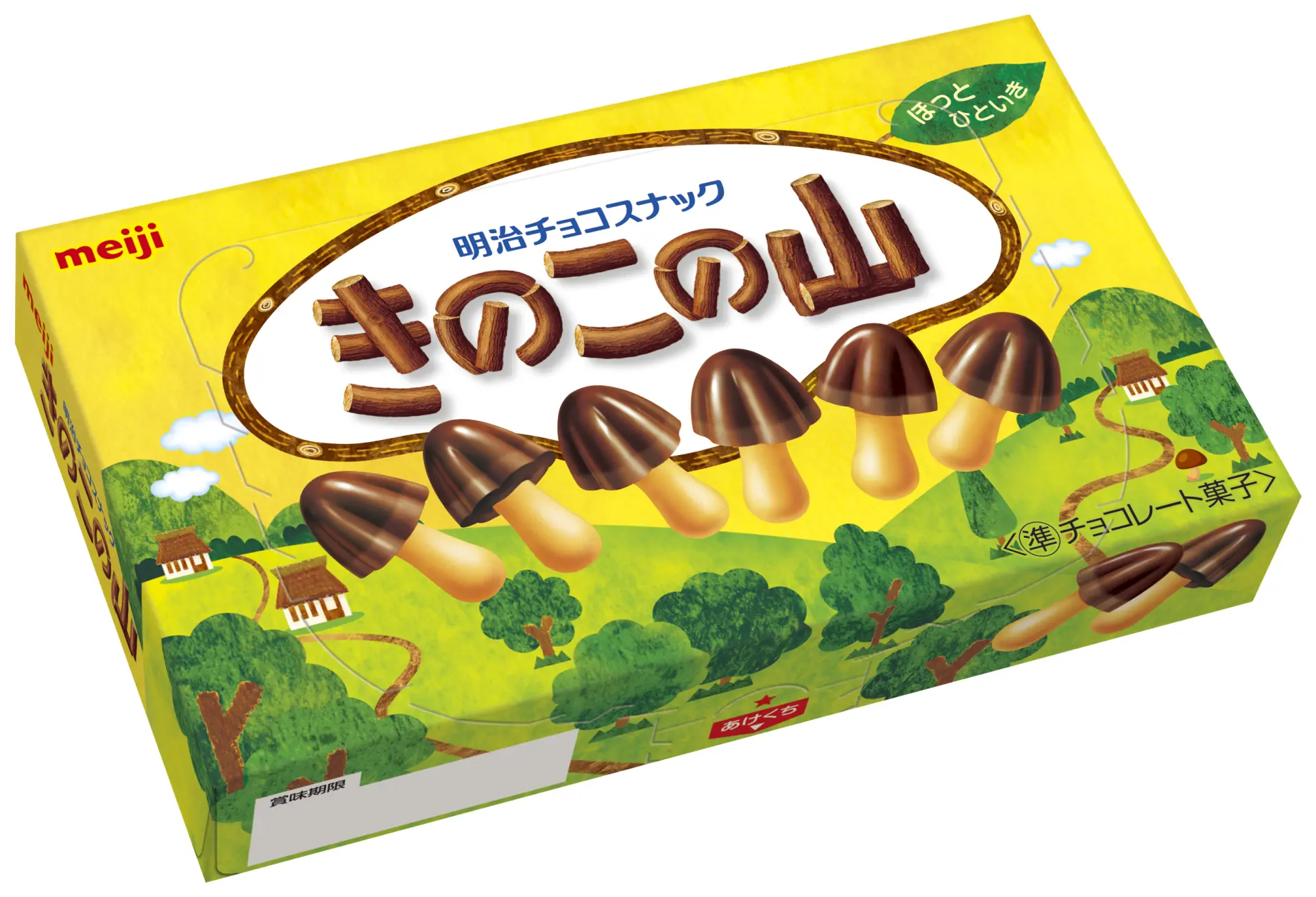
What Is Kinoko no Yama?
Kinoko no Yama, which has been produced and sold since 1975, is a chocolate snack known for its cute mushroom-shaped form.
It was developed after as many as five years of trial and error.
Its appeal lies in the satisfying balance between a crisp, light cracker and mellow milk chocolate, creating a taste you never tire of.
When you put it in your mouth, a hint of salt peeks through the sweetness, letting you enjoy the contrast between the two textures.
It is loved by people of all ages and is especially popular overseas, where more people tend to side with Kinoko no Yama.
What Is Takenoko no Sato?
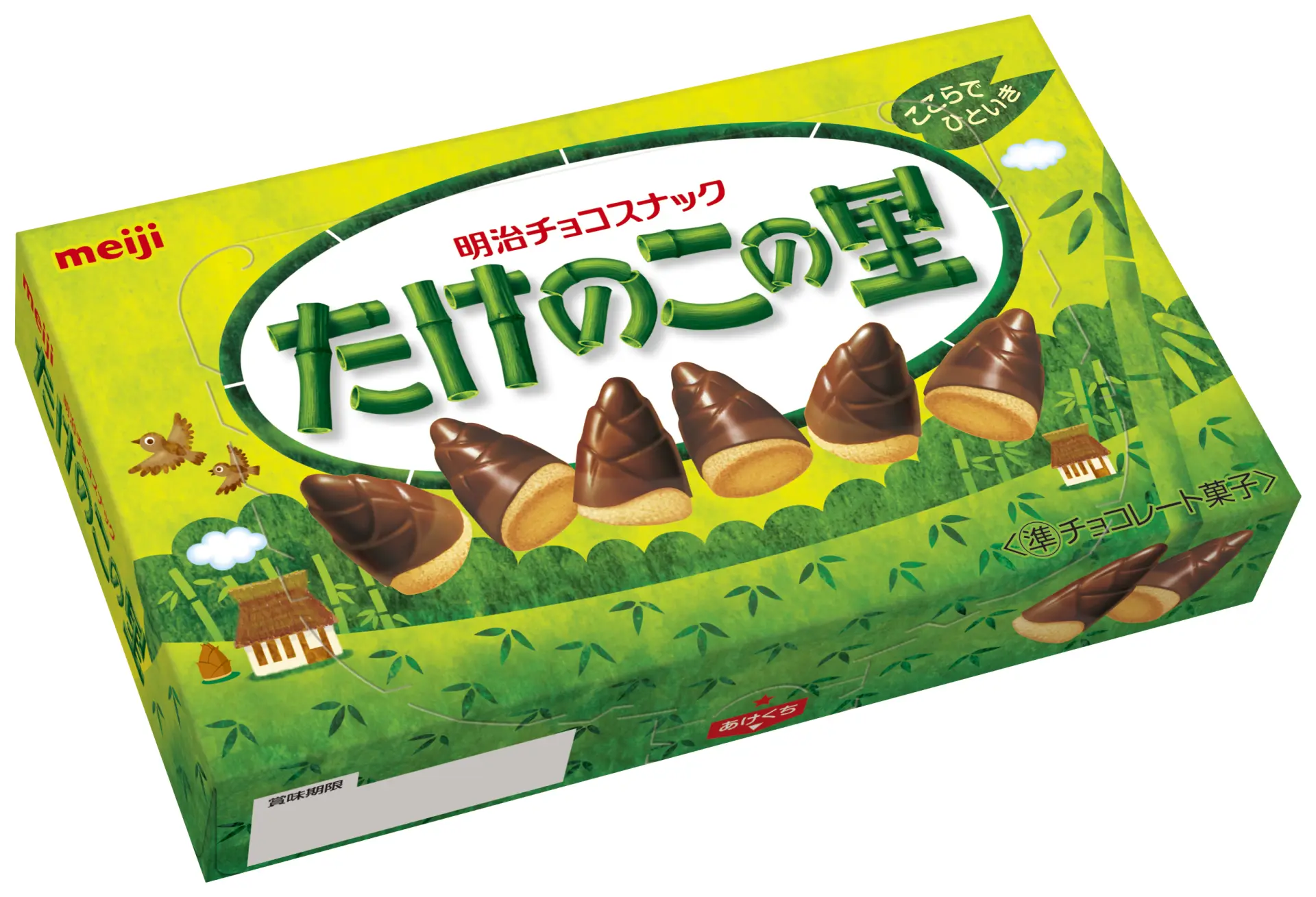
Takenoko no Sato, which has been produced and sold since 1979, is a chocolate snack known for its charming bamboo shoot-shaped form.
It was introduced as a second new-concept snack following the huge success of Kinoko no Yama.
The idea of a bamboo shoot-shaped counterpart had already existed from the planning stage, and the product was intentionally designed to pair with Kinoko no Yama.
Its appeal lies in the irresistible combination of cocoa-scented chocolate and a melt-in-the-mouth cookie.
Its satisfying flavor is loved by people of all ages, but it is especially popular with people who enjoy the crunchy texture of cookies.
Comparing the Differences between Kinoko no Yama and Takenoko no Sato
Although both are chocolate snacks, Kinoko no Yama and Takenoko no Sato actually differ greatly in structure and texture.
Kinoko no Yama has a structure in which the chocolate and cracker are separate, allowing you to enjoy a light texture and a smooth melt-in-the-mouth feel.
Takenoko no Sato, by contrast, has a structure in which the chocolate wraps around the cookie, so the flavor deepens the more you bite.
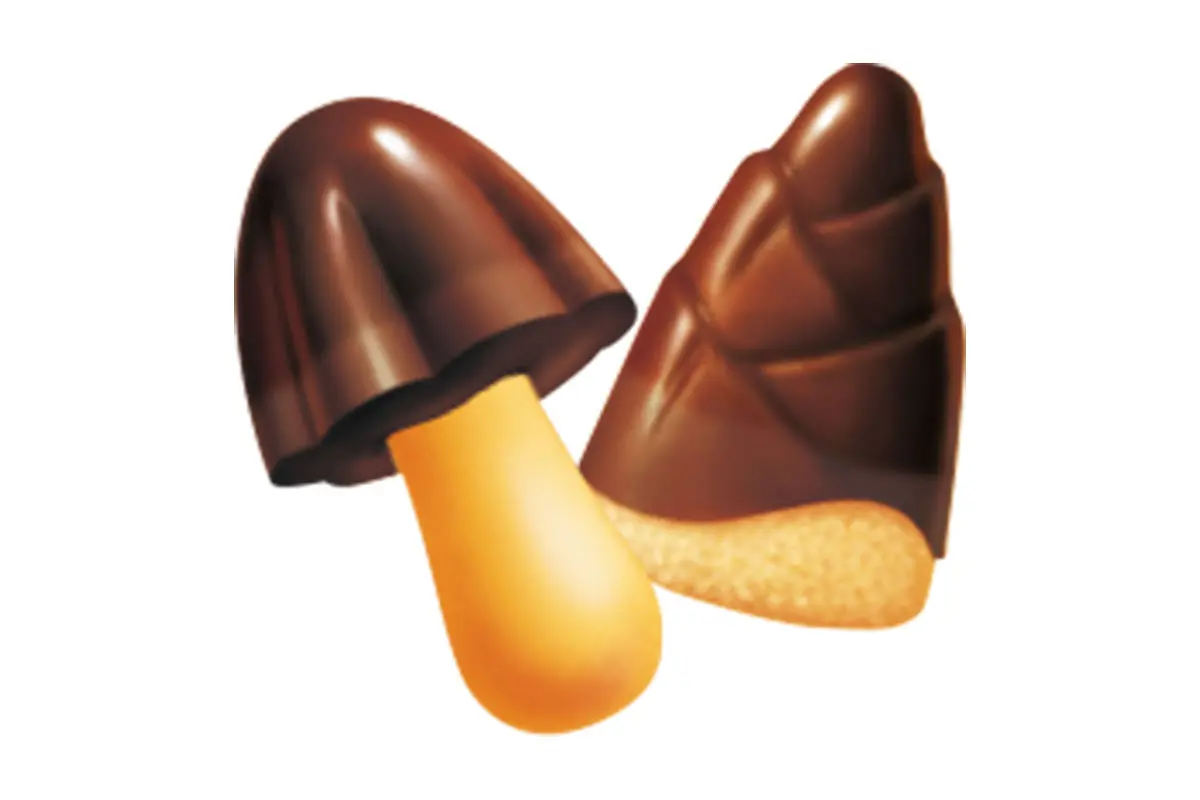
Kinoko no Yama has a two-layer structure, with chocolate sitting on top of a cracker, so you experience each texture separately and in sequence.
Because the chocolate ratio is higher and the cracker contains plenty of air, there is less resistance when you bite into it, making the overall texture light and easy to eat.
Takenoko no Sato, on the other hand, has an integrated structure in which chocolate coats the cookie, so the flavors and textures blend together with every bite.
The cookie portion has a buttery quality, letting you enjoy a satisfying crunch and a cohesive mouthfeel.
The main comparison points are as follows.
| Category | Kinoko no Yama | Takenoko no Sato |
|---|---|---|
| Launch Year | 1975 | 1979 |
| Base | Cracker | Cookie |
| Texture / Structure | Crisp and light | Crunchy |
| Main Element | Chocolate | Cookie |
| Chocolate Ratio per Piece | About 47% | About 37% |
Why Did the “Kinoko-Takenoko Controversy” Begin?
In Japan, Kinoko no Yama and Takenoko no Sato are more than a matter of personal preference and have become part of everyday life to the point that families and friends often talk about them.
Because it is a lighthearted rivalry rather than a real quarrel, it has become one of those shared topics that people discuss regardless of generation or region.
In the 1980s, this debate spread among consumers and naturally gave rise to what became known as the Kinoko-Takenoko Controversy.
With the spread of the internet, it developed into a full-fledged “Which side are you on?” culture and became established as a familiar conversation starter.
Then, after 2001, Meiji Co., Ltd. began holding popularity vote campaigns that split fans into Team Kinoko and Team Takenoko, turning it into an entertainment-filled social phenomenon.
The results, which have drawn millions of votes, are also fascinating because they reveal differences in regional preferences and trends.
Within Japan, Takenoko no Sato is often said to hold a slight edge.
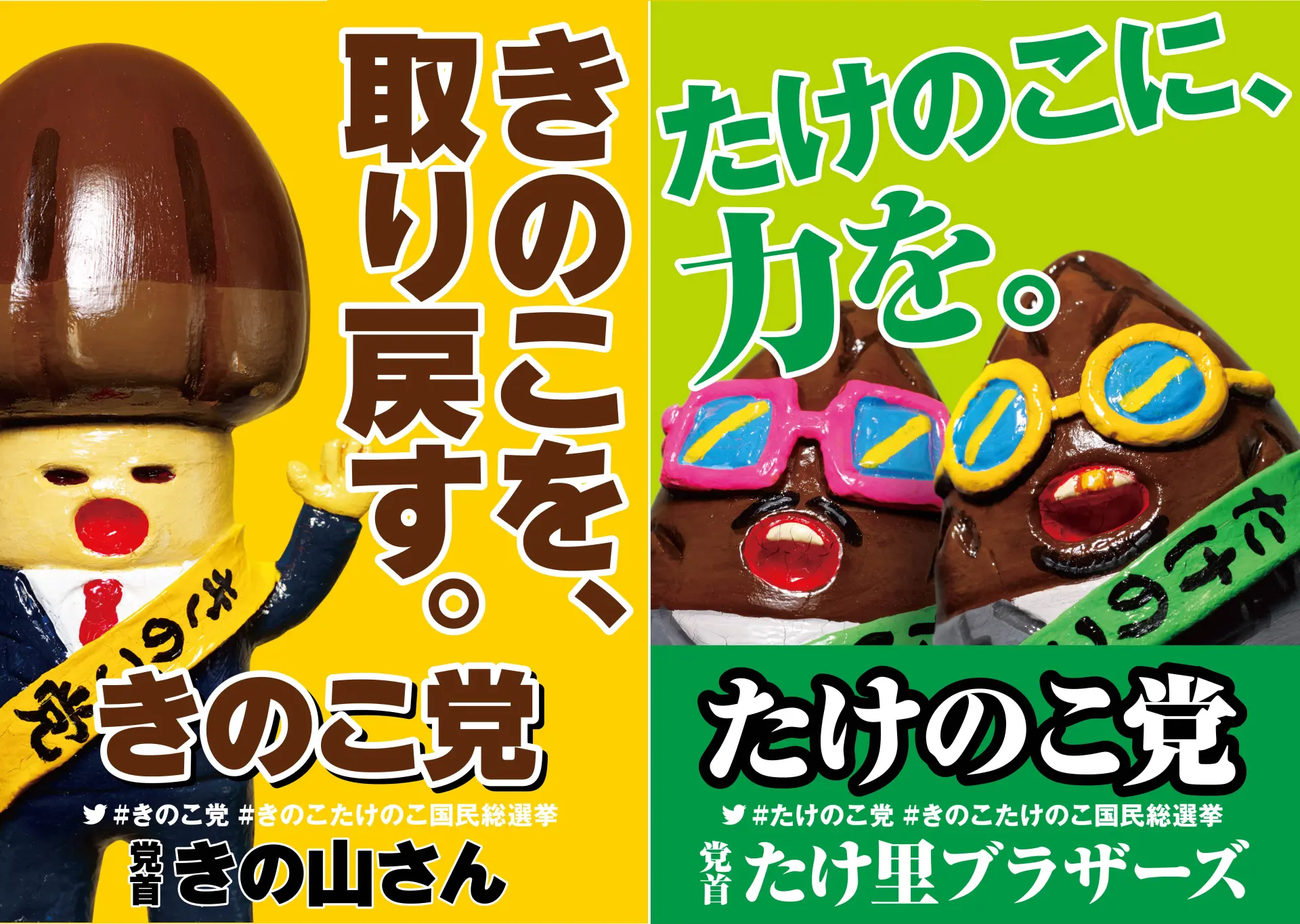
The History of the Official National Vote Campaigns
Meiji Co., Ltd. has held three official national voting campaigns to date, and Team Takenoko currently leads with two wins and one loss.
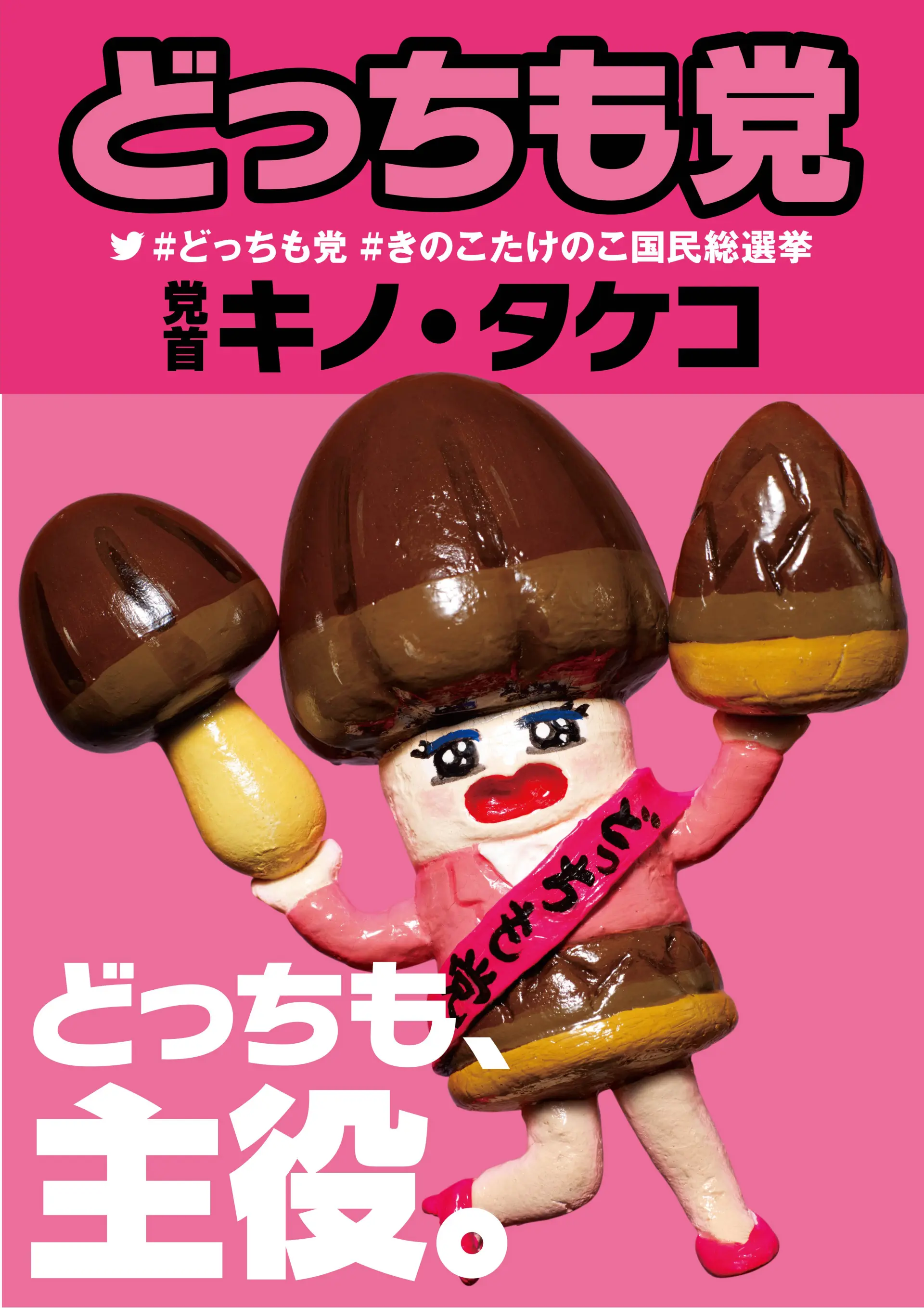
Team Takenoko won in both 2001 and 2018, but in 2019 the New Kinoko Party finally claimed its first victory with a dramatic comeback.
Unless the debate is ever brought to an end, the battle will likely continue for quite some time.
| Year | National Vote History |
|---|---|
| 2001 | The 1st Kinoko-Takenoko National Vote held → Team Takenoko wins |
| 2018 | The 2nd Kinoko-Takenoko National Vote held → Team Takenoko wins |
| 2019 | The 3rd Kinoko-Takenoko National Vote held → New Kinoko Party wins |
5 Japan-Exclusive Original Products from Kinoko no Yama and Takenoko no Sato
Kinoko no Yama and Takenoko no Sato are sold in countries around the world, but there are also original products available only in Japan.
Here, we introduce five especially popular flavors among them.
If you spot them in stores, be sure to pick them up.
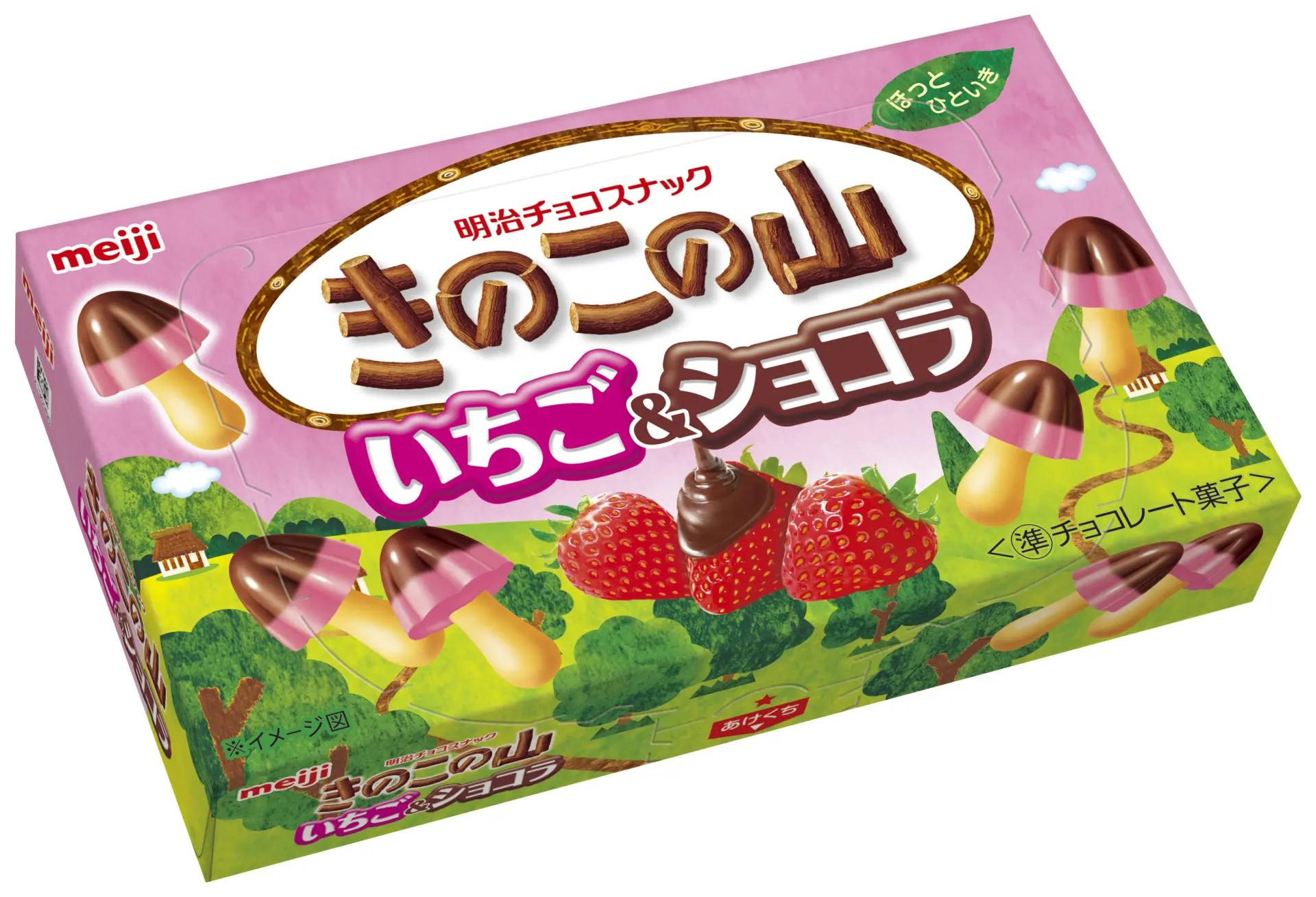
1. Kinoko no Yama Strawberry & Chocolate
This flavor features a two-layer combination of strawberry chocolate and cocoa-scented chocolate.
Its defining feature is a sweet-tart taste that feels like biting into a whole strawberry, resulting in a flavor that is light yet satisfying.
Its cute pink-and-brown two-tone appearance, perfect for social media, is also part of its popularity.
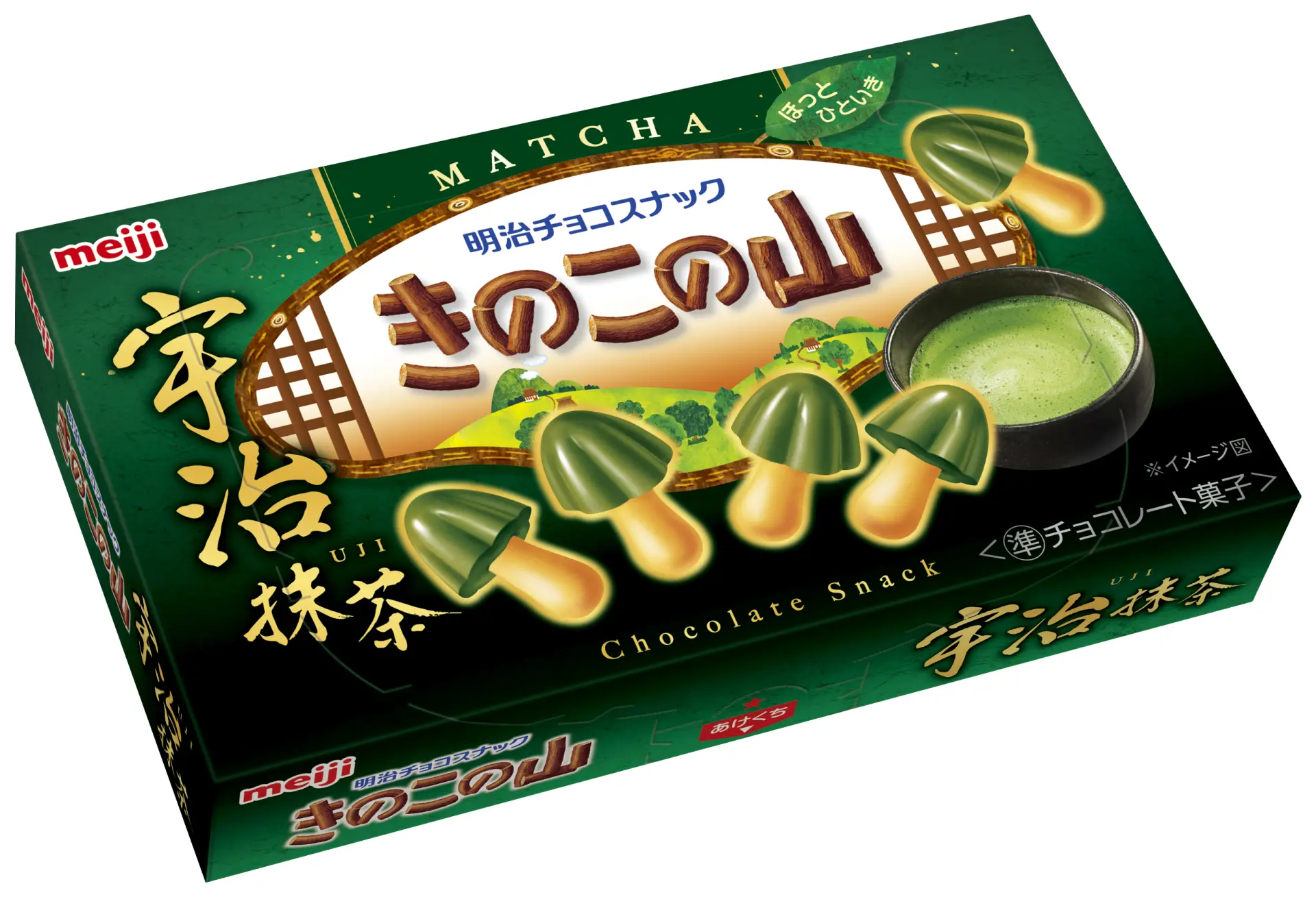
2. Kinoko no Yama Uji Matcha
This is a flavor aimed at adults, made with chocolate blended with high-quality Uji matcha.
The bitterness unique to matcha and its mellow sweetness are beautifully balanced, and a refined Japanese aroma gently spreads the moment it enters your mouth.
Its flavor is marked by lingering richness and astringency in the aftertaste, creating a deep taste with restrained sweetness.
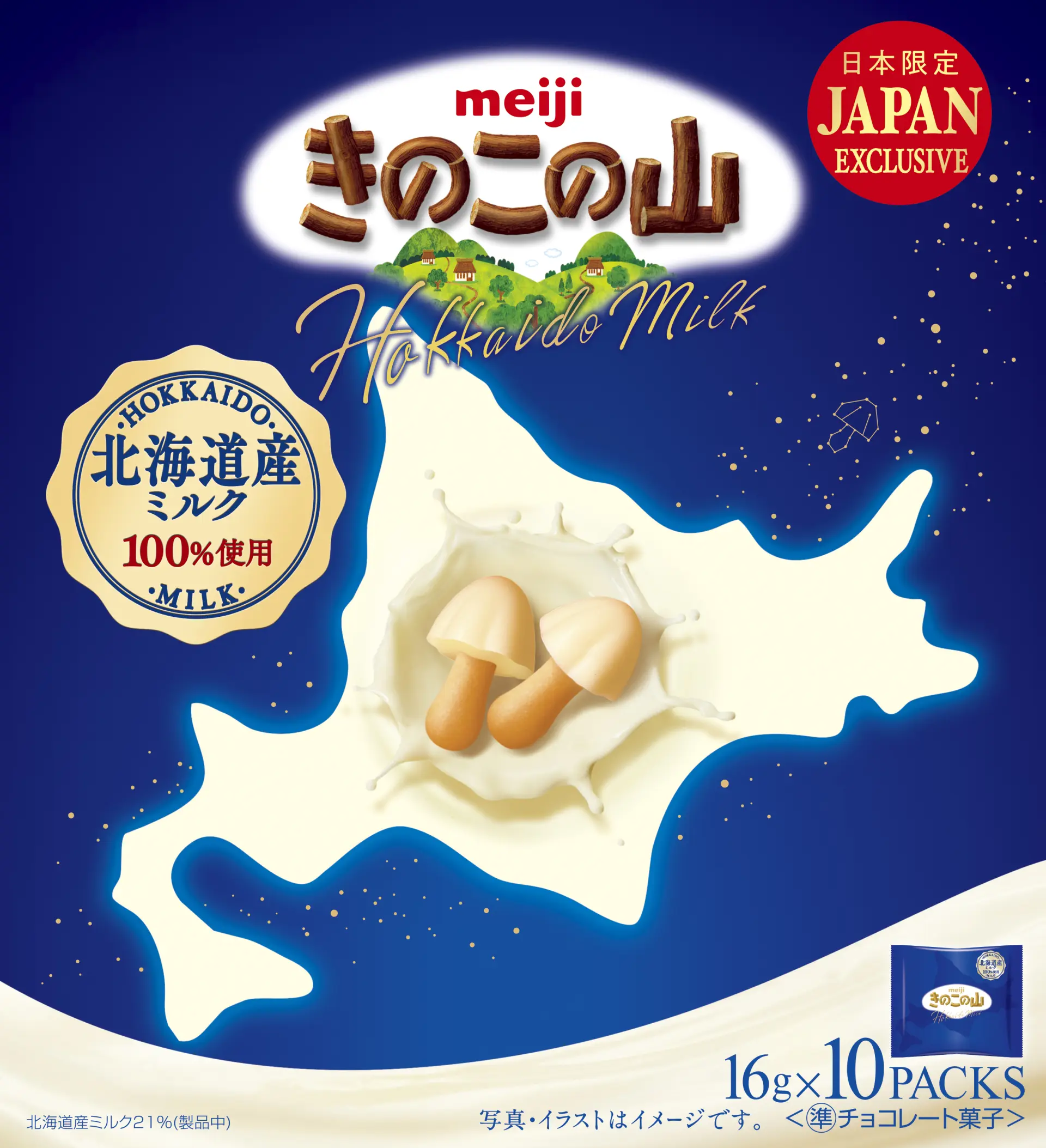
3. Kinoko no Yama Hokkaido Milk
This Hokkaido-exclusive flavor is made with 100% carefully selected Hokkaido milk.
Its defining quality is a gentle flavor in which the rich milkiness and umami of white chocolate spread across the palate.
Because it comes in individually wrapped packs (10 bags), it is easy to hand out and is also popular as a Hokkaido souvenir.
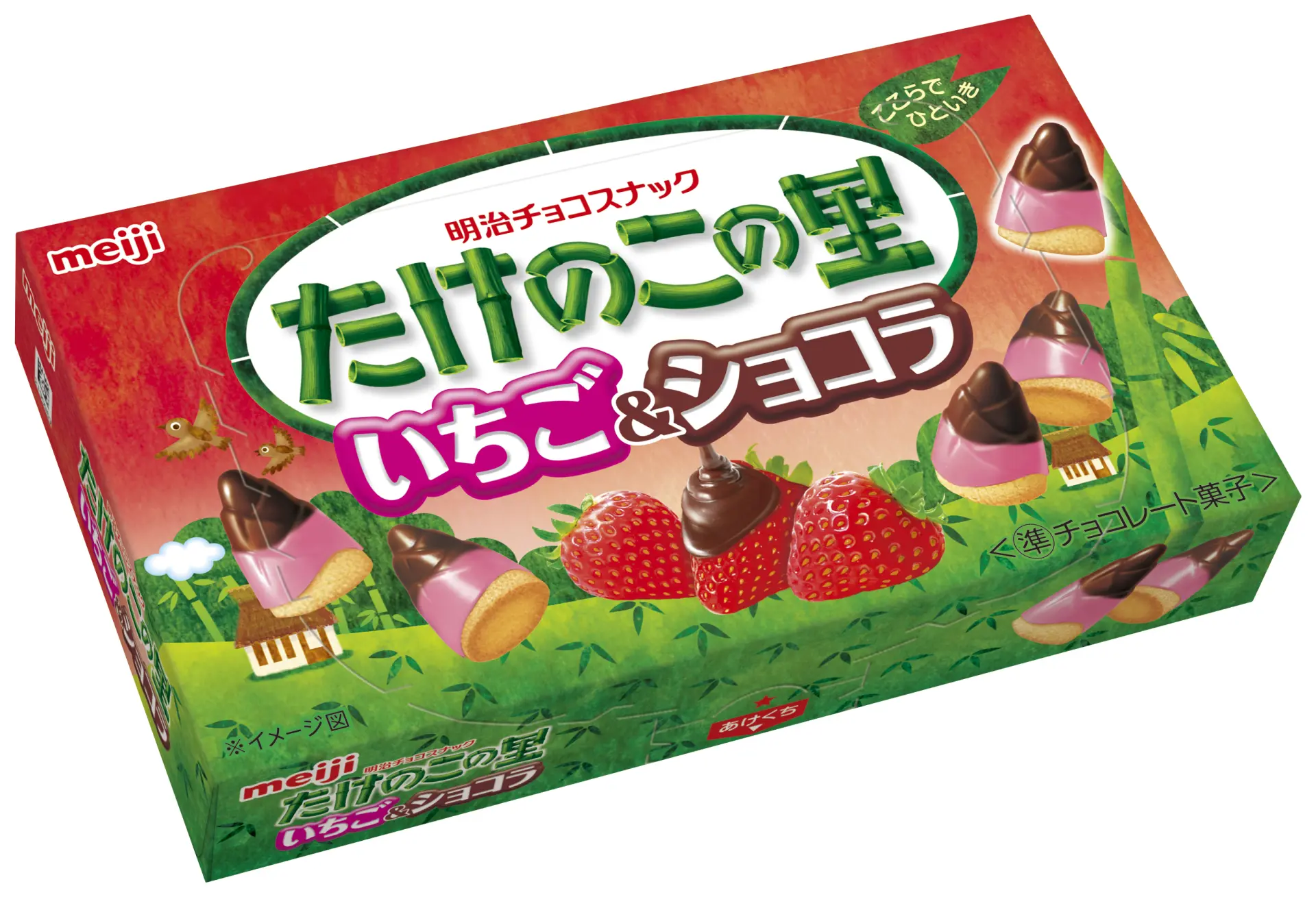
4. Takenoko no Sato Strawberry & Chocolate
This is the Takenoko no Sato version of the Kinoko no Yama Strawberry & Chocolate introduced above.
The strawberry chocolate is fruity and aromatic, with a bright sweet-tart flavor that spreads across the palate.
The cookie portion is crunchy and toasty, with a clean finish that makes you want to keep reaching for more.
It is also recommended to compare it with Kinoko no Yama and enjoy the differences between the two.
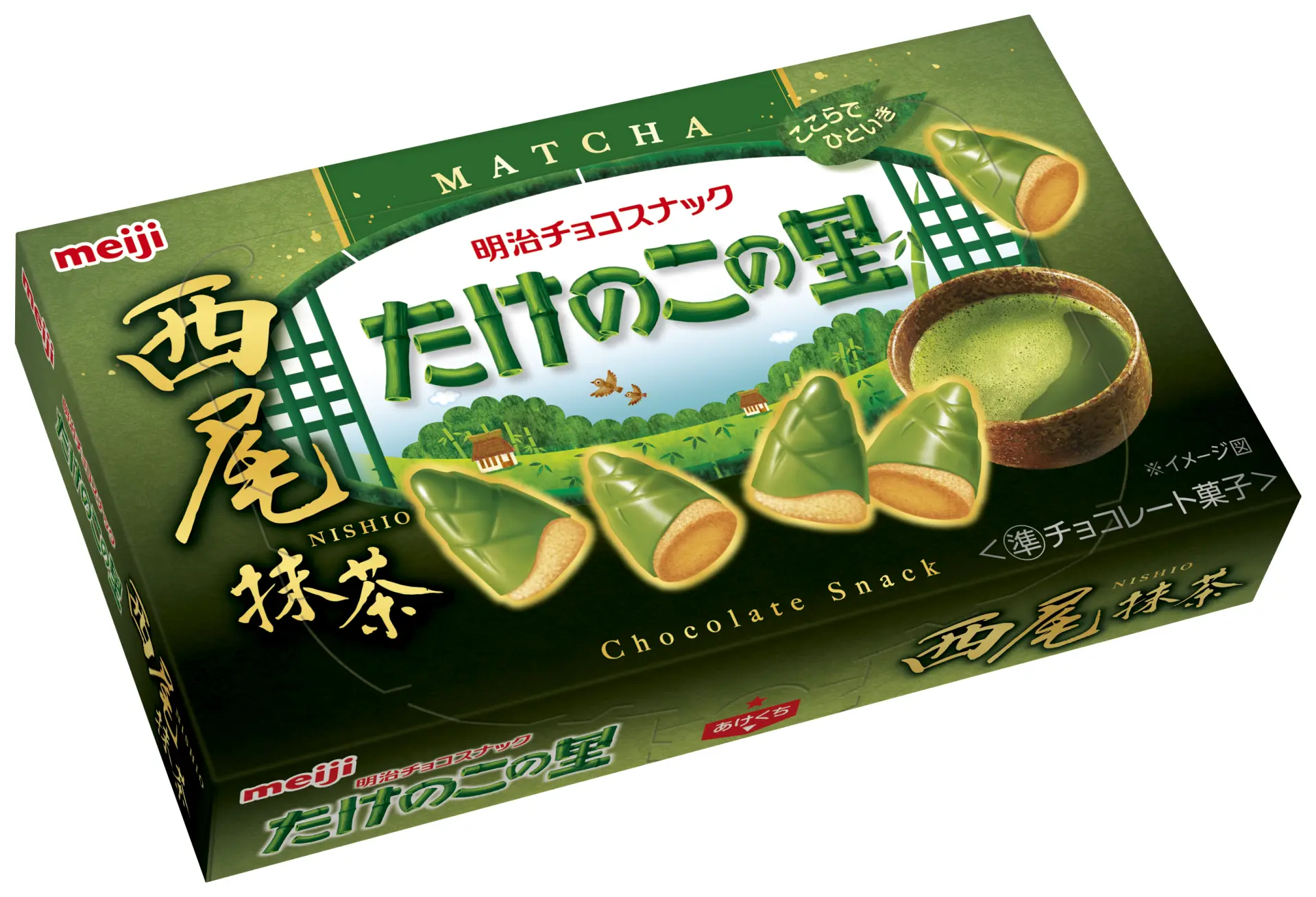
5. Takenoko no Sato Nishio Matcha
This flavor lavishly uses Nishio matcha chocolate, known for its refined, gentle umami and deep richness.
The aroma of matcha pairs exquisitely with Takenoko no Sato’s thick butter cookie.
Although the flavor is full and distinct, the bitterness and astringency are restrained, and the smooth melt makes it especially appealing to adults.
Where Can You Buy Kinoko no Yama and Takenoko no Sato?
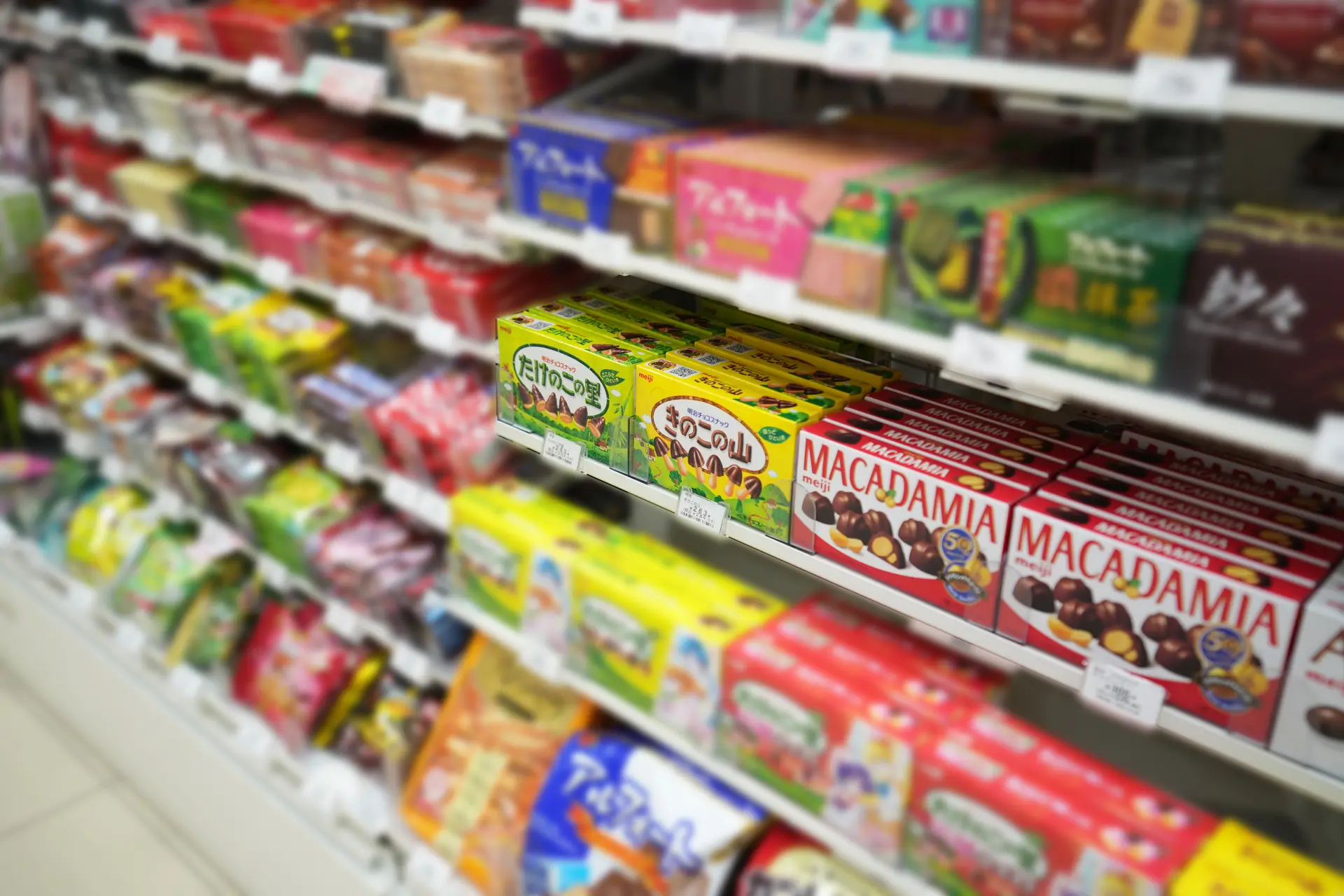
Kinoko no Yama and Takenoko no Sato can be purchased in all sorts of places, including convenience stores, supermarkets, Don Quijote, and airports.
In addition to standard boxed versions, they also come in large bags, souvenir packs, small packs, and assortments, letting you choose the right type for your needs.
In recent years, they have also become popular on social media, where many posts feature creative recipe ideas and side-by-side taste comparisons.
It is also recommended to buy both while traveling in Japan and, after returning home, talk with friends about which side you are on.
-
Also popular as a souvenir from Japan
-
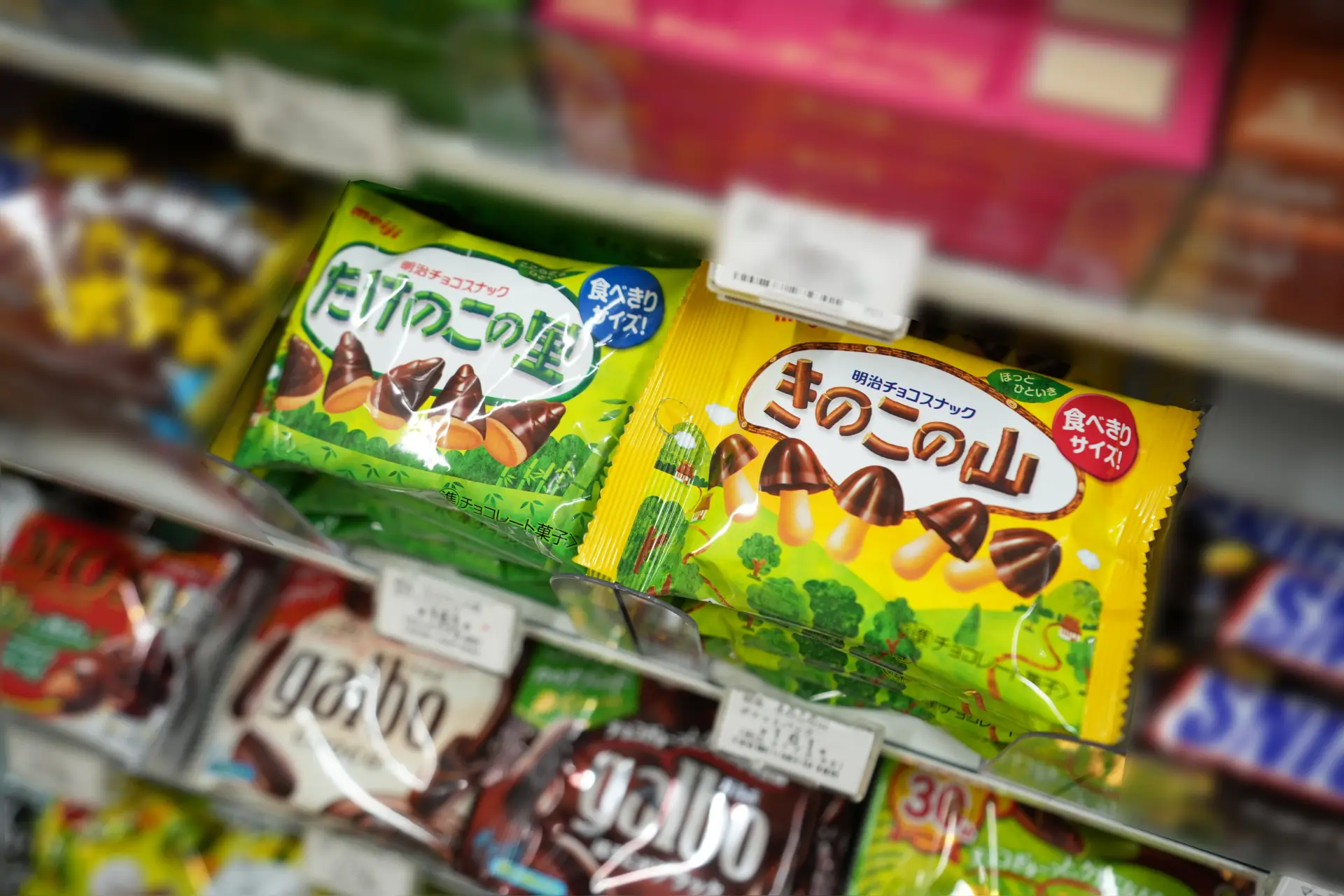
Available in a smaller size, too.
The More You Dig, the More Interesting They Get: 4 Fun Facts about Kinoko no Yama and Takenoko no Sato
From here, let us look at some surprising fun facts about Kinoko no Yama and Takenoko no Sato.
These episodes, from development stories to official characters, reveal the depth of Japan’s snack culture.
1. The Idea Began with Another Chocolate Snack
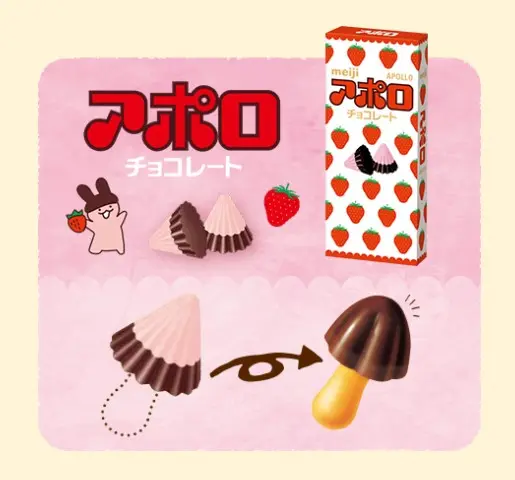
Kinoko no Yama began with a prototype created while making use of the production line for Apollo.
The mushroom-shaped silhouette, born from an accidental idea, was considered too eccentric and drew mixed reactions internally, but after about five years of refinement it was successfully turned into a product.
Once sales began, following careful preparation in everything from the packaging to the name, it became an explosive hit and went on to become a long-selling product loved for more than 50 years.
2. The Packaging Has Been Renewed Many Times
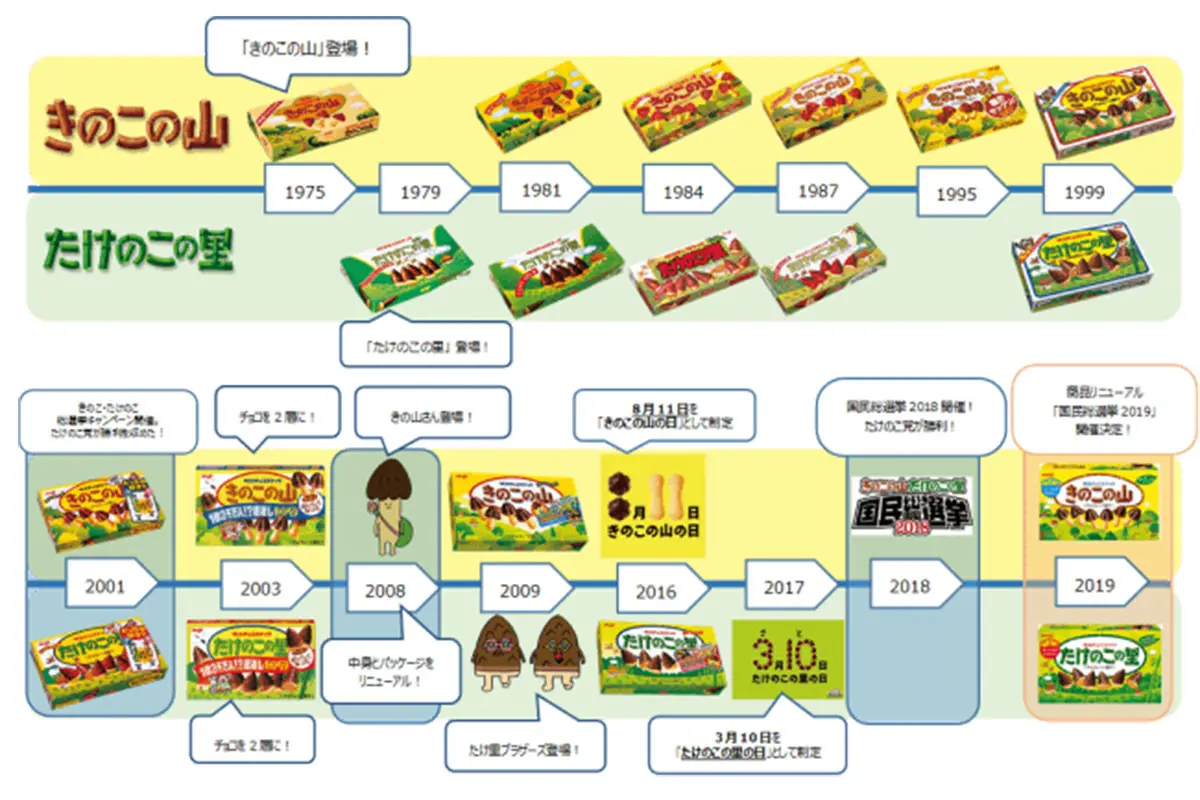
The packaging of Kinoko no Yama and Takenoko no Sato has been revamped many times since their launch.
While the basic design concept has been preserved, careful changes can be seen in the details, including the font, color tones, illustrations, and background.
This is not merely a matter of changing the appearance, but also a design effort tailored to the sensibilities of consumers in each era.
It strikes a balance by holding on to existing fans who seek nostalgia while also helping new generations feel that the packaging is still fresh and current.
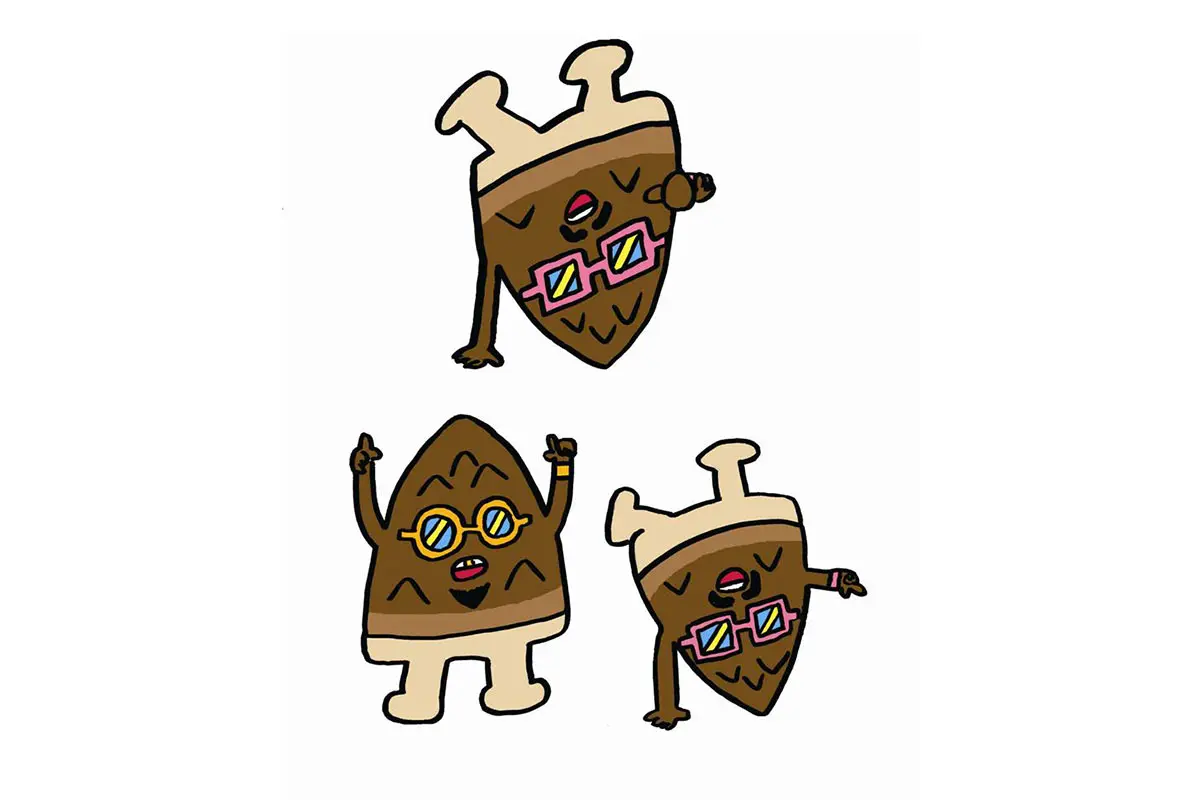
3. They Have Official Characters
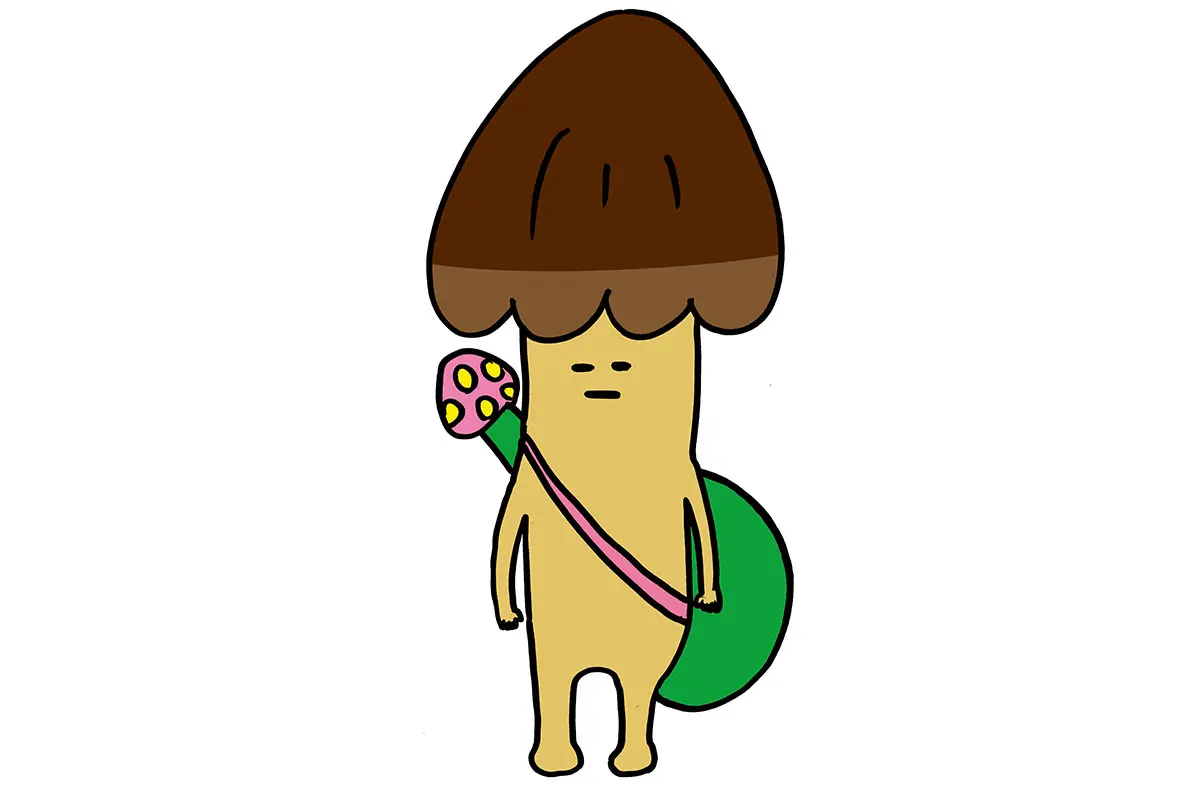
Kinoko no Yama and Takenoko no Sato have distinct official characters.
Kino Yama-san (35), a man of unyielding convictions, is a street musician who quickly turns his feelings into song.
The Take Sato Brothers (30), meanwhile, are a hip-hop brother duo with contrasting personalities.
While building a good rivalry, both appear in commercials, campaigns, and packaging as part of their promotional activities.
4. They Are Actually Registered as Three-Dimensional Trademarks
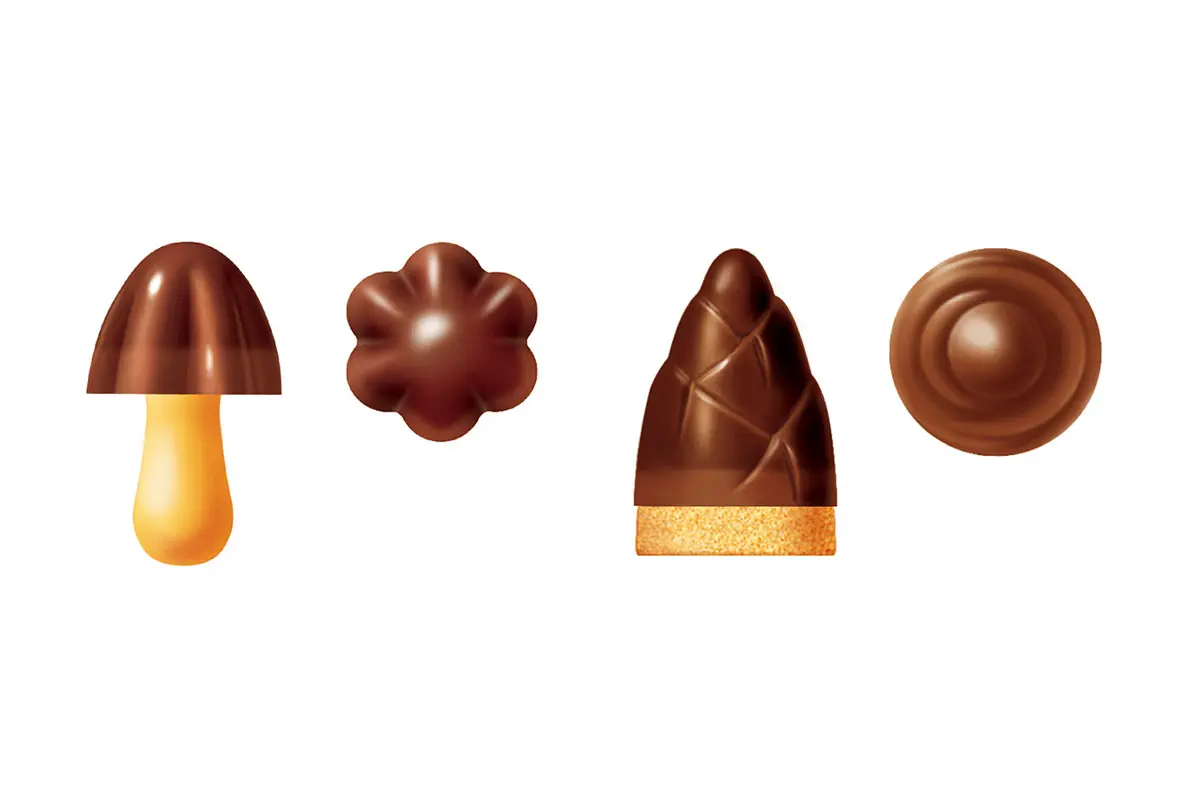
Kinoko no Yama was registered as a three-dimensional trademark in 2018, and Takenoko no Sato followed in 2021.
Because three-dimensional trademarks require enough originality for the product to be identified by its shape alone, recognition in the food sector is rare.
Meiji Co., Ltd. actually tried to apply for both right after the system was introduced in 1997, but the applications were rejected, and Kinoko no Yama was only approved on its third attempt.
The decisive factor was a consumer survey that showed a recognition rate of about 90%.
This could be seen as proof of both the uniqueness of their design and the brand value they have built up over many years.
Summary
We have looked at the features, differences, and fun facts behind the iconic chocolate snacks Kinoko no Yama and Takenoko no Sato.
The two products have created the playful culture of being “Team Kinoko” or “Team Takenoko,” and have become part of everyday life as a form of communication that connects people across generations.
The question “Which side are you on?” has, at times, connected family members, friends, and even complete strangers.
When traveling in Japan, we hope you will buy both and enjoy the unique cultural experience of deciding which one is your personal favorite.