
![[Tokyo Daijingu Travel Guide] A Complete Guide to the Highlights of This Matchmaking Power Spot!](https://static.gltjp.com/glt/data/article/22000/21412/20260506_215805_a18a6e18_w1920.webp)
[Tokyo Daijingu Travel Guide] A Complete Guide to the Highlights of This Matchmaking Power Spot!
Tokyo Daijingu is a prestigious shrine affectionately known as “Tokyo’s Ise Shrine.”
It is especially famous for its blessings in matchmaking and as a power spot for love, drawing many visitors, especially young women.
Although located in central Tokyo, the shrine grounds are rich in greenery, offering a quiet atmosphere for a peaceful visit.
This article covers Tokyo Daijingu’s basic details, worship etiquette, highlights, amulets, and ema prayer plaques.
We’ve gathered all the essential information in an easy-to-understand way, even for first-time visitors, so be sure to read to the end.
What is Tokyo Daijingu Like?
Located in Chiyoda City, Tokyo, Tokyo Daijingu is a prestigious shrine counted among the Tokyo Five Shrines.
Its enshrined deities include Amaterasu-sume-okami and Toyouke-no-okami, the same deities worshipped at Ise Jingu, and because of this close connection it is called “Tokyo’s Ise Shrine.”
In addition to these two deities, the shrine also enshrines the three deities of creation, who govern the “power of connection” in all things in heaven and earth, as well as Yamatohime-no-mikoto, making it especially famous nationwide for blessings in matchmaking.
Visitors from across Japan come every day, including women praying for a good match, as well as people seeking a wide range of meaningful connections in work, relationships, and business prosperity.
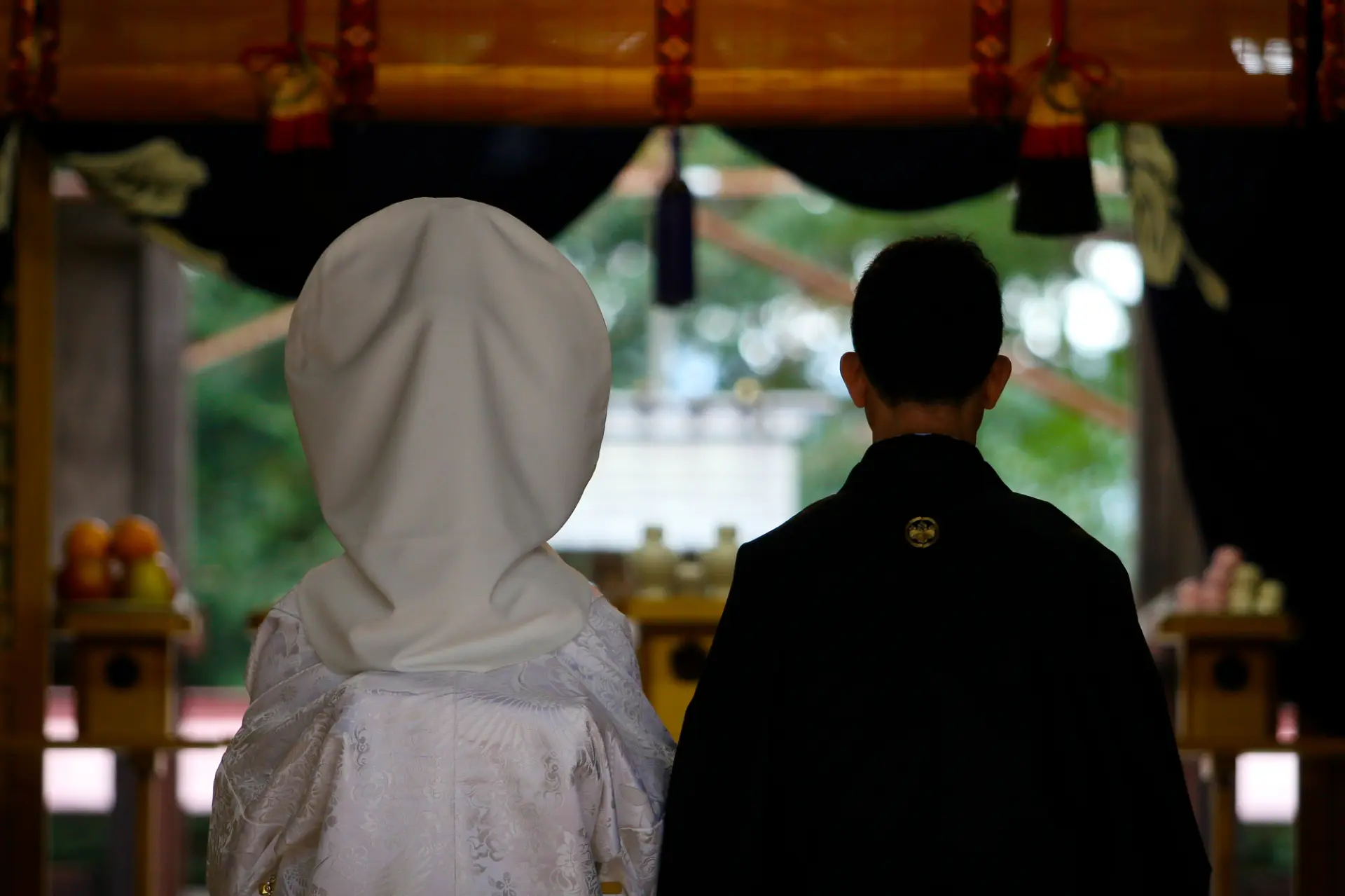
It is also known as the first shrine in Japan to establish Shinto wedding ceremonies, a traditional Japanese wedding style held at a shrine or shrine hall.
The Origins of Tokyo Daijingu
For people in the Edo period (1603–1868), visiting Ise was a lifelong wish, but considering the distance and travel time from Tokyo to Mie Prefecture, it was not very practical.
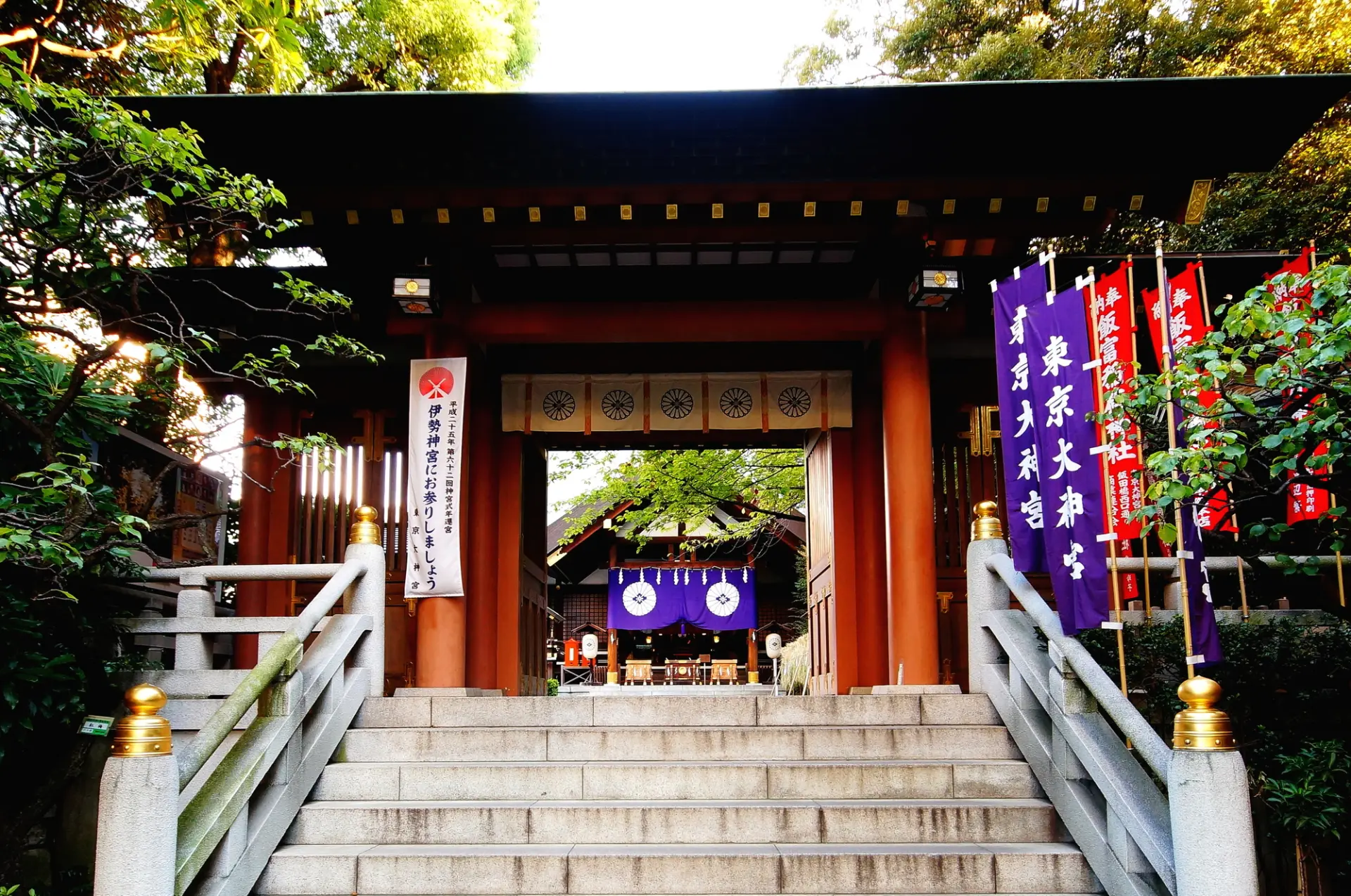
After the birth of the new nation, Tokyo Daijingu was founded in 1880, following the decision of Emperor Meiji, as a yohai-den in Tokyo—a hall for worshipping Ise Jingu from afar.
At the time, it stood on the former site of Okuma Shigenobu’s residence in Yurakucho and was called Hibiya Daijingu (Hibiya Kotaijingu).
After the Great Kanto Earthquake of 1923, it was relocated to its current site in Iidabashi in 1928, renamed Tokyo Daijingu in 1946, and remains there today.
It also helped popularize Shinto wedding ceremonies for the general public after the marriage of Crown Prince Yoshihito, later Emperor Taisho, in 1900, establishing the prototype of today’s ceremony.
Access to Tokyo Daijingu
The nearest station to Tokyo Daijingu is Iidabashi Station, served by the JR Chuo and Sobu Lines, Tokyo Metro Yurakucho, Namboku, and Tozai Lines, and the Toei Oedo Line.
The shrine is Approx. a 5-minute walk away, but the best exit differs by line, so take note.
For JR lines, the West Exit is convenient; for the Yurakucho and Namboku Lines, use Exit B2a; and for the Tozai and Toei Oedo Lines, use Exit A4.
Shinjuku Station and Ikebukuro Station offer direct access, while Tokyo Station is reached via JR Ochanomizu Station; all routes take Approx. 15–20 minutes, making it easy to visit from central Tokyo.
Tokyo Daijingu Visiting Hours
Tokyo Daijingu’s visiting hours (admission is free) are as follows.
Because it is open from early morning until night, you can adjust your visit to fit your sightseeing plans.
However, it is usually very crowded on weekends and holidays from 10:00am to 4:00pm, as well as on New Year’s Day, during spring break, and on Tanabata, so wait times are likely.
If your visit overlaps with these periods, it is best to plan with extra time.
If you want to worship at a relaxed pace, visit early in the morning or on a weekday evening.
- Hours
- 6:00am–9:00pm
- Amulet and Ofuda Counter
- 8:00am–7:00pm
- Goshuin Counter
- 9:00am–5:00pm
- Prayer Reception
- 9:00am–4:30pm
*Hours may change during the year-end and New Year holidays or festivals. Updates are provided in advance on the official website.
What Is the Best Season to Visit Tokyo Daijingu?
Tokyo Daijingu is enjoyable for worship and sightseeing at any time of year.
Among all seasons, spring is especially recommended, when cherry blossoms decorate the shrine grounds.
The viewing period is long, from Kawazu-zakura cherry blossoms in late February to early March to double-flowered cherry blossoms in mid-April, letting visitors enjoy a bright and festive atmosphere.
Around April also coincides with the start of the new academic and business year, making it a fitting time to pray for new encounters and good relationships.
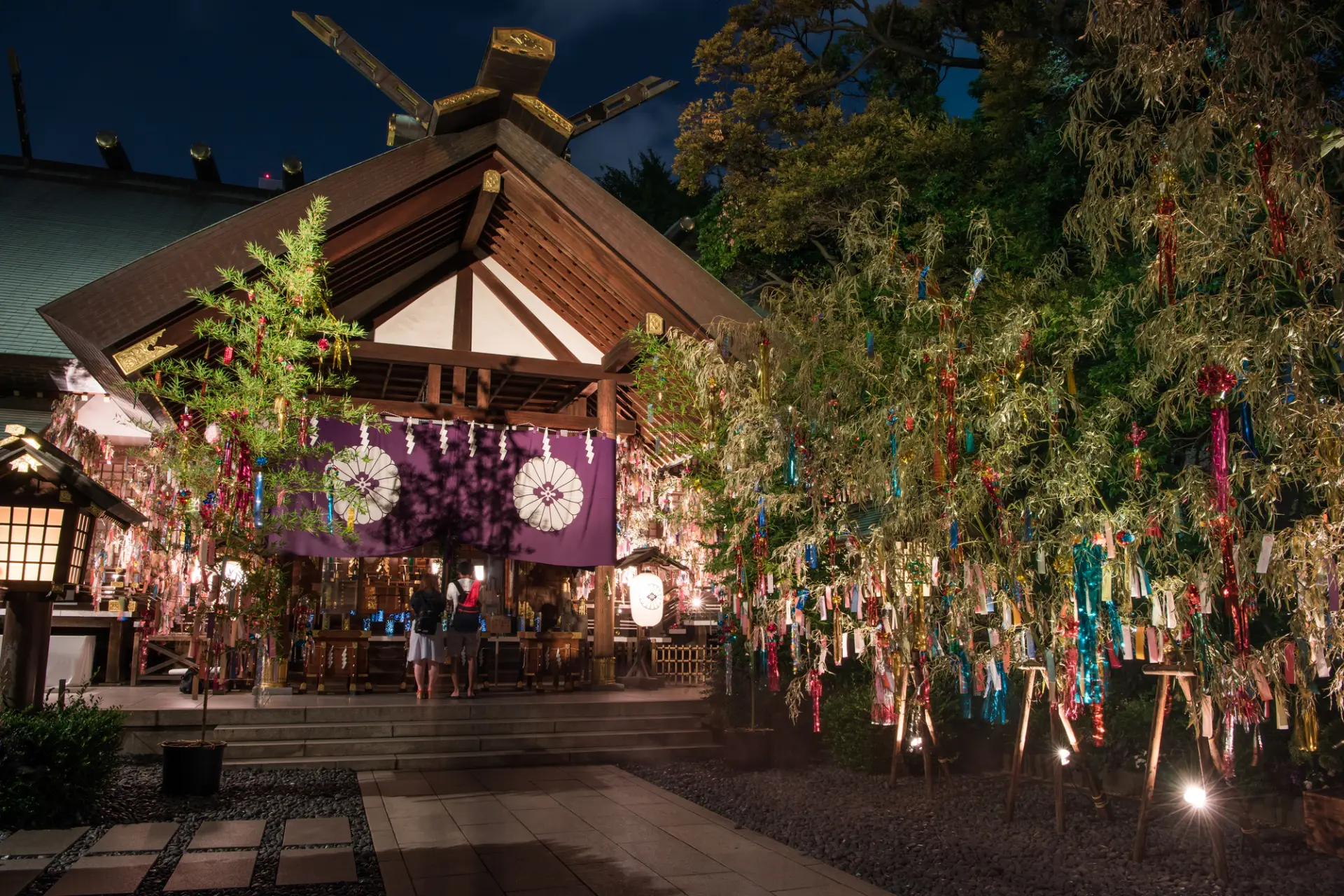
The Tanabata season is also popular with people praying for love and with couples.
Limited seasonal tanzaku strips, such as Orihime Tanzaku and Hikoboshi Tanzaku, and amulets, such as Tanabata-mamori and Shiawase Hoshi Mamori, are offered, and after sunset the illuminated shrine reveals a different atmosphere from daytime.
In addition to being surrounded by a romantic setting, joining the Tanabata Prayer Festival on July 7 offers a special experience.
How to Worship at Tokyo Daijingu and the Shinpai-shi Prayer
Here is how to worship at Tokyo Daijingu.
Keep these steps in mind so your wishes reach the deities.
- Bow lightly before the torii gate, then pass through
- Avoid walking in the center of the approach
- Purify your hands and mouth at the temizuya water basin
- Offer a coin at the worship hall and straighten your posture
- Recite the shinpai-shi prayer three times
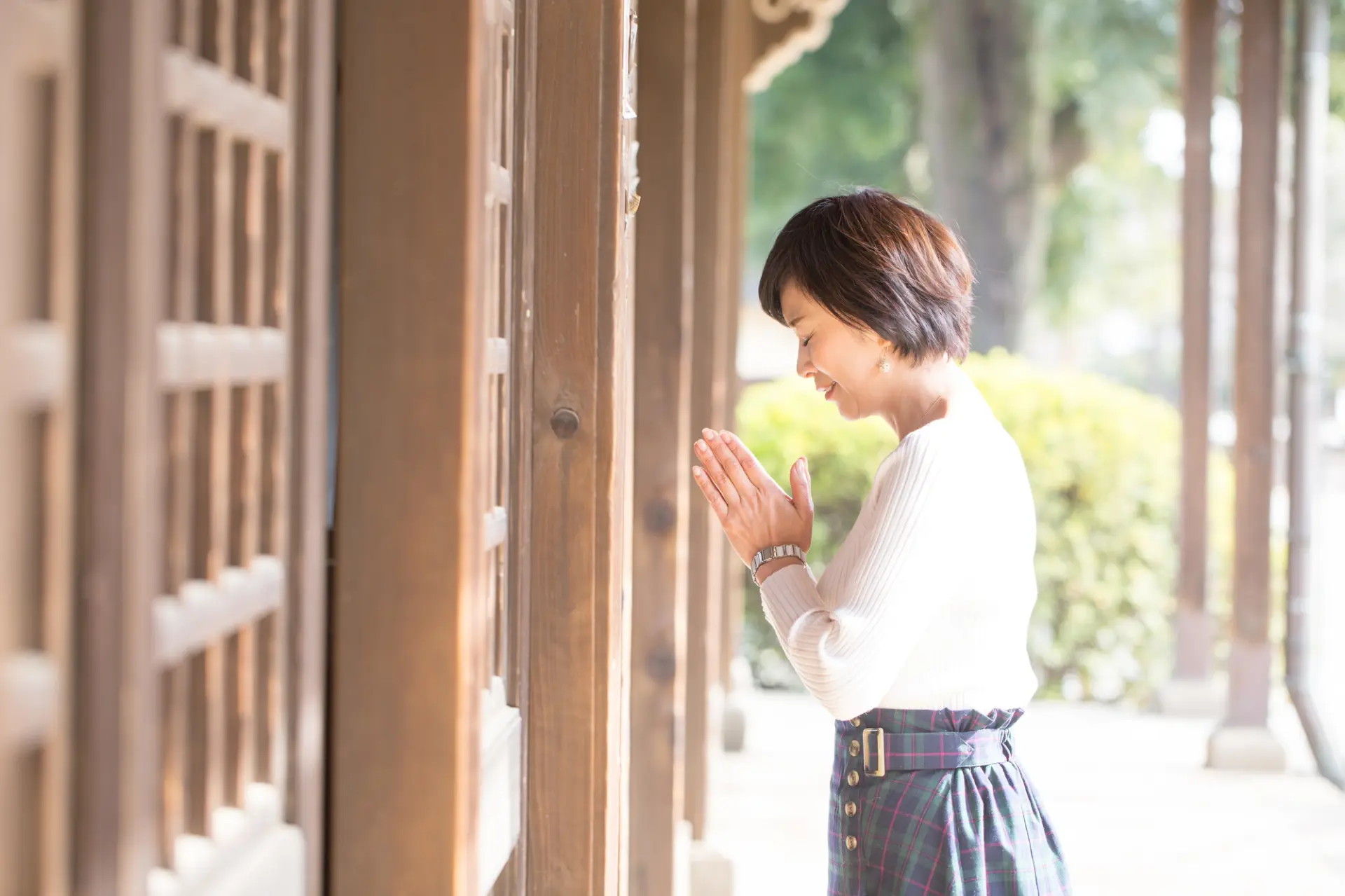
- Worship with two bows, two claps, and one bow
Shinpai-shi refers to a general term for short norito prayers or words recited when worshipping a deity, and is a prayer commonly used in front of shrines and household altars.
Tokyo Daijingu’s shinpai-shi is “Harae tamae, kiyome tamae, kamunagara mamori tamae, sakiwae tamae,” meaning “Please purify me, cleanse me, protect me by the will of the kami, and grant me happiness.”
It is written next to the offering box, so you do not need to memorize it, but do not forget to recite it.
For more details on shrine worship etiquette, see the article below.
The Ultimate Power Spot! 5 Highlights of Tokyo Daijingu
From here, we will introduce five main highlights of Tokyo Daijingu.
These symbolic spots let you experience the shrine’s appeal with all five senses while receiving blessings such as matchmaking and better luck.
Each has its own distinctive features, so use the information below to make your visit even more fulfilling.
1. The Graceful Main Hall
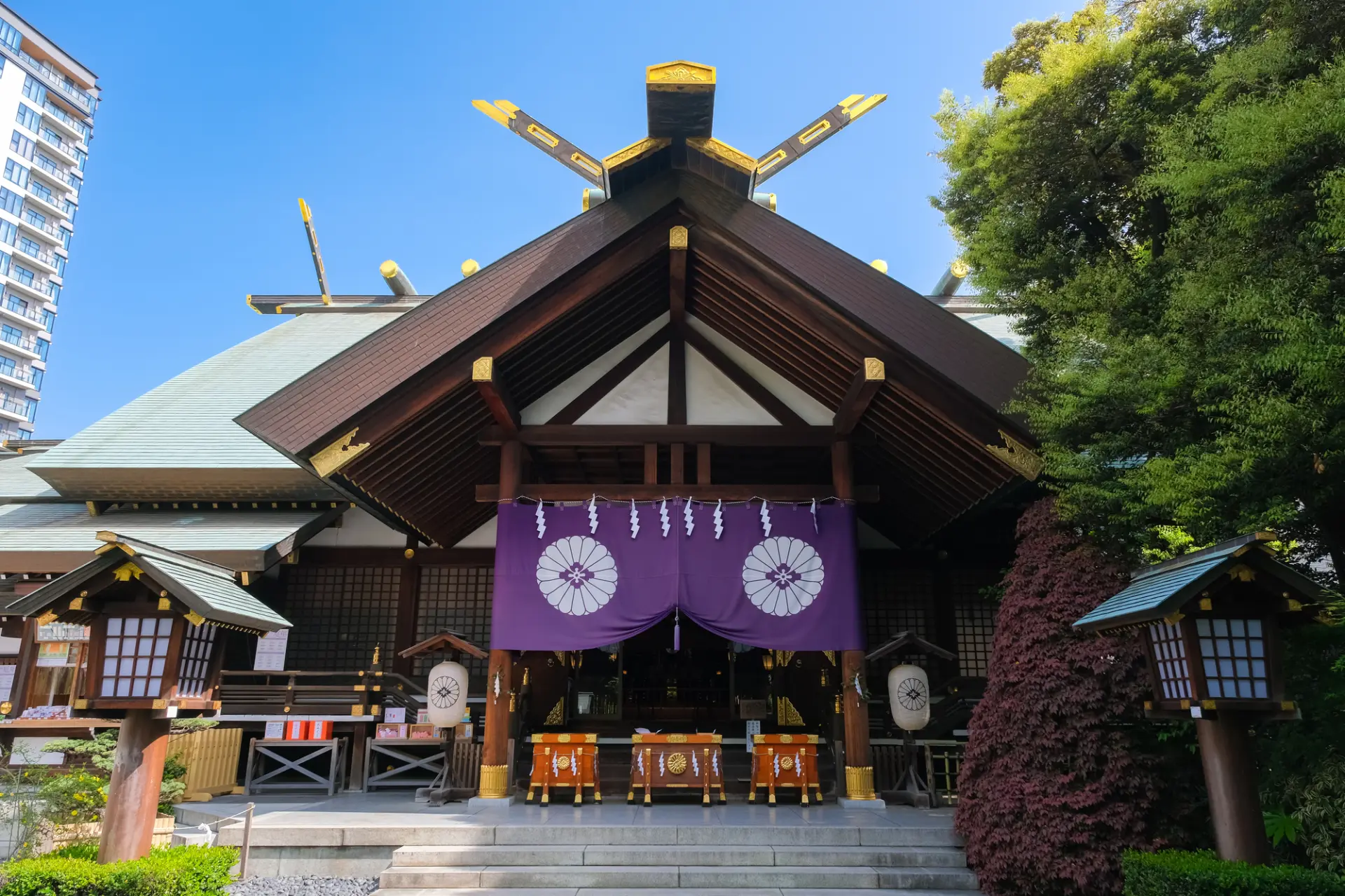
The Main Hall, where the deities are enshrined, is the sacred center of worship.
After climbing the stone steps and passing through the torii gate and shrine gate, you will enter the grounds and see the worship hall directly ahead.
Built in the shinmei-zukuri style modeled after Ise Jingu, it welcomes visitors with an elegant, dignified presence.
The moment the noise of the city fades and pure air surrounds you is a special experience only visitors can feel.
It is also a place where the mind naturally settles and it becomes easier to focus on prayer, and long lines often form with worshippers praying for good relationships.
Traditional shrine architectural details, such as the chigi and katsuogi set on the gabled roof, are also highlights.
2. The Historic Iitomi Inari Shrine
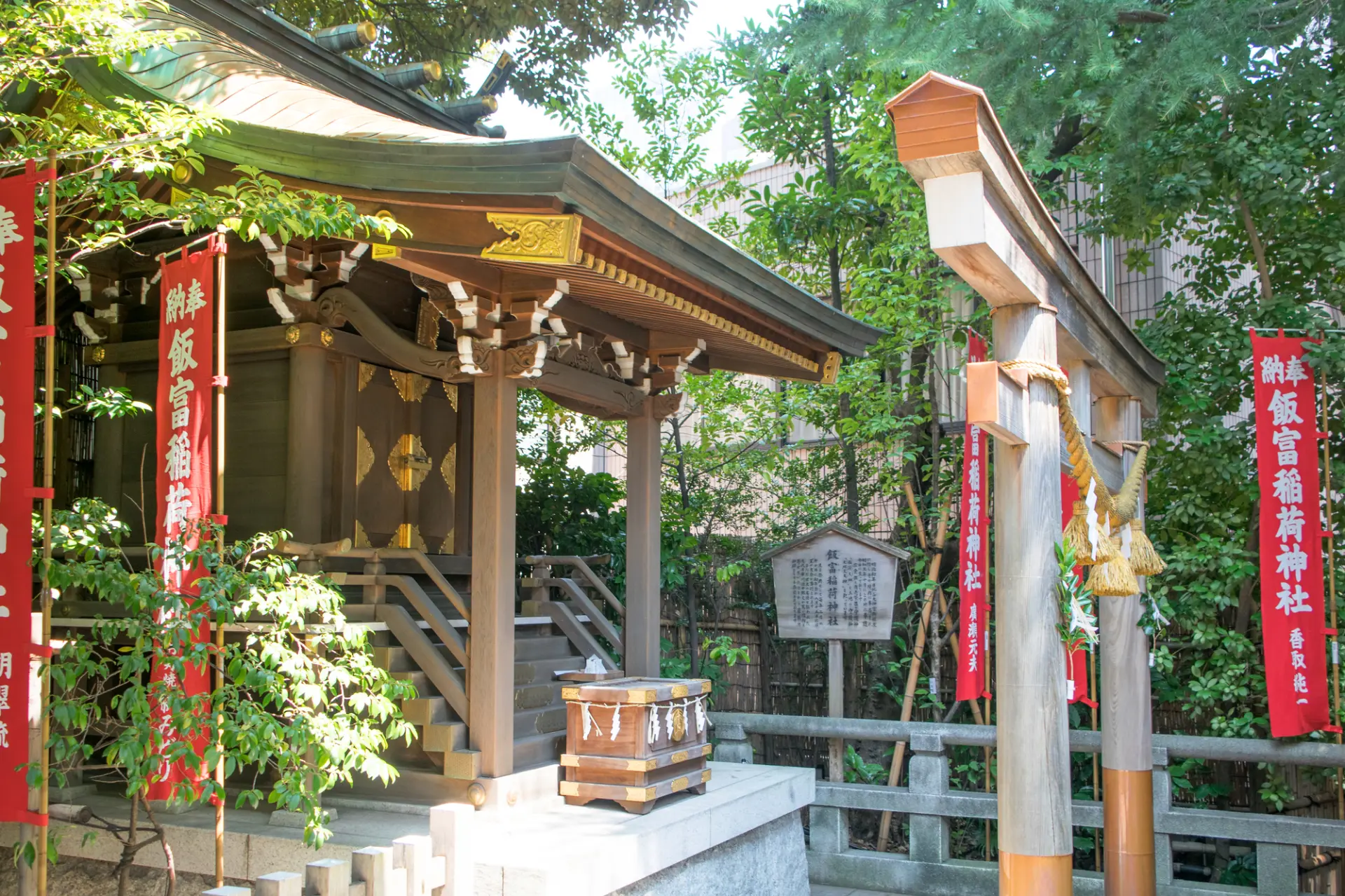
Iitomi Inari Shrine, located within the grounds of Tokyo Daijingu, is a historic auxiliary shrine that has been worshipped since the days of Hibiya Daijingu.
It enshrines Inari-no-okami, who governs food, clothing, shelter, and business prosperity, and Ootokonushi-no-okami, the guardian deity of the land, and is said to grant blessings such as business success and abundant harvests.
It is also famous as a deity of the performing arts, as the extraordinary actor Ichikawa Danjuro IX was deeply devoted to it.
At the annual Hatsuuma Festival in March, kabuki actors and entertainers customarily dedicate handwritten ema prayer plaques to pray for improvement in their art, an event many fans look forward to.
3. The Sacred Tree, a Quiet Healing Space
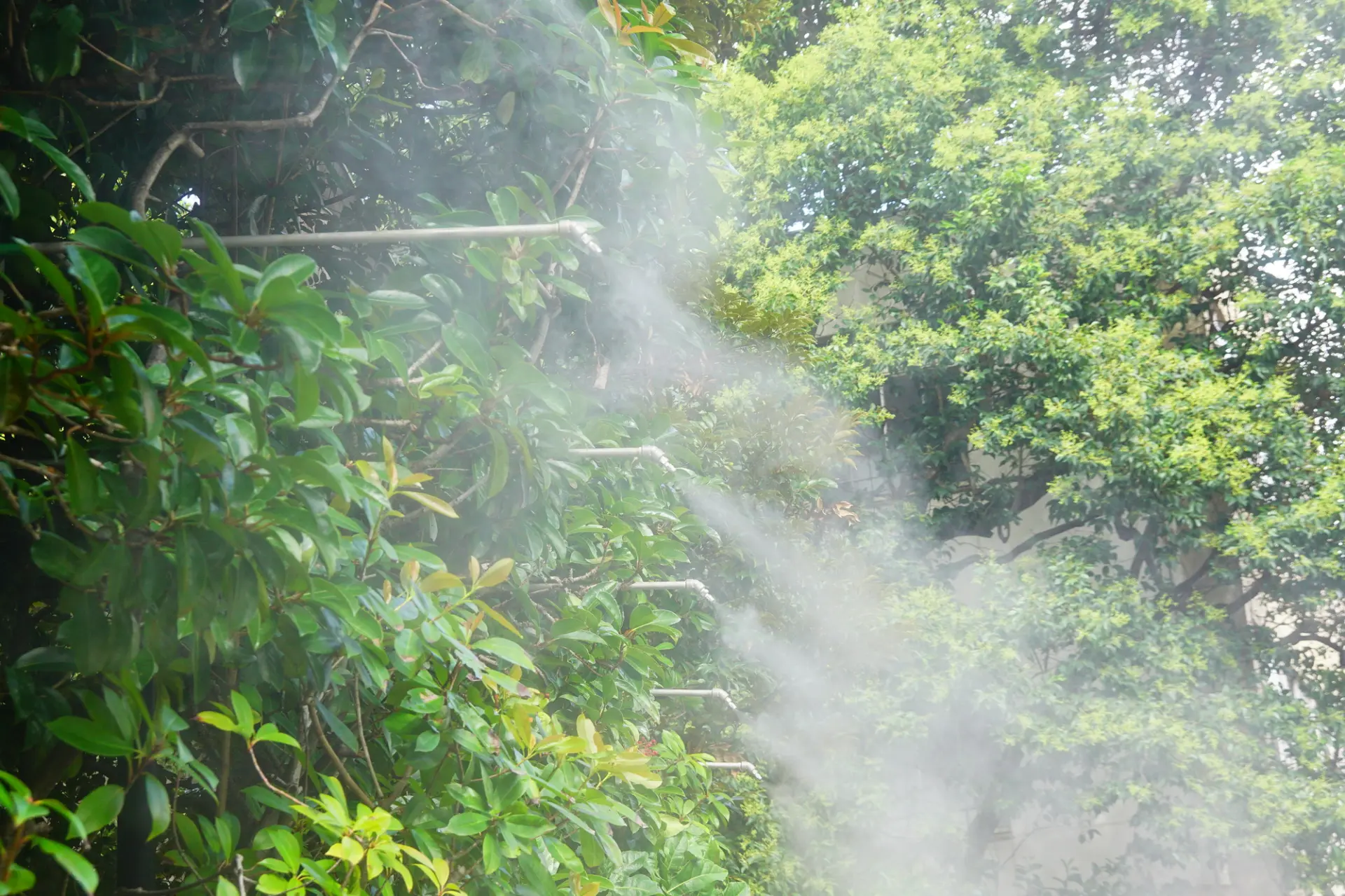
The sacred tree to the right of the worship hall is a Japanese chinquapin over 100 years old, and its stately form and greenery draw the eye.
A shimenawa sacred rope is tied around its trunk, and it continues to watch over visitors quietly with a sacred atmosphere.
Its divine appearance in the sunlight gives viewers a sense of peace and a positive feeling.
It is said that setting a photo of the sacred tree as your smartphone wallpaper will bring good relationships, making it popular as a power spot for love and better luck.
There is also a small waterfall and stream nearby, and the clear sound of water calms the body and mind and refreshes your mood, so it is recommended to stop by after worshipping.
4. Inome, a Heart-Shaped Motif
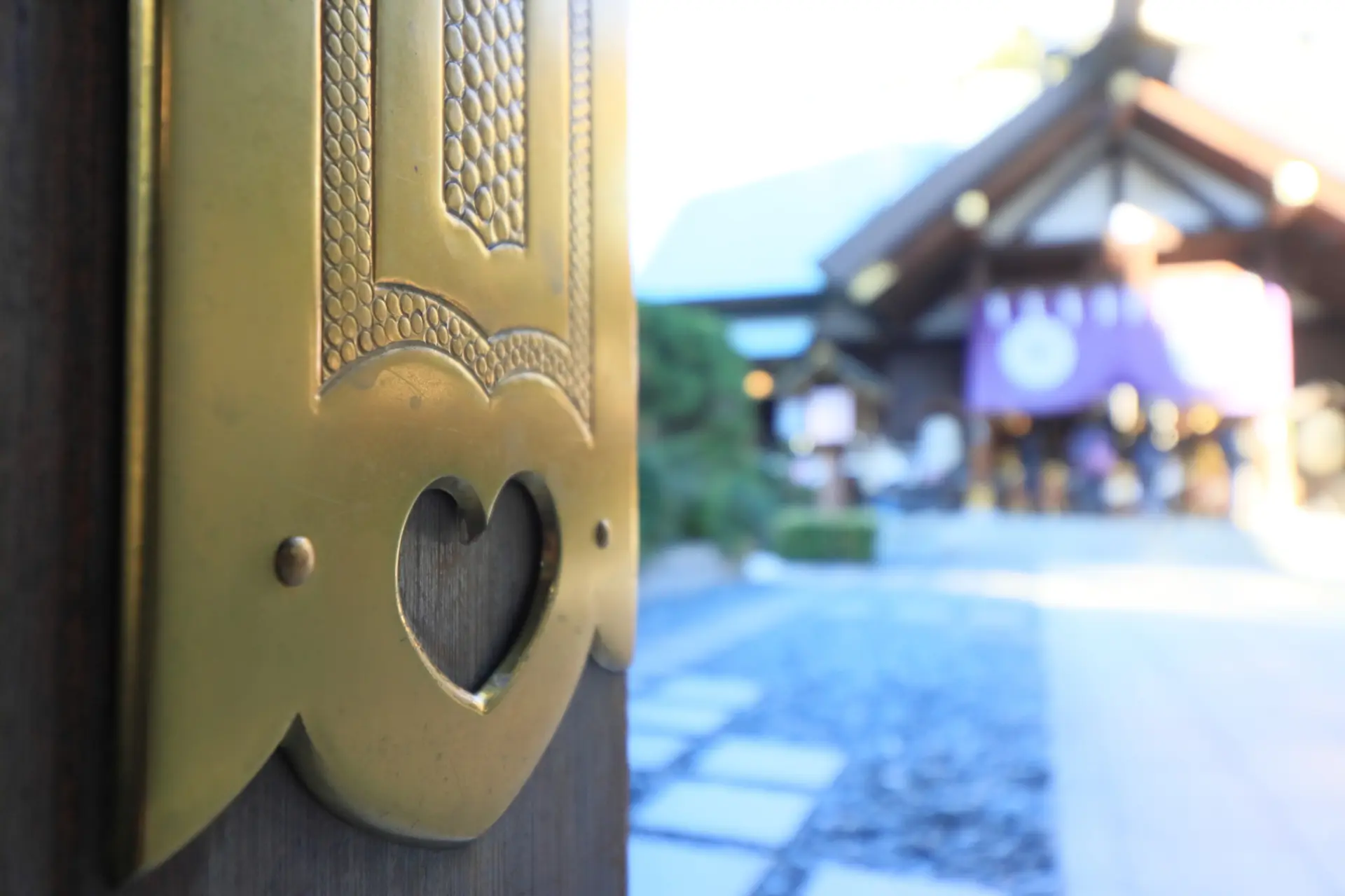
Look around the grounds of Tokyo Daijingu and you will find cute heart shapes hidden here and there.
These are inome, an ancient Japanese traditional pattern used as a charm against evil in buildings such as shrines, temples, and castles.
You can find them in many places, including the shrine gate doors, lanterns, offering box, and pillars of the worship hall, so walking with an eye for them adds another layer of enjoyment.
Each time you spot a subtly decorated inome, it brings a small feeling of joy and makes the formal shrine feel more approachable.
Today, it is also popular as a motif believed to boost luck in love, and many worshippers take photos of it.
5. Omikuji Fortunes Known for Their Accuracy
One highlight of Tokyo Daijingu you should not miss is its wide variety of omikuji fortunes.
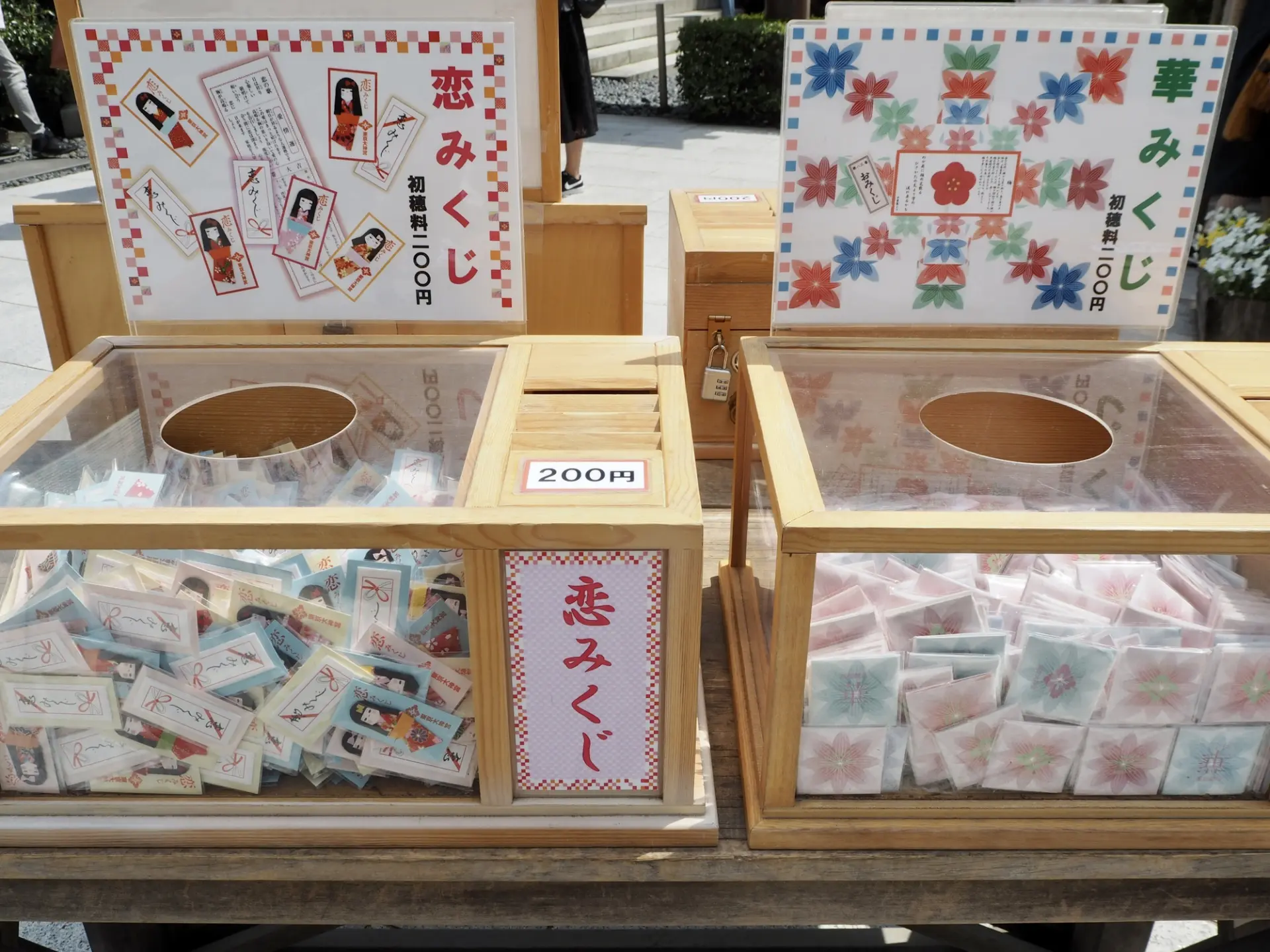
Among them, the Koi-mikuji love fortune is popular for its surprisingly specific details, including the other person’s age, zodiac sign, blood type, and direction.
Its detailed advice has become a hot topic in reviews for being almost eerily accurate.
The type with a Japanese doll attached is also charming, as each doll differs in kimono pattern, obi, and facial expression, letting you choose one you like.
Incidentally, there is a jinx that if you draw daikichi, or great blessing, your love life will change or you will find a partner within three months, and many people share their experiences on social media.
Other recommended fortunes include the Enmusubi-mikuji, featuring love poems by famous historical poets; the Hana-mikuji, with three-dimensional flowers that appear to rise from the paper; and the Shiki-mikuji, which changes color with the four seasons.
Approx. 40 Types! Tokyo Daijingu Amulets
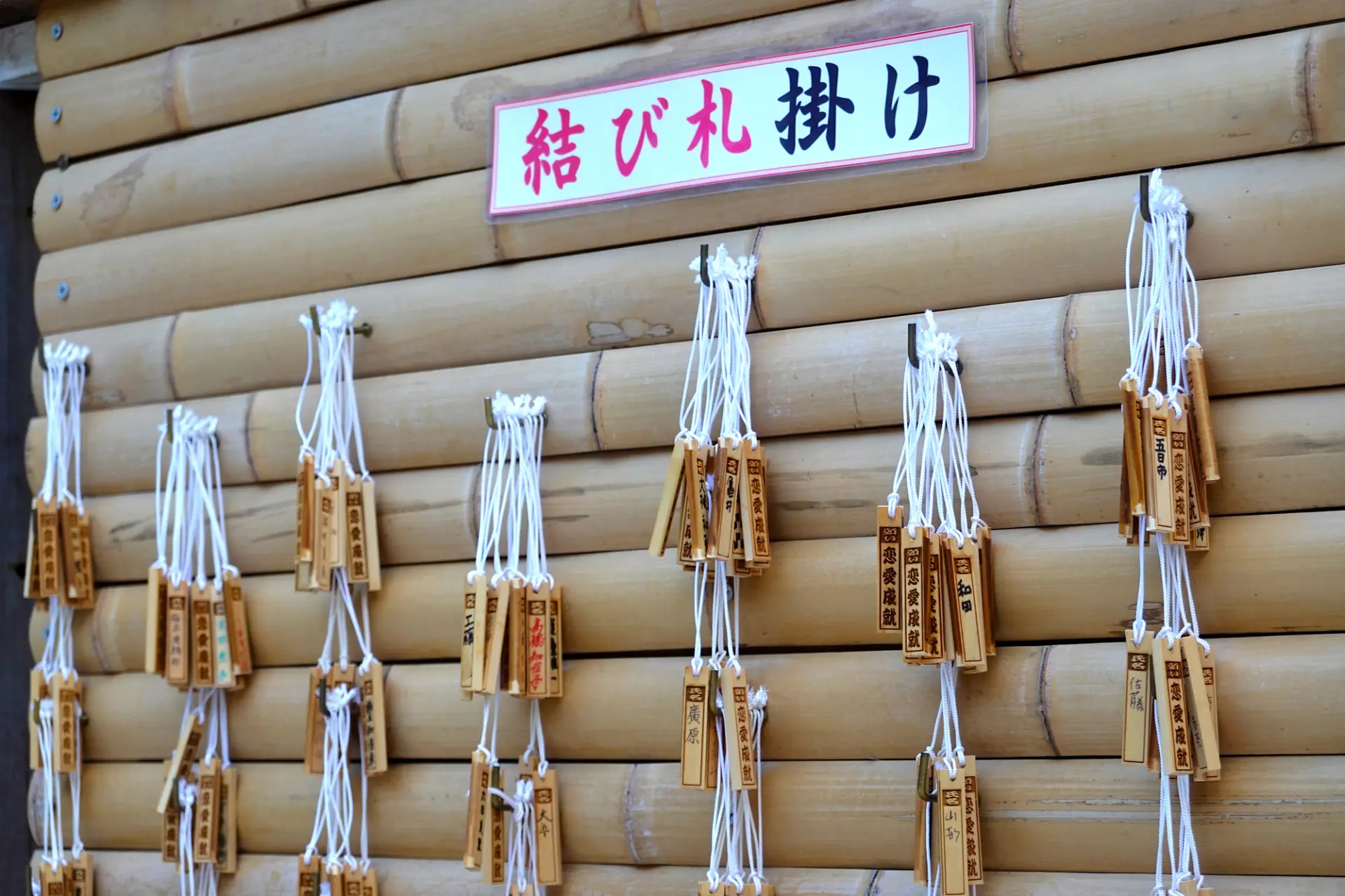
Tokyo Daijingu offers a wide range of amulets for good relationships, academic success, protection from misfortune, traffic safety, business prosperity, financial luck, and more, with over 40 types in total.
They come in many colors and shapes, from traditional pouch-style amulets to keychain-style designs, making them easy to choose regardless of age or gender.
One of the most popular is the Enmusubi Suzuran-mamori.
Its lovely design features two pure white lilies of the valley side by side, and inspired by the flower’s meaning, “happiness will come,” it has overwhelming support from worshippers praying for good relationships.
Other appealing options include the Enmusubi Shiawase Kozuchi, which can be shared with a partner, and the Koishi-mamori, a natural stone amulet infused with prayers, offering choices for different stages of love.
After worshipping, visit the amulet counter to find one that matches your wish or concern.
Tokyo Daijingu Ema Prayer Plaques That Carry Your Wishes to the Deities
If you want to deliver your wish directly to the deities, write it on an ema prayer plaque.
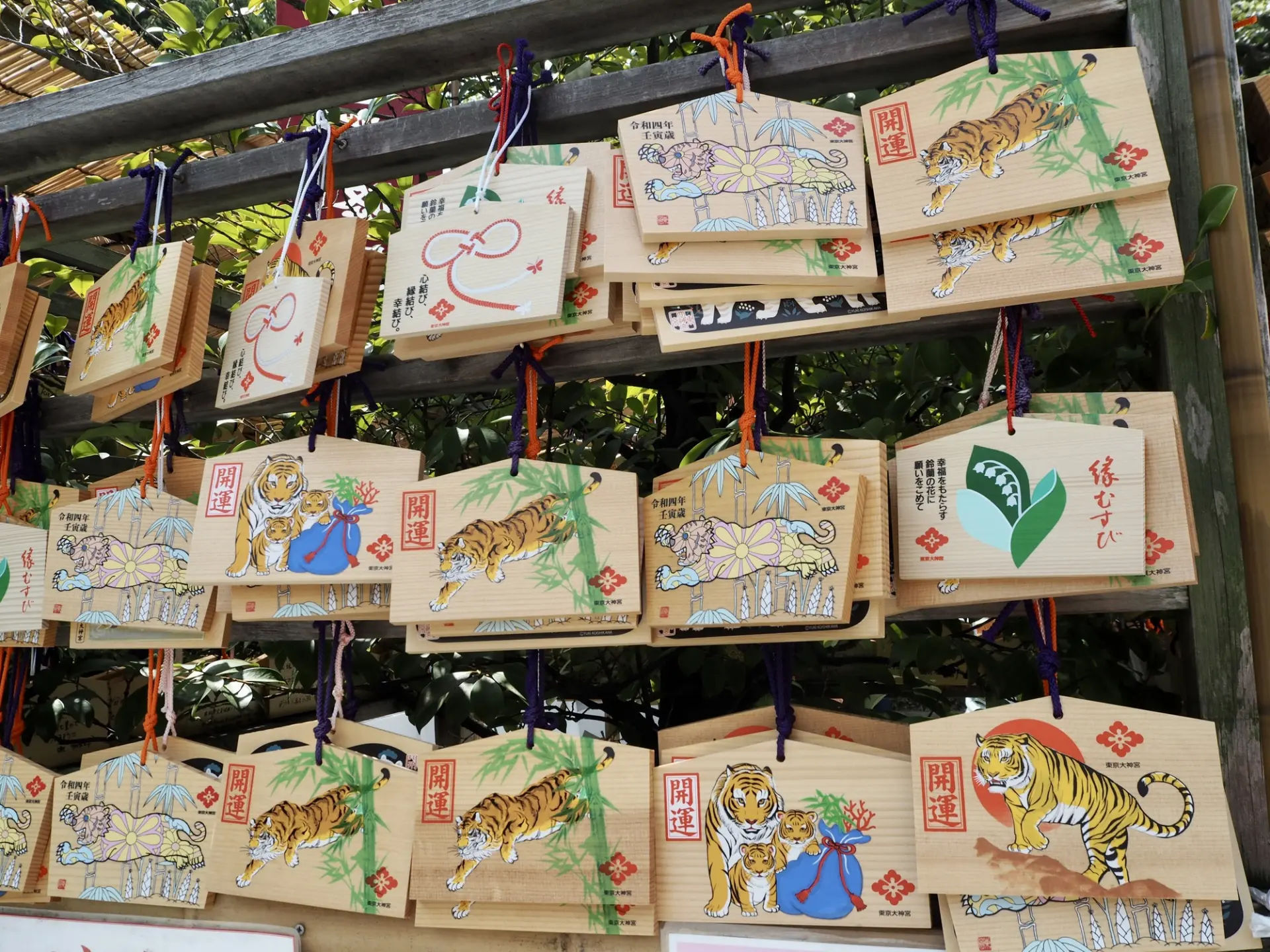
Because many visitors come to Tokyo Daijingu to pray for love and good relationships, ema related to matchmaking are especially popular.
There are three types: Suzuran, made to wish for happiness to come; Kanou-musubi, meaning a wish will come true; and Shinwa, depicting a mythological scene of the union between a man and a woman.
The Hana Kigan Ema, whose design changes by season and is available in limited quantities, is also recommended.
In addition to its special feel, it features 12 different flowers that change each month, such as pheasant’s eye in January, cherry blossoms in March, and morning glories in July, and collecting them all lets you enjoy them as a flower calendar.
The Rilakkuma Ema, a collaboration with Rilakkuma, the tourism ambassador of the Chiyoda City Tourism Association, is also a design unique to Tokyo Daijingu.
Tokyo Daijingu Goshuin That Reflects Meaningful Connections
Tokyo Daijingu’s goshuin has a traditional design featuring powerful brush calligraphy for “worship,” “Tokyo Daijingu,” and the date of visit, along with the vermilion seal of Tokyo Daijingu.
Each seal and character carries deep history and dignity, giving it a simple yet striking presence.
The first offering fee is 500 yen, and both direct writing in your goshuin book and pre-written sheets are available.
There are also three original goshuin books available (1,500 yen each), featuring gentle colors and delicate, beautiful designs inspired by butterflies, bush warblers, and cherry blossoms, which are popular with visitors.
Why not take one home as proof of your visit and a meaningful keepsake?
3 Nearby Attractions to Visit Along with Tokyo Daijingu
Next, let’s look at popular spots around Tokyo Daijingu.
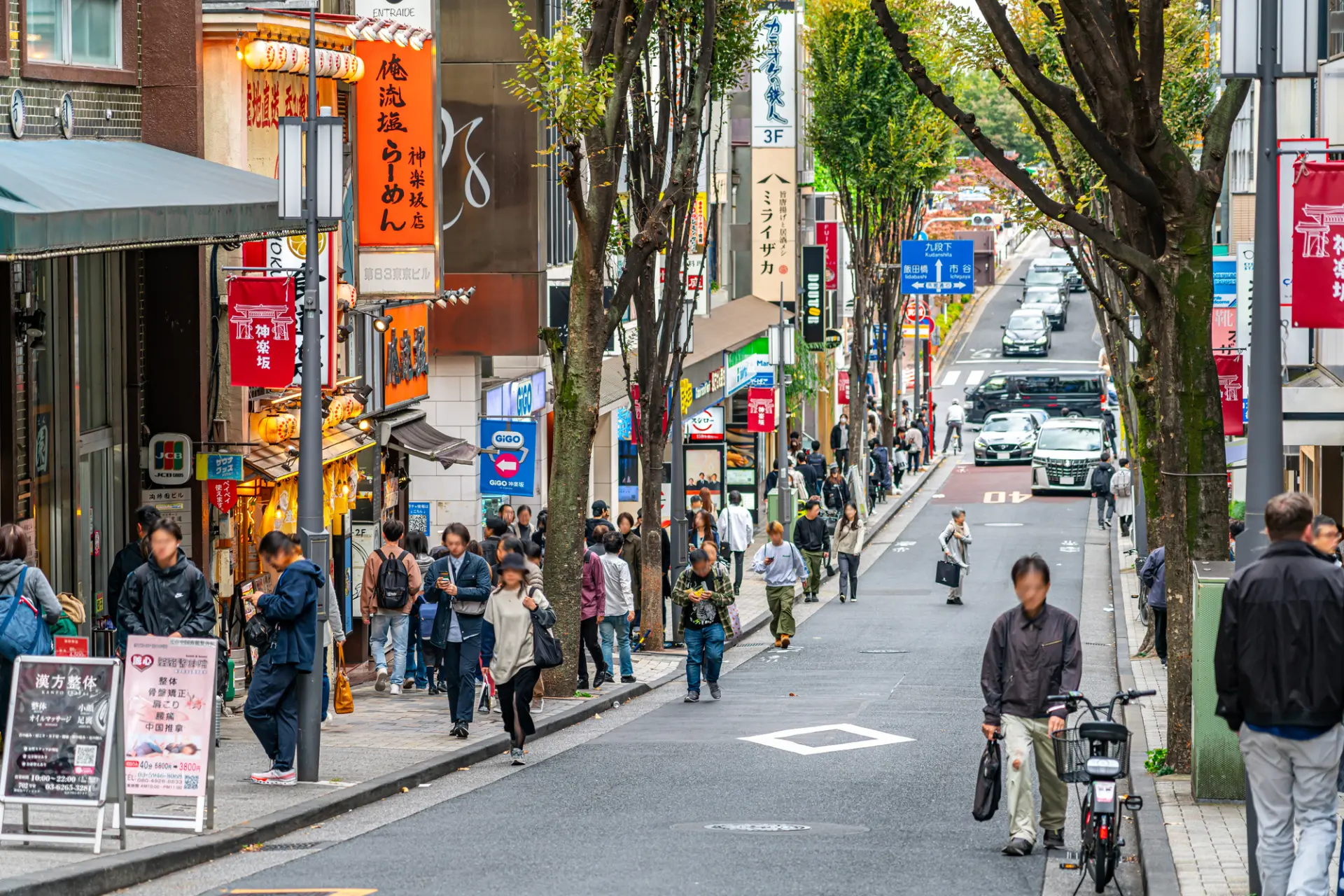
All are located in the Kagurazaka area near Iidabashi Station and are recommended places that preserve history and memories of the town dating back to the Edo period.
With many photogenic views, visiting them together will make your sightseeing experience even more satisfying, so be sure to stop by.
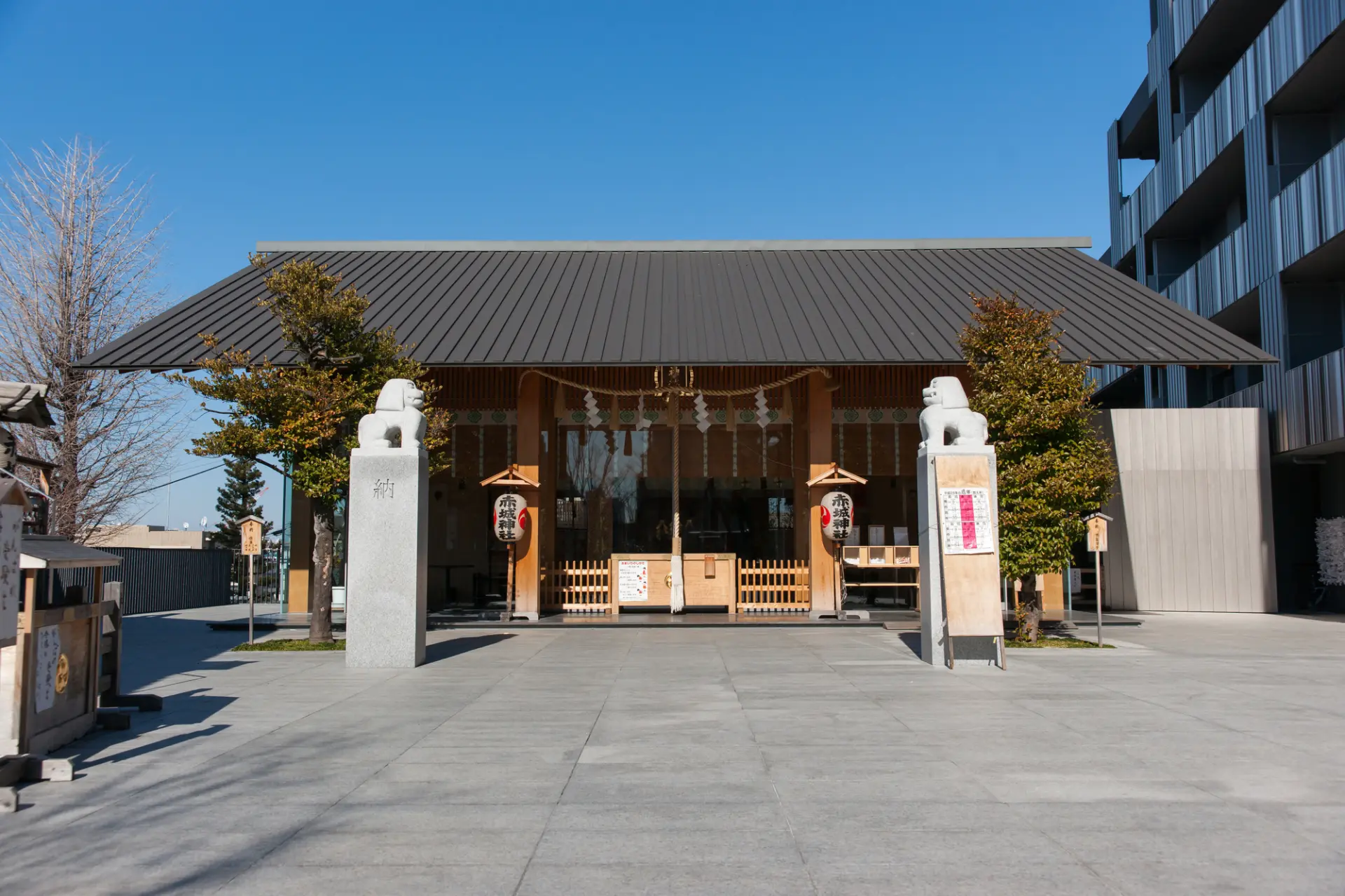
1. Akagi Shrine
Akagi Shrine is said to have begun in 1300, when a divided spirit of Akagi Shrine at the foot of Mount Akagi in Gunma Prefecture was enshrined here.
It enshrines Iwatsutsuo-no-mikoto, a deity for warding off misfortune, and Akagi-hime-no-mikoto, a deity said to grant women’s wishes. It is believed to offer blessings for good relationships, safe childbirth, marital harmony, and more, and many women visit the shrine.
The modern glass-walled shrine building was reconstructed in 2010 by renowned architect Kengo Kuma, and the shrine has also attracted attention for its stylish design. Within the grounds is Keisetsu Shrine, an auxiliary shrine dedicated to the deity of learning and the arts, and many people in the entertainment industry have long visited to pray for the success of TV dramas and films.
2. Bishamonten Zenkokuji Temple
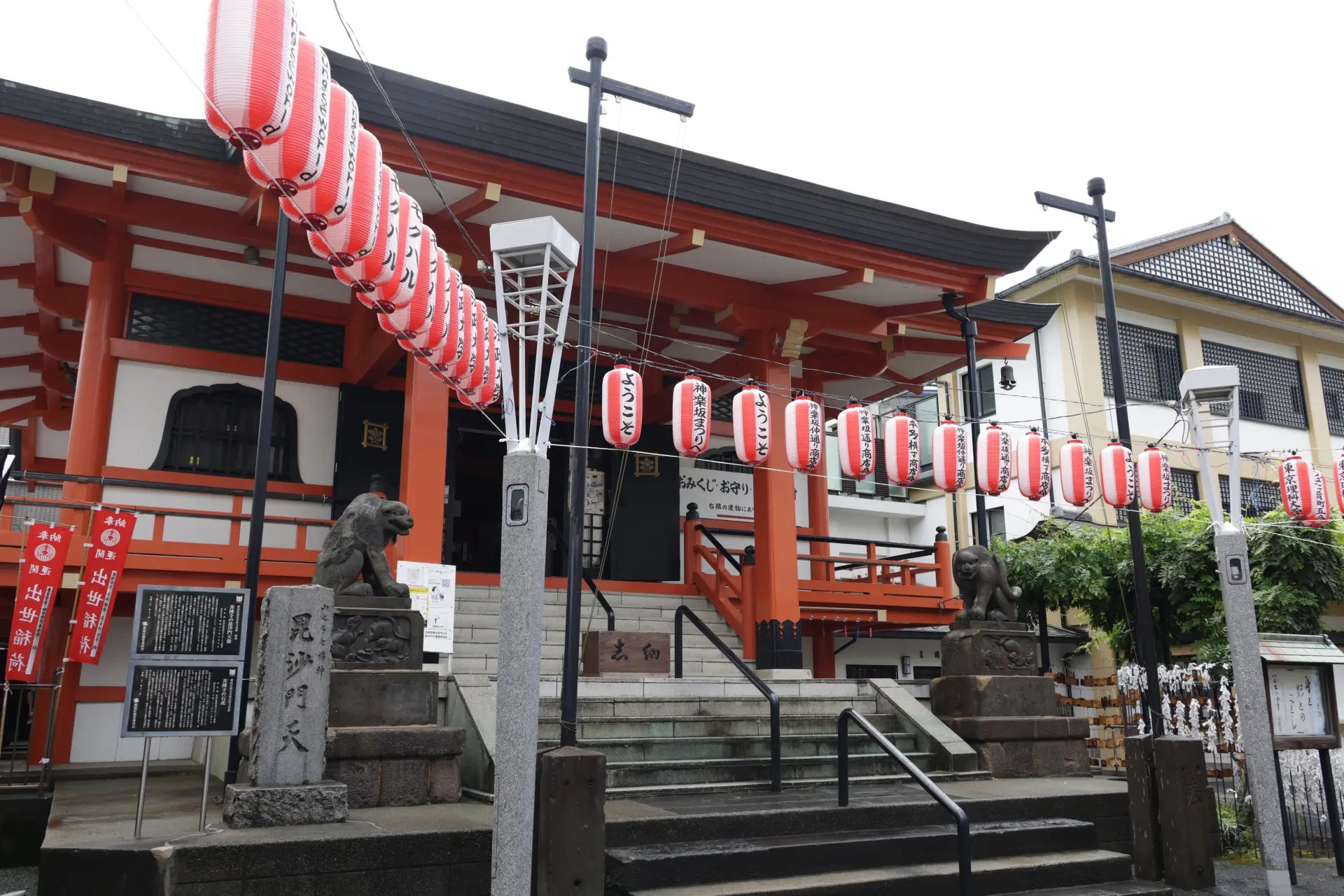
Zenkokuji Temple is located in the middle of Kagurazaka and stands out with its vermilion gate. Founded by Tokugawa Ieyasu in 1595, it was first established in Nihonbashi, then moved twice before settling at its current location in Kagurazaka in 1792.
Bishamonten, affectionately known as “Bishamon-sama” in Kagurazaka, which developed as the temple town of Zenkokuji, is a warrior deity wearing armor and holding a treasure pagoda in the right hand and a treasure staff in the left. He is worshipped as a deity who grants good fortune, protection from misfortune, and blessings. The statue is usually hidden behind a bamboo blind, but it can be viewed directly during special openings on Tiger Days in January, May, and September.
3. Kakurenbo Yokocho
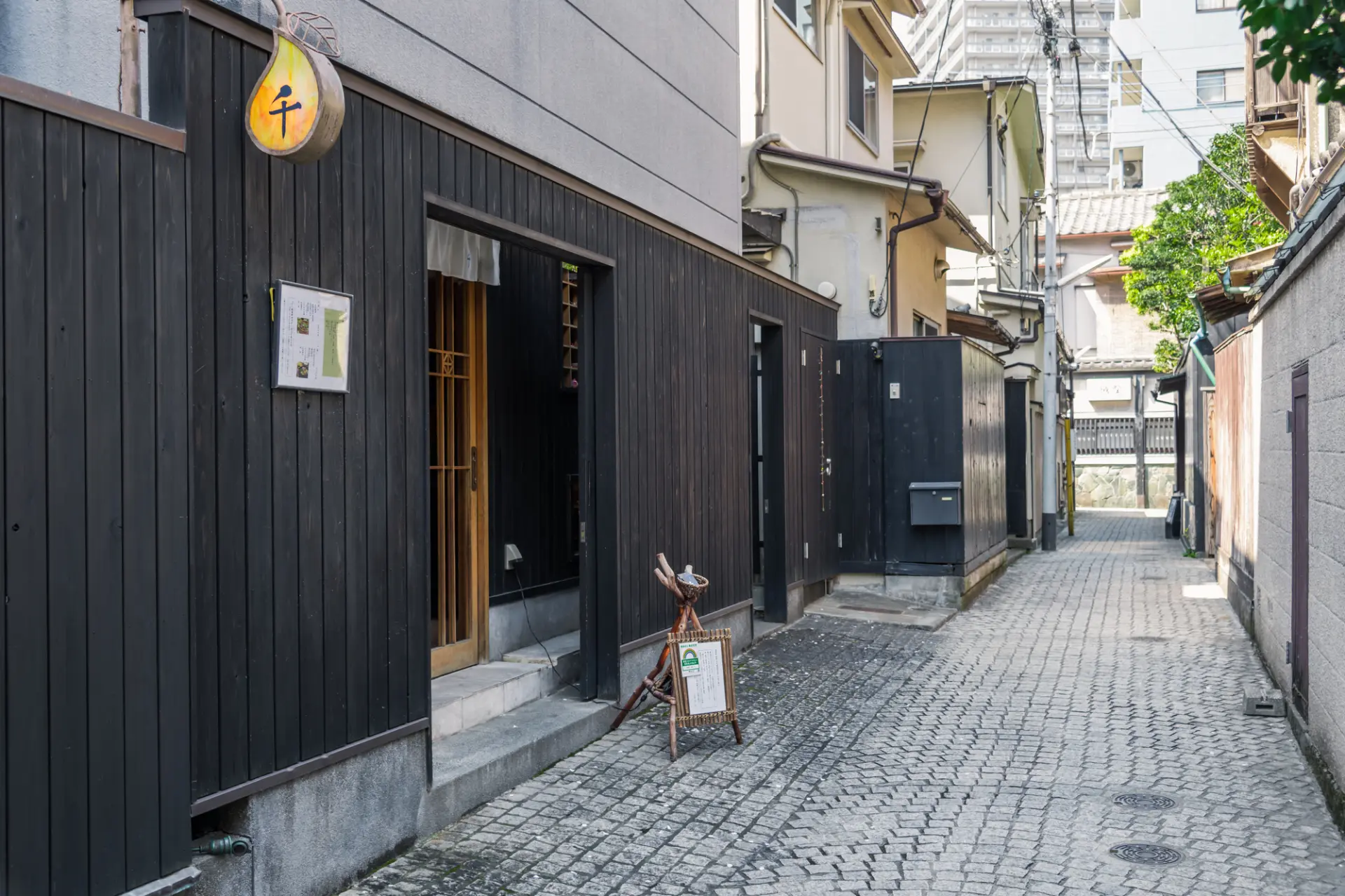
Kakurenbo Yokocho is a network of alleys shaped like the kanji character “互,” located between Kagurazaka Nakadori and Honda Yokocho. Its name is said to come from its maze-like layout, where “even if you follow someone visiting incognito, once they turn sideways, you lose sight of them.”
Along the beautiful stone pavement laid with small granite pavers called pinkoro-ishi, shops preserving the atmosphere of traditional machiya townhouses line both sides, making the area popular as a filming location for TV dramas and movies. At night, each shop’s andon lanterns softly light the street, creating a dreamlike, quietly elegant atmosphere where Japanese tradition and modern style intersect.
3 Popular Dining Spots Around Tokyo Daijingu
Here are recommended dining spots around Tokyo Daijingu.
Each has a loyal fan base and is a beloved favorite in the Iidabashi and Kagurazaka areas.
Located just a few minutes on foot from the station, they are easy to access and offer meals and sweets while you enjoy the changing seasons.
They are perfect for lunch before or after visiting the shrine, or for a short break, so stop by any place that catches your interest.
1. CANAL CAFE
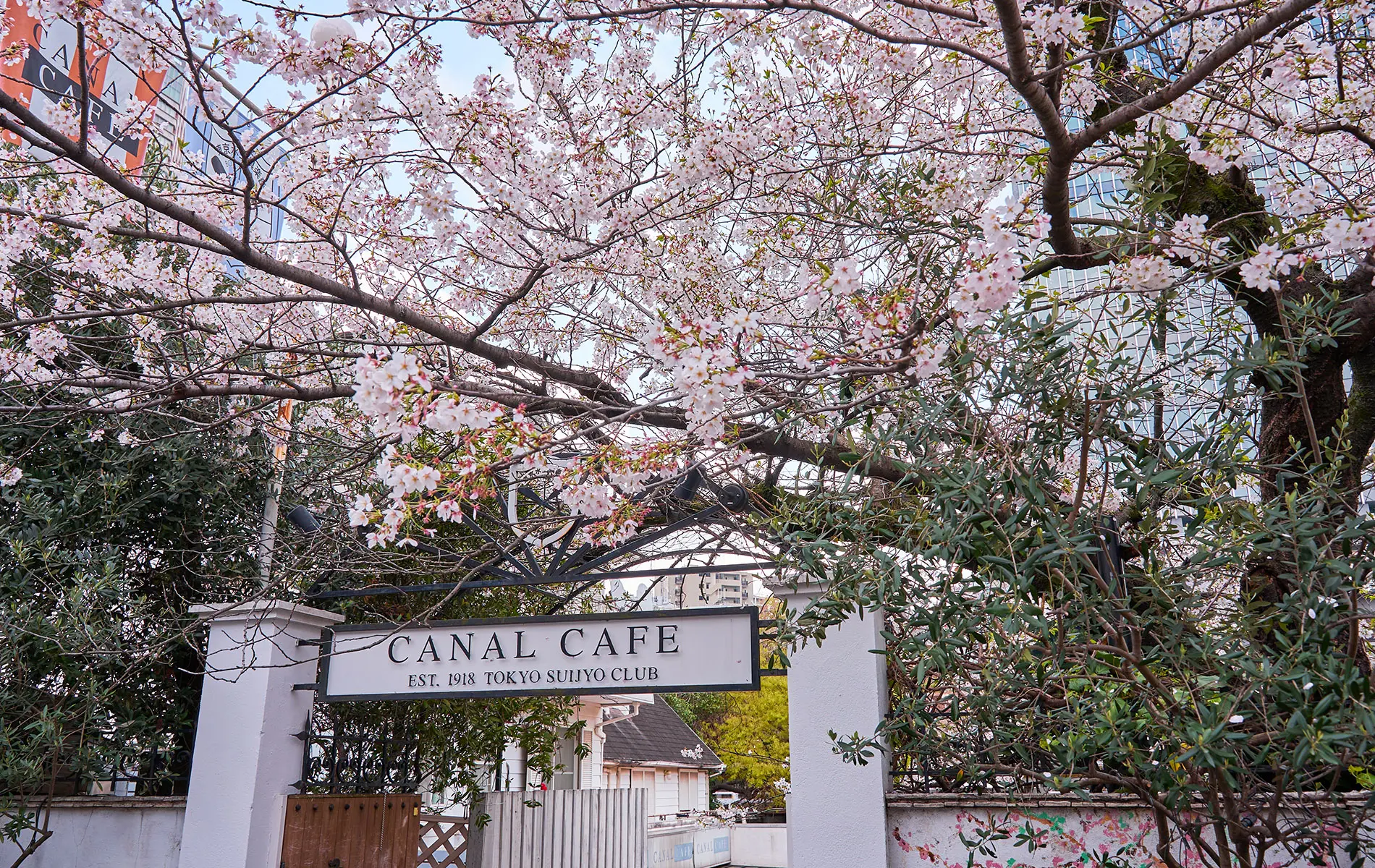
This waterside restaurant is located along the outer moat of Edo Castle near Kagurazaka, Tokyo. It was renovated from Tokyo Suijo Club, a boat dock founded in 1918, and is known for its location extending out over the historic moat. Though it sits in the heart of the city, you can enjoy the presence of water and an open feeling.
The restaurant consists of two areas: the Restaurant Side and the Deck Side.
The Restaurant Side serves lunch, brunch, and dinner in a relaxed setting, with a menu centered on Italian dishes such as pizza and pasta. The Deck Side, meanwhile, is a casual self-service space offering light meals and drinks, and can be used easily as a café and bar.
2. Trattoria Gran Bocca
Trattoria Gran Bocca is an Italian restaurant located on the 2nd floor of Iidabashi Grand Bloom Sakura Terrace, Approx. a 3-minute walk from Iidabashi Station on all lines.
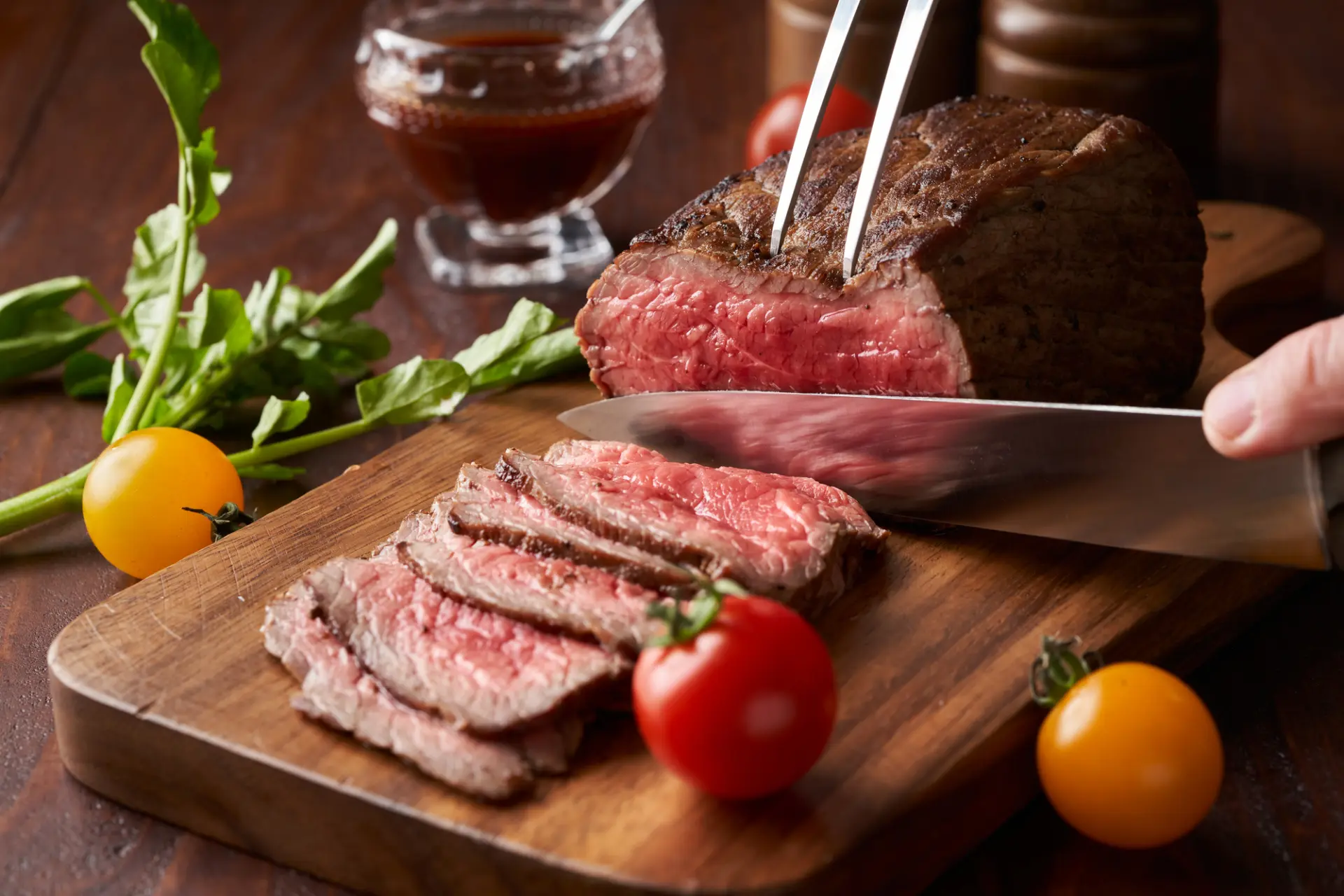
Its signature dish is thick-cut roast beef made with A5-grade wagyu beef, available by reservation only.
Tender and juicy, it is served with an original special sauce finished in a Japanese style that further enhances the natural flavor of the meat.
Another major feature is the all-you-can-eat popovers, a type of bread, freshly baked every 10 minutes and included with every menu item.
Crisp on the outside and fluffy inside, they are known in reviews as devilishly delicious when eaten with salted whipped butter and maple syrup.
3. Kinozen Kagurazaka
Kinozen Kagurazaka is a long-established Japanese sweets café with a 160-year history.
Although it closed once in 2022, it reopened in 2025 in response to many requests for its return, carrying on its traditional flavors today.
Its greatest appeal is the anko sweet bean paste, carefully cooked in-house every day.
The shop is highly particular about its ingredients, using Tanba Dainagon azuki beans for the chunky tsubuan paste and Tokachi azuki beans for the smooth koshian paste, creating a refined aftertaste and richness while keeping the sweetness restrained.
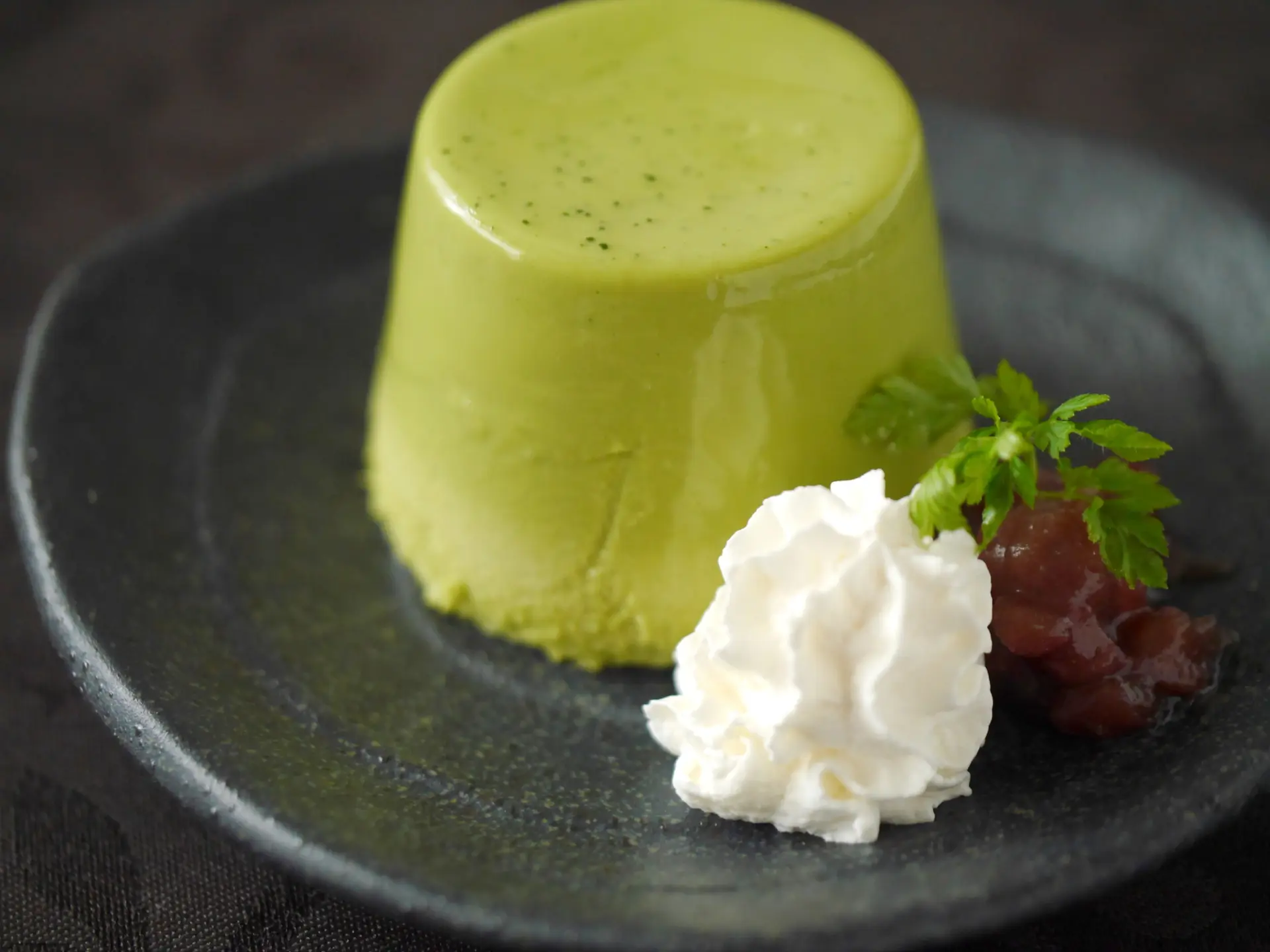
The most popular menu item is matcha bavarois, which became known nationwide after appearing in a TV drama, and lets you enjoy the rich aroma of matcha and a smooth texture.
Its flavor remains timeless even after many years and has fans of all ages and genders.
Tokyo Daijingu One-Day Sightseeing Model Course
Based on what we have introduced so far, here is a one-day sightseeing model course for enjoying Tokyo Daijingu and the Kagurazaka area.
We recommend visiting Tokyo Daijingu in the morning, when there are relatively fewer worshippers and you can pray calmly, then exploring the surrounding area from early afternoon.
| Time (Approx.) | Spot | Overview |
|---|---|---|
| 10:00am | Iidabashi Station | Check the correct station exit and walk to Tokyo Daijingu |
| 10:10am | Tokyo Daijingu Main Hall | Pray at the Main Hall and slowly take in the atmosphere of the grounds |
| 10:25am | Iitomi Inari Shrine | Stop by the auxiliary shrine and receive blessings for business prosperity and the performing arts |
| 10:35am | Sacred Tree | View the Japanese chinquapin over 100 years old and take a photo for your phone wallpaper |
| 10:45am | Search for Inome | Look for hidden heart-shaped protective motifs around the grounds, including the shrine gate, lanterns, offering box, and stairs |
| 11:00am | Amulet Counter | Get your preferred amulet, omikuji fortune, or ema prayer plaque, and receive a goshuin if desired |
| 11:35am | Transit | Walk to the Kagurazaka area (5–10 minutes) while strolling along stone-paved slopes and atmospheric streets |
| 12:00pm | Lunch | Take a lunch break at a restaurant of your choice |
| 1:00pm | Bishamonten Zenkokuji Temple | Visit Bishamonten Zenkokuji Temple, a Kagurazaka landmark |
| 1:45pm | Akagi Shrine | Also visit Akagi Shrine, a power spot said to grant women’s wishes, and pray for good relationships |
| 2:00pm | Kagurazaka-dori Street | Walk along Kagurazaka-dori, the main street, and enjoy its unique atmosphere and shopping |
| 3:30pm | Kagurazaka Station or Iidabashi Station | End with a break at a café or Japanese sweets shop, then head home |
FAQ about Tokyo Daijingu
Q
How long does it take to see Tokyo Daijingu?
It is a relatively compact shrine, so you can see it in Approx. 30 minutes. On weekends, lucky taian days, or if you want to take your time, plan for Approx. 1 hour.
Q
What blessings is Tokyo Daijingu known for?
It is especially famous for good relationships and matchmaking, but it is also said to offer a wide range of blessings, including business prosperity, household safety, and protection from misfortune.
Q
Which amulet at Tokyo Daijingu is for being joined with someone you love?
Among the various amulets, the Enmusubi Suzuran-mamori is known for being highly effective for good relationships.
Q
What is Tokyo Daijingu’s “three-month jinx”?
It is an unofficial urban legend about the shrine, saying that after visiting Tokyo Daijingu or drawing daikichi on a Koi-mikuji love fortune, your love life will change or you will find a partner within three months.
Summary
We have mainly introduced the highlights of Tokyo Daijingu, how to worship there, and a one-day sightseeing model course.
Combining historic prestige with an approachable atmosphere, Tokyo Daijingu is loved by many people and is also known for its shrine items such as matchmaking amulets and Koi-mikuji love fortunes.
If you make a wish in the sacred air that lets you forget the bustle of the city, you may encounter a special connection.
Those who especially want to attract luck in love should visit in person.
Also check out this article, which summarizes useful information for planning your trip, focusing on an overview of the Kagurazaka area and popular spots.