A One-Day Wakkanai Itinerary to Cape Soya and Cape Noshappu for Sweeping, Dreamlike Views
Wakkanai in Hokkaido is Japan’s northernmost city.
Facing the Sea of Okhotsk to the east and the Sea of Japan to the west, the city’s greatest appeal is its grand sense of scale.
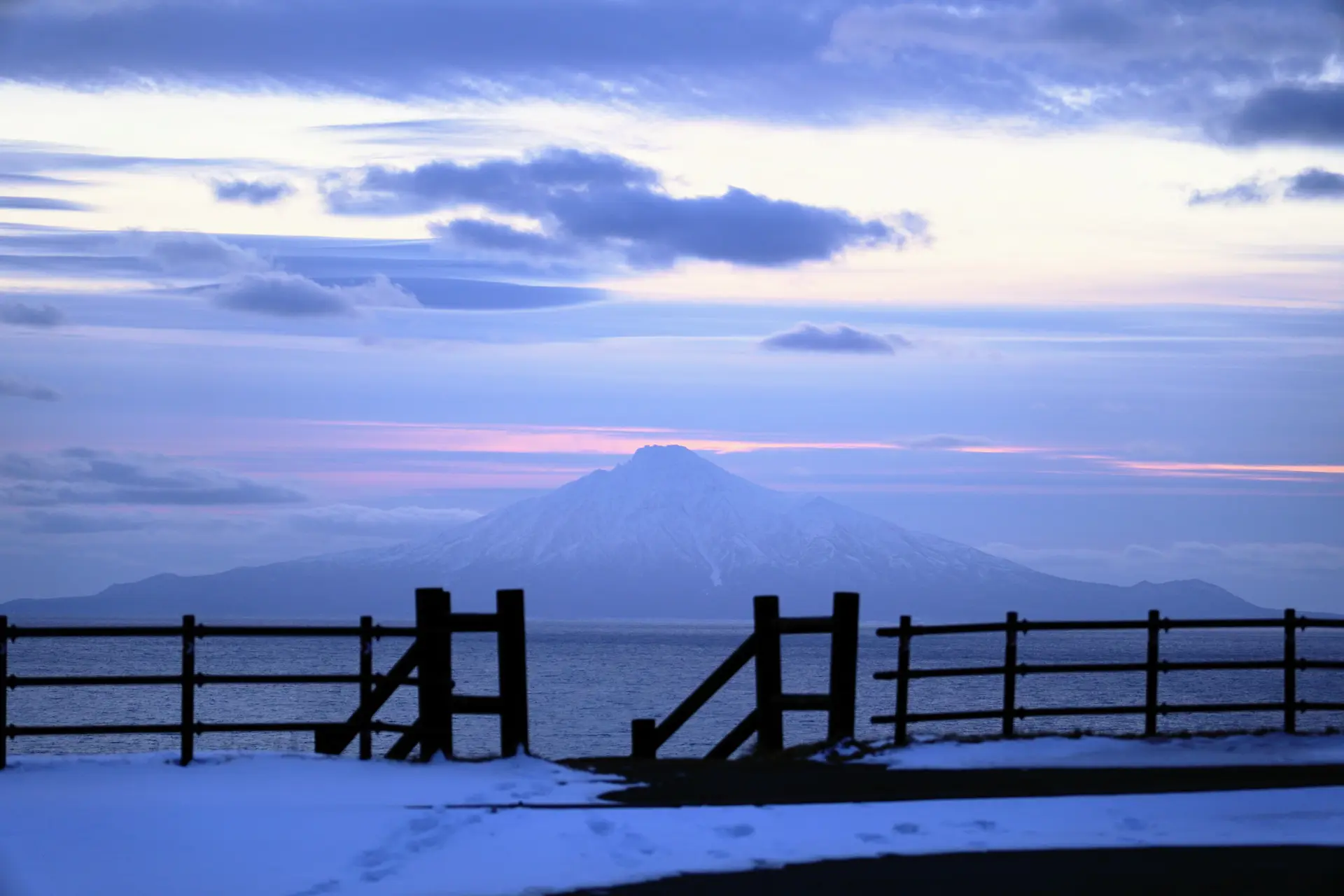
On clear days, the outline of Sakhalin appears beyond the sea, and from the capes, sunsets where the sky and sea seem to blend together fill your view.
Standing in vast nature with nothing to block your line of sight, you may feel as if you are slowly becoming part of the landscape simply by taking it all in.
This article introduces a one-day model itinerary that lets you experience the full appeal of Wakkanai.
From two capes that truly feel like the edge of Japan to parks with expansive Hokkaido scenery, this route is filled with memorable places.
What Kind of Place Is Wakkanai?
Wakkanai is the northernmost city in Hokkaido.
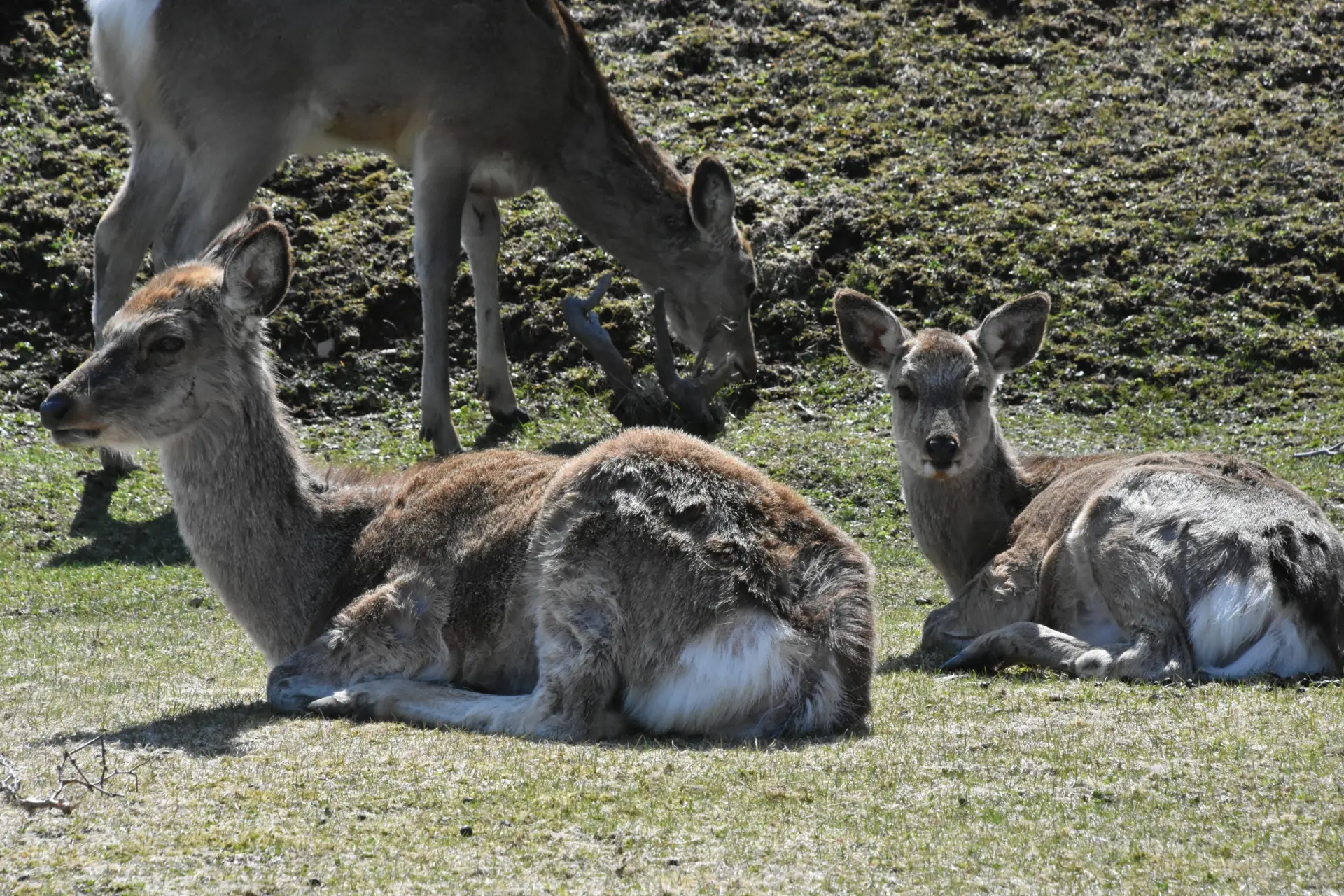
Although it is a mid-sized city with a population of about 30,000, one of its distinctive features is how close people live to wildlife: you might come across Ezo deer in town or meet the gaze of an Ezo red fox while walking up a hill.
Depending on the weather and ocean currents, drift ice may even reach the shore, offering a chance to experience nature on a scale not found on Japan’s main island of Honshu.
In summer, Wakkanai is cool, with average temperatures around 68°F, making it a valuable area that still functions as a true summer retreat even in recent years, when people say “even Hokkaido is hot.”
From June to October in particular, snow-free, open landscapes stretch out before you, making it the season when you can most strongly feel Wakkanai’s spacious grandeur.
In winter, average temperatures are around 23–41°F, which is not extremely low by Hokkaido standards.
However, wind is an essential part of any discussion of Wakkanai.
Strong winds are common throughout the year.
Because strong winds lower the perceived temperature, warm clothing is essential.
Depending on the day, it may feel as cold as winter.
How to Get to Wakkanai
By Plane
Flights operate to Wakkanai Airport from Tokyo (Haneda Airport) and Sapporo (New Chitose Airport).
The flight takes about 2 hours from Haneda Airport and about 1 hour from New Chitose Airport.
With easy access from both inside and outside Hokkaido, flying is convenient if you want to shorten your travel time.
From Wakkanai Airport to central Wakkanai, it takes about 30 minutes by airport shuttle bus or taxi.
After arriving, you can head straight to the city center or your sightseeing base.
By Train
For those who want to enjoy the scenery of northern Hokkaido along the way, traveling by train is also recommended.
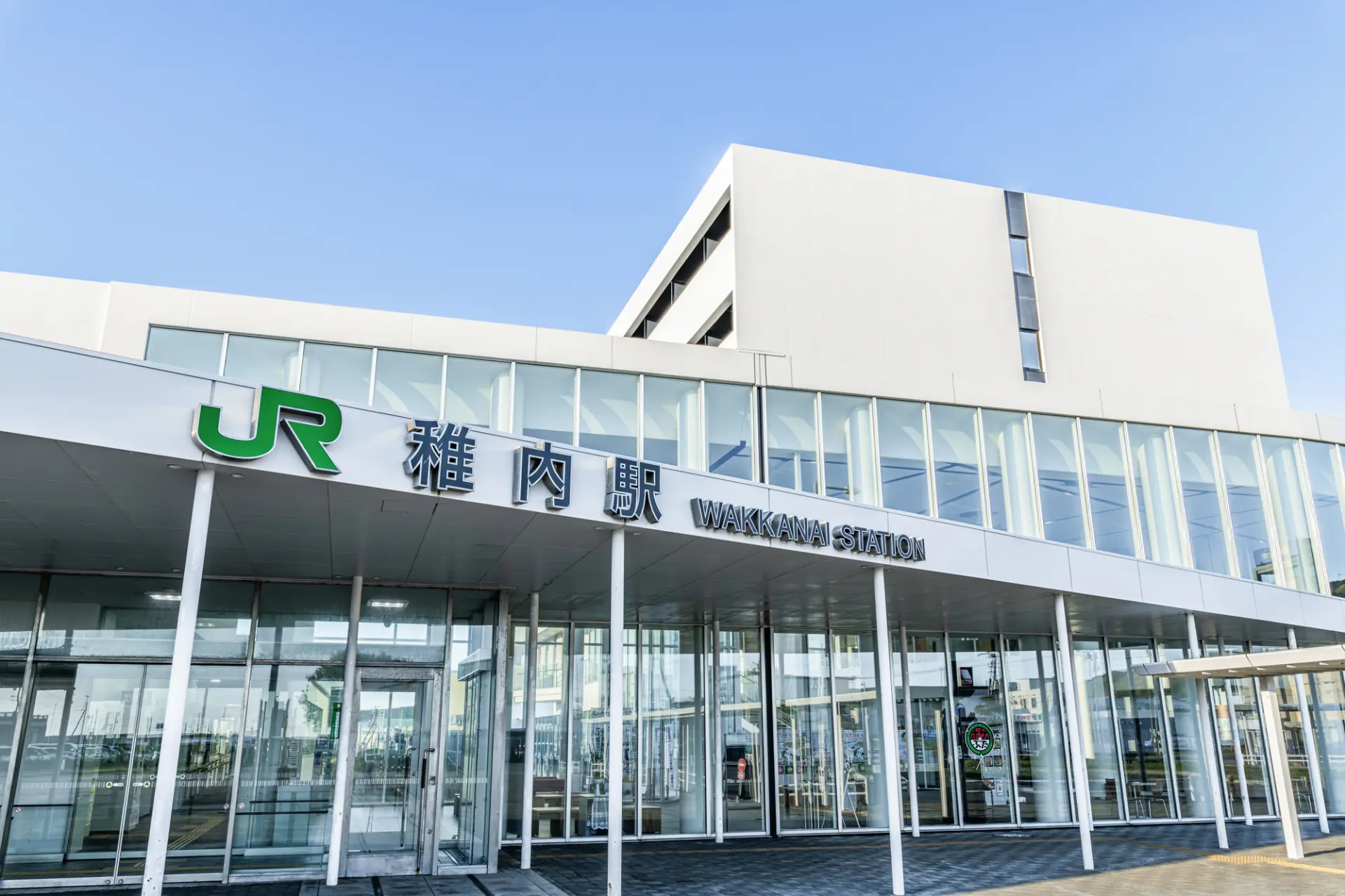
Using limited express trains, you can reach JR Wakkanai Station in about 5 hours from JR Sapporo Station or about 3 hours 30 minutes from JR Asahikawa Station.
Although it is a long trip, the views of wilderness and rivers from the train window give you a strong sense of travel.
By Bus
If using an express bus, the trip from in front of Sapporo Station to in front of Wakkanai Station takes roughly 6 hours.
Although it takes time, it is less expensive than other transportation options, and there are also late-night services, making it a popular choice among locals.
Getting Around Wakkanai
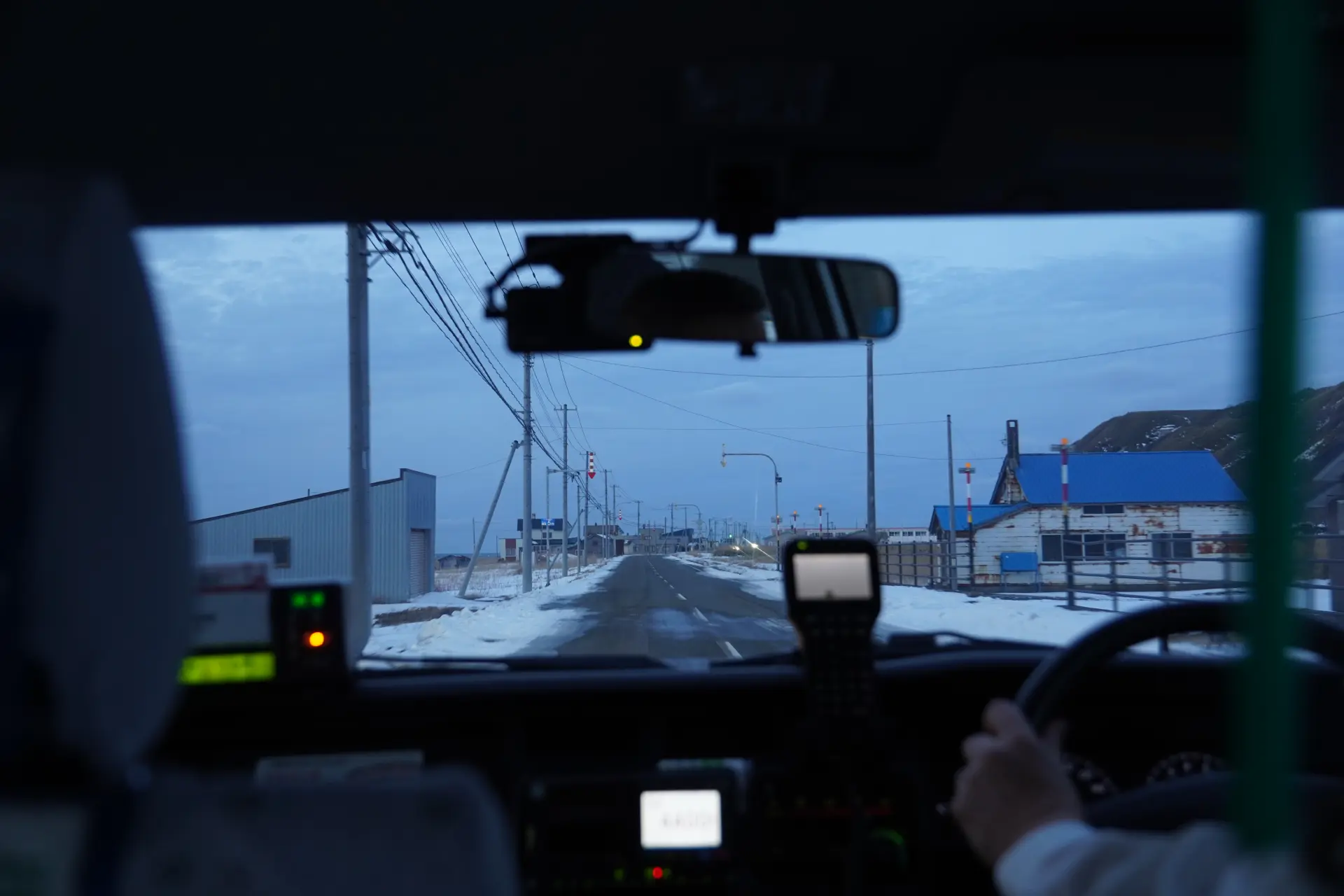
Because the spots are far apart and difficult to visit using only public transportation, getting around by taxi or rental car is recommended.
In particular, the areas around Soya Hills and the White Path are best enjoyed by car, where you can stop along the way and take in the scenery.
The drive itself becomes one of the highlights of the trip.
Take in Sweeping Views: A One-Day Itinerary Around Wakkanai’s Two Capes
From here, we’ll introduce a one-day model itinerary through Wakkanai, where you can take in grand-scale scenery.
If you want to efficiently experience Wakkanai’s highlights in a single day, traveling by rental car is ideal.
The time spent driving along roads with nothing to block your view is itself a special experience unique to this region.
Start your trip by renting a car near Wakkanai Station.
10:00 AM | Head to Cape Soya, the Top of Japan
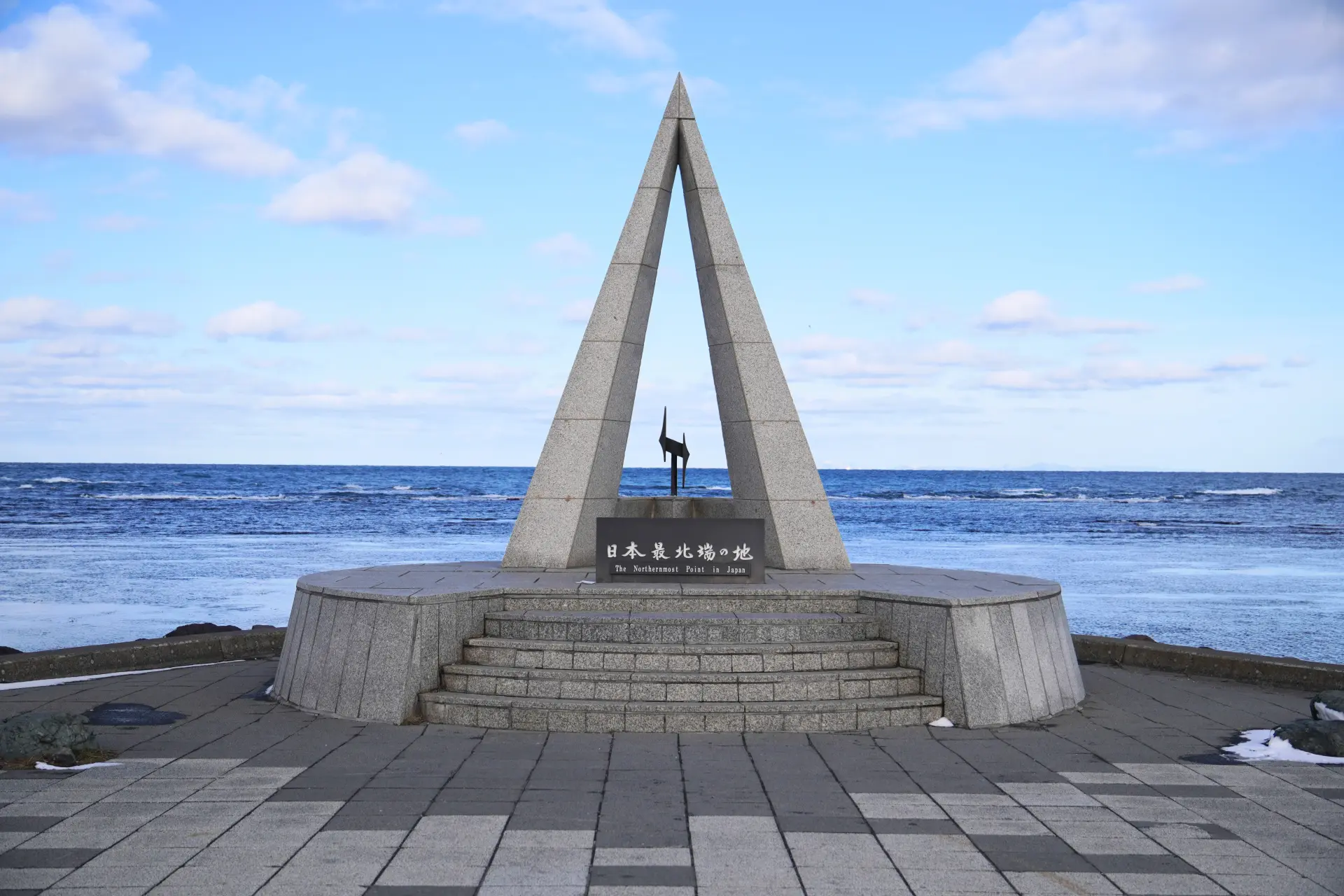
When visiting Wakkanai, the first place you’ll want to go is Cape Soya, the northernmost point of Japan.
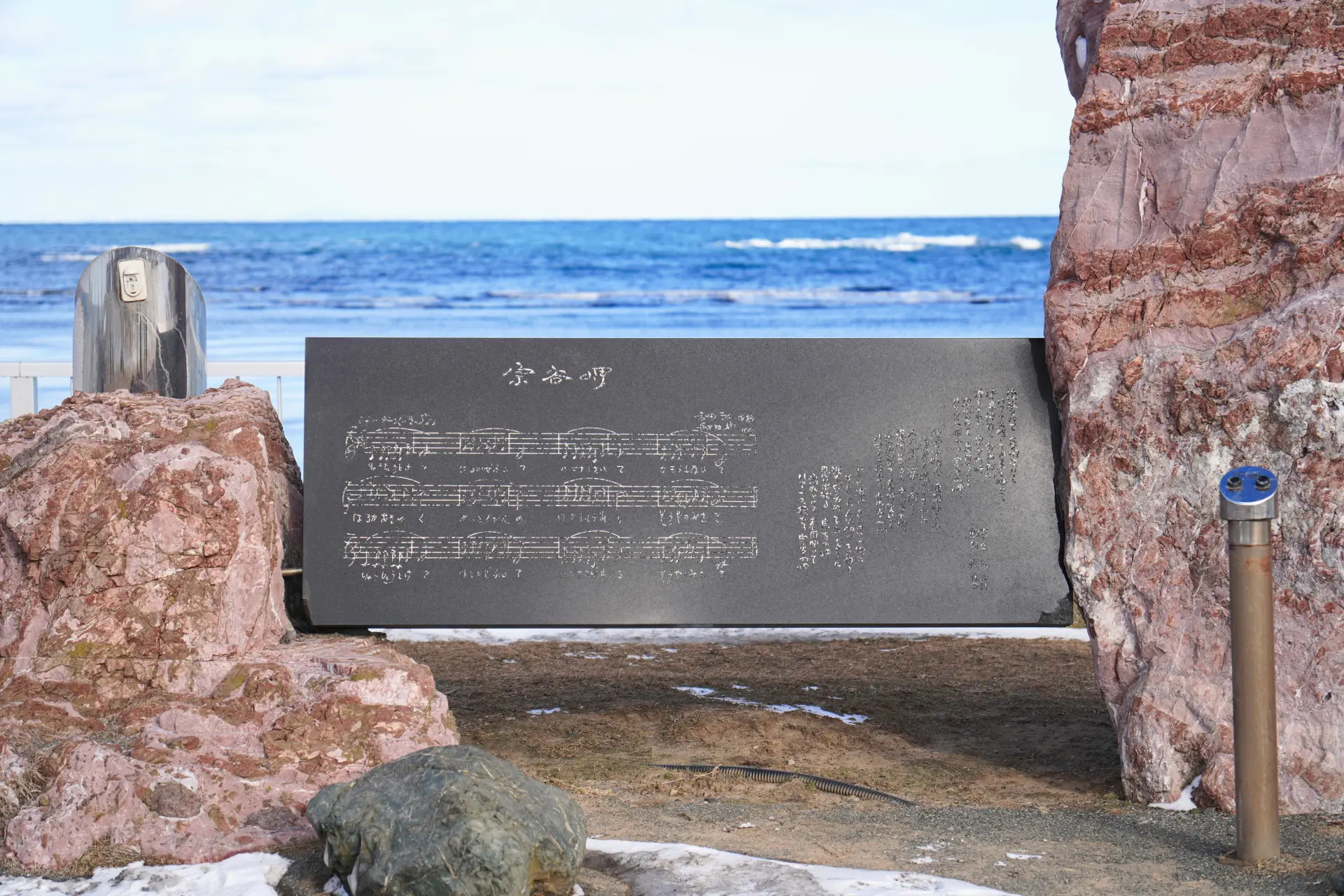
Around the cape, you’ll find the Monument of Japan’s Northernmost Point, as well as a statue of Mamiya Rinzo, an Edo-period explorer who discovered that Sakhalin was an island.
Looking out to sea from Cape Soya, the Soya Strait stretches endlessly before you.
Sakhalin lies just 43 kilometers away, and on clear days, the outline of the island stands out sharply beyond the water.
With an unobstructed horizon and a cool breeze brushing your skin, you cannot help but feel that you are standing at Japan’s northernmost point.
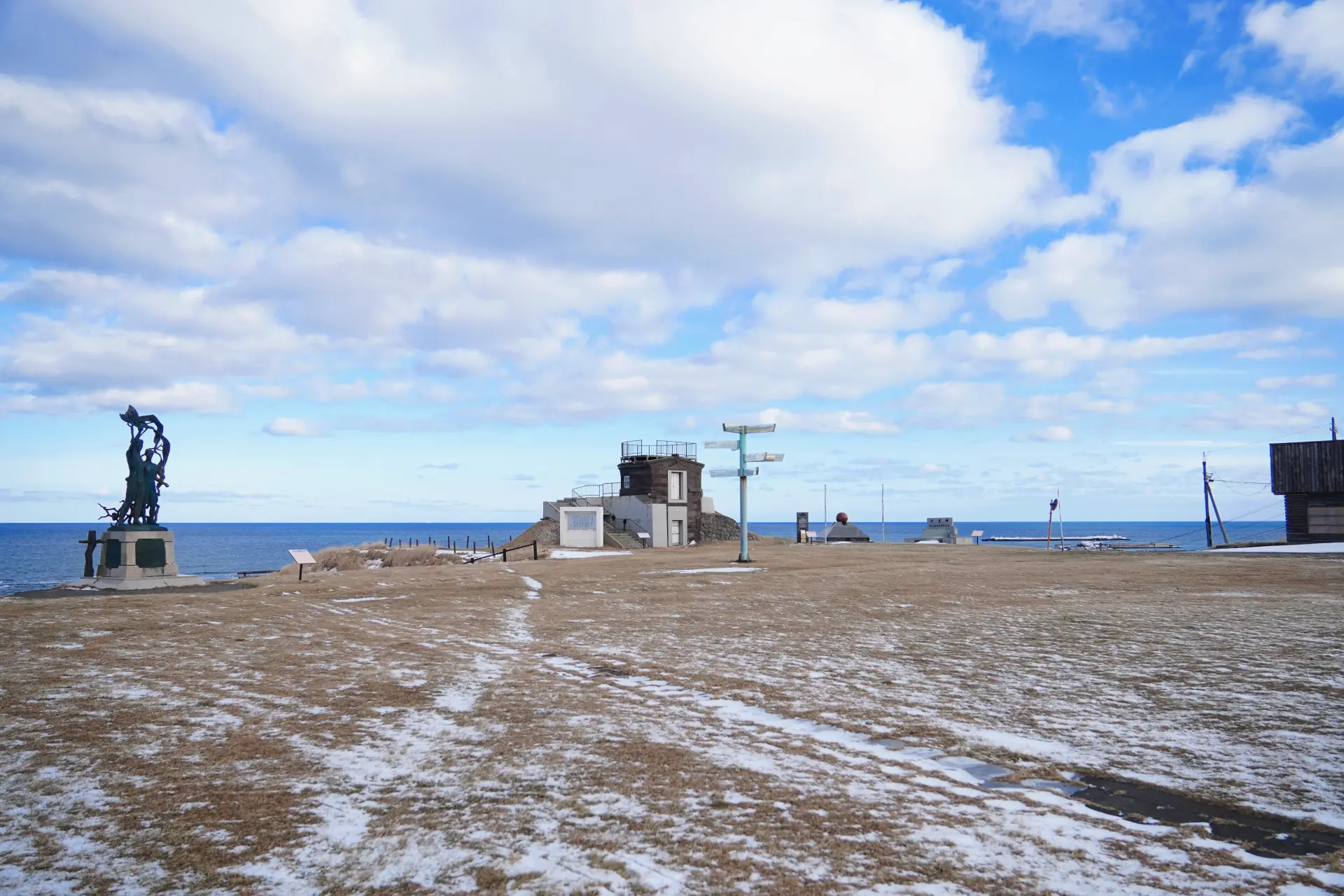
Across the road and up the stairs is Cape Soya Park.
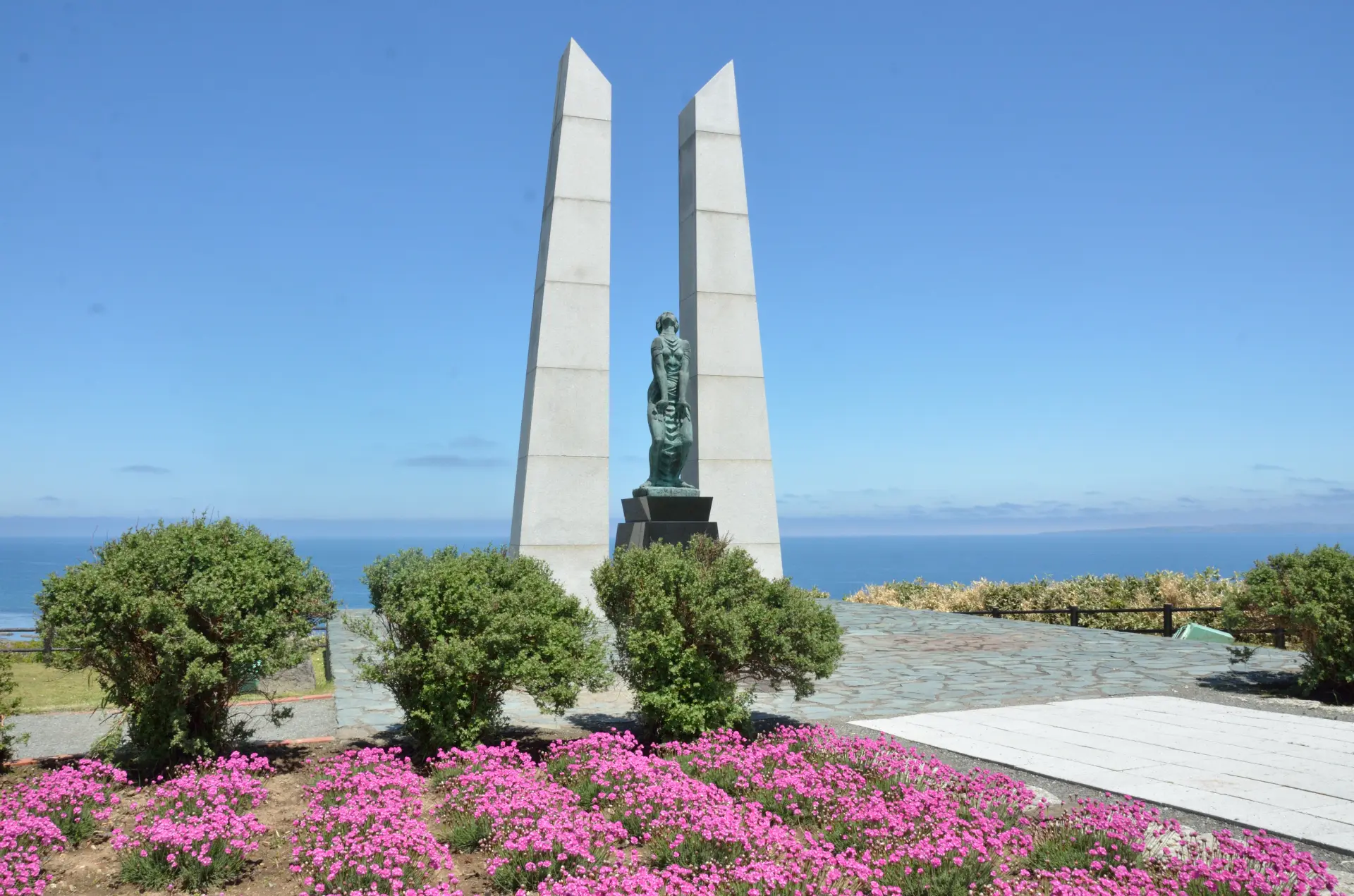
Home to the Former Naval Watchtower, a Tangible Cultural Property of Wakkanai City, as well as a statue praying for peace, the park is also an excellent viewpoint overlooking the Soya Strait.
The sweeping view of sea and sky from the hill offers a different impression from the cape itself.
In summer, pink Armeria flowers bloom throughout the park, and you may even see Ezo deer grazing at your feet.
Take a moment to forget the time and savor the start of your journey while the northernmost wind blows around you.
11:00 AM | Visit the White Path, One of Northern Hokkaido’s Top Scenic Spots
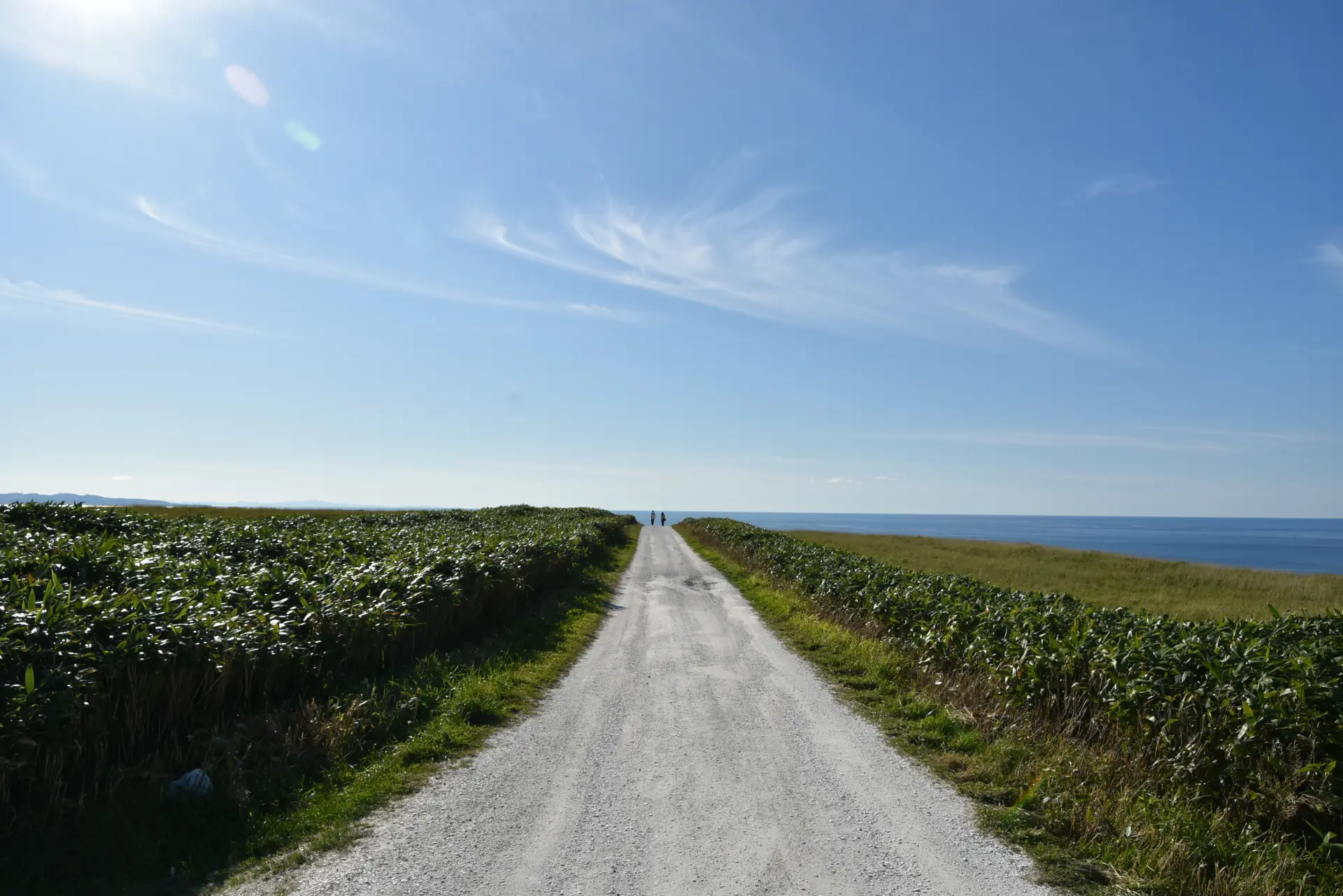
Continue deeper into Cape Soya Park, and you’ll reach the White Path, known as one of northern Hokkaido’s top scenic spots.
This “white” road stretches for about 3 kilometers through the Soya Hills.
Its surface is made from crushed scallop shells, a specialty product of Soya.
When you get out of the car and walk along it, you’ll feel a soft, unusual texture underfoot that is different from sand or soil.
The White Path was created from the idea of effectively reusing scallop shells, once treated as industrial waste, from an environmental conservation perspective.
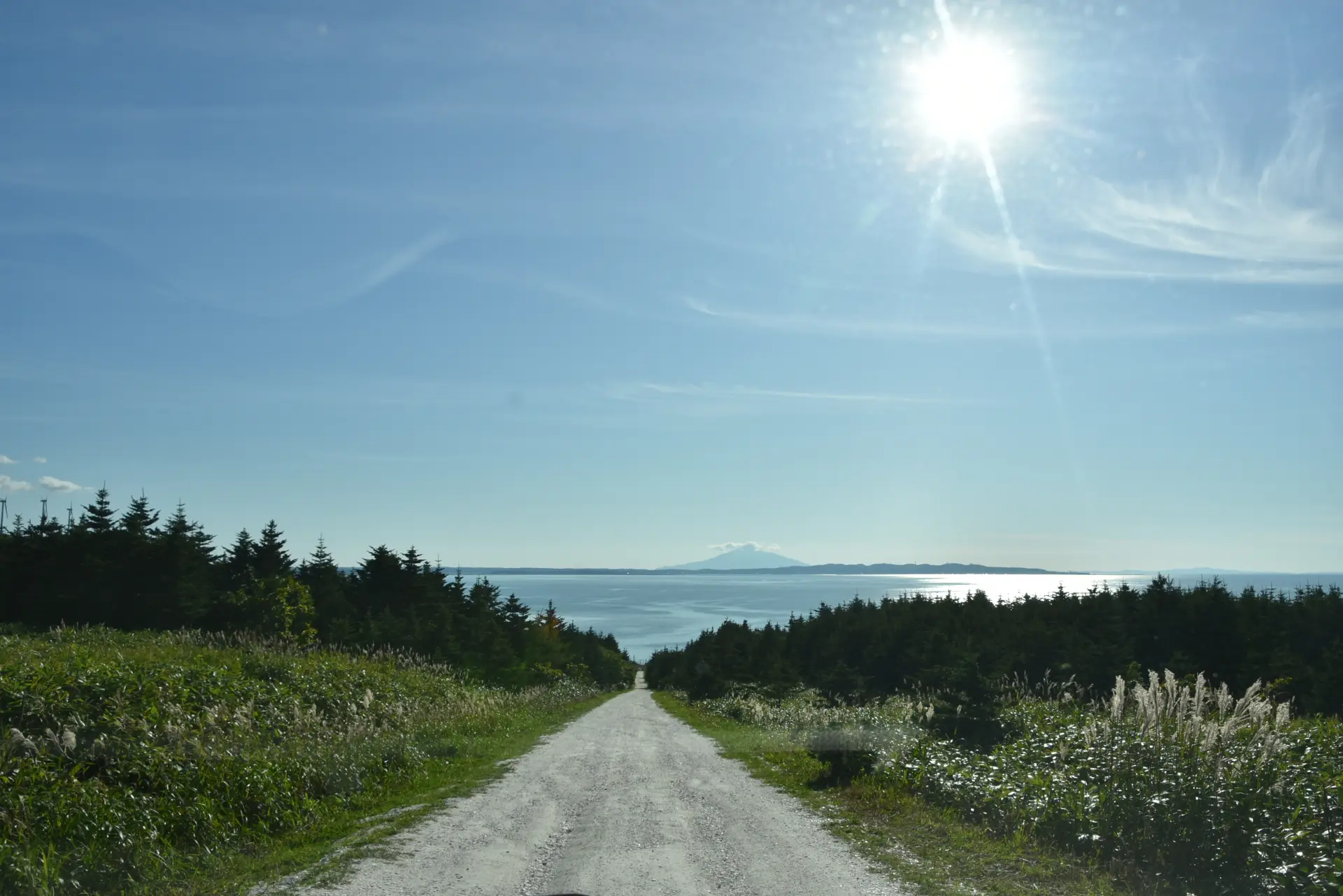
Ahead of you stretches a striking contrast of the deep blue sea, the dazzling white road, and the vivid green of the pastureland.
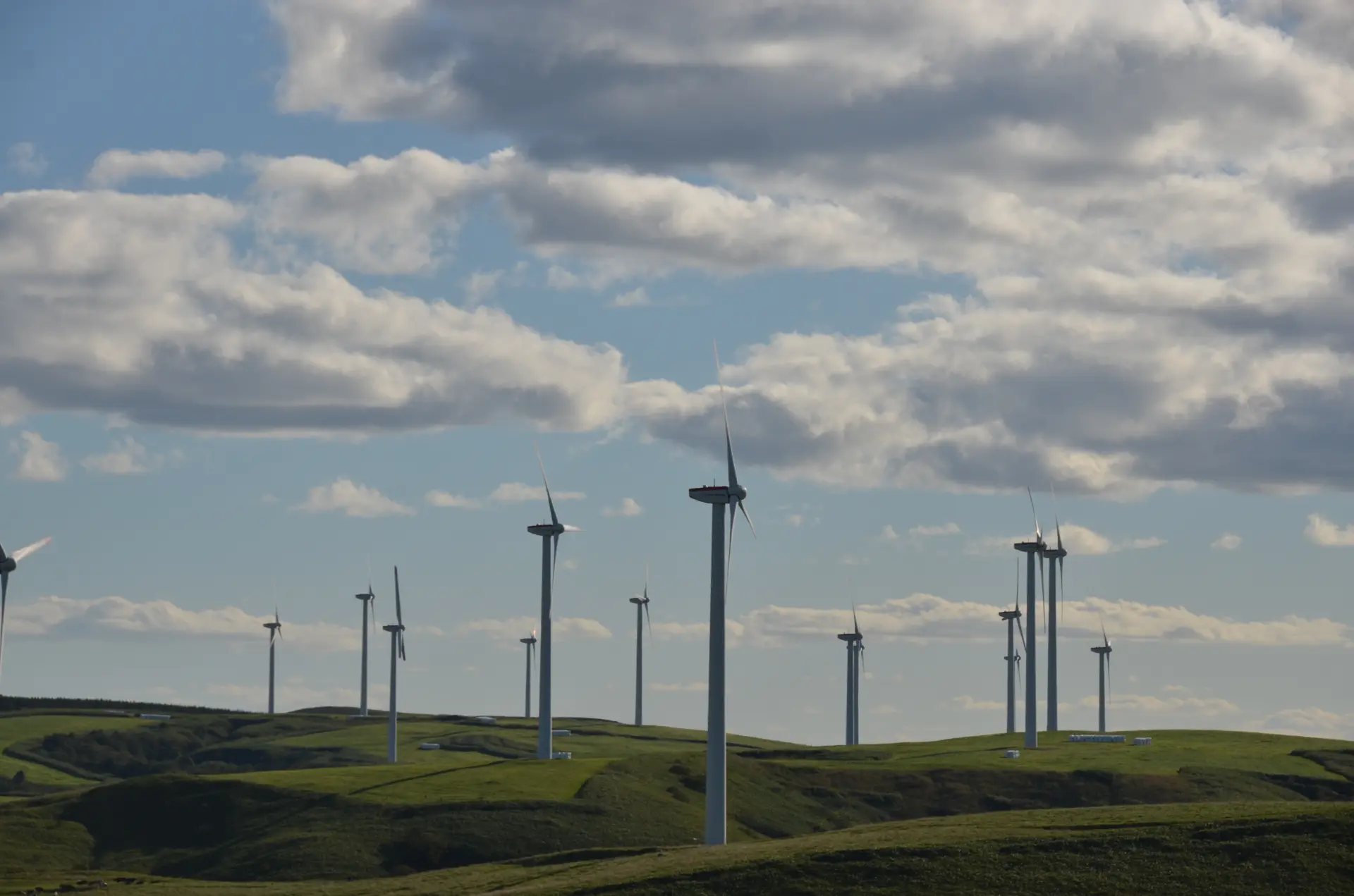
The gently rolling scenery of the Soya Hills continues all around you, and its sheer scale may make you briefly forget you are in Japan.
Simply stand there, feel the wind, and gaze at the scenery.
That alone makes this place feel worth the trip.
12:00 PM | Lunch at Teppen Shokudo in Wakkanai Fukko Market
After taking in the grand scenery of Japan’s northernmost point, return to central Wakkanai for lunch.
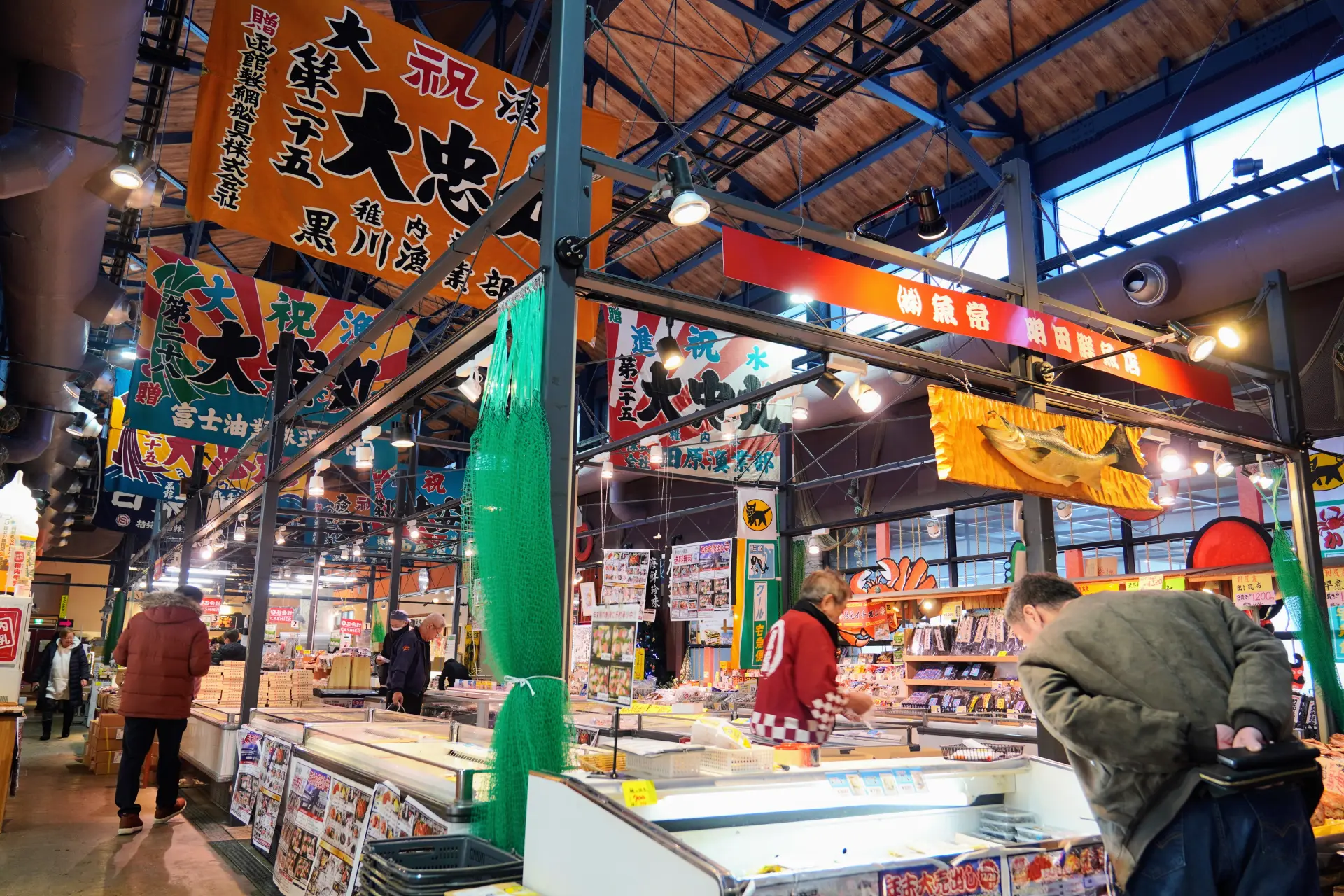
Wakkanai offers a wide range of options, from chain restaurants to privately run diners, but if you want a taste of the city’s local character, head to Wakkanai Fukko Market.
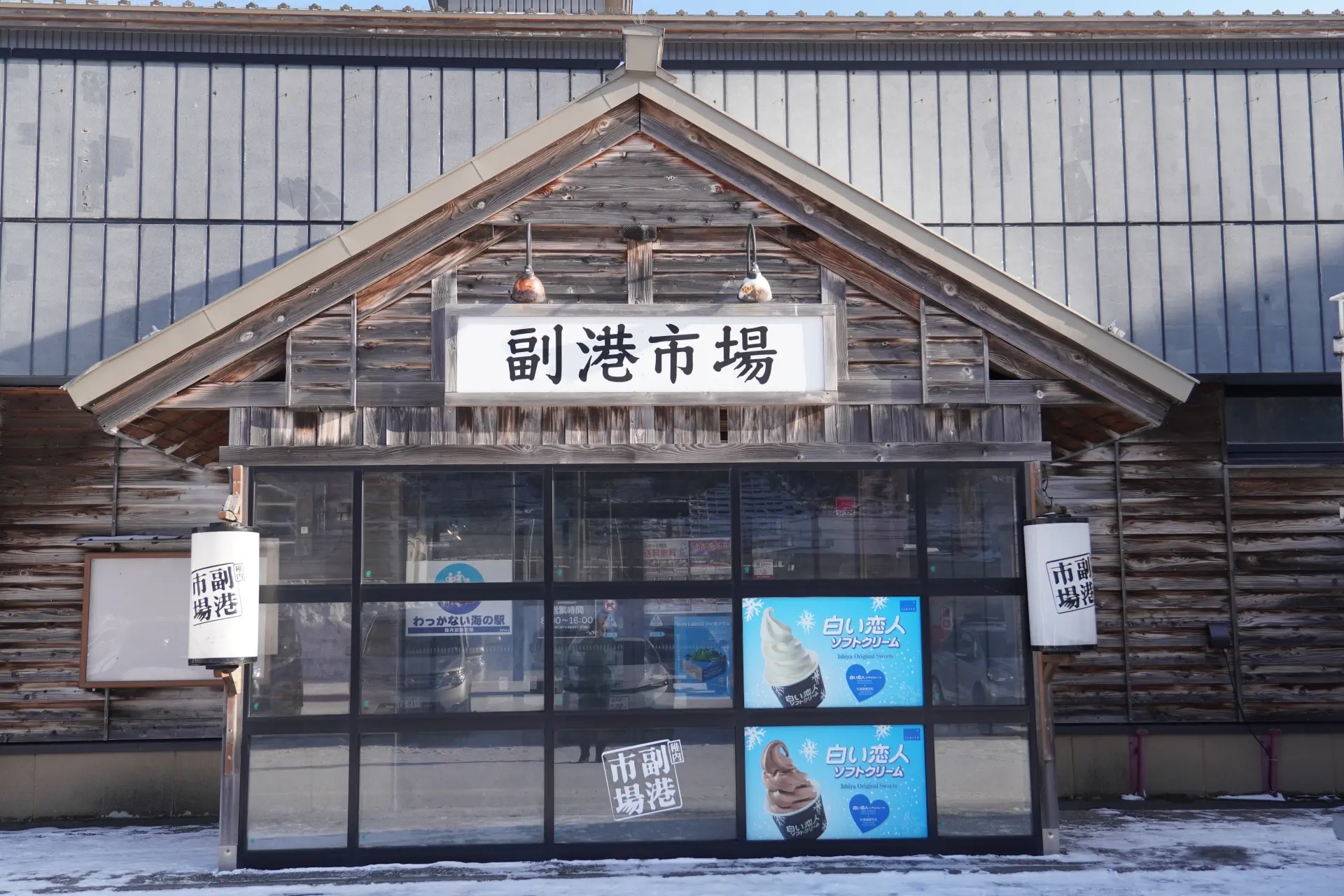
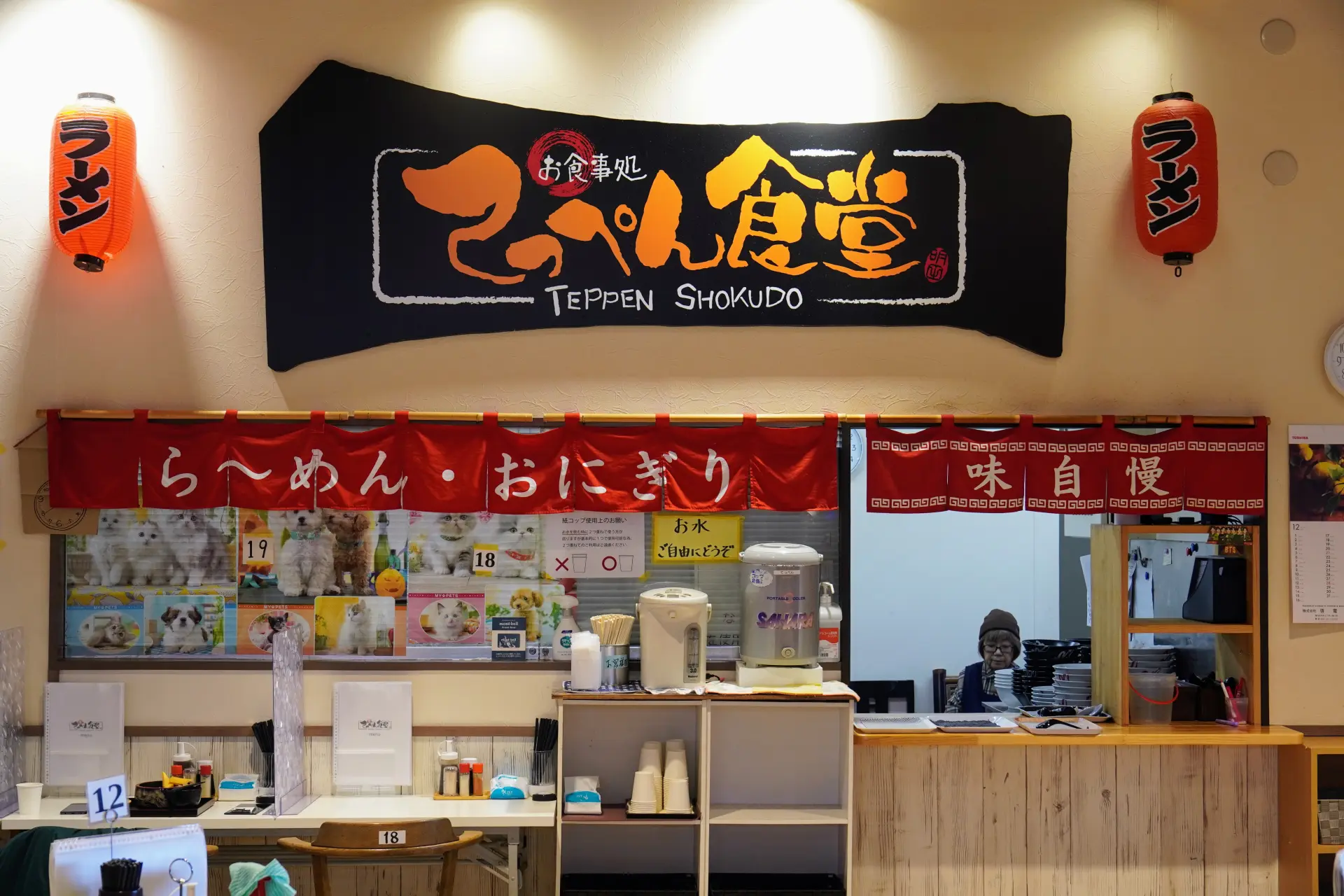
Among its options, Teppen Shokudo is popular with visitors and is also used regularly by locals.
The menu includes seafood rice bowls, udon, soba, and various set meals, making it an easy choice for just about anyone.
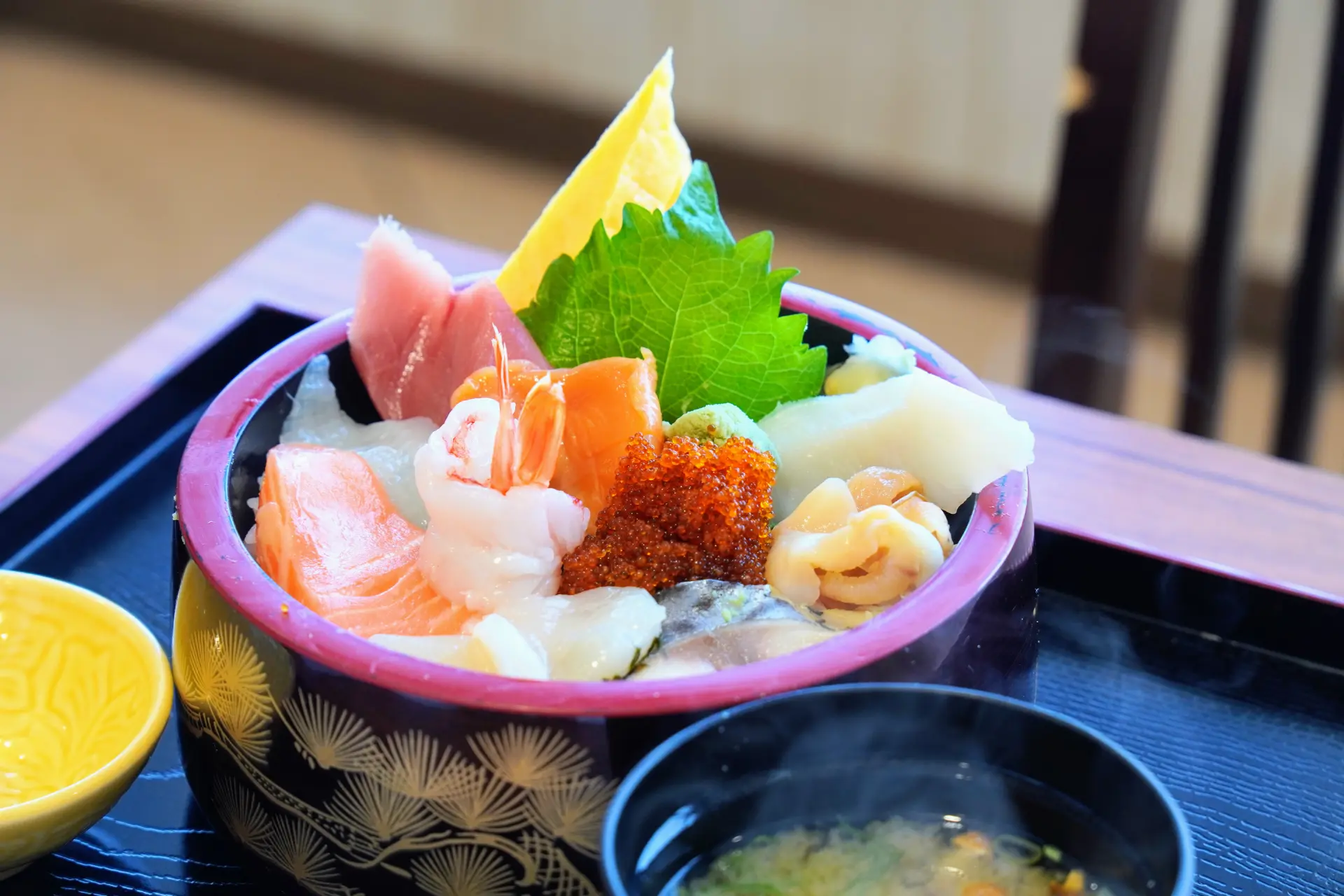
One item you’ll especially want to try is the seafood rice bowl prepared by Uotsune, a fish shop inside Fukko Market.
The signature Uotsune Seafood Bowl is generously topped with nearly 10 kinds of fresh seafood, including scallops, tuna, salmon, and flying fish roe.
With all of this for 2,200 yen including tax (as of April 2026), the price is another reason to take notice.
Enjoying this bowl amid the lively sounds of the market feels different from a tourist-area feast—it is Wakkanai’s everyday life itself.
Join the locals and enjoy an afternoon in this northern port town.
- Address
- 1-6-28 Minato, Wakkanai City, Hokkaido (inside Wakkanai Fukko Market)
- Hours
- 11:00 AM–3:00 PM (L.O. 2:30 PM)
- Closed on
- Tuesday
- Credit Cards
- Accepted
- Official website
- Official website (Japanese)
2:00 PM | Photogenic Wakkanai Port North Breakwater Dome
Once you’ve had your fill, continue your journey through scenic spots.
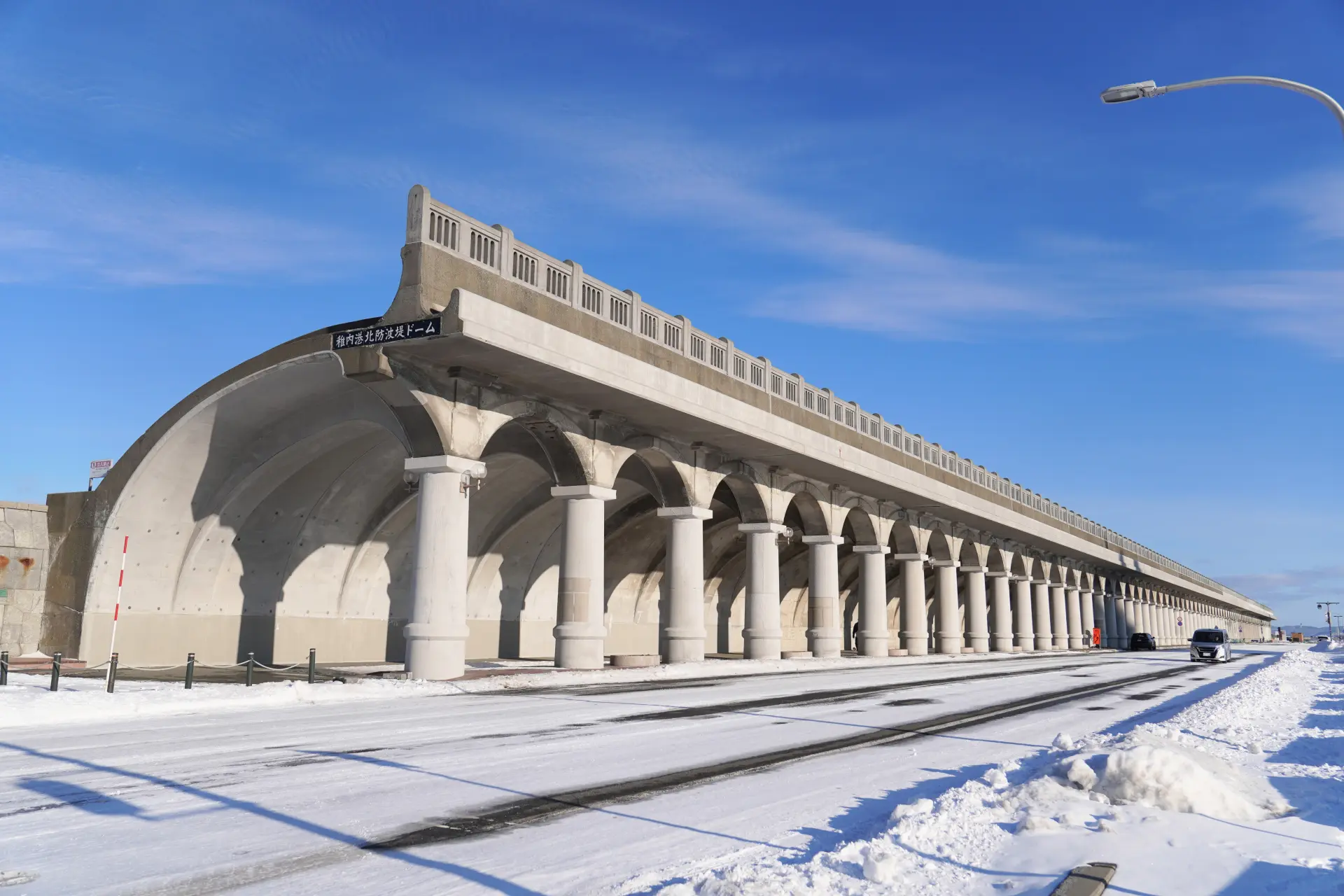
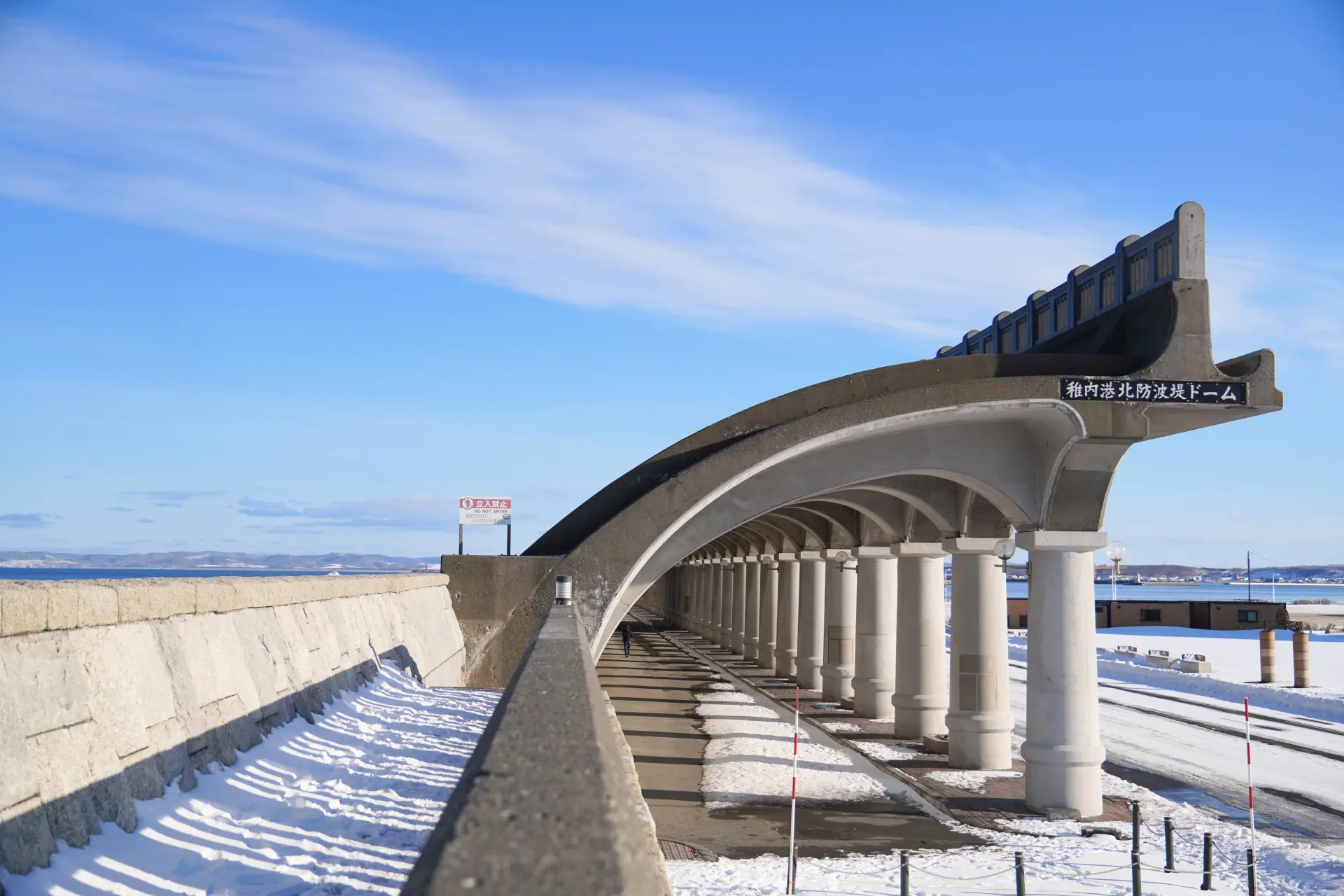
Your next destination is the Wakkanai Port North Breakwater Dome, one of the structures that symbolizes Wakkanai.
This breakwater was built to protect the port and railway from Wakkanai’s strong winds and rough waves.
In 2001, it was designated as a Hokkaido Heritage site.
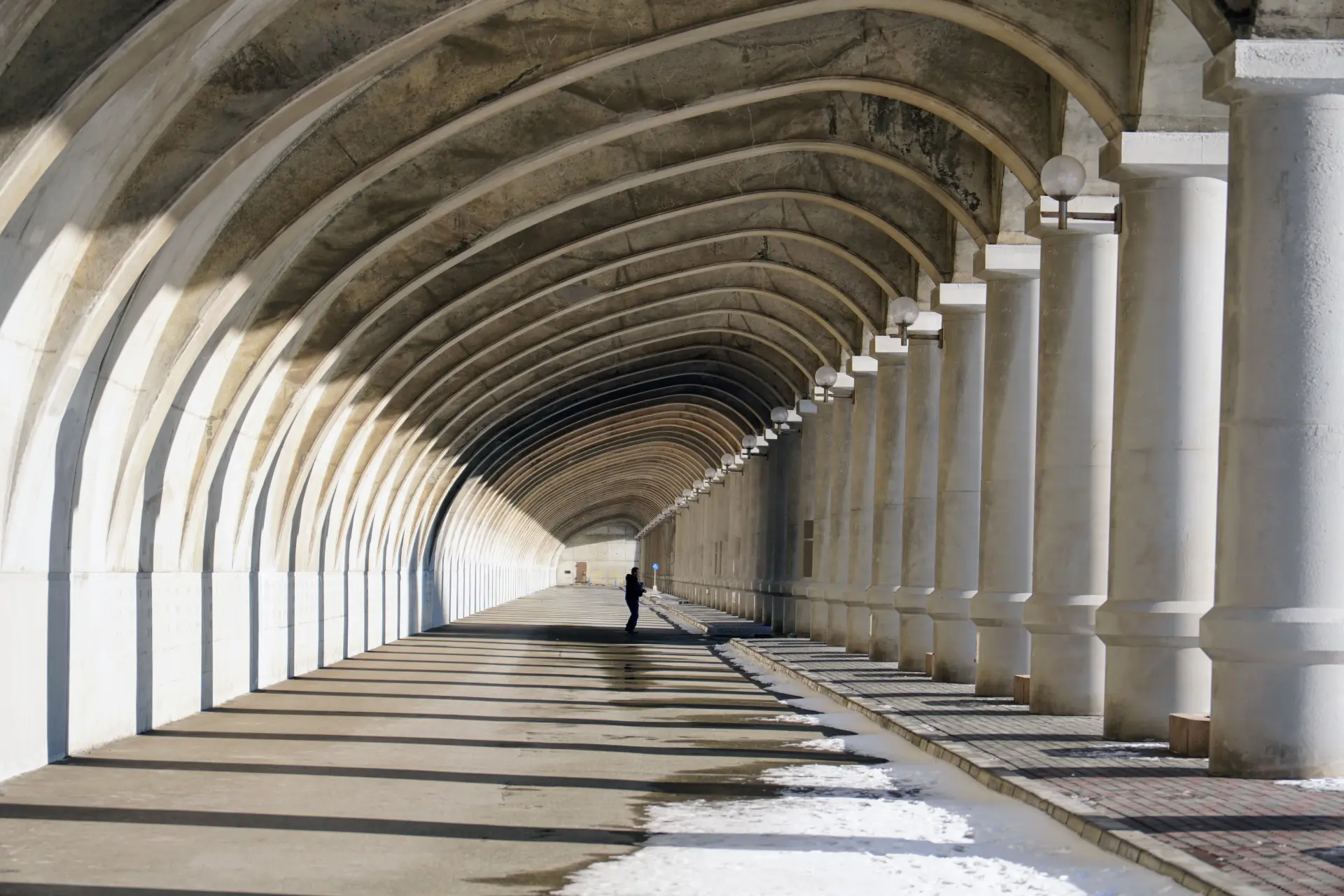
Its corridor evokes ancient Roman architecture, with a semi-arched structure measuring 427 meters long and 13.6 meters high.
The sight of 70 thick columns standing in orderly rows is so impressive that you may momentarily forget it is a breakwater in a port town.
Semi-arched breakwaters are rare even worldwide, and because of its distinctive scenery, this site has often been used as a filming location for movies and commercials.
Its appearance changes depending on how the light enters and where you stand, making it hard to stop taking photos.
In the past, Wakkanai Pier Station stood here, and the Karafuto ferry route extended beyond this corridor.
People are said to have walked through this dome, headed to the port, and set off across the sea.
As you walk through the corridor while imagining those days, a quiet sense of romance begins to unfold.
Appreciate the architecture, or try to capture a photogenic shot.
Enjoy it in your own way and make it part of your memories of Wakkanai.
3:00 PM | Wakkanai Park, Overlooking the City and Sea
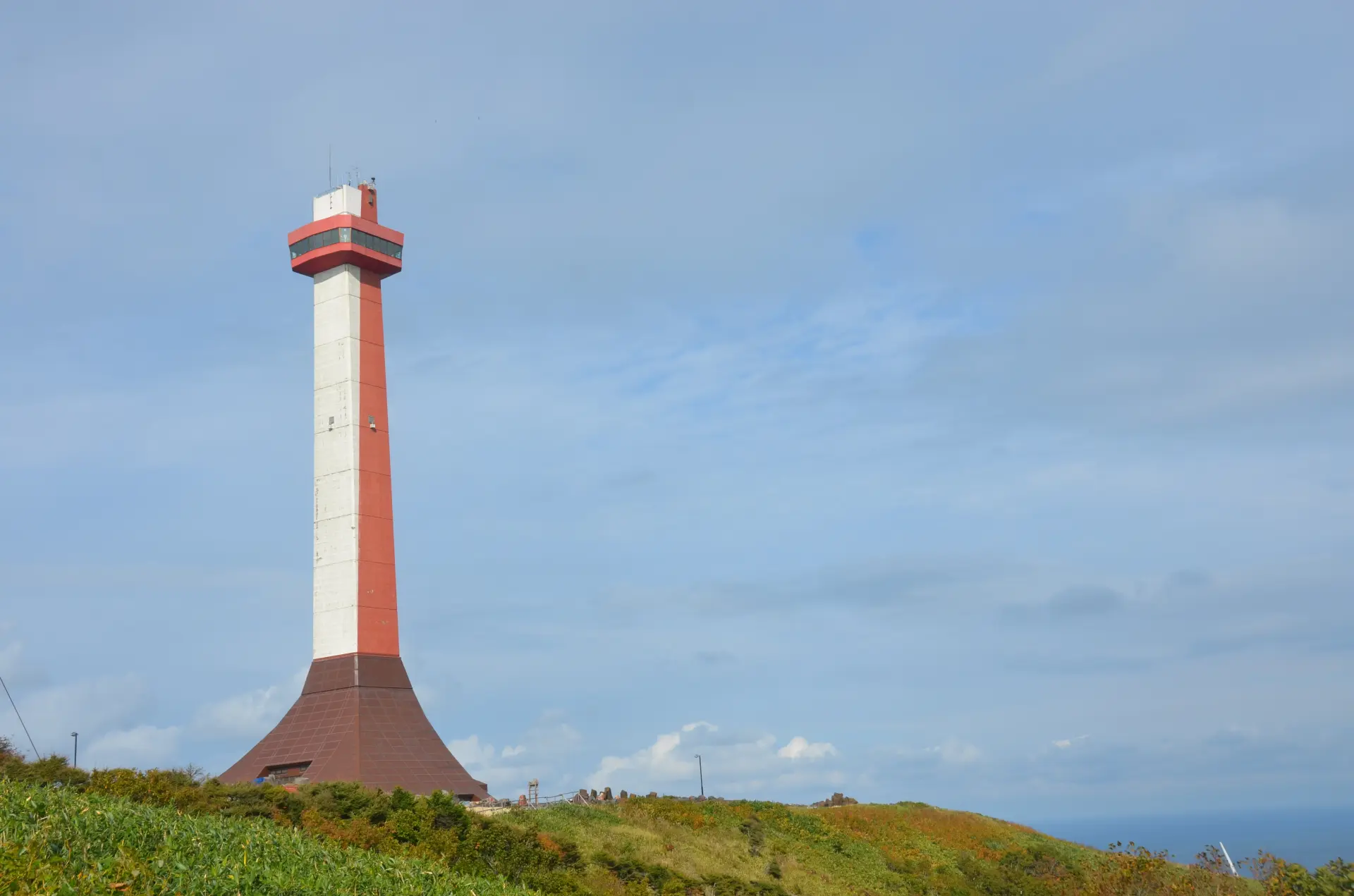
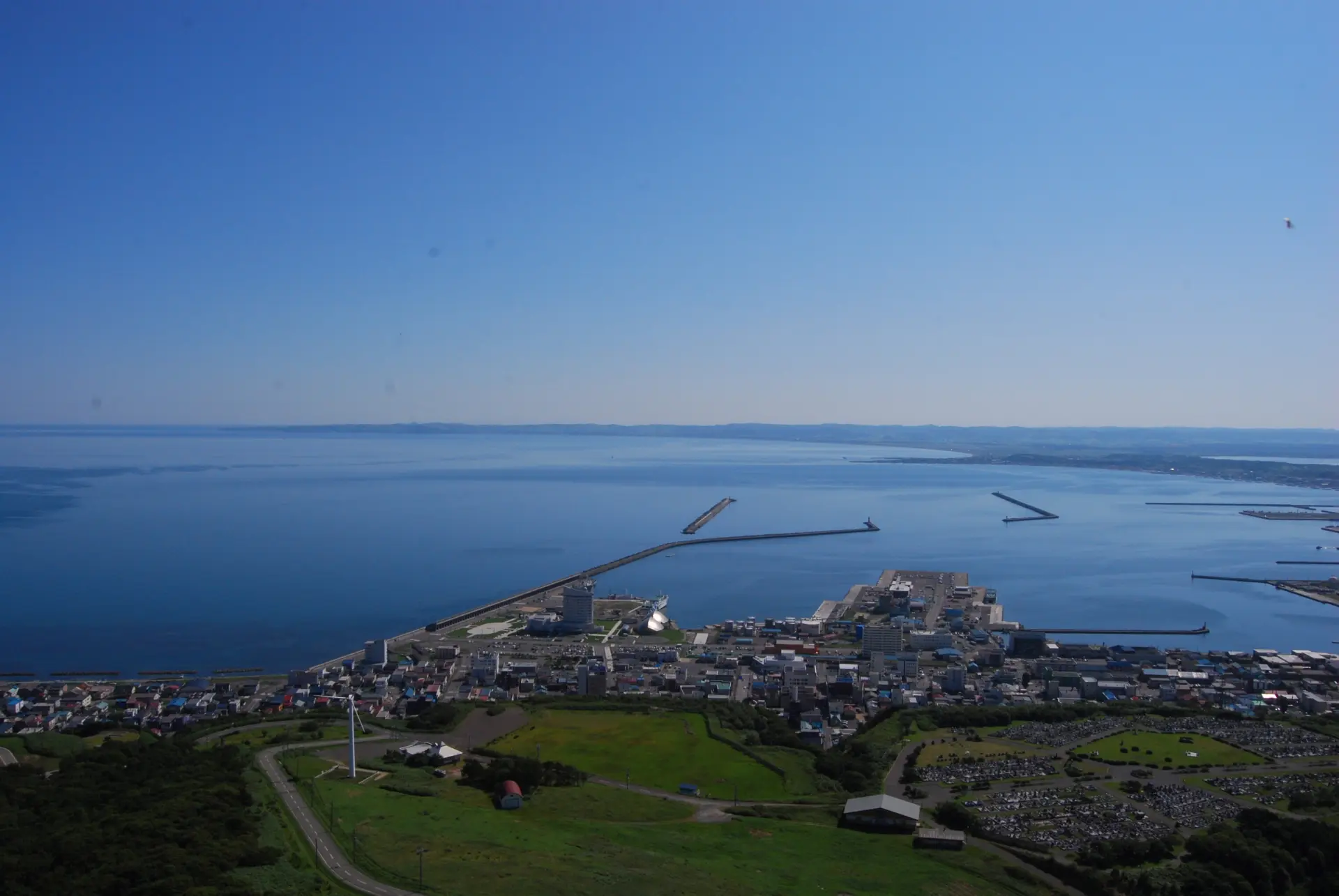
Spread across the hills overlooking central Wakkanai, Wakkanai Park is one of the city’s top viewpoints, covering a vast area of about 45 hectares.
As you make your way up the slope to the hilltop, a sweeping panorama opens up, with the deep blue sea and the streets of Wakkanai spreading out before you along with the wind brushing your cheeks.
Throughout the park are monuments that convey the area’s history, including the Gate of Ice and Snow and the Centennial Memorial Tower.
You can take a slow stroll while enjoying the scenery and reflecting on Wakkanai’s history as a former northern gateway of Japan.
Wakkanai Park was also registered as a Japan Night View Heritage site in 2018.
As the sun sets, the lights of the port and the city gradually begin to appear, revealing a dreamlike atmosphere completely different from the daytime view.
The nightscape, like scattered jewels, is a fitting beauty for the final part of the trip.
The park also has a free rest area, making it a pleasant place to take a break while looking out at the scenery.
Reflect on history and enjoy the landscape as it changes from moment to moment.
When visiting Wakkanai, this is one place you’ll want to stop by.
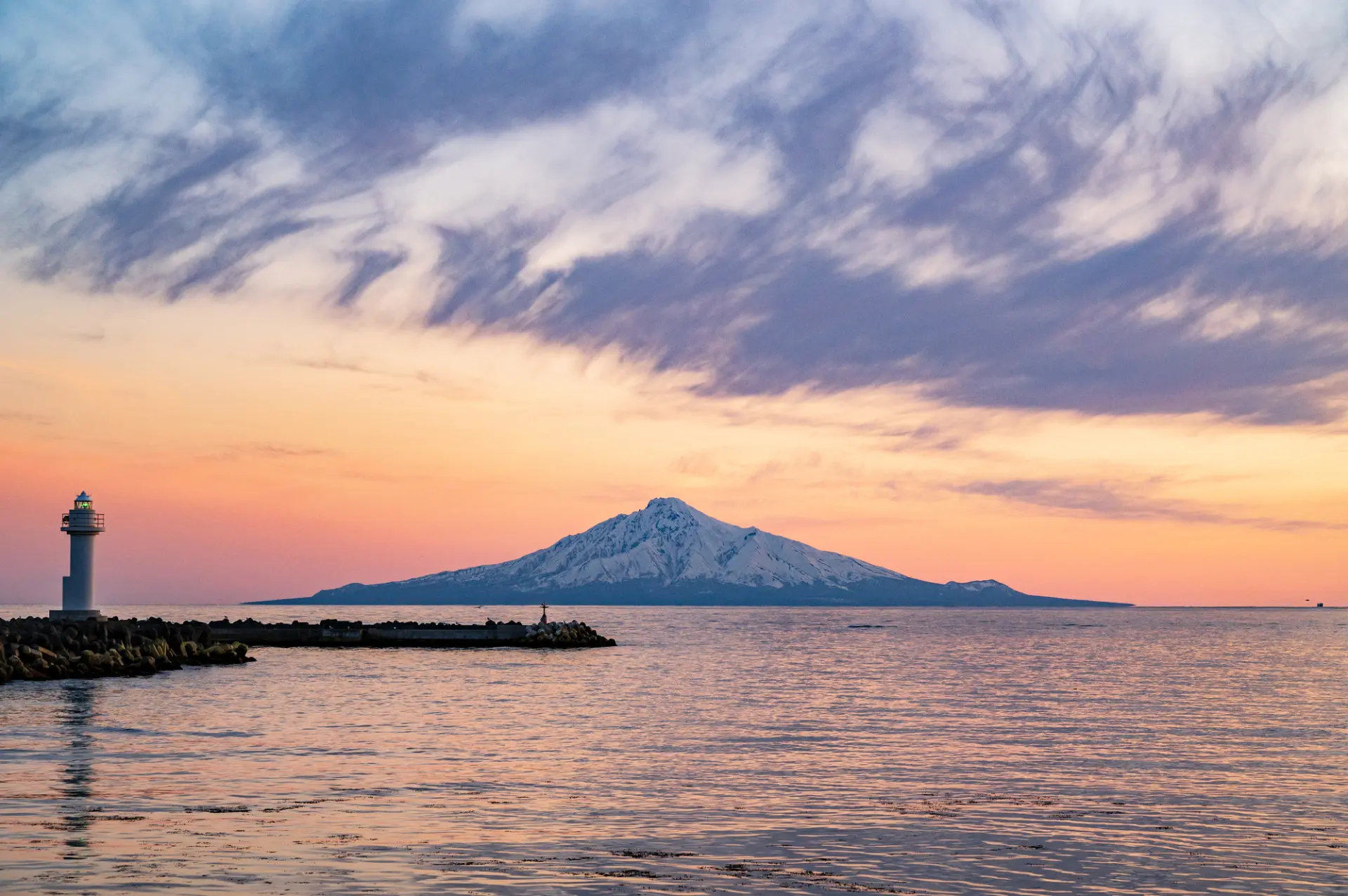
4:00 PM | A Dreamlike Sunset at Cape Noshappu
Wakkanai’s other cape is Cape Noshappu, located in the western part of the city.
“Noshappu” is said to come from an Ainu phrase meaning “near the cape.”
From this cape jutting out into the sea, you can look out over the open scenery of the Sea of Japan.
If you visit Cape Noshappu, sunset is the time to aim for.
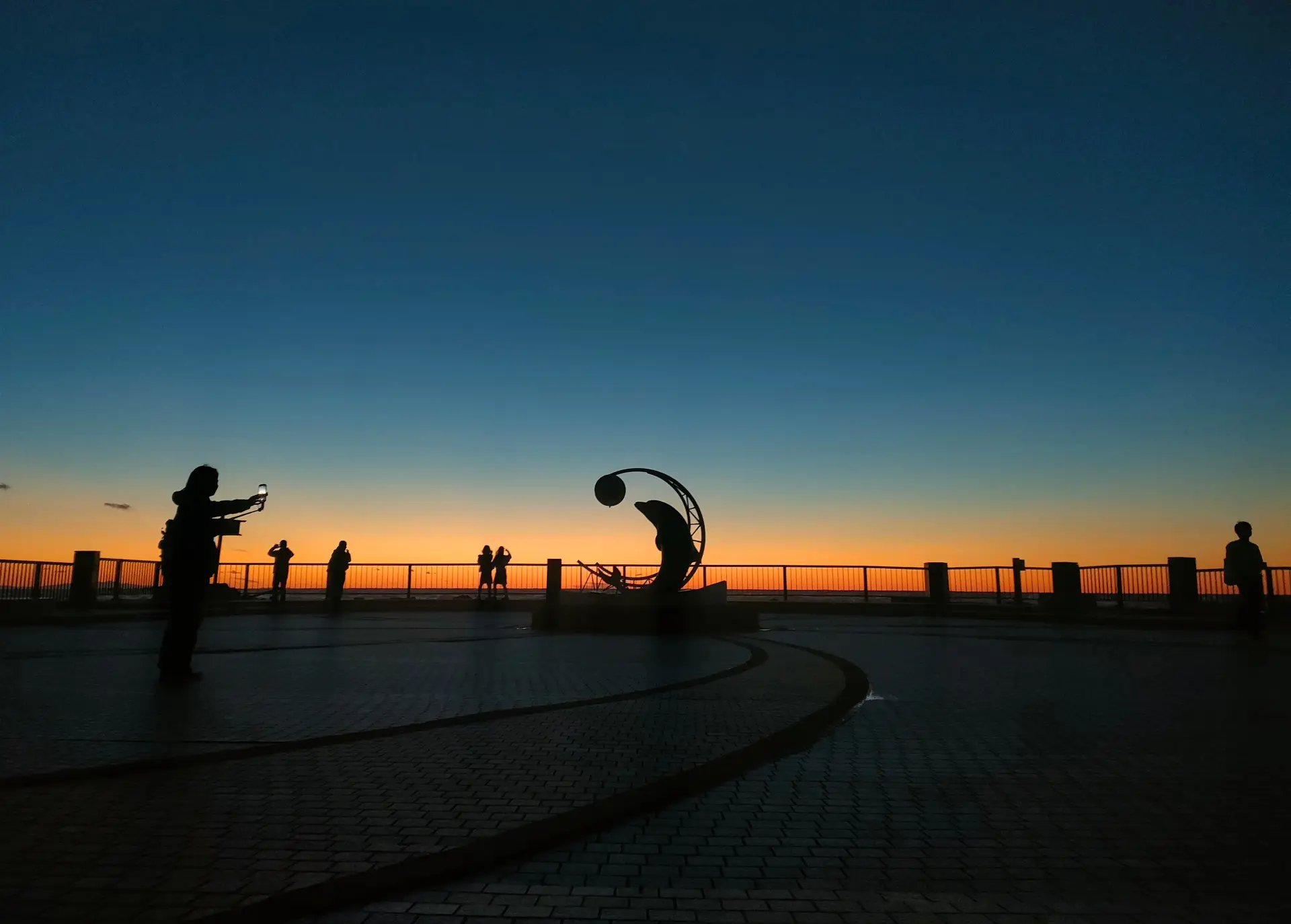
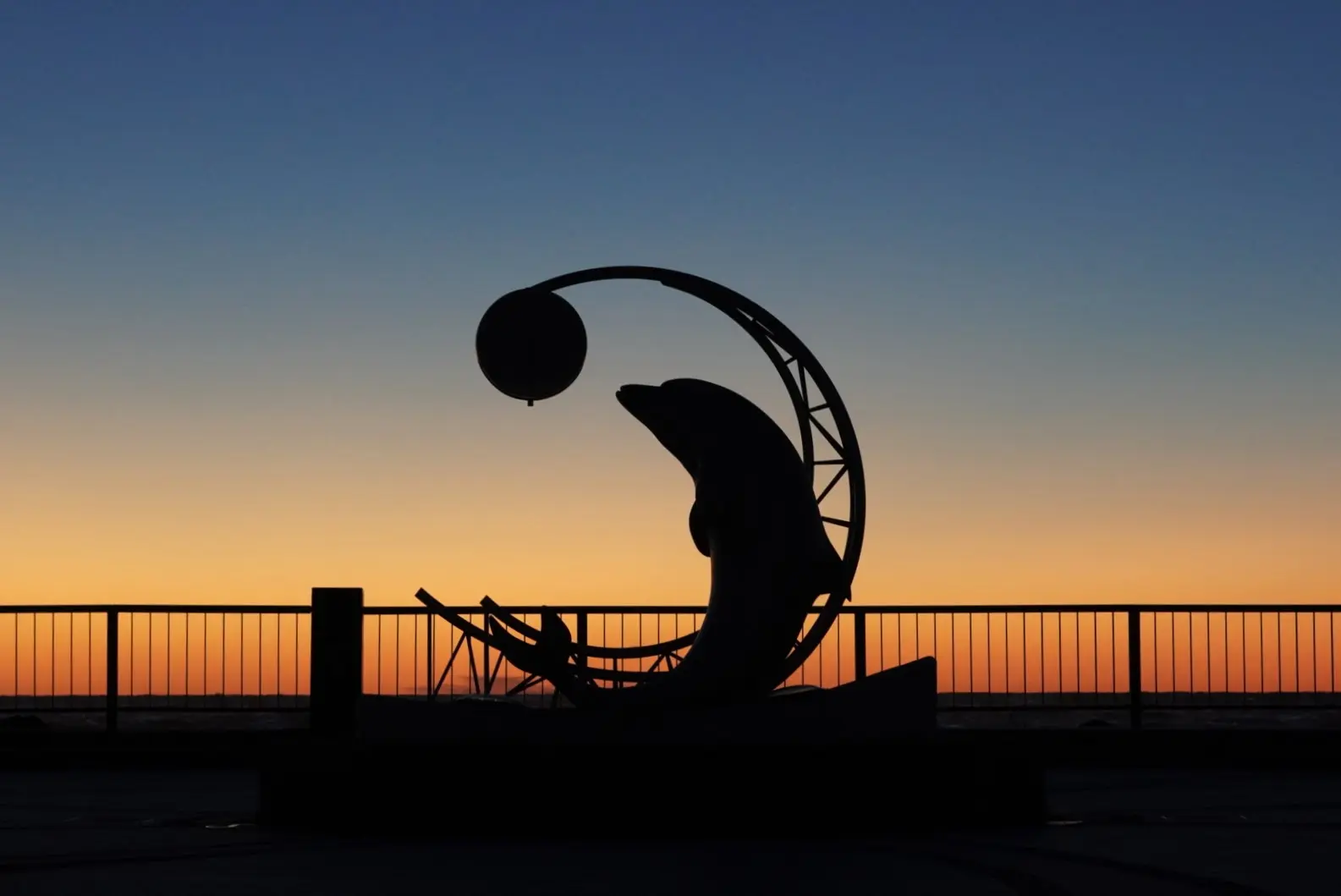
On clear days, the sun sinks toward the horizon of the Sea of Japan, dyeing the sky and sea a fiery orange.
The moment when the elegant silhouette of Rishiri Fuji appears clearly within that glow is breathtaking.
Even after the sun has set, the journey is not over.
The colors of the sky gradually deepen, and quiet slowly settles over the cape as the crowds thin out.
As you watch the sky and sea change from moment to moment, you may feel as if time itself has slowed down.
Note that sunset times vary greatly by season, from around 7:00 PM in summer to around 3:00 PM in winter, so be sure to check in advance.
5:00 PM | Wrap Up the Trip at Yuhigaoka Parking Area
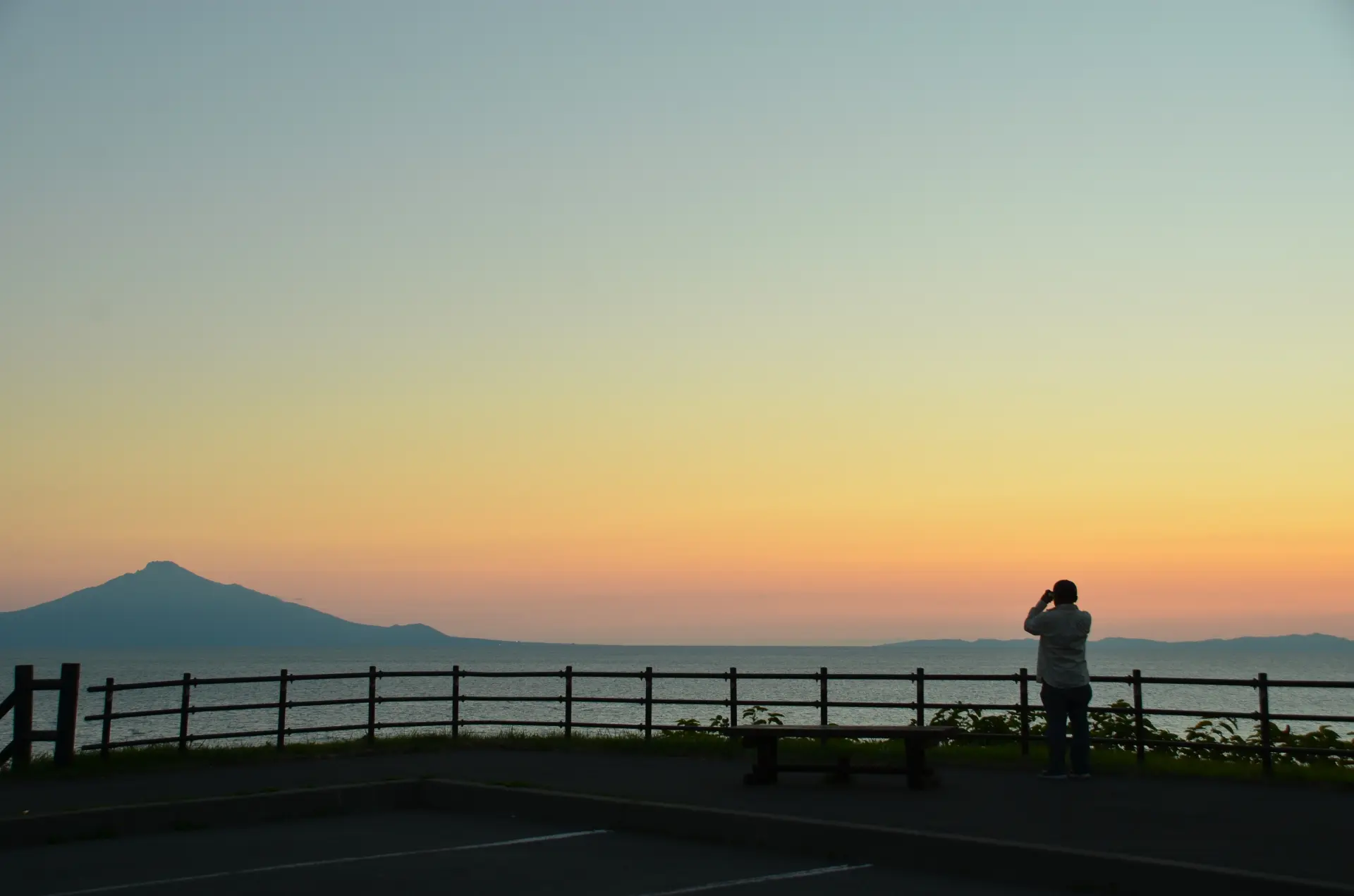
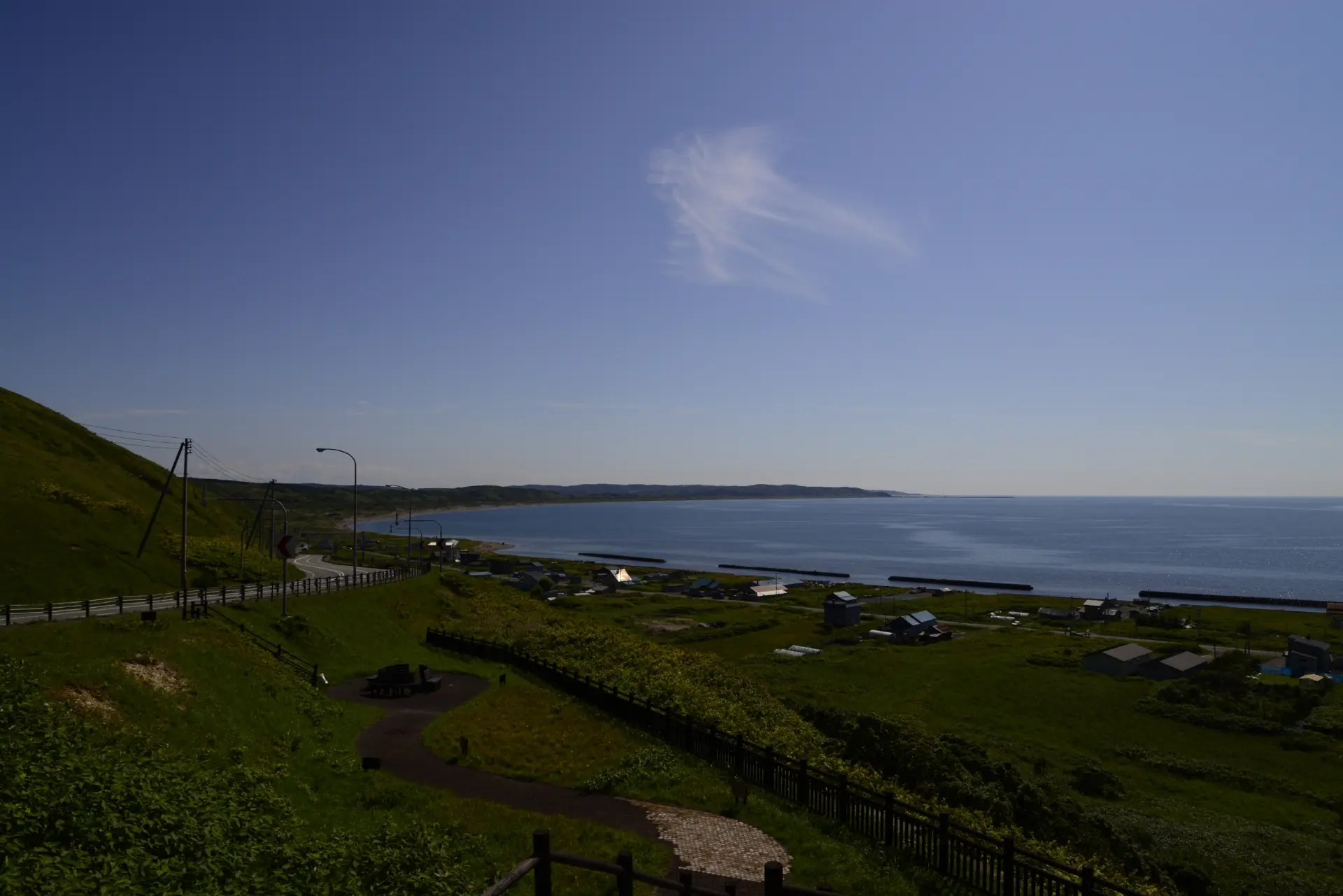
If you still have a little time before sunset, stop by Yuhigaoka Parking Area to close out your trip.
Compared with Cape Noshappu, which is known as a sunset spot, it has fewer people and is recommended for those who want to spend the evening quietly.
From here, you can see Rishiri Island, Rebun Island, and the seaside townscape stretching below.
Car lights along the coastal road, herds of Ezo deer walking through the grasslands, and scattered fishing huts and homes.
What spreads out before you is not Wakkanai as a sightseeing destination, but Wakkanai as a place where daily life continues.
It may not be a flashy scenic view.
Still, the scenery seen from this spot clearly reveals the outline of the city of Wakkanai.
Taking a moment to imagine the flow of time unique to this land—something you cannot see only at tourist spots—leaves a fitting afterglow at the end of the journey.
On the way from Cape Noshappu to Yuhigaoka Parking Area, you may often encounter herds of Ezo deer.
Drive slowly at a moderate speed and enjoy your northern journey to the very end.
- Address
- 4-chome Nishihama, Wakkanai City, Hokkaido
- Closed
- Closed during winter (around November–April)
- Official website
- Official website (Japanese)
Frequently Asked Questions About Wakkanai
Q
When is the best time to visit for this model itinerary?
Because some areas are closed to traffic in winter, visiting between June and October is recommended.
Q
Can I sightsee using only public transportation?
Yes, you can. However, the distances between spots are long and services are limited, so it is difficult to get around efficiently. Using a taxi or rental car gives you more freedom to travel and lets you fully enjoy scenic areas such as Soya Hills and the White Path.
Q
Is there anything I should keep in mind regarding clothing or what to bring?
Wakkanai is windy throughout the year, and even in summer, the perceived temperature can drop. It is a good idea to bring a jacket you can put on. Also, capes and hill areas have little shade, so a hat and sun protection will help you stay comfortable.
Summary
Stand at the top of Japan at Cape Soya, then experience the grandeur of the Soya Hills along the White Path.
Enjoy local flavors at Wakkanai Fukko Market, and encounter the city’s history and scenery at the North Breakwater Dome and Wakkanai Park.
Then, the sunset at Cape Noshappu and Yuhigaoka Parking Area becomes the climax of the trip.
The sky and sea changing color from moment to moment leave a deep afterglow that feels far beyond a simple day trip.
This model itinerary is designed so you can efficiently visit Wakkanai’s representative scenic spots while spending a full day enjoying the city’s changing expressions.
Being able to travel at your own pace through such a vast landscape is one of the real pleasures of a trip to Wakkanai.
If you are looking for scenery found only in Wakkanai, give this one-day course a try.