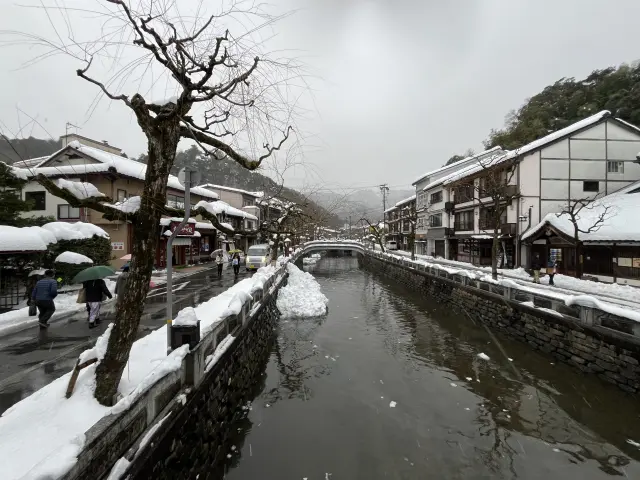
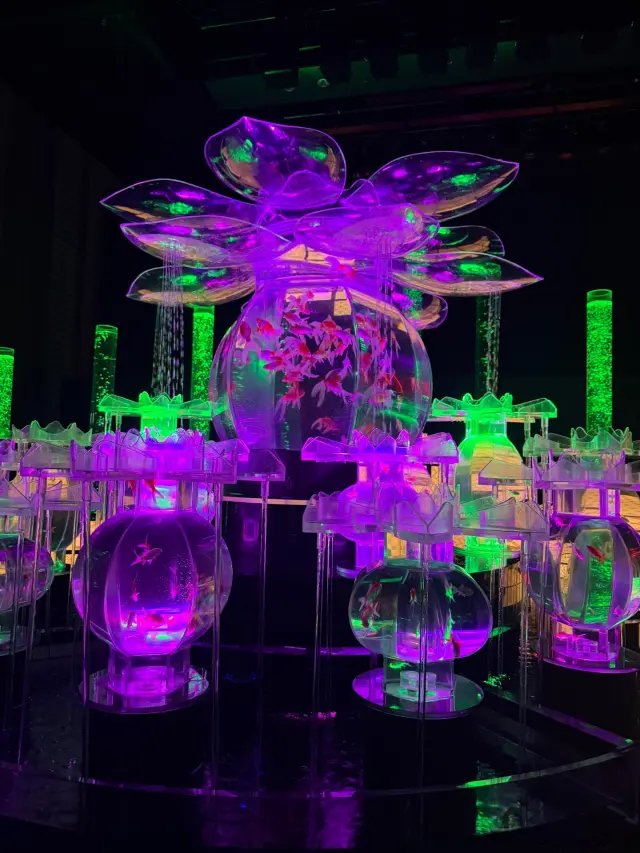
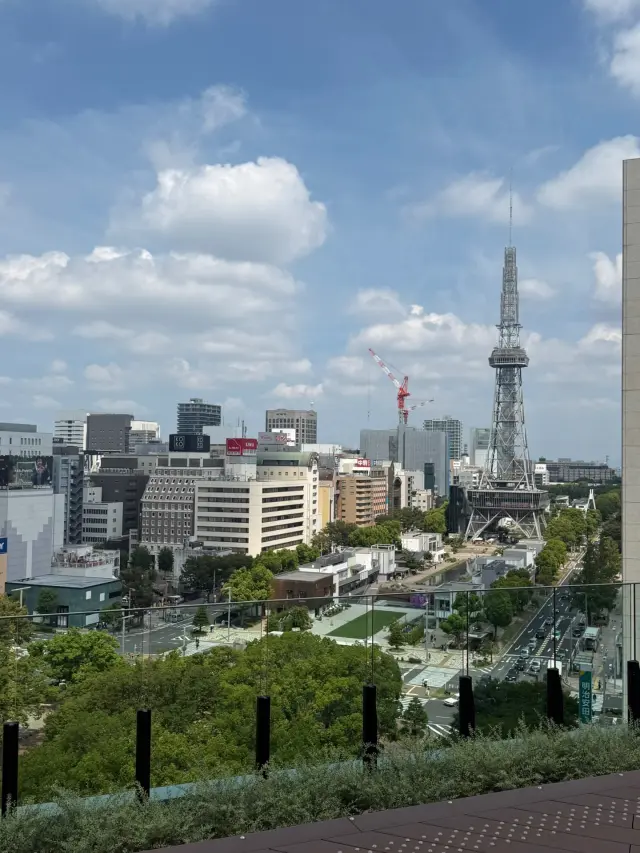
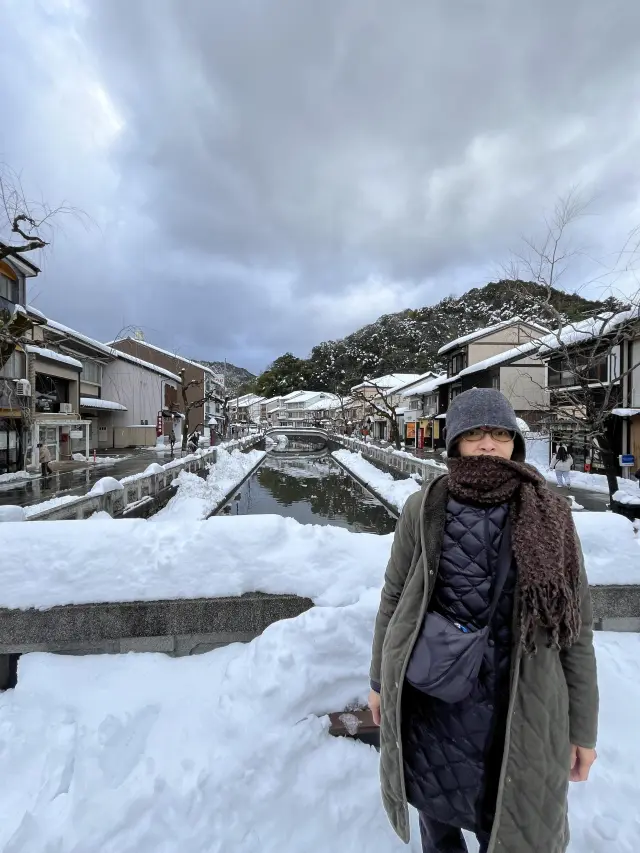
Kinosaki Onsen in northern Hyogo is a famous, historic hot spring town with about 1,300 years of history. It’s known for doing the “seven public bath” tour and for strolling along the willow-lined Otani River.
In winter, walking down the old-school onsen streets feels so charming. There are little cafés everywhere, so it’s easy to grab a coffee and a dessert, take a break, and just chat.
The town has kept its traditional Japanese vibe, and the snowy winter scenery is especially beautiful. It’s such a lovely, polished little place. I can’t wait to come back when the willows are lush again—soaking in the baths and wandering around in a yukata has to be super chill.
Kinosaki Onsen | Review by 周黛西
Other Reviews by 周黛西
-
Onigajo
A scenic spot designated as a National Natural Monument and also registered as a World Heritage Site. Massive rock walls, shaped by natural phenomena over tens of thousands of years including seismic uplift, weathering, and wave erosion, stretch for Approx. 1.2 km, and their overwhelming scale is sure to impress everyone. A promenade has been developed along the rock walls, allowing visitors to admire the scattered caves and unusual rock formations up close.
Onigajo in Kumano is a magnificent natural wonder sculpted over tens of millions of years. Crustal uplift, prolonged weathering, and coastal erosion created massive rock walls stretching about 1.2 km, with layers of raised rock shelves, sharp and rugged formations, and sea caves of all sizes. They look as though they were carved by demons wielding giant axes, making for a visually stunning sight.
It is also one of the component sites of the Sacred Sites and Pilgrimage Routes in the Kii Mountain Range World Heritage Site and is designated as a National Place of Scenic Beauty and Natural Monument. Walking along the coastal trail, the deep blue Kumano Sea contrasts sharply with the dark gray rock walls. Waves crash against the shore with heart-pounding force, the sea breeze carries a salty scent, and beneath my feet are rocks worn down over the years. I carefully made my way along, gripping the rock wall as if walking on thin ice.
From the Oni-no-Miharashidai lookout, you can gaze out over the expansive rock terrace known as Senjojiki and other sights. With the sea and sky blending into one, you can feel the immense power of nature even more, inspiring a sense of awe. The legend of Sakanoue no Tamuramaro defeating pirates adds another layer of mystery and a rugged sense of history to this unusual rocky coastline. Exploring the entire area takes about 90 minutes round trip, so come and fully enjoy the extraordinary beauty created by nature. -
-
Nachi Waterfall
Kumano-Nachi Taisha is the main shrine of over 4000 Kumano Shrines dotting Japan. This waterfall stands within the holy area, The grandest fall in Japan is 133m-tall, 13m-wide at the mouth, where water begins to fall, and the plunge pool is 10m-deep, and pours over 1 ton/second of water through three wedges which merges as one fall, thus called “Three Stream Fall.”
Nachi Waterfall has a drop of 133 meters and is one of Japan's most famous waterfalls, as well as one of the “Three Great Waterfalls of Japan.” The water originates on Mount Ōgumotori, flows through an old-growth forest, then rushes over a sheer cliff with tremendous force, like the ancient description of “3,000 zhang of white hair.” Standing before the waterfall, you hear the thunderous roar of the water, see a ribbon of white plunging before your eyes, and feel the fine mist on your face. The air is filled with the crisp scent of the forest, and even your skin feels the cool moisture. The waterfall itself is the sacred object of worship at Kumano Nachi Taisha, which has no conventional main sanctuary. Standing quietly before the falls, feeling the power of nature and the sacred atmosphere, and then walking along the Kumano Kodo awakens all five senses and adds a profound and unforgettable sense of wonder to this trip through the southern Kii Peninsula.
-
-
Nachi-san Seiganto-ji Temple
With over 1,600 years of history, Seiganto-ji Temple on Mt. Nachi is a Tendai Buddhist temple that flourished as a center for syncretic practices blending Shinto and Buddhism. Known as the first stop of the Saigoku 33 Kannon Pilgrimage, it draws numerous visitors each year and is recognized as part of the UNESCO World Heritage Site "Sacred Sites and Pilgrimage Routes in the Kii Mountain Range”.
Nachi-san Seiganto-ji Temple, the first stop on the Saigoku 33 Kannon Pilgrimage, is most memorable for the classic view of its vermilion three-story pagoda framed by Nachi Falls. The pagoda stands against the mountainside, with the waterfall plunging down the cliffs behind it. The interplay of red, green, and white creates a striking cultural landscape. Admission is required to enter the pagoda. You can take an elevator to the upper level for a close-up view of Nachi Falls, then descend the stairs to see the statue of Amida Buddha enshrined inside, along with colorful paintings covering the walls and ceiling. A visit here is more than just a pilgrimage—it is a visual experience where nature and culture come together.
-