

Experience the Unique Charm of Japan! 10 Must-Visit Kamakura Sightseeing Spots
Coastal air, temple gates, and a quick train ride from Tokyo-Kamakura has a way of pulling you in right away.
It’s also known as a real-life setting linked to the globally beloved manga "Slam Dunk".
With ocean on one side, mountains on the other, and shrines and temples throughout, seasonal scenery here feels especially vivid.
Like Nara and Kyoto, it once hosted Japan’s political institutions-so why not plan a trip and really soak in that atmosphere?
What is Kamakura Like?
Kamakura City sits on the western coast of the Miura Peninsula in Kanagawa Prefecture.
Kamakura is where the Kamakura shogunate, Japan’s political government during the Kamakura period-when the samurai first took power-was established.
As a result, the city is filled with places connected to Minamoto no Yoritomo, the shogun who founded the Kamakura shogunate.
Because samurai culture was closely tied to Buddhism, Kamakura has many temples as well as shrines, with more than 100 temples throughout the city.
Among them, the prestigious temples known as the “Five Mountains of Kamakura” are not to be missed.
Facing the sea to the south and surrounded by mountains to the east, west, and north, Kamakura is also known as a scenic destination.
In recent years, it has also become well known as a real-life setting associated with the basketball manga "Slam Dunk", popular not only in Japan but around the world.

When is the best season to visit Kamakura?
Known for landscapes where shrines, temples, and nature come together, Kamakura is beautiful any time of year.
A particularly recommended season is June, when you can stroll through temple grounds while admiring hydrangeas.
Since it’s the rainy season, your visit may be in the rain—but walking around temples on a rainy day while enjoying hydrangeas is a wonderful way to soak in the atmosphere of Japan.
What to wear in Kamakura by season
- Spring (March–May): Light jacket with a thin sweater
- Summer (June–August): Light clothing and short sleeves
- Fall (September–November): A light jacket or a coat
- Winter (December–February): Coat plus a thick sweater or jacket
How do you get to Kamakura?
From Tokyo Station, take the JR Yokosuka Line to Kamakura Station in Approx. 1 hour.
From Yokohama, another popular sightseeing destination, it takes Approx. 30 minutes by transferring between the JR Tokaido Line and the JR Yokosuka Line.
Because it’s close enough for a day trip from central Tokyo, it’s also easy to stop by as part of your Tokyo itinerary.
Main ways to get around Kamakura
Getting around Kamakura can be part of the fun while you explore.
Make good use of the Enoden (Enoshima Electric Railway), loved for its retro look and the mix of nature and streetscapes outside the window, and the Shonan Monorail, a suspended monorail known for its dramatic ups and downs.
Beautiful Shrines and Temples in Harmony with Nature! 10 Selected Kamakura Sightseeing Spots
Shrines and temples are a big part of a Kamakura visit, and the seasonal scenery changes the feel of each stop.
Below, we’ve picked out some of the most popular sacred sites from the city’s more than 100 shrines and temples.
You’ll also find sightseeing spots that fit nicely between shrine and temple visits.
1. Tsurugaoka Hachimangu Shrine
Located in the heart of Kamakura, Tsurugaoka Hachimangu Shrine is beloved as the city’s symbol. As a shrine closely associated with the shogun Minamoto no Yoritomo, it draws many visitors. The current main hall was built in 1828 and is designated an Important Cultural Property of Japan.

2. Meigetsu-in Temple
Meigetsu-in is a temple of the Kenchoji branch of the Rinzai school of Zen Buddhism. Its principal image is a seated statue of Sho Kannon Bosatsu.
Often called the “Hydrangea Temple,” it turns blue with Approx. 2,500 hime-ajisai hydrangea bushes at peak bloom in June. The temple’s soft blue blossoms are called “Meigetsu-in Blue.” During the same season, you can also enjoy Japanese irises in the iris garden at the back of the grounds (additional fee).

3. Kamakura Daibutsu (Great Buddha) at Kotoku-in Temple
One of Kamakura’s most popular attractions is Kotoku-in’s principal image, the statue of Amida Nyorai.
Its powerful presence has made it beloved as the “Kamakura Great Buddha.”
It stands Approx. 11.39 m tall and weighs Approx. 121 tons—truly worthy of the name “Great Buddha,” and an awe-inspiring sight.

4. Hasedera Temple
Hasedera, affectionately known as “Hase Kannon.”
Its principal image is the Eleven-Headed Kannon Bosatsu, Approx. 10 m tall and the largest wooden Buddha statue in Japan.
Flowers throughout the grounds are beautiful in every season, and the hydrangeas that bloom in June are especially spectacular—so much so that they’re considered a local highlight.

5. Hokokuji Temple (Bamboo Temple)
A Kamakura temple that earned three stars in the travel guide "Michelin Green Guide Japan" for international visitors.
In 1334, the high-ranking monk Tengan Eko built a hermitage here to train, and the Ashikaga and Uesugi clans were involved in founding the temple.
With a bamboo grove of Approx. 2,000 stalks and a beautifully maintained Japanese garden, the grounds are filled with an enchanting, serene beauty.

6. Zeniarai Benzaiten Ugafuku Shrine
The shrine’s origins date to 1185, when Minamoto no Yoritomo—before being appointed Sei-i Taishogun—received an oracle in a dream from Ugafuku, a water deity with a human head and serpent body, telling him that worshipping the spring to the northwest would bring peace to the land.
Later, Hojo Tokiyori washed coins in this spring and prayed for his clan’s prosperity, giving rise to the folk belief of washing money here.

7. Komyoji Temple
Komyoji is a renowned temple of the Jodo sect and is said to have been founded in 1243. Backed by Hojo Tsunetoki’s devotion, it was established by Nenna Ryōchū.
The main hall, built in 1698, is the largest surviving wooden structure in Kamakura and is designated an Important Cultural Property by the Japanese government.
In spring, cherry blossoms bloom, while in summer, lotus flowers open in Kishū Garden—an easy, soothing stop.

8. Railroad crossing near Enoden’s Kamakurakokomae Station
Many people recognize this as the model for the railroad crossing in the opening of the "Slam Dunk" anime, which created passionate fans not only in Japan but around the world.
When a retro train rolls by with the ocean visible beyond the tracks, it’s hard not to stop for a photo.

9. Kenchoji Temple
Founded in 1253 by Hojo Tokiyori, the 5th regent of the Kamakura shogunate, Kenchoji was Japan’s first dedicated Zen training monastery, established with the Song-dynasty monk Rankei Doryu as founding abbot. It flourished as the top-ranked temple of the Five Mountains of Kamakura and is the head temple of the Kenchoji branch of the Rinzai school, with more than 400 sub-temples. Its official name is Kofukuzan Kencho Kokoku Zenji; “Kofuku” comes from Kofukuro, and the temple name is derived from the era name.

10. Engakuji Temple
Right by Kita-Kamakura Station, Engakuji is the head temple of the Engakuji branch of the Rinzai school.
It was founded in 1282 by Hojo Tokimune, the 8th regent of the Kamakura shogunate, to spread Zen and to mourn those who died in the Mongol invasions.
It is an historic temple that was generously protected by the Hojo clan throughout the Kamakura period.

Enjoy the Views and Great Food at the Same Time! 3 Popular Restaurants in Kamakura
Between temple visits and seaside walks, you’ll find plenty of good places to eat in Kamakura.
These picks let you enjoy the scenery with the meal, including one well-known spot where lines are part of the deal.
1. Yoridocoro Inamuragasaki Main Store
A cafe located just a short walk from Inamuragasaki Station on the Enoshima Electric Railway.
Set in a renovated traditional house along the Enoden tracks, the terrace seats put you right in front of the passing Enoden train. The cafe opens from 7:00 am, making it a great choice for breakfast, lunch, or a coffee break.
The signature dish is the “Himono Set Meal,” featuring expertly selected dried fish from around Japan.
You can choose from horse mackerel, mackerel, barracuda, splendid alfonsino, and more, served with a daily small side dish and miso soup.

2. Amalfi DELLA SERA
Along Kamakura’s Shichirigahama coast, Amalfi DELLA SERA is an Italian restaurant with big ocean views.
Fresh seafood purchased directly at the market and locally grown Kamakura vegetables show up in casual Italian dishes that suit the setting.
From the restaurant’s terrace, a panoramic view of Shichirigahama opens up, with expansive scenery that includes Misaki Lighthouse, Enoshima, and even Mount Fuji.

3. OXYMORON komachi
On Komachi-dori, OXYMORON komachi is the kind of cafe where the line outside often says it all.
The signature menu features four types of curry that highlight the ingredients. Blending the natural flavors of the ingredients with spices in a skillful way, these curries are originals you won’t find in any single genre.
The “Japanese-style Keema Curry,” inspired by tonjiru (pork miso soup), features a rich curry with just the right touch of miso, accented with plenty of green onions and the aroma of sesame.

Find Local Specialties That Capture Japanese Culture! 2 Popular Shopping Spots in Kamakura
If you want a shopping break between shrine and temple visits, these spots are easy to work into your day.
Keep an eye out for local specialties that feel rooted in Japanese culture—and in Kamakura’s, too.
1. Komachi-dori
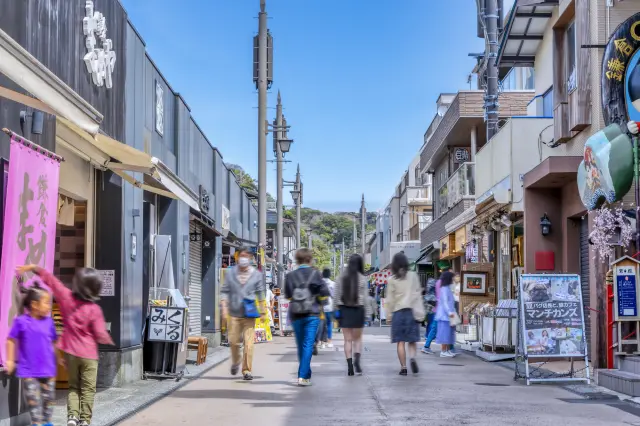
From the East Exit of Kamakura Station, this Approx. 360 m street runs north from a red torii gate that marks the entrance. Lined with Approx. 250 shops packed closely together, it includes everyday stores for locals as well as restaurants and souvenir shops for tourists.
Surrounded by the sea and mountains, Kamakura is rich in nature and full of historical and cultural highlights, making this area a popular base for sightseeing. With different ways to enjoy it in every season, it’s also a favorite with many repeat visitors.

2. Kamakura Orgel Doh
Old-town scenery and modern cafes sit side by side in Kamakura, and that mix carries over into its specialty shops as well. Kamakura Orgel Doh is located Approx. a 5-minute walk from Hase Station, near Hasedera Temple and the Kamakura Great Buddha area.
Inside, you’ll find more than 6,000 music boxes across 1,000 varieties, including original hydrangea- and Great Buddha-themed music boxes exclusive to the Kamakura shop.

FAQ about Kamakura
Q
Are Kamakura and Enoshima in the same area?
A
Enoshima is in Fujisawa City, so it’s a bit away from Kamakura. However, it’s just a 30-minute ride on the Enoden, so we recommend sightseeing in Enoshima along with Kamakura.
Q
What are recommended spots for sightseeing in Kamakura in winter?
A
We recommend Tsurugaoka Hachimangu Shrine, where you can see peonies at their best in the winter-only Peony Garden. Temples covered in falling snow are also a stunning sight.
Q
Where are good places to enjoy food in Kamakura?
A
We recommend Kamakura Komachi-dori, where you can enjoy Japanese food culture as you eat your way down the street.
Summary
Sea and mountains shape the scenery in Kamakura, and the city’s shrines and temples still carry strong ties to its samurai-era past.
Take your time wandering temple and shrine grounds with the natural surroundings close by, and the atmosphere of Japan comes through almost on its own.
Yokohama—Approx. 30 minutes from Kamakura—is also packed with things to see and do, so it’s worth extending your trip.