

Your Travel Guide to Enjoy the Many Sides of World Heritage Toji Temple
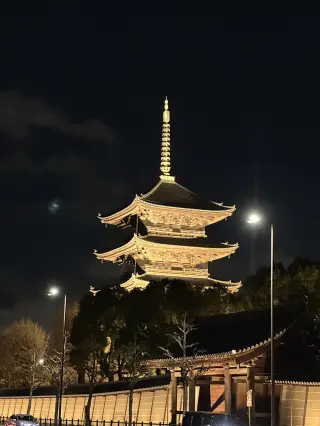
Toji Temple (Kyo-o-gokoku-ji) is a UNESCO World Heritage Site, and its five-story pagoda on the grounds is known as a symbol of Kyoto.
Because it’s visible from the Shinkansen heading to Kyoto and is close to JR Kyoto Station, you’ll almost certainly spot it when you visit Kyoto.
From the five-story pagoda and Miedo Hall to treasures across the grounds, Toji houses and displays over 20,000 National Treasures and Important Cultural Properties—so there’s plenty to see.
It’s also famous for cherry blossoms and fall foliage, and during peak season you can enjoy illuminated cherry blossoms and illuminated autumn leaves.
Don’t miss Koboichi, one of Japan’s largest open-air markets, held on the 21st of every month.
In this guide, we’ll cover everything you’ll want to know to enjoy Toji Temple to the fullest, including must-see highlights, its history, and the best seasons to visit.
What is Toji Temple Like?
Toji Temple is located about a 15-minute walk from Kyoto Station’s Hachijo Exit. Its official name is Kyo-o-gokoku-ji.
It is the head temple of the Shingon sect, built under Kobo Daishi Kukai, and has a history of over 1,200 years since it was founded in 796.
In 1994, it was registered as a UNESCO World Heritage Site as part of the Historic Monuments of Ancient Kyoto.
From the National Treasure five-story pagoda, also a symbol of Kyoto, to Miedo Hall where Kobo Daishi Kukai once lived, and the three-dimensional mandala that visually expresses Esoteric Buddhist teachings, the grounds are filled with valuable buildings and treasures that let you feel the temple’s history and the teachings of Shingon Buddhism.
In spring, cherry blossoms, and in autumn, colorful leaves create beautiful scenery across the grounds.
There’s also Koboichi, where many people visit each month to enjoy shopping for antiques and vintage goods as well as Kyoto food—so the highlights never end.

How Toji Temple Began: Key History to Know
In 794, the capital was moved from Nagaoka-kyo to Heian-kyo.
To protect Heian-kyo, the capital, a state temple was built—this was Toji Temple.
In 823, Emperor Saga entrusted management and construction of Toji Temple to Kobo Daishi Kukai, and it became Japan’s first Esoteric Buddhist temple.
Because Saiji Temple and Rashomon Gate, built to the west of Heian-kyo, no longer exist, Toji Temple became the only remaining institution of Heian-kyo that still survives today.

Access to Toji Temple
Toji Temple is in an easy-to-reach location, just a 15-minute walk from JR Kyoto Station’s Hachijo Exit.
It’s also a 10-minute walk from Toji Station on the Kintetsu Kyoto Line.
It’s also nice that you can get there using only trains and walking, without needing to rely on buses.
Which Shinkansen Seats Have a View of Toji’s Five-Story Pagoda?
When you head to Kyoto on the Tokaido Shinkansen, you can clearly see Toji’s five-story pagoda from the train window.
Seeing it will likely make you feel even more that you’ve arrived in Kyoto for sightseeing.
If you’re coming from Tokyo, choose an A seat (window seat on the left in the direction of travel).
If you’re coming from Osaka, choose an E seat (window seat on the right in the direction of travel) to see the pagoda from the window.

Toji Temple Admission and Hours
The gates open early at 5:00am, but key sights like Kondo Hall and the Treasure Hall open for viewing from 8:00am or 9:00am, so plan accordingly.
Visiting the grounds is generally free, but some areas require admission.
- Gate Hours
- 5:00am–5:00pm
- Hours (Kondo Hall, Kodo Hall)
- 8:00am–5:00pm(Reception closes at 4:30pm)
- Hours (Treasure Hall, Kanchiin Temple)
- 9:00am–5:00pm(Reception closes at 4:30pm)
- Admission
- Free (excluding paid areas such as Kondo Hall, Kodo Hall, and the Five-Story Pagoda)
What’s the Best Season to Visit Toji Temple?
Toji Temple is highly popular as both a cherry blossom and fall foliage spot, so we recommend visiting in spring or autumn.
In both seasons, the grounds take on an elegant atmosphere, and even a simple stroll is enjoyable.
The “Fuji Sakura” and Illuminated Cherry Blossoms Are a Must-See
Toji Temple’s best cherry blossom season is from mid-March to mid-April.
At peak bloom, around 200 cherry trees burst into flower across the grounds.
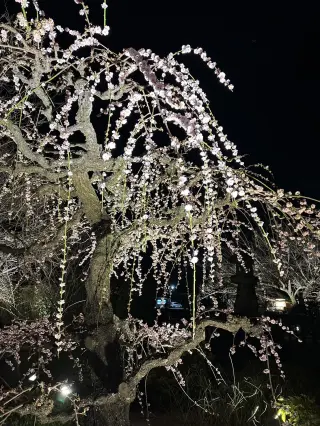
Among the many varieties, including Somei Yoshino and Kawazu-zakura, the large weeping cherry tree known as “Fuji Sakura” is a must-see.
Over 120 years old and reaching 13m tall, it has an overwhelming presence.
The breathtaking view of the five-story pagoda lined up with Fuji Sakura is a must if you’re visiting Kyoto in spring.

2026 Night Cherry Blossom Illumination (Special Evening Viewing of Kondo Hall and Kodo Hall)
During the period below, the cherry blossoms are illuminated at night, and Kondo Hall and Kodo Hall are opened to the public.
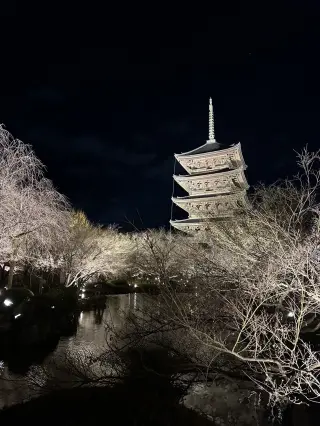
The magical scene of the five-story pagoda reflected on the pond’s surface alongside illuminated cherry blossoms is a must-see.
- Period
- March 14, 2026–April 12, 2026
- Hours
-
6:00pm–9:30pm
(Reception closes at 9:00pm) - Admission
-
・Adults: 1,000 yen
・Middle school students and younger: 500 yen

Autumn at Toji Temple: Stroll Through a Scenic, Atmospheric Landscape
In autumn, around 250 maple trees planted throughout the grounds turn color.
Deep crimson spreads throughout the temple grounds, creating an atmospheric setting for a stroll.
Toji Temple’s best time for fall foliage is from late November to early December.

2025 Fall Foliage Illumination and Special Evening Viewing of Kondo Hall and Kodo Hall
During the period below, the grounds are illuminated, so you can enjoy fall foliage at night as well.
The illuminated autumn leaves and five-story pagoda reflected on the surface of Hyotan Pond are especially charming.
Kondo Hall and Kodo Hall are also opened to the public.
- Period
- November 1, 2025–December 14, 2025
- Hours
-
6:00pm–9:30pm
(Reception closes at 9:00pm) - Admission
-
・Adults: 1,000 yen
・Middle school students and younger: 500 yen

5 Must-See Highlights at Toji Temple
With so much to see at Toji Temple, here are a few particularly notable highlights, carefully selected for you.
Take a walk through this Esoteric Buddhist temple, focusing on buildings designated as National Treasures and Important Cultural Properties.
1. The National Treasure Five-Story Pagoda, Japan’s Tallest Wooden Structure
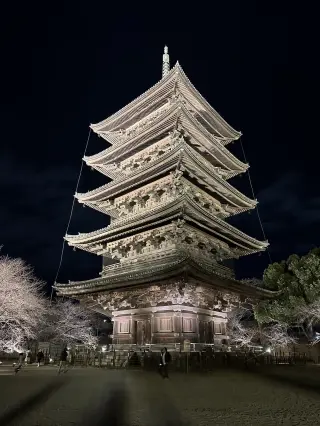
Kyoto’s landmark, the five-story pagoda, stands Approx. 55m tall—making it Japan’s tallest wooden structure.
Although it burned down four times due to lightning strikes and other causes, it was rebuilt each time. The current pagoda was rebuilt in 1644 by Tokugawa Iemitsu, the third shogun of the Edo shogunate, and is designated a National Treasure.
Inside the first level is an Esoteric Buddhist space, with Buddhas and bodhisattvas arranged around a central pillar that runs through all levels, and the ceiling and walls painted in vivid colors.
It’s usually closed to the public, but you can visit only during special openings in spring and autumn.

2. Kodo Hall, the Heart of Toji Temple That Clearly Conveys Esoteric Buddhist Teachings
Kodo Hall was built in 835 by Kobo Daishi Kukai.
It burned down in 1486, was rebuilt in 1491, and is designated an Important Cultural Property.
Located at the center of Toji Temple, Kodo Hall enshrines the “three-dimensional mandala,” a visual, three-dimensional expression of Esoteric Buddhist teachings.
A “mandala” is a pictorial representation that makes the Buddhist world easier to understand, and there are two types: the Taizokai Mandala, representing the world of enlightenment, and the Kongokai Mandala, representing the world of wisdom.
This “three-dimensional mandala” expresses what is often depicted in two dimensions in three dimensions.
It consists of 21 Buddhist deities centered on Dainichi Nyorai, and 16 of them are designated National Treasures.
The craftsmanship of each statue is remarkable, and you’ll likely be overwhelmed by its power and solemn atmosphere.

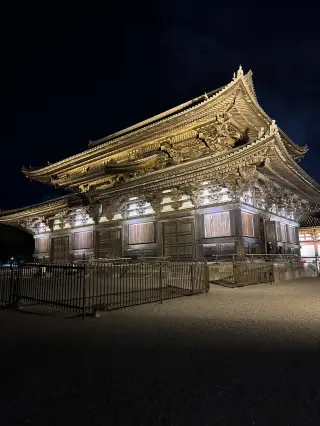
3. Kondo Hall, Home to the Principal Image
Toji Temple’s main hall, Kondo Hall, features a style that combines “Tenjiku-yo,” a Song-dynasty architectural style, with “Wayo,” a uniquely Japanese architectural style.
Inside is the principal image, Yakushi Nyorai, with statues of Nikko Bosatsu and Gakko Bosatsu enshrined to either side. Also not to be missed are the Twelve Divine Generals on the pedestal, who protect Yakushi Nyorai.
These three statues are designated Important Cultural Properties as the Yakushi Triad.

4. Miedo Hall (Daishi-do), Kobo Daishi Kukai’s Residence
While Kobo Daishi Kukai was alive, he lived in Miedo Hall, where he conceived the three-dimensional mandala and gave instructions for construction.
It consists of three buildings—Front Hall, Middle Gate, and Rear Hall—and is a National Treasure, with a simple, calm atmosphere and relatively minimal decoration overall.
Every morning at 6:00am, a ritual called Shojinku begins, and you can receive Buddha’s relics that Kobo Daishi Kukai brought back from Tang China.
Anyone can take part, so if you’re visiting Toji Temple, consider joining as a memorable experience.

5. The Treasure Hall, Where You Can Appreciate Many Temple Treasures
The Treasure Hall holds 20,000 National Treasures and Important Cultural Properties, including the National Treasure Tobatsu Bishamonten and the Senju Kannon Bosatsu, which stands an impressive 6m tall.
It opens only twice a year—in spring and autumn—and hosts special exhibitions with various themes.
The opening periods are as follows.
- Spring
- March 20–May 25
- Fall
- September 20–November 25

Don’t Forget to Pick Up an Omamori (Lucky Charm), with Many Blessings and Designs
At Toji Temple, you’ll find not only classic omamori for good luck, health, and wishes coming true, but also unique ones like “small happiness” charms and “trauma-sealing” charms.
We also recommend omamori named after Kobo Daishi or the large weeping cherry tree on the grounds—perfect souvenirs to remember Toji by.
With everything from cute designs to more unusual ones, it’s fun to choose.
Omamori can be purchased at several distribution counters within the grounds.

Toji Temple: Get 9 Types of Goshuin Plus Limited-Time Designs
At Toji Temple, you can receive as many as nine types of goshuin.
We’ve summarized the types and where to receive them in the table below.
- Kobo Daishi
- Miedo Hall
- Fudo Myo-o
- Miedo Hall
- Juichimen Kannon
- Jiki-do Hall
- Dainichi Nyorai
- Kodo Hall
- Yakushi Nyorai
- Kondo Hall
- Bishamonten
- Bishamon-do Hall
- Aizen Myo-o
- Bishamon-do Hall
- Kokuzo Bosatsu
- Kanchiin Temple
- Namu Hachiman Daibosatsu
- Chinju Hachimangu Shrine
If you’re not sure which goshuin to choose, at least pick up the representative “Kobo Daishi” goshuin.
In addition, there are various limited-time goshuin, such as ones available only during illumination periods and three-dimensional goshuin available only on the 21st of each month.
Koboichi: One of Japan’s Largest Open-Air Markets for Hidden Finds and Kyoto Food
Koboichi is held every month on the 21st, Kobo Daishi’s monthly memorial day, on the temple grounds.
With over 1,000 stalls and around 200,000 visitors each month, it’s one of Japan’s largest open-air markets.
It’s especially lively during the first market of the year in January (Hatsu Kobo) and the last market of the year in December (Shimaito Kobo).
Unless the weather is severely stormy, it will be held even if it rains on the day.
Event days, hours, and location are summarized in the table below for reference.
- Event Days
- 21st of every month
- Hours
-
8:30am–5:30pm
※Store hours may vary depending on the vendor and weather - Location
- Toji Temple grounds
Find Hidden Gems That Reflect Kyoto’s History and Culture
With over 1,000 shops gathered in one place, the grounds are fun to walk through, with everything from Japanese antiques and crafts to used clothing, bonsai, and antique furniture.
Some vendors sell items that reflect Kyoto’s culture and history, so if you stop by, you’ll likely find a hidden gem or two.

Enjoy Kyoto Street Food as You Explore
At Koboichi, not only are there food stalls, but local restaurants also set up booths.
So along with classic festival foods like takoyaki and yakisoba, you can also try Kyoto specialties like yomogi-scented yakimochi and grilled bamboo shoots on skewers (yaki takenoko).
Not only the temple grounds but also the streets around Toji Temple come alive, with limited-time menus and storefront sales on Koboichi days.
Enjoy shopping, and make the most of Kyoto street food while you’re at it.
If you’ll be in Kyoto around the 21st, we highly recommend adjusting your schedule to visit Koboichi.

3 Recommended Photo Spots at Toji Temple
Many people want to capture a beautiful photo of Toji’s iconic five-story pagoda.
If you’re looking for the best photo spots, head to the three locations introduced below.
You’ll be able to take beautiful photos with the five-story pagoda as the star.
1. Around Hyotan Pond
The area around Hyotan Pond is one recommended photo spot on the grounds.
You can capture a beautiful shot where the pond, surrounding trees, and the five-story pagoda all come together in harmony.
That famous Toji photo of illuminated fall foliage and the pagoda reflected on the water was also taken around Hyotan Pond.

2. Around the Viewing Reception Area
Fuji Sakura, a massive crimson weeping cherry tree over 120 years old, towers in one corner of the Japanese garden centered around Hyotan Pond.
From just near the Toji Temple viewing reception area, you can photograph the tree lined up with the five-story pagoda.
The sight of Fuji Sakura and the pagoda standing side by side is beautiful and powerful, and you’ll strongly feel a sense of Japan’s traditional charm.
This is a photo spot you should visit during cherry blossom peak season.

3. The Pedestrian Bridge West of the South Gate
A pedestrian bridge located a short walk west after exiting the South Gate.
It’s a spot where you can take a photo that captures Toji’s five-story pagoda, the outer wall, and the South Gate all in one frame.
You can take photos that strongly evoke a traditional Japanese atmosphere, and it’s also recommended because it’s not a widely known photo spot.
From the bridge, you can capture a photo that conveys the pagoda’s height. If you shoot without going up the bridge, you can photograph the pagoda reflected on the surface of the outer moat.

3 Nearby Sightseeing Spots Around Toji Temple
Around Toji Temple, you’ll find popular Kyoto sightseeing spots that you can reach by bus or on foot.
After you visit Toji Temple, be sure to check out the three spots introduced below as well.
1. Higashi Honganji Temple
Higashi Honganji Temple is located at Karasuma Rokujo, also close to Kyoto Station. Its official name is Shinshu Honbyo, and it is the head temple of the Otani-ha branch of Jodo Shinshu, built in 1602 on land donated by Tokugawa Ieyasu to the monk Kyonyo.
As you pass through the Miedo-mon Gate facing Karasuma-dori Avenue, the first thing that catches your eye is Miedo Hall, which enshrines the portrait of Shinran Shonin, founder of Jodo Shinshu.
It’s one of the world’s largest wooden structures, with a 76m front length, 58m side length, and 38m height, and an impressive scale with 927 tatami mats inside.

2. Kamogawa River
It is sometimes written as Kamo-gawa or Kamo-gawa using different kanji. The Kamogawa River originates near Sajikigatake, flows through Kyoto city as if cutting vertically through it, and empties into the Katsura River at Toba.
Around Shijo, Gion lies to the east and busy downtown areas like Kawaramachi to the west, making it the center of Kyoto commerce and a landscape that symbolizes Kyoto.
The riverbanks are a classic spot where people spend relaxing time. True to its name, you can see ducks such as mallards, spot-billed ducks, and pintails, as well as wild birds like herons and cormorants.

3. Kyoto Tower
It rises right in front of you as soon as you exit the ticket gates at Kyoto Station. Built with the image of a lighthouse illuminating the city of Kyoto, it stands 131m tall, making it the tallest building in Kyoto city.
Since opening in 1964, it has welcomed over 32 million visitors.
From the observation deck 100m above ground, you can take in panoramic views of Kyoto’s cityscape. On clear days, you can even see Osaka through the free telescopes provided.

Savor Kyoto Cuisine and Ingredients: 3 Popular Restaurants Near Toji Temple
After sightseeing at Toji Temple, if you’re feeling hungry, visit one of the restaurants introduced below.
Each is a well-regarded spot where you can enjoy Kyoto’s unique food culture and local ingredients.
1. Hashitate
A restaurant run by Wakuden, a famous Kyoto kaiseki establishment. The name “Hashitate” comes from Amanohashidate, a sightseeing spot in Tango, where the business was founded.
Centered on rice bowls and noodles, it’s popular across generations for offering casual yet refined flavors featuring seasonal ingredients and rich dashi.
The most popular item is the “Hashitate Set,” which includes sea bream sesame miso donburi and Wakuden’s signature lotus-root sweet, “Saiko.”

2. Yakigama Matcha Sweets Chasen
A baked-oven sweets specialty shop built around the concept of “chilled, hot, melty sweets” that you can only enjoy freshly made.
Their signature sweet is the “Chasen Matcha Tamatebako Sweets,” served in a paulownia box.
When you open the lid, steam rises up—like the gift Urashima Taro received from Princess Otohime. Inside, you’ll find an array of matcha sweets inspired by hassun platters in Kyoto kaiseki.

3. Kobushi Ramen
A standout shop known for releasing one original ramen after another, earning high praise from major gourmet guides and review sites.
The signature “Kyogamo and Nodoguro Niboshi Soba” features an irresistible, richly flavored soup made from broth extracted from Kyoto-raised duck and dried nodoguro (blackthroat seaperch), a premium fish. Paired with the light yet savory “Rausu Kombu Kake Soba,” both are exceptional bowls that you’ll want to drink down to the last drop.

3 Recommended Places to Stay Near Toji Temple
With Toji Temple’s iconic five-story pagoda and great access from Kyoto Station, this area is very convenient as a base for sightseeing.
Along with a location that lets you get moving as soon as you arrive in Kyoto, it’s also appealing for the comfort of being able to rest easily between outings.
Here are a few recommended places to stay around Toji Temple.
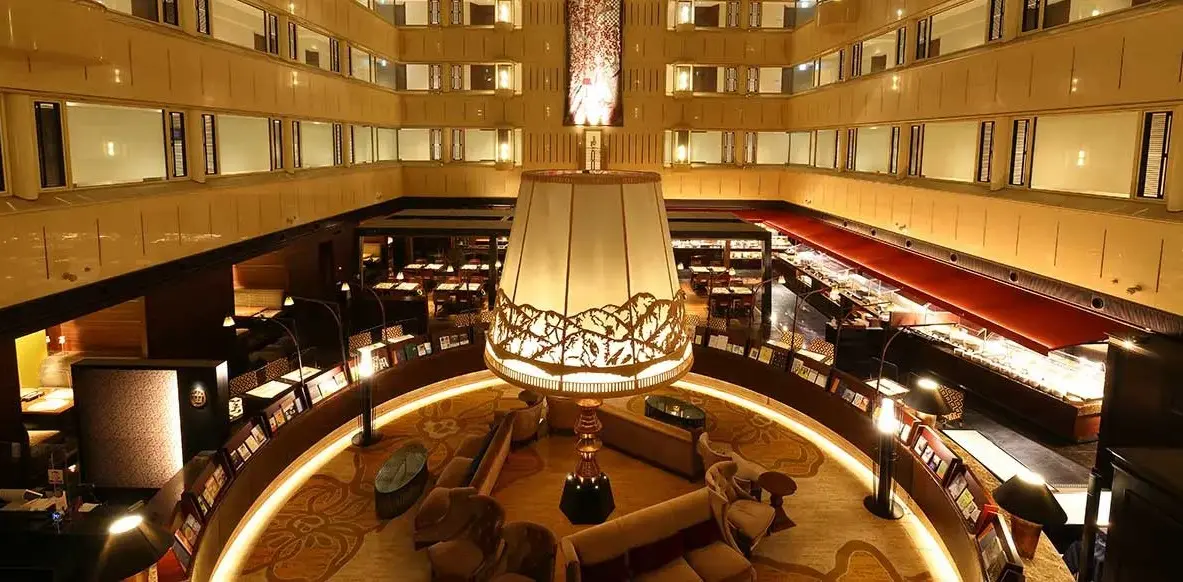
1. Kyoto Century Hotel
Kyoto Century Hotel boasts an excellent location, just a 2-minute walk from JR and subway Kyoto Station.
While it’s ideal for both sightseeing and business, once you step inside, you’ll find a modern-classical space that makes you forget the city’s bustle.
The guest rooms, designed for relaxation and comfort, come in a variety of grades.
2. Kyoto Tower Hotel
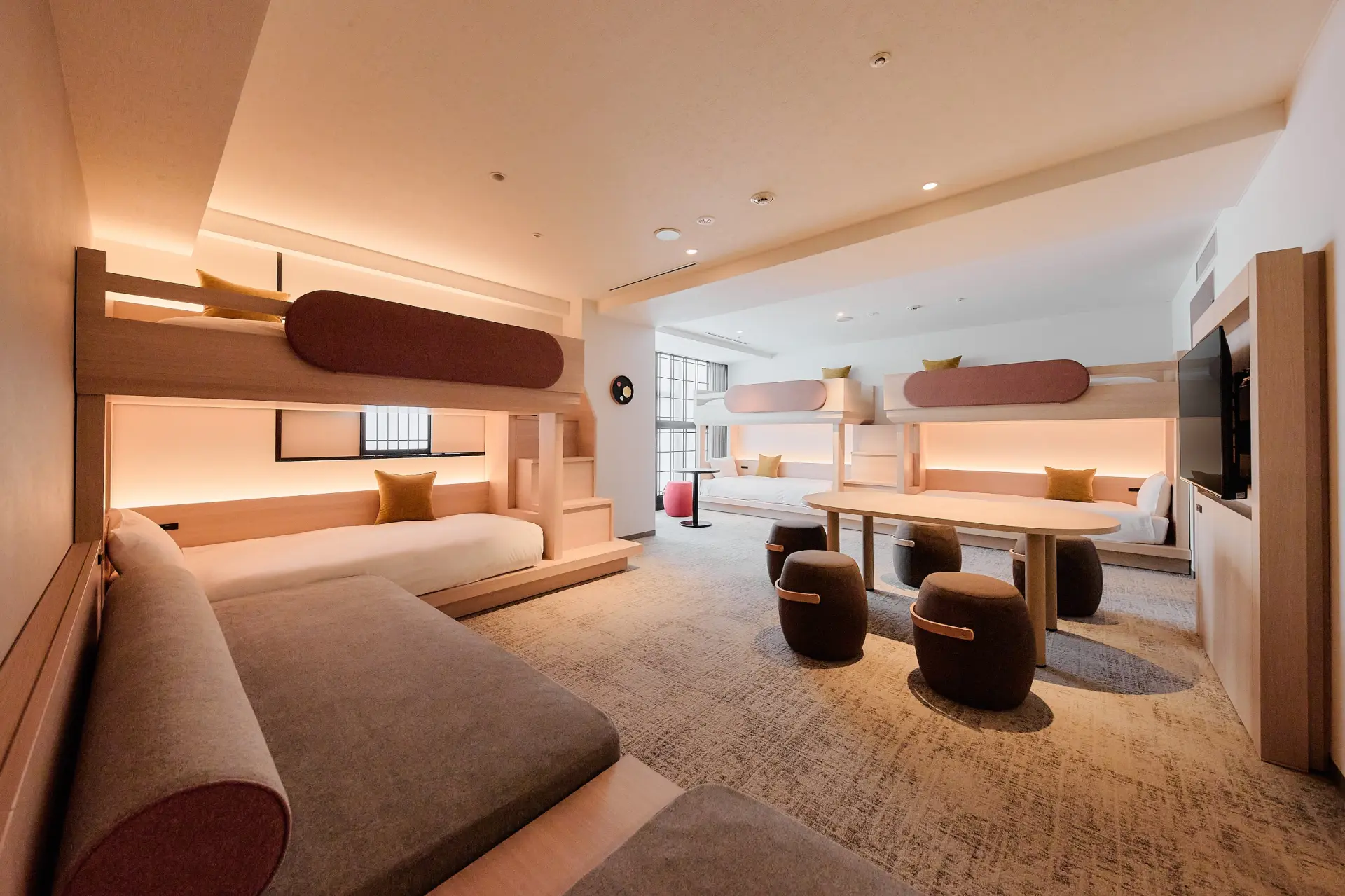
A hotel located inside the Kyoto Tower Building, directly beneath Nidec Kyoto Tower, which rises in front of JR Kyoto Station and welcomes visitors at Kyoto’s gateway.
Not only is it directly connected to Kyoto Station via the underground shopping arcade, but it’s also just a short walk to the bus terminal.
With Higashi Honganji Temple and Nishi Honganji Temple within walking distance, it’s recommended as a base for Kyoto sightseeing.
3. Kyoyumoto Hatoya Zuihokaku
A hot spring ryokan in a great location just a 5-minute walk from Kyoto Station’s Central Exit, with a natural onsen that uses its own private source—rare in the city center.
The natural hot spring, which wells up from 910m beneath the hotel, is drawn from 150-million-year-old geology and is known as a mineral-rich “beauty bath.”
There are two large public baths: “Higashiyama-no-yu,” with a rock construction and striking murals, and “Nishiyama-no-yu,” surrounded by the gentle scent of hinoki cypress, with separate men’s and women’s times.

Reviews
4.18
Some reviews are AI-translated.
-
On the 21st of every month, there's a market during the temple's regular ceremony. You can find food, clothes, and all sorts of things—it's a lot of fun! Plus, it's just a little over a ten-minute walk from Kyoto Station.
-
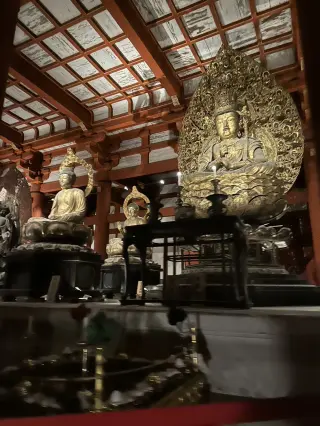
Among all the temples in Kyoto, Toji has a ton of national treasures. They even have two exhibitions every year for visitors.
FAQ about Toji Temple
Q
Can I get a goshuin at Toji Temple?
A
Toji Temple offers nine types of goshuin, which you can receive at places such as the Jiki-do Hall on the grounds.
Q
When is the best time to see cherry blossoms at Toji Temple?
A
The best time to see cherry blossoms is from mid-March to mid-April.
Q
When is the best time to see fall foliage at Toji Temple?
A
The best time to see fall foliage is from late November to early December.
Summary
We’ve introduced the history, highlights, and nearby sightseeing spots you’ll want to know to enjoy Toji Temple, but what did you think?
Among Kyoto’s many sightseeing spots, it’s easy to access and packed with things to see, making it a great first stop for your Kyoto trip as well.
If you’d like to learn more about sightseeing spots in Kyoto, please also refer to this article, which brings together Kyoto’s classic must-visit attractions.