

Experience Japan’s Timeless Charm, Woven from History and Nature: A Kiyomizu-dera Travel Guide
Kiyomizu-dera is a hugely popular sightseeing spot in the old capital of Kyoto, on par with Kinkaku-ji and Arashiyama.
It’s a temple with plenty to see, featuring many historically significant structures designated as National Treasures and Important Cultural Properties, along with beautiful natural scenery.
To help you fully enjoy Kiyomizu-dera, one of Kyoto’s top attractions, we’ll cover not only the absolute must-see highlights, but also its history and the best seasons to visit.
What is Kiyomizu-dera Like?
Kiyomizu-dera is a historically significant temple recognized as a UNESCO World Heritage Site, located on the hillside of Mt. Otowa, which rises between Kyoto City and Lake Biwa (Shiga Prefecture), northeast of JR Kyoto Station.
More than 30 buildings, pagodas, and monuments are scattered across the grounds, including the National Treasure Main Hall, as well as the Niomon Gate, West Gate, Bell Tower, and Three-Story Pagoda, which are designated as Important Cultural Properties.
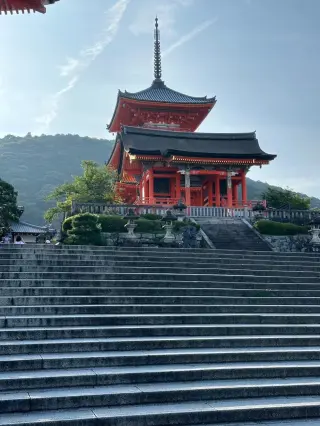
You’re sure to be captivated by the Niomon Gate—the first thing you’ll see when you visit Kiyomizu-dera—along with the West Gate and the Three-Story Pagoda behind it.
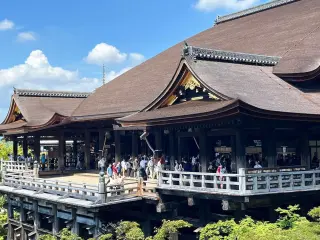
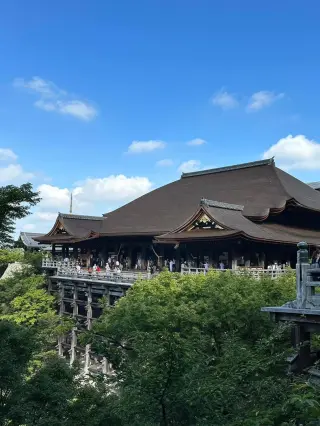
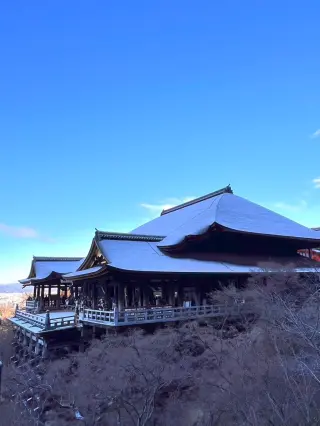
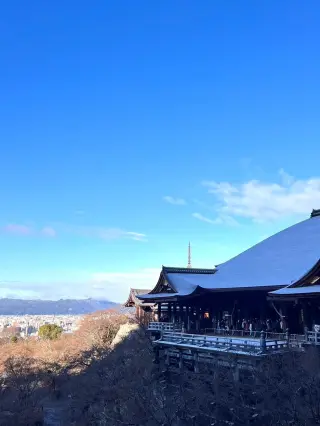
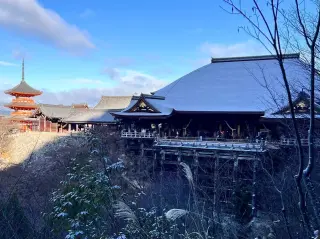
Don’t miss the impressive view of the Main Hall’s famous stage as you look up from the approach.
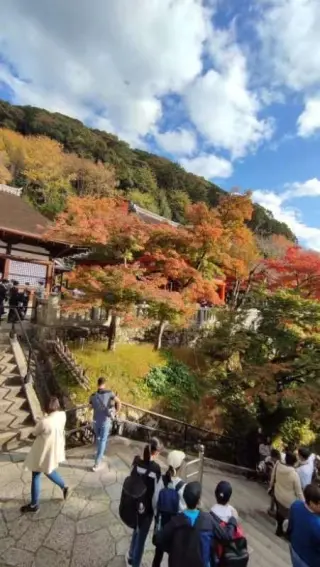
Because Kiyomizu-dera sits on a lush mountainside, another draw is the beautiful seasonal scenery you can enjoy throughout the grounds.
The History and Origins of Kiyomizu-dera
Kiyomizu-dera is said to have been founded in 778 by the monk Enchin, and in 798 Sakanoue no Tamuramaro is believed to have built the Buddhist hall.
The story begins with Enchin, who was training in Nara, walking north in accordance with a divine message, designating a pure waterfall he found in Mt. Otowa as a sacred site, and enshrining a Kannon statue there.
Sakanoue no Tamuramaro, whom he met there, was deeply moved by Enchin’s belief in refraining from taking life and showing compassion for all living things, and later built the Buddhist hall.
Since its founding, Kiyomizu-dera has suffered more than 10 fires and has been rebuilt each time.
However, in the fire of 1629, most of the buildings, including the Main Hall, were destroyed.
Most of the structures that remain today were rebuilt from 1631 to 1633 with donations from Tokugawa Iemitsu, the third shogun of the Edo shogunate.

Access to Kiyomizu-dera
Here’s how to get from Kyoto Station, a major base for sightseeing in Kyoto, to Kiyomizu-dera.
From Kyoto Station, the bus is recommended.
The closest bus stop is Gojozaka-shita, and it’s about a 10-minute walk from there.
Please refer to the table below for buses departing from Kyoto Station.
- Kyoto City Transportation Bureau (Kyoto City Bus)
-
・Route 206 bound for Higashiyama-dori Kitaoji Bus Terminal
・Route 100 bound for Kiyomizu-dera, Gion, and Ginkaku-ji - Kyoto Bus (operates Saturdays, Sundays, and holidays only)
- ・Route 18 bound for Ohara
Kiyomizu-dera Hours and Admission
We’ve summarized Kiyomizu-dera’s Hours and Admission in a table, so please use it as a reference.
Please note that Hours vary by season.
Also check whether you can visit until late at night during event periods.
Hours
- 6:00am–6:00pm
-
・January 1–March 24
・April 3–June 30
・September 1–November 17
・December 1–December 31 - 6:00am–6:30pm
-
・July 1–August 13
・August 17–August 31 - 6:00am–9:30pm (Reception closes at 9:00pm)
-
・March 25–April 2 (Spring Nighttime Special Viewing)
・August 14–August 16 (Sennichi Mairi / Summer Nighttime Special Viewing)
・November 18–November 30 (Fall Nighttime Special Viewing)
Admission
- Adults
- 400 yen
- Elementary and middle school students
- 200 yen
What’s the Best Season to Visit Kiyomizu-dera?
If you’re sightseeing at Kiyomizu-dera, spring and fall are recommended.
In spring, you can stroll through the grounds as around 1,500 cherry trees—such as Somei Yoshino and wild mountain cherry—bloom in full glory. Cherry blossoms are best from late March to early April.
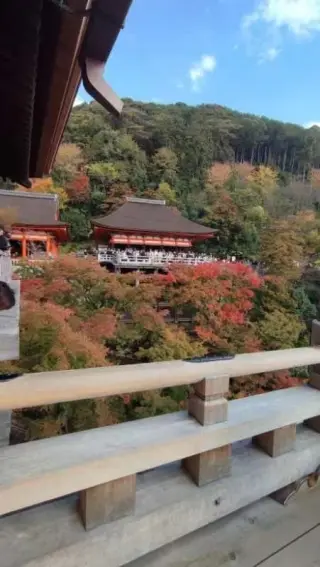
In fall, you can enjoy spectacular autumn leaves as more than 1,000 Japanese maples turn a vivid red.
The illuminated Main Hall after sunset alongside the bright red foliage is truly breathtaking.
Fall foliage is best from mid-November to early December.


Don’t Miss These: 6 Must-See Highlights of Kiyomizu-dera
When it comes to Kiyomizu-dera’s highlights, historic buildings such as the Main Hall with the famous “Kiyomizu Stage,” as well as the Niomon Gate, Three-Story Pagoda, and Koyasu Pagoda—designated as Important Cultural Properties—stand out.
They still convey remarkable beauty and advanced architectural techniques today.
Otowa Waterfall, the origin of Kiyomizu-dera, is also one of the must-see highlights.
Among the many attractions at Kiyomizu-dera, we’ve carefully selected six you absolutely shouldn’t miss.
1. The Popular Power Spot: Otowa Waterfall
Otowa Waterfall is the origin of Kiyomizu-dera’s founding and also the source of its name.
The pure water flowing from this waterfall has long been revered as sacred water, known since ancient times as “Enmei-sui” (life-extending water) or “Konjiki-sui” (golden water).
It remains a popular power spot today, and each of the three streams is said to bring different blessings.
Facing the waterfall, the stream on the right is for longevity, the middle is for success in love, and the left is for academic success.
Choose one stream, catch the water with a ladle, and take a sip to receive its blessing.

2. The Icon of Kiyomizu-dera: The Three-Story Pagoda
Kiyomizu-dera’s Three-Story Pagoda stands Approx. 30 m tall, making it one of the largest three-story pagodas in Japan.
It was originally built in 847, and the current pagoda was rebuilt in 1632.
Visible from Kyoto’s city center both past and present, it has remained a symbol of Kiyomizu-dera.
Inside, a statue of Dainichi Nyorai—considered the most revered figure in Shingon Esoteric Buddhism—is enshrined, and Buddhist paintings are rendered in vivid colors on the surrounding walls and interior.
The Three-Story Pagoda is designated as an Important Cultural Property as part of a key architectural group that shapes the Higashiyama landscape of Kyoto.

3. The Beautiful Vermilion Niomon Gate, One of the Oldest Structures
The Niomon Gate is Kiyomizu-dera’s main gate, an imposing two-story gate (romon) measuring Approx. 10 m wide and Approx. 14 m tall.
On both sides of the gate are Kongorikishi statues from the Kamakura period (1185–1333).
It was destroyed by war in 1469, but rebuilt around 1500.
It is one of the few buildings that escaped the great fire of 1629, when most of Kiyomizu-dera’s structures burned down.
It is quite old among the surviving buildings at Kiyomizu-dera and is designated as an Important Cultural Property.
In 2003, it was dismantled and repaired, restoring its vibrant vermilion color.

4. The Main Hall, Home to the Famous Stage in a Well-Known Proverb
The Main Hall was built on a cliff on Mt. Otowa and enshrines the principal image: a standing statue of the Eleven-Headed Thousand-Armed Kannon.
The current Main Hall was rebuilt in 1633 and is registered as a National Treasure.
A stage is set at the front of the Main Hall, rising Approx. 13 m high.
Built using traditional Japanese construction methods, it forms a highly earthquake-resistant structure even on a cliff, with wooden members supporting one another.
Also take a look at the thick zelkova pillars supporting the stage—each over 400 years old.
The Main Hall stage has been famous since long ago, and the proverb “to jump off the stage of Kiyomizu” (Kiyomizu no butai kara tobioriru), derived from it, has been used since the Edo period (1603–1868).
The proverb means “to take a bold step as if you’re prepared to risk everything.”
In fact, during the Edo period, some people even jumped from Kiyomizu-dera’s stage as part of making a wish.

5. The Koyasu Pagoda, Enshrining a Buddha for Safe Childbirth Prayers
The Koyasu Pagoda is a three-story pagoda standing Approx. 15 m tall, said to have been a place of prayer for Emperor Shomu and Empress Komyo.
The current pagoda was rebuilt in 1500 and is designated as an Important Cultural Property.
Inside, Koyasu Kannon (Senju Kannon) is enshrined and has long been worshipped as a Buddhist deity for safe childbirth.
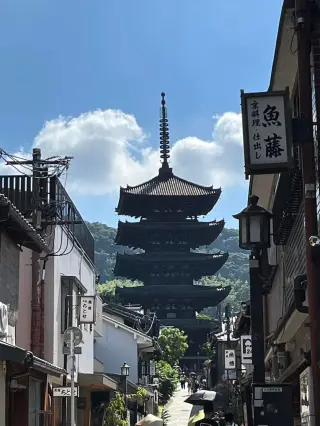
Sannenzaka, the approach to Kiyomizu-dera, was formerly called Sannenzaka (Sanneizaka), and is said to have been the road to worship at the Koyasu Pagoda.

6. Jishu Shrine, Famous as a Matchmaking Power Spot
This shrine is located within Kiyomizu-dera, and you’ll see it as soon as you pass the Main Hall.
It is said to have been founded before Japan’s nation-building era, and has stood here since the Kyoto Basin was still a lake, drawing worship as a sacred mountain of eternal youth and longevity.
The entire shrine building and precinct grounds are designated as Important Cultural Properties and are registered as a World Cultural Heritage site.
The enshrined deity is Okuninushi-no-Mikoto, famous as a god of matchmaking, and the grounds are filled with shrine buildings and prayer spots related to love and relationships.
Especially popular are the “Love Fortune-Telling Stones” in front of the main sanctuary.
There are two sacred stones about 10 m apart, and it is said that if you can walk from one stone to the other with your eyes closed and reach it safely, your wish in love will come true.

Explore Historic Shrines and Temples: 5 Nearby Attractions Around Kiyomizu-dera
There are many historic shrines and temples around Kiyomizu-dera.
If you want to learn more about Japan’s traditional history and culture, be sure to visit the sightseeing spots introduced below as well.
1. Kennin-ji Temple
Kyoto’s oldest Zen temple and the head temple of the Kennin-ji branch of the Rinzai school.
It was founded in 1202, when Minamoto no Yoriie, the second shogun of the Kamakura shogunate, donated temple land and Eisai Zenji served as its founding priest.
It flourished greatly with the prestige of ranking third among the Kyoto Gozan, but fell into ruin due to wars and fires.
Restoration began during the Keicho era when Ankokuji Ekei relocated the Hojo (Abbot’s Quarters), and with the Tokugawa shogunate’s protection, the halls and pagodas were rebuilt.
Later, due to the Meiji government’s religious policies and other factors, it became independent as the head temple of the Kennin-ji branch of the Rinzai school. Kodai-ji and Hokan-ji (Yasaka Pagoda) are sub-temples of Kennin-ji.

2. Yasaka Shrine
The enshrined deities are Susanoo-no-Mikoto, Kushinadahime-no-Mikoto, and Yahashira-no-Mikogami, and it is the head shrine of Approx. 2,300 related shrines nationwide, including Yasaka Shrines and those that enshrine Susanoo-no-Mikoto.
It is said to have been founded in 656, when a deity from Mt. Gozu in the Silla kingdom was enshrined here.
Long revered under names such as Gion Kanshin-in and Gion-sha, it is still affectionately called “Gion-san” by locals today.

3. Yasaka Koshindo Temple
A temple in Higashiyama, one of Kyoto’s top sightseeing areas and home to Kiyomizu-dera and Yasaka Shrine.
It is said to be the first place in Japan where Koshin faith, originating in Chinese Taoism, began, and is also one of the Three Great Koshin sites in Japan.
What stands out most in the grounds are the colorful cloth “kukurizaru,” which have also become a hot topic on social media in recent years.
These are amulets depicting a monkey with its hands and feet bound, symbolizing calming a restless heart that is always in motion like a monkey and gaining control over your mind.
It’s said that if you make a wish on a kukurizaru and refrain from one desire, your wish will come true.

4. Chion-in Temple, Yuzen-en Garden
Chion-in is the head temple of the Jodo sect, built on a site associated with Honen, the founder of the sect.
Within its grounds, Yuzen-en is a garden renovated and landscaped in 1954 to commemorate the 300th anniversary of the birth of Miyazaki Yuzen, a mid-Edo-period painter known as the originator of Yuzen dyeing.
It is composed of a strolling pond garden fed by spring water from Higashiyama and a karesansui (dry landscape) garden called “Rokano-en.”

5. Maruyama Park
Kyoto’s oldest park, created by developing land that was once owned by temples and shrines.
It’s located straight ahead after crossing Shijo Ohashi Bridge from Kawaramachi and continuing along Shijo Street through the Gion shopping area. If you continue past Keihan Gion-Shijo Station, the landmark directly ahead is Yasaka Shrine.
The area to the east from here is Maruyama Park, lined with traditional restaurants and tea houses in a strolling-style garden setting.
The Gion weeping cherry tree, often considered Kyoto’s most famous cherry blossom, is a second-generation tree grown from seeds of the original; it has stood here since 1949.
It is especially known for its beauty at night, and on illuminated evenings the park fills with crowds of hanami visitors hoping to catch a glimpse.

3 Recommended Places to Eat Around Kiyomizu-dera Before or After Your Visit
There are many places to eat around Kiyomizu-dera, where you can enjoy a wide variety of food. Here are a few especially recommended spots, carefully selected.
Each offers a great taste of Japan and Kyoto’s food culture, so be sure to stop by before or after your visit to Kiyomizu-dera.
1. Umezono Kiyomizu Branch
Founded in 1927, this local sweets shop operates six locations in Kyoto. Loved as a “sweet tooth teahouse” by both locals and tourists, its mitarashi dango is also popular as a Kyoto souvenir.
The Kiyomizu branch is located on Sannenzaka, close to the World Heritage Site Kiyomizu-dera. It’s in a great spot to drop by while strolling around Kiyomizu-dera and the Kodai-ji area.
The specialty mitarashi dango is available on its own, as well as in set offerings like kinako shiratama and matcha warabi mochi.

2. Kyokanmmi Fuminosuke Chaya Kyoto Main Store
Kyokanmmi Fuminosuke Chaya Kyoto Main Store is a sweets shop located near Yasaka Pagoda, midway between two of Kyoto’s top attractions: Yasaka Shrine and Kiyomizu-dera.
It began when Kamigata rakugo performer Katsura Fuminosuke II, active in the Meiji era, opened it as an amazake teahouse in 1909.
Another signature specialty alongside amazake is warabi mochi, made using the traditional method passed down since the shop’s founding.
Their classic warabi mochi is homemade with a gentle hint of cinnamon, generously dusted with kinako.

3. Kiyomizu Junsei Okabeya
A yudofu (hot tofu) restaurant in an excellent location along the approach to Kiyomizu-dera.
Inside the building, designed to resemble a traditional Kyoto townhouse, you’ll find spacious, barrier-free seating, and there’s also a shop on the same property.
One of the highlights is the view from the terrace reached via the outdoor stairs, where you can look down on the terrace and fountain of the adjacent registered Tangible Cultural Property, Goryu-kaku.
Here, you can enjoy a variety of tofu dishes, including their specialty yudofu.
The yudofu is a standout dish, drawing out tofu’s natural sweetness as it warms, and served with a special yudofu sauce.

Reviews of Kiyomizu-dera
4.68
Some reviews are AI-translated.
-
You don’t need to “get it” here—you just need to stay for a while. After you visit, you’ll understand why everyone makes sure to put it on their itinerary.
-
The view from the stage is super open and wide—on a clear day, every shot looks great.
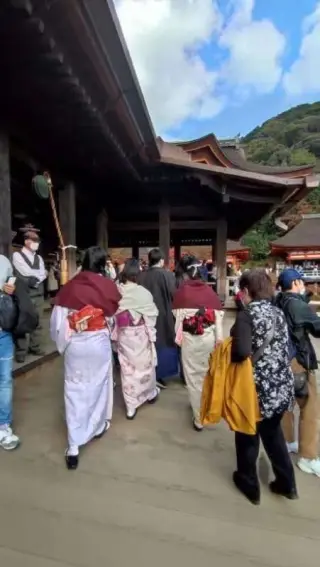
The old streets around it are really fun to wander, but the crowds are no joke. If you want photos without people, be prepared.
Still, it’s absolutely worth visiting at least once. -
Kiyomizu-dera is one of the must-visit spots in Kyoto.
The scenery and atmosphere are absolutely fantastic and really stand out.
The only downside is the huge number of tourists, which can be the biggest challenge.
FAQ about Kiyomizu-dera
Q
Who built Kiyomizu-dera?
A
It was founded in 778 by the monk Enchin, and in 798 Sakanoue no Tamuramaro built the Buddhist hall.
Q
Why was Kiyomizu-dera built?
A
There are various theories, such as to spread the teachings of Kannon and to pray for Sakanoue no Tamuramaro’s success in subduing the Emishi.
Q
Why is Kiyomizu-dera so popular?
A
Because it is a World Heritage Site and a treasure house of National Treasures and Important Cultural Properties.
Summary
Kiyomizu-dera is a treasure house of National Treasures and Important Cultural Properties, and you can also enjoy beautiful natural scenery.
On top of that, it’s home to power spots said to bring blessings such as success in love and longevity.
The approach is lined with shops where you can enjoy Kyoto specialties, and historic shrines and temples are scattered nearby, so there are many appealing spots and restaurants in the surrounding area as well.
Kiyomizu-dera is one of the must-visit spots for sightseeing in Kyoto.
Of course, Kyoto has many other attractive places besides Kiyomizu-dera and its surroundings.
To make the most of your Kyoto trip, please refer to the article below, which introduces classic sightseeing spots.