Otowa-san Kiyomizu-dera Temple

Verified [Verified] denotes information that has been published with confirmation of its owing parties.

Otowa-san Kiyomizu-dera Temple

A UNESCO World Heritage temple to visit when traveling to Kyoto.

4.61 47

Last update :

Founded in 778, Kiyomizu-dera Temple was inscribed on the UNESCO World Heritage List in 1994. Its 130,000-square-meter (about 1.4-million-square-foot) grounds extend across the slopes of Mt. Otowa and contain more than 30 temple buildings and monuments, including National Treasures and Important Cultural Properties. The temple is also worth seeing throughout the seasons, framed by cherry blossoms in spring, lush greenery in summer, colorful leaves in autumn, and snow in winter.

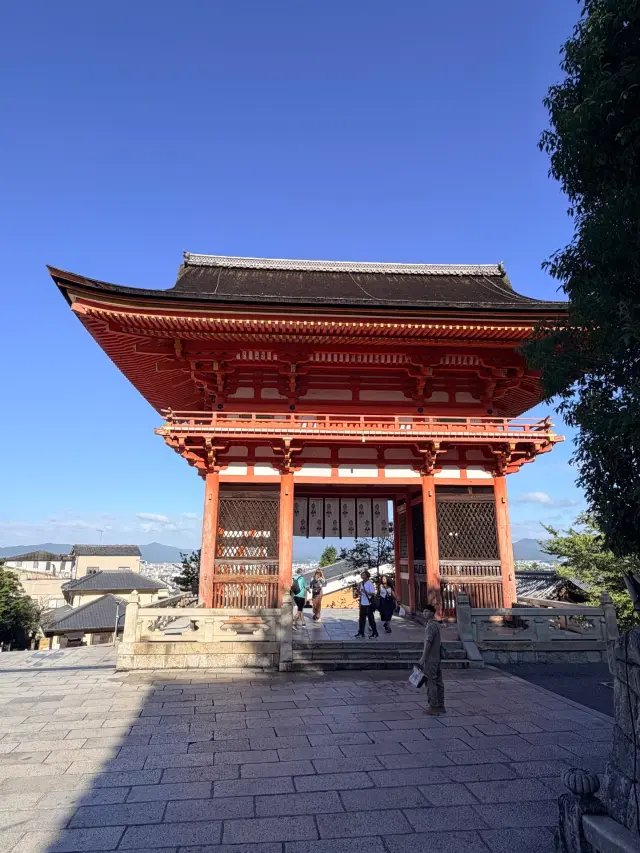
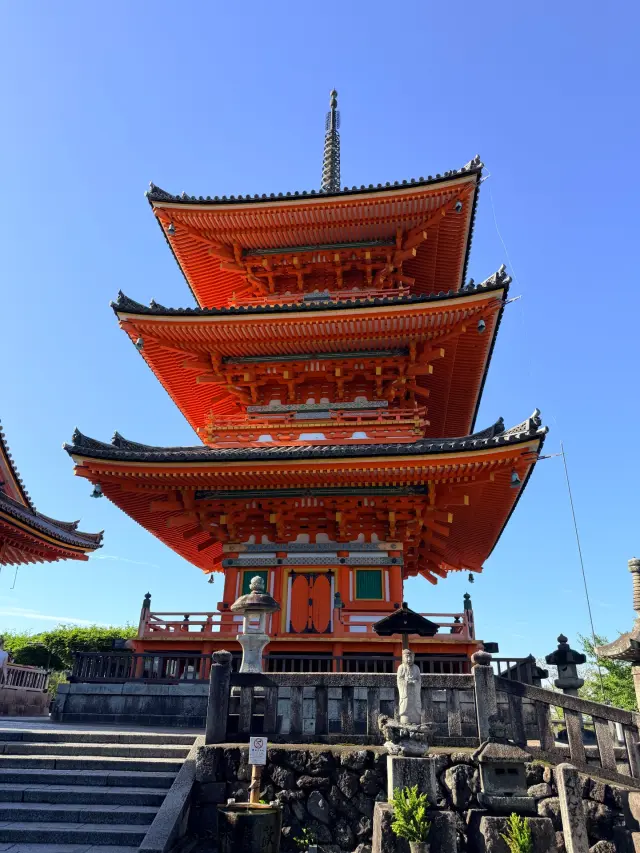
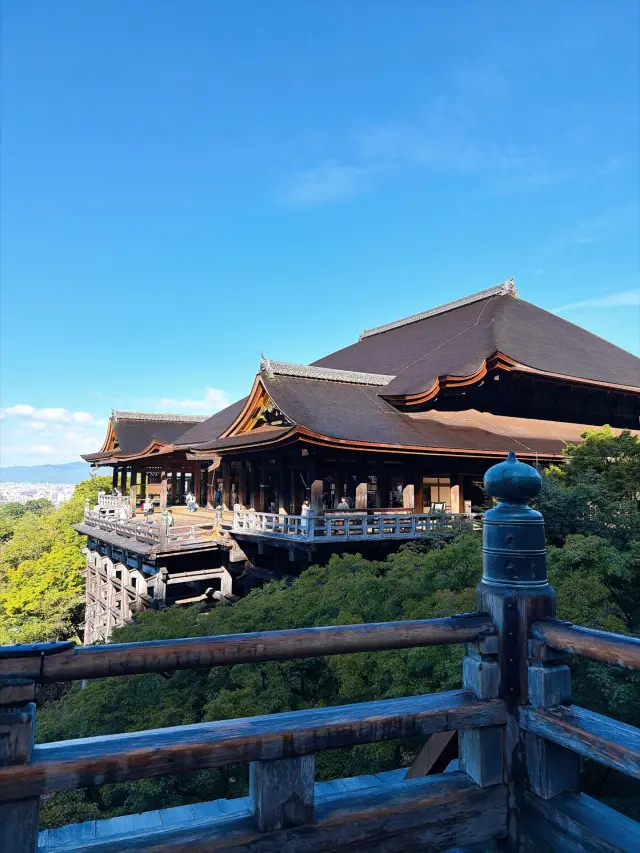
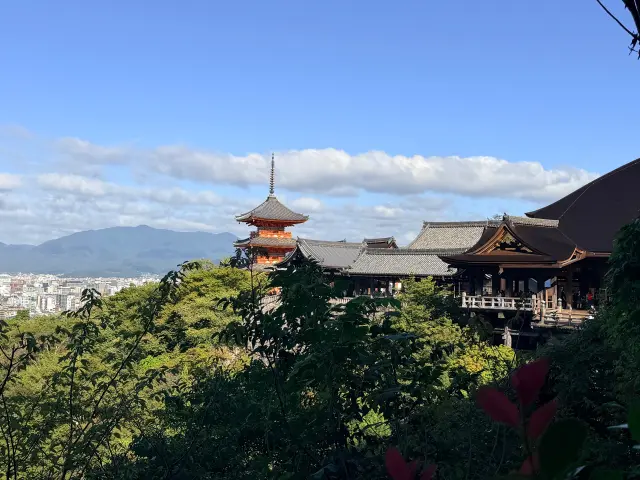
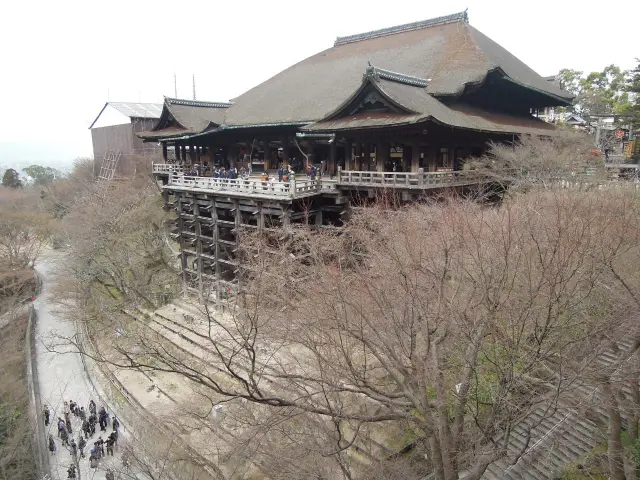
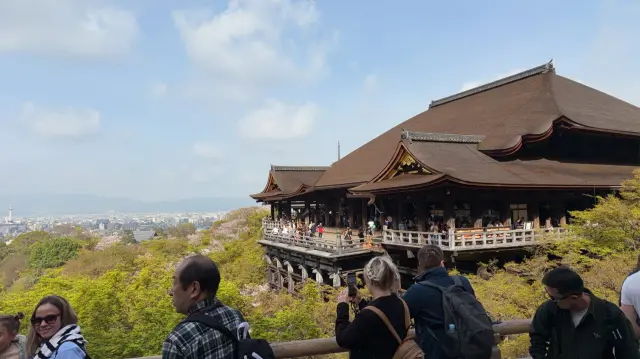
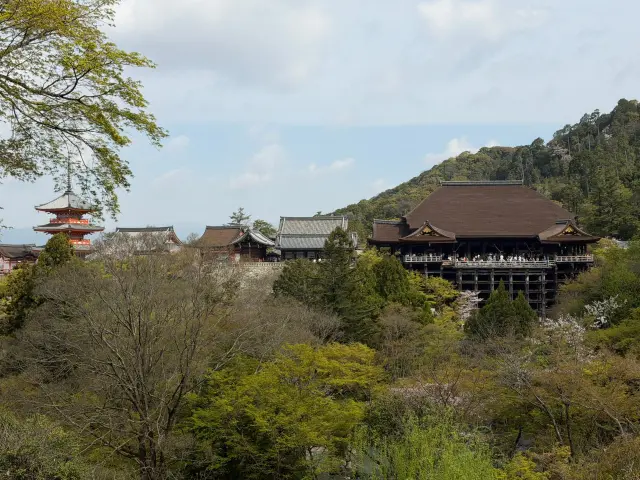
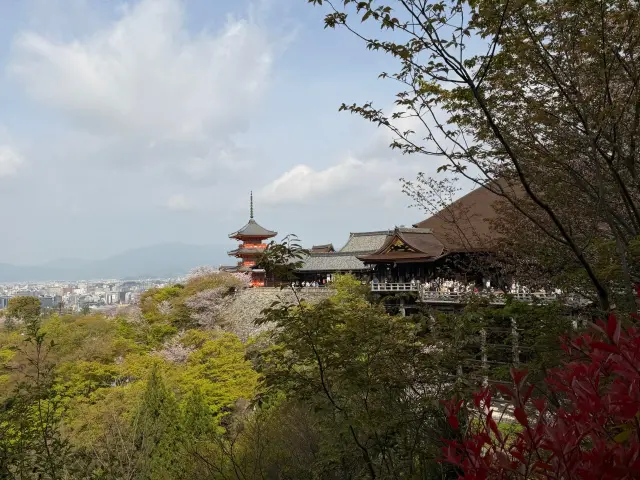
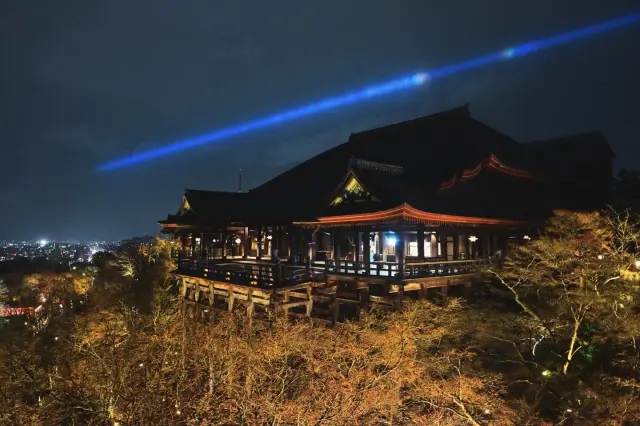
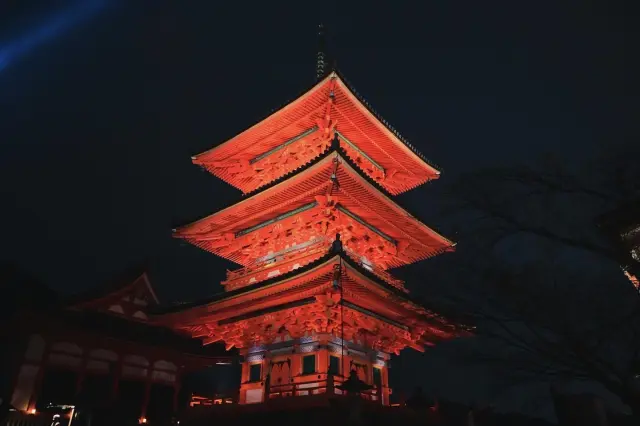
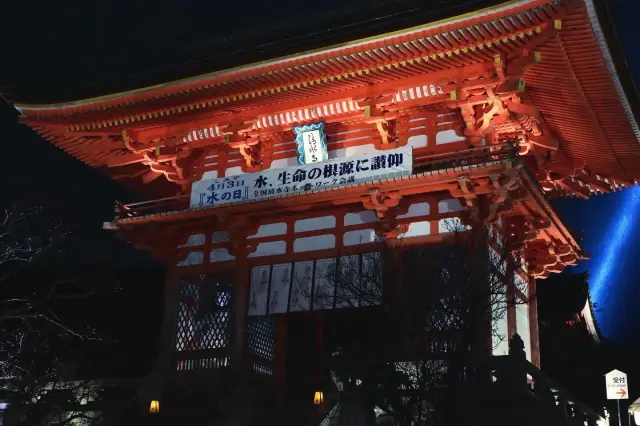
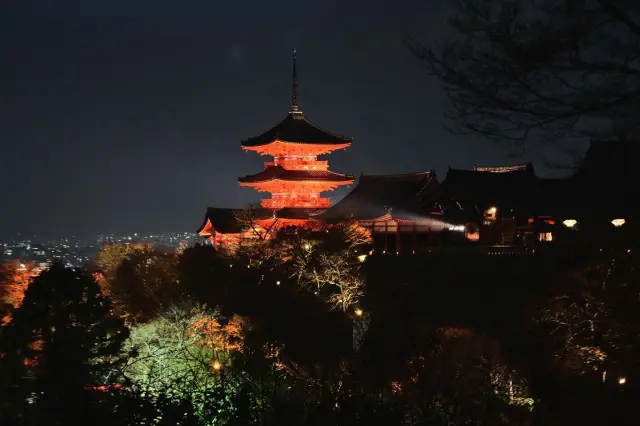
At the top of the hill, the vermilion Nio-mon Gate welcomes visitors. Continue up the steps, and the approximately 31-meter-tall (102-foot-tall) Three-storied Pagoda comes into view. One of the tallest of its kind in Japan, it is a scenic spot offering sweeping views across Kyoto. The Main Hall, associated with the well-known Japanese expression “to jump off the stage at Kiyomizu,” meaning to make a bold decision, is another highlight. Projecting from the mountainside, it was constructed using a traditional Japanese technique in which wooden components are fitted together without nails. The structure stands approximately 13 meters (43 feet) high, roughly equivalent to a four-story building. Its principal image, the Eleven-faced, Thousand-armed, Thousand-eyed Kannon Bodhisattva, is a hidden Buddhist image that can generally be viewed only once every 33 years. The next viewing is scheduled for 2033. At other times, visitors can worship the O-maedachi, a slightly smaller replica of the principal image.

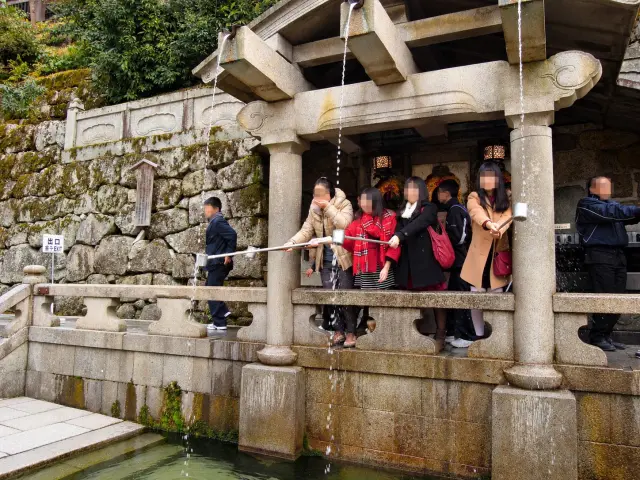
Otowa Waterfall, from which the temple takes its name, flows to the east of the Main Hall. Use a ladle to catch water from its three streams and pray for the purification of the six senses and the fulfillment of your wishes.

Highlights

  • Conveniently accessible from central Kyoto.
  • A popular Kyoto attraction inscribed on the UNESCO World Heritage List.
  • Numerous sights to see, including one of Japan’s tallest three-storied pagodas and the Main Hall built into the mountainside.
  • Seasonal scenery throughout the year, with cherry blossoms in spring, lush greenery in summer, colorful leaves in autumn, and snow in winter.

Photos

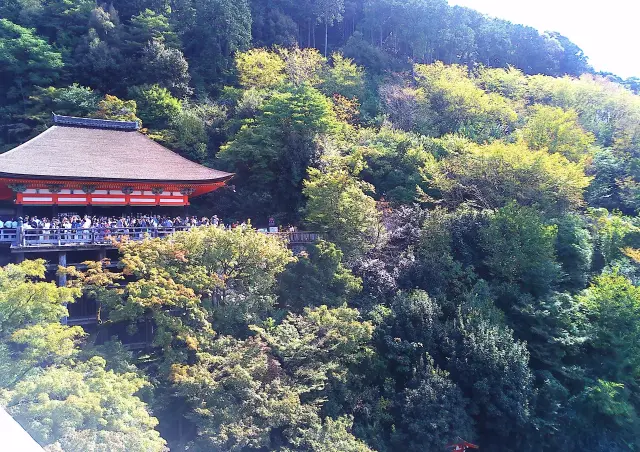
  • The Main Hall, built into the mountainside and home to the famous Kiyomizu Stage

    The Main Hall, built into the mountainside and home to the famous Kiyomizu Stage

  • Kiyomizu-dera Temple’s Three-storied Pagoda in autumn

    Kiyomizu-dera Temple’s Three-storied Pagoda in autumn

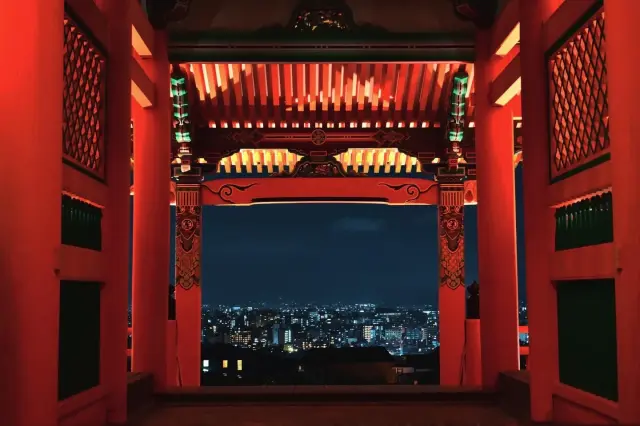
  • Autumn illumination at Kiyomizu-dera Temple

    Autumn illumination at Kiyomizu-dera Temple

Reviews

47

Some reviews are AI-translated.

  • See More

    Kiyomizu-dera Temple is a must-see sightseeing spot when visiting Kyoto. The 13-meter-high “Kiyomizu Stage” is built with interlocking wood and is said to have been constructed without using any nails. I was deeply impressed by the wisdom and technical skill of the people who came before us.

  • See More

    Mt. Otowa Kiyomizu-dera Temple is one of the classic must-visit attractions in Kyoto! This time, I made a point of coming early in the morning. I didn't expect getting up early to make such a difference—the crowds were still small, so I didn't have to squeeze through people or keep waiting for others to move out of the way when taking photos. I could leisurely enjoy the beautiful scenery of Kiyomizu-dera, making the overall visit much more comfortable.

    Looking out from the Kiyomizu Stage, I had an unobstructed view of Kyoto, and together with the temple's historic architecture, it really felt like Kyoto. However, there was one small downside to coming early: almost all the nearby shops were still closed. I had planned to browse Ninenzaka and Sannenzaka for souvenirs, but I could only take some photos and enjoy the scenery first.

  • See More

    Kiyomizu-dera is always crowded, but even so, I still highly recommend that first-time visitors to Kyoto come here at least once. The temple’s architecture is truly distinctive, especially the Main Hall and Kiyomizu Stage, which were built into the mountainside. Actually standing there and experiencing their scale is completely different from simply looking at photos.
    However, if you’re traveling with older people, I’d recommend taking their stamina into consideration. Kiyomizu-dera is located at the foot of Mt. Otowa, after all, and entering from the regular visitor entrance still involves walking uphill for a while. The temple has actually made considerable efforts to improve accessibility. Wheelchairs can enter via the emergency access road above Chawan-zaka, and there is also a step-free route near the Main Hall. Compared with other temples I’ve visited, the accessibility here is quite comprehensive. However, because of the temple’s sloping terrain and historic buildings, making it completely accessible is still difficult.
    The temple grounds are also larger than you might expect, and since this is one of Kyoto’s most popular attractions, you may have to wait in line in many places. Otowa Waterfall, for example, is very popular, and each of its three streams is associated with a different wish, so you’ll usually see people lined up there. If you want to avoid the crowds as much as possible, arriving earlier or later may help, but Kiyomizu-dera is so popular that you may still encounter quite a few visitors even around 8:00 a.m. Still, the experience is usually better than during the busiest hours of the day.
    As for transportation, I personally wouldn’t recommend driving. There is no parking lot on the temple grounds. Although there are Kyoto municipal parking lots and other privately operated lots nearby, spaces can be hard to find during busy periods. Even if you do manage to park, you’ll still have to walk some distance uphill, since you can’t drive directly up to the temple gate.

  • See More

    I visited Kiyomizu-dera Temple in person this April. Although it wasn't during the blooming season, so I couldn't see the beautiful sight of flowers in full bloom, these photos still show how vibrant it is. You can also tell from the photos that its influence and fame are beyond comparison with ordinary temples. When looking up at it from below, you can see that it was built by interlocking pieces of wood, unlike modern buildings reinforced with steel and concrete. It shows the craftsmanship and artistry of the Japanese artisans who built it. I’ll definitely visit again if I have the chance, and I invite everyone to come admire this traditional Japanese temple architecture!!

  • See More

    If you come to Kyoto and can choose only one temple to experience the history and beauty of the ancient capital, Kiyomizu-dera is definitely not to be missed.

    Located on Mt. Otowa, Kiyomizu-dera was founded in 778 and has a history spanning more than a thousand years. It is one of Kyoto's most iconic temples and part of the UNESCO World Heritage Site known as the Historic Monuments of Ancient Kyoto.

    Walking slowly uphill along the approach and passing through the vermilion Nio-mon Gate, you are greeted by the temple's stately buildings. The most impressive feature of Kiyomizu-dera is undoubtedly the Kiyomizu Stage, built using traditional wooden construction techniques. Supported by numerous wooden pillars and extending over the hillside, its main structure was built without nails, showcasing the skill and ingenuity of ancient Japanese architecture.

    From the stage, you can take in sweeping views of Kyoto's cityscape and the mountains in the distance. The scenery changes completely with the seasons: soft pink cherry blossoms in spring, lush greenery in summer, layers of red maple leaves in fall, and a crisp, tranquil beauty in winter.

    Continuing along the temple path, you will come to Otowa Waterfall. The spring water flows down the rock face in three streams, traditionally associated with wishes for academic success, love, and longevity. Many travelers come here not only to admire the scenery, but also to pray for blessings for themselves and their loved ones.

    What I liked most, though, may not have been any particular magnificent view, but the way I naturally slowed down while walking through the temple grounds.

    In this ancient temple that has stood for over a thousand years, it feels as though you can sense the weight of time. It also reminds me that there is no need to rush through every step of life. Some things require patience, some answers take time, and the people who truly matter deserve to be cherished.

    Sometimes, the meaning of travel is not just about admiring the scenery, but also about rediscovering inner peace in an unexpected moment.

Details

Name in Japanese
音羽山 清水寺
Postal Code
605-0862
Address
1-294 Kiyomizu, Higashiyama Ward, Kyoto City, Kyoto Prefecture
Phone
075-551-1234
Closed on
Open year-round
Hours
6:00 a.m.–6:00 p.m. (hours vary by season)
Admission
Adults: ¥500; elementary and junior high school students: ¥200
Access
1) Approximately a 25-minute walk from Kiyomizu-Gojo Station on the Keihan Main Line
2) From Shichijo Station on the Keihan Main Line, take Kyoto City Bus No. 206 bound for Kitaoji Bus Terminal via Higashiyama-dori, or No. 100 bound for Ginkaku-ji via Kiyomizu-dera and Gion. Get off at Gojo-zaka and walk for 10 minutes.
Credit Cards
Not accepted
Official website
Official website (Japanese)
Hokkaido Tohoku Kanto Chubu Hokuriku Kansai Chugoku Shikoku Kyushu Okinawa