

A Travel Guide to Matsuyama Castle: An Impregnable Fortress Still Standing from the Edo Period
Known as a masterpiece of castle architecture and an impregnable fortress, “Matsuyama Castle.”
It’s a symbol of Matsuyama City, Ehime Prefecture, and a popular sightseeing spot for Ehime travel.
The spectacular views from the main keep and the many historic structures that have survived since the Edo period are must-sees.
So you don’t miss the charm of “Matsuyama Castle,” let’s introduce its highlights and recommended nearby spots.
What is Matsuyama Castle Like?
“Matsuyama Castle” was built on the summit of Katsuyama, at an elevation of 433 ft (132 m), in Matsuyama City, Ehime Prefecture.
It is one of the “Top 100 Japanese Castles” and is also famous as one of the “Three Great Hilltop Castles of Japan.”
A hilltop castle is a castle built using a small mountain or hilly area along with flatland.
It is a castle where a main keep built before the Edo period still survives, and it is also one of the “12 Original Castle Keeps” with only 12 sites remaining in Japan.
Together with “Dogo Onsen,” its historic atmosphere was recognized, and it was selected as one of the “100 Selections of Beautiful Historic Landscapes of Japan.”
The biggest draw of “Matsuyama Castle” is, without a doubt, the view from the top floor of the main keep.
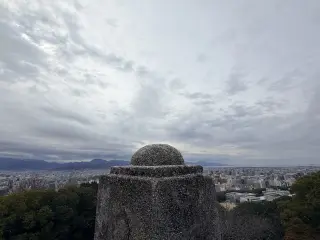
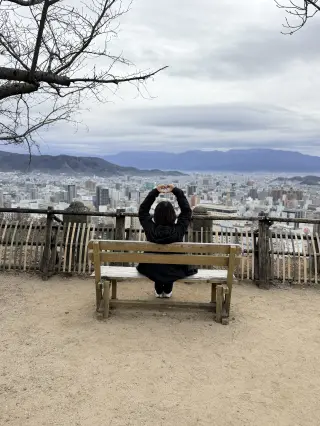
It’s one of Matsuyama City’s best scenic viewpoints, with sweeping views of the Seto Inland Sea and the Matsuyama Plain.
Inside the castle grounds, 21 Important Cultural Properties still remain, offering plenty to see.
Be sure to experience the many defensive devices that explain why it was called an impregnable castle.
“Matsuyama Castle” began construction in 1602 by Kato Yoshiaki (Kato Yoshiaki), the first lord of the Iyo Matsuyama Domain (present-day Matsuyama City, Ehime Prefecture). It was built with military design to prevent enemy invasions.
The smaller keep and other turrets were destroyed several times by arson and war damage, but starting in 1966, a rare full wooden reconstruction project progressed.

Access to Matsuyama Castle
Here’s how to get to “Matsuyama Castle,” starting from “Matsuyama Airport,” which also has international flights.
From “Matsuyama Airport,” take the “Limousine Bus Matsuyama Airport Line” and get off at Matsuyama Station.
From “Matsuyama Station,” it’s a 15-minute walk to “Matsuyama Castle.” Total travel time is Approx. 30 minutes.
Matsuyama Castle Hours and Admission
The Hours and Admission for “Matsuyama Castle” and the ropeway and lift are summarized in the table below for your reference.
Please note that the Hours for “Matsuyama Castle” and the ropeway vary by season.
The lift Hours remain the same year-round.
Hours and Admission for the Matsuyama Castle Main Keep
- Hours
-
・February–July 9:00am–5:00pm
・August 9:00am–5:30pm
・September–November 9:00am–5:00pm
・December–January 9:00am–4:30pm - Admission
-
・Adults: 520 yen
・Elementary school students: 160 yen
Hours and Fares for the Ropeway and Lift
- Ropeway Hours
-
・February–July 8:30am–5:30pm
・August 8:30am–6:00pm
・September–November 8:30am–5:30pm
・December–January 8:30am–5:00pm - Lift Hours
- 8:30am–5:00pm
- Ropeway/Lift Combo Ticket (Round-trip)
-
・Adults: 520 yen
・Elementary school students: 260 yen
What’s the Best Season to Visit Matsuyama Castle?
Spring is recommended if you’re visiting “Matsuyama Castle.”
Shiroyama Park, which spreads out at the foot of the castle, is popular as a cherry blossom spot, and it gets crowded with hanami visitors every year during the Somei Yoshino bloom.
In addition to Somei Yoshino, many types of cherry trees are planted, such as Kawazu-zakura and Yoko-zakura, creating a beautiful landscape where historic buildings and cherry blossoms blend together.
The illuminated cherry blossoms after sunset, along with the main keep, are also stunning.


Enjoy Structures Still Standing from the Edo Period! 5 Highlights of Matsuyama Castle
At “Matsuyama Castle,” whose views from the main keep were selected by the Michelin Guide, there are many highlights you should visit. Of course, there’s the main keep, but there’s plenty more to see as well.
Among the many highlights, here are five must-see spots, carefully selected.
1. The “Main Keep,” Preserved in Complete Form Since the Edo Period
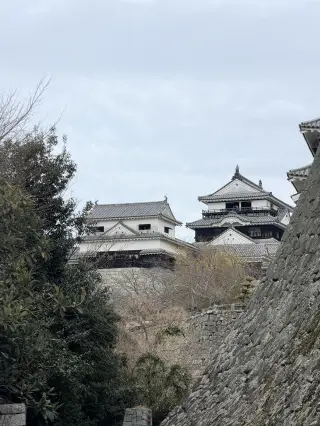
The “main keep” was rebuilt in 1854 and is the last complete castle structure of the Edo period.
It follows the classic Japanese castle style known as a sotogata tenshu (multi-tiered keep) with three stories and three roof tiers above ground, plus one basement level.
There were said to be 170 castles across Japan in the Edo period, but only 12 remain today, and “Matsuyama Castle” is one of these “12 Original Castle Keeps.”
Including the honmaru (main bailey), the elevation is Approx. 528 ft (161 m), making it the highest hilltop castle among the 12 original keeps.
Don’t miss the spectacular views from the top floor of the main keep, overlooking the Seto Inland Sea and Mt. Ishizuchi, the tallest mountain in western Japan.

2. Take an Aerial Stroll with Views of Nature and the City: The “Matsuyama Castle Ropeway & Lift”
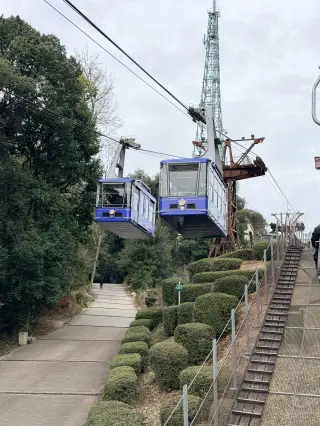
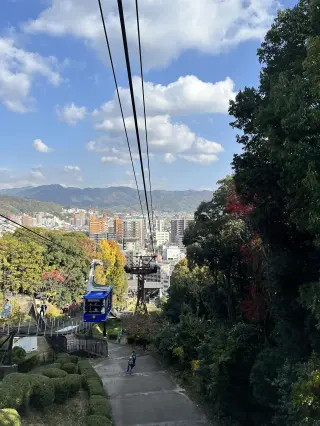
“Matsuyama Castle,” built at an elevation of 433 ft (132 m), is easy to reach via the ropeway and lift that run in parallel.
Ride from the base station “Shinonomeguchi” up to the summit station “Chojagahara,” located around the 8th station area, then it’s an Approx. 10-minute walk to the main keep entrance.
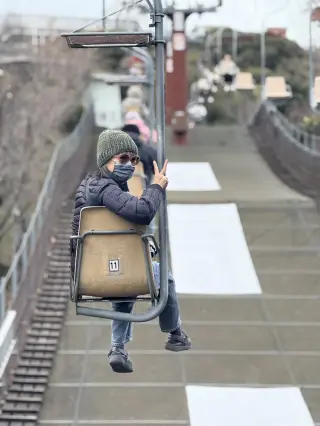
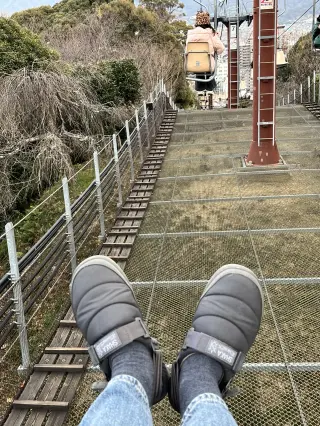
The lift lets you feel close to nature, but it’s single-seater.
If you want to ride up while chatting with others, the ropeway is recommended.
On either one, you can enjoy views over the Matsuyama cityscape during the ride.


3. A Historically Rare Defensive Technique: “Climbing Stone Walls”
“Climbing stone walls” are a pair of stone walls that climb up the mountainside and are connected, designed to stop enemies trying to attack from the slopes.
Among the castles with original keeps, climbing stone walls have been confirmed only at Matsuyama Castle and Hikone Castle, making them historically valuable stone walls.
These “climbing stone walls” are said to be a defensive method used by Toyotomi Hideyoshi during the Korean campaigns when building castles for the Japanese expeditionary forces.
Unfortunately, only part of the north side remains, but the south side remains in an almost complete form.
Don’t miss the “climbing stone walls,” one of the reasons it’s considered an impregnable castle.

4. Stroll a Garden with Classic Japanese Atmosphere: “Matsuyama Castle Ninomaru Historic Garden”
Built on the former site of the Matsuyama domain lord’s residence, “Matsuyama Castle Ninomaru Historic Garden” recreates the layout from that time.
The garden is divided into two main areas: the “Citrus and Flower Garden” in the northern half and the “Flowing Water Garden” in the southwest.
Displays include a chisen-style pond garden with a pond and waterfall set against exposed rock outcrops, as well as the remains of the “O-ido” large well discovered through excavation.
It’s designed to evoke wabi-sabi, so a walk here should immerse you in a distinctly Japanese atmosphere.
In 2013, it was recognized as a “Sanctuary of Love” thanks to its beautiful scenery, a preserved anecdote that suggests a romance between a Russian man and a Japanese woman, and its popularity for pre-wedding photo shoots.
Why not take a stroll through this Japanese-style garden as a couple or with your spouse?

5. Marks Left by Stoneworkers? “Carved Stone Wall Marks”
If you look closely at the stone walls of Matsuyama Castle, you may occasionally find rare “marks” carved into them.
There are many types, including patterns like dumplings and spirals.
There are various theories as to why these “marks” were added, but they’re believed to be signs used by groups of stoneworkers.
One theory says that in stone-laying work involving multiple groups, the marks helped sort stones by group and define each stoneworker group’s work area, clarifying responsibility.
When you visit Matsuyama Castle, pay attention to the stone walls and have fun searching for these “marks.”

Japan’s Oldest Hot Spring for a Day Trip: Dogo Onsen
Mentioned in the Nihon Shoki, “Dogo Onsen” is said to be Japan’s oldest hot spring and is one of Ehime’s most popular sightseeing spots.
Along with “Matsuyama Castle,” it was selected as one of the “100 Selections of Beautiful Historic Landscapes of Japan,” making it a place where you can enjoy not only hot springs but also historic Japanese scenery.
The alkaline simple spring water is gentle and smooth on the skin, with low刺激, making it suitable for therapeutic bathing and beauty as well. It’s also great that you can enjoy it as a day trip.
Since you can reach the hot springs with just a 20–30 minute trip from “Matsuyama Castle,” be sure to visit the baths introduced below.
1. Dogo Onsen Honkan
Dogo Onsen Honkan is designated as a National Important Cultural Property and is a magnificent building that conveys a strong sense of history.
It is currently undergoing preservation and restoration work, but the project is being carried out “while remaining open,” so you’ll also want to check out the various events you can only see during this period while bathing is still available.
There are many sightseeing spots nearby, including a shopping street and footbaths, and exploring the area in a yukata is recommended.

2. Dogo Onsen Tsubaki no Yu
“Dogo Onsen Tsubaki no Yu” is the sister bathhouse of “Dogo Onsen Honkan,” which is designated as a National Important Cultural Property.
As a public bathhouse, it’s widely loved not only by tourists but also as a relaxing spot for locals.
“Dogo Onsen Tsubaki no Yu” was built in 1953 in nearly the center of Dogo Shopping Street, about a 3-minute walk from “Dogo Onsen Honkan.”
After renovations, it reopened in 2017. Unlike the wooden Honkan, it features a storehouse-style building built in an L-shape.

3. Dogo Onsen Annex Asuka no Yu
A facility opened in 2017 as a hub for sharing a new hot spring culture.
With “Ancient Dogo” as its theme, it incorporates architectural styles from the Asuka period, fitting for Dogo Onsen, said to be Japan’s oldest.
You can fully enjoy free-flowing hot spring water straight from the source, with no heating or added water, and it also offers features not found at the Honkan, such as open-air baths.
Several bathing courses are available, and the baths and relaxation rooms you can use vary by course.

3 Popular Sightseeing Spots Near Matsuyama Castle
In Matsuyama, you can enjoy not only the view from Matsuyama Castle’s main keep, but also the atmosphere of the castle town and historic buildings.
Nearby, there are sightseeing spots scattered around that you’ll want to visit along with your castle stroll.
Here are carefully selected spots you should definitely stop by near Matsuyama Castle.
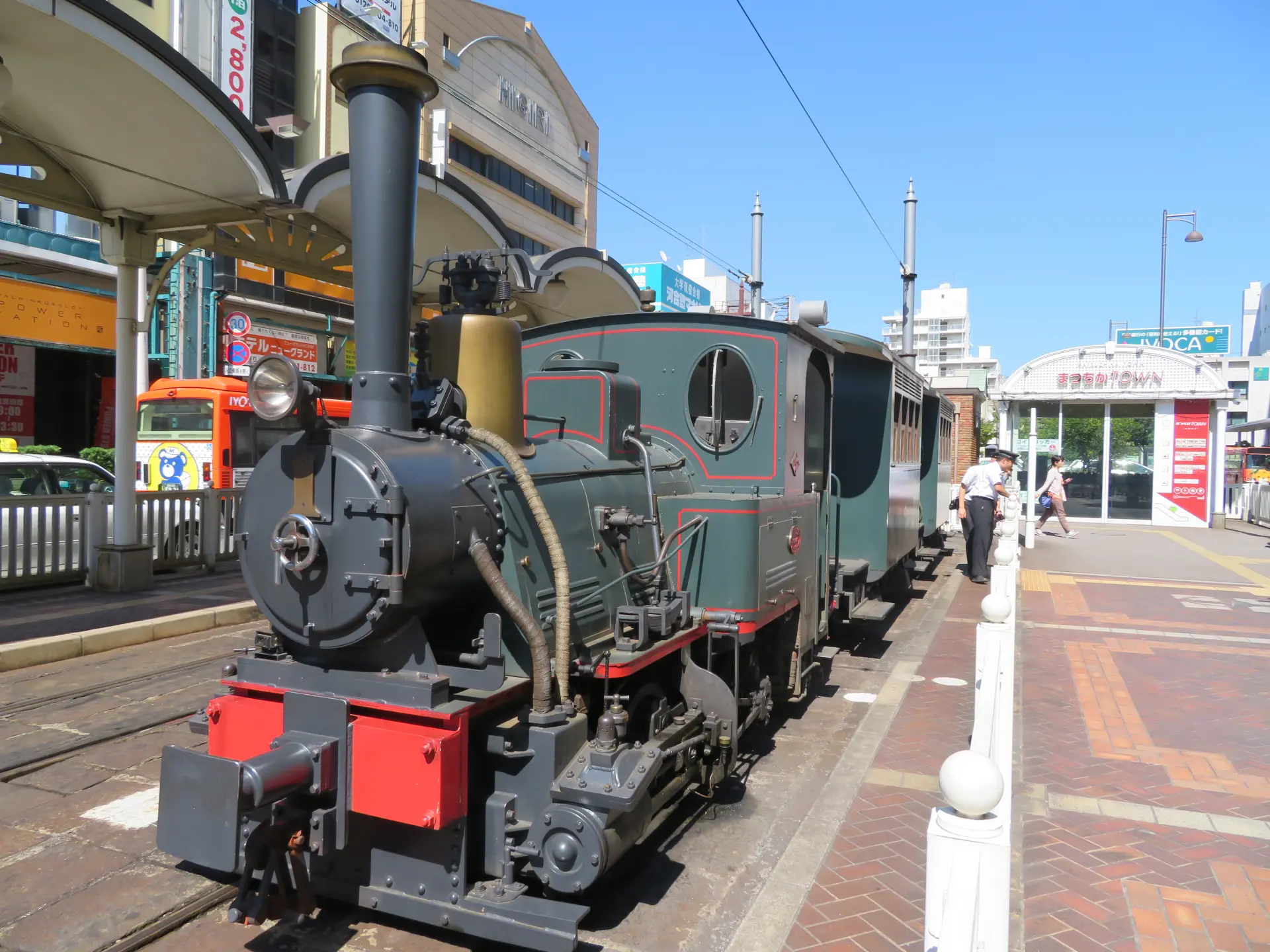
1. Botchan Train
The Botchan Train was created based on a steam locomotive that ran for 67 years starting in 1888, shortly after Iyo Railway began operations.
The name “Botchan Train” comes from the fact that characters used it in Natsume Soseki’s novel Botchan. The word “train” was added to the title, and it became popularly known by that name.
2. Kururin Giant Ferris Wheel
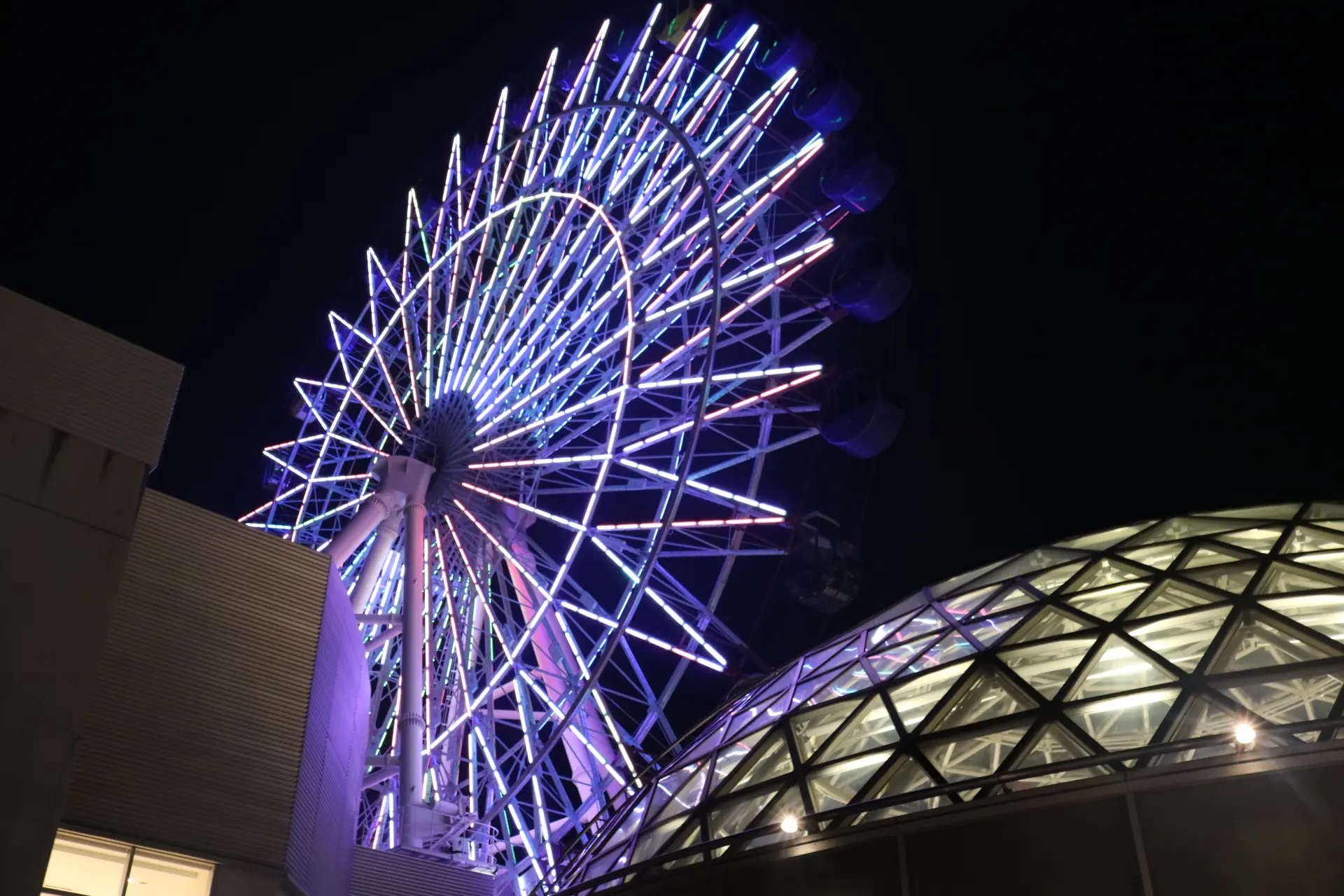
The giant ferris wheel “Kururin” has a diameter of 148 ft (45 m) and reaches a height of 279 ft (85 m) from the ground to its highest point.
It has also become a new symbol of Matsuyama.
During the day, you can take in panoramic views of Matsuyama, including Matsuyama Castle rising in the city center, the cluster of hot spring inns in Dogo Onsen, and the Iyo-nada Sea—all from inside the ferris wheel.
3. Botchan Karakuri Clock
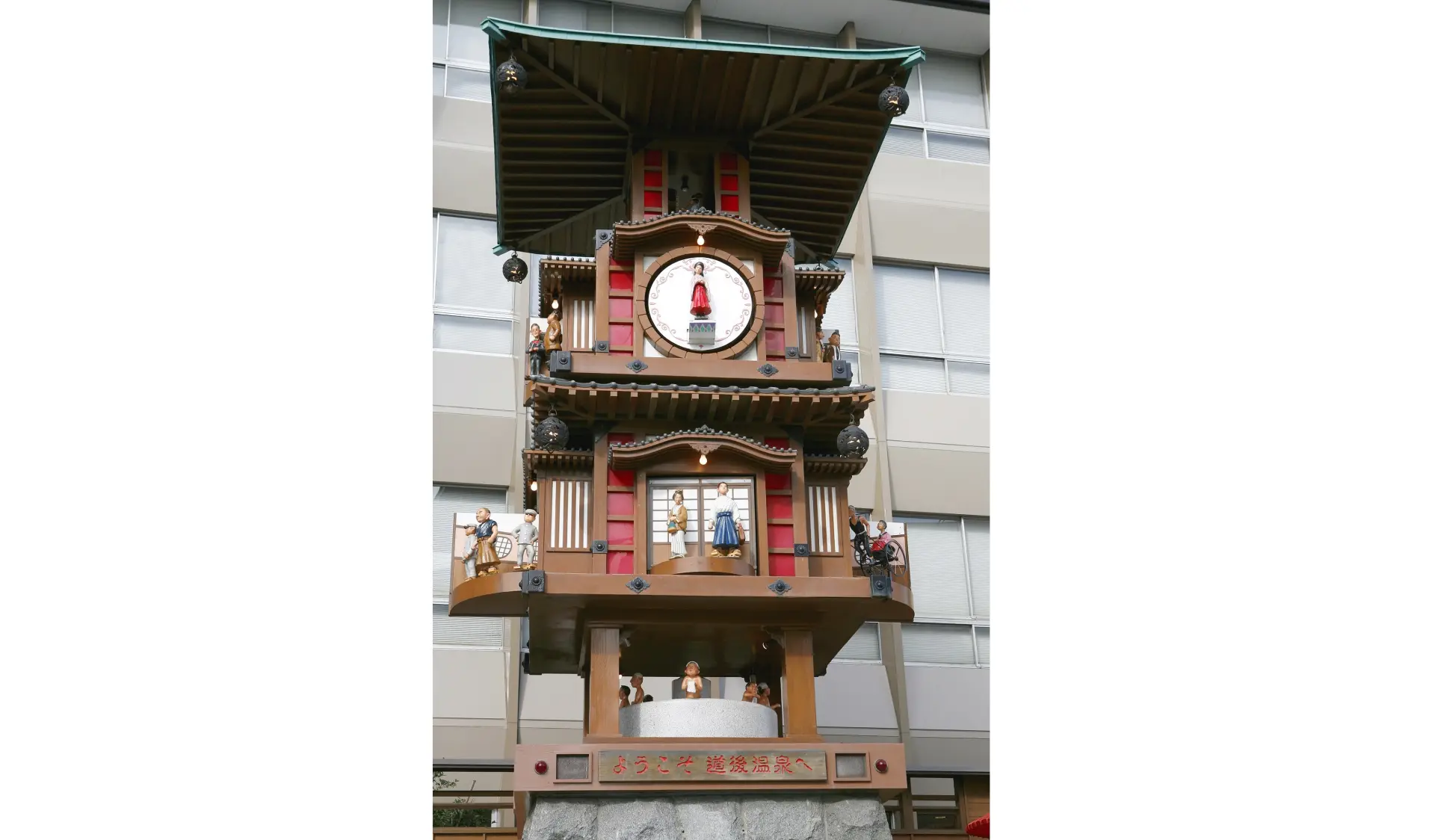
A karakuri clock built in 1994 at Houjouen in front of the Dogo Onsen streetcar stop, as part of the 100th anniversary project for the construction of Dogo Onsen Honkan.
It performs in sync with the clock’s sound every hour from 8:00am to 10:00pm (every 30 minutes on weekends and holidays; in March, April, August, and November; during Golden Week; and during the year-end and New Year holidays), giving visitors to Dogo Onsen a lively welcome.
3 Popular Places to Eat Near Matsuyama Castle
Between sightseeing at Matsuyama Castle, you’ll want to take a break at a restaurant where you can enjoy local flavors.
From regional cuisine and ingredient-focused restaurants to easy stops along the way, here are places where you can savor Matsuyama’s unique tastes along with the lingering atmosphere of your castle trip.
1. Original Uwajima Tai-meshi Marusui Honten
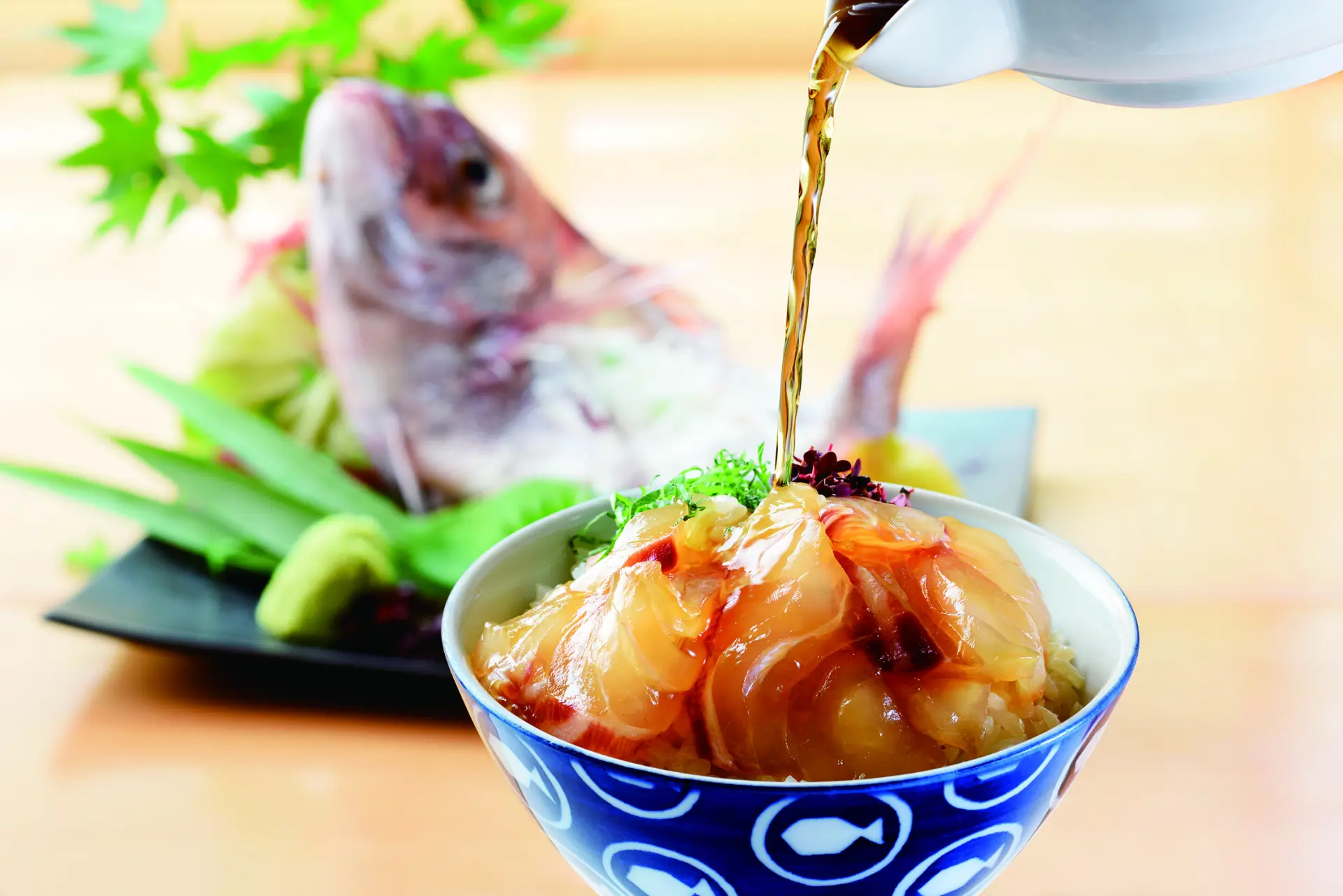
“Original Uwajima Tai-meshi Marusui Honten” is located in Okaido, Matsuyama City, Ehime Prefecture. It’s a tai-meshi specialty restaurant with over 100 years of history. It serves “Uwajima tai-meshi,” a local dish from the Uwajima area in southern Ehime.
The signature menu item is “Uwajima tai-meshi.” Fresh sea bream caught in the Uwajima Sea is sliced thin and mixed with the restaurant’s special sauce and a raw egg, then poured over rice.
2. Ehime no Shokutaku 1970
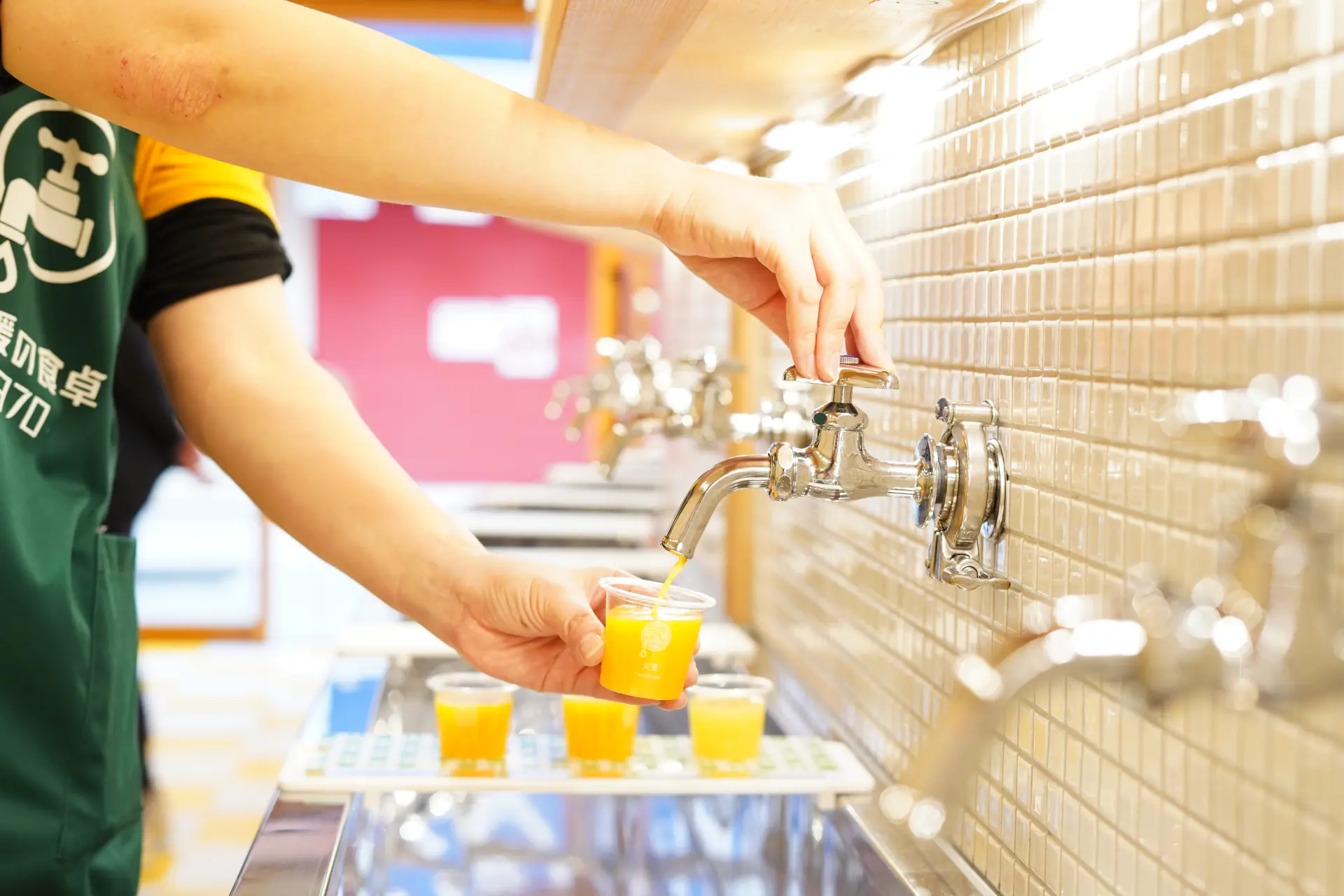
“Ehime no Shokutaku 1970” is a juice stand in Matsuyama City, Ehime Prefecture. It’s known for its unique style where you turn a faucet and “mikan juice” comes out. The shop is located inside Dogo Shopping Street, the arcade connecting “Dogo Onsen” Station and “Dogo Onsen Honkan.”
All juices use citrus from Ehime Prefecture. The signature item is “mikan juice,” which you can choose from 20 different faucets.
3. Washoku Miyoshi
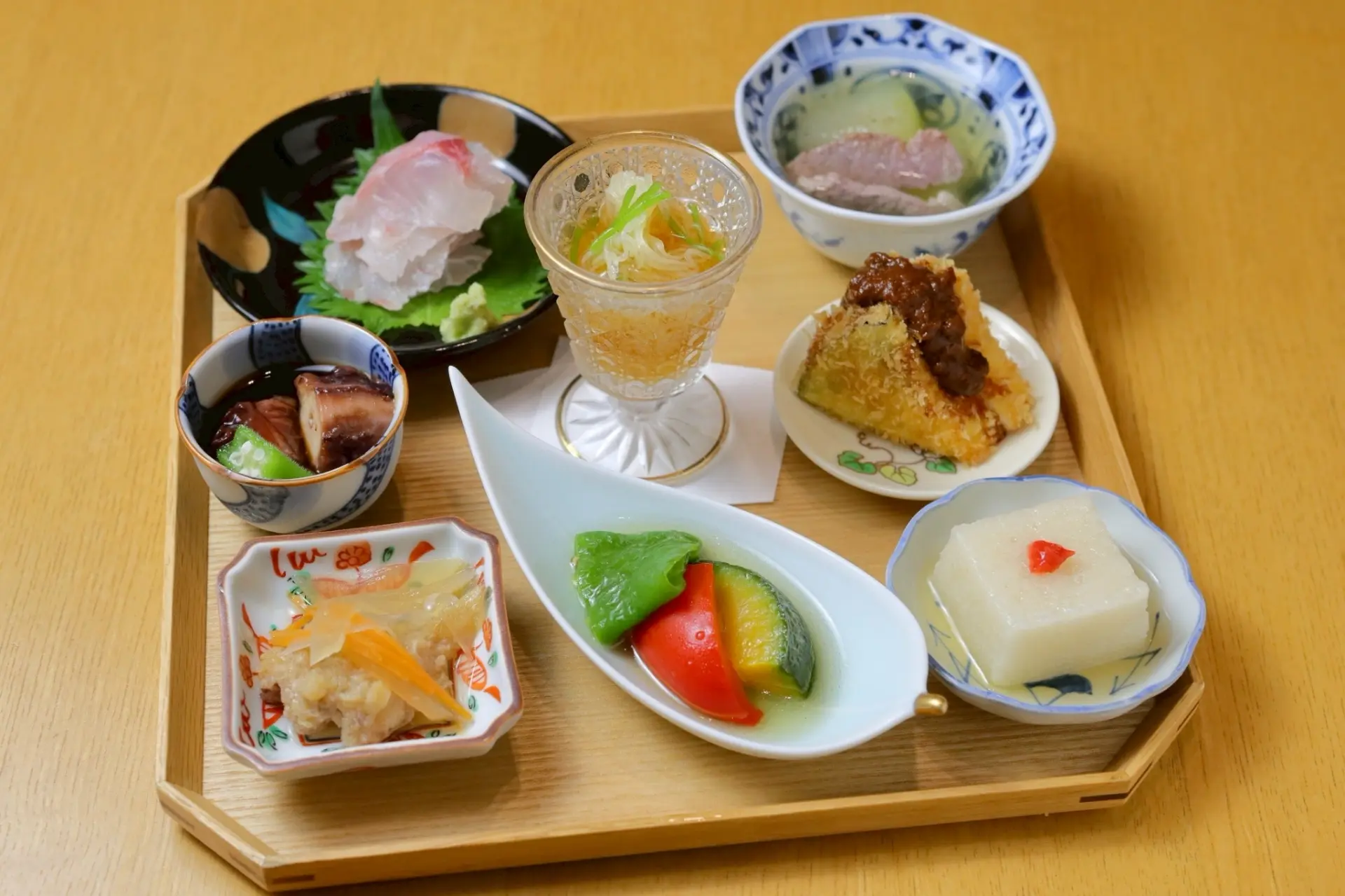
“Washoku Miyoshi” is in Matsuyama City, Ehime Prefecture. It’s a Japanese restaurant located along Chifunecho-dori in central Matsuyama. It focuses on cooking that brings out ingredient flavors, such as using different dashi depending on the dish.
It’s known for seafood dishes sourced with a focus on wild-caught ingredients, along with Japanese dishes that incorporate seasonal ingredients like vegetables.
3 Recommended Places to Stay Near Matsuyama Castle
The castle town spreading out around Matsuyama Castle is an area where historic streetscapes and hot spring culture come alive.
Take a short trip between sightseeing, and you can enjoy a relaxing time at famous baths such as Dogo Onsen.
From here, we’ll introduce accommodations to pair with Matsuyama Castle sightseeing—places where you can feel the charm of the castle town and unwind.
1. Chaharu
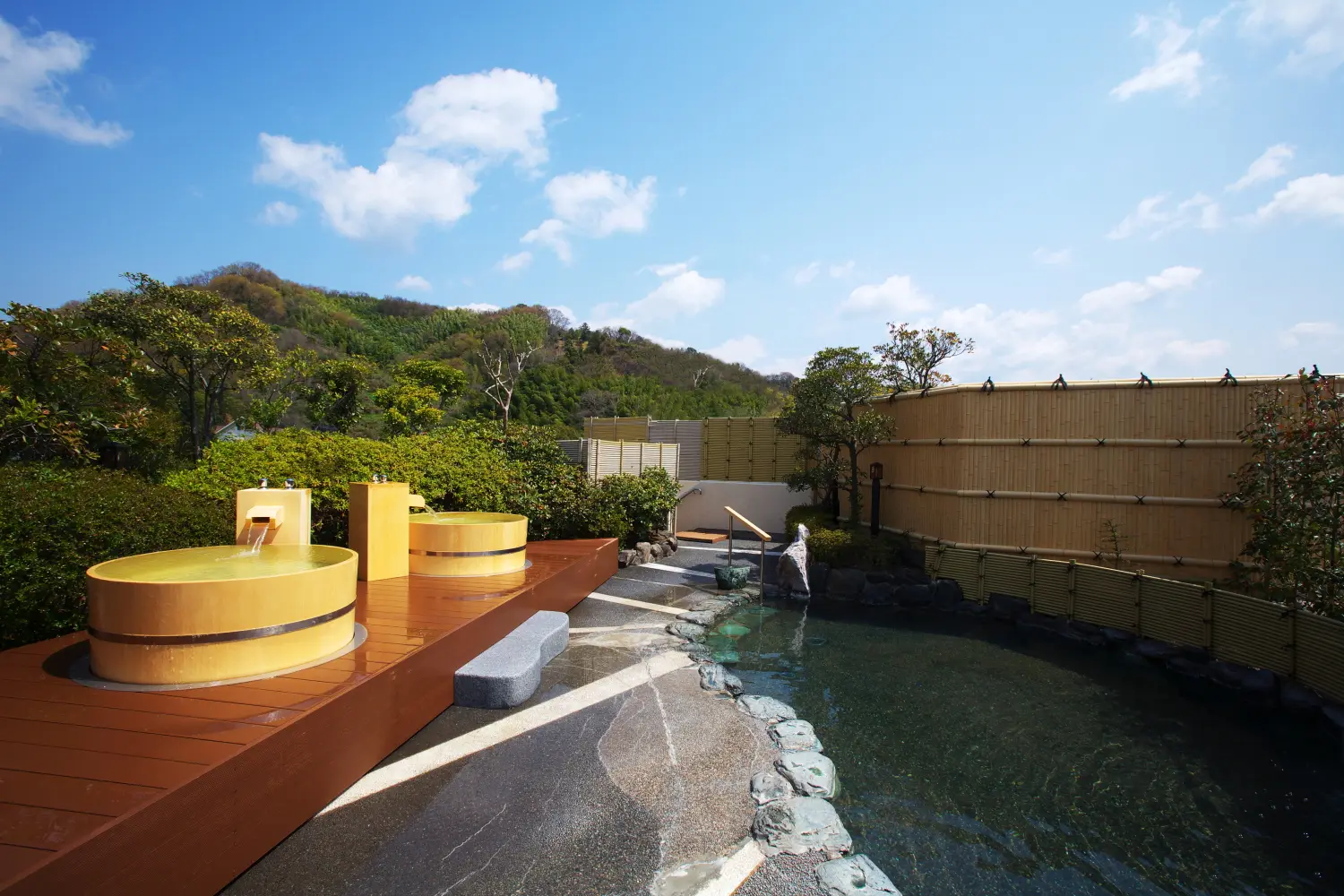
A hot spring inn located in the heart of the hot spring town, close to Dogo Onsen Honkan, and the first in Dogo Onsen to feature an open-air bath.
The signature open-air bath is on the 10th floor, with views of Matsuyama Castle and Mt. Ishizuchi.
At night, you can enjoy a soak while gazing at a sky full of stars. Also, the women’s bath offers a rose open-air bath on Saturdays and Sundays from 5:00pm to 10:00pm.
2. Dogo Onsen Hana Yuzuki
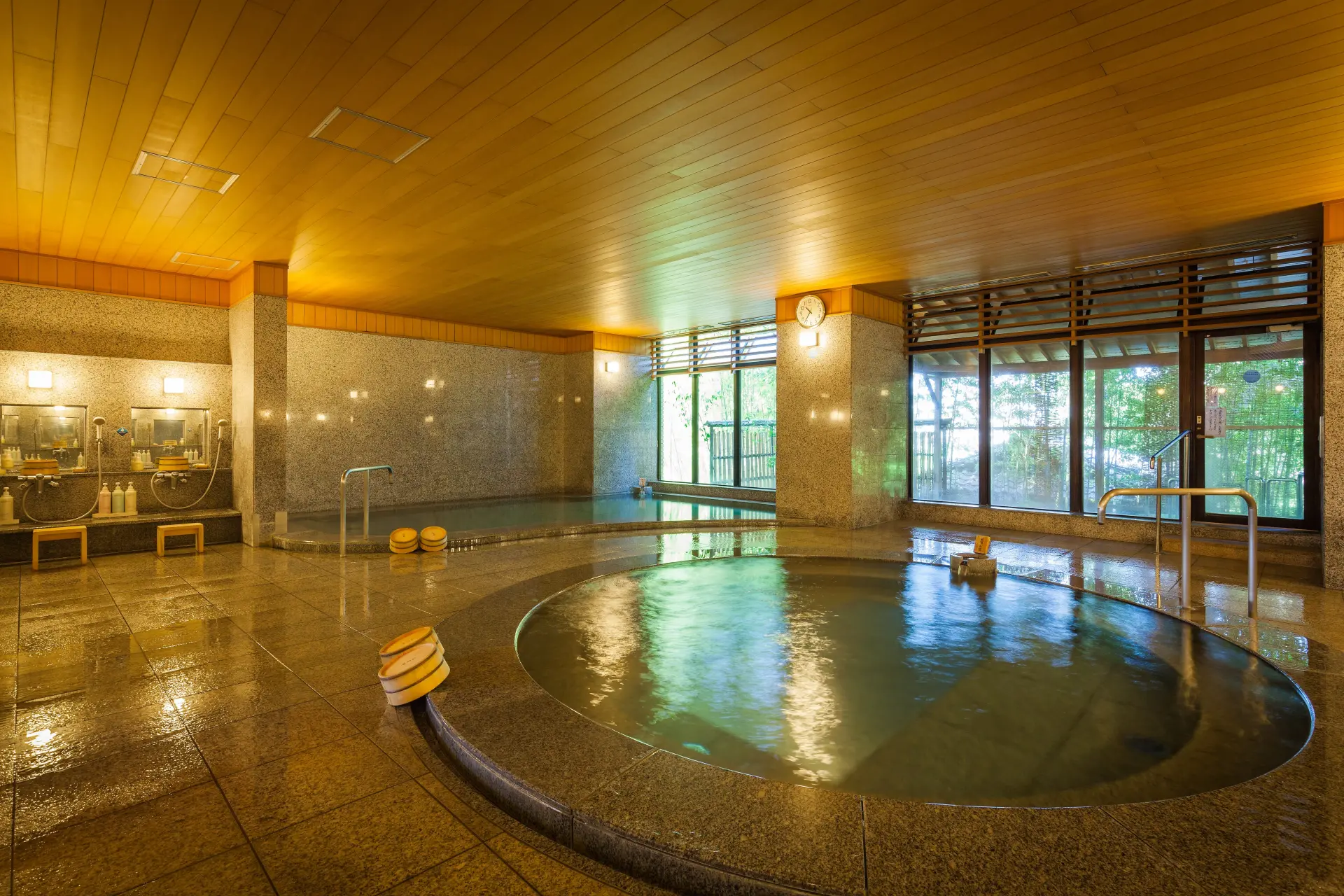
A hot spring inn just a short walk from Dogo Onsen’s popular spot, “Dogo Onsen Honkan.”
From the scenic open-air bath where you can choose between “hot water” and “lukewarm water,” to a spacious large public bath that can accommodate around 100 people, you can fully enjoy the waters of Dogo Onsen, also said to be Japan’s oldest hot spring.

3. Dogo Onsen Funaya
Founded around 1627 in the Edo period. “Dogo Onsen Funaya” is a long-established hot spring ryokan that hosted many writers and famous figures, including the Matsuyama-associated author Natsume Soseki and haiku poet Masaoka Shiki.
Its 58 guest rooms include various types, such as sukiya-style special rooms, Japanese-style rooms, Japanese-Western rooms, and Western-style rooms.
Reviews of Matsuyama Castle
4.68
Some reviews are AI-translated.
-
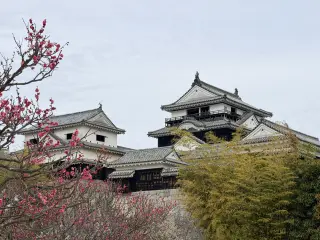
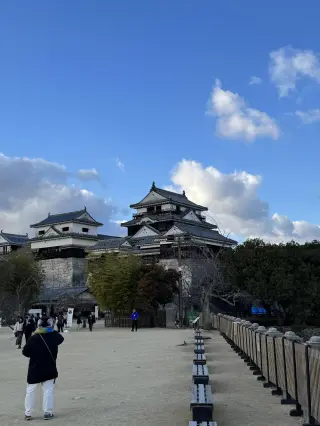
You can choose the ropeway or the single-seat lift to get to Matsuyama Castle (or walk if you want some exercise).
The view is wide open, and we happened to catch the plum blossoms in bloom. -
At the highest point in the city.
You get a sweeping view of the city and the Seto Inland Sea. -
Riding the ropeway/cable car is one of those things where the first time is new, and the second time you’ve got it down.
Hold on to your belongings—if you drop something, it might take some effort to get it back.
You can stroll up to Matsuyama Castle, or take the cable car. The ticket is round-trip, so don’t lose it.
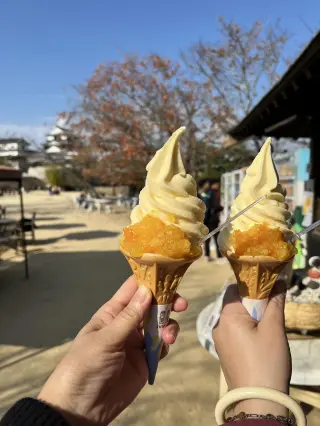
The mikan ice cream 🍦 at the base of the castle is delicious 😋
The fall foliage, and the occasional light snow in winter, make it such a relaxing place.
I’m sure Matsuyama Castle in spring must be beautiful too~
FAQ about Matsuyama Castle
Q
Who built Matsuyama Castle, and when?
A
Kato Yoshiaki built it starting in 1602 over Approx. 25 years.
Q
What’s the appeal of Matsuyama Castle?
A
It has many Important Cultural Properties, with a total of 21 designated structures.
Summary
“Matsuyama Castle” was known as an impregnable fortress.
We’ve introduced its history and highlights, as well as nearby sightseeing spots—what did you think?
If you keep the history and must-see spots from this article in mind, you’ll be able to fully enjoy “Matsuyama Castle.”
Ehime has many places where you can enjoy grand natural scenery, so please use the article below as a reference when planning your trip.