
![[Itsukushima Shrine Travel Guide] Visit a Breathtaking View Where Grand Nature and a Shrine Blend in Harmony](https://static.gltjp.com/glt/data/article/21000/20411/20230914_153227_e85ac745_w1920.webp)
[Itsukushima Shrine Travel Guide] Visit a Breathtaking View Where Grand Nature and a Shrine Blend in Harmony
Known for its torii gate that stands in the sea, “Itsukushima Shrine” is often called the symbol of Miyajima.
Many visitors come each day to see the spectacular view created by Miyajima’s grand nature in harmony with the shrine’s beautiful architecture.
To make the most of “Itsukushima Shrine,” this article covers must-see highlights, recommended seasons to visit, and nearby food and sightseeing spots.
What is Itsukushima Shrine Like?
“Itsukushima Shrine” is located on Miyajima, in Hatsukaichi City, Hiroshima Prefecture.
Miyajima has been selected as one of Japan’s Three Most Scenic Spots thanks to its outstanding views.
Itsukushima Shrine, a key part of that landscape, is registered as a World Heritage Site together with the sea in front and the primeval forest behind it.
Not only the torii gate, but the shrine buildings themselves are also built over the sea, a rare feature that makes them look as if they’re floating at high tide.
Another distinctive feature is that it’s built in the “shinden-zukuri” style, an aristocratic residential architectural style from the Heian period (794–1185).
With a long history of over 1,400 years, most structures within the shrine grounds are designated as either National Treasures or Important Cultural Properties.
The majestic scenery woven by the Seto Inland Sea, the primeval forest behind it, and the historic, beautiful architecture is a must-see.
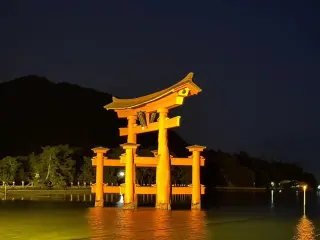
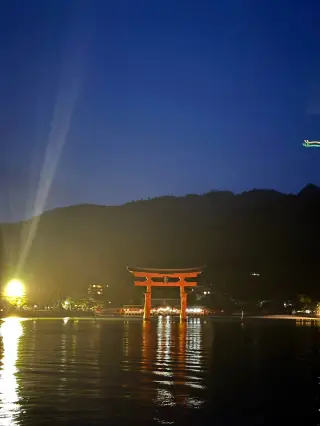
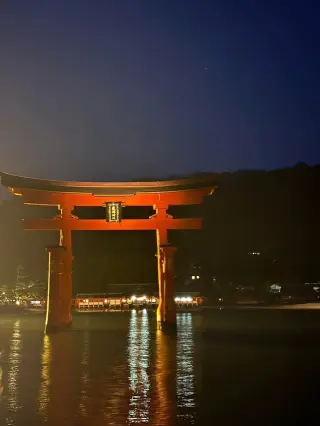
Don’t miss the dreamy view of “Itsukushima Shrine” lit up after sunset.
The main deities enshrined at “Itsukushima Shrine” are three goddesses known as the Munakata Three Goddesses.
They are said to bring blessings such as safety at sea, traffic safety, good fortune in money, and prayers for victory.
Along with enjoying the scenery, why not stop by to pray for a safe and wonderful Miyajima trip?
The Origins of Itsukushima Shrine
Saeki no Kuramoto, a local powerful figure on Miyajima, is said to have received a divine message, and founded “Itsukushima Shrine” in 593.
In the Heian period, the powerful warrior Taira no Kiyomori had deep faith in “Itsukushima Shrine,” and in 1168 he built the shrine buildings and the corridors connecting them.
Miyajima itself was revered as a “god,” and to avoid damaging the island’s land, “Itsukushima Shrine” was built over the sea rather than on the ground.
Although it suffered damage many times from natural disasters such as strong winds and lightning, as well as fires, it has been rebuilt each time with the help of many devoted people.


Access to Itsukushima Shrine
From Hiroshima Station, a key transportation hub for sightseeing in Hiroshima, you can reach “Itsukushima Shrine” by train and ferry.
The view of Miyajima and Itsukushima Shrine from the ferry is also beautiful, so don’t miss it.
- Route
-
1. Take the “JR Sanyo Main Line (bound for Iwakuni)” from “Hiroshima Station” and get off at “Miyajimaguchi Station”
2. Walk from “Miyajimaguchi Station” to “Miyajimaguchi Pier”
3. Board the ferry at “Miyajimaguchi Pier” and arrive in Approx. 10 minutes - Travel time
- Approx. 50 minutes
Itsukushima Shrine Admission and Hours
The fees and hours for “Itsukushima Shrine” are summarized in the table below for your reference.
Please note that hours vary by season.
Admission
- Adults
- 300 yen
- High school students
- 200 yen
- Elementary and junior high school students
- 100 yen
Hours
- January 1
- 12:00am–6:30pm
- January 2–January 3
- 6:30am–6:30pm
- January 4–end of February
- 6:30am–5:30pm
- March 1–October 14
- 6:30am–6:00pm
- October 15–November 30
- 6:30am–5:30pm
- December 1–December 31
- 6:30am–5:00pm
What’s the Best Season to Visit Itsukushima Shrine?
If you’re sightseeing at “Itsukushima Shrine,” fall is recommended.
Miyajima has many famous fall foliage spots, such as “Momijidani Park” and “Daisho-in.”
Pair “Itsukushima Shrine,” where you can enjoy beautiful scenery anytime, with a tour of Miyajima’s fall foliage spots, and you’ll be able to fully enjoy the island.


Not Just the Torii Gate! 5 Must-See Highlights at Itsukushima Shrine
The biggest draw of “Itsukushima Shrine” is the scenery where the surrounding landscape and the shrine blend together, but from here we’ll focus on the shrine’s structures and introduce key highlights.
Please also take in the charm of the beautiful vermilion buildings, where traditional architectural styles can be seen throughout.
Of course, don’t miss the torii gate built over the sea, but be sure to look out for the other captivating structures as well.
1. The Starting Point for Worship at Itsukushima Shrine: “Maroudo Shrine”
When you visit “Itsukushima Shrine,” start your worship at the entrance with the subsidiary shrine “Maroudo Shrine.”
A subsidiary shrine refers to a shrine that enshrines deities associated with the main enshrined deity.
The main hall of “Maroudo Shrine” is designated as a National Treasure, so please pay attention not only to worship, but also to its architectural style and decorations.
High-status architectural styles are used for buildings beyond the main hall as well, and it’s beautiful no matter where you look.
Five deities are enshrined at “Maroudo Shrine,” and it’s famous for blessings related to finding love and good relationships.
It’s also said to bring blessings for beauty, recovery from illness, and protection from misfortune.

2. Miyajima’s Symbol: The “Grand Torii Gate” Rising from the Sea
The “Grand Torii Gate” standing over the sea is not only a symbol of “Itsukushima Shrine,” but also of Miyajima itself.
Just like the shrine buildings, the “Grand Torii Gate” was also built over the sea to avoid damaging Miyajima, which is an object of worship.
With a height of 16.6 m and a total weight of 60 t, it’s Japan’s largest wooden torii gate.
The solemn view created by the huge torii gate, the shrine buildings of “Itsukushima Shrine,” and Miyajima’s grand nature is truly breathtaking.
Another charm is how it changes its look with the tides.
Enjoy this spectacular scene created by faith from different places and at different times.


3. “East Corridor,” Where Simply Walking Feels Sacred
The “East Corridor,” connecting the entrance of “Itsukushima Shrine” and the main shrine, is designated as a National Treasure along with the surrounding shrine buildings.
Surrounded by vermilion pillars, the beautiful “East Corridor” is wrapped in a solemn atmosphere, and simply walking through it may make you feel a sense of the sacred.
When walking along the “East Corridor,” please also look down at your feet. You’ll notice gaps between the floorboards.
These gaps are called mesukashi, and they help reduce the force of waves.
Take your time to observe the careful details built in to accommodate the ebb and flow of the tide.

4. “Main Shrine,” with a Structure Rare Even in Japan
The “Main Shrine,” consisting of the main hall, heiden (offering hall), worship hall, and haraiden (purification hall), is also designated as a National Treasure.
With many buildings, there are many highlights, such as the asymmetrical main hall and a rare roof shape that remains in only a few shrines.
There are also many features designed to minimize damage from waves and wind, making it a distinctive structure among Japan’s shrines.
When you visit the “Main Shrine,” don’t just worship—observe the details throughout the buildings.

5. “Takabutai Stage,” Where You Can Enjoy Traditional Dance and Iconic Scenery at Once
On the stage surrounded by vermilion railings in front of the Main Shrine’s haraiden (purification hall), bugaku is performed around 11 times a year.
Bugaku is a traditional Japanese dance, said to have been brought from Kyoto to Miyajima by Taira no Kiyomori.
With the sea-standing Grand Torii Gate behind them, performers dancing in dazzling costumes are sure to evoke a uniquely Japanese sense of beauty.
The stage where bugaku is performed is called the “Takabutai Stage,” one of Japan’s Three Great Stages, and it is also designated as a National Treasure.
The “Takabutai Stage” itself has many highlights as well, including railing pillars installed in the Muromachi period and protective patterns meant to ward off evil.
If you’d like to watch bugaku, try attending one of the festivals listed in the table below.
- Saitan-sai
- January 1
- Futsuka-sai
- January 2
- Ganshi-sai
- January 3
- Chikyū-sai
- January 5
- Tenchō-sai
- February 23
- Tōka-sai
- April 15
- Empress Suiko Remote Worship Ceremony
- May 18
- Subsidiary Shrine Jigozen Shrine Festival
- May 5 (lunar calendar)
- Ichidate-sai
- June 5 (lunar calendar)
- Kikka-sai
- October 15
- Subsidiary Shrine Sannō Shrine Festival
- October 23

Enjoy Miyajima Food! 3 Popular Restaurants Near Itsukushima Shrine
Miyajima, home to “Itsukushima Shrine,” has plenty of famous local foods.
“Okonomiyaki” and “fried momiji” are well-known, but when it comes to Miyajima food, you can’t miss “oysters” and “anago (conger eel).”
Here are carefully selected popular restaurants near Itsukushima Shrine where you can enjoy Miyajima specialties.
1. Anagomeshi Ueno Miyajimaguchi Main Store
Located in Miyajimaguchi, “Anagomeshi Ueno” is a long-established restaurant founded in 1901.
Its signature dish, “anagomeshi,” was invented by the founder, Tanokichi Ueno, and first sold as an ekiben (train station bento), making it a beloved local favorite.
Their “anagomeshi,” made with thick cuts of conger eel grilled slowly and finished with a secret sauce that has been continuously replenished since the restaurant’s founding, is outstanding.

2. Yakigaki no Hayashi
Miyajima Omotesando Shopping Street lies along the route from the Miyajima ferry terminal to Itsukushima Shrine.
Midway along the street, “Yakigaki no Hayashi” is known as the birthplace of grilled oysters and has been in business for over 75 years.
For its grilled oysters, it carefully selects top-grade 3-year “Jigozen oysters,” a highly acclaimed local brand, choosing only large, flavorful oysters.

3. Momijido Main Store
A long-established Japanese sweets shop located on Omotesando Shopping Street, which runs from Miyajima Pier—the island’s gateway—to the World Heritage Site, Itsukushima Shrine.
For over 100 years since its founding in 1912, it has been a renowned shop selling beloved sweets representing not only Miyajima but Hiroshima as well, including momiji manju.
Momijido’s signature item, Age Momiji®, was introduced in 2002, reflecting the shop’s commitment to “proposing new ways to enjoy momiji manju.”

3 Nearby Sightseeing Spots Around Itsukushima Shrine
Miyajima has long been an object of worship, and it’s home not only to historic architecture but also to abundant, untouched nature.
After you enjoy “Itsukushima Shrine,” be sure to also visit these spots where you can experience more of Miyajima’s appeal.
1. Miyajima Misen Daishoin (Daihongzan Daisho-in)
This temple has the longest history on Miyajima, Hiroshima Prefecture, and is said to have been founded in 806.
According to tradition, after Kobo Daishi returned from Tang China, he crossed to Miyajima, trained on Mt. Misen, and established the temple.
Mt. Misen, a sacred peak, has many sites associated with Kobo Daishi scattered throughout, and “Daisho-in” is the head temple that oversees them.
Within its grounds, it enshrines Sangidaigongen, guardian deities of Mt. Misen, as well as Namikiri Fudo Myoo, prayed to by Toyotomi Hideyoshi as a personal guardian deity, and Juichimen Kannon Bosatsu, once regarded as the honjibutsu (Buddhist counterpart) of Itsukushima Shrine.
It is especially known for blessings of warding off misfortune and bringing good luck, and is counted as one of Japan’s Three Great Temples for protection from misfortune and good fortune.

2. Mt. Misen
Mt. Misen is located near the center of Miyajima, an island in Hiroshima Prefecture long revered as a “god’s island.”
Since Kobo Daishi founded a practice site here in 806, it has been worshipped as a sacred mountain of mountain asceticism, and the untouched Mt. Misen Primeval Forest is registered as a World Heritage Site together with “Itsukushima Shrine.”

3. Miyajima Ropeway
At 535 m above sea level, Mt. Misen is the highest peak on the island, and among Miyajima—long revered as sacred in its entirety—it has been especially worshipped as a holy area.
Using the Miyajima Ropeway, you can reach Shishiiwa Station, located at an elevation of 433 m, with a total ride time of Approx. 15 minutes.

3 Recommended Places to Stay Near Itsukushima Shrine
Known for its grand torii gate floating on the sea, Itsukushima Shrine is one of Japan’s most iconic sacred places.
The island’s quiet atmosphere and the scenery that changes with the tides stay with visitors long after they leave.
Here are a carefully selected set of recommended places to stay—relax into island time and enjoy a special night.
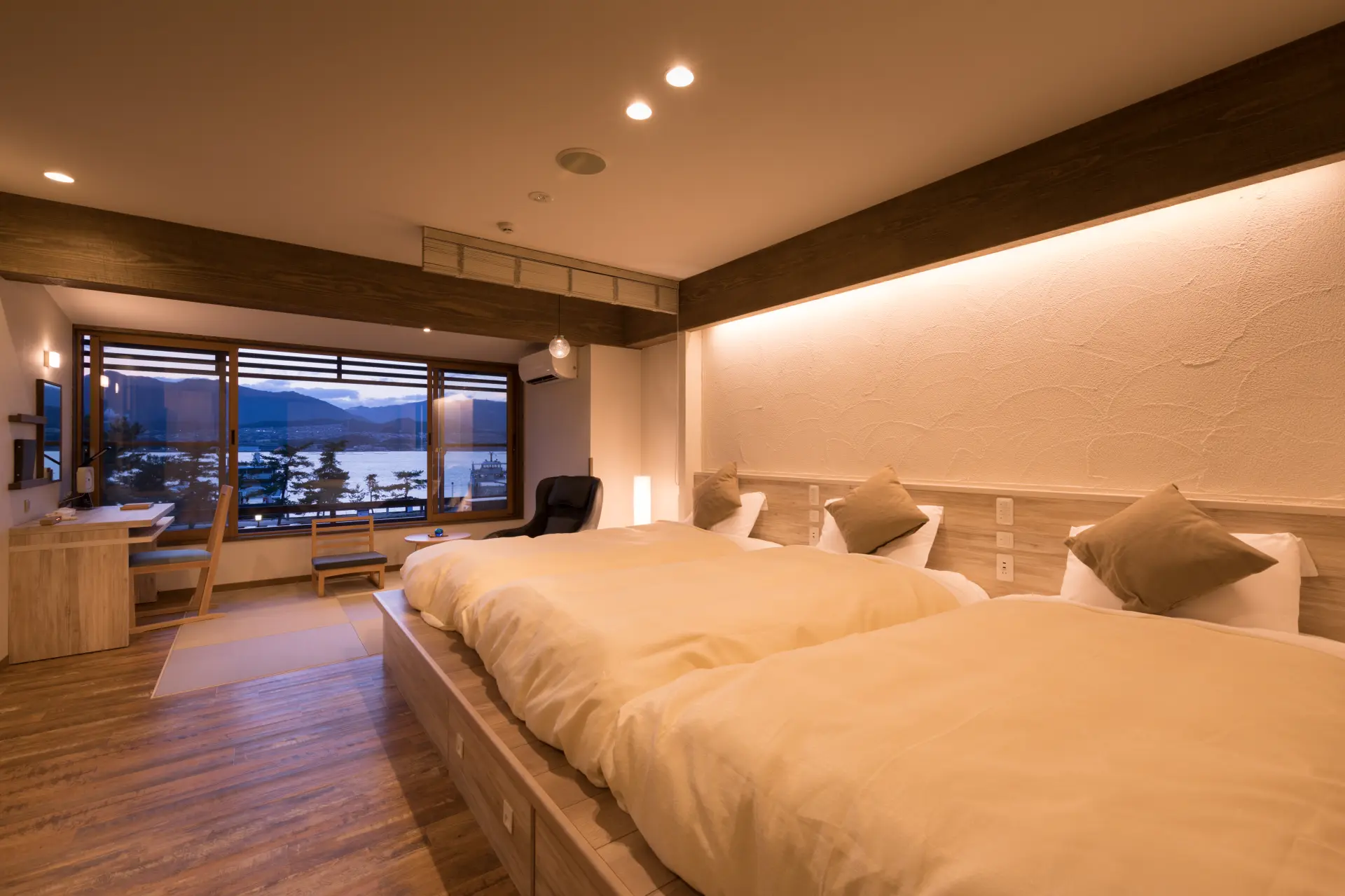
1. Hotel Miyajima Besso
A Japanese-modern hotel opened in 2017 in a prime location, a 1-minute walk from Miyajima Pier.
Produced by “Kinsuikan,” a ryokan with over 120 years of history on Miyajima, the concept is “an adult home on Miyajima,” where you can relax as if it were your own vacation home.
The refined, high-quality guest rooms come in three concept types inspired by Miyajima’s “townhouses, sea, and mountains.”
2. Miyajima Shioyu Onsen Kinsuikan
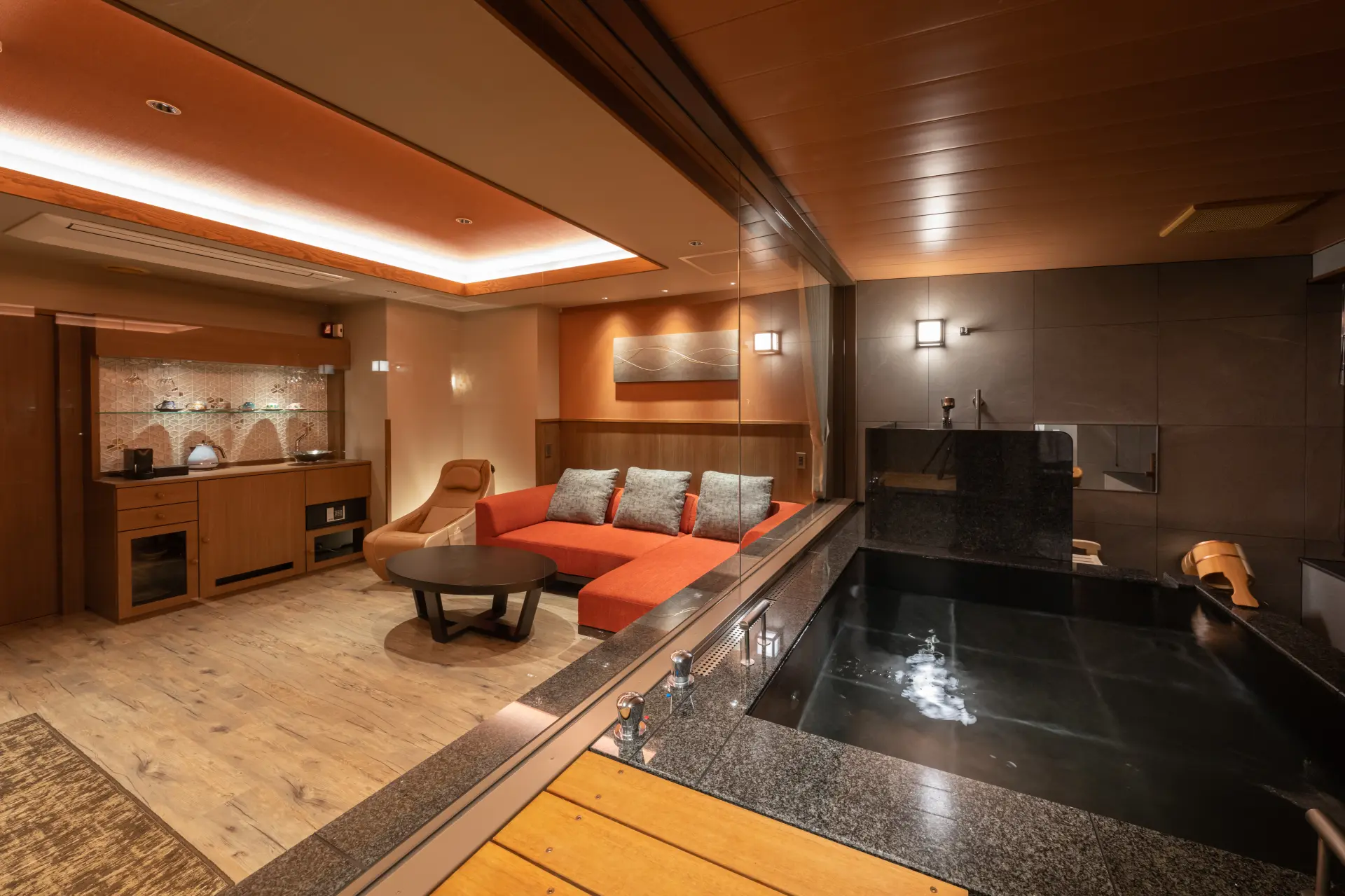
A long-established ryokan founded in 1902, in a great location around a Approx. 3-minute walk to Itsukushima Shrine. It has a rare natural hot spring for Miyajima, which bubbles up on the property.
While valuing Miyajima’s traditions and history, it continues to evolve—adding, in February 2023, a semi-open-air hot-spring guest room limited to one room per day, as well as Miyajima’s only rooftop lounge.
With a diverse lineup of rooms, you can choose from a wide range depending on your travel plans and group.
3. Itsukushima Iroha
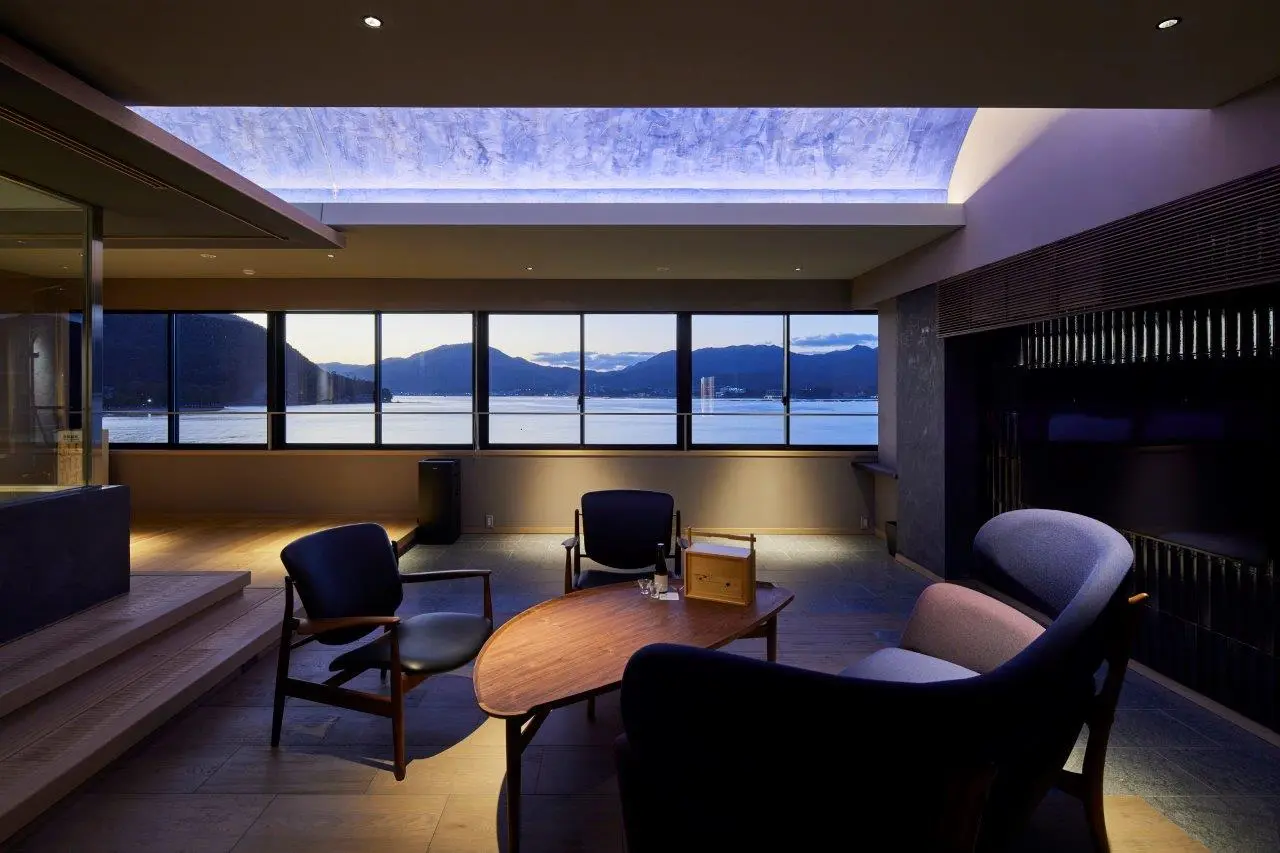
A 5-minute walk from Miyajima Pier and right in front of Omotesando Shopping Street, “Itsukushima Iroha” is a new kind of stay that overturns the image of conventional lodgings like ryokan and hotels.
With natural materials such as wood, stone, and washi paper, and a lineup of distinctive designer chairs, the interior is a refined, high-quality space. A standout is the two suites with different atmospheres, newly added during the 2022 renovation.
Reviews
4.64
Some reviews are AI-translated.
-
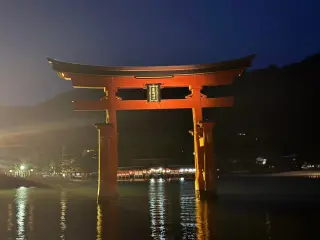
The shrine feels really dreamy. The big torii gate out in the water is super famous, and it looks great from both far away and up close.
At high tide it looks like it’s floating on the sea, and at low tide you can walk closer to take photos—totally different vibes depending on the time.
The island itself feels relaxed, and it’s really nice to stroll around. There are quite a few tourists though, so it can get crowded during peak times.
Overall, it’s absolutely worth visiting. -
The natural scenery here blends perfectly with the cultural heritage, making it a sacred spot for both visitors and worshippers.
-
Itsukushima Shrine stands out with its bright vermillion pillars—such a unique sight. No wonder it's a World Heritage Site.
FAQ about Itsukushima Shrine
Q
Which deities are enshrined at Itsukushima Shrine?
A
Three goddesses known as the Munakata Three Goddesses are enshrined here.
Q
What blessings is Itsukushima Shrine known for?
A
It is said to bring blessings such as safety at sea, traffic safety, good fortune in money, and prayers for victory.
Q
Can I get a goshuin at Itsukushima Shrine?
A
You can receive a goshuin at the seal-stamp reception inside the shrine buildings.
Summary
We’ve covered the charm and highlights of “Itsukushima Shrine,” recommended seasons to visit, and recommended nearby spots—how did it sound?
To see the mystical scenery created by vermilion architecture, untouched greenery, and the sparkling blue sea, be sure to visit “Itsukushima Shrine.”
For more on Hiroshima’s classic spots and local food, use this article too and enjoy exploring Hiroshima.