
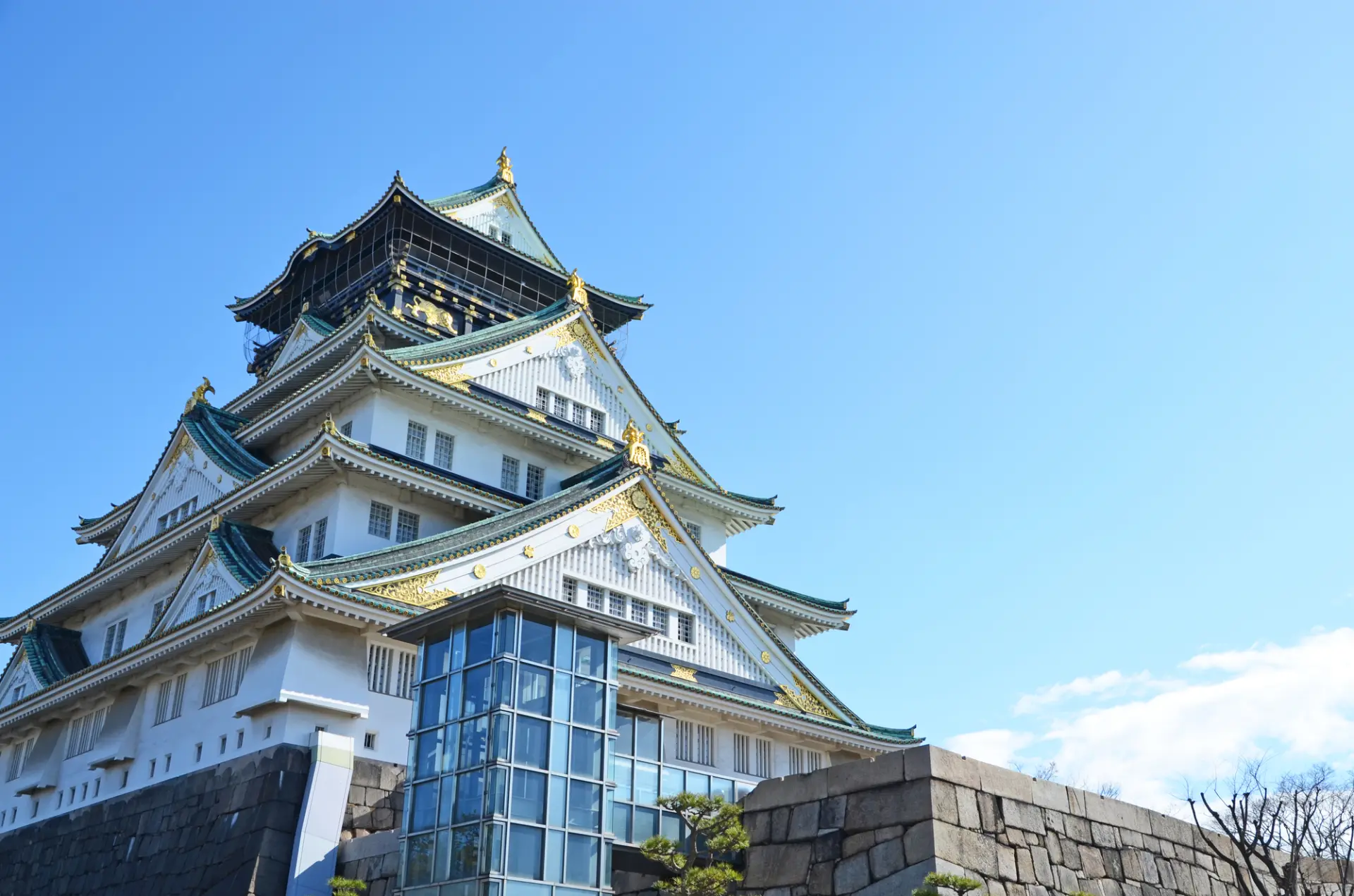
Accessible and Comfortable! An Osaka City Sightseeing Model Itinerary for Wheelchair Users
The Osaka-Kansai Expo closed on October 13, 2025, but it left behind a wide range of lasting legacies.
One of them is a more wheelchair-friendly city, with rapid improvements made across public transportation as well.
Thanks to these upgrades, Osaka has become far easier to travel around than many other parts of Japan.
Here, we’ll share key tips and a model itinerary for wheelchair travelers visiting with a companion, so you can fully enjoy exploring Osaka on foot.
How far has barrier-free tourism in Japan come?
The government is promoting initiatives under the broader concept of universal tourism.
The goal is to create an environment where many people can enjoy travel—not only wheelchair users, but also seniors, families with young children, people with mobility challenges, and international visitors.
Also known as barrier-free tourism, these efforts are being advanced by the Japan Tourism Agency under the Ministry of Land, Infrastructure, Transport and Tourism.
In addition to preparing manuals, the government is also running pilot programs and setting up consultation desks.
In practice, efforts vary widely on the ground
Based on our experience traveling around Japan, universal tourism is still in the process of becoming widespread.
Wheelchair travel in particular often requires ramps and elevators, and adding those to existing facilities can be a high hurdle.
Even within the same tourist area, you may find accessible and non-accessible facilities right next to each other.
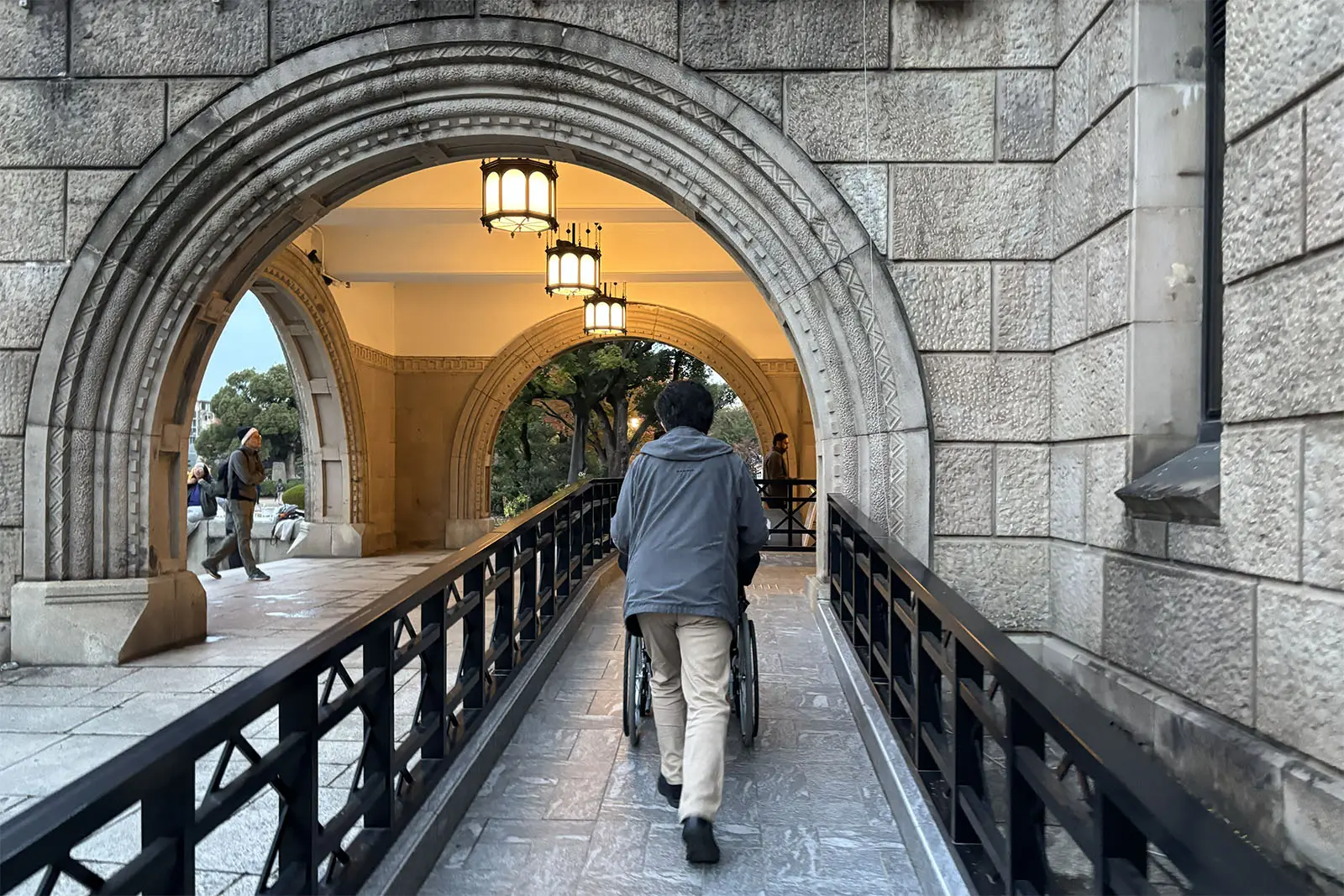
Ramps and elevators for wheelchair and stroller users are becoming more common
In newer buildings, public facilities, and places that attract large crowds, ramps, elevators, and wheelchair-friendly restrooms are increasingly common.
For everyday use of commercial buildings, train stations, museums, and similar facilities, accessibility has improved to the point that many visitors won’t feel inconvenienced.
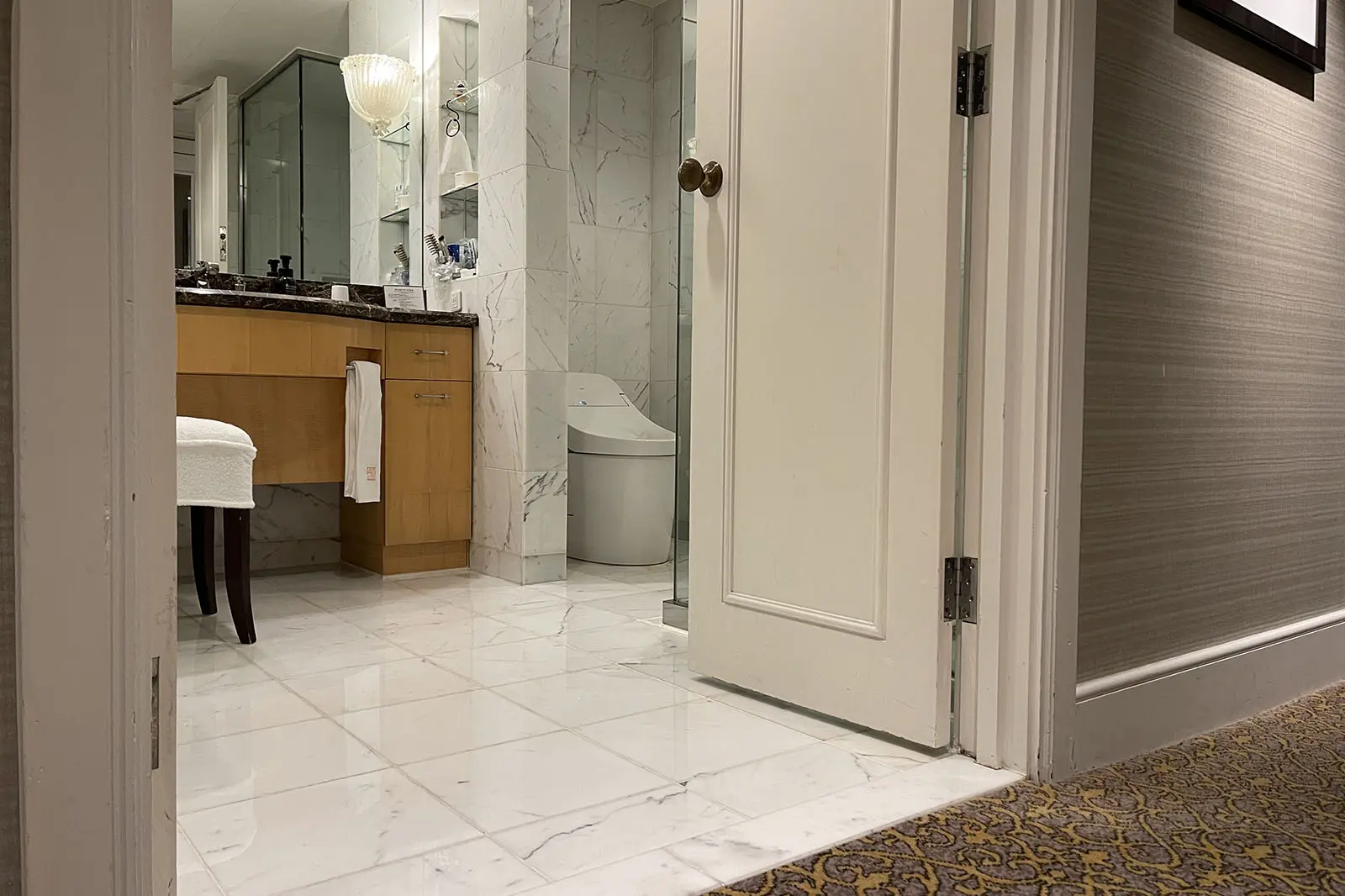
Many hotels also offer accessible rooms (universal rooms)
Under a law revised in 2019, Japan set rules requiring that newly built or expanded hotels with 50 or more guest rooms include a certain number of rooms with entrances at least 80 cm wide.
As a result, even budget business hotels may offer universal rooms with no steps and extra space.
For real-world travel, research ahead is essential
Even as universal tourism continues to expand, doing your homework beforehand is essential when you actually plan to use these services.
The facility you want to use or visit may not be accessible.
In some cases, the facility itself is barrier-free, but getting there isn’t.
For example, you may be able to access it easily by private car or taxi, but it can be difficult via public transportation.
The same applies to getting around on foot: some areas have narrow sidewalks, or they may have ramps but still feel stressful for wheelchair travel, making route planning tricky.
If you’re considering a wheelchair trip, gathering information in advance is key.
Why we recommend barrier-free travel in Osaka
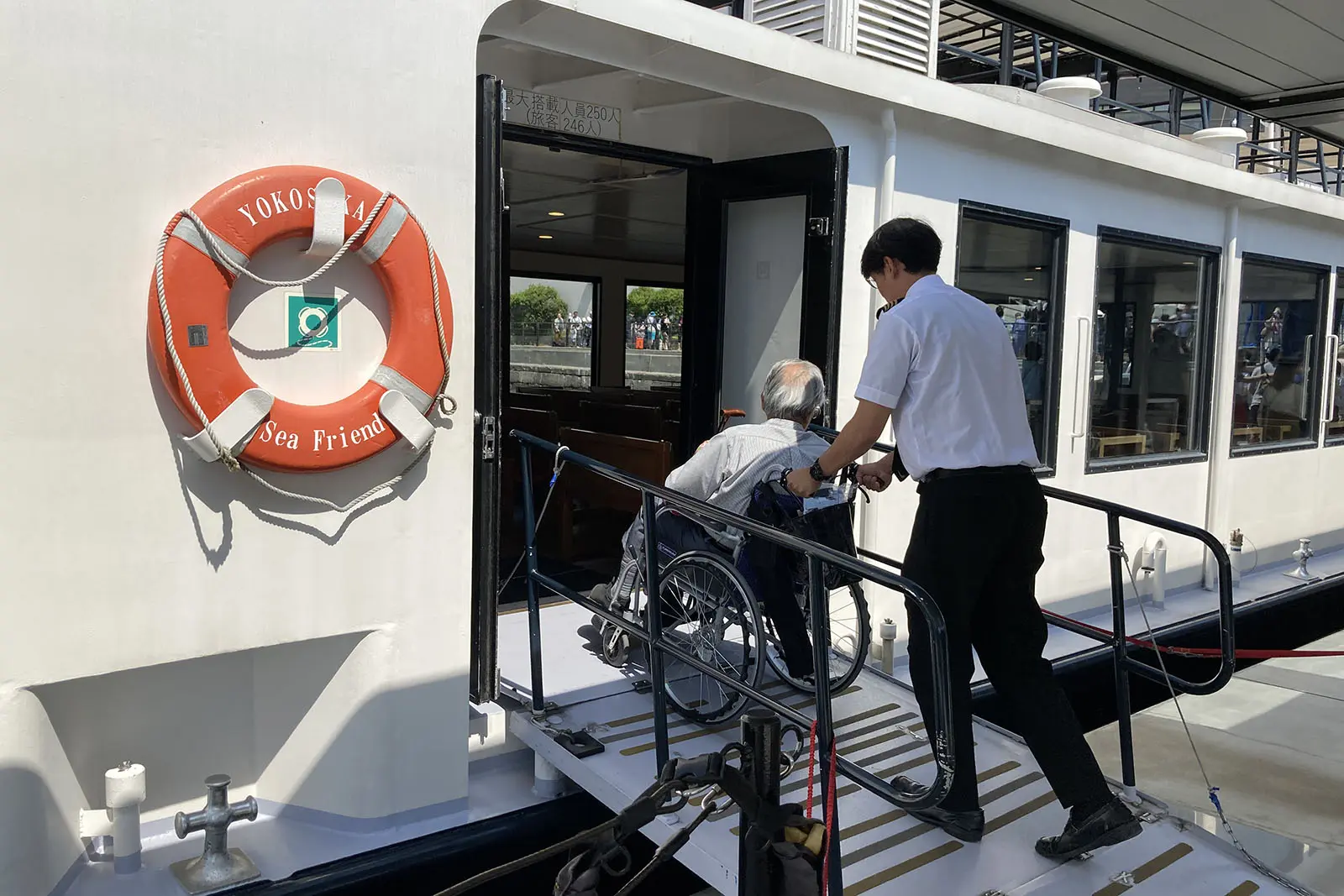
Osaka’s accessibility improved at an accelerated pace thanks to the Osaka-Kansai Expo. In particular, public transportation is easy to use, and along with station renovations, information is also well provided.
Although the Expo has ended, Osaka’s barrier-free initiatives are still scheduled to expand.
Railway station upgrades (such as adding more elevators) are expected to continue even after 2026, with JR and private railway companies increasing the number of accessible stations.
The subway is especially easy to use in a wheelchair
Osaka Metro has a convenient and extensive network, and accessibility improvements have also progressed.
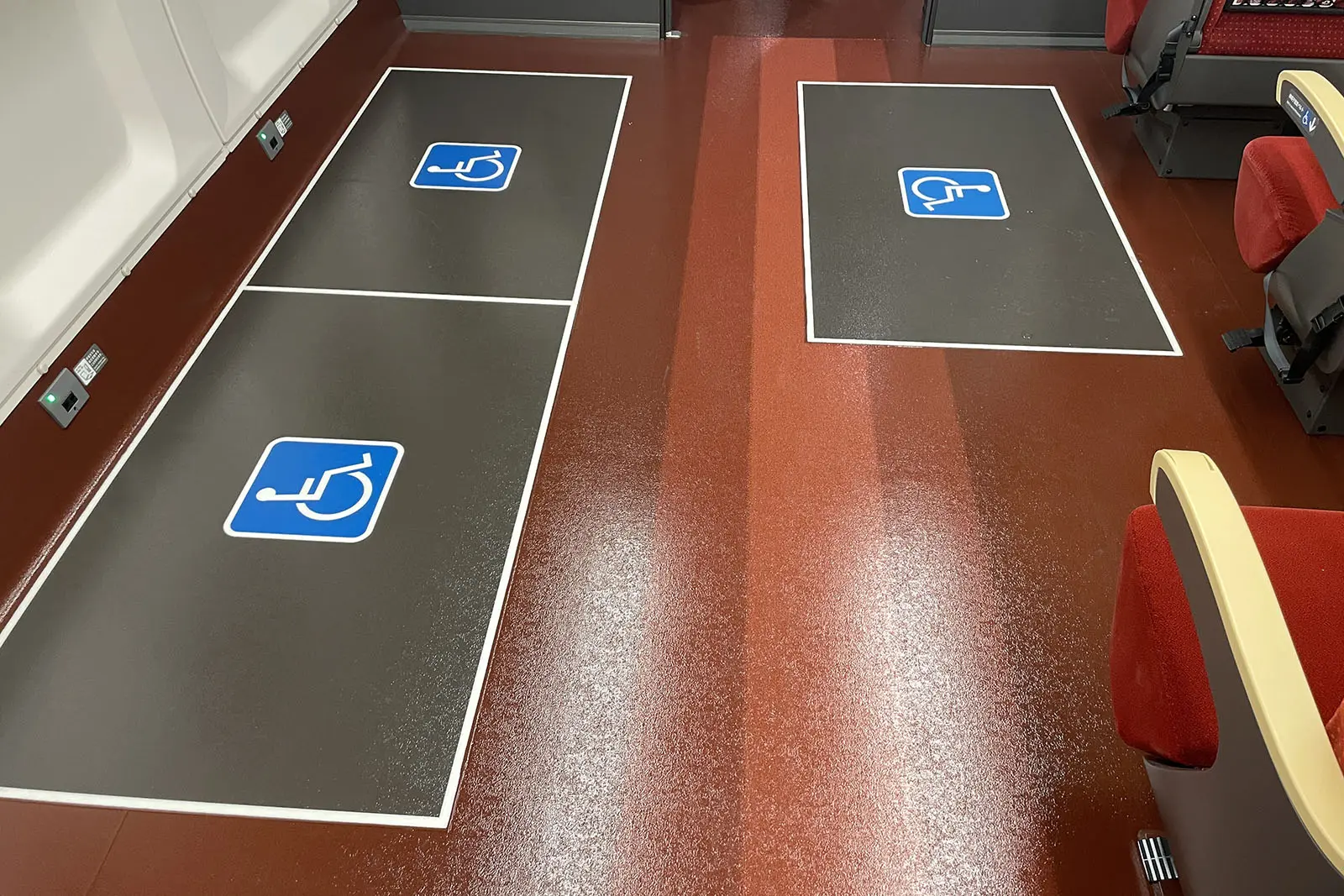
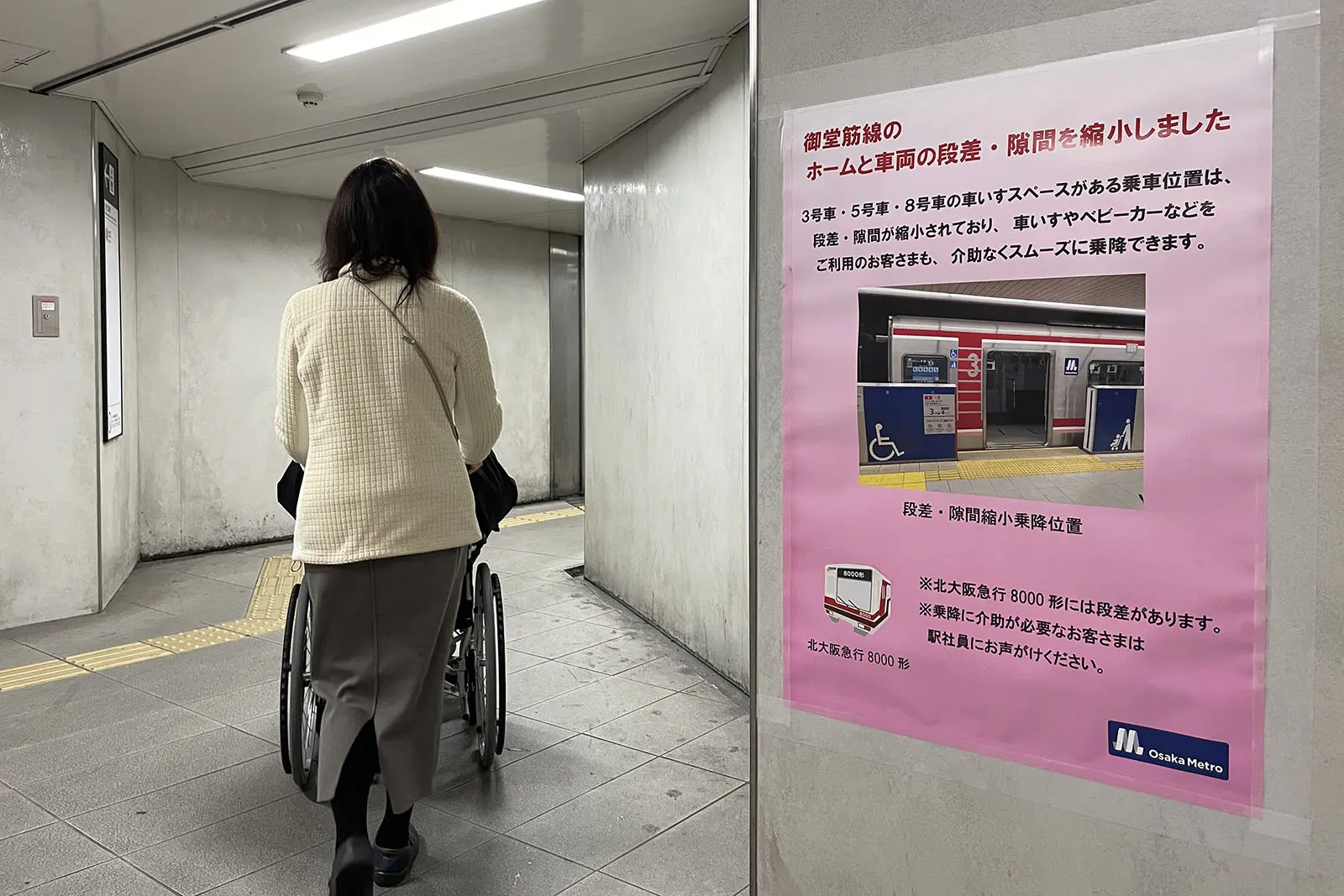
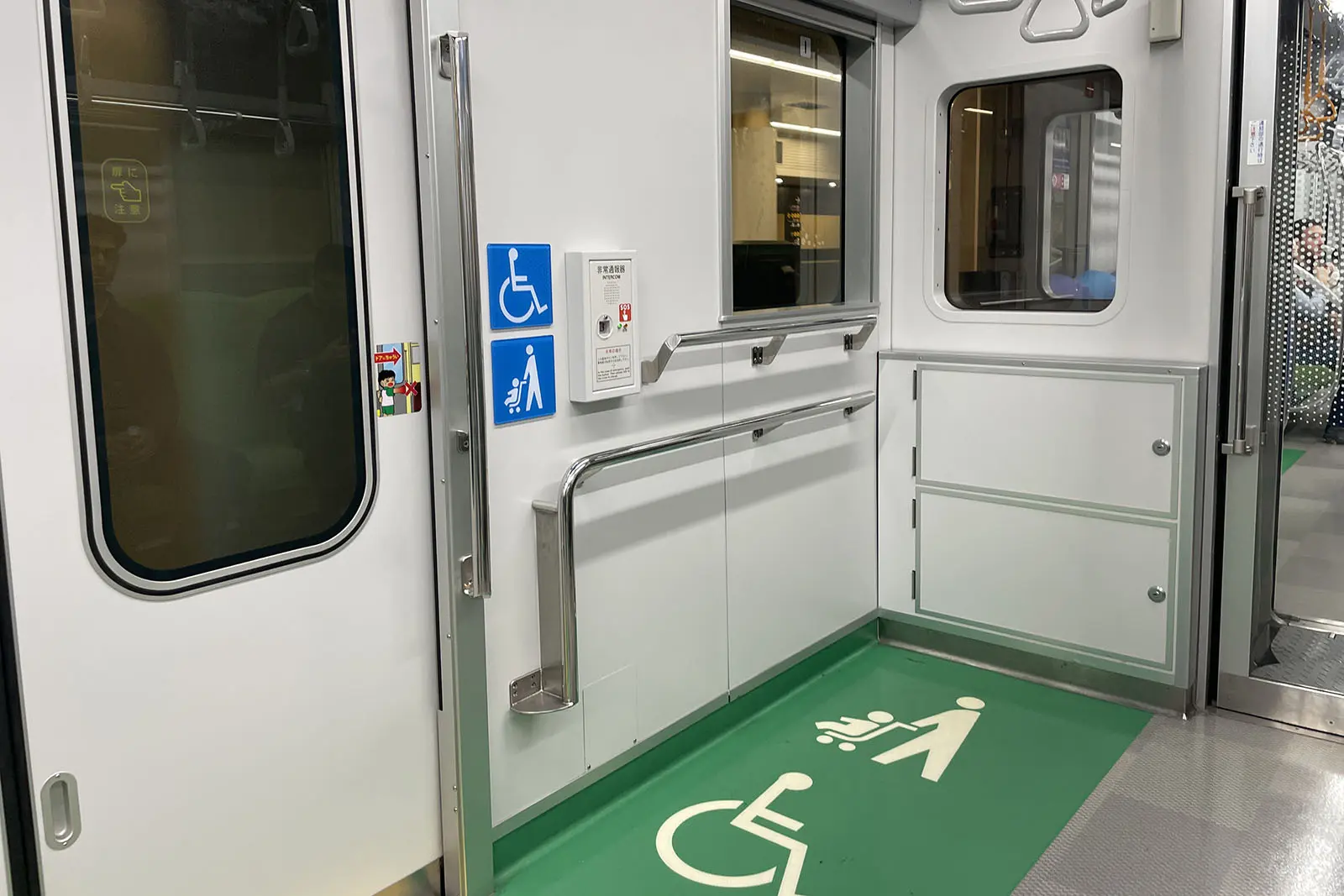
Gaps and steps when boarding have been reduced, and each train car has a space right next to the doors where you can park a wheelchair comfortably (some lines still run cars that are not equipped).
Station maps showing where elevators are located are also available online.
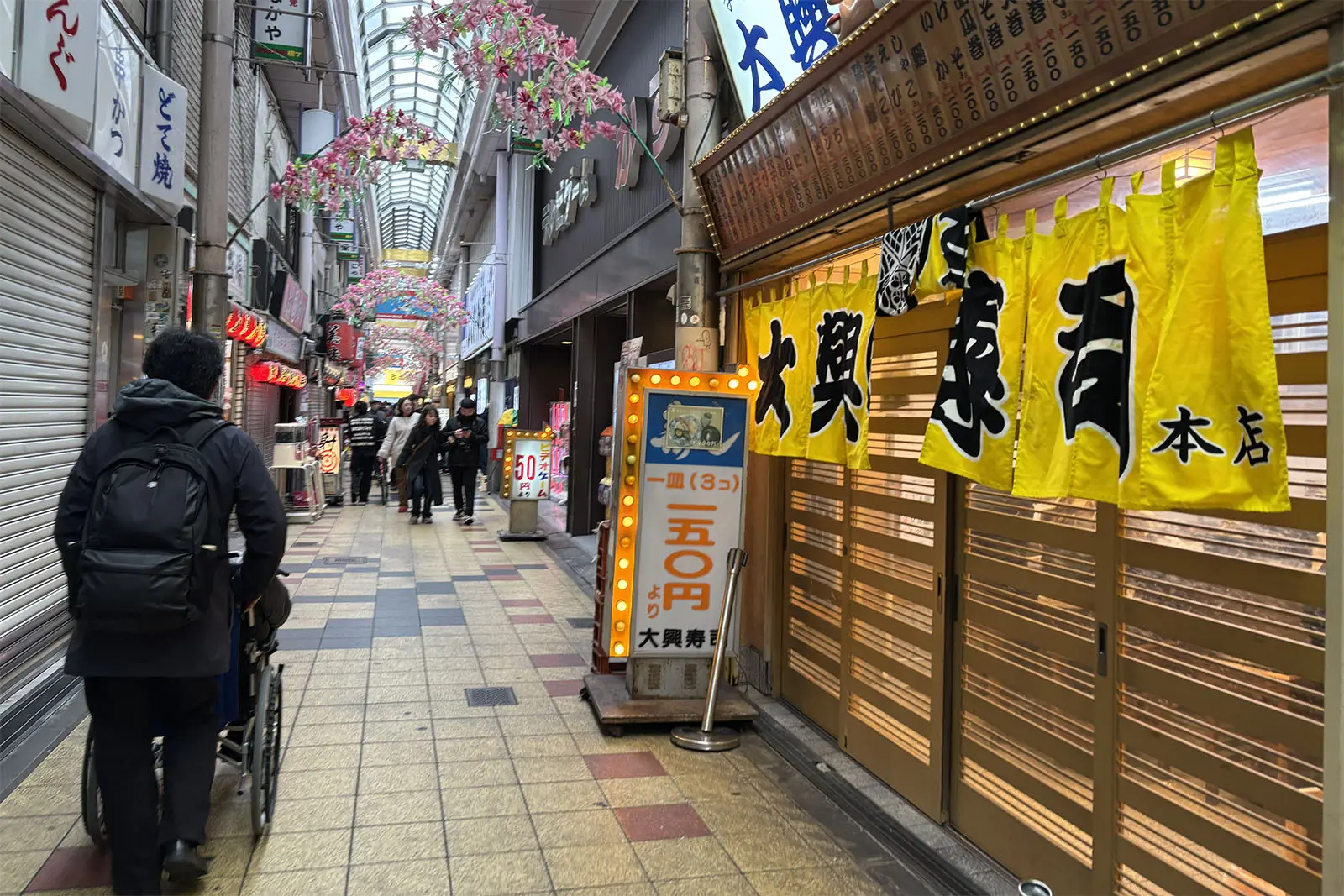
With so many covered shopping streets, you can shop without getting wet—even on rainy days
Osaka has long had many covered shopping arcades, making it easy to enjoy walking around without an umbrella on rainy days.
And because these aren’t built just for tourists but are places locals use every day, you can also look forward to local products and friendly encounters.
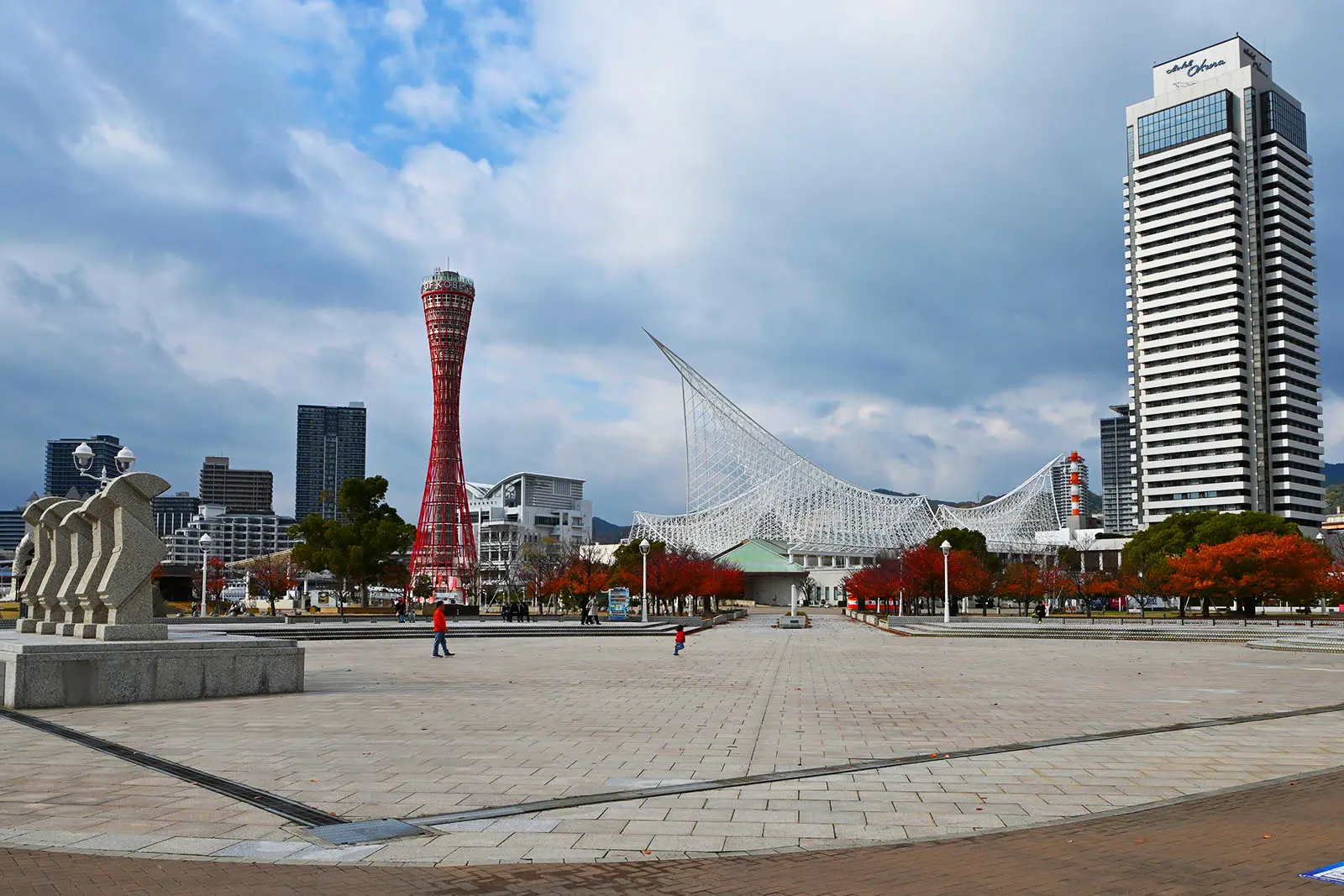
Use Osaka as a hub to easily explore nearby prefectures
Osaka is surrounded by popular destinations—Kyoto and Kobe are Approx. 30 minutes away, and Nara and Himeji are Approx. one hour away.
If you stay in Osaka, day trips to nearby sightseeing spots are easy to plan.
Flying and accessibility at major terminals (train stations)
Airports and major terminal stations are generally accessible, but if you’re using train stations, it’s a good idea to check elevator locations in advance.
Here are a few key points to keep in mind when traveling by plane and rail.
If you’re flying, pre-register with the airline for smoother assistance
If you’re traveling by plane, it’s best to register that you’ll be using a wheelchair when you make your reservation.
While it may be possible to request assistance on the day of travel, some flights have limits on how many passengers they can assist.
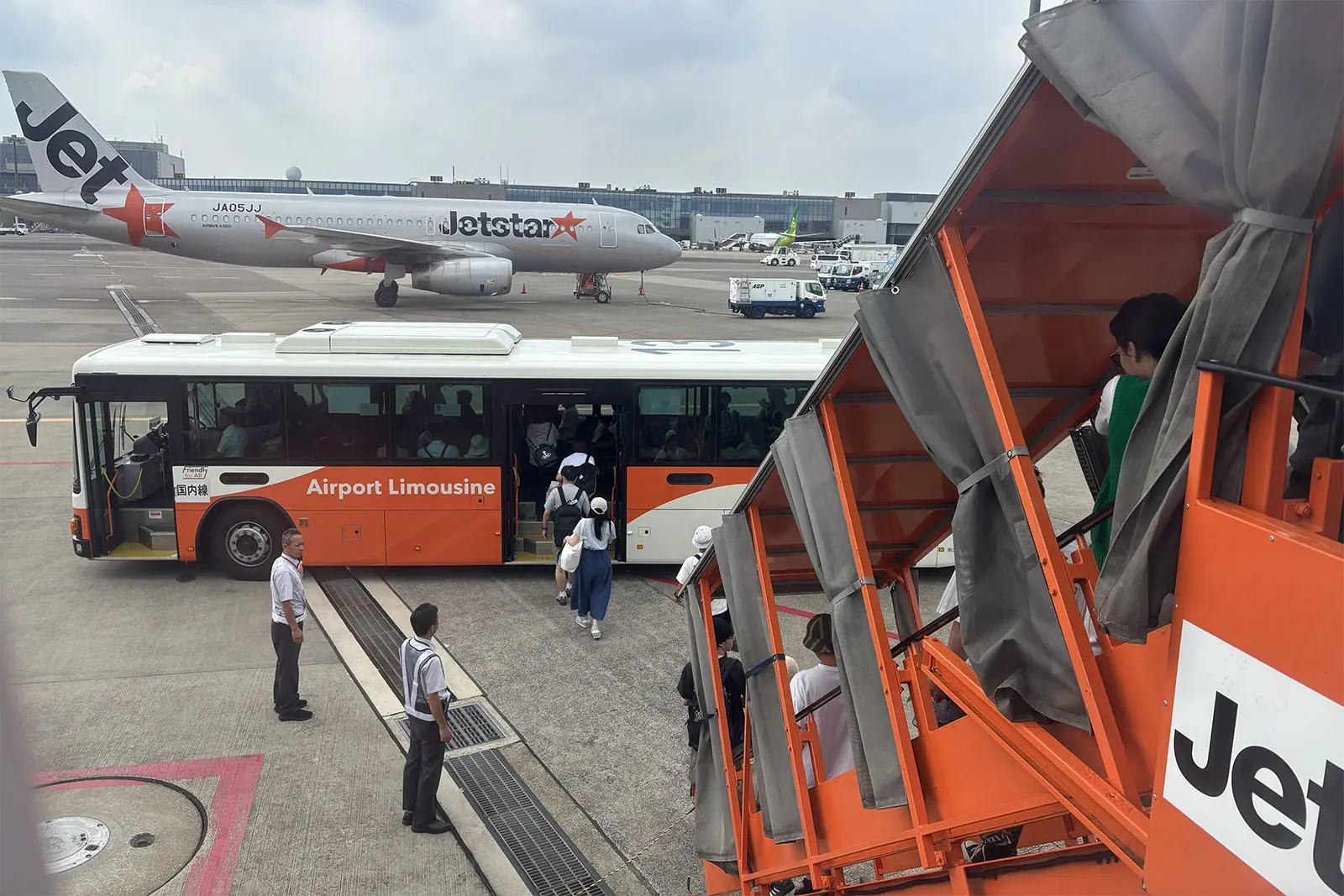
If you’re flying out of Narita Airport on an LCC, you’ll use Terminal 3, and boarding typically requires going up and down stairs.
However, if you register in advance, staff can guide you to the gate with a lift vehicle, and you can board in your wheelchair.
Kansai International Airport uses boarding bridges, so you can move on and off the aircraft in a wheelchair.
However, you’ll need to wait until all passengers have disembarked before leaving the plane, and you’ll also need to switch back to your wheelchair at baggage claim. If you’re heading out from the airport, plan plenty of time after landing.
To get from the airport to central Osaka, you can use trains or buses. By following the airport signage (pictograms), you’ll be able to reach the platforms and bus stops.
If you’re using Shin-Osaka or Osaka Station, start by locating the elevators
Shin-Osaka Station is easy to navigate, but it’s very busy, and you may have to wait in line for nearly 10 minutes just to get into the platform elevator.
If you have a transfer with limited flexibility or a scheduled appointment, we strongly recommend allowing at least 30 minutes for transfers.
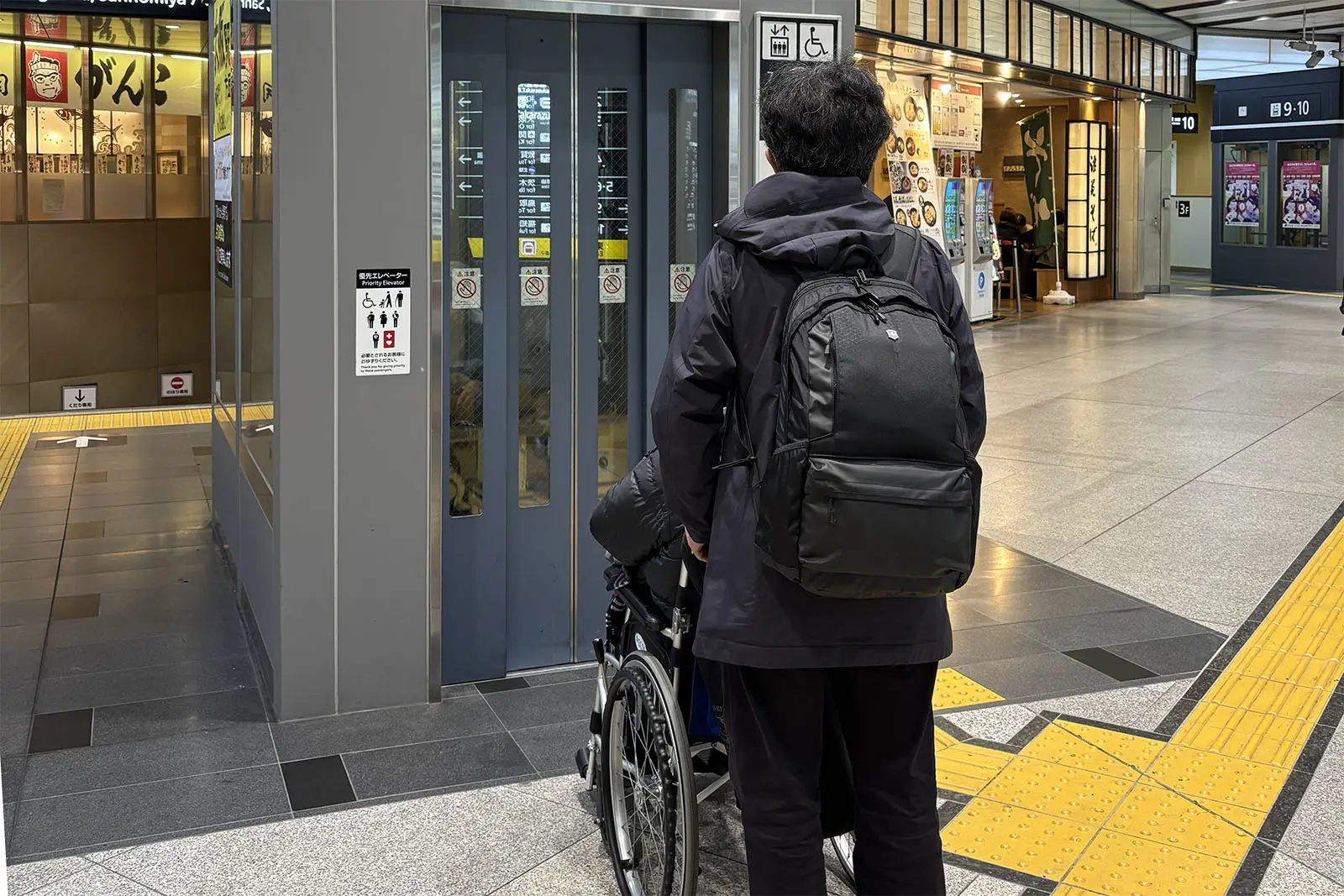
Osaka Station serves multiple lines and can feel like a maze if you’re not familiar with it.
JR ticket gates are on both the first and third floors, and the subway and private railway platforms are also spread out.
Escalators are easy to spot, but elevators may be tucked away, so it’s best to confirm their locations early—by asking station staff, for example.
If you arrive at Shin-Osaka by Shinkansen and plan to stay near Osaka Station, it’s also a good idea to take a taxi straight to your hotel instead of using the train.
Exit via the South Gate and you’ll find a taxi stand right outside; the fare to the Osaka Station area is typically around 2,000 yen.
If you’re taking the Shinkansen from Tokyo Station, enter through the South Gate where you can use the elevator
If you’re traveling from Tokyo to Osaka on the Tokaido Shinkansen, you’ll need to enter through the South Gate.
Other gates involve stairs, making it impossible to reach the platform while staying in your wheelchair.
From the Yaesu South Gate at Tokyo Station, the elevators up to each platform are right in front of you.
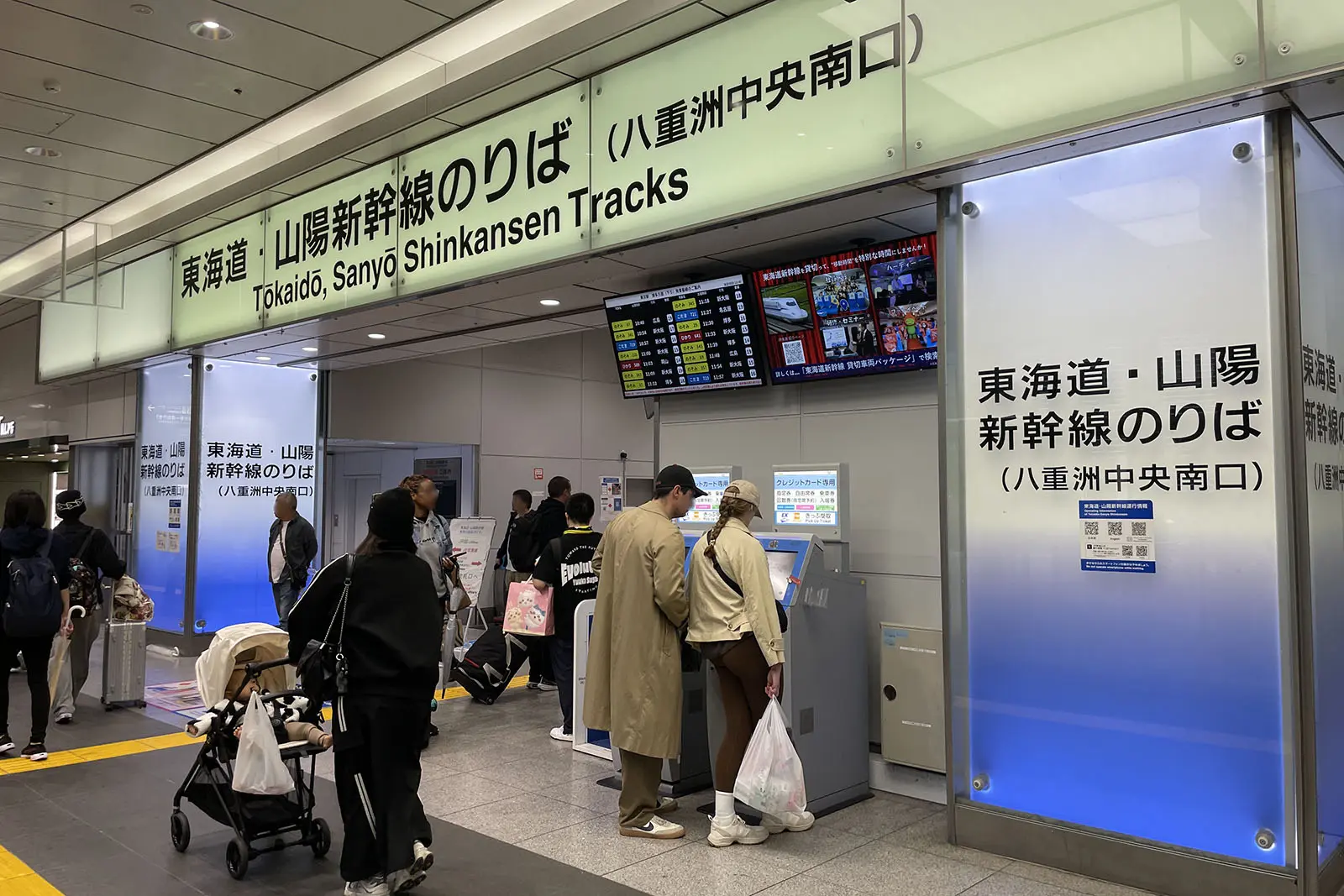
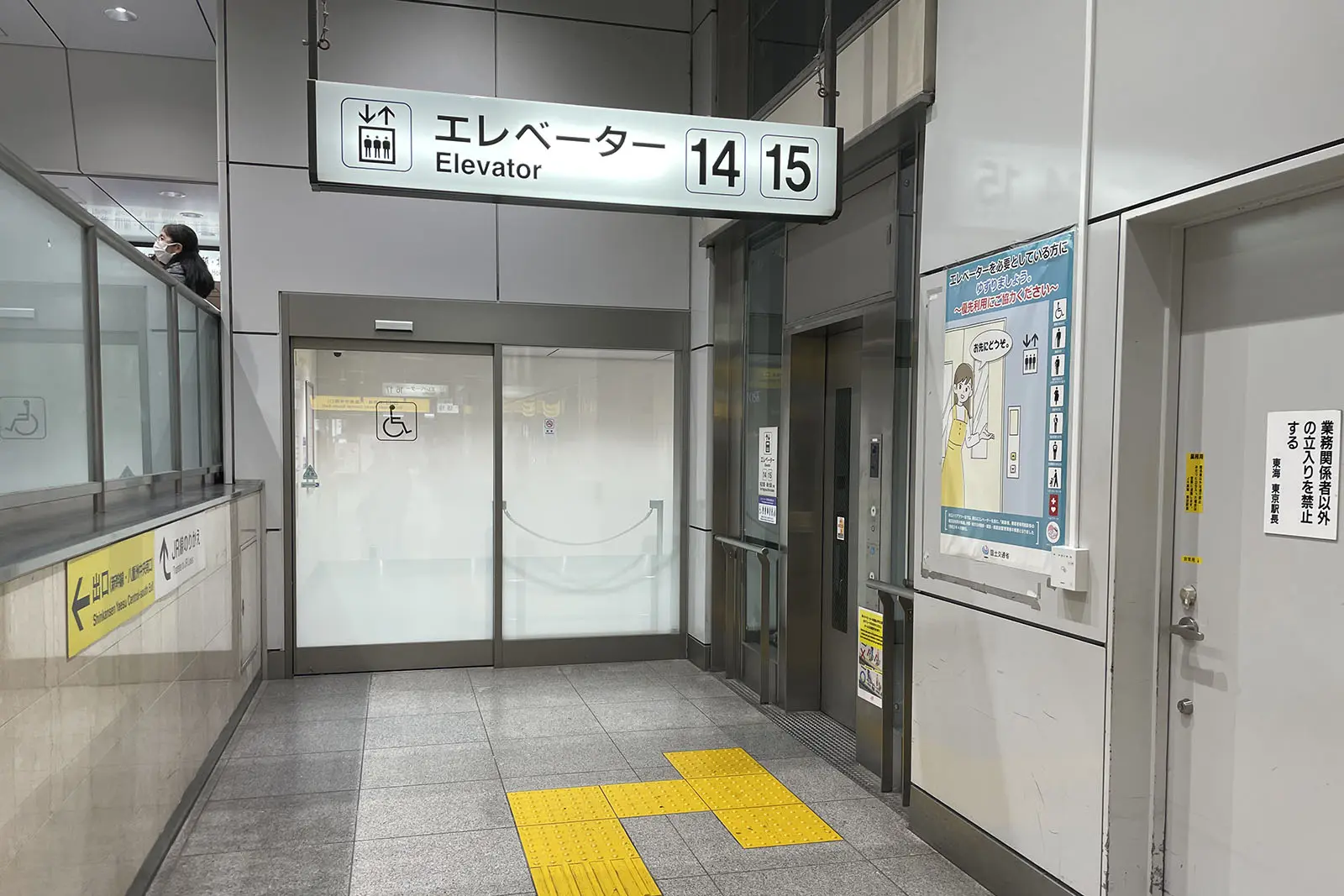
If you’re transferring into Tokyo Station, we recommend checking with station staff after you pass through the Shinkansen gates.
The elevator is beyond a ramp behind the gates, and it can be hard to find.
If you have time, you can also request assistance for boarding the train.
A one-day Osaka wheelchair travel model itinerary
Here’s a one-day plan that covers recommended sights where you can enjoy both historic and modern Osaka.
You can get around using the subway and JR lines, and we’ve confirmed that each route from the nearest station to the attraction is accessible by wheelchair if you have a companion.
9:30 am Depart your hotel near Osaka Station
Osaka Castle opens at 9:00 am, so if you can head out early, you could also leave around 8:30 am.
10:00 am Learn about the history of the Siege of Osaka at Osaka Castle (Approx. 1 hour 30 minutes)
From Umeda (JR Osaka Station), take the Midosuji Line, transfer to the Chuo Line at Hommachi, and get off at Tanimachi 4-chome (Approx. 15 minutes).
Take the elevator at Exit 11 to street level, walk toward the pedestrian bridge, then cross at the crosswalk ahead to reach Osaka Castle Park (Approx. 15 minutes on foot).
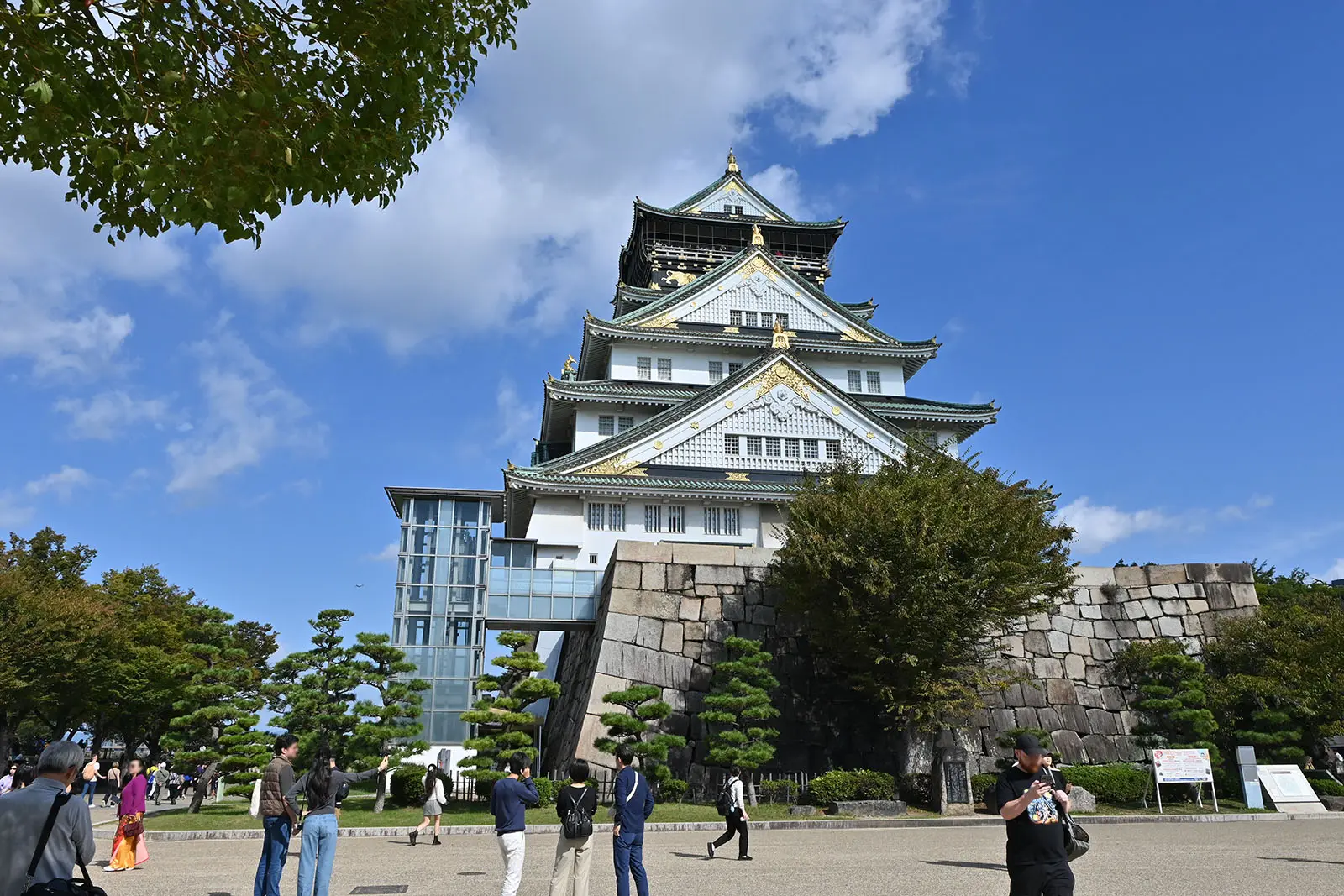
Osaka Castle, one of the city’s signature attractions, is also barrier-free.
You can take elevators to each floor up to the main keep, and there’s also detailed information available about access from nearby stations (including distance and elevation changes).
Starting in April 2025, visitors can view the original stone walls from when Toyotomi Hideyoshi built Osaka Castle.
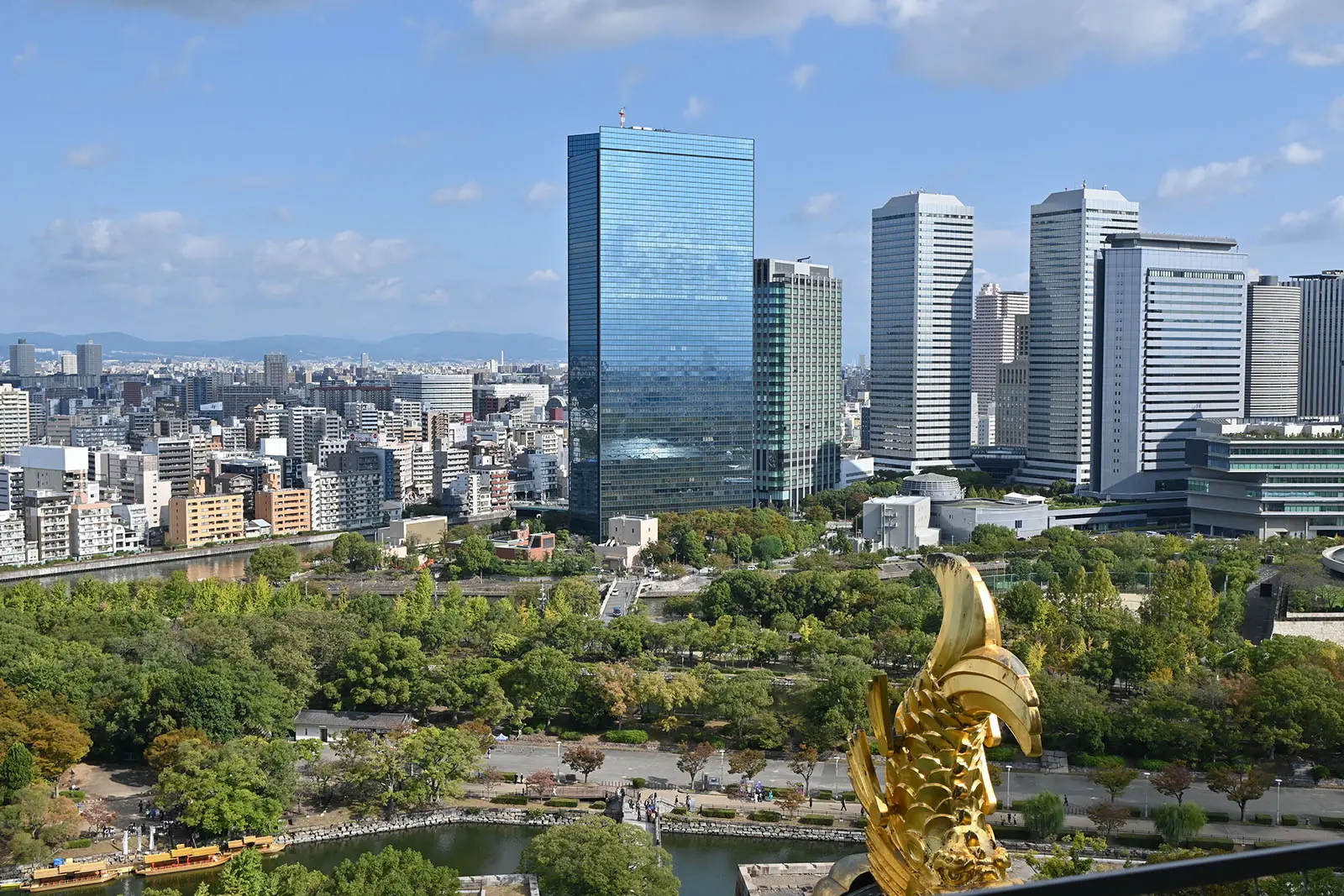

12:00 pm Souvenir shopping at Miraiza Osaka Castle and a visit to the Kaiyodo Museum (Approx. 40 minutes)
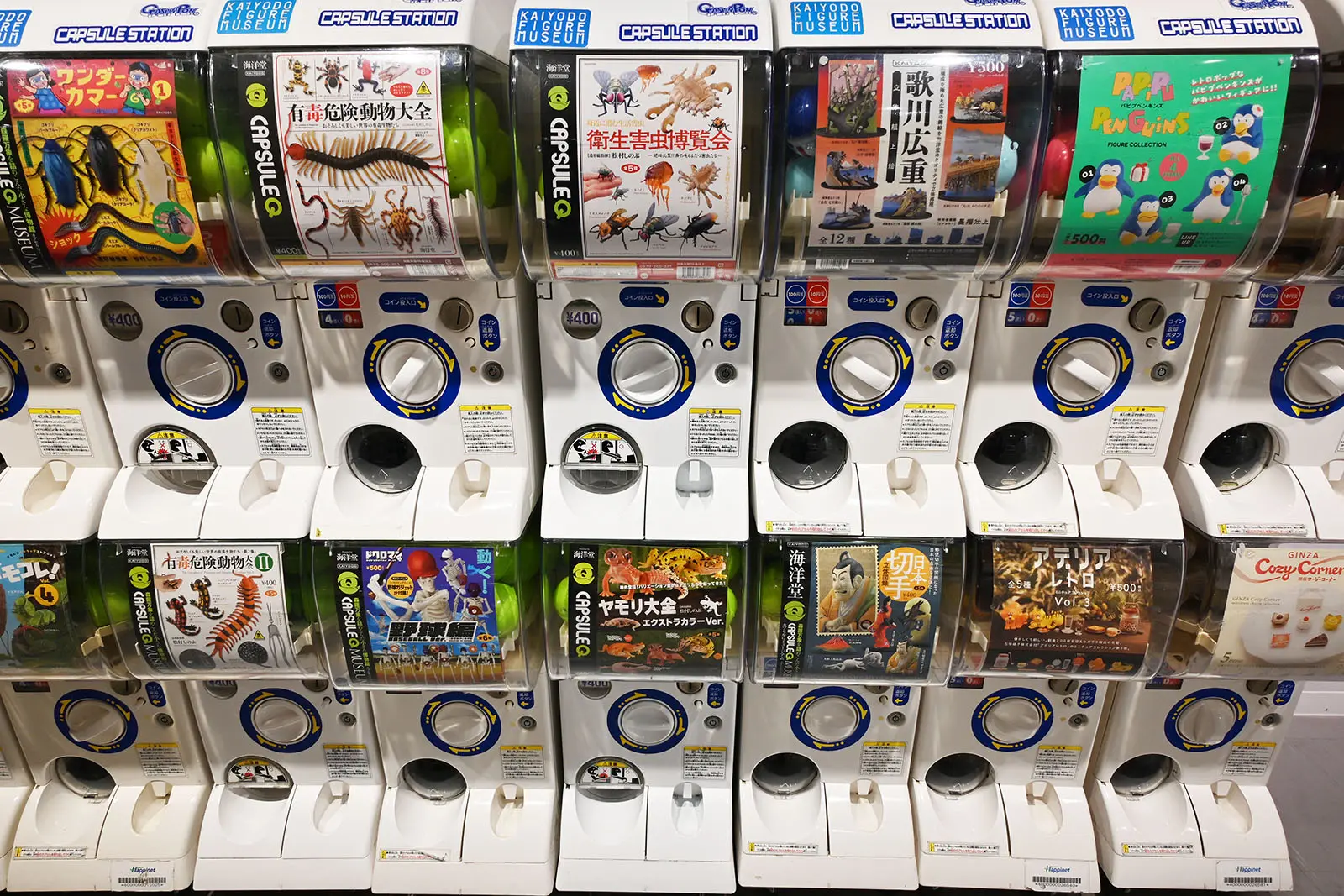
From Osaka Castle, it’s just a few minutes on foot to Miraiza Osaka Castle (Kaiyodo Figure Museum). Plan to spend Approx. 40 minutes there.
Miraiza Osaka Castle is a commercial facility housed in a historic building right near Osaka Castle.
On the basement level, you’ll find a museum by Kaiyodo, a company famous for producing highly detailed capsule-toy (gachapon) figures.
More than 3,000 works created over 40+ years are on display, and in the free-admission shop area, you can also buy the latest capsule toys.
1:00 pm Peek into everyday local life at Tenjinbashisuji Shopping Street (Approx. 1 hour 30 minutes)
Walk 15–20 minutes from Miraiza Osaka Castle to either Tanimachi 4-chome or Tenmabashi subway station.
Take the Tanimachi Line and get off at Ogimachi (Approx. 3–5 minutes). Take the elevator at Exit 2B to street level, cross to the other side of the road, and you’ll be at Tenjinbashisuji Shopping Street.
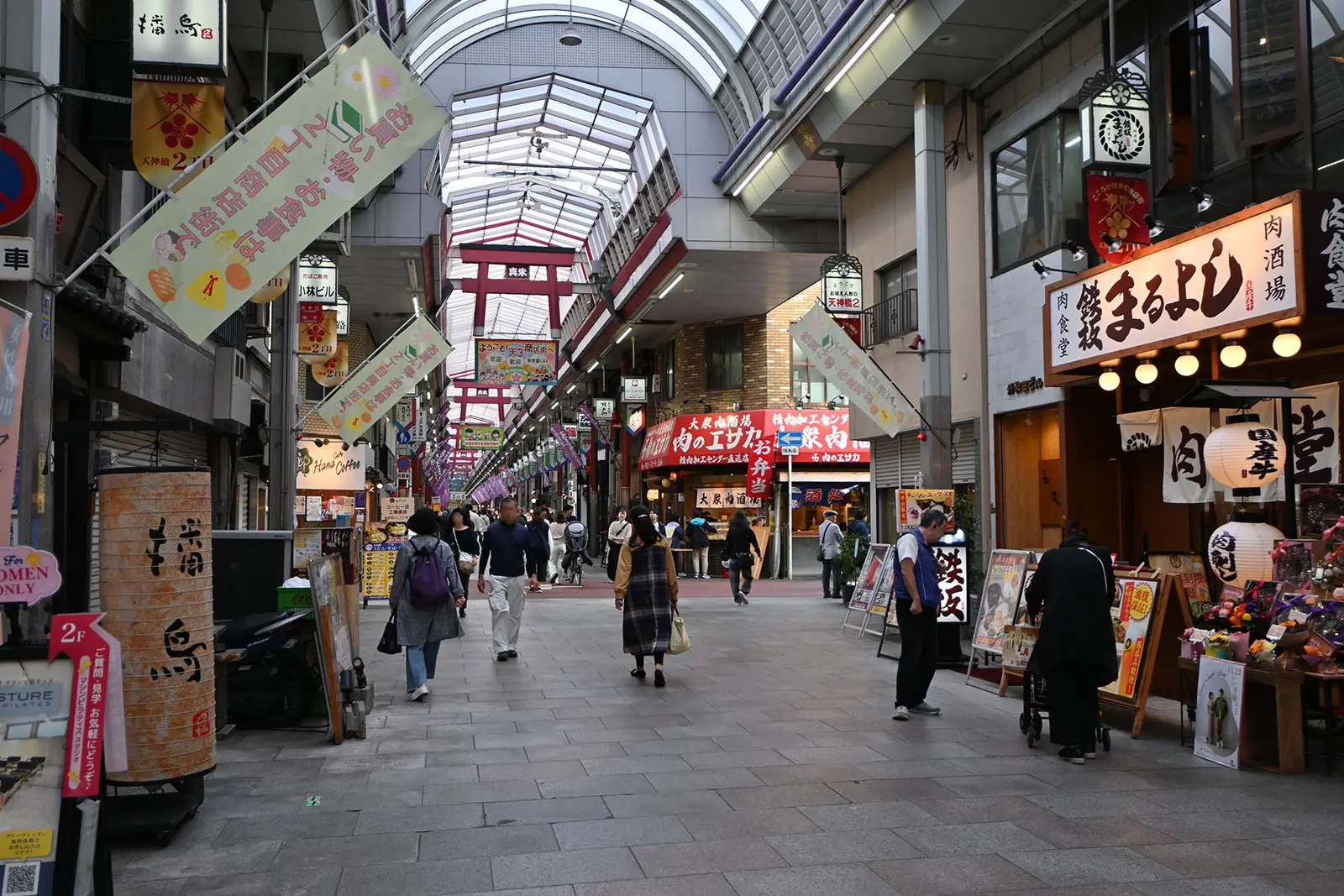
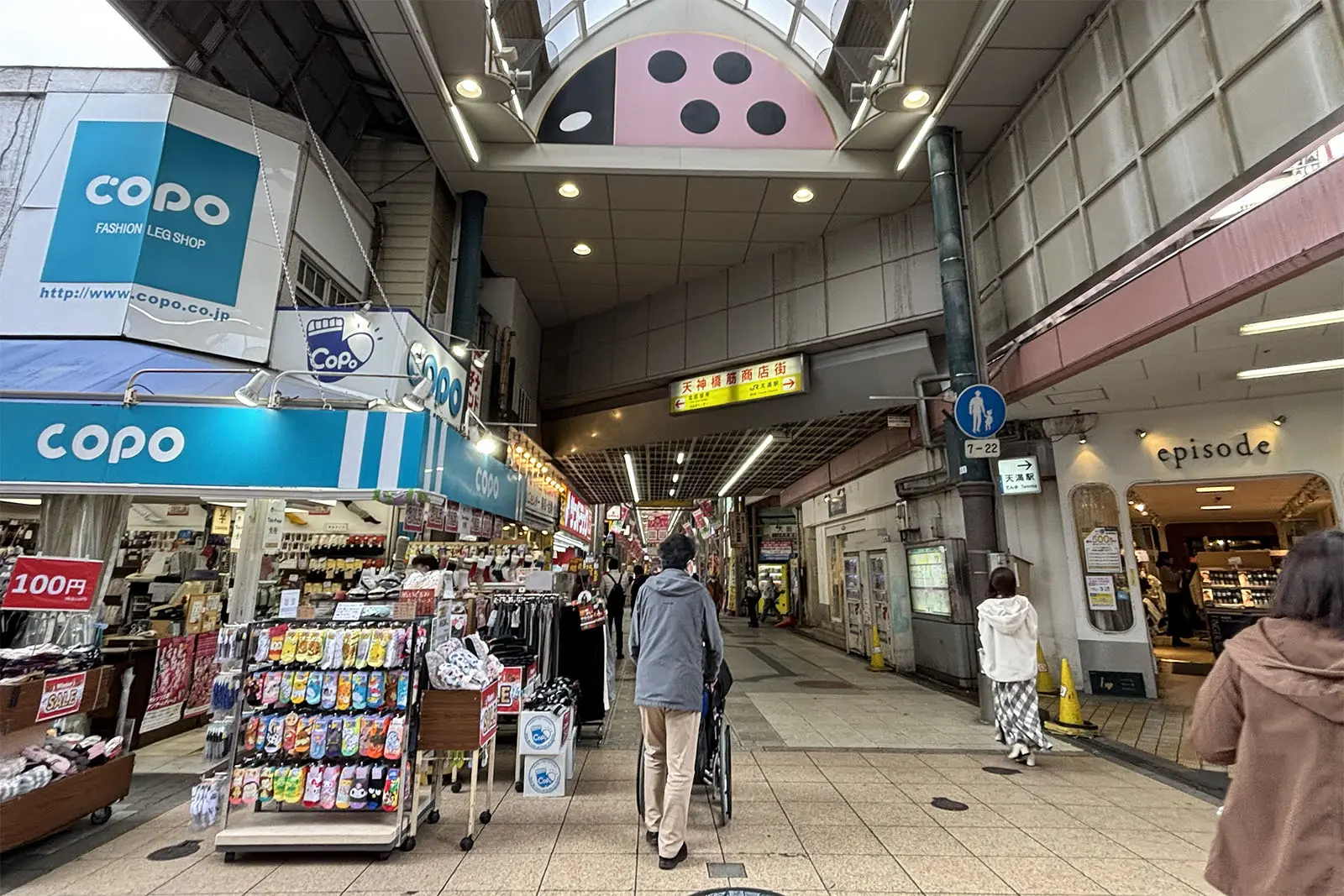
Tenjinbashisuji is Japan’s longest shopping street (Approx. 2.6 km), packed with local, community-based shops.
Some restaurants even advertise 1-yen menu items, and you can try local food on a budget.
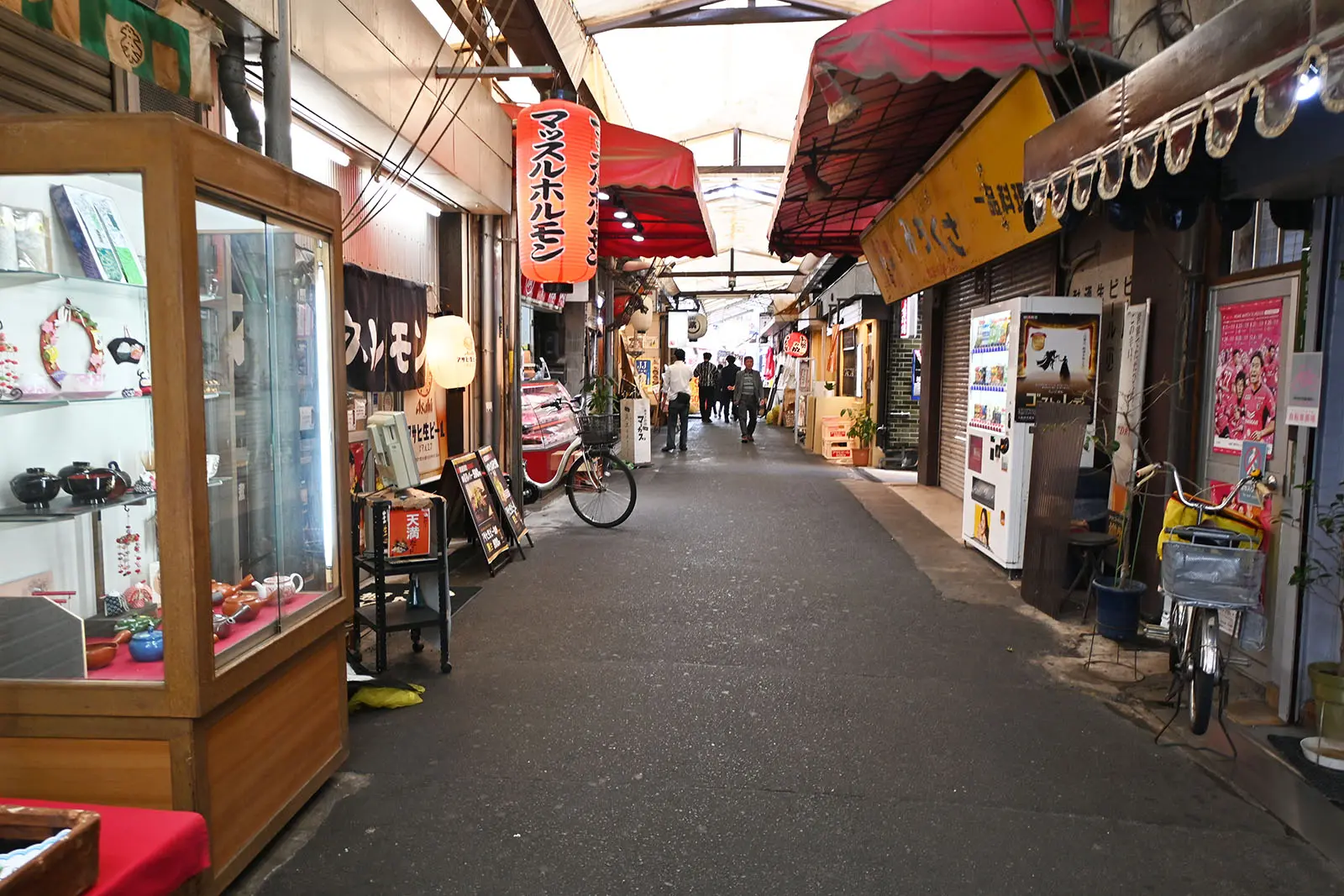
It’s a great area for low-cost shopping and dining, but because there are no large commercial complexes, it can be hard to find wheelchair-accessible restrooms.
We recommend using the restroom at the station before you visit.
3:00 pm Take a sky-high stroll at Umeda Sky Building’s Floating Garden Observatory (Approx. 40 minutes)
From JR Tenma Station, take the JR Osaka Loop Line to Osaka Station, then walk Approx. 10 minutes to Umeda Sky Building.
Walk through Umekita Park, which opened in September 2024.
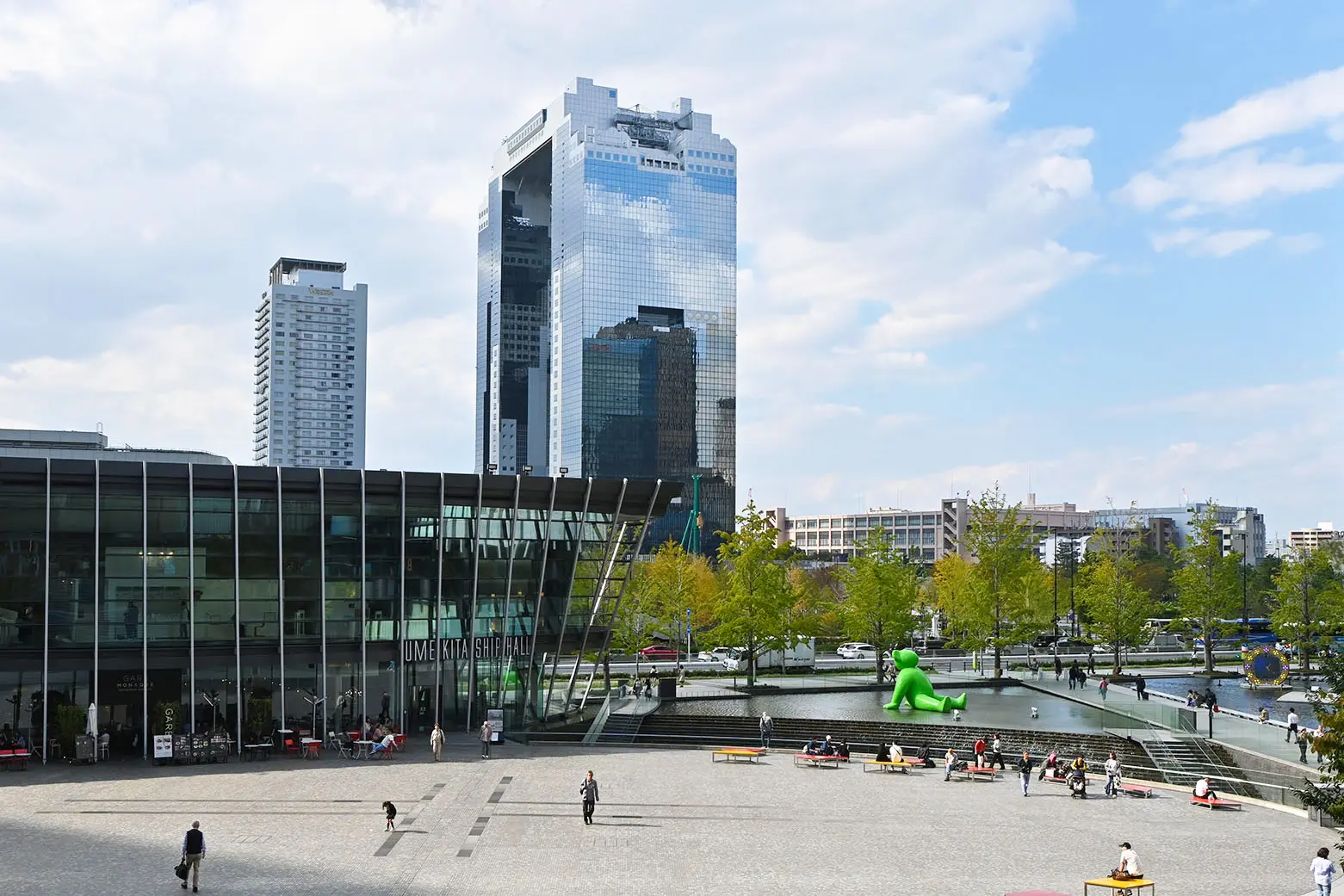
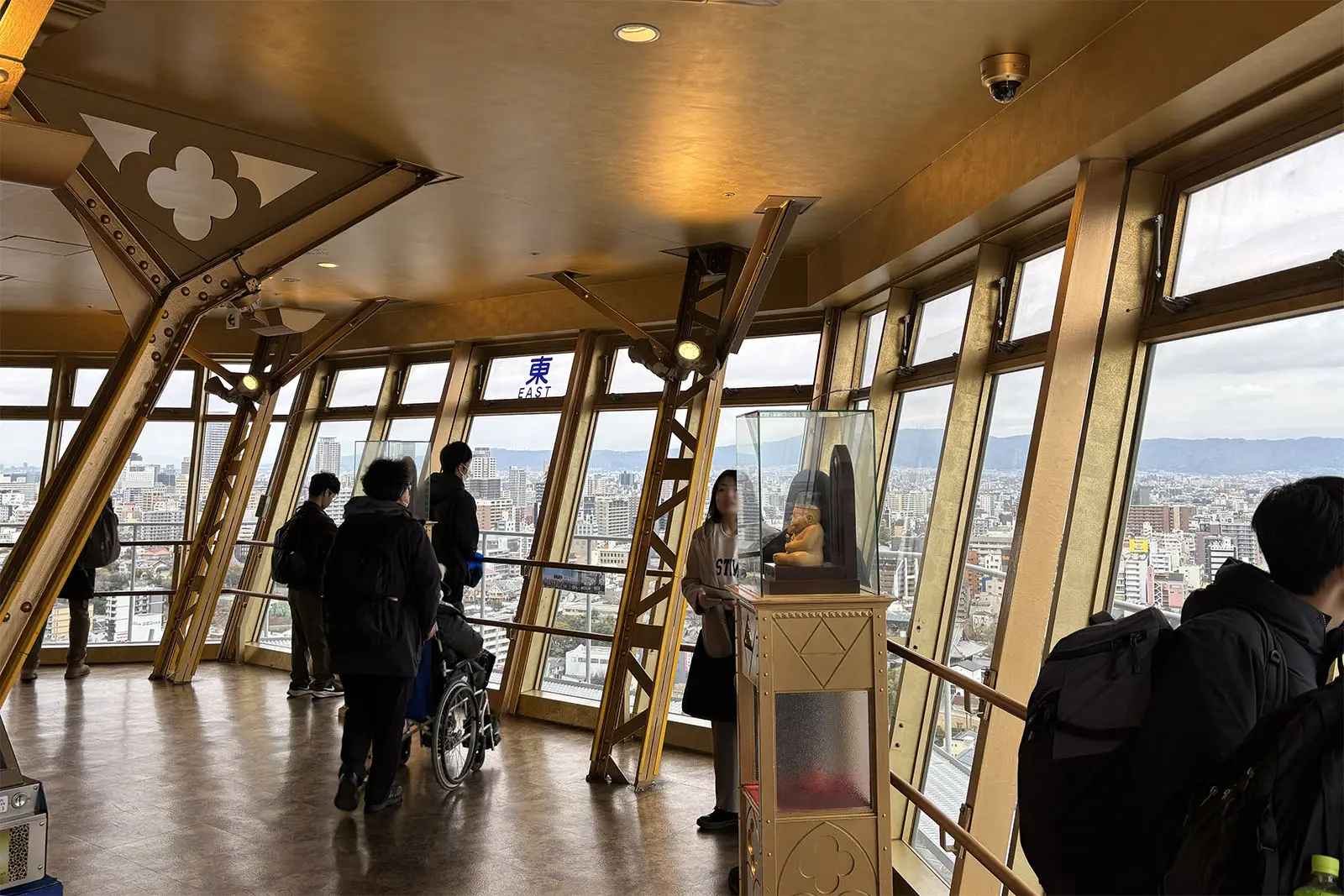
Umeda Sky Building is known for its distinctive design and observation deck on the 40th floor.
Take the elevator to the 35th floor, then ride the “floating” escalator that goes straight from the 35th to the 39th floor.
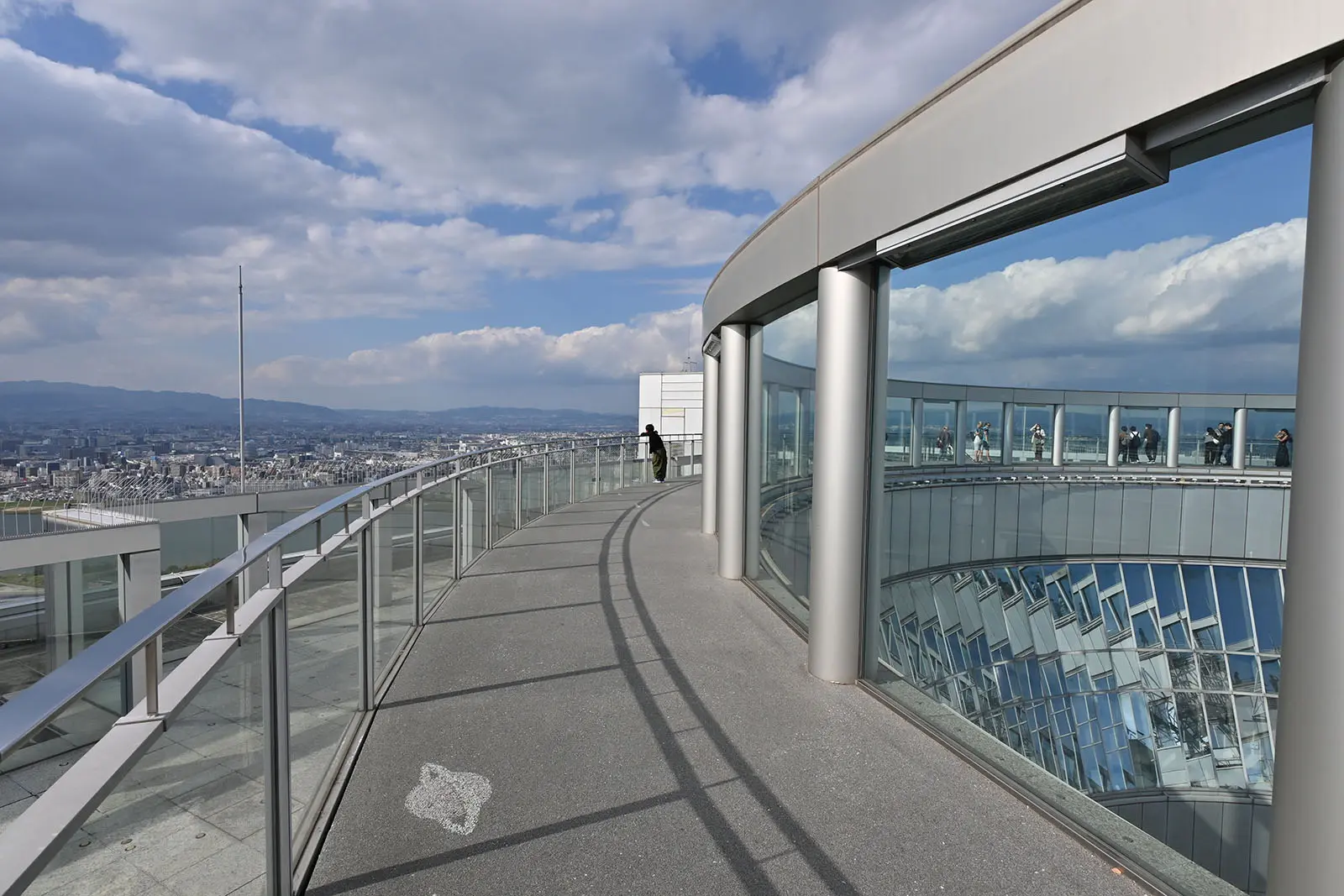
Wheelchair users can access the observatory via an elevator that goes directly from the 1st floor of Tower East to the 39th floor, and you can also go up to the rooftop viewing points.
4:00 pm Shopping and a tea break around Osaka Station
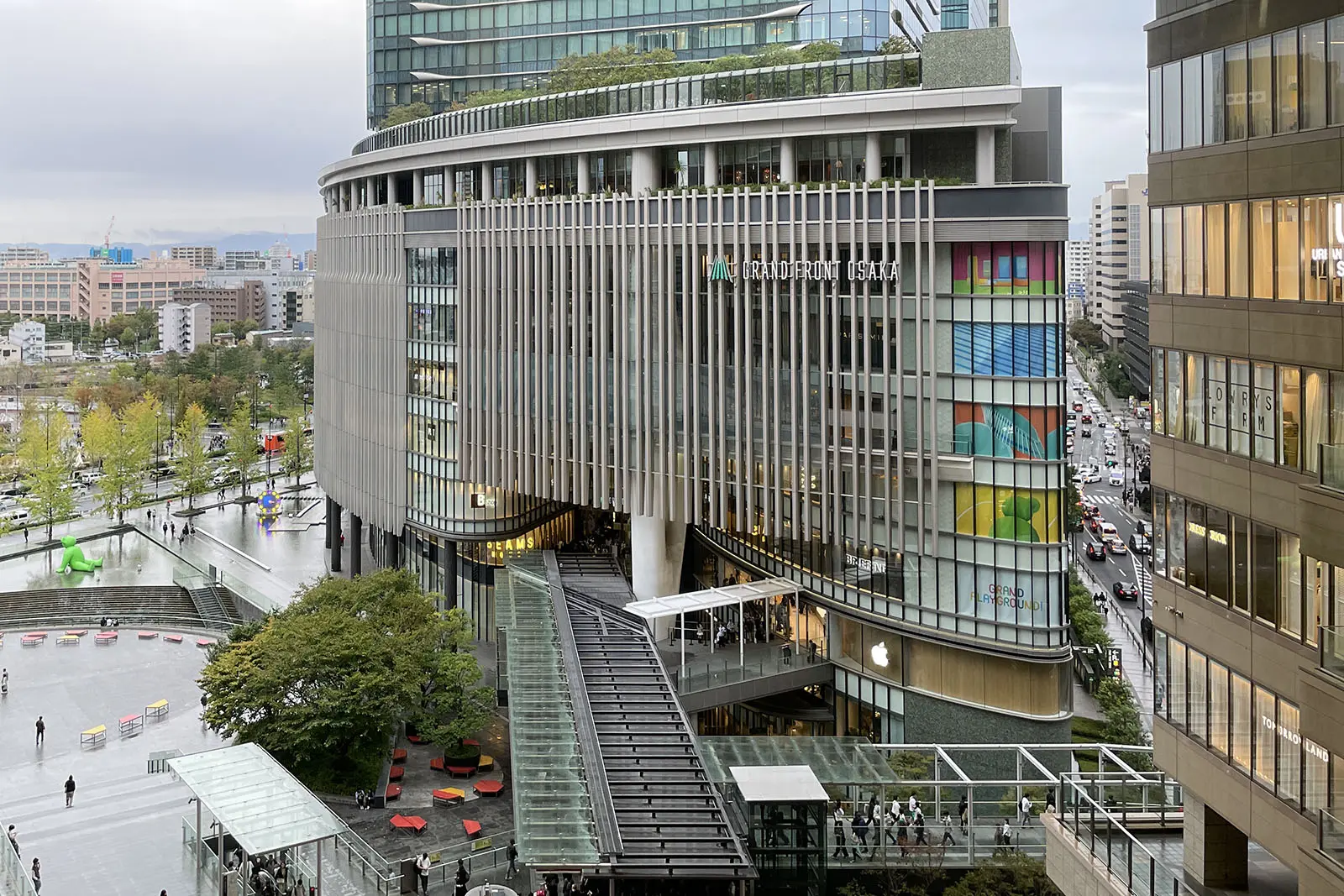
Head back to Osaka Station from Umeda Sky Building and enjoy some shopping and a café break.
On the north side of Osaka Station, you’ll find complexes such as Grand Front Osaka, Grand Green Osaka, and LUCUA Osaka.
If you’re tired, it’s a good idea to return to your hotel to rest up before dinner.
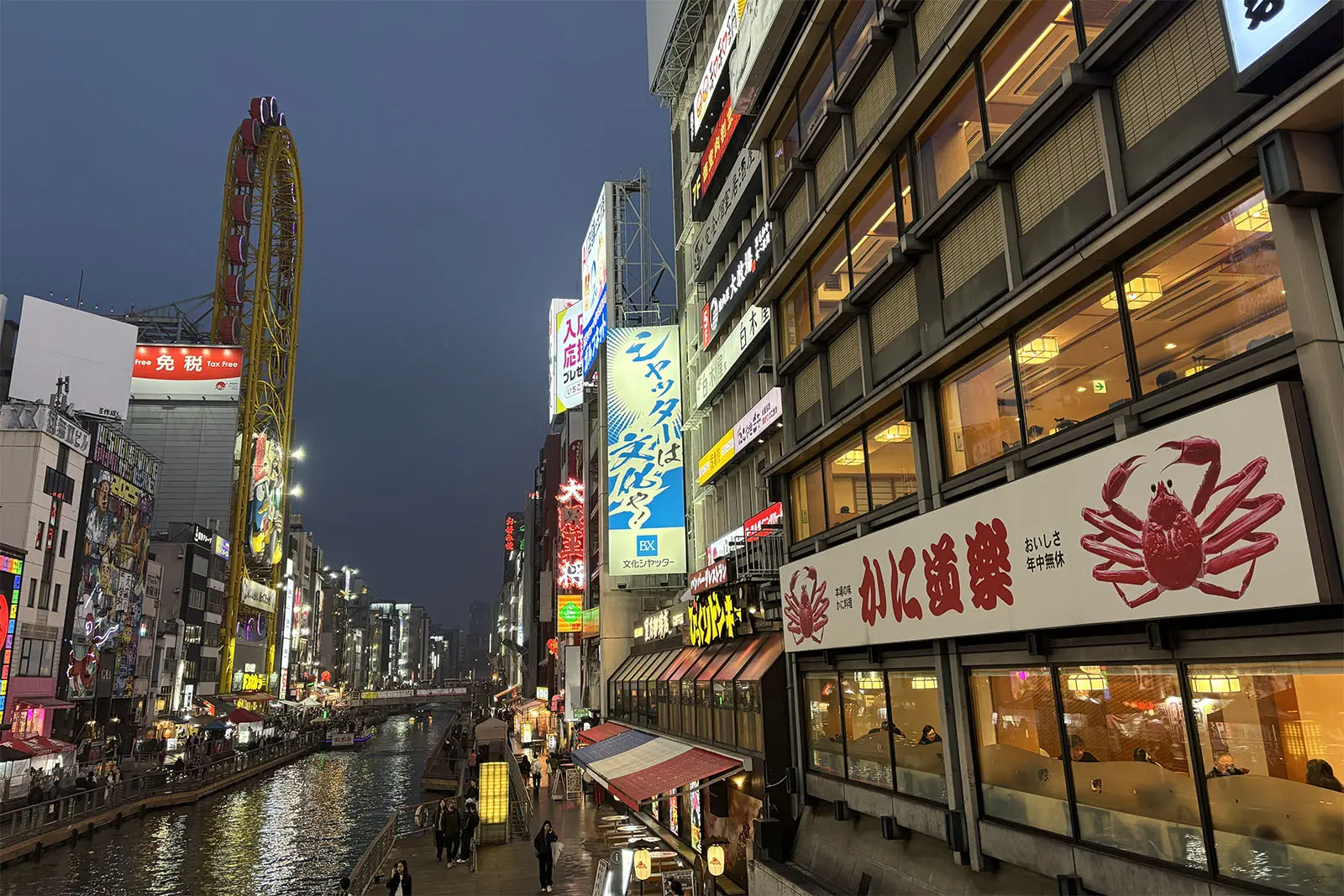
5:30 pm Soak up the night views and Osaka food in Dotonbori
From Umeda, take the Midosuji Line and get off at Shinsaibashi or Namba (Approx. 6–9 minutes).
In 5–15 minutes on foot, you’ll reach Dotonbori, where you can stroll, shop, and enjoy dinner.
For the return trip, either take a taxi from Dotonbori or Namba, or ride the Midosuji Line back to Umeda (JR Osaka).
For an evening stroll and dinner, the Osaka Station area is also a great option
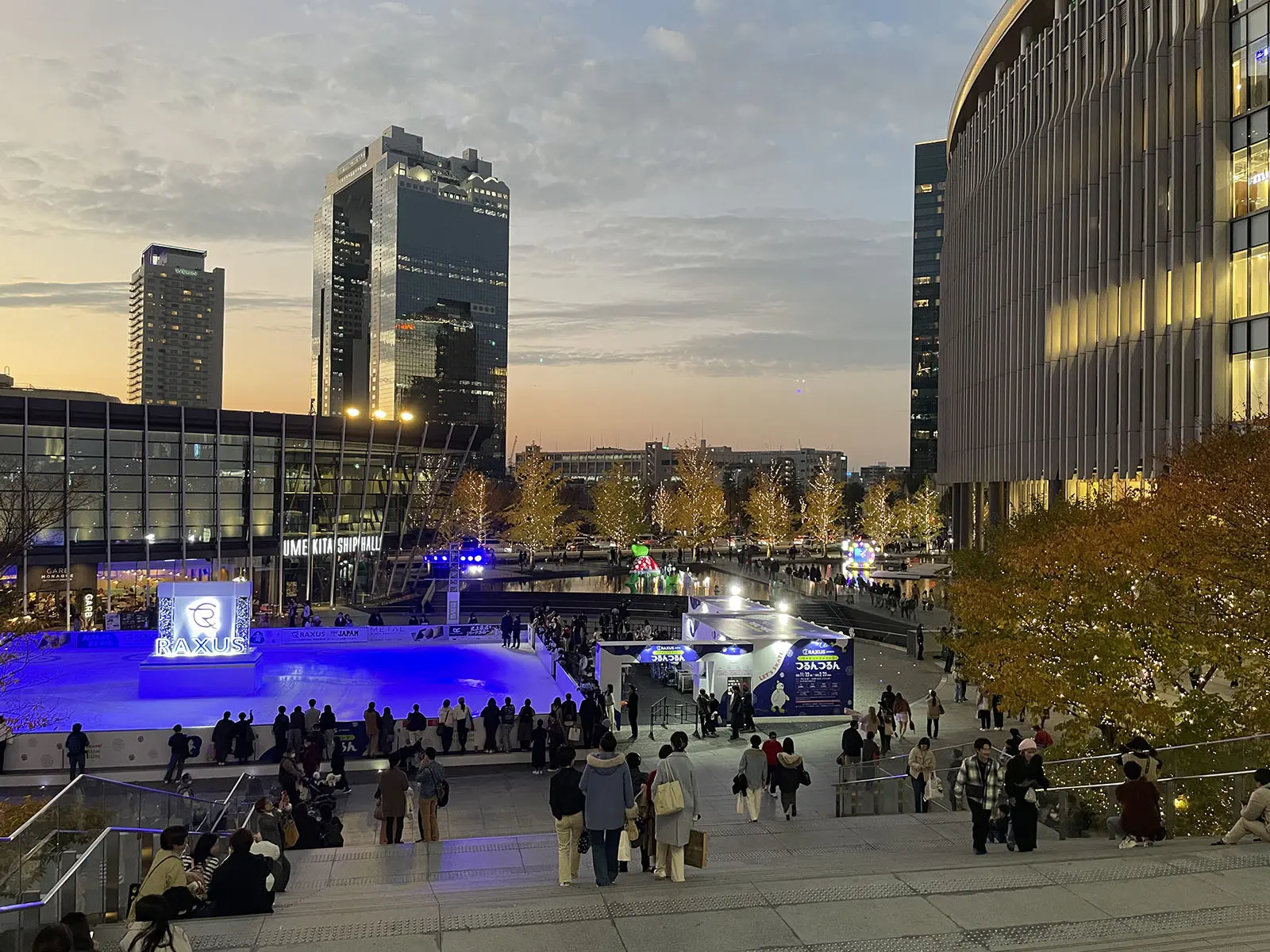
Dotonbori made the list for dinner because you can enjoy its flashy displays, but the Osaka Station area also offers great night views.
From November, holiday illuminations begin leading up to Christmas, so if you’re staying near Osaka Station, dining at a restaurant around the station is also a nice choice.
Where should you go instead on a rainy day?
Because Osaka Castle Park requires walking outdoors, we don’t recommend visiting on rainy days—especially for wheelchair travel.
If you want to stay active in the morning, a good alternative is the Kaiyukan Aquarium in the bay area.
To get from Kaiyukan to Tenjinbashi Shopping Street, take the Chuo Line from the nearest station, Osakako, transfer to the Sakaisuji Line at Sakaisuji-Hommachi, and get off at Ogimachi.

Tips for wheelchair travel from Tokyo to Osaka
From here, we’ll share key points to know in advance for a Tokyo-to-Osaka trip that wheelchair users can enjoy with peace of mind.
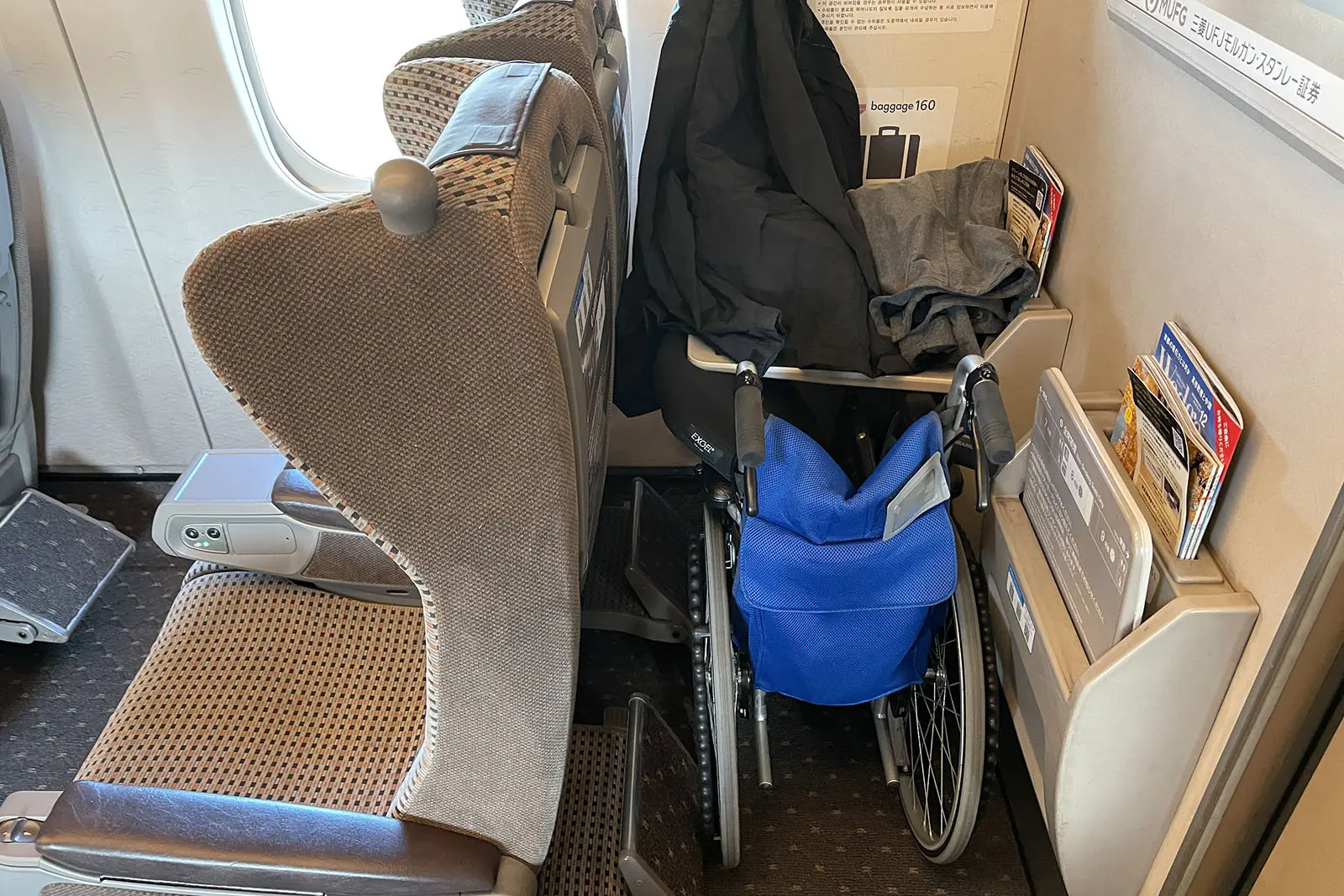
On the Tokaido Shinkansen, reserve the last-row seat with the oversized baggage space
On the Tokaido Shinkansen, reserving the last row of seats gives you access to the baggage space directly behind your seat.
Other passengers who aren’t aware may put their luggage there first, so head to the platform early and line up toward the front.
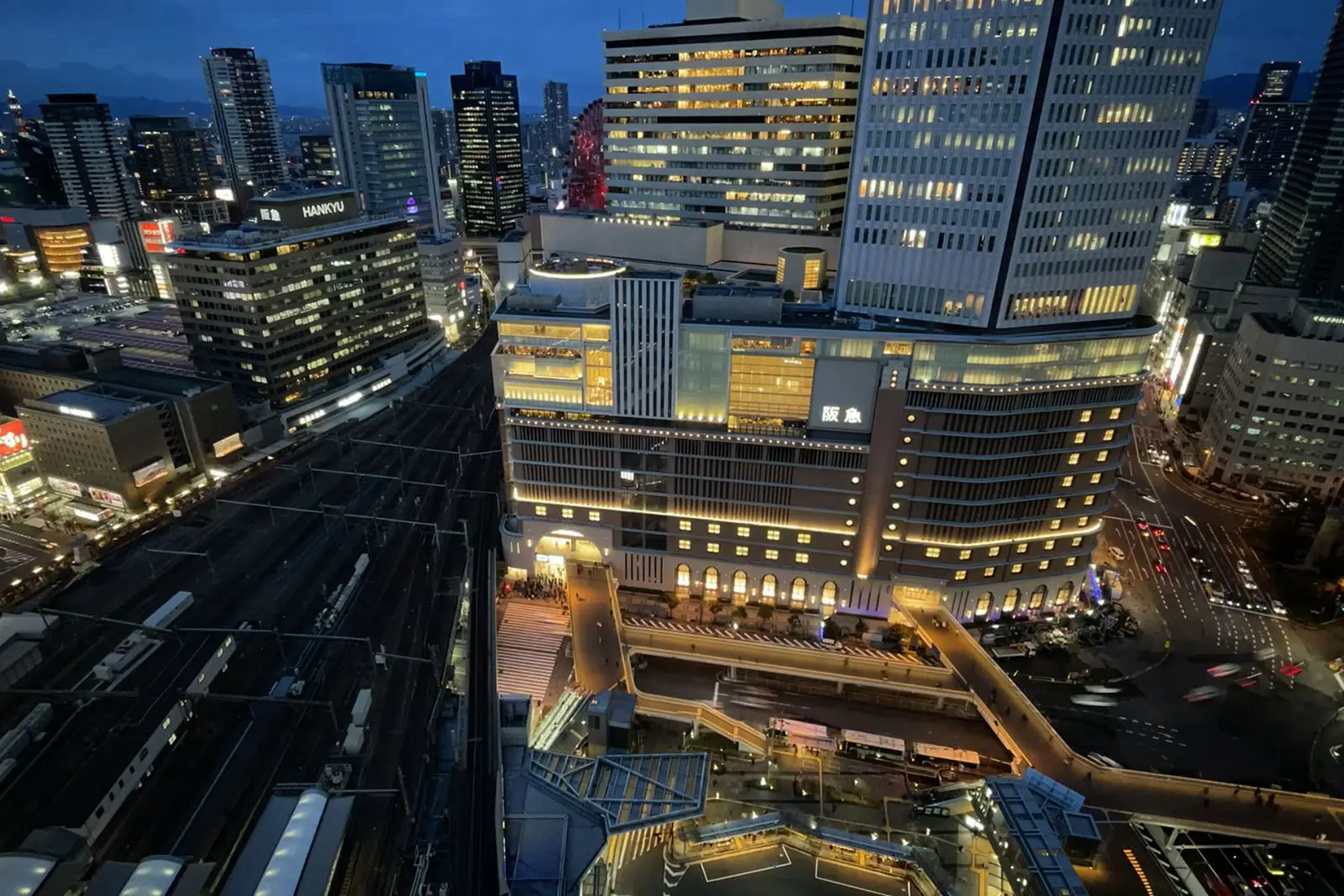
Stay at a hotel directly connected to Osaka Station for great views and no rain worries
For easy access from Tokyo and convenience when exploring on foot, we recommend staying at a hotel directly connected to Osaka Station.
From your room, you can also watch the rail lines and the bustle in front of the station—and enjoy the view.
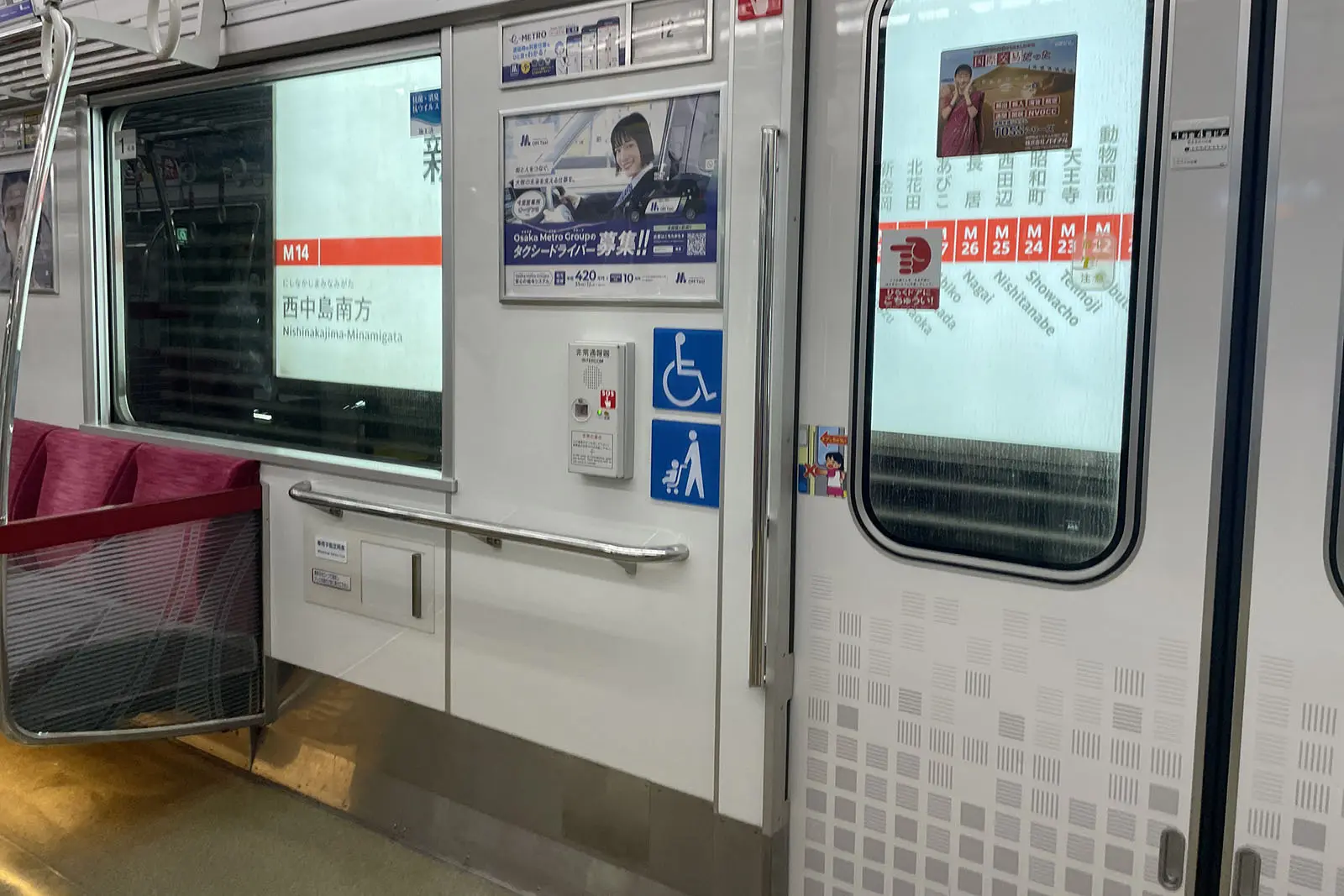
Riding the subway is easy and stress-free
One thing you’ll notice right away when you start exploring is how easy it is to ride the subway.
In Tokyo, you can reach platforms by elevator, but there are often gaps between the platform and the train, so you need to be careful when boarding and exiting.
On Osaka Metro, many stations have eliminated these gaps and steps, making it possible to roll straight on.
Plus, each car has space for wheelchairs and strollers, so you can ride without worrying about other passengers.
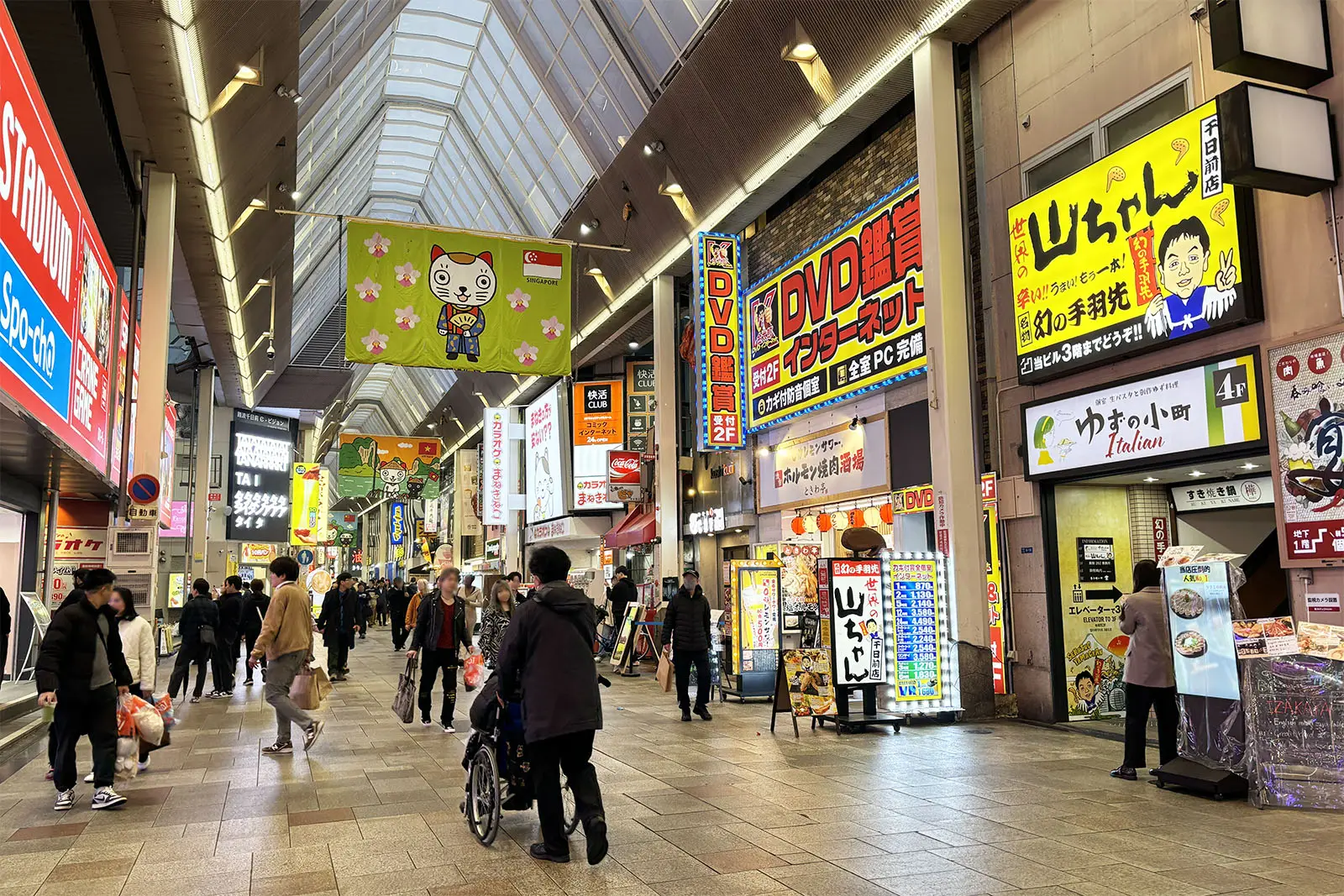
Enjoy a stroll through Shinsaibashi-suji Shopping Street
Because wheelchair-accessible restrooms are easy to find, it’s a good idea to stroll the covered arcade of Shinsaibashi-suji Shopping Street.
And since your hotel is directly connected to the station, rain isn’t a problem.

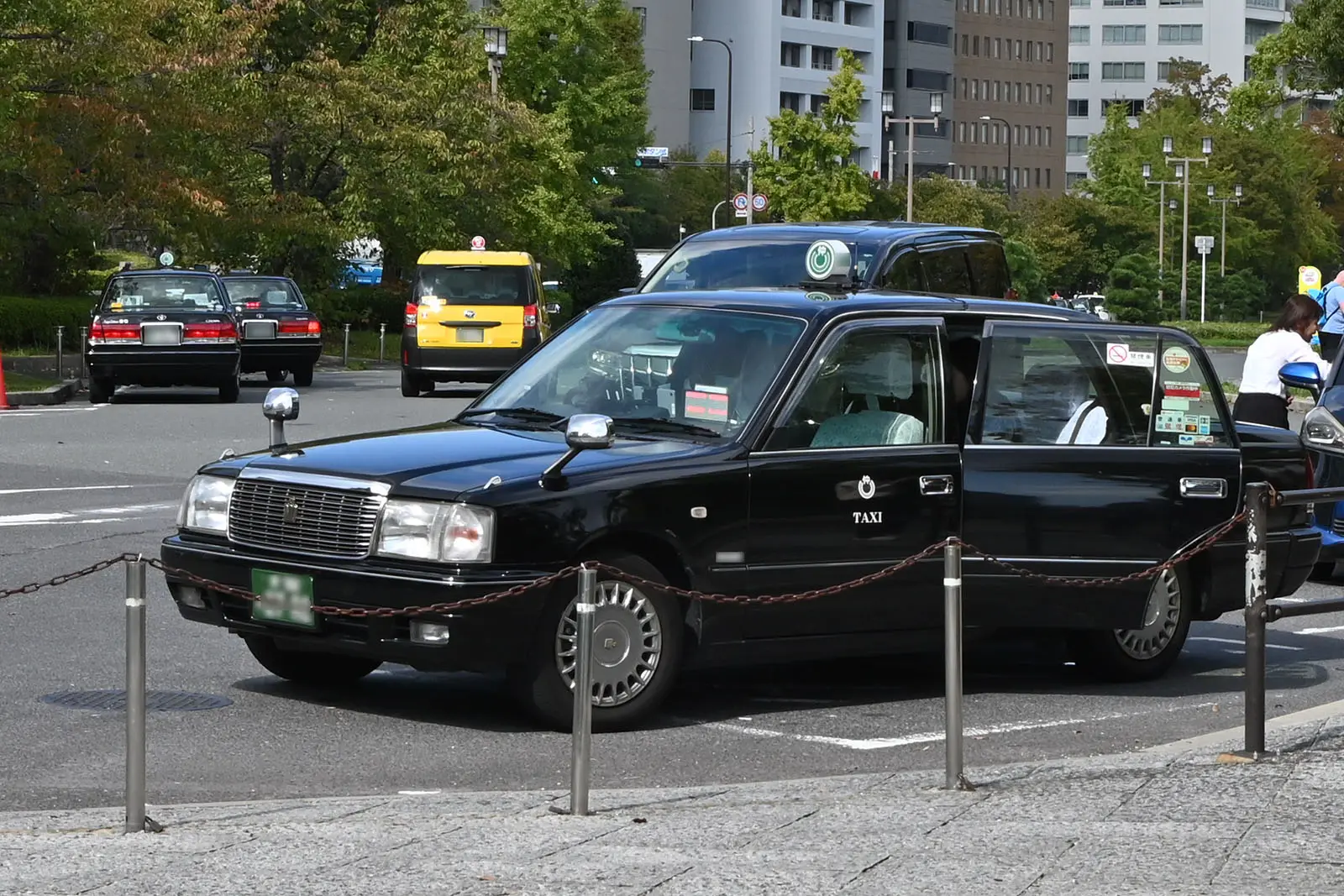
Taxis are also a safe option—many drivers are experienced
In preparation for the Expo, Osaka introduced universal design taxis at a target ratio of one in four, making it easier for wheelchair users to get in and out.
Many taxi drivers are used to assisting wheelchair travelers, so even if you’re traveling with lots of luggage, you can ride with confidence.
Barrier-free travel tips and things to watch for around Osaka
Osaka’s accessibility is among the best in Japan, but even here, wheelchair travel can still be stressful at times if you don’t research ahead.
Most issues can be solved if you have enough time, but to avoid getting lost or confused on the ground, once you’ve narrowed down where you want to go, keep the following points in mind as you plan.
1. When planning a visit, consider the route to the facility, too
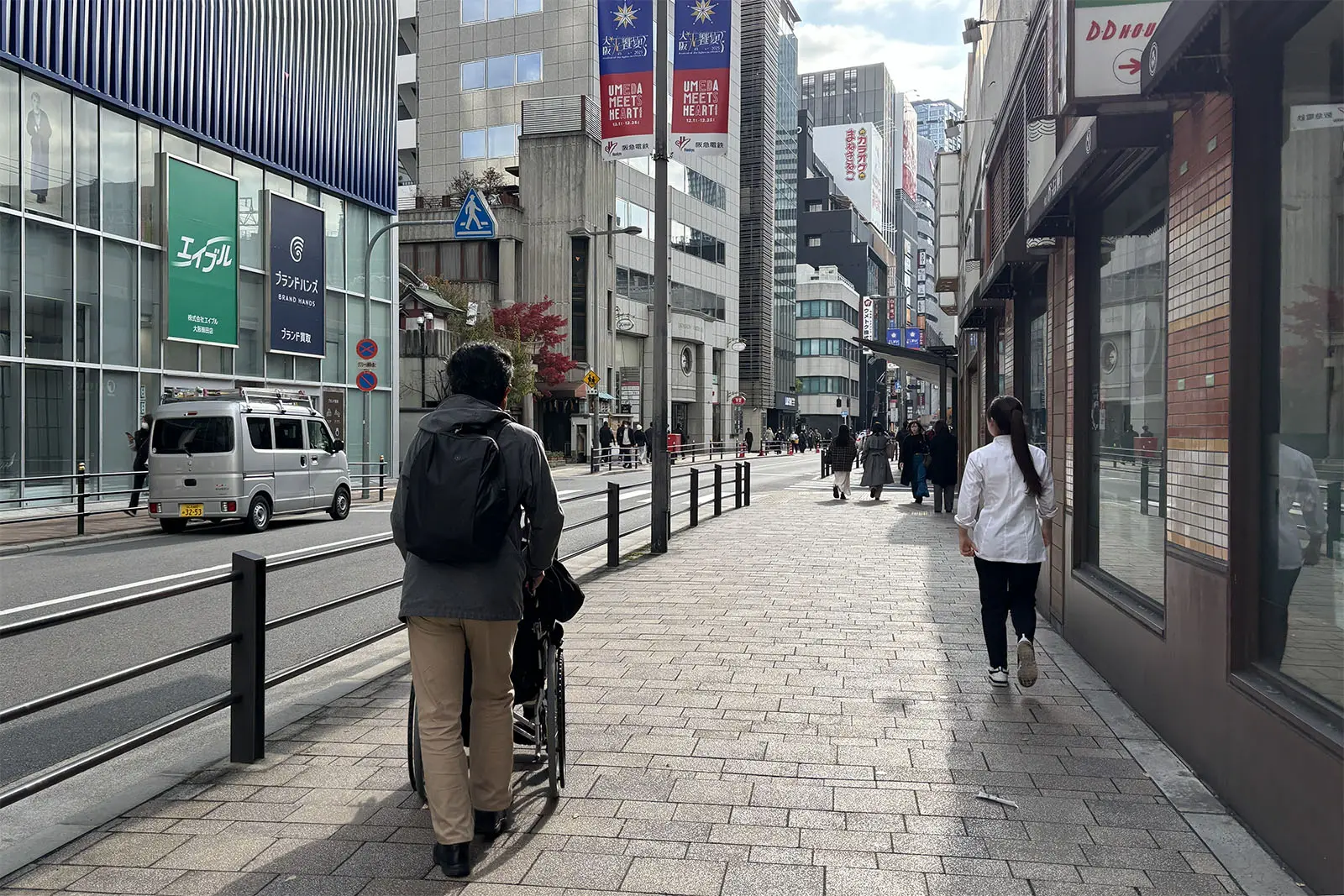
Wheelchair strolls in Osaka are much easier than in many other areas, but depending on the route, you may still run into difficult spots.
Even if a destination is close as the crow flies, you may need a detour to get there. For peace of mind, check the route to your destination in advance using tools like Street View.
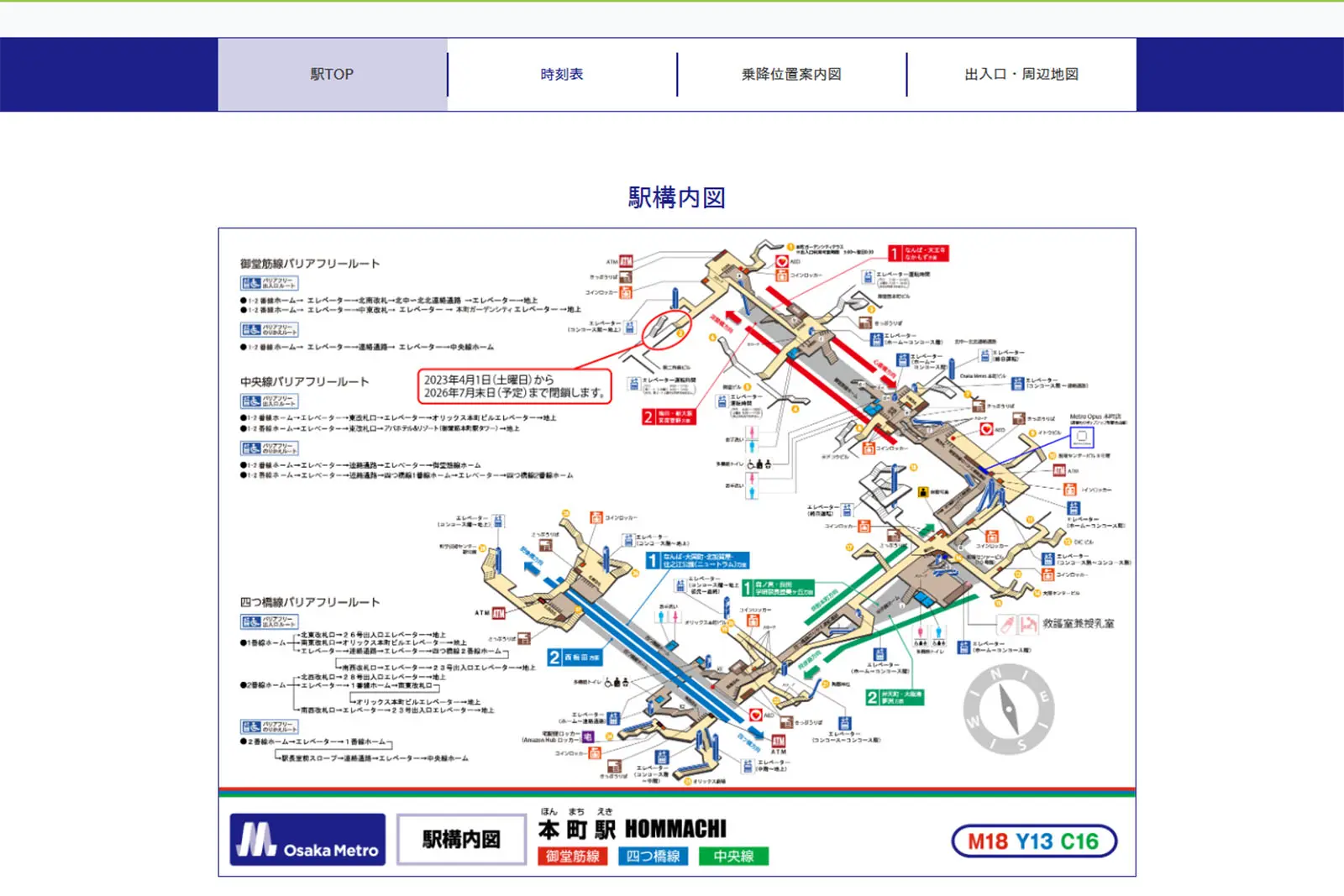
2. If you’re using the subway, confirm which elevator takes you to street level before you exit the ticket gates
It’s usually not hard to find the elevator from the platform to the ticket-gate level, but there are surprisingly few elevators from the ticket-gate level up to the street.
If you exit through the wrong gate, you may find there’s no street-level elevator. Always confirm which gate gives you access to the elevator before you leave the ticket gates.
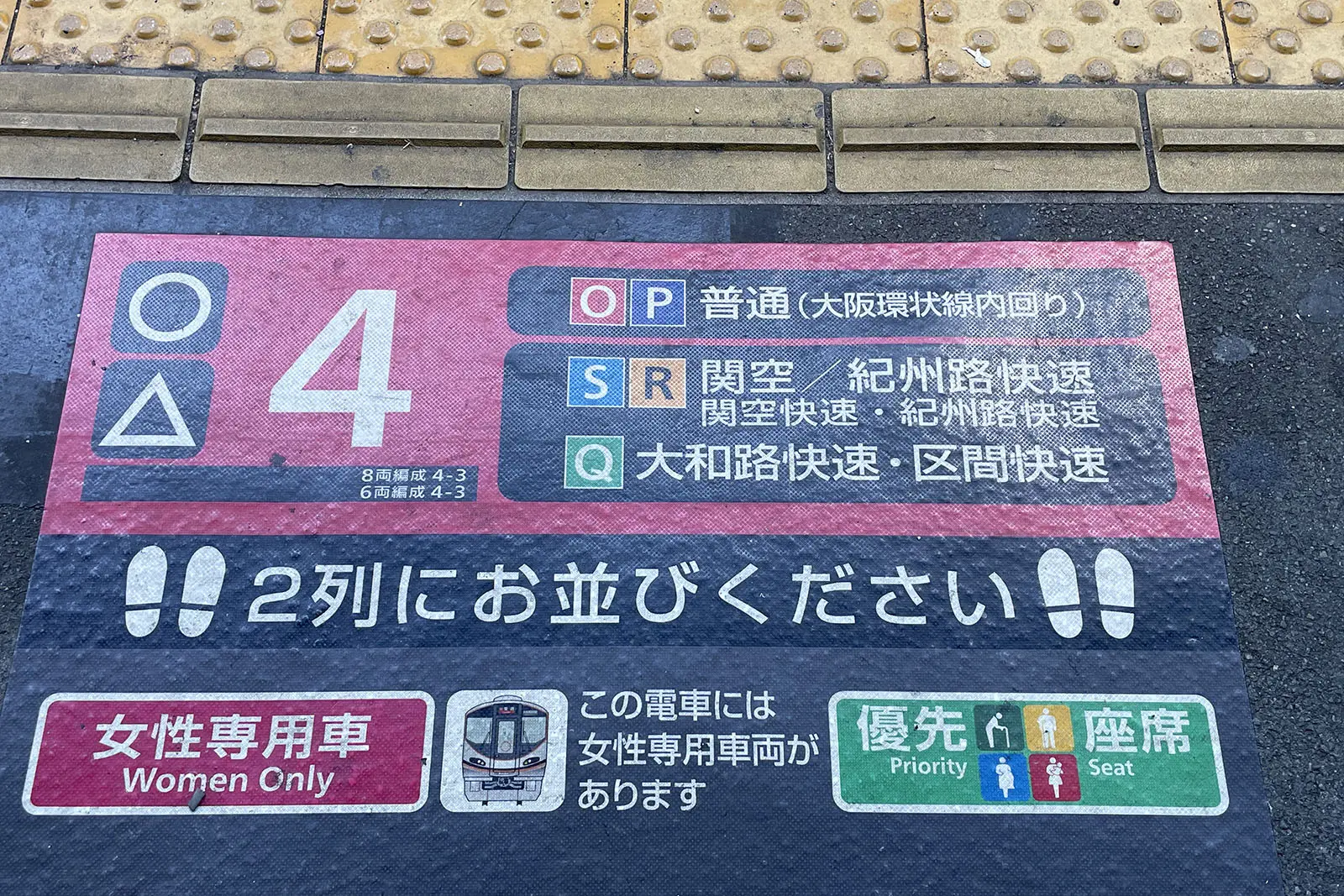
3. Subway cars have spaces for wheelchairs and strollers—head there
On many Osaka Metro trains, each car has a dedicated space where wheelchairs and strollers can be parked.
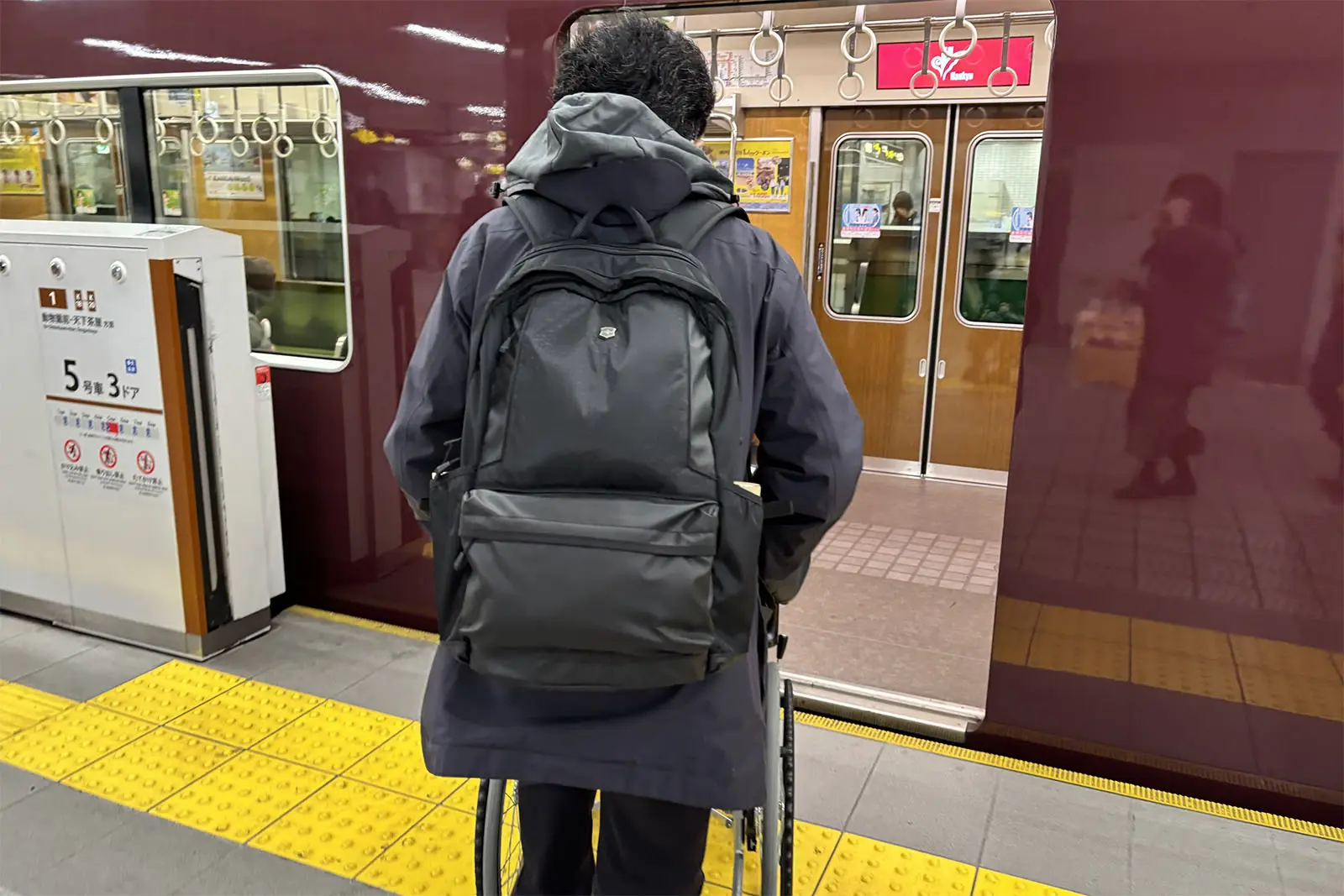
The platform signage shows which door number is closest to that space, so wait for the train where the sign is marked.
4. Keep checking restroom locations and go early
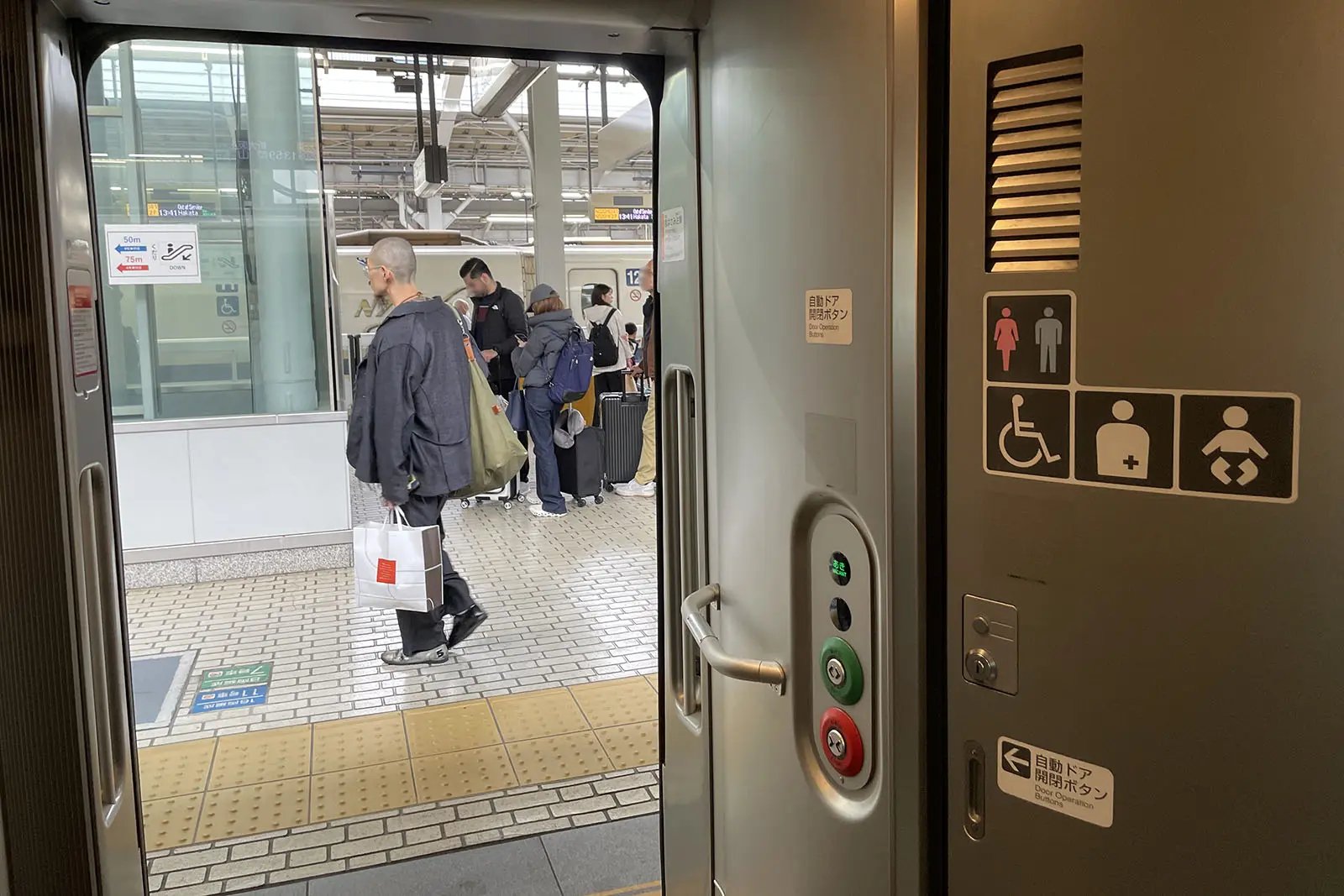
Inside station ticket gates and in commercial facilities, you’ll find larger restrooms that wheelchair users can use, but you shouldn’t expect the same from public restrooms around town or small restaurants.
Try to use the restroom early and often.
5. How can you find recommended barrier-free facility information?
OSAKAINFO, the official Osaka tourism information website, has compiled universal tourism resources.
You can search for accessible accommodations, sightseeing spots, and food options, and it also lists multiple model routes.
6. Plan routes you can still manage even in heavy rain
Weather has become more extreme in recent years, and from spring through fall, you may even get hit by sudden downpours that feel like a squall.
A little rain may be manageable, but in heavy rain, some places can become difficult to move around in.
Check the forecast, and if the weather looks like it will take a turn, have a backup plan in mind.
7. Are there discounts for wheelchair travelers?
There are discount programs for people who hold a disability certificate, but there are no specific discounts just for wheelchair users.
In some cases, senior discounts or discounts tied to credit card partnerships may be available, so if you’re over 60 or have a membership card with perks, it’s worth asking at the ticket counter.
![[Tsutenkaku Travel Guide] Enjoy Osaka’s Iconic Tower](https://static.gltjp.com/glt/data/article/21000/20340/20230721_161251_3e1c08a0_w640.webp)
8. Use taxis to save time and energy
Many taxi drivers in Osaka are accustomed to assisting wheelchair users.
While the subway and JR lines are cheaper, taxis can be a big advantage for short trips, where the fare stays reasonable.
If your budget allows, we recommend using taxis proactively.
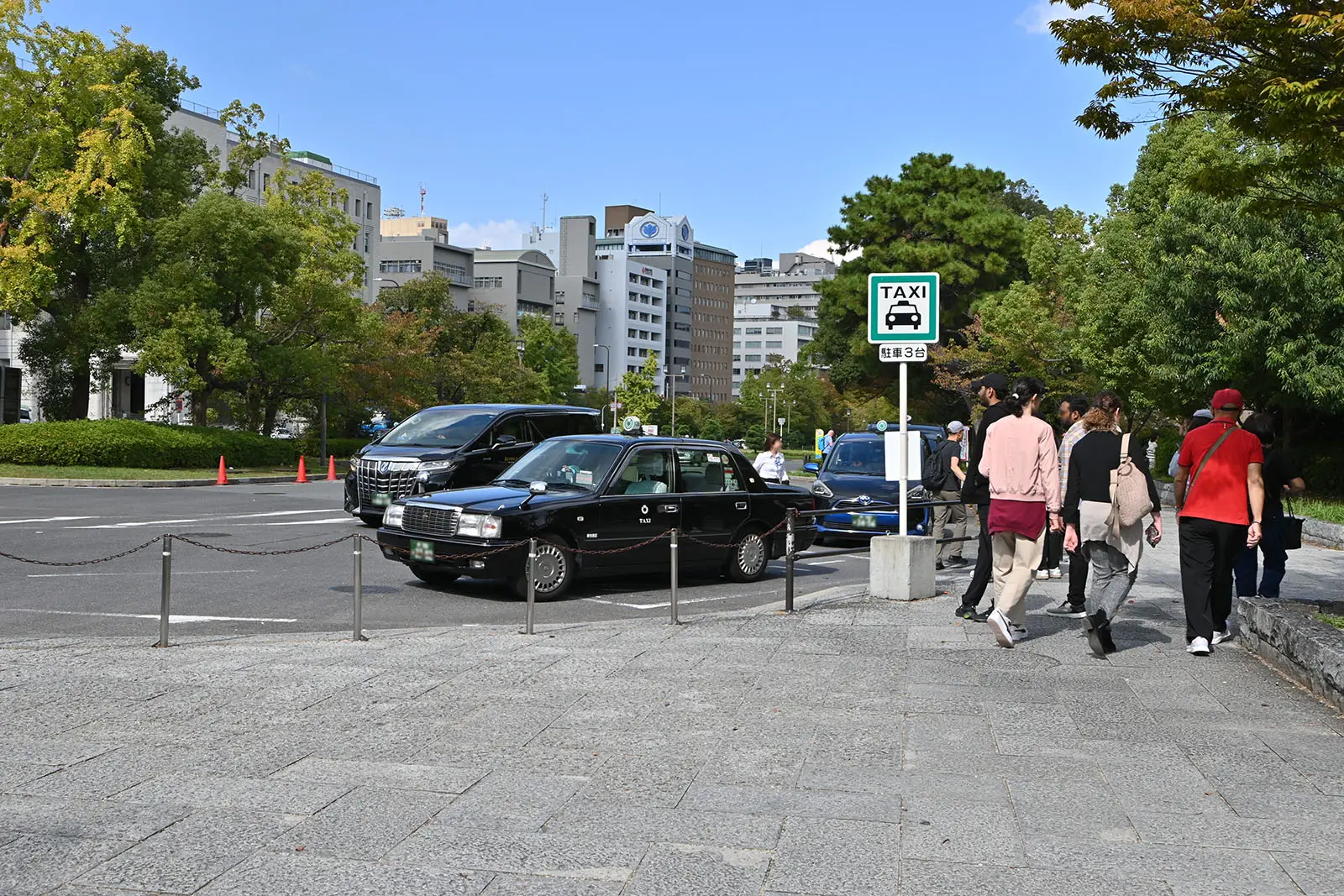
9. You may need to wait in elevator lines. Leave extra time
When going up to or down from Shinkansen platforms, it’s common to find long lines.
That’s because large numbers of passengers move at once.
Unfortunately, in Japan, the custom of prioritizing wheelchair users is not widespread, so even if you use a wheelchair, there are many situations where you’ll need to wait in line.
In particular, elevators at train stations often involve longer waits than at other facilities, so it’s best to build in extra time.
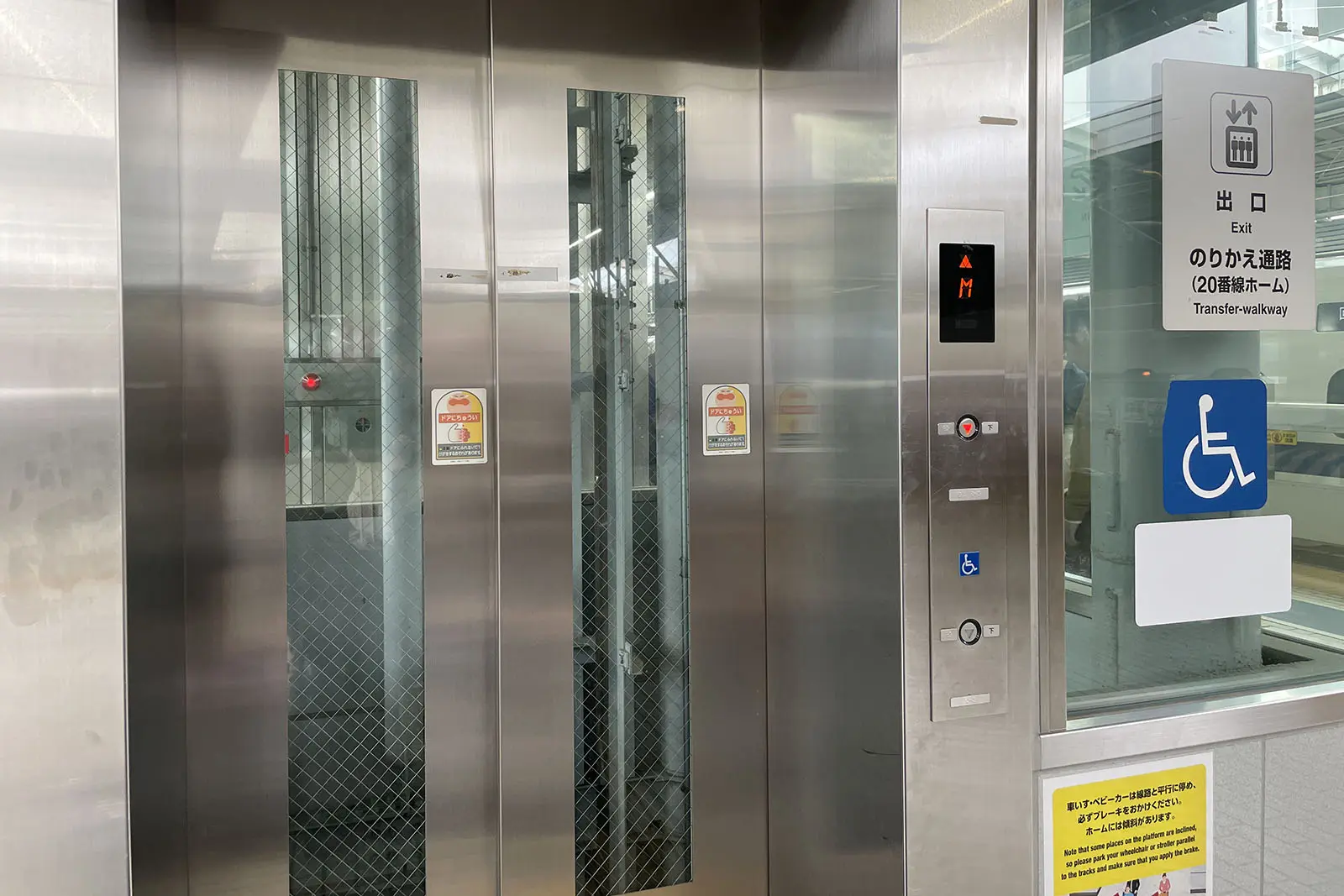
10. If you feel tired, take a break without pushing yourself
Getting around by wheelchair is demanding for both the traveler and their companion.
And when you’re traveling, you’re likely to get tired more easily than usual, so don’t overdo it.
If you’re staying at a hotel right by the station, it’s easy to head back for a short rest and then go back out again.
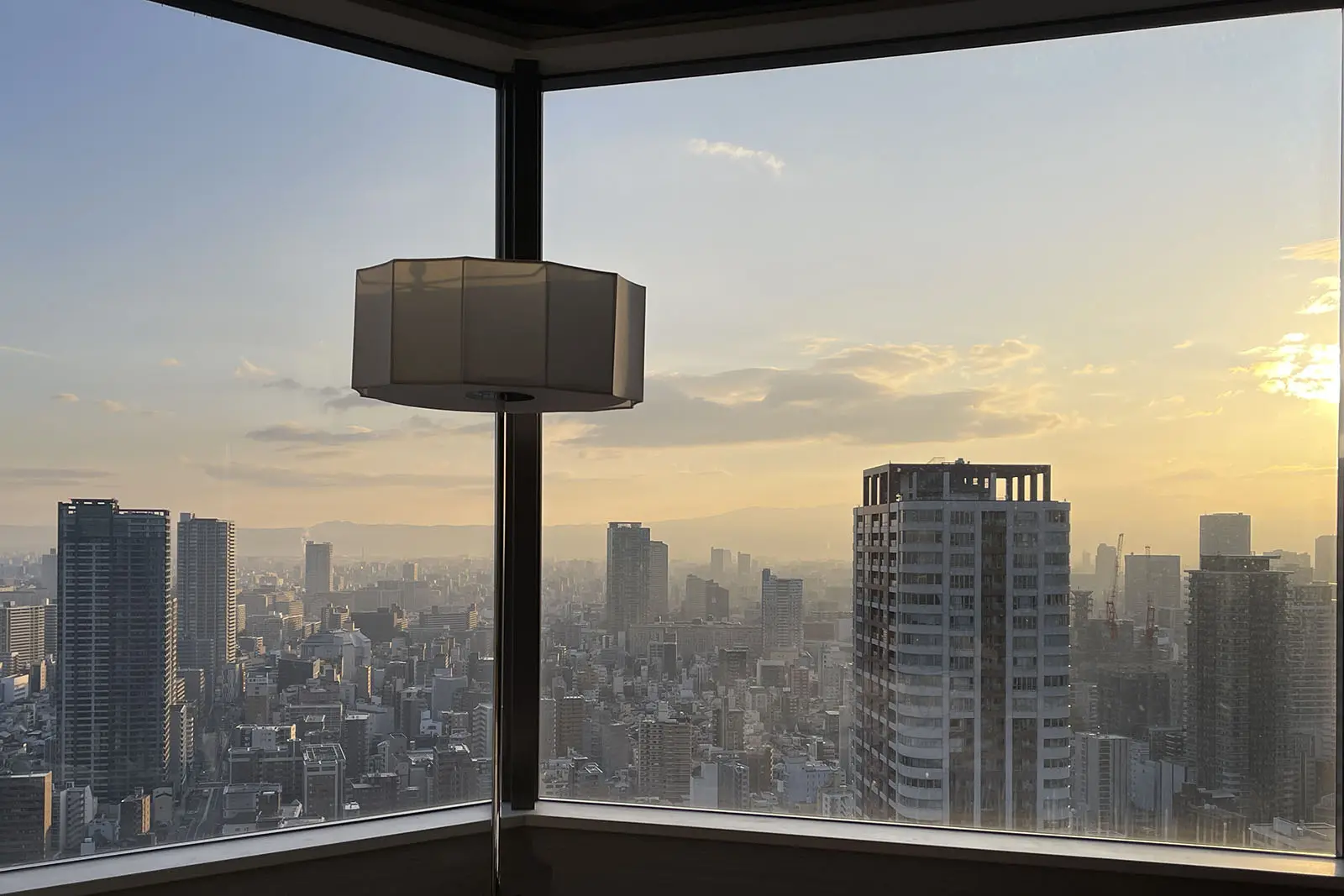
11. It’s a busy tourist city, so keep basic safety awareness in mind
Japan is a safe country, but crimes like pickpocketing and theft do happen.
In crowds, it’s easy to focus on maneuvering your wheelchair, but be sure to stay aware of whether anyone suspicious is approaching.
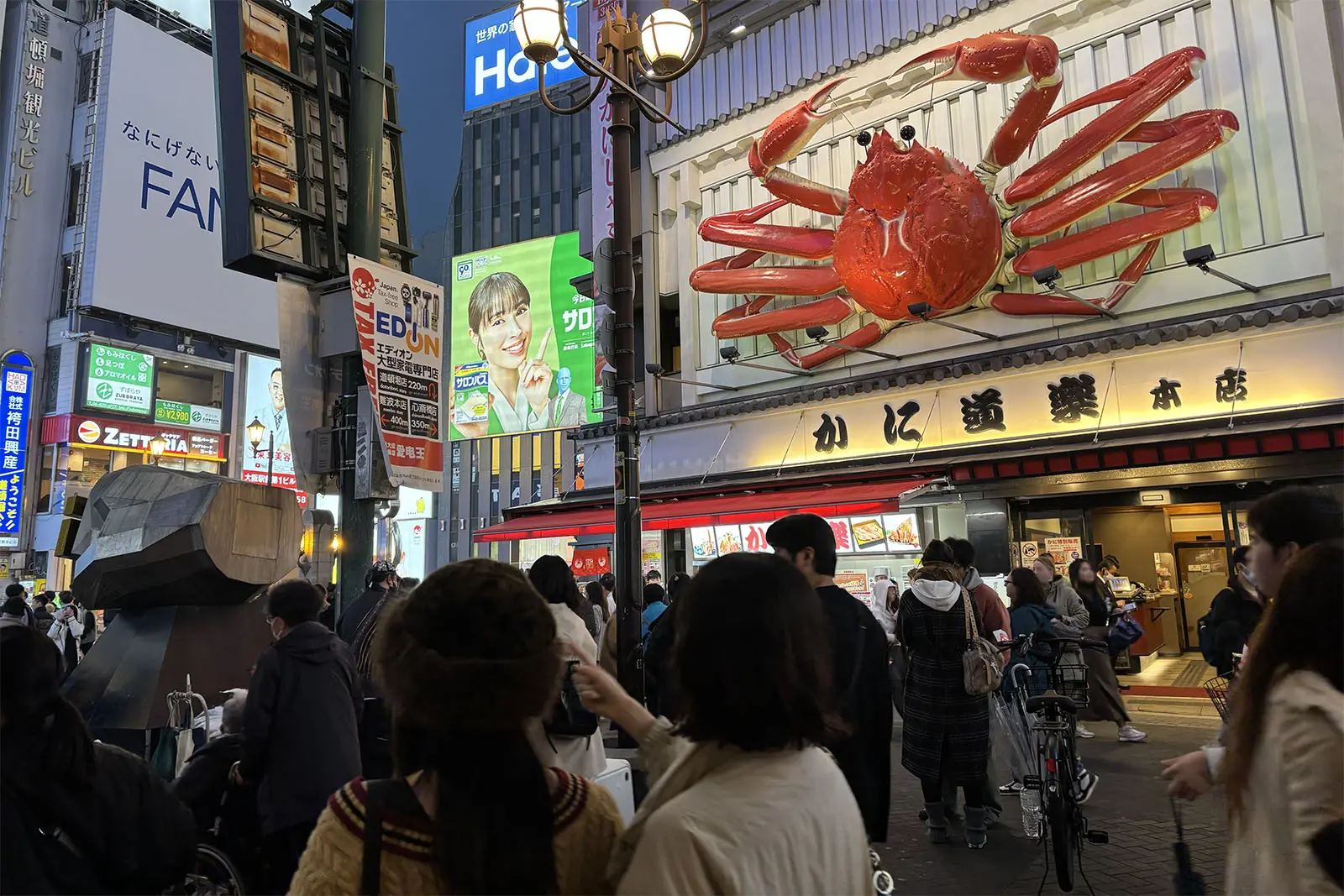
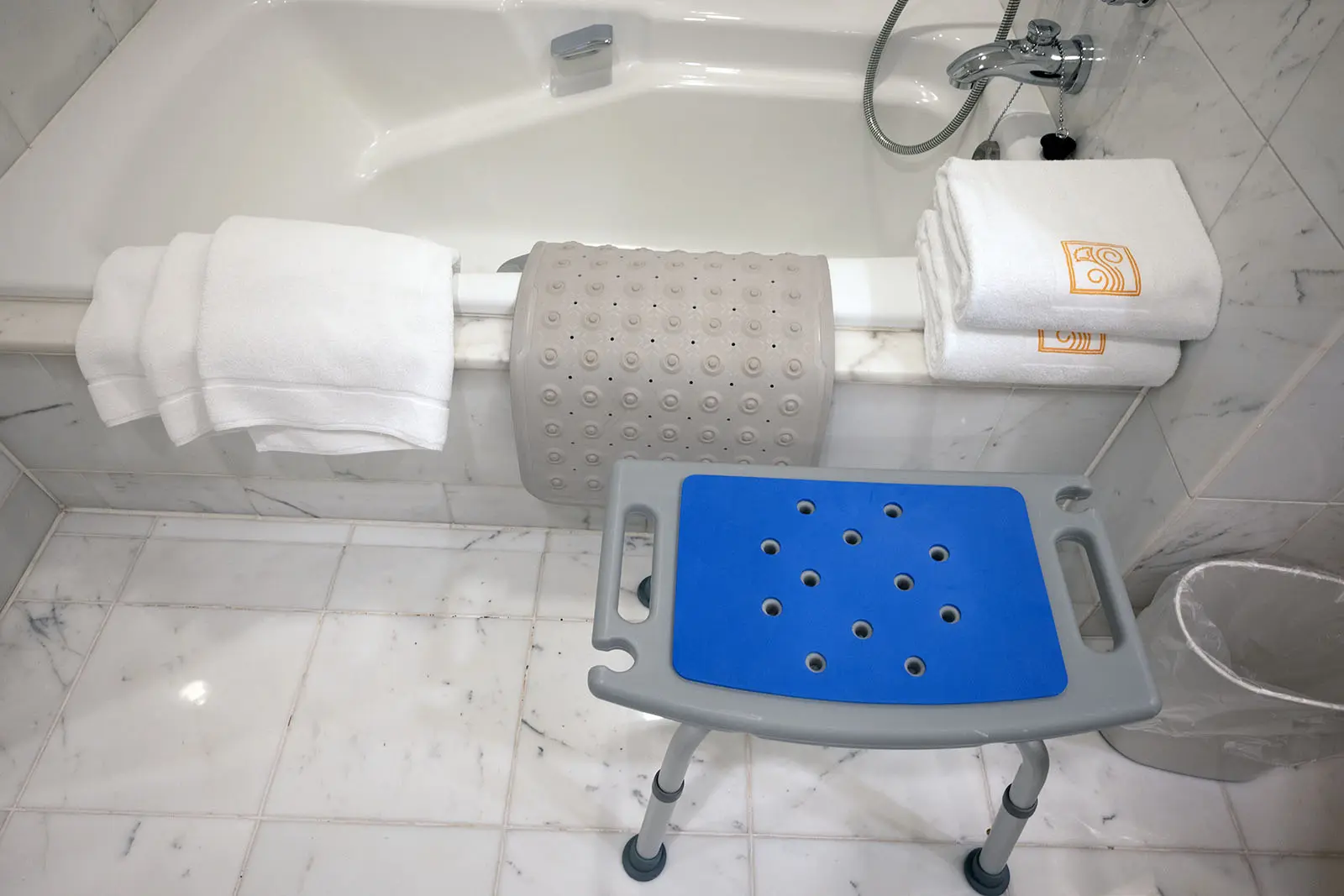
12. Choose a larger hotel room, and request a shower chair for the bathroom
If you can book a universal room, that’s ideal, but because there are only a few, securing one may be difficult.
Even if a universal room isn’t available, reserving a larger room at a higher-grade city hotel (rather than a business hotel) can still be easier for wheelchair users.
A caregiving shower chair can make bathing much easier, so it’s worth requesting one at check-in.
Summary
Osaka is easy to access from both overseas and within Japan, and the Expo significantly boosted its appeal as a destination.
Now that barrier-free travel has been fully upgraded, Osaka is an even easier city to explore.
It also works well as a base town for visiting other great destinations like Kyoto, Kobe, and Himeji.
If you’re looking for a trip you can enjoy with confidence in a wheelchair, consider staying in Osaka while exploring the city on foot and taking trips around the Kansai region.

Author
Photographer & Writer
Hiroaki Oyamada
A photographer and writer who loves nature and is passionate about sharing the emotions and inspiration found through travel.