
![[Complete Guide to Umeshu] The Appeal of Umeshu, Created in Japan, the Land of Plums](https://static.gltjp.com/glt/data/article/22000/21307/20260209_130458_3d789e17_w1920.webp)
[Complete Guide to Umeshu] The Appeal of Umeshu, Created in Japan, the Land of Plums
From the past to the present, plums have remained one of the essential fruits in the Japanese diet. Long loved in Japan and used in many different ways, plums are introduced here through the lens of umeshu and how to enjoy it.
From the history of umeshu to an umeshu-making experience facility produced by the umeshu maker that helped spark the umeshu boom, this article will tell you everything you need to know about umeshu.
What Is Umeshu?
Plums have such a long history that they are sometimes called one of the “oldest seasonings,” alongside salt. The plum tree belongs to the rose family and the Prunus genus. In Japan, people have long enjoyed plum blossoms with their eyes and plum fruit in many different ways.
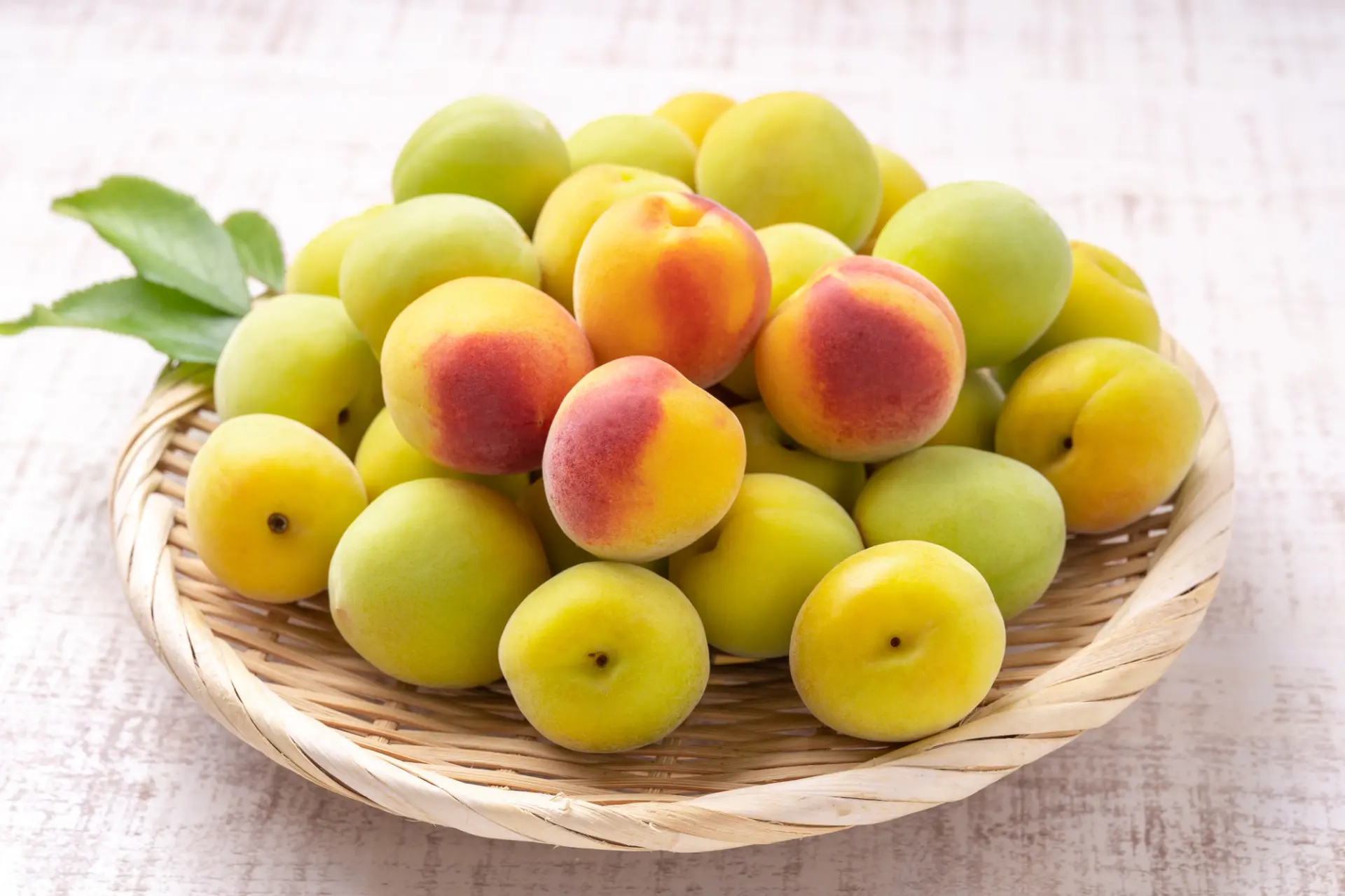
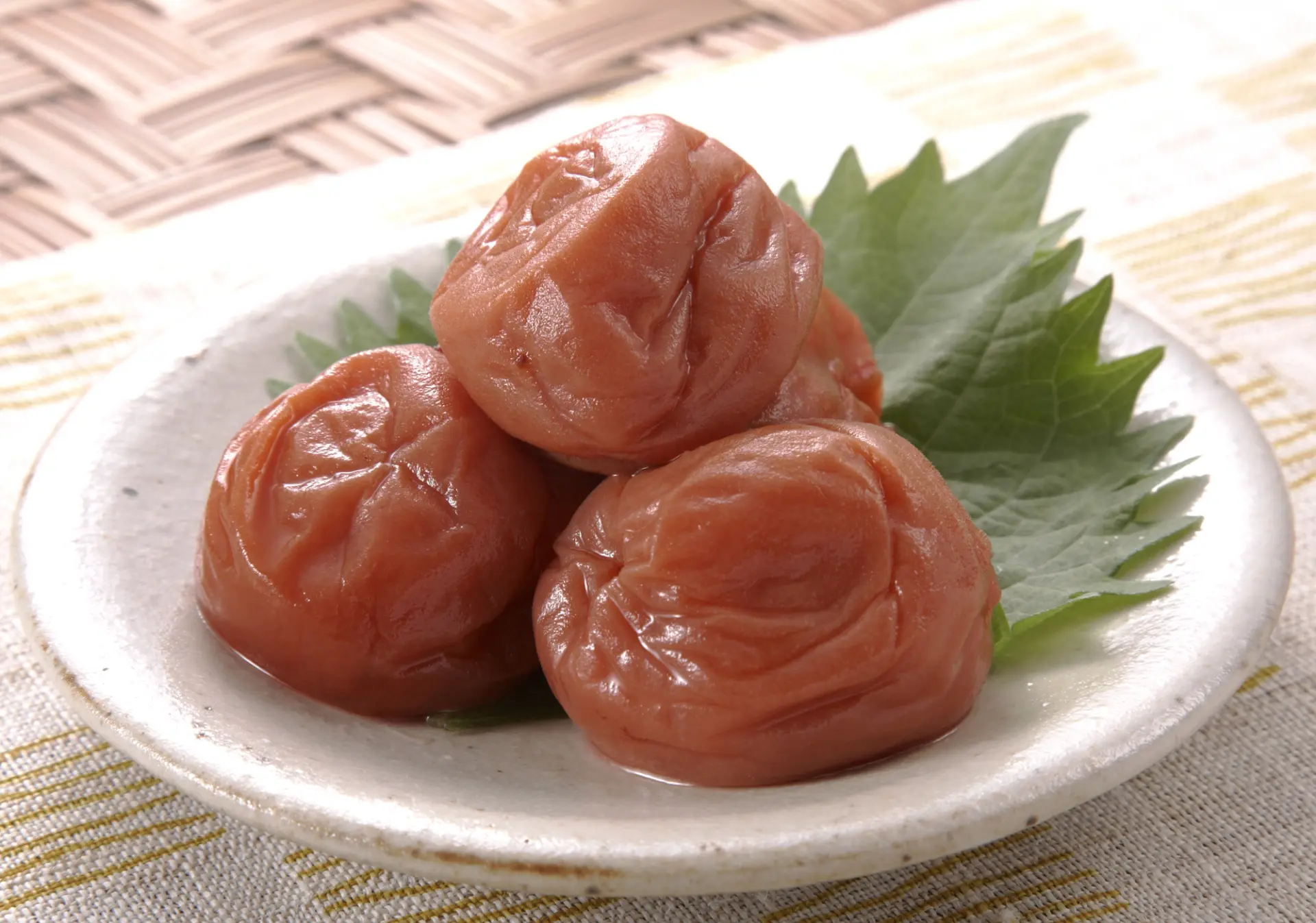
Umeboshi, a traditional Japanese preserved food made by pickling plums with shiso and salt, is also one of the most popular fillings for rice balls.
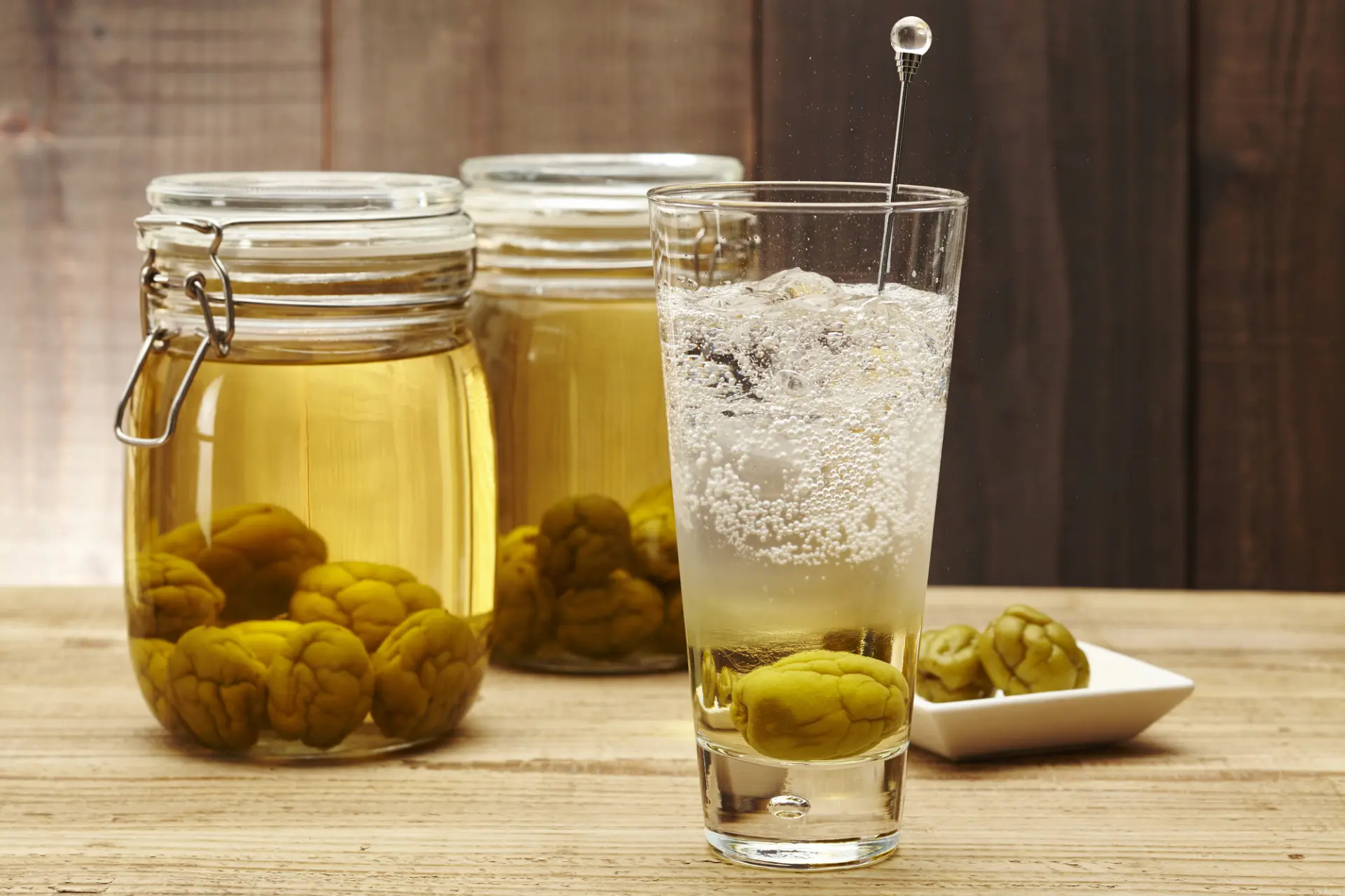
Umeshu is made by adding sugar to green plums and steeping them in distilled spirits. Since it can easily be made at home, it is also a popular alcoholic drink.
Definition of Umeshu
According to the Japan Spirits & Liqueurs Makers Association, umeshu is described as “a representative Japanese liqueur made by steeping plum fruit in alcohol and sugar, then aging it for several months or, in some cases, several years to extract its components.” Because it can also be made easily at home, it is one of the alcoholic drinks enjoyed by many people.
History of Umeshu
It has been confirmed that plums existed as far back as 4,000 years ago. Around 2000 BC, the term “anbai” was recorded in a Chinese historical text, and this is believed to be the oldest written reference to plums. Plums originated in the Yangtze River basin in China, but they were introduced to Japan as herbal medicine during the Yayoi period. Later, the flowers also came to be appreciated for ornamental viewing.
There is no surviving record of when umeshu was first created, so its exact origins are unknown. However, a document called Honcho Shokkan, written in the Edo period around 300 years ago, includes instructions for making umeshu. At the time, sugar, one of the ingredients used in umeshu, was extremely valuable. For that reason, umeshu was considered a luxury item that only a limited number of people could drink. By this time, not only umeshu but also the culture of processing plums in Japan, such as making umeboshi, had already taken root.
In 1959, when CHOYA Umeshu Co., Ltd., the company that helped spark the umeshu boom, began manufacturing and selling umeshu, a revision to the Liquor Tax Act made it possible to make umeshu at home. This led to a boom in fruit liqueurs, including umeshu, and umeshu came to be loved by many people.
CHOYA Umeshu Co., Ltd., the Company That Helped Spark the Umeshu Boom
A Commitment to Making Quality Umeshu
When it comes to umeshu, CHOYA Umeshu Co., Ltd. is the name that comes to mind. As the leading maker in Japan’s domestic umeshu market, the company has been manufacturing and selling umeshu for more than 60 years under the concept, “Using an abundance of better plums, we bring out the full blessings of the fruit through our unique aging methods.” Originally, the company started in 1914 as a grape-growing farm and produced wine and brandy, both made from grapes. However, driven by a sense of mission to nurture Japan’s unique culture and traditions and share them with the world, it turned its efforts toward making umeshu.
One of CHOYA’s key commitments is using 100% domestically grown Japanese plums. Together with partner farmers, the company even works on creating soil suited to plum cultivation, carefully selecting richly aromatic plums with a high degree of ripeness for making umeshu. In addition, CHOYA uses absolutely no additives such as acidulants, flavorings, or colorings in its umeshu. It delivers authentic, pure umeshu with no additives to consumers. The manufacturing process is also carefully managed. Because the umeshu is additive-free, CHOYA uses simple, high-quality ingredients and ages them naturally for over a year in storage tanks protected from outside influences such as light, heat, and air, extracting plenty of flavor from both the plum flesh and the pits.
How CHOYA Makes Umeshu
(1) Harvesting
Plums are harvested during the rainy season. At CHOYA, plums suitable for making umeshu are carefully selected, especially Nanko-ume, a variety native to Wakayama Prefecture known for its large size, thick flesh, and high acidity. Fully ripe plums naturally fall from the tree, but CHOYA reportedly harvests them one by one by hand just before they fall.
(2) Steeping
The harvested plums arrive while still fresh. After being washed at the factory, they are placed in 100,000-liter aging tanks and steeped with alcohol and sugar. There are 450 of these aging tanks, each managed according to the plum’s growing area, variety, and ripeness.
(3) Aging
The plums are aged for one year in custom-made umeshu storage tanks designed to prevent external stimulation from light, heat, and air. CHOYA uses a natural aging method called still aging, or self-aging, which avoids outside influence and allows the plum components to be fully extracted.
(4) Blending
Only batches that pass both component analysis and sensory evaluation by expert staff are turned into products. Because no additives are used, the flavor and aroma vary from one base umeshu to another depending on the character of the plums. That is why the exceptional blending skills of experienced blenders are essential for maintaining consistent quality. It truly is artisanal craftsmanship!
(5) Bottling
On the production line, the umeshu is bottled, inspected, wrapped, and packed into boxes. The plum fruit is inspected one by one by hand before being washed and bottled.
(6) Completion
Once bottled and packed, the umeshu is shipped not only across the Japanese market but also to 90 countries around the world. While carefully preserving the umeshu culture born in Japan, CHOYA continues to explore the possibilities of plums and deliver an even better, more refined expression of them to people around the globe.
How to Make Umeshu
The method for making umeshu is extremely simple. For that reason, it has long been made at home in Japan as well. The ingredients are only plum fruit, rock sugar, and white liquor such as shochu with an alcohol content of at least 35%. Simply put the plums and sugar into a sealed glass jar and pour in the white liquor.
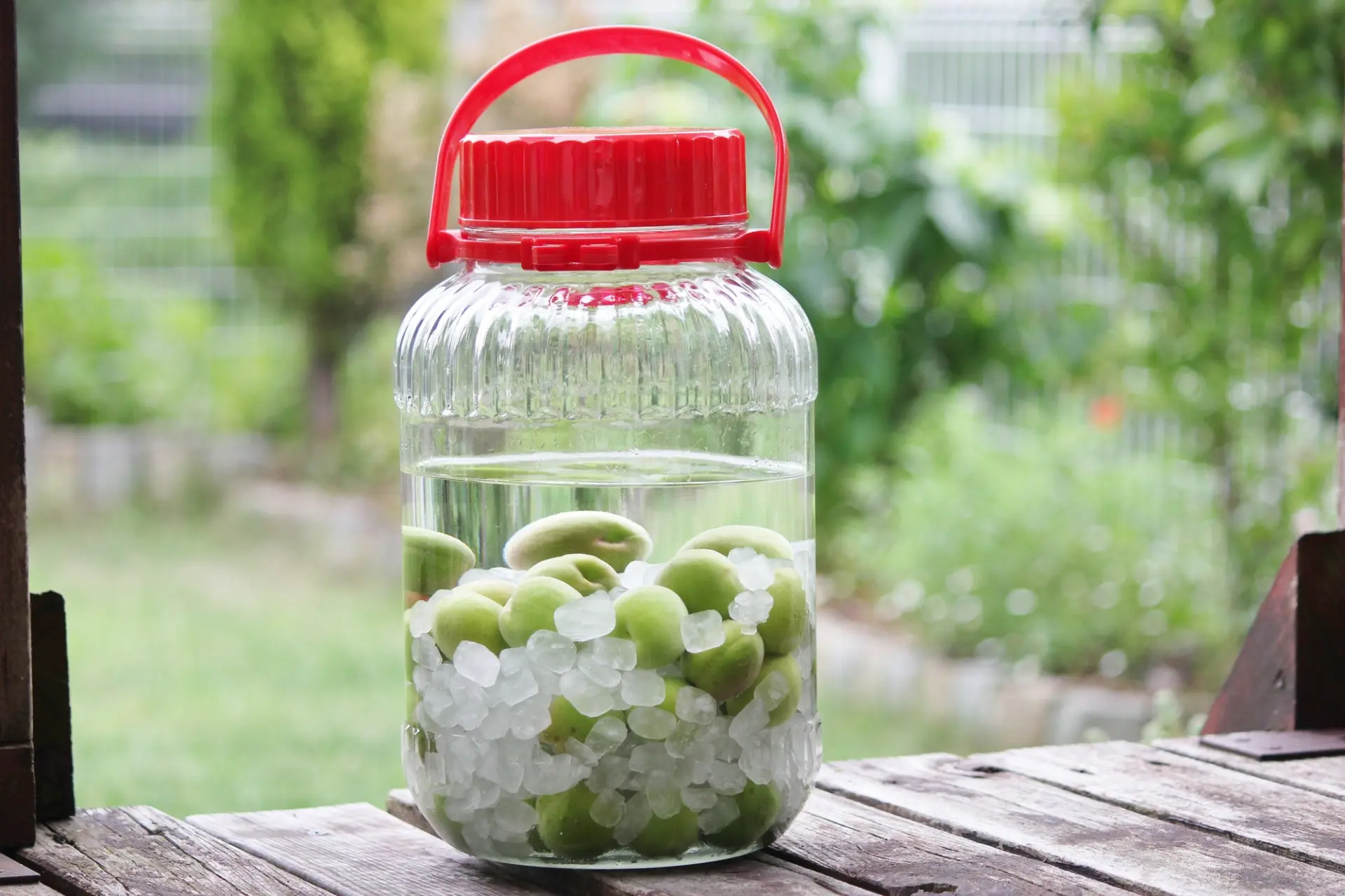
Store it in a dark place away from direct sunlight, where the temperature stays relatively stable. You can start drinking the umeshu one month after preparing it, but it is recommended to wait until around three months later, when aging has progressed further. Because it is so easy to make, umeshu has become one of the most familiar alcoholic drinks for Japanese people.
An Umeshu-Making Experience Facility Produced by CHOYA
CHOYA UME STUDIO-Kyoto Sanjo-
There is an experience facility in Nakagyo Ward, Kyoto City, where you can actually make umeshu or ume syrup yourself. It is called “CHOYA UME STUDIO-Kyoto Sanjo-,” produced by CHOYA, the company that helped spark the umeshu boom. It was launched with the hope that younger generations who are not very familiar with umeshu, as well as international visitors, would discover the appeal of plums and umeshu.
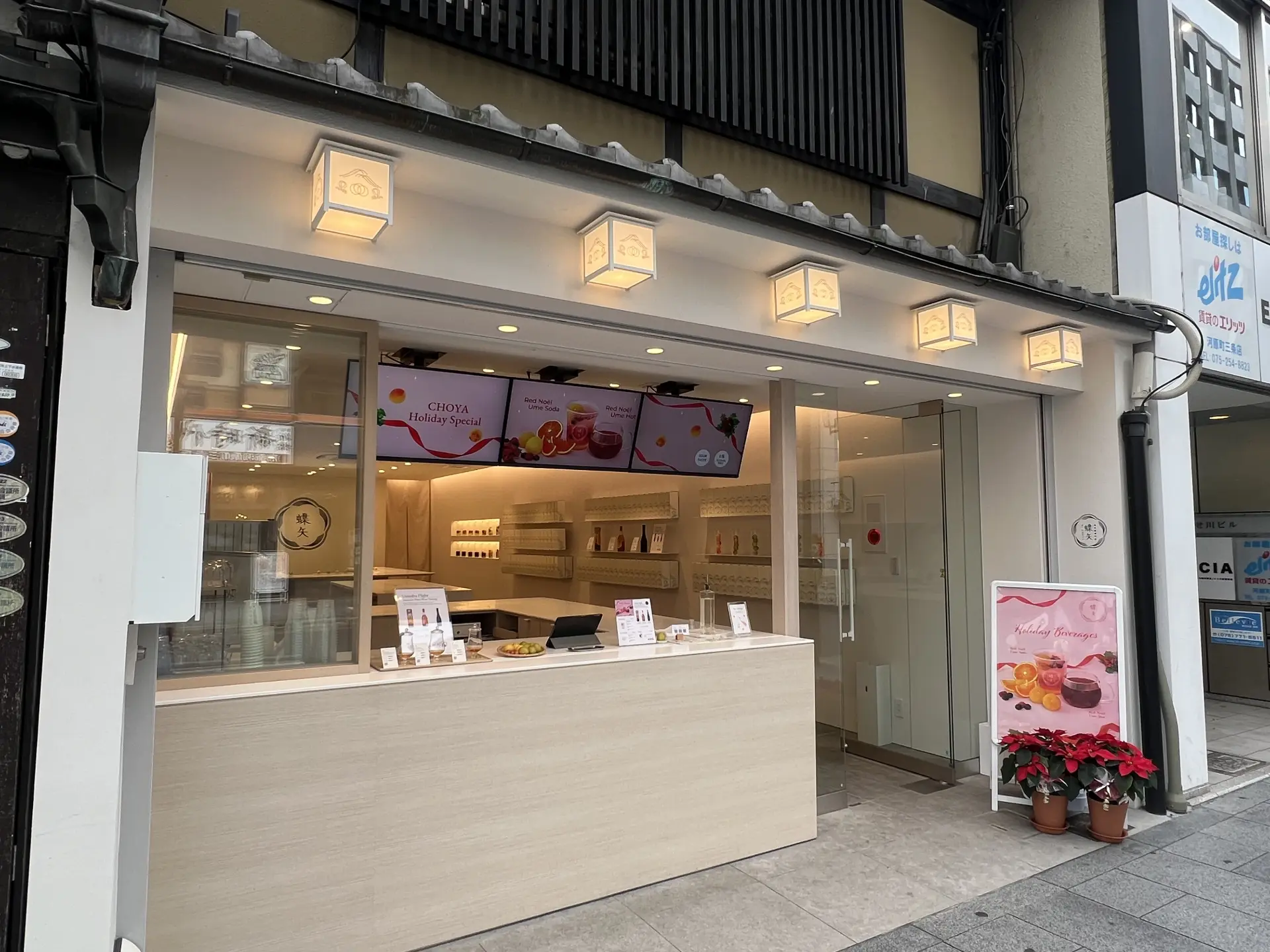
It is about a 3-minute walk west along Sanjo Street from Kyoto-Sanjo Station. It opened on June 11, 2025, to coincide with Nyubai, one of Japan’s traditional seasonal markers. The interior is very simple. With white as the main color, it features a beautiful design that feels distinctly Japanese. CHOYA operates several plum experience facilities in Japan, and a total of 180,000 people have experienced making umeshu or ume syrup so far. The average reservation倍率 was an astonishing 7 times (average from April 2024 to March 2025), making it an extremely popular experience. Because reservations had been difficult for international visitors to secure and guidance had mainly been in Japanese, the Kyoto Sanjo branch was newly opened as a store specializing in inbound visitors. This branch is equipped to serve international guests, and guidance is available in English. (Guidance in Japanese is also available, so Japanese guests can make reservations as well.) In addition to Japanese, pamphlets are also available in English and Traditional Chinese. Here, you can enjoy making umeshu or ume syrup, try a tasting comparison of umeshu, and purchase umeshu and plum drinks. The experiences are led by CHOYA’s “plum concierge,” who knows plums inside and out. It is a facility where you can enjoy a special range of plum experiences made possible only because it is produced by CHOYA.
Overview of CHOYA UME STUDIO-Kyoto Sanjo-
- Address
- 87 Nakajimacho, Higashi-iru, Kawaramachi, Sanjo-dori, Nakagyo-ku, Kyoto City
- Hours
- 10:00 am–7:00 pm
- Closed on
- Year-end and New Year holidays (December 30–January 3)
- Payment Methods
- Cash, cards, QR payments, e-money, etc.
- Official website
- Official website (Japanese)
Try Making Umeshu
Experience Overview
The most popular experience here is making umeshu.
<Umeshu-Making Experience>
- Admission
- 5,900 yen
- Duration
- 1 hour
- Capacity
- 10 people (up to 18 people maximum. Groups of 11 or more require a group reservation)
- Notes
- Reservations open from 2 months in advance.
- Official website
- Official website (Japanese)
(1) First, Learn About Plums and CHOYA
The experience space is located at the back of the facility. The CHOYA logo at the front immediately catches the eye. And right in front of you is a neat lineup of plums.
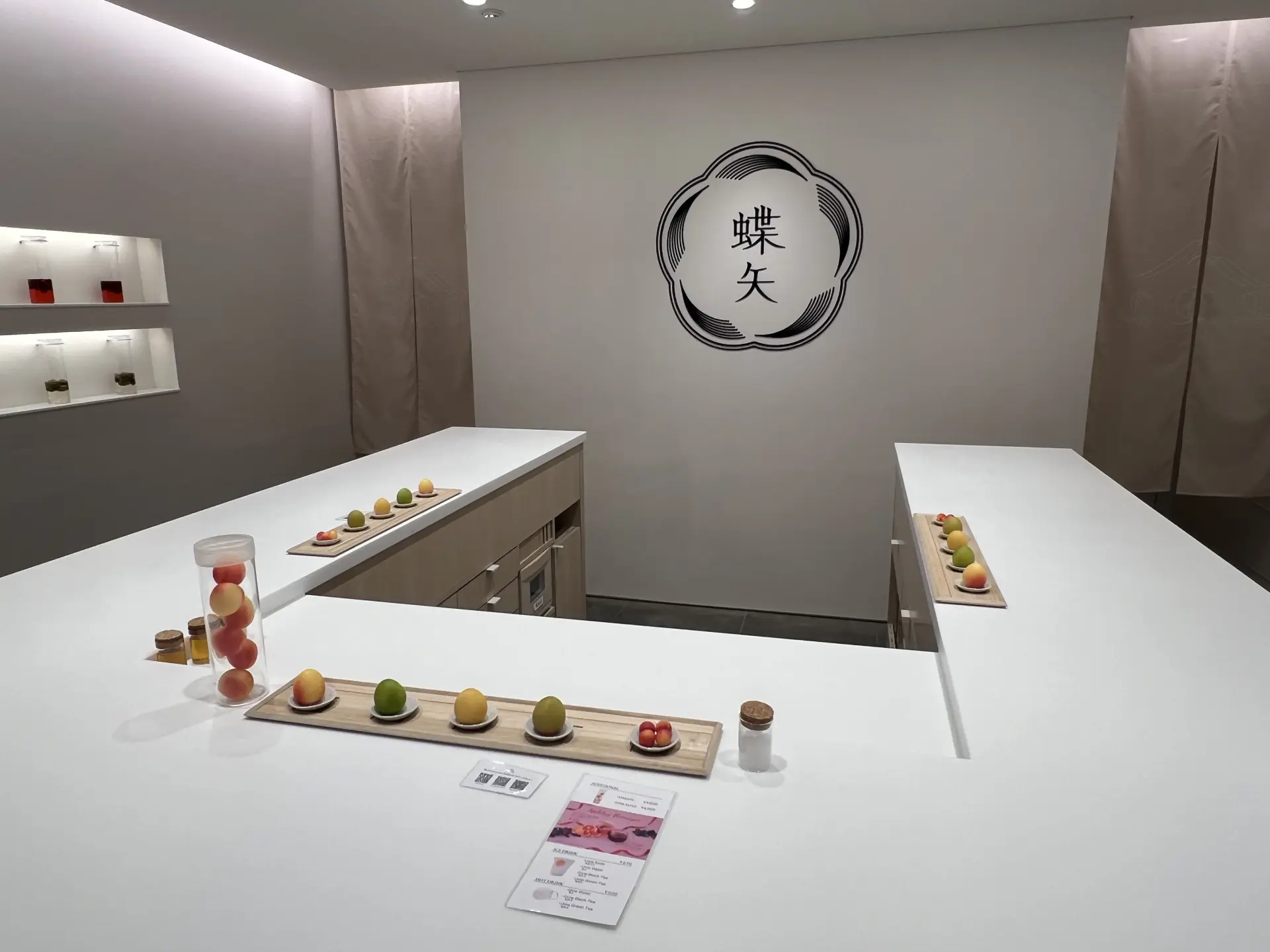
It is very intriguing, but before that, the plum concierge explains plums and CHOYA to you. In fact, this lecture about plums is offered only at the Kyoto Sanjo branch. One reason is that ume is completely different from the fruit known as plum in English, yet ume is often translated as “plum.” That shows just how little ume is recognized outside Japan. With the hope that visitors will gain a deeper understanding of the background and appeal of ume culture, this inbound-focused branch has incorporated a lecture about ume.
So, let’s get into that ume lecture right away. First, to everyone reading this article, have you ever actually seen ume blossoms? Japanese people are probably quite familiar with them, but international visitors may have seen cherry blossoms and never ume blossoms. They bloom around the same time in spring as cherry blossoms do, though ume bloom earlier, so seeing ume blossoms also lets you feel the arrival of spring. You can even look at ume blossoms preserved in herbarium liquid.
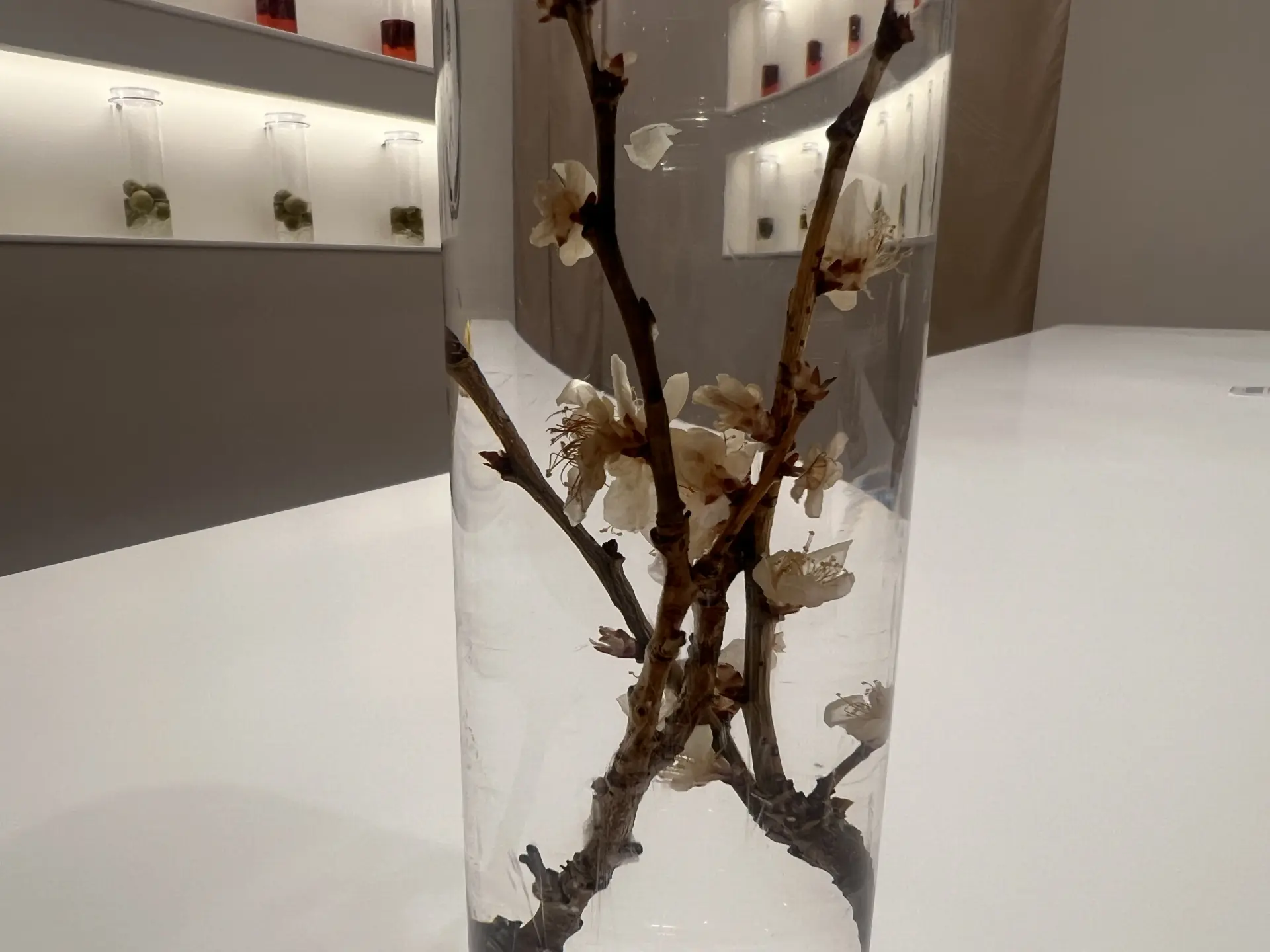
At a glance, they may look somewhat similar to cherry blossoms, but they are different flowers. However, the part used for umeshu is not the flower but the fruit. After seeing the blossoms, we looked at a pamphlet while learning that ume fruit was originally used as medicine, that processed ume products developed uniquely in Japan, and that umeshu was first made around 300 years ago in the late Edo period, when sugar was expensive and umeshu was therefore a luxury item. We also learned that CHOYA originally started as a grape farm and mainly produced wine, and that it later began making umeshu as a Japanese company seeking to create a distinctly Japanese alcoholic drink. We also heard that no additives are used at all in the umeshu-making process, and that it is made only with ume, sugar, and alcohol. As a welcome drink, we were given a tasting of “The CHOYA Aged One Year.”
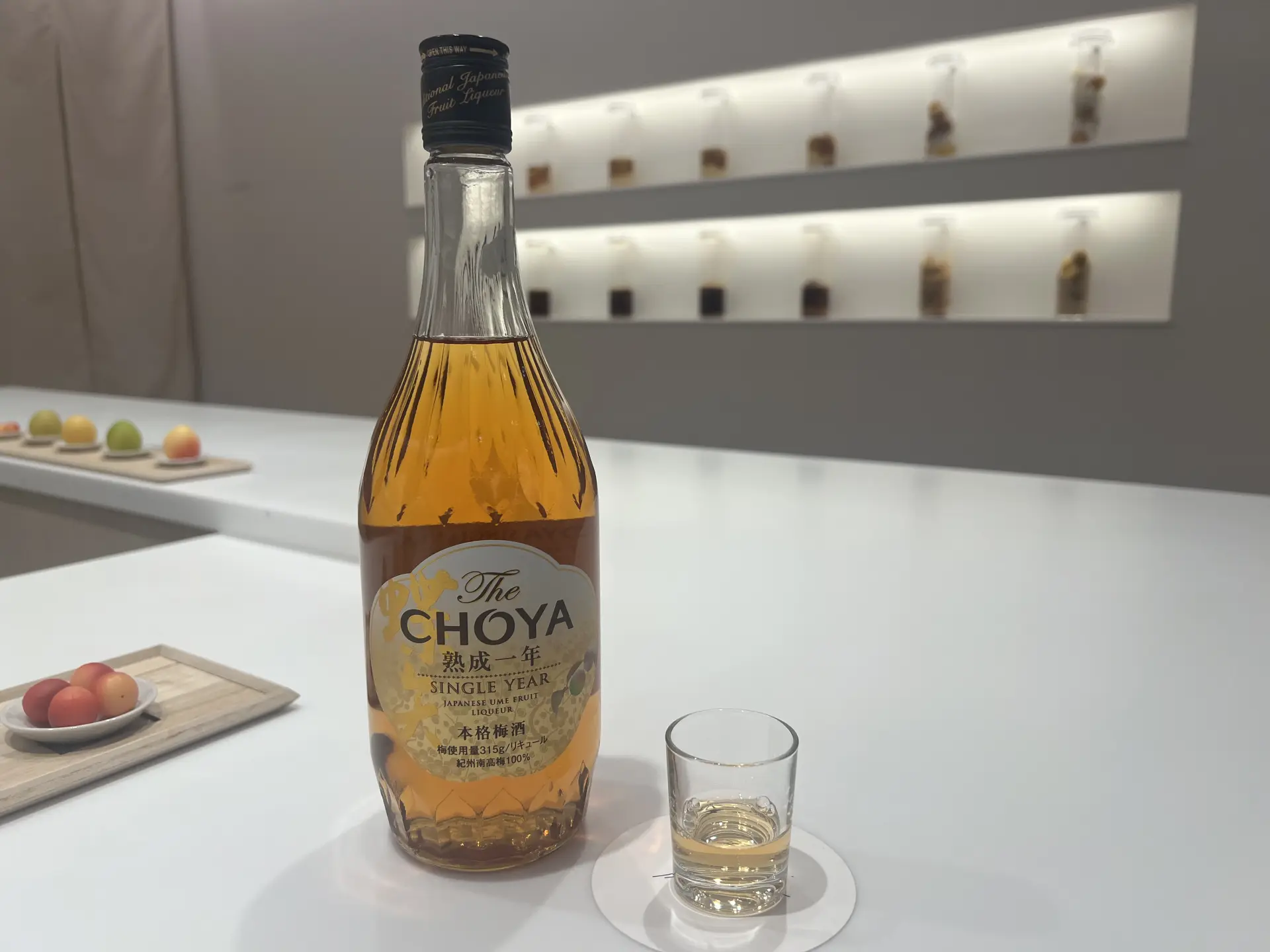
The sweet and tangy aroma of ume fills your mouth. CHOYA is an umeshu maker that almost every adult in Japan knows, but I had never known much about its background or the ideas behind its umeshu-making, so this was a great opportunity.
(2) Choose Your Ume!
You can choose from five types of ume. Generally, ume is in season around June. That is also when it is harvested, and once fully ripe, ume can spoil in just one day. But at this facility, you can make umeshu with ume fruit year-round. There is a secret behind that. Every June, fully ripe ume is flash-frozen immediately after harvest at -40°C. This makes it possible to produce umeshu even outside the ume season. The five varieties are Kanjuku Nanko, Shirokaga, Fukudayu, Oushuku, and Purple Queen.
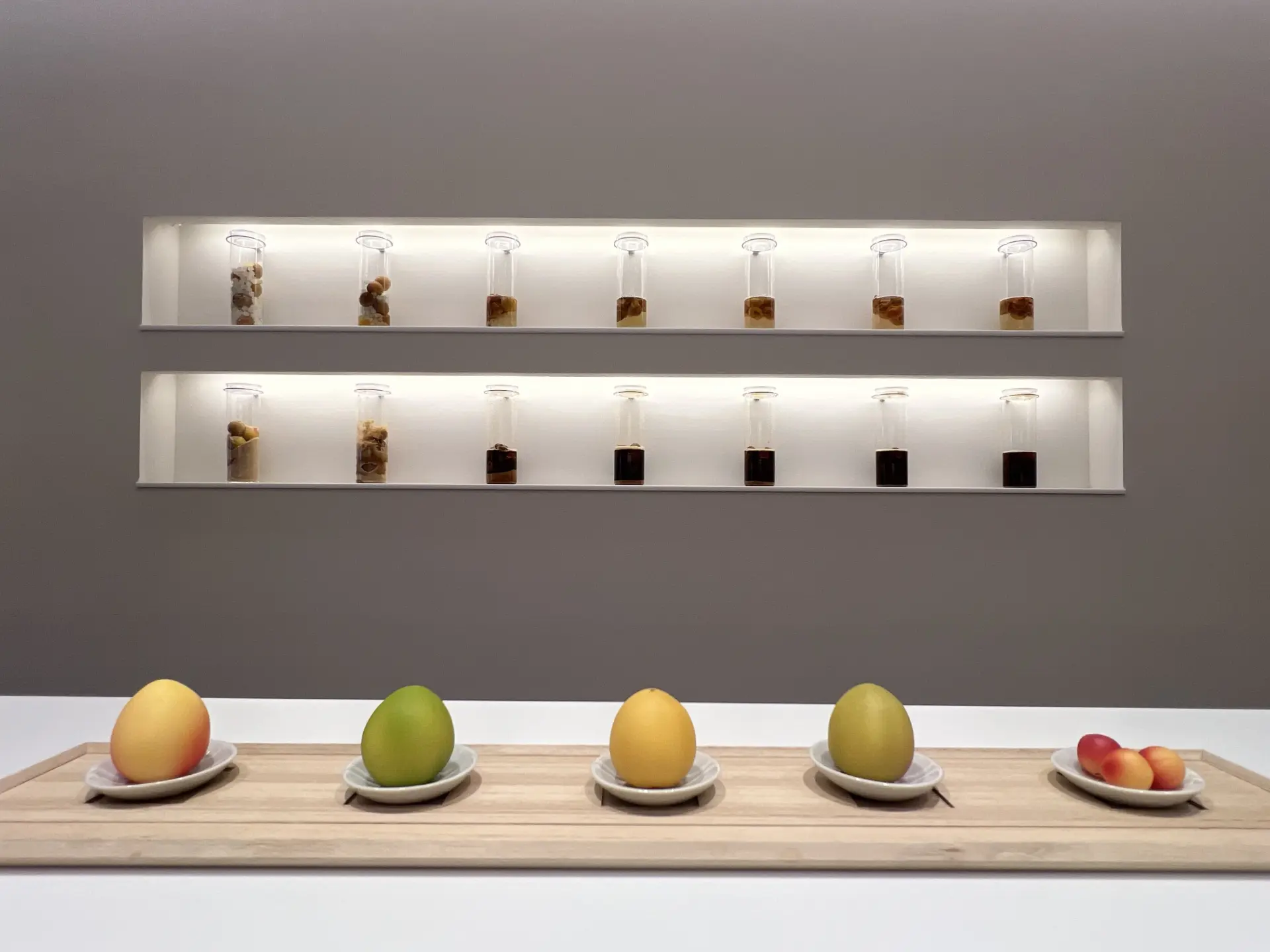
The plum concierge carefully explained the characteristics of each variety. Along with the explanations, we were also given ume syrup made with rock sugar to taste, which helped us imagine roughly what flavor each ume would produce.
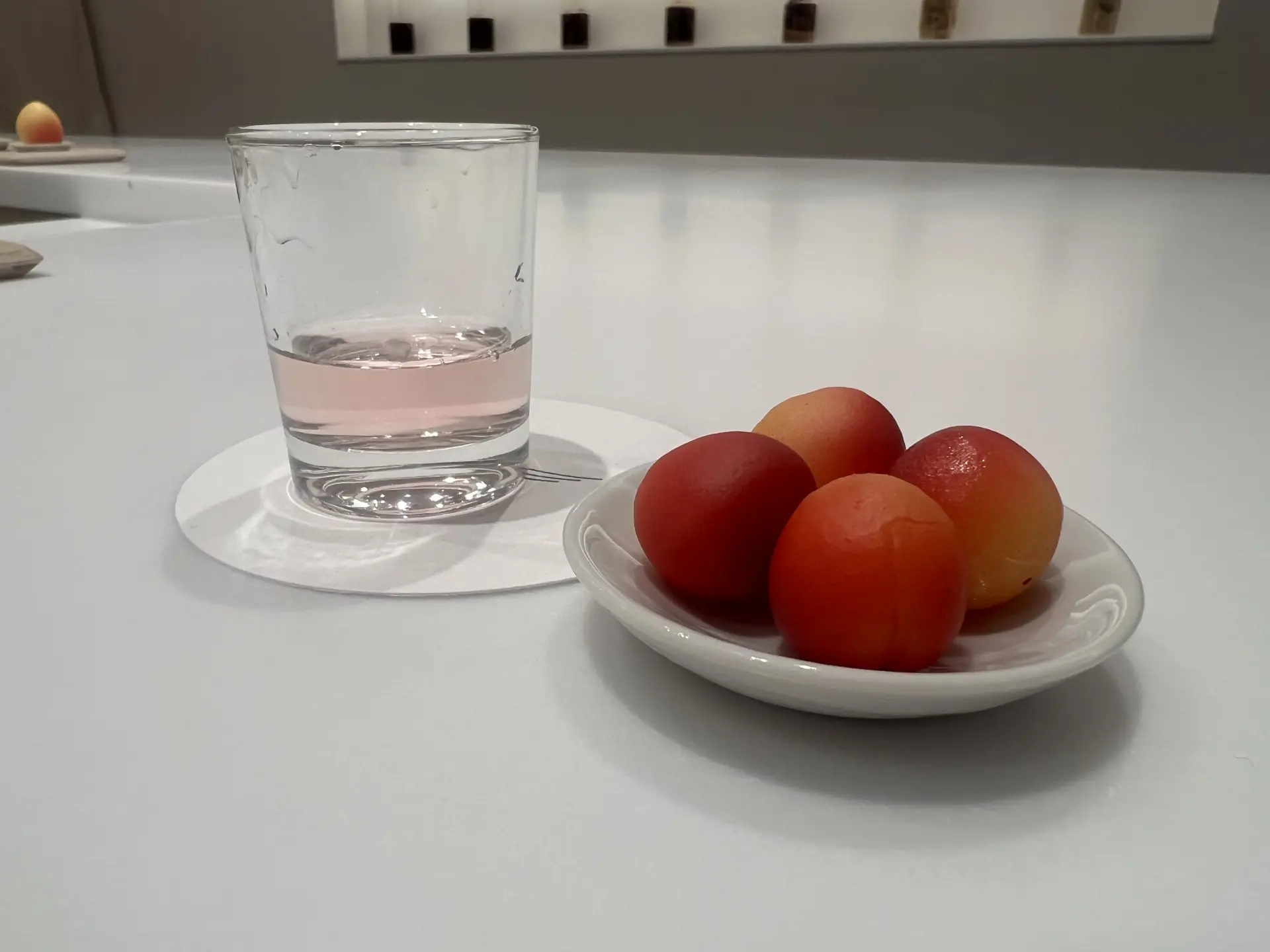
Kanjuku Nanko has a peach-like aroma and is very fruity, with a rich flavor. Shirokaga is known for its fresh, cherry blossom-like green aroma. It has strong acidity and a refreshing finish. Fukudayu is a ume variety developed 20 years ago by CHOYA’s contracted ume farmers, and it is characterized by aromas reminiscent of peach and banana and a sweet flavor. Oushuku is a ume variety that has existed in Japan for 700 years, and because of its cherry- and cherry blossom-like aroma and gentle flavor, it brings out the sweetness of the sugar and the aroma of the alcohol. Purple Queen tasted very sweet and tangy, with a cherry-like flavor. It was also the only small-sized variety among the ones offered this time, and its striking red color makes it especially photogenic. We were also told which sugar and alcohol pairings are recommended for each ume.
(3) Choose Your Sugar!
Next, you choose your sugar from five options: rock sugar, konpeito, beet sugar, organic agave syrup, and honey.
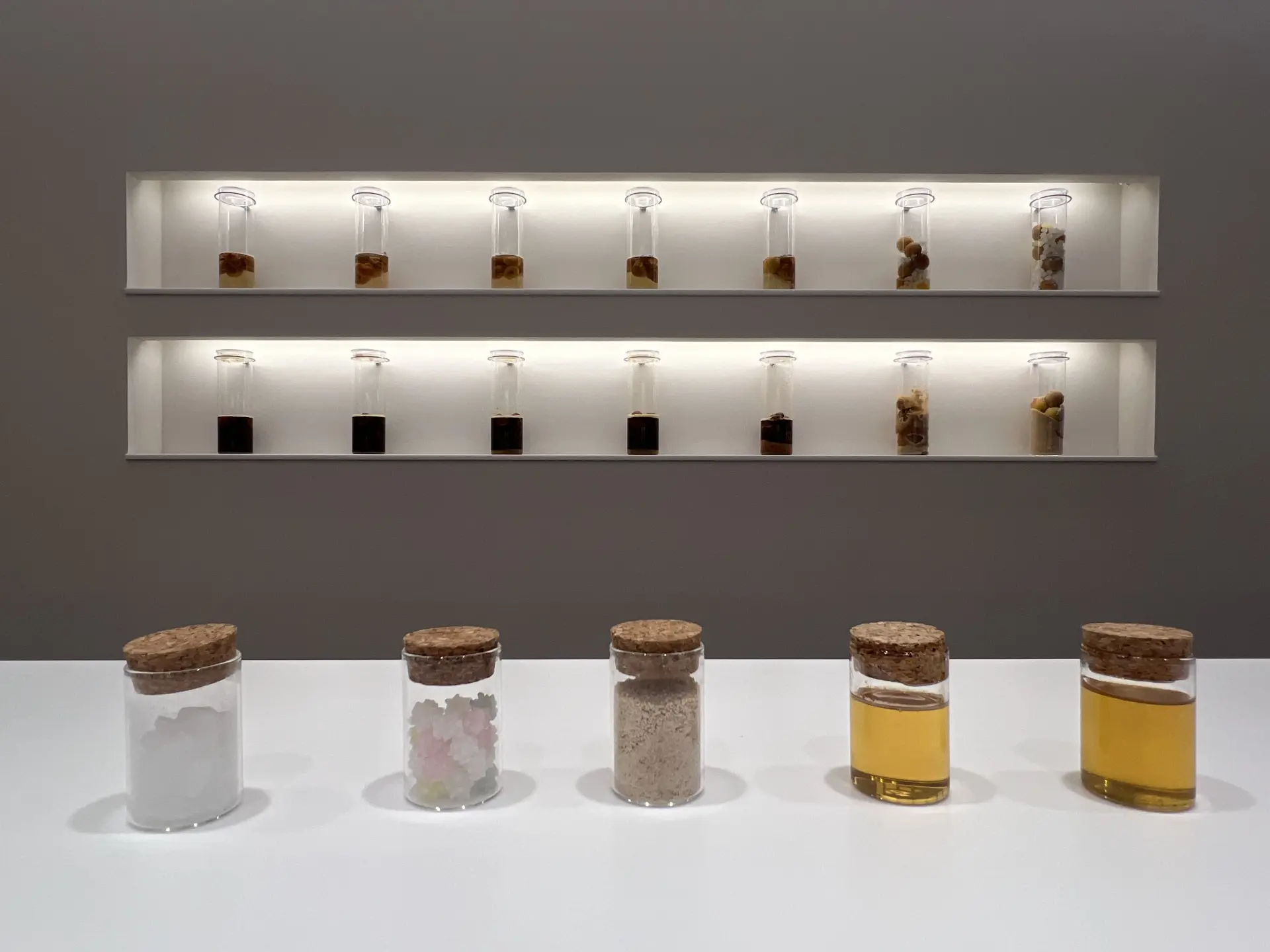
You are given an explanation while tasting each sugar in syrup form. All of the sugar syrups are ume syrups made by pairing each sweetener with Kanjuku Nanko.
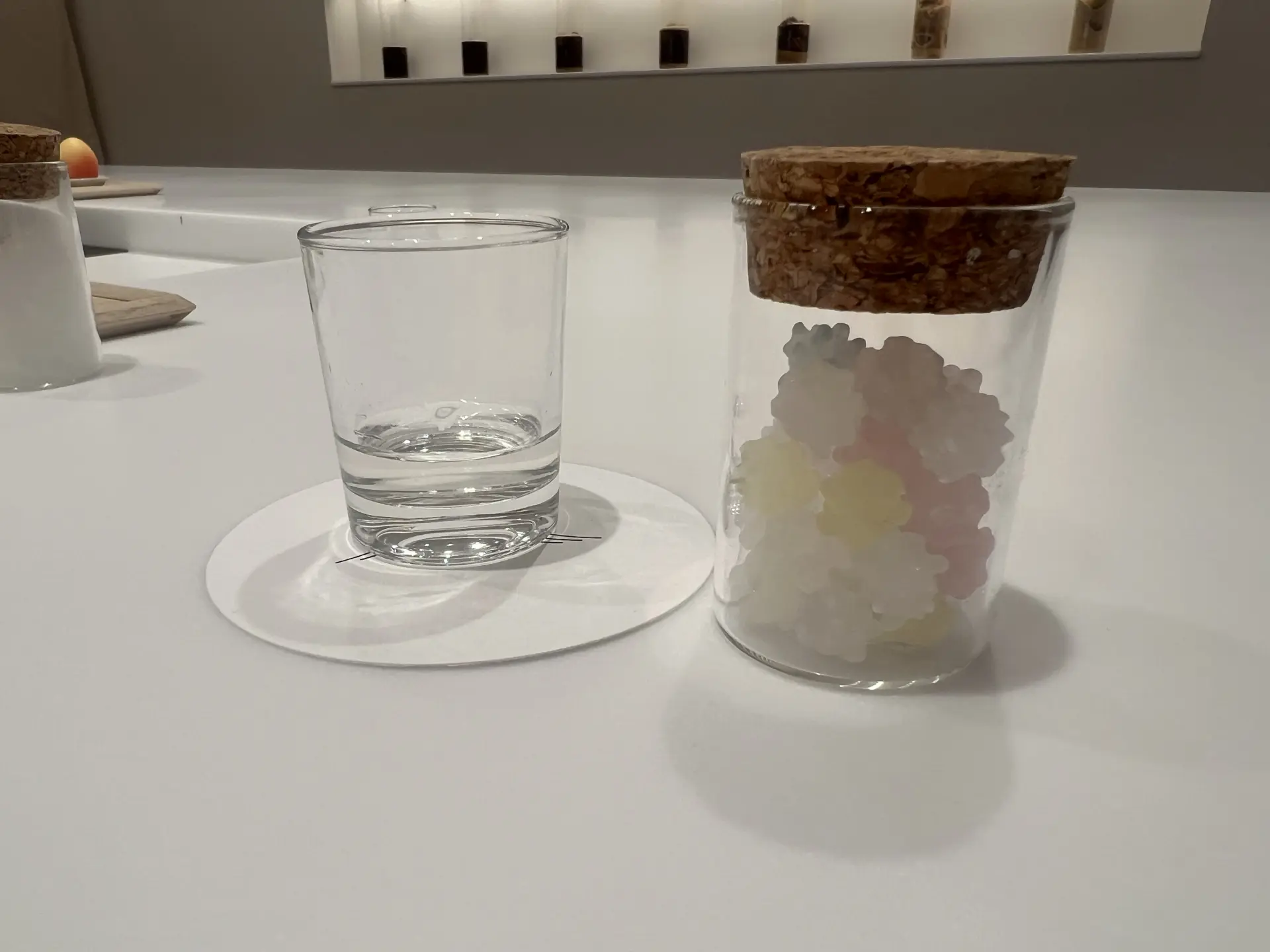
First is rock sugar, which is often used when making umeshu at home. Because it has no extra flavor or aroma, it highlights the natural character of the ume. All of the ume syrups served during the ume tasting are also made with this rock sugar. Konpeito is said to be the most popular choice because of its cute appearance. It is surprising that you can make umeshu using this traditional Japanese sugar candy. Beet sugar, which is similar to brown sugar and contains minerals, creates a roasted, full-bodied flavor. Because of that, it can develop a rich taste even with a shorter aging period. For health-conscious people, low-GI organic agave syrup is recommended. It is the second most popular choice. This sugar is also used in tequila, and the one used here is blue agave from Mexico. CHOYA’s non-alcoholic umeshu drink “Yowanai Umeshu” also uses agave syrup. The honey used here is Argentine multifloral honey. Its defining characteristic is a mellow finish.
(4) Choose Your Alcohol!
Finally, you choose your alcohol from four options: vodka, gin, white rum, and brandy. Vodka has no extra flavor or aroma, so it brings out the natural taste of the ume. Gin is made from botanicals, so it has a herbal aroma and results in a clean, refreshing flavor. White rum is known for its sweet, vanilla-like aroma and is said to appeal to people who enjoy sweeter alcoholic drinks. Brandy is made from grapes, so it also pairs very well with ume. It creates a fruity flavor with depth and a sense of maturity, and especially when paired with beet sugar, it develops an even more aged character in a shorter period of time.
(5) Let’s Make Umeshu!
Now it is time to decide which ume, sugar, and alcohol to use. Since there are 5 × 5 × 4 combinations, you can make 100 different kinds of umeshu, so it is not an easy choice. Apparently, many people spend quite a bit of time deciding here, and for those people, the recommendation is to make an extra bottle. You can make as many as you want, and it is not uncommon for people to decide on the spot to add another one. It is a special opportunity, so if you cannot choose just one, definitely try making one more, or even two more!
This time, I chose ume: Shirokaga, sugar: konpeito, and alcohol: white rum. To make sure I would not forget what I selected, I checked the checklist on the “My Bottle Sheet.”
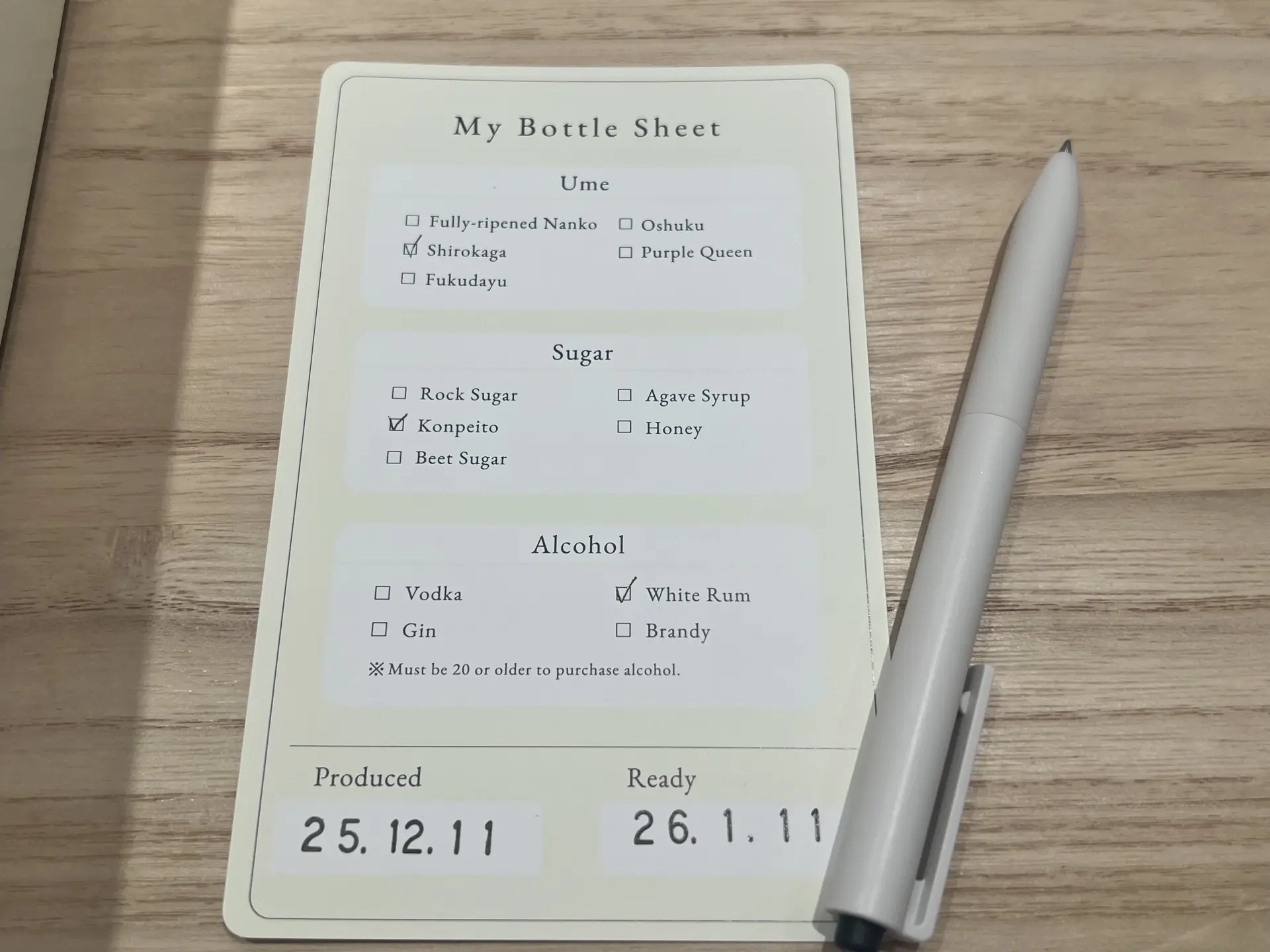
The sheet also shows the date the umeshu was prepared and the date you can start drinking it, so make sure not to lose it.
Once you finish checking the sheet, the ume and sugar are brought to you.
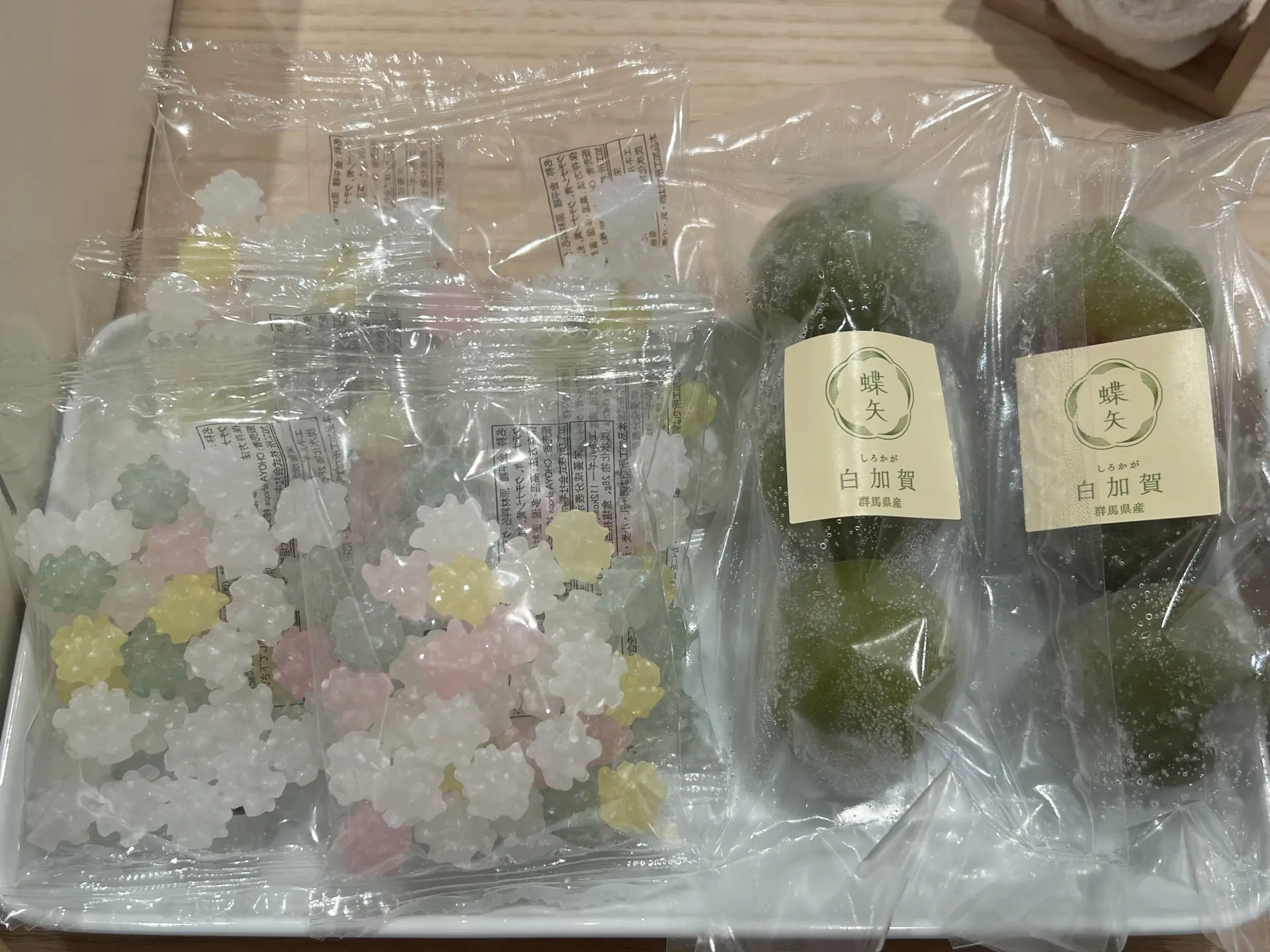
First comes the prep work for the ume. Open the bag and place all the ume onto the tray. Then remove the stems. If you insert a stick at the base of the stem and lift it using leverage, it comes off easily.
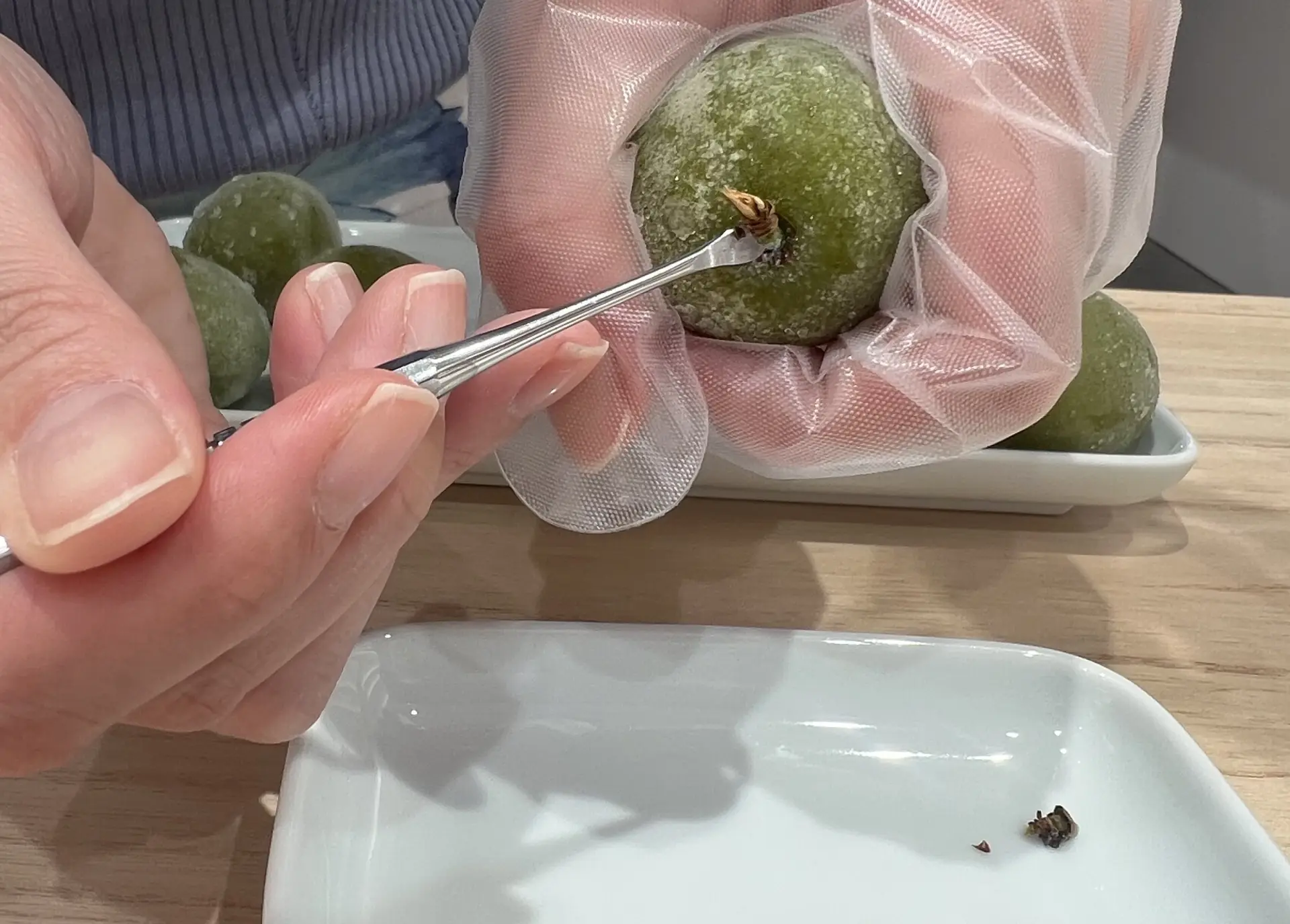
If you force it off, the ume may get damaged and make the umeshu cloudy, so if it is hard to remove, there is no need to force it. Next, after placing one ume into the bottle, add one packet of konpeito.
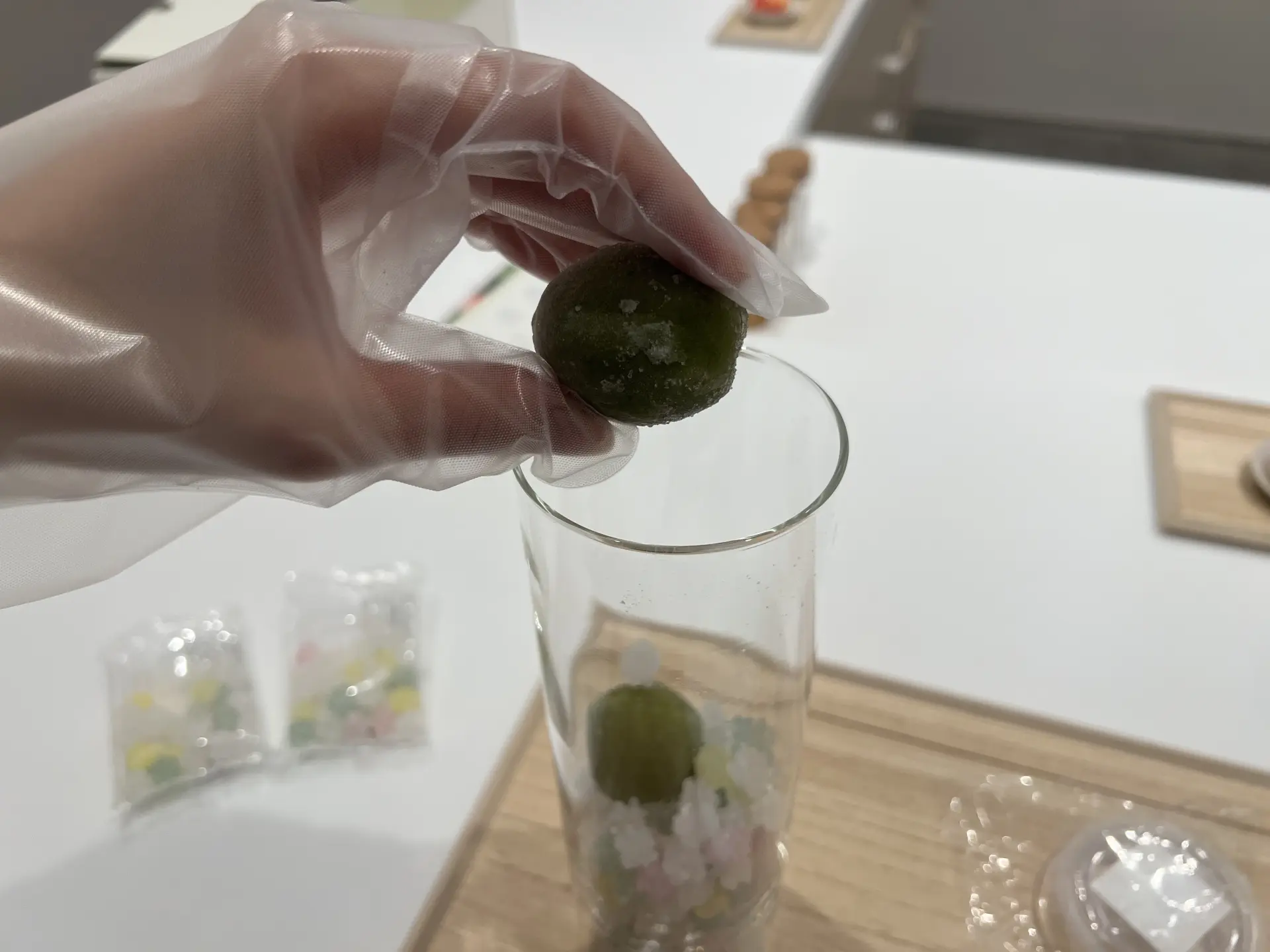
Then add another ume, then one more packet of konpeito... Repeat this alternately until everything is in the bottle.
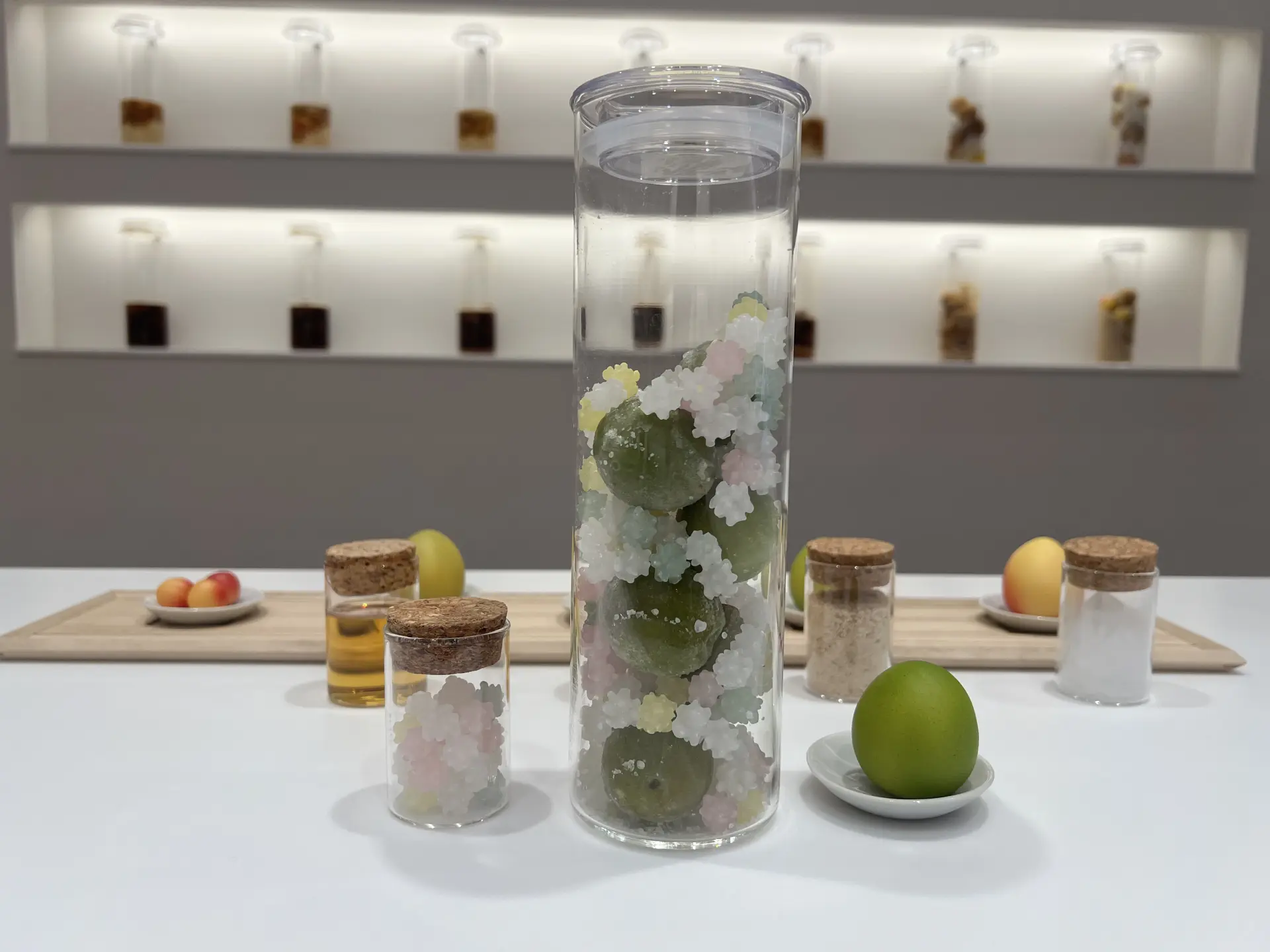
Finally, pour in the white rum.
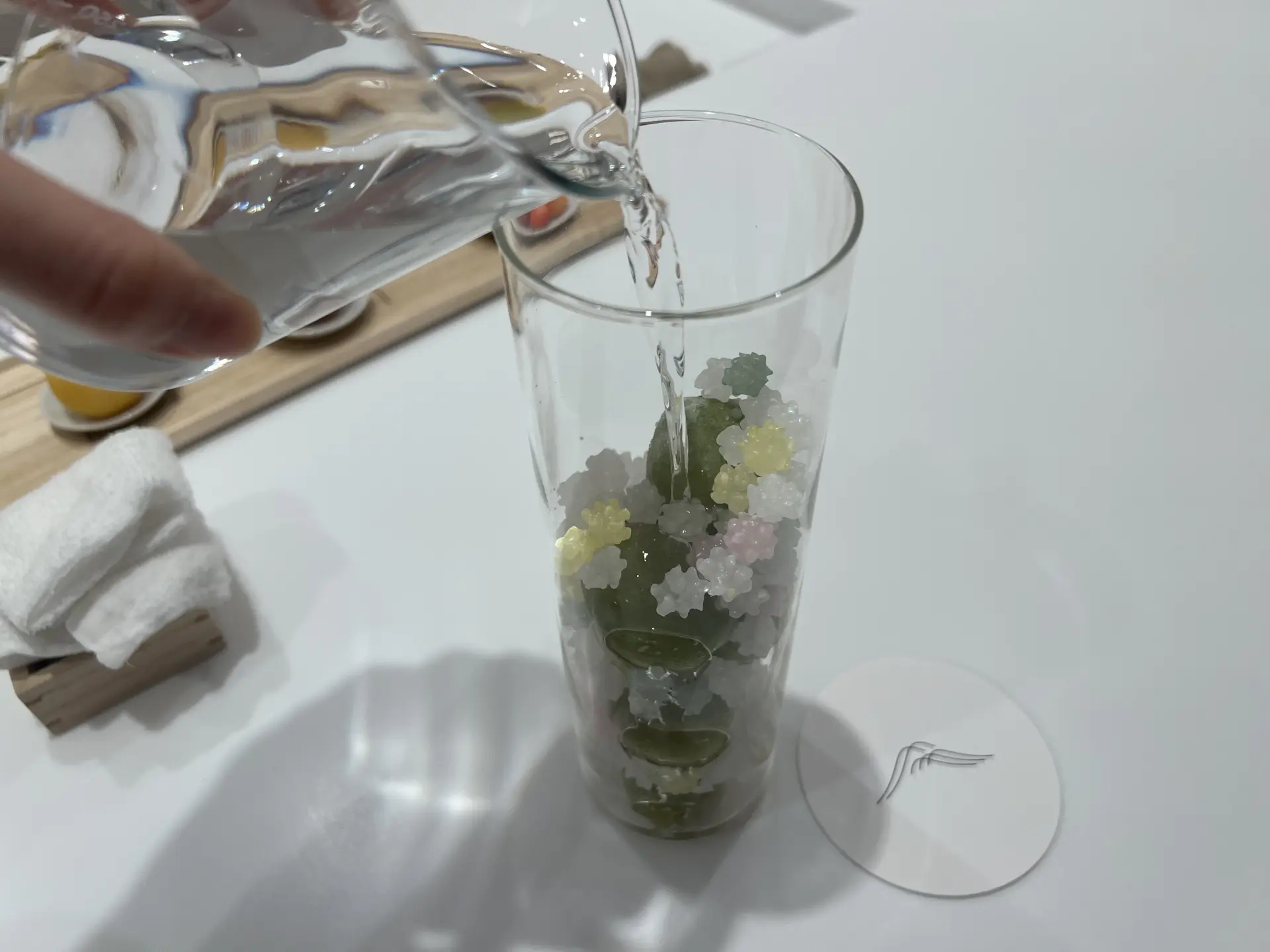
That is all for the work. After sealing it, take it home and let your umeshu mature.
To help you carry it home without spilling, it comes with a fully airtight silicone cap.
(Kyoto Sanjo branch only) To prevent the liquid from spilling, be sure not to remove the silicone cap until you return home. For the first two weeks, when stirring is required, you can keep using the silicone cap. After that, replace it with the regular lid, which is also provided. This helps the aging process proceed more smoothly.
(6) Let Your Umeshu Mature!
Once you take it home, be sure to store it away from direct sunlight. For the first two weeks, hold the upper part of the bottle once a day and gently swirl it in a circular motion. Be sure to do this every day. After two weeks, let it continue aging at room temperature. If the sugar has not fully dissolved even after two weeks, continue the once-a-day swirling process. Resist the urge to drink it too early, and after one month, it is ready!
-
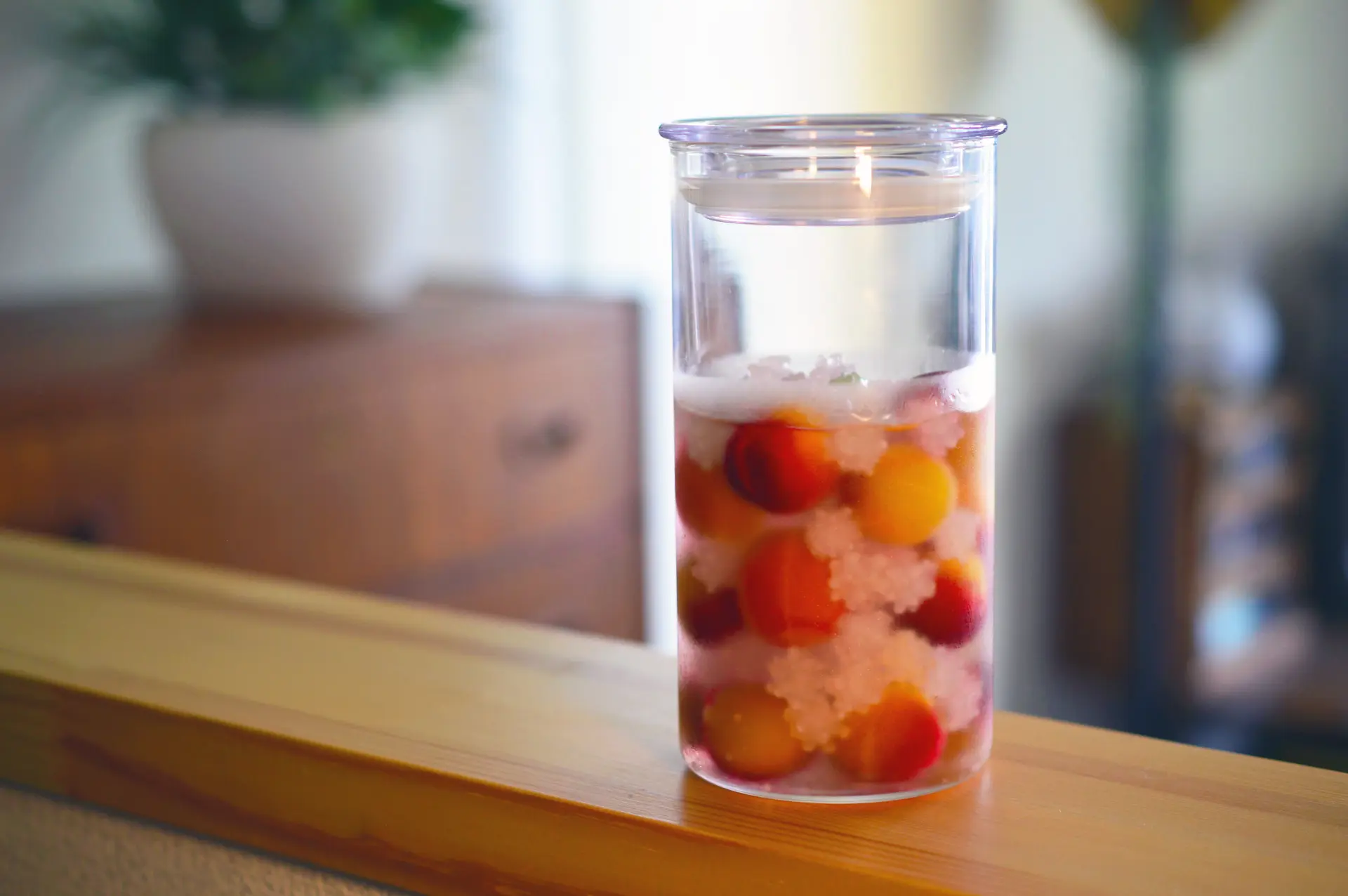
The sugar has fully dissolved, and aging progresses
-
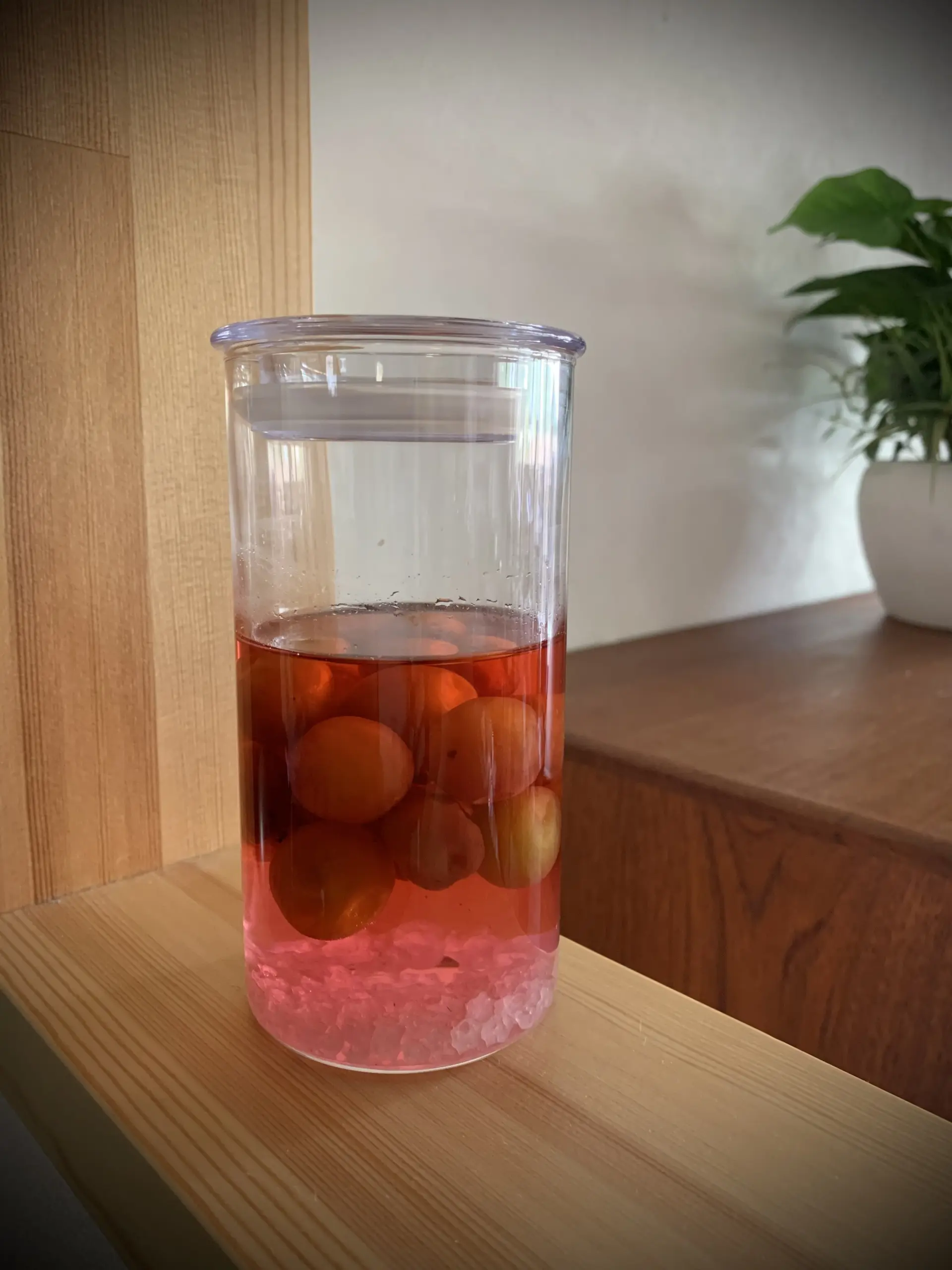
The sugar has fully dissolved, and aging progresses
-
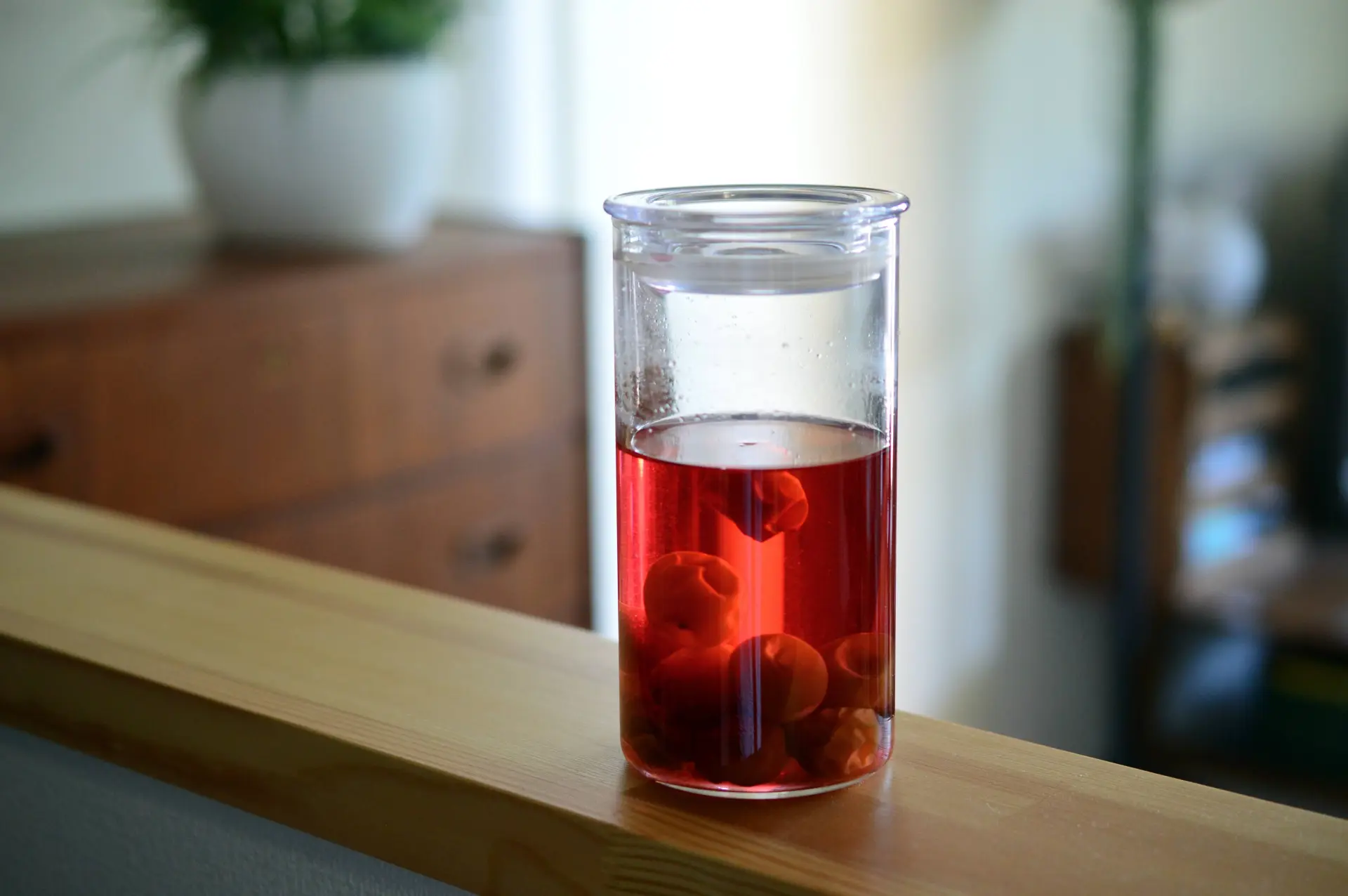
The sugar has fully dissolved, and aging progresses
-
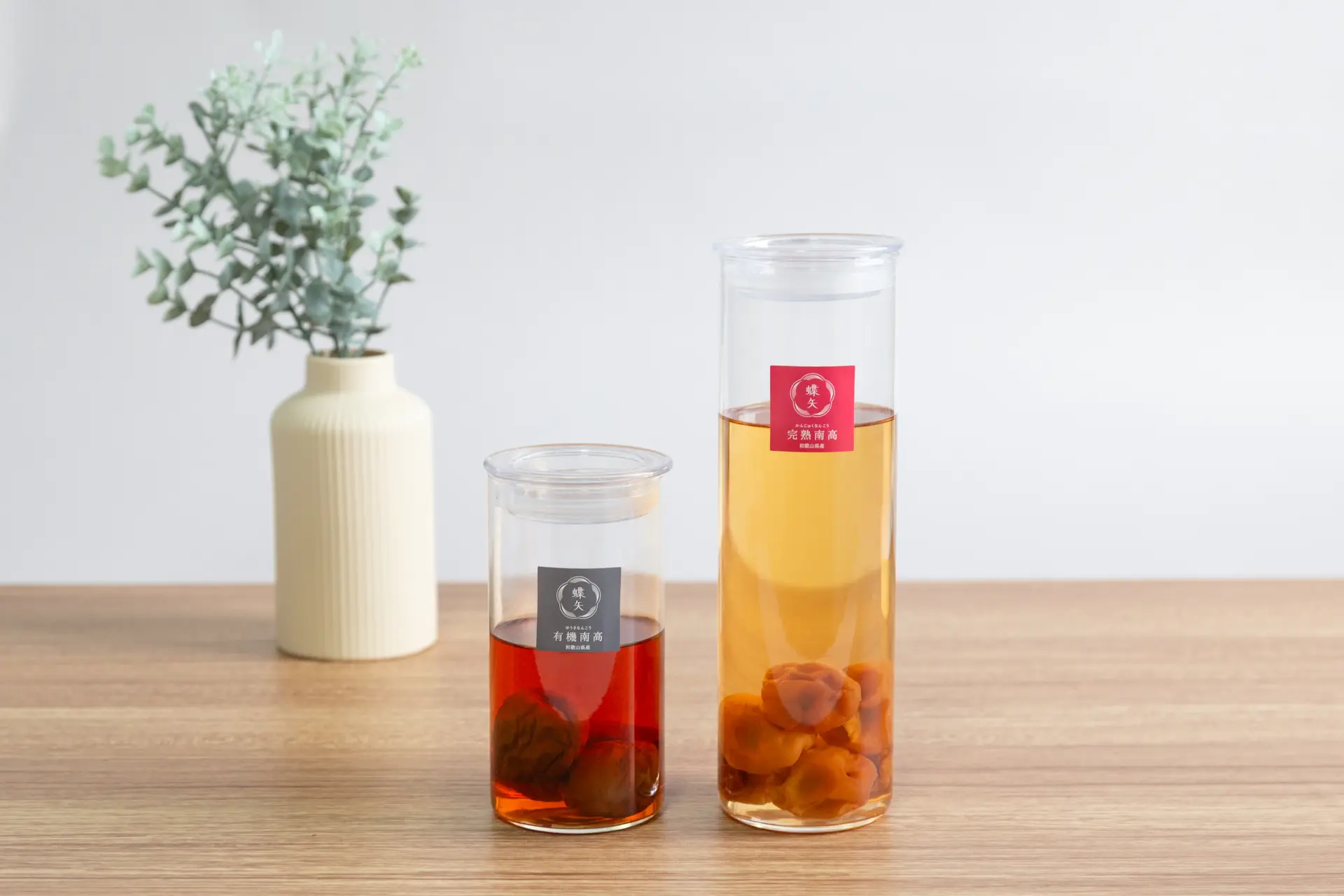
The sugar has fully dissolved, and aging progresses
Once it is ready, enjoy it at your preferred strength. You can drink it straight, on the rocks, or mixed with water or soda. Umeshu also has no expiration date. Drinking it after one month of aging is great, but aging continues after that, so it is also recommended to leave it for a few more months and then try it again to enjoy how the flavor deepens. It is also fun to make several bottles using different ume, sugars, and alcohols so you can compare the differences in taste. I ended up with a favorite bottle that lets me fully enjoy the rich flavor of ume!
Try using the umeshu and pickled ume fruit you made yourself to take on different recipes at home too!
Ume Recipes - Ume Experience Specialty Store “Choya”
More Ume Experiences
Ume Syrup-Making Experience
In addition to making umeshu, you can also try making non-alcoholic ume syrup. For this experience, you choose one from the same five ume varieties and one from the same five types of sugar used for the umeshu experience, then place the ume and sugar alternately into the bottle in the same way. No alcohol is added at the end. Ume syrup is also completed by mixing it well once a day for one week at room temperature. After it is ready, store it in the refrigerator and drink it as soon as possible. Dilute it 4 times with water, soda, or whatever you like before drinking.
<Ume Syrup-Making Experience>
- Admission
- 4,900 yen
- Duration
- 1 hour
Umeshu Tasting Comparison Experience
There is also a tasting comparison experience where you can sample 20 ml each of different umeshu. No reservation is required, and you can simply visit the shop on the day. There are three kinds of umeshu available for comparison.
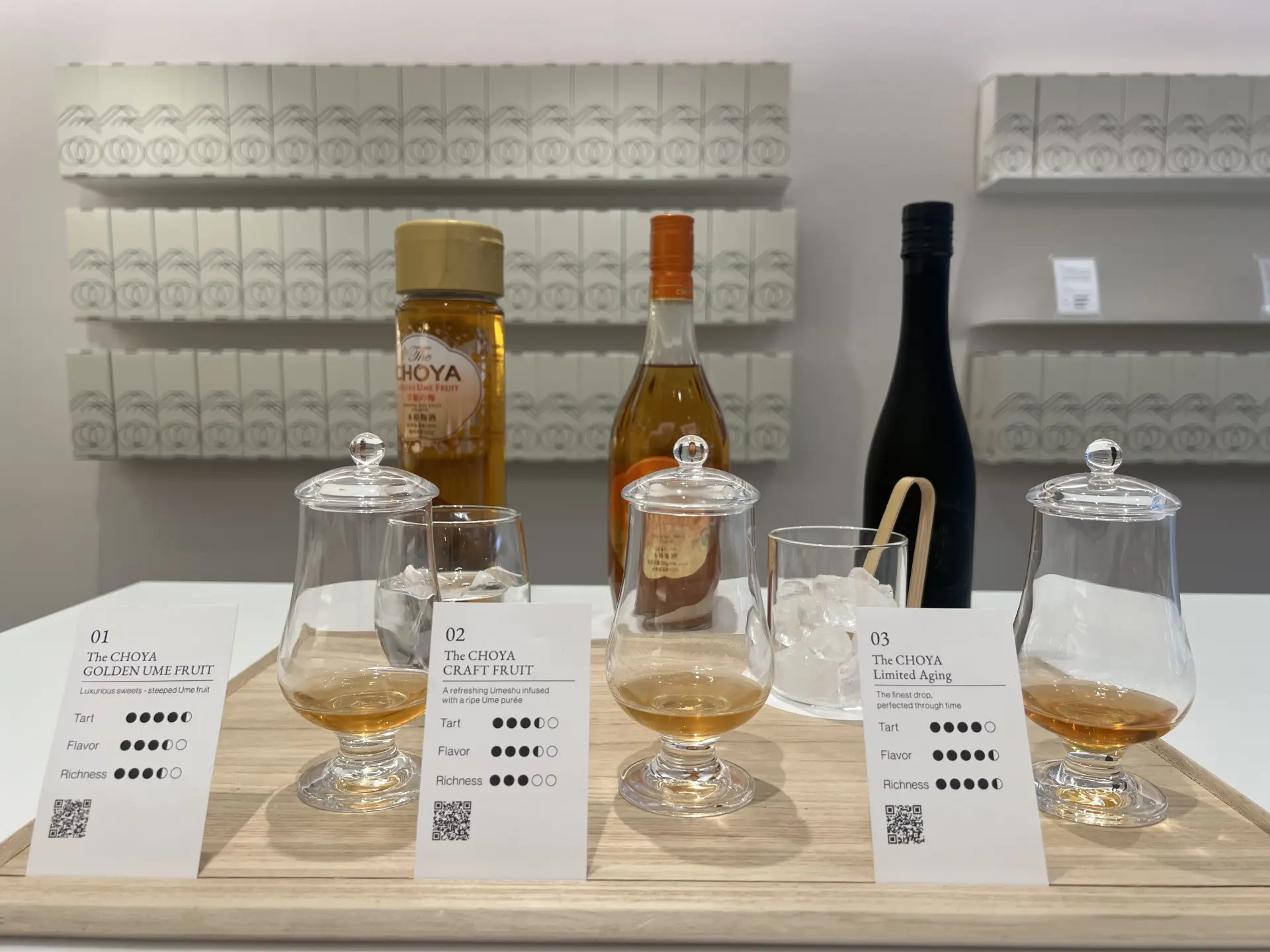
The one on the left in the photo, “The CHOYA Shigoku no Ume,” is made by steeping thick-fleshed Kishu-grown Nanko-ume with only sugar and spirits, then aging it for over one year. It is an umeshu with a rich aroma and powerful acidity. The one in the center is “The CHOYA CRAFT FRUIT,” with an alcohol content of 15%. It is made using fully ripe Kishu-grown ume that are flash-frozen at the peak of ripeness. It also contains puree made from strained Kishu-grown Nanko-ume flesh. When you take a sip, the smooth ume puree stands out, while the finish is tangy and refreshing. The third is “Choya Limited Aged,” shown on the right in the photo. This umeshu can be purchased at only three locations in Japan, and each store sells only five bottles per day. It is made by selecting one exceptional bottle from among as many as 450 types of base umeshu stored by CHOYA. At CHOYA, just like whisky production, multiple base umeshu are blended according to each product’s standards to adjust the flavor, but all 450 of these base umeshu have different tastes and aromas. This one is crafted using just a single outstanding base umeshu selected from among them. Be sure to try the tasting comparison and see how it tastes for yourself!
<Umeshu Tasting Comparison Experience>
- Admission
- 1,500 yen
- Duration
- 15–20 minutes
A Great Takeout Menu Too
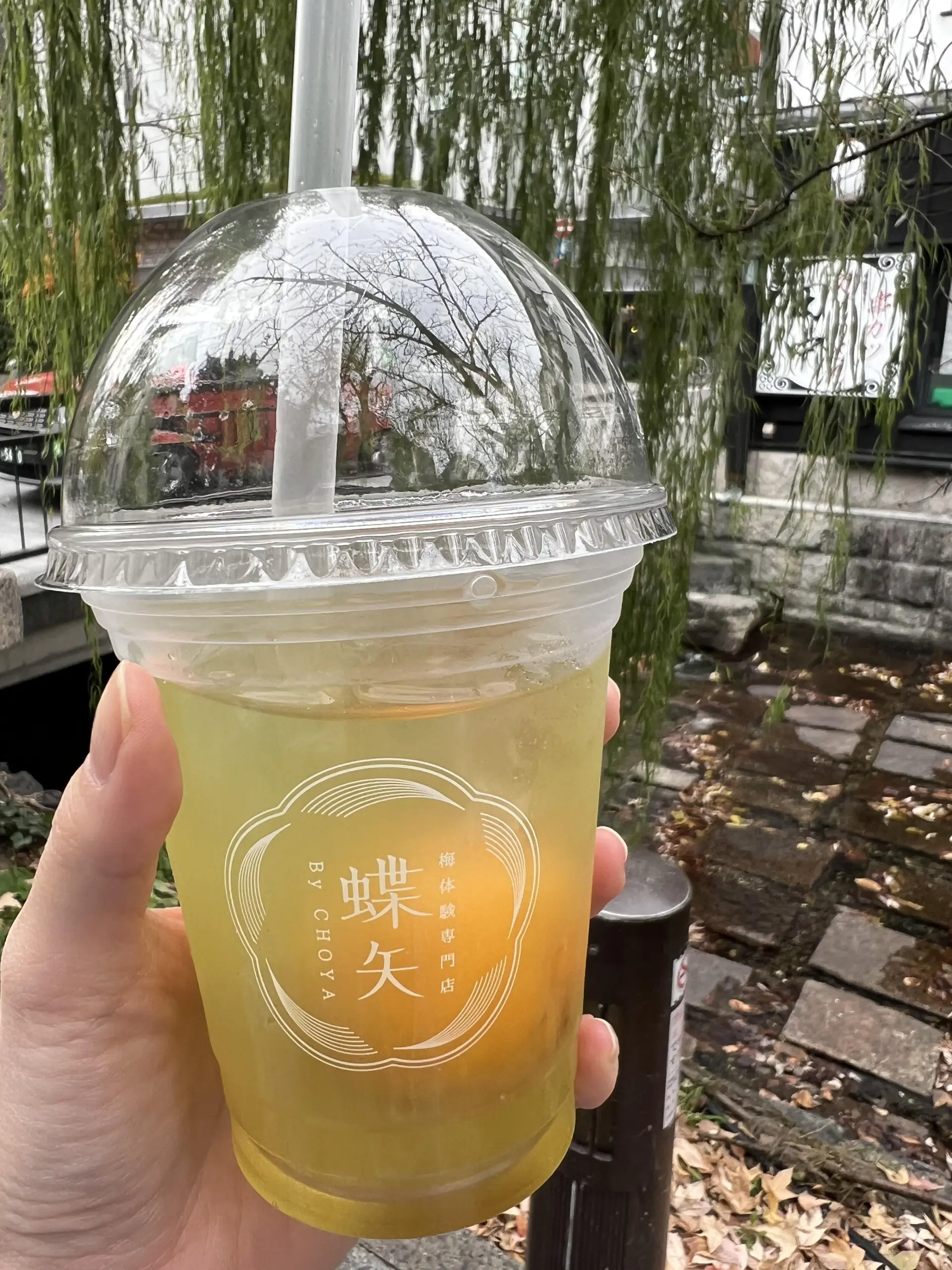
Takeout drinks containing a whole large fully ripe Nanko-ume are also popular. These drinks are made with unheated ume syrup sent directly from CHOYA’s factory as the base, then mixed with soda, green tea, black tea, and other mixers.
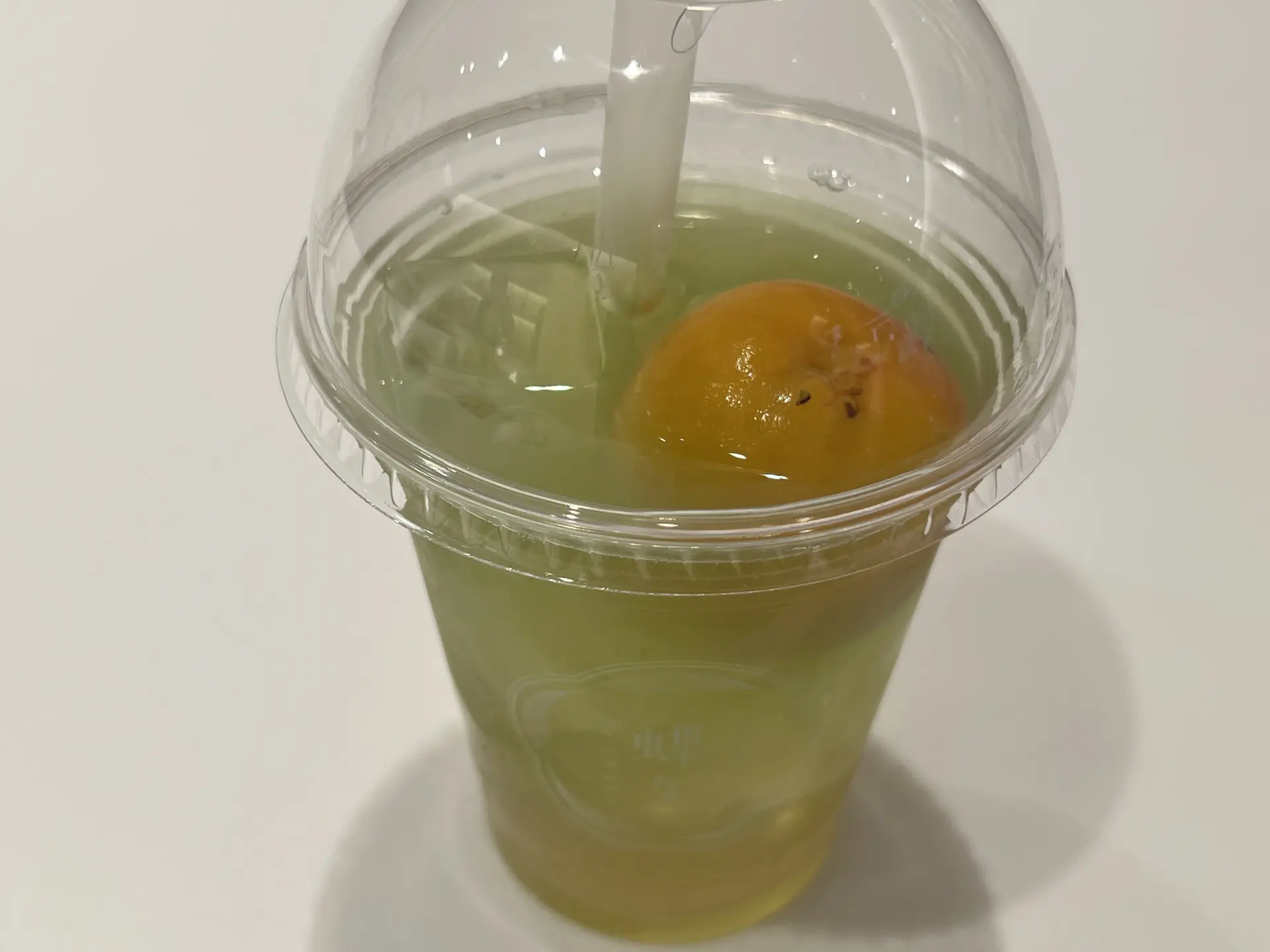
The most popular choice is the soda mix. It has the fresh aroma of juicy fully ripe Nanko-ume. The black tea mix is light and refreshing, yet you can still taste the sweetness of the ume in the iced tea. If you want a gentle sweet-tart flavor, the green tea mix is recommended. It also contains Uji matcha. If you want to enjoy the bright character and sweet-tartness of fully ripe Nanko-ume, the water mix is recommended.
Both iced and hot options are available, and there are also seasonal limited-time menu items. One recommended way to enjoy the drinks is to crush the whole ume fruit partway through drinking. When you do, more sweetness and acidity from the ume are released, giving the drink a different flavor. Taking a plum drink with you while strolling around Kyoto is highly recommended.
Take Umeshu Home as a Souvenir!
You can also buy umeshu to take home. The shop sells the same three types of umeshu that you can sample in the tasting comparison experience. Those are the three available here, but CHOYA’s umeshu can also be purchased at supermarkets and department stores. If you spot one, be sure to pick it up!
Sister Stores
The Kyoto Sanjo branch introduced here is the one specialized for inbound visitors, but there are two more experience facilities in Japan.
Kyoto Rokkaku Branch
- Address
-
〒604-8117
108 Horinoue-cho, Higashi-iru, Sakaimachi, Rokkaku-dori, Nakagyo-ku, Kyoto, Kyoto Prefecture
CASA ALA MODE ROKKAKU 1F - Hours
- 10:00 am - 7:00 pm
- Closed on
- Year-end and New Year holidays
- Payment Method
- Cash, cards, QR payments, e-money, etc.
- Access
-
Approx. 7-minute walk from Karasuma Oike Station (Karasuma Subway Line)
Approx. 8-minute walk from Karasuma Station (Hankyu Kyoto Line) or Shijo Station (Karasuma Subway Line) - Reservations
- Reservation site
Kamakura Branch
- Address
-
〒248-0012
11-7 Onarimachi, Kamakura, Kanagawa Prefecture
Kamakura Onarimachi Hakua 1F - Hours
- 10:00 am - 6:00 pm (until 7:00 pm on Saturdays and Sundays)
- Closed on
- Year-end and New Year holidays
- Payment Method
- Cash, cards, QR payments, e-money, etc.
- Access
- Approx. 1-minute walk from the west exit of Enoshima Electric Railway / JR Kamakura Station
- Reservations
- Reservation site
Summary
Ume is one of Japan’s iconic food cultures. From appreciating the blossoms and feeling the seasons to enjoying ume in everything from rice ball fillings to umeshu, there are many ways to experience it. Ume is something you rarely get to experience outside Japan, so through making umeshu, be sure to savor the care and thought packed into each fruit.

Author
Freelance Announcer
Sayaka Motomura
Focused on sharing insights related to traditional culture, performing arts, and history.