
A Complete Guide to Japanese Yakiniku: Enjoy It Even More with Deeper Knowledge!
Japan’s uniquely evolving yakiniku is one of the country’s proudest food cultures.
Starting with wagyu, a one-of-a-kind ingredient, quality, technique, and the overall dining experience come together at a very high level, creating a refined way of enjoying grilled meat.
This article offers a comprehensive look at the history of yakiniku in Japan, popular cuts, the characteristics of A5 wagyu, and more.
You’ll not only deepen your understanding, but also learn how to choose restaurants and cuts of meat, so by the time you finish reading, you’ll be ready for a richer yakiniku experience.
Use this guide as a reference and enjoy Japanese yakiniku to the fullest.
Japanese Yakiniku: Enjoy a Wide Variety of Cuts and Styles
Japanese yakiniku is basically a self-grill style, where diners adjust the doneness to their liking, and the variety of cuts served is extremely wide.
The menu includes not only beef, but also pork, chicken, seafood, and other options, and you can enjoy different sauces depending on the cut.
From here, we’ll take a closer look at the unique features of Japanese yakiniku.
1. A Style of Enjoying Meat by Cut, Grade, and Region
A key pleasure of the Japanese style is choosing “which cut, at which grade, and from which region.”
Menus feature a wide range of cuts, each with different textures and levels of fattiness, so what you order can completely change the meal.
Important factors also include the “grade” that indicates meat quality, such as A5 or A4, and the “region” where the cattle were raised, such as Kobe beef or Matsusaka beef.
Beyond that, you can make detailed choices based on price and satisfaction, giving you a high degree of freedom in how you combine your order.
Even the same cut can taste different depending on whether it is thick-cut or thin-cut, so every visit brings something new to discover.
In other words, one uniquely Japanese feature is that the enjoyment includes not only eating the meat, but also learning about it and finding your personal favorites.
2. A Comfortable Dining Experience with Smokeless Roasters
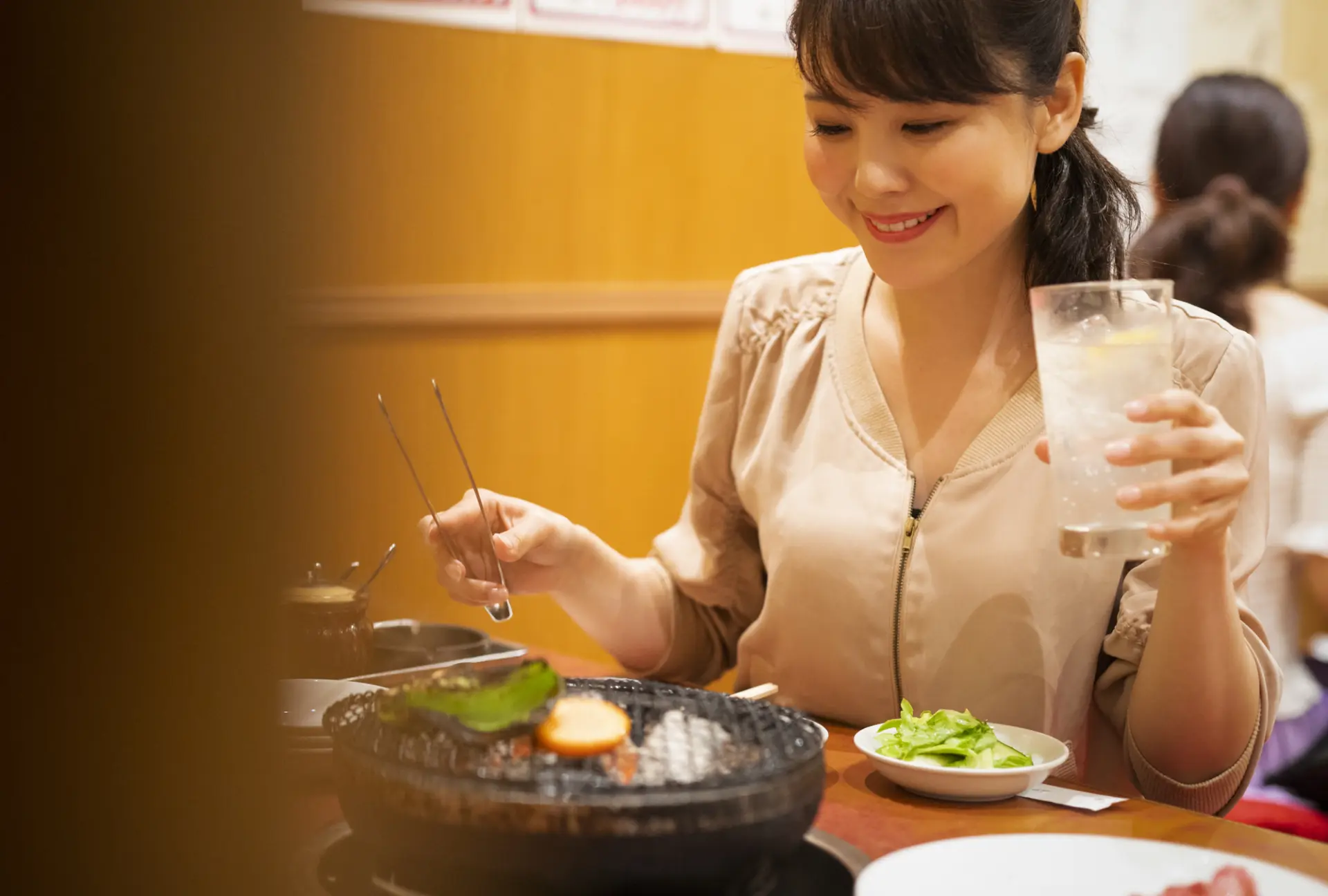
One essential part of Japanese yakiniku culture is the comfortable dining environment created by smokeless roasters.
In the early days of yakiniku restaurants, it was normal for smoke to fill the dining room and for the smell to cling to clothes and hair.
However, that changed dramatically in 1979, when a Japanese company developed the world’s first smokeless roaster.
With a special filter and exhaust system, it grills meat without losing flavor while greatly reducing smoke and odor around the table.
Today, it has become standard equipment at yakiniku restaurants across Japan, creating a clean and comfortable setting well suited to dates and family meals.

3. A Wide Range of Restaurant Styles, from Luxury Dining to Solo Yakiniku
The yakiniku experience in Japan can vary greatly depending on the type of restaurant.
As shown below, there is a wide range of formats, including luxury restaurants, casual chain restaurants, all-you-can-eat spots, and solo yakiniku specialty restaurants.
That is why Japanese people enjoy yakiniku in so many different situations.
| Type | Features |
|---|---|
| Luxury restaurants |
・Enjoy rare wagyu cuts as part of a course meal ・The staff guides you through the order of the meat and how to grill it |
| Casual chain restaurants |
・Enjoy classic cuts at reasonable prices ・Suitable for everyday use regardless of group size or age |
| All-you-can-eat restaurants |
・Enjoy as many items from the menu as you like within the time limit ・Easy to budget for and ideal when you want to eat until you are full |
| Solo yakiniku specialty restaurants |
・Eat at your own pace without worrying about others ・Good for quick visits and solo diners |
How It Differs from Korean BBQ
Japanese yakiniku and Korean BBQ differ in many ways, including seasoning, the types of meat used, and how they are enjoyed.
The table below summarizes the differences in a comparative format.
Put simply, Japanese-style yakiniku is “beef-centered grilled meat enjoyed with dipping sauce,” while Korean BBQ is “pork-centered grilled meat wrapped in vegetables.”
| - | Japanese Yakiniku | Korean BBQ |
|---|---|---|
| Main meat | Wagyu beef, with a wide variety of cuts such as kalbi, tongue, and horumon | Pork, especially samgyeopsal and galbi |
| Thickness / shape | Thin-cut, thick-cut, bite-size, and more, with detailed variations depending on the cut and restaurant | Thick-cut meat and bone-in meat are common, and large chunks are also typical |
| Seasoning | Usually kept relatively simple with salt or a sweet-savory soy sauce-based sauce | Often deeply marinated in mixtures such as soy sauce, sugar, garlic, sesame oil, or ssamjang, a fermented soybean paste sauce |
| How it is eaten | Dipped in sauce and eaten with white rice | Eaten wrapped in leafy vegetables such as lettuce |
| Side dishes | White rice, wakame soup, kimchi, choregi salad, and more | Free banchan such as namul and kimchi, plus dishes like naengmyeon |
| Typical occasions | Suitable for everything from casual drinking parties and family meals to solo yakiniku and high-end business dinners | Better suited to lively group gatherings, with shared plates and drinks |
The History of Yakiniku in Japan
Yakiniku in Japan has its roots in the food culture of the Korean Peninsula.
Until the Meiji era (1868–1912), Buddhist taboos against eating meat and limits in food distribution meant that the direct-fire grilling style we know today did not exist. The turning point came in the black markets just after World War II.
It is said that yakiniku culture in Japan began when Korean residents in Japan started serving discarded organ meats such as horumon-yaki at low prices.
Japan’s first yakiniku restaurant opened in 1946, and in the 1950s and 1960s, more restaurants began serving cuts such as loin and kalbi, spreading yakiniku nationwide.
Then in 1968, Ebara Foods commercialized “yakiniku sauce,” helping it become a familiar dish that people could easily enjoy at home.
Since then, yakiniku has continued to evolve by incorporating elements that suit Japanese tastes, leading to the style enjoyed today.
Wagyu: A Must-Try at Japanese Yakiniku
“Wagyu” refers to four breeds native to Japan, along with their crossbreeds, as defined by the Ministry of Agriculture, Forestry and Fisheries.
Only cattle raised through many years of selective breeding and careful husbandry can be labeled this premium category, which also carries strong global brand value.
By the way, cattle raised the longest within Japan, regardless of breed or birthplace, are called “domestic beef,” while cattle raised overseas, including in the United States and Australia, are called “imported beef.”
From here, we’ll introduce the four wagyu breeds, their grading system, and major wagyu brands.
The 4 Wagyu Breeds You Should Know
Let’s take a look at the characteristics of the four wagyu breeds.
Each breed has its own flavor profile, so understanding the differences will deepen your appreciation of yakiniku even further.
Also, keep in mind that the deliciousness of all of them comes from the care and dedication of producers who raise each animal with great attention.
1. Japanese Black
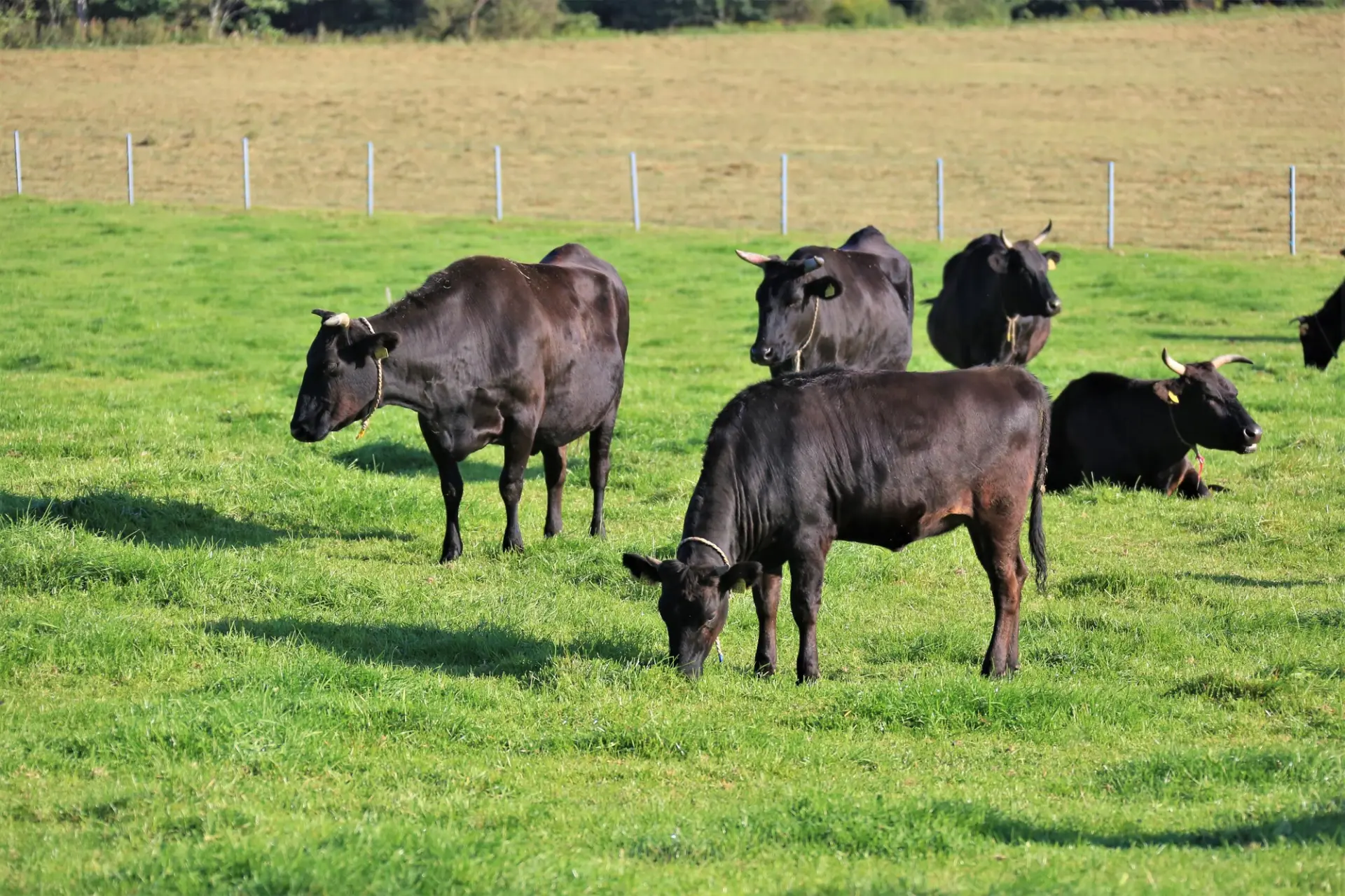
Japanese Black is the most common wagyu breed and the representative variety, accounting for more than 95% of all wagyu in circulation.
Its coat is black with a slightly brownish tint, and most famous branded wagyu belong to this breed.
Although it has the smallest body size among the four breeds, its fat is finely structured and it has excellent genetic traits.
It is especially known for being prone to developing marbling, called sashi in Japanese, and for its exceptionally tender meat.
The moment you put it in your mouth, the fat seems to melt, releasing a sweet aroma and rich umami.
By the way, it takes Approx. 3 years before one animal is ready for shipment.
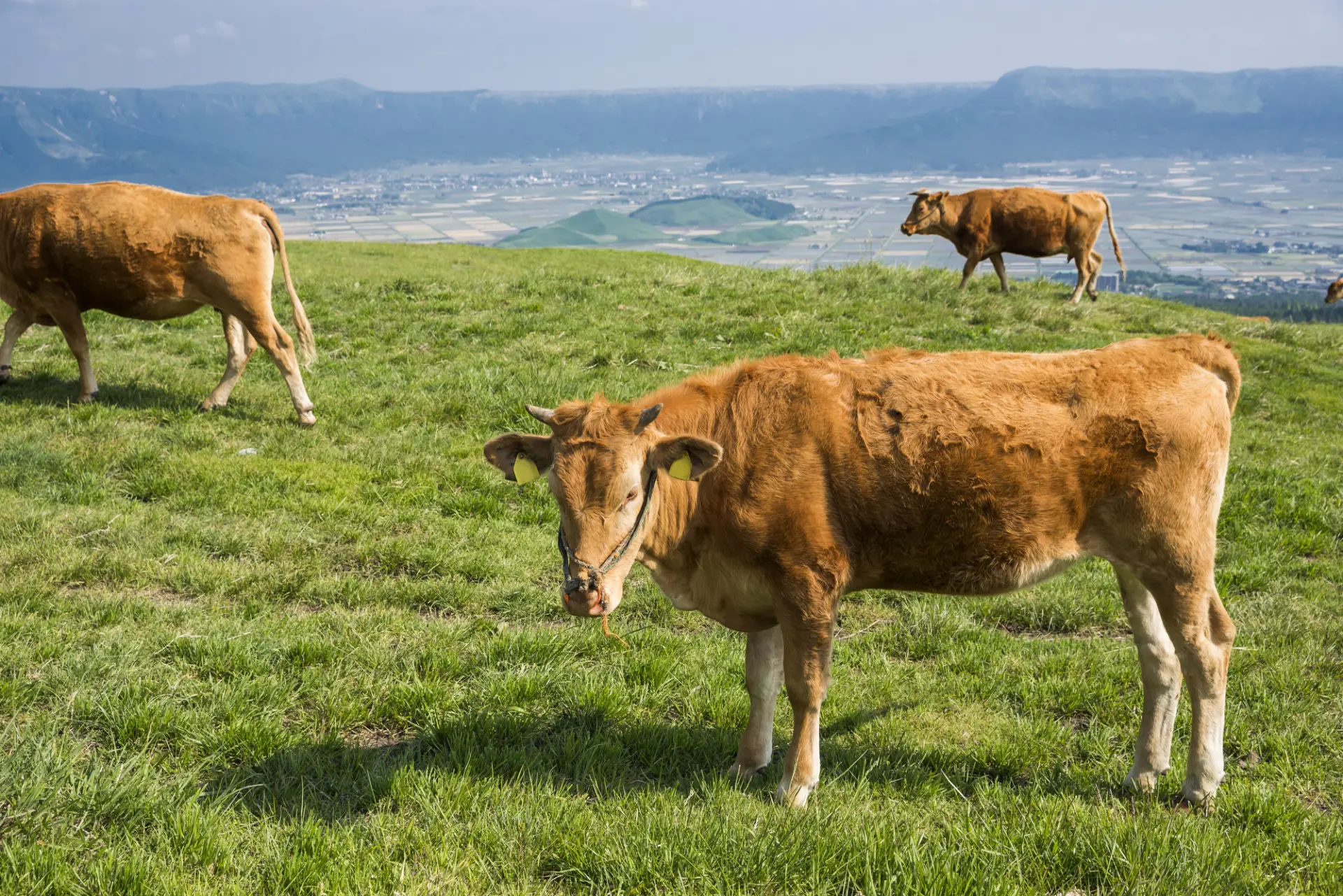
2. Japanese Brown
Japanese Brown is a breed mainly produced in Kumamoto and Kochi prefectures.
Because its coat ranges from yellow-brown to reddish-brown, it is also called akaushi, or “red cattle.”
It is mainly divided into two bloodlines, the Kumamoto line and the Kochi line, each with different appearances and breeding histories.
Compared with Japanese Black, it has less marbling and more lean meat, allowing you to enjoy the rich natural flavor of the meat more deeply the more you chew.
In recent years, with the growing health-conscious trend and boom in lean meat, healthy Japanese Brown has been attracting more attention.
3. Japanese Shorthorn
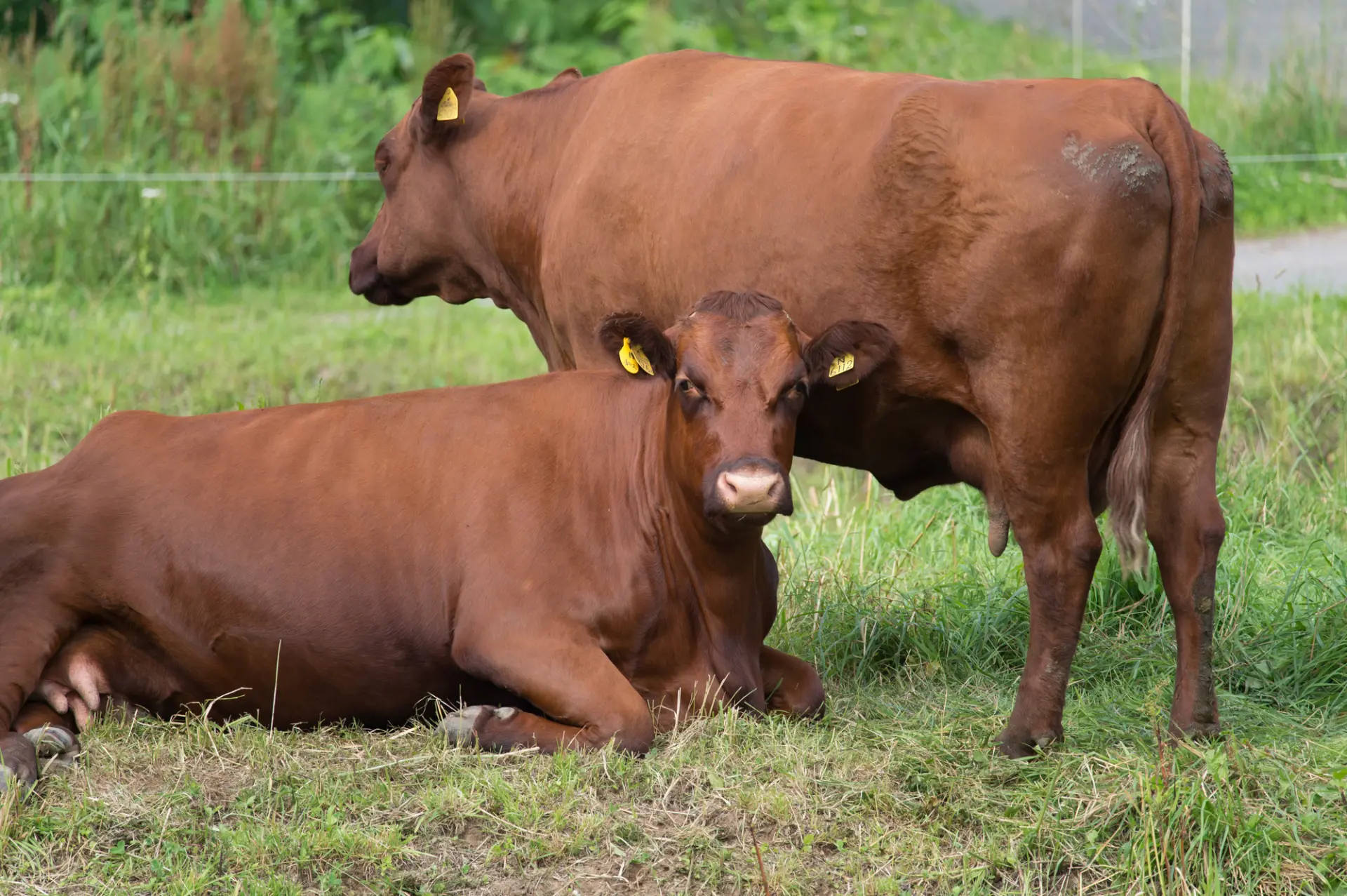
Japanese Shorthorn is a breed mainly produced in the Tohoku region, especially Iwate Prefecture, and accounts for under 1% of the domestic market share.
It was officially registered as a breed in 1957 after crossing native Nambu cattle, which had been raised in the former Nambu domain, now Iwate Prefecture, with breeds such as the American Shorthorn.
As its name suggests, it has short horns and a solid body with reddish-brown hair.
Its meat is low in fat and centered on lean meat, with plenty of umami components such as inosinate and glutamate.
High in protein and healthy, it also offers a satisfying chew and leaves you feeling pleasantly full after the meal.
4. Japanese Polled
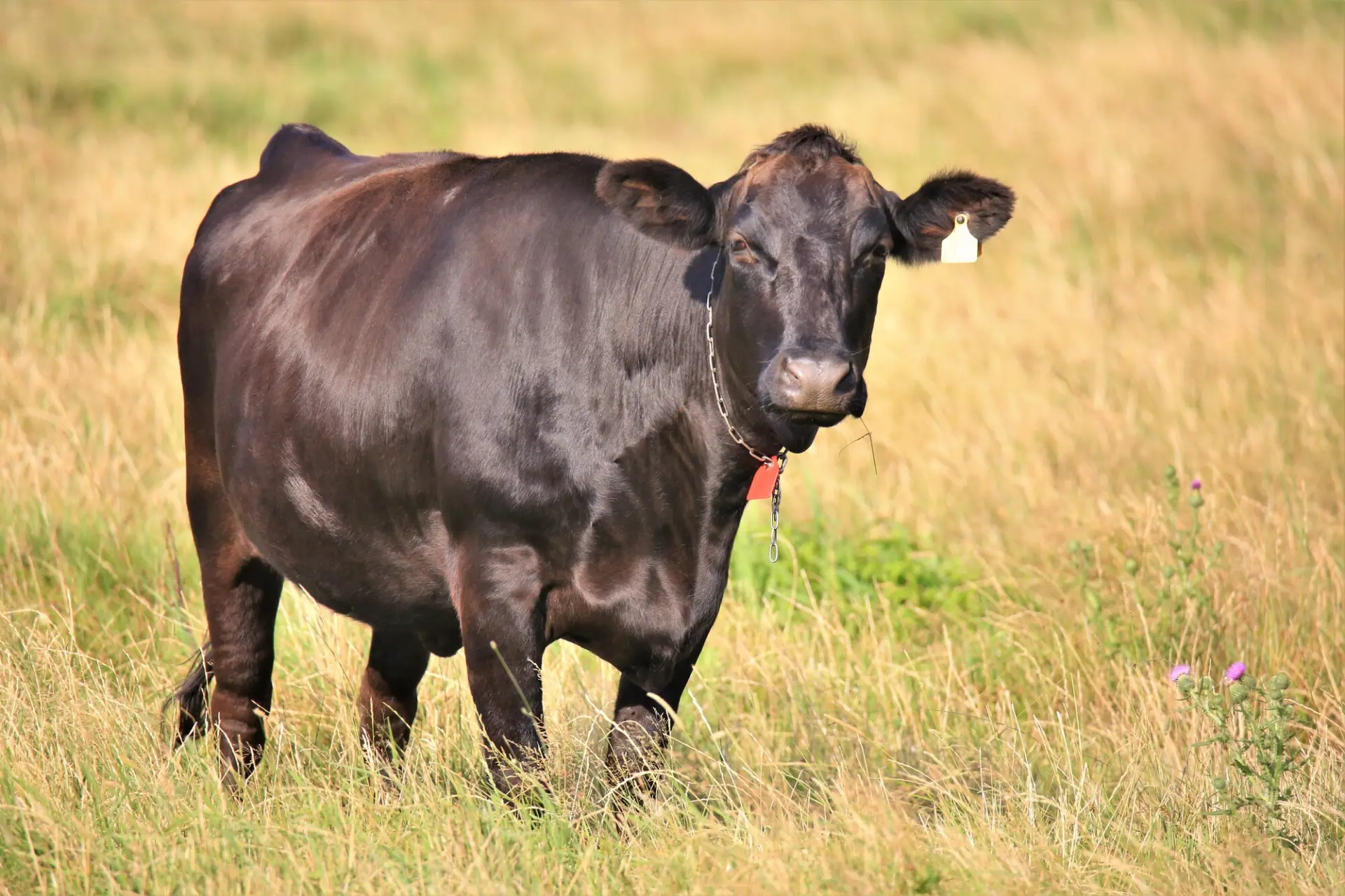
Japanese Polled is the rarest of all wagyu breeds.
It was created in 1920 by crossing Japanese Black with Aberdeen Angus from Scotland.
Its main production area is limited to the area around Hagi City in Yamaguchi Prefecture, and the population has now declined to around 200 head, making it a highly endangered rare breed.
It is characterized by being hornless, having a jet-black coat, and possessing excellent growth ability despite its relatively small frame.
You will hardly ever see it at a typical yakiniku restaurant, but it is known for its lean-centered, light taste with gentle umami rather than heavy marbling.
“Crossbreeds” Created by Breeding the 4 Wagyu Types
A wagyu “crossbreed,” also called F1, refers to cattle born from crossing two of the four wagyu breeds, or from crossing hybrids related to those four breeds with one another. Examples include cattle produced by crossing Japanese Black and Japanese Brown, or hybrids of Japanese Shorthorn or Japanese Polled crossed with Japanese Black.
However, the crossbreeds people often imagine, created by breeding wagyu with dairy cattle such as Holsteins, are classified separately from wagyu as “domestic crossbred beef.”
The meat quality varies depending on the parent breeds, but those based on Japanese Black have moderate marbling and tenderness, giving them a satisfying bite.
While their umami can be on par with purebred wagyu, the fat is lighter, making their overall balance one of their key features.
Understanding Wagyu Grading Correctly
Wagyu grading is determined by a combination of “yield grade” and “meat quality grade.”
Yield grade measures how efficiently meat can be obtained from one animal, and is expressed in three levels: A (72% or more), B (69%–72%), and C (under 69%).
Meat quality grade is evaluated based on four items, including marbling and meat color and luster, and is judged comprehensively on a scale of 1 to 5.
Generally, “A5 = highest quality,” but this means “the greatest amount of marbling” and does not necessarily mean it is the best for everyone.
Especially for people who prefer leaner meat, A4 or A3 may be a better fit because they have less fat and a better balance, and the ideal choice can also depend on the dish.
Think of the grade as just one guideline, and choosing what suits you best will help you enjoy yakiniku more deeply.
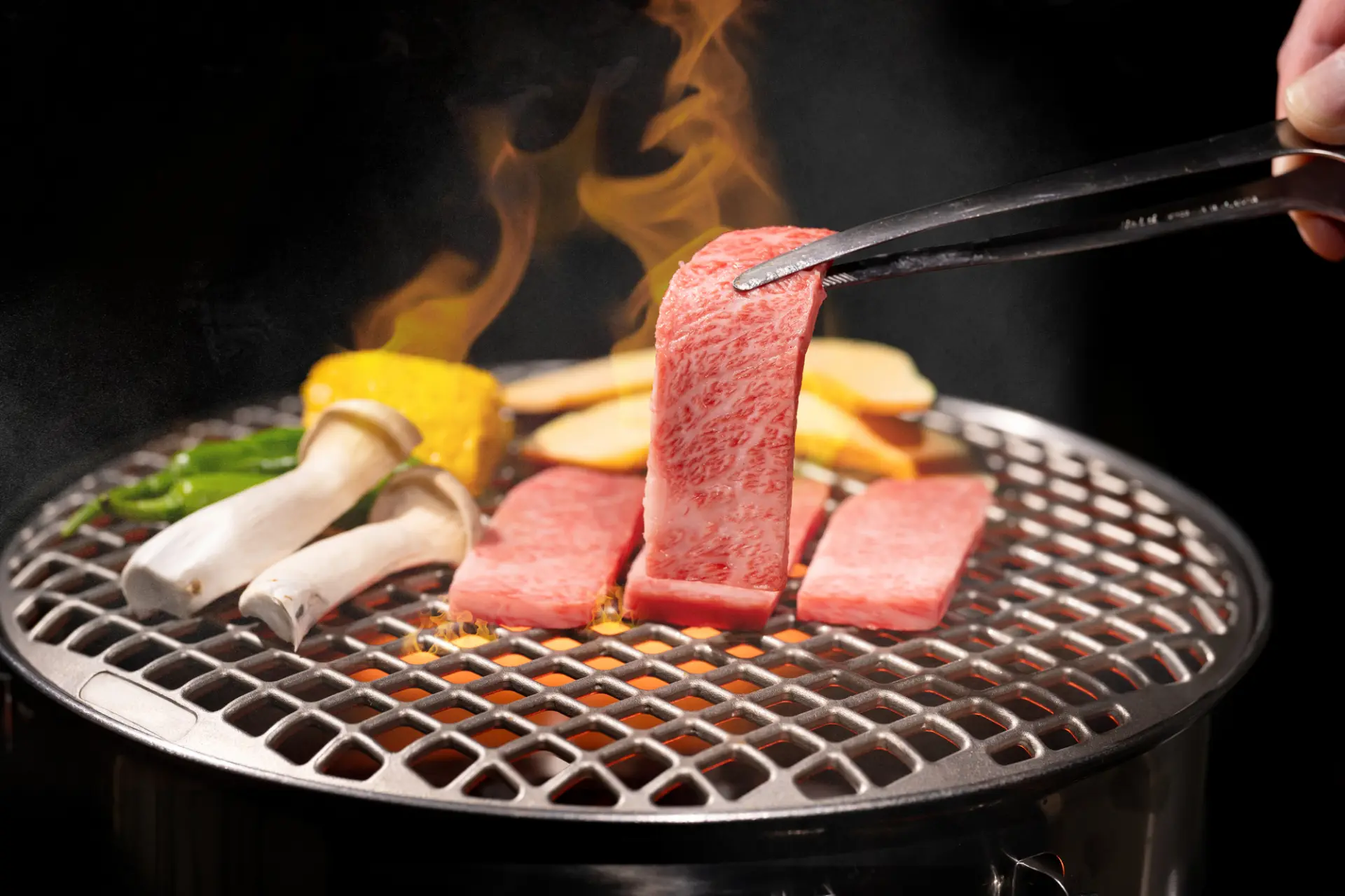
Four Especially Well-Known Branded Wagyu Varieties
“Branded wagyu” refers to wagyu labels that meet specific standards for region of origin, bloodline, raising methods, and more.
There are nearly 300 types of branded wagyu in Japan, and they have become a symbol of Japanese food culture.
Among them, the following four are especially famous and popular, often called the “Four Great Wagyu of Japan.”
| Brand Name | Region | Features | Notes |
|---|---|---|---|
| Matsusaka Beef | Area around Matsusaka City, Mie Prefecture |
Exceptionally fine marbling and elegant, sweet fat that melts smoothly in the mouth. Often called “the artwork of meat.” |
・Only virgin or castrated Japanese Black cattle registered in the Matsusaka Beef Individual Identification Management System are certified ・Cattle fattened for at least 900 days are called “Tokusan Matsusaka Beef” |
| Kobe Beef | Tajima region, Hyogo Prefecture |
Excellent balance of moderate marbling and lean meat, with high-quality fat and a clean finish. You can enjoy powerful umami and a juicy texture. |
・Limited to Tajima cattle bloodlines, and only A4 and A5 grades are certified ・Highly recognized overseas and distributed around the world as “KOBE BEEF” |
| Omi Beef | All of Shiga Prefecture |
Fine-textured meat with a tender and richly flavorful taste. The blessed natural environment, including the waters of Lake Biwa, is part of what makes it so delicious. |
・Only Japanese Black cattle raised the longest within Shiga Prefecture are certified ・The oldest branded wagyu in Japan, with a history dating back to 1687 |
| Yonezawa Beef | Okitama region, Yamagata Prefecture |
Rich meat flavor and the melting quality of its marbling create a blissful texture. The cold-climate fattening environment of Yonezawa helps firm up the meat quality. |
・Only virgin or castrated Japanese Black cattle raised for at least 33 months are certified ・The number shipped is relatively small, making it especially rare in the Kansai region |
No More Guessing What to Order! Key Features of Each Cut and Recommended Ways to Enjoy Them
From here, we’ll introduce yakiniku cuts in three categories.
Understanding the differences and features of each cut will broaden your options when ordering and lead to a more satisfying meal.
What tastes best can vary depending on gender, age, and personal preference, so this should also help you find the meat that suits you best.
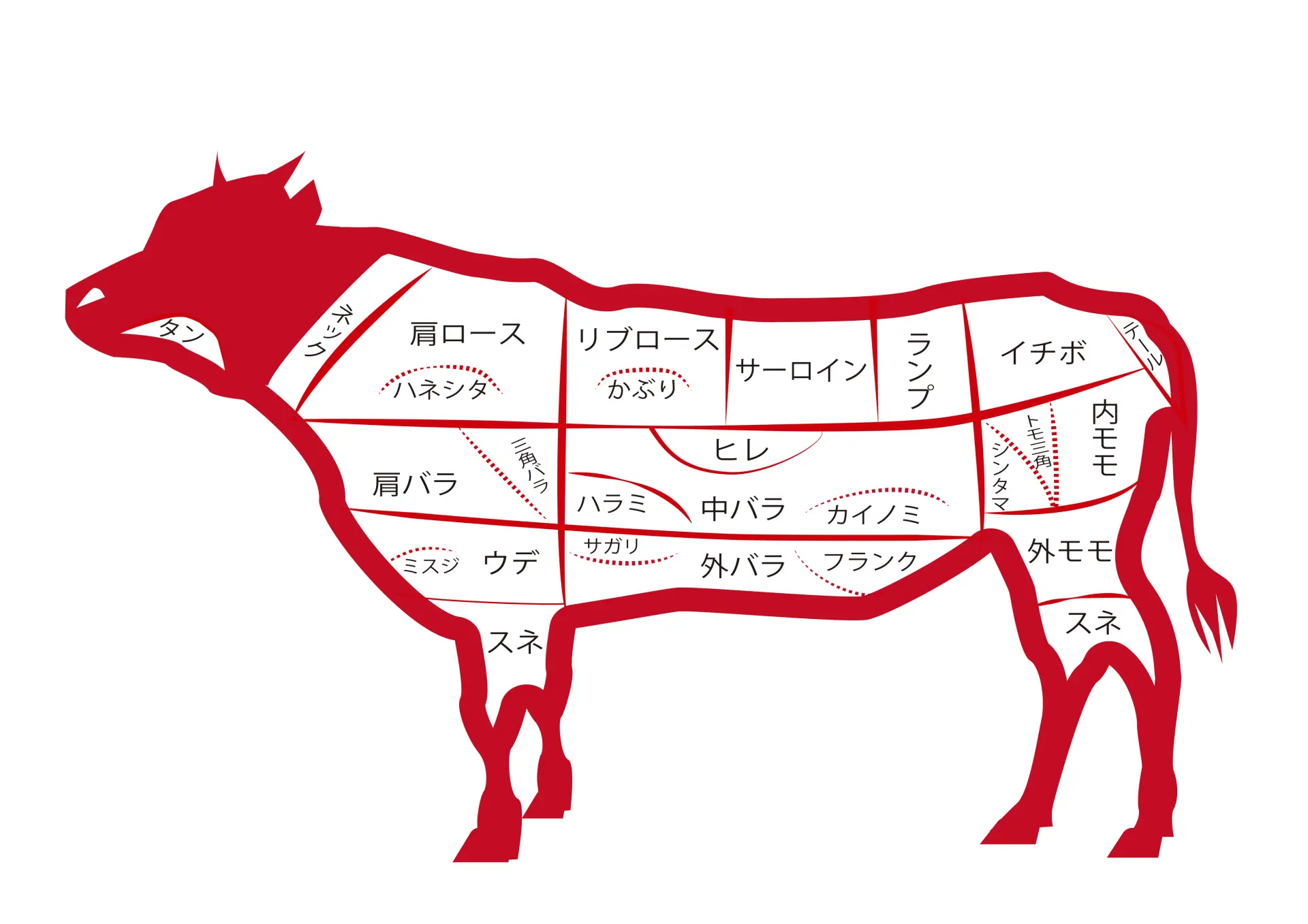
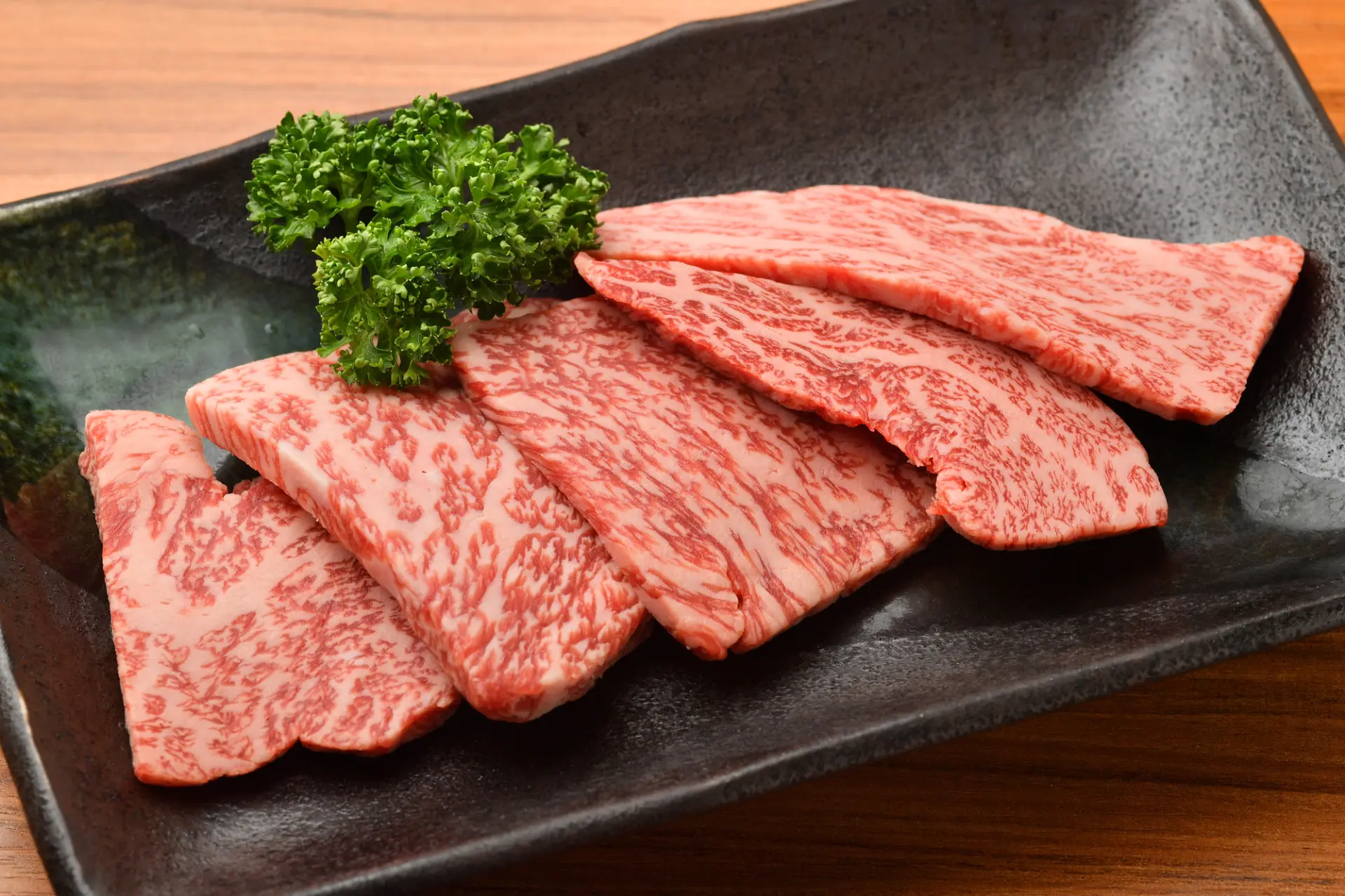
Classic Cuts You’ll Want to Order First at Yakiniku
Let’s start with the classic cuts of Japanese yakiniku.
These rank among the most popular choices, and most Japanese people order at least one plate of them.
If you are visiting a yakiniku restaurant in Japan for the first time, you are unlikely to regret comparing the following four cuts as your main choices.
They let you enjoy a variety of textures and flavors, and they also pair well with alcohol.
Strictly speaking, tongue and harami are classified as offal, but in restaurants they are generally not treated as horumon.
| Menu Name | Cut | Features | Recommended Seasoning / Condiments |
|---|---|---|---|
| Kalbi | Area around the ribs, short plate / belly meat | A hearty cut with sweet fat, rich umami, and juicy flavor. |
・Sweet-savory soy sauce-based sauce ・Lemon juice or yuzu pepper paste |
| Loin | The entire back, from shoulder to lower back | A deep flavor packed with the umami of lean meat. |
・Salt, such as wasabi salt ・Light soy sauce-based sauce |
| Tongue | The whole tongue | A distinctive crunchy texture and umami that grows the more you chew. |
・Salt + lemon ・Green onions or other condiments |
| Harami | Diaphragm muscle | Well balanced overall, with umami that seeps out more with each bite. |
・Sweet-savory sauce + garlic ・Salt + lemon juice |
Kalbi: Rich Fat and Deep Umami
“Kalbi” generally refers to the area around the ribs and the entire belly section, including cuts such as shoulder belly and tomobara.
The name comes from the Korean word “갈비 (galbi),” and it has become established in Japanese yakiniku culture, though there is no official fixed definition for the cut.
Its sweet fat, rich umami, and juiciness are its defining features, making it a satisfying cut that goes especially well with white rice.
A sweet-savory soy sauce-based sauce is the classic pairing, and adding garlic, sesame oil, or gochujang brings out the sweetness of the fat even more.
If you want a lighter taste, lemon juice or yuzu pepper paste can create a better balance.
For doneness, it is recommended to grill the outside well while keeping the inside around medium to medium-well.
If you overcook it, the fat will render out and the meat can become dry, so flipping it a little early is the key to enjoying it at its best.
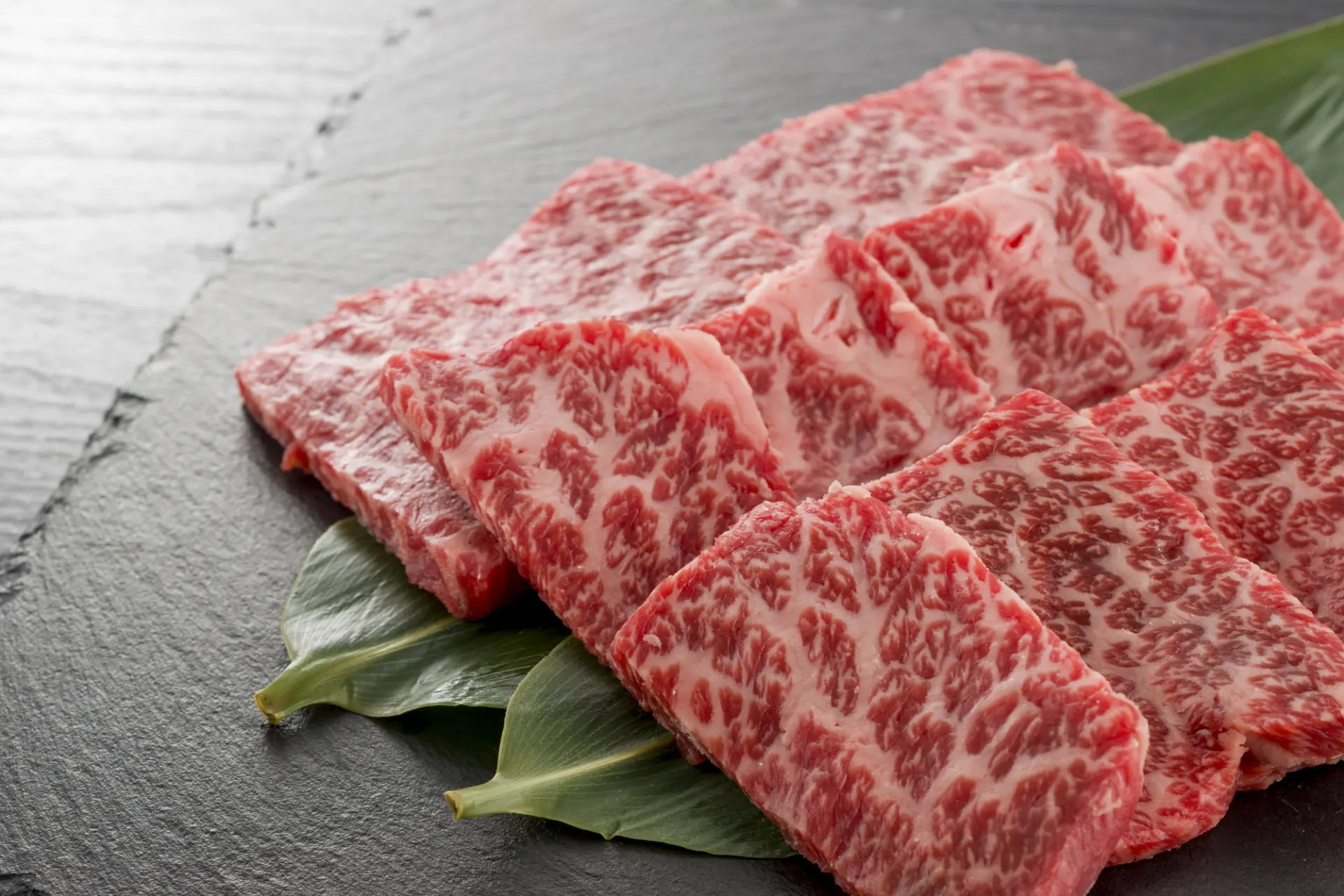
Loin: A Great Balance of Lean Meat and Fat
“Loin” is a general term for meat from the back side of the cow.
It refers to the area from the shoulder to the lower back, and is broadly divided into chuck roll, rib loin, and sirloin.
It is known for its fine texture and elegant marbling, letting you enjoy a deep flavor concentrated with the umami of lean meat.
Another reason for its popularity is that it is less rich and heavy than kalbi, making it easier to eat.
The classic seasoning is simple salt, such as wasabi salt, which highlights the natural flavor of the meat.
It also pairs perfectly with a light soy sauce-based sauce, and adding lemon or Japanese pepper is another recommended way to give it an accent.
When grilling, it is best to lightly sear the surface over medium to high heat to lock in the juices.
Be careful not to overcook it, and try not to move it around too often while grilling for the best result.
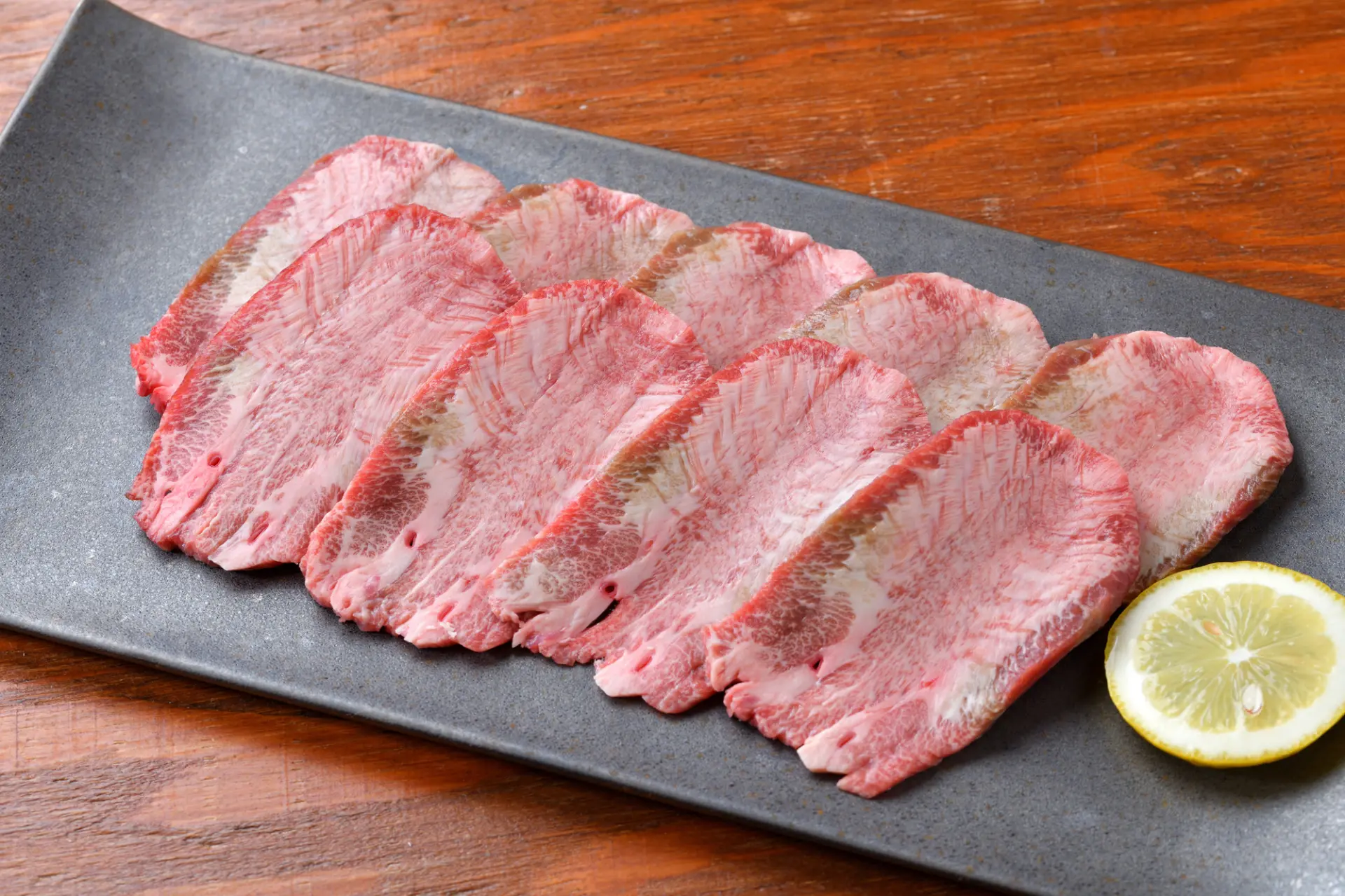
Tongue: Irresistibly Crunchy Texture
“Tongue,” which refers to the whole tongue, is one of the rare cuts, with only Approx. 1–1.5kg available from one animal.
It measures Approx. 30–50cm in length and is divided by location into tan-moto, tan-naka, tan-saki, and tan-shita.
Each part has a different flavor, and thick-cut versus thin-cut preparation also makes a difference, making it a surprisingly deep cut to explore.
What they all share is a distinctive crunchy texture and umami that spreads the more you chew.
Because it tastes light and is easy to eat, many people order it as their first plate or as a palate refresher.
At typical yakiniku restaurants, it is usually served as “tan shio,” mainly using the middle section or root section of the tongue.
The classic seasoning is salt and lemon for a refreshing taste, but it is also recommended to enjoy it with green onions or other condiments together with white rice.
It is at its best when the inside is still slightly pink and juicy.
Harami: Flavor That Deepens with Every Bite
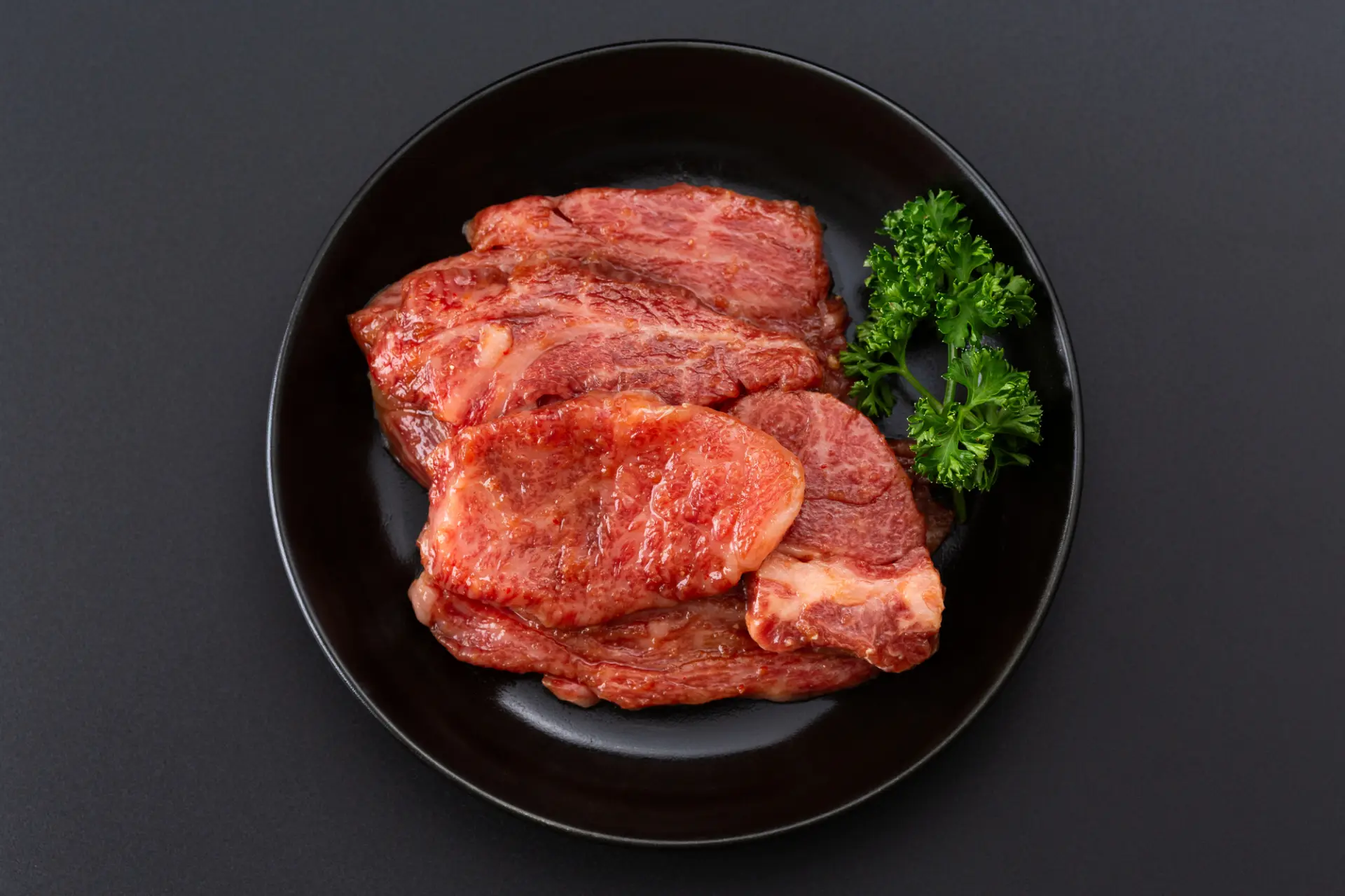
“Harami” refers to the diaphragm muscle.
Although it is technically classified as offal, its appearance and texture are closer to lean meat, making it popular with a wide range of people, including those who do not usually like horumon.
Its defining feature is a well-balanced flavor that is not as fatty as kalbi and not as mild as loin.
It is juicy and springy, with umami that seeps out the more you chew, while the sweetness and richness of the fat come together beautifully.
Another part of its appeal is its versatility, letting you enjoy it in many different ways depending on your preference or mood.
For a richer taste, a sweet-savory sauce with garlic is recommended, while those who prefer a lighter style should go with simple salt and lemon juice.
It is also delicious wrapped in lettuce to balance out the fat.
When grilling, be careful not to overcook it, and quickly sear the surface over high heat.
Horumon Cuts You Shouldn’t Forget to Order
In Japan, horumon is enjoyed so much that there are even specialty restaurants dedicated to it.
Its major appeal lies in its distinctive texture, which differs from lean meat, along with its relatively affordable price and rich nutritional value.
Some parts are low in calories and offer a well-balanced taste, which is another reason they feel satisfying.
Each cut also has its own strong character, making it fun to compare different types of horumon.
Here, we’ll introduce four classic cuts.
| Menu Name | Cut | Features | Recommended Seasoning / Condiments |
|---|---|---|---|
| Mino | First stomach | A unique crunchy and springy texture, with umami that gradually spreads as you chew. |
・Salt, lemon ・Miso-based sauce |
| Kopchan | Small intestine | White and rounded in appearance, with sweet, juicy fat and umami that fill the mouth when bitten. |
・Sweet-savory sauce, optionally with gochujang ・Miso-based sauce |
| Shimacho (Tetchan) | Large intestine | Thick and chewy, with sweet fat and rich depth that become more enjoyable as you chew. |
・Miso-based sauce ・Salt-based sauce |
| Liver | Liver | Moist in texture, with an appealing softness that gently crumbles as you bite into it. |
・Salt-based sauce ・Garlic sauce |
Mino: Healthy and Packed with Nutrients
“Mino” refers to the first stomach, which is the largest of the cow’s four stomachs.
It has a white, thick appearance and is known for its unique crunchy and springy texture, with umami that gently spreads the more you chew.
It is low in fat and healthy, with less odor than other types of horumon, making it easier to eat.
In addition to being high in protein, it is also rich in minerals such as iron and zinc, which may help prevent anemia and support the immune system.
Depending on the restaurant, it may be divided into “jo-mino,” which is thicker and firmer, and regular “mino,” which is thinner and softer in texture.
Salt and lemon are recommended to bring out the natural flavor of the ingredient.
When grilling, the key is to cook the surface well over high heat and remove it from the fire once it puffs up.
Kopchan: Loved for Its Juicy Flavor
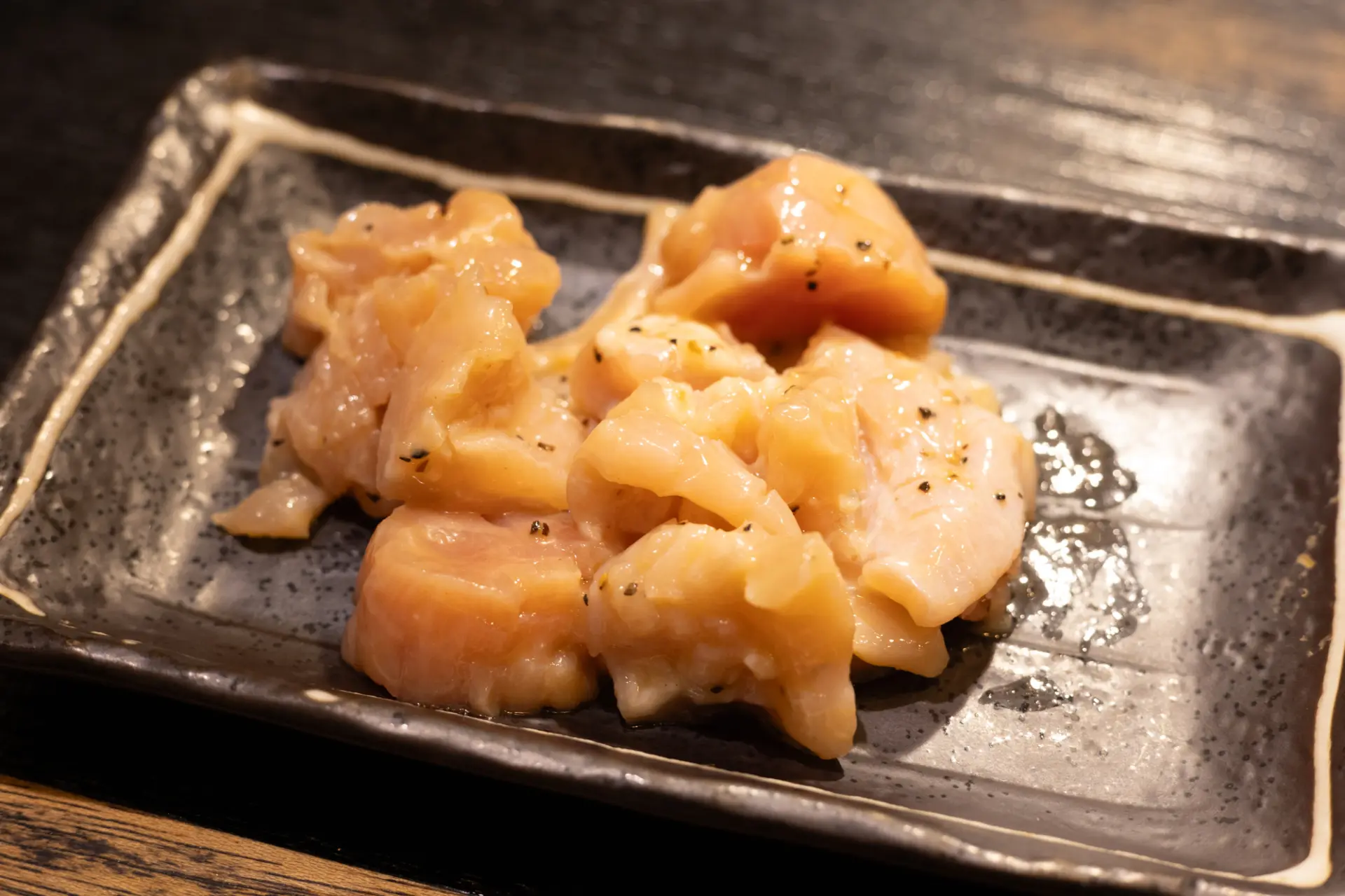
“Kopchan” is a popular type of horumon that refers to the small intestine.
The name comes from the Korean word “곱창 (gopchang),” meaning small intestine, and in Japan it is also known by other names such as marucho, shiro, and himo.
It is also often used in motsunabe, and because it is low in calories and rich in collagen, it is popular among people interested in beauty and health.
It is white and rounded in appearance, and when you bite into it, the sweet fat and umami spread throughout your mouth.
Although very juicy, it also lets you enjoy the distinctive crunchy texture and depth unique to horumon.
For seasoning, a sweet-savory sauce with gochujang or a miso-based sauce works well, and adding kimchi for a Korean-style taste is also recommended.
For the best result, place the skin side down, roll it over high heat, and cook it through slowly so that some of the fat renders out.
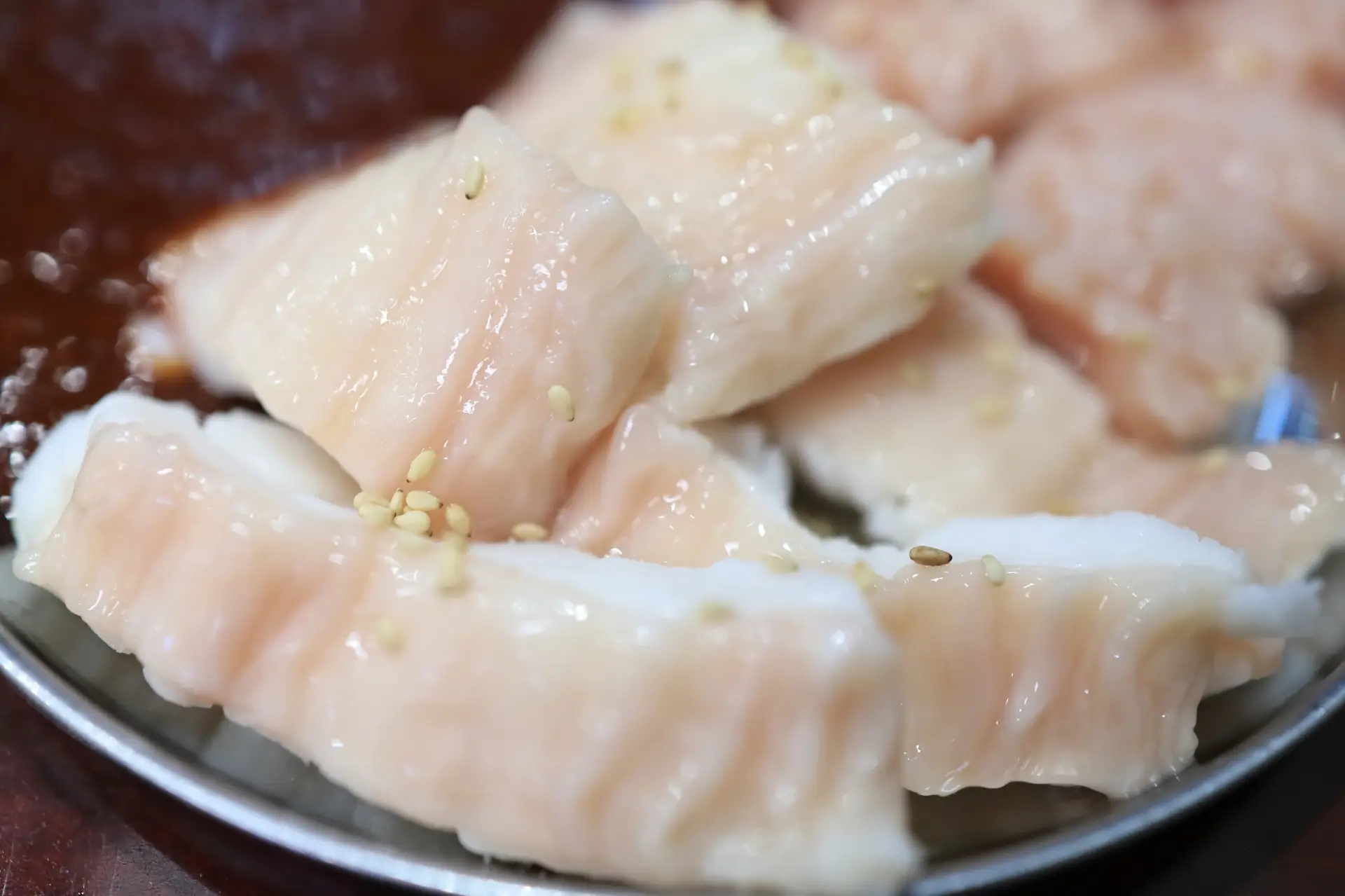
Shimacho (Tetchan): For Those Who Want Chew and Richness
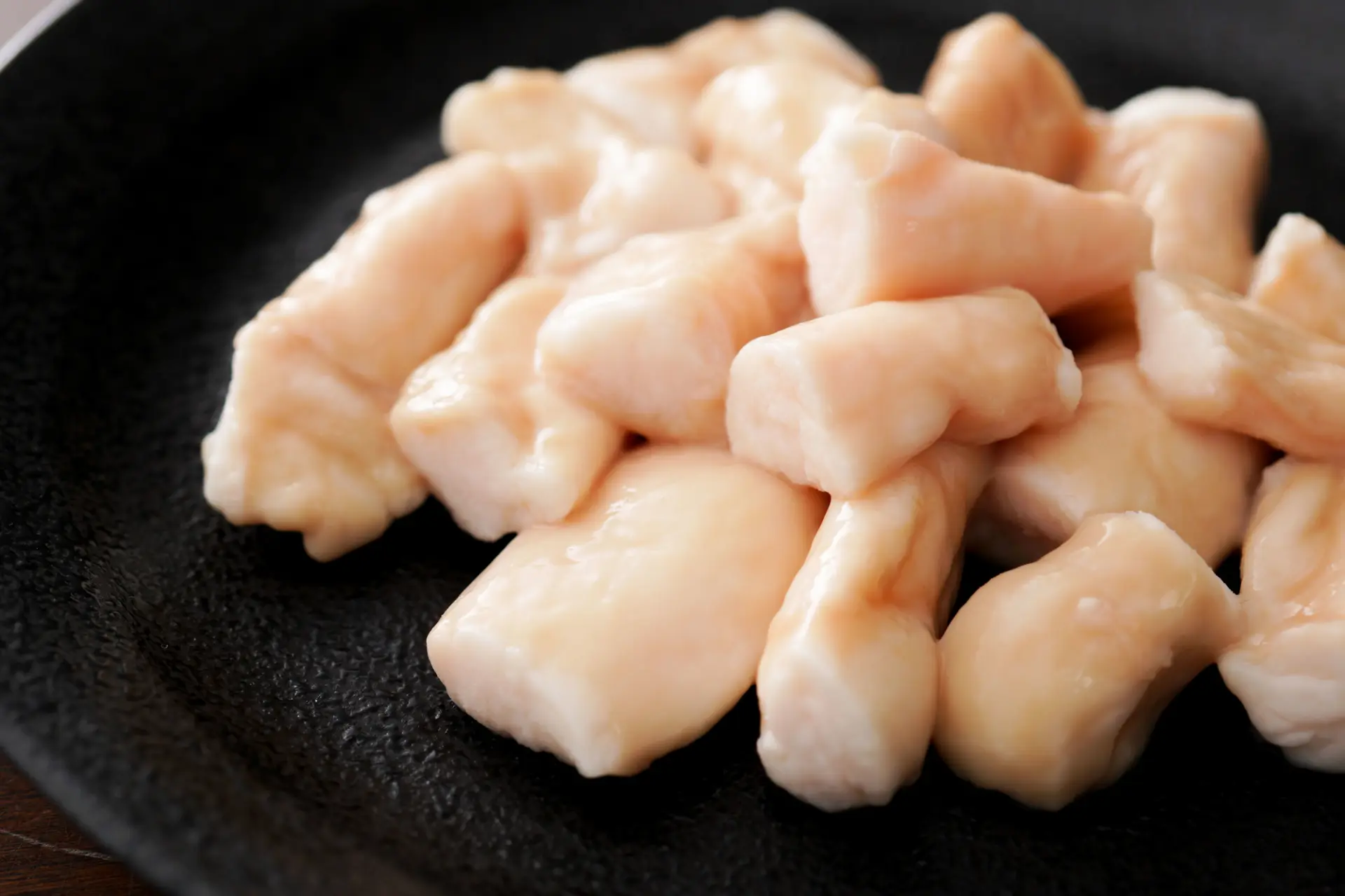
“Shimacho” refers to the large intestine.
It gets its name from the striped pattern on the meat, and in the Kansai region it is called “tetchan.”
Only Approx. 1–2kg can be taken from one cow, making it rare, and it comes with plenty of high-quality fat.
However, if it is not carefully prepared, strong flavors and odor can remain, so this is also a cut where the quality of the restaurant directly affects the taste.
It is thicker and chewier than kopchan, with a firmer, more elastic texture.
The more you chew, the more you can enjoy the sweetness of the fat and its rich depth, while its signature plump texture makes it addictive for horumon lovers.
Miso-based sauce is recommended for bringing out its savory aroma, while salt-based sauce is a good choice for enjoying the ingredient’s flavor more directly.
Cook it thoroughly on the grill until the fat melts, and once it is nicely browned, it is ready to eat.
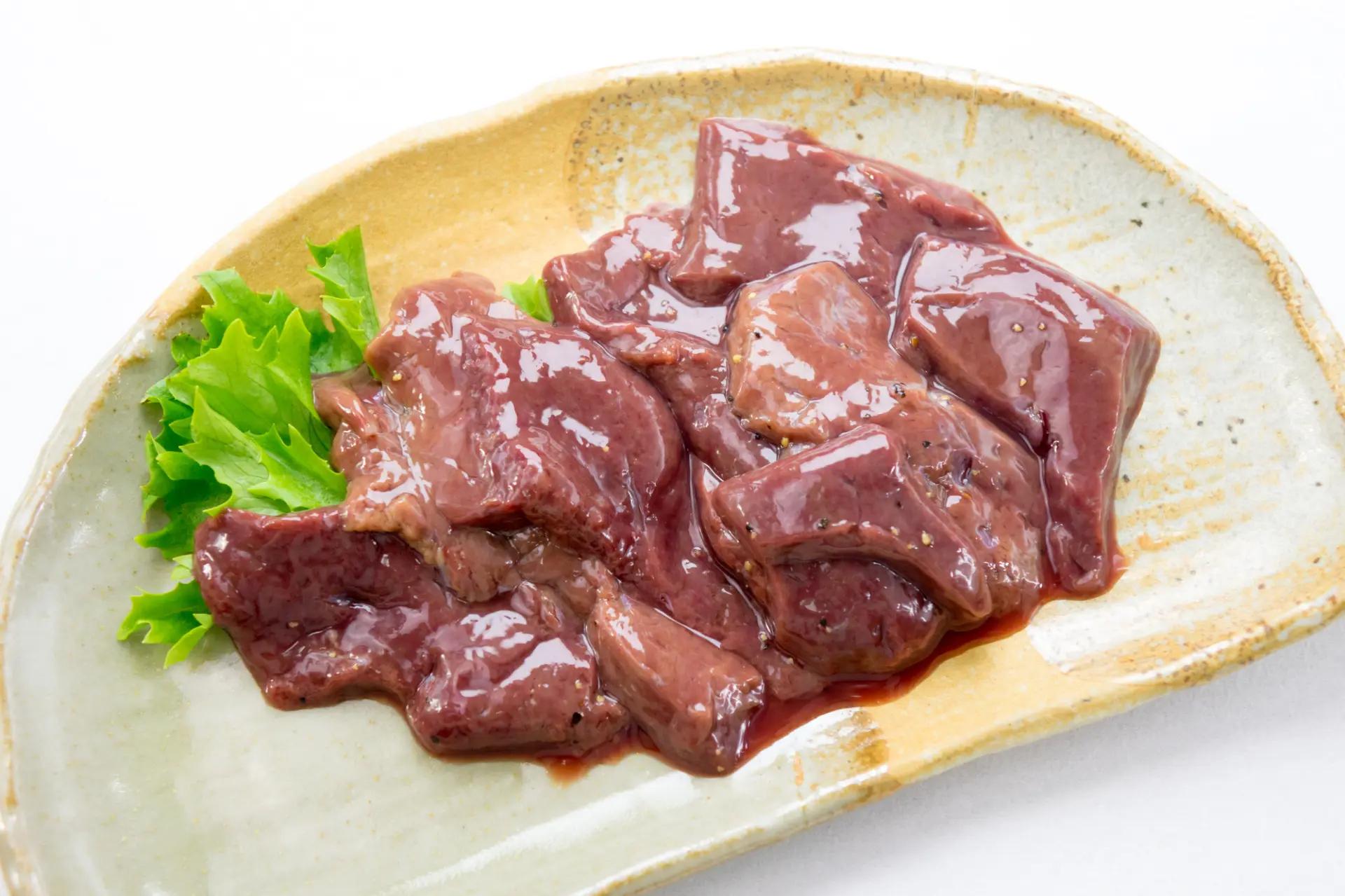
Liver: Distinctive Flavor and Soft Texture
“Liver” refers to the liver cut.
It is one of the best-known types of horumon and is also famous for its high nutritional value, including plenty of iron, vitamin A, and B vitamins.
It has a moist texture and a softness that gently crumbles when you bite into it.
While it offers a kind of umami different from other cuts, it also has a distinctive flavor that people tend to either love or dislike.
Freshness has a major effect on its taste, so even the same liver may feel quite different depending on the restaurant.
Fresh liver is smoother and milder in flavor, and many people become hooked once they discover how good it can be.
Simple salt-based sauce is recommended, while garlic sauce is a good choice for stronger-smelling liver because it softens the odor.
When eating it, the basic rule is to grill both sides thoroughly and cook it all the way through the center to avoid the risk of food poisoning.
Cuts Chosen by Japanese Yakiniku Enthusiasts
They may not be standard choices, but we also hope you will try the following cuts, which are often ordered by Japanese yakiniku enthusiasts.
The reason is that they let you fully appreciate the diversity and depth of wagyu.
They offer flavors and textures different from kalbi, tongue, and horumon, allowing you to experience another layer of yakiniku.
Also, depending on the restaurant, they may not be available, which adds a sense of rarity and makes the chance to try them even more special.
If you see them on the menu, be sure to give any that interest you a try.
| Menu Name | Cut | Features | Recommended Seasoning / Condiments |
|---|---|---|---|
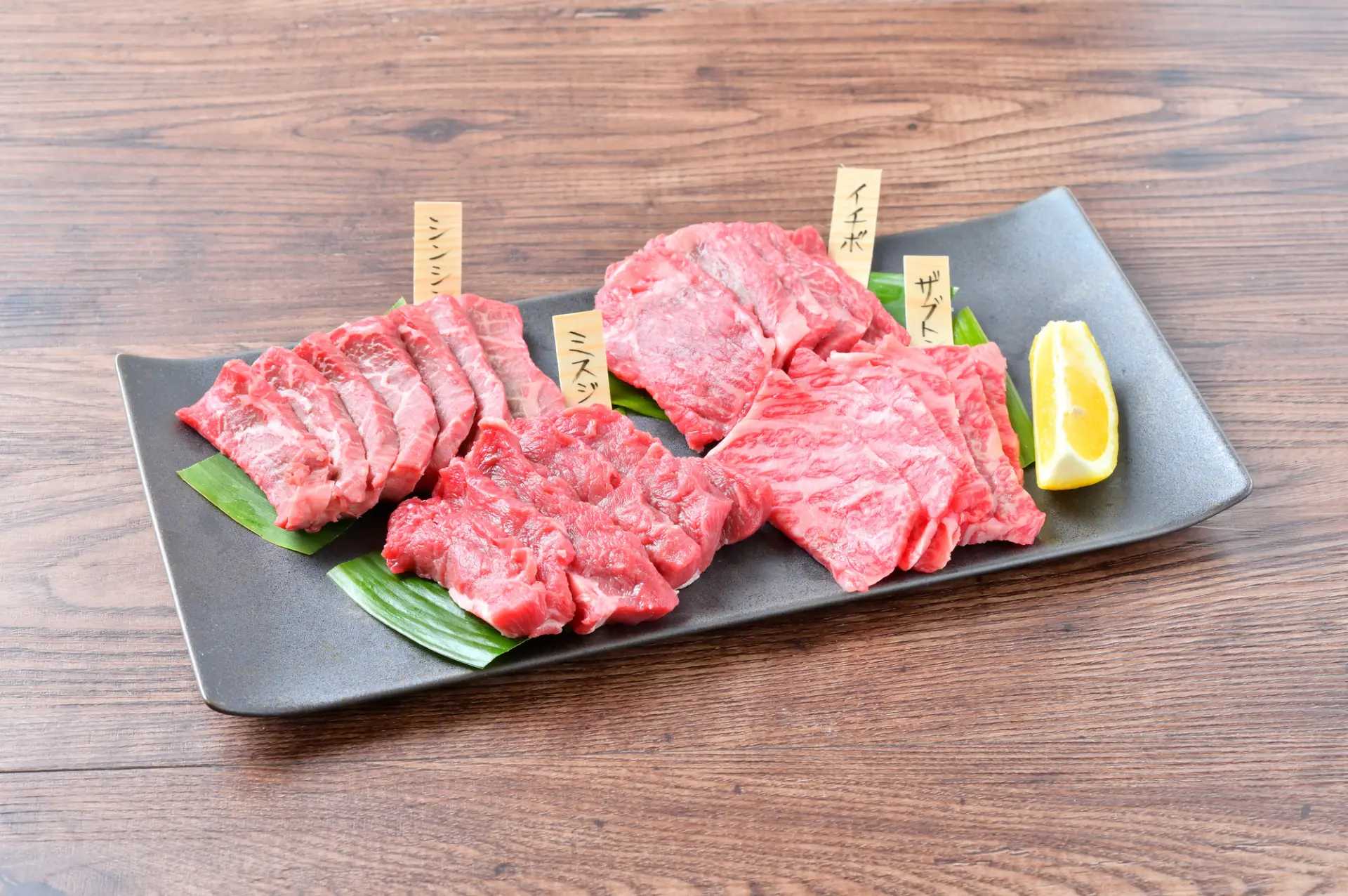
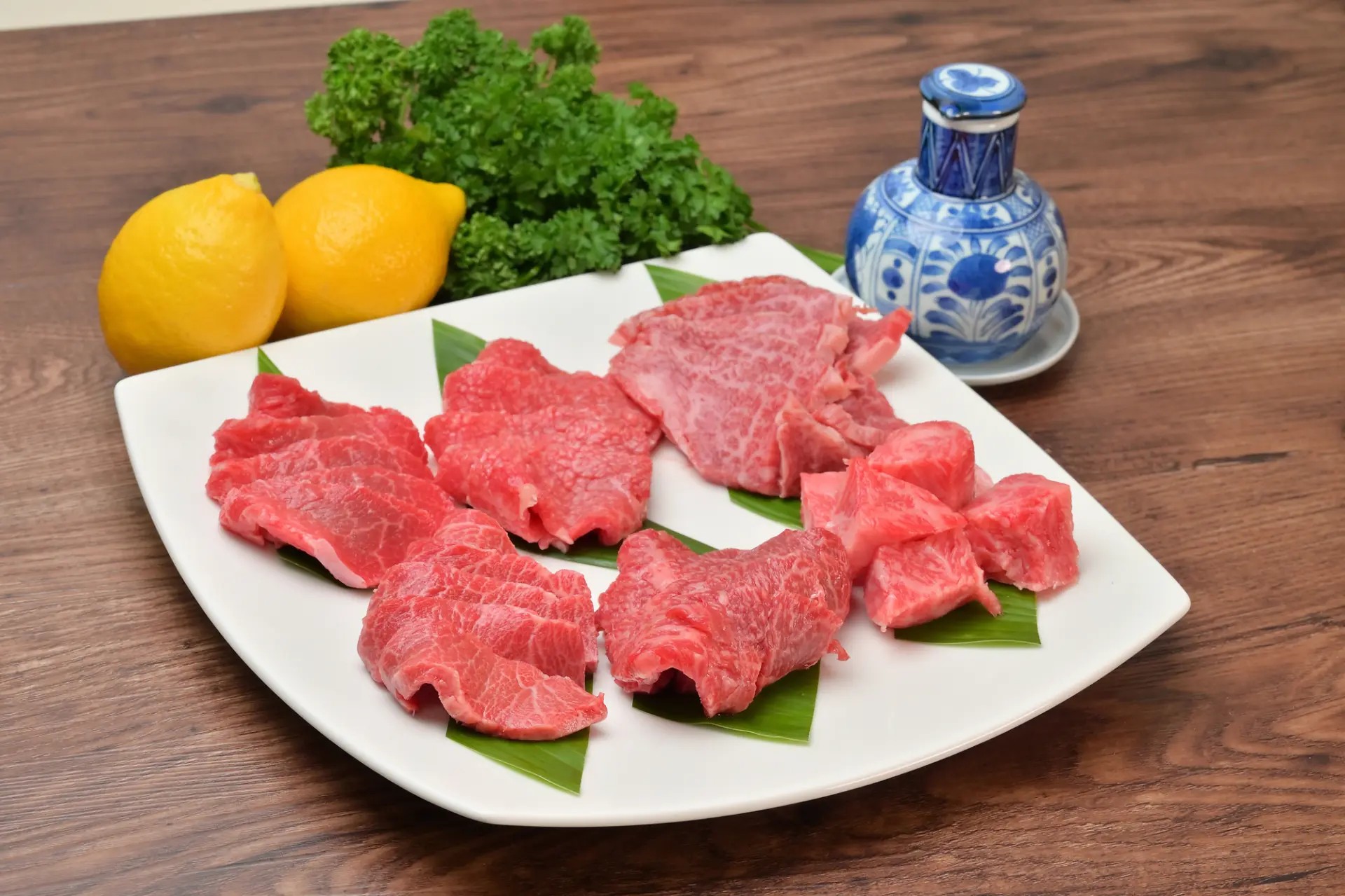
| Zabuton | Rib side of the chuck roll | Melt-in-your-mouth tenderness with rich sweetness and depth from the fat. |
・Salt ・Wasabi soy sauce |
| Ichibo | Tip of the rump | A versatile flavor with marbling and lean meat in exquisite balance, neither overpowering the other. |
・Salt ・Salt-based sauce |
| Misuji | Inside the shoulder blade | An ultra-rare cut with strong lean-meat umami, plus tenderness and rich sweetness. | ・Salt, optionally with wasabi |
| Shinshin | Center of the round | Fine-textured, rich yet elegant in flavor, with a clean finish. |
・Salt ・Sweet-savory soy sauce-based sauce + wasabi |
| Sirloin | Area from the back to the lower back | A rich aroma that stimulates the appetite and an exceptionally smooth texture you can enjoy without getting tired of it. |
・Salt ・Sweet-savory soy sauce-based sauce |
| Rump | Area from the lower back to the round and buttocks | Low in fat with a pleasant chew and a light finish that makes it easy to eat. |
・Salt ・Sweet-savory soy sauce-based sauce |
Zabuton: Elegant Flavor That Lingers
“Zabuton,” also known as haneshita, refers to the cut located on the rib side of the chuck roll.
It got its name because the shape of the meat resembles a zabuton, or floor cushion.
Only a few kilograms can be taken from one cow, making it a premium cut that is popular among yakiniku enthusiasts.
It features fine, beautiful marbling, melt-in-your-mouth tenderness, and rich sweetness and depth from the fat.
It also has the solid lean-meat umami characteristic of loin, leaving an elegant finish that lingers until the last bite.
To fully enjoy the natural flavor of the meat, it is recommended to keep the seasoning simple with just salt or wasabi soy sauce.
Rare to medium-rare is the ideal doneness, and a quick sear is enough to bring out its flavor well.
Be careful not to overcook it, as it can become tough and lose some of its taste.
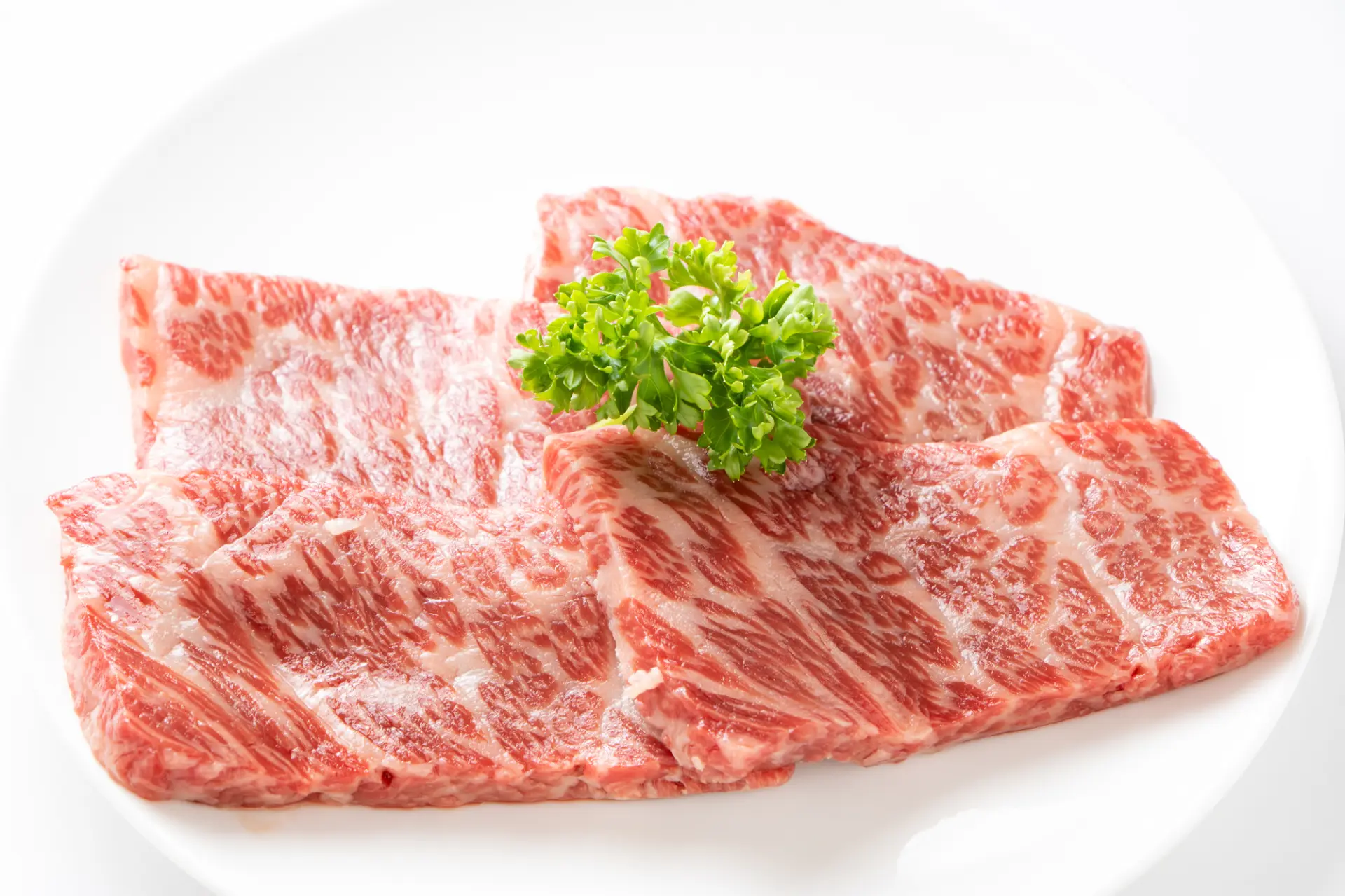
Ichibo: A Perfect Harmony of Lean Meat and Marbling
“Ichibo” refers to a rare cut located at the tip of the rump.
Its meat is mainly lean, but its well-balanced marbling is one of its defining features.
It offers a versatile flavor in which the marbling is not too strong and the lean meat does not stand out too sharply, creating an exquisite harmony between the two.
The fat tastes light, yet the umami remains rich and deep, making it a cut you can enjoy without getting tired of it.
Another appeal is that you can enjoy both a satisfyingly meaty bite and its distinctive, crisp aroma at the same time.
For seasoning, salt or salt-based sauce is recommended to bring out its flavor even more.
Since lean meat can become tough easily, quickly searing the surface over high heat and keeping the inside medium-rare will give it a juicy finish.
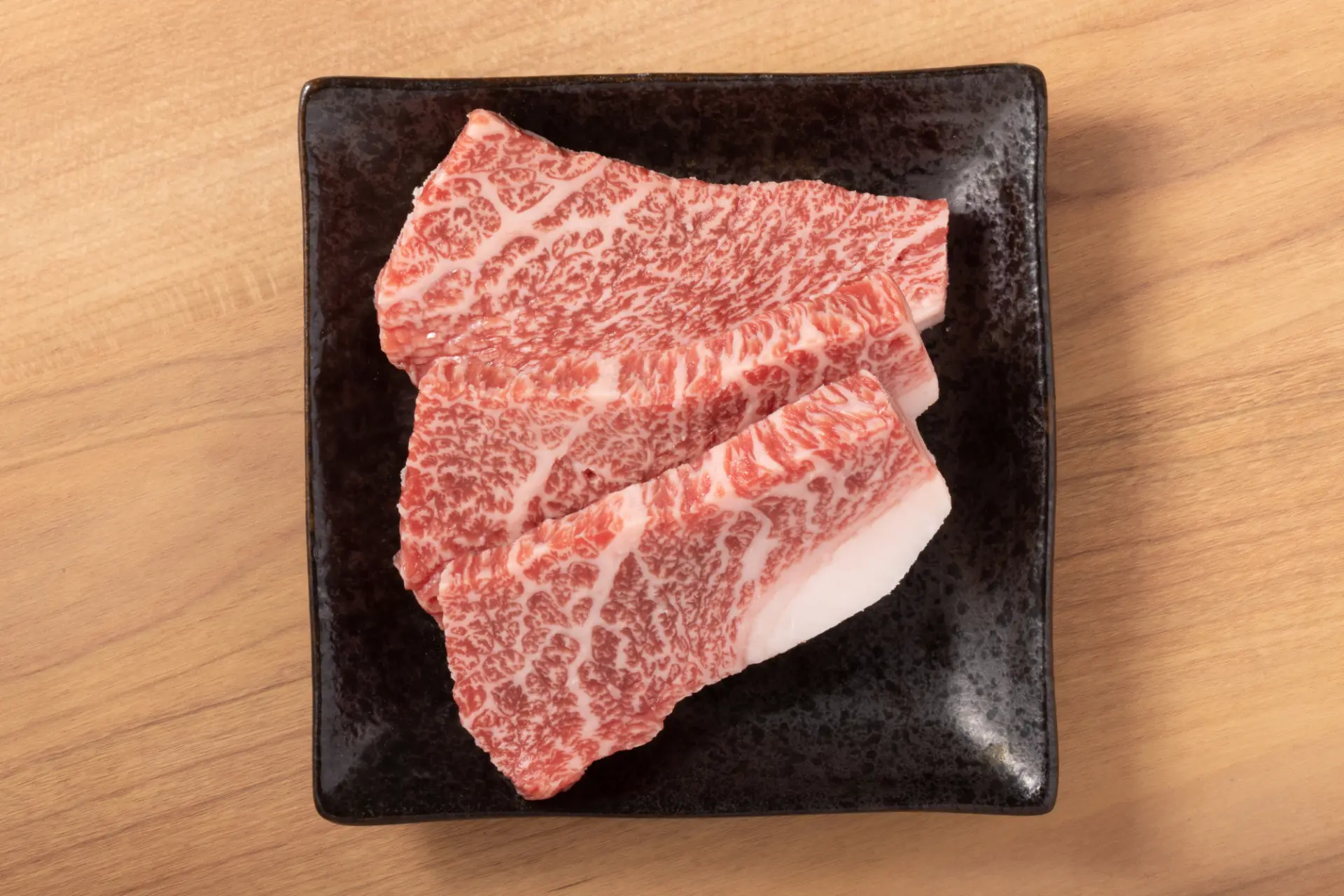
Misuji: Packed with Lean-Meat Umami
“Misuji” refers to the cut located inside the shoulder blade.
Only Approx. 1–2kg can be taken from one cow, making it an ultra-rare and highly popular cut.
At some yakiniku restaurants, it appears on the menu under the name “premium kalbi.”
It got its name from the three筋, or “three lines,” that run through the cross-section, especially the beautiful single line in the center.
This line creates a unique springy texture and gives it a bite different from other cuts.
It has strong lean-meat umami, melt-in-your-mouth tenderness, and rich sweetness, seeming to gently fall apart the moment it enters your mouth.
Salt, optionally with wasabi, is the best seasoning, and medium-rare is the ideal doneness, with only about 30 seconds of searing on each side being enough.
If it is cooked too much, it will become tough, so the key is to grill it quickly and eat it right away.
Shinshin: Elegant Yet Rich in Flavor
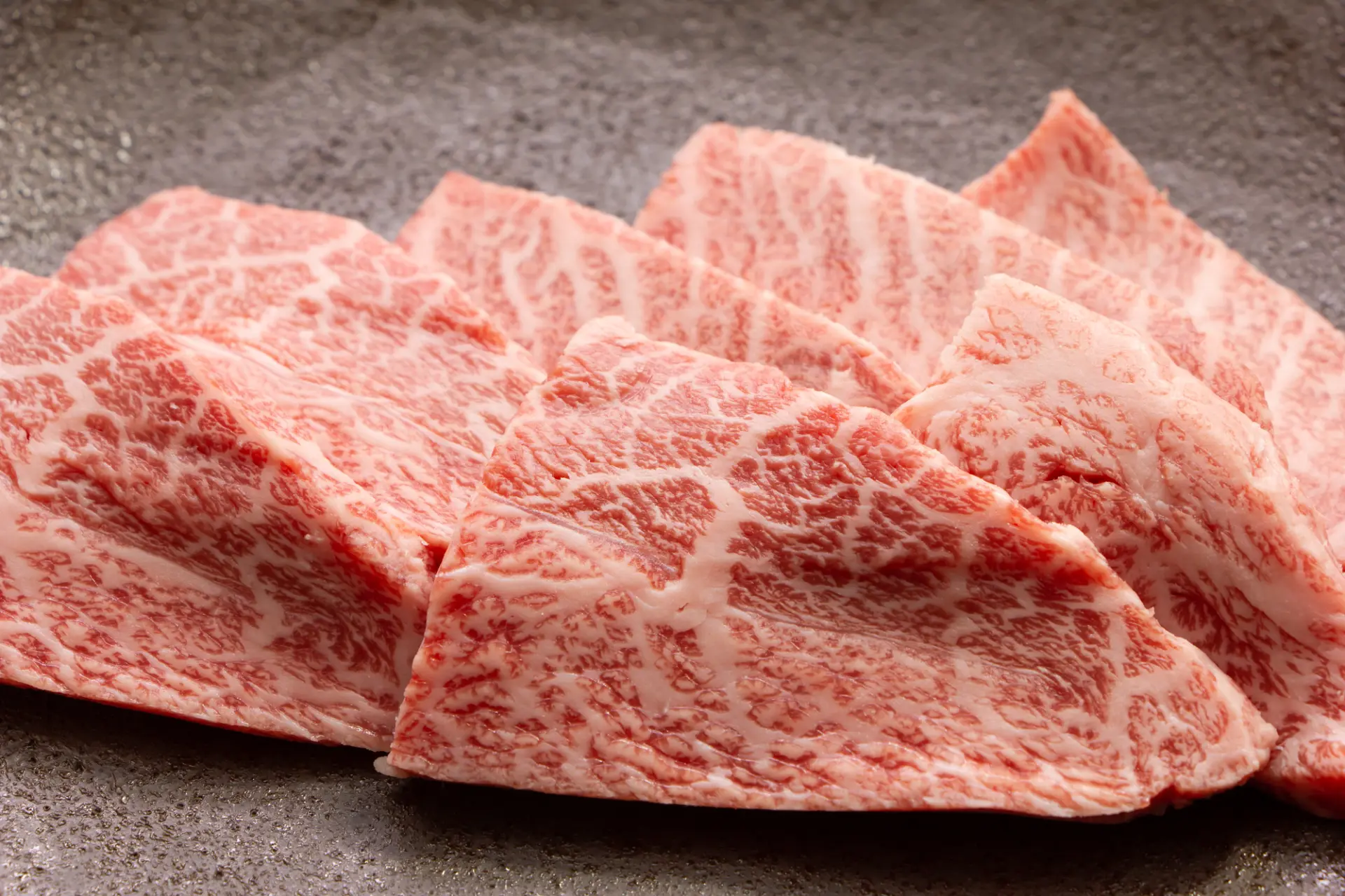
“Shinshin” refers to the cut located in the center of the round, inside the shintama, and is also called “marushin” because of its round shape.
Among round cuts, which contain around 40% moisture compared with the whole cow and where moisture strongly affects flavor, shinshin is especially high in moisture, allowing you to feel its umami more intensely.
It is mainly lean meat, but has a moderate amount of marbling, giving it a rich yet elegant flavor.
Its fine texture and well-ordered fibers make it surprisingly tender for a lean cut, while the finish remains light.
It strikes a balance between juicy and healthy, with concentrated sweetness and restrained fat, and its deliciousness spreads the more you chew.
In addition to the classic seasoning of salt, a sweet-savory soy sauce-based sauce with wasabi is also recommended, as it brings out even more sweetness.
It is best enjoyed rare or lightly seared.
Sirloin: Juicy Fat and a Rich Aroma
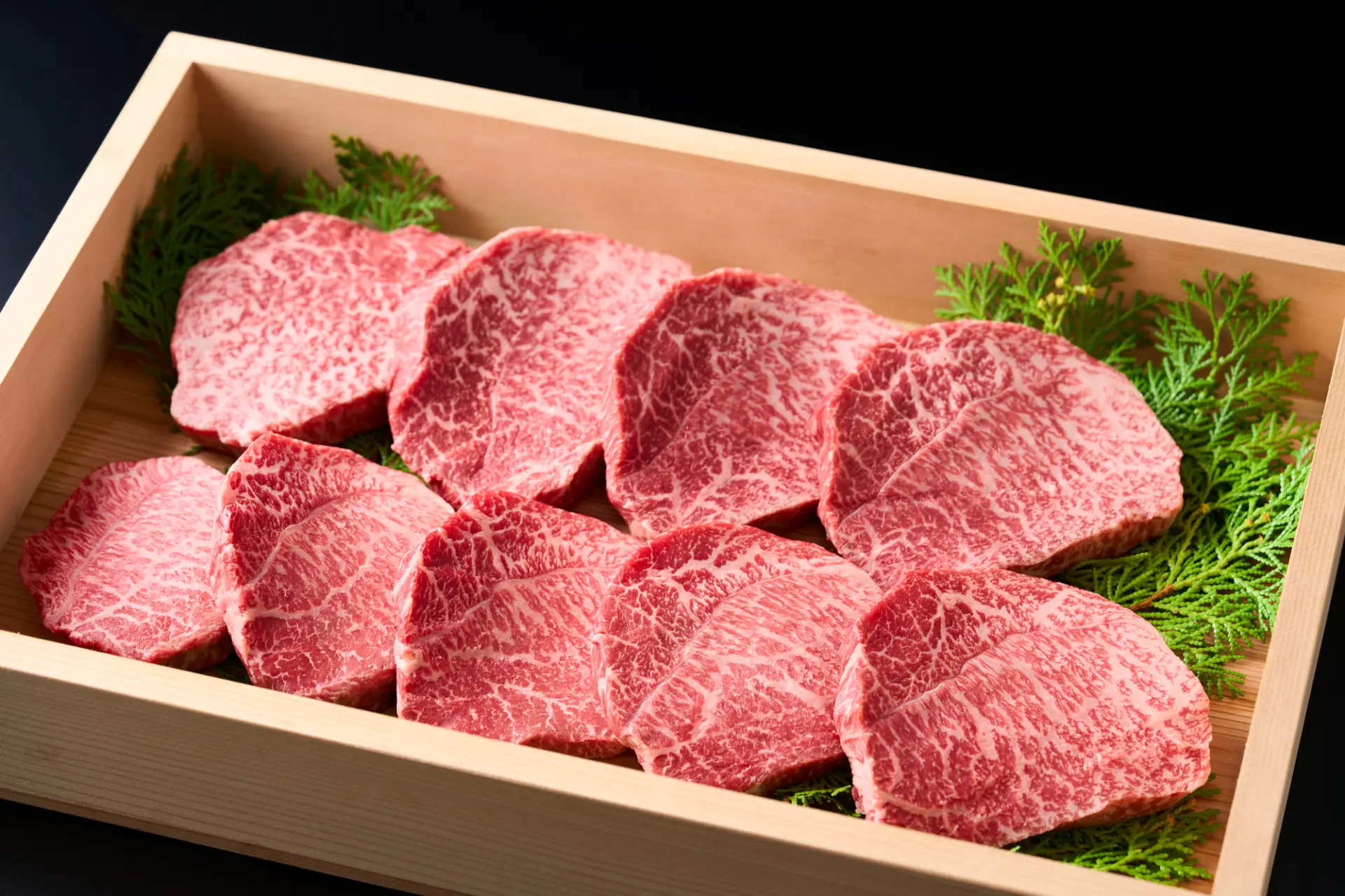
“Sirloin” refers to the area from the back to the lower back.
It is part of the loin, found only in cattle, and is known around the world as one of the finest cuts, also famous as the iconic steak cut.
Its defining features are its fine texture and the rich sweetness that spreads in your mouth the more you chew.
Compared with rib loin, it has a slightly higher proportion of lean meat, along with a rich aroma that stimulates the appetite.
The juicy fat is high quality and not overly heavy, and its extremely smooth mouthfeel makes it enjoyable to the very end.
Salt is recommended to bring out the ingredient itself as much as possible, while a sweet-savory soy sauce-based sauce or lemon juice can help balance the richness of the fat.
For the best result, sear the surface over high heat, cook the sides over low heat, then let it rest for Approx. 1–2 minutes.
Rump: Light Yet Rich in Flavor
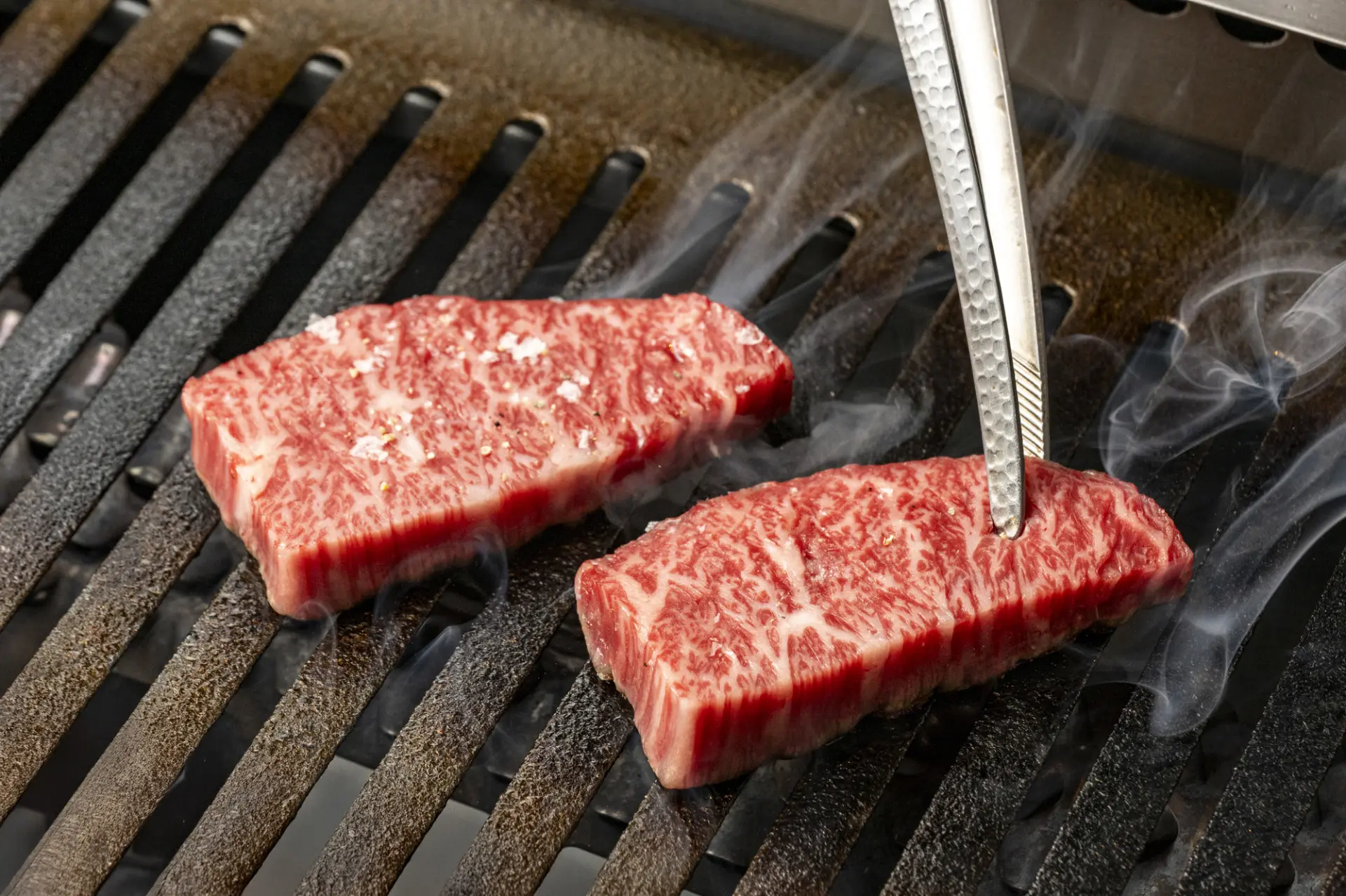
“Rump” refers to the area from the lower back to the round and buttocks, and it is one of the softest parts of the round.
Among lean cuts, it is relatively common in distribution, and compared with other rare cuts, it is more affordable and offers excellent value for money.
Although it does not easily develop marbling, the meat has a fine texture and the powerful umami typical of lean beef.
It is low in fat with a pleasant chew, and its richness spreads more the more you chew.
It has no strongクセ, and its light finish makes it easy to eat, so it is well suited to people who prefer healthier choices or do not like fatty meat.
In addition to salt, which highlights the ingredient itself, a sweet-savory soy sauce-based sauce or lemon is also recommended for a lighter taste.
Quickly searing the surface over high heat while leaving just a little redness inside lets you enjoy both its tenderness and juiciness.
Types of Yakiniku Restaurants in Japan and How to Choose One
Yakiniku restaurants in Japan can broadly be divided into three types: “high-end specialty restaurants,” “casual yakiniku restaurants,” and “solo yakiniku specialty restaurants.”
Below, we’ll introduce the features, price ranges, and ideal situations for each.
When looking for a yakiniku restaurant, use this guide to choose the type that best suits your needs.
High-End Yakiniku Restaurants for Rare Cuts and Premium Wagyu
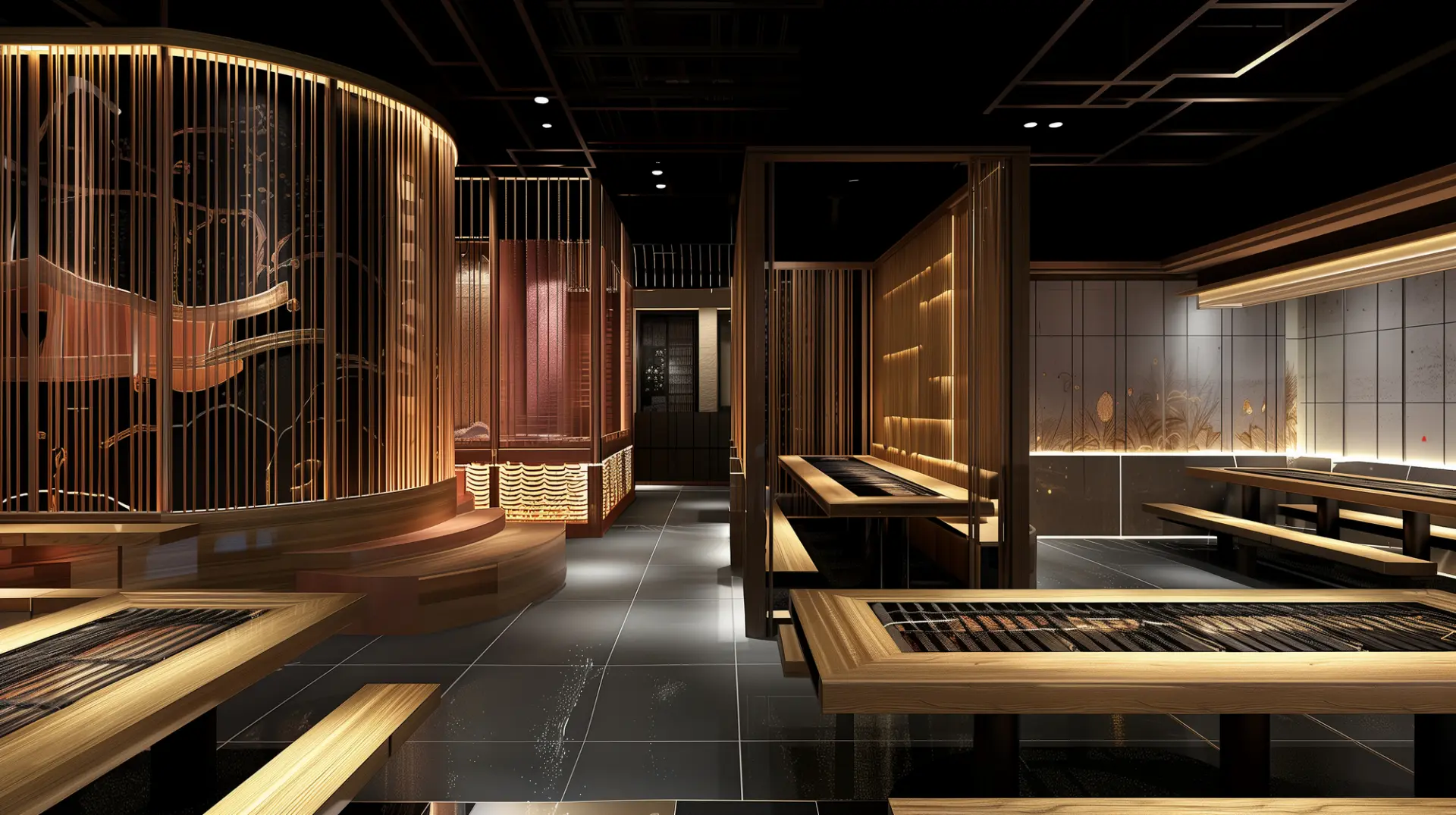
High-end yakiniku restaurants are highly particular about everything from sourcing ingredients to management, cooking methods, and service.
They mainly handle famous branded wagyu, serve each cut with different slicing styles and thicknesses, and also offer high-quality side dishes and drinks.
The interiors are calm and refined, often with private or semi-private rooms, creating an environment worthy of the “luxury” label.
You can also enjoy detailed explanations from experienced staff on how to grill the meat and recommendations tailored to your preferences, allowing you to fully explore the world of wagyu.
The price range is Approx. ¥20,000–¥30,000 per person, though it is not unusual for it to cost even more.
Reservations are basically essential, and popular restaurants fill up quickly, so it is best to book early.
They are especially recommended for special occasions such as birthdays.
Casual Yakiniku Restaurants for Great Value and a Relaxed Experience
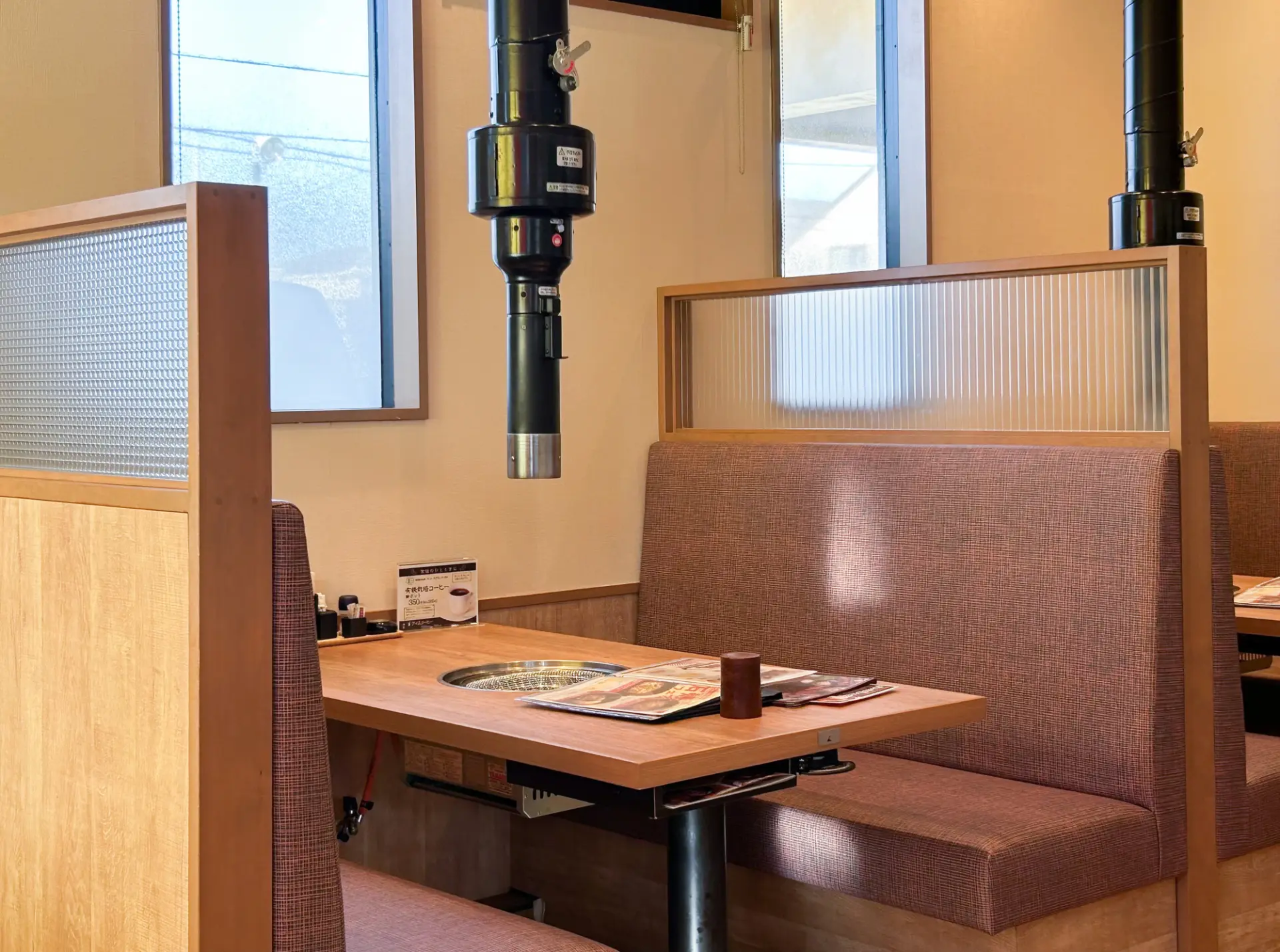
Casual yakiniku restaurants are known for being cost-effective and easy to enjoy in a relaxed atmosphere.
They offer a wide range of choices, from classic cuts such as kalbi, loin, and horumon to side dishes and drinks, letting you experience the everyday side of yakiniku culture.
Many also offer all-you-can-eat courses, including side dishes and desserts, which is another big attraction, since you can enjoy as much of your favorite cuts as you like within the time limit.
Well-known chains include Gyu-Kaku and Yakiniku King, both found nationwide, as well as the more upscale Jojoen.
Although it varies somewhat by restaurant and menu, the typical price range is Approx. ¥3,000–¥5,000 per person.
They are recommended for travelers visiting a yakiniku restaurant in Japan for the first time, as well as for people who want a lively meal with friends or family.
Solo Yakiniku Specialty Restaurants Where You Can Enjoy Grilled Meat Alone Without Worrying About Others
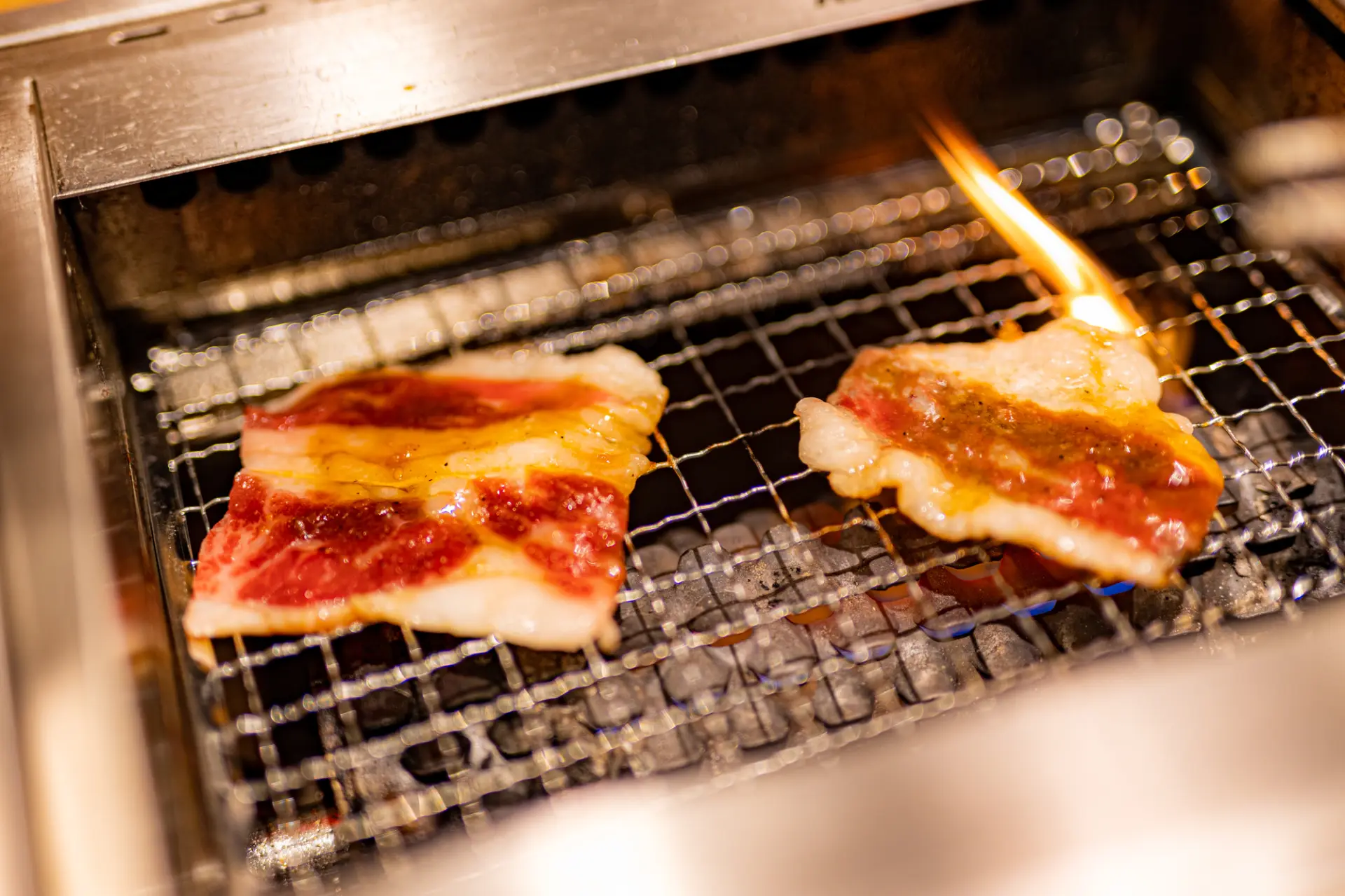
A solo yakiniku specialty restaurant is a new type of dining format focused on grilling and eating at your own pace in partitioned individual seats, often at a counter.
Each seat is equipped with its own roaster, and ordering is streamlined through touch panels or serving lanes, creating a fast and comfortable system.
With set-meal styles and small-portion ordering available, and the ability to enjoy yakiniku without worrying about people around you, these restaurants have been increasing in urban areas in recent years.
Among the chains, Yakiniku Like is especially well known and popular nationwide as a fast-food-style yakiniku option for a quick meal.
Another nice point is the affordable price range of Approx. ¥1,000–¥2,000 and the ease of walking in without a reservation.
They are recommended for travelers and female diners who want to casually experience authentic yakiniku on their own.
How to Grill Yakiniku for the Best Flavor
Just as with choosing cuts, grades, and restaurant types, there are many ways to enjoy yakiniku.
Even small things such as the order in which you eat, how you grill, and basic manners can change the flavor.
Here, we’ll introduce three points worth knowing to enjoy it at its best.
Start Grilling with Leaner Cuts
To enjoy yakiniku more deliciously, it is important to pay attention to the order in which you grill.
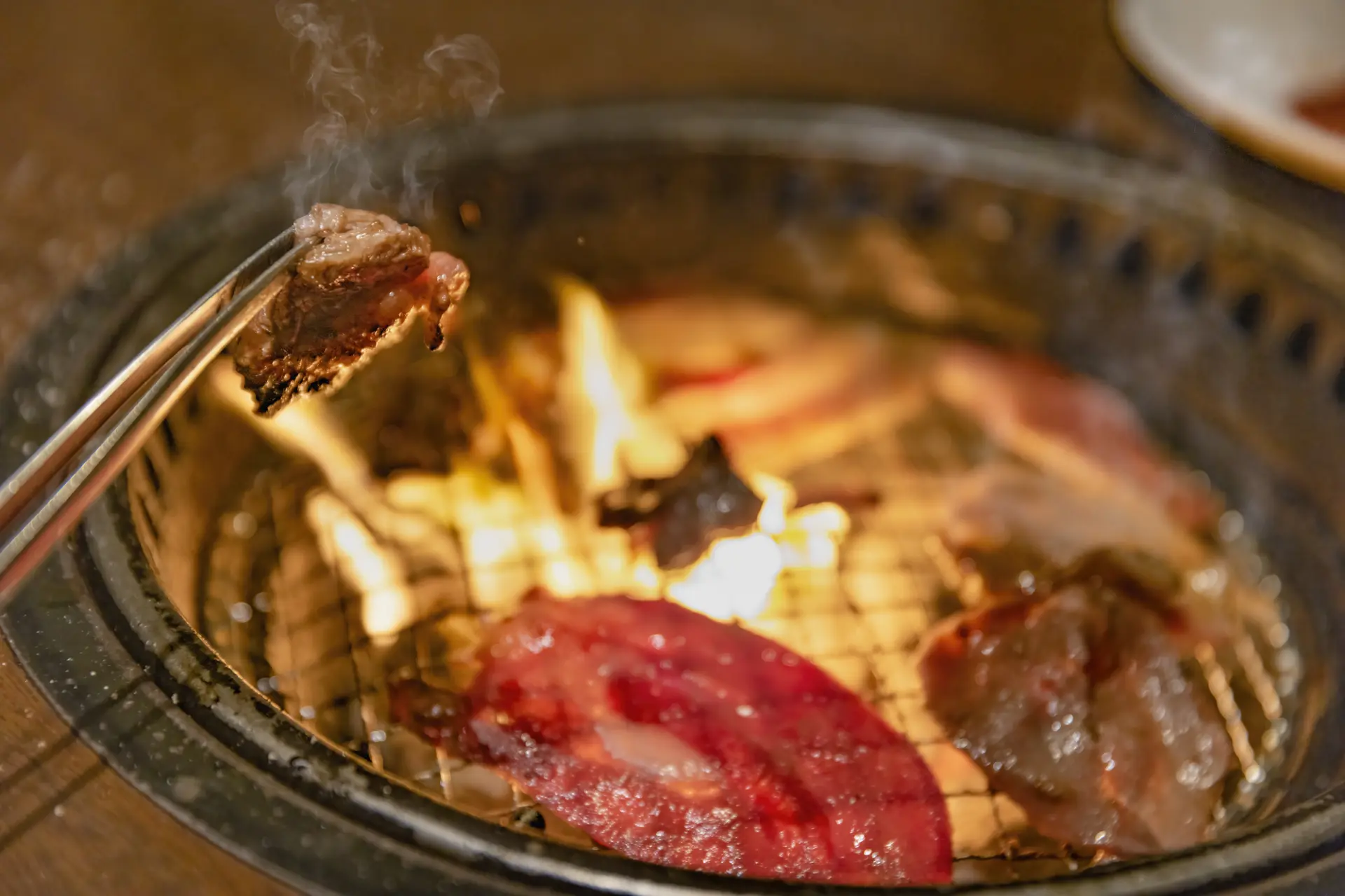
The basic rule is to start with leaner cuts such as tongue and red meat to ease your palate in.
Grilling delicate cuts while the grate is still clean allows you to taste the meat’s original umami and aroma more clearly.
If you gradually move on to fattier cuts such as kalbi and horumon, too much fat will not build up on the grate and the later meat will be less likely to burn.
Starting with lighter flavors and moving to richer cuts later also makes it easier to notice changes in taste.
Since this also affects your overall satisfaction with the meal, it is worth remembering.
It is also recommended to eat appetizers such as namul and kimchi before the meat to stimulate your appetite, and to add vegetables and mushrooms between bites as a palate refresher and for better nutritional balance.
Use Separate Chopsticks for Eating and for Grilling the Meat
Because yakiniku involves handling raw meat, proper hygiene manners are also essential for enjoying it safely.
In Japan, the custom of “using separate chopsticks or tongs for grilling and separate chopsticks for eating” is widely practiced.
At high-end yakiniku restaurants, tongs are generally provided for each person, while at casual restaurants, grilling with chopsticks is more common.
Whether tongs are available depends on the restaurant, so check with the staff, but in the end, it is up to you to keep them separate.
Also, if someone else at the table is grilling meat, avoid reaching for it, and be considerate of the condition of the grate and the pace of grilling so that everyone can have a pleasant and enjoyable time.
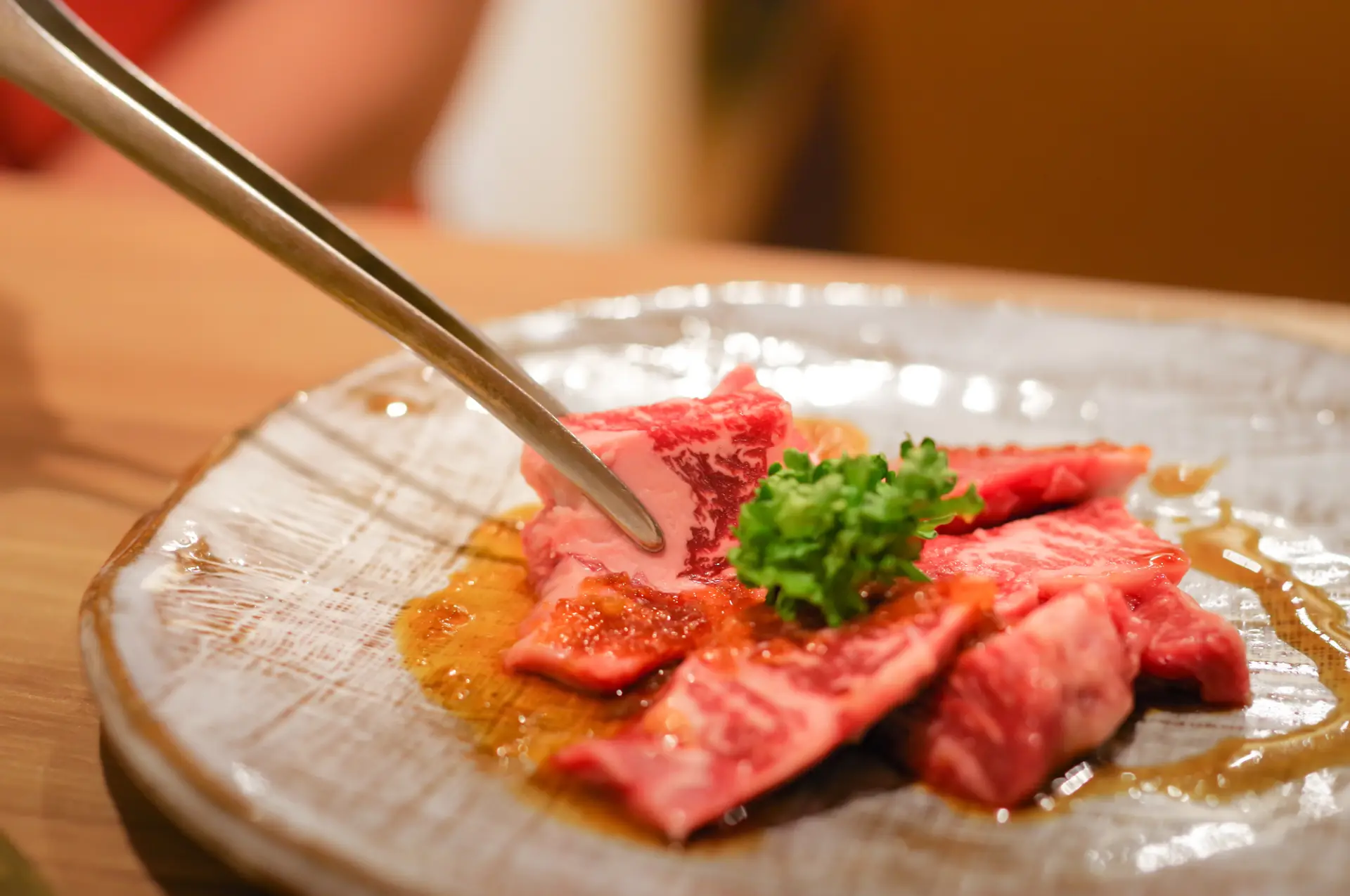
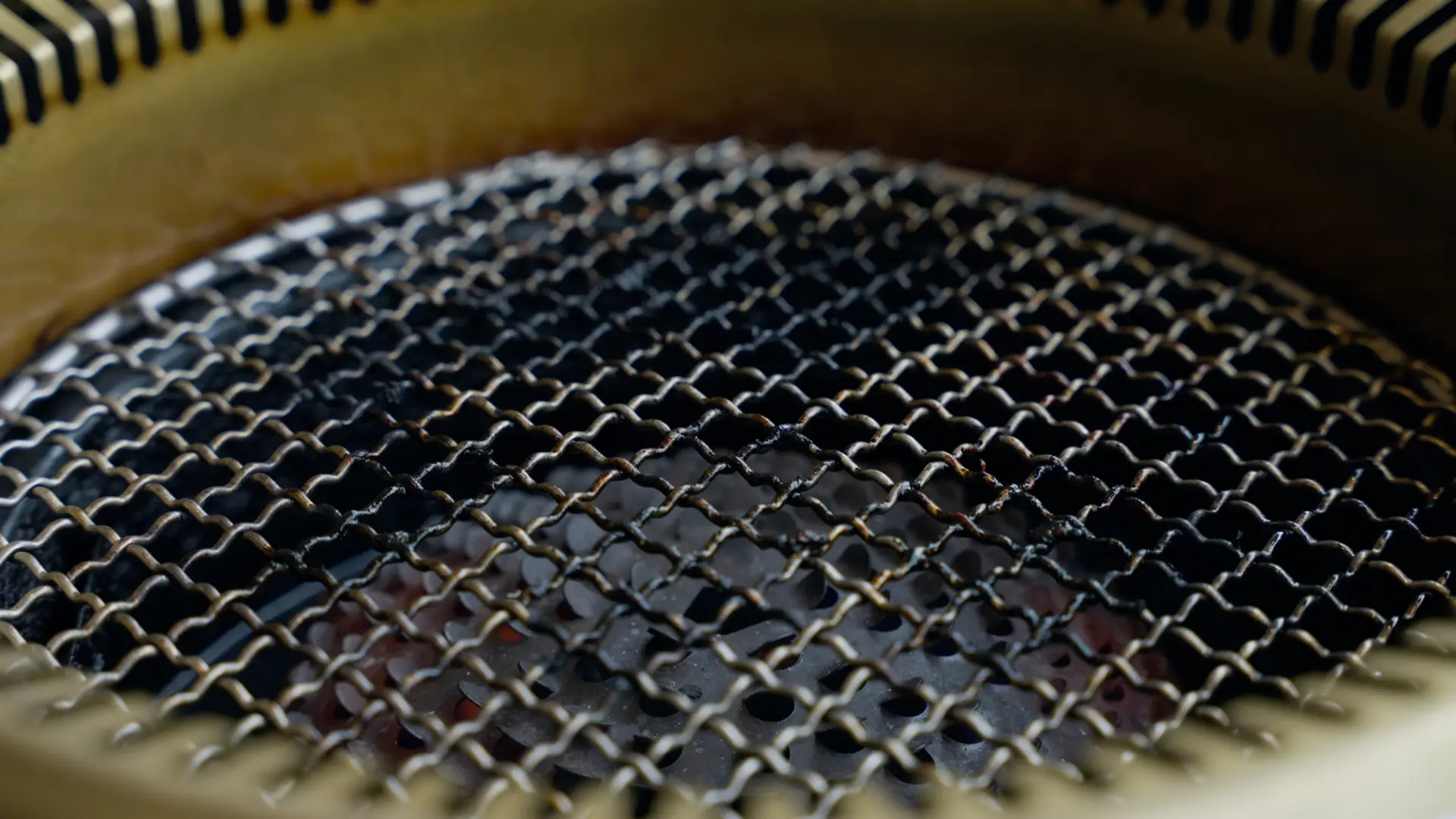
Ask to Have the Grill Grate Replaced When Burnt Residue Builds Up
When fat and burnt residue build up on the grill grate, they can transfer unwanted flavors to newly added meat and spoil its original taste.
To enjoy each cut in its best condition, it is also worth knowing the right timing for replacing the grate.
A good guideline is after grilling fatty cuts such as kalbi or horumon, around the halfway point of the meal, or when you want to eat more delicate cuts later on.
At many yakiniku restaurants, regardless of type, the grate can be replaced free of charge, so ask the staff or make the request from the touch panel.
Note that right after replacement, food is more likely to stick or burn, so the key is to heat the grate for Approx. 2–3 minutes first.
Yakiniku Trivia That Makes It Even More Fun
Finally, let’s look at three interesting pieces of yakiniku trivia.
Yakiniku is not just delicious, it is also a surprisingly deep world, and the more you know, the more hidden appeal you begin to notice.
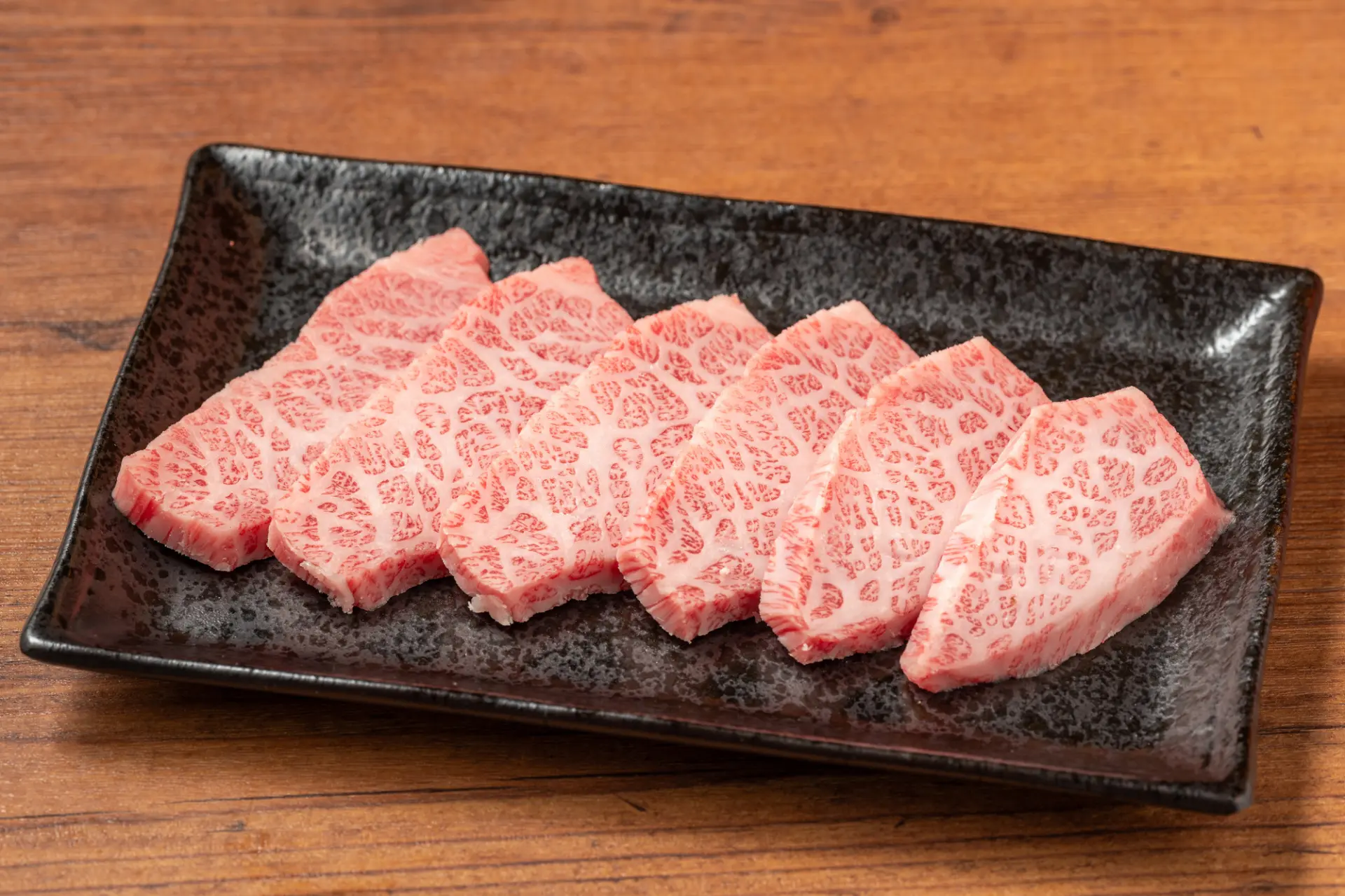
The Secret Behind Marbling Is “Intramuscular Fat”
“Fat marbling,” measured by BMS, or Beef Marbling Standard, is the index used to evaluate how marbled beef is.
It shows on a scale of 1 to 12 how finely and evenly fat is distributed into the lean meat within the muscle.
The higher the number, the more beautiful the marbling, and premium A5 wagyu is classified in the BMS10–12 range.
Because it also affects flavor, it is worth checking.
By the way, the reason marbling is said to be delicious is that the fat melts at a low temperature, creating a melt-in-your-mouth texture and rich sweetness the moment it enters your mouth.
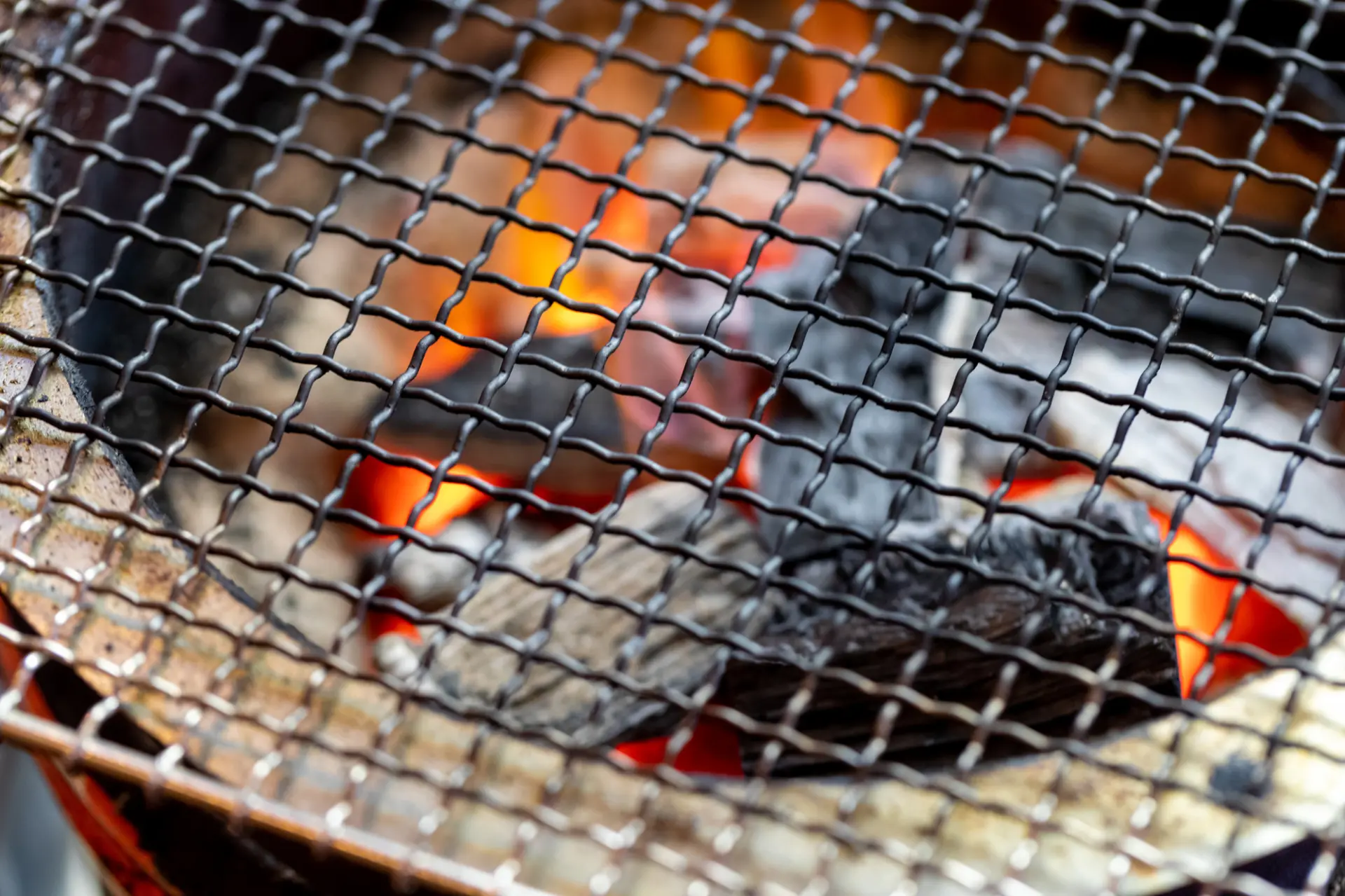
Why Charcoal and Gas Change the Flavor
Charcoal emits stronger radiant heat than gas, quickly searing the surface of the meat while gradually sending heat into the inside.
Because it cooks in a short time, it is more likely to produce the ideal result: fragrant on the outside and juicy on the inside.
Also, when the fat of wagyu combines with charcoal’s distinctive smoky aroma, the umami feels even more layered.
This natural aroma comes from the charcoal itself, so it cannot be recreated with gas or electric heat, and even the same meat can taste very different depending on how it is grilled.
“Yakiniku Sauce” Is a Japanese Invention
In Japan, when people talk about yakiniku sauce, the standard is a sweet-savory sauce built around soy sauce.
Although its roots lie in the yakiniku culture of the Korean Peninsula, it developed in a unique way to suit Japanese tastes.
After Japan’s period of rapid economic growth, opportunities to enjoy yakiniku at home increased, and the huge success of Ebara’s “Yakiniku Sauce,” released in 1968, had an especially major impact.
This helped sweet-savory sauce spread nationwide and become the standard yakiniku sauce in Japan.
Even today, there is a wide lineup available, including the popular “Ogon no Aji” series.
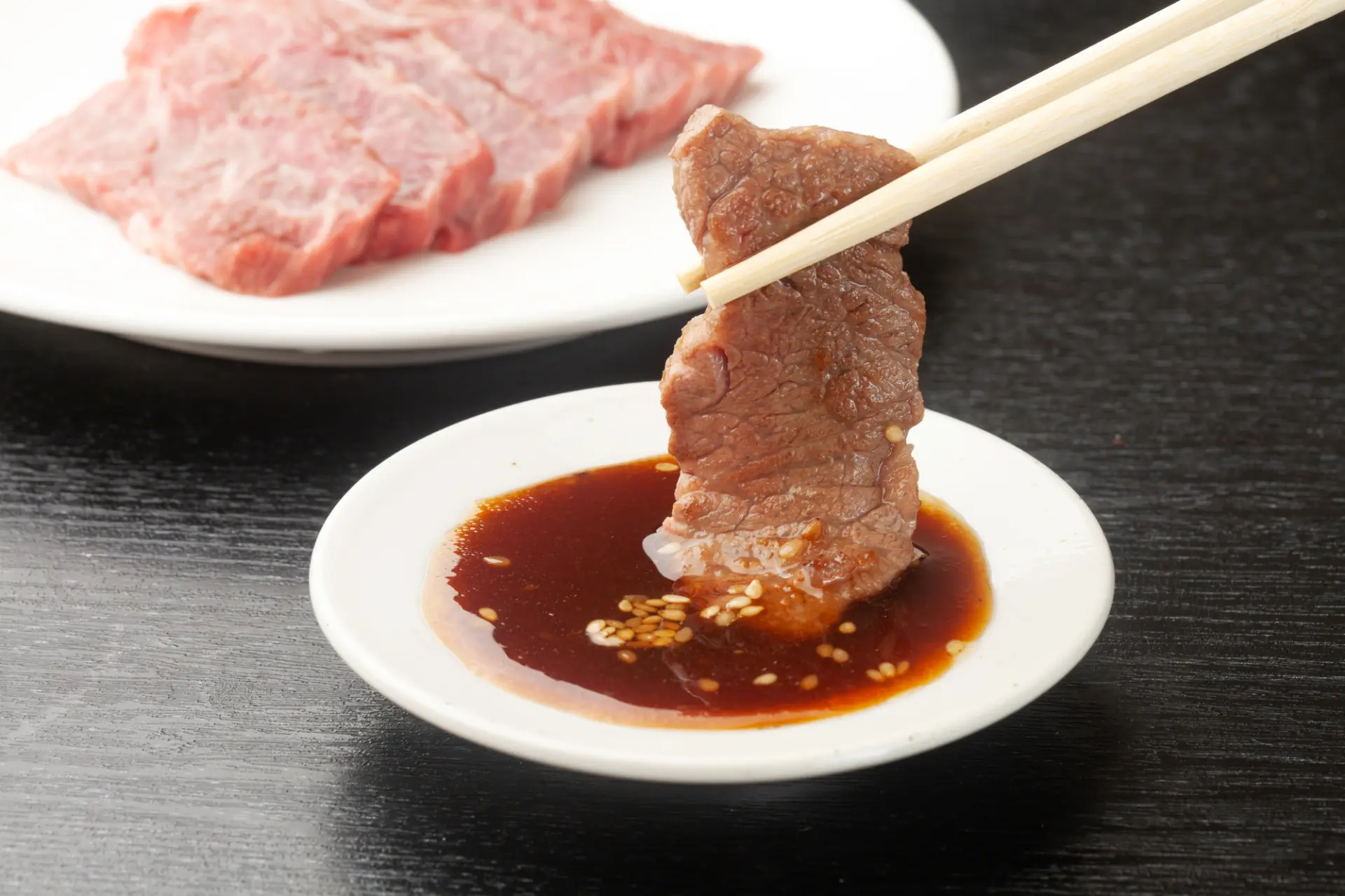
FAQ about Japanese Yakiniku
Q
How is Japanese yakiniku different from Korean BBQ?
Simply put, Japanese yakiniku is beef-centered and enjoyed with dipping sauce in a wide range of situations, while Korean BBQ is pork-centered, eaten wrapped in vegetables, and typically enjoyed in lively large groups.
Q
What are the classic cuts in Japanese yakiniku?
The five classic and popular cuts are kalbi, loin, tongue, harami, and horumon.
Q
Do you grill the meat yourself at a yakiniku restaurant, or does the staff do it?
At high-end restaurants, the staff often grills the meat for you, though you may also do it yourself, while at casual chain restaurants, all-you-can-eat restaurants, and solo yakiniku specialty restaurants, self-grilling is the norm.
Q
What are some famous yakiniku chain restaurants in Japan?
Well-known yakiniku chains include the upscale Jojoen and casual chains such as Yakiniku King and Gyu-Kaku.
Summary
In this article, we have comprehensively introduced the history of yakiniku in Japan, the features of each cut, different types of restaurants, and even some trivia.
With its depth and variety, Japanese yakiniku goes beyond being just a meal and stands as one of the cultures and experiences Japan proudly shares with the world.
Another part of its appeal is that it fits all kinds of situations and can be enjoyed in many different ways.
The more you know, the more delicious and special the experience becomes, so use this guide as a reference and enjoy yakiniku in Japan to the fullest.
*This article assumes beef as the main focus, but depending on the restaurant or course, cuts of pork and other meats may also be served.