
A Single Piece Filled with Craftsmanship: The Complete Guide to Konpeito
Sweet, delightful konpeito brings a little happiness with just one piece. Behind that sweetness lies a very Japanese kind of patience and delicacy in craftsmanship. Konpeito, a “Nanban sweet” that came to Japan from Portugal 480 years ago, developed in its own unique way in Japan and is now one of the country’s traditional sugar candies.
In this article, we’ll introduce the history of konpeito, its two-week production process, and a hands-on experience facility. The facility is especially recommended if you want to experience traditional Japanese sweets for yourself. Be sure to read this before your trip to Japan!
What is Konpeito?
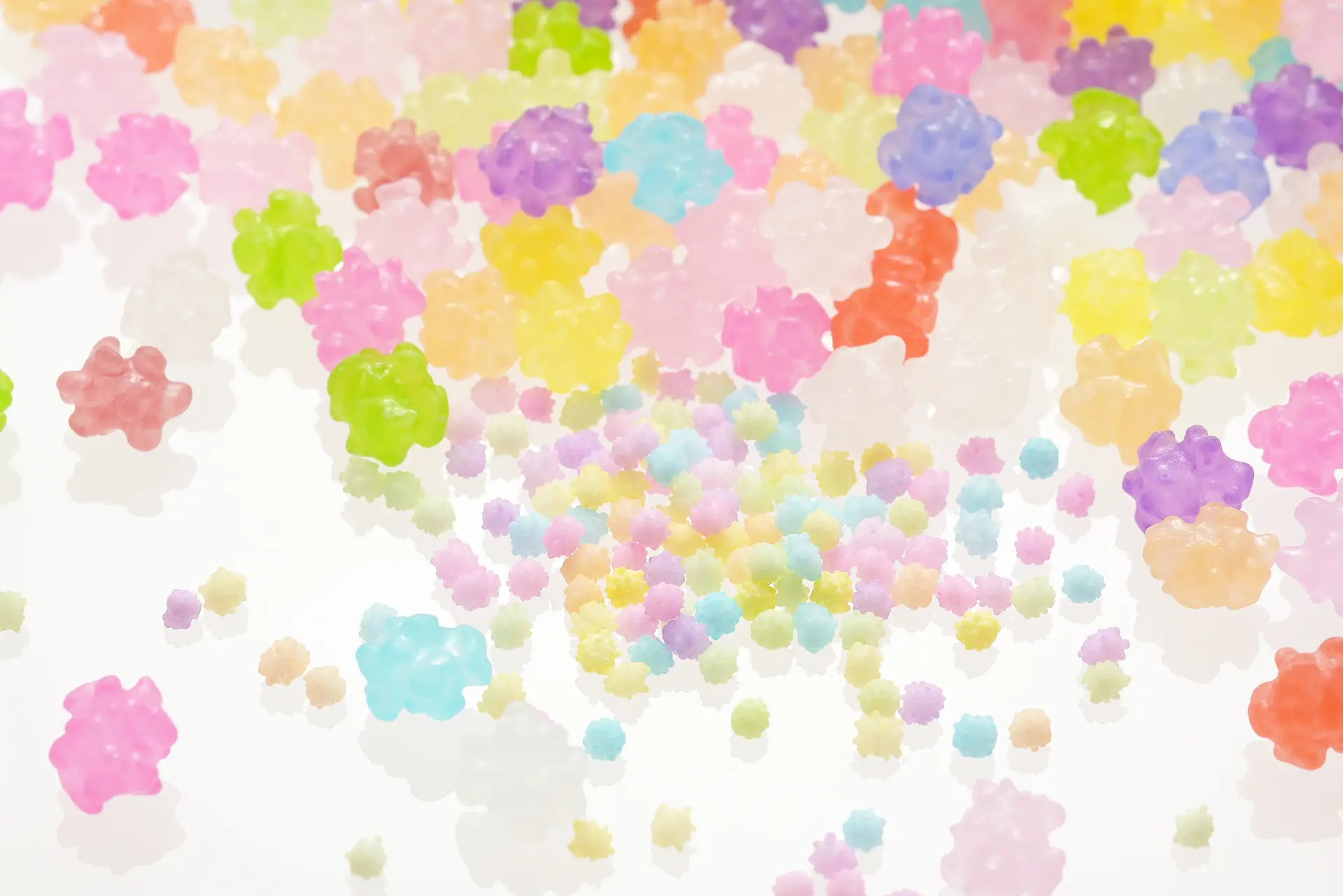
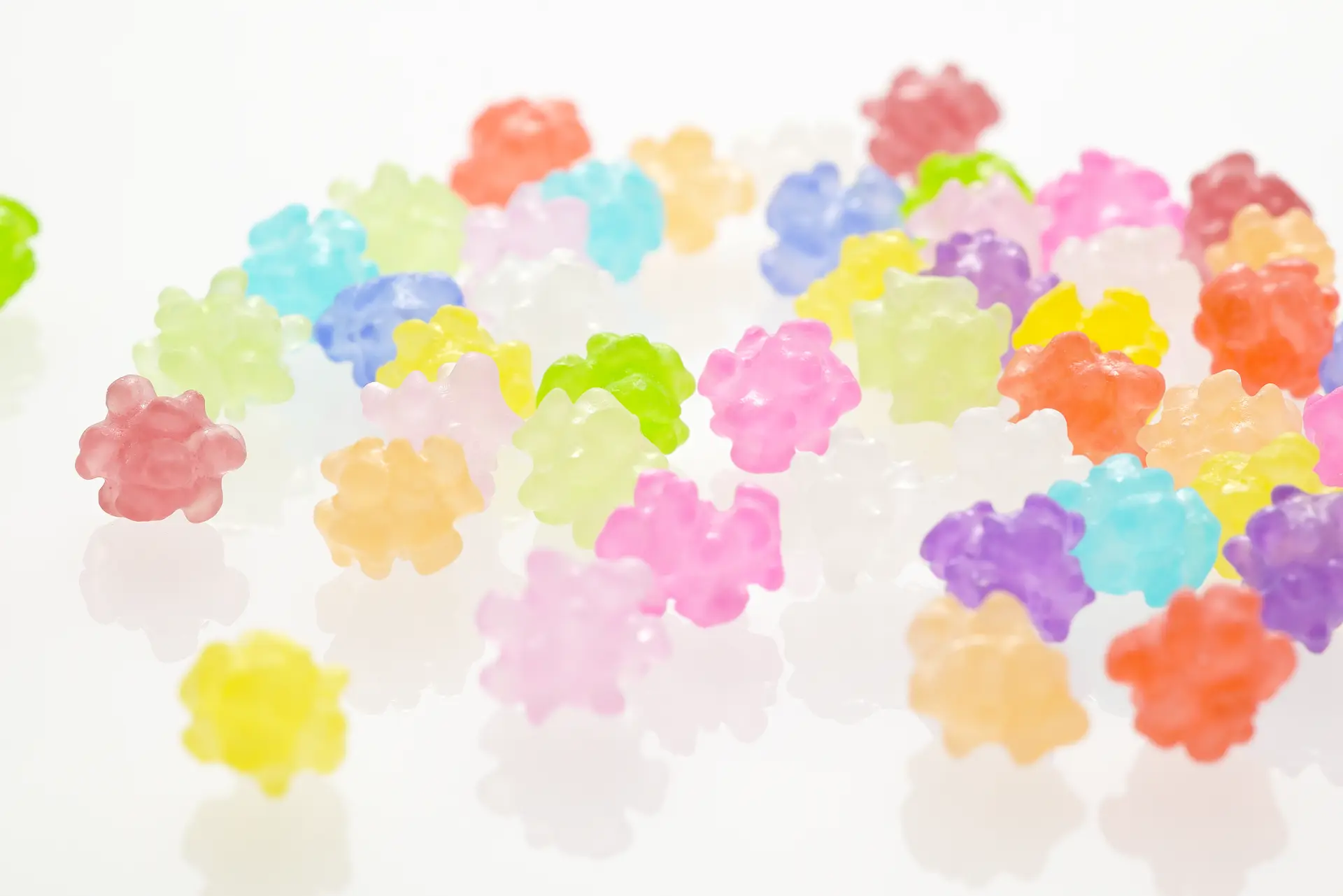
A major feature of konpeito made in Japan is its uneven “horns” (iga): small, angular protrusions on a round candy. These horns are not shaped in a mold. In a large rotating kettle, syrup is poured over granulated sugar, and through skilled craftsmanship, the protrusions begin to form. Over 10 days to Approx. two weeks, they are carefully grown into beautiful points. Thanks to its light sugar flavor, colorful appearance, and long shelf life, konpeito is used in many ways, from everyday treats to wedding and celebration favors, gifts, sweets served with tea, decorative items, and emergency food. Bonbonnières filled with konpeito are sometimes given as gifts at Imperial Household banquets. For Japanese people, it is a familiar sweet. Konpeito also makes a great gift and is popular as a souvenir from Japan.
Hands-on workshops have also appeared so that more people can discover the deep appeal of konpeito by making it themselves.
The History of Konpeito
Konpeito came to Japan from Portugal 480 years ago. The year was 1569, during Japan’s Sengoku period. It was the era when the warlord Oda Nobunaga was the country’s most powerful ruler. Luís Fróis, a Portuguese Catholic priest, tried to meet Oda Nobunaga at Kyoto’s now-lost Nijo Castle to obtain permission for missionary work. One of the gifts he brought with him was “confeitos,” a Portuguese word meaning “sugar confectionery.”
At the time, sugar was extremely valuable in Japan. Even Nobunaga, the ruler of the country, rarely had the chance to taste something so sweet and delicious. It is said that he took a great liking to confeitos and ate them with delight. Konpeito was then passed on to the next era under Toyotomi Hideyoshi. As Hideyoshi loved chanoyu, the Japanese tea ceremony, tea culture spread widely, and konpeito came to be enjoyed as a sweet served at tea gatherings. Konpeito at the time did not have sharply defined points like today’s version; it had gentler bumps, more like a walnut. It also seems to have been plain white rather than colorful.
In the Edo period, a townsman in Nagasaki succeeded in making konpeito domestically for the first time. Later, through the Meiji period, konpeito artisans appeared across Japan, including Kyoto and Edo, and the candy spread rapidly. Although it became popular, it was handmade and could not be mass-produced. A sugar merchant in Osaka then invented a machine that enabled mass production and applied for a patent in 1903. Another merchant in Osaka bought the patent. Around 1907, he built a factory in Osaka’s Nishi Ward equipped with 20 rotating kettles for making konpeito and began mass production. This was a turning point for konpeito.
Types of Konpeito
From the Meiji period, when mass production of konpeito began, to the present day, four types have been made: “Tairin” at Approx. 15 mm in diameter, “Churin” at Approx. 12 mm, “Shorin” at Approx. 7 mm, and the smaller “Gokushō” at Approx. 4.5 mm.
In Japan, there is a culture of sensing the seasons through sweets, especially wagashi, and the colors of konpeito represent the changing seasons. Pink represents spring cherry blossoms, yellow-green represents early summer greenery, yellow represents autumn leaves, and white represents winter snow. Today, colorful konpeito is made using food coloring.
Today, many varieties are flavored not only with sugar but also with flavorings such as peach, pineapple, lemon, melon, and muscat grape. Because konpeito is made from sugar and has a refreshing sweetness, and because it comes in many flavors, it is easy to enjoy without getting tired of it.
Konpeito Production
Even after two weeks of production, konpeito only reaches Approx. 15 mm in diameter. It grows by only Approx. 1 mm per day. This shows just how much time and effort this candy requires.
A large rotating kettle is essential for making konpeito.
Made of iron, it measures 1.8 m in diameter, 44 cm deep, and weighs 800 kg. A gas burner is attached to the bottom of the kettle, and the candy is made while being heated. To make the konpeito grow, syrup made by dissolving sugar in water is poured over it at regular intervals. As that moisture evaporates, the temperature inside the konpeito factory reaches at least 55°C, with humidity at least 70%.
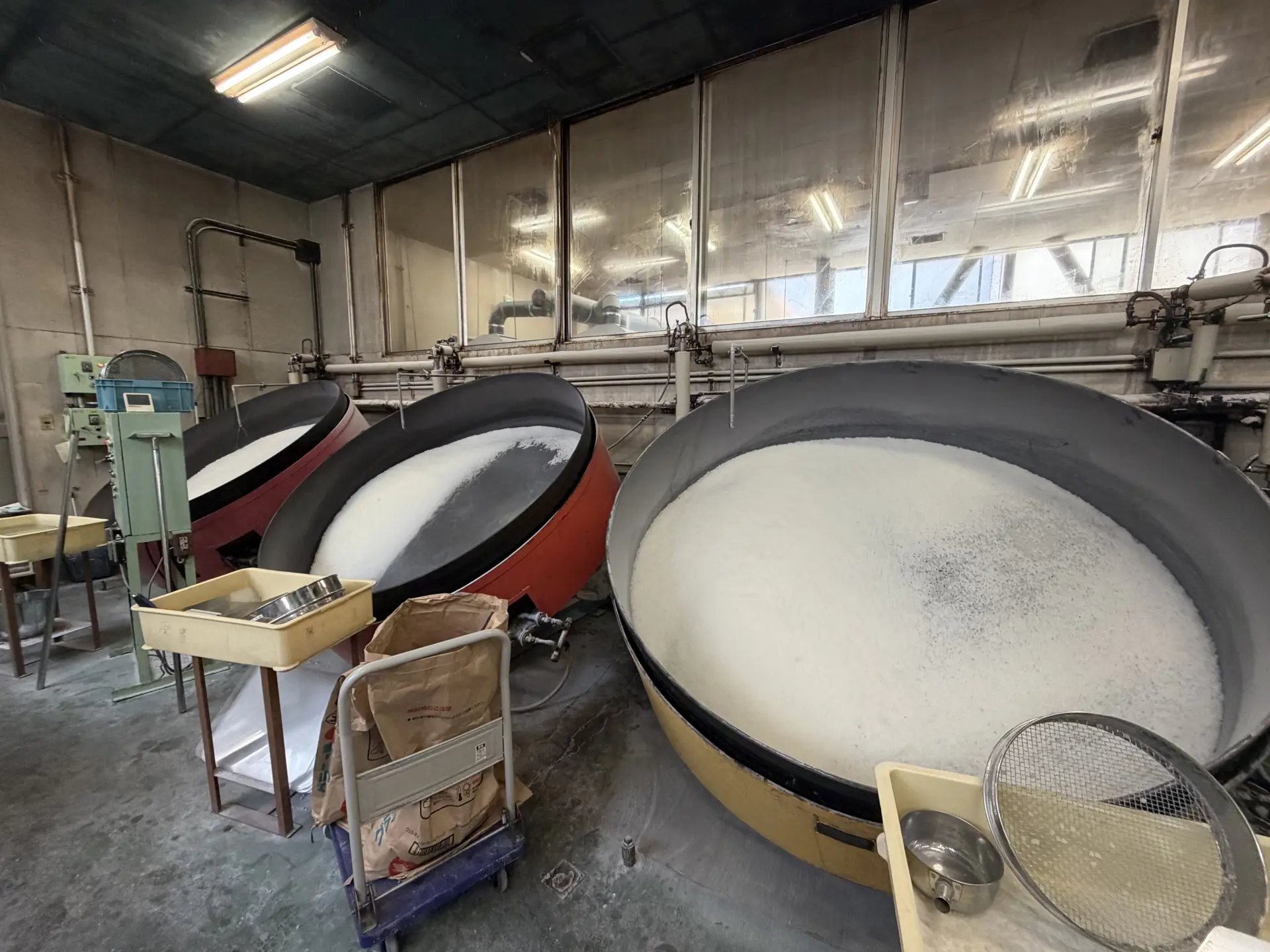
This kettle slowly rotates clockwise twice per minute. Its tilt is Approx. 30°, and this angle is adjusted depending on the size of the konpeito grains. Determining the right angle of the kettle is essential for making the candy larger and forming beautiful points, and it is said to be where the artisan’s skill truly shows. It takes years to develop that sense.
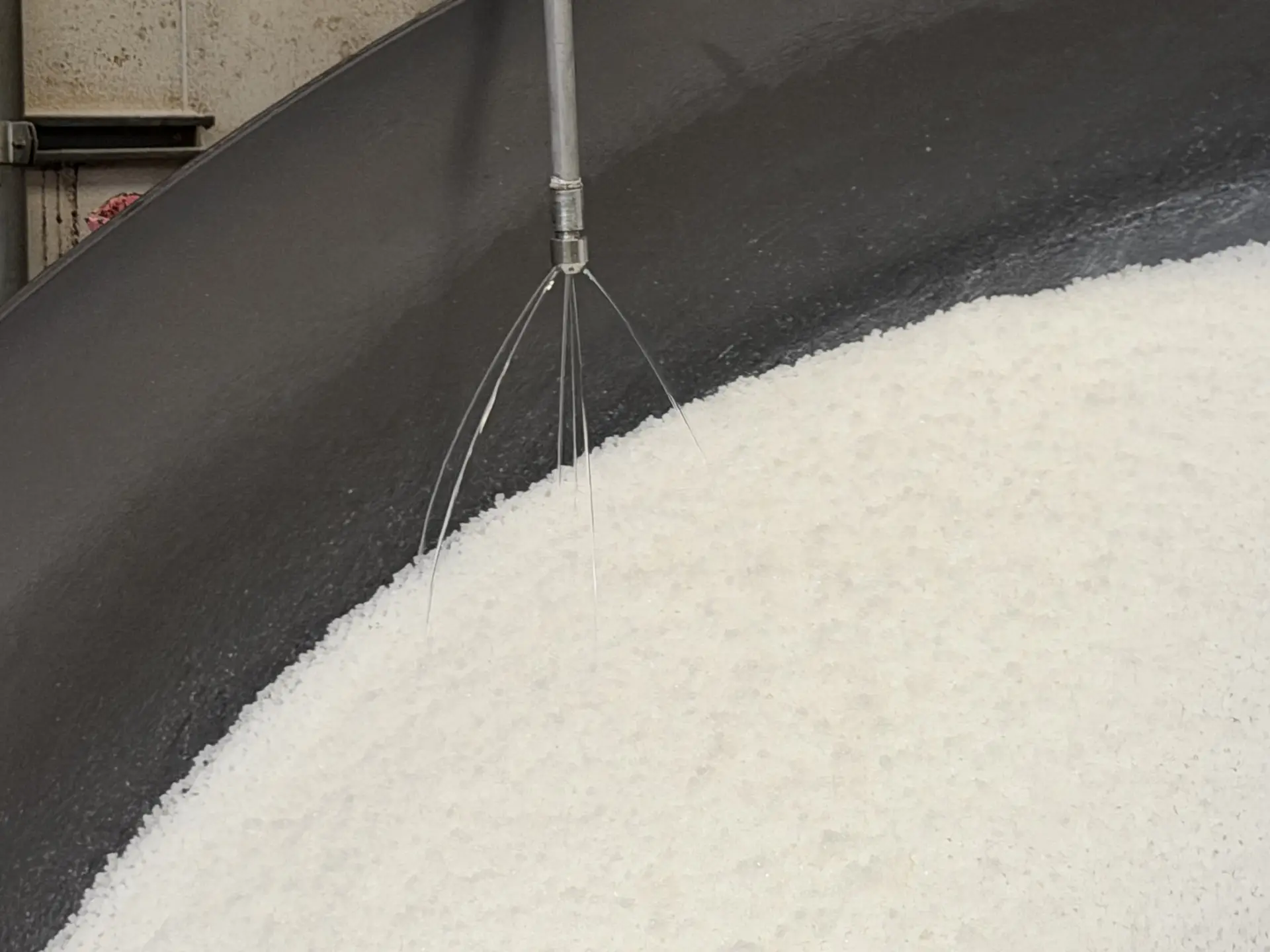
How do the horns, konpeito’s most distinctive feature, form? Next, we’ll introduce the konpeito production process.
To make konpeito, a “core” is needed. Sesame seeds were used in the Edo period, later replaced by poppy seeds, and today granulated sugar is used. By pouring syrup over each grain of granulated sugar, the candy grows larger while its points develop.
First, granulated sugar is placed in a kettle set at a slightly steep angle and heated while rotating. Syrup made at a granulated sugar-to-water ratio of 3:1 is poured over the granulated sugar. This process of pouring syrup and drying it with heat continues for Approx. three days. After three days, the square grains of granulated sugar become round beads.
From the fourth day, the work of forming the points begins. The angle of the kettle is loosened slightly, and syrup with the same sugar concentration is poured over the candy. By setting the kettle angle to 30°, the young konpeito pieces slide down inside the kettle, which is said to be essential for forming the points. As syrup is added, small protrusions called “pocchi” appear. These pocchi gradually grow into larger points.
The process then moves on to coloring and flavoring, and finally, “tome-mitsu” finishing syrup is added to prevent color transfer, completing the konpeito.
Why do the points form during this production process? It seems that the exact mechanism has not been fully clarified, but it is believed that when pieces of konpeito collide with each other inside the kettle, the points where their syrup sticks together become protrusions, which then grow larger. That is why the angle of the kettle is so important. Konpeito is a mysterious sweet with surprising depth.
Make Your Own Konpeito at the “Konpeito Museum”!
There is a hands-on facility where you can make konpeito yourself, a sweet that arrived from Portugal Approx. 480 years ago and evolved in a uniquely Japanese way.
What is the Konpeito Museum?
The Konpeito Museum lets visitors learn about the history and culture of konpeito through a hands-on candy-making experience. It has locations in Yao and Sakai in Osaka, as well as in Fukuoka. At the Yao location in particular, you can not only experience making konpeito, but groups of at least 10 can also add an optional factory tour and see artisan techniques up close. It is Approx. a five-minute walk from Yao-minami Station on the Osaka Metro Tanimachi Line. As we approached the factory, a sweet aroma began drifting from somewhere nearby.
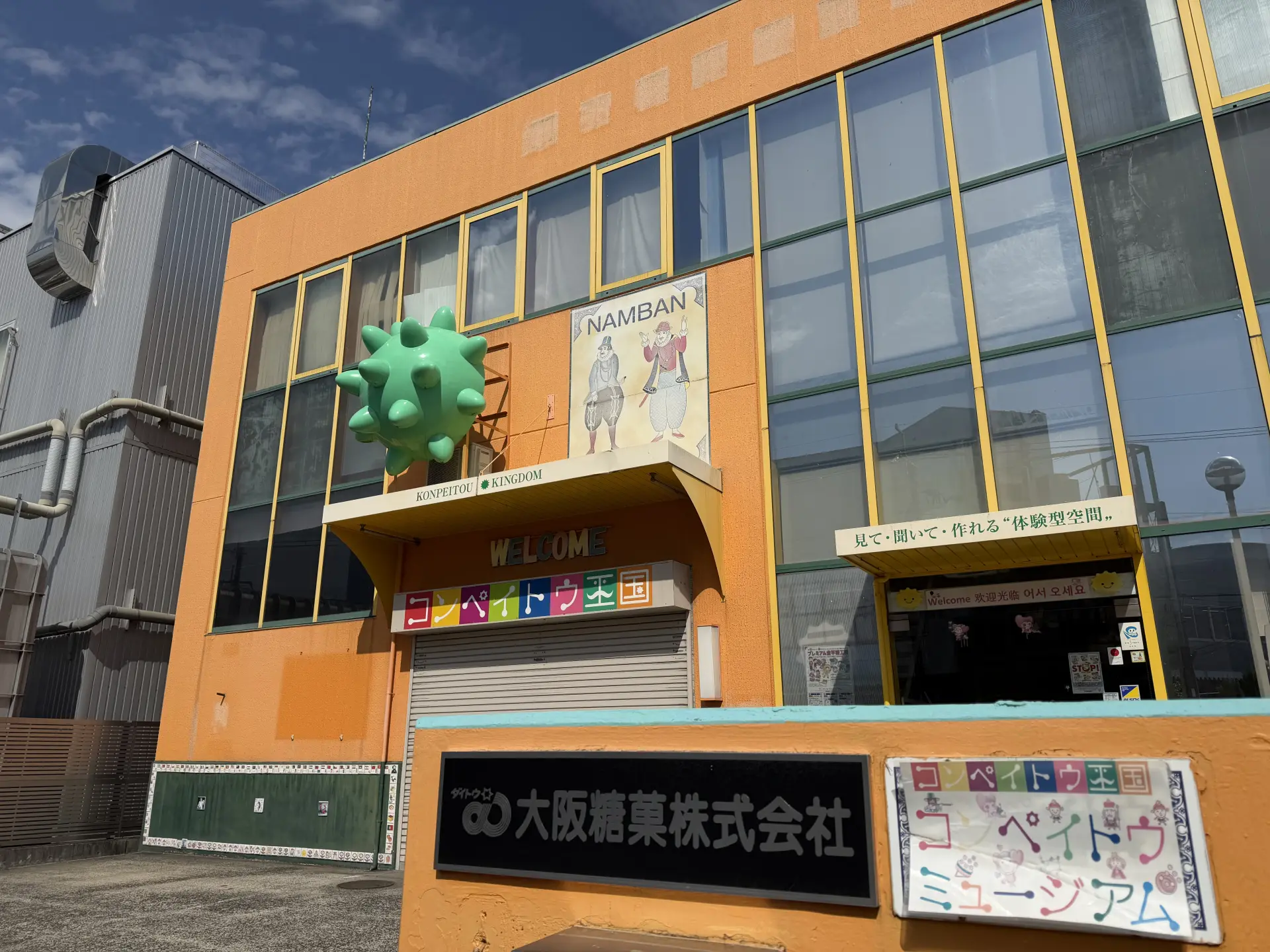
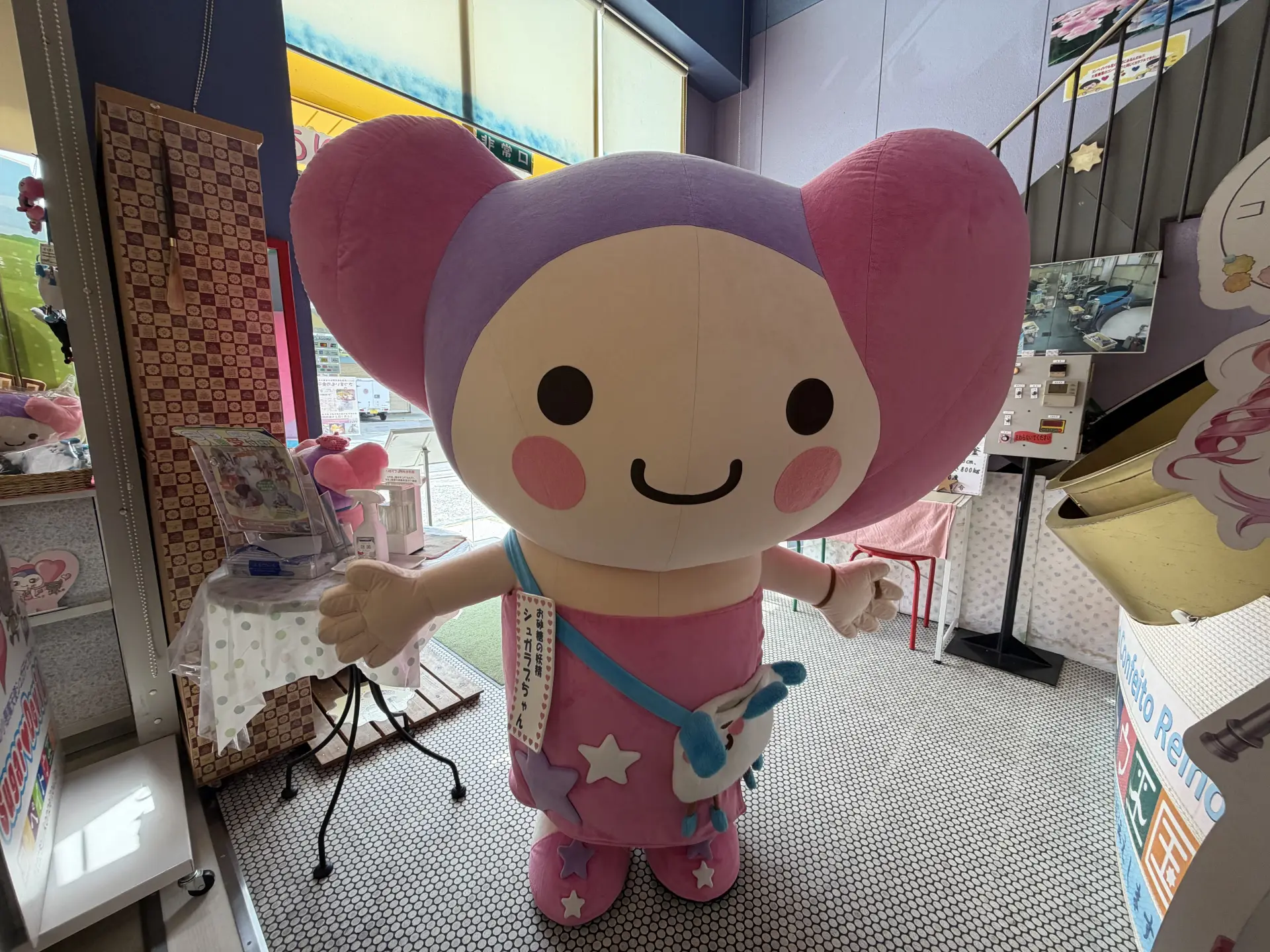
Here, you can also buy colorful konpeito in a variety of flavors, making it perfect for souvenirs. When events are held, you may even meet the Konpeito Museum’s mascot character, Sugar Love-chan.
Make Your Own Konpeito!
At the Konpeito Museum, you can enjoy a hands-on konpeito-making experience called the Premium Konpeito Workshop, where you can customize the size, color, and flavor to your liking. Making konpeito from scratch takes more than 10 days, so this facility lets you experience the final finishing steps. The experience uses a mini kettle 30 cm in diameter and takes Approx. 60 minutes. With a parent or guardian accompanying them, everyone from small children to adults can enjoy it. The experience is also available in foreign languages and is popular not only with Japanese visitors but also with international tourists. Up to 12 people can participate at the same time, so it is recommended for enjoying with friends or family!
Details for the Premium Konpeito Workshop
- Location
- Yao, Sakai, Fukuoka
- Number of Participants
- 1–3 people per kettle (up to 4 kettles, 12 people total)
- Admission
-
1-person kettle: 3,600 yen (tax included) / 1 person (junior high school students and older)
2-person kettle: 3,600 yen (tax included) / 2 people (2 adults or 1 adult + 1 child)
3-person kettle: 3,600 yen (tax included) / 3 people (1 adult + 2 children or 2 adults + 1 child)
* Adults: junior high school students and older; children: ages 3 through 6th grade; infants/toddlers: ages 0–2
* Up to 2 infants/toddlers (ages 0–2) may join free of charge
* Children cannot participate on their own. A parent or guardian must accompany them. - Experience Time
-
(Approx. 60 minutes)
Yao, Sakai: 9:30 am / 11:00 am / 1:30 pm / 3:00 pm
Fukuoka: 10:00 am / 11:30 am / 1:30 pm / 3:00 pm
* Because you will choose the size, color, and flavor of your konpeito, please check in 15 minutes before the start time
(1) Choose the Size, Color, and Flavor
After checking in, first receive an order sheet and decide the size, color, and flavor of your konpeito.
For size, you can choose small (200 g), large (200 g), or a mixed size option (100 g large + 100 g small).
This time, we chose the mixed option.
You can choose two colors and two flavors. Colors are pink, blue, yellow, and green, while flavors include lemon, cider, cherry, pineapple, grape, and melon. For the first type, we chose pink with cherry flavor. For the second, we chose blue with cider flavor. This time, we picked combinations where the color and flavor matched in our minds, but yellow with cherry flavor is perfectly fine too. Try choosing your favorite colors and flavors!
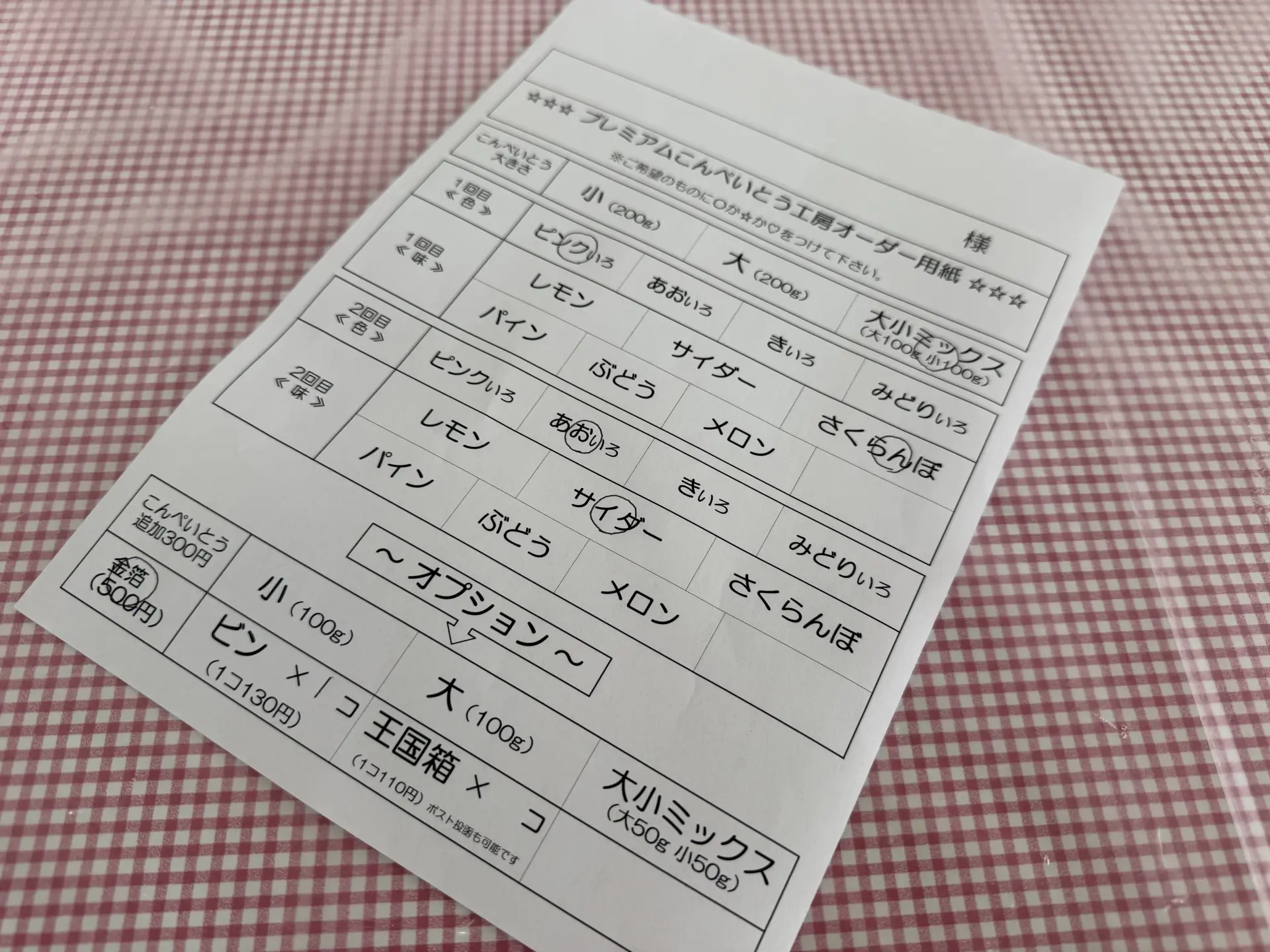
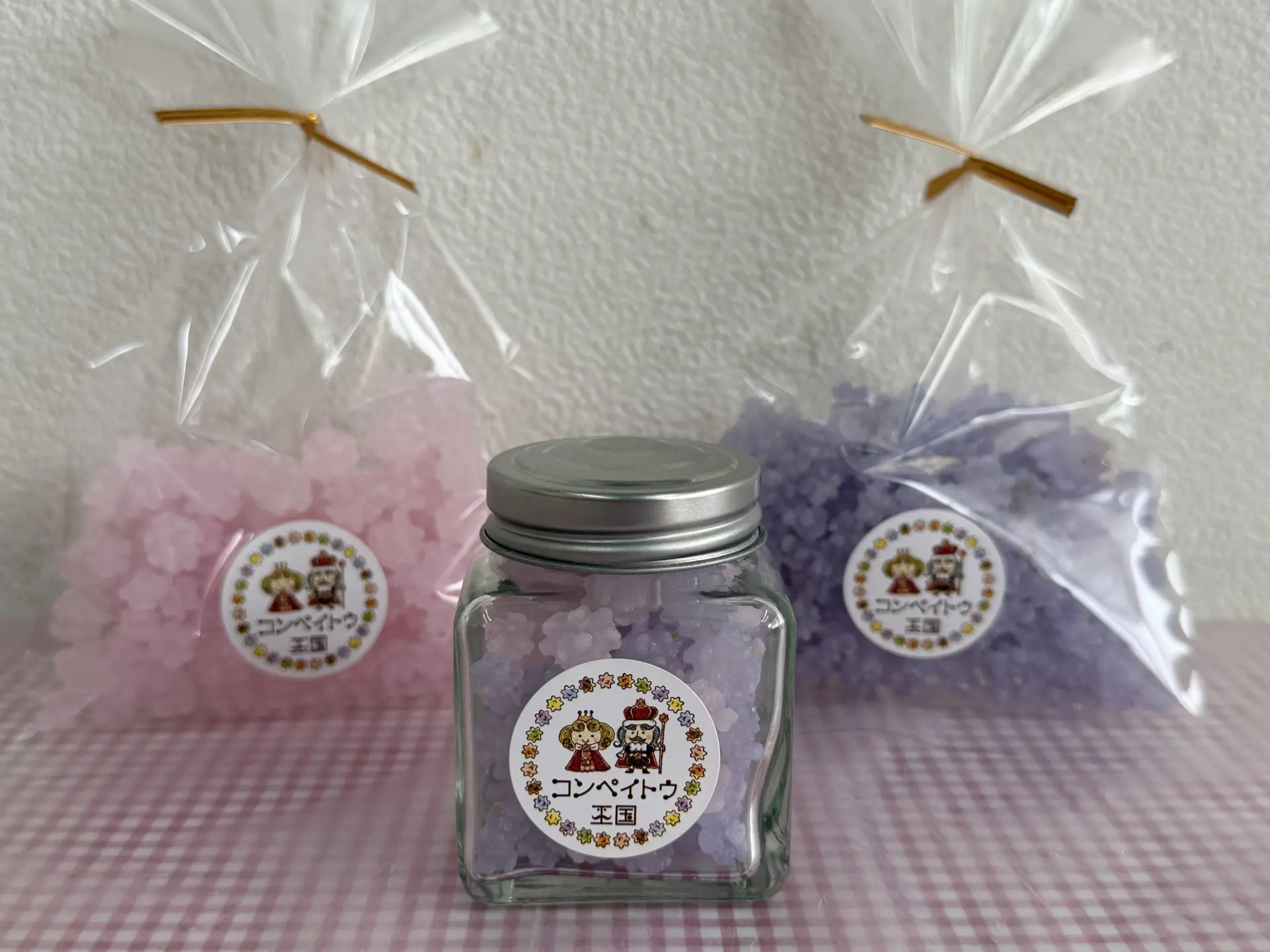
There are also optional add-ons. For an extra fee, you can increase the amount of konpeito or coat it with gold leaf. Without an add-on, the finished konpeito is placed in a clear bag, but with an option, you can have it packed in a clear jar or box. We added gold leaf to sprinkle over the konpeito and chose to put the finished candy in a jar! The jar option is apparently popular because it looks cute and photographs well.
(2) Watch a DVD about the History of Konpeito
After filling out the order sheet, you first watch a DVD in the experience room to learn about the production process and history of konpeito. We learned that konpeito came to Japan from Portugal, that the Sengoku-period warlord Oda Nobunaga is said to have been the first Japanese person to eat konpeito, and that making konpeito takes Approx. 10 days to two weeks. The DVD is also available with English, Chinese, and Korean subtitles, making it accessible to international visitors.
(3) Make the First Type
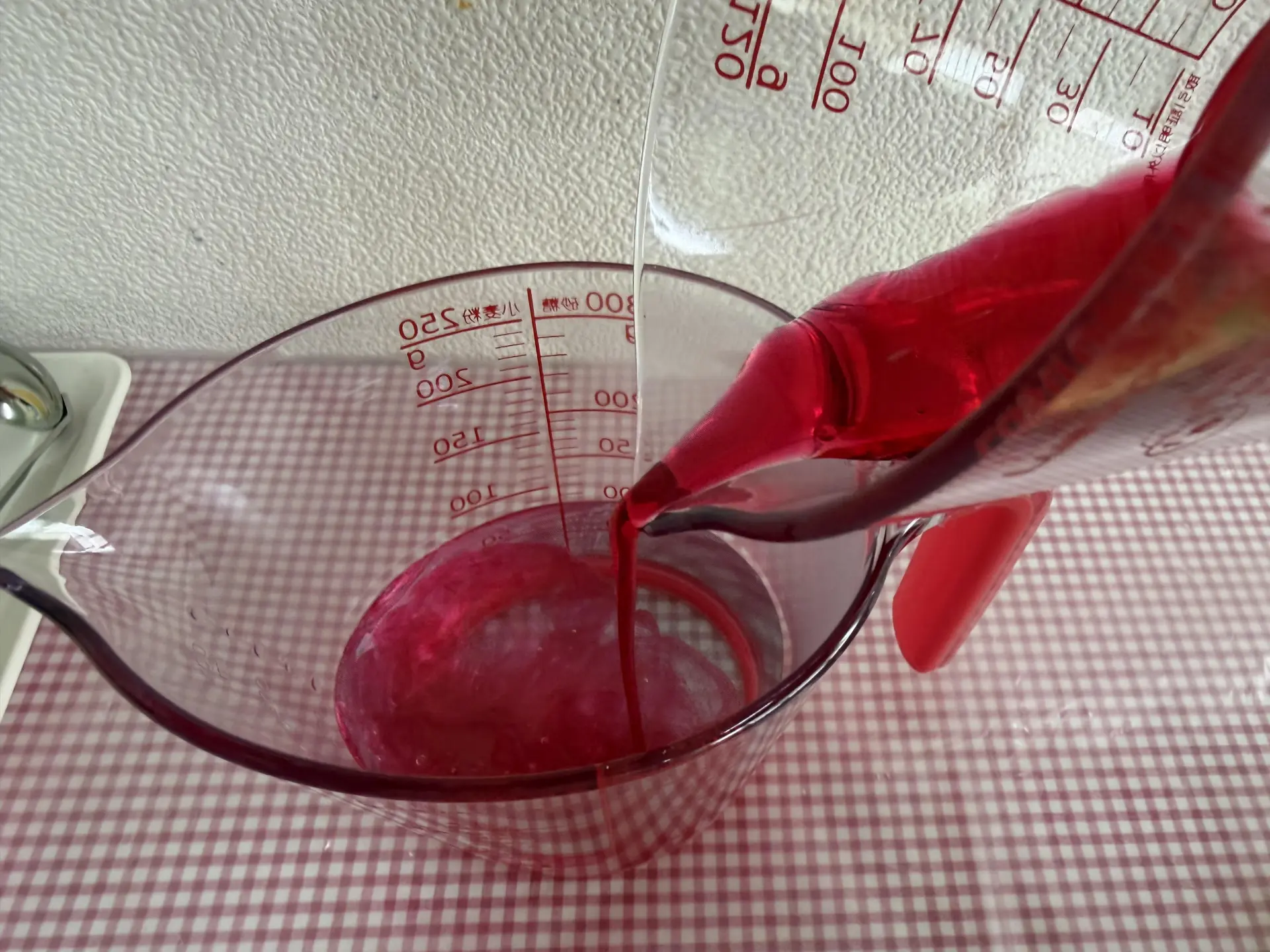
First, pour pink-colored water into the clear measuring container filled with sugar syrup and mix it. The colors used in the experience are said to be natural colorings such as beet red, so visitors can enjoy eating the candy with peace of mind.
Place 200 g of mixed small and large konpeito into the 30 cm-diameter kettle. At this point, you can taste one piece of unflavored konpeito. Remember its simple sugar sweetness and firmness♪
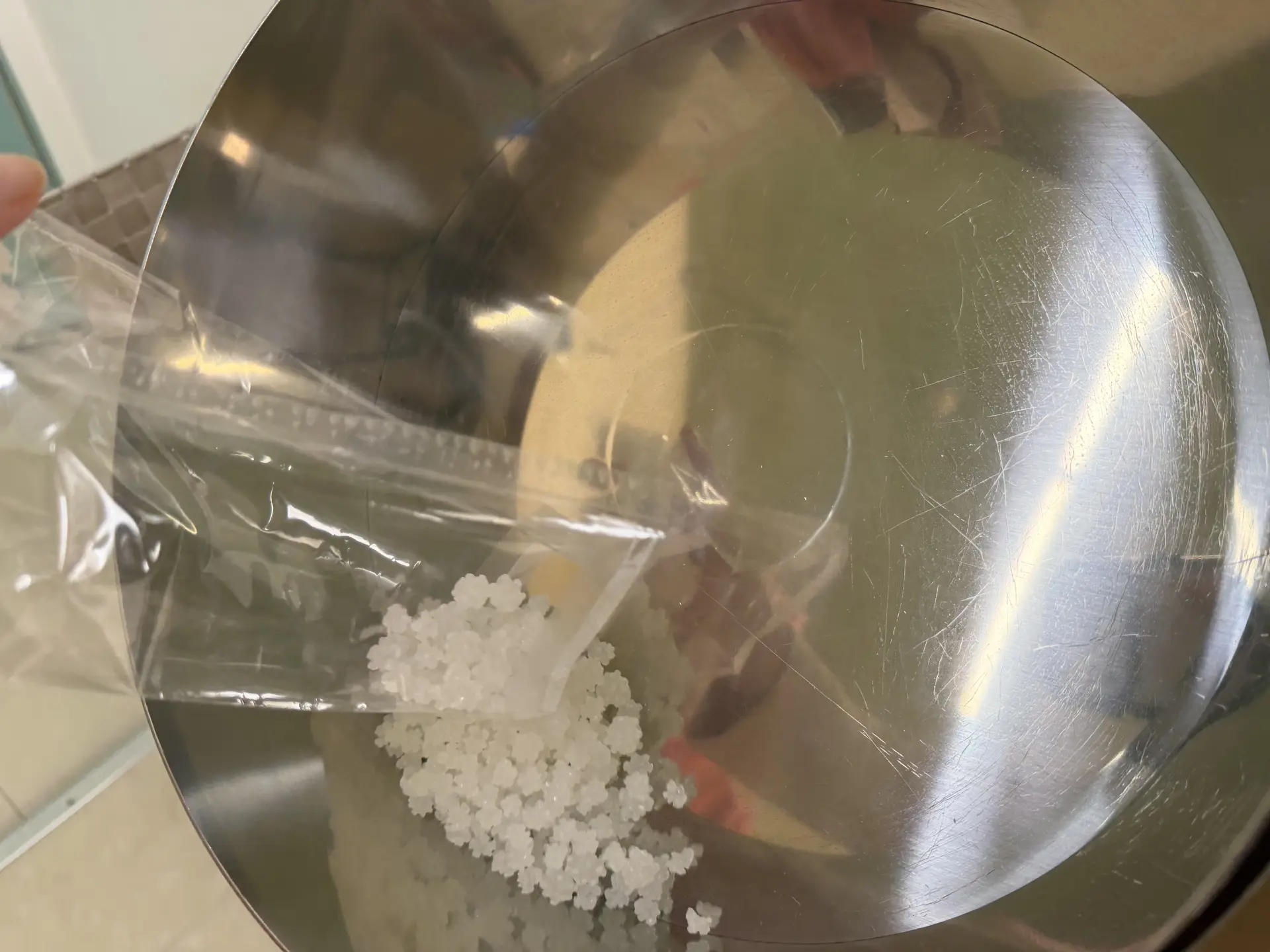
Using a ladle, evenly pour the mixture of colored water and sugar syrup over the konpeito in the slowly rotating kettle. If you add too much, the color will become too dark, so start with one ladleful.
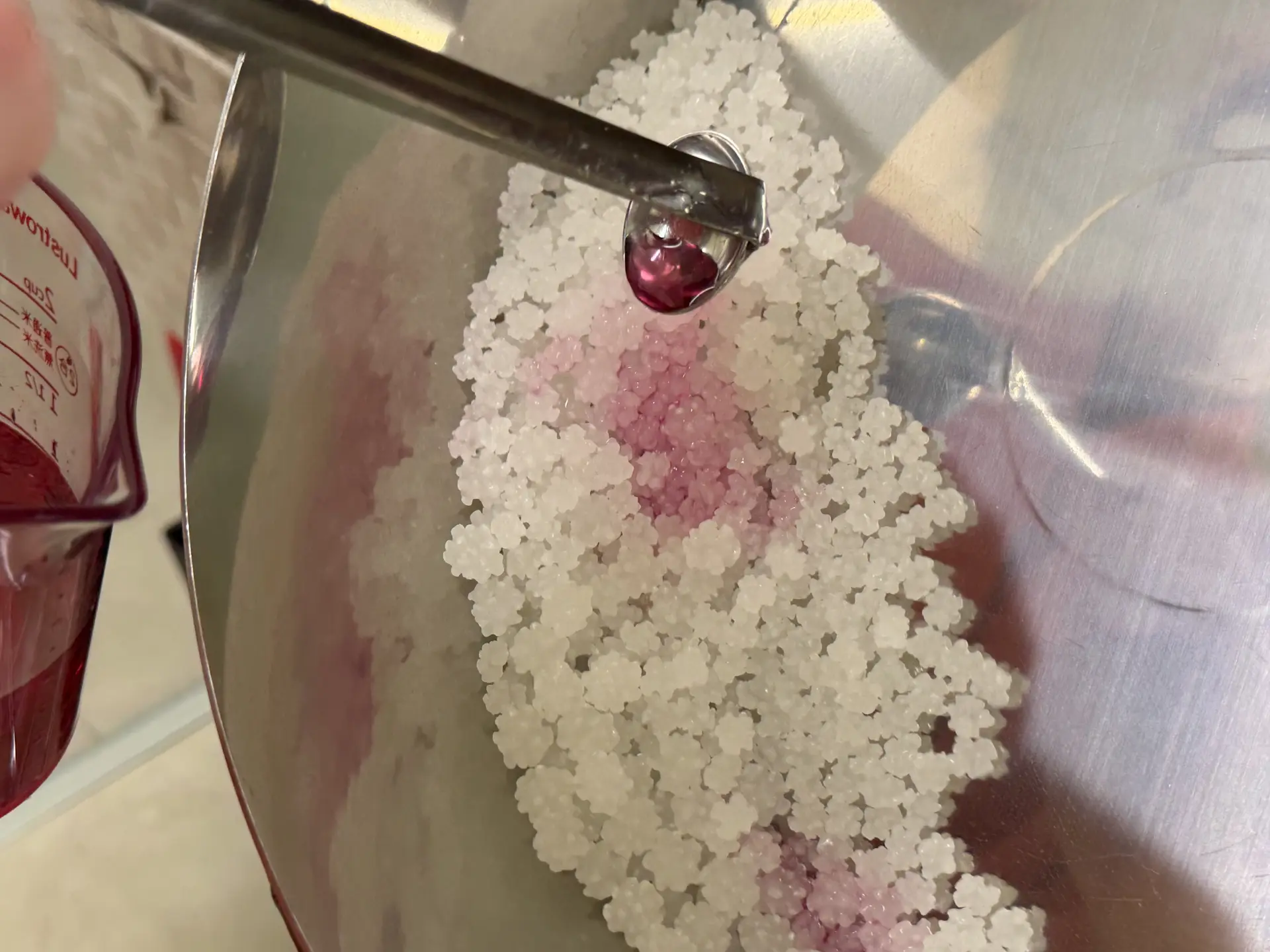
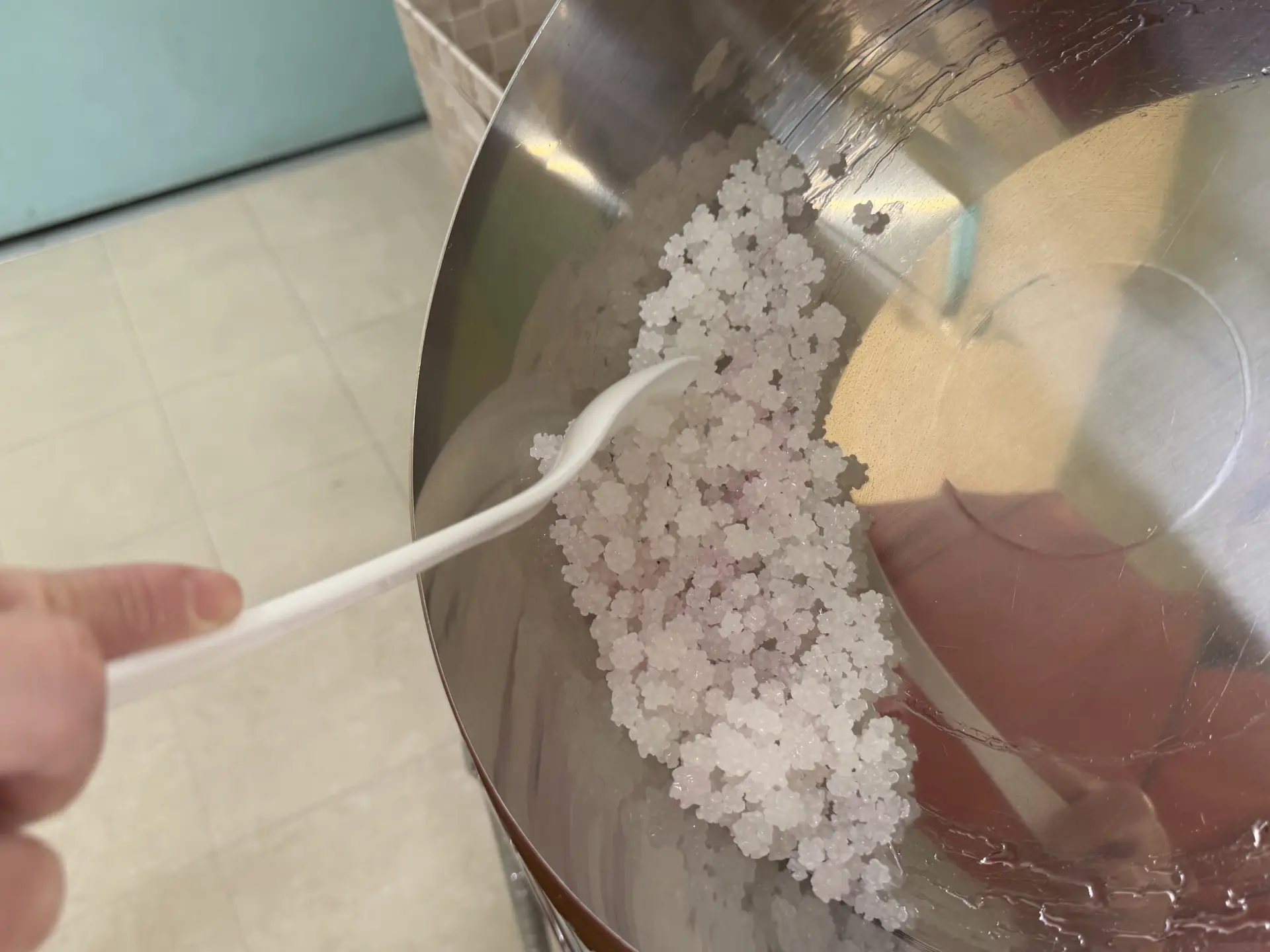
After pouring it on, use a mixing stick to gently stir several times in a downward motion from top to bottom. If you want a deeper color, add another ladleful of the colored water and sugar syrup mixture. Once it reaches your preferred color, move on to the next step.
Next, add the flavoring. Pour sugar syrup into the cup containing the flavoring and mix thoroughly with a spoon. If you bring your nose close, you can smell the pleasant aroma of cherry, but the flavoring is actually said to taste very bitter if licked. It can also stain clothing, so be careful not to splash it.
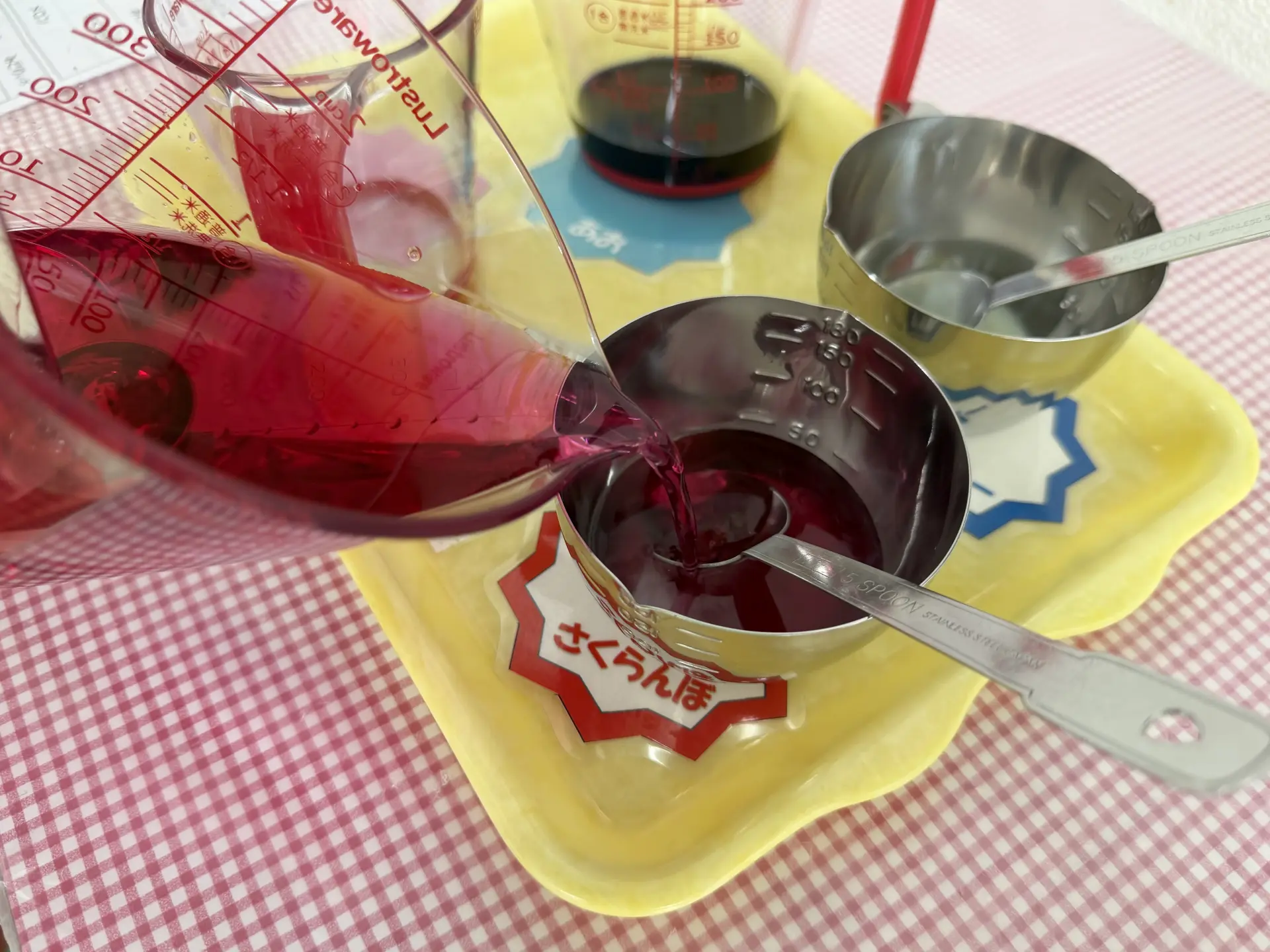
Use a spoon to add the flavored sugar syrup little by little, then mix.
After mixing once, use a fan to dry it. When the surface of the konpeito looks dry, it is ready. Taste it once. Being able to eat freshly made, still slightly warm konpeito is one of the special parts of this experience. If the flavor is to your liking after tasting, it is finished. If it still tastes too light, add more flavoring, mix, and dry it again.
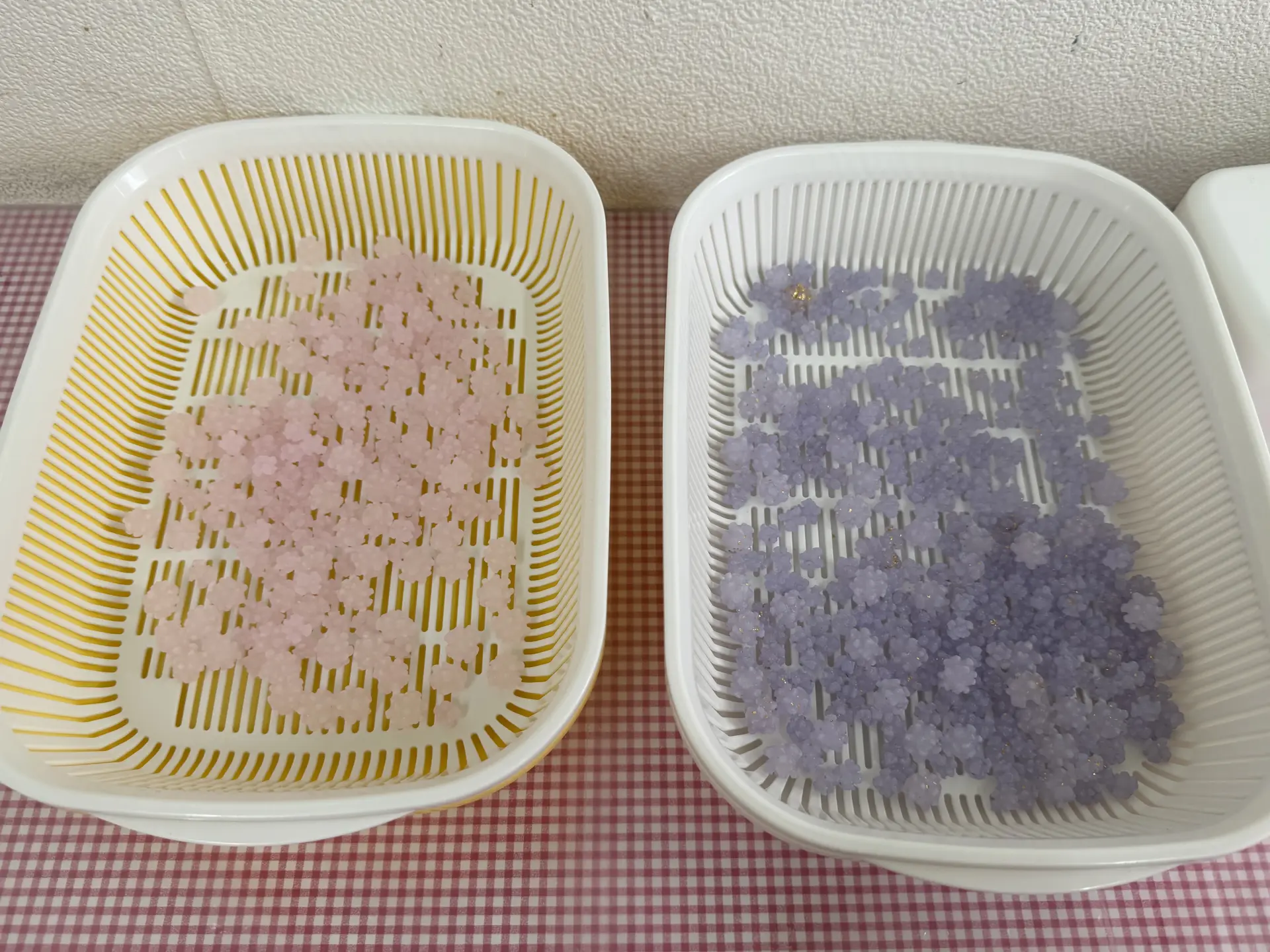
Once the konpeito is dry, use a scoop to remove half of it into a basket. Spread it out so the pieces do not overlap.
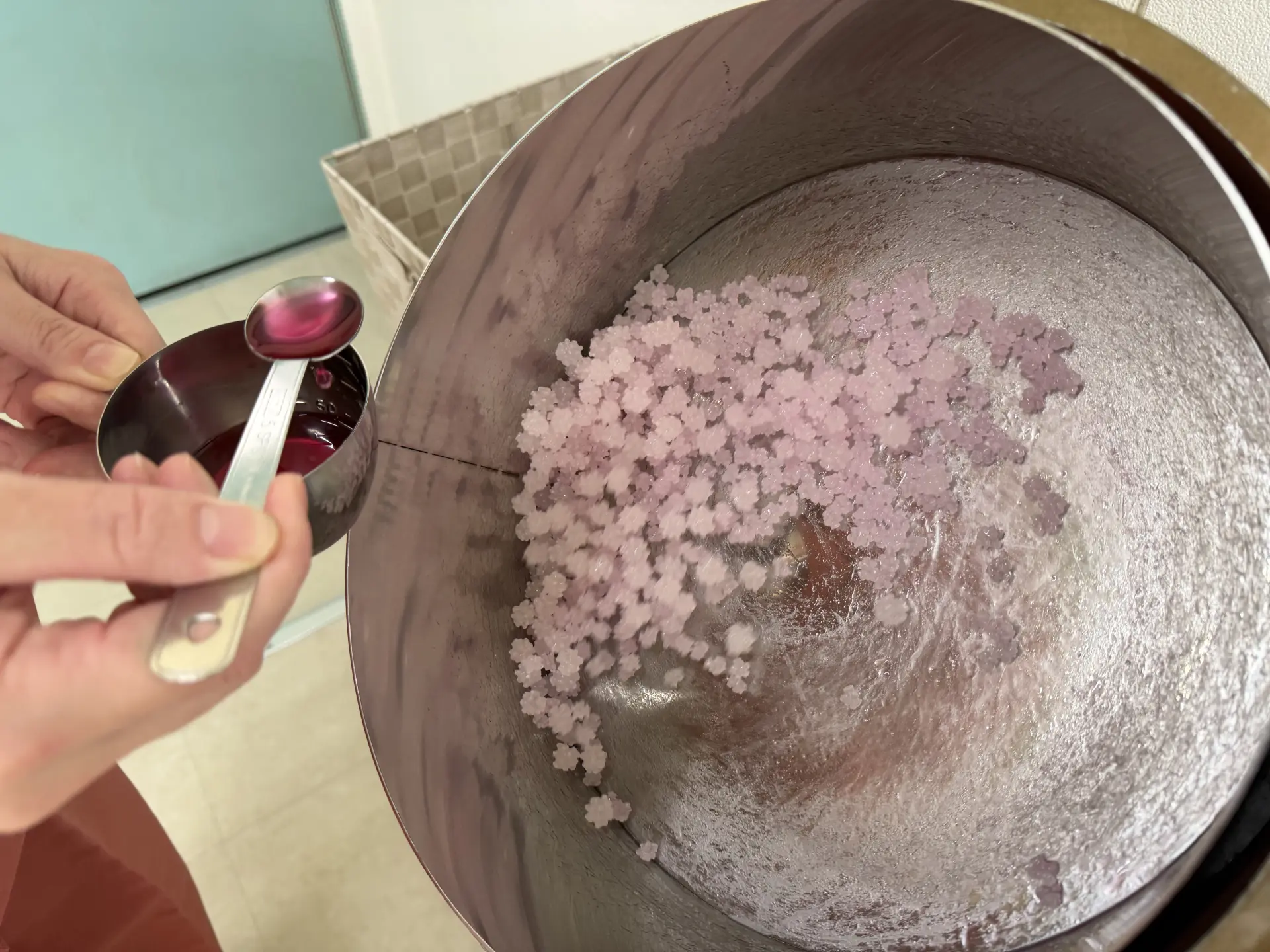
(4) Make the Second Type
The half left in the kettle is changed into the second color and flavor.
Add the blue-colored water for the second type into the cup of sugar syrup while watching the color change. It turned a deep purple.
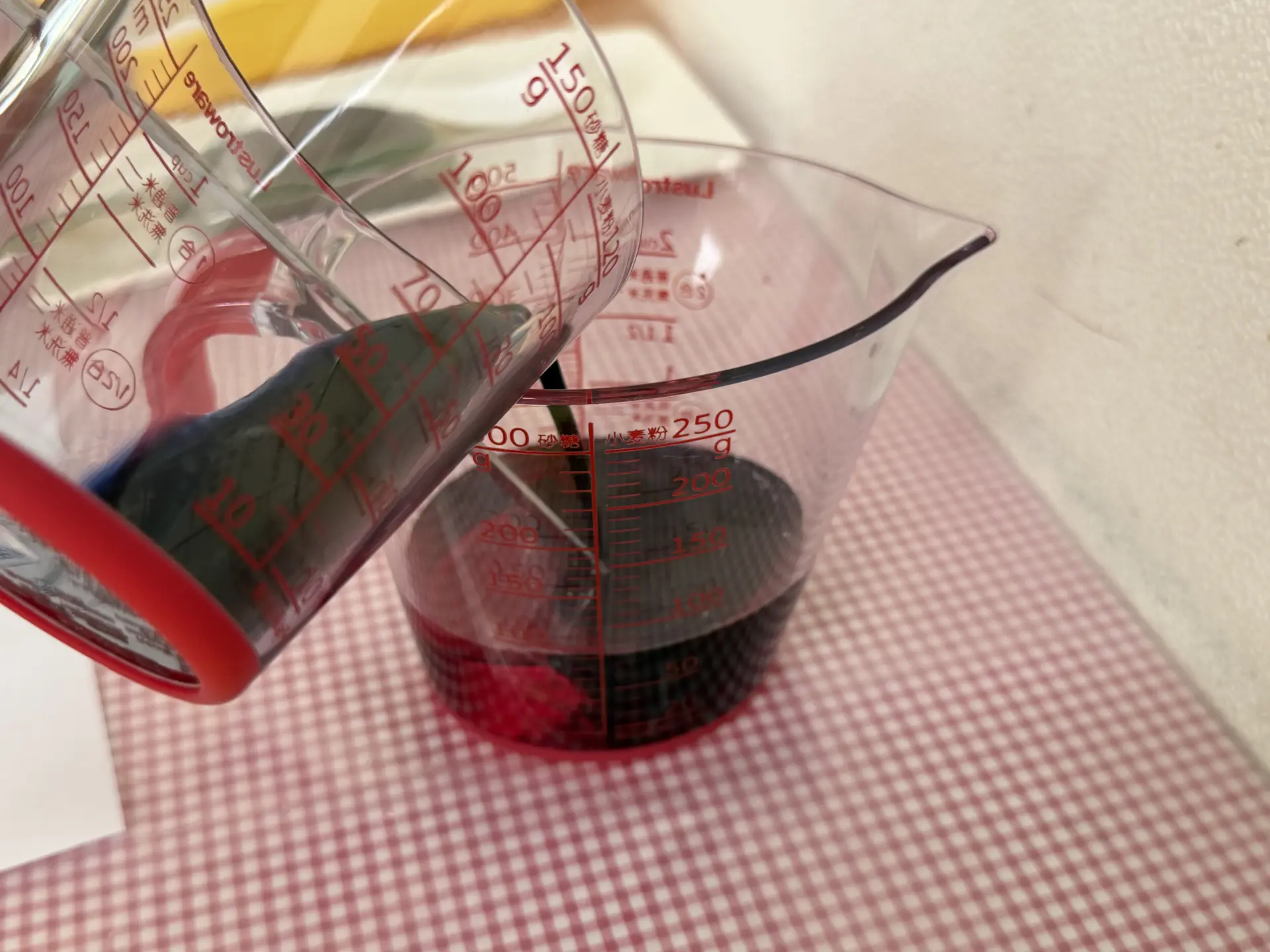
Pour the syrup little by little over the half of the konpeito in the kettle. Apply it evenly while checking the color. The konpeito changes to a pale purple, turning a very beautiful shade. As before, keep adding syrup until it reaches your preferred color.
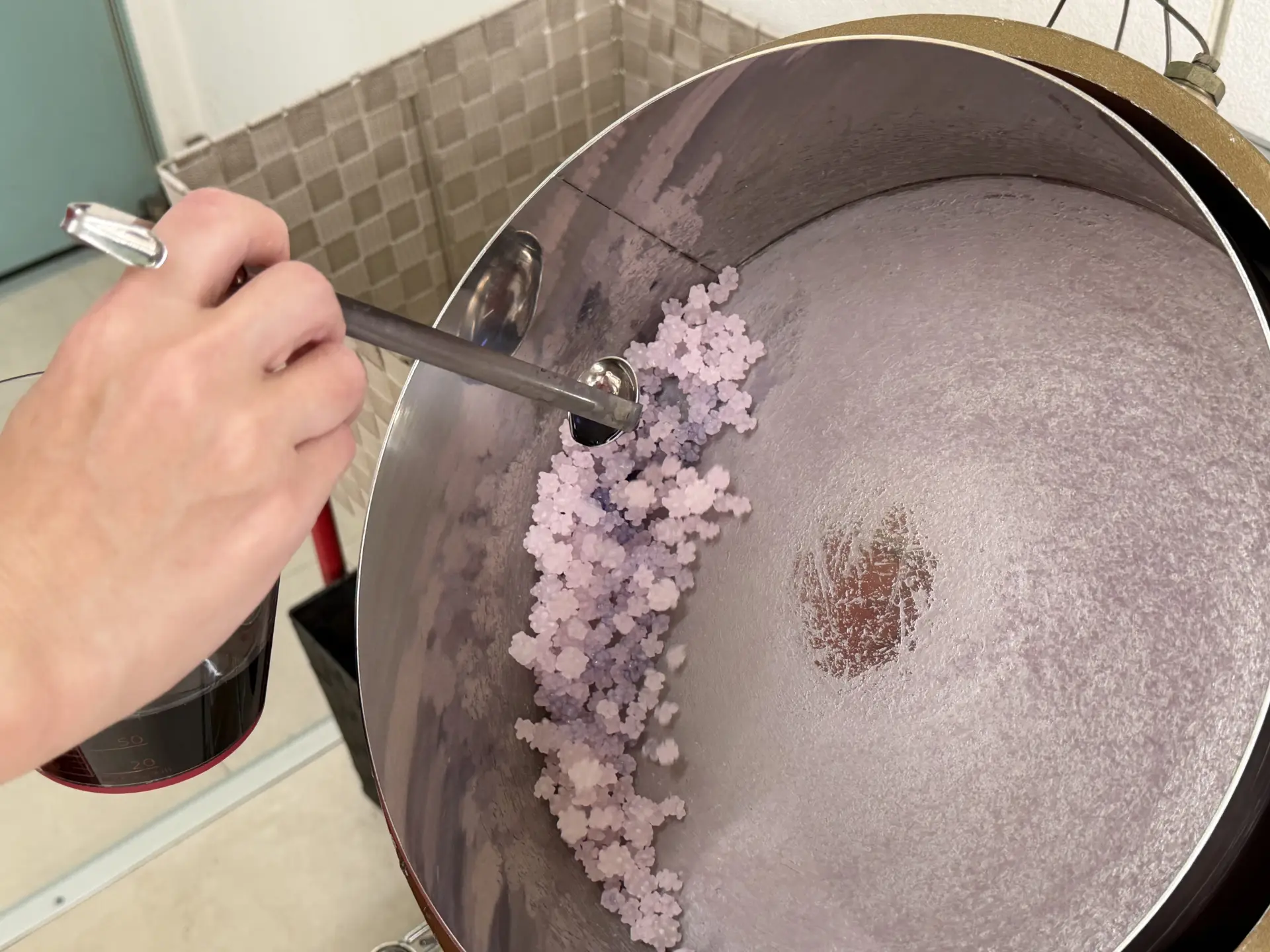
Pour sugar syrup into the cup containing the second cider flavoring and mix thoroughly with a spoon.
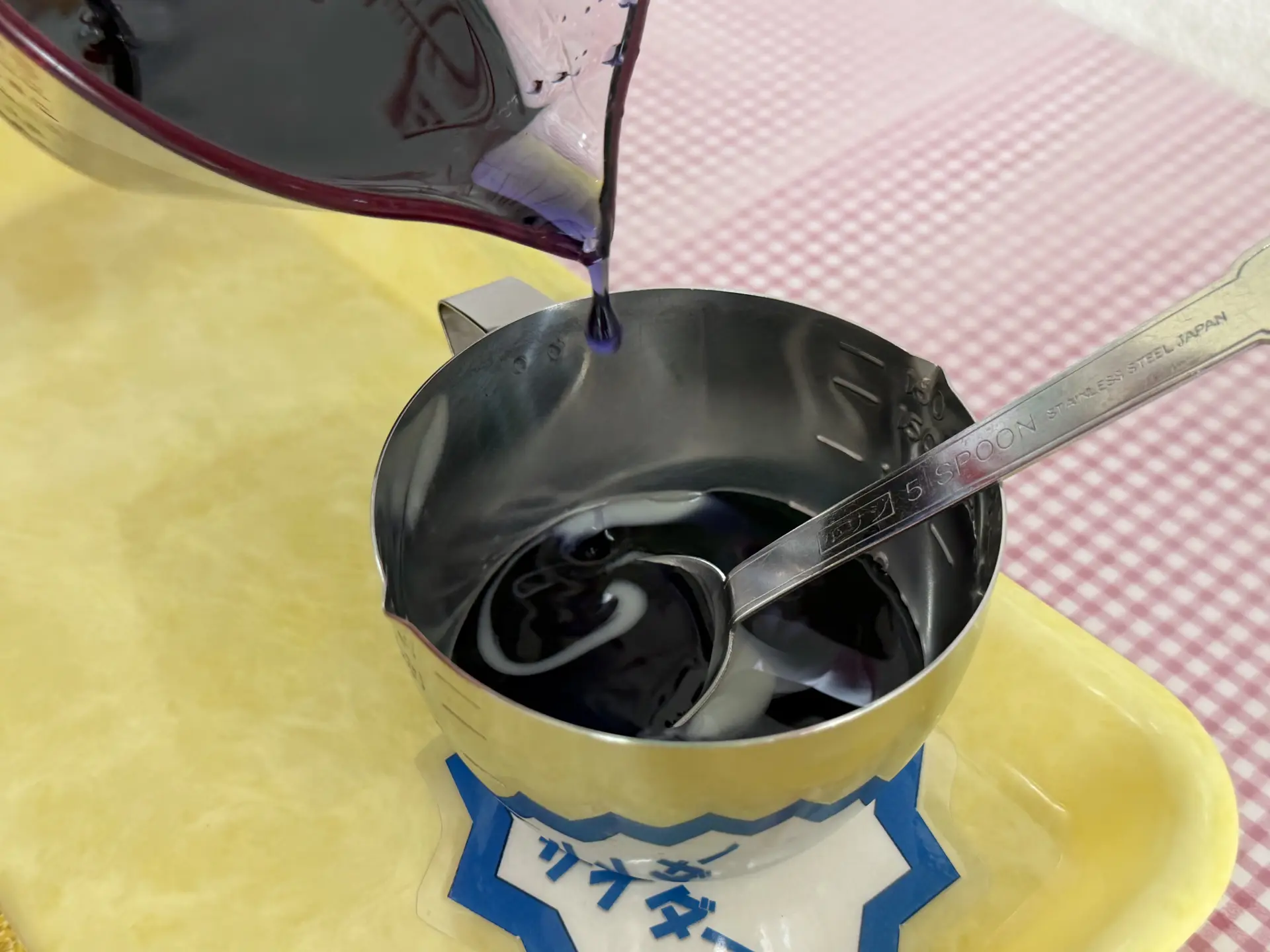
Add the flavoring little by little with a spoon, then mix and dry it. When we tasted it, it had changed to cider flavor, which made for a fun experience! In this way, you taste as you go and add flavoring until it becomes the flavor you like. Be careful not to add too much flavoring, as it can become bitter.
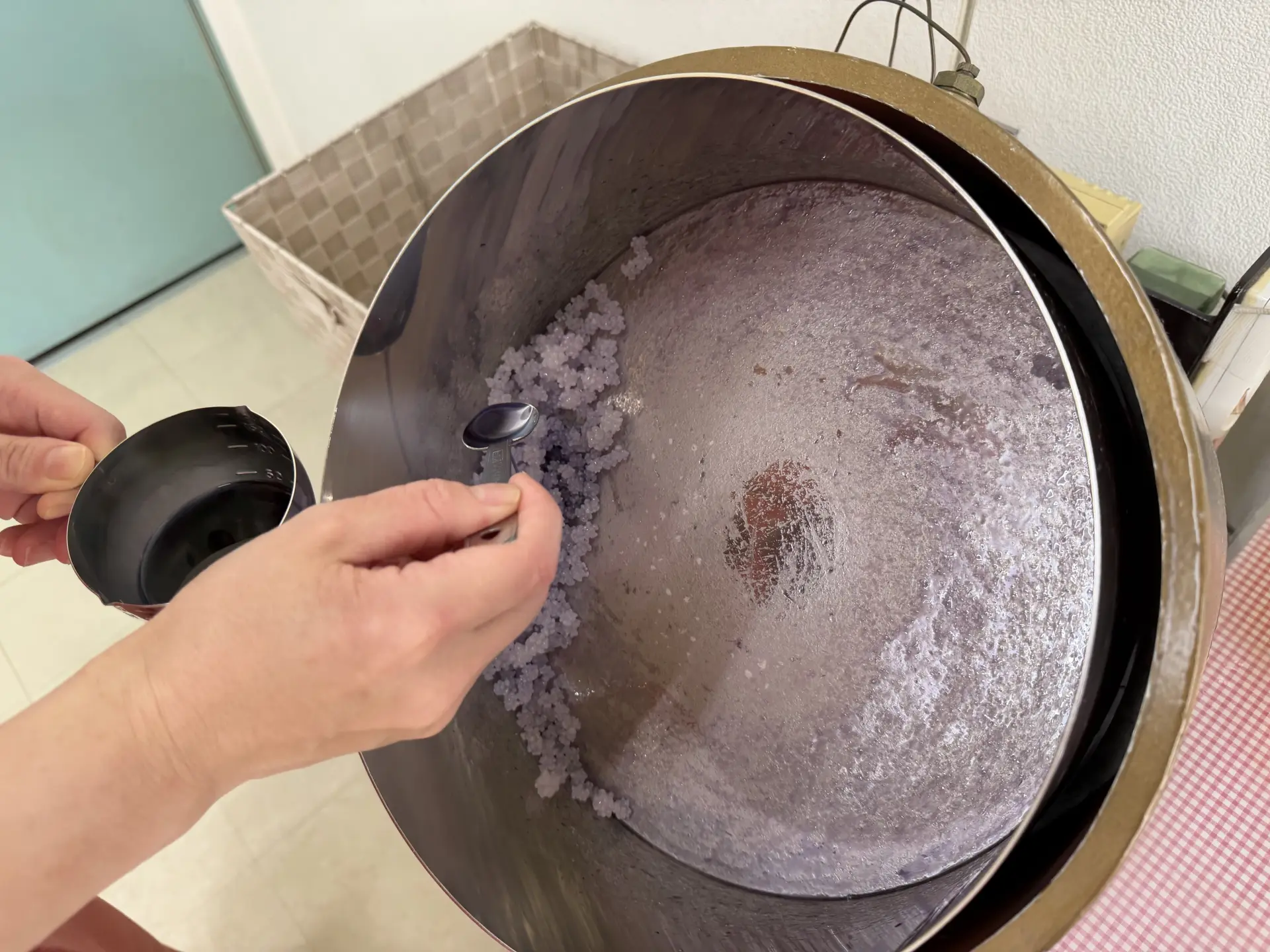
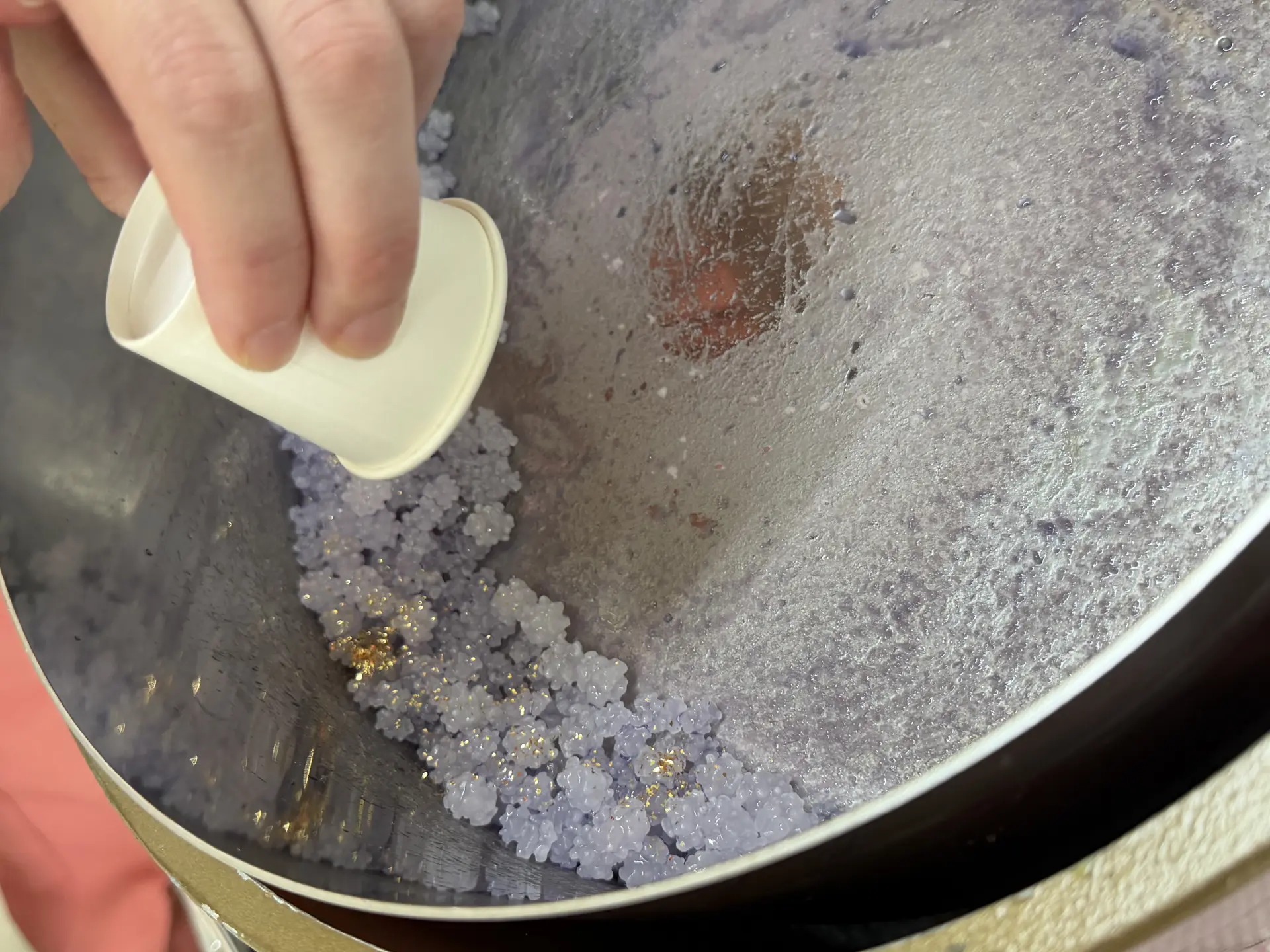
This time, since we added gold leaf as an option, we sprinkled it on here. The key is to sprinkle it evenly. The konpeito sparkled beautifully and began to feel truly premium.
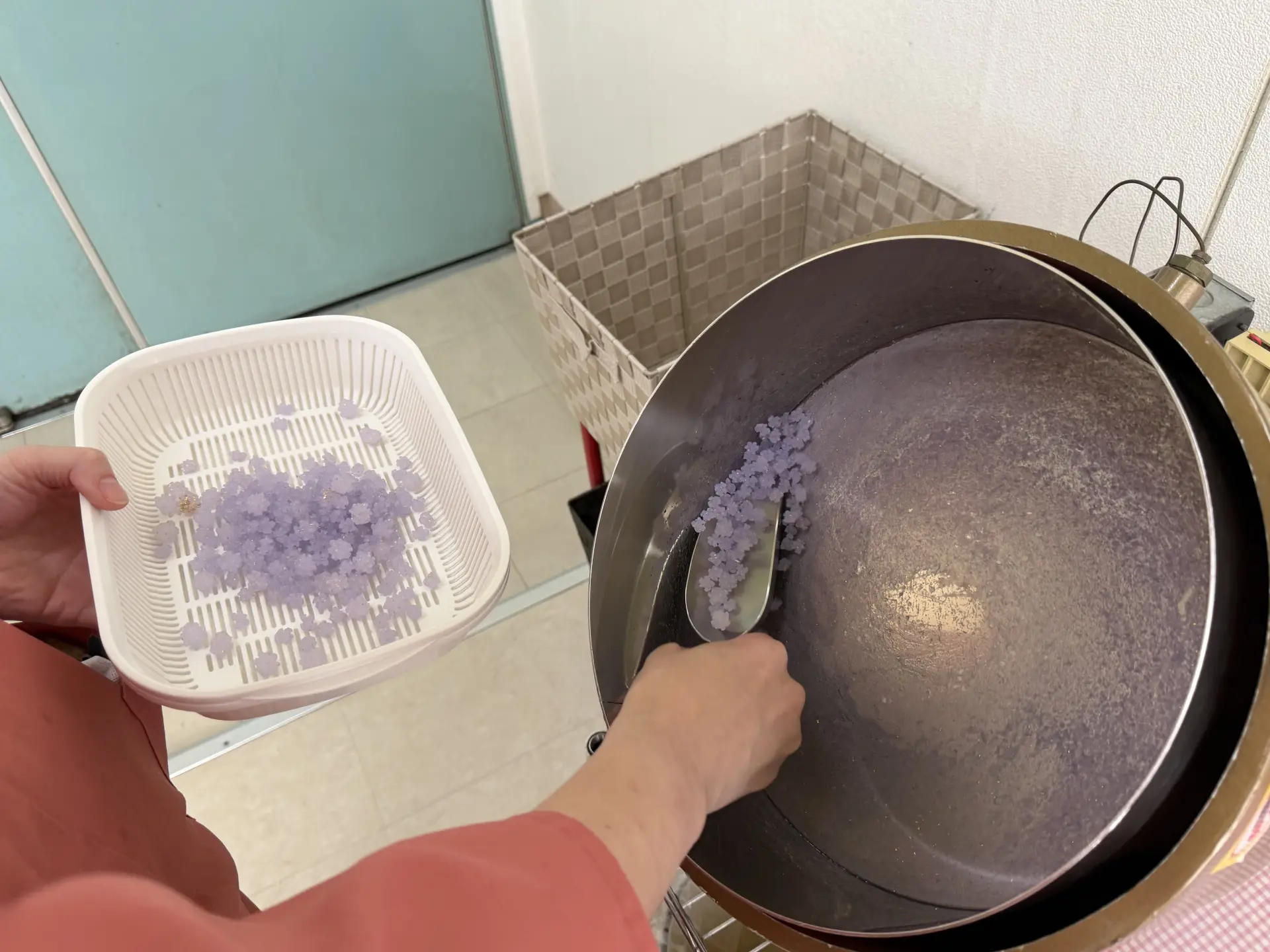
Once it is finished, use a scoop to transfer the konpeito into a basket and spread it out.
(5) You Can Also Sample Other Konpeito!
While the konpeito dries, you can sample other kinds of konpeito as well as karumera-yaki, a Nanban sweet that, like konpeito, was introduced from Portugal.
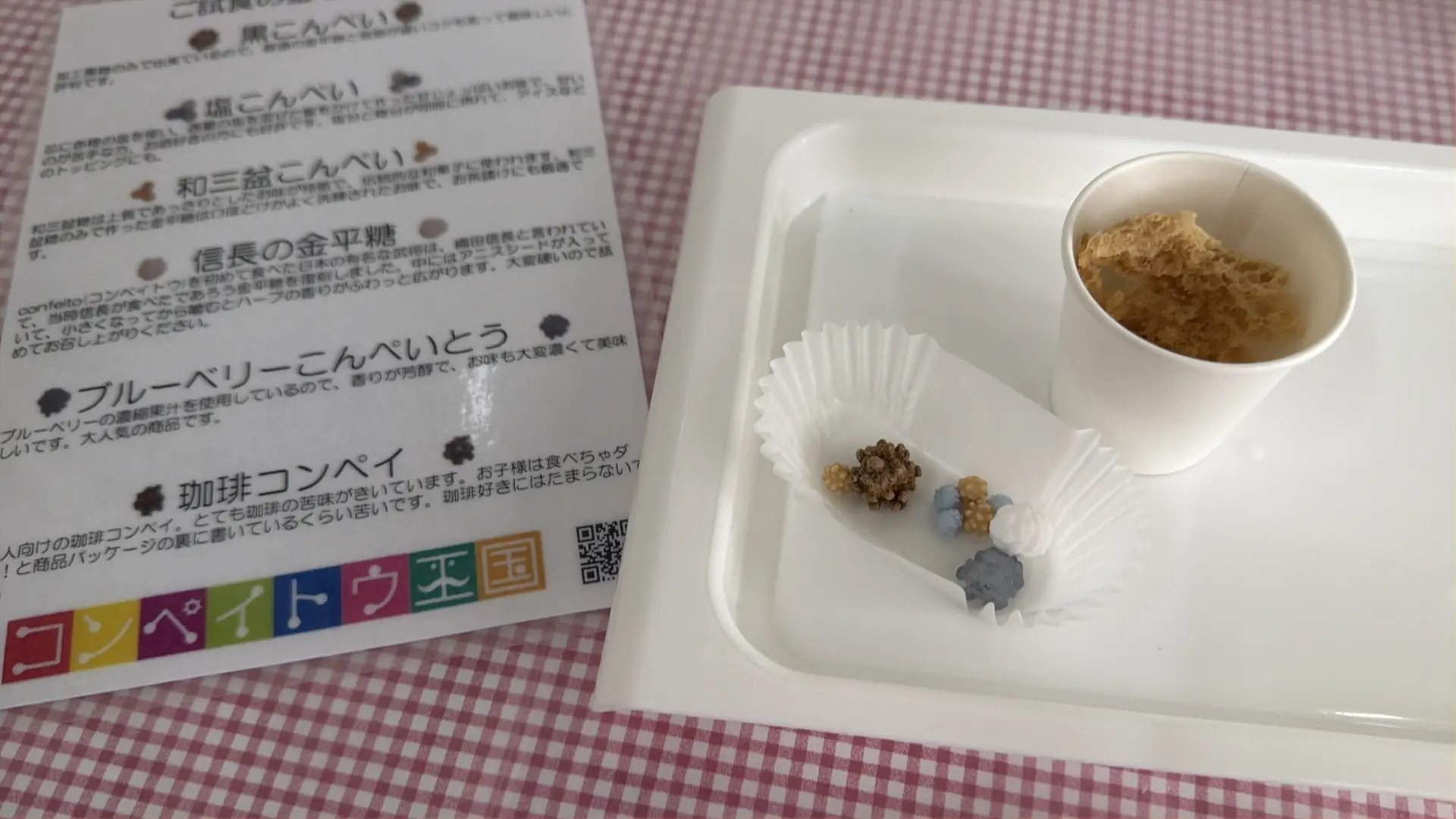
The caramel was a mysterious sweet with a fluffy texture that melted the moment its sweetness spread in the mouth. Other konpeito available for tasting include “Kuro Konpei,” “Shio Konpei,” “Wasanbon Konpei,” “Nobunaga’s Konpeito,” “Blueberry Konpeito,” and “Coffee Konpei.”
- “Kuro Konpei” is konpeito made only with processed brown sugar. It has a softer texture than regular konpeito and a richer flavor.
- “Shio Konpei” uses Ako salt in the core and is made by pouring syrup mixed with salt over it. Because konpeito does not dry easily when salt is mixed in, it is said to be difficult to produce. Its sweet-and-salty taste is its defining feature, and it seems good for replenishing salt during hot summers.
- “Wasanbon Konpei” is konpeito made with wasanbon sugar and is known for its refined sweetness. It is a perfect flavor to serve with tea.
- “Nobunaga’s Konpeito” recreates the kind of konpeito that the Sengoku-period warlord Oda Nobunaga may have eaten. It contains anise seeds inside, giving it a gentle herbal aroma. It is also very hard and, unlike today’s konpeito, has very few points.
- “Blueberry Konpeito” uses concentrated blueberry juice, giving it a bold flavor and rich aroma. It is apparently a very popular konpeito.
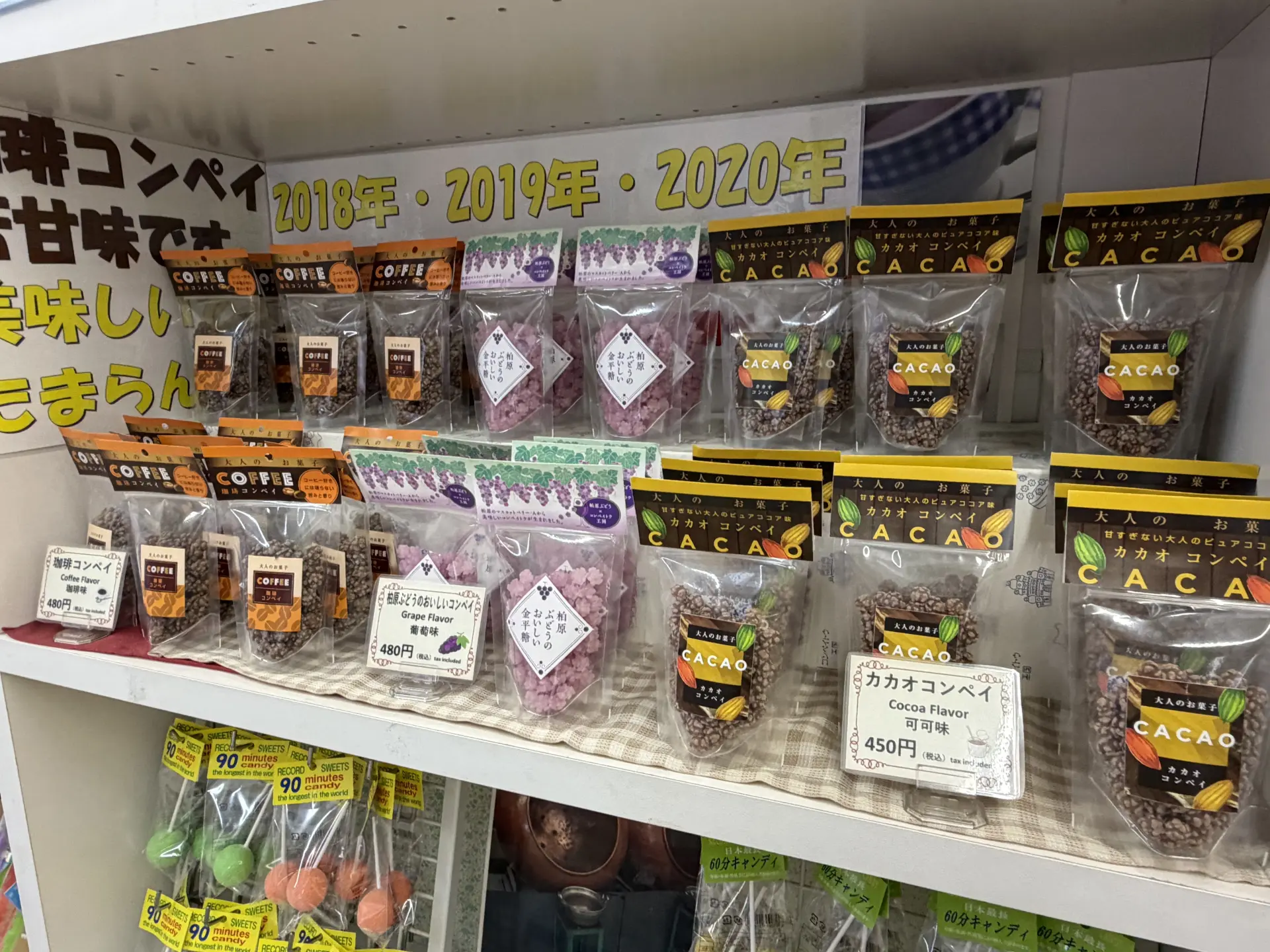
- “Coffee Konpei” has a bitter, grown-up flavor! It is rich, almost like eating coffee beans as they are, with a pleasant bitterness. It is irresistible for coffee lovers. The konpeito samples are also sold at the shop, making them recommended souvenirs!
After the tasting, you can also watch a DVD on how caramel is made.
(6) Pack the Dried Konpeito
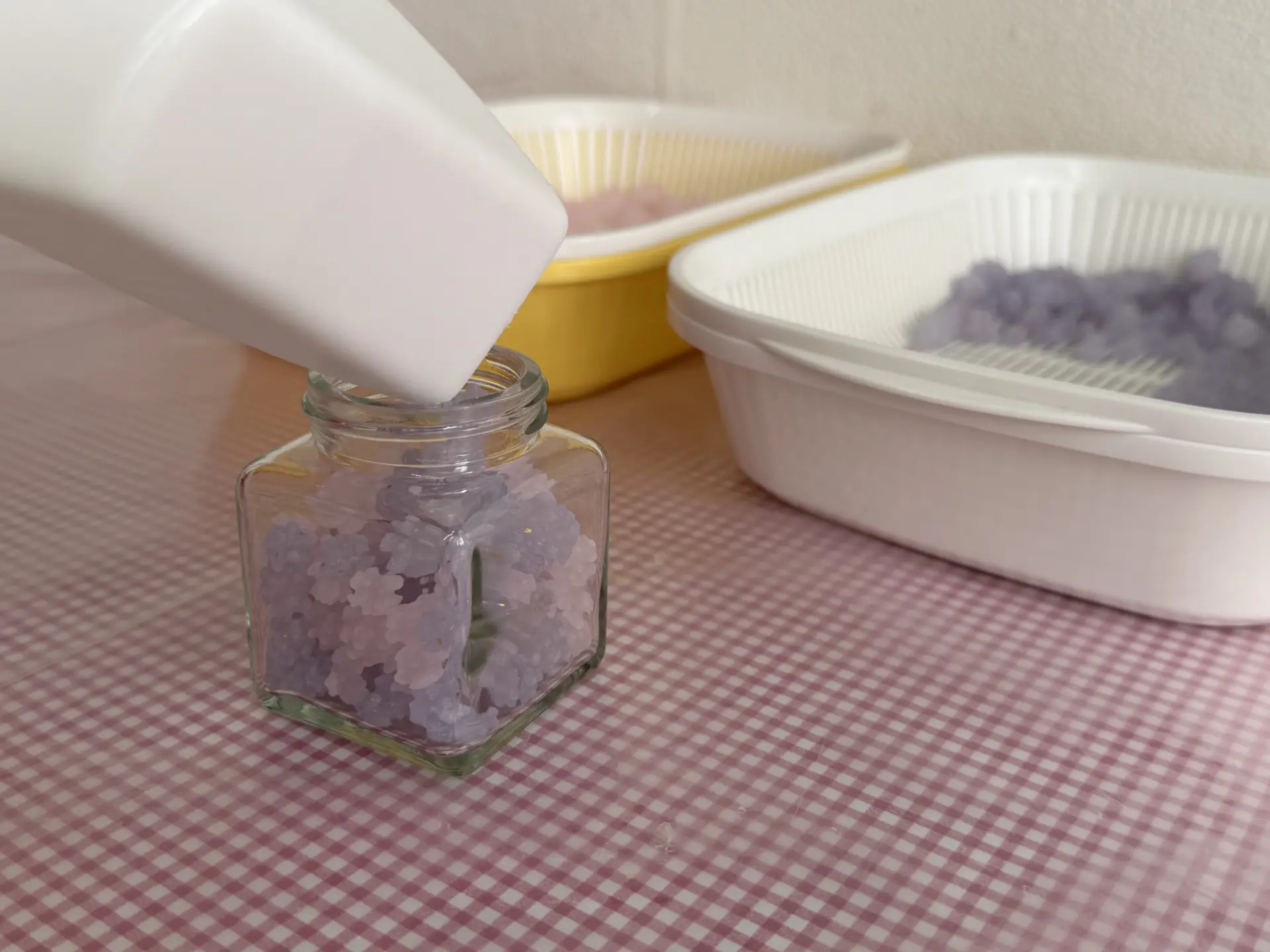
Once the konpeito is completely dry, pack it up. If you purchased a jar as an additional option, you can fill the jar. Adding the two colors little by little creates cute layers. Any konpeito that does not fit in the jar can be packed into bags by color.
Factory Tours Are Available for Groups of at least 10!
At Konpeito Museum Yao, groups of at least 10 can also add an optional factory tour. Sixteen large kettles, each as wide as 2 m in diameter, are lined up in a row. You can watch artisans making konpeito up close. The inside of the factory is filled with a very sweet aroma! For anyone who loves sweets, it is a wonderfully happy space.
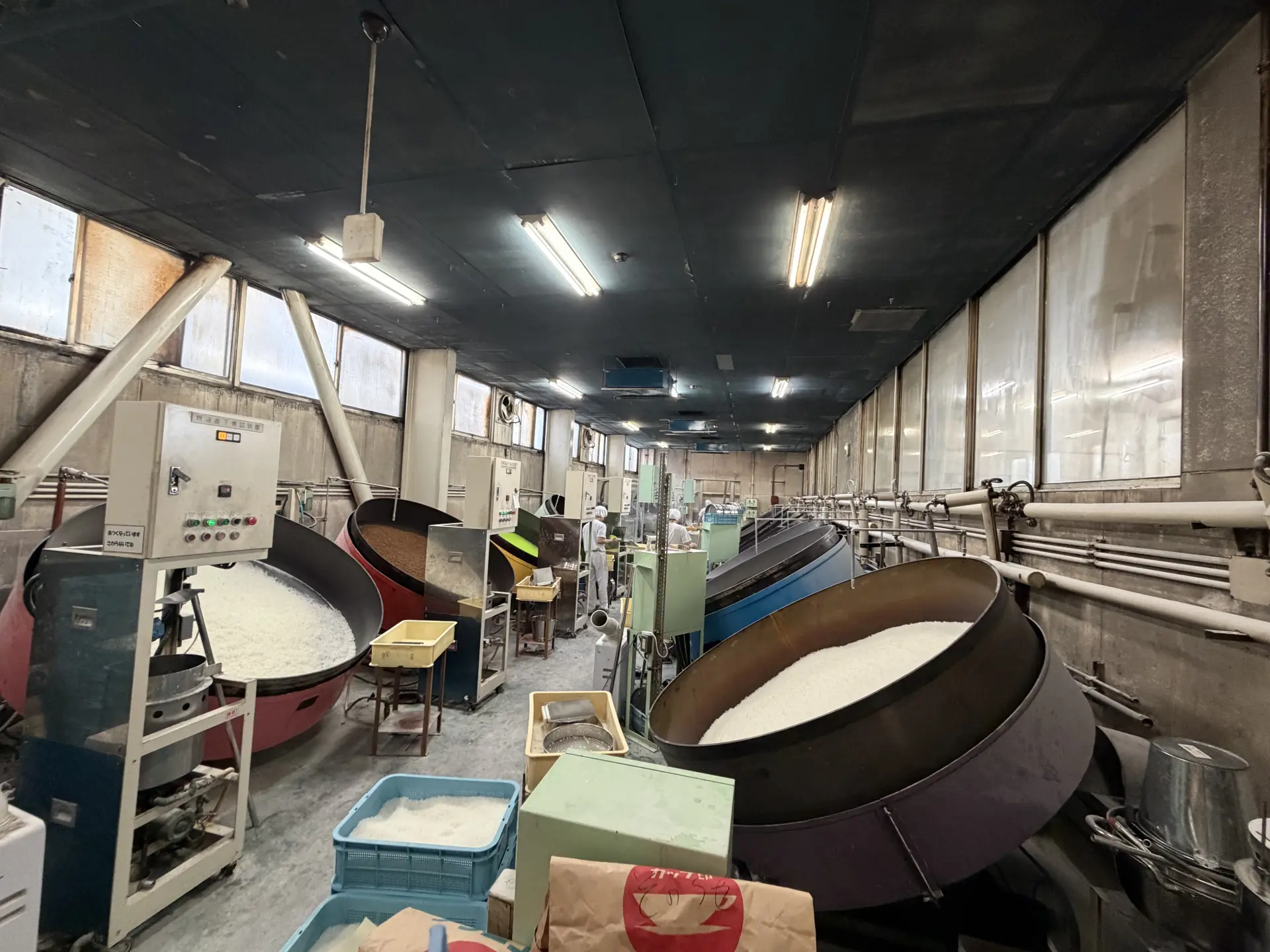
You can see sugar syrup flowing automatically and artisans gently stirring konpeito with large hoe-like tools. There is apparently a technique to stirring with the tool without breaking the points of the konpeito.
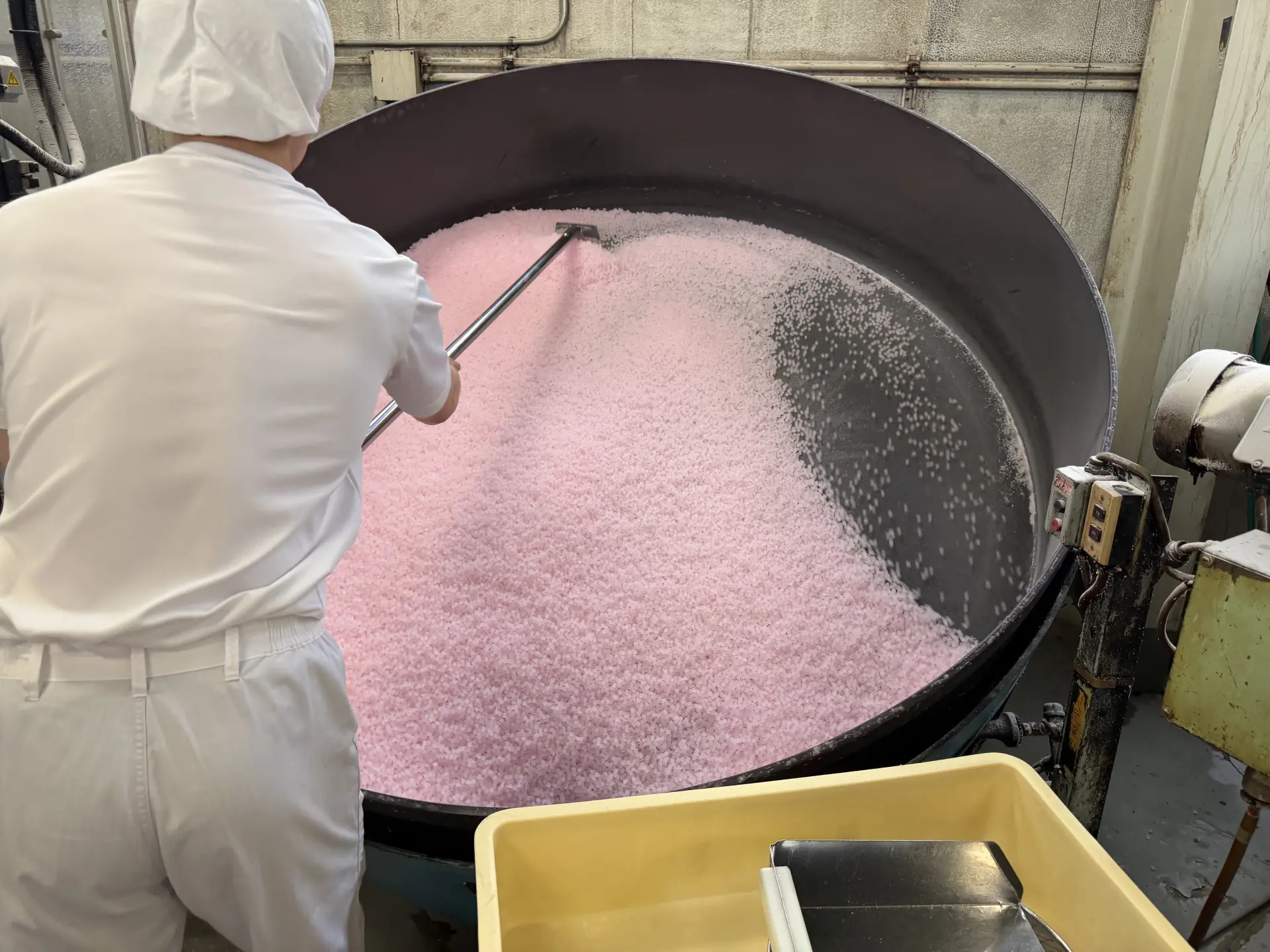
What stood out especially was the temperature inside. On the day of our visit, it was an astonishing 42°C! We felt not only the heat but also the humidity. In the hottest part of midsummer, it apparently reaches 55°C. In this harsh heat, you can feel the patience and artisan spirit of the konpeito makers who carefully craft the candy over a long period of time. Konpeito is sweet and delicious, and it is easy to crunch through it without thinking. But after learning how much effort goes into nurturing each piece, I felt that next time I should savor it more carefully. A factory tour will likely change the way you see konpeito.
Details for the Factory Tour
- Location
- Yao
- Number of Participants
-
10–25 people
* Please inquire for groups of at least 26 people. - Admission
-
550 yen (tax included) / person
* Participation by the entire group is required. Individual arrangements are not available. - Age Requirement
-
4th grade and older
* For safety reasons, tours are available only when all participants are in 4th grade or older. - Overview
- DVD viewing, recommended konpeito tasting, factory tour
- Duration
- Approx. 30 minutes
- Available Days
- Weekdays only, 10:00 am / 2:00 pm (please inquire for other requested times)
- Other
-
Reservations are accepted by phone only
* Factory tours may be suspended during certain periods.
Take Home Konpeito Unique to the Konpeito Museum
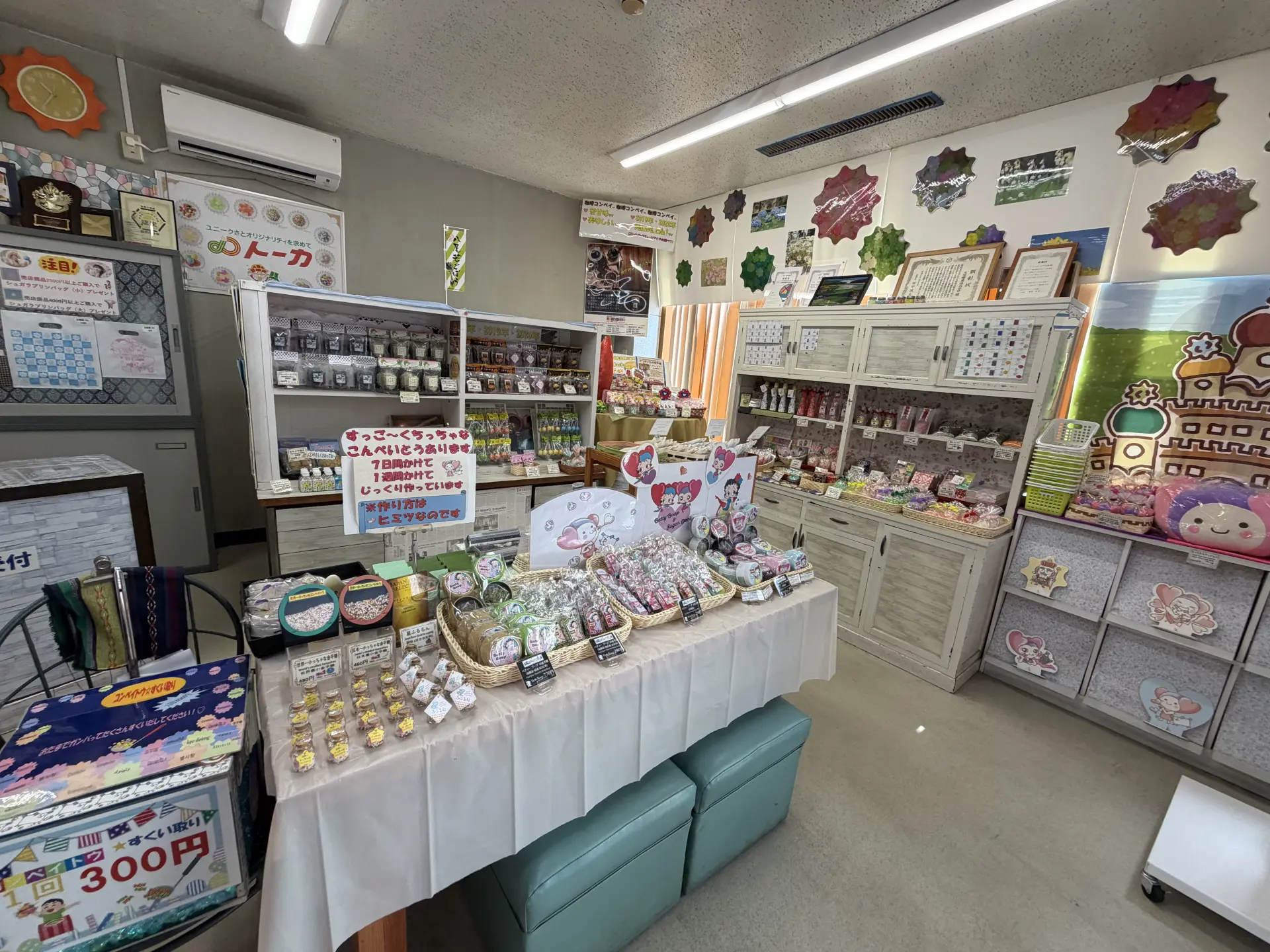
At the shop, you can buy standard konpeito as well as unique, original varieties available only at the Konpeito Museum. With so many colors and flavors, they make ideal souvenirs. When giving them to family or friends, be sure to share the story of the patience shown by konpeito artisans.
Summary
Konpeito crystallizes an artisan’s time and spirit. I used to casually crunch through it without much thought, so it is surprising to learn that it takes Approx. two weeks to make. A candy that takes two weeks in a hot and humid environment can be made only because of the artisans’ perseverance. Introduced from Portugal Approx. 480 years ago, konpeito developed in Japan in its own unique way and remains popular as a traditional Japanese sweet. It has been preserved and passed down for so long thanks to the artisan spirit and patience often associated with Japanese craftsmanship. By trying konpeito making yourself, this sweet that may not have seemed especially special before will likely feel much closer to you. When you visit Japan, taste the Japanese artisan spirit contained in each tiny piece.