
JMSDF Kure Museum   (Tetsu no Kujira Kan)

Verified [Verified] denotes information that has been published with confirmation of its owing parties.

JMSDF Kure Museum
(Tetsu no Kujira Kan)

The only museum in Japan where visitors can explore the interior of a submarine that was once in active service.

3.33 4

Last update :

The JMSDF Kure Museum, also known as Tetsu no Kujira Kan, displays Akishio, a Japan Maritime Self-Defense Force submarine that served from 1986 to 2004. This valuable museum is the only place in Japan where visitors can explore the interior of a submarine that was once in active service.

On the first floor, visitors can learn about the history of Kure and the Japan Maritime Self-Defense Force. Kure developed as a naval city after the former Kure Naval District Headquarters opened in 1889. The exhibits trace the postwar history of mine clearance and the stages leading from the former navy to the establishment of today’s Japan Maritime Self-Defense Force in Japan, an island nation surrounded by the sea.

The second floor explains the JMSDF’s overseas mine-clearing operations. Mine clearance, the removal of naval mines left on the seabed, is one of the Japan Maritime Self-Defense Force’s important missions. The subject is presented through a variety of exhibits, including actual naval mines and a full-scale reproduction of part of a minesweeper’s deck.

On the third floor, a range of exhibits offers insight into submarines, including submarine models and a recreated submarine living area. Learning about submarines here will make your tour of the submarine’s interior even more rewarding.

From the third-floor exhibition room, follow the connecting passage and finally step inside the submarine!
The interior of Akishio has been preserved largely as it was during active service. Visitors can see the spaces where crew members actually lived and look out over Kure Bay through two different types of working periscopes—an experience available only here.

Leaflets are also available in seven languages—English, Traditional Chinese, Simplified Chinese, Korean, French, Spanish, and Portuguese—said to cover about 90% of the world’s population.

Highlights

  • The only facility in Japan where visitors can explore the interior of a submarine that was once in active service.
  • Timelines and other displays introduce the history of Kure, which developed as a naval city, and the Japan Maritime Self-Defense Force.
  • A wide variety of exhibits explain mine clearance operations, which help keep the world’s oceans safe.
  • Explore the interior of the submarine Akishio, preserved largely as it was during active service.
  • Leaflets are available in seven languages: English, Traditional Chinese, Simplified Chinese, Korean, French, Spanish, and Portuguese.

Photos

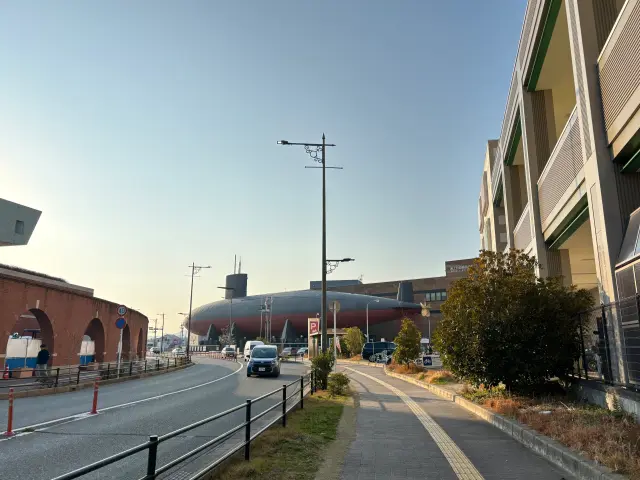
  • The enormous submarine Akishio measures 249 feet long and 32.5 feet wide. It is said to be the only submarine in the world to have traveled on public roads to be installed at its current location.

    The enormous submarine Akishio measures 249 feet long and 32.5 feet wide. It is said to be the only submarine in the world to have traveled on public roads to be installed at its current location.

  • Timelines, panels, and other displays on the first floor explain the history from 1889 through the establishment of today’s Japan Maritime Self-Defense Force.

    Timelines, panels, and other displays on the first floor explain the history from 1889 through the establishment of today’s Japan Maritime Self-Defense Force.

  • An actual naval mine removed during mine clearance operations is displayed on the second floor.

    An actual naval mine removed during mine clearance operations is displayed on the second floor.

  • A face was painted on this unmanned minesweeping device to help ease the strain of its grueling mission. Such devices are usually abandoned after use, and Japan is reportedly the only country that retrieves them.

    A face was painted on this unmanned minesweeping device to help ease the strain of its grueling mission. Such devices are usually abandoned after use, and Japan is reportedly the only country that retrieves them.

  • A cutaway display makes it easy to understand how a submarine works. Take a close look before heading inside the submarine Akishio.

    A cutaway display makes it easy to understand how a submarine works. Take a close look before heading inside the submarine Akishio.

  • The crew’s living area is surprisingly cramped. Even more astonishing is that this was their only private space.

    The crew’s living area is surprisingly cramped. Even more astonishing is that this was their only private space.

Official FAQs

Frequently Asked Questions have been vetted and answered directly by each listing.

Q

Is reentry permitted?

A

Yes.

Q

Is free Wi-Fi available inside the facility?

A

No.

Q

Are coin-operated lockers available?

A

Yes. A ¥100 coin is required and will be returned after use.

Q

Is parking available?

A

No.
Please use a nearby parking lot or public transportation.

Reviews

4

Some reviews are AI-translated.

  • See More

    The Iron Whale Museum is a Japan Maritime Self-Defense Force history museum that mainly introduces the history of the JMSDF and Kure City. A decommissioned submarine is displayed outside, and you can actually go inside to see the cramped spaces where the crew lived and worked. Photography is not allowed inside.

  • See More

    The museum has a huge collection of historical materials and artifacts related to the Japanese Navy, including a model of the battleship Yamato, various weapons, naval uniforms, and historical photos. These exhibits gave me a thorough understanding of the development of the Japanese Navy.

  • See More

    I've never seen a submarine before! You can actually go inside and see what it's really like. The exhibits show the equipment and living spaces, and there are guides who explain everything on site.

  • See More

    The submarine model at the entrance really stands out. Admission to the museum is free, and there are detailed exhibits about torpedoes and underwater mine-clearing operations. You can even go inside the actual submarine to see its interior. It's right next to the Yamato Museum, so you can easily visit both in one trip.

Details

Name in Japanese
海上自衛隊呉史料館(てつのくじら館)
Postal Code
737-0029
Address
5-32 Takaramachi, Kure, Hiroshima Prefecture
Phone
0823-21-6111
Closed on
Tuesdays (or the following day if Tuesday is a national holiday)
[ New Year holidays ] December 29–January 3
Hours
10:00 a.m.–6:00 p.m. (last admission at 5:30 p.m.)
Admission
Free
Access
8-minute walk from Kure Station on the JR Kure Line
Credit Cards
Not accepted
Official website
Official website (Japanese)
Hokkaido Tohoku Kanto Chubu Hokuriku Kansai Chugoku Shikoku Kyushu Okinawa