Amber from the Kuji area dates back to the late Mesozoic Cretaceous Era, about 90 million years ago, when dinosaurs roamed the Earth, and is said to be the oldest amber used for decorative purposes. Amber mining in Kuji has a long history, and Kuji amber was known to have been delivered to the Yamato Imperial Court during the Kofun period(1336-1568) along the "Amber Route," an amber trade route.
Surrounded by lush forests, the museum consists of a new building and a main building. The new building is an "interactive amber museum," where visitors can see, experience, and feel the amber. There is the Discovery Park, featuring a diorama of Kuji 90 million years ago, and the Amber Laboratory, a hands-on space where visitors can conduct various amber experiments.
The main building, a display-style exhibition hall, explains the formation, history, and culture of Kuji amber and houses a valuable collection of amber, including insect-infused amber from Kuji.
Visitors can also try amber mining (from late April to November) to search for amber from geological strata dating back to the age of dinosaurs, as well as amber bead crafting, where visitors carve amber by hand to create a Jomon-style bead or a pendant.
Highlights
-
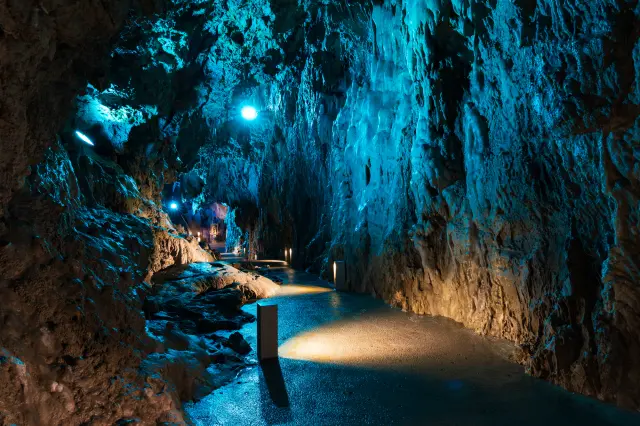
Visitors can see the remains of the former amber mining tunnel.
-
There is the Kuji amber flagship shop, which has Japan’s largest selection of amber from all over the world.
-
There is the Gintaro Lithuania Hall, which exhibits the culture and products of the Republic of Lithuania, a specialty of which is amber.
-
The Fossil Excavation Experience is also popular since Tyrannosaurus fossils have been discovered in amber mining sites.