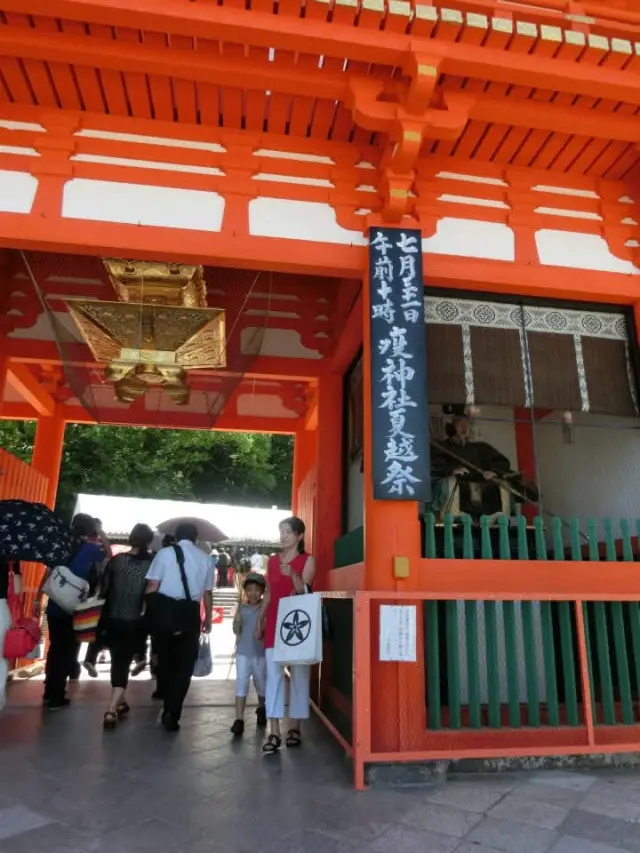
Kyoto's Gion Matsuri is one of the city's most iconic traditional festivals. It is held every year during the hot summer, mainly in July, and lasts about a month. The Gion Matsuri originated in 869, when an epidemic spread through Kyoto. People believed that disasters were connected to vengeful spirits, so the imperial court ordered a Goryoe ceremony to pray for the gods to drive away the epidemic and ward off misfortune. It gradually developed into the grand Gion Matsuri celebrated today.
Many important rituals take place during the festival, the most famous being the Yamahoko procession. Huge, lavishly decorated floats slowly make their way through the streets of central Kyoto as large crowds gather along the route, creating a lively summer festival atmosphere. The festival also includes events such as the mikoshi procession and Yoiyama, offering a sense of Kyoto's deep history and culture of faith.
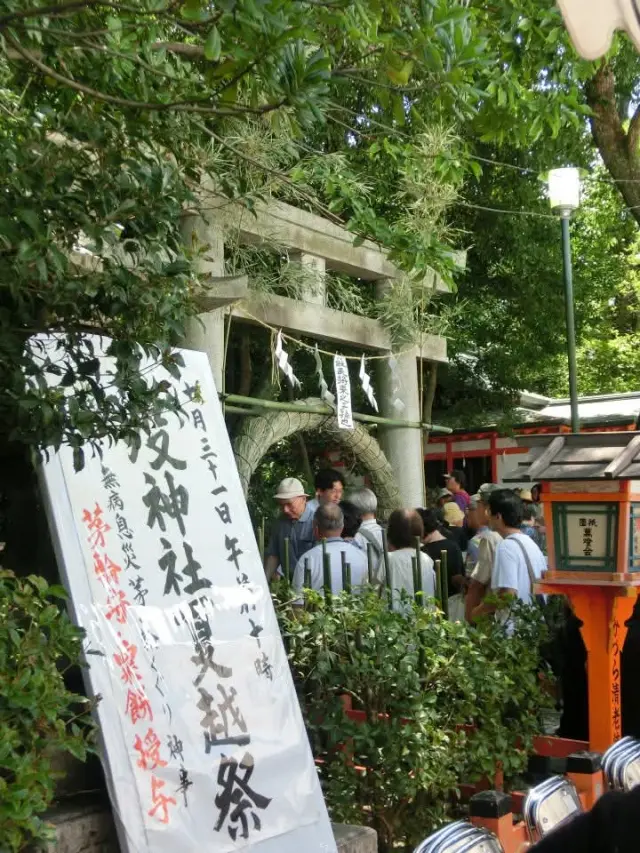
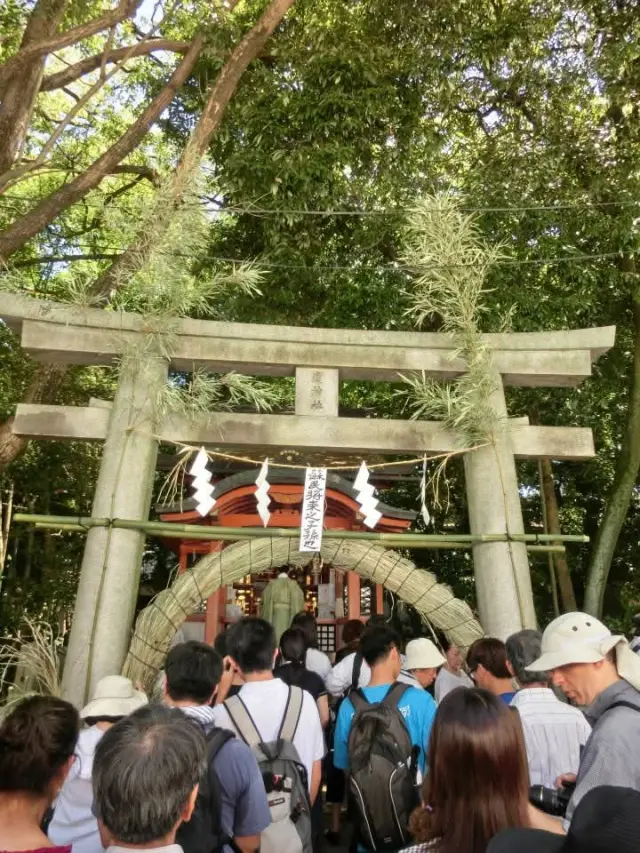
The Nagoshi Festival is also held during the Gion Matsuri. This traditional ritual is meant to ward off misfortune and bring blessings. The shrine sets up a huge chinowa ring woven from miscanthus reeds, and worshippers pass through the ring in a specific sequence. This symbolizes cleansing away the misfortunes accumulated over the first half of the year and praying for safety and good health during the second half. Small chinowa rings are sometimes made for worshippers to take home and hang up or keep as symbols of blessings and protection from misfortune. These festival activities, which combine history, faith, and folk customs, are very interesting and offer a deeper understanding of Kyoto's unique traditional culture.