Admission to Suizenji Jojuen Garden is currently JPY 500 for adults. The garden's official website also notes that there is no dedicated parking lot, so if you're driving, you'll need to use a nearby paid parking lot.
Suizenji Jojuen Garden is one of Kumamoto's most iconic Japanese gardens. It is a pond-strolling garden fed by natural spring water from Aso, with a pond, artificial hills, pine trees, and a historic teahouse. It's very pleasant to walk around.
The garden was first created by Hosokawa Tadatoshi in 1632 and was later expanded by successive lords of the Hosokawa clan, gradually taking on the appearance it has today. The scenery is actually quite varied, with thoughtful little details in every corner. It's a great place to stroll, stop, and take photos.
This time, I finally had enough time to explore the whole garden properly. Otherwise, I might have just hurried through and missed the pleasure of appreciating it.
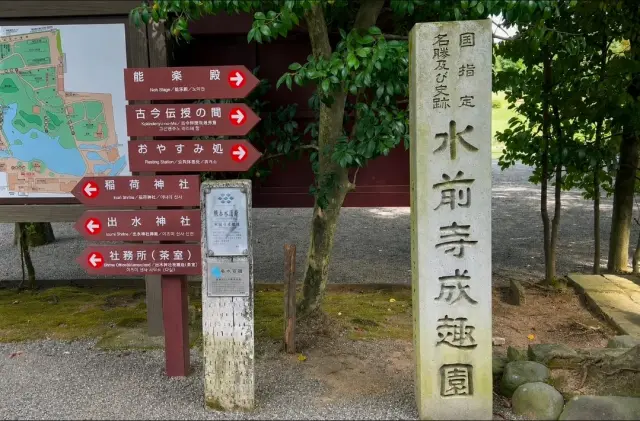
Suizenji Jojuen Garden | Review by 王小鈞
Other Reviews by 王小鈞
-
Aso Shrine (Kumamoto)
The master god who has created Aso, Takei Watatsu no Mikoto, and 12 of his family gods are enshrined here. As the head of Higo Province, this is ranked top over nearly 500 branch Aso Shrines nationwide. Its history goes back more than 2000 years. Its faith is fused with volcano worship that believes Mt. Aso to be a god.
Aso Shrine has a history of over 2,000 years and is well worth stopping by when visiting Aso.
The shrine suffered considerable damage during the Kumamoto earthquake, but after restoration, many of the buildings have been returned to their original appearance. The torii gate in particular looks truly impressive.
The weather was perfect on the day we visited. The blue sky, white clouds, and shrine buildings looked beautiful in photos, so the great weather definitely didn't go to waste. You can set aside 2 hours to take a leisurely walk around, take photos, and pray. It's a wonderful experience. -
-
Sakuranobaba Josaien
This multipurpose culture and tourism facility serves as an outdoor recreation of a Kumamoto Castle hill at the foot the mountain. Here you’ll find Kumamoto’s local gourmet, plenty of shopping and a chance to dive into the history of Kumamoto’s history.
Don't rush off after visiting Kumamoto Castle. Sakuranobaba Josaien at the foot of the hill is well worth visiting at the same time!
The entire complex was designed around the concept of an Edo-period castle town, with old-fashioned buildings lining both sides of the streets. Walking through it feels like you've traveled back to the Edo period. Although it isn't very large, it's fun to explore, eat snacks, and take photos along the way, and the atmosphere is quite relaxed.
My favorite area was Sakura-no-koji, which has quite a few shops featuring Kumamoto specialties. You can buy souvenirs and enjoy food and drinks as you go, including sea urchin croquettes, Jindaiko ice cream, and Kumamoto's signature horse meat dishes.
The complex also has Wakuwakuza, which introduces Kumamoto's history through interactive exhibits and is much more interesting than simply reading text. If you happen to catch a performance by the Kumamoto Castle Omotenashi Busho-tai, you can take photos with them too, making it a fun little experience unique to Kumamoto.
I think it's best to include this with a visit to Kumamoto Castle. After climbing up to the castle and learning about its history, come to Josaien to eat, look around, and buy souvenirs. -
-
Kumamoto Castle
Kumamoto Castle is the famous castle built by Kiyomasa Kato in 1607. It was built using the latest, cutting edge techniques at the time and was the setting of many important moments in Japan’s history.
Kumamoto Castle, one of Japan's three most famous castles, underwent extensive restoration after the 2016 Kumamoto earthquakes and has now regained its original appearance. On this visit, although traces of the restoration were still visible in some places, it still felt very much like the castle it used to be, and walking through it was quite impressive.
Admission to Kumamoto Castle is JPY 800 for adults, and I personally think it's well worth visiting. Besides touring the castle tower, you can also see the progress of the post-earthquake restoration along the way, which gives you a better understanding of the castle's history.
I also highly recommend visiting the nearby Kumamoto Castle Museum Wakuwakuza. It has quite a few interactive activities that let you learn about Kumamoto Castle's history in different ways, along with some mini-games. You can even dress up in period costumes, which was surprisingly fun. A combined ticket for Kumamoto Castle and Wakuwakuza is currently only JPY 850, making it a much better deal than buying separate tickets.
After touring Kumamoto Castle, you can also stop by the nearby Sakura-no-baba Josaien. It has plenty of restaurants, souvenirs, and Kumamoto specialties, so it's a convenient place to eat and take a break after visiting the castle. It fits nicely into the itinerary. -