

Discover Japan’s Timeless Charm: 13 Must-Visit Attractions in Okayama
Okayama is home to countless spots where you can experience a distinctly Japanese atmosphere—historic shrines and castles, and townscapes that still carry the feel of a bygone era.
And if you’re visiting Okayama, the stunning scenery shaped by the Seto Inland Sea and the Seto Ohashi Bridge is a must.
To help you enjoy Okayama to the fullest, we’re featuring sightseeing spots with classic Japan vibes and incredible views, restaurants that satisfy both appetite and soul, shopping areas lined with local specialties, and accommodations where you can soak in the scenery.
What is Okayama Like?
Okayama Prefecture is located in southern Honshu.
The north is mountainous, while the south is blessed with calm seas, creating beautiful nature-filled scenery across the region.
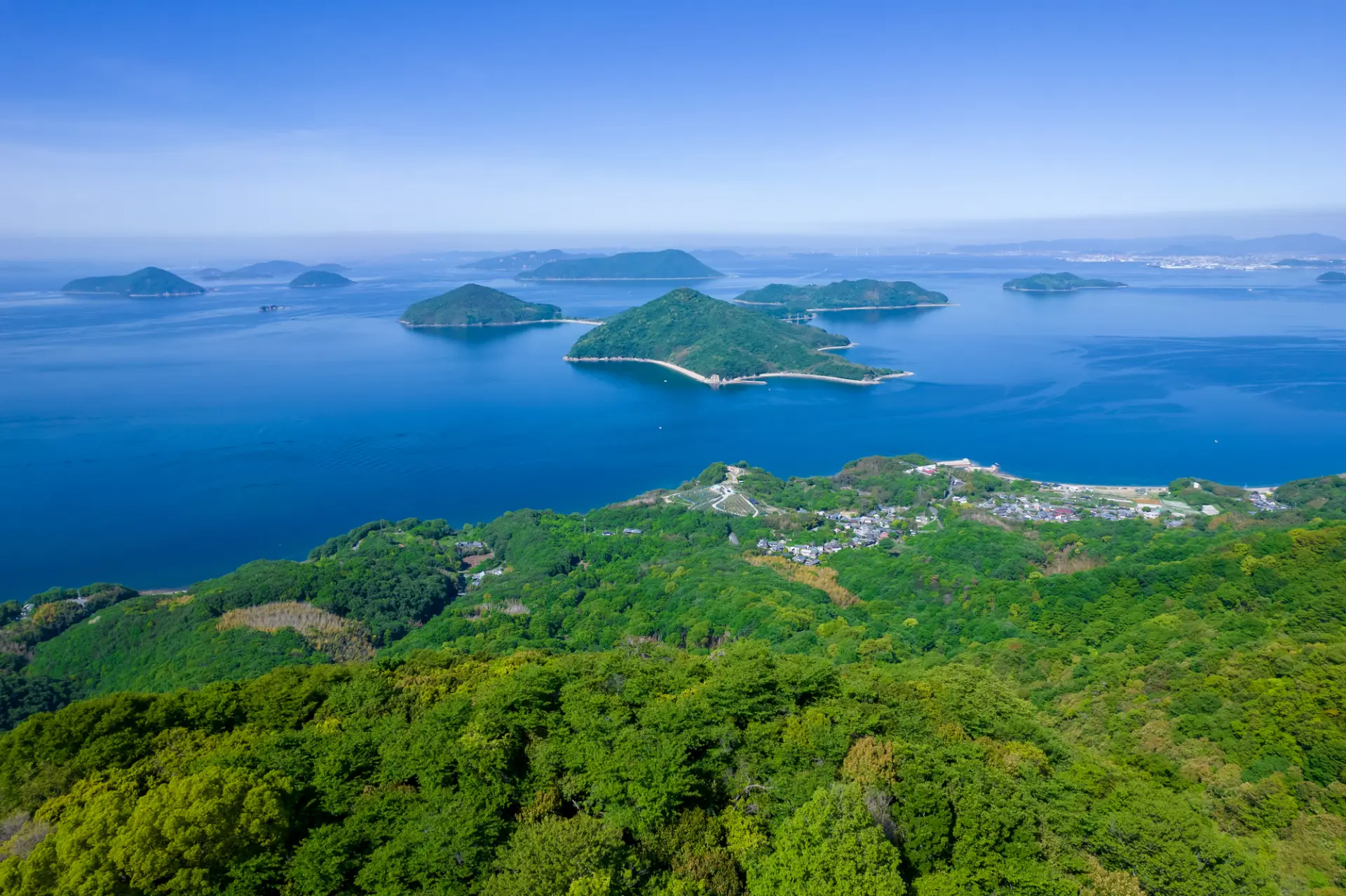
In particular, the Seto Inland Sea, its island-dotted waters, and the dramatic views created by the Seto Ohashi Bridge are not to be missed.
Beyond its natural beauty, Okayama also offers many places where you can feel its history and culture, including shrines, castles, and townscapes with centuries of heritage.
There are plenty of great areas to explore, but Kurashiki is especially recommended for its beautifully preserved historic district and access to sights like the Seto Ohashi Bridge—an ideal first stop for your Okayama trip.

When is the best season to visit Okayama?
The best time to visit Okayama is March through May, when the weather is warm and comfortable for sightseeing.
It’s the perfect season to enjoy fresh greenery in the mountains and stroll classic Japanese streetscapes in pleasant temperatures—an ideal way to experience the best of Okayama.
What to wear in Okayama by season
- Spring (March–May): A light jacket and a thin sweater
- Summer (June–August): Lightweight clothing, short sleeves
- Fall (September–November): A light jacket or coat
- Winter (December–February): A coat, plus a thick sweater or jacket
How do you get to Okayama?
Okayama is easy to reach, with Okayama Airport and a Shinkansen stop.
From major cities, you can typically get there in about an hour.
From Tokyo’s Haneda Airport to Okayama Airport, it takes around 1 hour and 15 minutes.
From Osaka or Nagoya, the Shinkansen gets you to Okayama in Approx. 1 hour.
Main transportation for sightseeing in Okayama
Okayama Prefecture has 10 rail lines, with routes spreading from Okayama City to areas across the prefecture.
That makes traveling by train a stress-free way to sightsee.
There are also unlimited-ride bus passes, so depending on your itinerary, taking the bus can be a better deal.
Okayama City even has a streetcar—rare in Japan—so consider hopping on for the experience.
Soak Up Classic Japan: 13 Handpicked Attractions in Okayama
Okayama is packed with historic streetscapes and well-known attractions.
From the retro-modern scenery of the Kurashiki Bikan Historical Quarter to Kibitsuhiko Shrine, a popular power spot tied to the Momotaro legend, there’s no shortage of places that feel distinctly Japanese.
The spectacular views created by the islands of the Seto Inland Sea and the Seto Ohashi Bridge are also unmissable.
Here are classic must-visit spots you’ll want to include in any Okayama itinerary.
1. Okayama Korakuen Garden
A daimyo garden created by Ikeda Tsunamasa, the lord of the Okayama Domain, as a place for relaxation, and largely completed in 1700.
Enyo-tei, once used as the lord’s living quarters, is the most important building and was designed for sweeping garden views. Ryuten is a rare structure used for hosting guests and taking breaks, featuring a water channel running through the center.

2. Kurashiki Bikan Historical Quarter
With white-walled storehouses, namako walls, and willow-lined canals, the Kurashiki Bikan Historical Quarter is known for its atmospheric streetscape. Traditional architecture and the retro-modern scenery along the Kurashiki River make it especially popular with visitors.
There’s also plenty to see nearby, including the Ohara Museum of Art—Japan’s first private museum of Western art—and Kurashiki Ivy Square, a beautifully renovated complex created from a Meiji-era factory.

3. Kibitsu Shrine
Located on the northwest foothills of Kibinaka-yama, revered as a sacred mountain, this shrine enshrines Okibitsuhiko-no-Mikoto. Its National Treasure main hall and worship hall are directly connected in the one-of-a-kind architectural style known as Kibitsu-zukuri—found nowhere else in Japan.
After being lost to fires twice, it was rebuilt in 1425 during the era of Ashikaga Yoshimitsu.
It’s said to be second in size only to Yasaka Shrine in Kyoto, and more than twice the size of Izumo Taisha, giving it an impressive, grand scale.

4. Bitchu Matsuyama Castle
Only 12 castles in Japan still have their original keep—and while several are hilltop castles, Bitchu Matsuyama Castle is the only one that’s a true mountain castle.
Parts of its two-story keep, double turrets, and earthen walls remain. Inside, you can see rooms designed for siege defense and a large hall with a sunken hearth.

5. Okayama Castle
Built by Sengoku-era warlord Ukita Hideie and completed in 1597.
The keep has an unusual design: the first floor is an irregular pentagon. It’s also known as Ujo (Crow Castle), said to come from the black lacquered boards that once covered its exterior walls.
Inside the reconstructed keep is an exhibition facility, and the surrounding castle grounds are maintained as Ujo Park. In spring, summer, and fall, the popular Ujo Togenkyo illumination event lights up the keep and its surroundings.

6. Seto Ohashi Bridge
The Seto Ohashi Bridge connects Okayama Prefecture on Honshu with Kagawa Prefecture on Shikoku. The name refers to six bridges spanning a 9.4 km strait.
With a sequence of different bridge types—suspension, cable-stayed, and truss—it’s among the world’s largest combined road-and-rail bridge systems.

7. Ohara Museum of Art
Located in the Kurashiki Bikan Historical Quarter, the Ohara Museum of Art features a strong collection centered on modern and contemporary art.
The main building displays many masterpieces of Western art, including El Greco’s Annunciation, Claude Monet’s Water Lilies, and works by Renoir and Gauguin.
Today, the museum holds around 3,000 works across a wide range of genres, including Western modern art, Japanese modern and contemporary art, works by artists connected to the Mingei movement, and Asian and Egyptian antiquities.

8. Brazilian Park Washuzan Highland
An amusement park in Kurashiki, Okayama, with views over the Seto Inland Sea.
As the name suggests, it’s packed with Brazilian flair, with Brazilian shows held all day. Even the facility names are Brazil-inspired, including the insect cafe “Amazon,” “Delicafe Janeiro,” and a shop called “Rio.”

9. Ki-nojo (Kinojo) Mountain
Ki-nojo is a mountain in the northern part of the Soja Plain, rising to an elevation of Approx. 400 m. The ancient fortress known as Ki-nojo once stood near its summit.
Because it isn’t mentioned in historical records like the Nihon Shoki, its construction date is unknown, but excavations suggest it was likely built in the late 7th century.

10. Kibitsuhiko Shrine
The enshrined deity is Okibitsuhiko-no-Mikoto, often said to be the model for the folktale hero Momotaro, and revered as a deity of both learning and martial arts who has long protected the land of Kibi.
Kibitsuhiko Shrine stands on the eastern foothills, and its buildings were positioned so that on the summer solstice, the sun rises through the main torii gate and its light reaches into the Saibunden hall. For this, it’s also known as “Asahi no Miya” (Shrine of the Morning Sun).

11. Toy Kingdom
A toy-themed park where kids can go all out, with an “Omocha Pavilion” where you can play with popular toys, plus Approx. 19 attractions.
All Omocha Pavilion areas are indoors, so it’s a great pick even on rainy days. From classic favorites like Tomica and Plarail, Licca dolls, and Sylvanian Families to educational toys like Diablock and rail blocks, you’ll find a wide variety of play zones.

12. Ikeda Zoo
A zoo at the base of Mount Kyoyama, not far from JR Okayama Station. The lush grounds make use of the area’s natural terrain, and you can interact with many adorable animals.
The zoo’s biggest star is Sun, a white tiger who joined in 2019—one of only about 40 kept in Japan, making it a rare sight. The zoo also cares for around 100 species, including reticulated giraffes, lions, Grant’s zebras, red pandas, flamingos, and Magellanic penguins.

13. Ikura Cave
One of the largest of Approx. 200 limestone caves scattered across Niimi City, Ikura Cave is designated a Natural Monument of Okayama Prefecture. It’s a massive cave system stretching 1,200 m in length with an elevation difference of 90 m.
Step inside from the entrance set into a Approx. 240 m cliff face rising above the Takahashi River, and you’ll enter a mysterious world shaped by nature over countless millions of years.

The Setouchi Triennale: An Art Festival That Makes Your Okayama Trip Even More Special
The Setouchi Triennale is a contemporary art festival held across 17 areas on islands and coastal regions of the Seto Inland Sea—Japan’s largest inland sea.
Across the full festival period, 255 artworks are displayed, along with seven projects and 25 events.
The venues are lesser-known islands in Kagawa and Okayama, and traveling from island to island by ferry or high-speed boat feels like a journey in itself.
As you explore on foot, you can enjoy the art and connect with local residents, experiencing the memory of the land and the rhythms of island life.
Through the Setouchi Triennale, art shifts from something you simply “view” into something that deepens your travel experience.
To experience Okayama on a deeper level, be sure to add the Setouchi Triennale to your itinerary.
3 Popular Restaurants in Okayama
Take a break between sightseeing with great coffee or a seasonal fruit parfait.
When night falls, enjoy yakitori. As you look back on the day and plan for tomorrow, settle into a calm, easygoing evening.
1. Meikyoku Kissaten Toki no Kairou
A classic-style music cafe with Approx. 7,000 classical records and Approx. 1,500 CDs.
In a space inspired by European concert halls, you can sip house-roasted coffee while listening to famous works played through carefully selected audio equipment.
The beans include premium Ethiopian varieties the owner searched out, along with selections from around the world. Each has its own character, so start by sampling coffees from different countries.

2. Machiya Kissaten Miyake Shoten
Miyake Shoten in the Kurashiki Bikan Historical Quarter is a cafe set inside a machiya townhouse built more than a century ago and lovingly renovated.
With classic features like an earthen-floor entryway, storehouse spaces, and mud walls, it offers a nostalgic, relaxing atmosphere.
The standout menu item is its seasonal fruit parfaits, made generously with fresh fruit—beautifully presented and photo-ready.

3. Kashiwaya Kobayashi
A 4-minute walk from Kurashiki Station, this chicken-specialty restaurant is known for yakitori carefully grilled over binchotan charcoal.
They use fresh, quality ingredients, including rare Omi jidori chicken raised at a poultry farm in Shiga.
You can order your favorite cuts, but the course menus are also recommended for trying a variety of chicken dishes.

Local Specialties Shine: 4 Classic Shopping Areas in Okayama
Just like its streetscapes, shrines, and castles, Okayama is also rich in local specialties with long histories.
From Bizen ware pottery to denim crafted by Japanese artisans, you’ll find many items you can only buy in Okayama. Visit the shopping areas below and pick up specialties that reflect the region’s heritage and tradition.
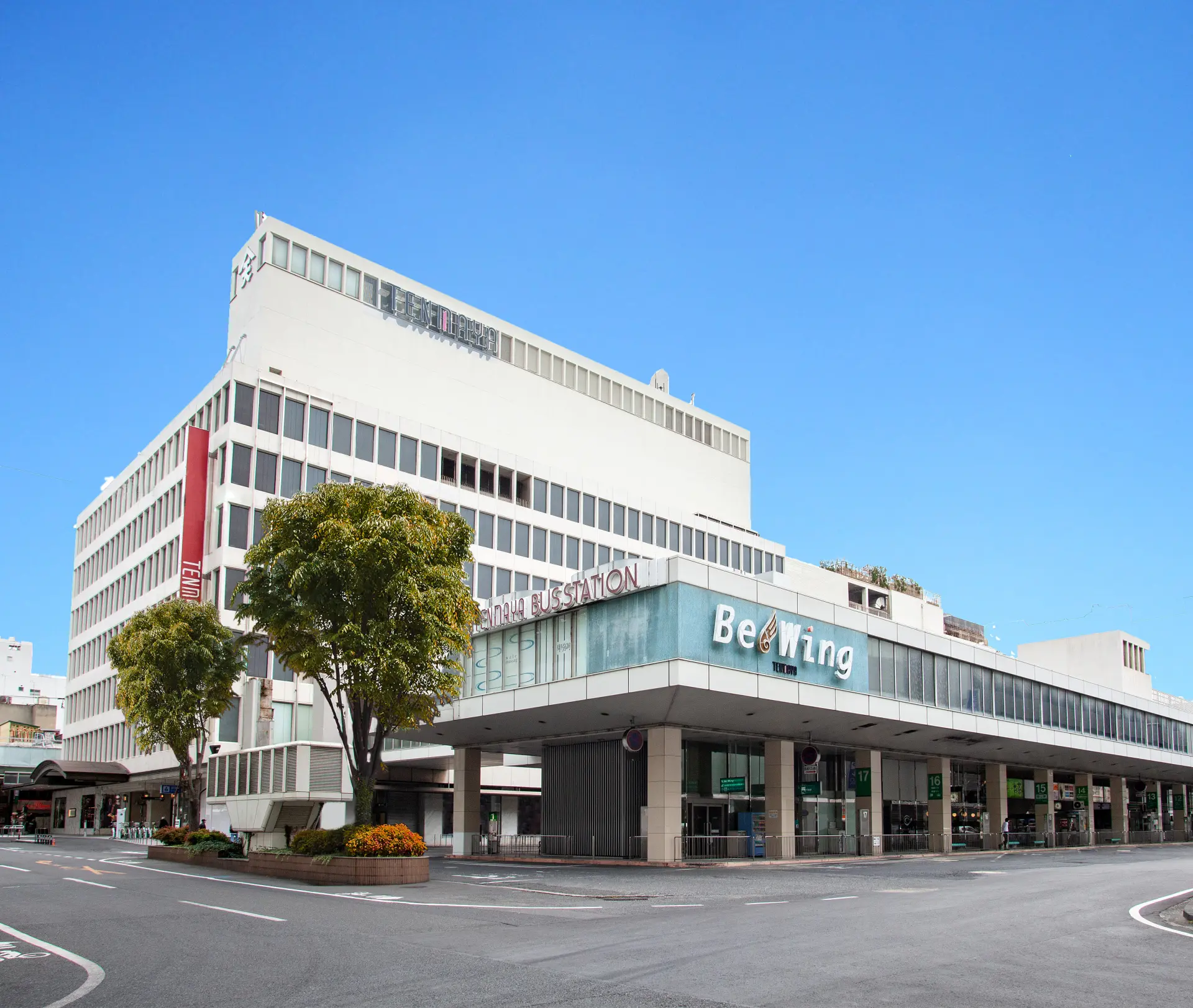
1. Tenmaya Okayama Main Store
A department store that originated in Okayama. The main store in Okayama City includes a bus terminal and is also easy to reach from a streetcar stop. It’s conveniently located within walking distance of Okayama Station, Korakuen Garden, and Okayama Castle, making it popular with both locals and visitors.
Inside, you’ll find a wide range of items, including clothing, jewelry, watches, and cosmetics. For Okayama souvenirs, head to “Okayama Biiki,” a section on the food and lifestyle goods floor featuring local specialties, famous products, and clothing and home items by local makers.
2. Kurashiki Ivy Square
Kurashiki Ivy Square is a multi-purpose tourist complex redeveloped from the headquarters factory of Kurashiki Spinning Mill, founded in 1889.
The building recreates British industrial design, with red brick walls covered in lush green ivy for a retro-modern feel.
Next to the Kurashiki Bikan Historical Quarter, the grounds include accommodations, restaurants, banquet spaces, hands-on workshops, a history museum, and shops selling local specialties.

3. Ario Kurashiki
Connected directly to the north exit of JR Kurashiki Station, Ario Kurashiki is a large shopping complex with around 100 specialty stores.
From trendy fashion and lifestyle goods to drugstores and service shops, it covers a wide range of needs.
There are also plenty of restaurants and cafes, making it a convenient stop for a break while shopping.

4. Hayashi Genzaburo Shoten
The Kurashiki Bikan Historical Quarter is known for preserving Okayama’s classic townscape to this day.
Located within the area, Hayashi Genzaburo Shoten is a multi-tenant complex filled with shops connected to “clothing, food, and living,” all centered on the theme of exploring a richer lifestyle.

Relax with Spectacular Seto Inland Sea Views: 3 Places to Stay in Okayama
After a day of sightseeing, unwind while looking out over the beautiful Seto Inland Sea.
Here are three accommodations where you can enjoy ocean views from your room or an open-air bath.
1. Hotel Limani
A resort hotel in Ushimado, Setouchi—often called the “Aegean Sea of Japan.”
The white building features 41 twin rooms over 40㎡, with sparkling blue ocean views from the rooms.

2. Setouchi Kojima Hotel
Set on a hill near the Seto Ohashi Bridge, this hotel offers sweeping ocean views of the Seto Inland Sea’s many islands and the bridge itself.
All guest rooms except the single rooms have ocean views. Even if you stay in a mountain-side room, you can still enjoy the scenery from the third-floor 전망 bath and open-air bath.

3. Shimayado Mitora
A seaside ryokan with the Seto Inland Sea stretching out right in front of you.
Opened in 1966 after relocating and reconstructing the former Manabe Elementary School, it has remained in operation through multiple renovations.
It’s especially known for its fish dishes, featuring fresh catches from local waters and seasonal ingredients like vegetables grown in its own garden—so popular that some guests return every year for the food alone.

Summary
We’ve introduced places that capture the best of Okayama—historic streetscapes, gardens, shrines, and castles with classic Japanese charm, long-loved local specialties, and popular restaurants that satisfy both hunger and heart.
If you don’t know much about Okayama, or you’ve never visited, it’s well worth adding to your Japan travel plans.
After enjoying Okayama, consider taking a bus across the Seto Ohashi Bridge with its panoramic views of the islands of the Seto Inland Sea, and continue on to Kagawa Prefecture.
Kagawa is famous for udon. Sanuki udon, known for its firm, chewy texture, is especially delicious.
Another great idea is taking a ferry to Naoshima, the art island floating in the Seto Inland Sea.
Whether you’re craving great food or memorable art, try extending your trip from Okayama to match your mood.