
![[Goshikinuma Travel Guide] Enjoy a stunning landscape where vibrant lakes meet dramatic nature](https://static.gltjp.com/glt/data/article/21000/20397/20230831_164248_e32c89fc_w1920.webp)
[Goshikinuma Travel Guide] Enjoy a stunning landscape where vibrant lakes meet dramatic nature
Called the “mysterious ponds,” Goshikinuma.
Here you can enjoy vividly colored lake surfaces that hardly seem like nature’s work, along with the grand natural scenery all around.
It’s one of Fukushima’s most popular scenic spots and is featured in the Michelin Green Guide.
In this article, we’ll introduce can’t-miss scenic viewpoints and recommended seasons to visit so you can fully enjoy sightseeing at Goshikinuma.
What is Goshikinuma Like?
Goshikinuma is located in the Urabandai area in northern Fukushima Prefecture.
Urabandai is another name for the Urabandai Plateau, located at an elevation of 800 m on the northern foot of Mt. Bandai, and it’s a highly popular resort area.
“Goshikinuma” is a collective term for around 30 ponds, and the correct name is the Goshikinuma Ponds.
Goshikinuma was formed when Mt. Bandai erupted in 1888 and rocks from the mountain collapse dammed a river.
The mysterious scenery of Goshikinuma was awarded one star in the Michelin Green Guide in 2016.
The name “Goshikinuma” comes from the many different colors you can see on the water’s surface.
You’ll see stunning colors like emerald green and cobalt blue that hardly seem natural.
Enjoy the seasonal scenery, from the changing water colors depending on weather, sky color, time of day, and season, to summer’s fresh greenery and autumn foliage. The beautiful colors and surrounding landscapes are sure to be soothing.
-
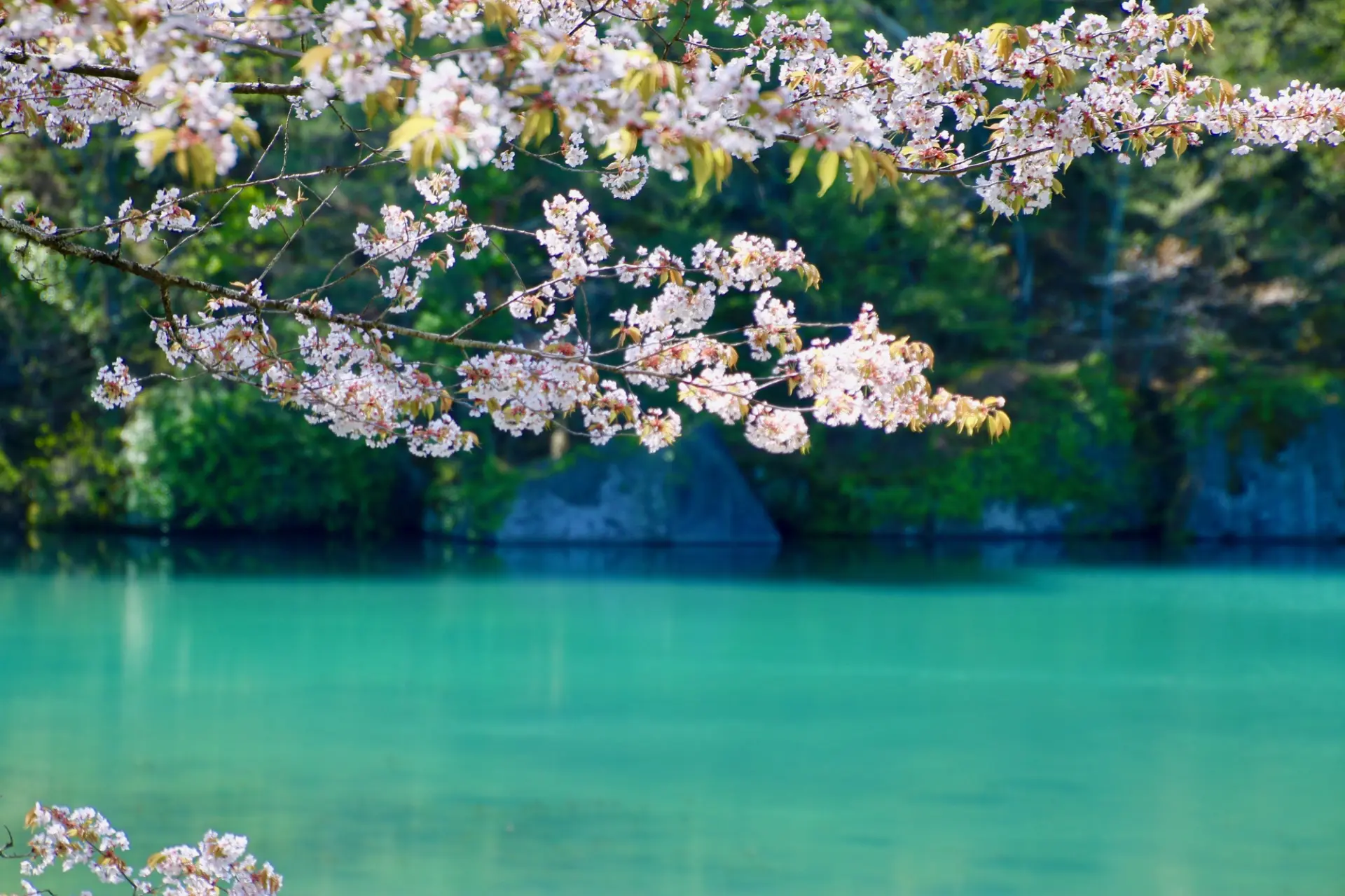
Goshikinuma in spring
-
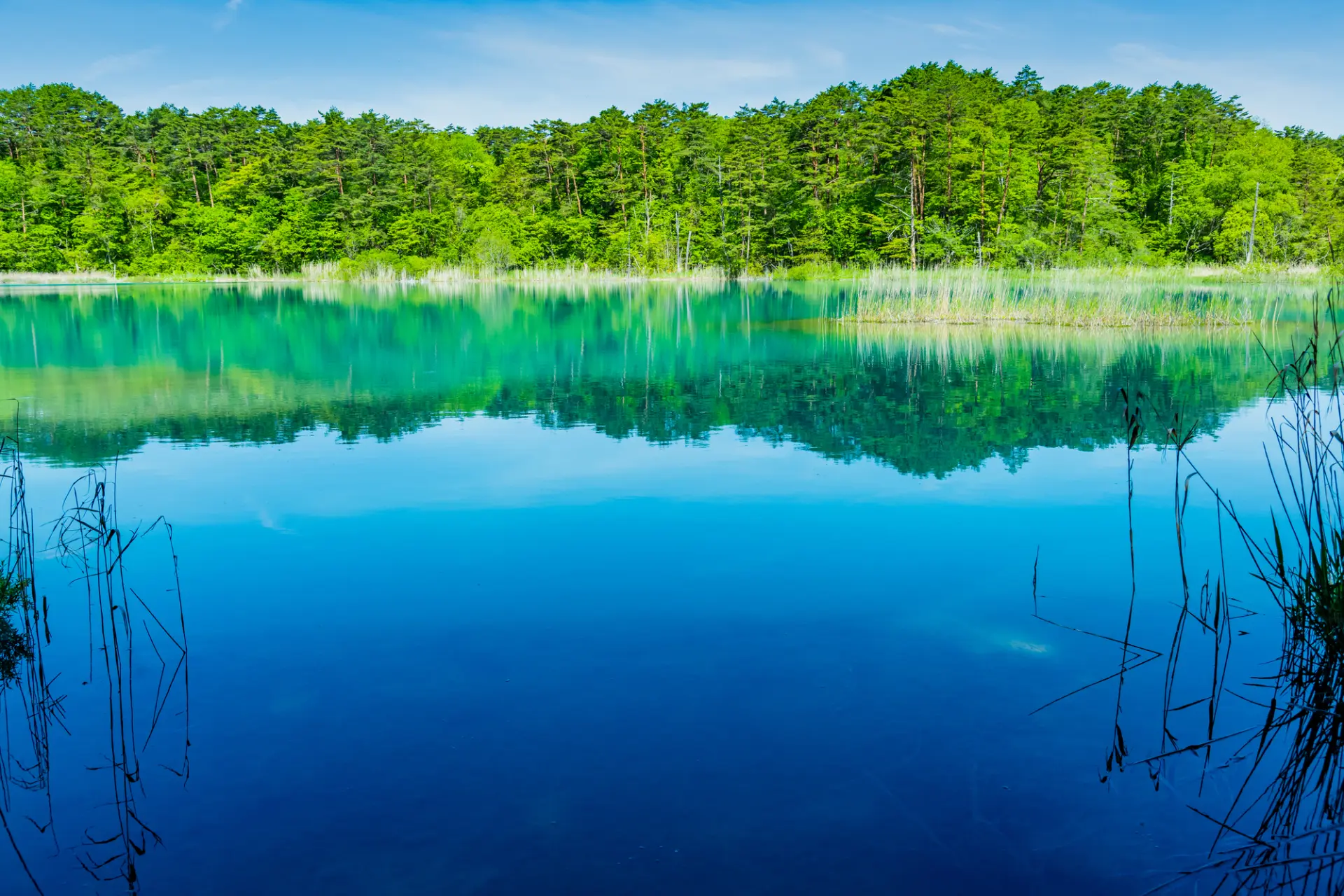
Goshikinuma in summer
-
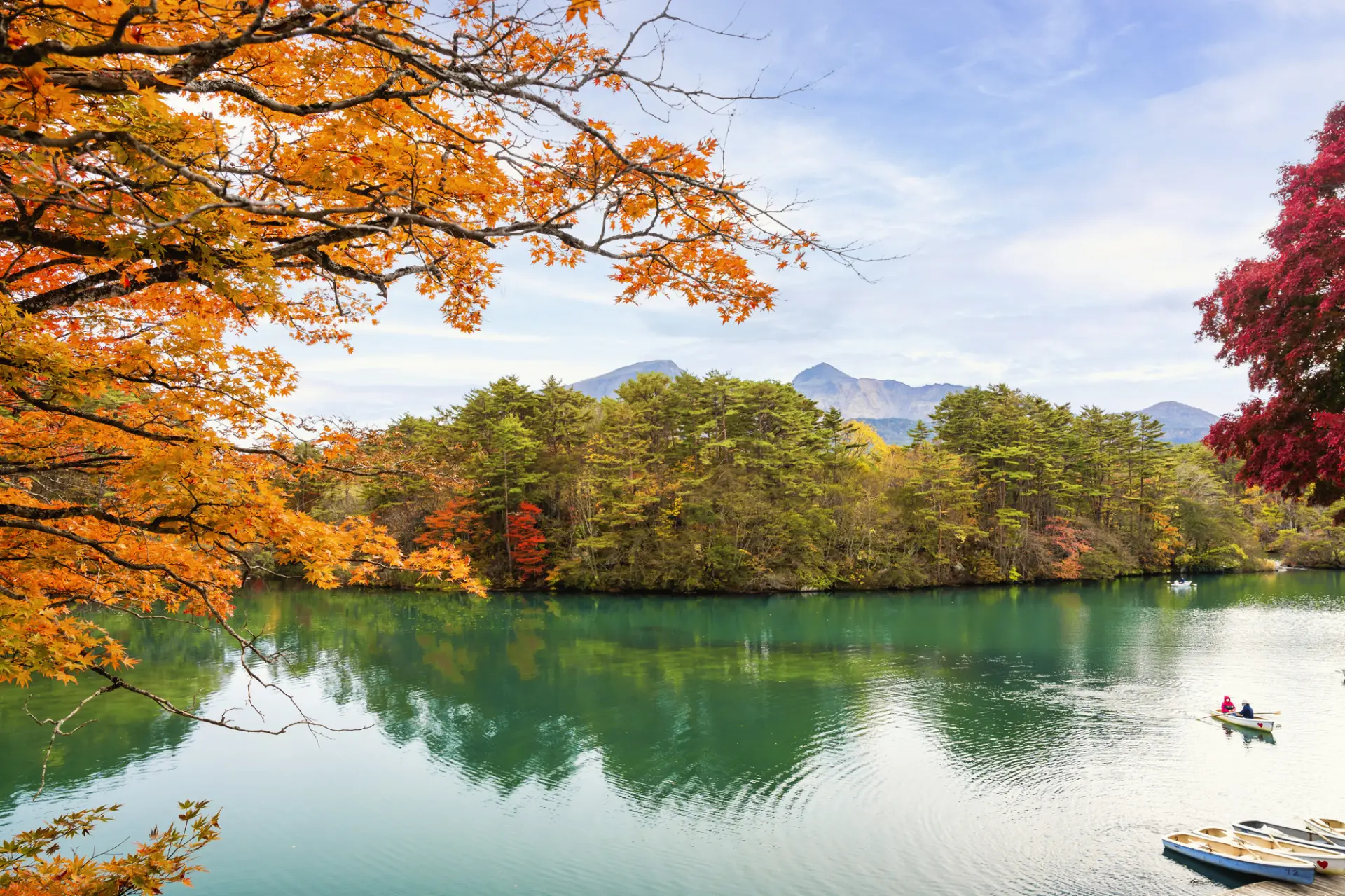
Goshikinuma in fall
-
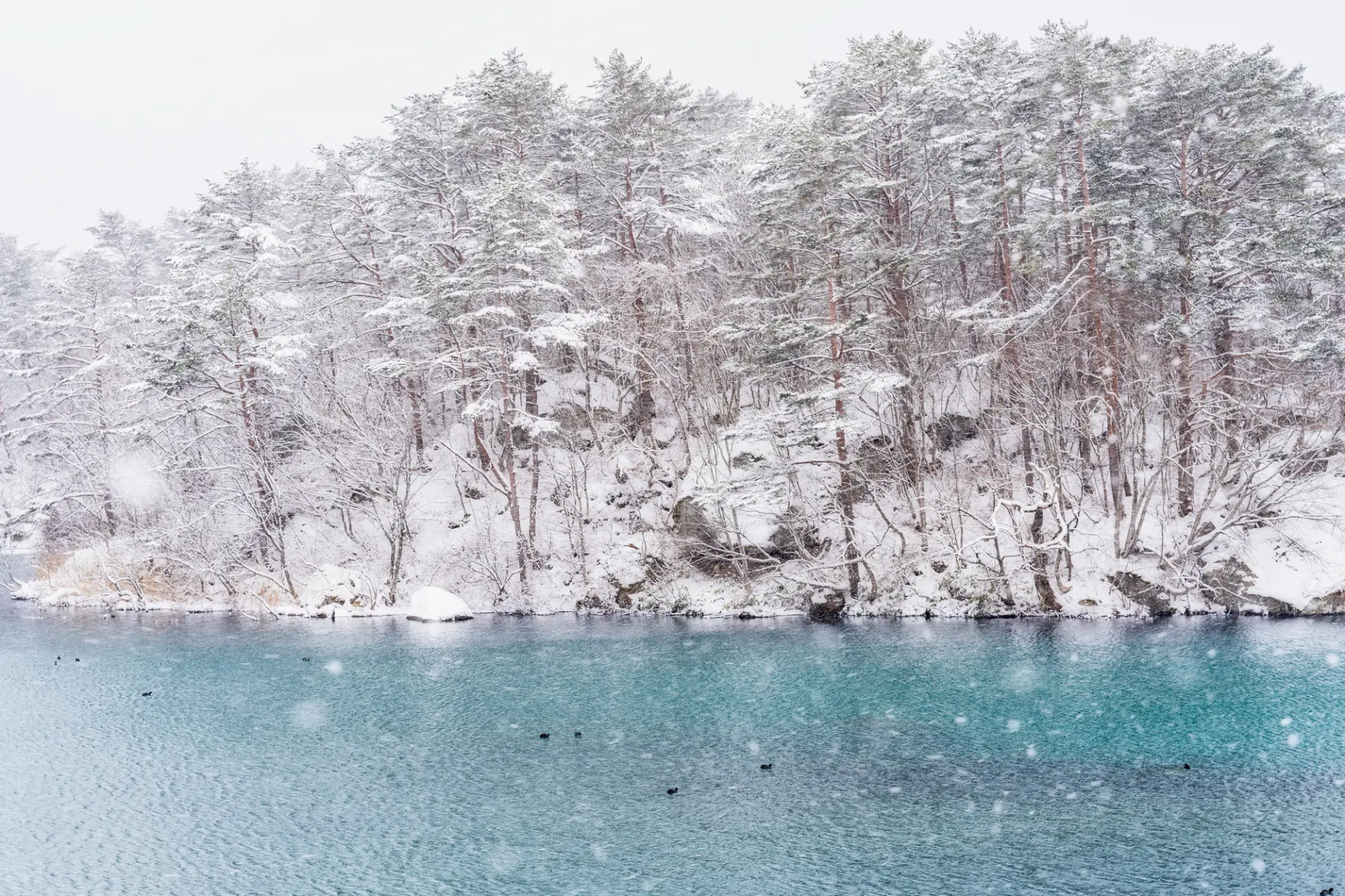
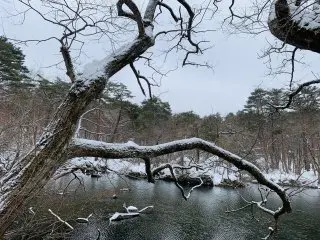
Goshikinuma in winter
Strolling around Goshikinuma is free. It’s open all day with no time restrictions, so you can explore freely.
For sightseeing, we recommend using the hiking course called the “Goshikinuma Nature Exploration Trail (Goshikinuma Tanshoro),” where you can walk around the ponds while enjoying the scenery.
It’s a relatively flat nature trail that lets you visit Goshikinuma’s main highlights.

Access to Goshikinuma
Here’s how to get to Goshikinuma from JR Inawashiro Station on the Ban’etsu West Line, the gateway to Urabandai.
There are no restrooms along the trail, so be sure to use the restroom before leaving Inawashiro Station.
- Route
-
1. Board the Bandai Toto Bus at “Inawashiro Station”
2. Get off at the “Goshikinuma Iriguchi” bus stop to arrive - Travel time
- Approx. 35 minutes
What’s the best season to visit Goshikinuma?
We recommend visiting Goshikinuma in summer, when the fresh greenery is at its best, or in fall, when the area is colored with beautiful autumn leaves.
The mysterious, shimmering water in many hues paired with fresh greens or fall foliage is a must-see.
If you can choose your travel dates, try to visit in one of these seasons.
Goshikinuma in summer: sparkling water and fresh greenery
In summer, Goshikinuma’s fresh greenery reaches its peak, and the strong summer sunlight makes the pond colors look even more vivid.
Enjoy the contrast between the lush green trees and the brilliantly colored water, shining in shades like turquoise blue.

Goshikinuma in fall: a picture-perfect landscape
In fall, when autumn leaves are at their peak, Goshikinuma is layered with reds, yellows, and oranges, turning the entire area into a breathtaking view.
With countless trees in the area, enjoy a picture-like scene of fall foliage and the brightly shimmering ponds.
Peak fall color is typically from mid-October to early November.

Mysterious ponds and beautiful views! 5 must-visit spots at Goshikinuma
Here are some of the most popular ponds among the many at Goshikinuma.
At Goshikinuma, known as the mysterious ponds, each pond has a different water color to enjoy.
If you’re making the trip, be sure to visit the five ponds introduced here.
1. Does the color change depending on where you look? The mysterious “Rurinuma Pond”
Rurinuma Pond is a pond with an area of Approx. 18,000 m².
True to its name, the water surface shines in a lapis lazuli color, and it’s said to be the most mysterious pond in Goshikinuma.
It’s known for the water color changing depending on where you view it from, and you can enjoy the contrast with the surrounding trees reflected on the water.
From a nearby observation point, you can take in a panoramic view of the collapsed slope from the eruption on the north side of Mt. Bandai, beyond Rurinuma Pond.

2. “Bishamonnuma Pond,” with plenty of ways to enjoy it
Bishamonnuma Pond is the largest pond in Goshikinuma.
With an area of 150,000 m², it’s quite large.
This is a breathtaking viewpoint where you can see Mt. Bandai’s crater beyond the beautiful cobalt-blue water surface.
Rowboats are available for rent, so you can enjoy the surrounding scenery from the water.
Bishamonnuma Pond is home to a “lucky carp” with a red heart pattern on its pure white belly, and there’s a legend that if two people find it together, their romance will come true.

3. “Aonuma Pond,” with a dreamy atmosphere
Aonuma Pond is smaller than Bentennuma Pond and Rurinuma Pond, with an area of Approx. 6,000 m².
Its cobalt-blue water is beautifully mysterious, like light-blue paint dissolved into the water.
Surrounded by dense trees, this pond has a dreamy atmosphere you can enjoy.

4. “Akanuma Pond,” with a striking contrast between the water and rust-colored plants
Akanuma Pond is the smallest pond in Goshikinuma, with an area of Approx. 2,000 m².
It gets its name from the plants along the water’s edge that are dyed a rust-like color.
The jewel-like jade-colored water and the rust color along the shore, contrasting with the surrounding green trees, create a painting-like landscape.

5. “Bentennuma Pond,” where you can enjoy color changes by time and weather
Bentennuma Pond is the second-largest pond in Goshikinuma, with an area of Approx. 30,000 m².
Its water surface changes into many colors depending on the time of day and the weather, from deep emerald-like green to pale sky blue.
The vivid water with Mt. Nishi-Azuma in the distance is a must-see.

Goshikinuma highlights and the hiking trail “Goshikinuma Nature Exploration Trail”
The “Goshikinuma Nature Exploration Trail” is the name of the hiking route that goes around Goshikinuma.
As you walk through this nature-rich course, you can view Bishamonnuma Pond, Akanuma Pond, Midoronuma Pond, Ryunuma Pond, Bentennuma Pond, Rurinuma Pond, Aonuma Pond, and Yananuma Pond along the way.
Because the course is relatively flat, it’s an easy difficulty level that even beginners can enjoy.
The surrounding area is designated as a national Special Protection Zone, and all collecting is prohibited, so please be careful.
The total length is Approx. 4 km, and the one-way travel time is around 1 hour 10 minutes to 1 hour 30 minutes.
Wild bears occasionally appear, so you’ll need safety measures such as buying a bear bell.
Long sleeves and long pants are essential in any season.
Sneakers are fine, but since there are muddy areas and rugged rocks along the way, trekking shoes are recommended.

3 popular sightseeing spots in Fukushima to visit along with Goshikinuma
Beyond Goshikinuma, Fukushima has many other fascinating places to visit.
After you’ve enjoyed Goshikinuma, here are a few spots to visit next to experience even more of Fukushima’s charm.
1. Aizu Sazaedo (Entsu Sansodo)
Sazaedo is a Kannon hall on the hillside of Iimoriyama, known as the place where the Byakkotai committed suicide, and its official name is Entsu Sansodo.
Built in 1796, this is a three-story, hexagonal Kannon hall with a height of Approx. 16.5 m. It was built by Ikudo, a monk of Shosonji Temple, which stood in this area at the time.
The exterior is quite unusual, but the interior is even more extraordinary, and once inside you’ll clearly understand why it was named Sazaedo.
There are no stairs. Instead, a clockwise wooden ramp leads up to the top floor, and after crossing a bridge, you go down again by ramp to the bottom.
Without realizing it, visitors go up and down a one-way double-helix passage where people ascending and descending never pass each other.

2. Aquamarine Fukushima
An aquarium that opened in 2000 near Onahama Port. Its theme is the “tidal front,” where the two currents that flow off Fukushima and bring richness to its seas—the Kuroshio and the Oyashio—meet.
The aquarium’s centerpiece is “Sea of the Tidal Front,” where you can experience the tidal front through a triangular tunnel sandwiched between two huge tanks where the Kuroshio and Oyashio meet. You can see many kinds of fish that gather at the tidal front, including bonito, sardines, flounder, and herring.

3. Hanamiyama Park
The scenery of Hanamiyama Park, where the satoyama slopes are dyed in soft gradients, is truly a “peach blossom paradise.”
Wrapped in a patchwork of colorful flowers, you’ll likely feel so happy it’s as if you’re in a dream.
It’s a famous flower-viewing spot that everyone around Fukushima knows, but it began with the passion of a single farmer.
In the early Showa period, one farmer who shifted from sericulture to floriculture, Mr. Isejiro Abe, continued the work of carving out the mountain, planting flowering trees, and selling flowers to support his livelihood.

Reviews of the Goshikinuma Ponds
4.07
Some reviews are AI-translated.
-
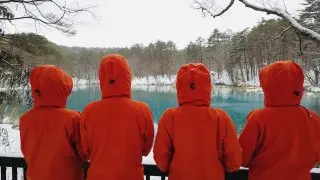
I joined a snowshoe tour to Goshikinuma in winter, organized by Urabandai Lake Resort. You can rent all the gear, so you don't need to bring anything. The guide explained how to use the snowshoes in detail.
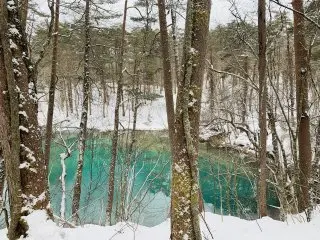
As you walk through the snowy path, you’ll come across the beautiful Goshikinuma. Along the way, I spotted animal tracks and even saw some lively squirrels!
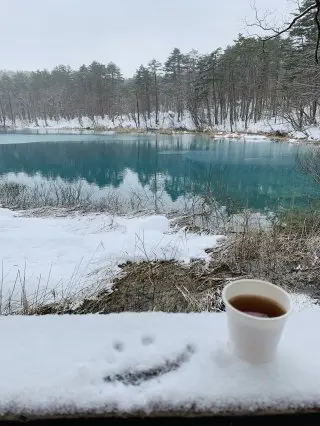
Enjoying maple syrup dropped onto the snow and a warm cup of tea while taking in the scenery was just perfect.
The round trip is about 2.5 km and takes around two hours at a relaxed pace, so it's safe and even people who don't usually exercise can enjoy it.
I loved seeing the beautiful colors of Goshikinuma, which change depending on the weather, sunlight, and angle that day!
FAQ about Goshikinuma
Q
Why is the water surface at Goshikinuma so beautiful?
A
It’s said that volcanic substances in the water quality, as well as underwater plants and algae, make the water surface appear beautifully colored.
Q
Why is the water color different for each pond?
A
This is because water from Lake Hibara and groundwater from Mt. Bandai mix in, giving each pond different water quality.
Summary
We’ve introduced the charm of Goshikinuma’s mysterious ponds, along with recommended seasons to visit.
If you check off the recommended ponds and hiking course introduced in this article, you’ll be able to fully enjoy Goshikinuma.
Fukushima Prefecture has many other attractive spots as well.
We also introduce Fukushima’s appealing sightseeing spots in this article, so please give it a read.