
![[Naritasan Shinshoji Temple Guide] One of Chiba’s Top Power Spots for Sightseeing and Great Food](https://static.gltjp.com/glt/data/article/21000/20425/20230918_152432_8ae0bf7a_w1920.webp)
[Naritasan Shinshoji Temple Guide] One of Chiba’s Top Power Spots for Sightseeing and Great Food
Naritasan Shinshoji Temple has a history of over 1,000 years and welcomes more than 10 million visitors each year.
From temple grounds where many buildings designated as Important Cultural Properties still stand to the approach that retains the atmosphere of the Edo period, there’s no shortage of things to see—making it an unmissable spot when sightseeing in Chiba.
In this article, we’ll introduce Naritasan Shinshoji Temple’s history, key highlights, and nearby sightseeing spots in detail.
What is Naritasan Shinshoji Temple Like?
Naritasan Shinshoji Temple is located in Narita City, Chiba Prefecture.
Naritasan Shinshoji Temple is one of Japan’s leading temples, attracting over 10 million worshippers each year.
It gets especially busy around New Year’s, when many people visit for hatsumode (the first shrine or temple visit of the year).
With over 1,000 years of history, it’s also famous as one of the top power spots in the Kanto region.
The main deity enshrined here is Fudo Myoo, said to have been consecrated with prayers by Kobo Daishi (Kukai), and each hall is believed to offer a wide range of blessings, including good fortune and protection from bad luck, career success, thriving business, and love fulfillment.
At the Daihondo Main Hall, a ritual called Goma prayer is held several times every day.
Goma is a ritual in which special wooden prayer sticks (gomagi) are burned to cut off worldly desires and purify one’s wishes, praying for them to be fulfilled.
If you apply at the Goma Reception Office on the temple grounds, you can take part—so enjoy this valuable opportunity to experience Buddhist culture.
Across the vast grounds spanning Approx. 220,000 m², five buildings designated as National Important Cultural Properties still remain.
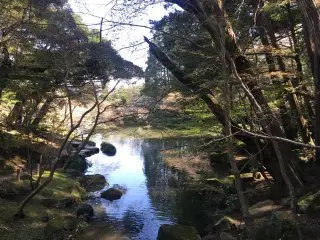
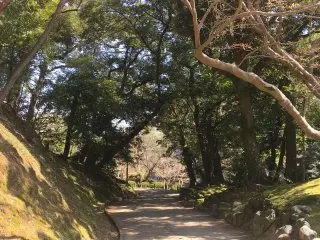
A park rich in nature is also maintained, so you can enjoy seasonal scenery throughout the year.
Since it’s accessible in under 30 minutes from Narita Airport—Japan’s largest international airport and the country’s main gateway—why not stop by to pray for a fun and safe trip in Japan?
History and Origins of Naritasan Shinshoji Temple
In 939 during the Heian period, the Taira no Masakado Rebellion broke out in the Kanto region.
The Taira no Masakado Rebellion was a civil war in which Taira no Masakado, who held power in Chiba, proclaimed himself the “New Emperor” and tried to create a new state.
Kanchō Daisōjō, a Shingon Buddhist priest, brought and enshrined a statue of Fudo Myoo from Kyoto to Narita to quell the conflict.
After 21 days of Goma prayers, Taira no Masakado was defeated, and peace returned to the Kanto region.
When Kanchō Daisōjō tried to return to Kyoto, the statue of Fudo Myoo would not move, as if to declare that it would remain here to protect the people, and in 940 Kanchō Daisōjō founded Naritasan Shinshoji Temple.
Naritasan Shinshoji Temple later fell into decline amid the turmoil of the Warring States period, but as society stabilized in the Edo period, the number of worshippers gradually began to increase.
Plays featuring Fudo Myoo were performed by the kabuki actor family known as the Ichikawa clan, drawing even more faith from the common people.
In 1964, the main statue of Fudo Myoo was designated an Important Cultural Property, and in 2018 the temple marked its 1,080th anniversary.

Access to Naritasan Shinshoji Temple
Here’s how to get from Narita Airport—Kanto’s main air gateway—to Naritasan Shinshoji Temple when sightseeing around Tokyo and the greater Kanto area.
Narita Airport Station has two routes: the JR Narita Line and the Keisei Main Line.
We’ll introduce the route using the Keisei Main Line, but even if you accidentally board the JR Narita Line, you can still get there by getting off at Narita Station—so don’t worry.
- Route
-
1. From “Narita Airport Station,” take the Keisei Main Line Limited Express (bound for Keisei-Ueno) and get off at “Keisei-Narita Station”
2. From “Keisei-Narita Station,” walk through Omotesando and arrive in Approx. 15 minutes on foot - Travel time
- Approx. 25 minutes
Naritasan Shinshoji Temple Admission and Hours
Admission to the temple grounds is free.
The grounds are open all day, but reception for prayers and goshuin (temple stamps) is from 8:00am to 4:00pm.
What’s the Best Season to Visit Naritasan Shinshoji Temple?
The best time to visit Naritasan Shinshoji Temple is during New Year’s, when you can experience Japan’s hatsumode tradition.
Among temples across Japan, it ranks among the very top for the number of New Year’s visitors—so it’s fair to say it’s a classic hatsumode spot.
If you visit during the New Year period, we recommend trying the “New Year Fudo Myoo Forehead Seal.”
You receive a vermilion stamp on your forehead bearing characters that represent Fudo Myoo, praying for a year of good health, physical well-being, and success in studies.
It’s a New Year–only event, but anyone can receive it, so if you have time, give it a try.
Naritasan Shinshoji Temple is very crowded during New Year’s every year, so it’s not recommended for those who dislike crowds and lines.
Still, it’s a valuable chance to experience Japan’s hatsumode culture—so if crowds aren’t an issue, we hope you’ll give it a try.

9 Unmissable Highlights at Naritasan Shinshoji Temple
Across the vast grounds of Naritasan Shinshoji Temple, you’ll find many highlights, including five buildings designated as Important Cultural Properties, the Daihondo Main Hall—Naritasan’s symbol—and the Somon Grand Gate built to commemorate the temple’s 1,070th anniversary. Each hall is also said to offer different blessings.
Here, we’ve carefully selected and introduced the most unmissable highlights among the many sights.
1. Meet a Familiar Face? “Shakado Hall”
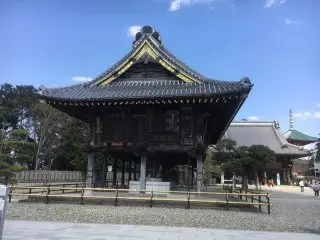
Shakado Hall, built in 1858, is a nationally designated Important Cultural Property.
This all-zelkova-wood hall retains features of the late Edo period.
The 500 Rakan carvings around the hall are a masterpiece carved over 10 years. Rakan are monks who have attained enlightenment.
It’s said that all 500 training monks were carved without any two looking alike, and that you’re sure to find a face that resembles you or someone you know.
Until the Daihondo Main Hall was built in 1968, today’s Shakado Hall served as the main hall.
Today, it’s used as a prayer hall for warding off misfortune.


2. Experience a Traditional Prayer Tradition from the Heian Period at the “Daihondo Main Hall”
Built in 1968, the Daihondo Main Hall is Naritasan’s symbol.
It’s a place of practice where Goma prayers have been performed every day without fail since the temple was founded, praying for world peace and people’s happiness.
If you apply at the reception office, even tourists can receive Goma prayers.
By receiving Goma prayers, your wishes are fulfilled and you can receive blessings from Fudo Myoo.
Be sure not to miss the statues of Fudo Myoo with Kongara Doji on the right and Seitaka Doji on the left, as well as the statues of the Four Great Myoo and the Buddhist painting Heisei Dainichimandara.

3. The Solemn “Somon Grand Gate” That Welcomes Worshippers
Built in 2008, the Somon Grand Gate welcomes worshippers as Naritasan’s main entrance.
Made entirely of zelkova wood and standing 15 meters tall, it has a dignified appearance with a solemn atmosphere.
At the top of the Somon Grand Gate are carvings of the 12 zodiac animals.
It was built as a commemorative project for the temple’s 1,070th anniversary, serving as a link between Naritasan and the temple town.

4. Lavish Decorations and Carvings: The “Three-Story Pagoda”
Built in 1712, the Three-Story Pagoda is a nationally designated Important Cultural Property.
It enshrines the Five Wisdom Buddhas, and carvings of the 16 Rakan are set around the pagoda.
The rafters of each level, carved with unsui (cloud-and-water) patterns, are made from single planks and have been famous as a rarity since long ago.
In 2008, the lacquered coloring was restored, making this a precious building that recreates its appearance from when it was first built.


5. The “Niomon Gate” with Eye-Catching Red Lanterns
Rebuilt in 1831, the Niomon Gate is a nationally designated Important Cultural Property.
Its distinctive exterior features a large gabled chidori-hafu attached to an irimoya-style roof covered with copper plates.
In the center of the gate hangs a red lantern with large, prominent characters reading “Uogashi.”
It’s a long-standing tradition for the fish market of Edo (Tsukiji) to dedicate a large lantern to the Niomon Gate, and the red lantern displayed today was dedicated in 1968.

6. A Power Spot for Love Luck: “Komyodo Hall”
Built in 1701, Komyodo Hall is a nationally designated Important Cultural Property.
Its irimoya-style tiled roof gives it a distinctive appearance, making it a precious building that preserves the atmosphere of the mid-Edo period.
Komyodo Hall enshrines Dainichi Nyorai, Aizen Myoo, and Fudo Myoo.
Because Aizen Myoo, a deity said to grant good relationships, is enshrined here, it’s also famous as a power spot to boost love luck.
It also served as the main hall for around a century and a half, until Shakado Hall was built.

7. “Great Peace Pagoda” Where You Can Casually Experience Buddhist History and Culture
Built in 1984, the Great Peace Pagoda symbolizes the teachings of Shingon Esoteric Buddhism.
On the first floor, there are exhibits on Naritasan’s history and a sutra-copying dojo; on the second floor, a statue of Fudo Myoo, statues of the Four Great Myoo, the Showa Dainichimandara, and illustrations of the life of the Shingon patriarch are enshrined, and you can freely worship there.
The vividly colored ceiling and pillars express the esoteric Buddhist worldview passed down by Kobo Daishi (Kukai).
It’s also said that many Buddhist temples outside Naritasan Shinshoji Temple were originally filled with vivid colors like those seen here when they were first built.

8. For Business Prosperity and Career Success: “Shusse Inari”
Shusse Inari stands quietly on the west side of the temple grounds. Shrines within temple grounds are rare.
The principal object of worship is a statue known as “Shusse Kaiun Inari,” believed to bring blessings such as business prosperity, good fortune fulfillment, and protection from fire.
It’s a power spot long loved by merchants.
It’s said that you’ll advance in your career by attaching a business card to a “Shusse Inari Ema” votive plaque, so don’t forget your business cards.

9. “Naritasan Park” with Beautiful Seasonal Scenery
A vast park created within Naritasan’s grounds, spanning roughly 3.5 Tokyo Domes (165,000 m²).
In spring, around 350 cherry trees planted throughout the park bloom in full, drawing crowds of flower-viewing visitors.
You can enjoy seasonal scenery such as plum blossoms, wisteria, and autumn leaves, and feel beautiful nature up close throughout the year.

Short on Time? A Classic Naritasan Shinshoji Temple Worship Route
Here’s a classic worship route for Naritasan Shinshoji Temple, which has expansive grounds and plenty to see.
With this route, you can cover the minimum must-see spots.
Ideally, we’d like you to visit all the highlights introduced so far, but if you don’t have much time, follow the route below.
| Order | Spot |
|---|---|
| 1 | Somon Grand Gate |
| 2 | Temizuya (a place with running water to cleanse your hands and mouth) |
| 3 | Niomon Gate |
| 4 | Kokaku (a place to purify your 마음 with incense smoke) |
| 5 | Daihondo Main Hall |
| 6 | Shakado Hall |
3 Popular Places to Eat Along the Naritasan Shinshoji Temple Approach
The approach to Naritasan Shinshoji Temple stretches for about 800 meters from in front of Narita Station to the Somon Grand Gate.
Lined with many restaurants and souvenir shops, it’s a popular sightseeing spot.
The approach flourished as a temple town for Naritasan Shinshoji Temple from the Edo period, and buildings that retain the atmosphere of that time are scattered throughout, letting you feel a distinctly Japanese charm.
Not only that, you can also enjoy street food that reflects Japan’s food culture, such as obanyaki and grilled dango.
Among the foods you can eat on the approach, eel is especially famous.
It began in the Edo period, when many people started visiting Naritasan, as eel dishes were served to entertain worshippers.
That’s why many renowned eel restaurants still remain today. If you visit Naritasan Shinshoji Temple, we want you to try eel for sure.
If you’re not sure where to eat, be sure to stop by the popular places we’ll introduce next.
1. Hayashida no Osenbei
A senbei (rice cracker) shop on the approach that runs from in front of Narita Station to Naritasan Shinshoji Temple.
Founded in 1912, it’s long been loved as Narita’s oldest-established senbei shop.
At the storefront, you’ll find over 30 kinds of handmade senbei at all times, including the shop’s signature “Fukumimi Kakimochi” (8 pieces for 700 yen).

2. Kawatoyo Honten
Eel cuisine has long been loved as a famous dish of Narita pilgrimage visits to Naritasan Shinshoji Temple since the Edo period.
Among Narita’s long-established eel restaurants, Kawatoyo Honten stands out with its shop on the approach.
Founded in 1910, this long-established restaurant serves eel carefully selected by artisans with over 50 years of experience, offered as unaju (eel over rice), kabayaki, and shirayaki.

3. Kikuya
A long-established Japanese restaurant with a shop on the approach to Naritasan Shinshoji Temple. Founded in the mid-Edo period, the name “Kikuya” comes from the chrysanthemum crest bestowed by Shinshoji Temple.
In addition to Narita specialties like eel and other freshwater fish dishes such as carp, it also offers a full lineup of a la carte dishes and set meals.
Its signature eel dishes use only eel with certificates of origin, serving only safe and delicious food.

Nearby Sightseeing Spots Around Naritasan Shinshoji Temple to Enjoy Nature
Here are sightseeing spots around Naritasan Shinshoji Temple where you can relax while enjoying rich nature and animals.
Both are easy to access from Naritasan Shinshoji Temple, so be sure to visit them together.
1. Narita Sakura no Yama Park
A park on a hill on the north side of Narita International Airport’s runway, where you can watch planes take off and land up close.
Known as “The Hill Where You Can See Airplanes,” this prime location has also been used for filming TV dramas and is a popular photo spot for photographers and tourists.
At the tourism hub “Sora no Eki Sakura-kan,” you can buy fresh locally grown vegetables, handmade bento lunches, and souvenirs related to the airport and Narita.

2. Narita Yume Farm
In a nature-filled park, the attractions are packed into five categories: “Interact,” “Play,” “Experience,” “Eat,” and “Buy.”
The biggest highlight is interacting with many animals, including feeding cows (100 yen per cup of feed) and horseback riding (600 yen per ride), plus an experience where you can take a cute goat for a walk on a lead (300 yen for 10 minutes).
In the small animal area and bird house, rabbits, guinea pigs, ducks, and more are kept—so relax and enjoy their adorable 모습.

Reviews of Naritasan Shinshoji Temple
3.55
Some reviews are AI-translated.
-
Every New Year, this temple has the second highest number of visitors after Meiji Shrine. The main street is lined with souvenir shops and restaurants. It's definitely the most iconic temple in the Narita area.
-
There's a really retro old street on the way to Shinshoji Temple. The famous spot here is Kawatoyo's grilled eel—freshly grilled, fatty, and delicious, served with a clear soup made from eel innards. Super tasty!
-
Today I visited Naritasan Shinshoji Temple with friends. It takes over an hour by train to get there, but it’s totally worth it. This place is not only a popular spot for worship, but the huge park is also really beautiful and makes for a lovely walk. There are lots of restaurants along the approach selling grilled eel rice, and the smell of charcoal-grilled eel is everywhere. Eel rice has always been a favorite among visitors here and is a local specialty you shouldn't miss.

FAQ about Naritasan Shinshoji Temple
Q
Who built Naritasan Shinshoji Temple?
A
It was built by Kanchō Daisōjō, a Shingon Buddhist priest.
Q
What blessings can you receive at Naritasan Shinshoji Temple?
A
Each hall is said to offer various blessings, such as good fortune and protection from bad luck, career success, thriving business, and love fulfillment.
Q
Can you get a goshuin book at Naritasan Shinshoji Temple?
A
You can buy one at the Daihondo Main Hall and at the Goma reception offices on the grounds.
Summary
We’ve introduced in detail the many highlights and blessing-filled spots, from the approach to the temple grounds of Naritasan Shinshoji Temple.
With this article as your guide, you should be able to receive the blessings of one of Chiba’s top power spots, Naritasan Shinshoji Temple.
Chiba Prefecture also has plenty of other attractive places besides Naritasan Shinshoji Temple.
If you’re sightseeing in Chiba, we’d like you to read this article too, which carefully selects and introduces recommended sightseeing spots.