

Sendai Fall Foliage Guide: 14 Best Places to Experience Autumn in Sendai
Sendai, a popular tourist destination, also offers stunning fall foliage. Majestic natural scenery centered on waterfalls and gorges, as well as historic buildings, is transformed by vivid shades of red and yellow.
This article introduces the best fall foliage spots to visit and their peak viewing seasons so you can make the most of autumn in Sendai.
Experience Both Abundant Nature and Traditional Japanese Charm in Autumnal Sendai
Sendai is rich in local specialties such as beef tongue, sasa-kamaboko fish cakes, and zunda, as well as distinctly Japanese attractions, including hot spring resorts led by Akiu Onsen and numerous shrines and temples. Travel a short distance from the city center, and you will also find magnificent scenery surrounded by abundant nature, offering many different ways to enjoy your visit.
In autumn, fall foliage can be seen throughout the area, adding vivid color to spectacular natural scenery such as waterfalls and gorges. The foliage at hot spring resorts, shrines, and temples evokes traditional Japanese charm, while each setting offers a different perspective on the season's colors.
Located in the Tohoku region, Sendai tends to have cooler temperatures, allowing visitors to see fall foliage earlier than in many other parts of Japan. Keep the peak viewing season in mind as you explore the autumn colors of Sendai.

Typical Peak Fall Foliage Season in Sendai
Refer to the table below for the typical peak fall foliage season in Sendai. These dates are based on average years and may vary somewhat.
The peak season also differs by location, so check the typical viewing period listed for each spot introduced below.
- Zuihoden
- Mid-October to late November
- Sendai Castle Ruins
- Late October to mid-November
- Rinnoji Temple
- Early to mid-November
- Jozenji-dori Avenue
- Mid- to late November
- Akiu Otaki Falls
- Mid-October to early November
- Rairai Gorge
- Late October to early November
- Tenshukaku Nature Park
- Late October to early November
- Futakuchi Gorge
- Mid- to late October
- Jogi Nyorai Saihoji Temple
- Late October to early November
- Homei Shijuhachi-taki Falls
- Early to late November
- Sakunami Onsen
- Late October to early November
- Entsuin Temple
- Late October to early November
- Miyagi Prefecture Matsushima Rikyu
- Late October to early November
- Naruko Gorge
- Late October to early November
2026 Fall Foliage Forecast for Sendai
According to a forecast released in September 2026 by the Japan Weather Association, Sendai's fall foliage is expected to reach its peak around November 25. The timing is forecast to be close to the annual average.
However, the peak viewing period may shift depending on the location and future temperatures.
Source: Japan Weather Association
14 Fall Foliage Spots That Showcase the Appeal of Sendai in Autumn
Among the many renowned fall foliage spots in and around Sendai, the following are especially recommended. Each is introduced together with its typical peak viewing season. If you visit Sendai in autumn to see the foliage, be sure to include some of these locations in your itinerary.
Central Sendai: Four Fall Foliage Spots to Visit While Exploring the City
The following fall foliage spots can be reached from Sendai Station on foot, by subway, or aboard the Loople Sendai sightseeing bus. From the zelkova-lined avenue that symbolizes the “City of Trees” to the mausoleum of Date Masamune and atmospheric Japanese gardens, the city center offers a diverse range of autumn scenery. Explore Sendai in fall while also making time for a beef tongue lunch and zunda sweets.
1. Zuihoden: Vivid Fall Foliage Surrounding an Ornately Decorated Mausoleum
Zuihoden is the mausoleum of Date Masamune, founder of the Sendai Domain. Following Masamune's wishes after his death in 1636, the mausoleum was built the following year by Tadamune, the domain's second lord. The surrounding area contains other Date family mausoleums, including Kansenden, the mausoleum of Date Tadamune, and Zennoden, the mausoleum of Date Tsunamune, as well as an affiliated museum. Together, they form the Kyogamine Date Family Cemetery, a historic site designated by the City of Sendai.
A highlight is the harmony between the brilliantly decorated mausoleum and the vivid fall foliage, creating a striking sight filled with traditional Japanese charm. It is also an excellent photography spot, so be sure to capture the building framed by autumn leaves. During the Zuihoden Autumn Leaves event, the grounds are illuminated at night, revealing an enchanting side of the foliage that differs from the daytime scenery.
- Typical Peak Fall Foliage Season
- Mid-October to late November

- Name in Japanese
- 瑞鳳殿
- Postal Code
- 980-0814
- Address
-
23-2 Otamayashita, Aoba-ku, Sendai City, Miyagi
Google Maps - Telephone
- 022-262-6250
- Closed
- December 31 (The information hall closed on December 31 and January 1)
- Business Hours
-
9:00am - 4:50pm (Admission allowed until 4:30pm)
December & January: 9:00am - 4:20pm (Admission allowed until 4:00pm) - Admission
- College student and older 570 yen, High schooler 410 yen, Middle and elementary schooler 210 yen
- Directions
-
1) from JR Sendai station, ride the Loop Bus, get off at Zuihoden-mae Stop and walk 7 min.
2) from Subway Tozai Line, Omachi Nishi-koen Station, walk 15-20 min.
3) from Tohoku Expressway, Sendai-Miyagi Interchange, drive 15 min. - Credit Cards
- Accepted
- Official Website
- Official Website (English)
2. Sendai Castle Ruins on Mount Aoba: Panoramic Views Framed by Fall Foliage
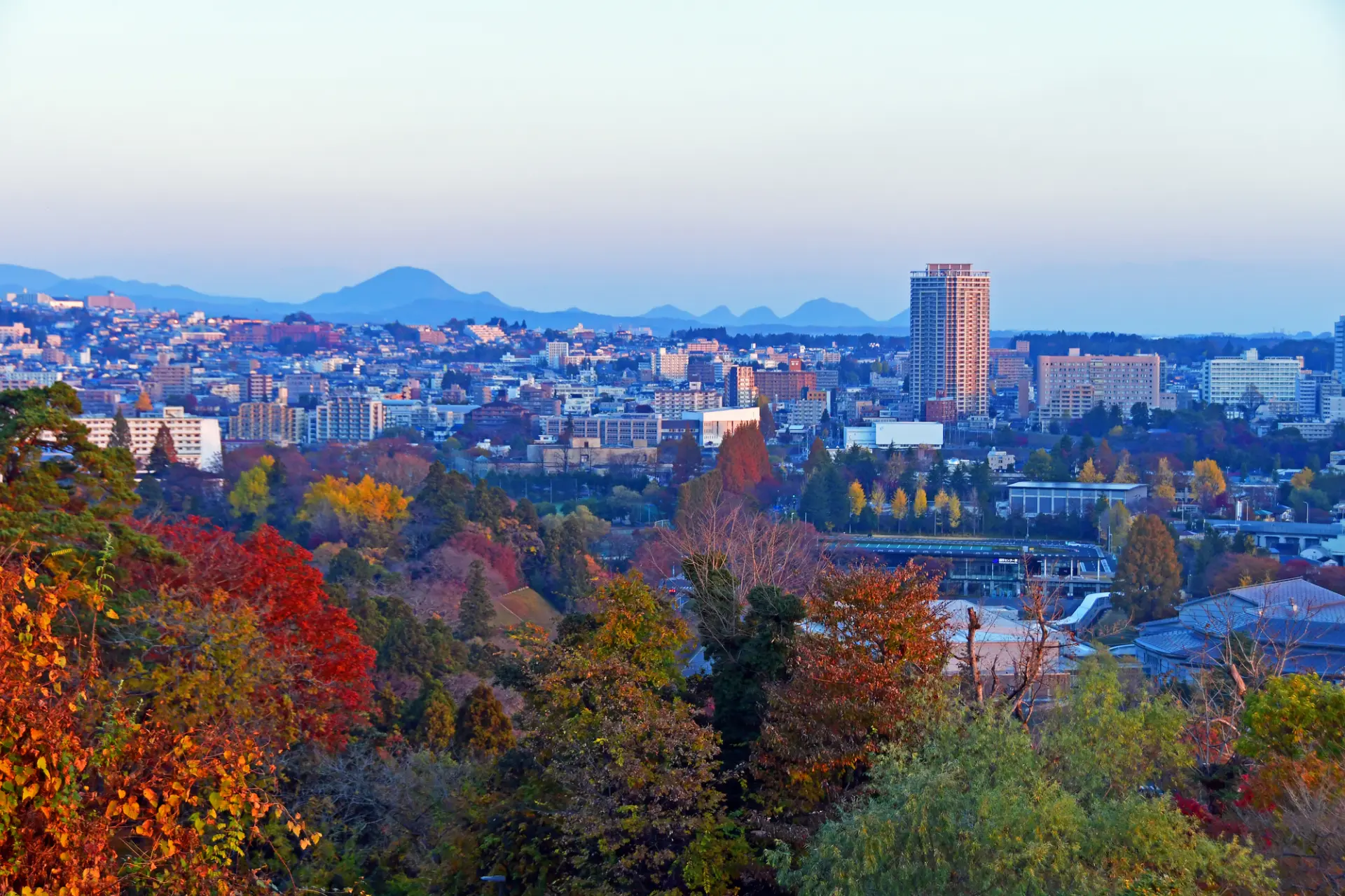
Construction of Sendai Castle began under Date Masamune in 1601. The castle ruins, whose main compound was built on Mount Aoba at an elevation of approximately 130 meters, retain traces of the past through their stone walls and reconstructed Otemon Gate Wakiyagura Tower. From the former main compound, where an equestrian statue of Date Masamune stands, visitors can look out over the city of Sendai and, on clear days, see as far as the Pacific Ocean.
The highlight in autumn is the view stretching beyond the colorful slopes of Mount Aoba. From late October to mid-November, shades of red and yellow mingle with the green of evergreen trees, covering the mountainside in seasonal colors. At night, the equestrian statue and stone walls are illuminated and can be viewed together with the city lights. To learn more about the castle's history, stop by the Aoba Castle Museum, which uses computer-generated footage to show how the castle once appeared.
- Typical Peak Fall Foliage Season
- Late October to mid-November
- Name in Japanese
- 仙台城跡(青葉城)
- Postal Code
- 980-0862
- Address
-
Sendai Jo Honmaru Ato, Aoba-Ku, Sendai City, Miyagi Prefecture
Google Maps - Telephone
- Aoba Castle Museum and Exhibition Hall: 022-227-7077
- Hours
- Admission free (Aoba Castle Museum is open from 9:00am to 5:00pm. From Nov. to Mar, up to 4:00pm. Last Admission and VR reception 30 minutes before closing)
- Admission
-
Aoba Castle Exhibition Hall:
Adults: 770 yen / Junior and senior high school students: 550 yen / Elementary school students: 330 yen
Sendai Castle VR Go:
Adults: 880 yen / Junior and senior high school students: 660 yen / Elementary school students: 550 yen - Directions
-
1) Take the Loople Sendai circular bus from Sendai Station and get off at Sendai Castle Ruins.
2) 15 minutes walk from Kokusai Center Station
3) 15 minutes drive from Sendai Miyagi IC - Official Website
- Official Website (Japanese)

3. Rinnoji Temple: One of Tohoku's Finest Japanese Gardens in Autumn Colors
Rinnoji Temple is a Soto Zen temple founded by Date Mochimune in 1441. Its mountain name is Kongohozan. The Japanese garden, centered on a pond with a three-story pagoda rising to the northwest, is considered one of the finest in the Tohoku region. Visitors can appreciate the beauty of the temple and its natural surroundings throughout the seasons.
Surrounded by a rich variety of trees, Rinnoji Temple is transformed by vivid fall foliage throughout its grounds. The colors in the Japanese garden are especially impressive. Ginkgo leaves carpet the ground, while the foliage alongside the karesansui dry landscape garden, which represents mountains and water without using actual water, evokes a distinctly Japanese atmosphere. It is a sight found only at Rinnoji Temple.
- Typical Peak Fall Foliage Season
- Early to mid-November

- Name in Japanese
- 輪王寺(宮城県)
- Postal Code
- 981-0931
- Address
-
1-14-1 Kitayama, Aoba-ku, Sendai City, Miyagi
Google Maps - Telephone
- 022-234-5327
- Holiday
- Open every day
- Business Hours
- 8:00am - 5:00pm
- Admission
- 300 yen (Elementary school students and up)
- Directions
-
1) About a 15-minute walk from JR Kitasendai Station
2) From JR Sendai Station, take a municipal bus to “Rinnoji Mae”
3) Approximately 20 minutes by car from Sendai-Miyagi I.C. of the Tohoku Expressway. - Credit Cards
- Not accepted
- Official Website
- Official Website (Japanese)
4. Jozenji-dori Avenue: A Zelkova-Lined Street Turned Golden in Autumn
Together with Aoba-dori Avenue, Jozenji-dori is a major thoroughfare that symbolizes Sendai, known as the “City of Trees.” Four rows of zelkova trees extend for approximately 700 meters, offering seasonal scenery ranging from fresh spring greenery to fall foliage. A promenade runs along the center of the avenue, making it a pleasant place for a leisurely walk with a cup of coffee. Jozenji-dori's attractive streetscape has also earned it a place among Japan's 100 Best Roads.
In autumn, yellow and orange leaves add vivid color to the avenue. The canopy of yellow leaves overhead and the fallen leaves beneath the trees are especially worth seeing. Bronze sculptures installed along the promenade add an artistic atmosphere to the seasonal scenery.
- Typical Peak Fall Foliage Season
- Mid- to late November

- Name in Japanese
- 定禅寺通
- Postal Code
- 980-0803
- Address
-
Near Kokubun-cho 2-chome, Aoba-ku, Sendai City, Miyagi
Google Maps - Hours
- Walk anytime
- Directions
-
1) Short walk from Subway Kotodai-Koen Station
2) 15-minute walk from JR Sendai Station West Exit
3) 10 minutes drive from Sendai Miyagi IC of Tohoku Expressway
Akiu Onsen Area: Four Waterfalls and Gorges Where You Can Enjoy Fall Foliage and Hot Springs
About one hour by bus from Sendai Station, Akiu Onsen is known as Sendai's hot spring retreat. Here, visitors can see fall foliage along the waterfalls and gorges of the Natori River. The following four distinctive locations range from places easily reached from the hot spring district to scenic mountain areas best visited by car. Combine your foliage viewing with a day-use bath or overnight stay, then relax in the hot springs afterward.
1. Akiu Otaki Falls: One of Japan's Three Great Waterfalls Surrounded by Vivid Fall Colors
Located in Taihaku Ward, Sendai, Akiu Otaki Falls is designated as a national Place of Scenic Beauty and is included among Japan's 100 Best Waterfalls. Although there is no definitive selection, it is also sometimes counted among Japan's Three Great Waterfalls.
The sight of the Natori River plunging 55 meters over a width of 6 meters is immensely powerful and conveys the grandeur of nature. In autumn, colorful foliage and green evergreen trees surround the falls. The contrast between the exposed rock, the bright white water, and the vivid leaves creates spectacular natural scenery.
- Typical Peak Fall Foliage Season
- Mid-October to early November

- Name in Japanese
- 秋保大滝(あきうおおたき)
- Postal Code
- 982-0244
- Address
-
Otaki, Akiumachibaba, Taihaku-ku, Sendai City, Miyagi
Google Maps - Telephone
- 022-398-2323 (Akiu Onsenkyo Tourist Information Center)
- Closed
- Free to walk
- Business Hours
- Walk anytime
- Admission
- Free
- Access
-
(1) From JR Sendai Station West Exit Bus Pool, take bus 8 bound for Akiu Otaki. Get off at the "Akiu Otaki" bus stop, just a short walk away (operates only on weekends and holidays).
(2) From JR Senzan Line Aiko Station, take a bus bound for "Nojiri-machi Kita" or "Futakuchi" and get off at the "Akiu Otaki" bus stop, just a short walk away. - Website
-
Website (English)
Official Website (Japanese)
2. Rairai Gorge: Spectacular Scenery Resembling a Vivid Landscape Painting
Rairai Gorge is located in Taihaku Ward, Sendai, and is distinguished by numerous unusual rock formations created by erosion from the Natori River. Its rugged rock faces convey a sense of natural power, while the formations produce a mysterious landscape shaped entirely by nature. From Nozoki Bridge, visitors can also see a naturally formed heart-shaped hollow, making the area a popular destination for couples.
In autumn, colorful foliage covers the surroundings, combining nature's rugged power with vivid seasonal colors. The red and yellow leaves of Rairai Gorge resemble a richly layered landscape painting. Limited-time evening illuminations are also held along the gorge, including the Rairai Gorge Momiji no Komichi walking trail. Take the opportunity to see the gorge and its foliage glowing in an enchanting light.
- Typical Peak Fall Foliage Season
- Late October to early November

- Name in Japanese
- 磊々峡(らいらいきょう)
- Postal Code
- 982-0241
- Address
-
Akiumachiyumoto, Taihaku-ku, Sendai City, Miyagi
Google Maps - Telephone
- 022-398-2323 (Akiho Onsen Village Tourist Information)
- Closed
- Free to walk
- Business Hours
- Walk anytime
- Admission
- Free
- Access
- About 12 minutes by Sendai City Bus from JR Ayashi Station towards Akiu Onsen and Futakuchi, get off at the "Rairaikyo Iriguchi" bus stop, then walk for about 2 minutes.
- Official Website
- Official Website (Japanese)
3. Tenshukaku Nature Park: A Relaxing Retreat Centered on a Strolling Pond Garden
Tenshukaku Nature Park in Akiu Onsen covers approximately 240,000 square meters of natural woodland dotted with gardens, hot springs, and a campground. At its centerpiece, the Koyadate Ato Garden, visitors can walk around a rock garden made with locally sourced Akiu stone and a pond filled with colorful carp while taking in views that incorporate the mountain behind the garden as borrowed scenery.
More than 500 maple trees throughout the park change color from late October to mid-November. During the Akiu Night Museum autumn illumination, the illuminated foliage is reflected in the pond, creating an enchanting scene quite different from the daytime view. A separate admission fee applies at night, so check the details before visiting.
- Typical Peak Fall Foliage Season
- Late October to early November
- 2026 Illumination
- October 23 to November 23, 4:30 p.m.-9:00 p.m. (last admission at 8:30 p.m.)
-
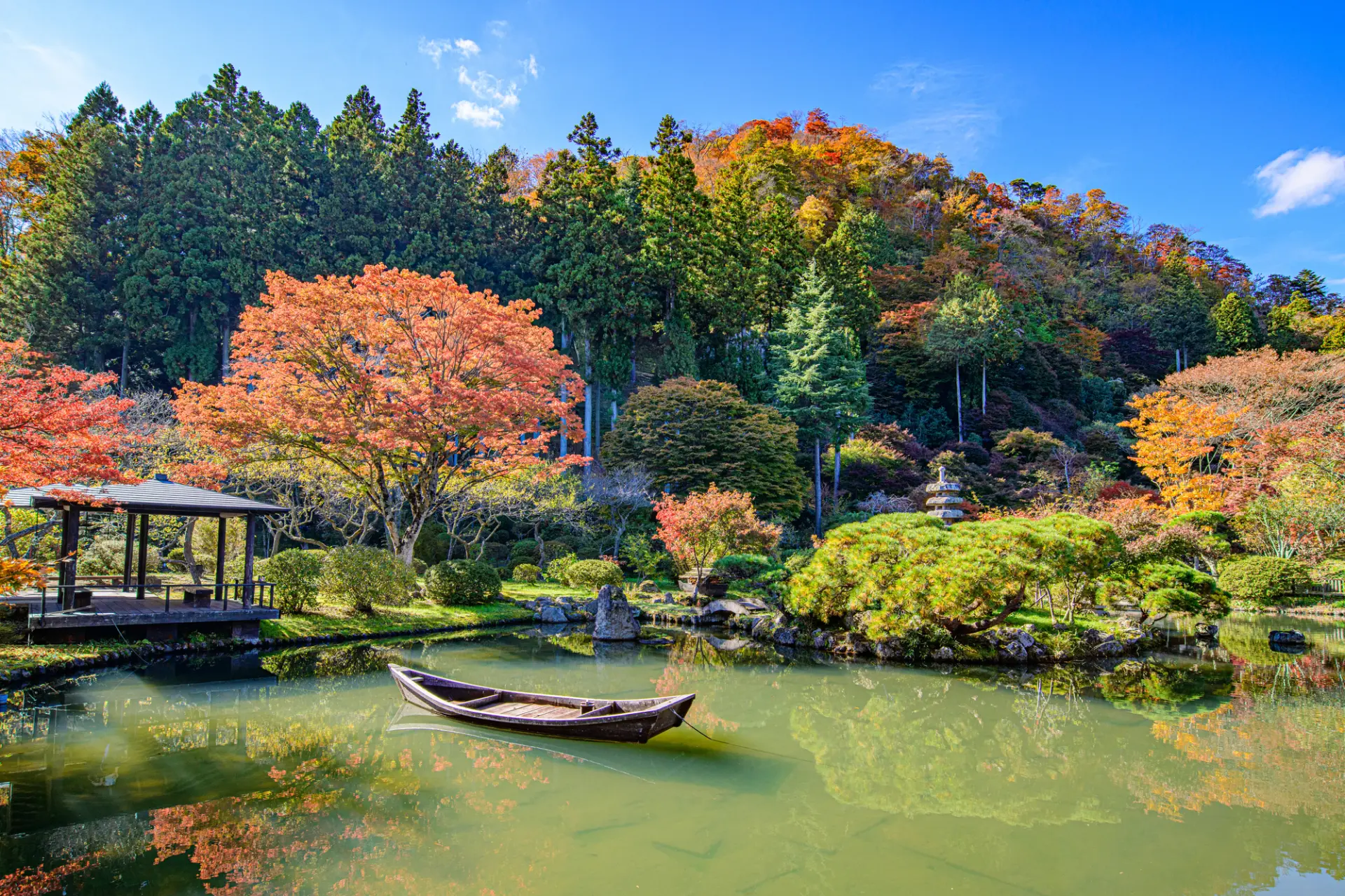
Do not miss the strolling pond garden, with its rock garden and pond filled with colorful carp
-
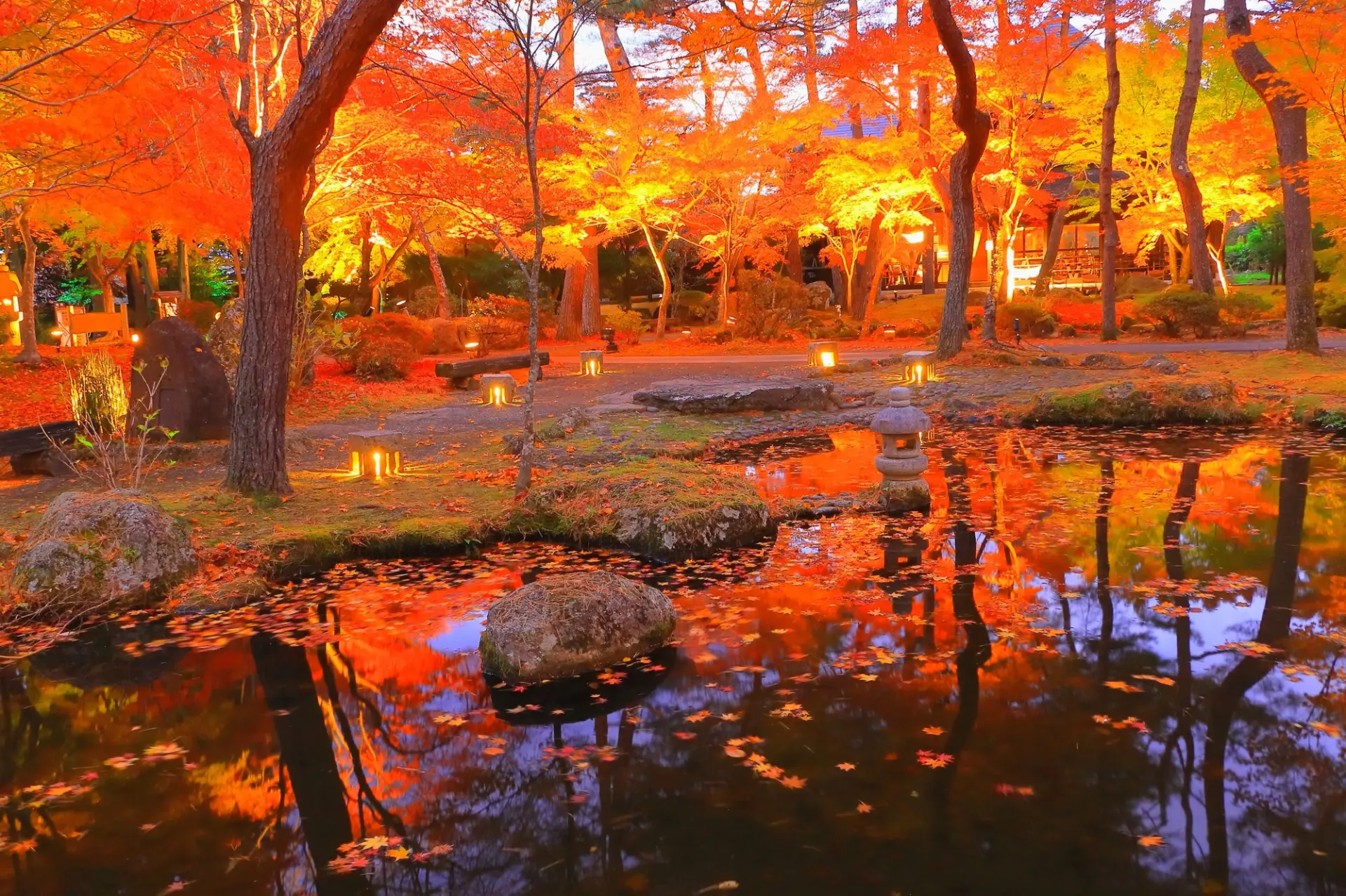
The enchanting Akiu Night Museum fall foliage illumination
- Name in Japanese
- 天守閣自然公園
- Postal Code
- 982-0241
- Address
-
10 Genbeihara, Yumoto, Akiu-machi, Taihaku-ku, Sendai, Miyagi Prefecture
Google Maps - Phone
- 022-398-2111
- Closed on
- The third Friday of each month from December through February, December 31, and January 1
- Hours
- 10:00 a.m.-4:00 p.m. (varies by season)
- Admission
-
Admission from March through November: Adults (junior high school students and older), 500 yen; children (ages 4 through elementary school), 100 yen. From December through February: Adults, 200 yen; children, 50 yen.
During the Akiu Night Museum: Daytime admission is 600 yen for adults and 200 yen for children. Evening admission is 1,000 yen for adults on weekdays and 1,500 yen on weekends and public holidays, and 500 yen for children. - Access
- Approximately 30 minutes from the West Exit of JR Sendai Station on the Akiu-Kawasaki Sendai Seibu Liner; get off at Kinoie-mae, immediately beside the park
- Official website
- Official website (Japanese)
4. Futakuchi Gorge
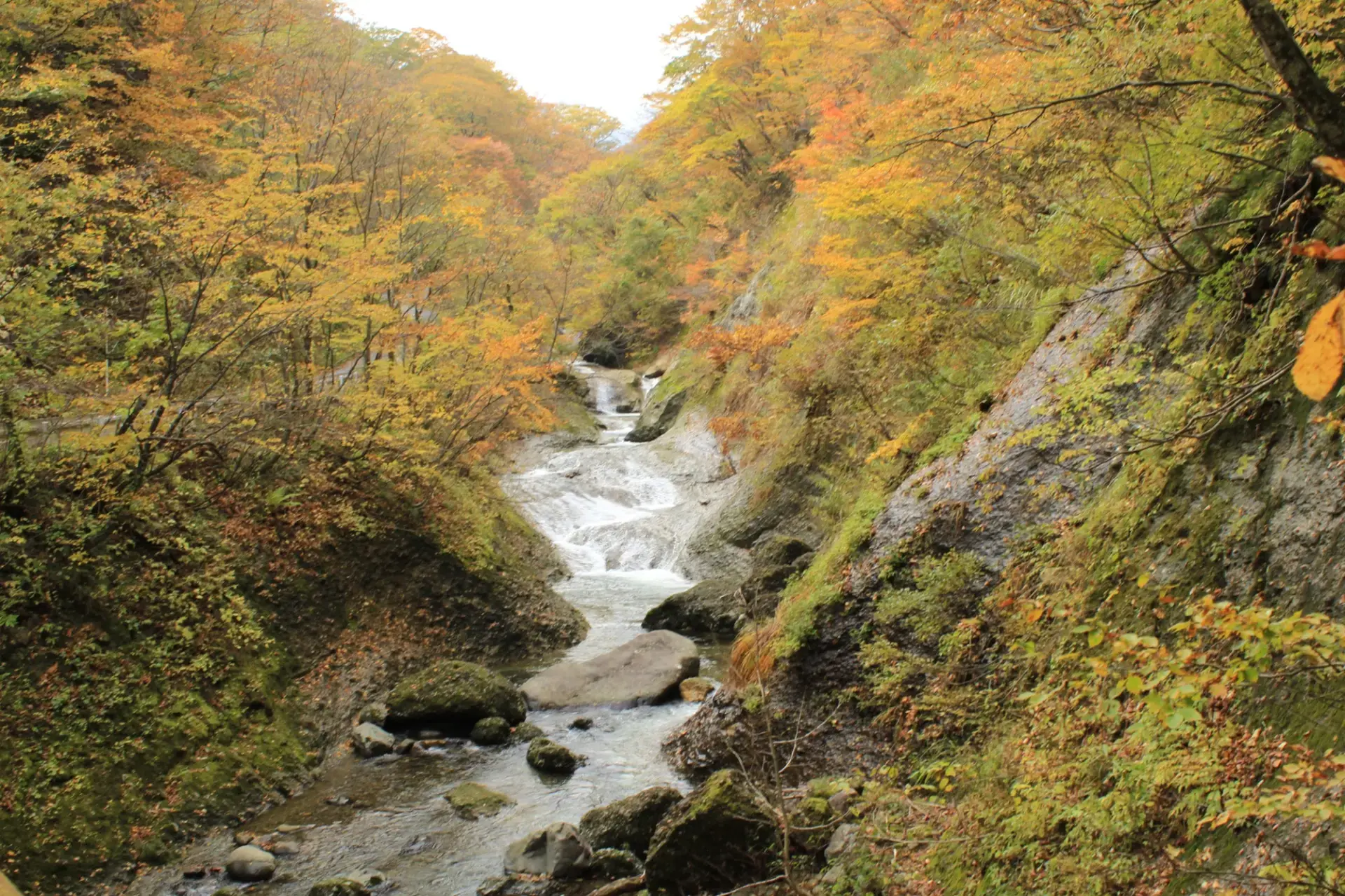
This gorge lies beyond Akiu Onsen. Characterized by mountain streams and sheer rock walls, it is known as a scenic destination where visitors can experience changes in nature throughout the seasons.
It is especially renowned for its fall foliage season, typically from mid- to late October. The clear river flowing through the gorge, sheer rock walls, and red and yellow trees come together to create scenery resembling a painting. The vivid colors produced by maple and konara oak trees are reflected on the tranquil water, lending the area an enchanting atmosphere. Another highlight is the harmony of quiet and color created by the foliage surrounding Banji, a designated Place of Scenic Beauty consisting of enormous vertical rock walls measuring 80 to 150 meters high and extending for 3 kilometers.
- Typical Peak Fall Foliage Season
- Mid- to late October
- Important Information
- Areas are gradually closed for winter from around early to mid-November each year, depending on snowfall and the winter closure schedule
- Name in Japanese
- 県立 自然公園 二口峡谷
- Postal Code
- 982-0244
- Address
-
Baba, Akiu-machi, Taihaku-ku, Sendai, Miyagi Prefecture
Google Maps - Phone
- 022-399-2324 (Akiu Visitor Center / Closed on Tuesdays)
- Closed on
- Closed for the winter from early November (For information on access to the Futakuchi Forest Road, please check the Miyagi Prefecture website.)
- Access
-
Approx. 30–45 minutes on foot from the Sendai City Bus stop “Futakuchi” (varies by location)
※Service to the “Futakuchi” bus stop:
Operates only on Saturdays, Sundays, and national holidays from April 1 to November 30
No service from December 1 to March 31 - Official website
- Official website (Japanese)
Sakunami and Jogi Area: Three Mountain Waterfalls and Temples Adorned with Fall Foliage
The Sakunami and Jogi area in western Sendai is a place where visitors can appreciate fall foliage while exploring abundant nature and historic temples. From late October to early November, the trees surrounding the waterfalls and throughout the temple grounds change color, revealing the deepening autumn season in the mountains. The area can be reached via the JR Senzan Line or city buses. With many other attractions nearby, allow plenty of travel time and plan to spend a full day exploring.
1. Jogi Nyorai Saihoji Temple: An Atmospheric Combination of a Five-Story Pagoda and Fall Foliage
Founded in 1706, Saihoji is a Jodo Buddhist temple affectionately known to local residents as “Jogi-san.” Believed to bring blessings for relationships and children, it attracts many worshippers throughout the year. The grounds contain numerous sights, including the temple gate and Kosodate Kannon statue. The approximately 30-meter-tall five-story pagoda is especially worth seeing.
In autumn, red and yellow leaves spread throughout the grounds of Jogi Nyorai Saihoji Temple. The harmony between the colorful foliage and imposing structures, including the five-story pagoda, evokes traditional Japanese charm. The wide variety of trees produces subtle gradations of red, yellow, and green, giving the foliage a different appearance depending on where you stand and the direction you look.
- Typical Peak Fall Foliage Season
- Late October to early November

- Name in Japanese
- 定義如来 西方寺
- Postal Code
- 989-3213
- Address
-
1 Joge, Okura, Aoba-ku, Sendai, Miyagi Prefecture
Google Maps - Phone
- 022-393-2011
- Closed on
- Open year-round
- Hours
- 7:45 a.m.–4:15 p.m.
- Admission
- Free
- Access
-
1) About 1 hour and 15 minutes by city bus from JR Sendai Station, followed by a 5-minute walk from the Jogi Nyorai Saihoji bus stop
2) Take a city bus from JR Ayashi Station and get off at Jogi, then walk 5 minutes
3) 50 minutes by car from JR Sendai Station - Official website
- Official website (Japanese)
2. Homei Shijuhachi-taki Falls: A Series of Waterfalls Surrounded by Colorful Autumn Leaves
Homei Shijuhachi-taki Falls is the collective name for a series of waterfalls of various sizes cascading over one another along the upper reaches of the Hirose River. It is one of Sendai's lesser-known scenic waterfalls. The name is said to come from the sound of the falling water, which resembles the call of the legendary phoenix. Be sure to listen closely during your visit.
The succession of large and small waterfalls creates an impressive sight. Flowing through a lush forest, the clear stream forms a soothing natural landscape. In autumn, the trees near the rocky slopes turn red and yellow. The combination of vivid foliage and foaming white water is distinctive and colorful, creating scenery reminiscent of a picture postcard.
- Typical Peak Fall Foliage Season
- Early to late November

- Name in Japanese
- 鳳鳴四十八滝
- Postal Code
- 989-3431
- Address
-
Bomeki, Sakunami, Aoba-ku, Sendai City, Miyagi
Google Maps - Telephone
- 070-1143-6633 (Sakunami-Jogi Area Tourist Information Center)
- Closed
- Free to walk
- Business Hours
- Walk anytime
- Admission
- Free
- Access
- A short walk from the "Houmei Shijuhachi Falls Entrance" bus stop.
- Official Website
- Official Website (Japanese)
3. Sakunami Onsen: Spend a Relaxing Autumn Day Among Hot Springs and Fall Foliage
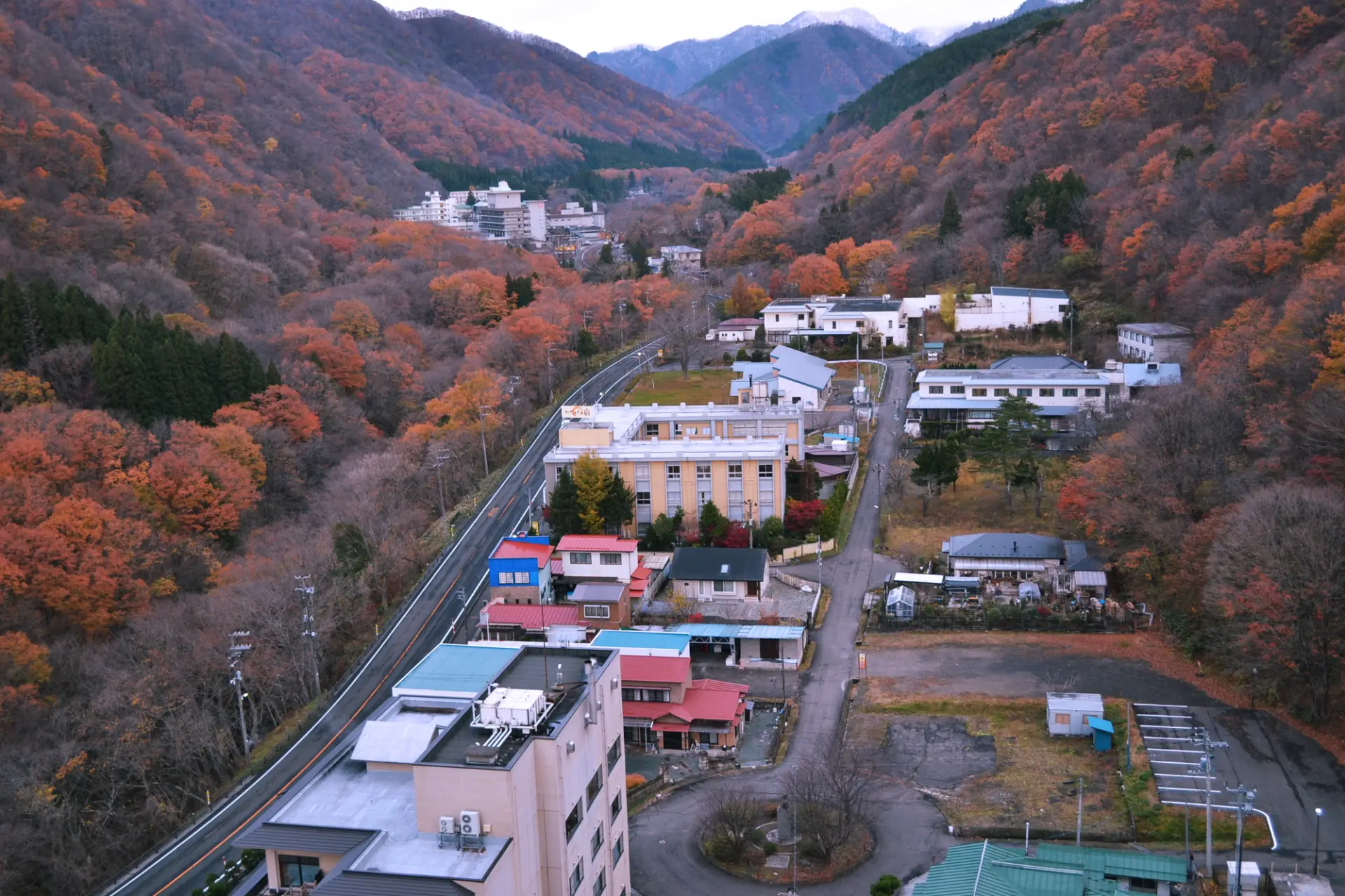
Sakunami Onsen lies in a gorge along the upper reaches of the Hirose River and, together with Akiu Onsen, is known as one of Sendai's hot spring retreats. Said to have opened in 1796, it is affectionately called the “hot spring for beautiful skin” because of its gentle water. Each inn offers distinctive baths, including natural rock baths and standing baths.
From late October to early November, the maples, beeches, and zelkovas along the gorge change color. Gazing at the foliage from an open-air bath while listening to the murmur of the river is an autumn pleasure found only in a hot spring resort. Some inns offer day-use bathing, so check their available hours before visiting.
Nearby attractions include the Nikka Whisky Miyagikyo Distillery and Homei Shijuhachi-taki Falls, both worth visiting together with the hot springs.
- Typical Peak Fall Foliage Season
- Late October to early November
- Name in Japanese
- 作並温泉
- Postal Code
- 989-3431
- Address
-
Around Sakunami, Aoba-ku, Sendai City, Miyagi
Google Maps - Telephone
- 022-395-2241 (Sakunami Onsen Ryokan Association, inside Yunohara Hotel)
- Closed
- Vary by facility
- Access
- Approximately 40 minutes by car from downtown Sendai
- Credit Cards
- Accepted
- Official Website
- Official Website (Japanese)
Matsushima and Naruko Area: Three Fall Foliage Spots Worth Visiting from Sendai
For a fall foliage day trip from Sendai, consider Matsushima, one of Japan's Three Scenic Views, or Naruko Gorge, where a deep valley is covered in autumn colors. Matsushima offers delicate foliage in landscaped gardens, while Naruko Gorge presents magnificent mountain scenery, allowing visitors to experience two very different sides of the season.
If you are staying in Sendai for several nights, set aside a full day for either Matsushima or Naruko and take your time appreciating the autumn scenery.
1. Entsuin Temple: Some of the Finest Fall Foliage in the Tohoku Region
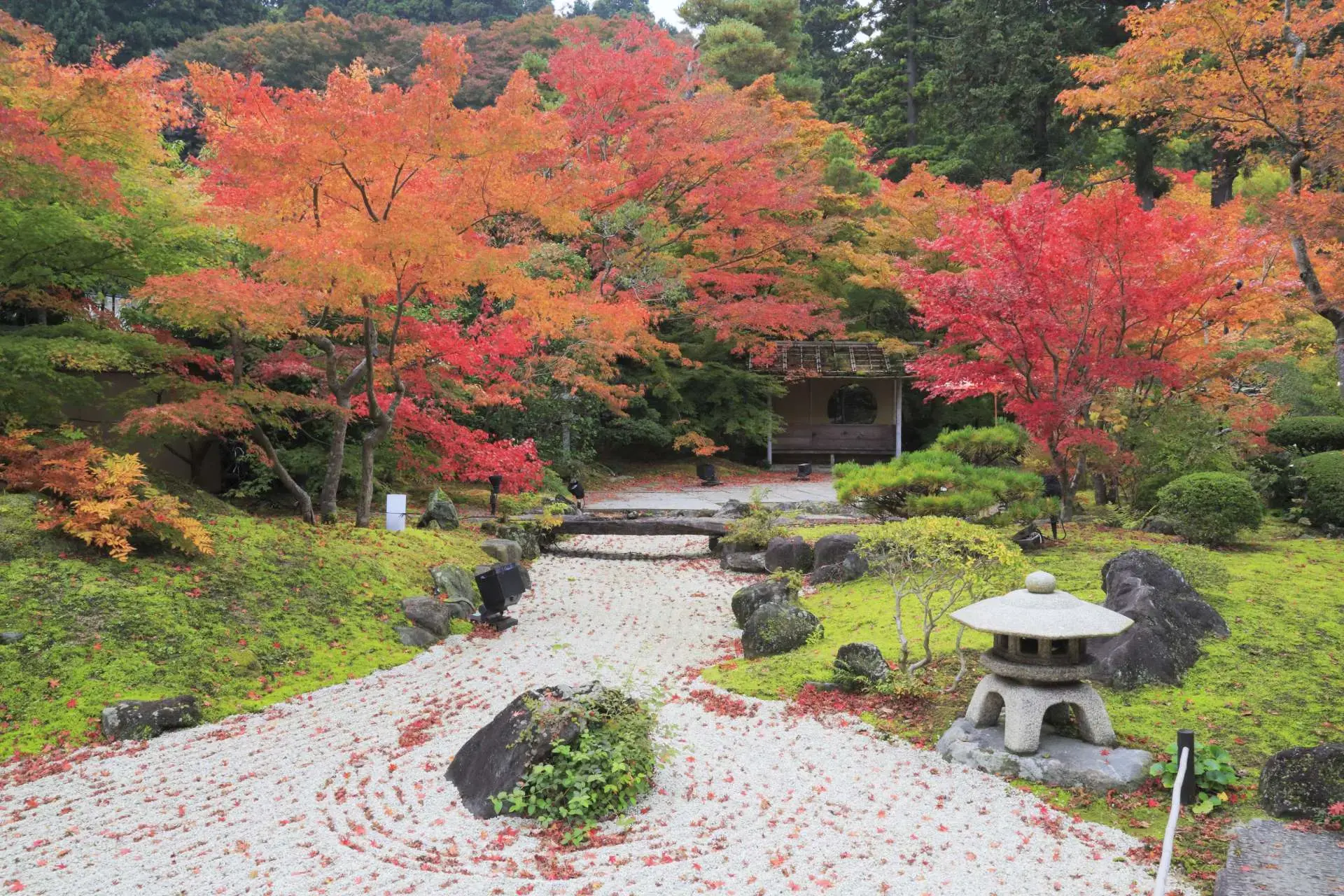
Entsuin Temple is a Rinzai Zen temple built in 1647 as the family temple of Mitsumune, a grandson of Date Masamune. Sankeiden, Mitsumune's mausoleum, was designated a National Important Cultural Property in 1985. The garden behind the temple centers on a heart-shaped pond created approximately 350 years ago, with moss-covered stone arrangements and artificial hills representing the islands of Matsushima Bay. It is regarded as one of the finest gardens in the Tohoku region.
When it comes to fall foliage in Matsushima, this garden should be among the first places to visit. The maple leaves begin changing color in late October, and during the illumination period, their reflection appears like a mirror on the surface of the heart-shaped pond.
The temple is approximately a 5-minute walk from JR Matsushima-Kaigan Station and stands along the same approach as Zuiganji Temple and Godaido Temple, making it easy to include in a Matsushima sightseeing itinerary.
- Typical Peak Fall Foliage Season
- Late October to early November
- 2026 Illumination
- October 24 to November 23, 5:30 p.m.-9:00 p.m.
- Name in Japanese
- 円通院
- Postal Code
- 981-0213
- Address
-
67 Matsushima, Matsushimamachi, Miyagigun, Miyagi
Google Maps - Telephone
- 022-354-3206
- Holiday
- Open every day
- Business Hours
-
Worship: [April - November] 9:00 am - 4:00 pm
[December - March] 9:00 am - 3:30 pm
Juzu (Prayer Bead) Making: [April - November] 9:00 am - 3:30 pm
[December - March] 9:00 am - 3:00 pm - Admission
-
Adults: 500 yen
Elementary and Middle school students: 300 yen - Directions
-
1) 5 minutes walk from JR Matsushima-Kaigan Station
2) 5 minutes by car from Matsushima-Kaigan I.C. of the Sanriku Expressway - Credit Cards
- Not accepted
- Official Website
- Official Website (Japanese)
2. Miyagi Prefecture Matsushima Rikyu: Fall Scenery, Dining, and Hands-On Experiences
Located approximately a 1-minute walk from JR Matsushima-Kaigan Station, Miyagi Prefecture Matsushima Rikyu is a multipurpose sightseeing complex with a Japanese garden, rooftop observation deck, and museum.
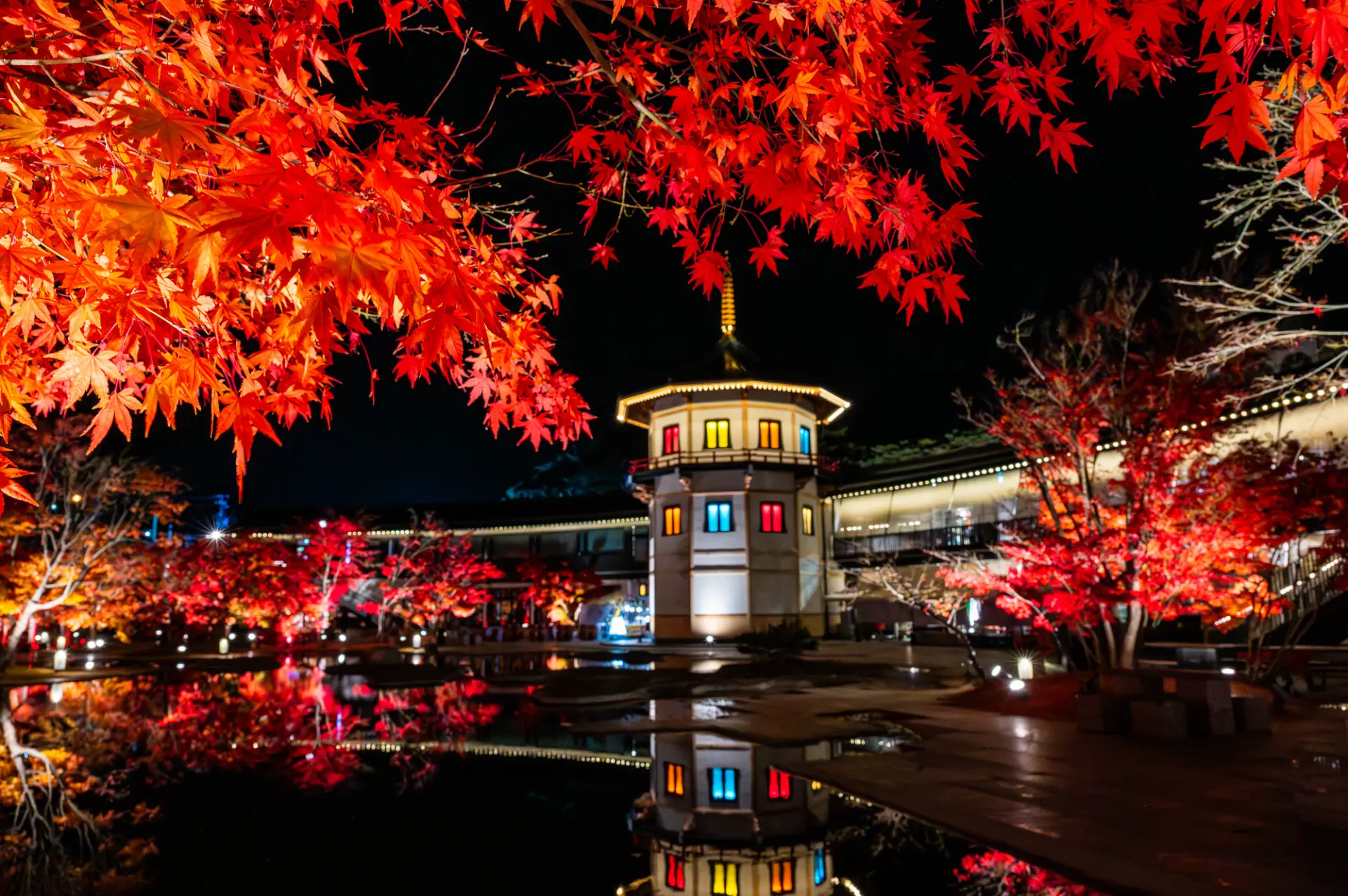
In autumn, the garden's maple trees change color, creating a picturesque view of the tower and foliage reflected in the water basin. An illumination event is also held each year. The illuminated leaves spread across the water's surface, lending the garden an enchanting atmosphere.
Visitors can also enjoy dining, shopping, and kimono rentals. Its convenient location near the station makes it easy to return to Sendai by train after an evening stroll and to include the facility in a fall foliage day trip.
- Typical Peak Fall Foliage Season
- Late October to early November
- 2026 Illumination
- October 24 to November 23, 4:30 p.m.-9:00 p.m.
- Name in Japanese
- 宮城県 松島離宮
- Postal Code
- 981-0213
- Address
-
18 Namiuchihama, Matsushima, Matsushimamachi, Miyagigun, Miyagi
Google Maps - Telephone
- 050-1808-0367
- Closed
- Open every day
- Business Hours
-
10:00am - 6:00pm
※Varies by store - Admission
-
Entrance fee Adults (Junior high school students and older) 400yen, Children (4 years old to elementary) 200yen
※Experience tickets including admission fees are available. - Access
- About 1 minute walk from JR Matsushima-kaigan Station.
- Credit Cards
- Varies by store
- Official Website
- Official Website (Japanese)
3. Naruko Gorge: One of Miyagi and Tohoku's Leading Fall Foliage Destinations
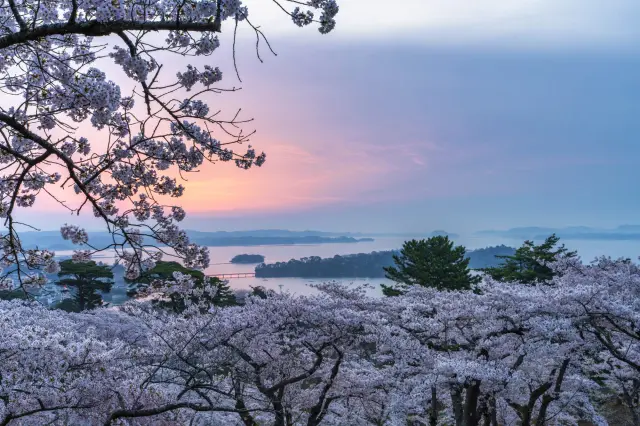
Naruko Gorge, where sheer cliffs reaching depths of 100 meters extend for approximately 2.5 kilometers, is also renowned for its fall foliage.
Deciduous broadleaf trees, including maples and Mongolian oaks, grow densely along the sharply rising white cliffs. In autumn, the trees turn red and yellow, creating scenery resembling a painting. The immense scale is another highlight, and the foliage filling your entire field of view is truly impressive.
Visitors can also observe the gradation from green to red and yellow at close range. It takes approximately 1 hour and 30 minutes by car from Sendai Station to Naruko Gorge in Osaki. Although the trip takes some time, Naruko Gorge is well worth the journey if you want to see impressive fall foliage in Miyagi Prefecture.
Asian black bears are sometimes sighted in mountainous areas. Check Sendai's bear sighting information and take precautions, such as carrying a bear bell.
- Typical Peak Fall Foliage Season
- Late October to early November
- Important Information
-
The Naruko Gorge Walking Trail cannot be traversed in its entirety. In 2026, only the following short out-and-back sections are open:
- Nakayamadaira side: Approximately 350 meters
- Naruko side: Approximately 230 meters
- Central section: Permanently closed due to rockfalls and other hazards

- Name in Japanese
- 鳴子峡
- Postal Code
- 989-6827
- Address
-
Shitomae to Hoshinuma, Naruko Onsen, Osaki City, Miyagi Prefecture
Google Maps - Telephone
- 0229-87-2050(Naruko Gorge Resthouse)
- Open period
- From Late April to Mid November(From Late November to Late April closed during the winter)
- Business Hours
- 9:00am - 4:00pm
- Admission
- Free
- Access
-
1) About a 60-minute walk from JR Naruko Onsen Station to the entrance on the Nakayama-daira side
2) About a 30-minute walk from JR Nakayama-daira Onsen Station to the entrance on the Nakayama-daira side
*During the autumn leaves season, a temporary bus "Autumn Leaves-go" operates from either Naruko Onsen Station or Nakayama-daira Onsen Station (please confirm operation / Miyako Bus 0229-22-1781) - Official Website
- Official Website (Japanese)
Frequently Asked Questions About Fall Foliage in Sendai
Q
When is the best time to see fall foliage in Sendai?
The typical peak season runs from late October to mid-November. Naruko Gorge and Futakuchi Gorge begin changing color earliest, from mid-October, followed by Akiu Otaki Falls, Jogi Nyorai Saihoji Temple, and Sakunami Onsen from late October.
Jozenji-dori Avenue, Zuihoden, and Rinnoji Temple in central Sendai peak latest, from mid- to late November, so you can still see foliage in the city even after the season has ended in the surrounding areas.
Q
Which fall foliage spots can be reached from Sendai Station using only trains and buses?
Central Sendai can be explored by subway or aboard the Loople Sendai sightseeing bus.
Direct buses from Sendai Station reach the Akiu Onsen area in approximately 35 minutes to 1 hour. Sakunami and Jogi can be reached without transfers via the JR Senzan Line or a city bus departing from the West Exit of Sendai Station.
Q
Where can I see illuminated fall foliage at night?
Illumination events are held at the Akiu Night Museum in Tenshukaku Nature Park, Entsuin Temple and Miyagi Prefecture Matsushima Rikyu in Matsushima, as well as during the Zuihoden Autumn Leaves event and along the Momiji no Komichi trail at Rairai Gorge, typically in November.
The equestrian statue of Date Masamune and the stone walls at the Sendai Castle Ruins are also illuminated year-round from sunset to 11:00 p.m., allowing visitors to see them together with the city lights.
Q
Where can I enjoy hot springs and fall foliage together?
Both Akiu Onsen and Sakunami Onsen have renowned fall foliage spots immediately beside their hot spring districts.
At Akiu Onsen, Rairai Gorge and Tenshukaku Nature Park can be explored on foot, and Tenshukaku Nature Park has a day-use hot spring and footbath.
At Sakunami Onsen, visitors can view the foliage along the Hirose River gorge from an open-air bath.
Naruko Onsen is the nearest hot spring resort to Naruko Gorge and has numerous day-use bathing facilities where visitors can stop after viewing the foliage.
Q
Which fall foliage destinations in Miyagi can be visited on a day trip from Sendai?
Matsushima and Naruko Gorge are recommended.
Matsushima is approximately 40 minutes from Sendai Station on the Senseki Line. Naruko Gorge takes approximately 1 hour and 30 minutes to reach, but it regularly ranks first among Miyagi Prefecture's fall foliage destinations, and temporary buses operate from Naruko-Onsen Station during the foliage season.
If you are staying in Sendai for two nights or longer, consider dedicating one day to either destination.
Summary
This article has introduced renowned fall foliage spots in Sendai and their peak viewing seasons. The appeal of Sendai's autumn colors lies not only in its magnificent natural scenery, including waterfalls and gorges, but also in the picturesque harmony between the foliage and historic structures such as shrines and temples.
If you visit Sendai during the peak fall foliage season, be sure to explore the places introduced in this article.
The following article presents a carefully selected list of sightseeing attractions in Sendai. Use it as a reference when planning your trip.