

A Complete Travel Guide to Enjoying Kanagawa, Home to Many Popular Tourist Destinations
Next to Tokyo and home to Japan’s second-largest population, Kanagawa also has many places where you can experience nature and history.
It is packed with some of Japan’s best-known destinations, including Yokohama, Kamakura, and Enoshima.
This article covers everything you need to plan a trip to Kanagawa, from famous sightseeing spots and local gourmet foods to convenient discount passes and model courses for visiting popular attractions.
By reading it, you’ll get a solid overview of Kanagawa and a clear idea of what your trip could look like.
Kanagawa, Home to Famous Tourist Destinations Across Japan
Kanagawa Prefecture borders the southern side of Tokyo, Japan’s capital.
It faces the Pacific Ocean to the south, Tokyo Bay to the east, and borders Yamanashi and Shizuoka prefectures to the west.
It has the second-largest population in Japan and is home to three government ordinance-designated cities (cities with populations of 500,000 or more designated by government ordinance).
It is not just urban, either, with forests actually covering around 40% of its land area, giving it another side rich in nature.
Its coastline stretches for about 430km, so there are many scenic spots with ocean views as well as leisure spots for marine sports.
A trip to Kanagawa lets you enjoy the city, mountains, and seaside all at once.
Its food scene is just as diverse, offering everything from mountain and seafood specialties to traditional dishes and the latest food trends.
Sightseeing spots are spread throughout the prefecture, but Yokohama, Kamakura, Shonan, and Hakone are especially packed with attractions and are among the most popular destinations.
From areas with many historic shrines and temples to neighborhoods with an exotic atmosphere and resort-like districts, each area has its own character, making Kanagawa uniquely appealing depending on where you go.

Average Temperatures in Kanagawa and What to Wear
Because Kanagawa Prefecture is located near the center of Honshu, it has average temperatures and rainfall levels for Japan.
Facing the Pacific Ocean, it tends to have a rainy summer and relatively little rain or snow in winter.
The Miura Peninsula in particular is slightly milder than the mountain areas because of the warm ocean current.
Average Monthly Temperatures in Kanagawa
| - | January | February | March | April | May | June | July | August | September | October | November | December |
|---|---|---|---|---|---|---|---|---|---|---|---|---|
| Average Temperature (°C) | 6.1 | 6.7 | 9.7 | 14.5 | 18.8 | 21.8 | 25.6 | 27.0 | 23.7 | 18.5 | 13.4 | 8.7 |
Seasonal Clothing Examples for Kanagawa
- Spring (March - May): Light jacket and thin sweater
- Summer (June - August): Light clothing, short sleeves
- Fall (September - November): Light jacket, coat
- Winter (December - February): Coat, thick sweater or jacket
Access to Kanagawa
Here is how to get to Kanagawa from two of Japan’s most popular destinations, Tokyo and Osaka.
Since Tokyo and Kanagawa border each other, you can reach Yokohama Station, the main transportation hub for getting around Kanagawa, in Approx. 30 minutes from Tokyo using only local train lines, with no need for the shinkansen. Trains run frequently, making access easy.
From Osaka, it takes a little over 2 hours by shinkansen from Shin-Osaka Station to Shin-Yokohama Station.
Kanagawa has no airport, so if you are coming from overseas, use either Haneda Airport or Narita Airport.

Access from Haneda Airport to Major Stations
Here, we introduce access from Haneda Airport, the main air gateway to the Tokyo metropolitan area with many international flights, to Yokohama Station, a key base for traveling around Kanagawa Prefecture.
Once you know how to get from Haneda Airport to Yokohama Station, you can start your Kanagawa trip with confidence.
We also cover access to Kawasaki Station and Ofuna Station, both convenient bases for visiting popular sightseeing areas, so use whichever best fits your destination.
Access from Haneda Airport to Yokohama Station
- Route
-
1. Take the Keikyu Airport Line from Haneda Airport Terminal 1, 2 Station for Approx. 10 minutes and get off at Kamata Station
2. Transfer to the Keikyu Main Line at Kamata Station and ride for Approx. 15 minutes to Yokohama Station - Hours
- Approx. 25 minutes
Access from Haneda Airport to Kawasaki Station
- Route
-
1. Take the Keikyu Airport Line from Haneda Airport Terminal 1, 2 Station for Approx. 10 minutes and get off at Kamata Station
2. Transfer to the Keikyu Main Line at Kamata Station and ride for Approx. 5 minutes to Keikyu Kawasaki Station
3. Walk 9 minutes from Keikyu Kawasaki Station to JR Kawasaki Station - Hours
- Approx. 25 minutes
Access from Haneda Airport to Ofuna Station
- Route
-
1. Take the Keikyu Airport Line from Haneda Airport Terminal 1, 2 Station for Approx. 10 minutes and get off at Keikyu Kamata Station
2. Transfer to the Keikyu Main Line at Keikyu Kamata Station and ride for Approx. 15 minutes to Yokohama Station
3. Transfer to the Tokaido Main Line at Yokohama Station and ride for Approx. 15 minutes to Ofuna Station - Hours
- Approx. 40 minutes
Main Transportation Options in Kanagawa
Public transportation is highly developed in Kanagawa Prefecture, so you can get around the prefecture using only public transit.
Depending on the spot you want to visit, you may need to use a bus or taxi at times, but in general, you can reach most places by train.
There is also a subway system, and private railway lines such as the Enoden Line and Keikyu Line are well developed, so train travel is the smoothest and most efficient option across all areas.

Best Value Rail Passes for Traveling in Kanagawa
If you want to travel around Kanagawa at a good value, here are some rail passes you should know about.
There are also area-specific free passes such as the Yokohama-Minatomirai Pass and the Enoshima-Kamakura Freepass, so if your destination matches one of the areas introduced below, be sure to take advantage of them.
Yokohama-Minatomirai Pass
The Yokohama-Minatomirai Pass gives you unlimited rides on the JR Negishi Line from Yokohama Station to Shin-Sugita Station and on the Yokohama Minatomirai Railway, known as the Minatomirai Line.
You can ride not only local trains but also rapid trains.
It is the perfect free pass for touring famous sightseeing spots in the Yokohama area, including Yokohama Chinatown and Yamashita Park, as well as the Minatomirai district.
Tickets can be purchased from reserved-seat ticket machines and some automatic ticket machines. Digital tickets are also available and can be purchased by smartphone.
This great-value ticket costs 530 yen for adults and 260 yen for children.

Enoshima-Kamakura Freepass
If you are traveling to Kamakura or Enoshima, be sure to check out the Enoshima-Kamakura Freepass.
The Odakyu Line is the most convenient way to access Enoshima from central Tokyo.
With this pass, you can get on and off freely all day from Katase-Enoshima Station to Fujisawa Station on the Odakyu Line.
You also get unlimited rides on the Enoden Line, which is essential for continuing from Enoshima to Kamakura.
It is an ideal free pass for strolling around Kamakura and Enoshima and visiting temples and famous sites.
It also comes with discounts on admission to popular sightseeing spots and at cafes.
You can purchase it by selecting your departure station, so the price varies depending on where you start, but it ranges from 810 yen to 1,930 yen for adults and 410 yen to 430 yen for children.
The Enoshima-Kamakura Freepass can be purchased from ticket machines and ticket counters at Odakyu Line stations, as well as Odakyu Travel Centers.

The Appeal of 7 Areas to Know Before Traveling to Kanagawa
Kanagawa has so many popular sightseeing destinations that, unless you check where they are and what to see, it can be hard to make an efficient plan.
You may even end up with a trip that feels different from what you expected.
To help avoid that, here is an introduction to the highlights and appeal of seven areas in Kanagawa.
The Yokohama-Kawasaki Area, Where You Can Enjoy Contrasting Attractions at Once
The Yokohama-Kawasaki area is located in eastern Kanagawa Prefecture.
Made up of Yokohama, the largest city in Kanagawa Prefecture, and Kawasaki, an industrial city, it is the most urban area in Kanagawa.
Yokohama, which has long flourished as a port town, offers a retro-modern 19th-century atmosphere and an international cityscape.
It is not only urban, though. You can also enjoy nature at places such as Yamashita Park, with its seaside scenery, and Ikuta Ryokuchi, where you can relax in spacious greenery.
Popular attractions include Yokohama Chinatown and Yokohama Red Brick Warehouse in Yokohama, and the power spot Kawasaki Daishi and the large commercial complex Lazona Kawasaki in Kawasaki.
A trip to the Yokohama-Kawasaki area lets you enjoy contrasting charms all at once, such as nostalgia and newness, nature and the city.


The Miura Peninsula Area, Home to Diverse and Charming Coastal Towns
The Miura Peninsula lies at the southeastern tip of Kanagawa Prefecture, between Tokyo Bay and Sagami Bay.
This area lets you fully enjoy beautiful coastal scenery and a unique atmosphere.
Jogashima, the southernmost point of the Miura Peninsula, received two stars in the Michelin Green Guide Japon, a testament to its beautiful ocean views.
You can gaze out over the vast Pacific Ocean from the cave known as Umanose Domon, and observe rare coastal plants and wild birds.
At Misaki Port, one of Japan’s leading tuna fishing ports, you can enjoy fresh seafood such as tuna and Sajima octopus.
Hayama, a resort town with an Imperial villa, has an elegant and refined atmosphere, while Yokosuka, which developed as a naval port from 1907, has a unique character born from the fusion of Japanese and Western cultures.


The Sagamiko and Sagami River Basin Area, Packed with Attractions for Families
The Sagamiko and Sagami River Basin area is located in northern Kanagawa Prefecture, in the mountains bordering Tokyo and Yamanashi Prefecture.
Sagami Lake, an artificial dam lake created by damming the Sagami River, offers green and waterside scenery and fresh air, along with plenty of activities such as sightseeing boats and boating.
Other spots where you can experience nature on a grand scale include Sagamiko MORI MORI, a multi-purpose outdoor complex with an amusement park, hot springs, and campsites, Zama Sunflower Field, where Approx. 550,000 sunflowers bloom in summer, and Izumi no Mori, which features a marsh plant garden, watermill hut, folk house park, and campsites.
With many facilities where children can play to their heart’s content, this is an area families should definitely check out.


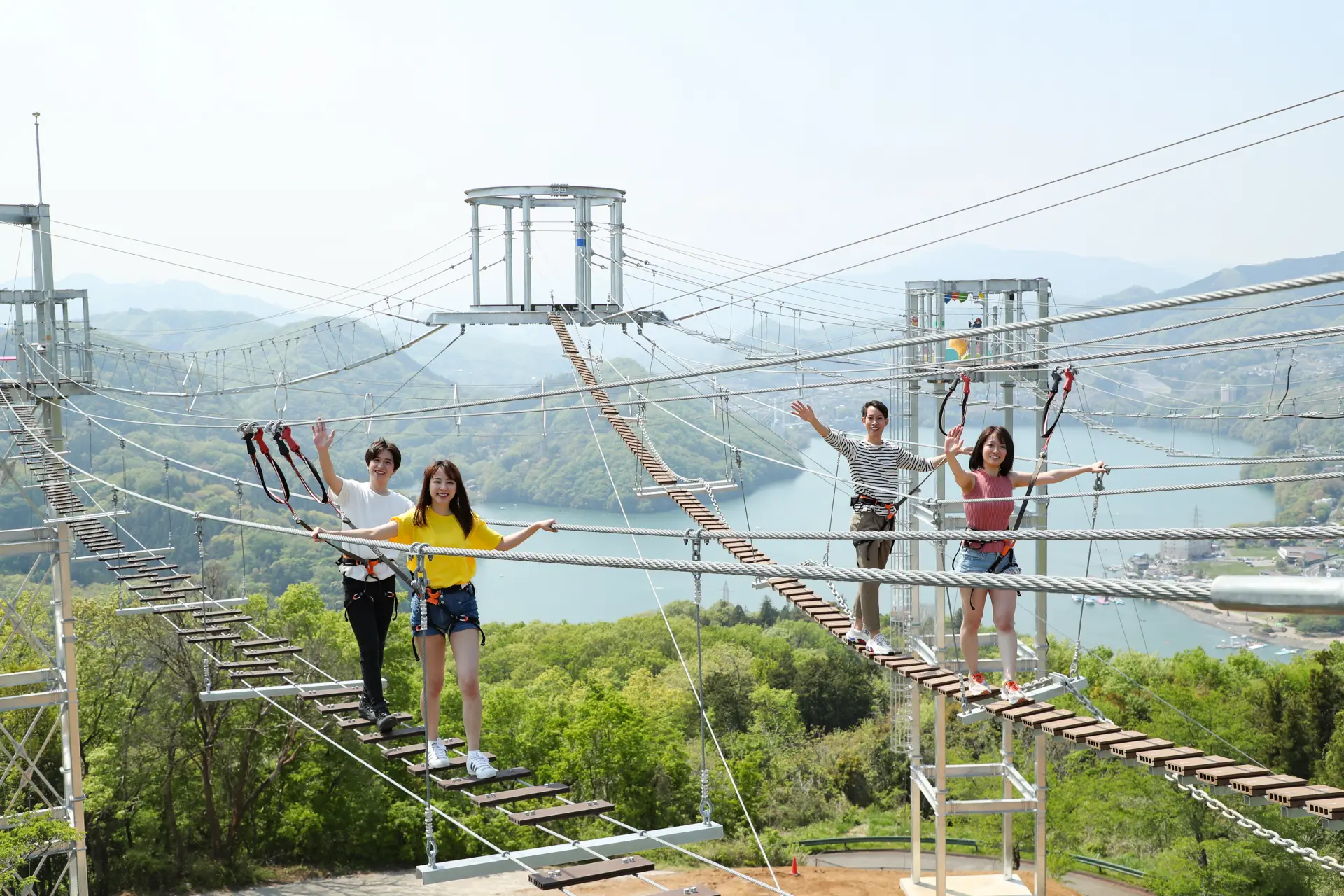
The Tanzawa-Oyama Area, Where Rich Mountains and Ancient Faith Remain
The Tanzawa-Oyama area is located almost in the center of Kanagawa Prefecture.
Centered on Mount Oyama, long revered as an object of worship, and the Tanzawa mountains, where nine peaks of around 1,500m line up, this area offers dynamic and mystical mountain scenery.
In addition to hiking, there are farms where you can enjoy fruit picking and hot springs known for their skin-beautifying effects, letting you fully enjoy nature’s blessings.
Mount Oyama, also famous as a power spot, has a pilgrimage tradition known as Oyama Mairi that dates back more than 400 years.
At the shukubo temple lodgings where worshippers stay, you can experience meditation and purification rituals.
If you are worried about the physical demands of climbing, the Oyama Cable Car is convenient, taking you to Afuri Shrine Station near the summit in Approx. 6 minutes.
In Tanzawa, you can enjoy authentic trekking despite its proximity to urban areas.


The Shonan Area, Popular for History and Spectacular Views
The Shonan area stretches along the Pacific coast of Kanagawa Prefecture.
It is home to destinations with rich histories, such as Enoshima, famous as a sightseeing and scenic spot for hundreds of years, and Kamakura, which was the political center around the late 12th century, making it an unmissable area when traveling in Kanagawa.
Enoshima is a small island with a circumference of about 4km that you can reach on foot by crossing a bridge.
It is home to Enoshima Shrine, giving the whole island the feel of a power spot.
The approach to the shrine is lined with Nakamise Street, where souvenir shops and restaurants stand side by side, so shopping is also part of the fun.
Nearby is Enoshima Aquarium, making the area enjoyable for families with children as well.
From Enoshima, take the Enoden, which combines retro charm with convenience, and tour Kamakura’s shrines and temples to fully experience the romance of this ancient capital.
While the area offers a distinctly Japanese atmosphere, the approach to Tsurugaoka Hachimangu Shrine is also lined with souvenir shops, stylish goods stores, trendy sweets shops, and cafes.


The Ashigara Area, Where You Can Enjoy Experiences Unique to Nature-Rich Surroundings
The Ashigara area lies in the mountainous, nature-rich western part of Kanagawa Prefecture.
It is a peaceful yet somehow mystical area, home to Ashigara Mountain, the setting of the famous Japanese folktale Kintaro, and Daiyuzan Saijoji Temple, known for its tengu legends.
Along with seasonal scenery such as cherry blossoms in spring and autumn leaves in fall, you can enjoy hot springs in a quiet setting, as well as camping and hiking, for a full-body experience of nature.
Daiyuzan Saijoji Temple, famous for its tengu legends, is considered a power spot, with tengu figures and geta sandals, symbols of strong legs, dedicated throughout the grounds, along with the impressive presence of a cedar avenue with trees over 500 years old.
There are also many spots where you can enjoy experiences not possible in the city, such as Nakai Inter Circuit, where you can try thrilling circuit experiences with racing karts, pocket bikes, and motorcycles, and Matsuda Herb Garden, a herb garden in a superb location overlooking Sagami Bay, Mt. Fuji, and the Hakone mountain range.


The Hakone Area, Where Spectacular Views, Hot Springs, and History Come Together
The Hakone-Odawara area lies at the western edge of Kanagawa Prefecture.
Centered on Odawara, which once flourished as a castle town around Odawara Castle, and Hakone, a historic transportation hub between eastern and western Japan, this sightseeing area is known for its history, hot springs, and scenery.
Hakone and Yugawara prospered for many years as post towns, so they are home to many long-established hot spring inns.
Walking through the hot spring towns and browsing restaurants and souvenir shops adds to the feeling of travel.
Hakone is filled with photogenic spots, including the imposing Mt. Fuji, the clear blue waters of Lake Ashi, and Hakone Shrine, famous as a power spot.
Odawara is home to Odawara Castle Park, where the famous castle Odawara Castle, originally built in the 15th century, has been recreated.
From the top floor of the castle tower, you can enjoy a panoramic view of Sagami Bay, and you can also dress up in samurai or ninja costumes.
In Manazuru, where beautiful fishing village scenery remains, you can take a sightseeing boat and view Cape Manazuru, surrounded by primeval forest.


How Many Days You Need to Fully Enjoy Kanagawa
When planning a trip to Kanagawa, you may wonder how many nights you need to enjoy it fully.
Because public transportation is well developed, if you narrow your trip to one or two areas, travel time is not too long and you can visit most spots even on a 2-day, 1-night trip.
However, because there are so many sightseeing spots, if you plan to visit three or more areas, you will need at least 3 days and 2 nights.
Use the area-by-area highlights introduced above and the model course below as a guide when deciding how long to stay.

A 2-Day, 1-Night Model Course for Visiting Kanagawa’s Popular Classic Sightseeing Spots
With so many popular destinations, it can be hard to decide where to go in Kanagawa.
If that happens, use the model course below as a guide.
This model course lets you enjoy Kanagawa’s representative popular classic sightseeing spots in a short time.
It covers the popular must-see spots in the Yokohama and Shonan areas, from urban attractions and the blessings of nature to history, romantic scenery, and even power spots.
Another nice point is that the travel distance is short, and you can do it all by train and on foot.
Day 1: Explore Minato Mirai, Home to Some of Kanagawa’s Most Popular Sightseeing Spots
On the first day, you will visit especially famous attractions in Minato Mirai, within the Yokohama-Kawasaki area.
This plan lets you enjoy a beautifully designed urban landscape and ocean views, shop at a large commercial complex filled with the latest trends, sample pork buns and shumai in the exotic atmosphere of Yokohama Chinatown, and finish with a walk through Yamashita Park.
9:40am Start at JR Yokohama Station
Day 1 of the model course starts at JR Yokohama Station.
Take the JR Keihin-Tohoku Line and get off at Sakuragicho Station. From there, it is Approx. a 5-minute walk to the next spot, Yokohama Landmark Tower.

10:00am Enjoy Spectacular Views at Yokohama Landmark Tower
A symbol of Yokohama, the 70-story, 296m-tall Yokohama Landmark Tower is a complex with a shopping mall, restaurants, clinics, and more.
On the 69th floor, Sky Garden is an observation floor where you can enjoy a 360-degree panoramic view.
Start by taking in the spectacular scenery of Minato Mirai, one of Yokohama’s premier sightseeing areas.

10:30am Enjoy Shopping at Queen’s Square Yokohama
After enjoying the spectacular views of Minato Mirai, head to Queen’s Square Yokohama, Approx. a 6-minute walk away.
Located directly above Yokohama Minatomirai Station, Queen’s Square Yokohama is a large commercial complex that brings together Minatomirai Tokyu Square, lined with restaurants, fashion shops, and specialty stores for goods, the concert venue Yokohama Minatomirai Hall, the Yokohama Bay Hotel Tokyu, and the Minatomirai Gallery.
With its excellent access, scenic setting, large scale, stylish atmosphere, and rich entertainment offerings, it stands out as a one-of-a-kind complex.
Its three symbol towers rising against the sea were designed with waves as their motif.
Stop by any facilities or shops that catch your eye and enjoy shopping and a stroll.

11:20am Take in a Panoramic View of Yokohama from YOKOHAMA AIR CABIN
From Queen’s Square Yokohama, head to the Canal Park Station of YOKOHAMA AIR CABIN, Approx. a 7-minute walk away.
YOKOHAMA AIR CABIN is the world’s most advanced urban circular ropeway, connecting Canal Park Station in the Shinko district to Sakuragicho Station in front of JR Sakuragicho Station.
Enjoy views of Yokohama’s iconic cityscape from the cabin.

11:50am Enjoy Chinese Cuisine in Yokohama Chinatown
After arriving at Sakuragicho Station on YOKOHAMA AIR CABIN, transfer to JR and head to JR Ishikawacho Station.
Approx. a 10-minute walk from the station brings you to Yokohama Chinatown, one of Japan’s three major Chinatowns.
With many Chinese restaurants lining the streets, you can enjoy everything from casual street food perfect for eating as you walk to authentic Chinese cuisine, depending on your budget.
Take in the atmosphere and enjoy lunch at any place that catches your eye.

1:50pm Enjoy Shopping on Yokohama Motomachi Shopping Street
After lunch, walk for about 10 minutes to Yokohama Motomachi Shopping Street.
Yokohama Motomachi Shopping Street is a shopping district that developed more than 150 years ago around the time Yokohama Port opened, with shops catering to foreign residents.
Its 600m main street has a refined Western-style atmosphere and is lined with highly stylish apparel shops, general goods stores, and interior shops.
There are also many sophisticated cafes and restaurants, so take a break and enjoy shopping at a relaxed pace.

3:50pm Enjoy a Variety of Views at Yamashita Park
After enjoying shopping at Yokohama Motomachi Shopping Street, head to Yamashita Park, Approx. a 10-minute walk away.
This 7.4ha waterfront park features wide promenades, flower beds, and fountains, and serves as a place of relaxation for Yokohama residents and tourists alike.
Enjoy the monuments and roses in the park, then walk along the Yamashita Rinko Line Promenade to take in famous Minato Mirai spots such as Yokohama Customs, the Kanagawa Prefectural Government Office, and Osanbashi Pier.
After walking for Approx. 1 hour, you will arrive at the next spot, Yokohama Red Brick Warehouse.

4:50pm Buy Souvenirs at Yokohama Red Brick Warehouse
The Red Brick Warehouse once served as one of Japan’s most advanced warehouses from the Meiji through Taisho periods.
Today, the two warehouses, preserving the atmosphere of the time, form a culture and shopping spot with shops, restaurants, and a multi-purpose hall.
There are also long-established Yokohama shops and souvenir stores, making it a great place to pick up gifts.

6:20pm Enjoy Beautiful Night Views from Bankokubashi Bridge
Approx. a 5-minute walk from Yokohama Red Brick Warehouse brings you to Bankokubashi Bridge, one of Minato Mirai’s famous night view spots.
From the bridge, you can overlook the canal running through Minato Mirai, along with illuminated office buildings and the ferris wheel.
Another nice point is that it is a free bridge open to everyone. End your first day by slowly taking in Yokohama’s beautiful night scenery.
- Address
- 2-1 Shinko, Naka-ku, Yokohama, Kanagawa 231-0001

6:50pm Enjoy a Luxurious Time at Hotel New Grand
After enjoying the night view, head to Hotel New Grand, Approx. a 20-minute walk away, while continuing to enjoy Yokohama’s evening scenery.
If you are tired from walking, taking a taxi is recommended.
For your first night, stay at this landmark of the port city of Yokohama, one of Japan’s representative classic hotels, located right across from the famous waterfront spot Yamashita Park.
Relax from the day’s fatigue with its beautiful interior, which blends traditional Japanese temple carpentry techniques with Western design, along with great food and night views.

Day 2: Explore Shonan and Kamakura, Known for Spectacular Views and Historic Landmarks
Day 2 starts with visits to shrines and temples in Kamakura, then continues to Enoshima by riding the Enoden.
You can fully enjoy historical romance, seasonal scenic beauty, and beautiful ocean views.
There are also spots for food and shopping, so look forward to that as well.
8:40am Start at JR Yokohama Station
Day 2 also starts from JR Yokohama Station.
Take the train to JR Kita-Kamakura Station, then walk Approx. 15 minutes to Kenchoji Temple.

9:30am Enjoy Japanese Buddhism and Natural Scenery at Kenchoji Temple
Kenchoji Temple was Japan’s first dedicated Zen training monastery and is the head temple of the Kenchoji school of Rinzai Zen, with more than 400 branch temples.
Its temple layout is a Zen temple style in which the main structures, such as the main gate, sanmon gate, Buddha hall, and lecture hall, are aligned in a straight line.
The grounds contain many cultural properties, including the National Treasure statue of Rankei Doryu.
The seasonal natural scenery is also beautiful, letting you fully enjoy Kamakura’s nature, history, and culture.

10:25am Enjoy Street Food on Komachi Street, Kamakura’s Main Street
After visiting Kenchoji Temple, walk back to JR Kita-Kamakura Station and take the train.
Get off at JR Kamakura Station and head to Komachi Street, just a short walk away.
Along this Approx. 360m street stretching north from a red torii gate, around 250 shops are packed together, including stores serving local daily needs as well as restaurants and souvenir shops for tourists.
It is a treasure trove of street food and sweets, so hop between shops that catch your eye and enjoy.

10:55am Experience Atmosphere and History at Tsurugaoka Hachimangu Shrine
After enjoying the food on Komachi Street, head to Tsurugaoka Hachimangu Shrine, about a 10-minute walk away.
Located in the center of Kamakura, Tsurugaoka Hachimangu Shrine has long been cherished by locals and visitors alike.
The current main hall was built in 1828 and is designated as an Important Cultural Property of Japan.
It is also famous for its beautiful natural scenery, with cherry blossoms blooming in spring and lotus flowers in summer at Genpei Pond.
Take a walk through the grounds while soaking in its atmosphere and history.

1:30pm See Kamakura’s Symbol at Kotoku-in Temple
After your walk, head to Kamakura Station on the Enoden, Approx. a 10-minute walk away, and take the Enoden to Hase Station.
Be sure to enjoy the retro train cars and the scenery from the windows along the way.
Once you arrive at Hase Station, have the local specialty shirasu rice bowl for lunch at a nearby restaurant.
After filling up, walk again to Kotoku-in Temple.
Among Kamakura’s many famous spots, the seated Amida Nyorai statue, the principal image of Daiizan Kotoku-in Shojosenji Temple, is especially popular.
Do not just admire the impressive Great Buddha of Kamakura from outside, but be sure to see the inside as well.

2:10pm Take In Kamakura’s Spectacular Views at Hasedera Temple
After viewing the Great Buddha of Kamakura, visit Hasedera Temple, Approx. a 7-minute walk away.
Known as one of Kamakura’s representative scenic spots and affectionately called Hase Kannon, Hasedera Temple offers a landscape where seasonal nature and historic buildings are in harmony.
From this scenery, you can fully feel the charm of Kamakura.
It is also famous for hydrangeas, making June an especially beautiful time to visit.

3:10pm Take In a Scenic View Unique to Shonan at Shichirigahama
After enjoying the beautiful scenery, return to Enoden Hase Station and ride the Enoden again.
Get off at Enoden Shichirigahama Station, and after about a 7-minute walk, you will arrive at Shichirigahama.
Selected as one of Japan’s 100 Best Beaches, Shichirigahama is a coastline stretching for Approx. 2.7km.
Because the beach is narrow, it is not suitable for swimming, but the scenery is beautiful, so take a stroll along the shore.
If the weather is clear, you can see Enoshima, Mt. Fuji, and the mountains of Oshima across the Shonan sea.
If you get tired, take a break at one of the stylish ocean-view restaurants or cafes nearby.

4:00pm Stroll Around Enoshima, One of the Shonan Area’s Signature Sightseeing Spots
After Shichirigahama, head to Enoshima, one of the most popular destinations in the Shonan area.
Take the Enoden from Enoden Shichirigahama Station to Enoden Enoshima Station, then walk Approx. 15 minutes from the station.
Enoshima is a small island floating at the tip of a sandspit extending out into the sea from a long sandy beach.
The town is centered around Enoshima Benzaiten Nakamise Street, the approach to Enoshima Shrine, and has many souvenir shops, eateries, and even ordinary homes.
It has long been known as a scenic spot.
Enjoy the beautiful views as you stroll around the island, sample local food, shop for souvenirs, and sightsee.

6:00pm Slowly Enjoy the Sunset View at Katase Coast
After sightseeing in Enoshima, finish your trip with a spectacular view of the Shonan coast colored by the setting sun.
Head to Katase Coast, Approx. an 8-minute walk from Enoshima, and watch the sunset over the Shonan shoreline.
If the weather is clear, you may also see Mt. Fuji silhouetted in the evening light.
End your trip to Kanagawa with this romantic scene of Mt. Fuji, the sea, and the sunset.

3 Must-Try Local Gourmet Foods in Kanagawa
Kanagawa is also rich in local gourmet foods.
Here, we introduce a carefully selected list of the local specialties you absolutely should not miss.
If you visit Kanagawa, be sure to try the foods introduced below.
1. Sanma-men
Sanma-men is a local ramen dish from Kanagawa Prefecture.
The name combines the Cantonese word “san,” meaning bean sprouts, and “ma,” meaning to place on top.
True to its name, it is a noodle dish topped with a thick stir-fried mixture of bean sprouts, garlic chives, napa cabbage, carrots, onions, wood ear mushrooms, meat, and other ingredients over ramen soup.
Because it is thickened, the soup stays hot easily, which is one of its appeals, making it perfect for cold seasons.
The seasoning and ingredients vary by shop, but the soup is often soy sauce-based.
Part of the fun of traveling is enjoying it at retro Chinese restaurants with lots of atmosphere, such as famous shops in Yokohama Chinatown or the long-established Gyokusentei in Isezakichojamachi.

2. Yokosuka Navy Curry
Yokosuka Navy Curry is a retro-style curry rice dish recreating a menu once served in the Japanese Navy.
It is made based on a cooking method from a military recipe book published in 1908, and as a rule, it is served with milk and salad.
Outside certified shops in Yokosuka City, it cannot be called “Yokosuka Navy Curry.”
The thick roux, filled with plenty of meat and vegetables, is not so much sharply spicy as it is well-balanced, with all the flavors harmonizing pleasantly.


3. Raw Shirasu Rice Bowl
Shirasu are juvenile sardines. A bowl of rice topped generously with fresh raw shirasu is called a raw shirasu rice bowl, and it is known as a specialty dish of the Shonan area.
Because raw shirasu loses freshness quickly and can only be eaten on the day it is landed, it is a local specialty limited to coastal areas.
The white, translucent shirasu sparkle like jewels, and their smooth texture and springy bite are irresistibly delicious.
Spring is said to be the peak season, but the slightly larger autumn shirasu is every bit as tasty as spring shirasu.
Keep in mind that it cannot be eaten from January to mid-March because fishing is prohibited.

Famous Cherry Blossom Spots to Add to Your Spring Kanagawa Trip
If you visit nature-rich Kanagawa in spring, be sure to add famous cherry blossom spots to your travel plan.
With cherry blossoms adding color, you will be able to see scenery that feels even more romantic than usual.
At Prefectural Mitsuike Park, named for its three ponds, many different varieties of cherry blossoms bloom at slightly different times, softly coloring the edges of the ponds pink.
The contrast between Approx. 1,000 cherry trees and the ponds creates a picturesque scene.
At Odawara Castle Park, where cherry blossoms bloom around the reconstructed castle tower, the area is illuminated at night, creating an even more magical atmosphere.
At Sankeien Garden, where 17 historic buildings gathered from places such as Kyoto and Kamakura are scattered across the grounds, cherry blossoms color the old-capital scenery in spring, making you feel as if you have wandered into old Kyoto or Kamakura.
The usual flowering date, full bloom date, and best viewing period for cherry blossoms are as shown in the table below.
However, because the flowering date, full bloom date, and best viewing period vary depending on the year’s climate, temperature, and the spot, it is reassuring to check before departure.
- Flowering Date
- March 25
- Full Bloom Date
- April 1
- Best Time to See Cherry Blossoms
- April 1–April 7
Reference: Japan Meteorological Agency, Cherry Blossom Flowering Status
Reference: Japan Meteorological Agency, Cherry Blossom Full Bloom Status


Famous Autumn Foliage Spots That Color Kanagawa in Fall
If you travel to Kanagawa in fall, we recommend adding famous autumn foliage spots to your itinerary.
The reason is that trees turning red and yellow make scenic places even more atmospheric and beautiful.
At Lake Tanzawa, you can enjoy the crimson foliage reflected on the lake from the shore or take a boat and admire the autumn colors stretching as far as the eye can see.
At Oyama Afuri Shrine Lower Shrine, the steps of the approach and the surrounding mountains turn bright red, creating a mystical atmosphere.
At Shinsenkyo, the garden at the Hakone Museum of Art, more than 200 maple trees change color all at once in autumn, making the moss-covered Japanese garden even more evocative.
In Kanagawa, autumn foliage spots usually reach their best from late October to early December.
However, the timing varies depending on the year’s climate, temperature, and the spot, so be sure to check the foliage conditions before departure.


FAQ about Traveling in Kanagawa
Q
What season is recommended for traveling in Kanagawa?
Spring or fall, when cherry blossoms and autumn leaves are beautiful, and you can also enjoy raw shirasu rice bowls.
Q
What sightseeing spot in Kanagawa is recommended for a family trip?
Enoshima is recommended because it has many sightseeing spots that families can enjoy together.
Summary
In this article, we introduced Kanagawa’s appeal, from its famous sightseeing spots and local gourmet foods to useful money-saving travel tips and a practical model course.
If you travel using this article as a guide, you will not only be able to fully enjoy Kanagawa’s many-sided charm, but also have experiences filled with atmosphere unique to Japan.
If you want to learn more about sightseeing spots in Kanagawa, be sure to read this article as well.