

Experience Japan’s Traditions and History Up Close! A Travel Guide to Ishikawa
Long prospering as the center of the Hokuriku region, Ishikawa Prefecture has carefully preserved its culture and traditional craftsmanship over the years.
A trip to Ishikawa, a treasure trove of quintessentially Japanese scenery and high-quality crafts, offers a deeper look into Japanese culture.
This article provides a comprehensive guide to the essential information to know before your trip to Ishikawa, along with major sightseeing spots and their highlights, value rail passes, and model itineraries.
Use this guide to make the most of everything Ishikawa has to offer.
Ishikawa, Where You Can Experience Japanese History and Culture in Many Ways
Ishikawa Prefecture covers the Noto Peninsula, which juts into the Sea of Japan from central Honshu, and the Kanazawa Plain spreading around its base, also known as the Kaga Plain.
This long north-to-south prefecture offers different attractions in its northern Noto region and southern Kaga region.
The northern Noto region, home to cities and towns such as Wajima and Nanao, has preserved traditional farming and fishing, along with nostalgic scenes of old Japan.
The southern Kaga region, where the prefectural capital of Kanazawa is located, was once ruled by the powerful Maeda clan.
Its prosperity is reflected in the phrase “Kaga Hyakumangoku,” a term used to describe its vast territory and wealth.
A “koku” was the amount of rice one person consumed in a year, so the phrase means that the Kaga region was a vast and wealthy land capable of supporting one million people.
The Kaga region is filled with the charm of a once-prosperous city, with many places where you can see distinctly Japanese scenery, such as Higashi Chaya District, Kanazawa Castle, and Kenrokuen Garden.
Because art and culture have long been carefully passed down here, the list of elegant and colorful traditional crafts seems endless, from Wajima lacquerware, one of Japan’s best-known lacquer arts, to Kaga Yuzen dyed textiles with their distinctive colors, and Kutani ware known for its brilliant overglaze decoration.
Of course, there are also places to enjoy contemporary art.
The 21st Century Museum of Contemporary Art, Kanazawa is known for its innovative exhibition style and attracts many visitors from overseas.
Ishikawa also has plenty of hot springs, such as Wakura Onsen in Noto and Kaga Onsenkyo in Kaga, and naturally, the local food scene is just as rich.
Average Temperatures in Ishikawa and What to Wear
Because Ishikawa Prefecture stretches a long way from north to south, the northern Noto region and southern Kaga region have different climate characteristics.
The northern Noto region, surrounded by the sea, tends to be cooler in summer and gets less snowfall in winter than other cities in the Hokuriku region.
The southern Kaga region has hot, humid summers and cold winters with snowfall.
Rainfall is heavy throughout the year, so much so that there is even a saying: “You may forget your lunch, but don’t forget your umbrella.”
Average Monthly Temperatures in Ishikawa
| - | January | February | March | April | May | June | July | August | September | October | November | December |
|---|---|---|---|---|---|---|---|---|---|---|---|---|
| Average Temperature (°C) | 4.0 | 4.2 | 7.3 | 12.6 | 17.7 | 21.6 | 25.8 | 27.3 | 23.3 | 17.6 | 11.9 | 6.8 |
Seasonal Clothing Guide for Ishikawa
- Spring (March - May): Light jacket and a lightweight sweater
- Summer (June - August): Light clothing, short sleeves
- Fall (September - November): Light jacket, coat
- Winter (December - February): Coat, wool suit, thick sweater or jacket
Access to Ishikawa
Since the Hokuriku Shinkansen opened in 2015, access to Ishikawa from Tokyo and Osaka has been very convenient.
From Tokyo Station, it takes Approx. 3 hours to reach Kanazawa Station by Hokuriku Shinkansen.
From Osaka Station, take a JR limited express train to Tsuruga Station, then transfer to the Hokuriku Shinkansen to arrive in around 2.5 hours.
Ishikawa has two airports, Komatsu Airport and Noto Satoyama Airport, and Komatsu Airport also serves international flights.
You can reach it directly from Taiwan, China, and South Korea.

Access from Komatsu Airport to Major Stations
Here is how to get to Kanazawa Station from Komatsu Airport, Ishikawa Prefecture’s air gateway.
Kanazawa Station is a key transportation hub in Ishikawa, served by JR, Hokuriku Railroad, IR Ishikawa Railway, and other lines used for travel both within and outside the prefecture.
- Route
- Take the Airport Limousine Bus from Komatsu Airport and get off at the Kanazawa Station West Exit bus stop
- Travel Time
- Approx. 40 minutes

Main Transportation Options in Ishikawa
Ishikawa has the second-shortest railway length in Japan, so its rail network is not very developed.
In the northern part of the Noto area, known as Oku-Noto, it is difficult to get around using only public transportation.
However, buses are well developed in popular sightseeing areas such as Kanazawa, so you can travel around using public transportation alone.
Since the convenience of public transportation varies greatly depending on the area, be sure to check in advance whether the region you plan to visit is served by a well-developed bus network.

Value Transportation Passes to Use for Your Ishikawa Trip
If you want to travel around Ishikawa at a good value, here are some transportation passes worth knowing about.
If you plan to explore Kanazawa and the southern Kaga region, the Kanazawa City 1-Day Free Pass is recommended.
If you are traveling in the northern Noto region, choose the Oku-Noto Marugoto Free Ticket.
If you also plan to visit other prefectures in the Hokuriku region or Gifu Prefecture, use the Takayama-Hokuriku Area Tourist Pass accordingly.
Kanazawa City 1-Day Free Pass
If you are traveling in Kanazawa, the Kanazawa City 1-Day Free Pass is highly recommended.
It gives you unlimited hop-on, hop-off access to buses, Kanazawa’s main mode of transportation, for one full day.
It costs 800 yen for adults ages 15 and up, and 400 yen for children.
If you ride the bus at least 4 times in one day, it will definitely save you money.
The Kanazawa City 1-Day Free Pass is sold at the tourist information center and bus terminal at Kanazawa Station.
Showing this pass also gives you discounts at many sightseeing spots, so be sure to check it out.

Oku-Noto Marugoto Free Ticket
The Noto Railway runs from Nanao Station in central Noto Peninsula to Anamizu Station at the tip of the peninsula.
The Oku-Noto Marugoto Free Ticket gives you unlimited rides for 2 days on both the Noto Railway and Hokutetsu Oku-Noto Bus local routes operating around Nanao Station.
Excluding limited express buses, this pass lets you freely hop on and off transportation in the Noto region, making it ideal for a travel plan that circles the Noto Peninsula.
It is sold at Noto Railway stations and bus terminals, and costs 3,000 yen for adults and 1,500 yen for children.
You may also get discounts at major tourist facilities by showing the pass, so it is well worth using when traveling in the Noto region.

Traveling Around the Hokuriku Area? Use the Takayama-Hokuriku Area Tourist Pass
If you want to keep transportation costs down on your Ishikawa trip, the Takayama-Hokuriku Area Tourist Pass is worth knowing about.
The Takayama-Hokuriku Area Tourist Pass is a great-value ticket that gives you unlimited rides on JR local and limited express trains, the Shinkansen, and buses around Kanazawa and Toyama, as well as the Shirakawa-go and Gokayama area in Gifu, a popular sightseeing destination from Osaka and Nagoya.
It is useful not only for extending your trip to Ishikawa from Osaka or Nagoya, but also for traveling around nearby areas.
The pass costs 19,800 yen for adults and 9,900 yen for children, and is valid for 5 consecutive days.

The Appeal of Ishikawa’s Four Areas You Should Know Before Your Trip
Ishikawa stretches a long way from north to south, and its climate and culture differ between the southern and northern parts.
Here, we introduce each of Ishikawa’s four areas, divided according to their geographical and cultural characteristics.
We’ll look at the features, appeal, and 대표적인 popular sightseeing spots of each area, so use this as a reference when planning your trip.
The Noto Area, Known for Diverse Natural Scenery and Traditional Crafts Passed Down Through Generations
The Noto Peninsula, which juts into the Sea of Japan in northern Ishikawa Prefecture, is also known as the Noto area.
The west side of the peninsula is home to many dramatic scenic spots with strangely shaped rocks and cliffs carved by the rough waves of the Sea of Japan.
The east side faces Toyama Bay and is known for its calm sea and gentle coastline.
The Noto area is where you can fully enjoy the bounty of the sea, natural beauty, and the nostalgic scenery of traditional rural Japan.
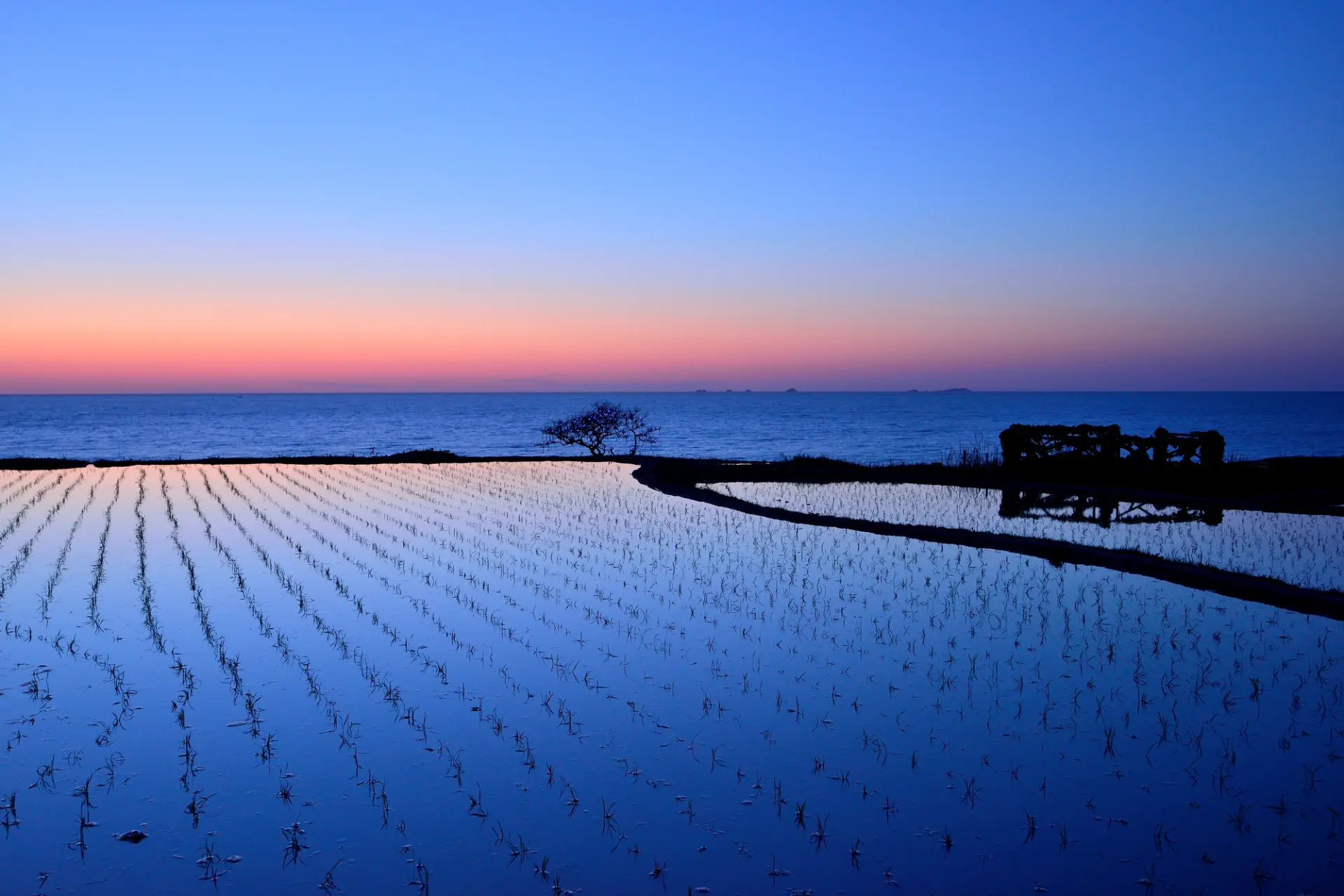
Shiroyone Senmaida features 1,004 terraced rice paddies built on slopes running from the land down toward the sea.
Recognized as a Globally Important Agricultural Heritage System, it offers spectacular seasonal contrasts: green rice plants from spring to summer, golden ears of rice before harvest in fall, and silvery snow in winter, all set against the blue sea.
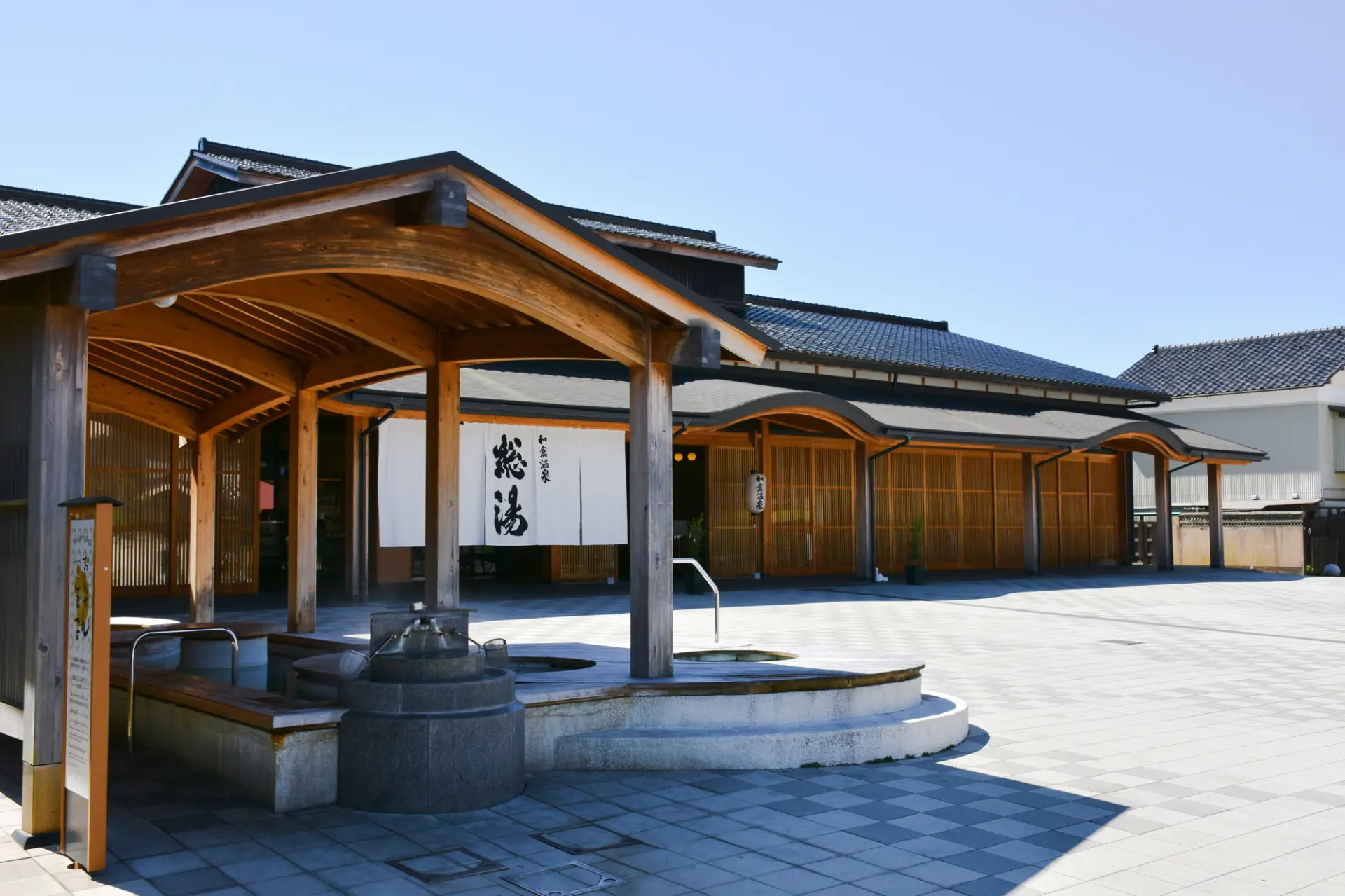
There are also many spots where you can experience culture passed down over long periods of time, including traditional crafts such as Wajima lacquerware and Suzu ware, as well as Wakura Onsen, a historic hot spring resort with a history of over 1,200 years.


The Kanazawa Area, One of Ishikawa’s Most Famous Sightseeing Destinations
Located in central Ishikawa Prefecture, this urban area centered around the prefectural capital of Kanazawa is one of the leading cities in the Hokuriku region.
Because it has flourished since medieval times, it is home to many historic streetscapes and old buildings.
Its elegant atmosphere has even earned it the nickname “Little Kyoto.”
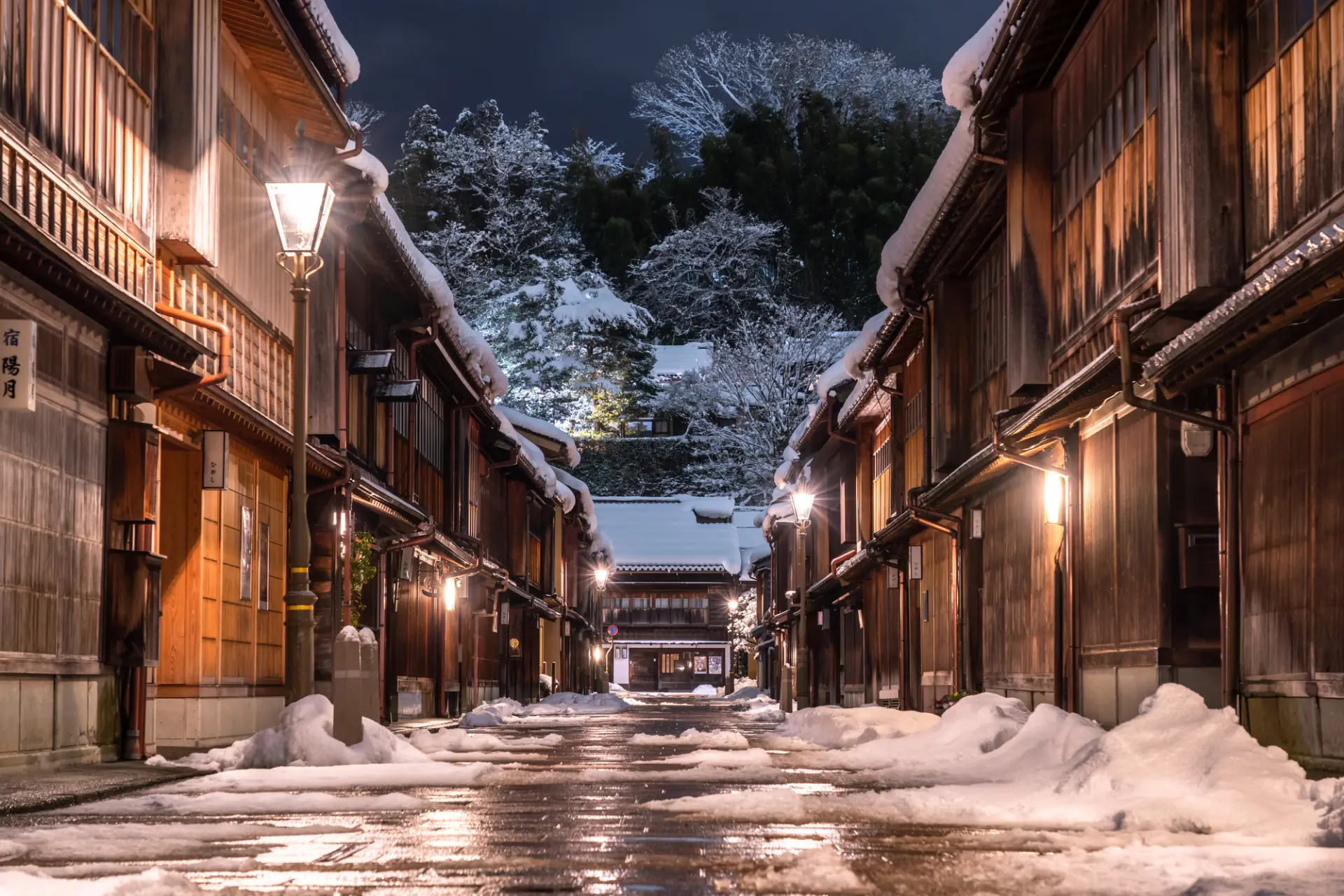
It is perfect for anyone who loves history and Japanese-modern charm, with spots such as Higashi Chaya District, where stone-paved streets and traditional old townscapes invite you to stroll, and Kanazawa Castle Park, where the Kanazawa Castle of its prosperous era has been restored.
Kenrokuen Garden, one of Japan’s three most celebrated gardens, is one of Kanazawa’s signature sightseeing spots, known for its seasonal beauty, including cherry blossoms, fall foliage, and yukitsuri rope supports in winter.
Another iconic spot, the 21st Century Museum of Contemporary Art, Kanazawa, lets you experience contemporary and future-oriented art and sharpen your appreciation for beauty and design.
The area also offers plenty of places to enjoy hot springs, gourmet food, and shopping, making it an essential stop on any trip to Ishikawa.


The Kaga Area, Dotted with Charming Hot Spring Resorts
The Kaga area lies at the southern end of Ishikawa Prefecture along the Sea of Japan, bordering Fukui Prefecture.
It is famous for Kaga Onsenkyo, a hot spring resort area made up of four hot spring towns: Yamashiro Onsen, Yamanaka Onsen, Katayamazu Onsen, and Awazu Onsen.
Each has its own atmosphere and spring qualities, so you can enjoy hopping between them.
The area also has a unique local culture, known for traditional crafts such as Kutani ware and Hikiyama Kodomo Kabuki, one of Japan’s three major children’s kabuki performances.
There is also a wide variety of local foods that make use of its rich ingredients, such as Komatsu udon and Kaga crab rice, along with many spots where you can enjoy nature and history.
Since Komatsu Airport is located here, the area is easy to access from other prefectures and from overseas.


The Hakusan Area, Where Rich Nature and a Sacred Atmosphere Help You Unwind
Located in the southeastern part of Ishikawa Prefecture, the Hakusan area lets you fully enjoy the blessings of the inland mountains.
Bordering Gifu, Fukui, and Toyama, this area’s biggest attraction is Mt. Hakusan, one of Japan’s three sacred mountains.
This active volcano rises to 2,702 meters and is home to many rare alpine plants.
You can enjoy trekking on a day trip, but staying at Hakusan Murodo and taking on a full-scale mountain climb is also recommended.
If conditions are right, you can see the sunrise emerging from above a sea of clouds.
Another highlight is Shirayama Hime Shrine, the head shrine of all Hakusan shrines in Japan, where you can experience a solemn atmosphere and also pray for blessings in love and relationships.
The area is rich in mountain produce and pure water, making dishes made with wild mountain vegetables and delicious local sake part of its appeal as well.
It is the perfect area to refresh both body and mind in magnificent natural surroundings.


How Many Days You Need to Fully Enjoy Ishikawa
Since many of the popular sightseeing spots are concentrated in the Kanazawa and Noto areas, you can likely enjoy the main attractions with a 1-night, 2-day trip.
However, public transportation is limited in the Noto area, so keep in mind that getting around can take time unless you use a rental car or a sightseeing bus.
If you also want to visit the Kaga and Hakusan areas, you should plan for at least 2 nights.

A 1-Day Model Course Around Ishikawa’s Popular Sightseeing Spots
Here is a model course around Kanazawa, one of the most popular sightseeing areas in Ishikawa.
Enjoy historical scenery at Kenrokuen Garden, Kanazawa Castle Park, and Higashi Chaya District, then immerse yourself in art at the 21st Century Museum of Contemporary Art, Kanazawa.
You can visit the main sightseeing spots using only buses and walking, so getting around takes little time or effort.
It is also perfect for a day trip, so be sure to use it as a reference.
8:20am Start from JR Kanazawa Station
Start your first day at JR Kanazawa Station.
It has been selected as one of the “most beautiful stations in the world” by the American magazine Travel + Leisure, so don’t forget to take a look around the station itself as well.
The first stop, Kenrokuen Garden, is Approx. 15 minutes from the station by bus.

8:40am Experience Japanese Aesthetics at Kenrokuen Garden
This strolling garden, counted among Japan’s three most celebrated gardens, was created over a long period of about 180 years by successive lords of the Kaga Maeda family.
Its name comes from the fact that it embodies all six sublime attributes described in the Chinese text Luoyang Mingyuan Ji, six scenic qualities that are said to be difficult to achieve together. These contrasting elements are beautifully balanced, creating a harmonious beauty of contrast.
Take a walk through this famous garden and enjoy its seasonal beauty.

10:00am Enjoy Contemporary Art Casually at the 21st Century Museum of Contemporary Art, Kanazawa
After enjoying the Japanese garden, head next to the 21st Century Museum of Contemporary Art, Kanazawa for an art-filled experience.
It is about a 5-minute walk from Kenrokuen Garden.
Its exhibition methods, which overturn conventional ideas of what an art museum should be, have drawn attention, making it one of the most popular museums in Japan and a key force behind Kanazawa’s identity as a city of art.
You can enjoy a wide range of contemporary artworks that propose new values. The museum also features various ways to let visitors see, feel, and physically experience the works.

11:20am Stroll Through Historic Kanazawa Castle Park
After enjoying the art, it’s time to soak up some history.
The next stop, Kanazawa Castle Park, is about a 5-minute walk away.
This was the residence of the Maeda family, rulers of Kaga Hyakumangoku. Although many buildings were lost to natural disasters and fires, the surrounding area has now been restored and maintained as Kanazawa Castle Park.
In addition to Ishikawa-mon Gate and Sanjikken Nagaya, which remain from the Edo period, places such as Kahoku-mon Gate, Imori Moat, and Gyokuseninmaru Garden have been restored one after another, gradually bringing back the appearance of the past.
Be sure to also notice the stone walls, where influences of the yin-yang and five elements philosophy can be seen in features such as protections against the unlucky northeast direction and hexagonal stones.

12:20pm Enjoy a Seafood Rice Bowl Lunch at Omicho Market
After walking through the park and building up an appetite, head to Omicho Market for lunch.
You’ll get there in about 15 minutes on foot.
About 170 shops line its narrow alleys, selling fresh seasonal seafood, vegetables, prepared foods, and souvenirs, creating a lively atmosphere.
There are also over 40 eateries, where you can enjoy fresh and delicious seafood such as blackthroat seaperch, sweet shrimp, and snow crab in generous portions at reasonable prices.
For lunch, a generously topped seafood rice bowl made with seasonal seafood is especially recommended.

2:00pm Stroll Through the Atmospheric Higashi Chaya District
After lunch, walk to your next stop. You’ll arrive at Higashi Chaya District in Approx. 15 minutes.
The beautiful streets lined with wooden lattice facades and stone paving in Higashi Chaya District have been selected as a nationally designated Important Preservation District for Groups of Traditional Buildings.
Traditional buildings from the Edo period still stand here today.
Scattered among them are cafes and shops selling Japanese sweets, traditional crafts, and miscellaneous goods, all housed in these historic buildings.
Enjoy shopping in this charming old townscape.

4:30pm Enjoy an Early Dinner in Kazue-machi Chaya District
After enjoying Higashi Chaya District, head to Kazue-machi Chaya District, one of Kanazawa’s three historic chaya districts along with Higashi Chaya District and Nishi Chaya District. It is about a 10-minute walk away.
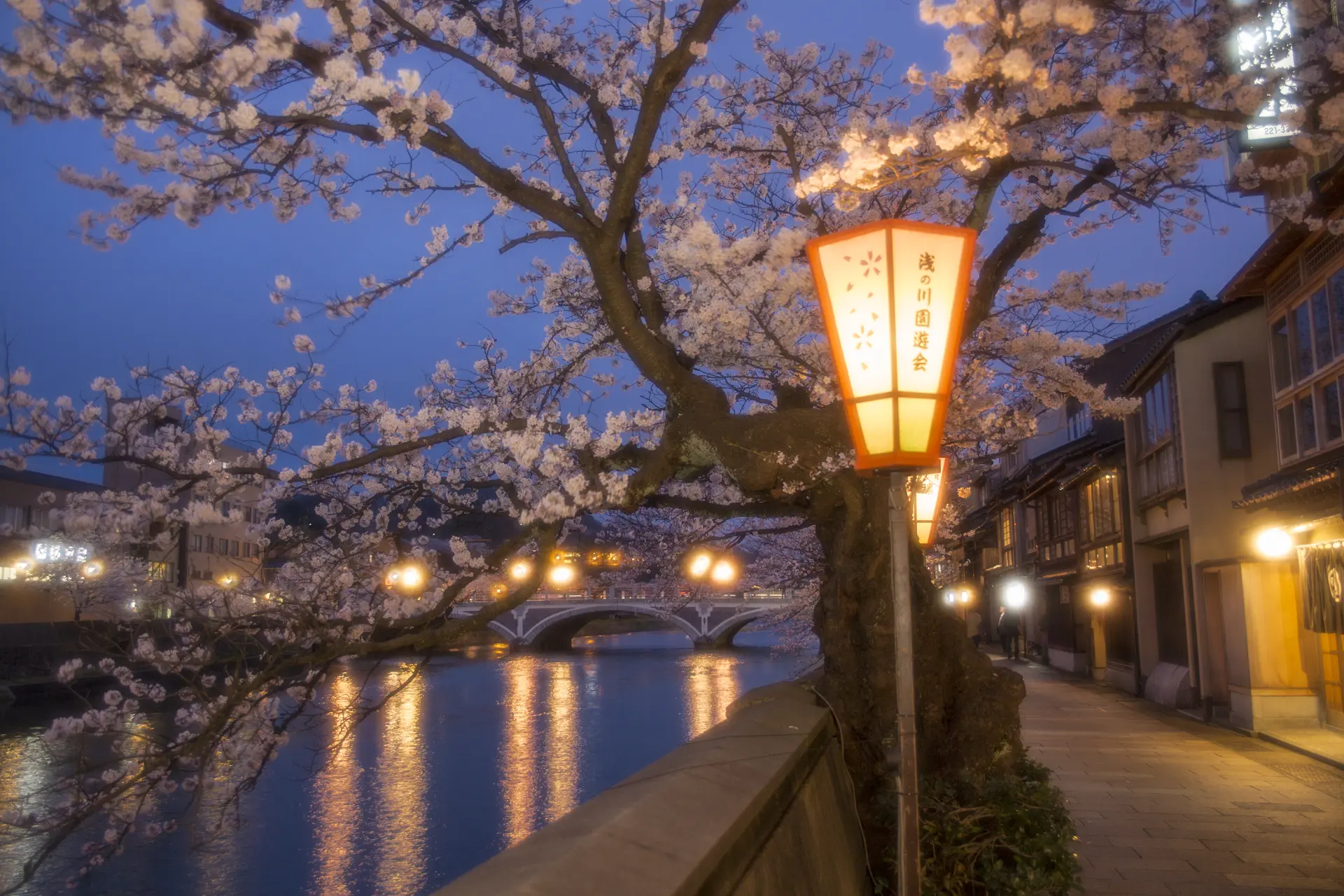
This quiet area along the Asano River is lined with narrow alleys and traditional wooden latticework, and it too has been selected as a nationally designated Important Preservation District for Groups of Traditional Buildings.
Traditional restaurants and teahouses stand along the lanes, and as lights come on at dusk, the area takes on a magical atmosphere.
As you stroll through this charming area, enjoy an early dinner at one of the restaurants in Kazue-machi Chaya District featuring seasonal ingredients from Ishikawa.
3 Popular Sightseeing Spots in the Noto Region You Should Visit If Staying at Least One Night
If you can stay overnight in Ishikawa and use a rental car, consider traveling around the Noto region as well.
The Noto region has many spots where you can experience natural beauty and history, but the places introduced below are especially recommended.
Some sightseeing spots were affected by the Noto Peninsula Earthquake that occurred in January 2024, and depending on when you travel, some may still be closed, so be sure to check the official websites before departure.
1. Wajima Morning Market
This lively morning market boasts a history of over 1,000 years. More than 200 stalls line a street of Approx. 360 meters known as Asaichi-dori, selling fresh seafood, vegetables, processed foods, and handmade folk crafts.
There is also a charcoal grill corner where you can grill and eat the dried fish you buy yourself, and the market is always bustling with people.
*Currently closed following a large fire immediately after the Noto Peninsula Earthquake in January 2024

2. Wajima Kobo Nagaya
This craftspeople’s row house brings together five workshops related to Wajima lacquerware. In addition to viewing Wajima lacquerware works in the gallery and other spaces, you can watch the lacquerware-making process and try traditional decorating techniques such as chinkin and maki-e to create original items like chopsticks. There is also an attached lacquerware shop lined with Wajima bowls and other items.
*Temporarily closed due to the impact of the Noto Peninsula Earthquake in January 2024

3. Shiroyone Senmaida
Tiered rice fields built in steps along mountain slopes are called tanada, or terraced rice paddies.
They are a landscape that symbolizes Japan’s agricultural traditions, showing how rice farming has been adapted to uneven terrain.
In Shiroyone, Wajima City, you’ll find a vast terraced rice field area known as Shiroyone Senmaida.
The sight of 1,004 rice paddies stretching down as if flowing into the Sea of Japan is truly breathtaking.
The individual paddies, shaped to fit the land, come together to form geometric patterns that create an almost artistic landscape.
From spring to summer, the rice fields are green, in fall they turn golden with ripening ears of rice, and in winter they become white with snow, all in harmony with the blue sea to resemble a grand painting.
On autumn and winter nights, illuminations create yet another kind of mystical atmosphere.

What Is the Impact of the 2024 Noto Peninsula Earthquake?
The 2024 Noto Peninsula Earthquake struck the Noto region of Ishikawa Prefecture on January 1, 2024.
Some people may know that Ishikawa was affected and be wondering whether it is okay to travel there.
As of July 2024, recovery has progressed in areas south of the Noto Peninsula, and most sightseeing spots, restaurants, and accommodations are operating as usual, so there is no need to worry.
However, damage on the Noto Peninsula was severe, and even now, many places have not yet resumed normal operations.
If you would like to learn more about the current situation in the Hokuriku region, including Ishikawa, please also refer to the article below.

3 Must-Try Local Foods on Your Ishikawa Trip
In Ishikawa, you can enjoy both seafood and mountain delicacies.
Combined with a distinctive food culture shaped by its history as a flourishing castle town, the prefecture offers a rich variety of local specialties.
Among the many local dishes, here are three especially recommended picks.
If you visit Ishikawa, be sure to try the foods introduced below.
1. Noto Beef
Noto Beef is a branded wagyu raised with great care in Ishikawa’s rich natural surroundings and unspoiled climate.
Only Japanese Black cattle with a clear bloodline and a meat quality grade of A3 or higher or B3 or higher are allowed to be called Noto Beef.
It is known for its high oleic acid content in the fat, which gives the beef its melt-in-your-mouth texture.
Steak and yakiniku are especially recommended for appreciating the full flavor of the meat, but sukiyaki and shabu-shabu are also excellent.
If you want to try Noto Beef at a restaurant in Ishikawa, visit a certified Noto Beef restaurant.

2. Hanton Rice
Hanton Rice is a dish of ketchup-flavored butter rice wrapped in a thin soft-cooked omelet, topped with fried white fish, and finished with ketchup and tartar sauce.
This hearty plate combines omelet rice and fried fish in one satisfying dish.
There are several theories about its origin, but it is said that a head chef created it based on a dish eaten in Tokyo, and it eventually became established as a local specialty of Kanazawa.
It is often served at a reasonable price and is widely loved by locals, from children to adults.
Depending on the restaurant, toppings may include fried shrimp, tonkatsu, or fried oysters, and the egg may be runny and soft-cooked or served as scrambled eggs.
Demi-glace sauce may also be used instead of ketchup sauce.
It can be fun to find your own favorite version of Hanton Rice.

3. Kanazawa Curry
There are many kinds of local curry throughout Japan, but Kanazawa Curry from Ishikawa Prefecture is one of the best known.
It is typically defined by its dark, rich, thick roux, a large pork cutlet placed on top, and sauce poured over the cutlet.
It is served with shredded cabbage on the side and presented on a stainless steel plate.
It is loved by everyone from children to adults, but because it is hearty and filling, it is especially popular among men looking for a substantial meal.

Cherry Blossom Spots to Visit on a Spring Trip to Ishikawa
If you are visiting Ishikawa in spring, be sure to add cherry blossom spots to your itinerary.
Rojo Park, a garden created on the former site of the residence of the Maeda clan who ruled the Kaga region, is known for the powerful beauty of Sakurayama viewed from Sakura Pond.
At Ohinomiya Park, a riverside park with a shrine, yaezakura and kujozakura cherry trees bloom beautifully along the river.
The cherry tree-lined banks of the Kumasaka River, where about 200 Somei Yoshino trees bloom along Approx. 1 kilometer, are also famous.
Please refer to the table below for Ishikawa’s typical cherry blossom flowering date, full bloom date, and best viewing period.
Since these dates vary depending on the year’s climate, temperatures, and the specific spot, be sure to check before departure.
- Blooming Date
- April 3
- Full Bloom Date
- April 8
- Best Viewing Period
- April 8–April 14
Reference: Japan Meteorological Agency: Cherry Blossom Blooming Status
Reference: Japan Meteorological Agency: Cherry Blossom Full Bloom Status


Best Fall Foliage Spots That Color Ishikawa in Autumn
Ishikawa’s quintessentially Japanese scenery becomes even more beautiful in autumn.
If you are traveling to Ishikawa in fall, be sure to check out its beautiful autumn foliage spots as well.
Natadera Temple, known for its Yusenkyo area of white rock formations, is featured in the Michelin Green Guide Japan and has been awarded one star.
In autumn, you can enjoy the vivid contrast between the white rock formations and colorful leaves.
Kenrokuen Garden, one of Japan’s three most celebrated gardens, is especially beautiful in fall, when the garden is colored in brilliant red foliage. The nighttime illumination is also not to be missed.
Kakusenkei Gorge, a valley stretching for about 1.3 kilometers along the clear waters of the Daishoji River, is also recommended.
From the walking path along the stream, you can enjoy a relaxing stroll while taking in the vividly colored trees.
The best time to see autumn leaves varies depending on the year’s climate, temperatures, and the specific spot, so be sure to check Ishikawa’s fall foliage information before your trip.


Traveling Around Hokuriku Is Easier Than Ever Thanks to the Hokuriku Shinkansen
On March 16, 2024, the Kanazawa-Tsuruga section of the Hokuriku Shinkansen opened, linking the three Hokuriku prefectures of Toyama, Ishikawa, and Fukui by Shinkansen.
With fast travel now possible from Kanazawa to Tsuruga in Fukui Prefecture, it has become much easier to tour all three Hokuriku prefectures.
The article below also introduces model courses using the Hokuriku Shinkansen, so why not use it as a reference and consider a trip to Toyama and Fukui as well?

FAQ about Traveling in Ishikawa
Q
What season is recommended for traveling to Ishikawa?
Autumn is recommended, when Ishikawa’s quintessentially Japanese scenery becomes even more beautiful in harmony with the colored leaves.
Q
What sightseeing spot in Ishikawa is recommended for a parent-child trip?
The 21st Century Museum of Contemporary Art, Kanazawa is recommended for casually enjoying contemporary art.
Summary
This article has provided a comprehensive introduction to the information you need for an Ishikawa trip, including its attractions, representative sightseeing spots, transportation information, and model courses.
In Ishikawa, you can enjoy Japanese scenery in historic towns, traditional crafts passed down through generations, spectacular natural landscapes, local food shaped by a unique food culture, hot springs, and much more.
If you would like to learn more about sightseeing spots and accommodations in Ishikawa, be sure to read the article below as well.