
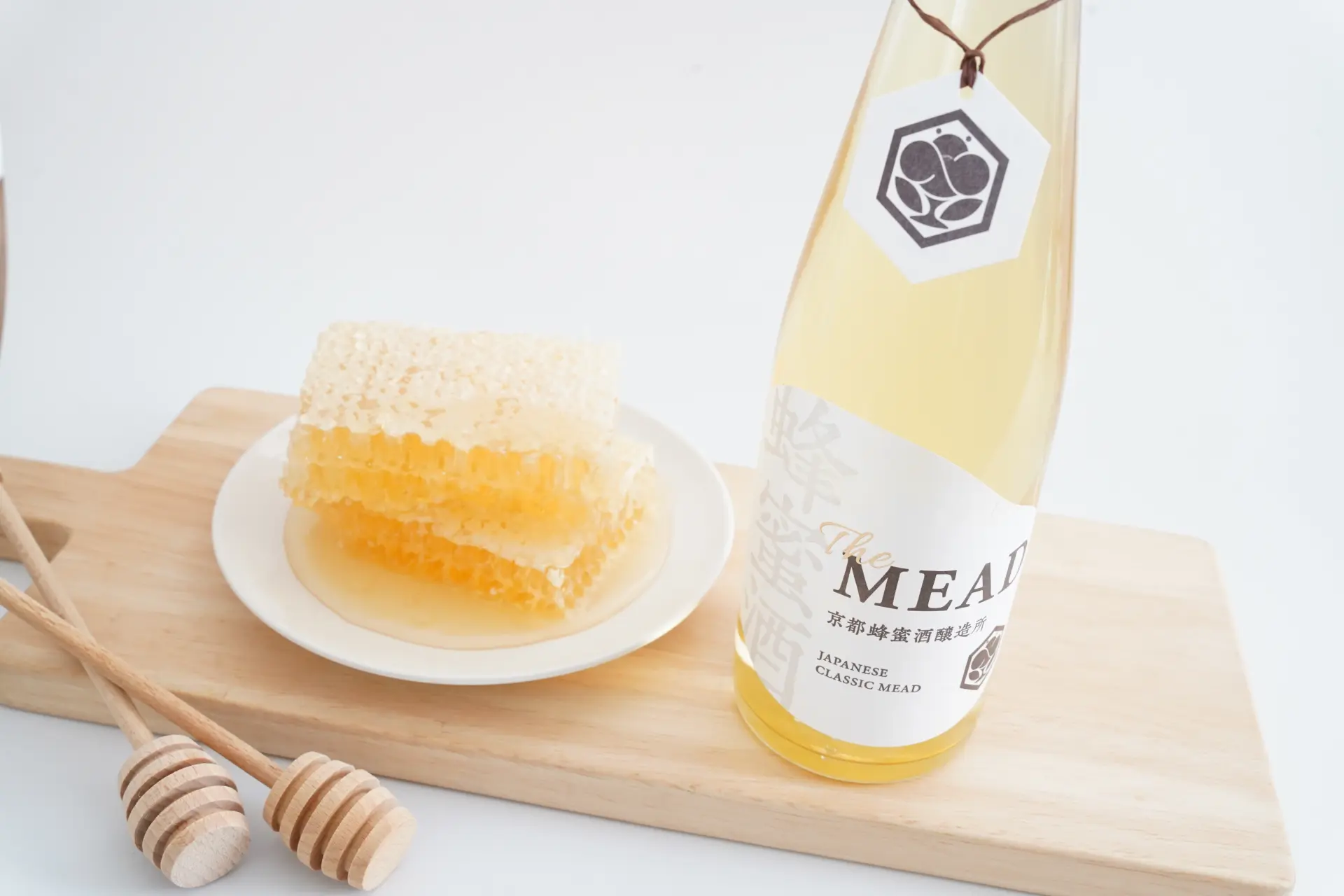
Discover the Appeal of Mead, the Oldest Alcoholic Drink in Human History, in Kyoto!
Mead is an alcoholic beverage made by fermenting honey with yeast and water. Long enjoyed in Europe and other regions, it is a familiar drink, and in Japan too, more and more producers are crafting distinctive meads, sparking a quiet boom. In this article, we introduce the world of carefully crafted Japanese mead.
Introduction
What Is Mead Like?
Mead is an alcoholic beverage made by fermenting honey with yeast and water.
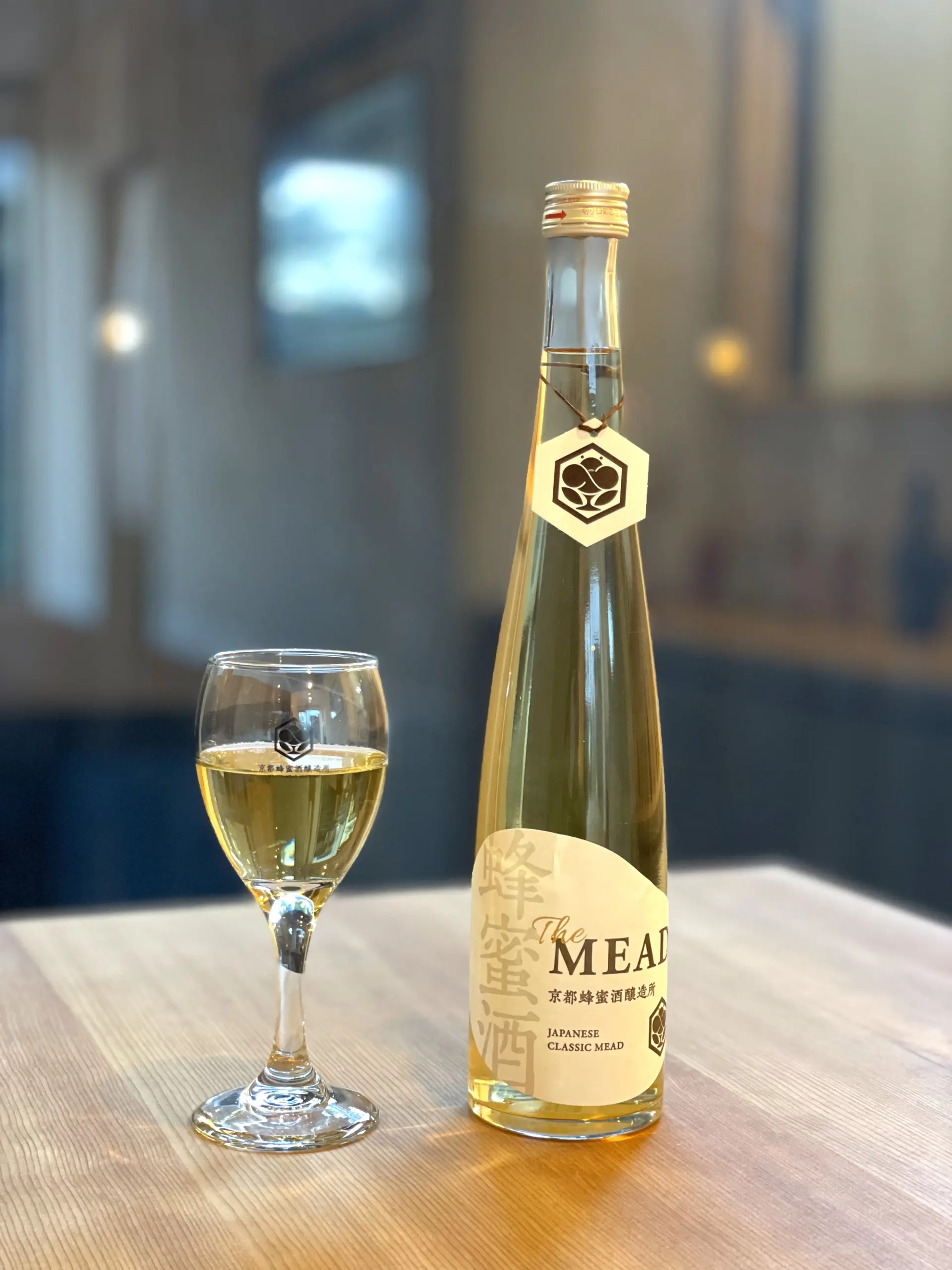
It is different from wine or liqueur with honey dissolved into it. The alcohol content is generally around 5–16%, and the flavor varies depending on the production method, aging period, the type of honey and water used, and the country where it is made. It looks like white wine, but the taste is completely different. Mead comes in a wide range of styles, from richly sweet varieties with deep honey flavor that make you want to drink them before or after a meal, to clean, refreshing ones that pair well with food.
Mead is attracting attention today partly because of pop culture. It often appears in movies, manga, and anime, and fans who see it there go looking to buy it. The boom in craft drinks such as craft beer and craft cola, which emphasize small-scale production and locally sourced ingredients, has also helped. For a variety of reasons, mead has become one of the alcoholic drinks drawing attention in recent years.
The Origins and History of Mead
Mead is said to be the first alcoholic drink humans ever consumed, and it is considered the oldest alcohol in the world. Honey, the main ingredient of mead, is even mentioned in the Kojiki, Japan’s oldest historical record, compiled in 712. Mead is also introduced as “meede” in a late Edo-period Dutch studies textbook called Ensei Ihou Meibutsukou. Since mead is made from honey, which has moisturizing and antibacterial properties, it may have been included in a medical text for that reason. Around 1960, mead began to be imported into Japan from the United Kingdom and was enjoyed as a “honeymoon drink.”
The history of mead varies by region around the world. It appears in Norse mythology, and Vikings are said to have drunk it on their ships. In the United States today, craft mead is booming, competitions are held, and there are said to be more than 500 meaderies.
Mead also appears in movies and manga. For example, it shows up in the Harry Potter films and in the hugely popular U.S. game Skyrim. Some people want to try in real life the drinks they can have in the game, while cosplayers who enjoy dressing up as characters from movies and anime sometimes buy mead to recreate that world.
Kaneichi Shoten, Brewing Mead in Kyoto
Establishing Its Own Brewery
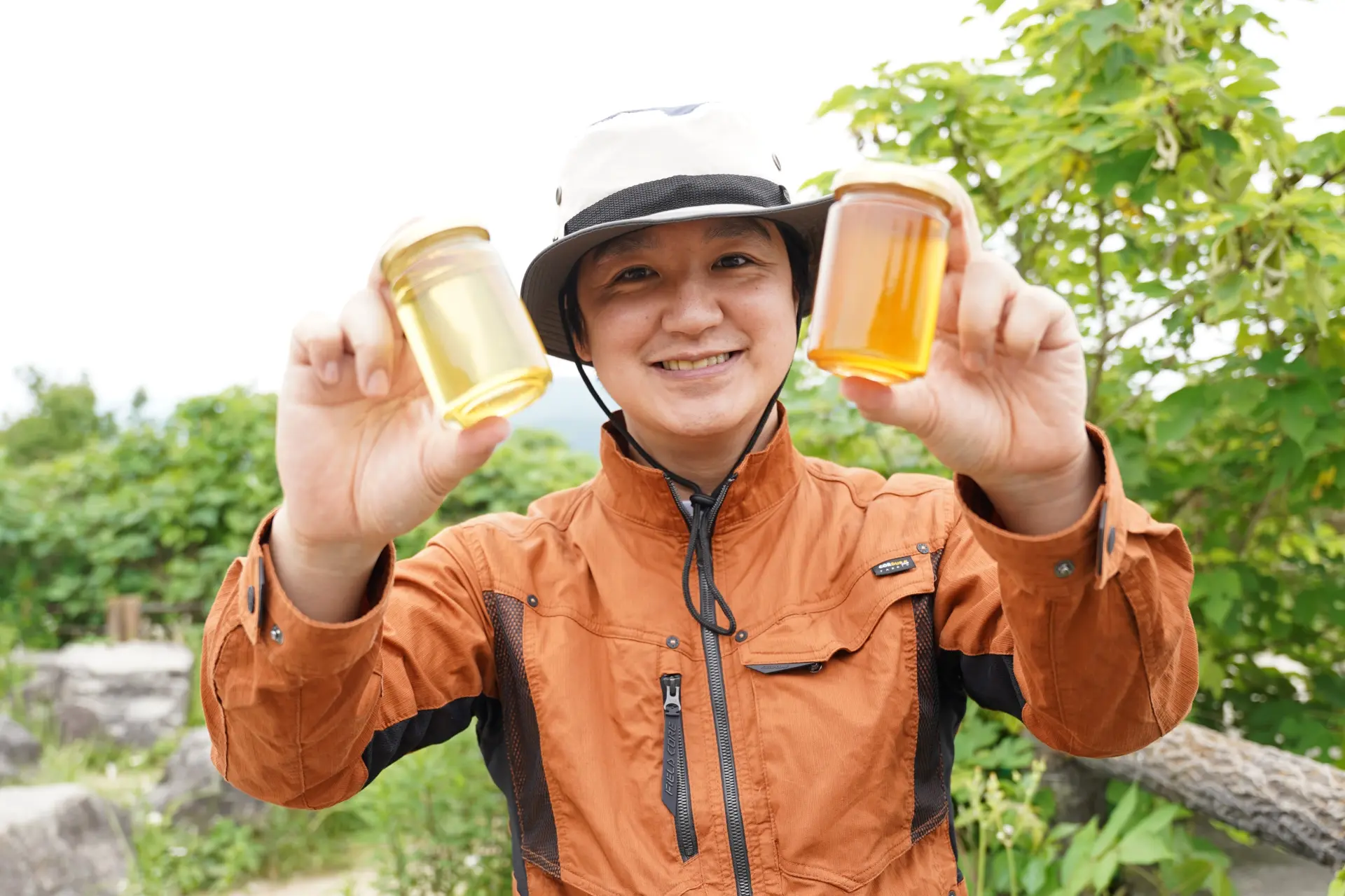
There is a company brewing this mead in Kyoto: Kaneichi Shoten, a honey specialty shop in Kyoto. Founded in 1930, the company specializes in honey. Rather than keeping bees and producing honey themselves, they are a honey shop that procures honey from many beekeepers. The person responsible for sourcing it is Takusaburo Ichikawa, the third-generation head of Kaneichi Shoten.
In March 2024, this honey specialty shop newly launched Kyoto Mead Brewery in Marutamachi, Kyoto.
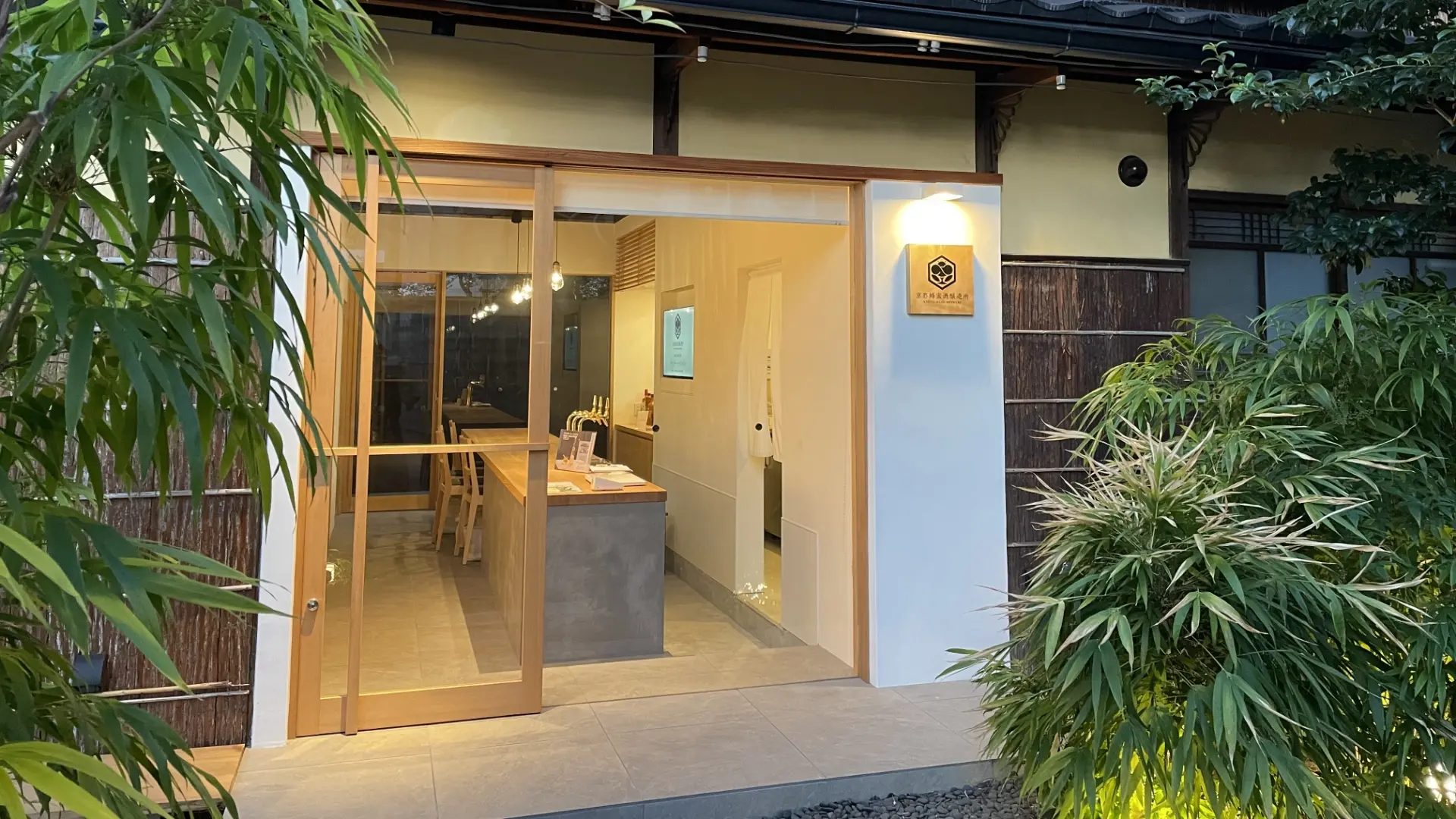
It is Kyoto’s first brewery specializing in mead. The mead is brewed with domestically produced honey, originally blended to bring out the unique characteristics of various honeys sourced directly. In a Kyoto machiya townhouse that is Approx. 100 years old, they brew while preserving the character of the honey itself. Each bottle made at Kyoto Mead Brewery is filled with Honey Hunter Takusaburo Ichikawa’s love for mead and honey.
- Name in Japanese
- 京都蜂蜜酒醸造所
- Address
- 18 Dojocho, Muromachi-dori Marutamachi-sagaru, Nakagyo-ku, Kyoto, Kyoto 604-0001
- Official website
- Official website (Japanese)
Meads Brewed by Kyoto Mead Brewery
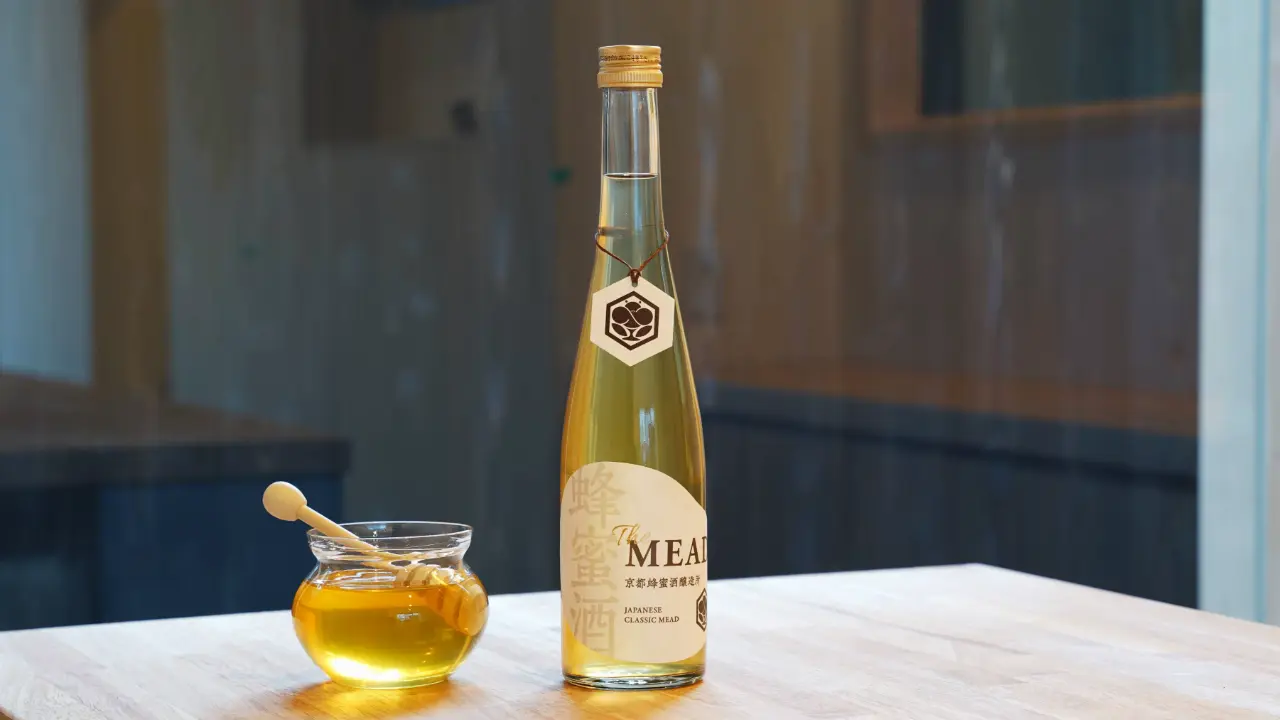
The MEAD
This is The MEAD, the first mead made by Kyoto Mead Brewery.
Takusaburo Ichikawa visited beekeepers around Japan and brewed it using domestically produced honey blended in-house to bring out the characteristics of the various honeys he sourced directly. It is truly a commemorative first bottle, a classic mead created with the hope of starting a new chapter in the history of Japanese mead from here. It was made with a strong sense of determination and mission: to create a bottle that can help spread mead culture in Japan as a drink people can casually talk about like wine or beer.
It has a gorgeous, honey-forward flavor with an addictive sweetness. Even though the alcohol content is a relatively strong 7%, the gentle sweetness of the honey makes it easy to drink gulp after gulp. It tastes great chilled straight from the refrigerator, and it is also recommended on the rocks with ice. It is also recommended to change how you drink it depending on the season. In hot weather, for example, you can enjoy it as a mead highball mixed 1:1 with soda, or drink it refreshingly with frozen lemon added. In colder weather, adding spices and drinking it as hot mead is also recommended.
One of the features of The MEAD is that you can enjoy it in so many different ways.
- Volume
- 500ml
- Honey Used
- Japanese wildflower honey
- Yeast Used
- Wine yeast
- Secondary Ingredients
- None
- Alcohol Content
-
7%
*No added fragrance, no artificial coloring, gluten-free
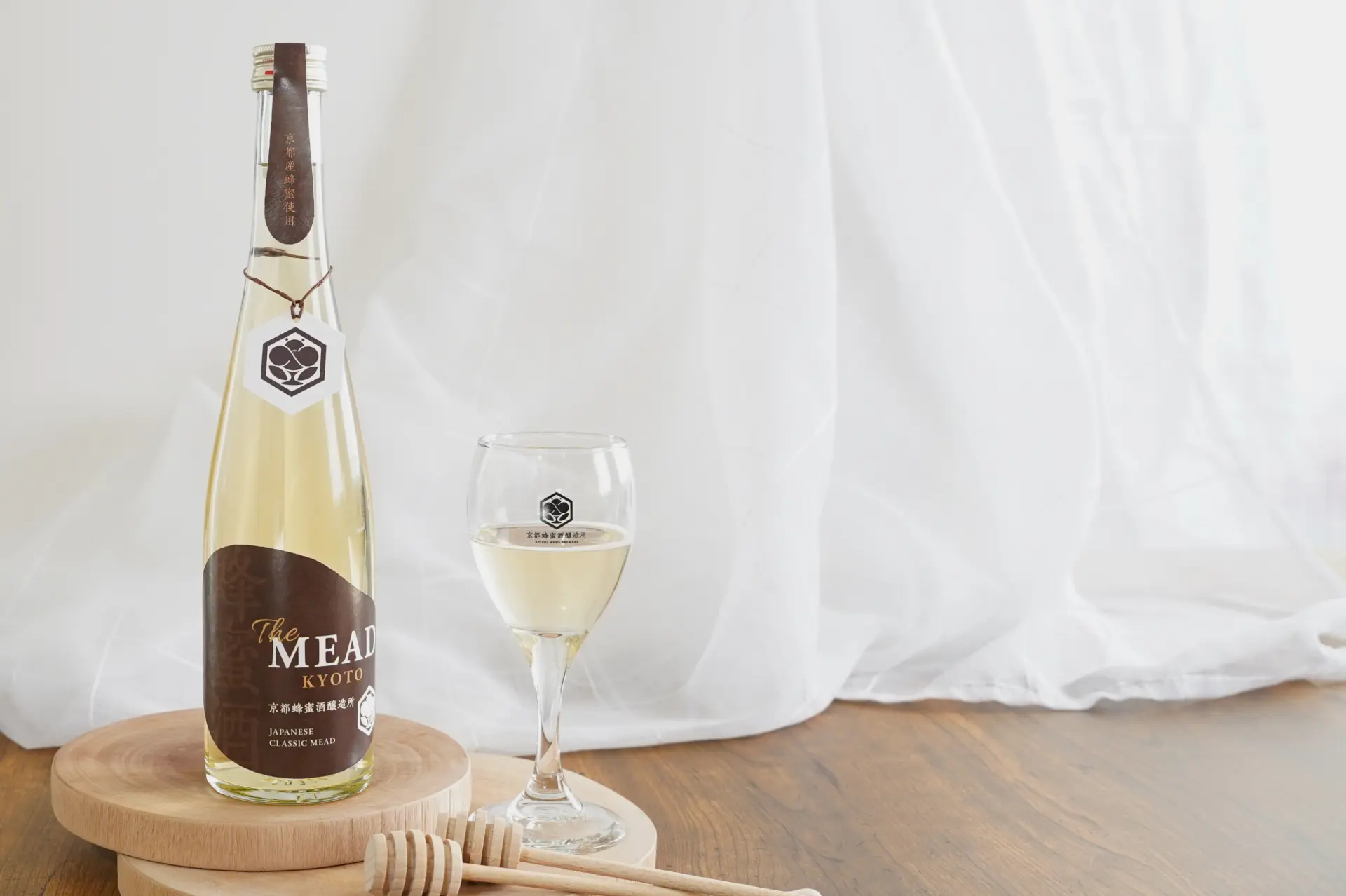
The MEAD Kyoto
This mead was brewed to bring out the characteristics of wildflower honey that Mr. Ichikawa sourced directly from beekeepers in Kyoto.
It is a product filled with the blessings of Kyoto’s local nature, something Mr. Ichikawa and his team have long cherished. Kyoto is a place where tradition and innovation have coexisted for centuries, and they say that spirit is also valued in making mead.
When you take a sip of this beautiful golden honey wine, its rich aroma and honey sweetness spread across your palate. This mead is best enjoyed chilled and straight.
They hope not only people from Kyoto, but also visitors from Japan and overseas, will enjoy its flavor.
- Volume
- 500ml
- Honey Used
- Wildflower honey from Kyoto Prefecture
- Yeast Used
- Wine yeast
- Secondary Ingredients
- None
- Alcohol Content
-
8%
*No added fragrance, no artificial coloring, gluten-free
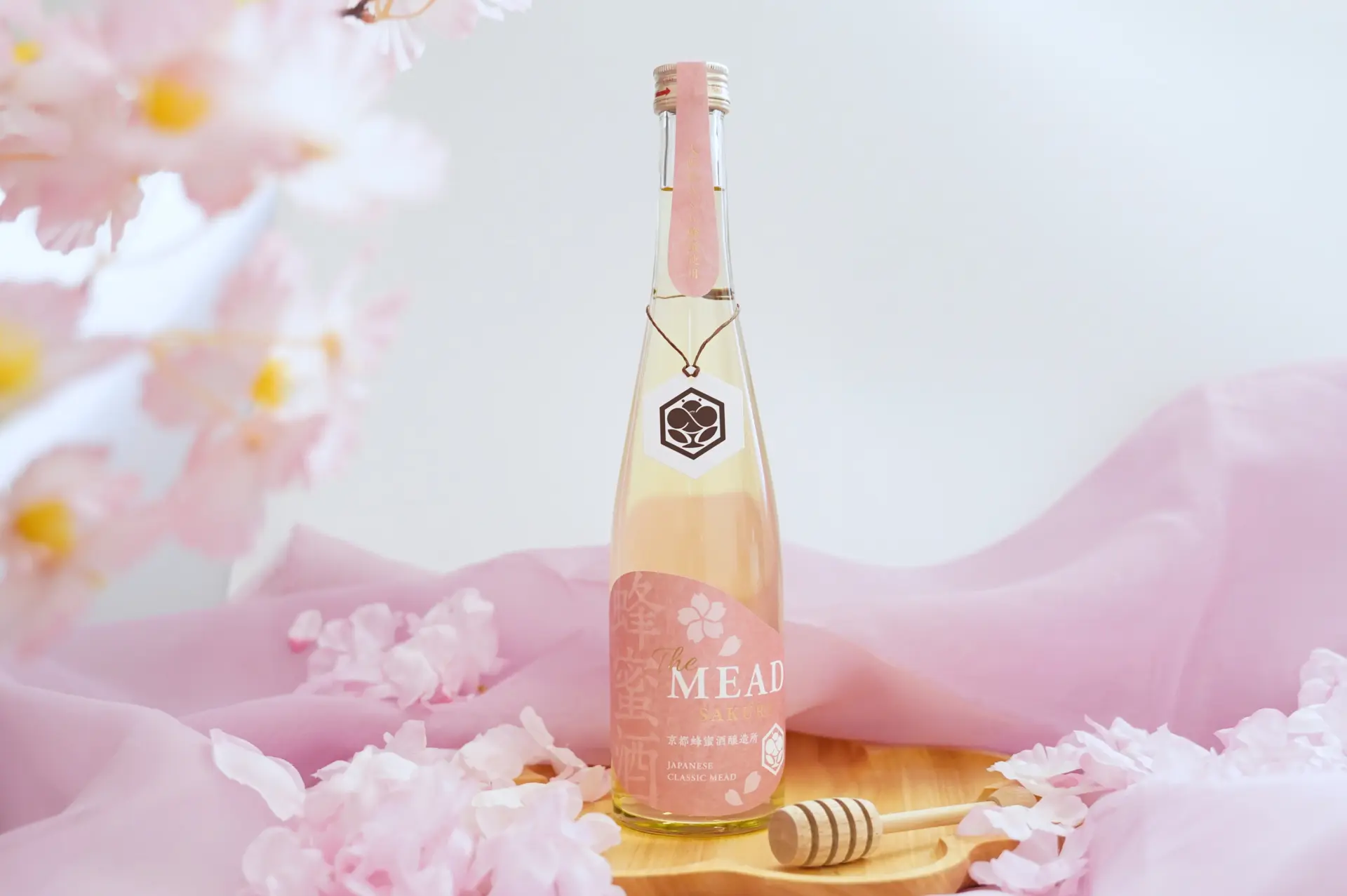
The MEAD Osaka Sakura
This mead is made with honey collected from cherry blossoms blooming in Kashiwara City, Osaka Prefecture, and wine yeast.
Created as part of the Kansai Mead series for Expo 2025 Osaka, Kansai.
It was developed as a drink that values Japan’s four seasons and lets people enjoy flavors unique to each season. By incorporating Japan’s distinctive sense of seasonality into mead, it reflects the hope that people in Japan and abroad will rediscover the charm of Japan. Kashiwara City in Osaka Prefecture, where this cherry blossom honey is harvested, is located in the Nakakawachi area of Osaka Prefecture, near the mountains extending from the Ikoma range, with the Yamato River flowing through it, making it a nature-rich area. It has also long been known for grape cultivation.
This elegant mead is made from a highly popular honey with a gentle aroma and a rich, distinct sweetness.
- Volume
- 500ml
- Honey Used
- Sakura honey from Osaka Prefecture
- Yeast Used
- Wine yeast
- Secondary Ingredients
- None
- Alcohol Content
-
7%
*No added fragrance, no artificial coloring, gluten-free
Brewing Method
There are various ways to brew mead. There are about 20 to 30 breweries making mead in Japan, but only about six specialize in mead.
At present, most places making mead are sake breweries that also produce it. Among them, Kyoto Mead Brewery, as a honey specialty shop, places importance on how fully it can bring out the potential of honey, and is particular about its brewing method so that the finished mead retains the flavor of honey clearly.
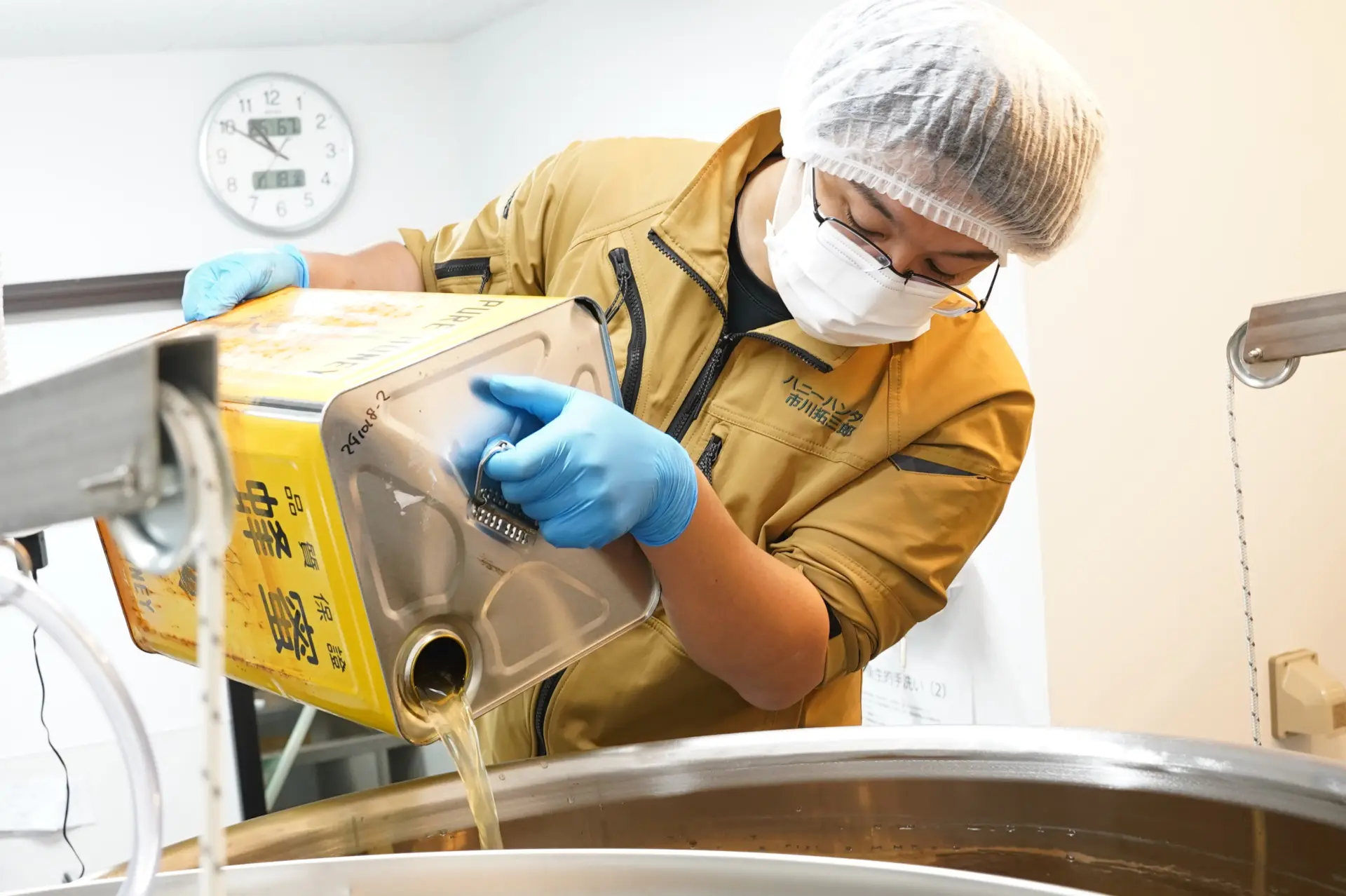
The ingredients needed to make mead are only honey, water, and yeast. At most breweries in Japan, the production method is similar to sake, and many heat-treat the mead at the final stage. At Kyoto Mead Brewery, however, they finish it by filtering out the yeast without heat treatment.
To prevent unwanted flavors from developing, the yeast is matured at a low temperature, and the mead is completed over roughly 1.5 to 2 months. Paying close attention to temperature, fermentation days, and filter fineness, this systematic approach is one of the characteristics of the mead made at Kyoto Mead Brewery.
-
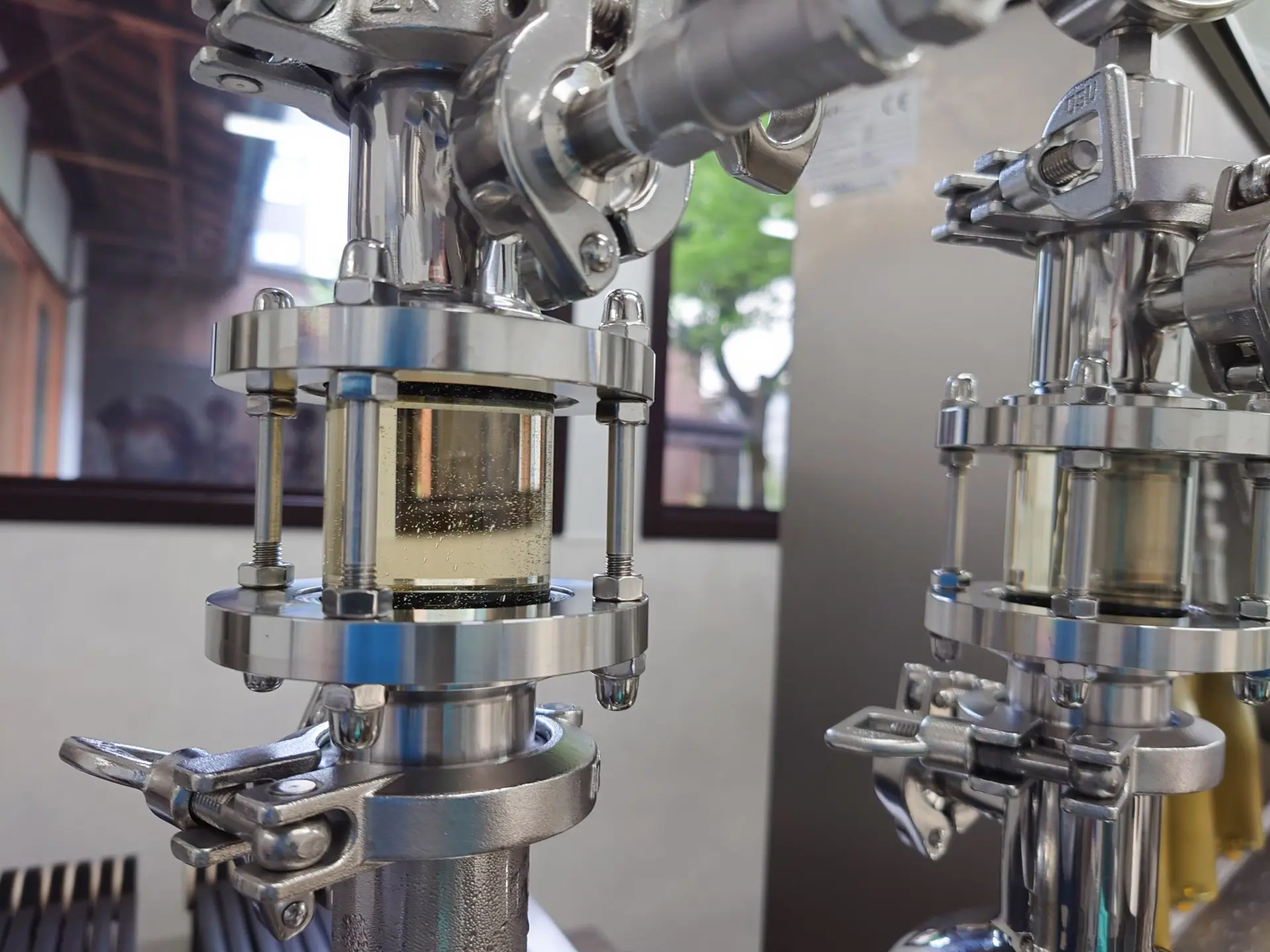
Brewing mead
-
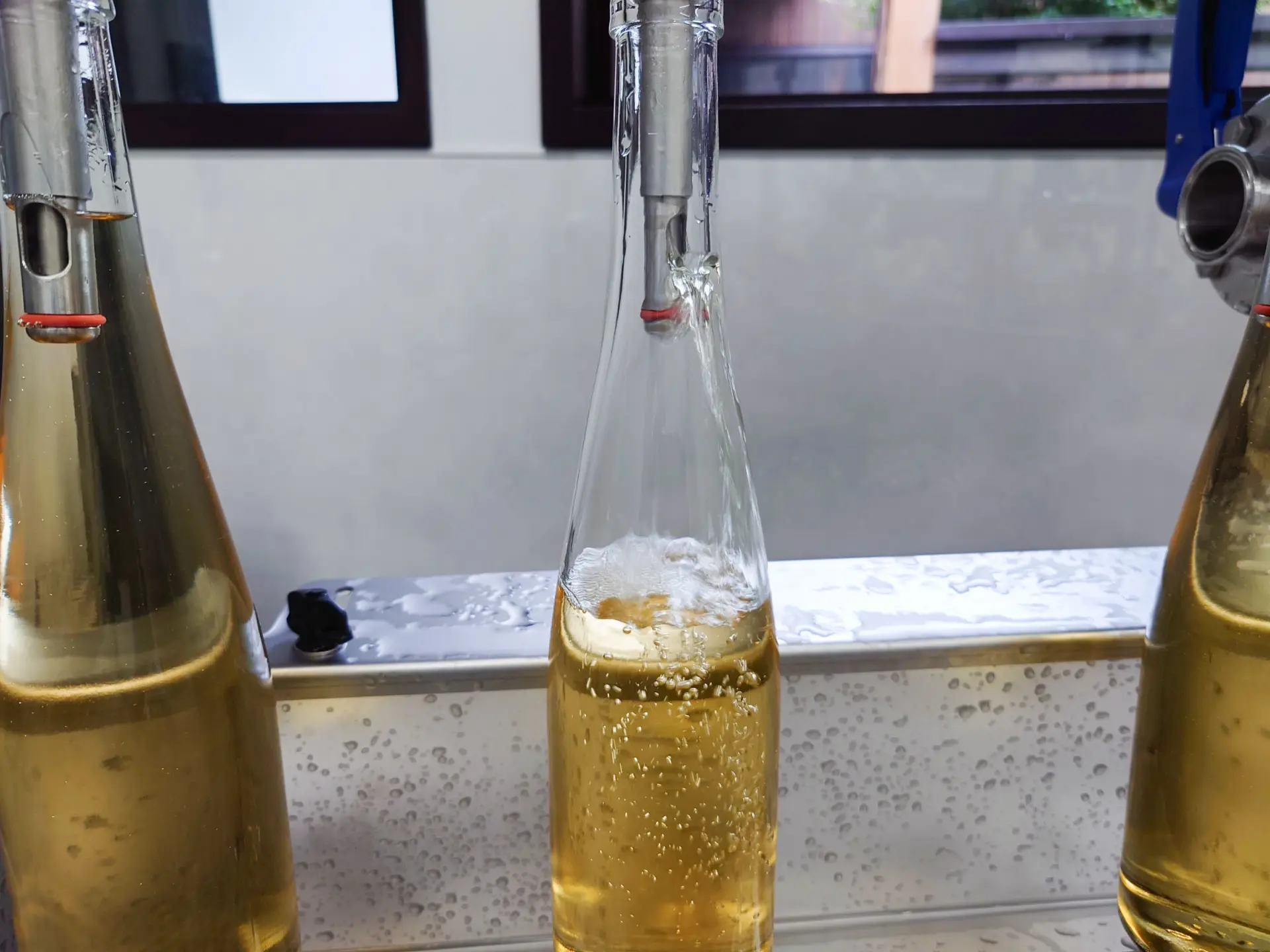
The yeast is matured at a low temperature, and it takes 1.5 to 2 months to complete
Making delicious mead is not so easy. That is because the raw honey itself has a major impact on quality. Honey harvested in Japan, with its four seasons and rich vegetation, differs in flavor and characteristics by region and reflects the character of each place.
Mead made with honey collected from cherry blossoms tastes different from mead made with honey collected from chestnut blossoms. In particular, The MEAD Kyoto and The MEAD Osaka Sakura place importance on expressing the flavors and culture of the Kansai region through mead. They aim to offer mead as an “experience” and create products that let people encounter Japan’s nature, culture, and history through mead.
The Story Behind the Launch
In 2003, Kaneichi Shoten first encountered mead. It all began when a beekeeper in New Zealand introduced them to it. They instantly fell in love with mead as an alcoholic drink made from honey and strongly felt they wanted to spread mead in Japan.
First, they began working toward importing mead. They obtained a liquor license, and in 2005, two years after first encountering mead, they actually visited manufacturers in Australia and the United States. While learning about mead from them, they imported and began selling Approx. 10 types of mead. After that, they expanded their lineup of sweet meads, importing from producers in Canada, the United Kingdom, Poland, and other countries, until people began to say, “When it comes to mead, it’s miel mie.”
Up to that point, they had mainly focused on imports, but from 2017 they started making mead domestically. They asked Joyo Shuzo, a sake brewery in Joyo City in the same Kyoto Prefecture, to produce mead. After various trial batches, they released two kinds of mead. They then successively launched eight types of mead made with honey sold by Kaneichi Shoten, and came to handle both domestically contract-brewed mead and imported mead from overseas.
Then, wanting to help raise awareness of mead in Japan, they decided in 2021 to create a brewery to make mead themselves. They moved toward making it a reality by obtaining a liquor manufacturing license and other preparations, and in March 2024, 2.5 years later, they finally opened the long-awaited Kyoto Mead Brewery.
Commitment Starts with Honey
Honey Hunter Takusaburo Ichikawa
Takusaburo Ichikawa, the third-generation president of Kaneichi Shoten, who launched Kyoto Mead Brewery, is active as a “Honey Hunter.”
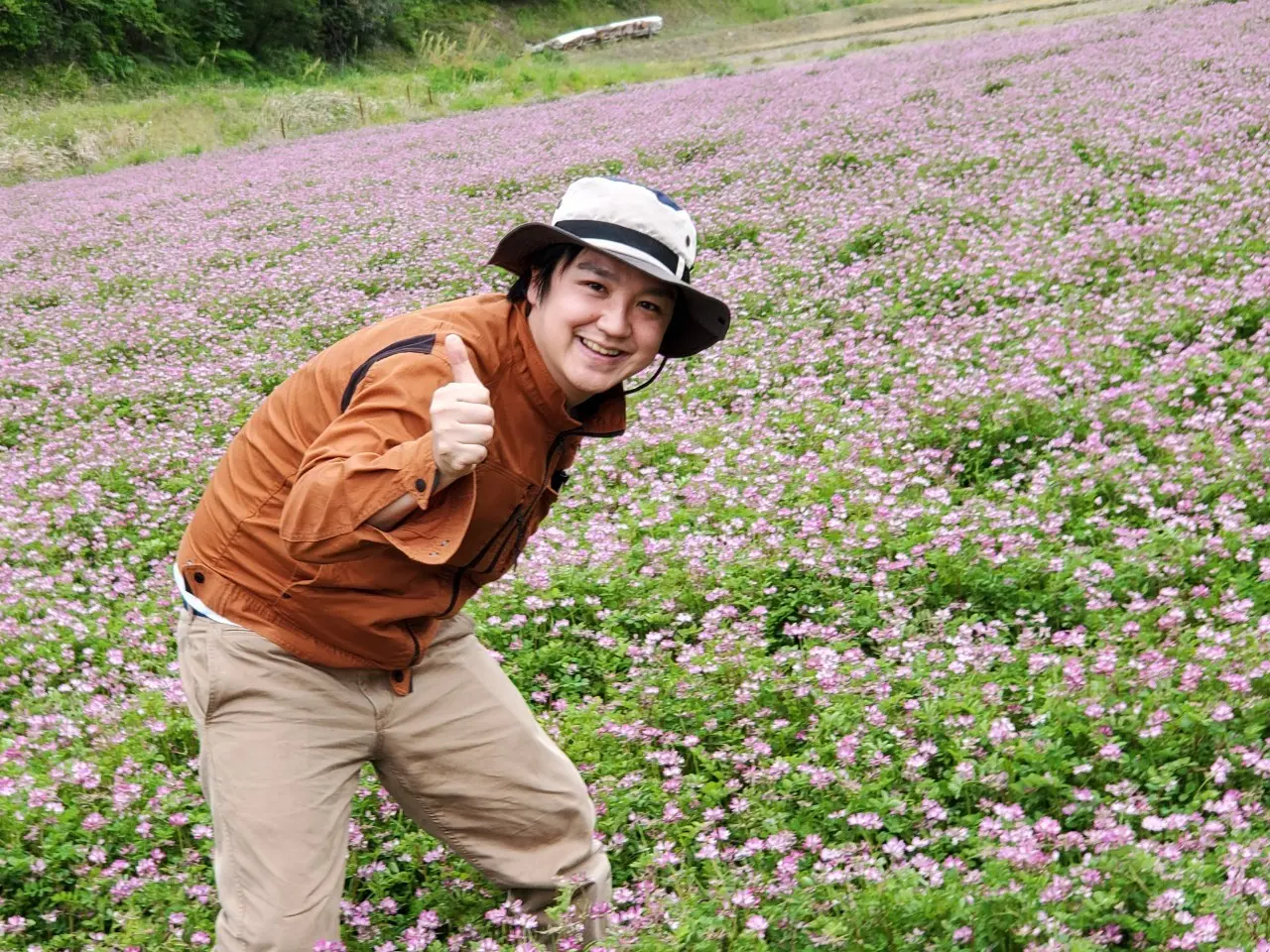
Born as the grandson of the founder of Kaneichi Shoten, he has been surrounded by honey since childhood. Mr. Ichikawa visits beekeepers not only in Japan but around the world to source honey. In a year, he tastes over 300 kinds of honey, and his travel distance exceeds Approx. 52,000 km, equal to 1.3 times around the Earth.
By visiting beekeepers himself and seeing with his own eyes what kind of environment the bees are raised in and how the honey is harvested, and by tasting it himself, he aims to provide “safe, secure, high-quality honey.”
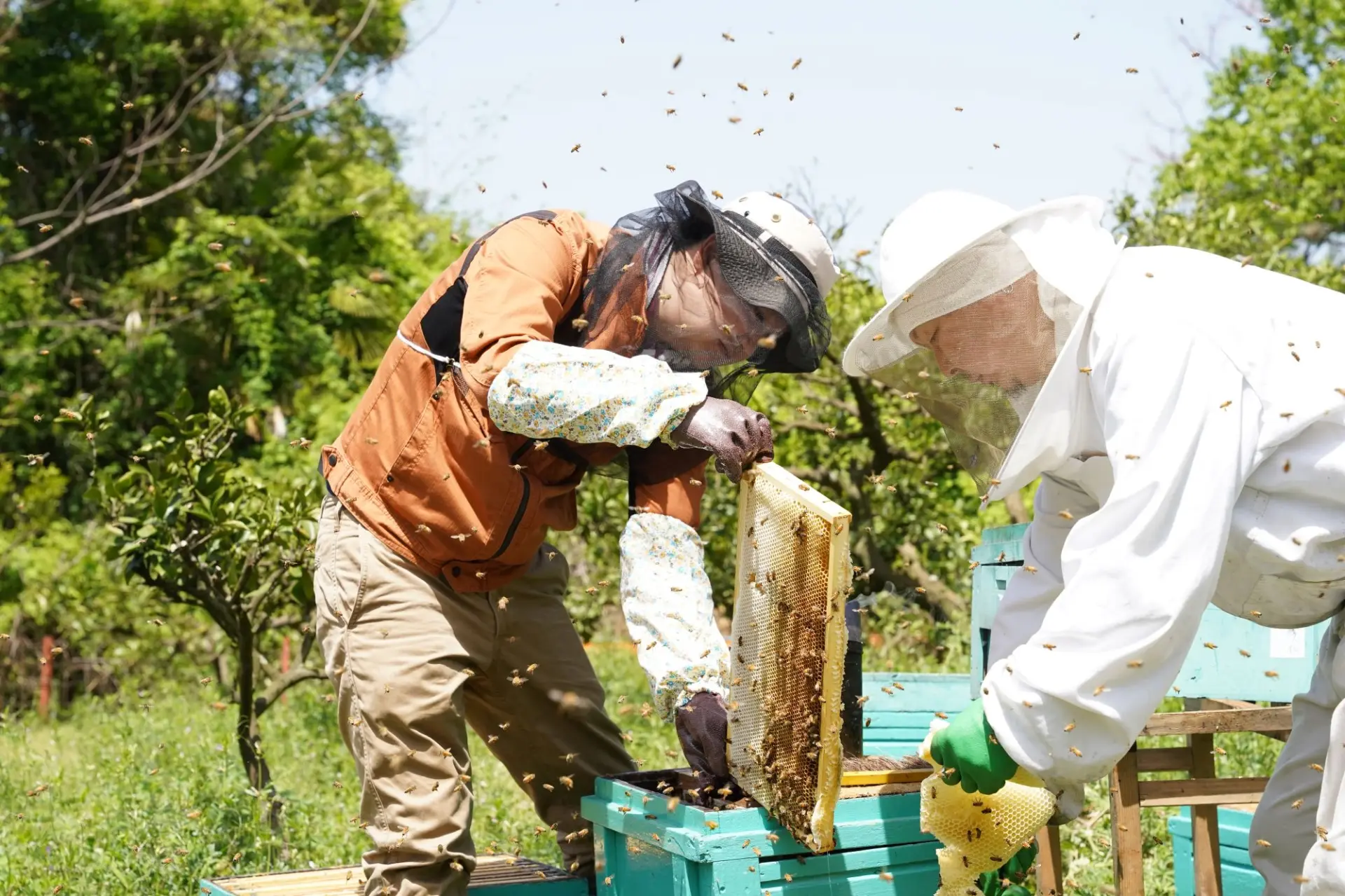
Mr. Ichikawa travels the world all year long in pursuit of honey. Every spring, he heads directly to the beekeepers, drives a 2-ton truck himself, and follows the beekeepers moving north with their bees, from Kyushu in the south all the way to Hokkaido in the north. He visits honey harvesting sites and sometimes even works alongside them. From autumn to winter, it is spring to summer in the Southern Hemisphere. So Mr. Ichikawa heads there as well. To find high-quality honey filled with the care of bees and beekeepers and deliver it to customers, he spares no effort, time, or money.
Honey Specialty Shop “miel mie”
The honey that Mr. Ichikawa sources from around the world can be purchased at miel mie, the honey specialty shop run by Kaneichi Shoten, where he serves as president.
In fact, Kyoto Mead Brewery is purely a place for brewing mead, so you cannot purchase products there.
Mead can be purchased at miel mie. They also offer mead tastings at miel mie!
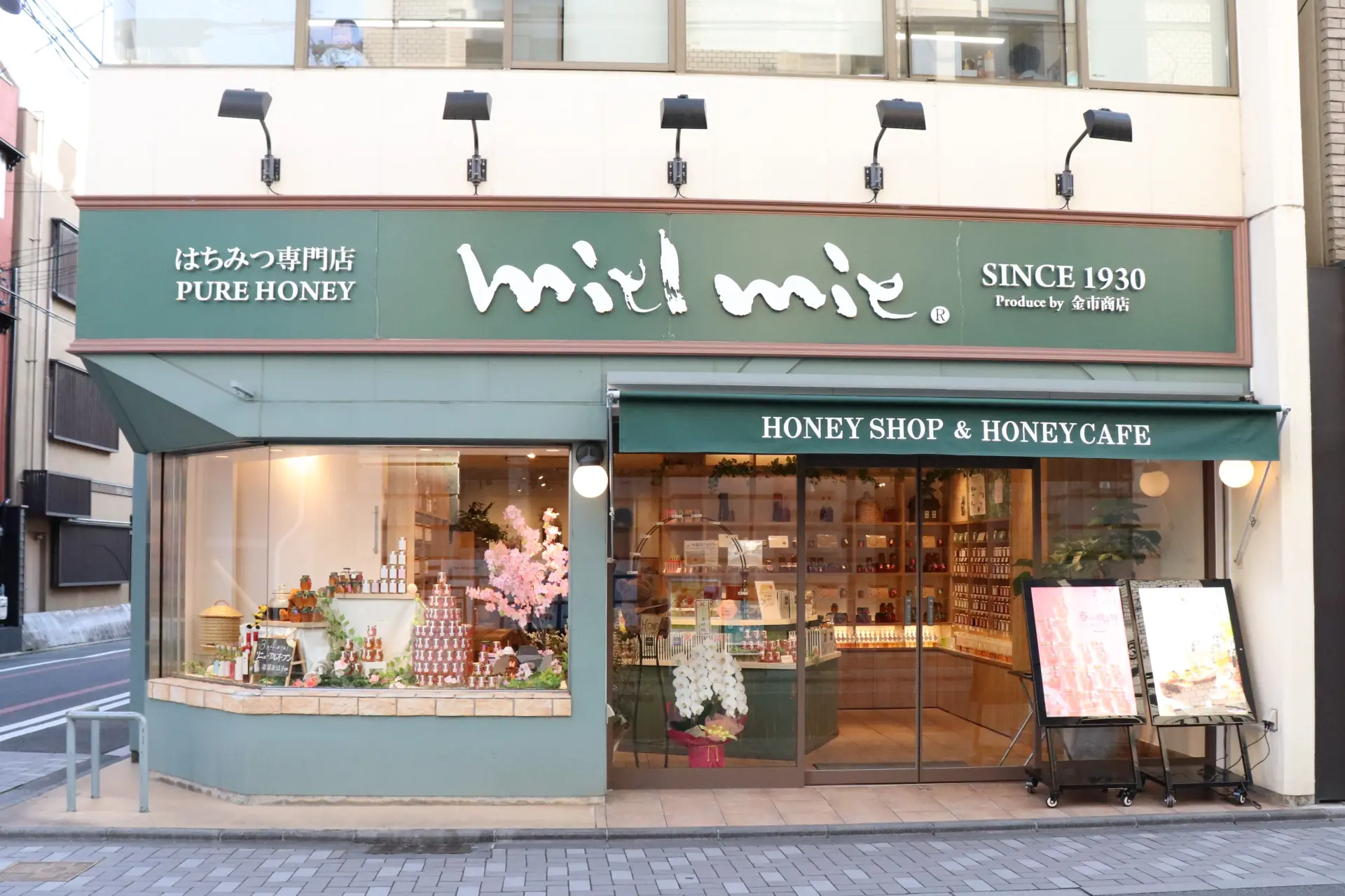
The shop opened in 1998 and is located in Nakagyo Ward, Kyoto City. Its green roof is the landmark. Once you step inside the stylish interior, the first thing you notice is the honey displayed on a Ferris wheel.
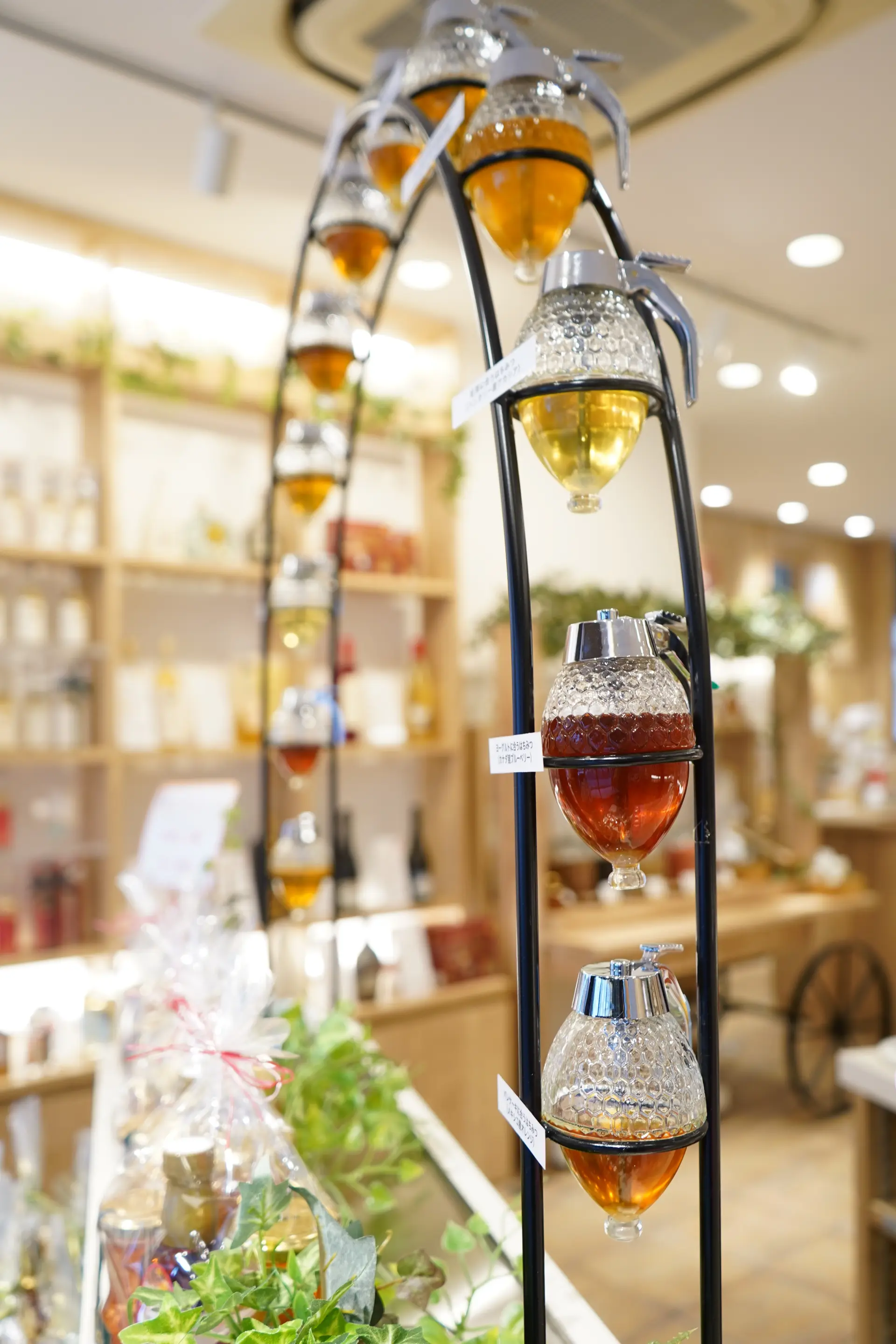
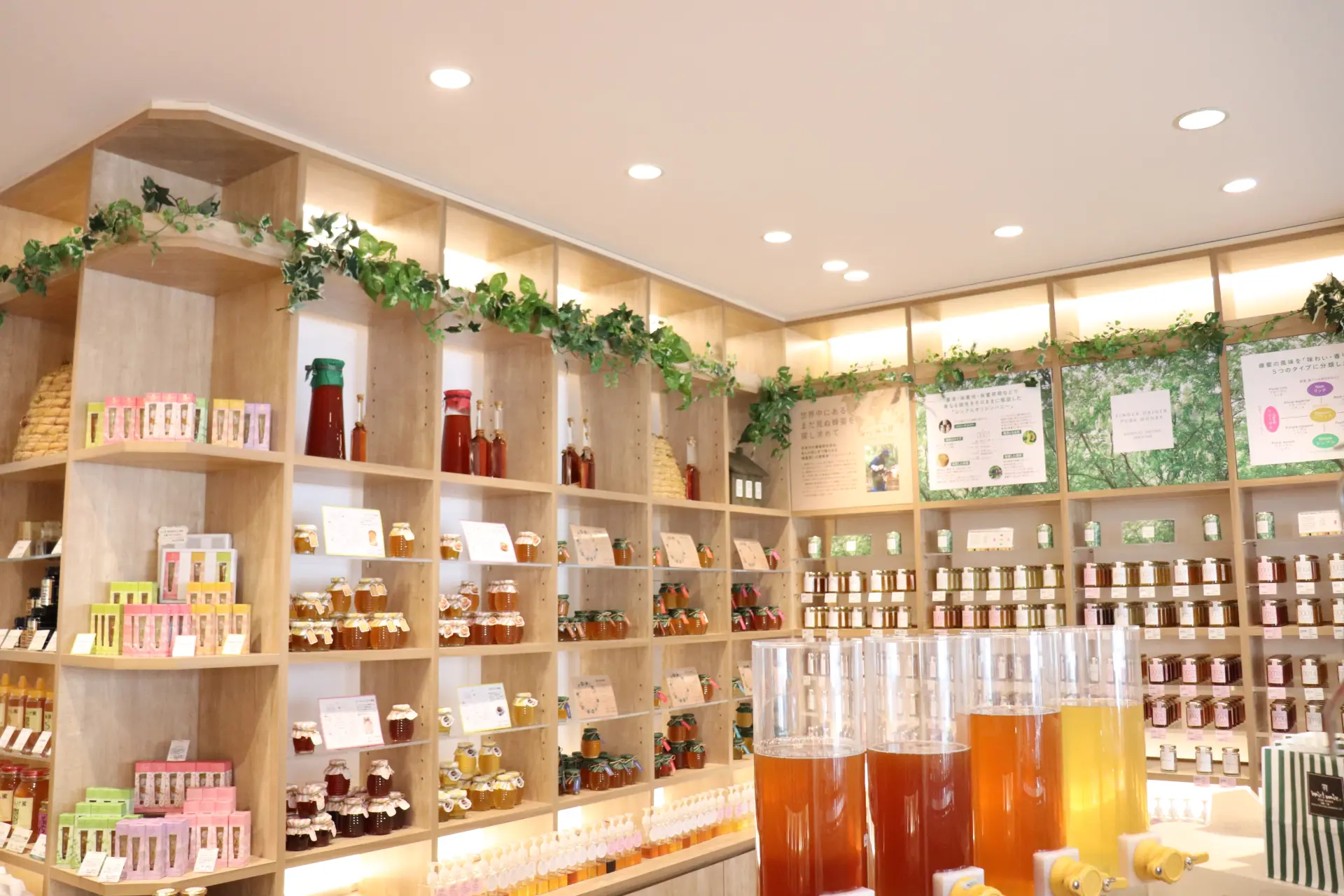
With more than 100 varieties of honey lined up at all times, it boasts one of the largest selections in Japan. miel mie is truly a honey theme park.
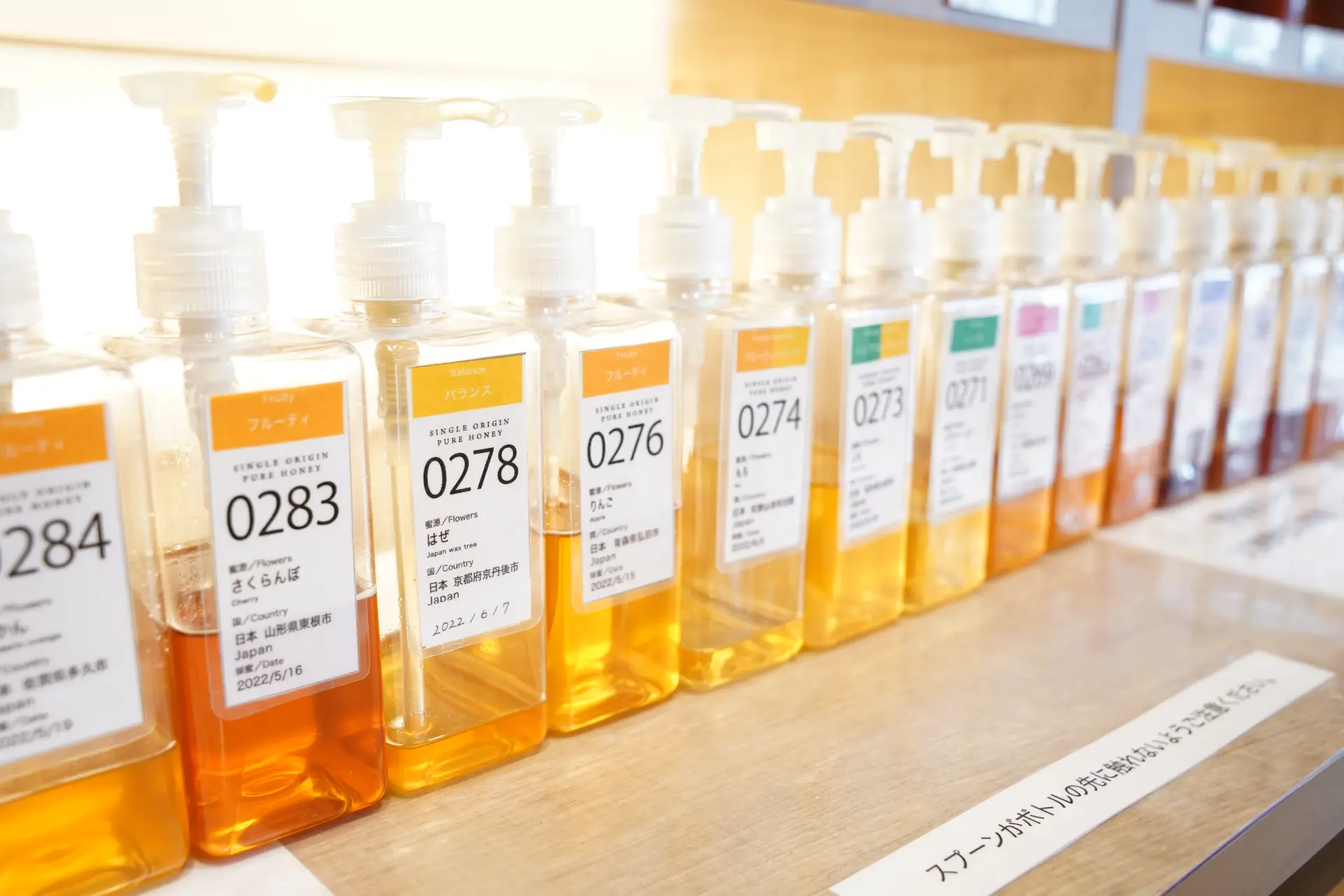
Of course, you can sample any honey that catches your interest! There are also more than 100 kinds of honey available for tasting.
If you tell the Honey Concierge, staff who know honey inside and out, what flavors you like, they will recommend the honey that suits you best. Whether you want advice like “I want to use honey this way, which one should I choose?” or “There are so many kinds of honey that I can’t decide,” you can feel free to ask anything, and they will help you find the best one.
The shop name “miel mie” combines “miel,” the French word for honey, and “mie,” meaning “my,” so the name means “my honey.” It reflects the hope that customers will find their very own honey from among the many varieties available.
Another unusual feature of this shop is that it sells honey by weight.
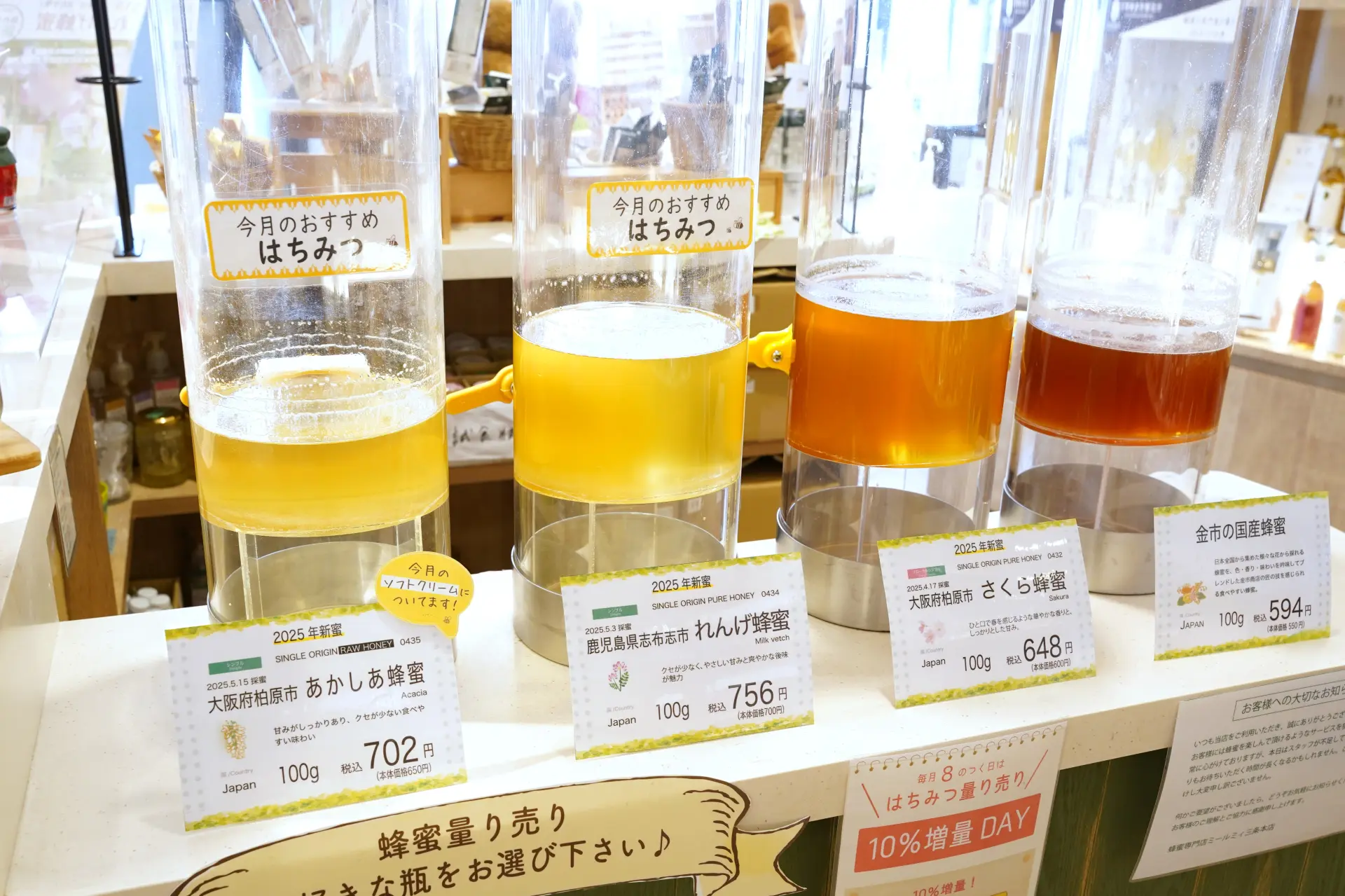
There are four kinds of honey sold by weight, and they change every month. It makes buying a month’s supply of honey and looking forward to coming back the following month part of the fun.
- Name in Japanese
- ミールミィ 三条本店
- Hours
- 11:00am - 7:00pm
- Phone
- 075-221-6639
- Address
- 21 Nakanomachi, Sanjo-dori Tominokoji Nishiiru, Nakagyo-ku, Kyoto
- Access
- 10-minute walk east along Sanjo-dori from Karasuma Oike Station on the Subway Tozai Line
- Official website
- Official website (Japanese)
A Signature Specialty: Single Origin Honey
Honey differs depending on the nectar source, harvest location, and harvest season. It is similar to the idea of vintage in wine or bean-to-bar in chocolate. So why is it possible to produce “single-flower honey,” made from the nectar of just one kind of flower, even when so many flowers are blooming?
It has to do with the habits of bees. To collect nectar efficiently, hardworking bees prioritize flowers with high sugar content in their nectar. Once they find a good nectar source, they communicate its location to the other bees, and the others also gather nectar from that same source. That is how single-flower honey is made.
For example, from March to May, there is sakura honey. It can be harvested across Japan and is known for its strong sweetness and noticeable aroma.
Around May, there is mikan honey. Harvested in western Japan, such as Wakayama and Nagasaki, it has a refreshing citrus-like flavor.
In May, apple honey is also harvested in Nagano and Aomori. It is known for its juicy, fruity apple-like taste.
Around June, acacia honey is harvested in eastern Japan, the Tohoku region, and Hokkaido, and it is characterized by a simple, mild flavor.
After June, chestnut honey is harvested throughout Japan, and it has a roasted aroma with a slight bitterness, much like sweet roasted chestnuts.
From July to August, there is linden honey, harvested in Hokkaido. It has a strong aroma and a herb-like scent. One of the fascinating things about honey is how completely its taste changes depending on what plant the nectar came from, where it was harvested, and when it was harvested.
The Single Origin Honey series was commercialized by making use of those individual characteristics and numbering each product starting from “0001.”
By the way, for bees to complete honey, the sugar content must reach around 80%, but freshly collected flower nectar contains a lot of moisture and has low sugar content. So bees use enzymes in their bodies to break it down into glucose and fructose, then fan it with their wings to evaporate the moisture and concentrate it into honey.
The lifespan of a bee is only about one month, and a single bee produces just one teaspoon of honey in its lifetime. That really makes honey feel even more precious.
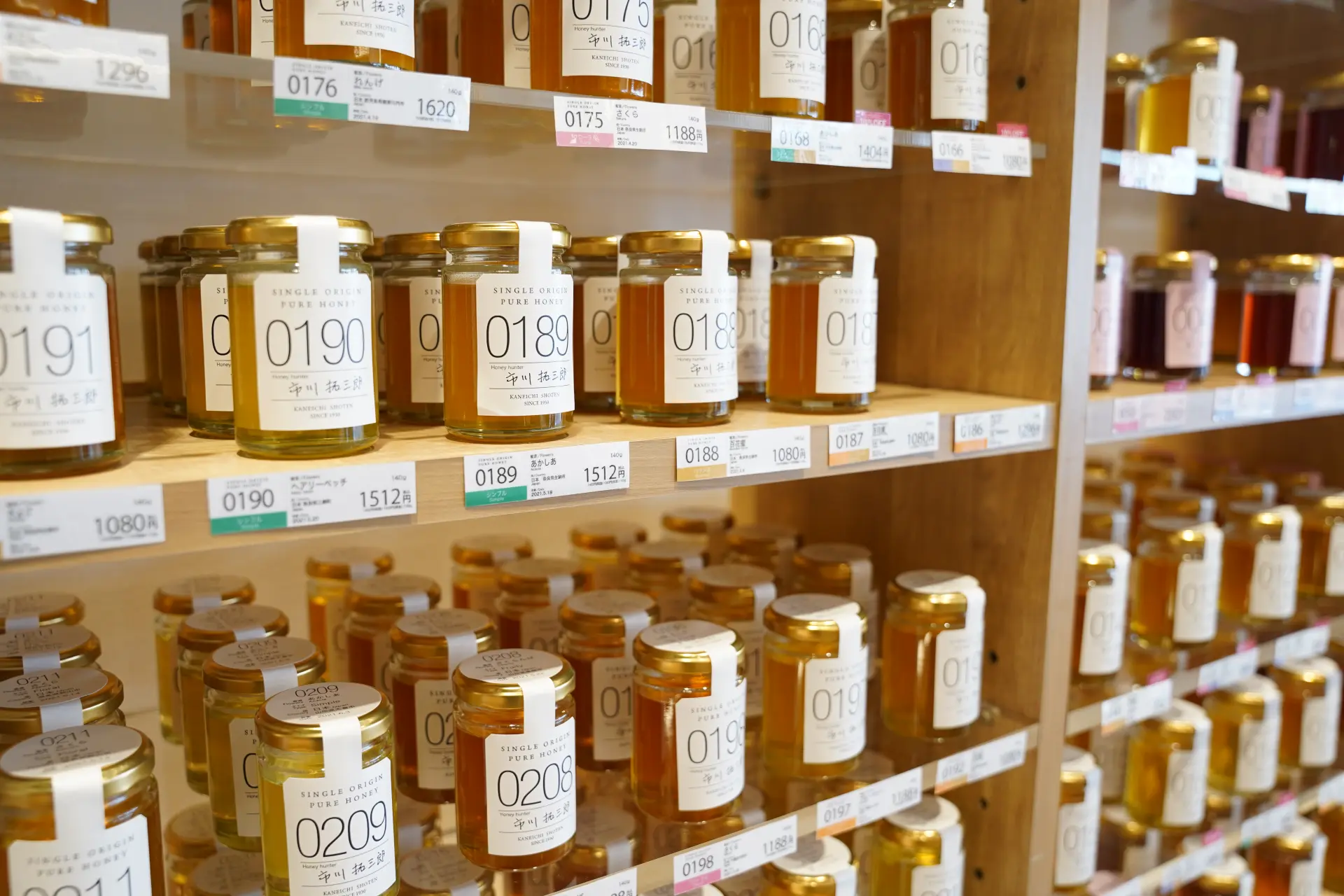
The labels in this series contain six pieces of information.
1. Honey Number
Each label has a four-digit number. Honey is counted as a different type based on its nectar source, type, harvest location, and harvest season.
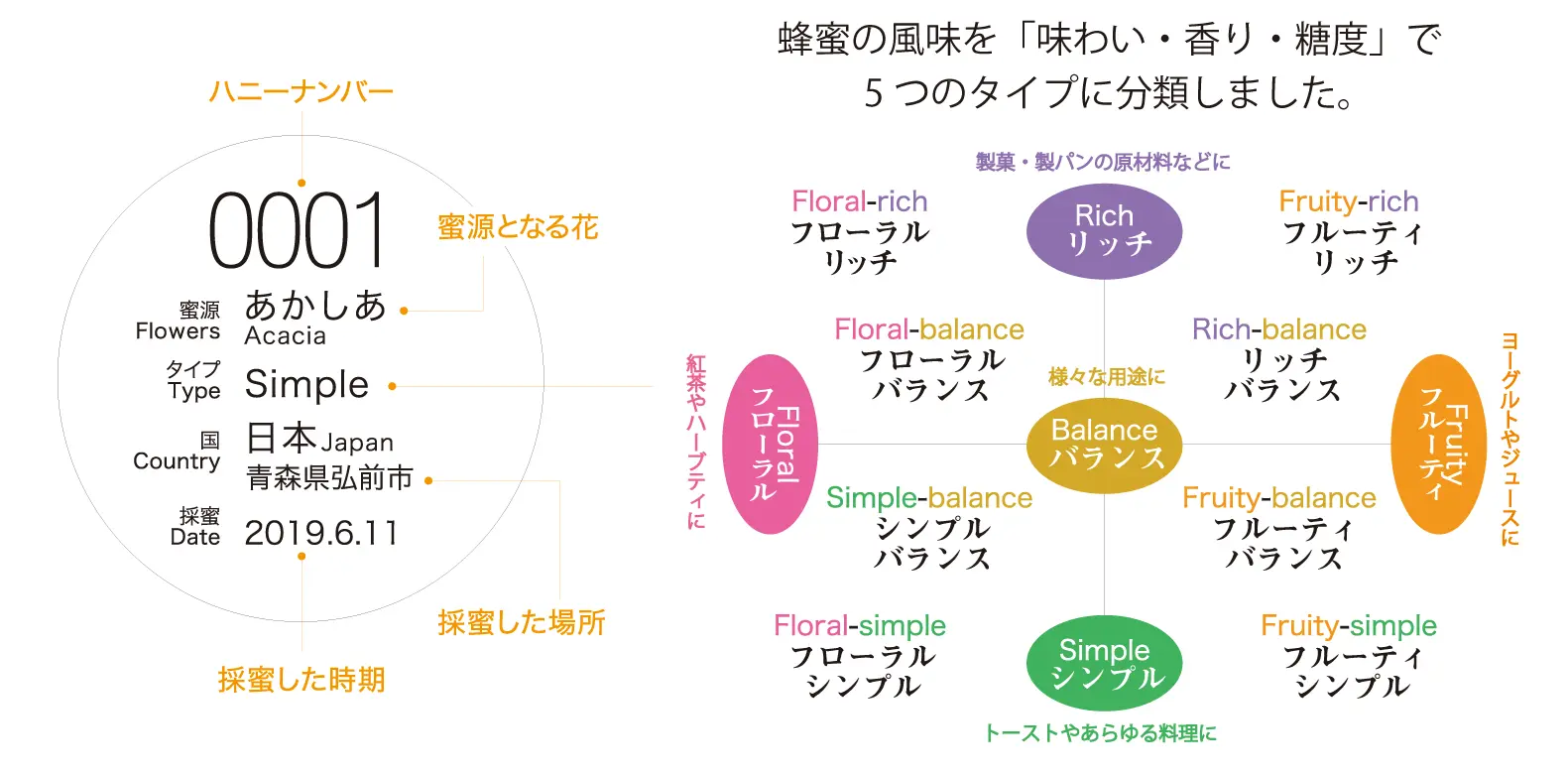
2. Nectar Source
This indicates what kind of flowers the bees collected nectar from. The nectar source is said to be one of the most important factors in determining the flavor of honey. Japan stretches long from north to south, so it has four distinct seasons. That creates a wide range of vegetation and makes it possible to gather honey from many different flowers.
There are also many highly distinctive honeys around the world that are rare in Japan. These come from environments unlike Japan’s, influenced by climates such as tropical or cold regions and by industries such as coffee and fruit production. There are nearly 50 kinds of honey categorized by nectar source, and the selection is said to be among the best in Japan.
3. Type
Honey is categorized into five types based on flavor, aroma, and sugar content.
- “Simple”... Clean and easy to enjoy. This versatile honey works for everything from toast to cooking.
- “Rich”... A honey with distinctive flavor and appearance. To make the most of its character, it is recommended as an ingredient for confectionery and baking.
- “Floral”... Characterized by a soft floral aroma that spreads in your mouth. Recommended for adding to black tea or herbal tea.
- “Fruity”... Known for its juicy flavor. Recommended with yogurt or fruit juice.
- “Balance”... Just as the name suggests, this type has an excellent balance of sweetness and aroma. It can be used in many different ways.
4. Harvest Location
This shows where the honey was harvested. Even with the same nectar source, the flavor apparently changes slightly depending on the region where it was collected. It is fun to compare them while noticing those subtle differences by production area.
5. Harvest Season
When sourcing honey, Honey Hunter Ichikawa says he asks for as much detail as possible about the environment where the honey was harvested. That is because even in the same region and from the same nectar source, climate and environmental conditions change from year to year, and he wants to understand how those changes affect the honey.
Not only extreme heat, typhoons, and low rainfall, but also damage from wild animals can affect plants and trees, changing the flavor. Sometimes even a single day of sudden rain or dramatic temperature swings can completely alter the quality. Collecting all of that information comprehensively helps keep quality stable. It reflects Mr. Ichikawa’s commitment to knowing everything about honey and delivering the best possible products.
6. Honey Hunter Ichikawa’s Signature
All Single Origin Honey products bear Mr. Ichikawa’s signature. It is proof that the honey was sourced to the standards of Honey Hunter Ichikawa. The signature reflects his confidence and sense of responsibility in providing “safe, secure, high-quality honey.”
A Cafe Is Also Attached
At the back of the miel mie Sanjo Main Store, there is also the attached “miel mie honey cafe.”
At the cafe, you can enjoy luxurious honey toast with unlimited honey, as well as drinks and soft-serve ice cream that let you experience the natural flavor of honey.
The cafe’s most popular item is the honey toast, made with thick bread that is crispy on the outside and fluffy inside.
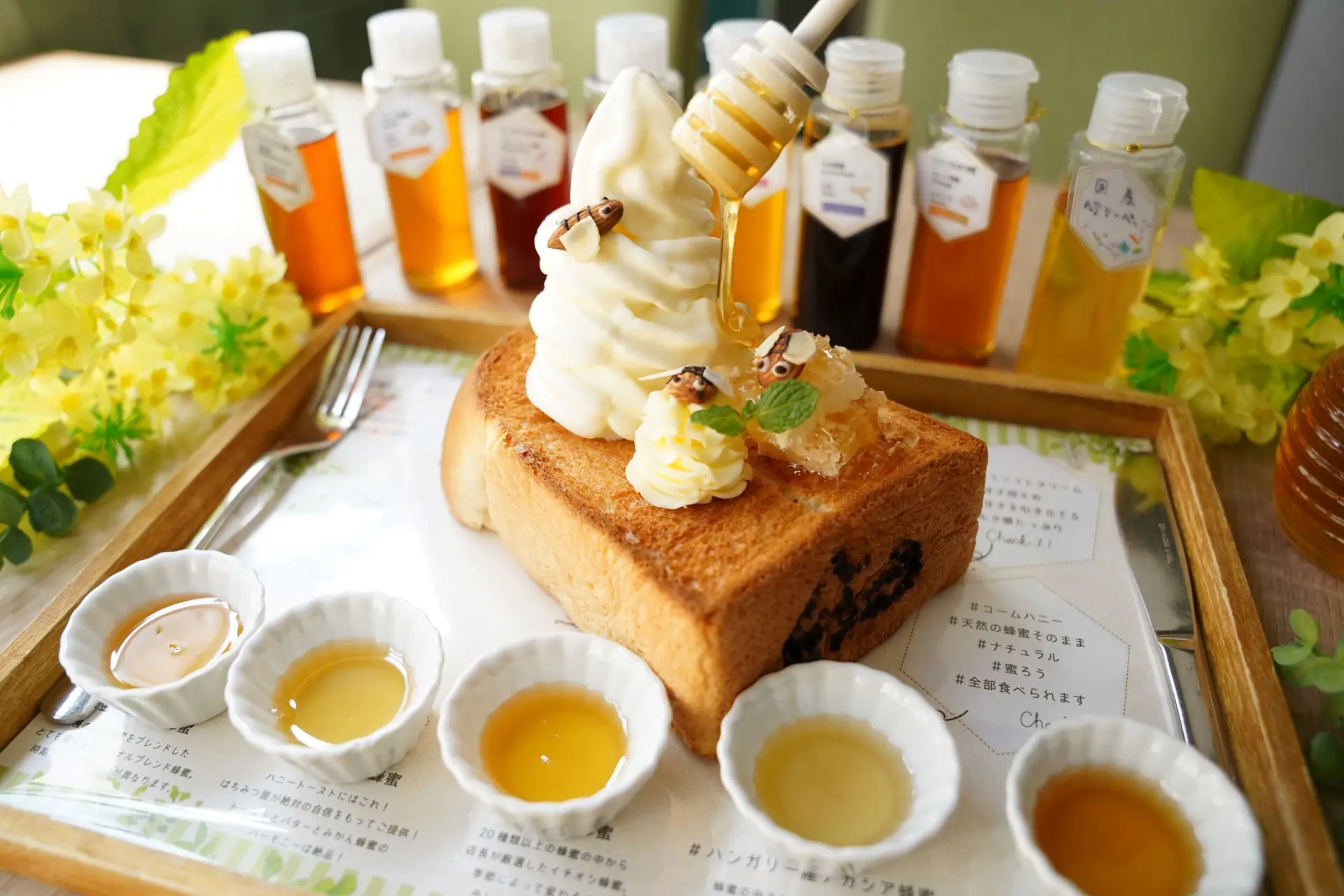
You can compare all 13 kinds of honey to your heart’s content. The toast is topped with rich, milky soft-serve ice cream. Another highlight is that you can also eat natural honeycomb on this toast!
Personally, I thought this comb honey was absolutely delicious! It is not only tasty, but also visually striking, so it is perfect for photos.
Salon Events at Kyoto Mead Brewery
Mead Salon Where You Can Learn About Mead
Takusaburo Ichikawa, the Honey Hunter, wanted more people to feel that honey and mead are familiar and approachable. In fact, he sees Kyoto Mead Brewery not only as a place to brew mead, but also as a place to spread mead culture, and various events are held there. For example, a 60-minute mead seminar personally led by Mr. Ichikawa is held around once or twice a month.
-
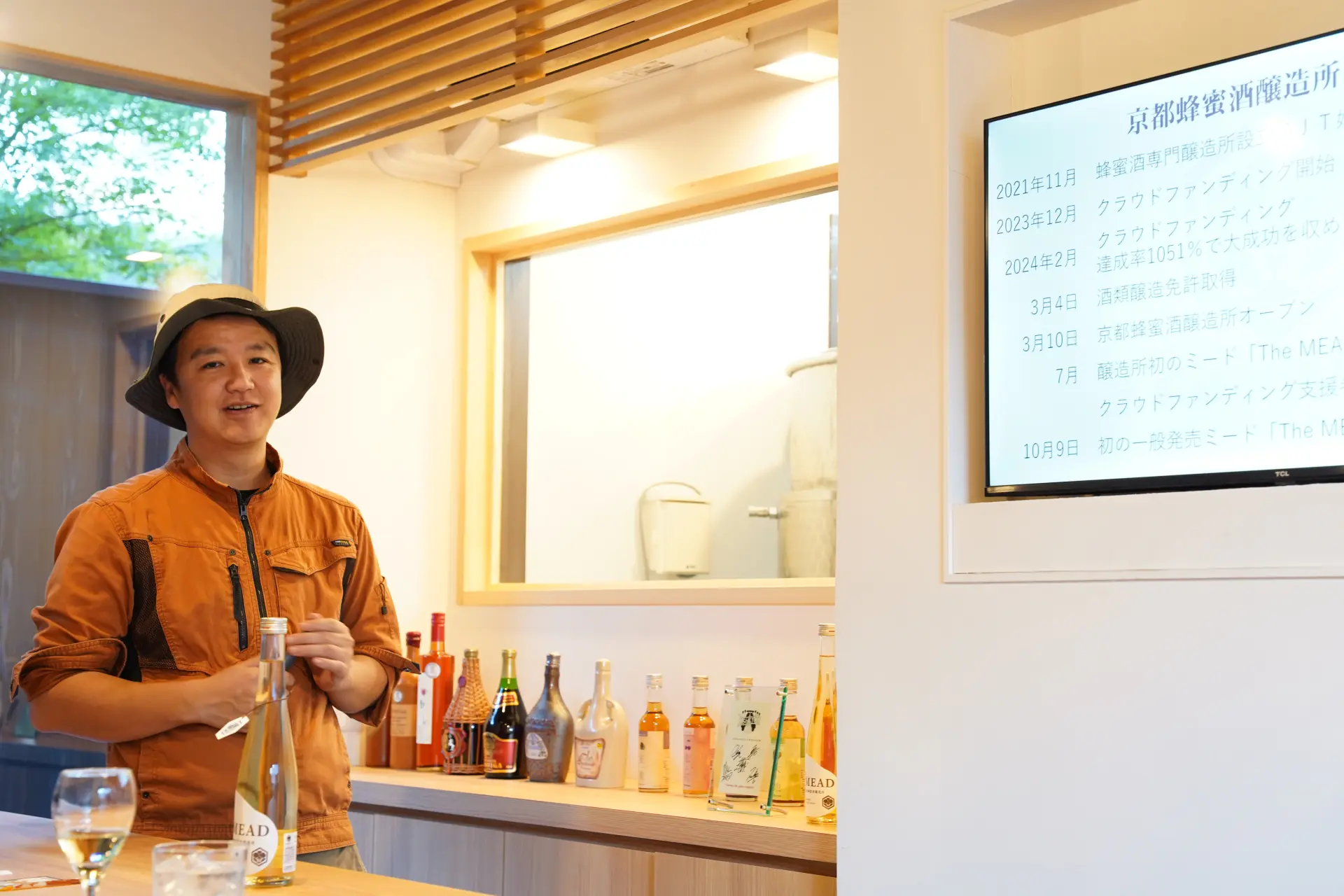
Mead Salon
-
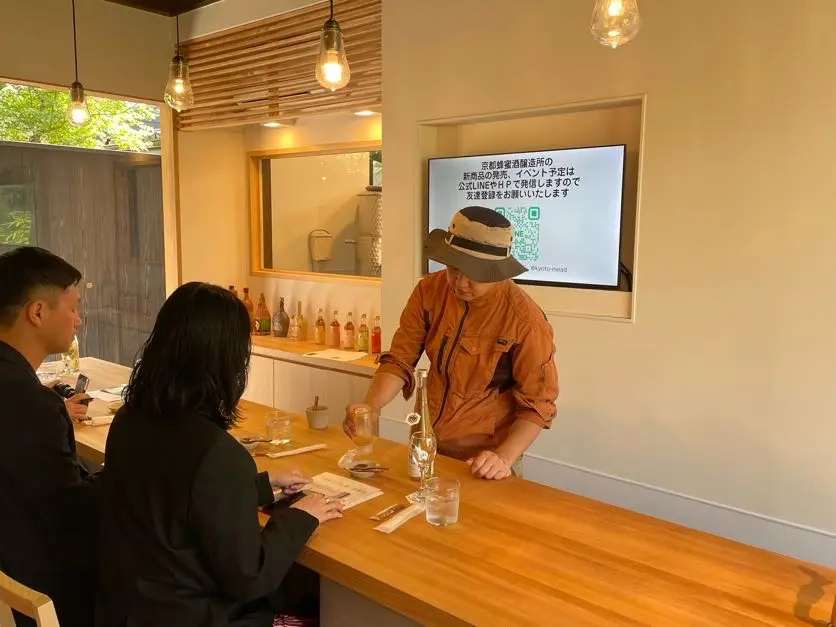
While enjoying tastings of several kinds of domestic and international mead and comparing the honey that forms the basis of mead, you can learn about mead production methods and history. Light snacks and desserts that pair well with mead are also served.
By the end of the seminar, you may gain so much knowledge that you could become a “Mead Meister” of Kyoto Mead Brewery. It is a very fulfilling 60 minutes.
*As no meal is served, it is recommended that you eat something light before coming to the seminar.
- Hours
-
1:00pm - 2:00pm each day
*No entry or exit allowed during the seminar - Participation Fee
-
5,500 yen (tax included)
*Advance reservation required, so please be sure to book in advance - Capacity
- 4 people per session
Mead Night
From time to time, Mr. Ichikawa stands behind the bar counter in the Mead Salon at Kyoto Mead Brewery.
You can enjoy mead while talking with him about honey and mead.
- Event Dates
- Held irregularly
- Hours
- 3:00pm - 9:00pm (Last drink order at 8:00pm)
*You can enter without a reservation, but since seating is limited, it is recommended that you make a reservation in advance before visiting.
*Please note that payment is completely cashless and pay-as-you-go. Cash cannot be used.
The operating schedule is announced on the official X account (formerly Twitter), official LINE, and other channels, so be sure to check them.
Mead Events
Events related to mead are held at Kyoto Mead Brewery from time to time.
These include projects such as the “World Mead Fair,” where you can enjoy meads from around the world, and food pairing events featuring dishes that go well with mead, bringing mead fans together.
Summary
Mead is culture. That is how I felt after encountering Kyoto Mead Brewery.
Honey, the raw ingredient of mead, is something shaped by Japan’s distinctive four seasons and the rich natural environment created by them. By tasting it, I could sense regional character and feel a connection to nature and history.
The brewing of mead at Kyoto Mead Brewery began with the desire to make mead in a way only a honey specialty shop can.
Both miel mie and Kyoto Mead Brewery provide honey in ways that meet the needs of modern people while expanding its possibilities. Even honey from the same nectar source and the same place tastes different from one year to the next.
If you actually sample honey at miel mie, the differences in flavor will surprise you. And when you taste the mead made from that honey and compare it, you will quickly notice the differences in aroma and flavor as well.
When you visit Kyoto, be sure to stop by Kyoto Mead Brewery and miel mie and immerse yourself in the sweet world of mead and the honey it is made from.

Author
Freelance Announcer
Sayaka Motomura
Focused on sharing insights related to traditional culture, performing arts, and history.