
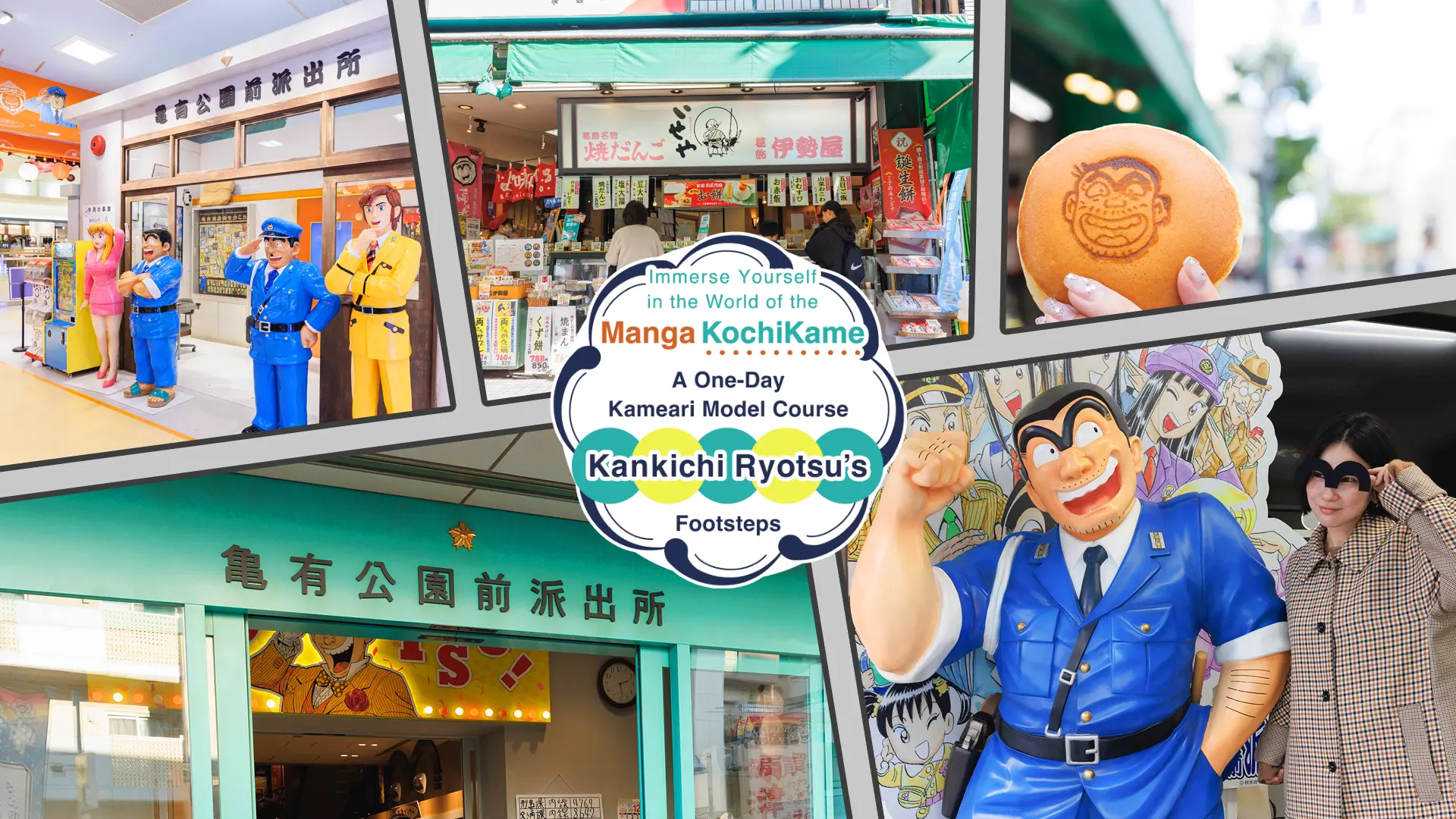
©OSAMU AKIMOTO, ATELIER BEEDAMA/SHUEISHA
Immerse Yourself in the World of the Manga KochiKame: A One-Day Kameari Model Course Following Kankichi Ryotsu’s Footsteps
Kameari, located in Katsushika-ku, Tokyo, is known as the setting of the popular Japanese manga “Kochira Katsushika-ku Kameari Koen-mae Hashutsujo” (commonly known as “KochiKame”).
The atmosphere of a classic shitamachi (traditional downtown neighborhood) remains strong here, and many KochiKame-related spots are scattered throughout the area. In the shopping streets that fan out in front of the station, long-running, old-fashioned shops are still open today, letting you catch glimpses of local everyday life.
This article introduces a one-day model course that starts at JR Kameari Station and lets you explore the town while feeling the world of KochiKame.
It is recommended not only for fans of the series, but also for anyone who wants an easygoing stroll through a downtown area while enjoying the nostalgia of old Japan.
Once you get to know Kameari-where the manga and real life overlap-your time here becomes more enjoyable, from sightseeing to simply walking the streets.
Walk the Town of KochiKame: A One-Day Kameari Model Course Following Kankichi Ryotsu’s Footsteps
KochiKame-related spots are within walking distance around Kameari Station.
A major appeal is that you can take your time and explore while soaking in the atmosphere of the entire town.
Along the way you will find shopping streets and parks, and you can also experience everyday scenes that feel distinctly shitamachi.
This model course introduces not only KochiKame statues and Kochikame Museum, but also shopping streets and gourmet spots.
10:00 am|Right Outside JR Kameari Station South Exit: Start Your Walk at the Ryo-san Statues
Around JR Kameari Station, you will find various Ryo-san statues.
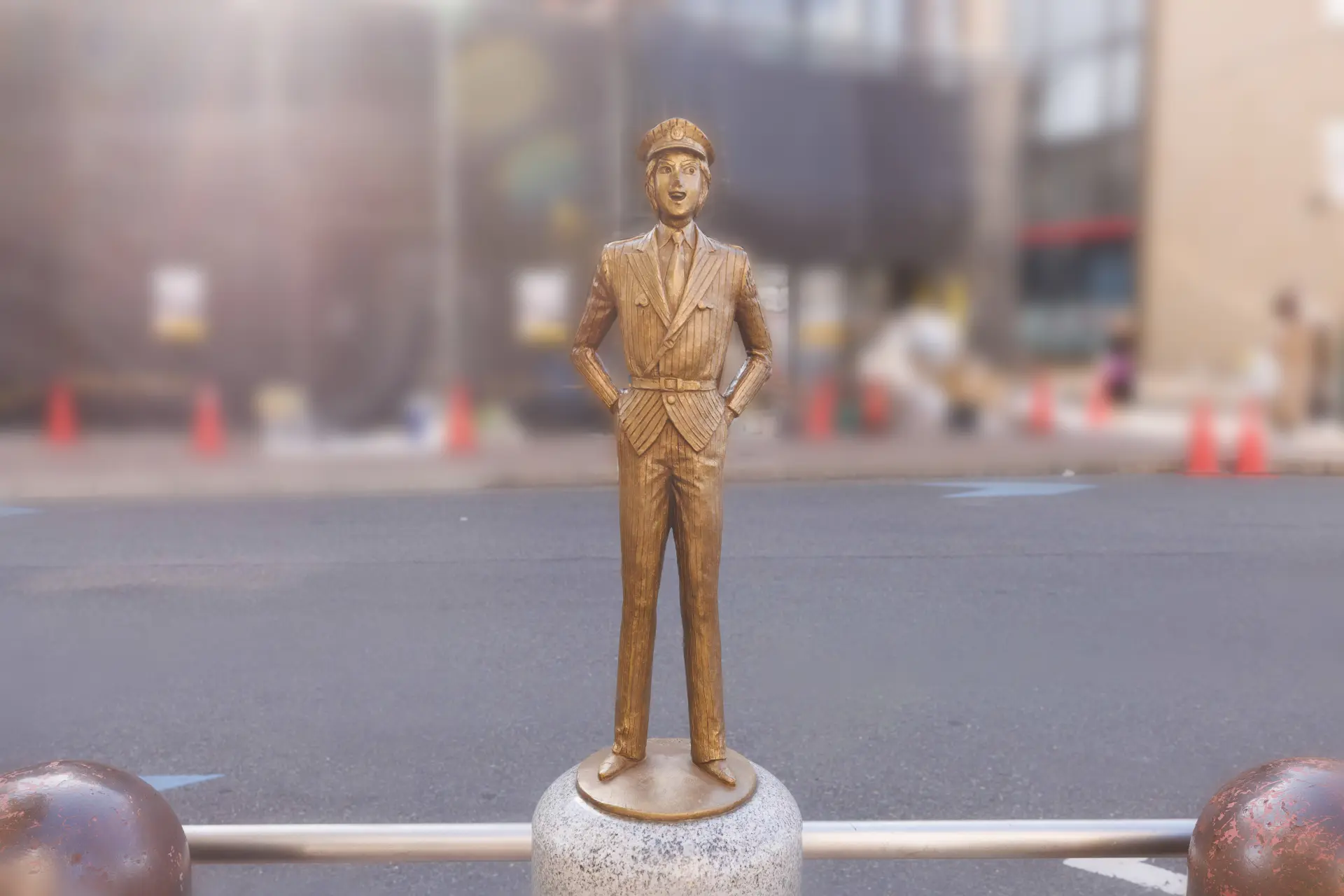
After arriving at the station, you will first want to check the three statues of the main character, Kankichi “Ryo-san” Ryotsu, alongside Keiichi Nakagawa and Reiko Akimoto.
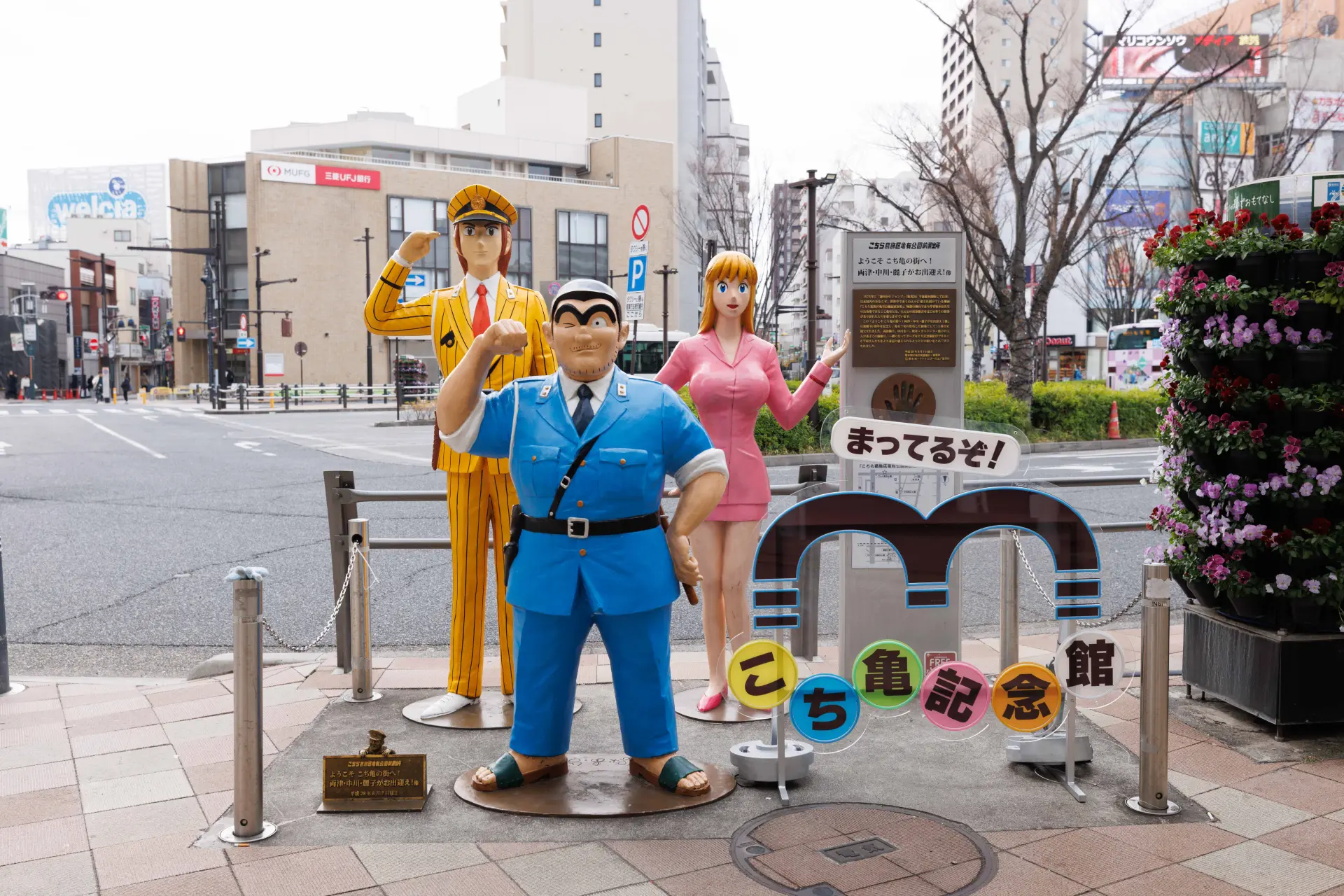
- Japanese Name
- ようこそ こち亀の街へ!両津・中川・麗子がお出迎え!像
- Address
- Kameari 3-chome 26-bansaki, Katsushika-ku, Tokyo (in front of Kameari Station South Exit) Google Maps
Around Kameari Station, a total of 15 KochiKame character statues are currently scattered throughout the area.
In addition to the expressive Ryo-san, there are also statues of Keiichi Nakagawa, Reiko Akimoto, and Hayato Honda.
Each statue includes the character’s name and a brief description, so you can enjoy them even if you do not know the series.
Searching for statues as you walk around town and taking photos is another fun way to enjoy the area.
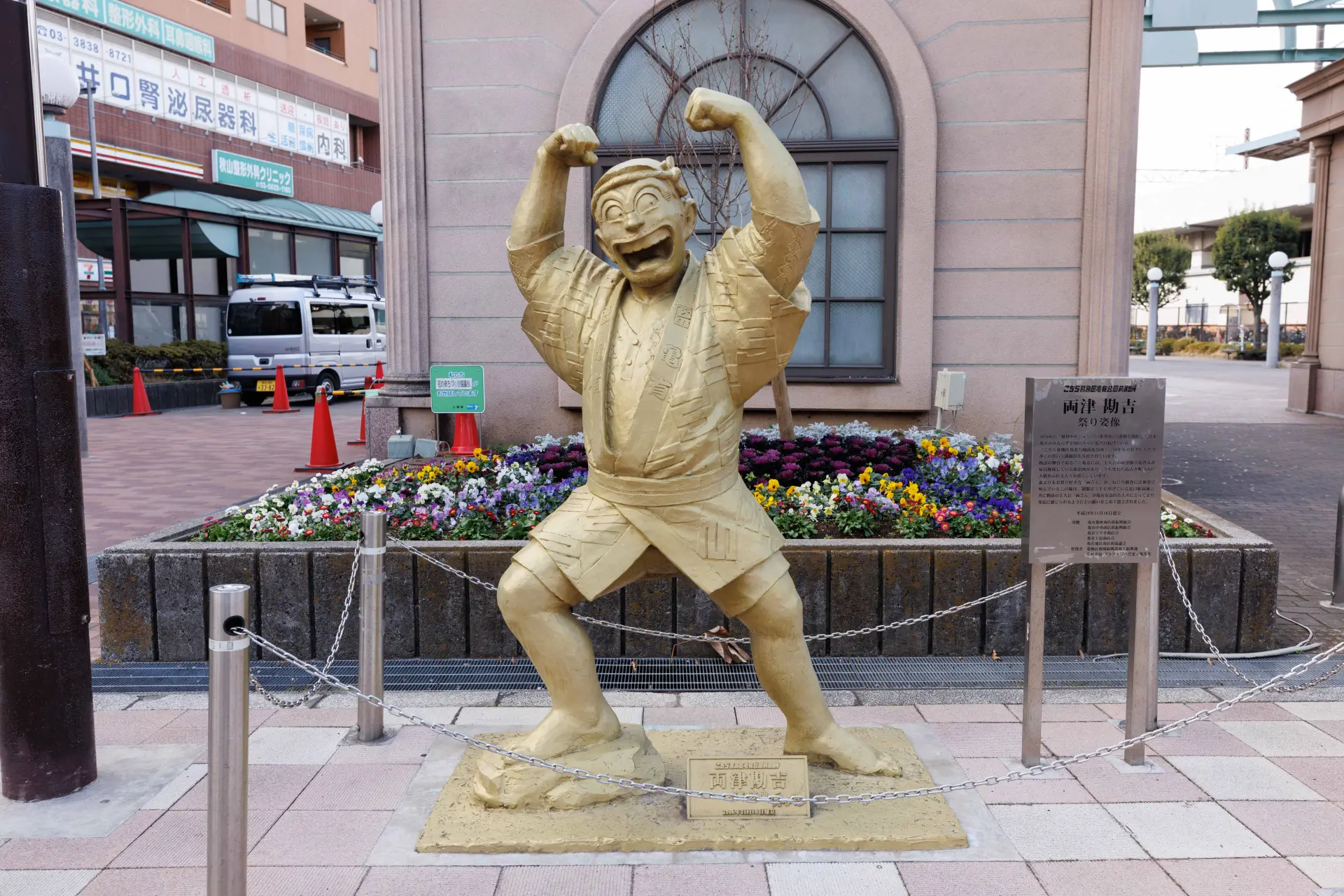
- Japanese Name
- 両津勘吉祭り姿像
- Address
- 3-25-saki Kameari, Katsushika-ku, Tokyo (in front of the Kameari Lirio Park entrance) Google Maps
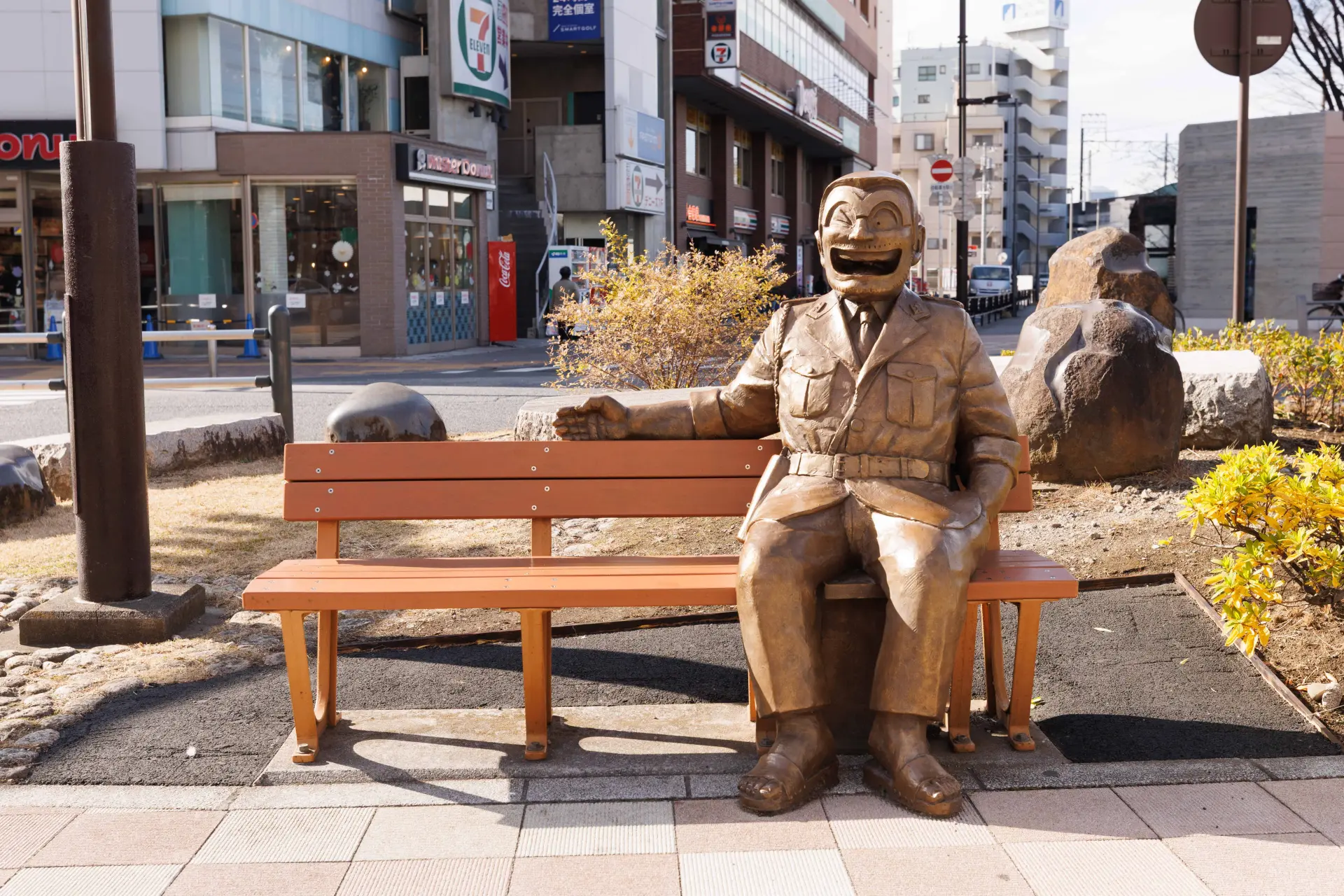
- Japanese Name
- ようこそ亀有へ両さん像
- Address
- 3-26-saki Kameari, Katsushika-ku, Tokyo (on the traffic island at Kameari Station South Exit) Google Maps
- Japanese Name
- 中川像
- Address
- 3-29-saki Kameari, Katsushika-ku, Tokyo (in front of the Lirio Niban-kan entrance) Google Maps
Take a Quick Detour to Say Hello to Reiko, Too!
It is not on the shortest route from Kameari Station South Exit to Kochikame Museum, but you will still want to take a small detour to check the Reiko statue as well.
It used to be in front of the police box at Kameari Station North Exit, but it has now been relocated to the entrance of the Kameari District Center and watches over the Kameari area.
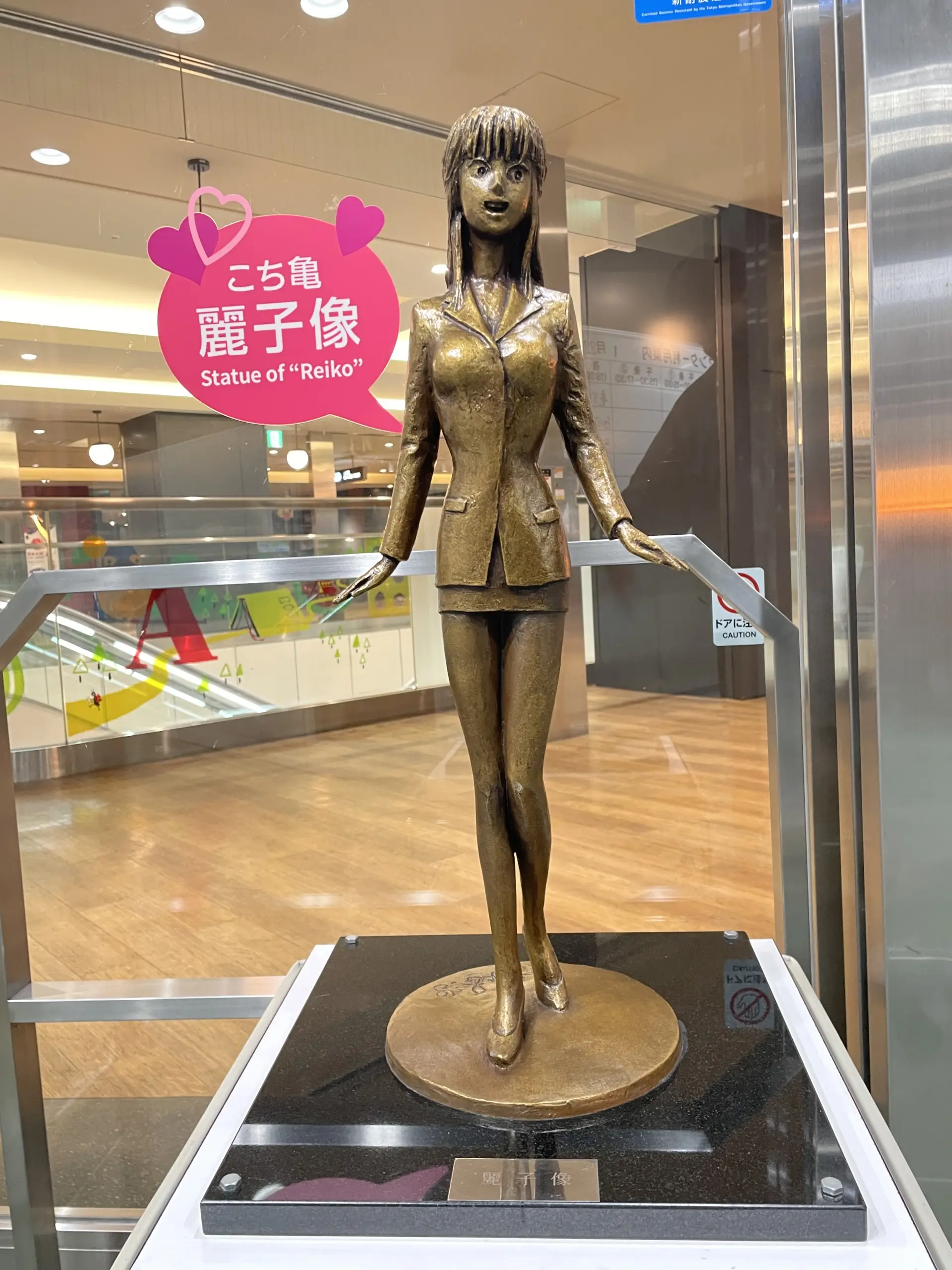
- Japanese Name
- 麗子像
- Address
- Lirio-kan 7F, 3-26-1 Kameari, Katsushika-ku, Tokyo (inside the Kameari District Center) Google Maps
10:30 am|Learn the History of This Beloved Manga: Immerse Yourself in Kochikame Museum
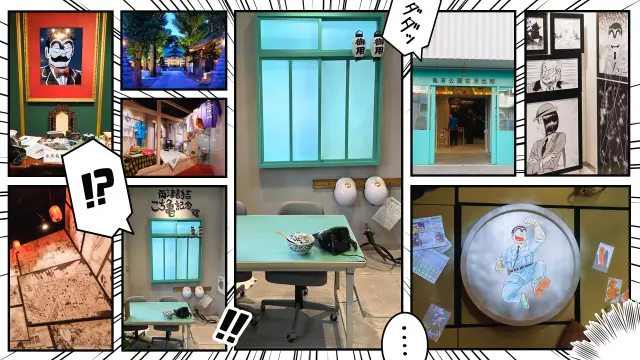
After checking the statues in front of Kameari Station South Exit, the next KochiKame-related spot you will want to visit is Kochikame Museum, which opened in March 2025.
This five-story museum is based on the concept that Ryo-san built it on his own above the police box, and it lets you experience the world of KochiKame.
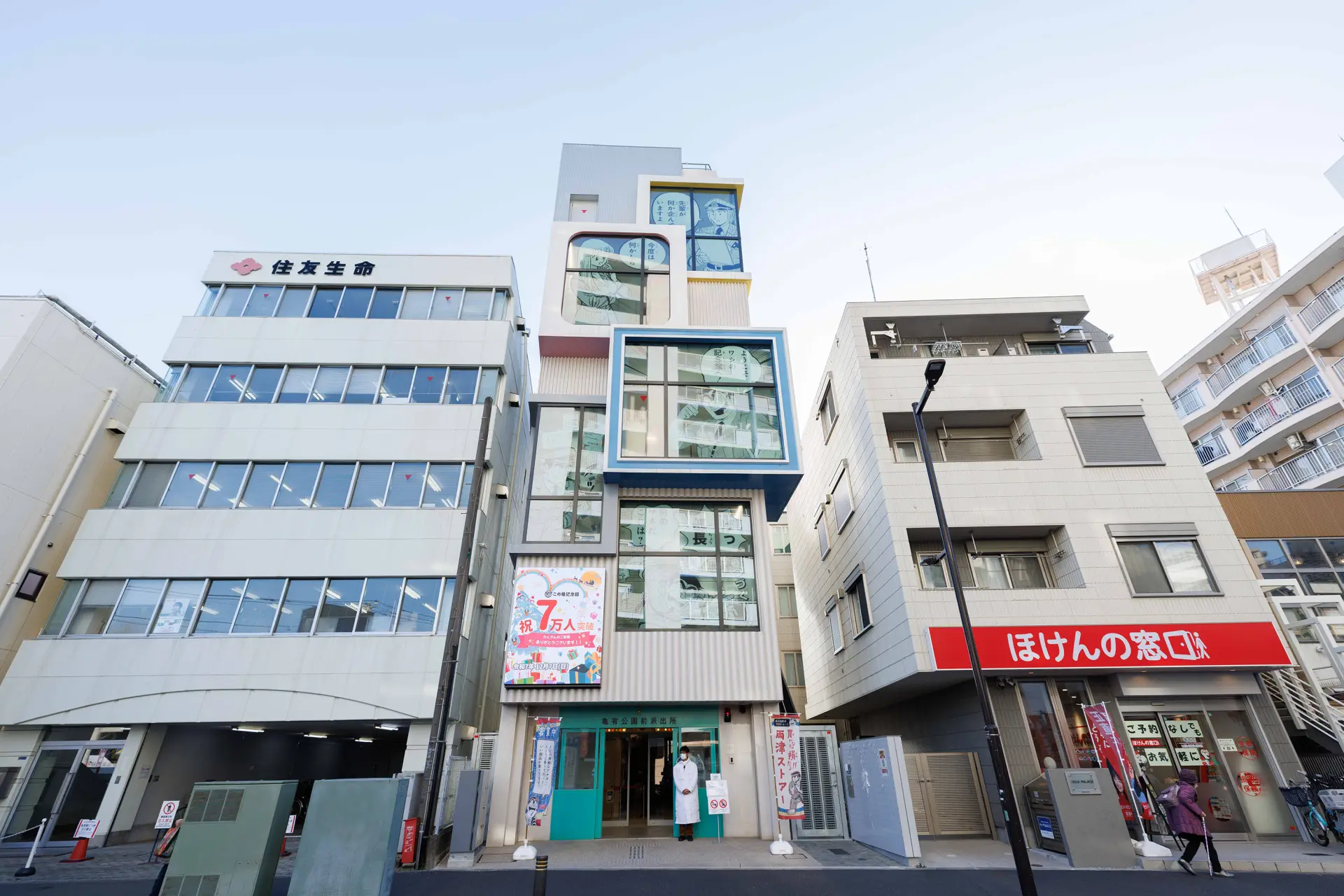
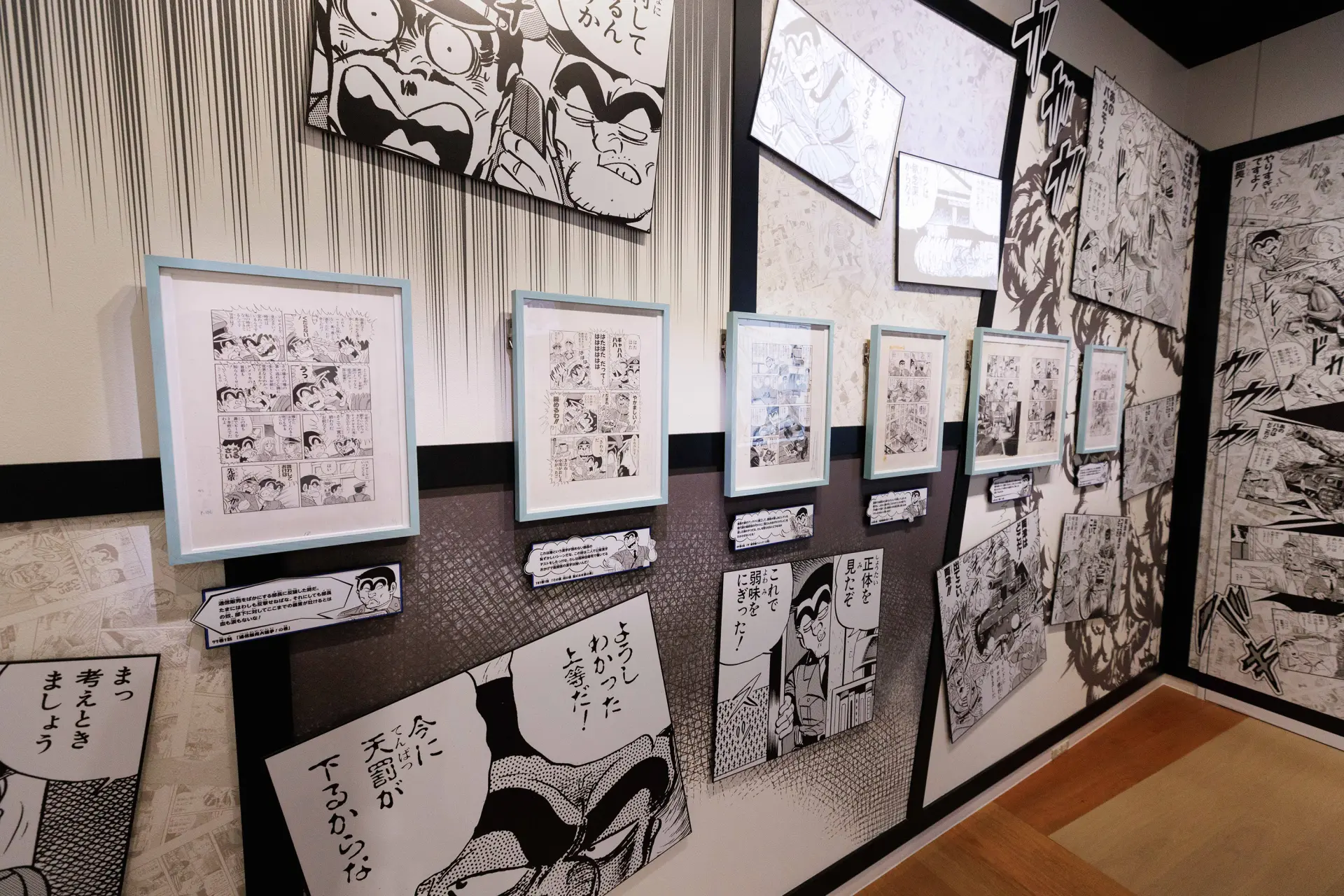
Inside, you tour the museum in order from the 5th floor down to the 1st floor.
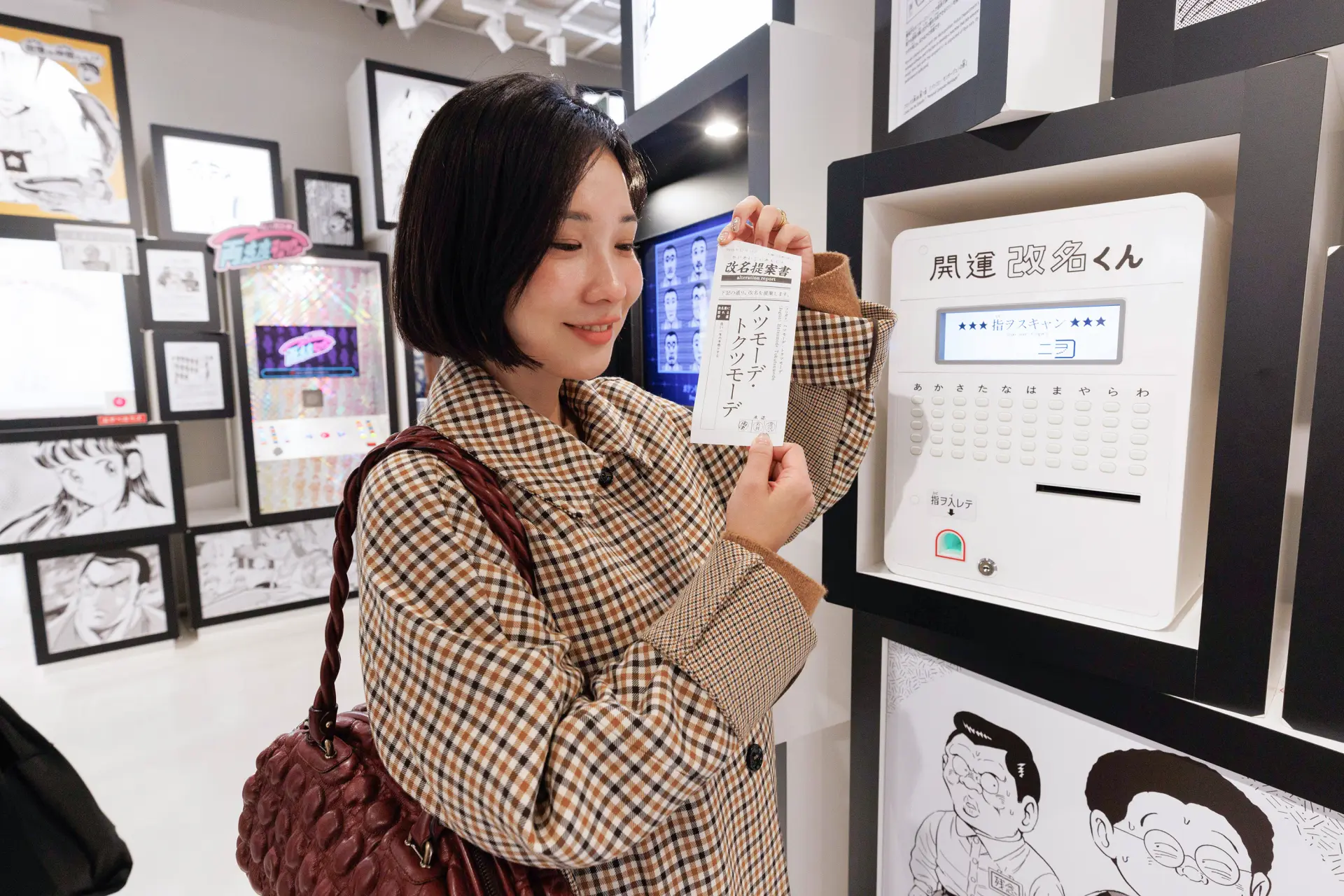
Along with exhibits featuring series materials and reproduced artwork from the author Osamu Akimoto’s personal collection, there are also plenty of hands-on attractions such as the invention “Kaiun Kaimeikun” and about 20 types of mini-games.
There are many clever touches that naturally draw in even visitors who do not know the manga, and you can enjoy it with plenty of laughs.
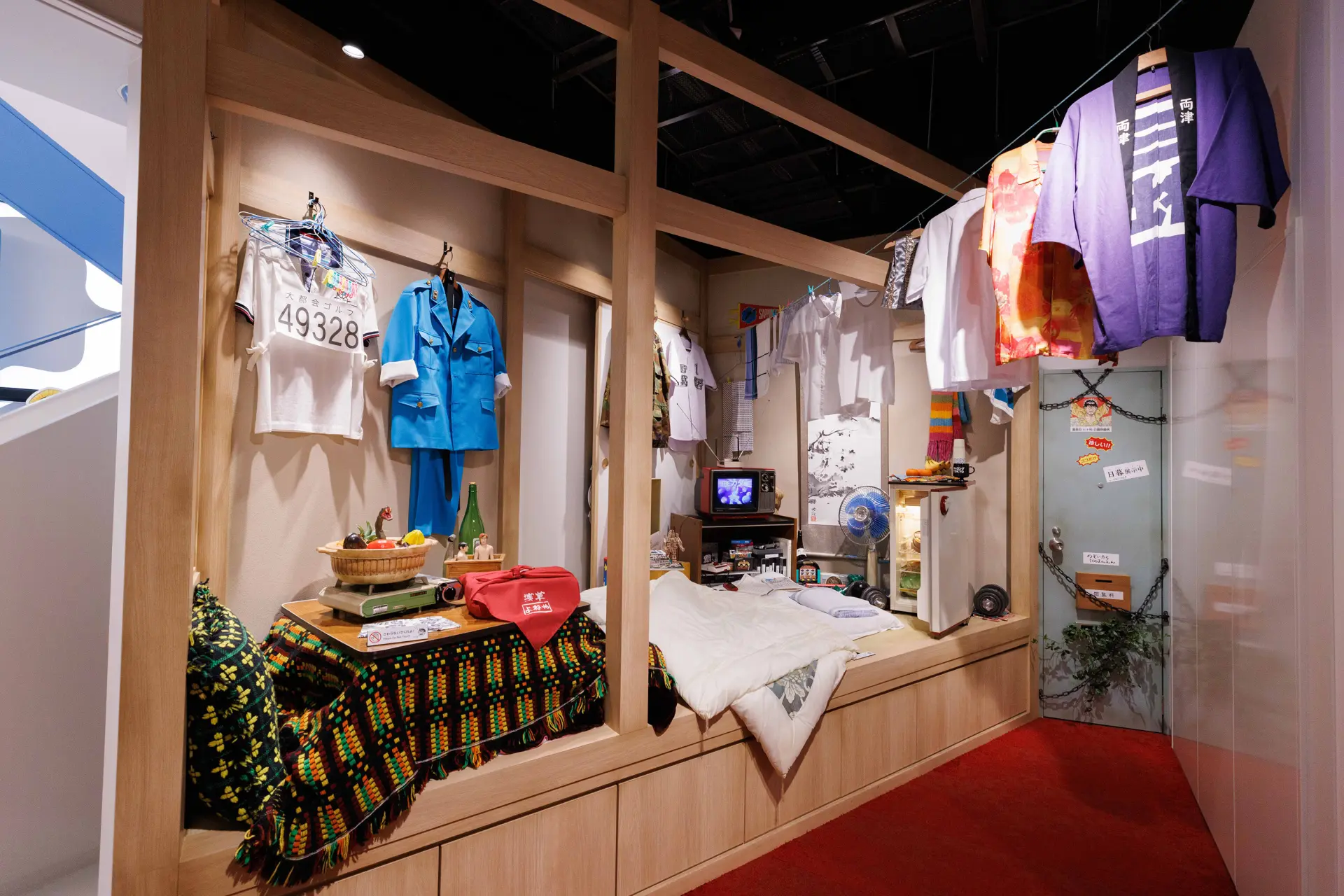
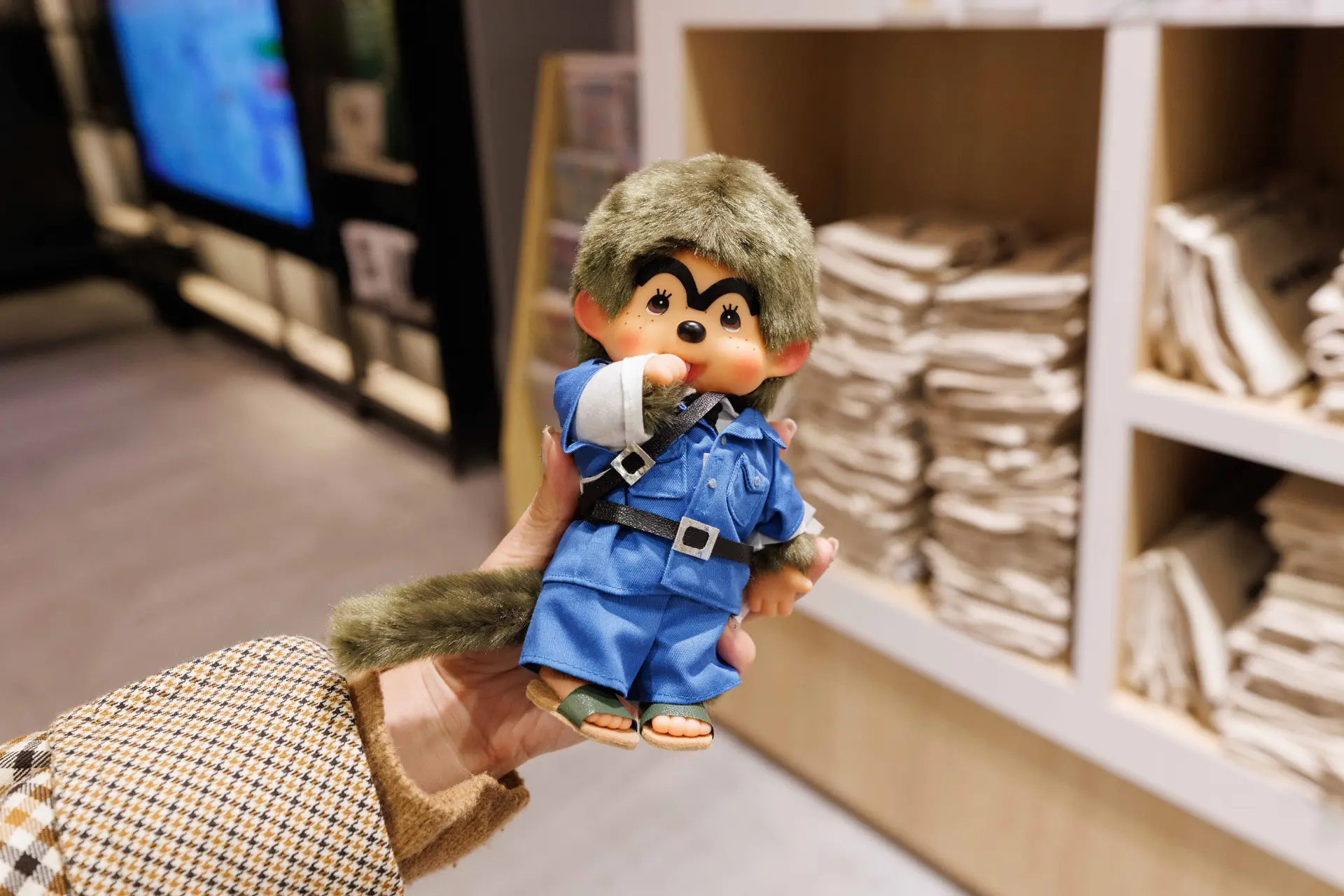
There are also plenty of highlights, such as the meticulously recreated “Ryo-san’s room” and Kochikame Museum limited-edition goods.
As you travel through the world of KochiKame inside the museum, you pick up little hidden gags while laughing, and you begin to feel a mix of nostalgia and freshness.
Because the experience is designed not only for viewing but for playing and participating, you can feel Ryo-san’s presence close at hand, and the KochiKame in your memories naturally comes back to life.
Before you know it, you are completely immersed in the world of the series, and with the lingering fun, your heart feels a little lighter.
It is a highly satisfying spot where you can enjoy that kind of feeling.
Stretch Your Legs a Little Farther and Meet a Ryo-san Statue at Kameari Katori Shrine!
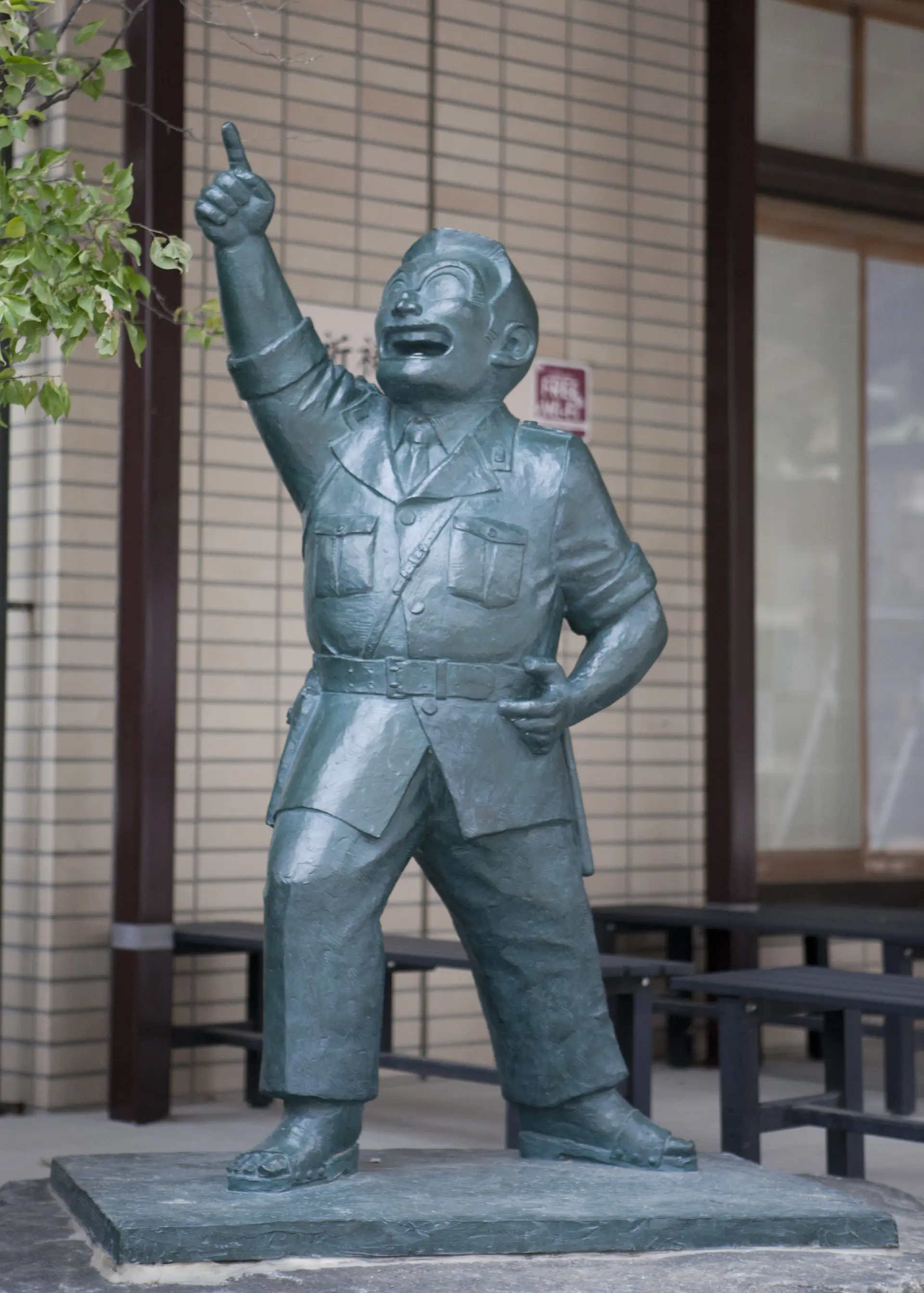
Within the grounds of Kameari Katori Shrine, there is a statue called “Shonen yo Ano Hoshi o Mezase! Ryo-san Statue.”
It is also known as the largest of the Ryo-san statues, and it was installed in 2010.
- Japanese Name
- 少年よあの星を目指せ!両さん像
- Address
- 3-42-24 Kameari, Katsushika-ku, Tokyo (within the grounds of Kameari Katori Shrine) Google Maps
12:30 pm|Enjoy Photos and Games to the Fullest: Game Time at Kochikame Game Park
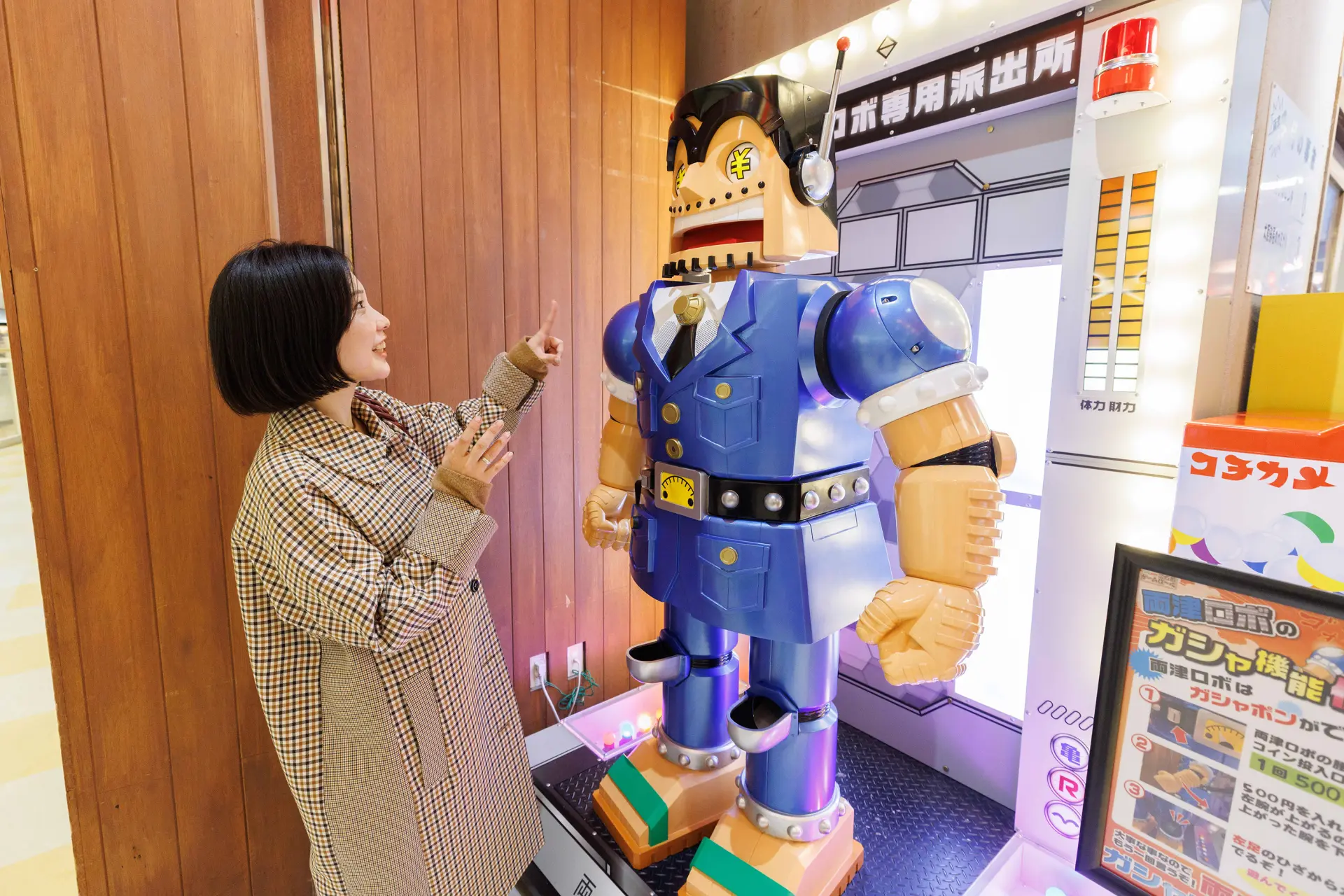
Next, you will want to visit Kochikame Game Park on the 3rd floor of the large commercial complex Ario Kameari.
It is an arcade where you can enjoy KochiKame-themed decorations and game experiences.
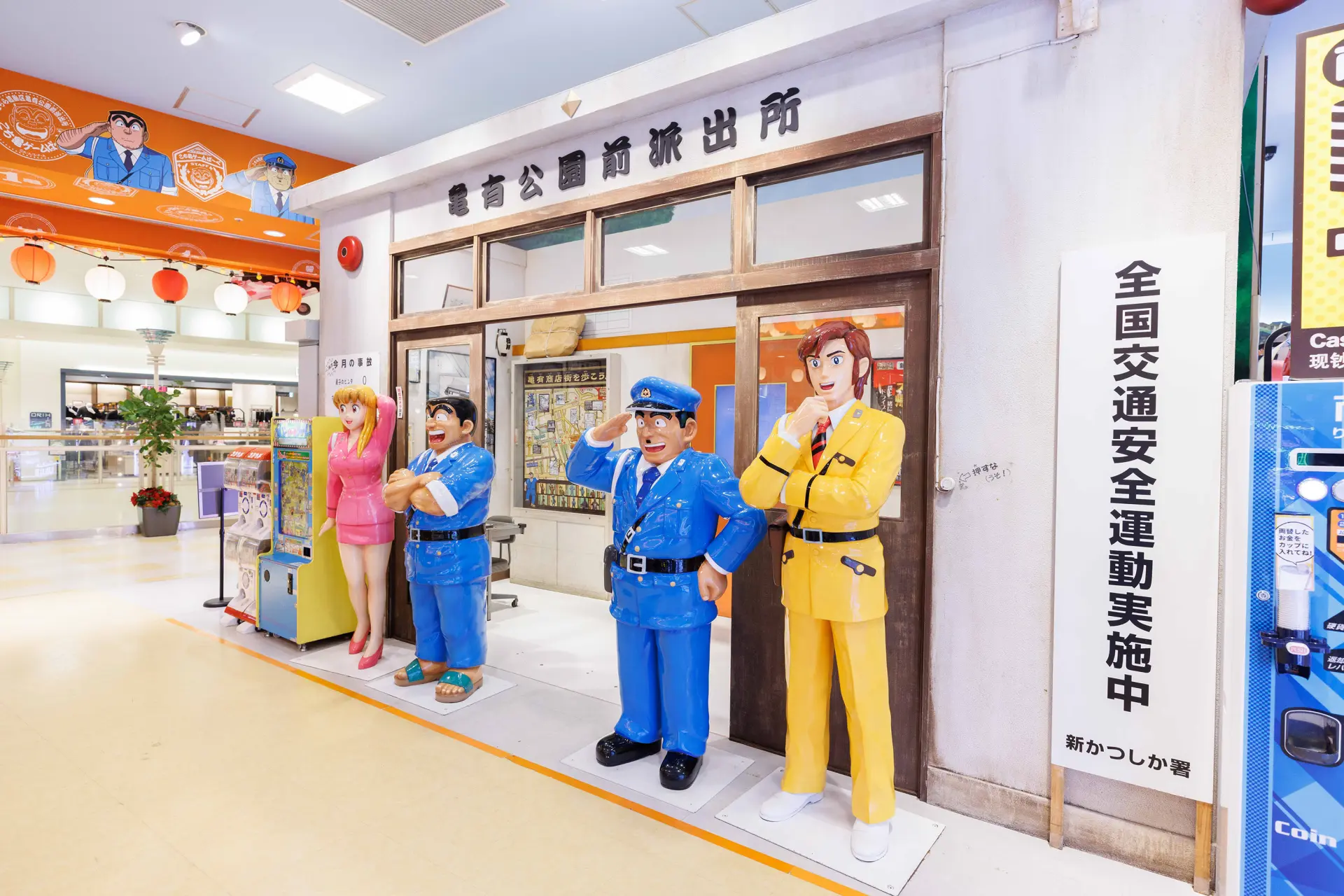
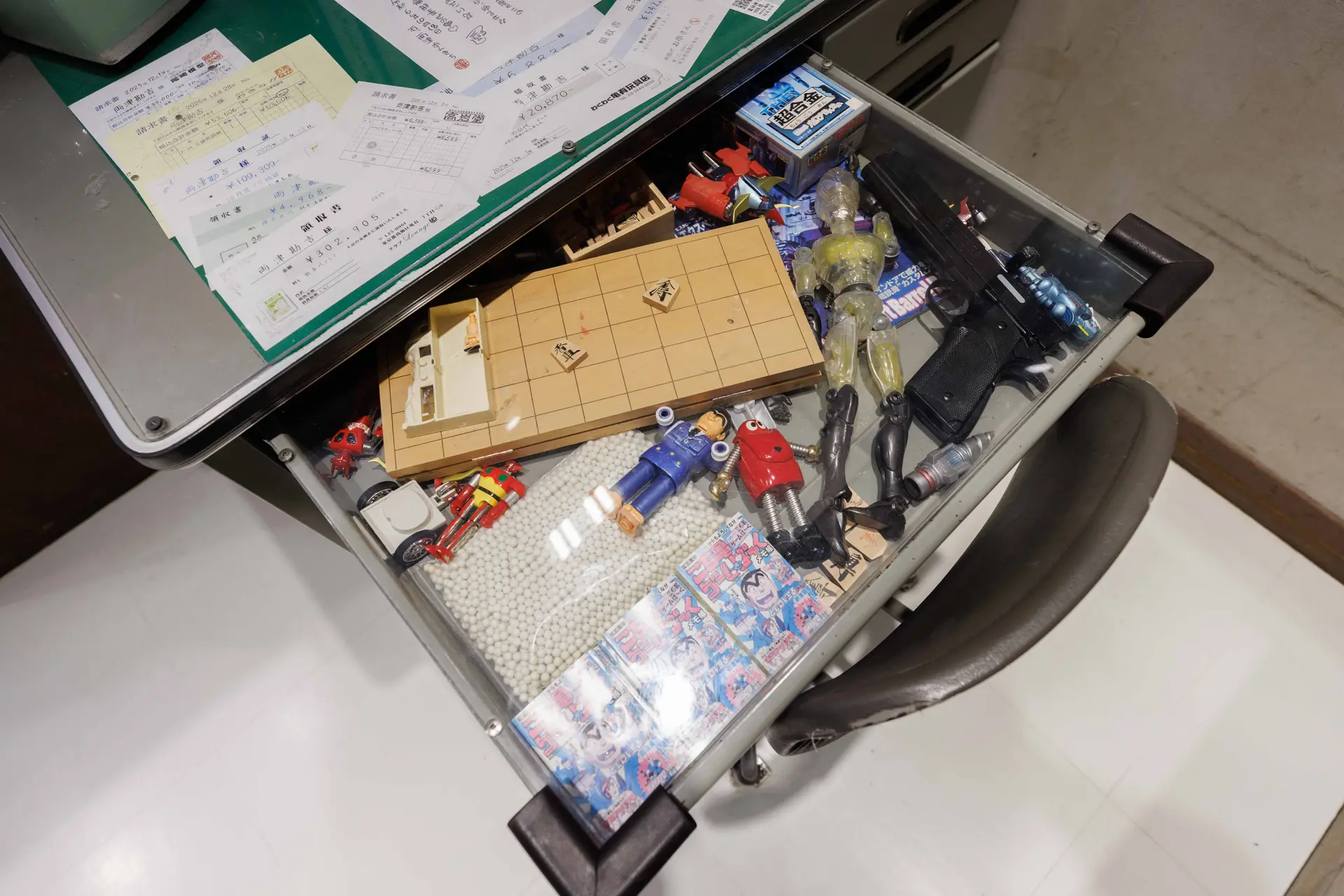
Inside the facility, there is also a space recreating the “Kameari Koen-mae Hashutsujo” where Ryo-san works.
In addition to Ryo-san, there are also 3D figures of popular characters such as Hayato Honda and Kaipan Keiji.
Some wall illustrations include hidden gimmicks, and some let you enjoy famous scenes from the manga.
It is popular not only for games but also as a photo spot.
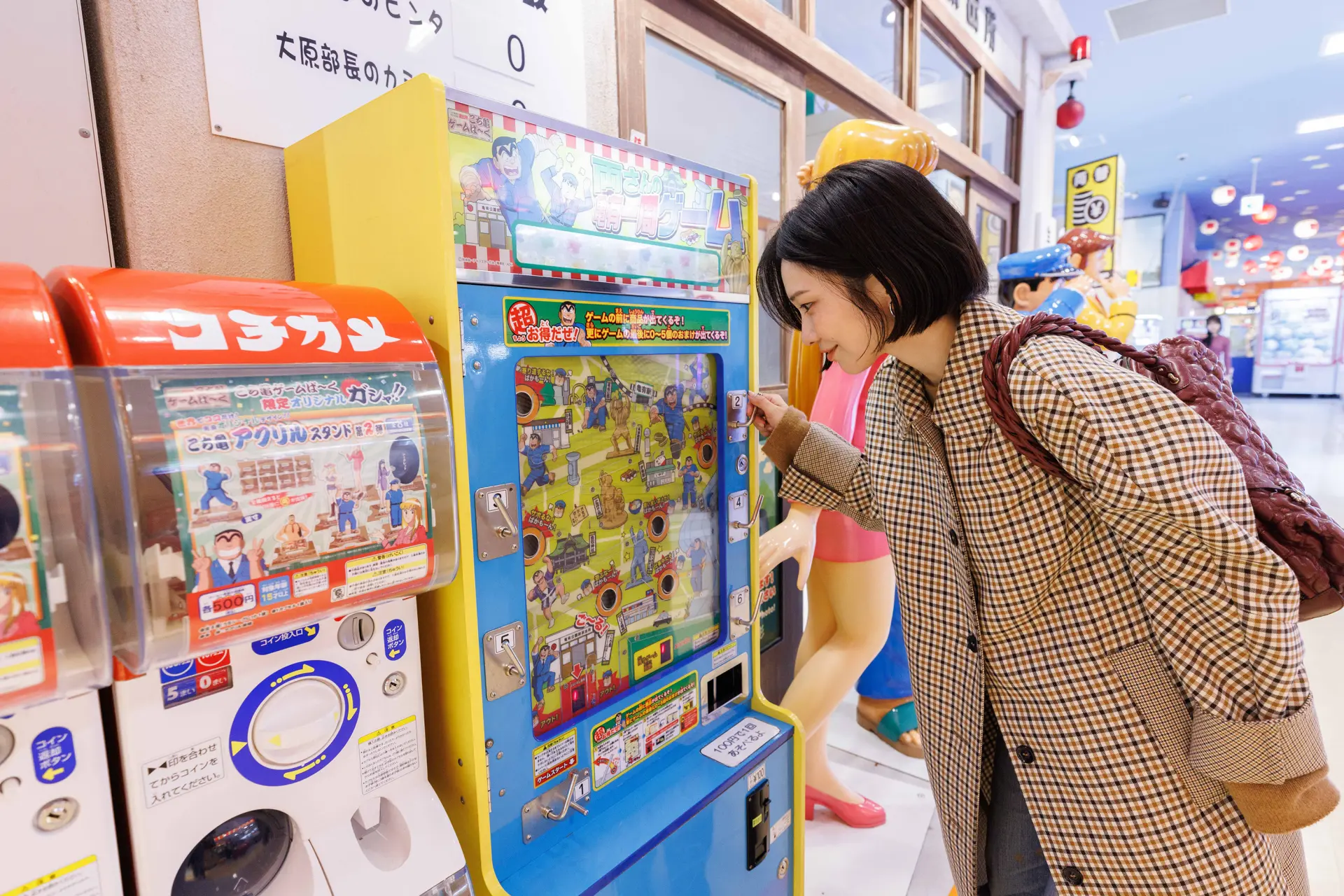
There are KochiKame-themed game machines, so you can play during breaks in your sightseeing.
Popular attractions include “Ryo-san’s Kameari Isshu Game,” “Nakagawa’s Supercar,” and the “Ryotsu Robot” gashapon (capsule-toy) machine.
At Ario Kameari, where Kochikame Game Park is located, there is also a food court.
With a lineup of shops offering Japanese food, ramen, and more, it is also convenient for lunchtime.
1:30 pm|Savor the Downtown Tokyo Atmosphere on the You Road Shopping Street
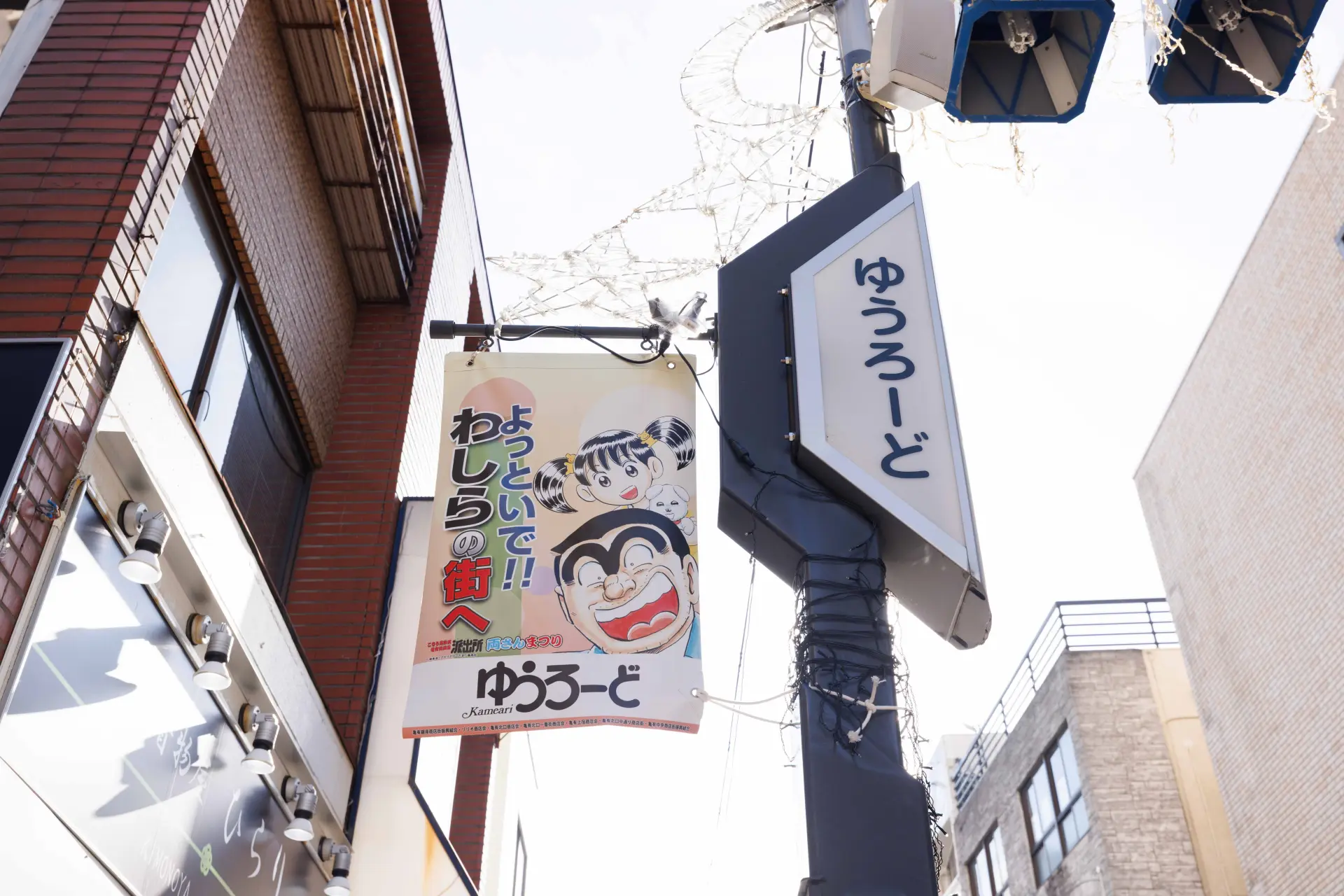
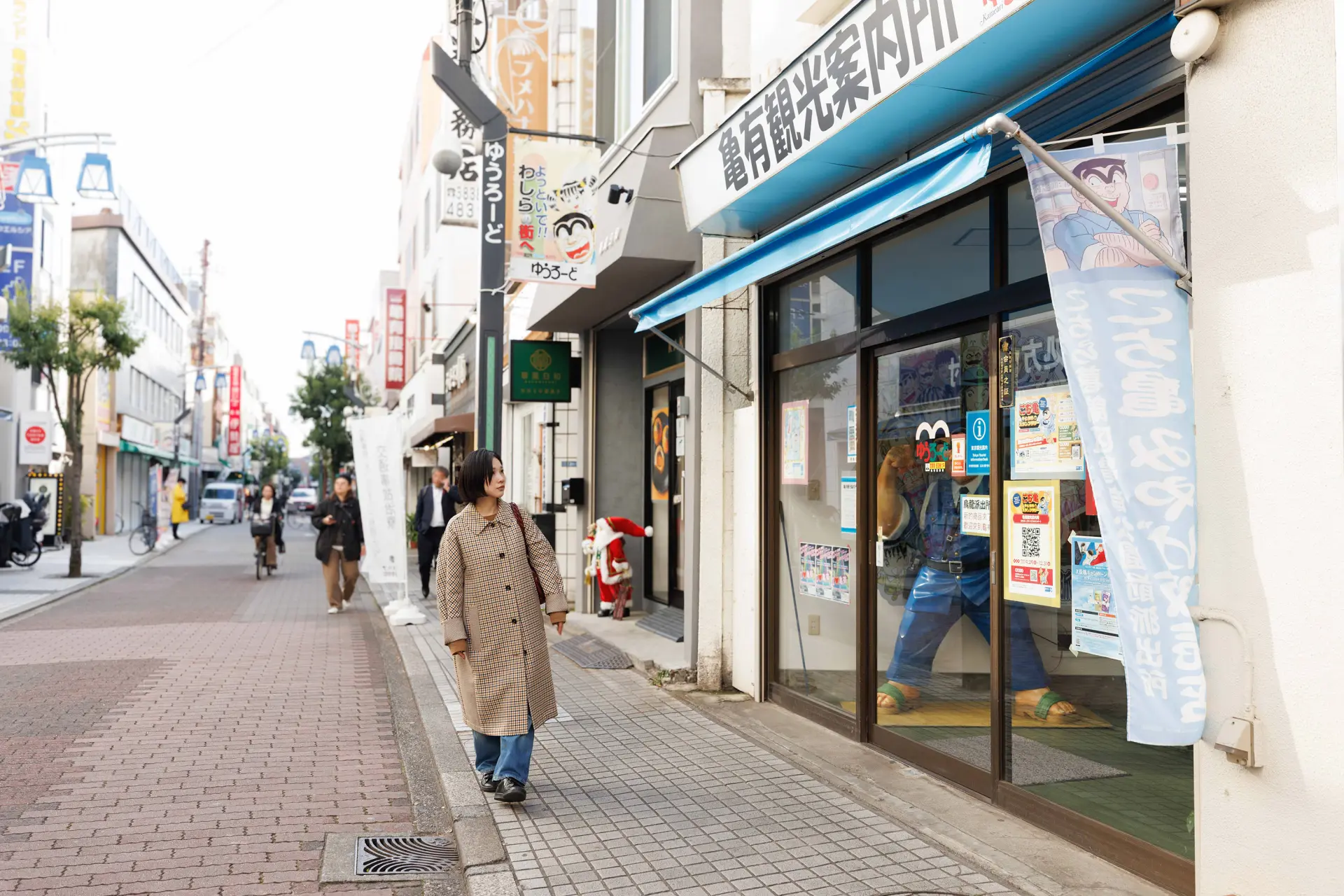
Next, head to You Road, one of Kameari’s representative shopping streets.
You Road refers to the Kameari Ginza Shopping Street that stretches across the JR Kameari Station South Exit area.
The “You” in You Road carries four meanings: “Yu” from Kameari’s “Ari (Yu),” “Yu” for play, “Yu” for friends, and the English “YOU,” meaning you.
It is a lively shopping street known for its warm, neighborly shitamachi spirit, drawing many people.
Restaurants, daily-goods shops, and more line the street, and it still supports everyday life in the neighborhood.
Another appeal is that walking through the shopping street lets you experience Kameari’s daily scenery firsthand.
2:00 pm|Late Lunch and a Sweet Break at the Long-Running Wagashi Shop Katsushika Iseya
A place you will want to stop by during your shopping street stroll is Katsushika Iseya.
Since opening in 1965, this long-established wagashi (traditional Japanese sweets) shop has continued making sweets in Kameari for many years.
In its eat-in space, you can also find light meals such as ramen and curry rice, making it convenient for taking a break mid-walk.
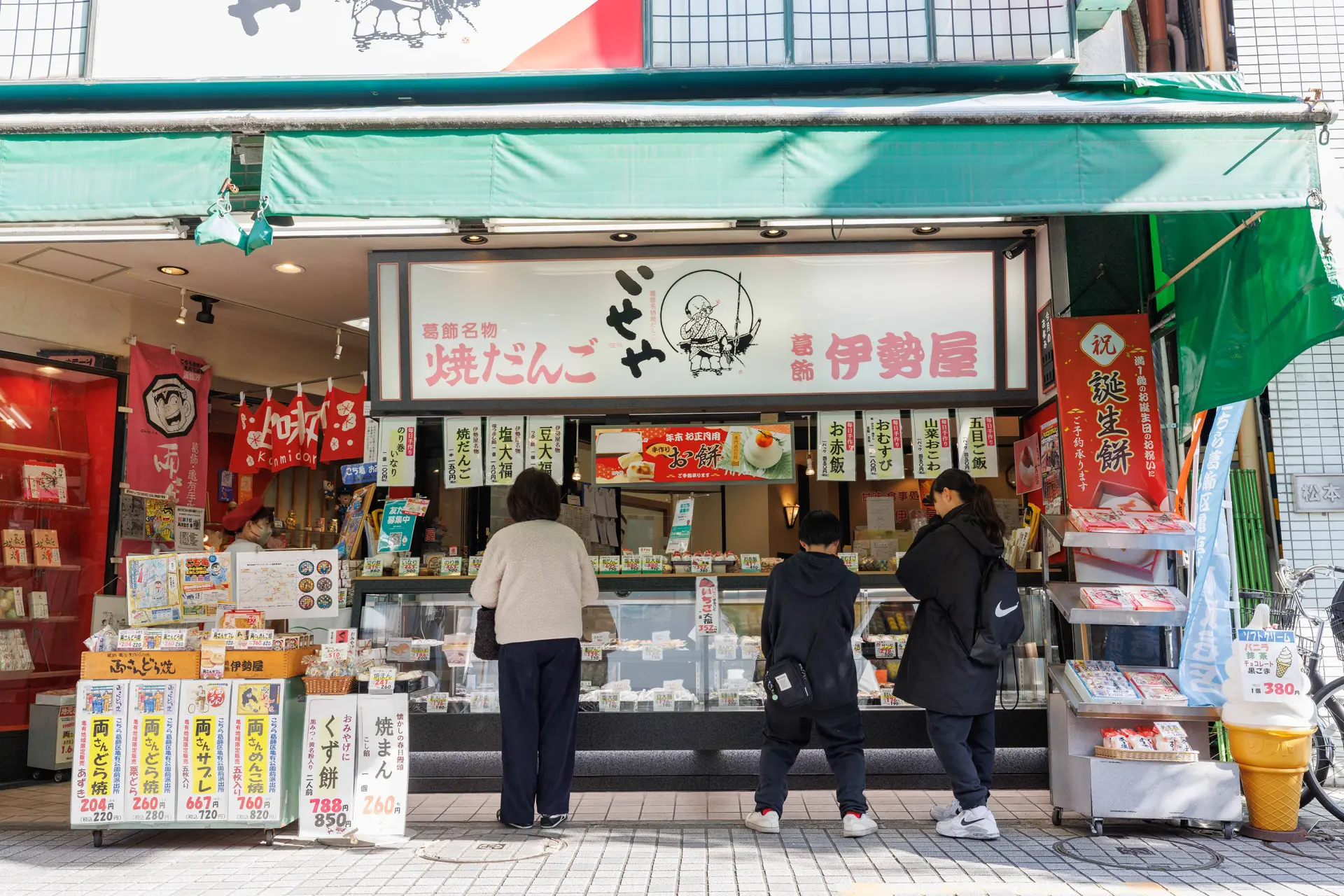
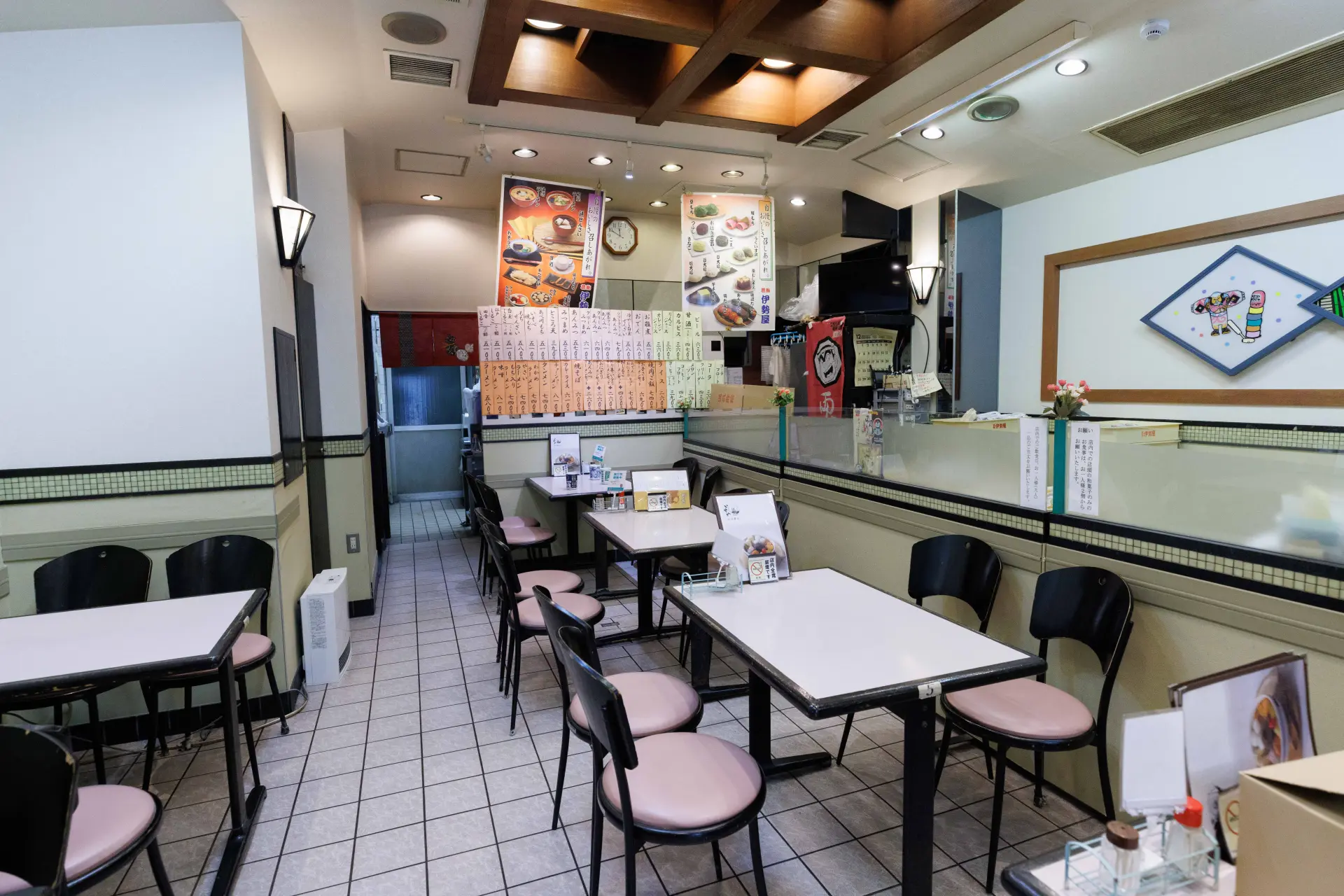
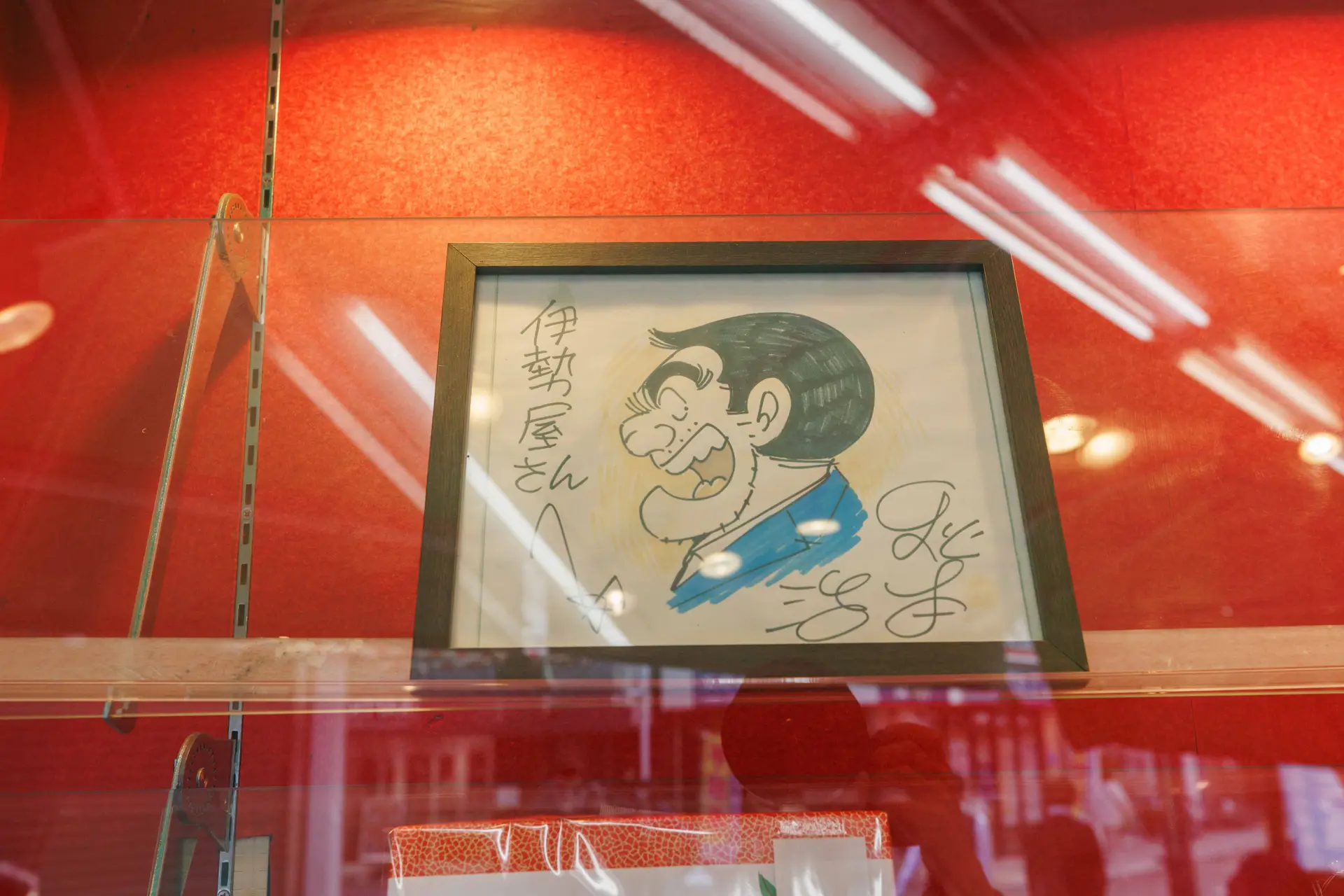
At the storefront, you will find a wide selection of KochiKame-motif sweets.
There is a production area in the back, and freshly made dango and daifuku are also sold.
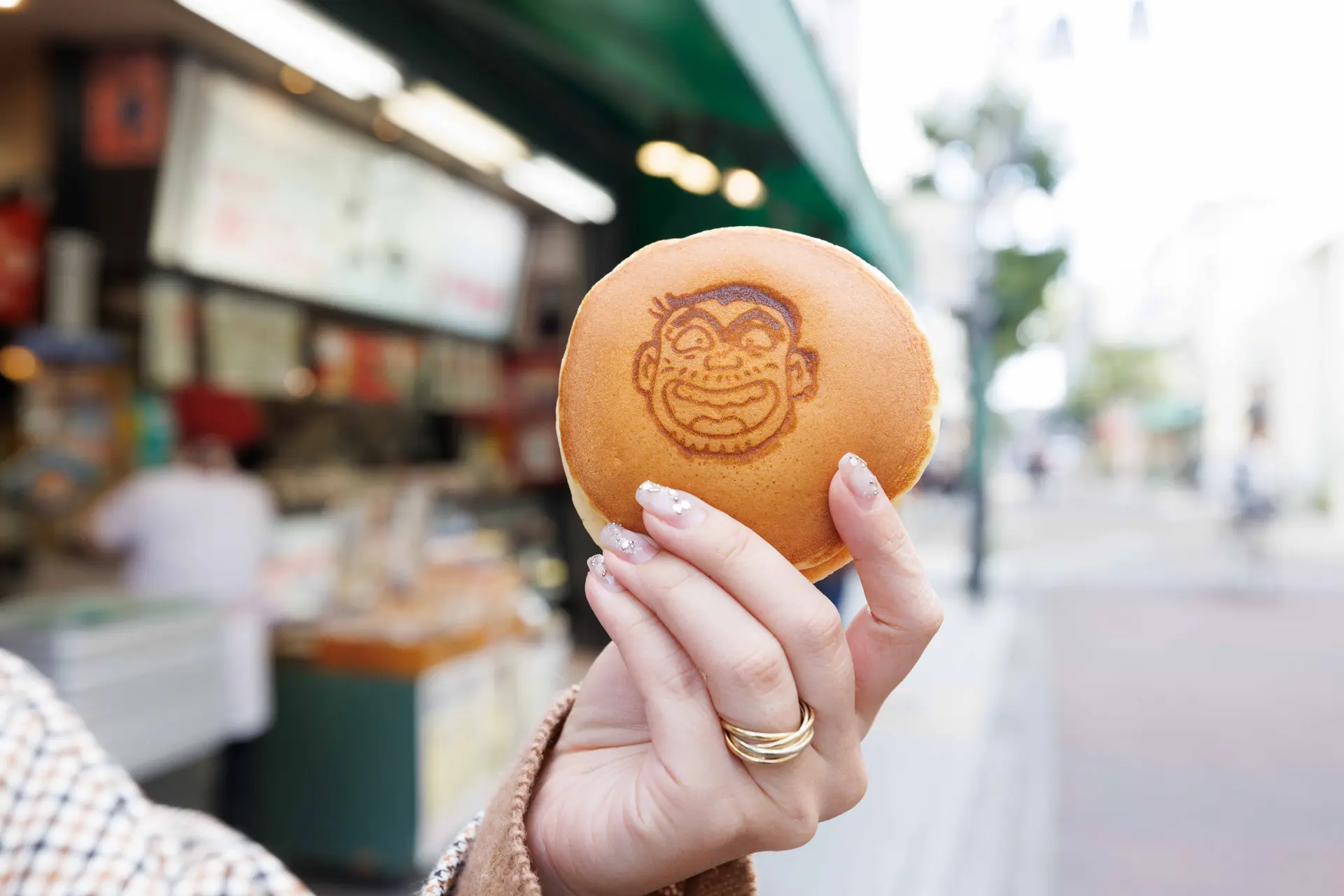
One especially popular item is “Ryo-san Dorayaki,” with Ryo-san’s face branded onto the dorayaki (a sweet bean-filled pancake).
The chewy texture of the pancake and the gentle sweetness of the house-made anko (sweet red bean paste) make it an excellent treat.
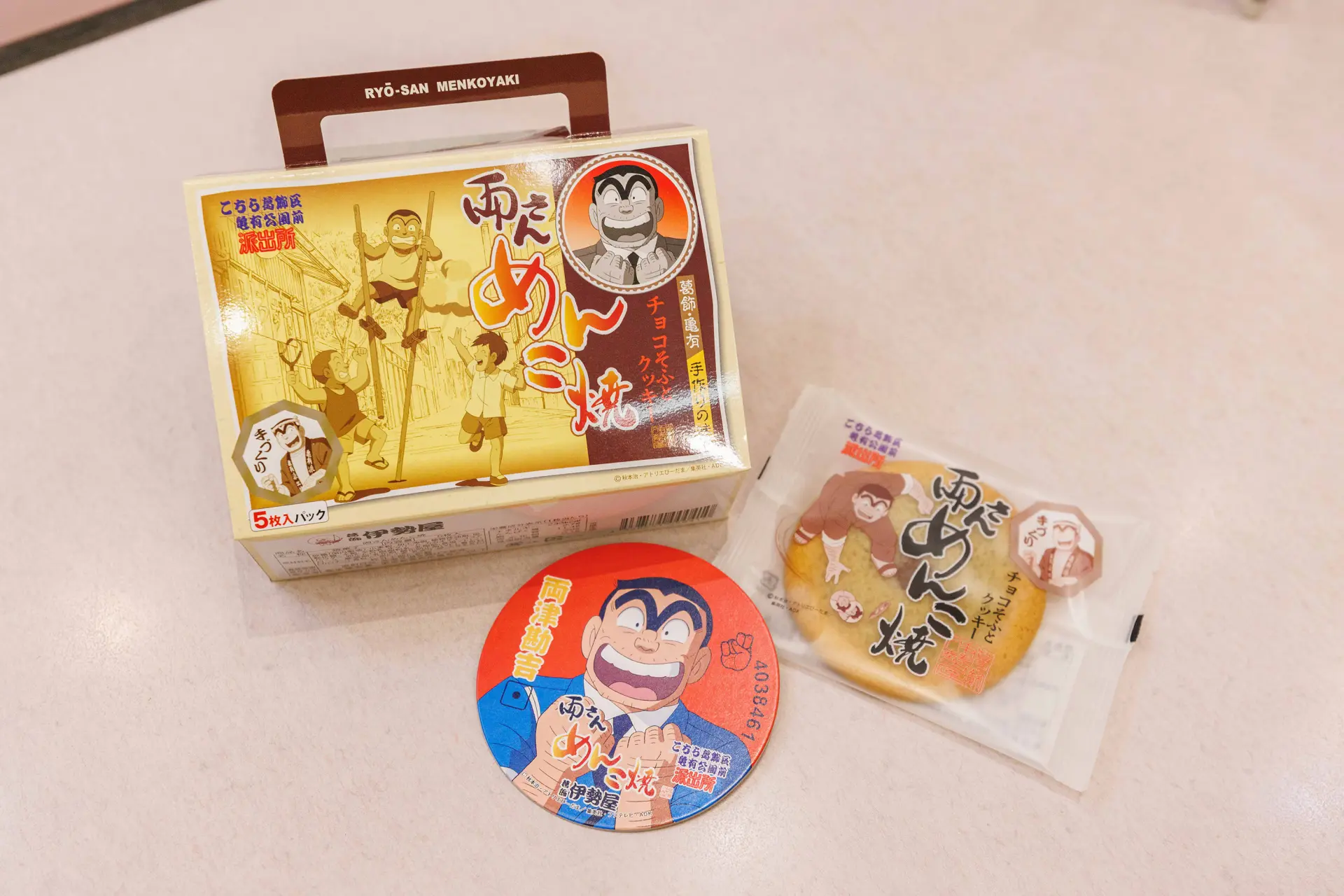
Other options include the soft chocolate-filled cookie “Ryo-san Menko-yaki” and the crisp, easy-to-eat “Ryo-san Sable.”
They are chosen both for casual street snacking and as Kameari sightseeing souvenirs.
3:00 pm|Don’t Miss KochiKame Design Goods at Musashiya
Be sure to stop by Musashiya, a long-running kimono shop located very close to Katsushika Iseya.
Musashiya was founded in 1924 and has a history of about 100 years.
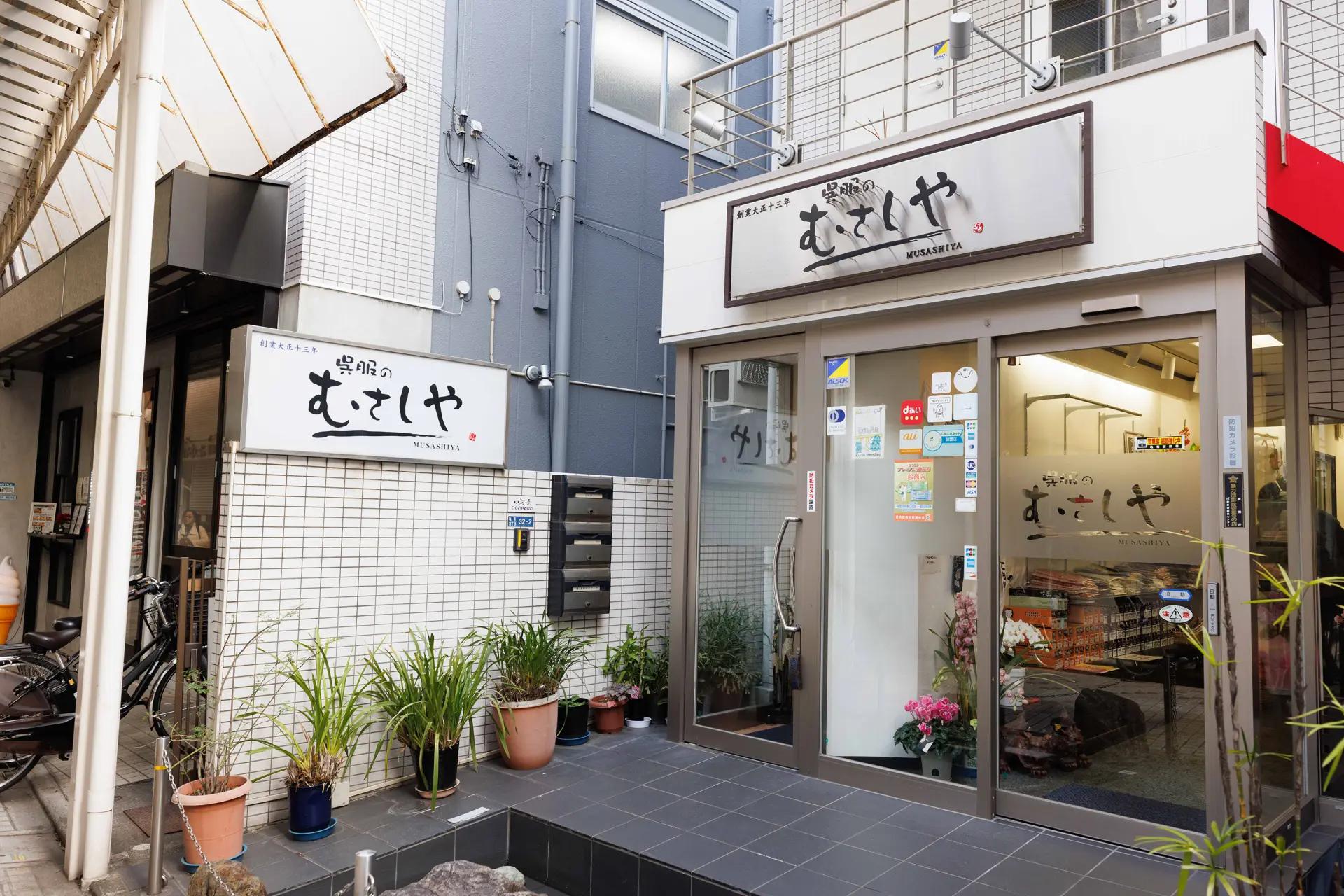
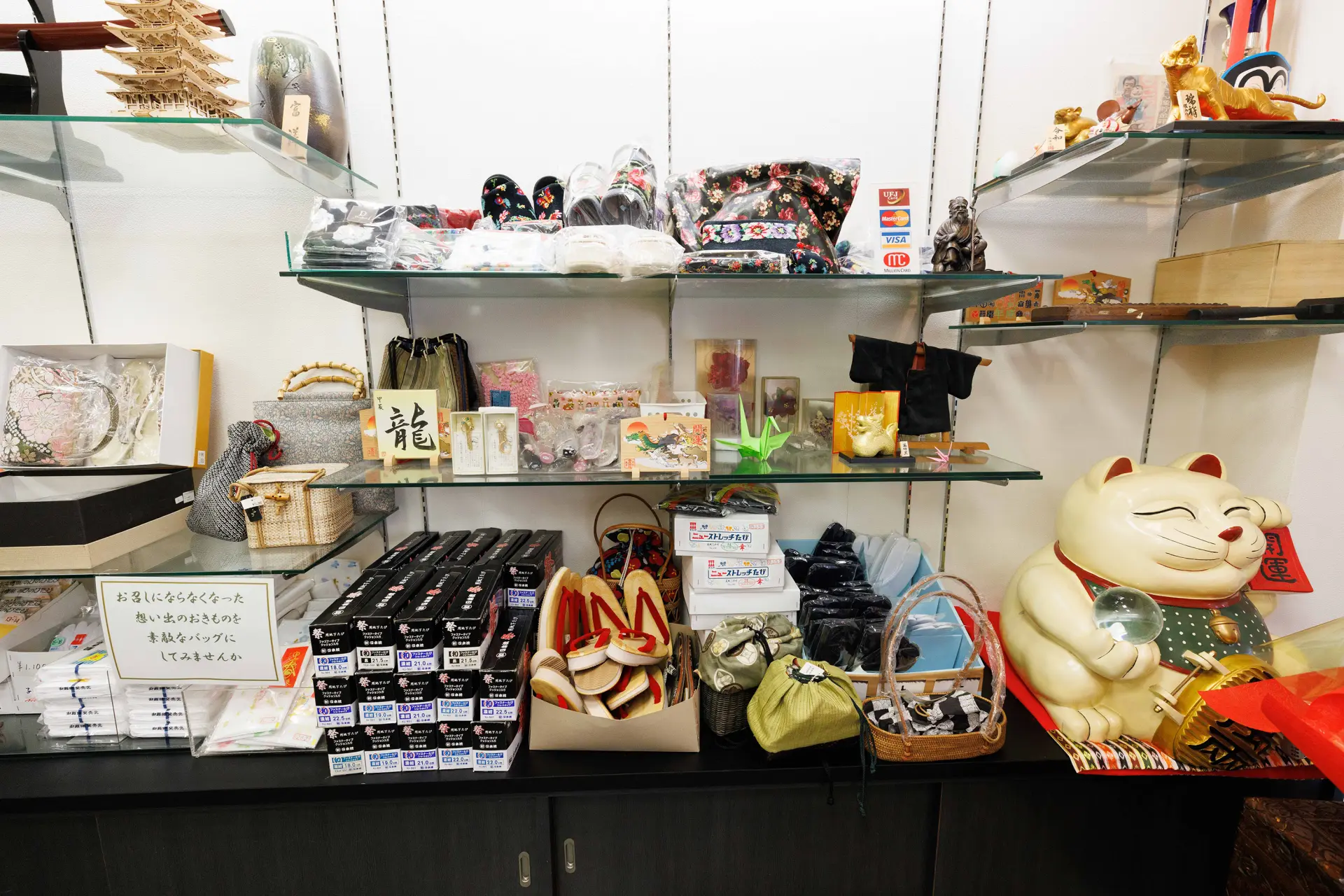
Having long operated in the heart of the shopping street, Musashiya plays a role in connecting the community and tourism.
Inside you will find not only kimono, but also clothing worn at festivals and accessories used with kimono.
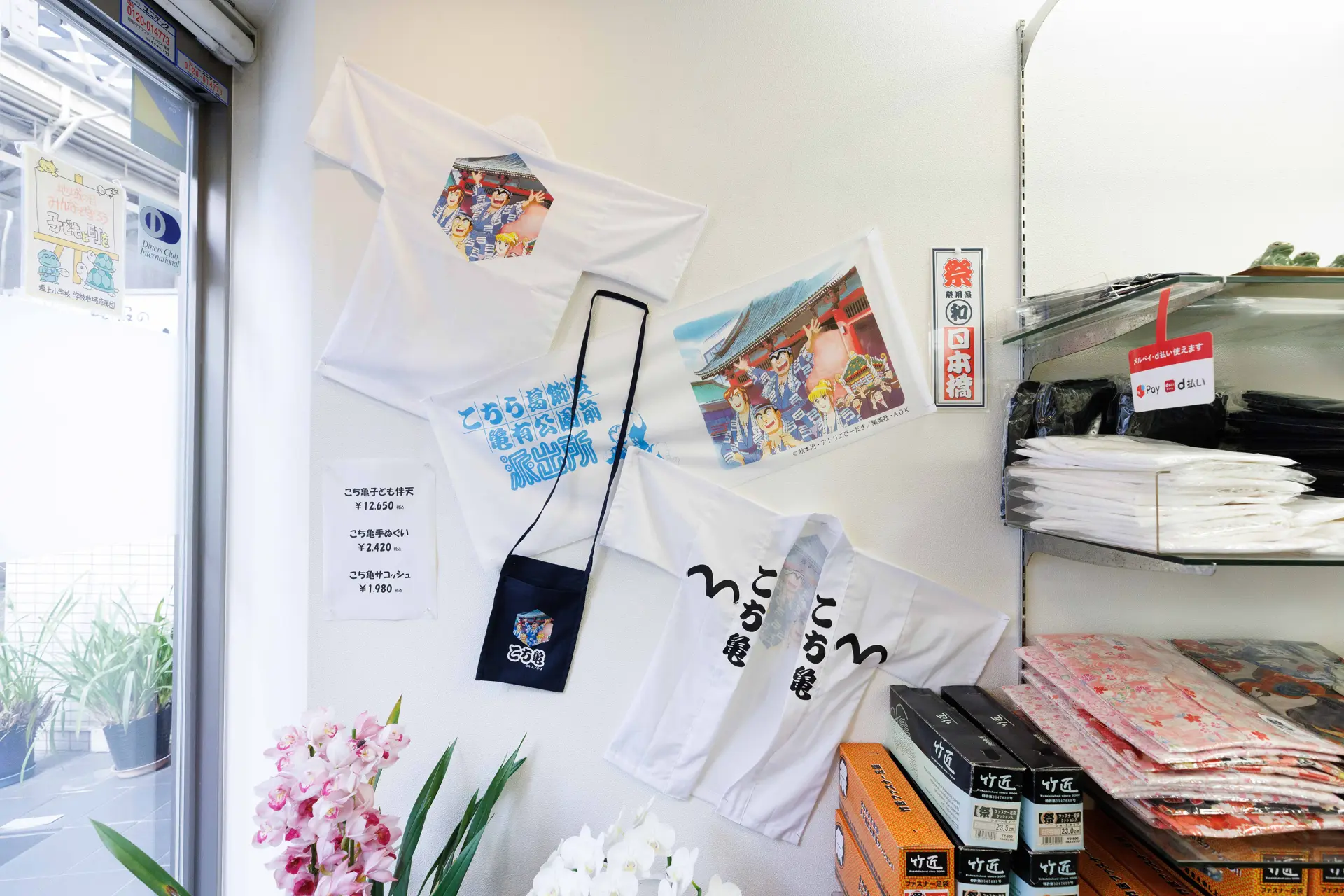
The shop also offers KochiKame design items.
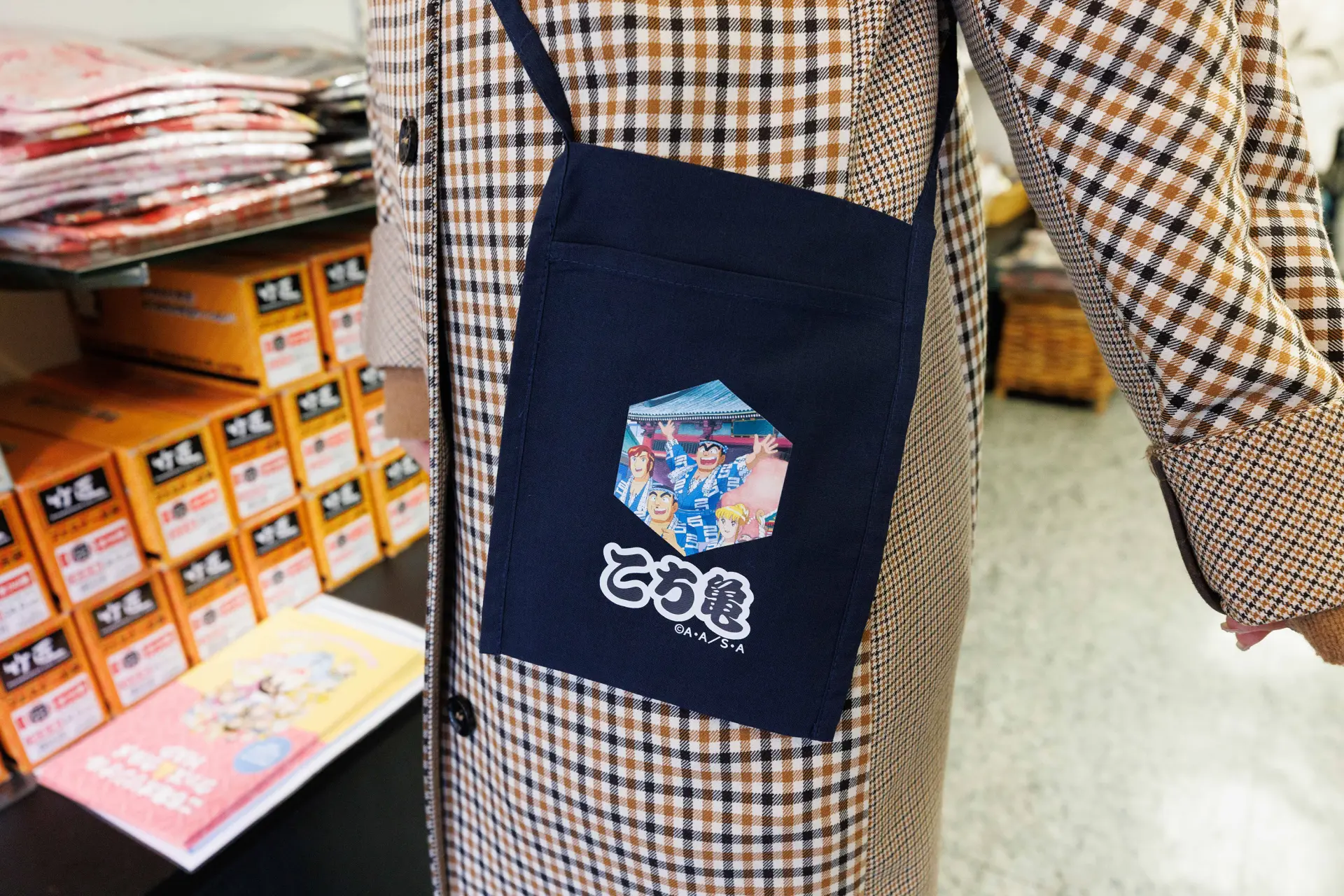
You can purchase three items for children: a hanten (traditional short jacket), a tenugui (hand towel), and a sacoche bag.
All of them are practical, and they are also popular as Kameari souvenirs.
Many tourists visit the shop, and communication is also possible through translation apps and similar tools.
3:45 pm|Get a Tourist Map and Manhole Card at the Kameari Tourist Information Center
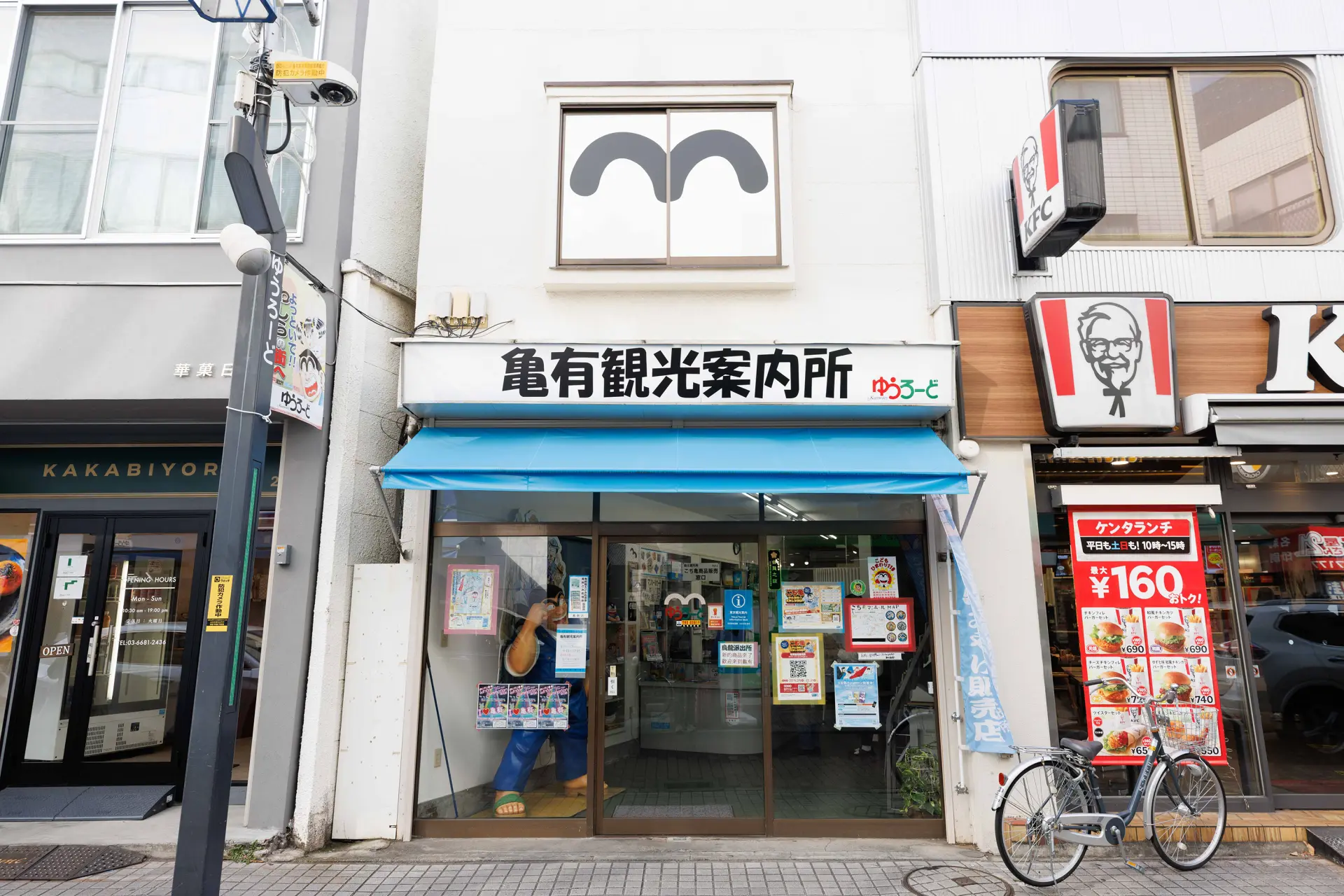
Another KochiKame-related spot is the Kameari Tourist Information Center, located in one corner of the shopping street.
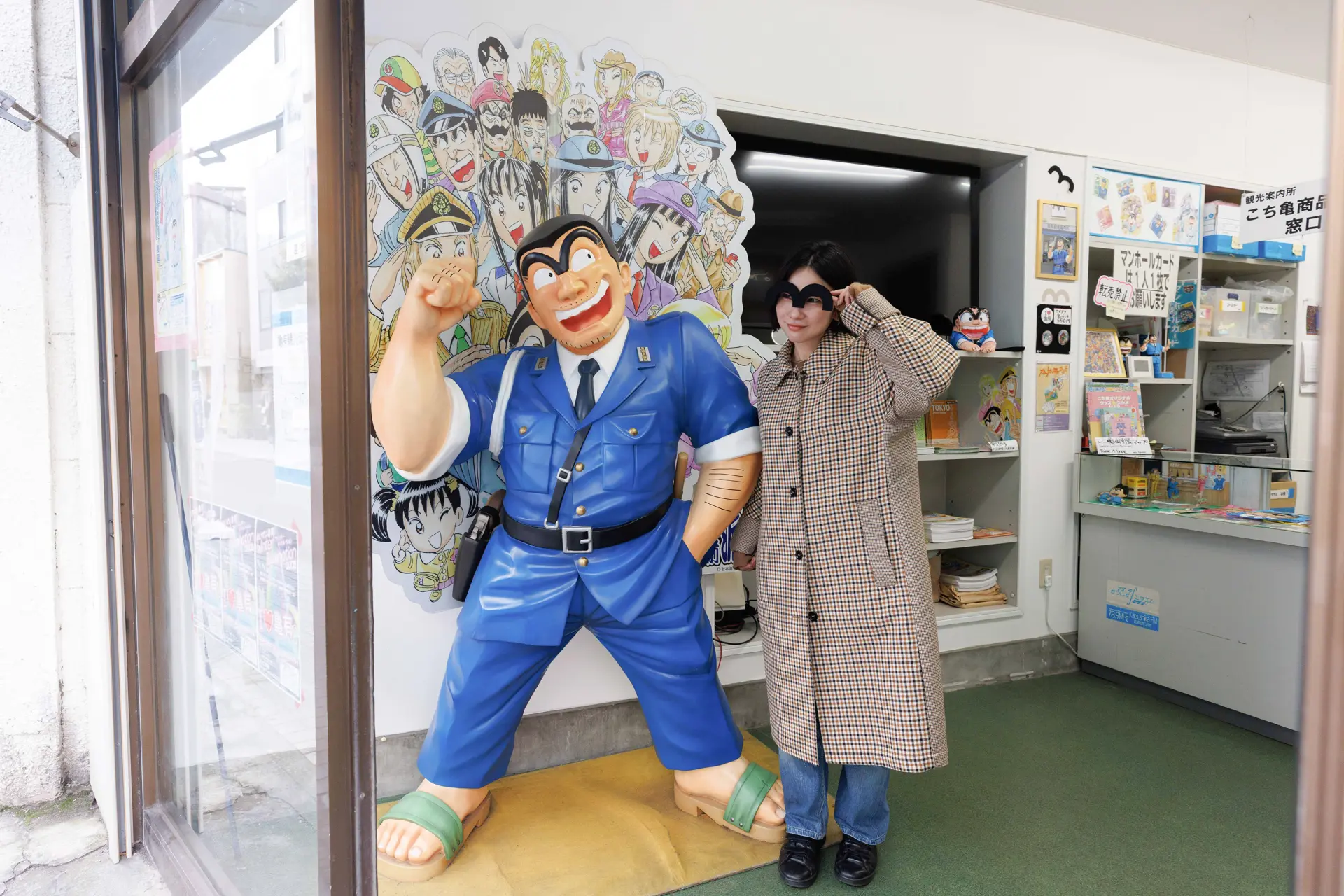
A life-size Ryo-san statue installed inside is also popular as a commemorative photo spot.
At the Kameari Tourist Information Center, pick up a tourist map of the area around Kameari.
The map clearly summarizes KochiKame-related gourmet spots, goods, and the locations of statues.
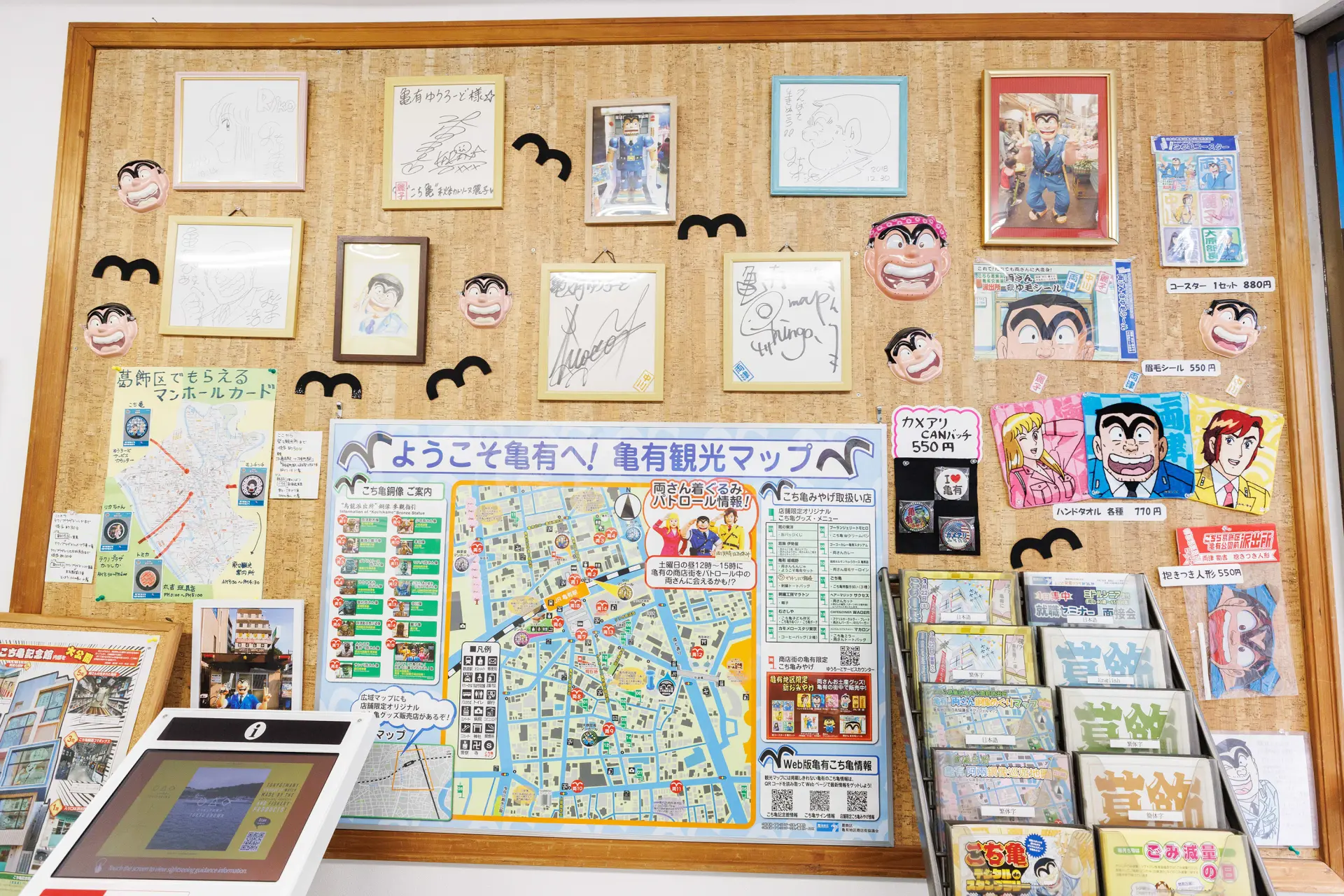
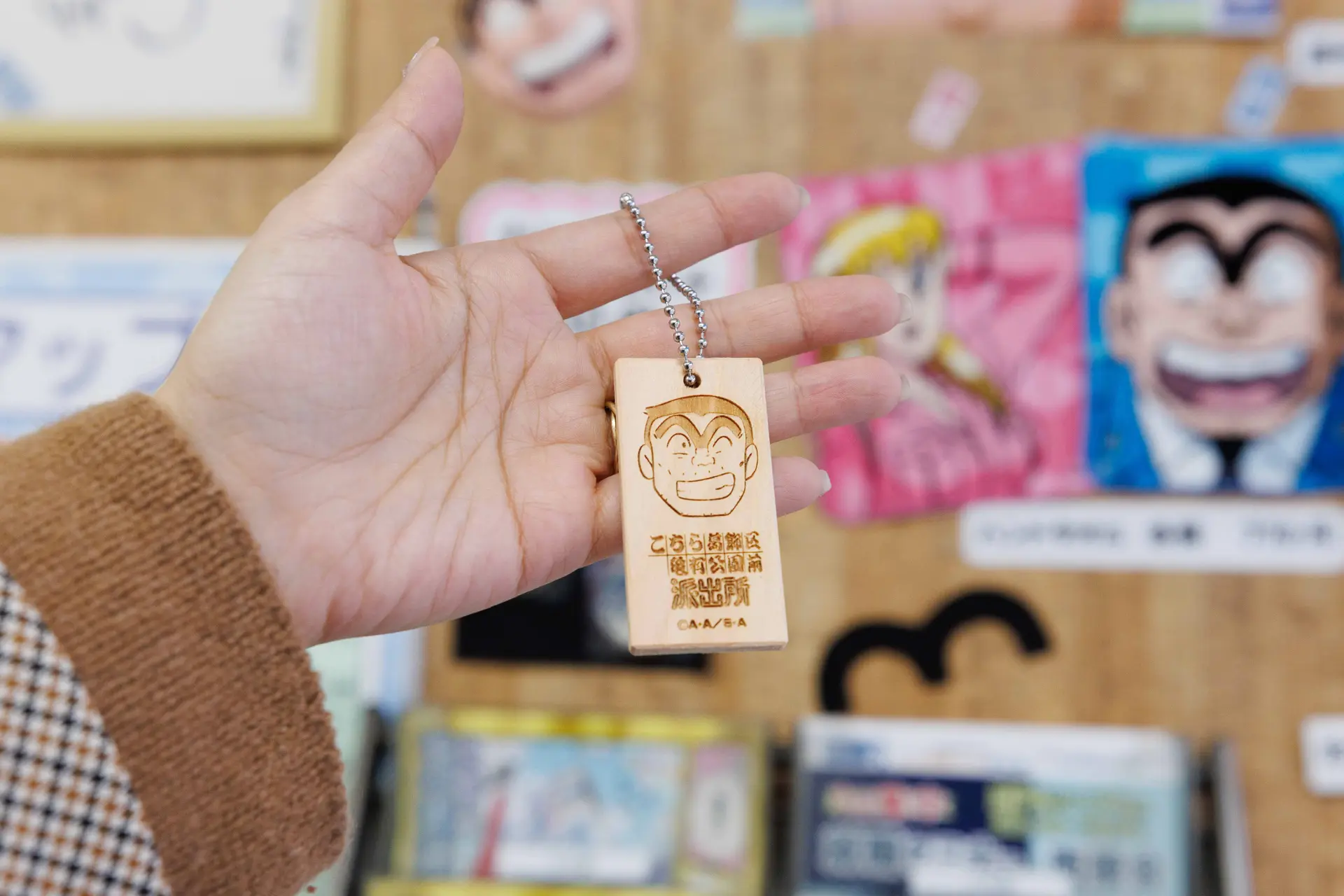
You should also keep an eye out for shopping street limited-edition goods available at the Kameari Tourist Information Center.
“The “Ryo-san wooden tag” keychain is especially popular.”
They are also appealing because they are easy to choose as trip mementos or souvenirs.
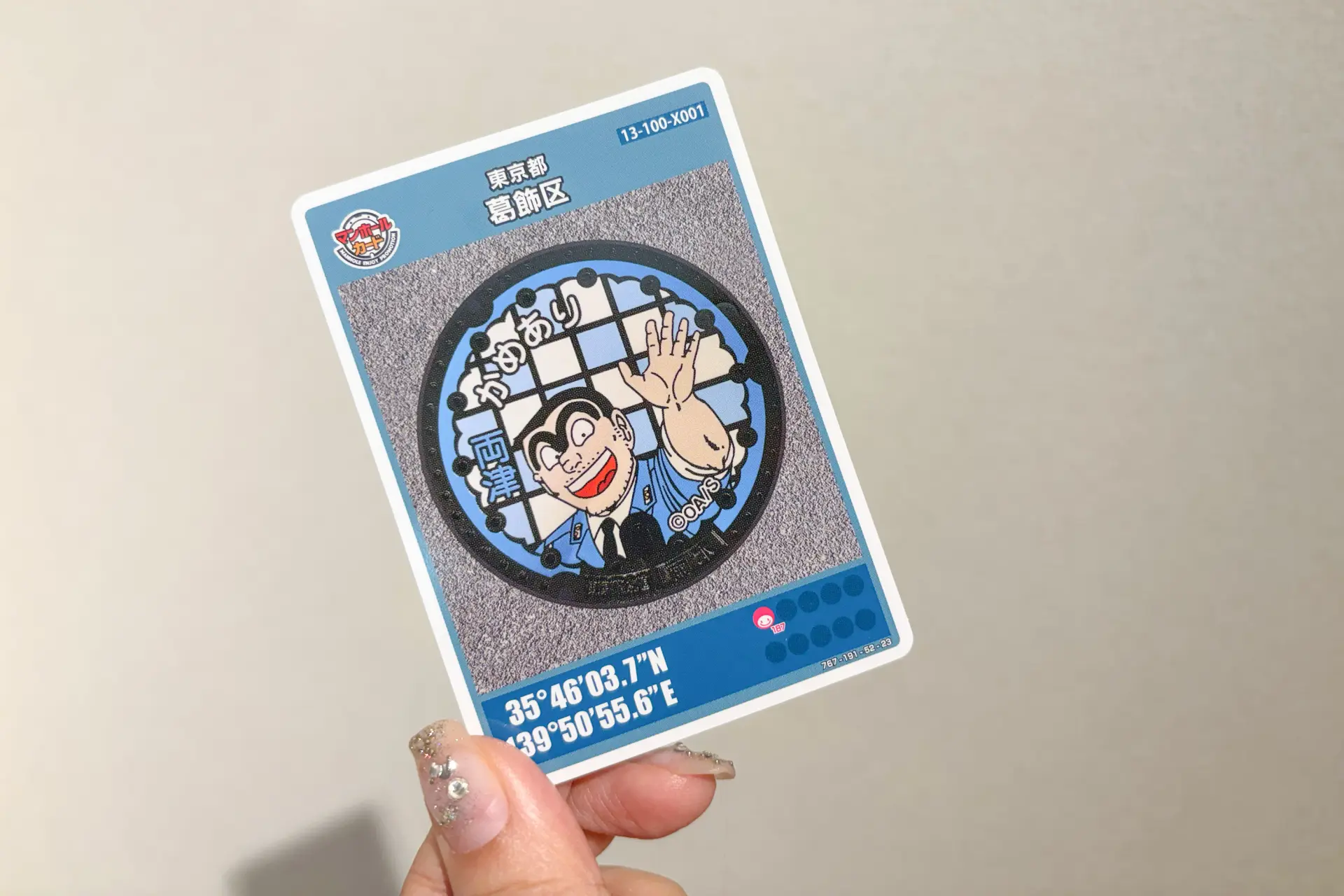
In addition, the Kameari Tourist Information Center distributes KochiKame design manhole cards.
They are popular as keepsakes, and KochiKame fans will want to pick one up.
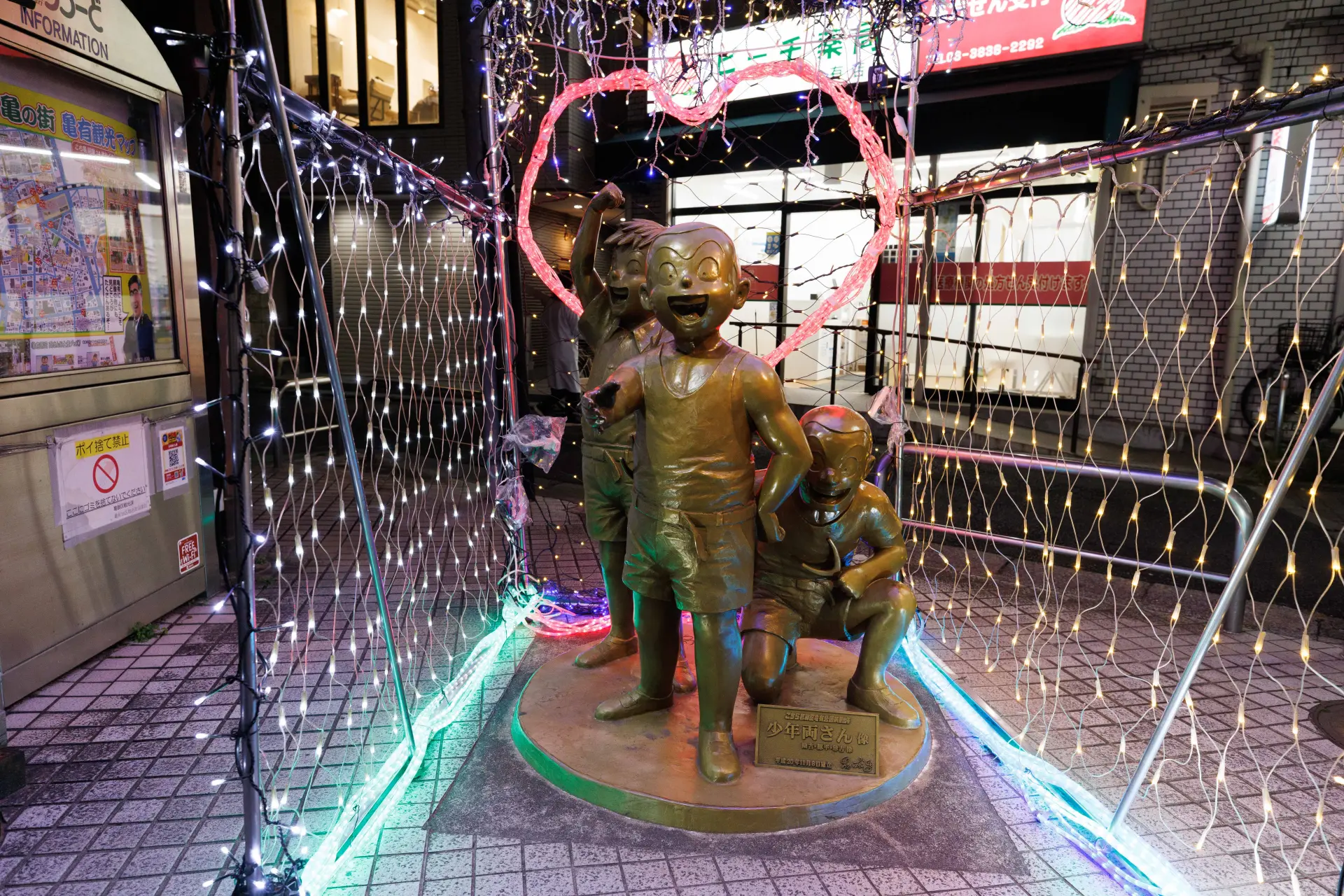
Ryo-san Statues Welcome You Around the Tourist Information Center, Too!
Along You Road, there is a “Shonen Ryo-san Statue” modeled after Ryo-san in his childhood.
It may also be decorated by season, so depending on when you visit, you might see a different expression on the statue each time.
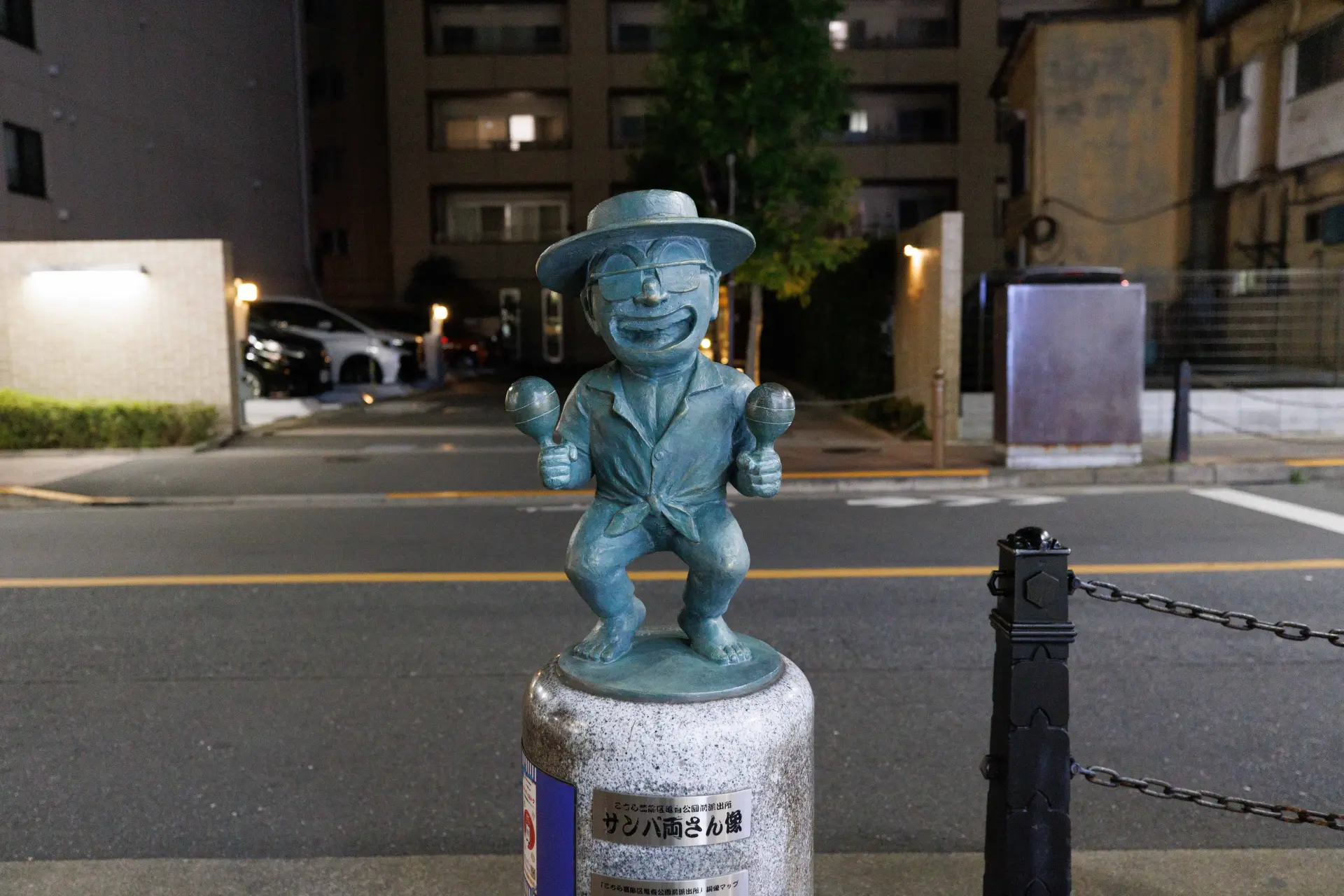
In addition, around the Kameari Station South Exit area, there are statues such as the “Samba Ryo-san Statue,” “Honda Statue,” and “Wahaha Ryo-san Statue.”
There are also four statues around the Kameari Station North Exit area, so if you want to complete the set, be sure to head to the north side as well.
5:00 pm|Savor A4-grade Japanese Black beef at Yakiniku Horumon Chura Roast Kameari Branch
After walking around Kameari, you will want to enjoy a relaxed dinner.
A great final stop for your walk is Yakiniku Horumon Chura Roast Kameari Branch.
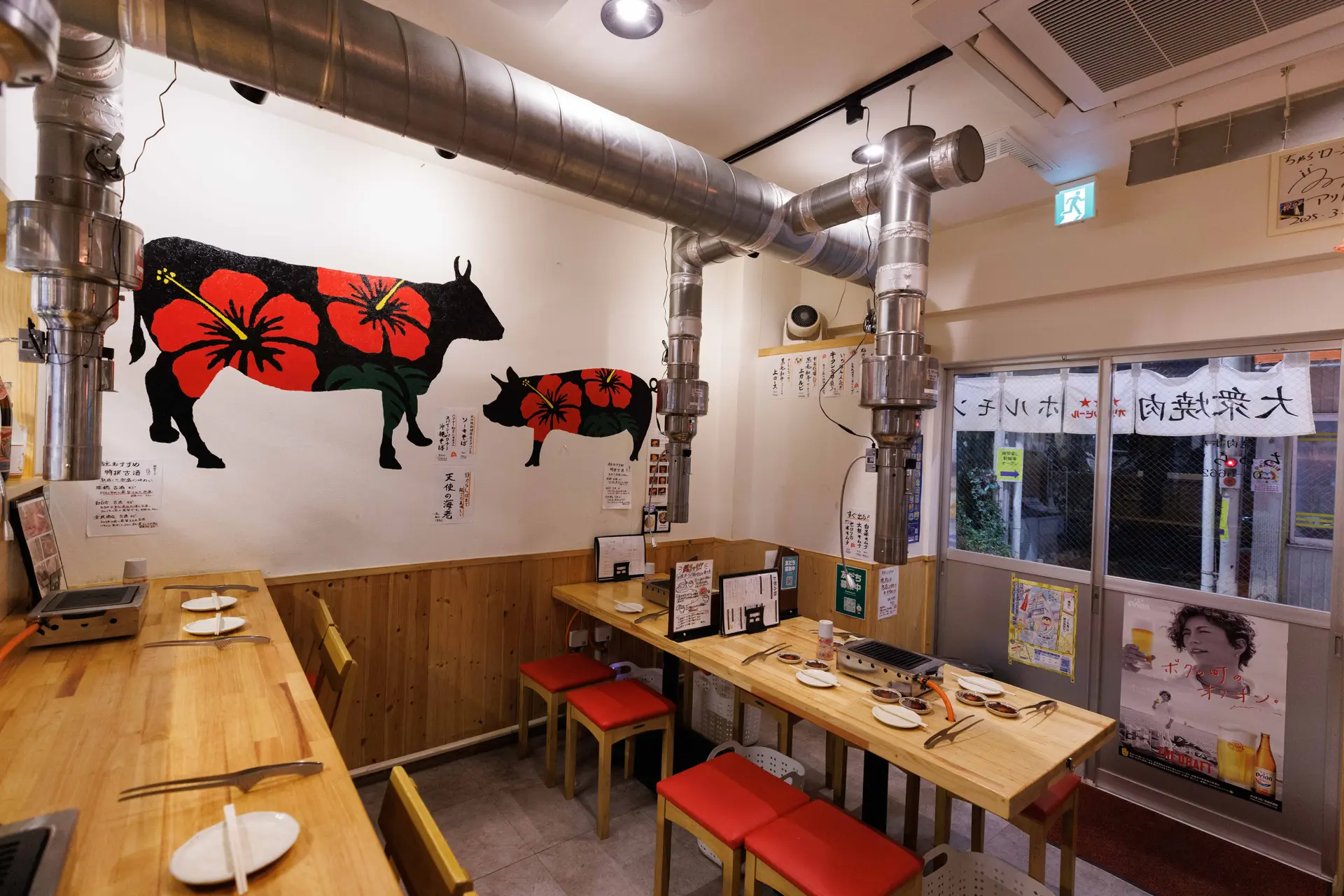
In a casual atmosphere that feels right at home in a downtown area, you can easily enjoy high-quality yakiniku.
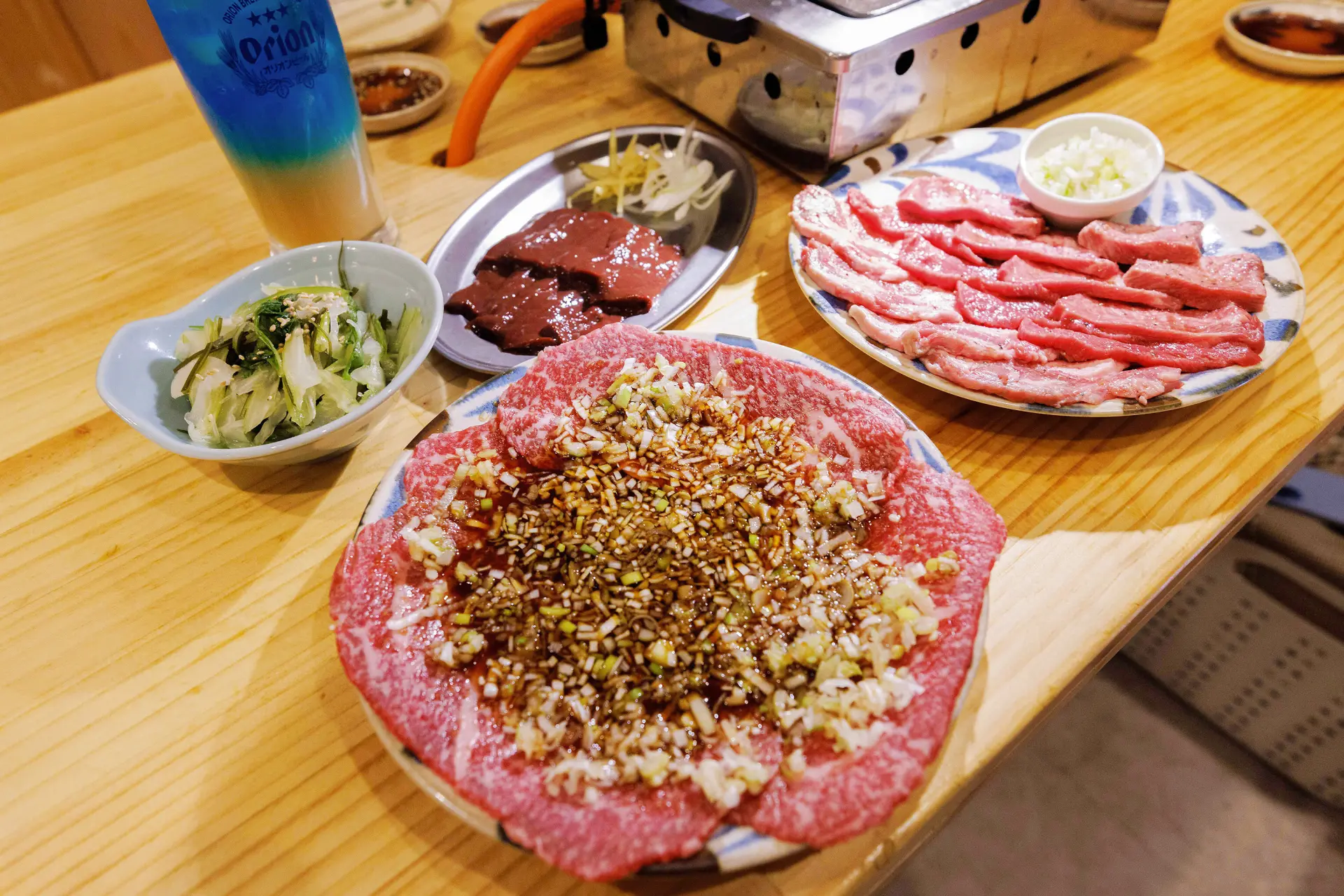
The restaurant uses carefully selected ingredients centered on A4-grade Japanese Black beef.
It features tender texture, sweet fat, and a rich aroma.
Many cuts are handled fresh rather than frozen, and only meat in good condition that day is served.
With a style of cutting after you order, the restaurant is also particular about freshness.
Signature dishes include “Negi Pon Chura Roast,” with its refreshing flavor, and the “All Beef Tongue Platter,” which lets you enjoy everything from thick cuts to lean slices.
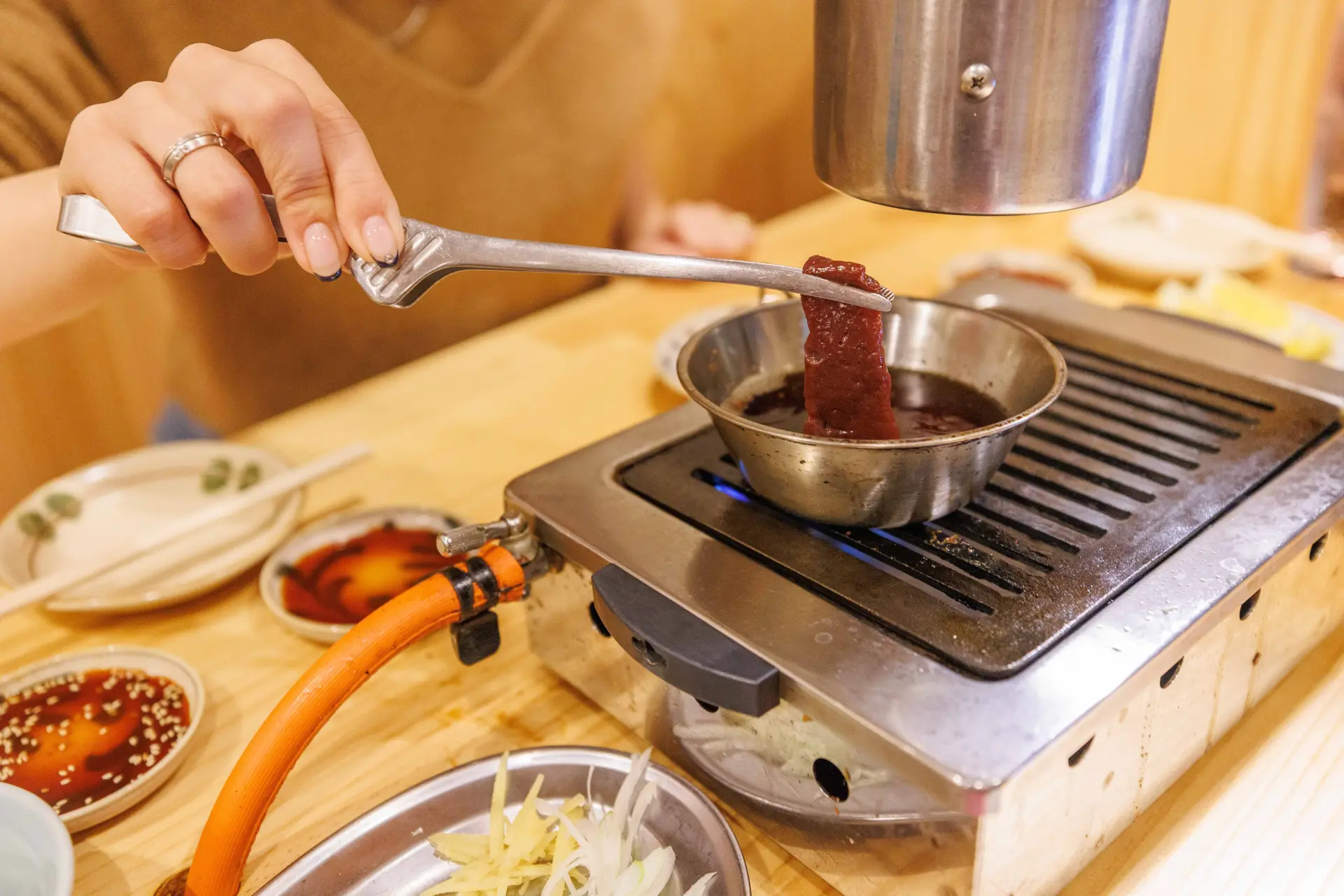
“Jo Liver Shabu-shabu,” where you dip liver into oil before eating, is also popular.
An awamori meister is on staff, and they offer more than 40 kinds of awamori (Okinawan distilled spirit).
It is a fitting place to end your Kameari trip, soothing your tired legs with great food.
3 Picks Around the North Exit of Kameari Station to Feel the Local Charm
Around the north exit of Kameari Station, an area spreads out where you can feel local history and everyday culture.
Compared to the south exit area, which has a strong KochiKame sightseeing focus, you can enjoy a calmer, more distinctly downtown Tokyo atmosphere.
If you want to enjoy Kameari more deeply, you will also want to extend your walk to the north side.
1. Mujina-zuka at Kensho-ji Temple
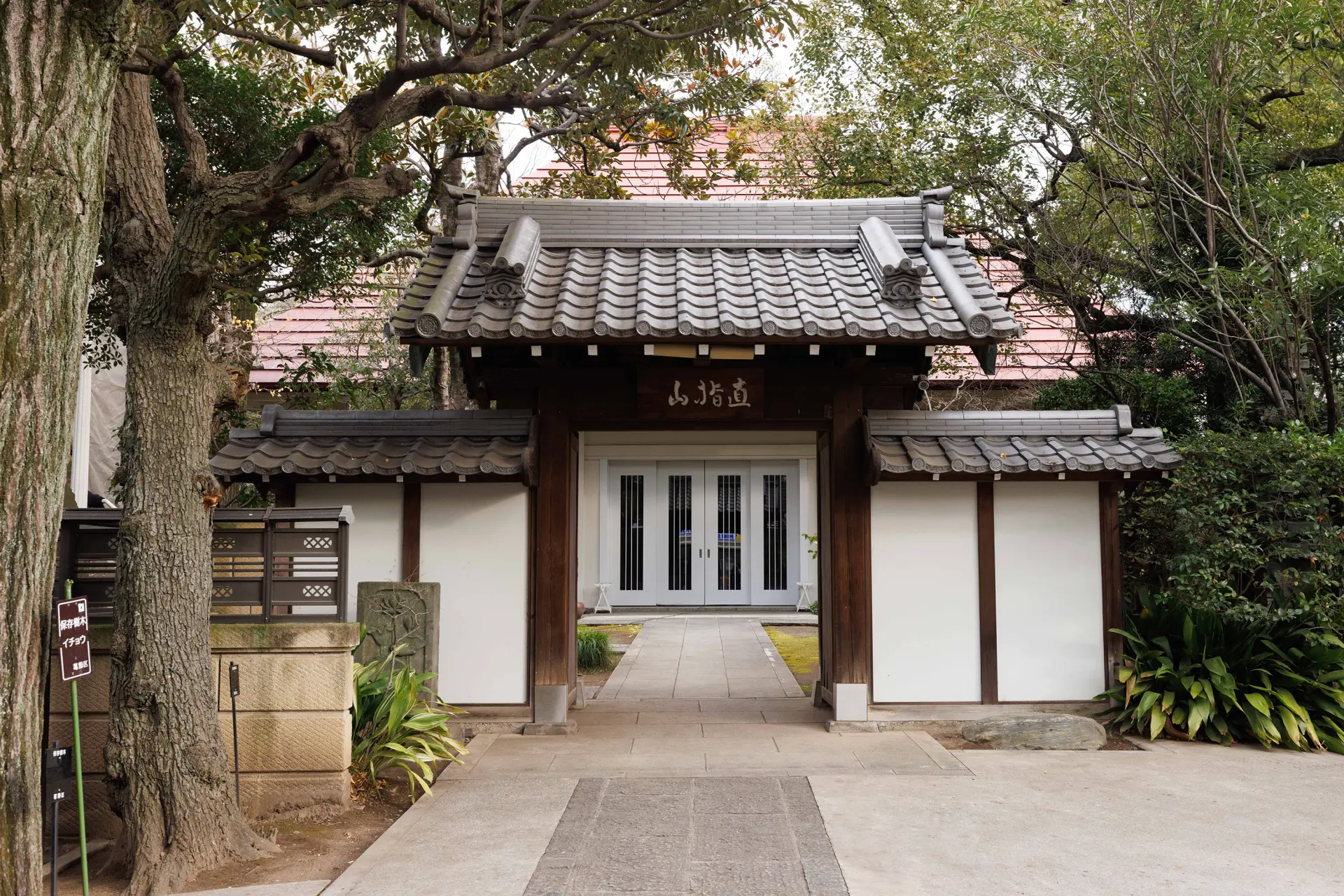
Kensho-ji Temple is about a four-minute walk from the north exit of JR Kameari Station.
It is a venerable temple founded in 1620, with a history of more than 400 years.
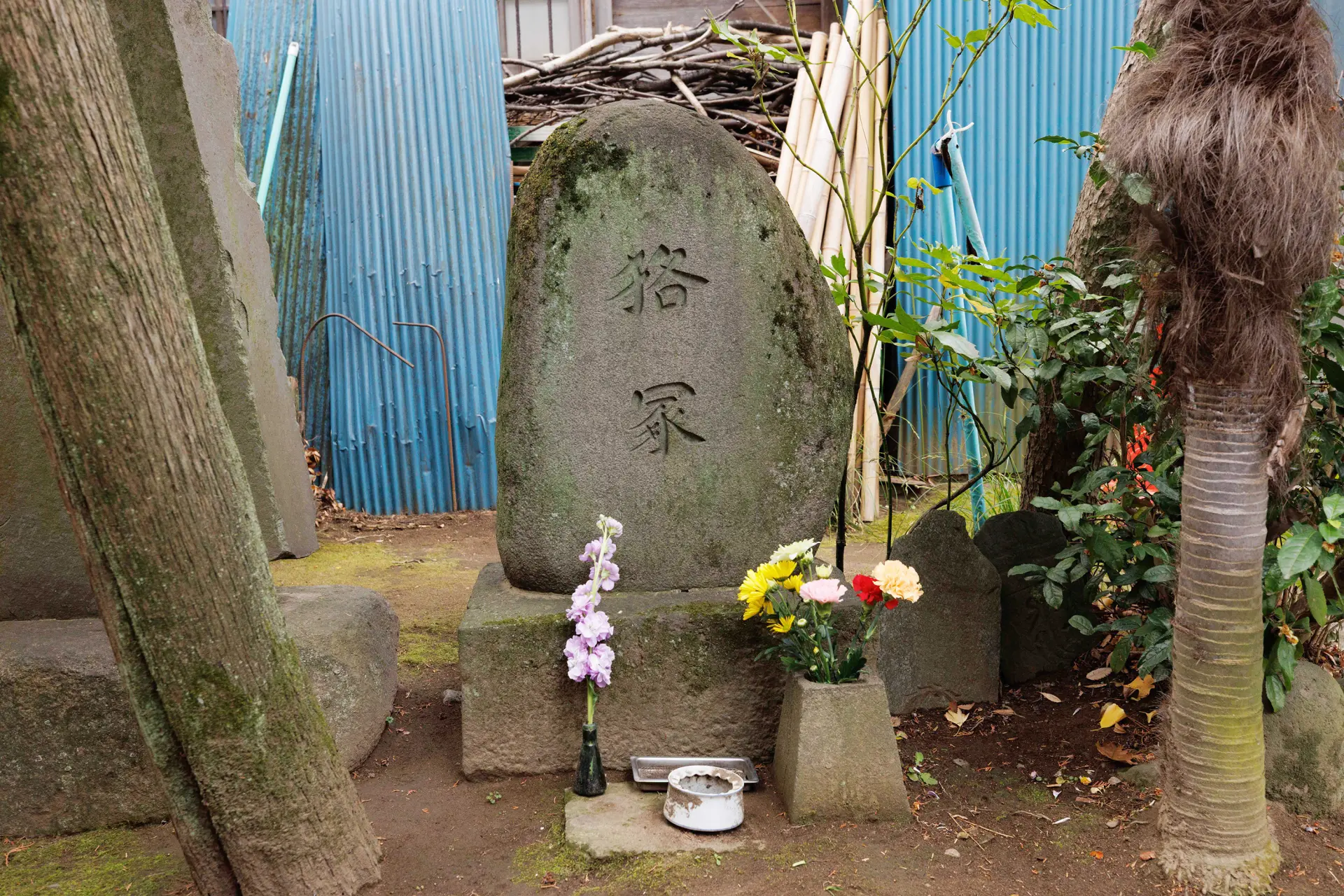
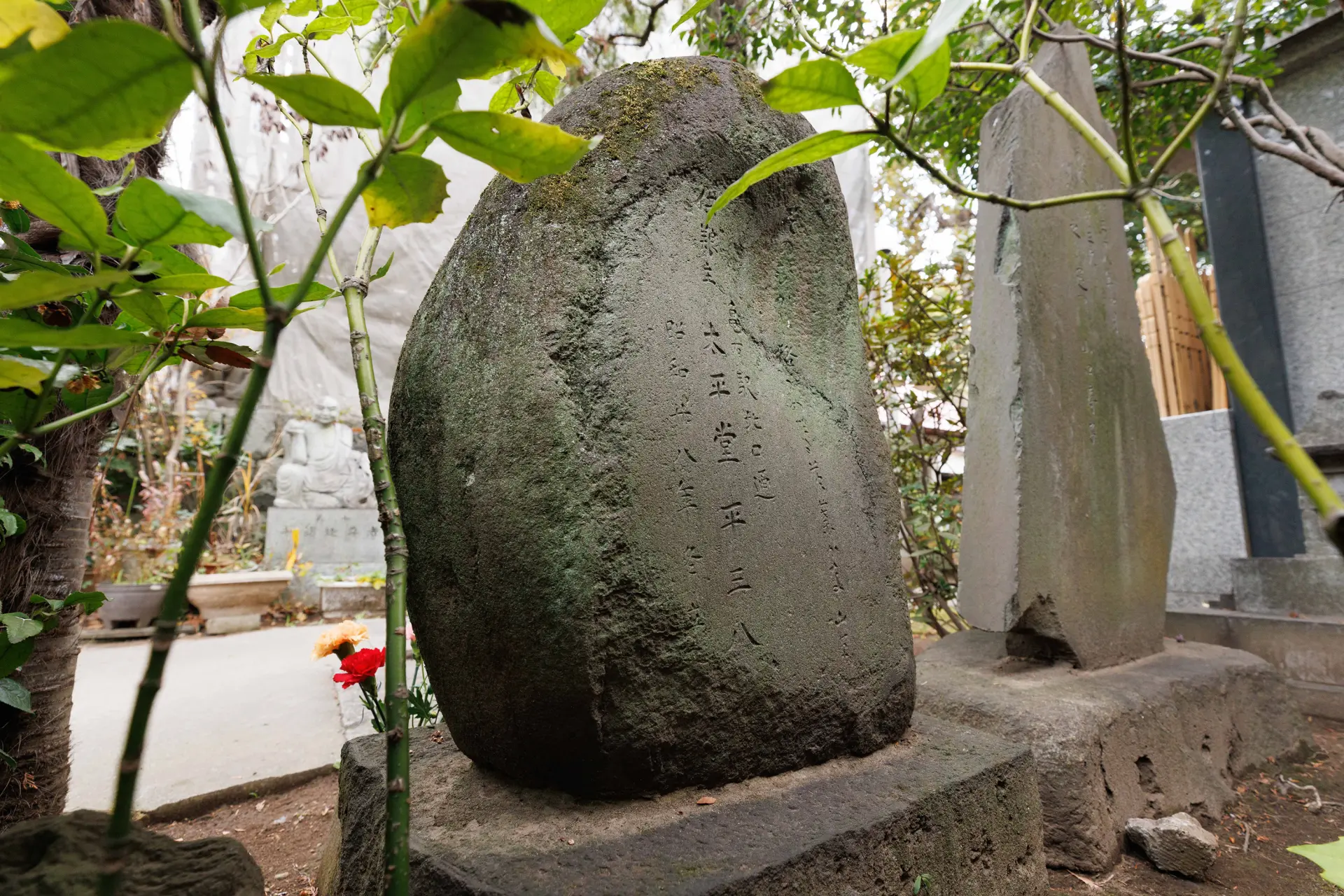
One well-known feature on the grounds is Mujina-zuka.
Mujina-zuka is a mound built for a tanuki (raccoon dog) that was hit by a train.
It is said to have been established to mourn a tanuki that had been startling people around Kameari around the time the Joban Line opened in 1896.
The Mujina-zuka seen today was built in 1953.
It is cherished as a landmark that conveys folktales as well as the history as well as the history of the railway’s opening to the present day.
If you are interested in history or railways, this is a place you will want to stop by during a north-exit stroll.
There is also an exhibit related to the Mujina-zuka folktale at Kochikame Museum on the south side, so try looking for it.
2. Savor House-Roasted Coffee at Lucky Kameari No. 2
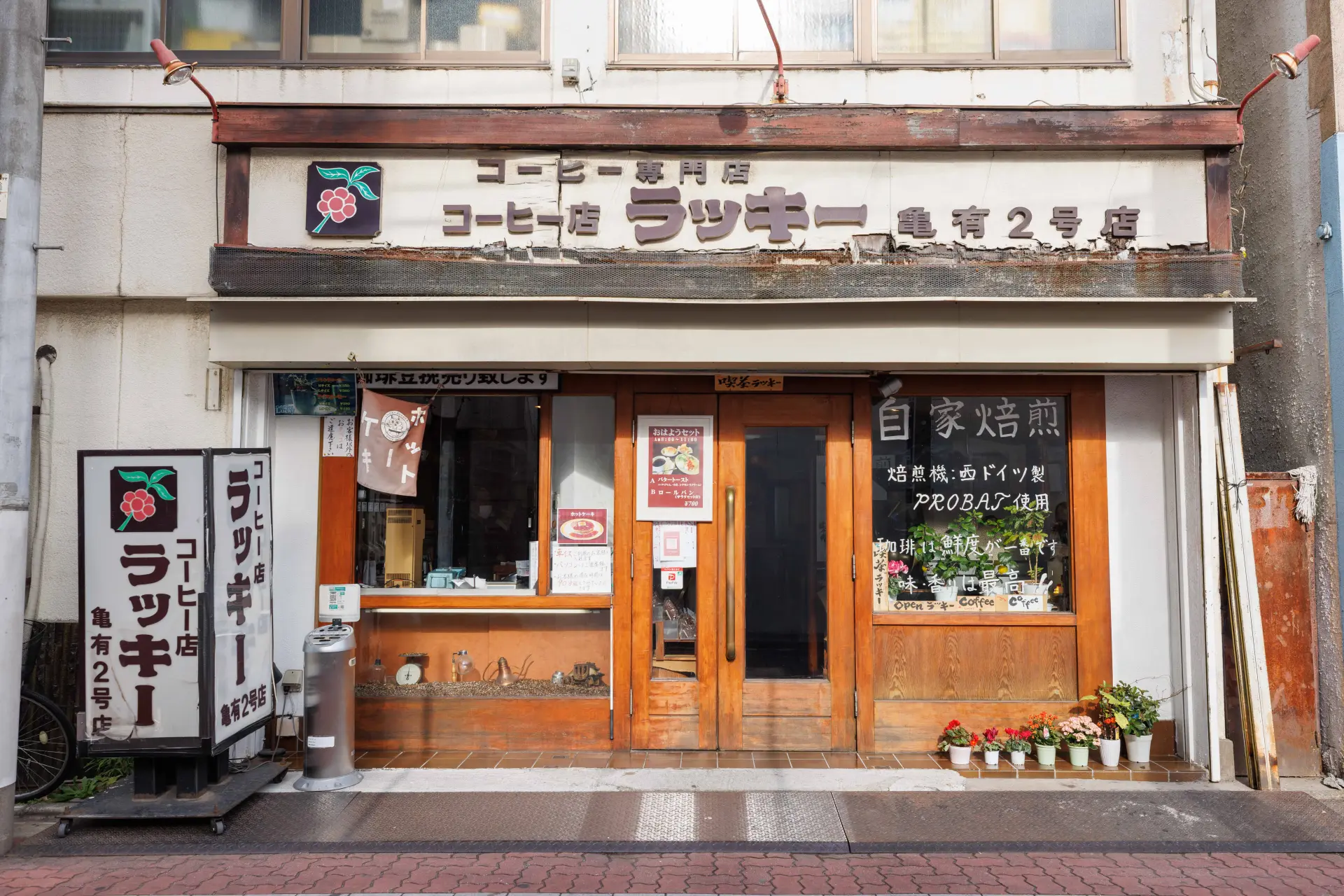
Lucky Kameari No. 2 is a specialty shop for house-roasted coffee that has long been loved by locals in Kameari.
In the shop, coffee beans are roasted using a German-made roaster.
With a wide variety by origin and flavor profile, you can also purchase beans only.
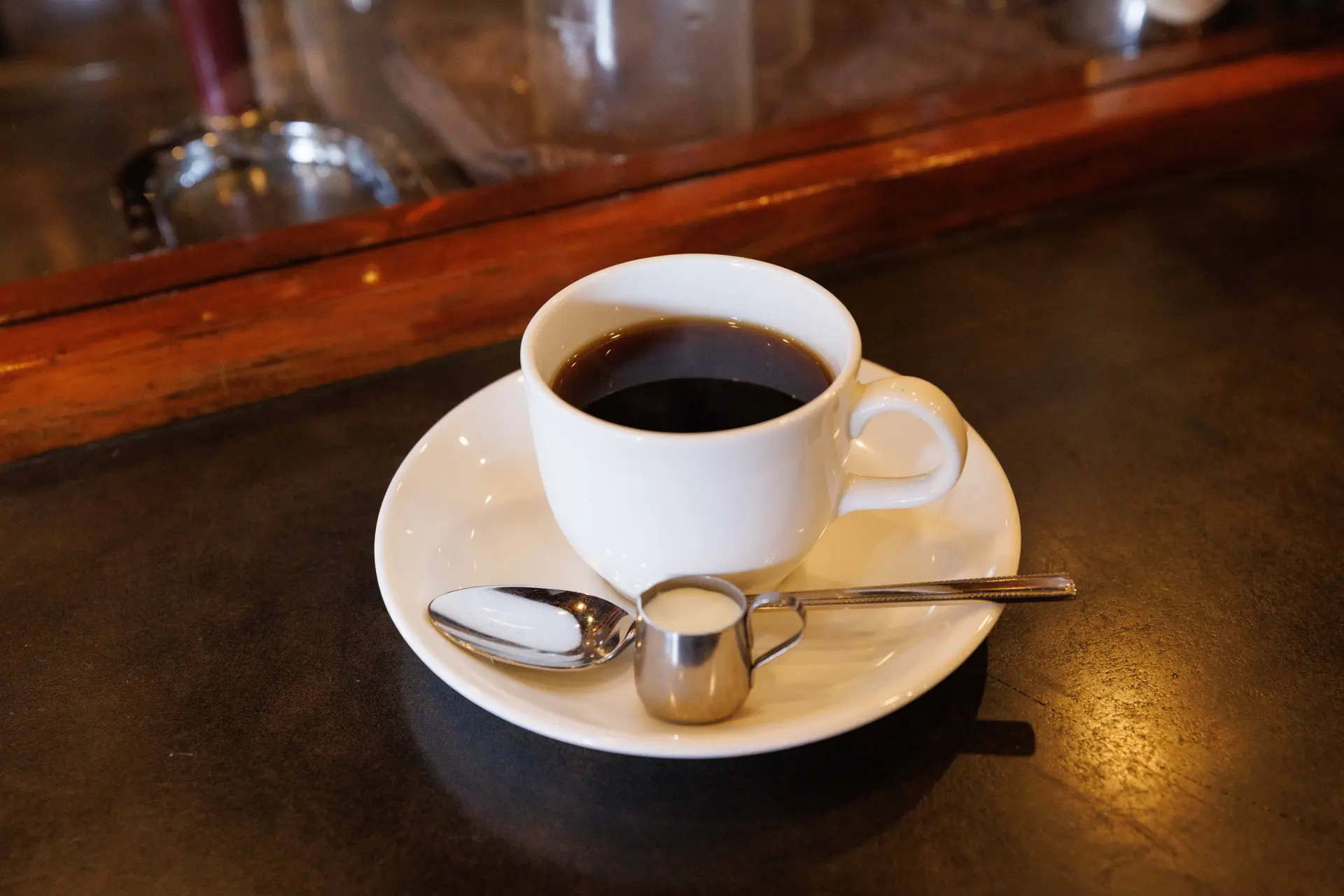
The shop’s original “blend coffee” prioritizes drinkability by combining five types of beans.
The coffee, carefully brewed with a siphon by the owner, is recommended for a relaxing break.
Food menu items such as toast and sandwiches are also great to enjoy with coffee.
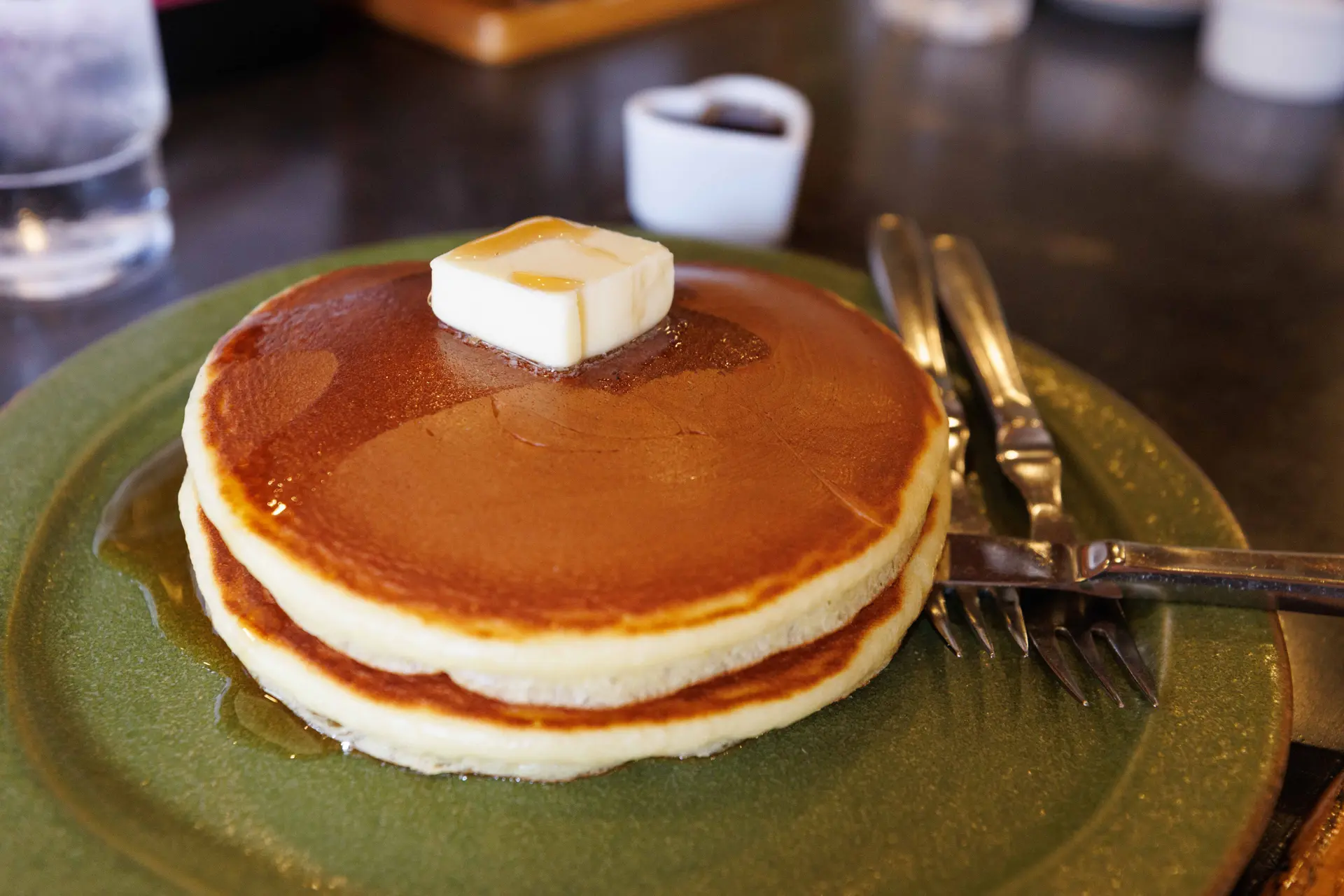
Especially popular is the “house-made hotcake,” cooked on a copper griddle.
The fluffy batter pairs with butter and syrup, creating a moderate sweetness that is easy to enjoy.
With a calm space filled with the warmth of wood, it is easy to use as an easy stop for a sightseeing break-and a taste of everyday downtown life.
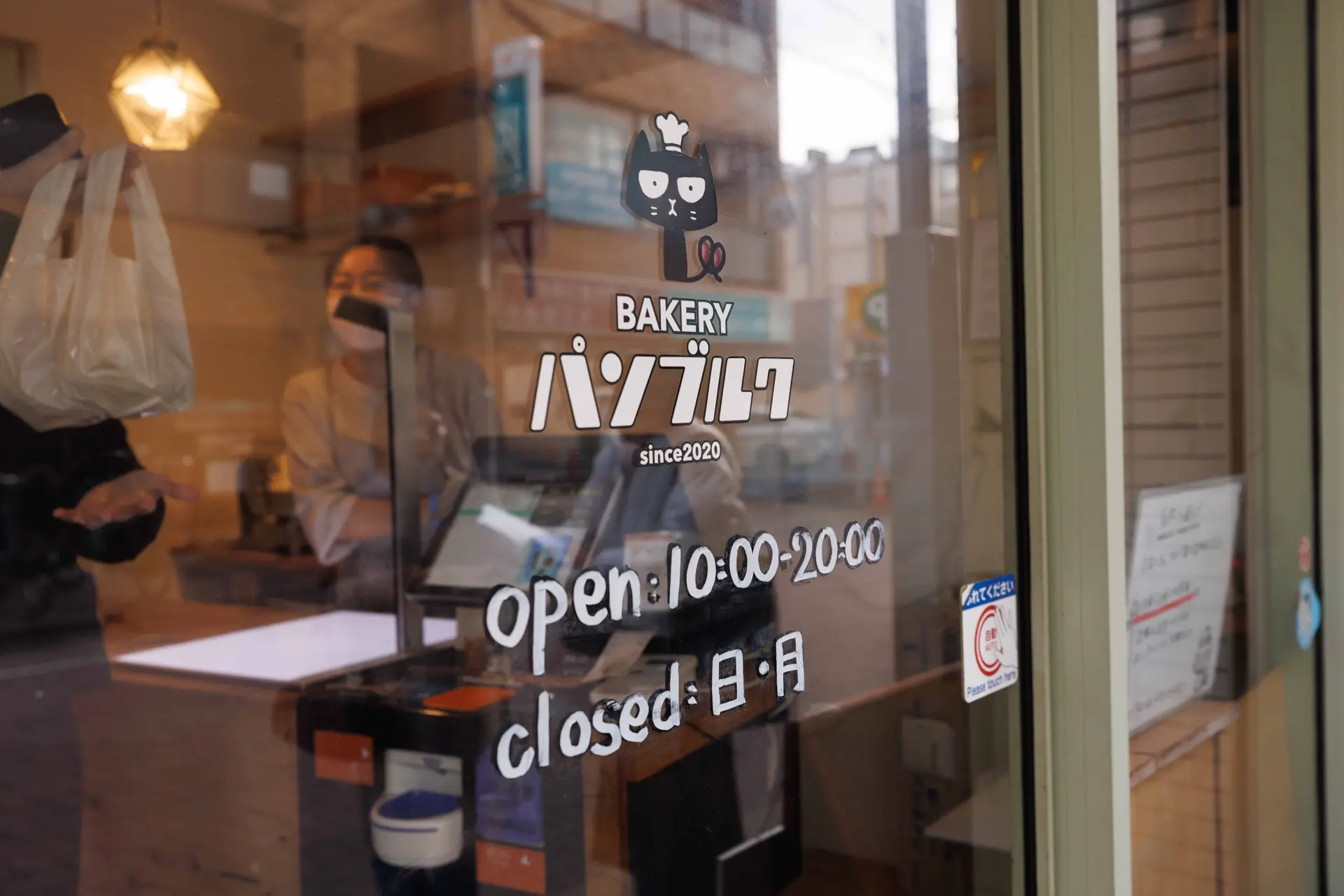
3. Plenty of Bread Options: Local Favorite Bakery Panburg
About a three-minute walk from the north exit is Bakery Panburg.
The shop’s concept is “a place where you can always find something you want to eat when you go.”
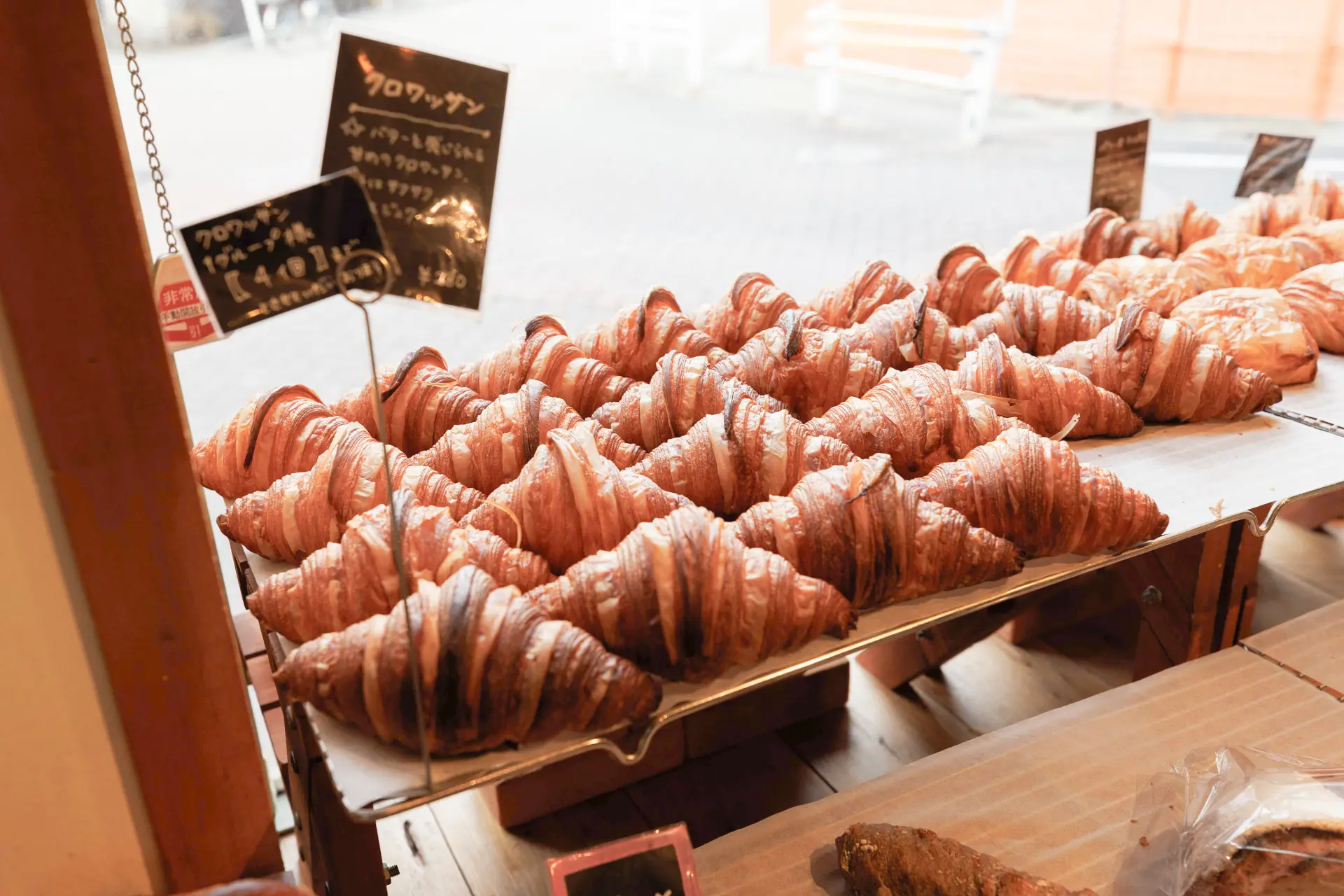
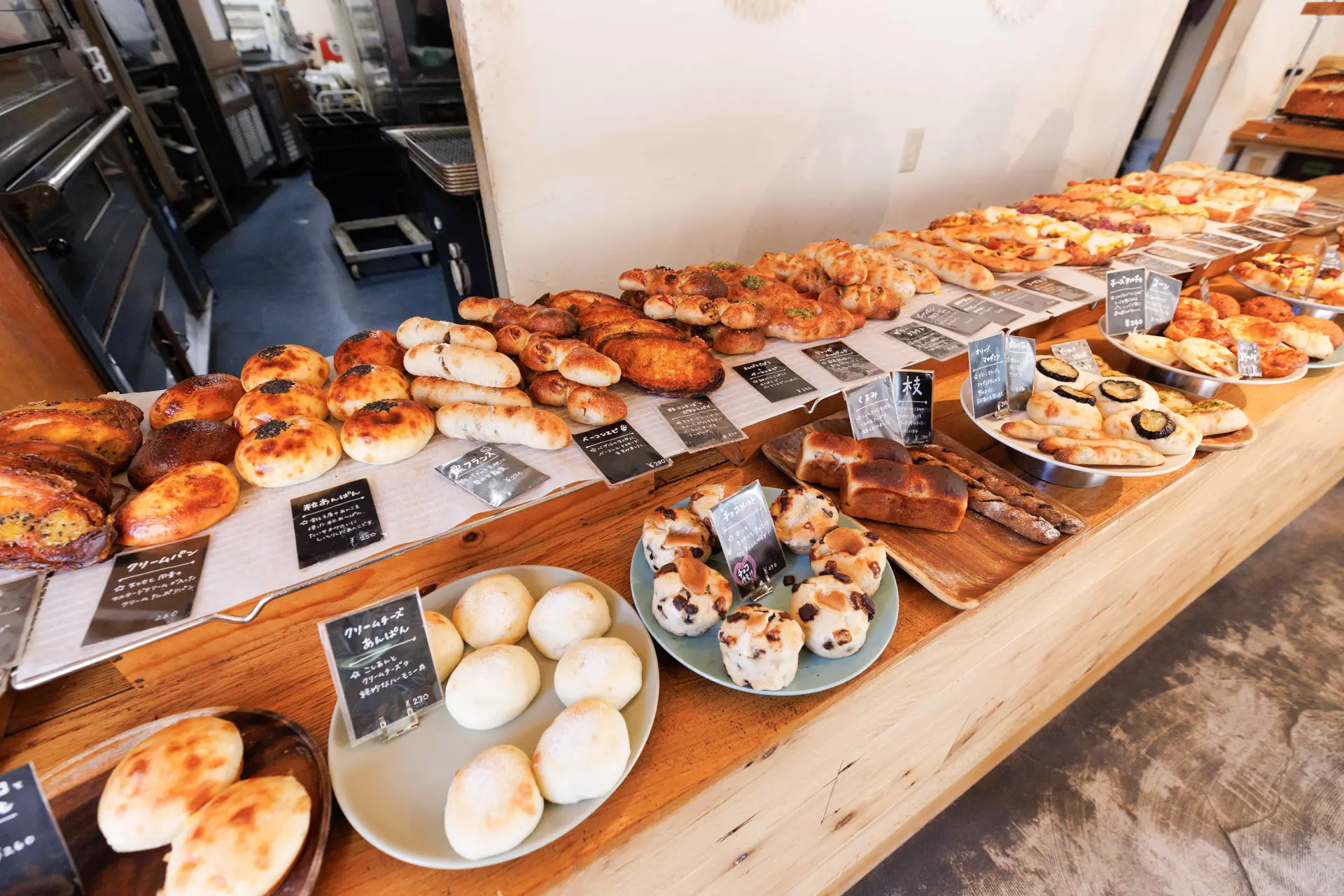
Inside, a wide variety of breads are on display, made with careful attention to ingredients and quality.
The croissant is especially popular with locals.
Another recommended item is “Currywurst,” a savory bread made with baguette dough.
It is perfect for a snack between sightseeing spots or for breakfast the next day.
- Japanese Name
- ベーカリー パンブルク
- Address
- 5-38-4 Kameari, Katsushika-ku, Tokyo Google Maps
- Opening Hours
- 10:00 am-8:00 pm
- Closed
- Sunday and Monday
- Official Instagram
- Official Instagram
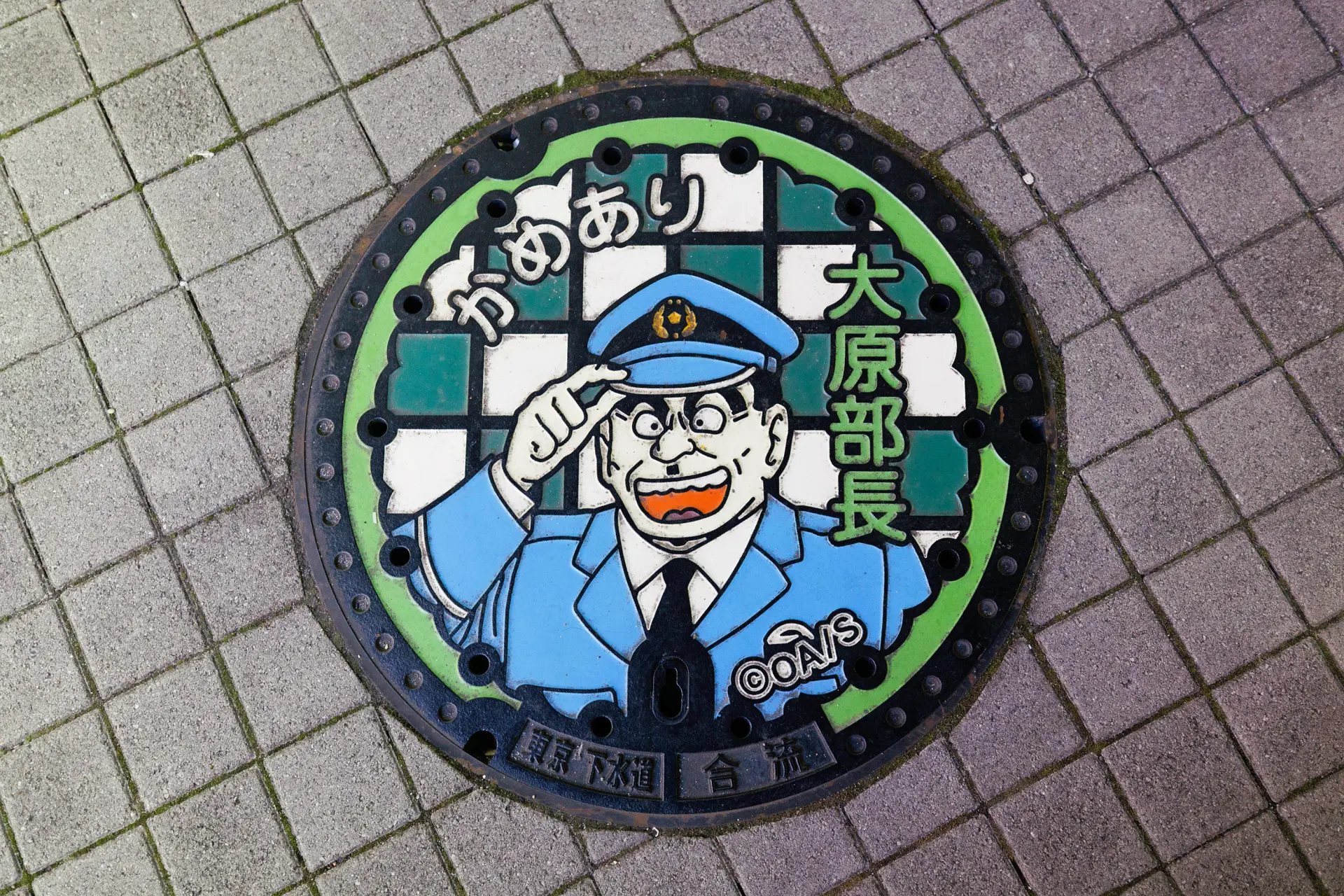
If You Have Time, Go Hunting for KochiKame Manhole Covers!
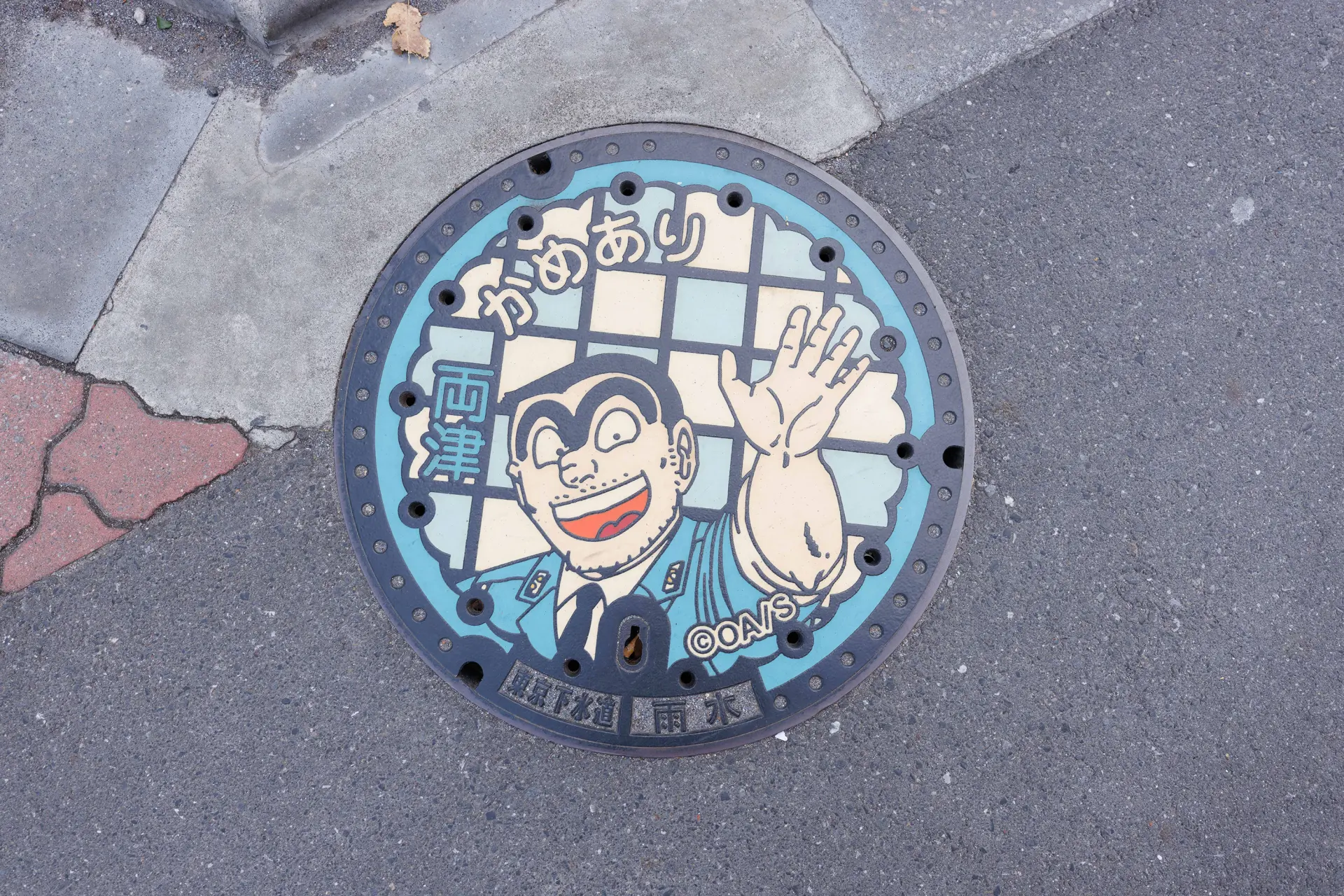
Around JR Kameari Station, KochiKame-designed manhole covers have been installed.
Because they are installed on public roads, you can view them at any time, which is a key feature.
There are six in total, with two in the south exit area and four in the north exit area.
They depict the main character Ryo-san as well as major characters from the manga.
It is also recommended to search for them as you tour sightseeing spots, like taking commemorative photos or doing a stamp-rally-style hunt.
FAQ About Kameari
Q
Is there a map if I want to visit KochiKame-related facilities?
A
You can get an area map at the Kameari Tourist Information Center. Also, guide boards are installed around the station. In addition, the Kameari Tourist Information Center distributes a statue tour map (available in Japanese and Traditional Chinese).
Q
Where can I buy KochiKame goods and souvenirs?
A
Many shops carry them, including the Kameari Tourist Information Center and Musashiya. You can also get a “KochiKame goods and gourmet” pamphlet (Japanese only) at the Kameari Tourist Information Center.
Q
Please tell me about KochiKame-related gourmet spots.
A
Centered around the You Road shopping street, multiple shops offer collaboration menus, including wagashi at Katsushika Iseya. You can also get a “KochiKame goods and gourmet” pamphlet (Japanese only) at the Kameari Tourist Information Center.
Summary
Kameari is a town where the manga world of KochiKame overlaps with the atmosphere of a Japanese downtown neighborhood.
Within walking distance around the station, KochiKame-related spots are gathered together.
A major appeal is that even in a short time, you can enjoy a fulfilling sightseeing experience.
As you walk through the town that became the setting of the series, you can also encounter shitamachi culture and everyday scenes.
Whether you are a KochiKame fan or simply want to experience nostalgic everyday Japan, be sure to visit at least once.