Scenic Views and Gourmet Train Travel Just 2 Hours from Tokyo: 3 Luxury Food Trains in Niigata and Shinshu
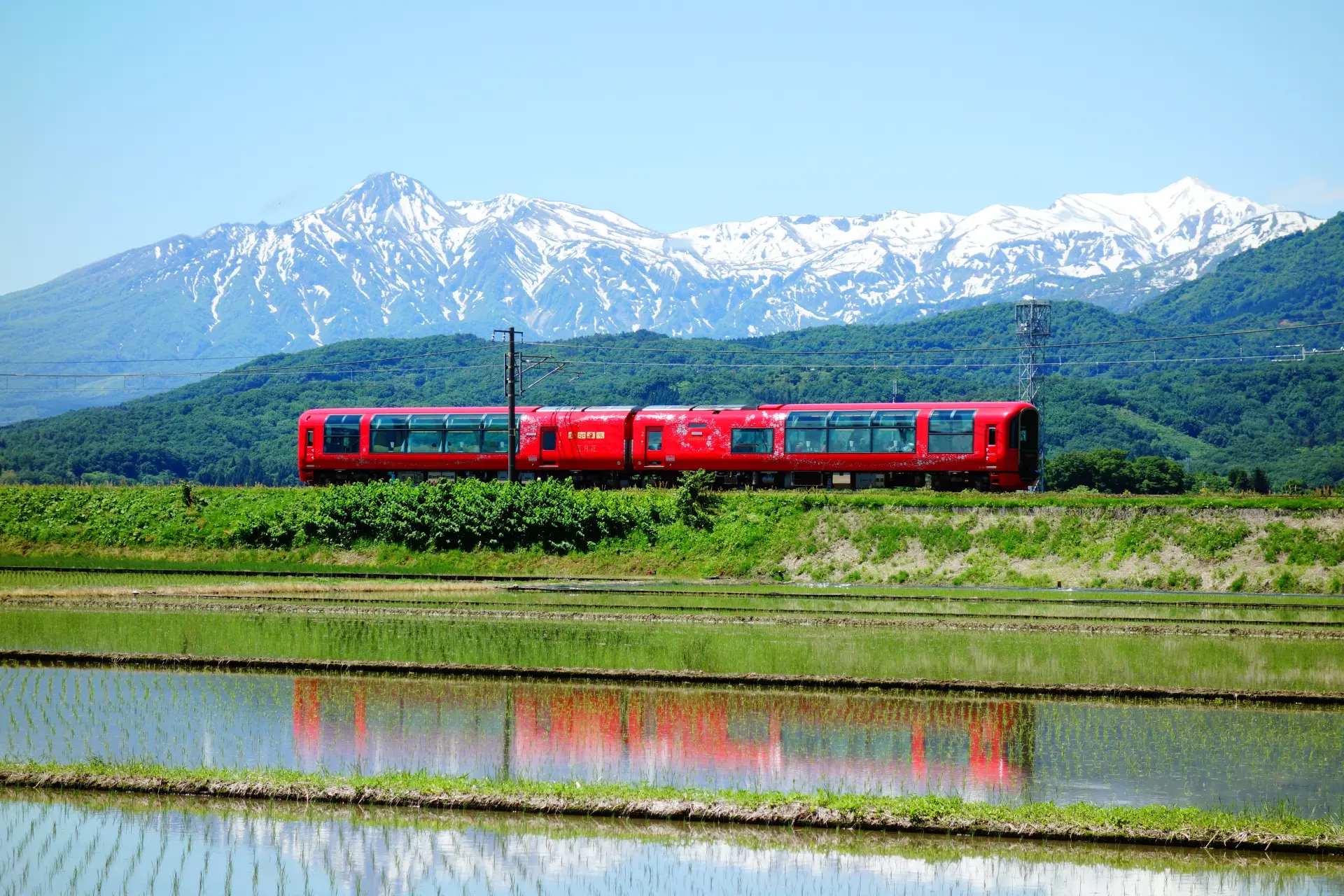
Echigo TOKImeki Resort Setsugekka travels through the mountains and along the sea in Niigata, Rokumon is a sightseeing train on the Shinanoji route connected to the Sanada family, and the Hokushinano Wine Valley Train runs through the middle Chikuma River area in the northern Chikuma River Wine Valley. In the Nagano and Niigata area, easily accessible from Tokyo by the Hokuriku Shinkansen, you’ll find food-focused sightseeing trains where you can enjoy meals tied to the regions along the line. Take an easy day trip or one-night train journey from Tokyo Station, and enjoy views of nature-rich satoyama countryside from the window, along with meals made with local ingredients and regional sake.
Echigo TOKImeki Railway “Echigo TOKImeki Resort Setsugekka”
(Joetsu City–Myoko City–Itoigawa City, Niigata Prefecture)
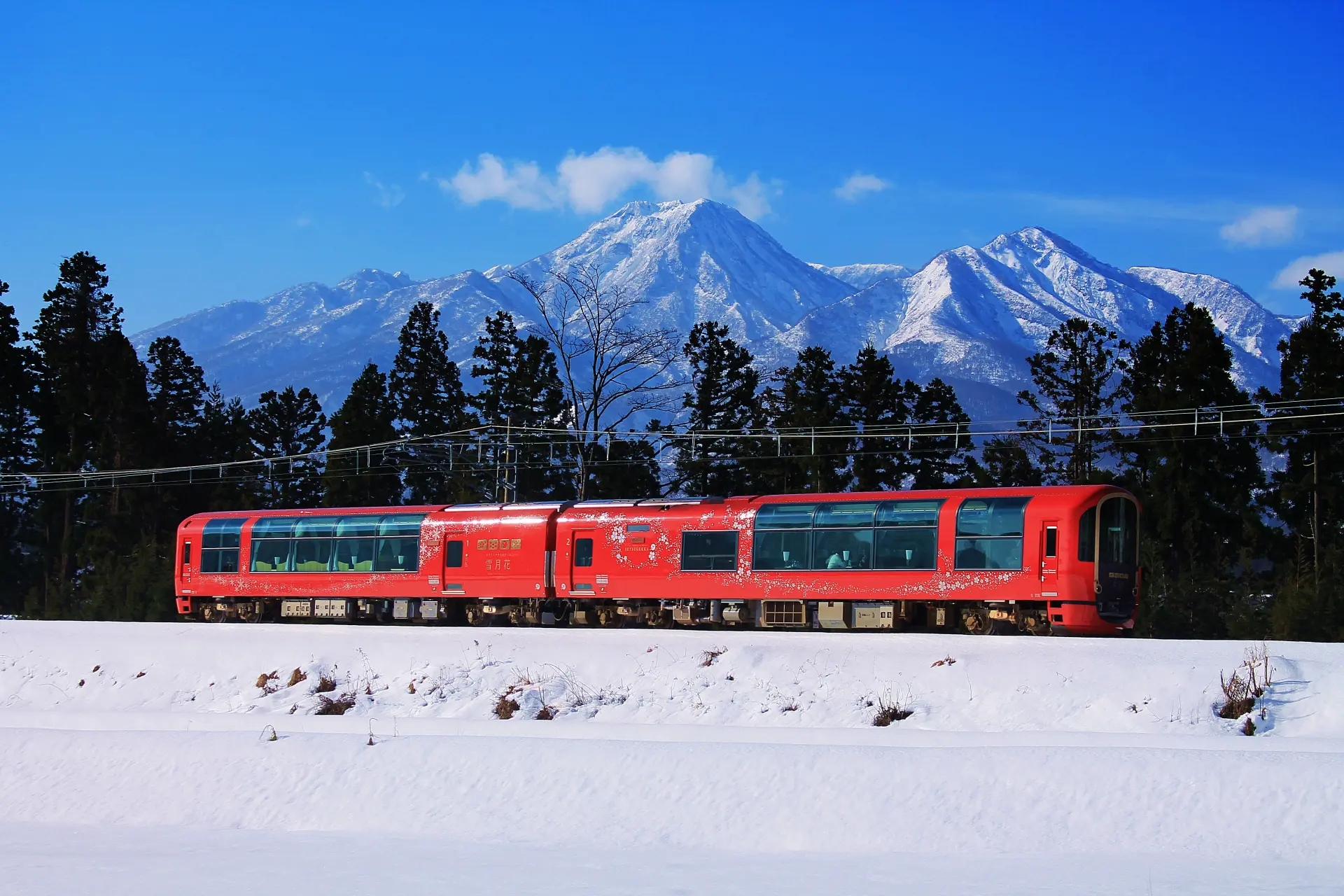
First up is Echigo TOKImeki Resort Setsugekka, a train journey that lets you experience the vast natural beauty of both the Myoko mountains and Niigata’s Sea of Japan in a single ride.
It mainly operates one morning and one afternoon service on Saturdays and Sundays between Itoigawa Station and Myoko-Kogen Station in Niigata Prefecture. The route feels like a condensed portrait of Niigata, surrounded by mountains and sea as it travels from the steep slopes of the Myoko-Kogen area to rural fields and the Sea of Japan coast.
How Do You Get to Echigo TOKImeki Resort Setsugekka?
The morning service of Echigo TOKImeki Resort Setsugekka departs Joetsumyoko Station at 10:35 am. It turns back at Myoko-Kogen Station, passes through Naoetsu Station, and arrives at Itoigawa Station at 1:16 pm.
The afternoon service departs Itoigawa Station at 1:59 pm, passes through Naoetsu Station, turns back at Myoko-Kogen Station, and arrives at Joetsumyoko Station at 4:45 pm.
In summer, the route changes, departing Joetsumyoko Station at 10:54 am, traveling to Nihongi Station (turnaround), Ichiburi Station (turnaround), and arriving at Itoigawa Station at 2:09 pm. This course runs longer along the Sea of Japan and focuses on views of the bright blue sea.
*Departure and arrival times are subject to change.
Joetsumyoko Station, the morning departure point and afternoon arrival point, and Itoigawa Station, the morning arrival point and afternoon departure point, are both stops on the Hokuriku Shinkansen. They can be reached from Tokyo Station in Approx. 2 hours, making access from central Tokyo very convenient.
Cars Dedicated to “All made in NIIGATA”
The Setsugekka train is a special two-car set newly built at a factory in Niigata exclusively for Setsugekka. Produced under the theme “All made in NIIGATA,” it features technologies and design touches that Niigata proudly shares with the world, down to each individual furnishing. Both Car 1 and Car 2 are designed with a higher eye level than standard trains, making the wide-open views from the windows another highlight.
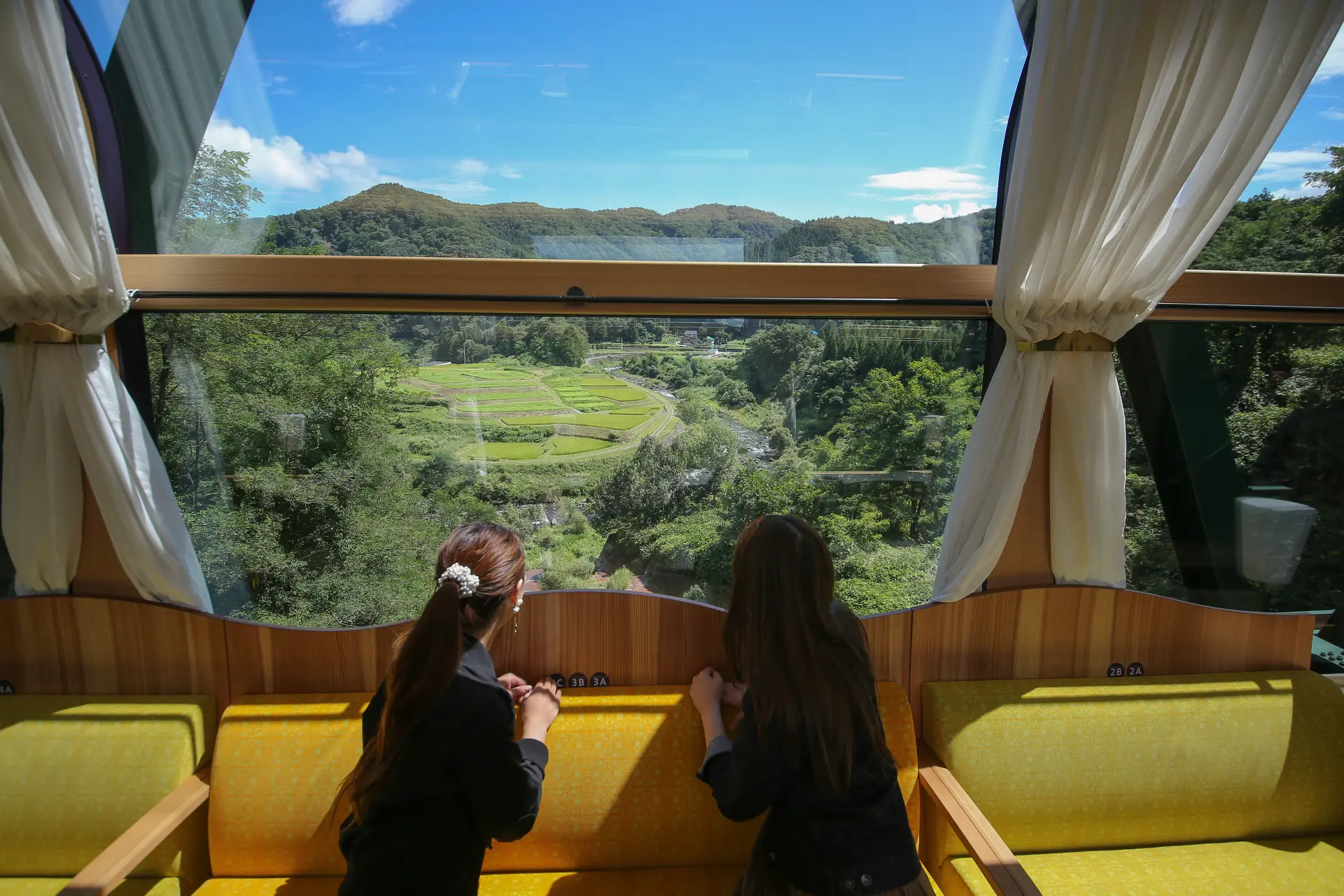
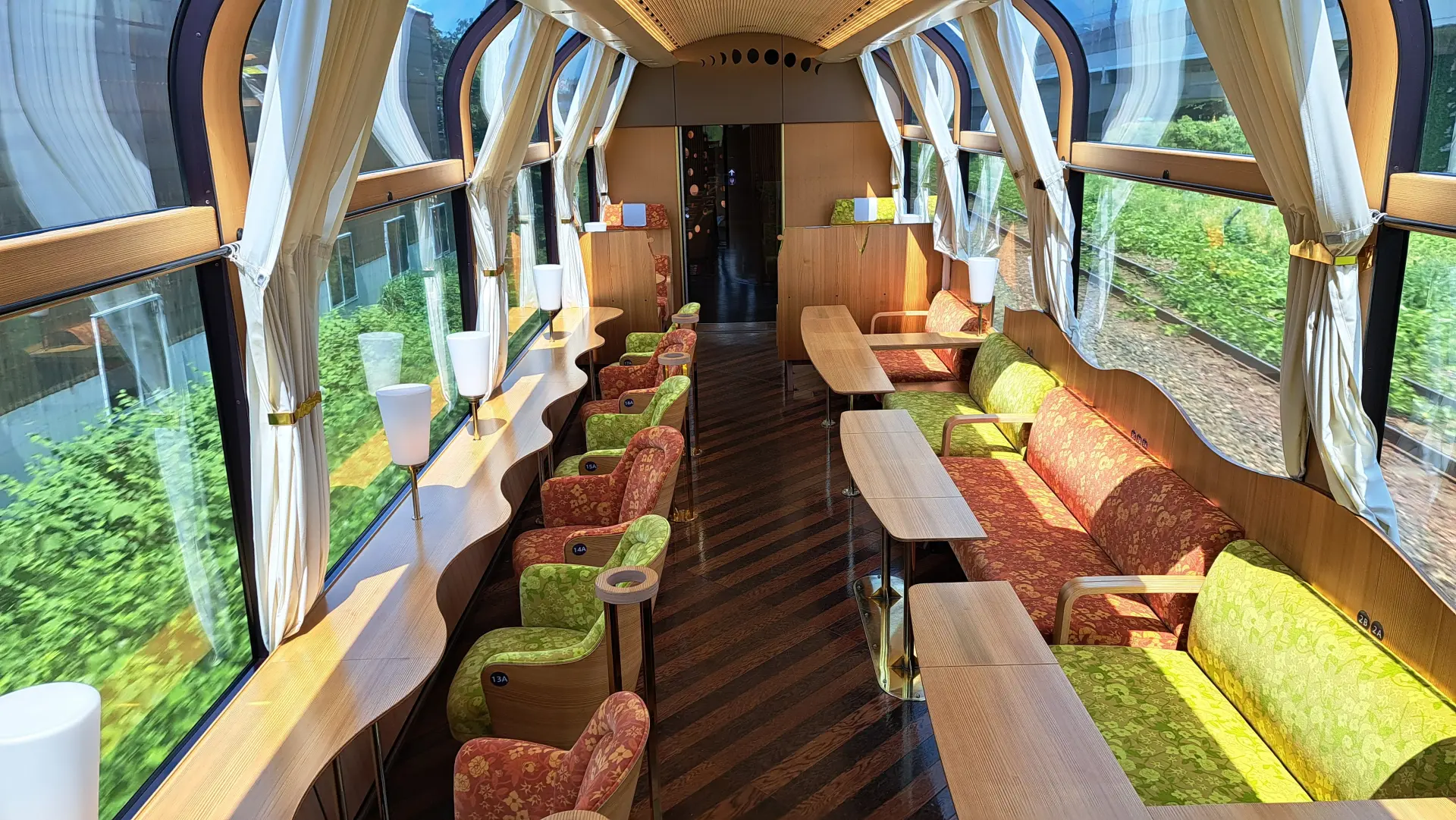
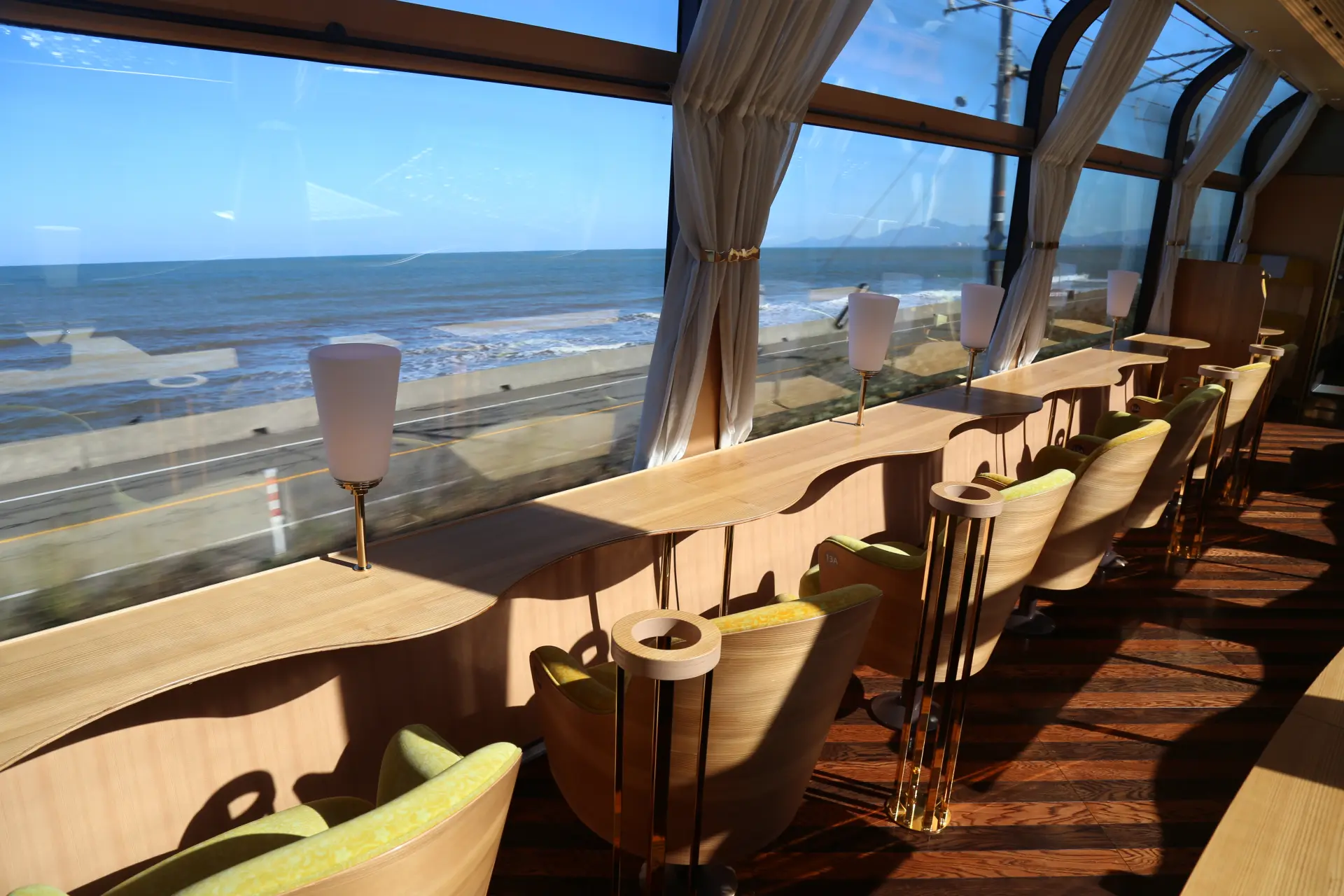
Car 1 is an open space with windows that extend to the ceiling and an observation high deck. The seating layout offers views of both the Sea of Japan and Mt. Myoko, letting you take in the scenery through some of the largest train windows in Japan. Tables made to showcase the beautiful grain of Echigo cedar create a warm atmosphere. The observation high deck behind the driver’s cab is a space passengers can use freely.
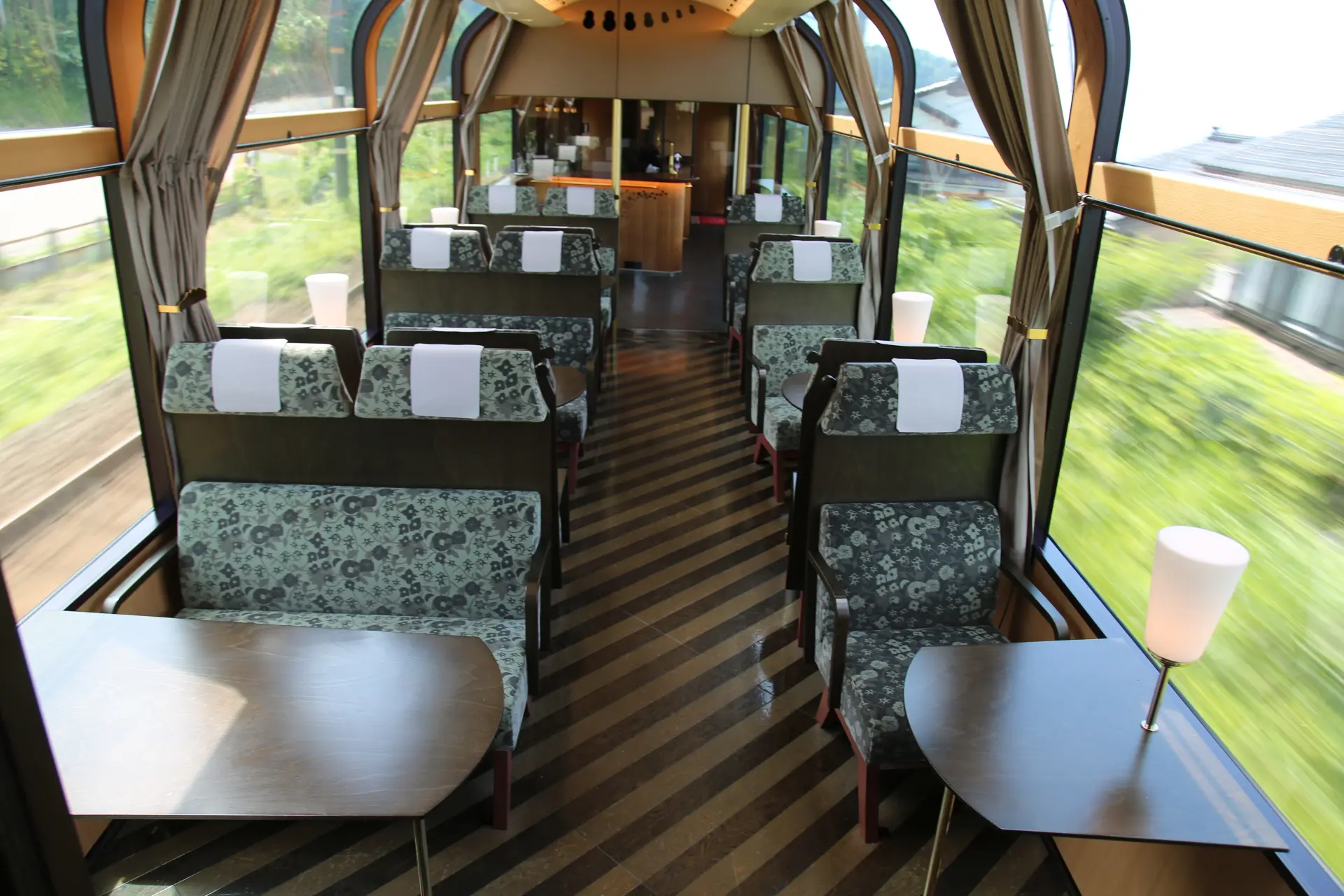
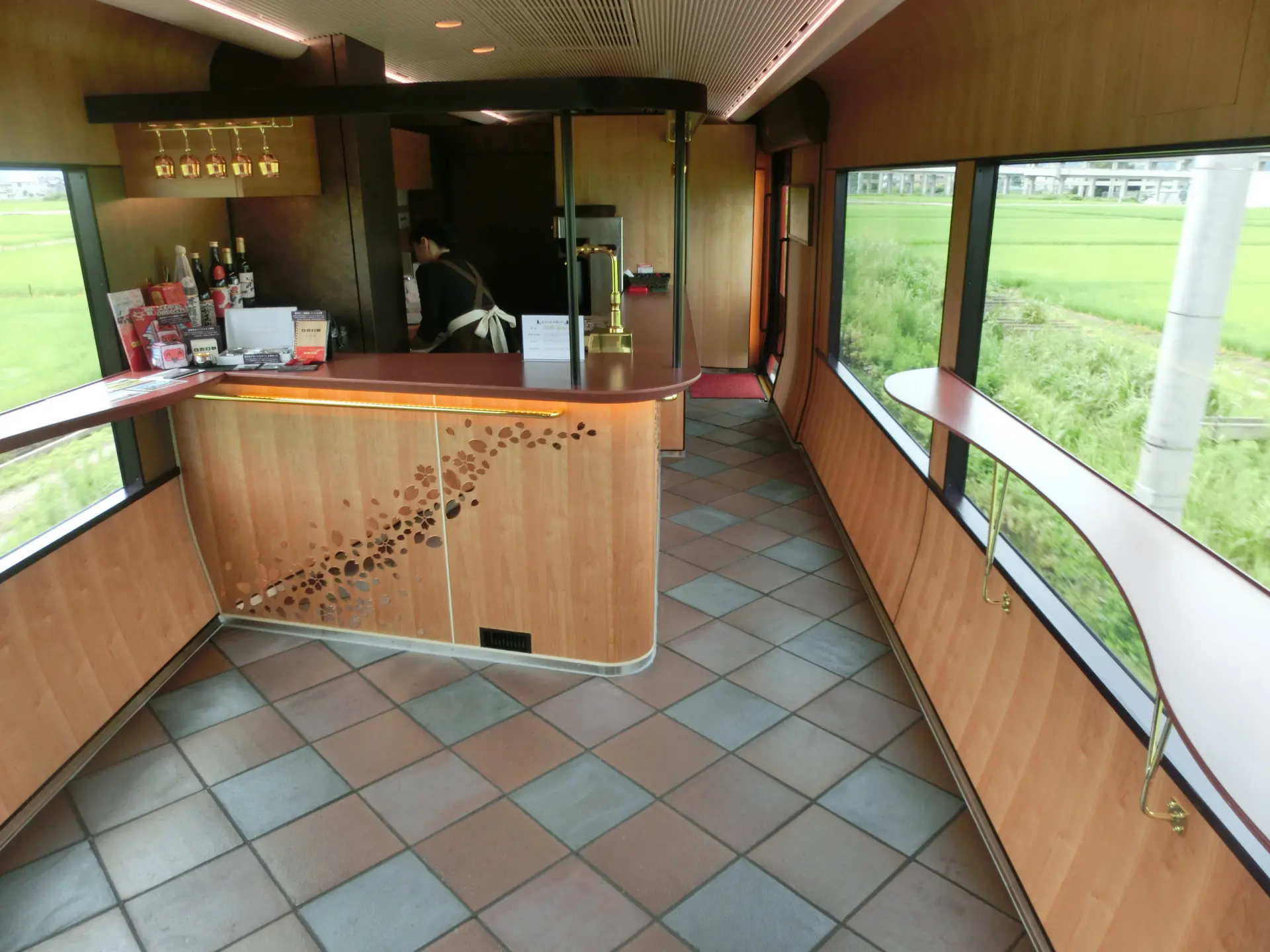
Car 2 has a calm atmosphere centered on spacious box seats with large tables. At the rear of the car, Sakura Lounge features a beautiful counter made with cherry and birch cherry wood, along with Yasuda roof tiles. Sakura Lounge sells local sake, wine, craft beer, and soft drinks from along the line, as well as Setsugekka original goods and souvenirs such as Yukimuro Coffee.
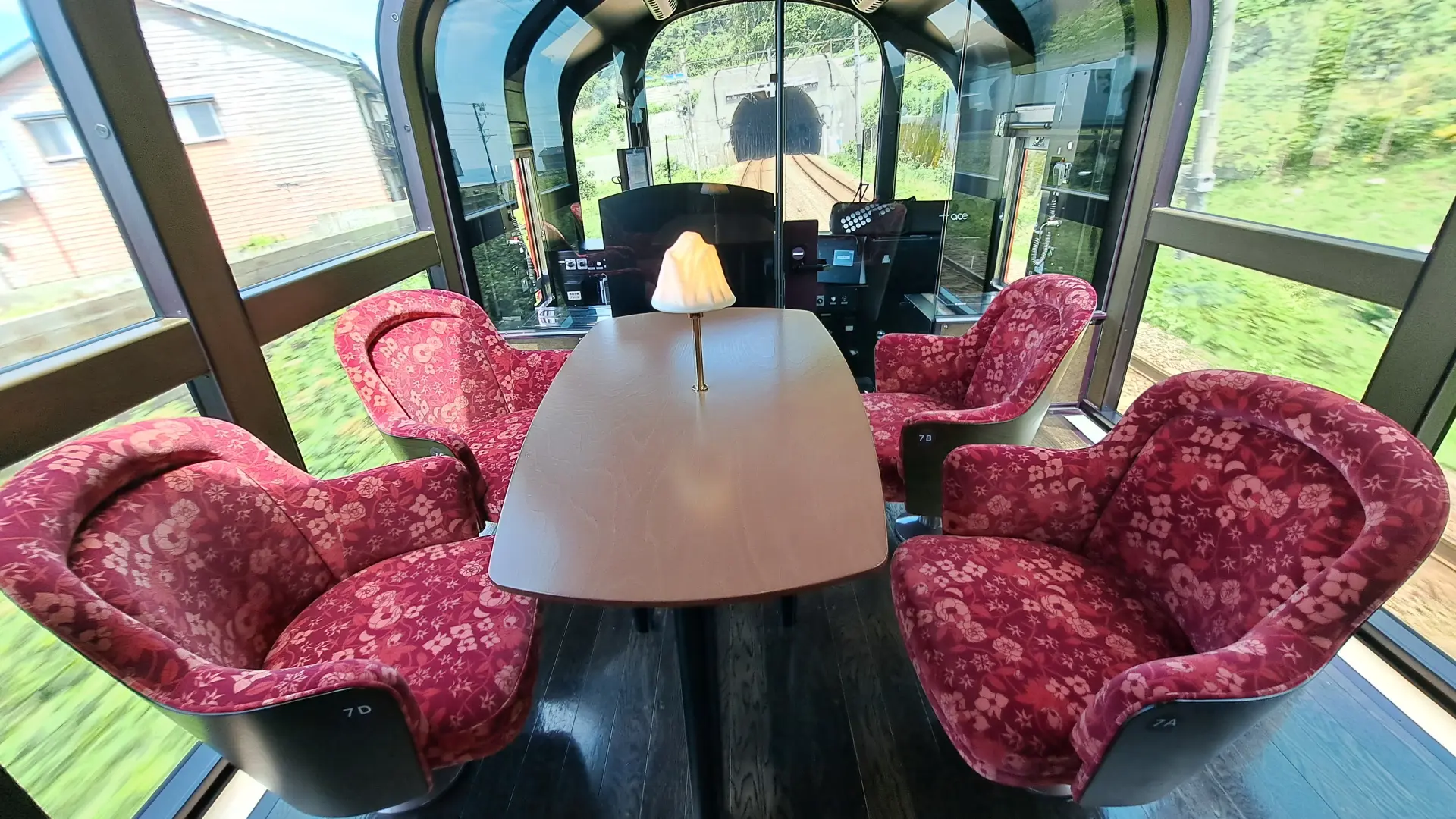
At the front of Car 2 are observation high-deck seats (for 2–4 guests), where you can enjoy a vivid forward-facing view all to yourself. These seats are especially popular for their dynamic panoramic views extending down to your feet, so reserve early.
3 Scenic Views from Echigo TOKImeki Resort Setsugekka
Echigo TOKImeki Resort Setsugekka runs slowly through especially scenic sections. Since the seats are arranged to face the large windows, enjoy the changing scenery along with your meal and drinks.
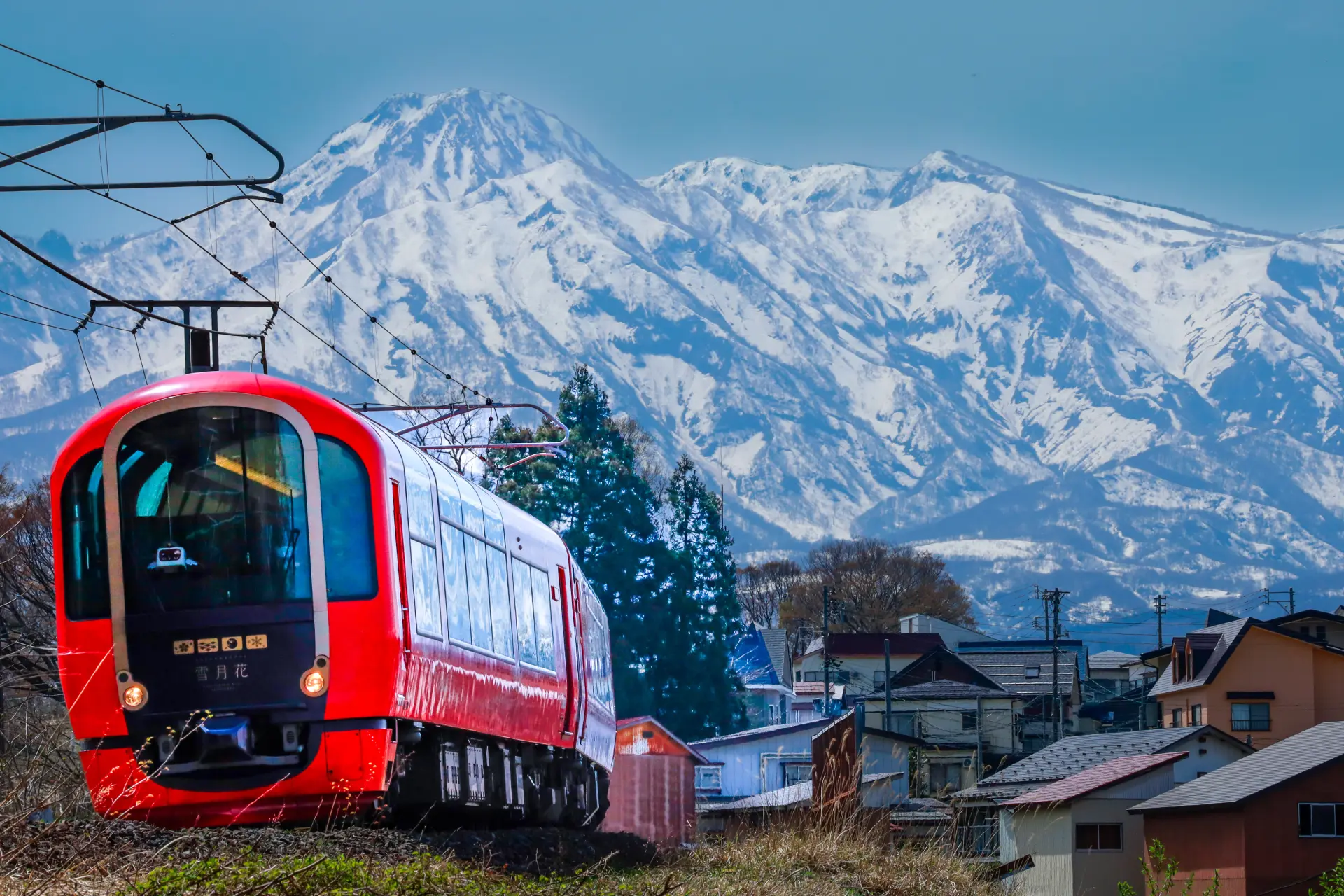
1. Myoko Mountain Range (Nihongi Station–Myoko-Kogen Station)
Each season brings a completely different view: cherry blossom-lined roads and water-filled terraced rice fields in spring, fresh greenery in early summer and lush green landscapes in summer, fall foliage in the valleys, and a silver-white world in winter. The Myoko area is especially known for heavy snowfall, and from winter to spring you can see the striking snow-covered form of Mt. Myoko.
2. Shirotagiri River Bridge (Nihongi Station–Myoko-Kogen Station)
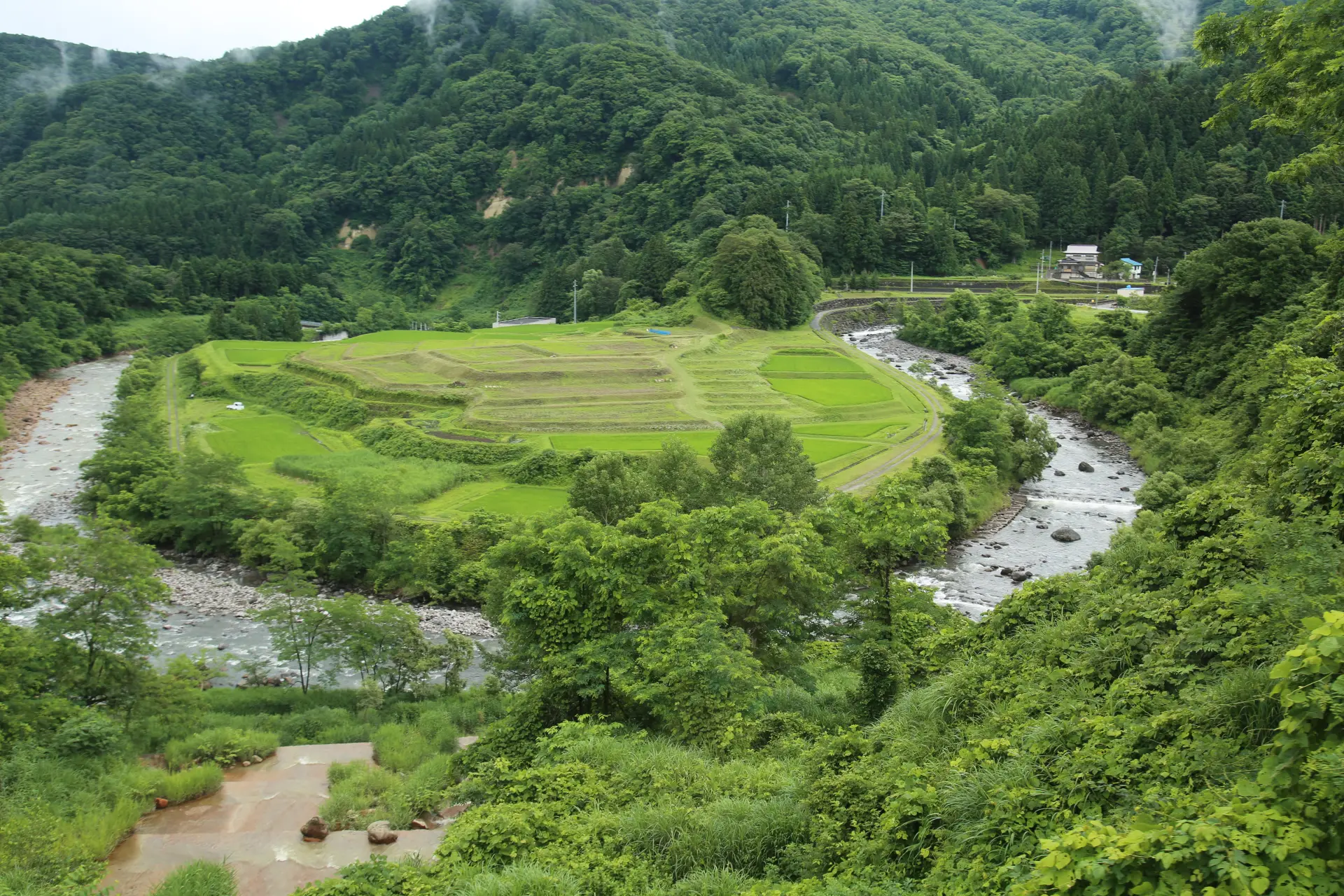
As the train reaches the bridge, look out the left-side windows in the direction of travel to see the Sekikawa River making a broad reverse Ω (omega)-shaped bend. Inside the curve of the river are gently sloping terraced rice fields, surrounded by mountains in a beautiful scene. The rich greenery is impressive, and the misty, atmospheric landscapes are also worth seeing.
3. Sea of Japan (Naoetsu Station–Arimagawa Station)
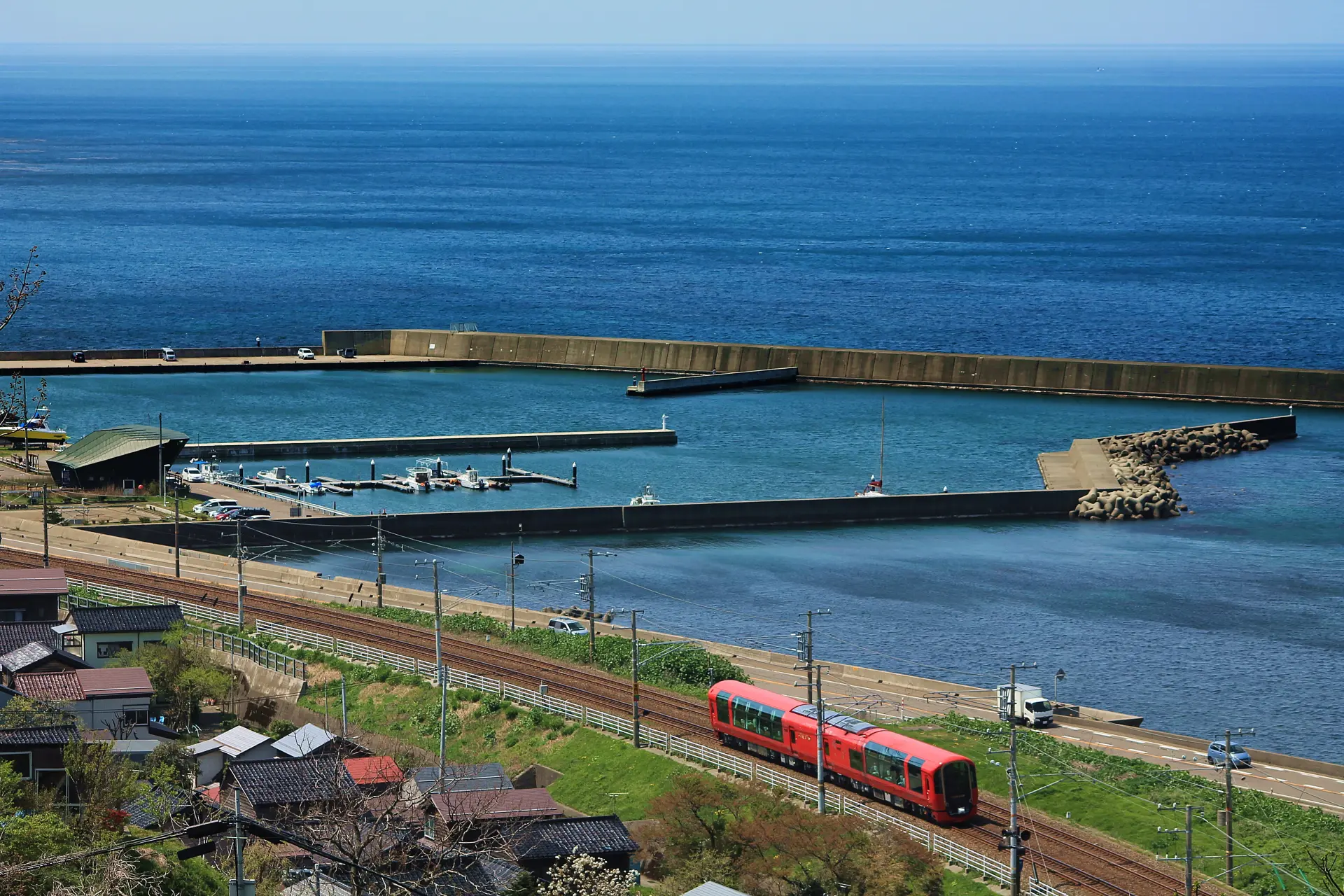
On the Nihonkai Hisui Line between Naoetsu Station and Itoigawa Station, the view from the train changes completely, with sweeping panoramas of the Sea of Japan between Naoetsu Station and Arimagawa Station. Highlights include the rugged coastline where rough waves roll in, the open sea, and the horizon glowing gold at sunset. The deep blue sea in spring and summer is beautiful, and the rough winter waves of the Sea of Japan are equally impressive. The train then enters the Kubiki Tunnel, Approx. 11,353 meters long, where you can see Tsutsuishi Station, a “mole station” located Approx. 40 meters below the surface station building.
Four Different Courses for Experiencing Niigata Cuisine
One of Setsugekka’s major attractions is its meals created by local restaurants. Under normal operations, four different courses are offered depending on the service date and train. Each course features original menus by chefs who know Niigata ingredients inside and out.
All courses begin with a welcome drink: sparkling wine with a Setsugekka original label from Fermier, a winery in Niigata City. Non-alcoholic drinks are also available.
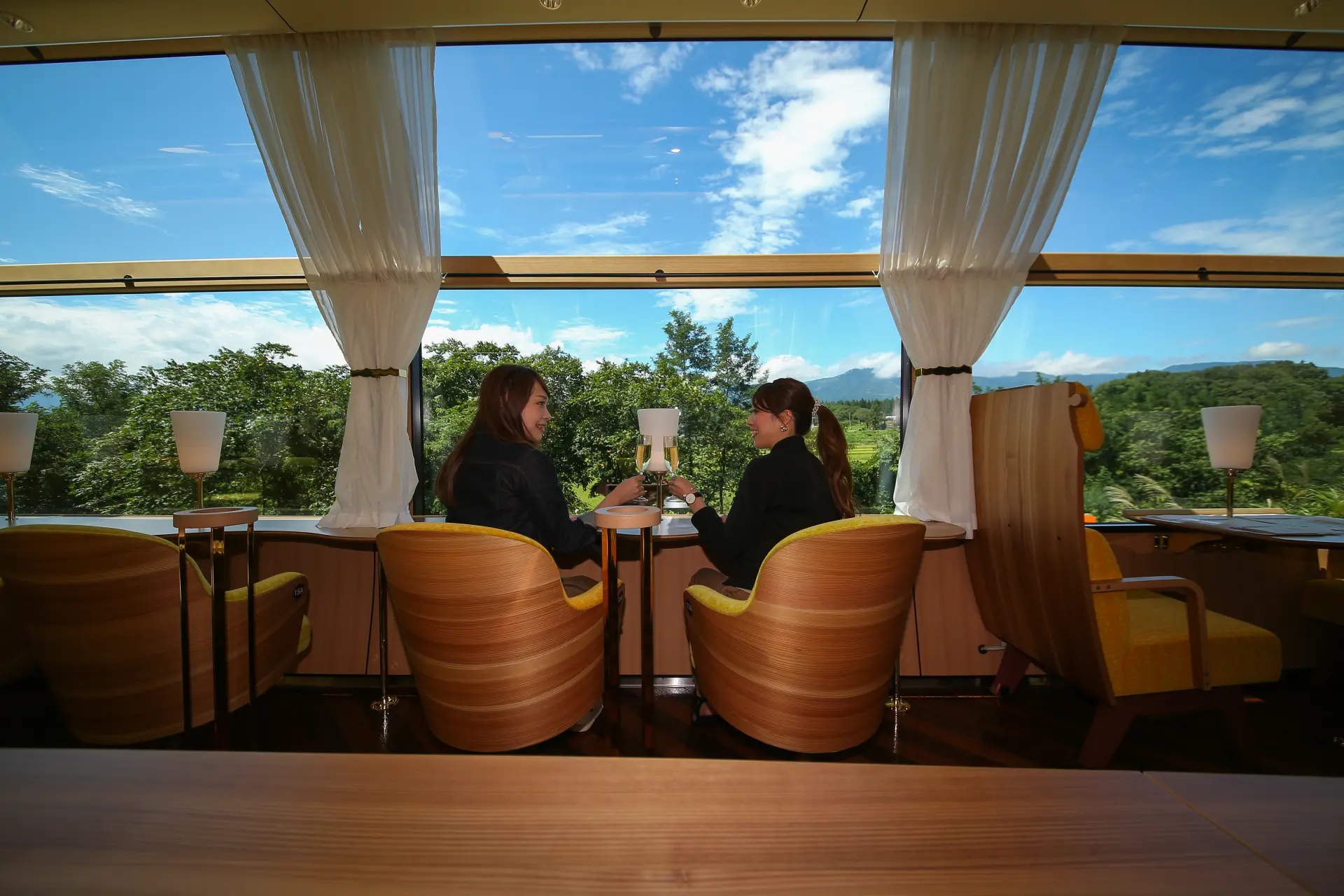
The “Blissful Moment, Niigata’s Blessings French Course,” served by the Joetsu City French restaurant Chez Toya, lets you enjoy delicate French cuisine that pairs well with wine, along with Niigata wines carefully selected by a sommelier (wine is available for purchase).
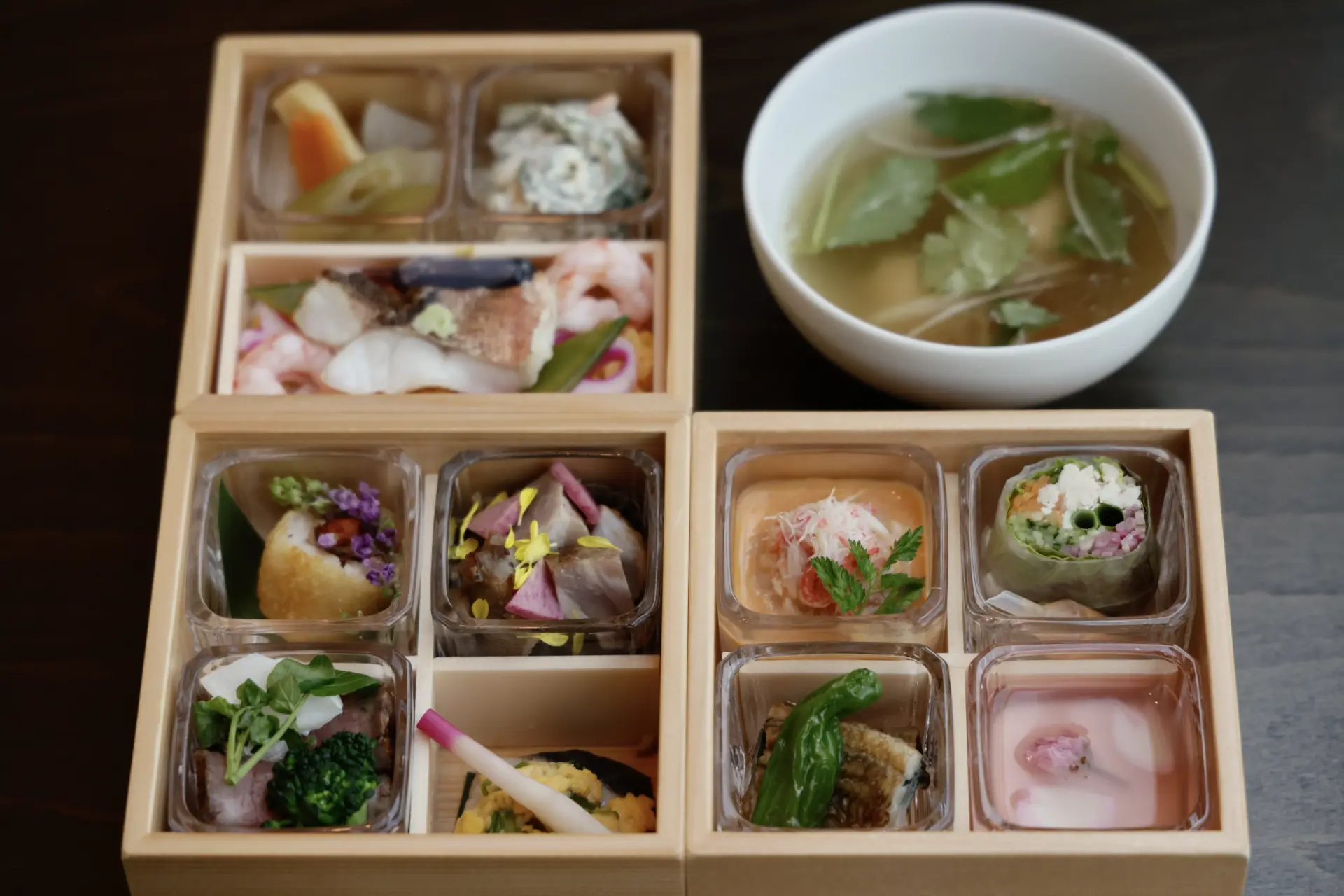
The “Packed with Niigata, Jewel Box Course,” served by Duo Cerezo in Joetsu City, offers colorful Japanese, Western, and Chinese dishes made generously with ingredients from the Joetsu region.
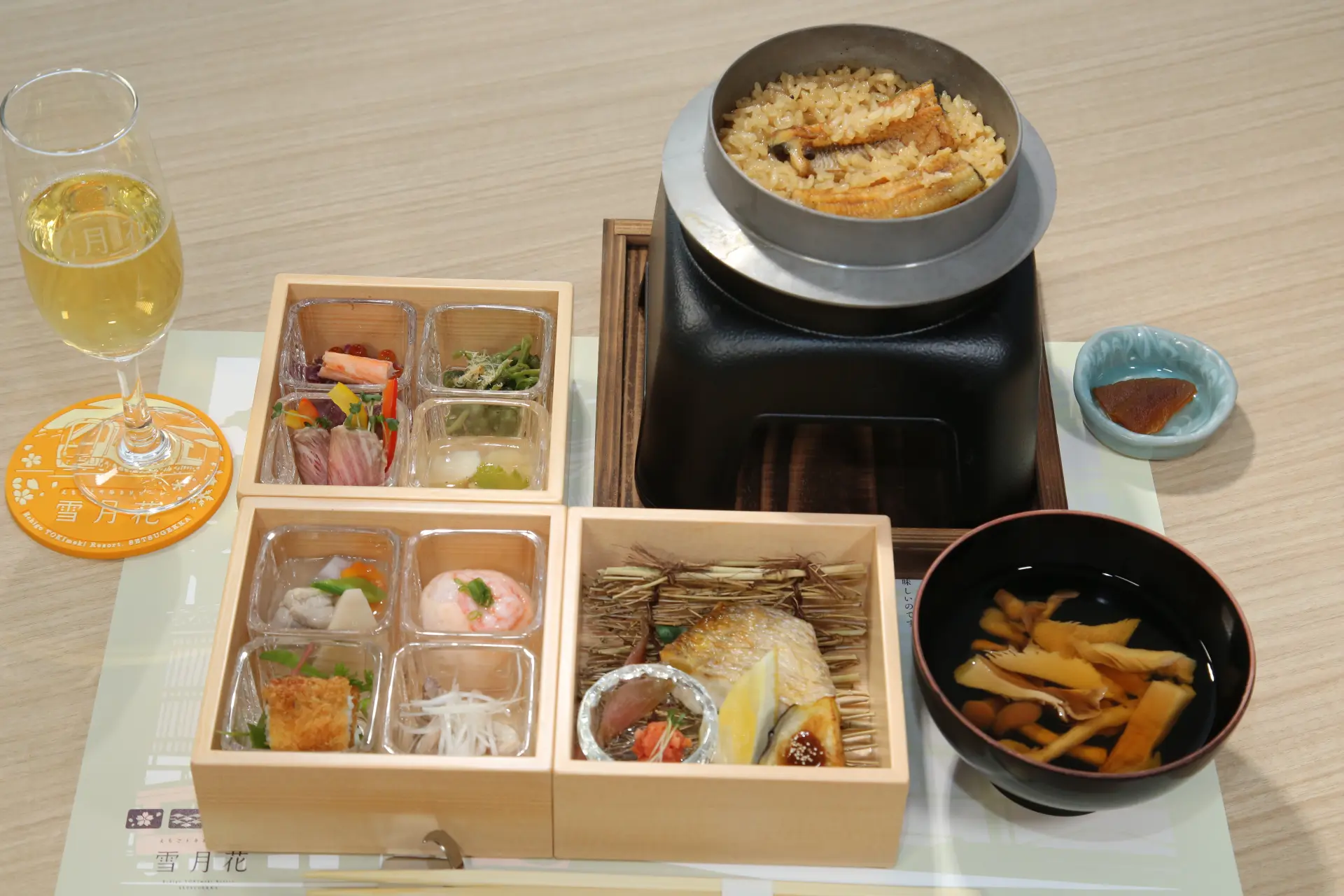
The “Century-Old Ryotei, Hot Kamameshi Course” from Hyakunen Ryotei Ukiyo, a long-established restaurant preserving traditional flavors in Takada, Joetsu City, serves piping-hot kamameshi cooked at Naoetsu Station. The “Direct from the Fishing Port, Fisherman’s Hearty Course” is provided by Kappo Shioji in Nou, Itoigawa City. Enjoy fresh seafood delivered directly from Nou Fishing Port.
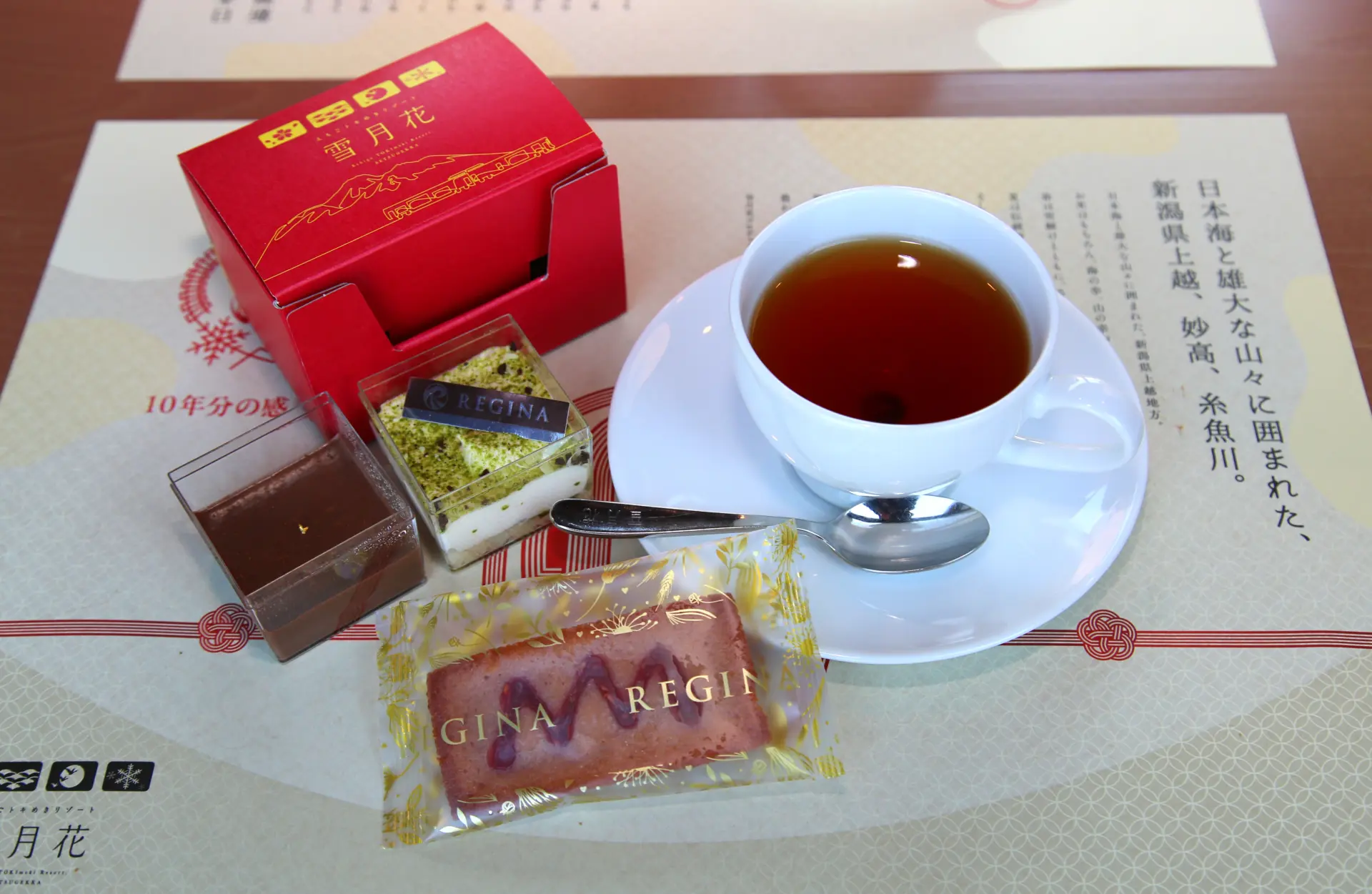
To finish, all courses include Coffret de Dessert -Setsugekka-, a completely original Setsugekka dessert by REGINA SWEETS & BAKERY in Takada, Joetsu City. The three sweets express the changing seasons and scenery of Niigata through local ingredients: strawberry for spring, matcha for summer, and Le Lectier pear for fall. Yukimuro Coffee, also blended especially for Setsugekka, uses coffee beans aged in a snow storage room. Its smooth flavor and rich depth leave a lingering impression of the journey.
Details
- Railway Company / Train Name
- Echigo TOKImeki Railway “Echigo TOKImeki Resort Setsugekka”
- Operating Section / Travel Time
- Echigo TOKImeki Railway Joetsumyoko Station–Myoko-Kogen Station–Itoigawa Station (Approx. 2 hr. 40 min.)
- Operating Days
- Mainly operates on Saturdays and Sundays. *Check the official website for details.
- Frequency
- 2 services per day (regular spring/fall operation), 1 service per day (winter/summer)
- Price Range
- ¥29,800. *Observation high deck (for 2–4 guests) costs an additional ¥20,000 per group.
- How to Purchase Tickets
- Reservations accepted through the official website.
- Official website
- Official website (Japanese)
Shinano Railway Sightseeing Train “Rokumon”
(Karuizawa Town–Nagano City, Nagano Prefecture)
The Rokumon sightseeing train runs Approx. 75 km between Shinano Railway Karuizawa Station and JR Nagano Station, offering views of majestic Mt. Asama and the flow of the Chikuma River. Shinano-Oiwake Station, two stops from Shinano Railway Karuizawa Station, sits at an elevation of 955 meters, while Nagano Station is at 360 meters, creating a height difference of Approx. 600 meters and scenery typical of the mountain-surrounded Shinanoji route.
Board to the sound of the crew blowing a conch shell, then relax as you enjoy a full-fledged meal made with Shinshu ingredients, local sake, and Shinshu wine.
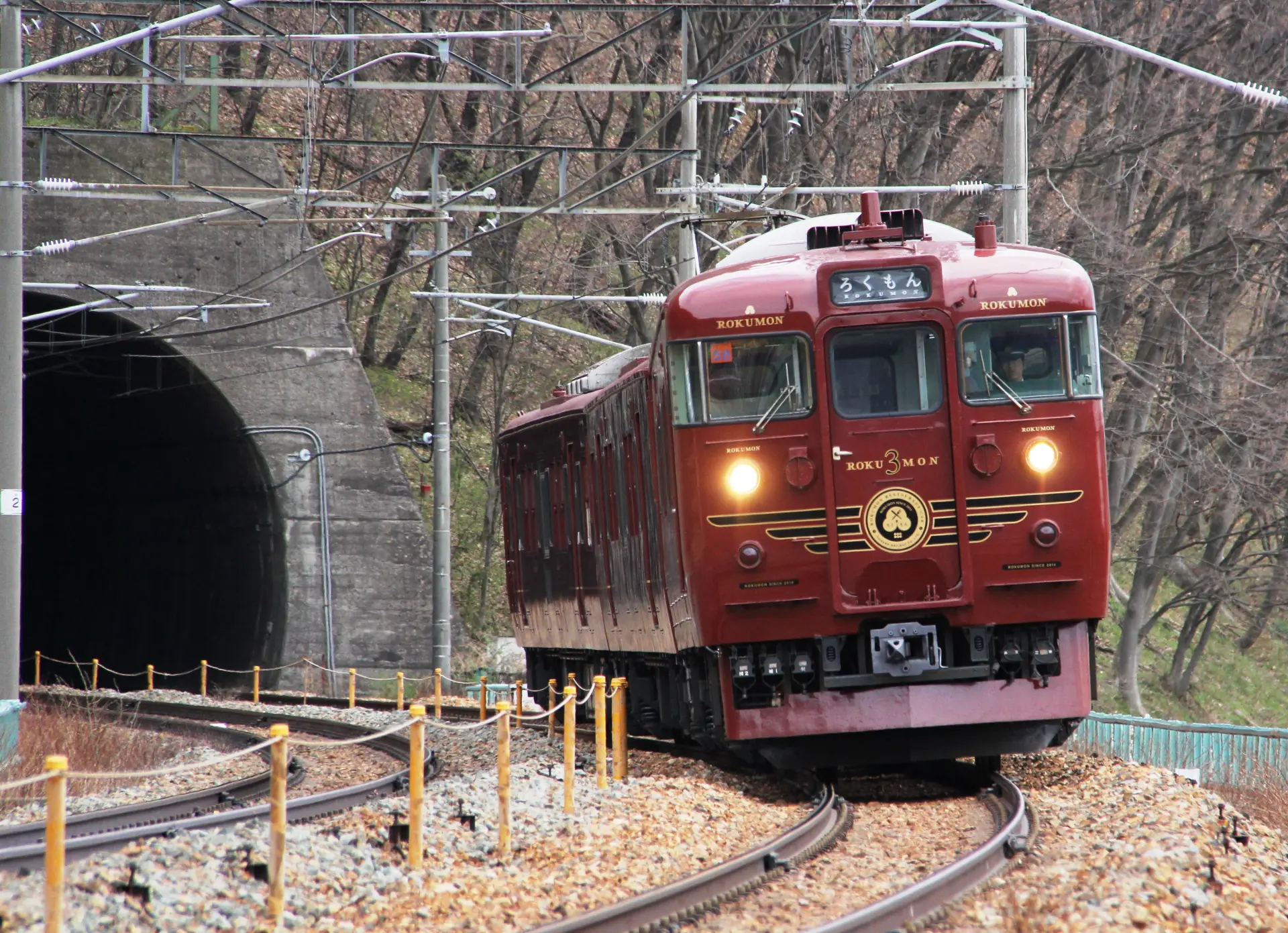
How Do You Get to the Rokumon Sightseeing Train?
The Western Cuisine Course, operated in the morning on the Rokumon sightseeing train, departs Shinano Railway Karuizawa Station at 10:29 am. It passes through Ueda Station, Togura Station, Yashiro Station, and other stops before arriving at JR Nagano Station at 12:37 pm.
The afternoon Japanese Cuisine Course runs the reverse route. It departs JR Nagano Station at 1:35 pm, passes through Ueda Station, Komoro Station, Shinano-Oiwake Station, and other stops, and arrives at Shinano Railway Karuizawa Station at 3:48 pm.
The Obasute Night Cruise, operated once a month, is a longer course centered on sunset and night views. The train departs Shinano Railway Karuizawa Station at 4:04 pm, runs to JR Obasute Station and turns back, arriving at JR Nagano Station at 8:15 pm.
Both Shinano Railway Karuizawa Station and JR Nagano Station can be reached by transferring from Hokuriku Shinkansen stops, making travel from Tokyo easy. From Tokyo Station, Karuizawa Station is just over Approx. 1 hour away, and Nagano Station can be reached in Approx. 1.5 hours, making this train ideal for a short trip from the city.
Distinctive Cars Inspired by the Crest of the Sanada Clan
The Rokumon sightseeing train is named after the Rokumonsen, the crest of the Sanada clan, a family of Sengoku-period warlords associated with Ueda along the line. Its vivid red color, inspired by Sanada’s “red armor,” leaves a strong impression. Touches such as boarding to the sound of a conch shell blown by the crew add a fun sense of Sengoku-era battle atmosphere.
The three-car train has a comfortable interior richly finished with wood from Shinshu.
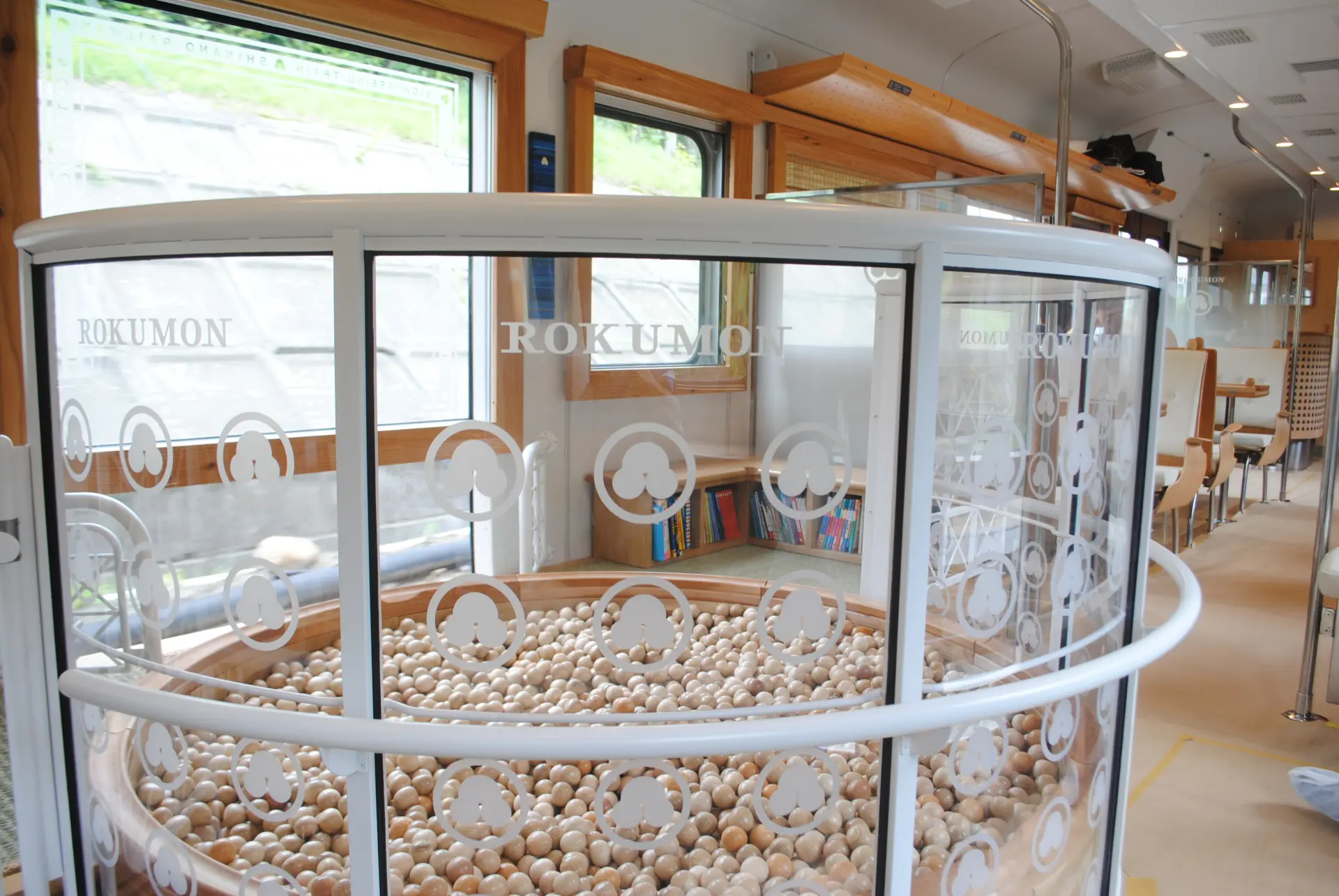
Car 1, available with the Boarding Ticket + Reserved Seat Plan without a meal, is an open space where you can feel the warmth of Nagano Prefecture wood. Designed for families and groups, it also has a wooden ball pool for children. There is also a service counter selling local specialties from along the line and goods available only onboard Rokumon.
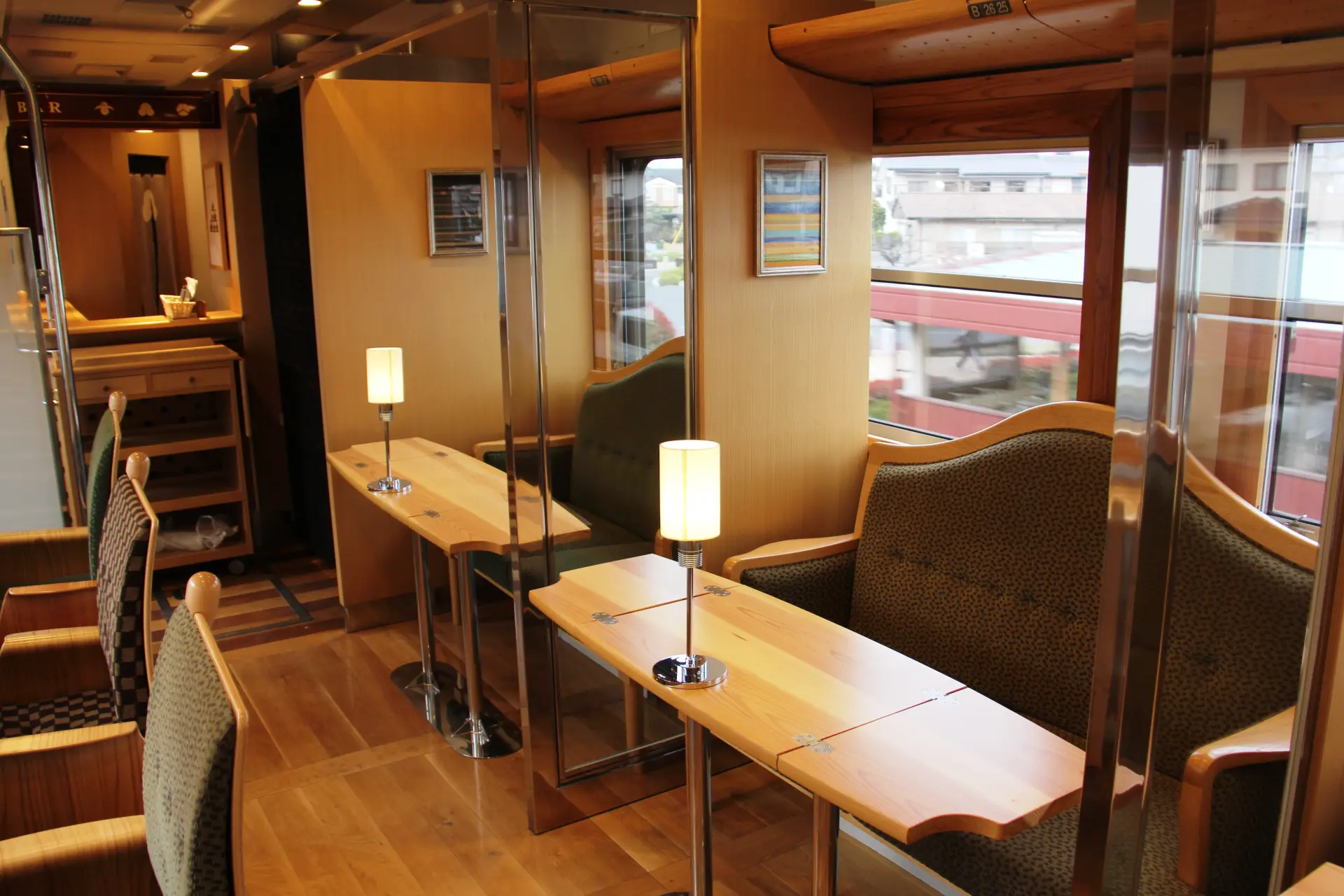
Car 2 has a relaxed lounge-style layout, with counter seats and sofa seats where you can dine while enjoying the scenery along the line.
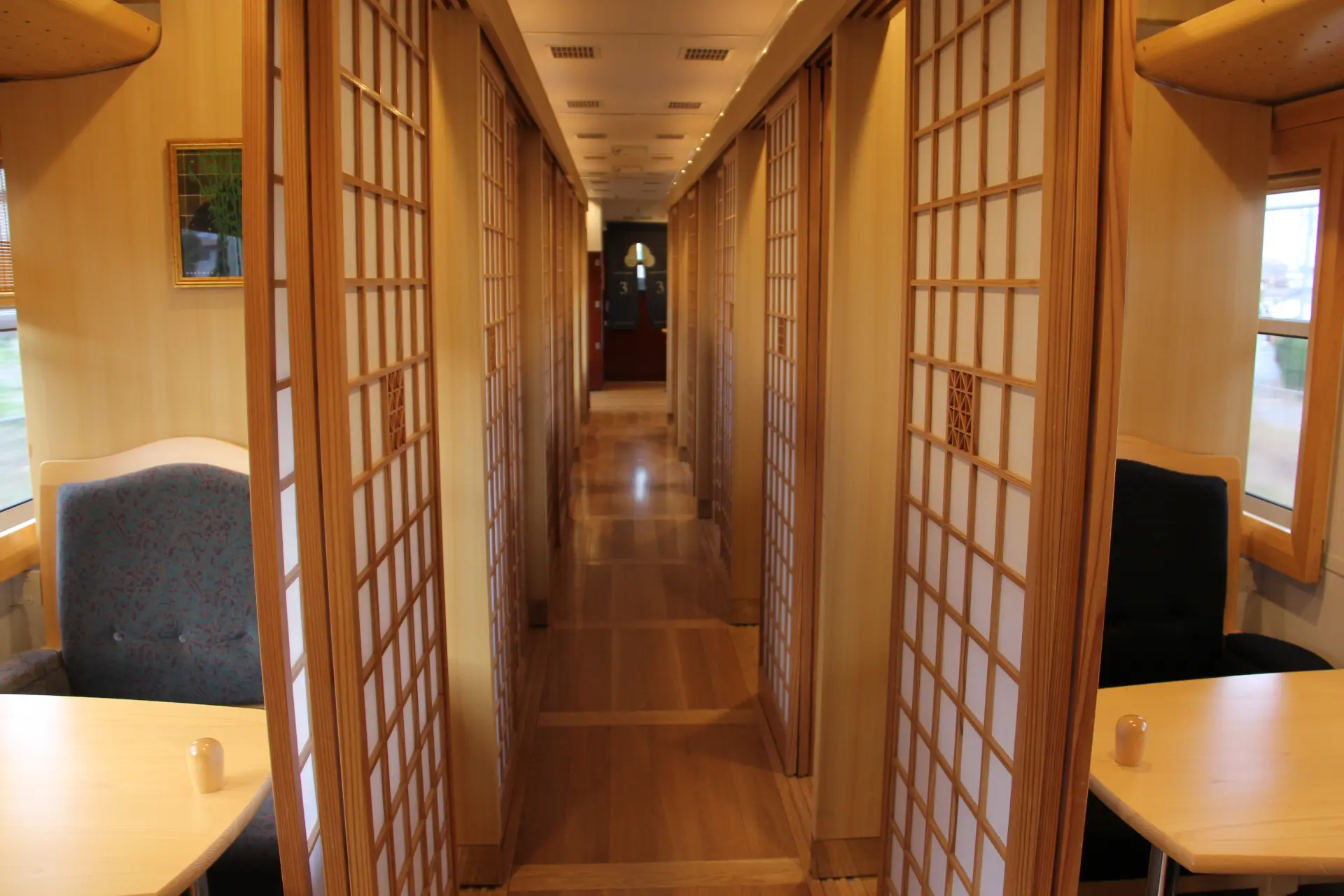
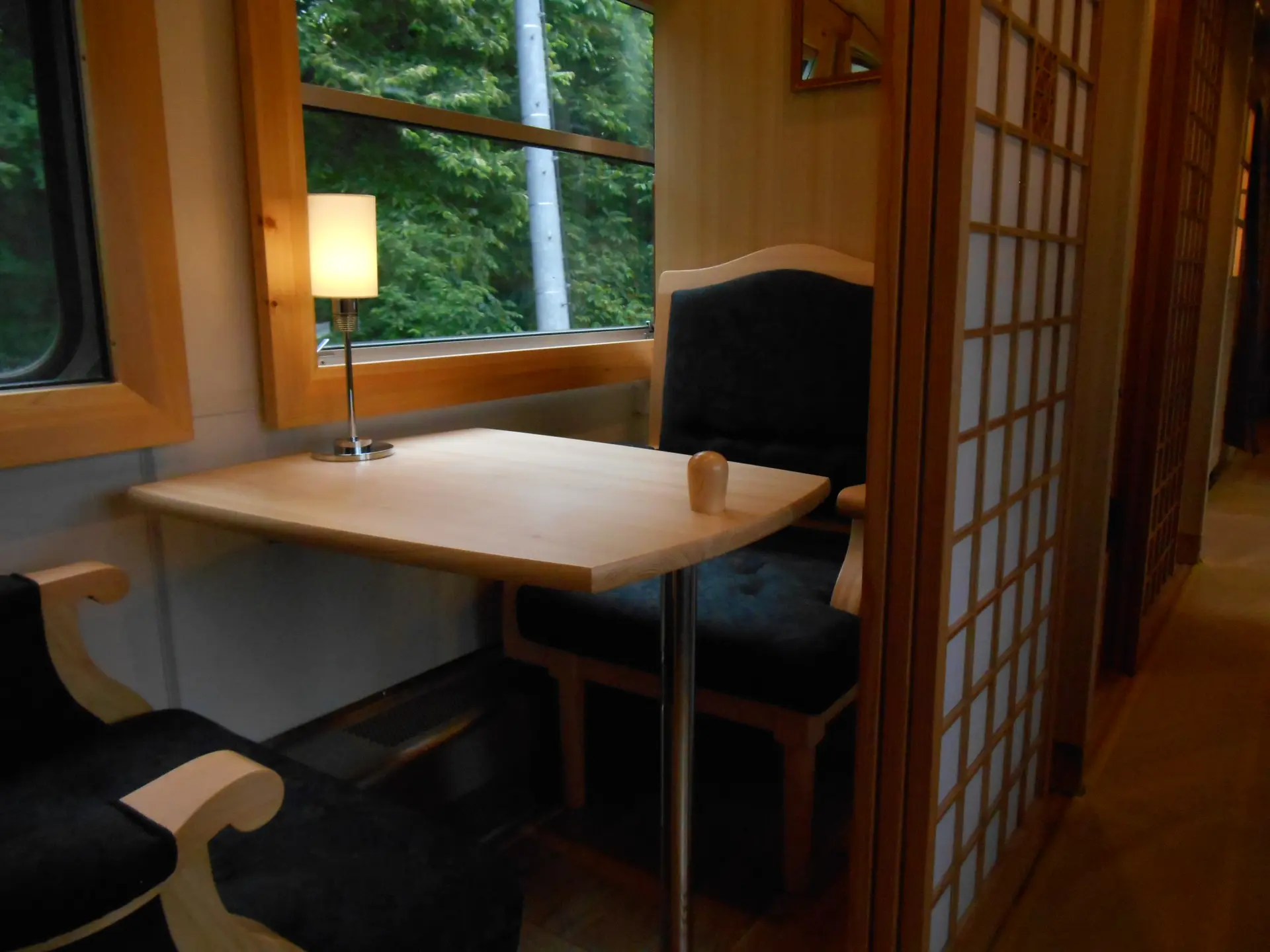
Car 3 offers an even more tranquil, private-feeling space. Two-person compartment seats divided by shoji sliding doors let you relax as if in a private room. Softly glowing lamps inside the car, which uses plenty of hinoki cypress, create the feeling of a special journey.
3 Scenic Views from the Shinano Railway Sightseeing Train Rokumon
Rokumon travels from the foot of Mt. Asama through the Chikuma River basin. Here are three must-see scenes among the landscapes unique to Shinshu.
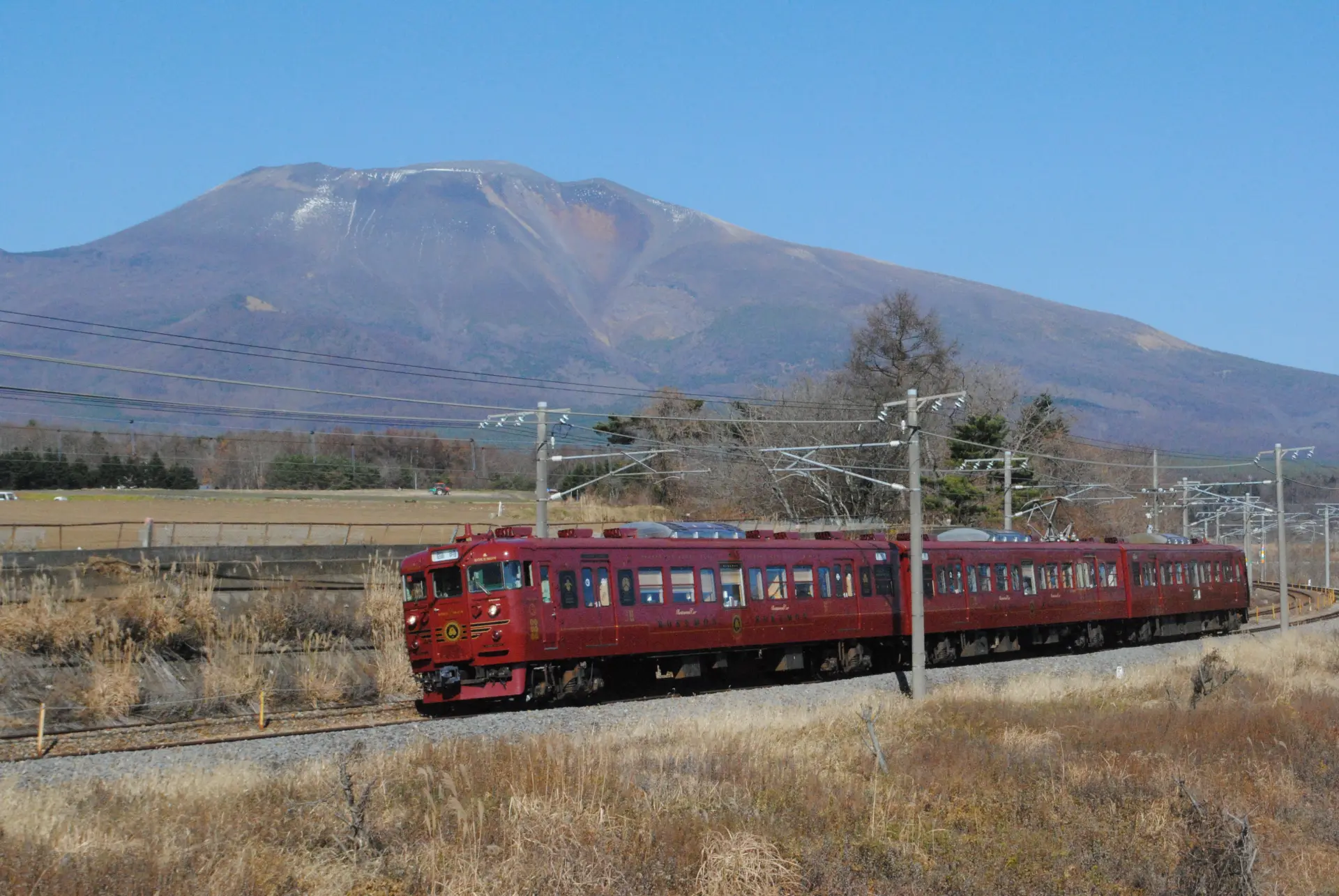
1. Mt. Asama (Shinano-Oiwake Station–Komoro Station)
After leaving Karuizawa, where highland breezes blow through the area, the train climbs further to Shinano-Oiwake Station at 955 meters, the highest point on the Shinano Railway. After departing Shinano-Oiwake Station, the grand form of 2,568-meter Mt. Asama appears outside the north-side windows. The view of its long, gentle foothills spreading from the summit is well worth seeing.
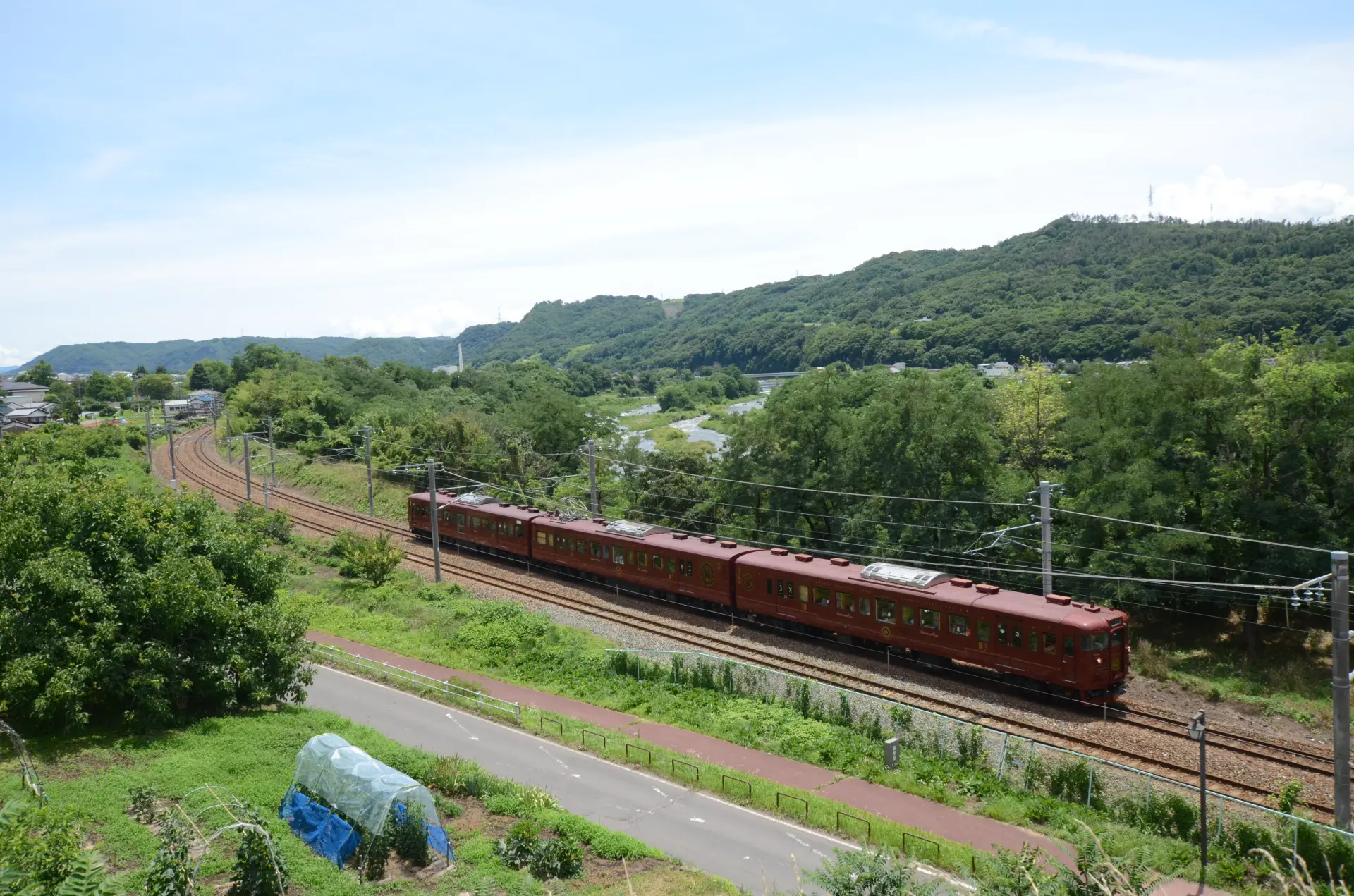
2. Rural Scenery Along the Chikuma River (Ueda Station–Nagano Station)
The section from Ueda, hometown of the Sanada clan of Sengoku warlords, to Togura runs close to the Chikuma River. The sunlit river surface, green mountains beyond it, and peaceful rural scenery are classic Shinshu landscapes. After departing Yashiro Station, the train crosses the only bridge over the Chikuma River on the Shinano Railway, offering views of the river flow from both sides of the train.
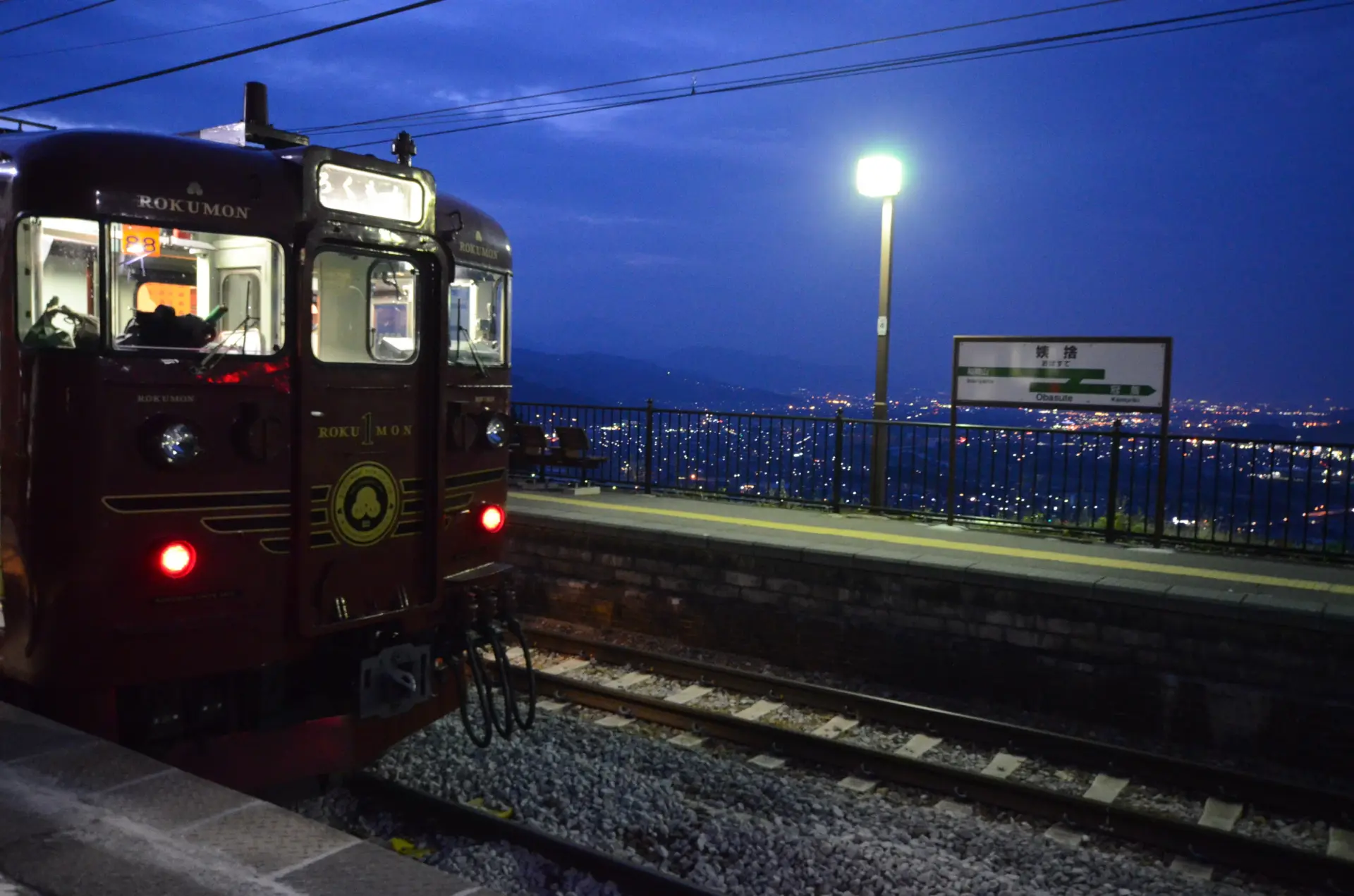
3. Zenkojidaira (Obasute Station)
On the Obasute Night Cruise, operated once a month, the train departs Karuizawa Station and travels to JR Obasute Station, considered one of Japan’s three great train-window views. The glittering Zenkojidaira plain (Nagano Basin) seen from Obasute Station is as beautiful as opening a jewelry box at dusk. It is also registered as a Japan Night View Heritage site.
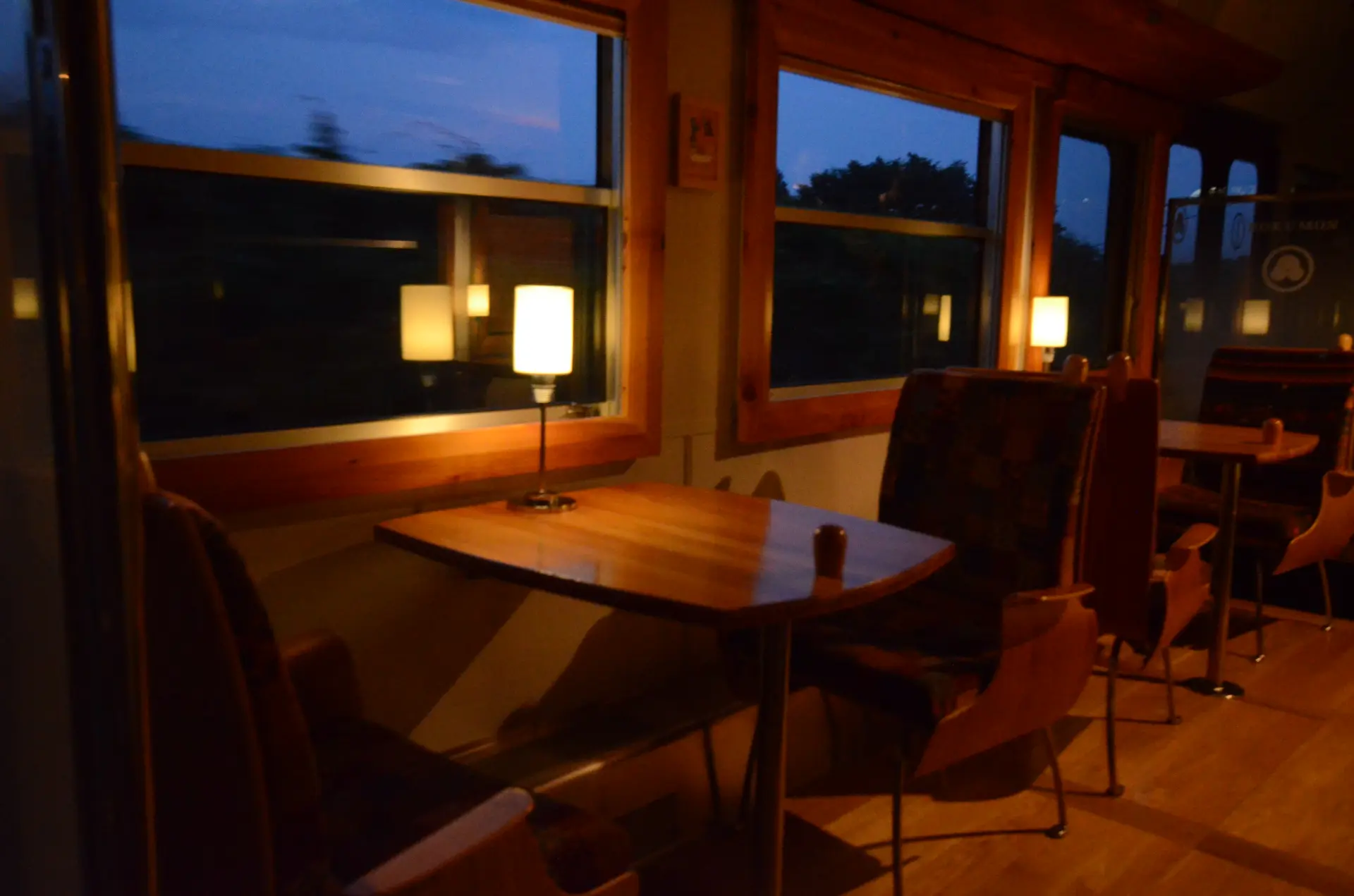
Enjoy Shinshu Cuisine Created by Local Restaurants
Rokumon’s meal plans mainly include the Western Cuisine Course from Karuizawa to Nagano and the Japanese Cuisine Course from Nagano to Karuizawa. A variety of meals can be enjoyed depending on the day of the week and course. Menus created by local restaurants and long-established ryotei change by season, letting you savor Shinshu’s bounty with all five senses.
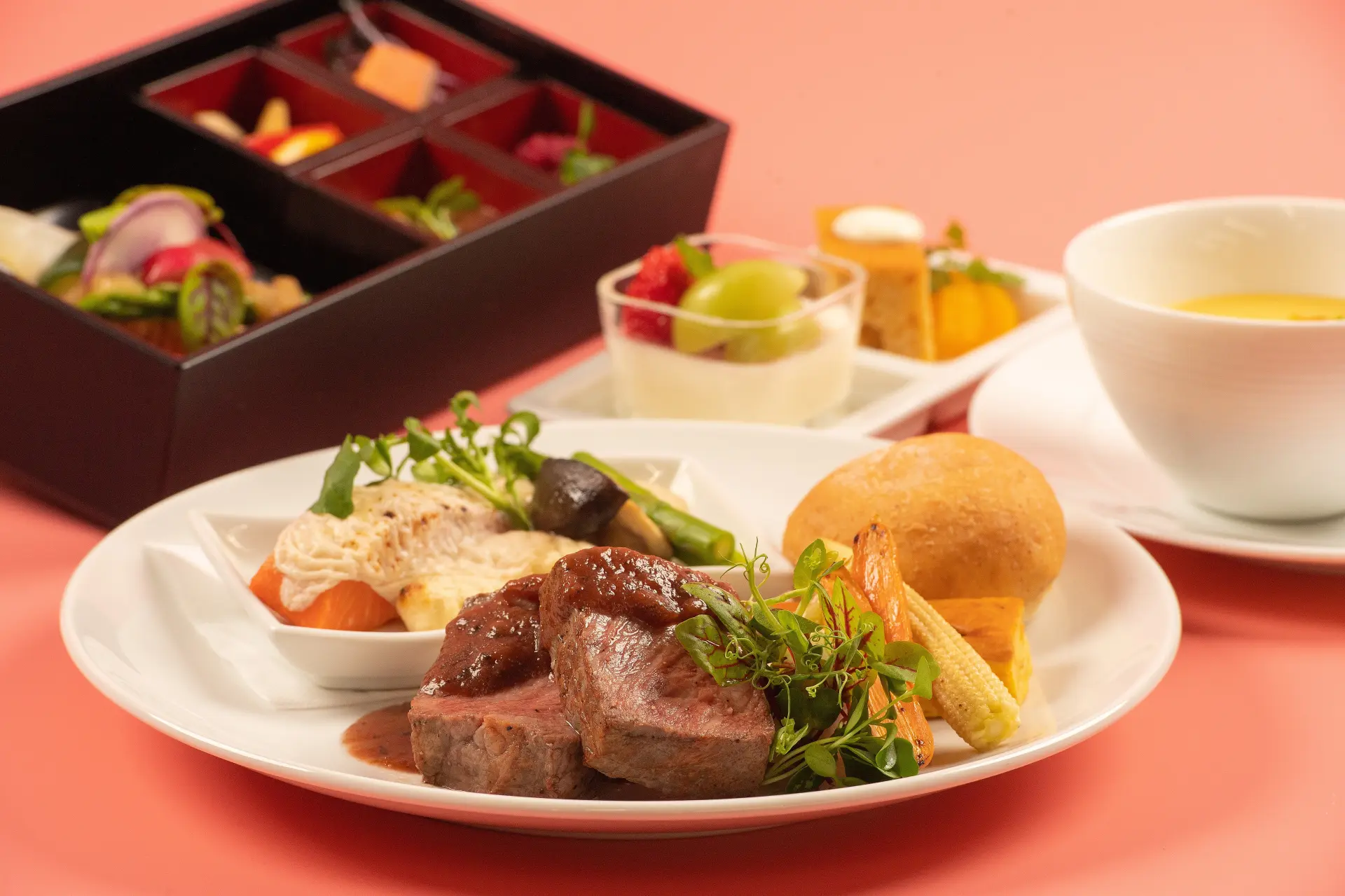
On the Western Cuisine Course, an Italian course featuring Shinshu ingredients by Primo Fitto Karuizawa Station restaurant is served on Saturdays, Sundays, and Mondays. The cuisine, designed around refresh, relax & recharge, is popular with a wide range of age groups and international guests.
On Fridays, the Western Cuisine Course features dishes from Vino della Gatta SAKAKI, a restaurant attached to a winery. The chef, who holds a senior sommelier qualification, presents dishes to enjoy with wine pairings.
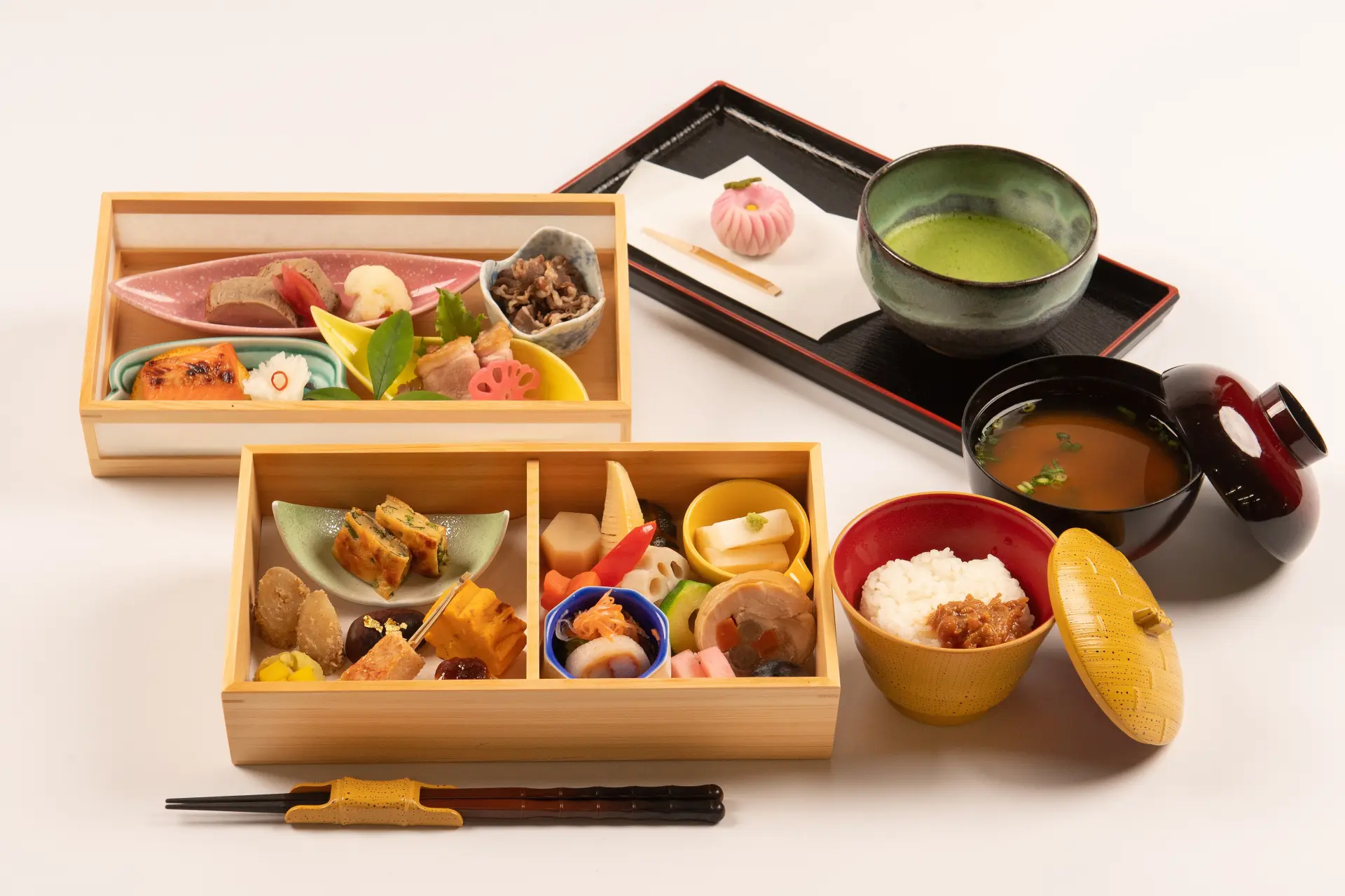
On the Japanese Cuisine Course, Saturdays, Sundays, and Mondays feature a two-tiered box filled with carefully crafted creative Japanese dishes by the head chef of Chikuyotei, a Japanese kaiseki restaurant in Chikuma City, Nagano Prefecture.
On Fridays, the Japanese Cuisine Course is provided by Fresco Labo. Supervised by a registered dietitian, it offers health-conscious Japanese cuisine with ingredient combinations designed for efficient nutrition and ingredient choices mindful of gut health.
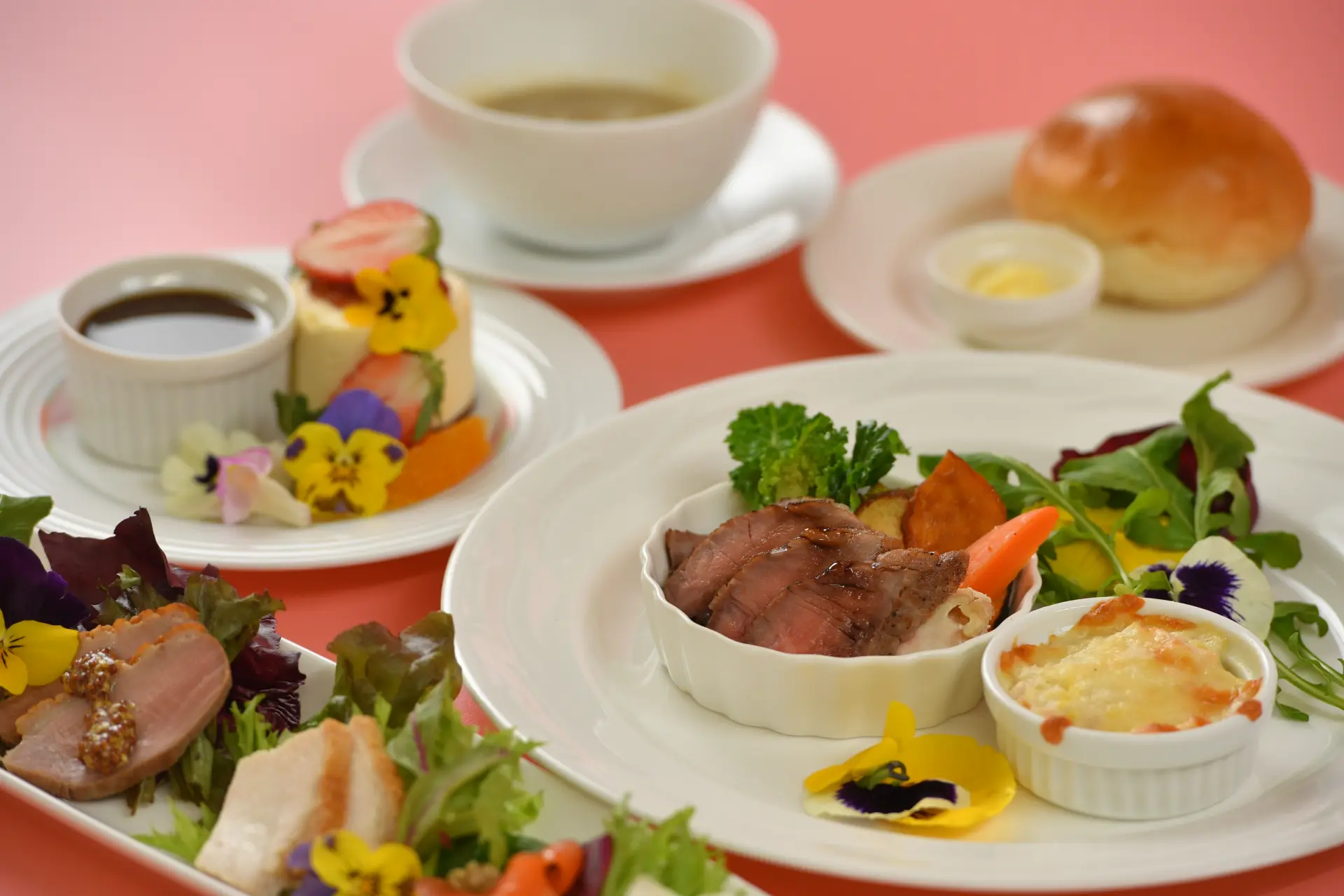
The Obasute Night Cruise, operated once a month, offers special wines not available on other courses. Wines are selected by Tomoe Maezawa, a JSA-certified sommelier and representative of Nagano Wine Travel, who rides the train on the operating day and introduces the wines. The colorful dishes, beginning with appetizers, are provided by Teishaba Garden Cafe, located inside Teishaba Garden in front of Komoro Station.
For the Western Cuisine Course and Japanese Cuisine Course, there is also an affordable Boarding Ticket + Reserved Seat Plan that lets you ride without a meal. You can bring your own boxed meals and other food, and if you call the Rokumon Reservation Center at least 5 days before your travel date, you can also reserve a special boxed meal.
Enjoy a richly rewarding time as you take in Shinshu’s food and scenery from the train window.
Details
- Railway Company / Train Name
- Shinano Railway Sightseeing Train “Rokumon”
- Operating Section / Travel Time
-
Shinano Railway Karuizawa Station–JR Nagano Station (Approx. 2 hr. 30 min.)
Operating Days: Mainly Fridays, Saturdays, Sundays, and Mondays. *See the official website for details. - Frequency
- 1 round trip per day. *Obasute Night Cruise available on select days.
- Price Range
- Western Cuisine Course and Japanese Cuisine Course: ¥18,500 each; Obasute Night Cruise: ¥24,800; reserved seat ticket for the Boarding Ticket + Reserved Seat Plan: adults ¥1,020, children ¥510
- How to Purchase Tickets
- Online reservation through the official website, or by phone through the Rokumon Reservation Center.
- Official website
- Official website (Japanese)
Nagano Electric Railway “Hokushinano Wine Valley Train”
(Nagano City–Yamanouchi Town, Nagano Prefecture)
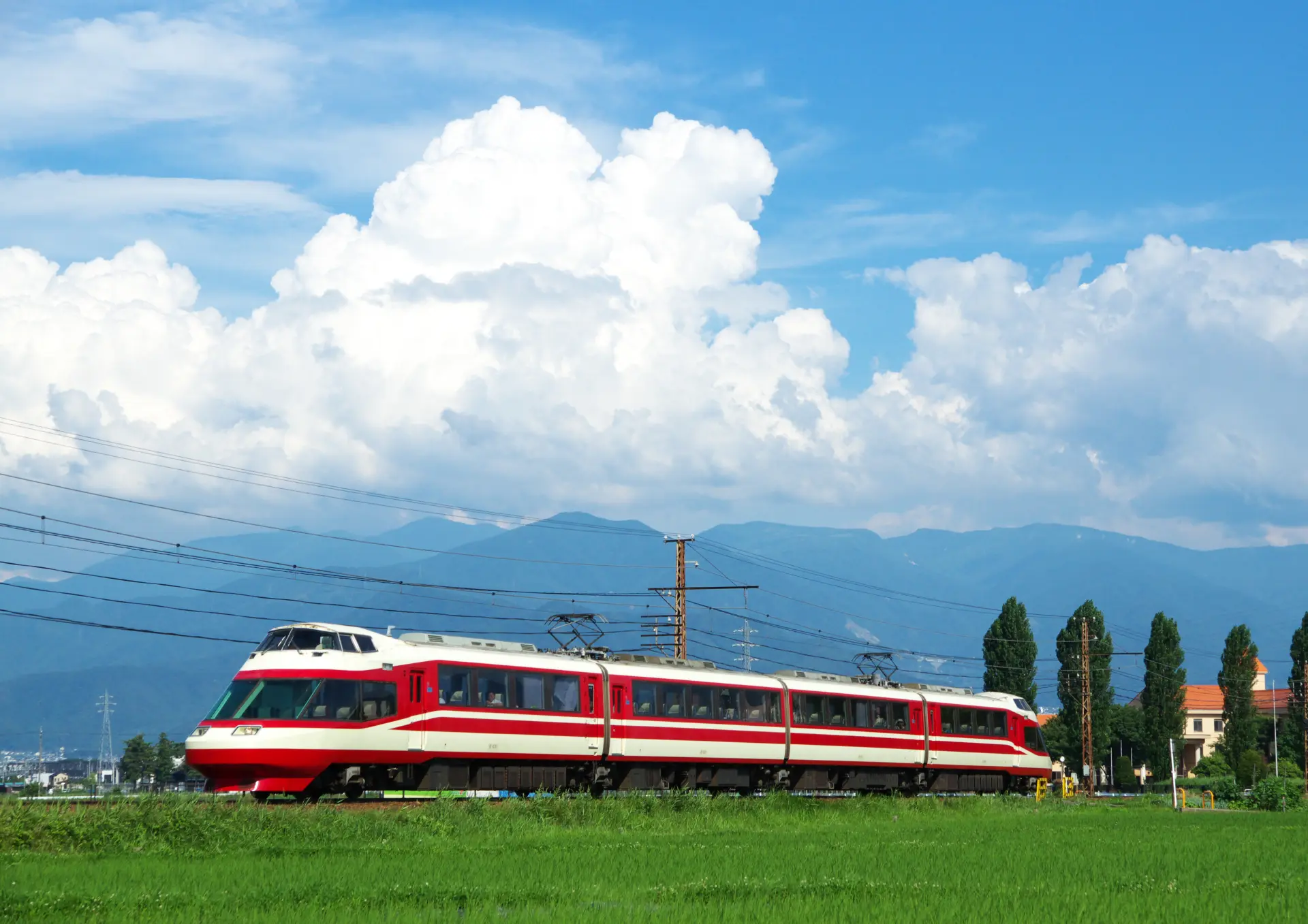
The Chikuma River Wine Valley spreads across northeastern Nagano Prefecture, dotted with distinctive wineries. The Hokushinano Wine Valley Train runs through the middle Chikuma River area in the northern part of this valley, known for high-quality wine production, and lets you compare wines from wineries along the line.
How Do You Get to the Hokushinano Wine Valley Train?
The Hokushinano Wine Valley Train operates for Approx. 80 minutes between Nagano Electric Railway Nagano Station and Nagano Electric Railway Yudanaka Station, a section that takes 48 minutes one way by limited express. Hokuriku Shinkansen Nagano Station, where you can transfer to Nagano Electric Railway Nagano Station, is about 1.5 hours from Tokyo Station by Hokuriku Shinkansen.
The area around Yudanaka Station, the terminal station of Nagano Electric Railway, is blessed with hot spring destinations such as Yudanaka Onsen and Shibu Onsen, as well as Jigokudani Monkey Park, known for wild Japanese macaques bathing in hot springs. If you go a little farther, you can also access Shiga Kogen. It is a good option not only on the outbound trip, but also on the return from a highland resort or hot spring visit by boarding the Hokushinano Wine Valley Train departing from Yudanaka Station.
Cars Accented with Wine-Colored Curtains
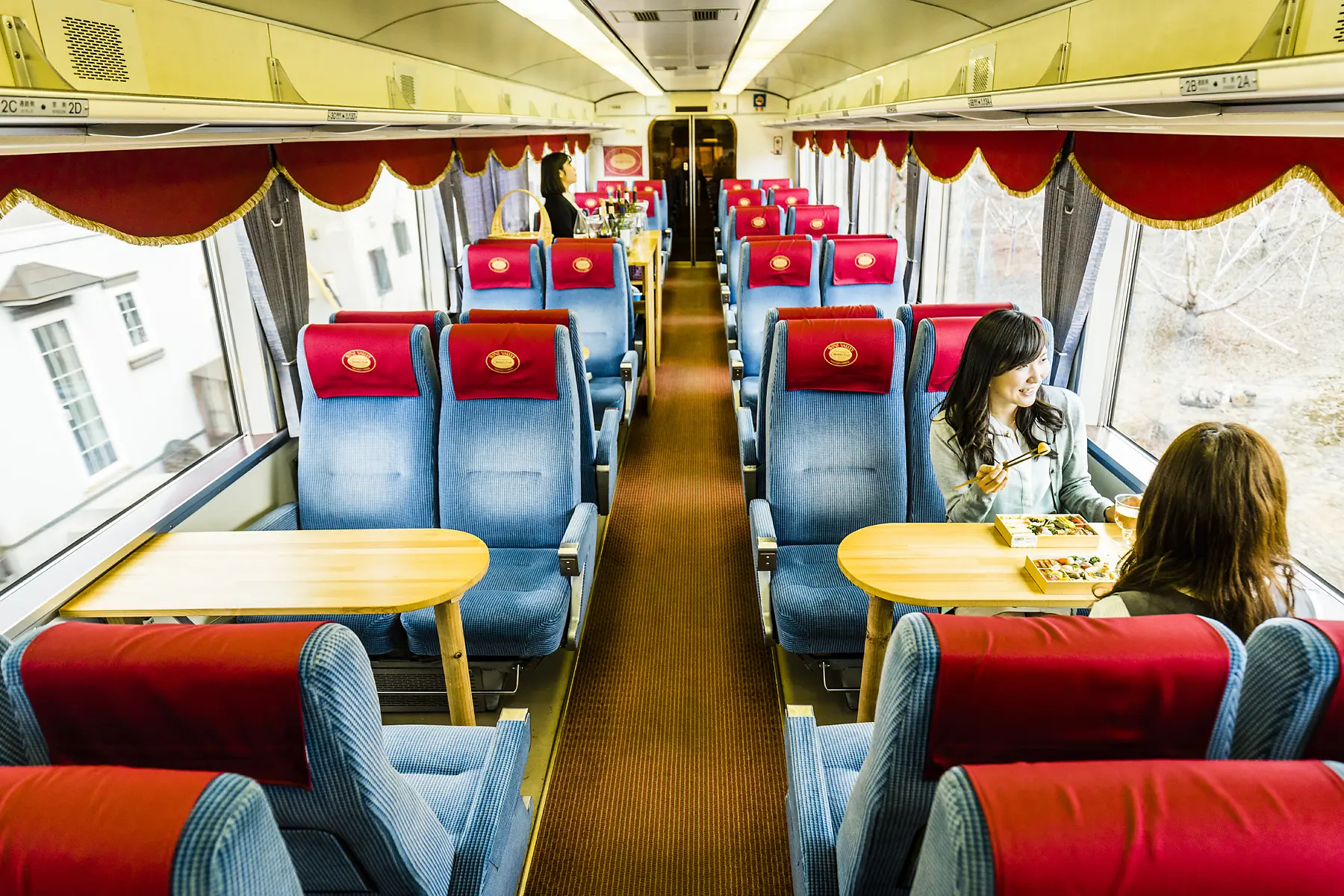
This train uses a middle car of the Yukemuri Nonbiri-go limited express, which was converted from cars originally used as Odakyu Romancecar trains, and further decorates it with a dedicated Hokushinano Wine Valley Train design.
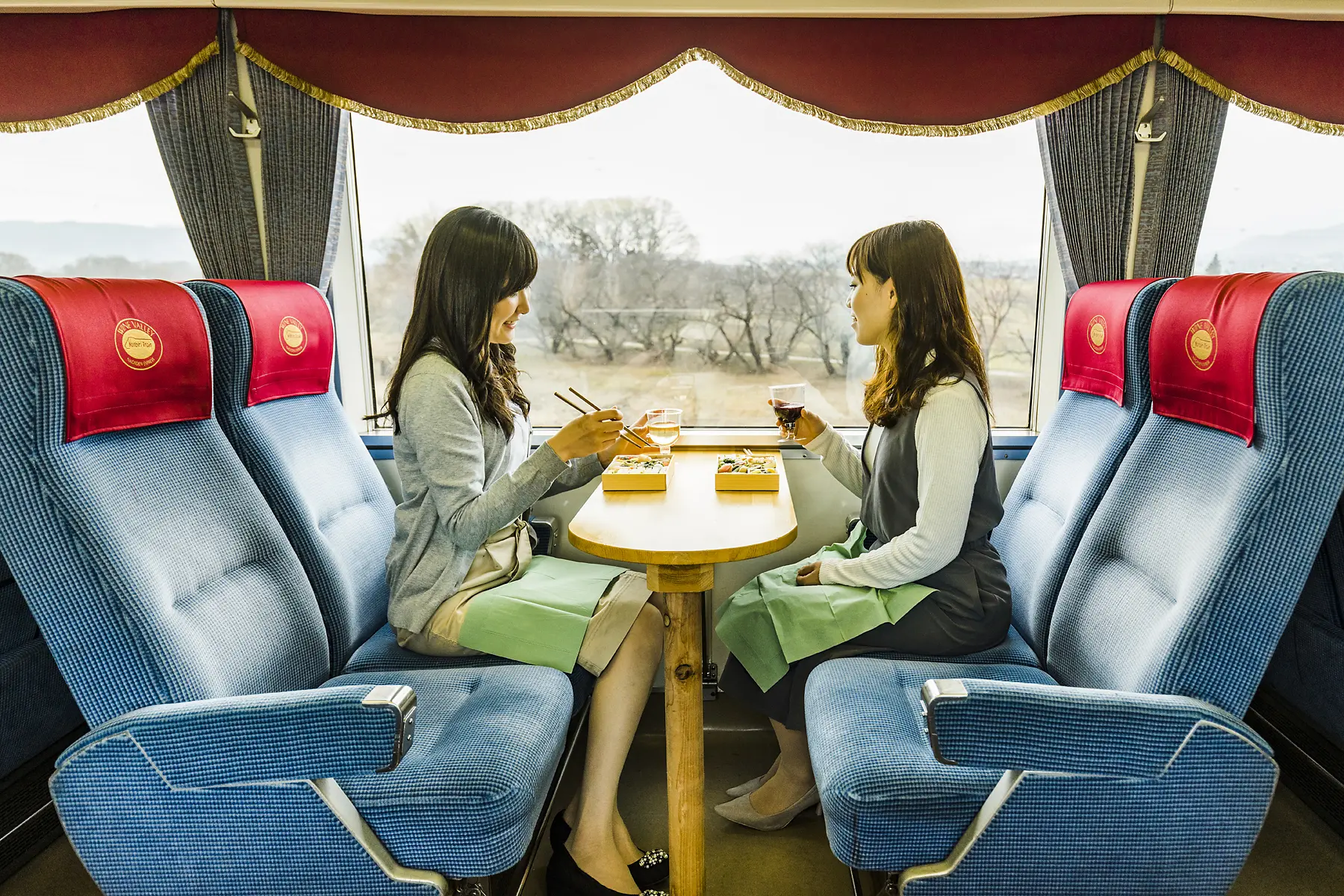
The passenger car floor is high, giving the interior excellent views. Wine-colored curtains and seat covers contrast vividly with the blue seats. Box seats are fitted with tables, letting you leisurely enjoy the scenery along the line through large windows.
3 Scenic Views from the Hokushinano Wine Valley Train
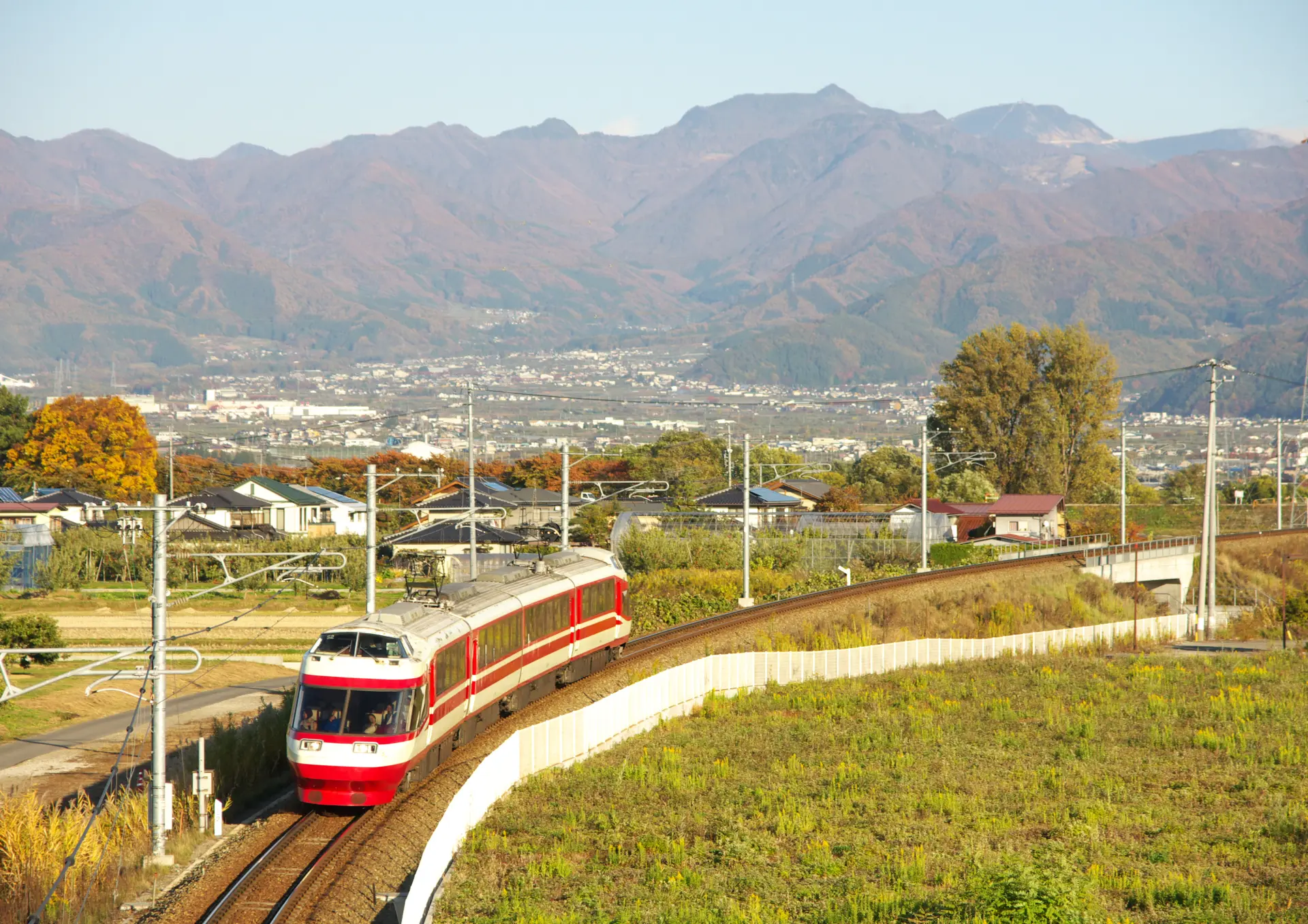
Along with Shinshu wines, the Hokushinano Wine Valley Train’s must-see charms include the rural landscapes of Hokushinano from the train windows, the gently flowing Chikuma River, and the grand mountain ranges of Mt. Iizuna, Mt. Kurohime, Mt. Myoko, and more. At the Murayama Bridge viewpoint, the train stops briefly, so you can take photos at a relaxed pace.
1. Mt. Iizuna (Nagano Station–Suzaka Station)
The first highlight after leaving Nagano Station is 1,917-meter Mt. Iizuna, one of the “Five Mountains of Northern Shinshu” together with Mt. Togakushi, Mt. Kurohime, Mt. Myoko, and Mt. Madarao. Since ancient times, mountain ascetics have trained on this mountain, and Iizuna Shrine is enshrined at the summit.
2. Chikuma River (Yanagihara Station–Murayama Station)
From the bridge, you can see the Chikuma River flowing gently; it later enters Niigata Prefecture, where its name changes to the Shinano River. Because this section is downstream from the views on the Shinano Railway, the river is wider here. Fields spread out on both sides of the Chikuma River, creating a view with a nostalgic feel.
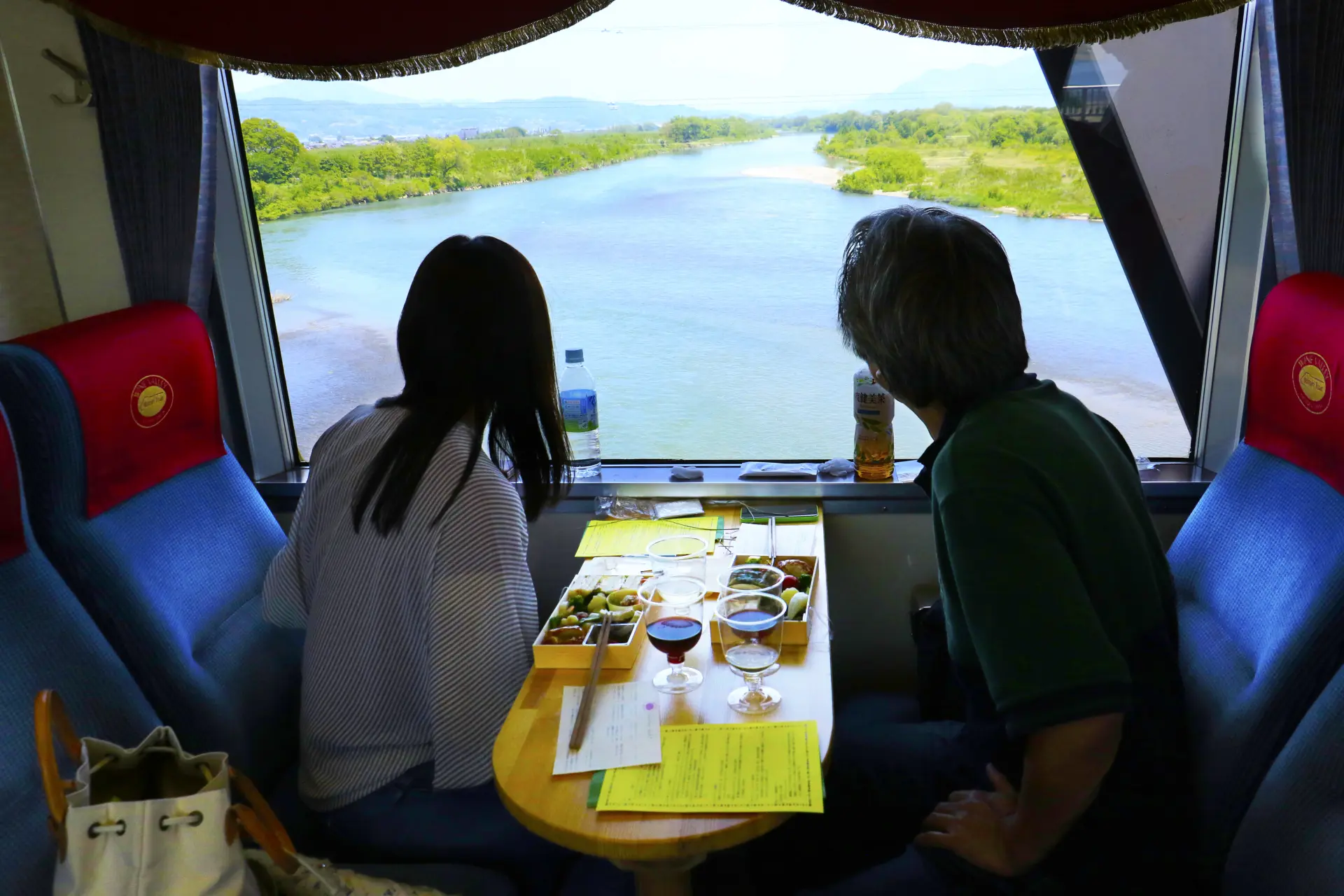
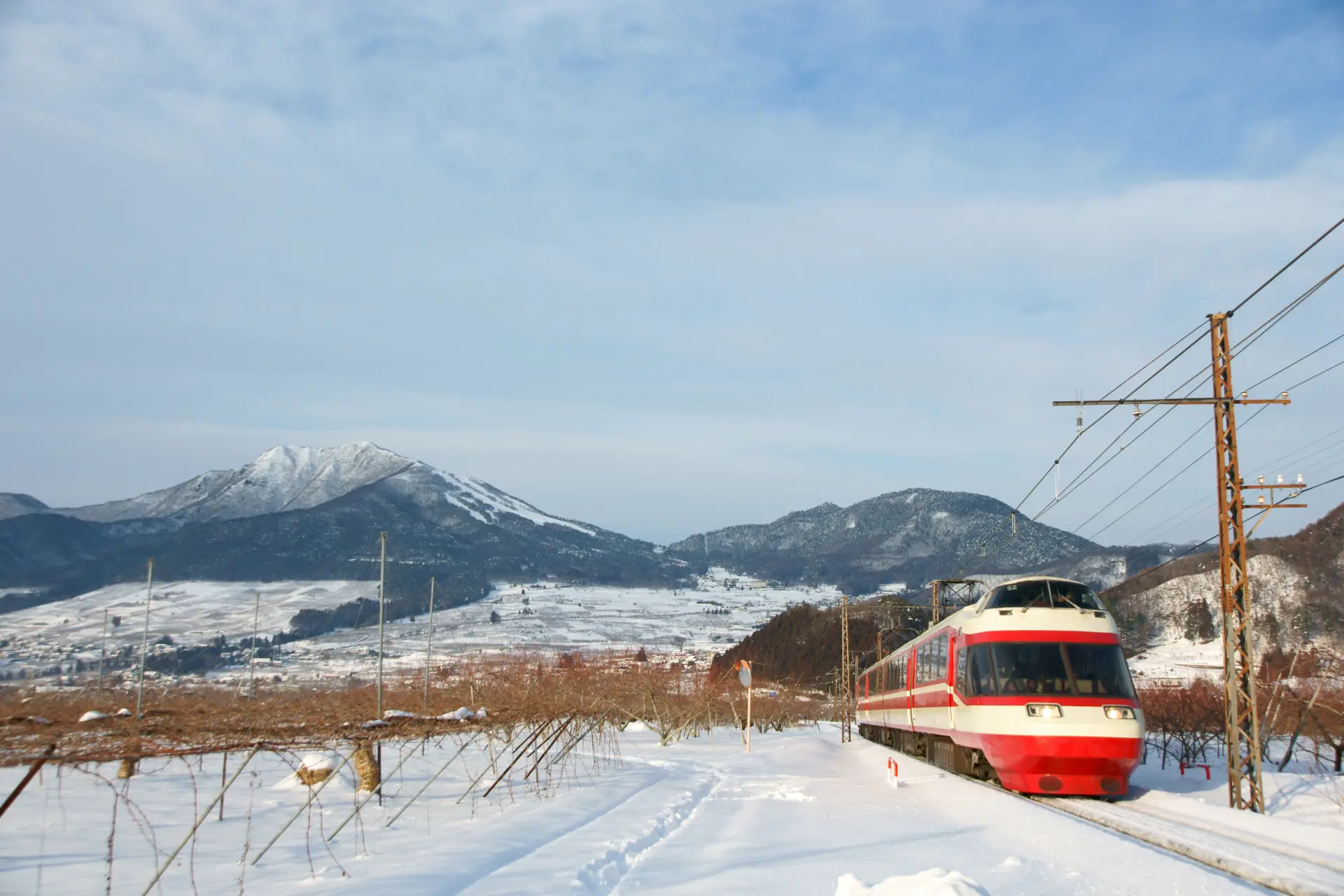
3. Mt. Kosha (Shinshu-Nakano Station–Yudanaka Station)
Mt. Kosha spreads its foothills toward the rural landscape and is one of the representative mountains of Oku-Shinano. Because of its long, trailing foothills, it is also called Takai Fuji, and its snow-covered form is especially beautiful.
Compare Shinshu Wines for Approx. 80 Minutes
The Chikuma River Wine Valley has long sunshine hours, little rain, and well-drained soil, making it suitable for growing wine grapes. Many essential wine grape varieties are cultivated here, including Merlot, Chardonnay, Cabernet Sauvignon, and Pinot Noir, and the area has one of the largest concentrations of wineries in Nagano Prefecture. On the Hokushinano Wine Valley Train, you can enjoy all-you-can-drink wines from four wineries along the Chikuma River Wine Valley to your heart’s content.
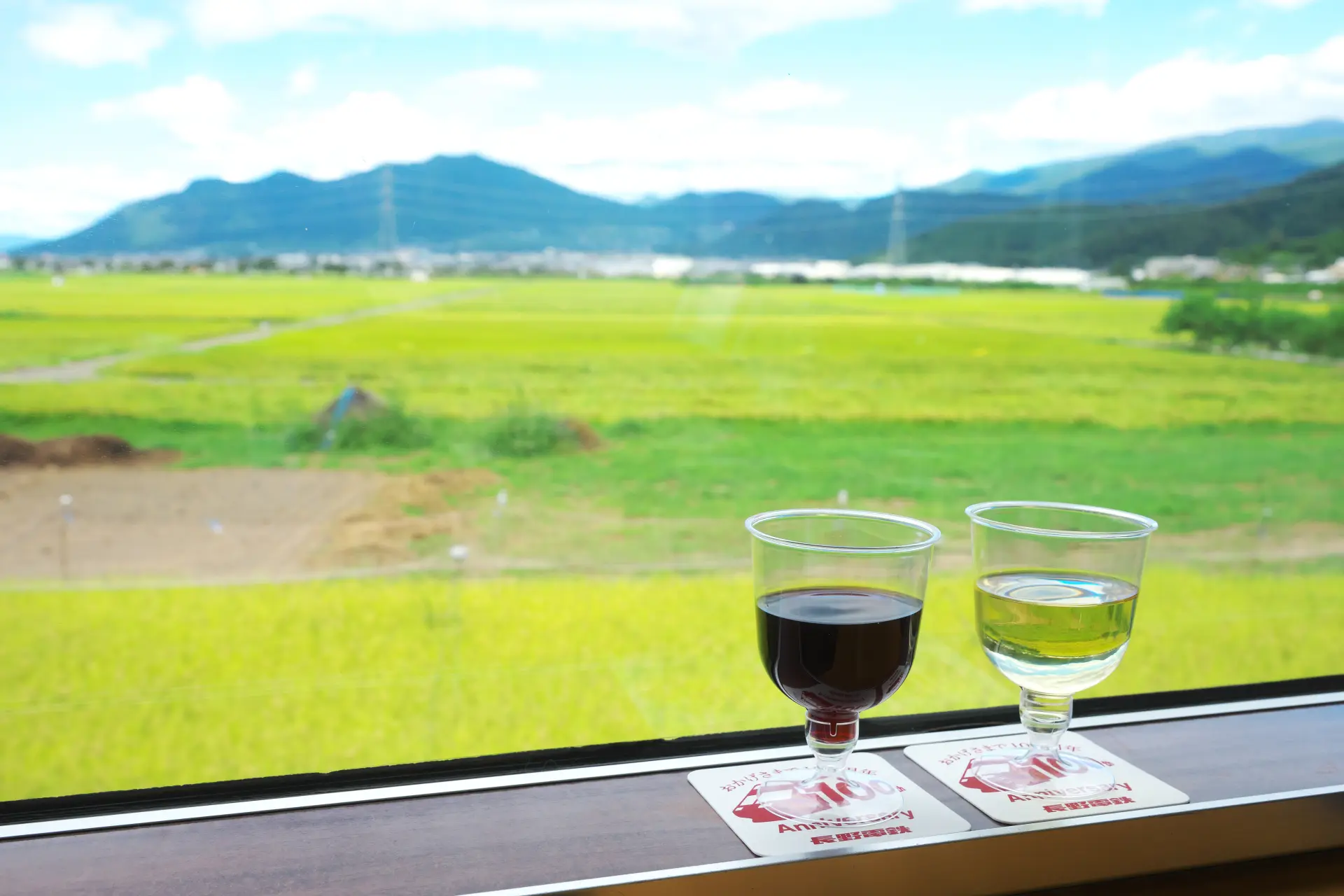
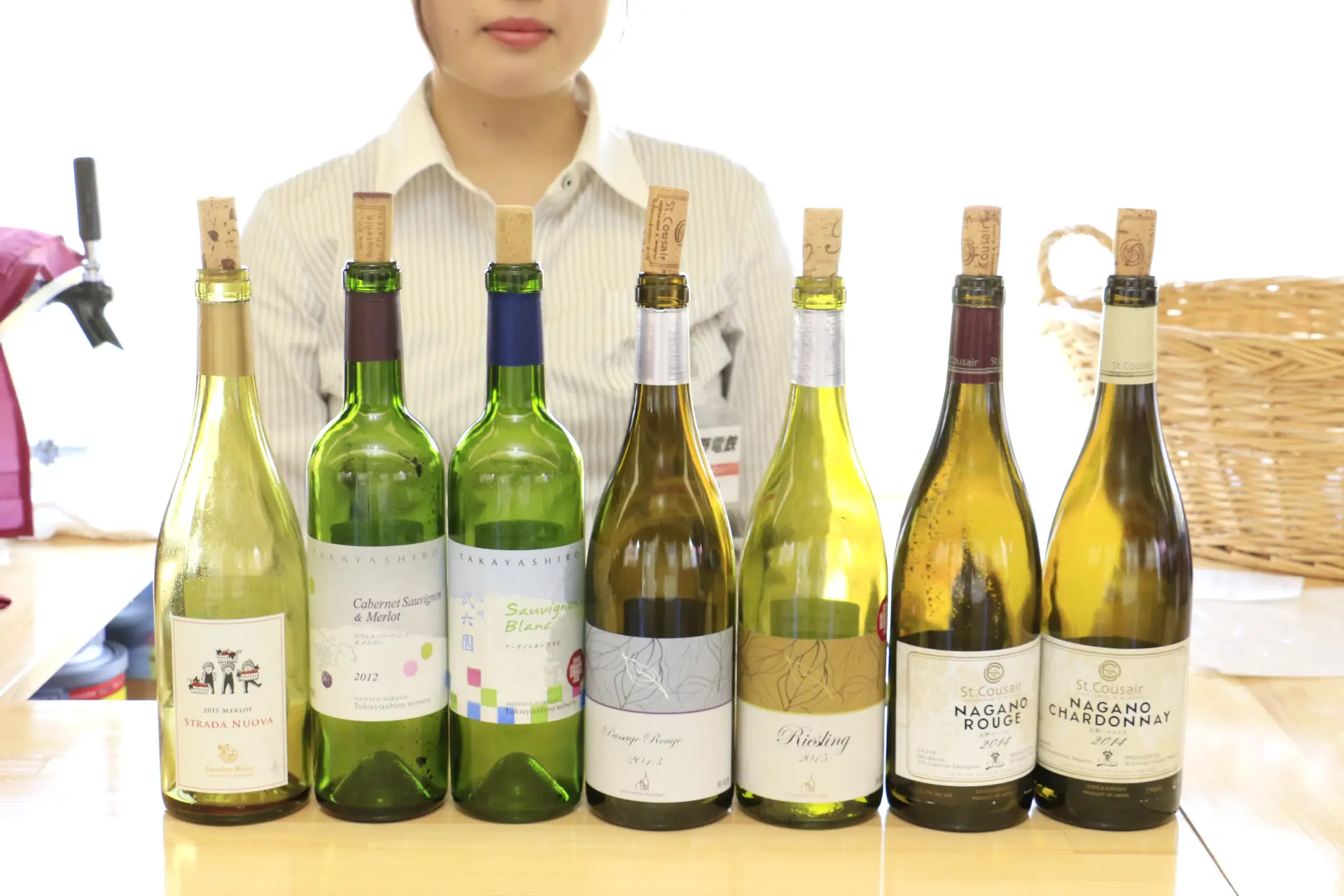
A total of 6–8 red and white wines are prepared at the onboard wine counter, brewed by popular wineries in Hokushinano such as Kusunoki Winery, Takayashiro Farm & Winery, St.Cousair, and Cantina Riezo. The wines are limited to those made with Nagano-grown grapes and brewed in Nagano, including “Nagano Appellation Control Wine.” Check the “Today’s Wine List” provided at your seat for the day’s lineup.
The Nonbiri Bento, which pairs well with both red and white wines, enhances the flavor of the wine. Menus differ for outbound and inbound services, and both use ingredients from Nagano Prefecture.
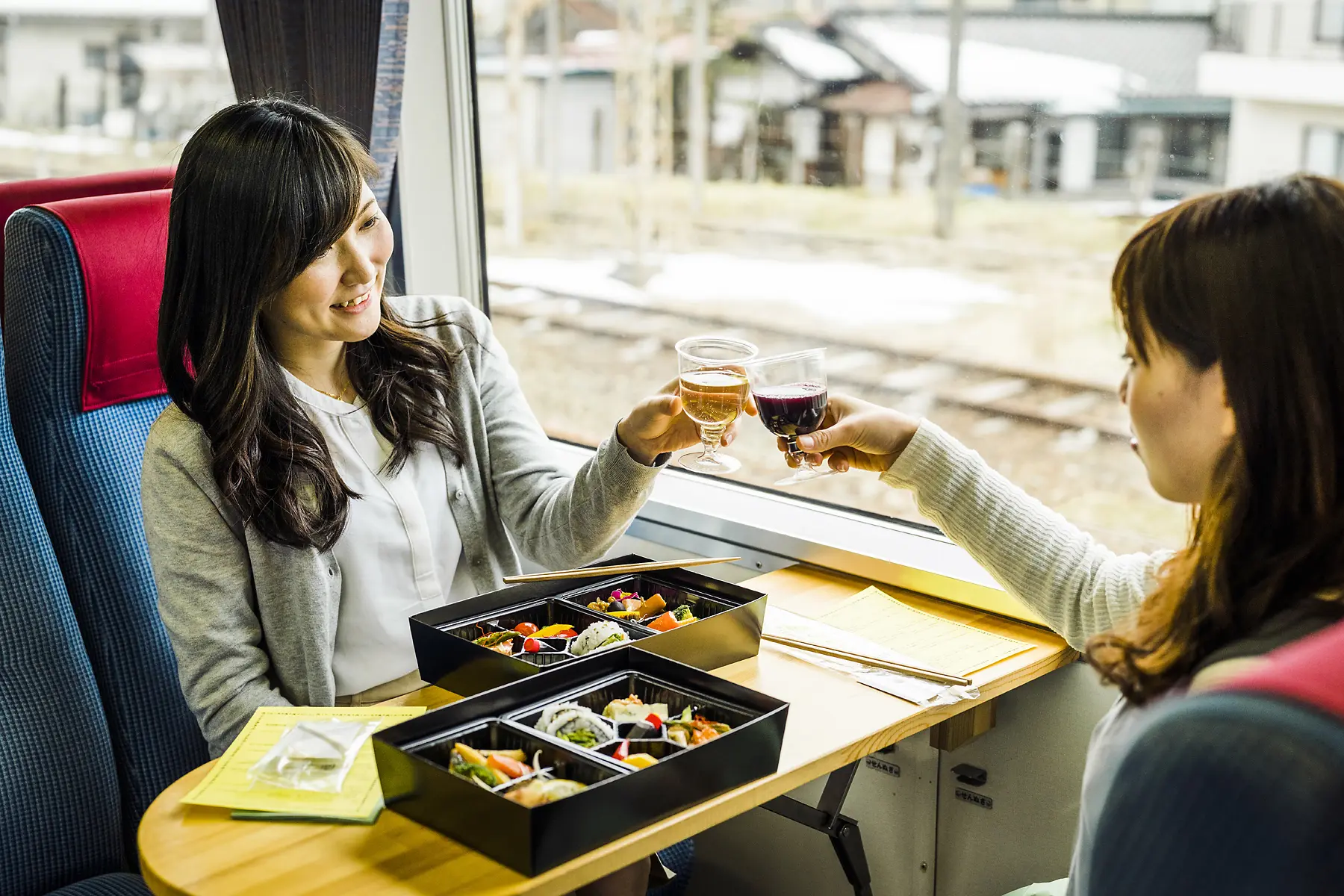
Onboard sales are also extensive, offering a variety of local foods from along the Nagano Electric Railway line, including oyaki, a Nagano local dish made by wrapping fillings such as nozawana greens, simmered eggplant, dried daikon radish, or sweet bean paste in wheat or buckwheat dough, as well as Kurikanoko Yokan, a specialty of Obuse, a chestnut town along the line.
Details
- Railway Company / Train Name
- Nagano Electric Railway “Hokushinano Wine Valley Train”
- Operating Section / Travel Time
- Nagano Electric Railway Nagano Station–Nagano Electric Railway Yudanaka Station (Approx. 1 hr. 20 min.)
- Operating Days
- Mainly Saturdays, Sundays, and holidays. *Please see the official website for details.
- Frequency
- 1 round trip per day
- Price Range
- Adults: ¥8,000 per person; children (elementary school students): ¥4,000 per person
- How to Purchase Tickets
- Reservations accepted through the official website.
- Official website
- Official website (Japanese)
Summary
The three trains introduced here are carefully selected gourmet trains where you can enjoy richly regional food and drinks, as well as spectacular views supported by abundant nature. On these luxurious trains, the travel time itself becomes a highlight of the trip—set out to enjoy flavors you can only find in each region.
*The information above is current as of June 2026. Please see the official websites for details.